
Green dining room ideas work in many homes because green feels calm, warm, and easy to live with. From olive green painted walls to soft pistachio breakfast corners, this color can look fresh or moody depending on the light.
In this post you will see green dining rooms that look real, not perfect. Think oak tables, cane-back chairs, mail on the sideboard, and a water glass with condensation. These small details help you plan a space that fits daily life.
Each section matches a photo theme and gives simple styling steps, plus a pro design tip and a budget note. Use the ideas to choose paint, layer wood tones, and add storage so your dining space stays useful.
If you came from Pinterest, save the sections that match your room size and light. Then copy the easy “how to style it” lists to set up your own green dining room faster.
1 Everyday Family Dining in Olive Green
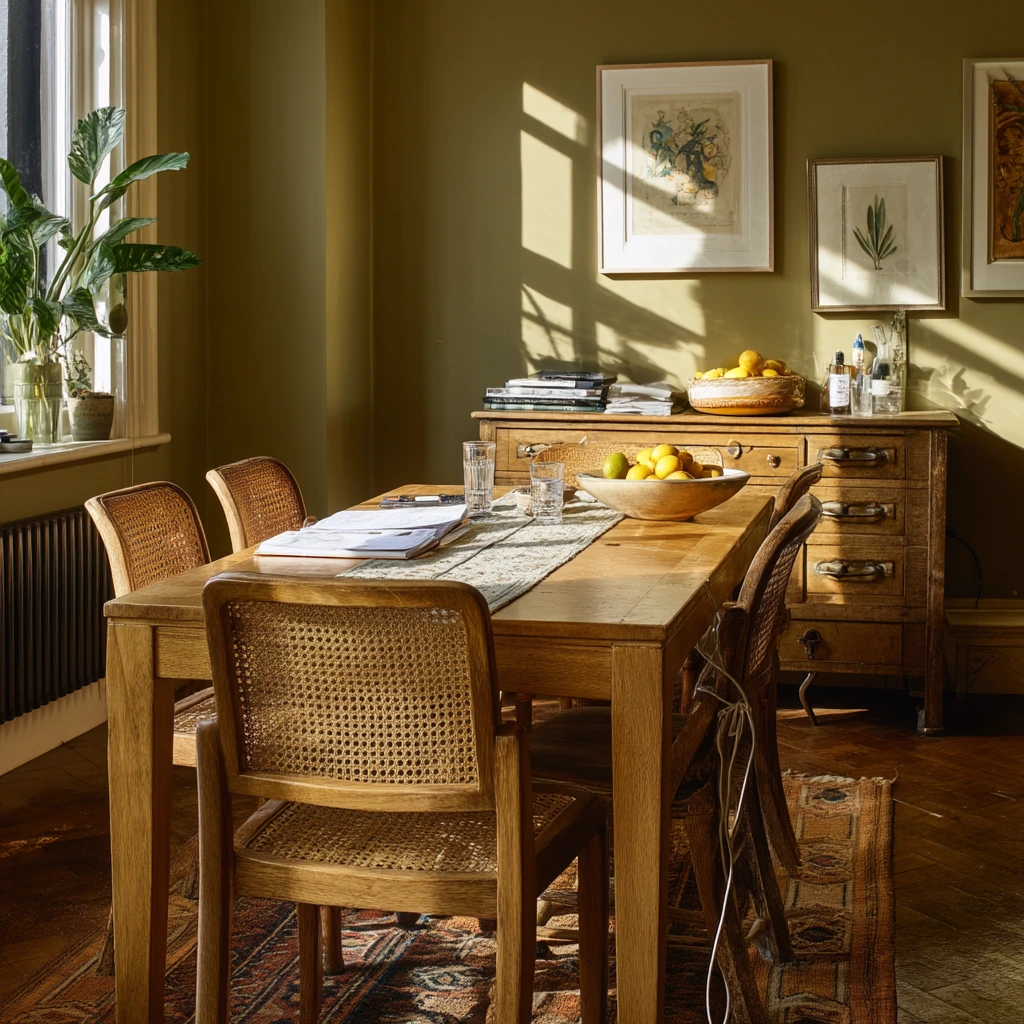
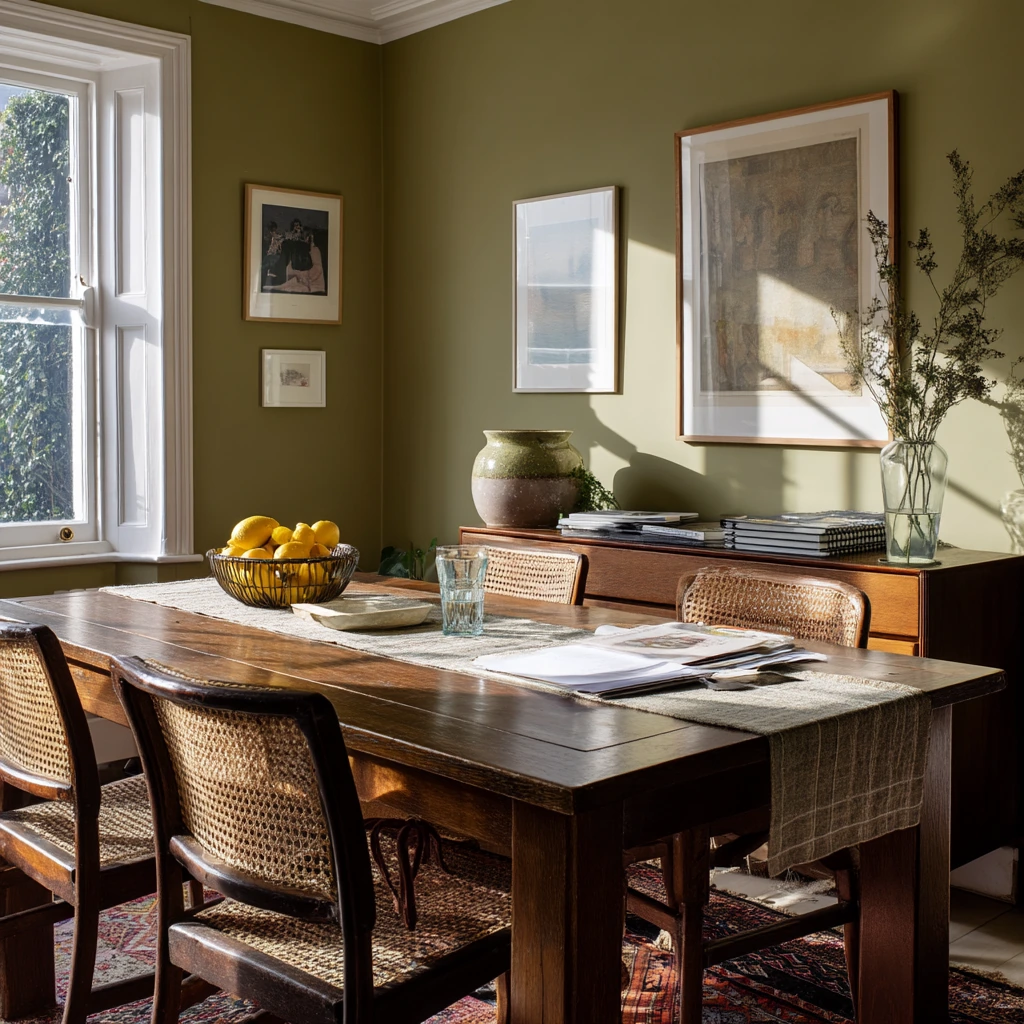
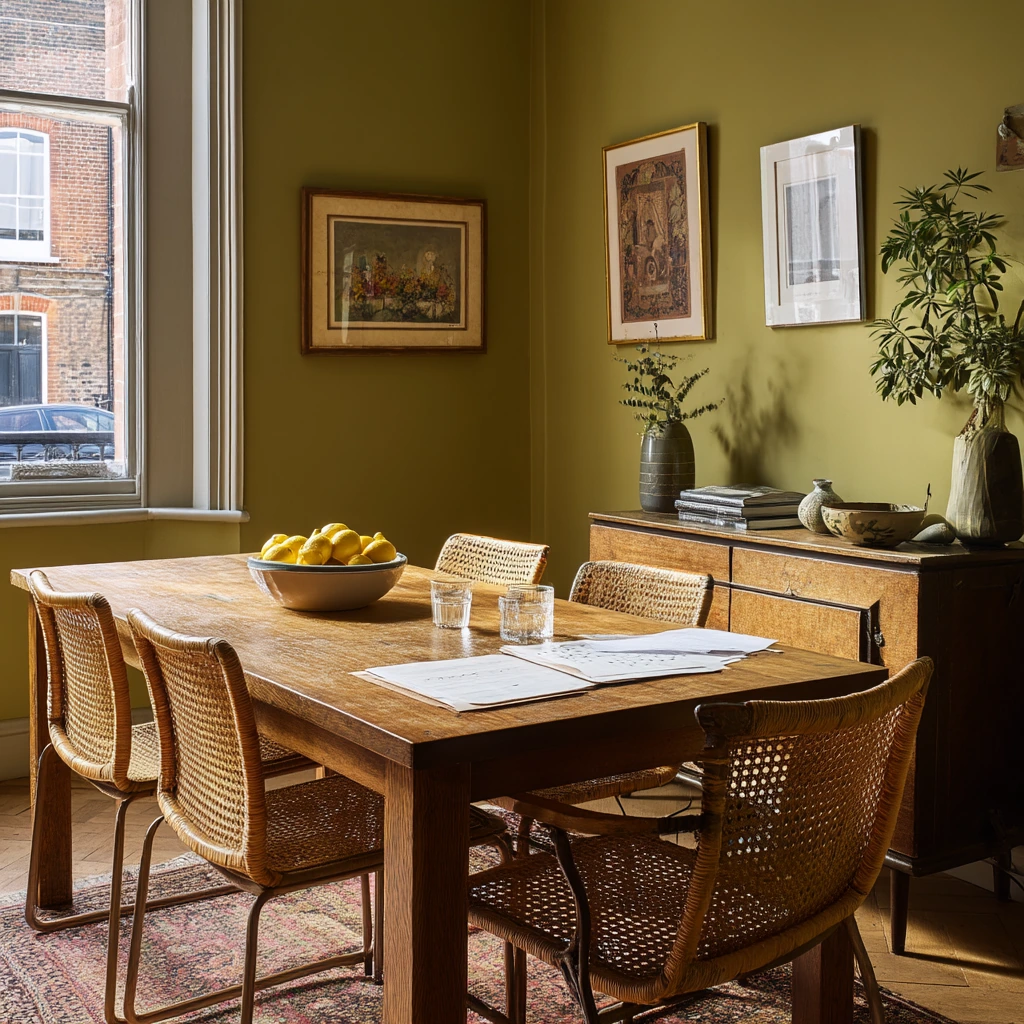
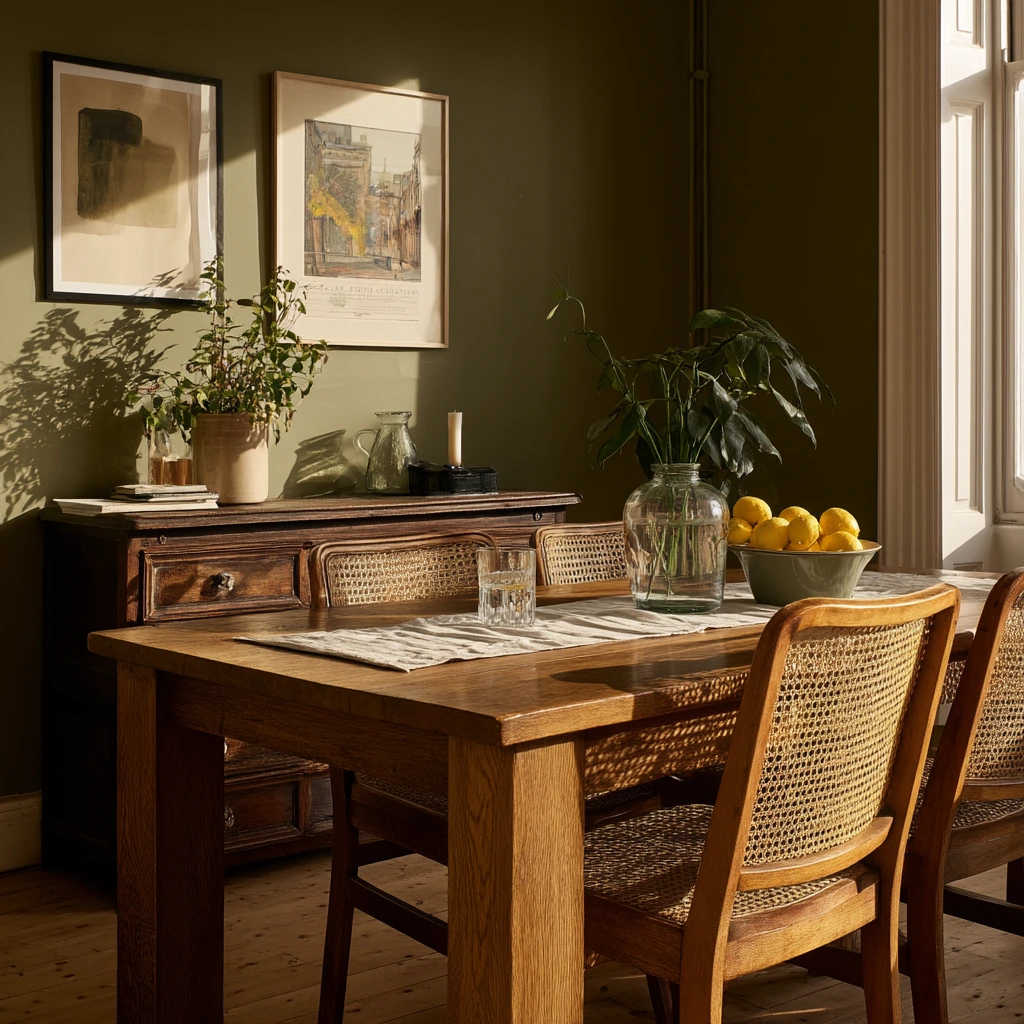
An olive green dining room is a strong choice for a busy family space because it hides scuffs better than white and still feels warm. In a city townhouse, olive walls look grounded with an oak table, cane-back chairs, and a vintage runner. Keep the room feeling calm by letting natural window light do most of the work.
To make it feel lived-in in a good way, style with everyday items on purpose. Lean framed art casually on a sideboard instead of hanging everything. Add a bowl of lemons for color that looks natural with olive paint. If you have children, corral school papers into one neat stack so the room feels real but not messy.
Small details sell the comfort. A water glass with condensation, a charging cable near a chair, and plant shadows across the wall all add soft texture. Try to keep only one or two “life” items out at a time so the dining room still reads as a place to eat, not a storage zone.
- Pair olive walls with light oak to keep the room bright.
- Use cane-back or woven chairs to add air and texture.
- Layer a vintage runner to soften the table and reduce noise.
- Lean art on the sideboard for a relaxed look that is easy to swap.
- Use one catch-all tray for papers, keys, and cables.
Pro Design Tip: Match the wall color to the room’s light by sampling olive paint on two walls; olive can shift from brown to green depending on the window direction.
Budget Considerations: If a solid oak table is out of reach, look for a used wood table and refinish the top; the olive walls will help it look richer.
2 Small-Space Green Dining Nook
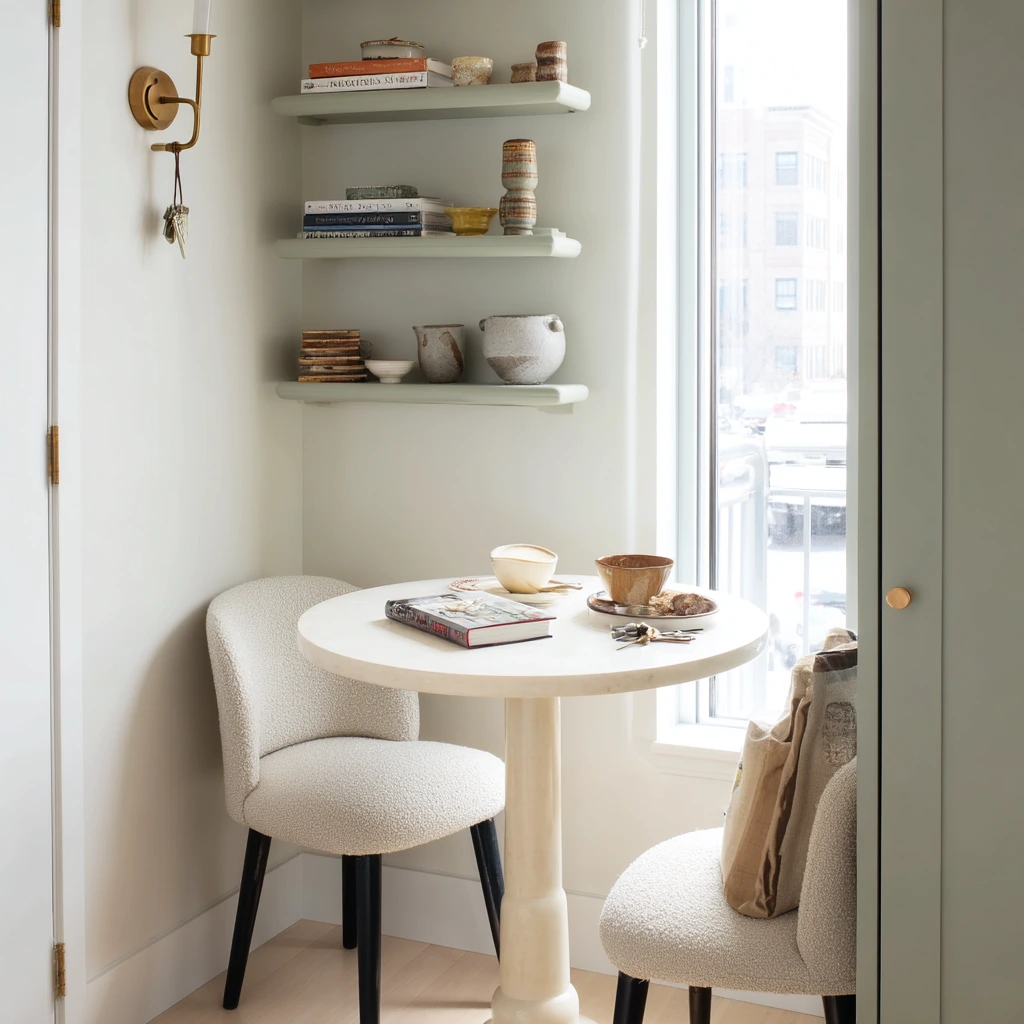
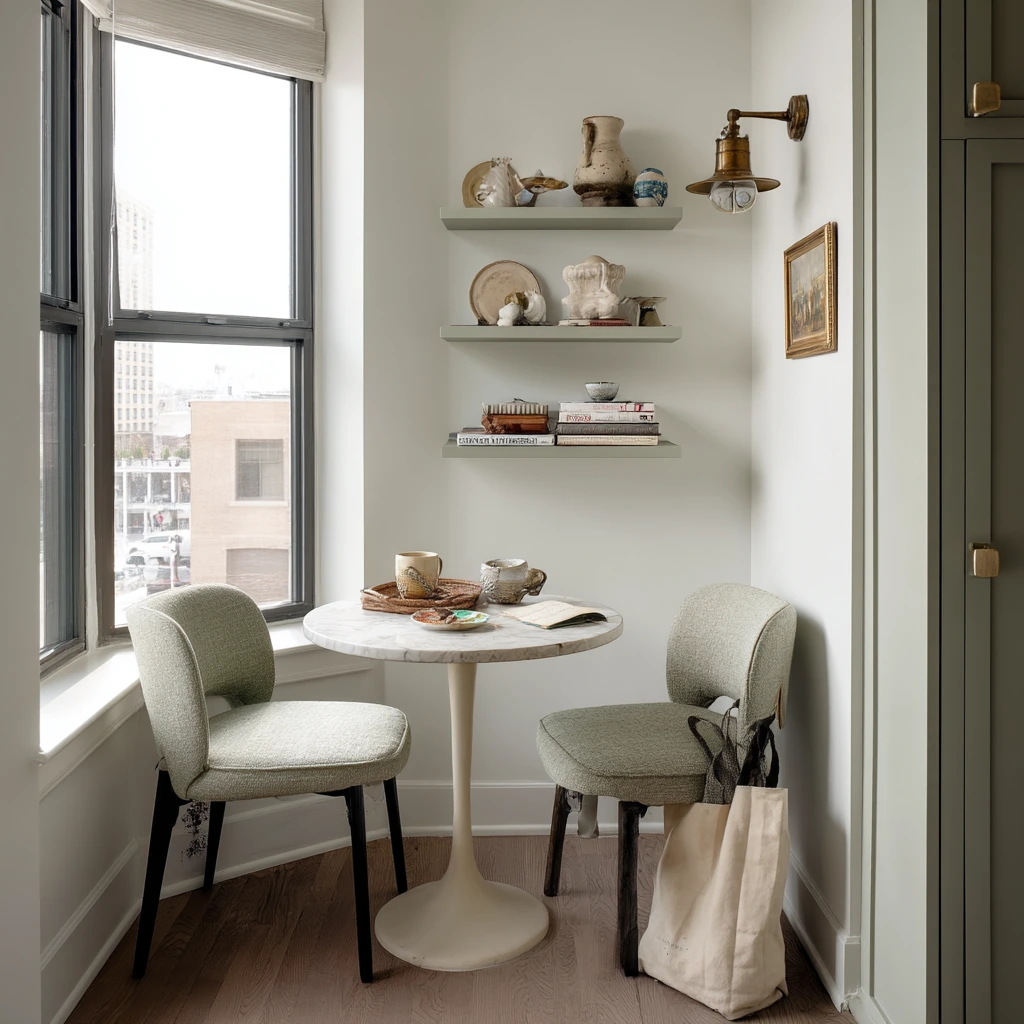
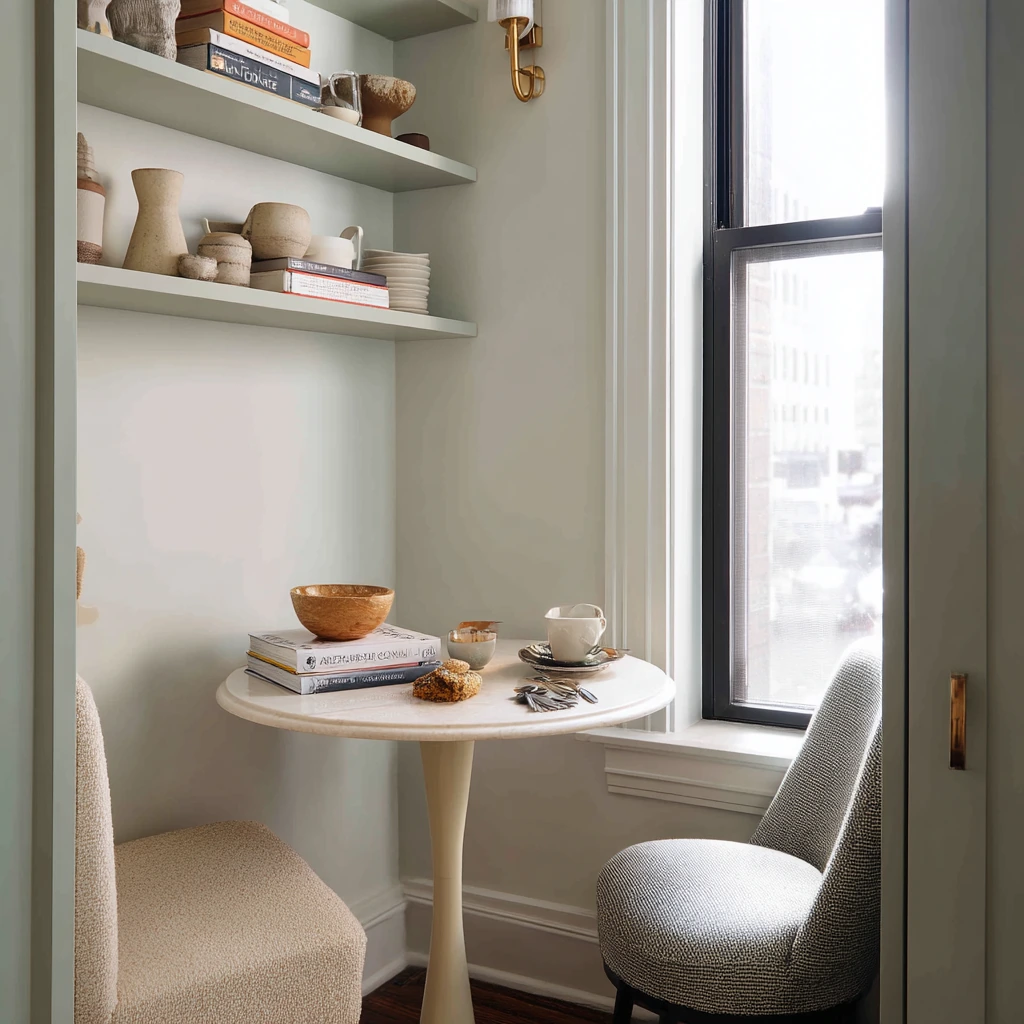
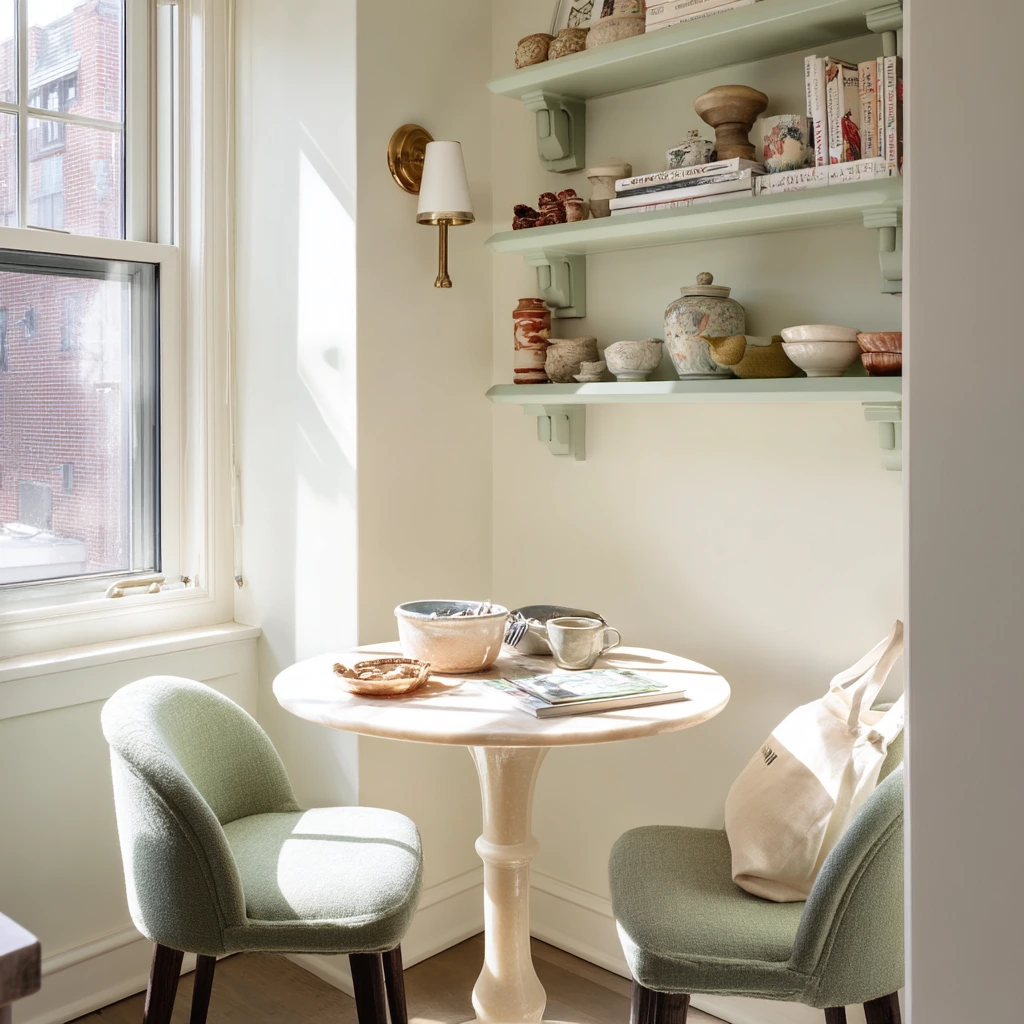
A compact dining nook painted sage and cream can feel bigger when you keep the shapes simple. A narrow round pedestal table is one of the easiest layouts for tight spaces because you can slide in and out without catching chair corners. Sage reads soft in morning window light, so it stays airy instead of heavy.
Make the wall work harder with storage. Wall-mounted shelves with ceramics keep the floor clear and give you a place to store daily items. A tiny brass sconce adds warm light at night, which helps the sage paint feel cozy. Keep a cookbook stack nearby if you actually use it, and store the rest elsewhere.
To keep it clean but lived-in, style with real-life objects in a small “landing zone.” Keys in a shallow bowl, a shopping tote tucked by the chair, and a half-finished tea cup can look charming when the rest of the surfaces are simple. Aim for one main surface moment: the table stays mostly open, and the shelves hold the visual interest.
- Choose a pedestal table to improve walk space in a narrow nook.
- Use sage on the main wall and cream on trim to brighten the corner.
- Add one brass sconce for warm light without taking up table space.
- Style shelves with a mix of ceramics and one small framed print.
- Create a small bowl or tray for keys and daily carry items.
Pro Design Tip: Keep shelf styling in odd numbers and leave at least one empty spot; negative space makes a tiny dining nook feel calmer.
Budget Considerations: Wall shelves and plug-in sconces are often cheaper than built-ins; look for secondhand brackets and paint them to match your trim.
3 Renter-Friendly Green Accents
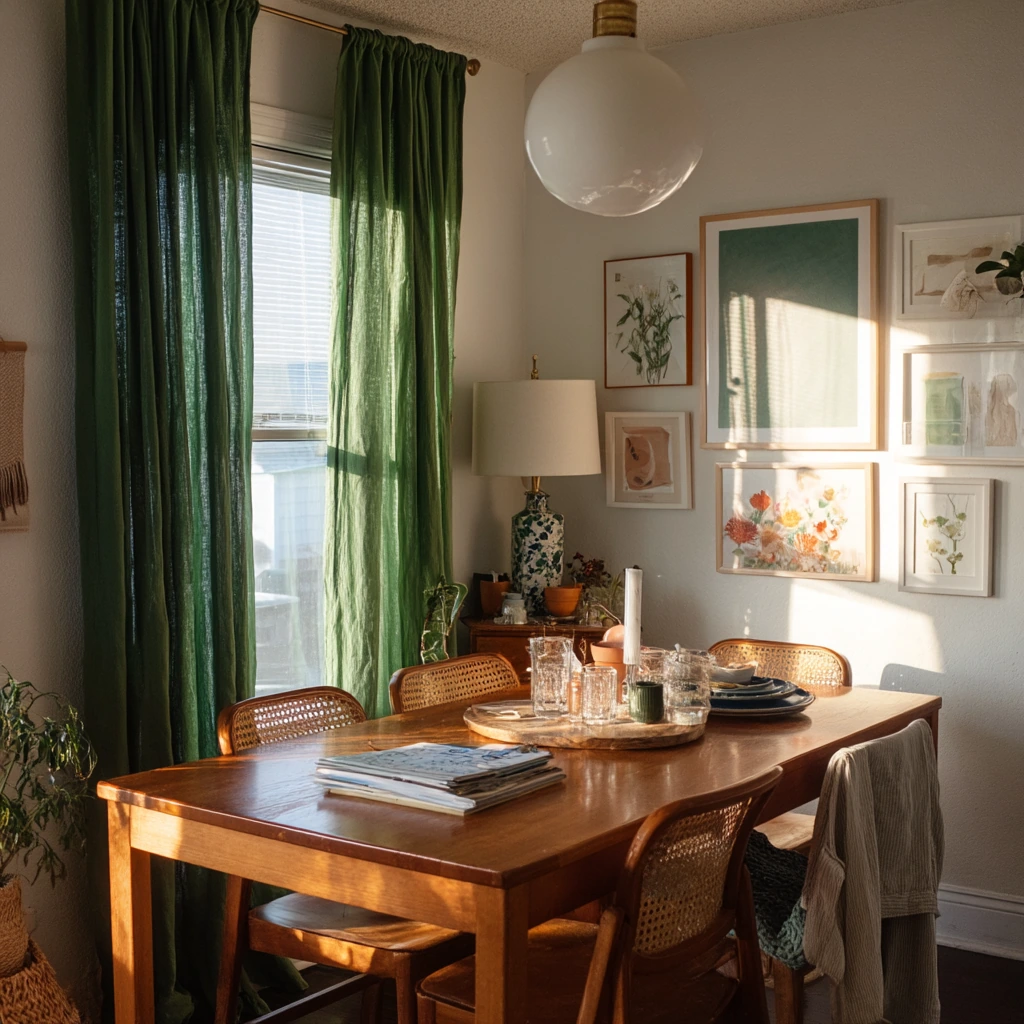
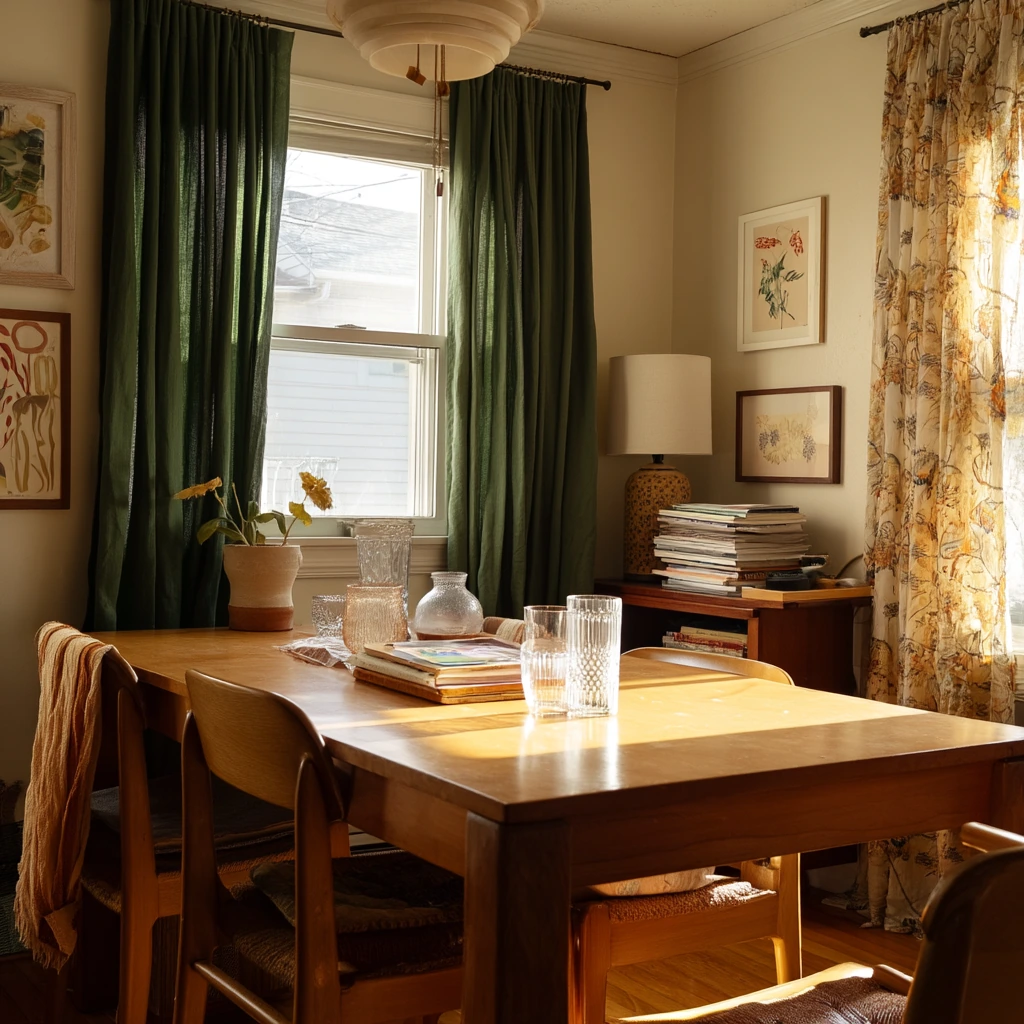
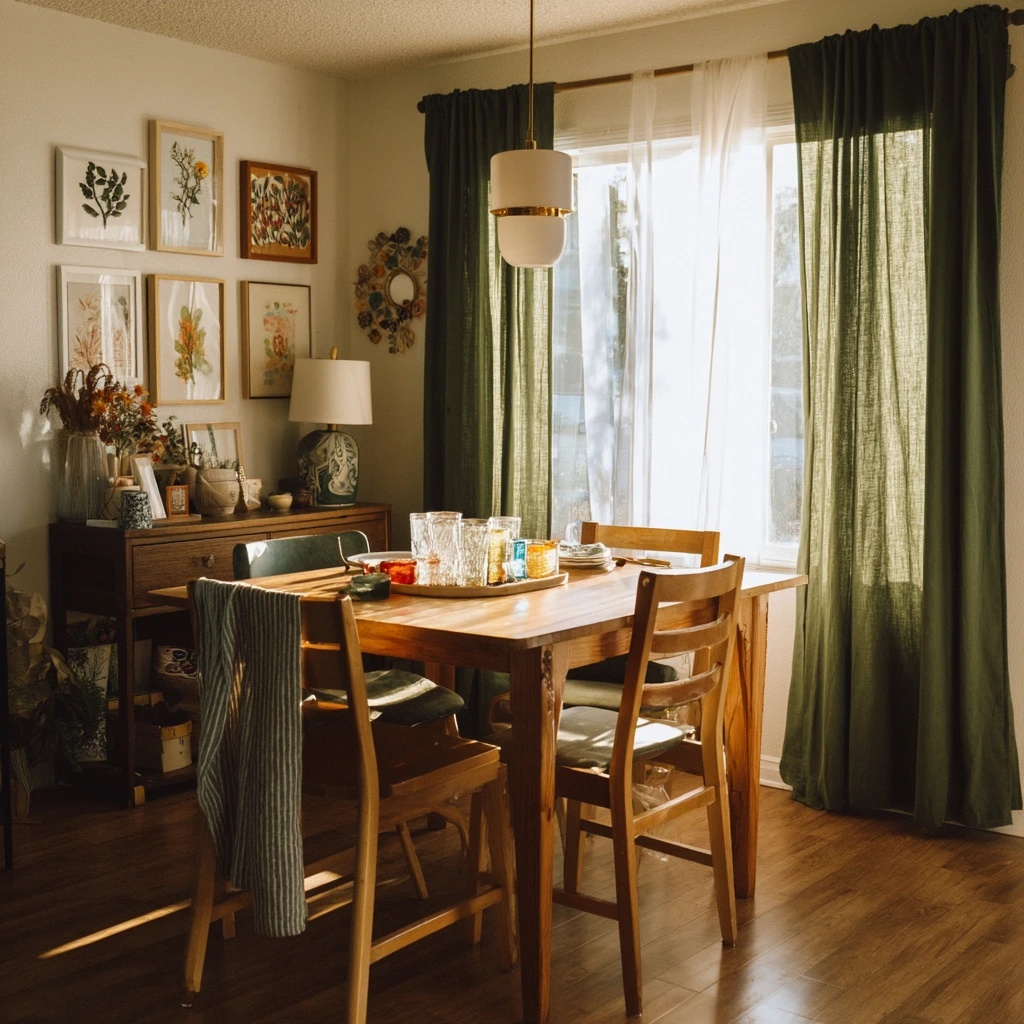
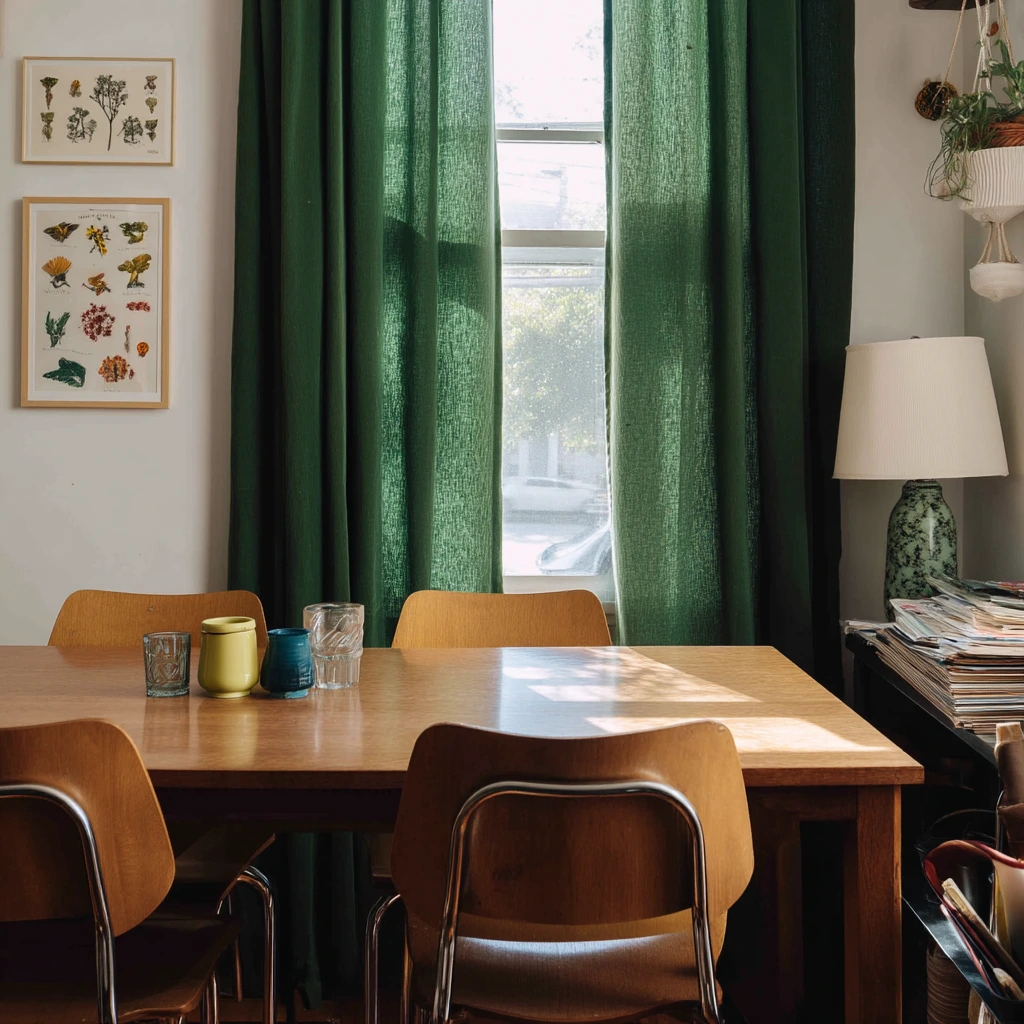
If you rent, you can still get a forest-green dining room look without losing your deposit. Start with removable forest-green curtains to bring in the color fast. Then keep the furniture simple: a basic wood table and mixed secondhand chairs add character and help you avoid buying a full matching set.
Use temporary wall decor to build the theme. Peel-and-stick botanical art gives you that green, nature feel without nails or paint. A ceramic lamp on a console adds soft light and a cozy glow at night. Thrifted glassware brings shine, and it looks great against dark green fabric and warm wood.
Real homes have small clutter, so plan for it. A stack of mail and a dish towel hanging off a chair back can be honest details, as long as there is a system. Keep a basket or folder on the console for paper. Add a hook near the dining area for towels or aprons so they do not live on the chairs.
- Use removable curtains to add forest green without painting.
- Mix secondhand chairs for an easy, collected look.
- Apply peel-and-stick botanical art for a rental-safe focal point.
- Add a console lamp to make evening meals feel warmer.
- Keep mail in one tray or folder so surfaces stay usable.
Pro Design Tip: Repeat the same green in three places, like curtains, art, and one small vase, so the room feels planned even with mixed furniture.
Budget Considerations: Thrift stores are great for chairs and glassware; set aside a small amount for matching seat pads to make mismatched chairs feel intentional.
4 Moody Dinner for Two
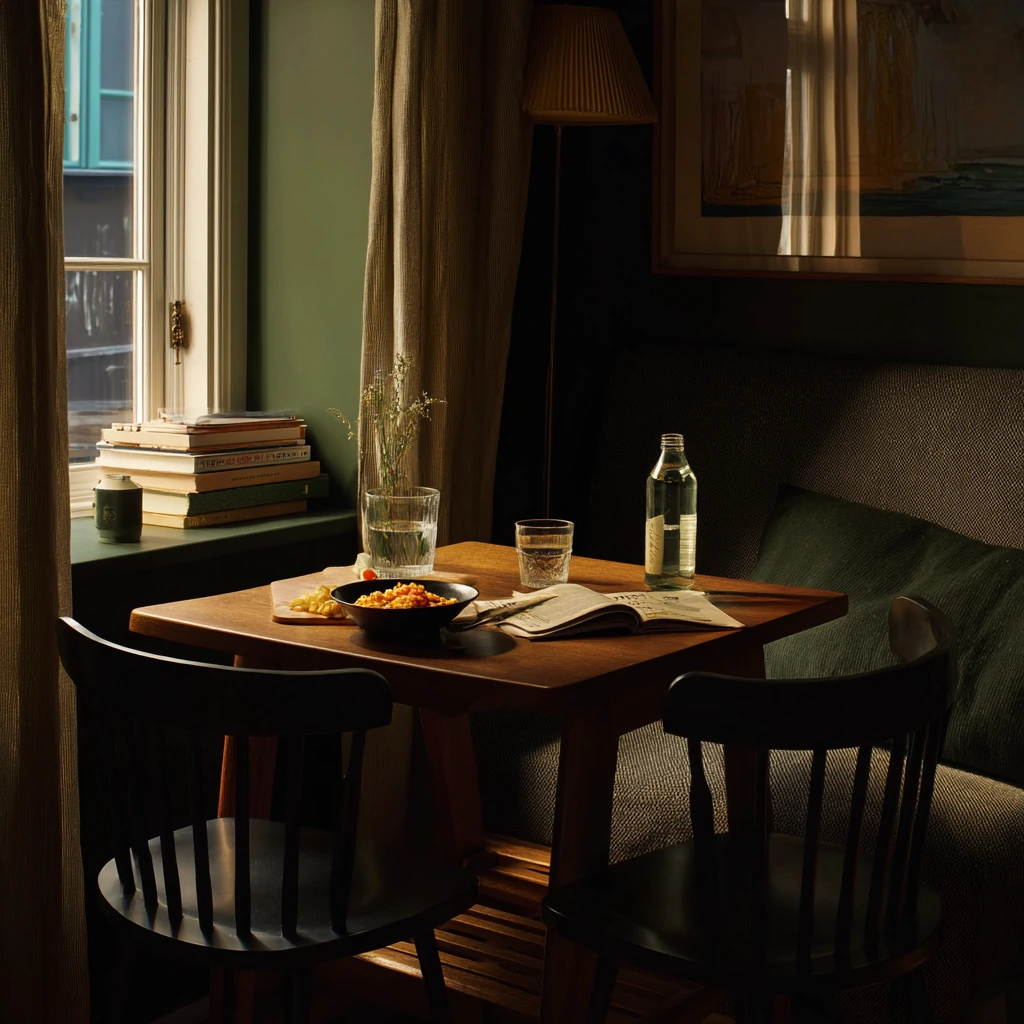
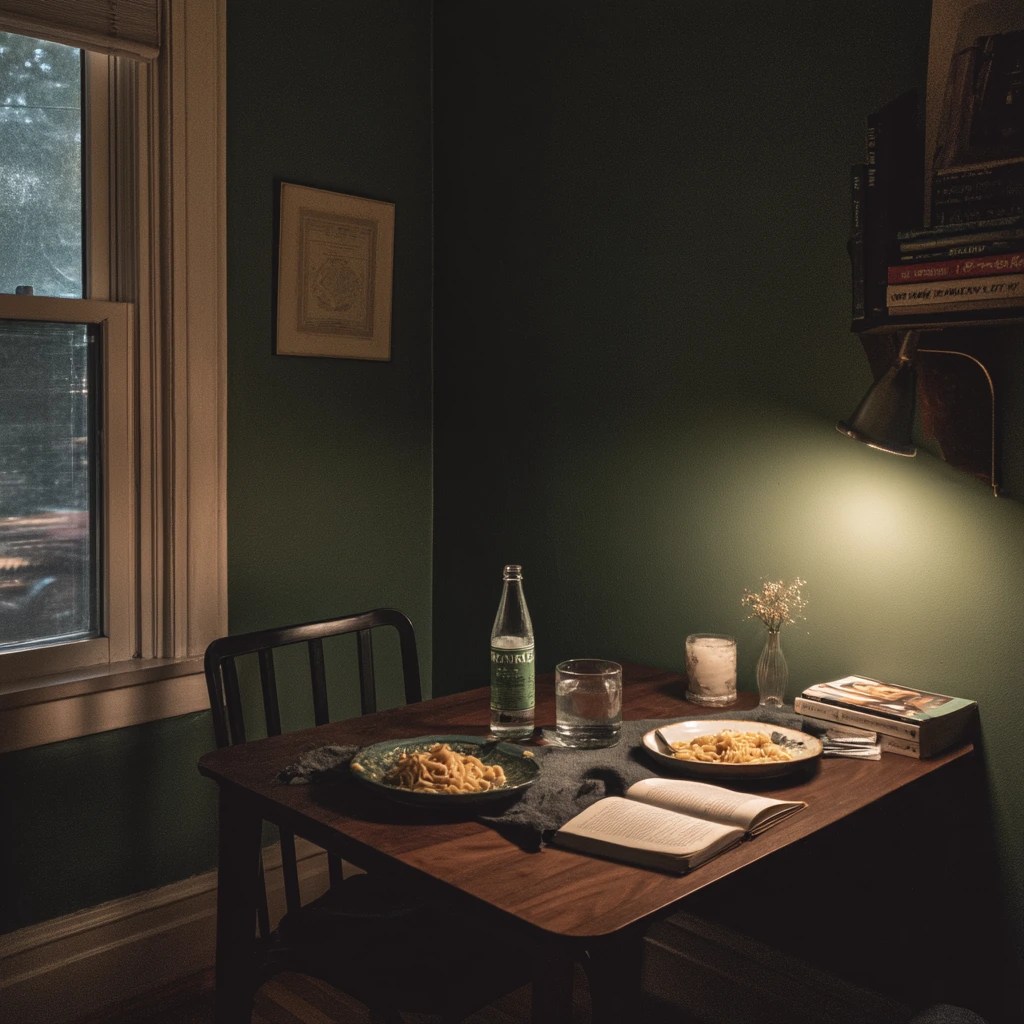
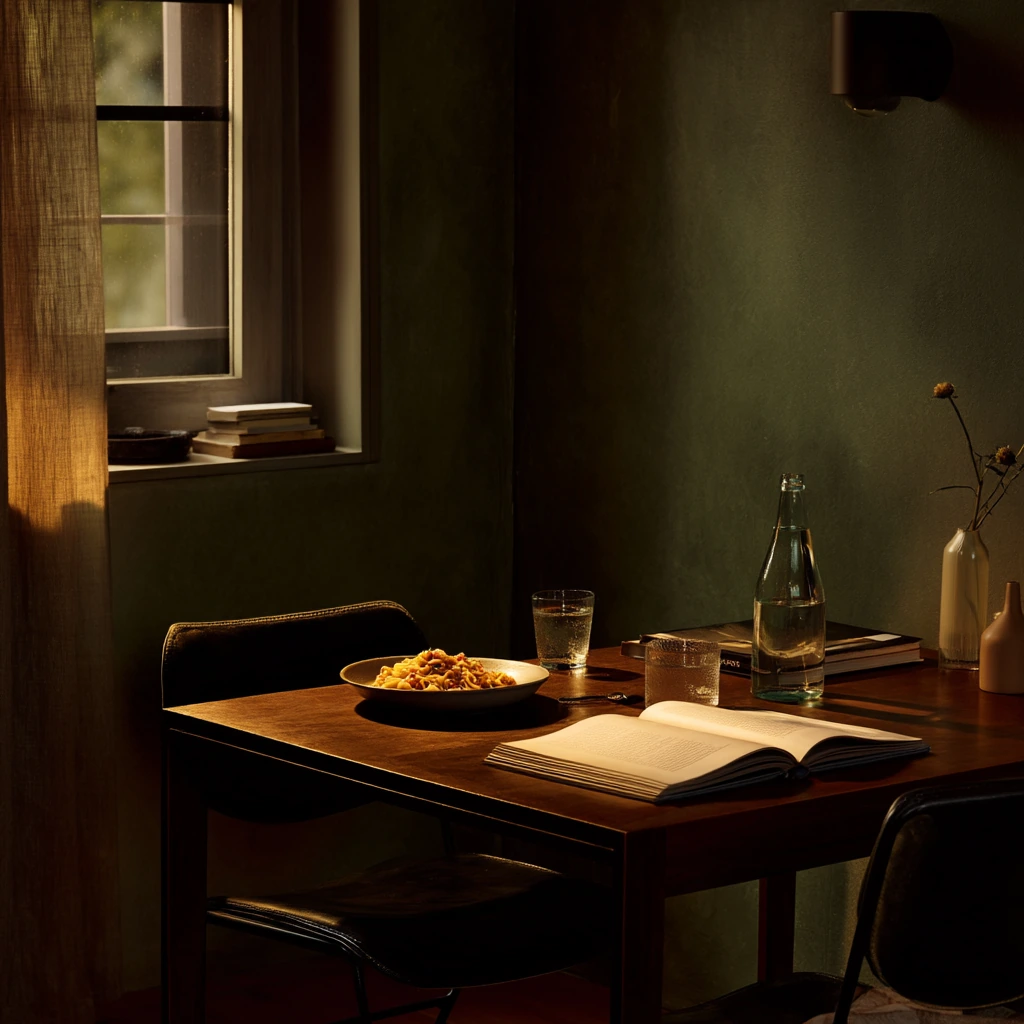
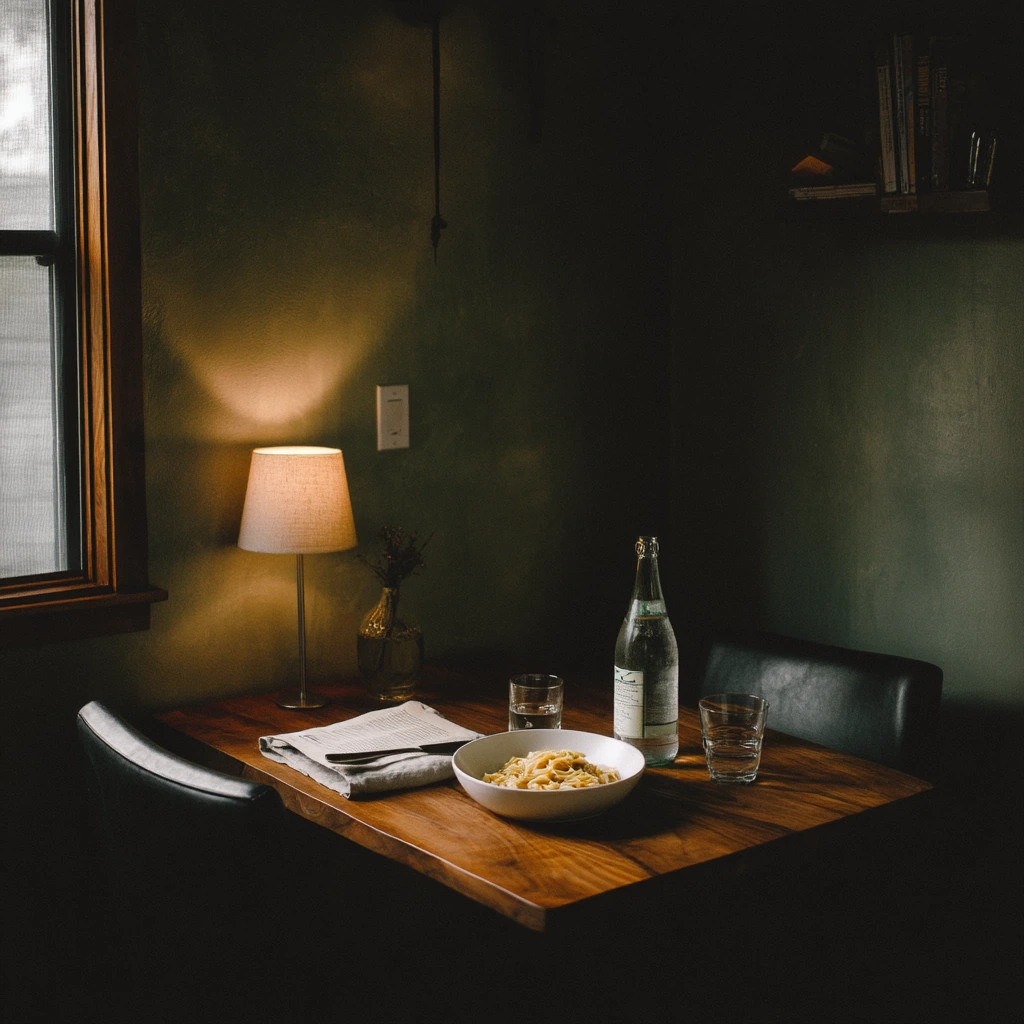
A moody green dining room can feel quiet and safe, especially for simple weeknight meals. Deep moss walls bring a cozy backdrop, and they make a compact walnut table look richer. When the light drops at dusk, moss green holds onto warmth, so the room still feels inviting.
Keep the styling minimal so the color can lead. Two black dining chairs create strong contrast and look clean against the green. Add linen napkins for a soft texture that keeps the room from feeling too dark. A bottle of sparkling water and a single bud vase are enough for the table, and they feel real.
To get that lived-in pause, leave a few honest items out: half-eaten pasta, a paperback open beside the plate, and a soft lamp glow mixed with fading window light. The key is to avoid too many small objects. One book, one vase, one drink, and one napkin per person keeps the scene calm and easy to copy.
- Use moss green on walls for a cozy, low-light look.
- Pair walnut or dark wood with black chairs for contrast.
- Choose linen napkins to add texture without adding clutter.
- Use one bud vase instead of a large centerpiece.
- Layer lamp light with dimmer bulbs for soft shadows at night.
Pro Design Tip: In dark green rooms, pick bulbs around 2700K and add a dimmer; it keeps moss walls from looking flat and helps food look better on the table.
Budget Considerations: If repainting is not possible, try a moss green peel-and-stick mural on one wall or use deep green curtains to mimic the mood.
5 Plant-Filled Green Dining Room
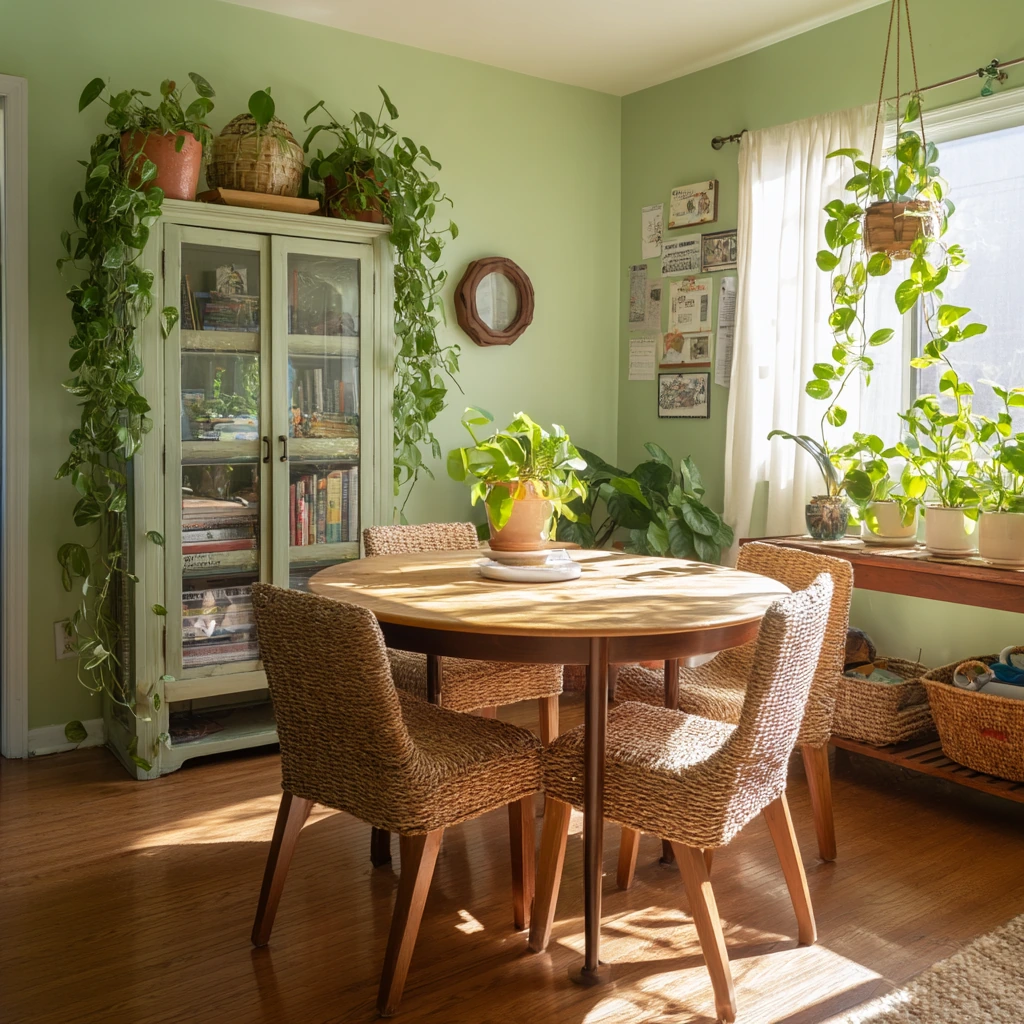
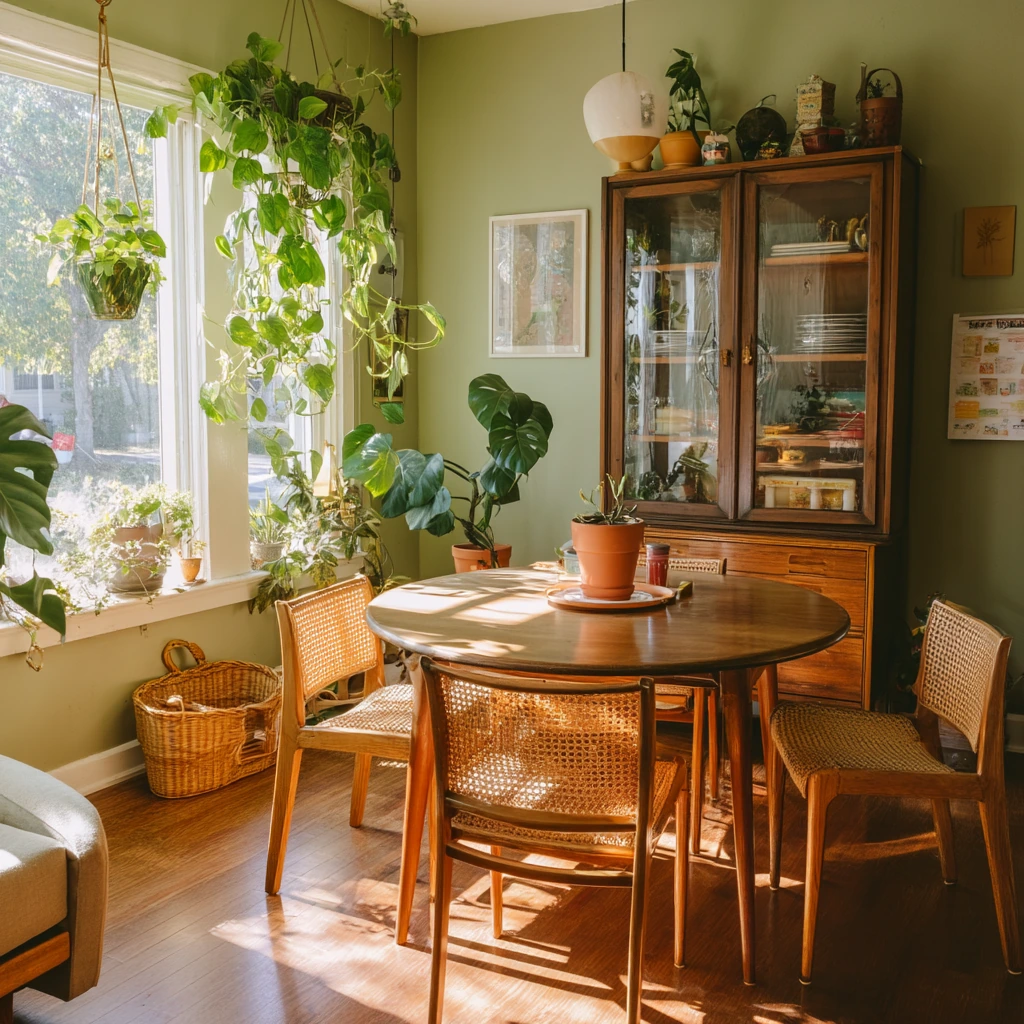
A cheerful dining room with soft green walls is an easy way to get a fresh look without going too bold. Soft green plays well with a round oak table and woven chairs, which keeps the room light and friendly. Late-morning window light helps the paint read clean, and plant shadows add movement on the wall.
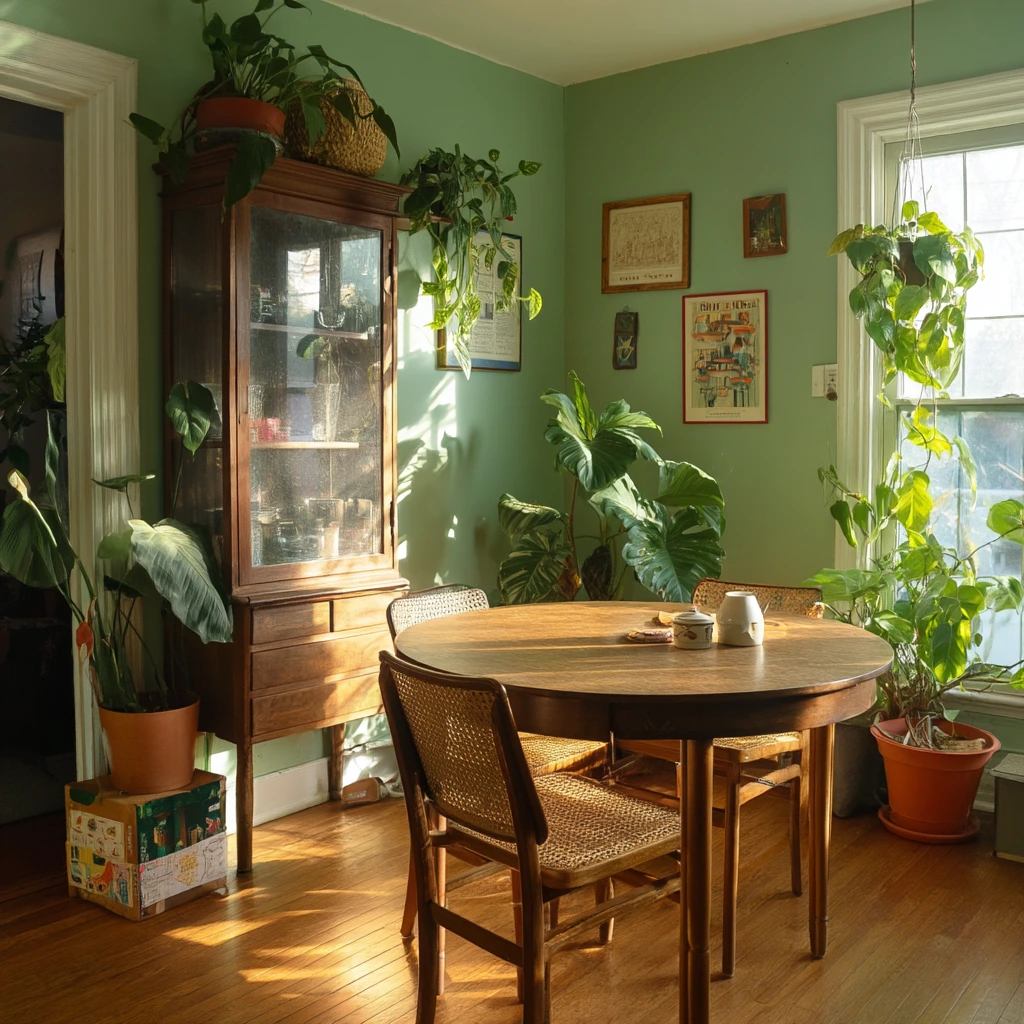
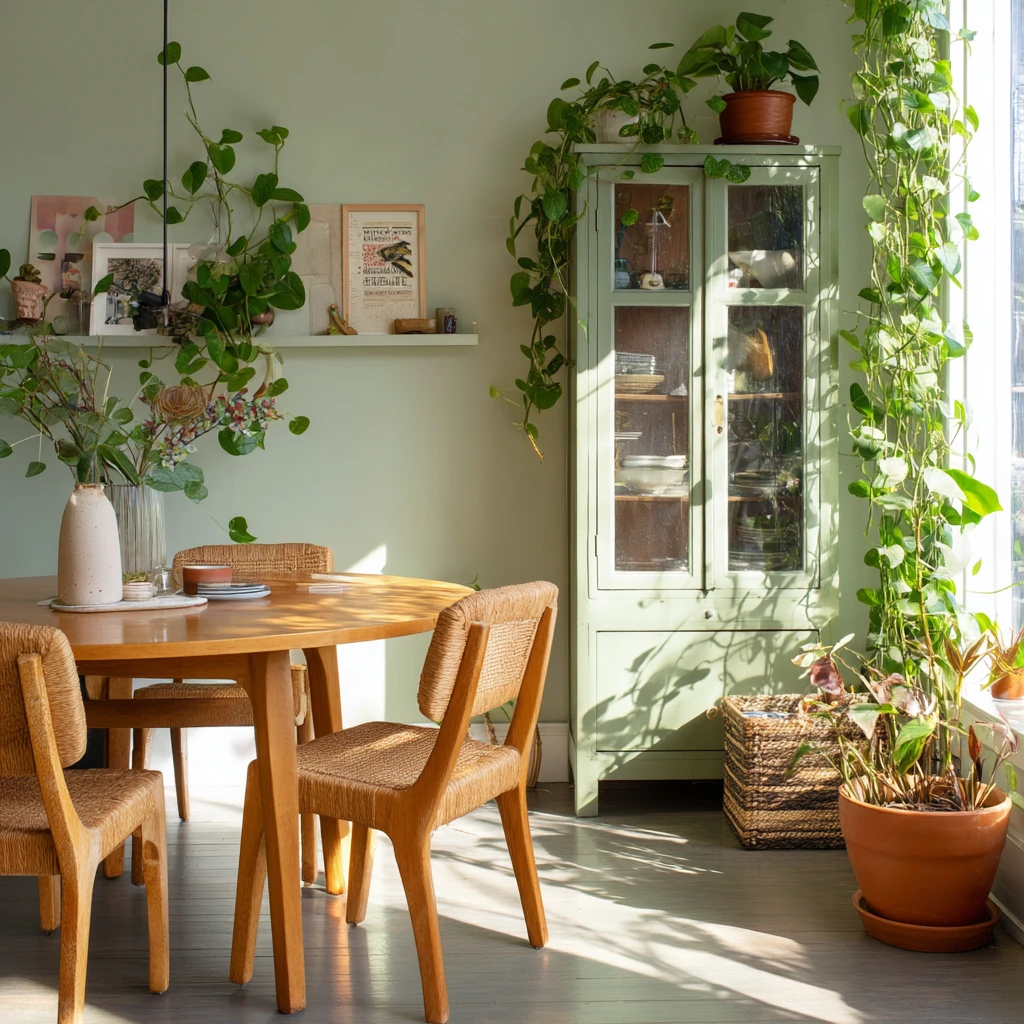
Use one piece of storage to make the room feel settled. A thrifted glass cabinet can hold everyday dishes and also display a few favorites. Add trailing pothos on top for a relaxed, leafy feel. A terracotta planter on the floor brings in a warm earth tone that balances the green.
For real-home energy, let useful items show a little. Recipe cards on the console, a spoon left on a saucer, and a kid’s toy basket tucked under the console keep it honest. The trick is to group them. Put recipe cards in one holder, keep a small dish for spoons, and choose a lidded or woven basket for toys so it looks tidy even when full.
- Pick a soft green that stays light in morning and midday sun.
- Use a round oak table to keep traffic flow easy.
- Add woven chairs for texture and comfort.
- Style a glass cabinet with dishes plus one or two plants.
- Hide kid items in a basket under a console or bench.
Pro Design Tip: Mix plant shapes and heights, like a trailing pothos plus a floor planter, to make the green walls feel layered, not matchy.
Budget Considerations: Glass cabinets can be pricey new; look for a secondhand hutch and paint the outside while leaving the inside wood for warmth.
6 Classic Green and Wood Dining Room
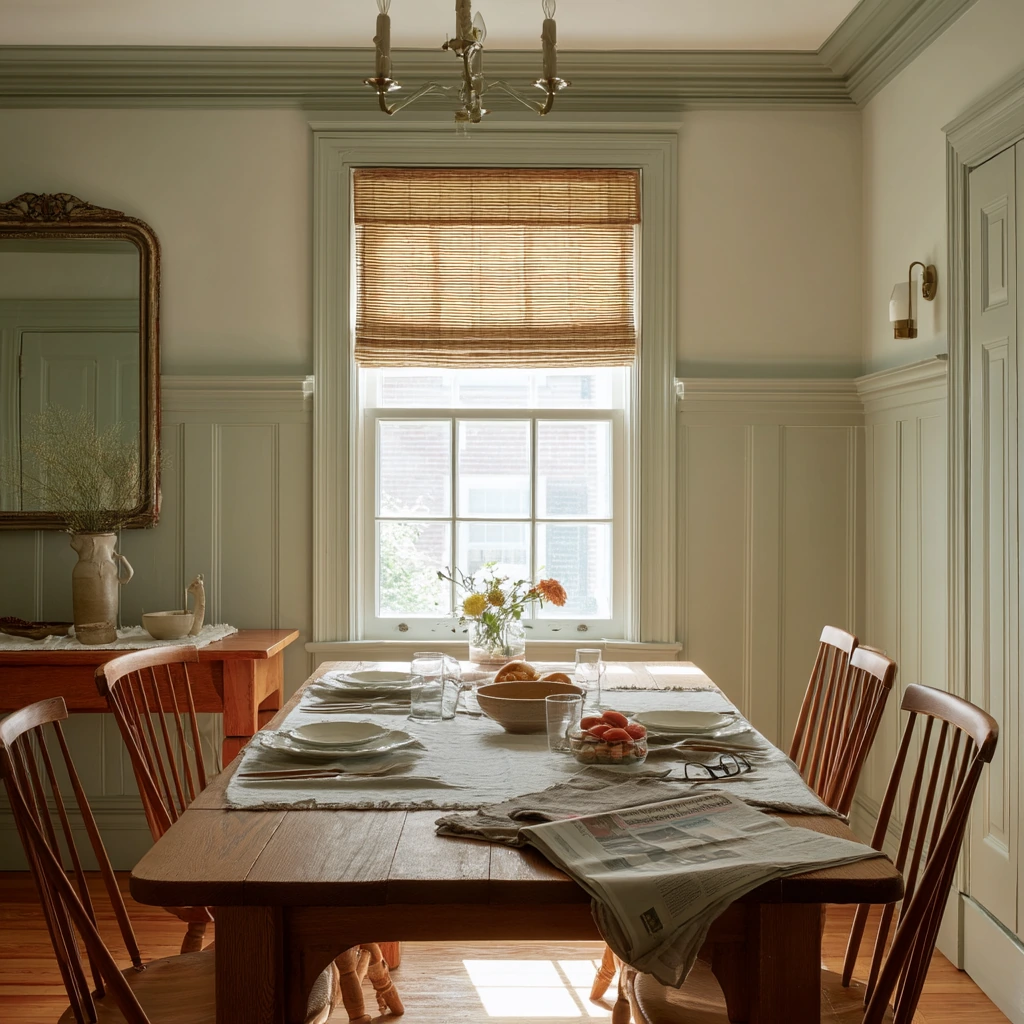
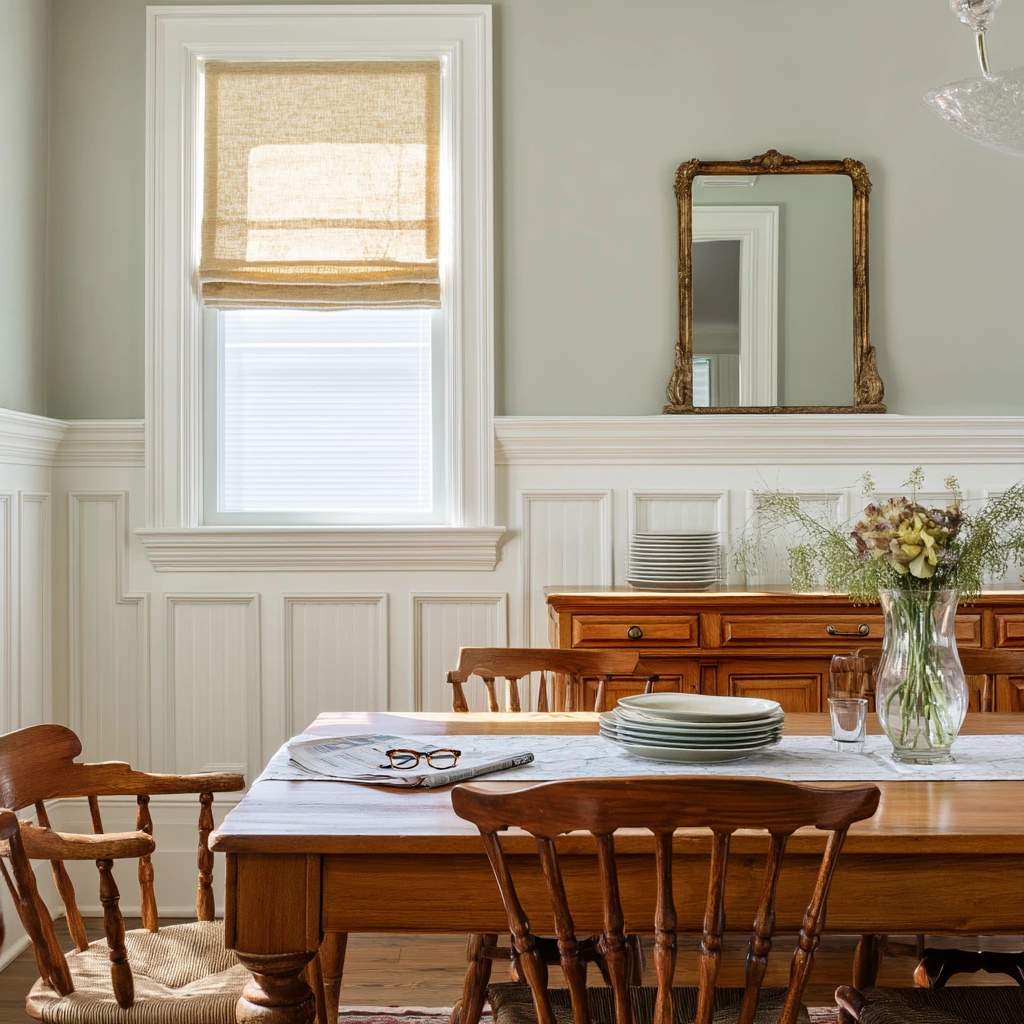
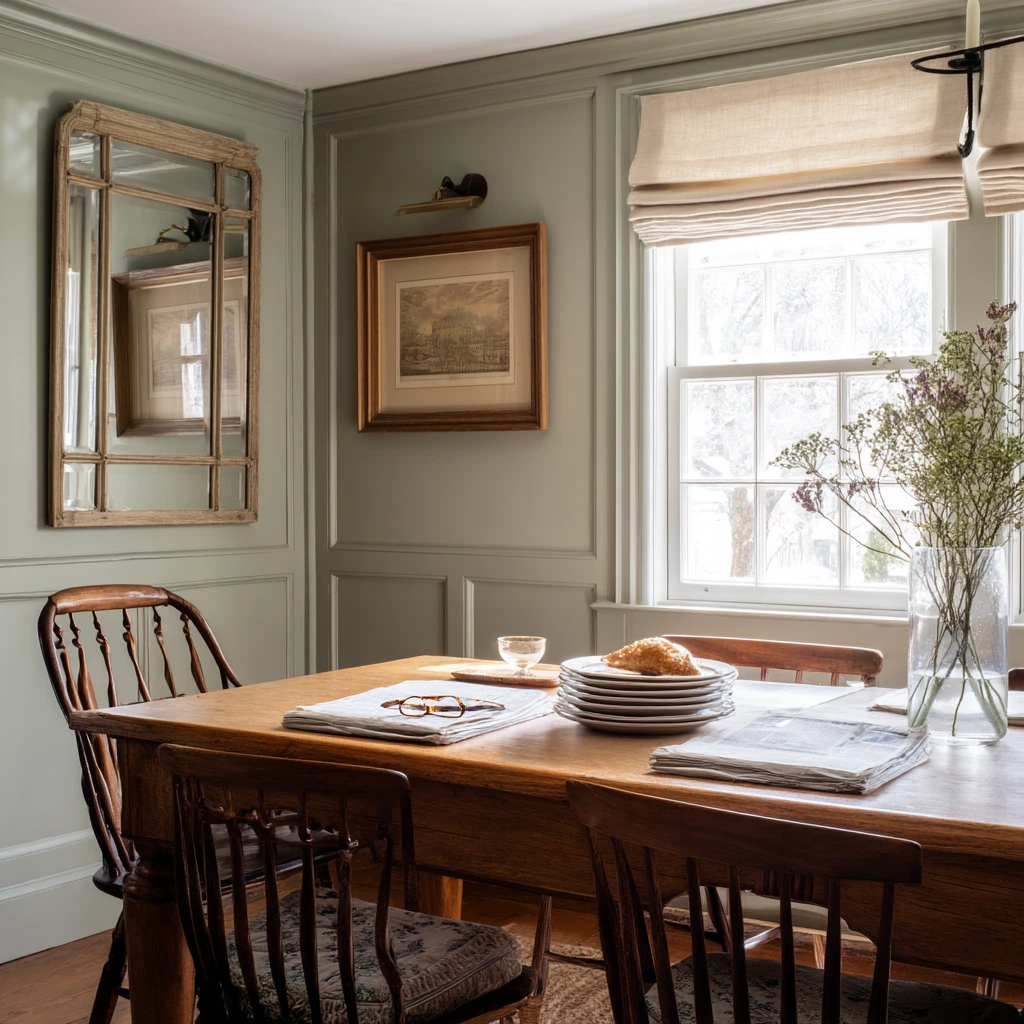
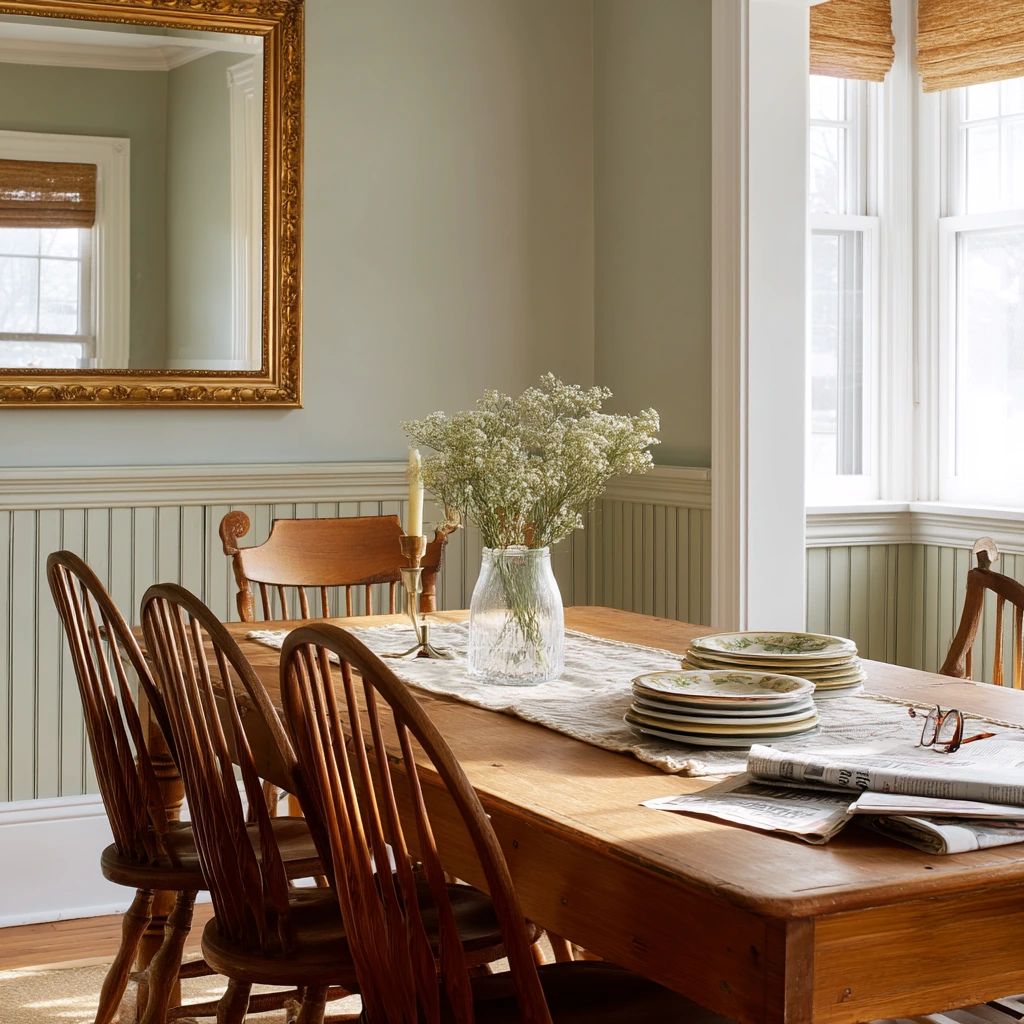
Muted green wainscoting is a classic way to bring color into a dining room without covering every wall. It feels traditional, but it can still fit a simple home. With a honey oak table and spindle chairs, the look turns warm and timeless, not trendy.
Keep the window treatment soft and clean. Linen Roman shades add texture and let you control light without heavy fabric. An antique mirror helps bounce overcast window light around the room, making the green feel calmer. If you like an “always ready” table, stack dinner plates neatly and keep the centerpiece low.
Small signs of life help the room feel welcoming. A folded newspaper and a pair of reading glasses near the centerpiece make the space feel used, not staged. If you have a sideboard, keep the top mostly clear and use one tray for daily items so the classic mood stays intact.
- Use muted green wainscoting to add color with less commitment.
- Pair honey oak and spindle chairs for a traditional look.
- Choose linen Roman shades for soft texture and light control.
- Add an antique-style mirror to reflect light and widen the room.
- Keep table styling low so it does not block sight lines.
Pro Design Tip: Paint the wainscoting in a satin finish and the upper wall in matte; the slight sheen difference adds depth without extra decor.
Budget Considerations: If you cannot add real paneling, use applied molding strips or a high-quality faux panel wallpaper to get the wainscoting effect.
7 Budget Green Dining Refresh
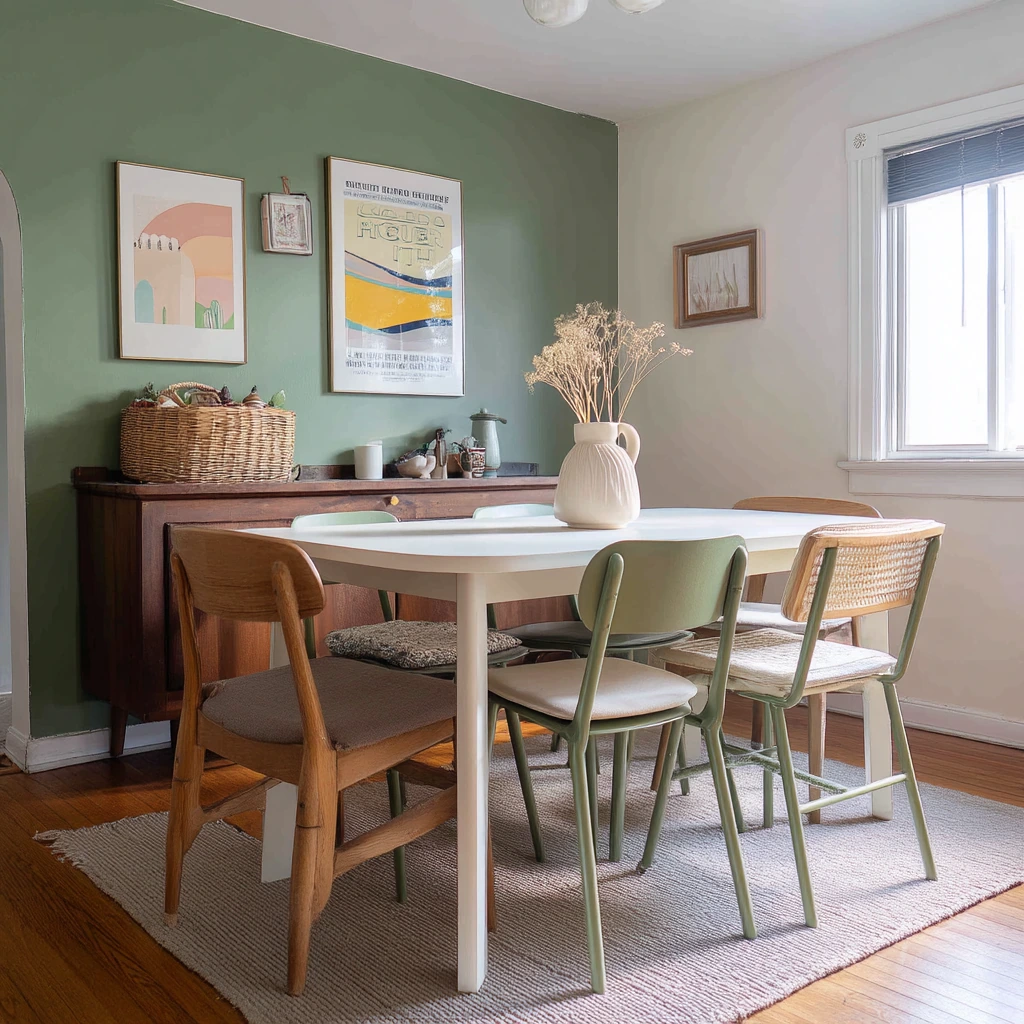
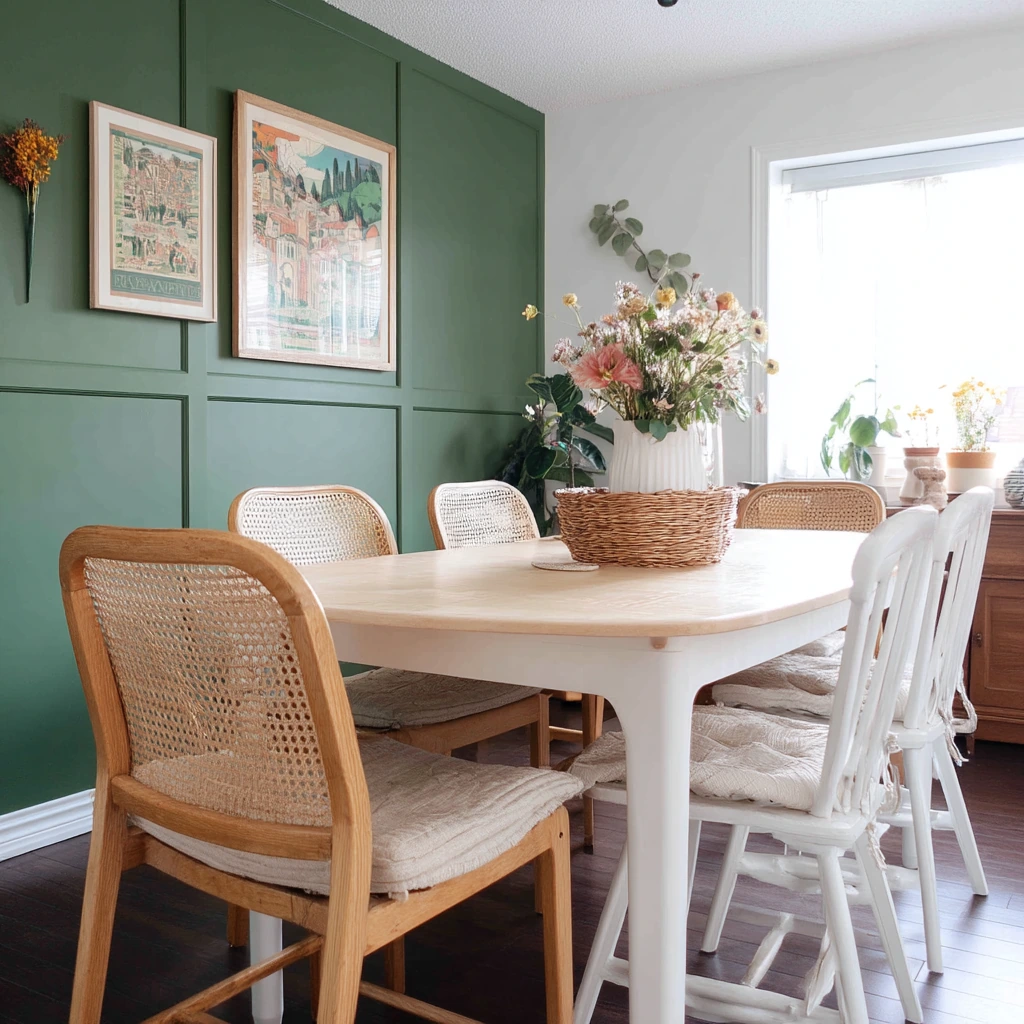
A green accent wall is one of the fastest ways to refresh a dining room on a budget. It gives you color and focus without painting the whole space. A simple IKEA-style table keeps the room practical, and mismatched chairs can look good when you connect them with seat pads in the same fabric or color.
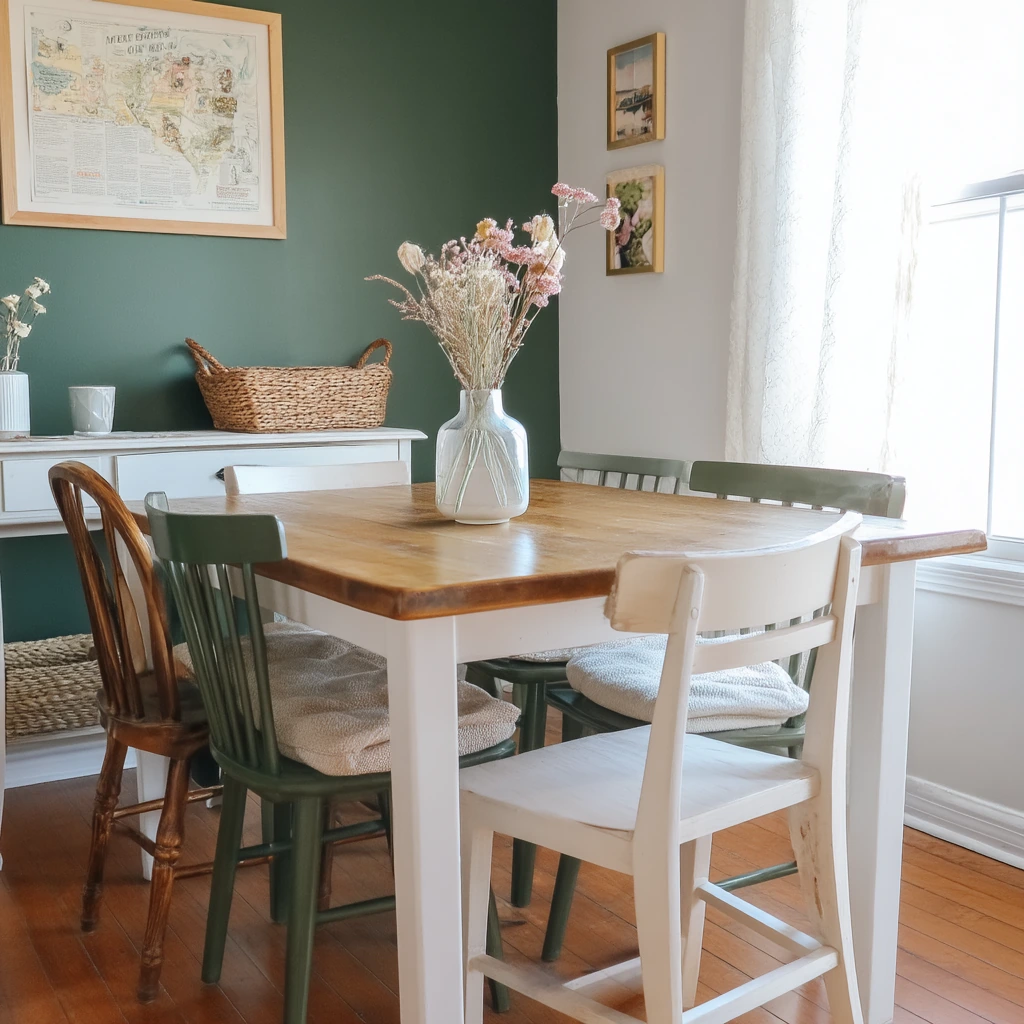
Use thrift-store decor to keep it personal. A small vase, framed postcard art, and a basket of napkins make the sideboard feel finished. Leave takeout menus in one slim folder so they do not spread across the surface. One chair slightly pulled out makes the room feel active and real, like someone just stood up to refill a glass.
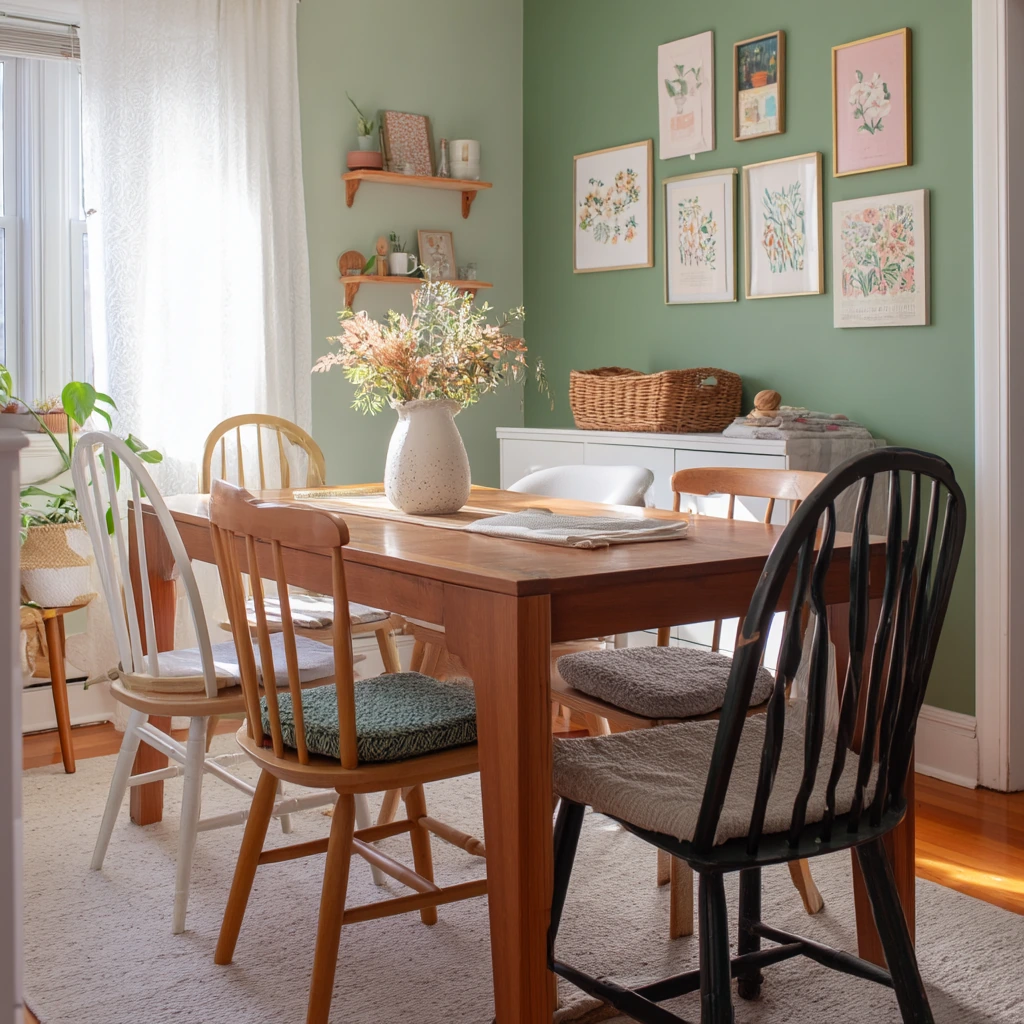
To style the accent wall, hang art that has some white space so the green still shows. Keep the rest of the room simple so the wall does the heavy lifting. If the chairs are all different, repeat one detail, like black legs or natural wood, to make the mix feel planned.
- Paint one wall green to add color without a full-room project.
- Use seat pads to make mismatched chairs feel connected.
- Hang small postcard art in a tidy grid or row.
- Style the sideboard with a vase, napkin basket, and one tray.
- Store menus in a folder or box to stop paper clutter.
Pro Design Tip: Pick the accent wall that you see first when you enter the room; it creates a clean focal point and makes the layout feel more intentional.
Budget Considerations: One gallon of paint often covers an accent wall; if you are very tight on funds, check local reuse centers for leftover paint in similar green tones.
8 Holiday Green Dining Setup
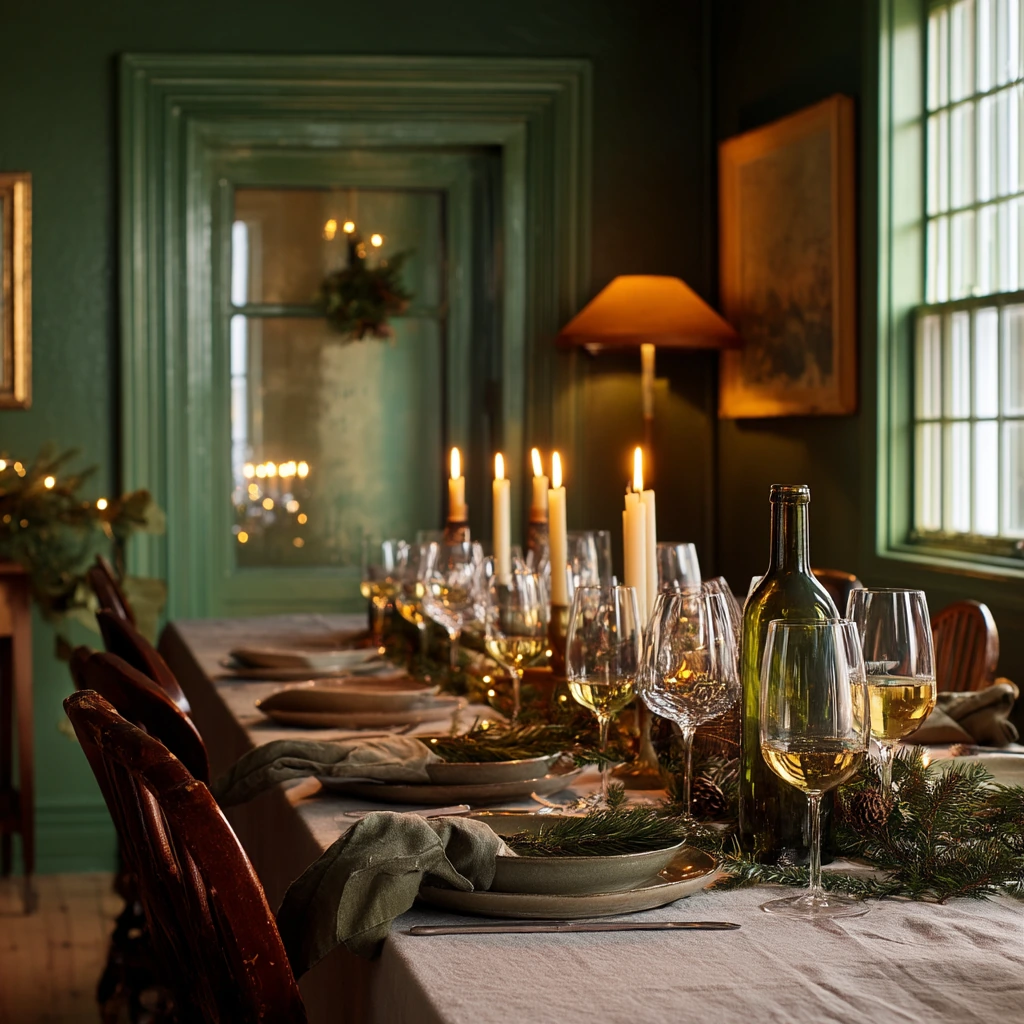
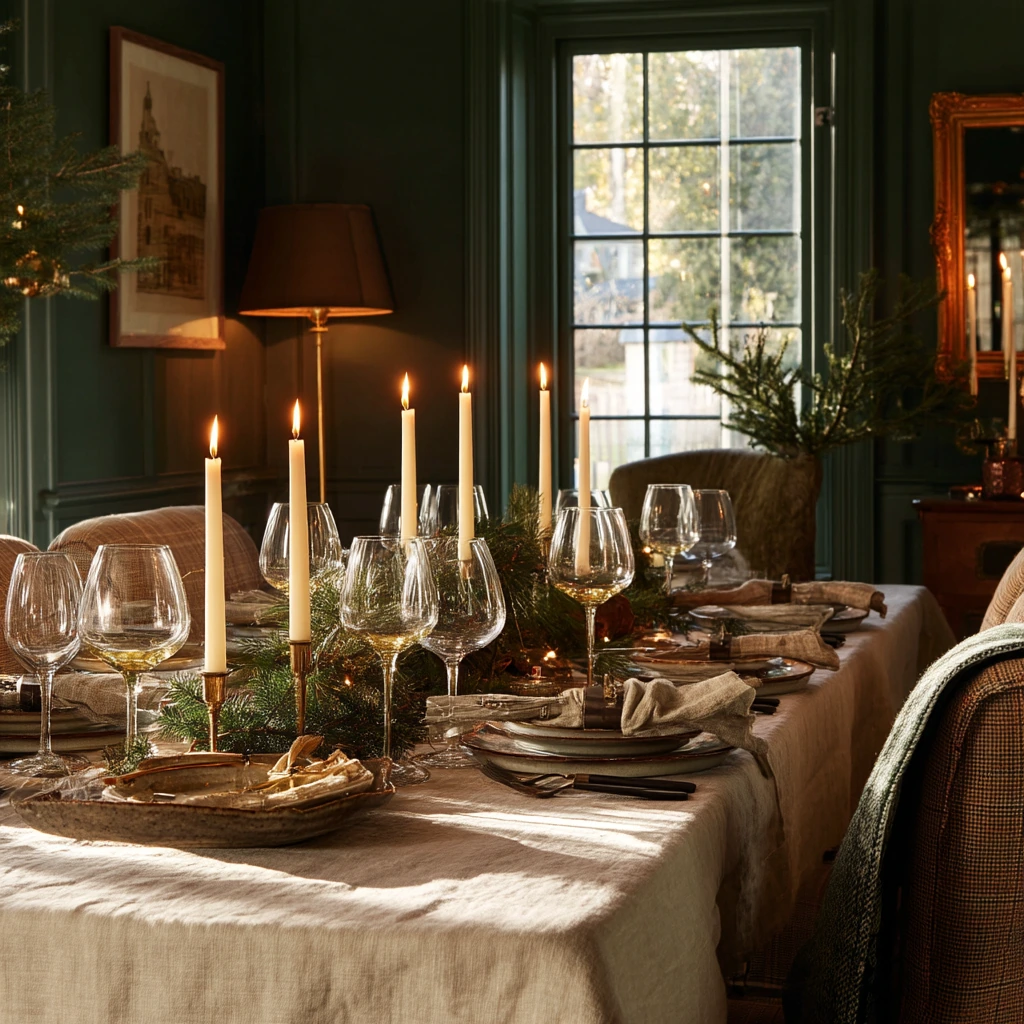
Muted emerald walls can make a dining room feel special for guests while still looking good on normal days. A long dining table becomes the focus, so keep the rest of the room quiet. Golden lamp light mixed with soft window spill helps emerald feel warm and welcoming, not cold.
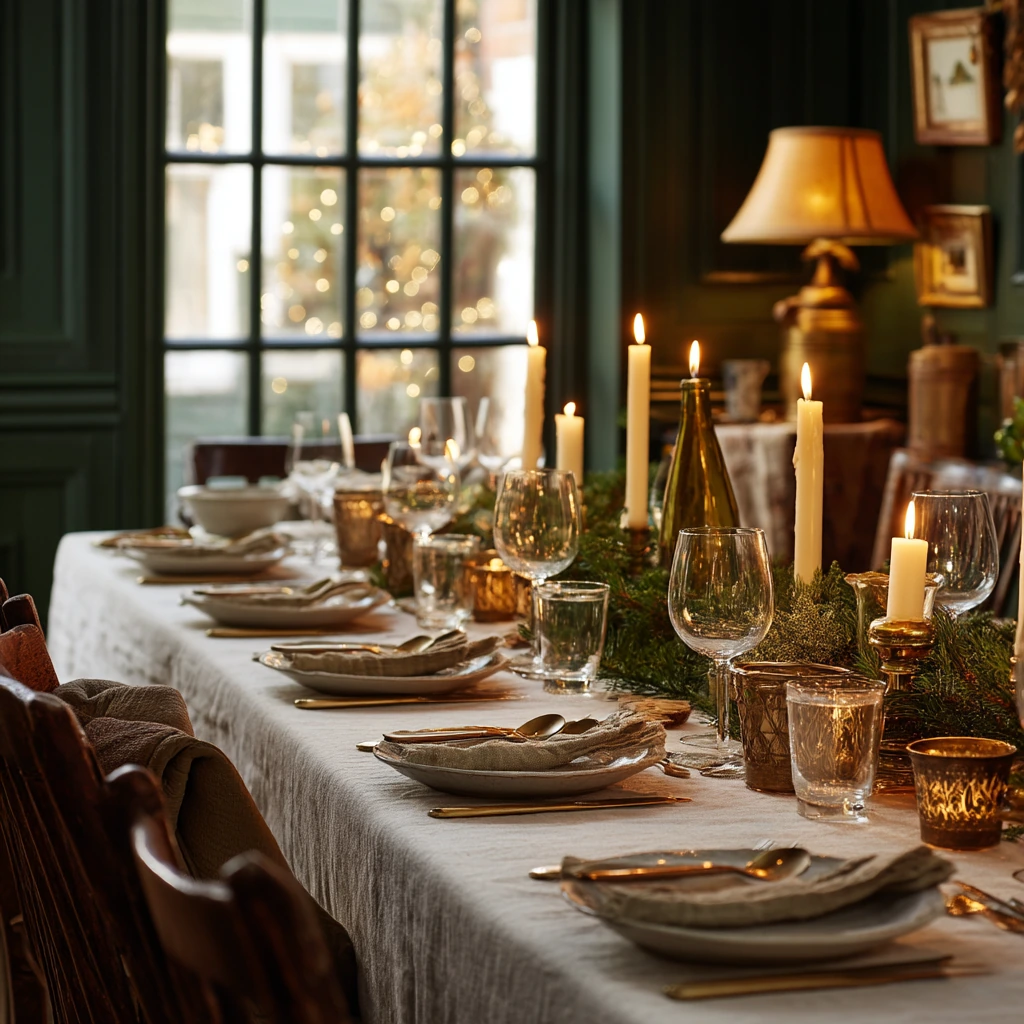
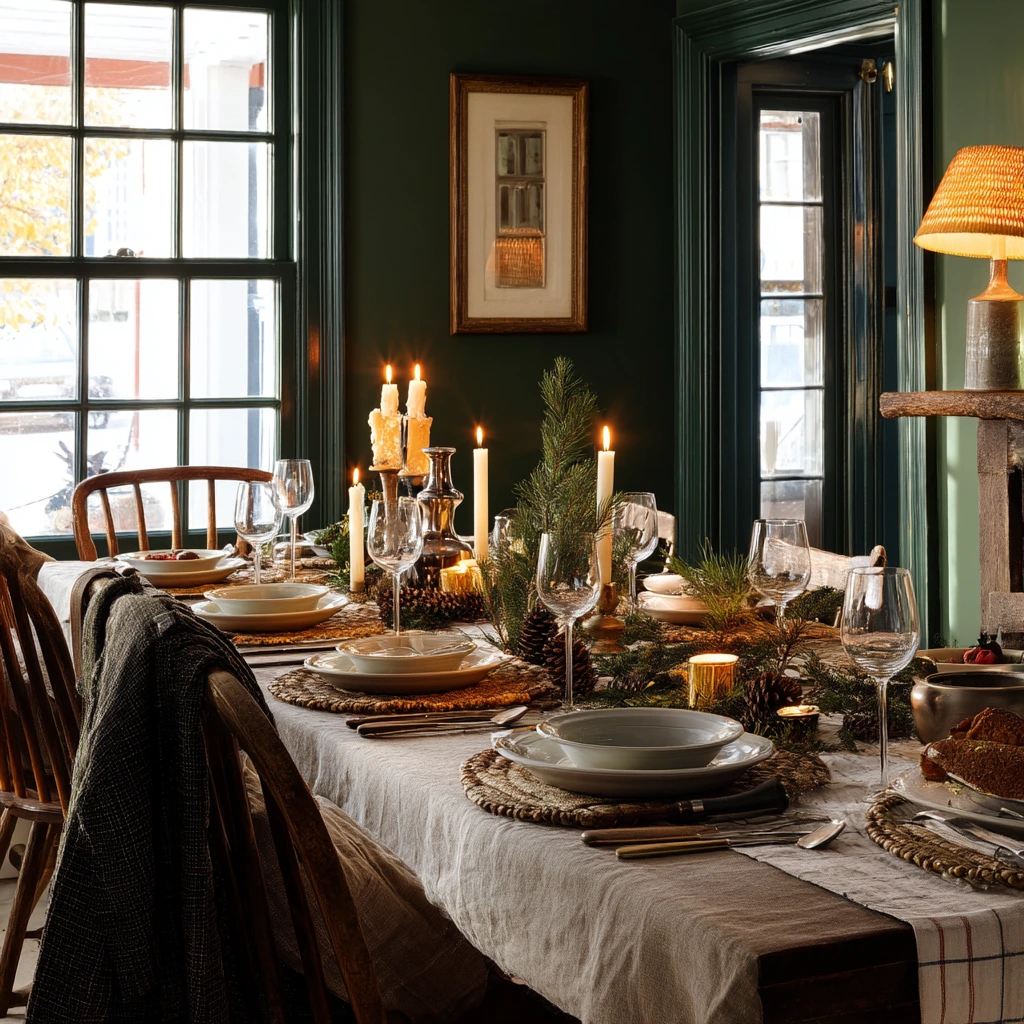
For a relaxed hosting setup, layer simple, natural items. Use a linen tablecloth as the base, then add taper candles and pine clippings for height and scent. Mismatched wine glasses make the table feel collected, and they are less stressful than matching sets. A serving dish with one spoon left inside keeps it honest, like you are still in prep.
Keep the scene believable and comfortable. A coat on the back of a chair and a napkin dropped mid-prep can look charming if the table is mostly clear. Use a sideboard or cart for extra plates and drinks so the table stays open for food. If you want an easy centerpiece rule, keep the tallest items near the middle and leave space for serving bowls.
- Use muted emerald to create a richer backdrop for gatherings.
- Start with a linen tablecloth for a soft, forgiving base layer.
- Add taper candles and greenery like pine clippings for height.
- Mix wine glasses and keep place settings simple.
- Set up a sideboard zone for extra serving pieces and bottles.
Pro Design Tip: Group candles in varying heights but keep the flame line below eye level when seated, so people can talk across the table easily.
Budget Considerations: Clip greenery from your yard or buy one inexpensive bunch and spread it down the table; it reads full without needing a big floral order.
9 Modern Green Dining with Art and Texture
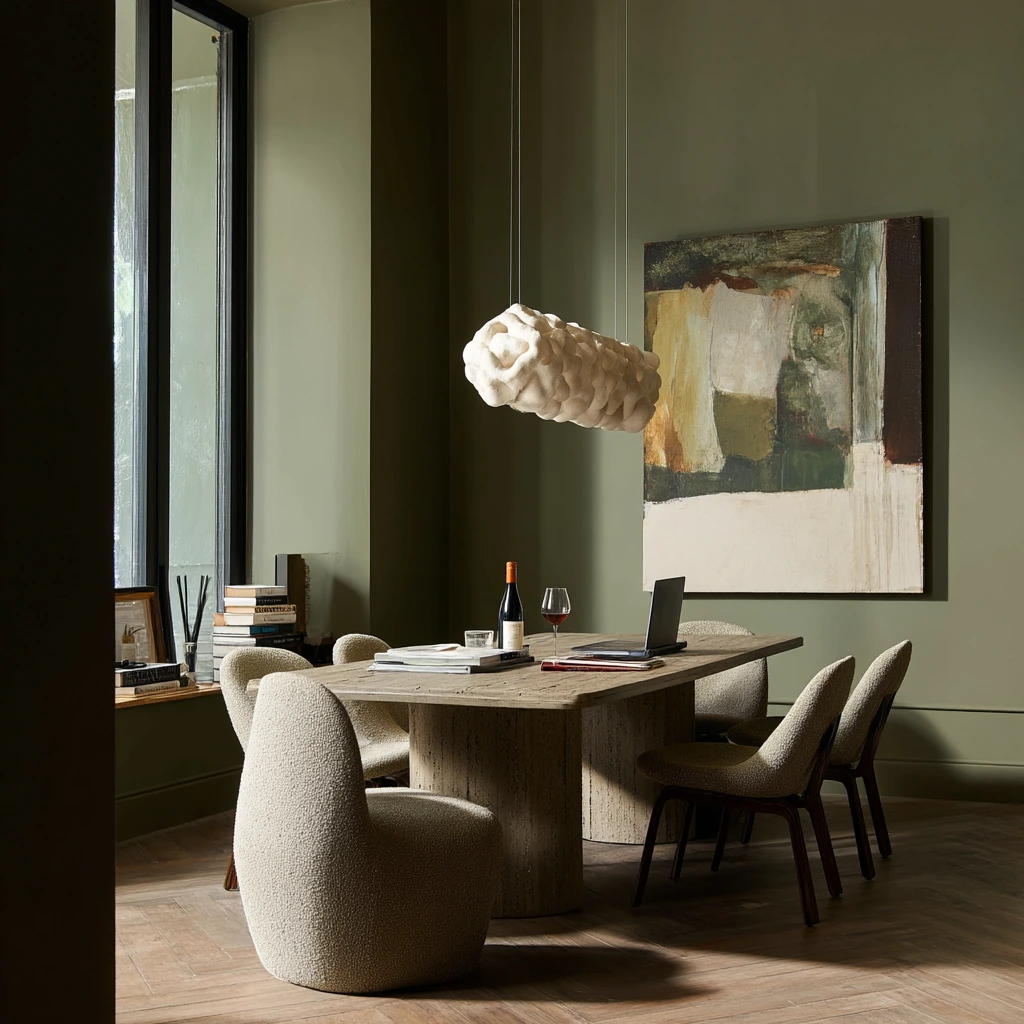
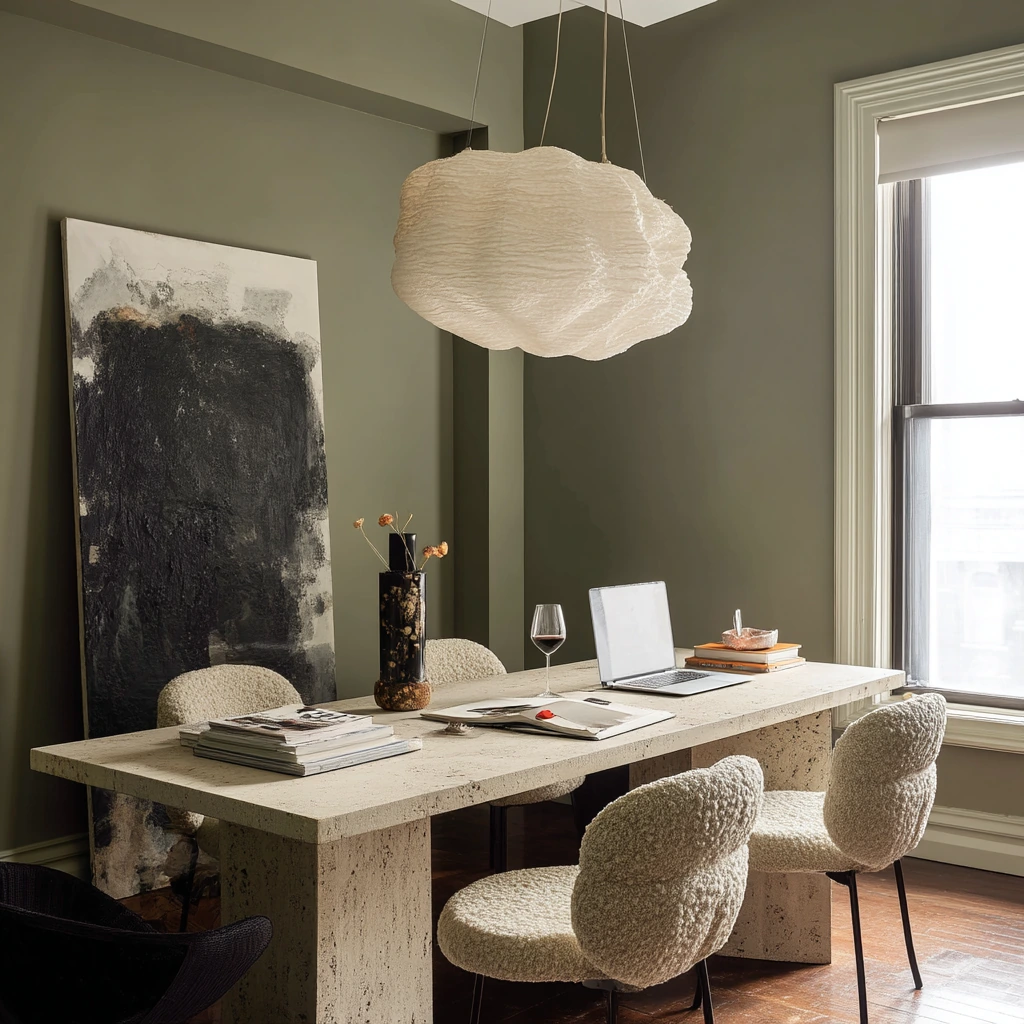
A modern olive green dining room can look polished and still feel real. Olive walls pair well with creamy neutrals like boucle chairs and stone-look surfaces. A sculptural pendant adds a clean focal point overhead, while soft side-window light keeps the room calm and even.
Choose a table that matches the mood. A travertine-style table looks modern but still has natural texture, so it does not feel harsh. Keep decor simple: oversized art leaning against the wall instead of hung perfectly, and a stack of design books to add height. These items help the room feel styled without being busy.
For a lived-in touch, allow one or two personal details. A wine glass with a lipstick mark and a laptop closed near the edge of the table say the room is used daily. The key is editing. If you leave out a laptop, keep cords hidden. If you show a glass, clear the rest of the table so it feels intentional, not forgotten.
- Pair olive walls with creamy textures like boucle for softness.
- Use a sculptural pendant to anchor the dining zone.
- Choose a stone-look table for a modern, natural feel.
- Lean oversized art for an easy, gallery-style look.
- Keep one “real life” item out and clear the rest of the surface.
Pro Design Tip: In modern rooms, repeat curves, like a round vase with rounded chairs, to balance the strong lines of art and lighting.
Budget Considerations: If a travertine-style table is expensive, try a used wood table and add a stone-look vinyl or laminate top, or use placemats that mimic stone texture.
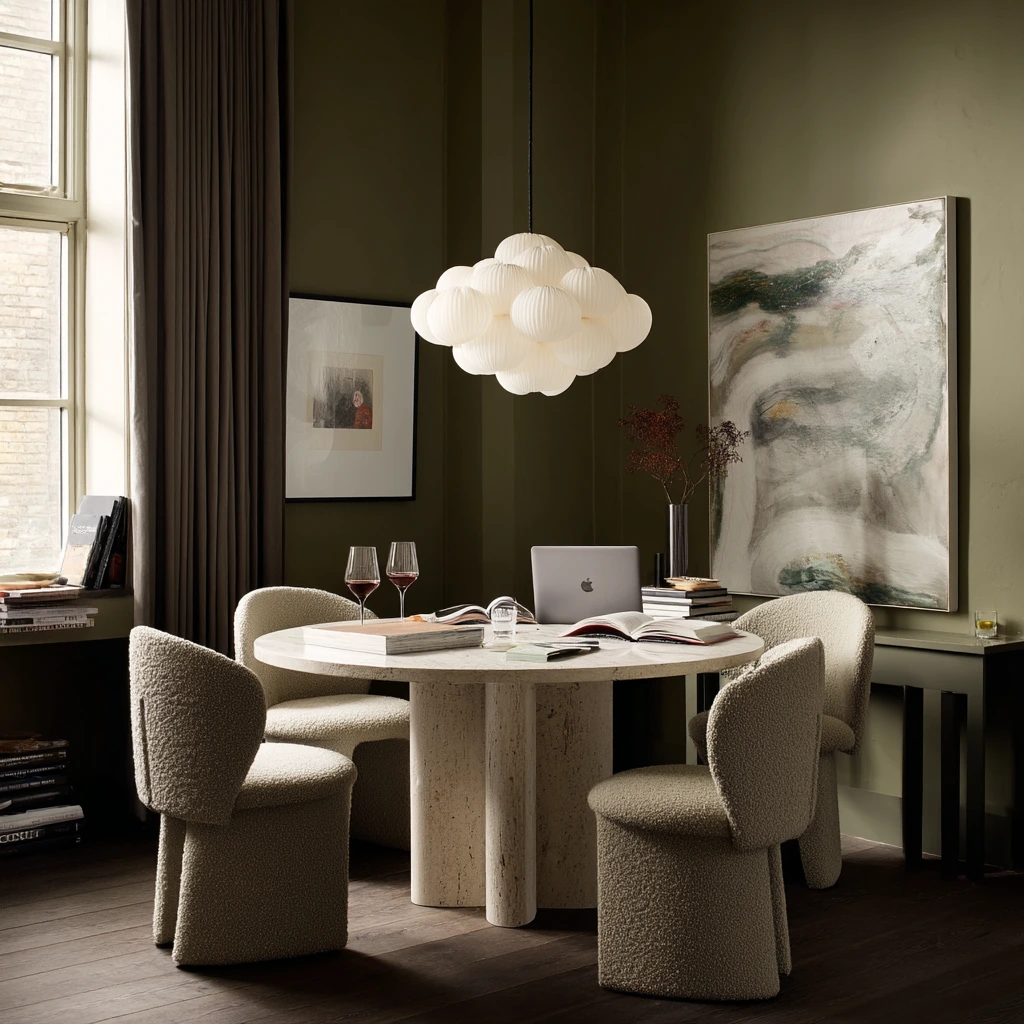
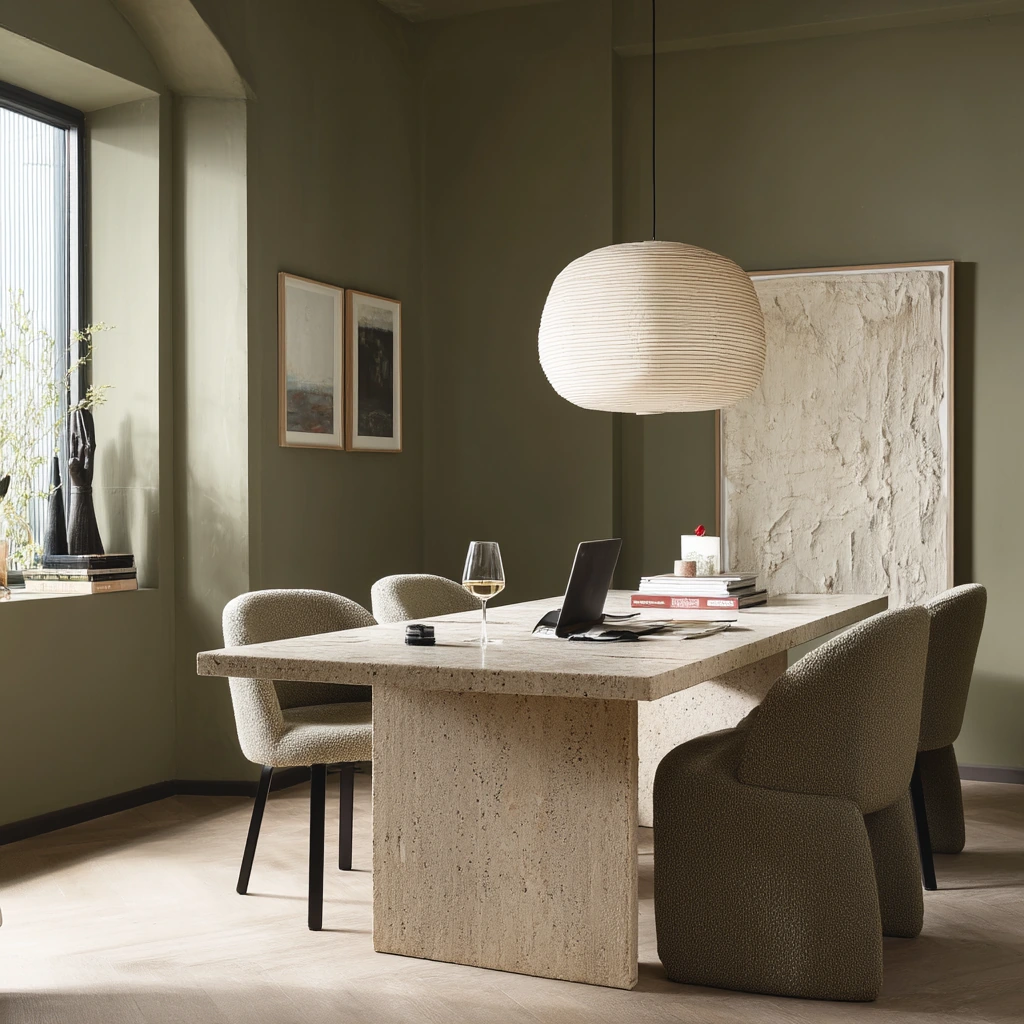
10 Morning Coffee in a Green Breakfast Room
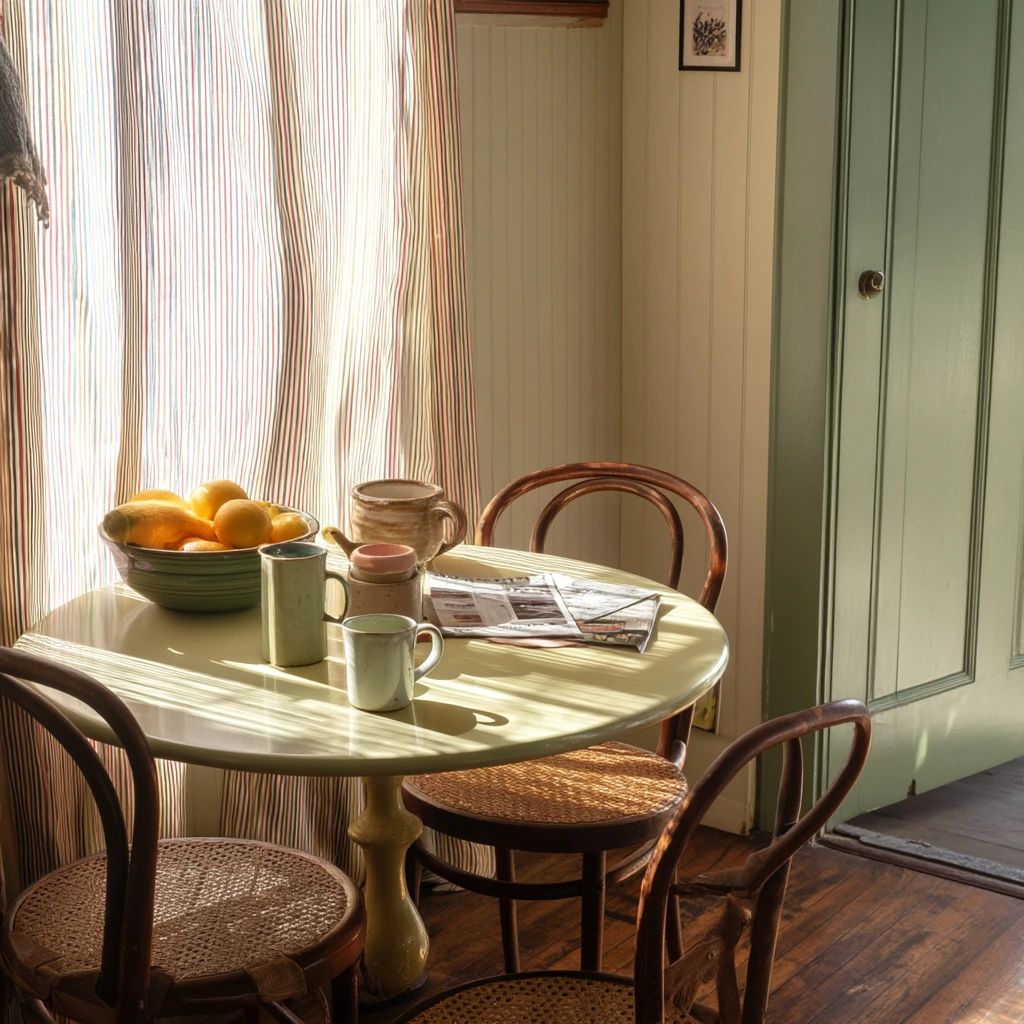
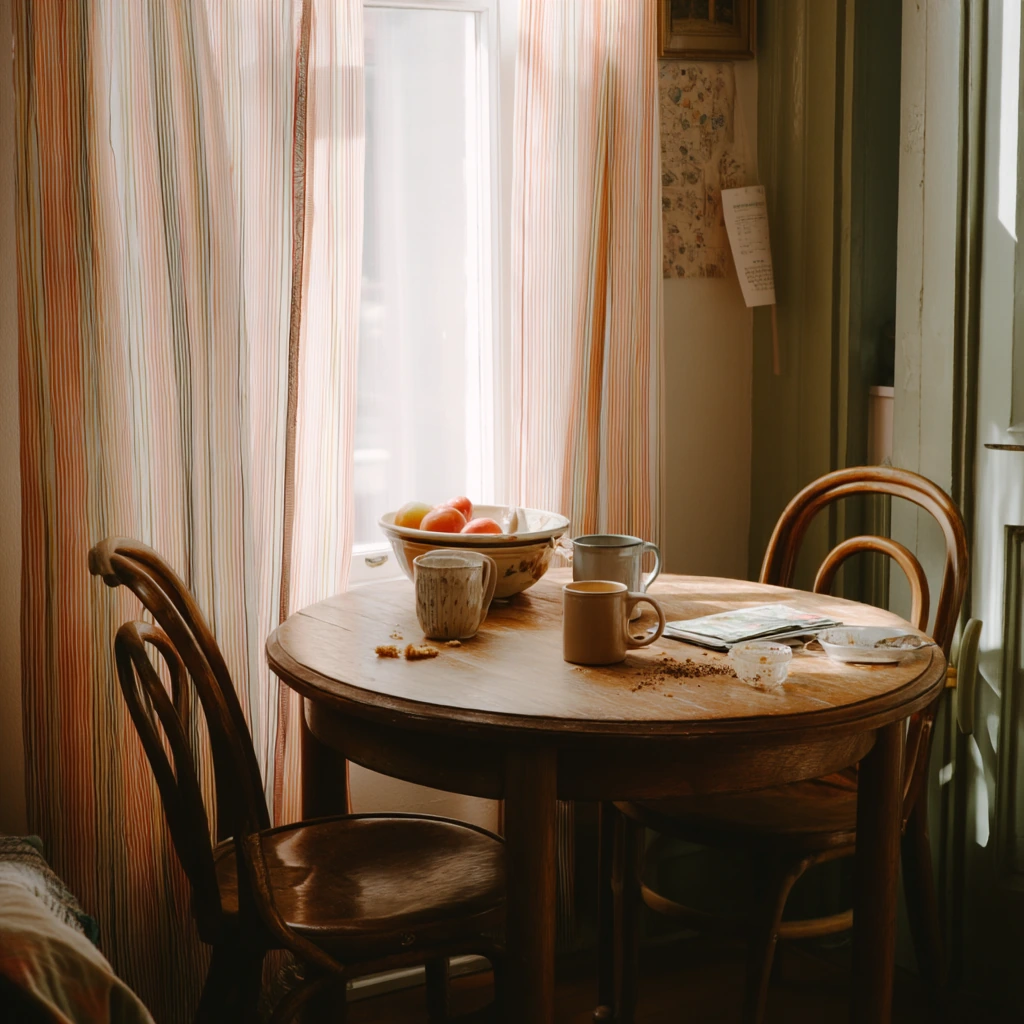
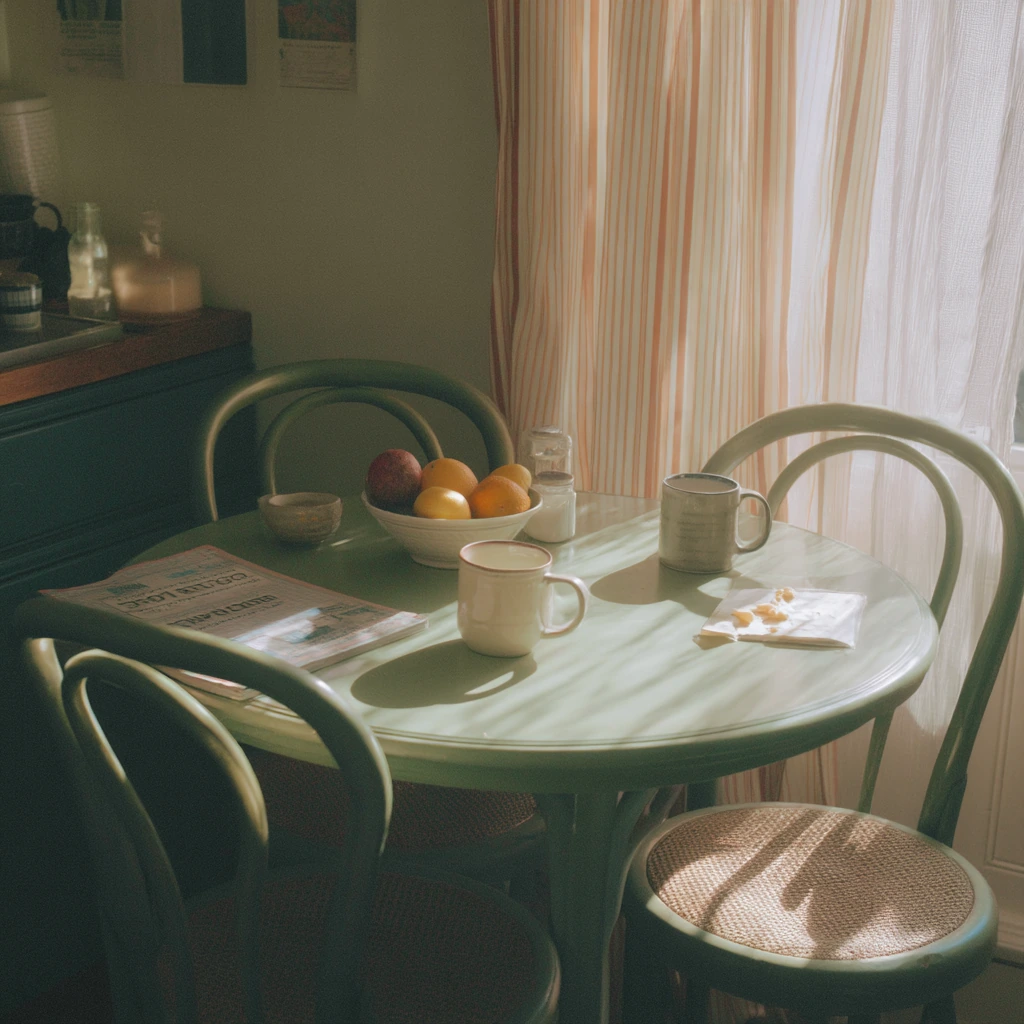
Soft pistachio green is a great color for a small breakfast dining room because it feels light and gentle in early morning window light. A round café table keeps the space moving, and bentwood chairs add classic shape without looking heavy. This setup works well when the dining area is close to the kitchen or hallway.
To make it feel homey, let some daily mess show, but control it. Coffee mug rings, open weekend mail, a toddler cup, and a few crumbs on a placemat tell the truth about mornings. Use striped curtains to add pattern without adding clutter. A ceramic fruit bowl gives you one steady centerpiece that still feels useful.
Make cleanup part of the styling plan. Choose wipeable placemats, keep a small hand broom nearby, and store mail in a sorter right after breakfast. If the room is tiny, hang one hook for a tote bag or lunch box so the floor stays clear. Pistachio walls will keep the space from feeling too busy, even with family life happening.
- Use pistachio green to brighten a small breakfast corner.
- Pick a round café table to improve flow and seating.
- Add bentwood chairs for a light, classic look.
- Use striped curtains to bring pattern and soften the window.
- Keep a simple mail sorter and wipeable placemats for easy reset.
Pro Design Tip: Choose one repeating accent color from the curtains, like cream or tan, and use it in bowls or napkins so the small room feels pulled together.
Budget Considerations: Bentwood chairs are often available secondhand; if seats are worn, use low-cost seat cushions or re-cane the seats in a weekend project.
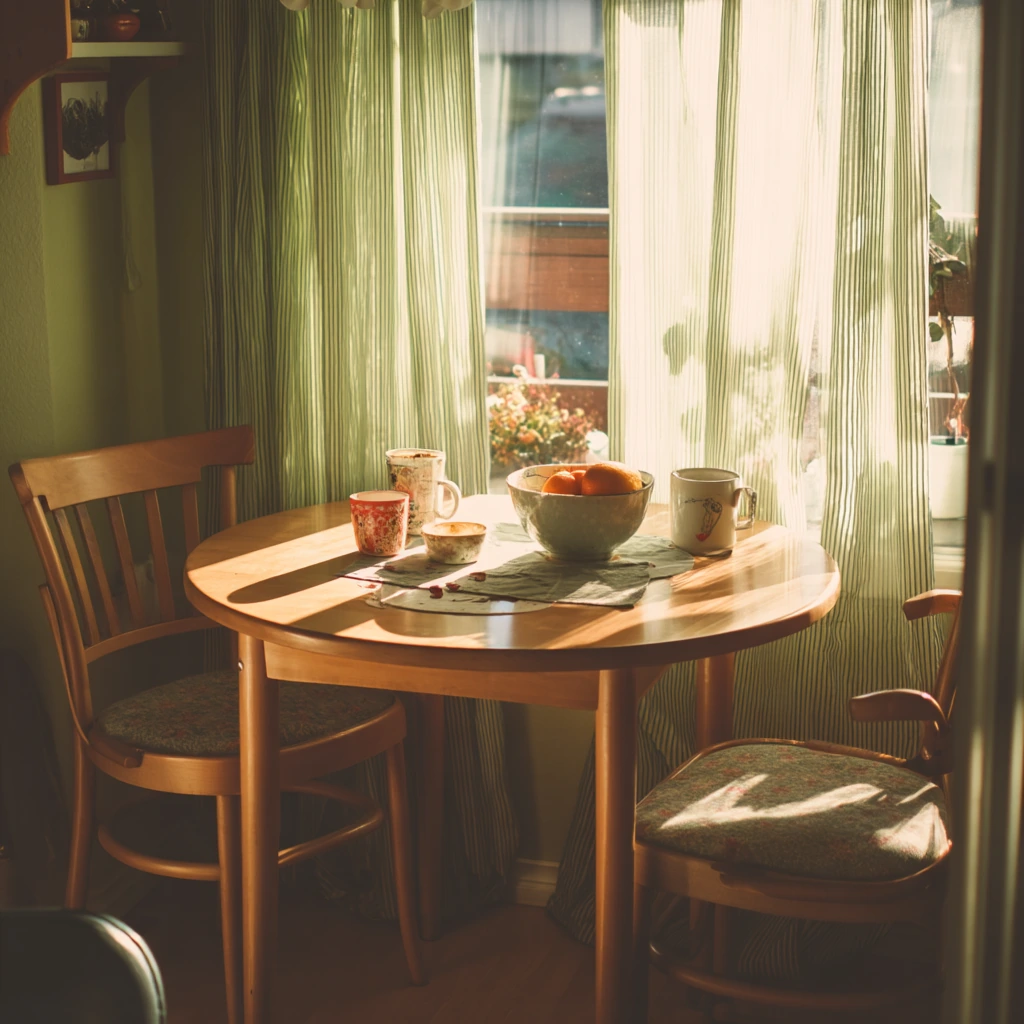
Green dining room ideas work because they are flexible. Olive, sage, forest, moss, emerald, and pistachio can all feel right when you match them to your light and your daily routine.
Focus on a few strong basics first: a table that fits the space, comfortable chairs, and one storage spot for papers and dishes. Then add texture with linen, woven materials, plants, and warm wood tones.
If you want the fastest upgrade, start with paint, curtains, or a green accent wall. Small styling choices, like a bowl of lemons or a simple bud vase, can finish the look without making the room harder to live in.
FAQ
What shade of green is best for a dining room? Olive and sage are easy for most homes. Moss and emerald are better if you want a deeper, moodier look, especially in rooms with good lamp lighting.
Do green walls make a dining room look dark? They can, but you can balance it with light wood, cream textiles, mirrors, and warm bulbs. Test paint in your room’s real light before committing.
What colors go with a green dining room? Warm wood, cream, tan, black, brass, and terracotta pair well with most greens. White can work too, but softer off-white is often easier on the eyes.
How do I style a dining table so it looks nice every day? Keep it simple with one runner, one bowl or vase, and space to eat. Use a tray on a sideboard for mail and small items so they do not take over the table.
How can I make a small dining nook feel bigger? Use a round pedestal table, wall shelves, and lighter greens like sage or pistachio. Keep the floor clear and use one main focal point instead of many small items.
What is a renter-friendly way to add green? Try removable curtains, peel-and-stick art, a washable rug with green tones, or a large plant. Plug-in sconces and temporary shelves can add function without permanent changes.