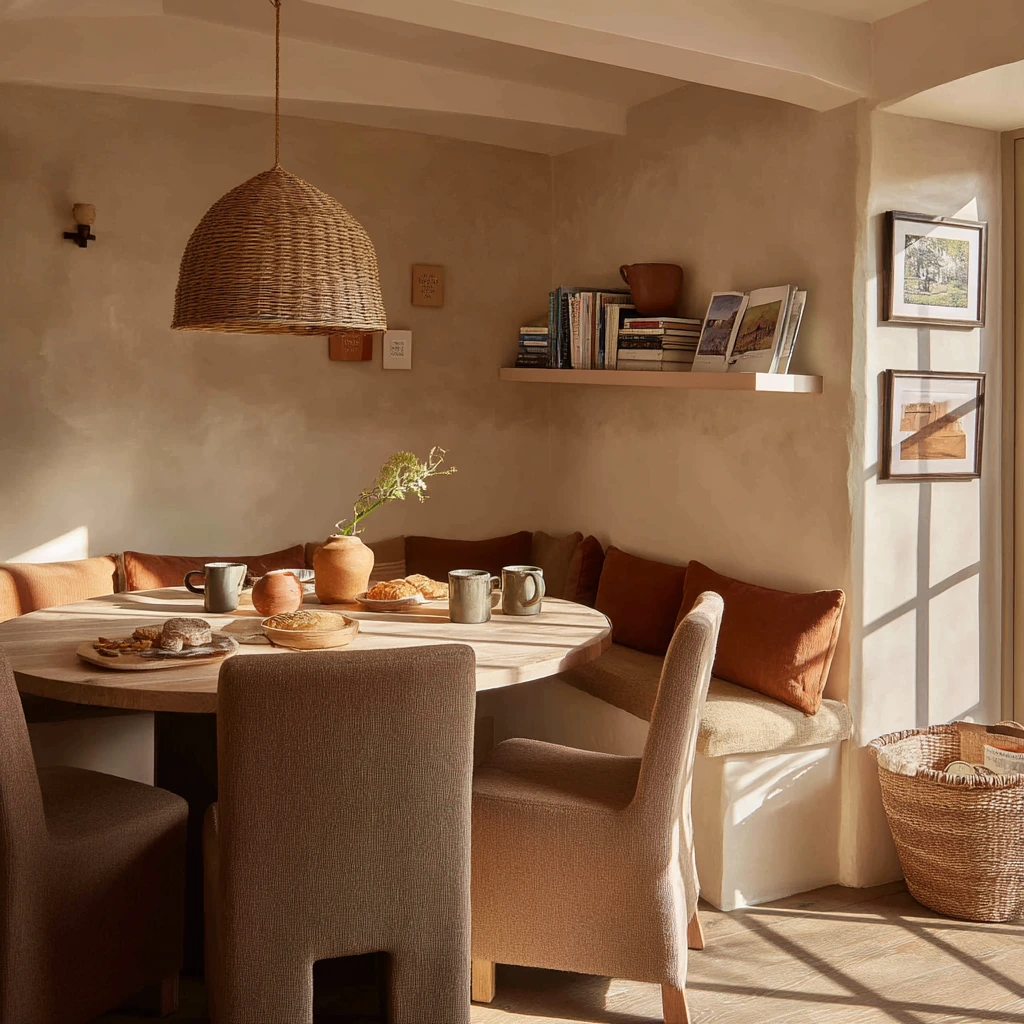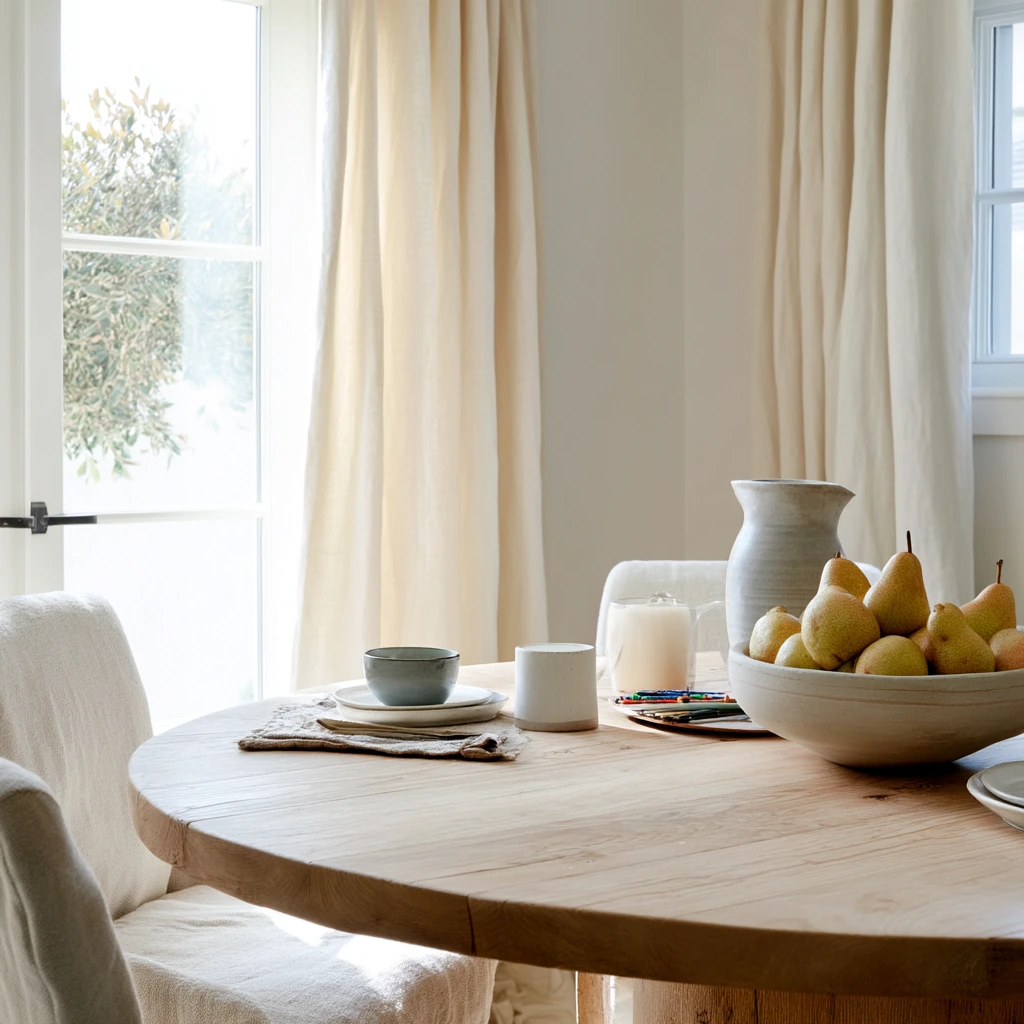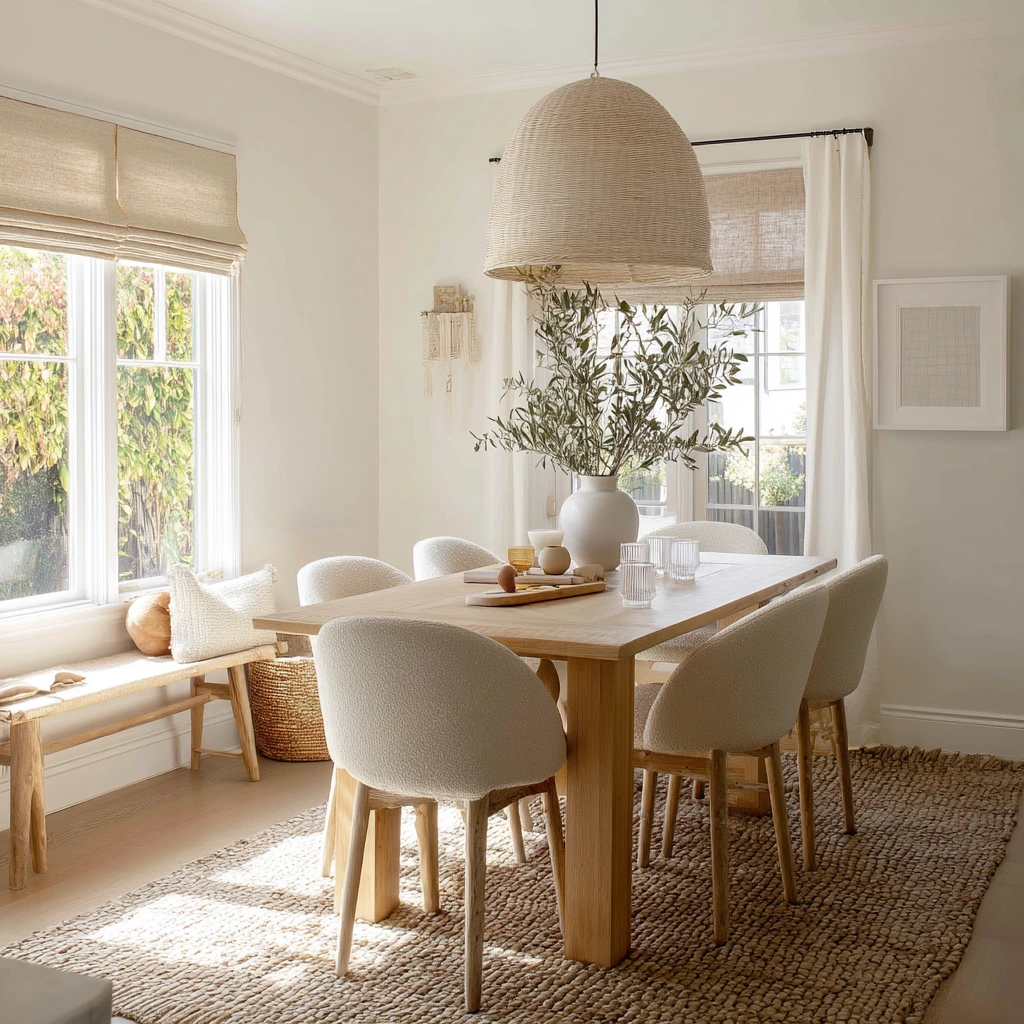

Sage and white dining room ideas are popular because they feel calm, clean, and easy to live with. Sage adds color without being loud, and white keeps the room light. This mix works in small apartments, busy family homes, and coastal spaces.
In this post, you will see 10 sage and white dining room looks based on real-life scenes, like an oval oak table with spindle chairs, a compact round tulip table, and a renter-friendly setup with peel-and-stick paneling. Each idea includes simple styling steps you can copy.
You will also find practical tips for layout, lighting, wall color, and everyday clutter like mail stacks, charging cables, and kids’ items. The goal is to help you create a dining area that looks pulled together but still works for normal life.
Use these ideas as a checklist. Pick one main change, like sage seat cushions or a sage accent wall, then layer in small details like a ceramic vase, linen Roman shades, or a woven pendant.
1 Casual Family Dining Nook
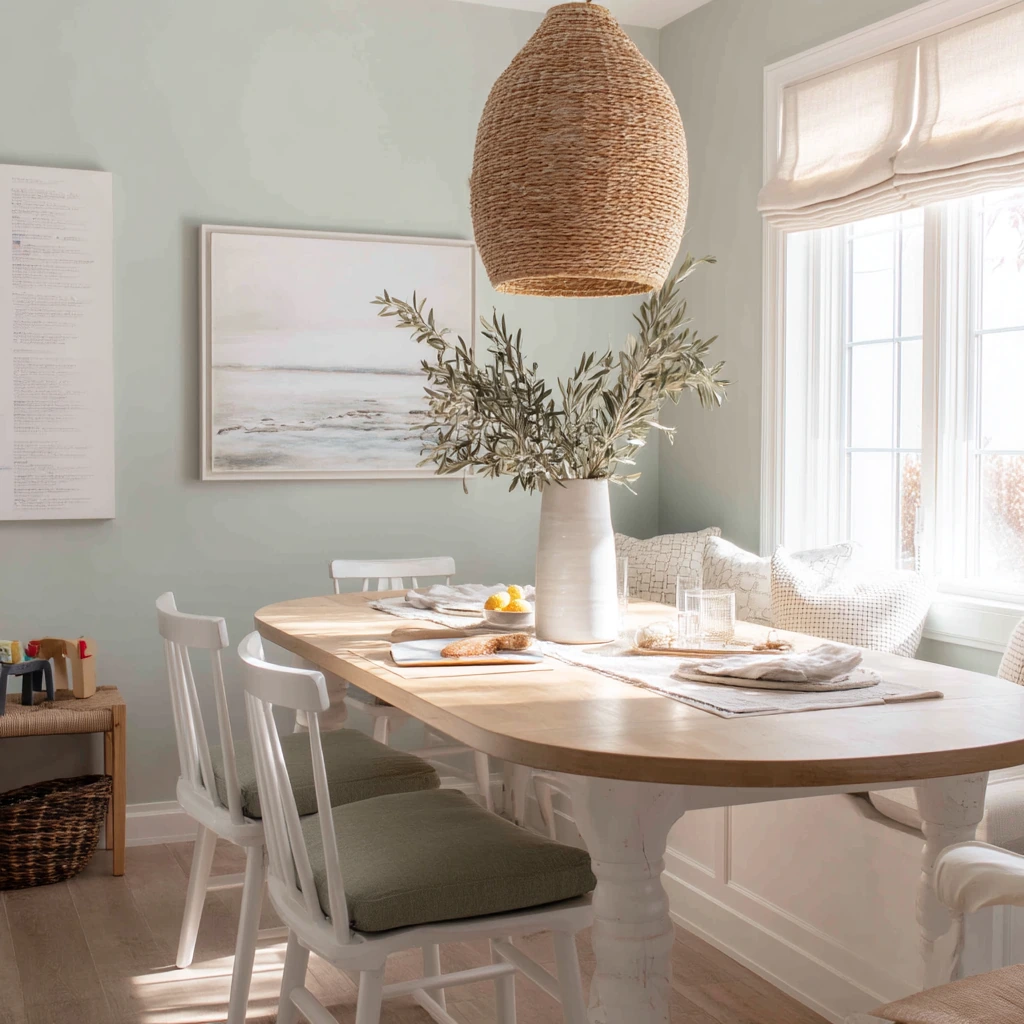
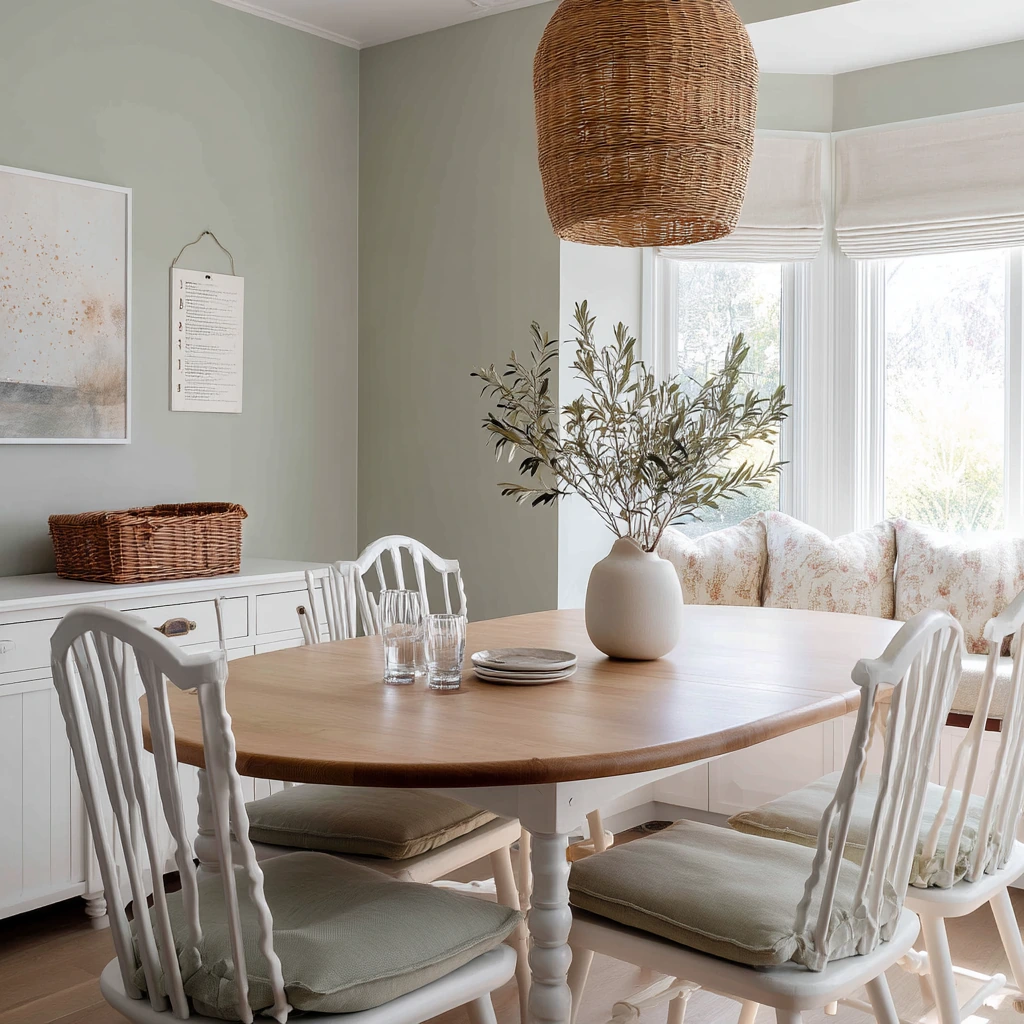
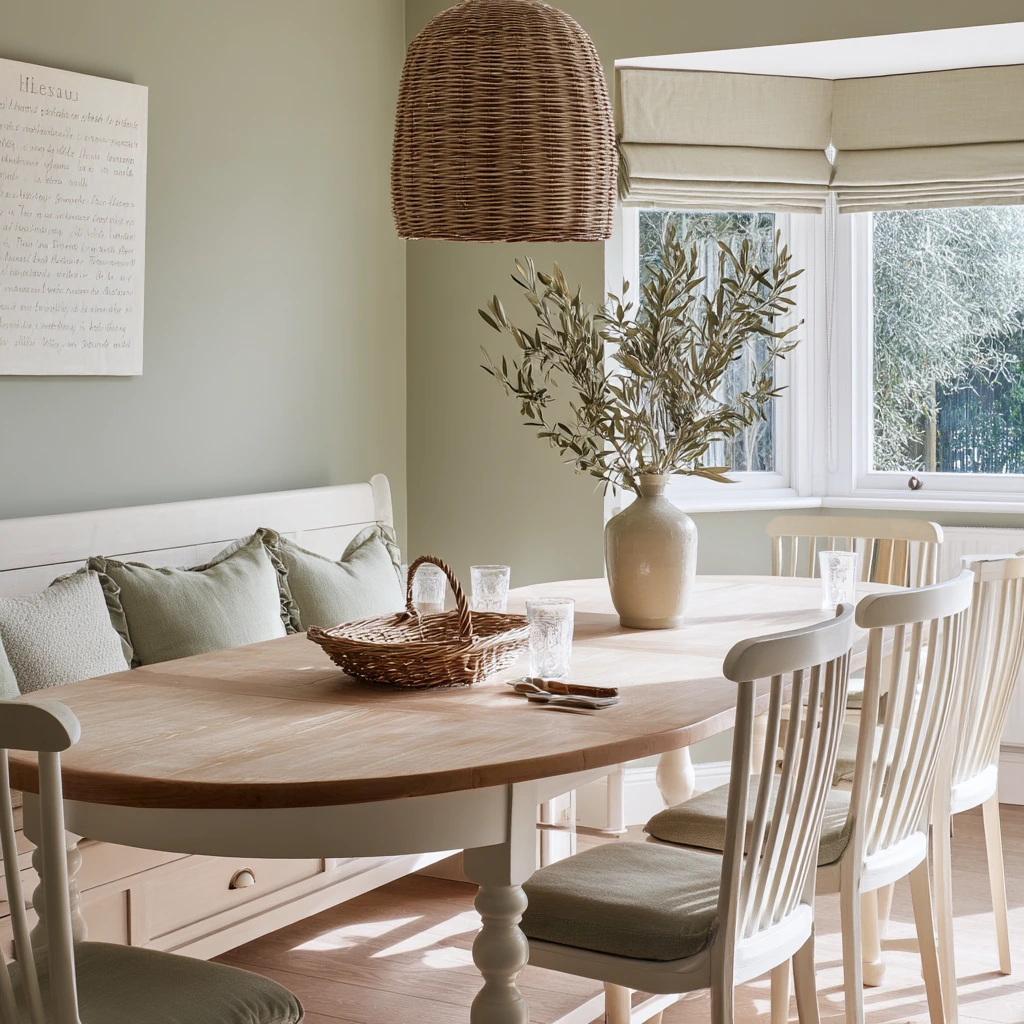
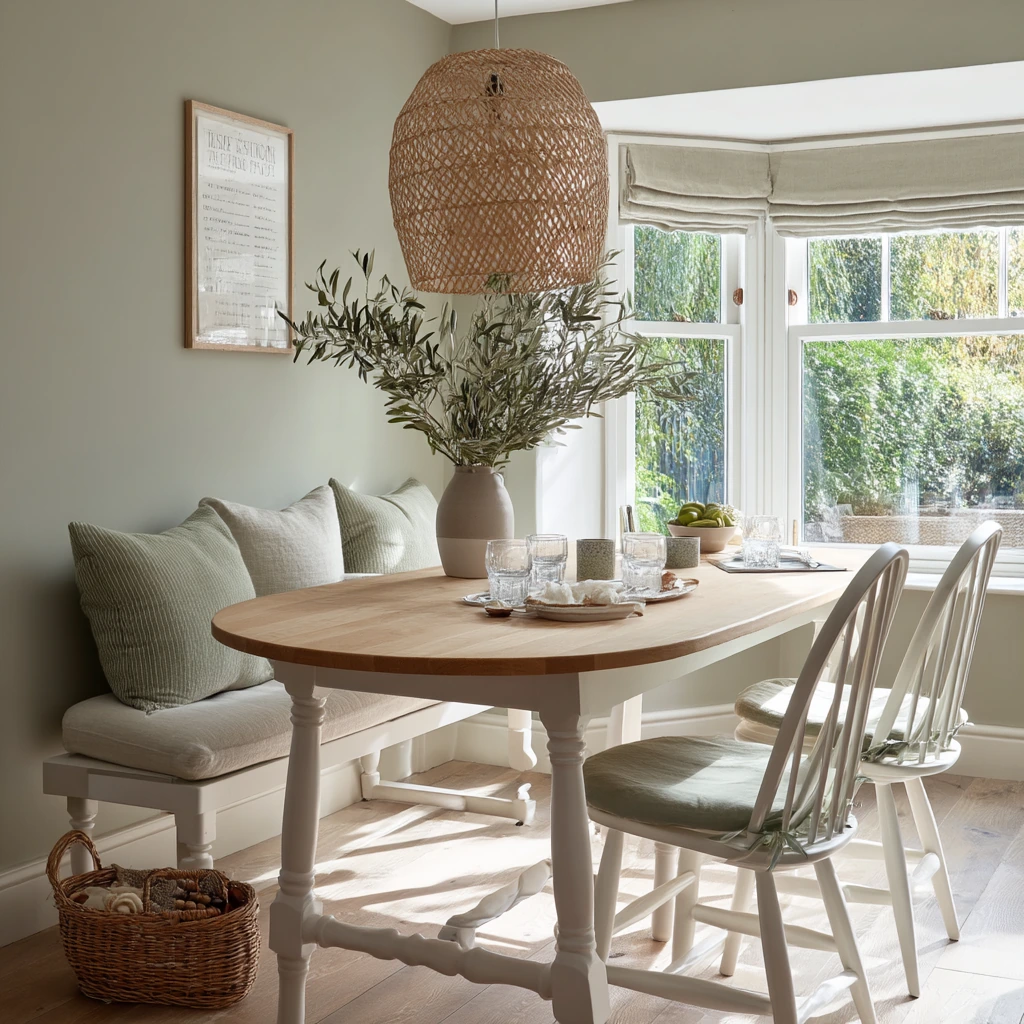
This sage and white dining room idea is made for a busy family home, not a showroom. Start with an oval oak table because it softens traffic flow and helps people move around chairs with less bumping. Pair it with white spindle chairs and add sage seat cushions for comfort and easy color. The oak and white mix stays classic, while sage adds a soft green layer that hides everyday wear better than bright white fabric.
Window treatments matter in a family dining area. Linen Roman shades filter natural morning window light and still feel tidy when half raised. Keep art simple: soft wall art in muted greens ties in the cushions without making the room too themed. A woven pendant gives texture and warm light at night, which helps the space feel cozy even when the table is not perfectly cleared.
The best part of this look is that it allows real life to show a little. A child’s toy basket tucked by the bench, two water glasses left out, a charging cable near the sideboard, and even faint pencil marks on a menu board all read as normal. To keep it from looking messy, group small items in one “landing zone” tray on the sideboard and keep the rest of the surfaces mostly open.
- Use a ceramic vase with olive branches for a simple centerpiece that does not block sight lines.
- Place a bench on one side to make room for a toy basket underneath.
- Choose washable sage cushion covers so spills are not stressful.
- Hang a small menu board to plan meals and reduce paper clutter.
- Add a woven pendant on a dimmer for softer evening light.
Pro Design Tip: Repeat sage in three spots (seat cushions, small art, and one accessory) so the color feels planned, then let oak and white do the rest.
Budget Considerations: Swap chair cushions before buying new chairs; it is a low-cost way to add sage and comfort.
2 Small Apartment Dining Corner
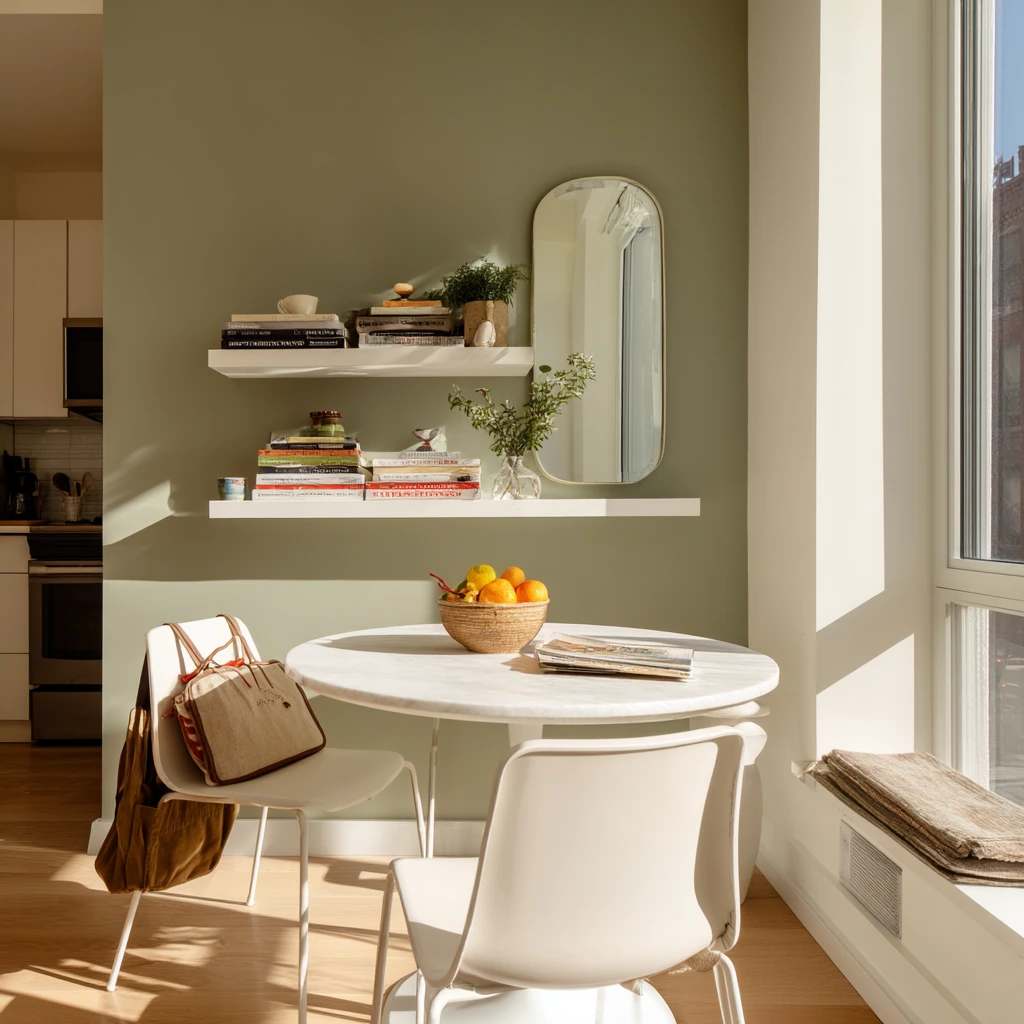
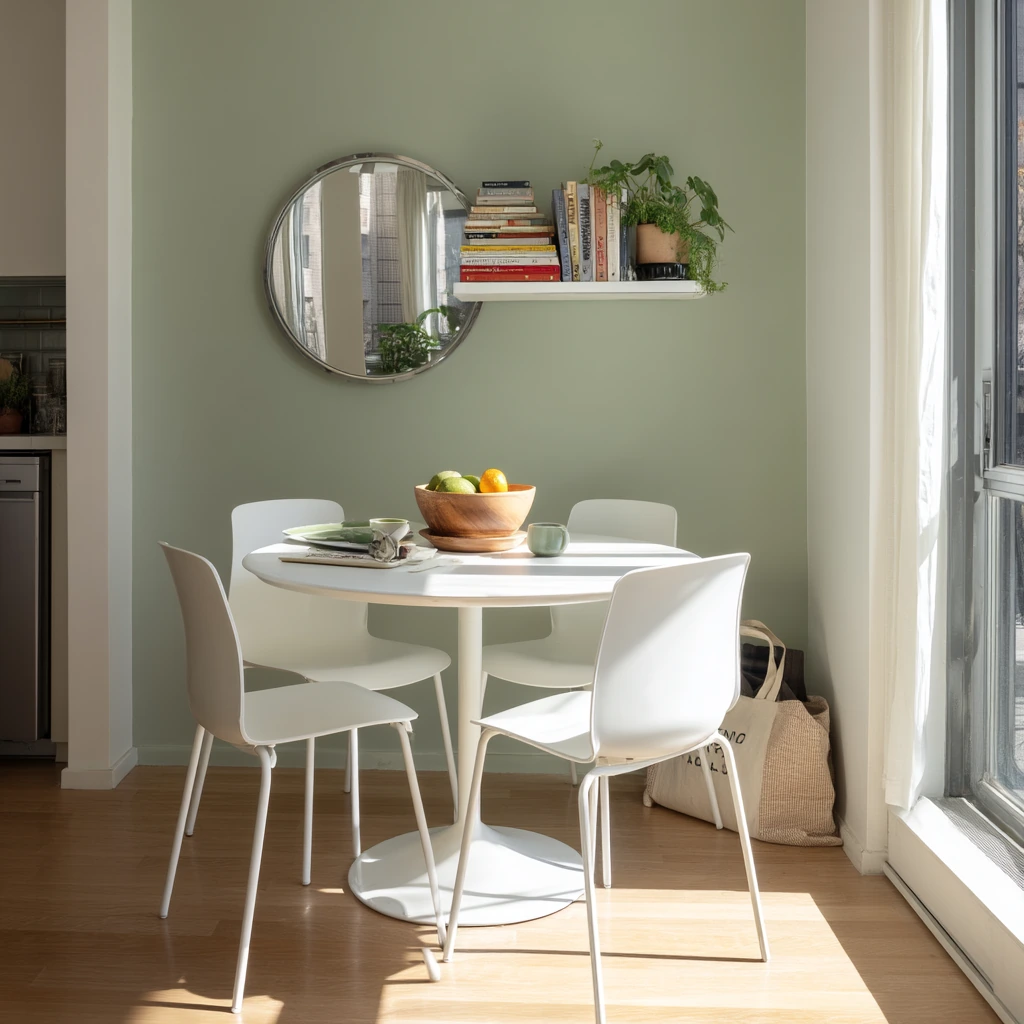
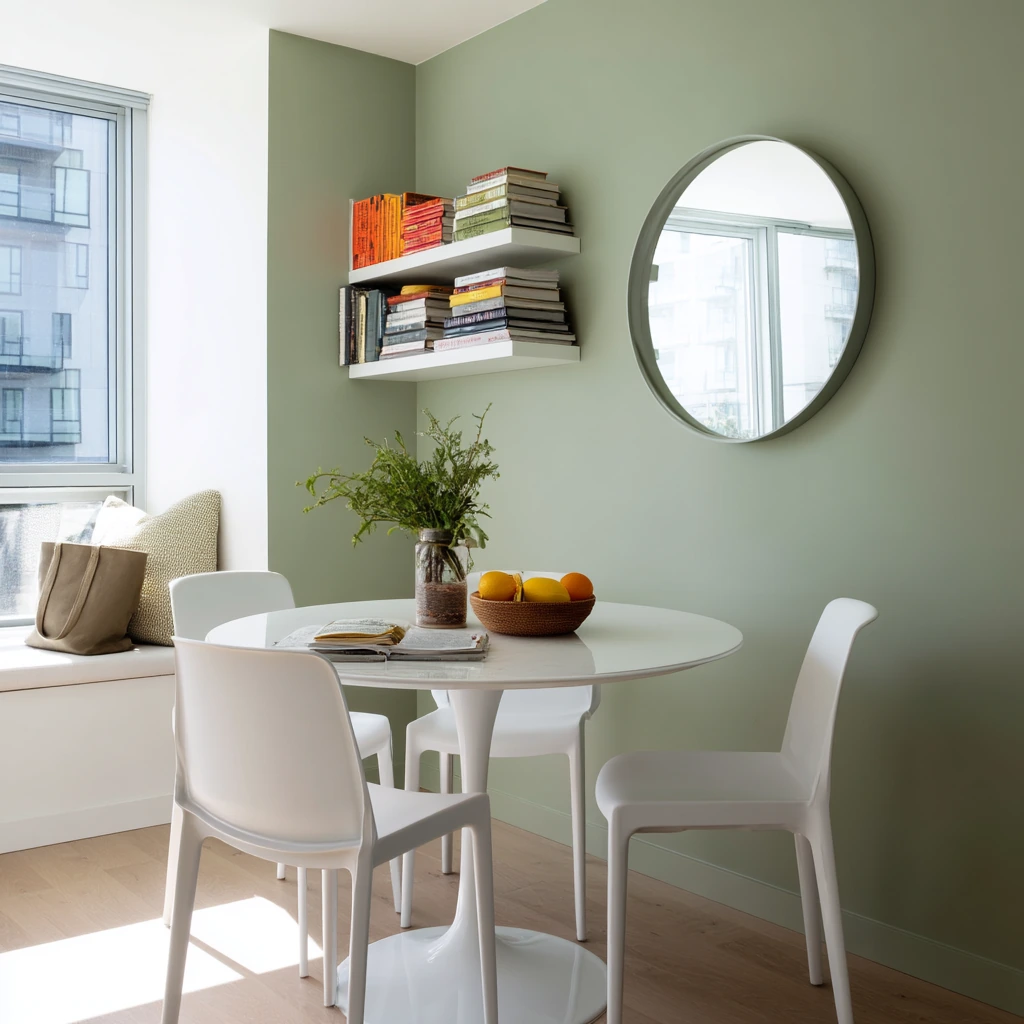
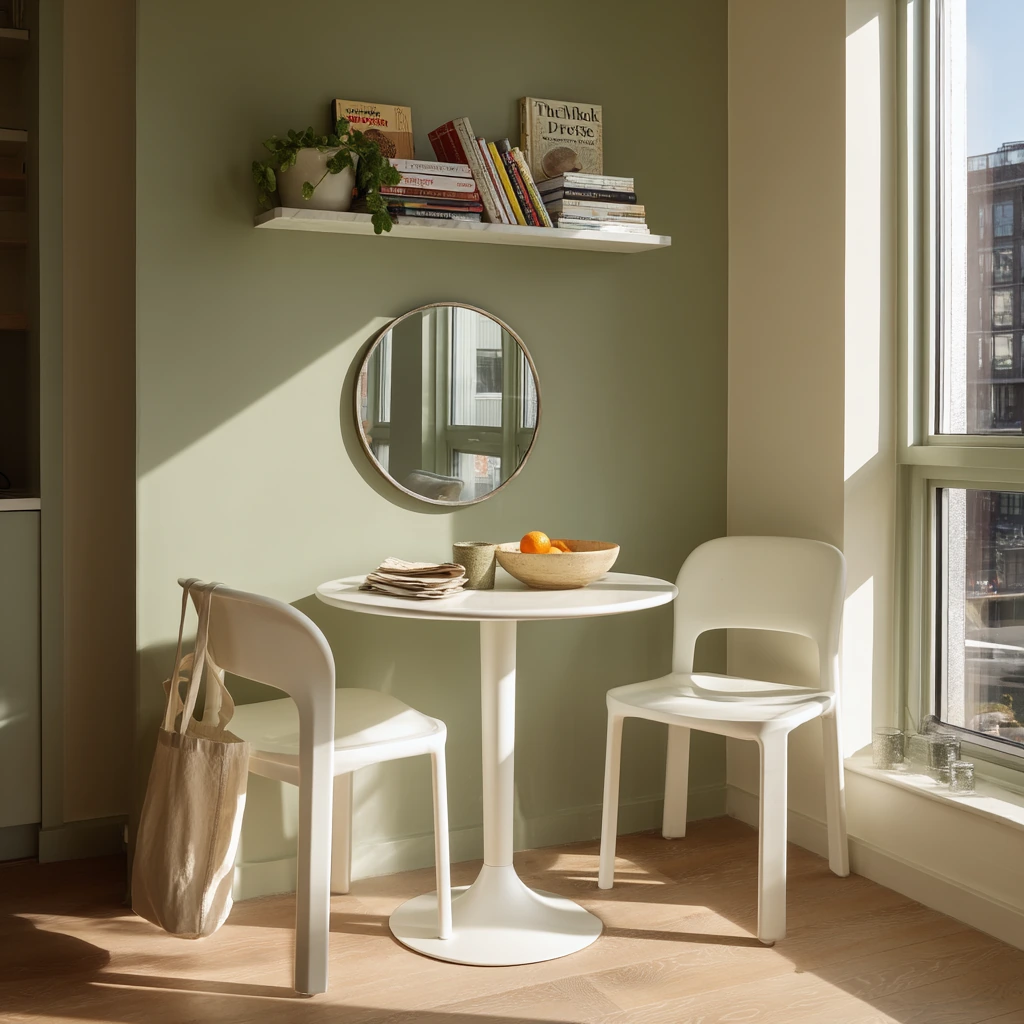
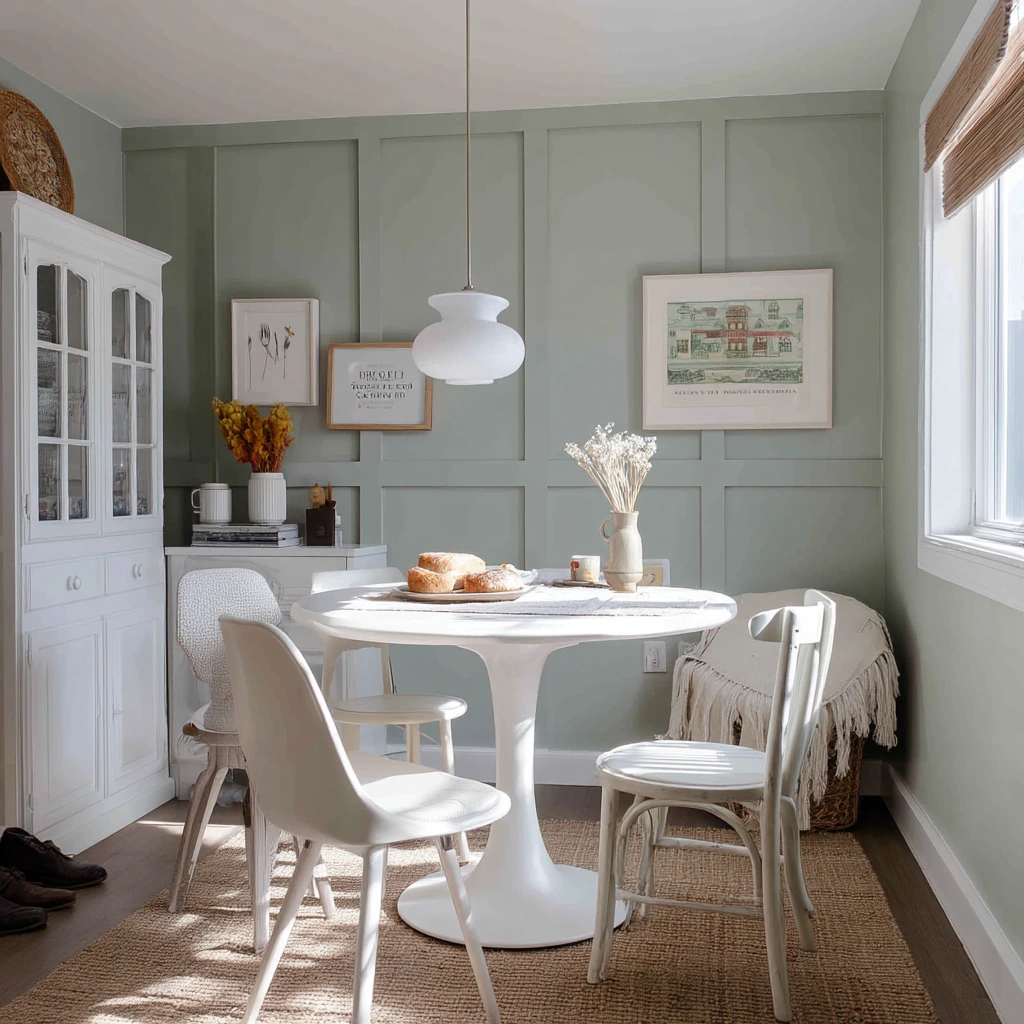
In a small apartment, sage and white can make a dining corner feel bigger and calmer. A round tulip table is a strong choice because the single base saves leg room and makes it easier to slide chairs in. Slim white café chairs keep the look light and do not crowd the space. A sage accent wall adds depth without taking up any floor space, and it helps the dining zone feel separate from the living area.
Keep storage vertical. A floating shelf with cookbooks and a small plant adds personality without a bulky cabinet. Use a mirror to catch window light and bounce it across the pale oak floor. This trick helps even a shaded corner feel brighter. Styling should stay modest: one ceramic bowl with citrus adds color, and it doubles as a quick snack spot.
Real apartment life often includes a folded mail stack and a tote bag on a chair back. Instead of fighting that, plan for it. Put a shallow tray on the shelf or table edge for mail so it does not spread out. Add one hook near the dining area so bags do not live on chairs. With soft shadows and simple items, the space can feel calm and practical at the same time.
- Pick a round table size that leaves at least 30 inches for a walk path.
- Paint one wall sage to define the dining spot in an open layout.
- Use a mirror across from the window to increase daylight.
- Limit tabletop decor to one bowl or vase so the table stays usable.
- Place a small basket or tray for mail to keep papers contained.
Pro Design Tip: Use the same white on chairs, trim, and shelf brackets so the room reads as one clean block, then let sage be the only strong color.
Budget Considerations: A peel-and-stick sage wallpaper panel can stand in for paint if your lease does not allow wall color changes.
3 Renter-Friendly Refresh
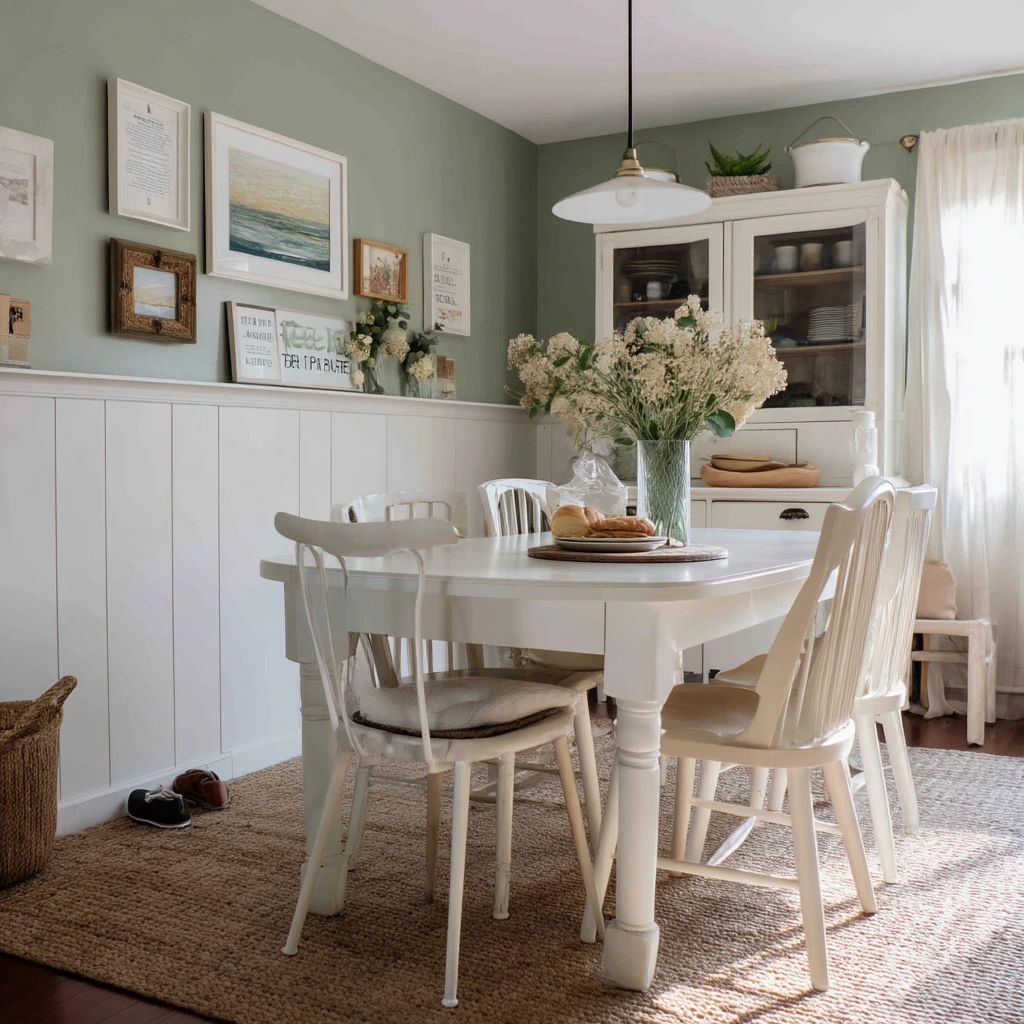
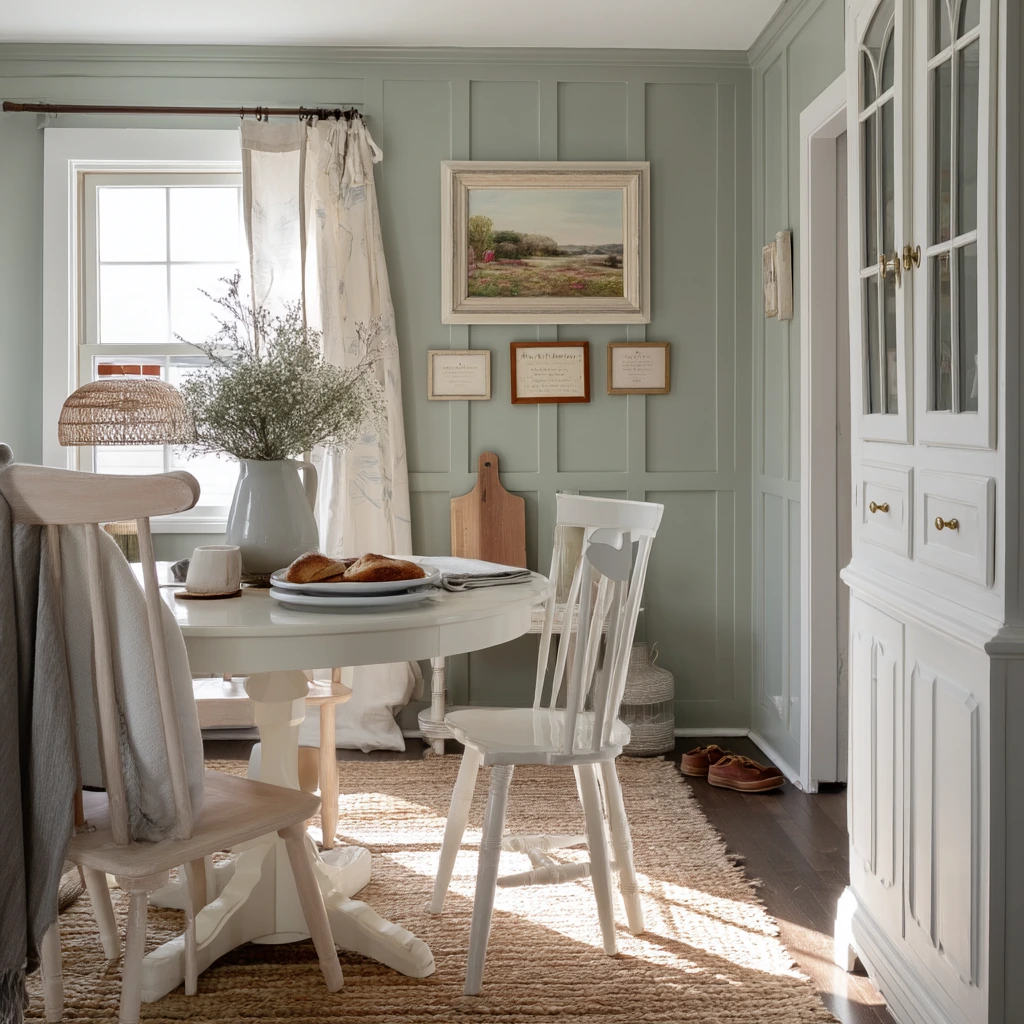
A renter-friendly sage and white dining room can still have character if you focus on removable layers. Peel-and-stick sage paneling gives the feel of custom millwork without permanent changes. Keep your table simple, like a white pedestal table, because it pairs well with many chair styles and makes the room feel open. Mixed white chairs can look intentional if you keep the finish consistent and repeat one shape, like curved backs or similar seat heights.
Add warmth underfoot with a jute rug. It brings texture and helps the space feel grounded, especially when you have lots of white furniture. For storage, use a freestanding cabinet instead of built-ins. Style it with framed recipe cards and a thrifted pitcher for an easy, homey look. An unplugged lamp on the buffet is a smart styling move even if you do not have a nearby outlet; it adds height and helps the buffet look finished.
Small “real life” details make this theme feel true: a pair of shoes by the door and fresh bread on a plate. The key is to keep those items in tidy zones. Put a small shoe tray near the entry. Use a bread board or small tray for food items so crumbs stay contained. Soft afternoon window light works well with sage tones, so keep curtains light and avoid heavy dark frames that can shrink the room.
- Use peel-and-stick sage paneling on one wall to mimic wainscoting.
- Choose removable art hooks so you can hang prints without damage.
- Mix white chairs, but keep them all the same seat height for comfort.
- Add a jute rug that extends past chair legs so chairs slide easily.
- Style the cabinet with recipe cards, a pitcher, and one small stack of books.
Pro Design Tip: To make mixed chairs look planned, repeat one material twice (two chairs with similar backs, or two with similar legs) so the set feels balanced.
Budget Considerations: Thrifted white chairs often need only a quick clean and new felt pads, which costs far less than buying a full matching set.
4 Quiet Breakfast-for-Two
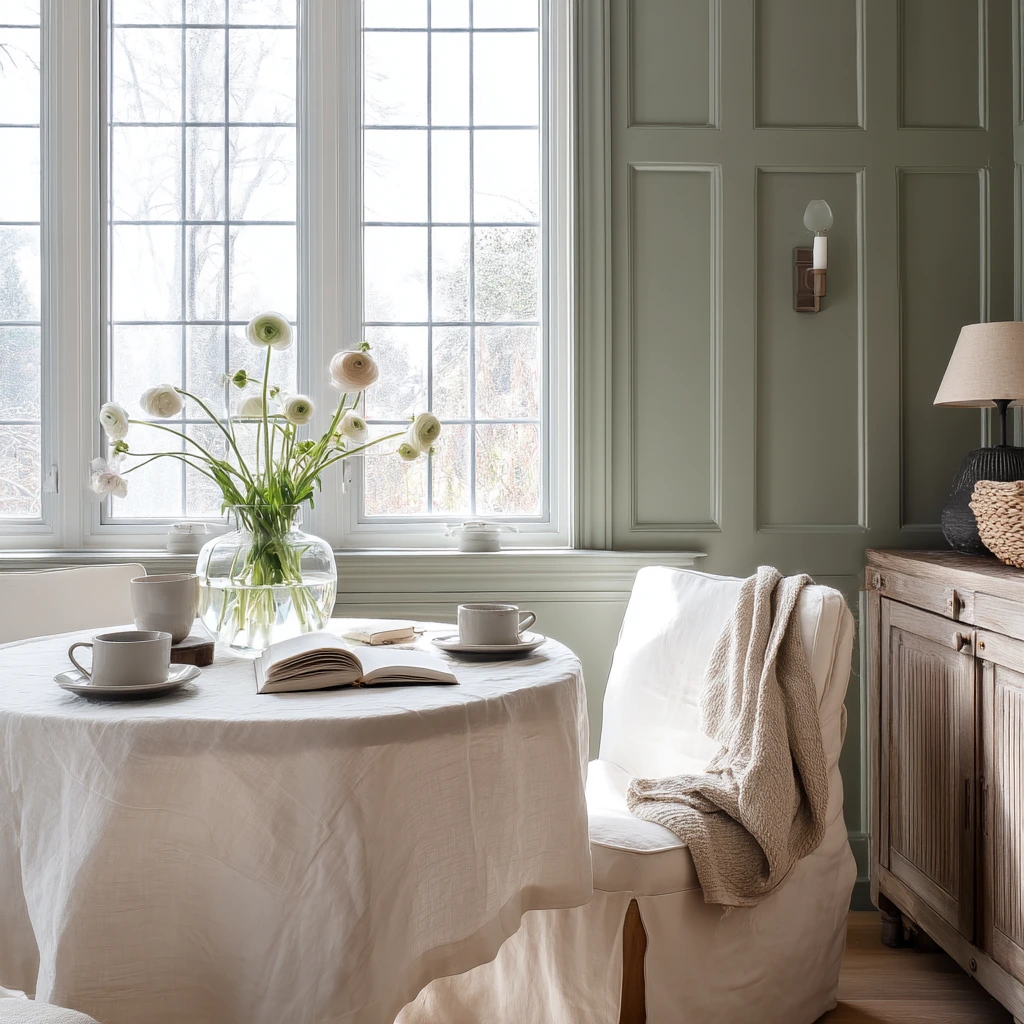
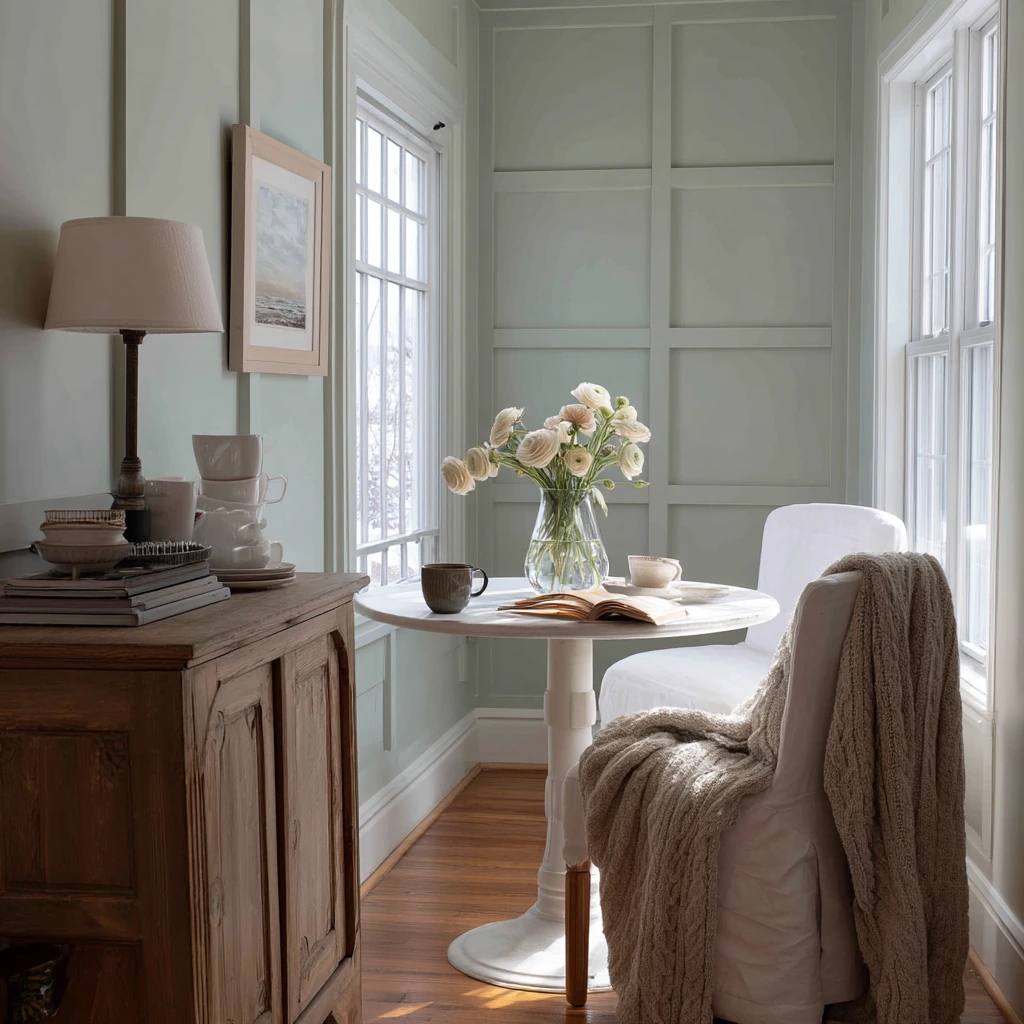
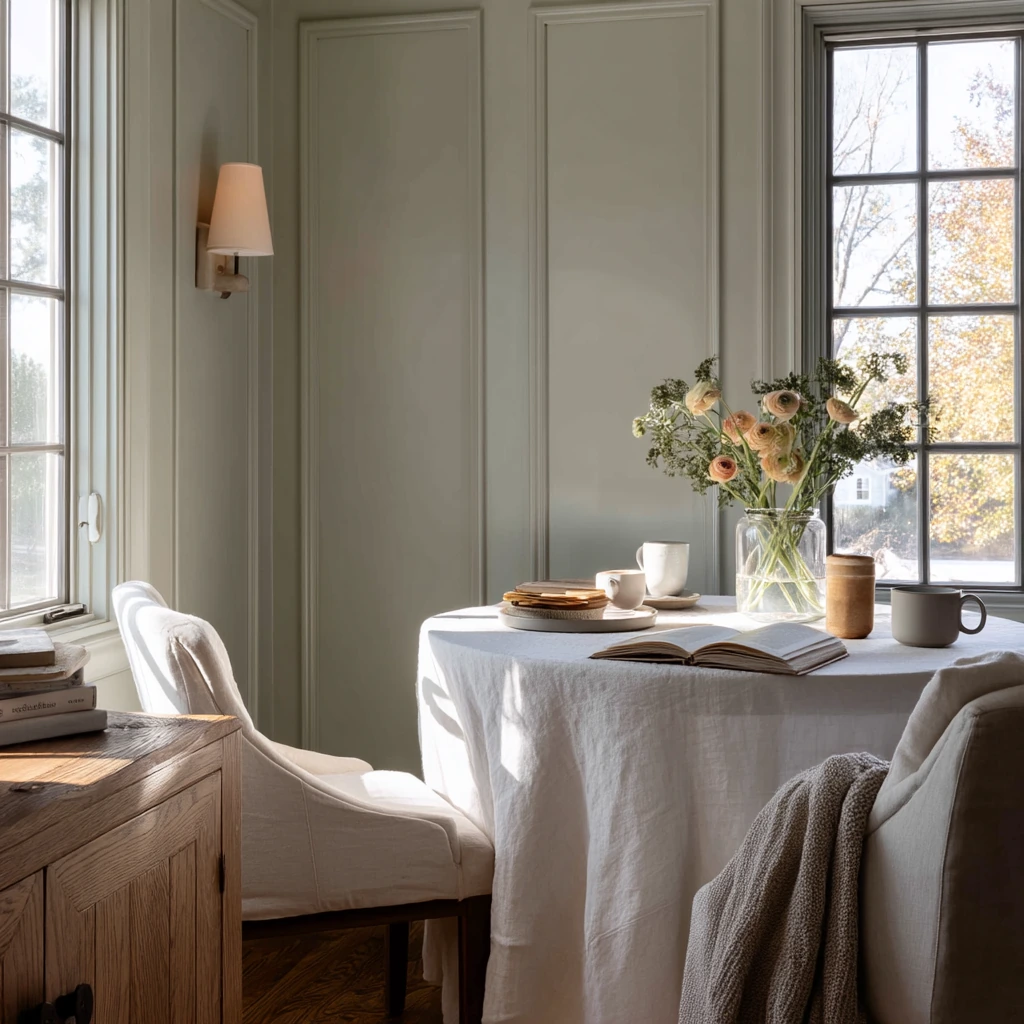
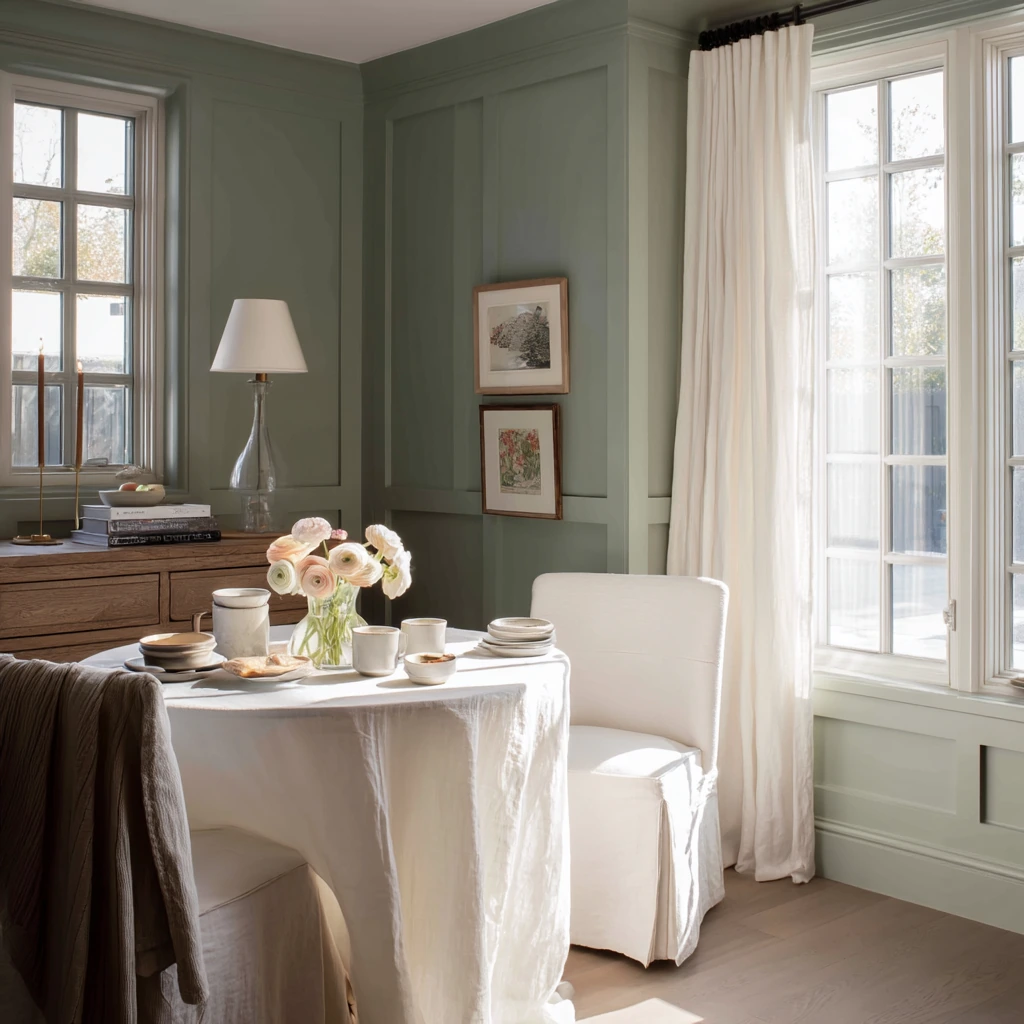
A small sage and white dining room for a couple should feel soft and personal. Start with a small round table near tall windows so meals feel bright in the day. Add sage painted wainscoting to bring color at a lower height, which makes the room feel cozy without making it dark. White linen slipcovered chairs keep the seating comfortable and relaxed, and slipcovers are easy to wash when life gets messy.
Use a pale oak sideboard for storage and warmth. Style it with stacked mugs for daily use, plus an open book and a half-finished coffee if you want that quiet, lived-in look. A draped sweater on the chair is normal in a real home, but keep it from taking over by choosing a basket nearby where you can toss it quickly when guests come over.
Lighting is what makes this setup special. Mix a warm lamp glow with cool daylight from the windows. This layered light makes sage look richer and keeps white from feeling sharp. For a centerpiece, a glass vase with ranunculus adds gentle color and looks good even in a small amount. Keep the table mostly open so it stays ready for a quick dinner, a slow breakfast, or a short work session.
- Paint wainscoting sage and keep the upper wall white to brighten the room.
- Choose a round table that fits two chairs with space to walk around.
- Use slipcovered chairs for a soft look and easy cleaning.
- Style the sideboard with mugs, one book, and one small tray for keys.
- Add a lamp on the sideboard for warm light at night.
Pro Design Tip: Keep the strongest contrast at chair level (sage wainscoting plus white chairs) so the seating area becomes the visual focus.
Budget Considerations: If new slipcovers are pricey, try ready-made covers in white cotton and tailor them with simple clip rings or a basic hem.
5 Dinner Hosting Ready
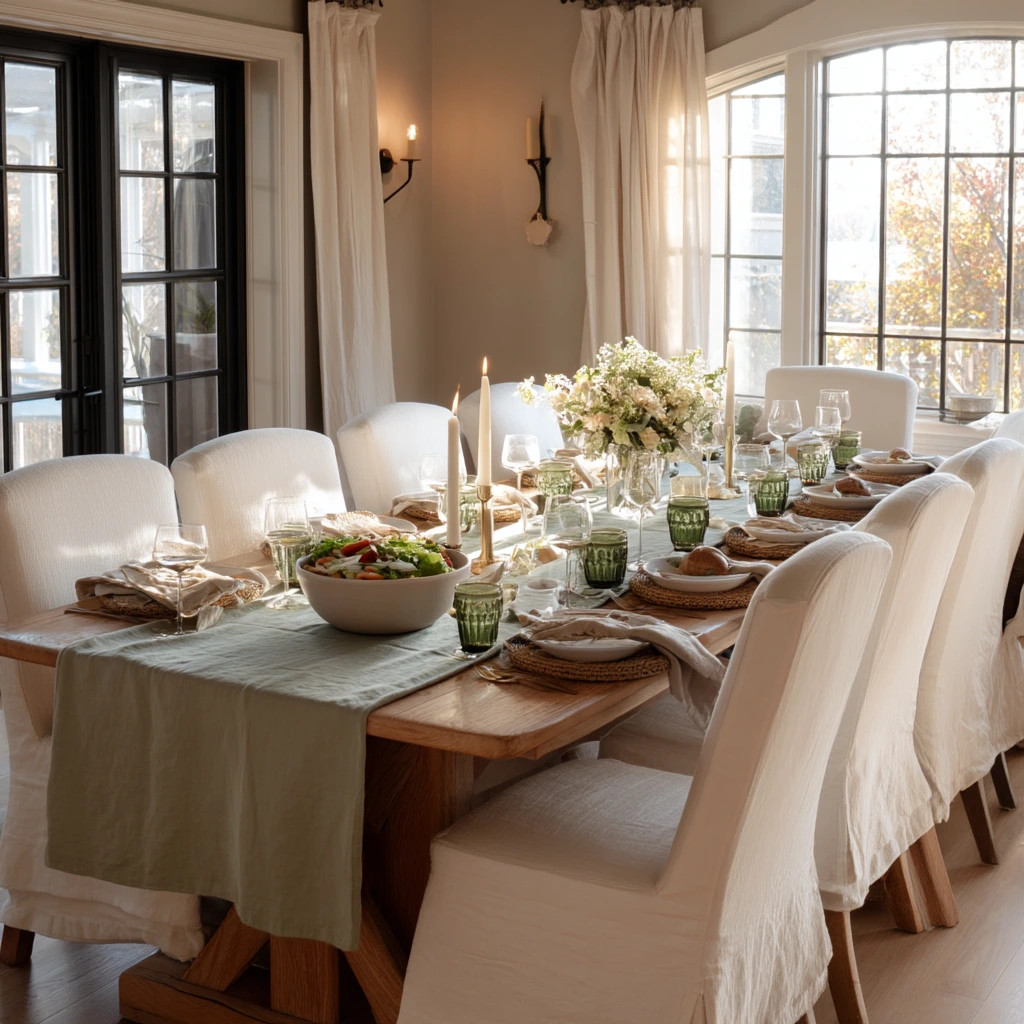
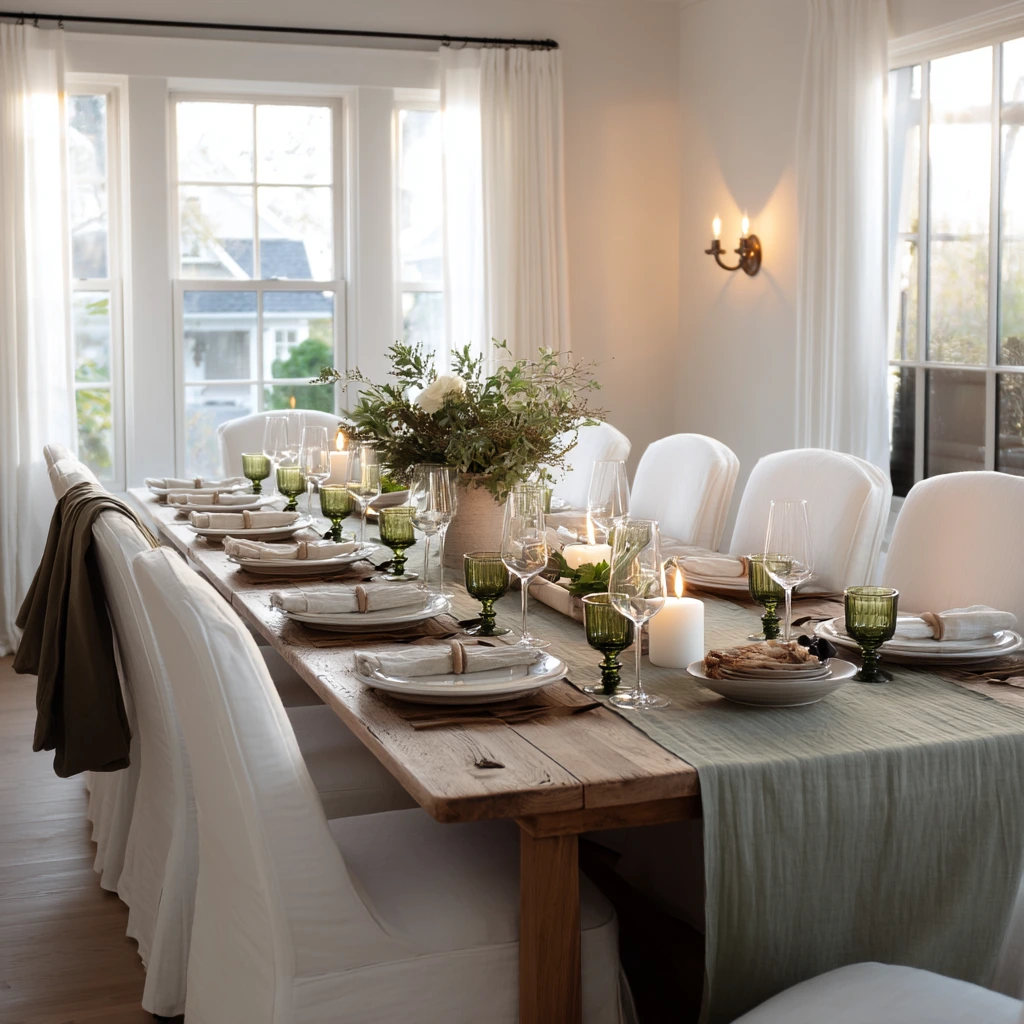
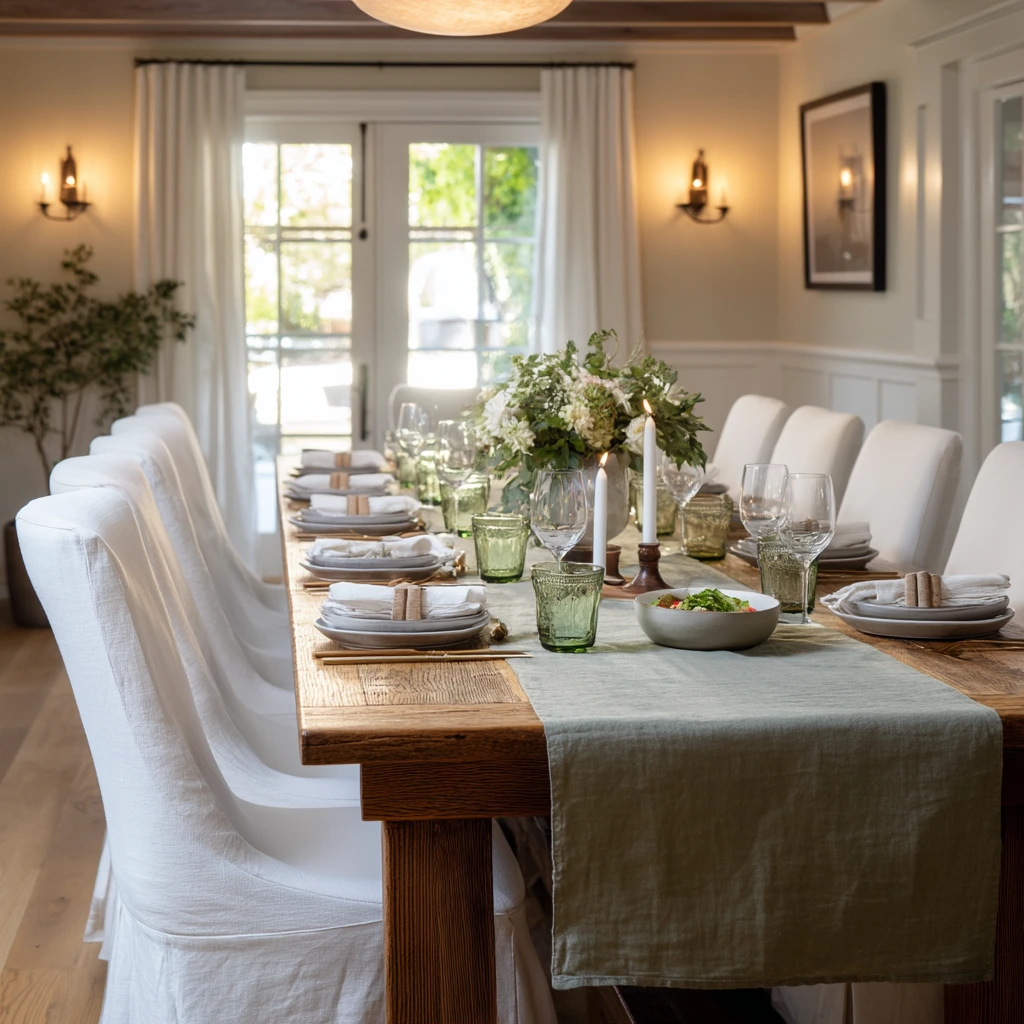
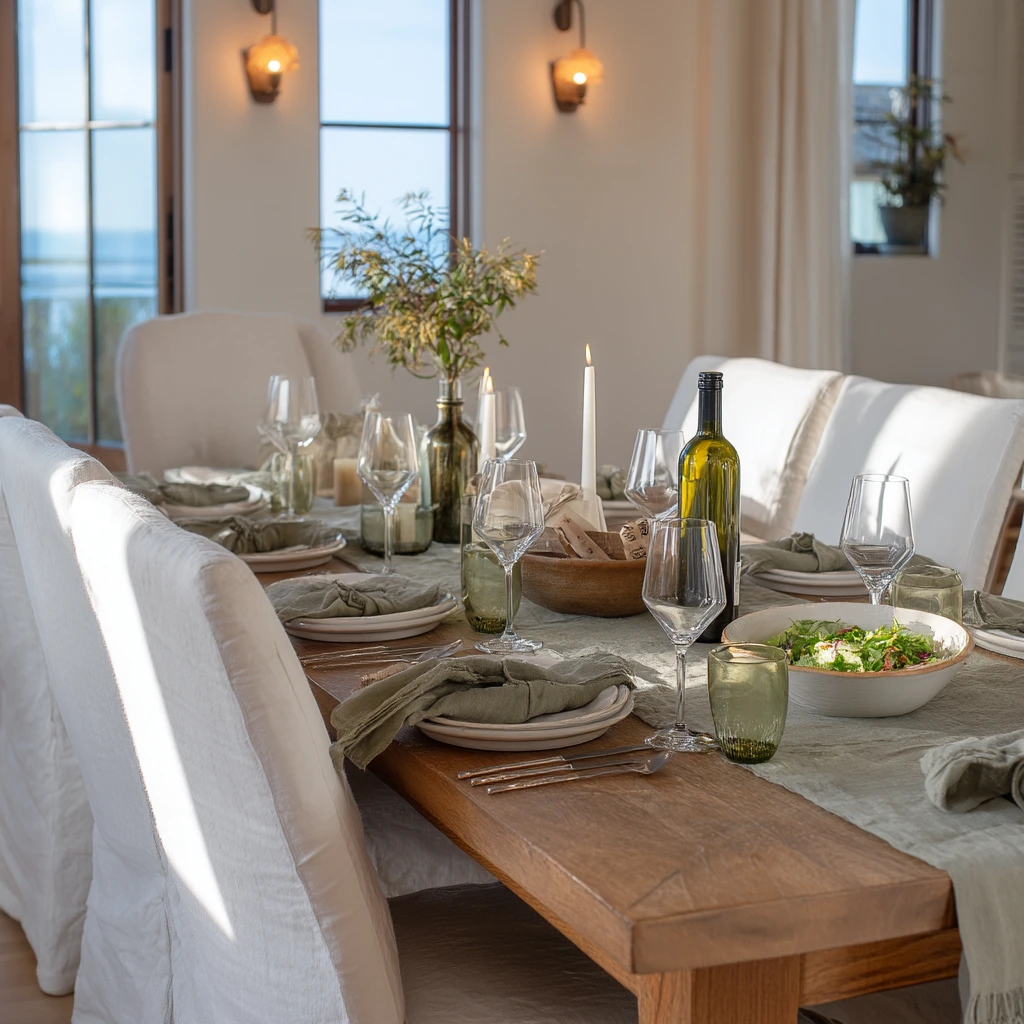
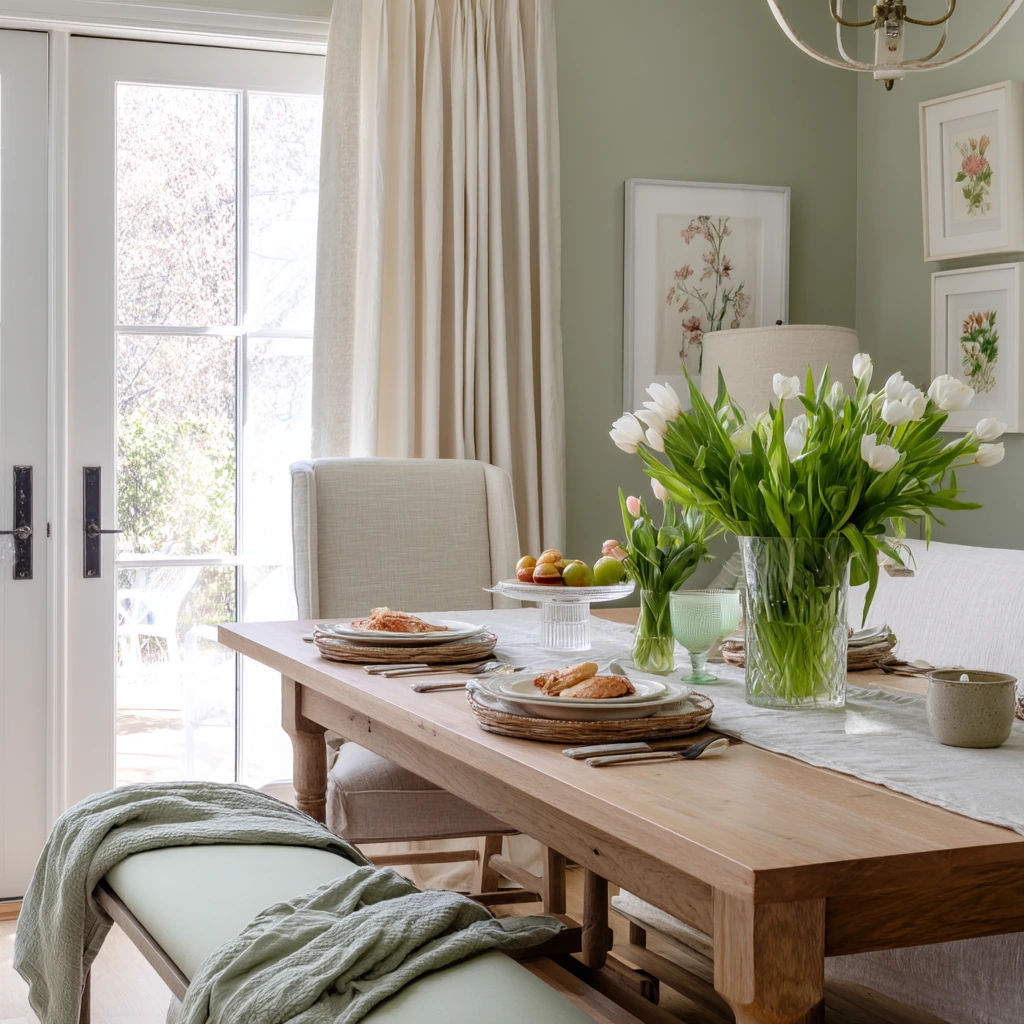
This sage and white dining room idea is set up for hosting, but it still looks real. A long oak table anchors the room and gives you space for serving bowls and place settings. White upholstered chairs add comfort for long meals and keep the look clean. Add a sage runner down the center to bring in color without painting the walls, and it also protects the wood from hot dishes and small spills.
For a centerpiece, keep it low. Ceramic candle holders and a low floral arrangement make the table feel special, but people can still talk across it. Simple green glassware ties in with sage without being too matchy. A serving bowl with salad on the table signals “help yourself,” which makes the meal feel easy. A wine cork, napkins slightly askew, and a coat thrown over a chair keep the scene honest and welcoming.
Lighting should feel warm at dusk. Use soft window light early, then let warm sconces take over as it gets darker. If you do not have sconces, use two lamps on a sideboard to create the same glow. Keep the table styling practical: one runner, a few candles, and one arrangement. Too many items make it hard to pass food and clear plates.
- Use a sage runner to add color and protect the table surface.
- Pick low flowers and short candle holders so guests can see each other.
- Bring in green glassware for a subtle color repeat.
- Set a side station on the sideboard for extra napkins and serving spoons.
- Keep one chair free for coats so the rest of the room stays neat.
Pro Design Tip: Use odd numbers for candles (3 or 5) and group them tightly so the center of the table looks intentional, not scattered.
Budget Considerations: Grocery store flowers in one simple vase look polished; skip pricey arrangements and spend on good-quality candles instead.
6 Coastal Family Home
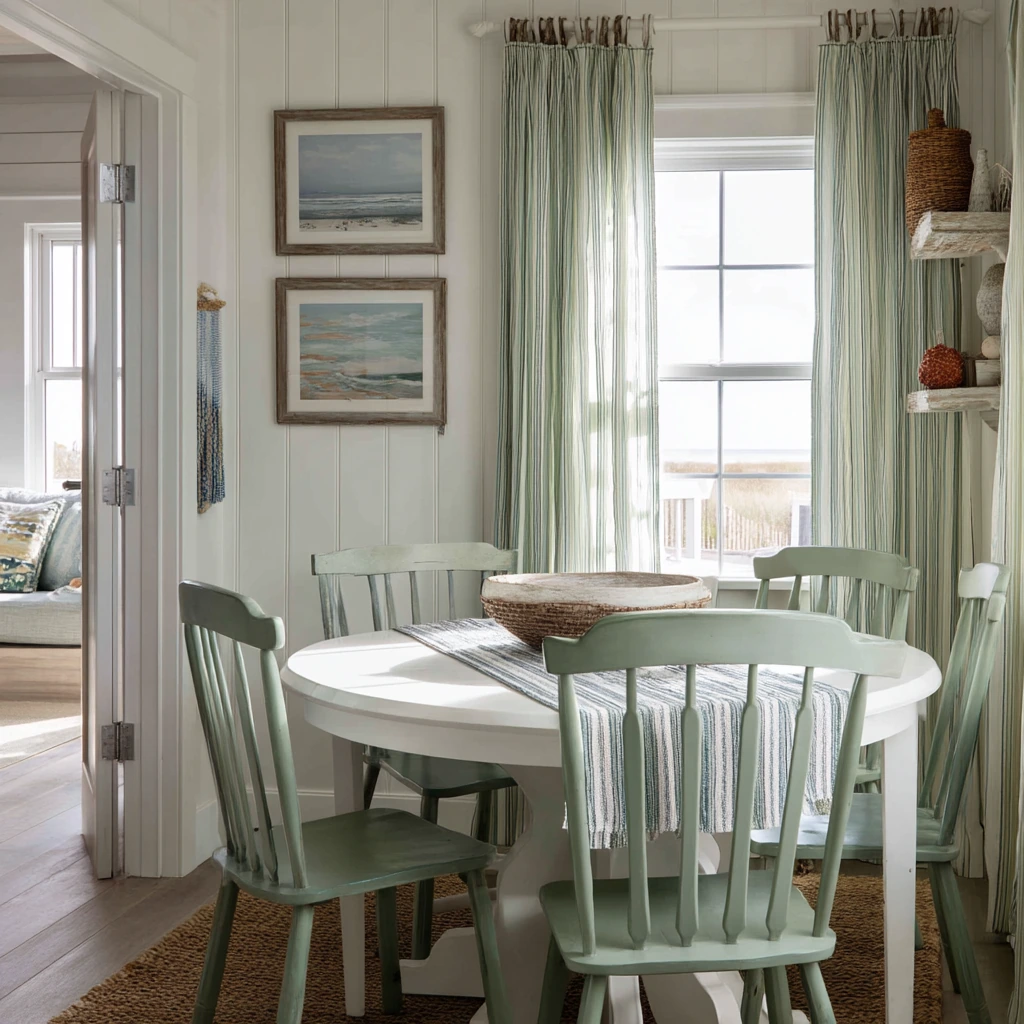
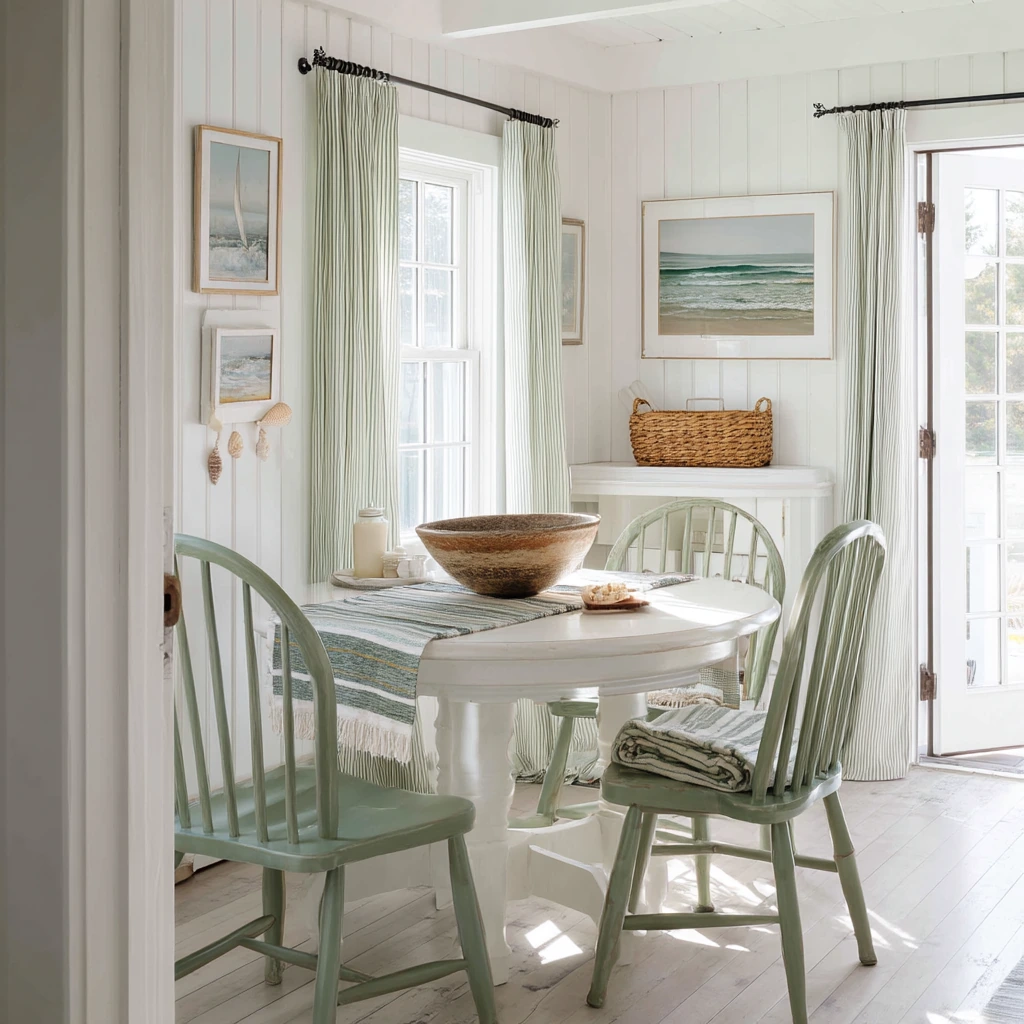
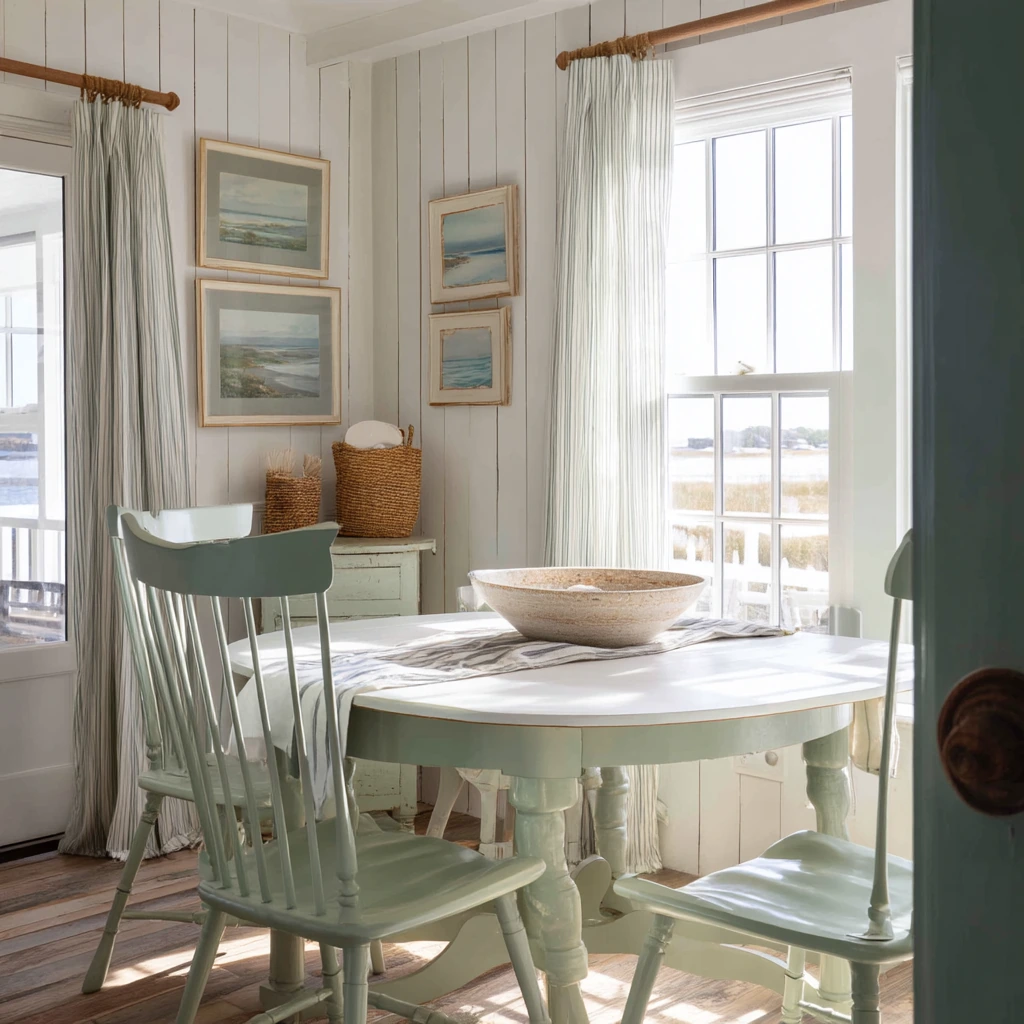
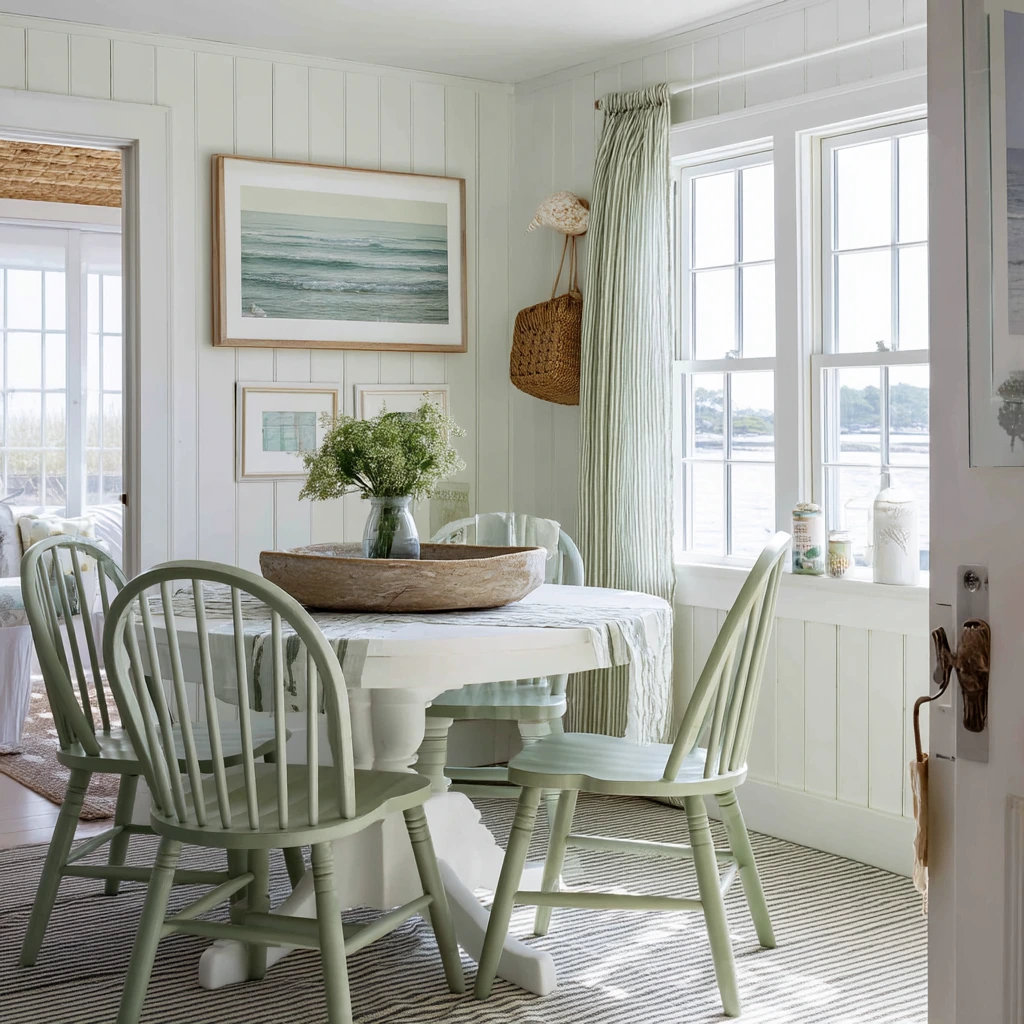
A coastal sage and white dining room is all about light, texture, and easy cleanup. Beadboard walls are a natural fit for this style because they add detail while keeping the room bright. A white round table keeps the space airy and makes it easy to fit more people when needed. Add sage-painted chairs to bring in that sea-glass color without going full theme.
Coastal decor works best when it is simple. Use a driftwood bowl as a centerpiece and add a striped runner for a quiet pattern. Framed landscape prints support the coastal feel without using obvious beach signs. Keep storage practical: a woven basket with beach towels near the doorway makes sense in a real coastal home. A side tray can hold sunscreen and small items so they do not clutter the table.
Details make the room feel lived in. A child’s shell collection on the sill adds charm and tells a story. Breezy curtains moving in window light soften the hard lines of beadboard and white furniture. If you want the room to feel “salt-soft” instead of messy, keep surfaces mostly clear and group small items into bowls, baskets, and trays. That way you keep the relaxed mood while still staying organized.
- Paint chairs sage and keep walls and table white for a fresh contrast.
- Use a striped runner for a coastal look that is not too bold.
- Place a driftwood bowl in the center for texture and easy styling.
- Store towels in a woven basket by the door to reduce hallway clutter.
- Add light curtains that move easily to keep the room feeling breezy.
Pro Design Tip: Choose one natural texture to repeat (woven basket, woven pendant, or jute) so the room feels cohesive and not random.
Budget Considerations: If beadboard is not possible, use beadboard-style wallpaper or paint a simple vertical stripe pattern for a similar look.
7 Soft Farmhouse Update
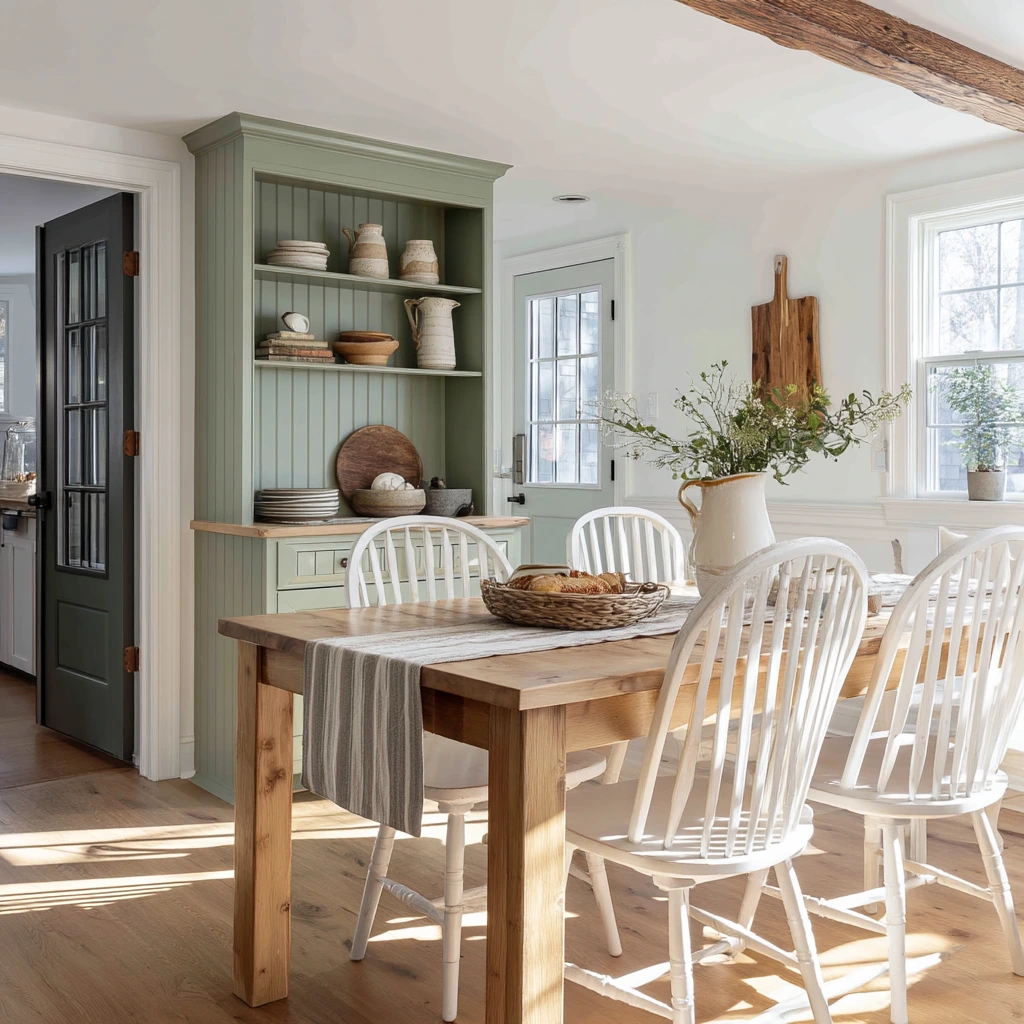
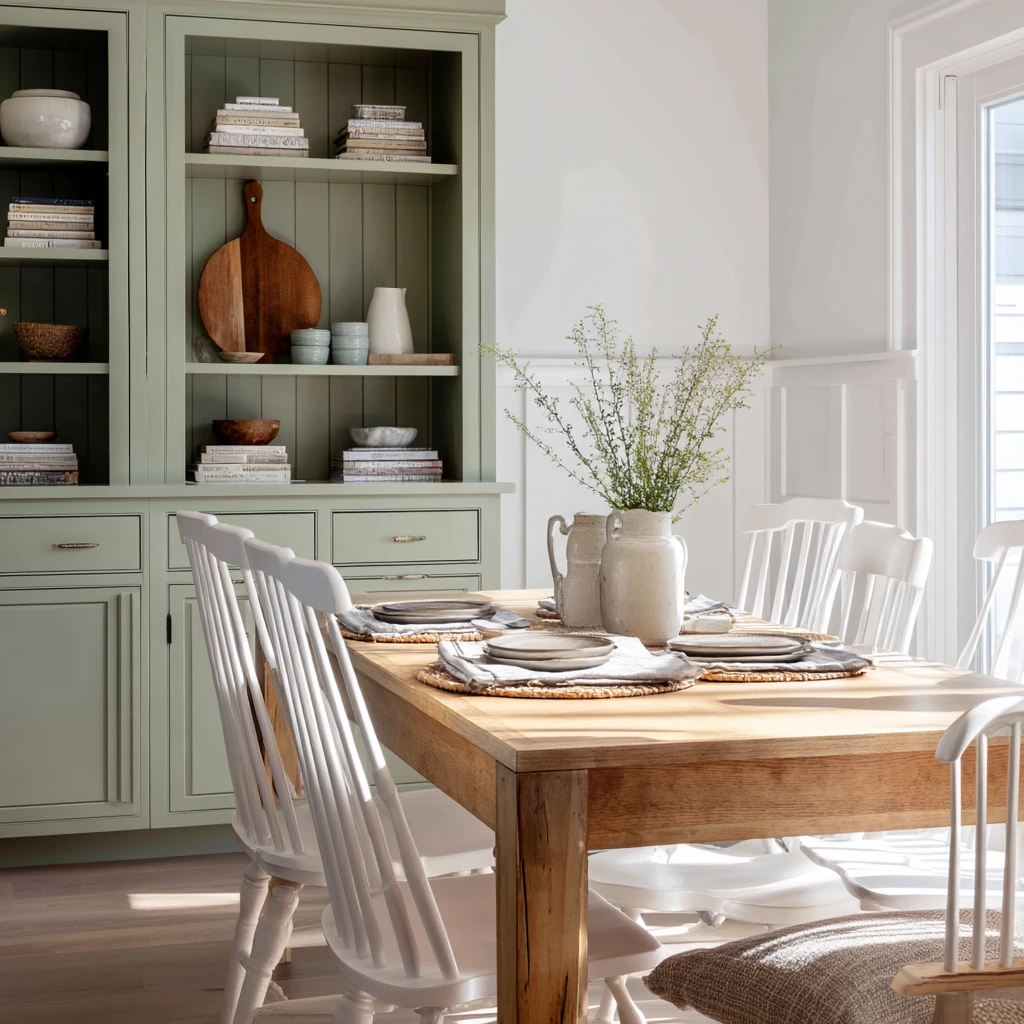
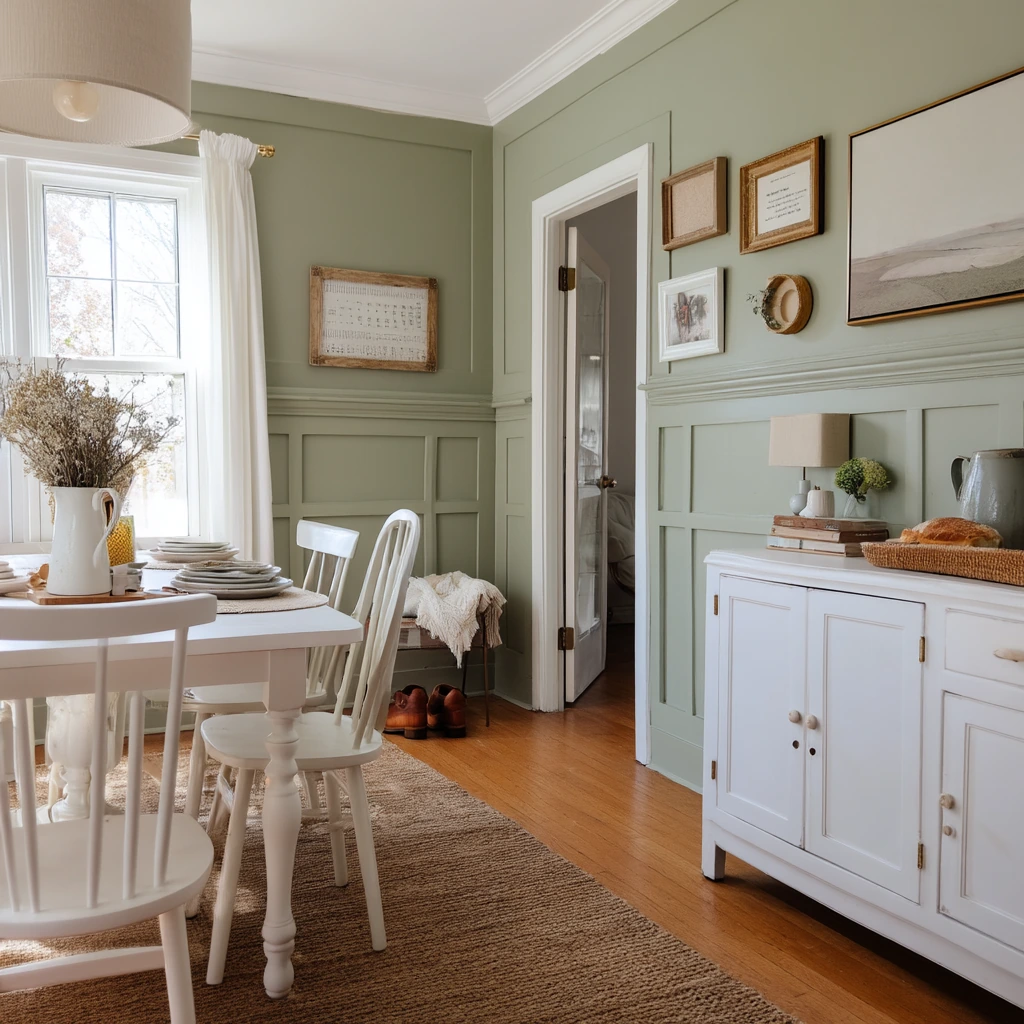
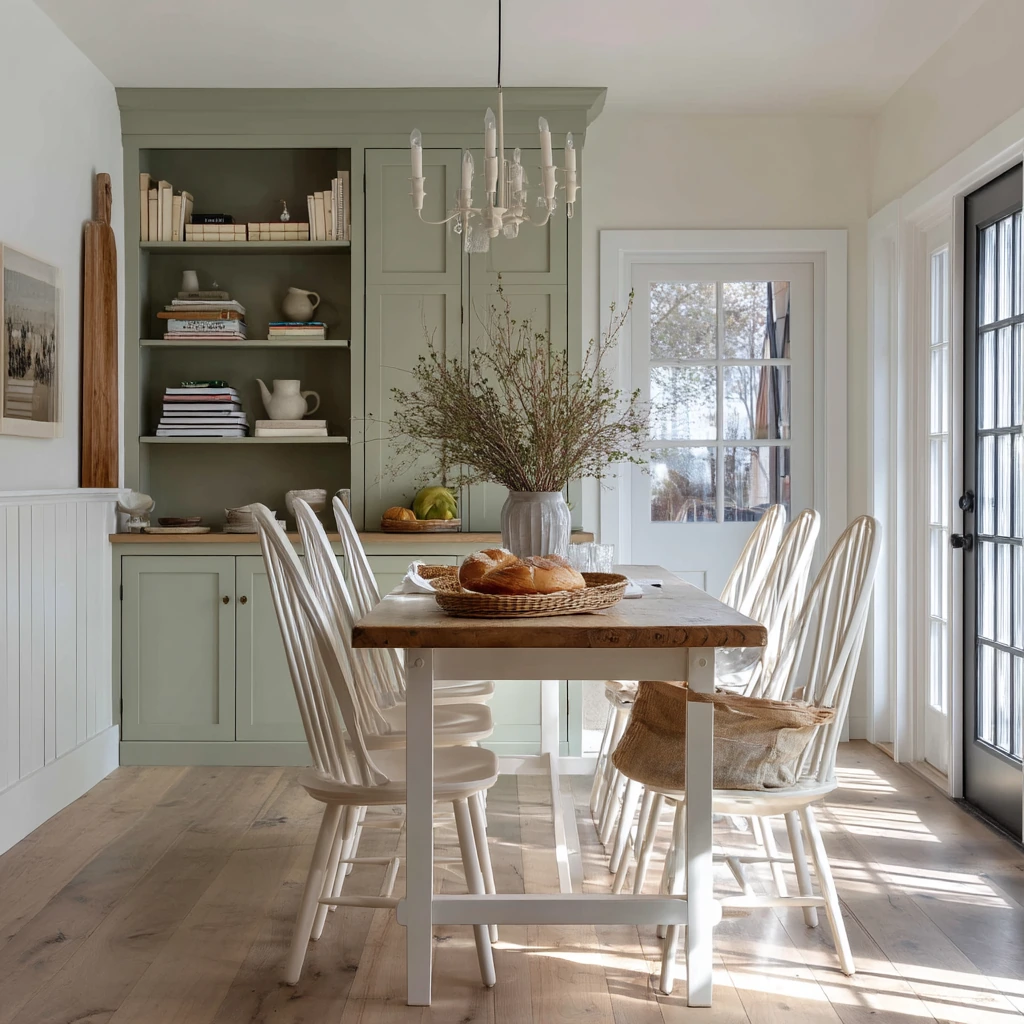
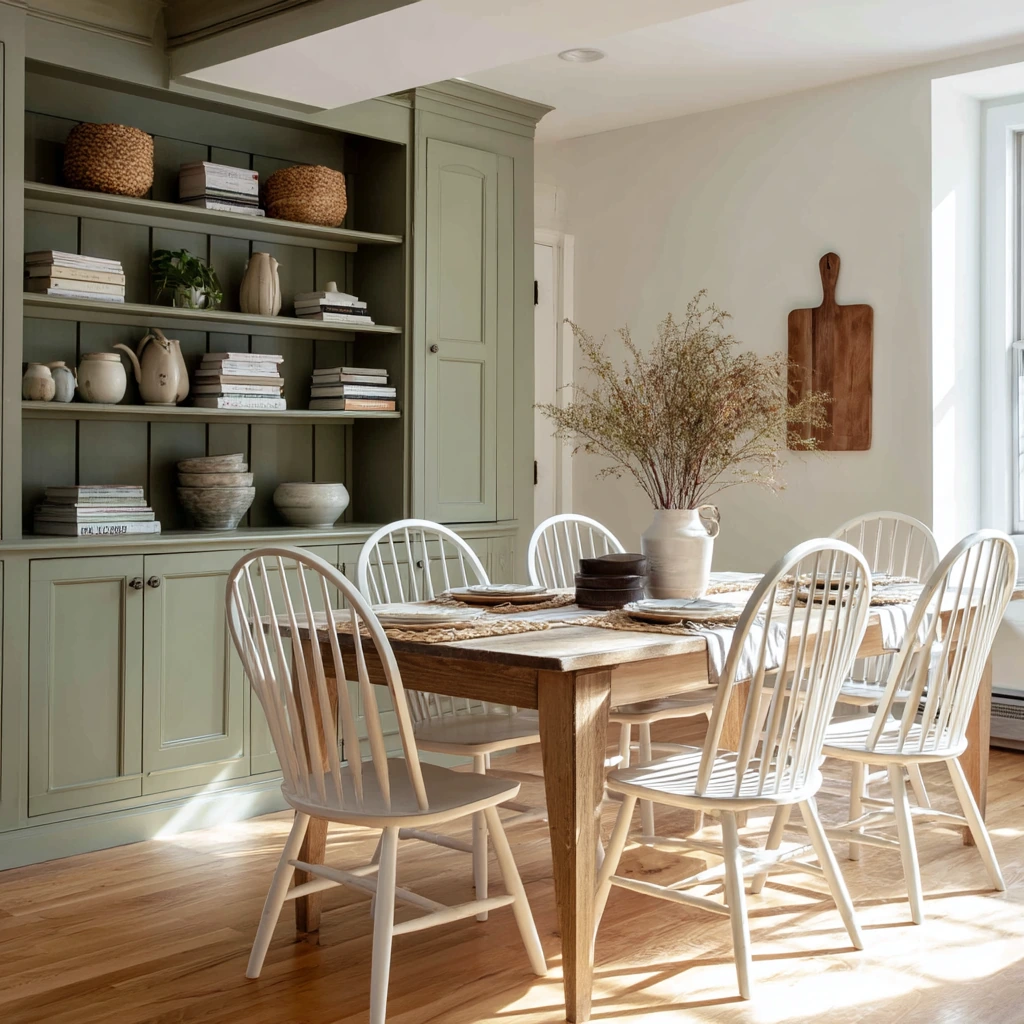
A modern farmhouse sage and white dining room mixes rustic wood with clean paint colors. Start with a rectangular pine table for that warm, casual feel. Pair it with painted white Windsor chairs to keep the room bright and familiar. The main feature here is a sage built-in hutch look. Even if you do not have a built-in, a tall cabinet painted sage can give the same effect and create a strong focal point.
Style the hutch with simple, useful items: ceramic pitchers, stacked cookbooks, and everyday plates. Add a breadboard leaning on the wall for an easy farmhouse touch that also works as kitchen overflow. Linen napkins bring in softness and make white chairs feel less stark. This is a family-friendly setup, so it makes sense to show normal details like a dog’s water bowl by the back door and one chair slightly pulled out.
Late-morning light looks great with sage because it keeps the green from turning gray. To keep the room grounded, use a few darker accents like black hardware on the hutch or a dark frame on one piece of art. Keep surfaces mostly practical. If the table is used daily, make the centerpiece small and easy to move, like a short pitcher with stems.
- Use a pine table for warmth and a soft farmhouse feel.
- Paint a hutch sage to create storage and a strong color anchor.
- Display ceramic pitchers and cookbooks for useful decor.
- Add linen napkins to soften the look and keep it casual.
- Place a washable mat under the dog bowl to protect the floor.
Pro Design Tip: Paint the hutch the same sage as any wall accents, then use white dishes inside so the storage looks calm and not busy.
Budget Considerations: A secondhand cabinet can be painted sage for far less than a custom built-in; upgrade it with new knobs for a finished look.
8 Minimal and Calm
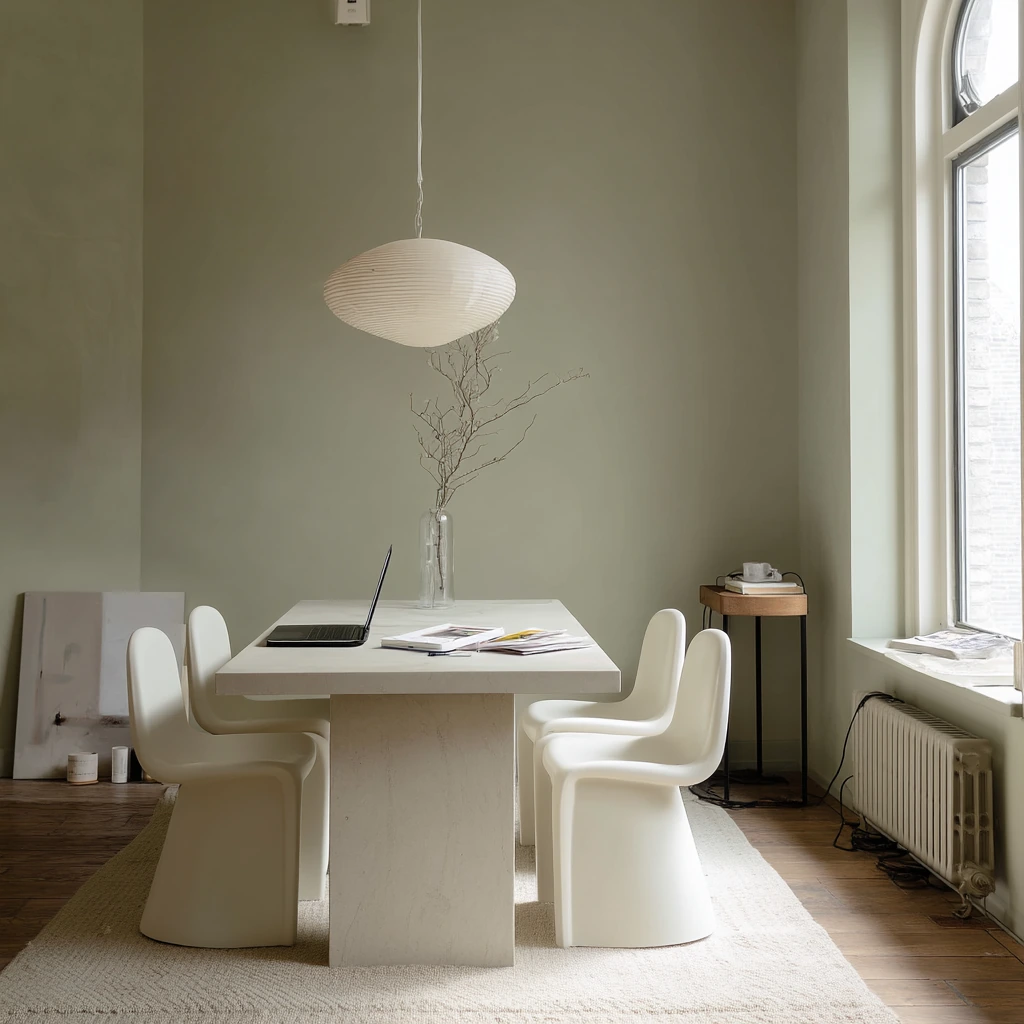
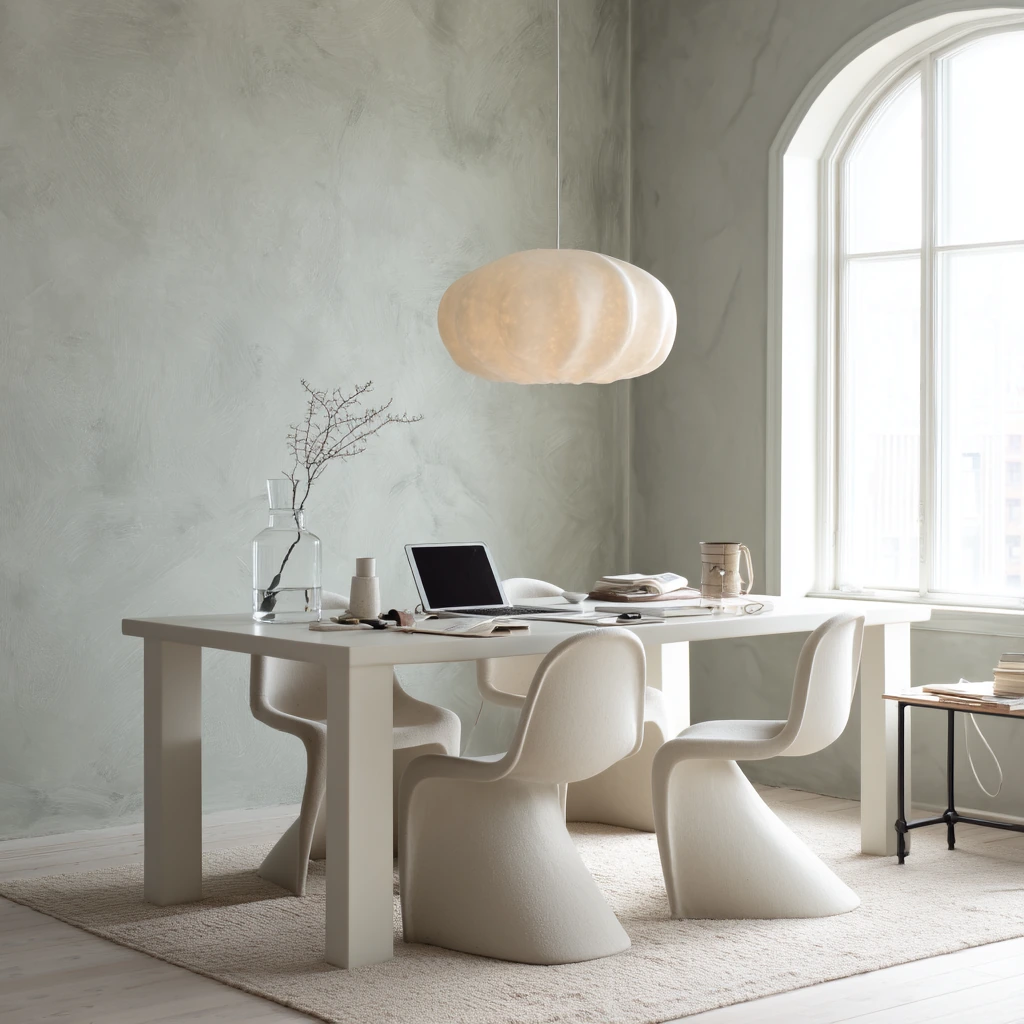
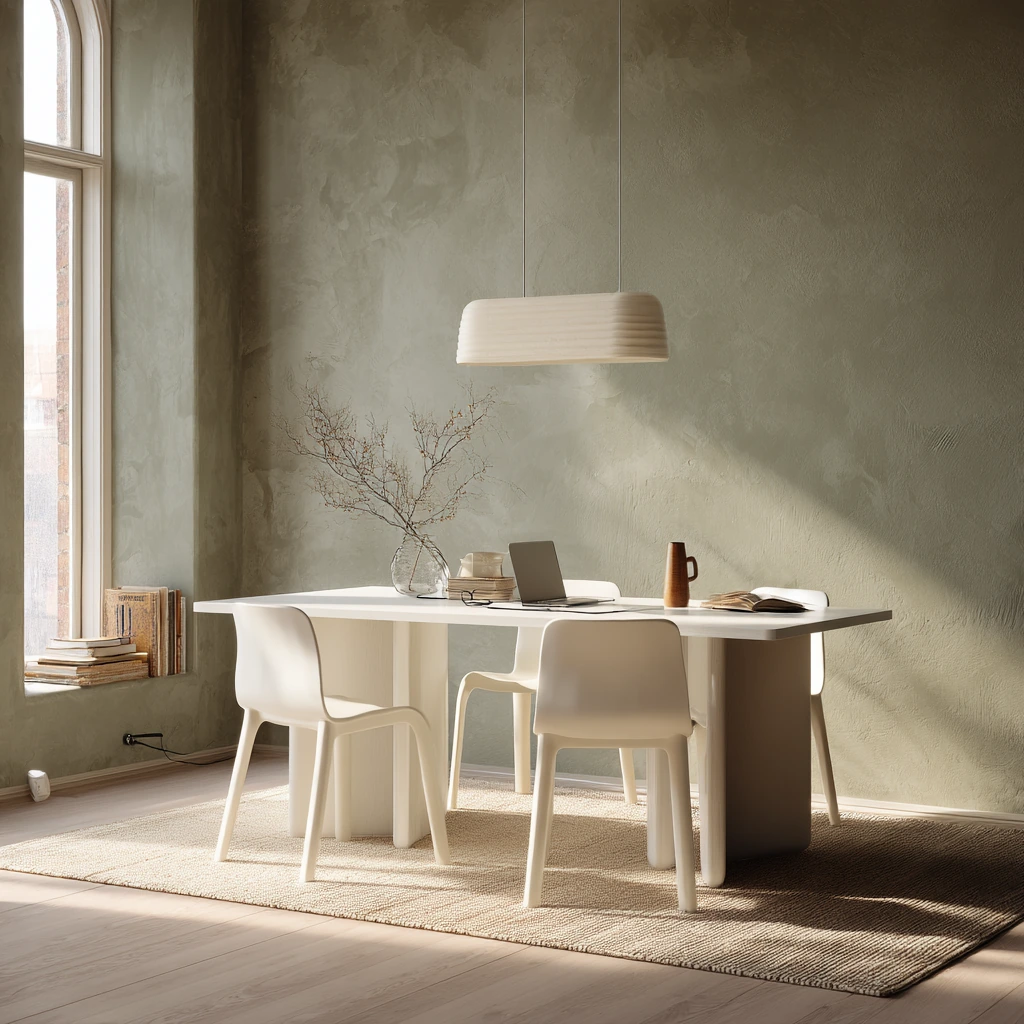
A minimal sage and white dining room works best when every item has a job. Choose a clean-lined table and white molded chairs so the shapes stay simple. A muted sage plaster wall (or a matte sage paint) adds softness without adding clutter. The goal is a tonal look where nothing screams for attention, but the room still feels warm.
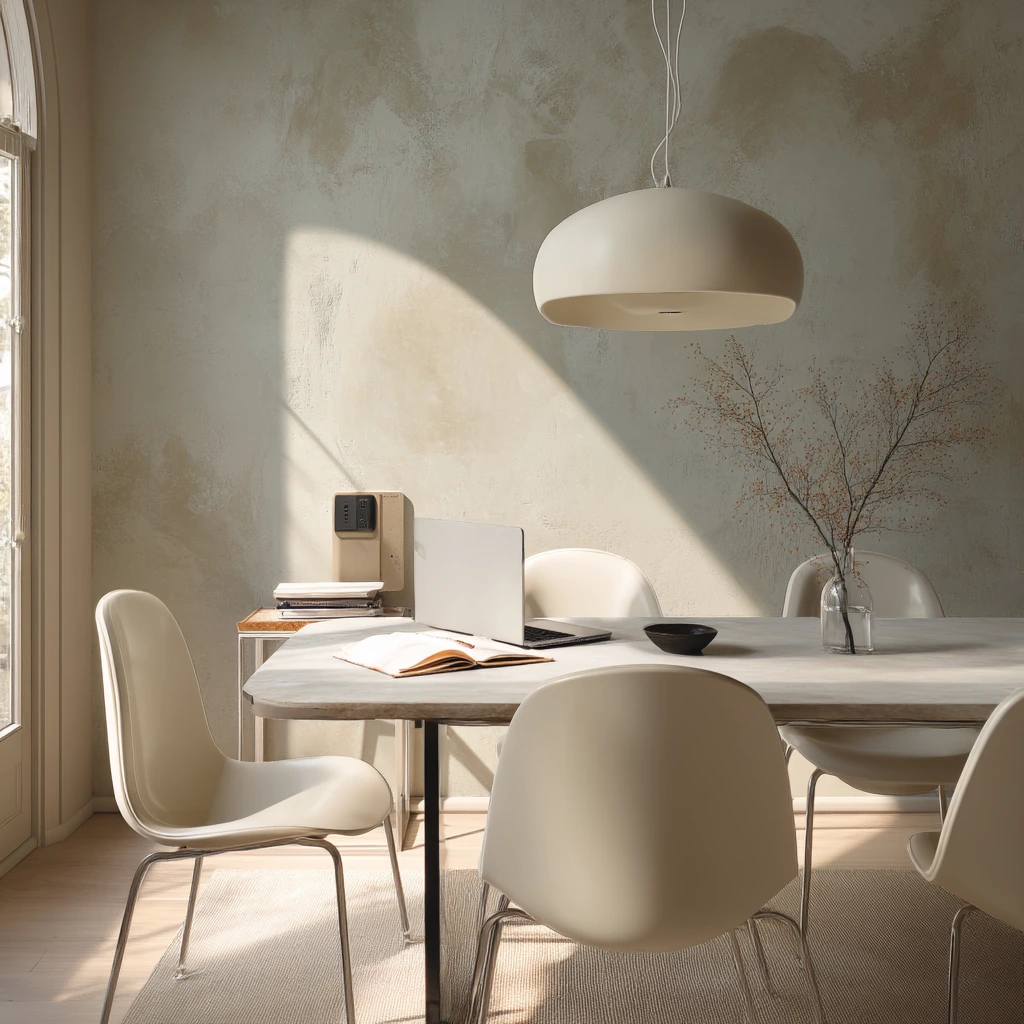
Lighting is the main decor in a minimal space. One sculptural pendant can act like art and give the room a center point. Keep the centerpiece very simple: a single branch in a clear vase. This keeps the table feeling open and makes it easy to use the space for meals or writing. A pale wool rug adds quiet texture and helps with sound, which is important in rooms with lots of hard white surfaces.
Minimal does not mean perfect. Real life shows up as keys and mail on a slim side table, a laptop charger looped near the baseboard, and an open notebook on the table. The difference is that these items have a place. Use a small dish for keys, a folder for mail, and one cable clip to keep cords tidy. Soft window light will highlight the calm sage tone and make the white chairs look clean, not harsh.
- Keep furniture shapes simple to support a minimal look.
- Choose a matte sage wall finish to avoid glare and look softer.
- Use one pendant as the main statement piece.
- Add a pale rug to reduce echo and warm up the floor.
- Create a small drop zone for keys, mail, and chargers so clutter stays contained.
Pro Design Tip: Limit the room to three finishes (wood, white, and sage) and use hidden storage for anything else to keep the look calm.
Budget Considerations: A basic pendant can look high-end with a larger shade; focus on scale, not price, and use a simple LED bulb.
9 Seasonal Spring Styling
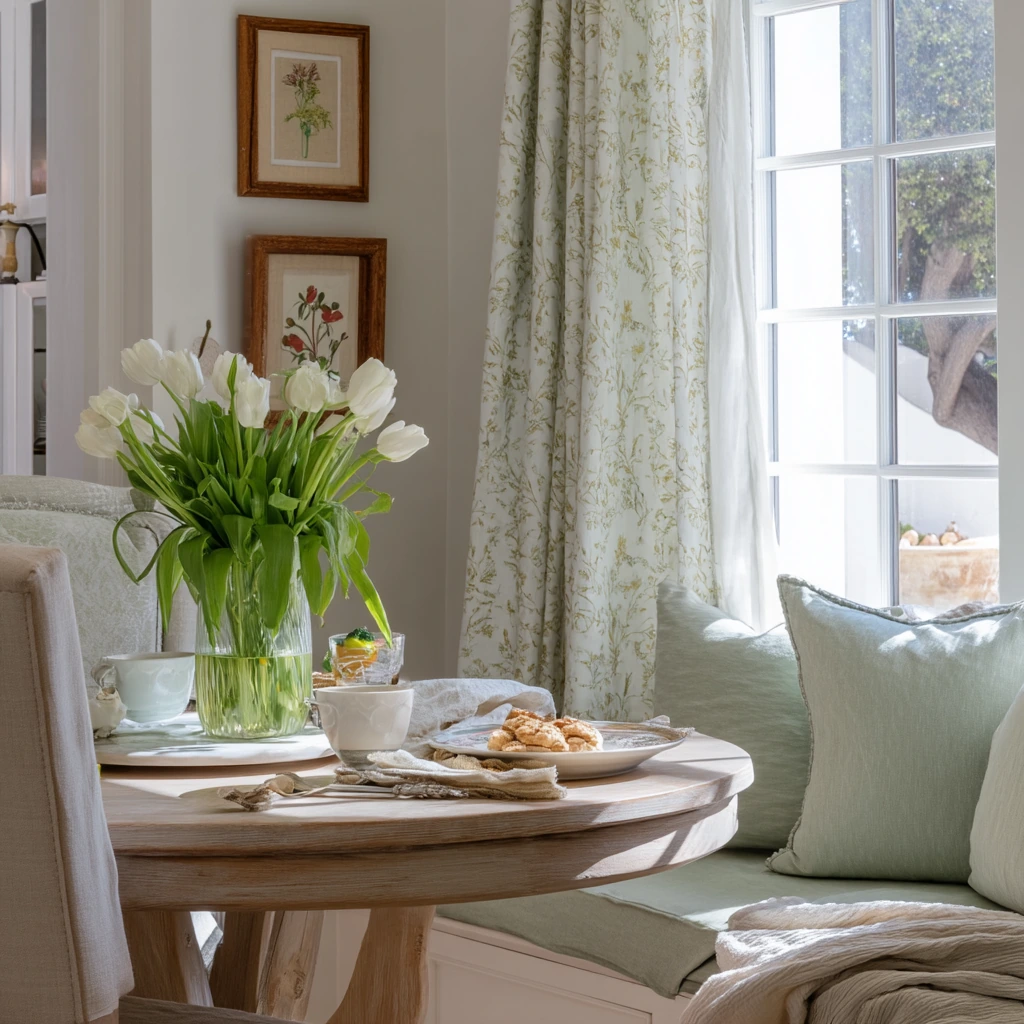
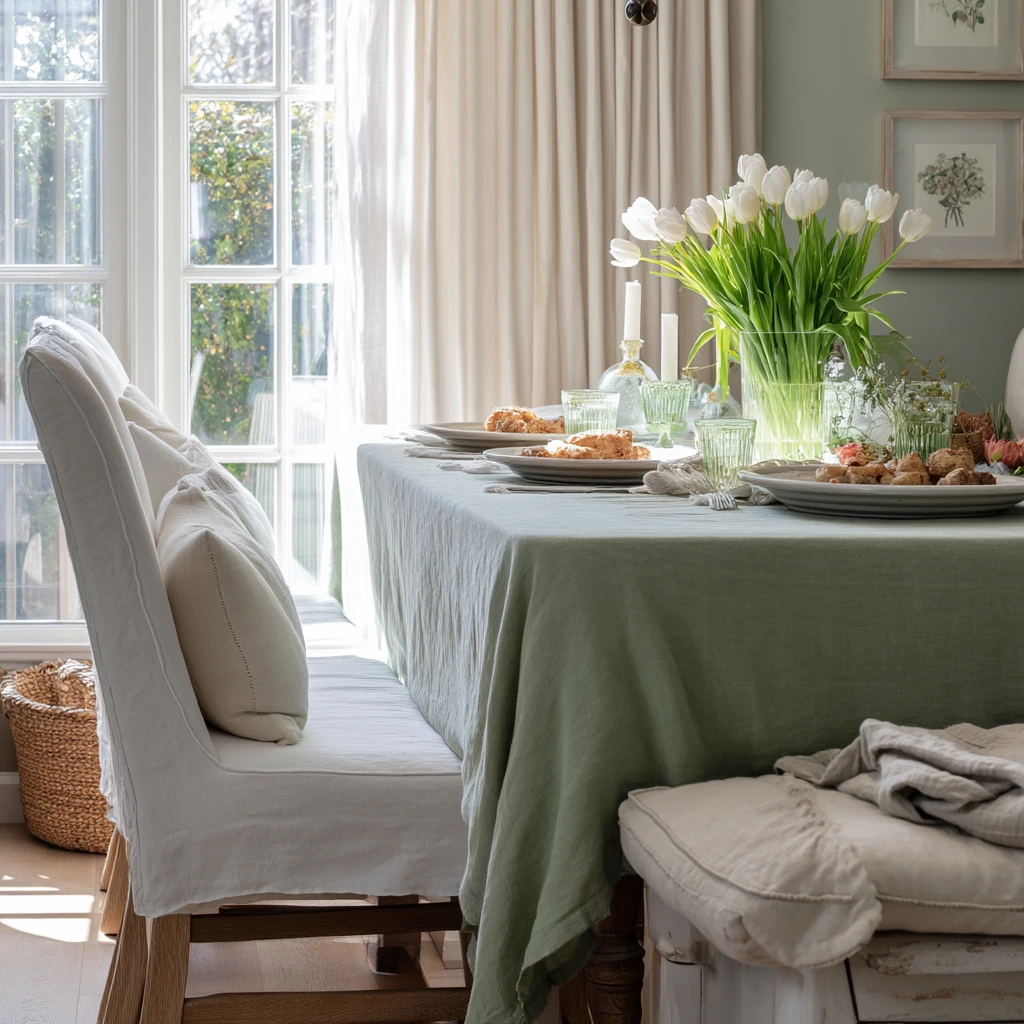
A spring-ready sage and white dining room feels light, clean, and cheerful, but still practical for daily life. Start with a white oak table because it has a fresh tone that works with both sage and white. Add sage slipcovers for seating. They bring soft color and make chairs feel cozy, especially when mornings are still cool. This mix also hides small stains better than bright white fabric.
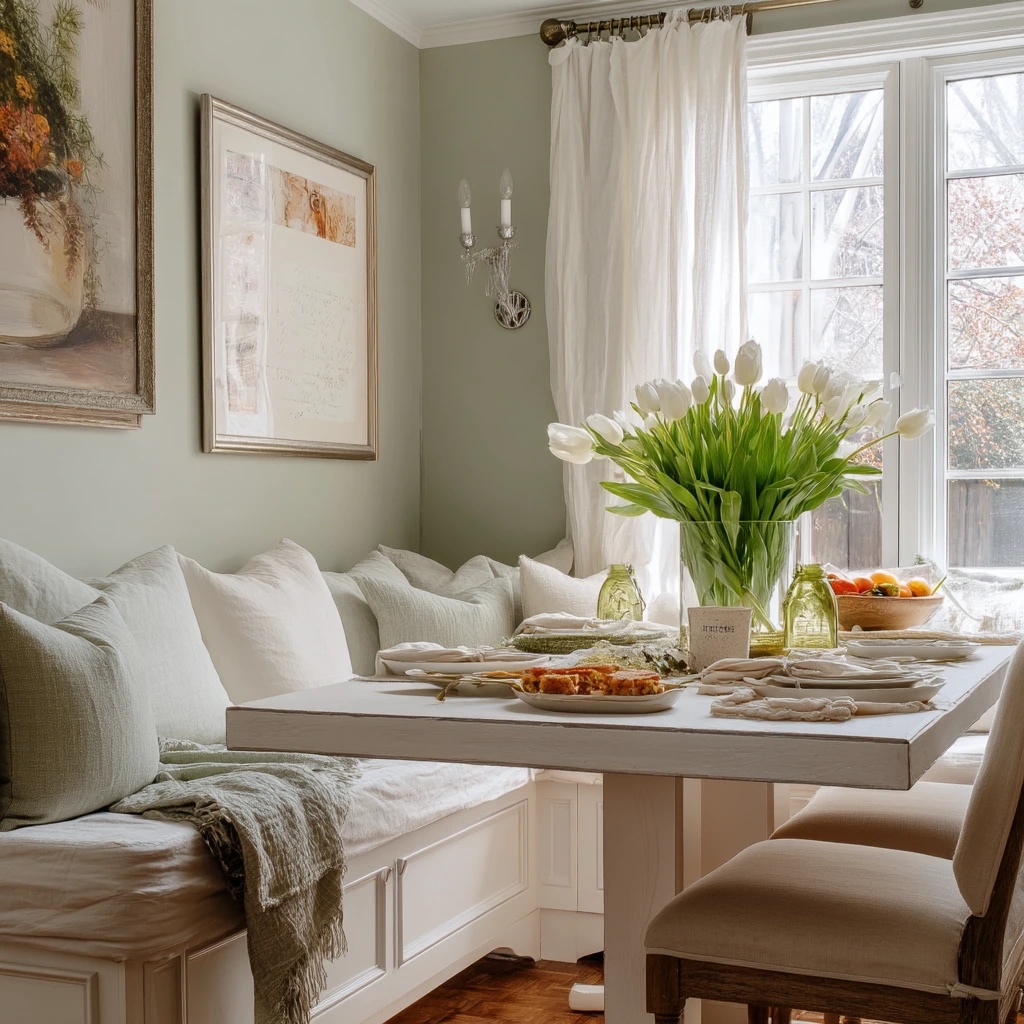
Decor for spring should be simple and real. Fresh tulips in a vase instantly change the mood. Pale green glass adds a soft shine and repeats the sage color in a lighter way. Botanical prints on the wall tie the theme together without needing more accessories. Light linen curtains help sun-dappled window light spread across the room, which makes the space feel open even if it is not large.
This look also shows everyday family life: a pastel kid drawing on the fridge edge, carrot cake crumbs on a plate, and folded throws on the bench. Keep it charming, not messy, by using a bench with baskets for throws and kid papers. After snacks, move plates to a tray or the sink quickly so crumbs do not linger. With sage and white, the room stays soft and fresh even when the house is busy.
- Use tulips for a quick seasonal change that is easy to maintain.
- Choose botanical prints with muted greens to match sage slipcovers.
- Add pale green glassware for a light color repeat.
- Store throws in a basket under the bench to keep seats clear.
- Keep a small tray ready for snack plates so cleanup is fast.
Pro Design Tip: Use one “spring” accent (flowers or pastel art) and keep the rest neutral so the room stays timeless after the season ends.
Budget Considerations: Swap in sage slipcovers and thrifted frames for botanical prints; it updates the room without replacing the table or chairs.
10 Everyday Work-From-Home Dining Space
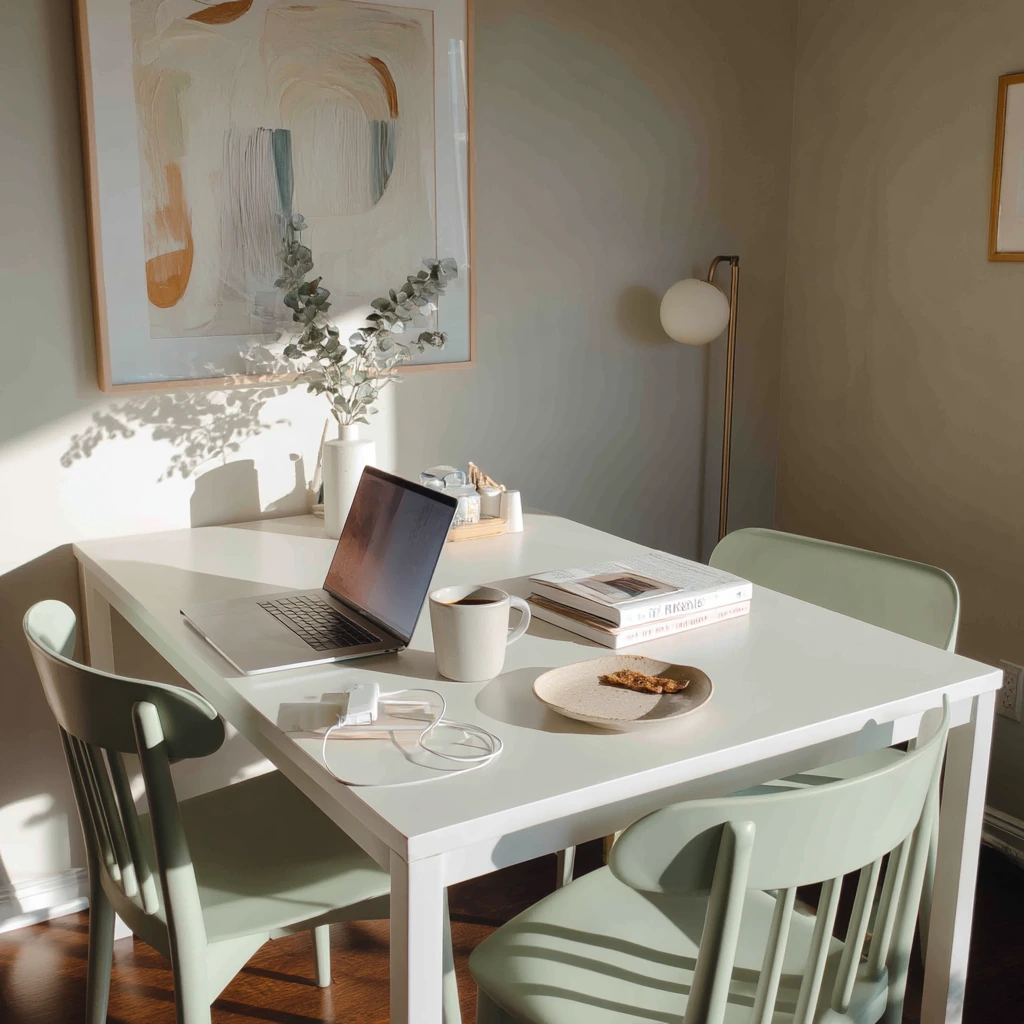
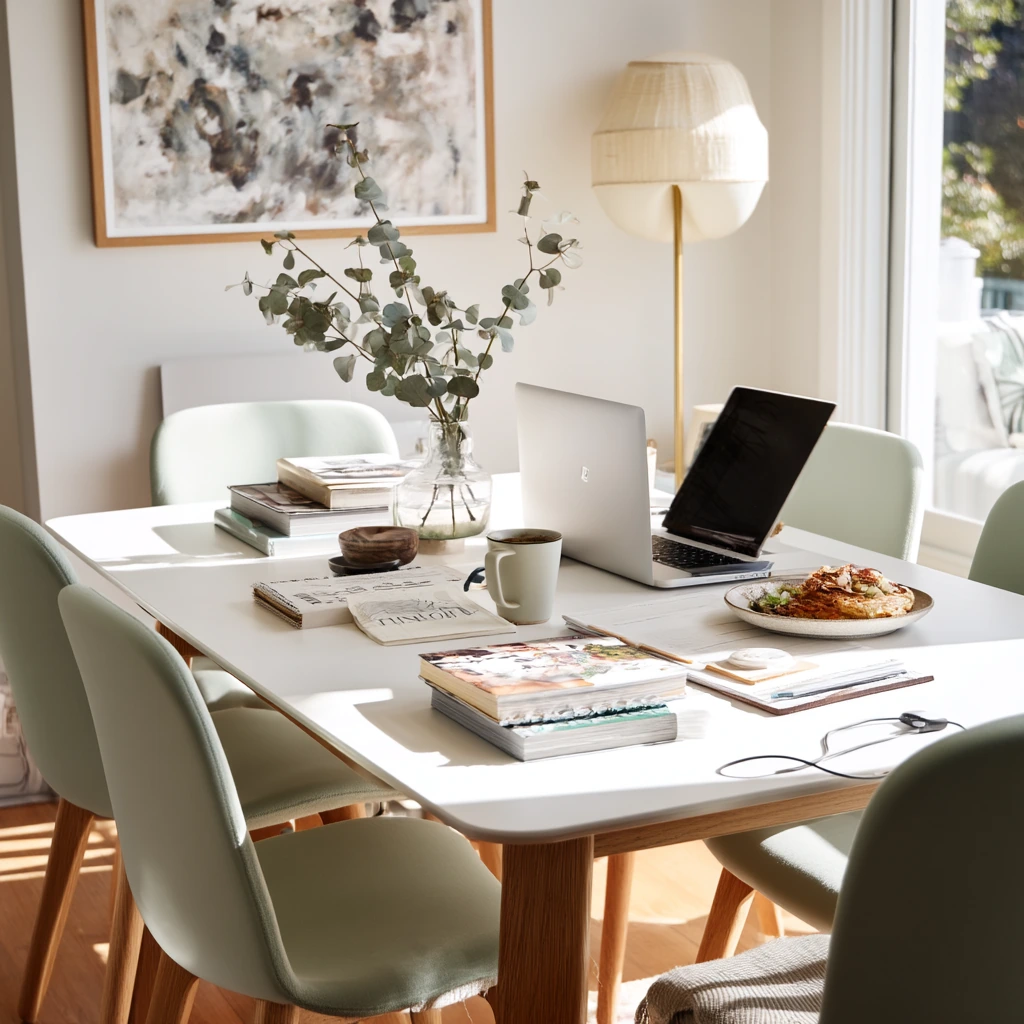
A sage and white dining room can work as a home office if you plan the surfaces. A white table helps the space feel bright and clean, even when there is an open laptop. Sage chairs add color and make the dining set feel intentional, not like borrowed office furniture. Keep the center of the table flexible so it can switch from work to meals fast.
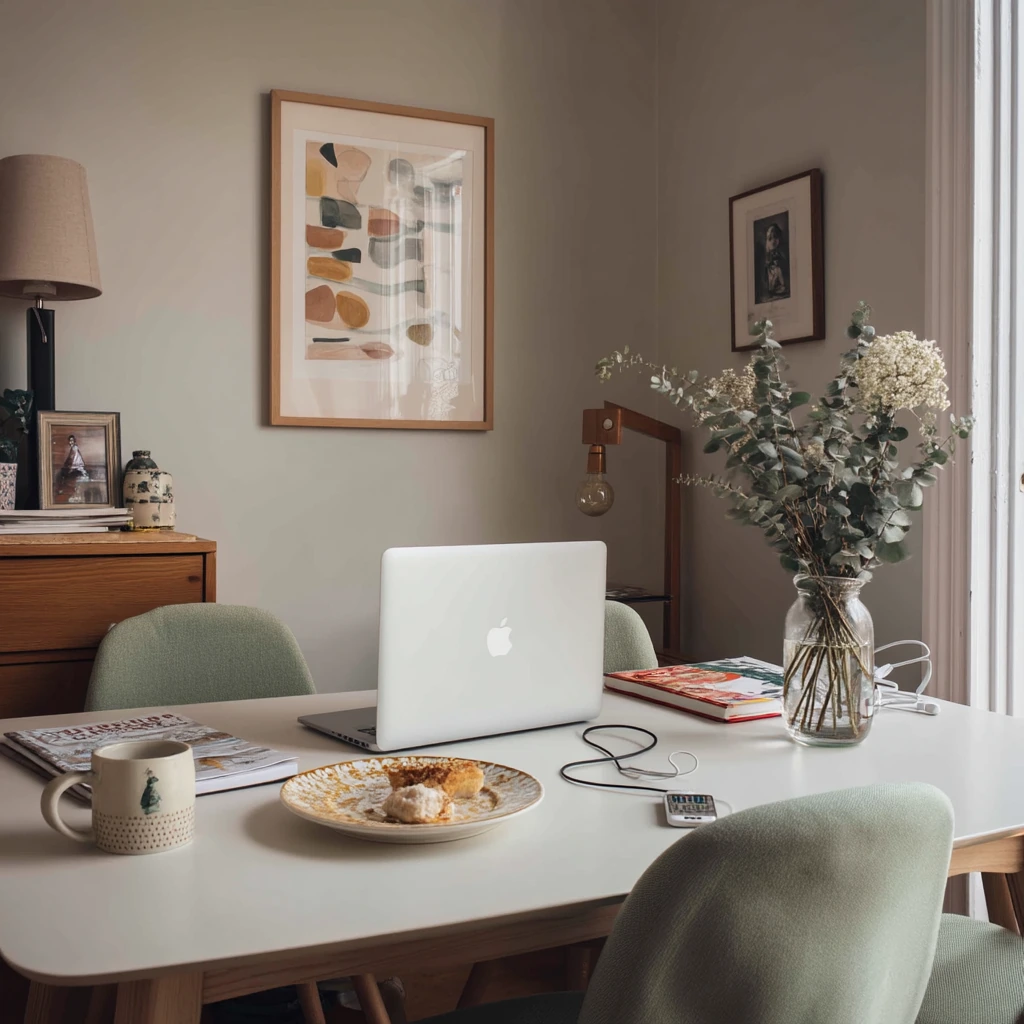
Style it with items that make sense for both jobs. A small vase of eucalyptus adds a fresh touch and does not shed much. A cookbook stack can hide paperwork and still fit the dining theme. Real signs of use like a lunch plate, a mug ring on the wood, and earbuds beside a notepad are normal. The goal is to keep them grouped, not spread out. Add a small catchall for earbuds and pens, and use one folder for papers.
Lighting needs to support work and dinner. Daylight from a nearby window is best for daytime tasks, and a warm lamp in the corner helps in the evening. Use framed abstract art with sage or soft neutrals to connect both “work” and “dining” vibes. For cords, run a charging cable along the edge of the sideboard or baseboard and secure it with clips so it looks neat and stays safe.
- Use a white table to keep the work zone feeling clean and bright.
- Add sage chairs to bring color without busy patterns.
- Keep a small tray for earbuds, pens, and chargers.
- Choose one lamp with warm light to reduce glare and eye strain.
- Use cable clips to route cords along the wall and off the floor.
Pro Design Tip: Create a “reset routine” with one basket where you drop work items each evening so the table can become a dining space in two minutes.
Budget Considerations: If you cannot buy a new table, paint the base white and keep the top wood; it gives a fresh look and still hides daily wear.
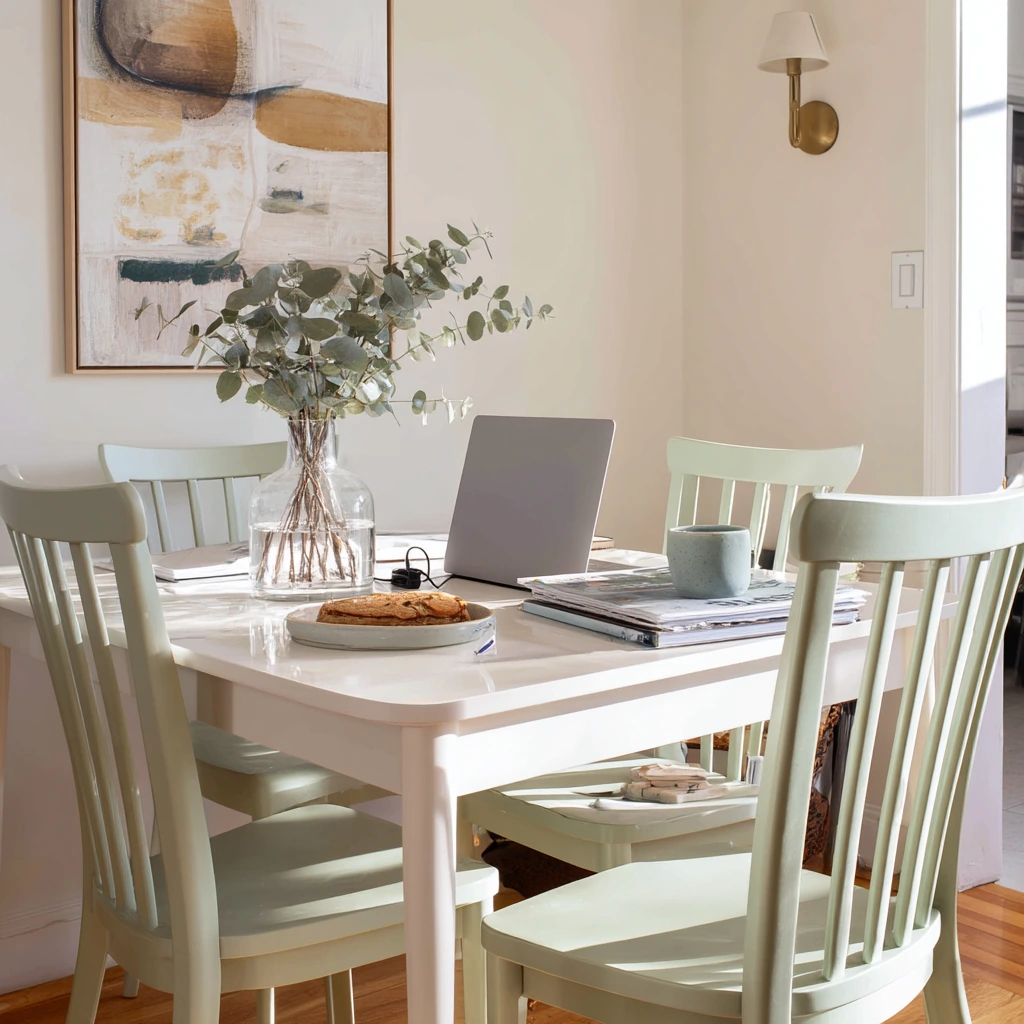
Sage and white is a flexible color mix that fits many homes, from small apartments to busy family spaces. Start with one clear change, like a sage accent wall, sage chairs, or sage slipcovers, then keep the rest simple and light.
Focus on comfort, storage, and lighting so the room works every day. When your dining area is easy to reset, it will look better more often and feel calmer to use.
FAQ
1) What shade of sage works best with white?
A muted, gray-leaning sage is easiest. It pairs well with bright white trim and does not look too yellow or too blue in most light.
2) Should I use warm white or cool white?
Warm white usually looks softer next to sage and oak. Cool white can work, but it may make sage look more gray, especially in low light.
3) What wood tones look good with sage and white?
White oak, pale oak, and light pine are safe choices. Medium walnut can also work if you keep walls and chairs light.
4) How do I keep a sage and white dining room from feeling bland?
Add texture like a jute rug, woven pendant, linen shades, or ceramic pieces. Use one darker accent, like black hardware or a dark frame.
5) What is the easiest way to add sage without painting?
Try sage seat cushions, a sage table runner, slipcovers, or peel-and-stick paneling or wallpaper.
6) How can I style a dining table that is used every day?
Keep decor to one small centerpiece in a tray or bowl. Make it easy to lift off when it is time to eat or work.
7) How do I handle clutter like mail and chargers in the dining area?
Set up a small drop zone with a tray and a basket, and use cable clips to route cords along the wall so they stay neat.