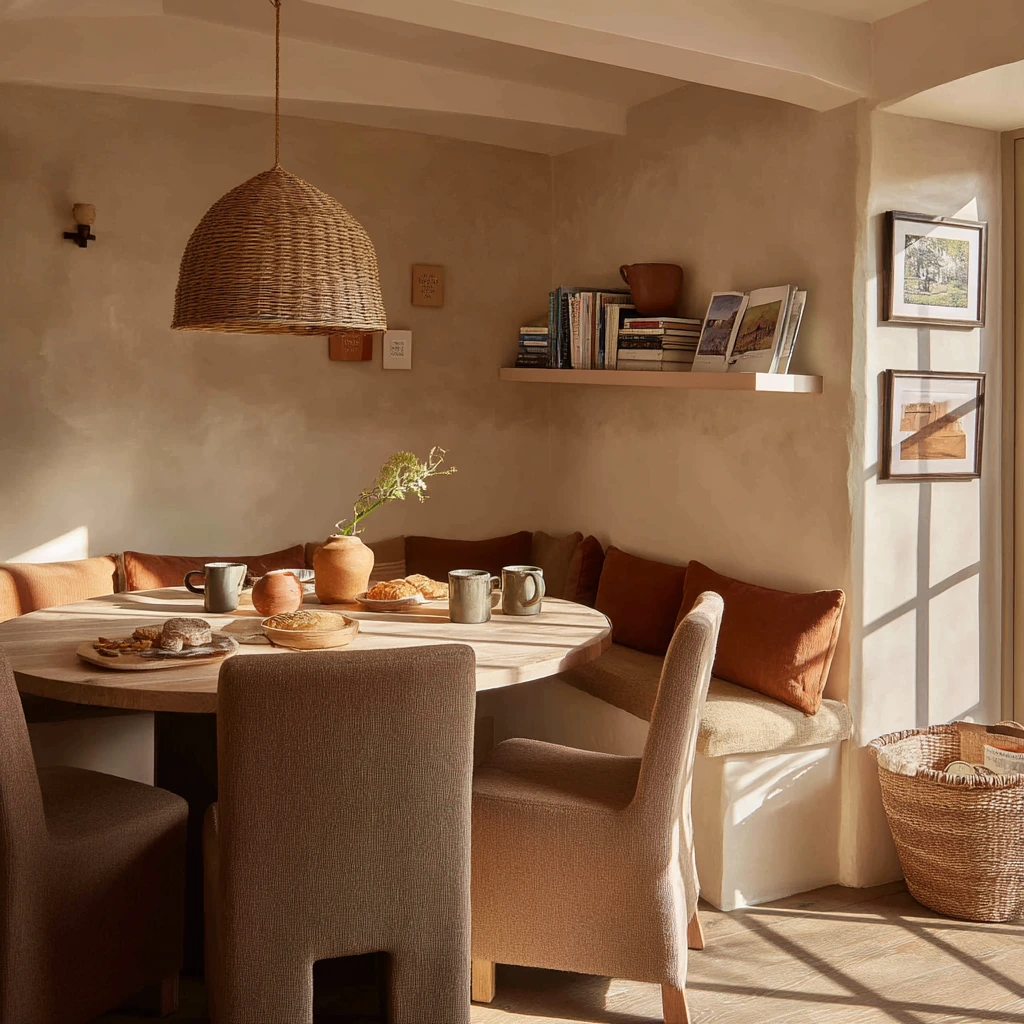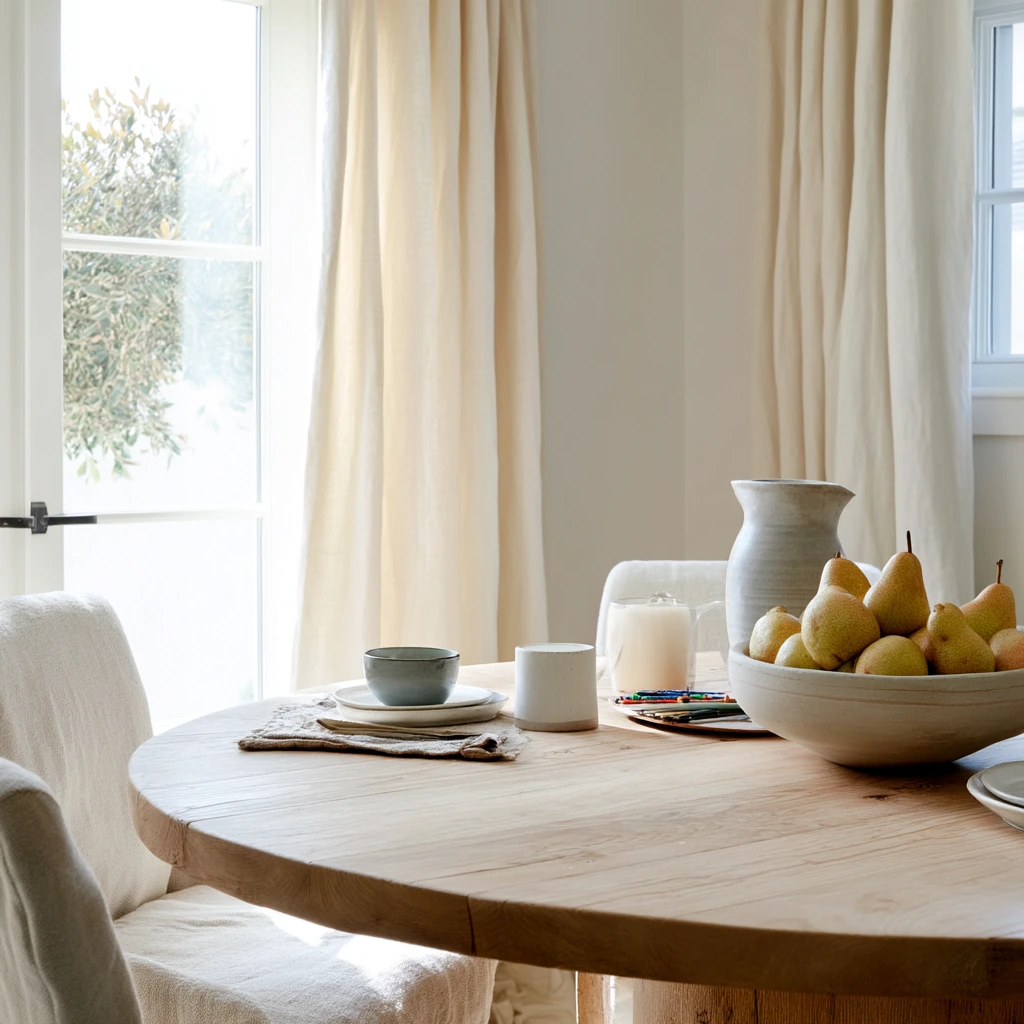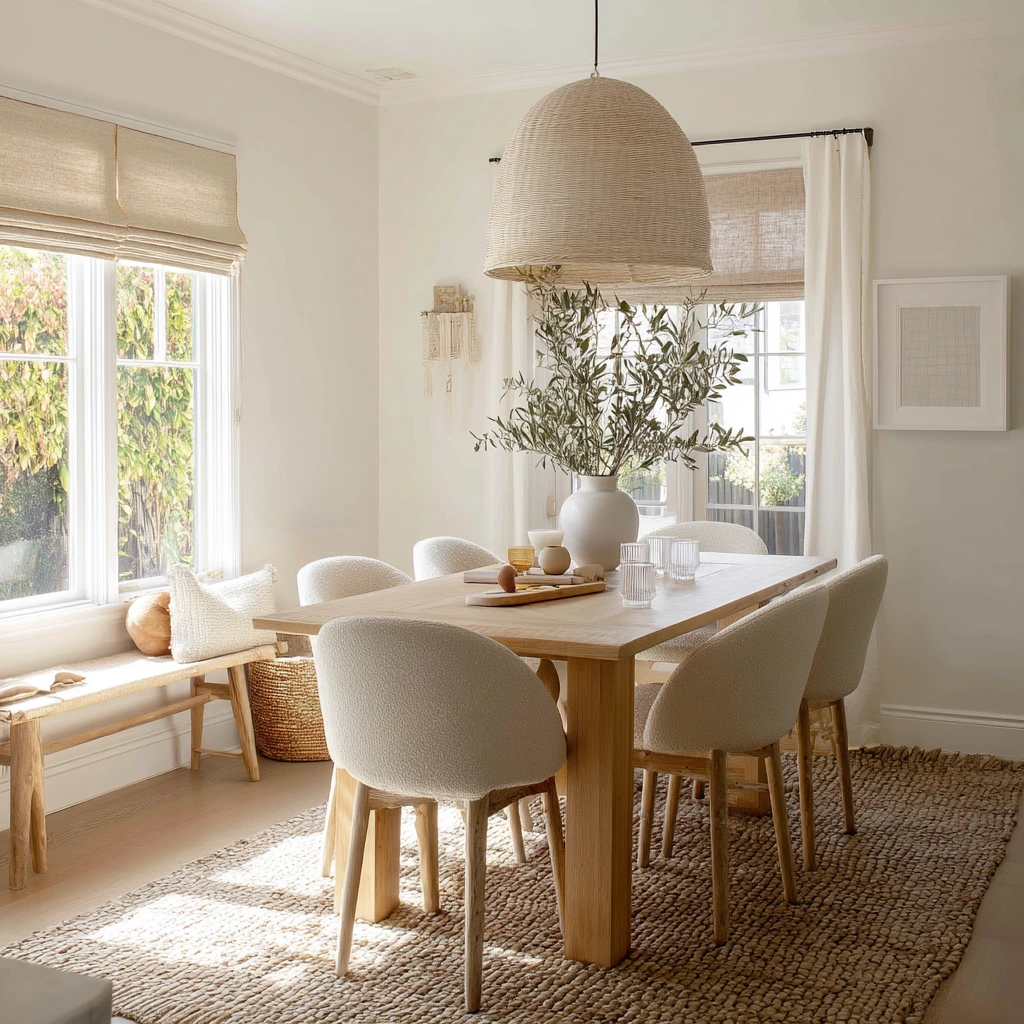

Small dining rooms get messy fast. Papers, extra dishes, kids stuff, and work gear all land on the table. The right storage keeps the room useful without making it feel packed.
This guide shares small dining room space storage ideas you can copy in a real home or a tiny apartment. You will see options like a built-in banquette with hidden drawers, floating shelves, slim sideboards, and under-table carts.
Each section includes practical steps plus simple styling ideas, so your storage looks intentional. If you are coming from Pinterest, you can pick one idea and try it this weekend.
You do not need a bigger room. You need better zones, a few closed storage pieces, and small habits that keep the table clear most days.
1 Banquette Storage for a Narrow Family Dining Nook
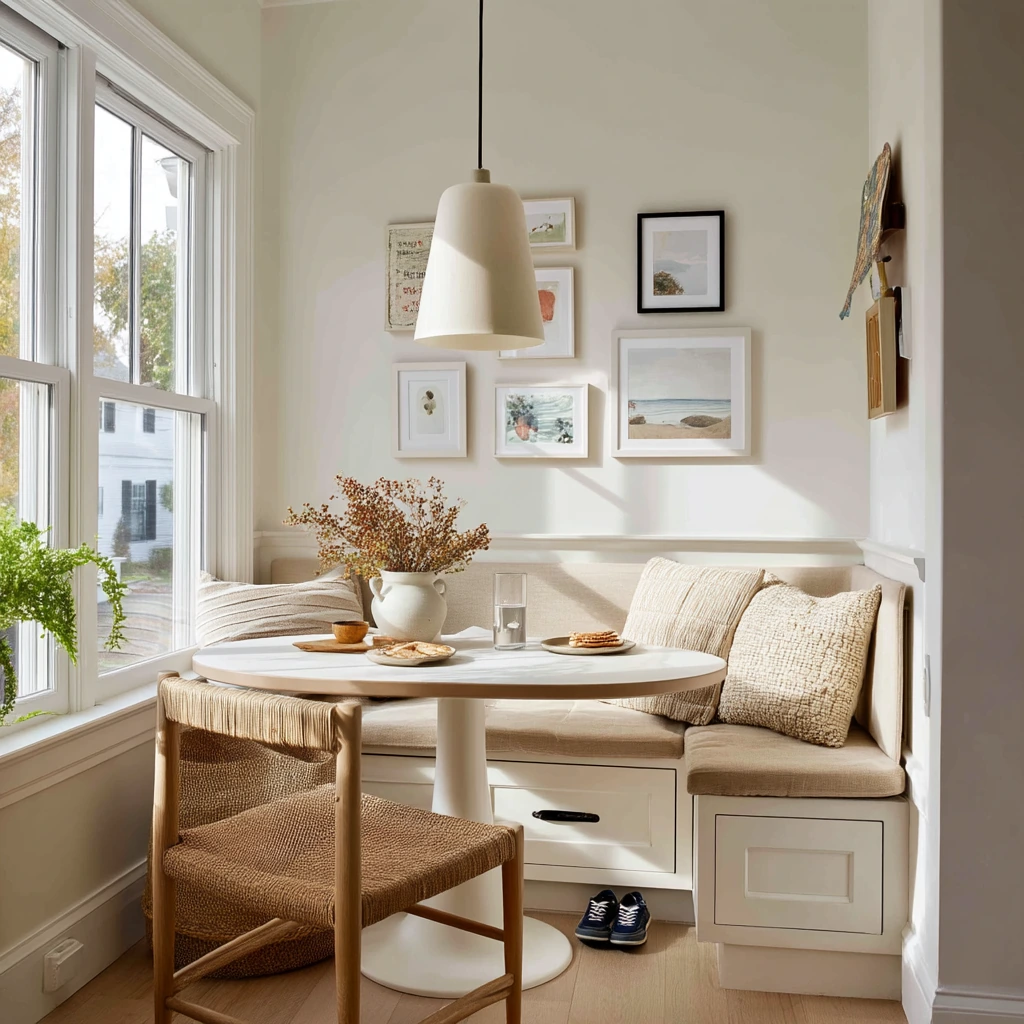
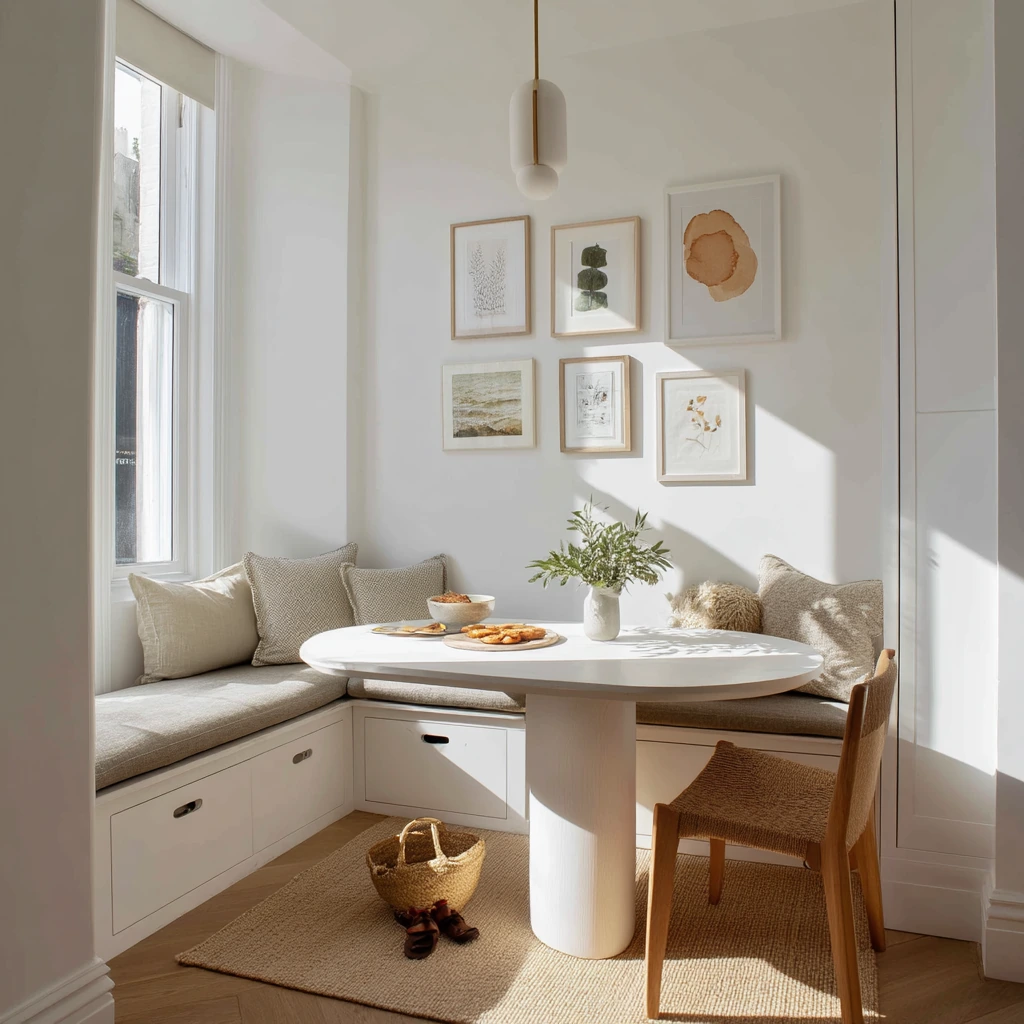
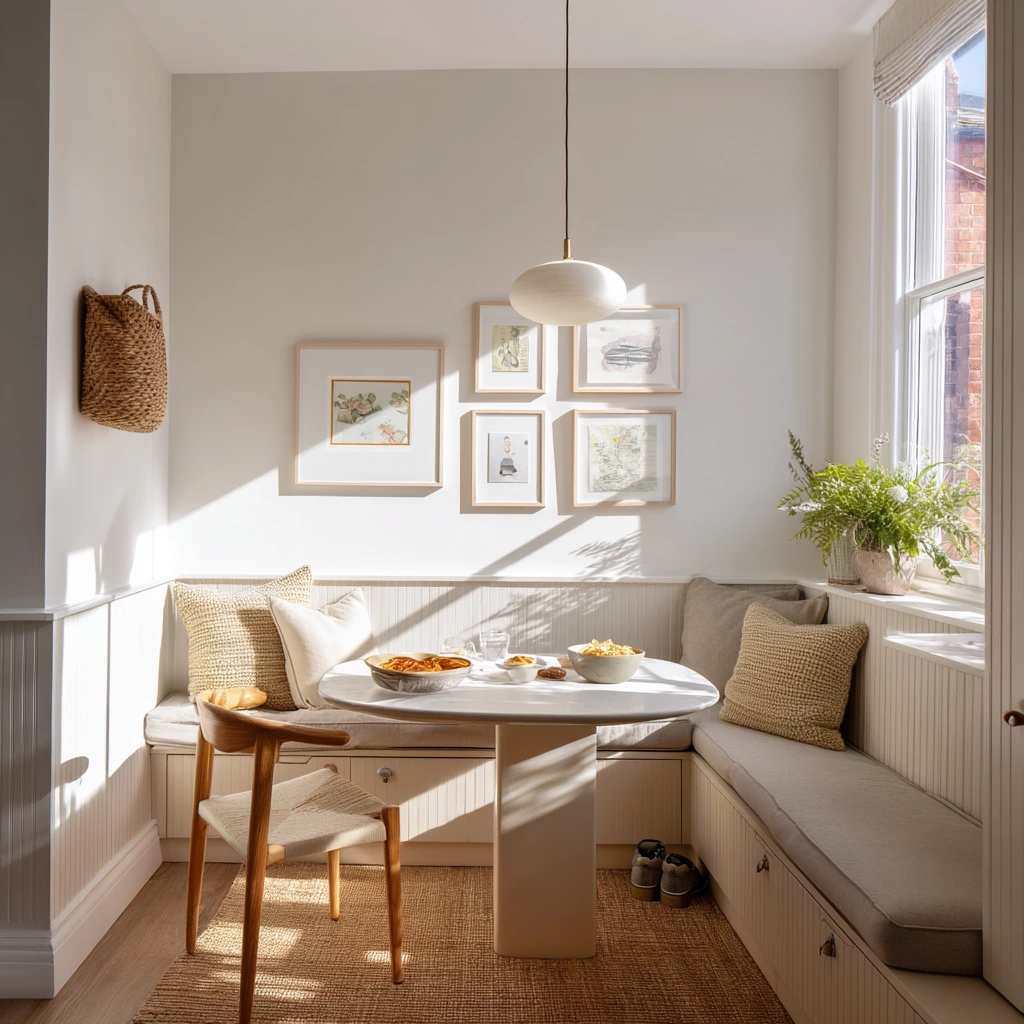
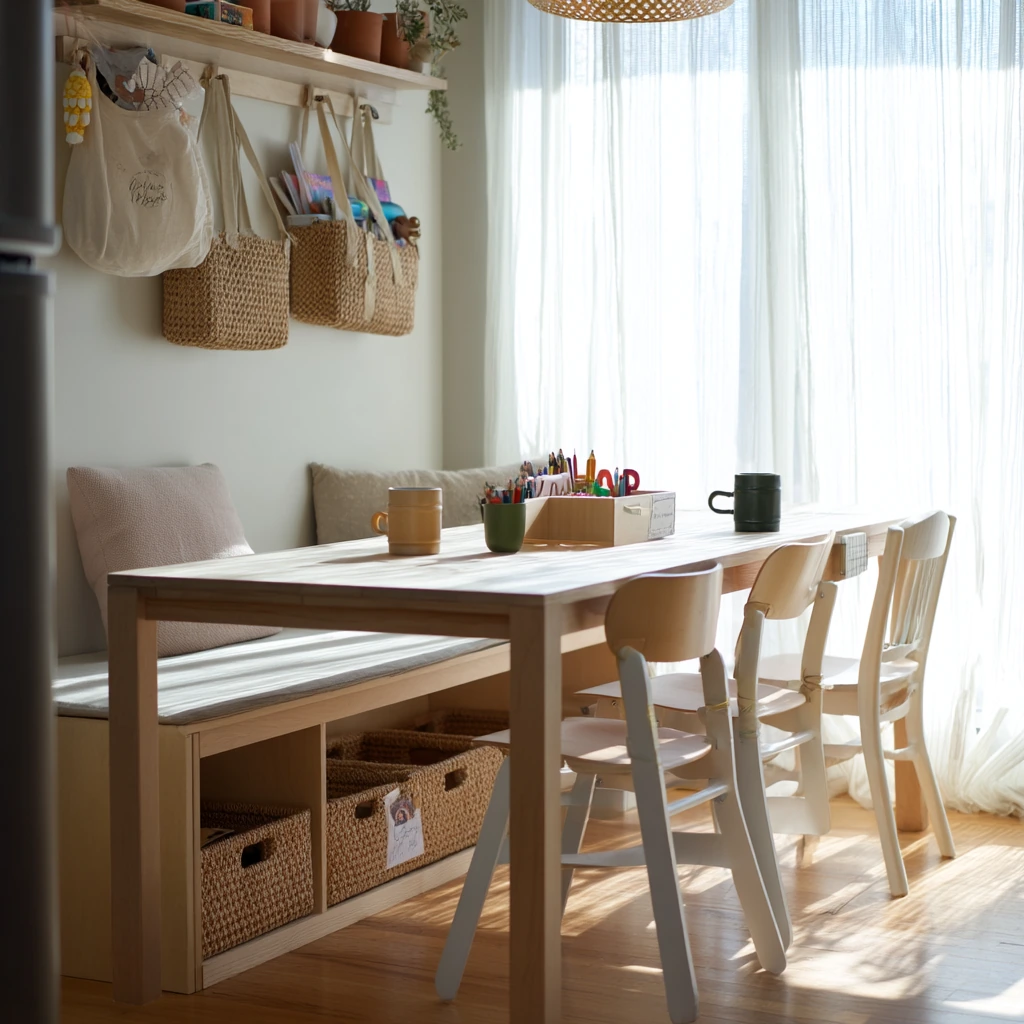
A built-in banquette is one of the best small dining room storage upgrades because it uses the wall and turns seating into a storage zone. Drawers under cushioned seating can hold placemats, kids coloring books, extra napkins, and small serving pieces. It also keeps the middle of the room open, which helps a compact oval table feel less crowded.
To make it work for a busy family home, assign each drawer a job. One drawer for breakfast items like cereal bowls and kids cups. One drawer for school gear like lunch boxes and a small shoe bin, so school shoes do not pile up near the wall. Add a woven basket beside the bench for quick drop items like mail or a blanket for chilly mornings.
How to style it: keep the top calm. Use one framed kids art piece on the wall and a slim pendant to save head space. Choose a wipeable cushion cover in a light neutral so sun-washed window light and soft plant shadows make the space feel bright, not busy.
- Measure the bench depth so drawers open without hitting the table base.
- Use drawer dividers for flat items like placemats and tablecloths.
- Add felt pads under the drawer fronts to cut noise.
- Store everyday bowls in the easiest drawer to reach.
- Keep one basket nearby for items that move daily.
Pro Design Tip: Match the banquette front to your trim color so the storage blends in and the wall looks longer.
Budget Considerations: Custom built-ins cost more; for a lower cost, use a ready-made storage bench with pull-out bins and add a foam cushion on top.
2 Wall-Mounted Shelving in a Tiny Apartment Dining Corner
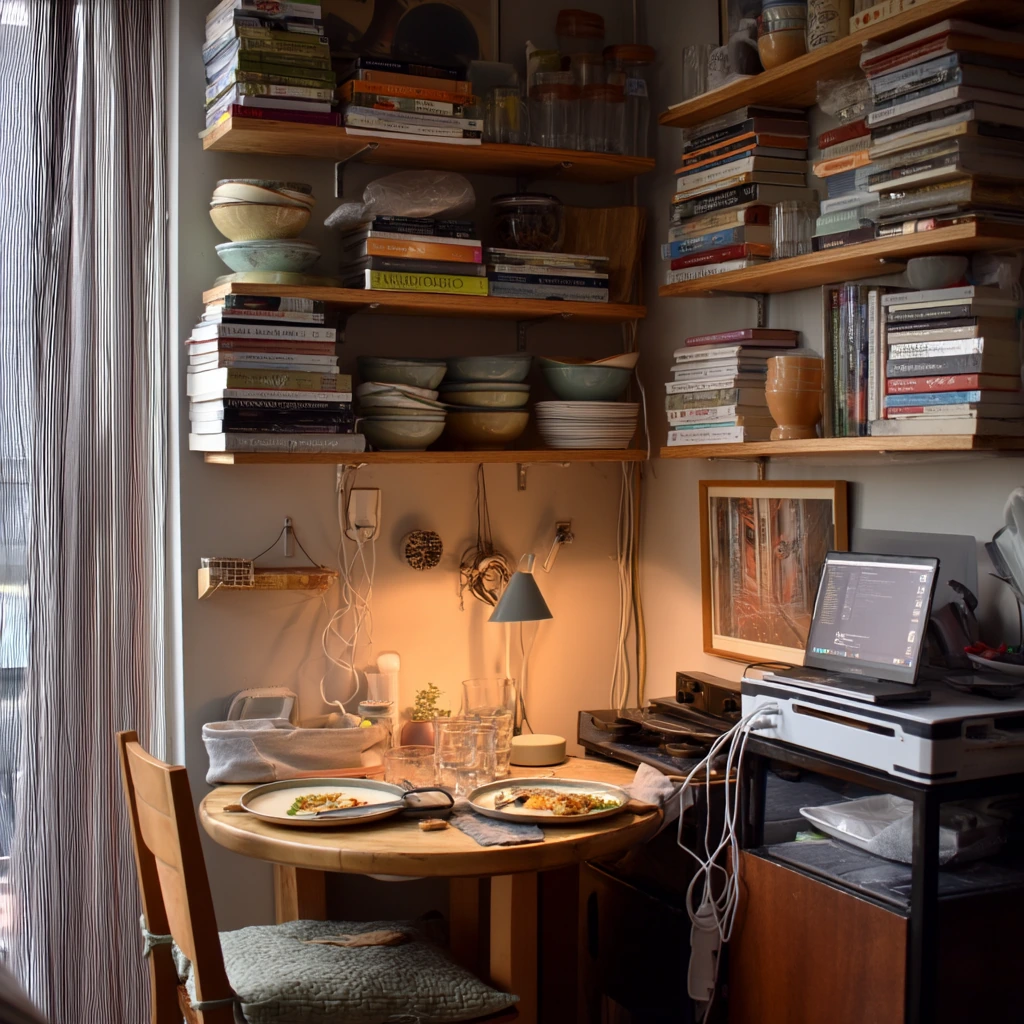
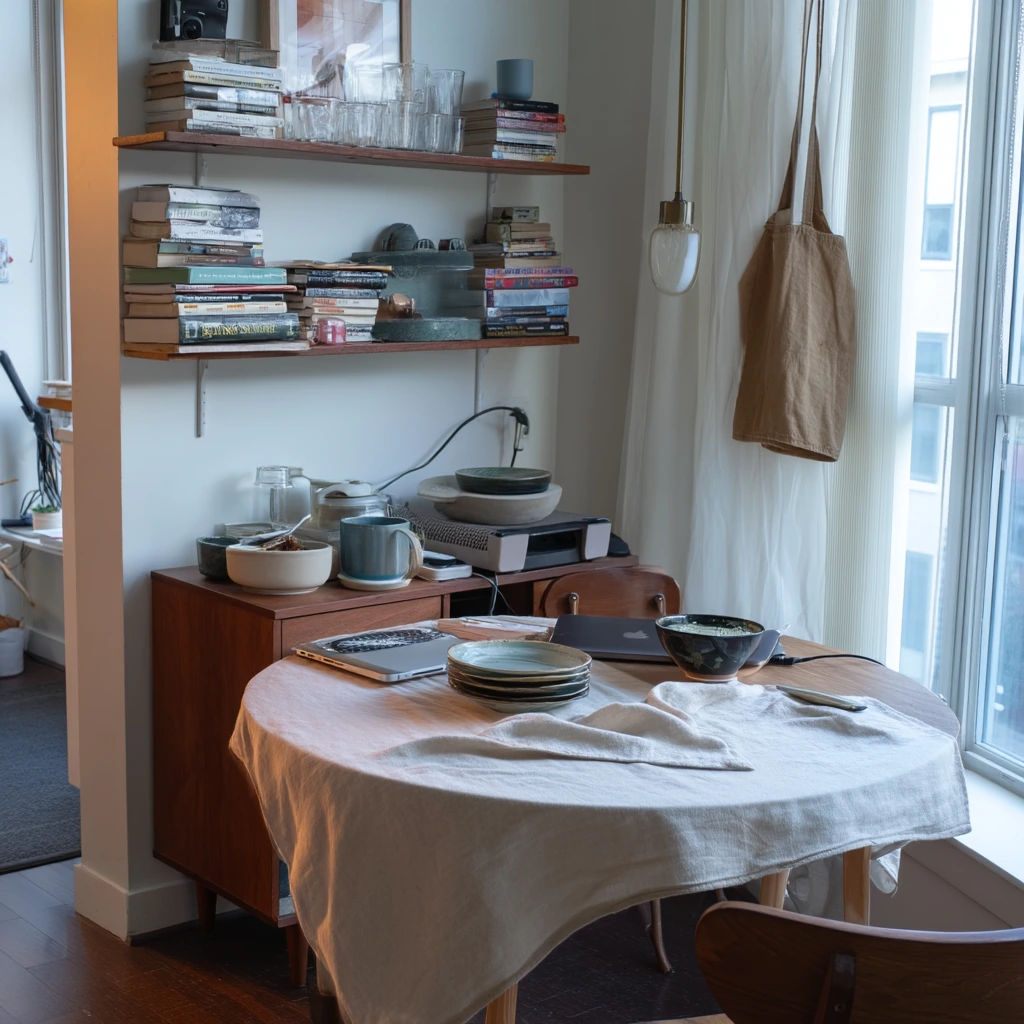
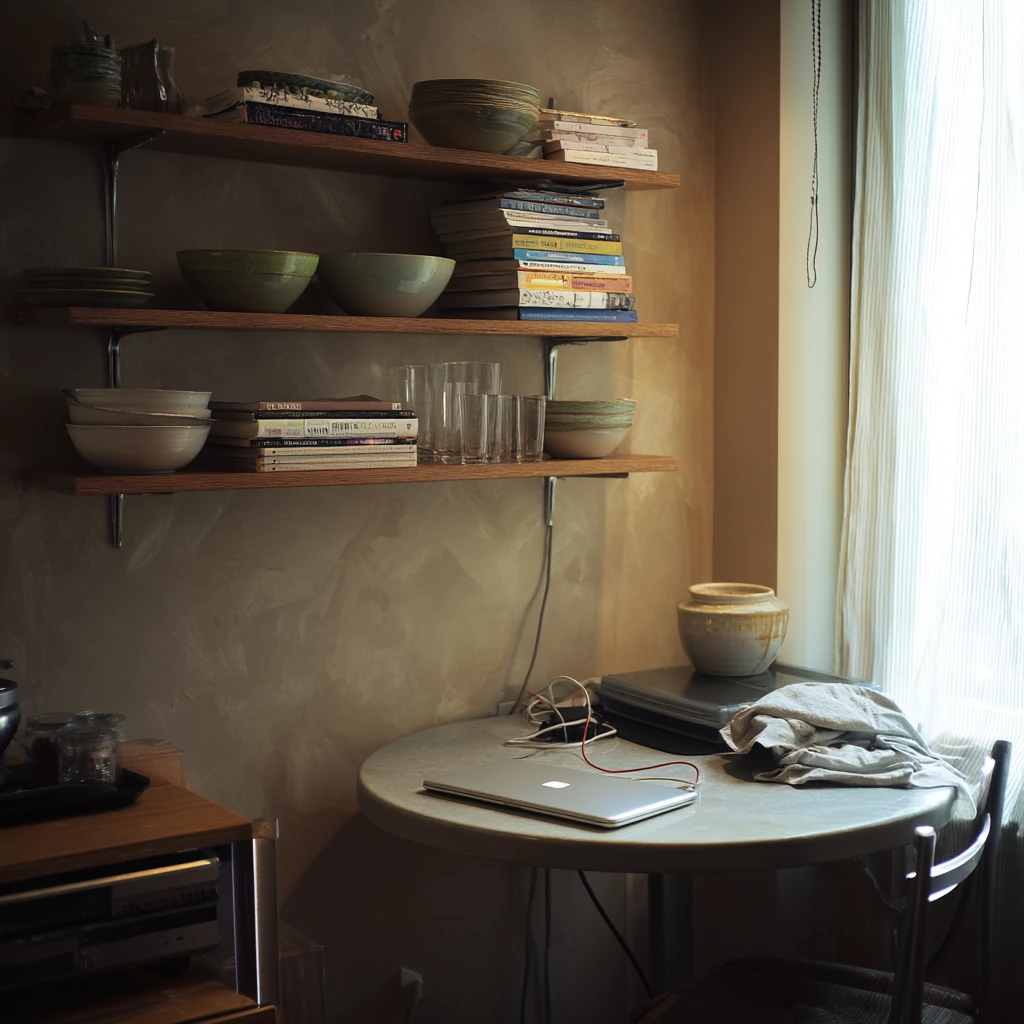
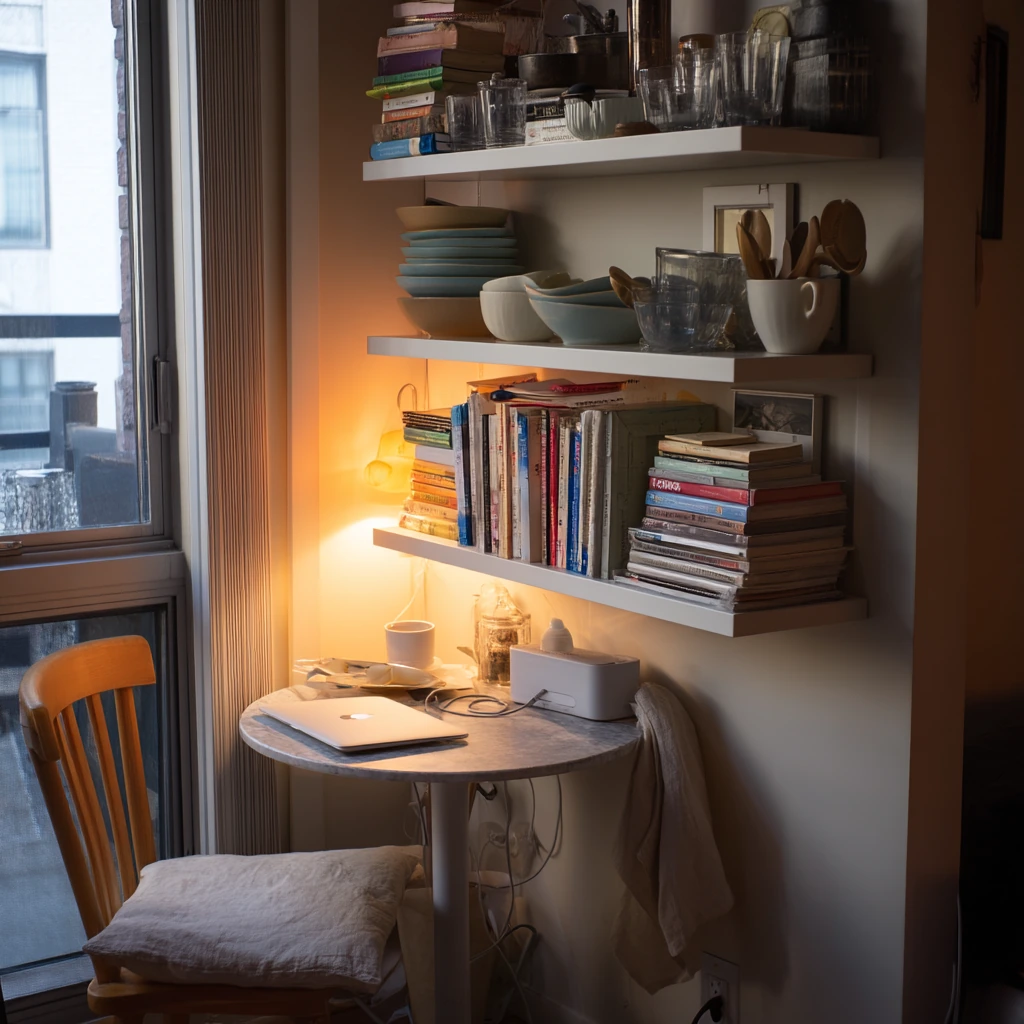
In a tiny apartment dining corner, storage has to work double duty. Floating shelves above a small round table give you vertical space for stacked cookbooks, ceramic bowls, and glasses without taking floor area. Pair them with a compact sideboard with closed storage to hide the messy stuff like a mail sorter, cords, and extra office supplies.
Set up two zones so the table can switch from dinner to laptop time fast. Keep a tray on the sideboard for charging items, so a charging cable does not drape across the room. Use one shelf section for dining items and another for work items like a notebook cup and file folders. If you use linen napkins, store them rolled in a basket so they look tidy even if slightly wrinkled.
How to style it: mix textures so it feels warm. Use a soft lamp glow in the corner, then let window light do the rest. Keep shelf colors simple, then add one small art print or a plant for balance.
- Install shelves high enough to clear your head when seated.
- Group items in threes to make open storage look calm.
- Use a closed sideboard for papers and cables.
- Add a small lidded box for keys and loose change.
- Keep a laptop stand stored upright like a cutting board.
Pro Design Tip: Use matching containers on the shelves so mixed items like bowls and mail still look organized.
Budget Considerations: Basic floating shelves are affordable; if you rent, use sturdy wall anchors or a rail shelf system you can patch later.
3 Bench and Basket Storage for a Rental-Friendly Space
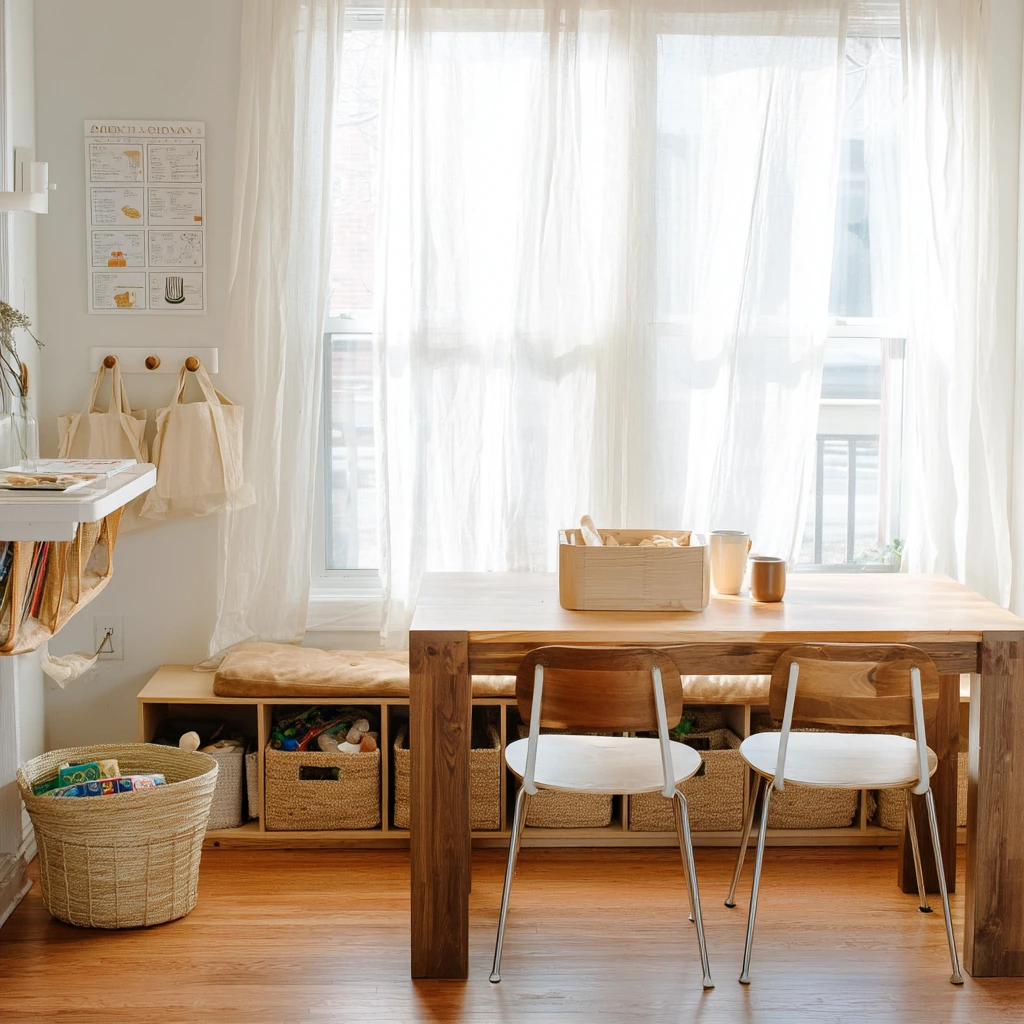
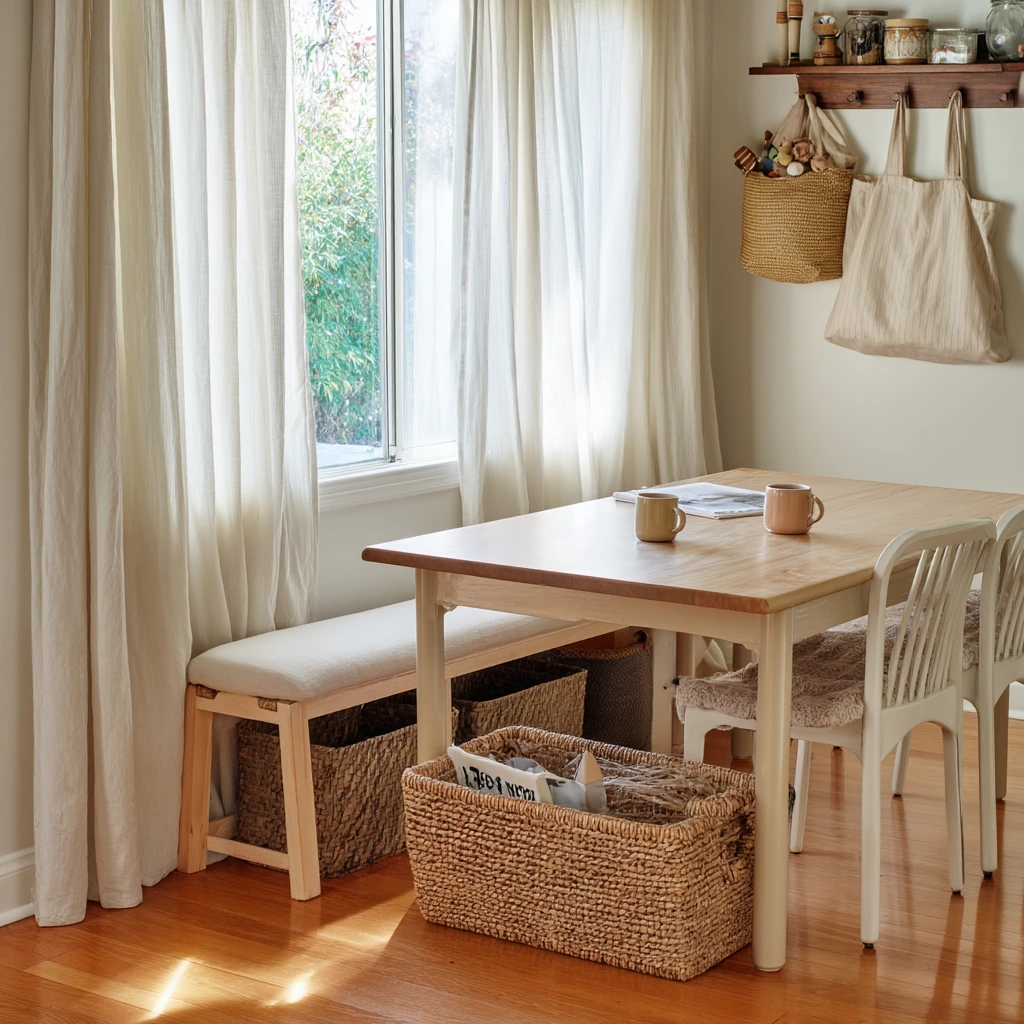
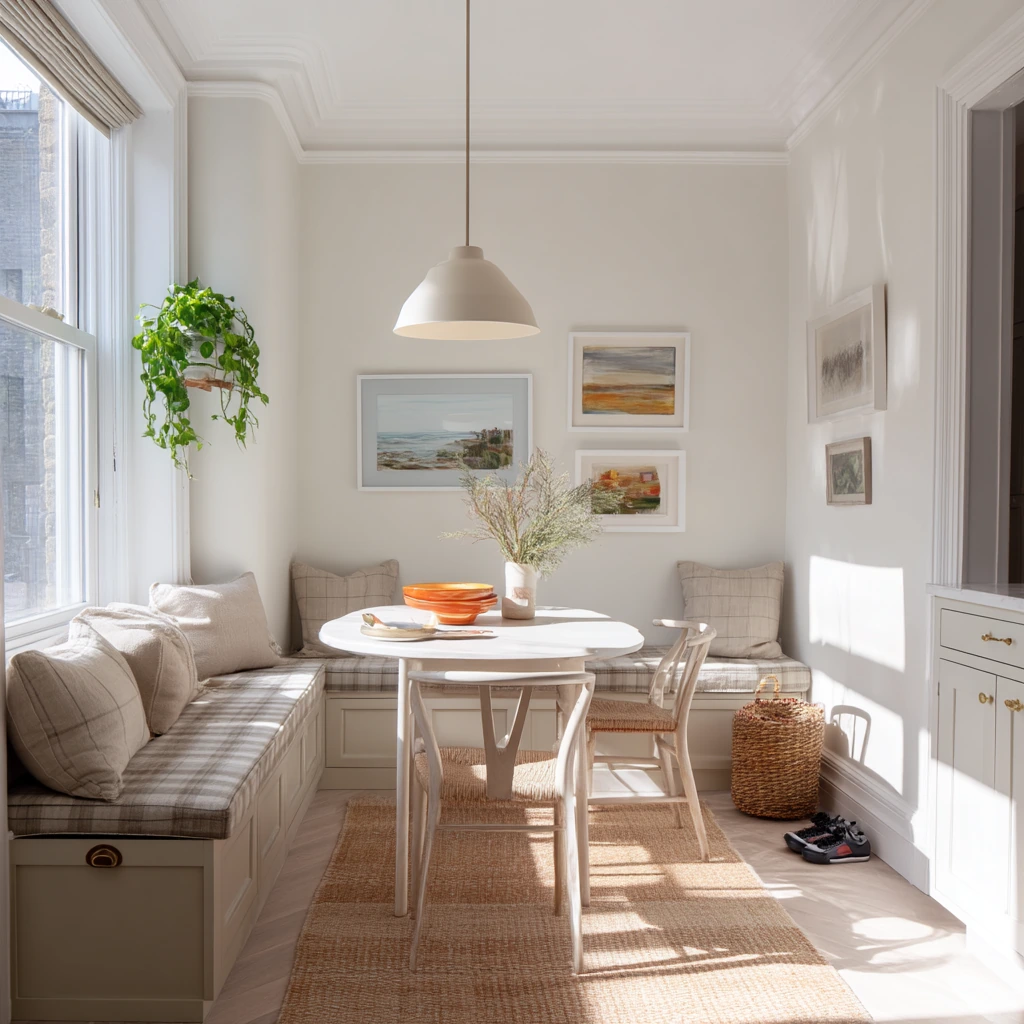
Renters can still get smart storage without drilling a lot of holes or building a banquette. A simple wood bench with storage baskets underneath creates hidden space for linens, pantry overflow, or a kid toy basket. Lightweight chairs keep the room flexible, and a narrow console against the wall adds a second surface for items you do not want on the table.
To keep it lived-in but not messy, give each basket a label and a limit. One basket for tablecloths and cloth napkins. One for games or toys, so a half-full toy basket looks like a choice, not clutter. Add removable hooks on the wall for tote bags, a small apron, or reusable shopping bags. This keeps bags off the chair backs and makes leaving the house easier.
How to style it: choose baskets that match your wood tones, then keep the top of the console simple. Try one small vase and one catchall dish for a grocery list and pens. Mismatched mugs can still look good if you keep the rest of the surface clear.
- Pick baskets with handles so kids can help clean up.
- Slide baskets on felt pads to protect floors.
- Use a console with drawers if you have papers to hide.
- Hang totes by the door side to support daily flow.
- Store rarely used items in the back baskets.
Pro Design Tip: Keep basket heights even so the bench area reads as one clean line under the table.
Budget Considerations: Baskets add up; mix one nice woven basket with cheaper fabric bins in the back where they are less visible.
4 Corner Cabinet for a Compact Breakfast Room
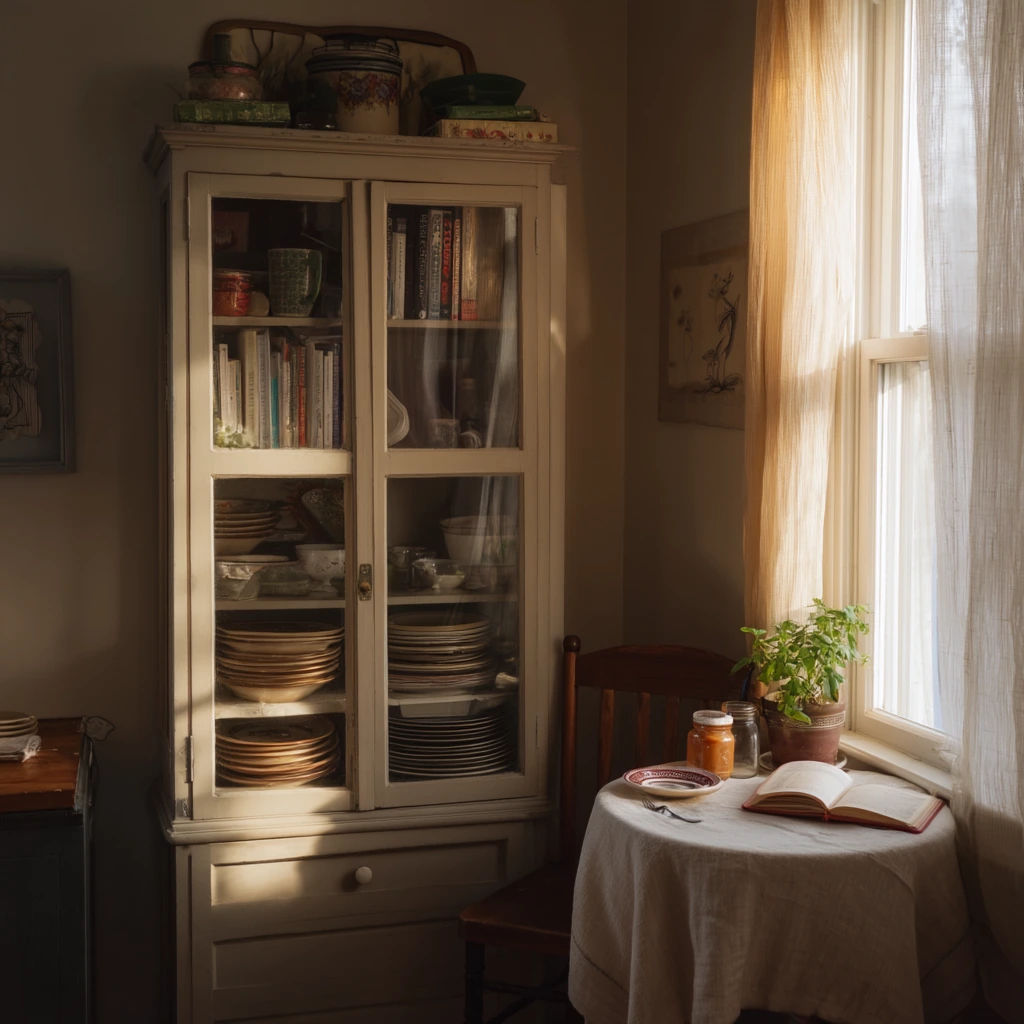
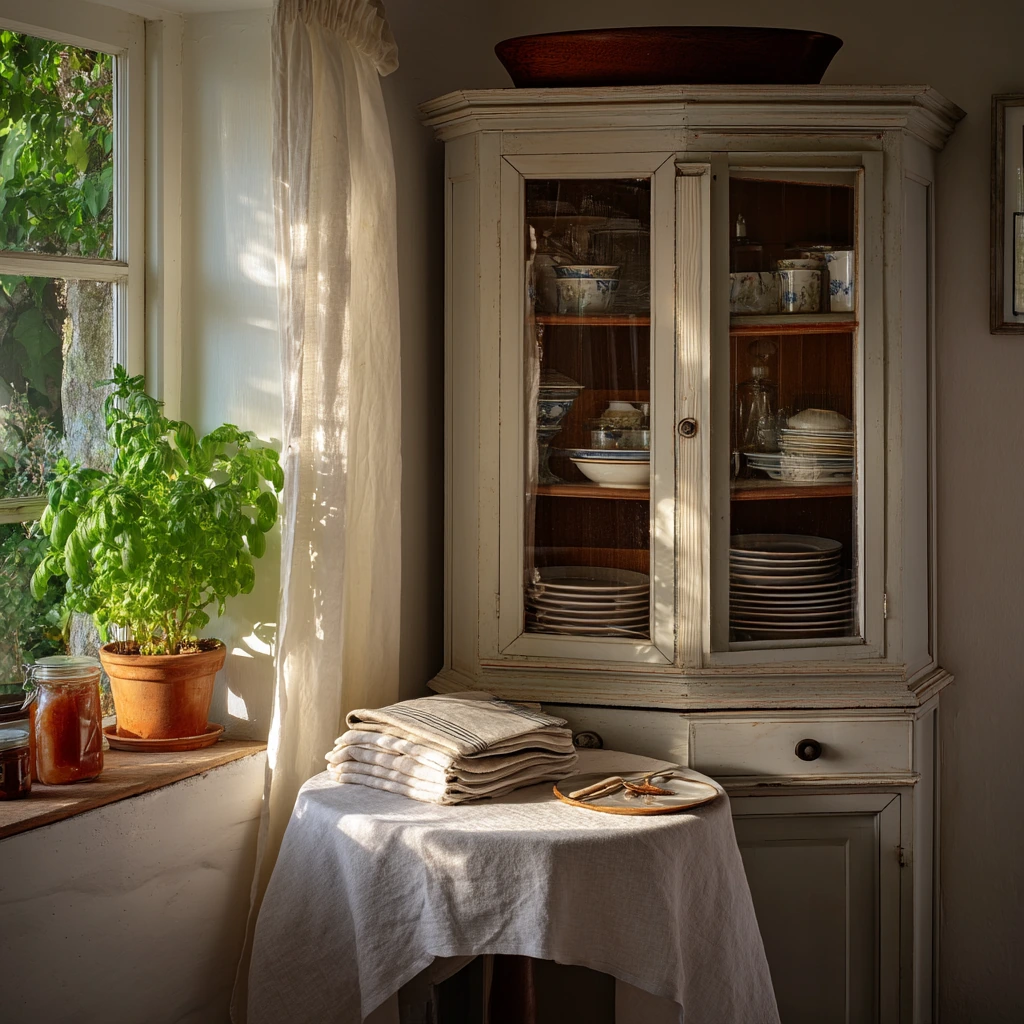
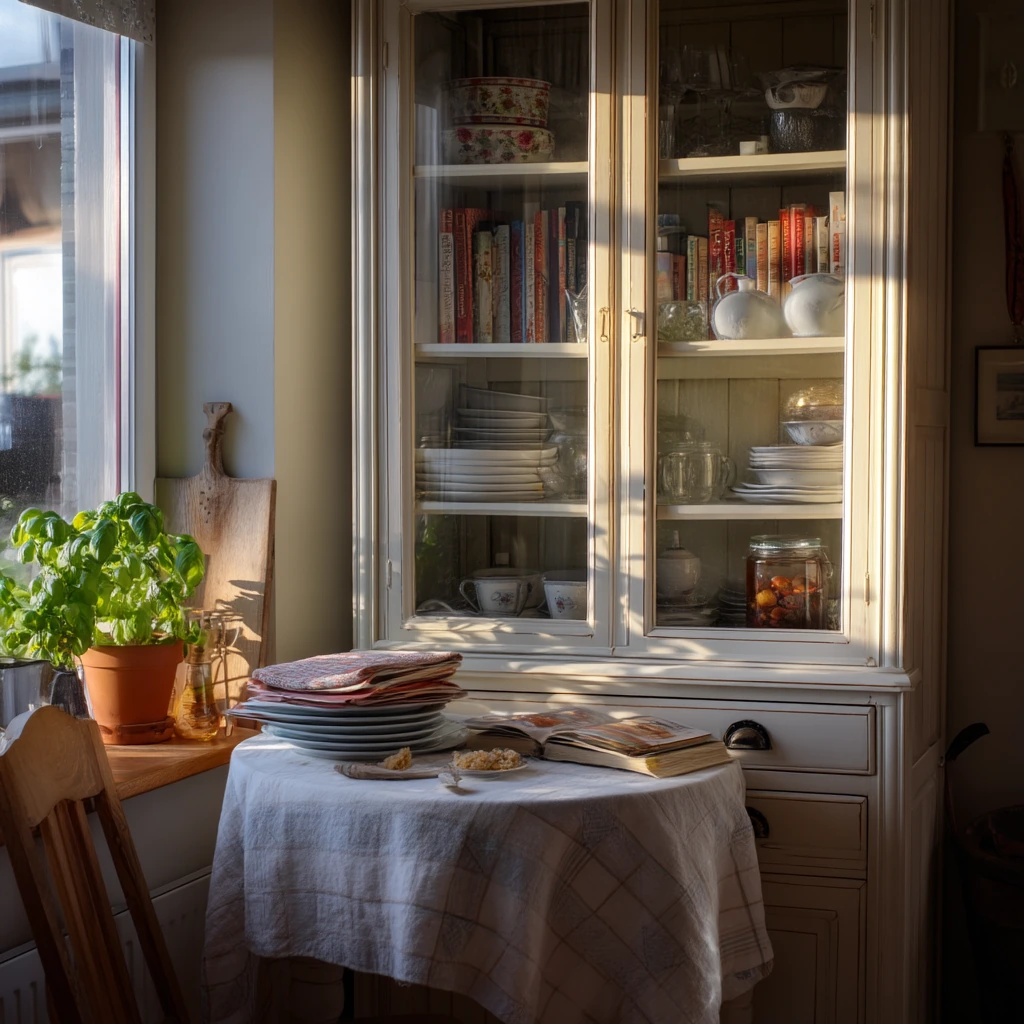
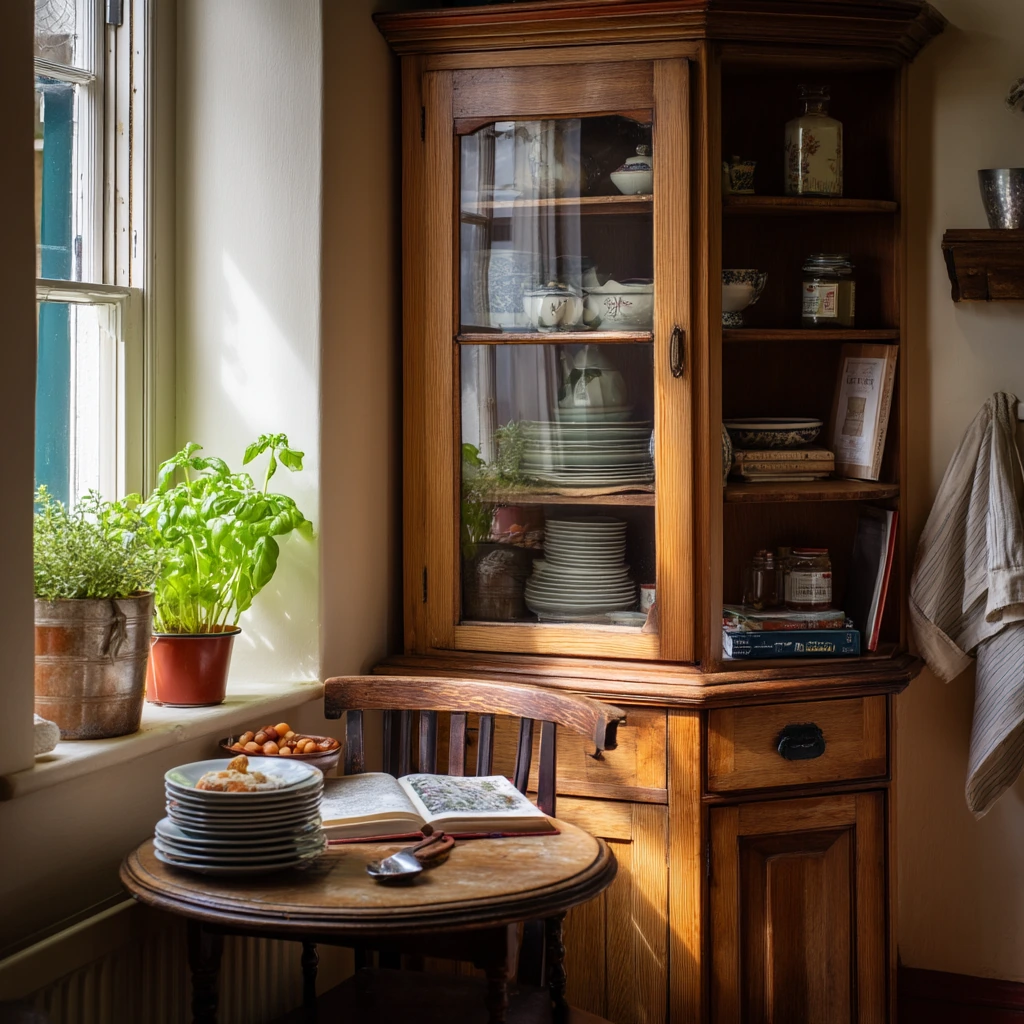
A tall corner cabinet is a strong choice for a compact breakfast room because it uses an awkward corner that often goes empty. Glass upper doors display stacked plates and your best everyday glassware, while closed lower storage hides bulky items like folded tablecloths, extra napkins, and small appliances you do not want on view.
Set it up like a mini pantry plus dining station. Keep daily plates on the middle shelf, then store serving platters and seasonal pieces up high. In the lower section, add bins for jams, tea, or baking items if your kitchen is tight. If you keep a cookbook leaning open on the table sometimes, store it in the cabinet with a bookend so it does not slide. A basil plant on the sill adds life and makes the space feel calm even with real crumbs near a jam jar.
How to style it: do not overfill the glass area. Leave some breathing room so warm morning light can bounce around. Use a simple pedestal table to keep the footprint small, and place one tray on the table for small items like a spoon and sugar.
- Use shelf risers to fit more plates without stacking too high.
- Add a lazy Susan inside lower cabinets for jars.
- Store tablecloths rolled to prevent deep creases.
- Keep one “breakfast bin” for jams, honey, and tea.
- Wipe glass doors weekly so they stay crisp.
Pro Design Tip: Put darker items in the lower closed section and lighter dishes behind glass to make the cabinet feel less heavy.
Budget Considerations: A new tall cabinet can be pricey; look for a secondhand hutch and paint it a soft neutral for a fresh look.
5 Slim Sideboard Storage in a Shared Dining Space
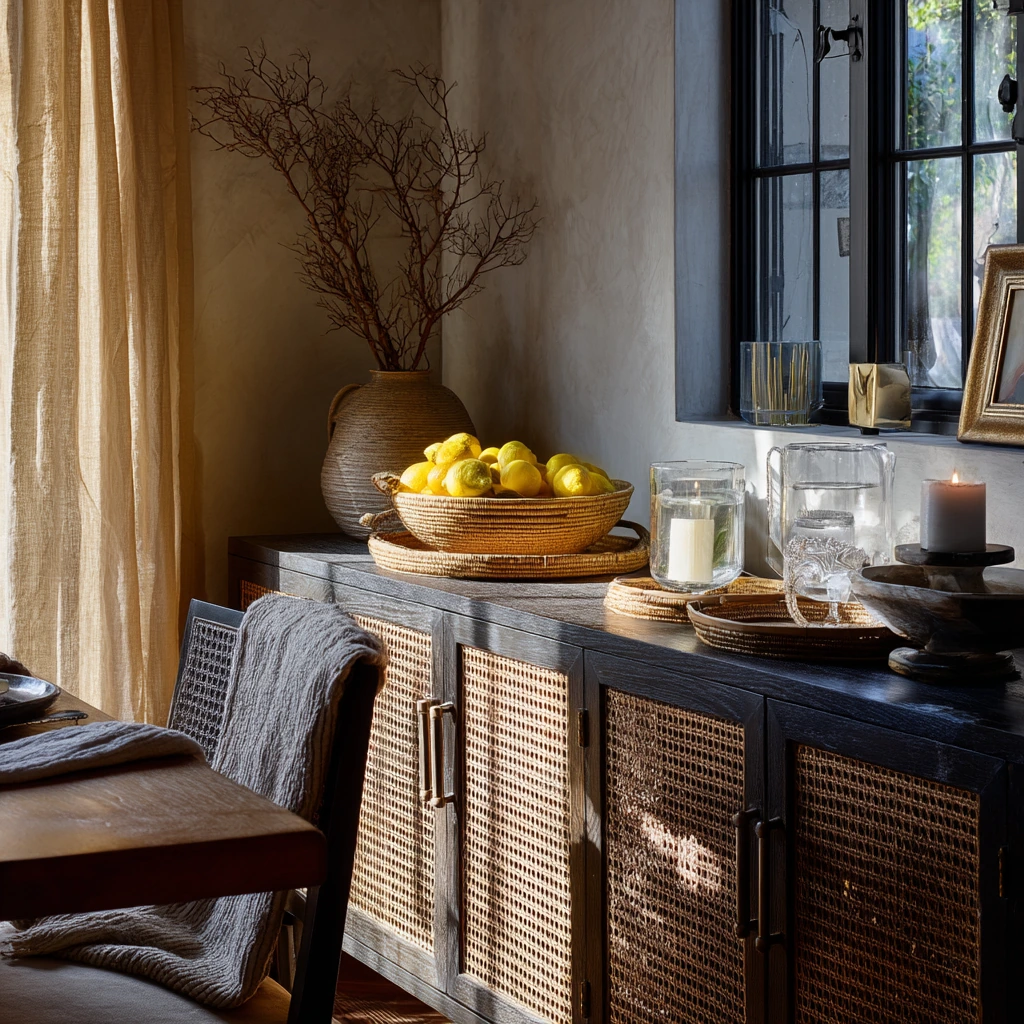
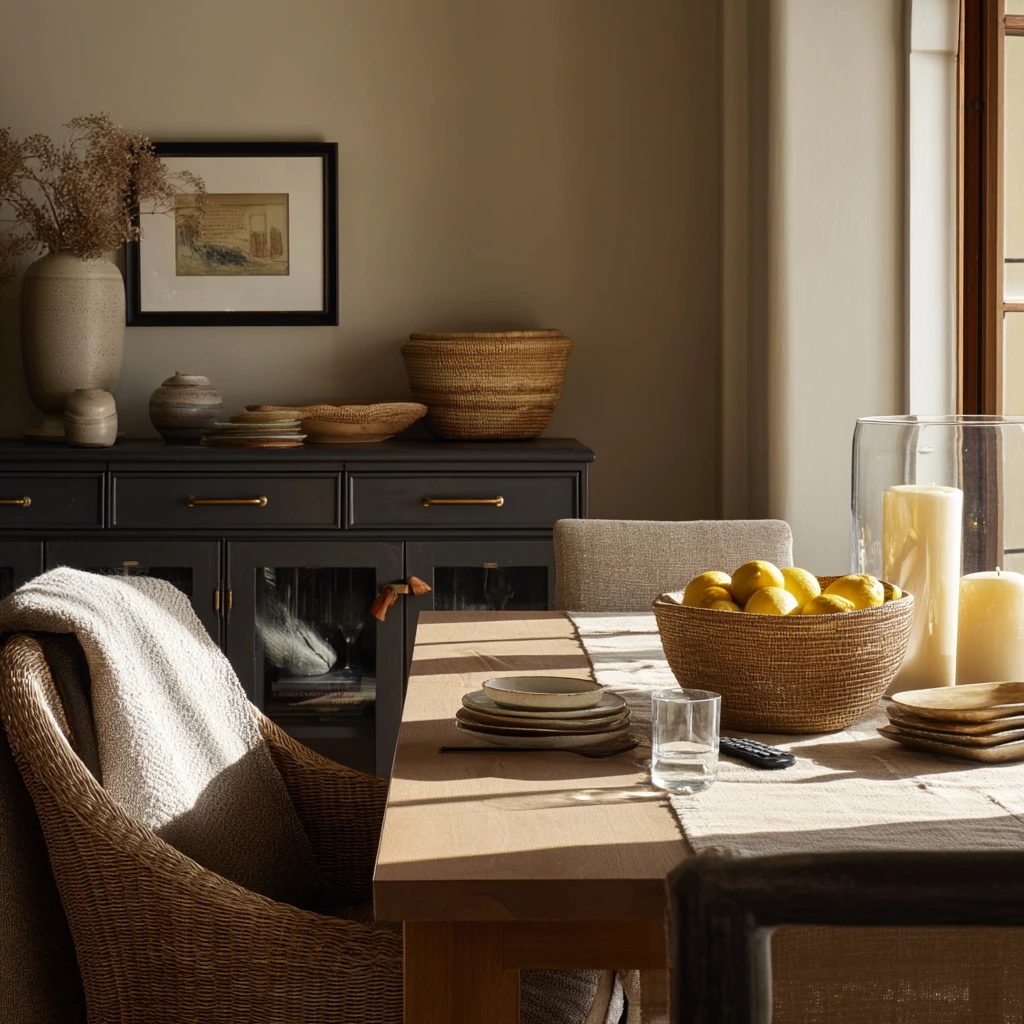
When the dining area shares space with the living room, clutter travels. A slim sideboard is a simple fix because it stores serving pieces, woven trays, candles, and extra napkins while keeping a low profile. It also creates a clear boundary so the dining zone feels like its own area.
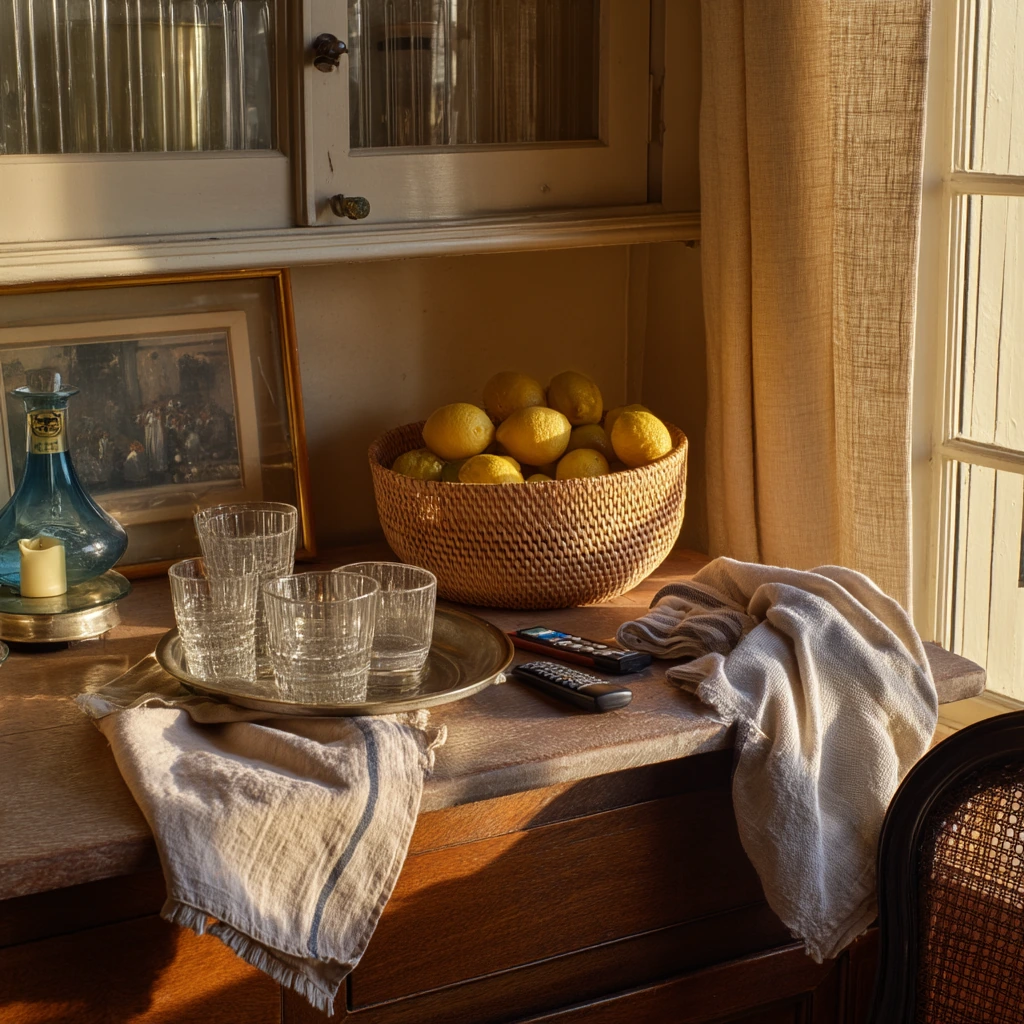
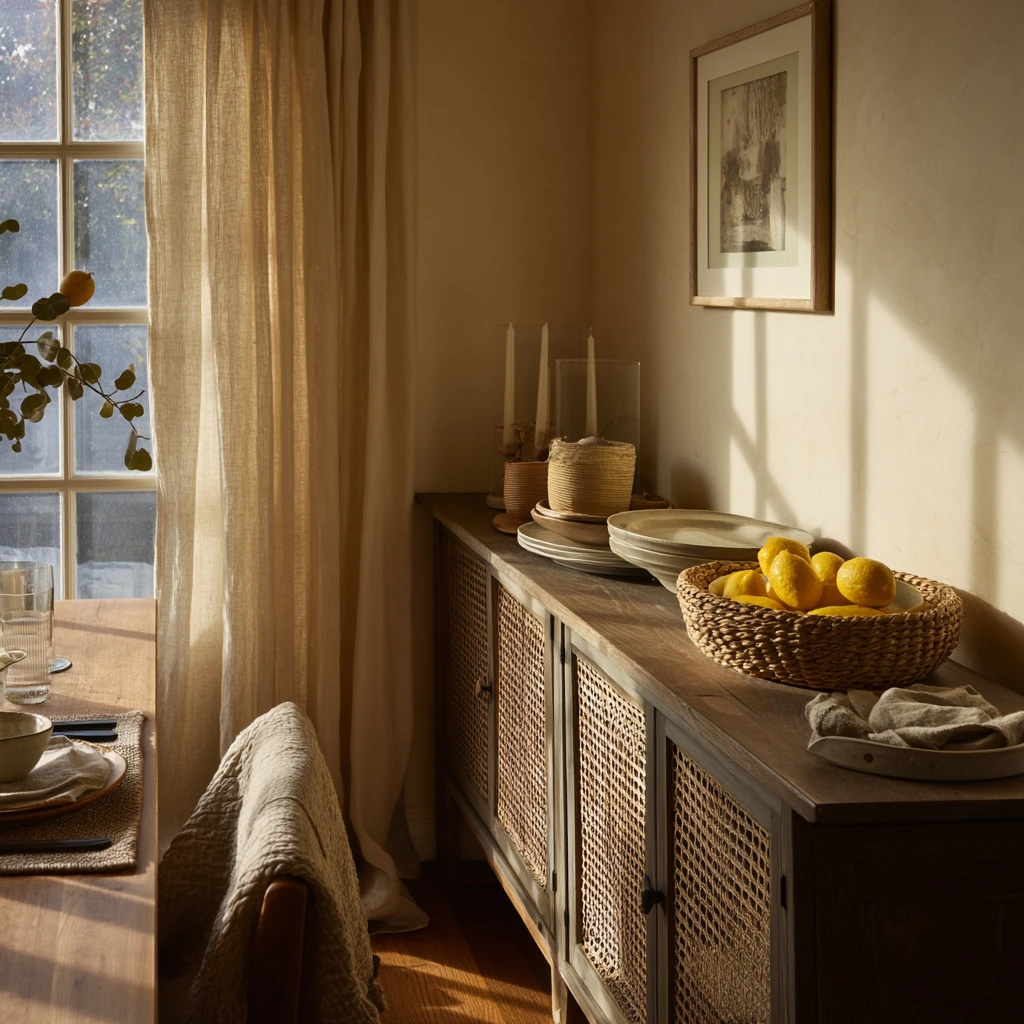
Use the sideboard like a backstage area. Keep a bin inside for remotes so one remote control does not end up next to a water glass on the table. Store cloth napkins in one drawer and placemats in another. If you entertain, keep a tray ready with matches, candles, and a bottle opener. On top, limit decor to a framed family photo and a low bowl of lemons so you still have space to set down a dish.
How to style it: repeat one material, like woven trays, to tie in with a slightly rumpled throw on a nearby chair. Soft golden window light looks best with warm wood and off-white accessories. Keep heights low so the room feels open.
- Choose a sideboard that is 12 to 16 inches deep if space is tight.
- Add drawer organizers for napkins and small tools.
- Use one tray on top to corral daily items.
- Store extra candles in a lidded box to reduce dust.
- Keep the center of the table clear as a daily rule.
Pro Design Tip: Hang a mirror or art above the sideboard to draw the eye up and make the storage look intentional.
Budget Considerations: If a sideboard is out of reach, use two matching base cabinets from a budget store and add one long top board.
6 Under-Table Storage for a Busy Household
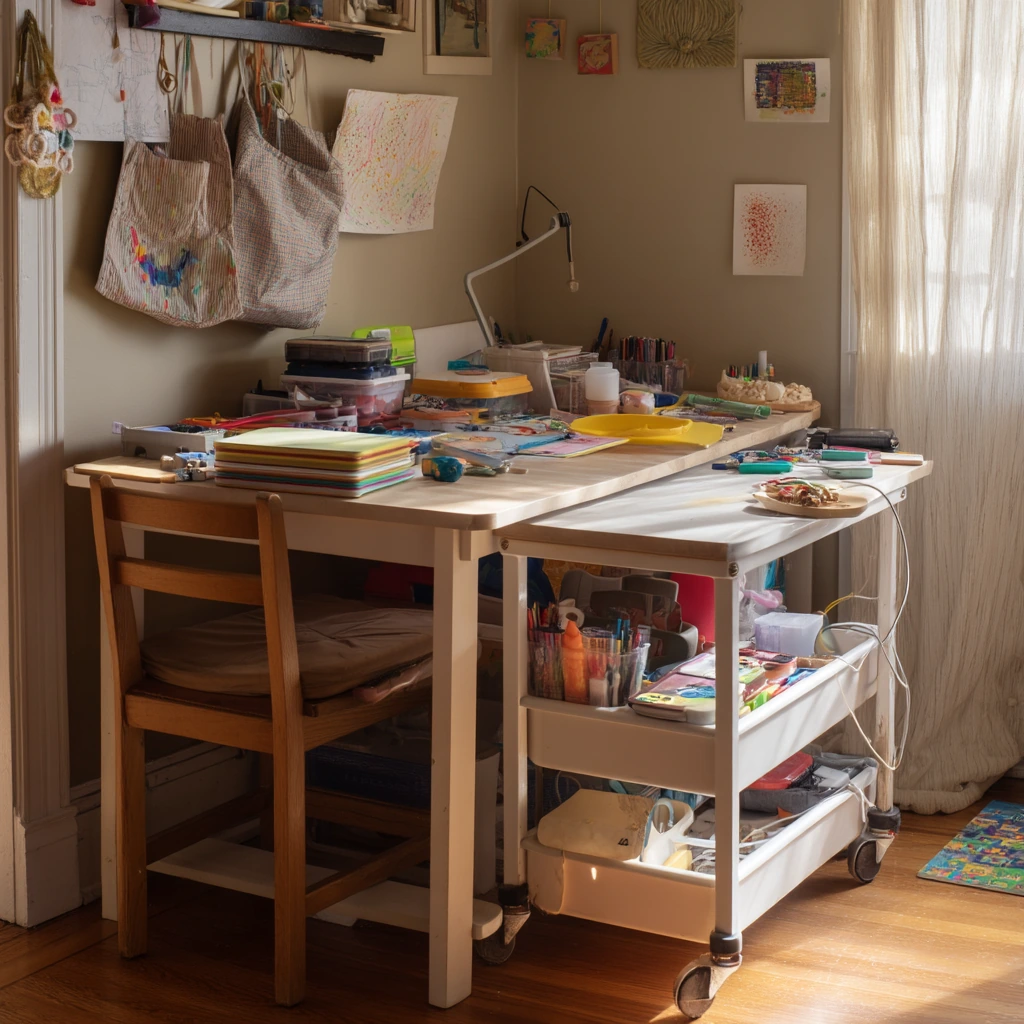
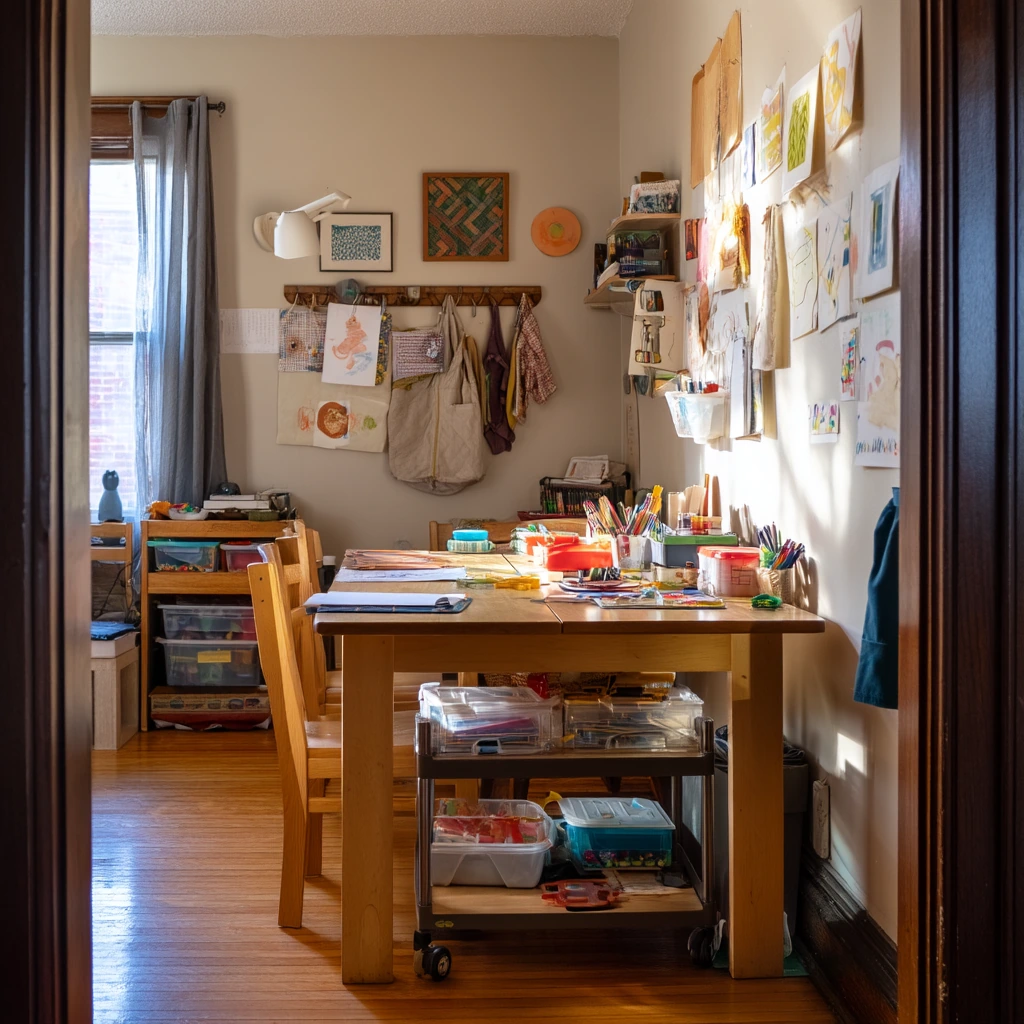
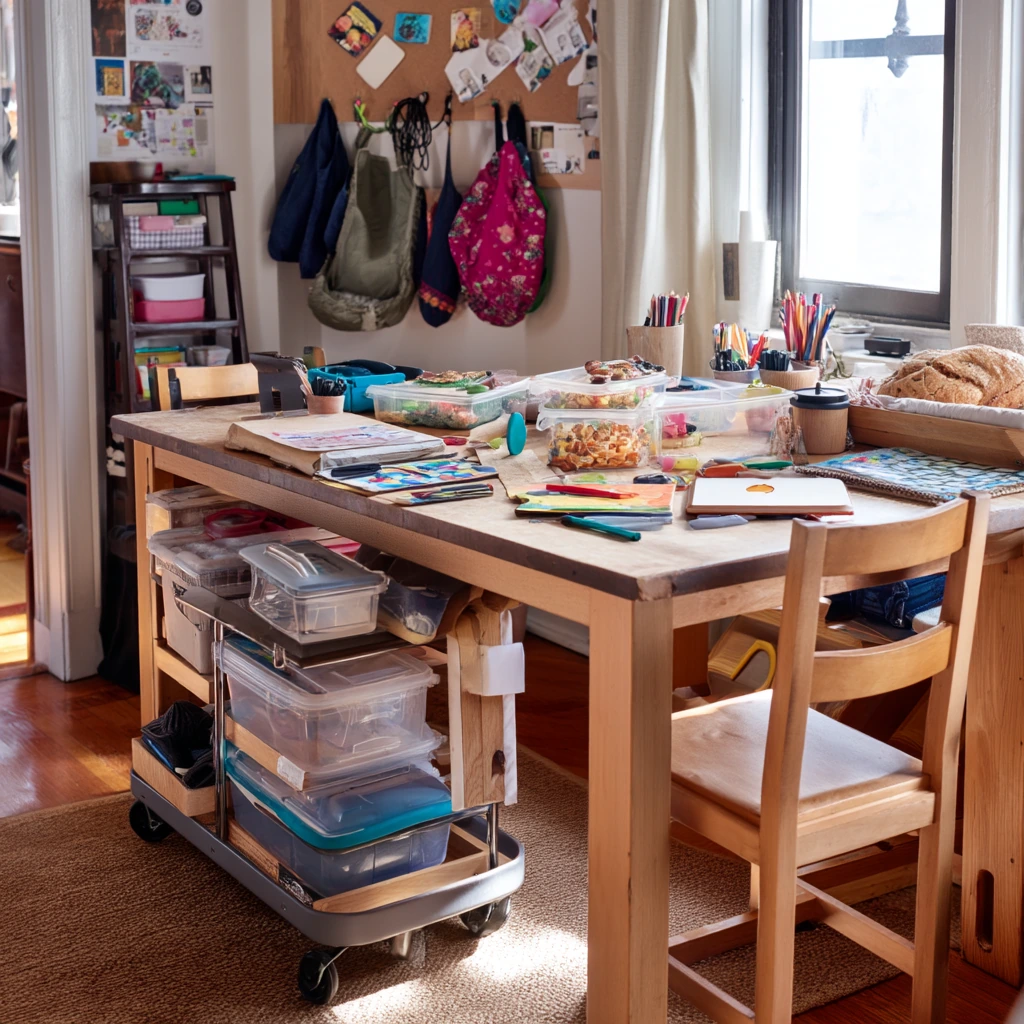
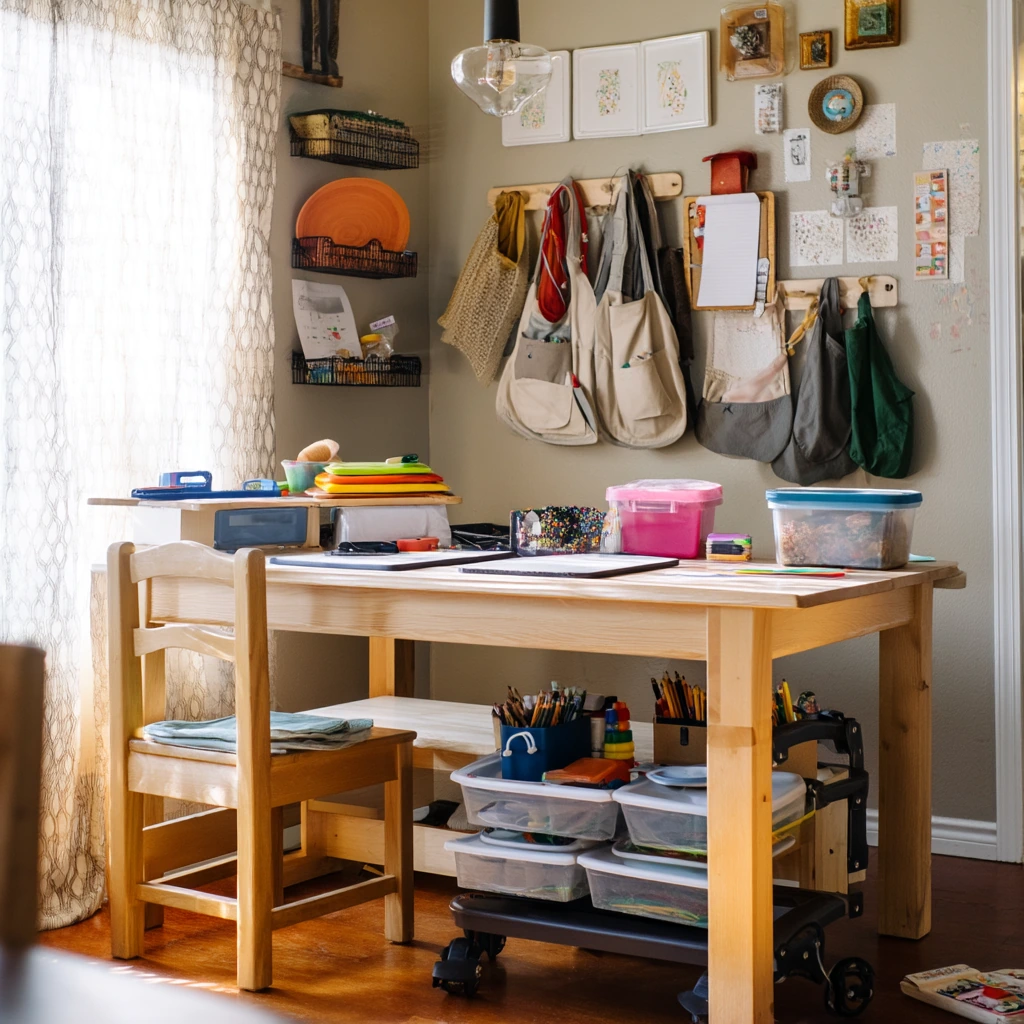
A busy small dining room needs storage that moves. An under-table storage cart is ideal because it keeps lunch boxes, placemats, charging cords, and art supplies close, but off the tabletop. You can roll it out during homework time, then tuck it back in after dinner.
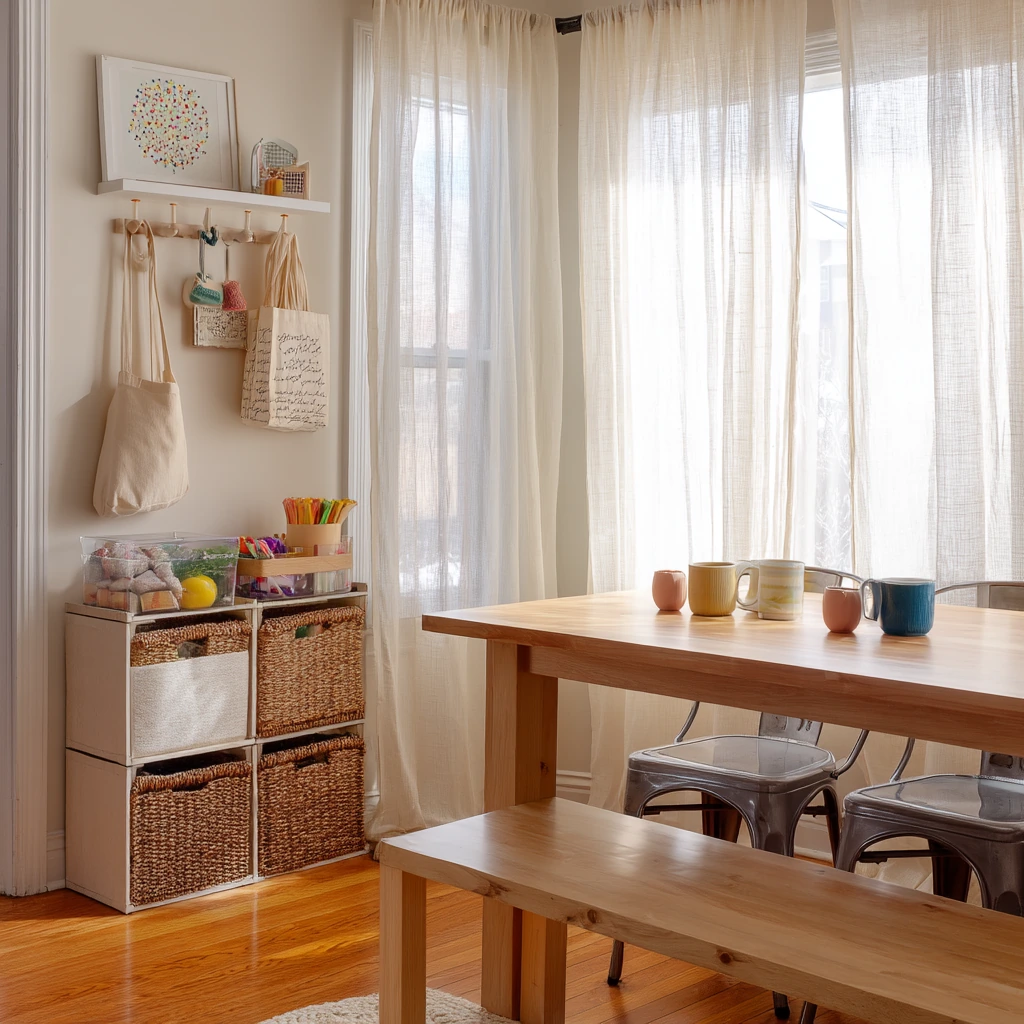
Pair the cart with a wall-mounted peg rail for aprons, small baskets, and notebooks. This creates a clear “grab zone” by the doorway, which helps when everyone is rushing. Keep one bin on the cart for cords so they do not tangle. If you often find a half-finished snack on the table, add a small covered container or snack basket that can be put away quickly. A child’s puzzle piece on the floor happens, but the goal is to make cleanup fast.
How to style it: choose one cart color that matches the table legs so it blends in. Add a simple jar for pens and a small catchall for scissors on the top tier. Keep the peg rail spaced evenly and use matching hooks so the wall looks tidy.
- Use the top tier for daily items and the bottom for backup supplies.
- Add small bins inside the cart to separate categories.
- Hang aprons and a small broom on the peg rail.
- Keep a “school papers” folder on a hook for quick sorting.
- Set a 5-minute reset timer after meals to clear the cart and table.
Pro Design Tip: Leave at least 6 inches of knee space between the cart and chair line so seating stays comfortable.
Budget Considerations: A basic rolling cart is low cost; if you already own a bar cart, repurpose it with dollar-store bins.
7 Built-In Niche Storage in a Cozy Cottage Dining Room
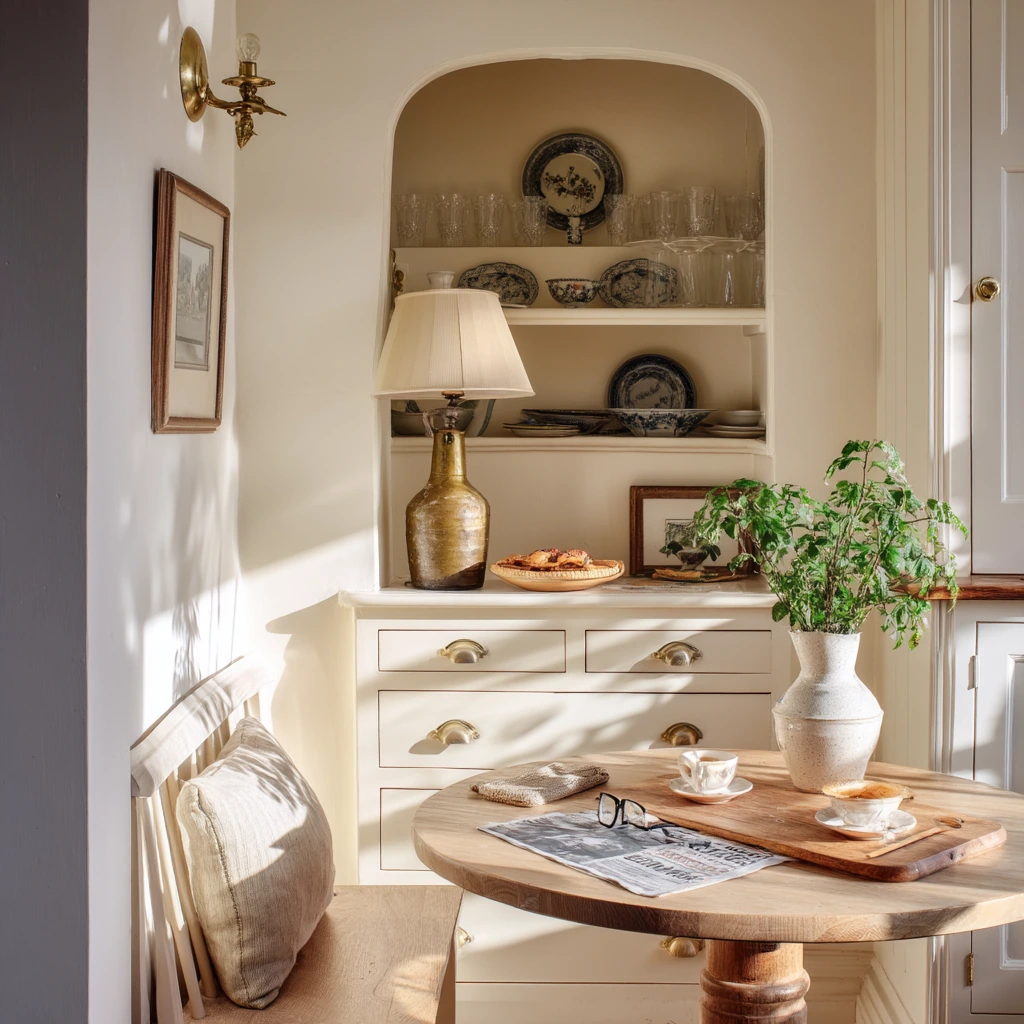
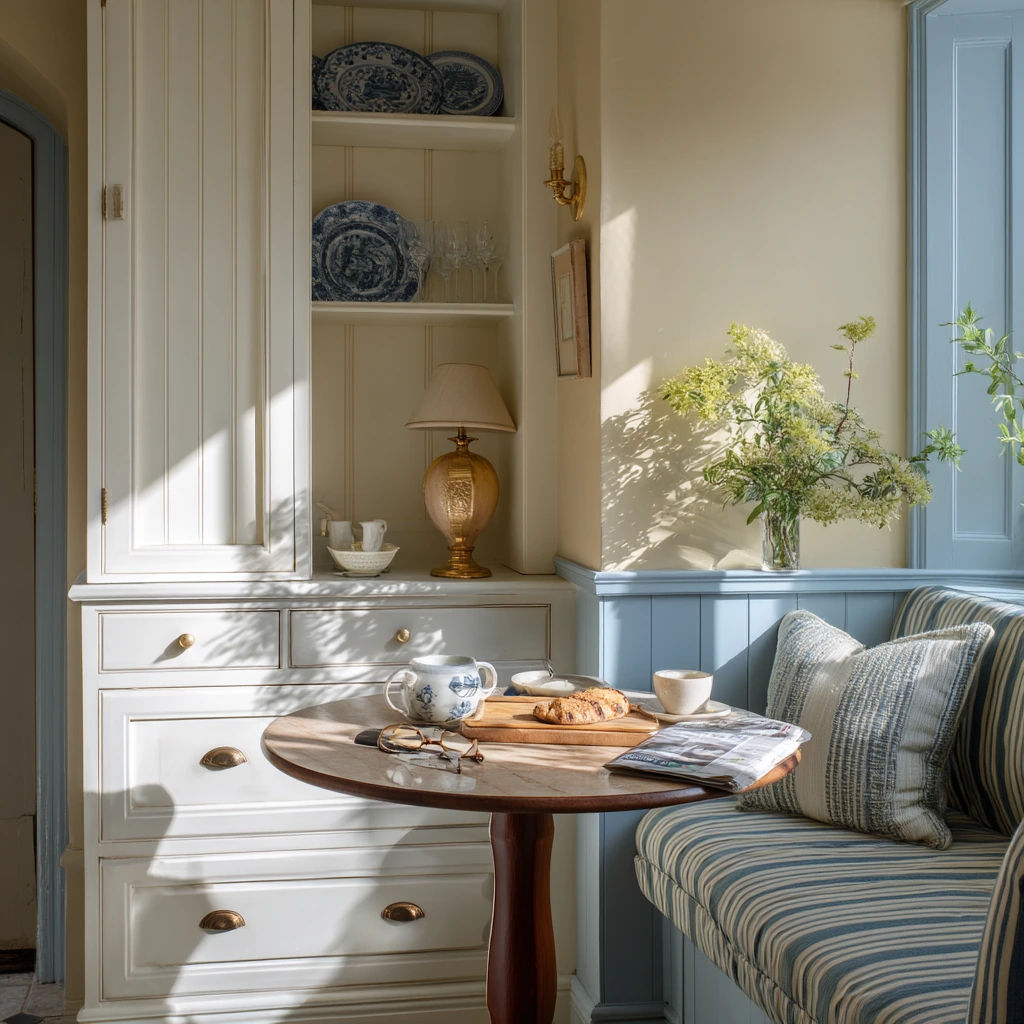
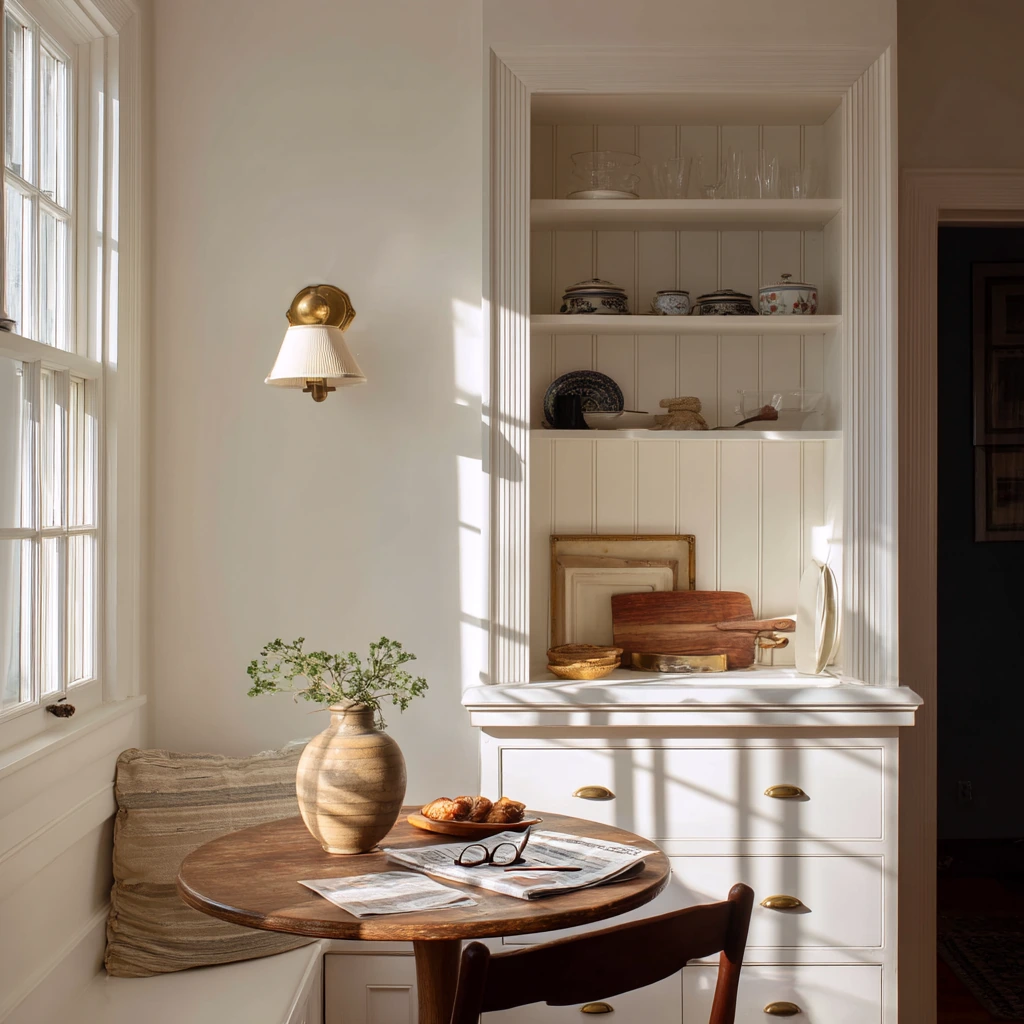
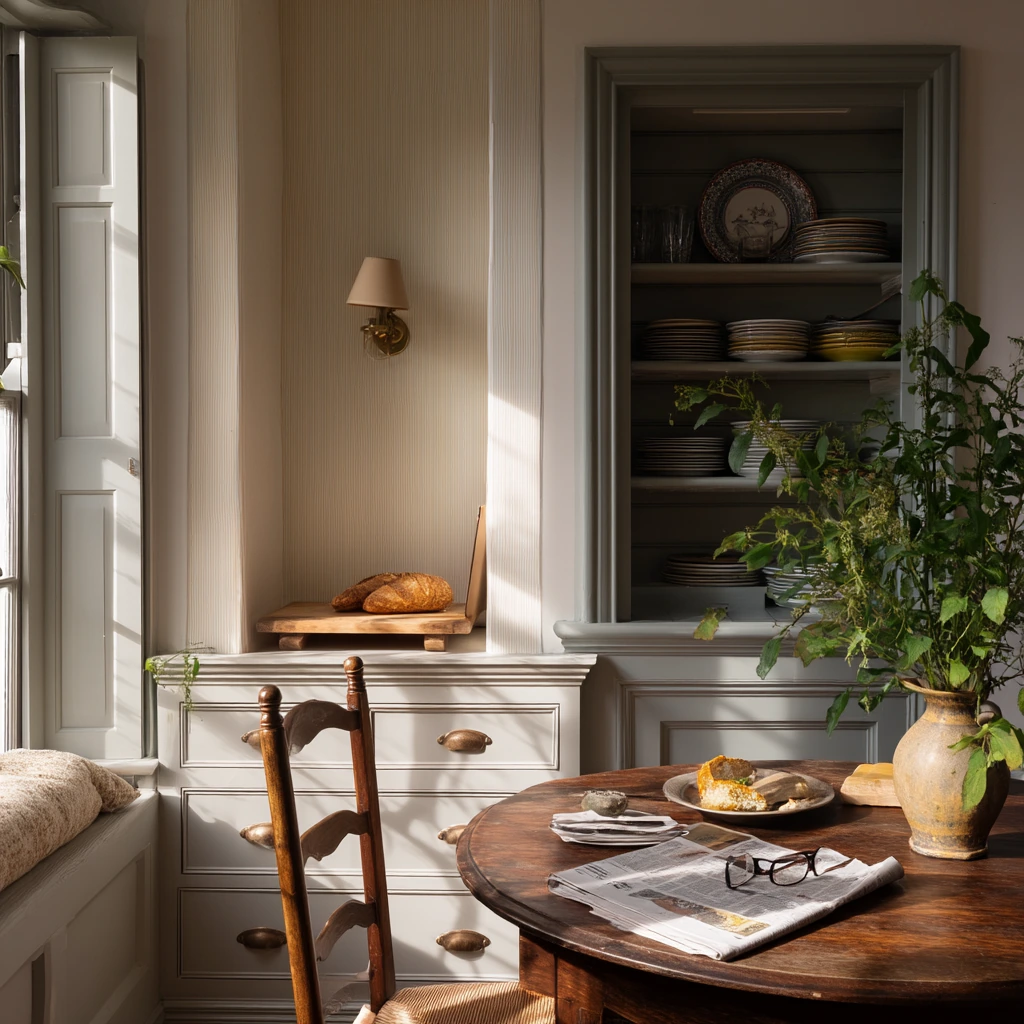
A built-in wall niche is perfect for small dining rooms because it uses wall depth for dishes and glassware without adding a bulky cabinet. In a cottage-style space, open storage can feel cozy if it is kept simple. Shallow drawers beneath the niche are great for flat items like napkin rings, placemats, and tea towels.
Think of the niche like a display that still works hard. Put everyday plates on the lowest shelf for easy reach and place special pieces higher up. Keep one basket or tray for small items like reading glasses so they do not float around the table. If you like to leave a folded newspaper out, store it in a slim magazine holder in a drawer so the surface stays clear. Plant shadows on painted trim look soft when the niche is not overloaded.
How to style it: use a compact round table and one old brass lamp for warm light. Add a ceramic vase and a breadboard to bring in natural textures. Keep the color palette tight, like cream, soft green, and wood tones.
- Limit each shelf to one stack of plates and one accent item.
- Use drawer liners to stop items from sliding.
- Store glasses upside down to reduce dust.
- Add a small step stool nearby if shelves are high.
- Rotate display pieces seasonally to avoid visual clutter.
Pro Design Tip: Paint the niche back panel one shade darker than the wall to add depth and make dishes stand out.
Budget Considerations: If you do not have a niche, fake the look with two narrow picture ledges and a slim drawer unit beneath.
8 Open Crates and Closed Cabinets for Budget Storage
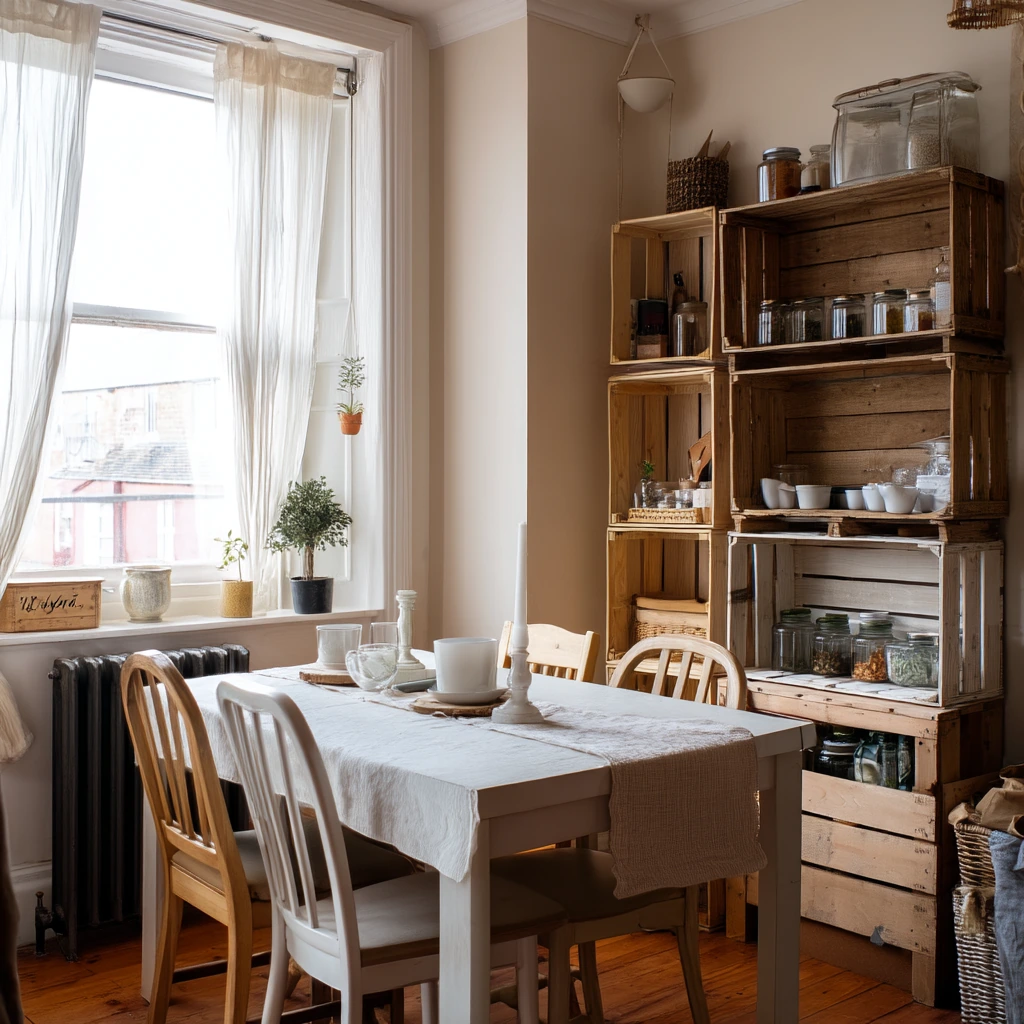
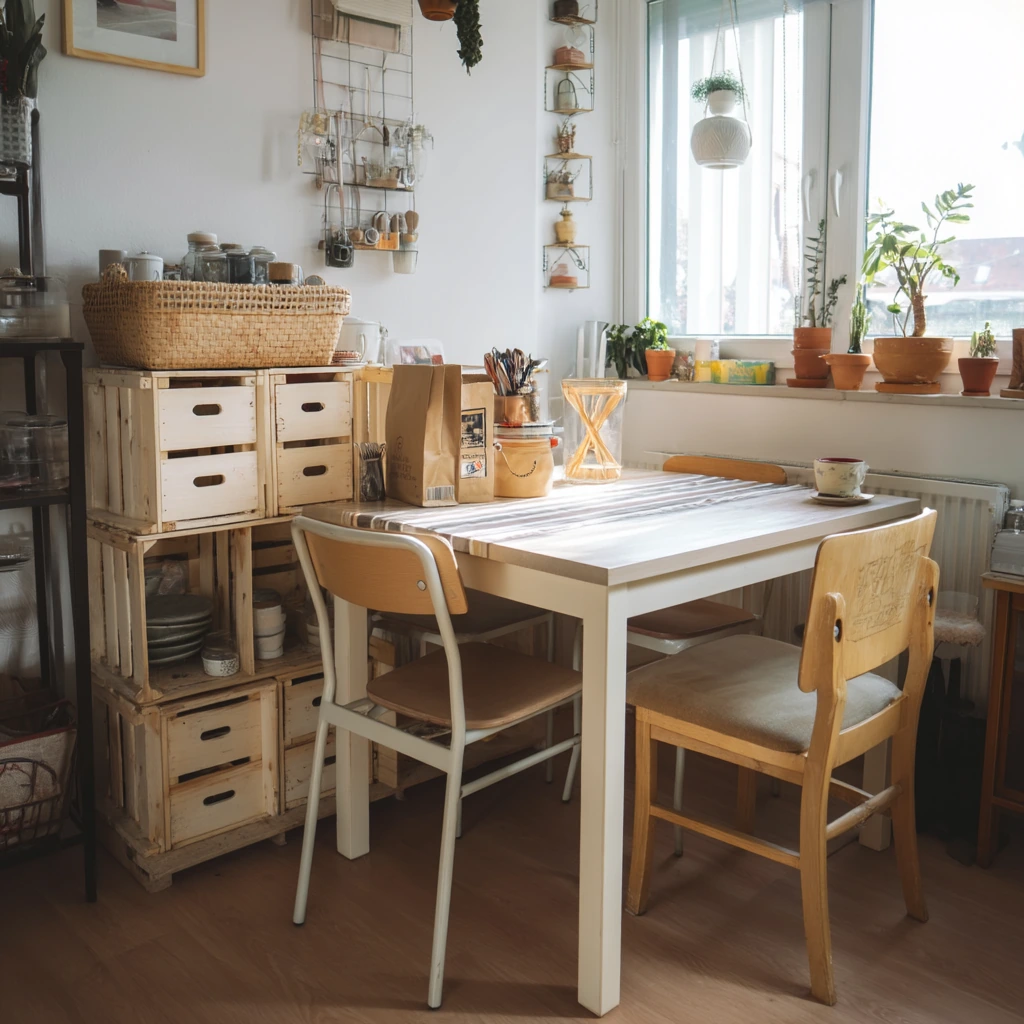
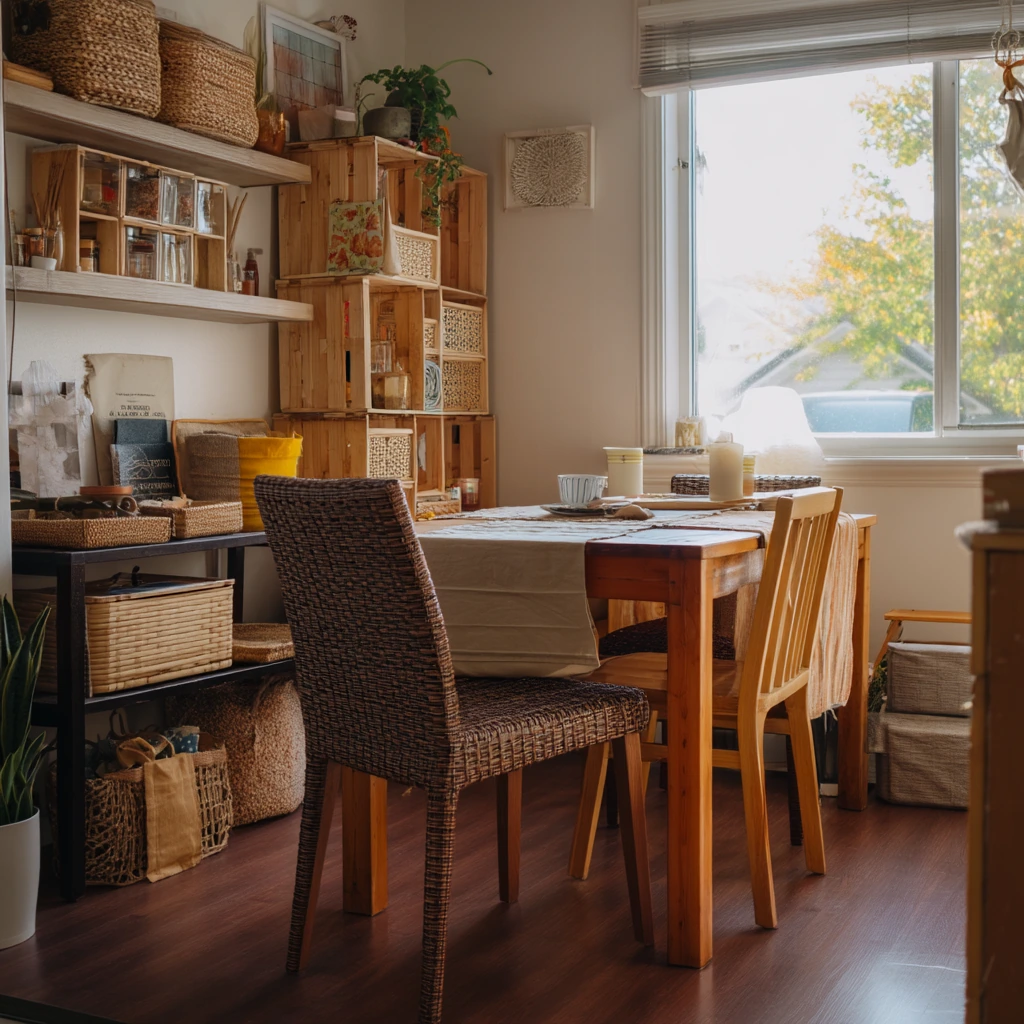
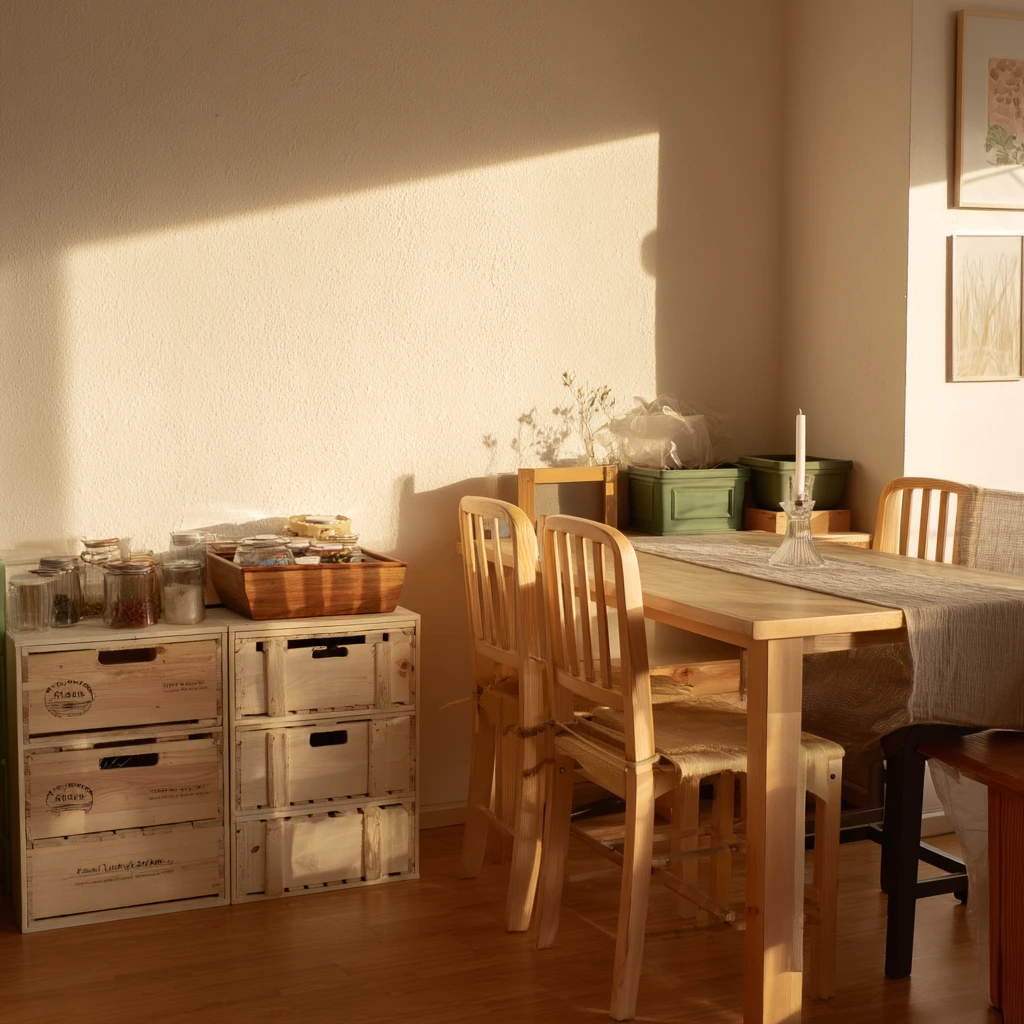
Budget-conscious storage can still look neat. A mix of open wood crates and simple closed cabinets gives you flexibility in a starter home. Use crates for items you grab often, like reusable shopping bags, spare candles, or everyday bowls. Use closed cabinets for anything that looks messy, like extra paper goods, plastic containers, or bulk pantry items.
Create a small system so open storage stays calm. Only keep matching items in each crate, and do not stack too high. If your chair set is thrifted and mixed, let the storage be the quiet part by choosing crates in one wood tone. Keep a table runner to soften the table and make the area feel finished. Small details, like a tea spoon on a saucer, help the space feel cared for even when it is simple.
How to style it: place crates in a grid so the lines look clean. Add one small plant or framed print above the storage to lift the eye. Keep the cabinet tops mostly clear so you do not create another clutter shelf.
- Use two crates for “daily” and one crate for “backstock.”
- Add fabric bins inside crates to hide small items.
- Store shopping bags folded so they take less space.
- Use shelf paper inside cabinets for easier cleaning.
- Donate or relocate items that do not fit your new storage limits.
Pro Design Tip: Keep open crates at or below table height so the room still feels open and breathable.
Budget Considerations: Crates can be cheap or free; sand and seal rough wood so it does not snag linens or scratch walls.
9 Window-Ledge Storage and Floating Shelf Styling
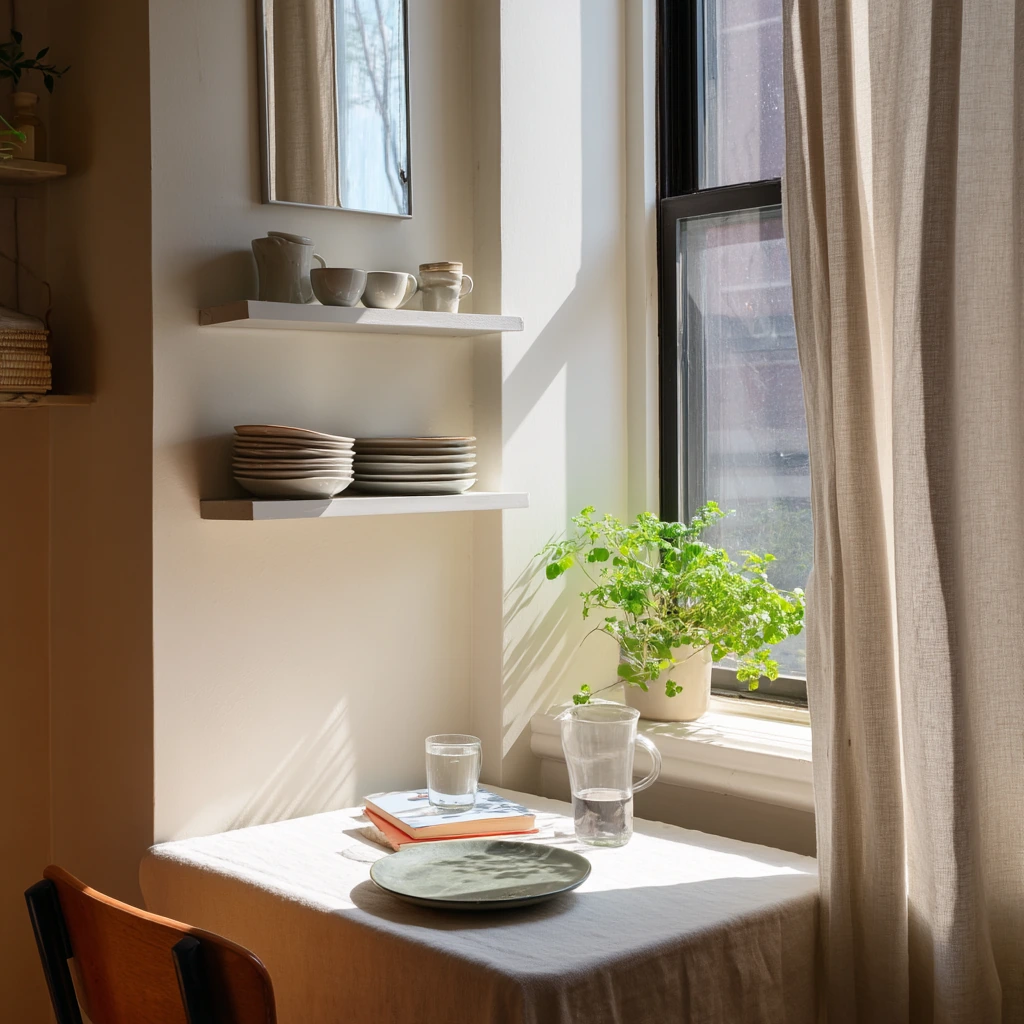
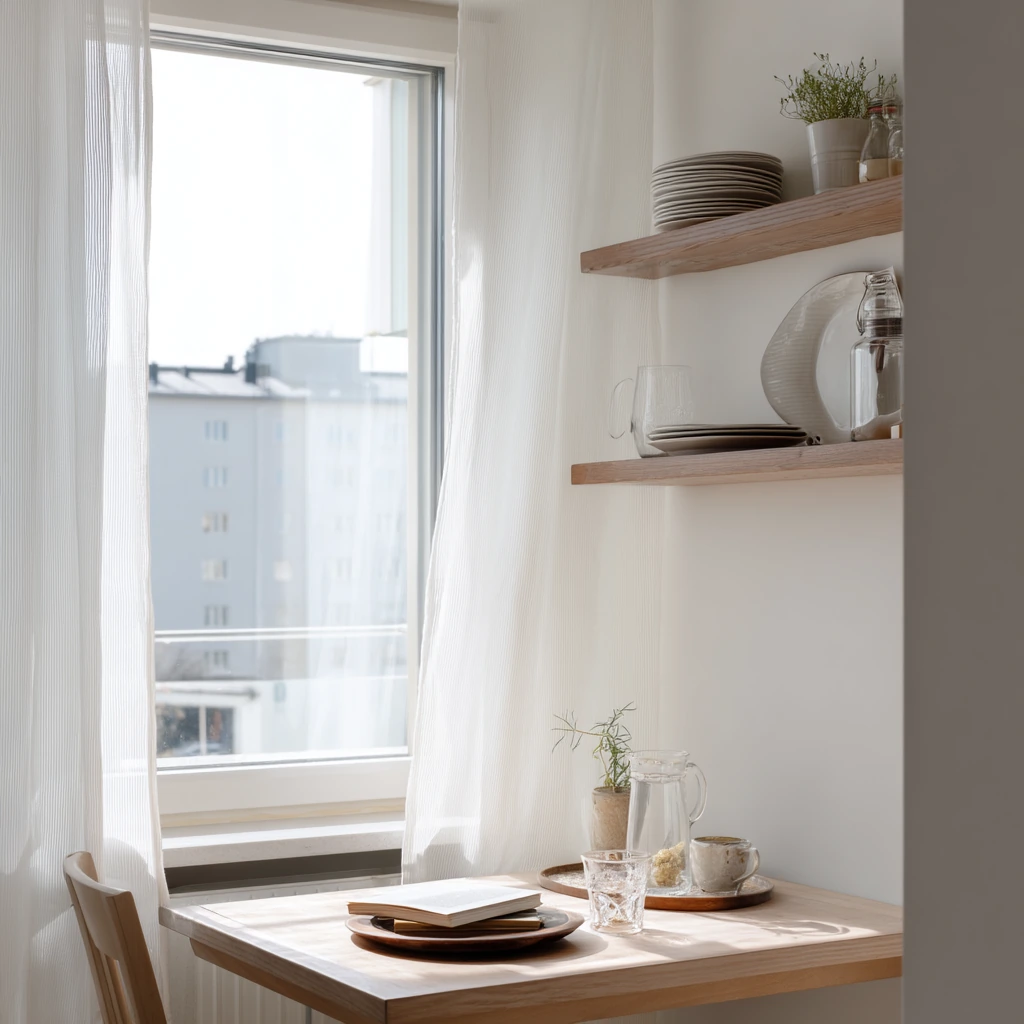
If your small dining room has a narrow window ledge, treat it like a mini shelf. It is great for small storage bowls, salt and pepper, and a few herbs. Add a floating shelf nearby for serving plates or a small stack of bowls. This keeps storage off the table while keeping the room feeling crisp and open.
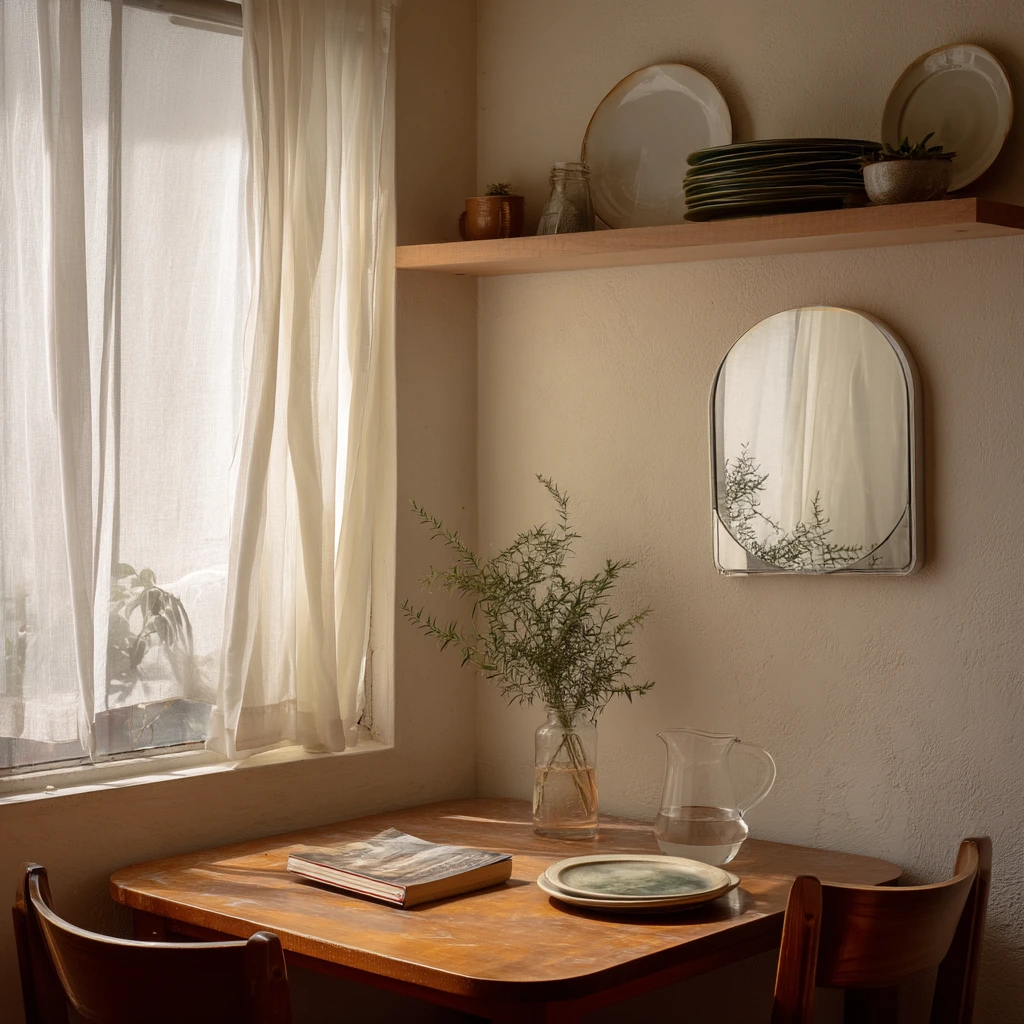
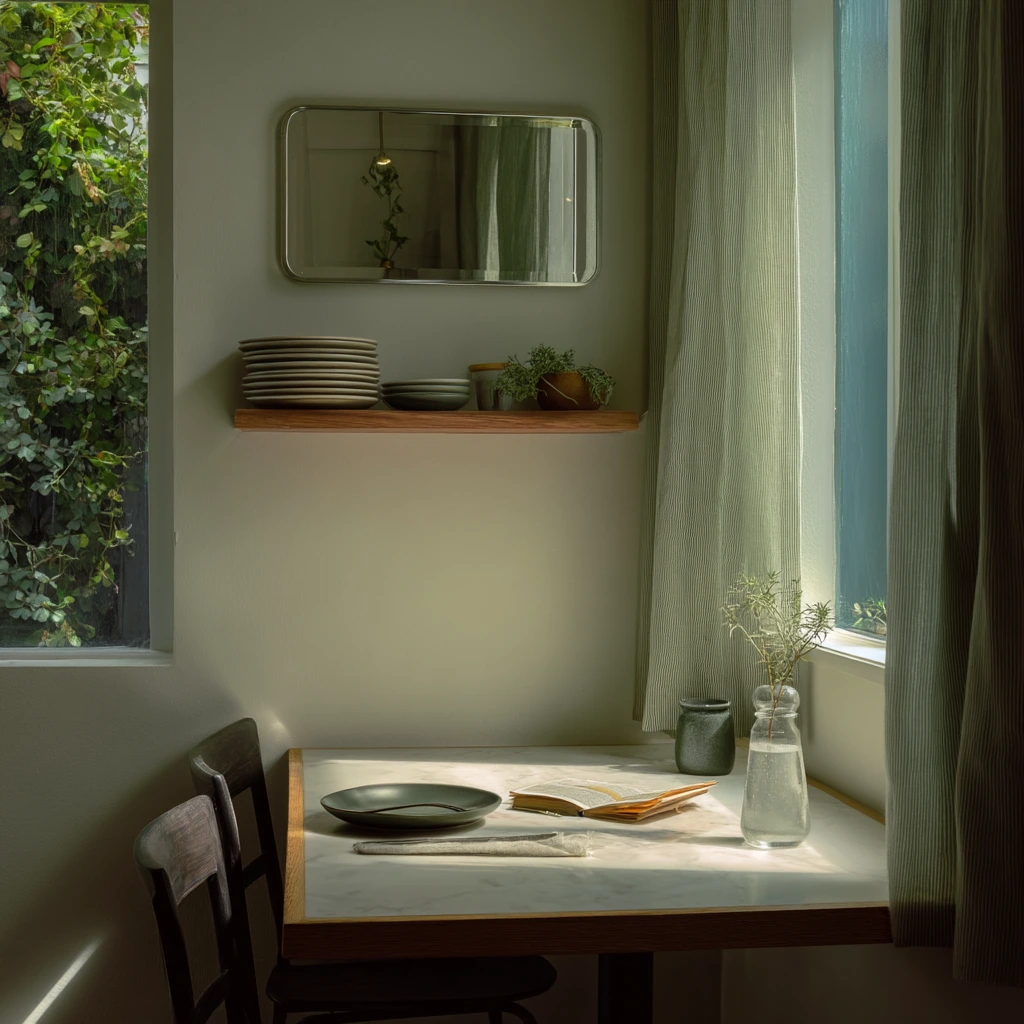
Balance function with breathing room. Do not line the ledge edge to edge. Leave space so curtain movement and cool morning light still feel soft. If you read at the table, store one paperback book in a small vertical holder or on a tray, not flat in the middle of the table. A half-full carafe can live on a coaster on the ledge during the day, then go back to the kitchen at night.
How to style it: add a slim wall mirror to bounce light and make the room feel larger. Use matching bowls on the ledge, like two small ceramic pinch bowls, and keep the shelf items mostly white or clear glass for a clean look.
- Use a tray on the ledge to keep small items together.
- Choose a narrow floating shelf to avoid head bumps.
- Store serving plates vertically with a plate stand.
- Keep herbs in matching small pots for a tidy line.
- Wipe the ledge often since it collects dust fast.
Pro Design Tip: Place the mirror opposite the window to double the light and make the storage feel less noticeable.
Budget Considerations: A simple ledge tray and one floating shelf cost little; use strong anchors so the shelf can hold heavy plates safely.
10 Multiuse Dining Room Storage for Work-from-Home Life
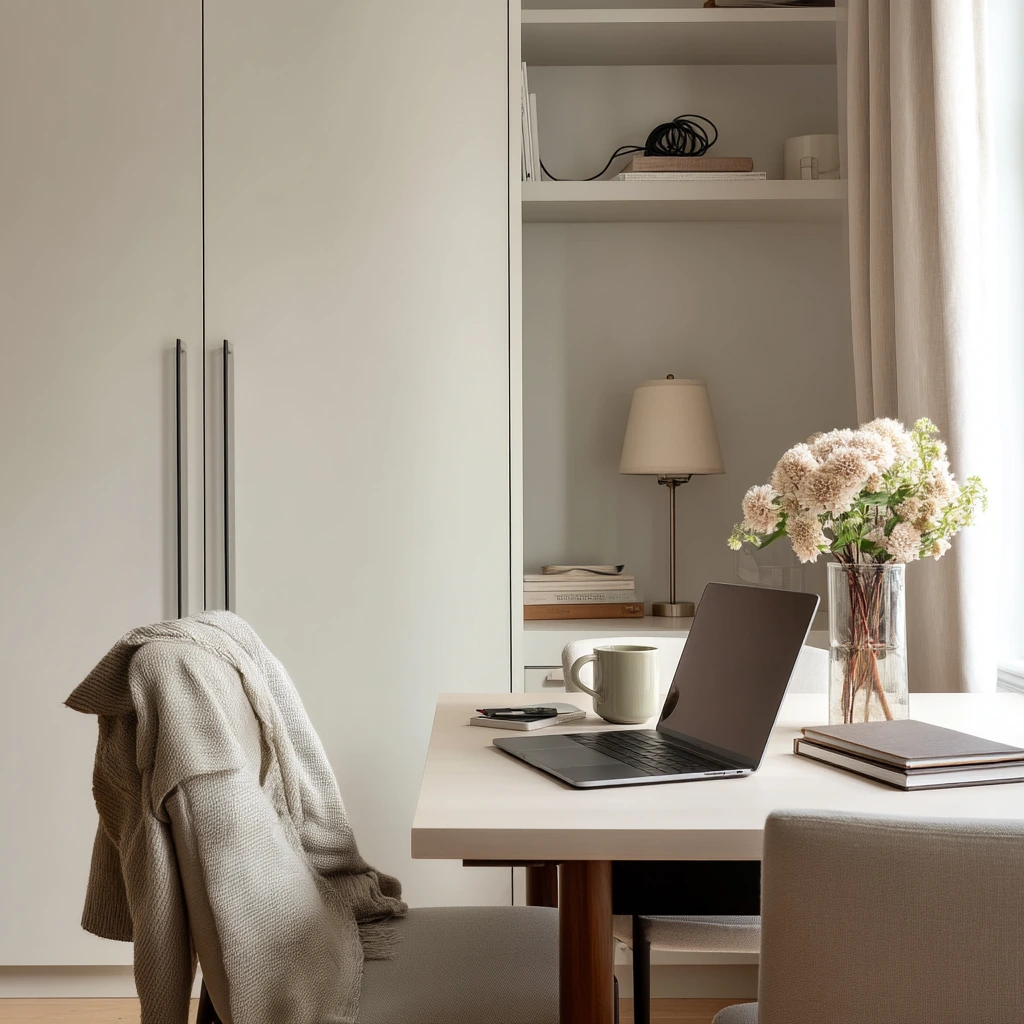
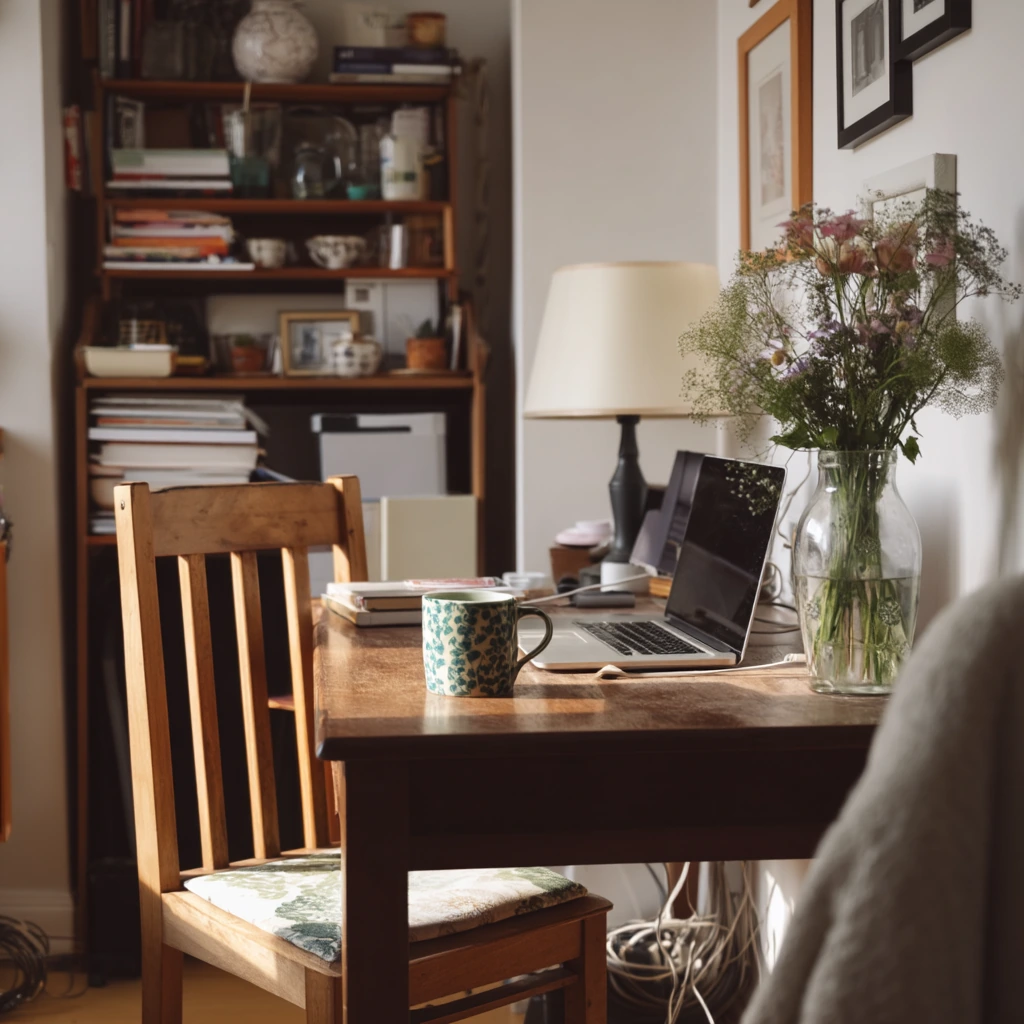
When your dining room is also your office, the fastest way to make it feel restful is to hide work items. A compact storage cabinet can conceal office supplies, extra notebooks, and tech gear while keeping the dining area ready for meals. Push dining chairs in neatly and keep the tabletop mostly clear so the room reads as a dining space first.
Build a simple close-down routine. Keep a shelf inside the cabinet for a laptop, with the charger cable coiled and stored beside it. Add a small bin for pens, sticky notes, and paper clips. If you drink coffee while working, use one ceramic mug and place a coaster inside the cabinet so it is always easy to set up. Fresh flowers on the table can stay, and a soft throw over the chair back makes the space feel lived-in without looking like an office.
How to style it: choose a cabinet finish that matches your dining table, then use warm lamp light plus window light for a calm feel. Keep the cabinet top simple with one framed photo or a small bowl for keys.
- Store your laptop vertically in a file holder to save shelf space.
- Use cable ties so cords do not tangle.
- Keep one drawer for paper and one for tech items.
- Set a basket for mail to stop paper piles.
- Use chair felt pads so moving chairs stays quiet during calls.
Pro Design Tip: Choose a cabinet with doors, not open shelves, so the room looks clean even on busy days.
Budget Considerations: If a new cabinet is not in the budget, use a closed cube unit with fabric bins and add doors later with a simple DIY kit.
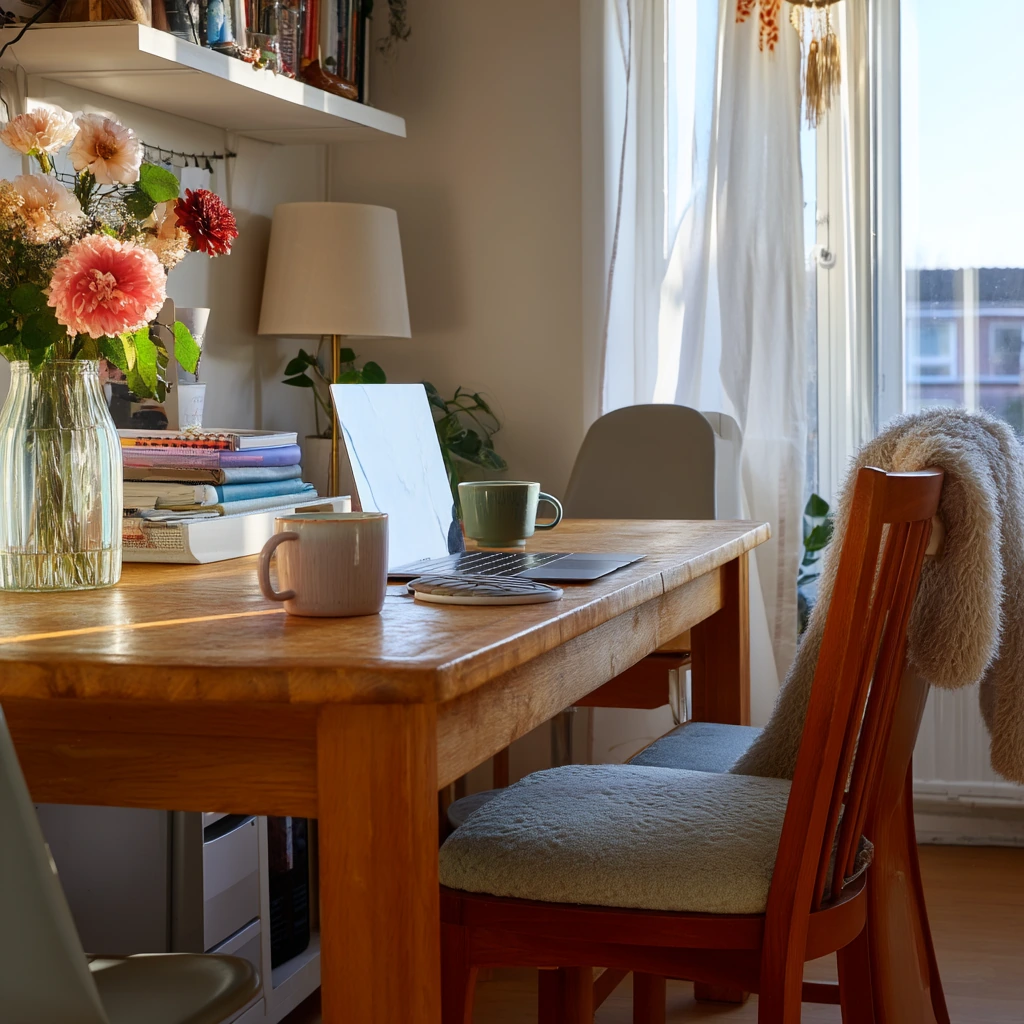
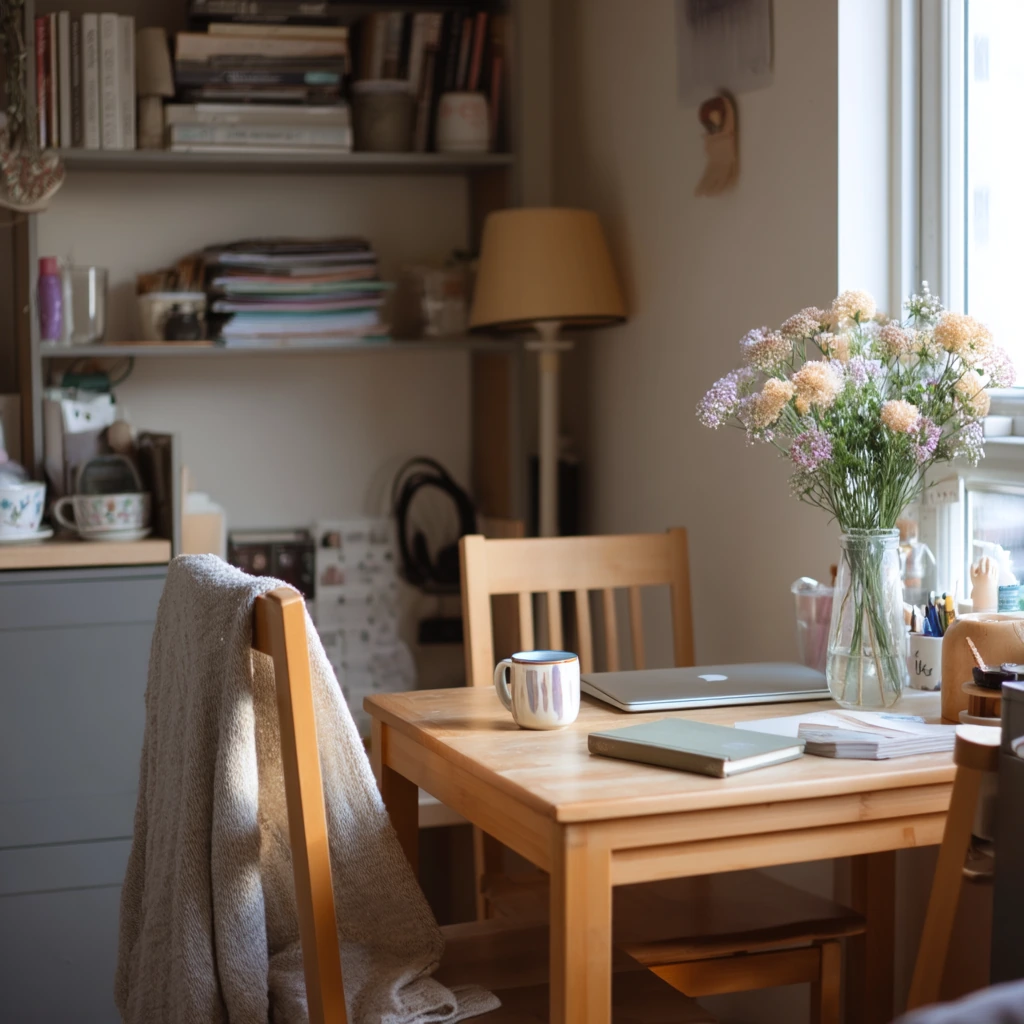
Storage in a small dining room works best when it is close to where you use it. Benches, carts, shelves, and slim cabinets help you keep the table clear and make the room easier to live in.
Pick one upgrade that fits your space, then set simple categories like linens, kid supplies, and work gear. Small changes add up, and your dining area will feel calmer without losing warmth.
FAQ
What is the best storage furniture for a small dining room? A storage bench or banquette, a slim sideboard, and a tall corner cabinet are top choices because they add space without blocking walkways.
How do I keep open shelves from looking messy? Limit each shelf to a few grouped items, use matching containers, and leave empty space so the display can breathe.
What can I store under a dining bench? Placemats, tablecloths, extra napkins, board games, and kids art supplies work well. Use labeled baskets to keep it sorted.
How can I add storage in a rental dining area? Use a bench with baskets, a narrow console, removable hooks for tote bags, and floating shelves with proper anchors that can be patched later.
Where should I put mail in a small dining room? Use a mail sorter on a sideboard or inside a cabinet, and empty it weekly so paper does not spread to the table.
How do I combine a dining room and home office? Use a closed cabinet for work supplies, coil cables, and create a daily close-down routine so the table can switch back to meals quickly.