
Tudor kitchen ideas are popular because they feel warm, grounded, and real. Think dark oak beams, creamy plaster walls, leaded glass windows, and simple old-world details that still work for modern life.
In this guide, you will see 10 Tudor-inspired kitchen looks, from a busy family space to a compact city galley, plus storage, baking, and renter-friendly updates. Each section includes practical styling steps you can copy in your own home.
You will also learn how to choose finishes like brass hardware, stone counters, and classic tile patterns without making the room feel heavy. The goal is a kitchen that looks collected and lived-in, not staged.
Save the ideas you like, then use the tips to plan your layout, lighting, and small decor. Even small swaps can bring Tudor character into an everyday kitchen.
1 Family Tudor Kitchen with Everyday Warmth
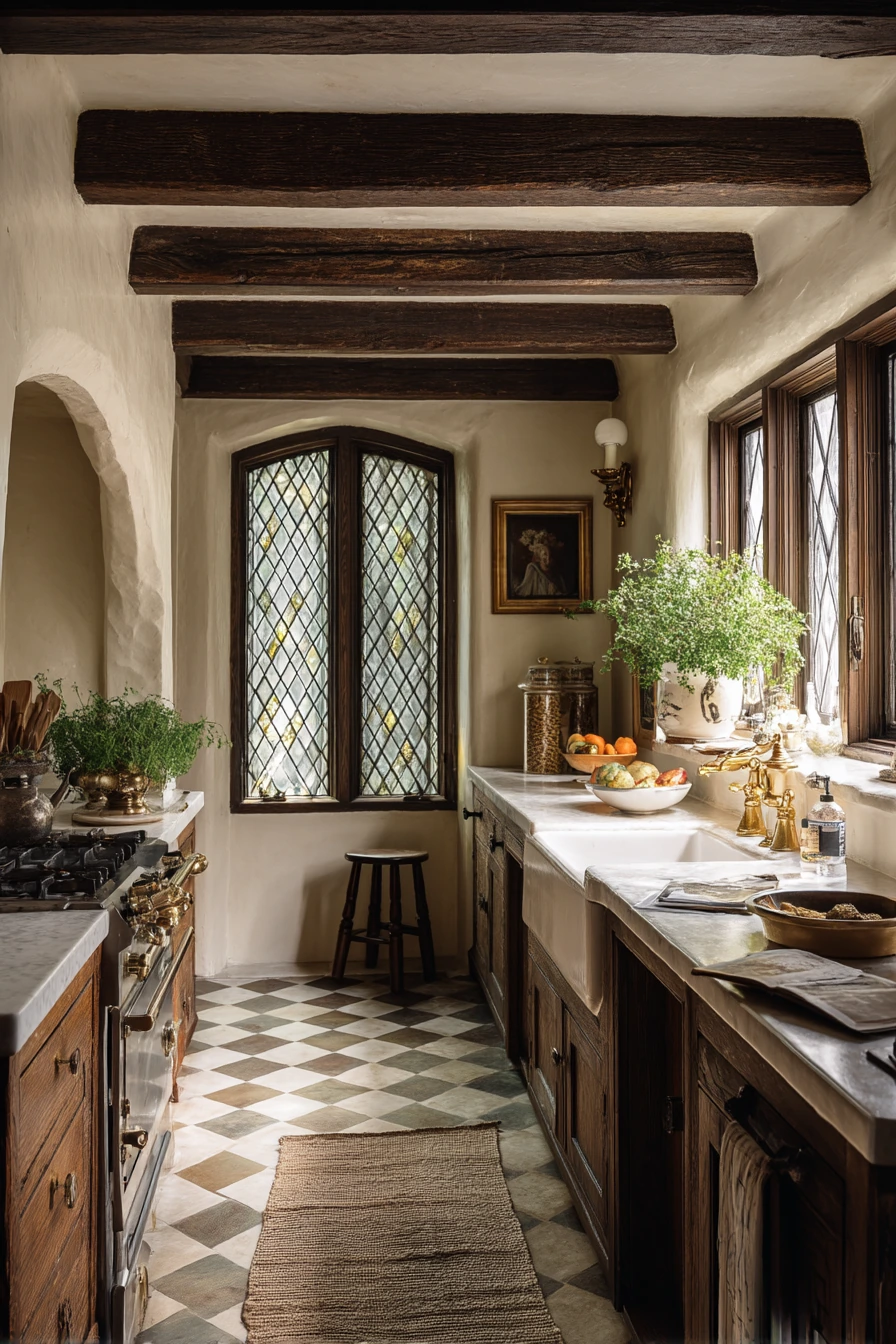
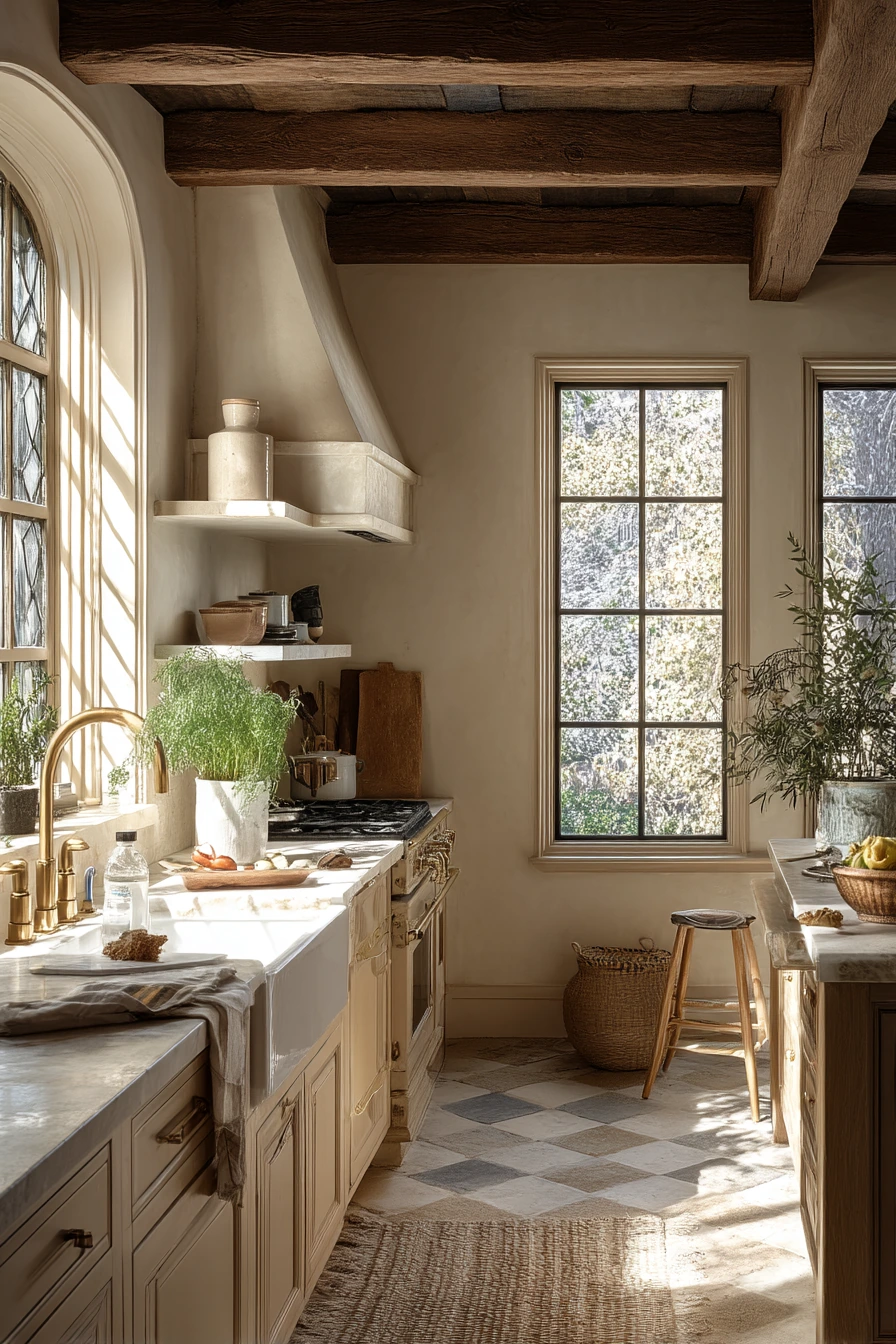
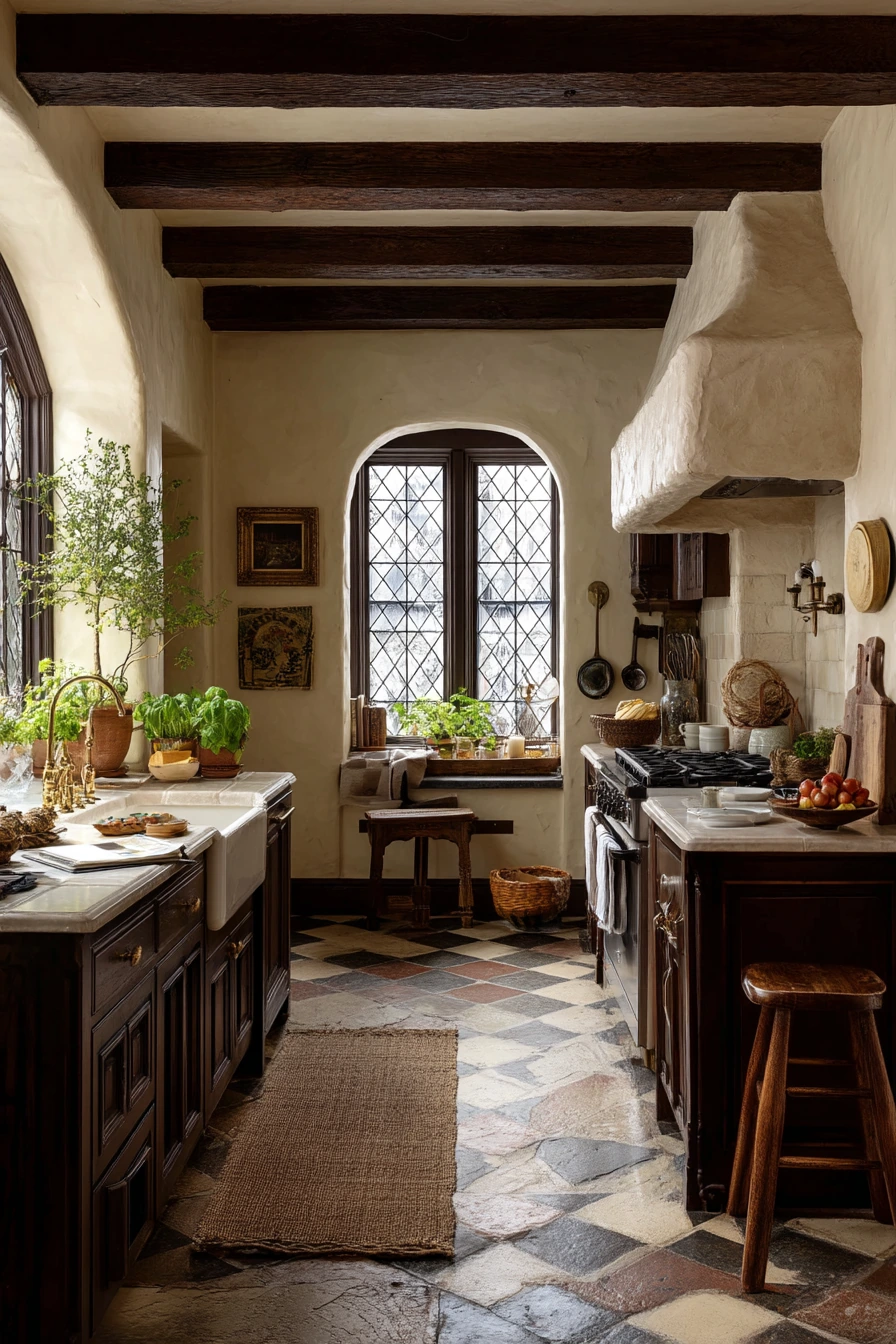
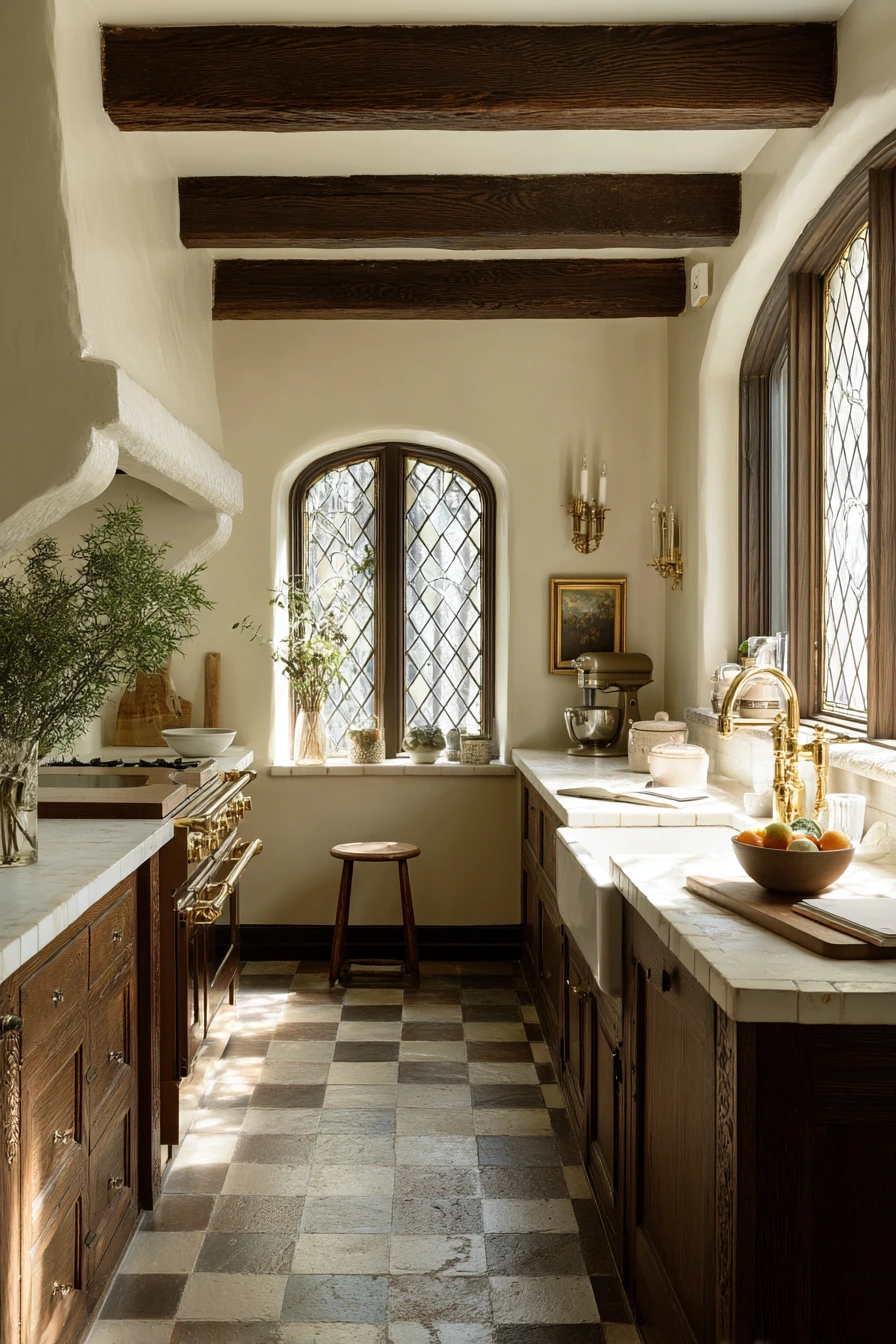
A lived-in Tudor kitchen feels comfortable, not perfect. Start with dark oak beams overhead, creamy plaster walls, and leaded glass windows for that older-home look. A checkerboard stone floor keeps the room classic and easy to clean, while an apron-front sink adds instant heritage style.
To keep it warm and usable, choose a brass bridge faucet, a range hood wrapped in muted plaster, and a woven runner that softens the stone underfoot. Add ceramic canisters and a small line of fresh herbs by the window so the kitchen looks active even when it is tidy.
The best part of this style is the everyday life showing through. A homework page on the table, a kid’s water bottle, a fruit bowl, and a charging cable near a stool make the space feel honest. Keep those items in one small zone so the room still reads calm.
- Pick two main finishes: warm brass and dark oak, then repeat them.
- Use a checkerboard stone or look-alike tile to bring old-house structure.
- Style the windowsill with herbs, a small crock, and one candle.
- Keep counters clear by using canisters for tea, sugar, and flour.
- Add one woven runner to reduce echo and add comfort.
Pro Design Tip: Use the same creamy plaster tone on walls and the hood surround to make beams and windows stand out without adding more patterns.
Budget Considerations: Real stone floors and custom plaster work cost more; use porcelain checkerboard tile and a simple wood hood box painted in a plaster-like matte finish.
2 Small Tudor Kitchen for a Couple
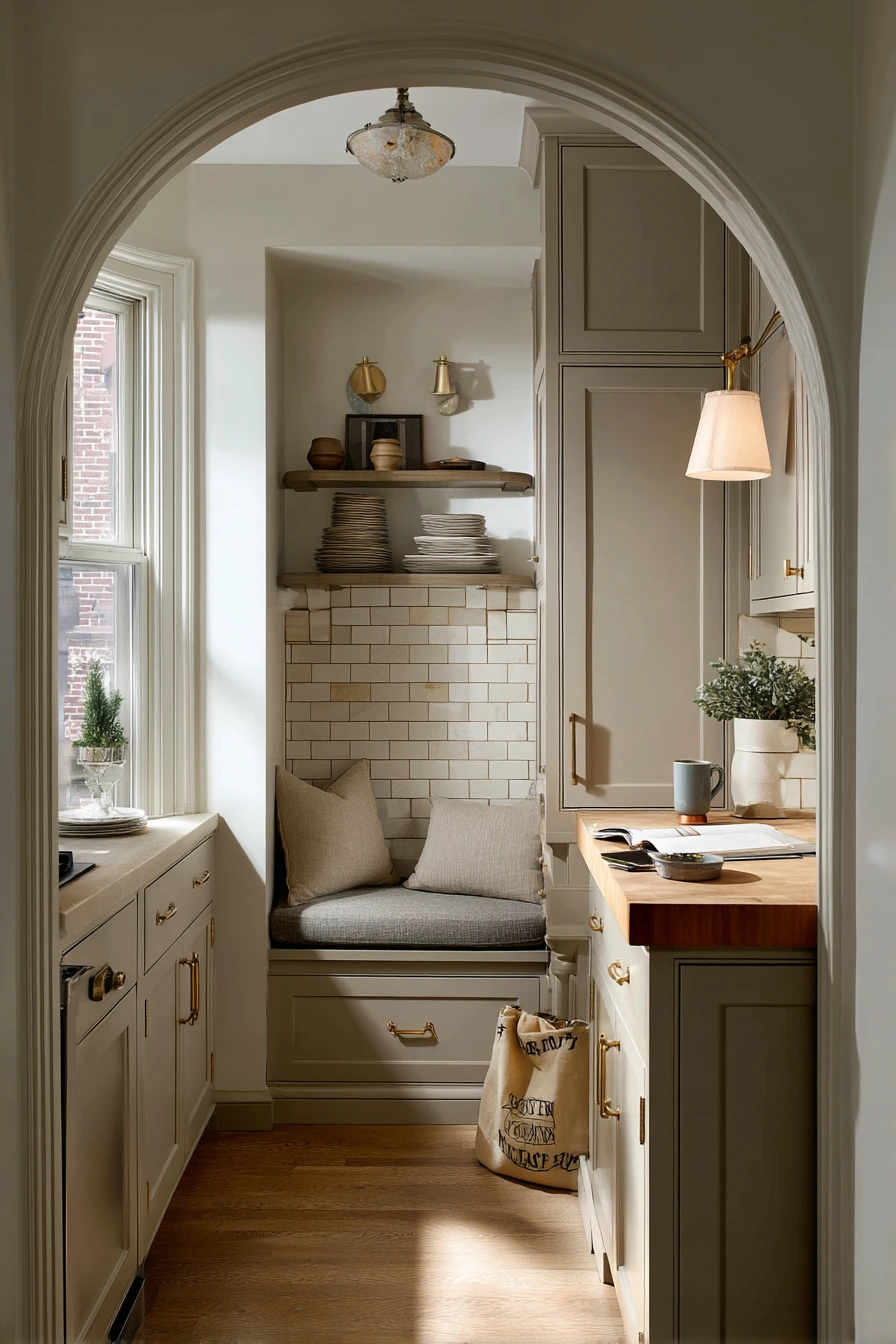
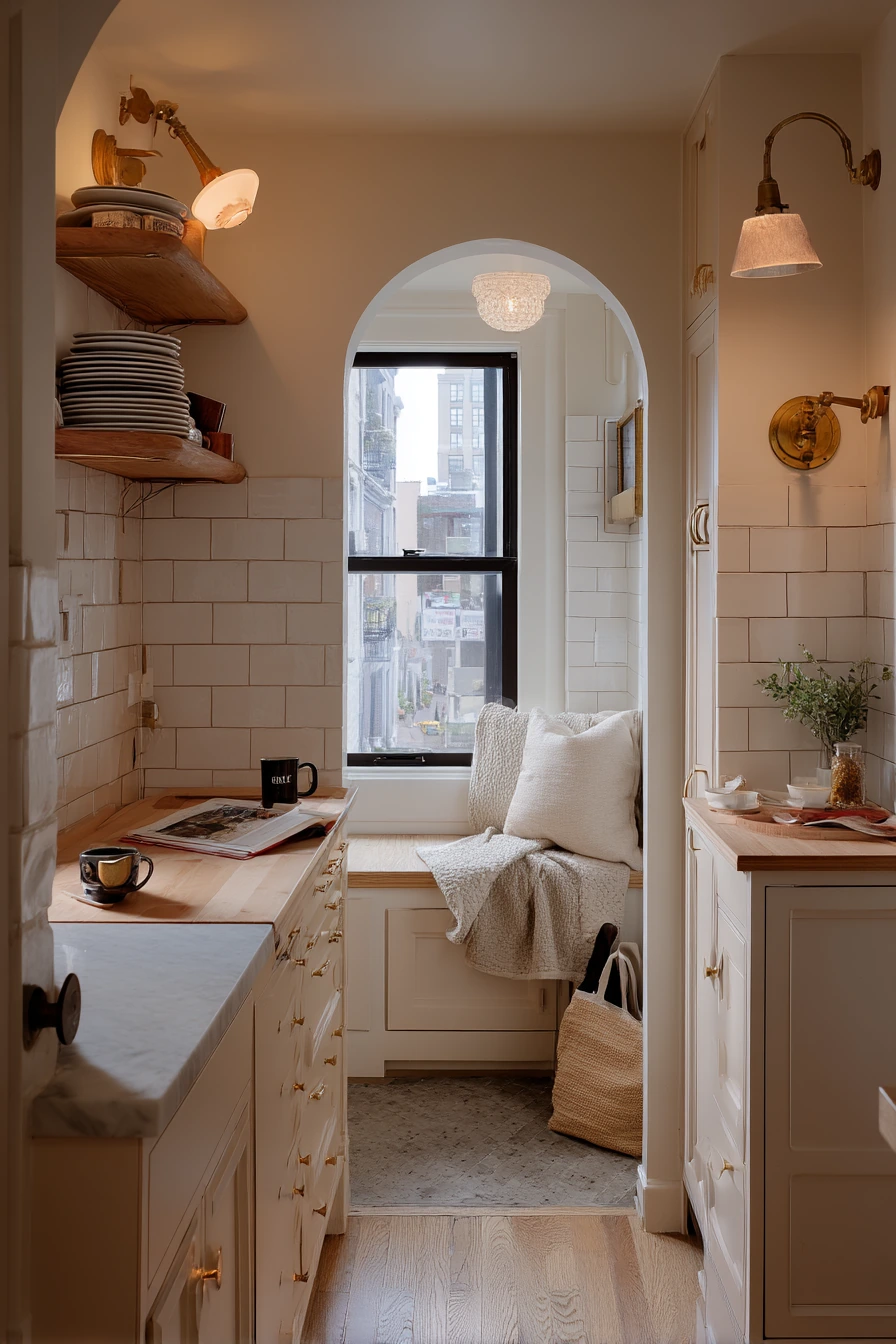
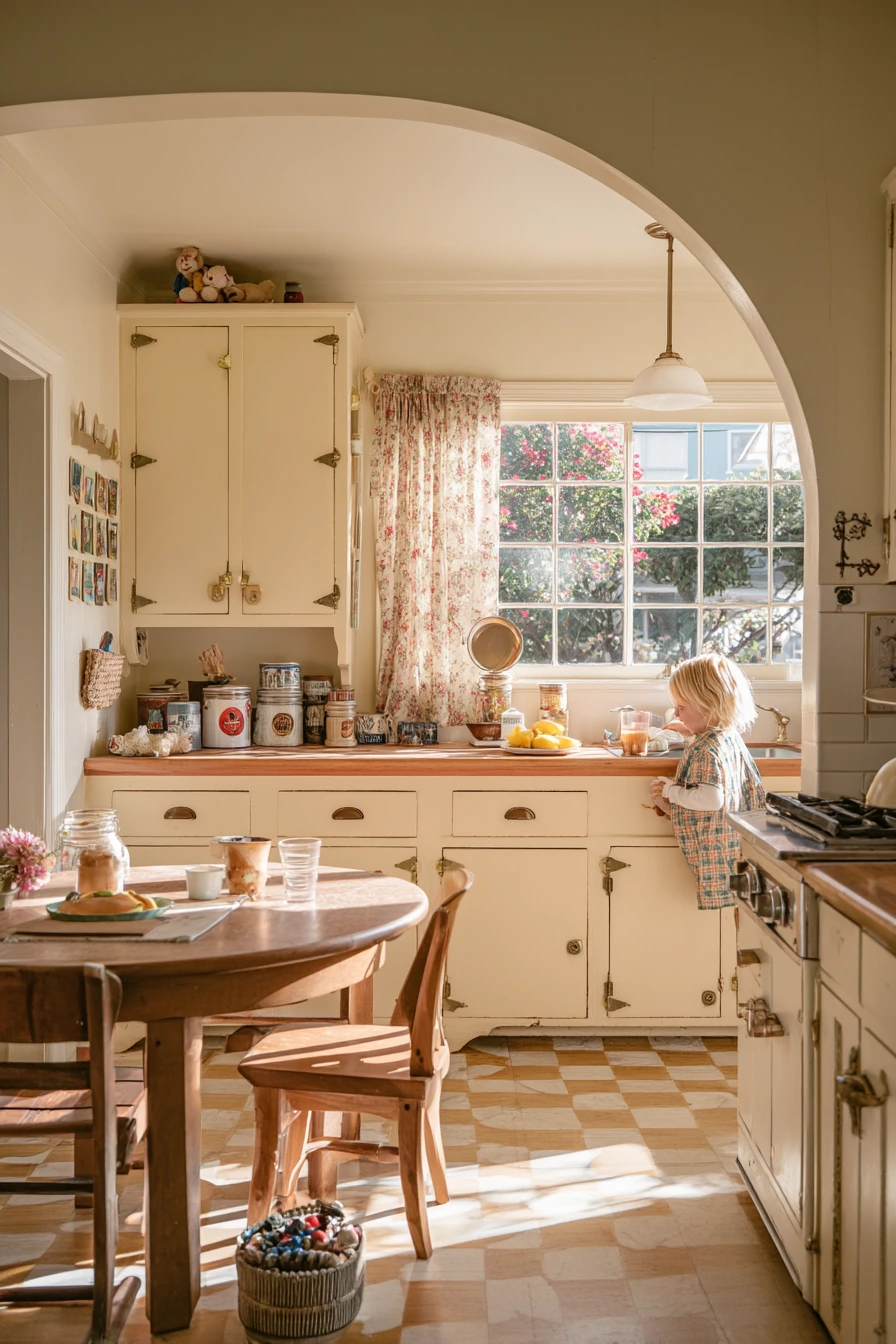
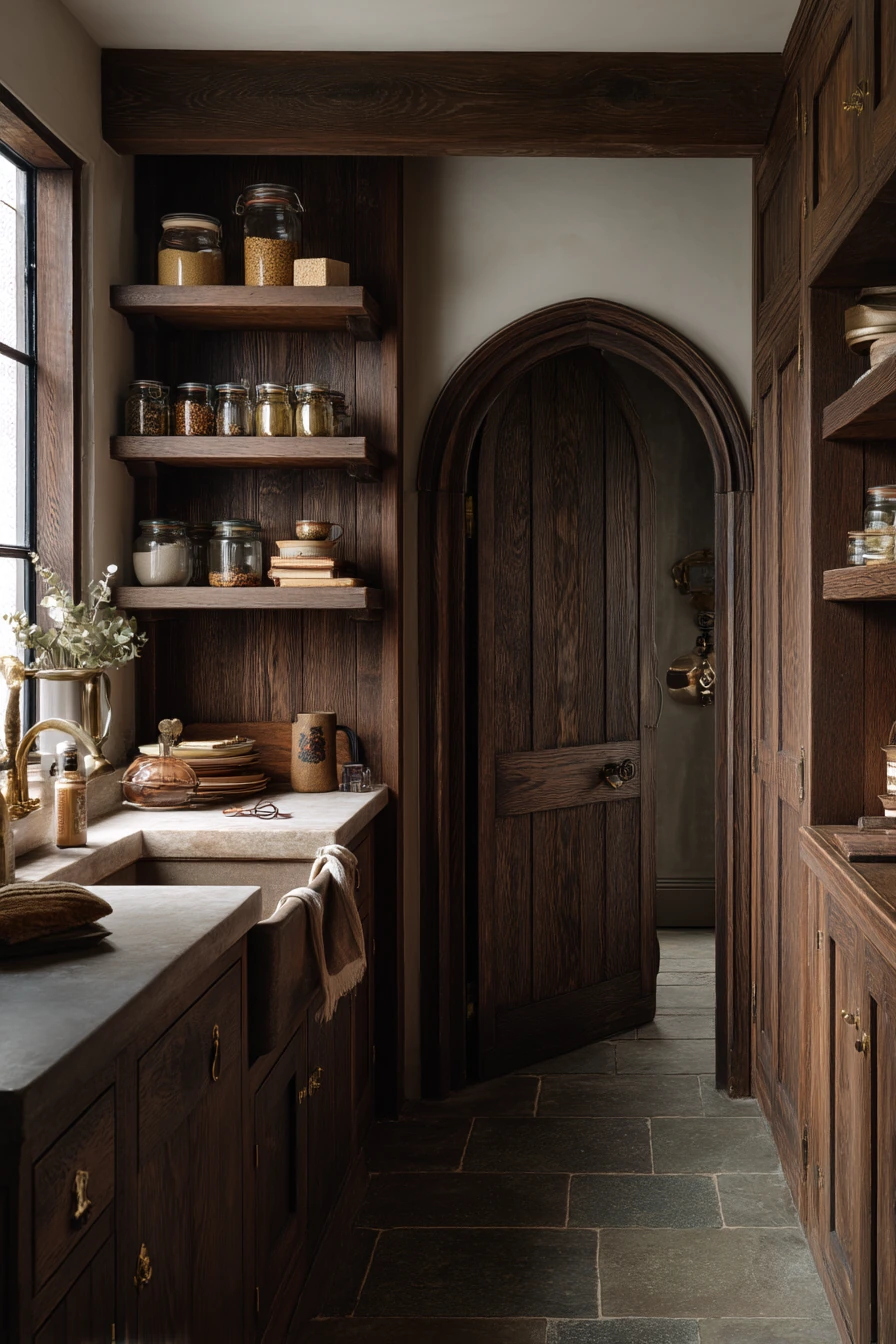
A compact Tudor kitchen can still feel special when you focus on shape and trim. Honey-toned oak trim and an arched doorway create Tudor character even in a narrow galley layout. Keep the backsplash simple with subway tile so the space stays bright.
Choose compact butcher-block counters for warmth and function. If you have room, a petite built-in banquette can double as dining and extra storage. Add vintage-style sconces for soft, practical light, and finish the look with patinaed brass knobs that make basic cabinets feel older.
For lived-in styling, keep a coffee mug, a folded dish towel, and a cookbook propped open near the prep zone. A tote bag by the door looks natural in a townhouse and hints at daily movement. Use one open shelf with stacked plates to avoid upper cabinets feeling bulky.
- Paint walls a warm cream to balance the oak trim.
- Use one open shelf for plates and bowls, not lots of small decor.
- Add sconces on dimmers to make evenings feel cozy.
- Choose a narrow runner to soften footsteps in the galley.
- Store small appliances in one cabinet to reduce visual clutter.
Pro Design Tip: Repeat the arch shape in small ways, like an arched shelf bracket or a softly curved range hood, so the doorway looks intentional.
Budget Considerations: Built-in banquettes can be pricey; use a small table with a bench and add baskets underneath for a similar look.
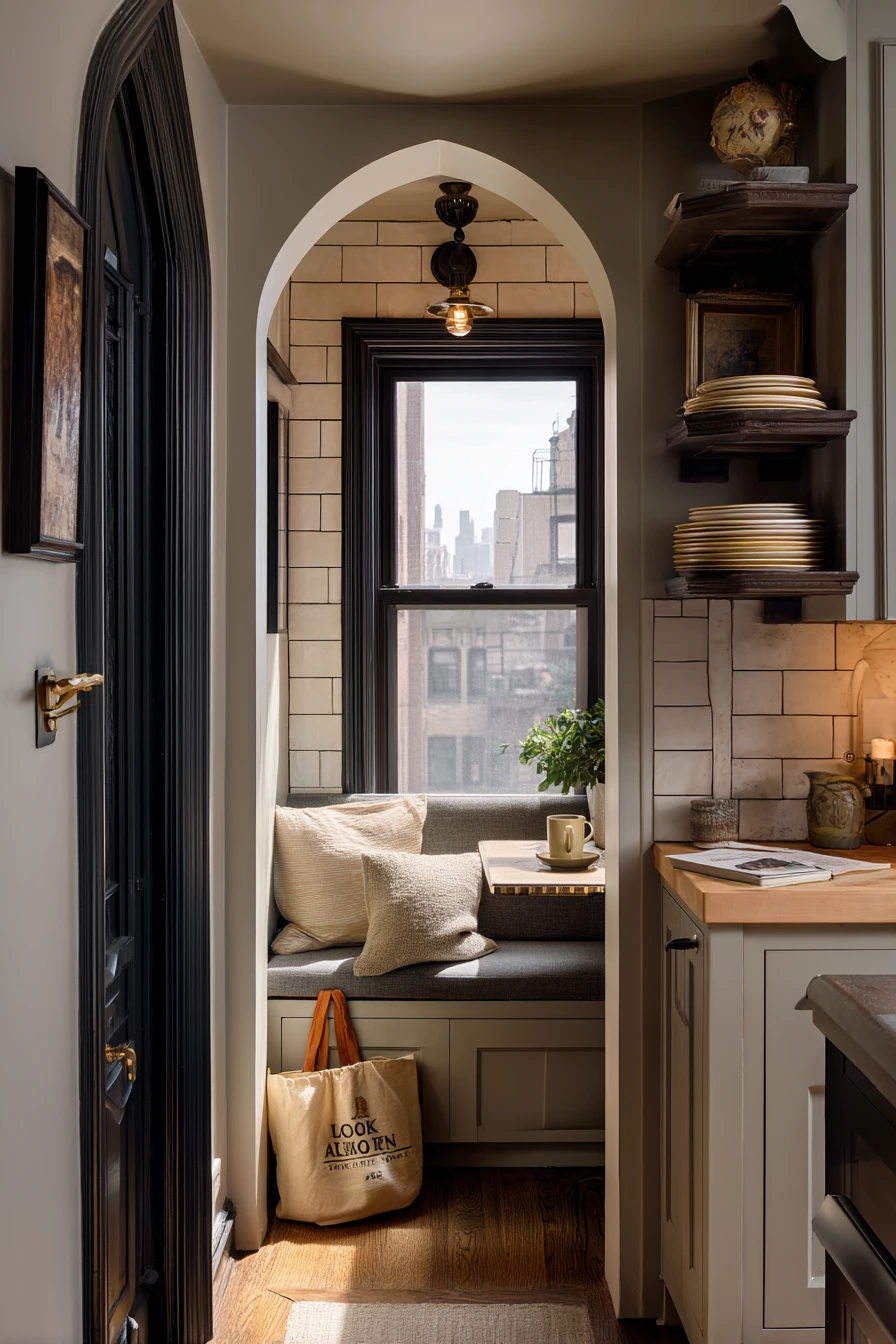
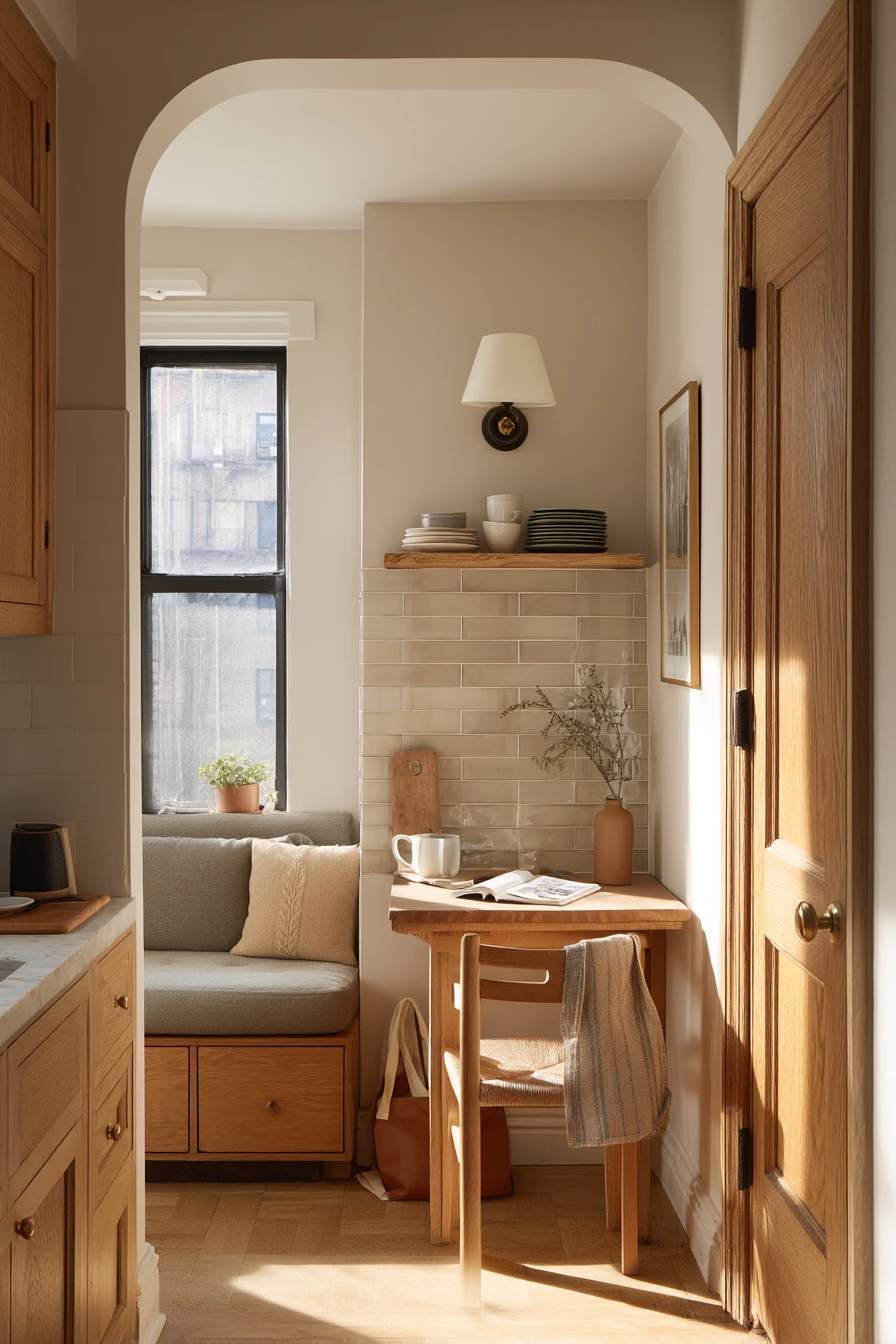
3 Historic Tudor Kitchen with Modern Cooking
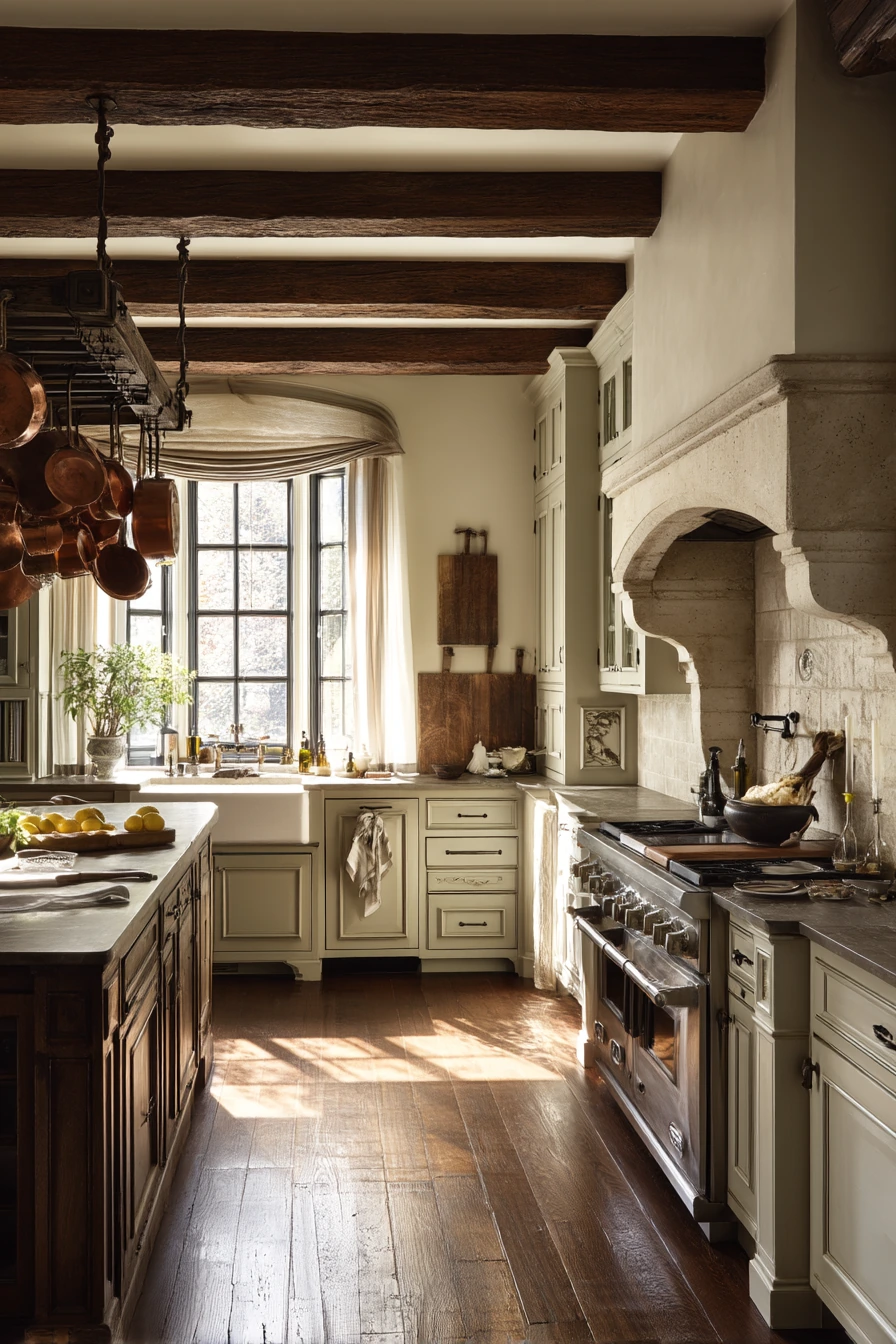
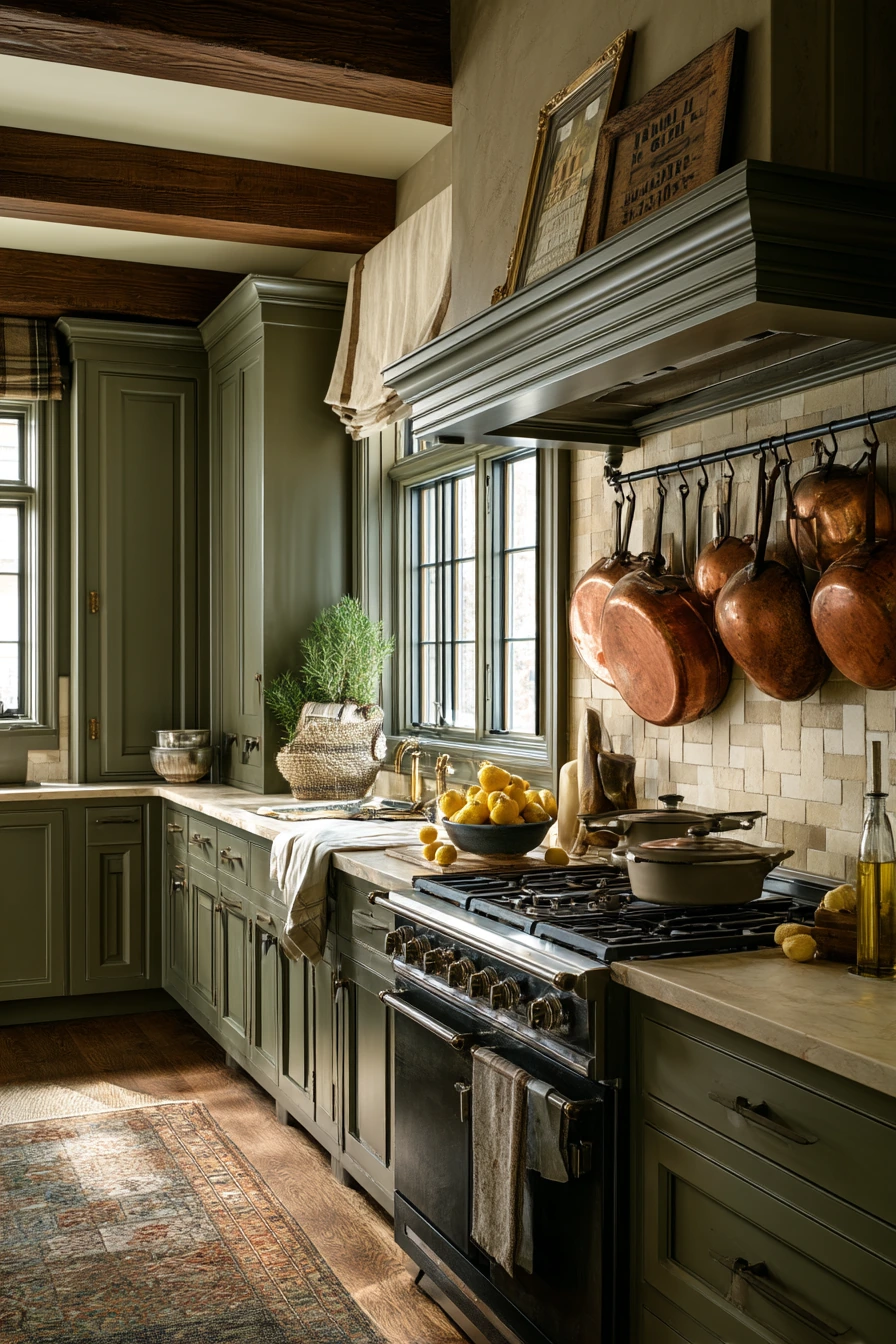
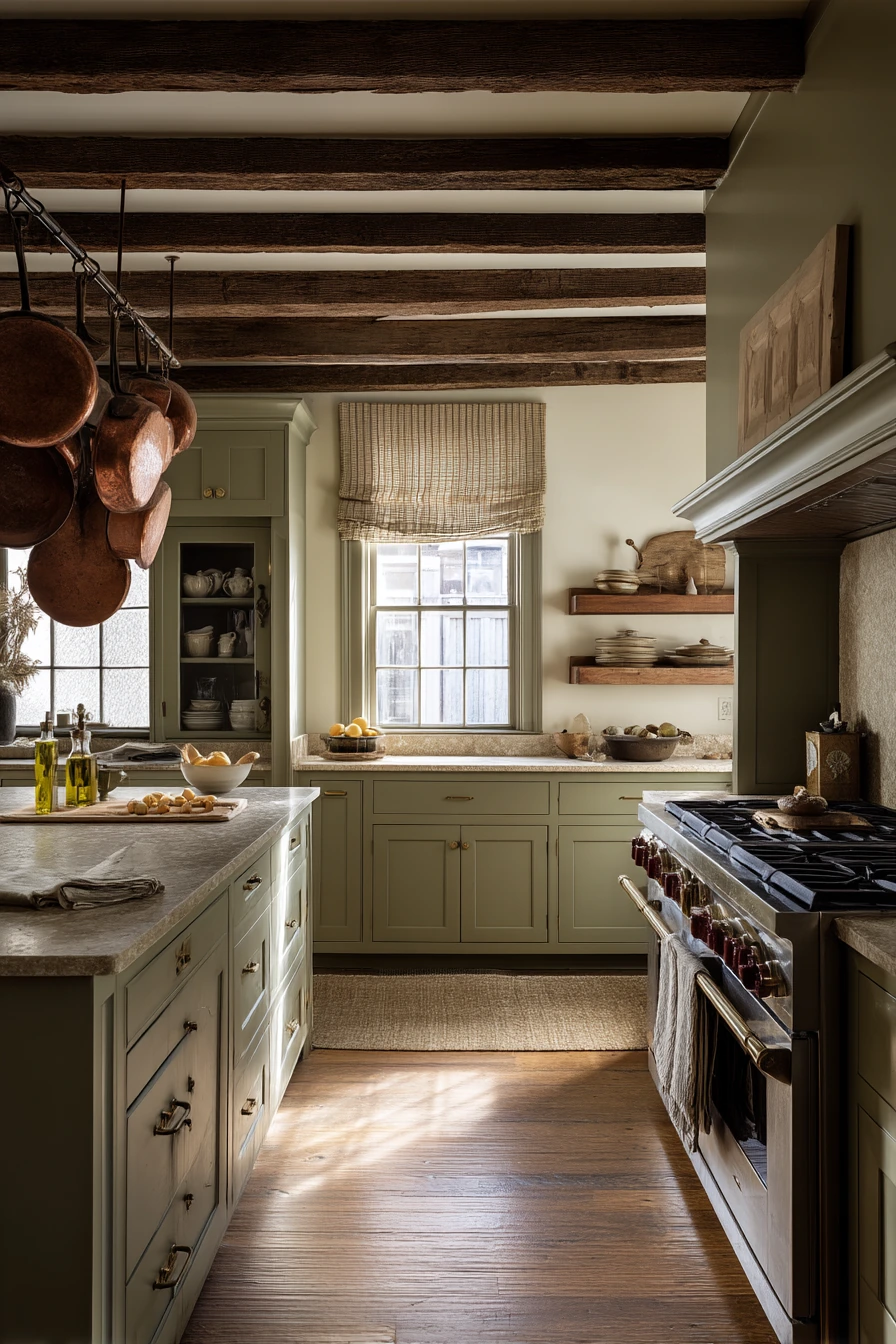
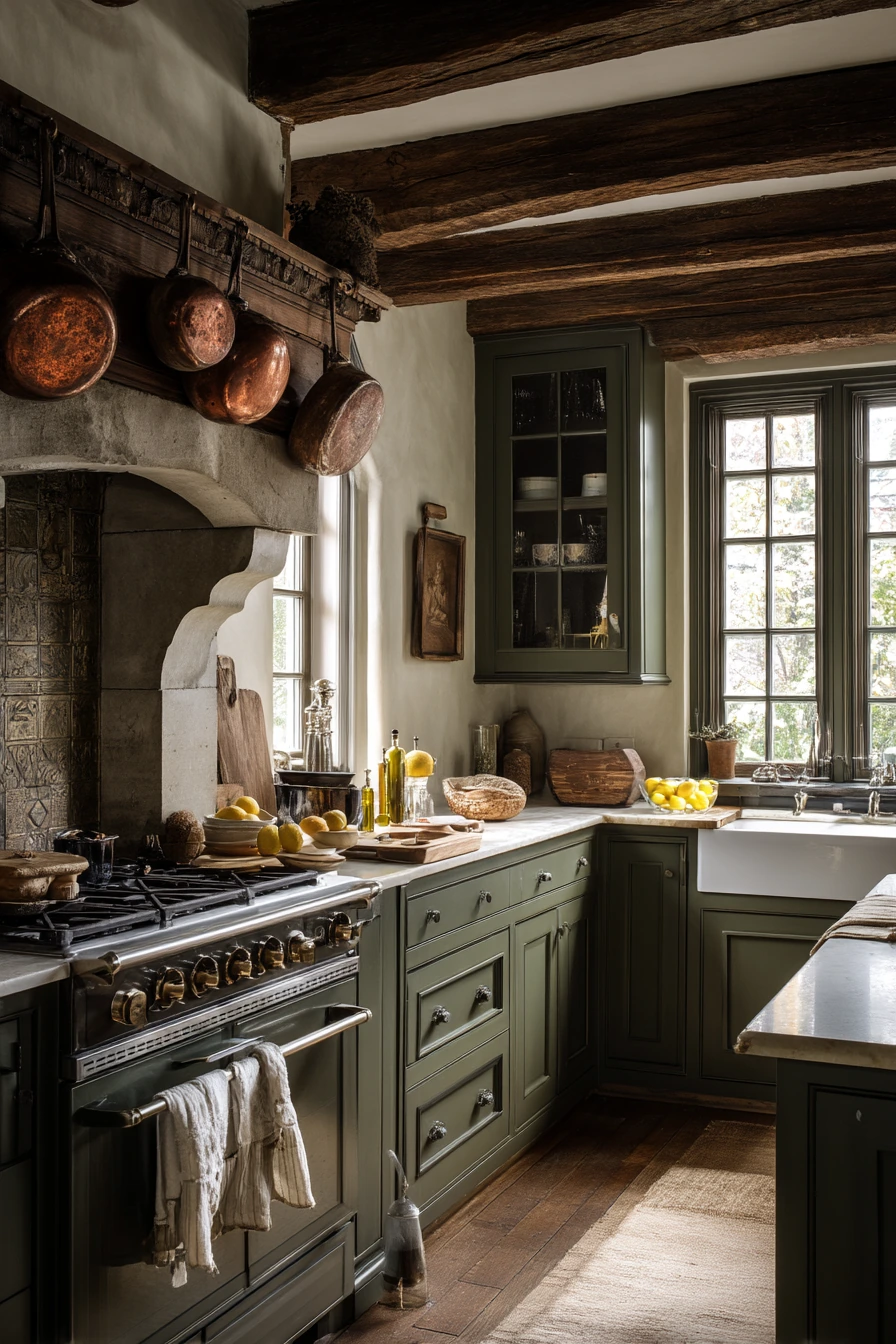
An updated historic Tudor kitchen works best when new pieces respect the old bones. Heavy timber beams and a limestone hearth bring instant age and weight. Pair them with integrated cabinetry in deep sage for a grounded, cook-friendly look that still feels classic.
For a serious home cook, a pro-style range fits the era because it is sturdy and simple. Add a stone countertop for a quiet, natural surface, then bring in hanging copper pans for warmth and shine. Antique cutting boards and a linen roman shade add old-world texture without making the space fussy.
Keep the styling real: an olive oil bottle, half-cut lemons, a recipe printout, and a slightly wrinkled tea towel. These small cues make the kitchen feel active and loved. Try to group items by task, like oils and salt near the range, and boards near the prep area.
- Choose one cabinet color that reads earthy, like sage or olive.
- Use stone or stone-look counters with a soft, matte finish.
- Hang copper pans in one line to avoid visual noise.
- Lean cutting boards against the backsplash for quick access.
- Add linen shades to soften light and keep the room calm.
Pro Design Tip: Balance heavy beams with smoother surfaces, like flat-front inset doors and simple hardware, so the room feels updated but still Tudor.
Budget Considerations: Limestone hearths and full stone slabs cost more; consider a stone veneer hearth and durable quartz in a warm, natural pattern.
4 Tudor Cottage Kitchen with Garden Harvest
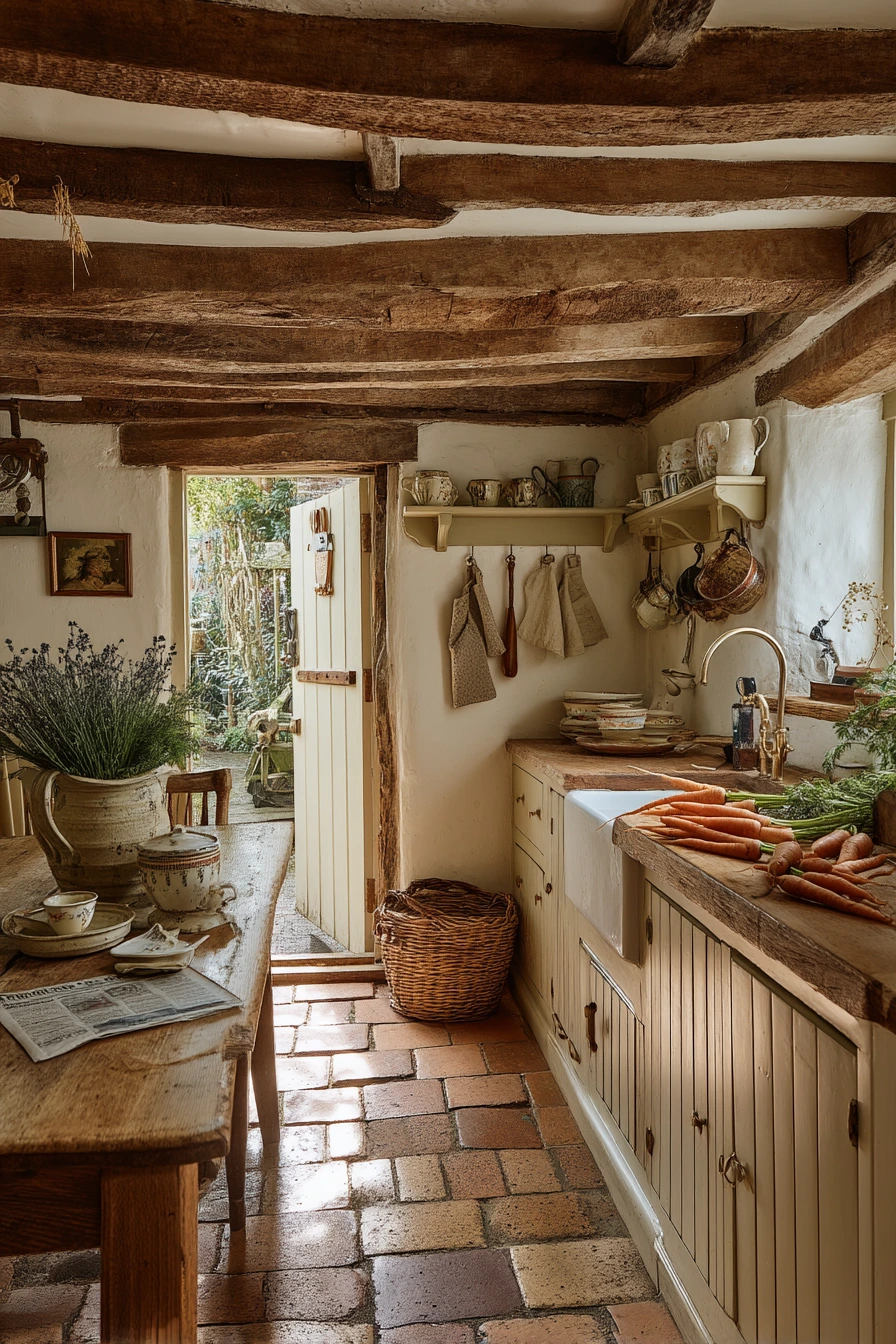
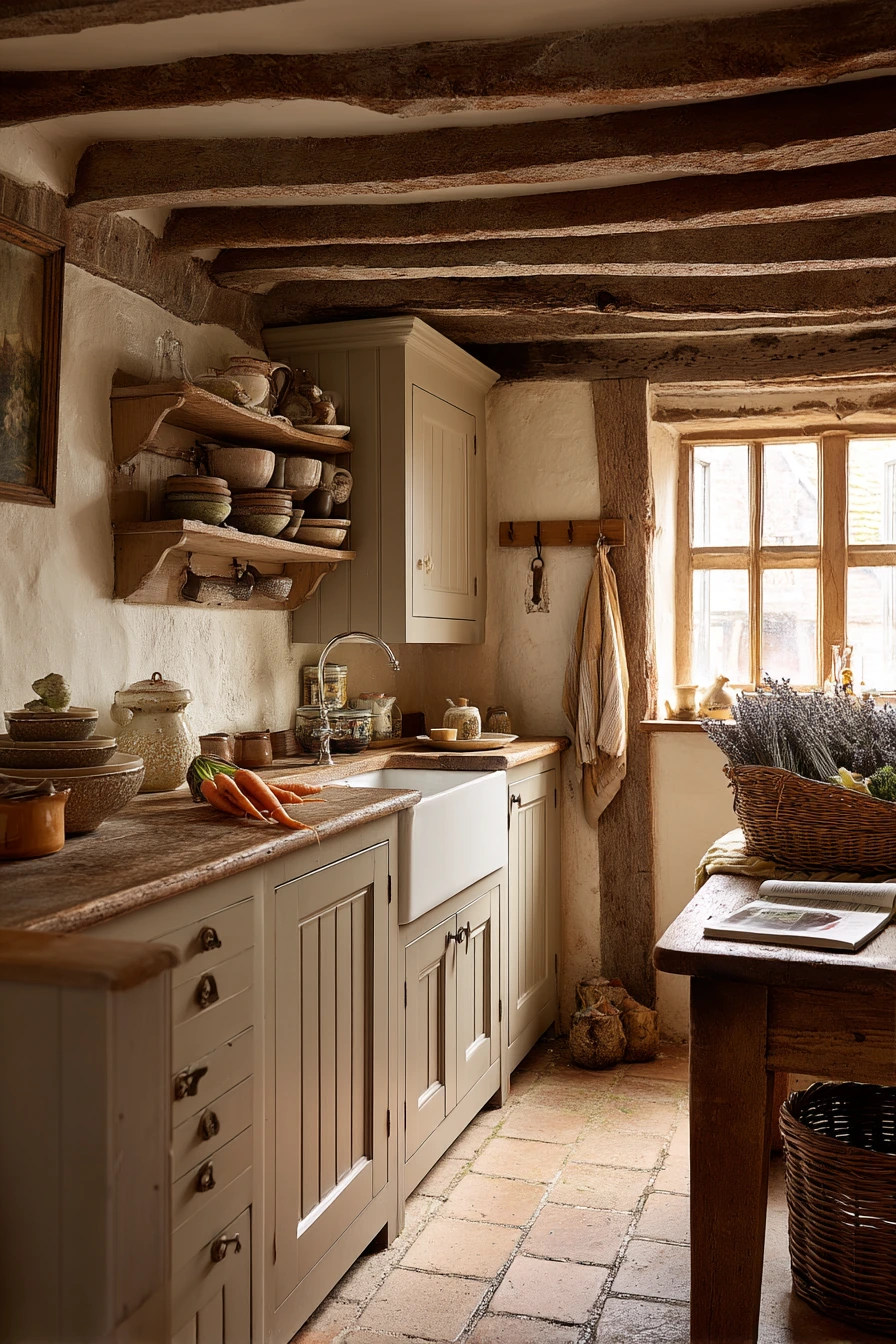
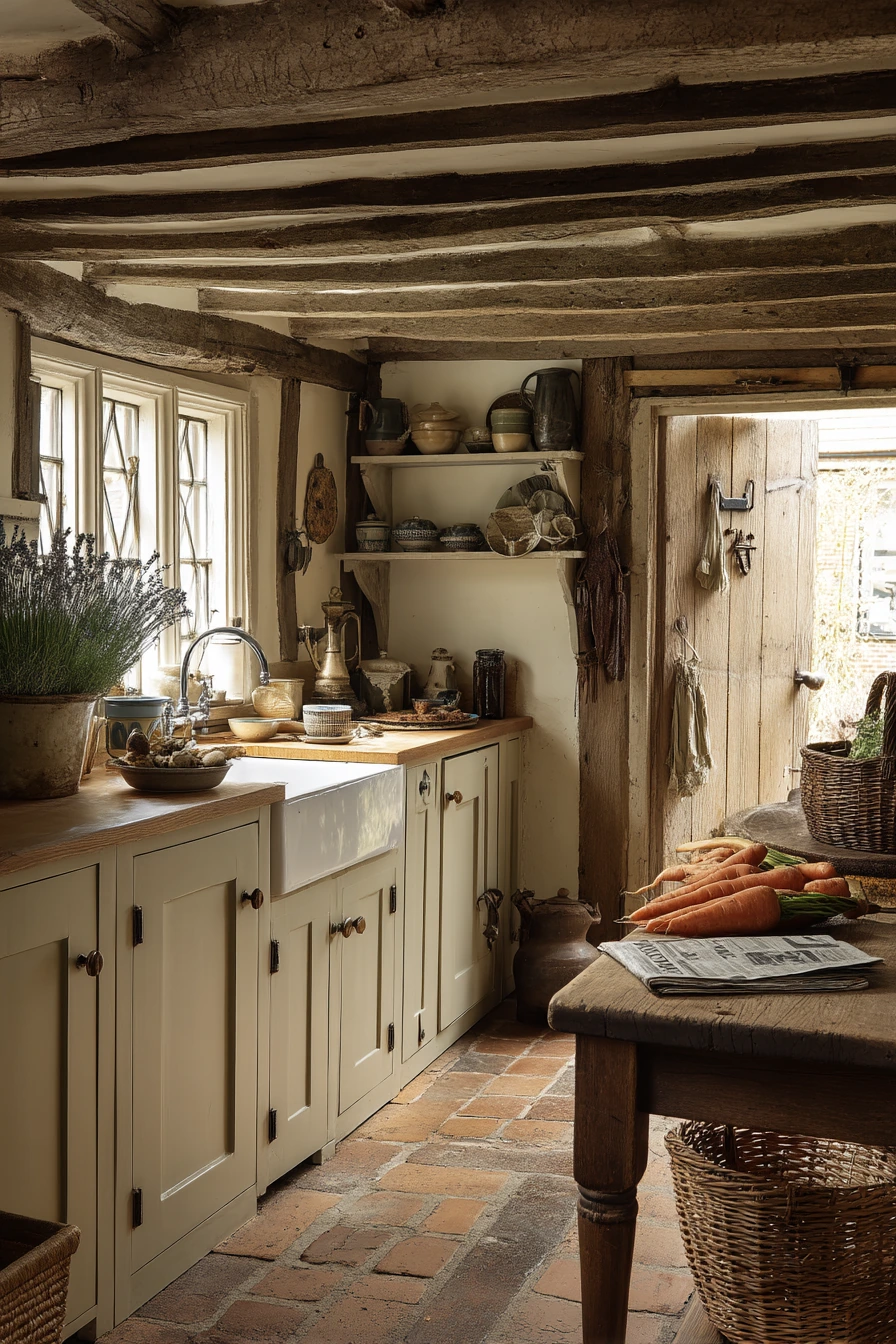
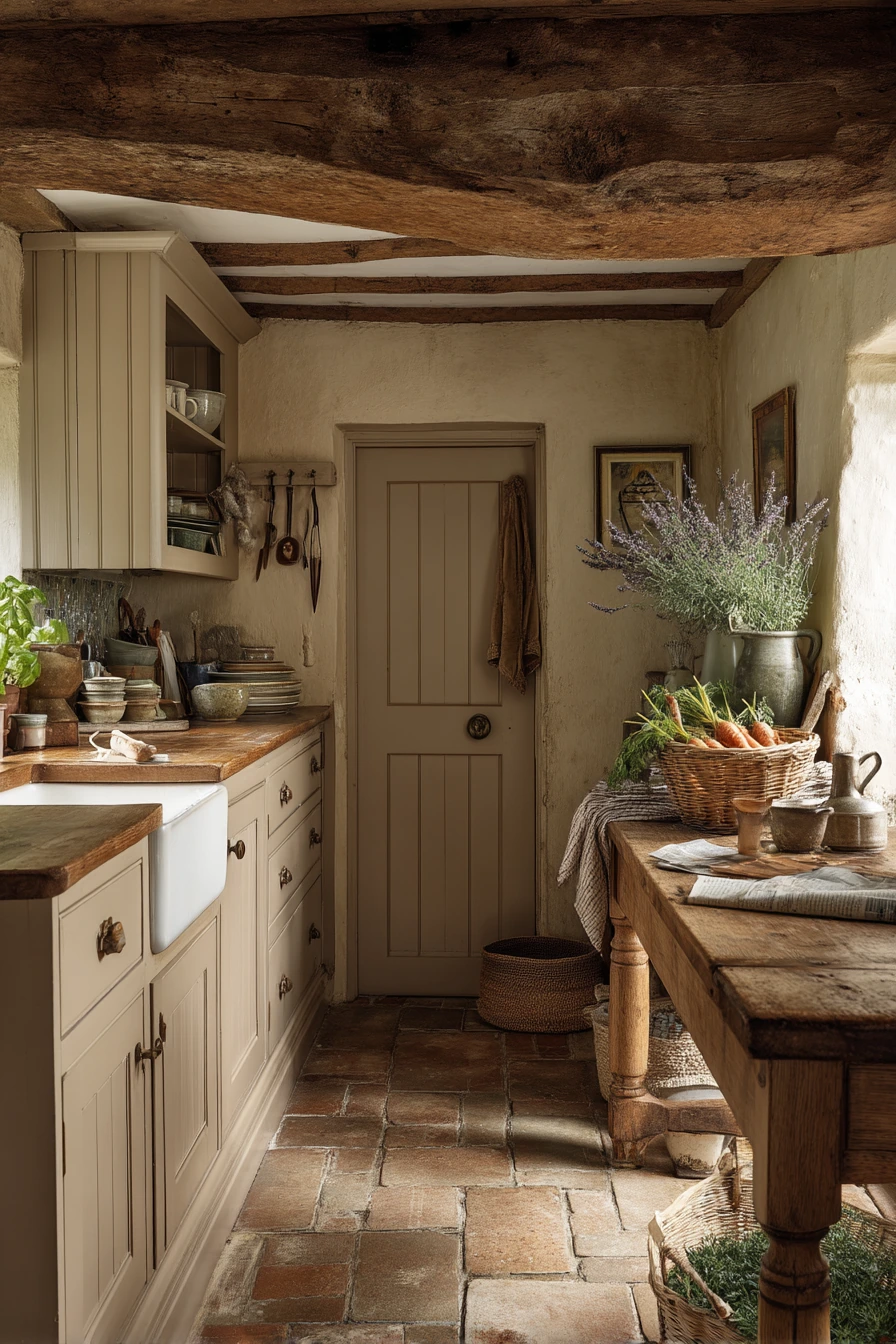
A Tudor cottage kitchen is all about warmth and simple rural charm. Exposed oak beams, painted cabinetry in a soft mushroom tone, and an aged terracotta floor set a gentle, earthy base. A farmhouse table becomes the heart of the room, especially when the kitchen is used for sorting and prepping food.
Lean into practical details: a deep sink for washing produce, a small pantry door for storage, and iron hooks for towels and tools. Add stacked enamel bowls, a dried lavender bundle, and a few worn wood utensils to keep the space feeling collected, not themed.
Garden harvest cues make this style feel real. A basket of carrots on the table, muddy clogs by the back door, a newspaper, and a tea tin left open tell a daily story. Keep the mess contained with one tray for tea items and one basket for produce.
- Use mushroom or warm greige cabinet paint for a cottage feel.
- Choose terracotta tile or a similar warm clay tone for floors.
- Hang tools on iron hooks to free up drawer space.
- Style the table with one basket and one bowl, not many pieces.
- Add dried herbs or lavender for a soft, natural accent.
Pro Design Tip: Mix one painted finish with one natural wood finish, then repeat the same metal, like iron, across hooks and hardware to keep it cohesive.
Budget Considerations: Real terracotta can be costly and needs sealing; porcelain tile in a terracotta color is easier to maintain and often cheaper.
5 Renter-Friendly Tudor-Inspired Kitchen
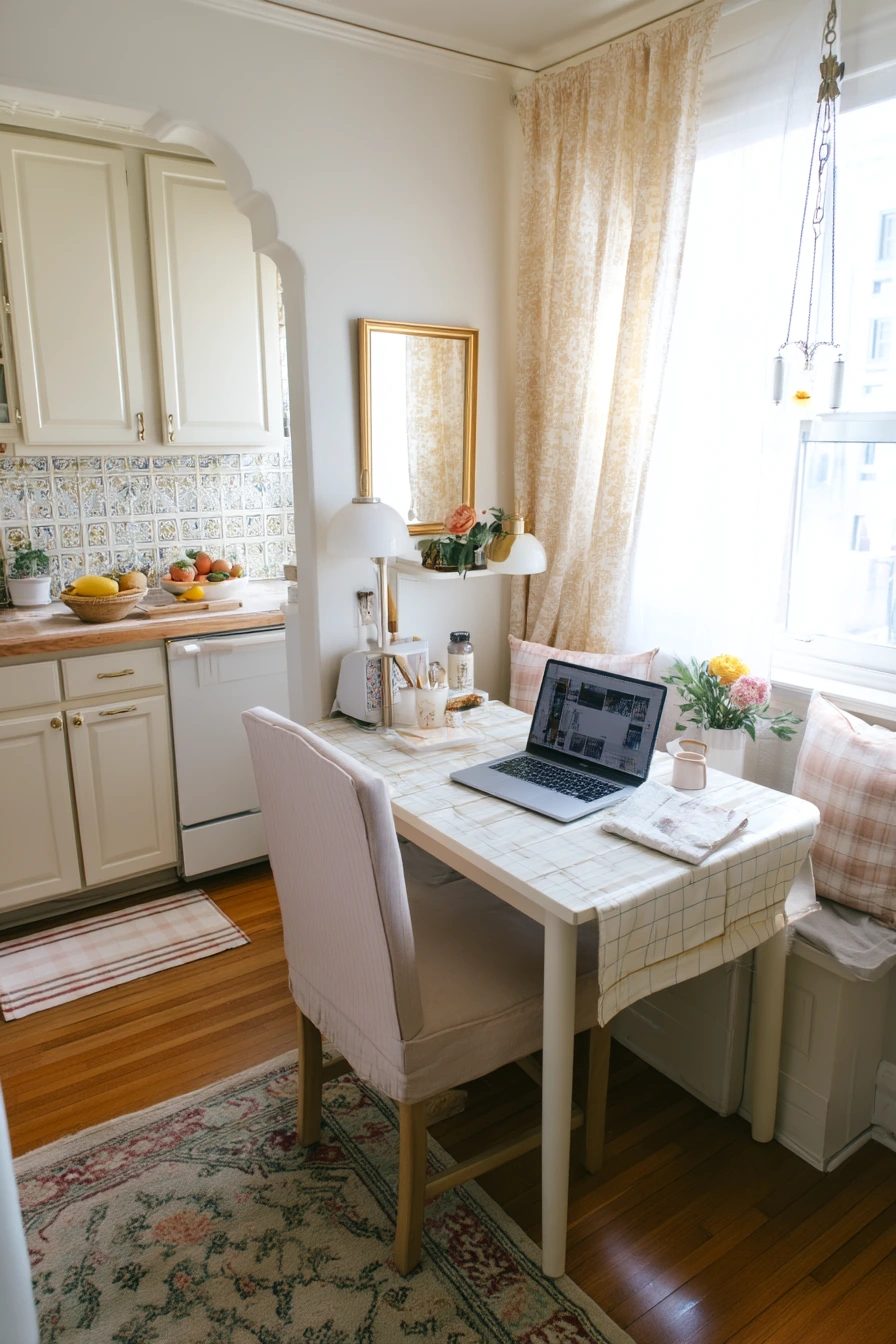
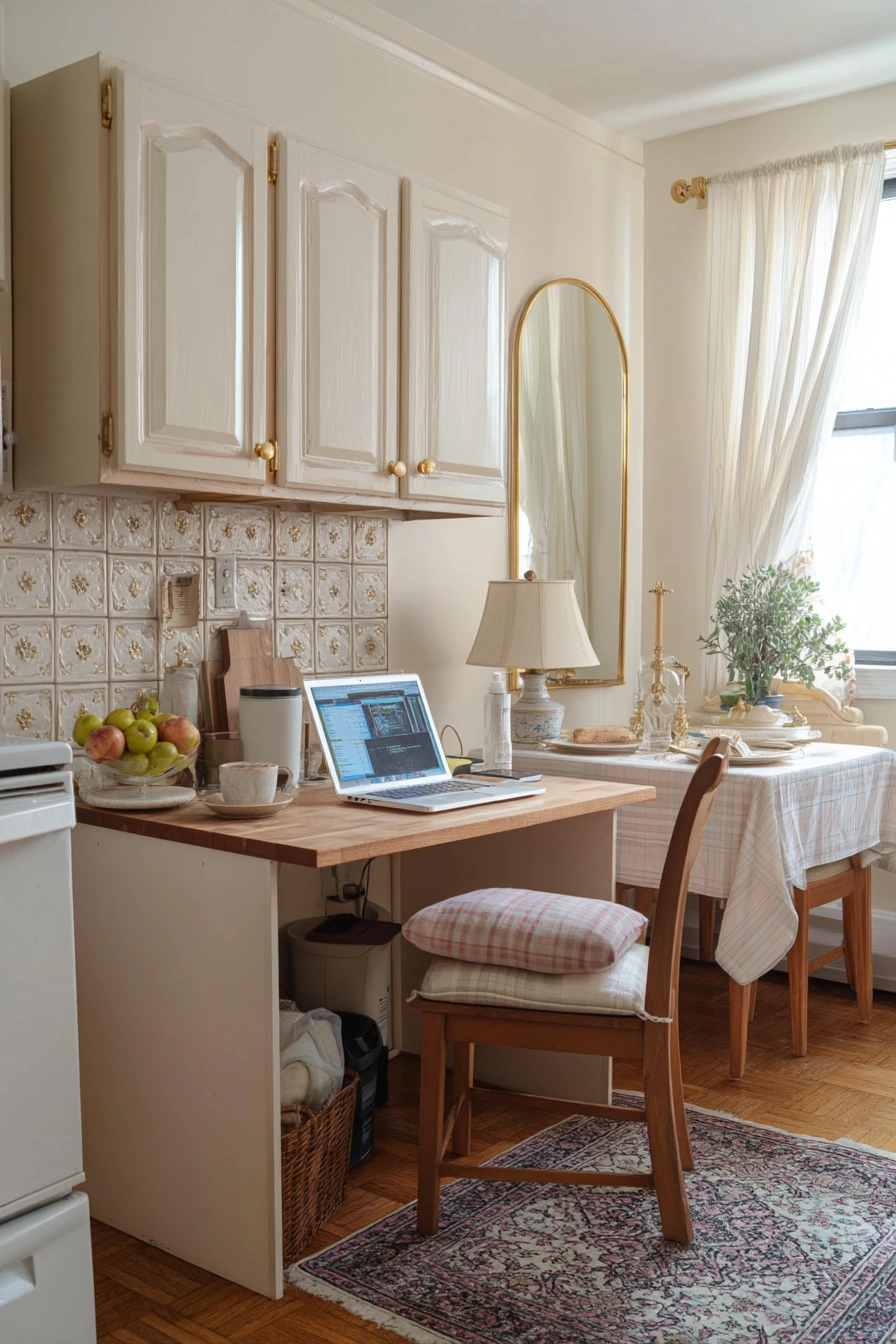
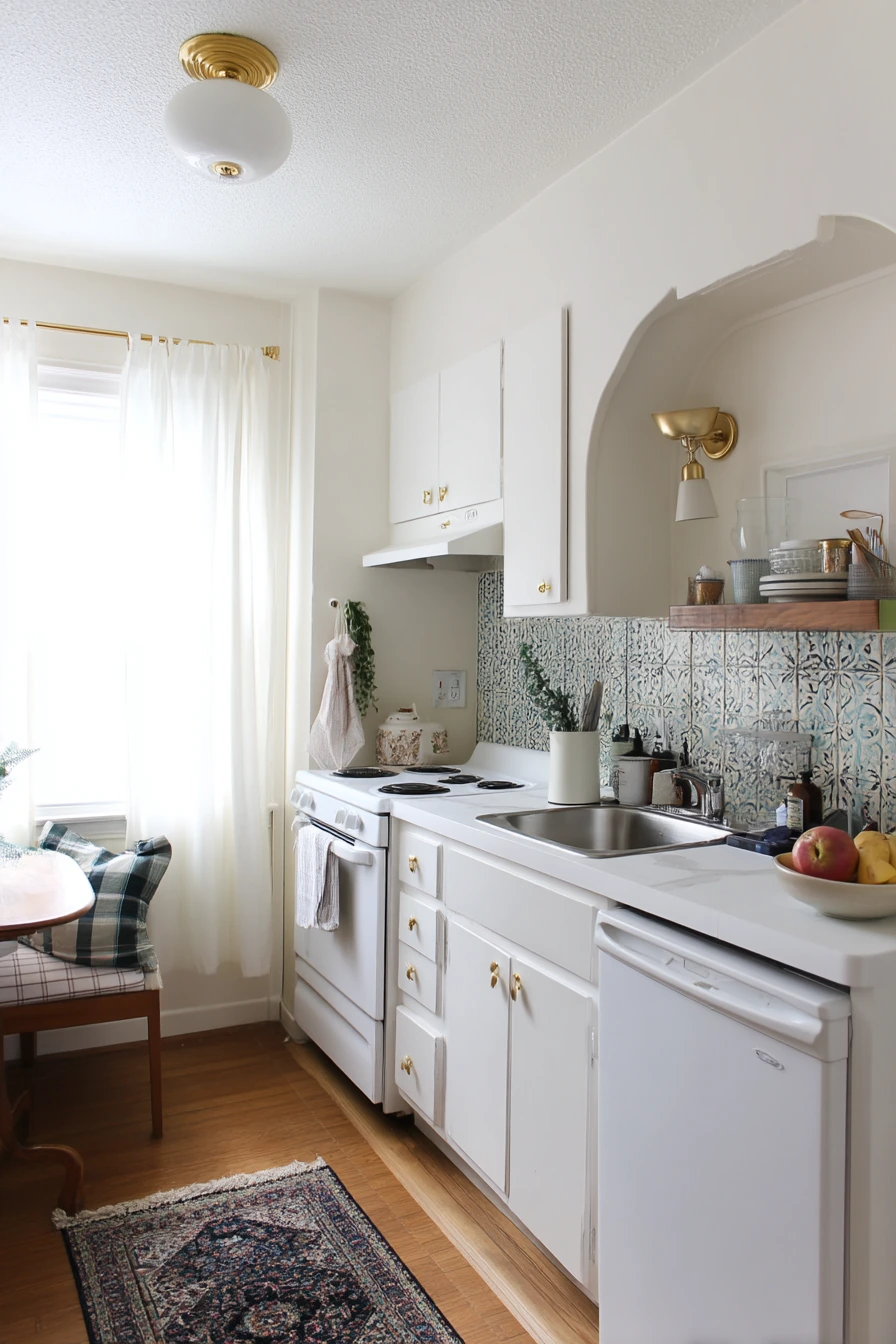
You can get Tudor kitchen style in a rental by focusing on removable layers. Start with cream cabinets and add warm wood shelf rails that can be removed later. Use peel-and-stick tile in a classic pattern to mimic old floors or a vintage backsplash without permanent work.
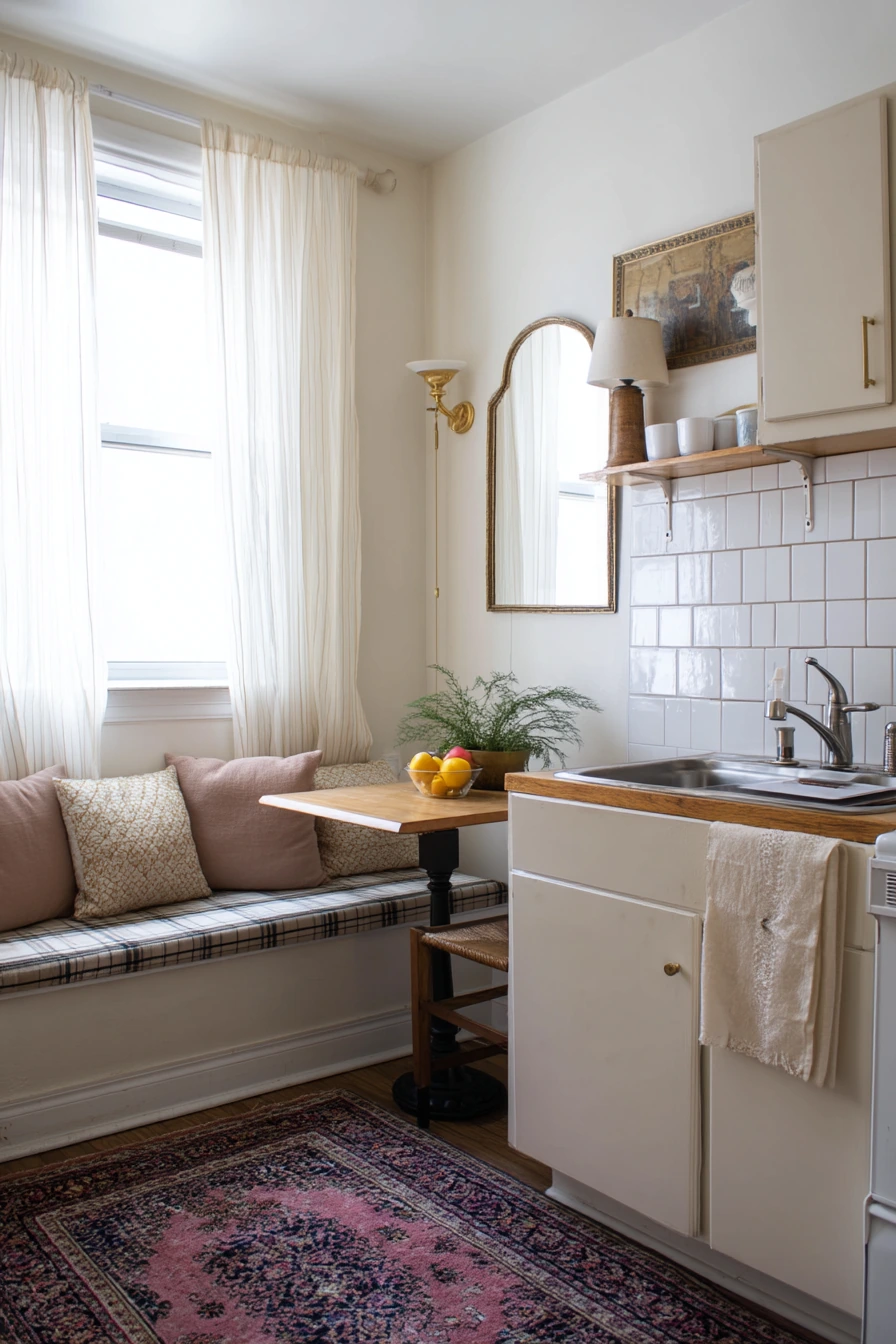
Bring in the Tudor shape language with an arched mirror over a small console or near a dining nook. Add a thrifted brass lamp for softer light than overhead fixtures. Finish with soft plaid cushions and a vintage-style rug to create that snug, older-home mood.
Keep it lived-in and practical: a small mail stack, a fruit bowl, a laptop charger, and dish soap by the sink. The key is to corral daily items so the room still looks calm in photos. Use one shallow tray for mail and chargers, and a small caddy for soap and brushes.
- Pick peel-and-stick tile with a simple, classic pattern.
- Add an arched mirror to echo Tudor doorways and windows.
- Use warm brass accents in lamps, frames, and pulls.
- Choose plaid or checked textiles in muted, creamy colors.
- Hide clutter in baskets that fit on open shelves.
Pro Design Tip: Use repeating curves and warm metals to suggest Tudor style, even if the cabinets and layout are modern.
Budget Considerations: Removable tile and shelf systems vary in price; start with one high-impact area, like behind the sink, and expand later.
6 Tudor Kitchen at Breakfast Rush
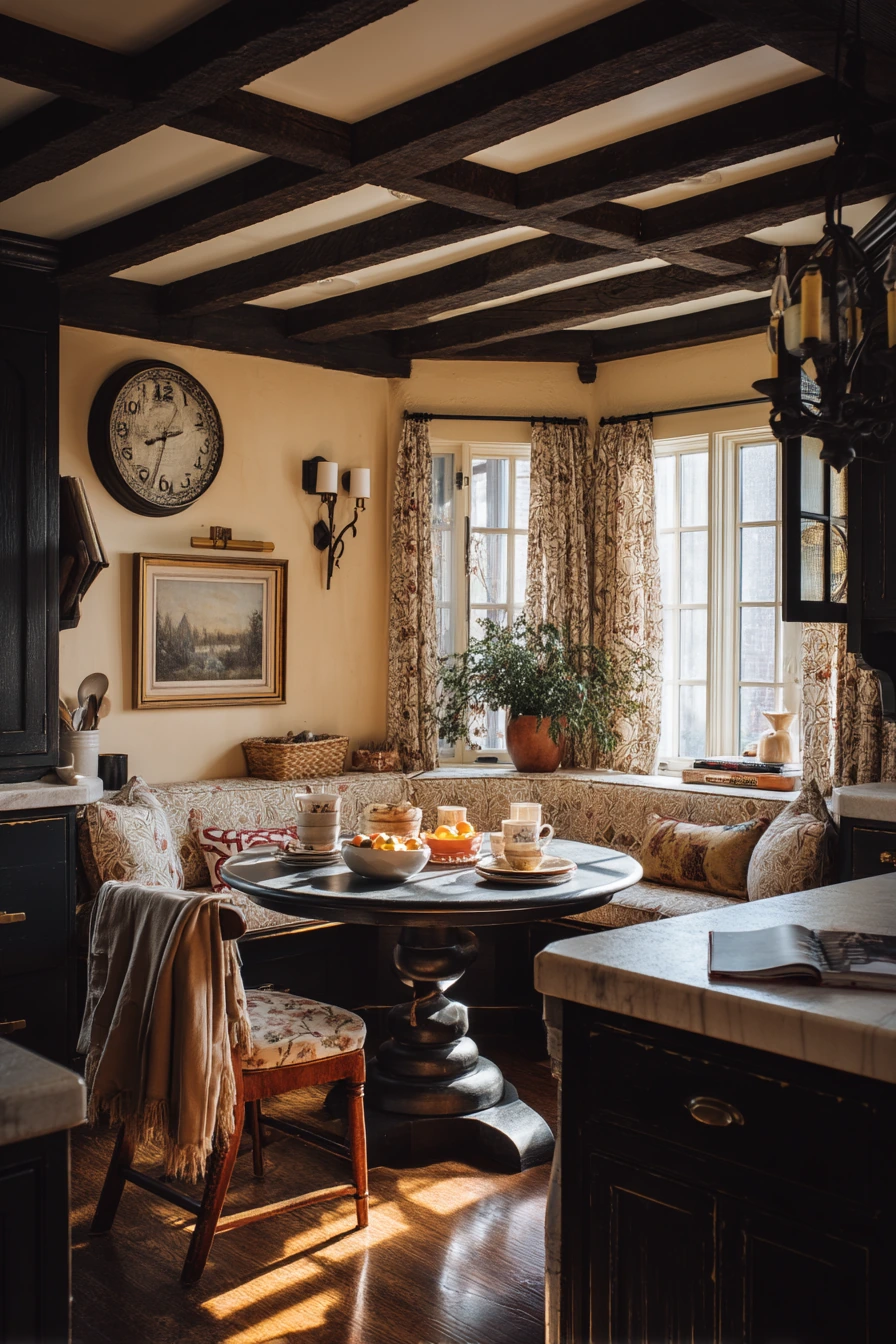
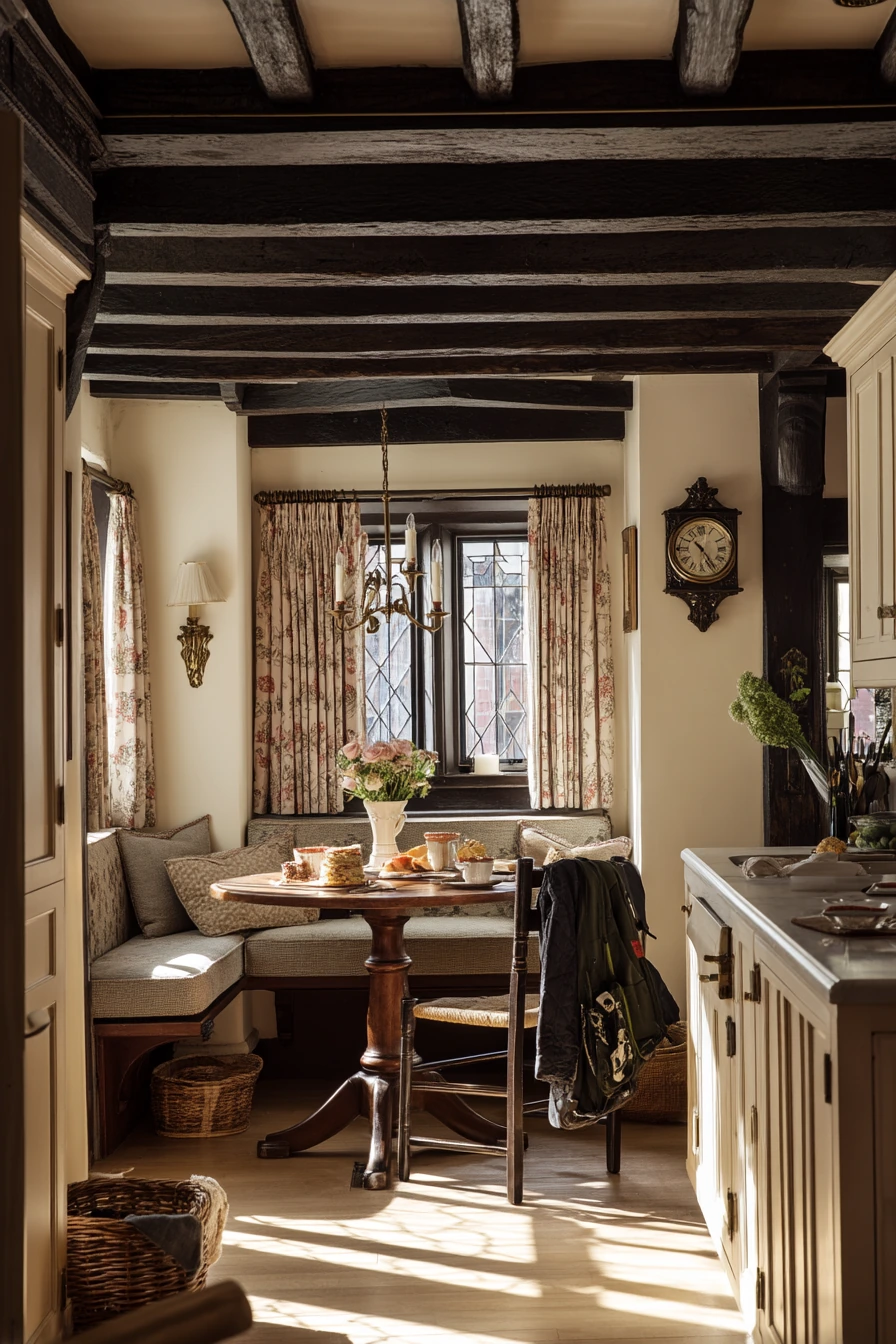
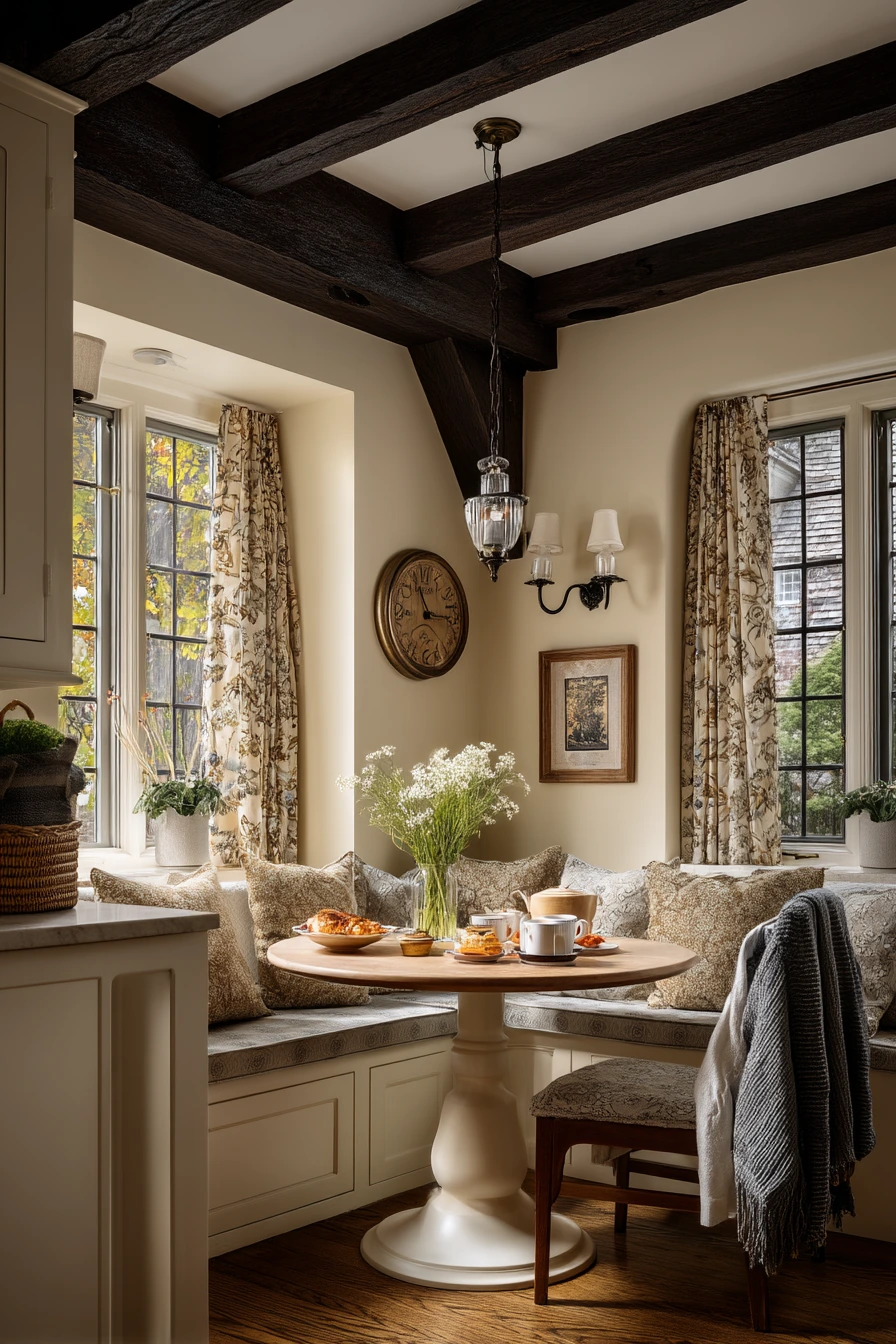
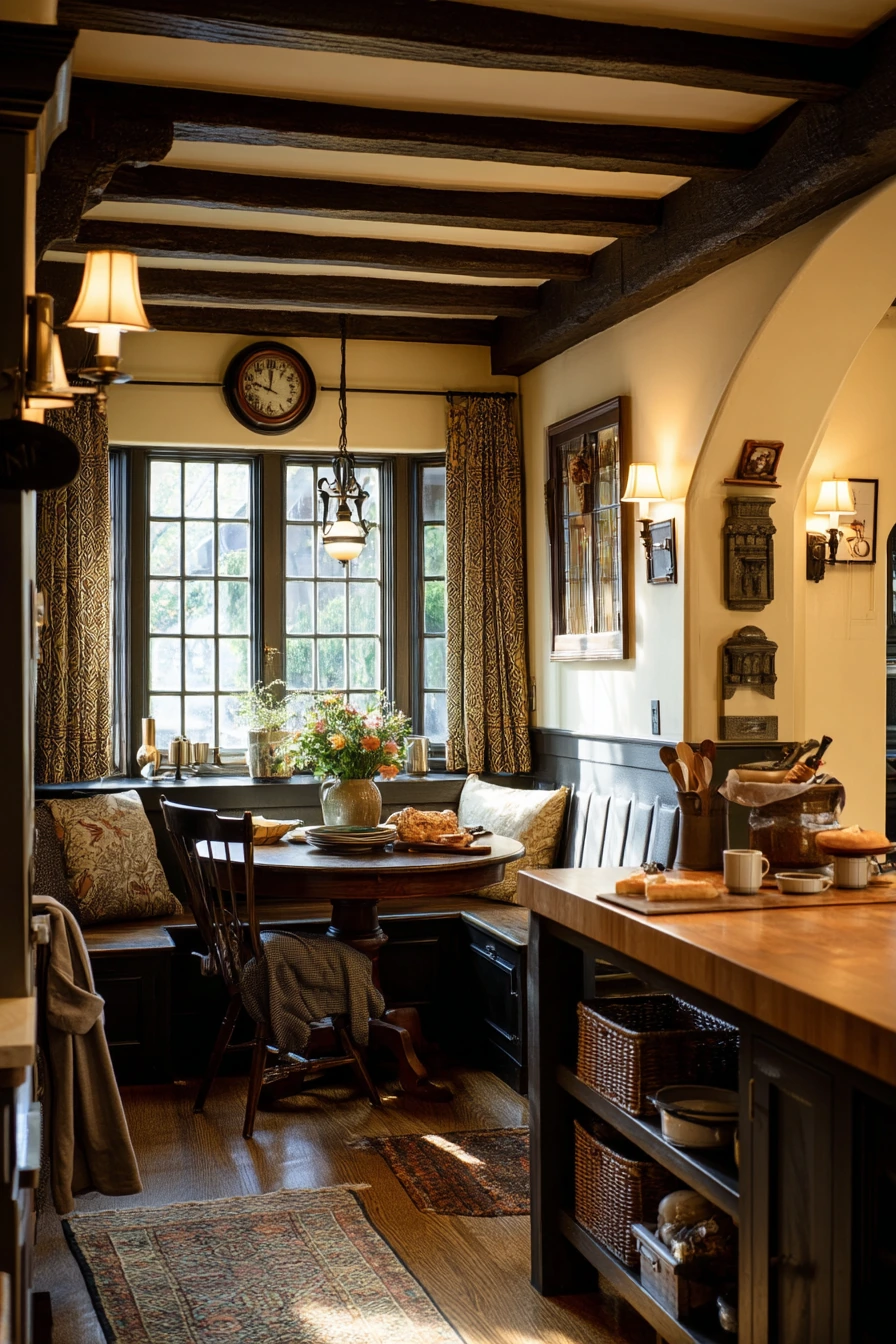
A Tudor kitchen can handle real family mornings when the layout supports quick routines. Dark beams and warm cream walls create the cozy backdrop, while a round pedestal table keeps the room easy to move around. Add a breakfast nook with an upholstered bench so kids can slide in without dragging chairs.
A butcher-block island adds a warm work surface and helps the room feel less formal. Wall sconces with soft bulbs are useful when morning light is cool. Patterned curtains and stacked mugs keep the space friendly, while practical storage baskets help control the daily pile-up.
Let the lived-in cues show, but keep them contained. A cereal bowl, a school backpack, a spoon in the sink, and a jacket draped over a chair make the room feel real. Create a drop zone near the door for bags and a small bin for lunch items so the kitchen stays functional.
- Use a round table to improve flow in a busy room.
- Add bench seating with wipeable fabric for easy cleanup.
- Store snacks in one low drawer for quick kid access.
- Keep a basket for backpacks near the entry side.
- Put a small tray by the sink for soap and brushes.
Pro Design Tip: Layer lighting: use overhead light for tasks, sconces for soft fill, and under-cabinet lights so the kitchen works at 7 a.m. and 7 p.m.
Budget Considerations: Custom benches and built-ins add cost; use a freestanding bench with storage cubbies and add cushions in Tudor-friendly prints.
7 Elegant Tudor Kitchen for Entertaining
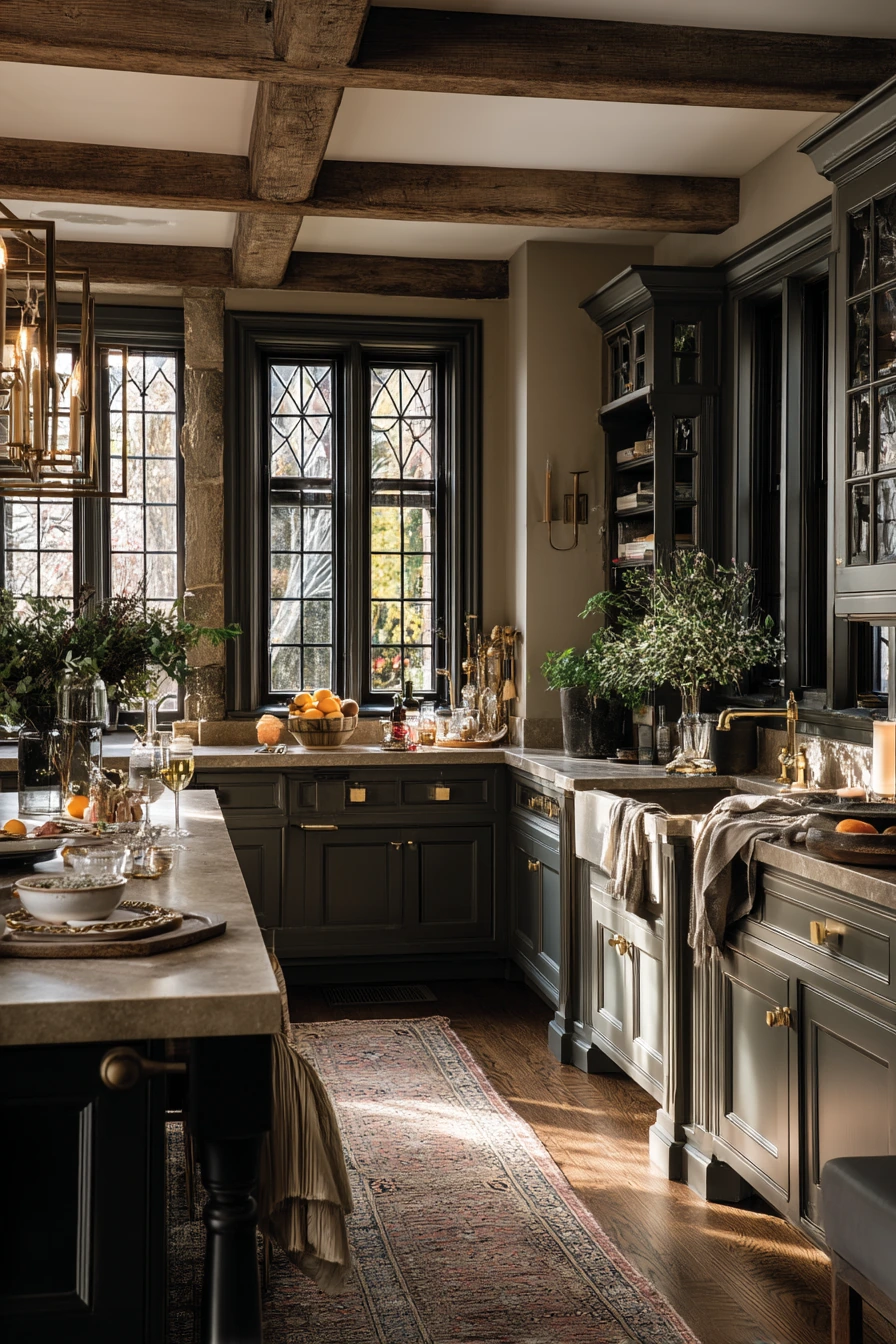
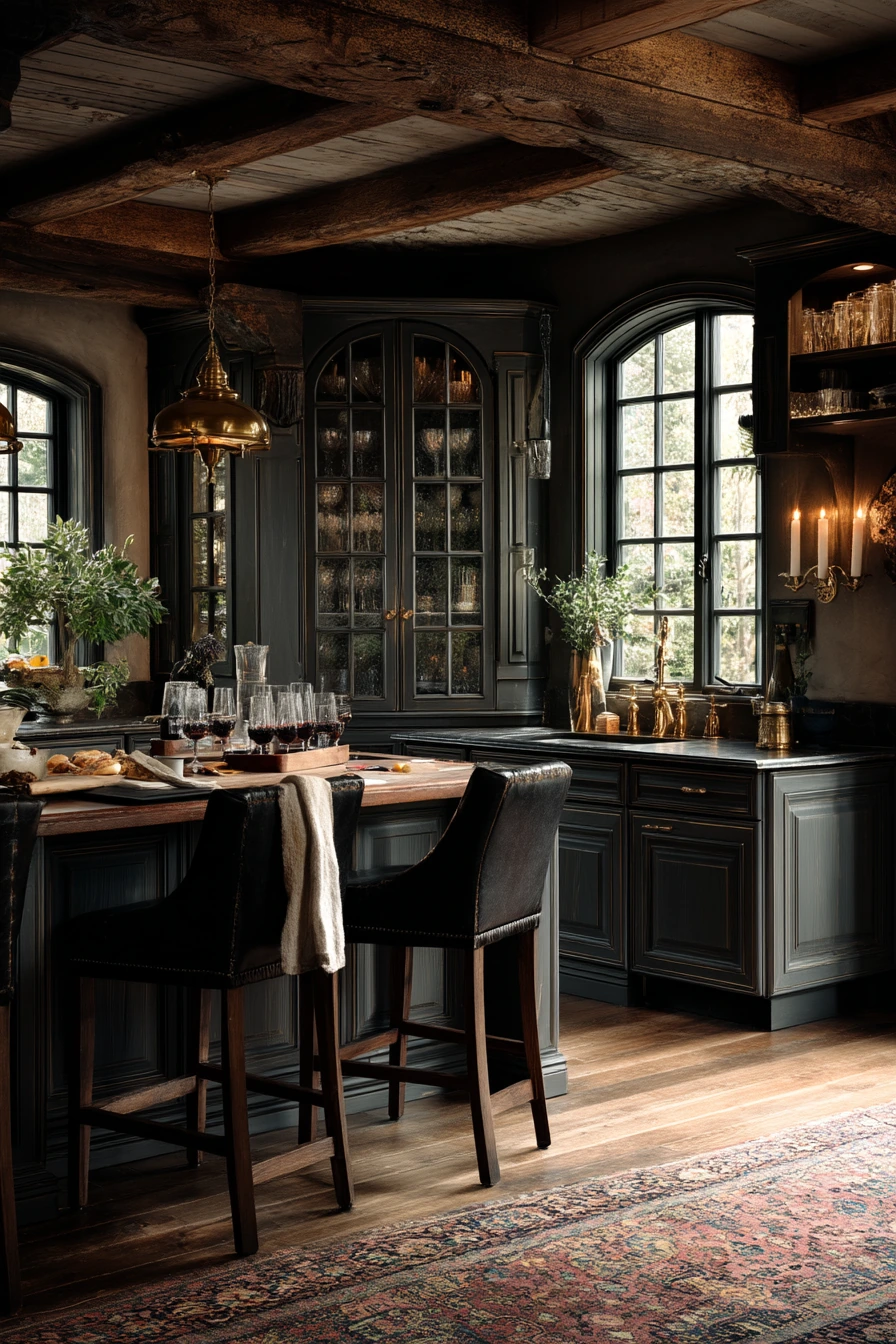
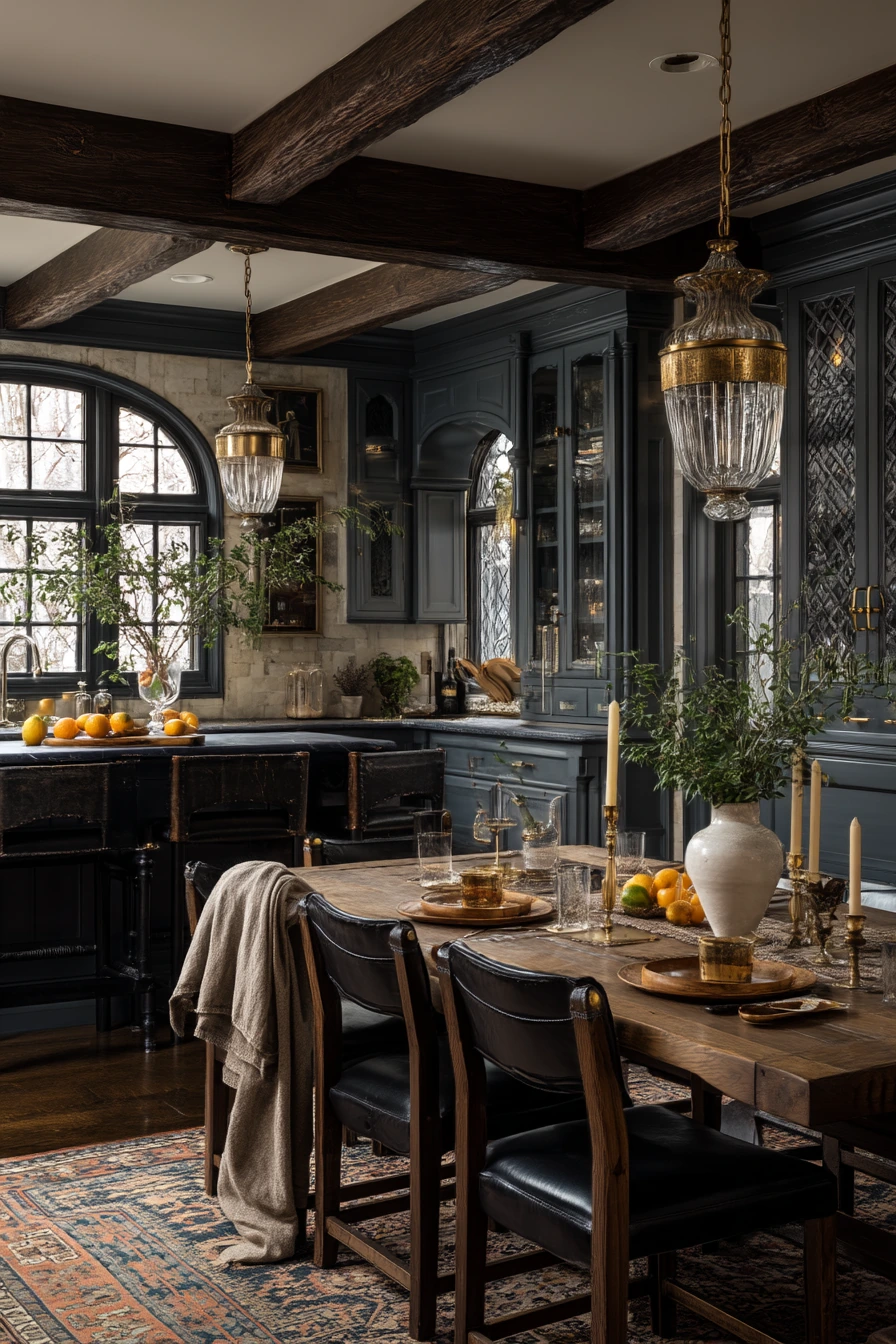
An elegant Tudor kitchen can feel moody and polished without turning stiff. Carved oak beams and leaded windows bring the architecture forward. Add moody painted cabinets and stone counters to create depth, then use brass pendants to warm up the darker tones.
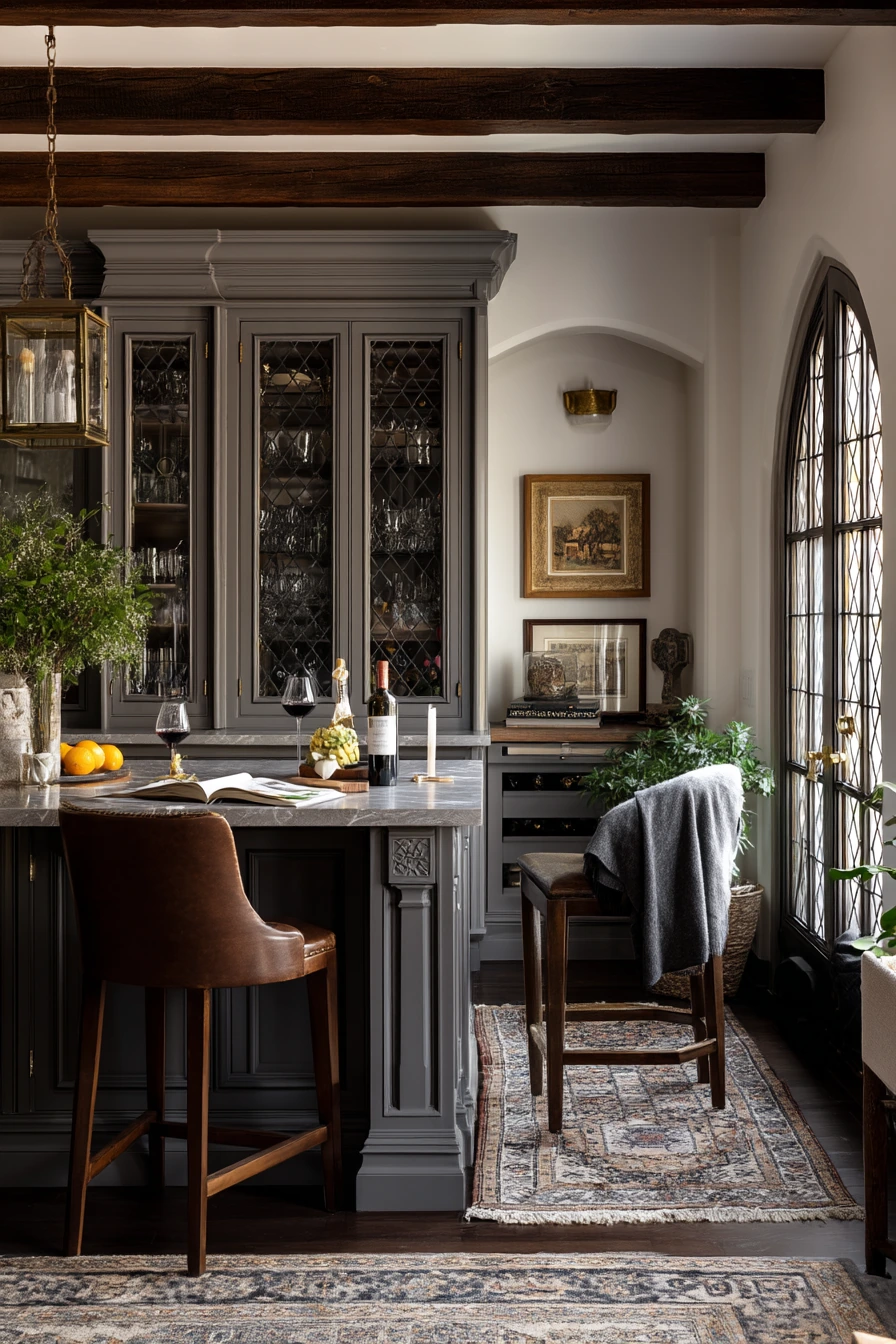
A glass-front hutch is perfect for showing a few special items, like cut crystal and simple serving pieces. A vintage rug adds softness and color, and linen napkins make the room ready for guests without extra effort. A small bar corner with herbs and citrus keeps entertaining supplies in one place.
To keep it real, leave a wine glass on the counter, an opened cookbook, a candle stub, and a jacket tossed on a chair. Those details feel natural in photos and help the room look lived-in. Keep the bar corner tidy with one tray for bottles and one jar for tools.
- Choose a cabinet color with depth, like charcoal, olive, or deep brown.
- Use brass pendants to add gentle shine over stone counters.
- Style the hutch with repeating glass shapes and neutral plates.
- Create a bar tray with citrus, herbs, and a small cutting board.
- Add a vintage rug with warm reds or muted greens.
Pro Design Tip: Use one strong focal point, like a hutch or range wall, and keep the rest simple so the kitchen feels calm when guests arrive.
Budget Considerations: Stone counters and designer pendants can be expensive; look for remnant stone pieces and use vintage or reproduction lighting for a similar glow.
8 Tudor Kitchen with Child-Friendly Storage
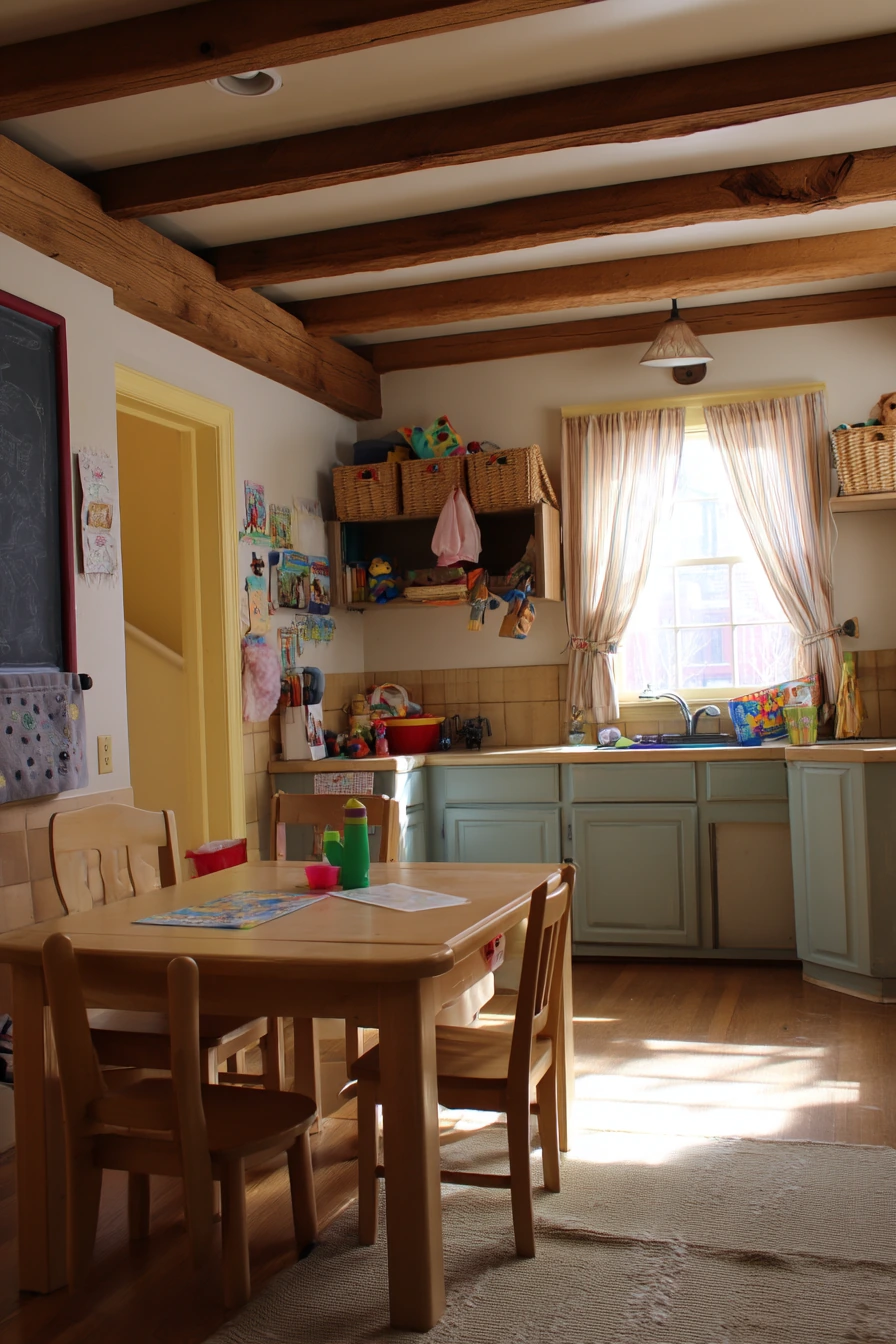
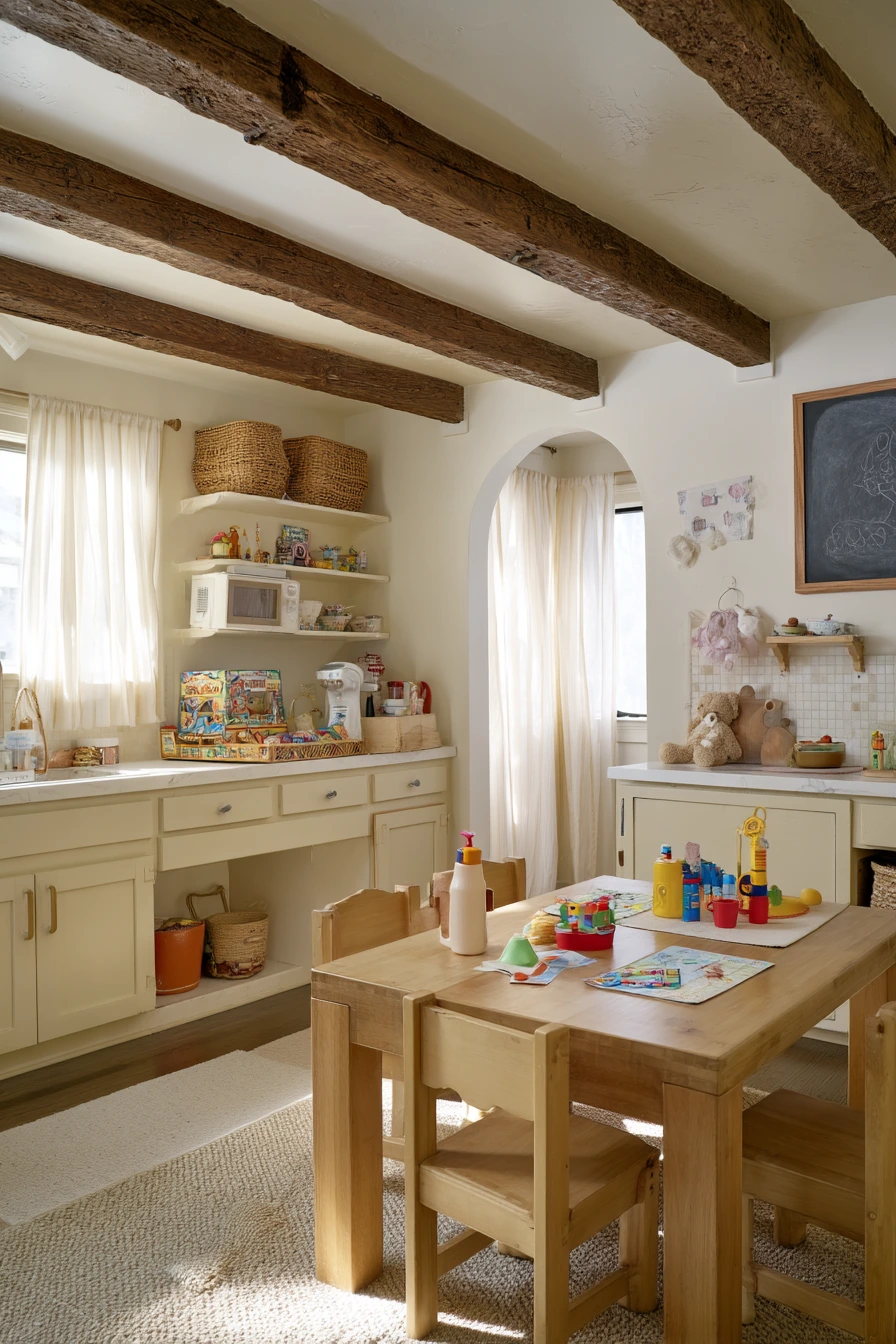
A Tudor kitchen adapted for young children should feel sunny and sturdy. Keep the oak beams for character, then choose durable painted cabinets that can handle fingerprints. A simple stone backsplash is easy to wipe down and does not fight with Tudor textures.
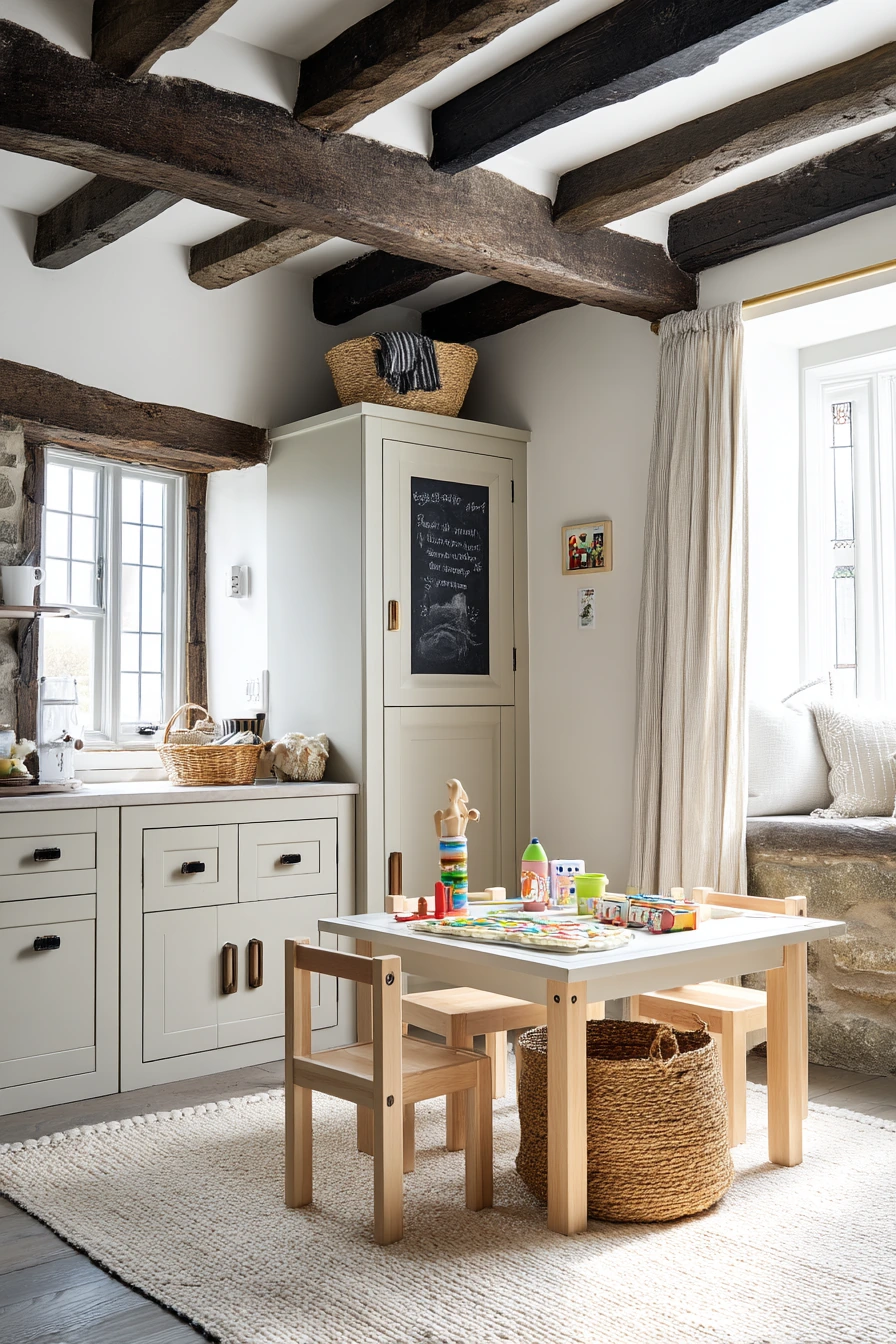
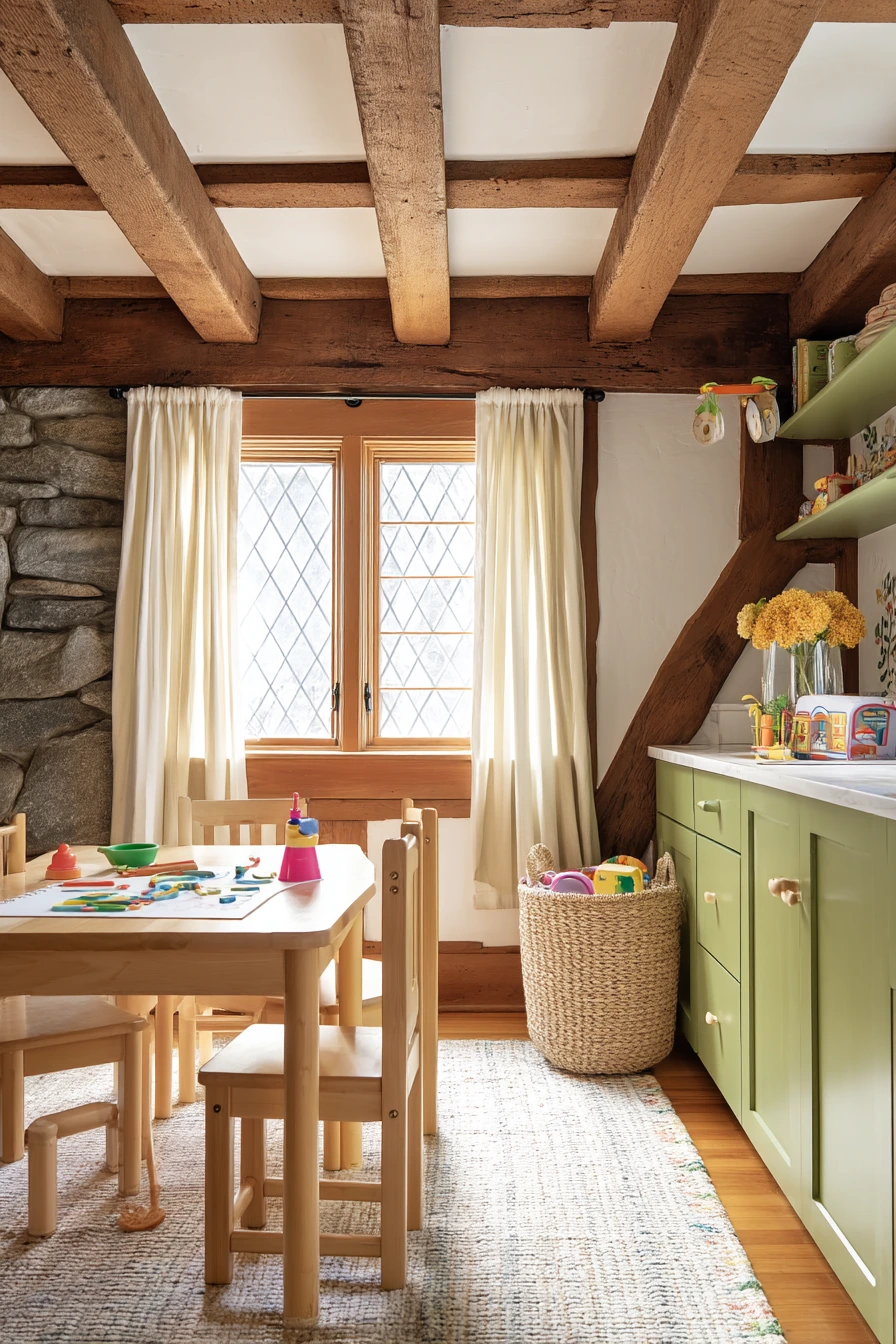
Plan for safety and access. Rounded table edges help reduce bumps, and a low snack drawer gives kids independence without climbing. Woven storage baskets hide toys and papers fast, while a washable runner protects floors and adds a soft layer.
Add one fun, useful feature like a chalkboard wall near the pantry for notes and simple drawings. The lived-in cues fit naturally here: a toy basket, a sippy cup, a sticker on the fridge, and crayon marks on a paper pad. Keep the look tidy by using a small station for art supplies and a lidded bin for toys.
- Choose satin or semi-gloss paint for cabinets for easier cleaning.
- Use baskets to sort snacks, lunch items, and kid cups.
- Add a wipeable runner in a classic stripe or check.
- Keep one low drawer for healthy snacks and napkins.
- Use a chalkboard area for lists and school reminders.
Pro Design Tip: Build a “kid zone” with one drawer, one basket, and one hook so the rest of the kitchen can stay more adult and calm.
Budget Considerations: Custom low drawers cost more; use a lower cabinet with pull-out bins and label them for snacks and lunch tools.
9 Moody Tudor Kitchen with Pantry Details
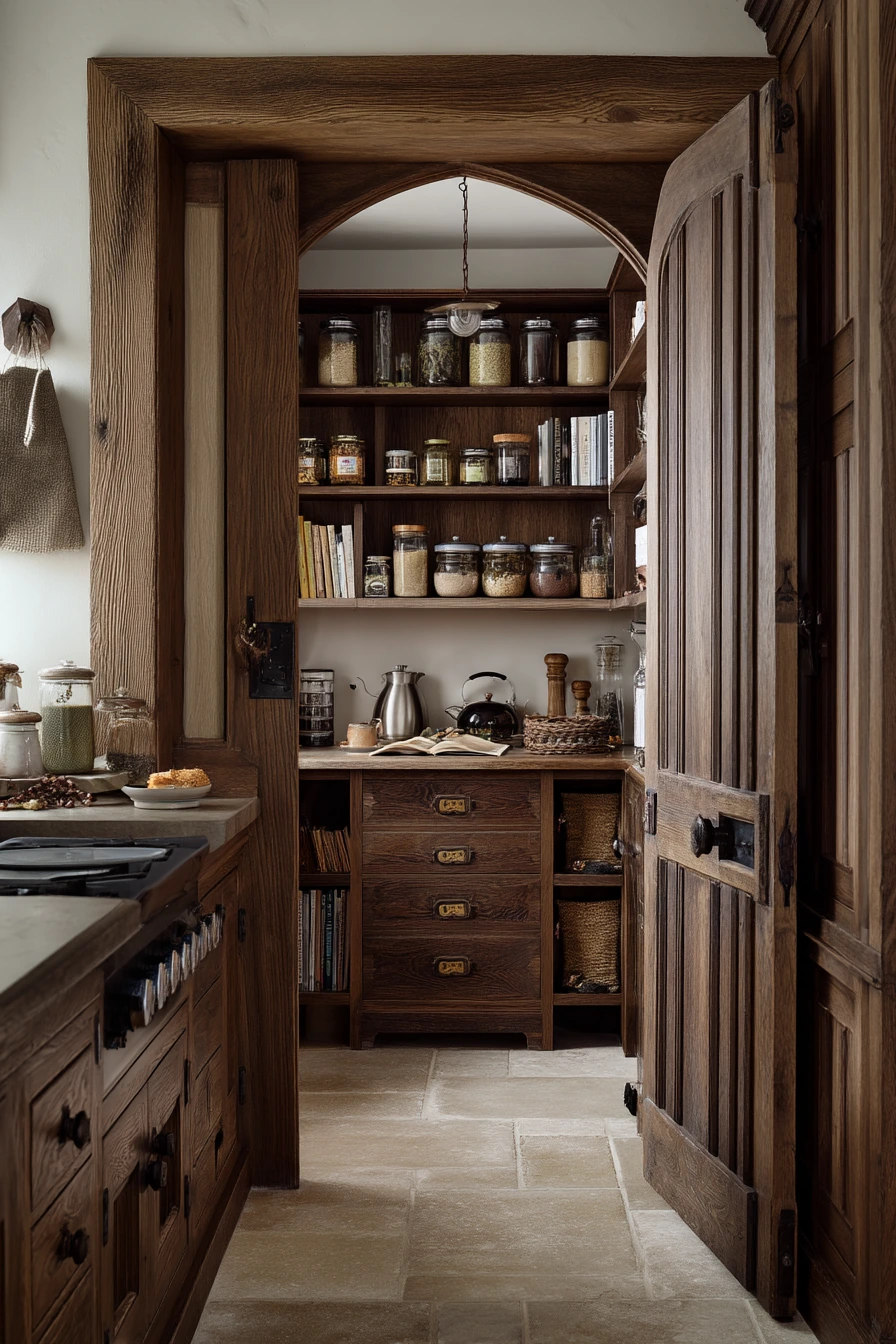
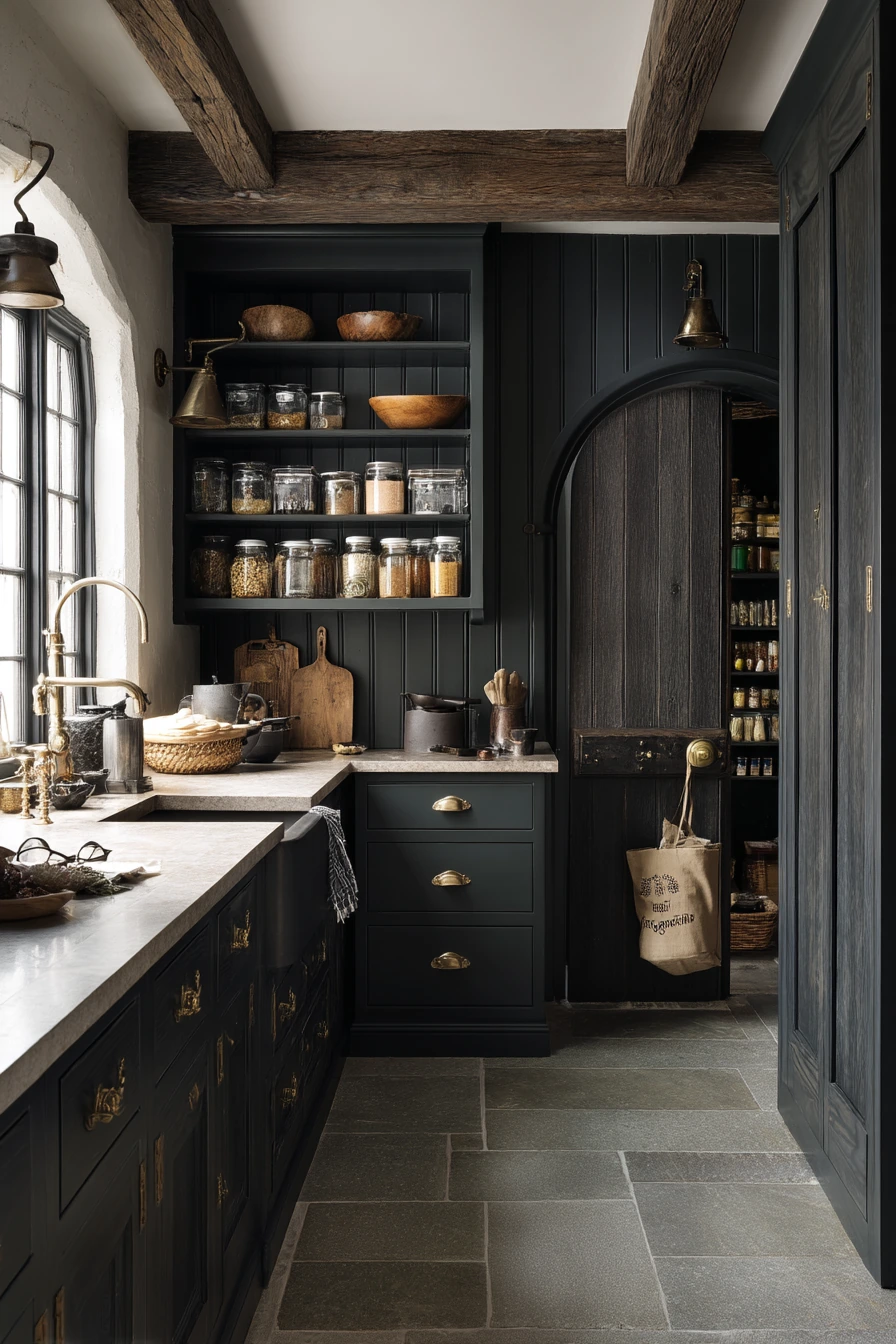
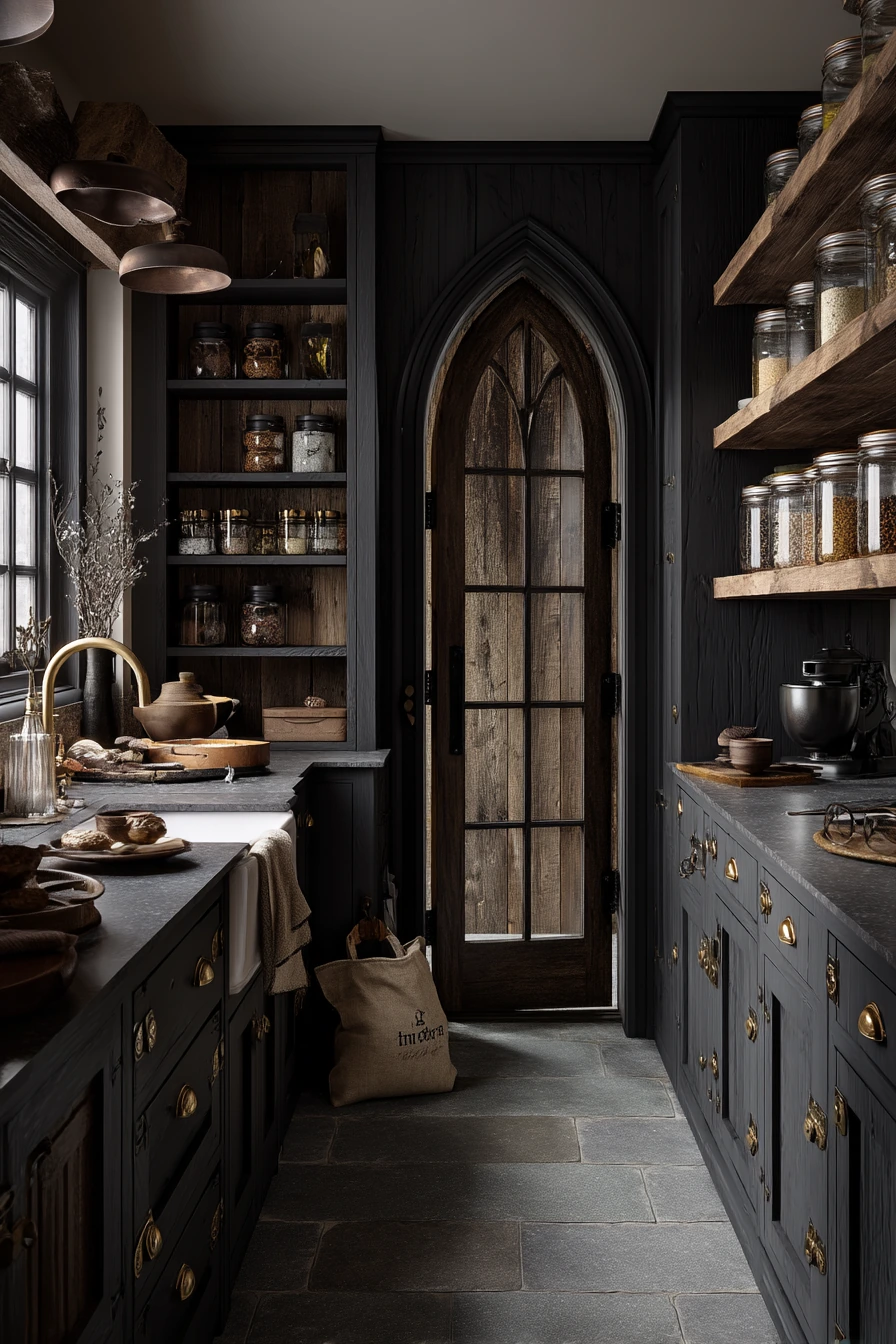
A moody Tudor kitchen shines when storage is part of the style. Exposed timber and deep forest cabinetry create a quiet, hushed mood. An arched pantry door adds charm, and aged brass latches give the room that timeworn detail that fits Tudor homes.
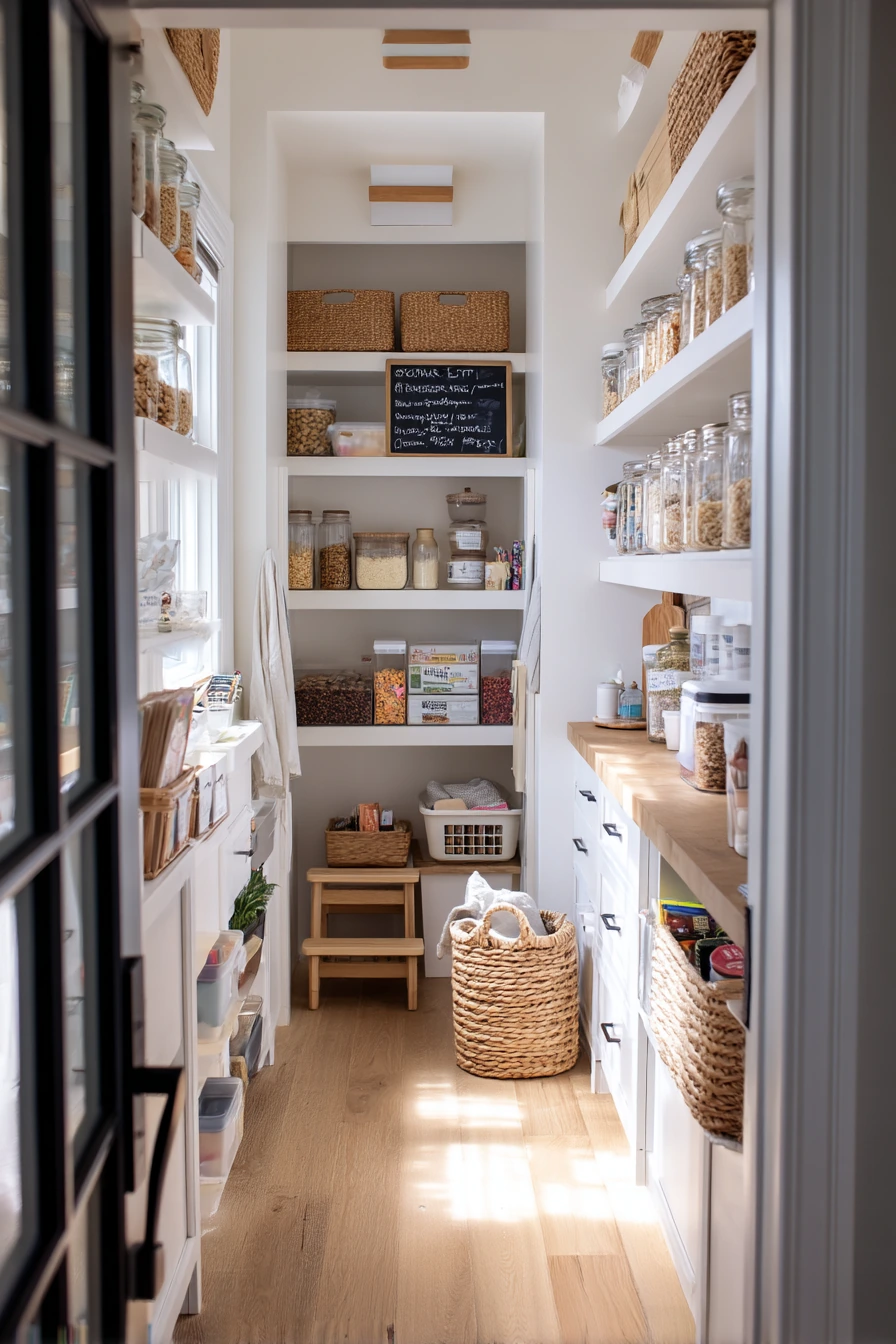
Open shelves with glass jars make pantry staples look organized instead of messy. Use a stone floor or stone-look tile for a tough surface that also feels historic. A compact prep sink helps with daily cooking and keeps the main sink area clear, especially in a busy household.
Make it feel lived-in with small, believable cues: an open flour canister, a folded market bag, a kettle on the stove, and reading glasses on the counter. To avoid clutter, limit the open shelf items to jars, bowls, and a few old books beside spices. Everything else should go behind doors.
- Use clear jars with simple labels for flour, rice, and pasta.
- Add under-shelf lighting to keep dark cabinets from feeling heavy.
- Choose aged brass or antique brass for pulls and latches.
- Keep one “daily shelf” for tea, coffee, and mugs.
- Store market bags on one hook inside the pantry door.
Pro Design Tip: Mix closed storage on the bottom with open shelves on top so the room feels collected, not crowded.
Budget Considerations: Custom pantries can be expensive; add an arched look with paint and trim, and use affordable canisters or matching jars to upgrade storage.
10 Weekend Baking in a Tudor Kitchen
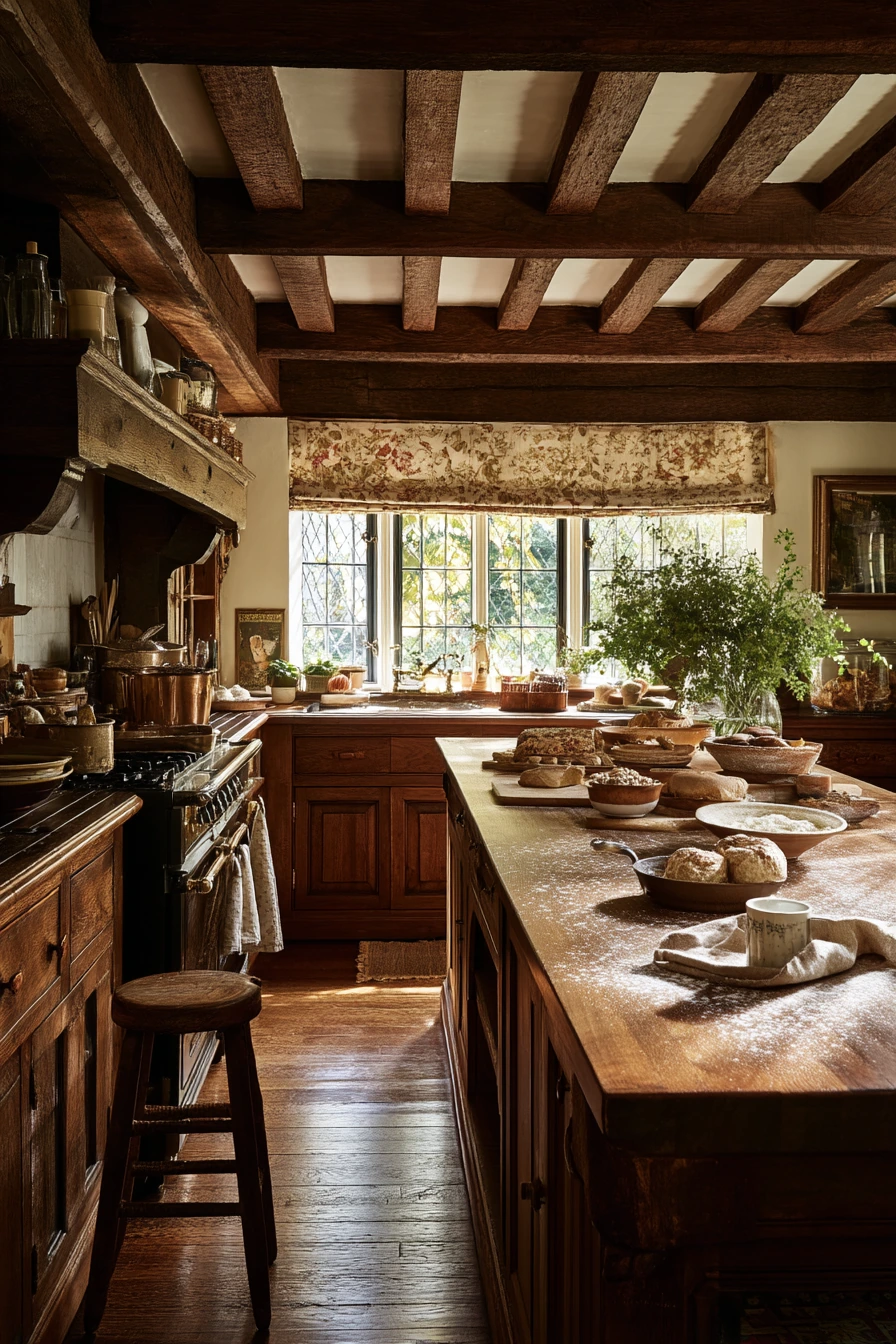
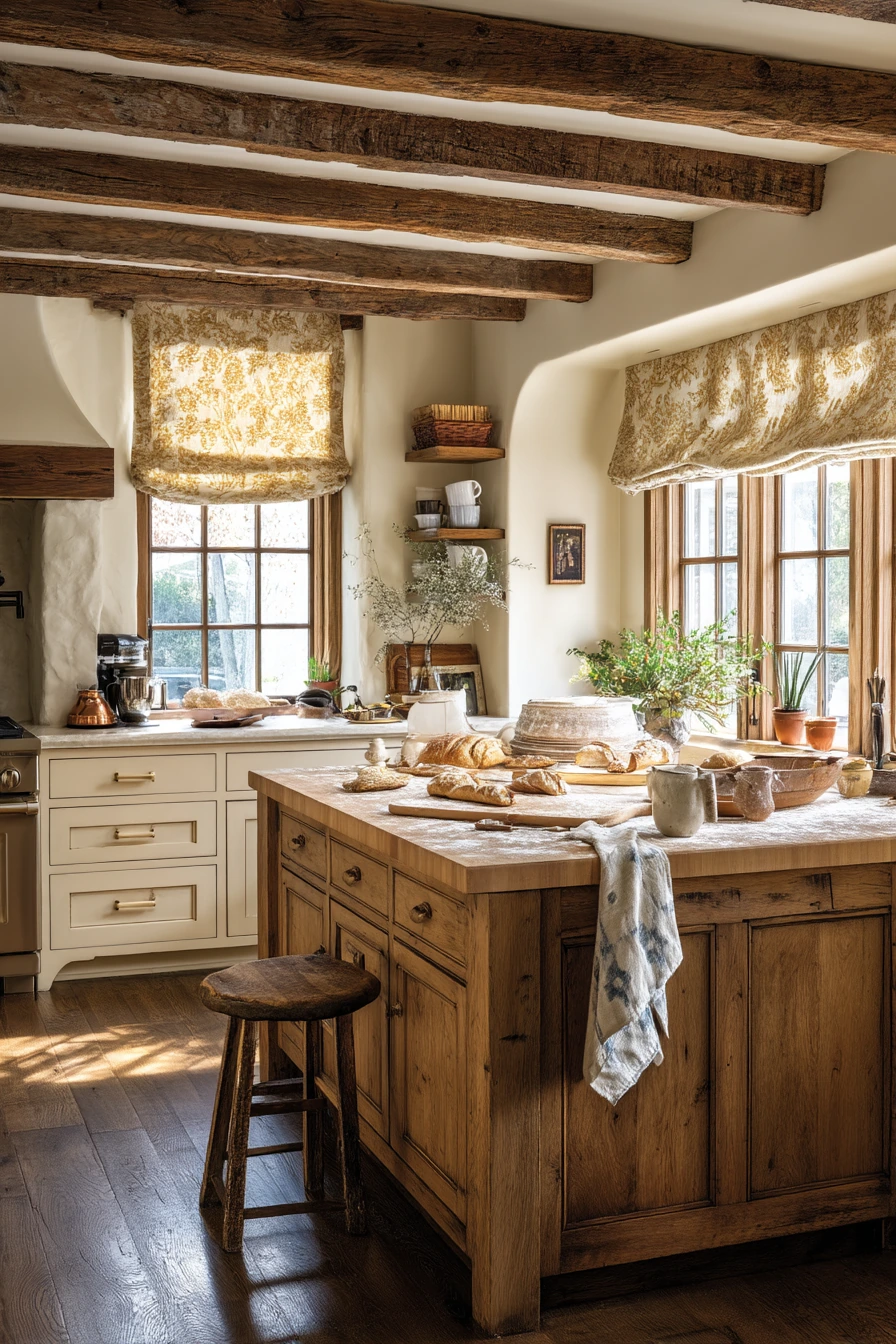
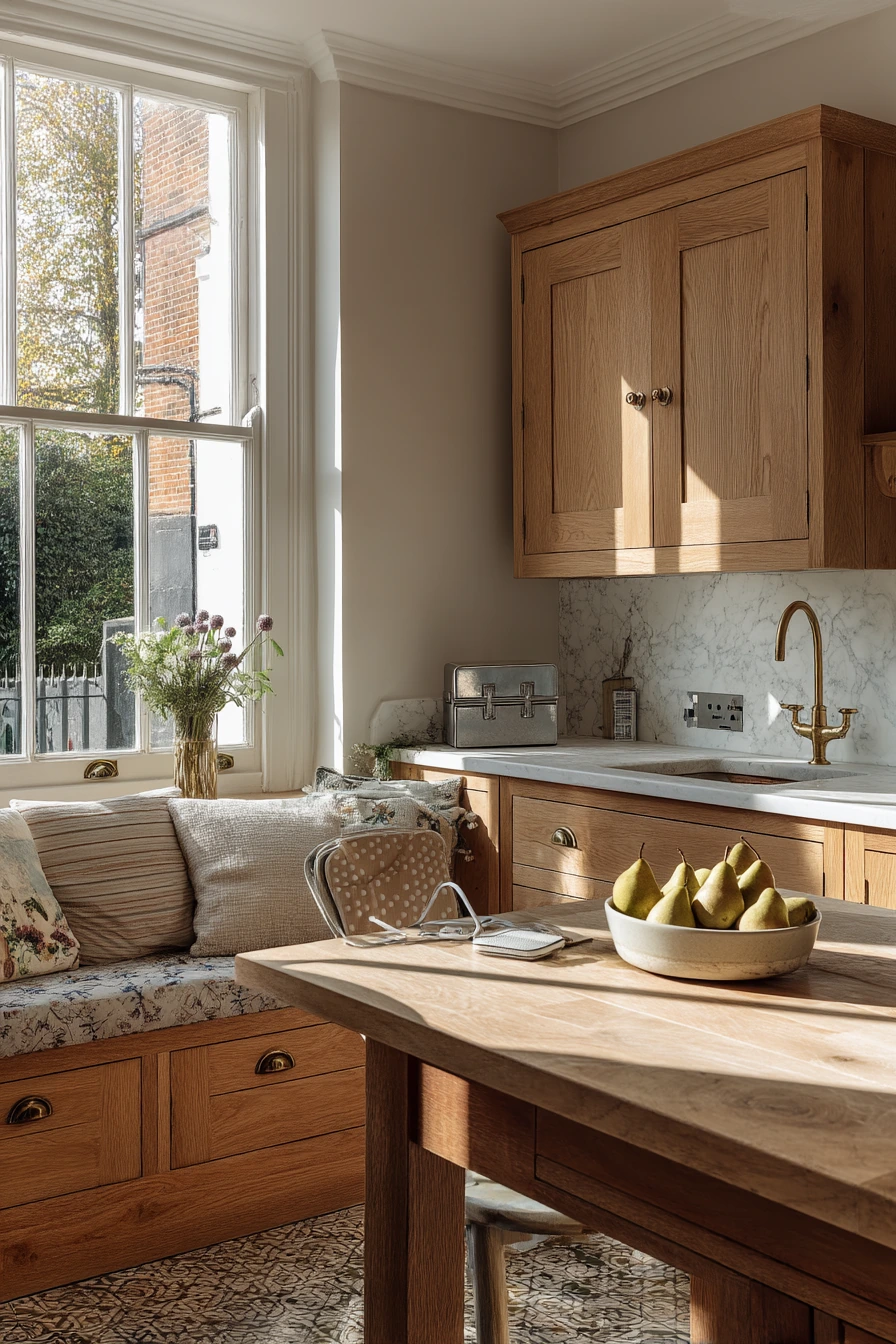
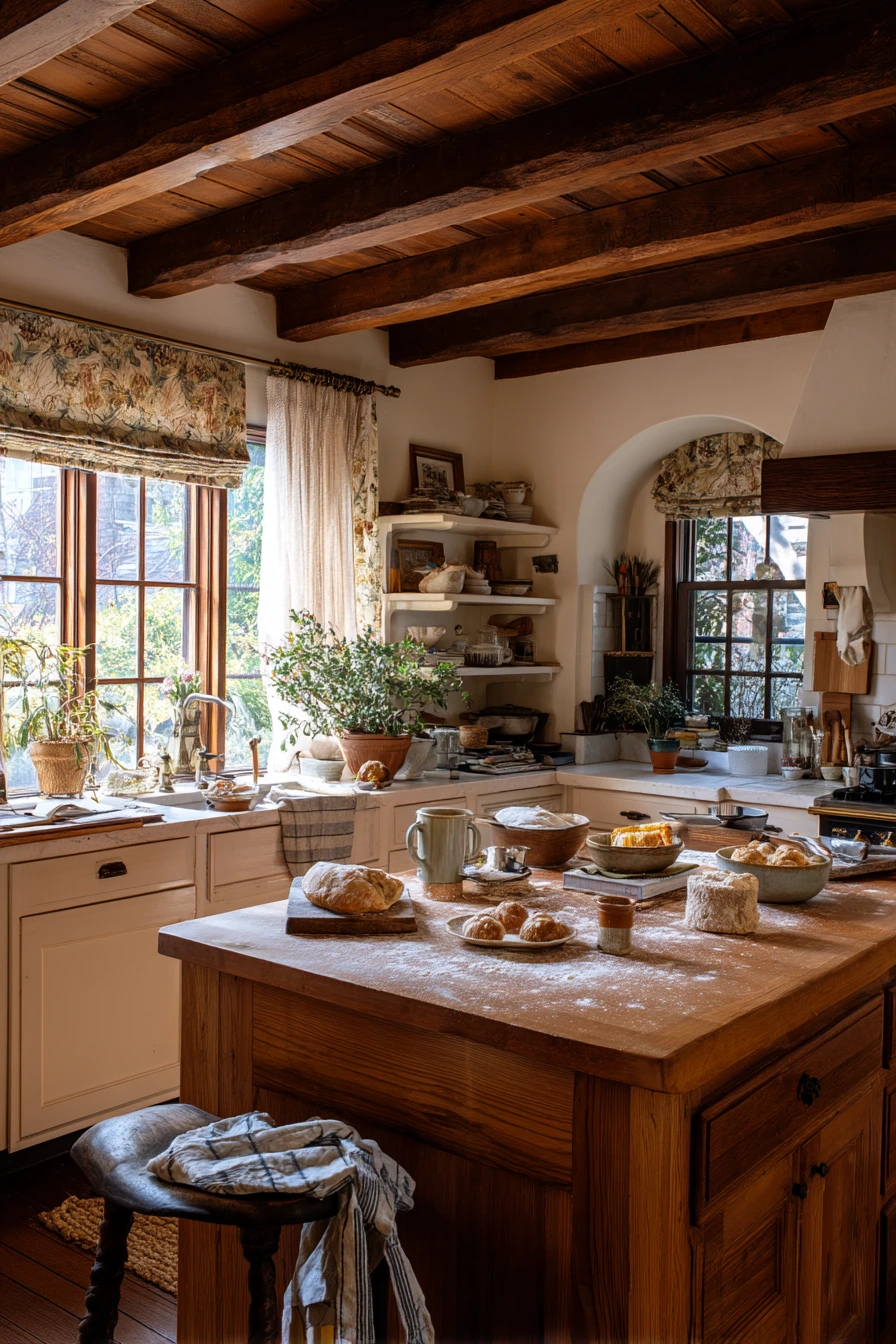
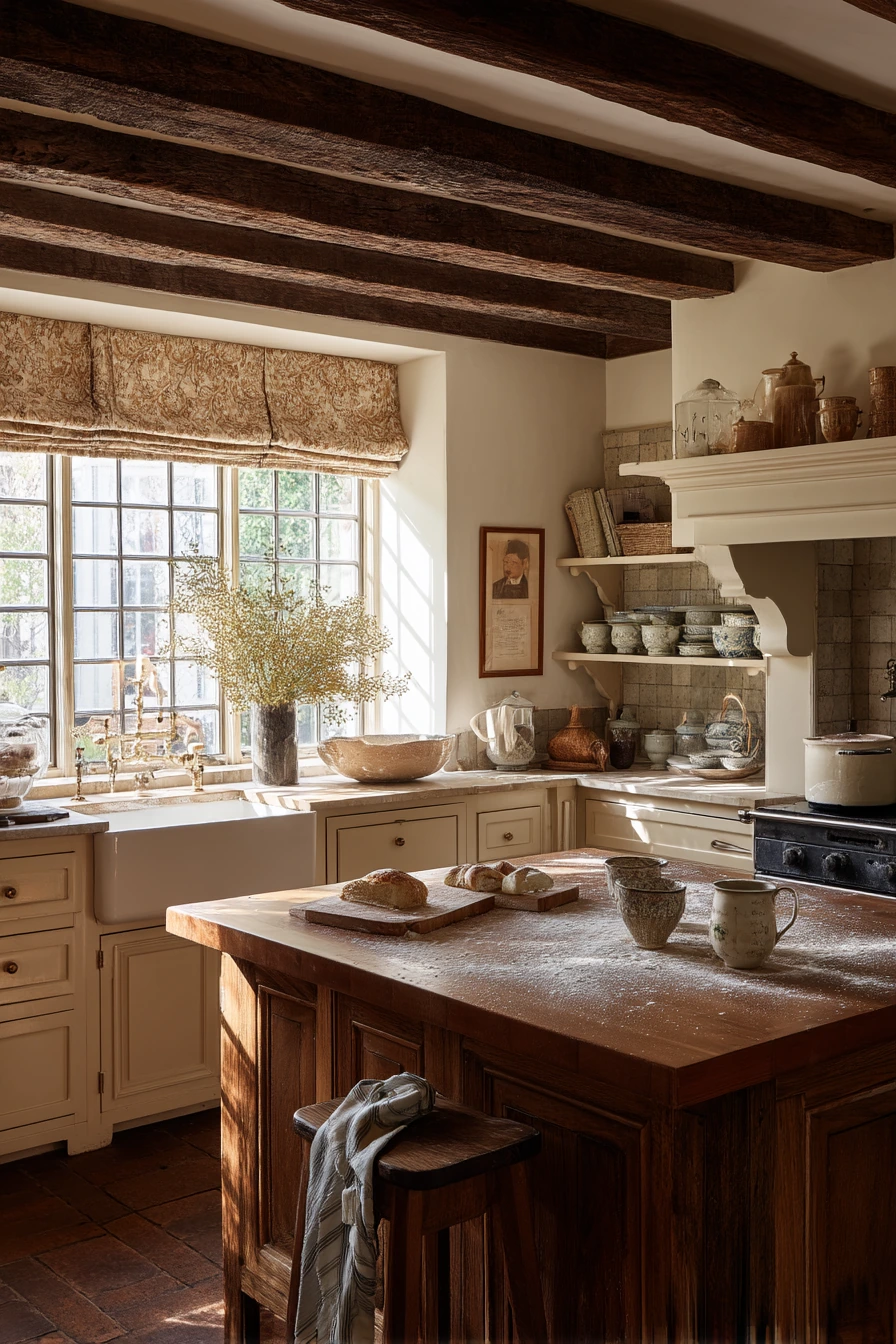
A Tudor kitchen in weekend baking mode should feel cozy and practical. Timber ceiling beams and creamy plaster create a soft backdrop for warm oak cabinetry. A butcher-block island is ideal for dough work, and it looks great with a light dusting of flour that shows the kitchen is being used.
Lean into baking-friendly details: ceramic mixing bowls, copper utensils, and patterned roman shades that add a gentle print. A vintage stool can tuck under the island, and an apron hanging near the pantry makes the space feel ready for work. Old recipe cards add charm when they are kept in one small holder.
For lived-in styling, keep a butter wrapper, an oven mitt, an open cookbook, and a tea mug near the prep zone. This looks natural and helps readers copy the setup. The key is to keep the island as the main work area and keep other counters mostly clear so baking feels calm, not chaotic.
- Keep a baking bin with measuring cups, scale, and parchment.
- Use a large wood board on the island as a dough surface.
- Hang one apron and one towel near the pantry for easy reach.
- Style bowls in a stack of two or three for a simple look.
- Add one warm light source, like a small lamp, for cozy mornings.
Pro Design Tip: Choose one “hero” surface, like a butcher-block island, and protect the rest with trays so your kitchen stays photo-ready even during baking.
Budget Considerations: A full island upgrade can be costly; use a sturdy butcher-block cart or add a thick wood top to an existing table for a similar effect.
Tudor kitchen ideas work best when you mix strong architectural details with simple, useful choices. Focus on warm woods, creamy walls, classic tile, and metals like brass or iron, then add lived-in items that match how you cook and gather.
Use the section that fits your home, whether you have a small city galley, a family breakfast nook, or a rental kitchen that needs removable updates. Small changes, like lighting, textiles, and storage jars, can bring Tudor character fast.
FAQ
What colors work best for a Tudor kitchen? Creamy whites, warm mushroom, deep sage, and forest green work well with oak beams and stone.
Do I need dark beams for Tudor style? No. Even lighter wood beams or faux beams can help, as long as you add warm trim and classic shapes like arches.
What backsplash fits Tudor kitchen ideas? Subway tile, simple stone, and small classic patterns work well. Keep the finish matte or softly glossy.
How do I make a Tudor kitchen feel less heavy? Use lighter wall paint, limit dark colors to lower cabinets, add glass-front storage, and layer warm lighting.
What hardware looks most authentic? Aged brass, antique brass, and iron pulls look natural. Pick one finish and repeat it across the room.
How can renters get a Tudor-inspired look? Use peel-and-stick tile, removable shelves, an arched mirror, and warm textiles like plaid cushions and a vintage-style rug.
What is the easiest way to style open shelves? Stick to plates, bowls, and labeled jars, then leave some empty space so shelves look tidy.
When you plan your next update, start with one high-impact change, then build around it. Tudor style is about comfort, craft, and daily use.