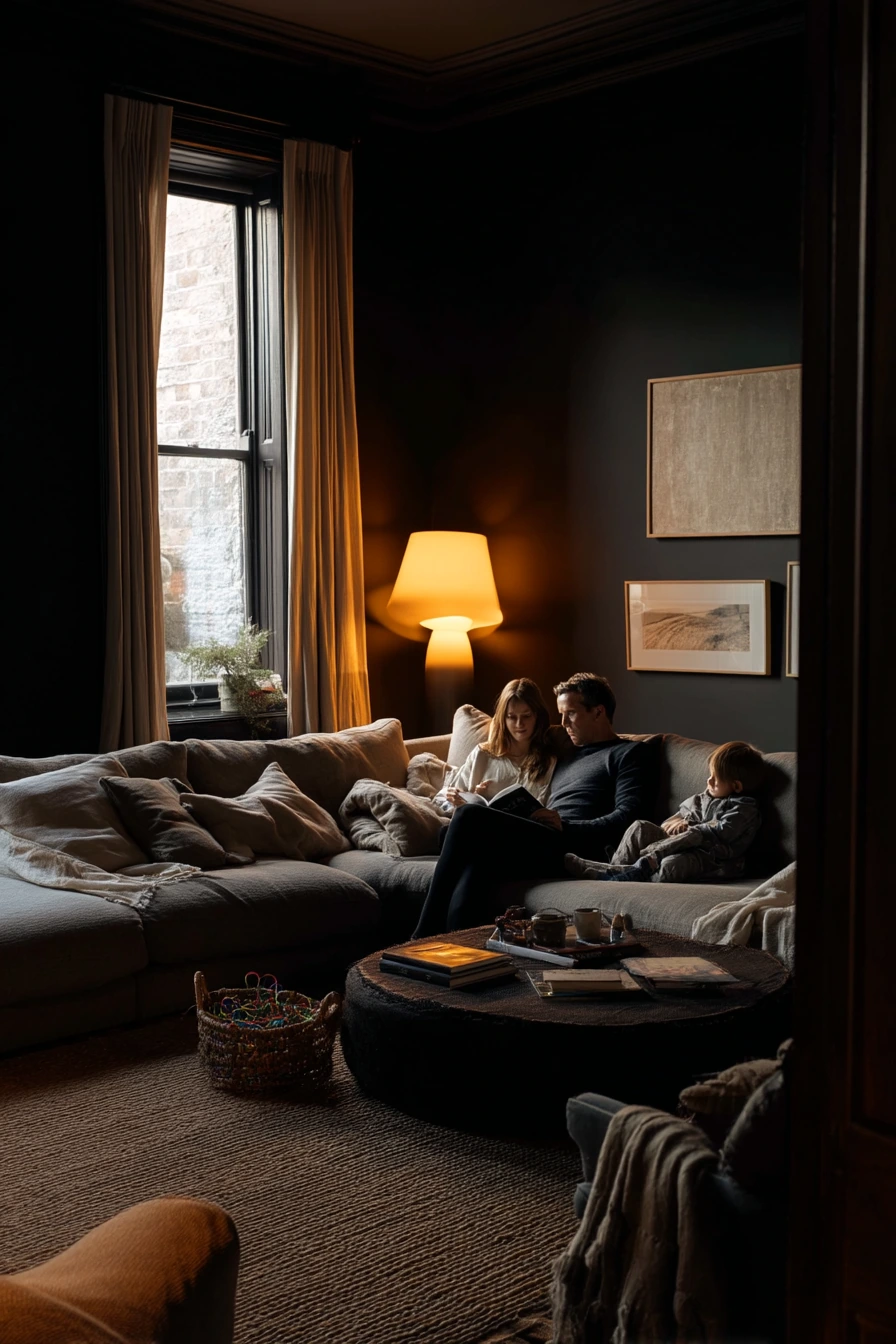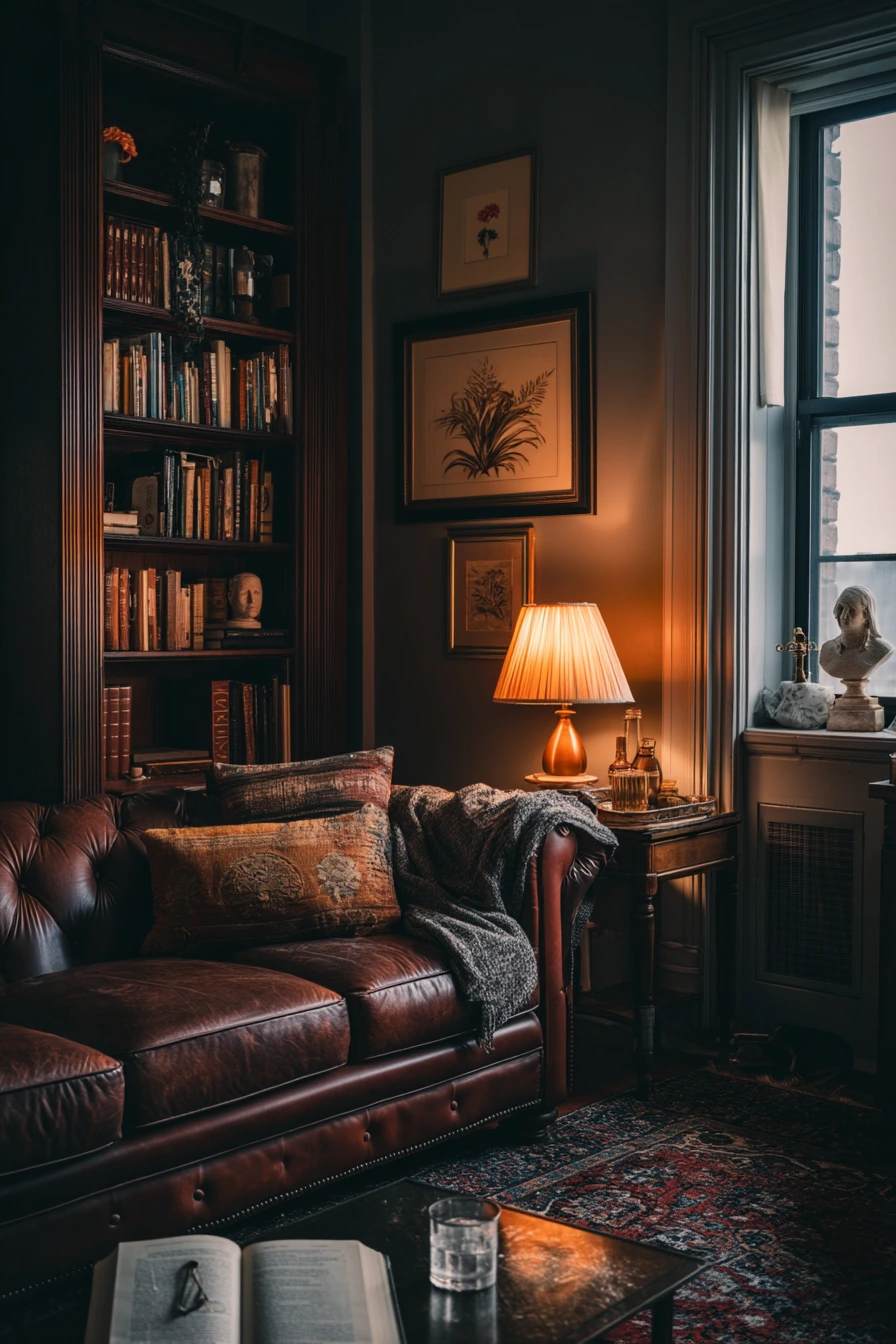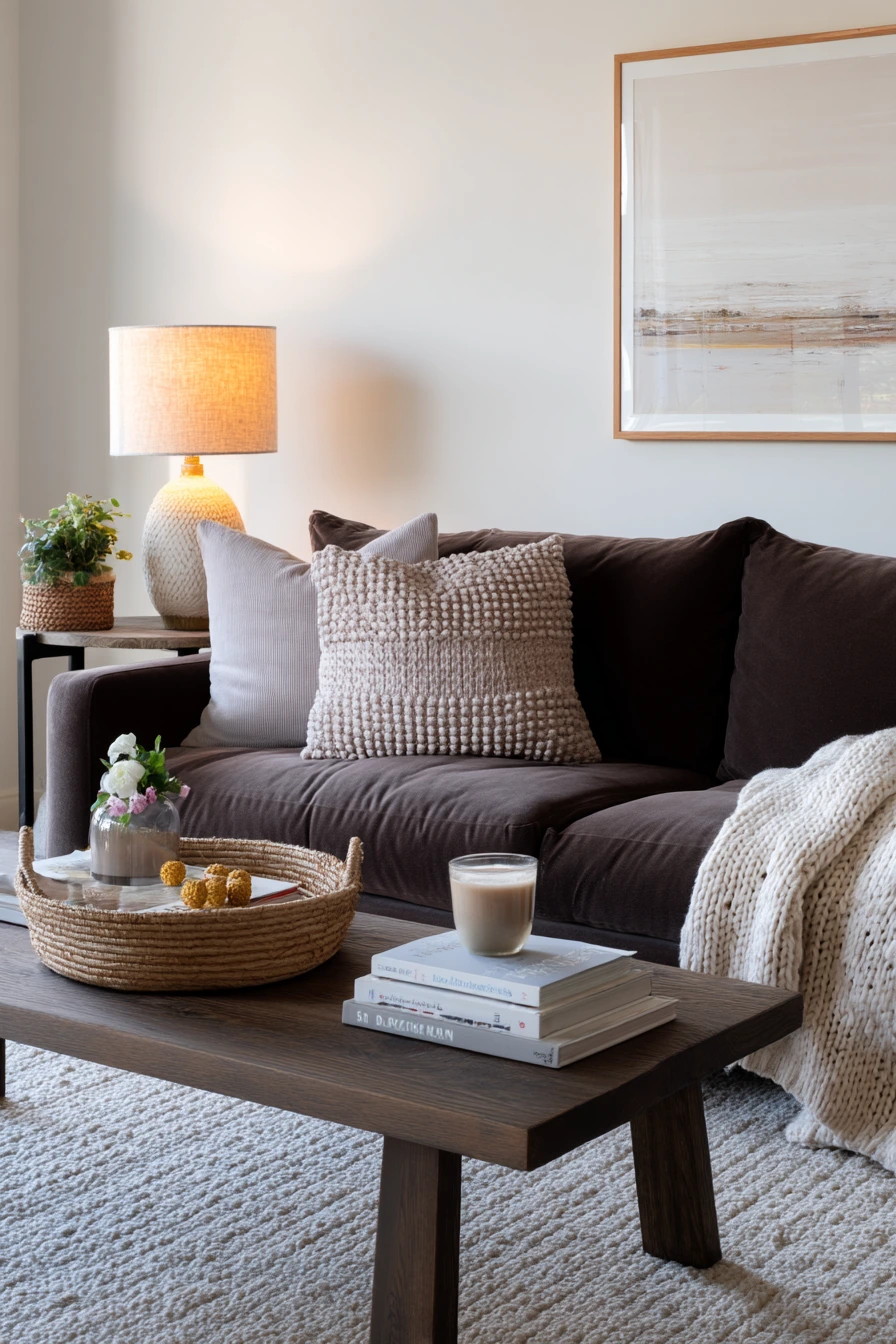

These 70s living room ideas focus on warm color, cozy texture, and practical layouts that work for everyday life. Think walnut wood, low seating, shag rugs, and soft amber lighting that makes a room feel calm.
In this guide, you will see ten real-life setups, from a split-level family room to a compact city apartment and a renter-friendly space. Each one includes easy styling steps you can copy with your own sofa, shelves, and decor.
You will also get small “how to style it” tips for arranging pillows, mixing patterns, and choosing lighting. Every section includes a pro design tip and a budget note, so you can plan a look that fits your home and your wallet.
If you are coming from Pinterest, use this as a checklist. Pick one idea, shop your space first, then add one or two 70s touches like macramé, teak, or brass.
1 Sunlit 70s Family Den With Everyday Patina
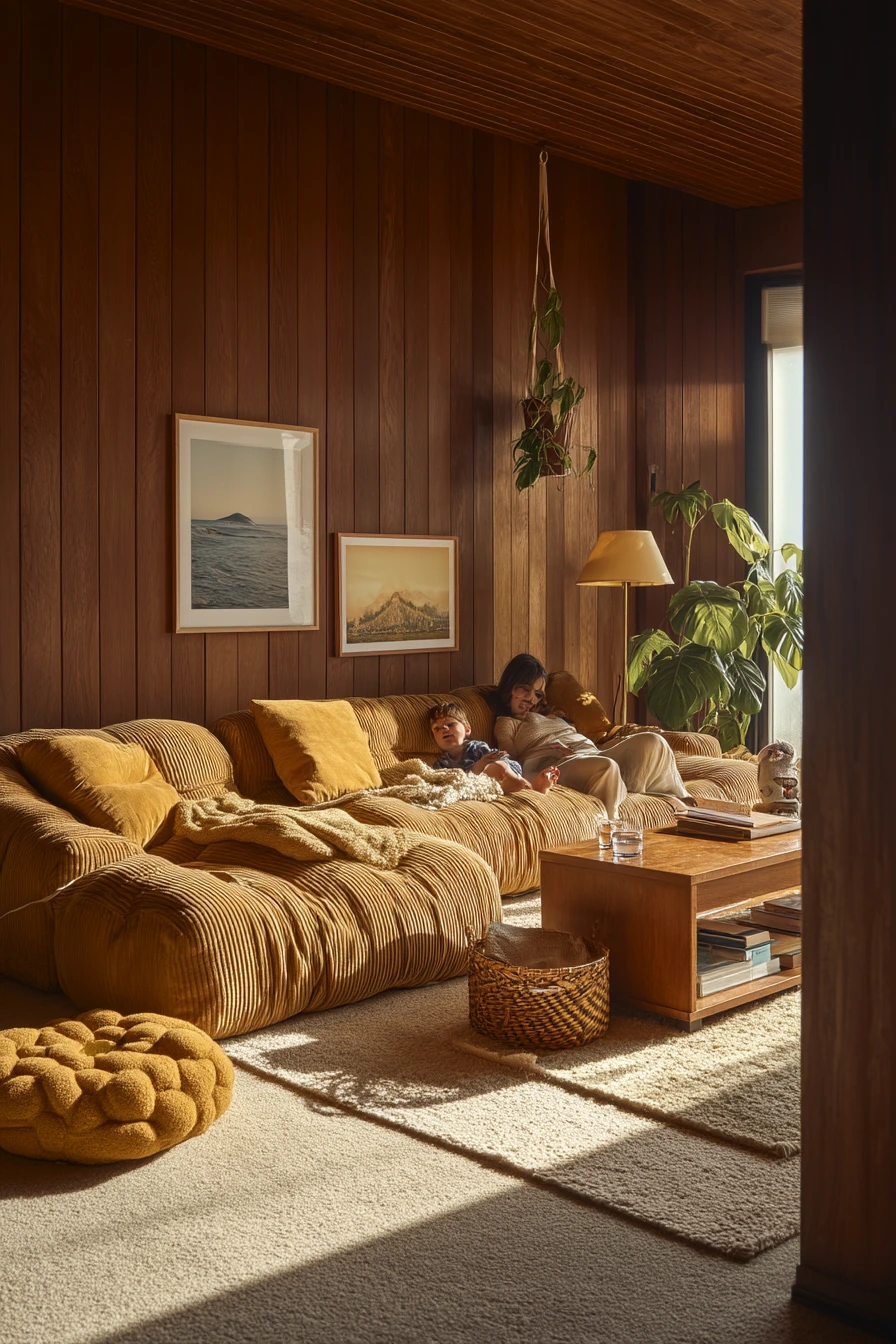
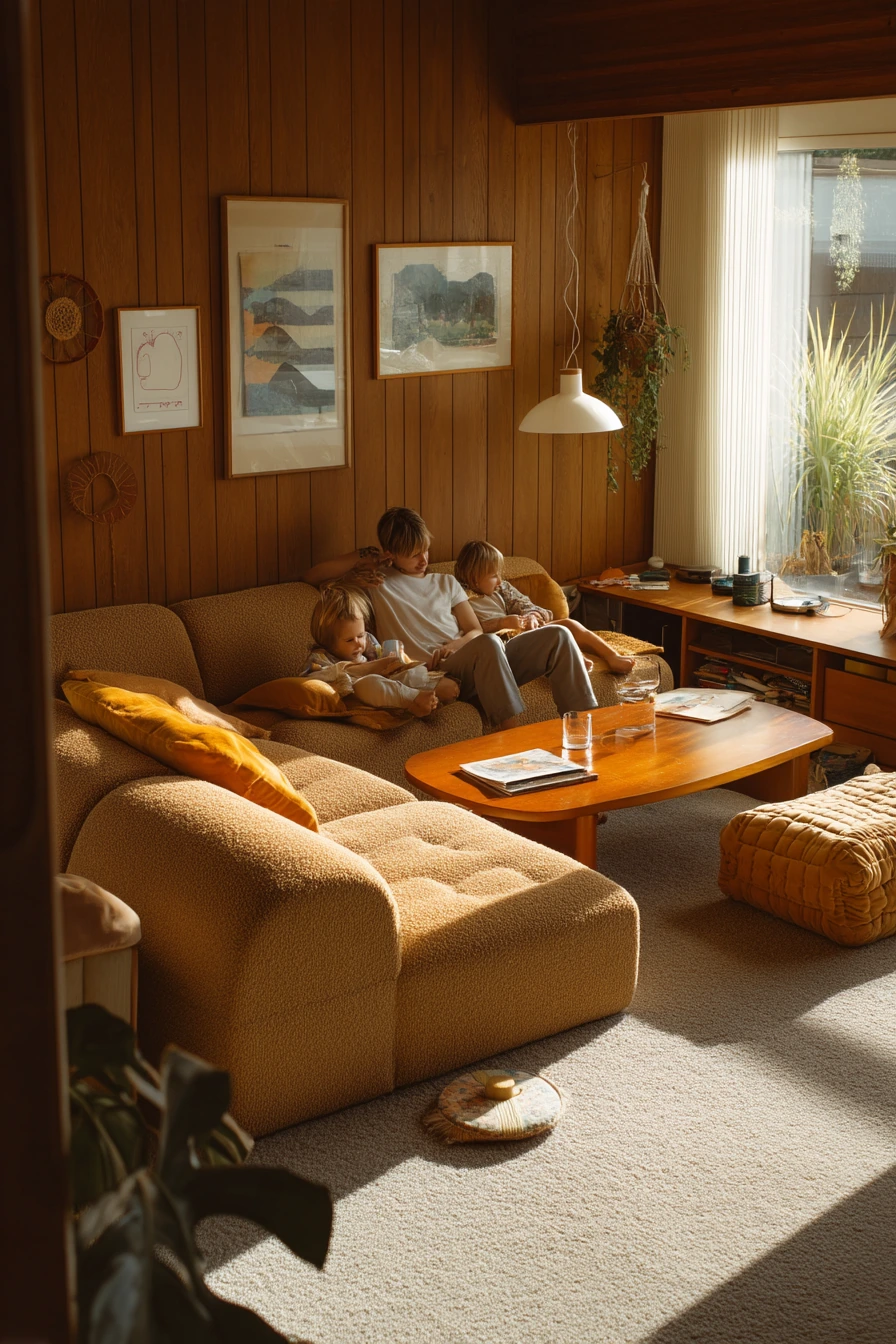
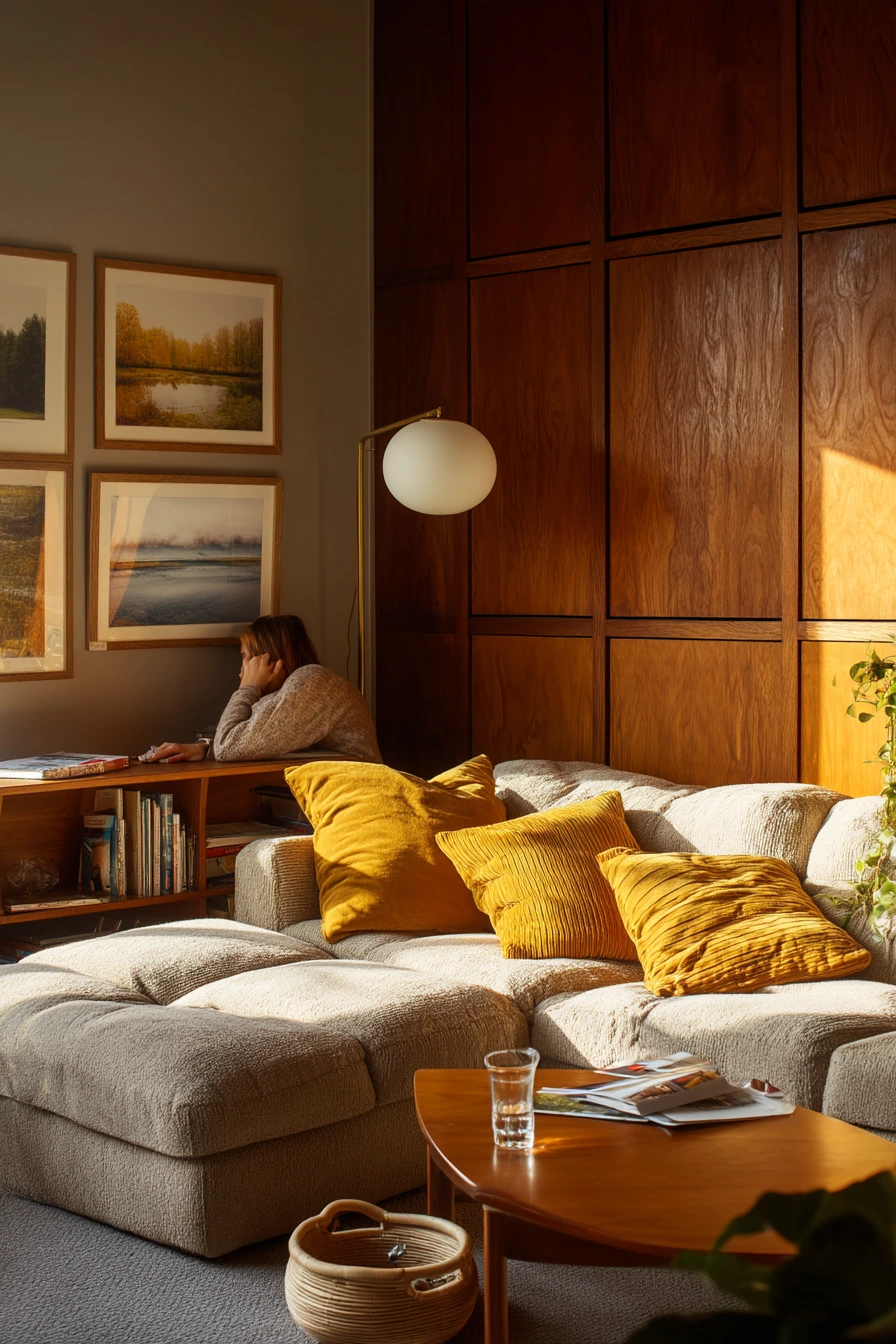
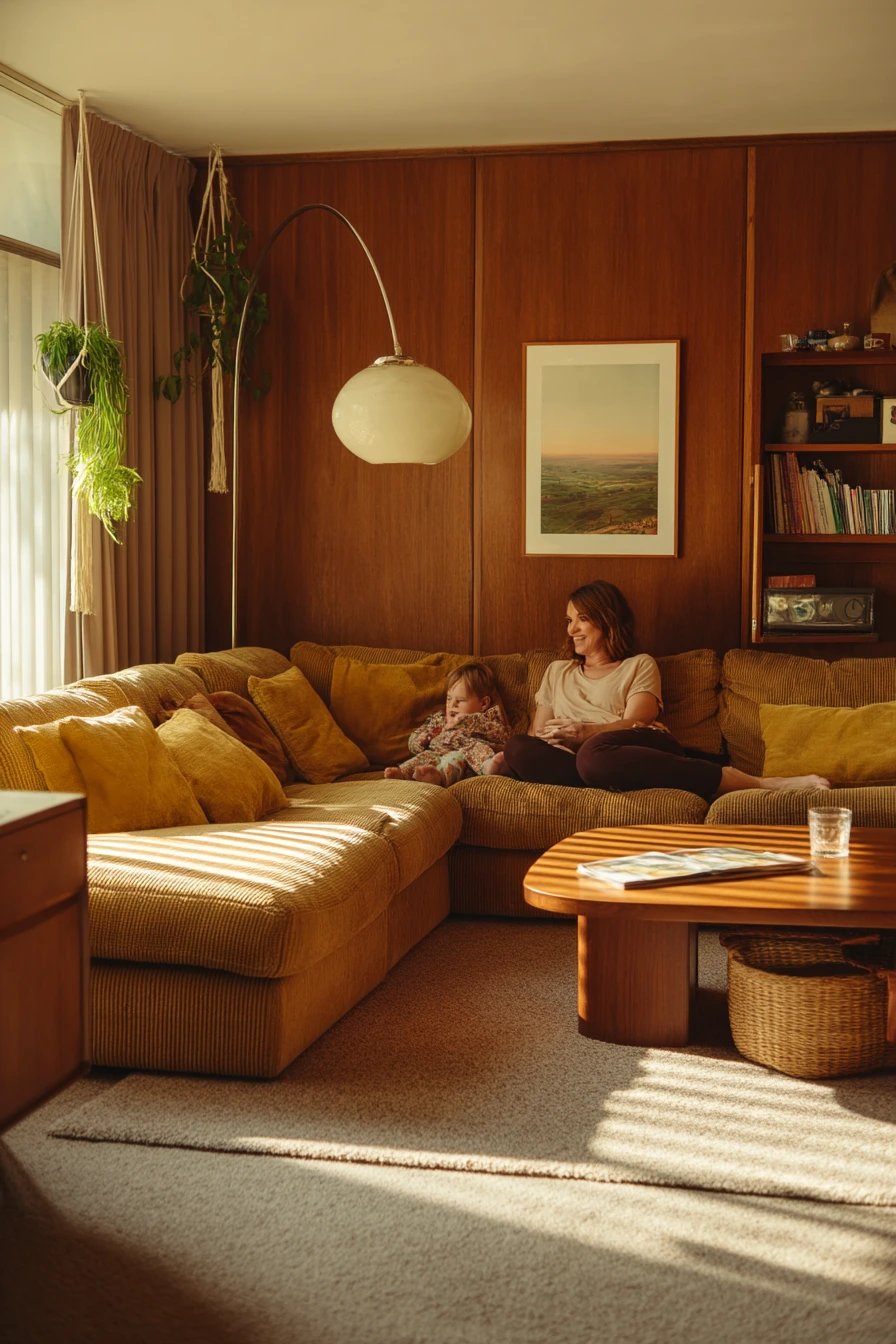
A 1970s split-level living room looks best when it feels warm and used, not staged. Start with a walnut wall unit or any medium-to-dark wood storage. It sets the tone and gives you room for books, framed landscape prints, and a spot to hide a child’s toy basket. A low modular sofa in tobacco boucle keeps the profile relaxed and matches the decade’s love for soft, touchable fabric.
Bring in rounded shapes to soften all the straight lines. A rounded teak coffee table is a perfect center piece, and it handles real life well. Add mustard ribbed cushions for color, then layer in a slightly wrinkled throw so the room feels lived-in. Small “real home” details matter here, like a paperback stack, a water glass on a coaster, and a charging cable tucked along the armrest instead of crossing the walkway.
Finish with gentle lighting and plants. A brass floor lamp gives that mellow amber glow in the evening, while soft window light keeps the room calm in the day. Use a macramé plant hanger to add height without taking up floor space, especially helpful in split-level rooms where traffic paths are tight.
- Choose a low sofa to keep sightlines open from the doorway.
- Mix walnut wood with teak tones, but repeat one tone in at least two places.
- Use mustard cushions in two textures (ribbed plus woven) for depth.
- Corral kid clutter with a lidded basket that can slide beside the sofa.
- Style shelves with a 2:1 mix of books to decor so it still feels like a home.
Pro Design Tip: Keep the largest wood piece (like the wall unit) matte or satin, then add shine only in accents like brass so the room looks rich but not busy.
Budget Considerations: Walnut wall units can be pricey; search local marketplaces for vintage pieces, or mimic the look with a simple bookcase and walnut peel-and-stick backing.
2 Apartment Corner With Bold 70s Color Blocking
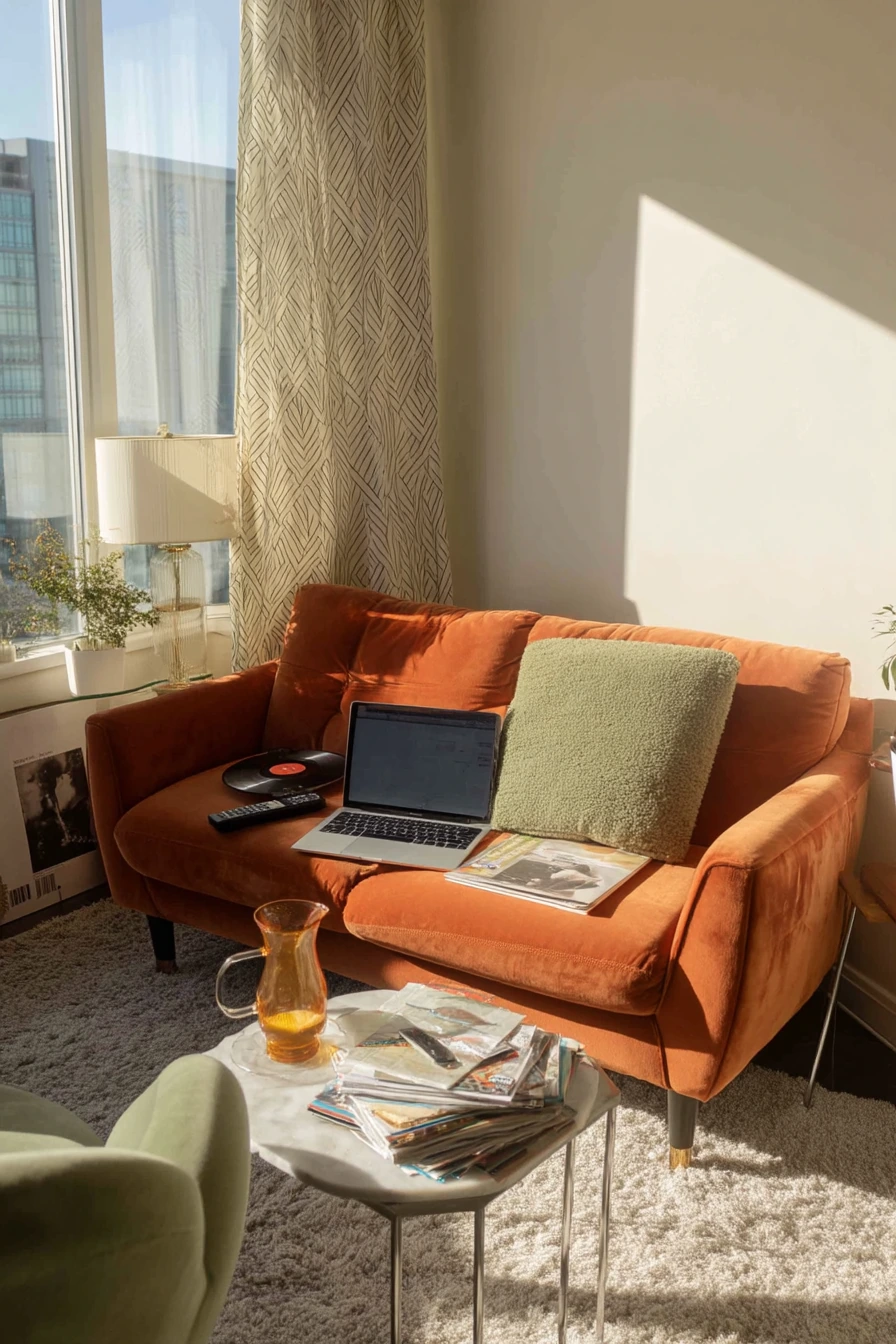
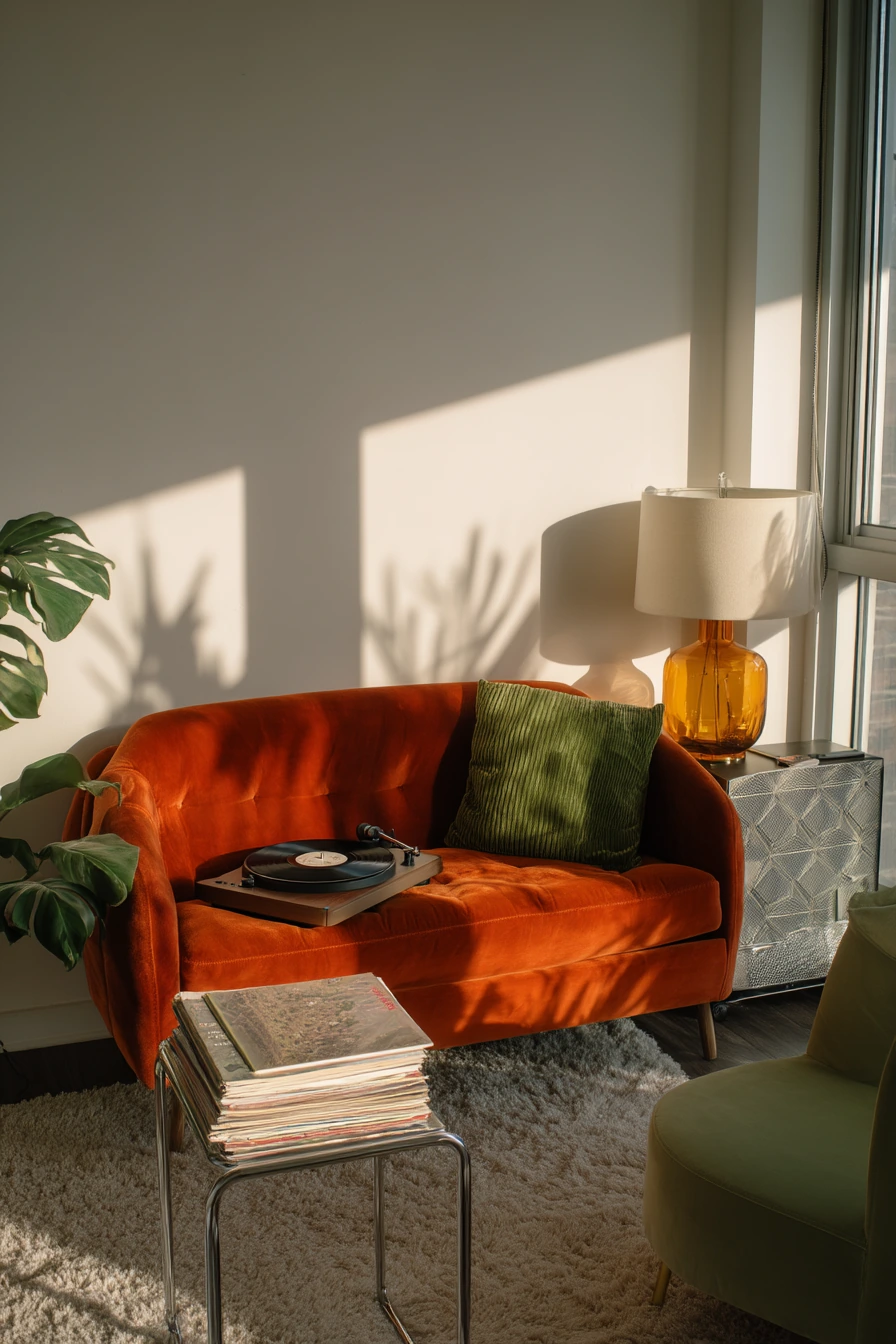
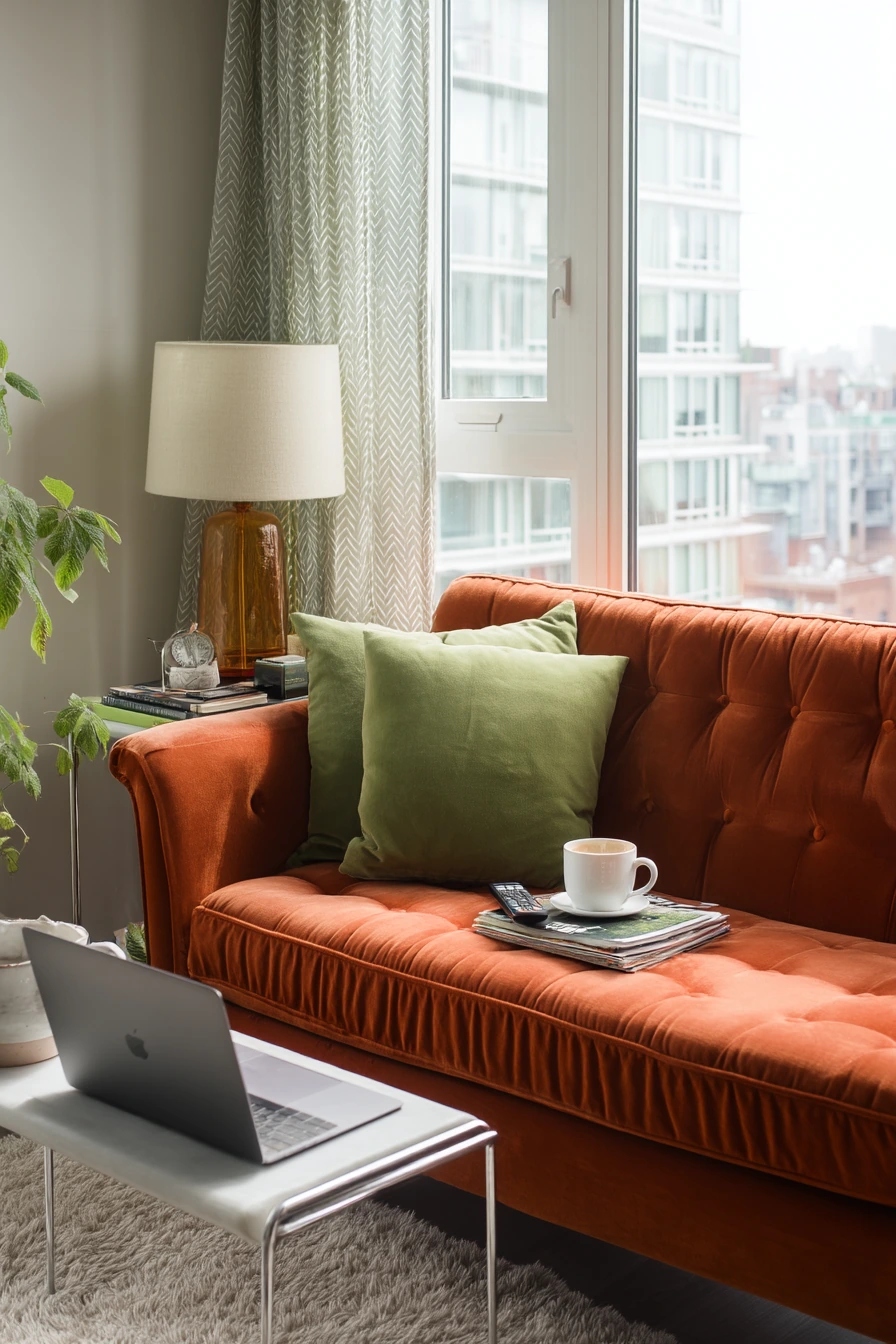
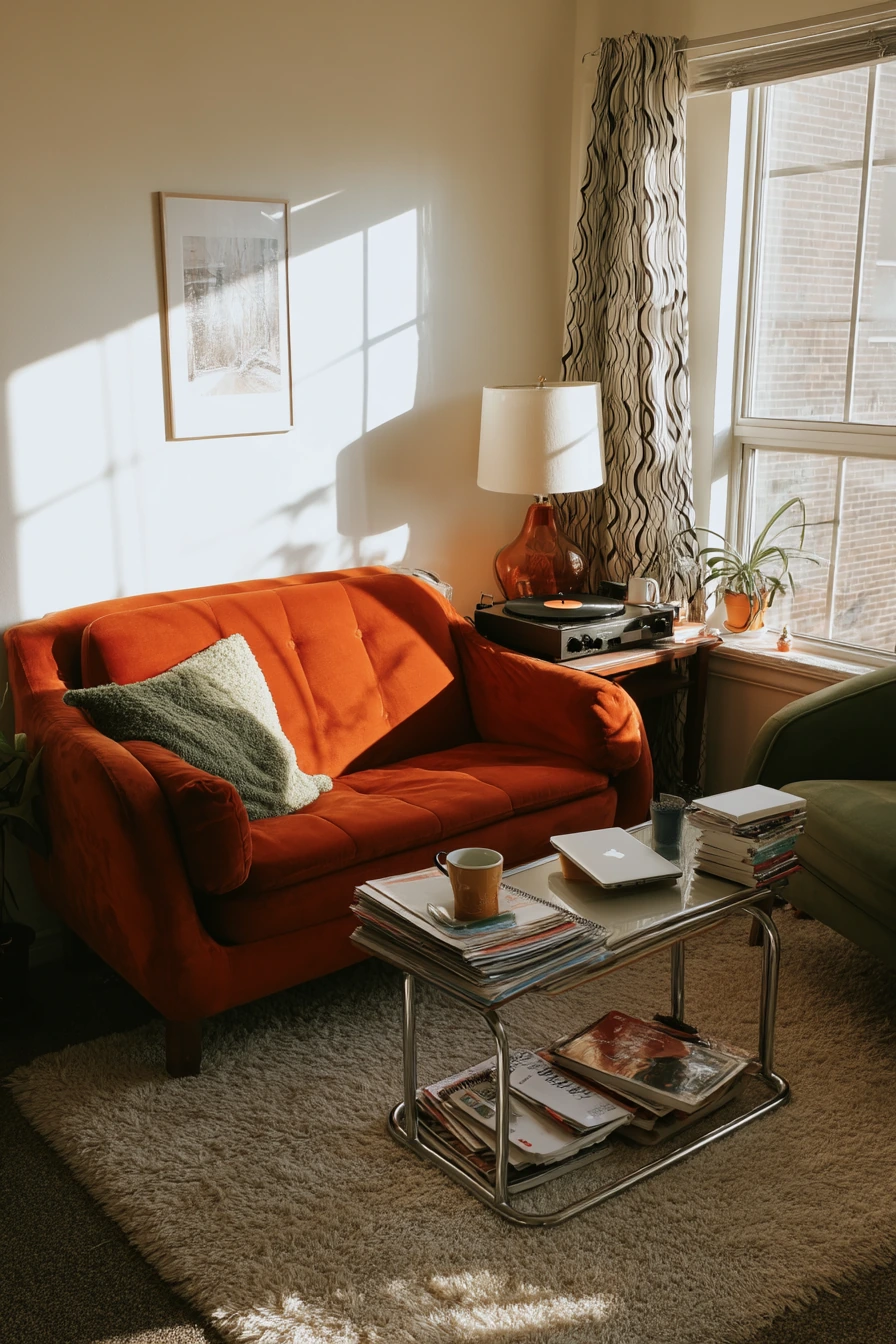
A compact city apartment can still feel like a true 70s living room if you use bold color blocks and a few iconic materials. Anchor the seating with a burnt orange velvet loveseat, then add an avocado green accent chair to create instant era contrast. Keep the footprint light with a low chrome side table, which adds shine without making the room feel heavy.
Texture does the rest of the work. A shag rug brings softness underfoot and helps the seating area feel like its own zone, even in a small open-plan space. Add geometric curtains to frame the window and bring pattern into the room without using more floor space. An amber glass vase and a ceramic lamp are small touches that keep the palette warm and cohesive.
To make it feel real and usable, style in everyday items in a tidy way. A laptop left open can sit on the chrome table if you add a tray to keep it from looking messy. Put a remote on a small dish on the cushion or on the table, and keep a half-finished tea on a coaster. Let plant shadows do some decorating by placing one plant near the window and turning it slightly so the leaves cast a graphic shape on the wall.
- Pick two main colors (orange and green) and keep the rest neutral.
- Use one shiny metal (chrome) in two places for a clean repeat.
- Choose curtains with large-scale geometry so the pattern reads from far away.
- Stack magazines loosely in one corner of the table to avoid clutter spread.
- Add one amber glass item to warm up modern apartment light.
Pro Design Tip: In small rooms, keep the rug big enough that at least the front legs of both seats sit on it, so the layout feels planned, not squeezed.
Budget Considerations: Velvet seating can cost more; look for slipcovered loveseats, or add the orange velvet effect with two large pillow covers and a throw.
3 Renter-Friendly 70s Makeover in a Bright Rental
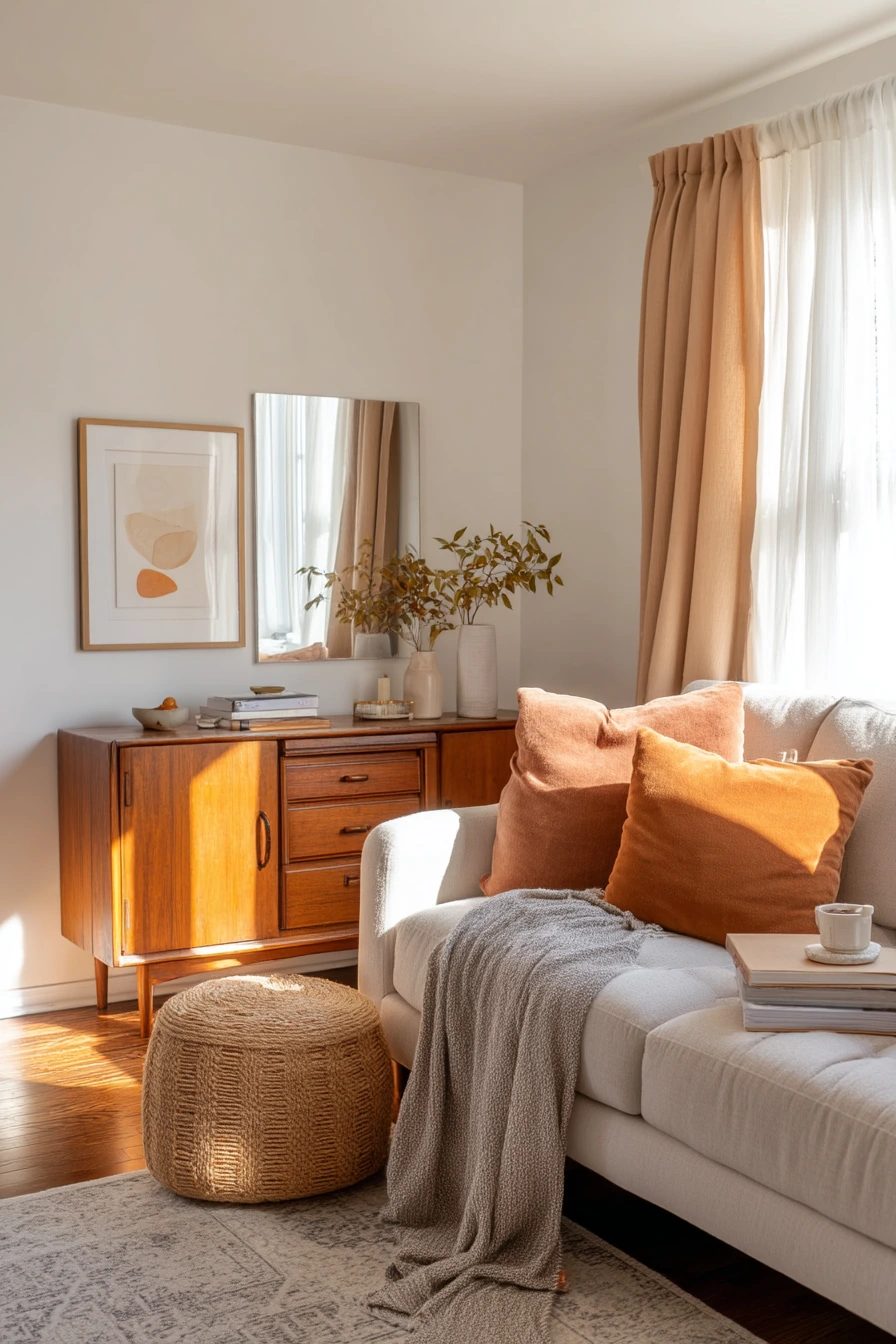
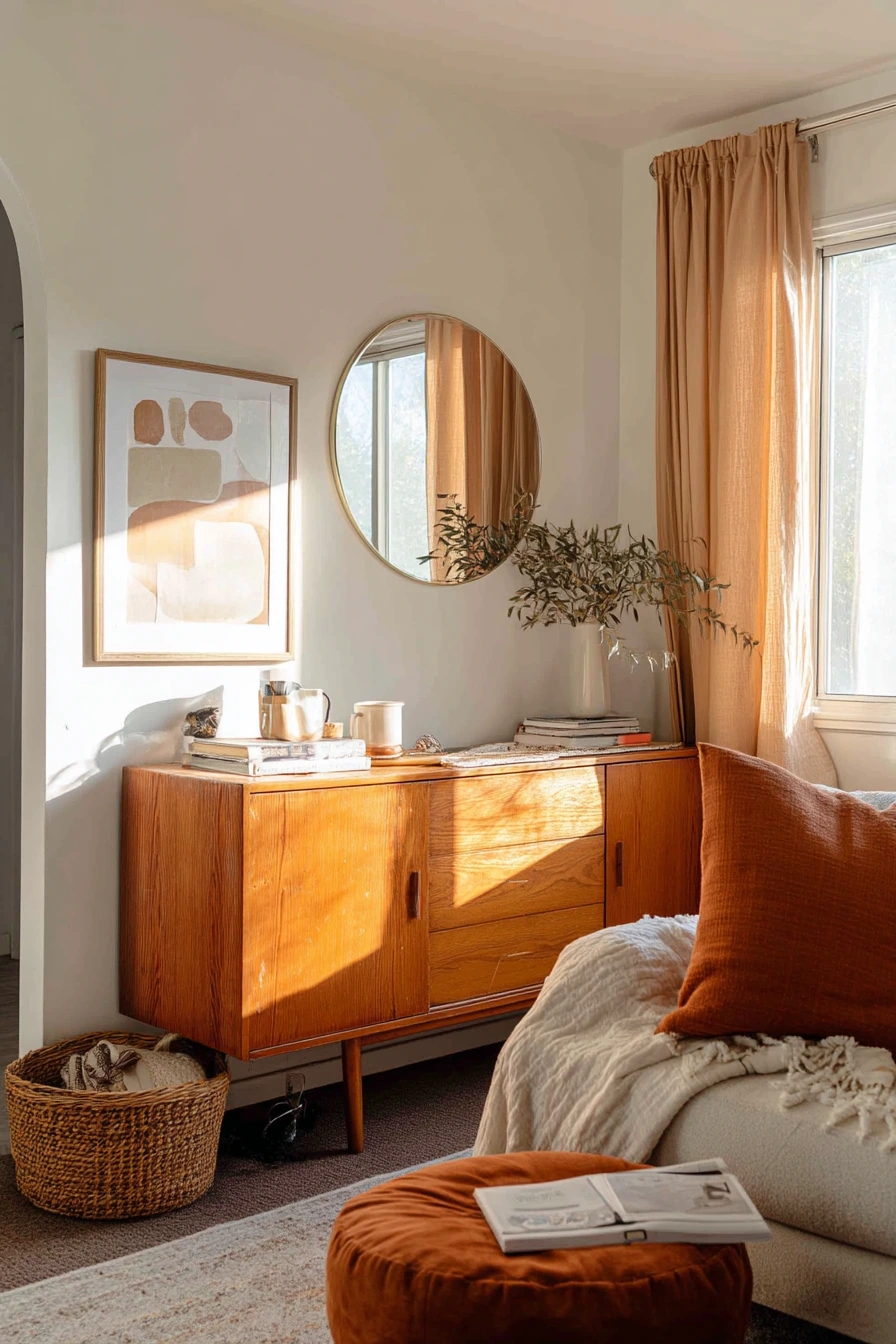
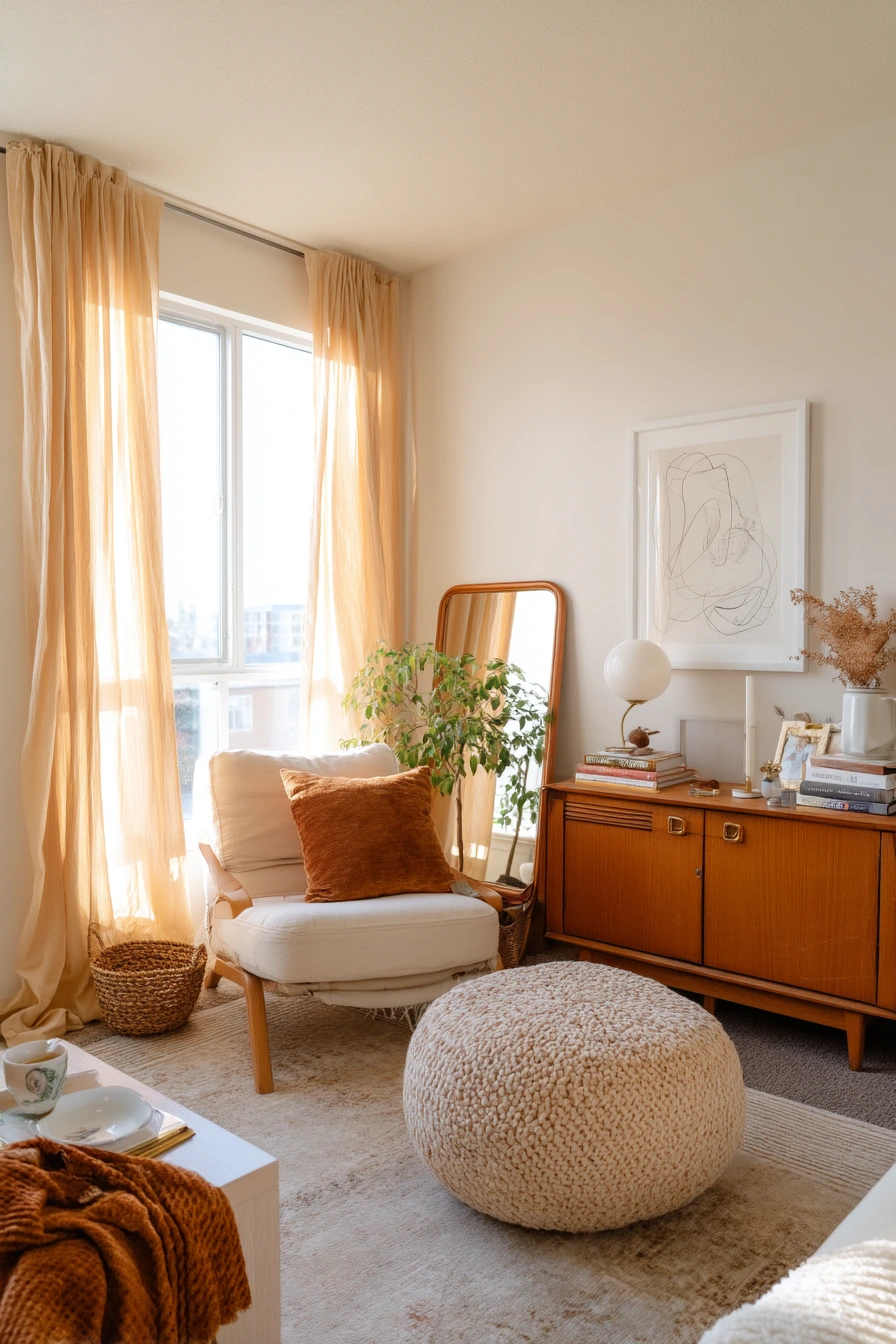
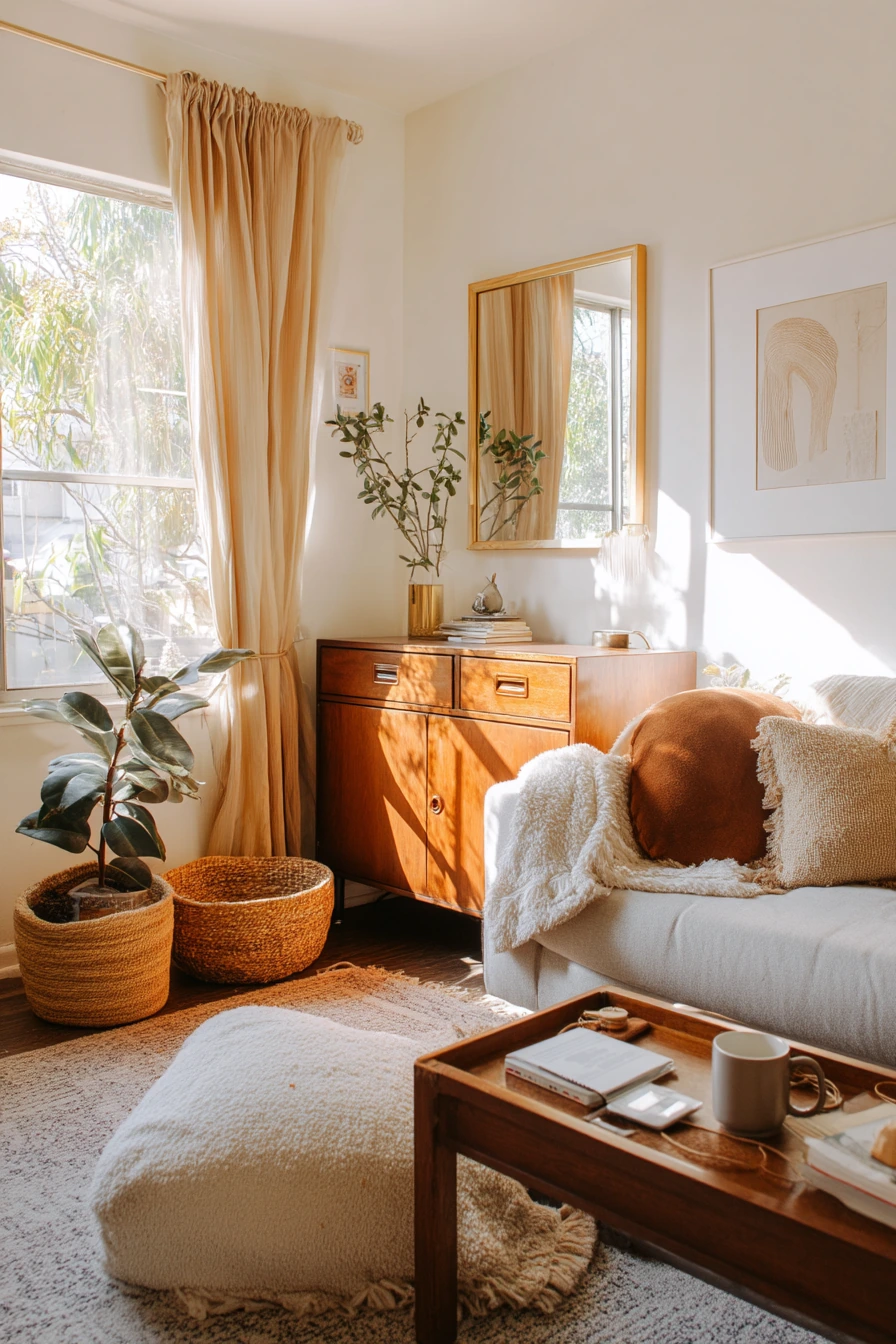
A renter-friendly 70s-inspired living room is about getting the vibe without permanent changes. Start with peel-safe warm tan curtains to soften bright daylight and add that sun-washed tone the decade is known for. Pair them with a thrifted teak sideboard for storage and a clear surface where daily items can land, like a notebook, keys, or a mug on a coaster to avoid rings.
Keep furniture flexible and easy to move. A woven pouf works as a footrest, extra seat, or a small side table with a tray on top. Add terracotta throw pillows for earthy color, and lean framed abstract art casually on the sideboard rather than hanging it. This gives you a layered look, and it is perfect for rentals where you want fewer wall holes. A vintage mirror adds light and makes a clean apartment feel bigger.
Make it feel lived-in in a tidy way. Use a shoe basket by the entry to control clutter, and hang a dog leash on a hook or place it on the sideboard in a small bowl. Place a small ficus by the window for a true 70s houseplant look without a lot of care. Fold a blanket with a soft crease on the sofa corner so the room feels ready for real use, not like a showroom.
- Choose peel-safe curtain hardware or tension rods to avoid drilling.
- Lean one large artwork and one smaller piece for a casual gallery feel.
- Use terracotta pillows in mixed solids and subtle patterns for depth.
- Keep an entry basket within two steps of the door to build a habit.
- Pick one plant with a strong shape (ficus or rubber plant) for impact.
Pro Design Tip: Repeat “warm tan” in three spots (curtains, a pillow, and a ceramic piece) to make the room feel intentional even with mixed thrift finds.
Budget Considerations: Teak sideboards can vary in price; if needed, use a simple secondhand console and stain it warmer, or add teak-style contact paper on flat surfaces.
4 Small-Space 70s Living Room With Clever Storage
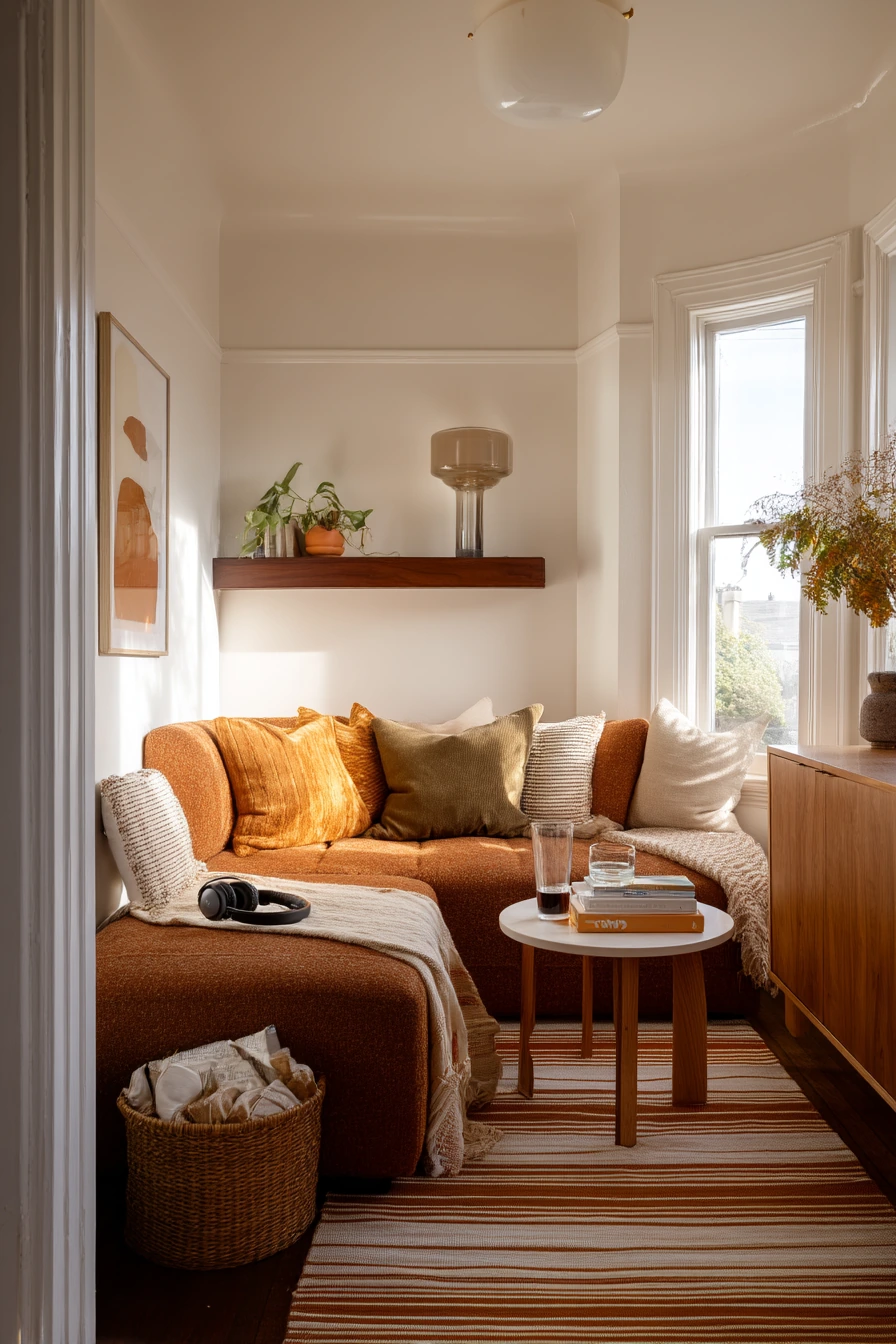
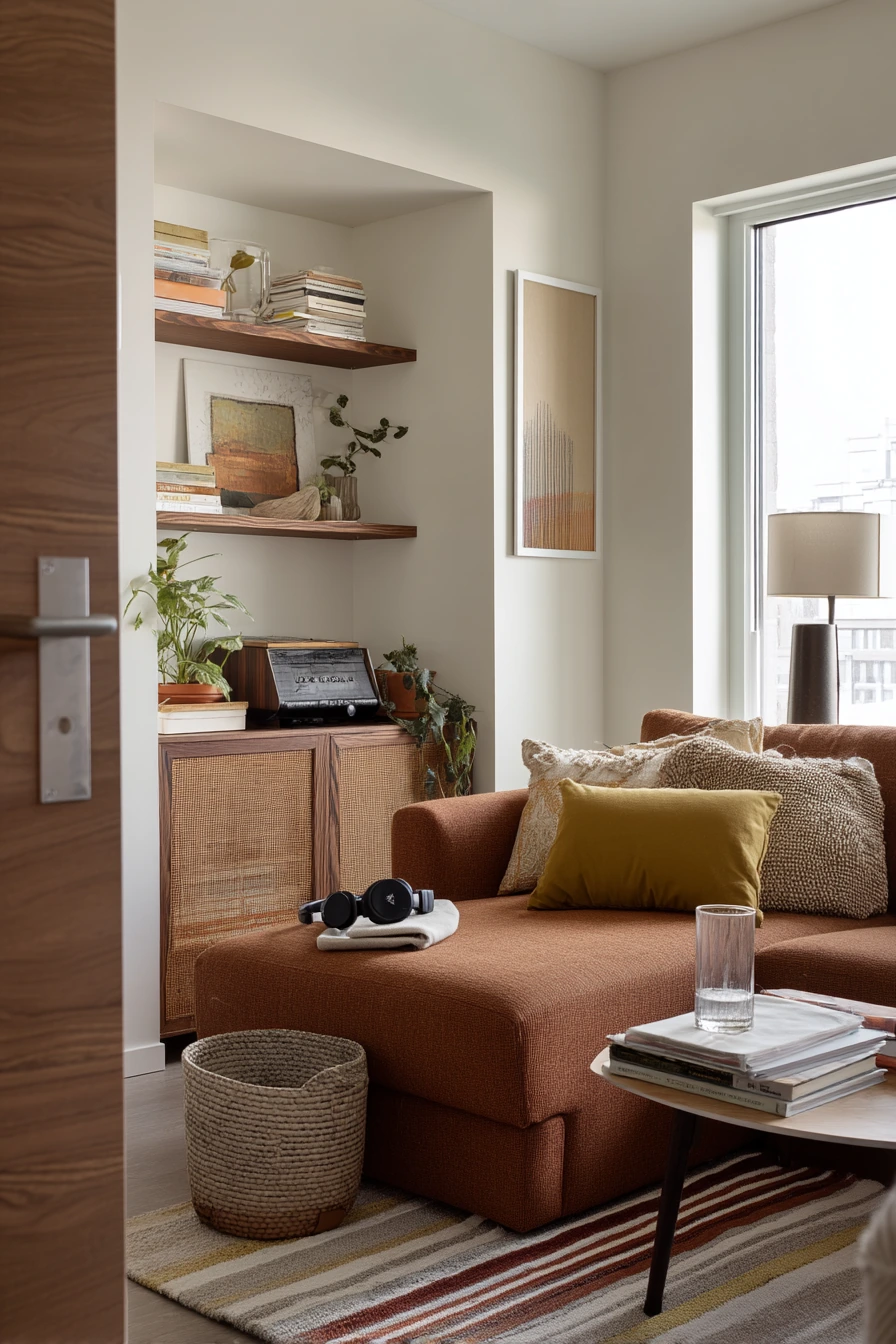
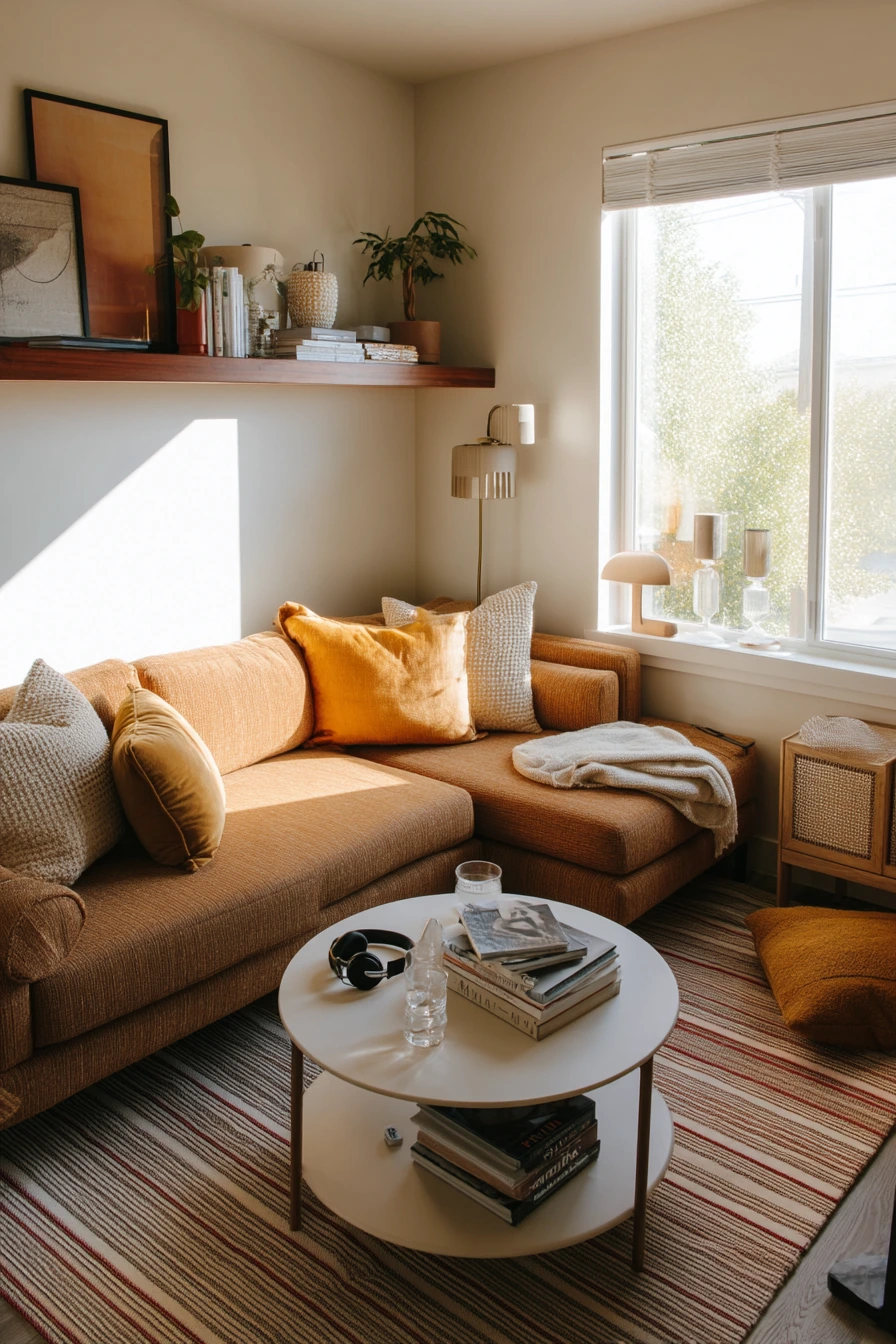
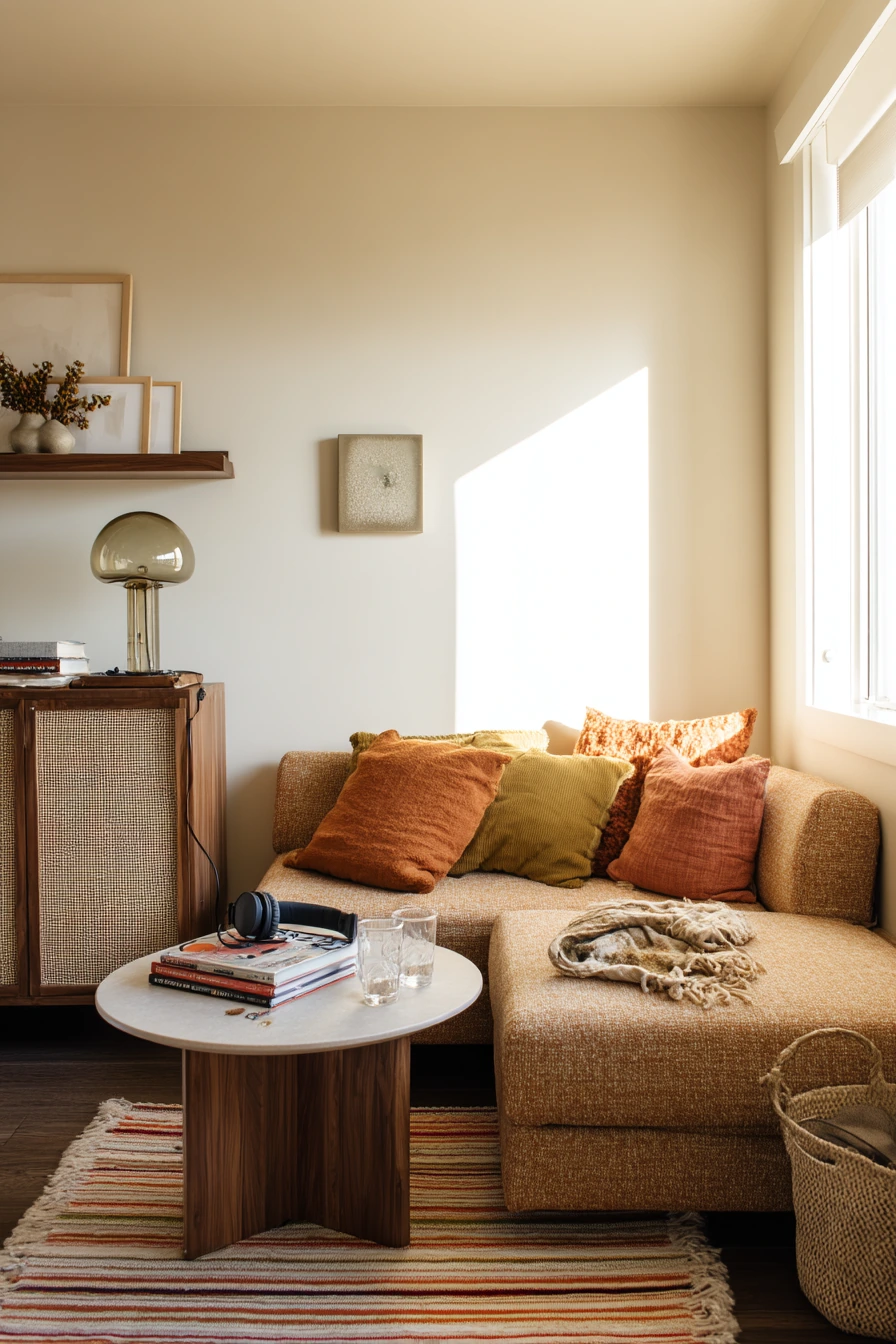
A narrow living room needs a 70s look that also works for daily movement. Start by pushing storage to the wall: a low storage bench under a walnut shelf gives you a landing zone without crowding the floor. A compact sectional in rust tweed adds color and texture, and it helps you seat more people without extra chairs blocking the walkway.
Use rounded pieces to break up the long shape. A round pedestal table can act as a small dining spot, game table, or a place for morning coffee. Add a smoked glass lamp for that soft, slightly moody glow that feels true to the era. A cane-front cabinet brings in natural texture and hides mess fast, which is key in narrow spaces where clutter is always visible.
Style it so it stays functional. Keep headphones on the bench with a small tray, and stack cookbooks vertically with one turned sideways for variety. A folded laundry basket can tuck under the shelf or beside the cabinet, but choose one that matches the room, like a woven or canvas bin. Olive and ochre accents work well as smaller touches in a striped wool rug, pillows, or art, so the rust sofa stays the star. Manage charging cables by running them behind the bench or along the baseboard with clips.
- Leave a clear walking path at least the width of your shoulders.
- Use one long shelf to draw the eye sideways and reduce the “hallway” feel.
- Pick a round table to soften tight corners and prevent bumps.
- Hide daily items in cane-front storage to keep texture, not clutter.
- Repeat rust, olive, and ochre in small pieces to balance the palette.
Pro Design Tip: In narrow rooms, keep coffee and side tables visually light (pedestal, glass, or slim legs) so the seating feels less crowded.
Budget Considerations: Built-in style shelving can be expensive; use a simple wall-mounted shelf and pair it with an affordable storage bench to get the same look.
5 Weekend Reading Nook With Deep 70s Texture
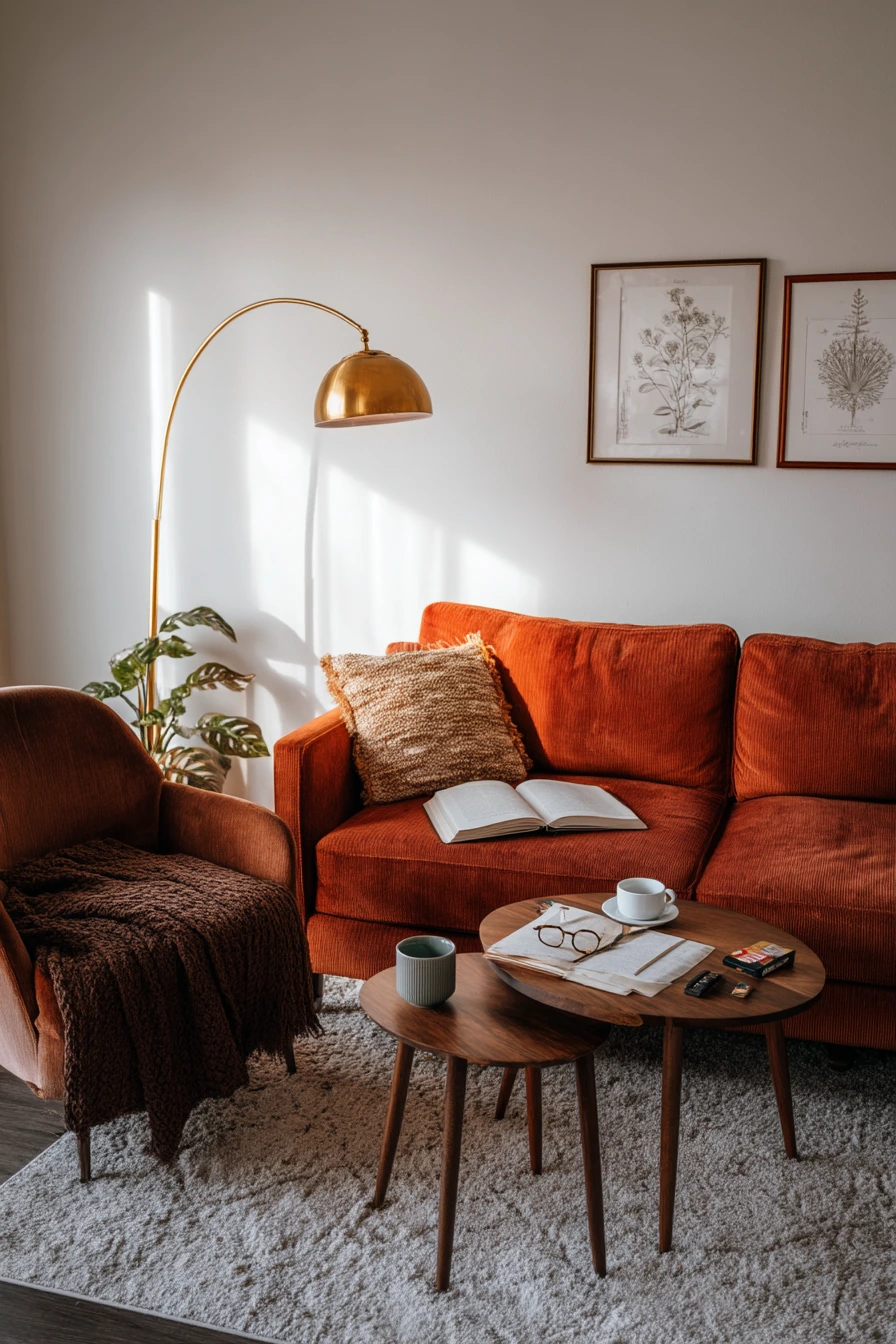
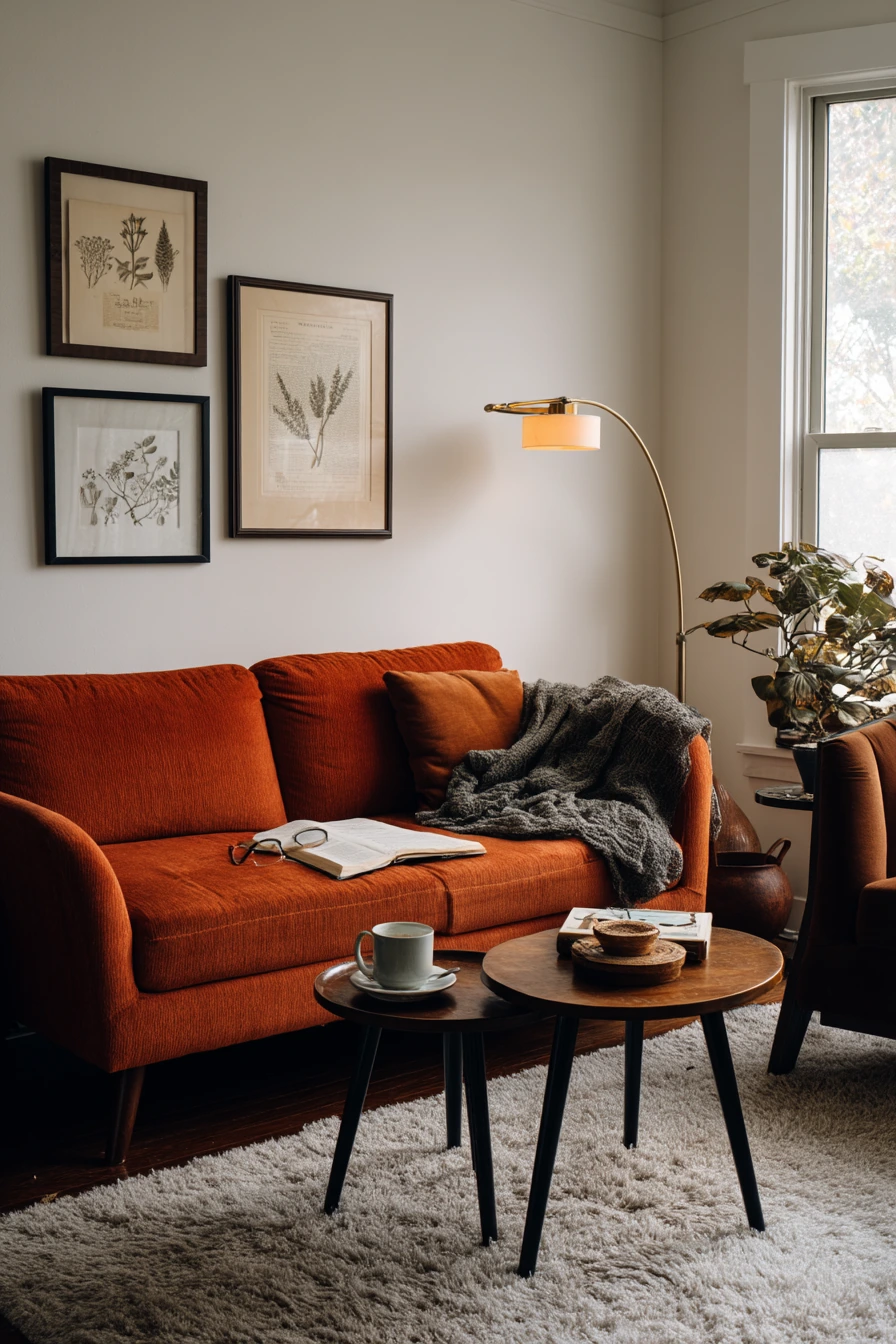
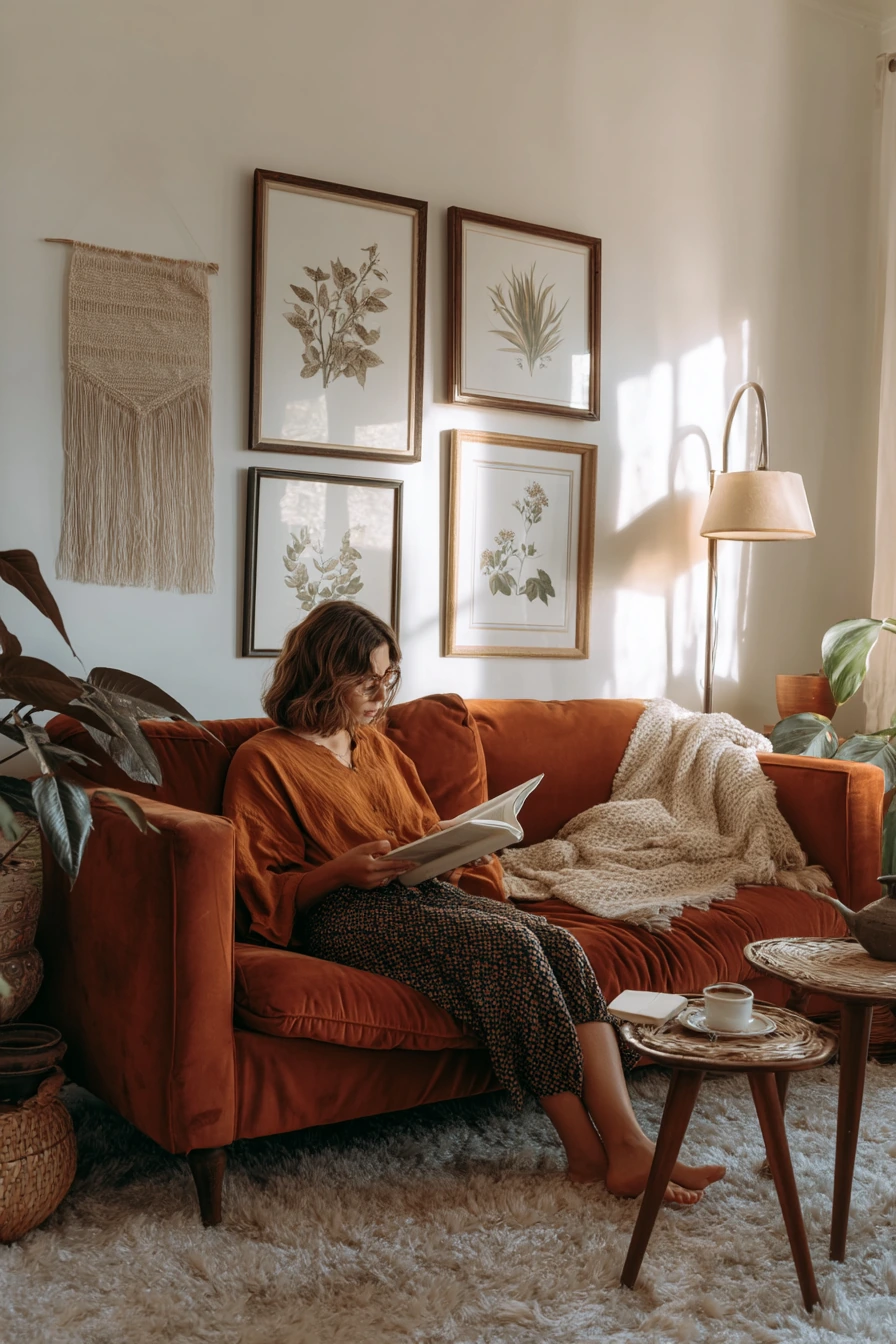
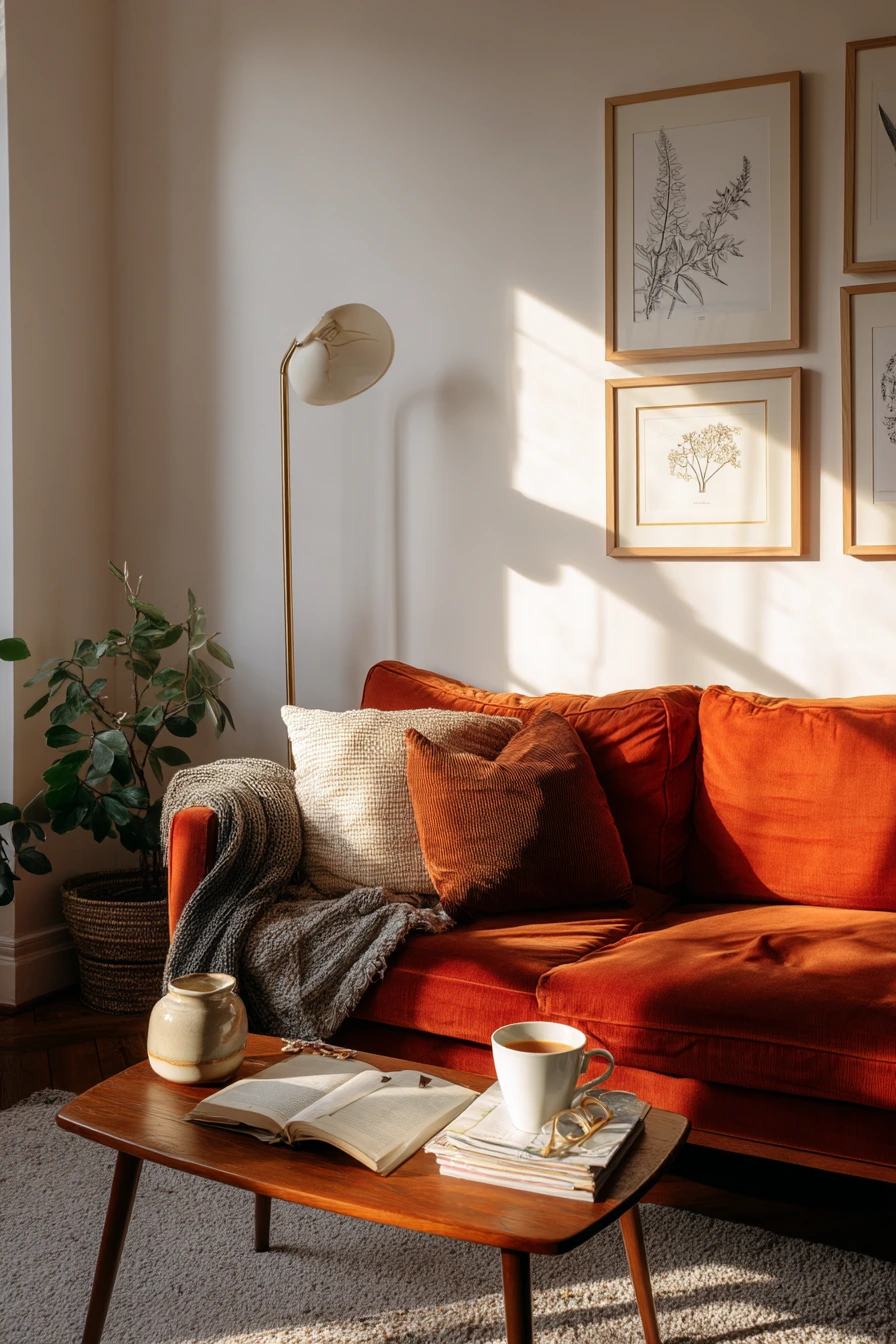
A quiet Sunday 70s living room can feel like a reading retreat when you build it around comfort and warm light. Start with a low orange sofa as the main color anchor. Add a deep brown velvet armchair to create a second, darker “pause” in the room. This mix feels very 70s, especially when you layer in teak nesting tables that can slide around as needed for tea, a book, or reading glasses.
Lighting is the mood maker here. Use a curved floor lamp for a soft pool of light over the chair, and keep a mix of window light and lamp glow for a calm, lived-in feel. Add framed botanical prints to tie in natural color, plus a woven wall hanging for texture that does not reflect glare when you are reading. Earthy ceramics on the tables make the room feel grounded and personal without adding clutter.
Make the space work for real habits. Keep an open novel on the nesting table with a simple tray so the stack stays neat. Place a tea cup on a coaster and store bookmarks in a small dish. A shag rug with gentle wear fits the theme and makes the room quiet underfoot. Let a blanket be slightly rumpled; that softness is part of the 70s charm, and it signals the room is made to be used.
- Put the reading chair near a lamp and within arm’s reach of a table.
- Use nesting tables so you can move surfaces where you need them.
- Choose art with soft colors to keep the room restful.
- Limit tabletop decor to three items so books still have space.
- Add one textured wall piece (woven or macramé) to warm up flat walls.
Pro Design Tip: For a cozy look, keep most finishes matte (ceramics, woven pieces, velvet), then add a single subtle shine in the lamp base or picture frames.
Budget Considerations: Teak nesting tables can be costly; look for mixed-wood sets secondhand and unify them with a warm-toned wood oil or stain marker.
6 Kid-Friendly 70s Lounge With Playful Patina
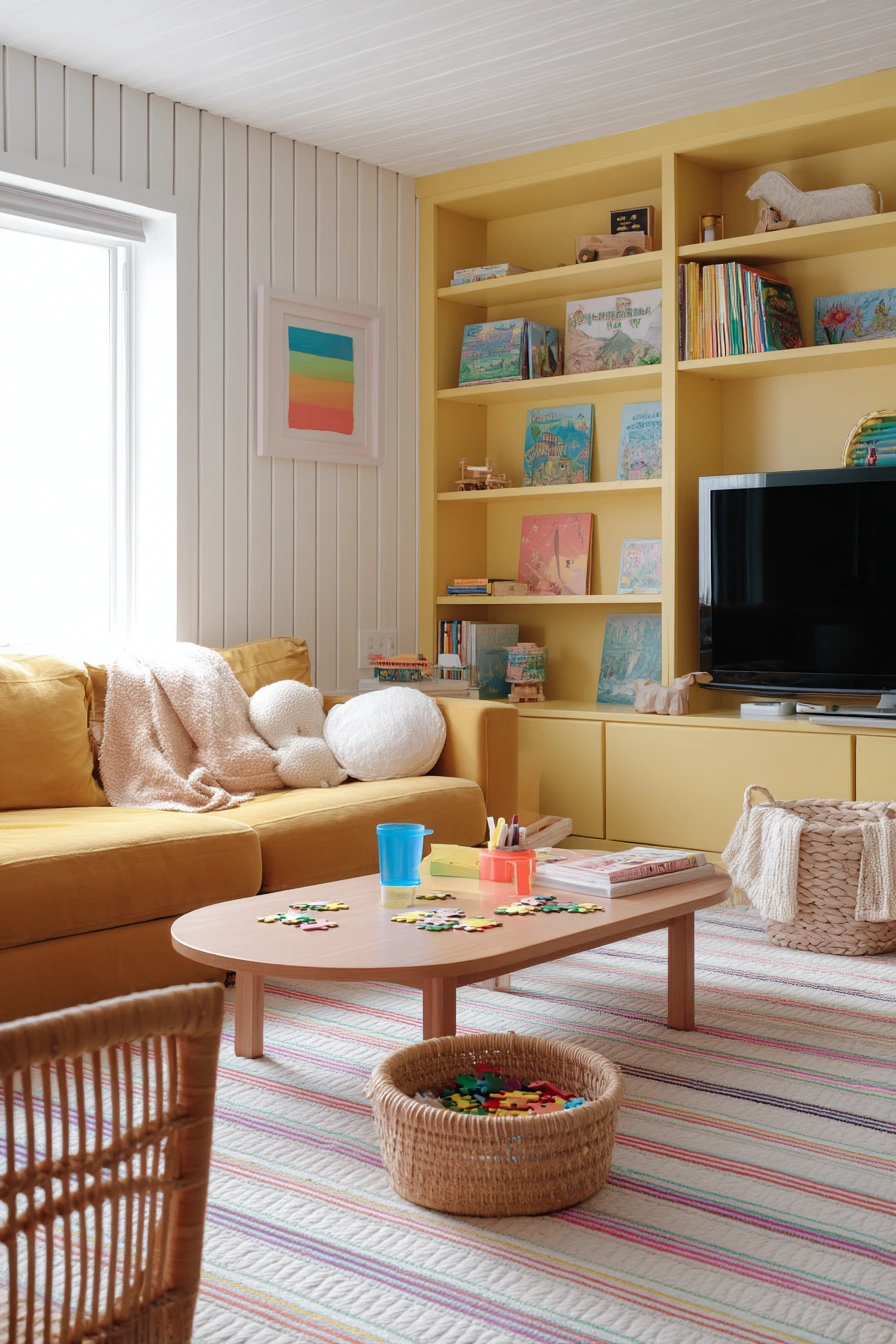
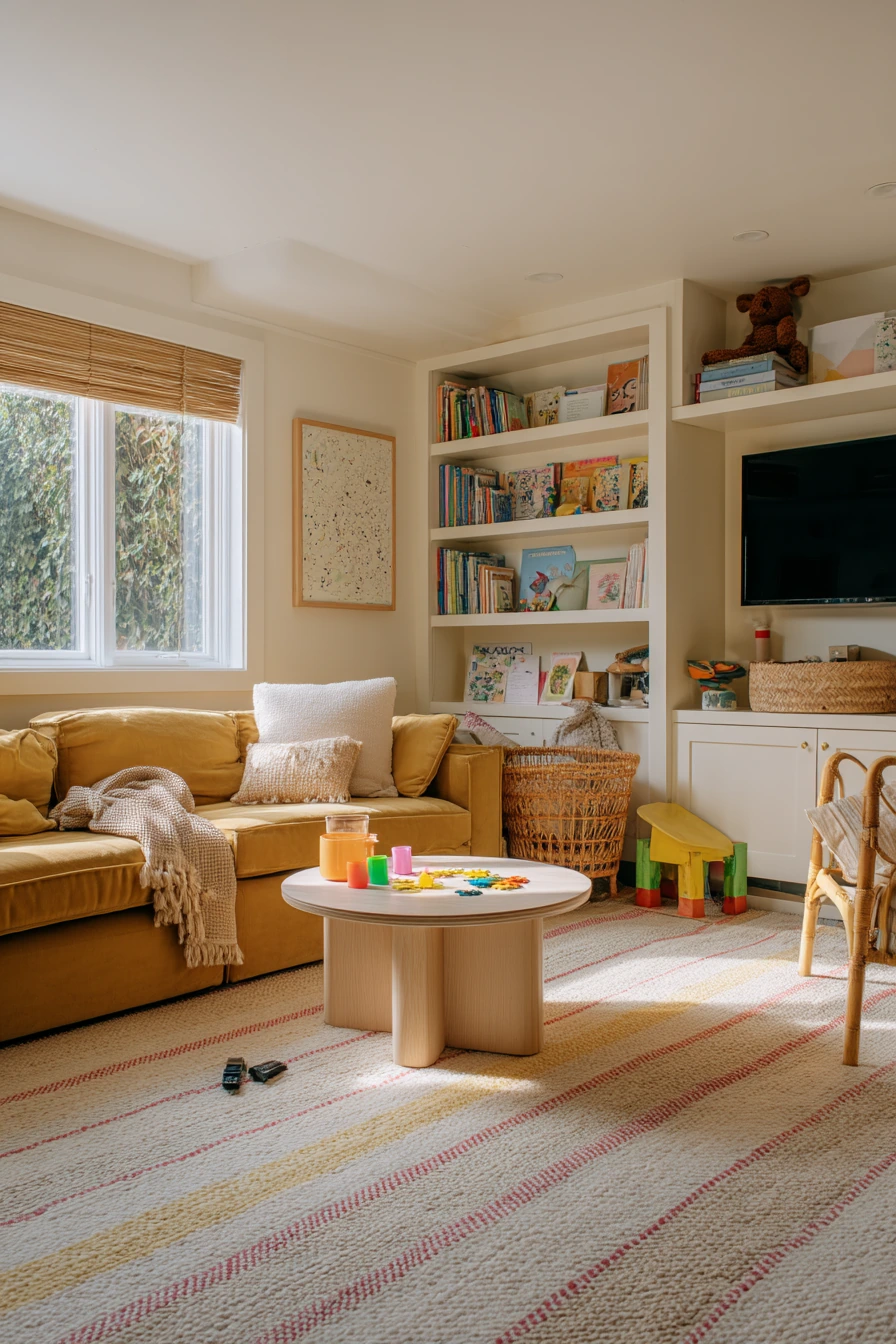
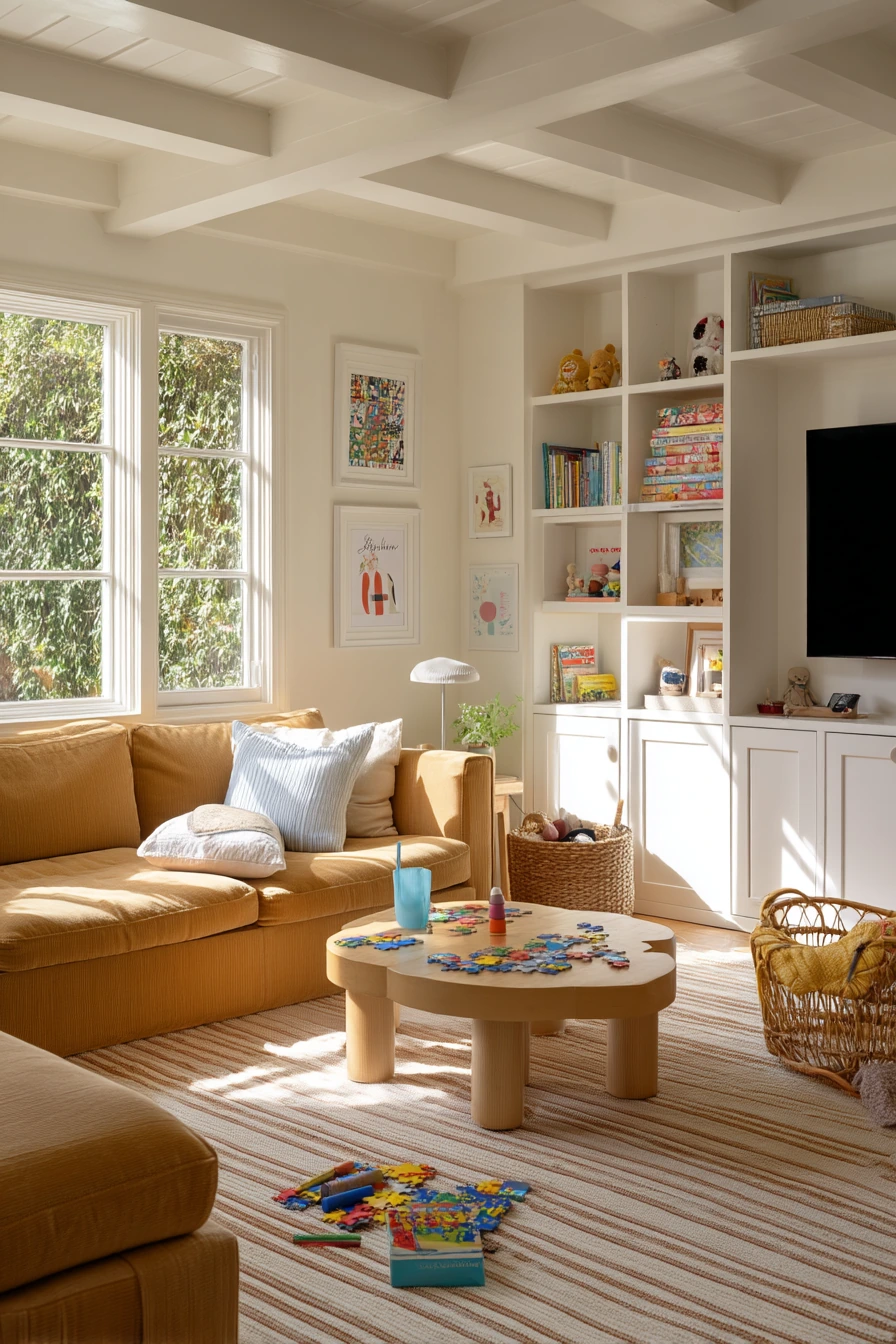
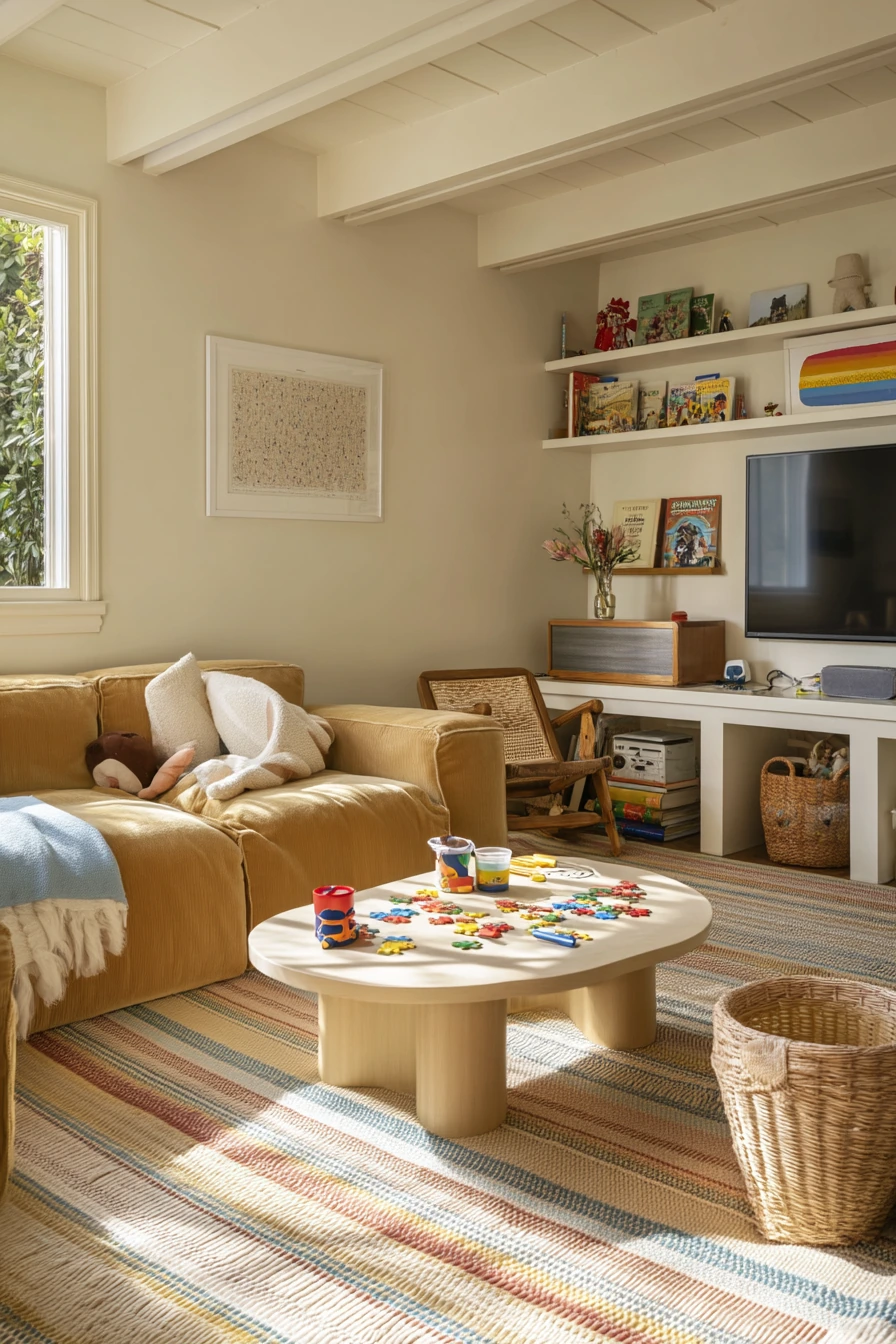
A family room with 70s spirit should be cheerful, sturdy, and easy to clean. Start with a mustard sofa in a durable fabric, since it hides everyday wear better than very light colors. Add a rounded coffee table with softened edges to make the center safer for kids and more comfortable for adults moving around the room.
Choose a washable striped rug to bring pattern without stress. Stripes feel true to the era and help disguise puzzle pieces and crumbs between cleanups. Built-in shelves or a simple shelving unit gives you a spot for colorful art, kids’ books, and a few rattan pieces to keep the room from feeling too modern. A beadboard detail, even as a small panel or painted trim, adds that homey texture seen in many 1970s houses.
Make organization part of the styling. Tuck a toy basket near the media unit so clean-up is fast at the end of the day. Keep a small tray on the coffee table for the remote and crayons, so the room can switch from movie night to homework time without chaos. If a sippy cup ends up on the table, the tray keeps it contained. Drape a throw blanket loosely over the sofa arm for comfort, but pick one that is machine washable so it stays practical.
- Pick a sofa fabric that can handle spills and daily use.
- Use rounded table edges for safety and softer style.
- Store toys near where they are used, not across the room.
- Mix adult decor with kids’ items by matching colors (mustard, rust, teal).
- Hang colorful art at a lower height so kids can enjoy it too.
Pro Design Tip: Use “closed storage low, open storage high” so daily mess can disappear quickly while the top shelves stay styled.
Budget Considerations: Washable rugs can cost more up front; if needed, layer a smaller washable rug over an inexpensive jute or flatweave base.
7 Quiet Evening 70s Living Room With Lamps On
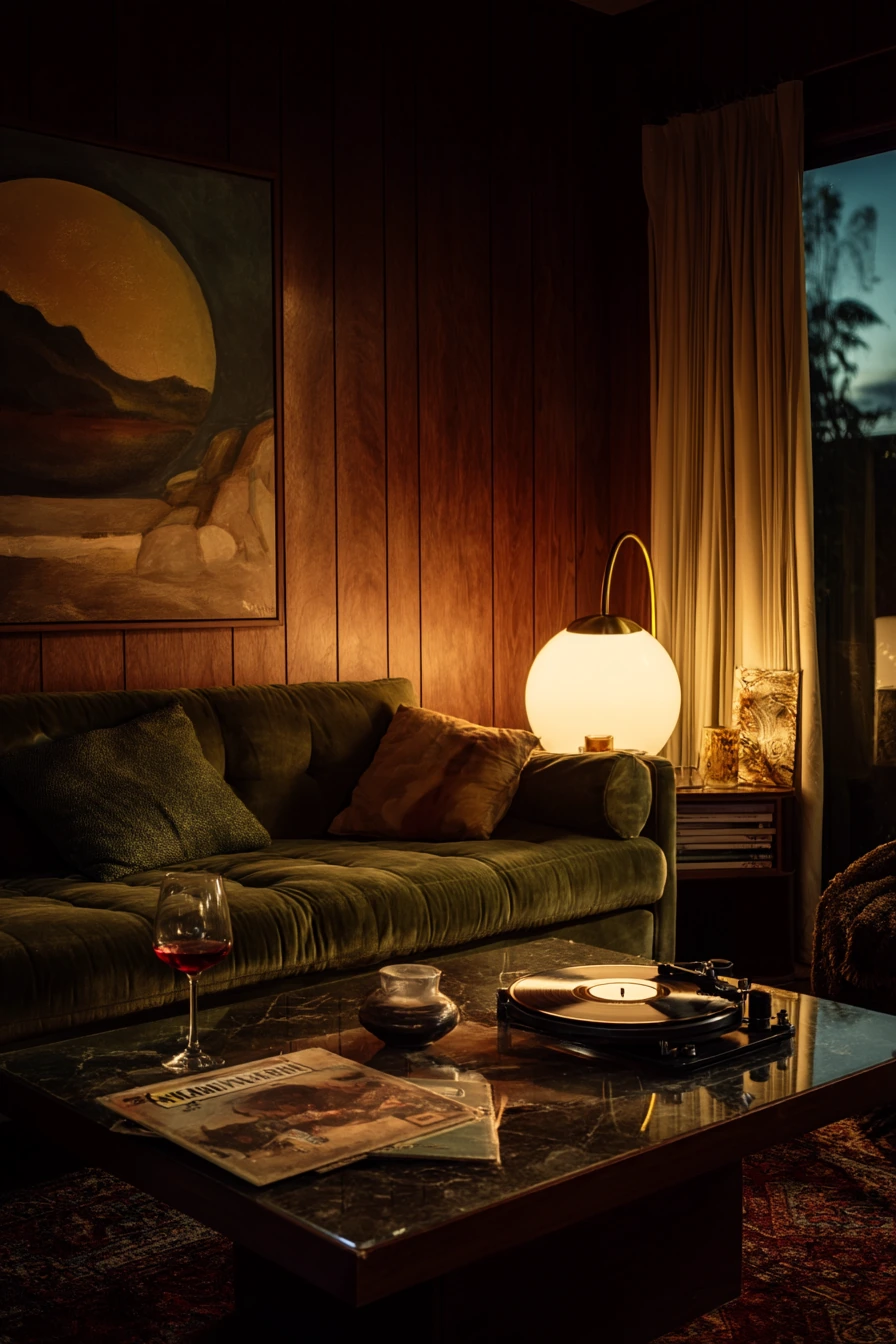
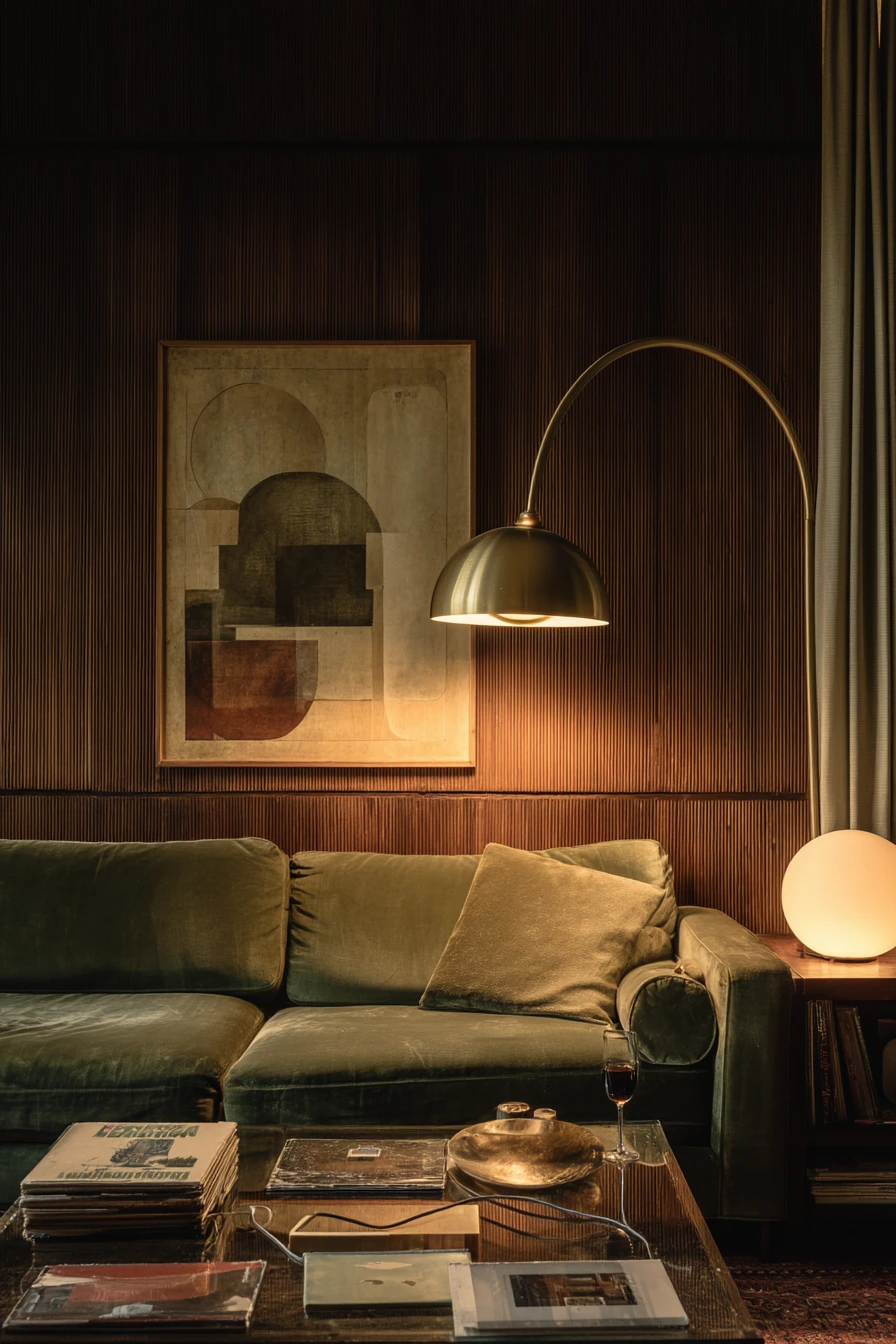
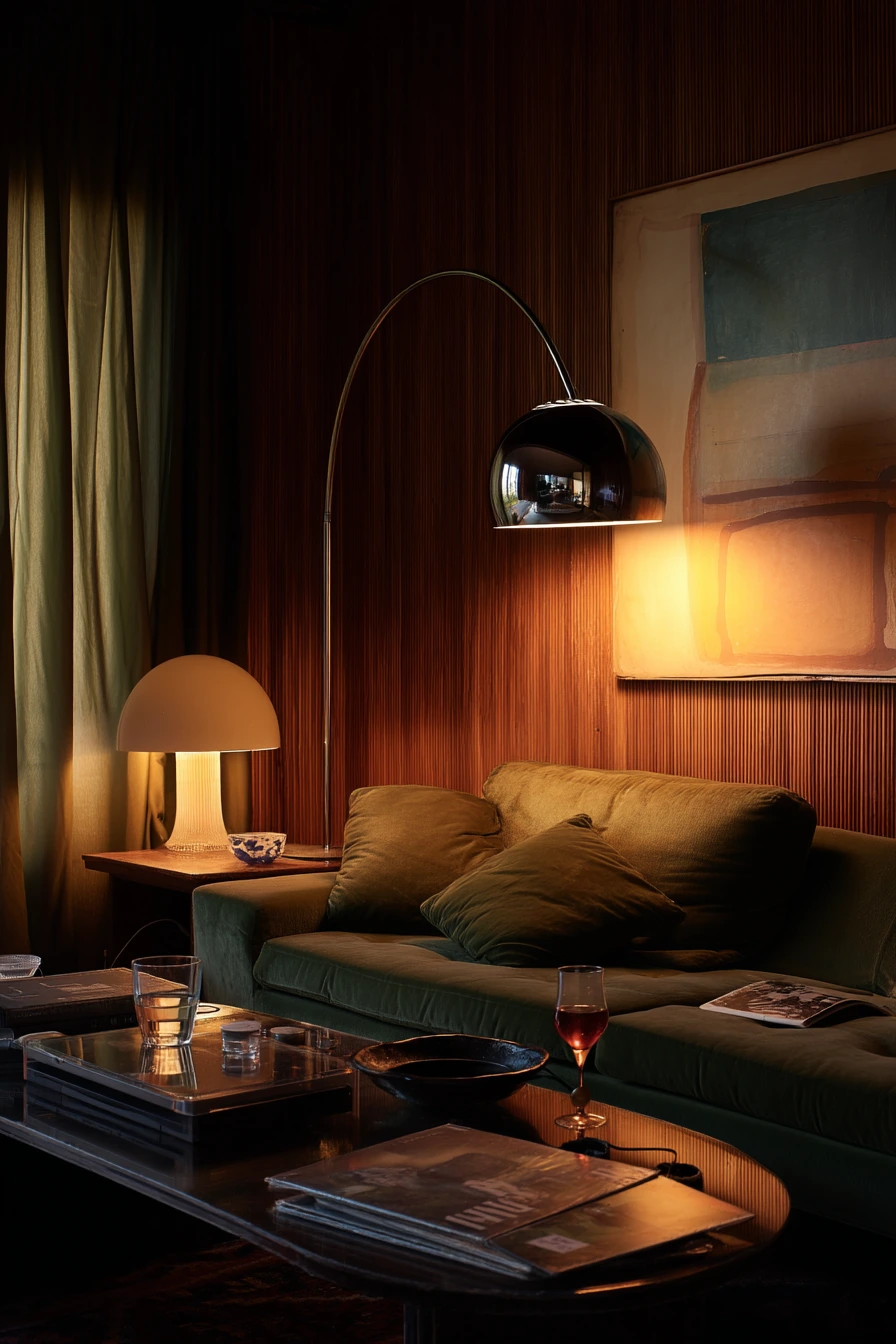
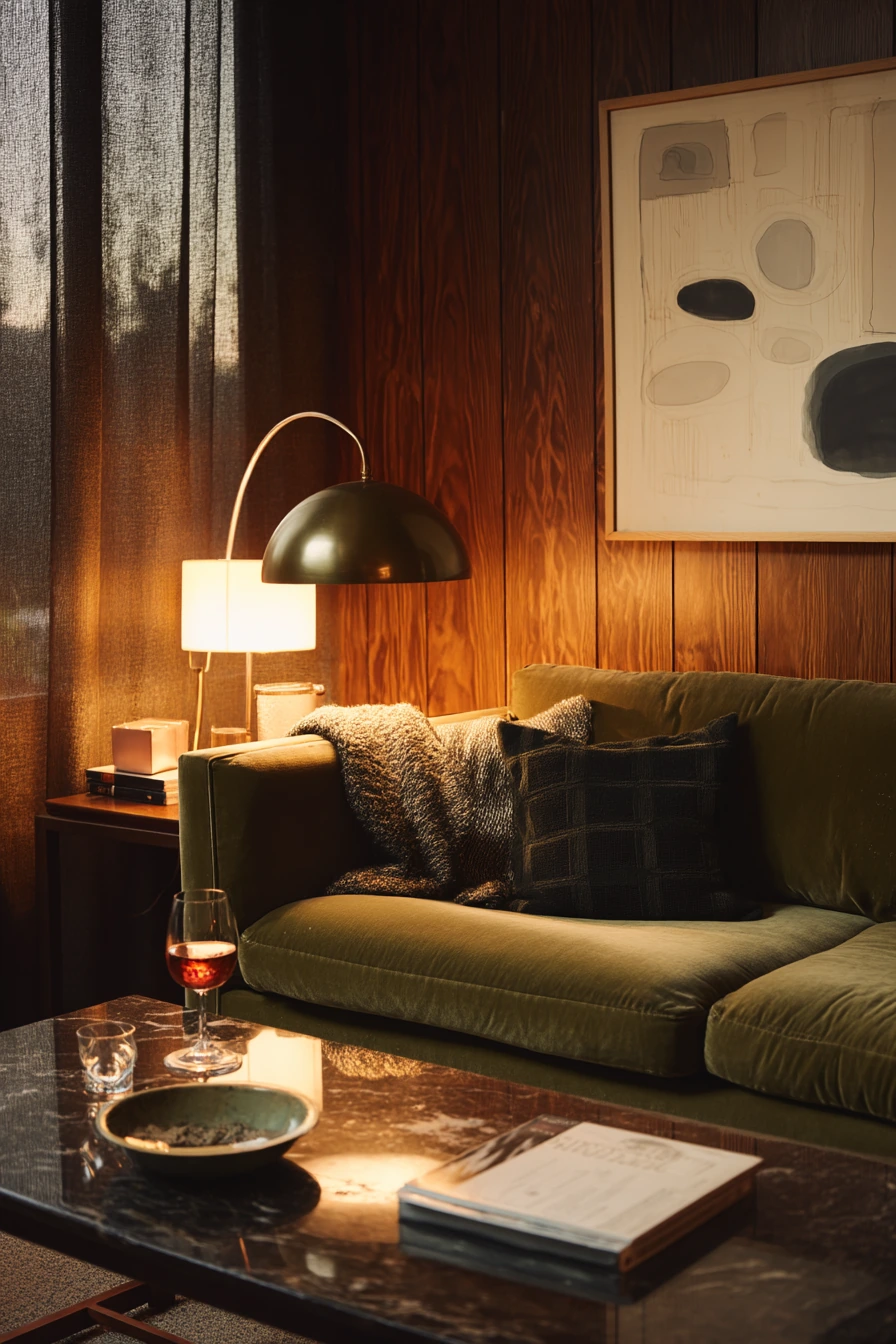
A moody 70s living room works best when you lean into darker materials and warm lighting. If you have a paneled walnut wall, treat it like your feature wall and keep the rest of the palette simple. A suede sofa in moss green pairs well with walnut because both feel deep and natural. Add texture with heavy curtains, so the room looks soft even when the light outside fades.
Lighting should come from a few warm sources instead of one bright overhead. A brass arc lamp gives a focused glow over the seating, while a globe side lamp adds a lower, softer light that makes the space feel intimate. A smoked glass coffee table adds shine without looking modern, and it reflects the lamp light in a gentle way. Choose oversized abstract art to balance the dark wall and keep the look bold, as many 70s rooms used large, simple shapes.
Keep the styling real and relaxed. A wine glass, a paperback, and a folded cardigan look natural on a table at dusk. A ceramic ashtray dish can be used as a catchall for keys or a charging cord so it feels intentional, not messy. If you play records, leave one record sleeve on the table as part of the decor. This room is about quiet comfort, so keep surfaces mostly clear and let the materials do the work.
- Use two to three lamps and skip harsh ceiling light at night.
- Pair walnut with moss, camel, and cream for balance.
- Choose one large artwork piece instead of many small frames.
- Keep glass surfaces clean so they look rich, not dusty.
- Hide cords in a tray or behind the sofa to keep the mood tidy.
Pro Design Tip: Pick warm bulbs (around 2700K) in every lamp so the room keeps the same amber tone, even with mixed fixtures.
Budget Considerations: Suede seating and brass arc lamps can be expensive; look for microfiber “suede” upholstery and a secondhand floor lamp with a curved arm you can update with a new shade.
8 Budget 70s Living Room With Thrifted Finds
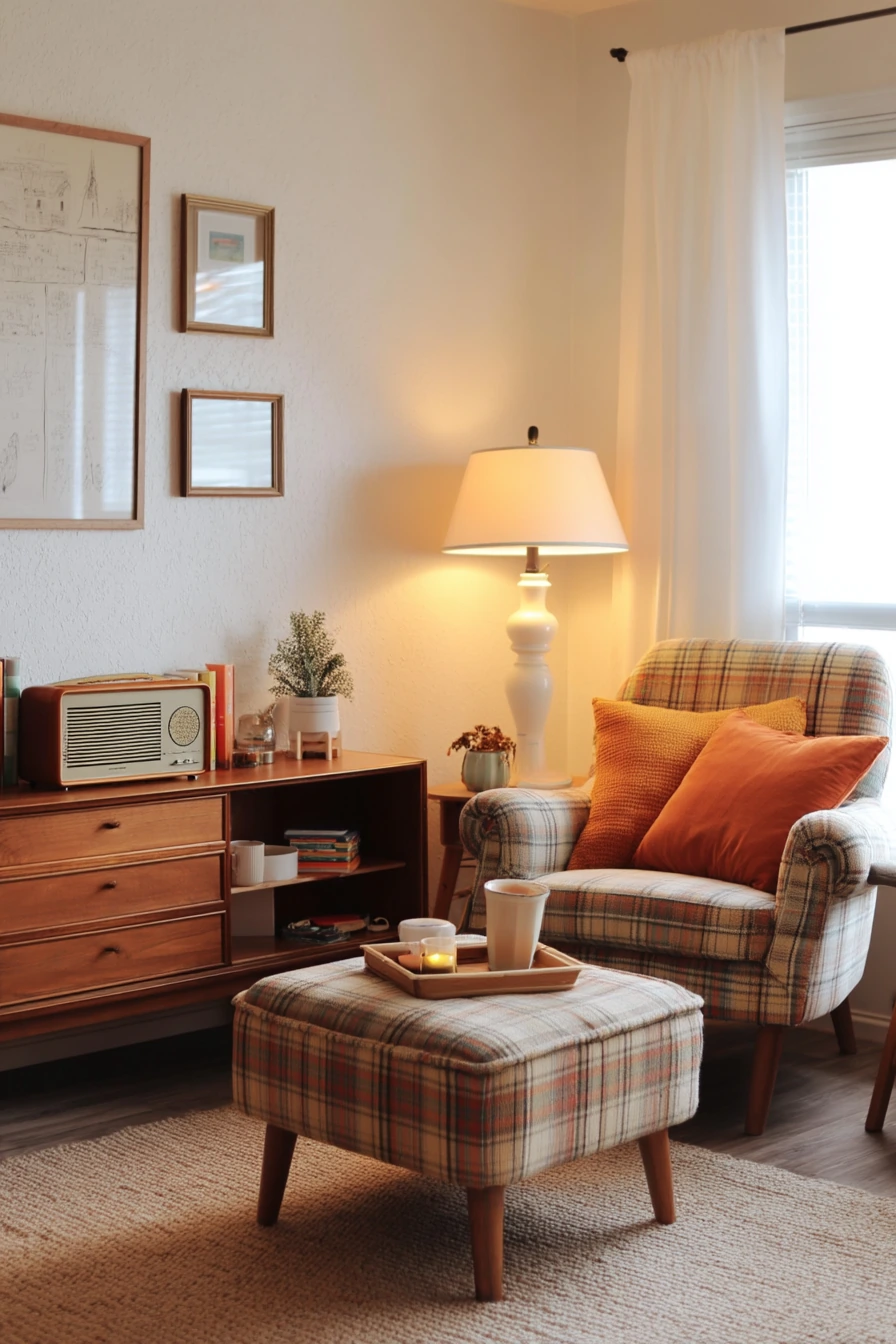
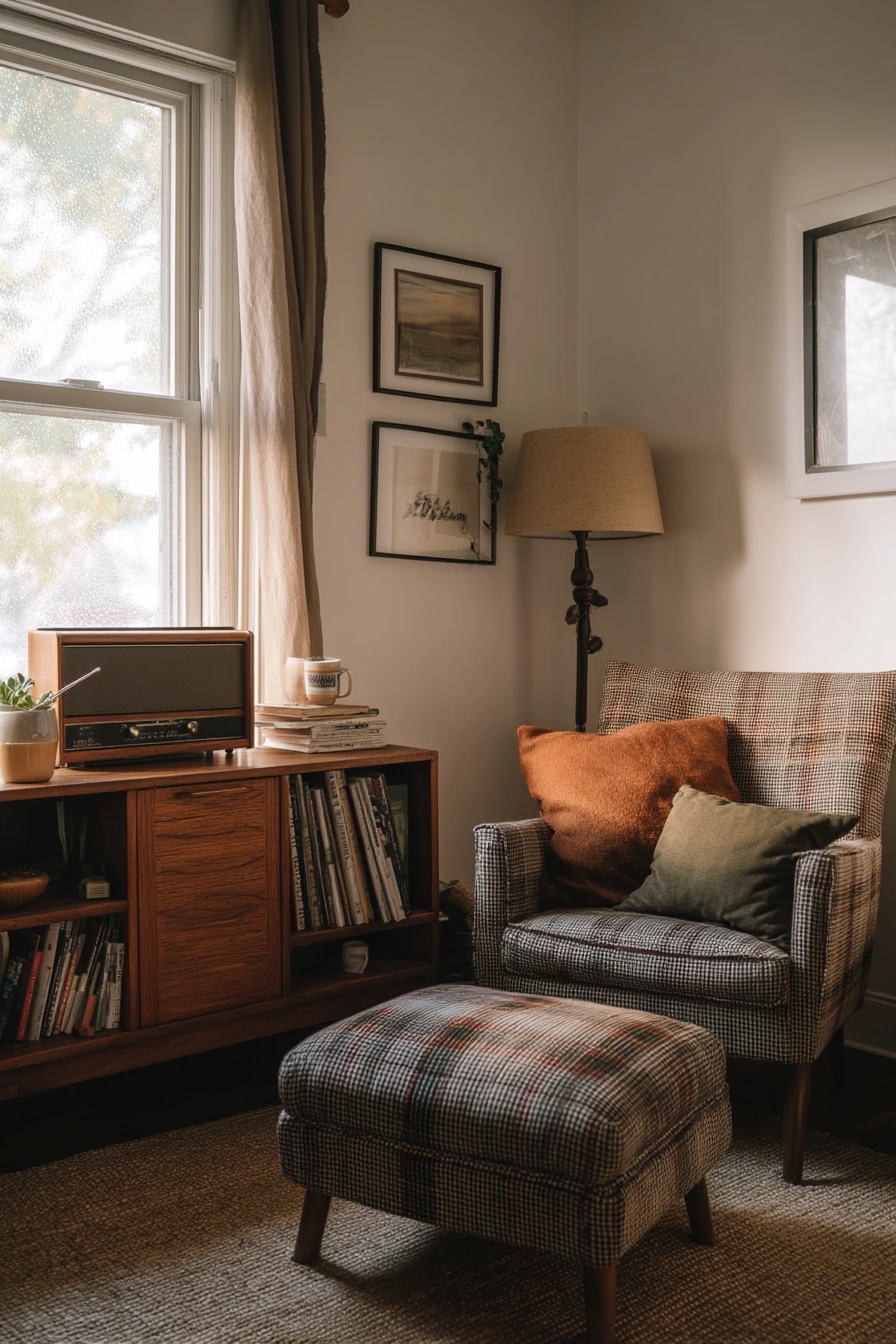
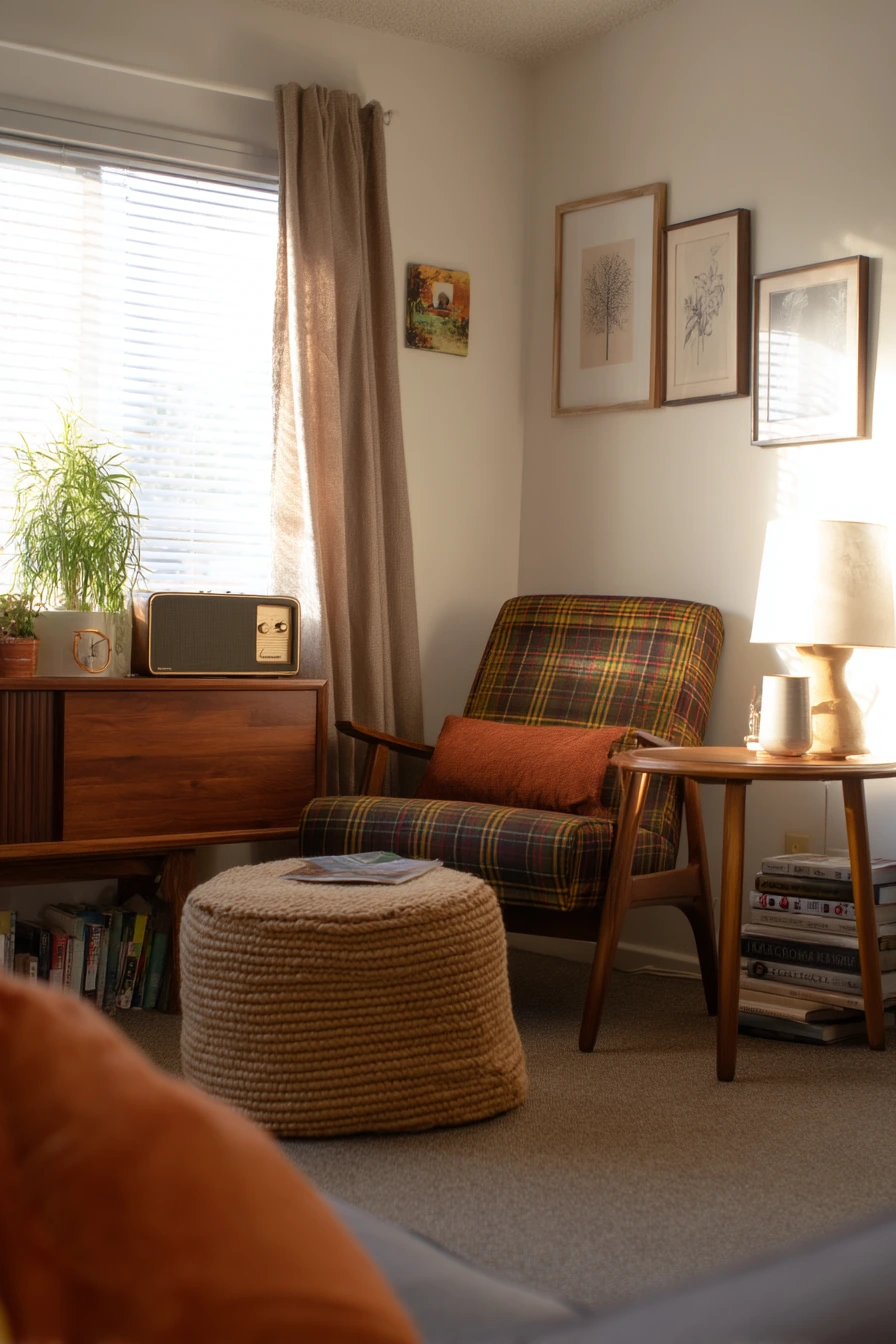
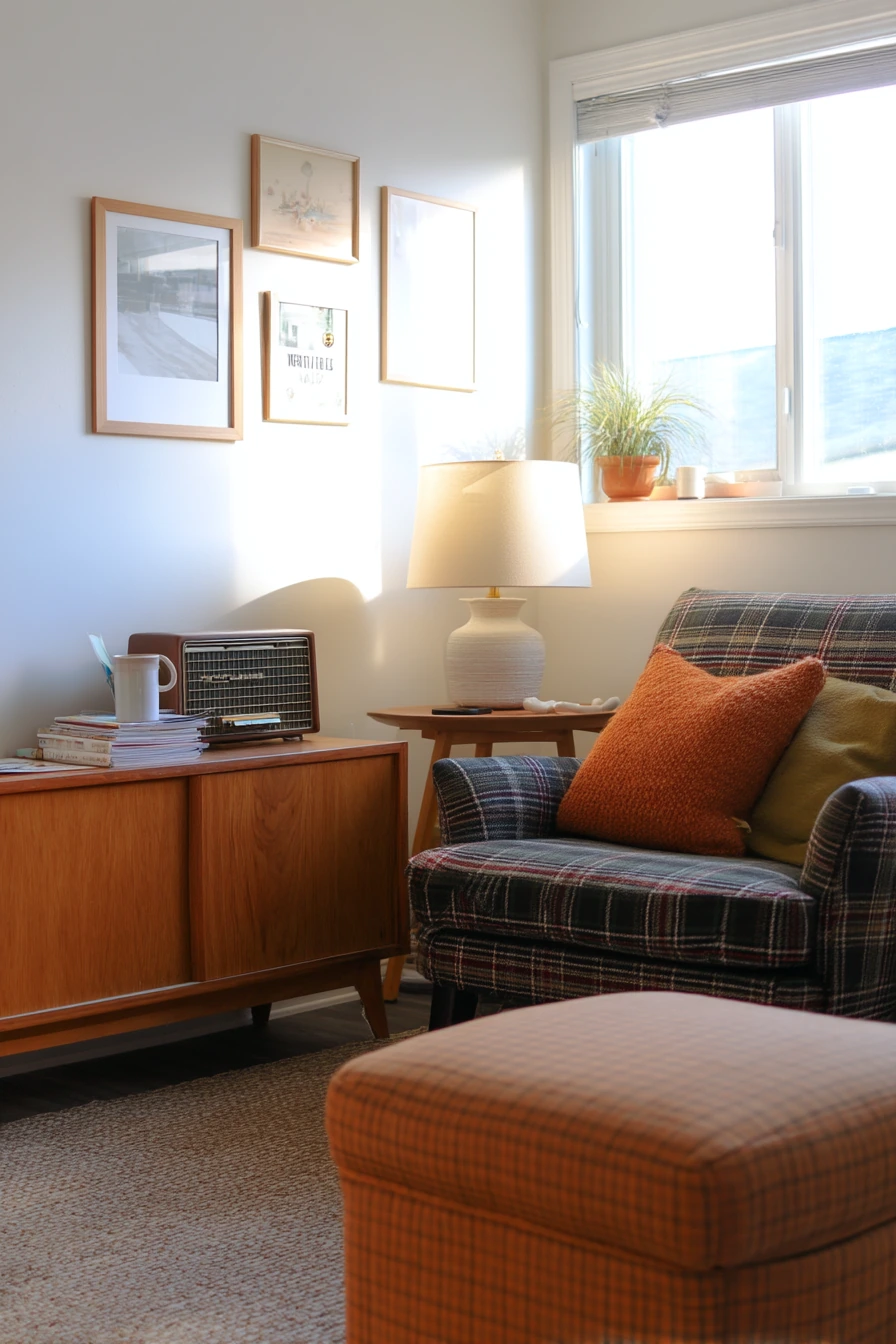
A budget-conscious 70s-inspired living room is mostly about smart secondhand finds and a tight color plan. Start with a thrifted teak console if you can find one, or any wood console with warm undertones. Add a secondhand plaid armchair for a true vintage feel, then keep the rest of the seating simple. A low ottoman can act as a footrest or extra seat, and it is often cheaper than a full chair.
Build the color story with orange and olive pillows, then ground the space with a jute rug. Jute brings that natural texture many 70s rooms had, and it is tough for daily use. Add a ceramic table lamp for soft light, and keep wall decor easy: simple framed prints look clean and still match the era when you pick warm, earthy art. A retro radio or small vintage speaker adds personality without needing a big budget.
Make the room feel lived-in but not messy. Use a mail stack tray on the console, and keep receipts in one small bowl so they do not spread. Place a mug on a coaster to protect the wood, and fold a throw on the ottoman so it looks ready for use. A small plant on the sill adds life and helps the room feel finished, even if your furniture is a mix of different sources.
- Choose a two-color palette (orange and olive) to guide all purchases.
- Use plaid as the main pattern, then keep other textiles solid.
- Add one ceramic lamp for warm light and a handmade look.
- Group paper clutter in one tray so the console stays usable.
- Mix thrifted wood tones by repeating one tone in frames or bowls.
Pro Design Tip: When mixing secondhand pieces, unify them with one consistent “finish family,” like warm wood plus matte ceramics, so the room reads as a set.
Budget Considerations: If teak is out of reach, choose any sturdy wood piece and use a warm wood wax or gel stain to shift the tone closer to that vintage look.
9 Plant-Filled 70s Living Room With Sun Shadows
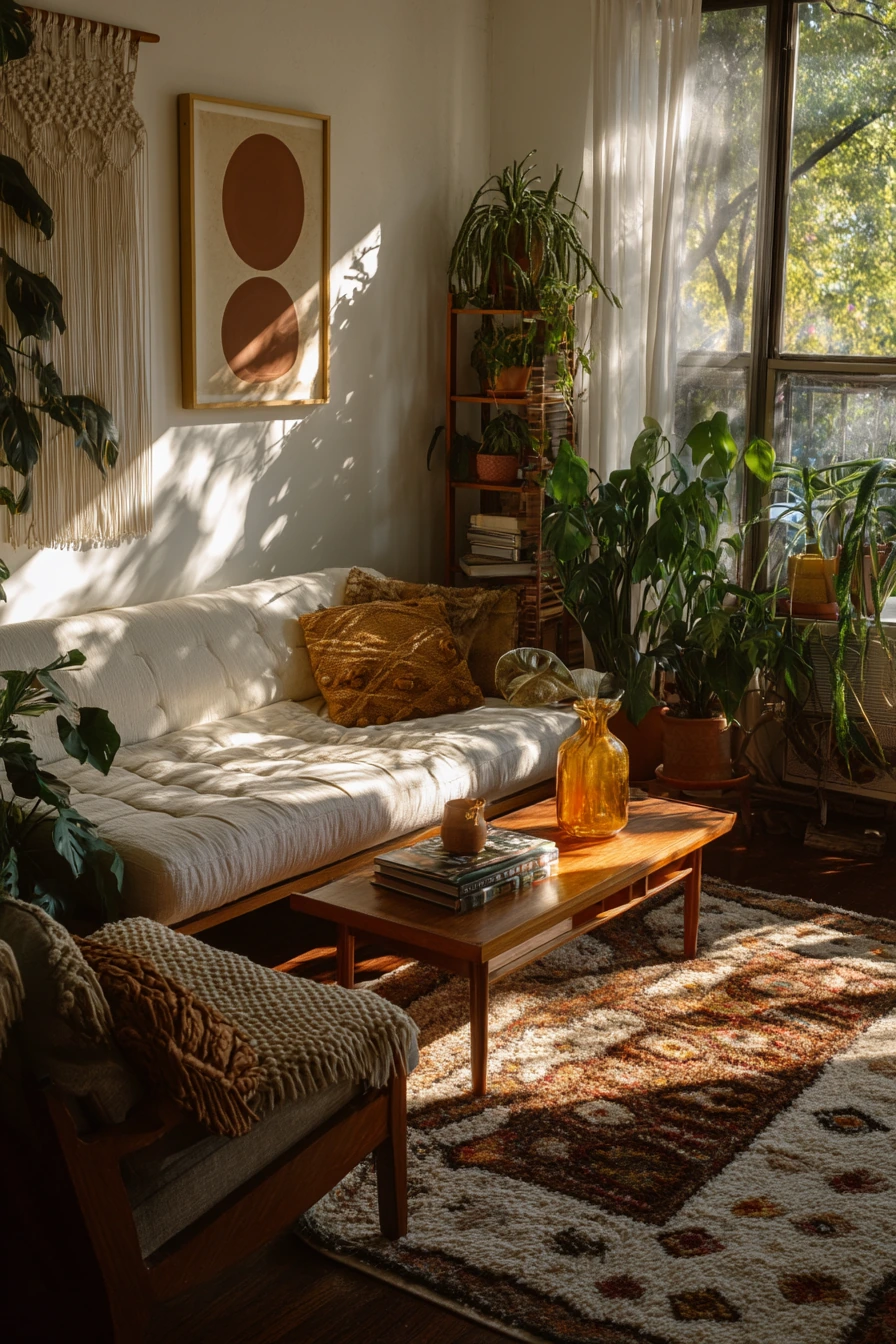
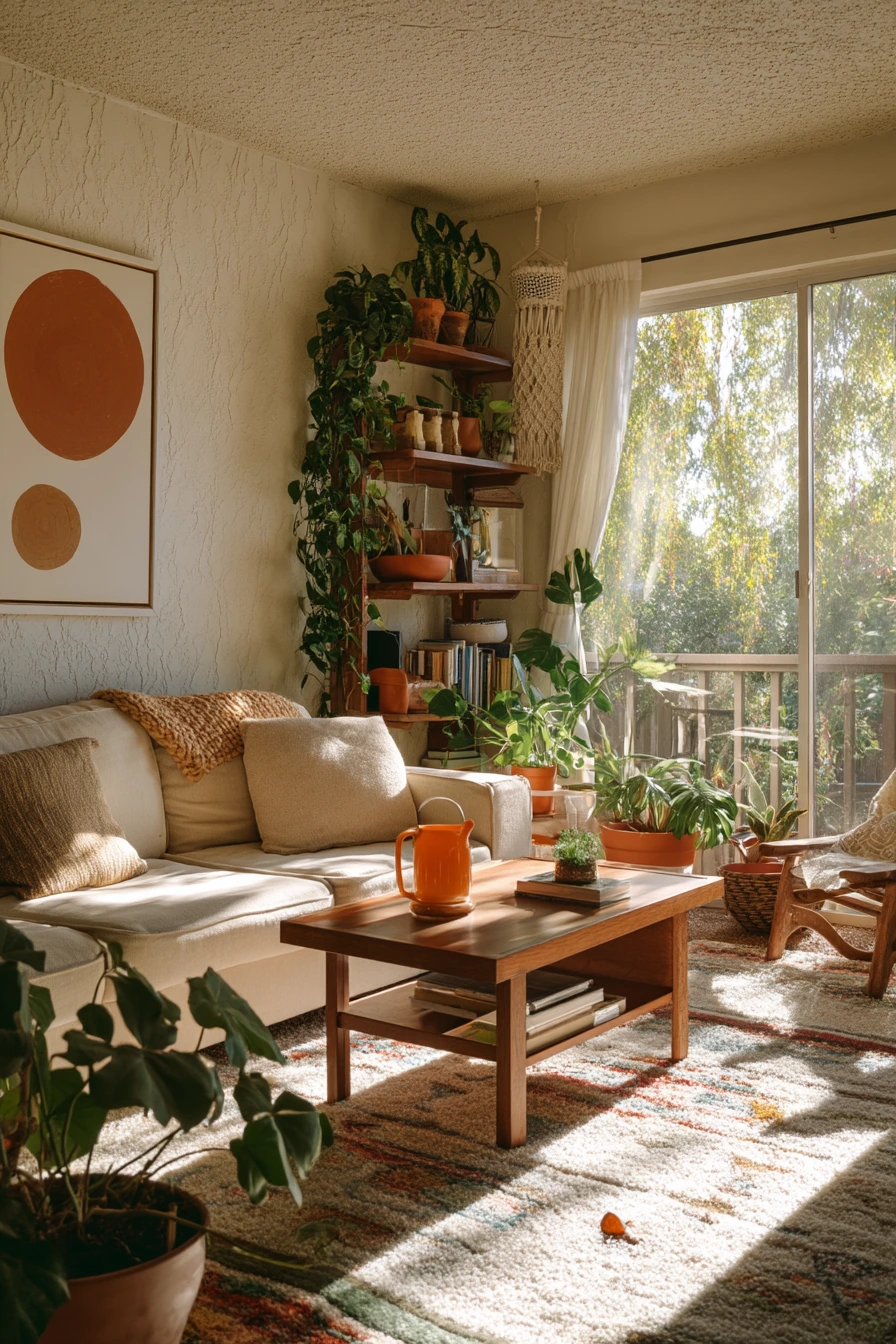
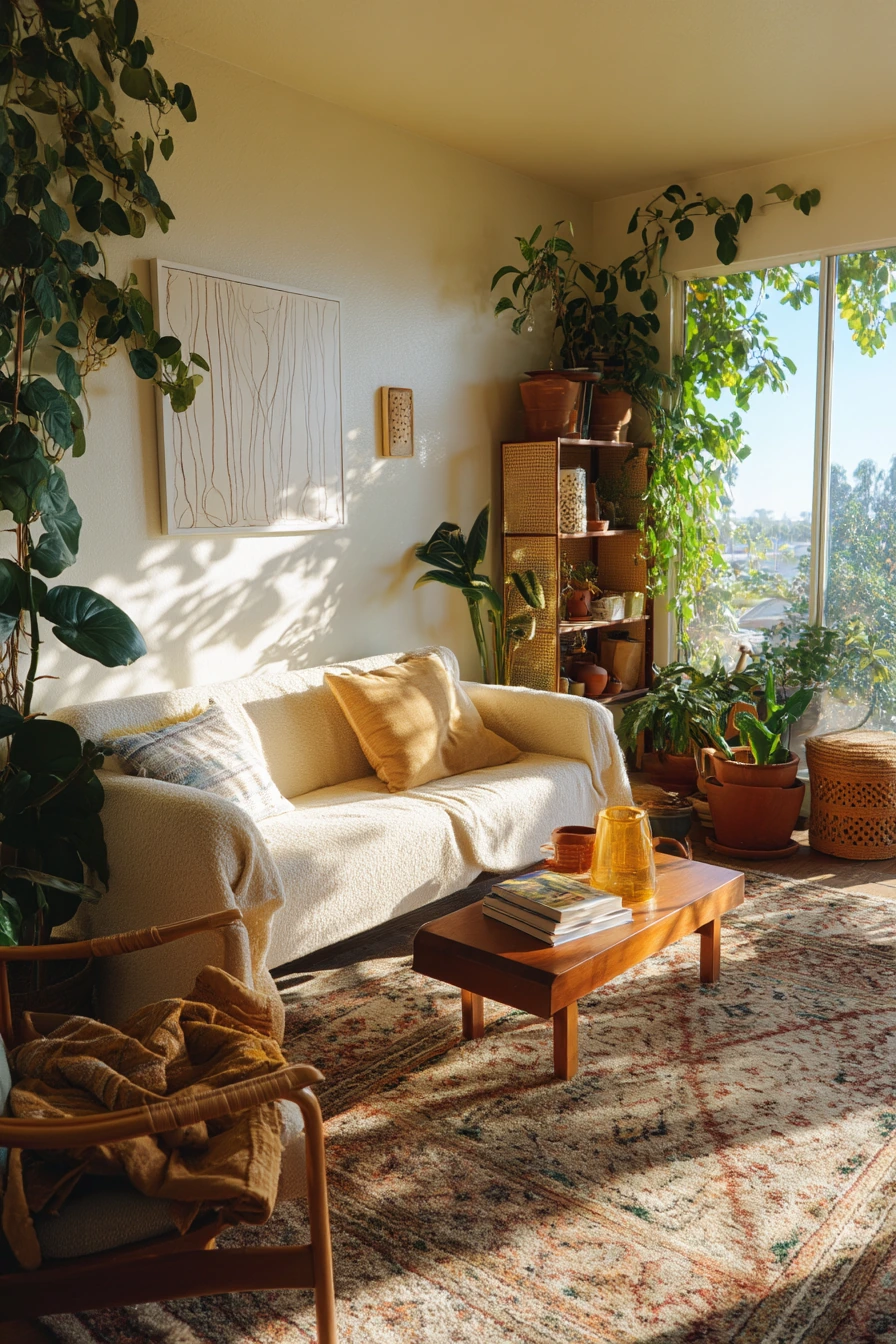
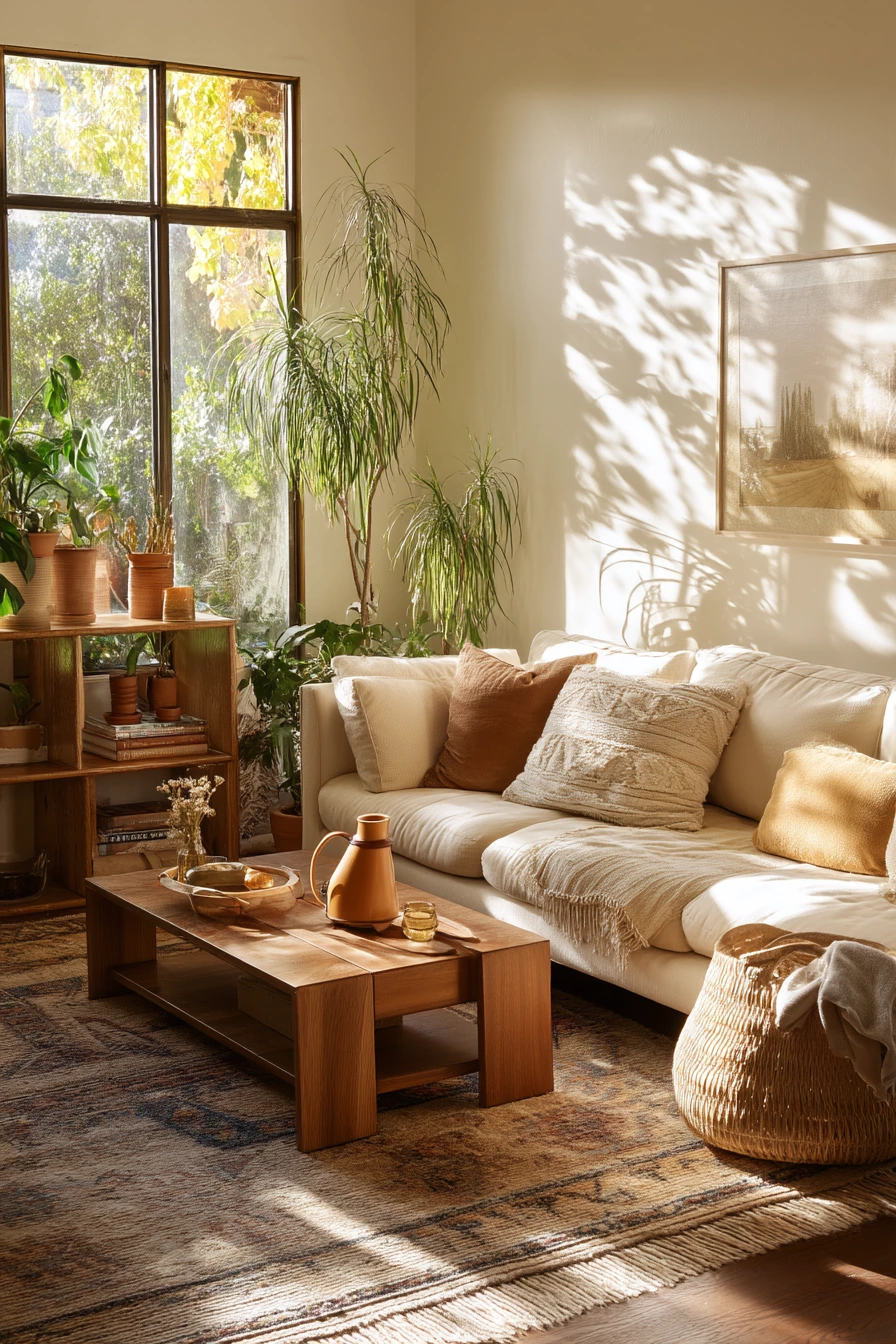
A plant-loving 70s living room feels sunny, organic, and relaxed. Start with a low cream sofa so the greenery can stand out. Add a teak coffee table for warmth and a natural anchor in the center. Then layer in terracotta pots in a few sizes, which instantly brings in that earthy 70s tone without needing a lot of extra decor.
Use vertical space for plants so the floor stays clear. A macramé hanger near a window adds height and texture, while cane shelving can hold smaller plants and amber glass accents. A patterned rug keeps the room from feeling flat, and it helps tie together cream upholstery, wood, and green leaves. Choose wall art with earthy colors, like rust, ochre, and brown, so it connects to the terracotta and teak.
Keep the plant routine part of the styling. A watering can by the window looks natural and reminds you to care for the plants. Gardening gloves on a chair and a small book stack make the room feel like a real home, not a staged set. If one leaf trail ends up across the floor, it adds to the lived-in feel, but you can still keep it neat by trimming weekly and using saucers under pots. A throw blanket slightly bunched on the sofa adds softness and makes the room inviting.
- Group plants in threes with different heights for a natural cluster.
- Use terracotta plus one other pot finish (cream or amber) for variety.
- Place the largest plant near the window to catch bright morning light.
- Choose a rug pattern that includes warm tones to match the wood.
- Keep plant tools in a basket so they look tidy when not in use.
Pro Design Tip: Balance the room by matching plant “weight” on both sides of the sofa, like one tall plant on one side and two medium plants on the other.
Budget Considerations: Large plants can add up; start with smaller ficus, pothos, or snake plants and use plant stands to give them height without buying big specimens.
10 Hosting-Ready 70s Living Room for a Casual Gathering
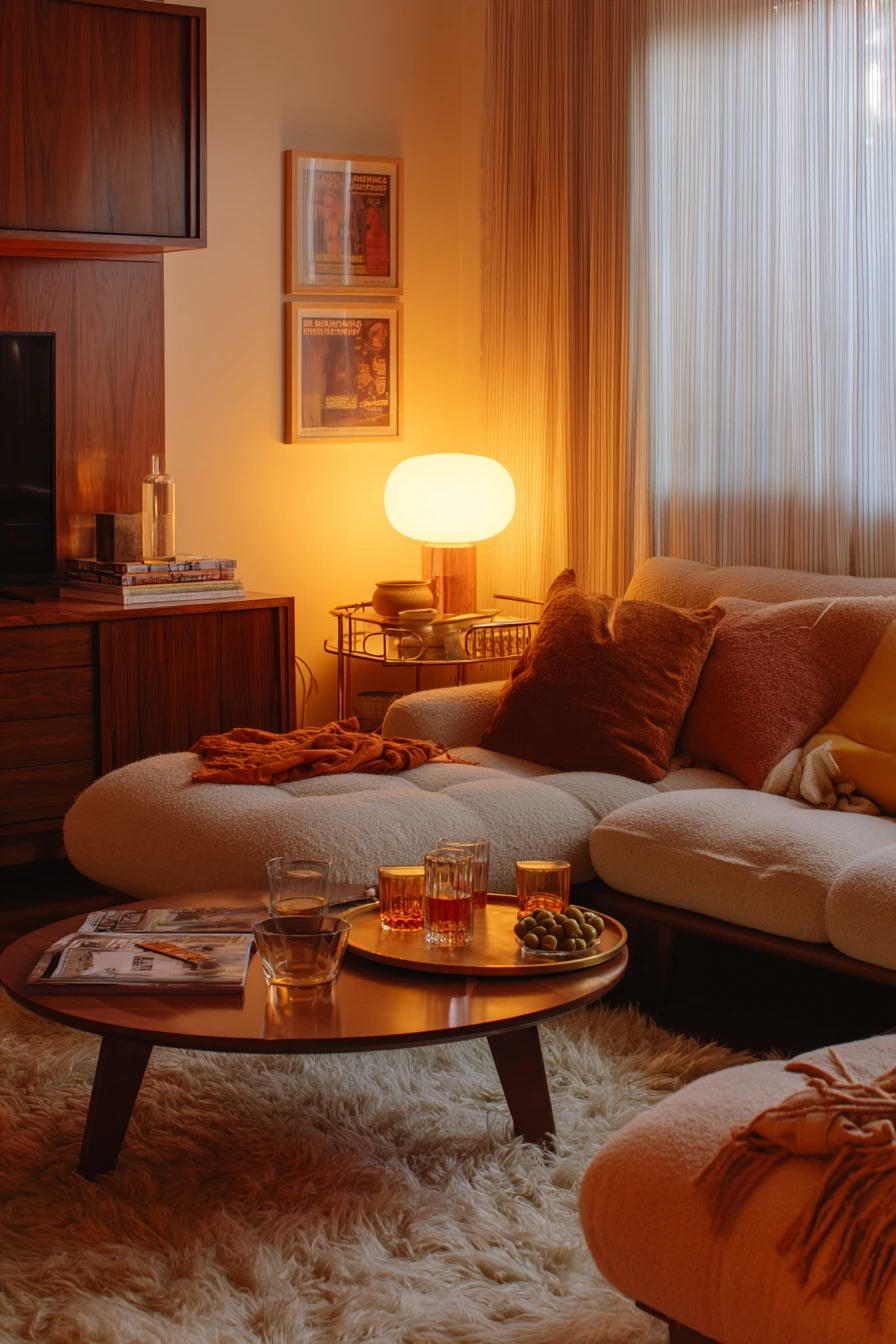
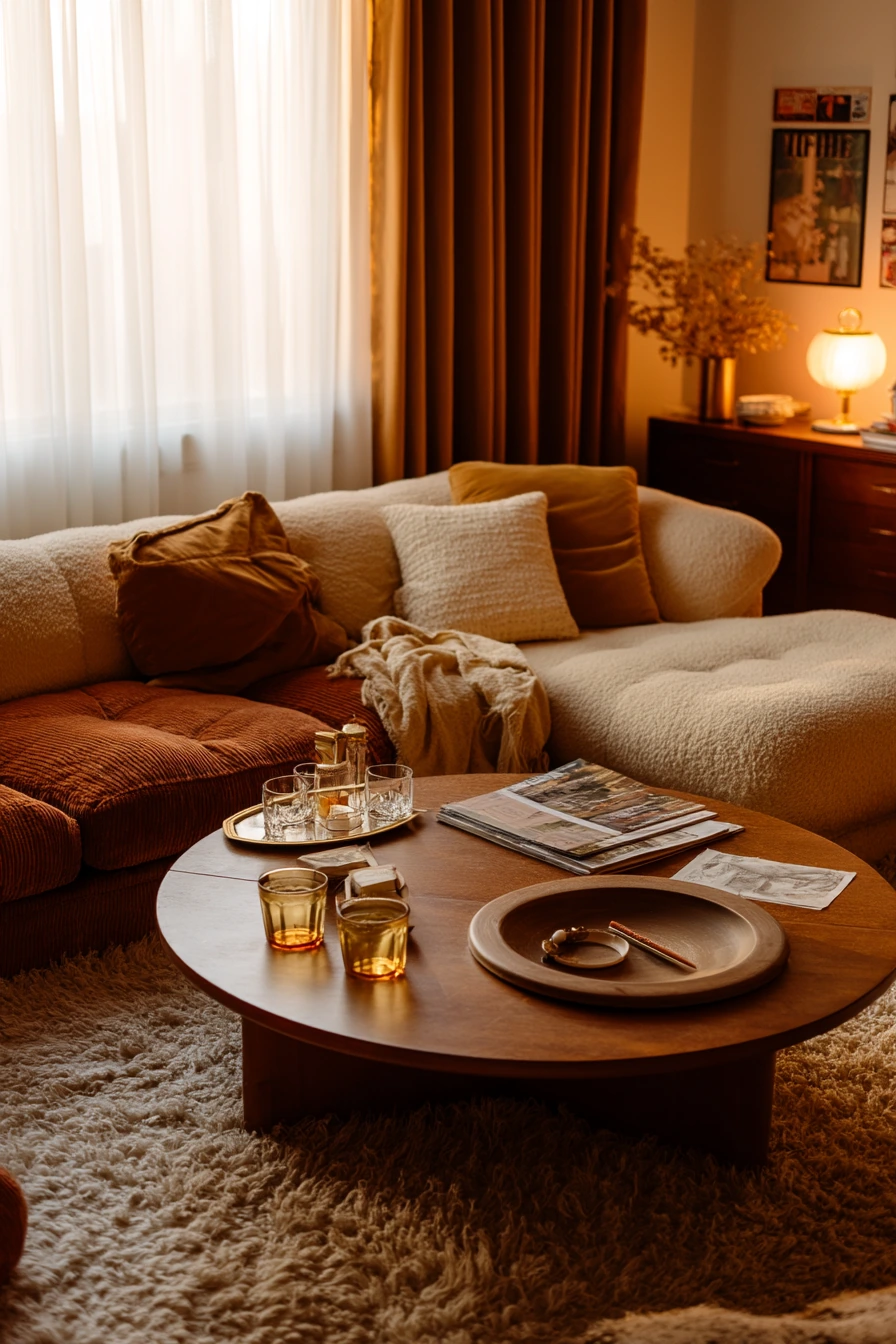
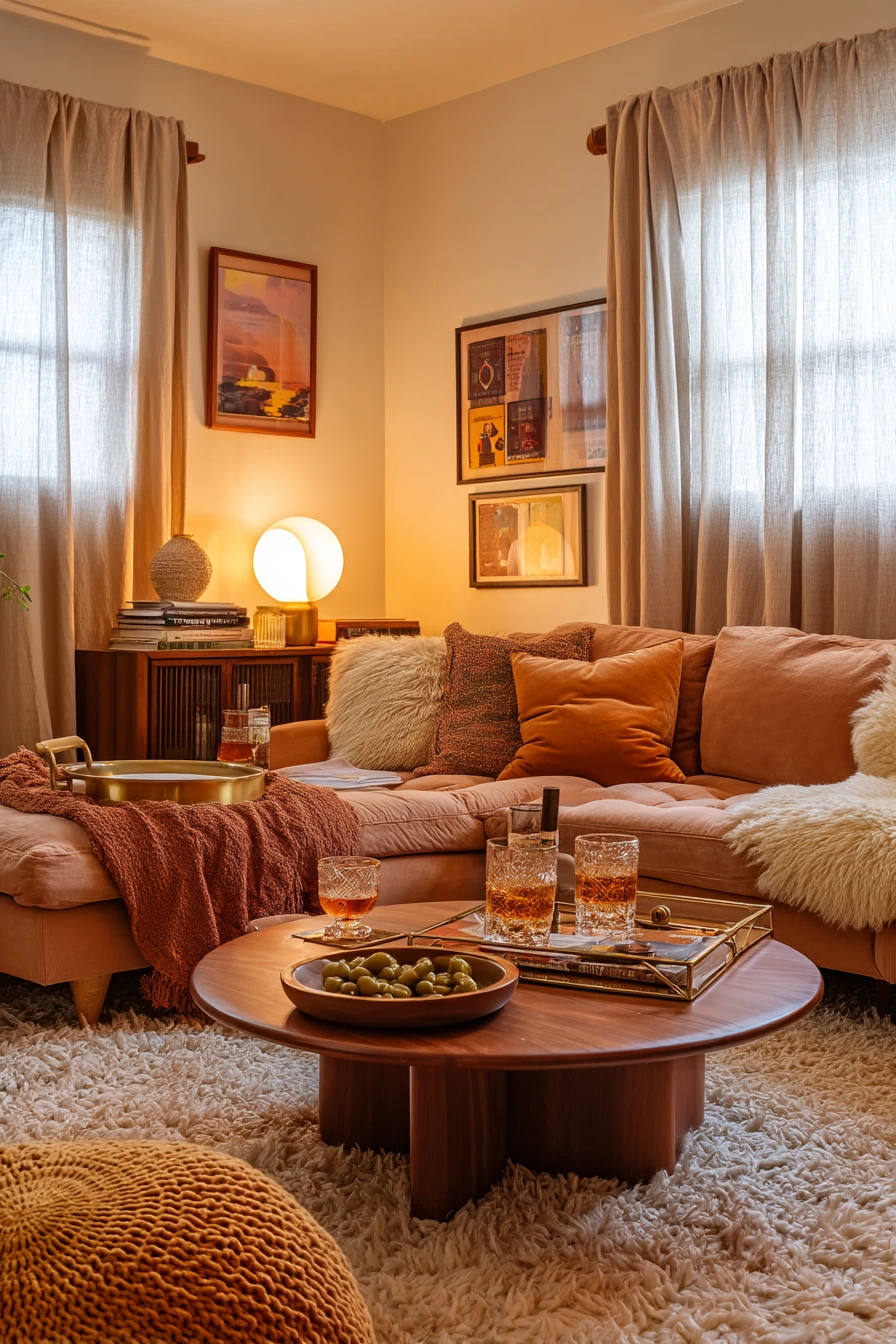
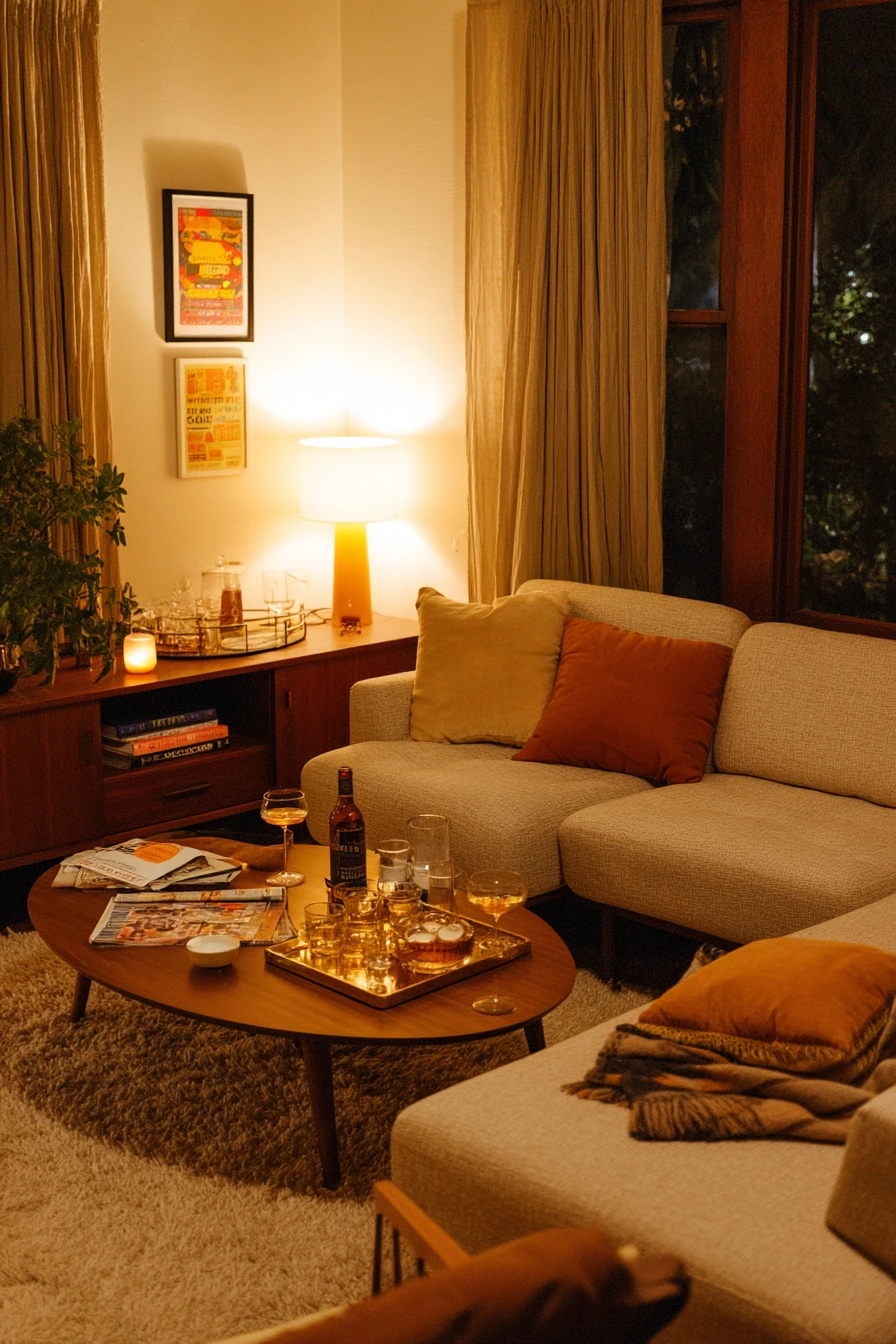
A 70s living room set up for friends should feel open, warm, and easy to gather in. Start with a walnut media cabinet as the main storage piece, then choose a low sectional in rust and cream so several people can sit comfortably. A round coffee table keeps the center friendly since everyone can reach snacks and drinks without sharp corners or awkward angles.
Bring in classic entertaining details. A vintage bar cart with amber tumblers sets the tone and makes hosting simple, even in a smaller room. Add a brass lamp for warm evening light, and use a shag rug to make the seating area feel cozy and relaxed. Framed album covers are an easy wall idea that fits the decade and adds personal style. Finish with textured drapes so the room looks soft when the lamps are on.
Style it like a real night in. Keep a corkscrew on a small tray, and set out olives in a bowl with napkins that look casually crumpled, not perfectly folded. Jackets over a chair make the room feel active and welcoming. Leave one magazine open on the table for that “hangout” feel, but keep the rest stacked so surfaces stay usable. Hide a phone charging spot near the sofa using a cord cover or a basket, so it stays practical without looking messy.
- Use a round coffee table to support conversation and easy reach.
- Keep the bar cart close to seating but out of the main walkway.
- Choose amber glass for a warm glow under lamp light.
- Hang album covers in a simple grid for a clean, retro wall.
- Set out snacks on one tray so cleanup is fast.
Pro Design Tip: For a hosting layout, create a clear loop path (door to seating to bar cart) so guests can move without squeezing past furniture.
Budget Considerations: Vintage bar carts can be costly; use a small rolling utility cart and upgrade it with a wood tray, amber glasses, and a thrifted ice bucket.
70s living room ideas work best when you mix warm wood, low seating, and cozy texture, then keep the space practical for real life. Small details like amber glass, brass lighting, macramé, and earthy pillows can shift a room quickly.
To get started, choose one focus area: sofa color, a walnut or teak storage piece, or a new rug. Then add one layer at a time so your living room stays comfortable and not crowded.
FAQ
What colors make a living room look 70s? Burnt orange, mustard, avocado green, rust, and warm browns are the easiest starting colors. Pair them with cream or tan so the room stays balanced.
How do I add 70s style without replacing my sofa? Use pillow covers in rust or mustard, add a shag or patterned rug, and swap in a brass or smoked glass lamp. A macramé hanger and teak-toned decor also help.
What wood tones fit 70s decor? Walnut and teak are the classic choices. If you have mixed woods, keep them in the same warm range and repeat one tone in frames or shelving.
Are shag rugs practical for families and pets? They can be, but choose a low-pile shag or a washable option. Vacuum often and use a rug pad to keep it from shifting.
What lighting looks most authentic for a 70s living room? Use multiple lamps with warm bulbs and avoid cool white overhead light. Brass floor lamps, globe lamps, and ceramic table lamps fit well.
How can renters get the 70s look without wall damage? Use peel-safe curtains, lean framed art on a console, and add a mirror with removable hooks if needed. Focus on textiles and movable pieces first.
Where should I shop for budget 70s living room decor? Check local thrift stores, Facebook Marketplace, estate sales, and online resale apps. Look for solid wood furniture, vintage glass, and quality lamps you can rewire if needed.