
Attic living room ideas can turn an awkward, sloped-ceiling space into the coziest room in the house. With the right layout, smart storage under the eaves, and warm lighting, an attic can feel open and easy to use.
This guide breaks down 10 real-life attic living room styles, from family-friendly zones to renter setups and budget weekend lounges. Each idea includes simple styling moves you can copy, plus practical furniture tips that work with low ceilings and tight corners.
You will learn how to place a sectional or loveseat, where to put a TV wall, how to use built-in cubbies, and how to layer rugs and curtains for comfort. If you came from Pinterest, use the lists under each photo to recreate the look in your own home.
Every section ends with one Pro Design Tip and one Budget Consideration so you can choose upgrades that fit your space and your wallet.
1 1. Sunlit Attic Family Lounge
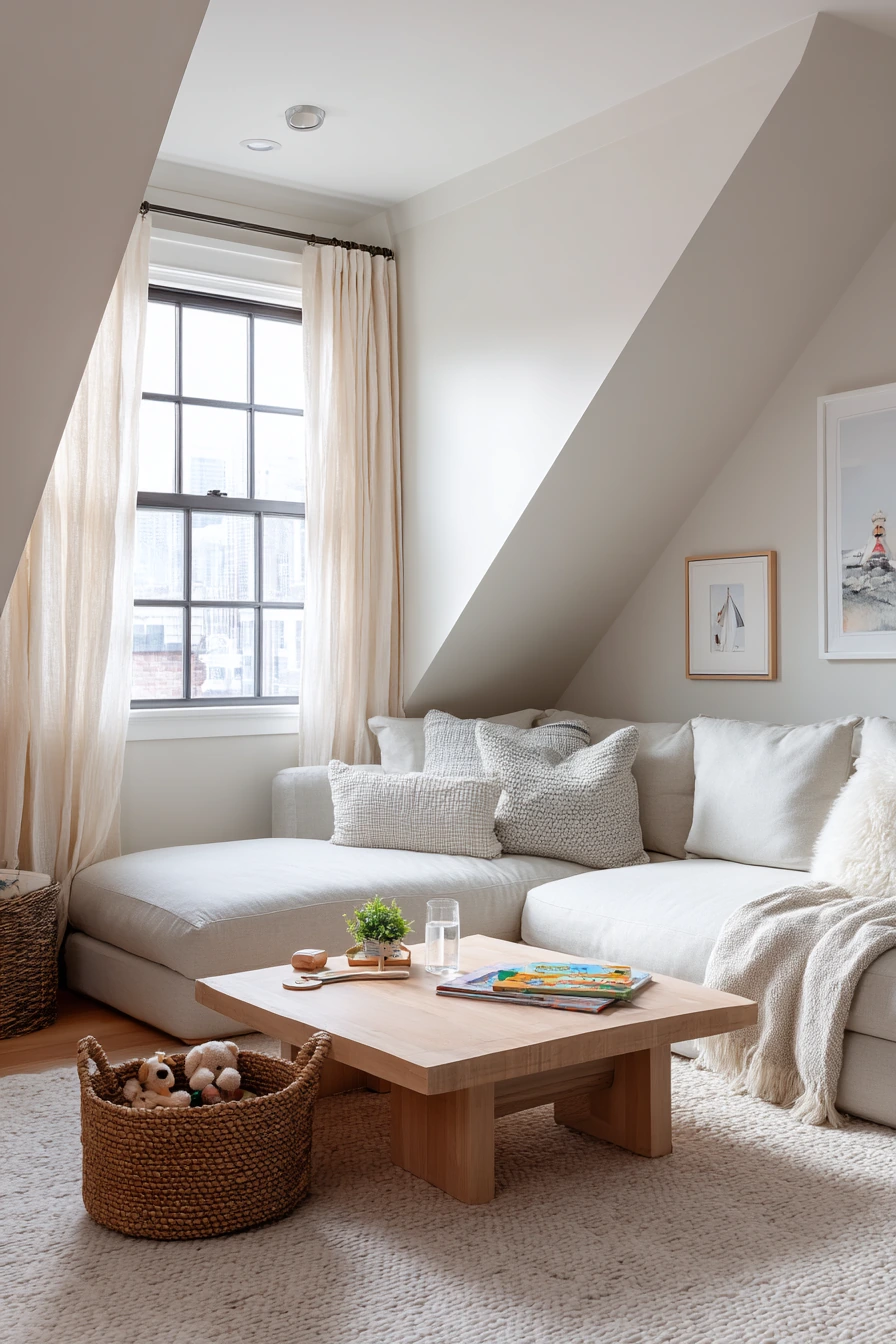
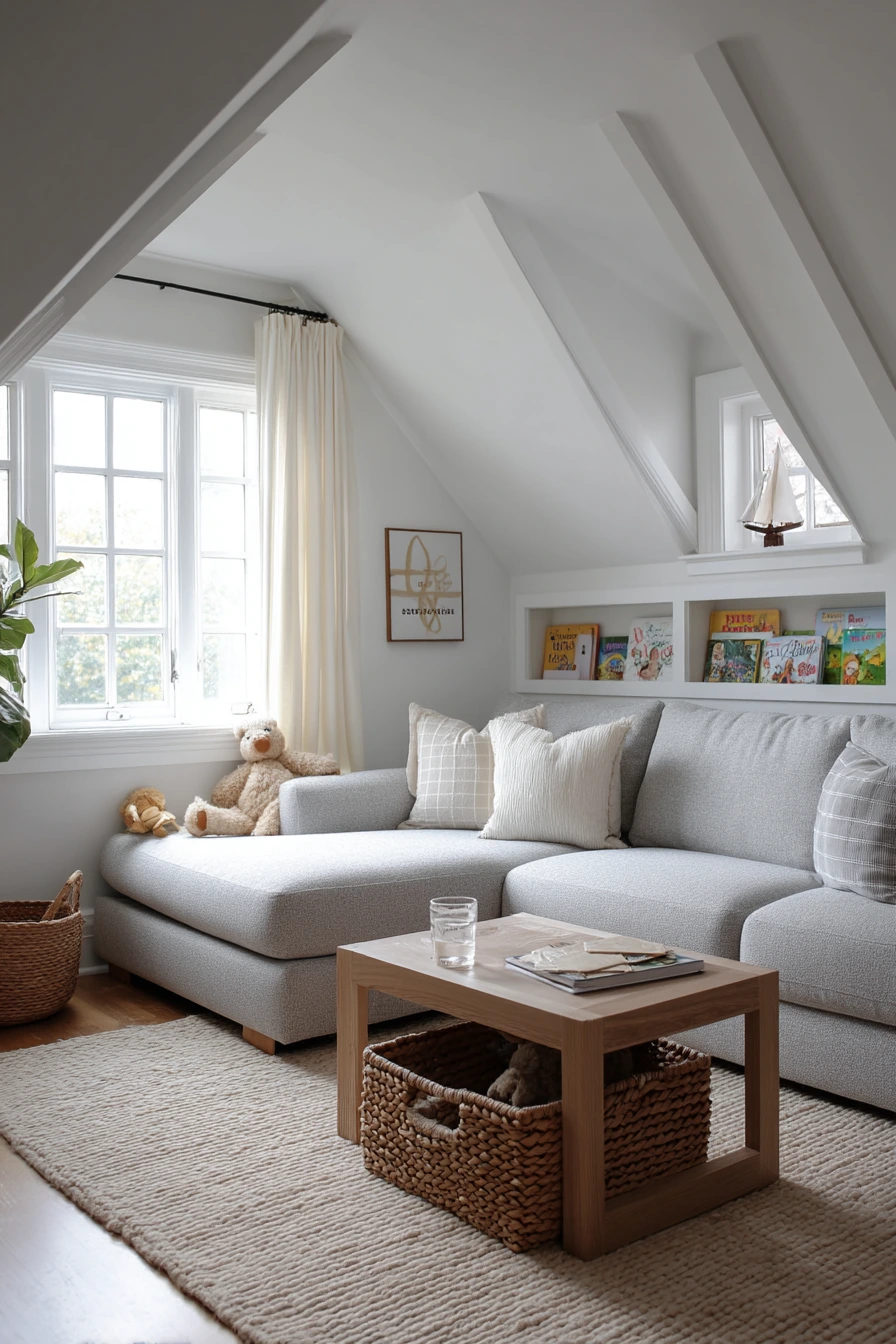
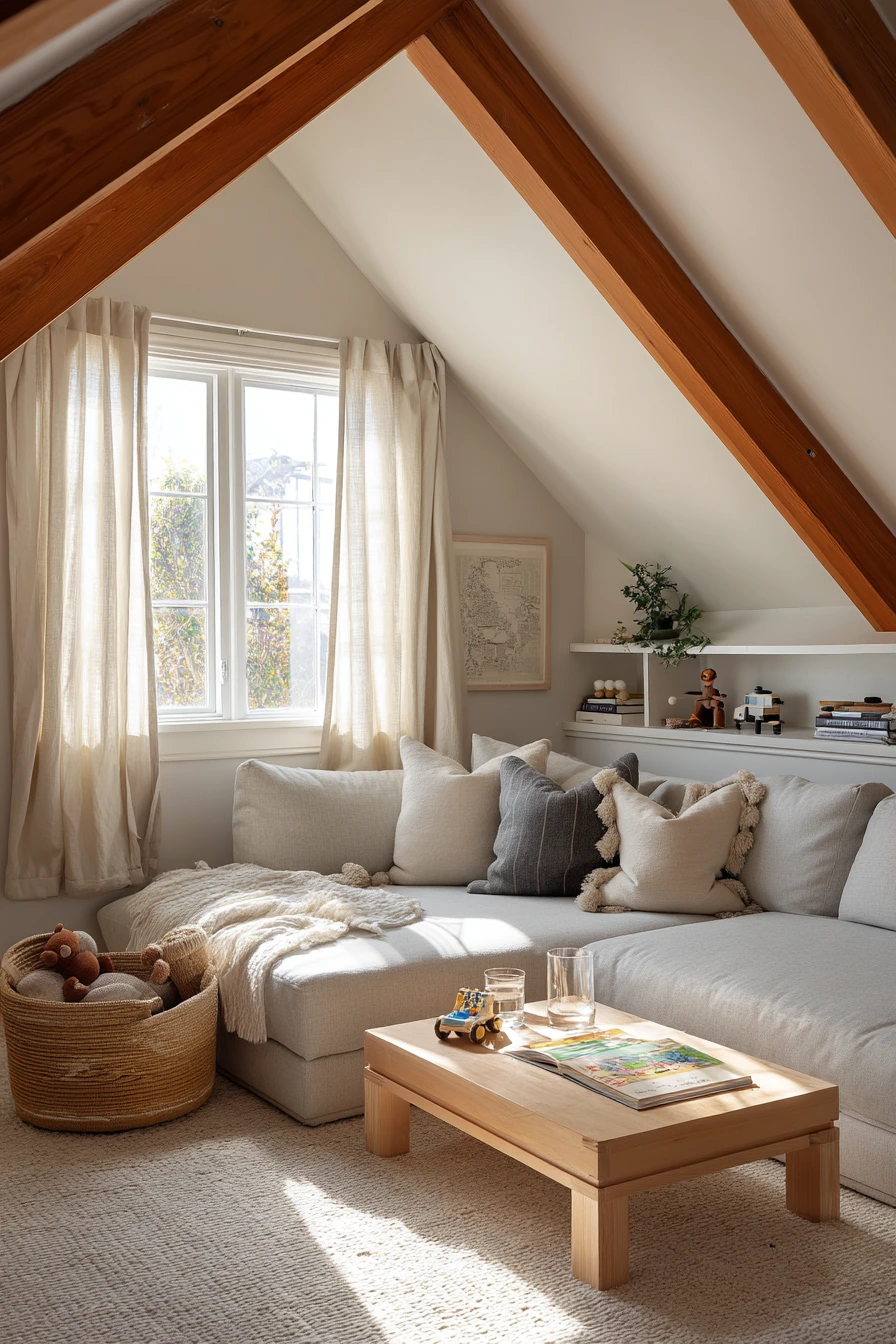
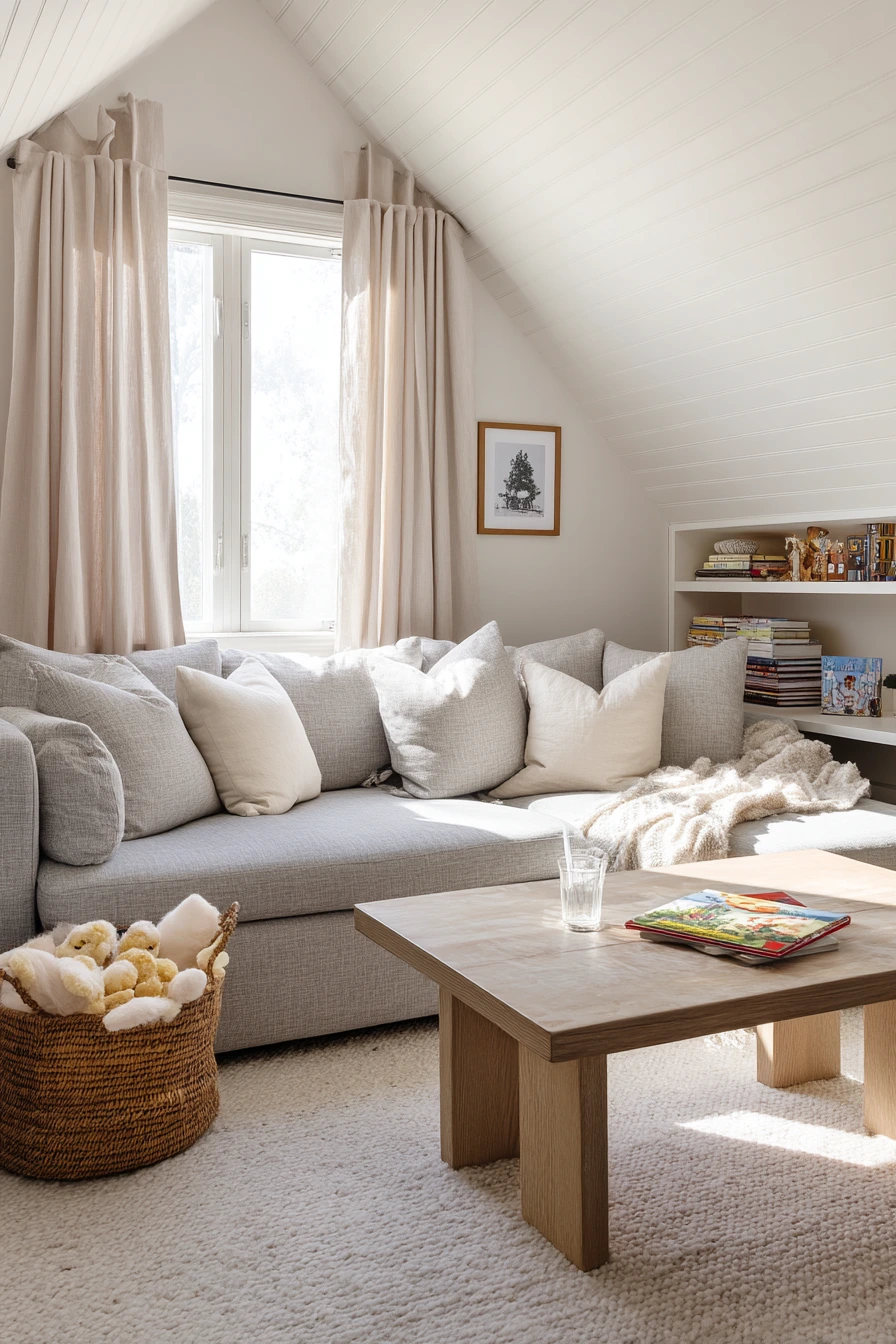
A real attic living room for a young family needs to feel cozy and functional, not fragile. Start with a low-slung sectional that fits under the slope and keeps sightlines clear. Place an oak coffee table in the center so there is a sturdy spot for snacks, games, and everyday life.
Use built-in storage under the eaves to hide the loud stuff fast. Bins for blocks, puzzles, and art supplies keep the room calm without making it look empty. Add linen curtains to soften west-facing window light, and choose a soft wool rug that feels good for floor play and is thick enough for little knees.
To make it look lived-in, style with small cues you actually use: a toddler toy basket near the sectional, an open picture book on the rug, and a half-full water glass on the coffee table. Keep a charging cable draped beside the sofa, but guide it through a small cable clip so it stays safe. This kind of gentle, warm realism makes an attic feel like the main living room, not a spare space.
- Float the sectional a few inches from the knee wall so curtains can hang straight.
- Choose a coffee table with rounded corners for kid traffic.
- Put toy baskets in the lowest built-ins for easy clean-up.
- Layer a thin rug pad under the wool rug to reduce noise.
- Add one warm lamp to balance late-day window glare.
Pro Design Tip: Build storage to match the roofline and finish it in the same wall color so the eaves disappear and the room feels taller.
Budget Considerations: Built-ins can be pricey; try ready-made cube units or low dressers tucked under the slope and add doors or baskets to hide clutter.
2 2. Small-Space Reading Nook Attic
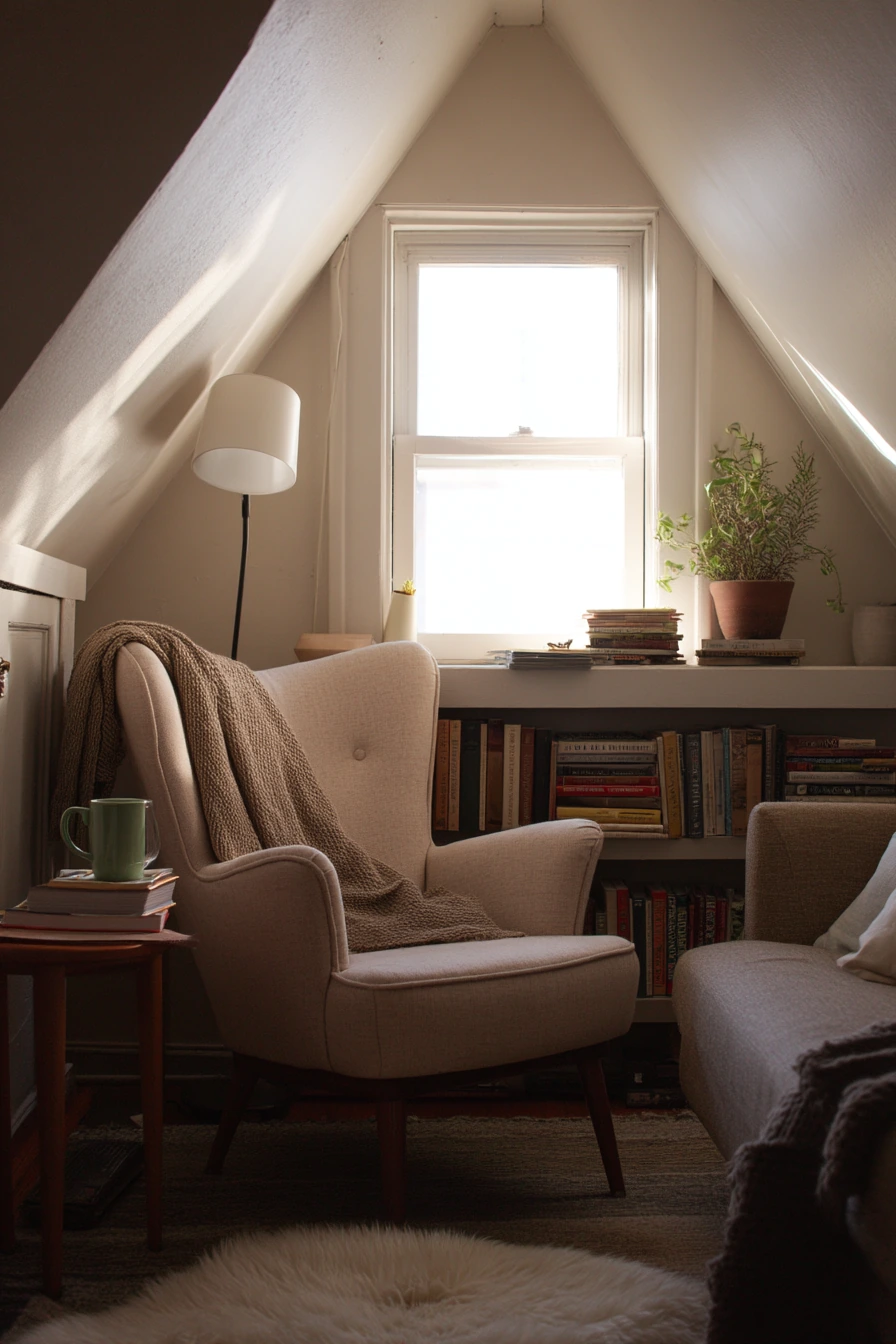
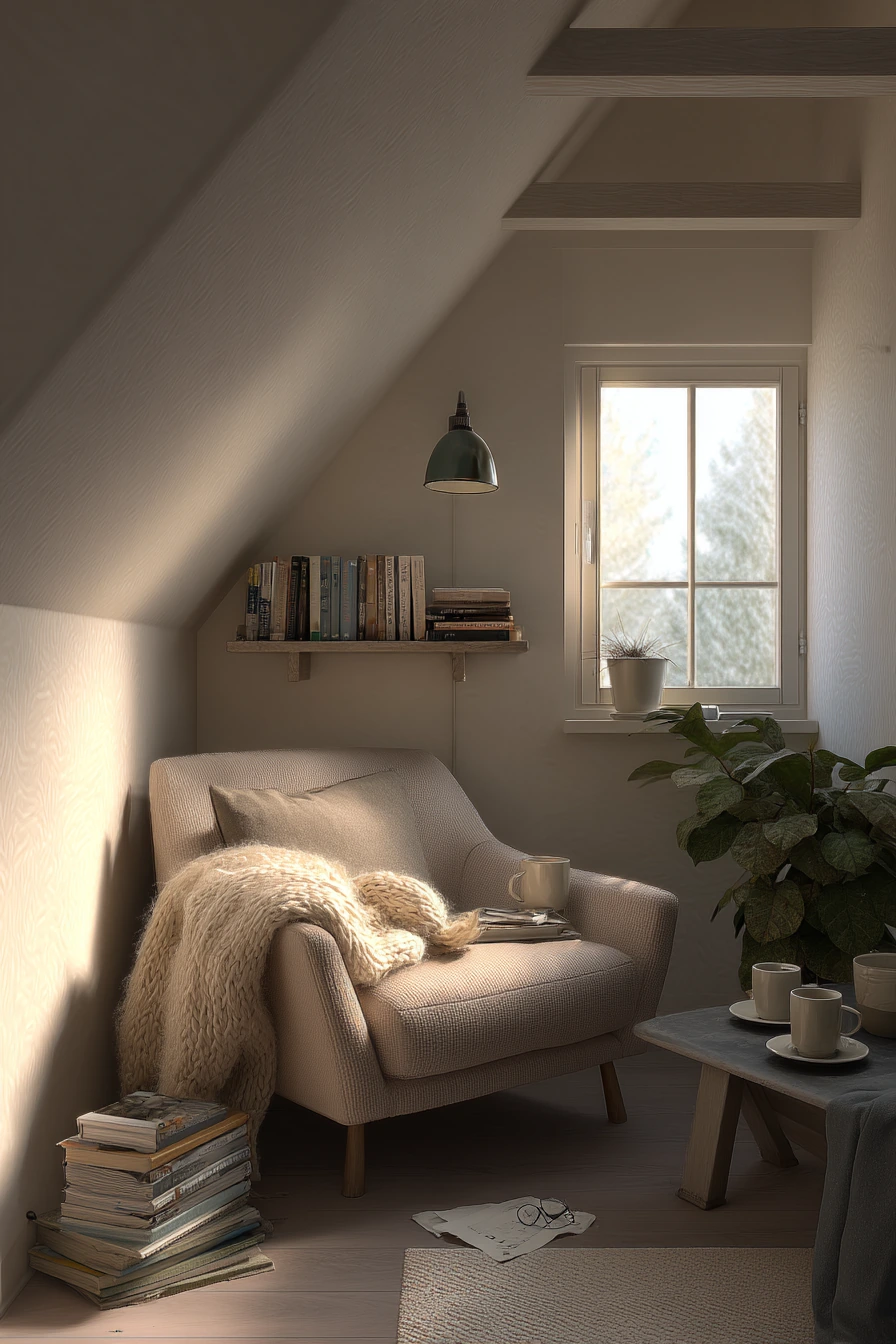
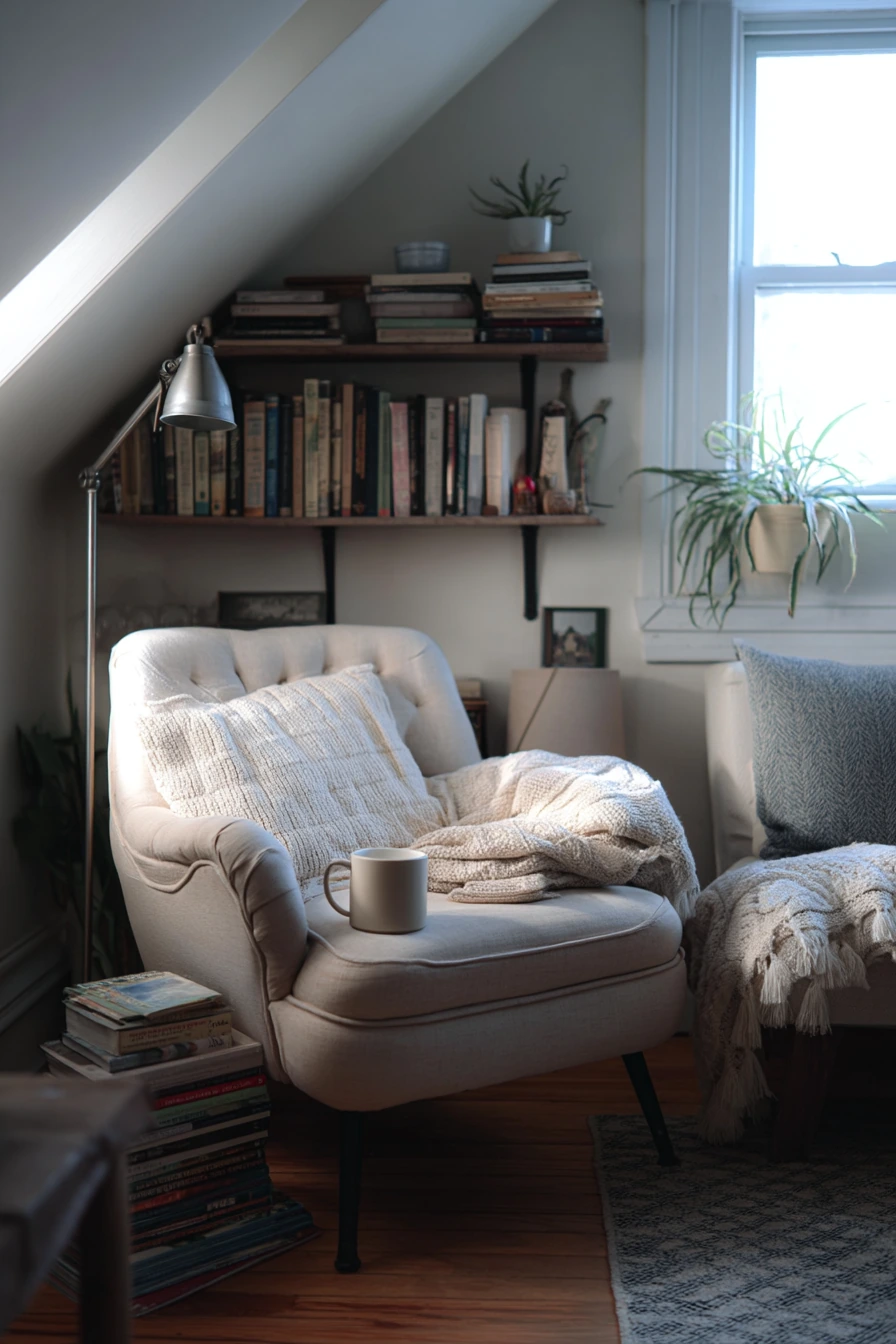
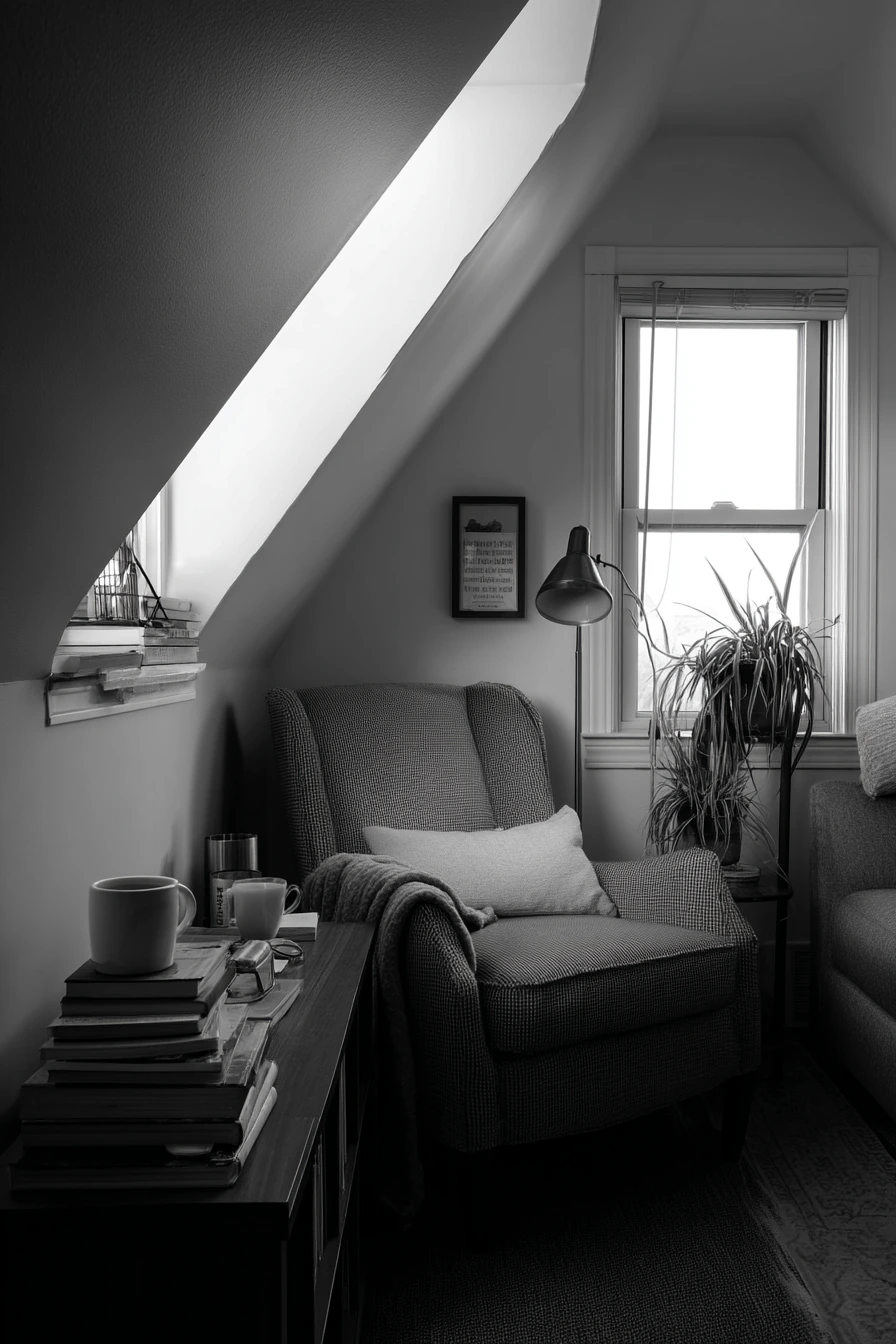
A compact attic living room for a quiet renter is all about light furniture and flexible pieces. A narrow sofa and a vintage armchair create seating without blocking the sloped ceiling. Keep the layout simple so the room stays airy, even when it is small.
Use a slim wall shelf instead of a bulky bookcase. It gives you a place for stacked novels, a plant, and a small speaker without eating floor space. A floor lamp brings soft morning light into the evening, and a low console tucked under the slope is a smart spot for a router, baskets, or a small TV.
For styling, lean into calm, personal details. Set reading glasses on the arm of the chair, drape a knit throw that is slightly wrinkled, and keep a tea mug on a coaster to show the room is used. Let one plant lean toward the window for a natural, relaxed look. If you cannot drill into walls, use removable hooks for cords and lightweight art so you still get a finished feel.
- Pick a sofa with slim arms to gain a few extra inches of seat space.
- Place the armchair where the ceiling is highest so sitting feels comfortable.
- Use a tray on the console to corral keys, coasters, and small items.
- Add one light-colored rug to brighten low roof areas.
- Hide extra blankets in an ottoman or lidded basket.
Pro Design Tip: Use a consistent line height for furniture tops (sofa back, console, shelf) to make the room feel wider and less choppy under the slope.
Budget Considerations: Shop secondhand for a vintage chair and use peel-and-stick cord covers instead of adding outlets or hardwiring new lights.
3 3. Budget-Friendly Cozy Attic Hangout
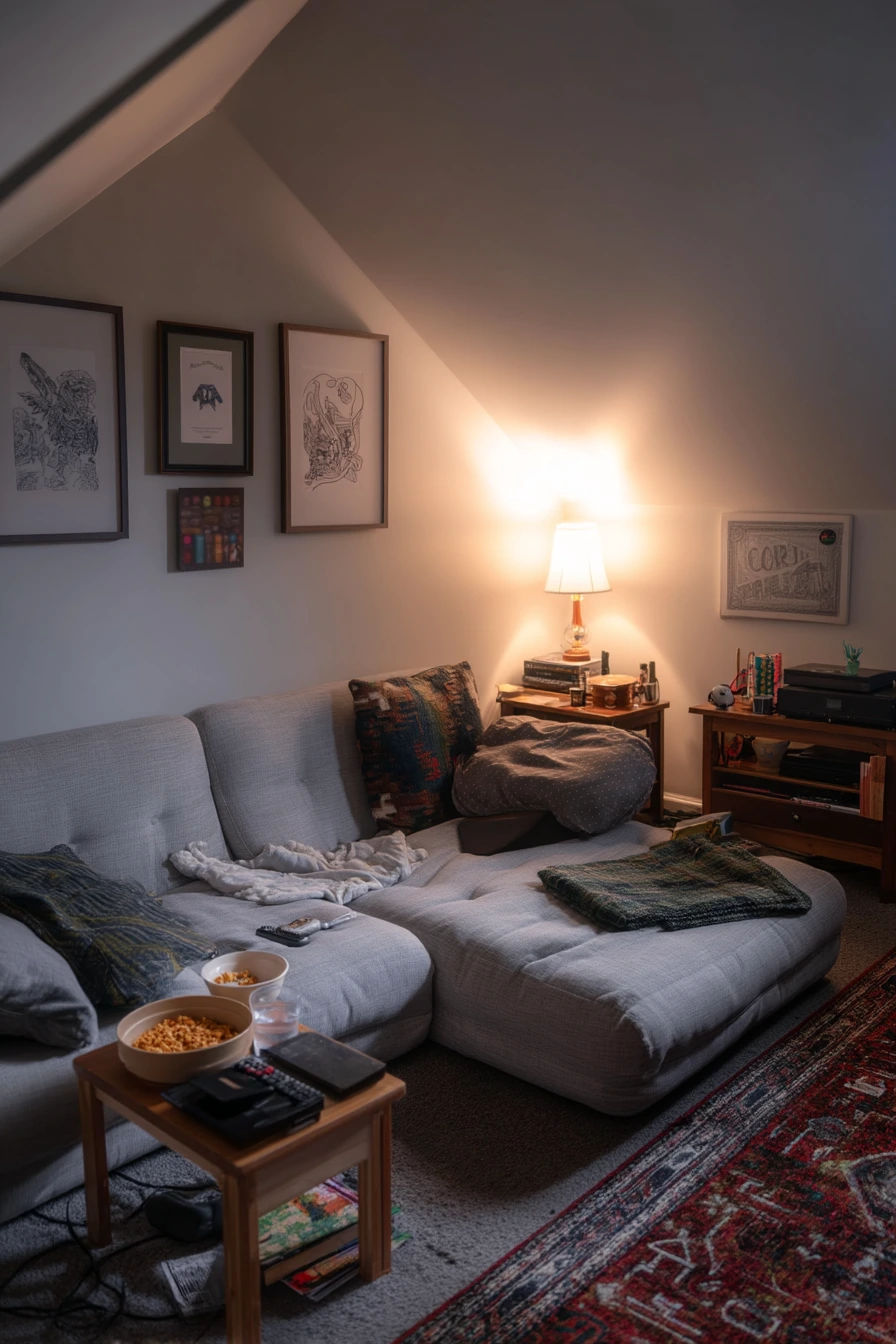
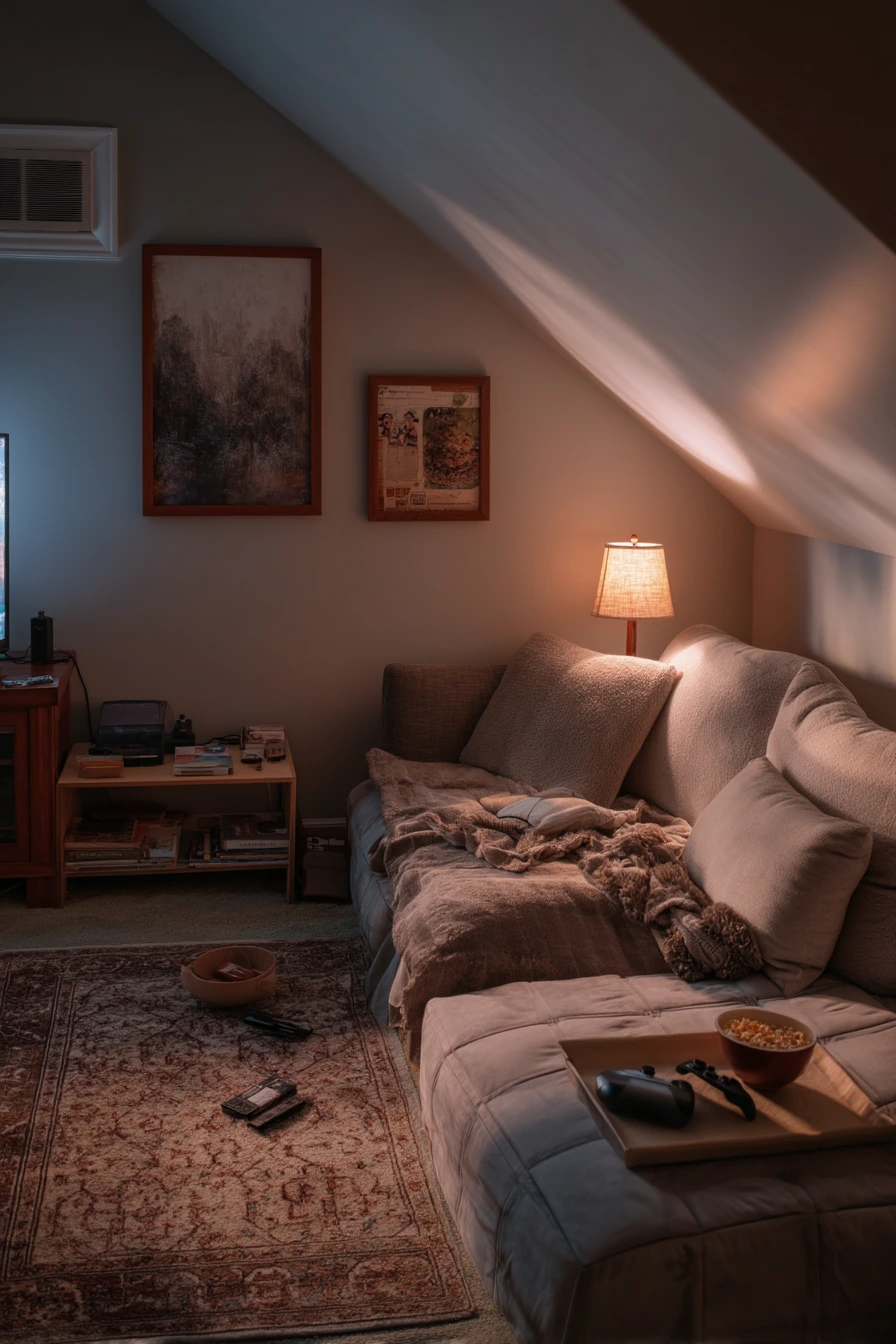
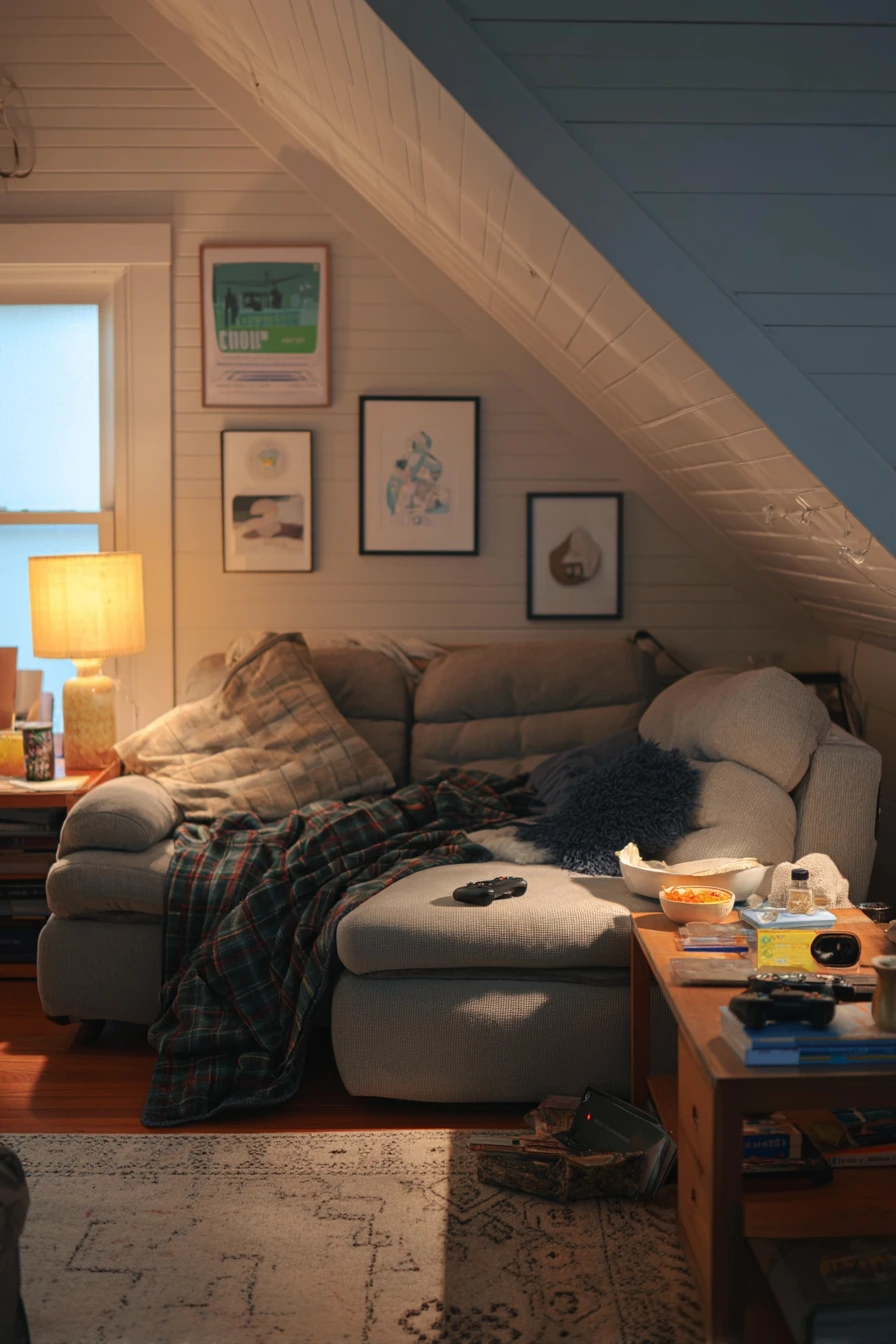
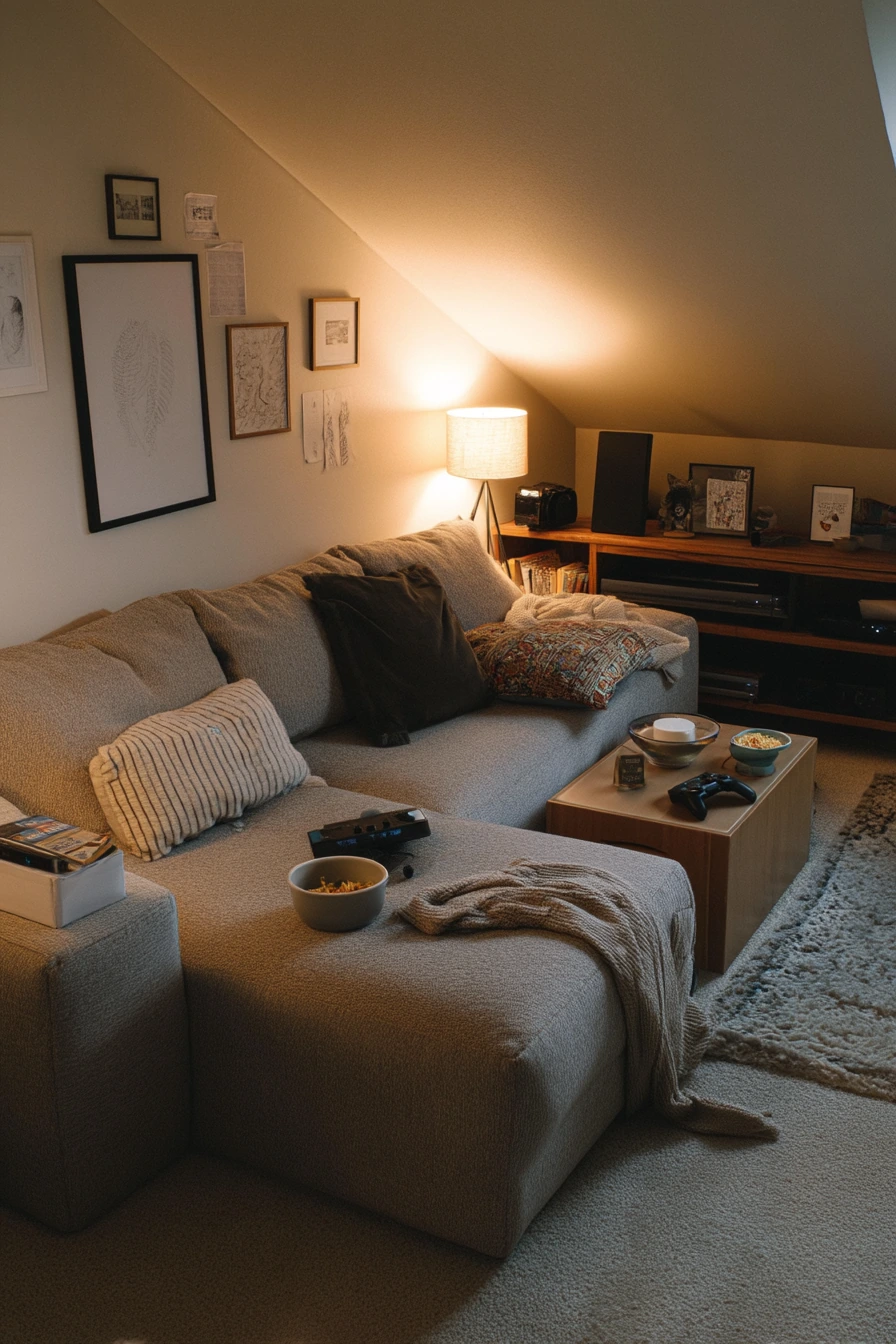
A budget-conscious attic living room can still look pulled together if you focus on comfort and a few repeat materials. A modular sofa is a strong starting point because you can change the shape when you move furniture around. Pair it with a thrifted side table and a secondhand media cabinet for storage and function without a big spend.
Layered rugs are a good trick for attic spaces because they add softness and help define zones. Use a larger, simple base rug and place a smaller patterned rug on top for color and texture. For walls, skip expensive gallery frames and lean simple framed art on a shelf or directly on the wall ledge under the eaves. This keeps nail holes minimal and works well with slanted ceilings.
Make the room feel real with lived-in cues you already have: a gaming controller on the media cabinet, a folded blanket, a snack bowl, and the remote on the armrest. Add a charging cord near the floor, but route it behind the media cabinet to avoid a tripping hazard. Mix warm lamp light with faint daylight so the room feels mellow, not staged, and choose bulbs in the same color temperature for a steady look.
- Use a modular sofa to fit around a low beam or roof angle.
- Check the media cabinet depth so it does not block walking space.
- Stack two rugs to cover worn floors and add cushioning.
- Lean art on a picture ledge to avoid drilling into tricky walls.
- Use a small basket to hold remotes, cords, and controllers.
Pro Design Tip: Repeat one wood tone (like oak) across the side table, frames, and cabinet pulls to make thrifted finds look intentional.
Budget Considerations: Modular sofas can cost more new; look for used sectionals that separate, or buy a basic sofa and add a secondhand chaise or ottoman.
4 4. Scandinavian Attic TV Room
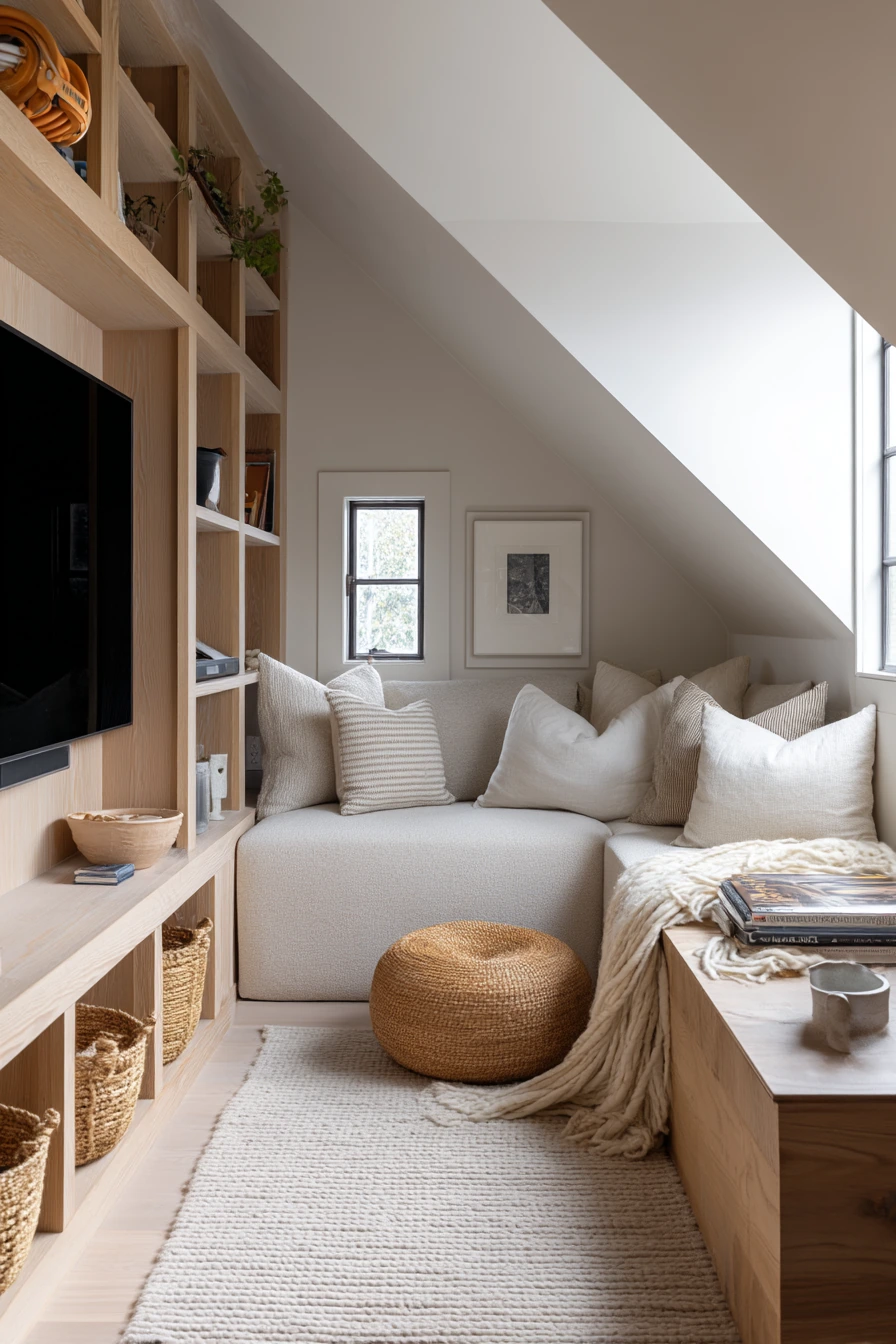
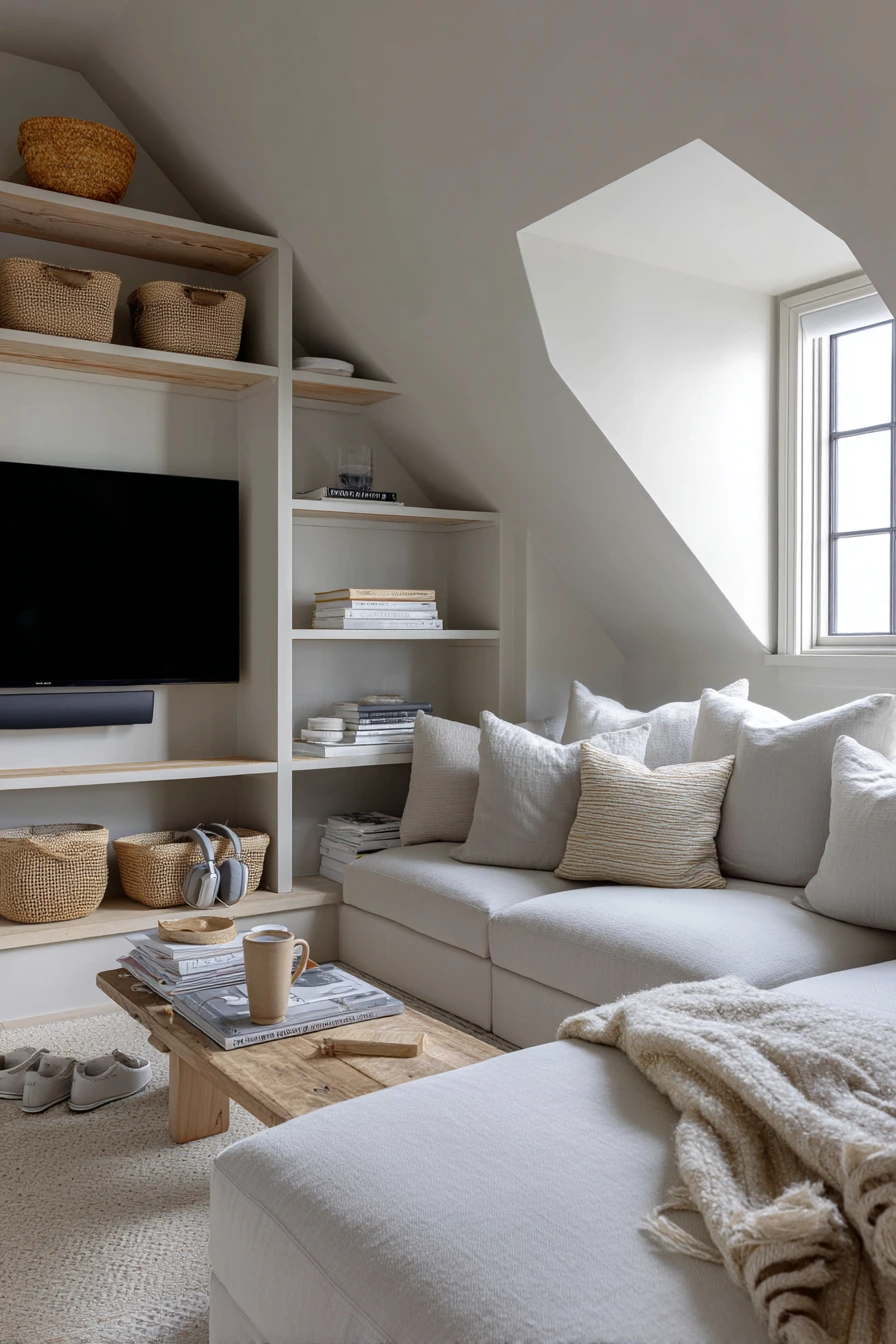
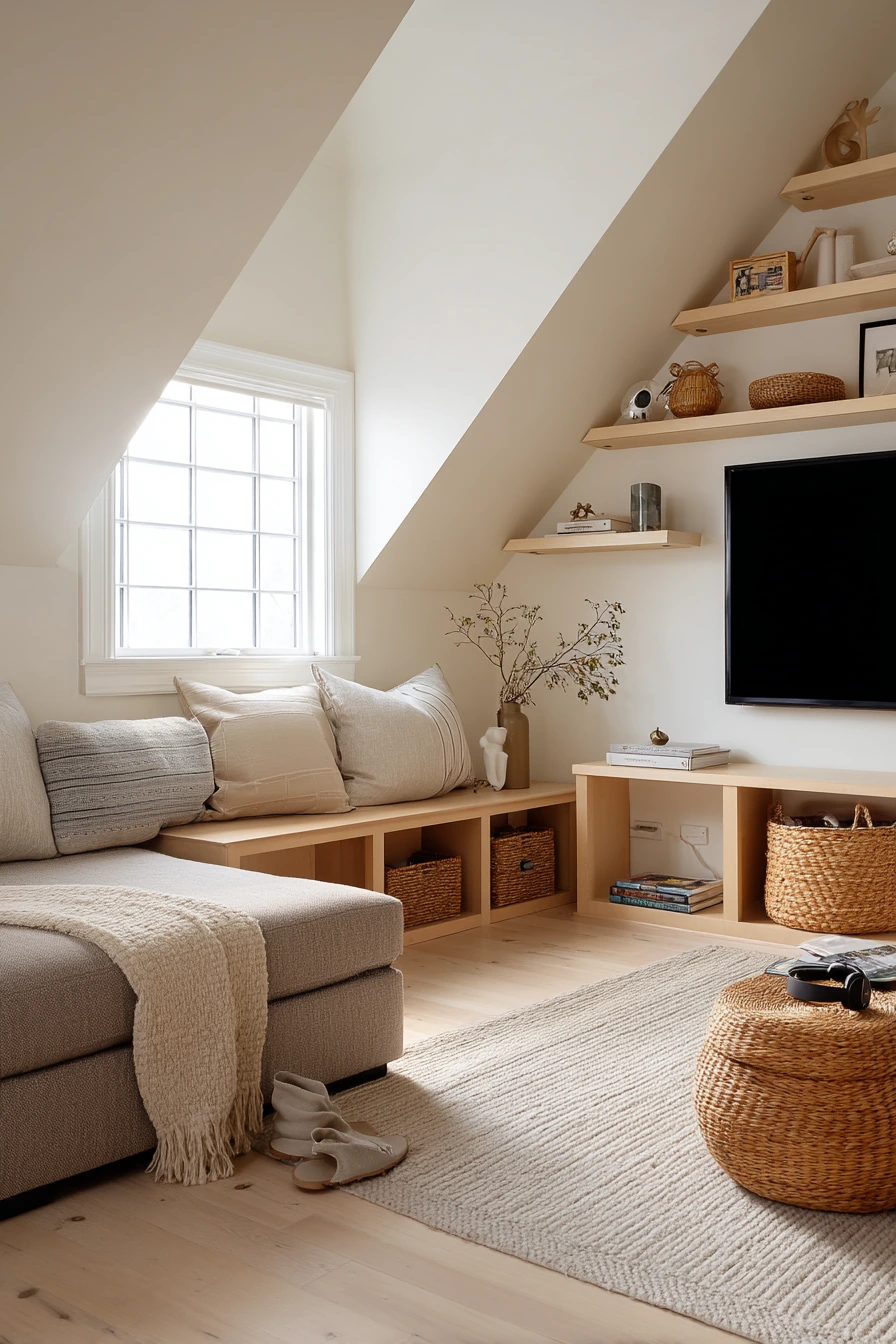
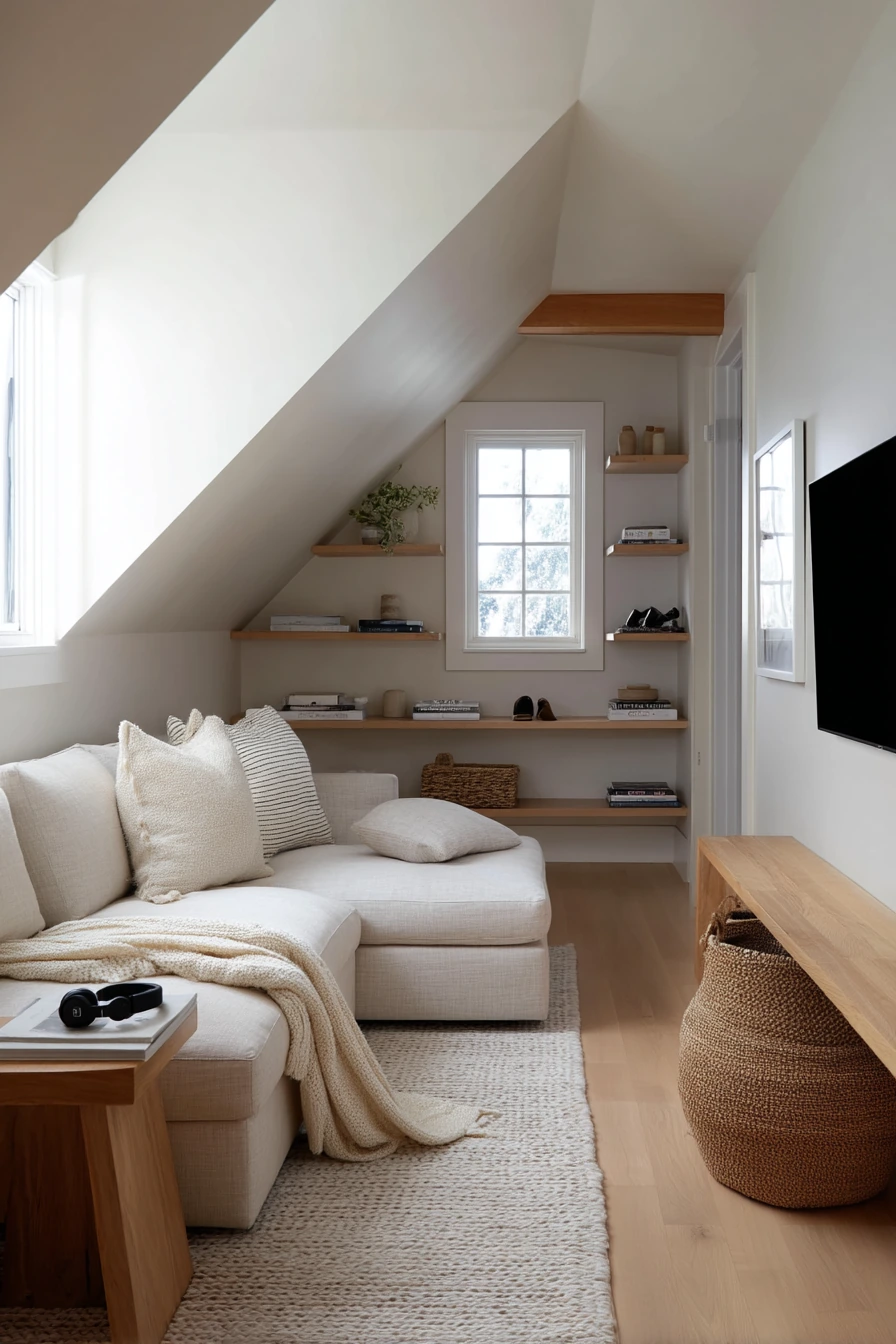
A family attic living room works best when the TV wall is clean and easy to maintain. Start with a slim TV mount or a compact media unit, then add pale wood shelving for books, games, and a few baskets. A compact sectional keeps seating comfortable while still fitting neatly beneath the sloped roof.
Woven baskets are a quiet workhorse in a family space. They hide small toys, extra cords, and board games, and they keep open shelving from looking busy. Add a low oak bench under the slope for flexible seating, a drop zone, or a spot to set a laundry basket. This bench also helps use the “too low to stand” area without wasting it.
Keep the room minimal but real with everyday cues: kids’ headphones on a hook, a magazine stack, a ceramic cup on the bench, and a soft throw bunched at the corner of the sectional. If shoes always land by the stairs, add a shallow tray or boot mat so the mess looks contained. Soft overcast daylight through a dormer window pairs well with warm lamps, so the space stays serene even when the weather is gray.
- Center the seating on the TV wall, not on the peak of the ceiling.
- Use baskets in the lowest shelves so kids can help clean up.
- Pick a bench with a flat top for easy wiping.
- Add one closed cabinet for the items you never want to see.
- Use a dimmable lamp to reduce screen glare in the evening.
Pro Design Tip: Run one continuous shelf line along the knee wall to visually stretch the room and make the TV area feel built-in.
Budget Considerations: If custom shelving is not possible, use wall-mounted brackets and unfinished pine boards, then stain them to match your other pale wood tones.
5 5. Romantic Attic Lounge for Two
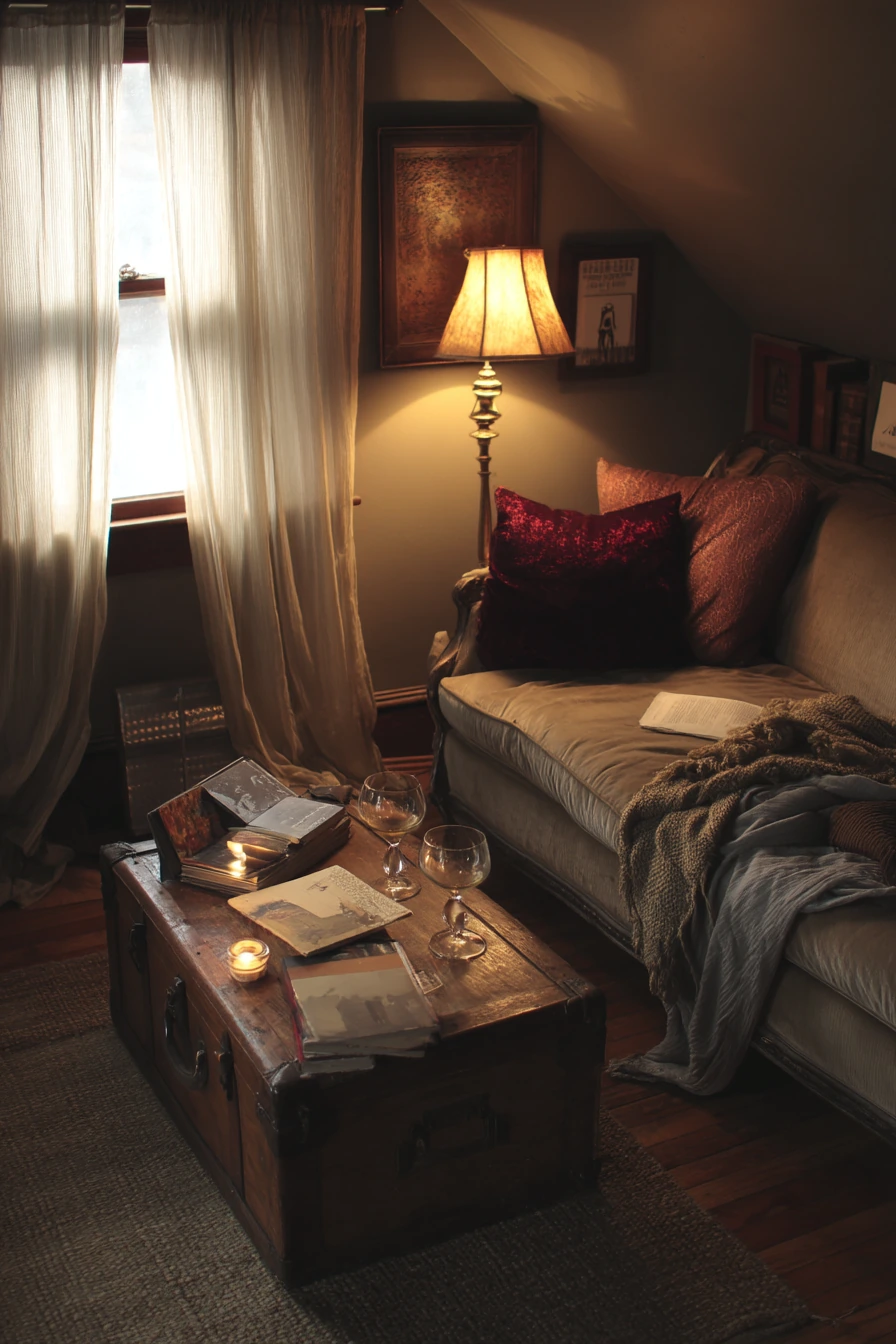
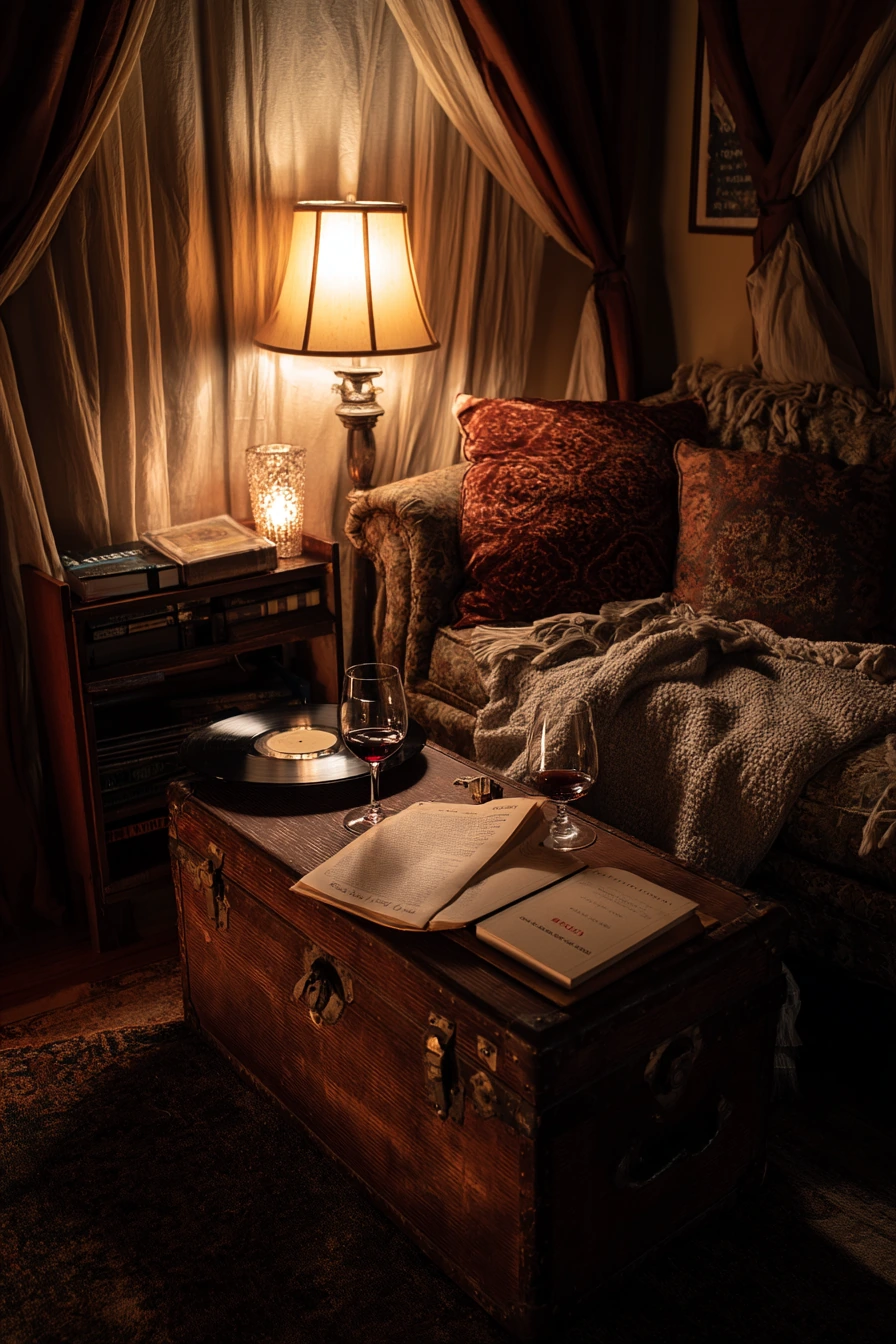
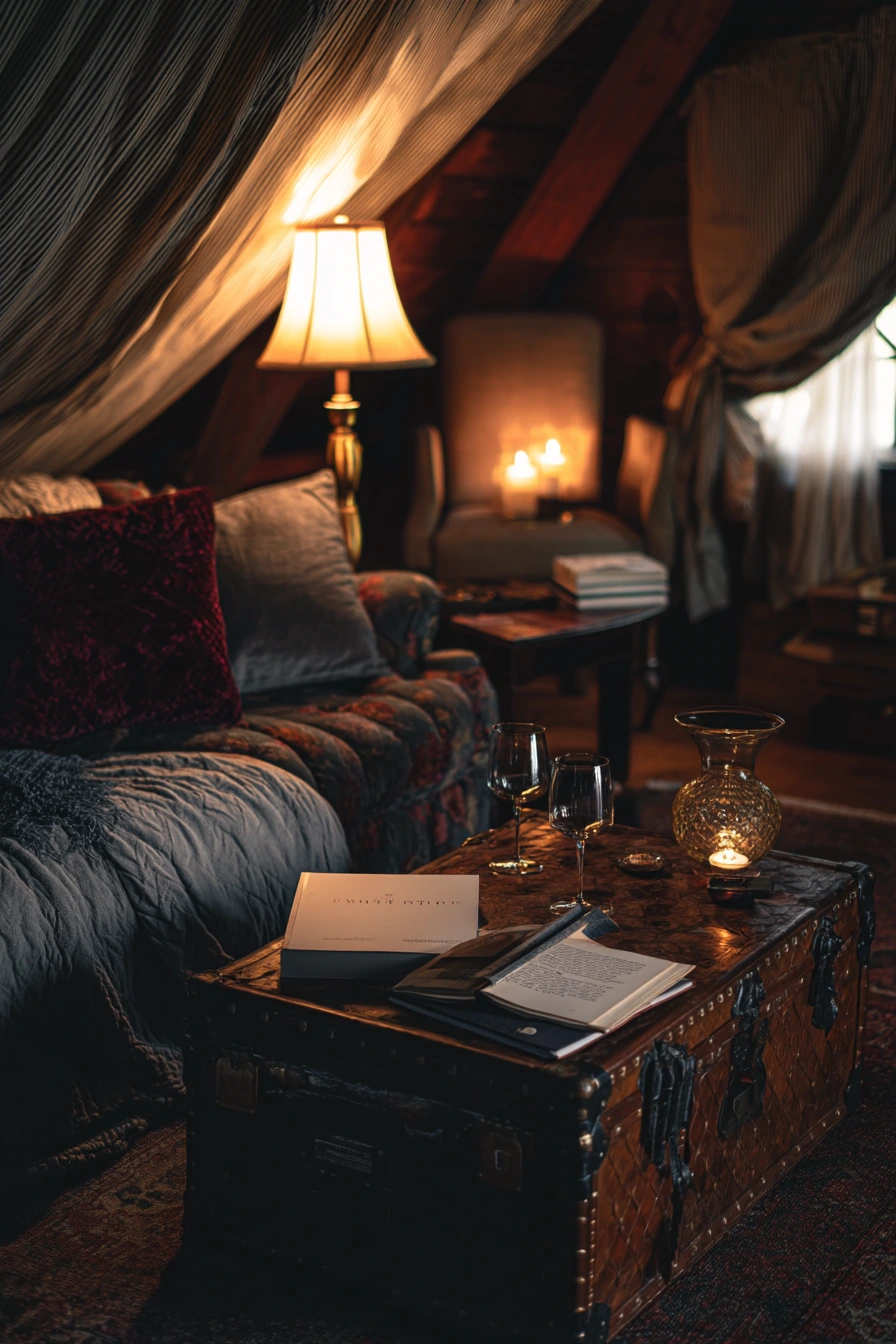
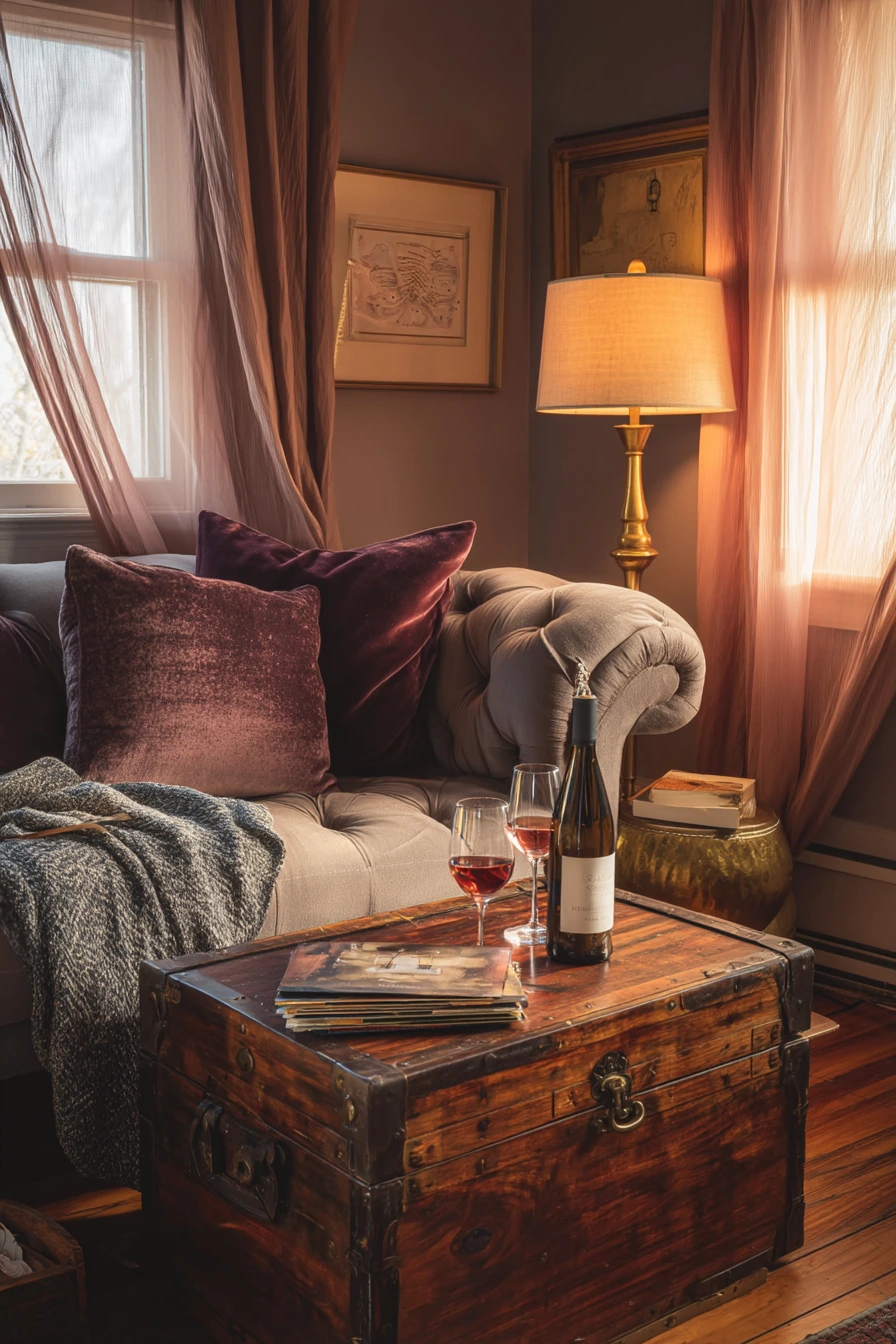
A tucked-away attic living room can become a cozy couple’s retreat with a few moody, tactile choices. A plush loveseat fits well in tight attic footprints and invites lounging without dominating the room. Use an antique trunk as a coffee table for storage and character, especially if you need a place to hide throws, games, or extra candles.
Lighting is the main mood-maker here. A brass floor lamp adds warm glow and a bit of shine, which helps in rooms with darker corners. Velvet pillows bring soft texture, and layered curtains filter light so the space feels private. If your attic has a small window, hang curtains wider than the frame so you still get maximum daylight when they are open.
Style it with a few “date night” cues that feel natural: two wine glasses, an open record sleeve, and a book left open on the trunk. A folded cardigan on the loveseat makes the room feel used, not staged. Keep surfaces simple so the room does not feel cramped. One tray on the trunk can hold glasses, a small bowl, and a matchbox so everything looks tidy even when you are relaxed.
- Choose a loveseat with a tight back so it fits under the slope.
- Add a trunk with a flat top and felt pads to protect floors.
- Use velvet and linen together for contrast, not a heavy all-velvet look.
- Hang double curtain rods for sheers plus heavier panels.
- Keep one warm lamp as the main light source for a calm feel.
Pro Design Tip: Use three layers of texture (velvet, wood, and woven or linen) to create depth without adding more furniture.
Budget Considerations: Real antique trunks vary in price; look for vintage-style storage trunks online or at thrift shops, and add a custom-cut wood tray on top for stability.
6 6. Pet-Friendly Attic Gathering Space
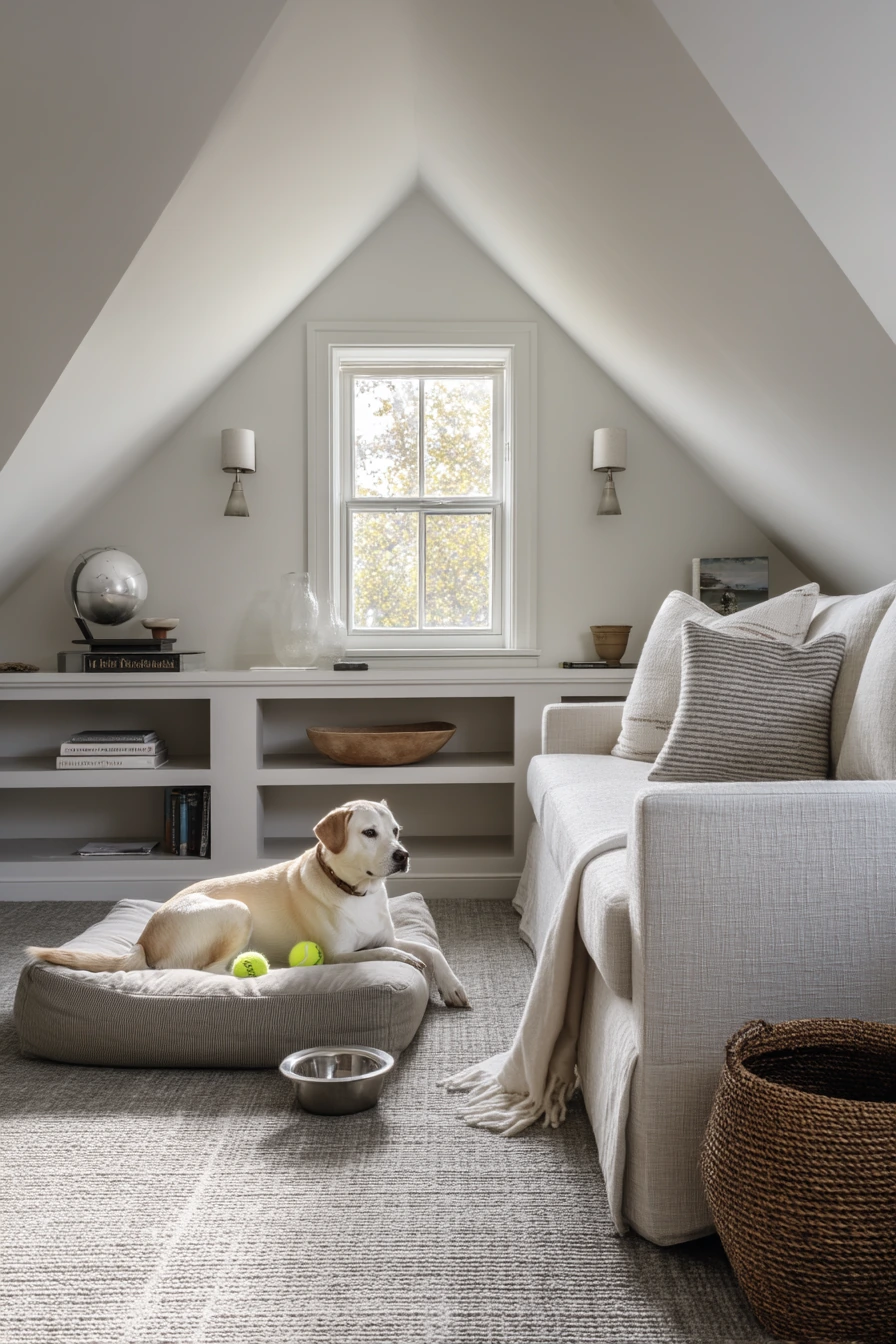
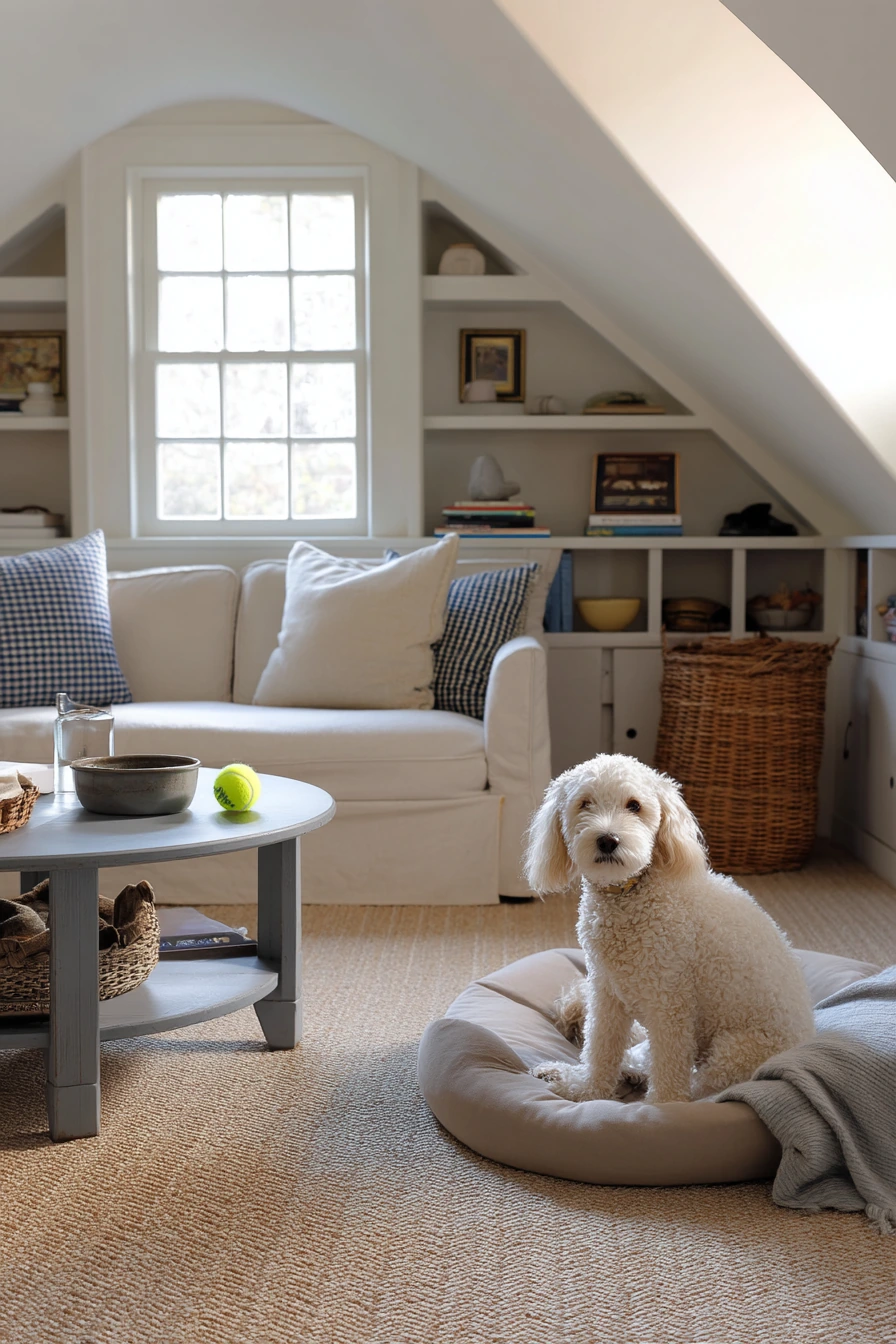
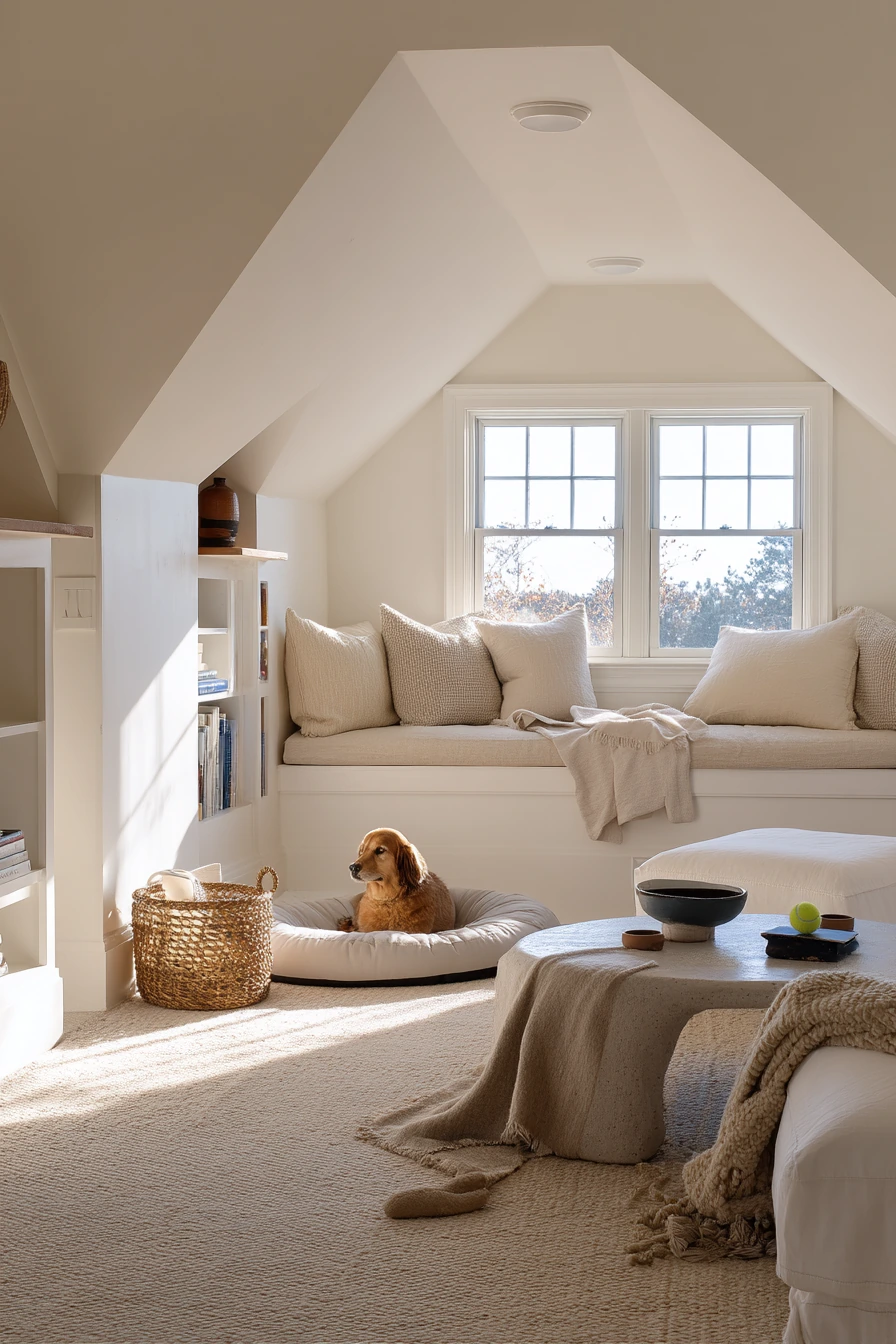
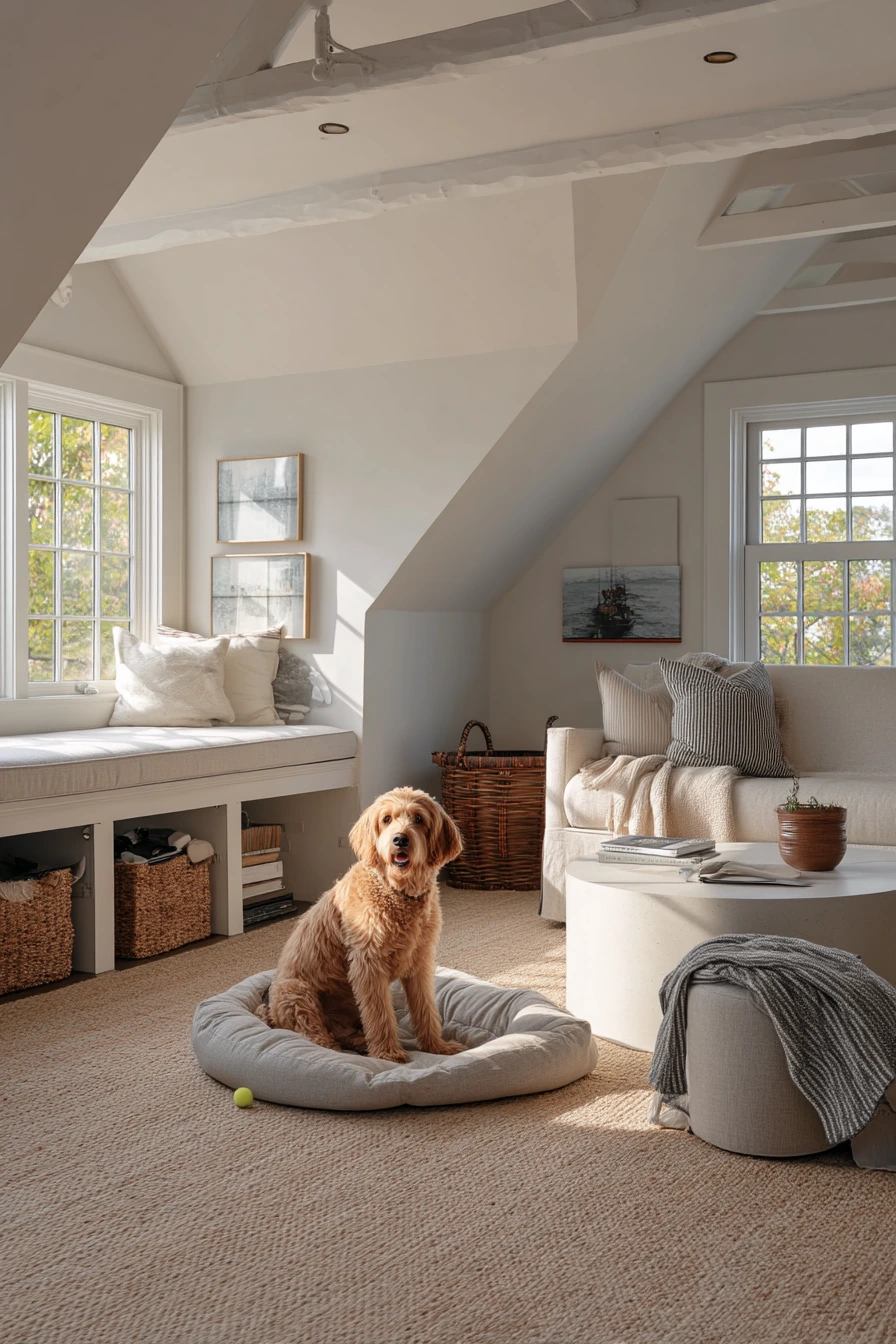
A practical attic living room shared with a dog should feel soft but hold up to real life. Start with durable slipcovered seating so you can wash covers after muddy walks. A washable rug is key in an attic because stairs often track in dirt, and low ceilings can make the space feel stuffy if it smells.
Built-in cubbies under the eaves keep pet gear out of sight. Use labeled bins for leashes, wipes, and toys, and store extra blankets in a basket near the wall. A round coffee table is a smart choice because it is easier to walk around and reduces sharp corners in a smaller room.
Lean into honest lived-in cues without letting them look messy. A dog bed can sit at the lowest part of the slope where people cannot stand anyway. If you get muddy paw prints near the rug edge, keep a small towel and spray cleaner in a cubby so clean-up is fast. Style with a tennis ball in a basket, a water bowl on a small mat, and a folded throw with a slight crease. Soft afternoon window light pairs well with a warm lamp, so fur and dust are less noticeable than under harsh overhead lighting.
- Pick slipcovers in a mid-tone that hides fur better than bright white.
- Use a rug pad that grips so the rug does not slide during zoomies.
- Place the dog bed in the lowest corner to save prime seating space.
- Add a closed bin for treats so the room stays neat.
- Use a small boot tray near the stairs for muddy shoes and paws.
Pro Design Tip: Create a “clean zone” by the stair entry with a mat, hooks, and a small basket for wipes so dirt stops there.
Budget Considerations: Washable rugs can be expensive; use indoor-outdoor rugs or flatweave cotton rugs that fit in a standard washer.
7 7. Airy Attic Music and Media Room
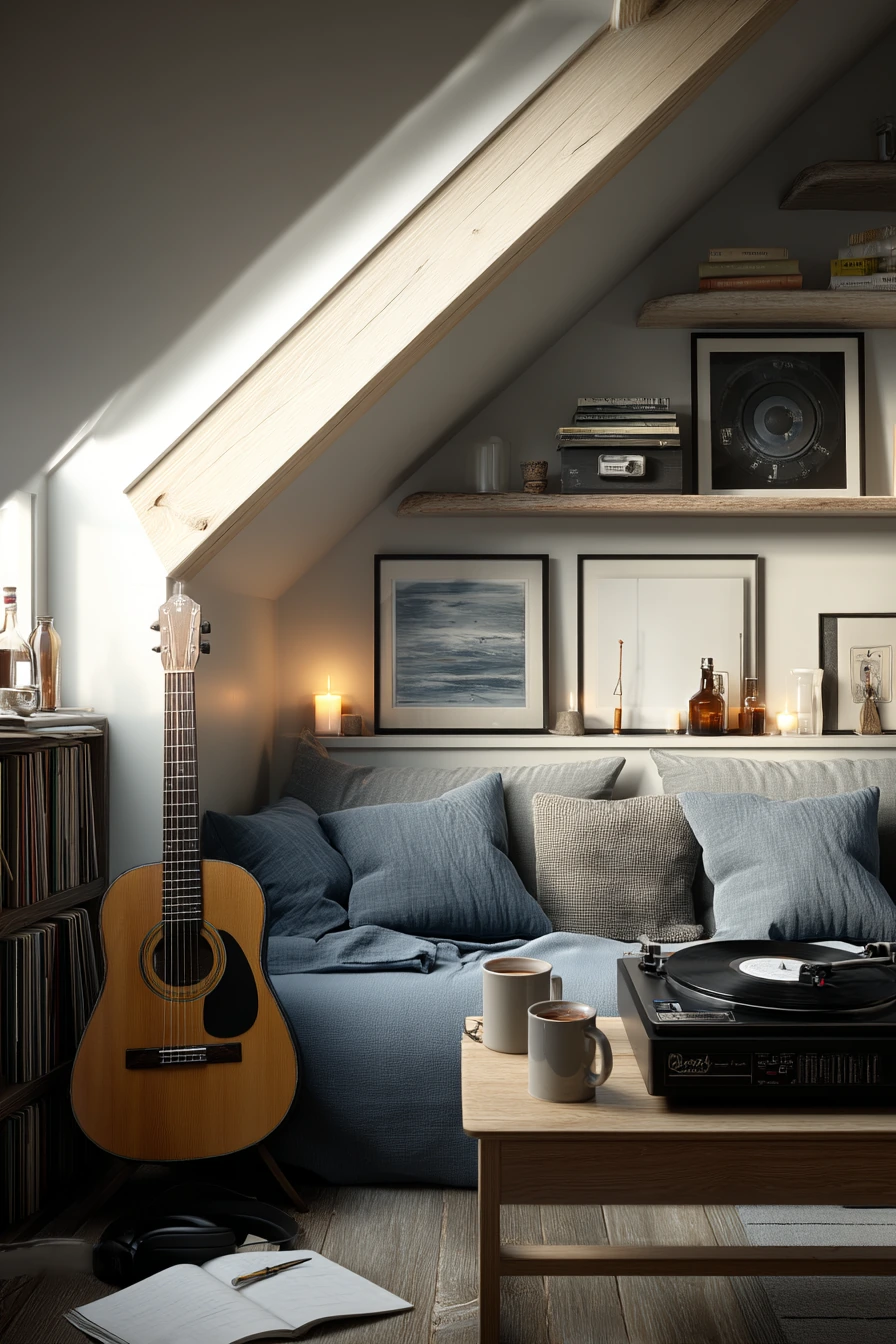
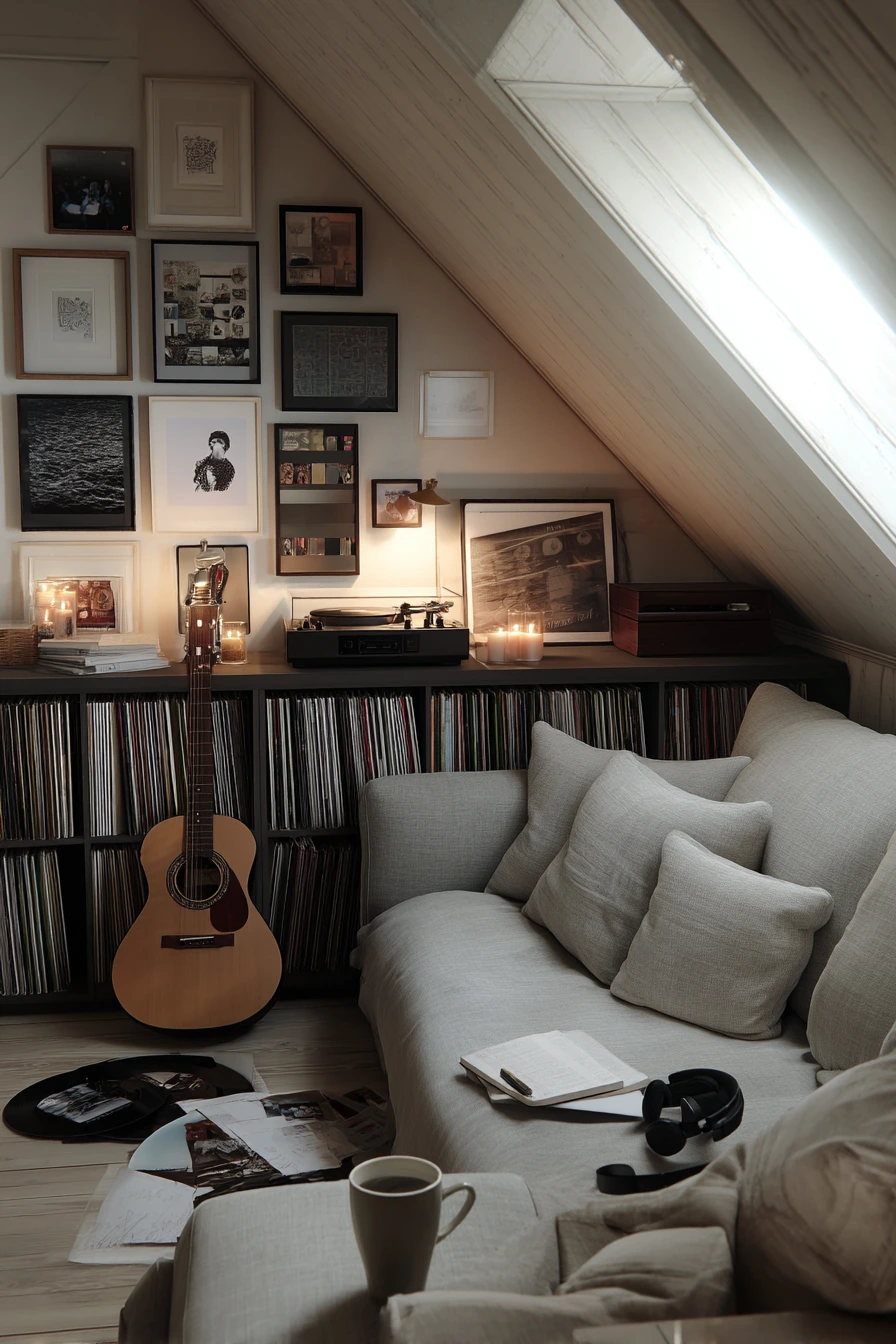
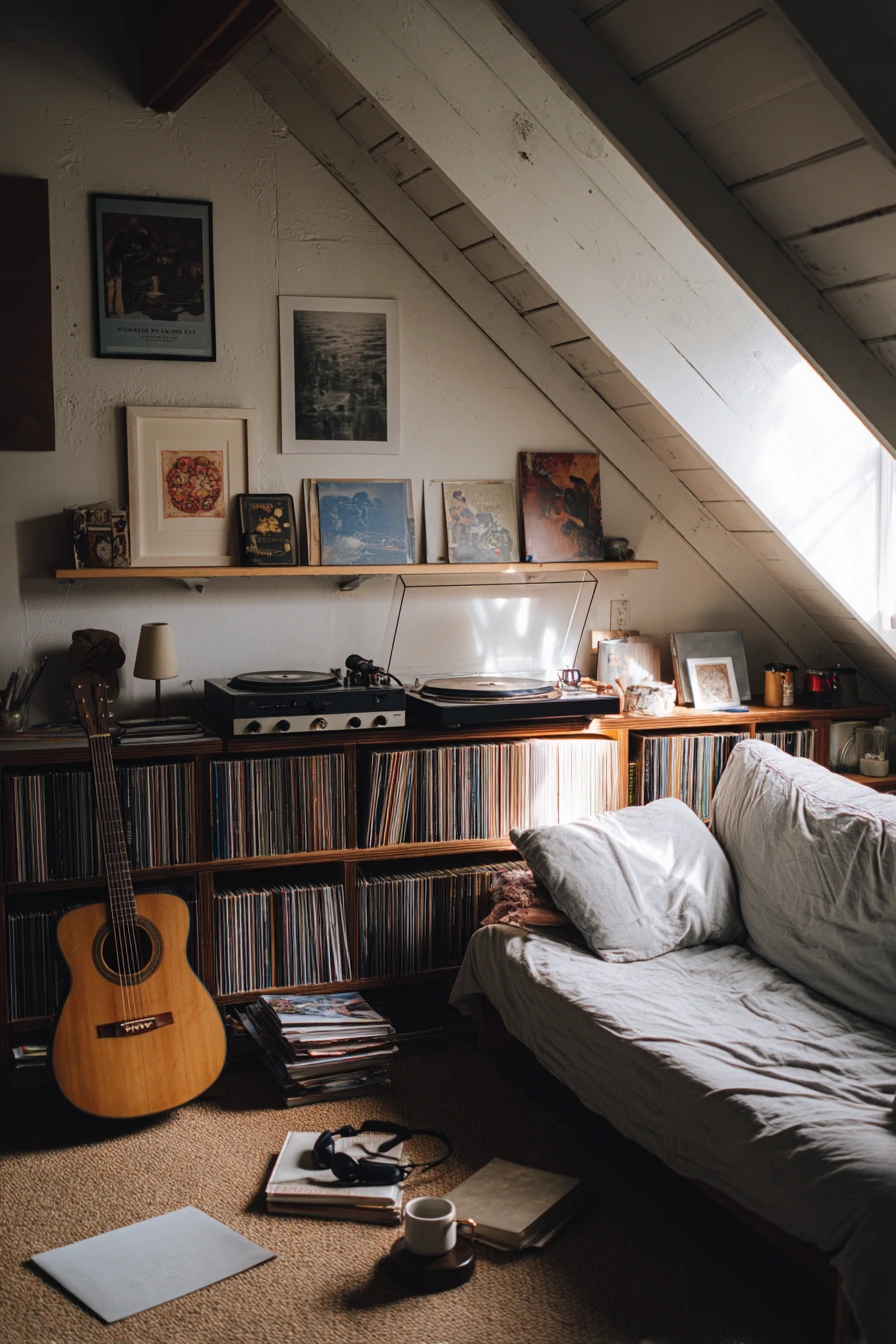
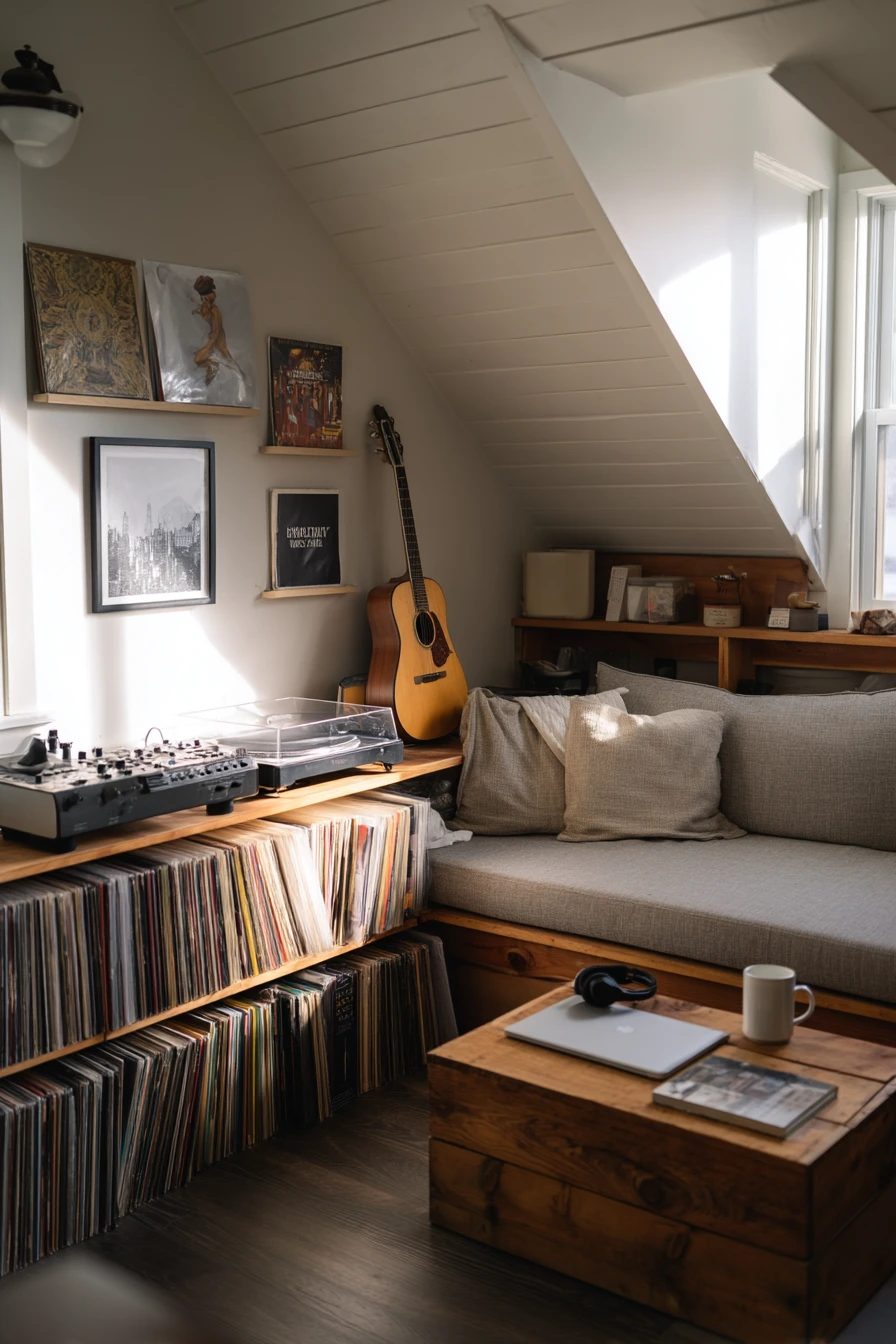
A creative attic living room for a music-loving homeowner can be stylish without feeling like a showroom. Start with a compact sofa that fits under the slanted ceiling and leaves room for a record console. A console gives you a landing spot for a turntable, speakers, and a small stack of favorite albums.
Use low shelves beneath the slope for vinyl storage and books. Keep framed art lower on the wall so it feels balanced with the roofline. An acoustic guitar on a stand adds personality and makes the room feel active, not just decorated. If you use candles, keep them on a stable tray and away from curtains for safety.
To style the scene, include small, believable cues: headphones on the console, a notebook for playlists or lyrics, a coffee mug on a coaster, and one unburned candle ready for later. A vinyl sleeve on the floor is fine for a photo, but in real life add a simple wall rack or crate so records do not get bent. Gentle daylight from a dormer gives the room a calm, atmospheric look. Add one warm lamp for evenings so you can read track lists without turning on harsh overhead lights.
- Place the record console on the tallest wall so the lid opens fully.
- Use cable clips behind the console to keep cords off the floor.
- Add felt pads under speakers to reduce vibration.
- Store records upright to protect them from warping.
- Choose art with simple frames so the space does not feel busy.
Pro Design Tip: Balance hard and soft surfaces by pairing wood shelves and a console with a thick rug and fabric seating to improve sound and reduce echo.
Budget Considerations: Record consoles can be costly; repurpose a low dresser or media unit and add inexpensive dividers inside for vinyl storage.
8 8. Guest-Ready Attic Sitting Room
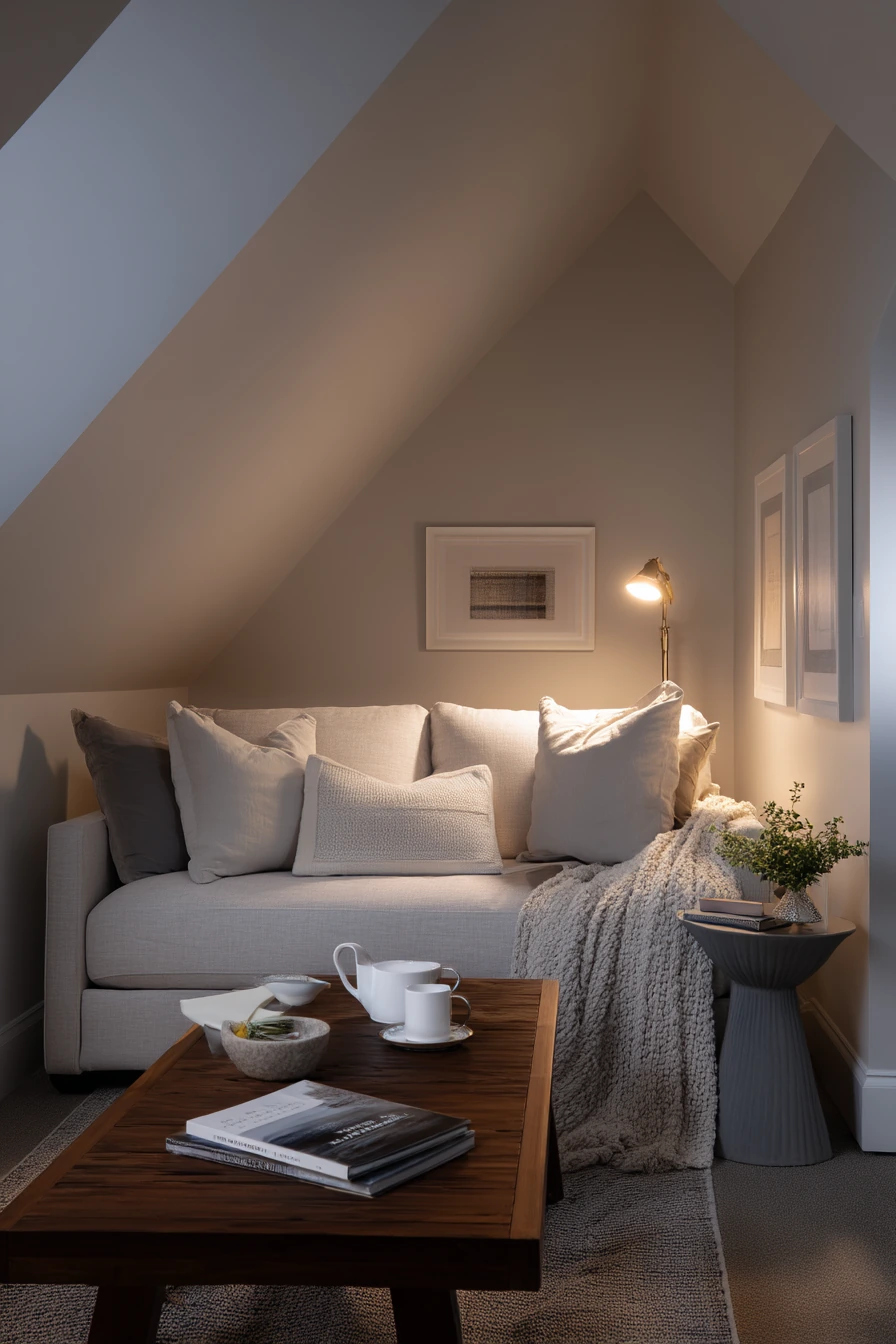
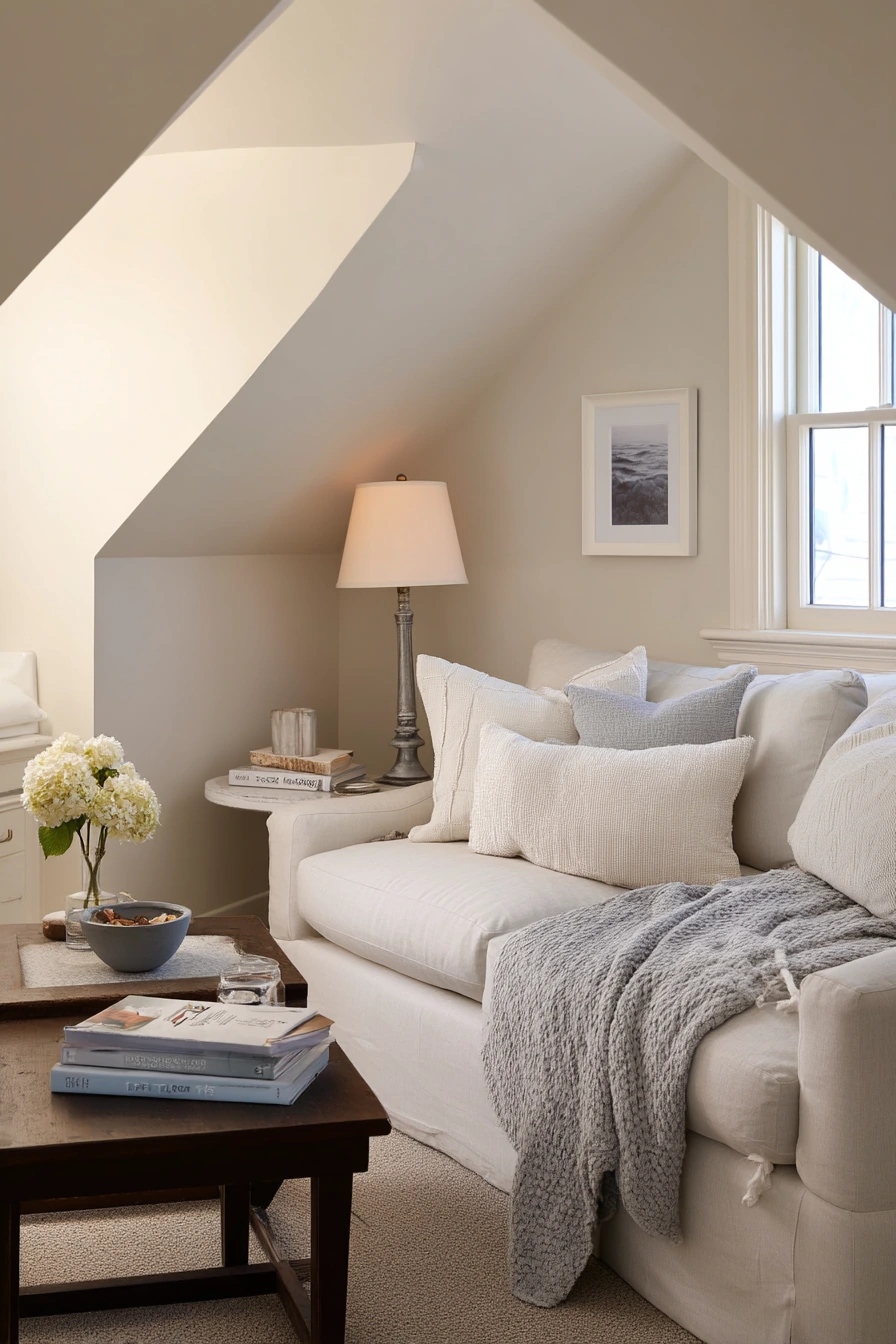
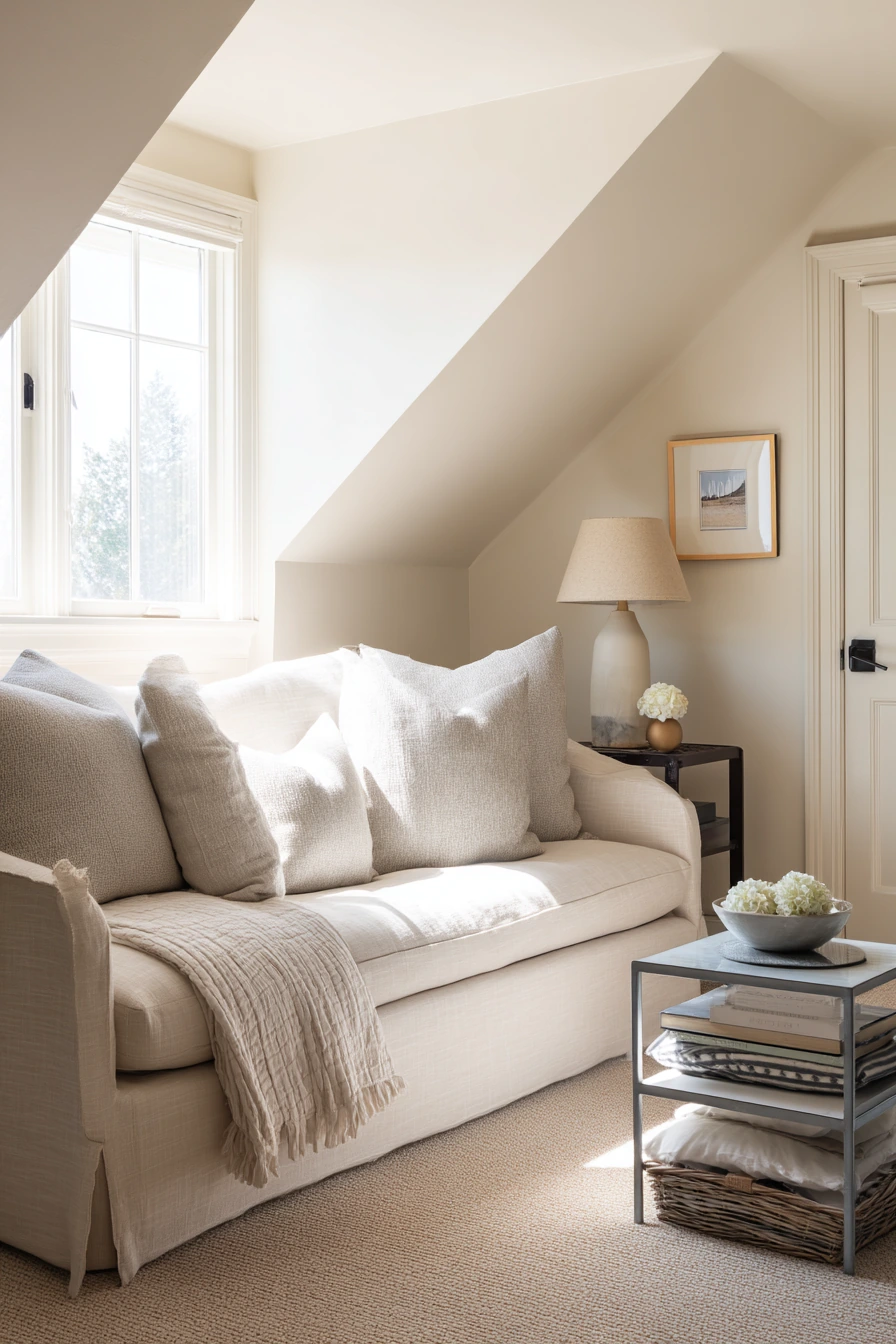
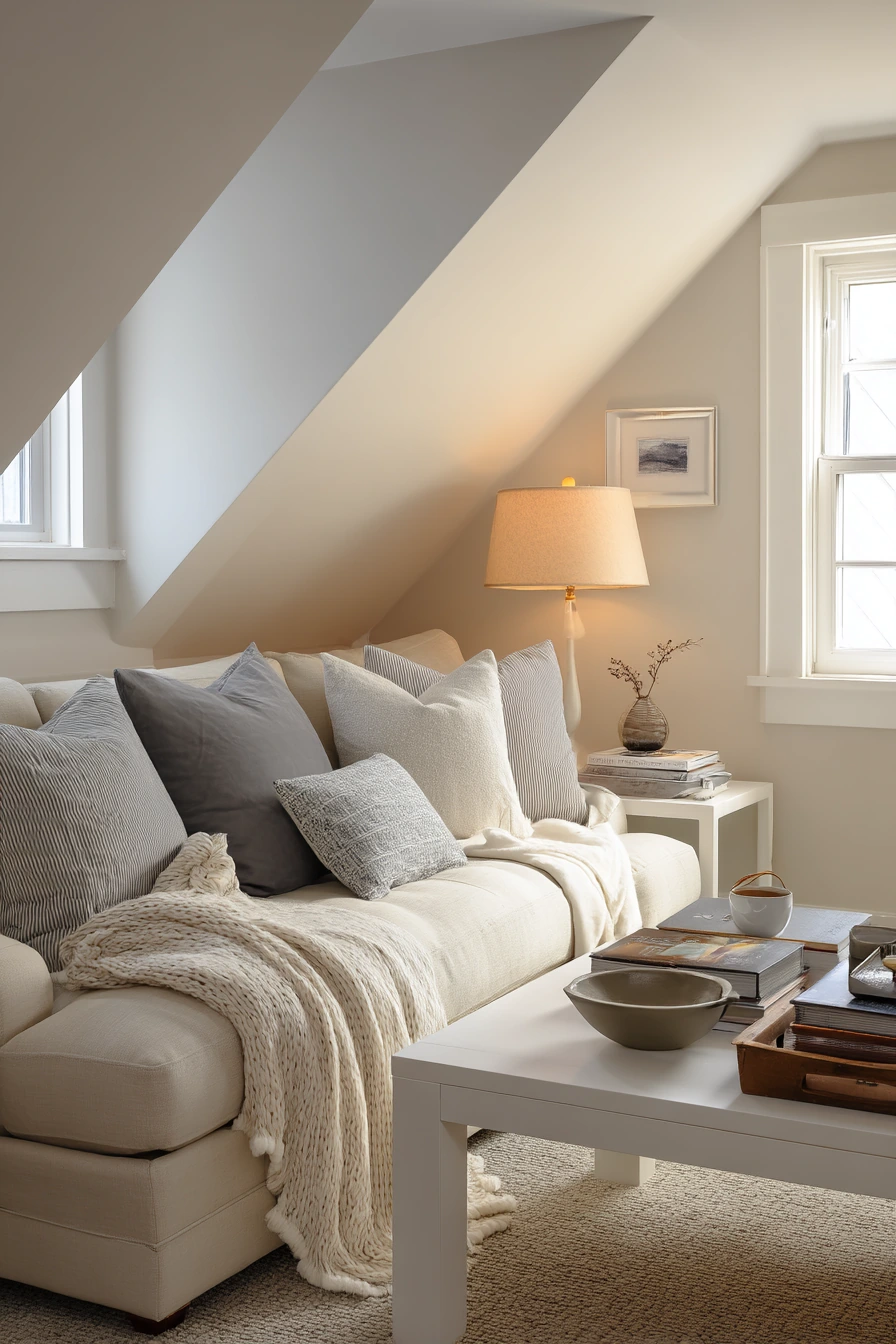
A guest-ready attic living room that doubles as an occasional sleeping area needs pieces that do two jobs. A sleeper sofa is the anchor, and it works best when you leave a clear path from the stairs to the bed pull-out. Add small nesting tables instead of a big coffee table so you can move them when guests stay over.
Keep neutral bedding folded nearby in a basket or on a shelf so it is easy to grab without digging through closets. A compact reading lamp gives guests a soft light at night, and it makes the room feel like a real suite. If the ceiling is low, wall-mounted swing-arm lamps can free up floor space and reduce clutter around the sofa.
For lived-in styling, add simple, honest details: folded pajamas on the sofa arm, car keys in a bowl on one nesting table, and a paperback within reach. A charger plugged into the wall is realistic, but use a cord cover or a small side table with a hidden cable hole to keep it tidy. Fresh towels on a chair make the space feel welcoming without needing a full guest room. Soft evening lamp light mixed with faint blue window light keeps the attic calm and practical for both lounging and sleep.
- Measure the sleeper sofa when opened so it does not hit the knee wall.
- Use nesting tables that can slide under each other to save space.
- Store bedding in a breathable cotton bag to keep it fresh.
- Add a small lidded bin for guest chargers and toiletries.
- Use blackout curtains if streetlights shine into the attic window.
Pro Design Tip: Set up a “guest reset” basket with towels, a spare phone charger, and a water carafe so the room converts in minutes.
Budget Considerations: Sleeper sofas can be expensive; consider a sofa bed topper or a compact futon, and upgrade comfort with a quality mattress pad.
9 9. Plant-Filled Boho Attic Retreat
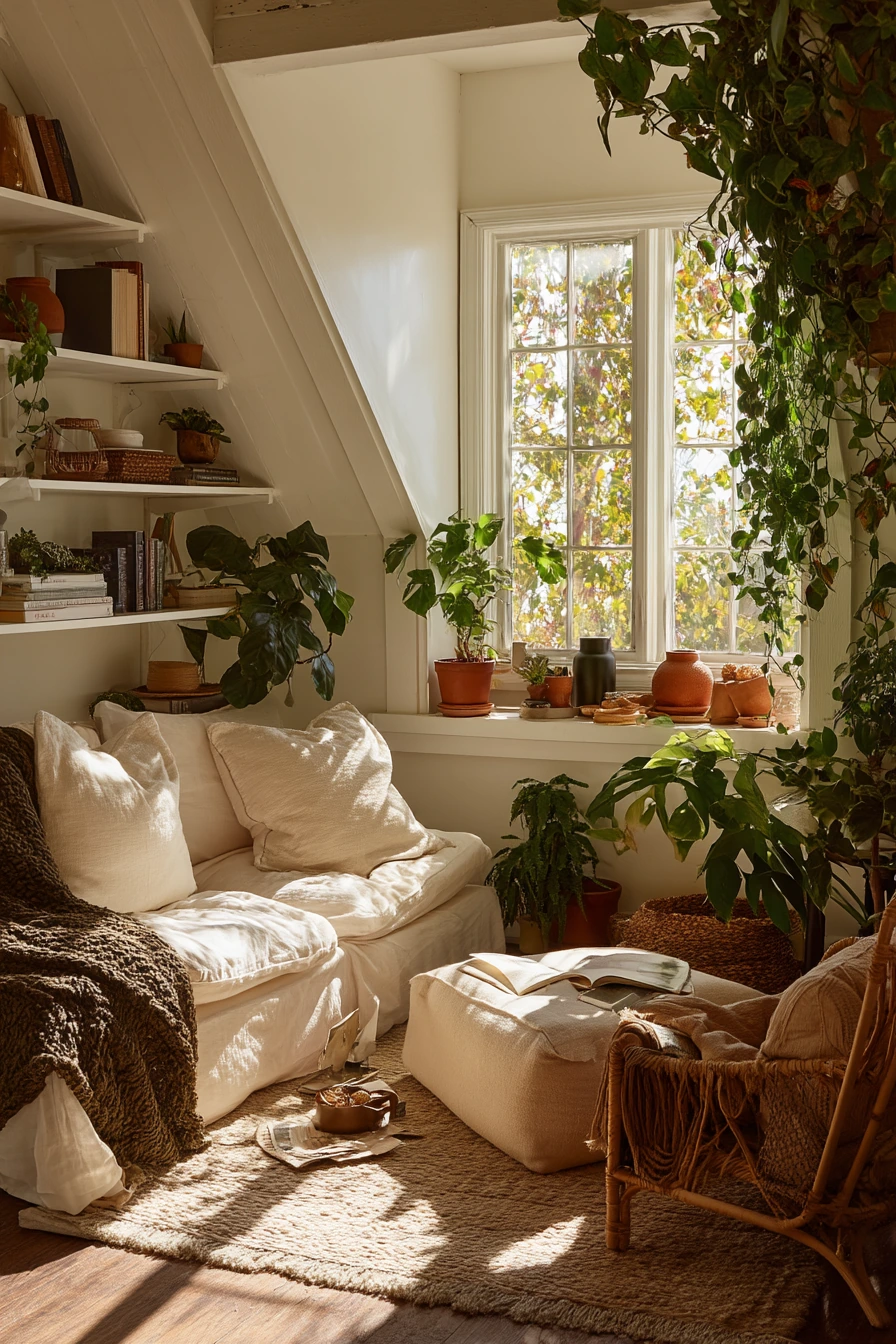
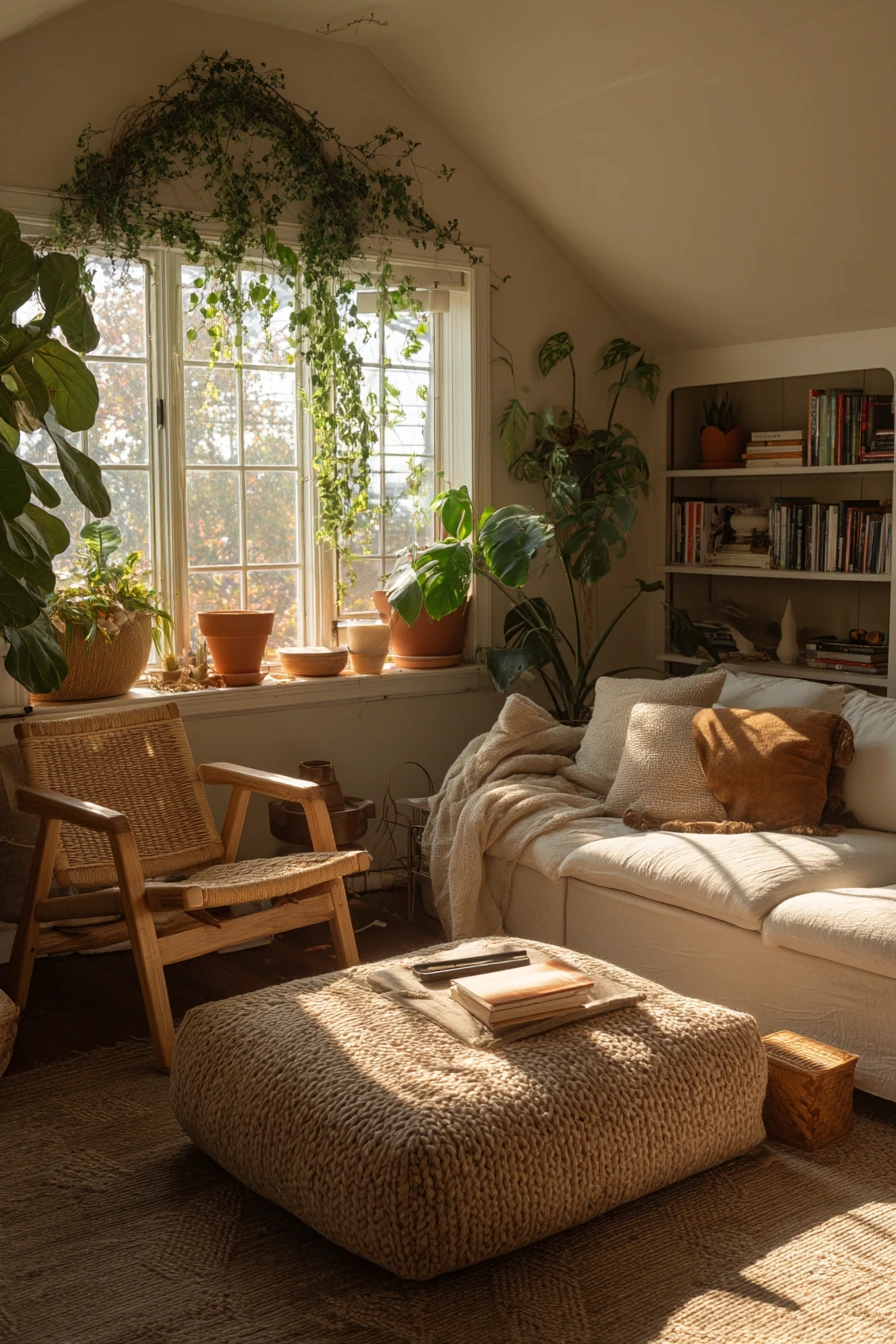
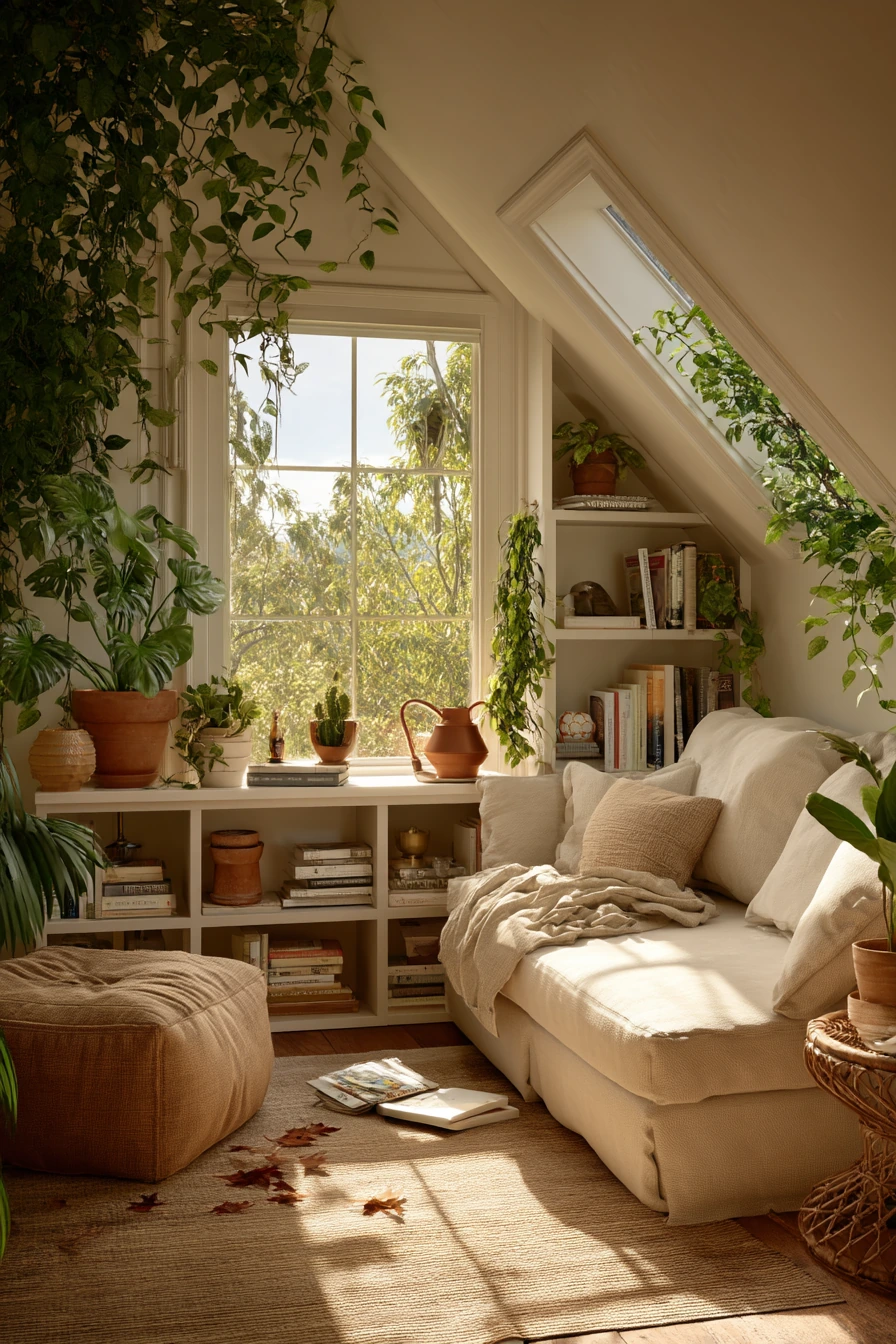
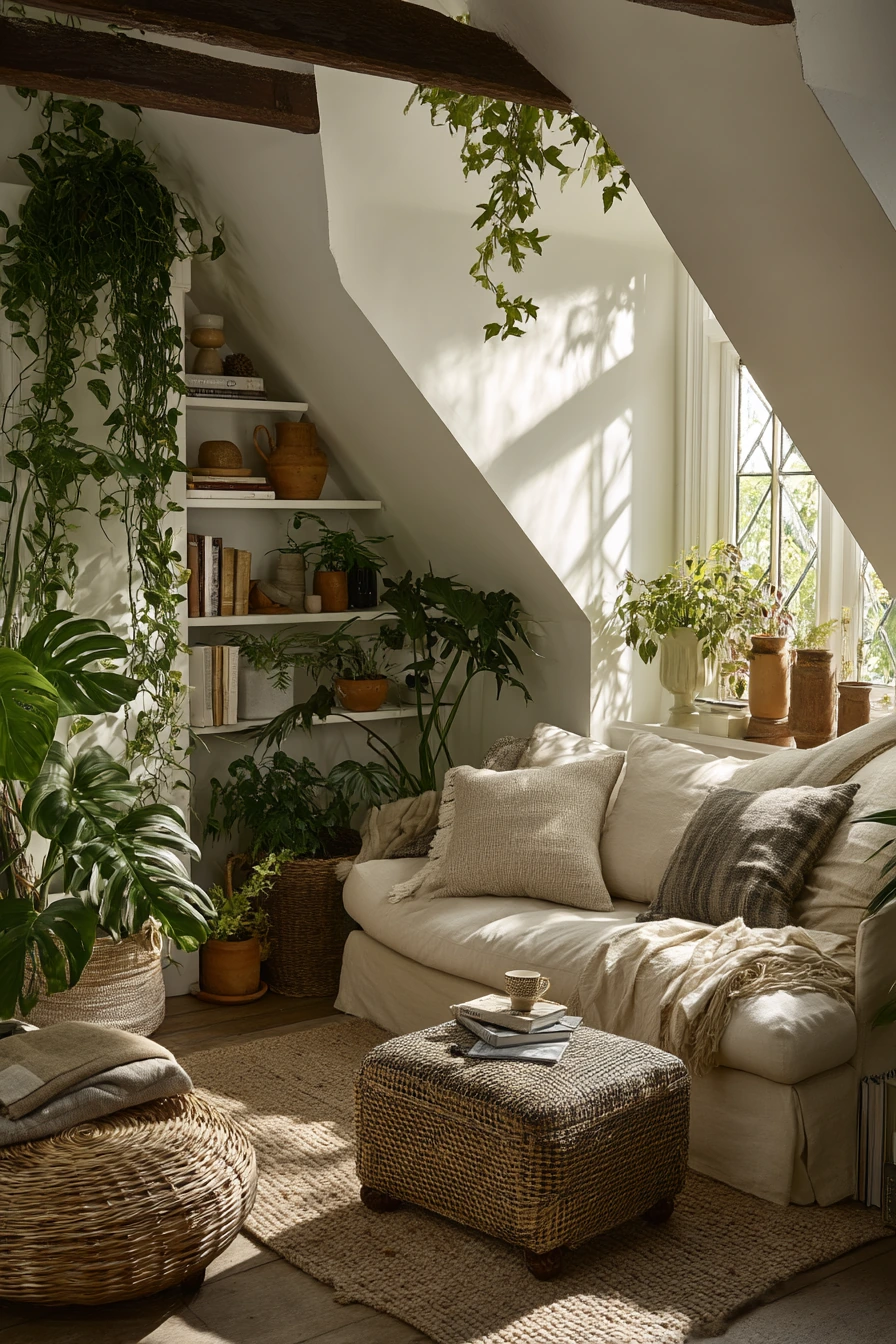
A plant-filled attic living room feels fresh and grounded, especially with sunlit morning window light. Start with a linen sofa for an easy, breathable base. Add a rattan chair and a textured ottoman to bring in natural materials that match terracotta pots and warm wood tones.
Open shelving works well in attics because it can fit under the eaves and does not feel heavy. Use it for books, baskets, and a few favorite objects, but keep some empty space so the room can breathe. Line terracotta pots along the window where plants can lean toward the light. If the window gets strong sun, rotate plants weekly so they grow evenly and do not crowd one side of the sill.
For styling, include real-life tools and creative bits: a watering can near the window, a sketchbook on the sofa, a loose blanket draped over the chair, and a stack of postcards on the ottoman tray. One fallen leaf on the floor is normal, but keep a small dustpan nearby so the room does not feel messy. Morning light can cast leafy shadows, so choose simple wall colors and keep patterns limited to one or two items, like a pillow or a small rug, to avoid visual noise under the slope.
- Group plants in odd numbers for a more natural look.
- Use saucers under terracotta pots to protect floors and sills.
- Add a small tray on the ottoman to create a stable surface.
- Choose linen or cotton covers that handle sun better than delicate fabrics.
- Use one tall plant in a corner to draw the eye up.
Pro Design Tip: Use plant stands with different heights to create layers, so the window area looks full without blocking light into the room.
Budget Considerations: If large plants are costly, start with cuttings and small pots, then size up over time as they grow.
10 10. Warm Minimal Attic Lounge With Storage
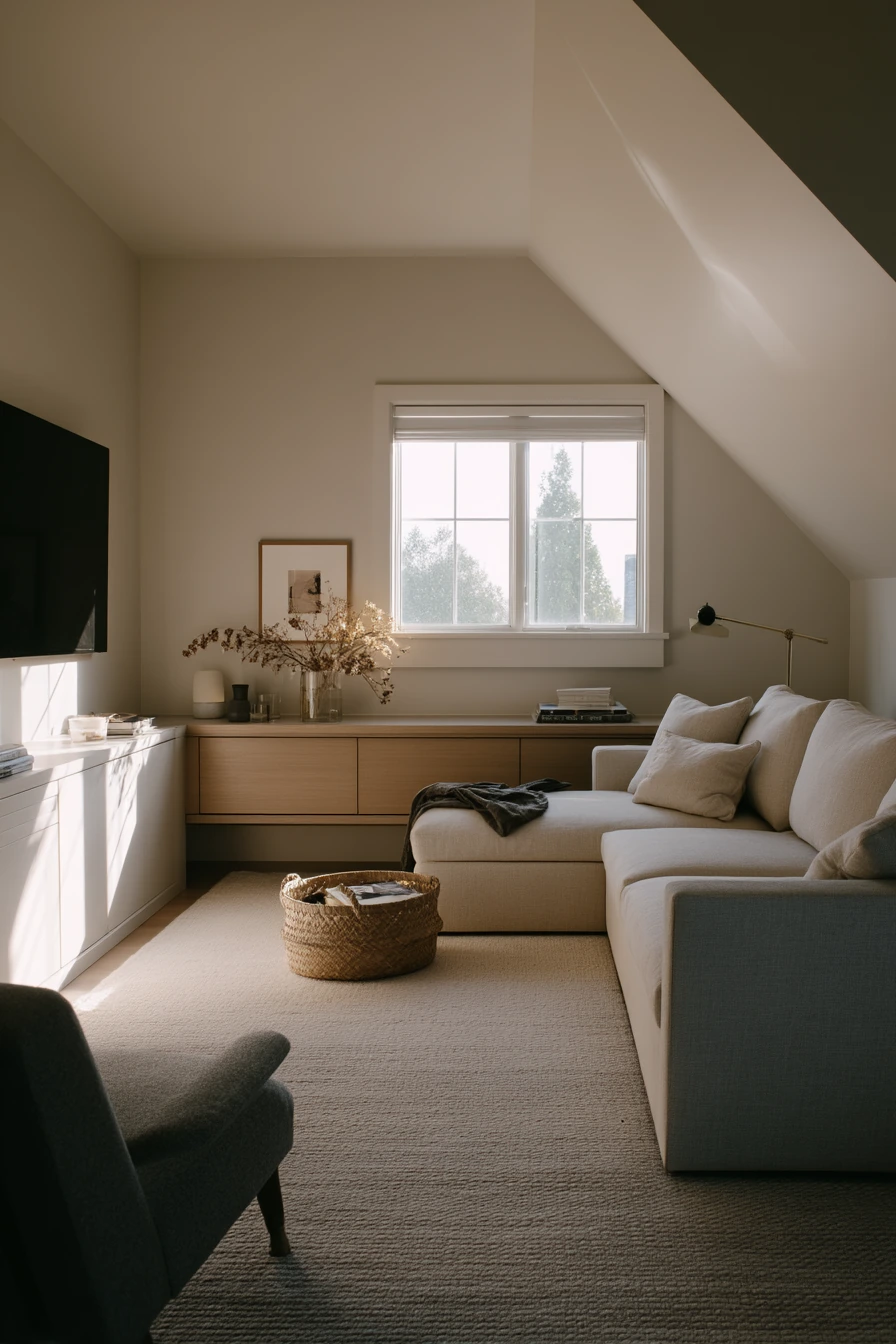
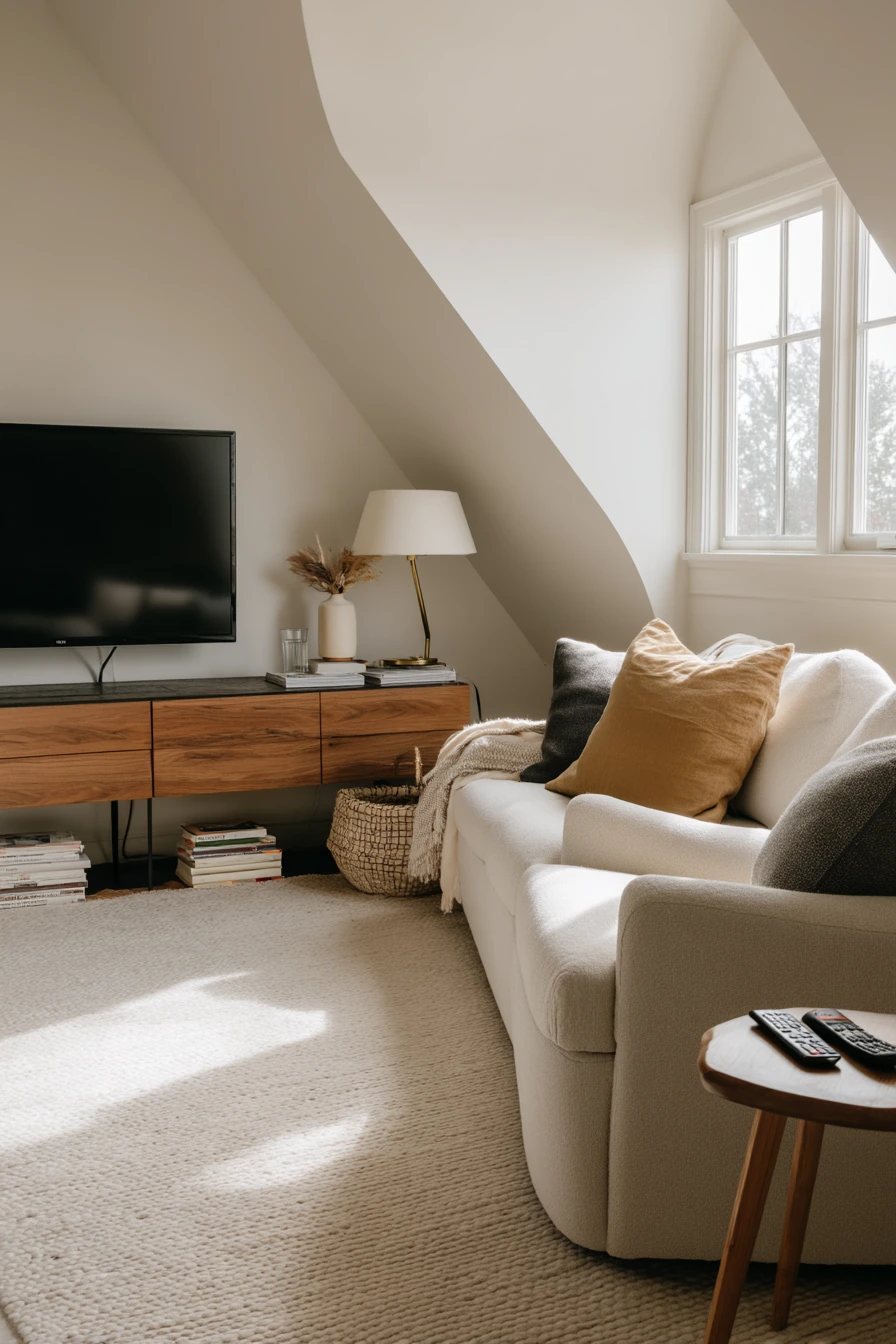
A warm minimal attic living room focused on function works best when every item earns its place. Built-in storage under the eaves is the hero here, because it removes clutter without adding bulky furniture. Pair it with a deep sofa for comfort, and keep the rest simple with one accent chair and a slim media cabinet.
A simple wool rug adds softness and keeps the room from feeling cold. Choose a rug size that reaches at least the front legs of the sofa and chair so the seating area feels connected. If you have a low ceiling, avoid tall bookcases and heavy curtains. Instead, use clean-lined window treatments and one or two lamps for a quiet glow.
Minimal does not mean empty. Add lived-in cues that are useful: a folded laundry basket in a corner, a notebook on the side table, and a reading lamp switched on for evening. A water glass on a coaster and a TV remote beside a cushion make the room feel genuinely inhabited. Late-day window light is soft, so use warmer bulbs (not blue-white) to keep the calm tone consistent. When you put things away, aim for quick wins: baskets for cables, one drawer for remotes, and a shelf for current books.
- Use built-ins with doors to hide visual clutter fast.
- Choose a slim media cabinet so walkways stay open.
- Keep decor to a few larger pieces instead of many small ones.
- Add one accent chair that can move for extra seating.
- Use matching storage bins so open shelves look tidy.
Pro Design Tip: Plan storage around daily habits, like a lower cubby for laundry baskets and a higher shelf for items you use less often.
Budget Considerations: If built-ins are out of reach, mimic the look with low cabinets under the eaves and add a countertop-style board across the top for a finished edge.
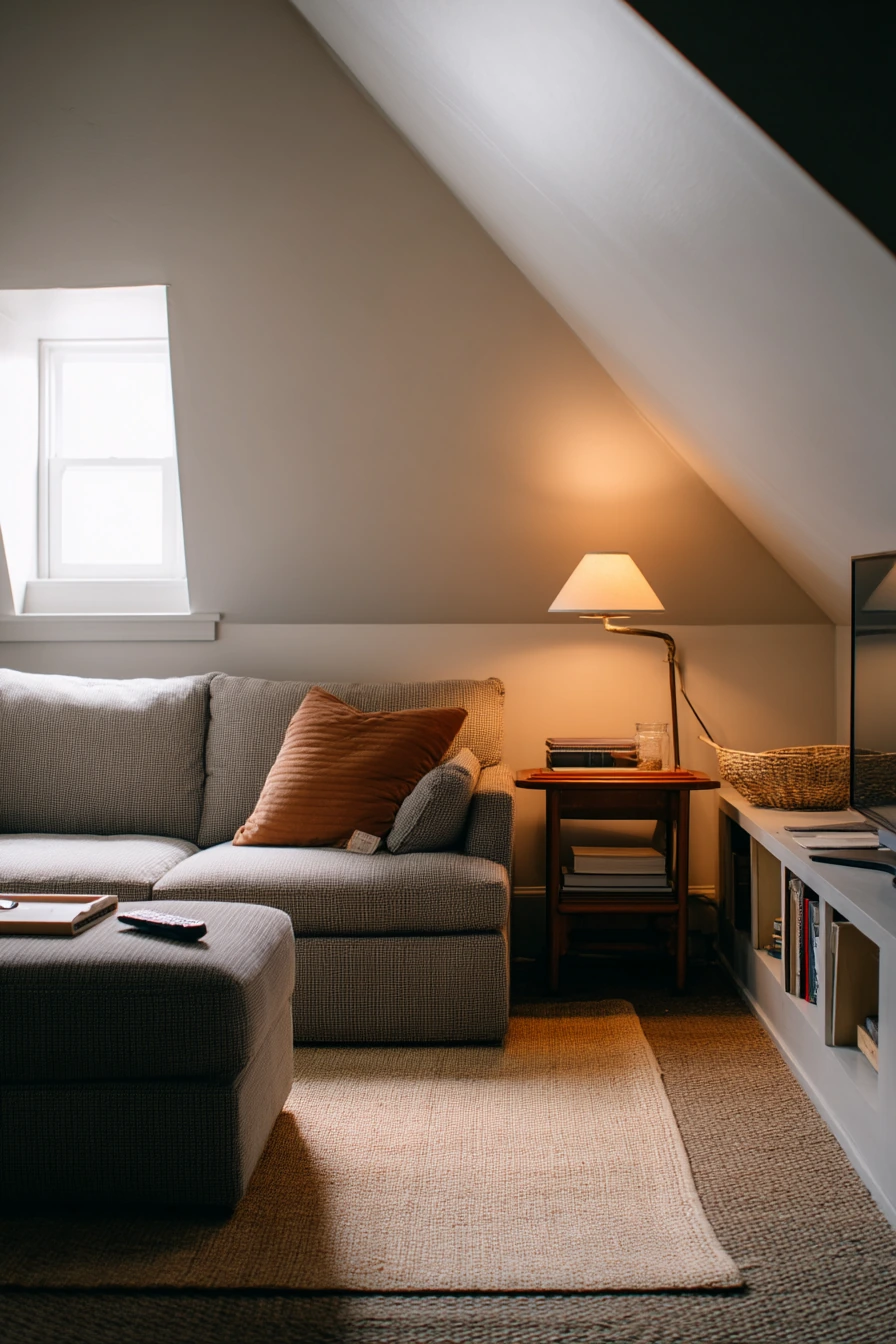
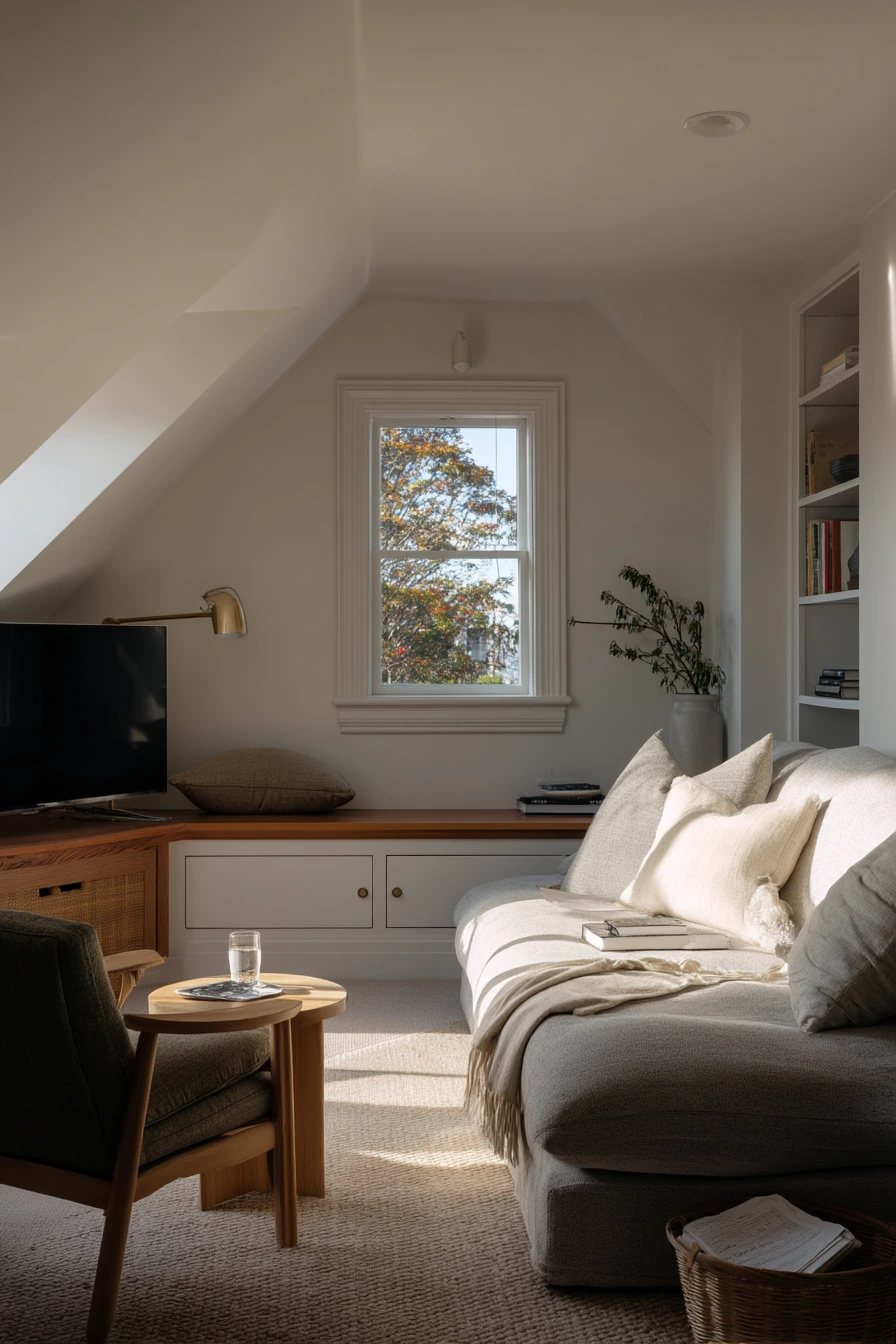
Attic living room ideas work best when you respect the roofline and design around real routines. Low seating, smart storage under the eaves, and warm lighting can make a sloped-ceiling room feel comfortable and easy.
Pick one direction that fits your life, like family-friendly, renter-simple, pet-proof, or guest-ready. Then copy the small styling moves, like layered rugs, baskets, and a clear cable plan, to keep the room calm and lived-in.
FAQ
1) How do I arrange furniture in an attic living room with sloped ceilings? Place taller pieces where the ceiling is highest, and use low sofas, benches, and consoles under the slope so the room stays open.
2) What kind of sofa works best in an attic? Low-profile sectionals, compact sofas, and loveseats usually fit best. Measure both floor space and the height where the sofa back will sit.
3) How can I add storage under the eaves? Built-in cabinets are ideal, but you can also use low dressers, cube units, and baskets that slide into the shortest areas.
4) What lighting is best for attic living rooms? Use layered lighting: one floor or table lamp for warmth, plus task lighting for reading. Dimmers help with glare from dormer windows.
5) How do I make a small attic living room feel bigger? Keep furniture legs visible, use light rugs and curtains, and limit decor to a few larger pieces. Mirrors near the window can bounce light.
6) What rugs work well in attic spaces? Wool rugs add comfort and reduce noise. If you need easy cleaning, choose a flatweave or washable option with a non-slip pad.
7) Can an attic living room double as a guest room? Yes. A sleeper sofa, nesting tables, and a basket for bedding and towels make it easy to switch between lounging and sleeping.