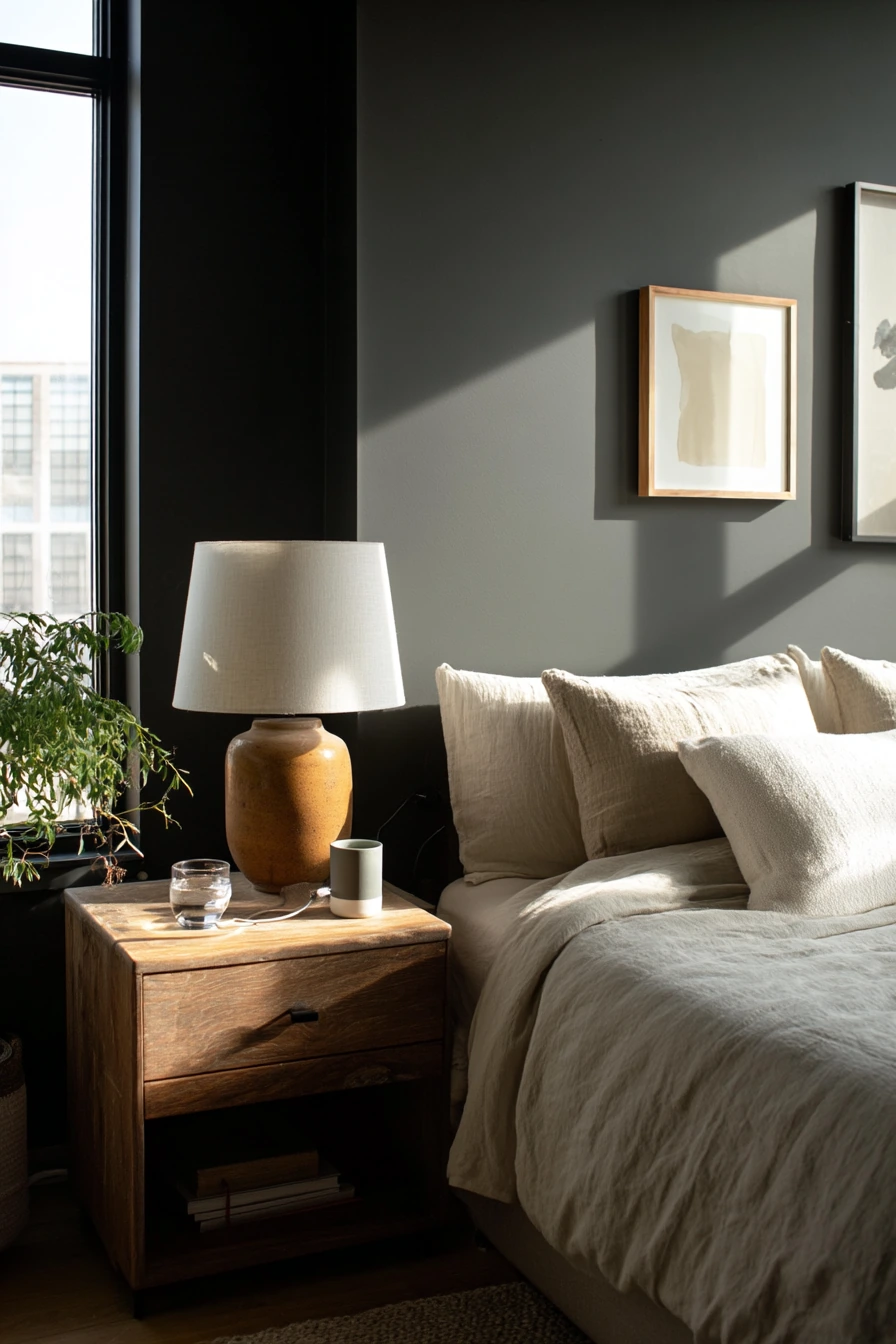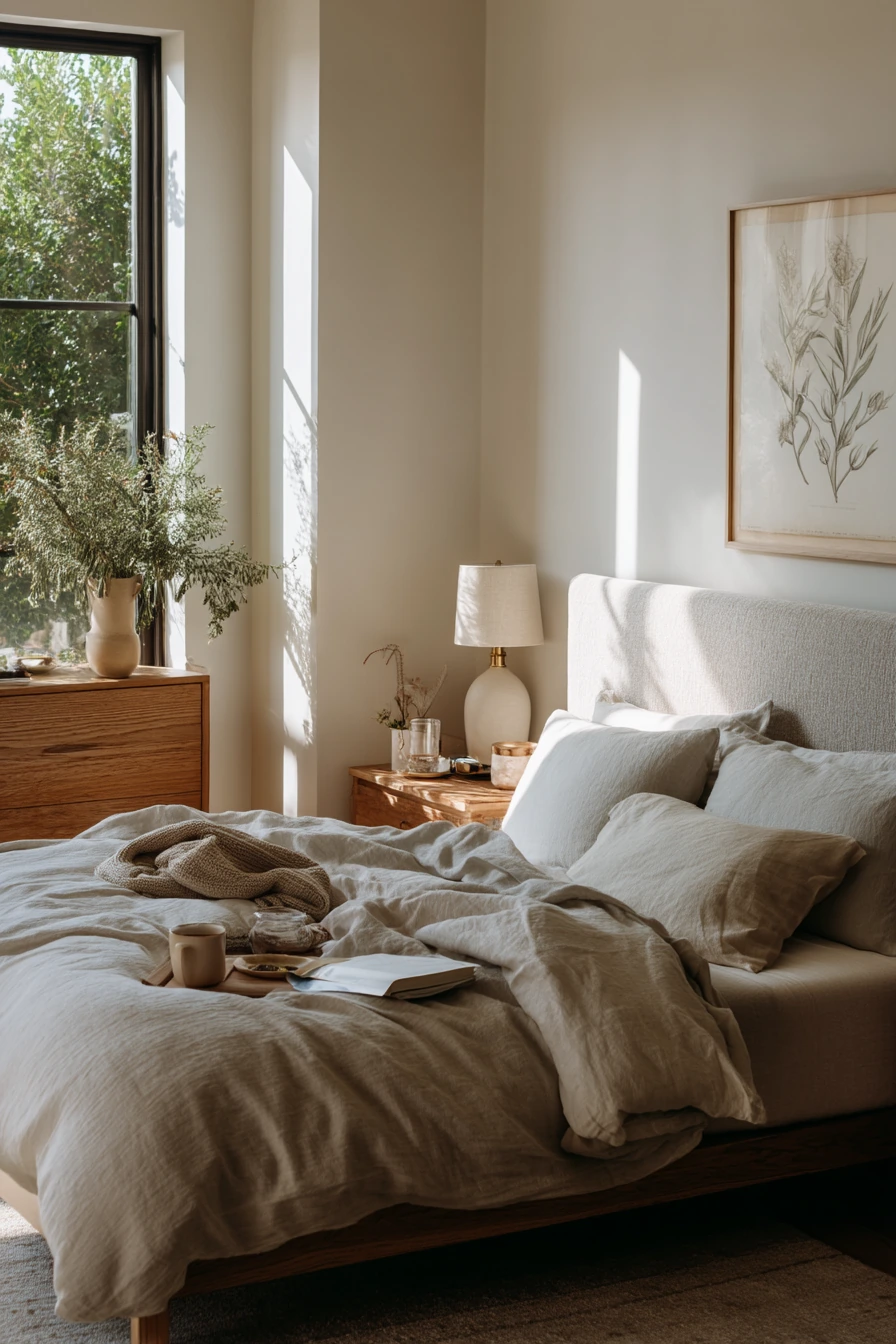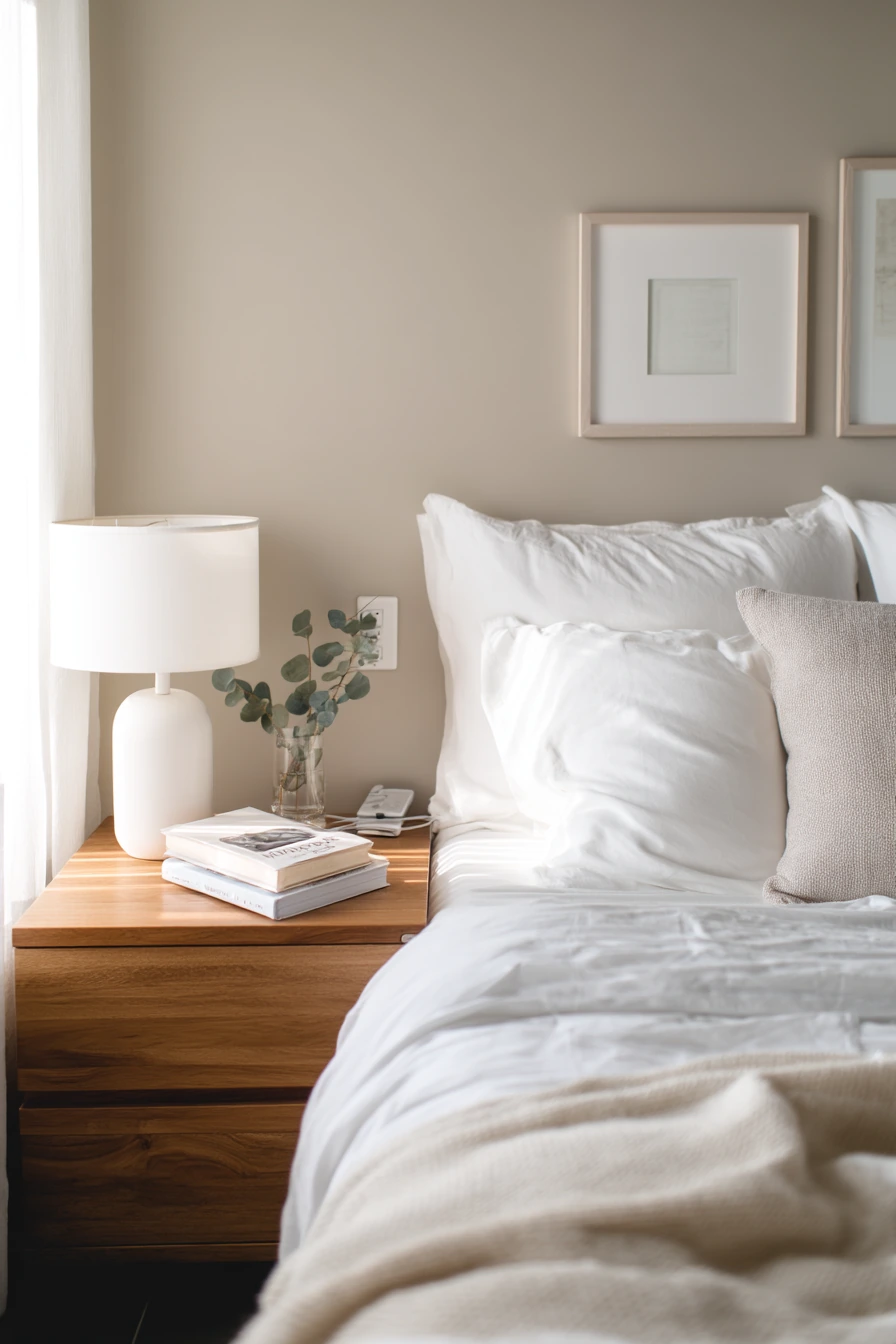

Asian bedroom ideas often focus on calm colors, low furniture, and simple decor. These choices help a room feel restful, even in a busy home or a small apartment.
In this guide, you will see 10 easy styles inspired by real bedrooms. Each one uses details like a low tatami platform bed, shoji screens, paper lantern light, bamboo accents, and layered linen bedding.
You will also get clear ways to style each look, plus a pro design tip and a budget note. Use these ideas to plan your next refresh and keep the room easy to live in.
If you are coming from Pinterest, save the look you like, then use the checklist under each section to copy it in your own space.
1 Tatami Calm for a Shared Bedroom
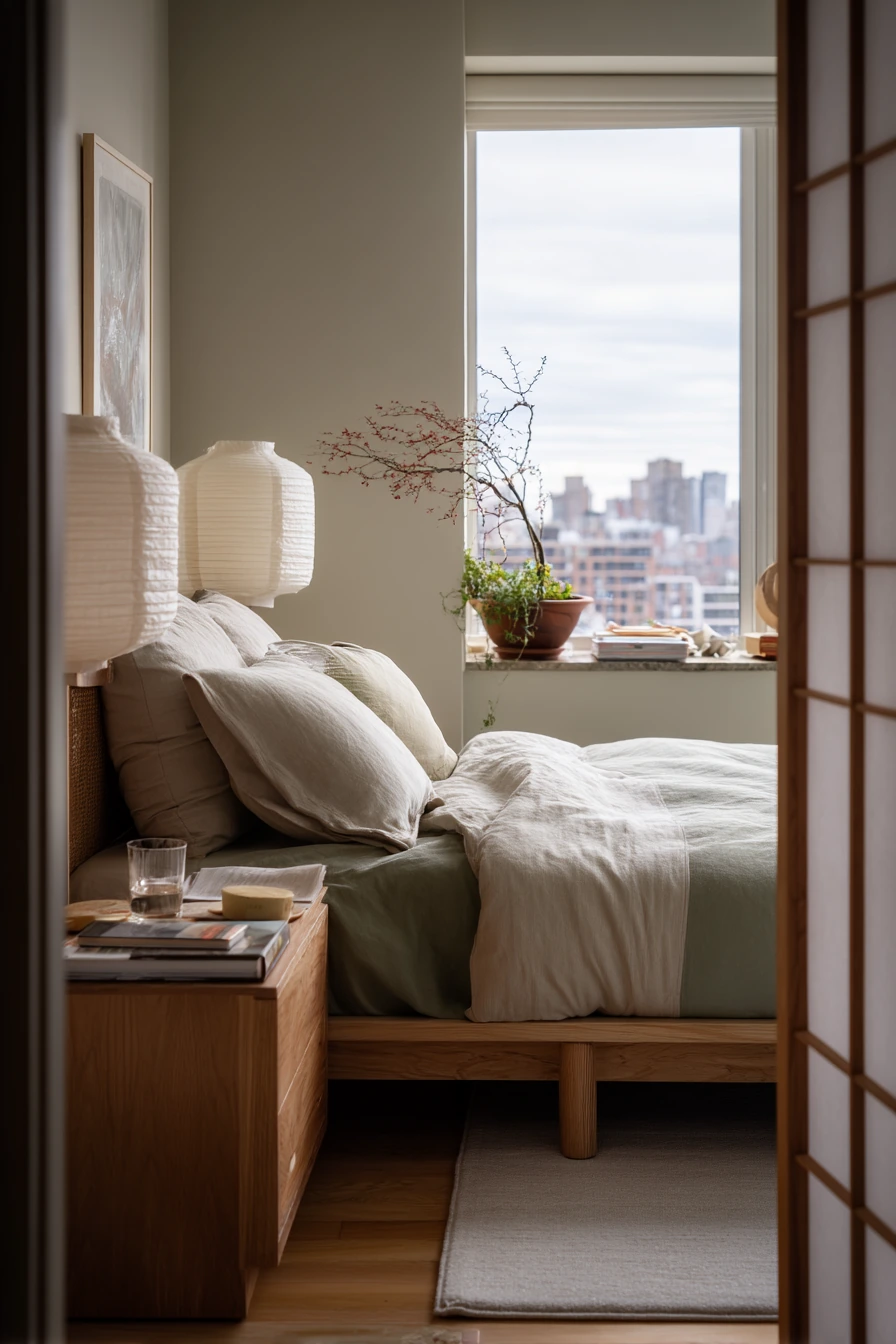
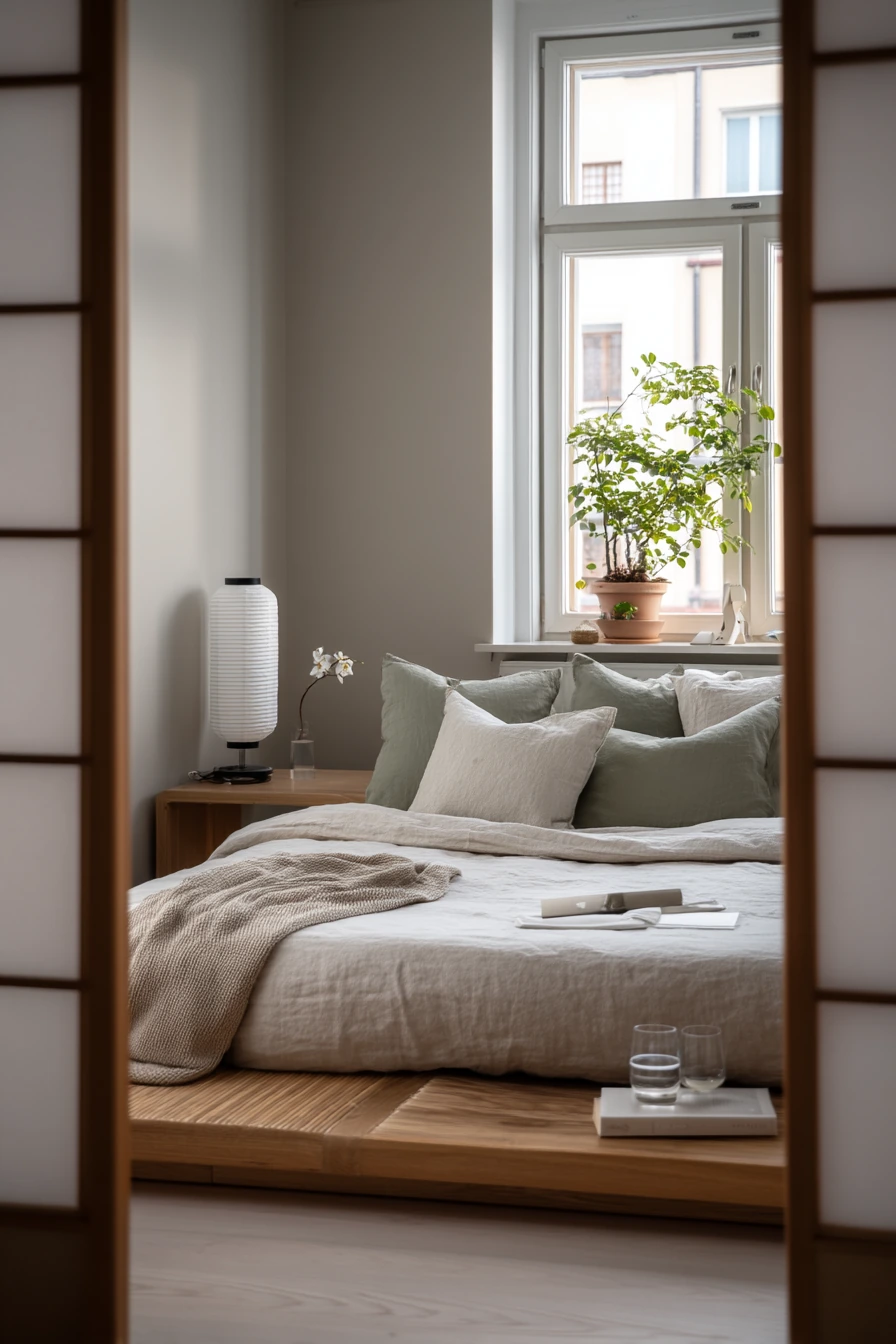
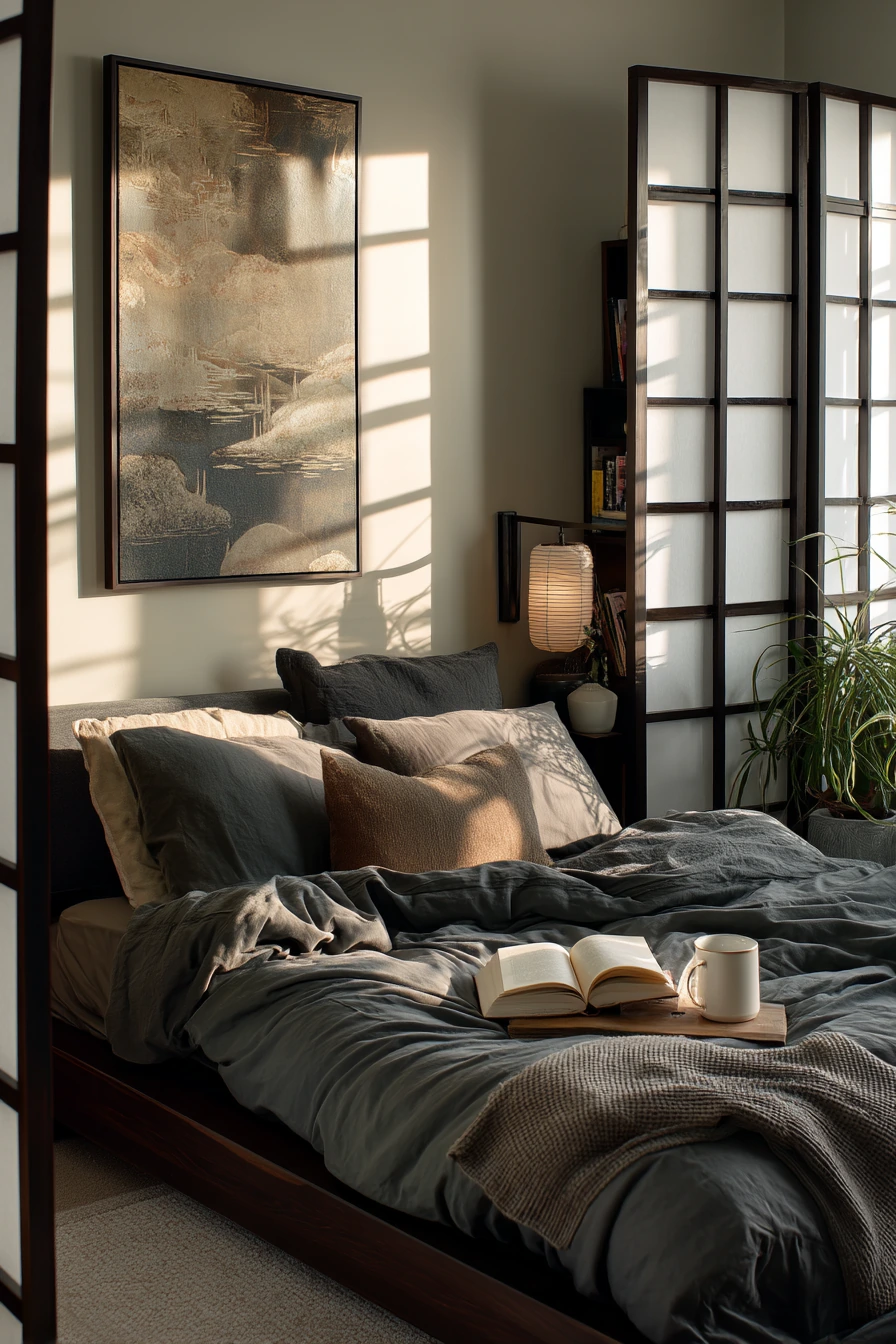
This Asian-inspired family bedroom works well for a young couple in a city apartment because it stays simple and grounded. A low tatami platform bed sets the tone and makes the ceiling feel higher. Woven shoji screens add soft texture and help hide clutter without adding heavy furniture.
Keep the base palette light with pale linen bedding. Then add muted jade accents in small doses, like one pillow, a small tray, or a simple wall print. A rice-paper lamp gives gentle light that feels warm in the morning and relaxing at night. Finish with a single ikebana stem for a clean focal point that does not feel busy.
To make it feel real and lived-in, style a paperback novel on the oak nightstand, add a water glass, and tuck a phone charging cable into a small wood box or tray. Let the throw stay slightly rumpled. Add a small plant on the sill so the room feels fresh without needing many decorations.
- Choose a low platform bed with a thin profile to keep the look airy.
- Use shoji-style panels as a closet cover or a corner divider.
- Layer linen: fitted sheet, light duvet, and one textured throw.
- Add muted jade with one or two items, not a full set.
- Keep one stem arrangement instead of a big bouquet.
Pro Design Tip: Repeat the same wood tone twice, like oak nightstands and a simple oak frame, so the room feels planned, not mixed.
Budget Considerations: Shoji screens and tatami beds can cost more; try a low wood platform plus a rice-paper lamp to get the same mood for less.
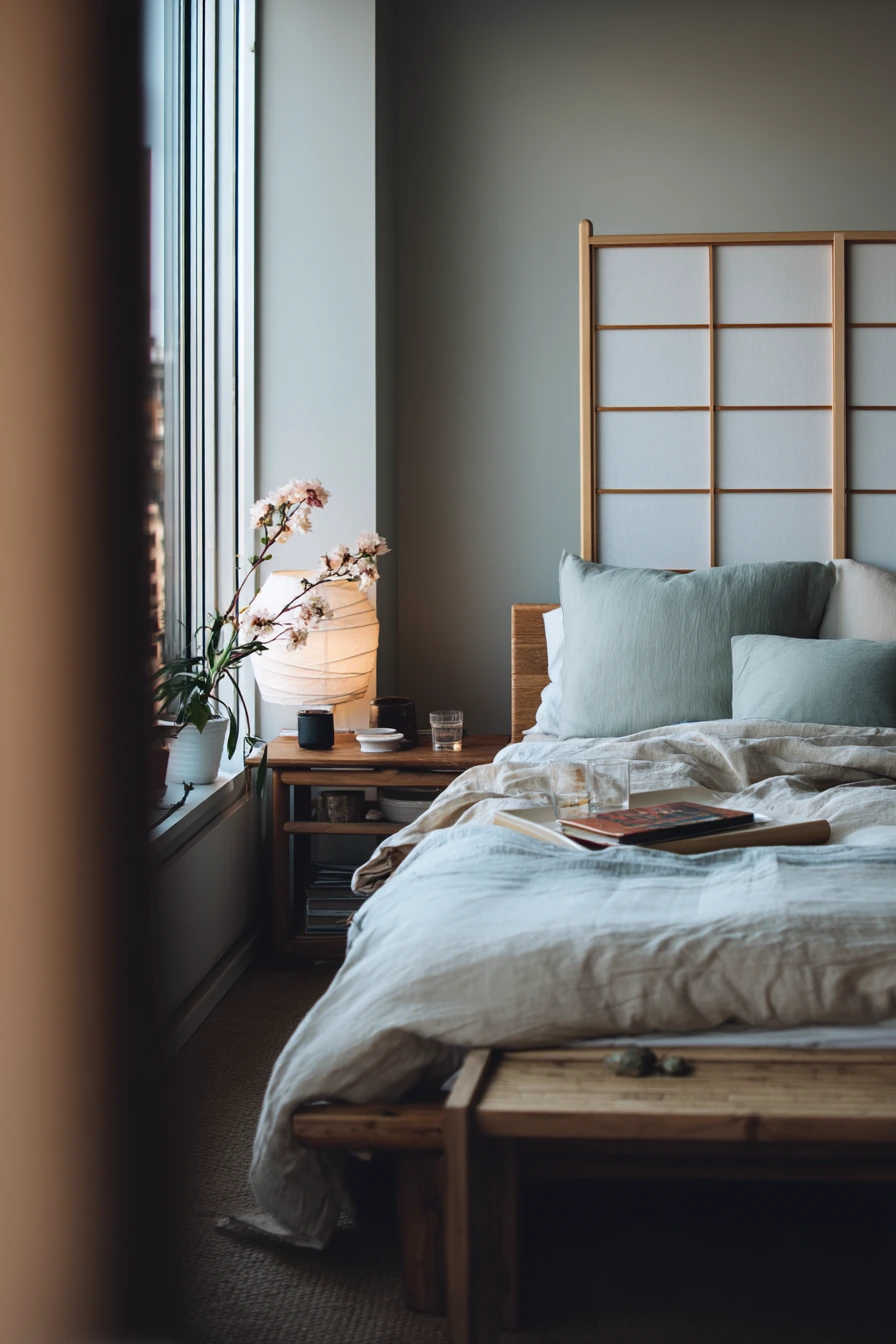
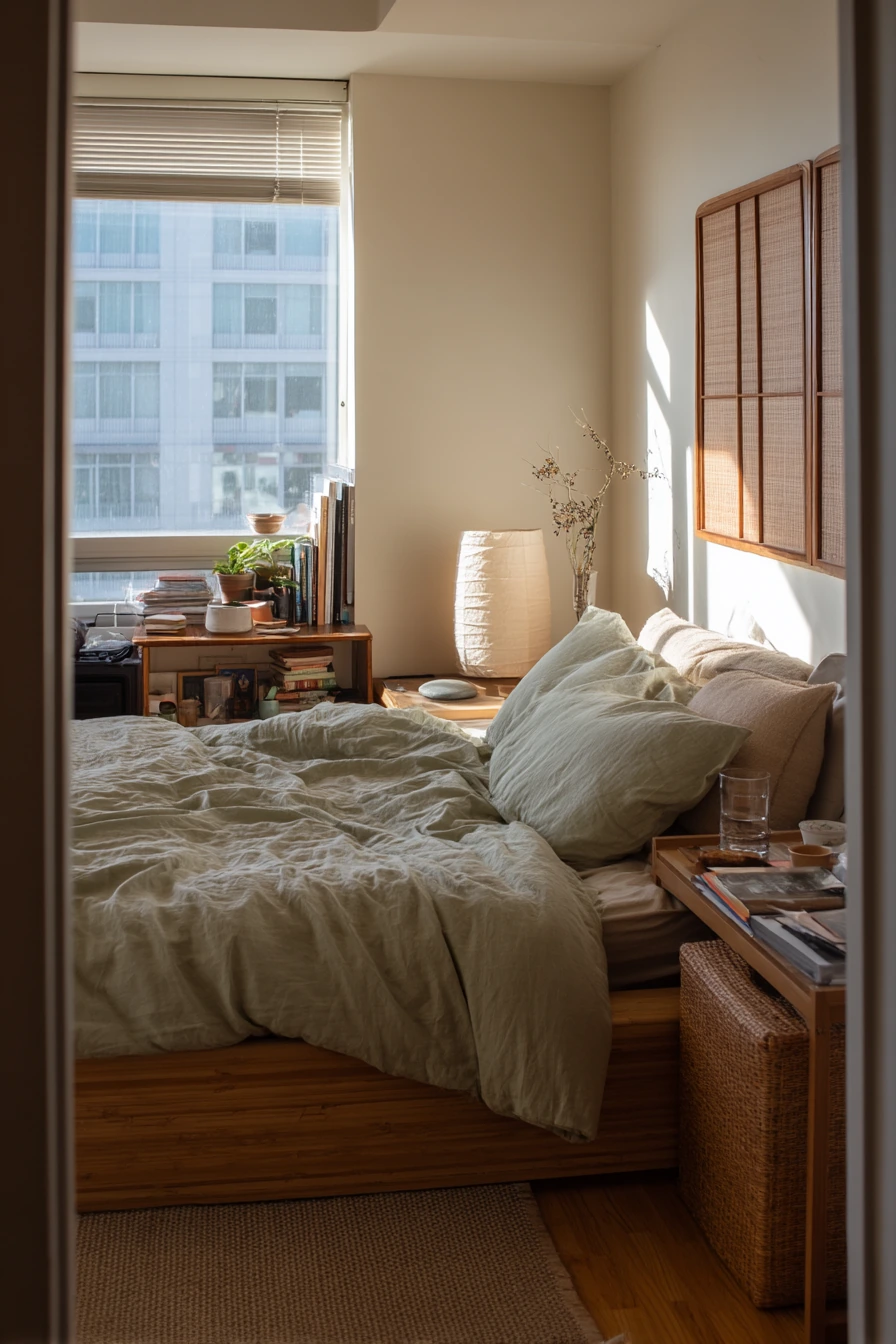
2 Small Space Zen with Storage
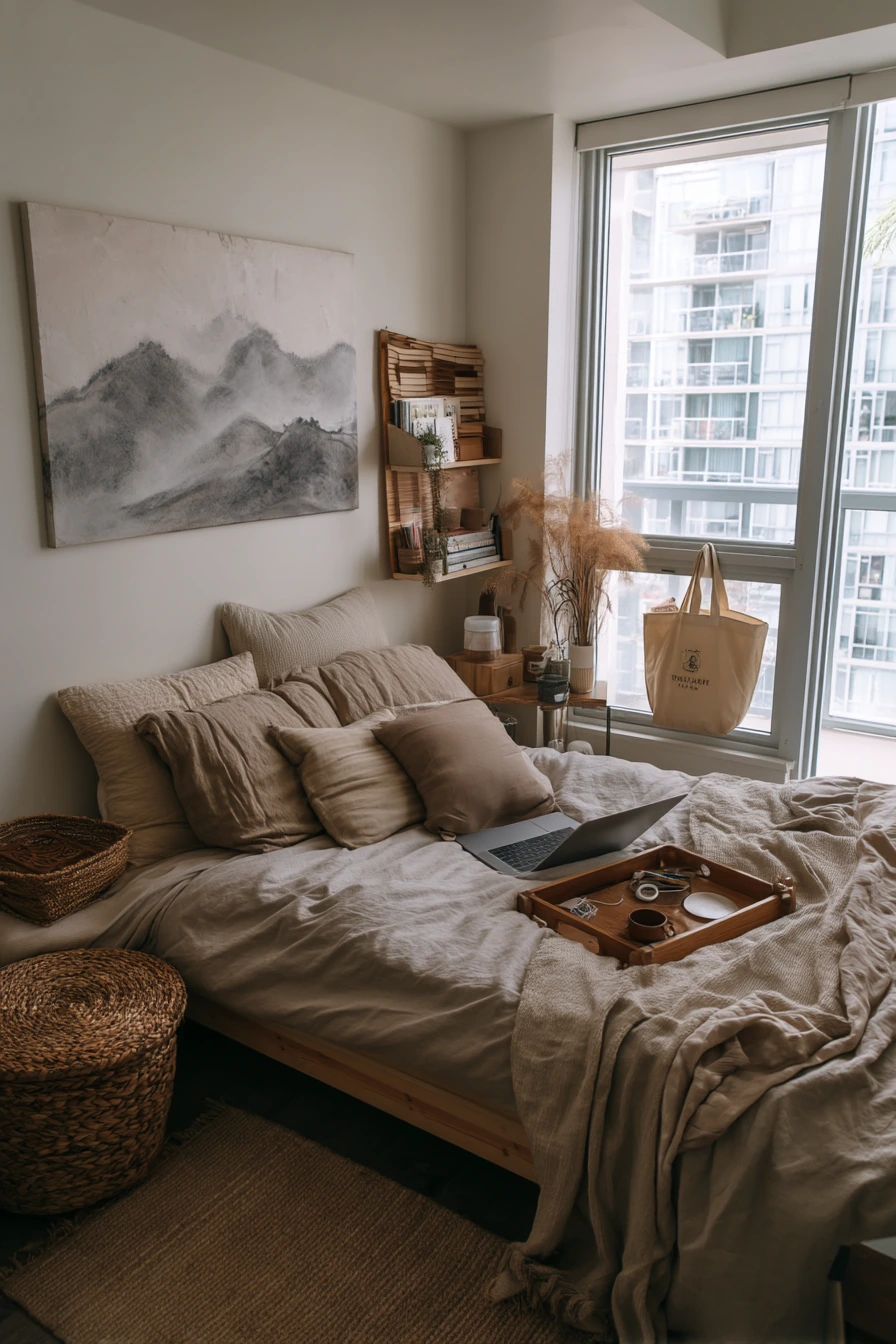
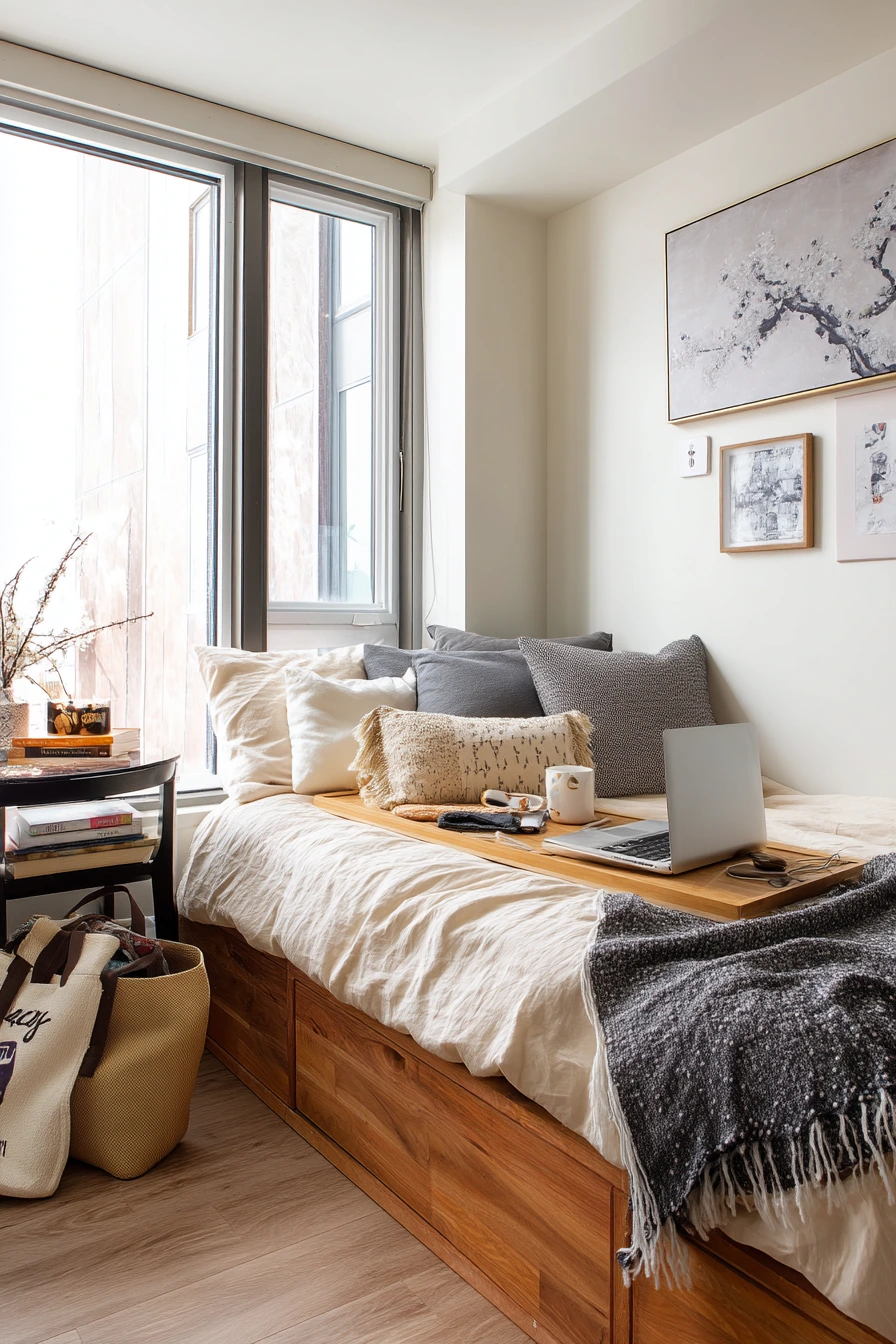
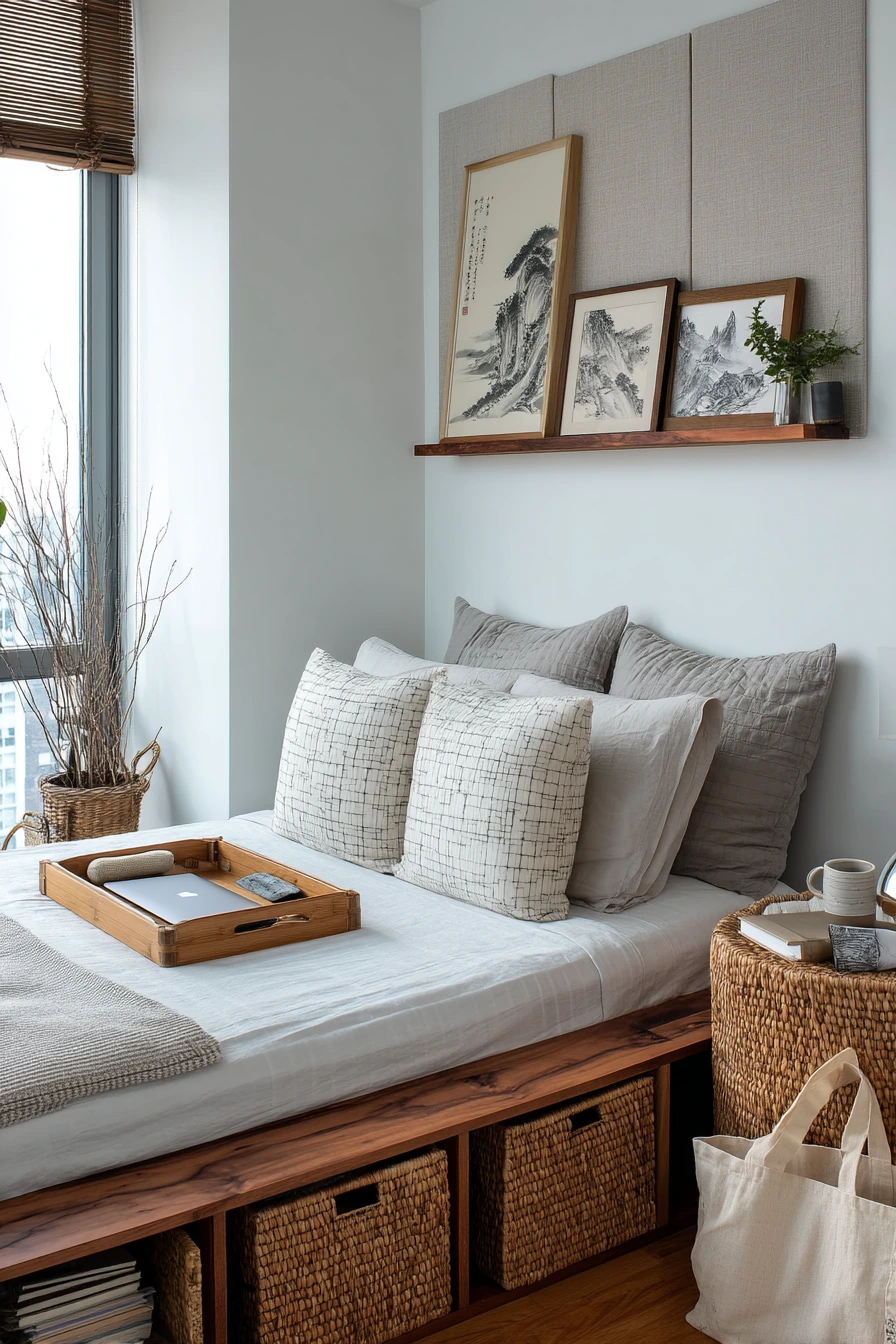
In a compact studio, Asian bedroom ideas work best when every item has a job. Start with a slim platform bed so the room stays open. Add under-bed baskets for extra sheets, off-season clothes, or workout gear. This keeps surfaces clear and makes the space feel calmer.
Sliding fabric panels are a renter-friendly way to soften the room and hide storage. Use them to cover an open closet, a shelving unit, or a work corner. A walnut shelf above the bed can replace bulky nightstands. Keep it simple: a bamboo tray, a small lamp, and one mug spot so morning routines stay easy.
For wall decor, choose one ink wash print above the headboard. It adds focus without making the studio feel crowded. Use neutral textile layers, like a light quilt, a soft blanket, and two pillows in similar tones. If you work from bed sometimes, plan for it: keep a laptop tray nearby and a basket for folded laundry. A tote bag by the door and earbuds on the shelf make the room feel real, not staged.
- Pick a bed height that fits two or three storage baskets underneath.
- Hang sliding fabric panels on a ceiling track or tension rod.
- Use one wall shelf as a nightstand to save floor space.
- Stick to neutrals, then add one dark wood tone for contrast.
- Keep one art piece centered above the bed for clean balance.
Pro Design Tip: Use matching baskets under the bed so the storage looks built-in, not like extra bins.
Budget Considerations: If a new platform bed is not in the plan, add bed risers and fabric bins to your current frame to create low-cost storage.
3 Teen Room with Study Corner
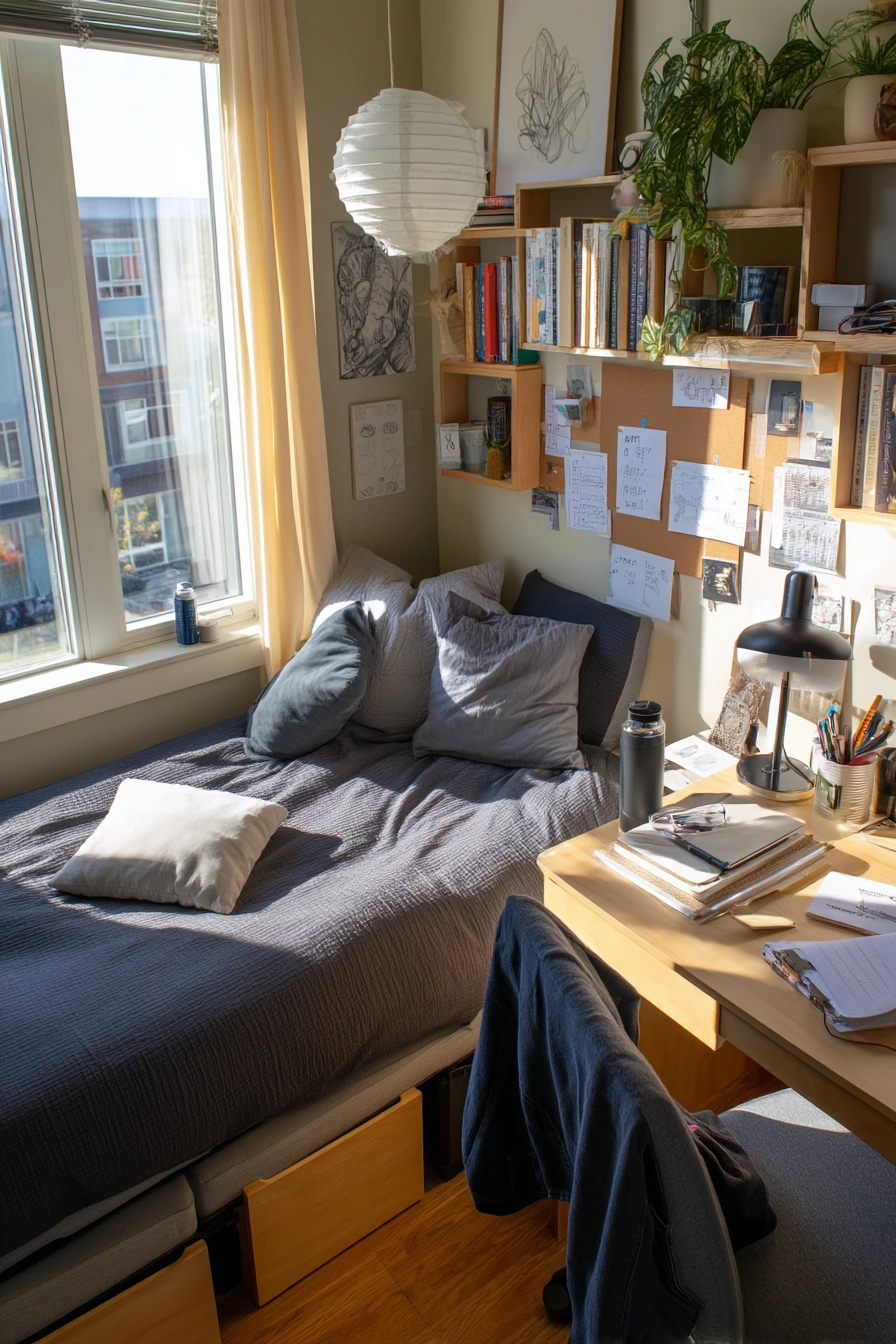
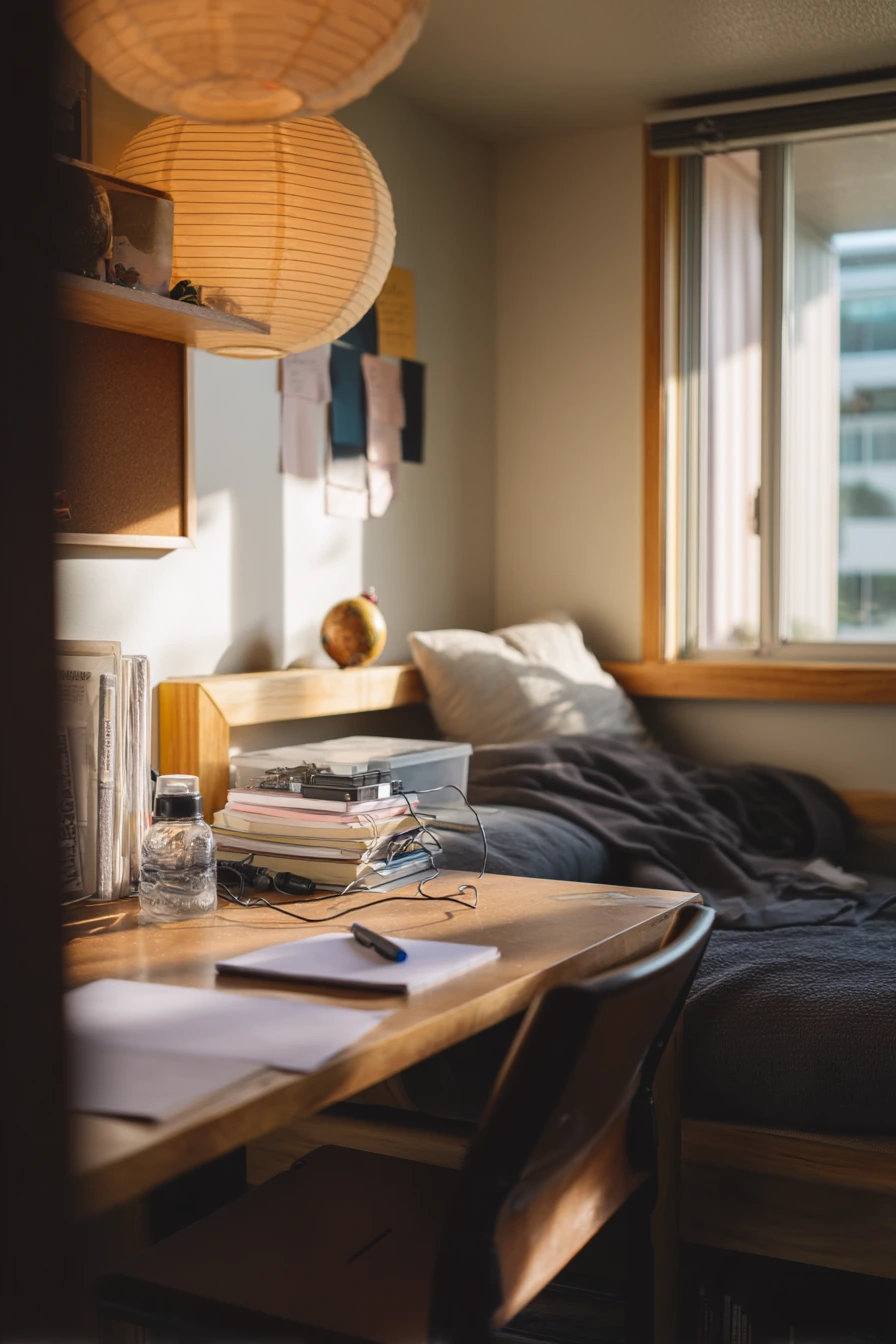
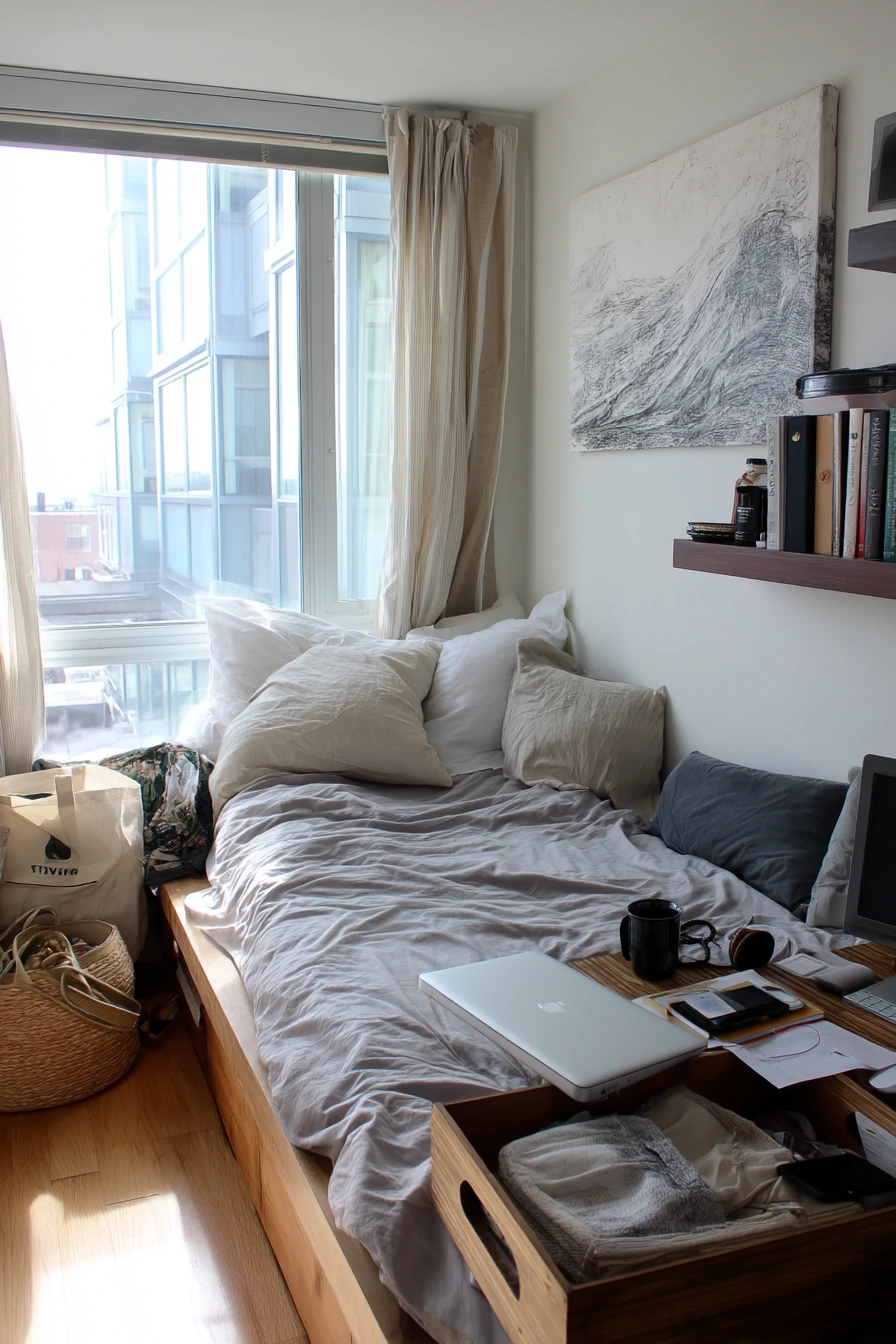
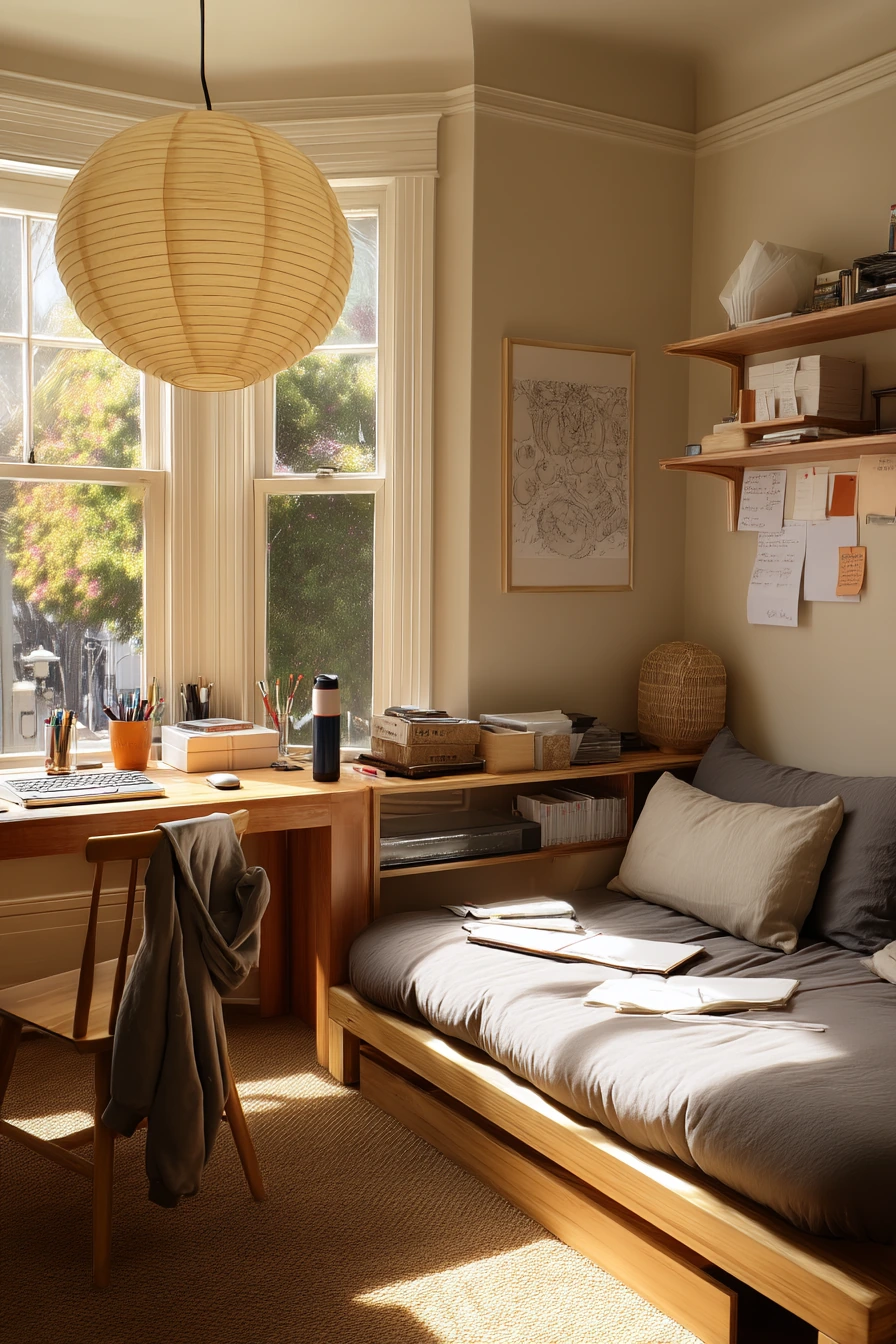
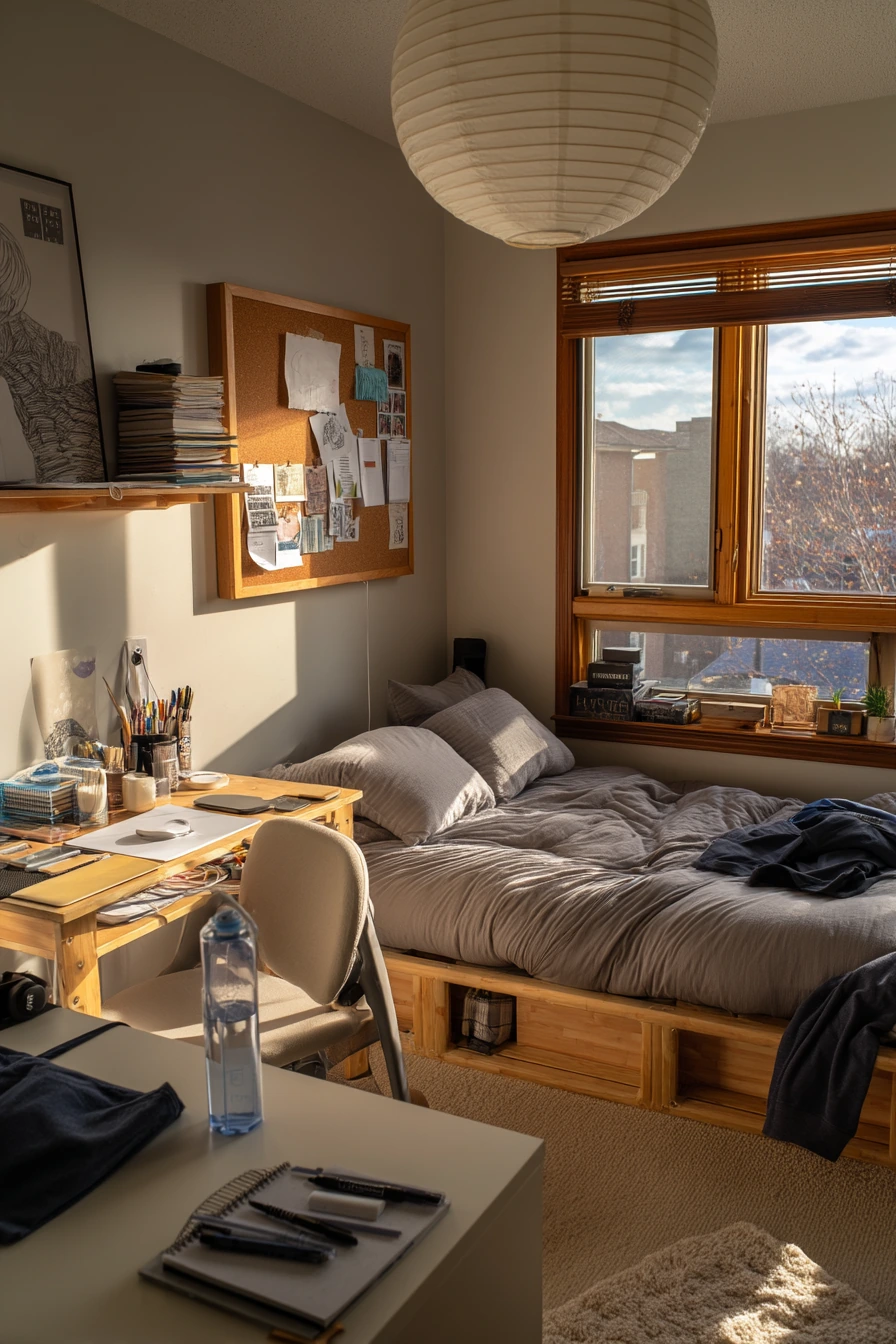
A teen bedroom needs comfort and function, so start with a futon-style bed that feels relaxed but tidy. Pair it with soft charcoal bedding to hide small messes and keep the room feeling calm. Warm wood tones, like a lacquered desk and modular shelving, help the space feel grown-up without being too serious.
Build a simple study zone that makes homework easier. Place the desk near the window when you can, and use a paper lantern for soft light in the evening. Add a cork board above the desk for reminders, sketches, and notes. Keep the wall layout clean by grouping items: cork board, a small calendar, and one shelf, instead of many tiny frames.
Let the room look lived-in, because teens live there. Stack notebooks neatly on one side of the desk. Keep sketch pens in a cup. Hang a hoodie on the chair and guide the charging cable along the bed frame with clips so it does not trail across the floor. Use modular shelving for books, headphones, and a small box for cords. This setup supports routines while still feeling personal.
- Choose charcoal or deep gray bedding for an easy-care base.
- Use a cork board to keep paper clutter off the desk.
- Add a paper lantern for soft, even light at night.
- Pick modular shelves that can change as interests change.
- Use small bins on shelves for chargers and small gear.
Pro Design Tip: Keep the desk surface mostly open by storing supplies in two containers only, like one pen cup and one lidded box.
Budget Considerations: A simple futon mattress and a low frame can cost less than a full bed set; check secondhand for a solid desk and refresh it with a clear finish.
4 Renter-Friendly Layered Neutrals
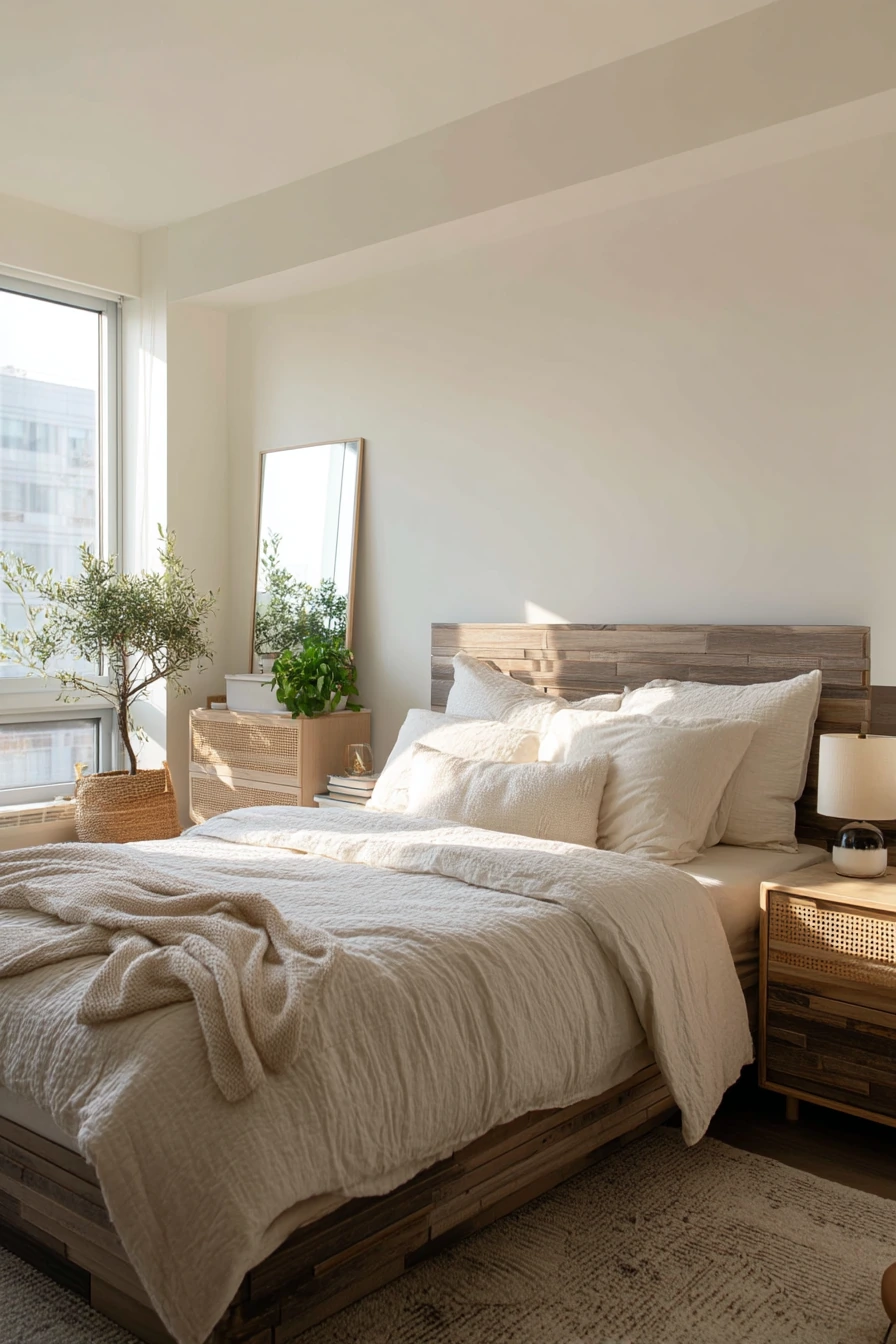
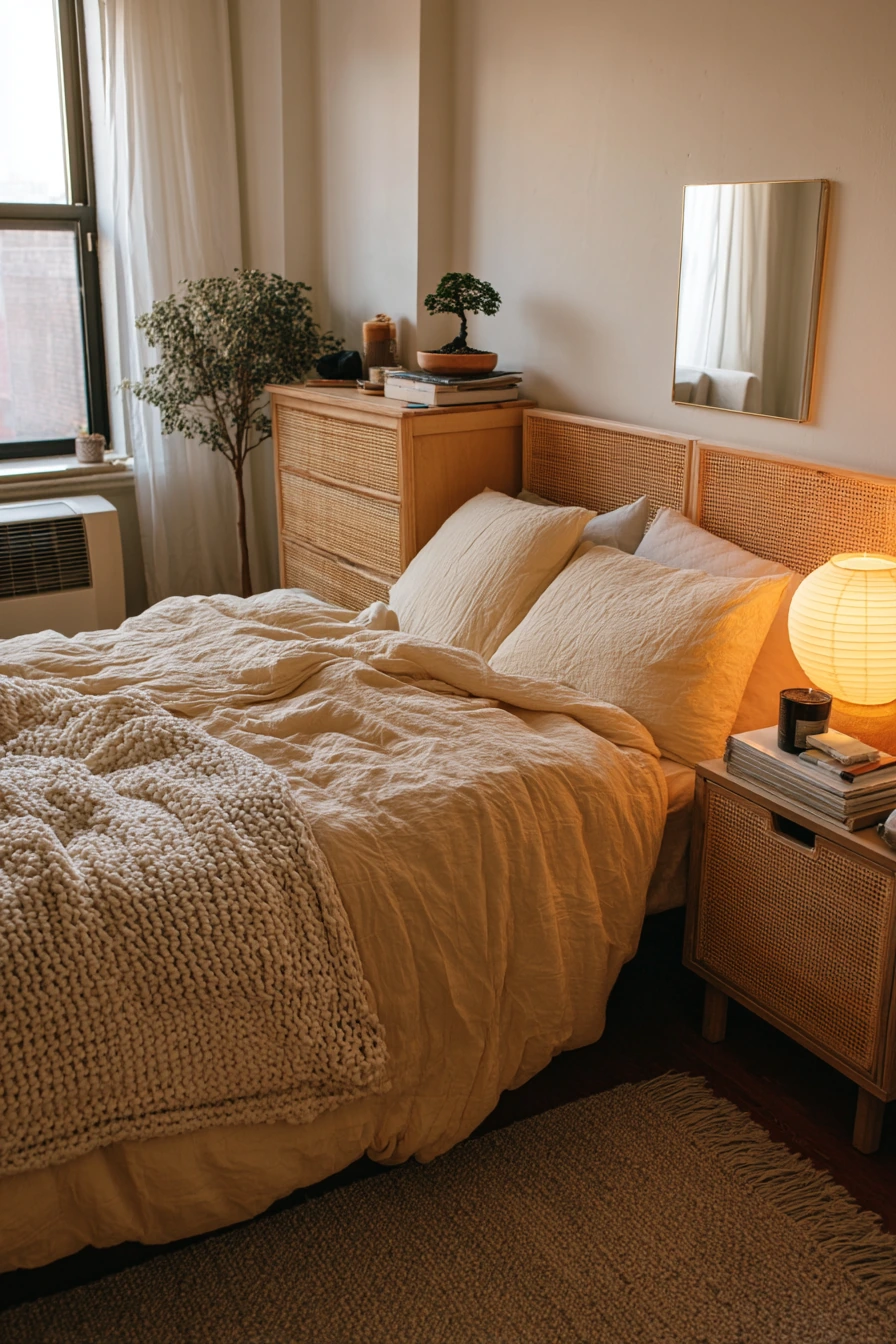
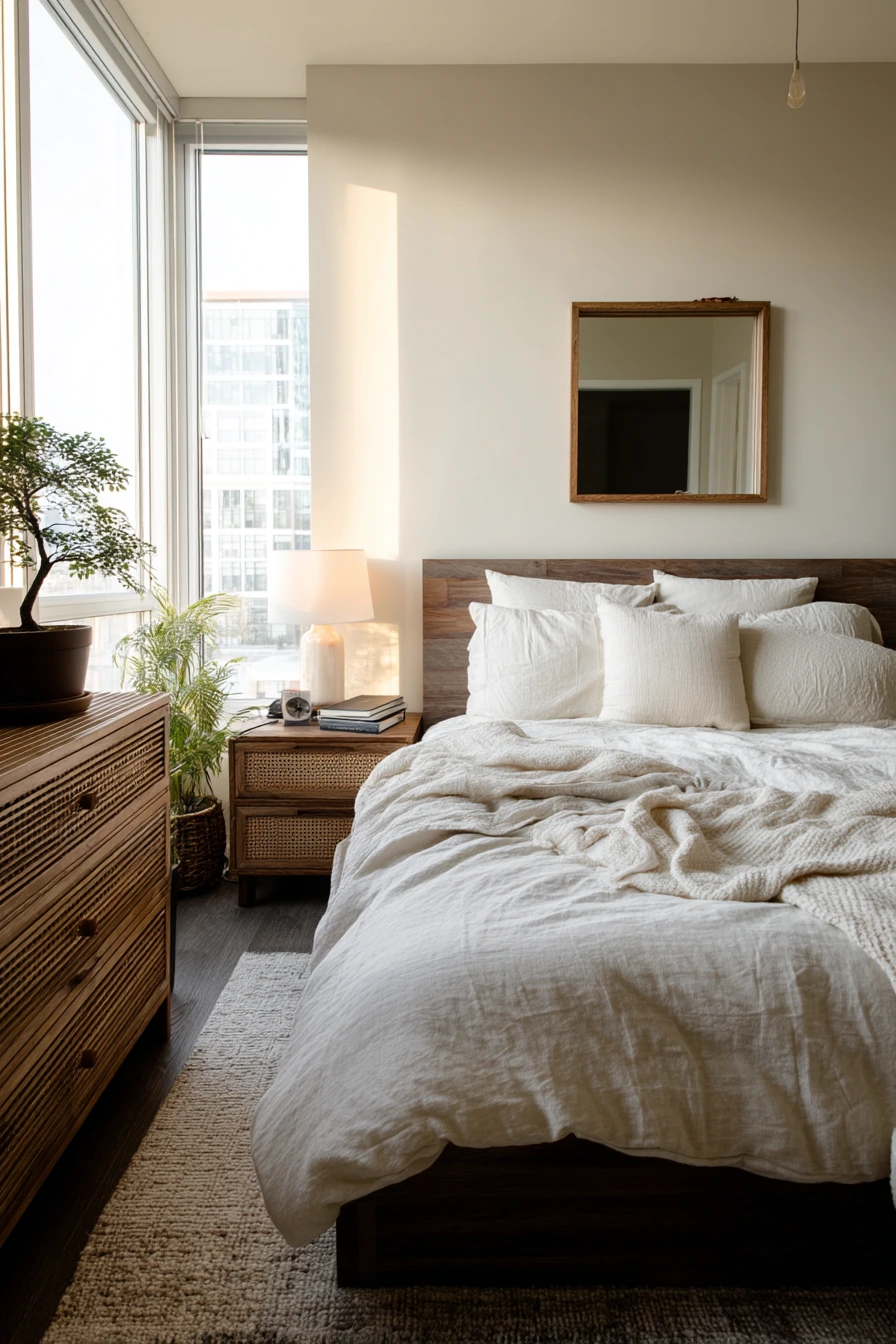
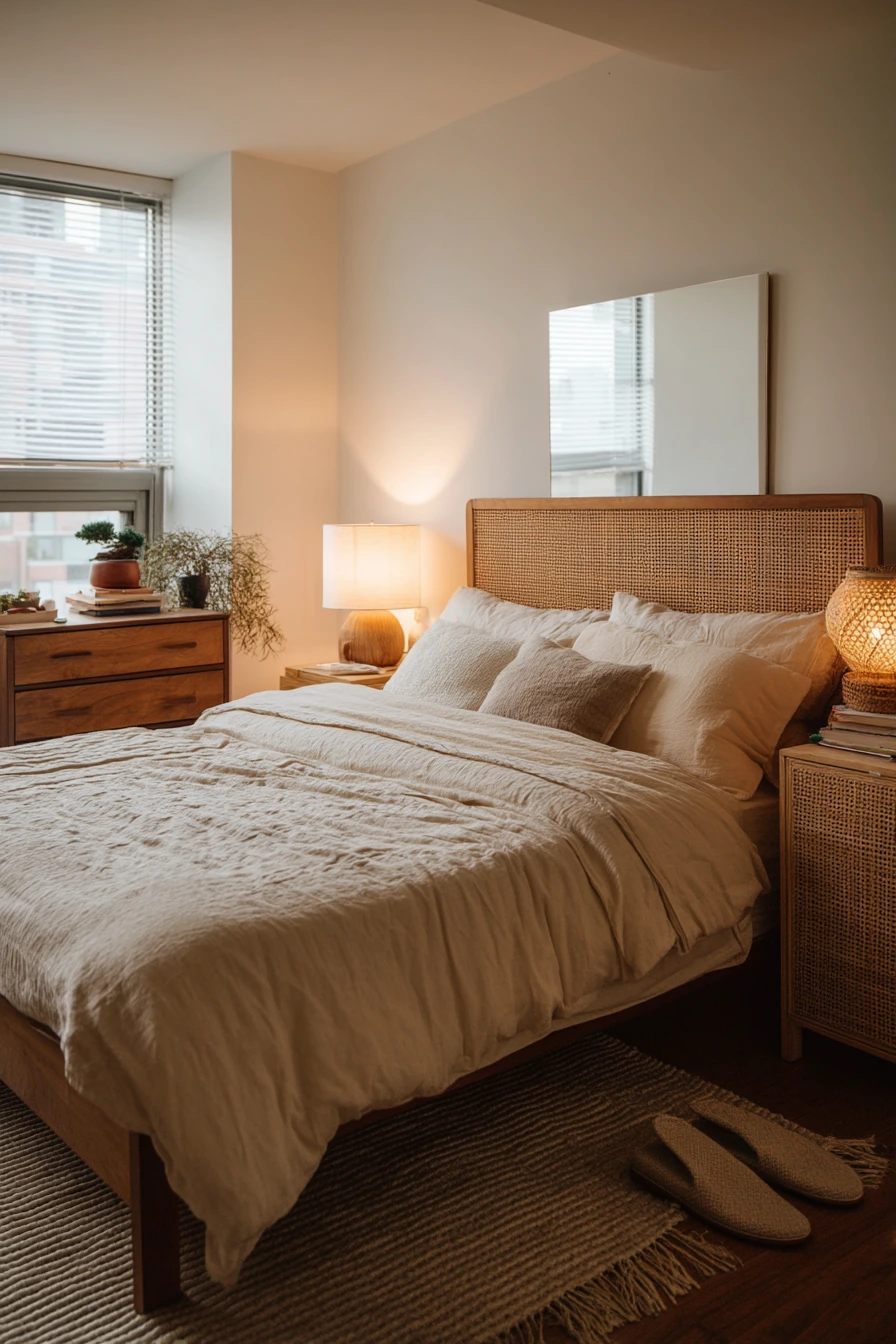
This renter-friendly bedroom is modern and quiet, with Asian bedroom ideas that do not require major changes. A peel-and-stick wood slat headboard gives the bed a strong backdrop without drilling heavy hardware. Pair it with a low-profile bed so the room feels open and easy to move around.
Use cane nightstands to bring in natural texture. Add a cream quilt and a textured rug for comfort underfoot. A minimalist wall mirror helps bounce light around and makes the space feel larger. On the sill, a small bonsai brings a focused, calm look without needing many plants. Keep decor small and useful: a tray for earphones, a short book stack, and a spot for a watch.
Lived-in cues matter because they make the room feel like home. If the duvet gets slightly wrinkled, that is fine, as long as the palette stays calm. Use drawer organizers so an open drawer with socks does not feel messy. Add warm lamp glow for evening, then rely on window light during the day. This mix keeps the room soft and practical, not harsh.
- Use peel-and-stick slats in a tight, even grid for a clean look.
- Pick cane or woven pieces to add texture without busy patterns.
- Layer a cream quilt over a simple sheet set for an easy bed.
- Add one bonsai or small plant as a calm focal point.
- Use a mirror to reflect light and reduce the need for more decor.
Pro Design Tip: Stop the slat headboard about 2 to 4 inches wider than the bed so it frames the pillows without looking oversized.
Budget Considerations: Peel-and-stick panels vary in price; if needed, use a removable wallpaper with a wood pattern behind the bed and add real texture with cane or baskets.
5 Couple’s Retreat with Warm Lantern Light
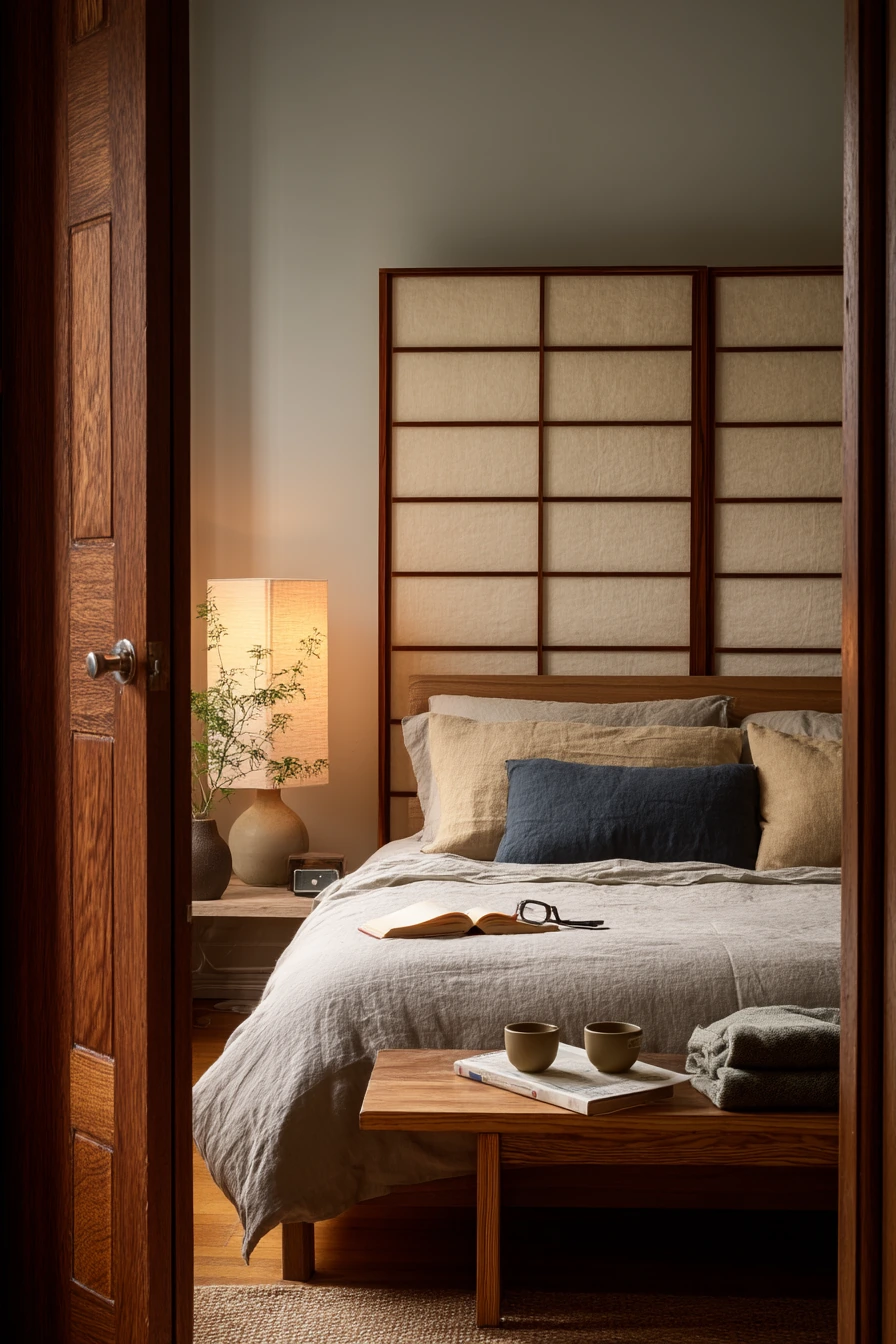
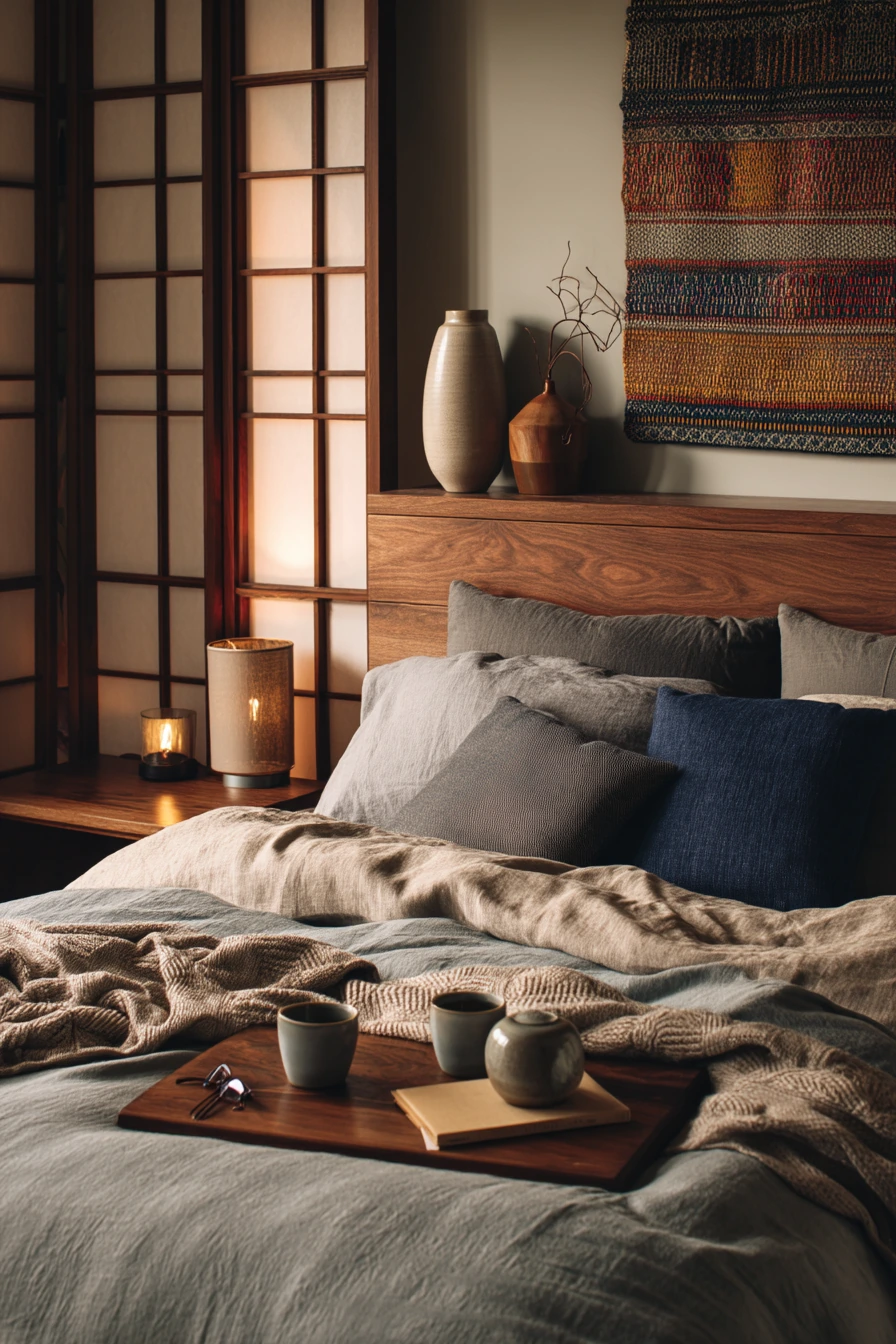
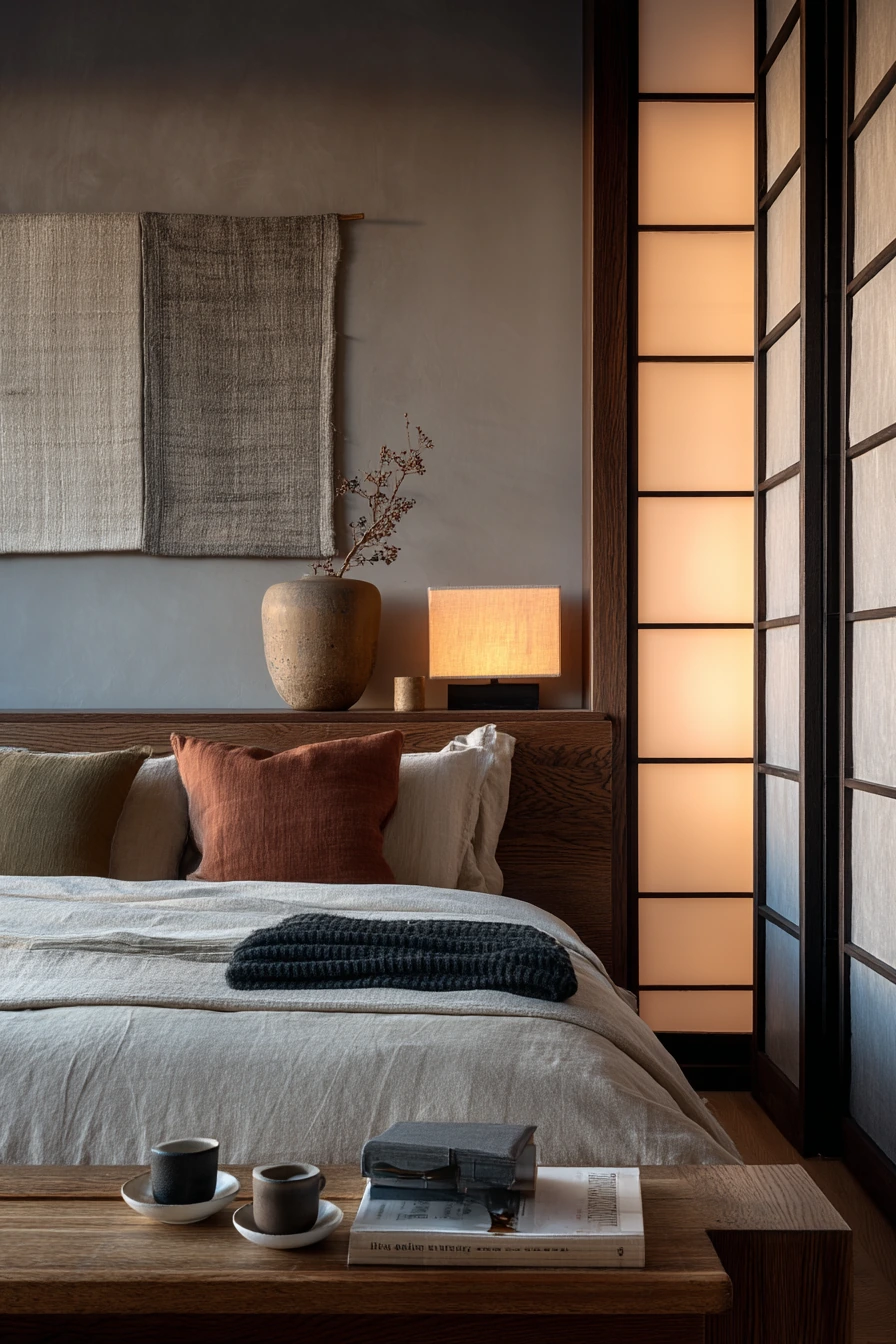
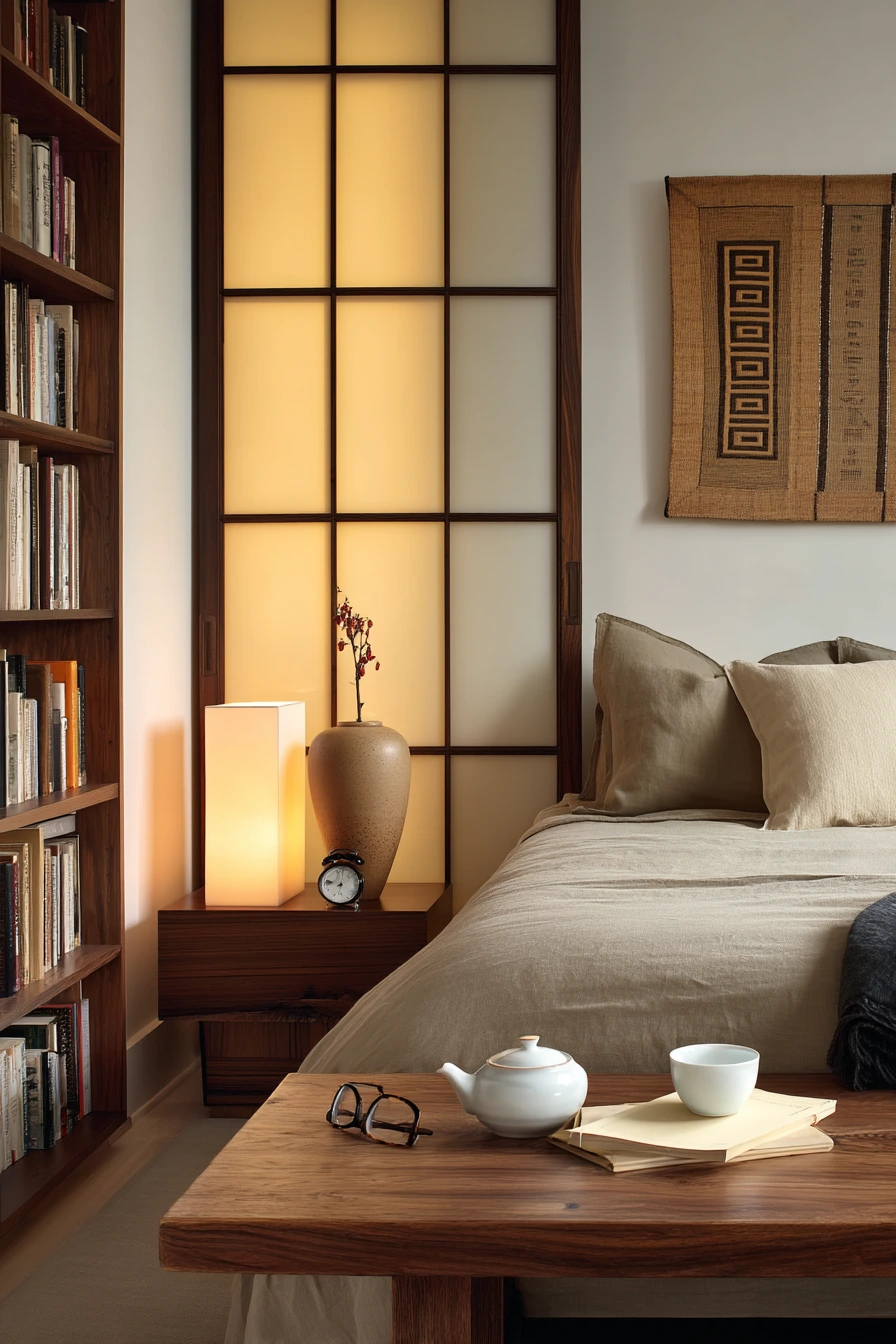
A couple’s bedroom in a townhouse can feel intimate and calm with a low bed and simple, warm materials. Shoji-style wardrobe doors keep storage hidden while still feeling light. Add a walnut bench at the end of the bed for a practical landing spot for clothes, books, or tea cups.
Layered linen bedding builds comfort without looking heavy. Use soft neutrals for the main layers, then bring in a deep indigo accent pillow for contrast. A stoneware vase and a handwoven wall textile add craft and texture, which fits the Asian-inspired feel. Keep the textile simple and not too colorful so it reads as calm, not loud.
Style the room with small lived-in details that still look neat. Place two teacups on the bench, set reading glasses on the nightstand, and keep a bedside clock simple and small. A folded sweater on the bench makes the room feel real. Use soft evening lamp light for a warm tone that flatters wood furniture and makes the bedding look cozy.
- Choose a low bed to create a grounded, restful look.
- Add shoji-style doors to keep storage light and clean.
- Use a walnut bench for daily items and easy seating.
- Keep bedding mostly neutral, then add one indigo accent.
- Use one woven textile as art instead of many small frames.
Pro Design Tip: Balance indigo with warm woods like walnut so the room feels rich but still calm.
Budget Considerations: Shoji-style wardrobe doors can be a bigger project; try shoji-look window film on existing closet doors or add fabric panels for a similar effect.
6 Guest Room with Hospitality Details
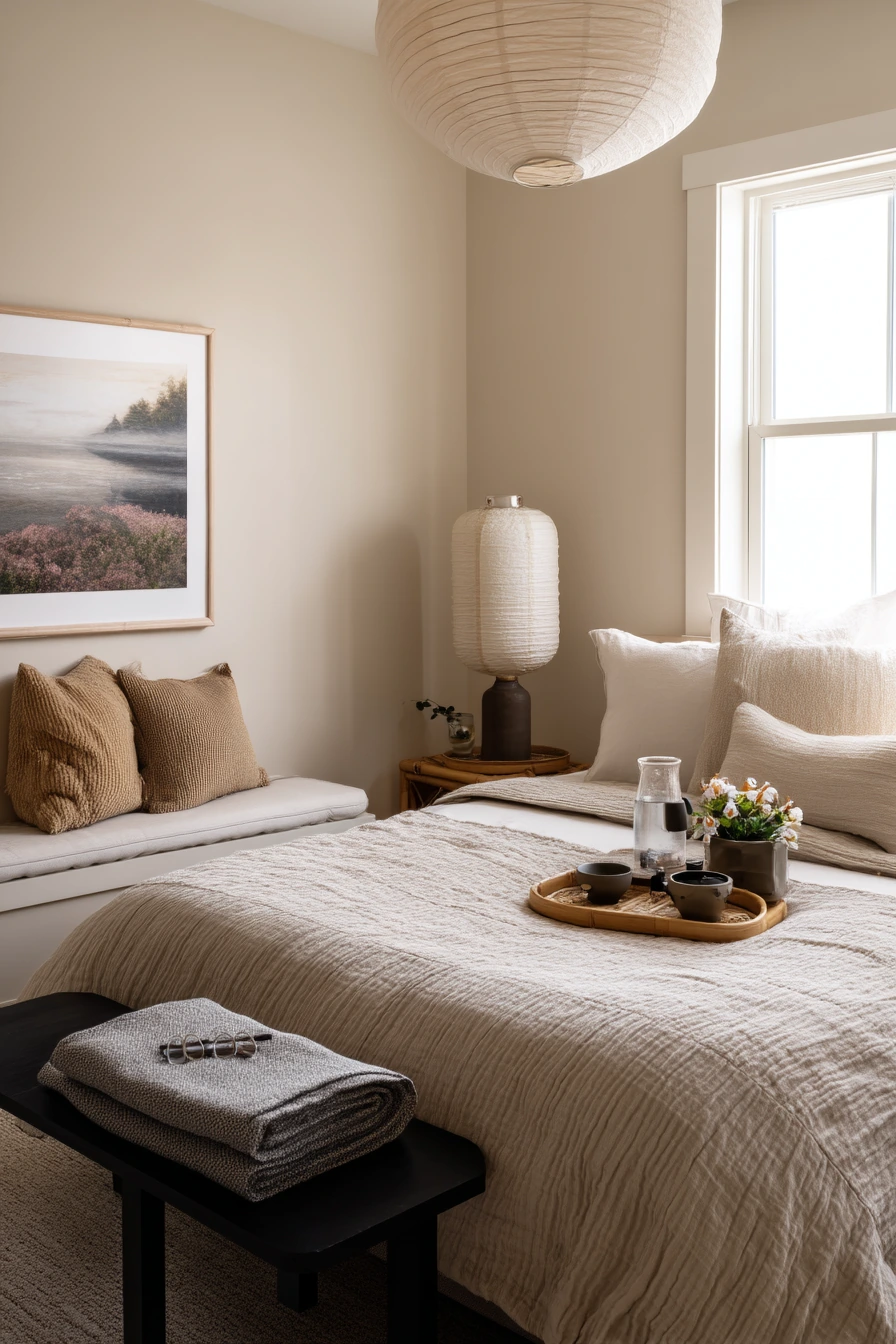
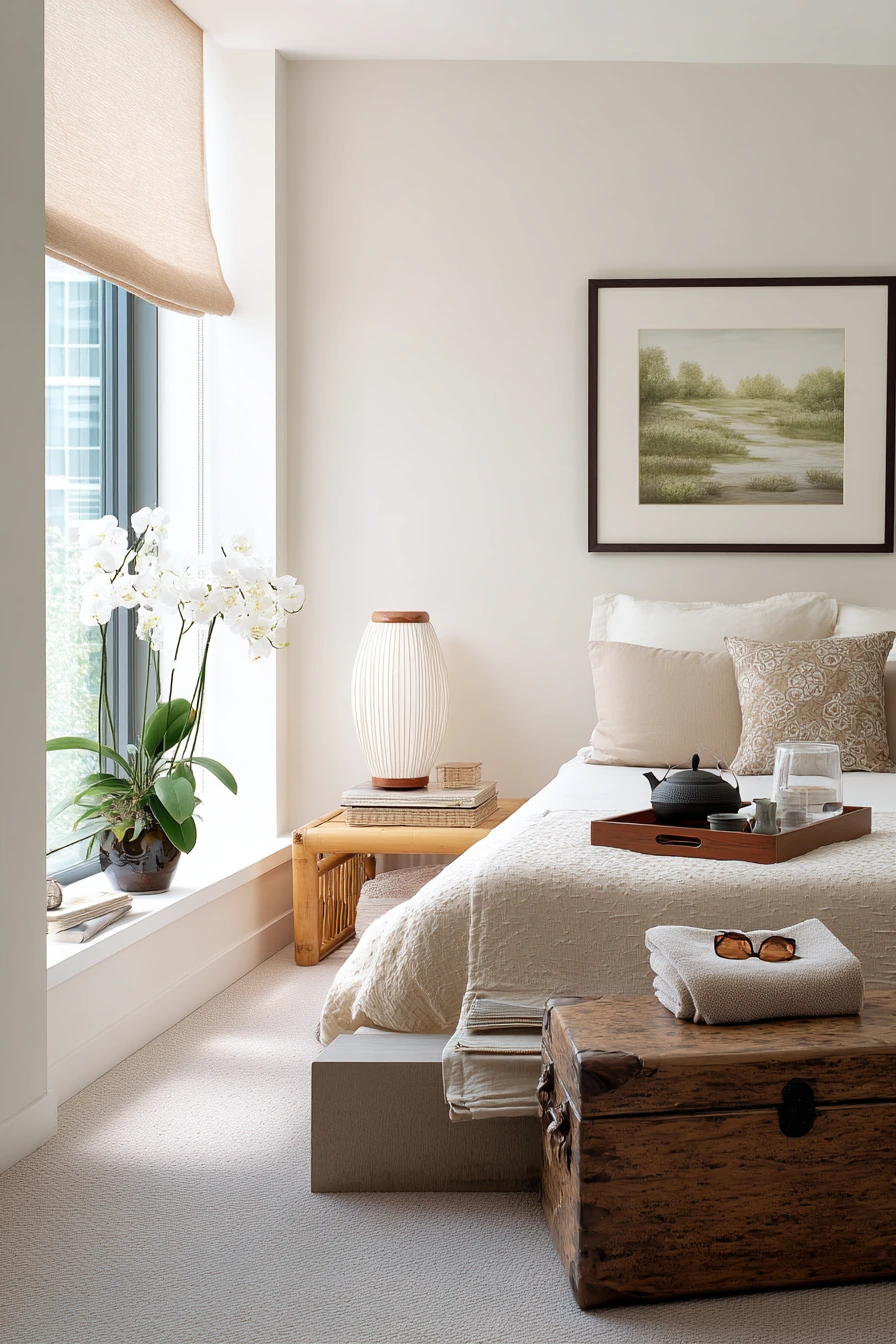
A spare bedroom for visiting parents should feel respectful and welcoming. Start with a neat platform bed so getting in and out is easy. Use a neutral kimono-style throw folded at the foot for a soft layer that looks tidy. A bamboo side table keeps the room light and easy to move if guests need more space.
Wall decor should be calm and not personal. A framed landscape print works well because it feels relaxing for most people. Add a paper lantern lamp to give gentle light that is softer than a harsh overhead fixture. Place a small tray with tea service on the side table or bench so guests feel cared for without needing to ask.
For lived-in cues, think about comfort items. A folded towel on a bench or chair is helpful. Tuck a suitcase under the bench to show where luggage can go. Leave a carafe of water and a glass on the side table. If your guests wear reading glasses, keep a clear surface where they can set them down. An orchid or a few leaves can add life without strong scent.
- Use a platform bed with a medium-firm mattress for broad comfort.
- Choose one neutral throw that looks good folded and used.
- Add a paper lantern lamp for soft bedside lighting.
- Set out a tea tray with cups and a simple tin of tea.
- Clear one drawer or basket so guests have a place for small items.
Pro Design Tip: Keep the nightstand surface at least 60 percent empty so guests have room for a phone, glasses, and water.
Budget Considerations: A tea set and lantern can be found at affordable home stores; focus spending on quality bedding since that is what guests feel most.
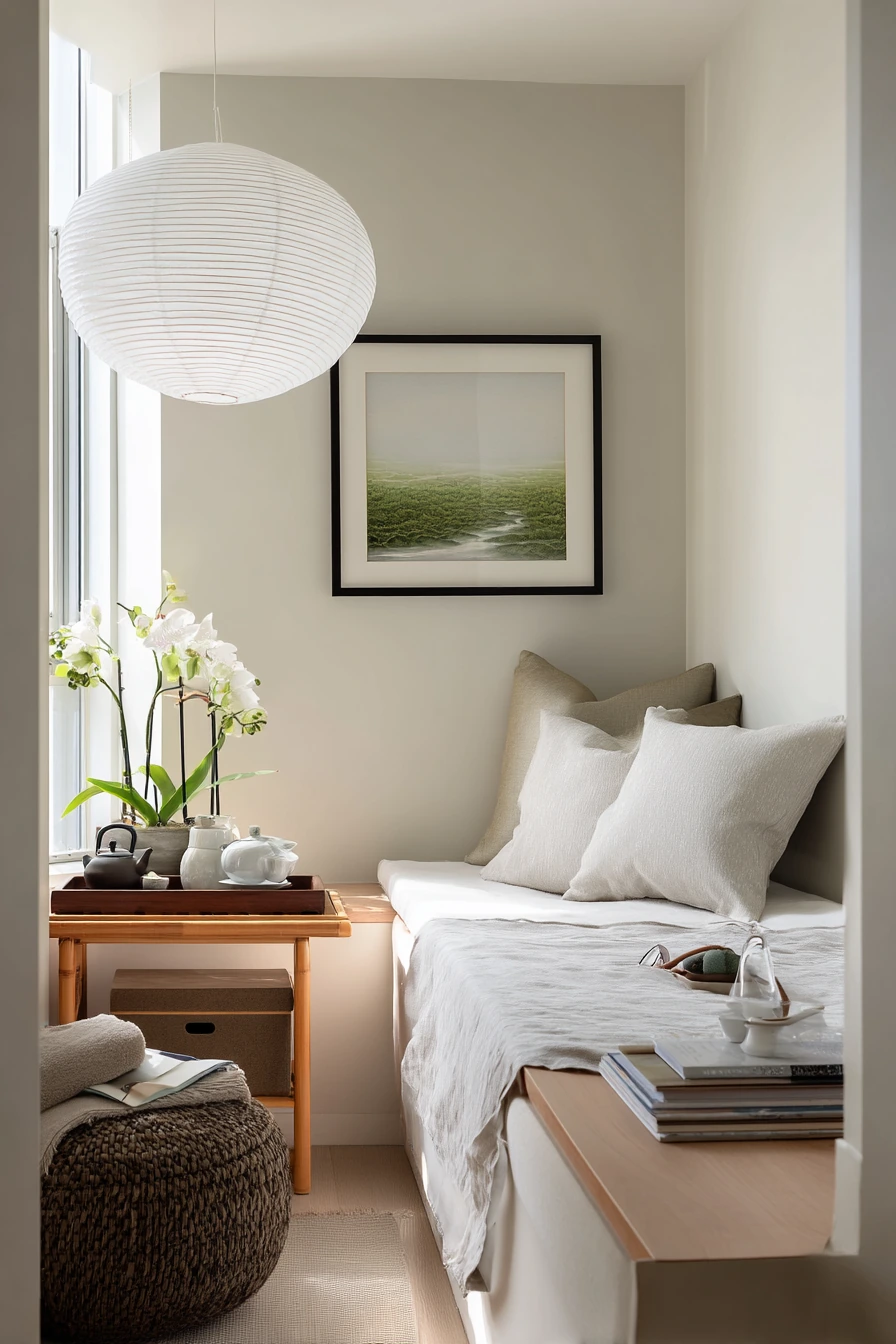
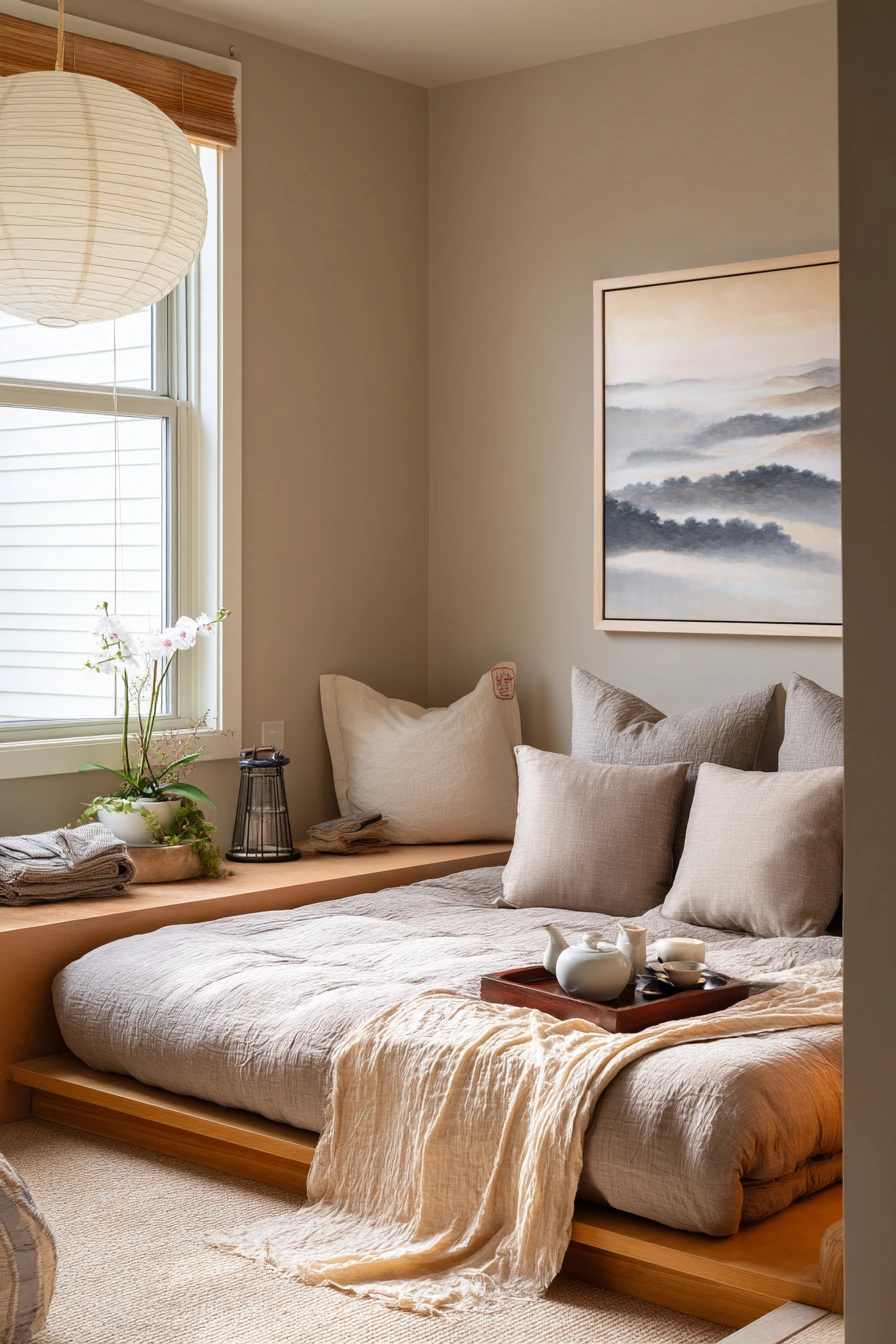
7 Moody Indigo and Wood
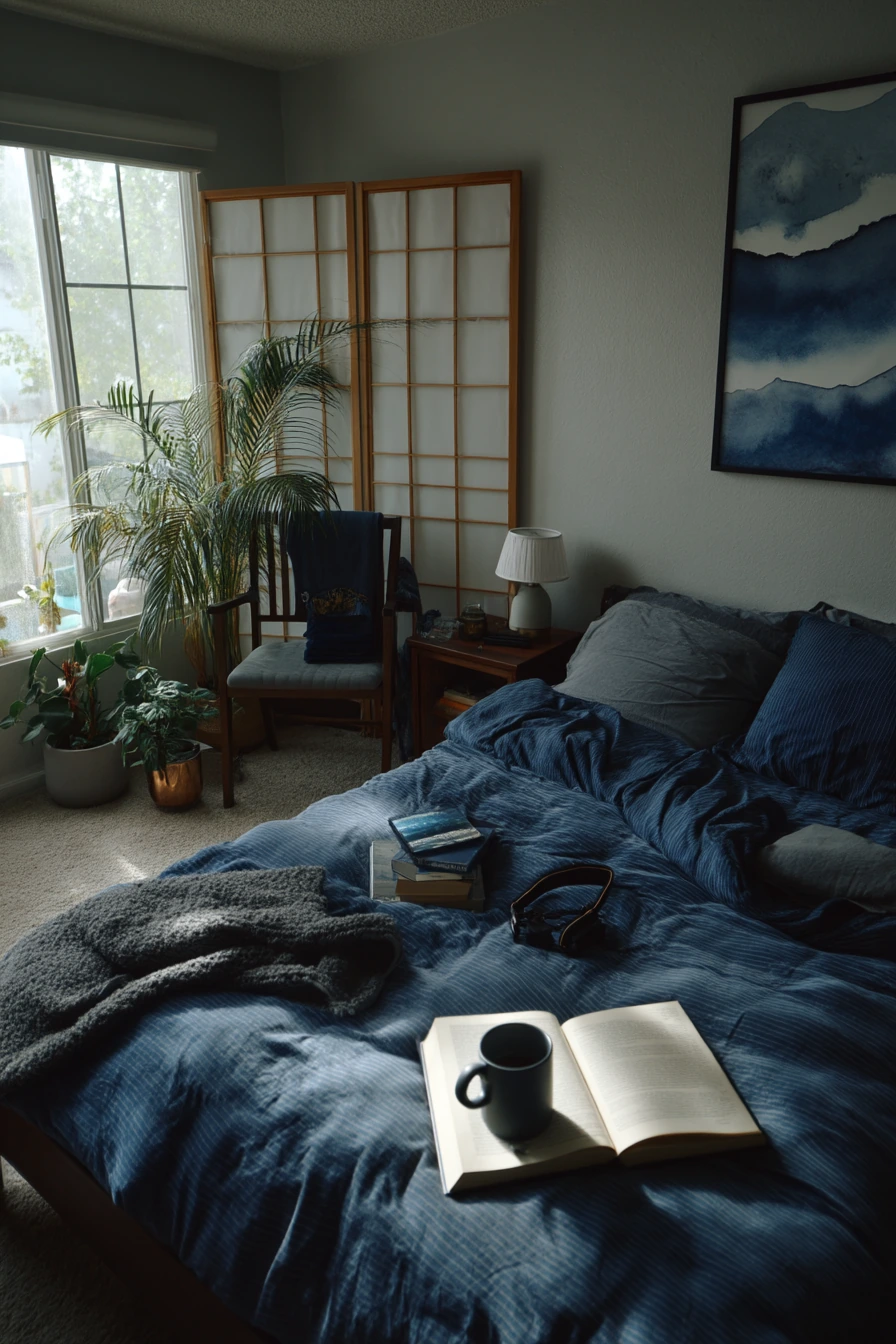
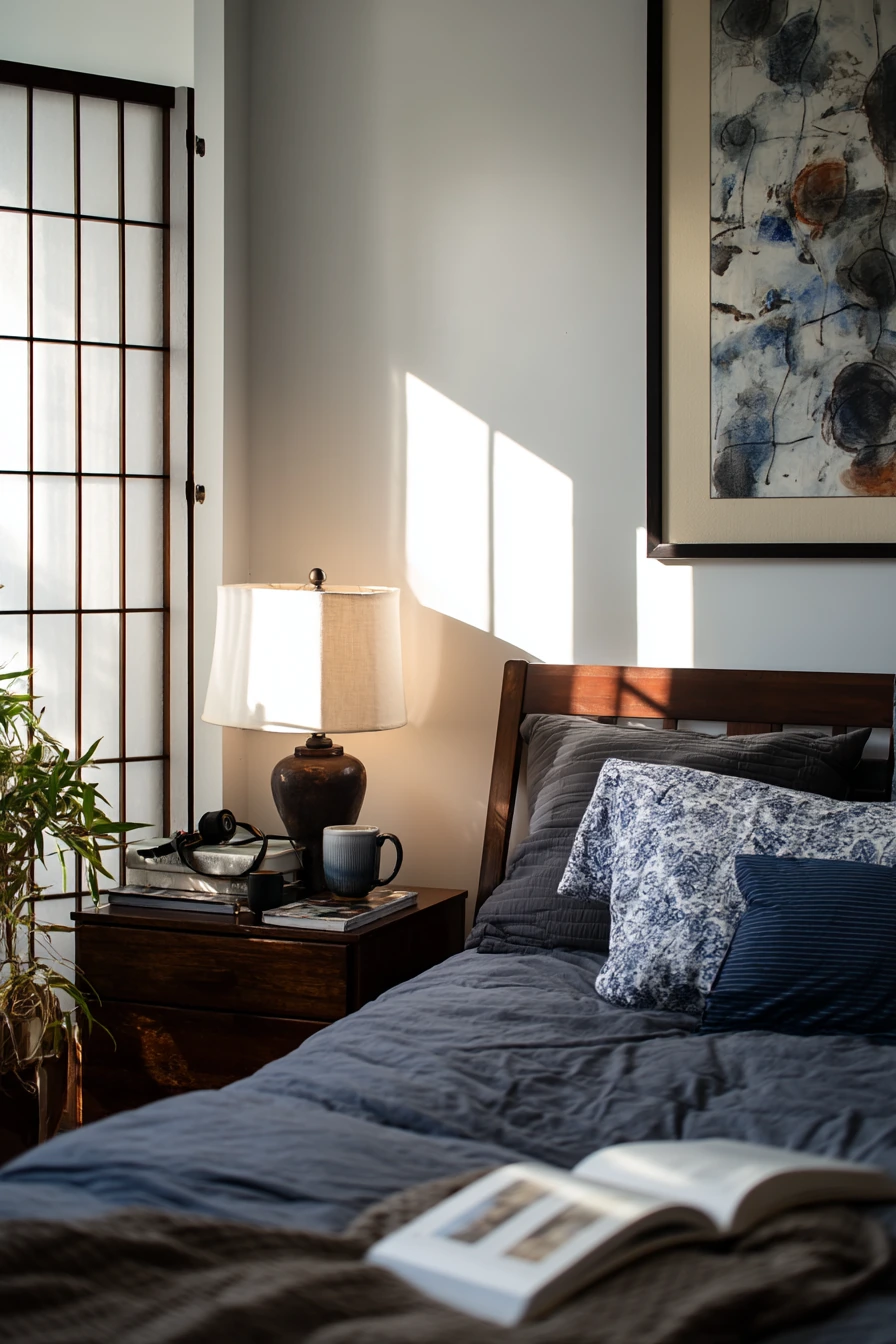
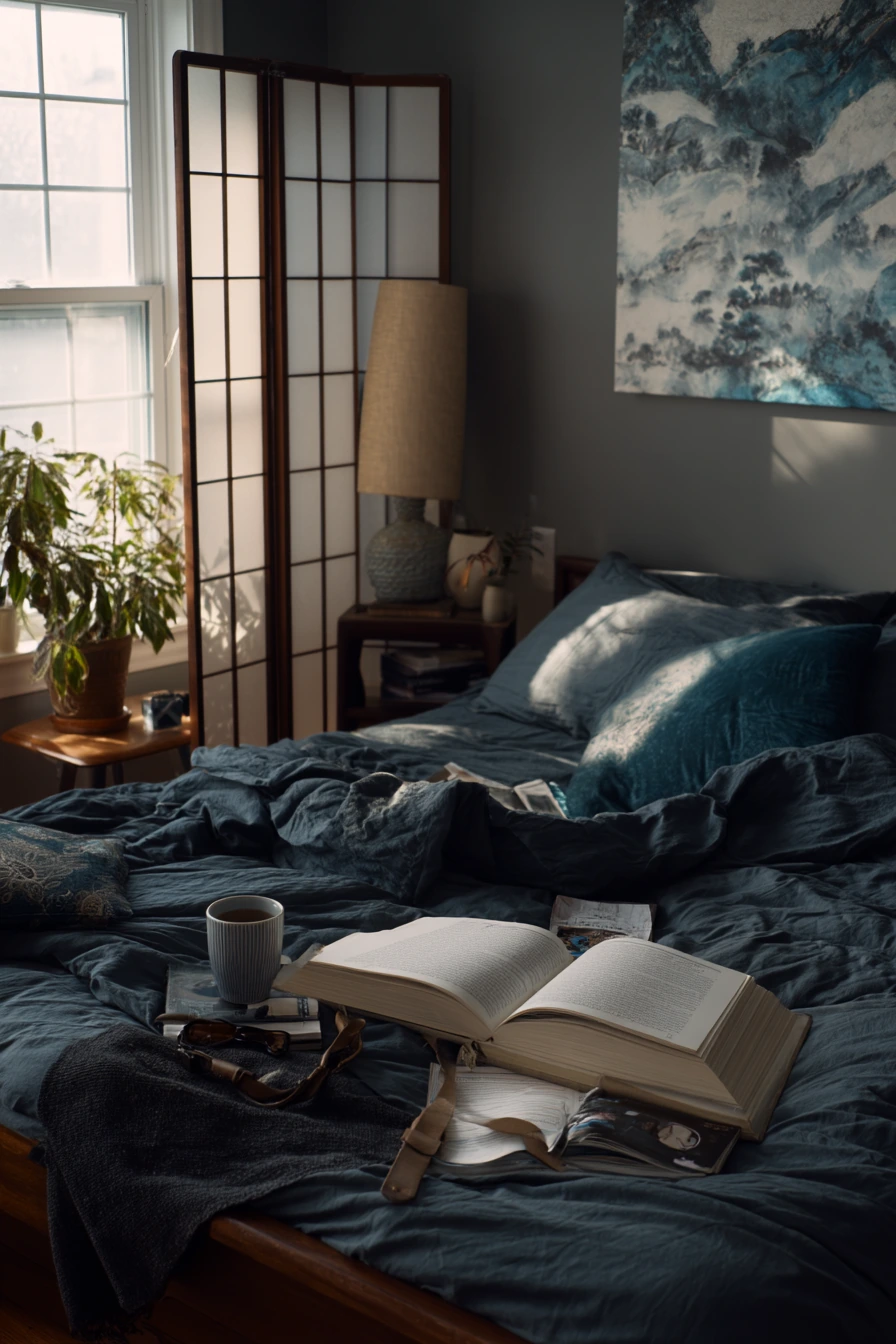
This Asian-inspired bedroom suits an art-loving owner who wants a moodier space. Dark walnut furniture gives weight and depth. Indigo bedding adds a rich color that still feels calm. To keep it from feeling heavy, add soft overcast-style lighting with a ceramic lamp and keep the wall decor minimal.
A shoji-inspired screen adds texture and can hide a dressing area or soften a bare corner. Brushed metal accents, like a simple drawer pull, a small tray, or a thin lamp base, bring a modern touch without making the room shiny. Use one oversized abstract print as the main art piece. It keeps the room focused and helps you avoid clutter from many frames.
Make it lived-in with items you actually use. Leave an art book open on the bed, place a tea mug on a coaster, and hang a camera strap on a chair. A folded blanket at the foot is both useful and styled. If a plant casts a shadow on the wall, that adds depth without extra decor. Keep surfaces edited so the bold materials still feel restful.
- Use dark walnut for the main furniture pieces for a grounded base.
- Choose indigo bedding in a matte fabric to avoid glare.
- Add a shoji-style screen to soften corners and add texture.
- Pick one oversized abstract print and center it carefully.
- Use brushed metal accents in small, repeat touches.
Pro Design Tip: In a dark room, repeat one light element three times, like a light rug, a light lampshade, and light curtains, to keep the space balanced.
Budget Considerations: Oversized art can be costly; use a high-quality poster in a simple frame, or stretch fabric over a canvas frame for a large-scale look.
8 Morning Reset with Minimal Decor
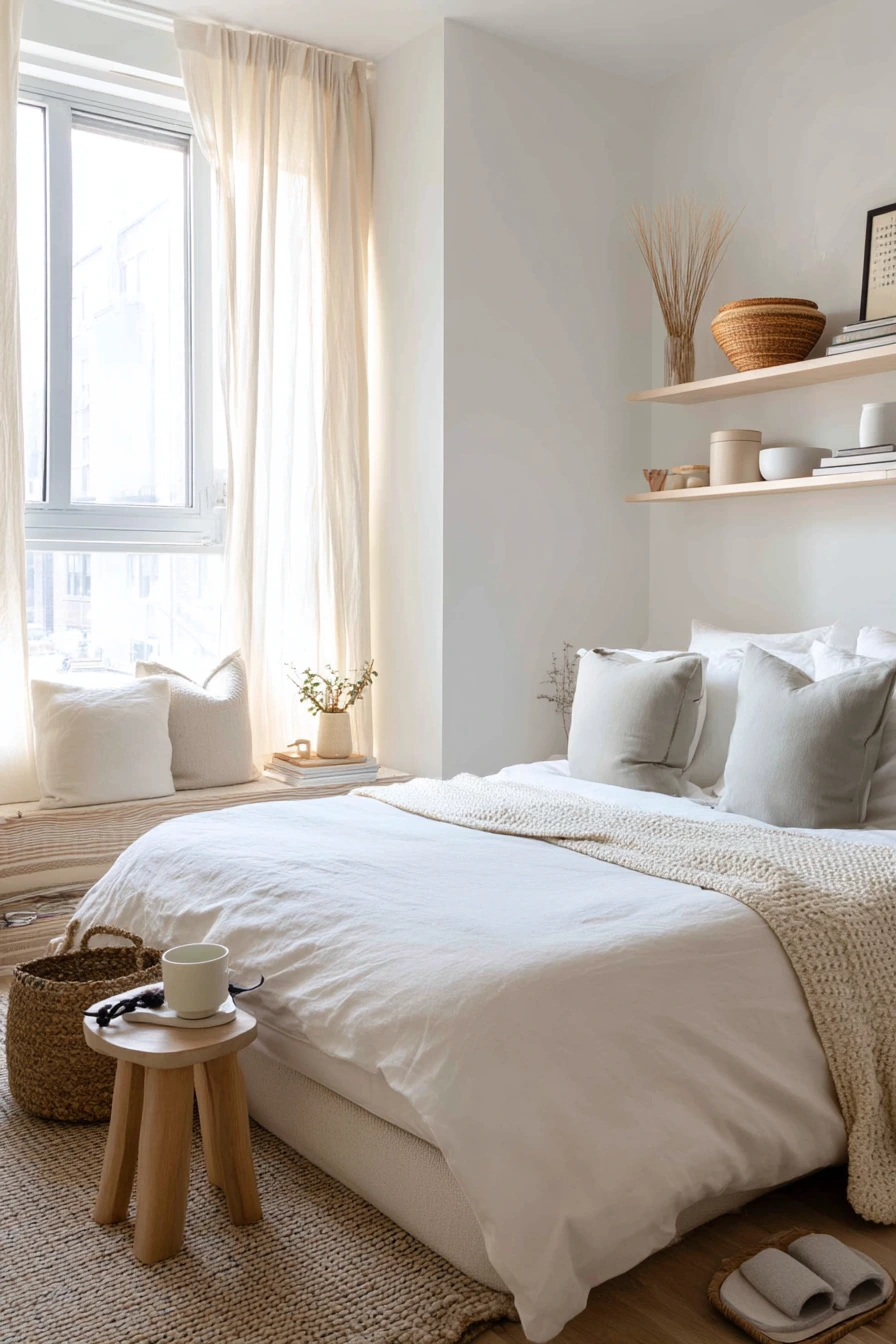
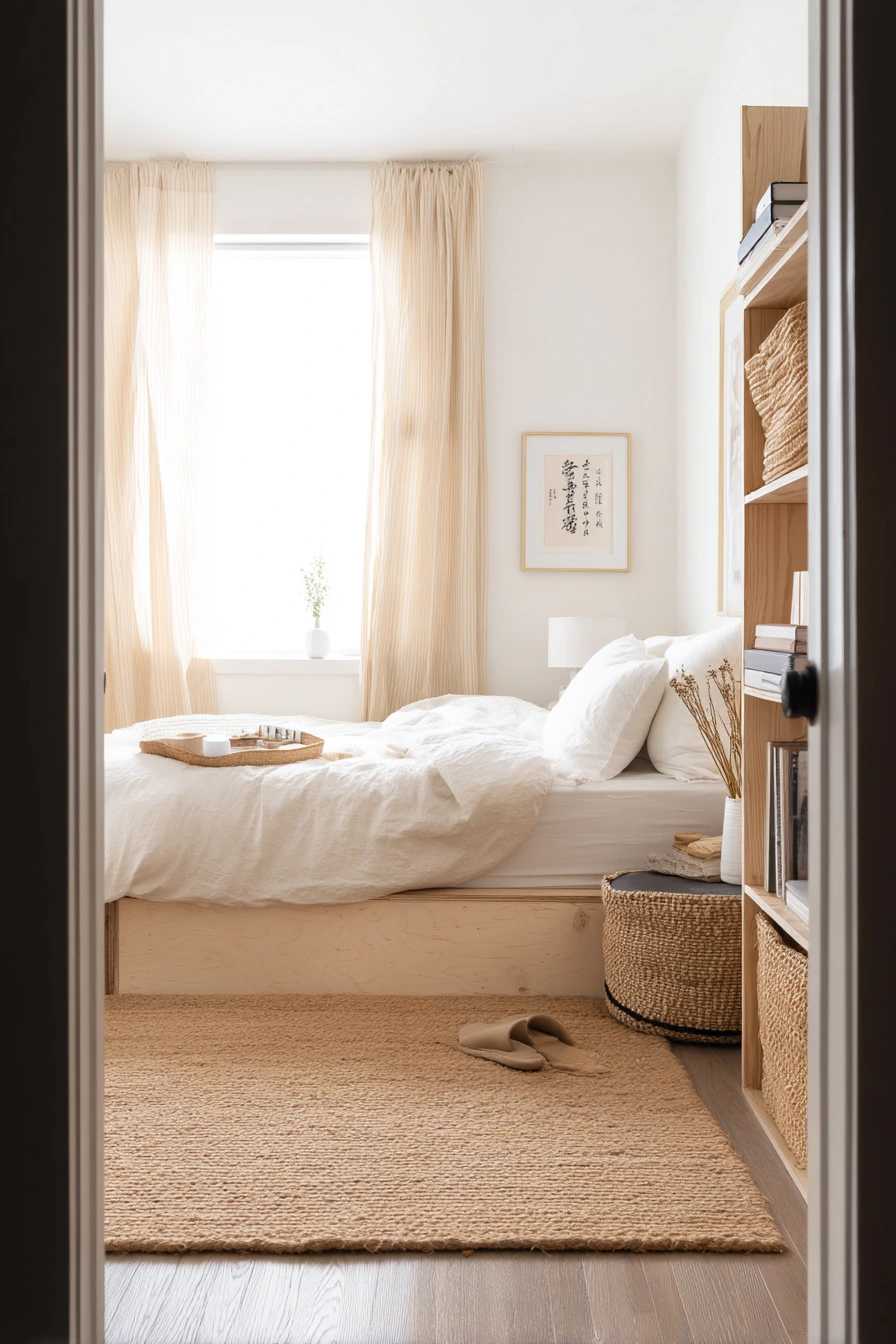
This tidy bedroom style fits people who like a clean start after a morning routine. A low bed keeps the room simple and open. Pale oak shelving adds light wood warmth without feeling heavy. Woven baskets on the shelves hold small items and help the space stay organized.
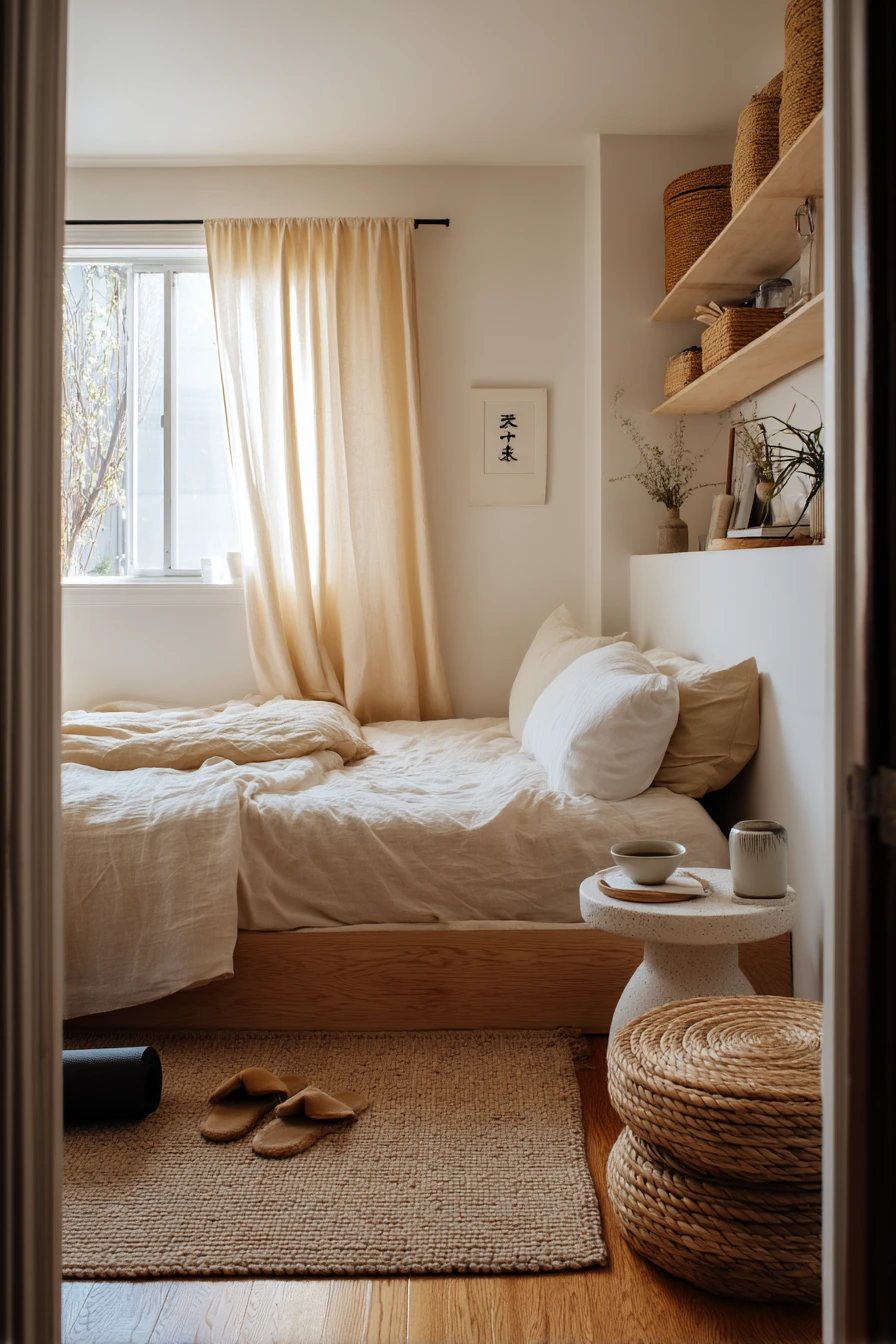
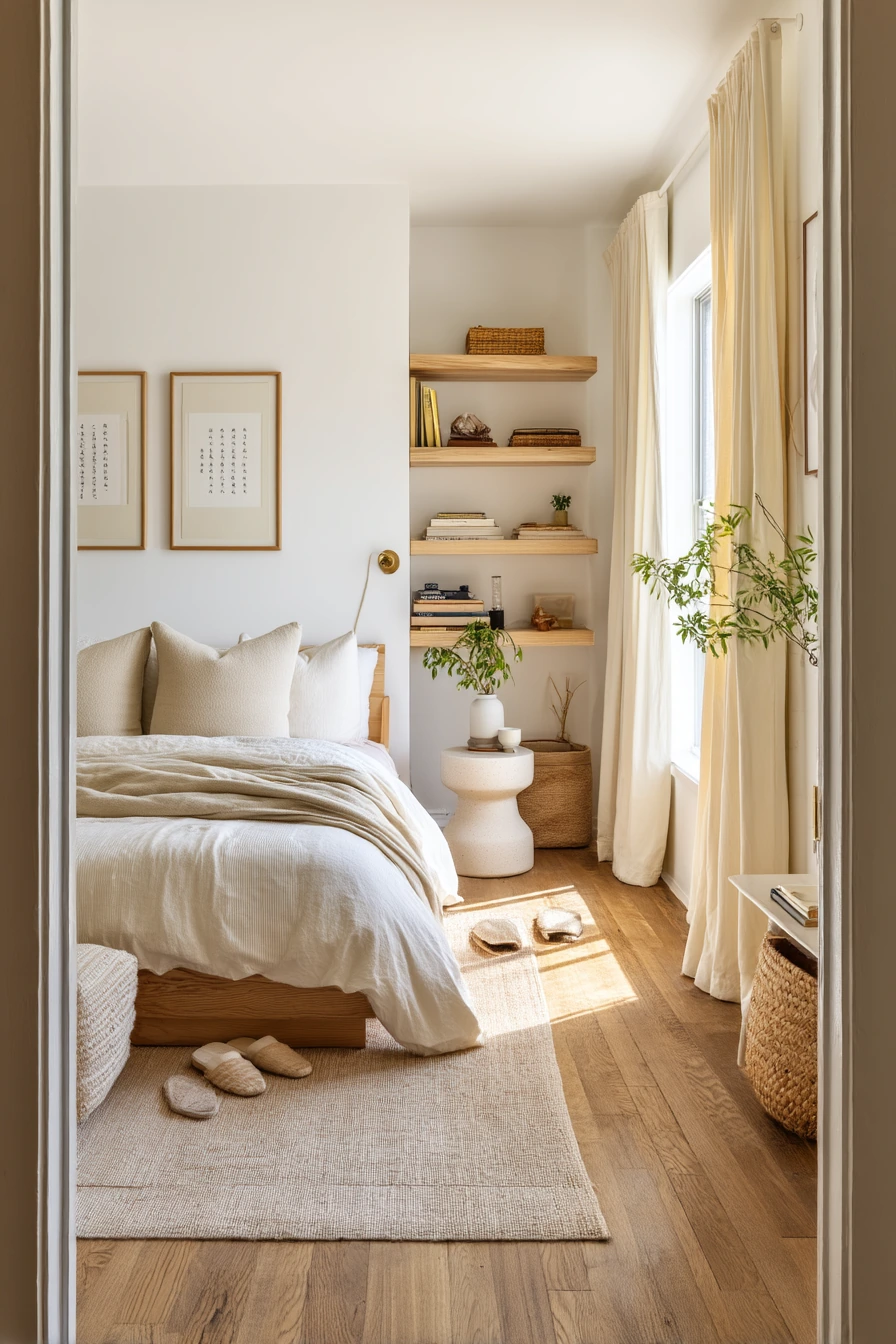
Use ribbed linen curtains to soften bright window light while keeping the room breathable. Add simple framed calligraphy as quiet wall art that supports the Asian bedroom ideas theme. Instead of a full nightstand, try a ceramic stool. It is small, easy to clean around, and adds a handmade look that pairs well with linen and wood.
Keep lived-in cues real, but controlled. Roll a yoga mat beside the bed, set slippers angled near the rug, and keep a phone cable routed behind the stool so it does not look messy. If you drink matcha, place a half-finished cup on a coaster and add a small dish for a hair tie or rings. The goal is a room that feels used, but still calm and pared-back.
- Use a low bed and keep the floor mostly clear for a fresh feel.
- Add pale oak shelving to store items without bulky furniture.
- Choose woven baskets to hide small clutter in a soft way.
- Hang ribbed linen curtains for gentle light control.
- Try a ceramic stool as a compact nightstand replacement.
Pro Design Tip: Group small daily items into one tray on the stool so the surface looks neat even when the room is in use.
Budget Considerations: If a ceramic stool is pricey, use a small wood crate or simple side table and add texture with an affordable linen runner.
9 Kids’ Bedroom with Gentle Order
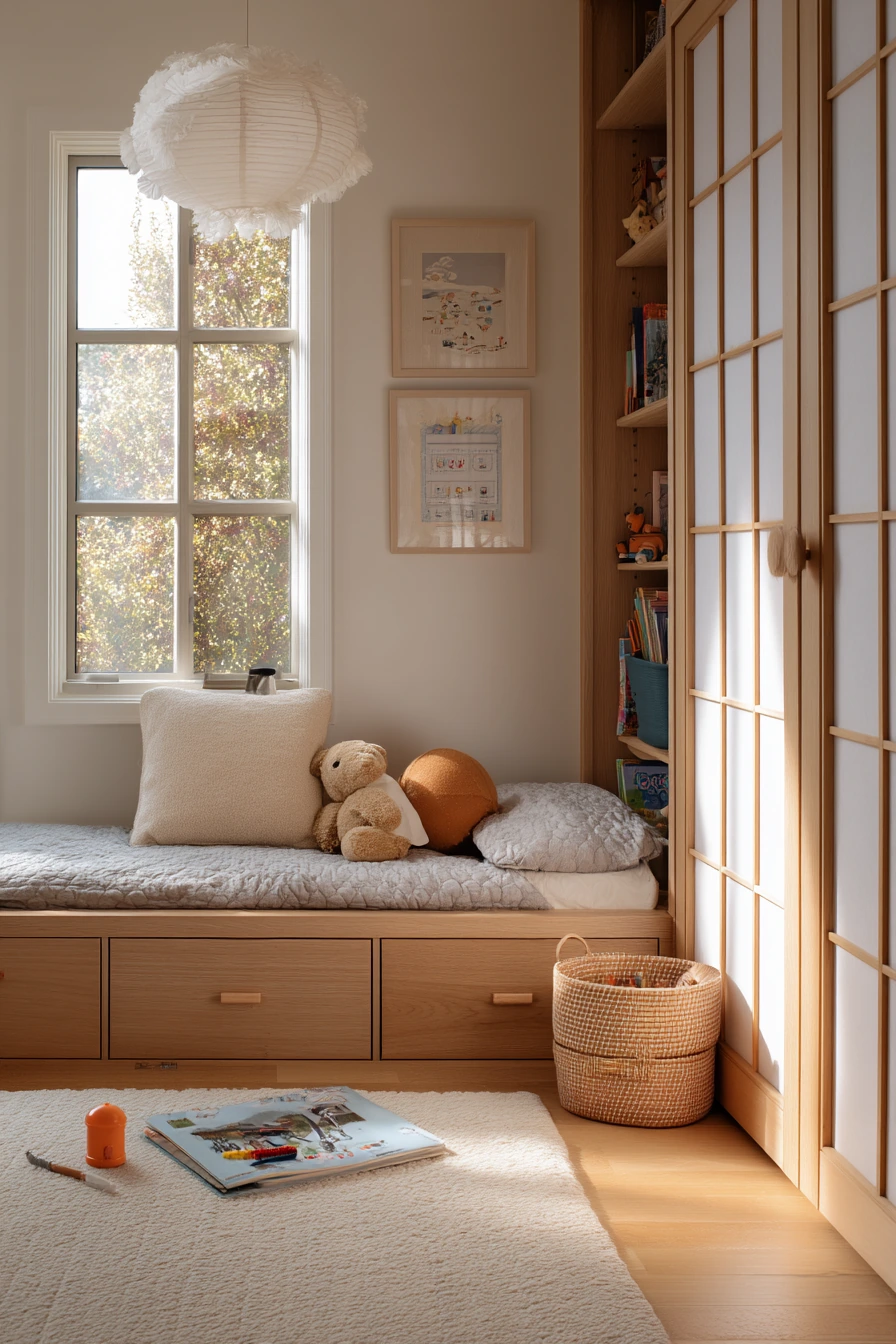
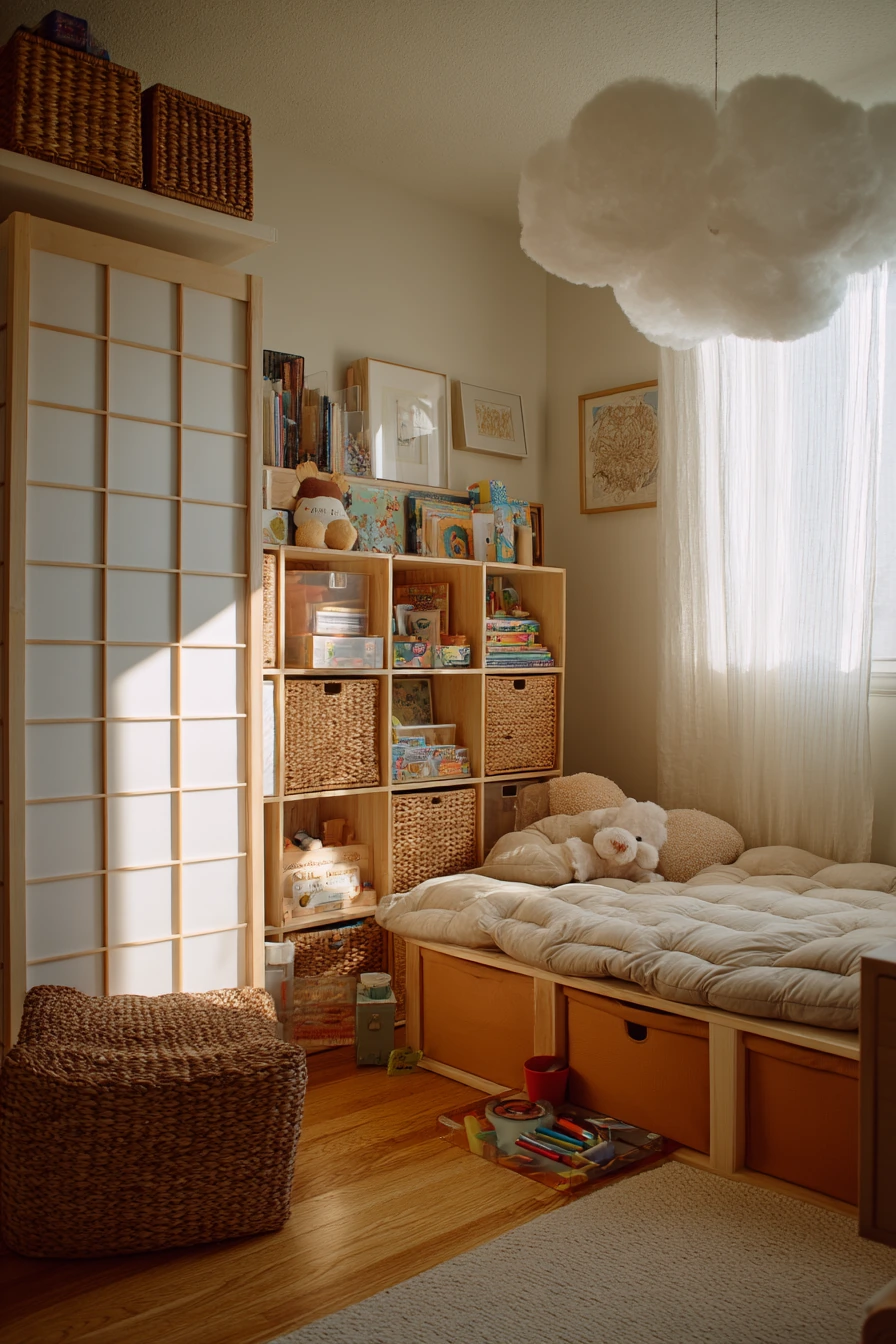
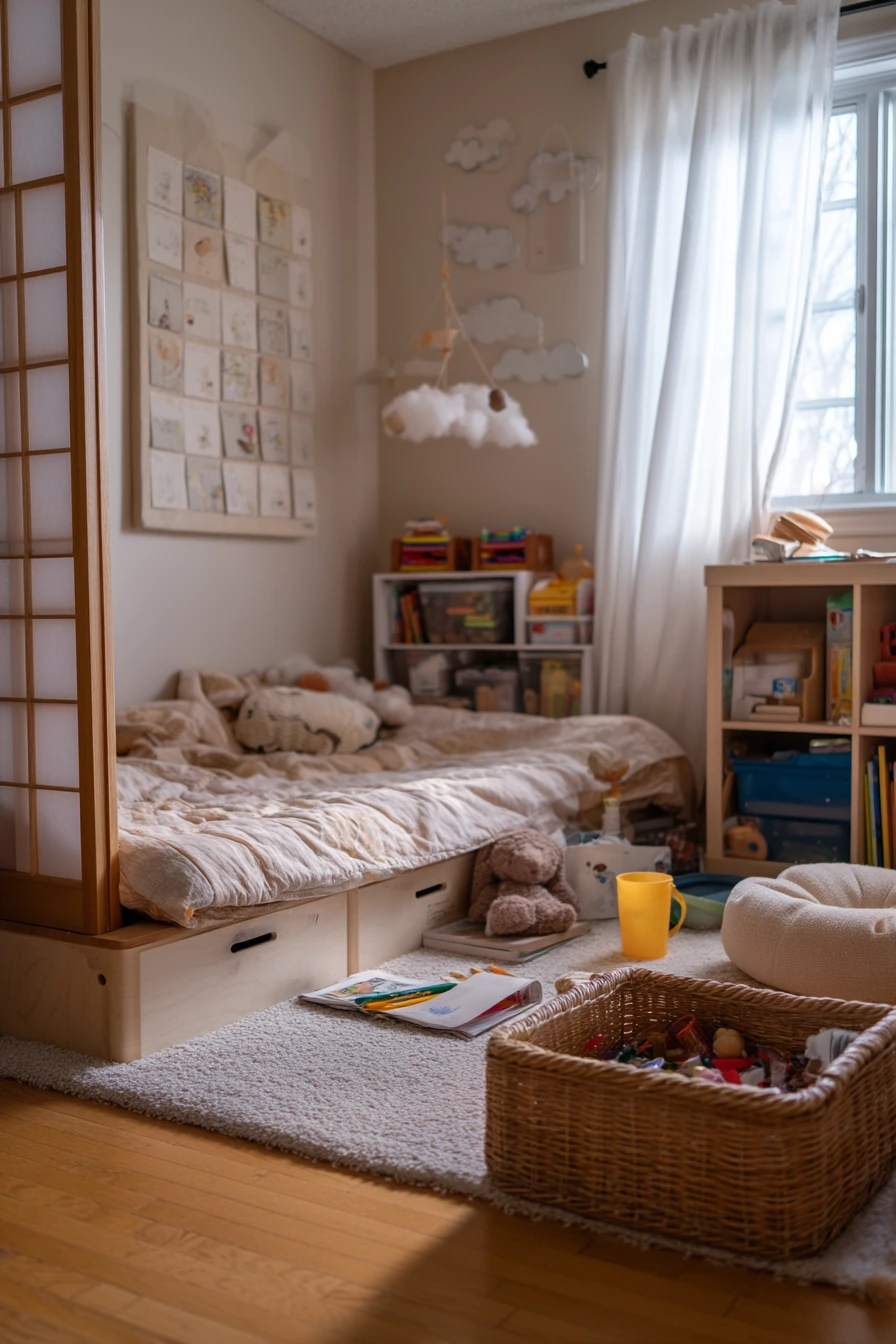
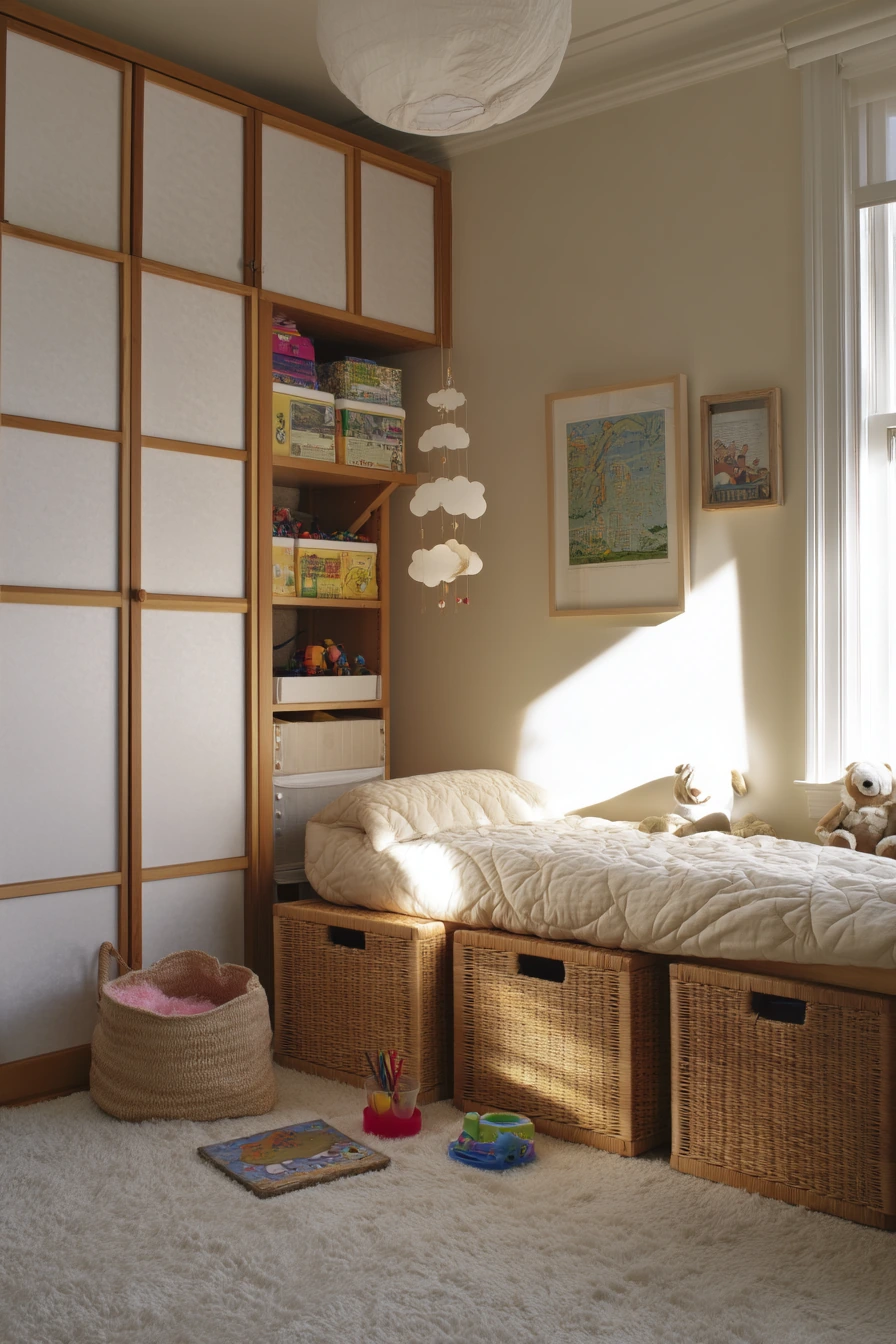
A child’s bedroom can use Asian-inspired ideas because low furniture is safer and easier for kids. A low floor bed reduces falls and makes the room feel open for play. Pair it with a cloud-soft quilt for comfort and a cozy look. Warm pine furniture keeps the room bright and friendly.
Storage is key in a family home. Use storage cubes for toys, books, and art supplies. A shoji-panel wardrobe keeps clothing storage tidy and adds a soft pattern without loud colors. Add a bamboo mobile for gentle movement above the bed or in a corner. Keep the palette simple so the room feels calm at bedtime.
Lived-in cues make the room feel real, but you can still guide it toward order. Place a toy basket where toys naturally end up. Keep a picture book on the floor near a reading spot. Add a small water cup on a stable surface. Put crayons in a lidded box near the bedside, and keep one stuffed animal in the bed so the room does not look crowded. Soft afternoon light works well with pine and neutral bedding.
- Choose a low floor bed for safety and easy bedtime routines.
- Use storage cubes with bins so clean-up is quick.
- Add shoji-style wardrobe panels for light, calm storage.
- Keep bedding soft and simple for a soothing sleep space.
- Use one bamboo mobile for gentle decor without clutter.
Pro Design Tip: Label cube bins with simple words or pictures so kids can put items away without help.
Budget Considerations: Shoji wardrobe doors can be replaced with lightweight curtains on a tension rod; spend on sturdy bins that can handle daily use.
10 Luxury Realism with Spa-Like Calm
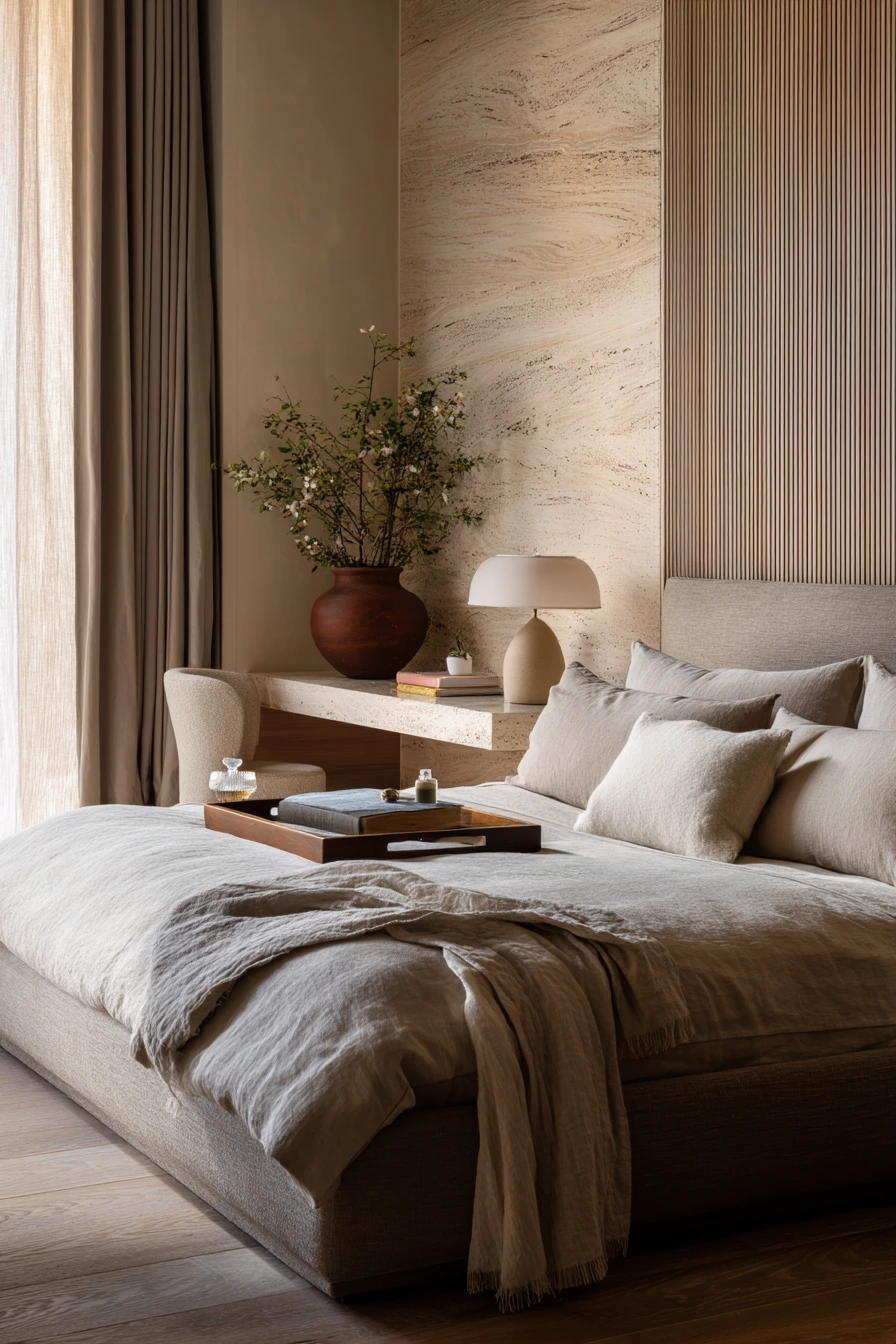
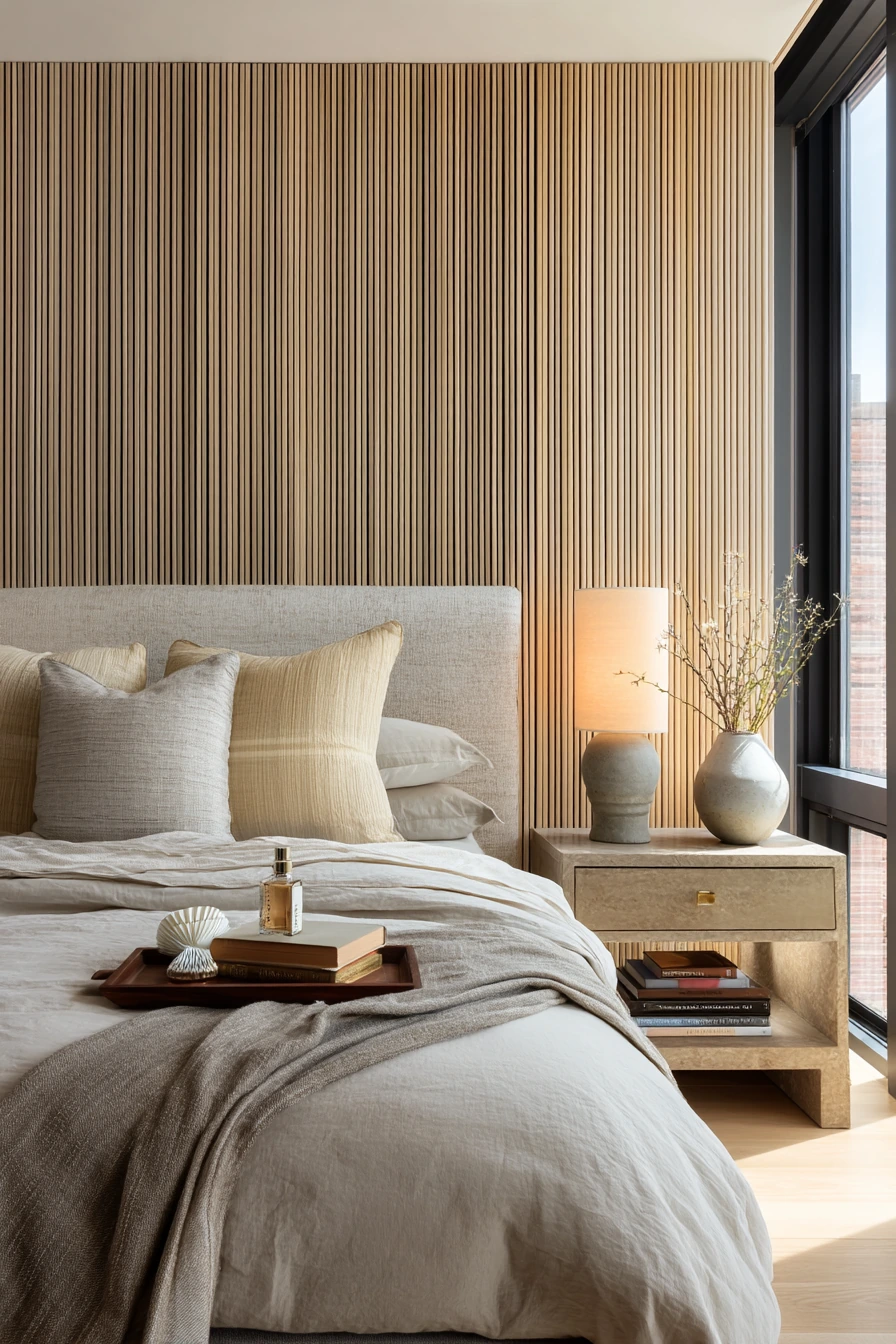
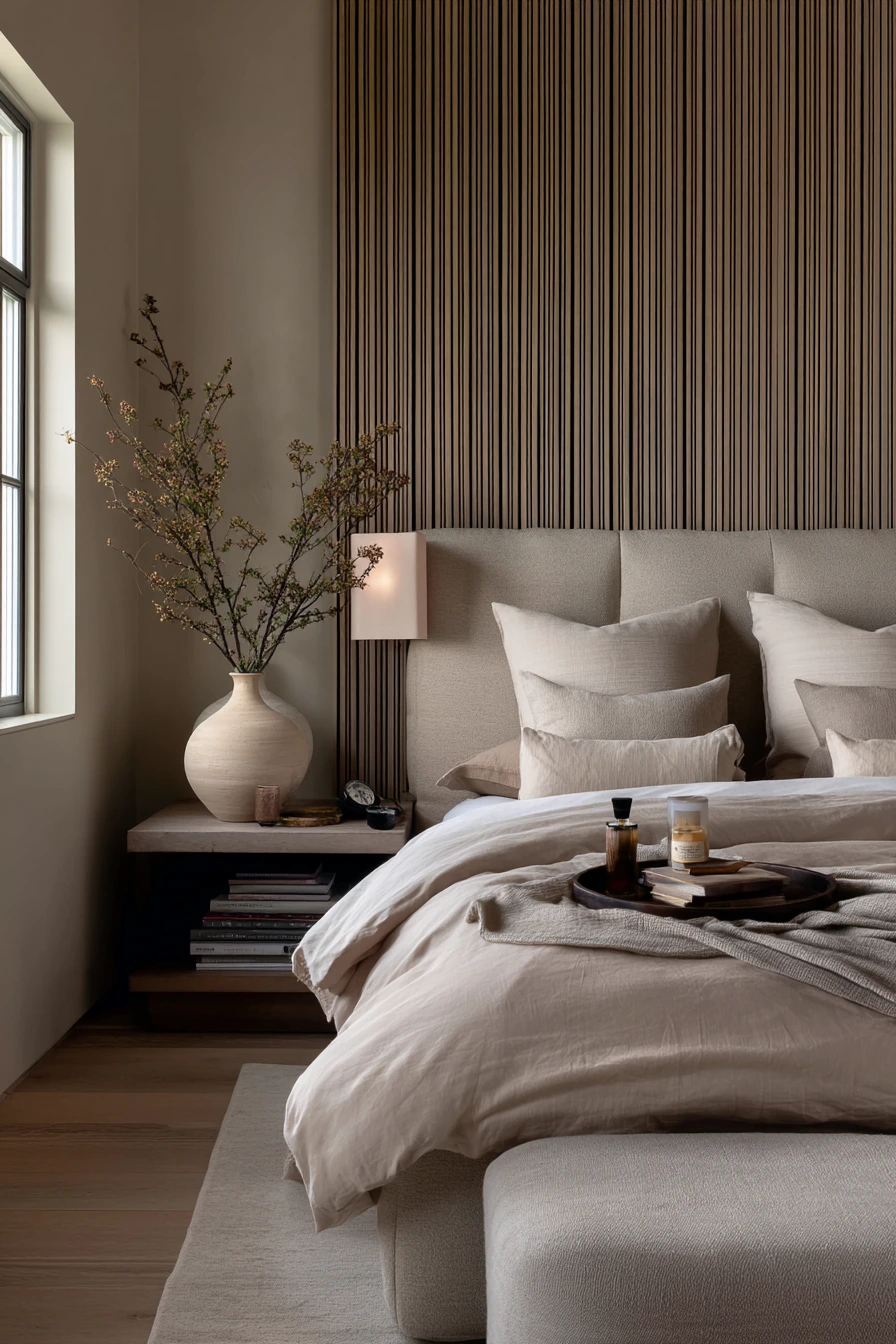
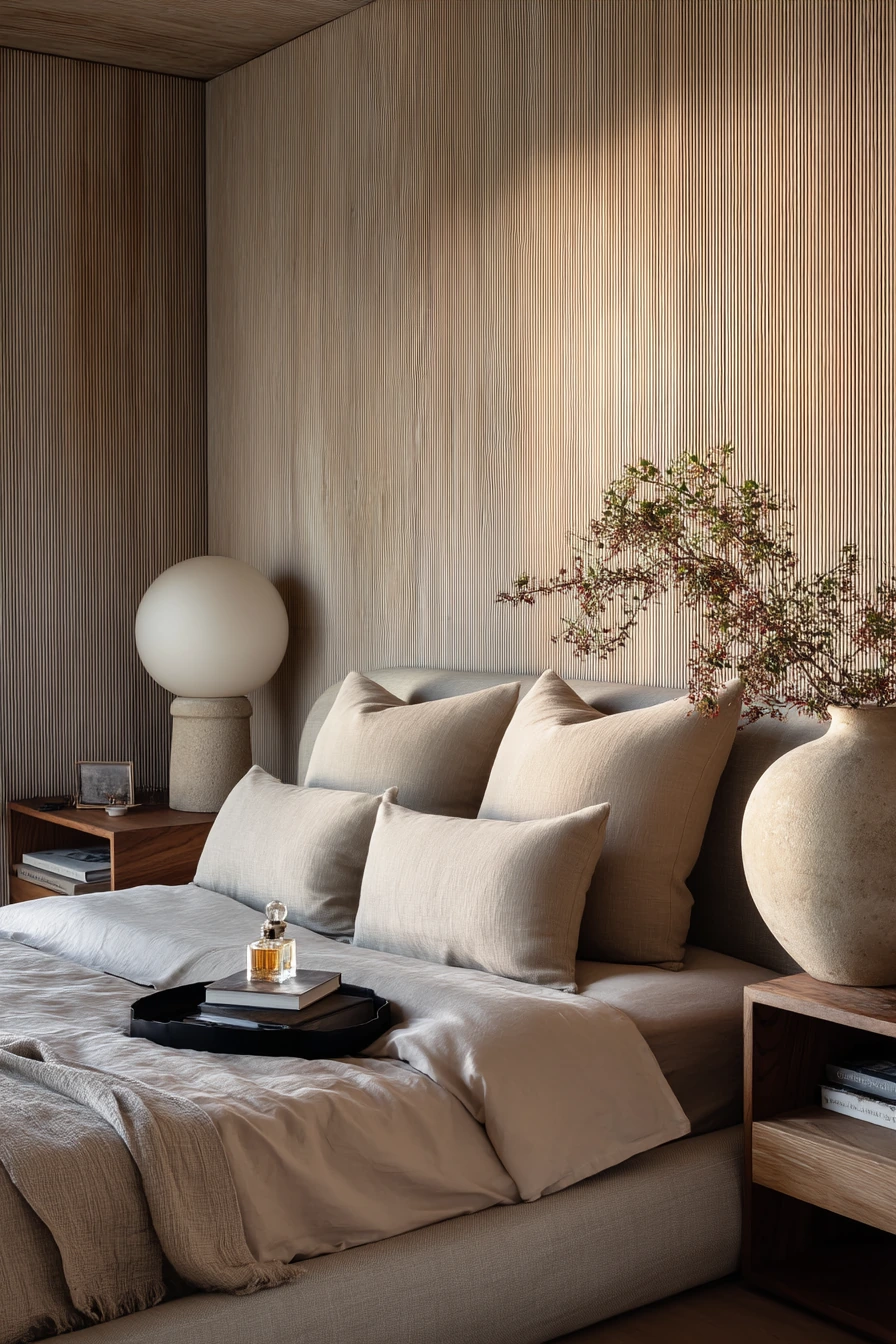
This lived-in primary bedroom look is polished but still real. A low upholstered bed brings comfort and soft edges, which helps the room feel like a retreat. A fluted wood wall behind the bed adds texture and depth without needing busy decor. Keep the color plan restrained with a taupe palette so the space stays calm at dawn and at night.
Choose stone bedside lamps for a grounded, natural feel. Add a silk-blend throw for gentle shine and softness, but keep it in a quiet tone so it does not stand out too much. A sculptural ceramic vase can act as your main decor piece, especially if you keep flowers minimal or use branches.
To keep it believable, use small everyday items in a tidy way. Place a perfume bottle on a tray, leave an open novel on the nightstand, and set a watch on a small dish. A linen shirt on a chair is fine if the rest of the room is edited. Do not over-smooth the bedding; faint folds make the room feel lived in. Soft dawn window light works best when you avoid high contrast colors and stick to warm neutrals.
- Use a low upholstered bed to soften the room and reduce visual clutter.
- Add a fluted wood wall or panel to create a calm focal point.
- Choose stone lamps for a spa-like, natural texture.
- Layer a silk-blend throw over neutral bedding for depth.
- Limit decor to one vase plus one tray of daily items.
Pro Design Tip: Use three textures in the same color family, like fluted wood, linen, and stone, to create depth without adding more colors.
Budget Considerations: Fluted panels and stone lamps can be expensive; try fluted MDF strips you paint in a taupe tone and use ceramic lamps with a stone-look finish.
Asian bedroom ideas work because they focus on simple shapes, natural texture, and calm colors. Low beds, shoji-style details, and soft lighting can fit many homes, from studios to family houses.
Pick one look from the sections above and copy the basics first: the bed style, the main color palette, and one texture like linen, cane, or wood slats. Then add lived-in items in a tidy way so the room feels real.
FAQ
1) What colors work best for an Asian-inspired bedroom? Soft neutrals like cream, taupe, warm gray, and pale wood tones work well, with one accent like jade or indigo.
2) How do I get a low bed look without buying a new bed? Use a low platform frame, remove a tall box spring, or place a mattress on a solid low base for a similar profile.
3) Are shoji screens renter-friendly? Yes, freestanding screens and fabric panel tracks are easy options that do not require permanent changes.
4) What lighting feels most calming? Paper lanterns, rice-paper lamps, and warm bulbs in simple table lamps create soft, even light.
5) How can I keep an Asian-style bedroom from looking too plain? Add texture with linen bedding, woven baskets, cane furniture, and one piece of art like calligraphy or an ink wash print.
6) What is the best way to add storage in a small bedroom? Use under-bed baskets, wall shelves, and matching bins so storage looks tidy and planned.
7) What decor items are enough for a minimalist look? One plant, one art piece, one tray for daily items, and one textile layer like a throw are usually enough.
Use the checklists in each section to build your room step by step, and keep the focus on comfort and function.