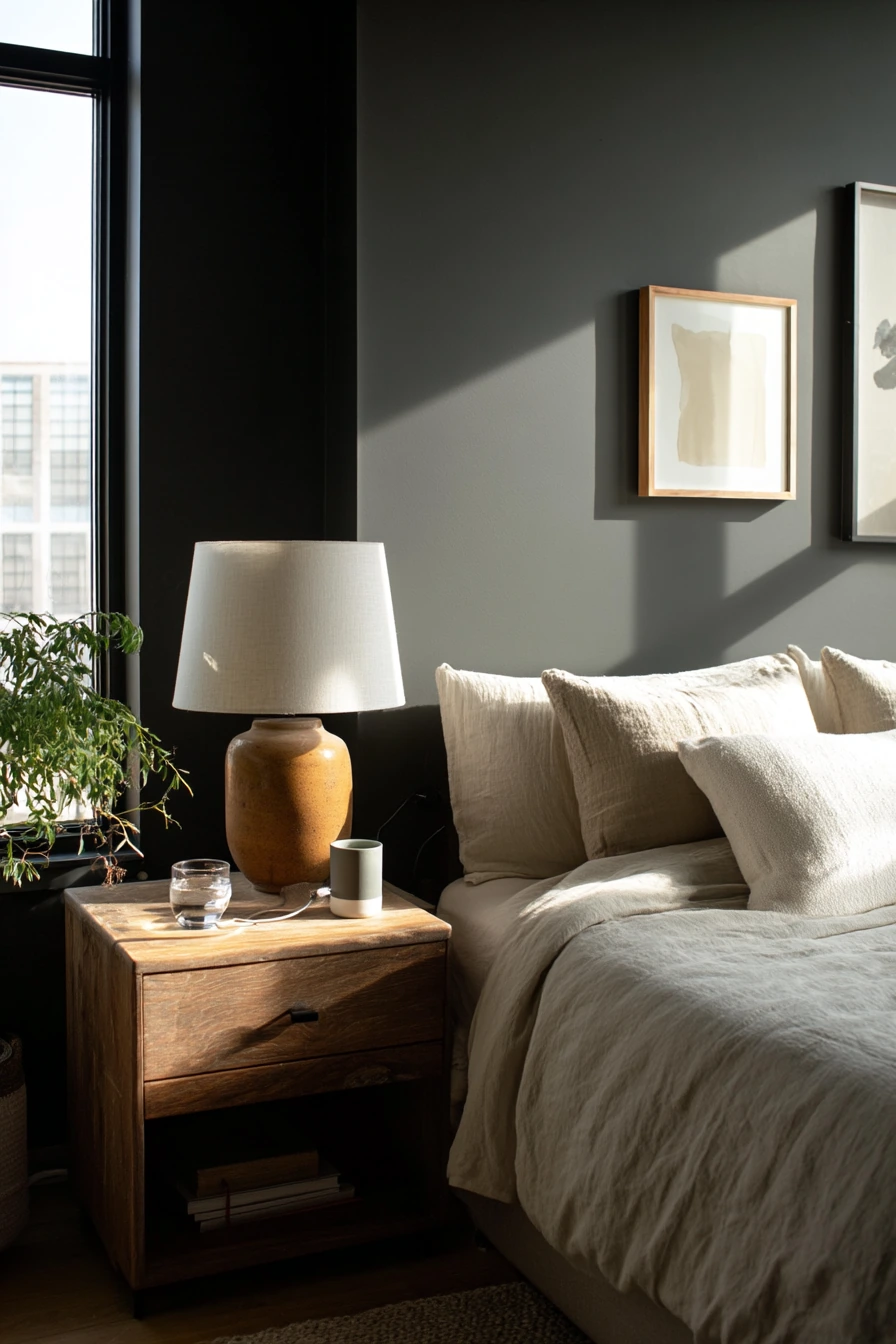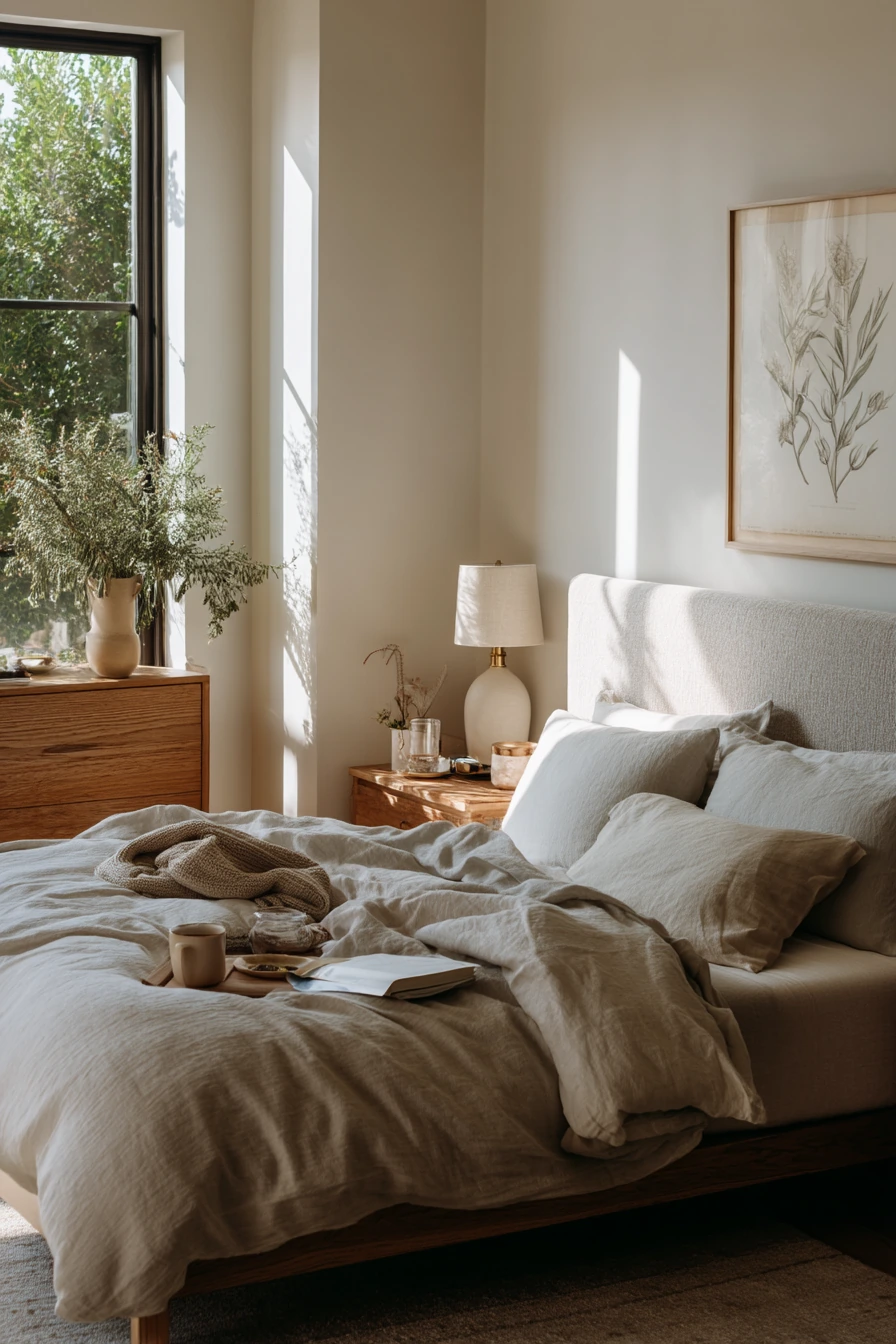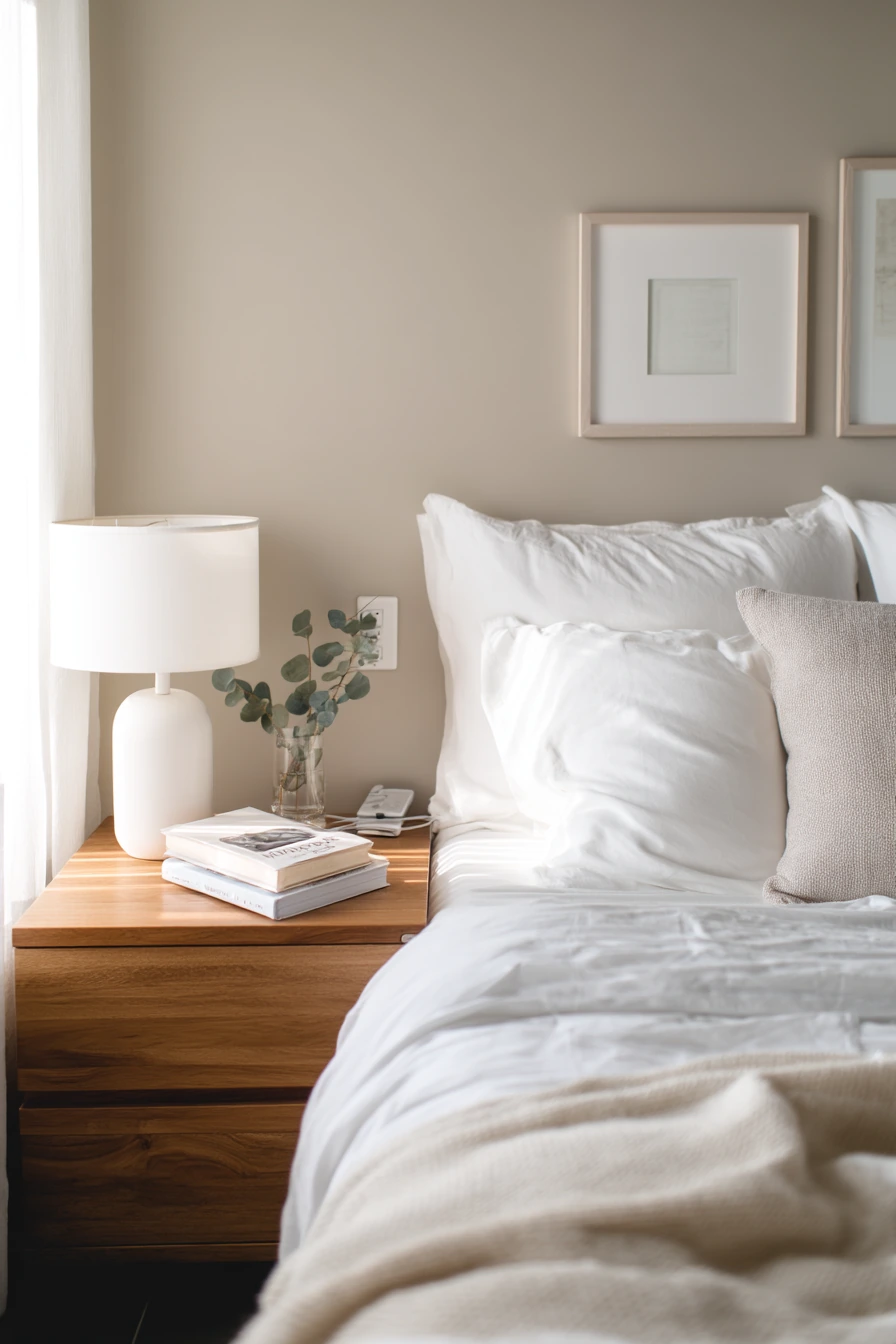

Basement bedroom ideas can turn a dark, awkward space into a room that feels calm, safe, and easy to use. The best plans focus on light, storage, and a layout that fits your real life.
In this post, you will see 10 basement bedroom setups based on common needs: a guest room for grandparents, a teen room for studying and gaming, a renter-friendly room on a budget, and more. Each one uses practical items like low headboards, oak nightstands, storage cubes, and simple lighting.
You will get styling steps you can copy fast, plus small details that make a basement bedroom feel lived-in, like a reading chair, a pinboard wall, woven baskets, and warm lamp glow. Use these ideas to plan your own space and save time shopping.
Before you start, check your egress window, outlet locations, and where you can place a bed without blocking vents. Then pick one theme below and build from there.
1 Small Basement Guest Bedroom
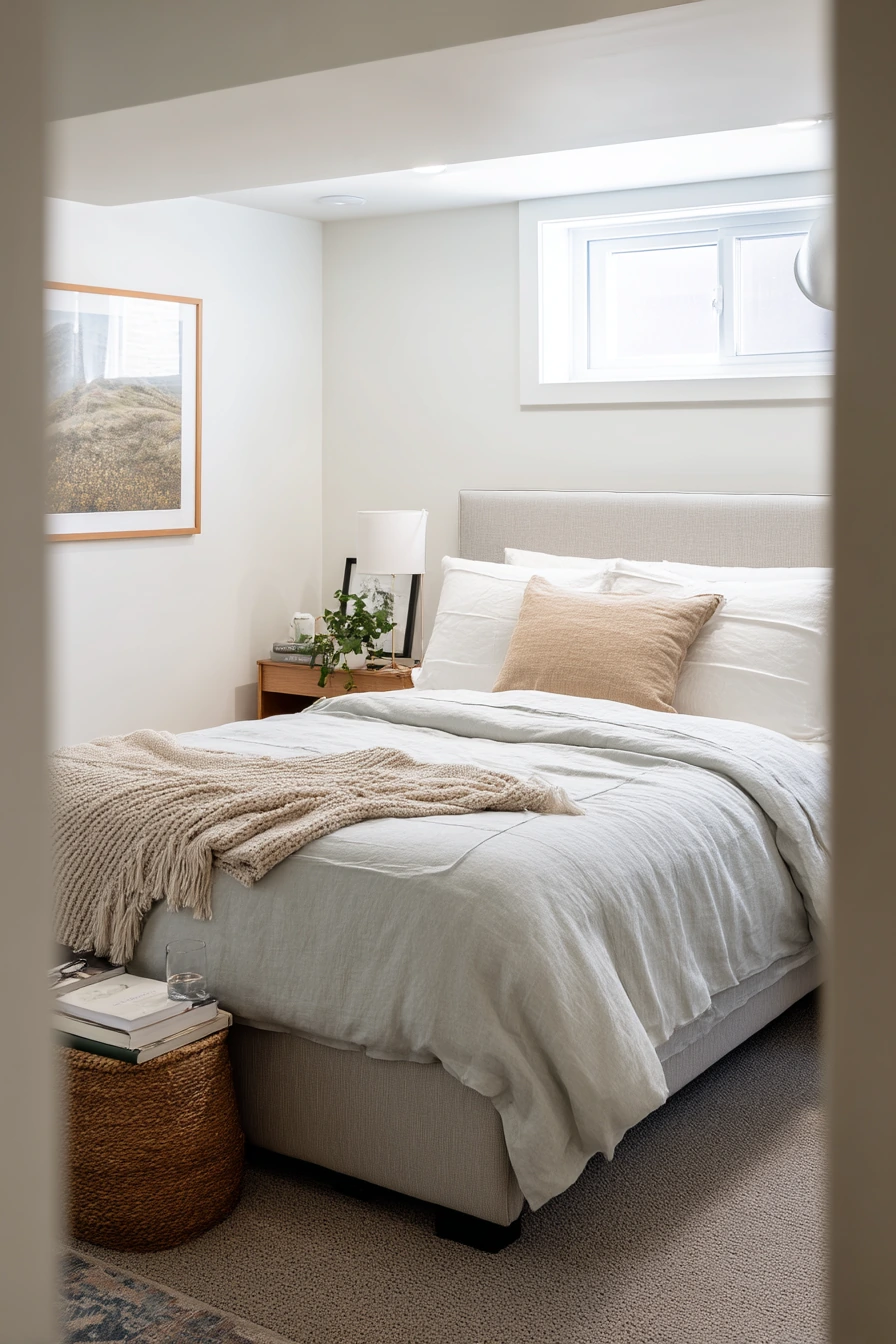
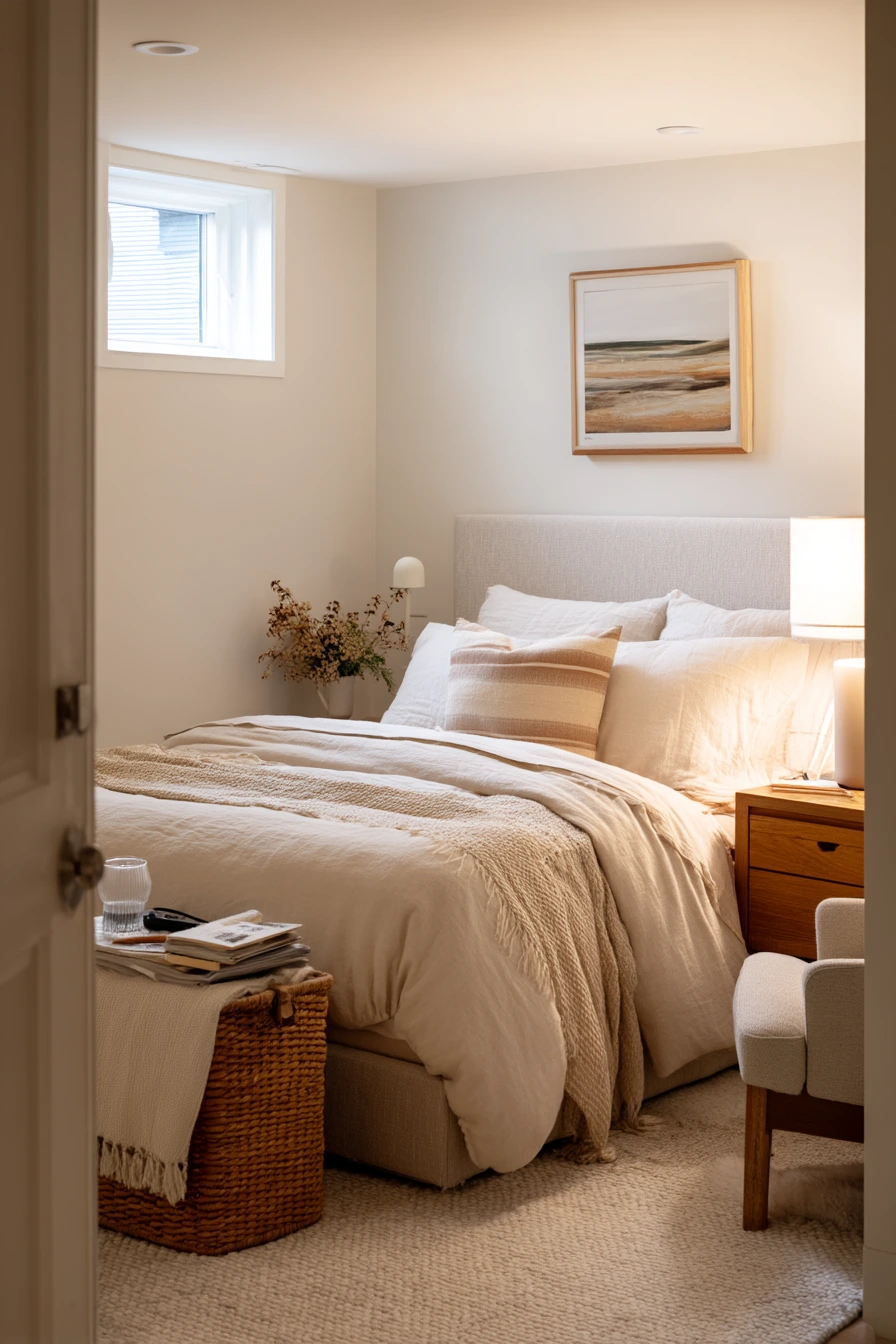
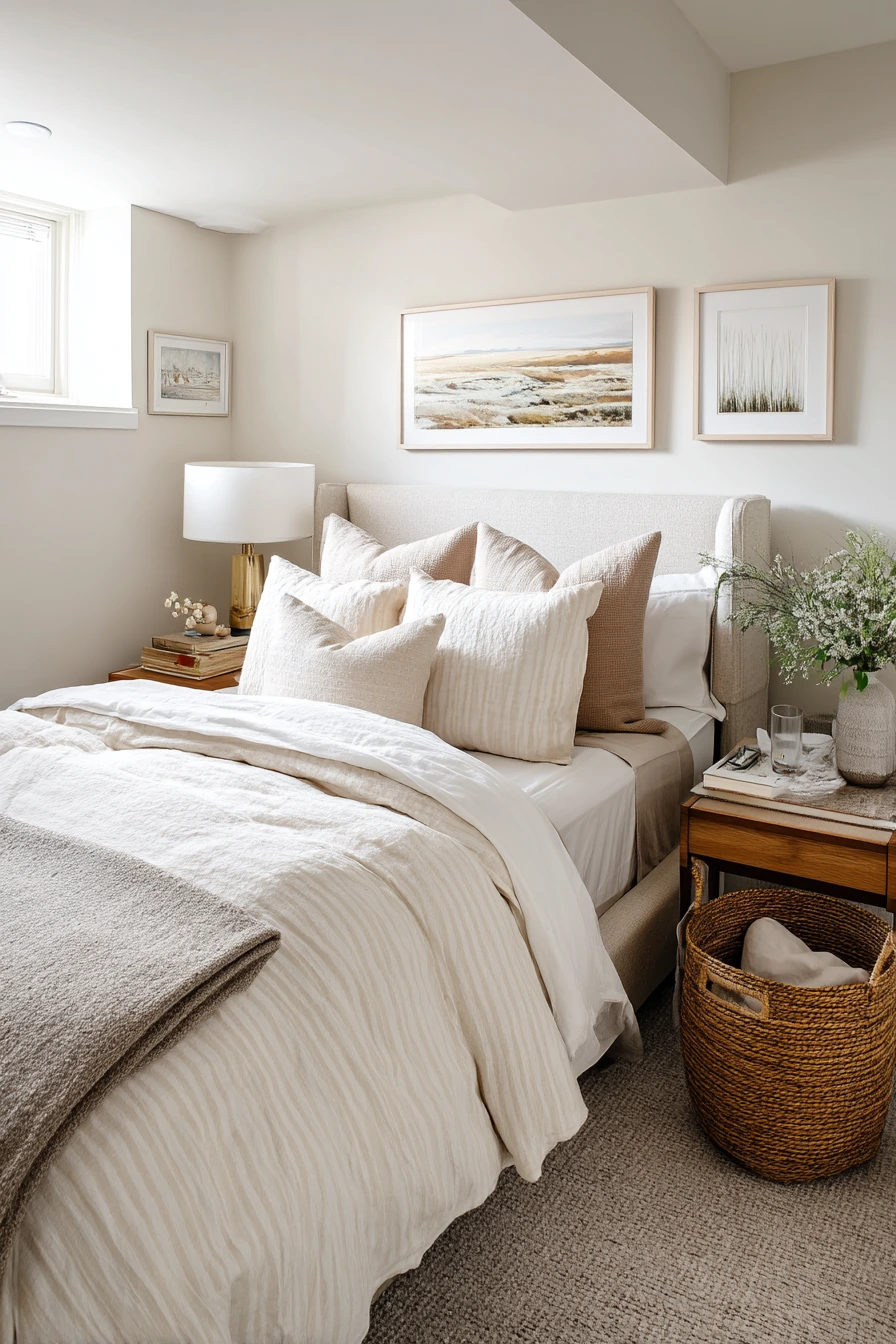
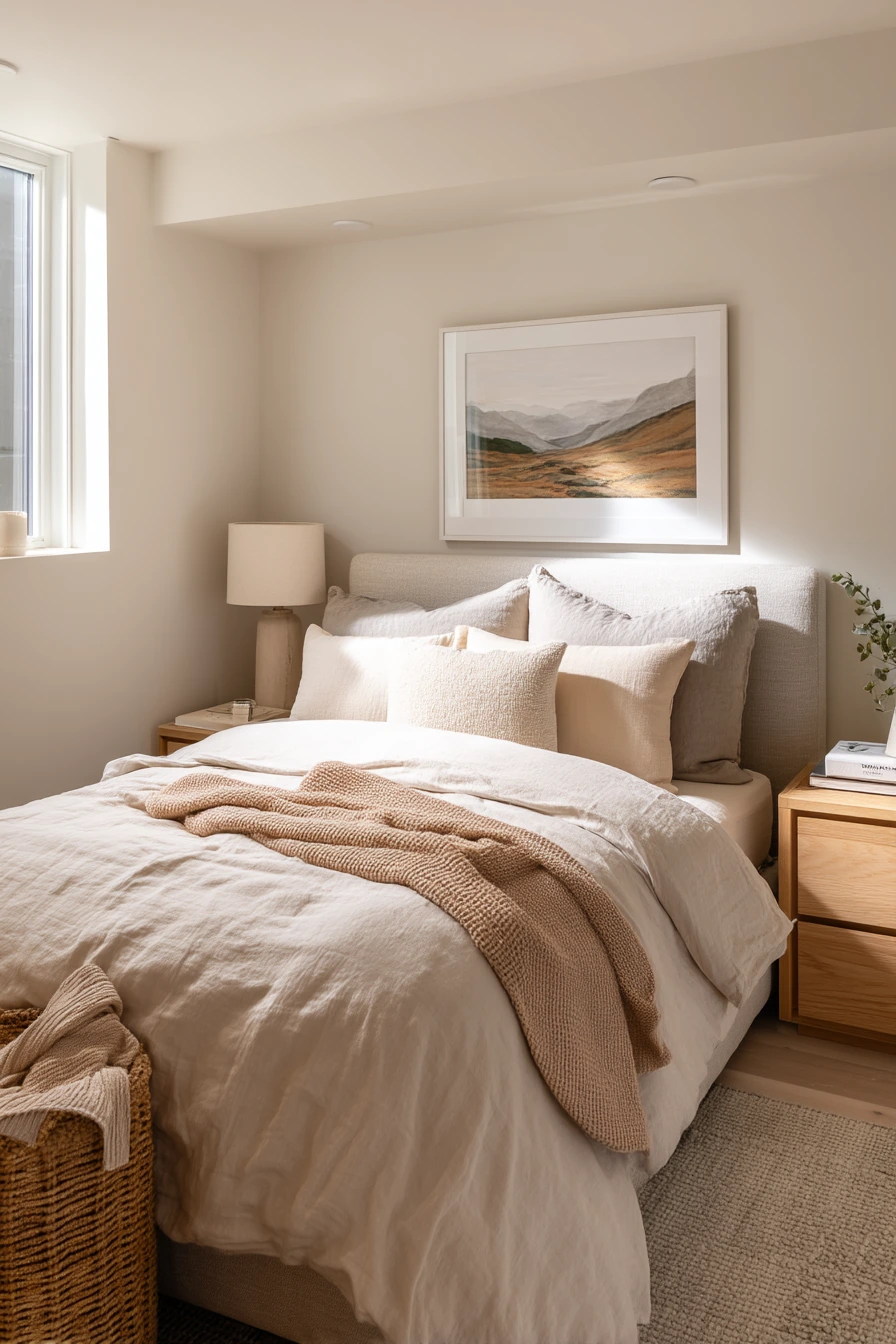
A basement guest bedroom for grandparents should feel quiet, steady, and simple to move around in. Start with a queen bed and a low upholstered headboard so the room feels open even with lower ceilings. Oak nightstands add warmth, and linen bedding keeps the look soft without being fussy. A woven hamper gives guests an easy spot for clothes, so the floor stays clear.
Use framed landscape art to make the room feel familiar. Add a compact reading chair in the corner for morning light from a small egress window. Keep lighting layered: a warm bedside lamp plus a soft overhead light on a dimmer if you have it. The goal is restful, not bright. Small lived-in cues also help the room feel welcoming, like a paperback on the duvet and a water glass on the nightstand.
For comfort, keep pathways wide and surfaces easy to reach. A phone charger trailing by the bed is not pretty, but it is real, so give it a plan: a cord clip on the nightstand and a surge protector tucked behind. Add a neatly folded cardigan on the bench or chair so the room feels ready without looking staged.
- Choose linen or cotton bedding in light neutrals to brighten a basement.
- Place a reading chair near the egress window to catch daylight.
- Use matching oak nightstands for a calm, balanced look.
- Add a hamper and a small tray for glasses, meds, and a watch.
- Keep a soft night light for safe late-night trips.
Pro Design Tip: Hang the landscape art so the center sits at eye level when standing, then repeat the same wood tone (oak) in one more place, like a frame or lamp base, for a pulled-together look.
Budget Considerations: Solid oak nightstands cost more; look for oak veneer, thrifted wood tables, or simple nightstands you can refinish with a warm stain.
2 Teen Basement Bedroom Hangout
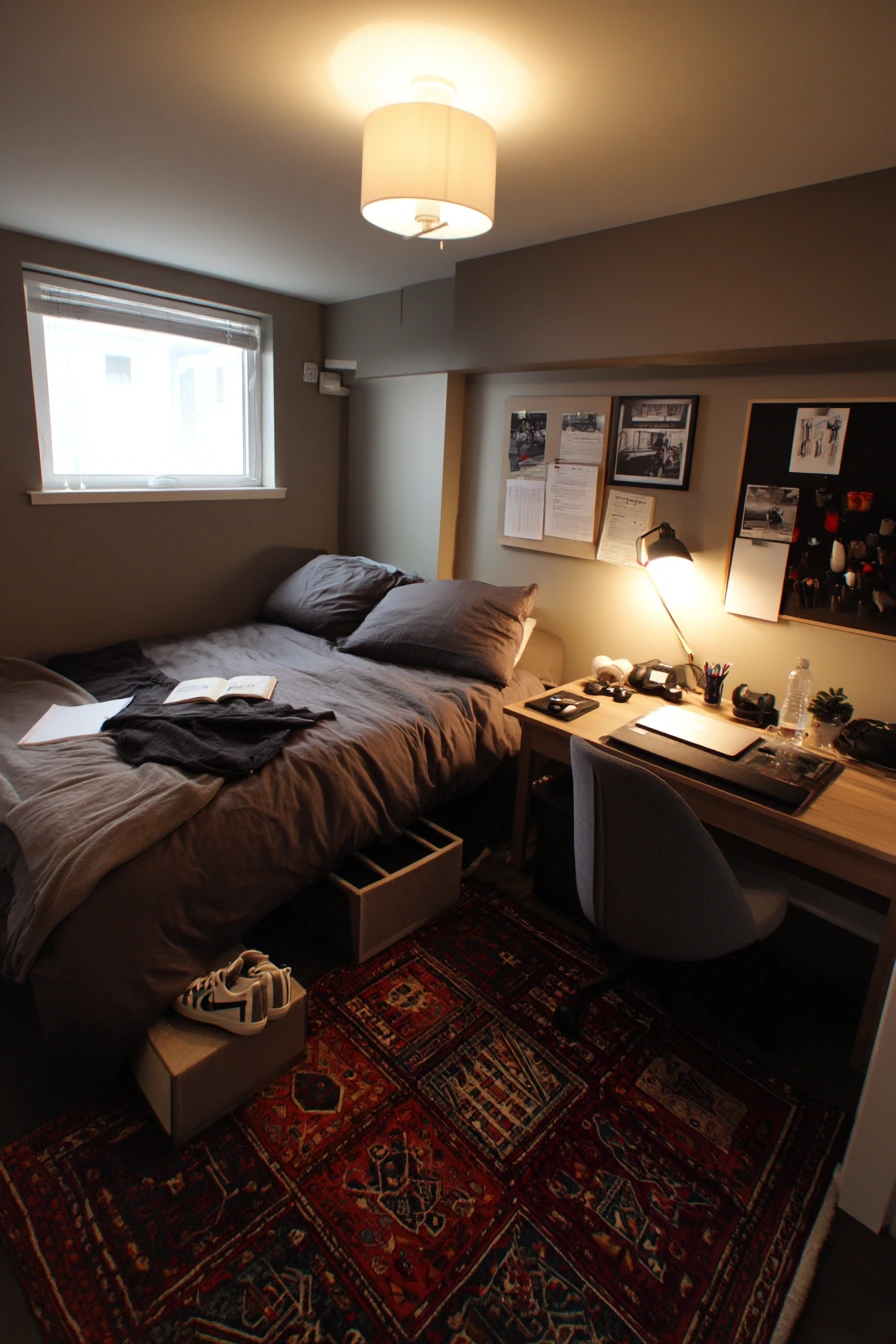
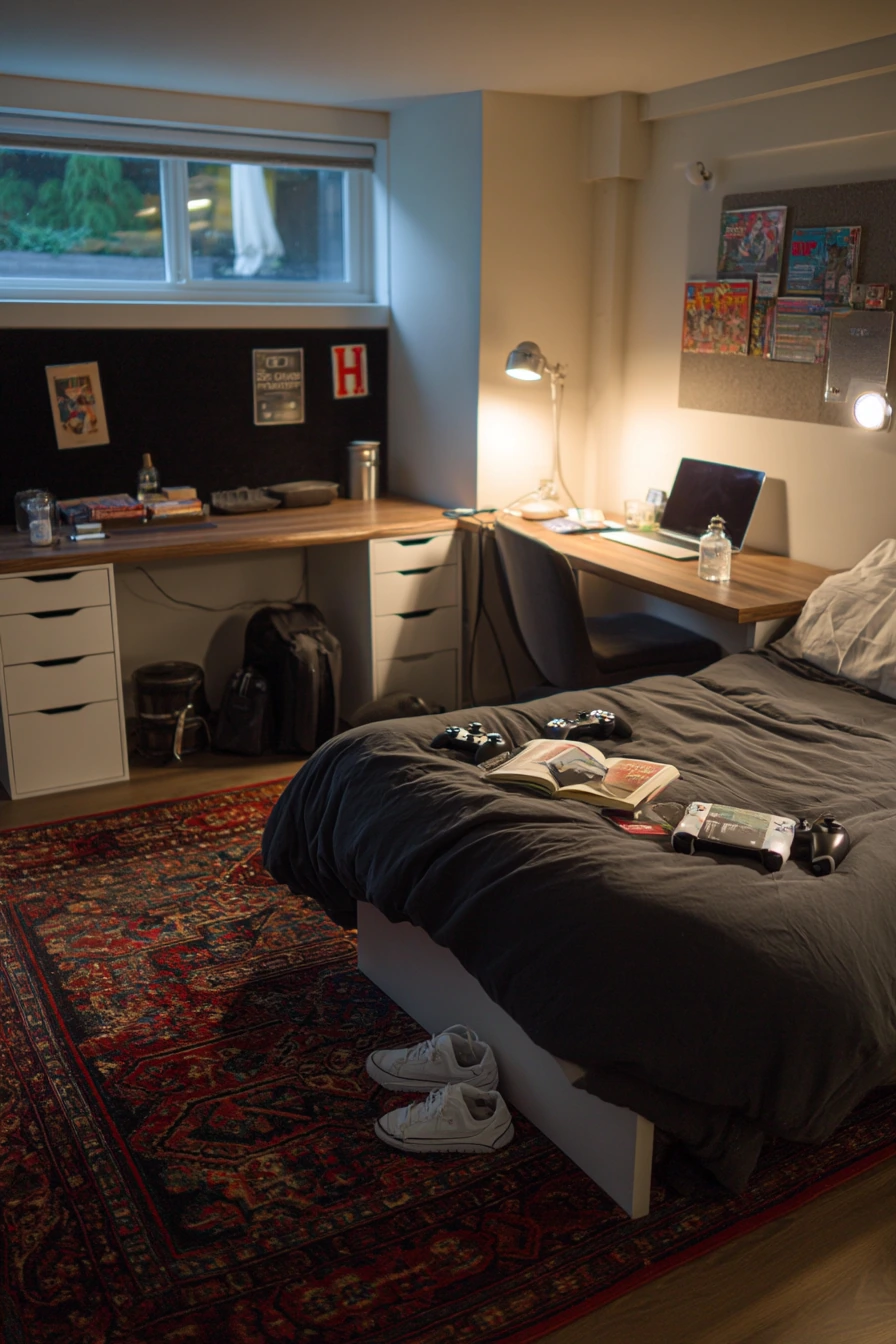
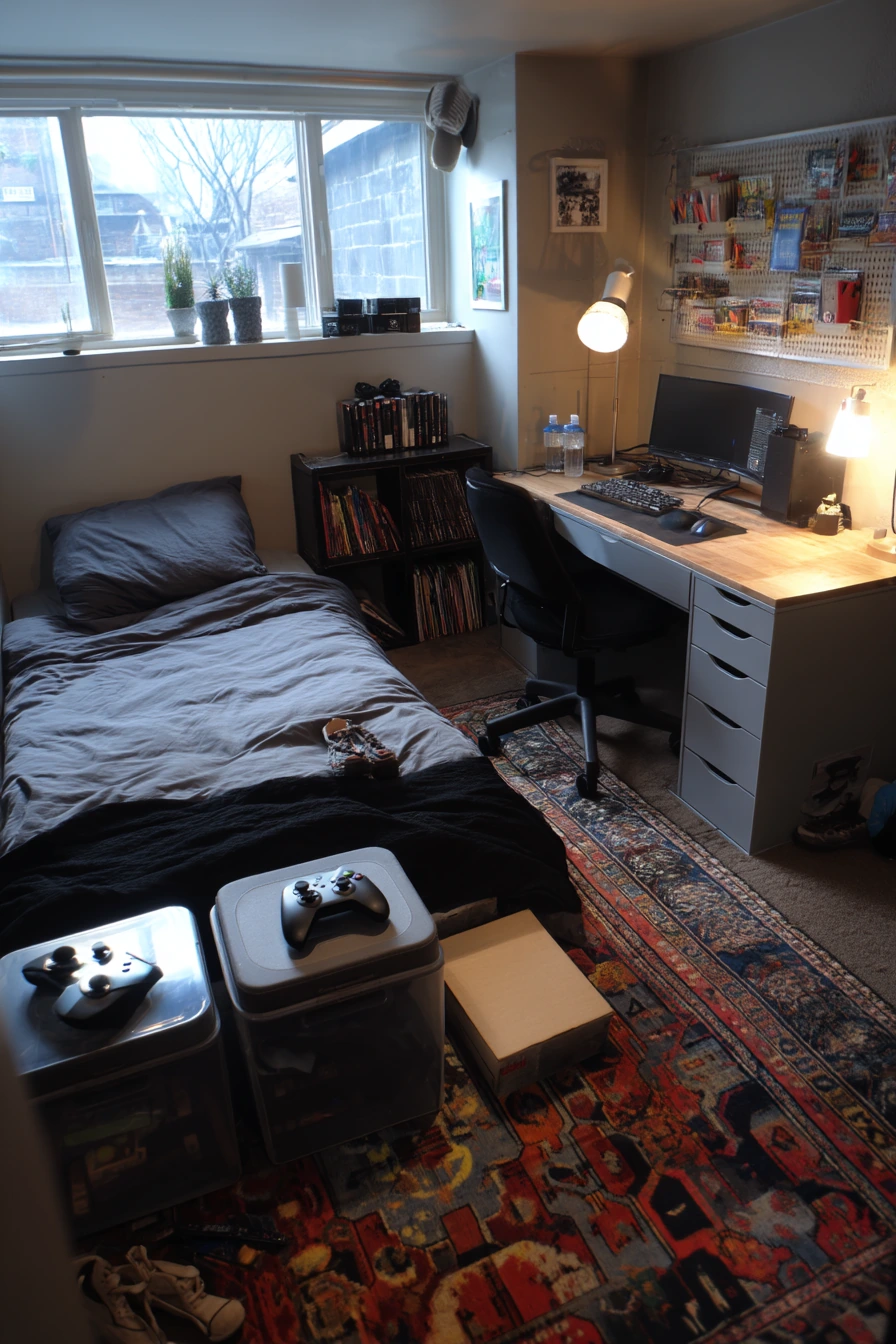
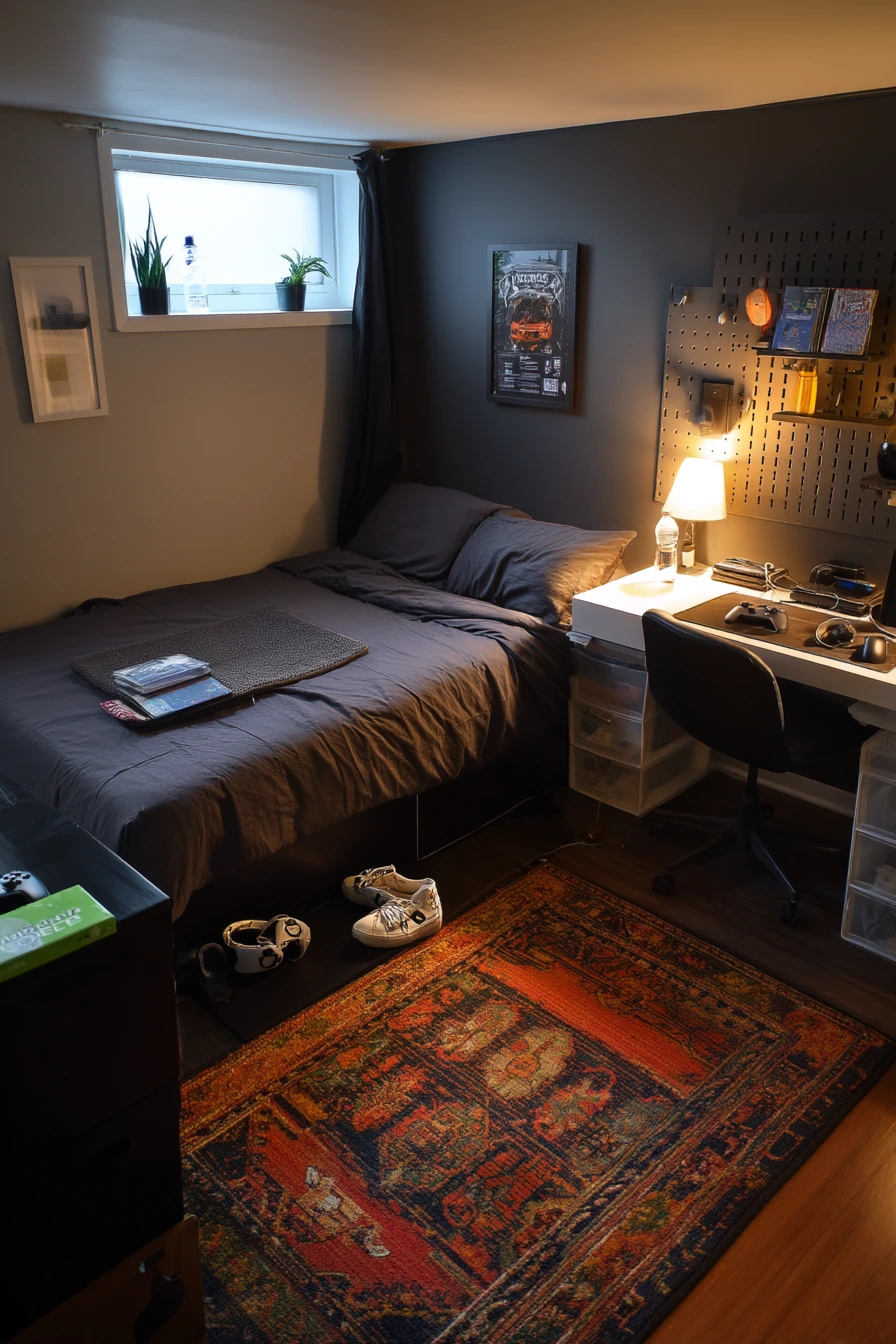
A teen basement bedroom has to do two jobs: sleep and focus. Set up a full bed with muted charcoal bedding to hide wear and keep the room feeling grounded. Then build storage around the real clutter: modular storage cubes for games, school stuff, and extra blankets. A vintage rug warms up the floor and adds color without making the room loud.
Keep the desk narrow so the room does not feel crowded. Place it near the high window if you can, so natural light hits the work zone. Add a task chair that is easy to wipe clean. A pinboard wall above the desk is useful for reminders, a schedule, and photos. Let the room feel honest with lived-in cues like a controller on the blanket, an open textbook, and a charging cable draped off the desk.
Lighting matters in a basement teen room. Use a warm desk lamp for late study nights, but aim it away from the bed so it does not spill light everywhere. If the walls feel too dark, keep bedding and curtains lighter, or add one light wood piece to balance the moody look. Give shoes a spot, like a tray or a bin, so sneaker pairs do not take over the floor.
- Zone the room: bed on one side, desk and storage on the other.
- Use labeled bins inside storage cubes to cut down visual mess.
- Add a pinboard wall for school papers and quick notes.
- Choose a vintage-style rug to soften the basement floor and reduce echo.
- Set up a charging station with a power strip and cord clips.
Pro Design Tip: Keep the desk lamp and bedside lamp in the same color temperature (warm white) so the room looks calm in photos and does not feel harsh at night.
Budget Considerations: Modular cubes can add up; mix a few new pieces with secondhand cubes, then unify them with matching bins and one peel-and-stick label set.
3 Budget-Friendly Renter Basement Bedroom
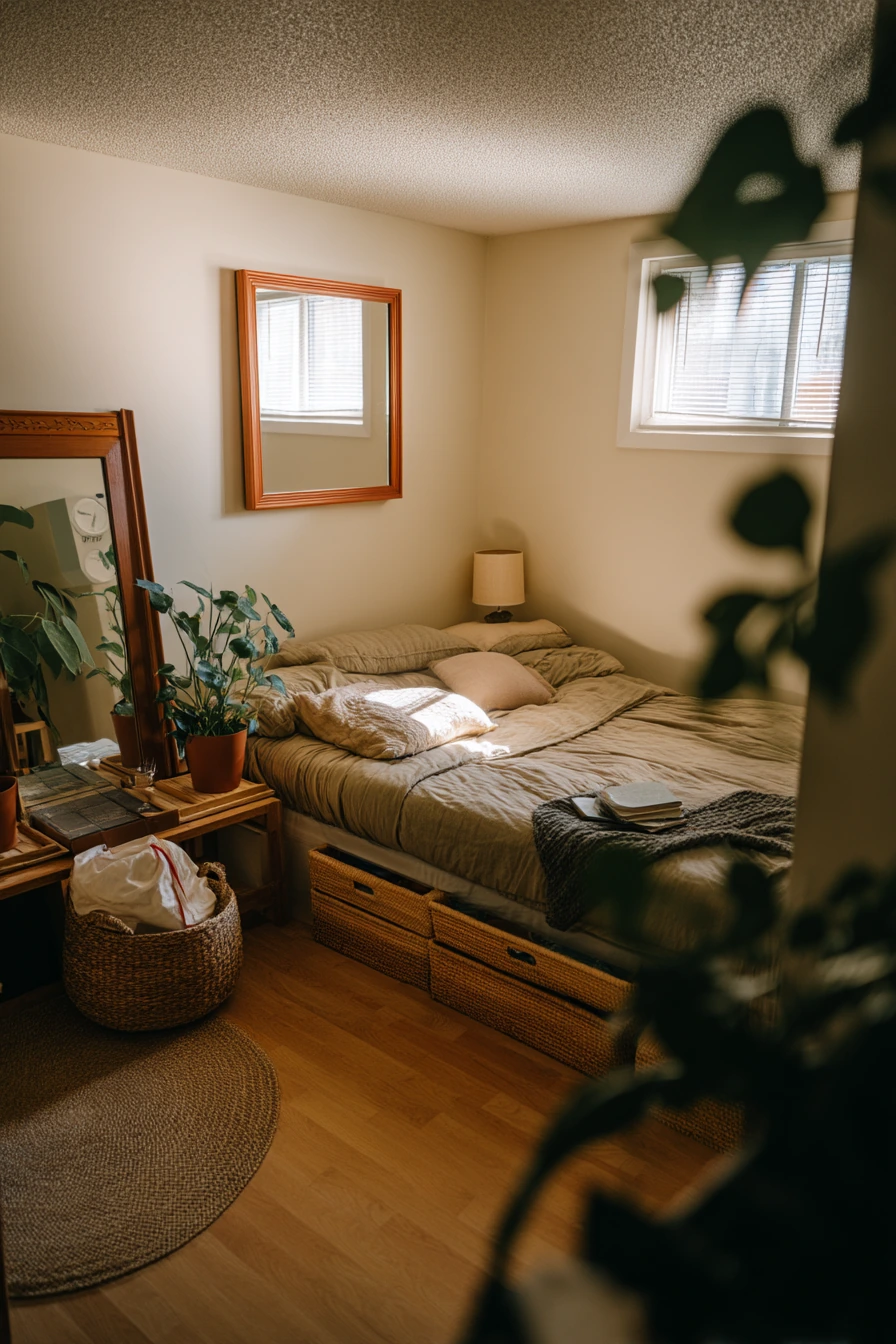
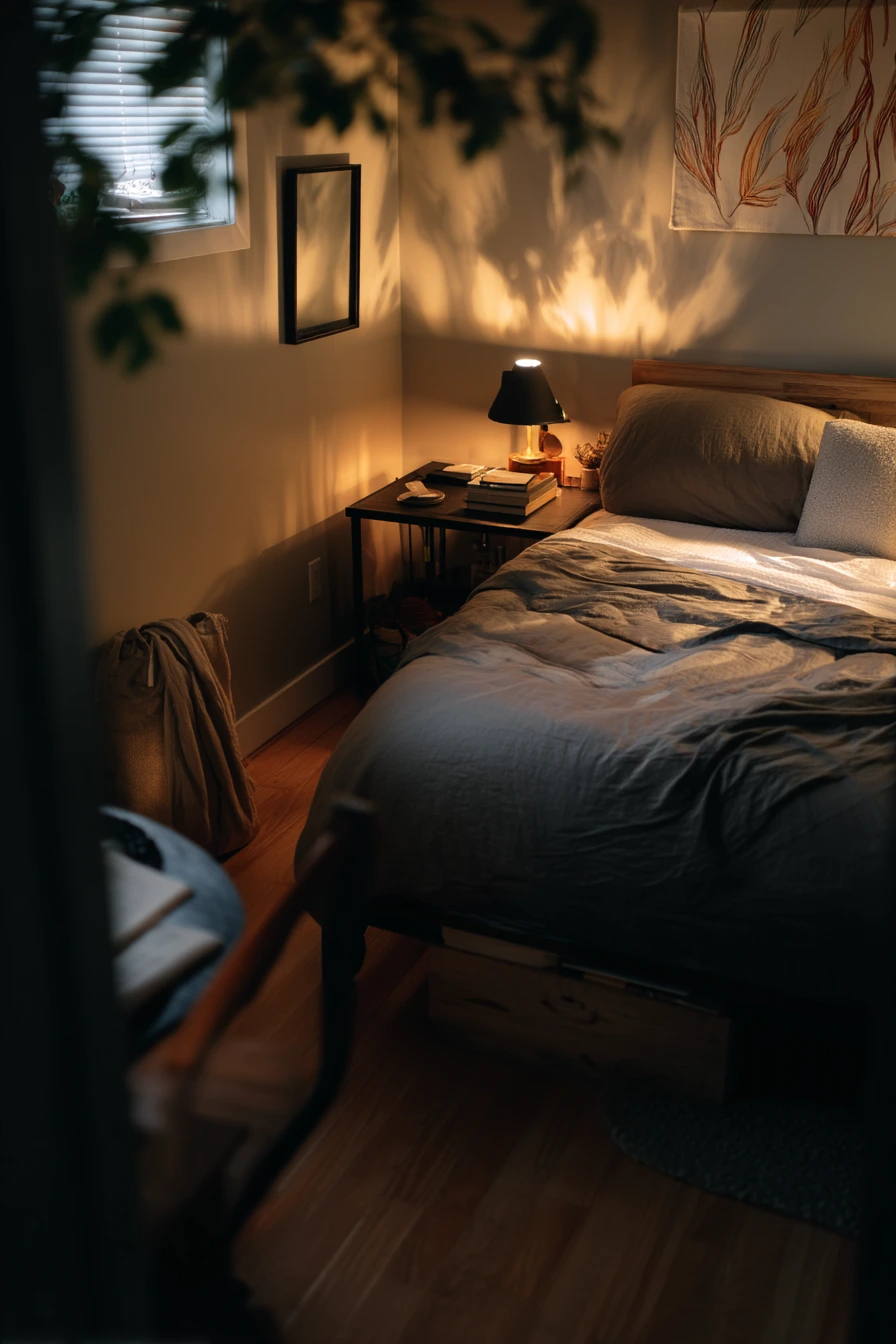
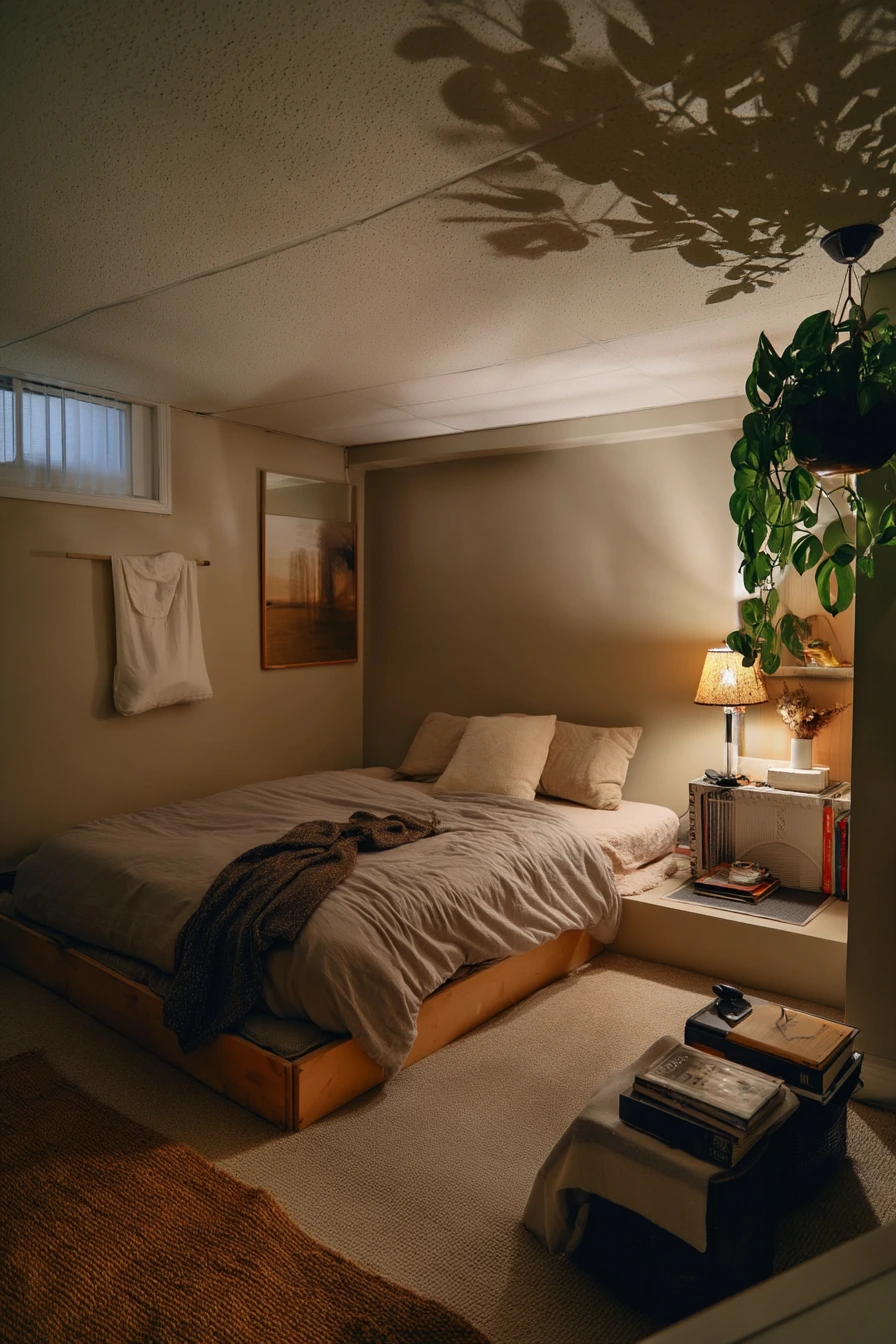
A budget-friendly basement bedroom can still look finished if you choose a few smart upgrades. Start with a simple platform bed to keep the profile low. Then add a peel-and-stick accent wall behind the bed to create a focal point without paint or major tools. Keep bedding simple, and use a knit throw for texture even if it gets a little wrinkled.
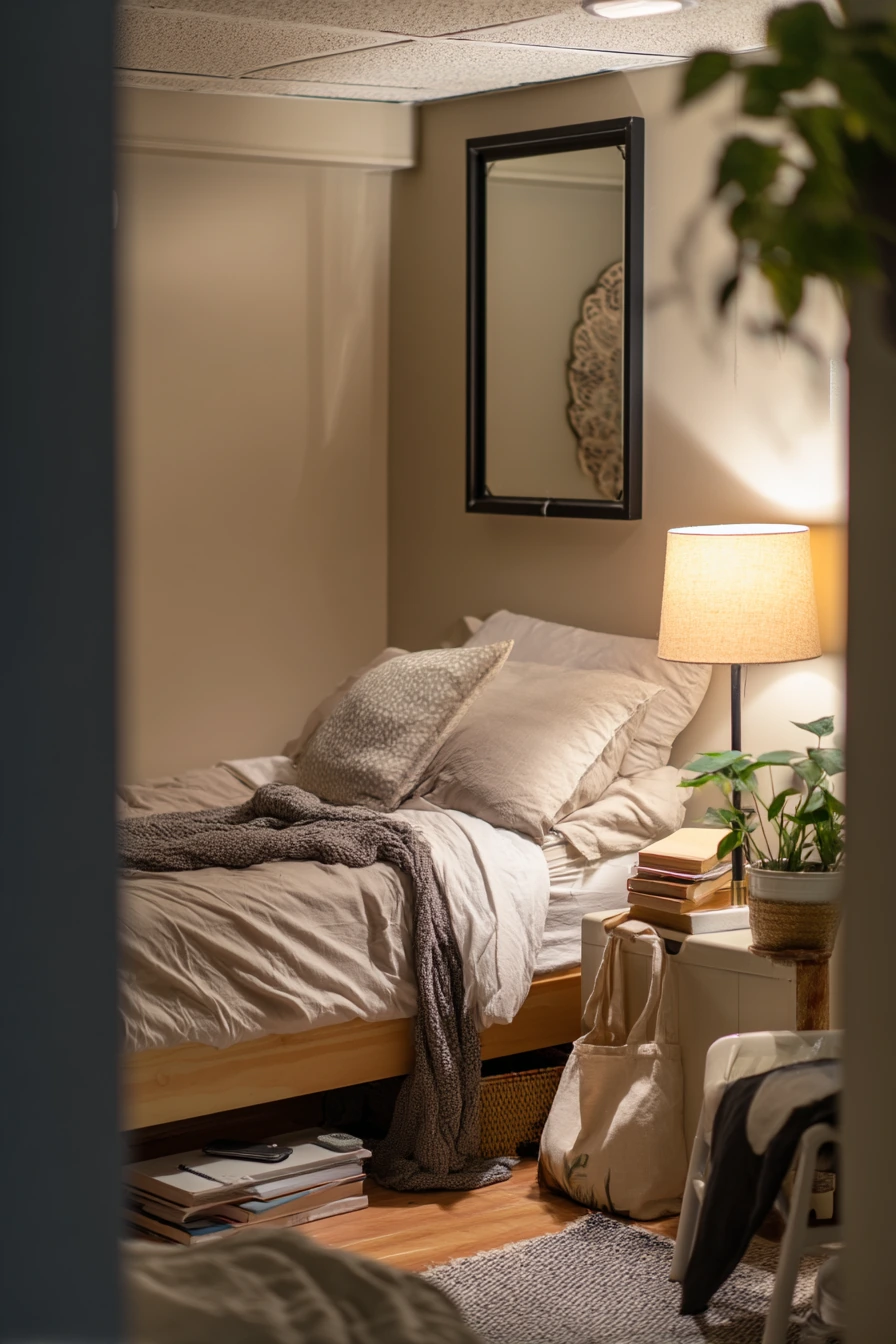
Use a thrifted bedside table as your character piece. If the finish is rough, clean it well and swap the knob or pull. Add a compact lamp with a warm bulb to fight basement shadows. Canvas storage bins are renter-friendly and easy to slide under a bed or stack in a closet. A mirror helps bounce light and makes the room feel bigger, which matters in a tight basement.
Style the room with real-life items so it feels natural: a half-read novel, a tote bag on a chair, a phone on charge, and a plant near the window so the leaves cast soft shadows. Keep cords tidy with adhesive clips and a small extension cord. If the basement is cool, add a thicker rug or even carpet tiles under the bed area for warmth and comfort.
- Pick one peel-and-stick pattern and keep the rest of the room neutral.
- Thrift a nightstand and update it with a new pull or simple paint.
- Use canvas bins to hide small items and make cleanup fast.
- Add a mirror across from the window to spread daylight.
- Choose one easy plant that handles low light, like pothos or ZZ plant.
Pro Design Tip: Match your peel-and-stick accent wall colors to your bedding, then repeat one accent color in a small item like a book cover, pillow, or planter for a planned look.
Budget Considerations: Peel-and-stick wallpaper varies in price; if you need a cheaper option, use peel-and-stick panels on just the top half of the wall or try removable decals in a simple grid.
4 Basement Nursery Sleep Space
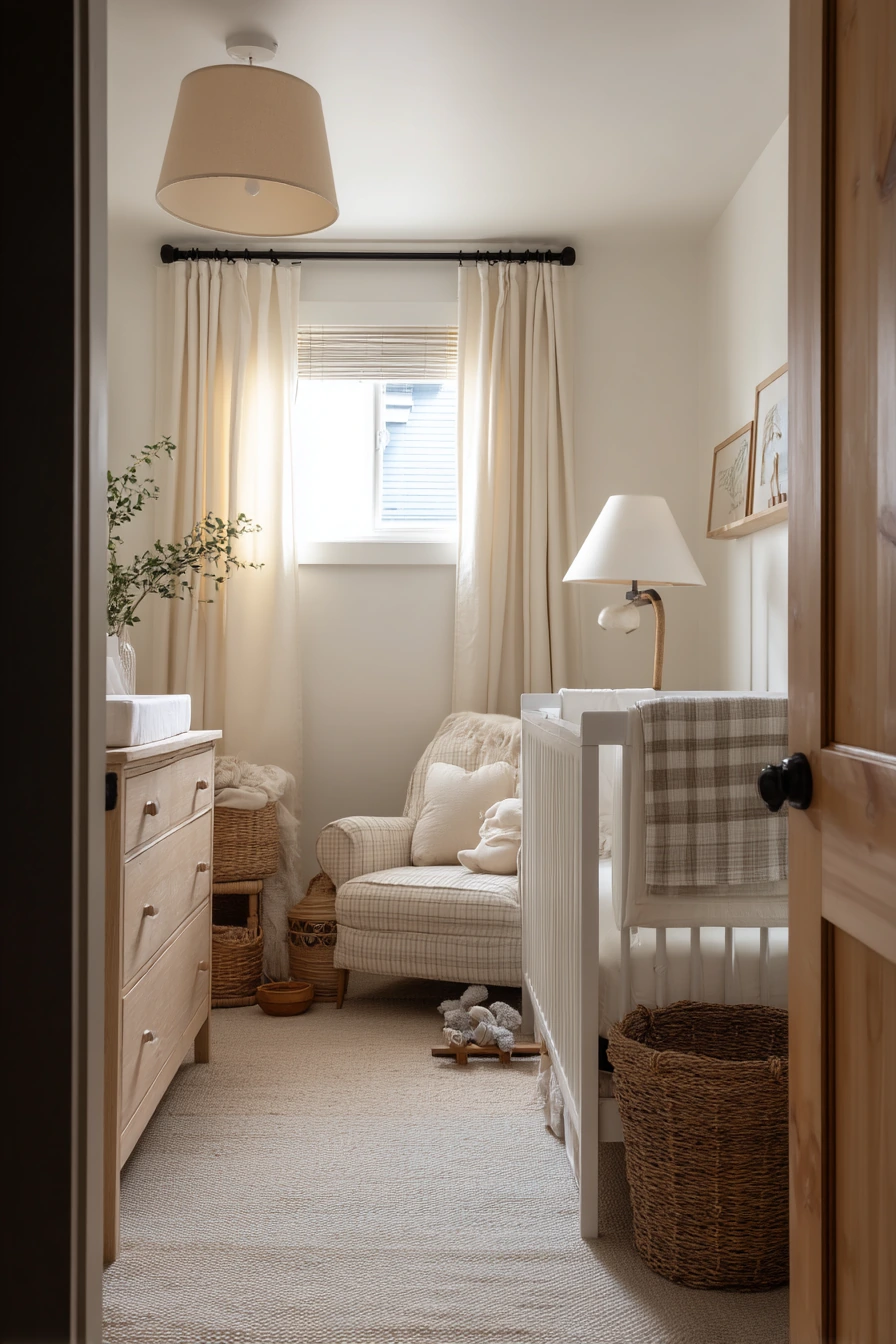
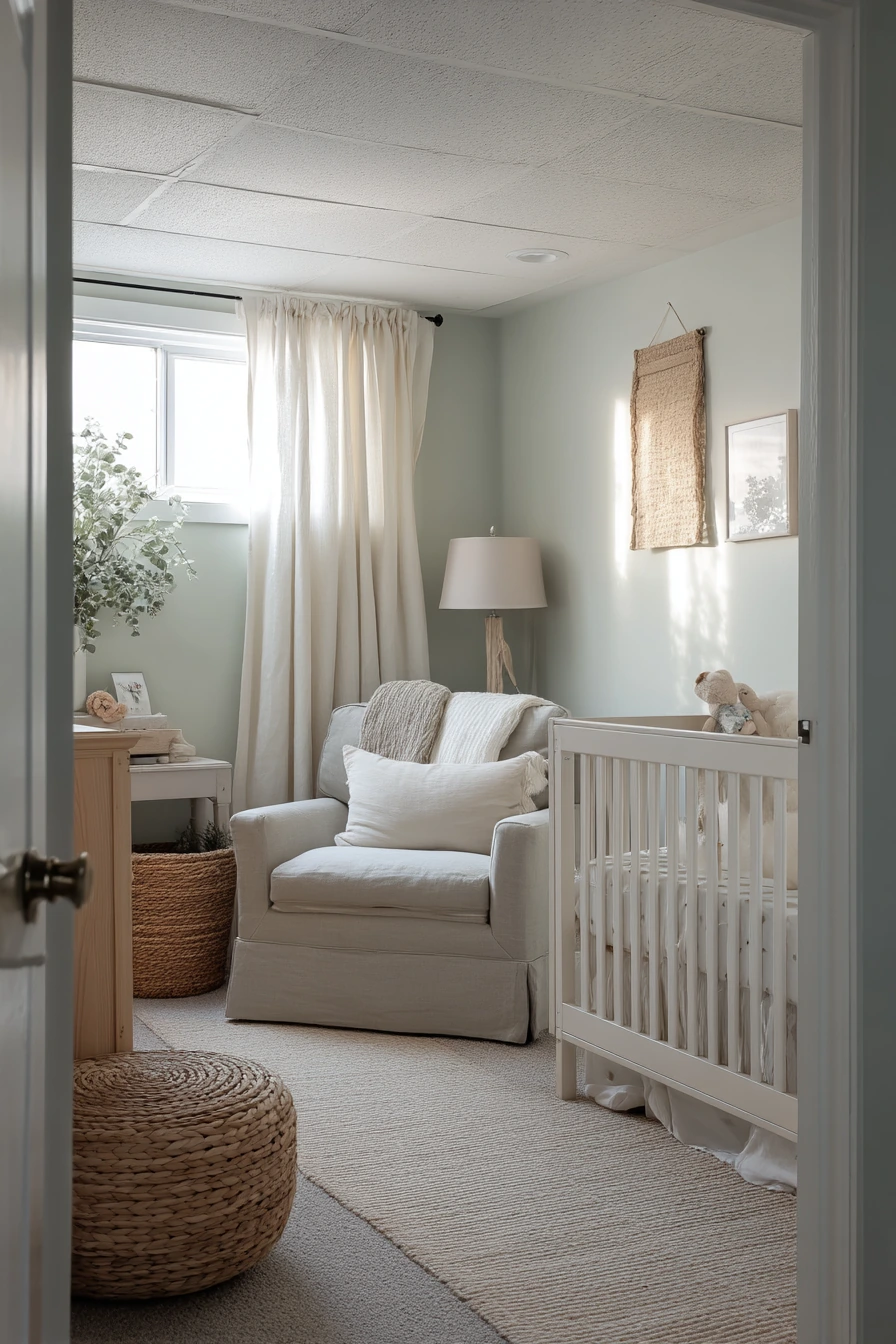
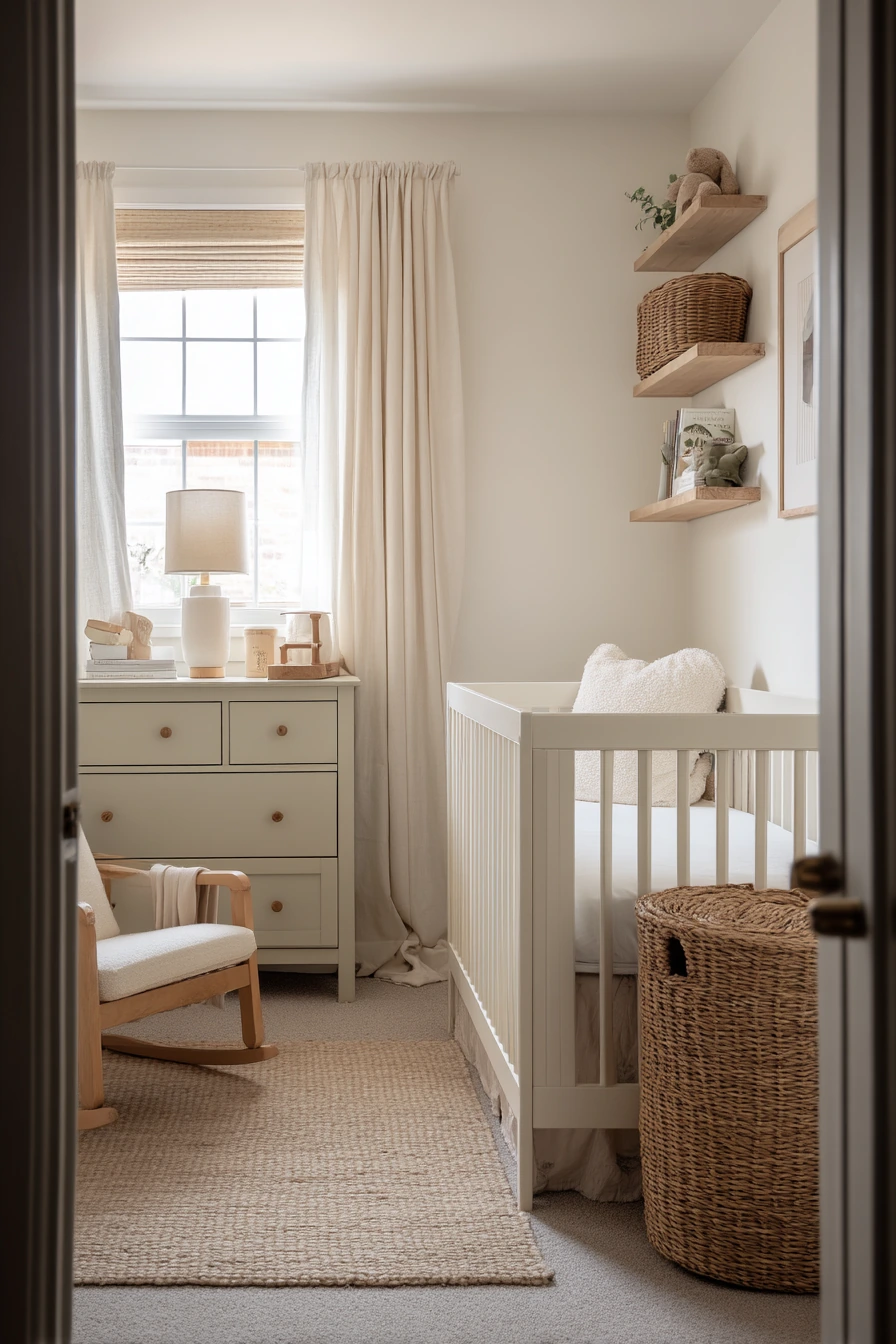
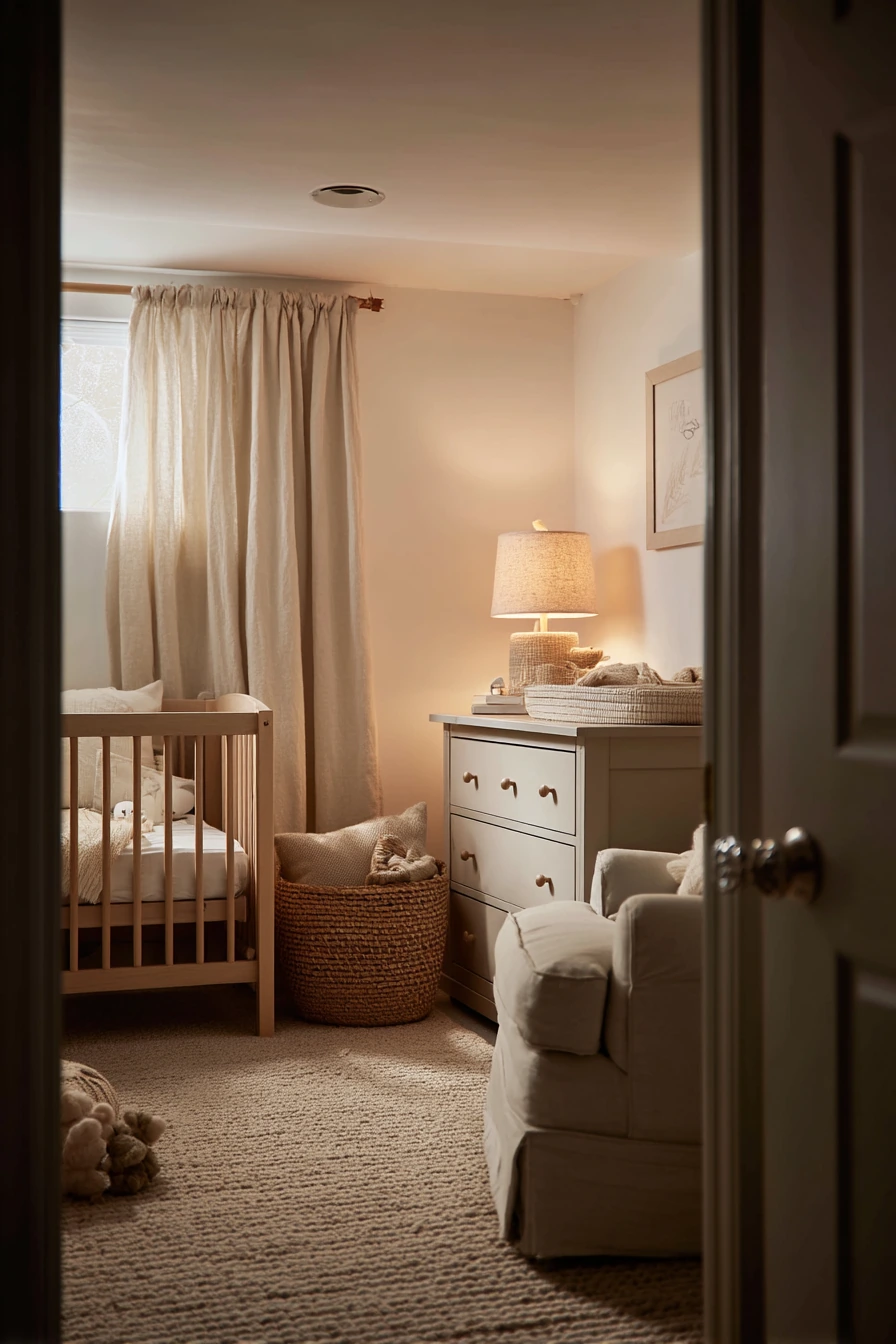
A basement bedroom that doubles as a nursery needs calm colors and smart storage. Start with a small daybed for the parent and a crib placed away from the window for steady temperature. Soft ivory curtains make the basement feel brighter and help with naps. Choose a changing dresser with deep drawers so diapers and extra sheets stay out of sight.
Use woven baskets for quick grab-and-go items like swaddles, burp cloths, and small toys. Add calming sage accents through a pillow, a blanket, or wall art. Keep the room gentle and quiet, with warm lamp glow for night feeds and soft daylight from the egress window during the day. Lived-in cues make it feel real: a burp cloth on the rocker, tiny socks near the dresser, and a baby monitor glowing on the shelf.
For styling, keep surfaces simple so they are easy to clean. Use a small side table near the rocker for a pacifier, water, and a phone charger. Store board books in a low basket so you can reach them with one hand. If the basement has echo, add a soft rug and a fabric wall hanging to reduce noise. Keep cords secured and out of reach, even if the baby is not mobile yet.
- Choose a daybed with a washable cover and a firm mattress.
- Use ivory curtains to lift the room and soften window light.
- Store diapers and wipes in top dresser drawers for easy access.
- Place a basket near the rocker for burp cloths and spare onesies.
- Add a dimmable lamp for late-night feeds without bright overhead light.
Pro Design Tip: Keep the nursery zone visually light by using the same curtain color, wall color, and bedding tone, then add sage only in small accents so the room stays restful.
Budget Considerations: Nursery furniture can be pricey; buy the crib new for safety, then look for a secondhand dresser you can anchor to the wall and use as a changing station.
5 Basement Primary Suite Retreat
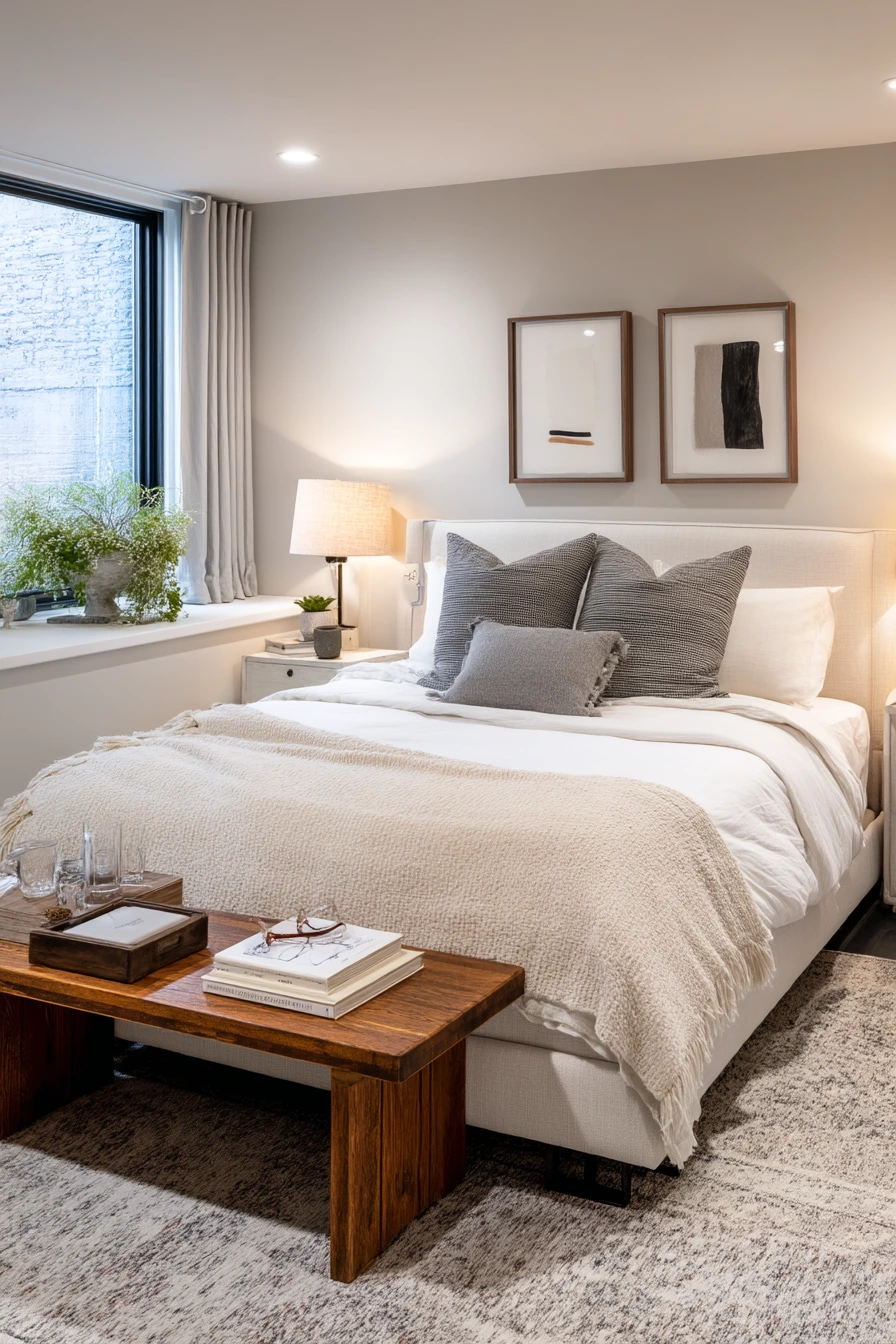
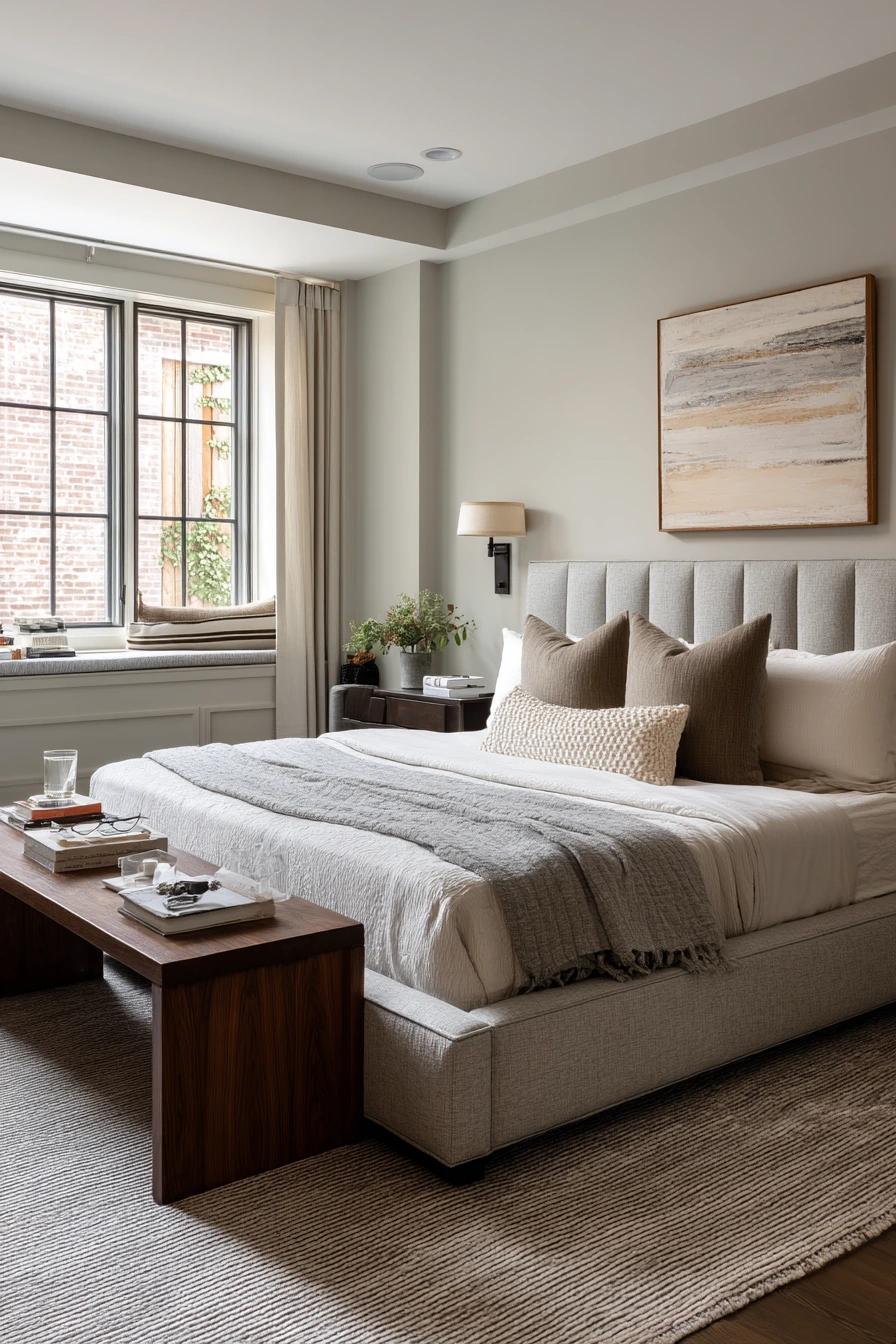
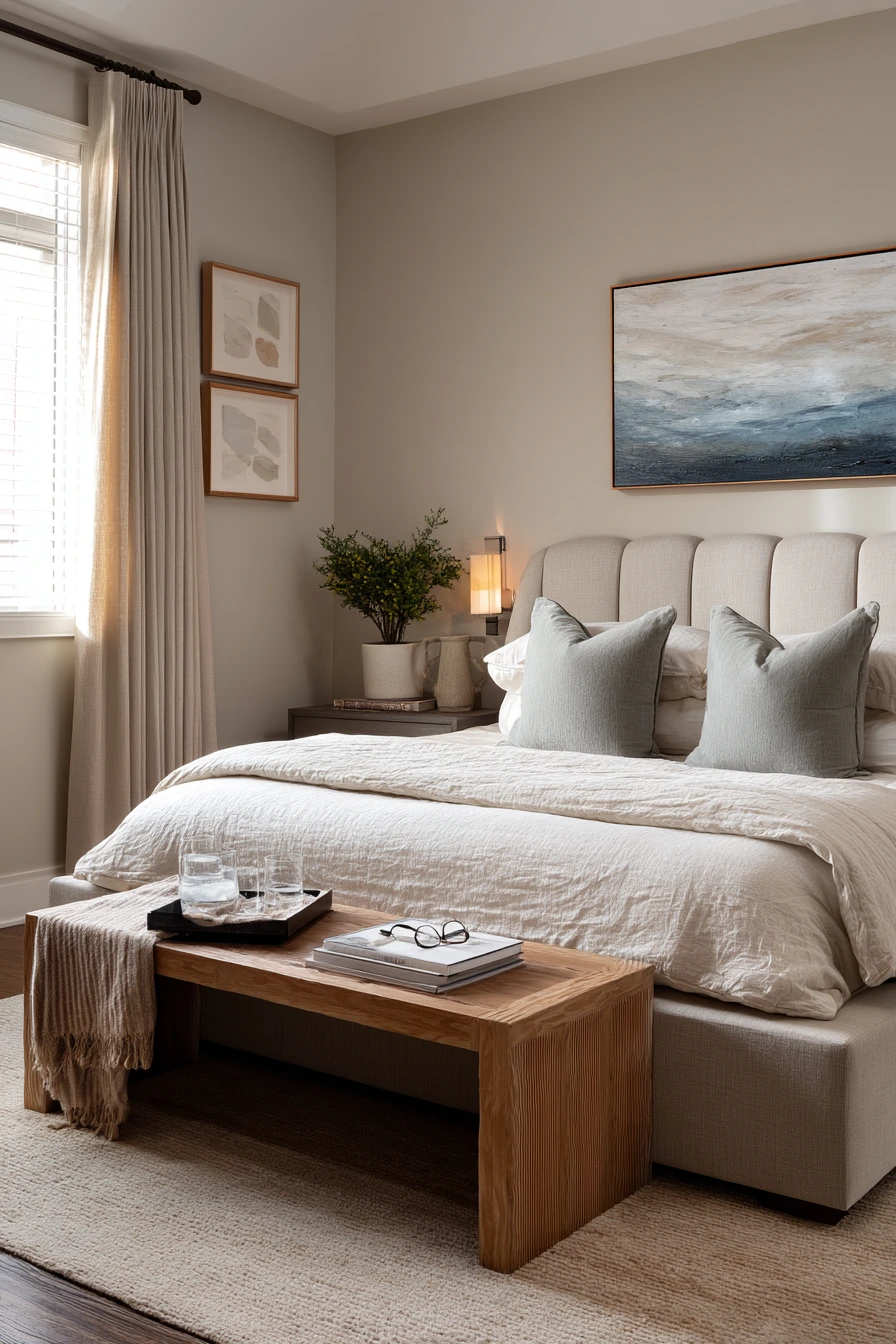
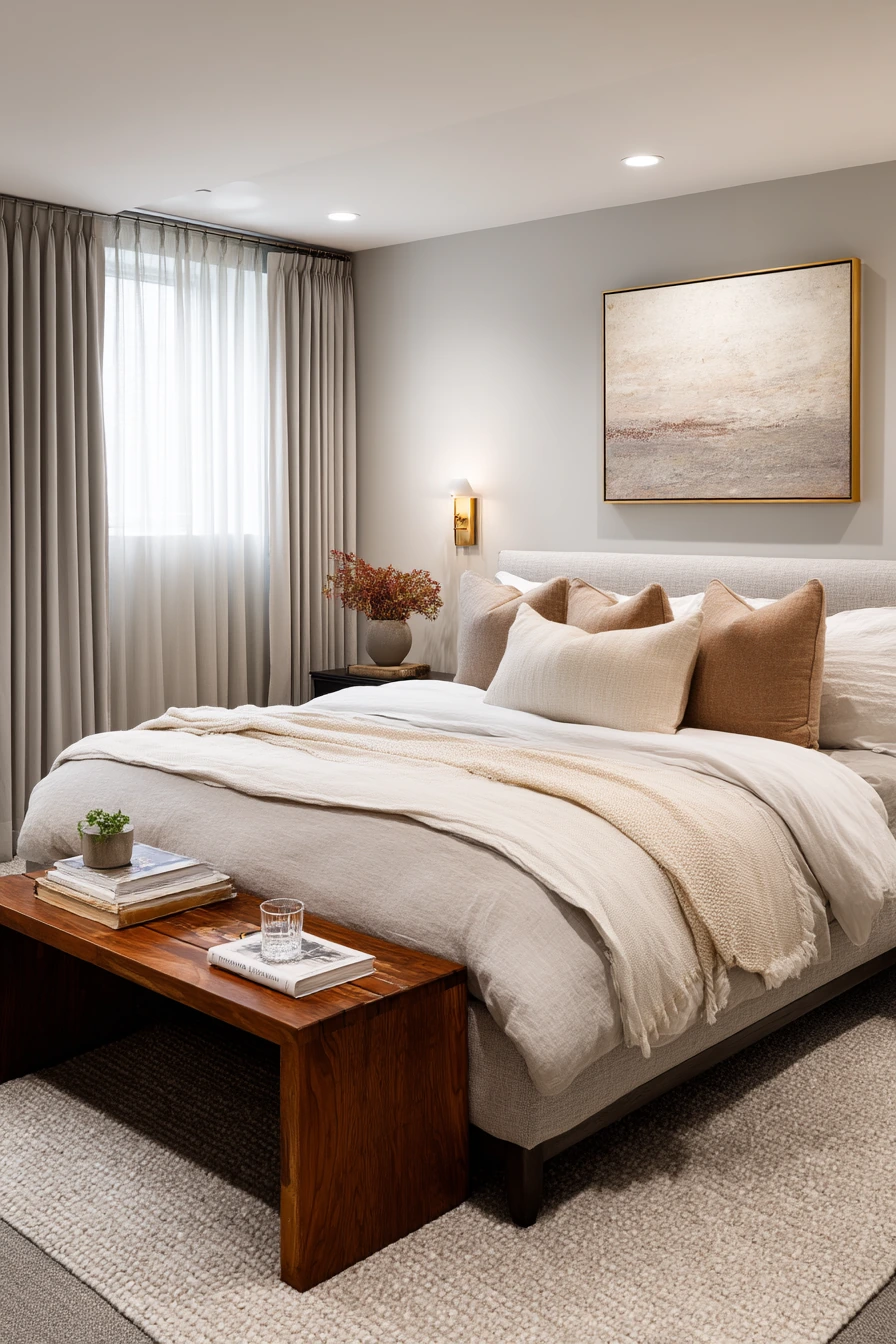
A basement primary bedroom can feel elevated even with polished concrete floors. Start with an upholstered king bed to soften the room and add comfort. Tailored drapery helps the space feel like a true bedroom, not a basement. Add fluted nightstands for texture, and choose a low bench at the foot of the bed for everyday use.
Layer a textured wool rug over the concrete to warm the room and reduce echo. Keep art simple, like one abstract piece above the bed or on the main wall. Use warm bedside sconces so the nightstands stay clear and the light is even for reading. Lived-in cues are easy to build in: reading glasses, a half-full water glass, a folded robe, and a phone on a wireless charger.
For styling, stick to a tight palette. Upholstery, drapery, and rug should share a similar undertone so the room feels calm. Add one or two soft textures, like a quilt and a knit throw, so the bed looks inviting but not messy. If you have a large basement well window, keep it clean and use a shade that still lets light in. Make space for a laundry basket in a corner so clothes do not pile on the bench.
- Use an upholstered bed to reduce the hard feel of concrete floors.
- Pick tailored drapery or a Roman shade for a finished look.
- Add a wool rug large enough to step onto on both sides of the bed.
- Choose sconces to free up nightstand space and reduce clutter.
- Style the bench with a small stack of books and a tray for daily items.
Pro Design Tip: Size your rug so it extends at least 18 to 24 inches beyond the sides of the bed, which makes the whole room feel larger and more balanced.
Budget Considerations: Wool rugs can be expensive; try a wool-blend, a flatweave, or a large indoor-outdoor rug layered with a smaller soft rug near the bed.
6 Cozy Basement Bedroom with Home Office
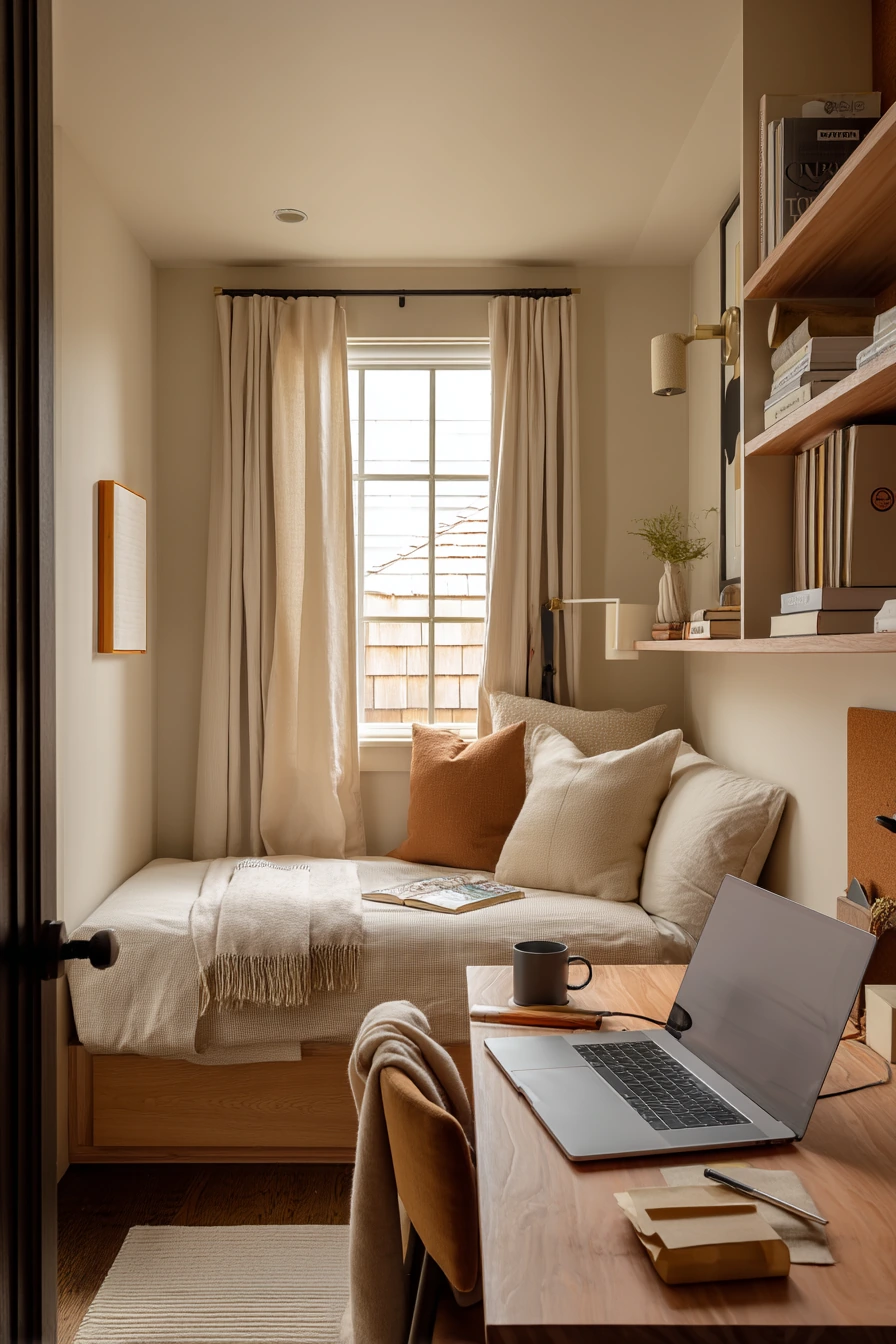
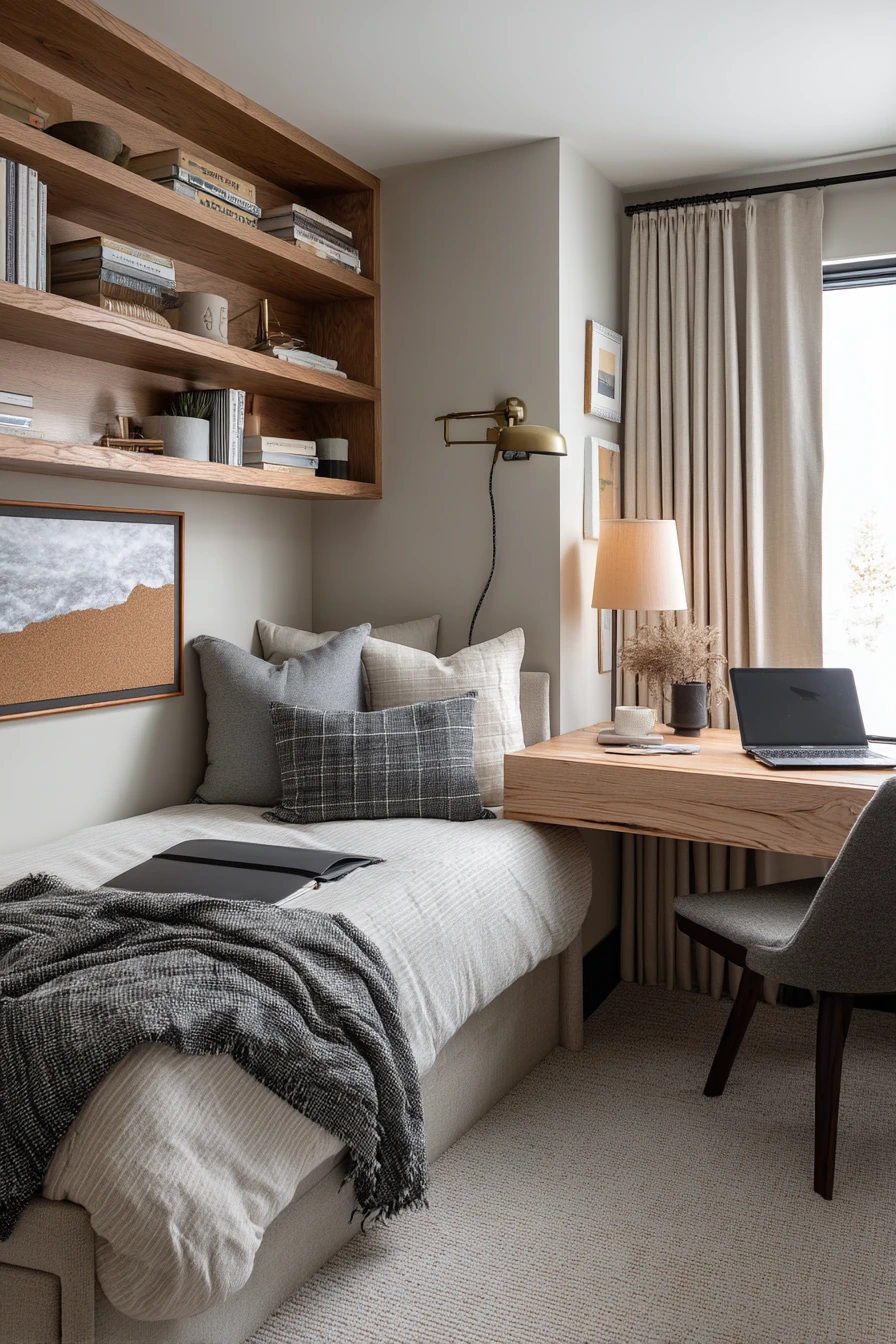
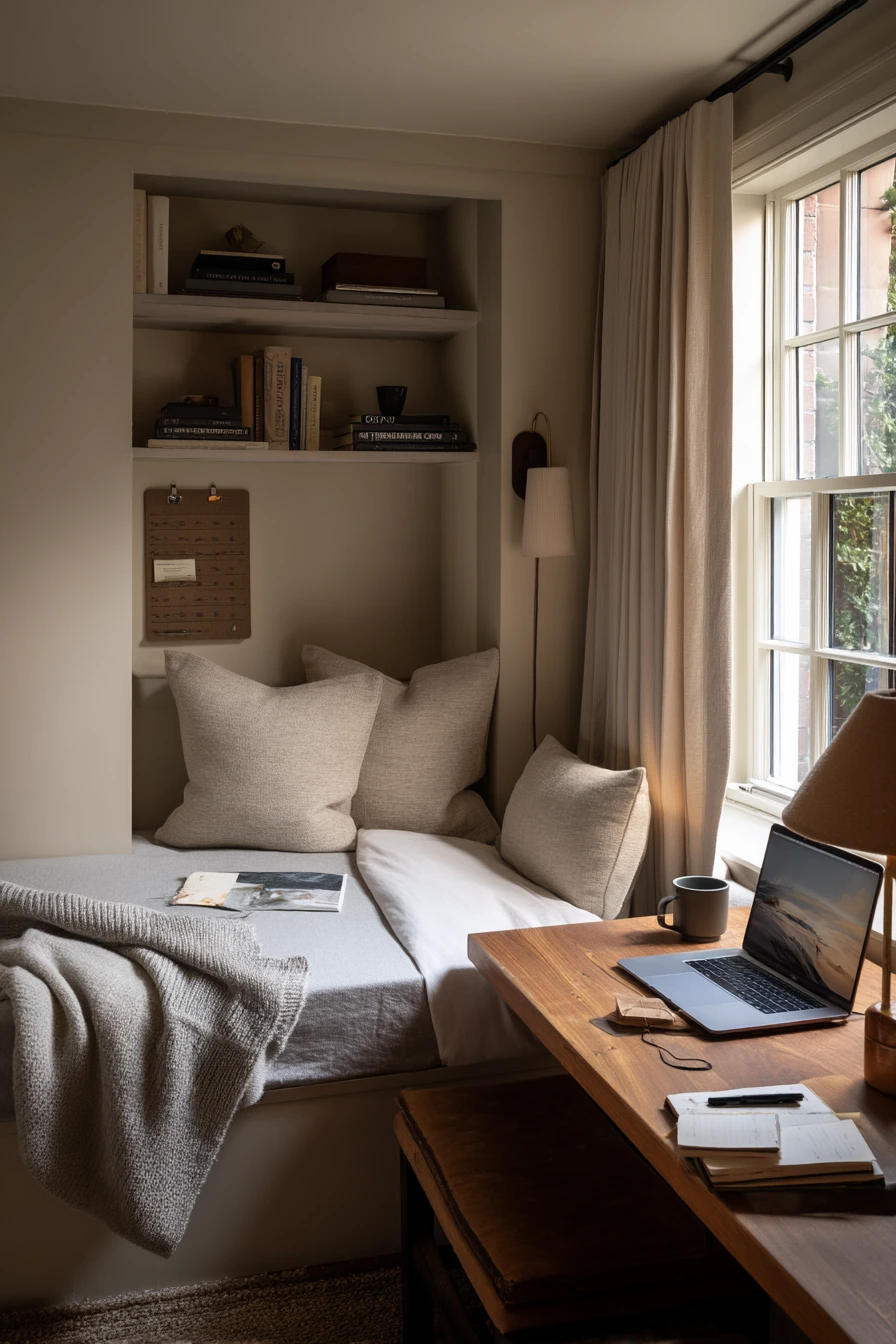
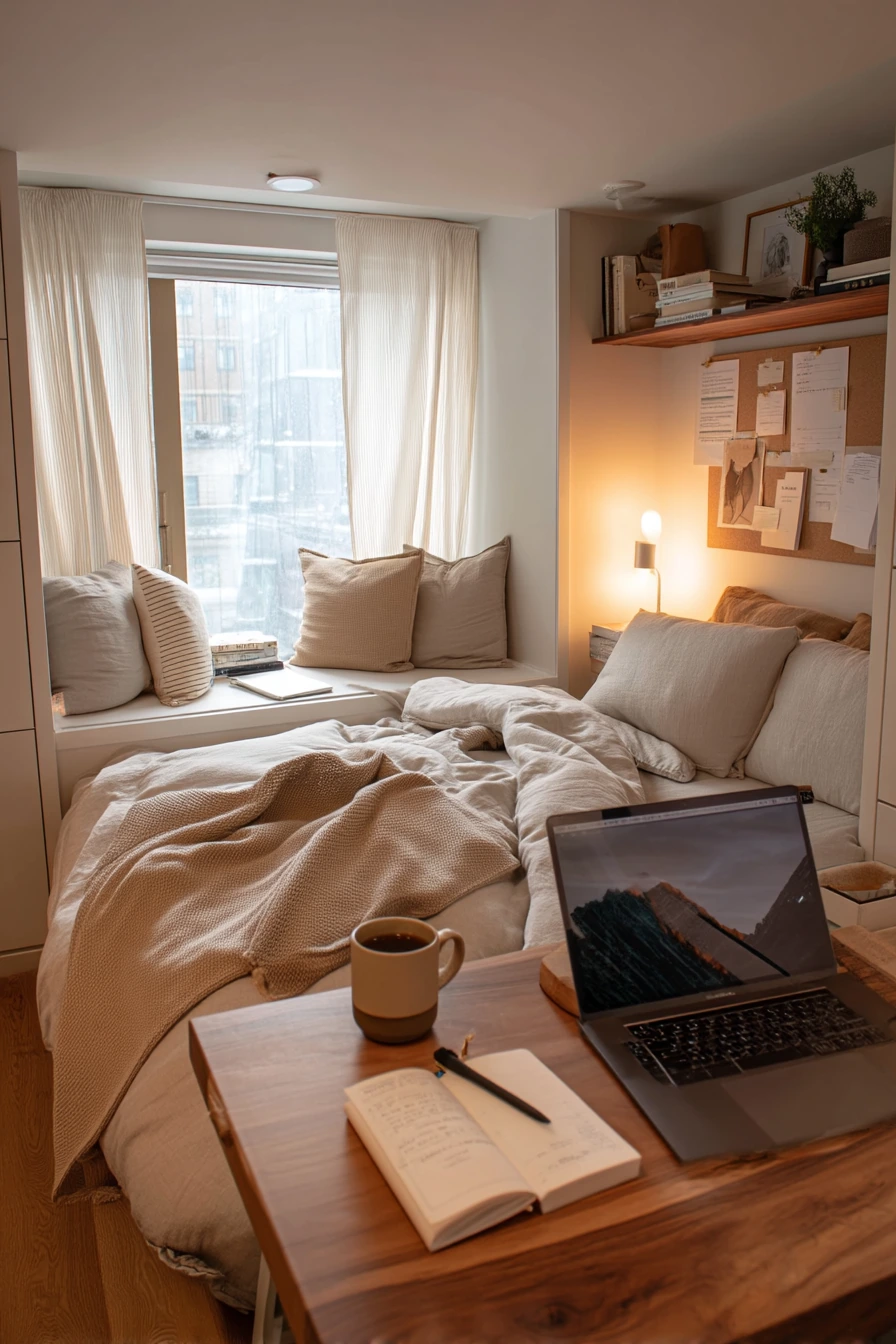
A compact basement bedroom for a remote worker needs clear zones so the room does not feel like a work closet. Place the bed on one side and a slim desk on the other. Built-in shelves help a lot in a basement because they use vertical space and keep the floor open. Choose a soft neutral palette with walnut accents for warmth without visual noise.
Use linen curtains to soften window light and hide the window well when you want a cleaner look. Add a pinboard above the desk for notes, a calendar, and small reminders. Keep lived-in cues tidy: laptop open, notebook and pen, a coffee mug, and a folded blanket at the foot of the bed. The goal is focused, not busy.
Style the desk area like a small set. Use one tray for charging cables, a cup for pens, and a small lamp with warm light. In the sleeping zone, keep bedding simple and add texture through a throw. If your basement ceiling is low, use shorter furniture and mount shelves higher to keep sight lines open. Add one piece of art above the bed or desk to make the room feel finished.
- Choose a slim desk depth so the walkway stays clear.
- Use built-in shelves or wall shelves to keep paper off the floor.
- Add linen curtains to soften the basement window and add texture.
- Create a cable plan with clips, a power strip, and a tray.
- Use one neutral palette and repeat walnut accents for warmth.
Pro Design Tip: Pick one “work” finish (like black metal) and one “rest” finish (like walnut), then repeat each finish at least twice so the room reads as intentional.
Budget Considerations: Built-ins can be costly; use IKEA-style shelf units and add trim or matching baskets to get a similar look for less.
7 Basement Bedroom for Two Siblings
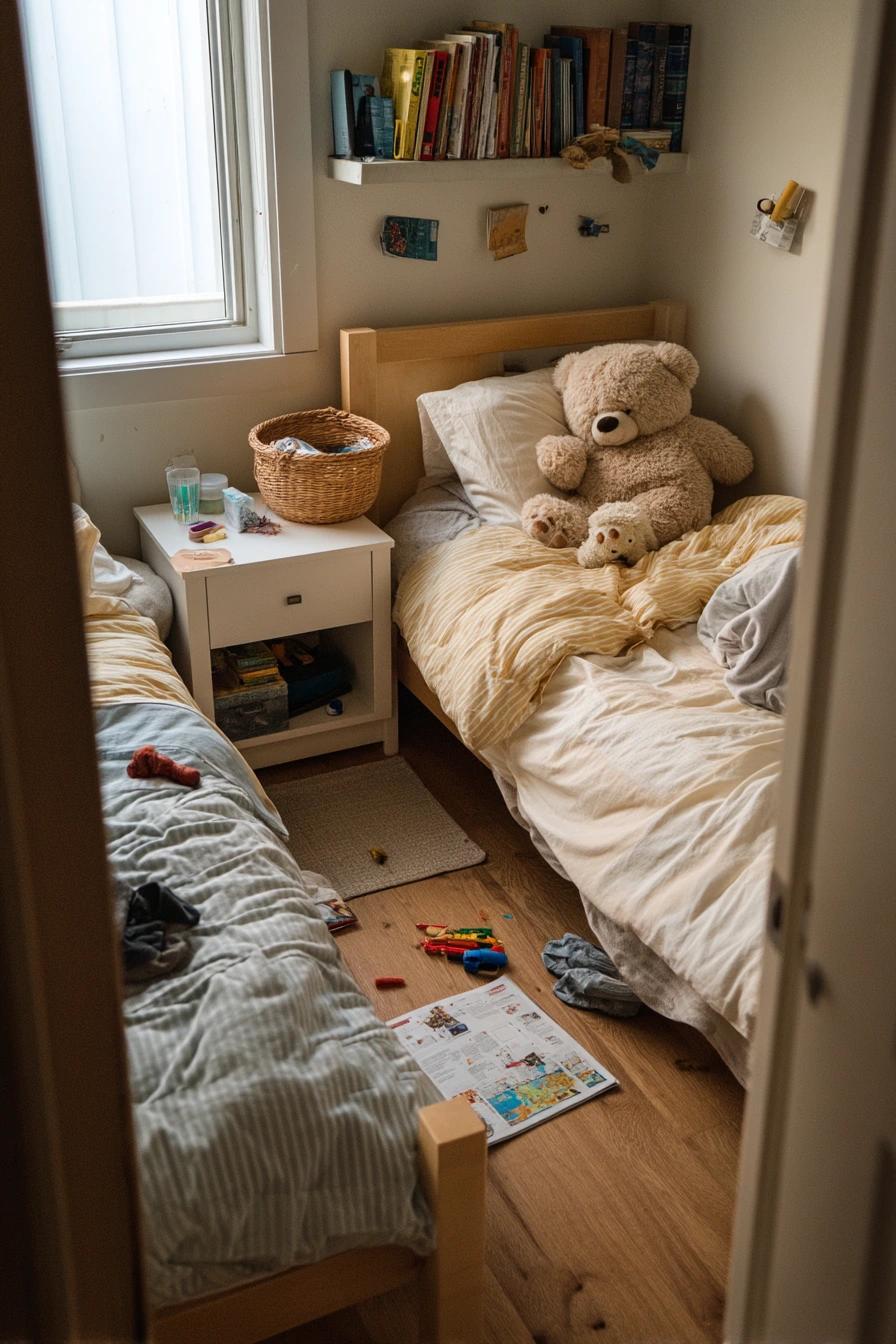
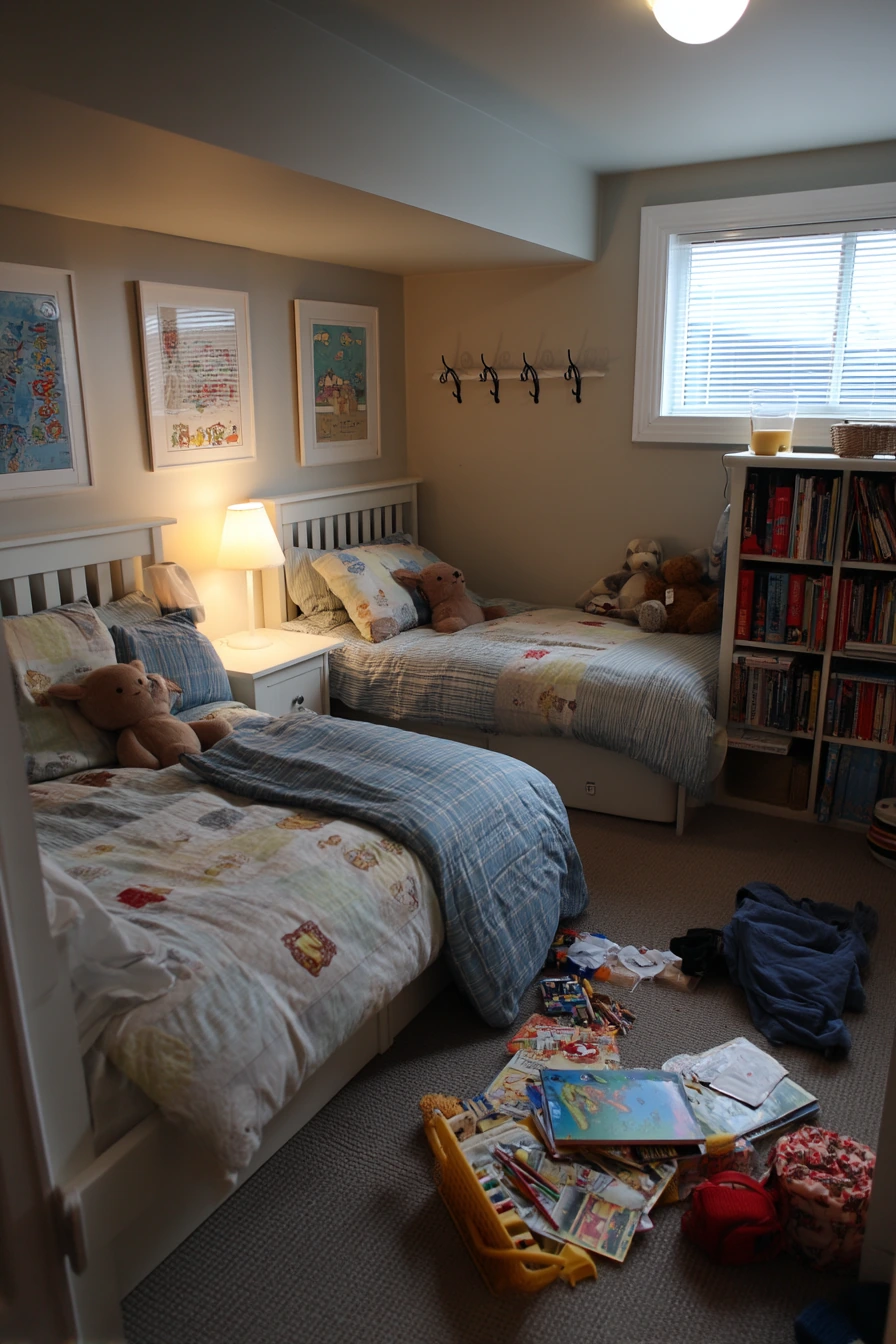
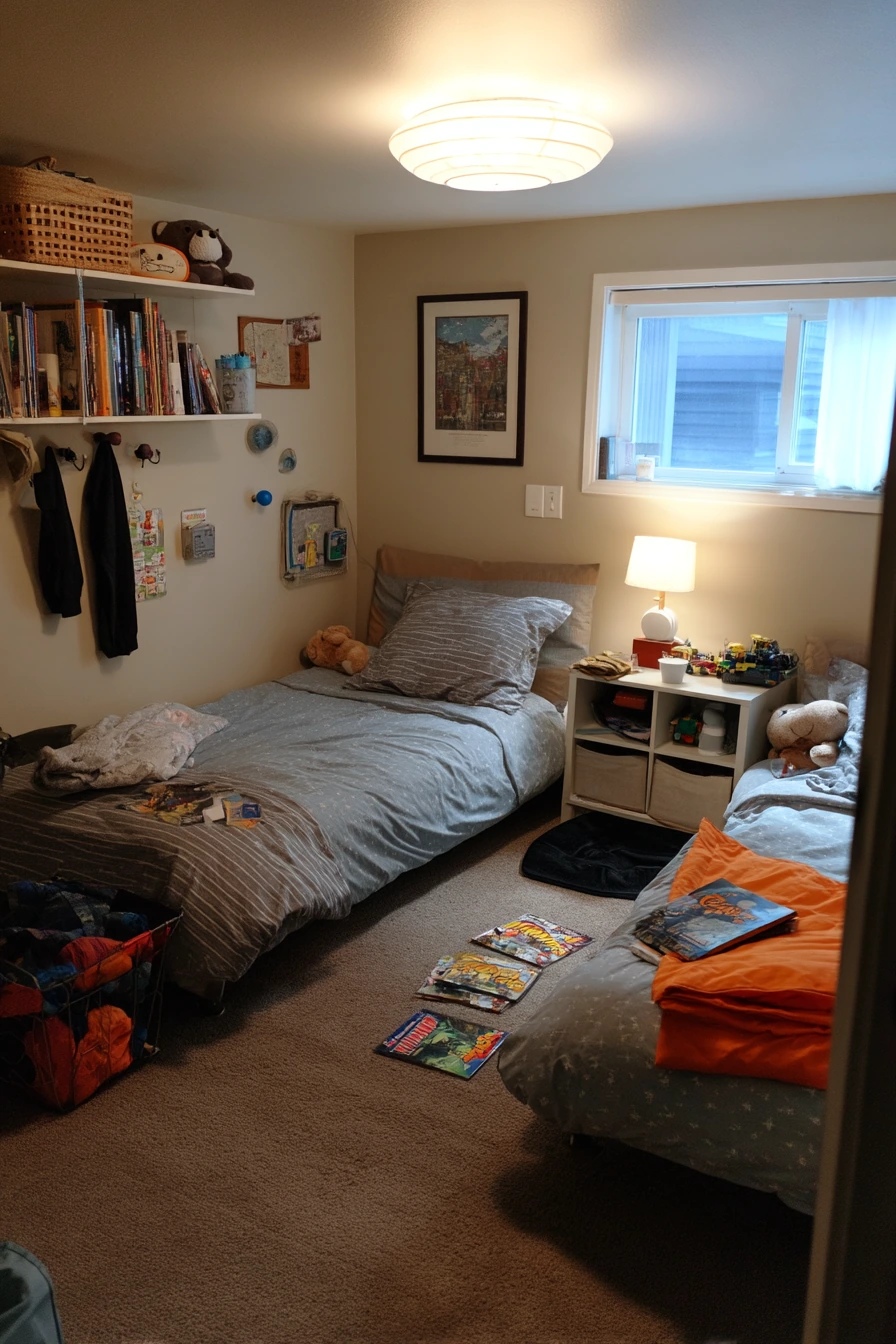
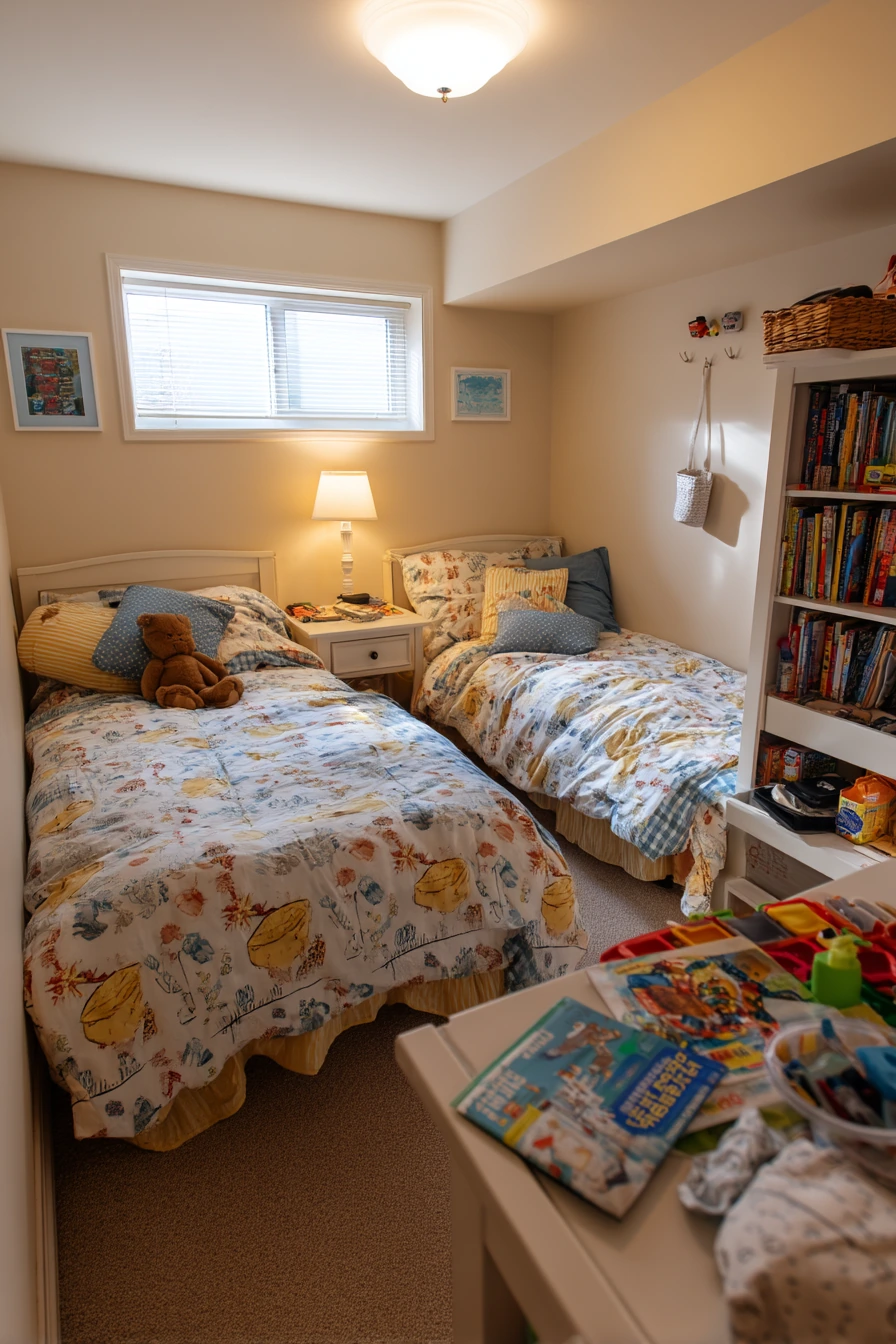
A shared basement bedroom should feel fair and easy to keep clean. Use two twin beds so each child has their own space. Matching but not identical bedding works well: same colors, different patterns. Add a slim shared nightstand between the beds for a lamp and a water cup. Keep the room cheerful with a long bookshelf for books and bins.
Plan storage for kid clutter from the start. A toy basket makes cleanup quick, and wall hooks give backpacks and hoodies a home. Lived-in cues will happen, so give them a better landing spot: a stuffed animal on one pillow, a comic book on the floor, socks tossed near the bed, and crayons in a tray. Soft morning light from the window well helps, but you still need a warm overhead lamp for evenings.
For styling, create small “zones” even in one room. Give each bed one special item, like a different pillow or wall art, so they feel ownership. Keep the rug easy to vacuum and large enough to cover the play area. If the ceiling is low, use wall-mounted reading lights instead of tall lamps. Add a basket at the end of each bed for extra blankets and pajamas.
- Use twin beds with the same frame style for a unified look.
- Choose bedding in the same color family, with different patterns.
- Add hooks at kid height for jackets, bags, and headphones.
- Use a long bookshelf with bins for toys, games, and art supplies.
- Set up one shared nightstand with a lamp and a small tray.
Pro Design Tip: Keep symmetry with bed placement, then personalize each side with one unique item so the room feels balanced but not identical.
Budget Considerations: Two matching bed frames can be expensive; buy simple metal frames and spend your money on durable rugs and washable bedding.
8 Minimal Basement Bedroom with Storage
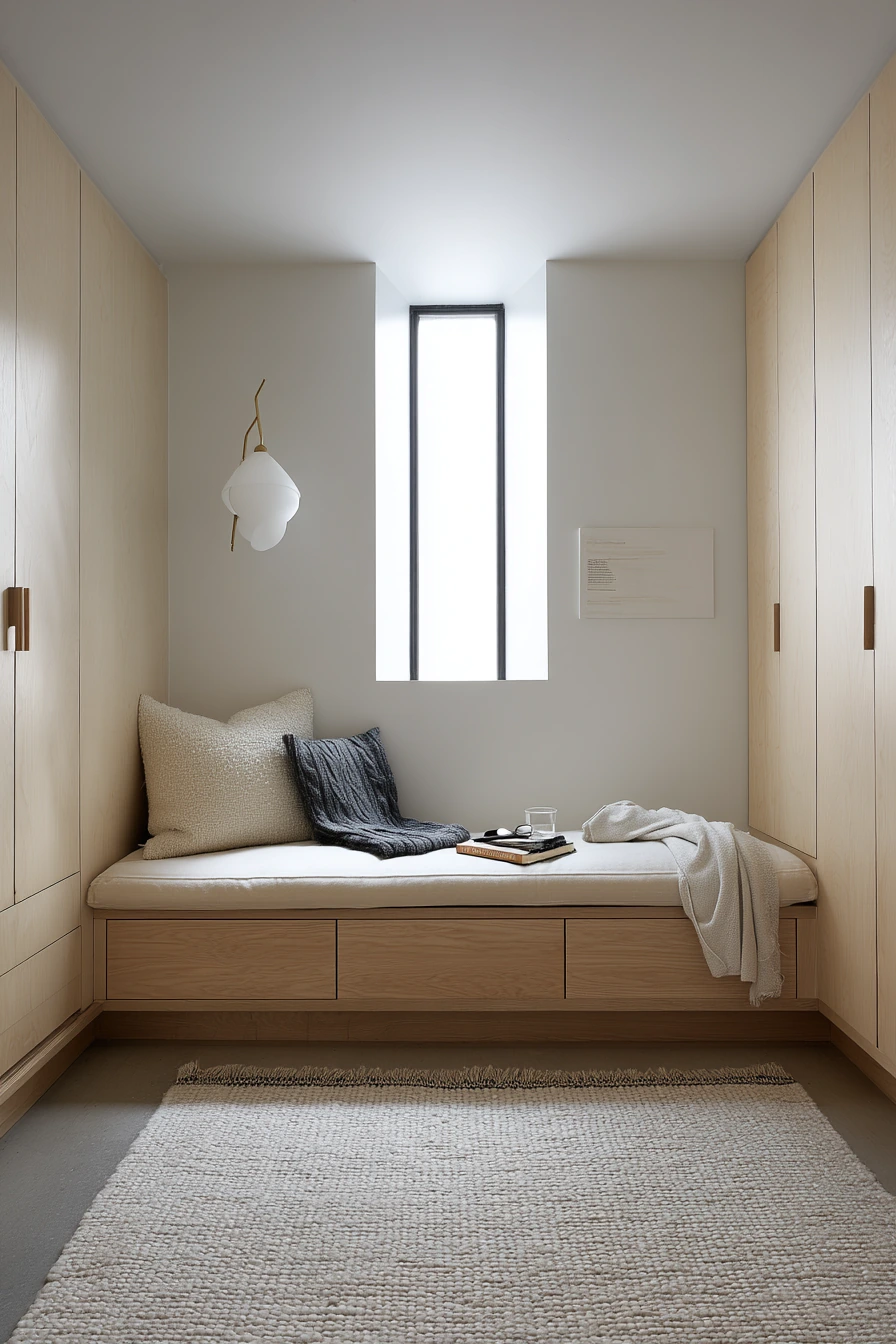
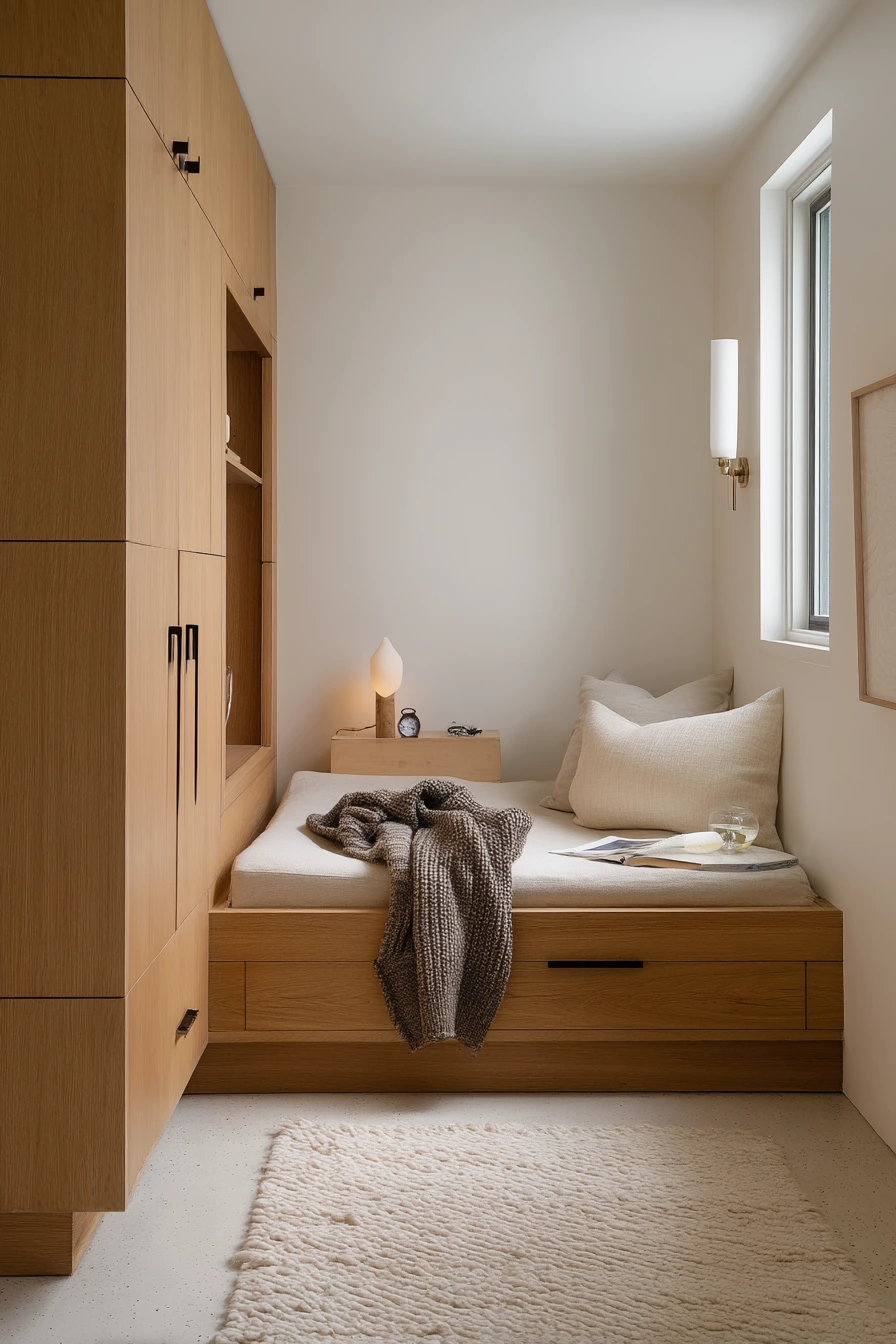
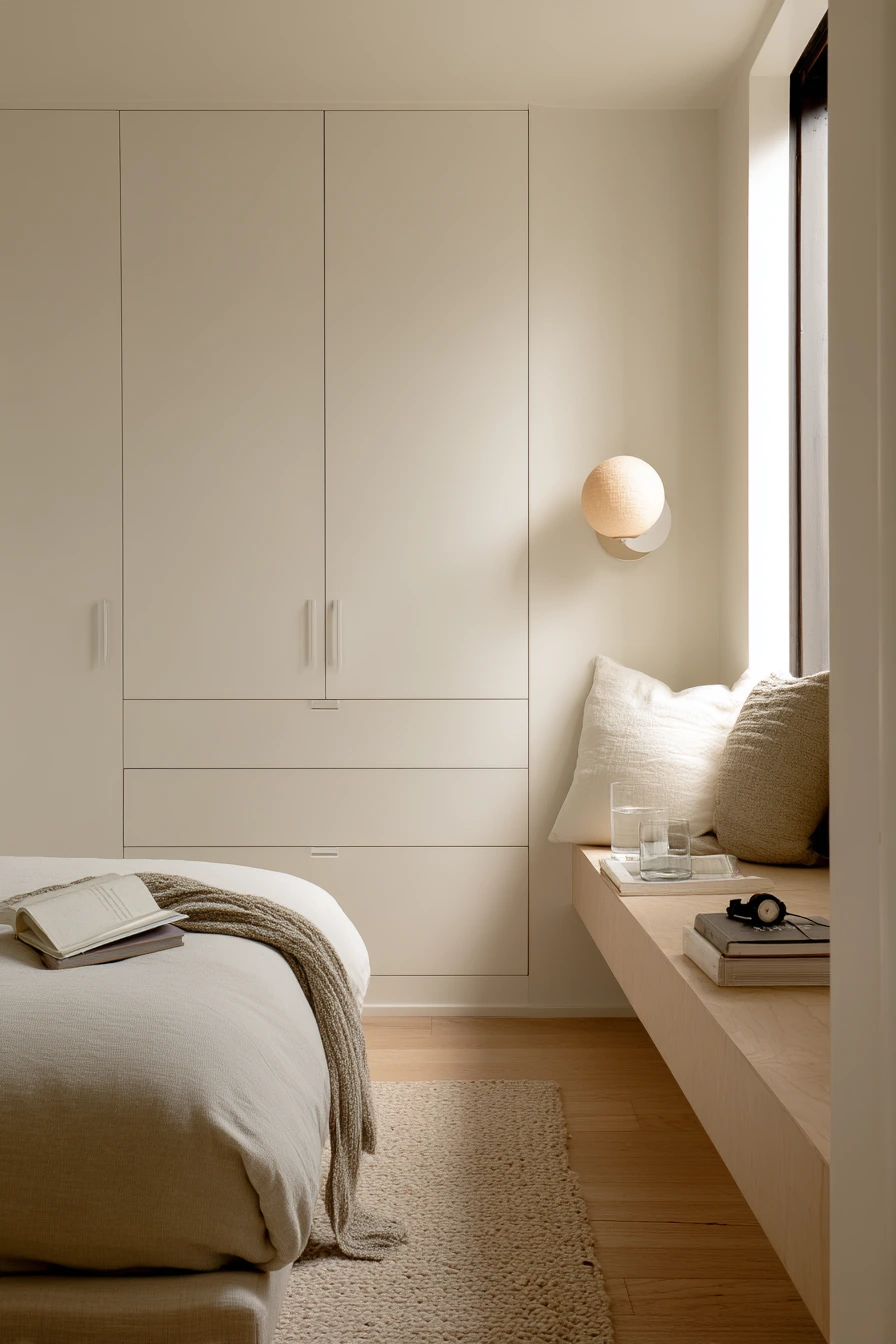
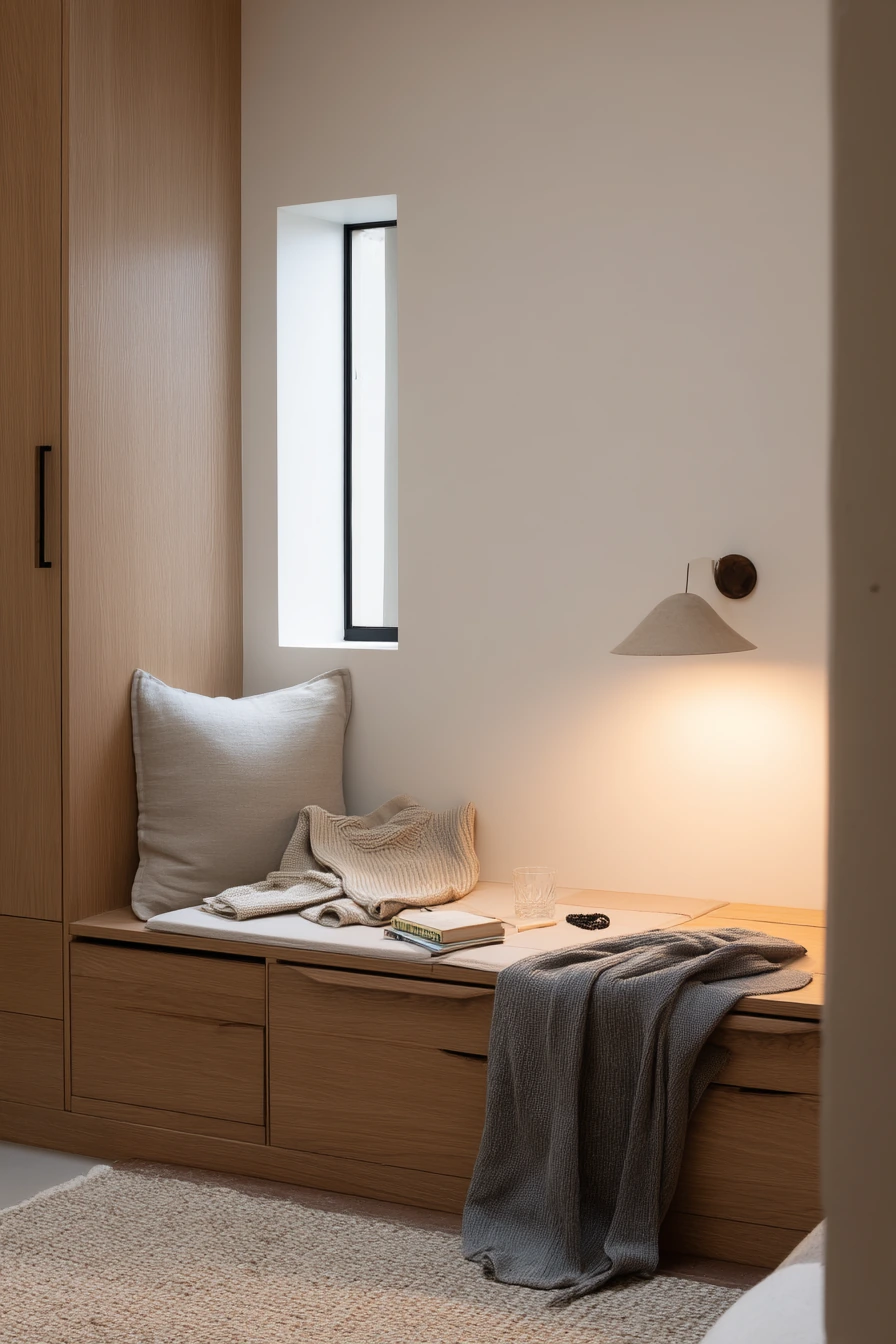
A minimal basement bedroom works best when storage is built in and clutter stays hidden. Start with a low bed so the room feels taller. Add built-in wardrobes and concealed drawers to hold clothing, extra bedding, and off-season items. Keep one simple oak bench for daily routines like setting down a watch or folding a sweater.
Choose a textured rug to soften sound and add comfort underfoot. Use one sculptural wall lamp instead of many small lights, so the room feels clean but still warm. Lived-in cues make it feel human, not sterile: a book at the pillow, a water glass on the nightstand, a discreet phone charger, and a neatly placed watch on the bench.
To style this look, limit your color palette to two or three tones, like soft white, warm wood, and one darker accent. Keep surfaces mostly clear. If you need decor, use one large piece of art instead of many small frames. Use matching hangers in the wardrobe and identical storage boxes inside drawers. In a basement, moisture can be a problem, so leave a little breathing room in closets and use a small dehumidifier if needed.
- Pick a low bed frame to keep the room feeling open.
- Use built-in wardrobes to reduce the need for extra furniture.
- Choose concealed drawers for items you do not want on display.
- Add one oak bench for daily drop-zone tasks.
- Use a single wall lamp with warm light to keep the look simple.
Pro Design Tip: Make the built-ins the same color as the walls so they visually “disappear,” then let the rug and wood bench add texture and warmth.
Budget Considerations: Custom built-ins cost more; use ready-made wardrobes and add filler panels or simple trim so they look more built-in.
9 Basement Bedroom for a Guest Teen
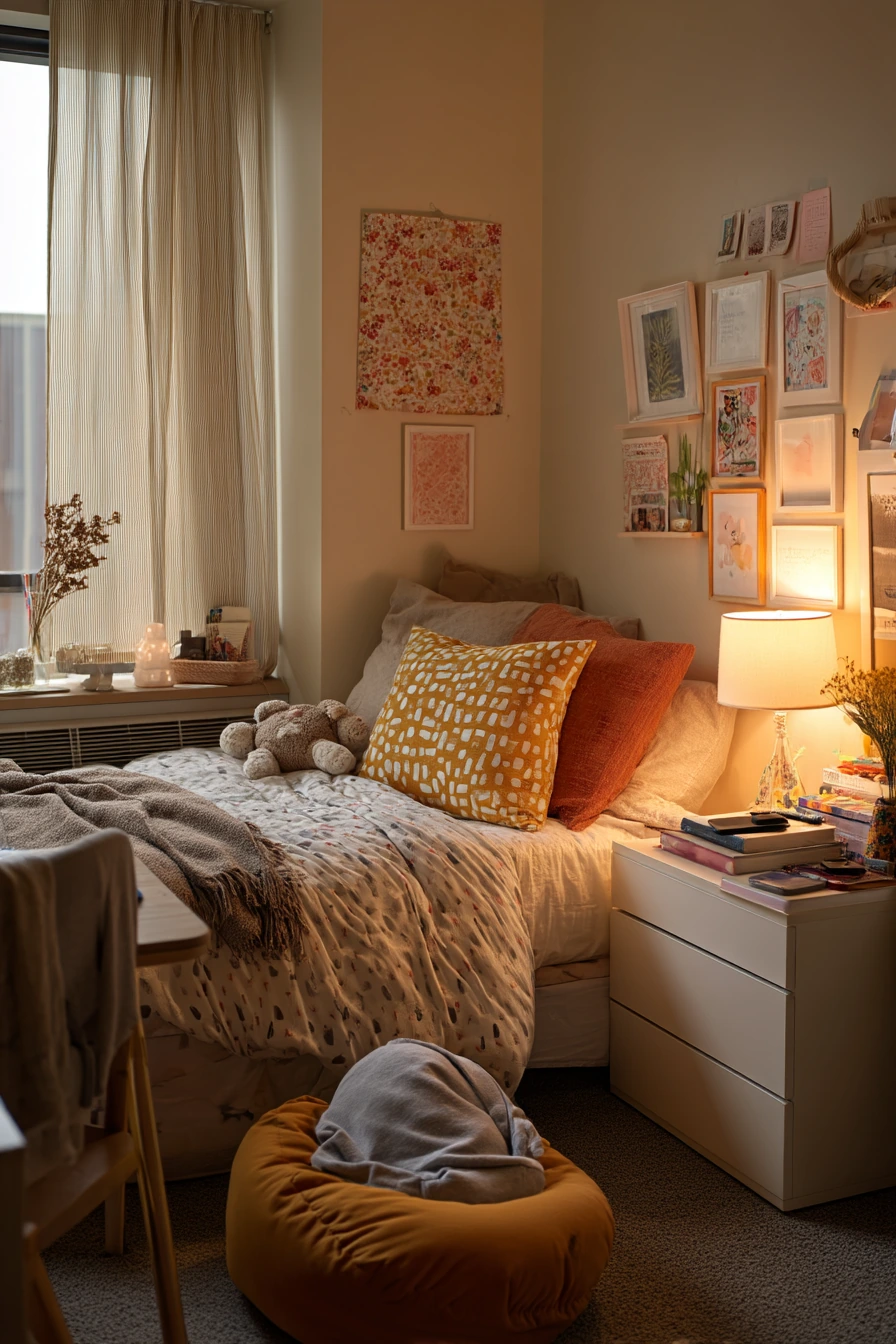
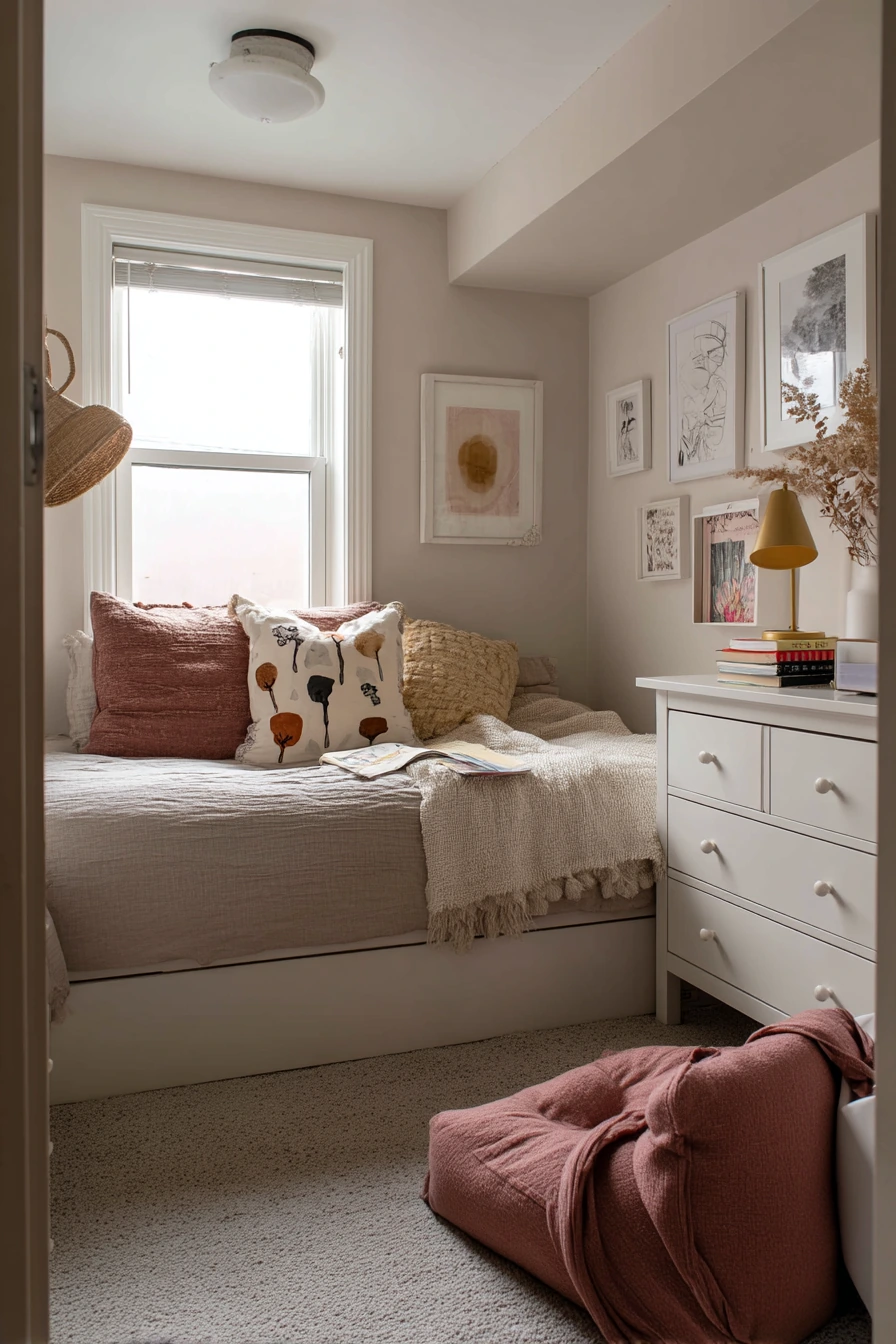
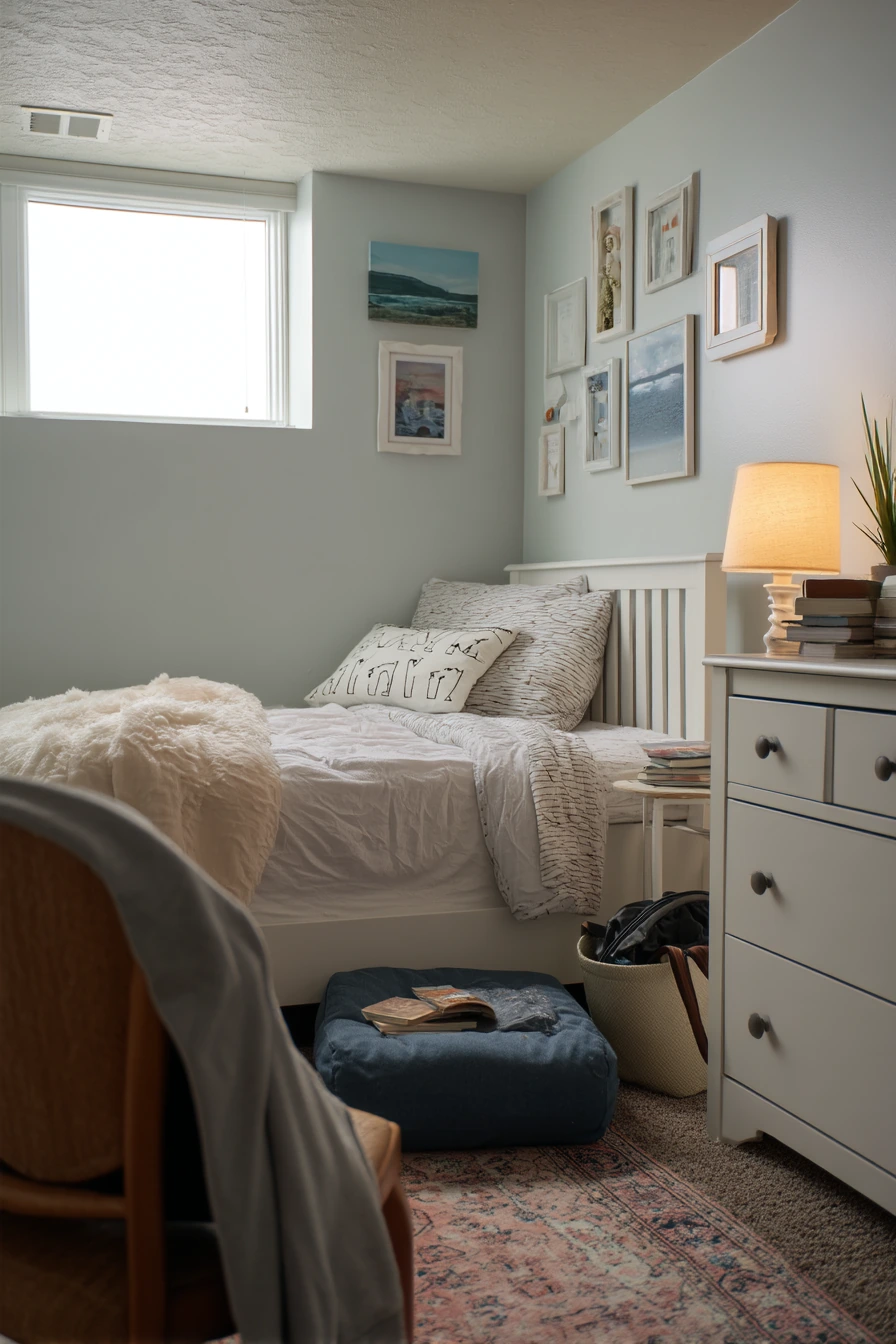
A welcoming basement guest bedroom for a teen should feel cozy, not childish. Use a full bed with simple bedding, then add one playful throw pillow for personality. A compact dresser gives them a real place to unpack, which helps the room stay neat. Create a small gallery wall with a few frames so the space feels finished but not too formal.
Add a cozy reading nook with a floor cushion, a small lamp, and a basket for books. Teens often bring devices, so plan for charging: one outlet extender and a short cable on the dresser or nightstand. Lived-in cues can be part of the styling: an overnight bag unzipped, earbuds on the dresser, a paperback, a hoodie draped over the chair, and a phone cable ready to use.
For comfort, keep lighting warm and soft. Natural window light is great during the day, but a warm bedside lamp makes the room feel safe at night. Add a mirror so they can get ready without going upstairs. If the basement is cooler, provide an extra blanket in a basket by the bed. Keep a small tray on the dresser for keys, lip balm, and small items that usually get lost.
- Use a full bed and keep bedding simple with one fun accent pillow.
- Add a compact dresser so guests can unpack instead of living out of a bag.
- Create a small gallery wall with 3 to 5 frames in the same finish.
- Set up a floor cushion reading nook with a lamp and a book basket.
- Plan charging with a power strip and a short, tidy cable.
Pro Design Tip: Keep the gallery wall tight and aligned, using the same frame color and even spacing, so the room looks clean even with casual teen items around.
Budget Considerations: Floor cushions and small lamps can be found secondhand; wash removable covers and use a new bulb for a fresh, clean feel.
10 Basement Bedroom with Moody Warmth
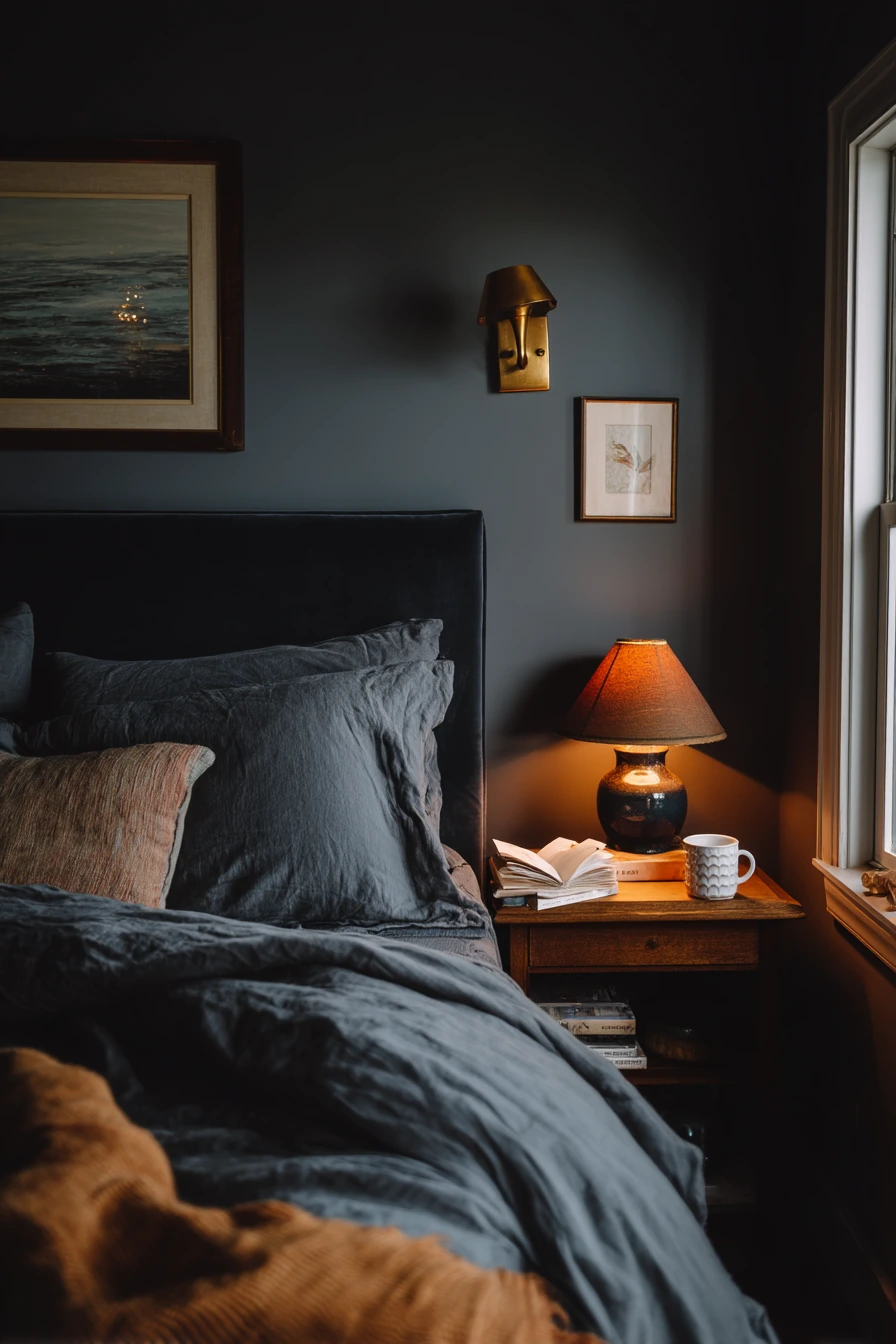
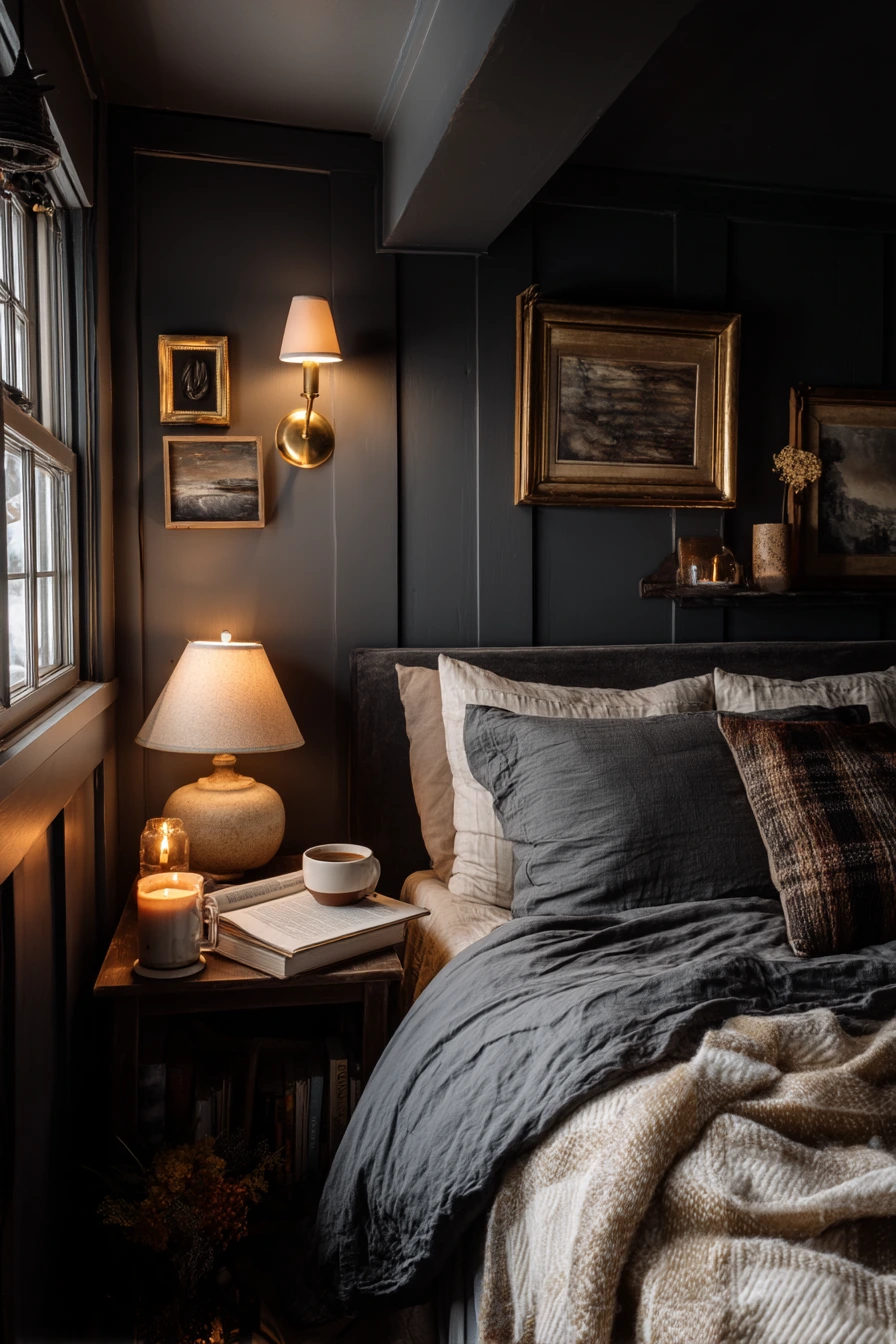
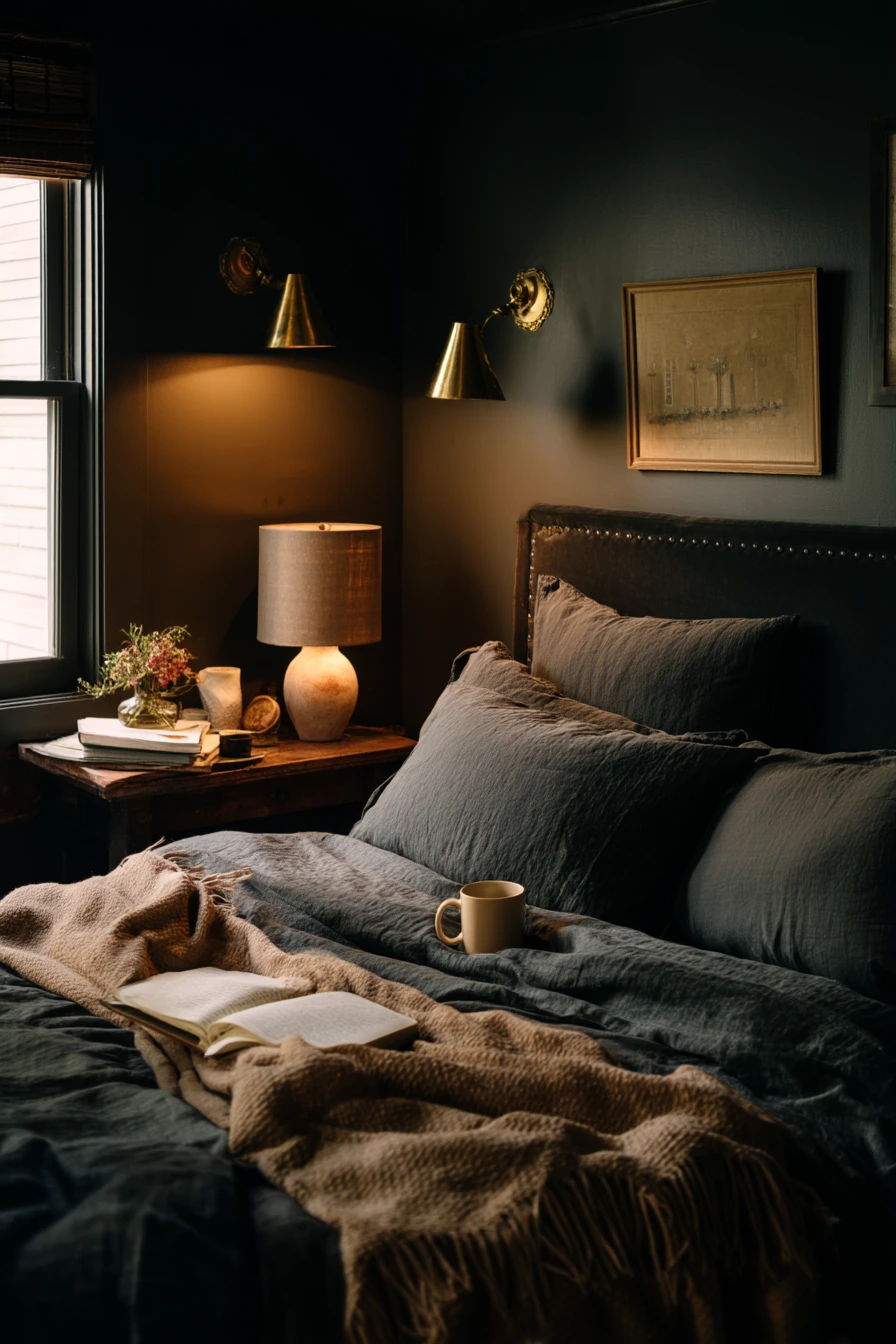
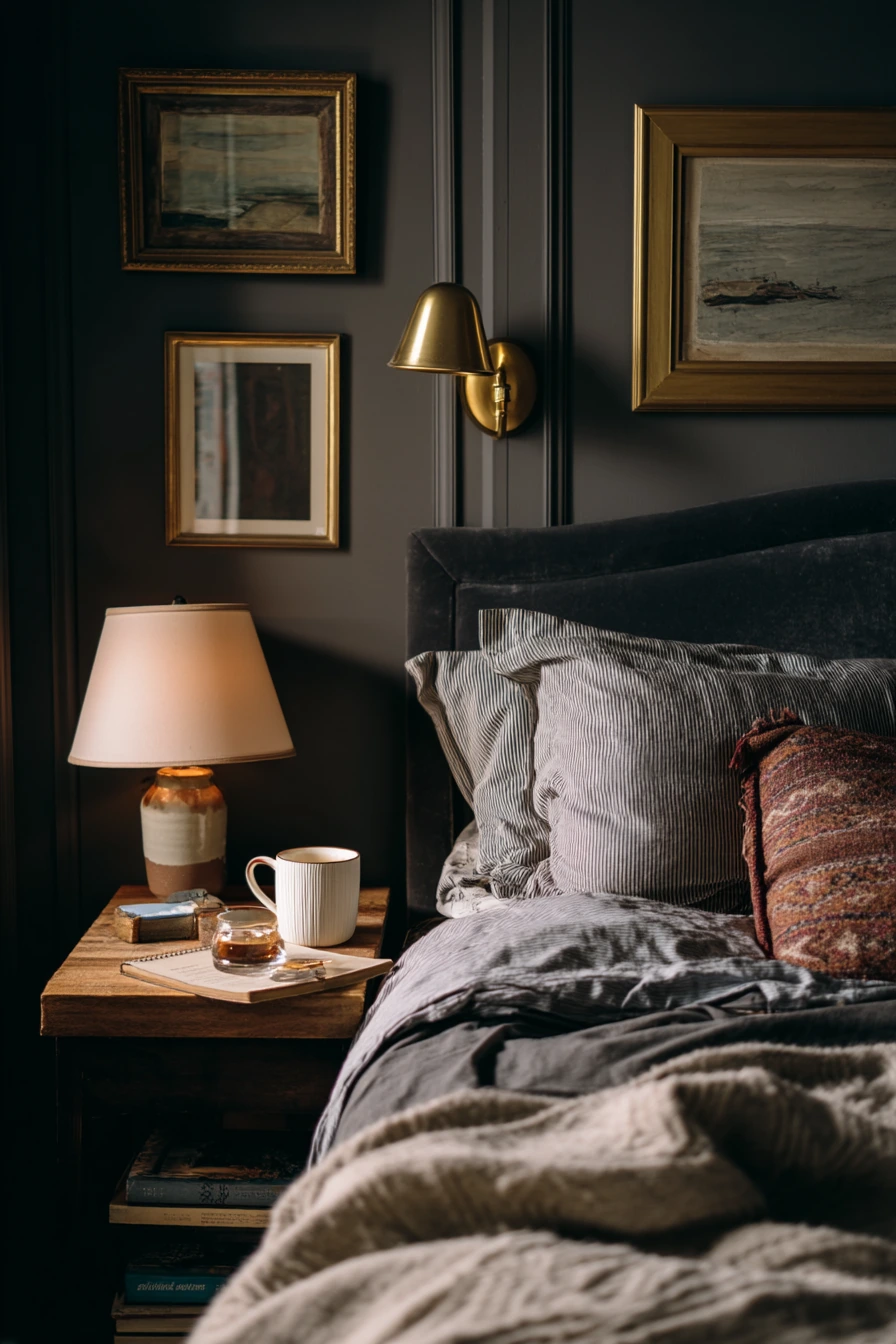
A moody basement bedroom can look rich and calm when the lighting is right. Start with dark painted walls, then add brass sconces to bring warmth and shine. A velvet headboard adds softness against the darker background. Layered bedding is key here: use sheets, a duvet, and a throw so the bed looks deep and comfortable.
Keep the nightstand narrow, especially in a basement where space can feel tight. Add a ceramic lamp if you want more glow than sconces alone. A small art cluster works better than one tiny frame, because dark walls can swallow small decor. Lived-in cues should feel quiet: a tea mug, an open journal, the reading lamp on, a blanket slightly rumpled, and a book spine peeking out.
Because basement window light may barely touch the room, rely on practical warm lighting. Use dimmers if possible, or choose warm bulbs in the 2700K range. Balance the dark walls with lighter bedding or a lighter rug so the space does not feel heavy. If you paint, choose a washable finish and test the color at night, since basement light changes the tone. Add one soft texture, like velvet or wool, to keep the room from feeling flat.
- Use dark paint and warm brass lighting to keep the room cozy.
- Choose a velvet headboard for softness and sound absorption.
- Layer bedding in 3 to 4 pieces for a fuller, warmer look.
- Create a small art cluster so decor does not disappear on dark walls.
- Use warm bulbs and consider dimmers for flexible evening light.
Pro Design Tip: In a dark basement room, place light sources at different heights (sconces, a table lamp, and low ambient light) so shadows look soft and the space feels deeper.
Budget Considerations: Brass sconces can be pricey; try plug-in sconces or thrifted brass-tone fixtures, then update them with new warm bulbs and matching shades.
Basement bedroom ideas work best when you plan for light, warmth, and storage first. Pick the layout that matches your real needs, then add a few strong details like a good rug, warm lamps, and simple art.
Use the checklists in each section to style the room fast, keep cords and clutter under control, and make the space feel lived-in in a good way.
FAQ
How do I make a basement bedroom feel brighter? Use light bedding, mirrors across from the window, warm layered lamps, and a rug that reflects light.
What lighting is best for a basement bedroom? Mix ambient light (ceiling or floor lamp), task light (desk or reading lamp), and soft bedside lighting with warm bulbs.
How can I reduce dampness and musty smells? Run a dehumidifier, keep airflow around furniture, and use washable textiles. Avoid pushing the bed tight against an exterior wall.
What is the easiest way to add storage in a basement bedroom? Use under-bed bins, storage cubes, wall hooks, and a dresser with deep drawers. Built-in wardrobes help most if space allows.
How do I make a basement bedroom comfortable in winter? Add a thick rug, extra blanket basket, draft-blocking curtains, and warm lighting. Consider a space heater only if it is safe and allowed in your home.
Can I create a guest bedroom without a lot of space? Yes. Use a full or queen bed if it fits, a slim nightstand, wall-mounted lights, and a small chair or floor cushion for seating.
What colors work well for basement bedrooms? Soft neutrals, warm woods, sage accents, and charcoal tones work well. If you go dark, add warm brass lighting and lighter bedding for balance.