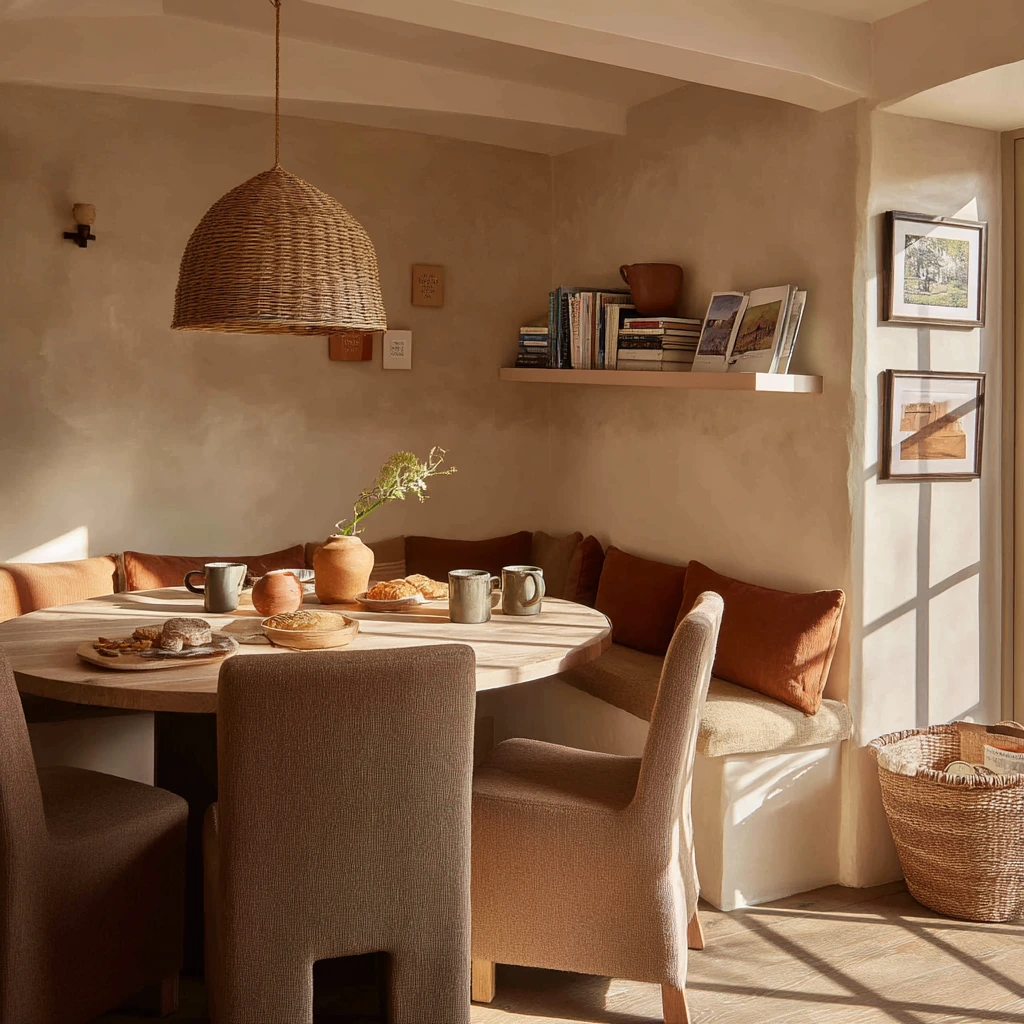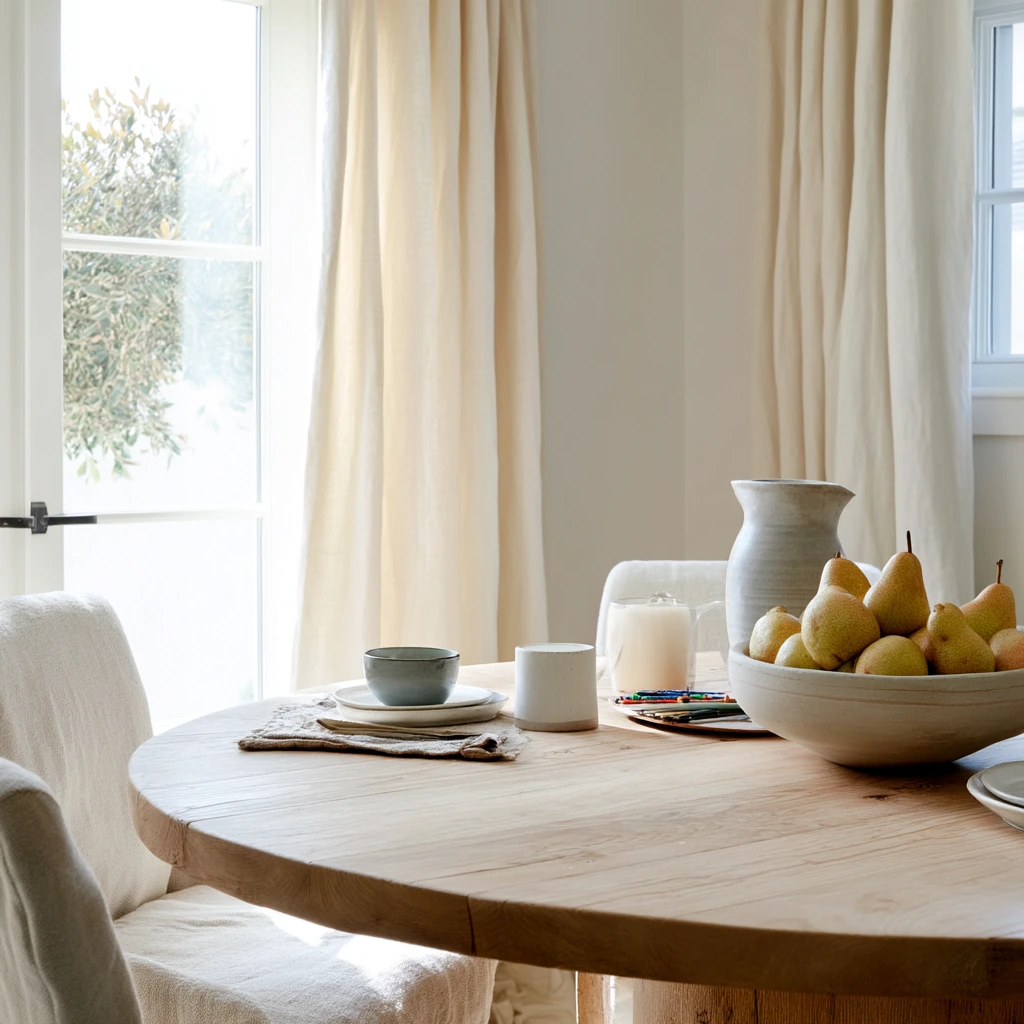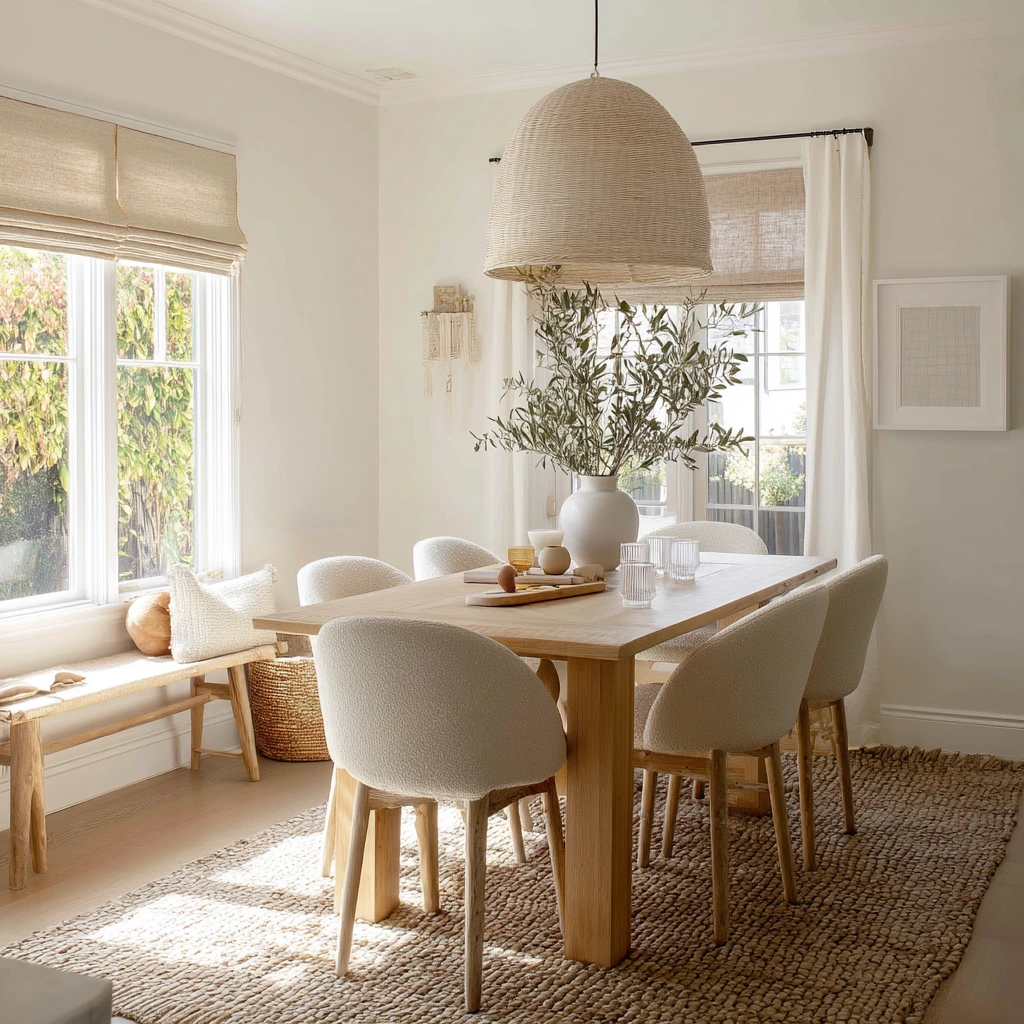

Transitional dining room ideas blend classic shapes with clean, modern lines. The style feels warm, simple, and easy to live with, so it works in real family homes and small apartments.
In this post, you will see dining spaces with oak and walnut tables, slipcovered and upholstered chairs, brass lighting, soft rugs, and neutral art. Each look includes small lived in details, so you can picture how it works on a normal weekday.
You will also get practical styling steps for each setup, plus a pro design tip and a budget note. Use these ideas to plan a dining room that looks pulled together, even when life is busy.
Save the photos you like, then use the checklists to recreate the feel with what you already have.
1 1. Sunlit Family Dining Nook
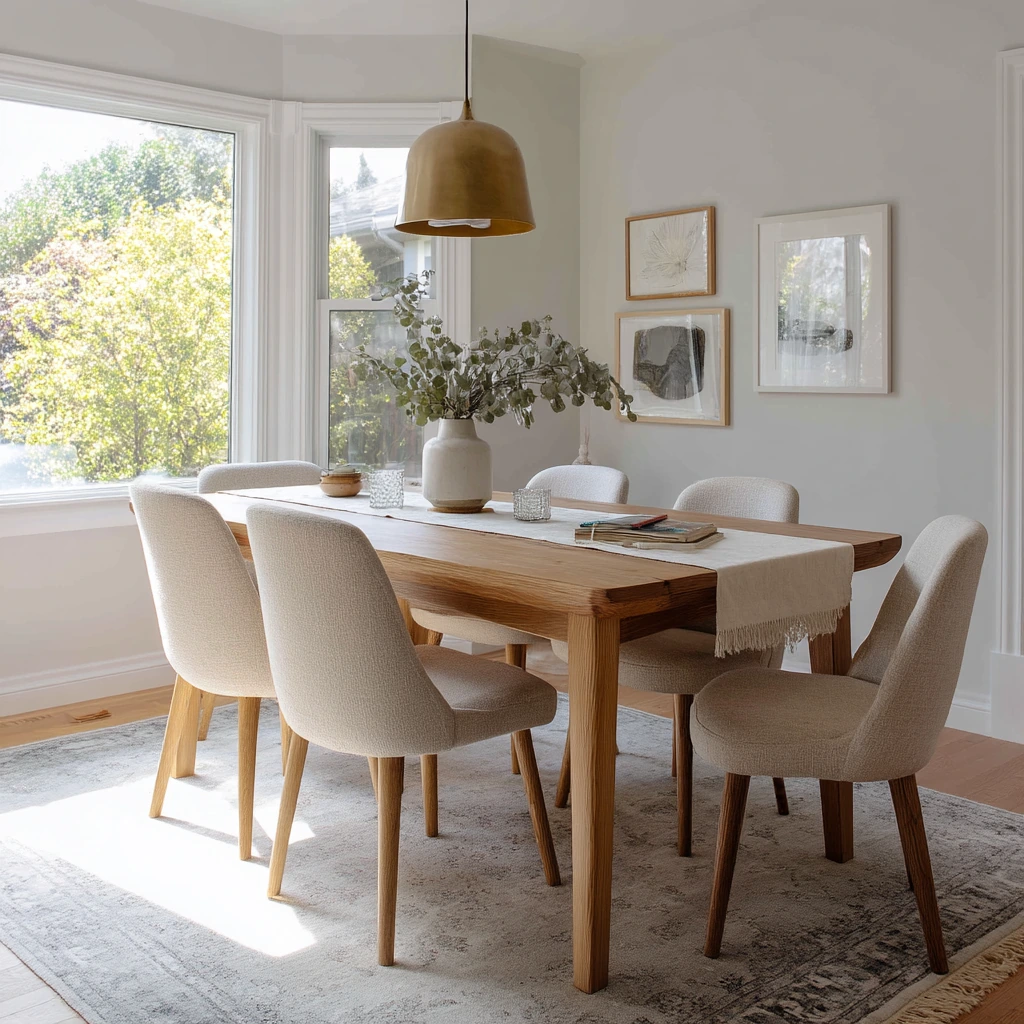
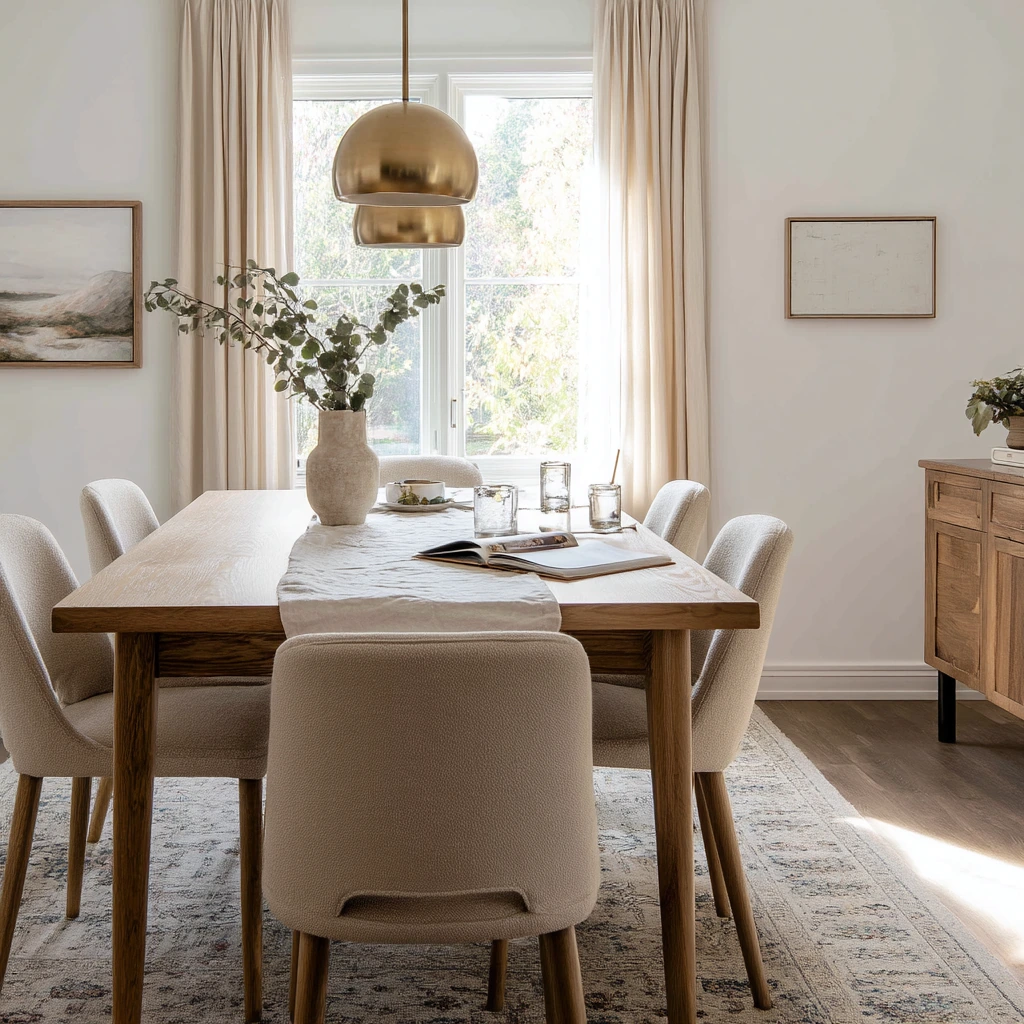
This transitional dining room look starts with a four person oak table with tapered legs. The shape is classic, but the lines stay simple, so it feels current. Upholstered host chairs in warm oatmeal soften the wood and make the room feel comfortable for long dinners.
Keep the tabletop calm with a simple linen runner and a ceramic vase with eucalyptus. Add framed neutral art for a quiet background, and hang a brass pendant overhead to bring gentle shine. A soft area rug with a subtle pattern helps the room feel finished and also hides everyday crumbs.
What makes this style work in a real family home is the lived in layer. Two mismatched water glasses, a children’s sketchbook near the edge, a charging cable by a sideboard, and a slightly wrinkled napkin all say real life. Instead of clearing everything, choose one small zone to tidy, like the center of the table, then let the rest look natural.
- Use a runner that is a bit wrinkled on purpose so it feels relaxed.
- Pick a low ceramic vase so people can see across the table.
- Hang neutral art with thin frames to keep the wall light.
- Place a catchall tray on the sideboard for cables and small items.
- Mix two glass styles, but keep them in the same clear tone.
Pro Design Tip: Center the pendant over the table and size it so it is about one third the table width for balanced scale.
Budget Considerations: If new upholstered chairs are pricey, buy two host chairs secondhand and use matching slipcovers in oatmeal or sand.
2 2. Compact Apartment Dining Wall
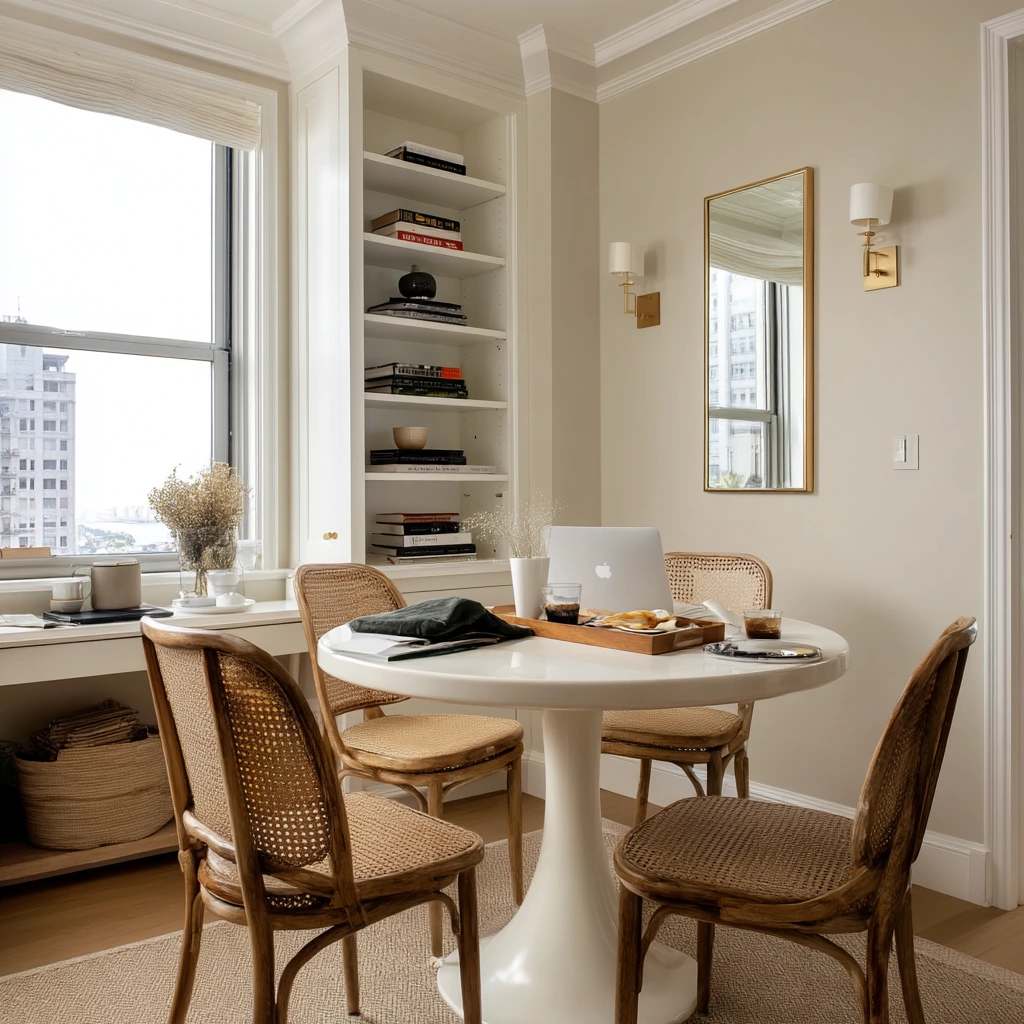
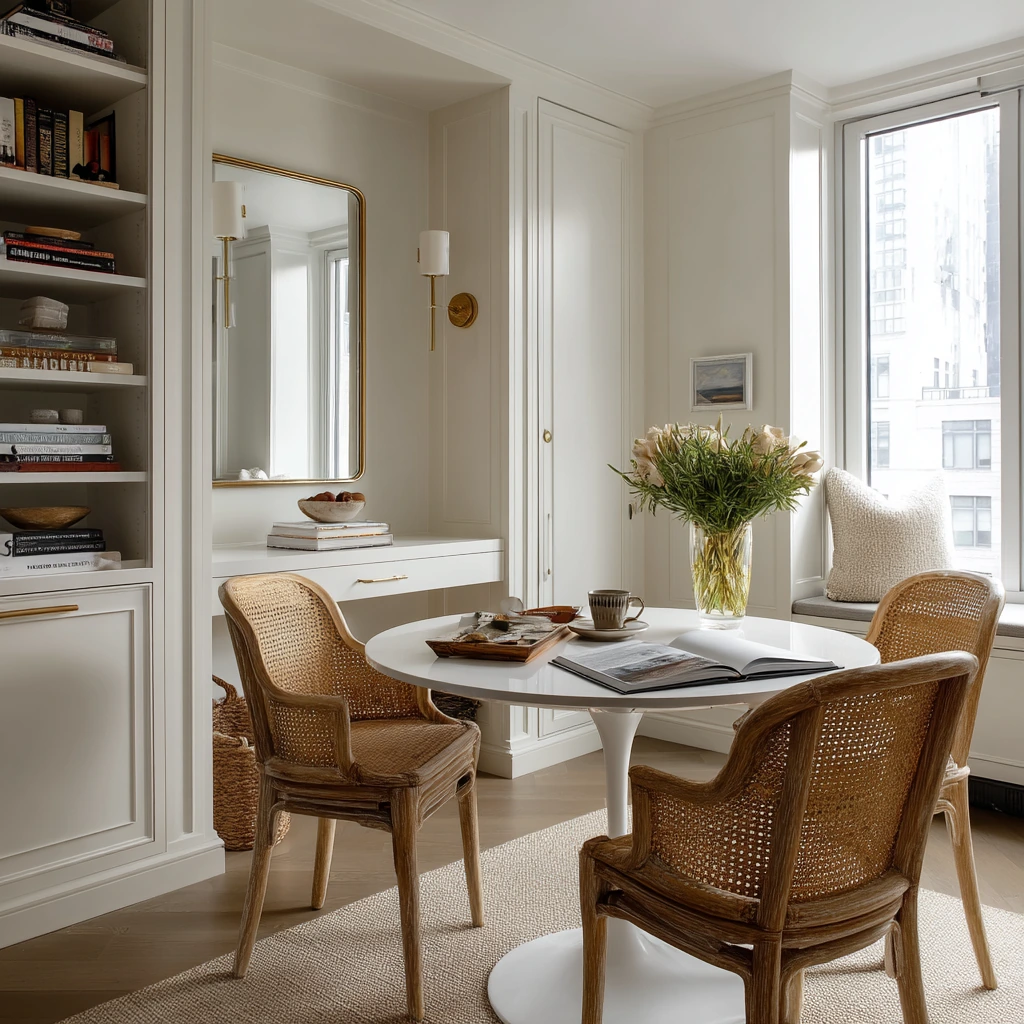
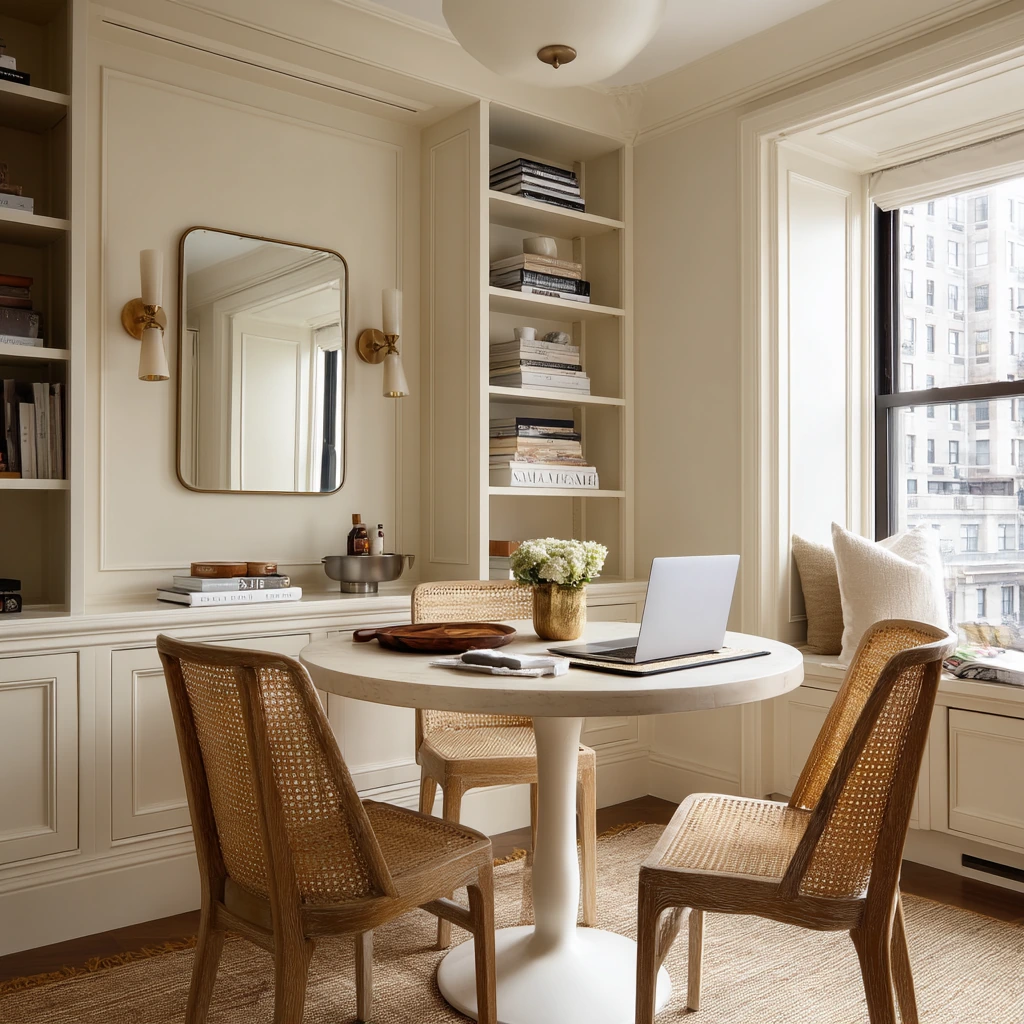
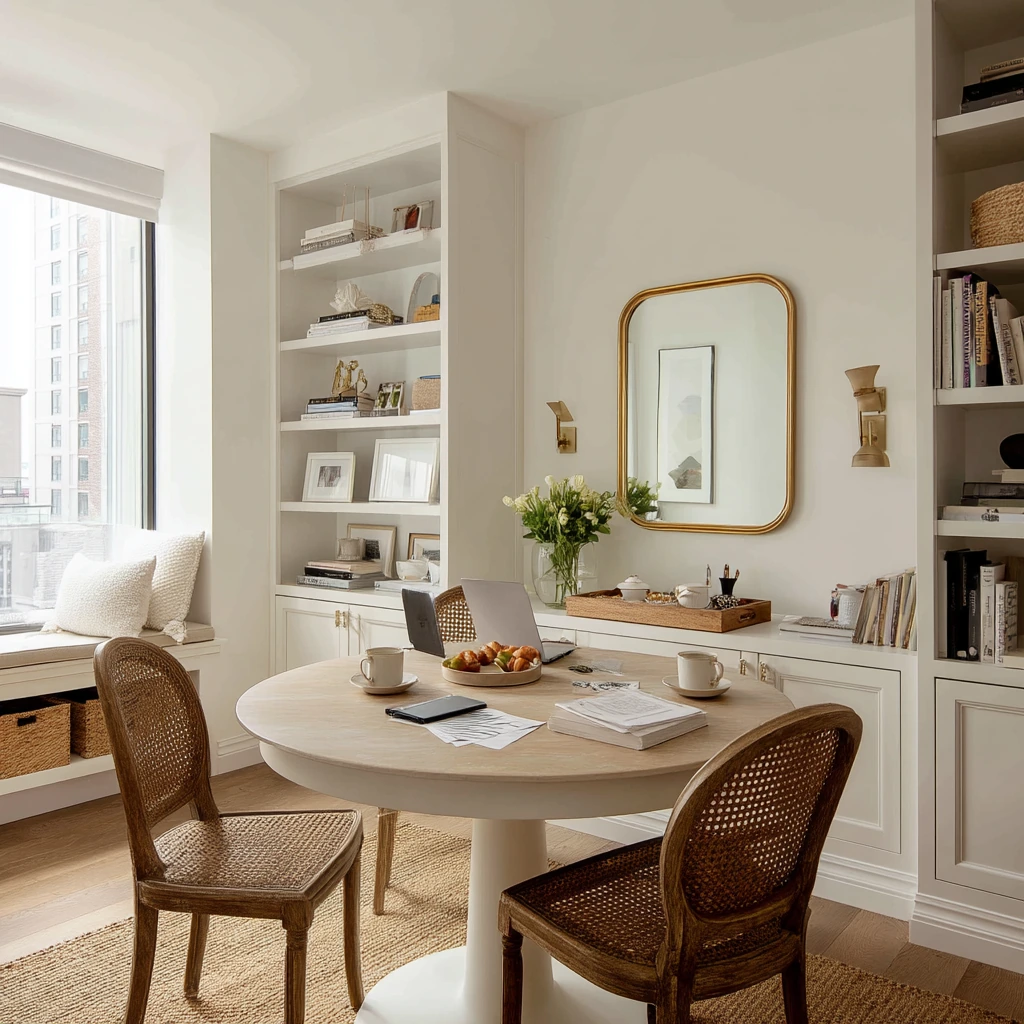
In a tight space, a round pedestal table is a smart transitional choice. The curve helps traffic flow, and the single base gives more knee room. Tuck the table beside a wall of built ins so storage does more work and the dining area feels planned, not squeezed in.
Cane backed chairs add texture without visual heaviness, which is key in an apartment. Creamy walls keep the room bright, while a muted brass sconce and an understated mirror add warmth. A flatweave rug grounds the layout and is easier to clean than a thick pile.
Let the room show normal routines. A laptop sleeve on a chair, a half finished tea, a kid toy basket under the console, and mail sorted into a bowl all fit the look. The trick is to group clutter into containers. A slim console with stacked books and a tray gives you a landing spot without taking up floor space.
- Choose a pedestal table that is 36 to 42 inches wide for most small rooms.
- Use cane chairs to add detail while keeping the room airy.
- Hang a mirror to bounce window light and widen the wall.
- Keep a bowl for mail so papers do not spread across the table.
- Add a toy basket under the console to hide color and clutter fast.
Pro Design Tip: Keep the rug edge at least 6 inches away from the wall so the room feels bigger and less boxed in.
Budget Considerations: Skip custom built ins and use matching bookcases with trim paint to mimic the look at a lower cost.
3 3. Dinner-Ready Open Concept Room
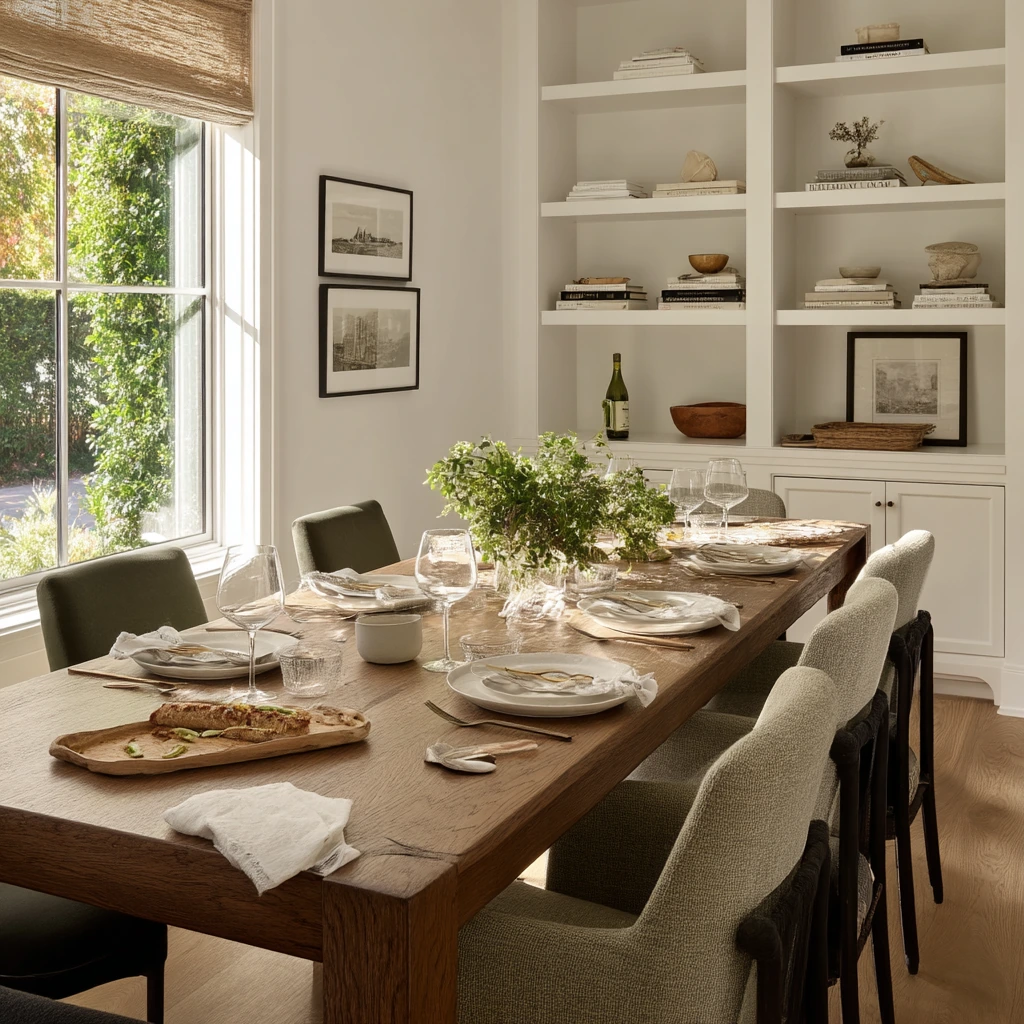
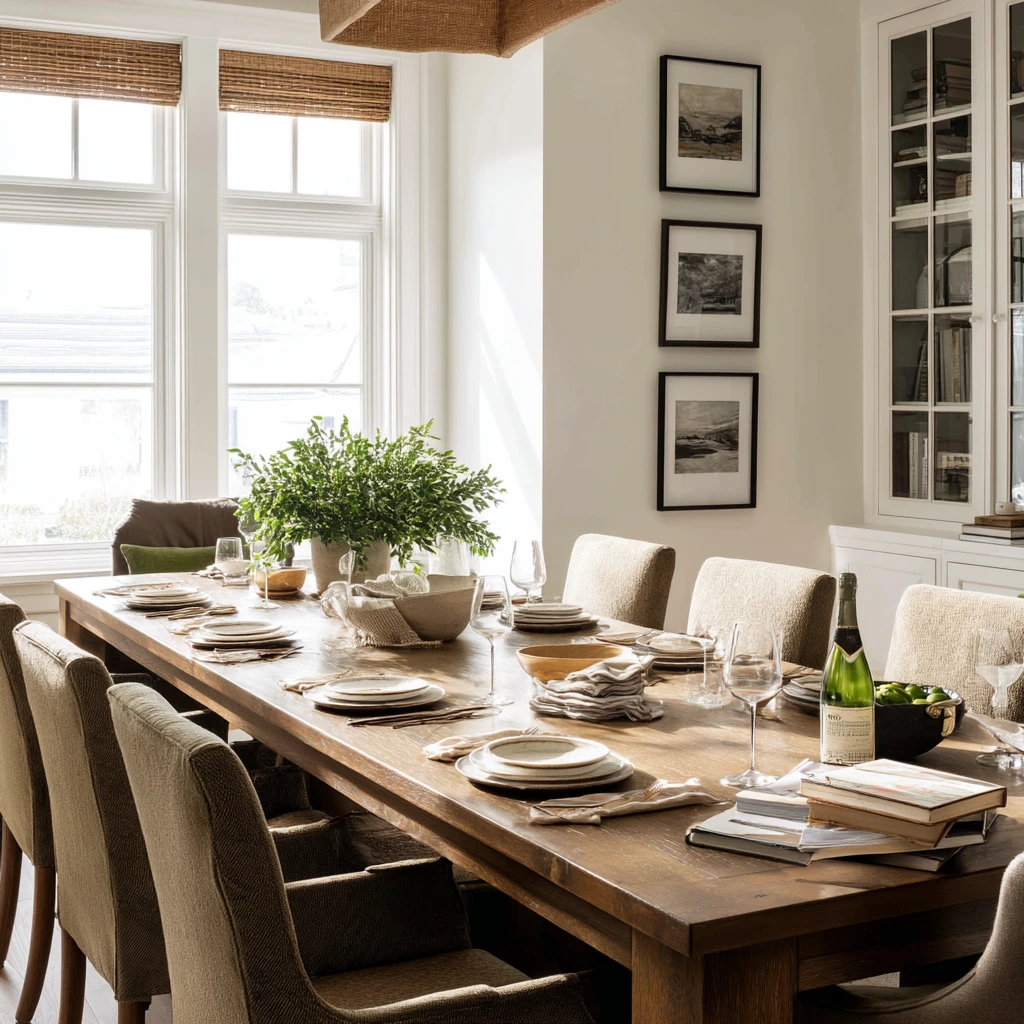
If your dining room flows from an open kitchen, transitional style helps the spaces connect. A long rectangular table in walnut adds depth and warmth, especially next to soft white millwork. The mix of upholstered and wood chairs keeps it from feeling too formal and also makes the set feel collected over time.
For the tabletop, use pale stoneware place settings and a low green centerpiece. These pieces look calm and natural in late afternoon light. Add black framed prints to give the wall a crisp outline, and choose warm woven shades to soften the kitchen view without blocking sunlight.
The best part of this scene is how real it feels before dinner. A folded grocery receipt, one wine glass, a small book stack, and stray crumbs near a chair are normal. The styling goal is not perfection. It is a steady, relaxed rhythm. Keep one tray or bowl nearby for paper scraps and keys, and do a quick sweep under the table so the room still feels cared for.
- Repeat wood tones across kitchen stools and dining chairs for cohesion.
- Use one simple centerpiece that stays low and easy to move.
- Pick prints with thin black frames to tie into kitchen hardware.
- Store extra napkins in the sideboard for fast weeknight setup.
- Add woven shades to warm up white cabinets and stone counters.
Pro Design Tip: Mix chair styles, but keep one shared element, like the same seat height or the same fabric tone, so it looks intentional.
Budget Considerations: If a walnut table is out of reach, look for a used wood table and refinish it in a medium brown stain for a similar feel.
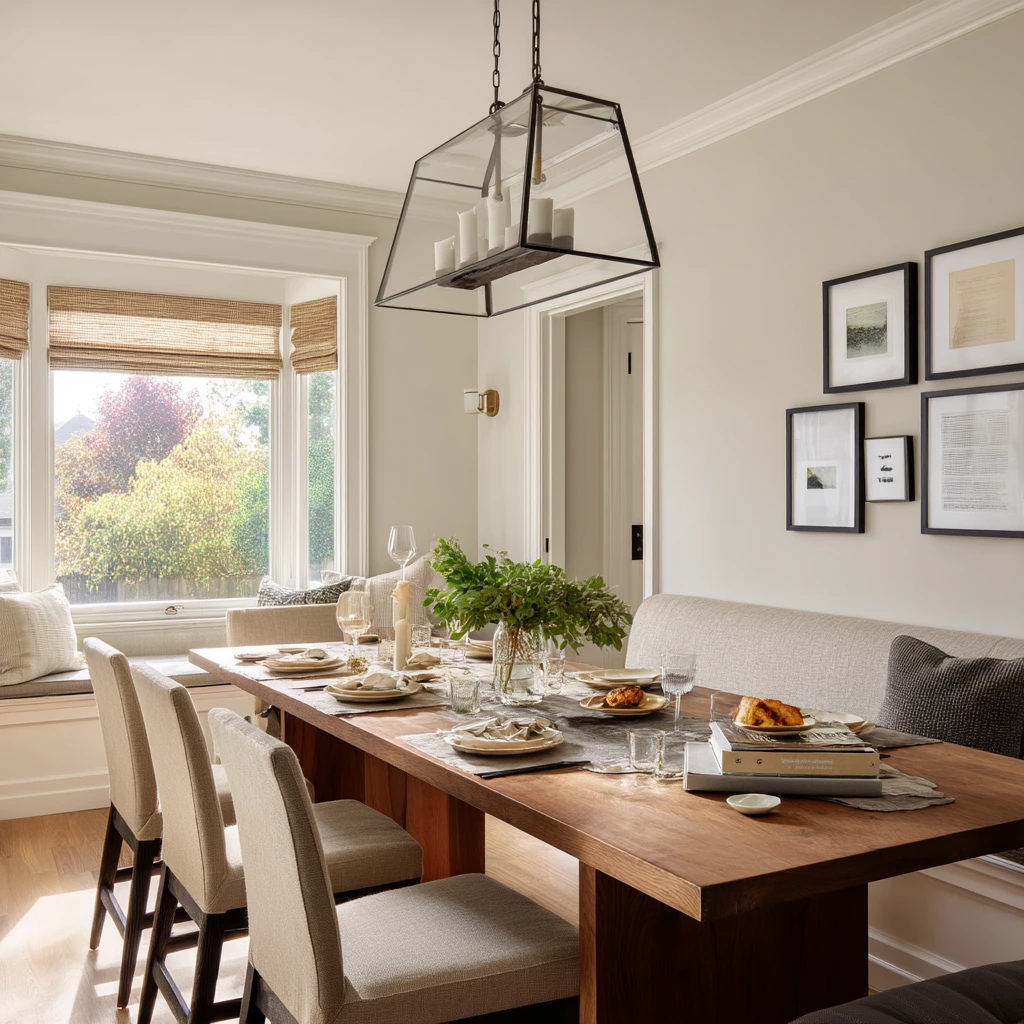
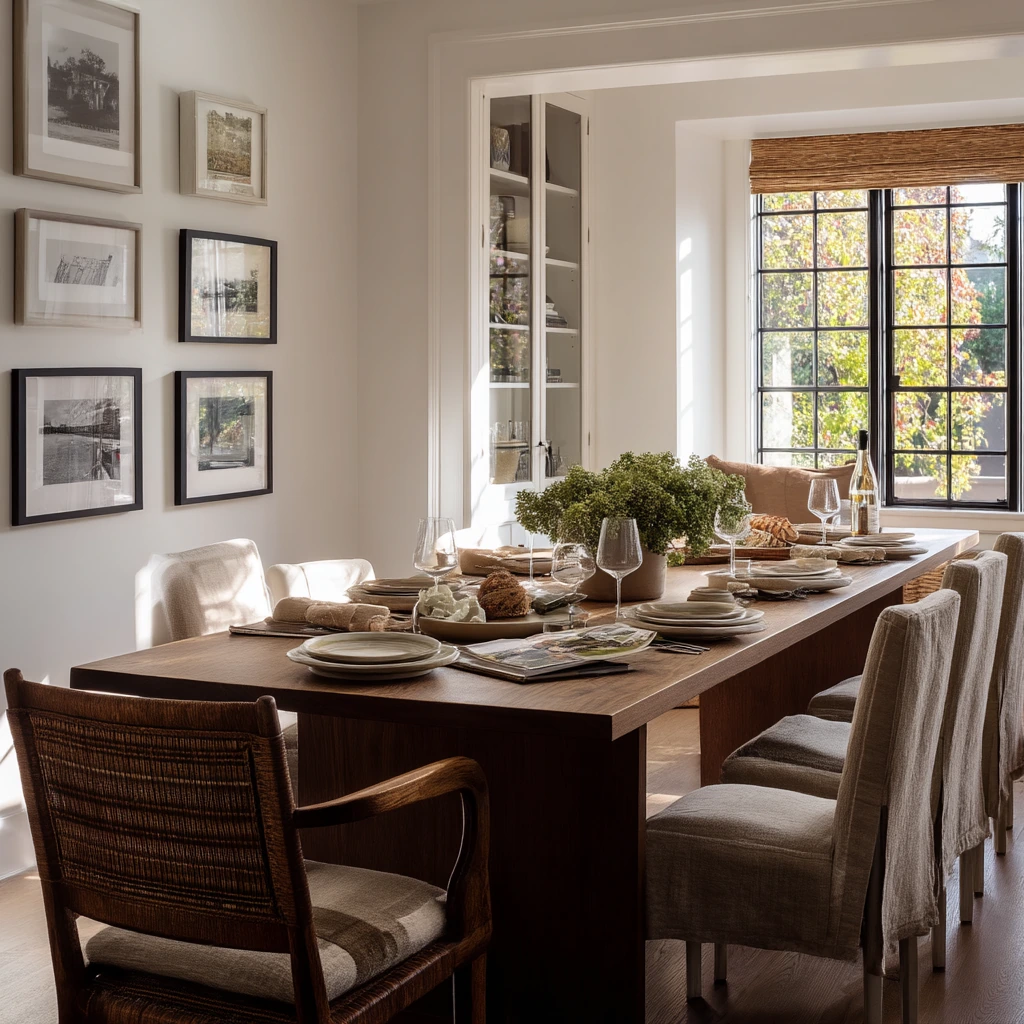
4 4. Layered Neutral Dining Space
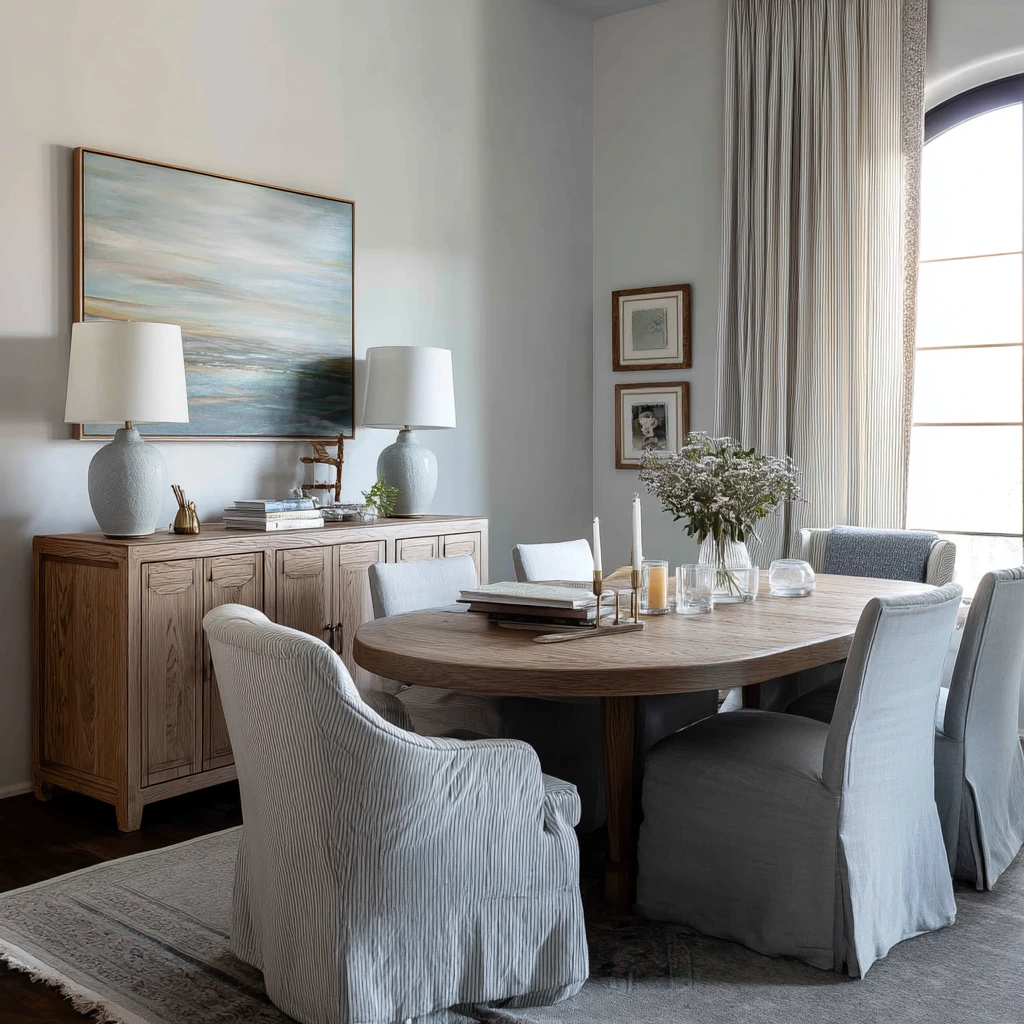
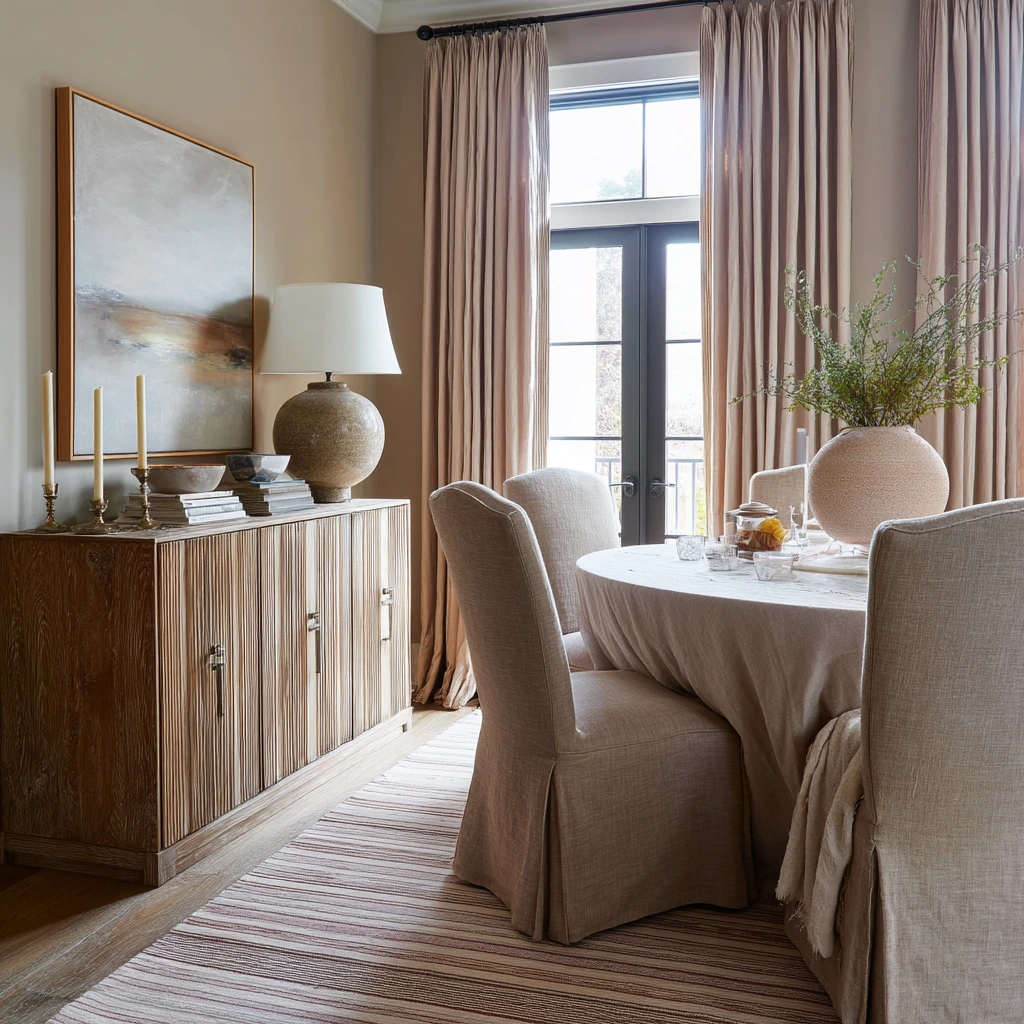
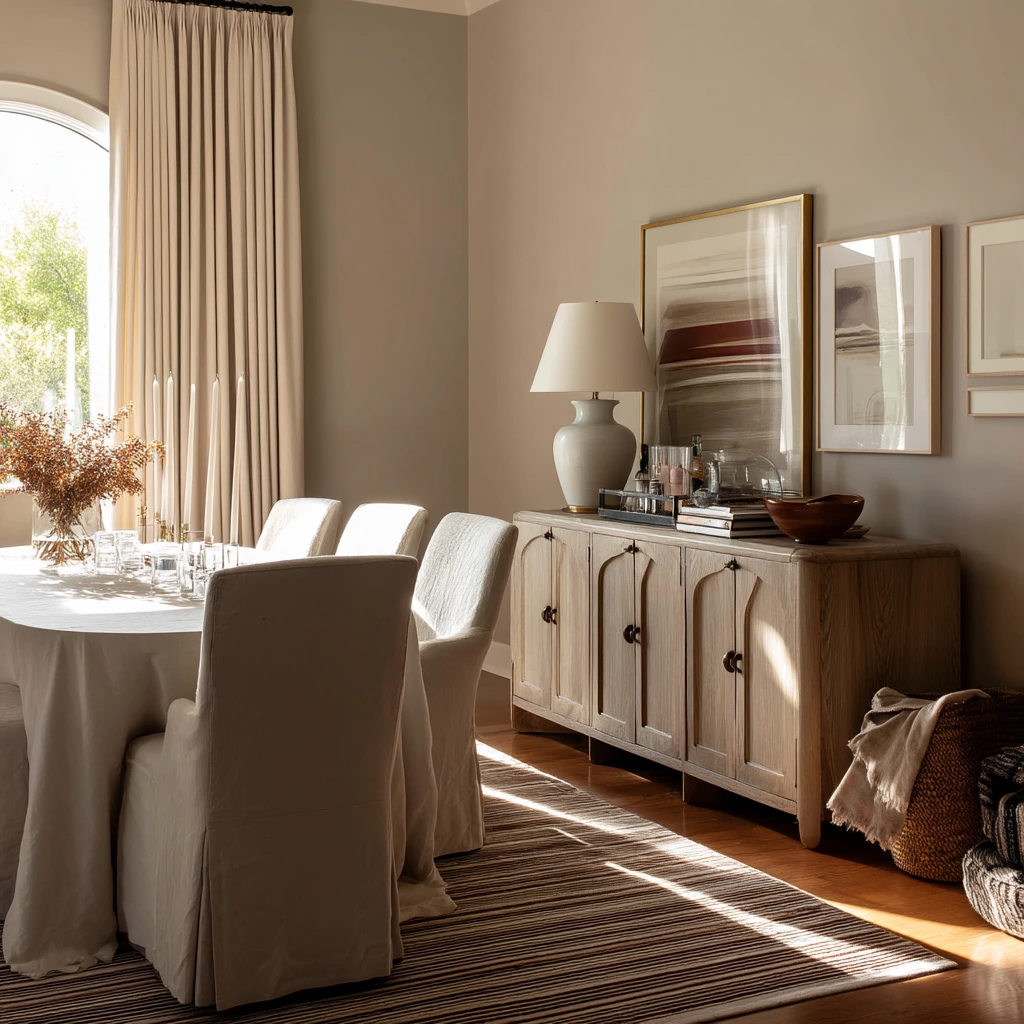
This transitional dining room is for someone who likes a polished look that still feels lived in. An oval table with gently curved edges softens the room and makes it easier to move around. Slipcovered chairs bring comfort and keep the space casual, even when the pieces look elevated.
A vintage inspired credenza adds character and storage. Linen drapery and a muted striped rug create a quiet pattern mix without feeling busy. A ceramic lamp on the sideboard gives warm evening light, while a restrained gallery wall keeps the room personal but calm. Choose art with soft contrast and similar frame colors so the wall reads as one set.
The lived in cues are small but telling. Reading glasses on the sideboard, a water glass with condensation, a folded throw tossed over a chair, and one remote beside a candle all show real use. To style this at home, keep surfaces mostly clear, then add one or two items you actually touch each day. That is what makes it believable.
- Pick an oval table if your room is narrow or you want softer edges.
- Use slipcovers in a warm white to reduce visual weight.
- Layer striped and solid textiles for gentle contrast.
- Keep candles in a tray so wax stays contained.
- Hang a small gallery wall with matching mat sizes for order.
Pro Design Tip: Use warm bulbs in the lamp and overhead light so wood tones and linens look rich, not flat.
Budget Considerations: Slipcovers can be expensive; try ready made covers and have a tailor adjust the hem for a cleaner fit.
5 5. Rental-Friendly Dining Update
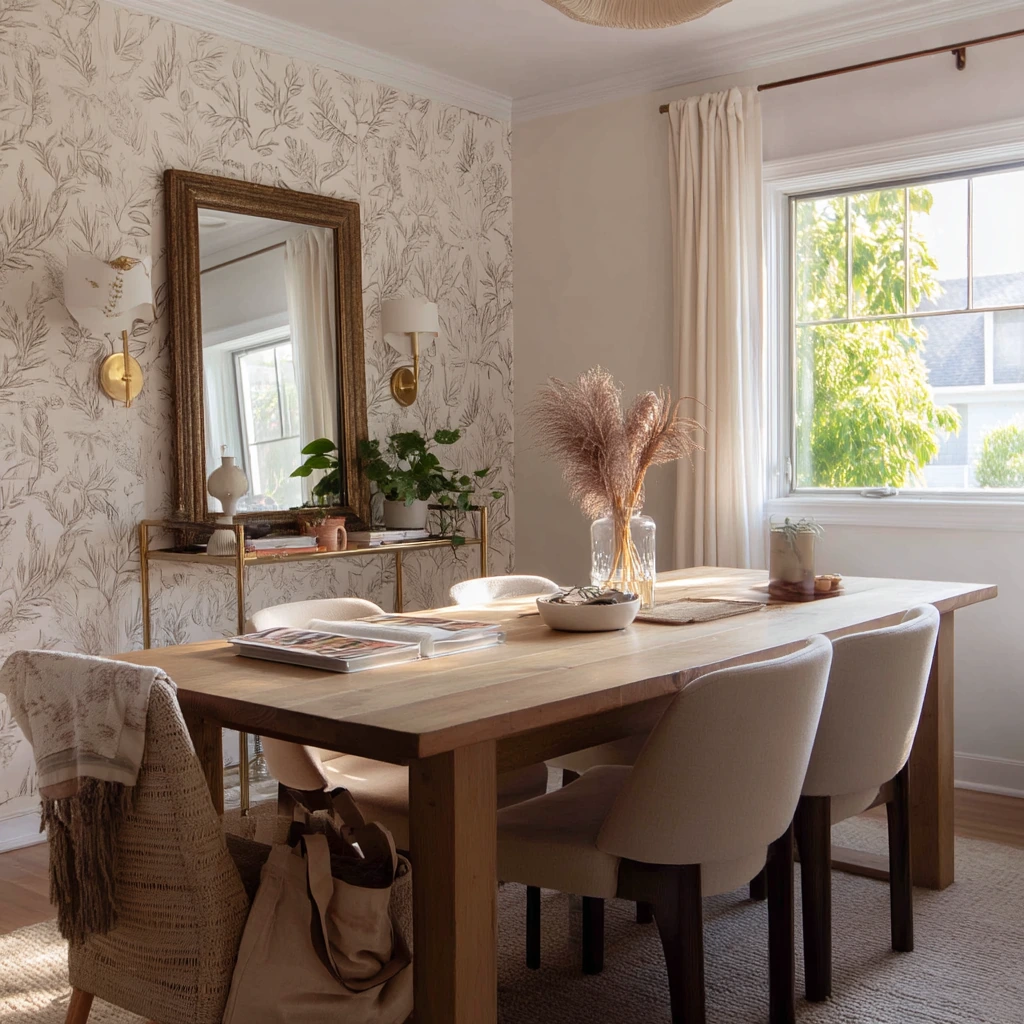
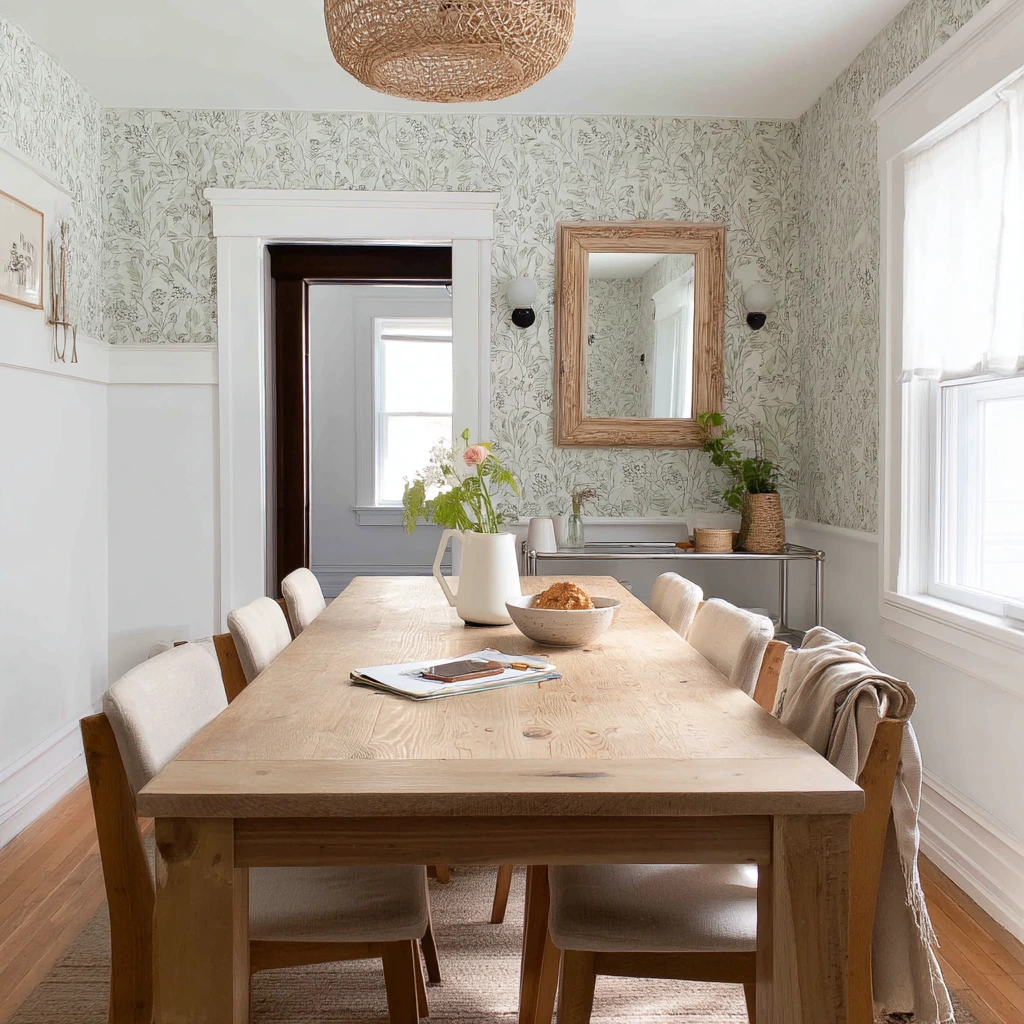
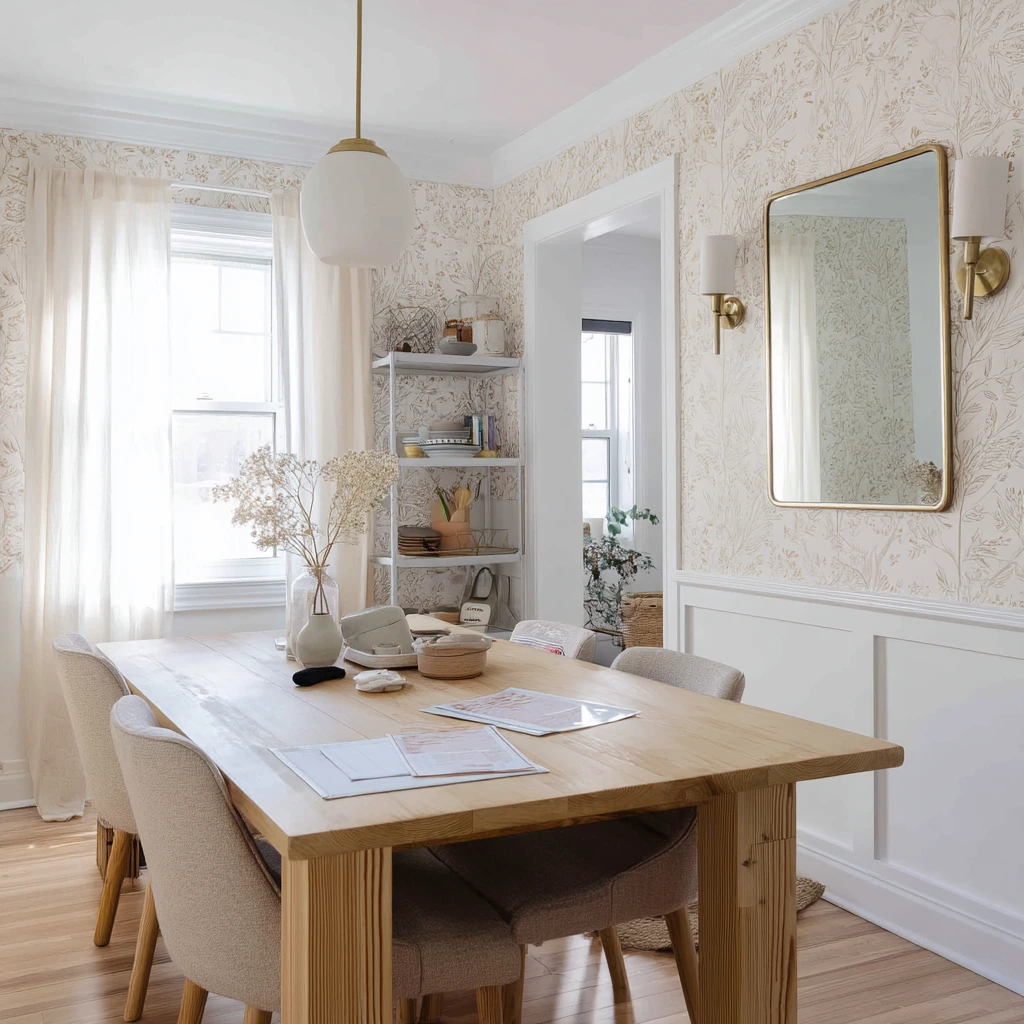
A renter friendly transitional dining room can still have strong style. Removable wallpaper in a soft botanical pattern adds interest without paint or permanent changes. Keep the furniture simple so the wallpaper feels like a backdrop, not a busy competition.
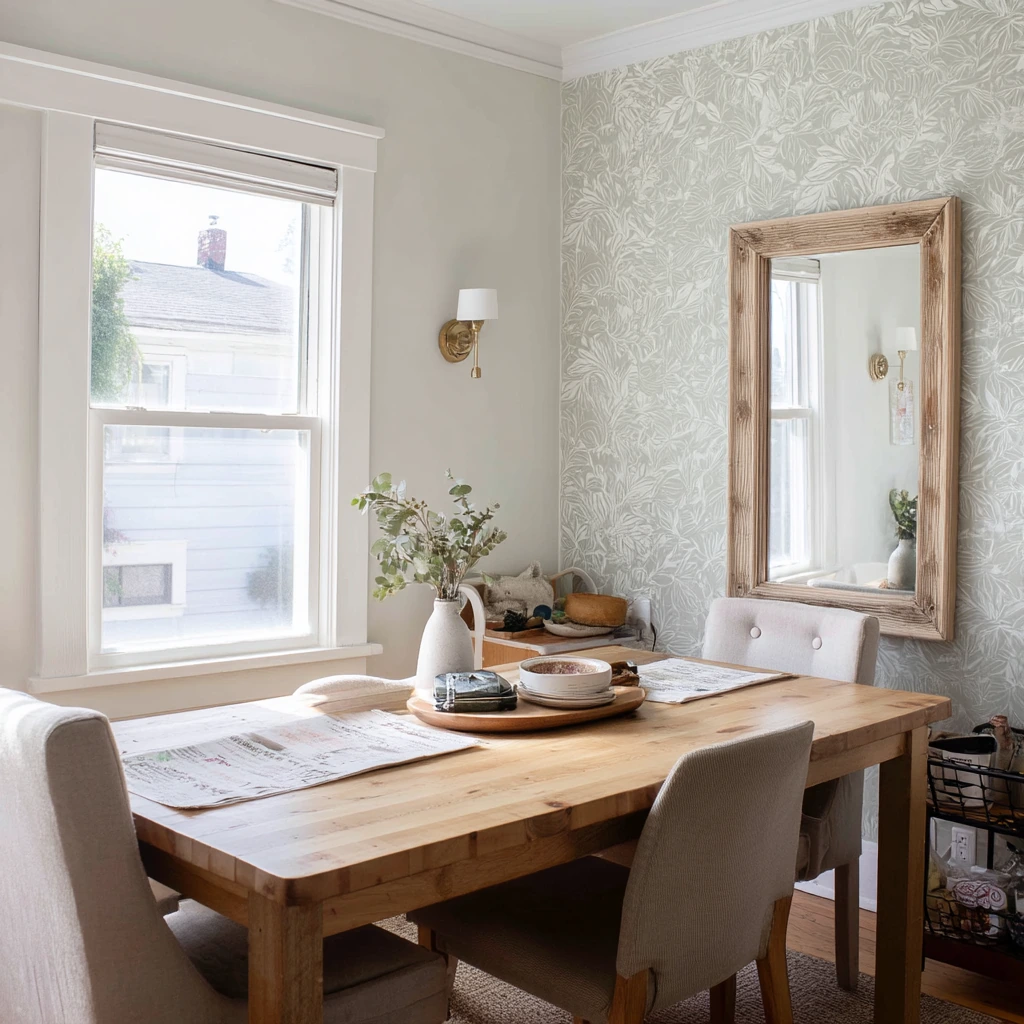
A simple pine table is light and easy to move, which is helpful in rentals. Pair it with upholstered dining chairs to bring softness and comfort. Plug in sconces give you that built in lighting look without hardwiring. Add a thrifted mirror to reflect morning window light and make the room feel larger.
Finish the space with a slim rolling bar cart that can double as a serving station. The lived in details make it real: a takeaway menu, keys in a ceramic dish, a tote bag on one chair, and a dog bowl near the baseboard. To keep it tidy, add one small lidded box on the cart for items like keys and chargers. That way the room stays calm even when you come and go.
- Choose wallpaper with a low contrast pattern for a transitional look.
- Use plug in sconces with cord covers painted to match the wall.
- Style the bar cart with one tray, one stack of napkins, and a vase.
- Hang a mirror across from a window to brighten the whole wall.
- Use a ceramic dish for keys so they do not land on the table.
Pro Design Tip: Keep your metals consistent, like brass on sconces and mirror, so the room looks planned even with mixed furniture.
Budget Considerations: Try peel and stick wallpaper on one wall only, and use thrifted frames and mirrors to keep the update affordable.
6 6. Holiday Dinner Without the Fuss
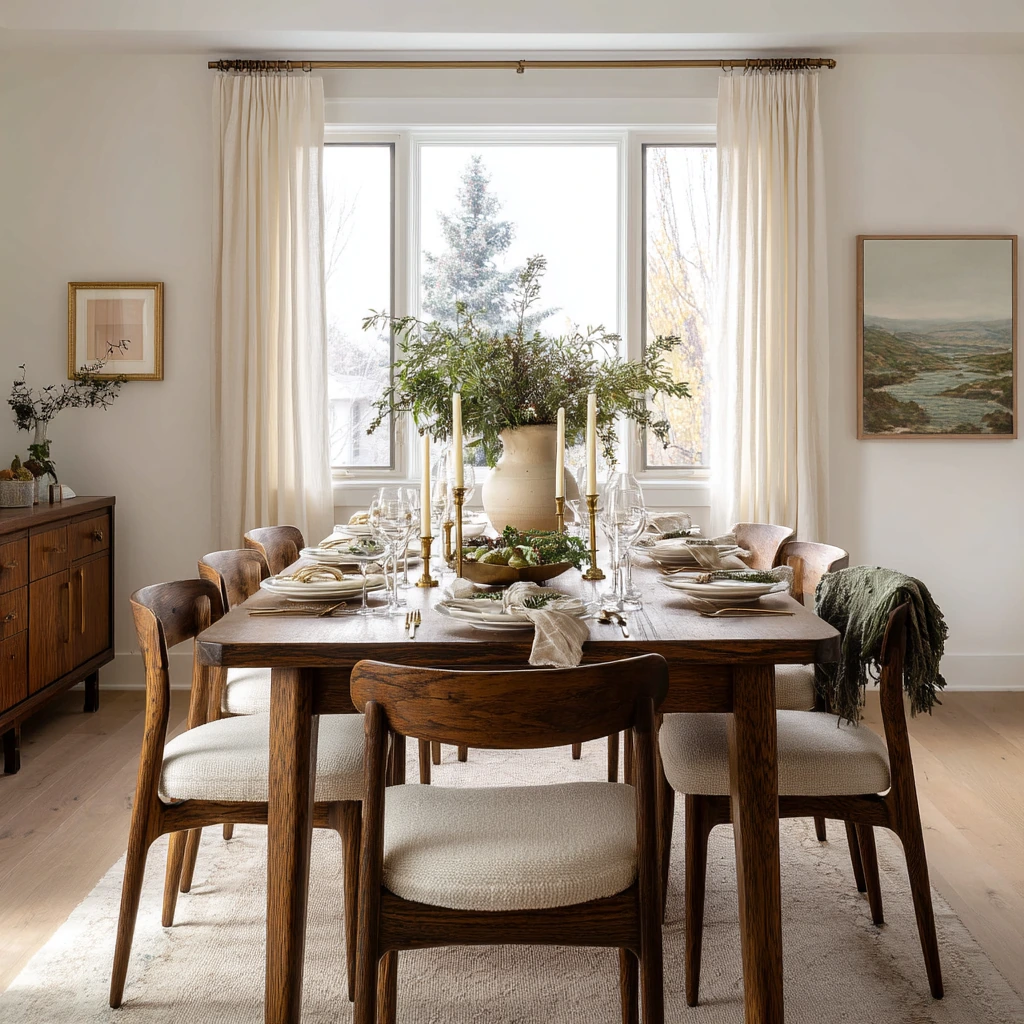
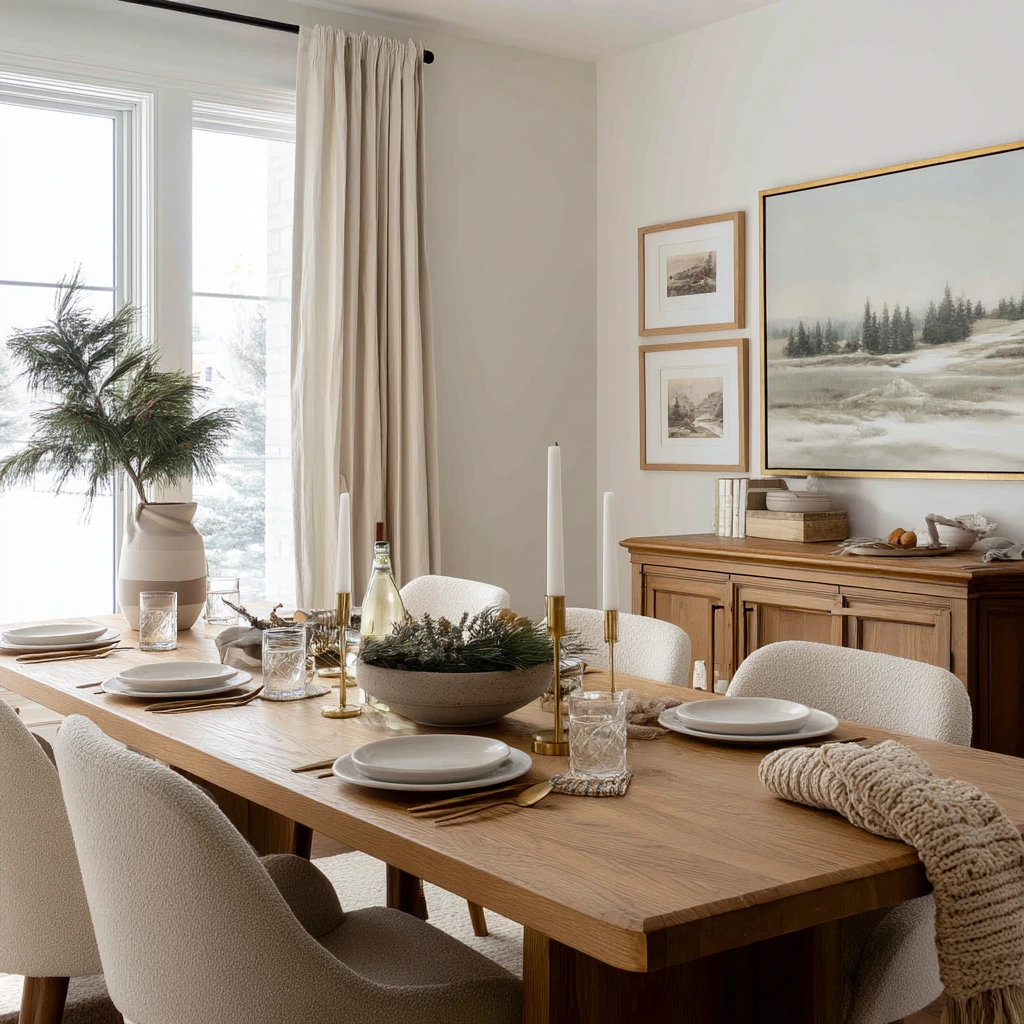
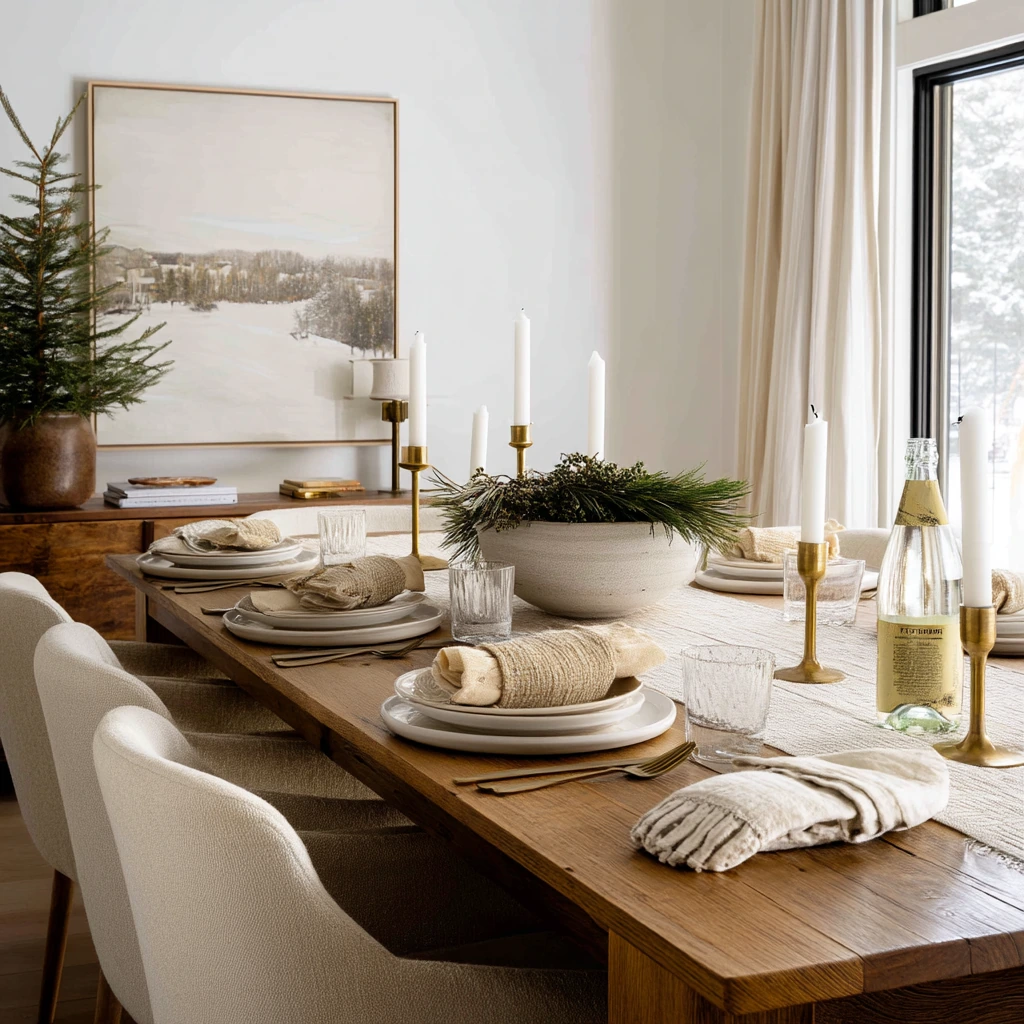
This transitional dining room is set up for an easy seasonal gathering that still feels understated. A medium toned wood table adds warmth, while creamy chairs keep the palette soft. Brass candlesticks bring a classic touch and look good with both modern and traditional decor.
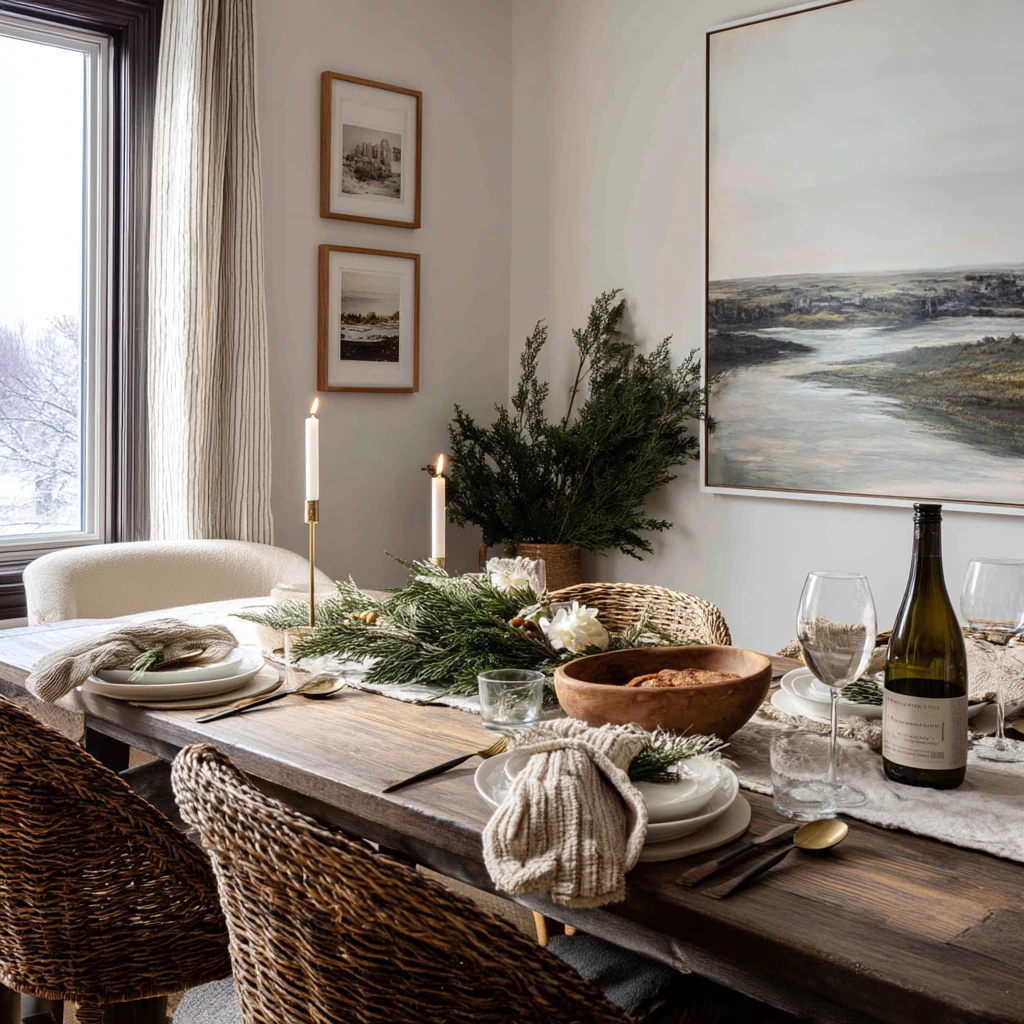
For a seasonal centerpiece, use evergreen clippings in a low bowl instead of a tall arrangement. It smells fresh, looks natural, and does not block conversation. White plates and layered textiles, like napkins and a runner, keep the table feeling special without needing extra decor. Framed landscape art works well here because it fits the calm, familiar mood.
The lived in details make it believable during a busy day. A folded paper napkin stack, a serving spoon on the sideboard, a child’s mitten on a chair, and one opened bottle of sparkling water feel real. To style this, set the table in layers early, then add food and drinks last. Keep the sideboard ready with serving tools so you do not run back to the kitchen all night.
- Use evergreen in a shallow bowl for a low, easy centerpiece.
- Layer a runner and simple napkins to add softness on wood.
- Keep place settings neutral so seasonal greens stand out.
- Store serving tools on the sideboard for quick access.
- Add candles in brass for a warm glow that feels classic.
Pro Design Tip: Mix two candle heights in the same metal finish to create depth without cluttering the table.
Budget Considerations: Use grocery store greens and simple white dishes you already own; the look comes from layering, not pricey centerpieces.
7 7. Cozy Evening Dinner Party
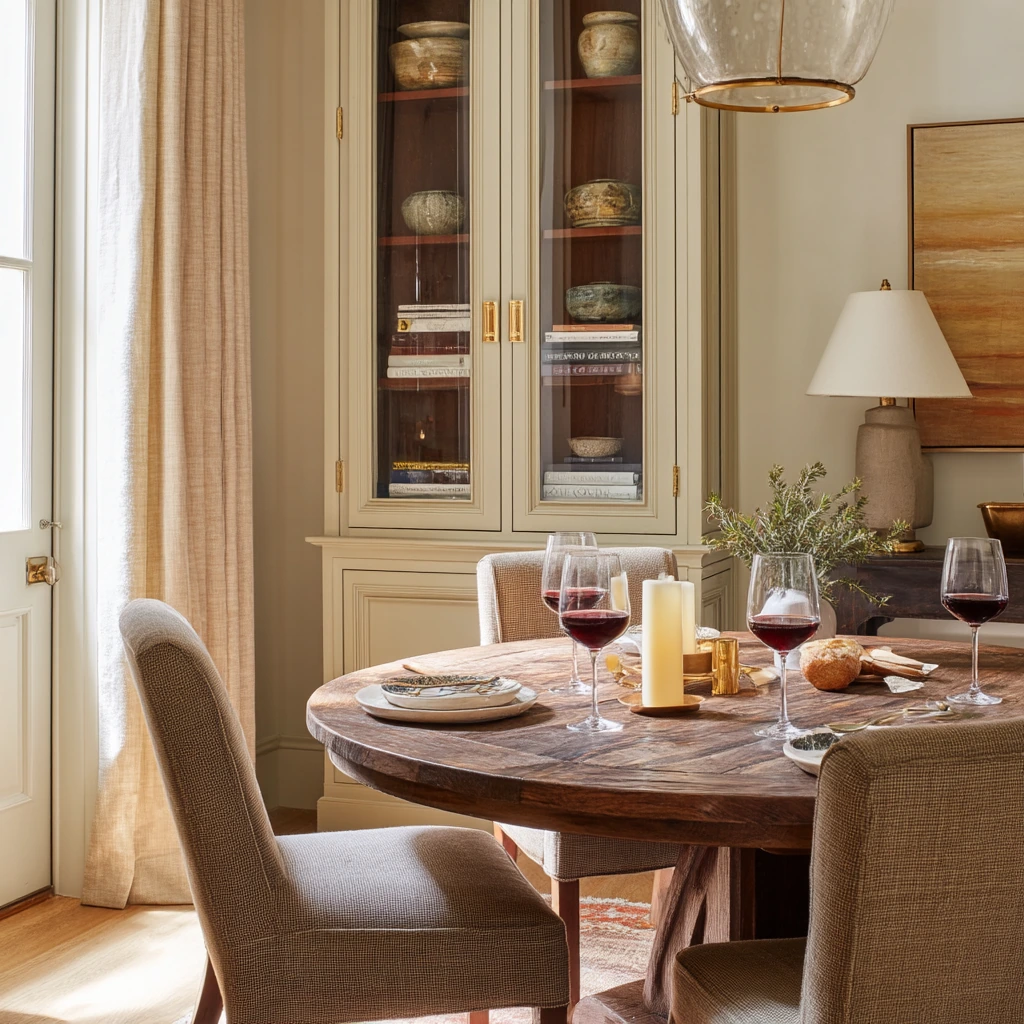
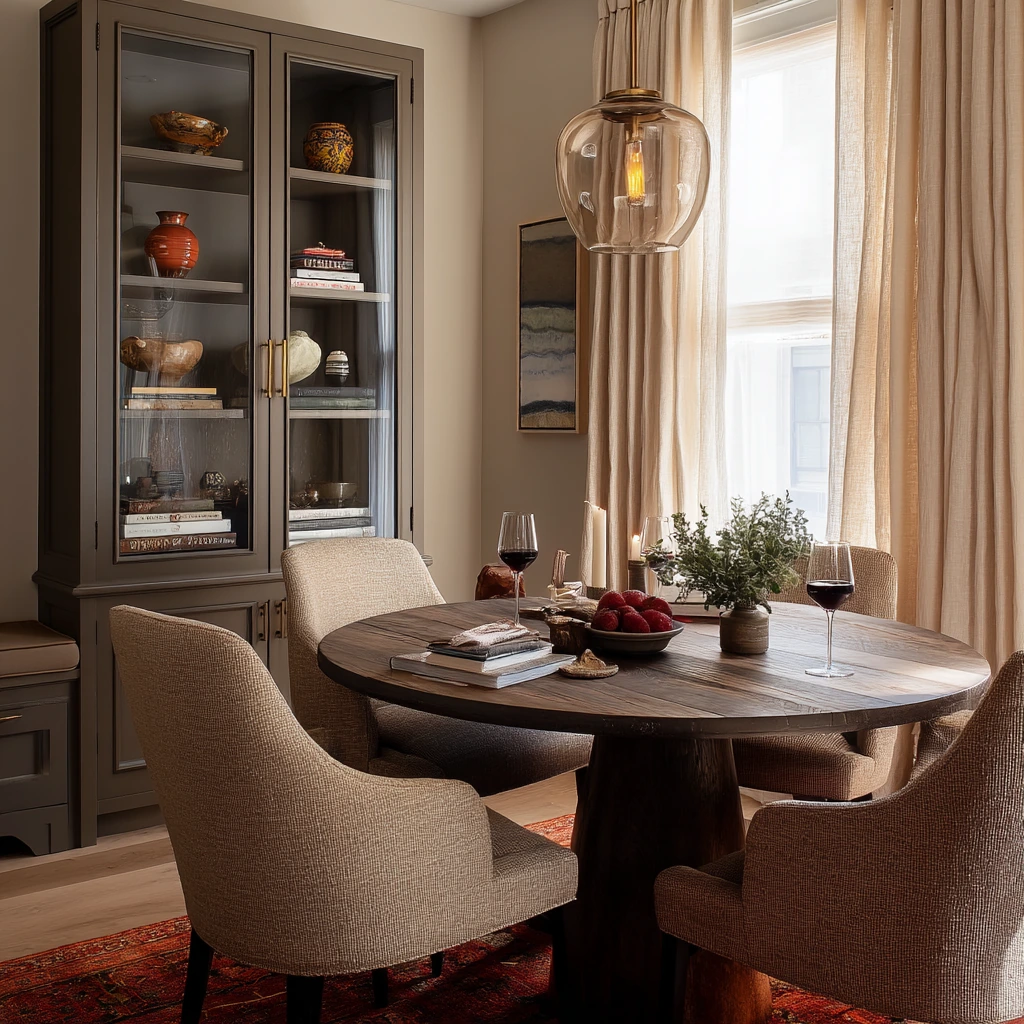
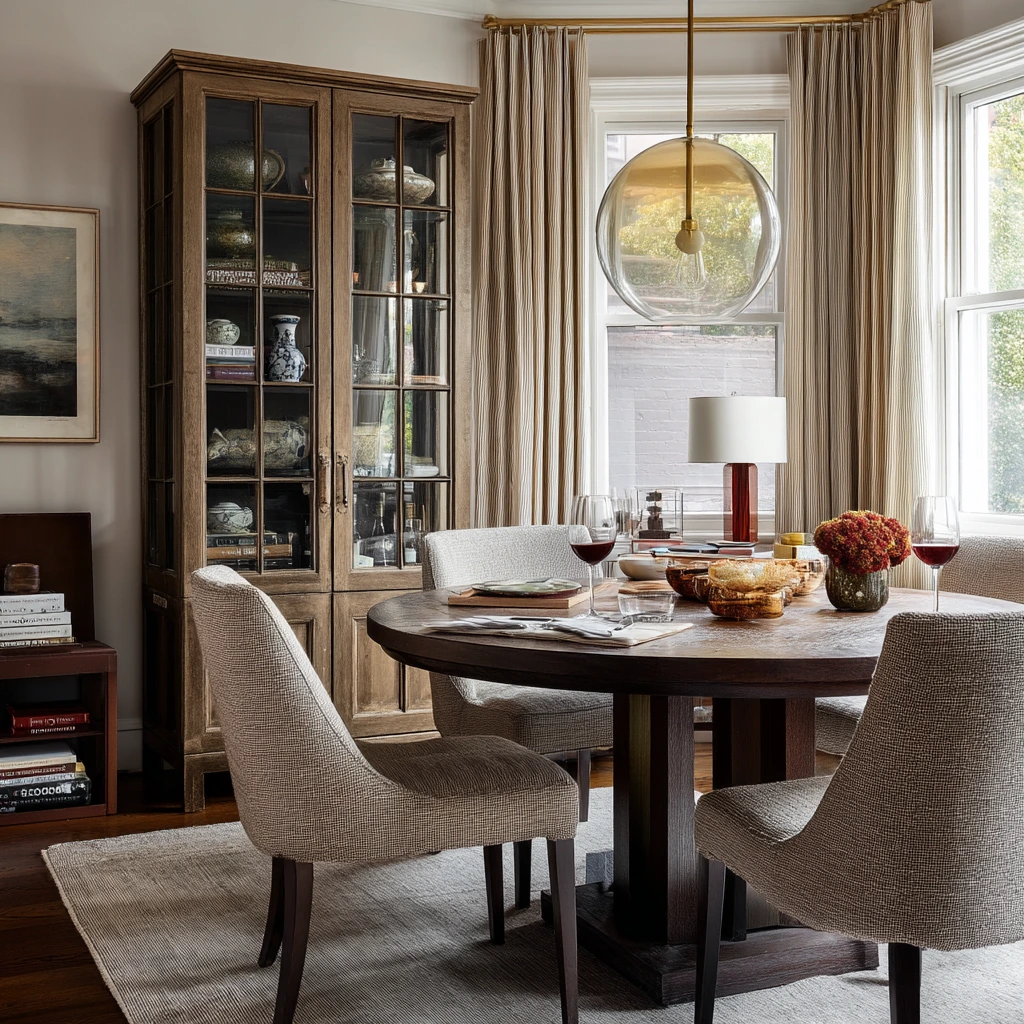
A small dinner party calls for a dining room that feels comfortable and a bit moody. A round table with mixed wood tones keeps the setting friendly and conversational. Tailored upholstered chairs add structure and comfort, which is great when guests linger.
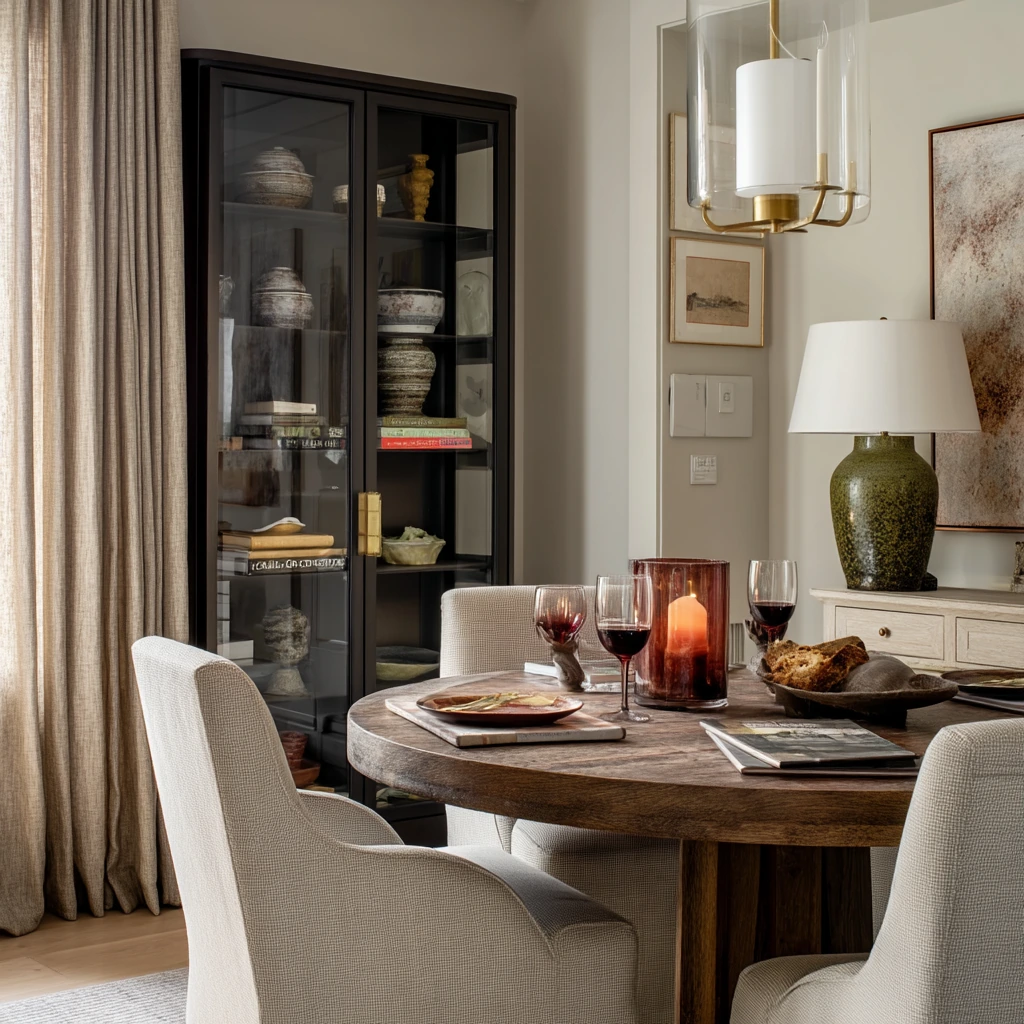
Anchor the room with a quiet rug underfoot and add textured drapery to soften sound. A glass front cabinet with collected ceramics gives you a place to show everyday dishes and a few special pieces. Overhead, a warm brass pendant ties into the transitional mix of classic metal and simple shapes.
Lean into the lived in energy. Two half full red wine glasses, a bread basket, stacked cookbooks, candle wax drips, and a charging phone near the cabinet all feel real. For styling, keep the center of the table low and open. Put food on a sideboard or console so the table does not get crowded. Use a few candles plus one lamp to balance the light, so faces look warm and the room feels calm.
- Use a round table so everyone can talk without leaning forward.
- Keep a bread basket and water within reach for easy hosting.
- Display ceramics behind glass to reduce visual clutter.
- Layer candlelight with one lamp for softer shadows.
- Hide a charging station in a tray near the cabinet.
Pro Design Tip: Group candles in odd numbers and keep them in one area of the table so the rest stays clear for plates and serving.
Budget Considerations: Use thrifted brass candlesticks and LED taper candles if you want the glow without worrying about wax or open flames.
8 8. Empty Nest Morning Breakfast Space
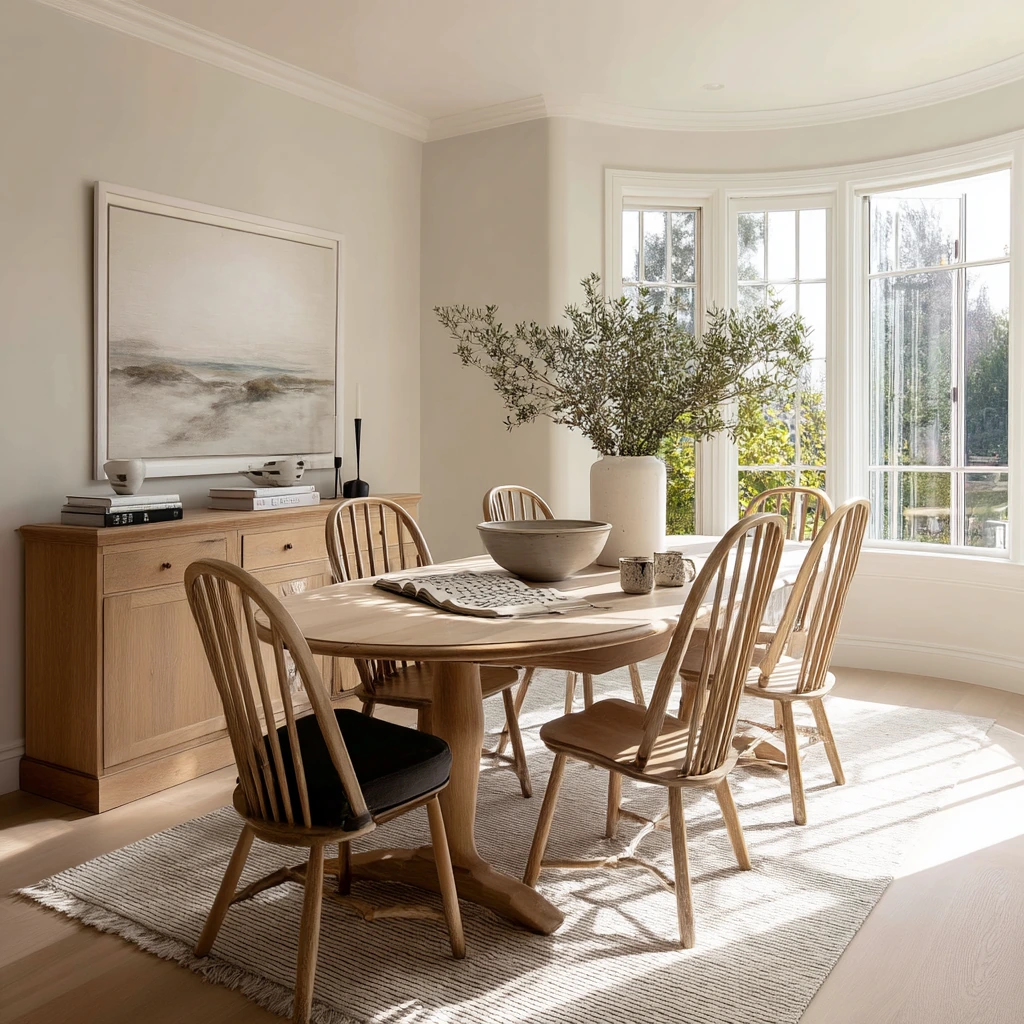
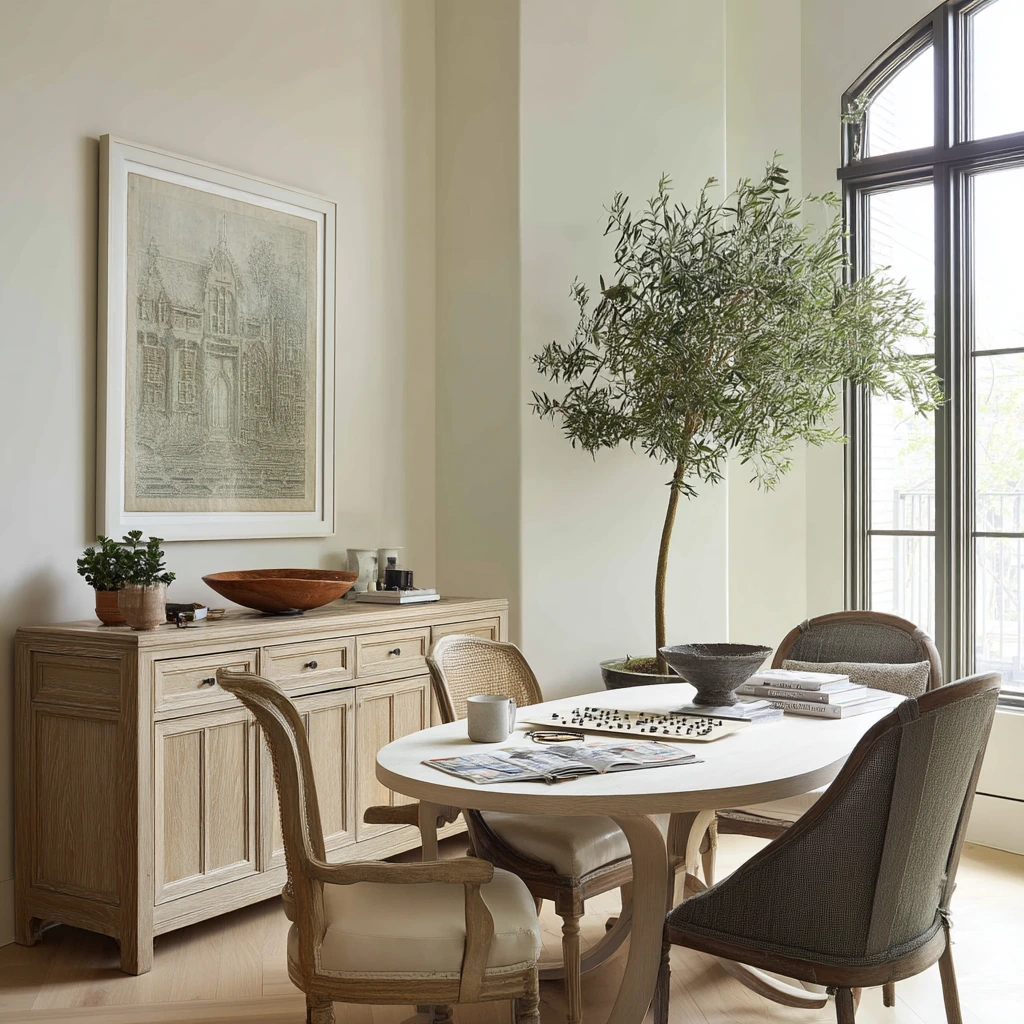
This transitional dining room idea is calm and quiet, made for daily use in an empty nest home. An elegant oval table feels refined but not formal. Curved back chairs add comfort and a gentle shape that pairs well with clean, modern lines.
A pale oak sideboard keeps the room light and provides storage for placemats, puzzles, and extra mugs. Soft neutral artwork supports the restful palette, while a sculptural bowl adds a simple focal point. A single potted olive tree near the window brings in height and life without needing a big arrangement.
The lived in cues tell the story of a slow morning. A crossword puzzle, a reading mug, reading glasses, a folded newspaper, and one chair pulled out slightly make the space feel used, not staged. To style this at home, keep the table mostly open and use one tray to hold the daily items. Swap that tray out when you want the table ready for guests. This keeps the room flexible and easy.
- Choose an oval table for softer edges and better flow.
- Use one large plant instead of many small ones for a cleaner look.
- Keep art low contrast to match the calm palette.
- Style the sideboard with a bowl, a small stack of books, and a lamp.
- Use a tray for puzzles and papers so they stay contained.
Pro Design Tip: Scale matters more than decor quantity; pick fewer items that are slightly larger so the room feels serene, not busy.
Budget Considerations: If an olive tree is costly, try a small indoor tree like ficus or a realistic faux plant in a simple clay pot.
9 9. Kid-Friendly Everyday Dining
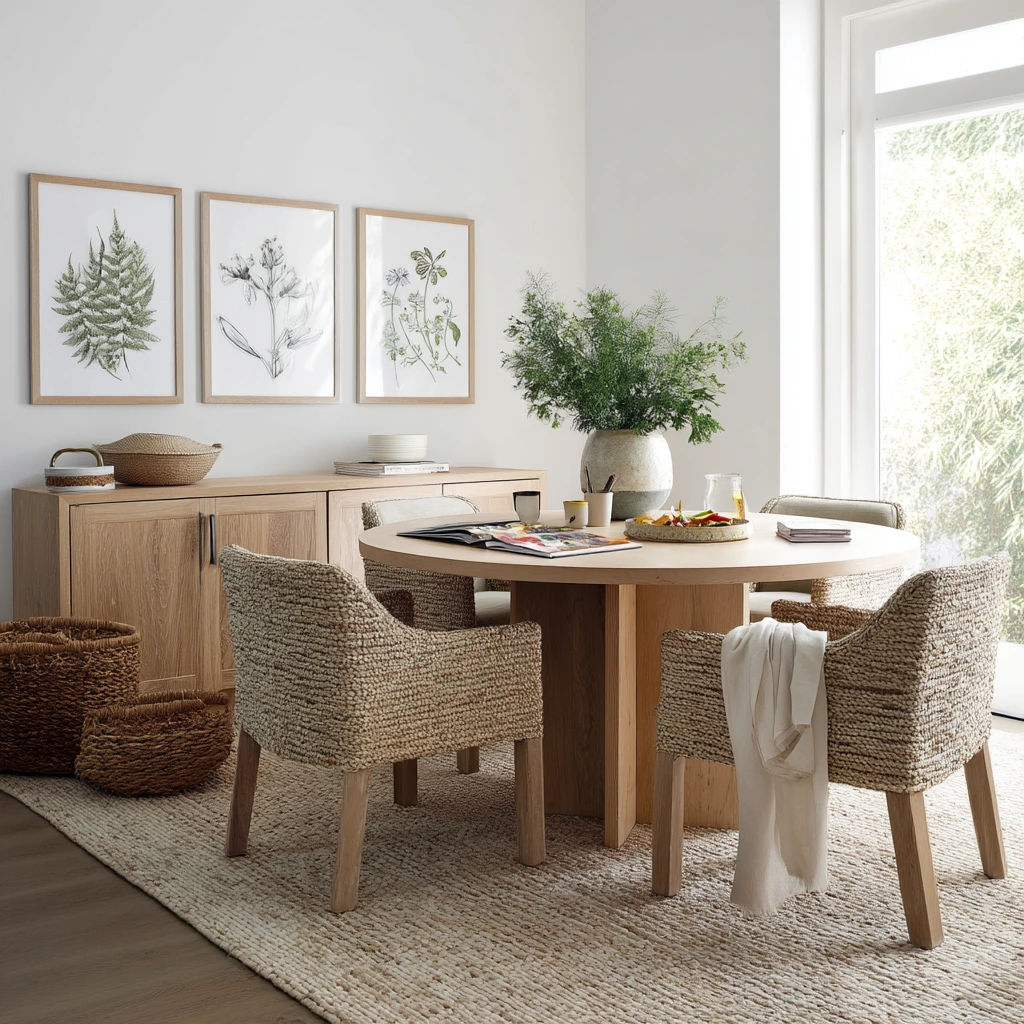
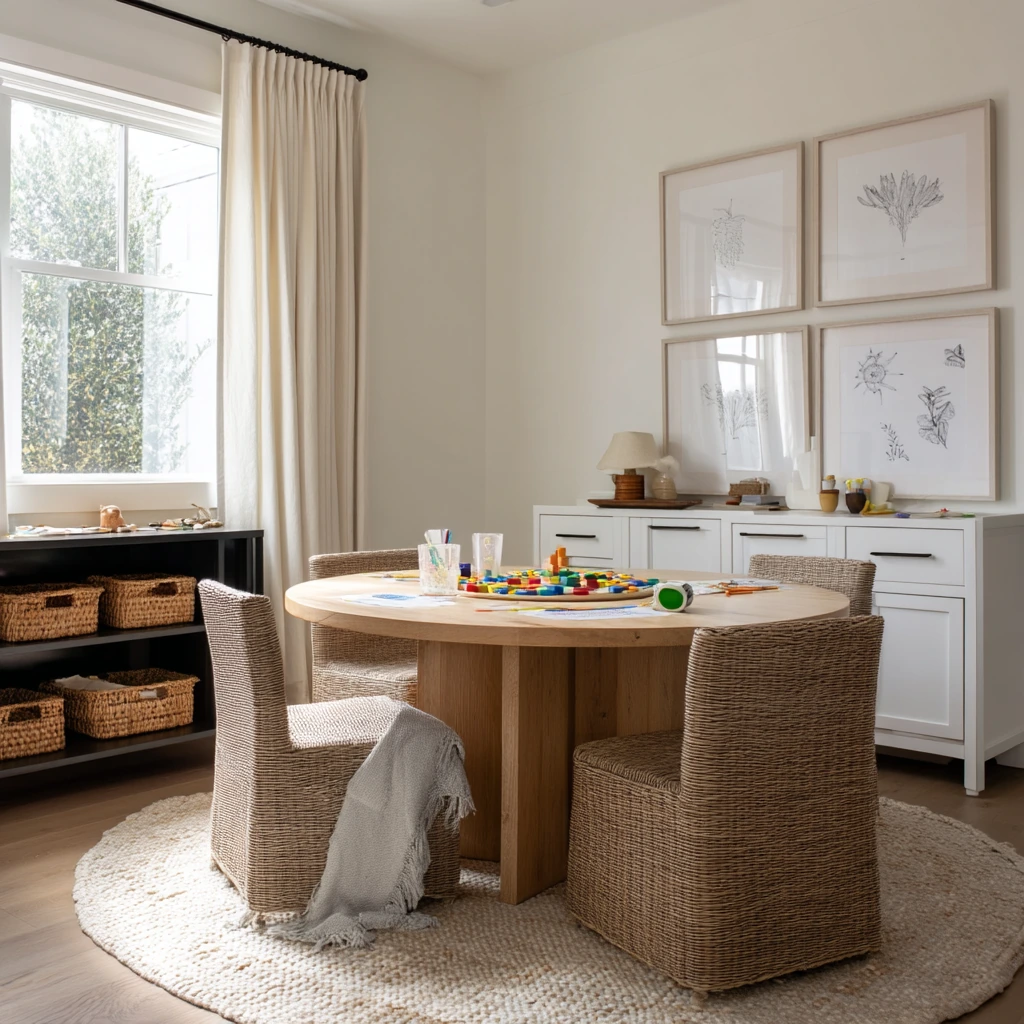
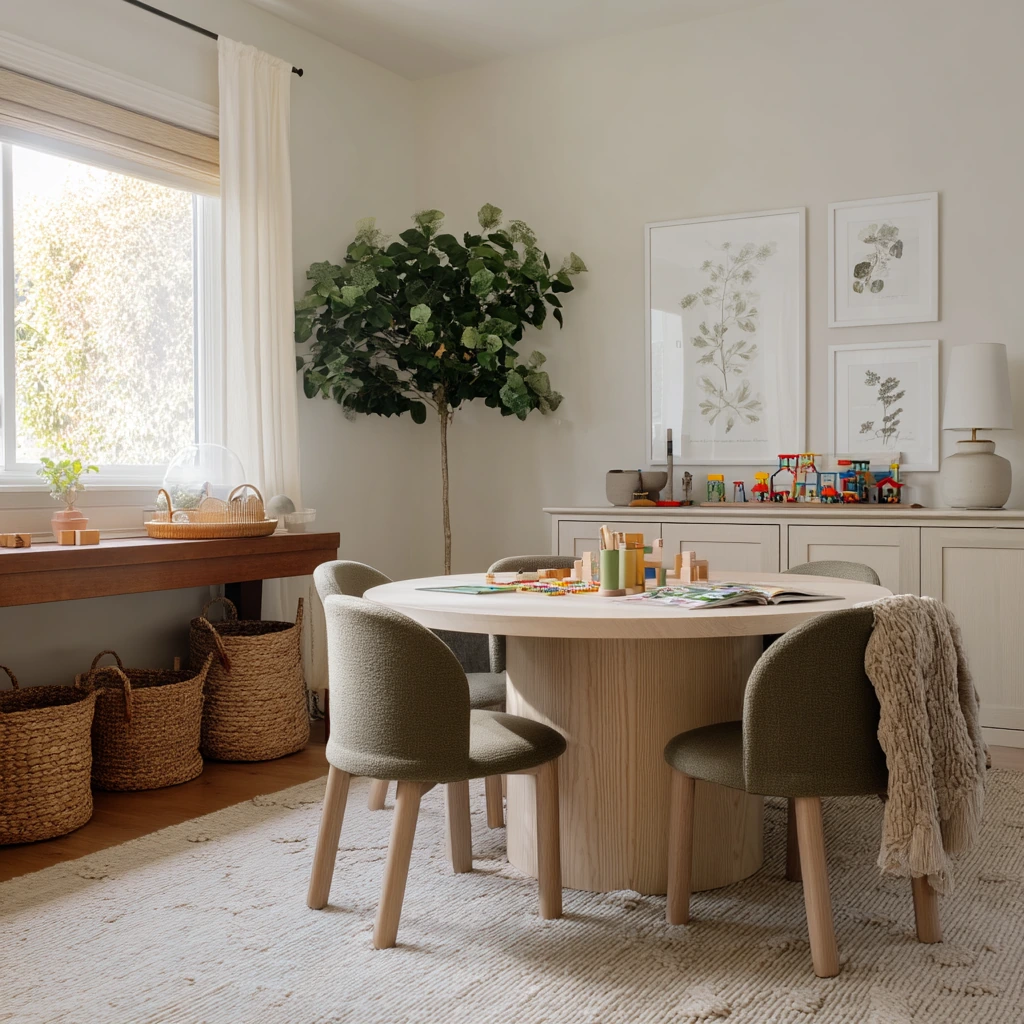
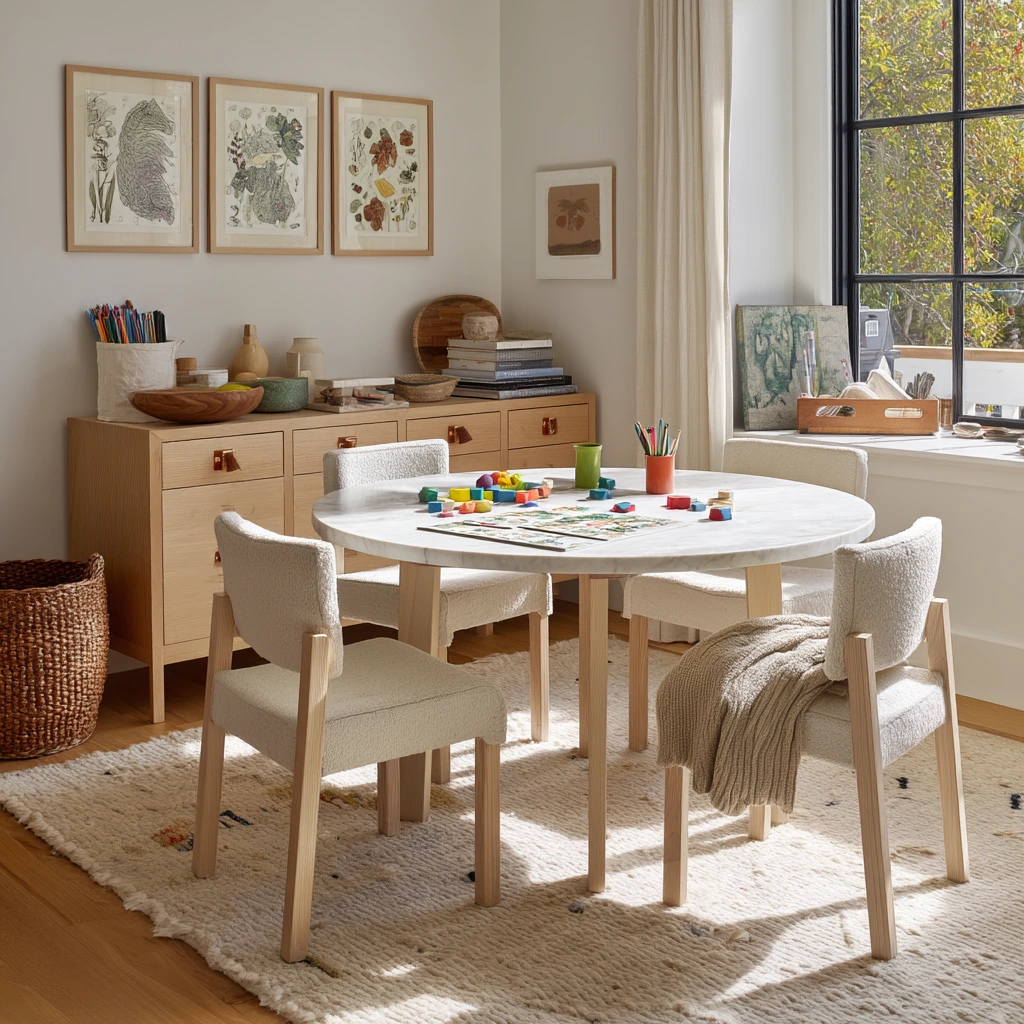
For daily family life, transitional style works best when it is durable. Start with a sturdy round table that can take bumps and spills. Add performance fabric chairs so cleanup is quick and stress stays low. A washable rug is a big help, especially in a high traffic dining spot.
Use a sturdy sideboard for storage, then hang framed botanical prints to add color in a controlled way. Woven baskets tucked below storage are useful for toys, extra paper, and games. This is a good balance of function and style, which is what transitional rooms do well.
The lived in cues here are normal and expected. Toy blocks on the floor, a sippy cup, school papers, a smudged placemat, and a slightly rumpled throw on a chair show an active routine. To keep the room from feeling messy, create a fast reset plan. Put a basket near the sideboard for school papers, store extra placemats in a drawer, and keep a handheld vacuum nearby. The goal is not perfection. It is a room that can be cleaned in five minutes.
- Pick chairs with removable covers or wipeable fabric.
- Use a round table to reduce sharp corners for kids.
- Choose a washable rug in a small pattern to hide stains.
- Add baskets for toys so cleanup is quick at night.
- Keep a paper tray for school forms and mail sorting.
Pro Design Tip: Use one repeat color, like warm beige or soft green, across art, textiles, and baskets to make the busy room feel organized.
Budget Considerations: Buy one high quality washable rug and save on decor by using printable botanical art in simple frames.
10 10. Quiet Luxe Transitional Statement
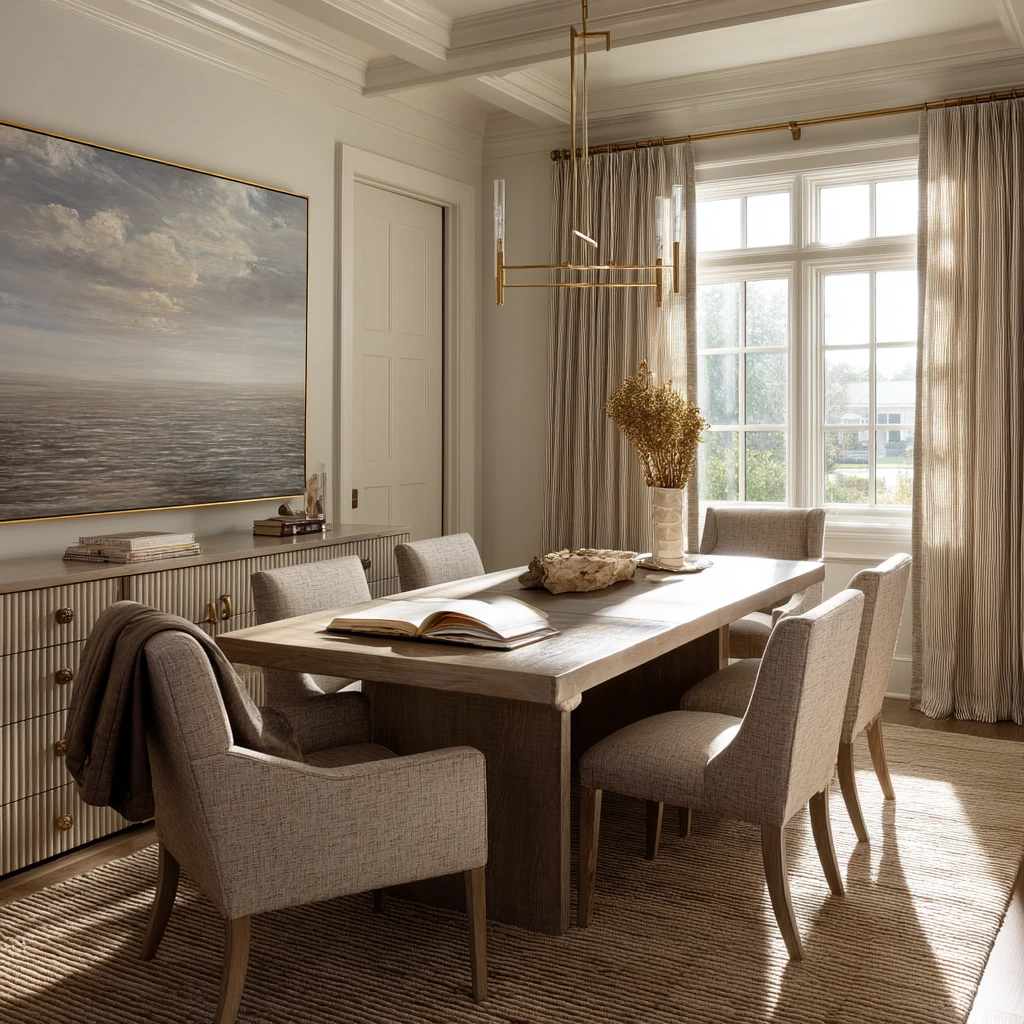
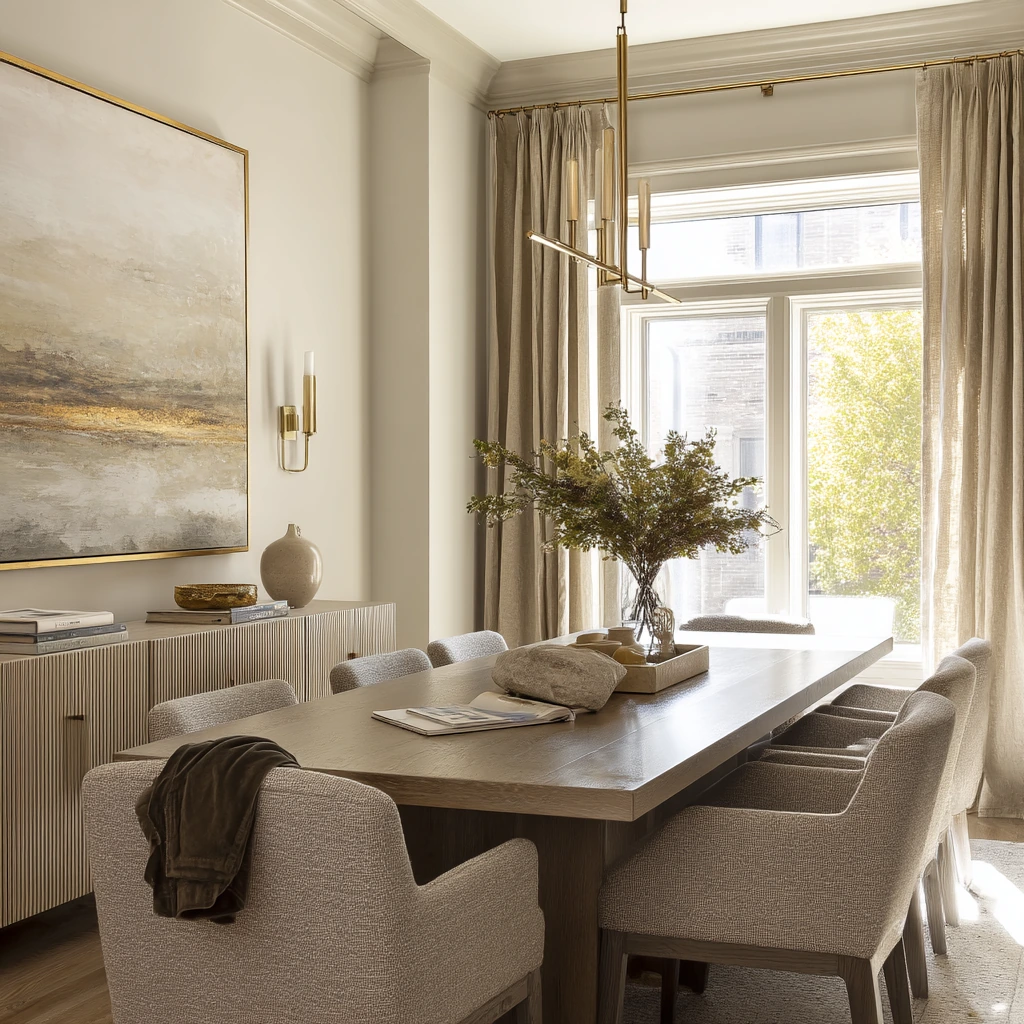
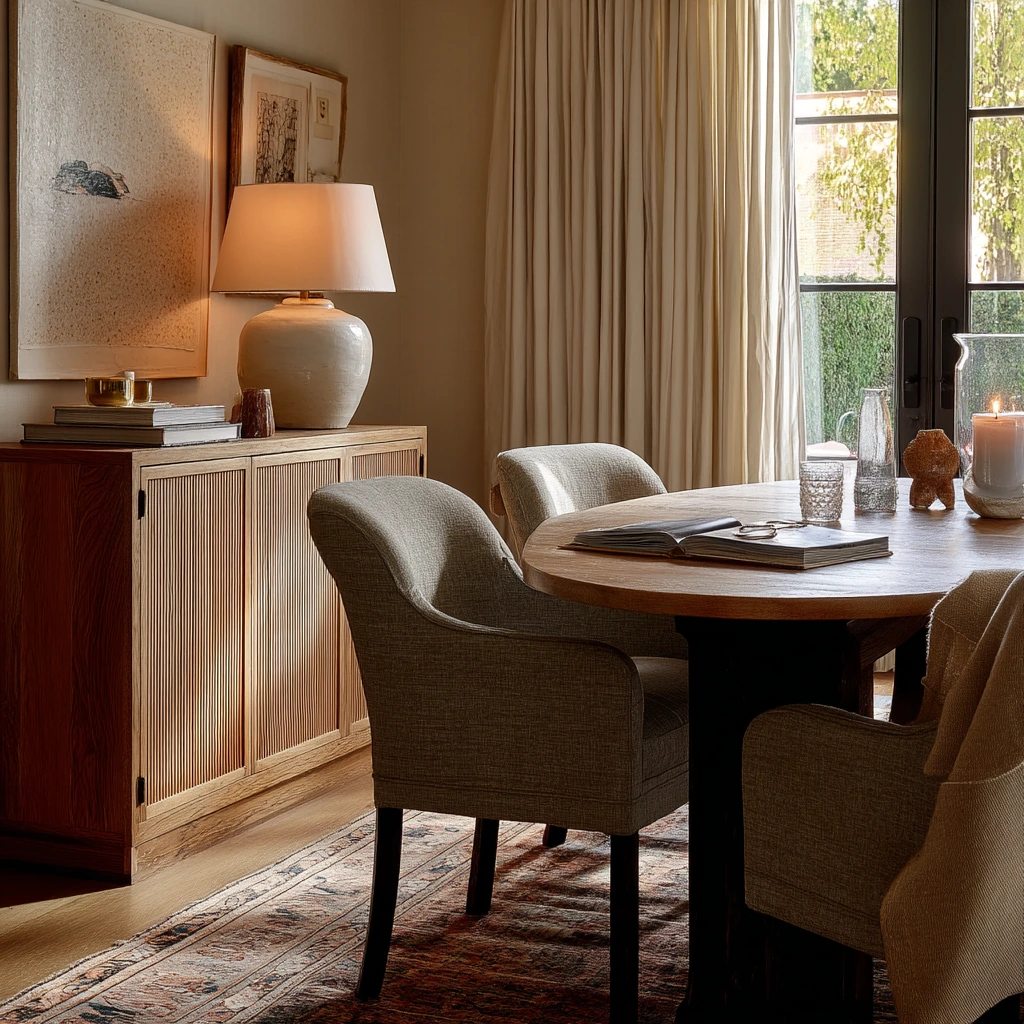
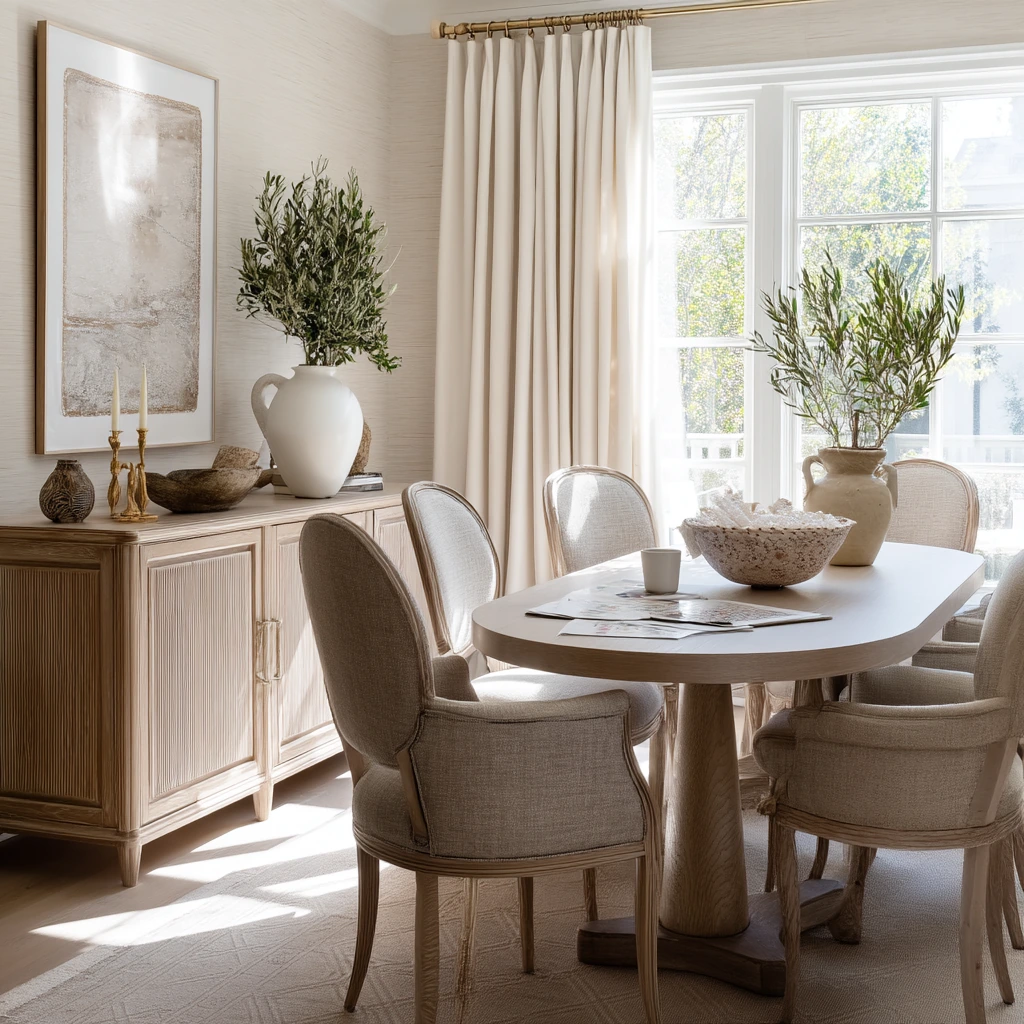
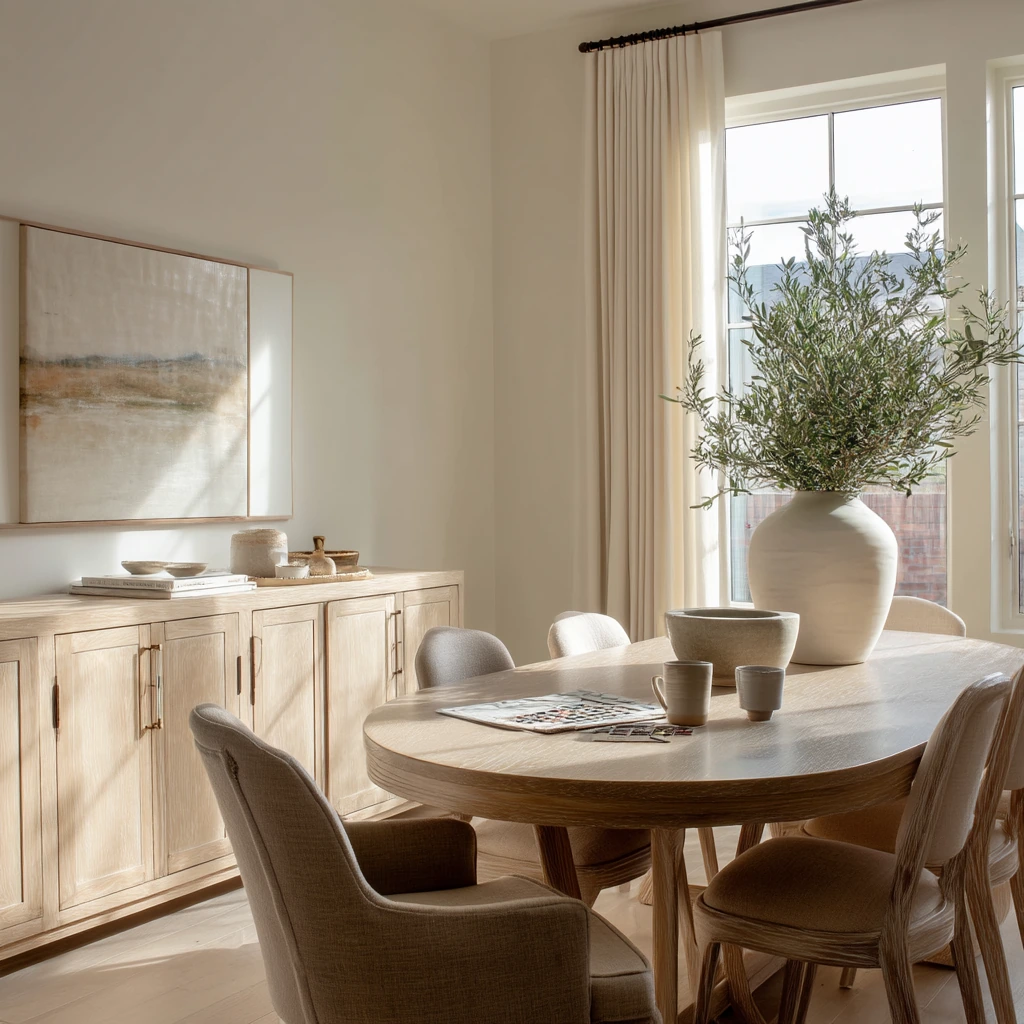
Quiet luxury in a transitional dining room is about strong basics and soft finishes. A substantial rectangular table sets the tone and gives the room weight. Tailored chairs in soft taupe look refined but still neutral, so they work with many seasons and styles.
A fluted sideboard adds texture without loud color. Oversized neutral art creates a calm focal point, and a slim brass chandelier brings a clean line of shine. Layered drapery makes the room feel finished and helps control light. On the table, a low stone centerpiece keeps the look grounded and natural.
The lived in cues make this upscale room believable. A single book open on the table, one water ring on a coaster, a mail stack, and a jacket draped over a chair show the space is used every day. To style it, keep surfaces mostly clear, then add one or two personal items that feel normal. Use a pretty tray on the sideboard for mail so it looks neat. Choose coasters that match the room so daily use does not break the mood.
- Use large scale art to make the room feel more elevated.
- Choose taupe upholstery for a soft, tailored look.
- Add a stone or ceramic centerpiece for natural texture.
- Keep mail in one tray so it does not spread across the table.
- Layer sheers and drapes for a calm, finished window.
Pro Design Tip: Stick to a tight palette of two to three neutrals and one metal finish, then add texture with fluting, linen, and stone.
Budget Considerations: Get the quiet luxury effect with one investment piece, like the chandelier or sideboard, and keep the rest simple and secondhand.
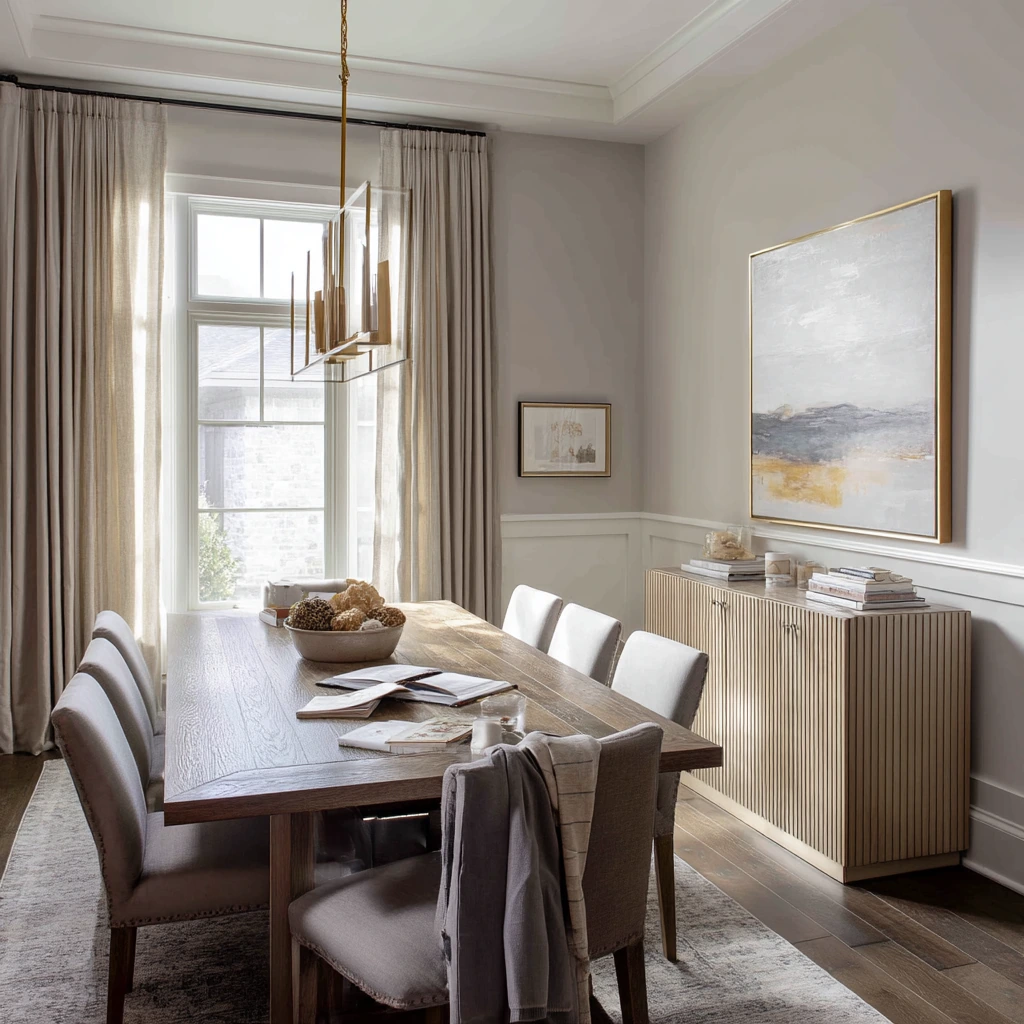
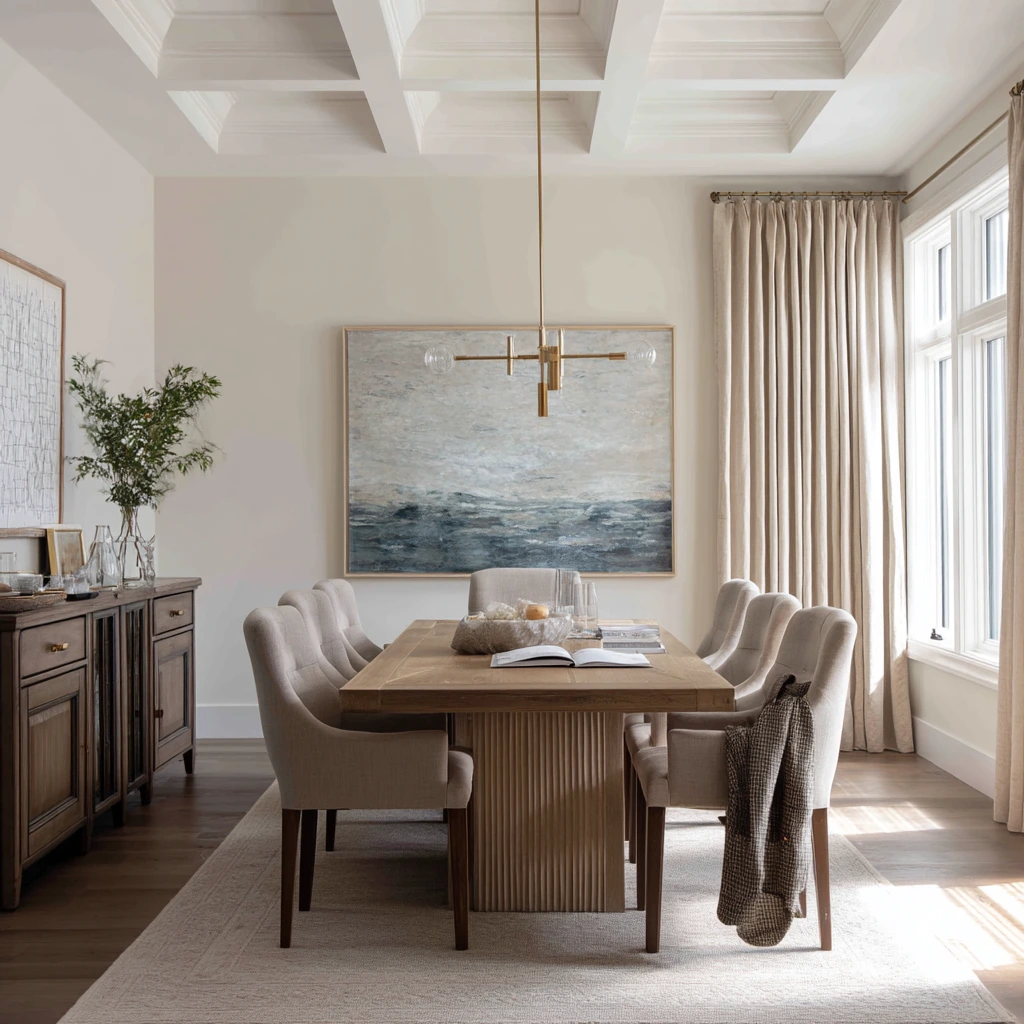
Transitional dining room ideas work because they balance comfort and structure. The mix of warm woods, soft textiles, and simple lighting creates a room you can use every day.
Start with the table and rug, then add lighting, art, and storage. Keep styling low and practical, and let a few lived in details stay so the room feels real.
FAQ
What colors work best in a transitional dining room? Warm whites, beige, greige, soft taupe, and muted greens work well. Use black accents or brass to add contrast.
Can I mix wood tones in a transitional dining space? Yes. Keep undertones similar, like warm oak with walnut, and repeat each wood tone at least twice so it looks intentional.
What is the best rug type under a dining table? Flatweave or low pile rugs are easiest to clean. In family homes, a washable rug is often the simplest choice.
How high should I hang a dining room pendant? A common range is 30 to 36 inches above the tabletop. Adjust based on ceiling height and fixture size.
How do I make a small dining room feel bigger? Use a round table, lighter chair silhouettes, a mirror, and a flatweave rug. Keep wall decor simple and scaled to the space.
What chairs look transitional? Upholstered chairs, slipcovered styles, and simple wood chairs with clean lines all fit. Choose fabrics in warm neutrals for a timeless look.
How do I keep a dining room looking styled with kids? Use baskets, trays, and a quick reset routine. Pick durable surfaces and performance fabrics so daily life is easier.