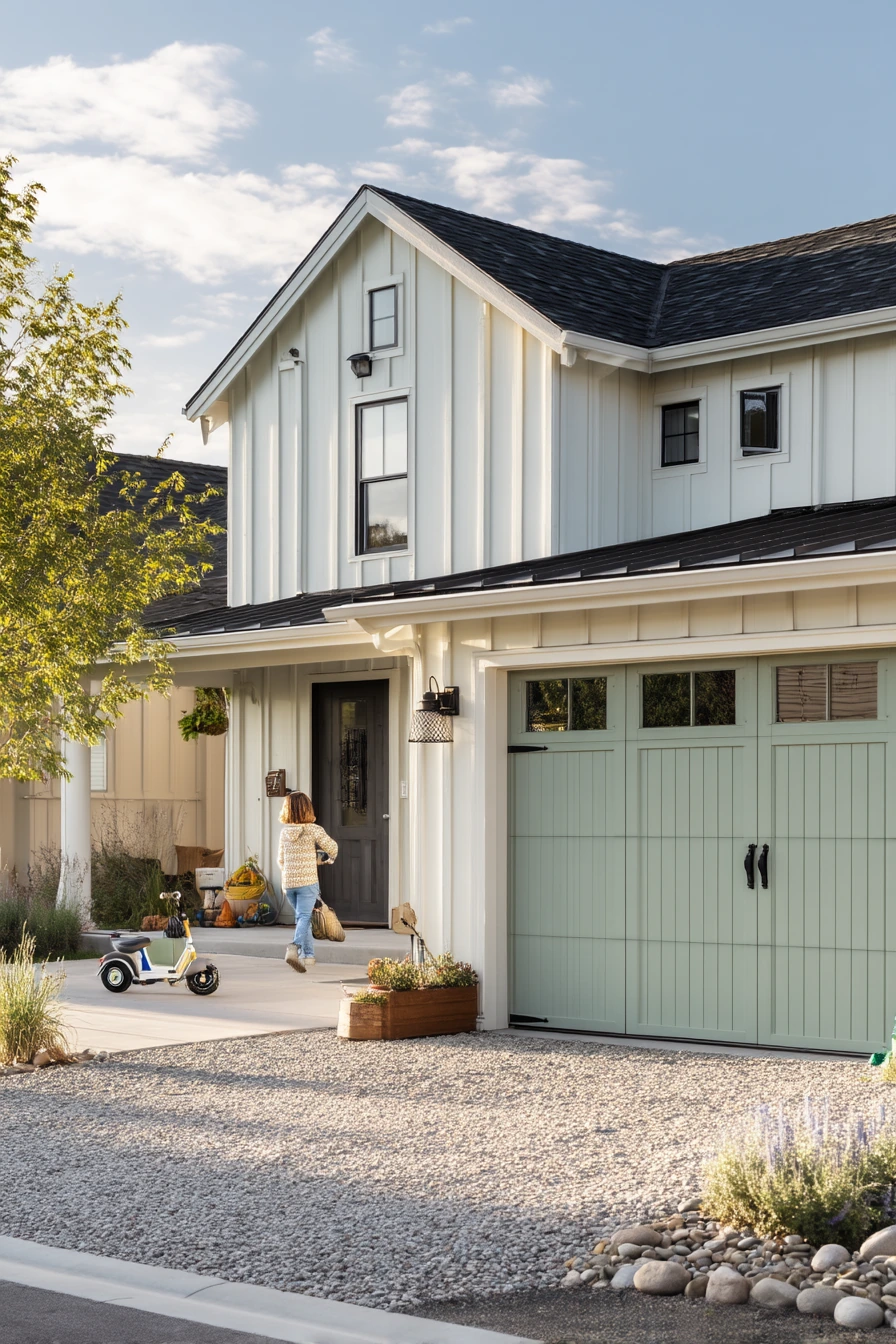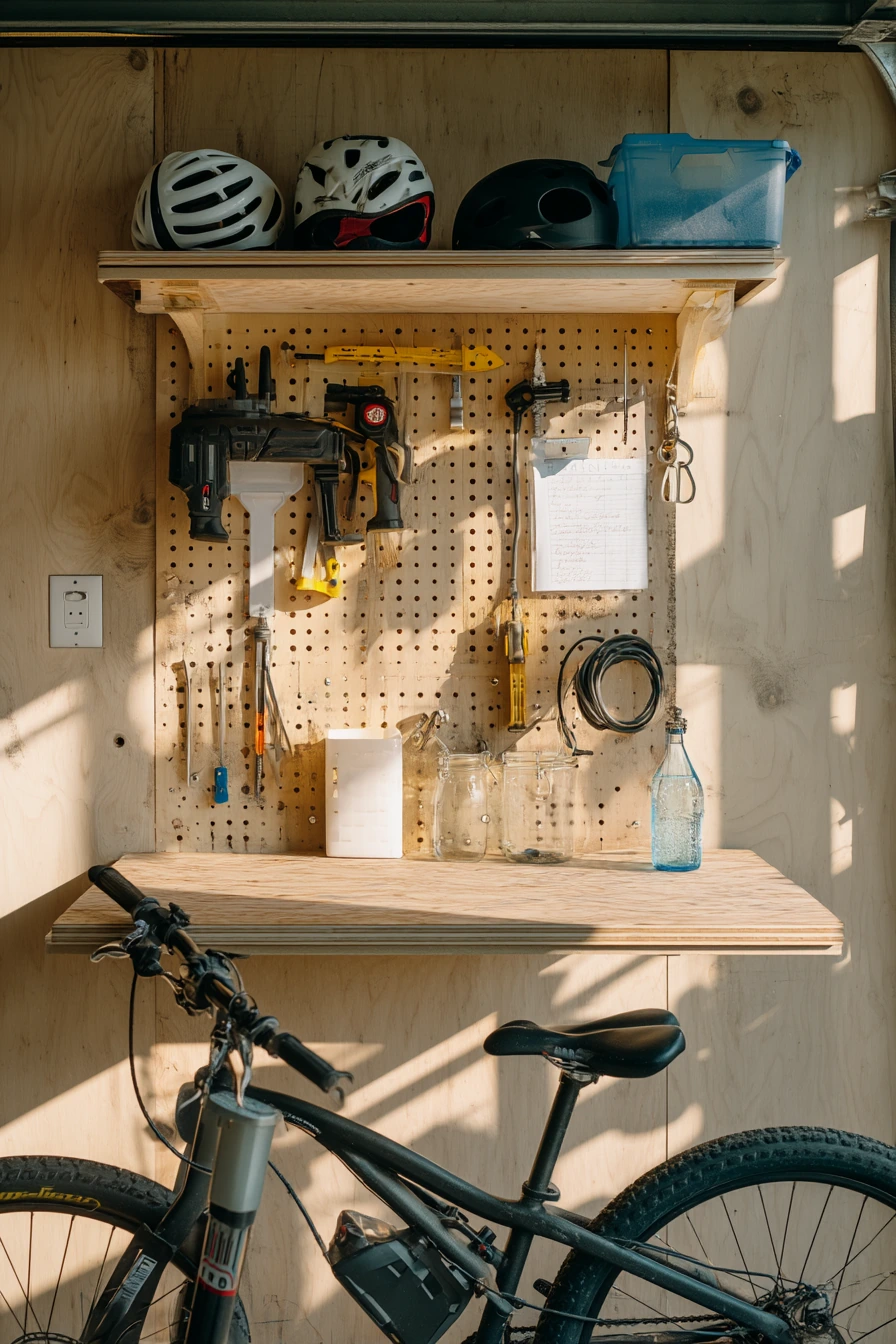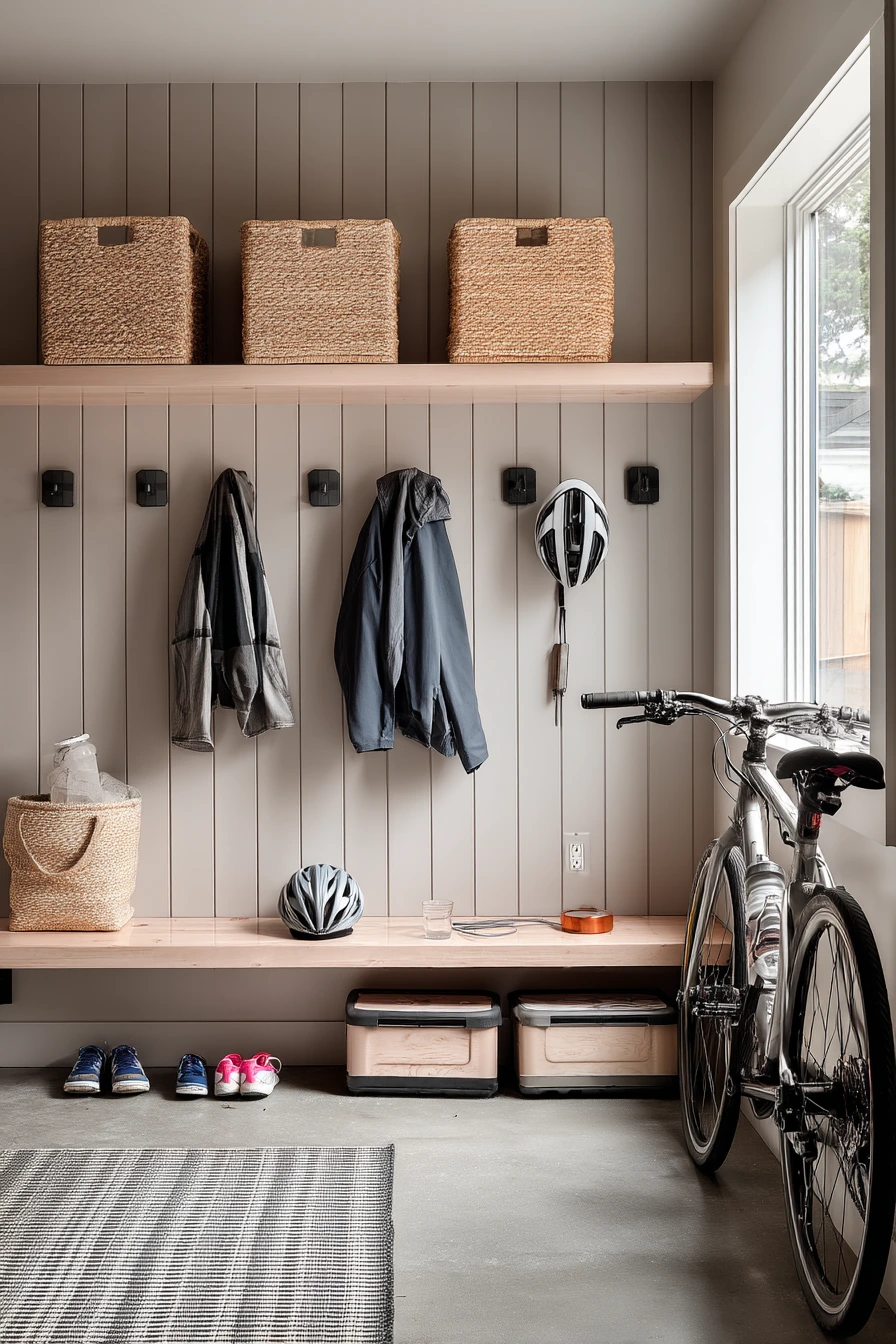

Garage door paint ideas can change the whole look of your home fast, because the garage door is often the biggest surface on the front of the house.
In this guide, you will see calm, lived-in color schemes like soft greige with black trim, charcoal with clean white trim, warm white with brass hardware, and deep navy on a modern farmhouse.
Each section shares simple styling ideas you can copy, plus quick notes on prep, trim colors, hardware, and what looks best in different light like late-afternoon sun or soft morning light.
If you are coming from Pinterest, use this post as a save-and-shop list for paint shades, small decor, and easy DIY steps that make the finished look feel real, not staged.
1 Fresh Curb Appeal for a Family Ranch
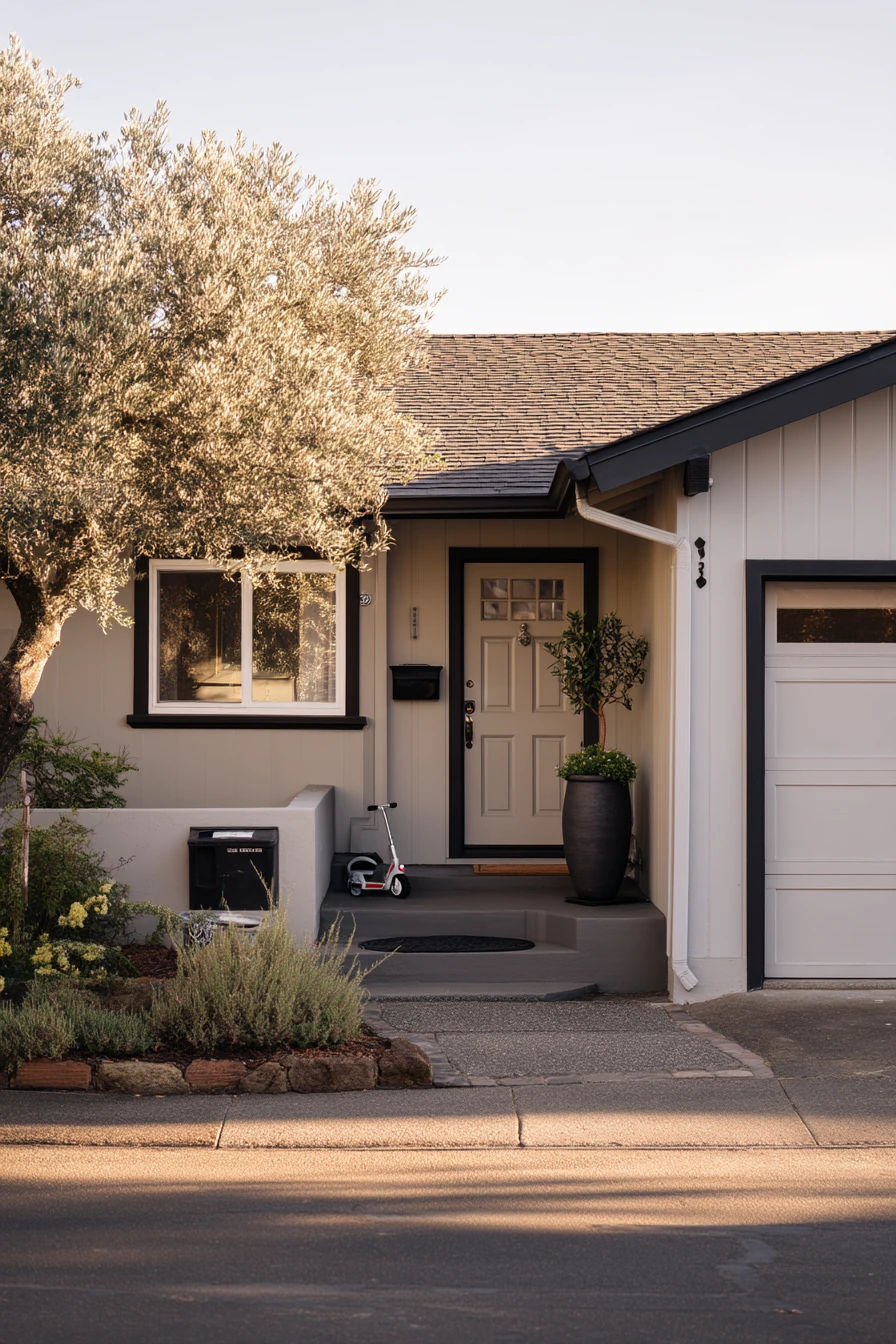
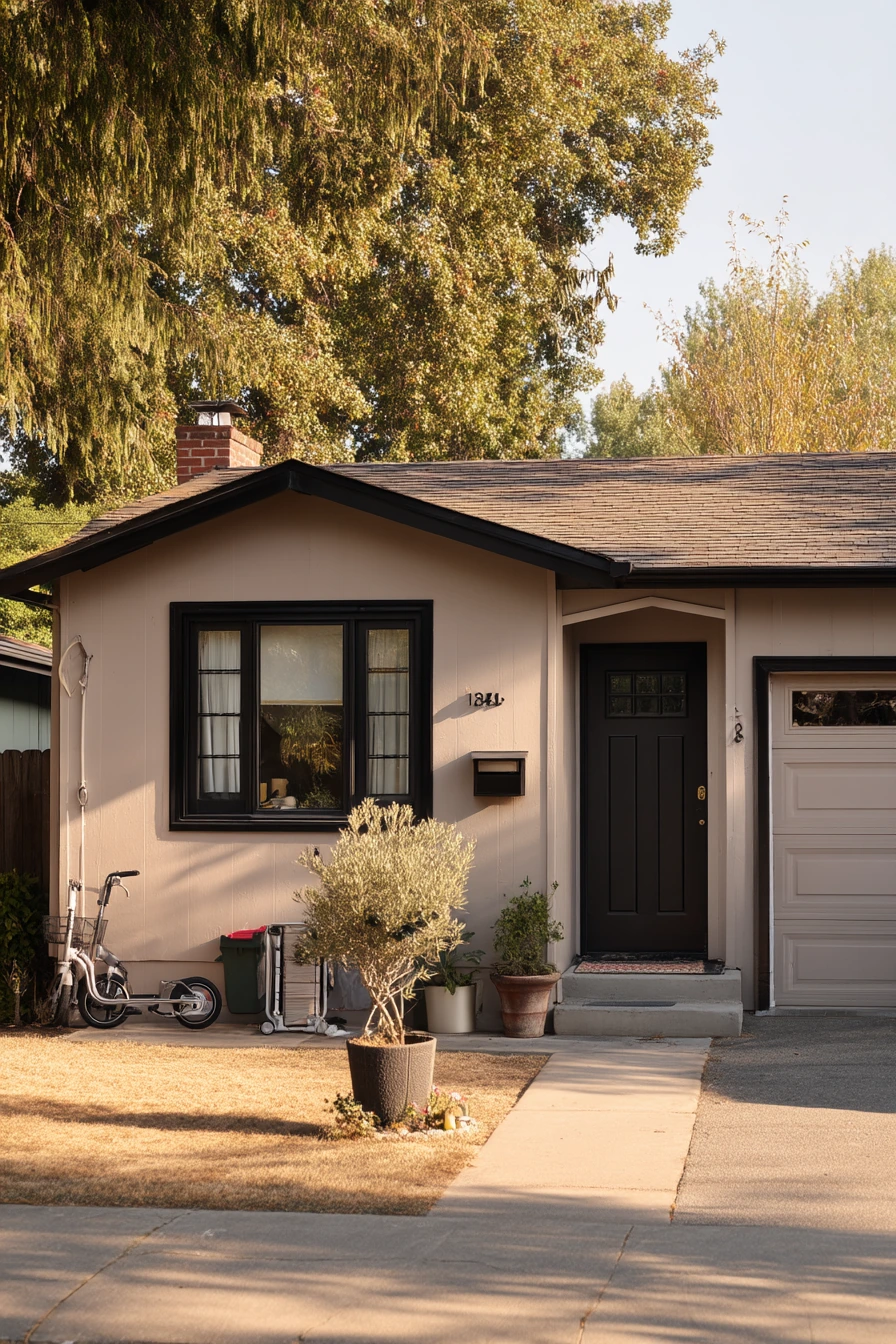
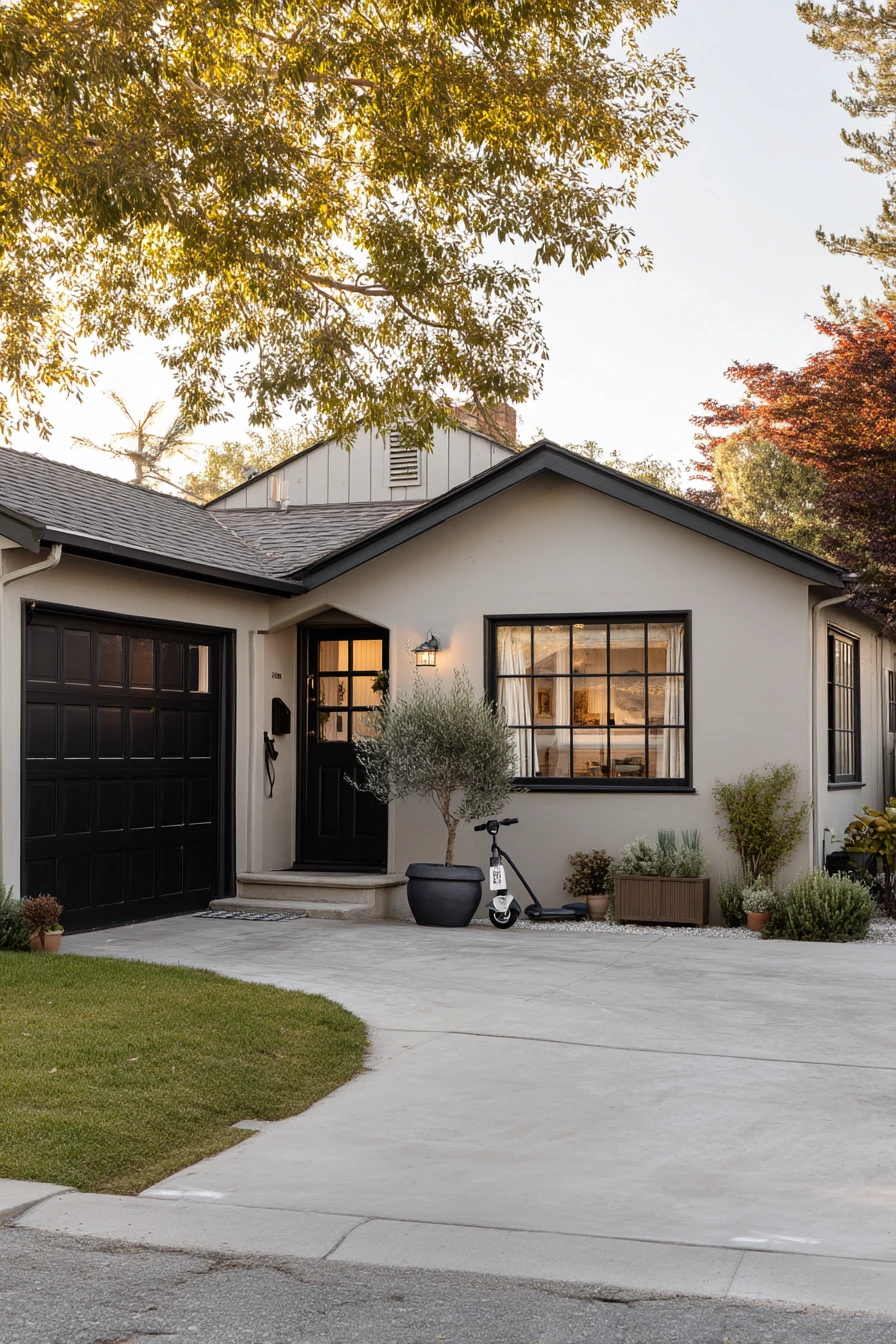
A soft greige garage door with black trim is one of the safest garage door paint ideas for a suburban ranch home. Greige sits between gray and beige, so it works with warm brick, cool stone, or simple siding. The black trim adds a clean outline, which helps the door look sharp without feeling bold. In late-afternoon sun, greige stays calm and hides dust better than pure white.
To keep the look honest and homey, lean into real-life curb appeal details: a potted olive tree by the entry, a slightly scuffed welcome mat, and small signs of daily life like kids’ scooters in the side yard. These items make the color choice feel easy to live with. If your driveway has faint chalk marks, that is fine. The goal is a welcoming front, not a showroom.
Style the rest of the front so it supports the door color. Match black trim with a black mailbox, black house numbers, or a simple black leash hook. Add texture with a woven mat, a clay pot, and one soft green plant. If you have one open window with a sheer curtain, it looks light and relaxed next to the darker trim.
- Pick a greige that matches your roof tone, then test it in morning and late-day light.
- Paint the trim and the door edge in the same black for a clean frame.
- Use satin or soft gloss for the trim so it wipes clean.
- Repeat olive green with one potted tree or two small planters near the entry.
- Keep front items simple: one mat, one mailbox, one small bin area that looks tidy.
Pro Design Tip: Paint the inside edges of the garage door frame black too, so the outline stays crisp when the door is open or in shadow.
Budget Considerations: If you want the black trim look without full repainting, start with only the outer frame and house numbers, then paint the full door later.
2 Budget-Friendly Charcoal Update
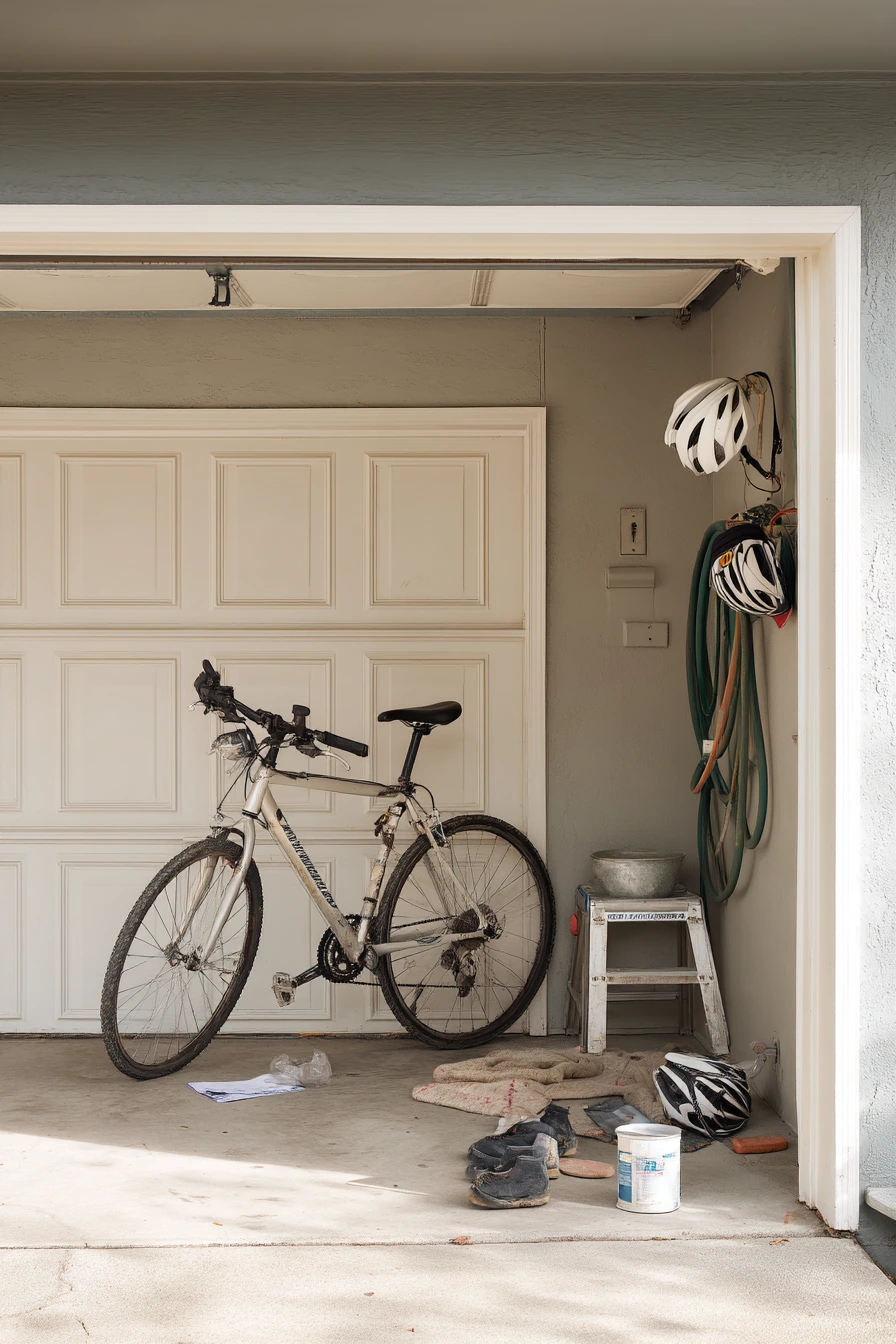
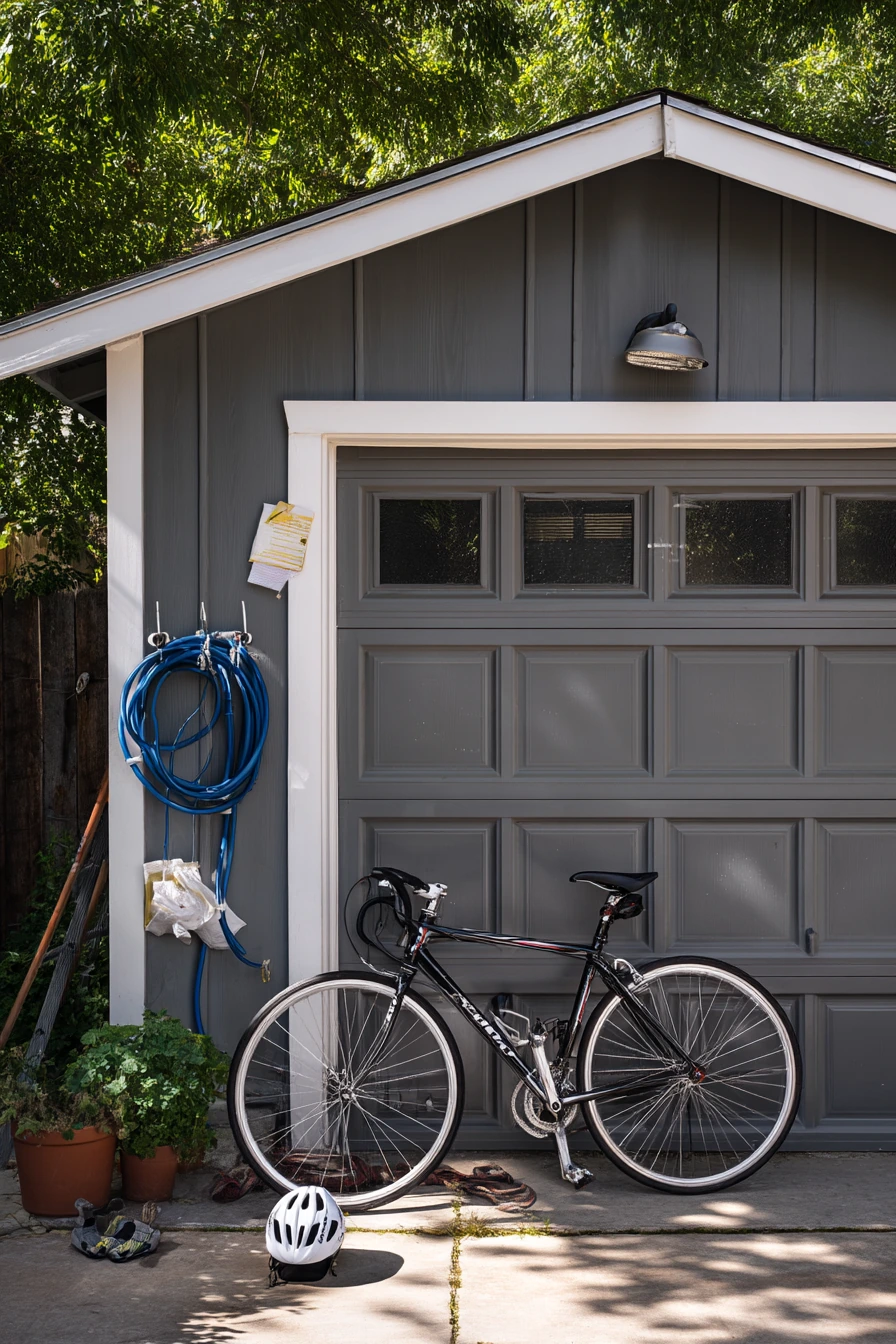
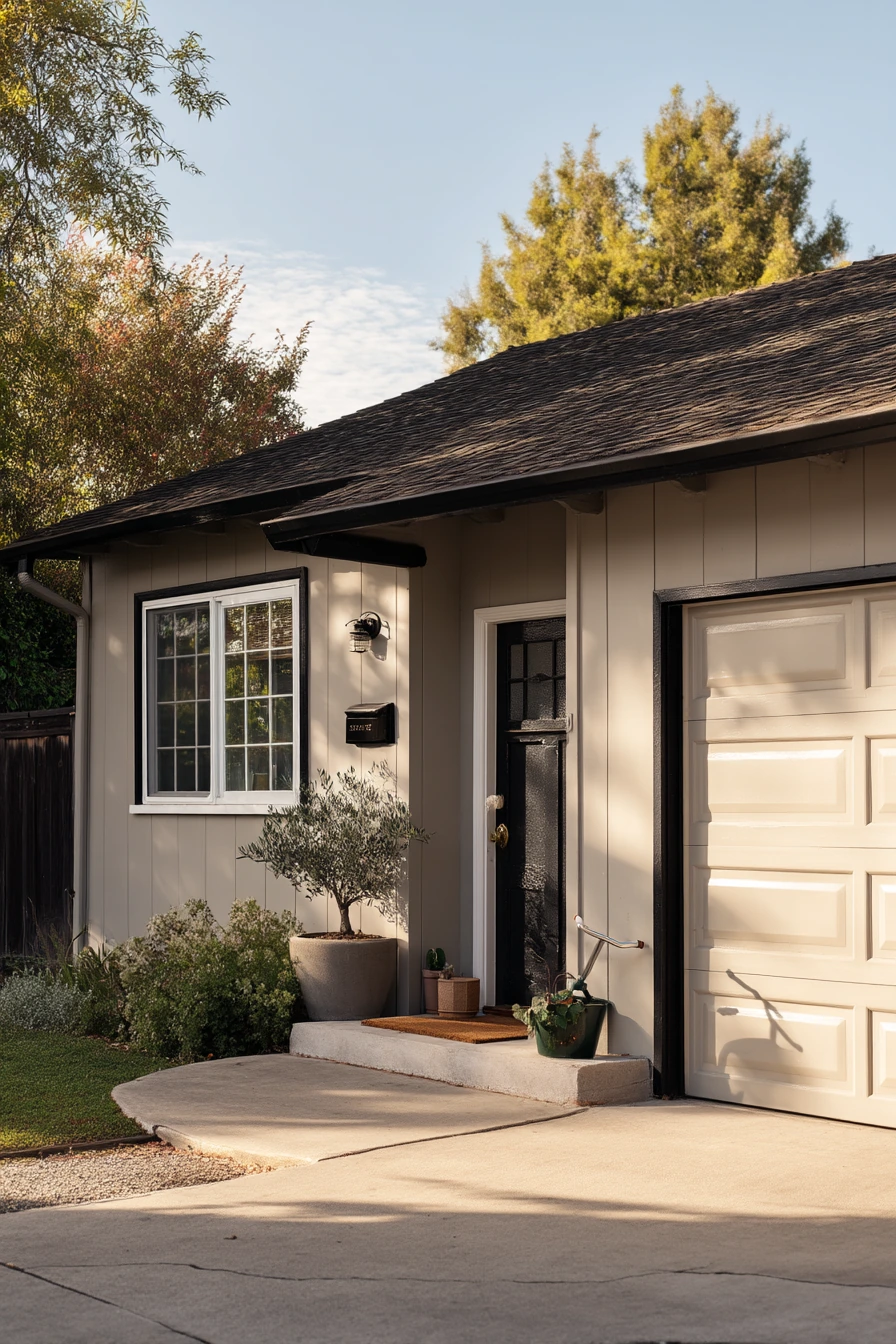
A charcoal garage door with clean white trim fits many 1960s homes because it adds contrast without changing the whole style. Charcoal reads modern, but it still feels grounded and practical. It also hides scuffs and hand marks better than lighter colors, which is helpful if the garage is used daily. In soft morning light, charcoal looks smooth and calm instead of harsh.
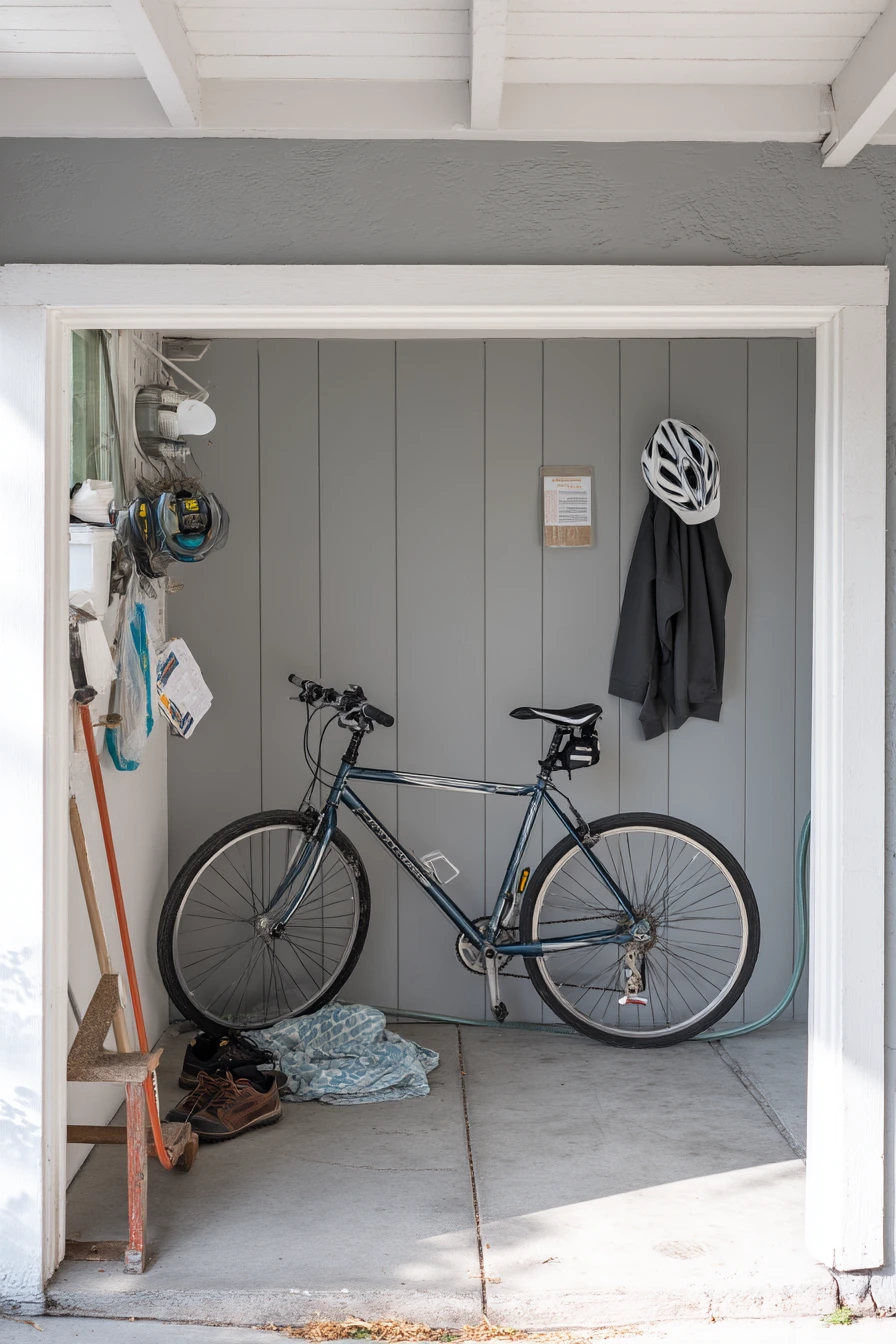
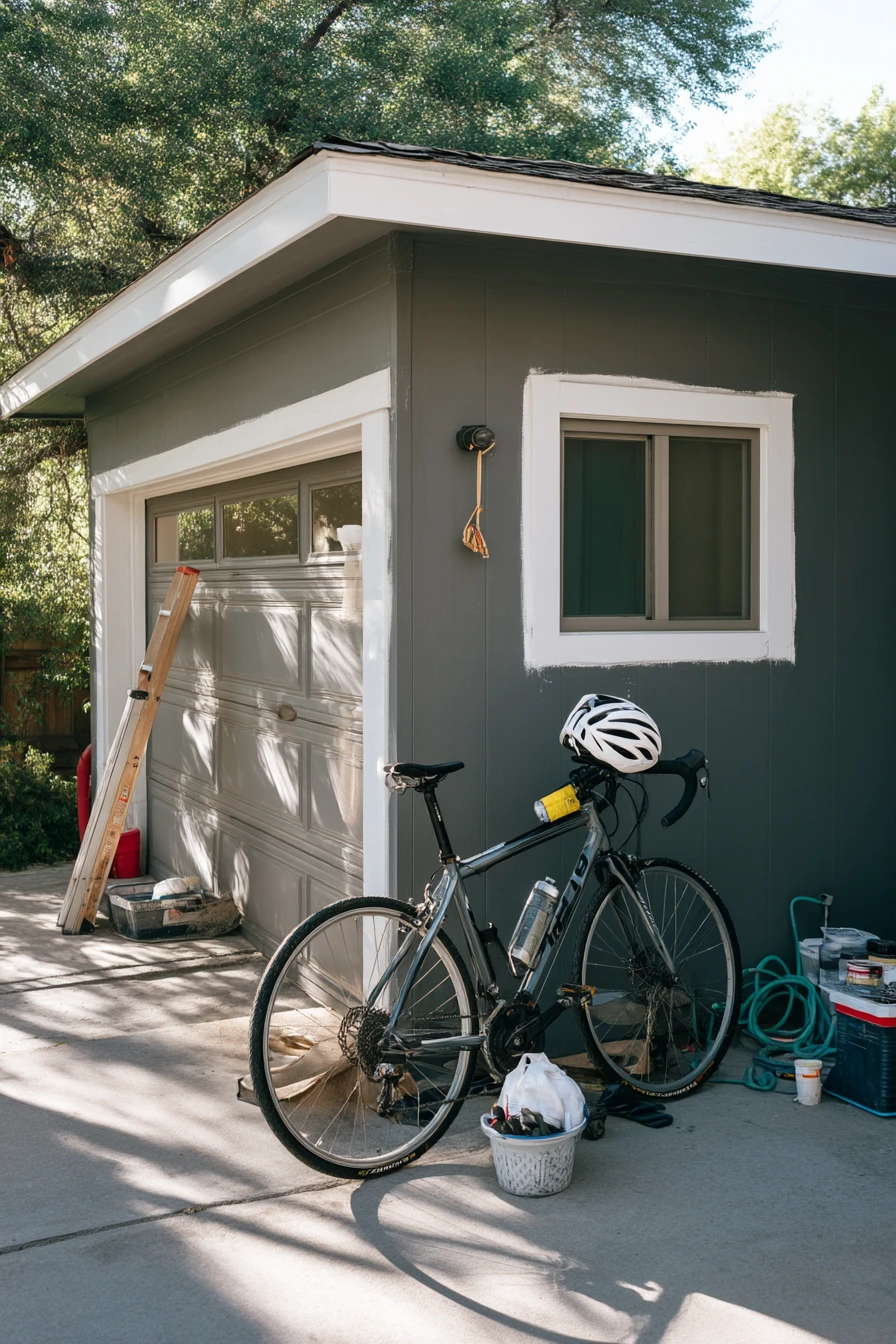
This color combo pairs well with a believable DIY weekend setup: a paint can tucked by the wall, a step ladder, and a drop cloth half folded. If you have muddy sneakers near the door or a hose coiled by the hose bib, the darker door helps the space feel less messy. Keep the trim bright and clean so the whole front still looks fresh.
For styling, repeat white and charcoal in small ways. Use white house numbers on a dark plaque, or a white porch light shade if it matches your home. If there is a bicycle helmet on a hook or a bike parked nearby, the door becomes a strong background that makes daily gear look more organized. Add one simple plant in a light pot to soften the dark color.
- Choose a charcoal with a hint of brown if your home has warm brick or tan stone.
- Use a true white trim to keep the edge sharp and easy to see from the street.
- Patch and sand peeling spots so the charcoal finish looks even.
- Keep a small “paint station” box so touch-ups are easy later.
- Swap old lights for simple white or black fixtures to match the new contrast.
Pro Design Tip: Paint the garage door hardware and hinges to match the charcoal, then add one bright white element nearby so the trim does not look yellow.
Budget Considerations: If buying primer and paint feels costly, focus on quality primer first; it helps coverage so you need fewer top coats of charcoal.
3 Warm White Cottage Refresh
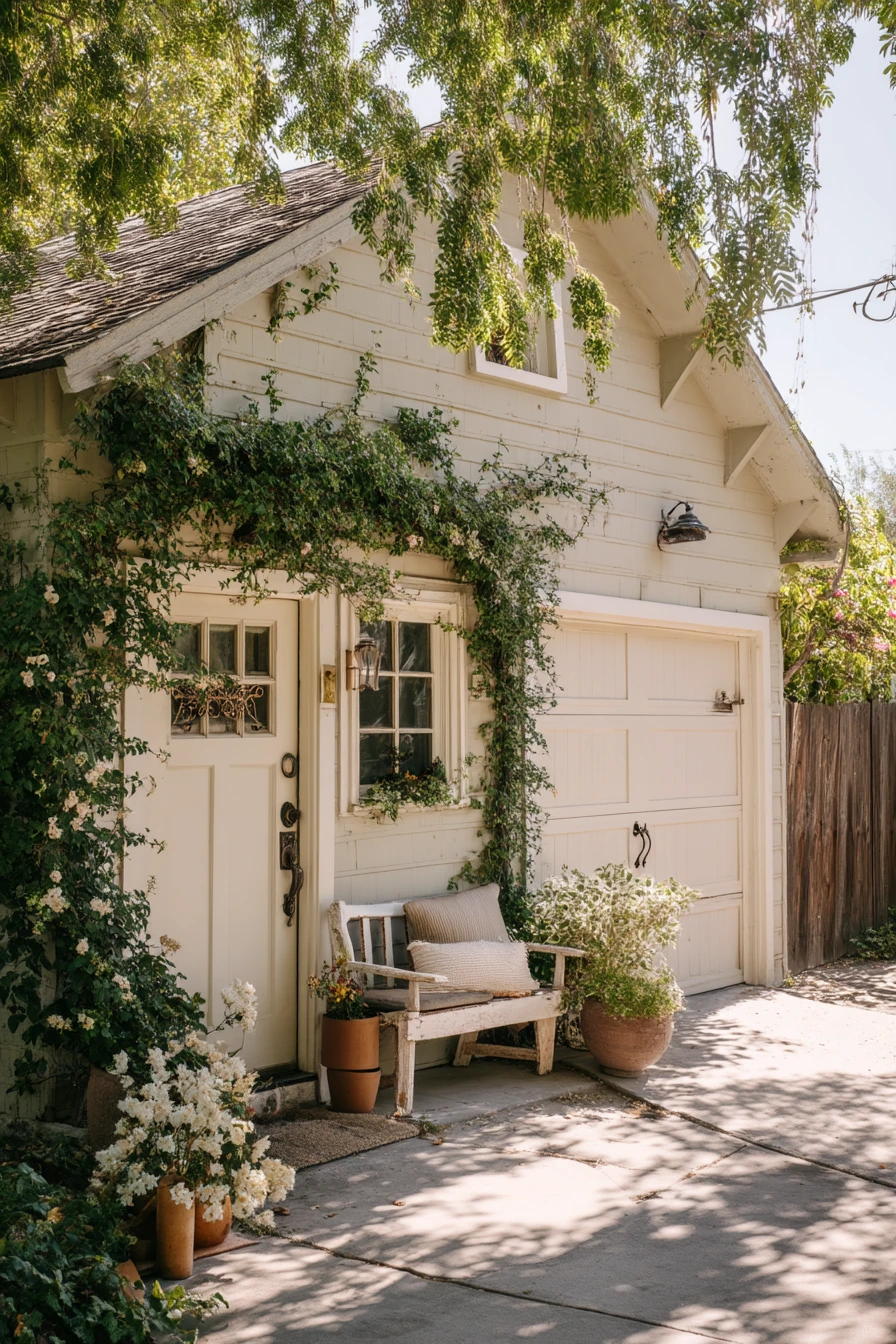
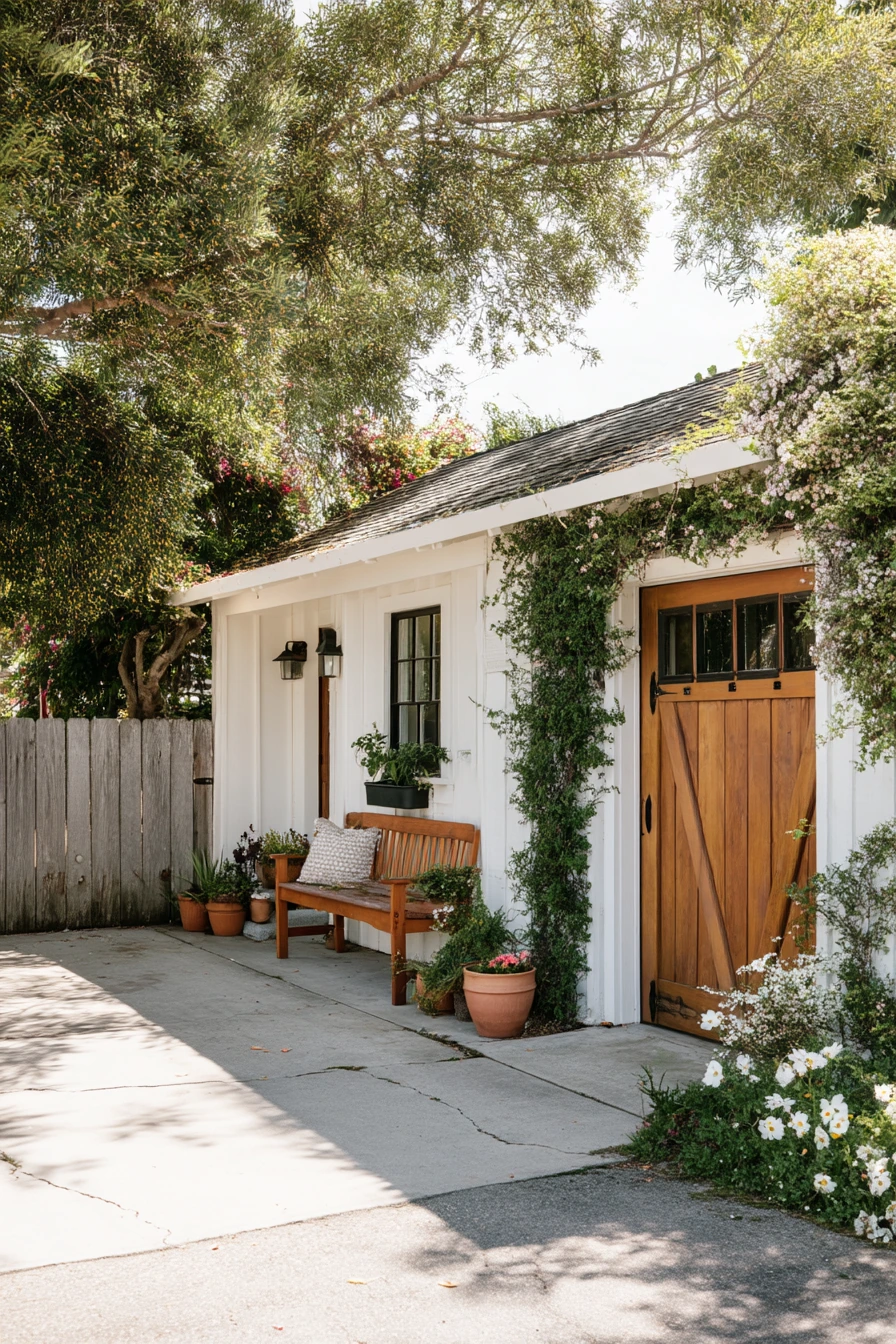
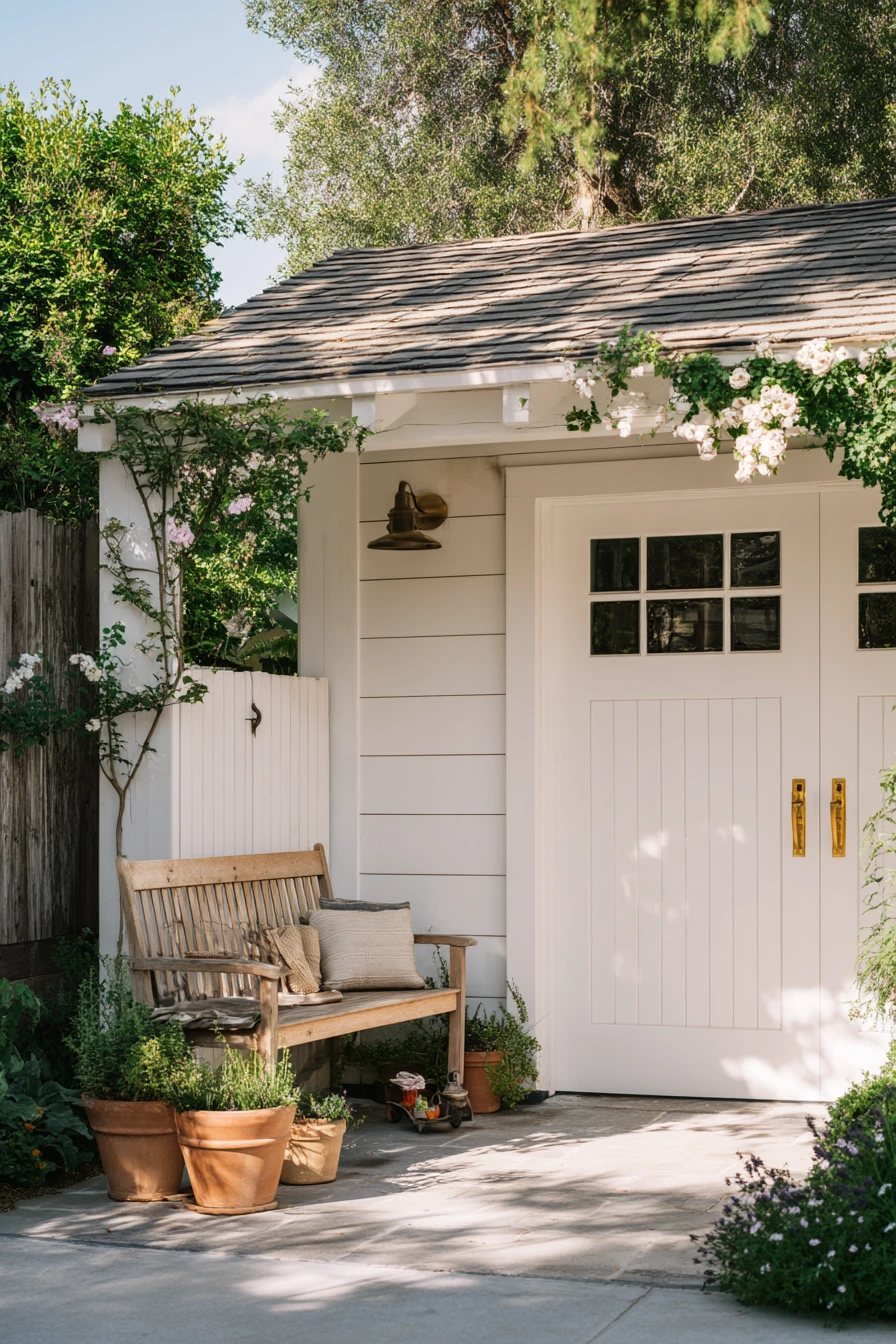
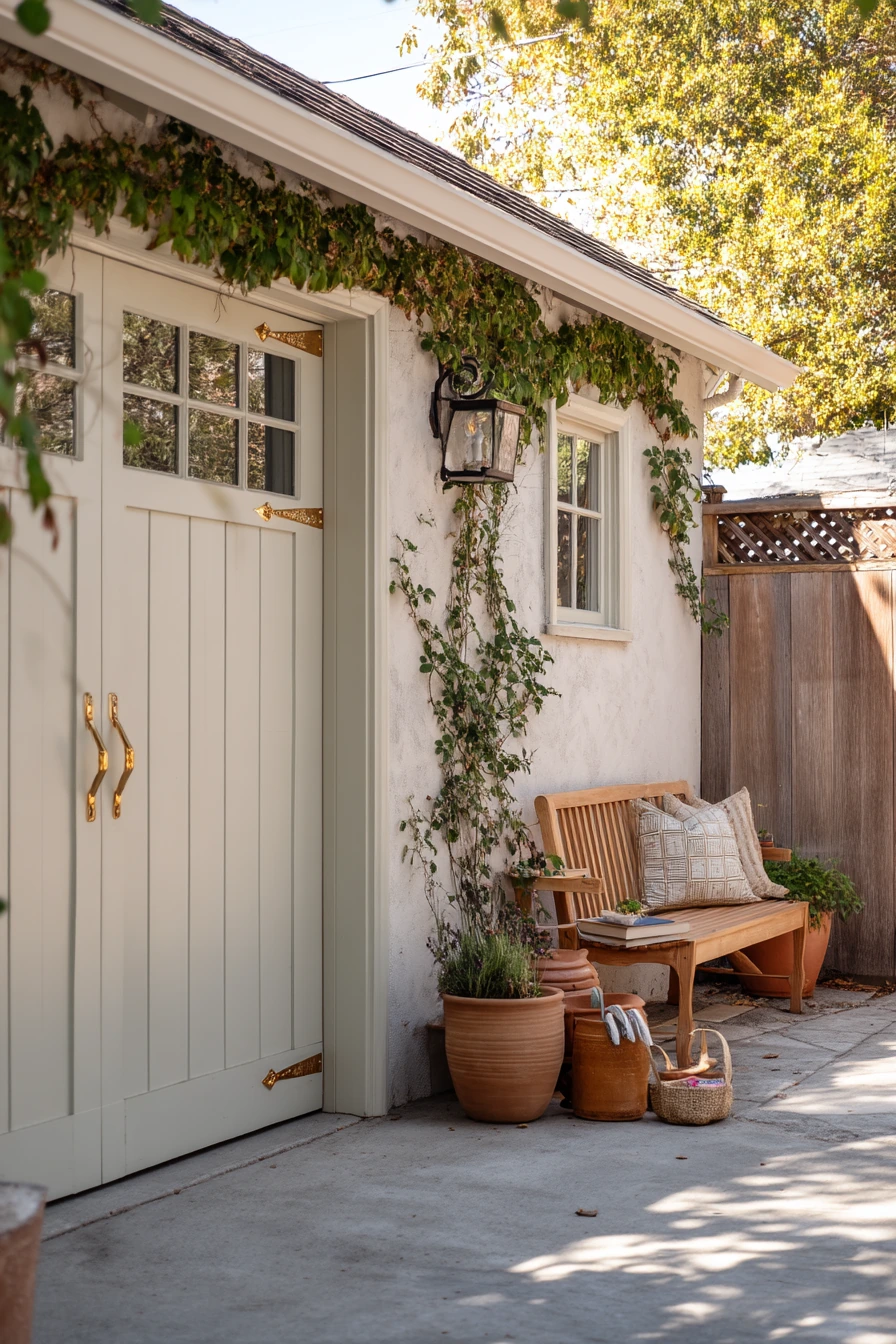
A warm white garage door is a classic cottage choice, especially when you add brass hardware for a soft, sunny detail. Warm white looks gentle in cloud-filtered daylight and does not feel stark the way bright white can. It also makes a small cottage look bigger because it reflects light and keeps the front feeling open.
Brass handles and hinges bring in a finished touch that still feels friendly. Pair them with climbing jasmine beside the frame, a porch bench, and terracotta pots for natural texture. Lived-in cues like a watering can, a paperback on the bench, or a grocery tote by the side door fit this style. A weathered cedar fence looks better next to warm white than next to a cold gray.
To style it well, keep your supporting colors earthy. Use clay pots, a simple striped cushion on the bench, and one or two green plants that spill over. If the pavement has stray kids’ chalk, it actually matches the cottage mood. For the rest of the front, pick one accent color, like soft sage or dusty blue, and repeat it in the doormat or planters.
- Pick a warm white that matches your siding so the garage door blends, not shouts.
- Use brass hardware with a brushed finish to avoid a shiny look.
- Add climbing plants like jasmine or ivy to soften the door edges.
- Choose terracotta pots in two sizes for an easy, layered look.
- Keep a simple bench near the entry to make the space feel lived-in.
Pro Design Tip: Use the same brass tone on one more item, like a porch light or house numbers, so the hardware looks planned.
Budget Considerations: If real brass is too expensive, try a brass-look metal kit or spray paint made for outdoor hardware, then seal it for weather.
4 Modern Farmhouse Navy Contrast
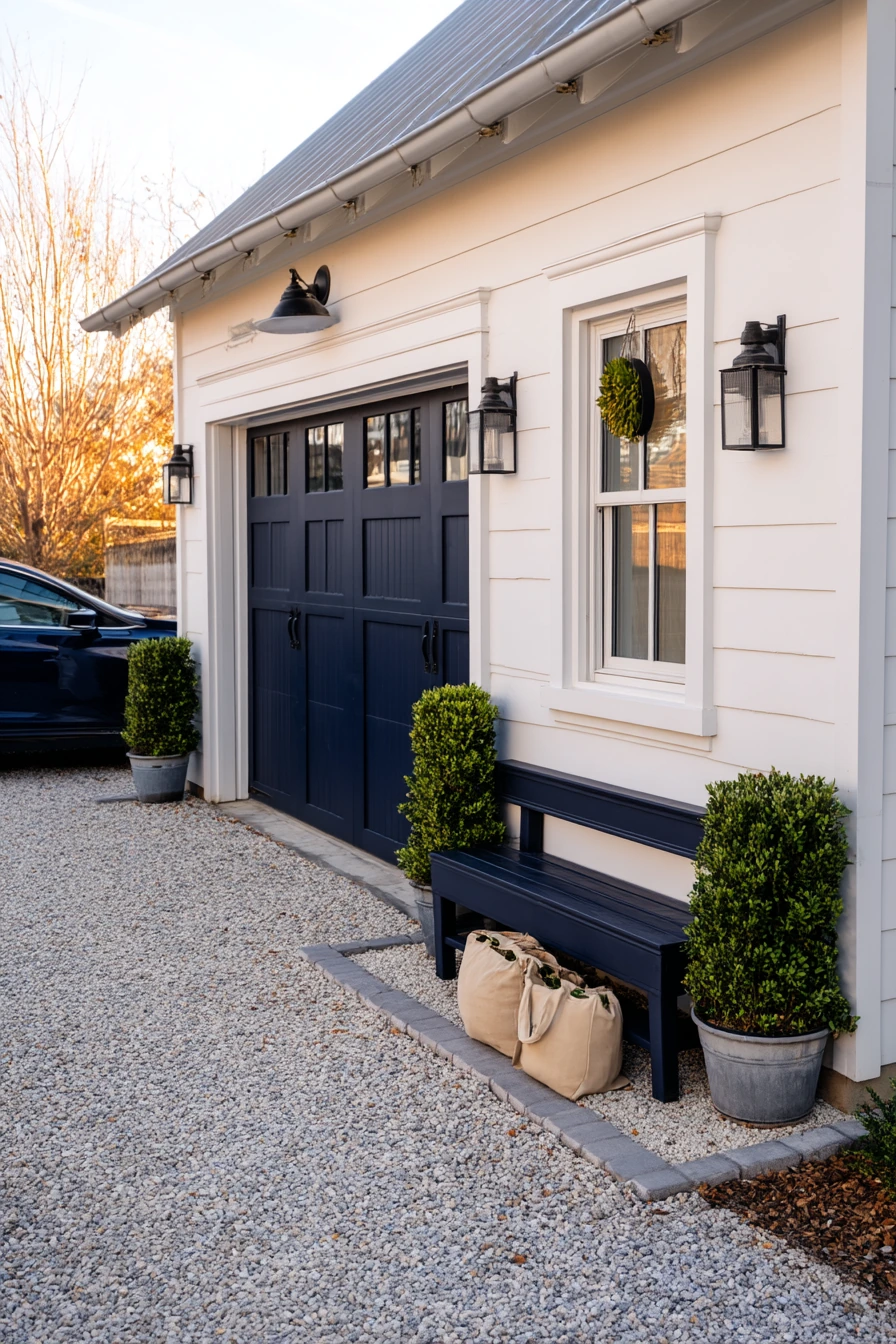
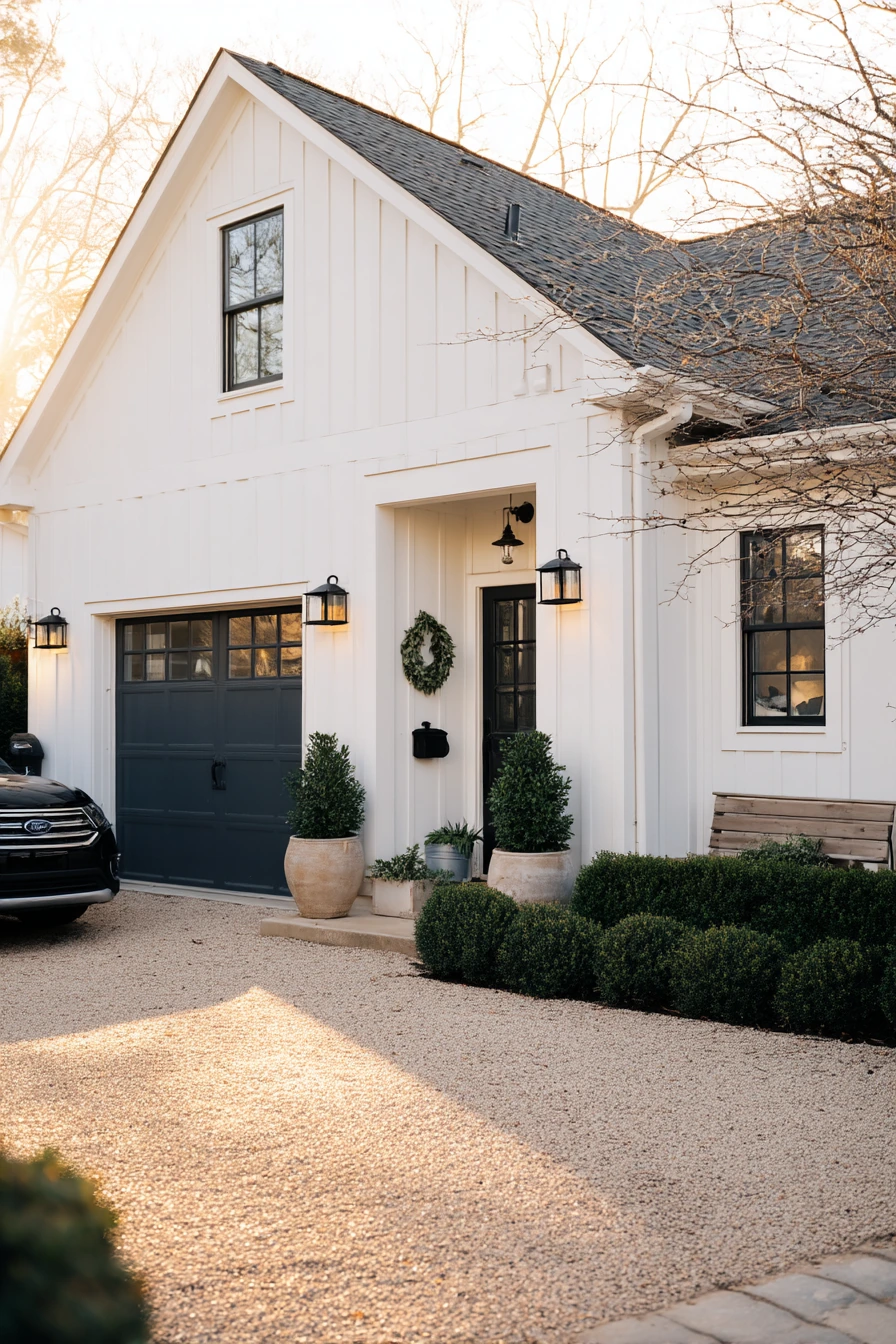
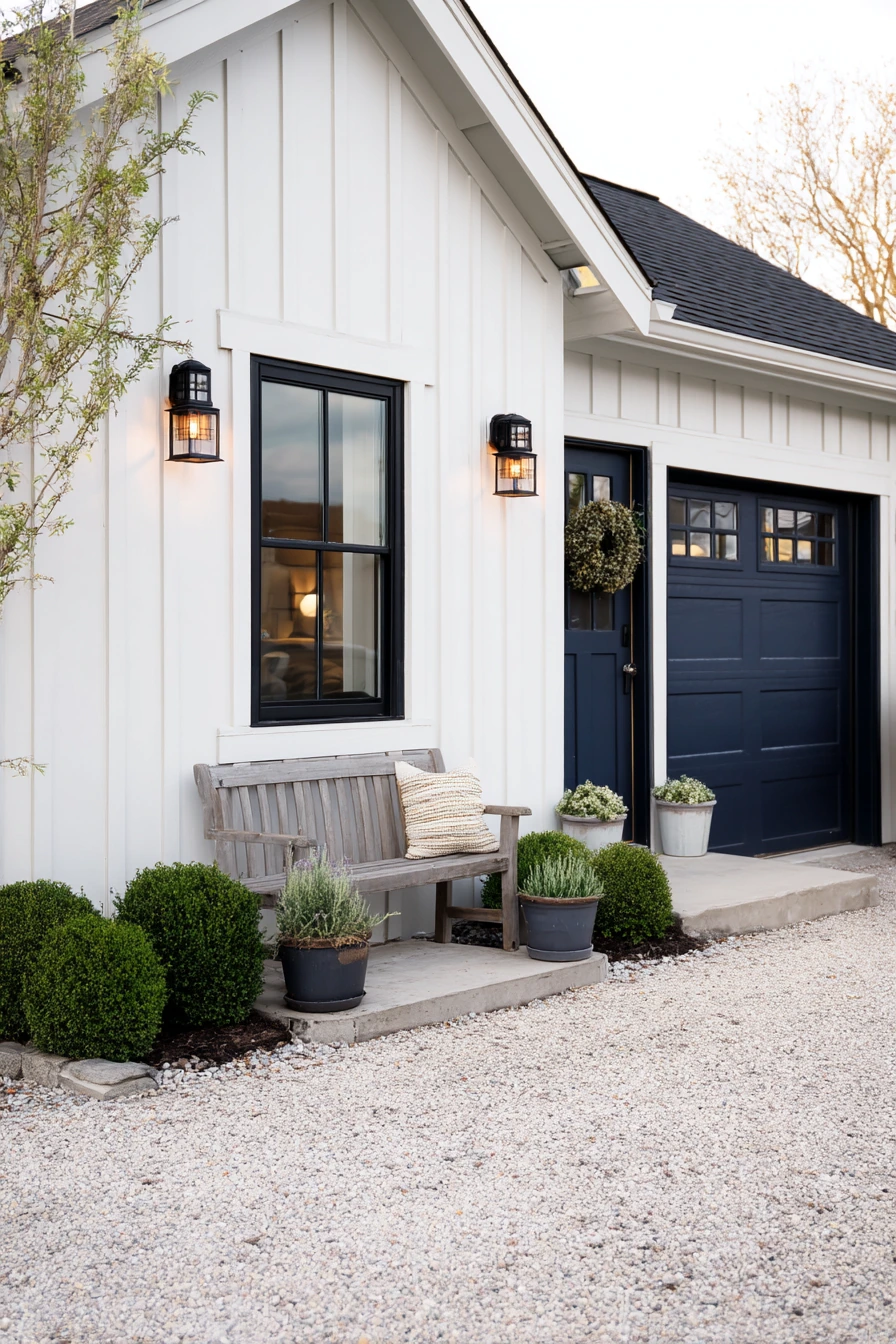
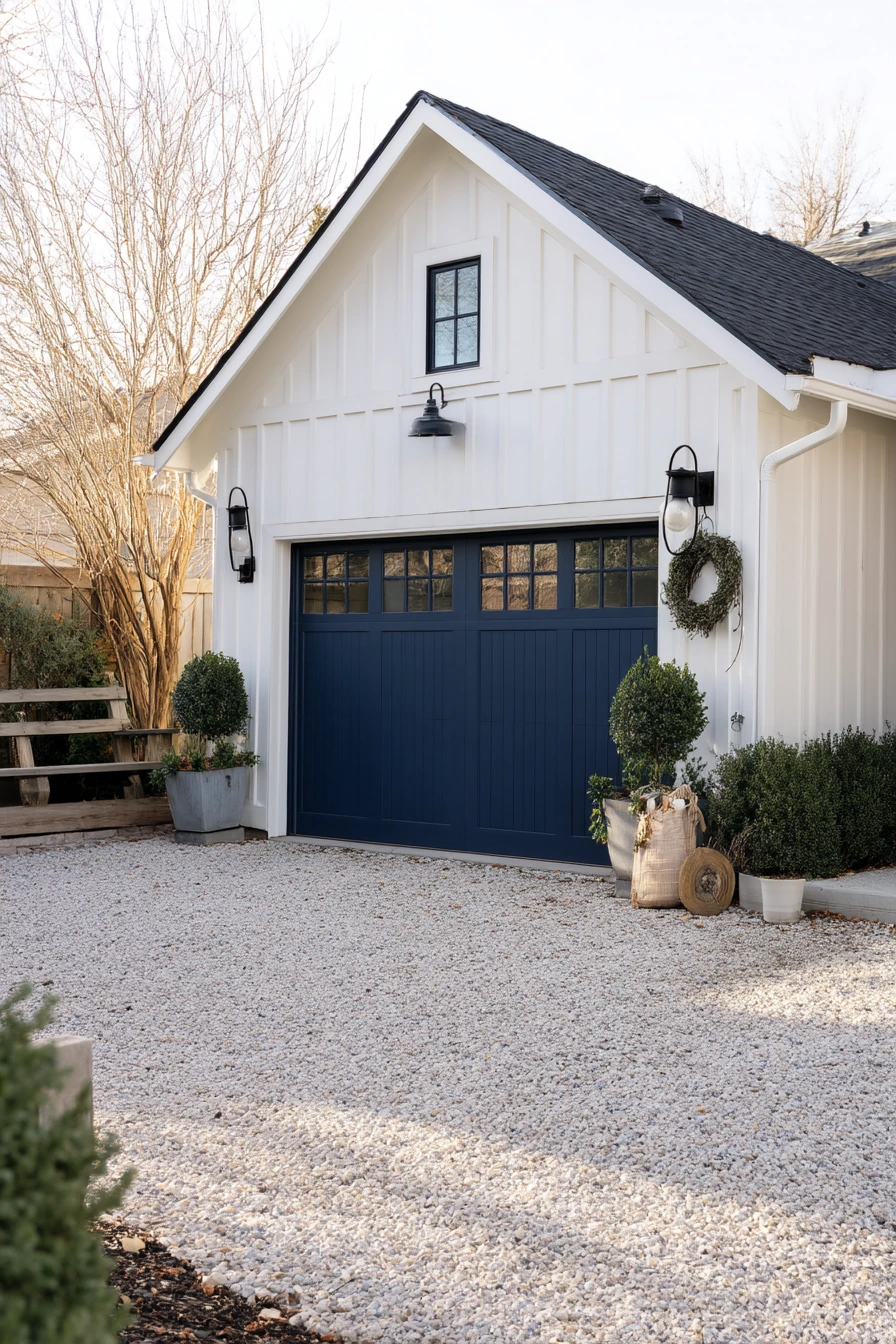
Deep navy is a strong choice for modern farmhouse curb appeal because it creates crisp contrast against pale siding. It feels classic like black, but it has more depth, especially in warm morning light. Navy can also make a wide garage look a little more tailored, because dark colors visually pull the surface back.
To keep the look simple, pair the navy door with black lanterns, a small wreath, and clipped boxwoods. Gravel edging adds a clean line without needing more plants. Small lived-in details help the scene feel real, like a charging cable draped near a bench, two plant pots that are not perfectly matched, or an open car trunk with a reusable tote. This style works best when the accessories are neat but not perfect.
For styling, keep the trim color consistent. White trim gives a clean farmhouse look, while a soft off-white feels warmer. Add one natural element, like a wood bench or a light wood planter, so the navy does not feel cold. A simple wreath works well if it is not too busy; a plain green ring or eucalyptus shape looks best.
- Test navy in shade and sun because it can look almost black at night.
- Use black sconces and hardware to keep the palette tight and clean.
- Add boxwoods or other clipped shrubs for a neat, structured look.
- Keep gravel edging straight for a more modern farmhouse feel.
- Use one simple wreath, then let the door color be the main feature.
Pro Design Tip: Choose a navy with a slight gray base if your siding is cool-toned; it keeps the contrast sharp without looking too bright.
Budget Considerations: If shrubs are pricey, buy smaller boxwoods and plant them in a straight line; they will fill in over time.
5 Renter-Safe Temporary Color Block
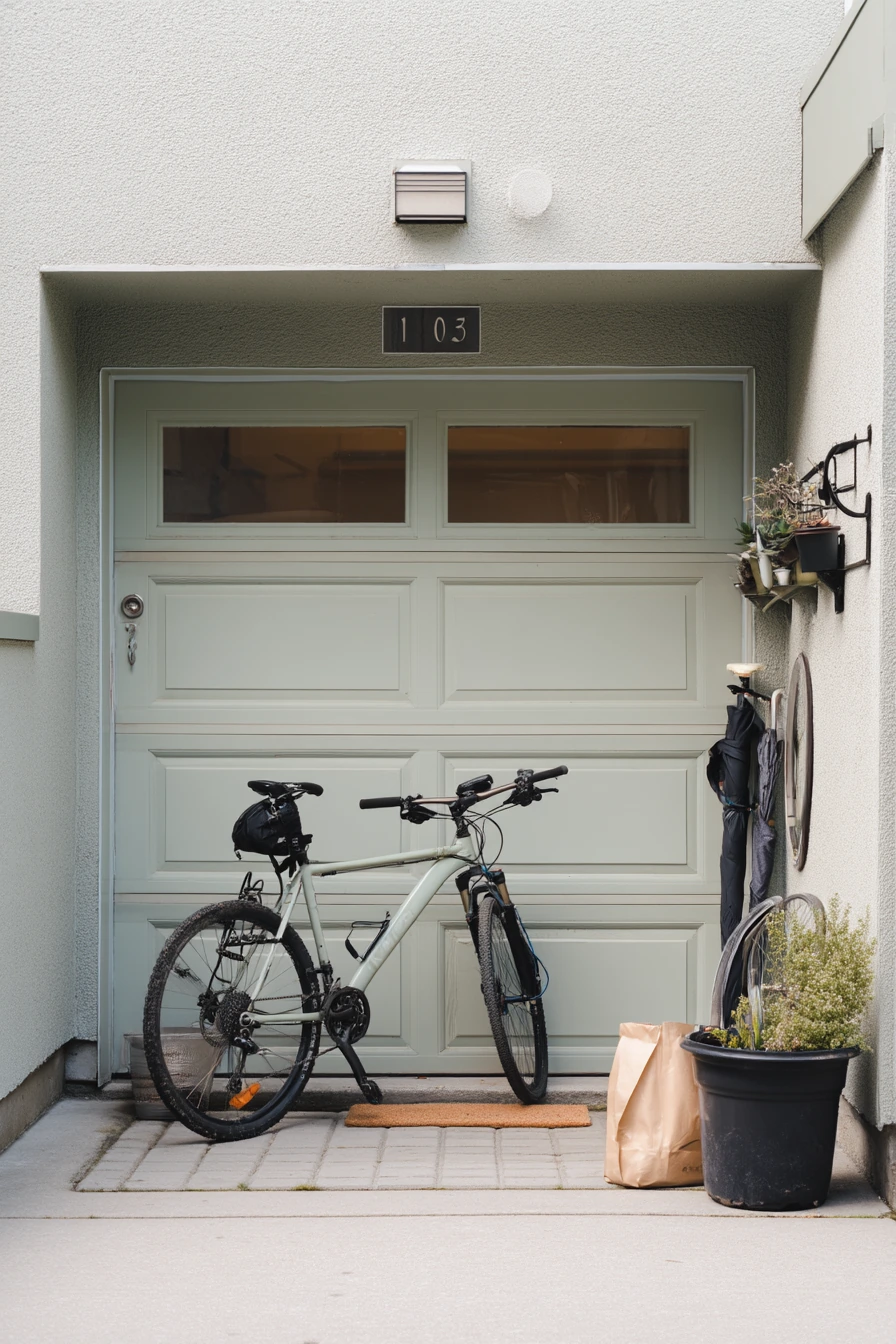
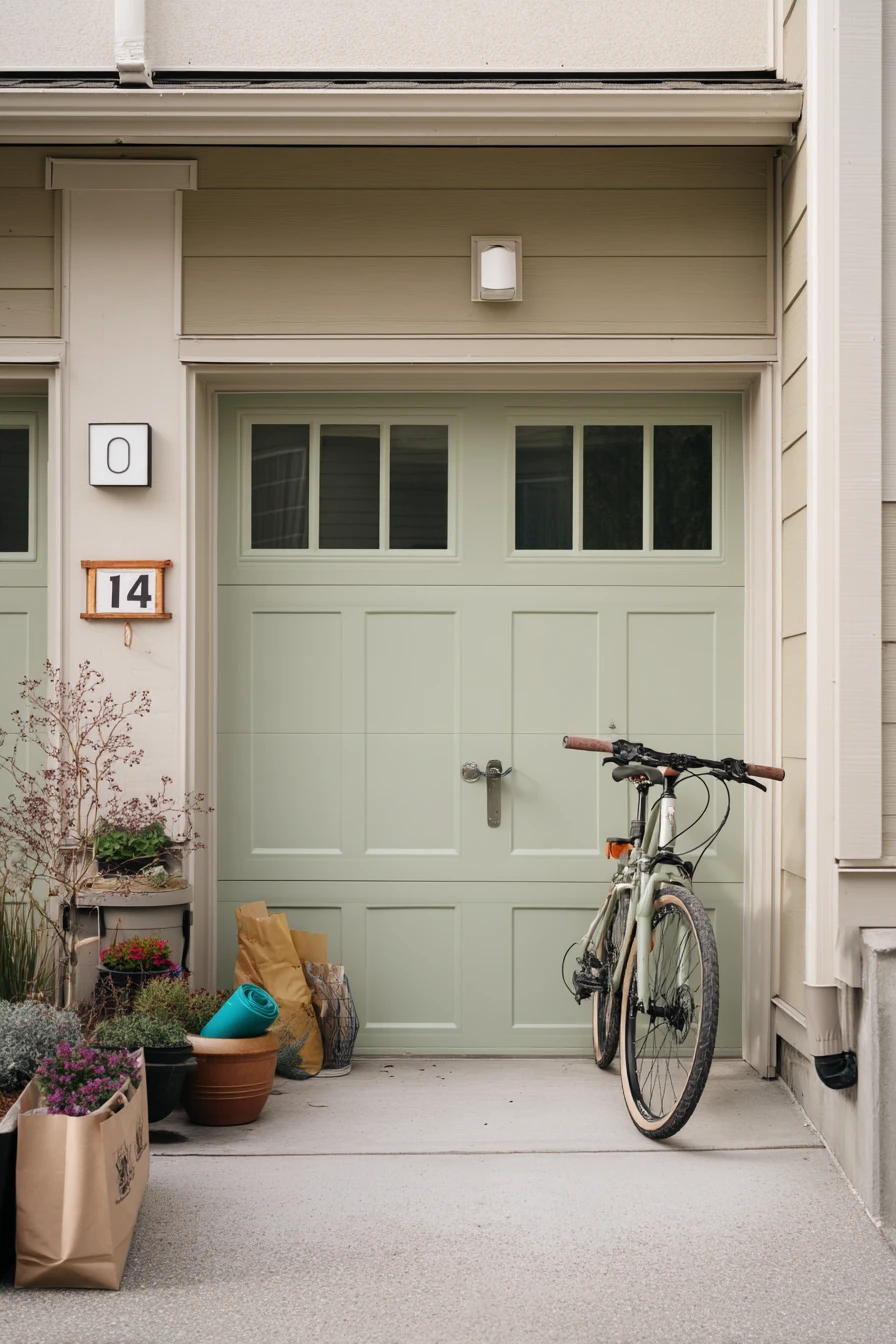
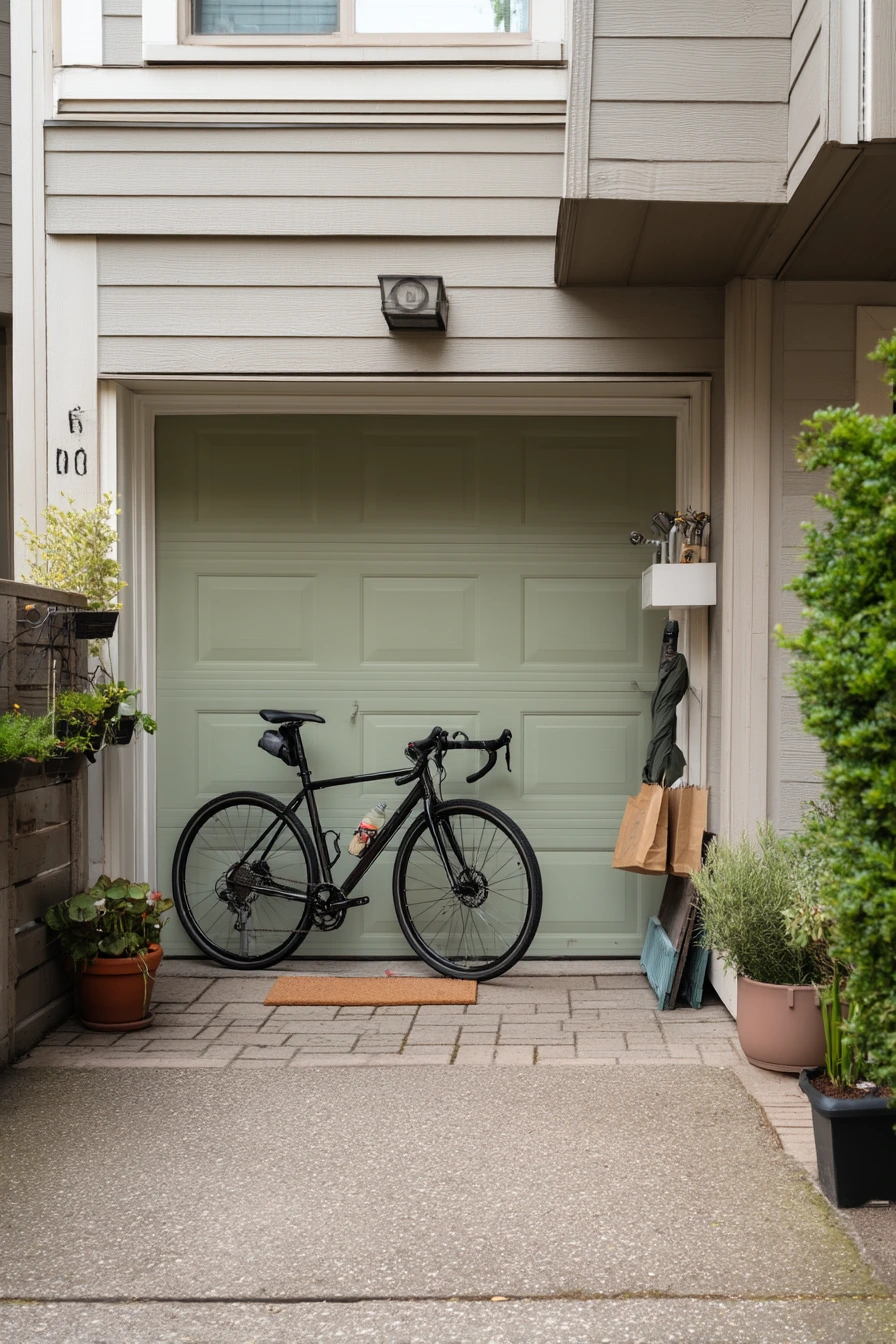
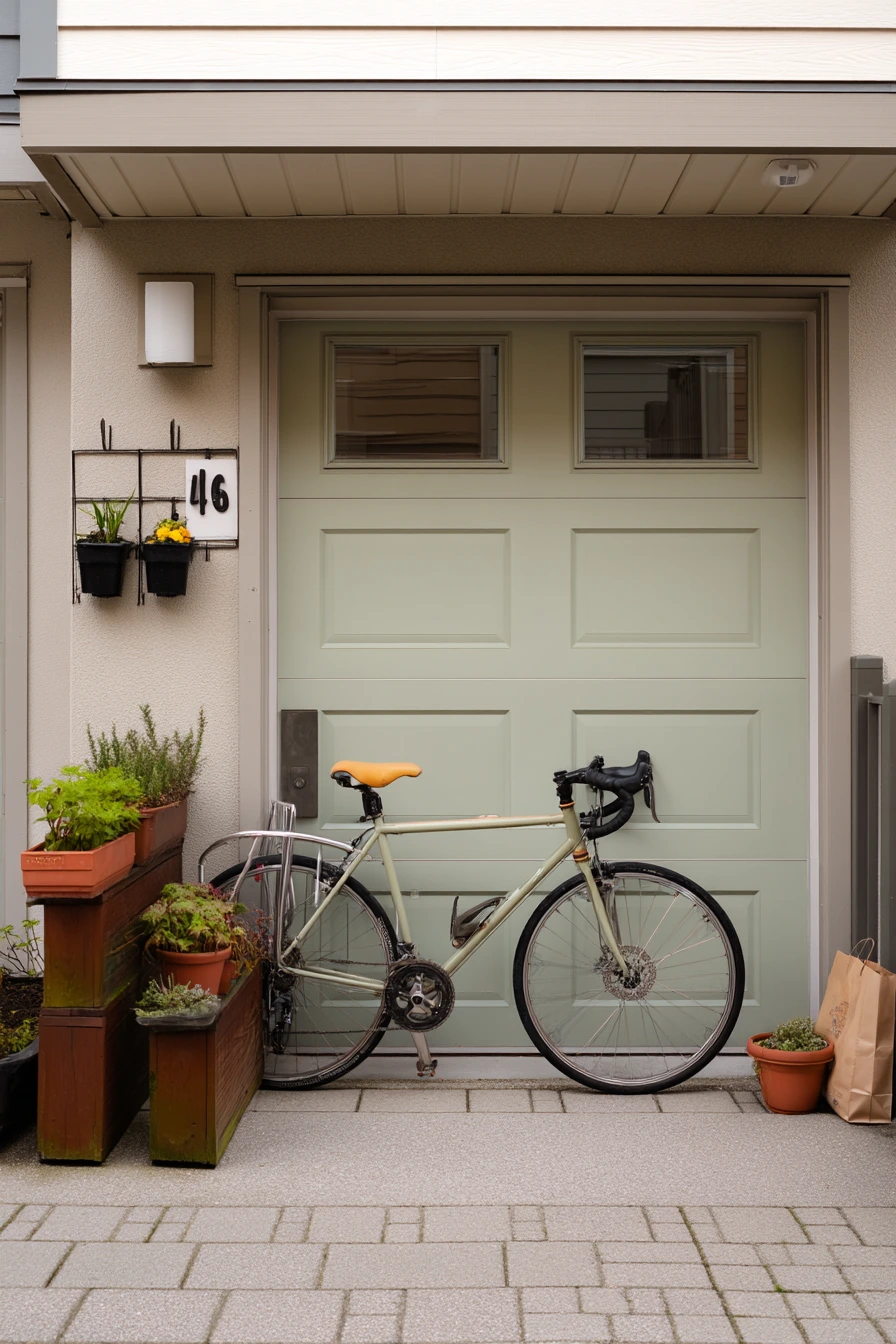
If you want garage door paint ideas that feel fresh but still calm, muted sage and cream is a great mix. A renter-friendly painted panel effect can make a plain door look custom, even in a townhome courtyard. Sage brings in a soft green that works with many brick and siding colors, while cream keeps it light and clean in overcast daylight.
To make the space feel functional, add removable magnetic house numbers so you can update the look without drilling holes. Keep the area tidy with compact herb pots, and use a wall-mounted bike rack to clear the floor. Lived-in cues can still look nice: a rolled yoga mat near the entry, a wet umbrella by the door, or a takeout bag on the stoop. These details match the everyday vibe of a courtyard home.
For styling, repeat sage in small items like a planter or a doormat stripe. Cream works best if you also have light trim or light window frames. If a side window shows an entry table with a single water glass, it adds a soft, real touch. Keep the door design simple: wide “panels” look modern, while narrower panels feel more traditional.
- Use painter’s tape and a level to map out the panel effect before painting.
- Pick a muted sage that leans gray so it stays calm and not too bright.
- Choose cream instead of pure white for a softer look in cloudy light.
- Use magnetic numbers and removable hooks for a renter-friendly setup.
- Style with small herb pots for color that also feels useful.
Pro Design Tip: Keep the panel lines the same width all around; even spacing is what makes the painted design look like real trim.
Budget Considerations: If you cannot paint, try a peel-and-stick faux panel kit or removable vinyl stripes in sage and cream for a similar effect.
6 Coastal Blue for a Breezy Bungalow
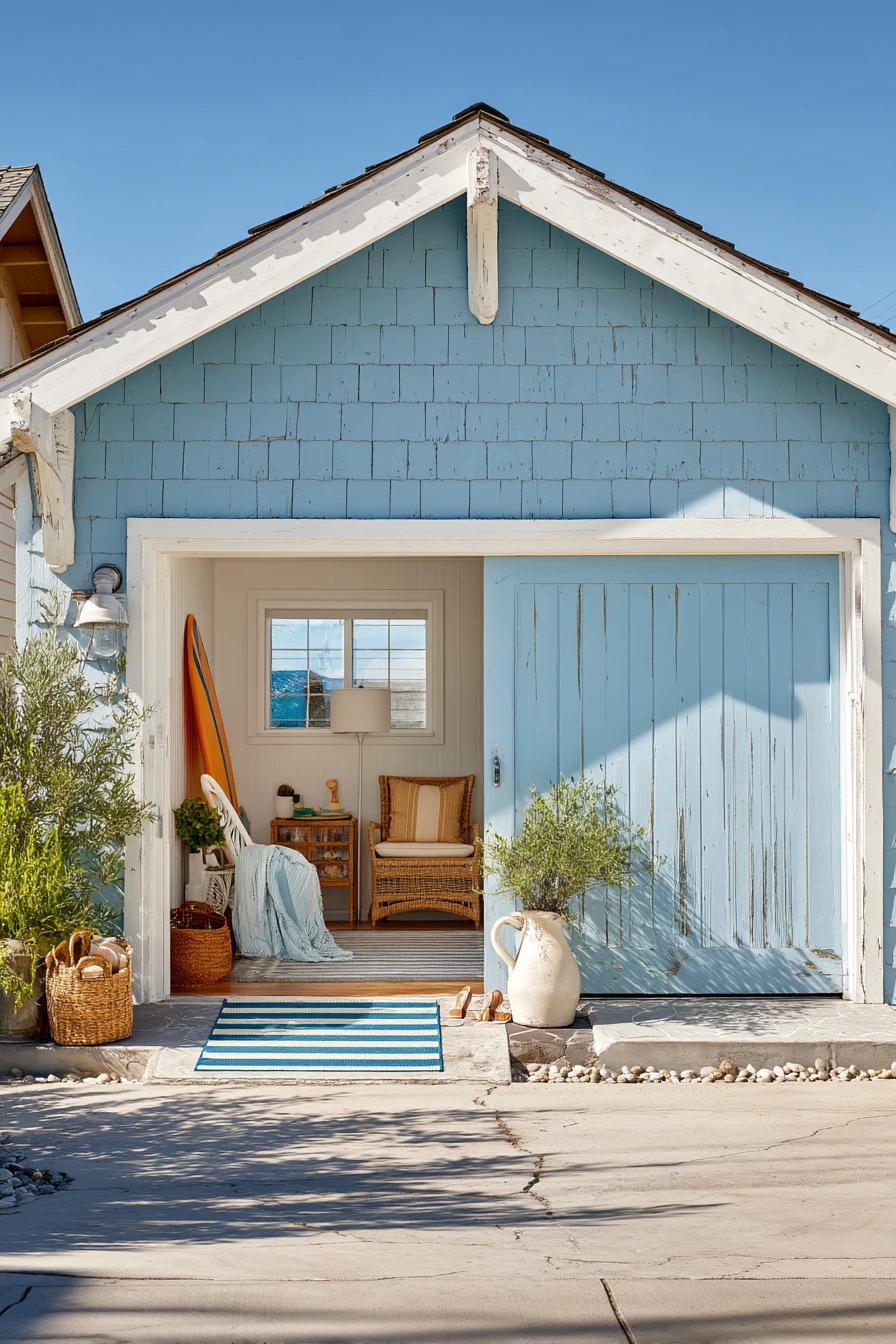
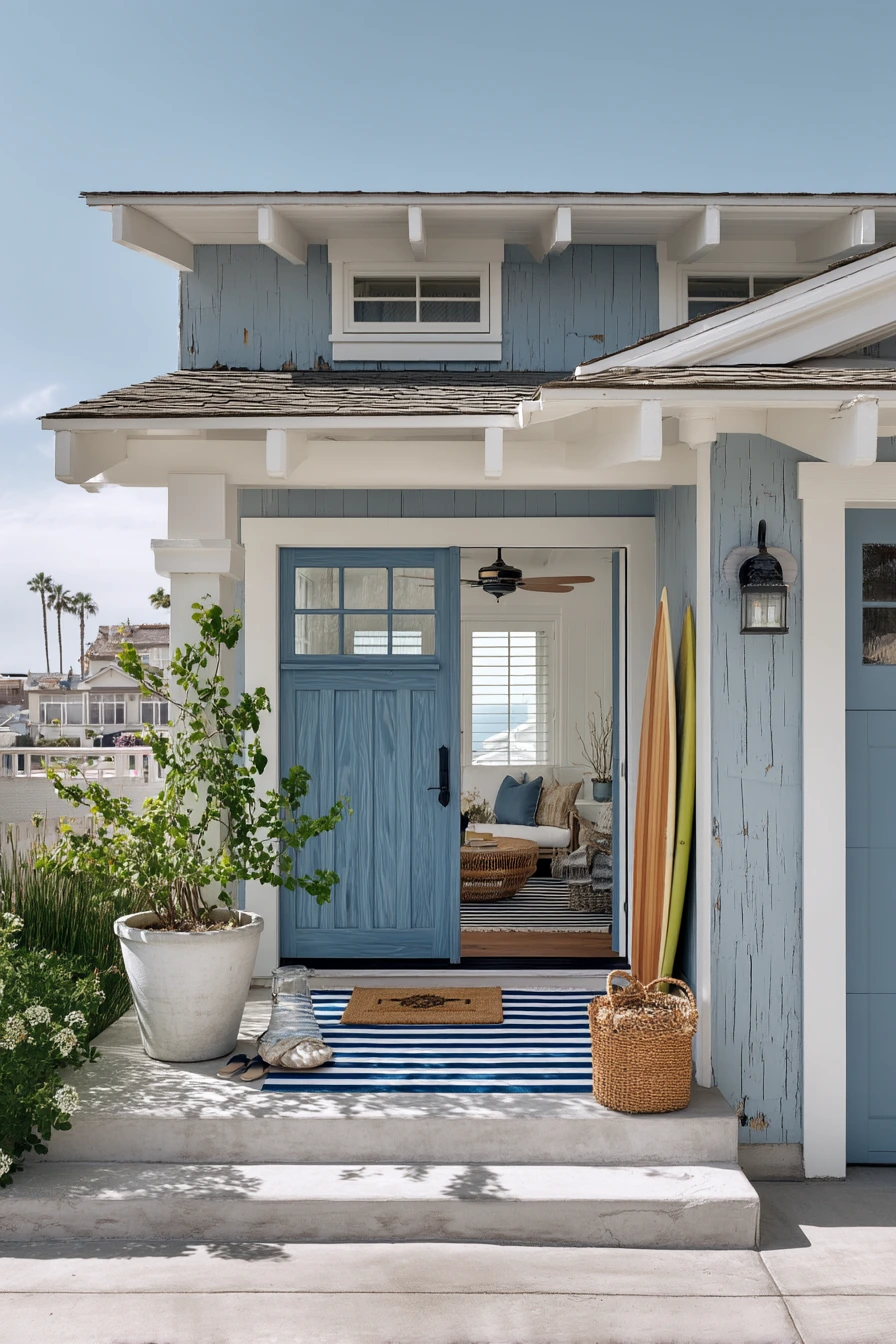
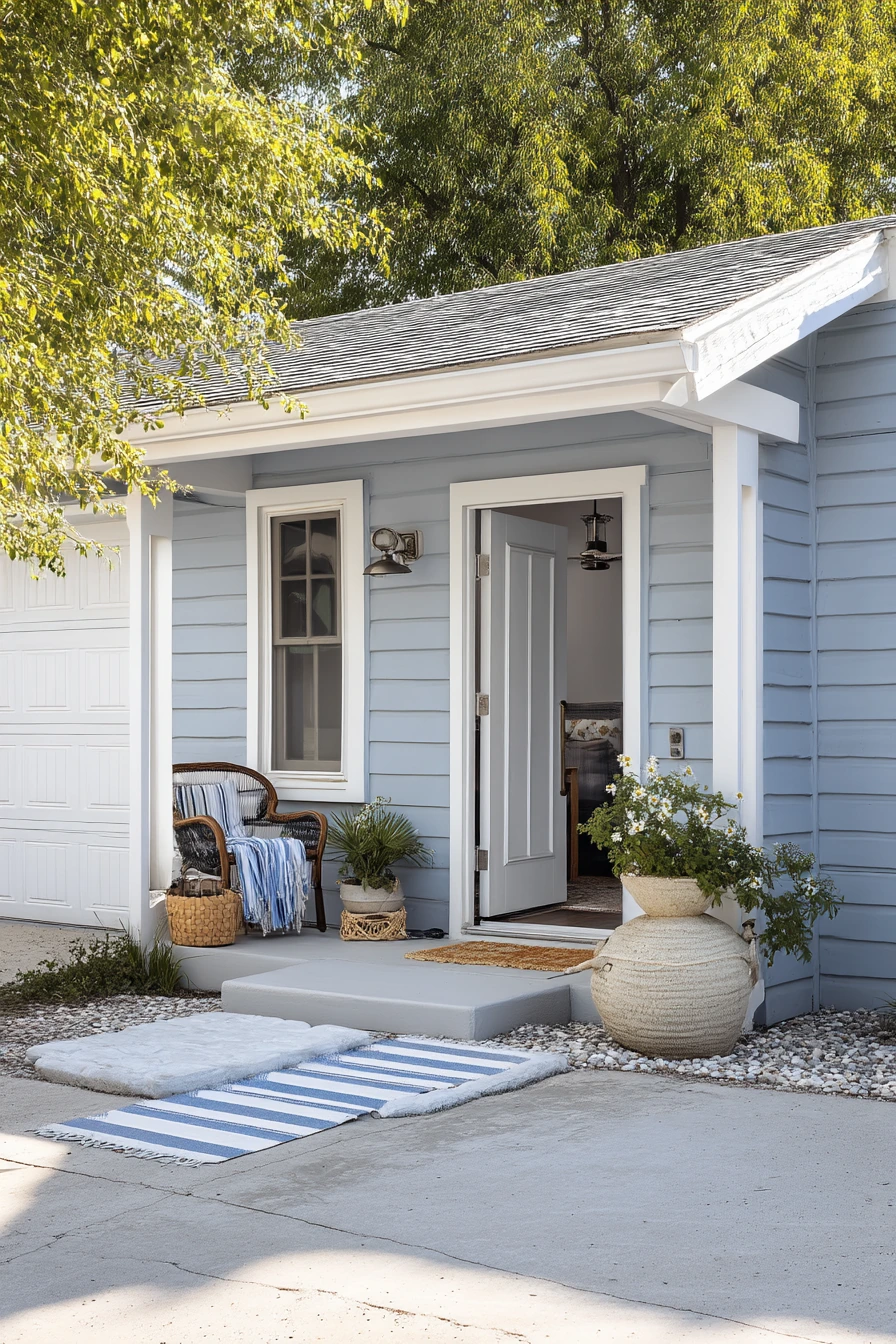
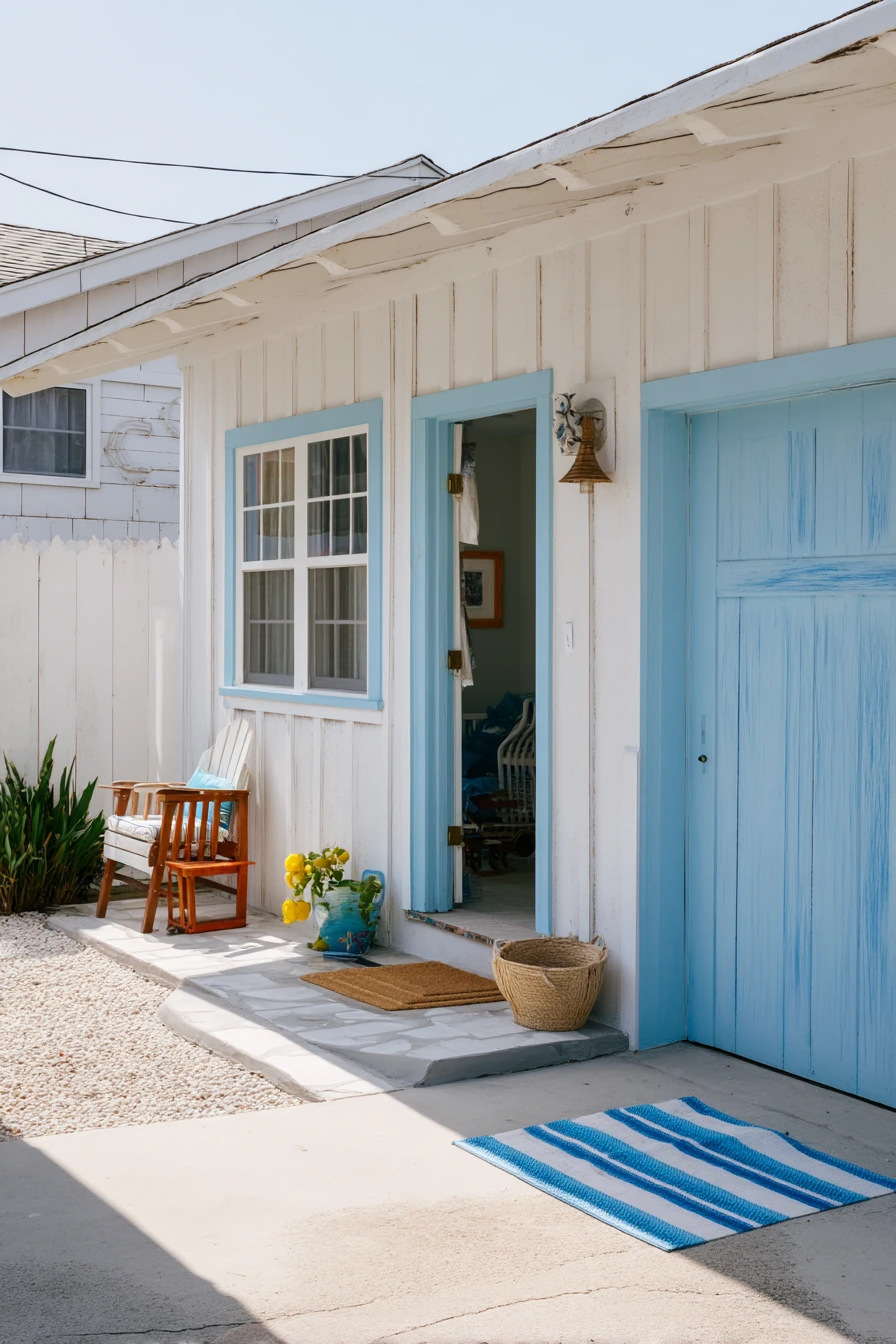
A faded coastal blue garage door is perfect for a weathered bungalow because it looks soft, relaxed, and already at home with older details. Coastal blue also hides small dents and uneven texture better than glossy white. With white beadboard trim, the door feels breezy and clean without looking new in a fake way. In sea-sky daylight, this shade reads calm and fresh.
To style the entry, use light and sandy colors. A shell-toned planter, a striped doormat, and a small porch fan visible through an open side door all support the beachy feel. Lived-in cues like beach towels over a chair, sandy flip-flops, and a kid toy basket near the threshold fit naturally. Add a lemon branch in a pitcher on a small table for a simple pop of yellow-green.
Keep the rest of the palette simple so the blue door stays the focus. White trim, pale wood, and woven textures work well. If you have metal lights, choose white or brushed nickel instead of shiny black. For plants, pick grasses or simple green shrubs that look good with gravel or sandy soil.
- Pick a blue with a gray base so it feels weathered, not bright.
- Use beadboard trim or beadboard-style grooves for cottage texture.
- Add a striped mat to echo the relaxed coastal pattern.
- Style with one shell-tone or sand-color planter near the door.
- Use light outdoor fabrics for towels or cushions to match the airy look.
Pro Design Tip: Use a matte or low-sheen finish on coastal blue; it makes the color look softer and helps the door feel more natural on an older bungalow.
Budget Considerations: Beadboard trim can add up; on a budget, use exterior-rated molding strips to fake the look, then paint everything white.
7 Moody Black Garage Door with Garden Texture
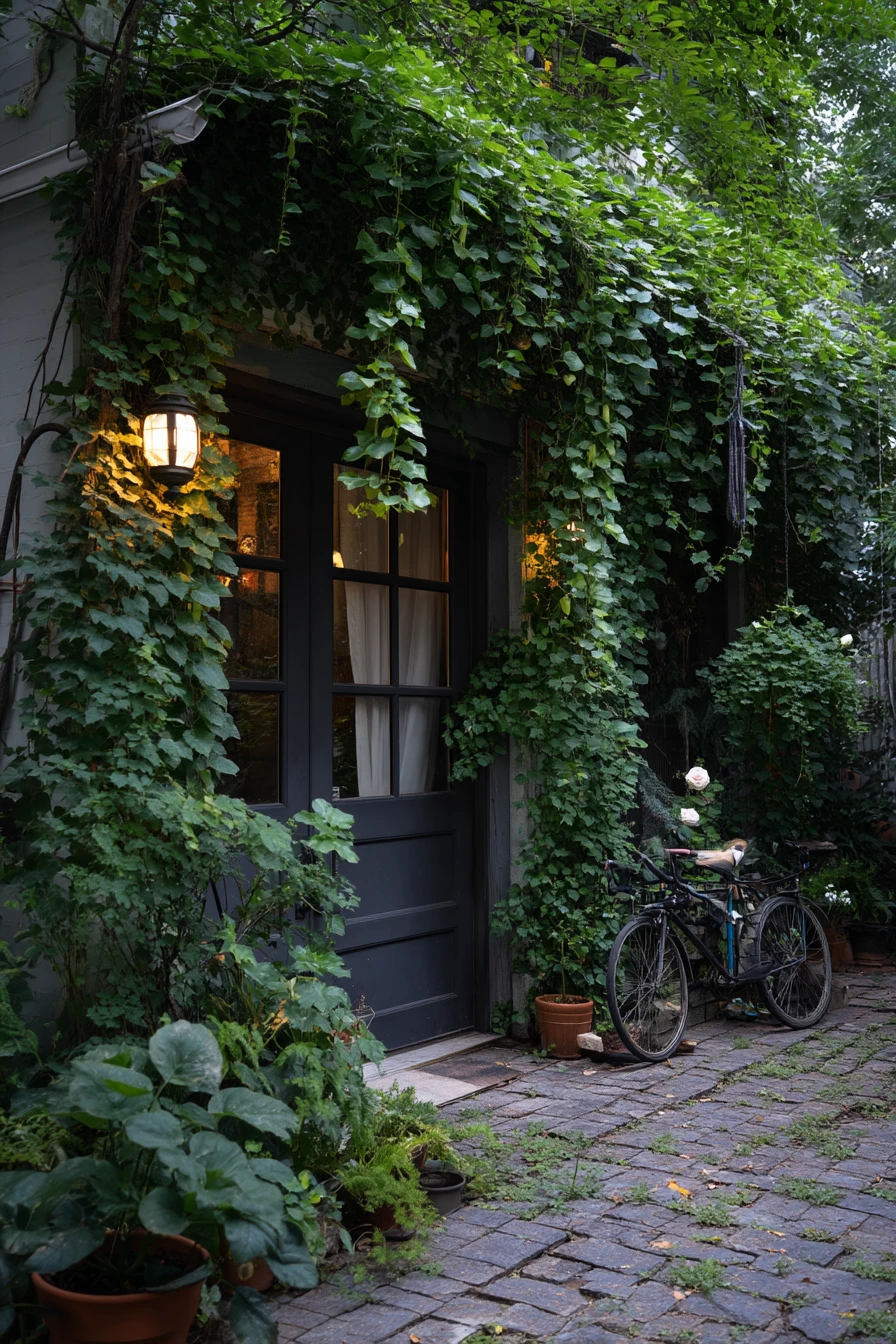
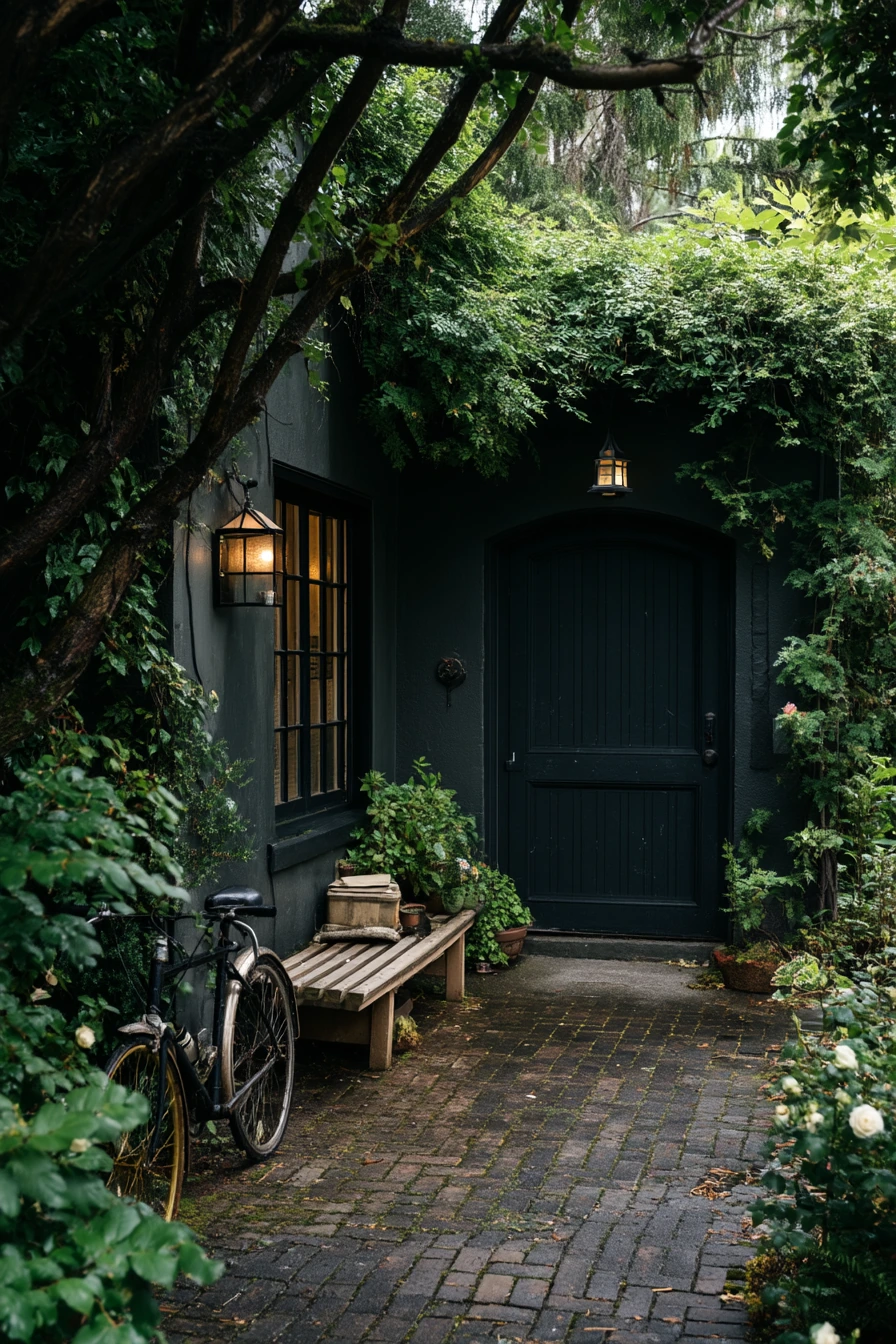
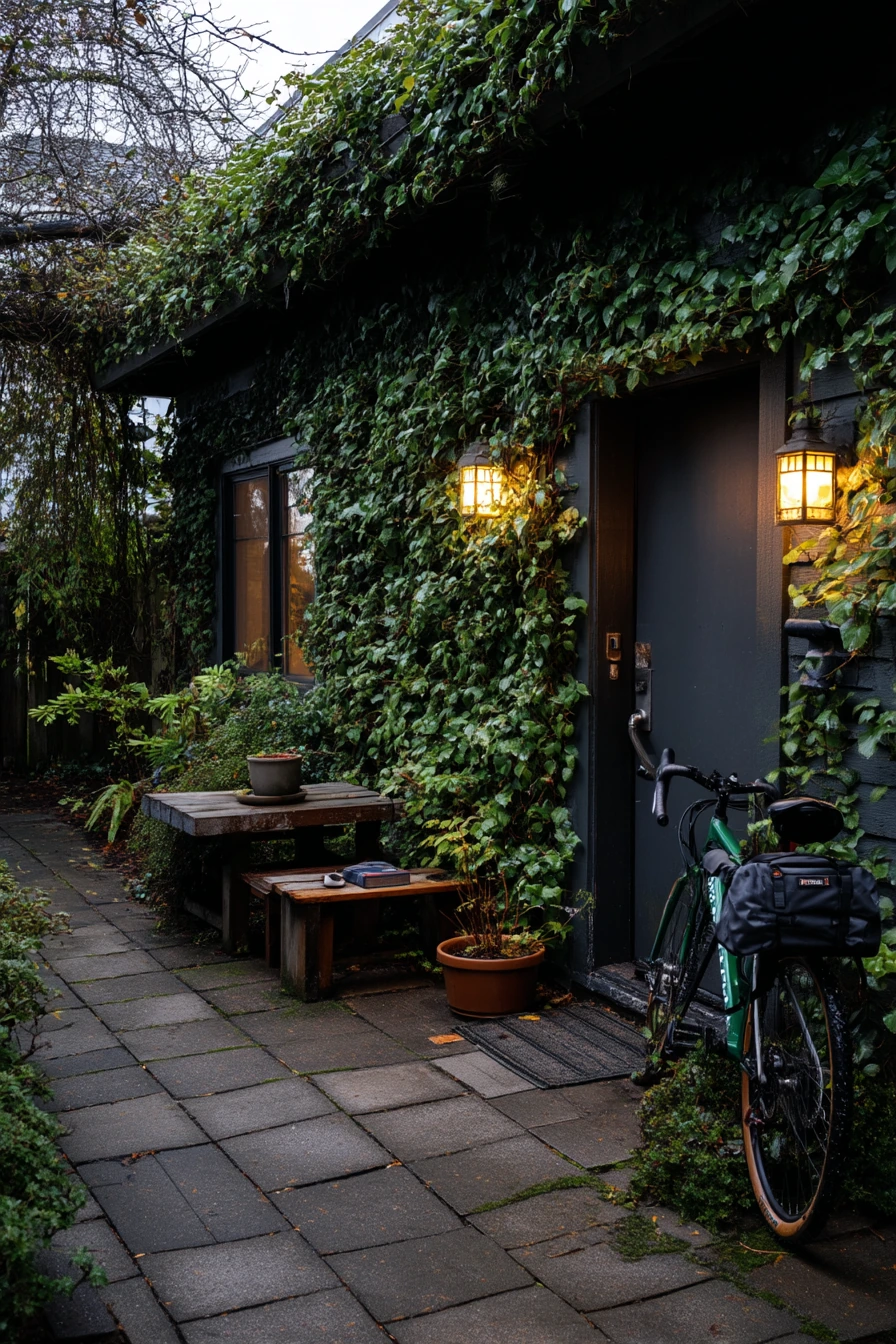
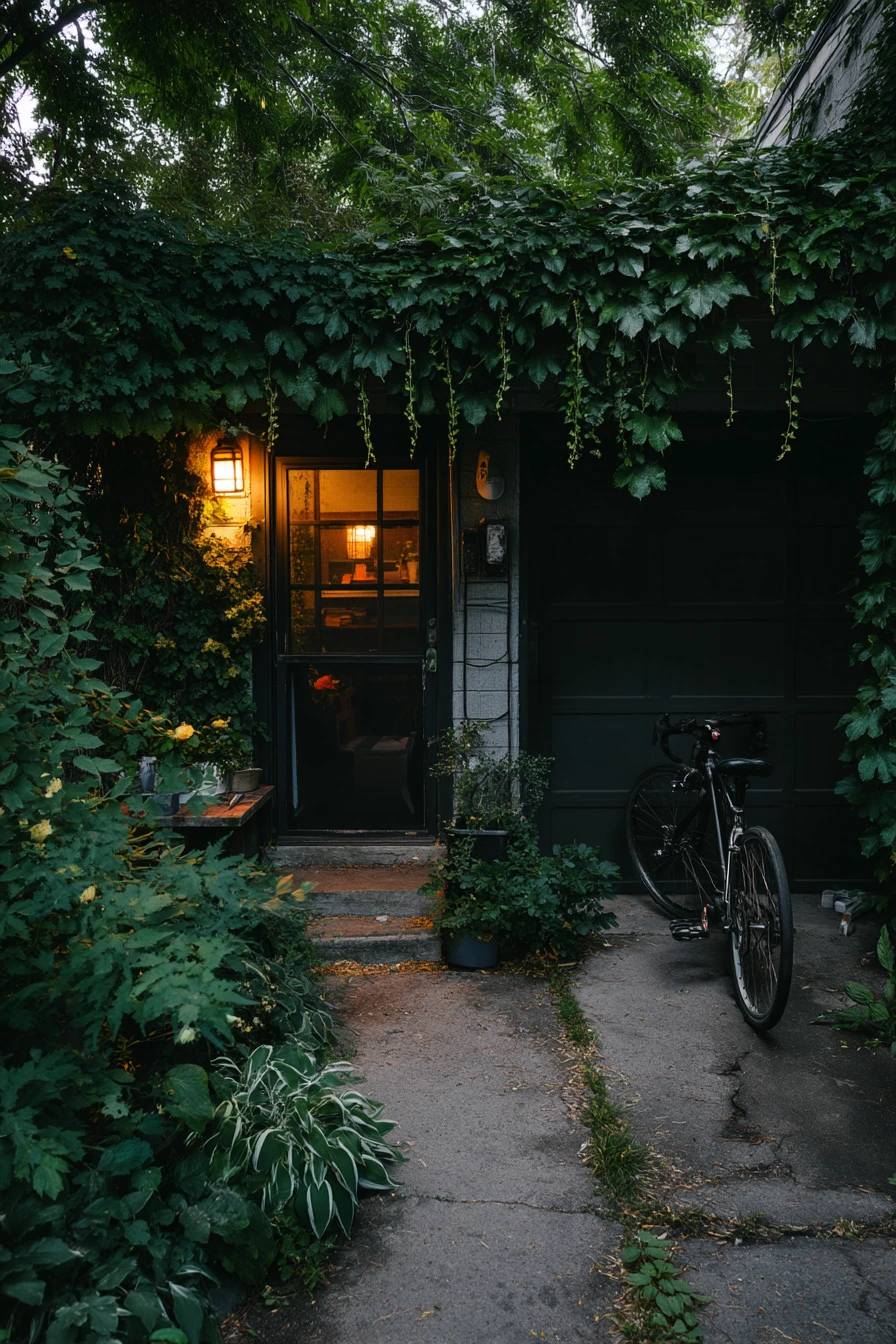
A matte black garage door can look bold, but dense greenery makes it feel warm and inviting. On a leafy urban home, black creates a clean backdrop for climbing roses, a stone path, and a vintage lantern. The matte finish is key because it reduces glare and helps the door look smooth even if the surface is not perfect. At dusk, black looks rich and calm, especially with a warm lamp glow nearby.
This style works best when you balance the dark color with texture. Add plants with different leaf sizes, like roses, ivy, and a fuller shrub. Keep the area practical too: a bike pump by the wall, a muddy boot tray near the entry, and a paperback stack on the porch table can still look tidy. If one curtain is slightly pulled back, it adds a real-life feeling without making the space look messy.
For styling, repeat black in small details like house numbers, a lantern, or a doorbell plate. Use natural stone, wood, and terracotta to keep it from feeling cold. If your home has brick, black is a strong match because it makes the brick color look deeper. Add one soft light source near the garage so the door does not become a dark hole at night.
- Choose matte black paint made for exterior doors for better durability.
- Keep trim simple, either matching black or a clean white depending on your home.
- Use layered greenery to soften the hard edge of the door.
- Add a warm light bulb in your lantern for a cozy dusk look.
- Keep everyday items in a tray or hook system so the area stays neat.
Pro Design Tip: Use uplighting on a nearby plant or tree; it highlights the greenery and makes the black garage door feel intentional at night.
Budget Considerations: If repainting the whole door is too much, paint only the outer frame and add black hardware; it still gives a modern look with less paint.
8 Soft Taupe for a Traditional Home
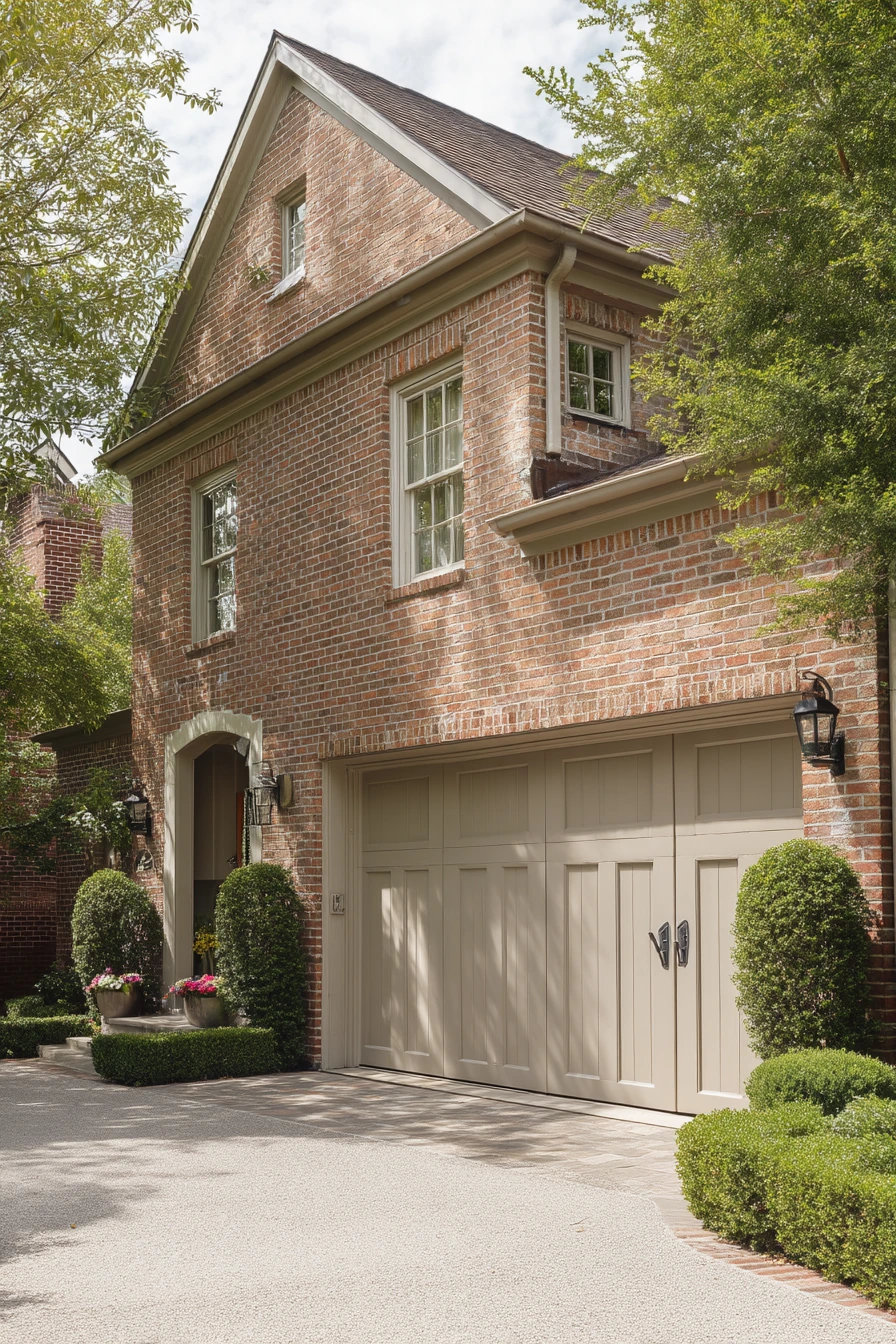
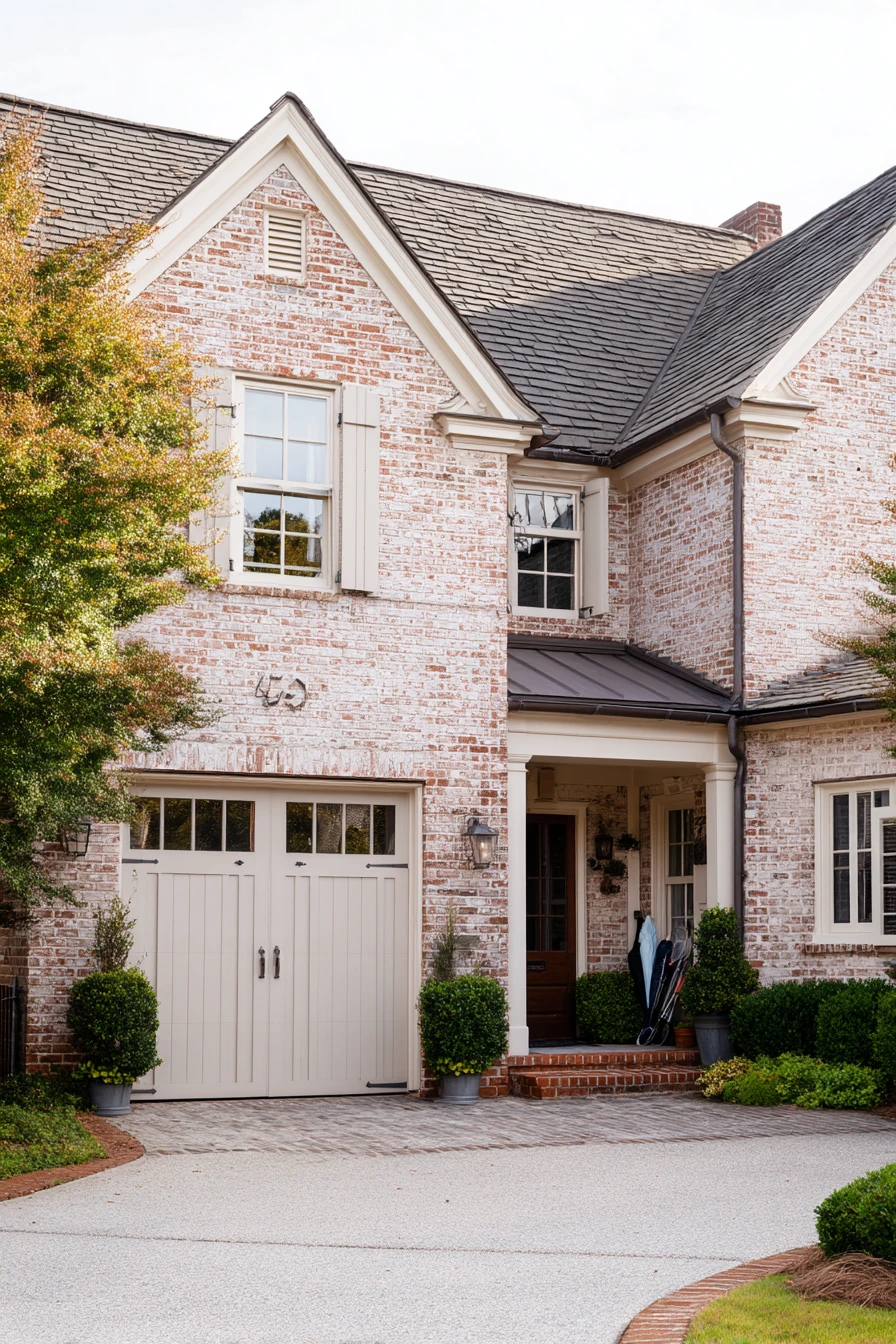
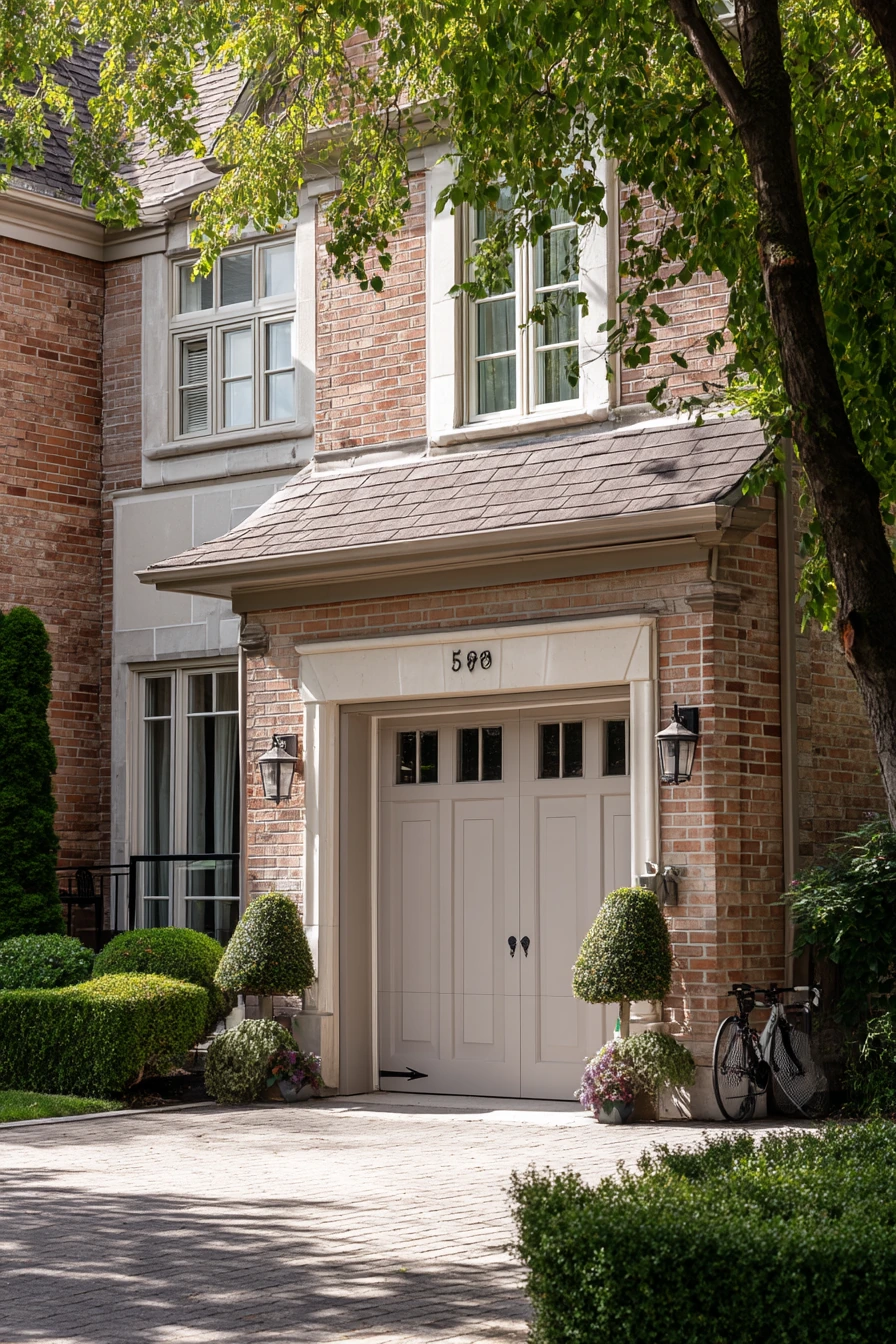
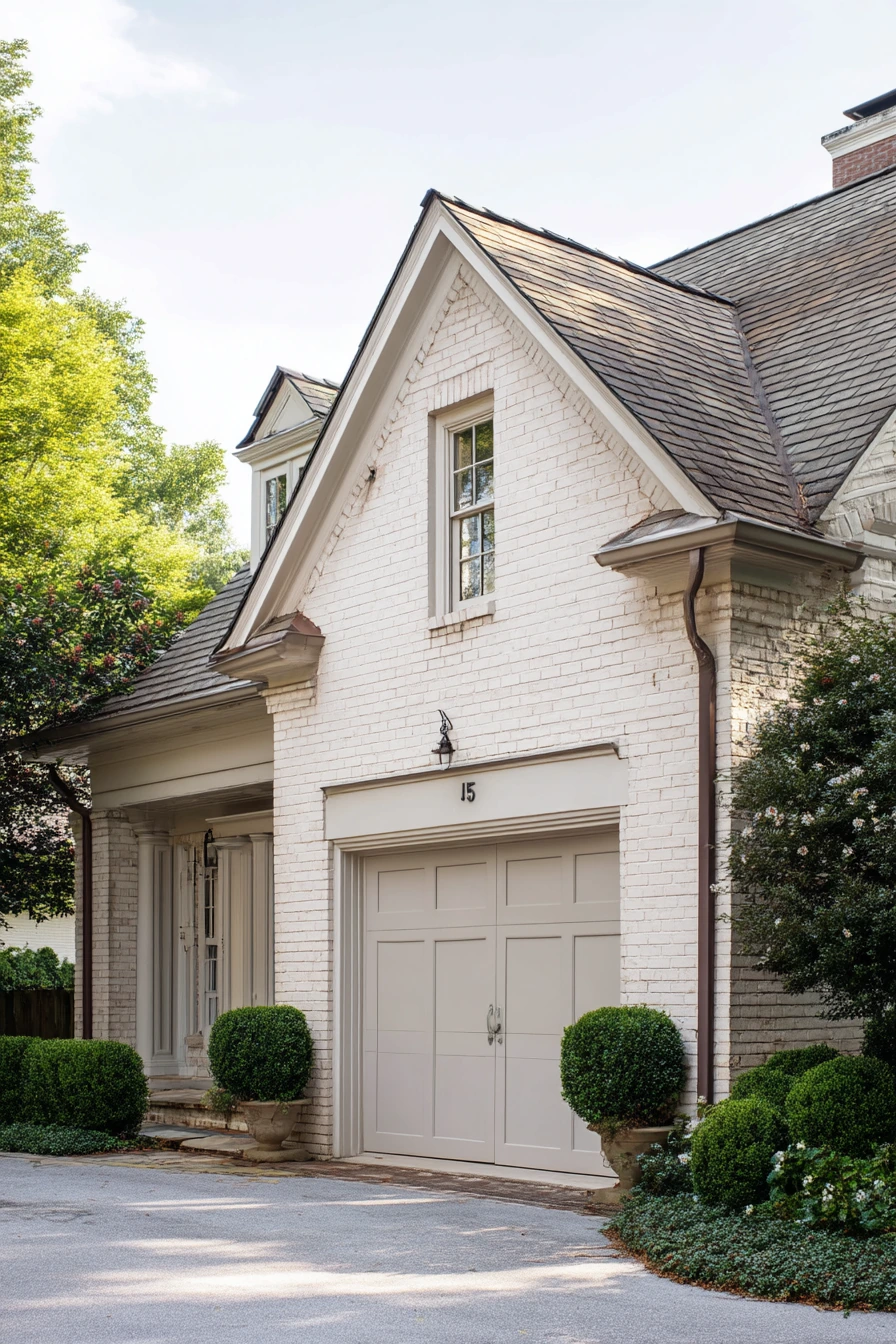
A soft taupe garage door is a smart choice for a traditional brick home because it blends with brick tones while still looking polished. Taupe sits between beige and gray, so it feels steady and familiar. Subtle panel detail adds interest without making the door busy. In mid-morning light, taupe looks warm and smooth, not flat.
To support the classic look, use polished house numbers and symmetrical boxwood shrubs. Symmetry makes the front feel calm and cared for. Lived-in touches can still fit: an umbrella stand by the side entry, a grocery receipt on the dashboard, or a tennis racket leaning inside the garage. A half-open mudroom door suggests real daily routines, which helps the space feel welcoming.
For styling, keep your metals consistent. If your house numbers are brushed nickel or black, echo that in your light fixtures. Taupe works well with black accents, deep green shrubs, and warm wood tones. Add one seasonal item, like a small wreath or a neutral doormat, but keep it simple so the brick and taupe stay the focus.
- Pick a taupe that matches the undertone of your brick, warm or cool.
- Use a satin finish to make cleaning easier without adding too much shine.
- Keep shrubs the same shape and height for a balanced look.
- Choose house numbers that are easy to read from the street.
- Add a neat mat and a simple planter to make the entry feel finished.
Pro Design Tip: Match the garage door color to the mortar tone in your brick; it ties everything together and makes the whole front look more expensive.
Budget Considerations: If new shrubs are not in the budget, buy two matching pots and place small evergreens in them for the same symmetrical feel.
9 Sunny Yellow Accent for a Happy Entry
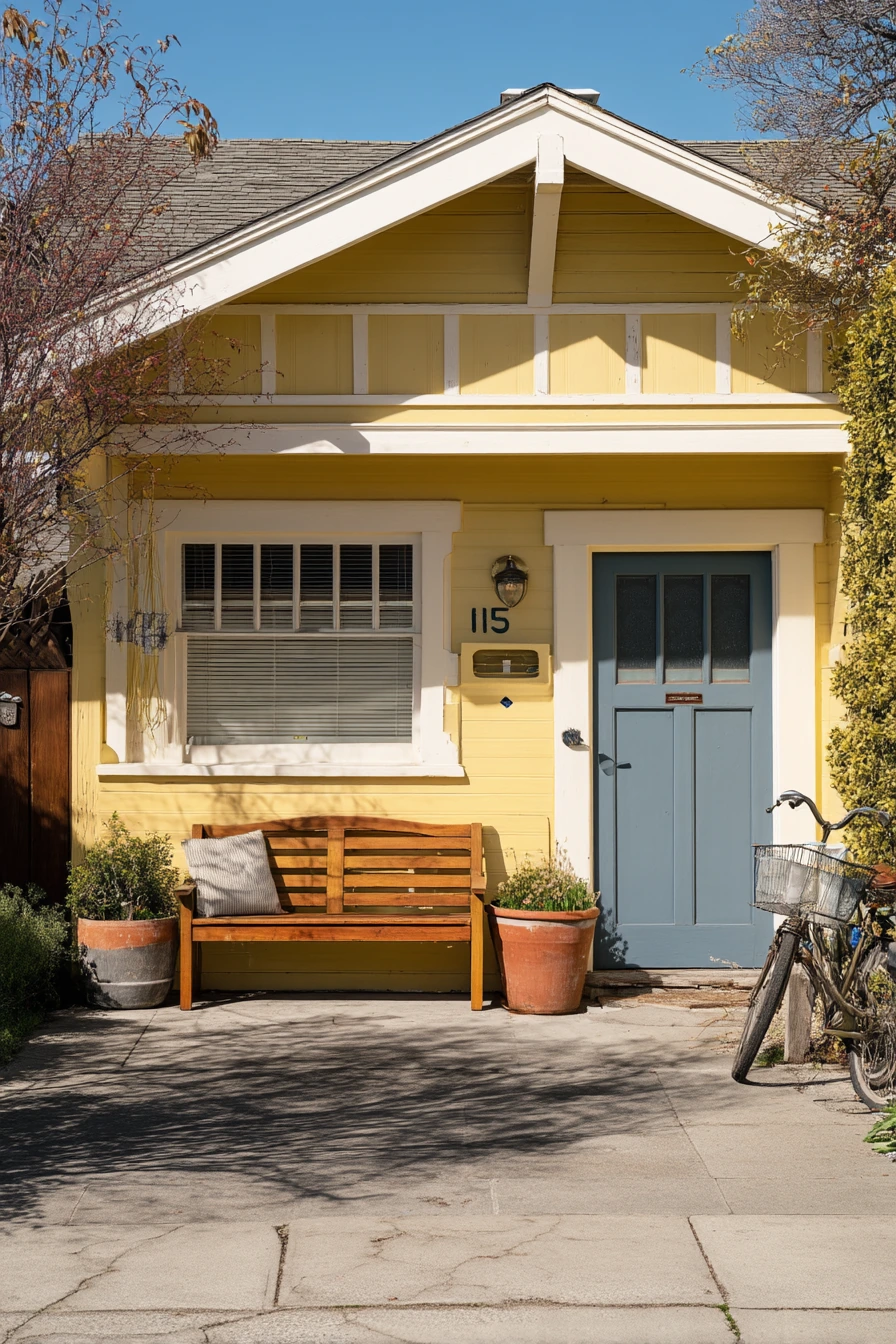
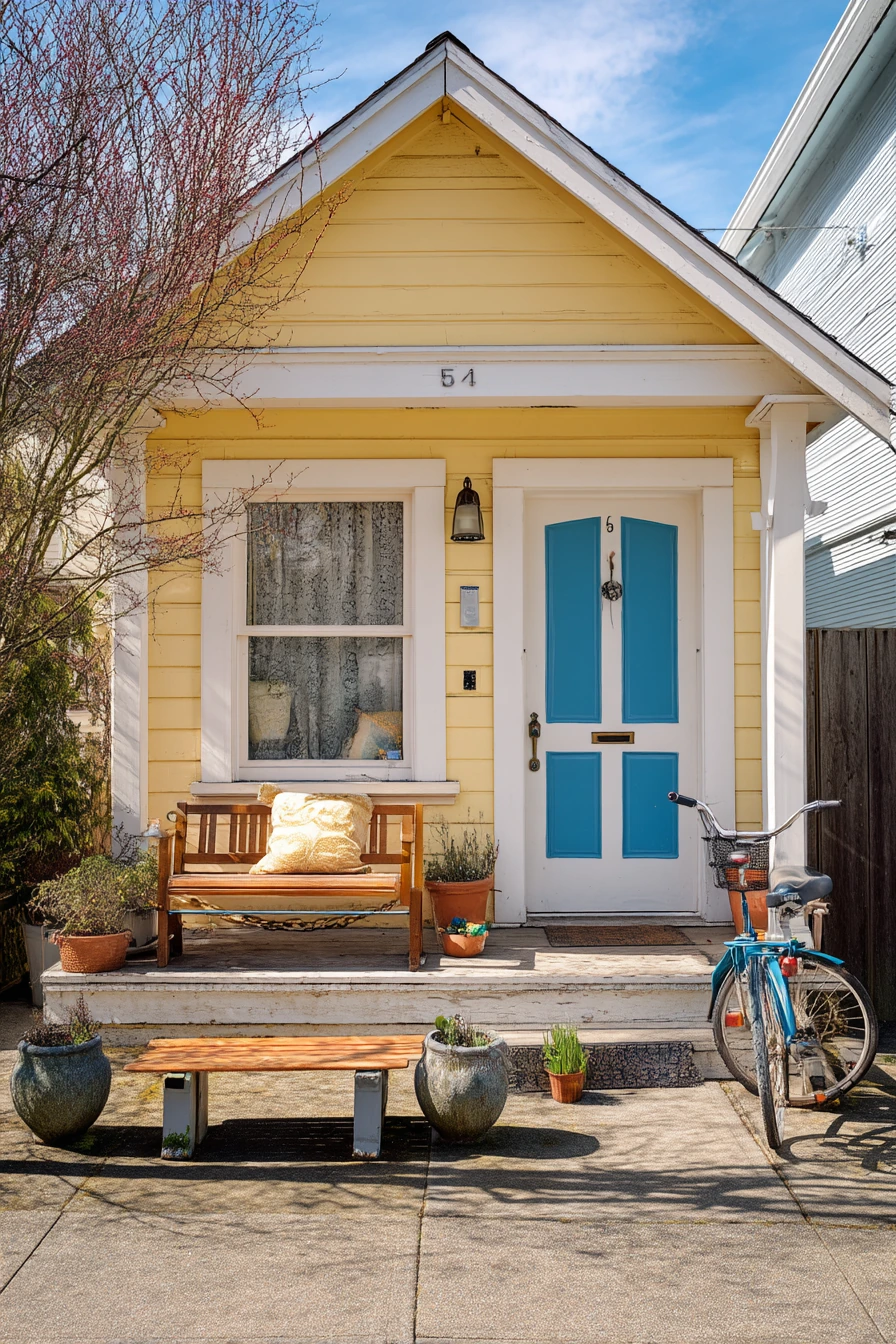
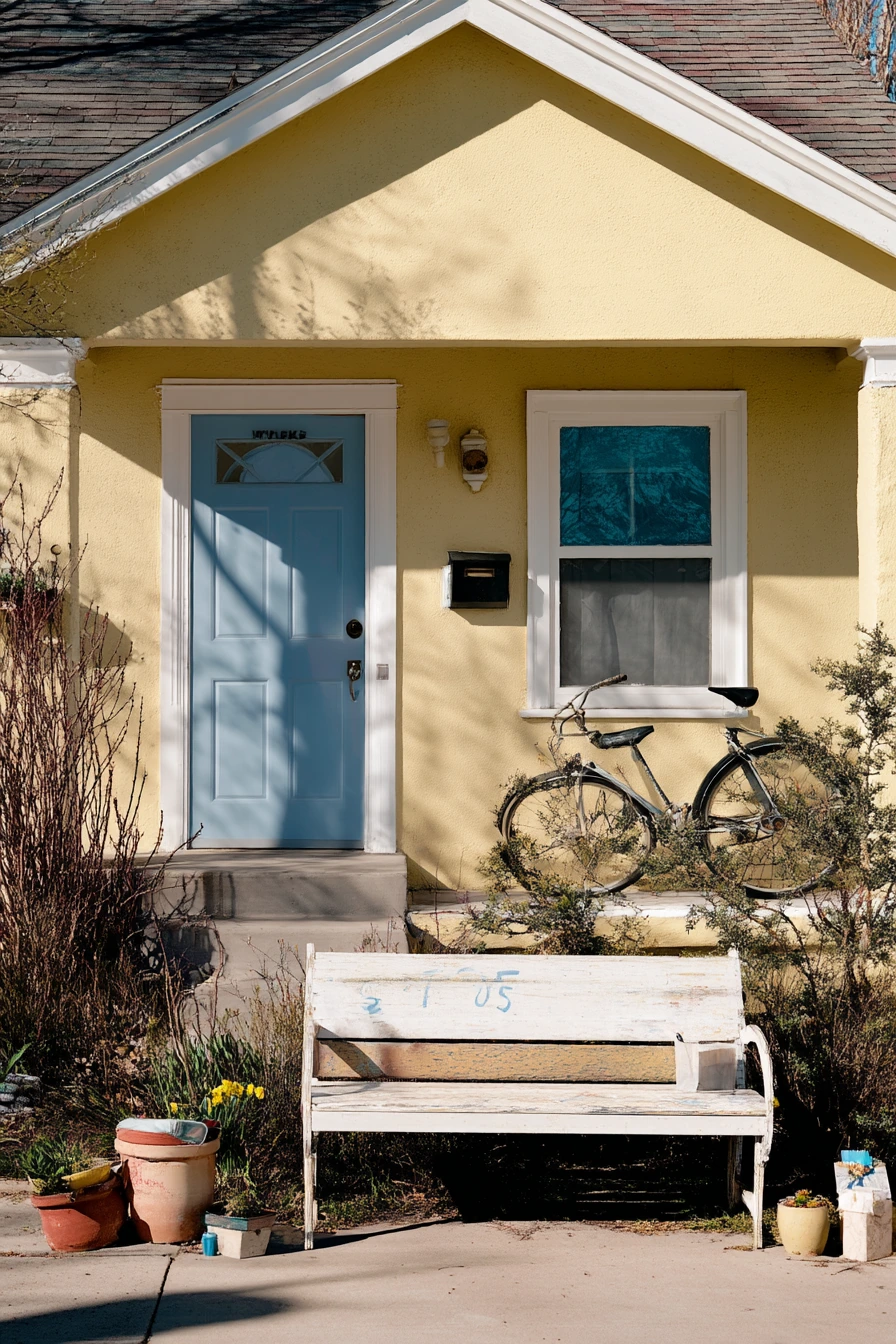
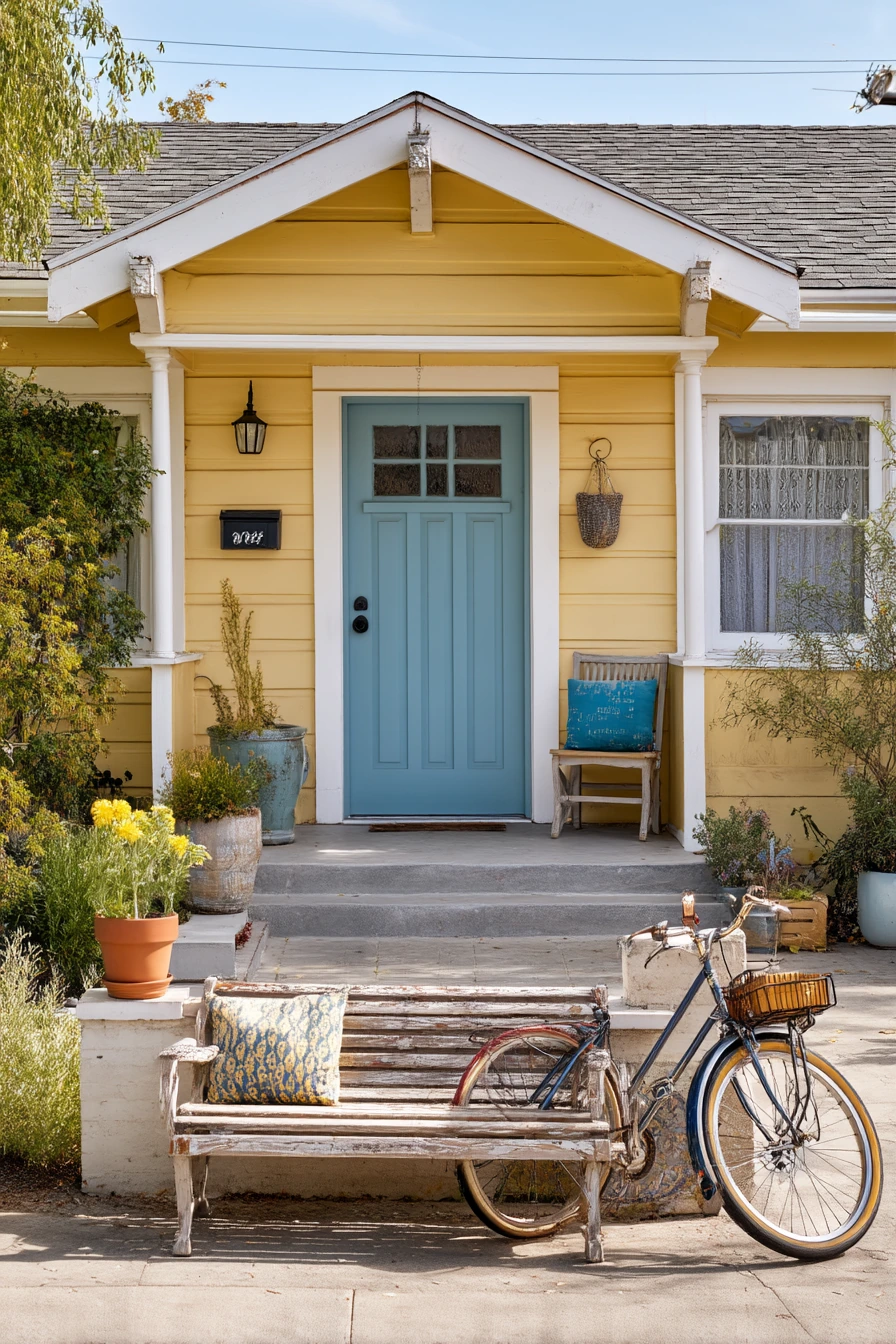
A muted buttery yellow garage door brings a cheerful look to a compact bungalow without feeling too loud. The key is choosing a softened yellow, not a bright lemon. With white trim, the door looks clean and clear, and it pairs well with a blue front door for a classic color combo. In soft spring sunlight, buttery yellow feels warm and friendly.
This color works best with simple, homey styling. A small front stoop, clay pots, and a chipped vintage bench fit the mood. Lived-in cues like kid sidewalk chalk, a bicycle bell, and mail stacked by the door are part of the charm. A half-finished coffee on the bench also makes the scene feel real, like someone actually uses the front space.
To style it, repeat blue and yellow in small amounts. Add a blue pot, a blue stripe in the mat, or a small blue outdoor pillow. Keep the rest neutral so the yellow does not fight with too many colors. If your siding is light, the yellow will stand out more; if the siding is warm, it will blend more, so you may want slightly brighter white trim for contrast.
- Choose a muted yellow with a hint of cream for a softer look.
- Use bright white trim to keep the edges crisp and fresh.
- Repeat the blue front door color in one or two small items nearby.
- Use clay pots and aged wood to add texture and balance the color.
- Keep the stoop area simple so the yellow door stays the main feature.
Pro Design Tip: If your home has a lot of shade, pick a slightly warmer yellow; it helps the door look sunny even when the light is cool.
Budget Considerations: Yellow can take extra coats; buy a good primer so you use less paint and get a more even finish.
10 Earthy Olive for a Designer-Forward Remodel
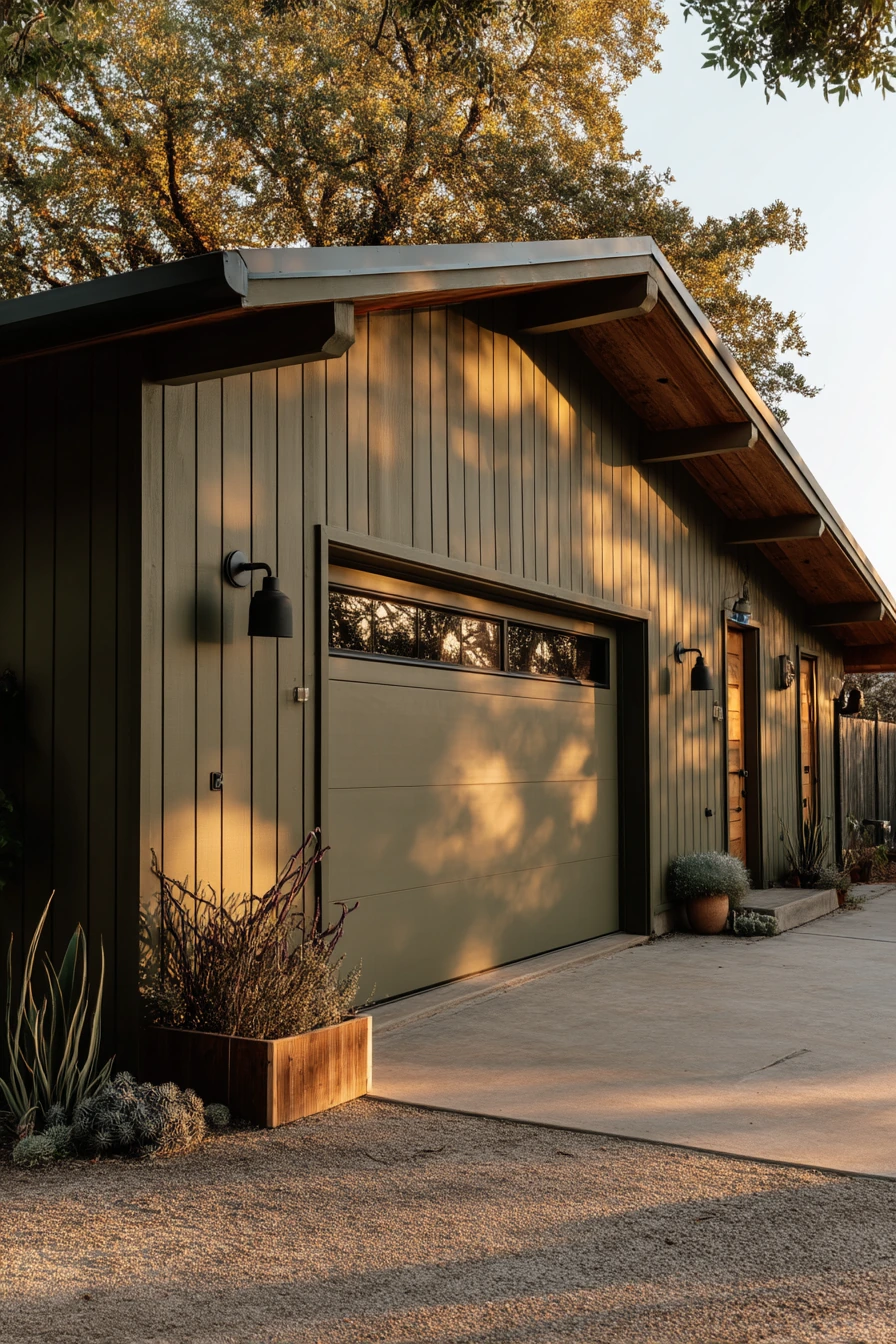
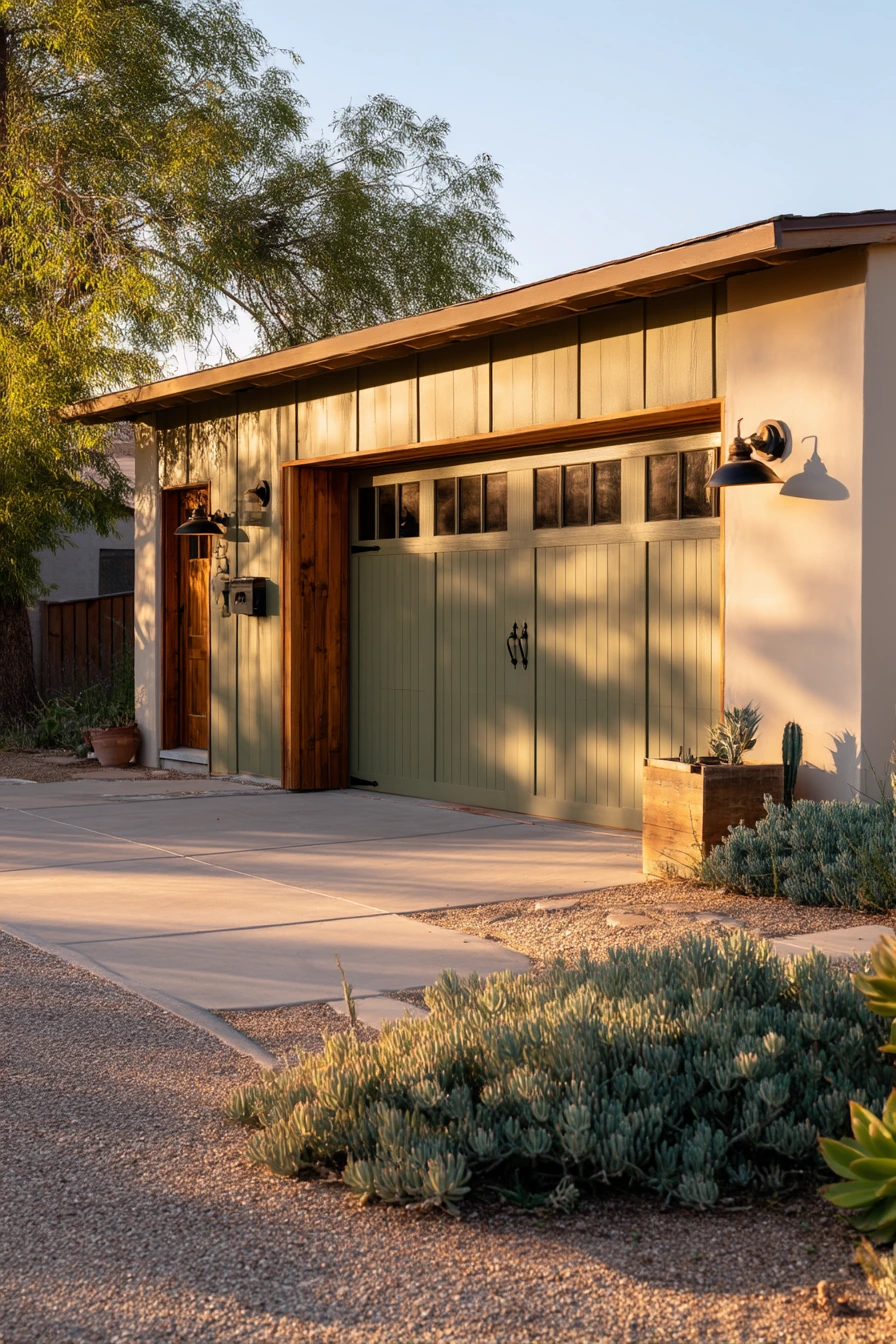
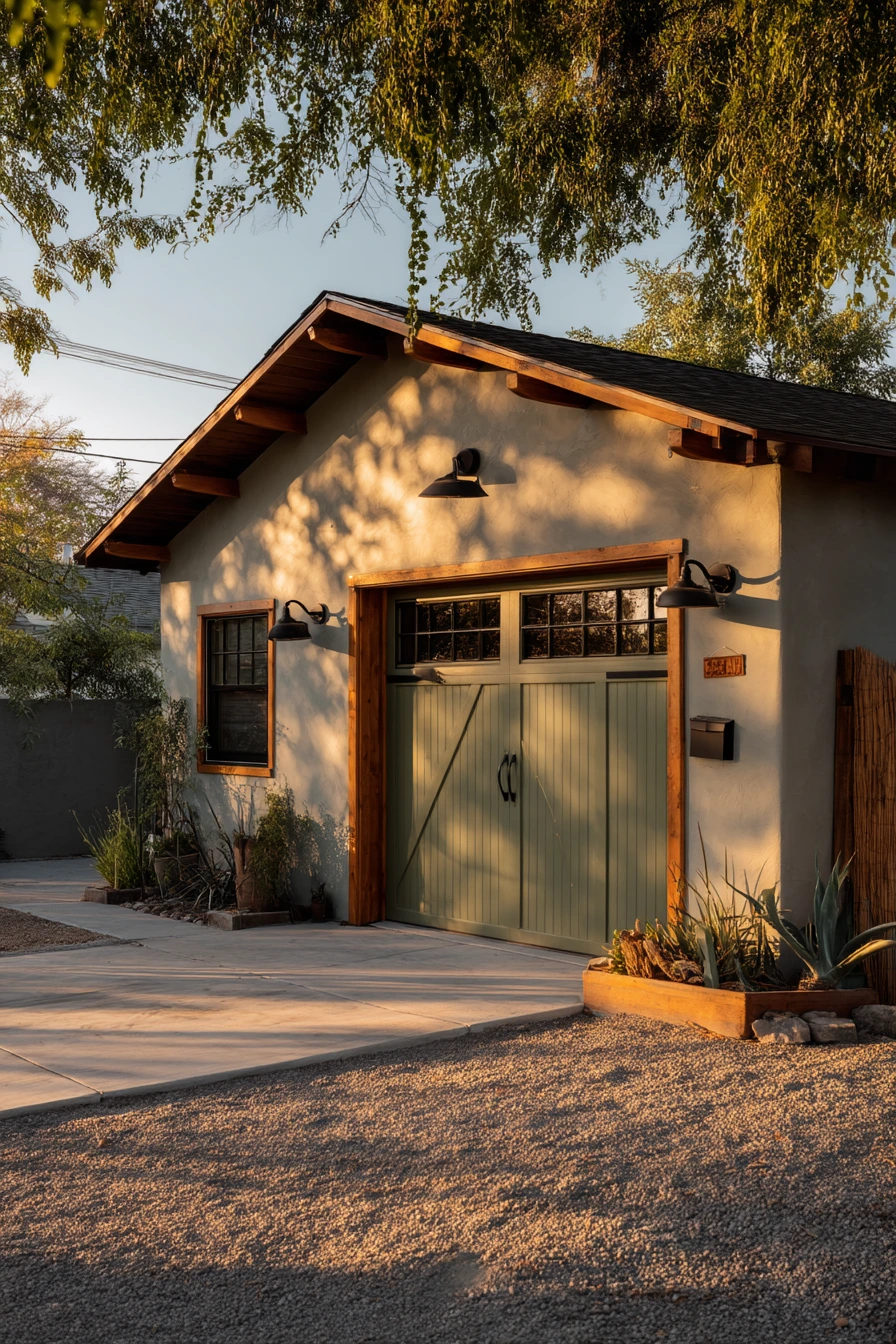
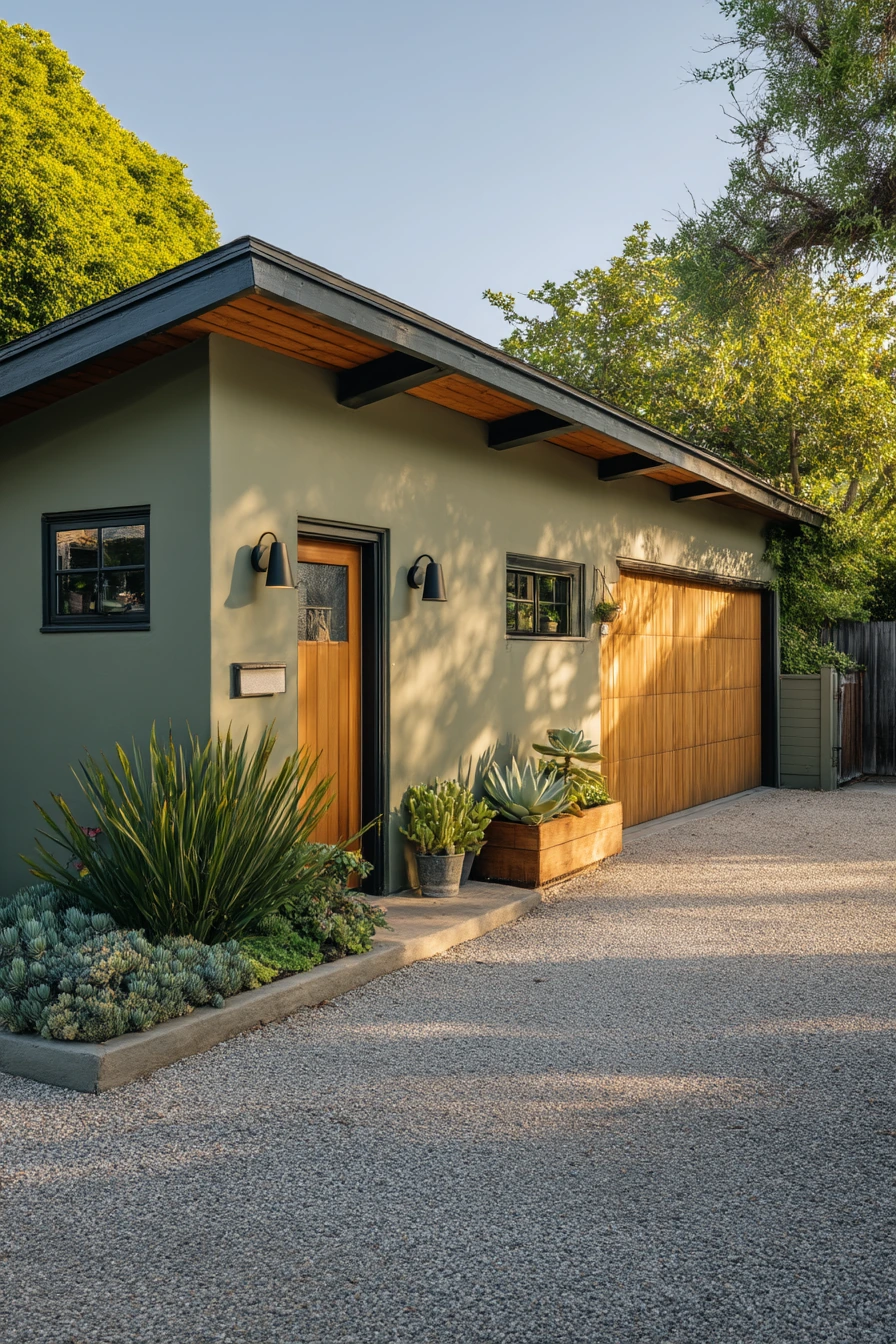
An earthy olive garage door is a strong choice for a recently remodeled single-story home because it feels modern and natural at the same time. Olive works especially well with xeriscape gravel, succulents, and clean black sconces. In soft golden hour light, it looks rich but still calm. Warm wood accents, like a cedar planter or wood trim, keep the green from feeling too heavy.
This look also fits real life. Work boots by the threshold, a folded contractor plan, and car keys on a side ledge make the space feel used but still refined. Plant shadows stretching across the facade add texture, so the door color does not look flat. If your driveway is wide, olive helps anchor the front and makes the landscaping feel more connected.
To style it, keep the palette tight: olive, black, warm wood, and dusty green plants. Use one large planter instead of many small ones for a cleaner look. If you want a little contrast, add a light stone pot or a pale doormat. Choose hardware in black or dark bronze so it matches the sconces and does not stand out in a random way.
- Pick an olive that matches your landscaping, especially if you have succulents and sage plants.
- Use black sconces for strong contrast and a modern feel.
- Add warm wood accents to soften the color and add texture.
- Keep xeriscape lines neat so the front looks intentional and low-maintenance.
- Use a large cedar planter with simple plants for an easy, clean style.
Pro Design Tip: Match the olive door to one fixed element, like roof shingles or stone, so the color feels built-in and not like an add-on.
Budget Considerations: Real cedar accents cost more; you can get a similar look with stained pine or wood-look composite boards rated for outdoors.
The best garage door paint ideas are simple ones that match your home, your light, and your daily life. Greige, charcoal, warm white, navy, sage, coastal blue, matte black, taupe, buttery yellow, and olive all work when the trim, hardware, and small decor pieces support the color.
Before you paint, test large samples in morning and late-day light, clean the door well, and fix peeling spots so the finish looks even. Then add a few practical styling touches like planters, house numbers, a mat, and good lighting.
FAQ
1) What is the best paint finish for a garage door?
Satin is a safe choice. It is easy to clean and does not show every flaw like high gloss.
2) Do I need primer before painting a garage door?
Use primer if the old paint is peeling, if you are changing from dark to light, or if the surface is bare or stained.
3) Should the garage door match the front door?
Not always. It can match, but many homes look better when the garage door is a calmer shade and the front door is the accent color.
4) How do I choose a garage door color that hides dirt?
Mid-tone colors like greige, taupe, charcoal, and olive hide dust and road grime better than pure white or very dark gloss finishes.
5) Can I paint a garage door if it is metal or fiberglass?
Yes, but use the right primer and paint for the material. Clean well, scuff sand, and follow dry times.
6) How long should I wait before closing the garage door after painting?
Follow the paint label, but many doors need at least 24 hours before closing. In cool or humid weather, wait longer to prevent sticking.
7) What are easy upgrades to make the painted door look better?
Add new house numbers, update the light fixtures, replace the doormat, and add one or two planters that match the trim or hardware.