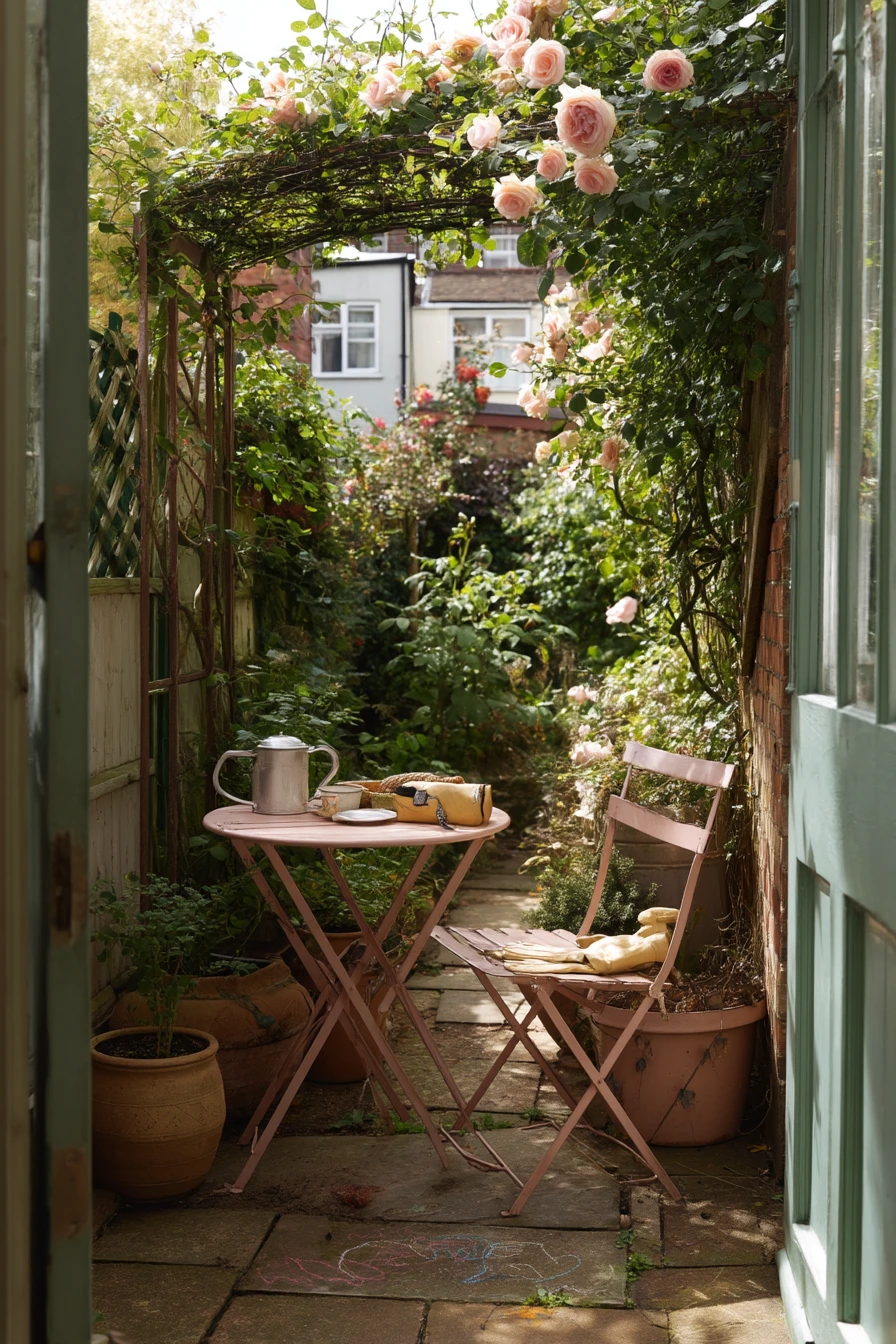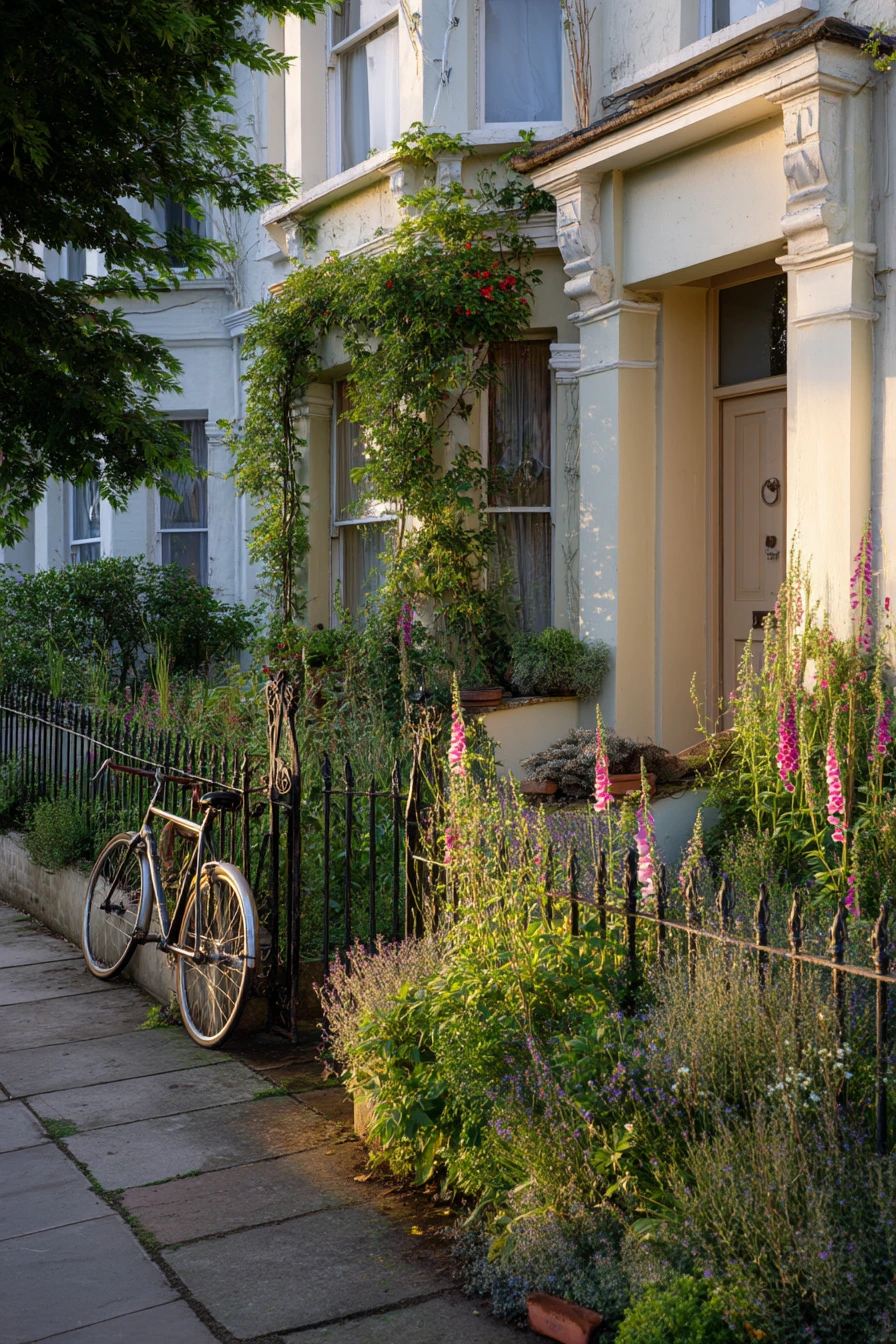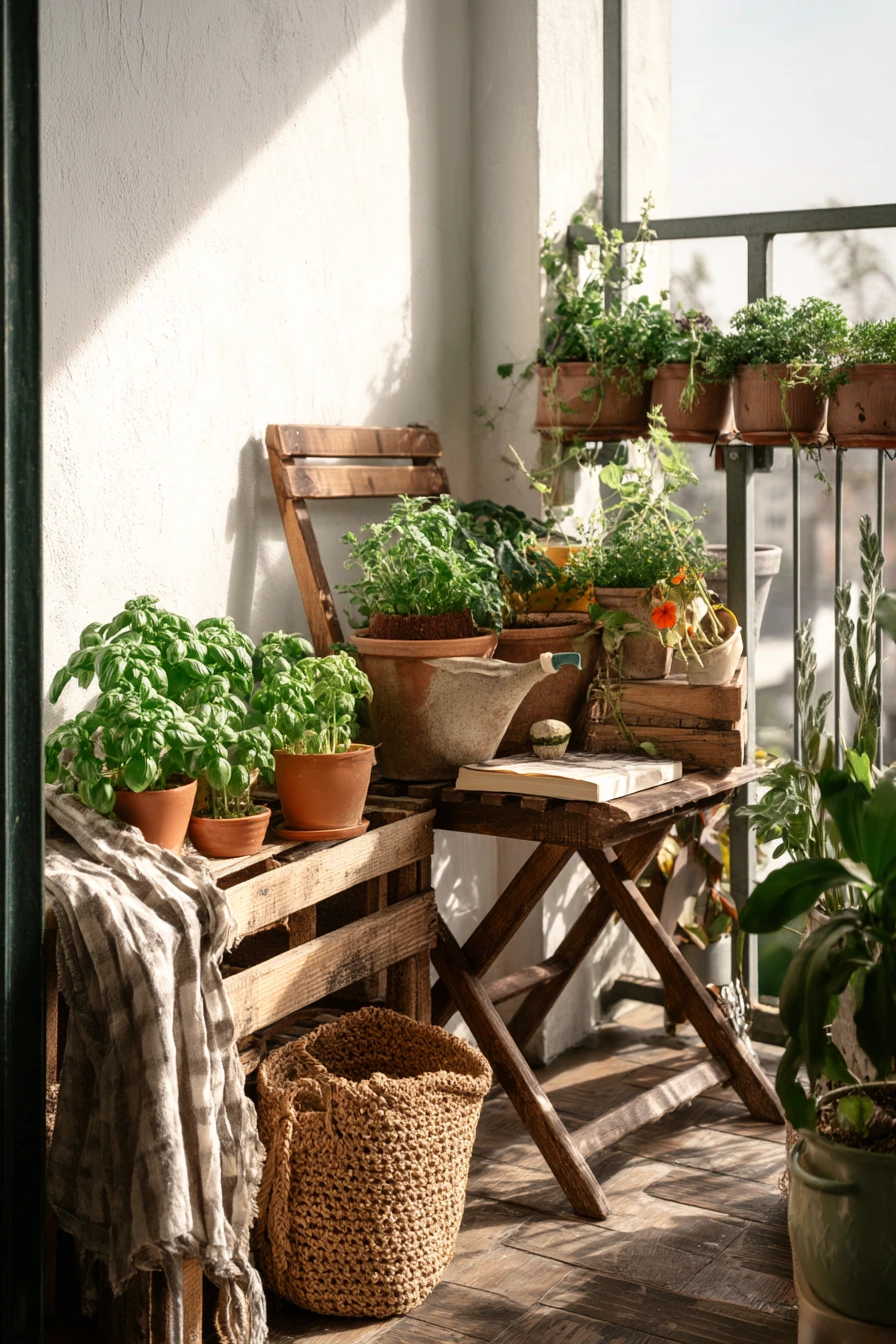

These English garden ideas are made for real homes, not perfect magazine sets. You can get the cottage garden look with simple plants, worn pots, and small sitting spots that feel calm and useful.
In this guide, you will see ideas for a patio, a narrow courtyard, a side-return, a front garden, and even a balcony. Each space uses easy classics like rosemary, foxgloves, climbing roses, lavender, and boxwood, plus practical details like paving, gravel paths, and raised beds.
You will also get small “how to style it” steps for each look, so you can copy the feel with what you already own. Every section includes a Pro Design Tip and a Budget Consideration to help you plan.
If you came from Pinterest, save the ideas that match your space, then pick one corner to start. One pot, one plant, and one seat is enough to make it feel like an English garden.
1 Cottage Garden Patio Breakfast Nook
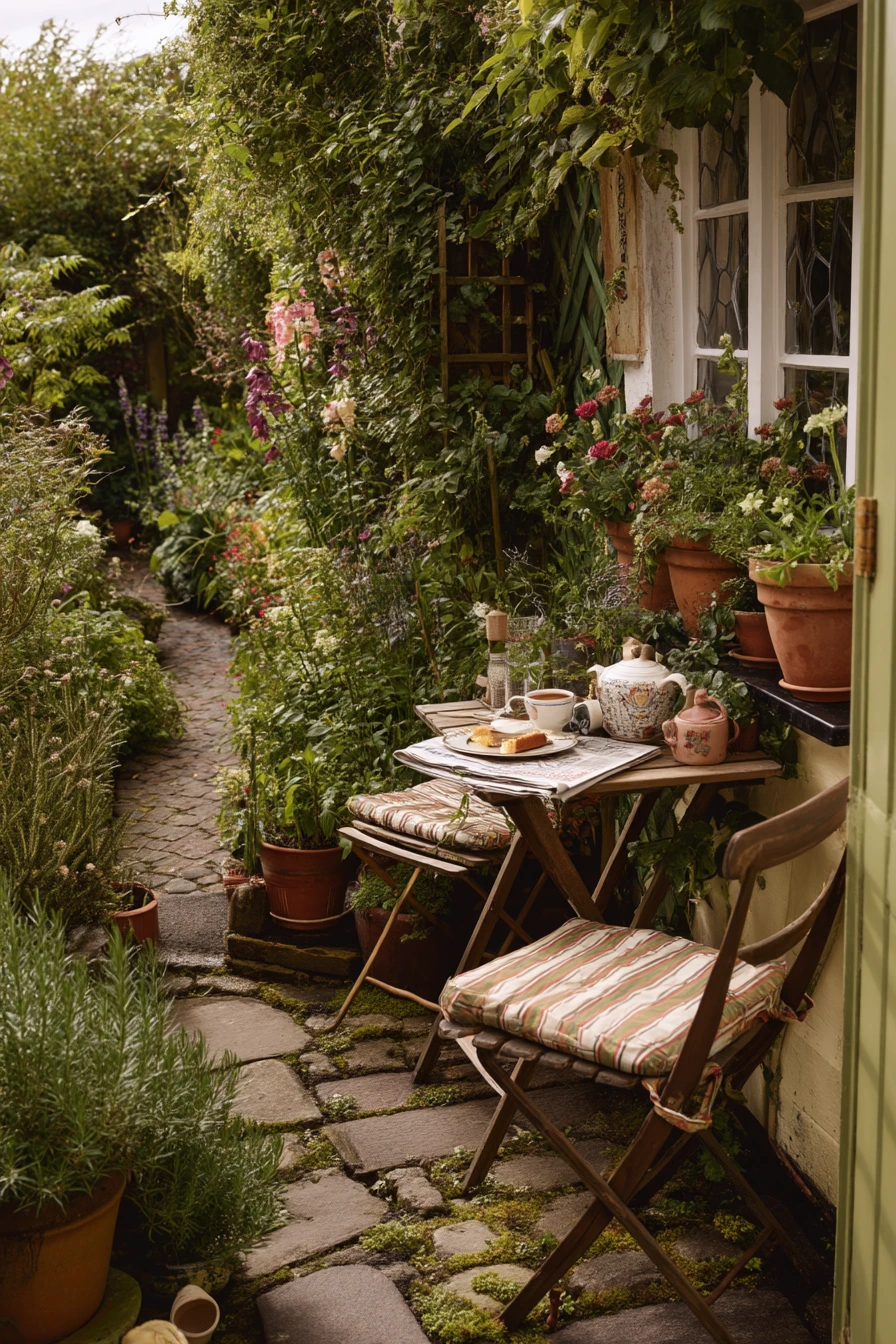
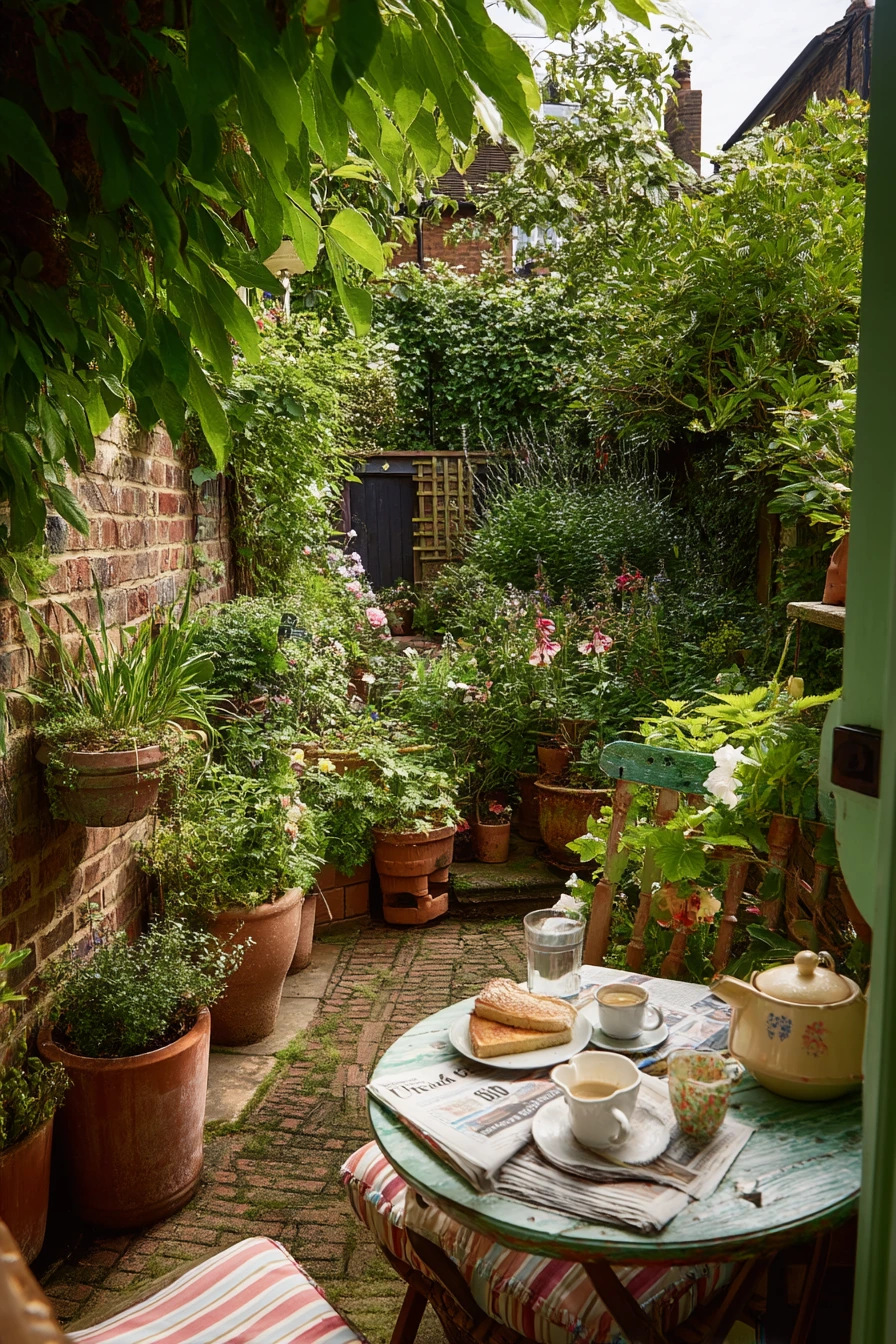
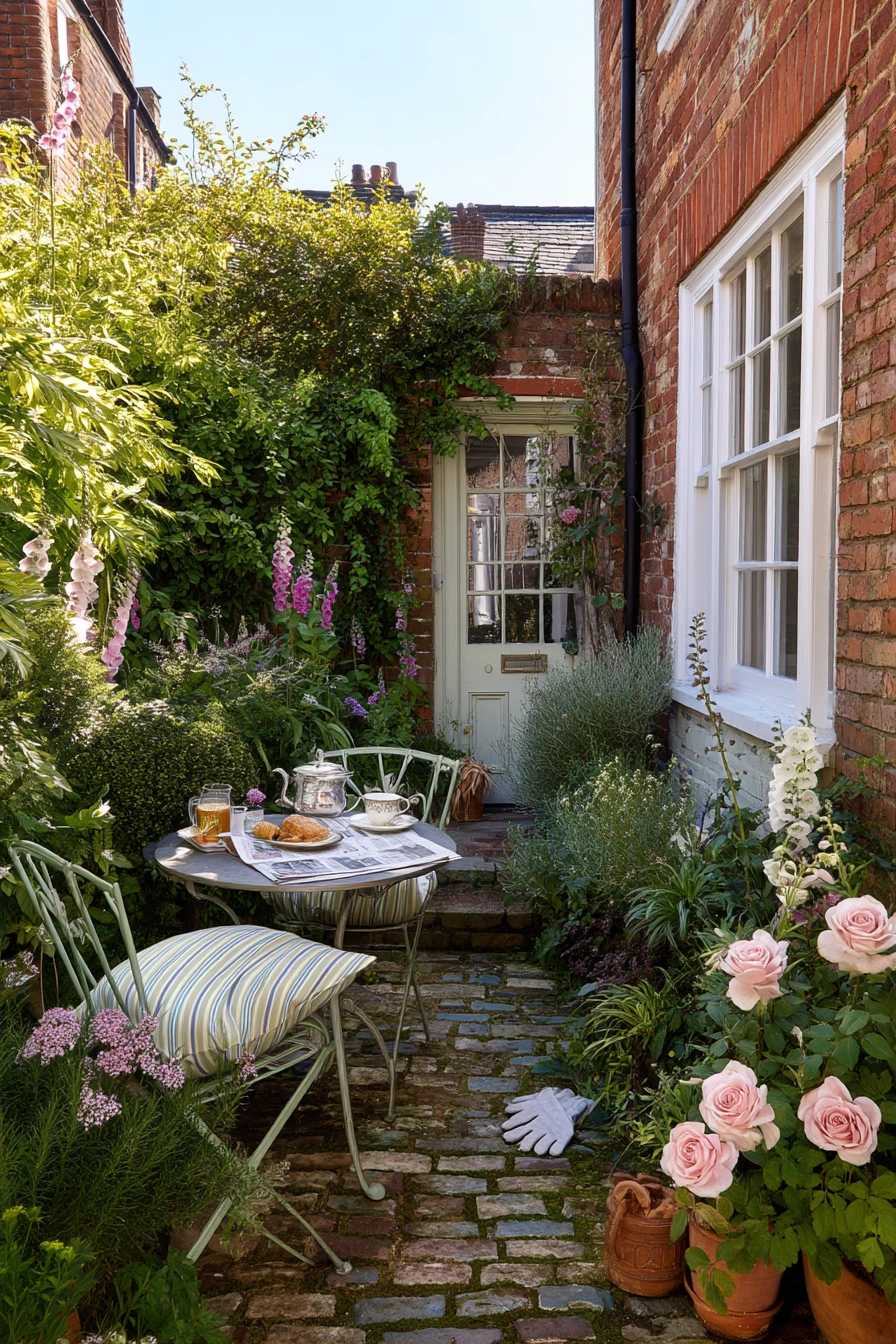
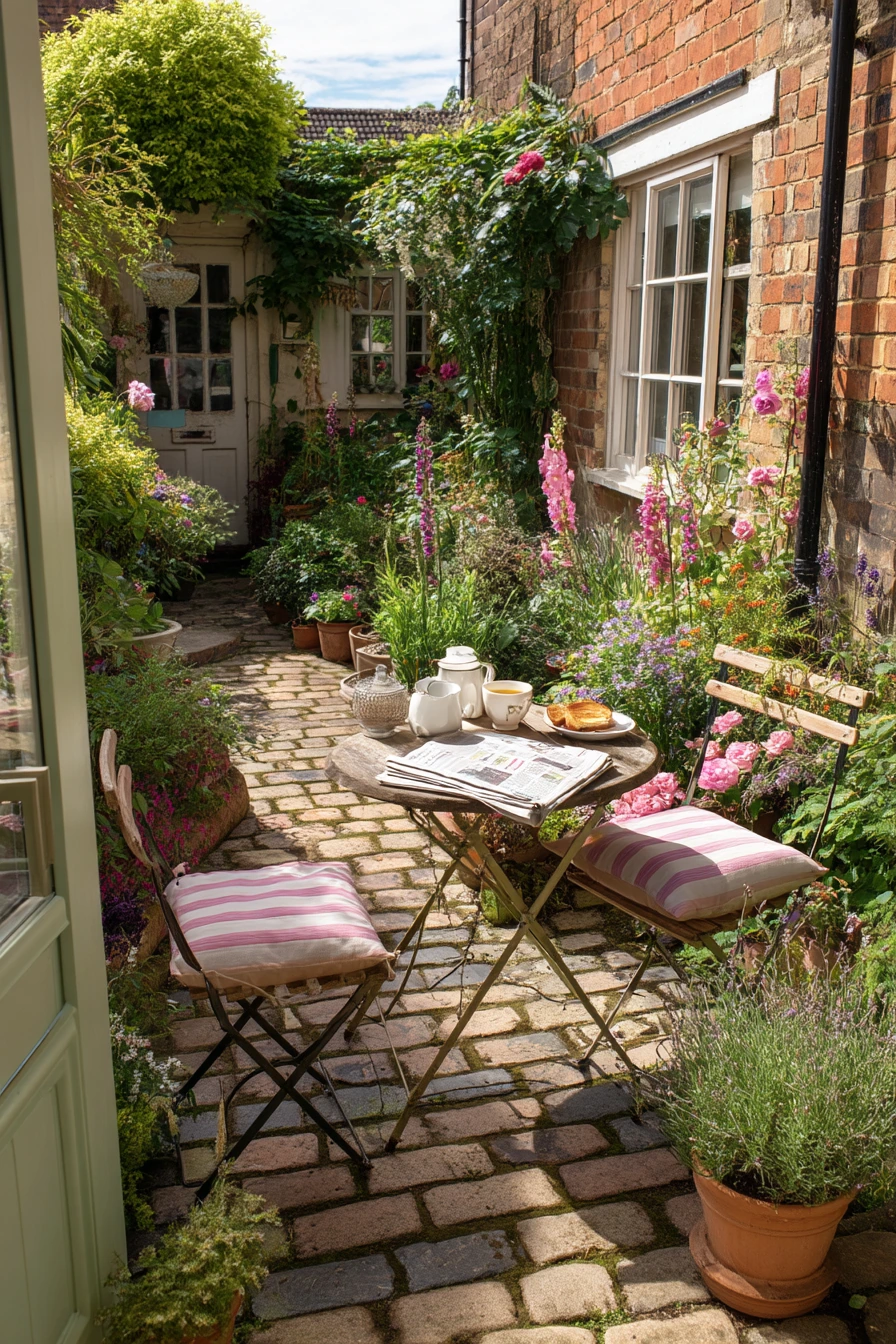
A small English garden patio can feel full and cozy when you treat it like an outdoor room. Start with the base: soft mossy paving or older stone that has texture. Then add layers with weathered terracotta pots. Use herbs like rosemary near the door so you brush past it and smell it. Add foxgloves and climbing roses to bring height, even if the patio is tiny.
To get the “real home” look, mix beauty with daily life. A small bistro set with striped cushions makes it feel lived-in, not staged. Put an enamel teapot on the table, and keep one chair free for gardening gloves. If you have a kitchen door that spills light onto the patio, place your best pots where that light hits in the morning and evening.
How to style it: keep the table setting simple and a bit imperfect. A folded newspaper beside a water glass looks natural. If you eat outside, use a small tray for toast and tea so you can carry it out fast. Group pots in threes, with one tall plant, one medium, and one trailing plant so the corner looks full without needing many items.
- Choose 2 or 3 main plants: rosemary, foxgloves, and a climbing rose.
- Use terracotta pots in mixed sizes for a collected feel.
- Add striped seat pads to bring a soft, classic pattern.
- Let a little moss stay between paving stones for charm and grip.
- Keep a small hook or basket by the door for gloves and tools.
Pro Design Tip: Repeat one material in several places, like terracotta in pots and saucers, so the patio feels calm even when planting is full.
Budget Considerations: Terracotta pots can add up; buy a few new, then mix in secondhand pots or mismatched saucers from charity shops.
2 Tiny Courtyard Garden with Folding Chair Charm
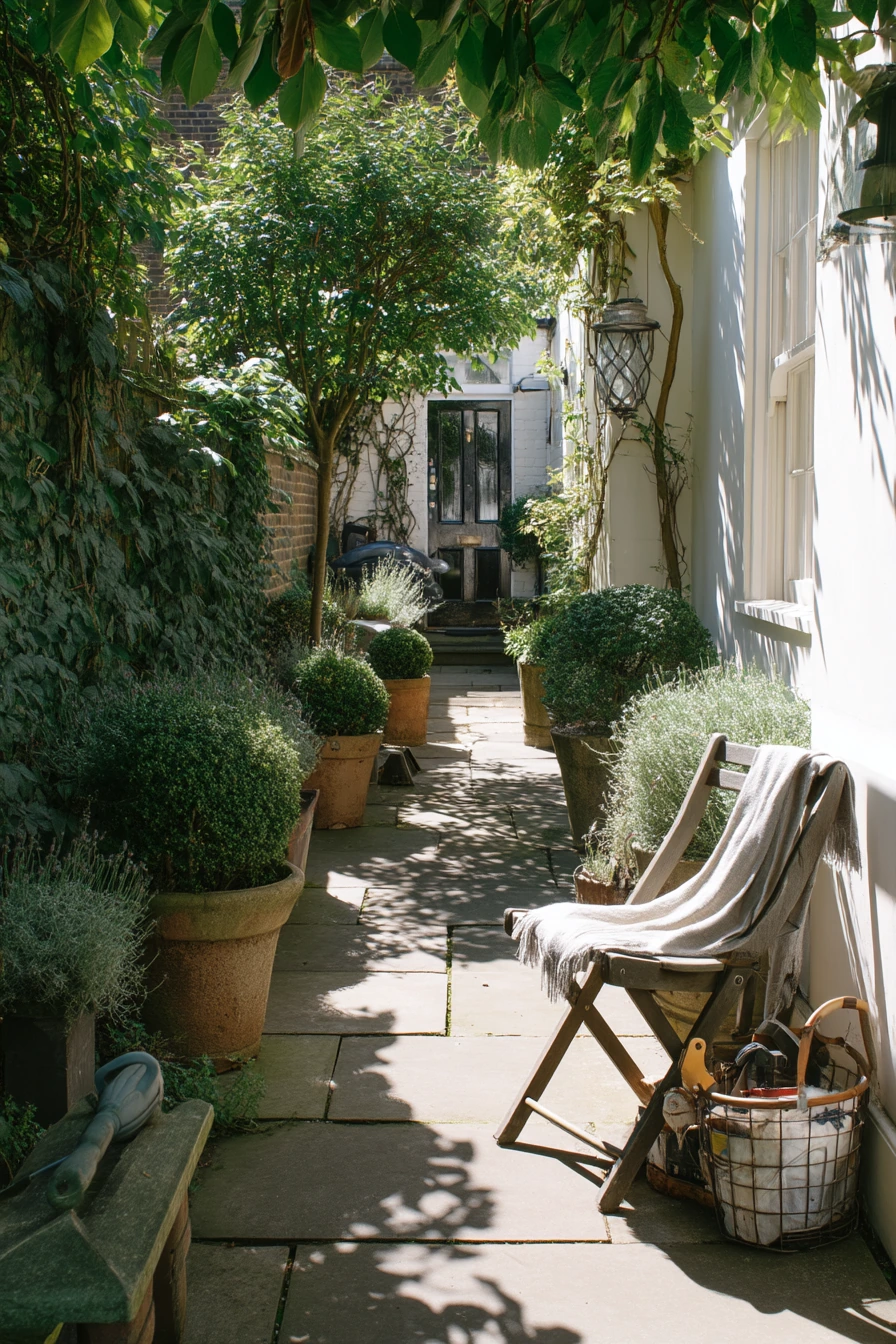
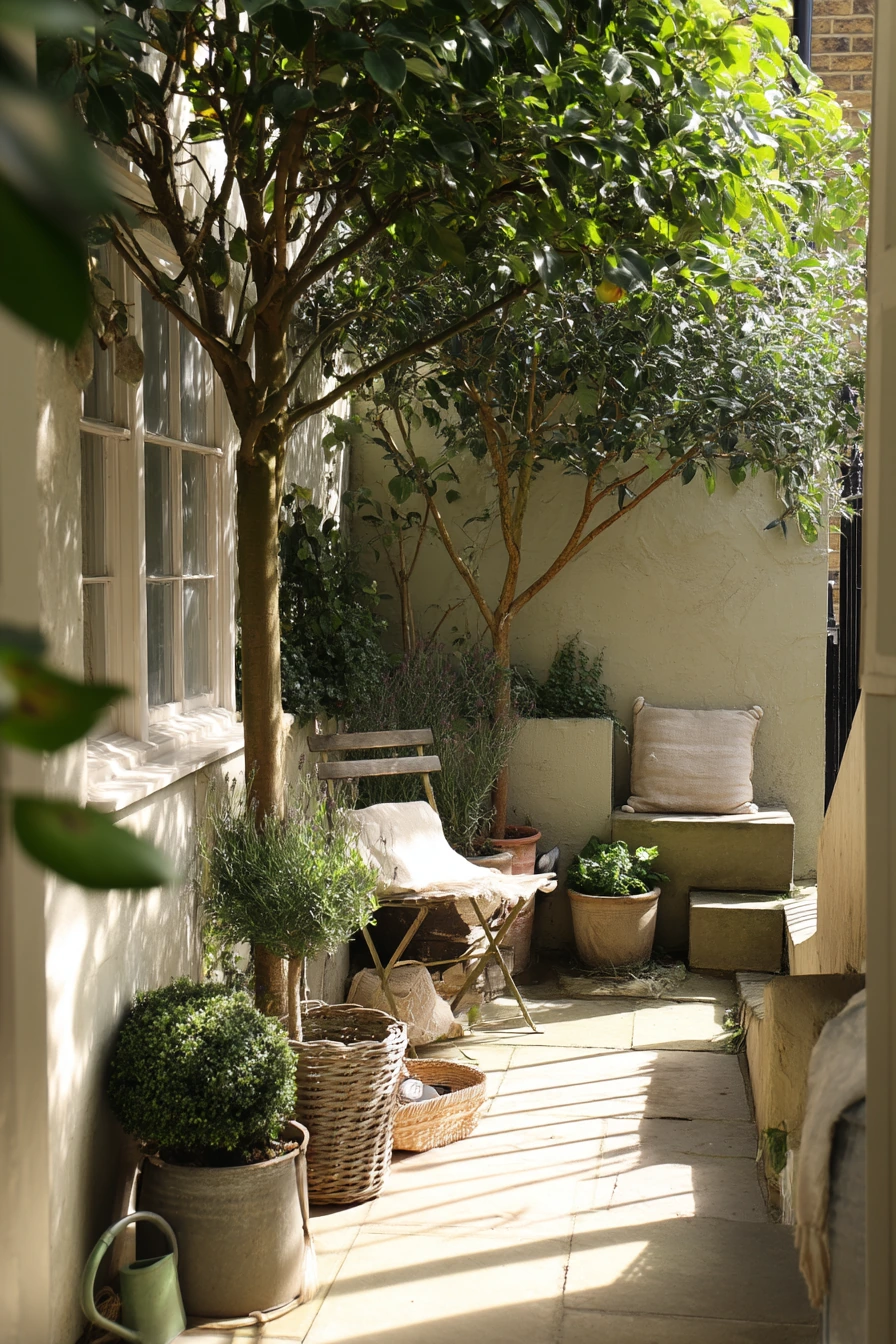
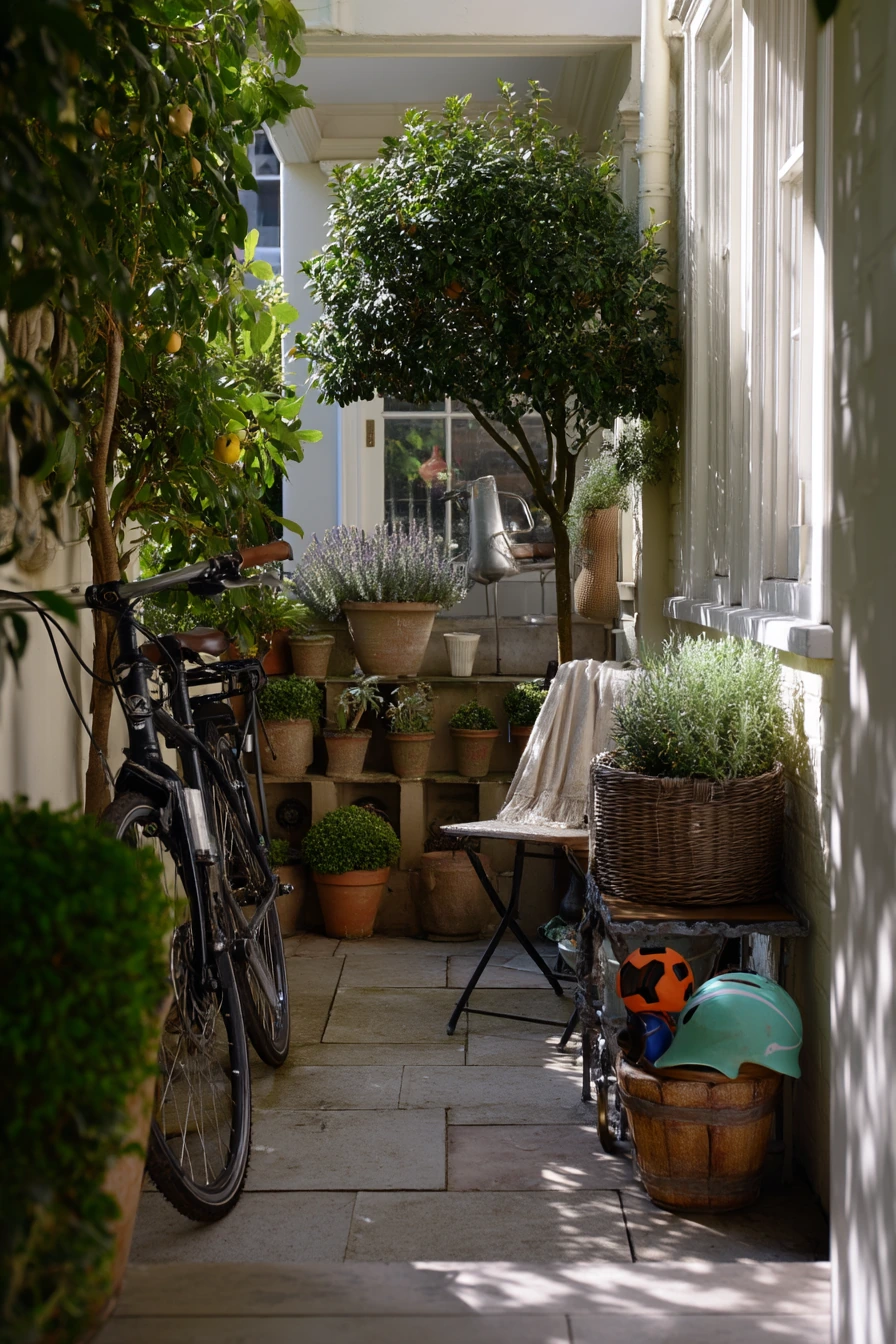
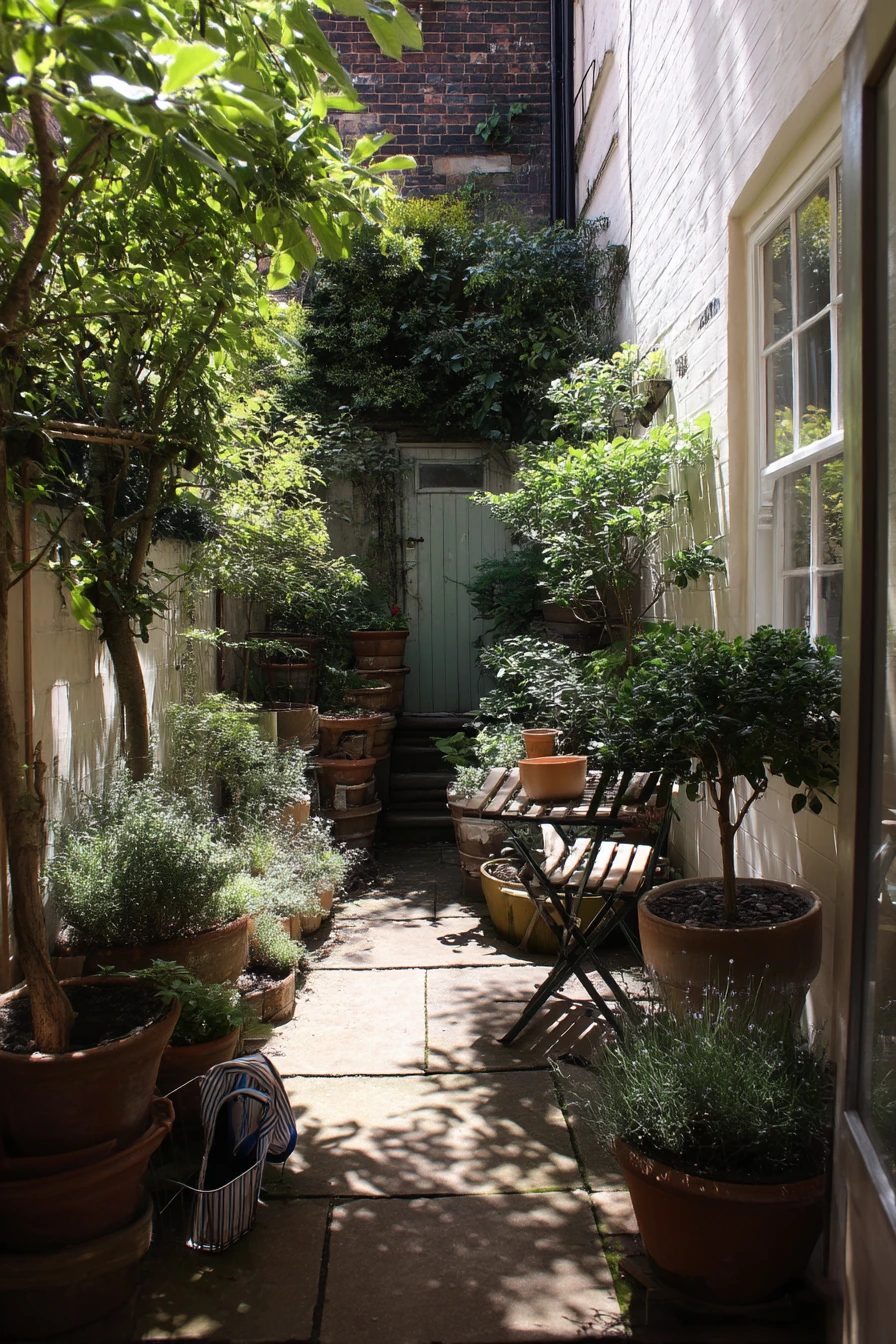
A narrow courtyard garden can still feel like an English cottage space when you use vertical planting. An espaliered apple tree is perfect for a rental because it stays flat against a wall and looks tidy. Add lavender and clipped boxwood to keep the space neat and green all year. Stacked clay pots save floor space and give you more planting room.
To keep it intimate, make one small seating spot. A folding café chair works well because you can move it when you need to sweep or bring in the bike. Drape a slightly wrinkled throw over the chair for softness. Small real-life items like a watering can near the step, a bike helmet, and a kid toy basket help the courtyard feel warm and lived-in.
How to style it: choose muted stone tones and repeat them. If your paving is gray or beige, pick pots in soft clay and plants with calm colors, like purple lavender and green boxwood. Let dappled leaf shadows do the decoration. At the back step, tuck a slim planter box with herbs so you can grab leaves while cooking.
- Train an apple tree along one wall to save space.
- Use boxwood or small evergreens to add structure.
- Place lavender near the seat for scent when you sit down.
- Stack pots or use a plant stand to lift plants off the ground.
- Keep one “family corner” for toys and tools so the rest stays clear.
Pro Design Tip: In narrow spaces, use one strong line, like the espalier tree or a row of pots, to lead the eye and make the courtyard feel longer.
Budget Considerations: Espalier frames and trees can be costly; start with a young tree and train it yourself using garden wire and wall hooks.
3 Family Side Return Garden Room
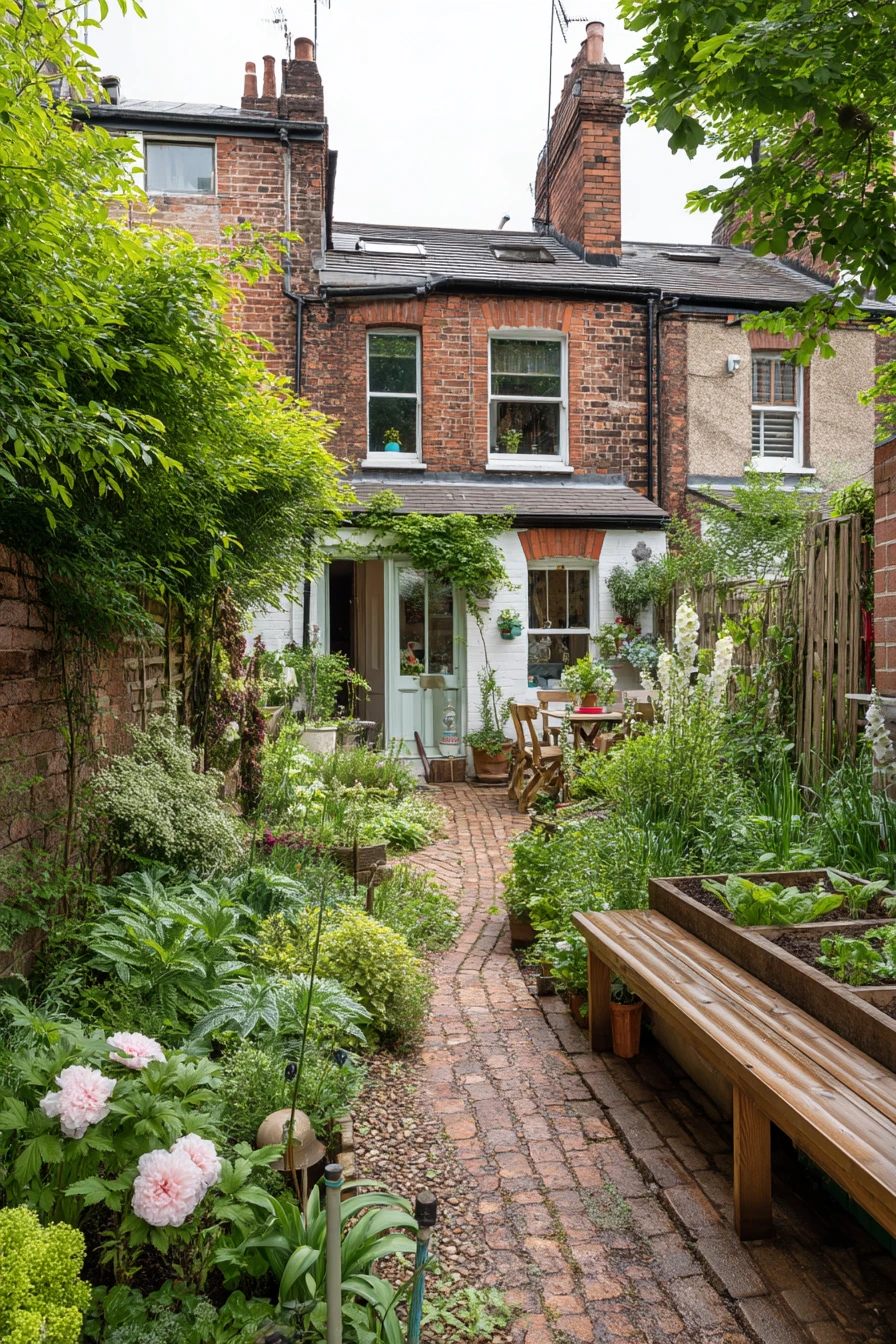
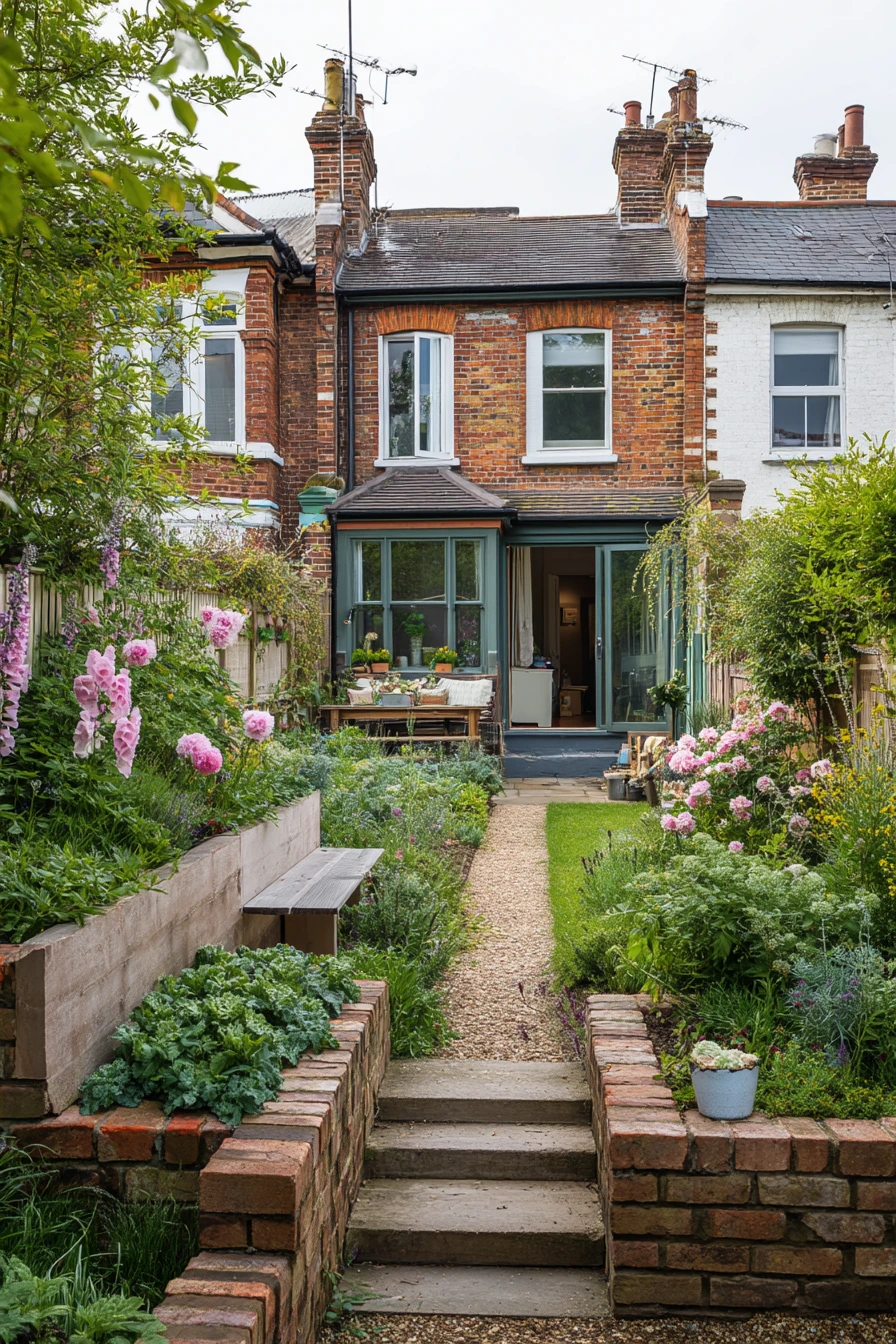
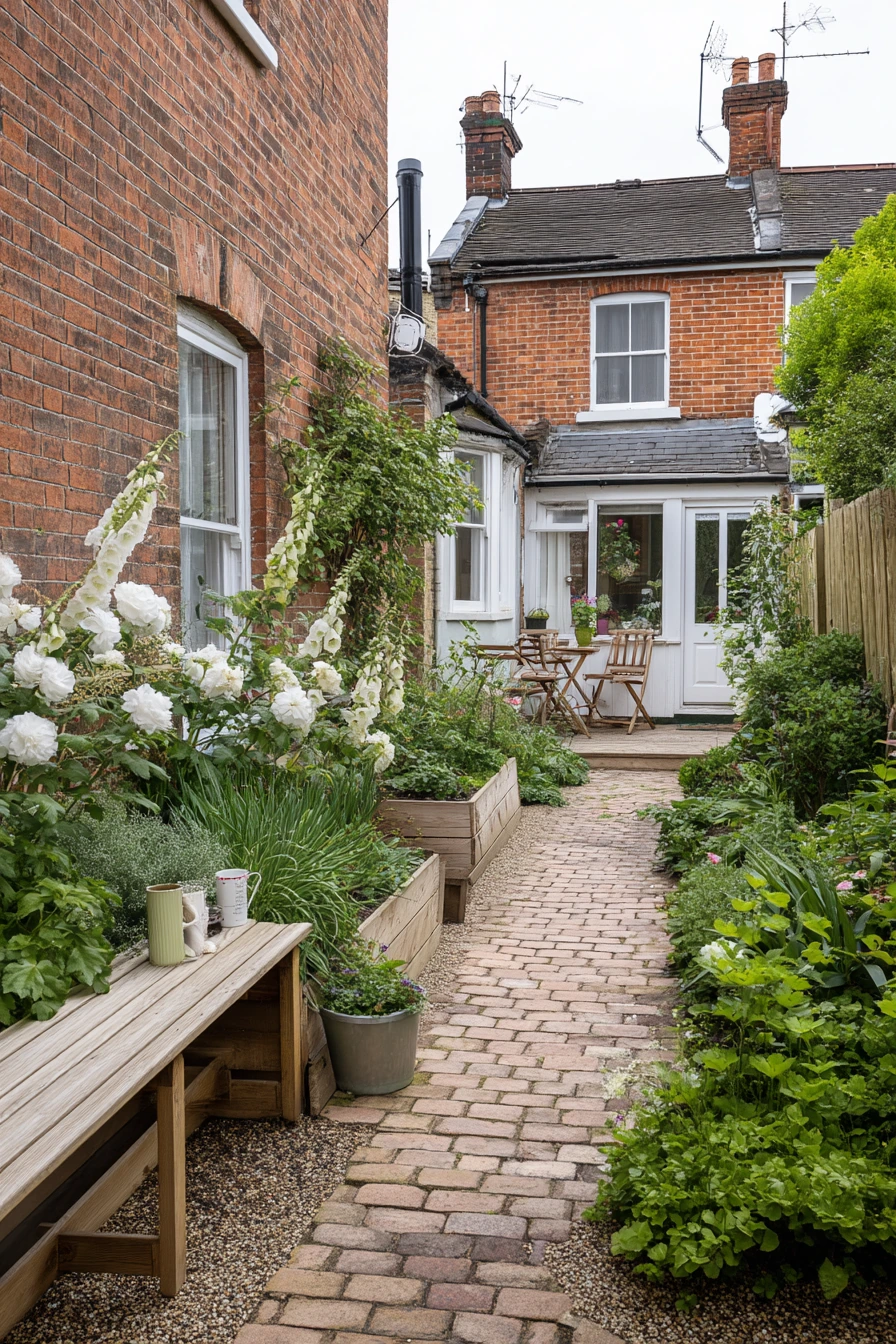
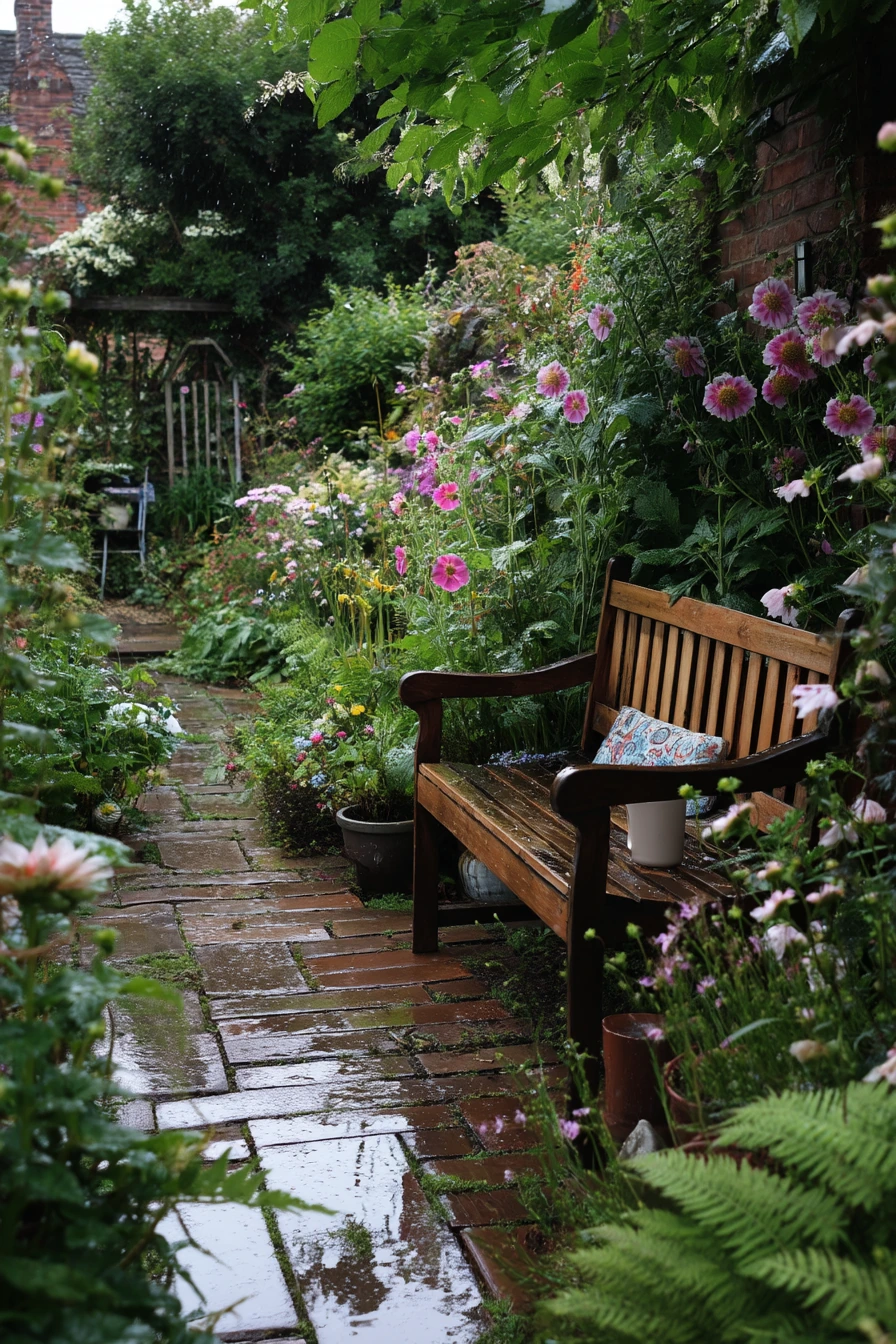
A side-return garden outside a Victorian home often needs to do a lot: play space, growing space, and a clear path to the back door. A slim brick path is a smart start because it stays firm in wet weather and feels classic. On the sides, raised beds help keep herbs and flowers organized, even when kids run through.
Plant for both beauty and use. Herbs give quick wins and can handle some picking. Add peonies and delphiniums for height and soft color, then fill gaps with smaller flowers or ground cover. Keep the back door zone practical. A bench is helpful for taking off muddy wellies, charging a phone, or setting down a mug. If tools like secateurs are often left out, add a small box or hook so you can tidy in one minute.
How to style it: use repeat shapes. Raised beds with the same wood or brick edge look calm. Put the tallest flowers at the far end so the space feels deeper. Leave a little planting to spill over the bed edge, but keep the brick path clean so it stays safe. After rain, let the leaves shine and resist over-pruning.
- Build narrow raised beds to keep planting off the path.
- Grow herbs near the door so you use them more.
- Choose sturdy flowers like peonies and delphiniums for big impact.
- Add a wipe-clean mat or tray for muddy boots by the step.
- Store small tools in a lidded box to stop clutter spreading.
Pro Design Tip: Keep the hard path straight and simple, then let the planting be loose and full on both sides for the best English garden balance.
Budget Considerations: Raised beds can be made from leftover timber or reclaimed bricks; line them with membrane to help the wood last longer.
4 English Rose Border by the Kitchen Window
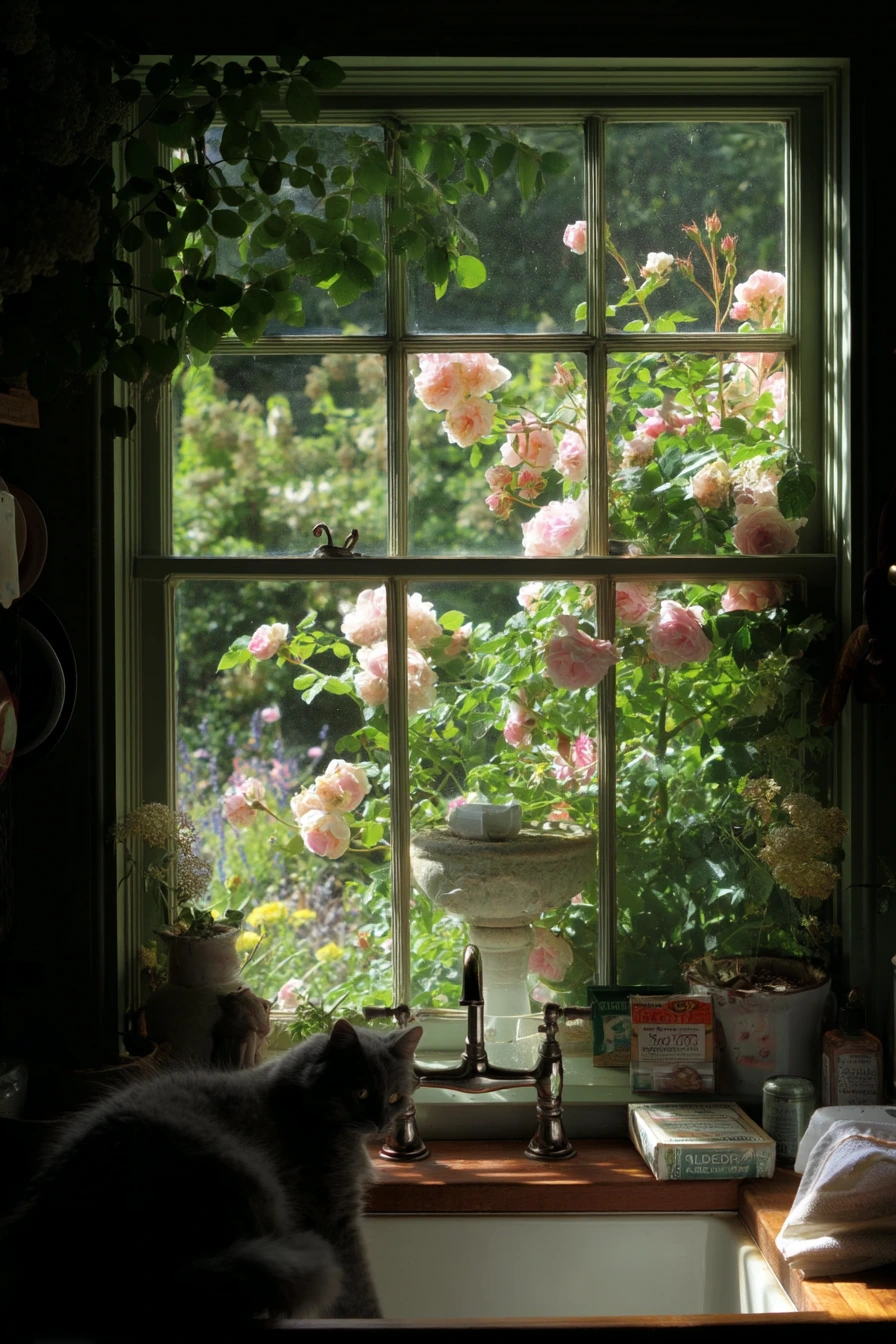
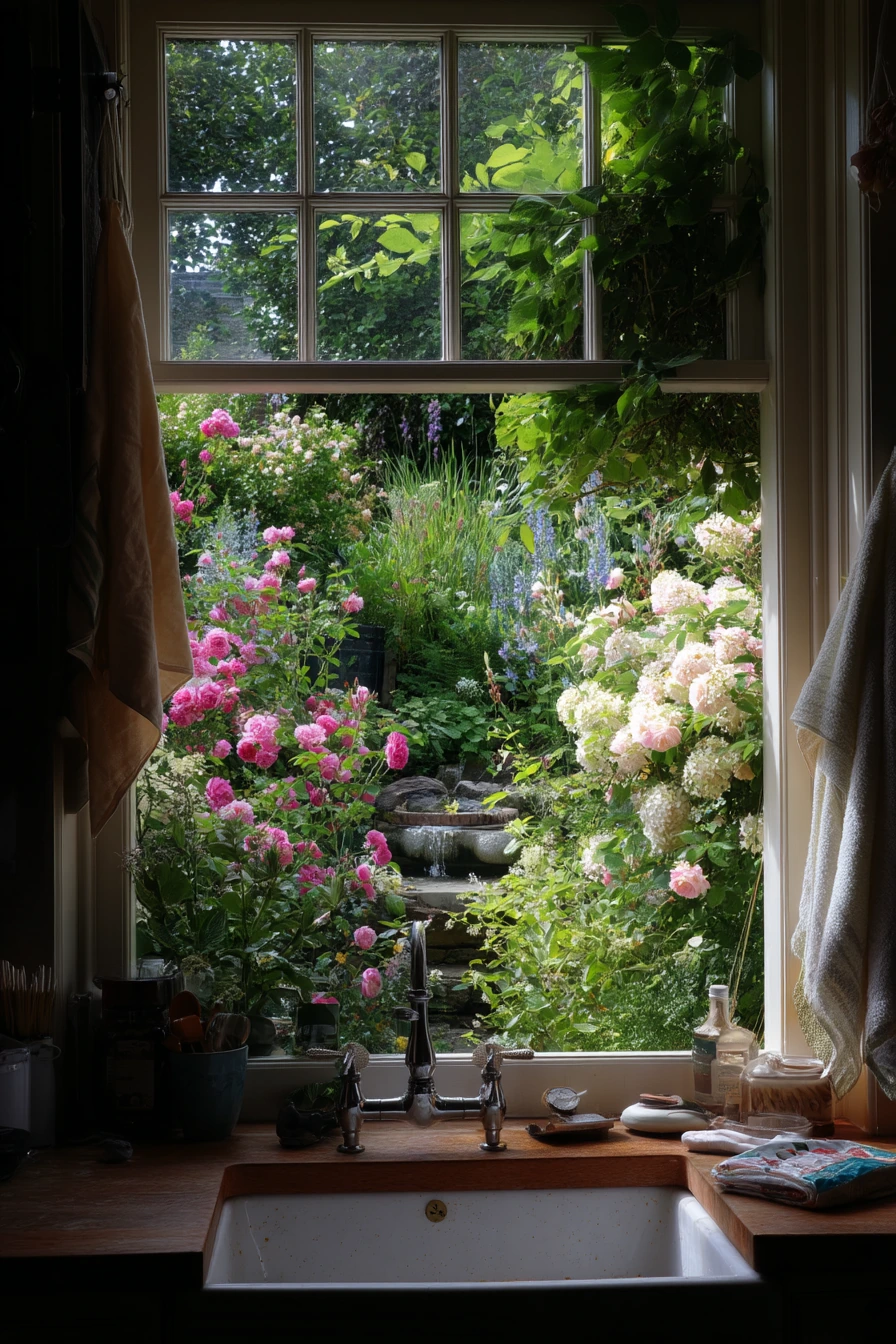
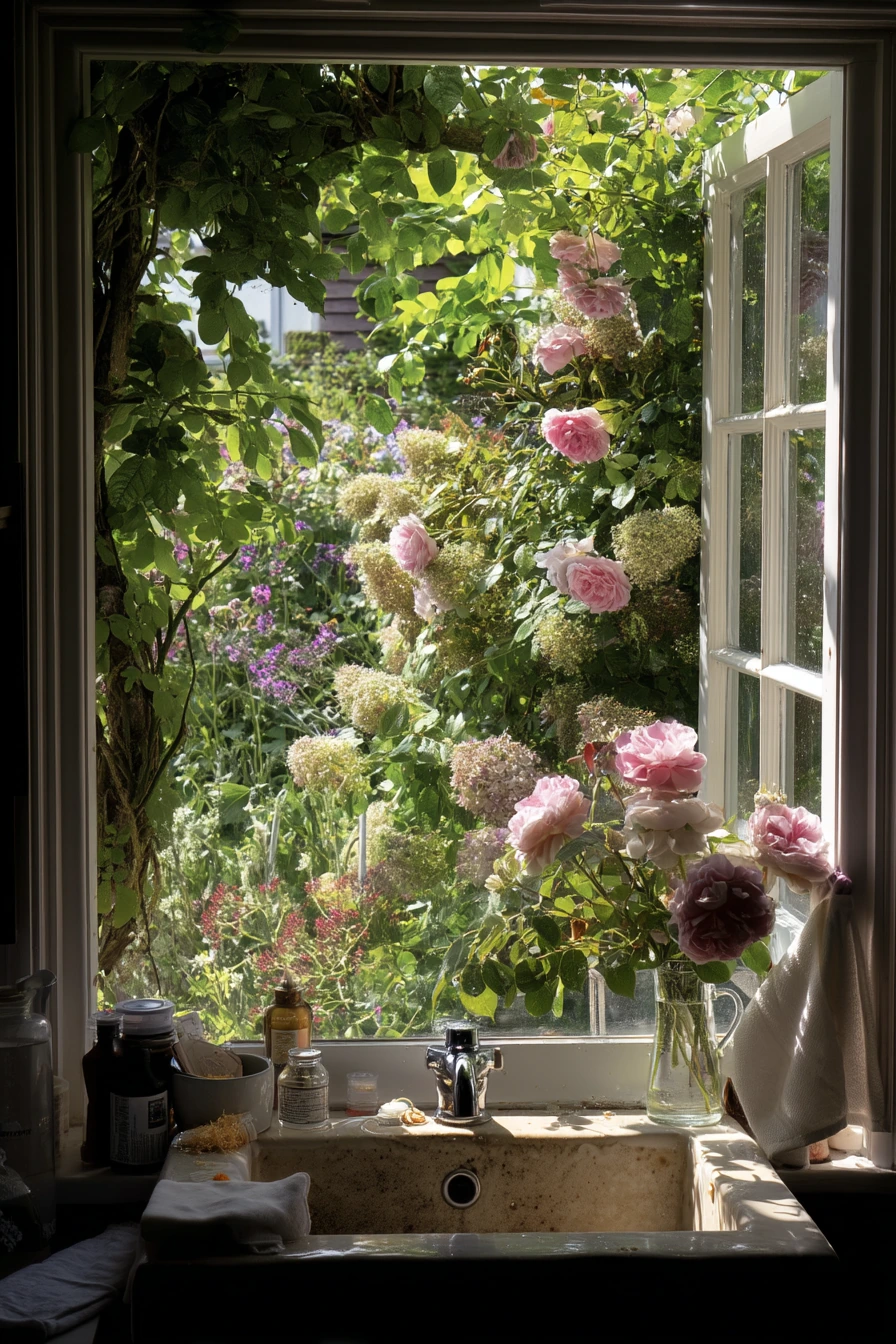
An English garden border seen from a kitchen window should look good from indoors and outdoors. Start by framing the view. A simple stone birdbath makes a strong center point and gives birds a reason to visit. Around it, plant in soft layers so the border looks full in every season.
Climbing David Austin roses add height and romance near a wall or fence. In front, lady’s mantle gives a gentle green base and catches morning light on its leaves. Hydrangeas bring larger shapes and hold the border together when other plants fade. This kind of planting looks believable because it mixes old favorites and easy structure.
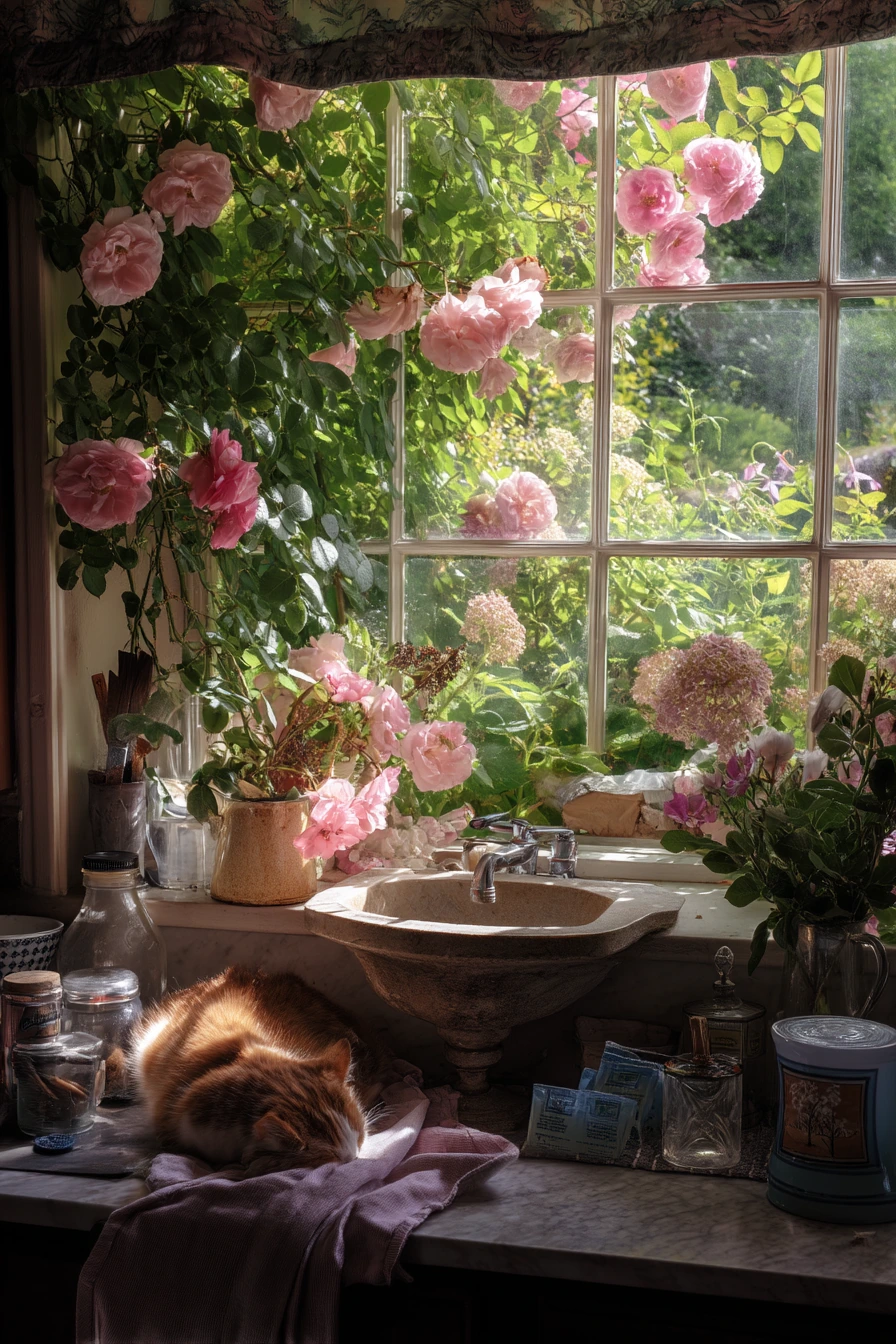
How to style it: echo the kitchen life. If seed packets are on the sill and a dish towel is half hanging, keep the garden easy to care for so it fits real routines. Place a small pot of herbs on the step for quick picking. If a cat likes the warm step, choose plants that can handle a little brushing, and keep one clear spot where the cat can curl up.
- Place a stone birdbath where you can see it from the sink.
- Grow climbing roses up a trellis for height without using much ground space.
- Use hydrangeas for bold, steady flower heads.
- Add lady’s mantle as a soft edging plant along the front.
- Keep a narrow “view gap” so you can see into the border, not only leaves.
Pro Design Tip: Design the border in three heights (tall, medium, low) so it reads well through the window, even on gray days.
Budget Considerations: David Austin roses are premium plants; if cost is tight, buy a smaller bare-root rose in season and let it grow for a year or two.
5 Budget-Friendly Front Garden Path Refresh
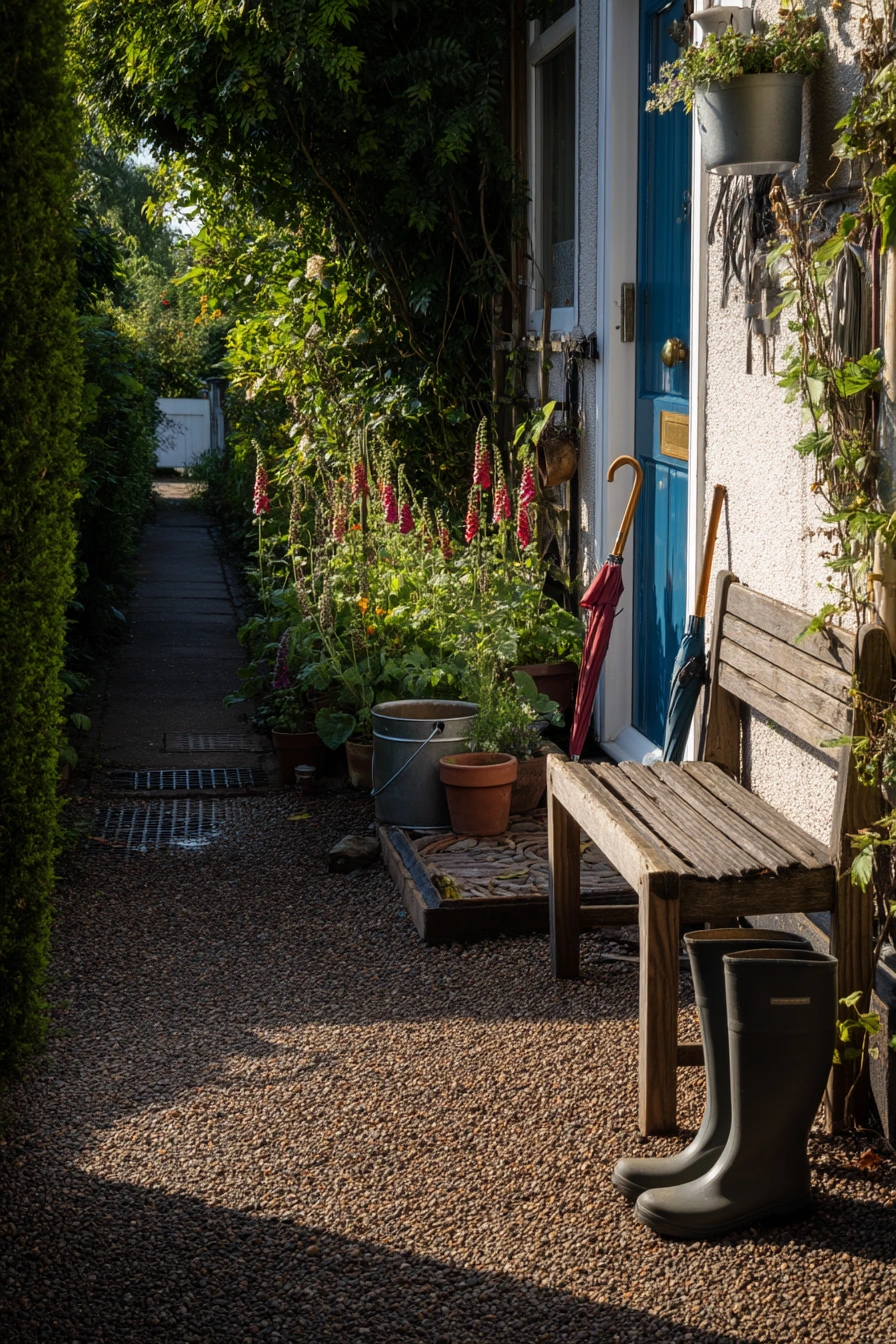
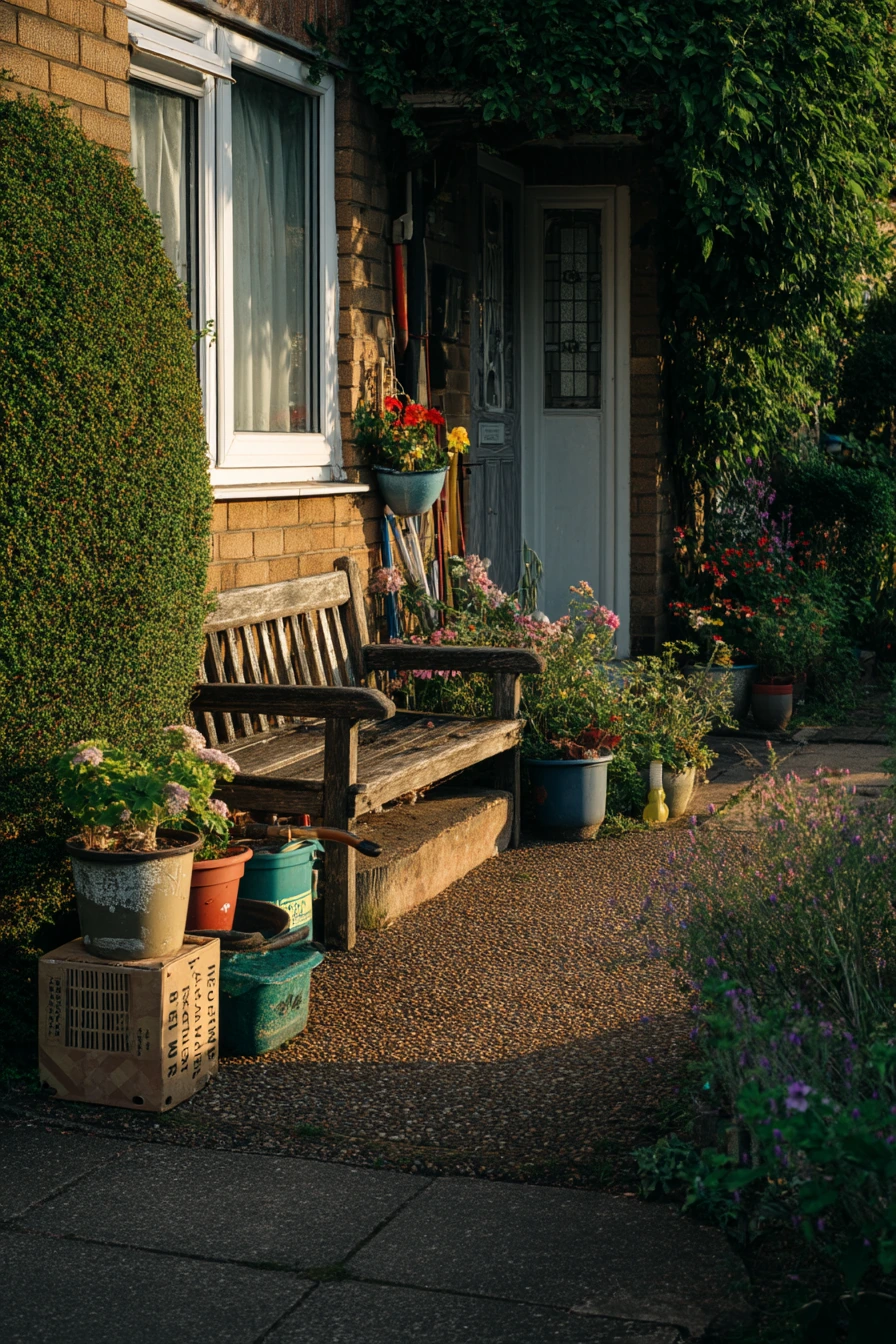
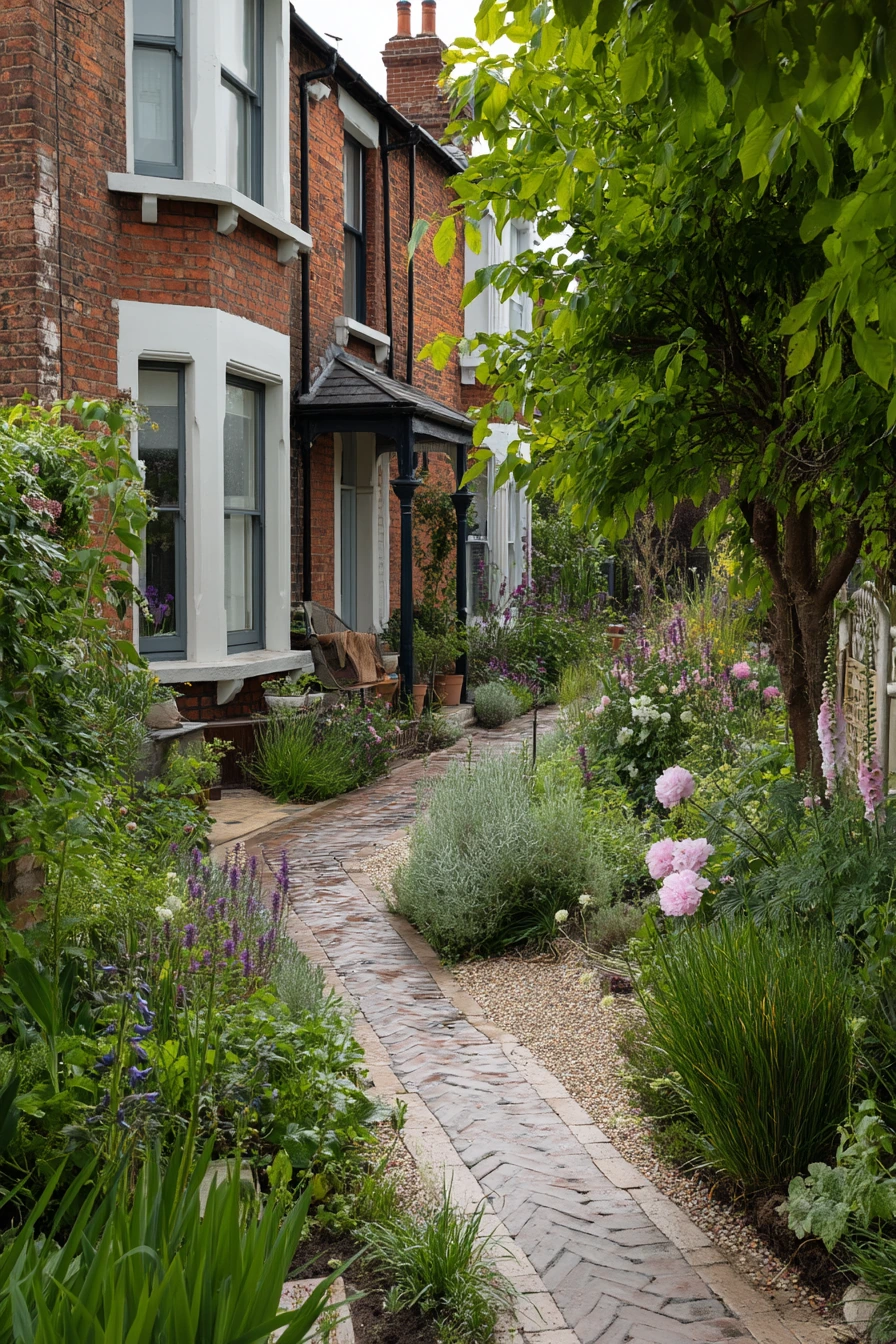
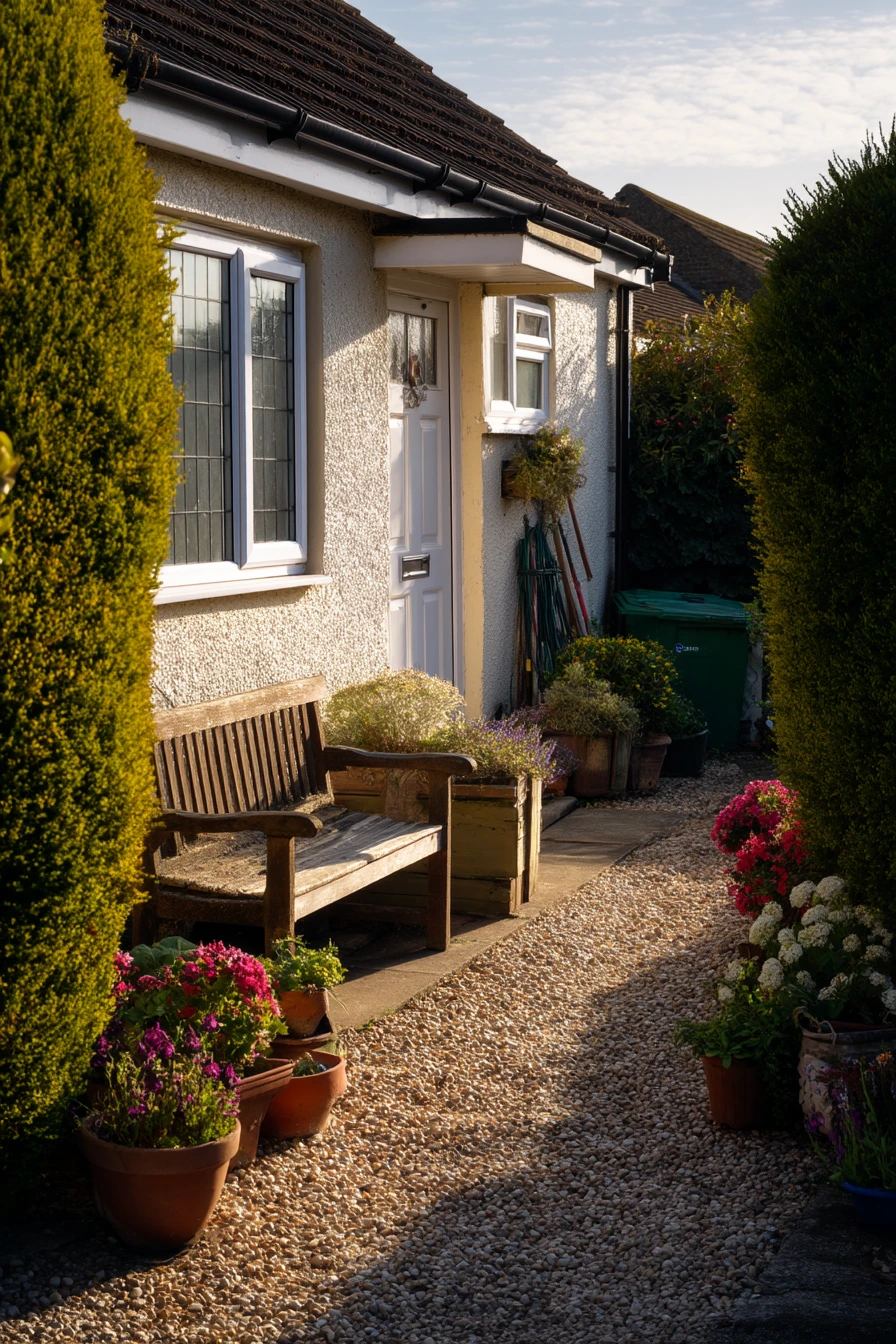
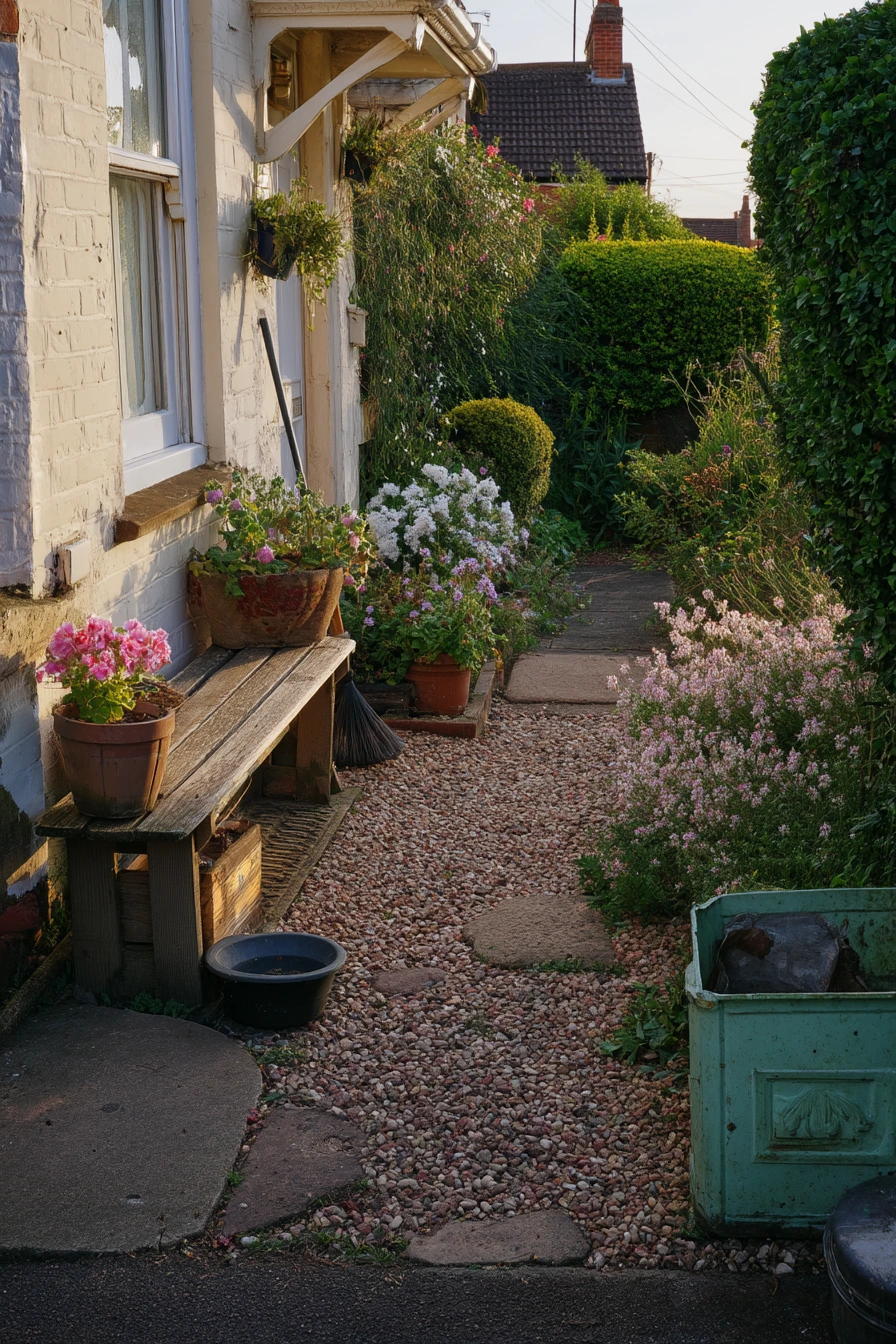
A modest semi-detached front garden can look charming without big spending. A gravel path is one of the easiest changes because it brightens the space, drains well, and is simple to lay. Crisp hedges give a tidy shape, even if the planting is a mix of thrifted finds.
Use pots to add cottage color near the door. Geraniums are great for long bloom, salvias add purple spikes that bees like, and foxgloves bring that classic English garden height. A salvaged bench can be a small welcome spot, even if you only sit there for a minute. Real details like a broom by the door, a recycling crate, and an umbrella stand are fine. The goal is “lived-in but cared for.”
How to style it: limit your color palette so it looks planned. Pick two main flower colors, like pink and purple, then add green with hedges and herbs. Group pots close to the house where they are easy to water. Keep one pot near the step for seasonal swaps, so you can change the look with one plant instead of redoing everything.
- Lay a simple gravel path with solid edging to stop spreading.
- Use thrifted pots and paint only if they look too mixed.
- Plant salvias and geraniums for long-lasting front door color.
- Add foxgloves toward the back for height and a cottage feel.
- Keep the doorstep clear and sweep often for a neat first view.
Pro Design Tip: Match the pot sizes to the scale of the house: a few larger pots look calmer than many tiny ones.
Budget Considerations: Gravel and edging costs vary; save money by doing the path in short stages, finishing one section at a time.
6 Wildflower Meadow Lawn for Weekend Hosting
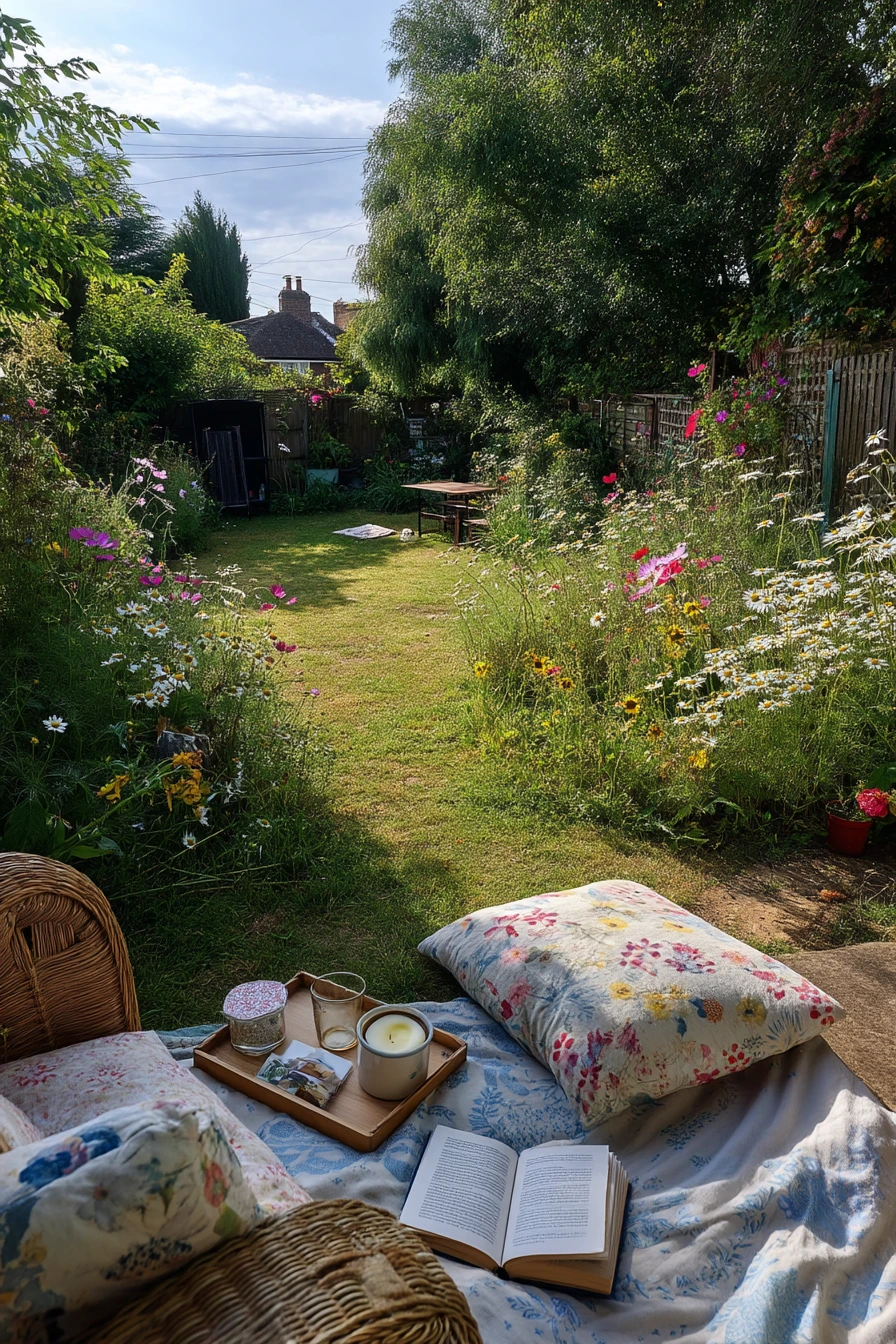
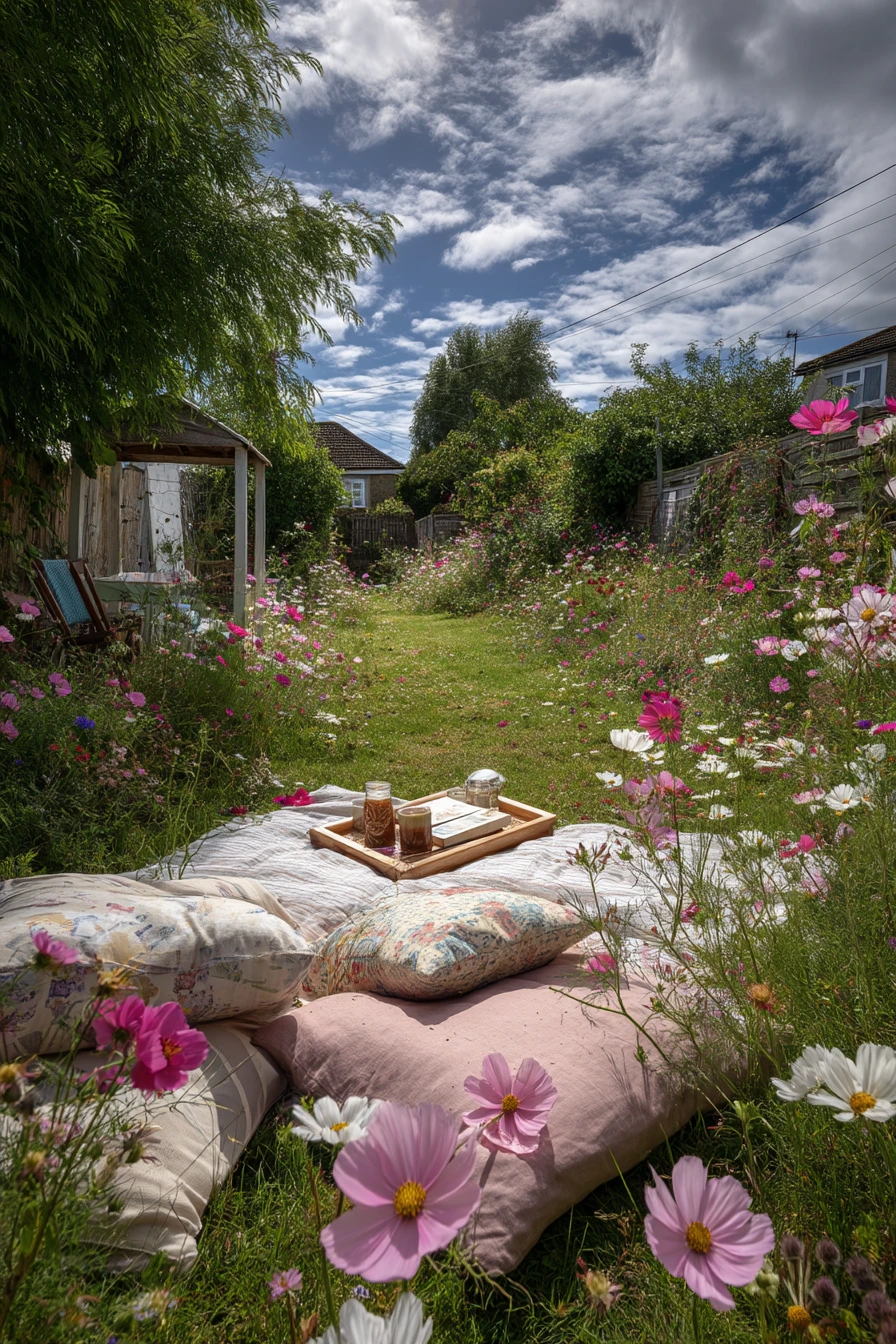
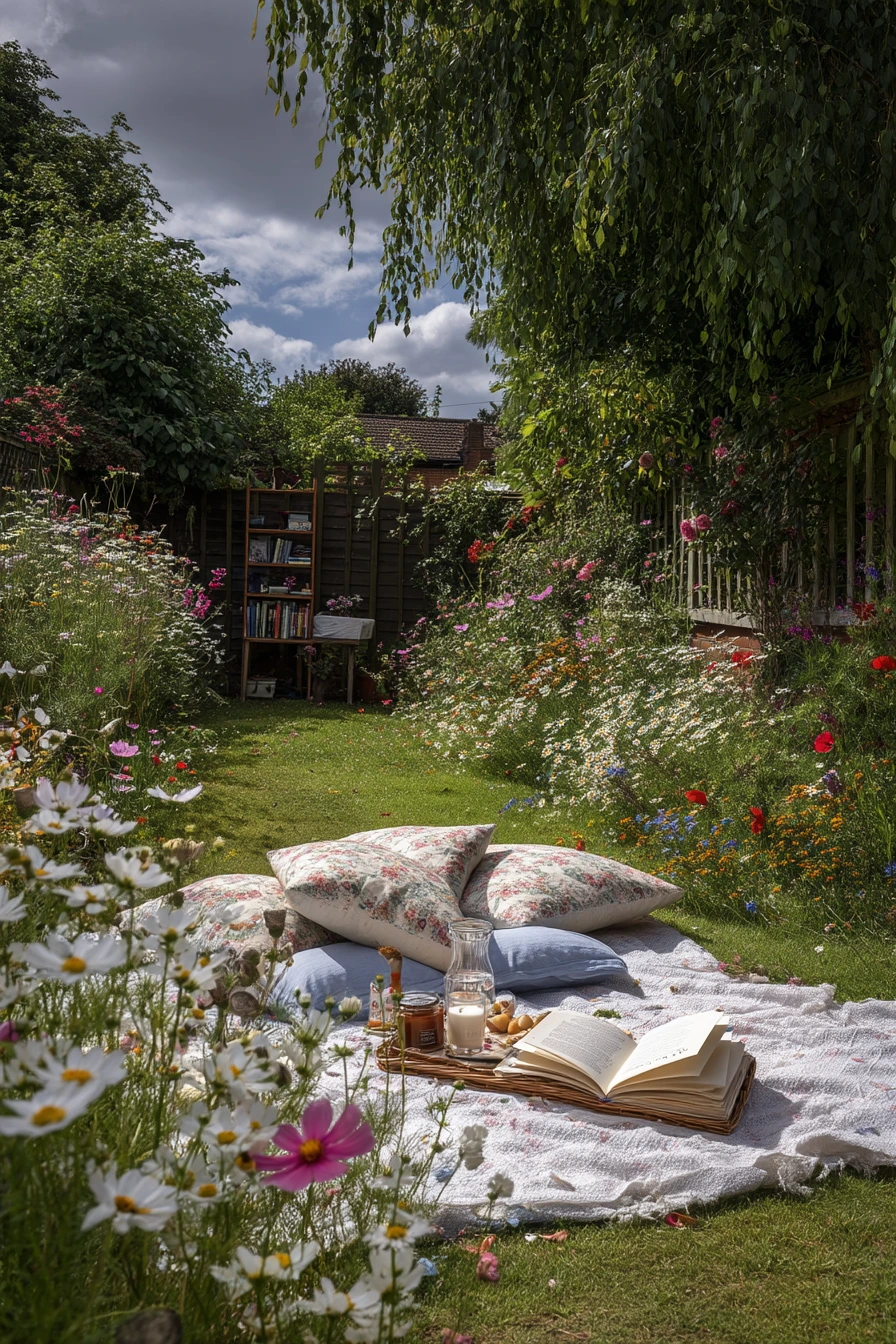
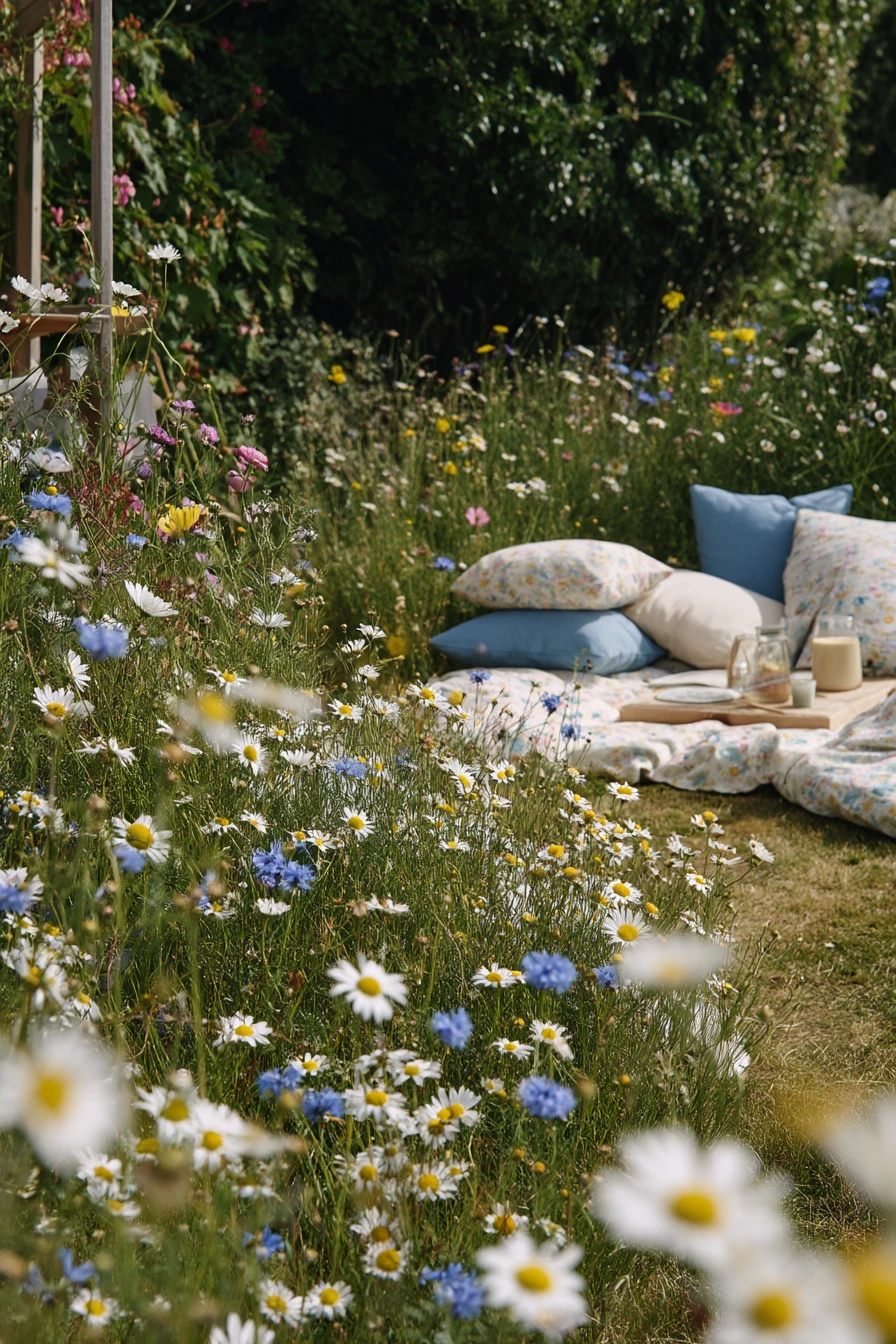
An English meadow look works well in a suburban back garden because it feels relaxed and not too formal. The key is a loose lawn edge, not a perfect stripe. Let daisies, cosmos, and cornflowers mix in a wider border so the garden looks soft and airy. Add a few untrimmed roses climbing a trellis for height and scent.
Make it a place you actually use. Low chairs with outdoor cushions invite quick breaks. A picnic tray, an empty jam jar, and a paperback book fit the meadow style because it is simple and casual. Add a citronella candle so evenings are more comfortable. Keep one clear route through the garden so you can water and deadhead without stepping on plants.
How to style it: use “patches” instead of rows. Plant cosmos in a small drift, then repeat it again further along. Mix in grasses or ferny foliage so the flowers do not look flat. Leave a few seed heads at the end of summer for birds and for self-seeding next year. If you want it to look cared for, mow the lawn edge in a gentle curve and keep the trellis roses tied in.
- Widen one border and seed it with meadow flowers.
- Keep a soft, curved lawn edge for an easy English look.
- Train climbing roses on a trellis to add height and shade.
- Place low seating where you can see the best part of the border.
- Leave a narrow path so you can maintain the planting without stress.
Pro Design Tip: Repeat the same flower in three spots across the border so the meadow looks intentional, not messy.
Budget Considerations: Meadow seed mixes are affordable, but soil prep takes time; if you are on a budget, start with one small strip and expand next season.
7 Potting Bench and Herb Patch Corner
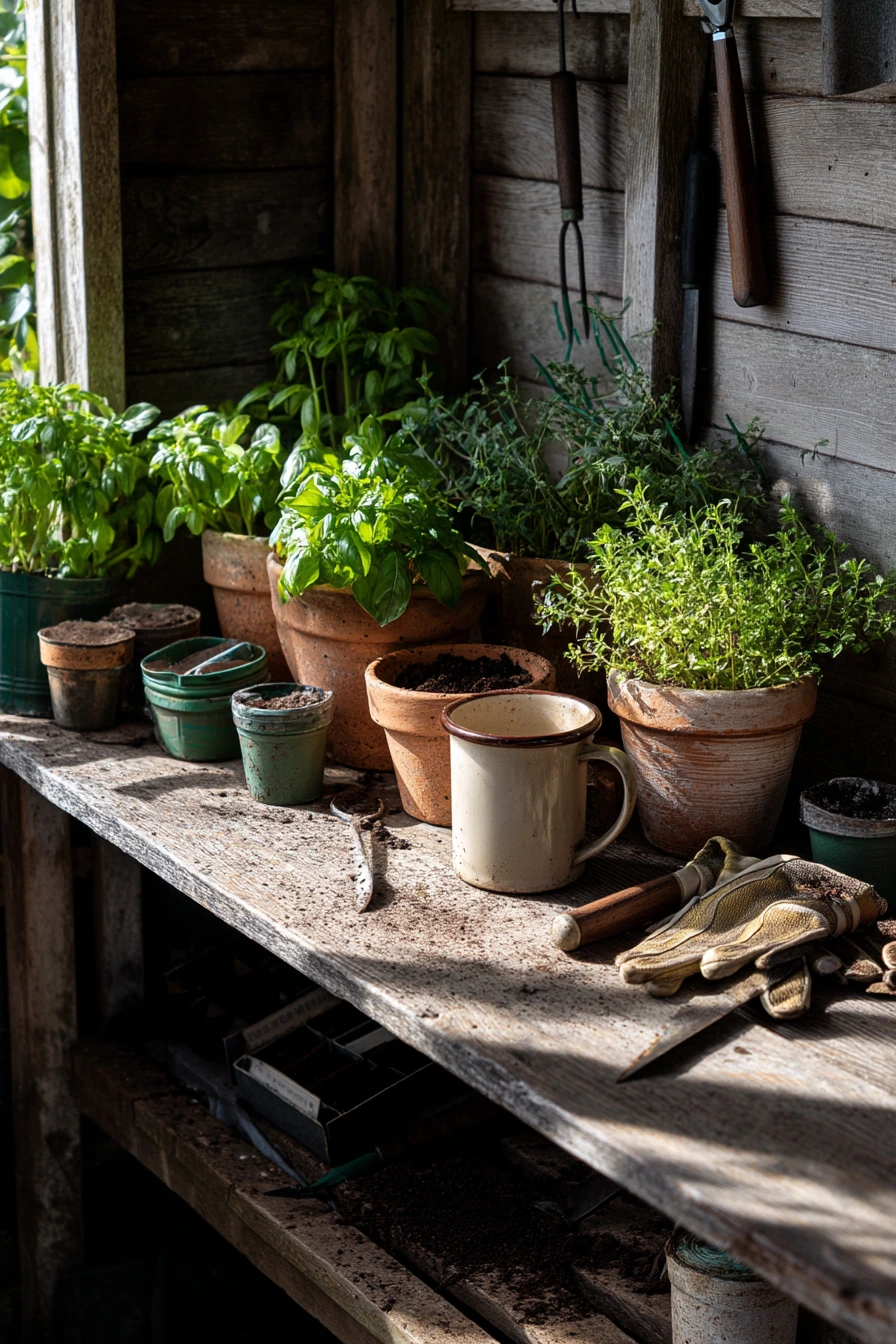
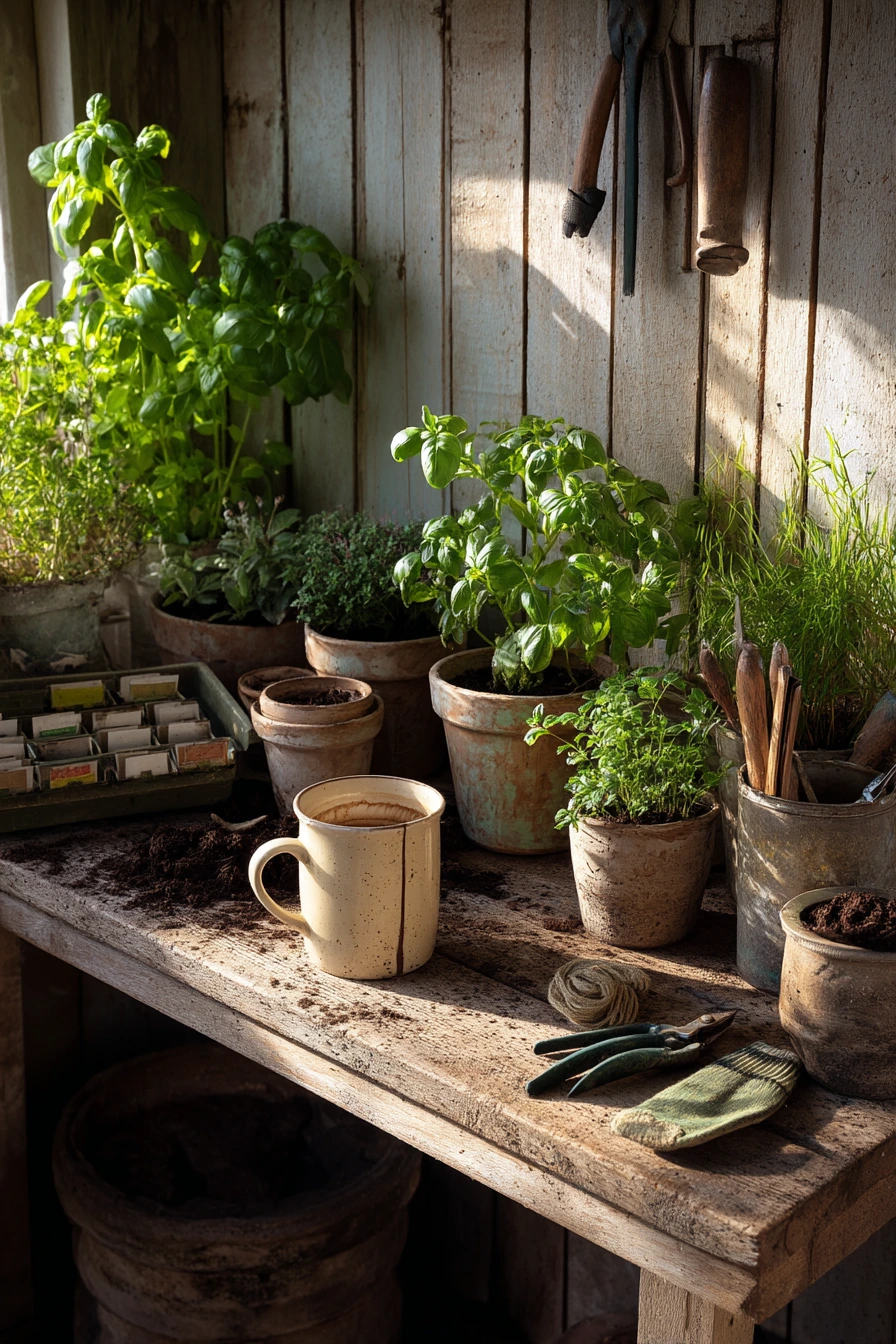
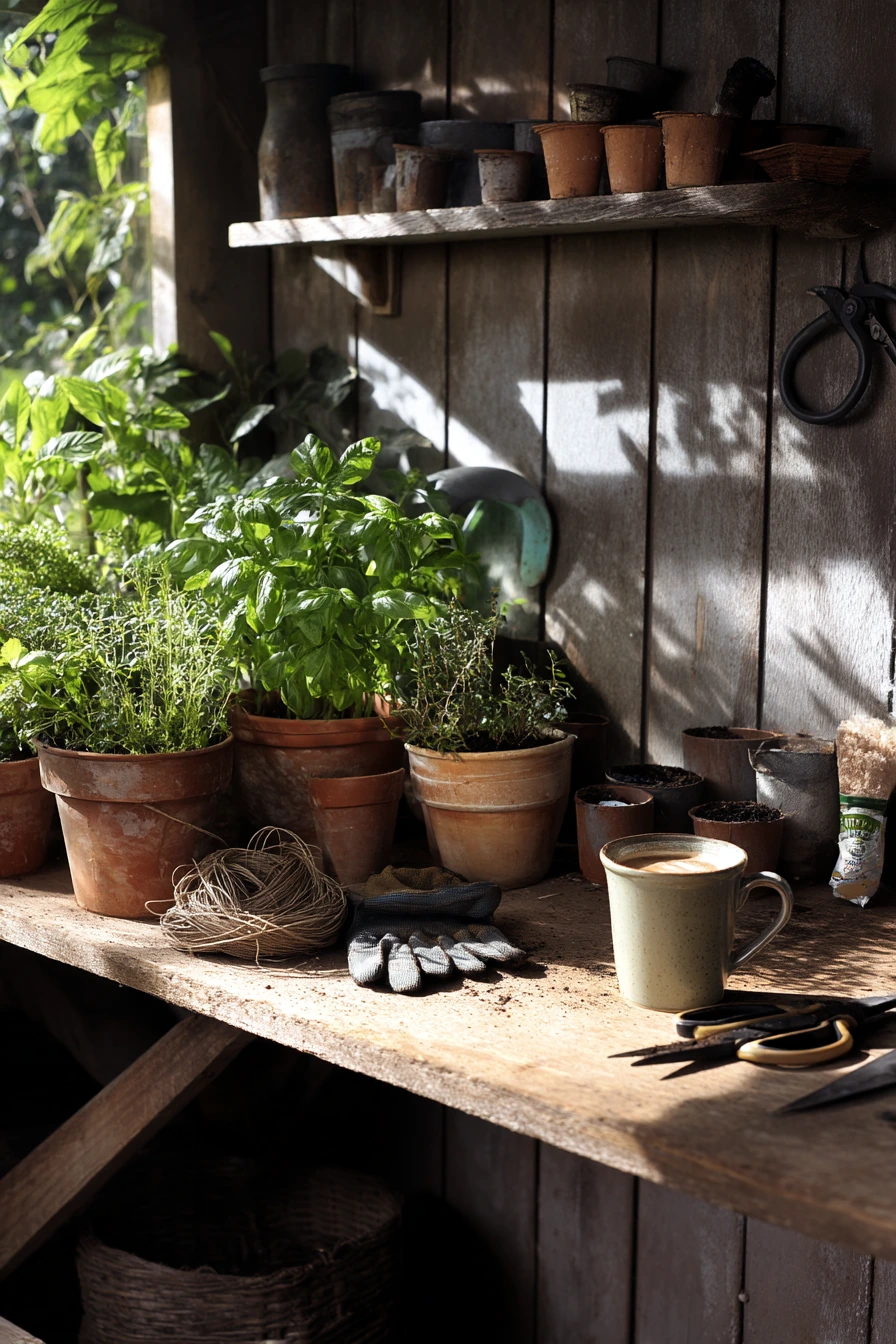
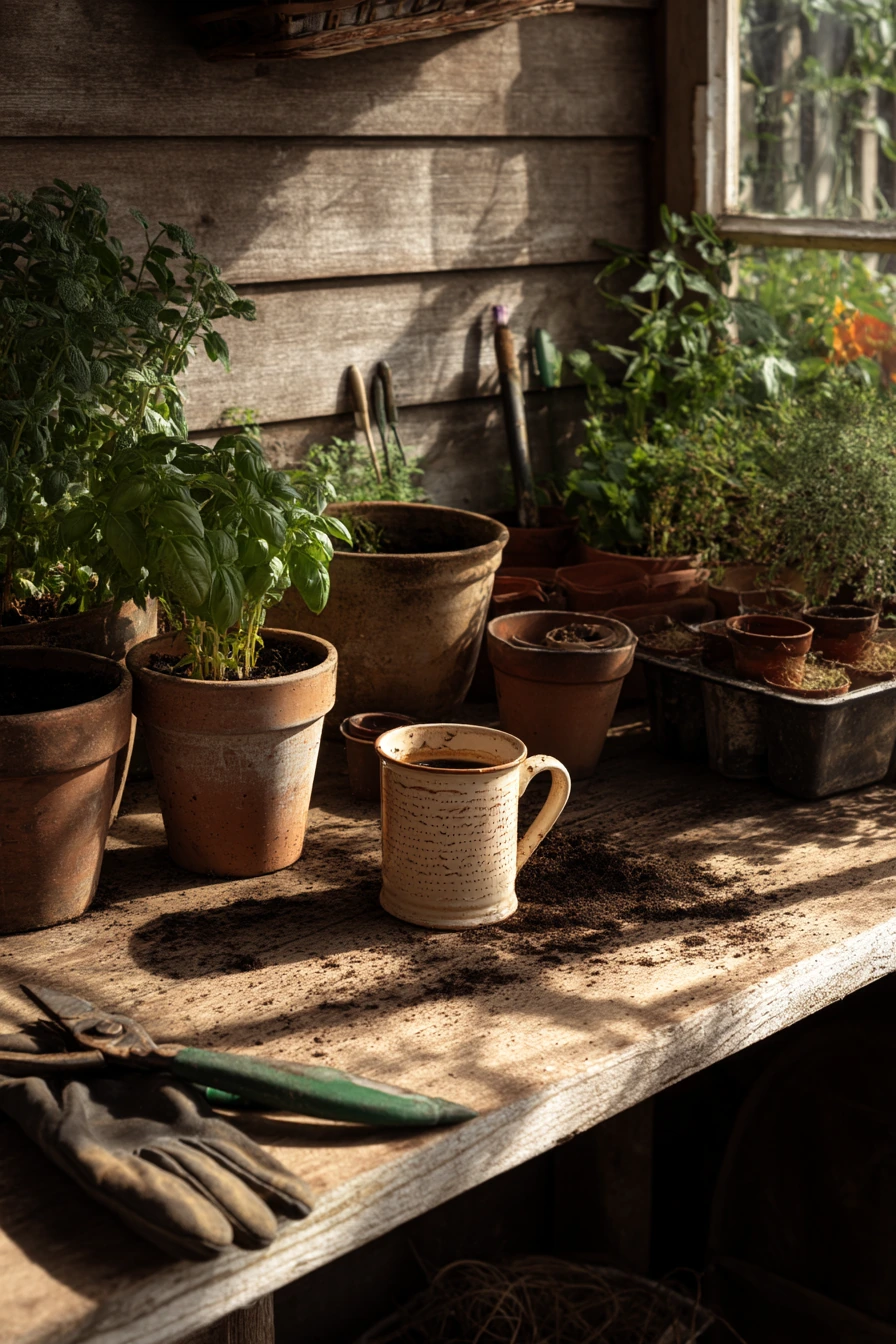
A potting corner beside a shed is where English garden style meets real work. Keep it functional first: a sturdy bench, easy-to-reach tools, and pots that can take weather. Weathered clay pots suit herbs like basil, thyme, mint, and parsley, and they help the plants avoid soggy roots.
Small details make the corner feel charming, not messy. Seed trays and twine can stay out if they have a home. A chipped mug of coffee is fine, but keep it to one “daily” item so the bench still has space for potting. Soil dust on the bench and gloves tossed aside look natural, but add a quick tidy habit: one minute before you go inside, stack pots and hang pruners.
How to style it: use vertical storage. Add hooks for pruners and a small shelf for seed packets. Place the herbs in a simple order, like tallest at the back and shortest at the front. Let sunlight and leaf shadows do the decorating. If the timber boards look dry, brush on a clear outdoor oil so the corner looks cared for without changing its aged feel.
- Grow common cooking herbs in clay pots for easy picking.
- Hang tools on hooks to keep the bench clear.
- Use seed trays and labels so planting stays organized.
- Keep a lidded bin for compost and soil to reduce clutter.
- Add a small mat under the bench to catch spills and mud.
Pro Design Tip: Give your potting corner two zones: a clean zone for seed trays and a dirty zone for soil, so it stays usable every day.
Budget Considerations: Outdoor benches and shelves can be pricey; build a simple bench from treated timber and add secondhand hooks and jars for storage.
8 Tea-Time Pergola with Climbers
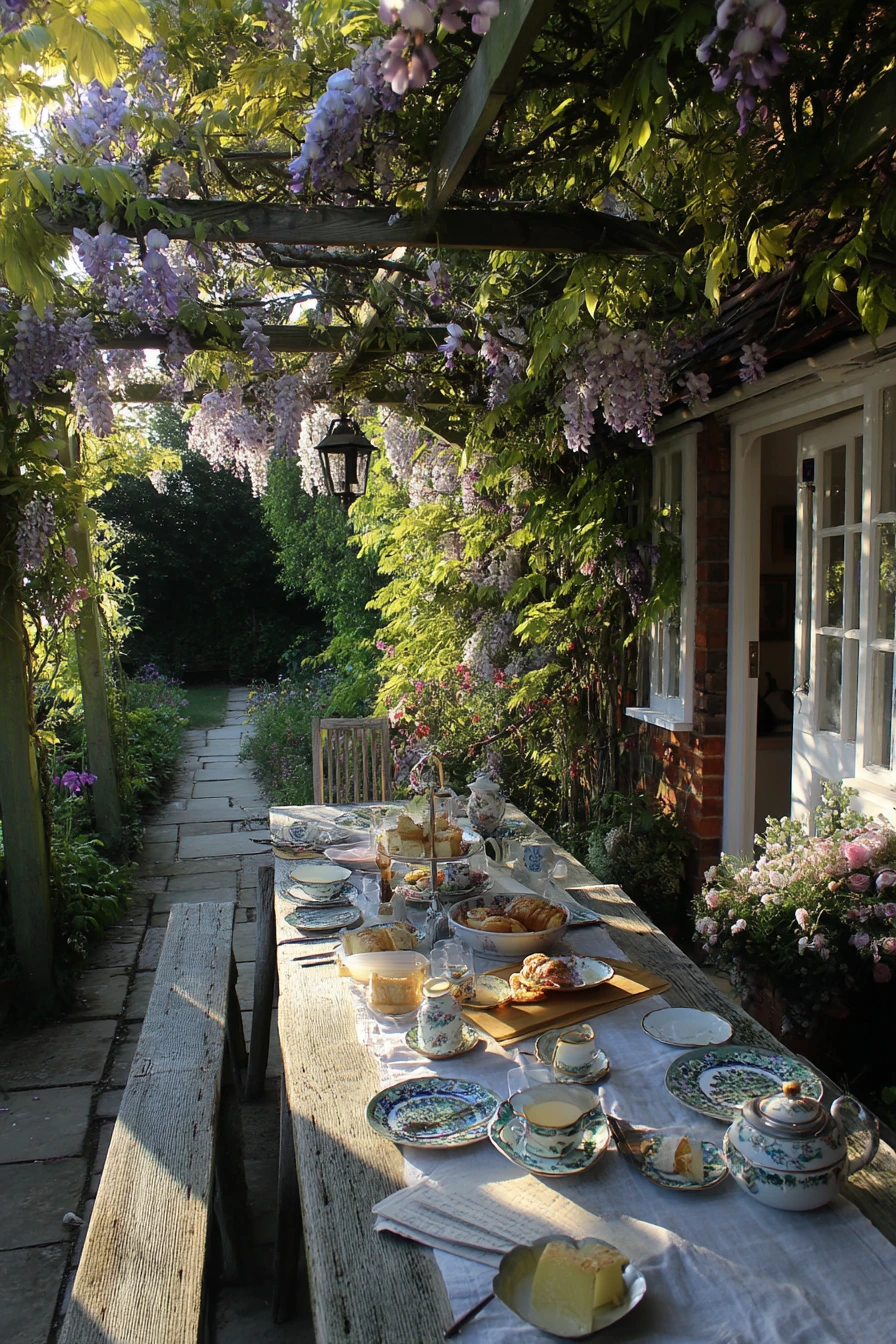
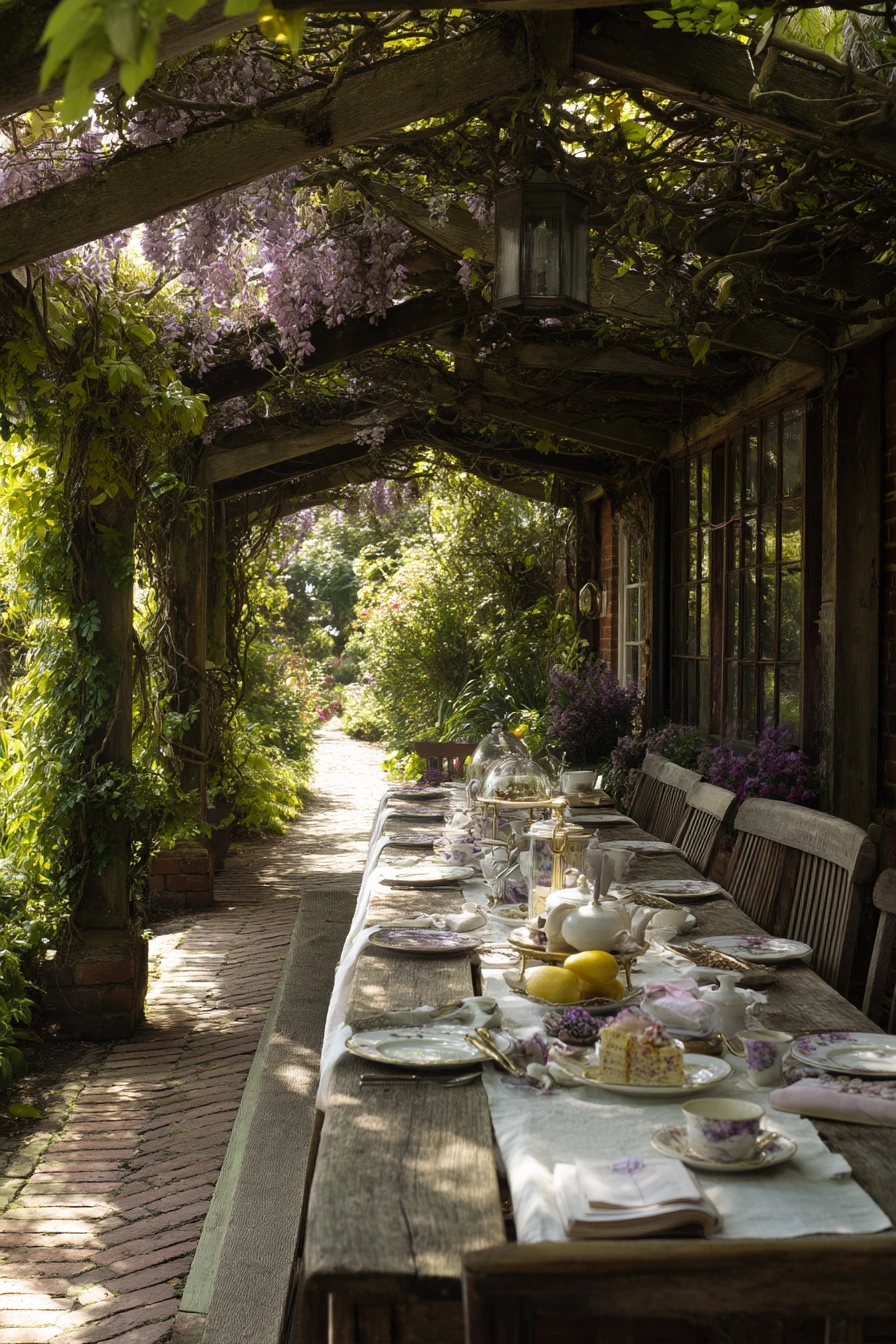
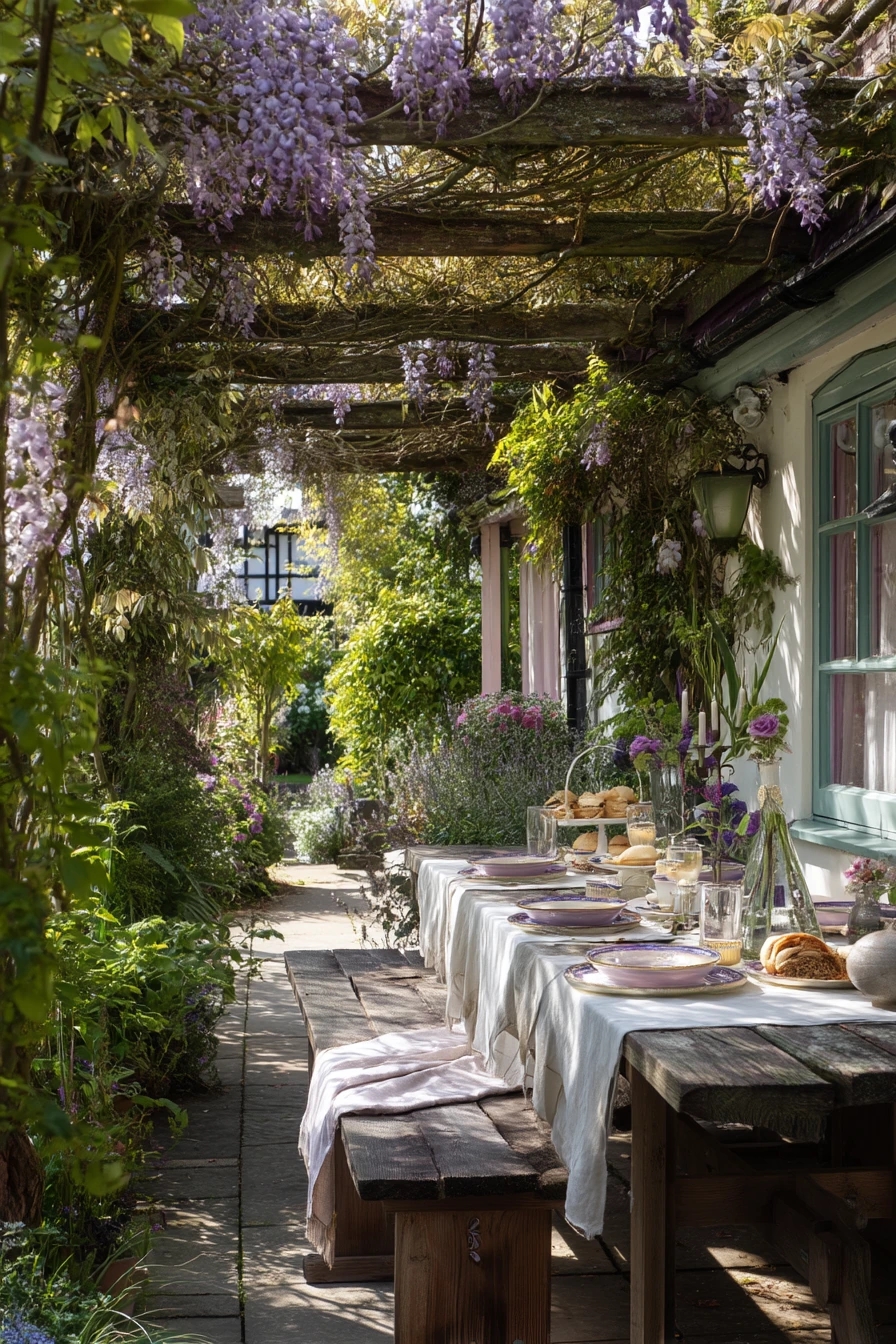
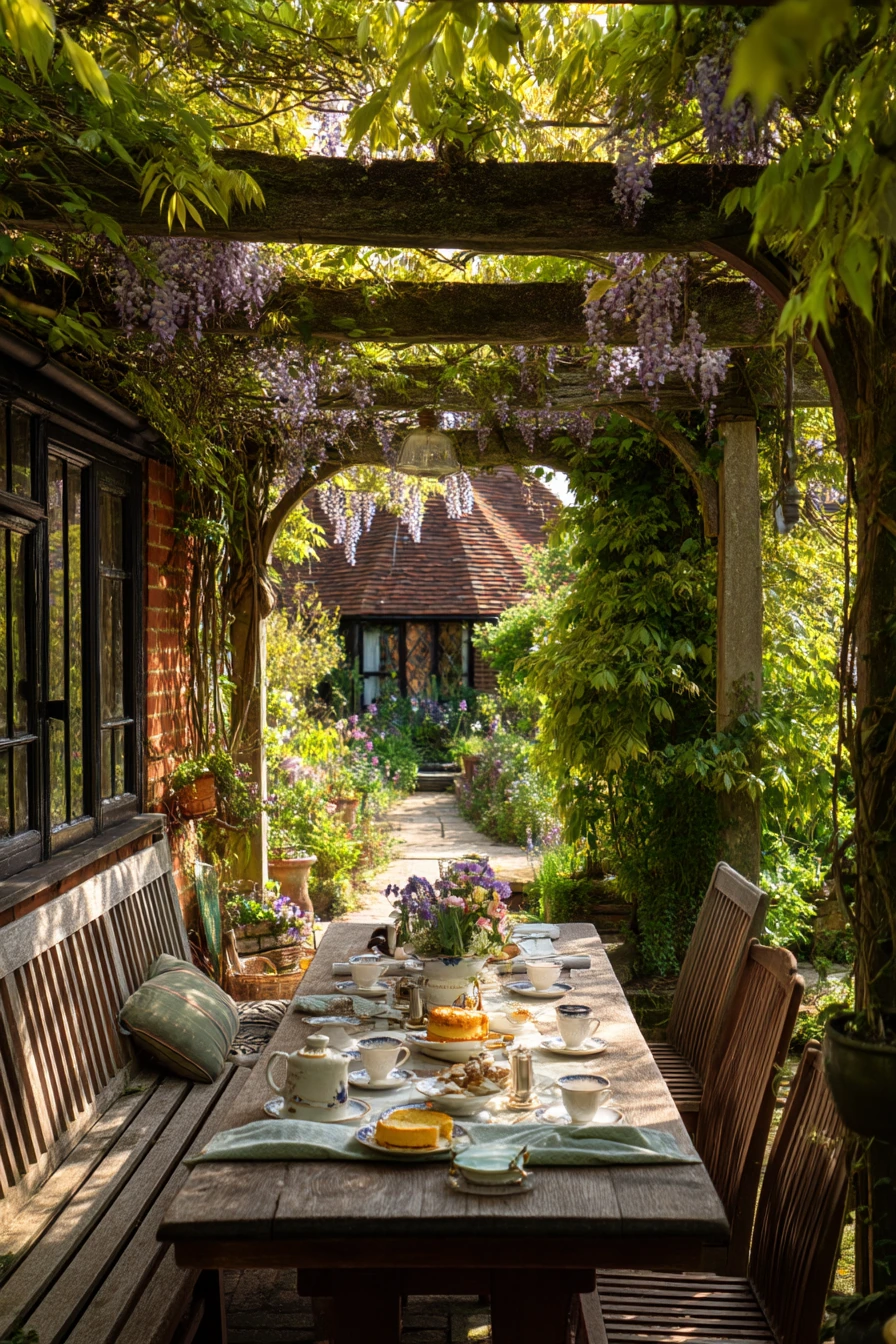
A pergola covered in wisteria, climbing jasmine, and rambling roses is a classic English garden idea that feels calm and shaded. The structure matters as much as the plants. A strong wooden frame gives you a place to train vines and creates an outdoor “ceiling” that makes the garden feel like a room.
Set it up for slow tea and reading. A long wooden table works well under trailing greenery, and mismatched china adds a relaxed, collected style. Keep the table simple: reading glasses, a slightly wrinkled linen napkin, and an open book look real and welcoming. Warm late-afternoon light from the house, like a practical lamp glow, makes the space usable even when the sun drops.
How to style it: keep the colors soft so the flowers stand out. Use white plates, pale linens, and natural wood. Add one easy centerpiece, like a small jug with garden stems. Train wisteria carefully so it does not take over, and tie in rose canes so they do not swing into the seating area. Sweep petals often so the floor stays safe and neat.
- Choose one main climber and one support plant to avoid crowding.
- Use a long table to fit family meals and quiet tea.
- Mix china patterns, but keep them in the same color range.
- Add a small outdoor lamp or warm bulb near the door for evenings.
- Prune and tie vines so paths and seats stay clear.
Pro Design Tip: Light the pergola from the house side, not overhead, to create soft shadows and a cozy view from indoors.
Budget Considerations: Pergolas can be expensive; consider a simple kit or build a basic frame, then add climbers over time as your budget allows.
9 Small Balcony English Garden Escape
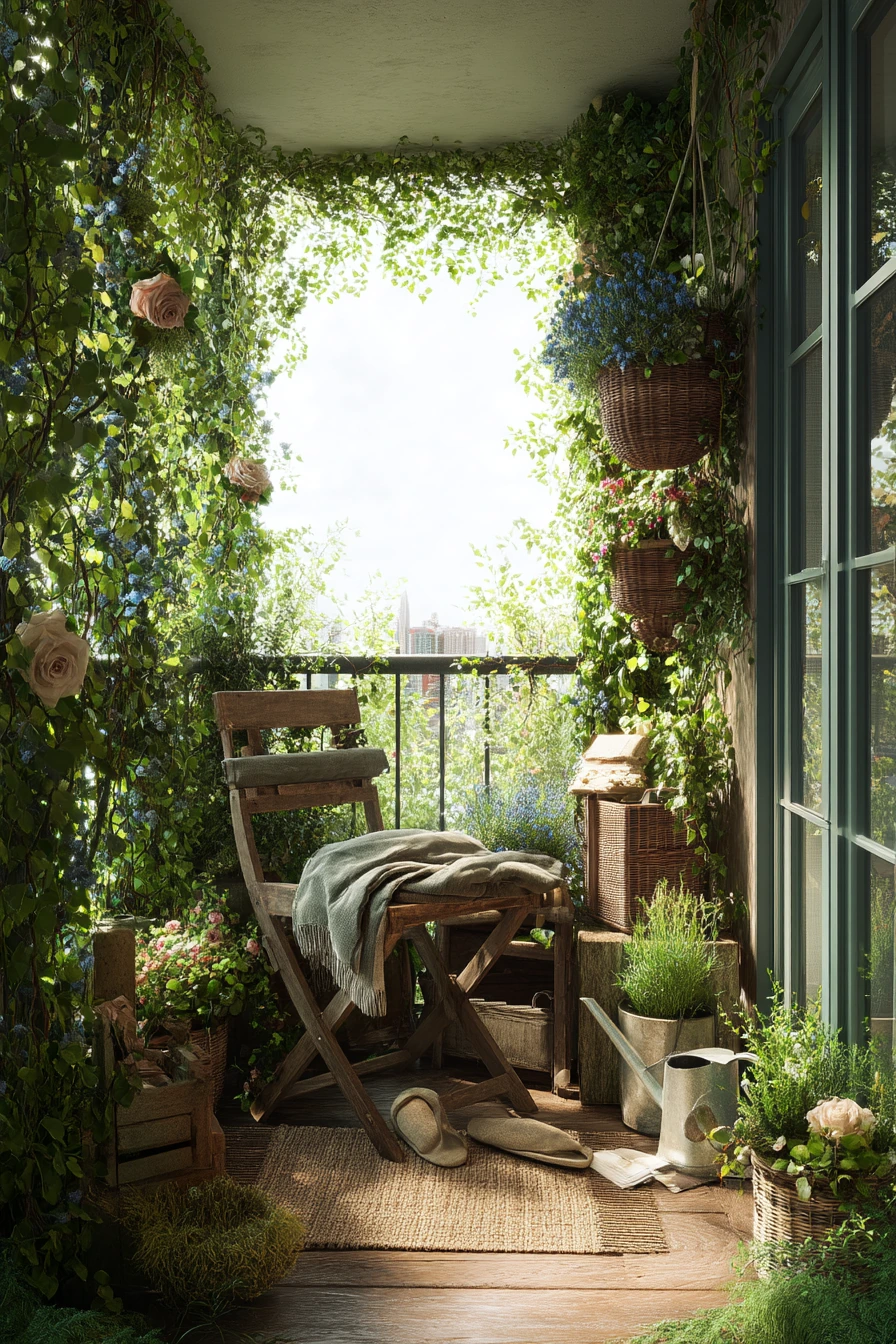
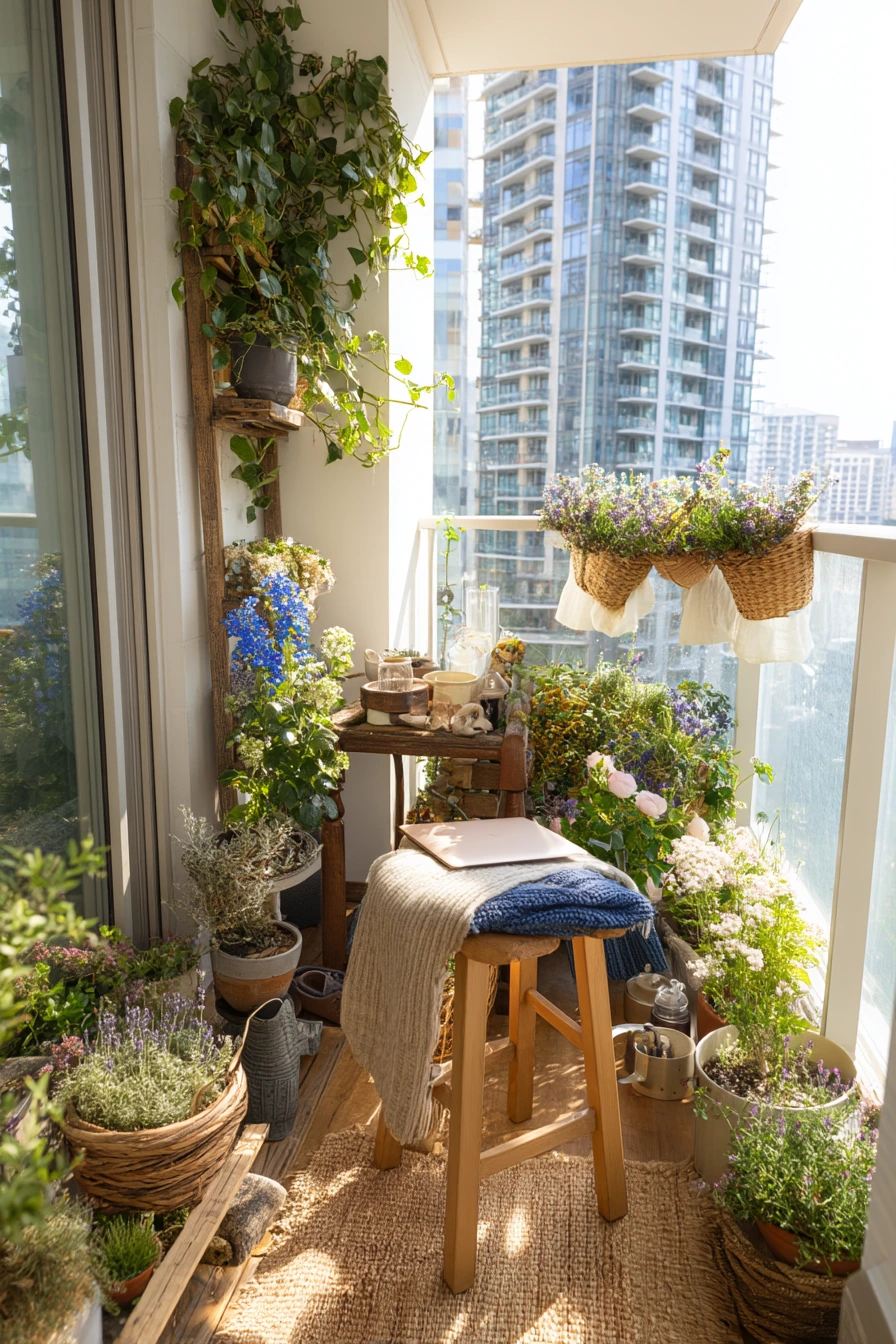
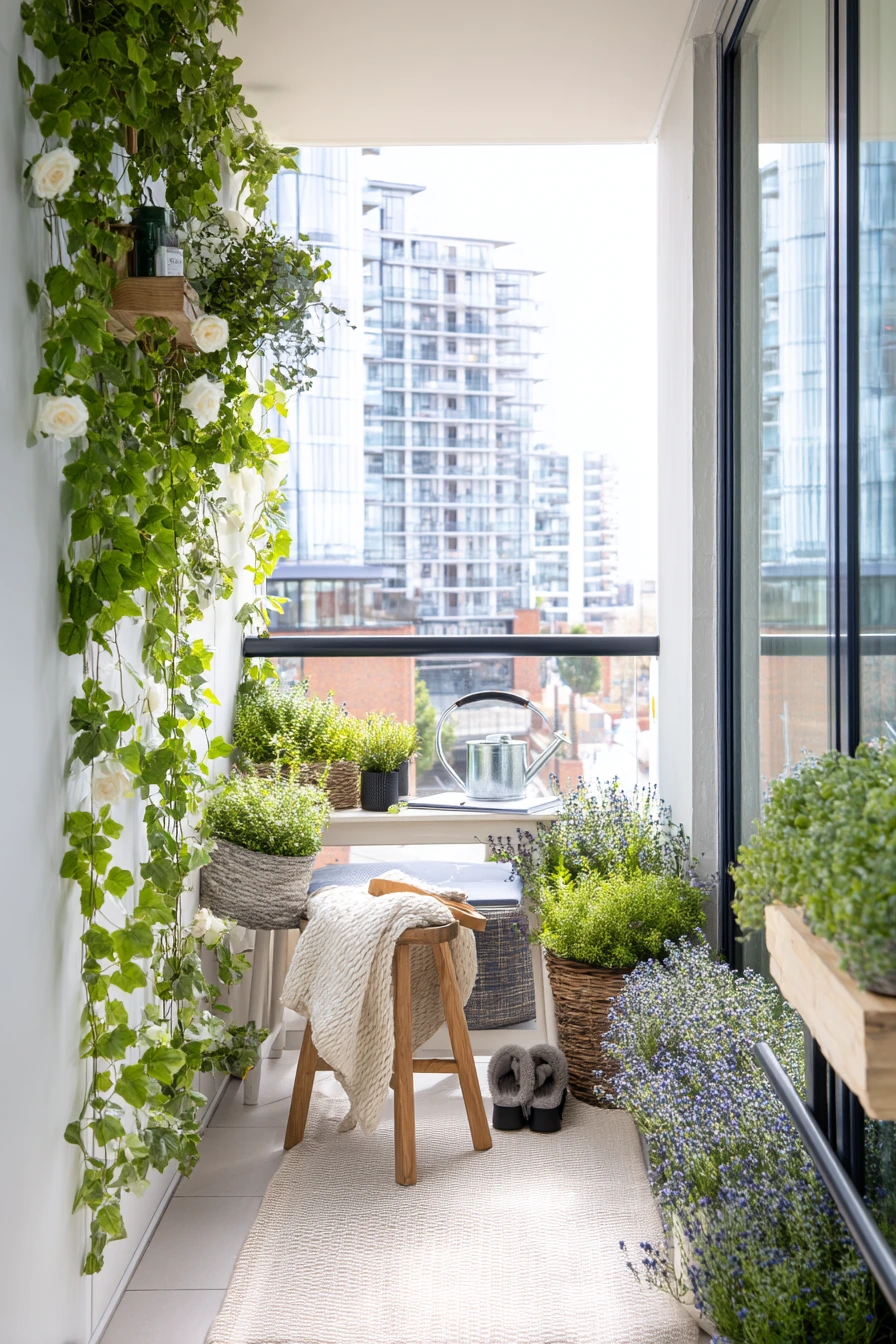
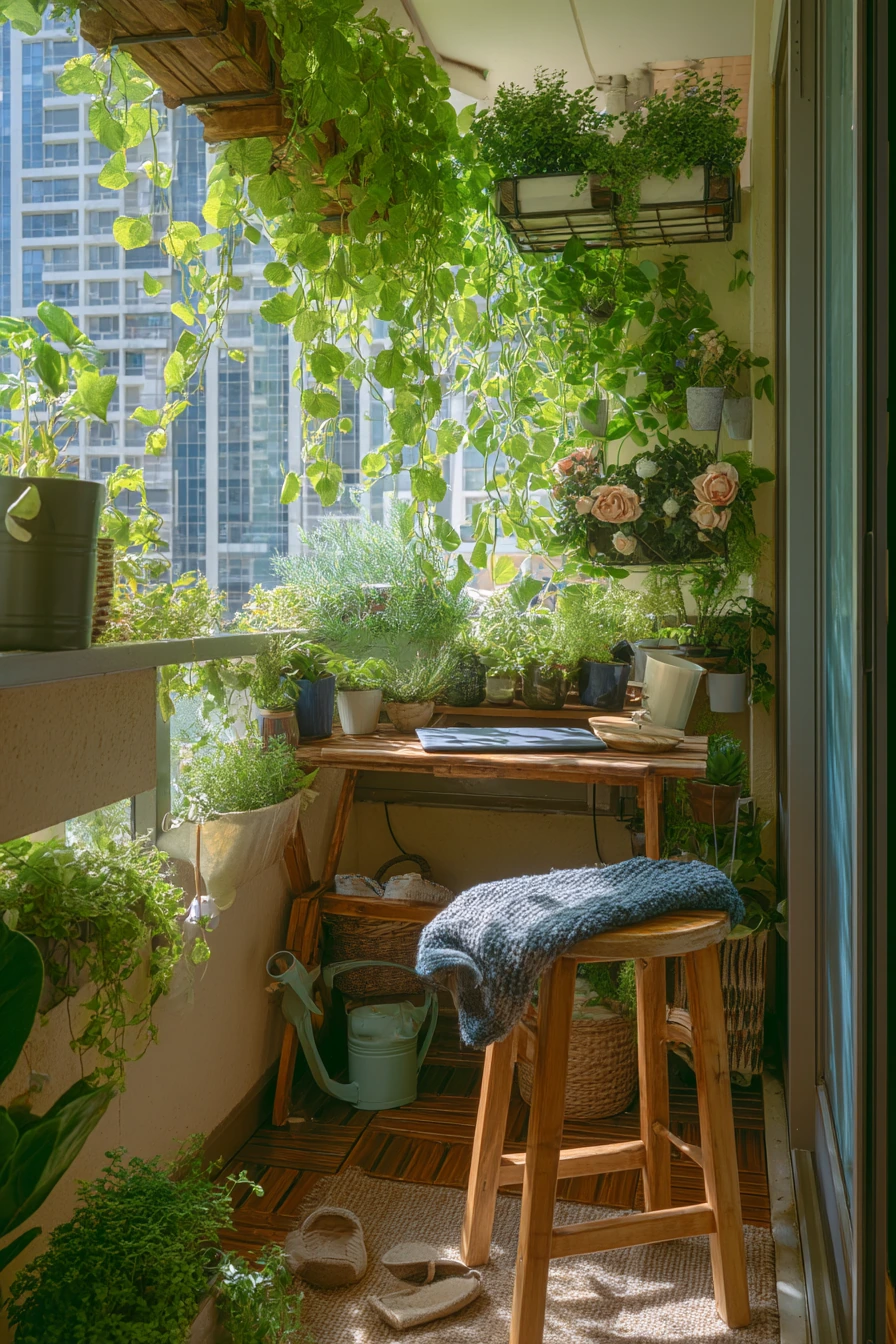
A compact balcony garden can still deliver English cottage planting when you go up and out. Use hanging baskets and railing planters to pack in greenery without taking floor space. Trailing ivy softens railings and hides city lines. Miniature roses bring the classic flower shape in a smaller form that suits containers.
Make it a calm morning spot. A weathered stool can work as a side table for a mug or watering can. Add a wool blanket for cool days, and keep slippers by the door so stepping out feels easy. Herbs like thyme and blue salvia add scent and color, and they cope well in pots if you water regularly. If you sometimes work outside, a laptop sleeve can live in a dry basket so the balcony stays tidy.
How to style it: keep a clear walkway. Put tall planters in corners, then use smaller pots in the middle. Choose one pot color, like dark green or soft clay, so the plants stand out. In bright morning window light, pale blooms and silvery leaves look especially good. Water in small amounts more often, and use saucers or trays to protect the floor.
- Use railing planters and hanging baskets to save floor space.
- Grow miniature roses for cottage charm in containers.
- Plant thyme and salvia for scent and long bloom.
- Add one small seat or stool to make the balcony feel like a room.
- Hide tools in a basket so the space stays calm and clean.
Pro Design Tip: On a balcony, group pots by water needs (dry, medium, thirsty) so you do not overwater some while saving others.
Budget Considerations: Hanging baskets and railing planters can be found secondhand; refresh them with new liners and simple coco fiber instead of buying new.
10 Late Summer Border After a Rain Shower
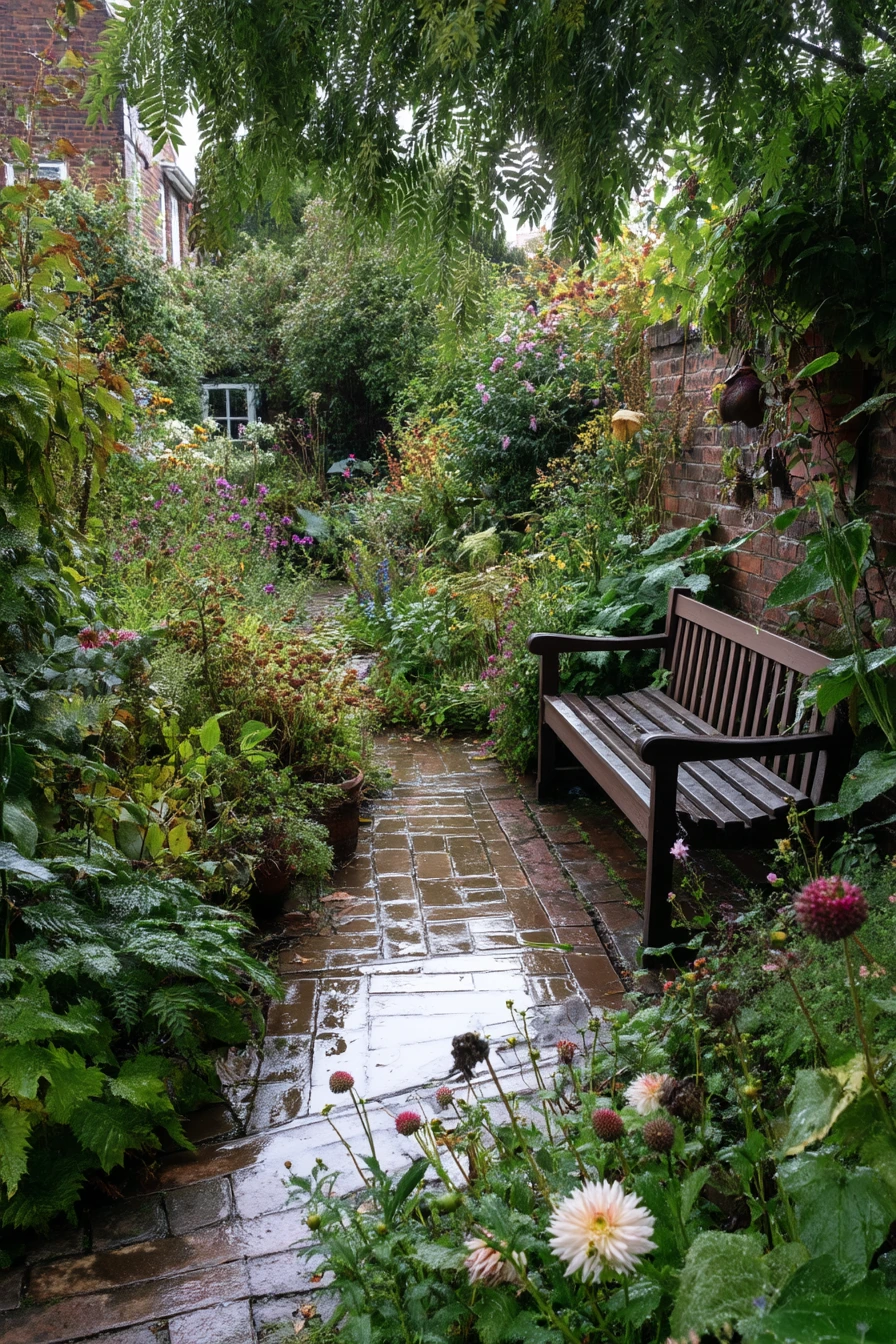
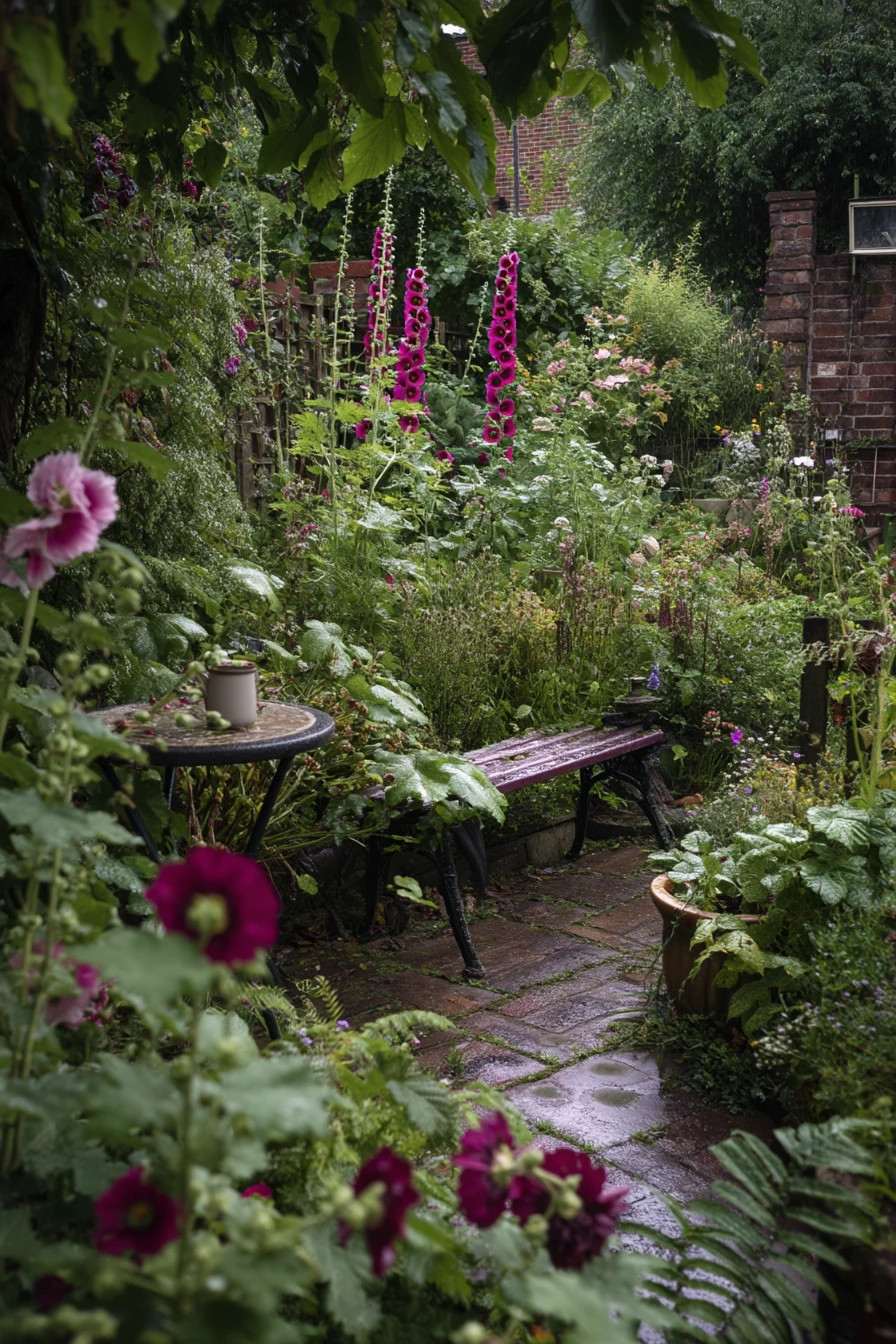
An English back garden after rain can look even better than in dry weather. The damp makes colors richer and leaves glossy. Build a layered border along a brick edge so the garden still has shape when everything is wet and heavy. Hollyhocks bring tall cottage height, asters fill late-season gaps, ferns add deep green texture, and nodding dahlias give strong flower forms.
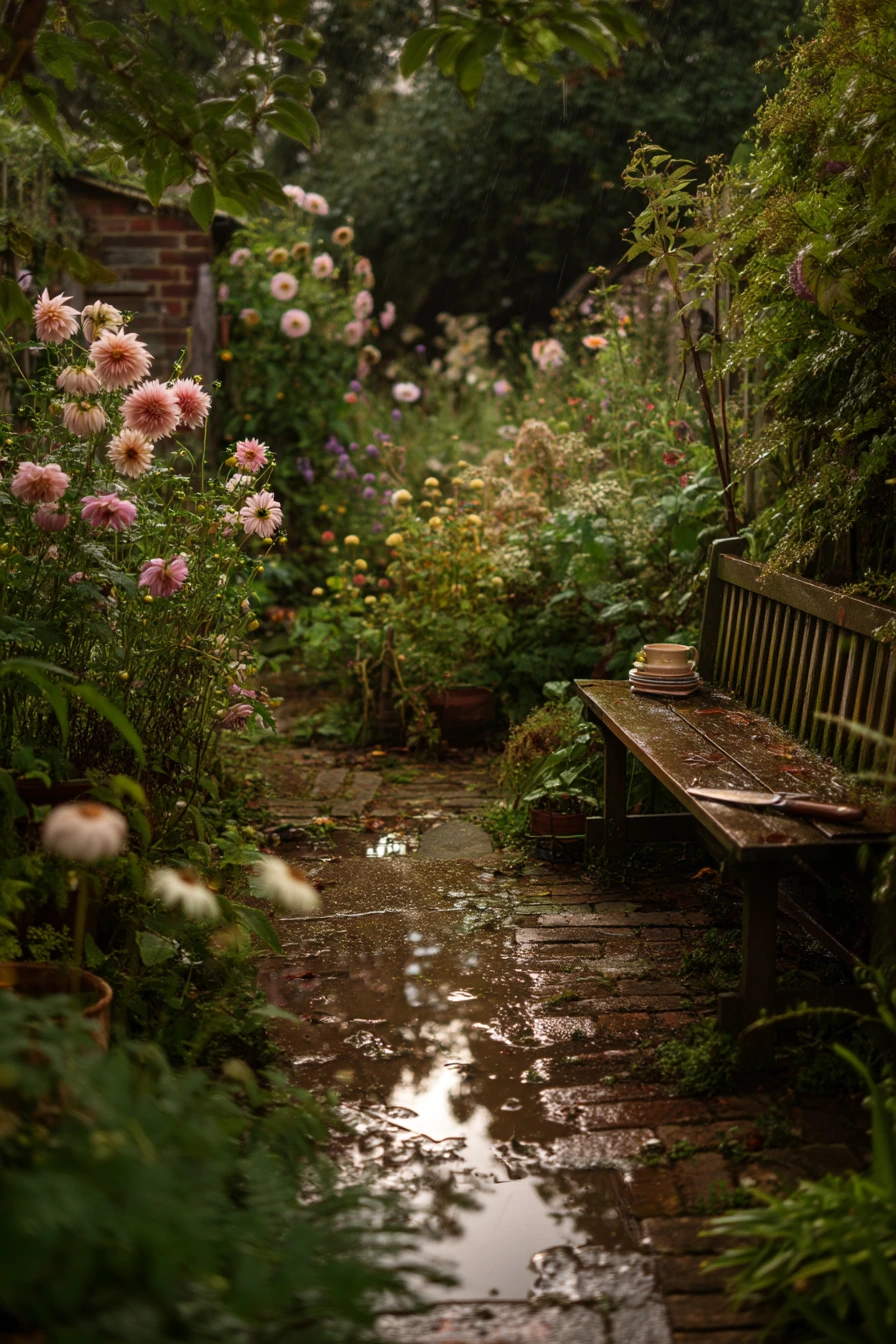
Keep the seating area honest and useful. A garden bench with a wet cushion is real life, so plan for it. Choose cushion covers that dry fast or store them in a box. Small tools like secateurs and a forgotten sunhat tend to land on benches, so add a simple tray or hook nearby. A tea mug on the sill fits the quiet, rainy mood, but wipe the sill so it does not stain.
How to style it: use the puddles and shine. Pearly puddles reflect light, so keep the path clear where you can see those highlights. Do not cut everything back at once after rain. Let plants stand, then stake tall stems like hollyhocks if they lean. Add mulch between plants to stop soil splash and to make the border look finished even in overcast light.
- Plant in layers: tall hollyhocks, mid asters and dahlias, low ferns.
- Use a brick border to keep edges neat in wet weather.
- Stake tall flowers early so rain does not flatten them.
- Choose quick-dry cushion covers or store cushions in a box.
- Mulch the soil to reduce mud splash and keep borders tidy.
Pro Design Tip: Mix leaf textures (fern fronds, broad dahlia leaves, fine aster foliage) so the border stays interesting even when flowers fade.
Budget Considerations: Dahlias can cost more if bought as plants; save money by buying tubers in spring and starting them in pots at home.
These English garden ideas work because they use simple layers, practical seating, and plants that feel familiar, like roses, lavender, rosemary, and foxgloves.
Pick the space you have, then start with one clear base choice, like gravel, brick, or pots. Add structure with a hedge, trellis, or raised bed, then fill in with cottage flowers and herbs.
Before you move on to the next idea, set up one small routine, like a weekly tidy of tools or a quick deadhead. Small care steps keep an English garden looking full, calm, and real.
FAQ
1) What plants give the fastest English cottage look? Rosemary, lavender, foxgloves, climbing roses, and geraniums give quick character in most gardens.
2) How do I make a small patio feel like an English garden? Use pots in groups, add one climber for height, and include a small bistro set to create an outdoor room.
3) What works best for a narrow courtyard garden? Train plants flat on walls, like an espaliered apple tree, and keep the floor space open with folding furniture.
4) How do I keep a family garden from looking messy? Give items a home, like a box for tools and a tray for mugs, and keep one clear path through the space.
5) Are English gardens high maintenance? They can be, but you can choose tougher plants, mulch well, and focus on one border at a time to keep care simple.
6) How can I do an English front garden on a budget? Use gravel, thrifted pots, and a small number of bigger plants, then add seasonal color with one or two new pots each year.
7) What should I do after heavy rain? Check staking, trim broken stems, and add mulch to reduce mud splash while the soil is still damp.