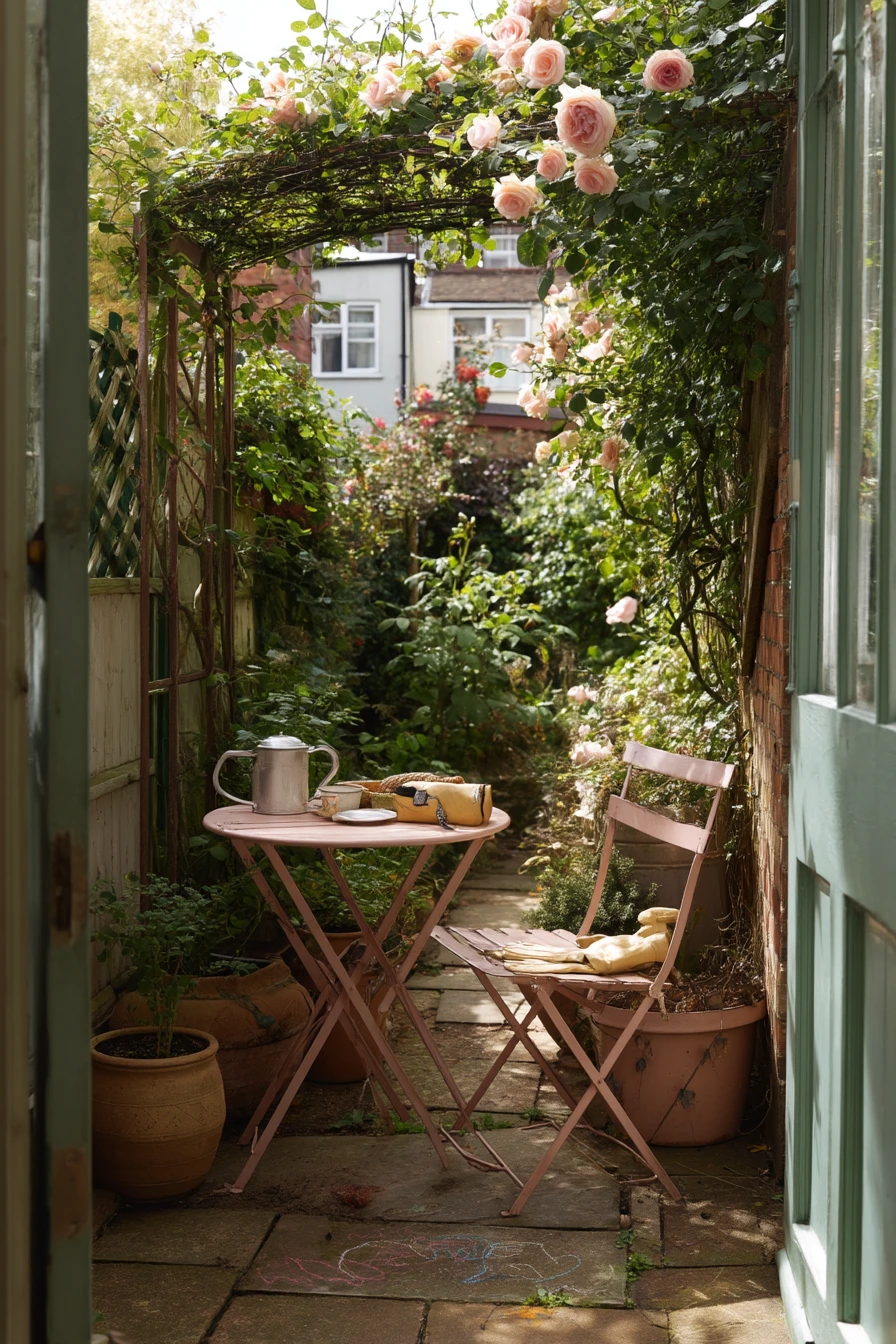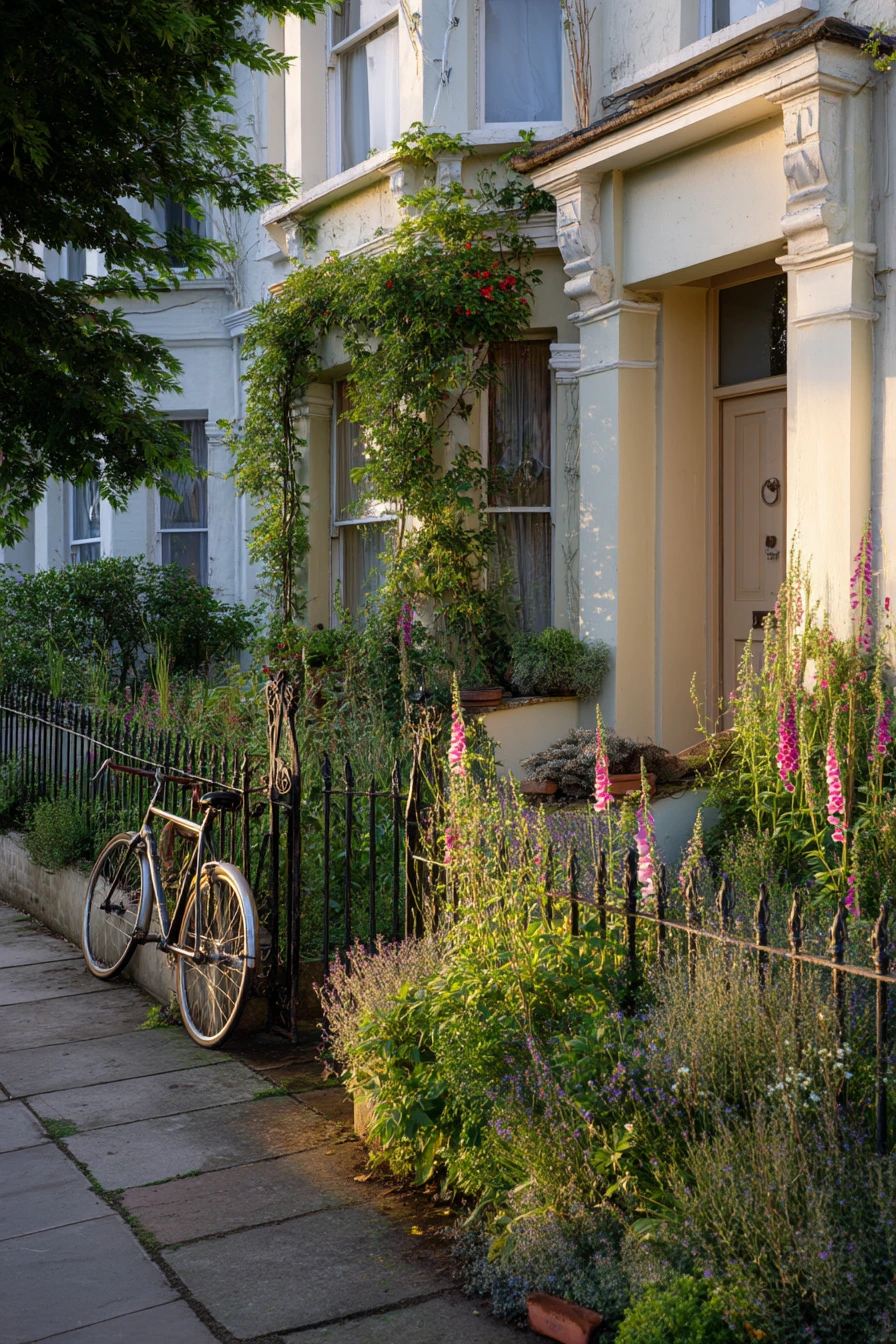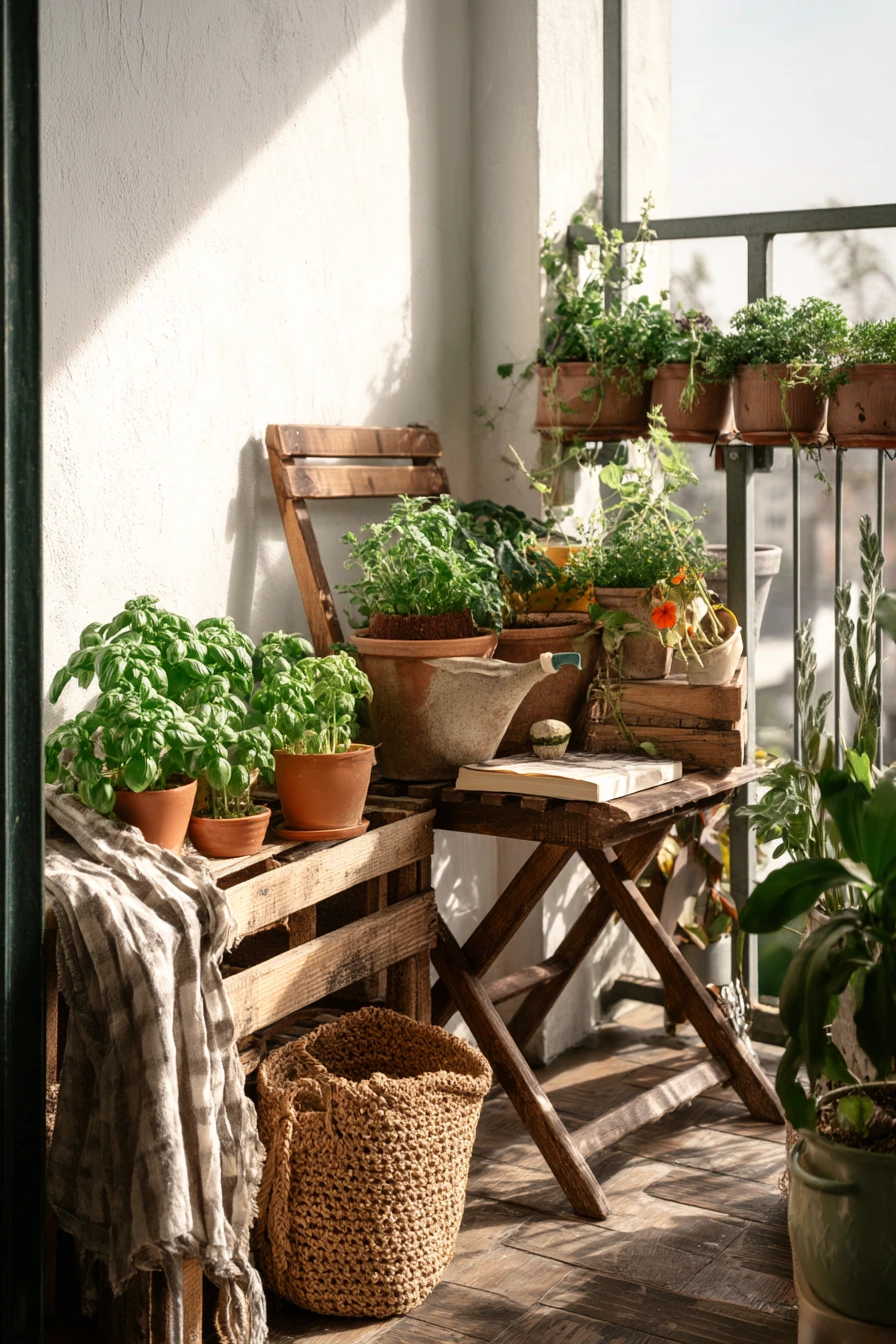

Corner greenhouse ideas are a smart way to grow plants in a small home. A corner setup uses space that often sits empty, like a window angle, a bay window, or the spot by a back door.
In this post, you will see corner greenhouse styles that fit real life. You will find options for renters, families, and anyone who wants herbs like basil, rosemary, thyme, and mint close to the kitchen.
Each section shares simple styling ideas, plant picks, and small care tips. You will also get a pro design tip and a budget note, so you can plan a setup that looks good and works every day.
If you came from Pinterest, use this guide to choose one corner that can hold glass panels, a slim humidifier, a grow light, or even just a sturdy shelf with clear glazing. You can start small and upgrade later.
1 1. Small Apartment Corner Greenhouse Nook
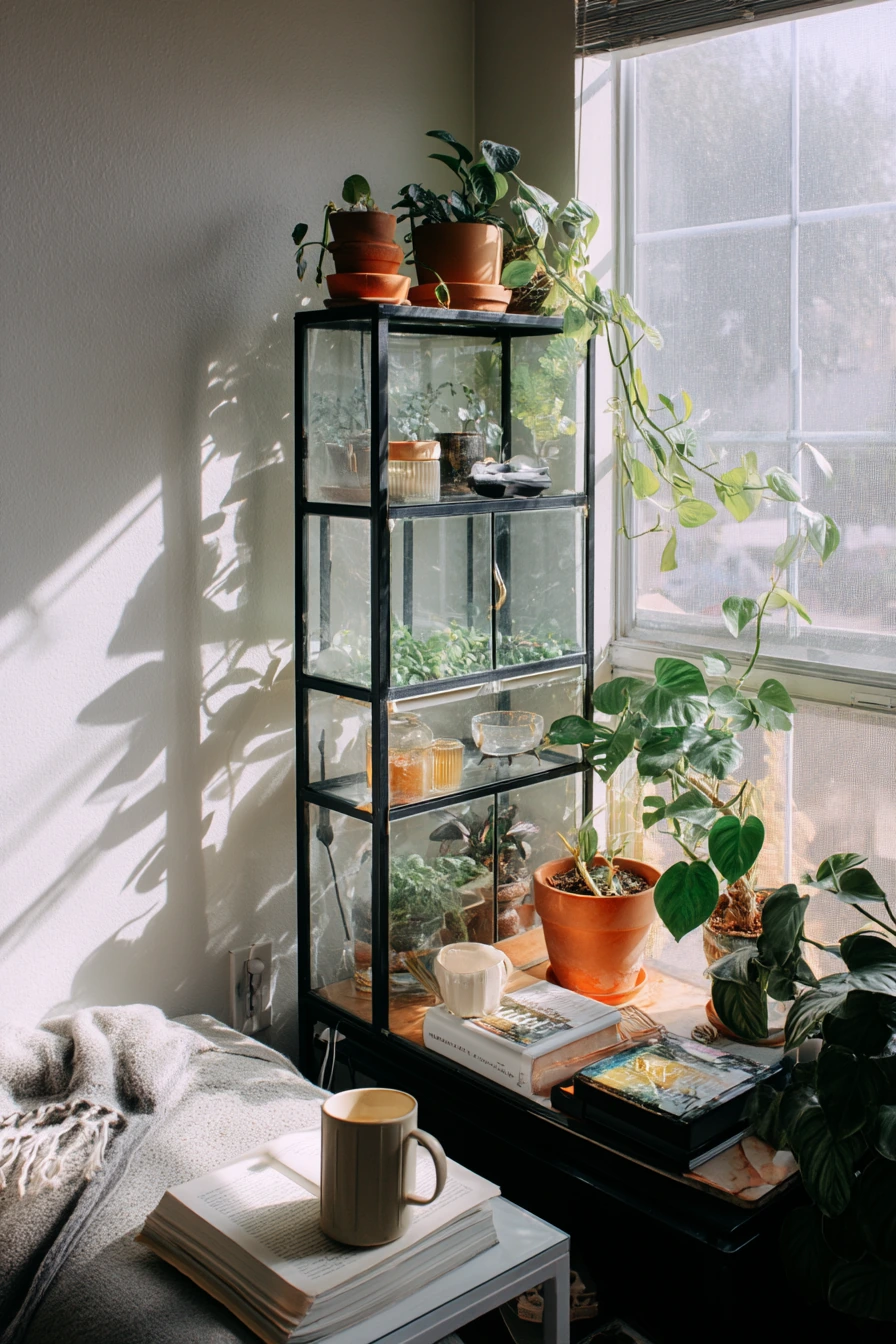
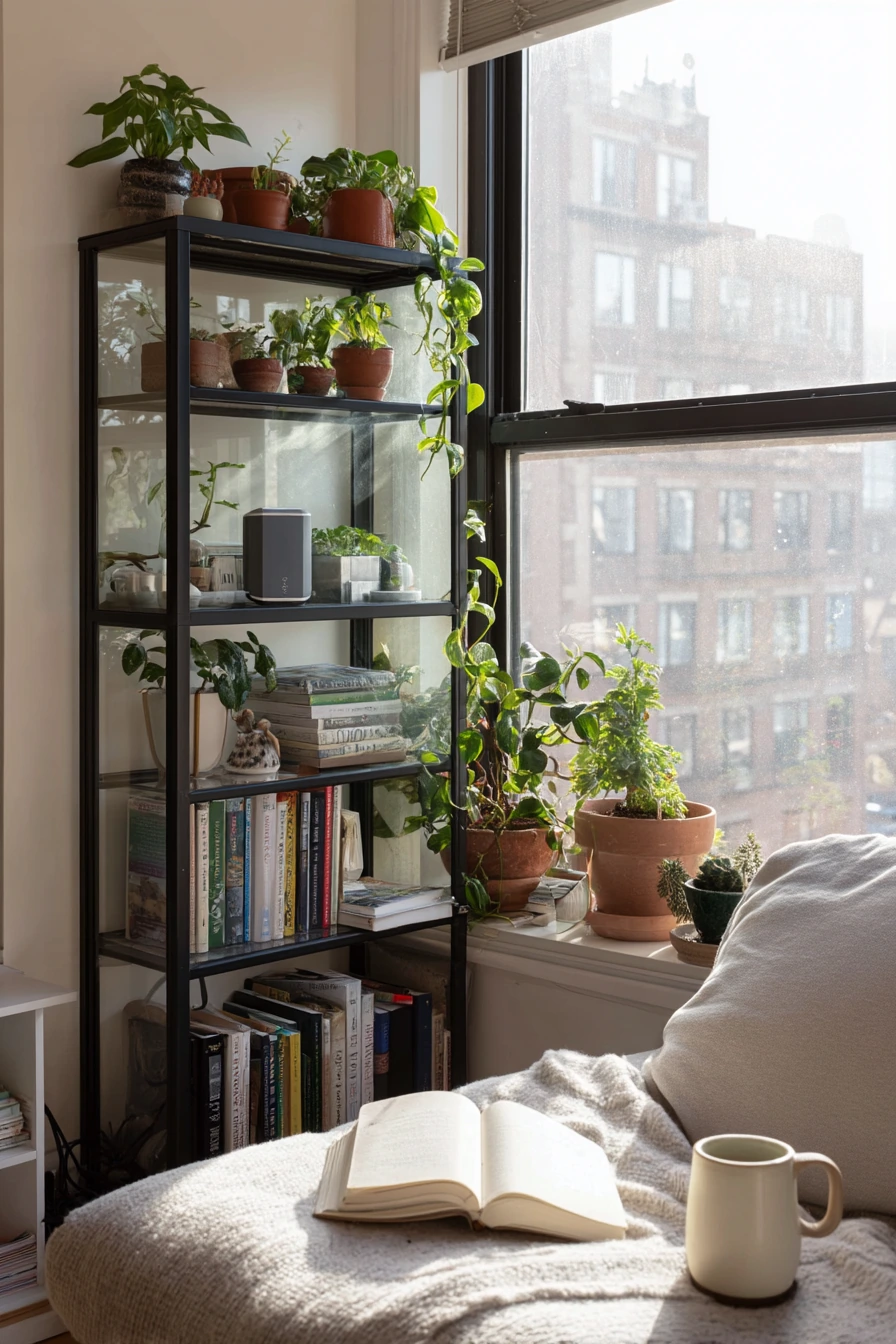
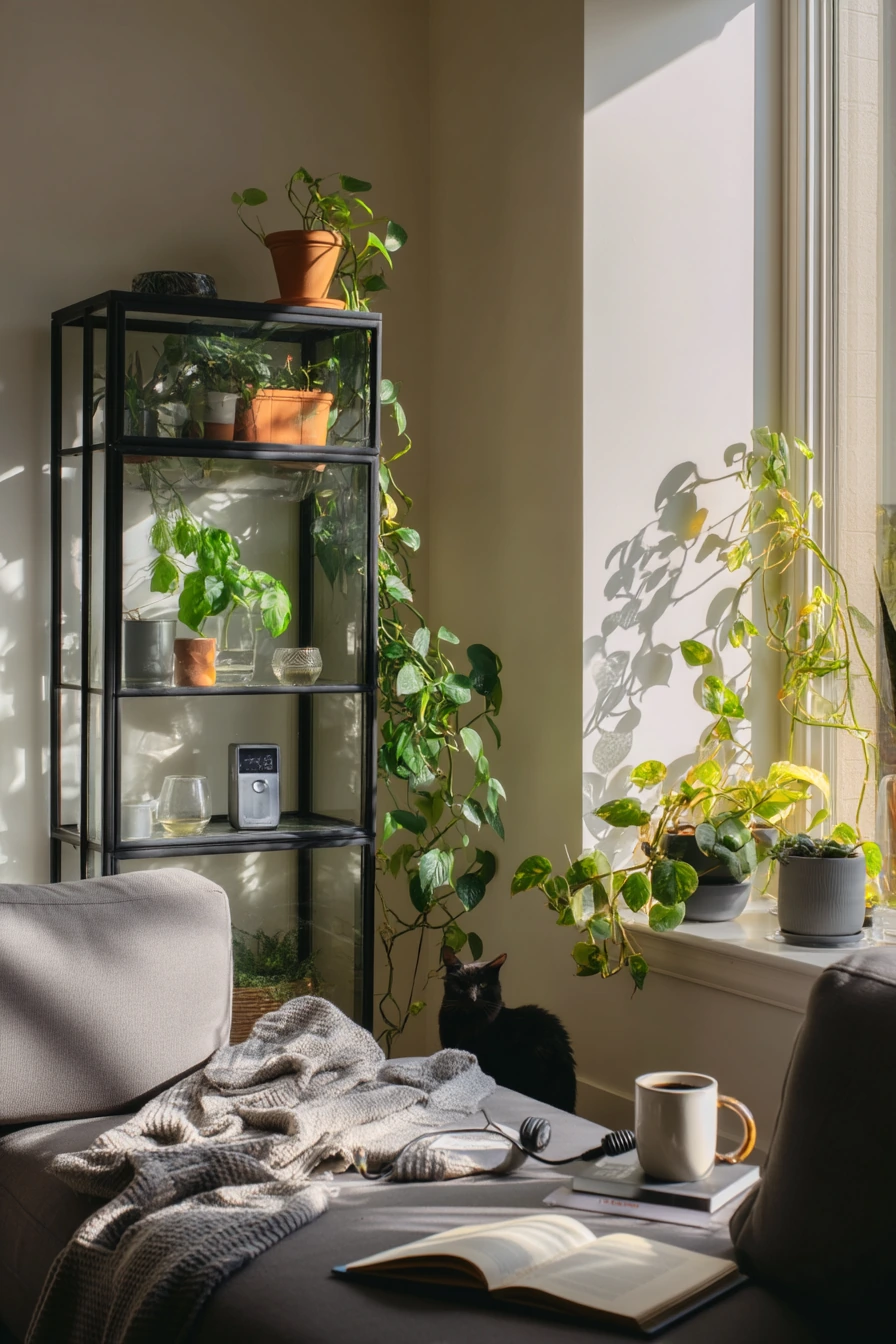
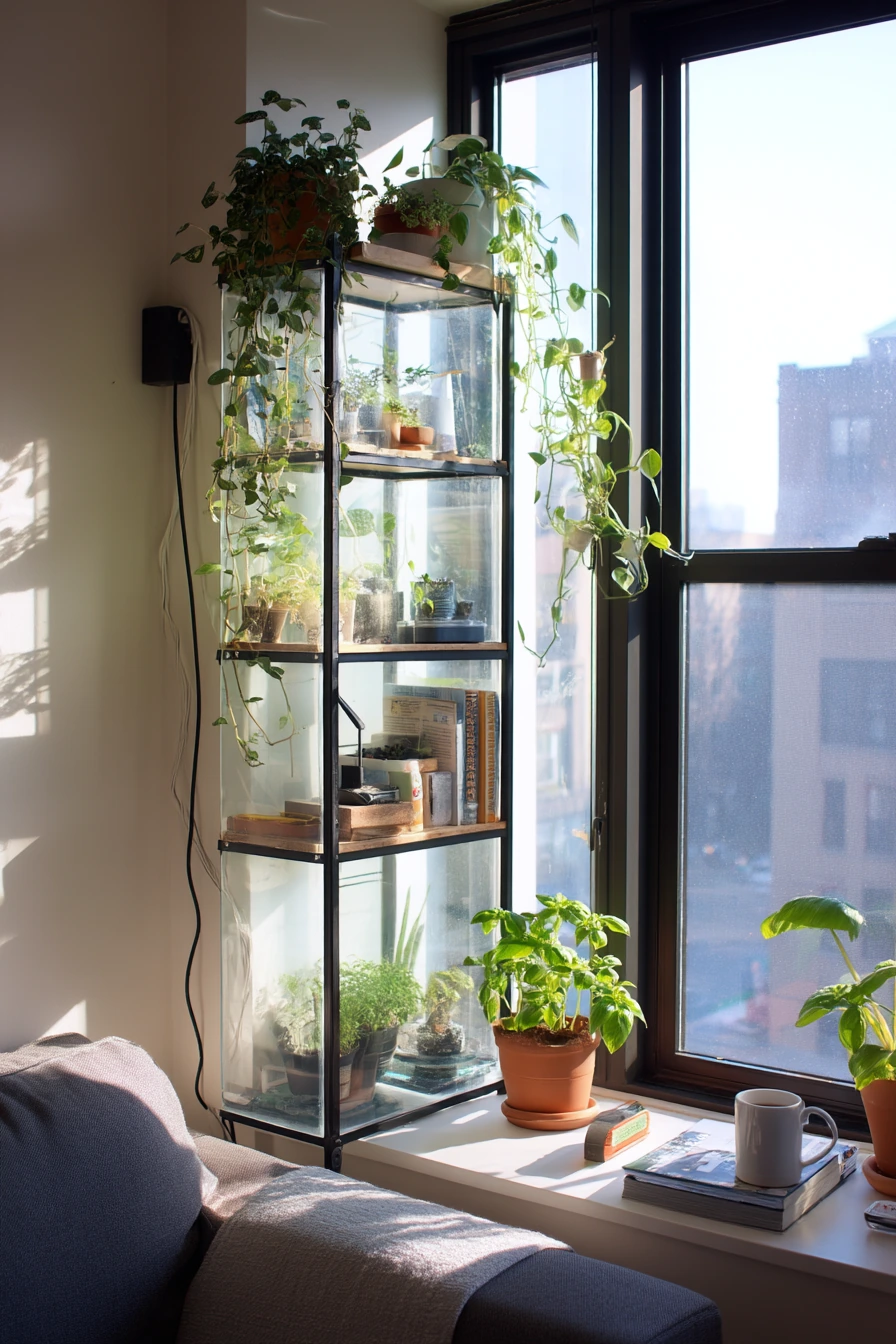
A compact city apartment can still hold a corner greenhouse if you build into the window angle. This style works well with black metal shelving and clear glass panels, since they keep the room light and open. Terracotta pots add warmth and help prevent overwatering because they breathe. If you have a cat, plan for stable shelves and heavier pots so nothing tips when your pet jumps up.
Choose plants that love bright window light and can handle indoor air. Basil does best close to the glass, where it gets strong sun, while monstera can sit a little lower and still look full. Trailing pothos is perfect for the top shelf so it can spill down and soften the corner. A slim humidifier tucked on a lower level can help if your apartment gets dry, especially in winter. Keep the greenhouse door closed when you are not watching, so curious paws stay out.
To make it feel lived-in and calm, style the corner with small daily cues like a ceramic coffee mug, an open gardening book, and a charging cable neatly clipped to the shelf leg. A rumpled throw on the sofa nearby makes the space feel real, not staged. Morning window light creates leafy shadows, so keep glass clean and avoid clutter on the sill.
- Use a narrow black metal rack that fits the corner angle without blocking the window.
- Add clear panels on two sides to trap warmth and reduce drafts.
- Place basil on the brightest shelf; rotate the pot weekly for even growth.
- Train pothos along the frame with soft plant clips to keep it tidy.
- For cat safety, use a magnetic latch and add a spill tray under terracotta pots.
Pro Design Tip: Match the shelf height to your window mullions so the greenhouse lines up with the architecture and looks built-in.
Budget Considerations: A simple metal shelf plus acrylic panels can cost far less than custom glass; start with one panel side and add more later.
2 2. Kitchen Corner Herb House
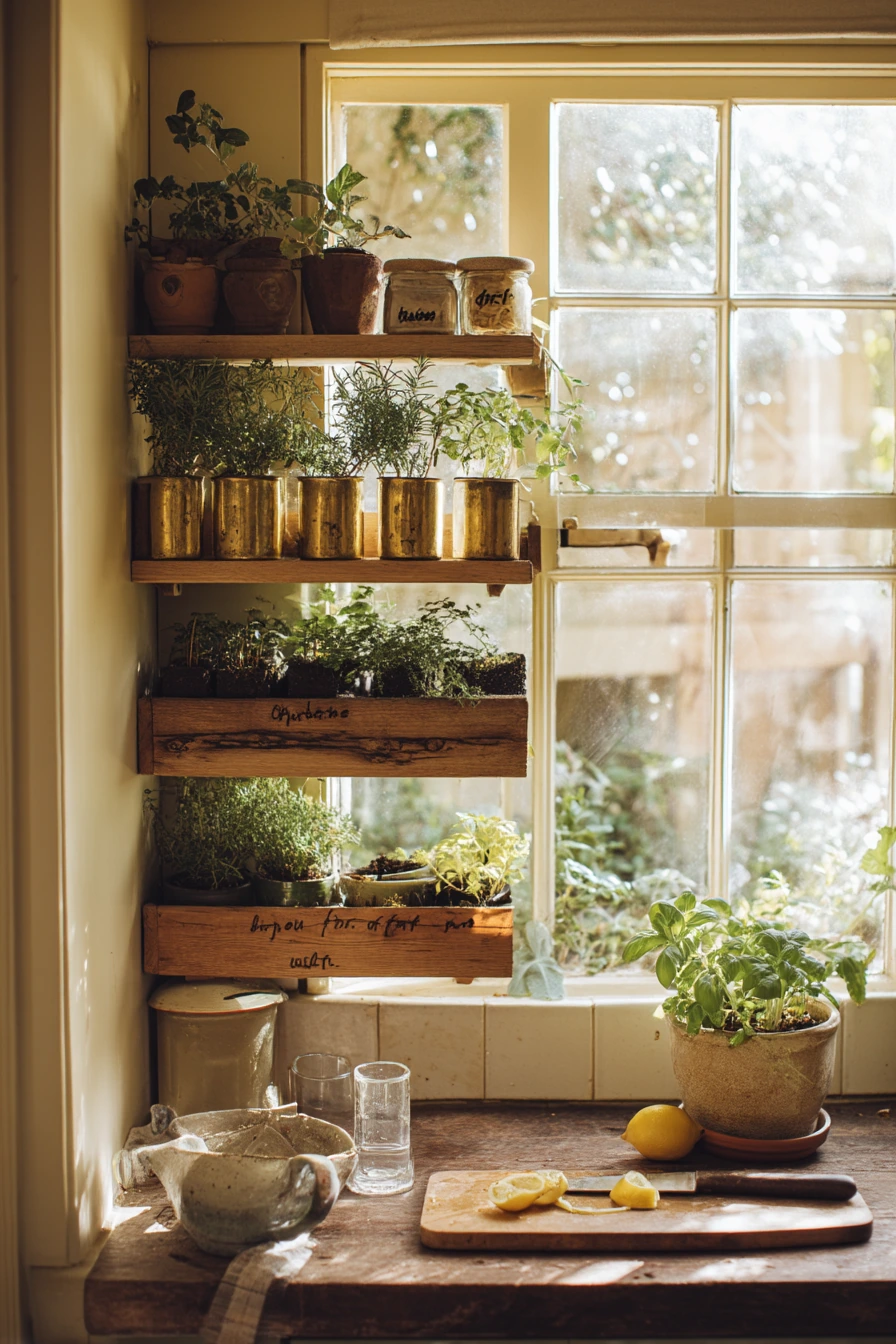
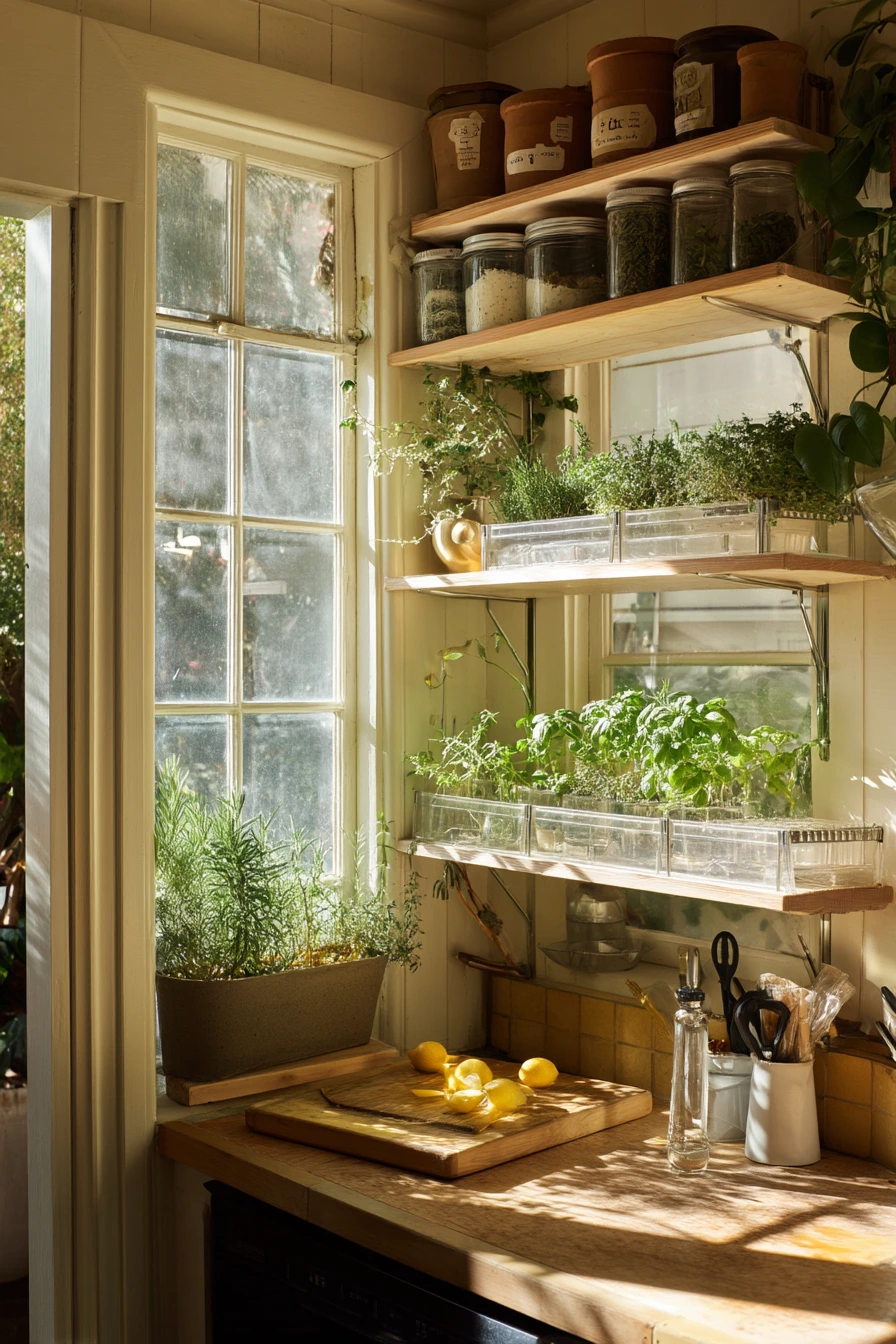
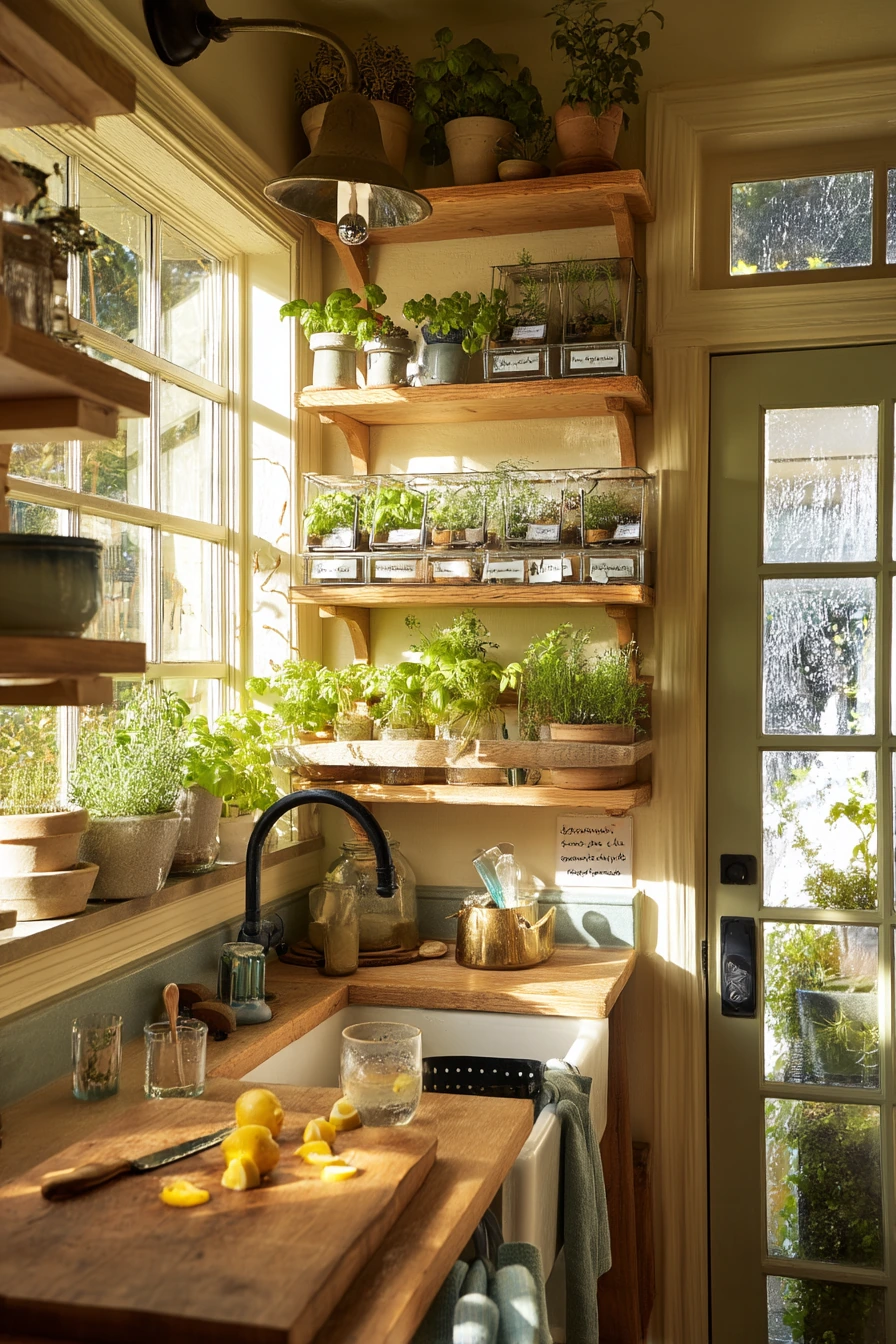
A real family kitchen is a great place for a tiny corner greenhouse, especially tucked beside the back door. This location is practical because it is close to water, and it keeps cooking herbs within reach. Narrow pine shelves look warm and simple, and they are easy to cut to size for a tight corner. Glass panes help hold heat, which is useful when the door opens and closes often.
Fill the shelves with rosemary, thyme, and mint so you can snip a little while you cook. Use seed trays on the lowest shelf for starts, and move plants up as they grow. Labeled clay pots keep things clear for everyone in the house. A brass watering can adds a nice detail, but also makes it easy to water with control so you do not splash the counter. If your kitchen gets green-cast late-afternoon light, it can still work well for herbs, but watch for leggy growth and move pots closer to the glass if needed.
Keep the corner feeling like part of daily life. A cutting board with lemon peel, a dish towel, a child’s spoon, a fridge note, and a half-full water glass make it feel honest and usable. For styling, pick two matching pot colors, then mix plant shapes so the corner looks full without being messy. Wipe glass often since kitchens collect grease and dust.
- Put mint in its own pot so it does not take over other herbs.
- Use pine shelves sealed with a water-based finish for easy cleanup.
- Store seed packets in a small box on the bottom shelf to keep them dry.
- Add a shallow drip tray under pots to protect the floor by the door.
- Clip a small pair of herb scissors to the frame so they are always nearby.
Pro Design Tip: Keep the greenhouse depth shallow so you can still open the back door fully and move through the corner without bumping plants.
Budget Considerations: Pine boards and basic window glass or acrylic are affordable; reuse jars for seed starting instead of buying new trays.
3 3. Renter-Friendly Balcony Corner Greenhouse
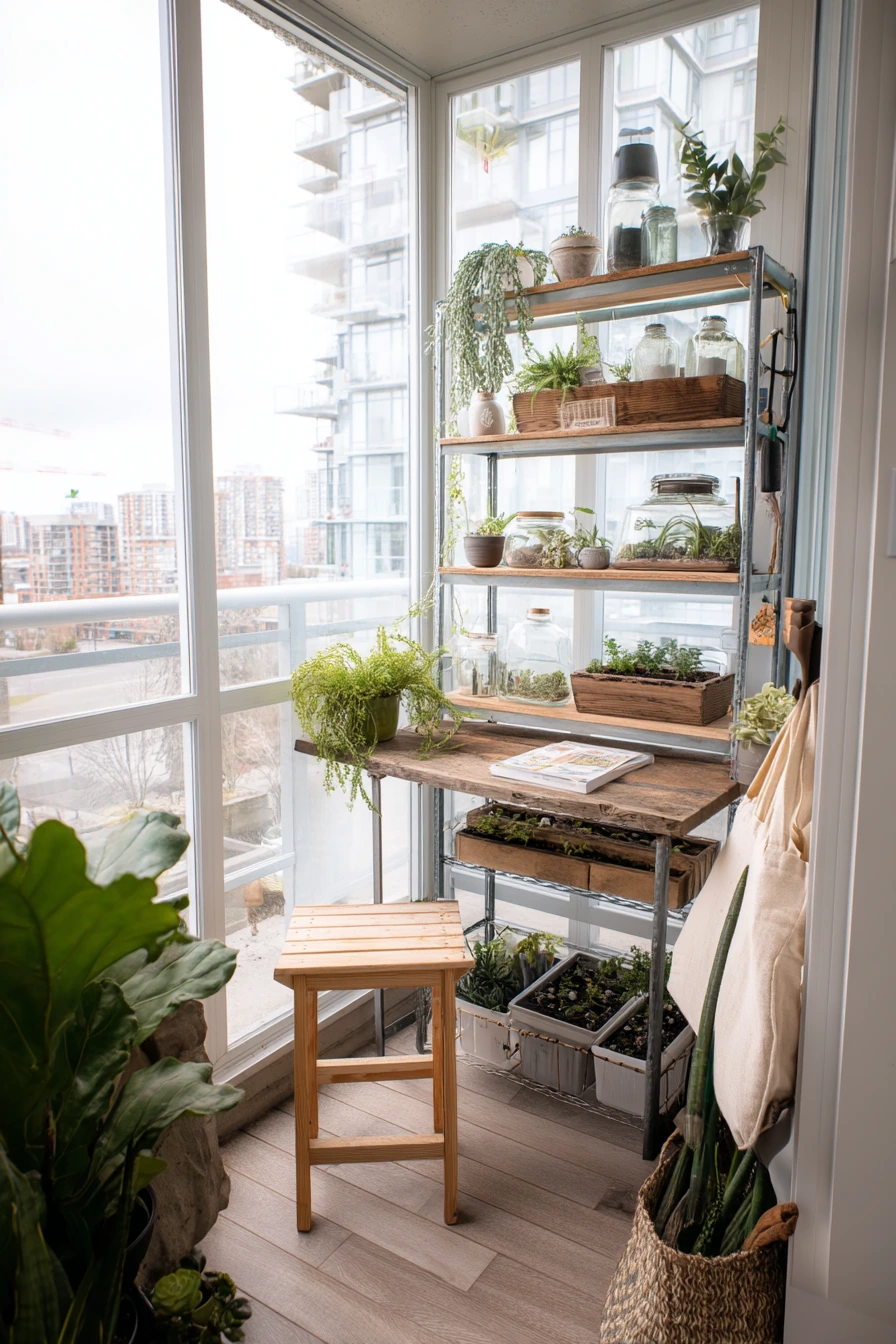
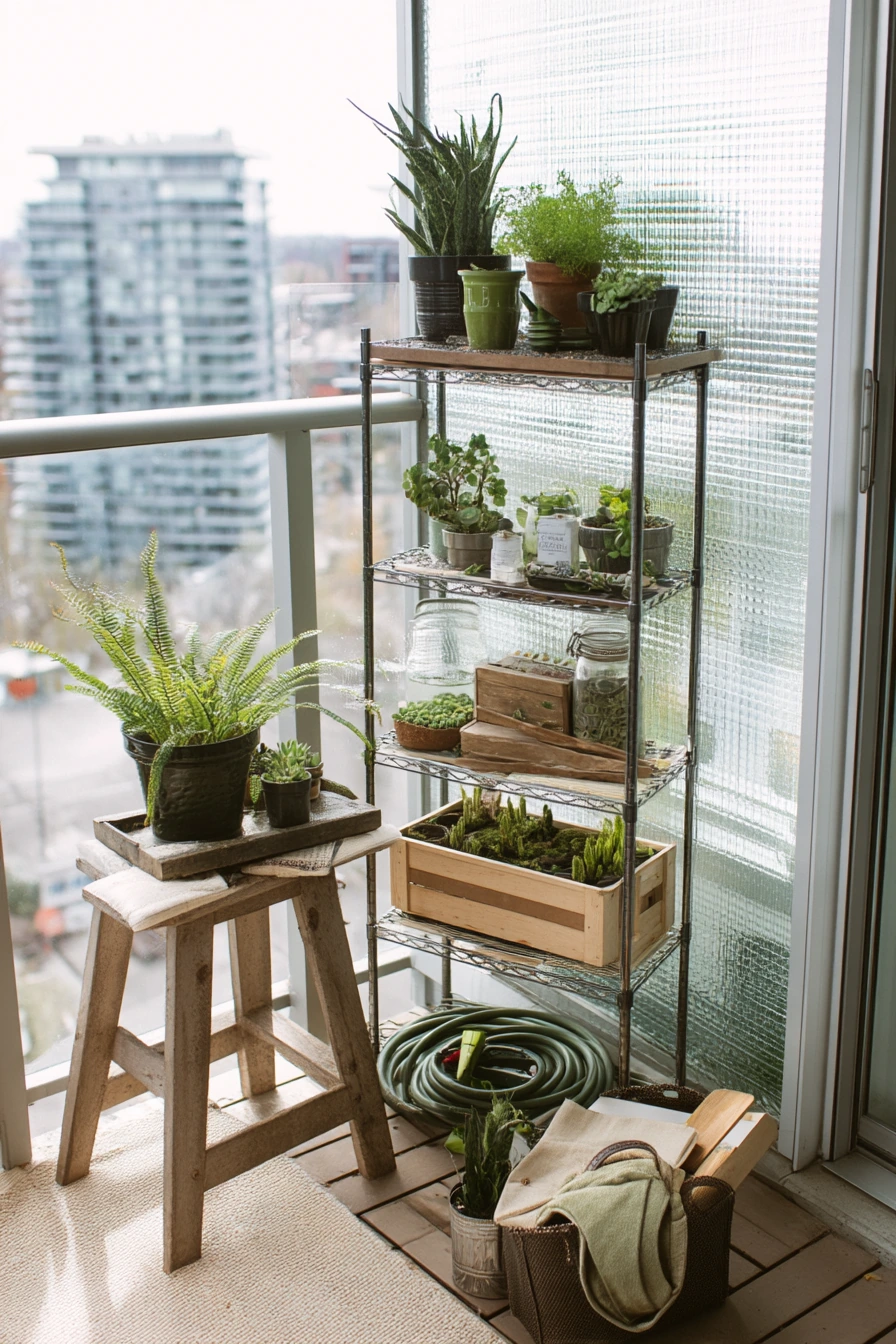
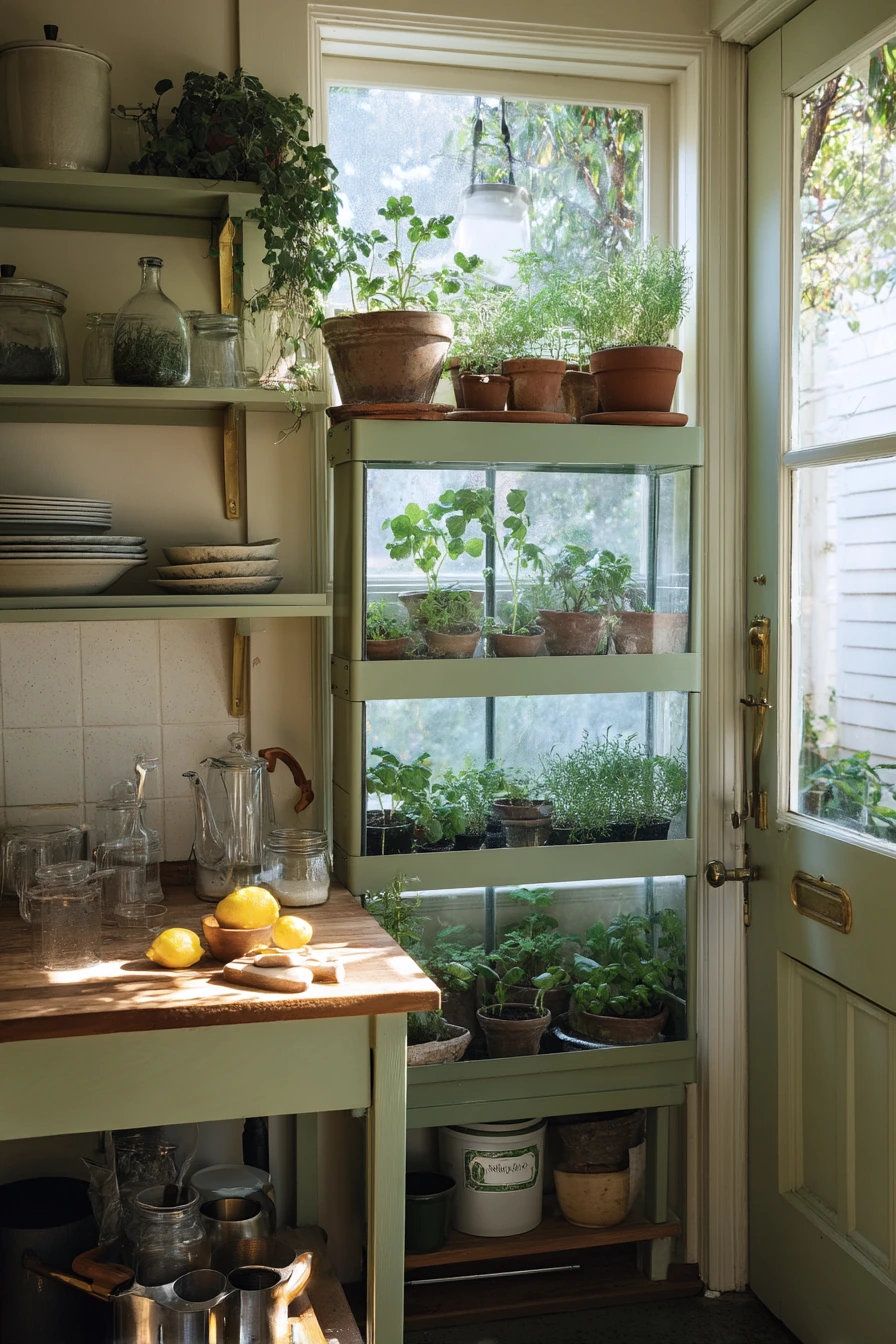
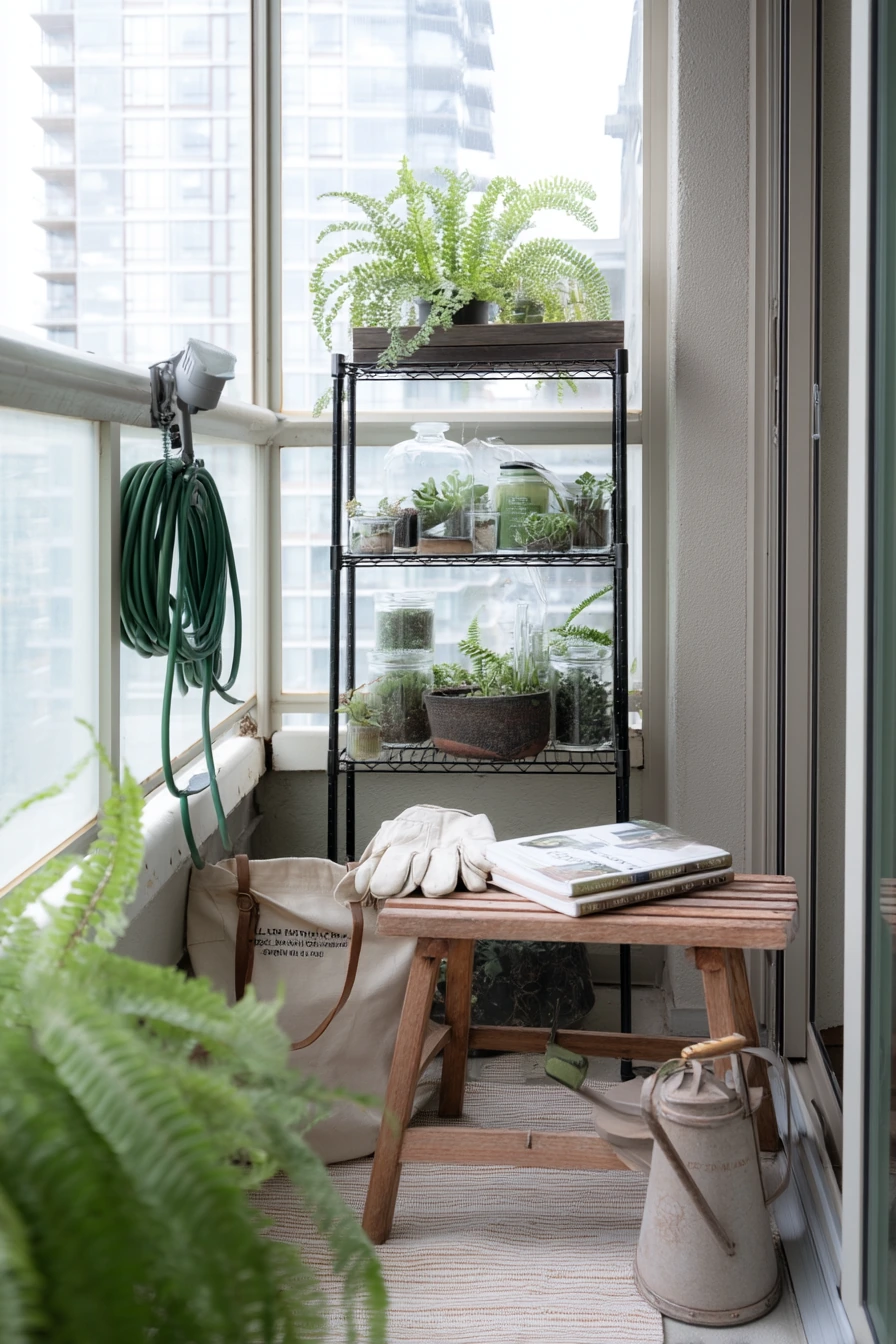
If you live in a small condo, a balcony corner greenhouse can be a good temporary solution. The key is using lightweight shelving and removable glazing, so you can take it down when you move. A foldable steel rack is strong but not heavy, and reclaimed wood trays add a warmer look while catching water drips. Keep the setup close to the balcony wall to reduce wind and to keep walk space open.
Choose plants that handle outdoor swings, like ferns in shaded spots and succulents where they get more sun. Propagation jars look neat and help you grow new plants from cuttings without needing extra pots. A compact grow light can be added for darker balconies, even if you do not use it every day. If your balcony is breezy, plan for the fact that soil dries fast. Water early and check pots after a windy day. Use a coiled hose or a small watering jug so you do not drip through the balcony.
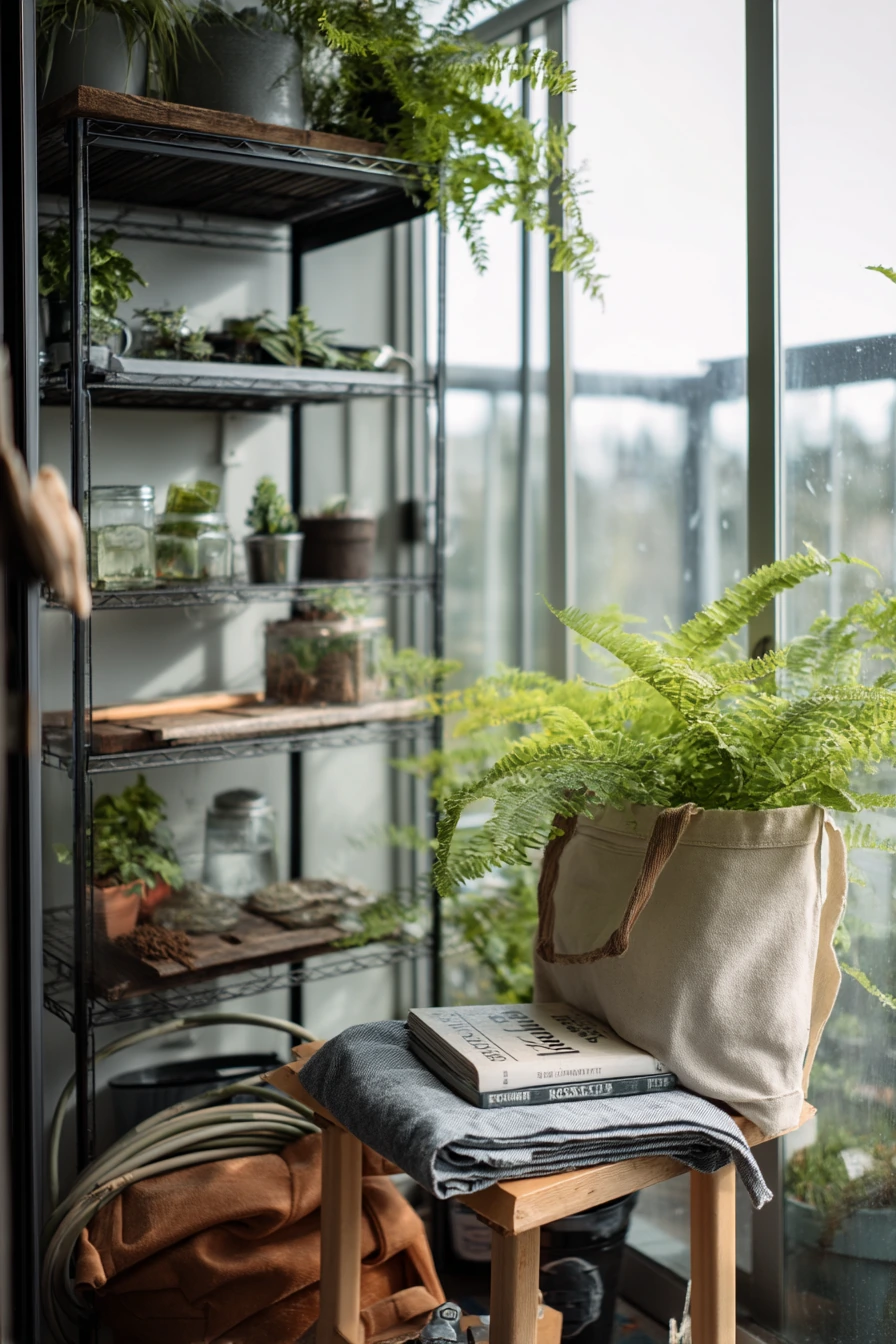
Styling matters on a balcony because everything is visible from inside. Keep gardening gloves draped on a stool, and leave a paperback on the seat for a relaxed look. A tote bag can hold tools, twine, and plant labels, and it keeps the shelf from feeling crowded. For a clean view, group plants by height: taller ferns in back, succulents in front, and jars on one side so they do not get knocked over.
- Use removable clear panels with clips, not permanent screws, to protect from wind.
- Add rubber shelf liners so pots do not slide on metal wire racks.
- Keep succulents on the sunniest shelf and ferns on the shadier side.
- Use reclaimed wood trays to catch water and keep the balcony floor clean.
- Store a small thermometer so you know when to bring tender plants inside.
Pro Design Tip: Choose glazing that overlaps the shelf edges so rain and wind do not blow straight into the corner.
Budget Considerations: A foldable rack is low cost and reusable; use clear shower curtain panels as a starter glazing option before buying rigid acrylic.
4 4. Victorian Bay Window Plant Conservatory
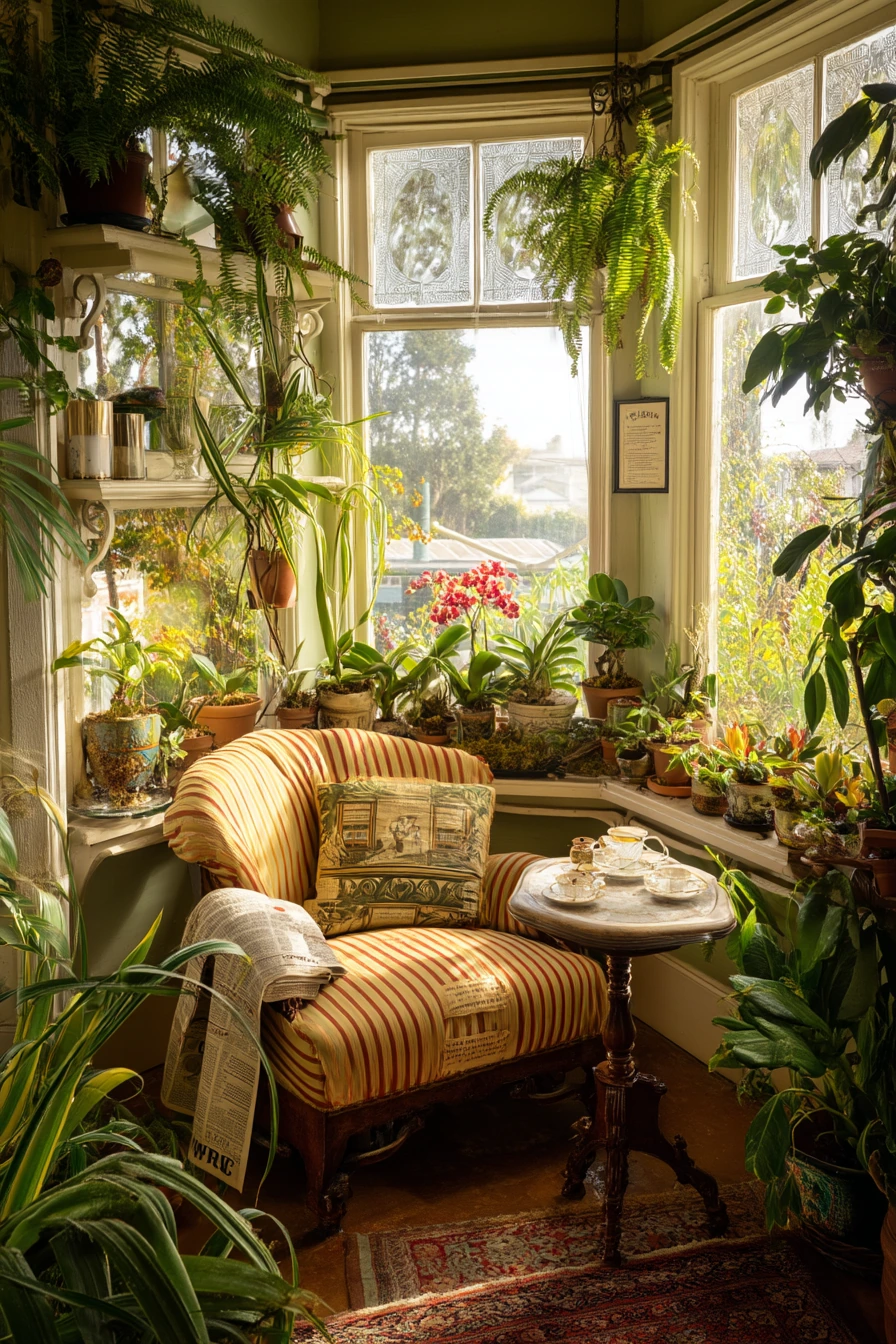
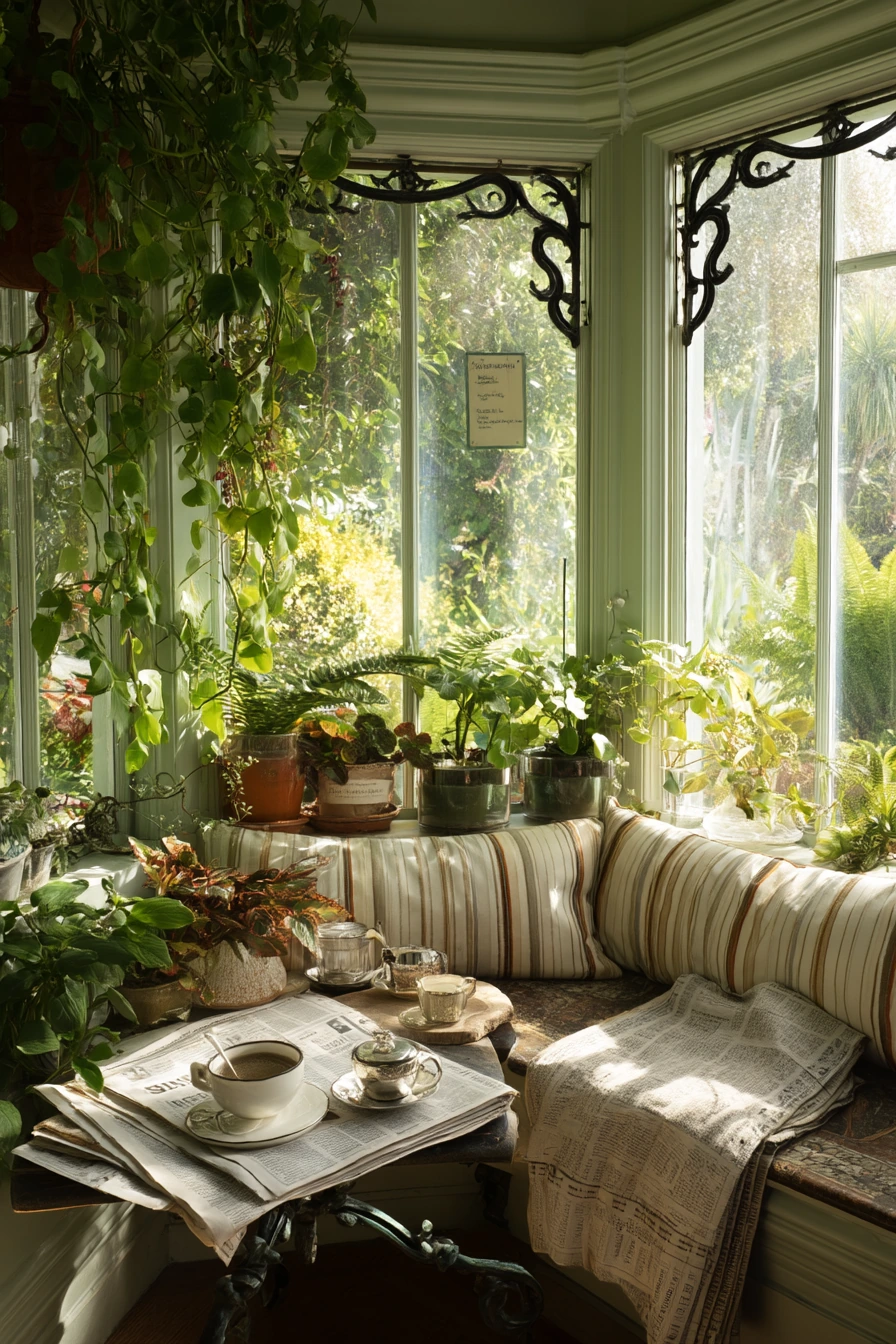
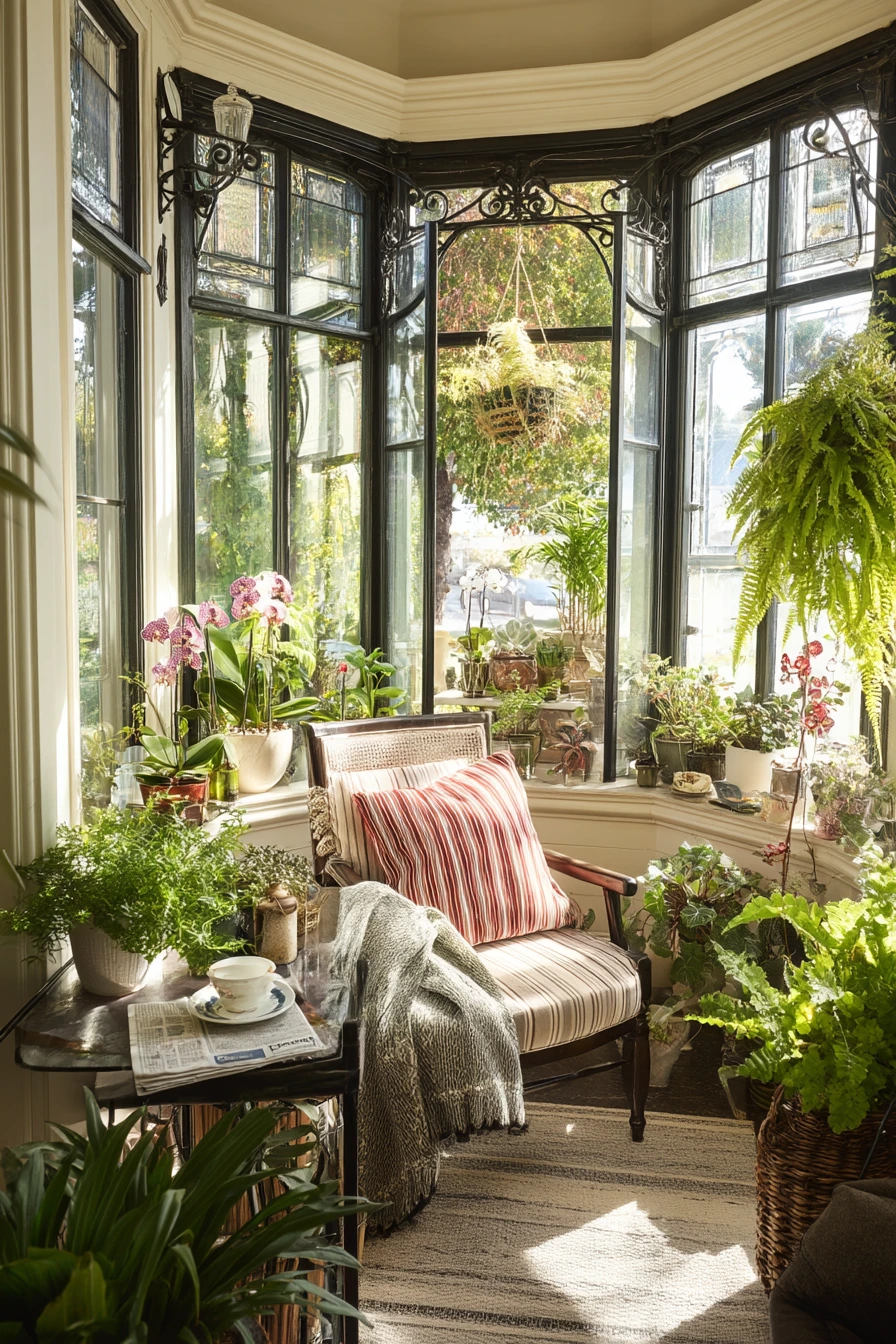
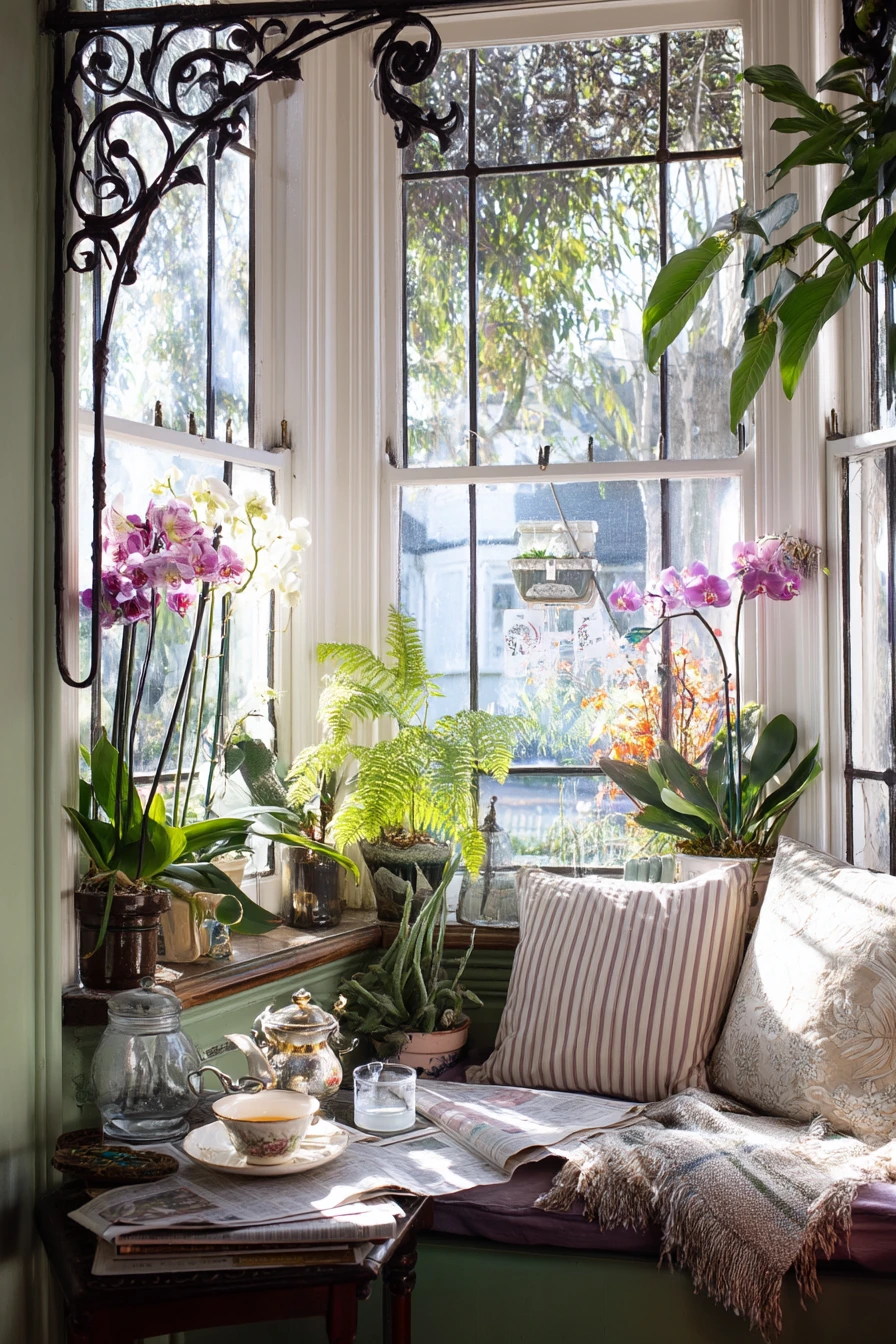
A Victorian bay window is a natural place for a corner greenhouse, especially for collectors who love rare plants. Curved glass and ornate iron brackets already create a greenhouse feel, so the goal is to support the plants without fighting the style. Use sturdy shelves that follow the curve and keep the view open. Striped cushions nearby can echo the home’s pattern and make the corner feel like a sitting area, not just plant storage.
Orchids and citrus saplings do well in bright, gentle morning light, but they need steady care. Orchids like airflow, so do not pack pots too close together. Citrus needs good drainage and a bigger pot as it grows. Add fern fronds for softness and to fill gaps, but keep fronds away from cold glass on winter nights. Vintage plant labels look right at home here and also help you track rare varieties and care notes. A small tray under pots protects wood and keeps water rings away from antiques.
Lived-in cues make this corner feel real and welcoming. Reading glasses, a tea cup ring on a side table, a folded newspaper, and a wool throw with slight wrinkles fit the mood. For styling, use a limited pot palette, like terracotta and a few aged ceramic pieces, so the plants stand out. Clean the curved glass often so the luminous light stays bright and your plants get the most sun.
- Use shelves that follow the bay curve to avoid dead space in the corner.
- Keep orchids near the brightest area but out of direct hot noon sun.
- Place citrus on a lower shelf for stability and easier watering.
- Add a humidity tray with pebbles under orchids if the room air is dry.
- Use vintage labels plus a notebook for care dates and bloom notes.
Pro Design Tip: Mix plant heights in a gentle arc that matches the bay window curve, so the display looks balanced from every seat.
Budget Considerations: Rare plants can be pricey; save by buying smaller starter plants and growing them on, while investing more in sturdy shelves that last.
5 5. Nursery Corner Greenhouse for New Parents
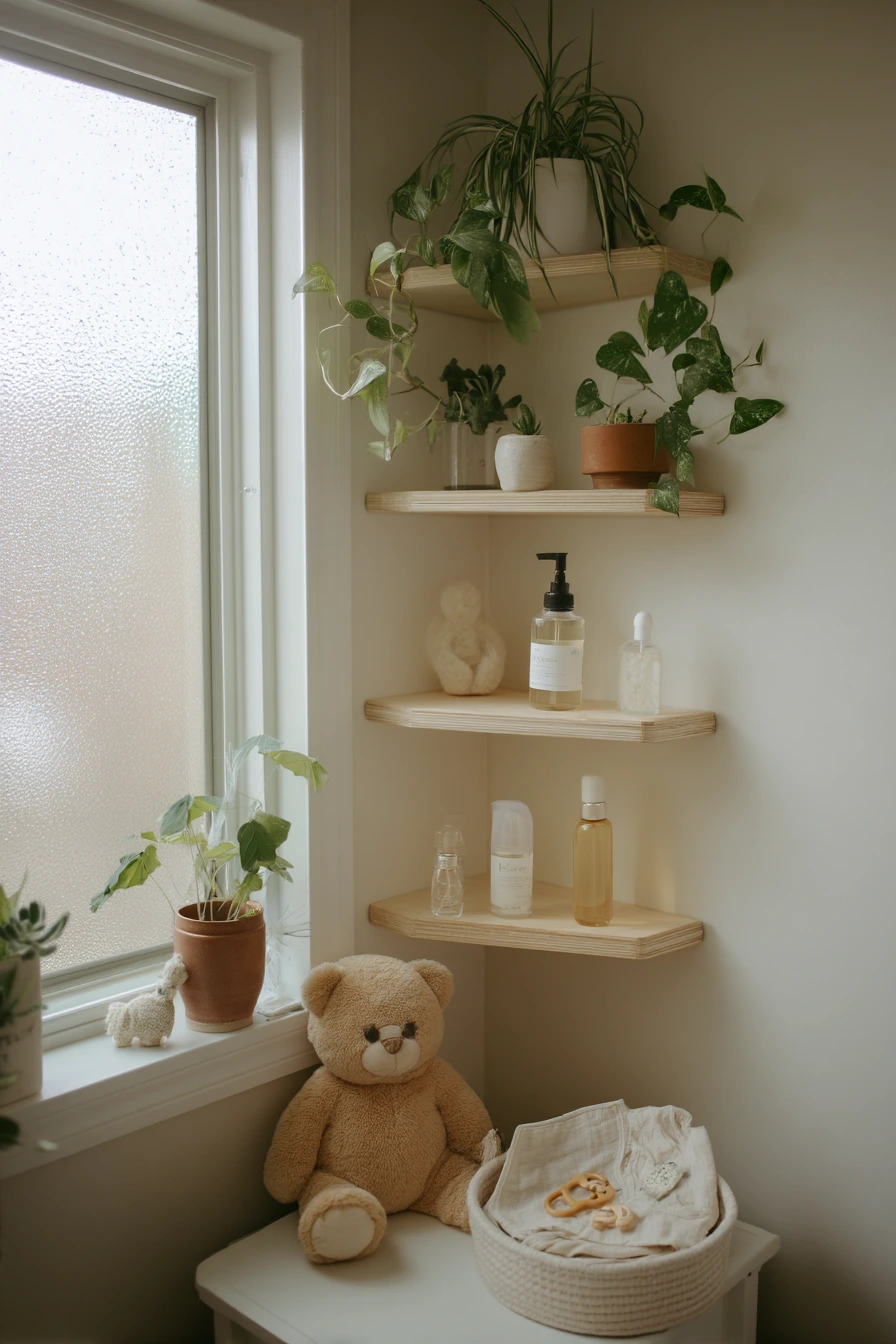
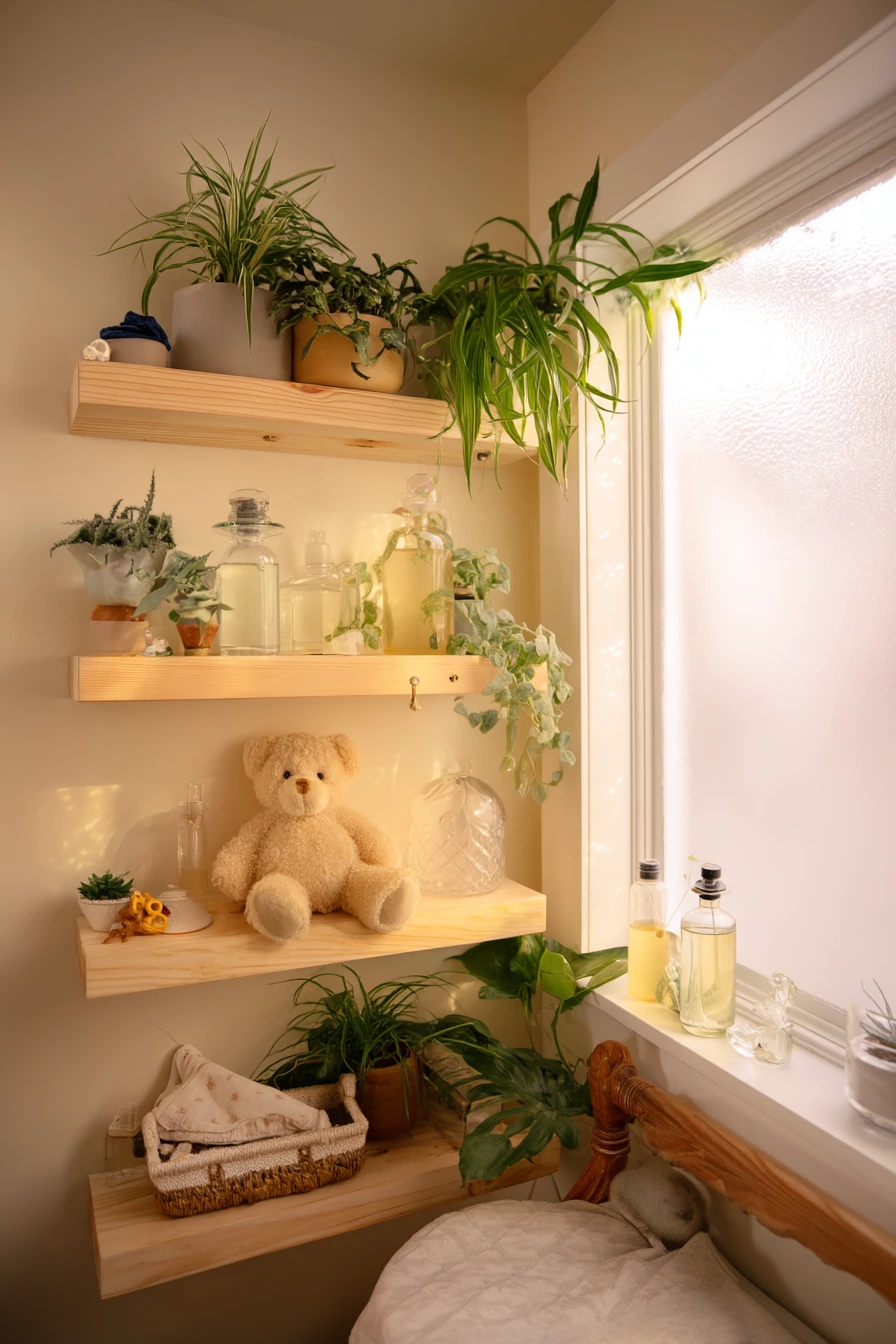
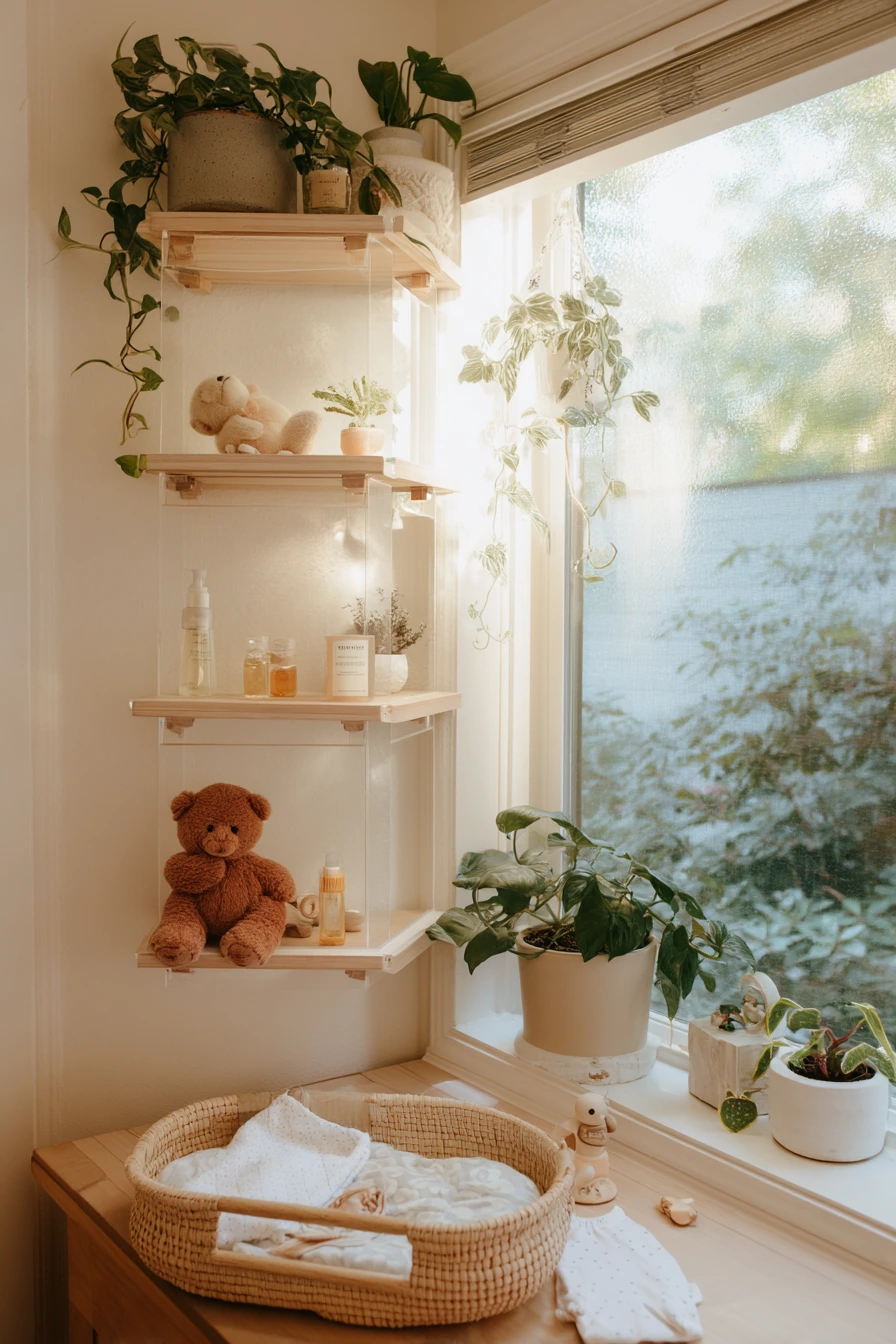
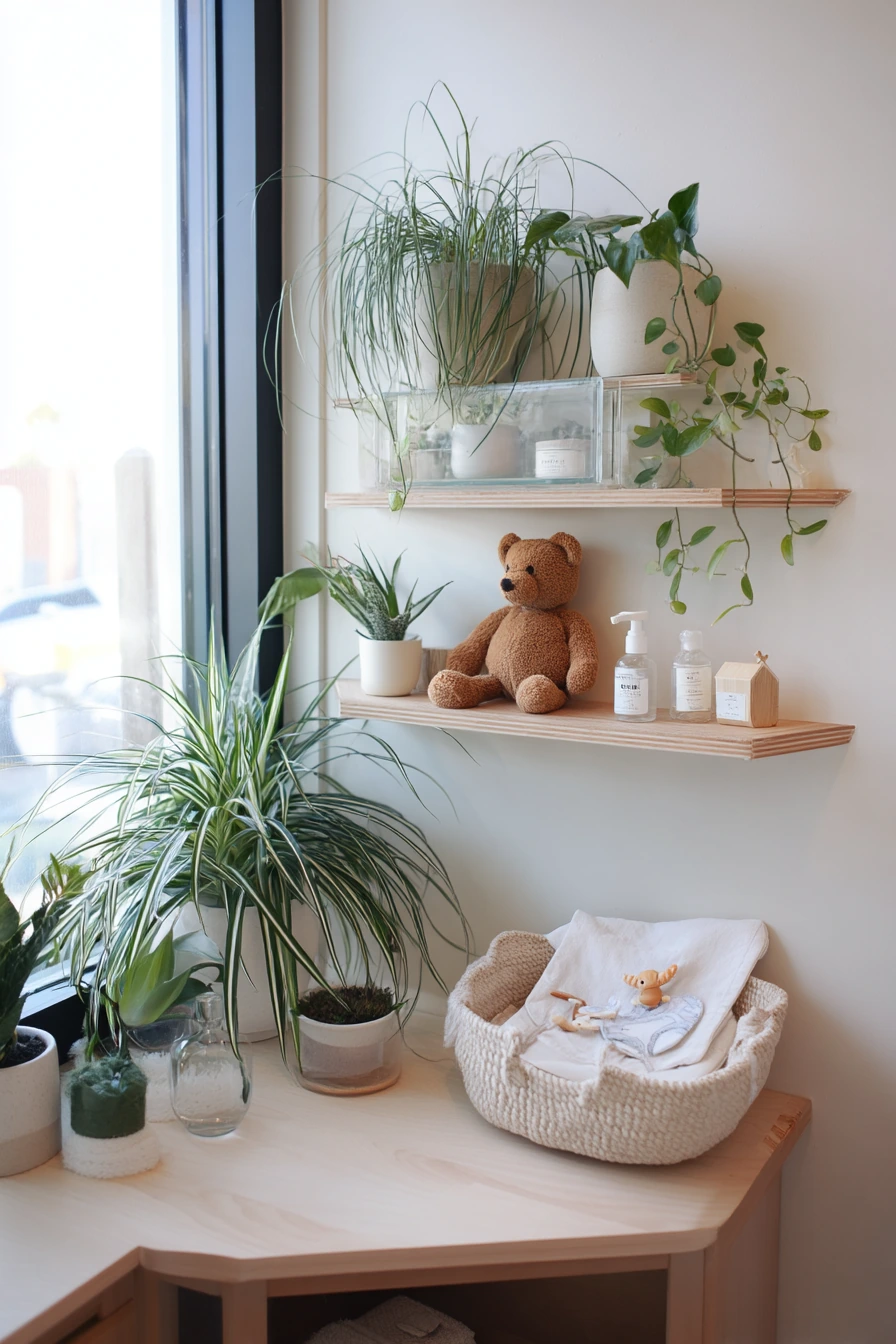
A nursery corner greenhouse can double as a soothing plant display in a baby’s room. The goal is calm, airiness, and safety. Pale wood shelving keeps the space light, and frosted glass softens the look while hiding soil mess. Choose baby-safe plants and keep the greenhouse secured so little hands cannot reach soil, fertilizer, or small tools.
Spider plant and prayer plant are good choices for a gentle nursery look. They add soft shapes without sharp spines or toxic sap. Use a small misting bottle for humidity, but mist earlier in the day so leaves dry before bedtime. Keep the greenhouse away from the crib, and avoid strong scents from blooming plants. If dawn window light is your main source, rotate pots so the plants grow evenly instead of leaning toward the glass. Also watch for overwatering, since nursery rooms can be warm and pots may dry slowly.
Styling can stay sweet and simple. A teddy bear in a basket, a pacifier clip, folded burp cloths, and a plugged-in nightlight make the corner feel like part of family life. For a tidy look, store plant care items in a lidded box on the bottom shelf. Choose neutral pots that match the nursery, then add interest with leaf patterns. Keep the floor clear so late-night steps are safe.
- Pick non-toxic, baby-safe plants and confirm with a trusted list before buying.
- Use frosted panels to hide potting soil while still letting in light.
- Secure shelves to the wall or use anti-tip straps for safety.
- Place a waterproof mat under the unit to protect nursery flooring.
- Keep pruning scissors and plant food in a locked or high container.
Pro Design Tip: Use the same pale wood tone as the crib or dresser so the greenhouse reads like matching nursery furniture.
Budget Considerations: Frosted acrylic is often cheaper and safer than glass; you can upgrade to thicker panels later if you want more insulation.
6 6. DIY Mudroom Corner Greenhouse
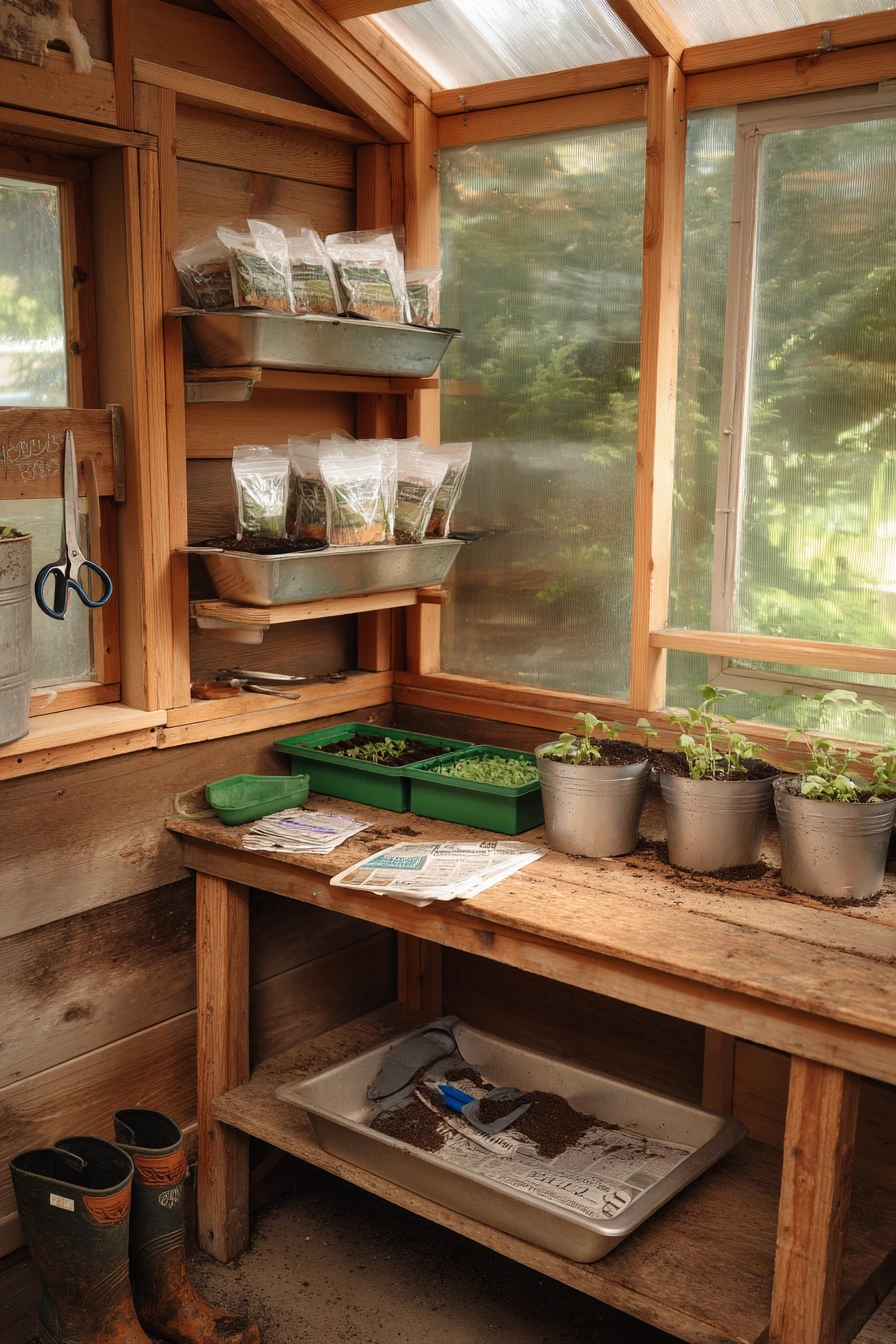
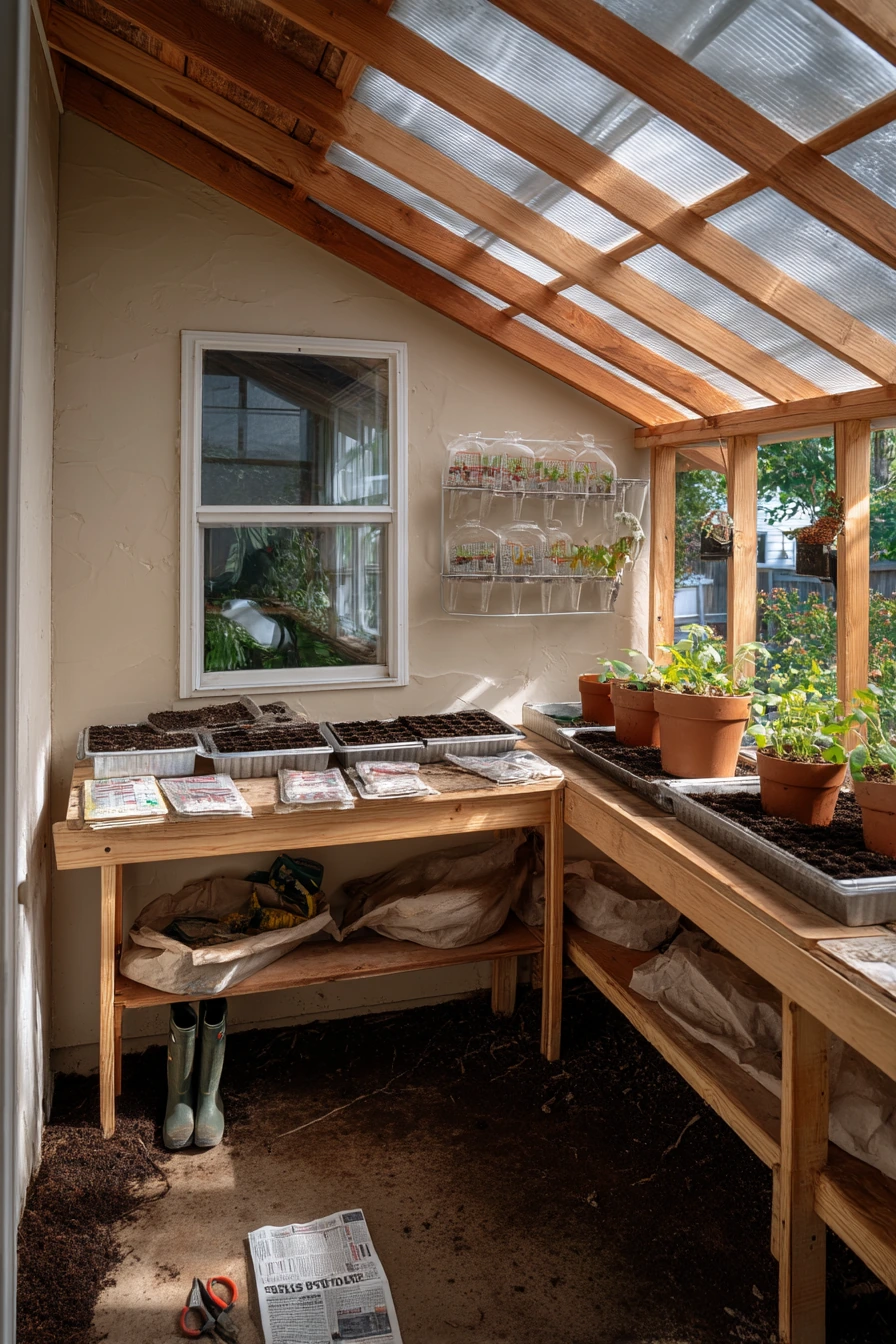
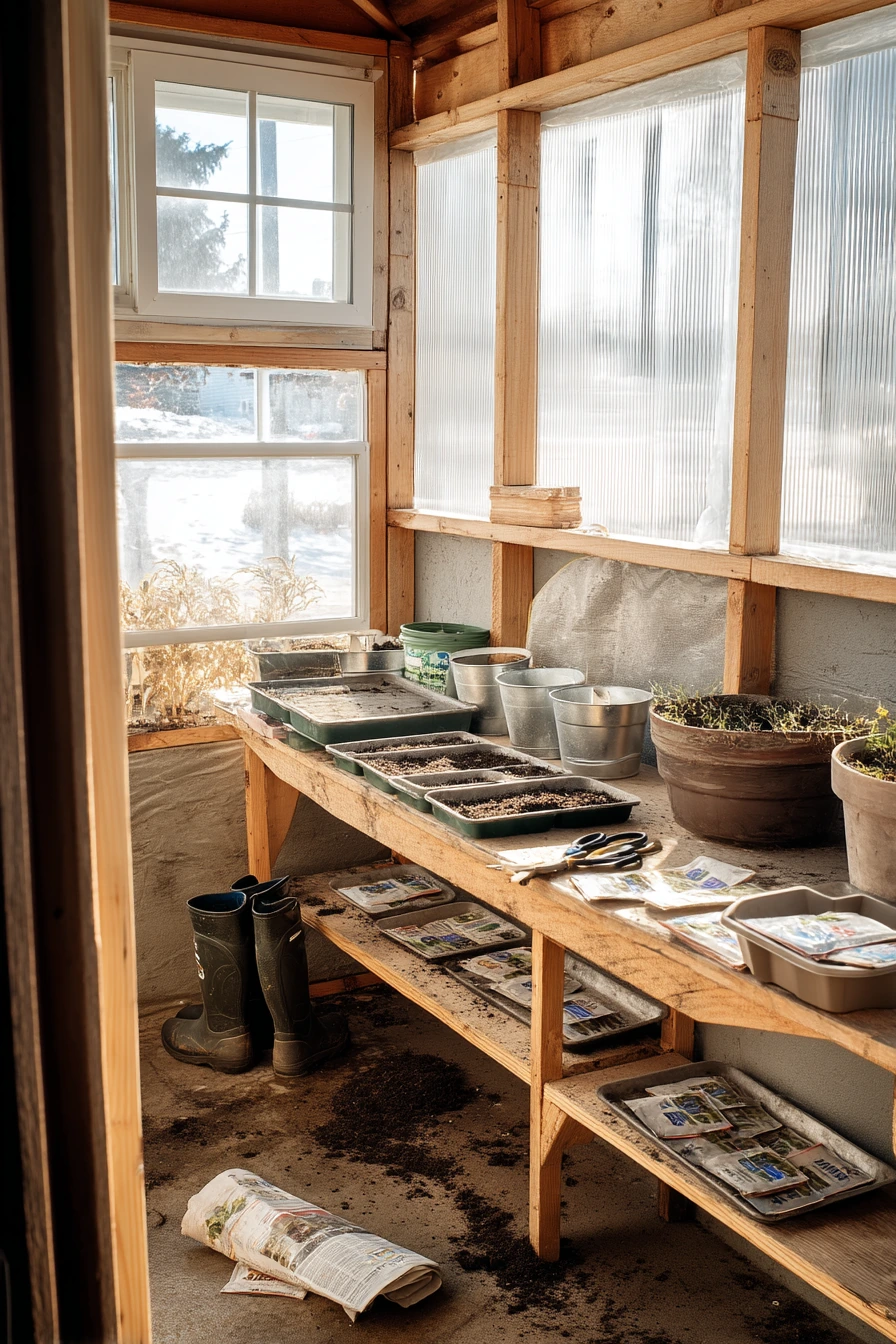
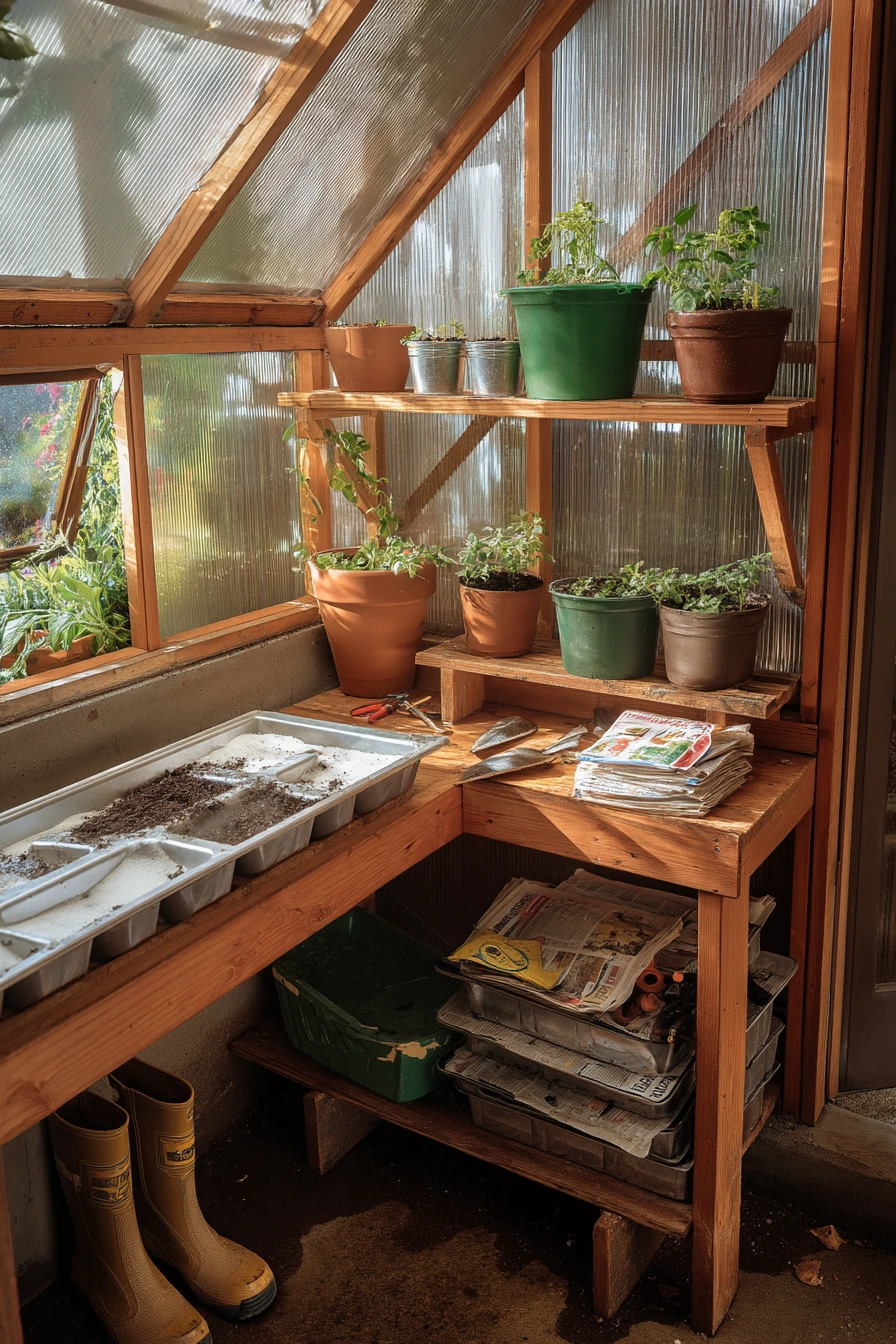
A muddy mudroom corner greenhouse is made for work, not show. It is a smart place to repot seedlings after work because it can handle dirt and water, and it keeps mess out of the kitchen. Simple cedar framing holds up well in a utility space, and polycarbonate panels are tough and easier to live with than fragile glass. Galvanized trays under pots catch runoff and make cleanup fast.
Set up the corner so you can move from potting mix to watering without crossing the room. A hose bib nearby is ideal, and it helps when you need to rinse trays or fill a watering can. Keep seed packets in a sealed bin so moisture does not ruin them. Add a small shelf for potting tools like pruning shears, plant labels, and a scoop. If the mudroom is cool, the greenhouse panels will help trap a bit of warmth, but you may still need a small heat mat for early starts. Put newspaper under pots during messy jobs, then toss it when you are done.
Lean into the lived-in look. Boots with dirt on the floor, rolled-up sleeves, and tools on a hook show this is a real working space. For styling, keep it neat by using matching bins and a clear “dirty zone” where soil is allowed. A simple peg rail keeps gloves and hand tools off the shelves, so plants stay cleaner and get more light.
- Choose polycarbonate panels for durability and easy wiping.
- Use galvanized trays to catch water and protect the mudroom floor.
- Store potting mix in a lidded tub to reduce dust and moisture.
- Add a hook strip for shears, gloves, and a small brush.
- Use a heat mat under seed trays if your mudroom runs cold.
Pro Design Tip: Build the lowest shelf at a comfortable working height so you can pot seedlings without bending too far.
Budget Considerations: Cedar costs more than pine; if needed, use pine plus exterior-grade sealant and spend the savings on strong trays and storage bins.
7 7. Winter Corner Greenhouse for Holiday Greens
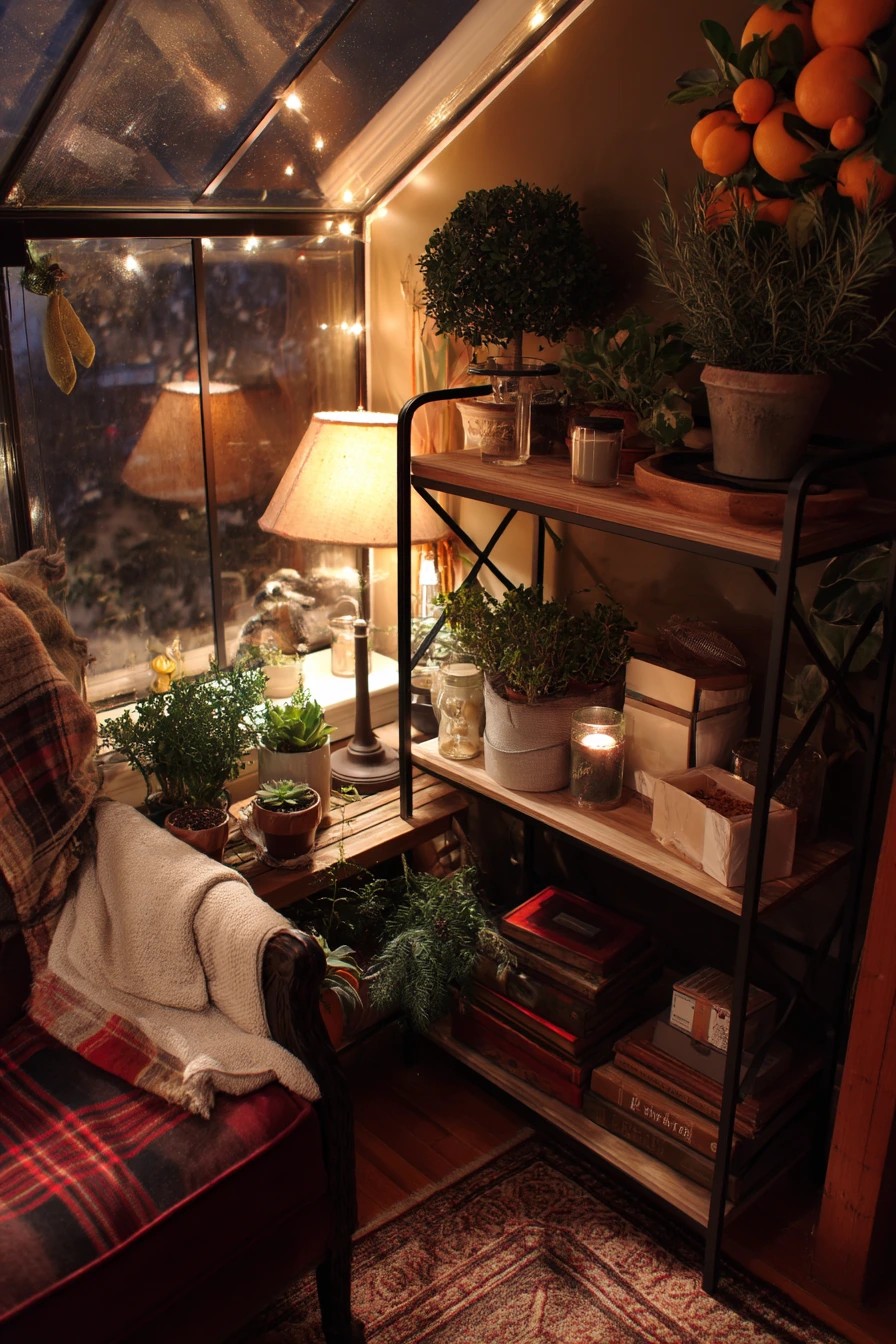
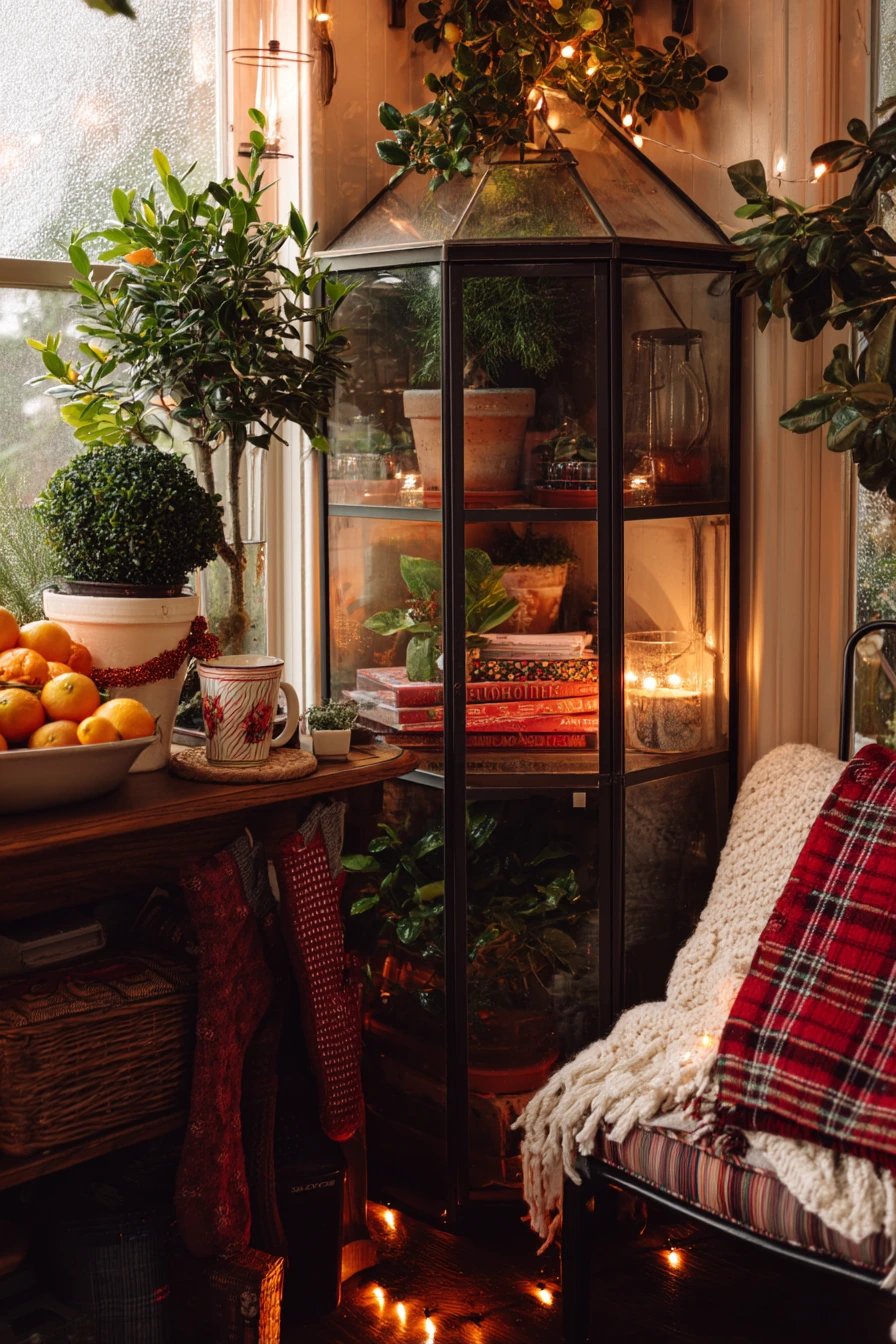
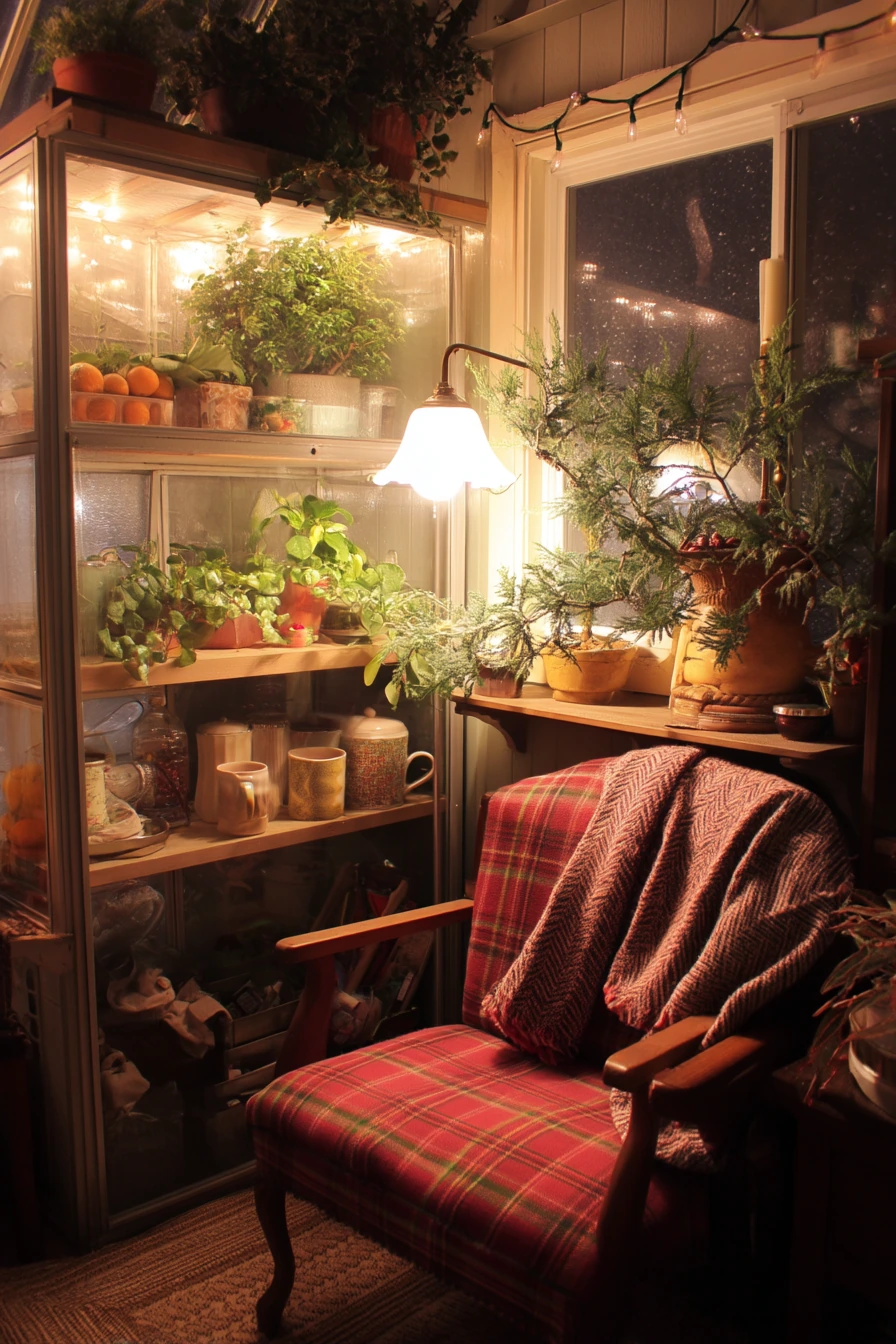
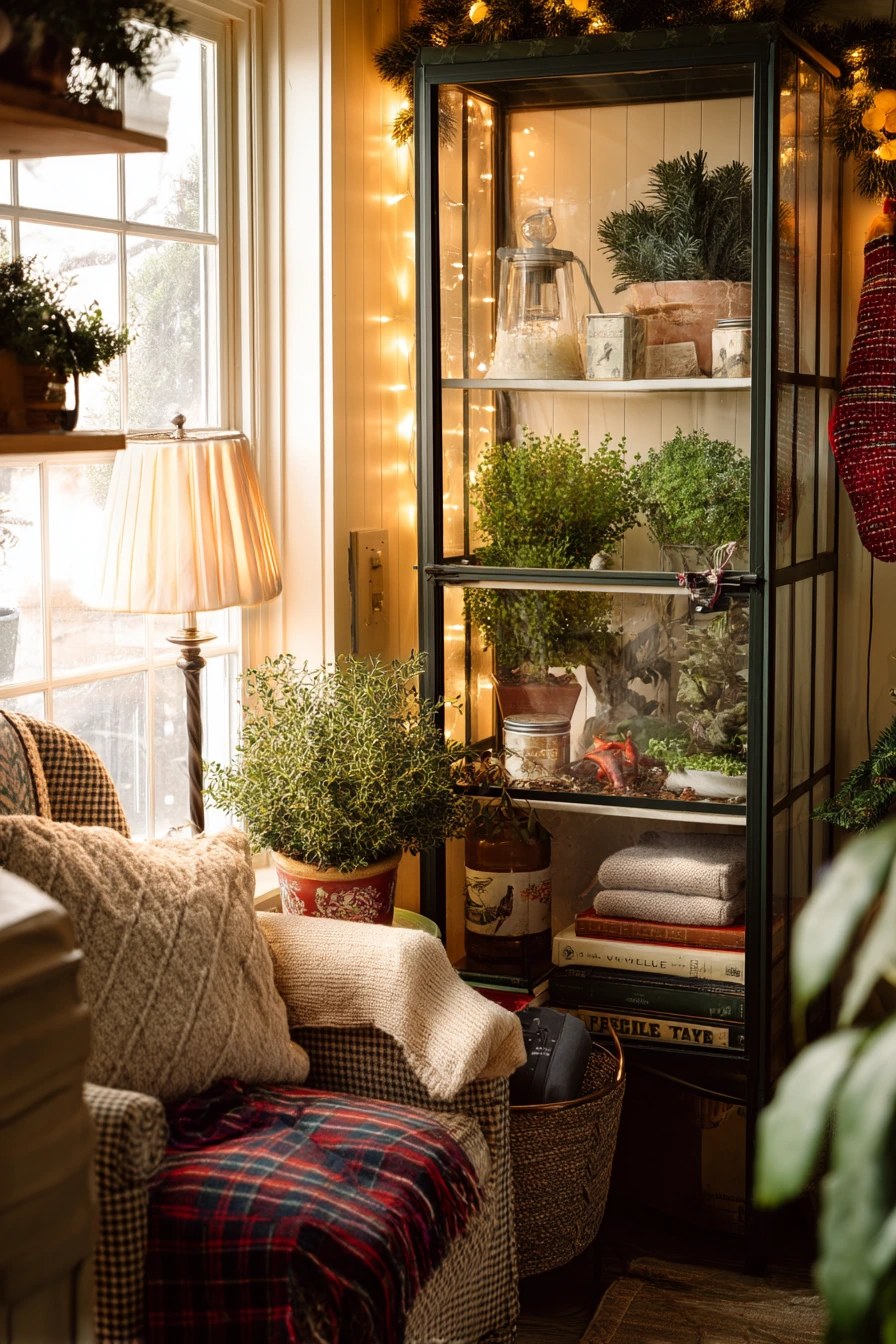
A winter corner greenhouse in a family den helps plants stay happy when the weather turns cold. A glass corner cabinet with cedar shelves looks like furniture, so it blends into a lived-in room. This is a good place to keep holiday greens, rosemary topiary, and even a small winter citrus, as long as you give them light and do not let them dry out near heat vents.
Warm lamp light mixed with faint window light can be pretty, but plants still need real daylight. Place the cabinet close to a window if you can, and rotate pots so growth stays even. A small heater nearby can help during cold snaps, but keep it at a safe distance so leaves do not scorch and soil does not dry too fast. String lights can look festive, but leave them off inside the cabinet unless they are made for plants and do not add heat. Use a humidity tray if the den gets dry from heating.
Make the corner feel like part of holiday life. Wrapped gift tape on a side table, knit stockings on a chair, a hot cocoa mug, and a plaid throw slightly askew keep the scene warm and real. For styling, use a few natural textures like cedar, terracotta, and woven baskets. Keep the watering tools on a low shelf, so you can care for plants without searching when the house is busy.
- Place the cabinet where it gets the best winter window light.
- Keep citrus away from drafts and away from direct heater airflow.
- Use cedar shelves or liners to handle moisture and add a warm look.
- Add a small thermometer so you can spot cold corners fast.
- Water early in the day so excess moisture can dry before night.
Pro Design Tip: Use a cabinet with adjustable shelves so you can raise plants as they grow and keep foliage off the glass.
Budget Considerations: A secondhand glass cabinet can work well; repaint it and add simple wood shelf liners instead of buying a new greenhouse cabinet.
8 8. Minimal Corner Greenhouse in a Studio Loft
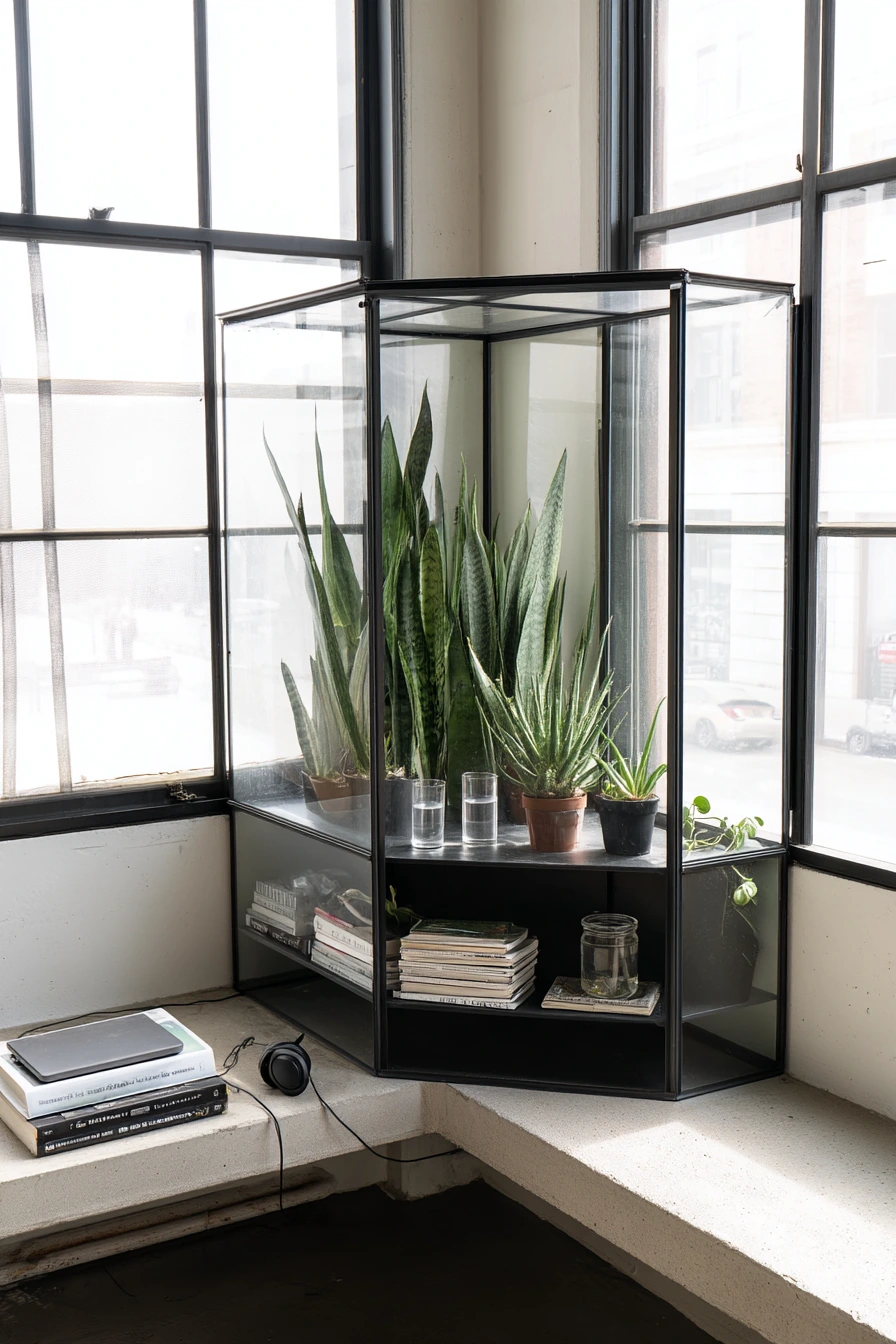
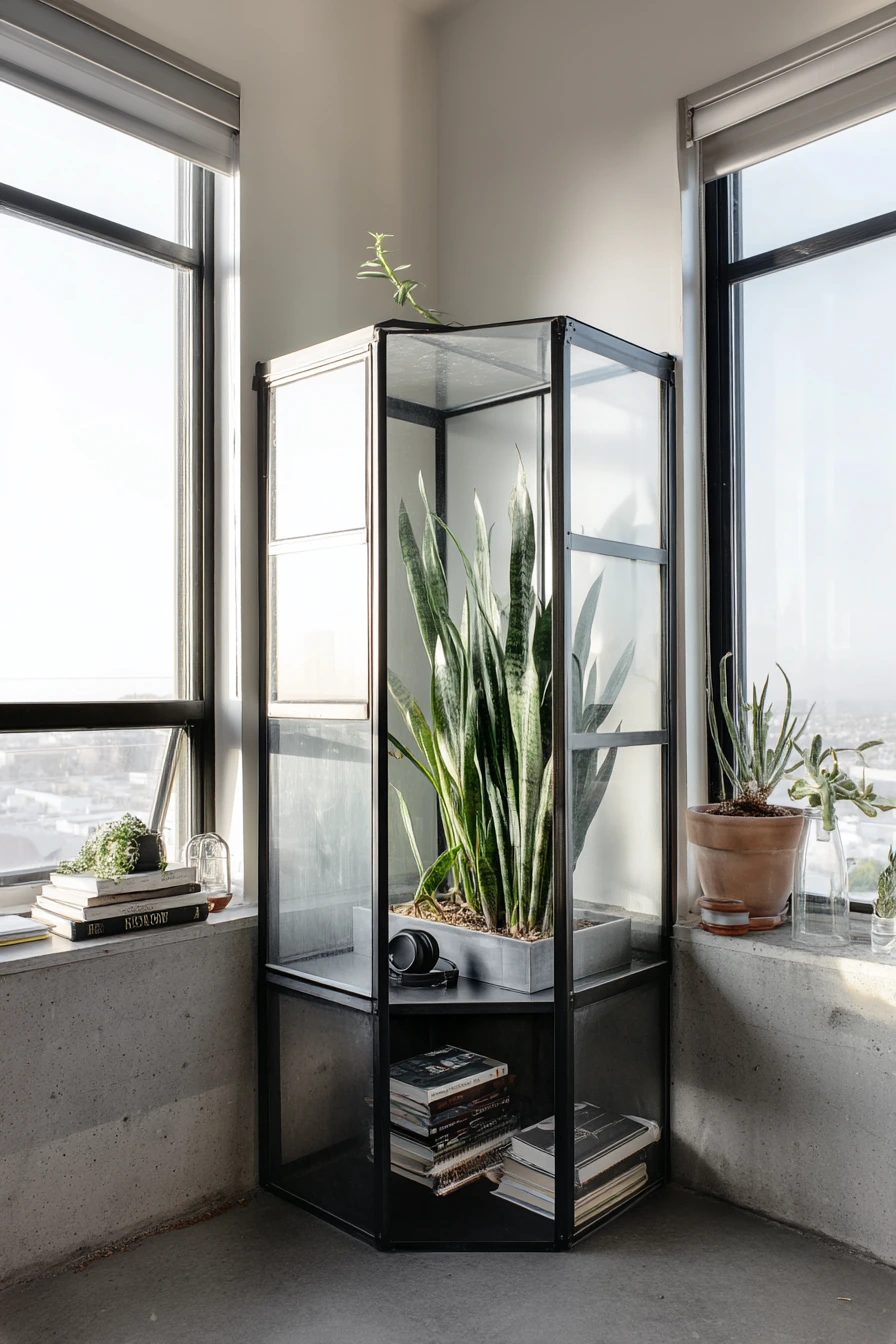
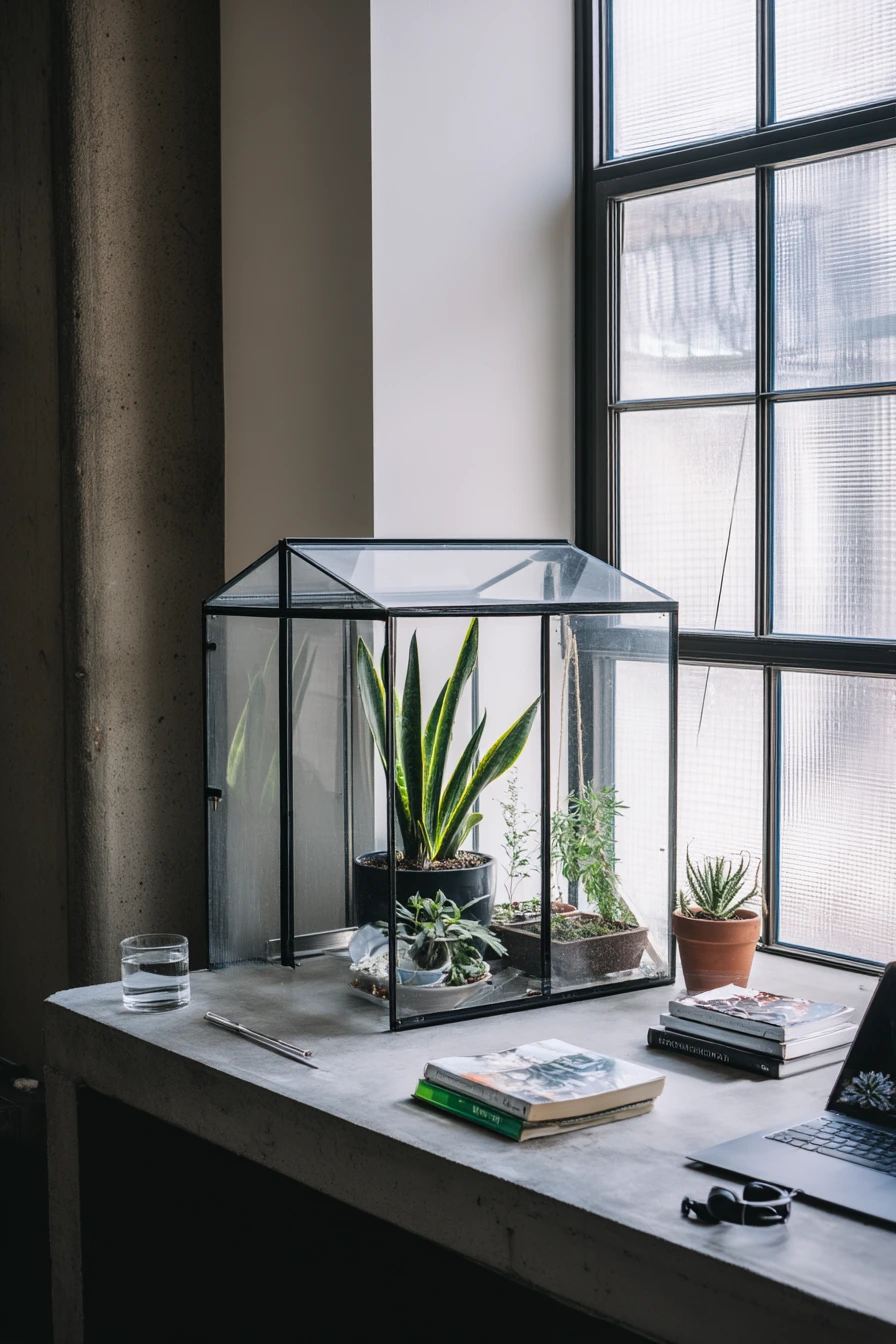
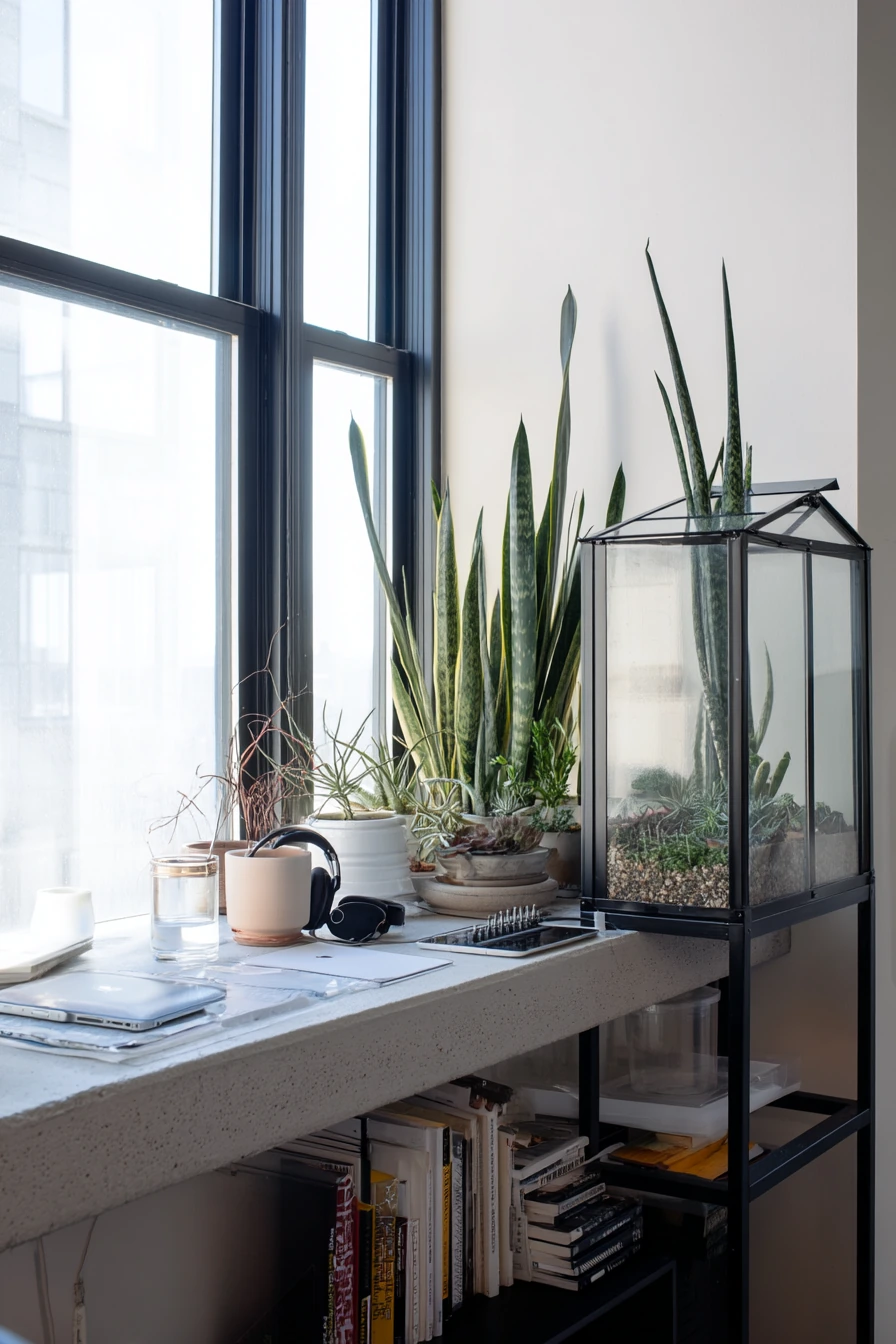
A minimalist studio loft corner greenhouse can look clean and sharp while still being useful. A blackened steel frame and clear panes match a concrete floor and modern lines. This style is good for someone who wants herbs and sculptural houseplants without a lot of extra decor. The corner becomes a simple plant zone that also looks like part of the architecture.
Pick plants that fit the restrained look and are easy to maintain. Snake plant and aloe have strong shapes and handle missed waterings. Add a few herb pots for cooking, but keep them in the brightest spot since loft light can be cool and indirect. Slim propagation tubes look neat and let you root cuttings without clutter. Keep a water glass on the sill and a small watering bottle inside the greenhouse so care stays simple. If you use a laptop charger and headphones nearby, manage cords so they do not run under drip areas.
For styling, use fewer items but make each one count. Stack art books unevenly on a low table, and keep tools out of sight in a plain box. Wipe the glass and steel often because fingerprints show more on dark frames. If you want a softer look without adding clutter, place one textured pot, like matte clay, next to smoother ceramic. The plants should be the main focus.
- Use a steel frame with thin lines to keep the corner airy.
- Choose sculptural plants like snake plant and aloe for a clean look.
- Keep herb pots close to the window and trim often to prevent legginess.
- Use slim propagation tubes to root cuttings without taking up shelf space.
- Route chargers and cords away from watering zones to avoid damage.
Pro Design Tip: Repeat one dark accent, like the steel frame, in nearby items such as a lamp base or shelf bracket for a cohesive corner.
Budget Considerations: Steel-and-glass units can cost more; a black-painted wood frame with clear acrylic gives a similar look for less.
9 9. Cottage Corner Greenhouse with Potting Bench
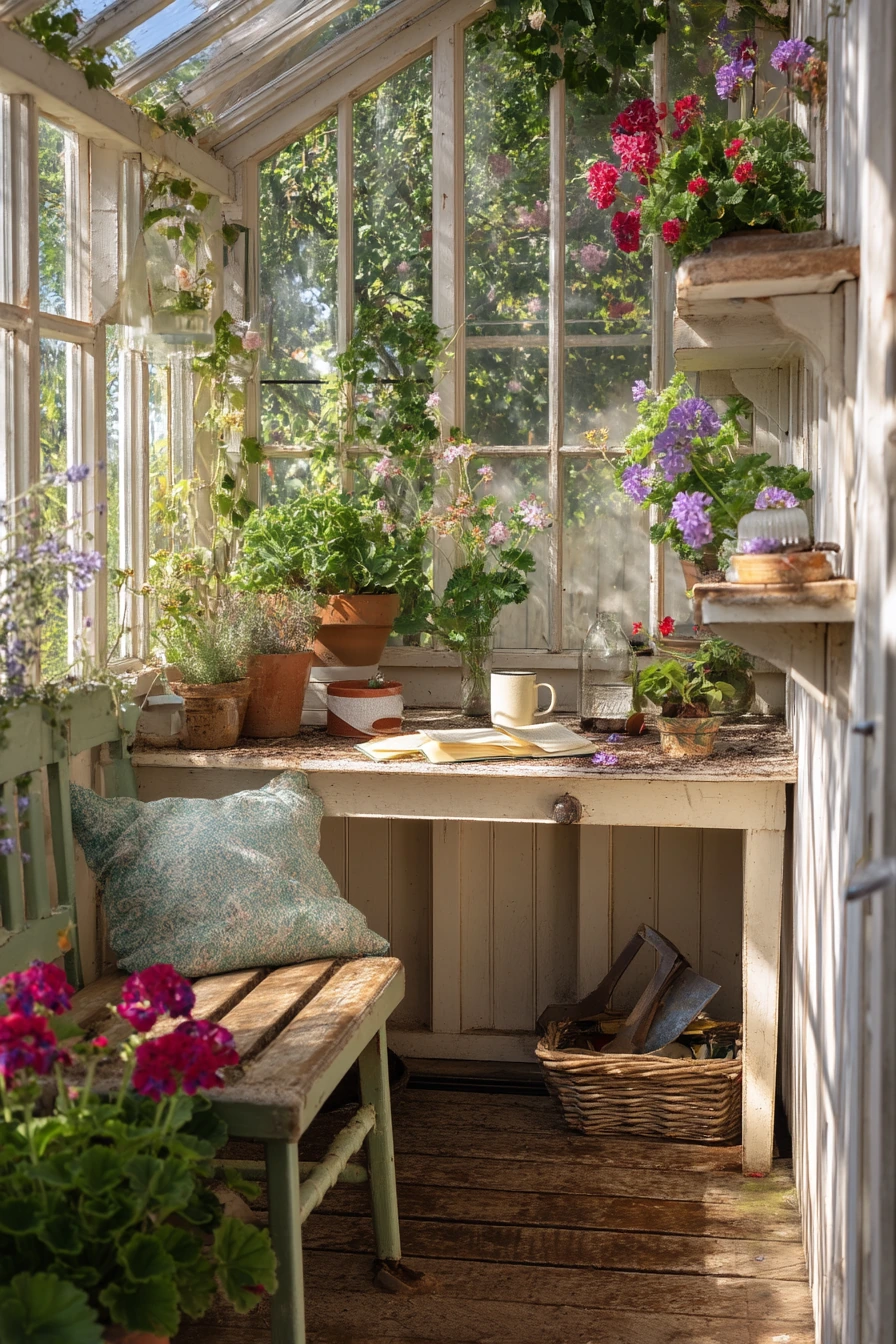
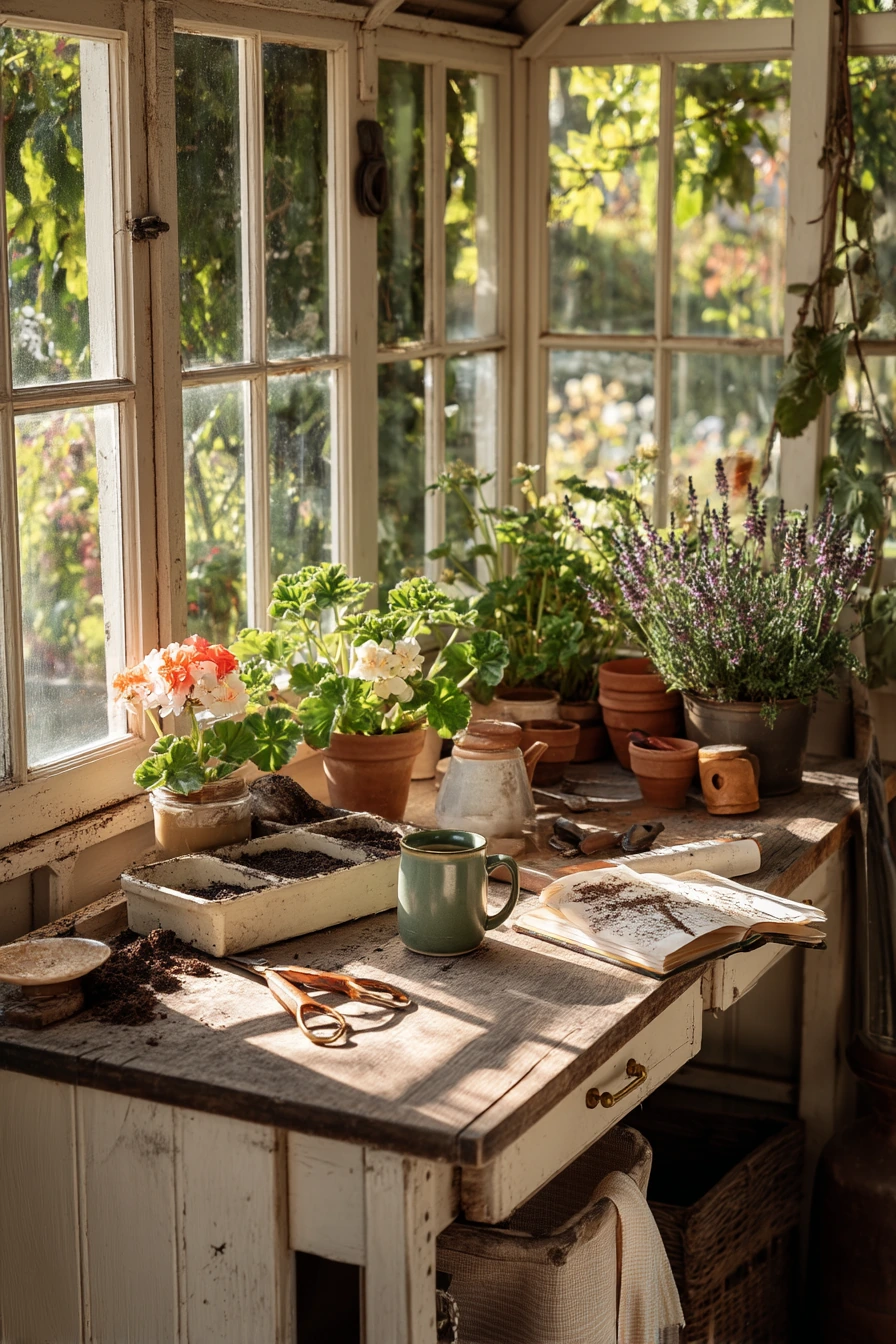
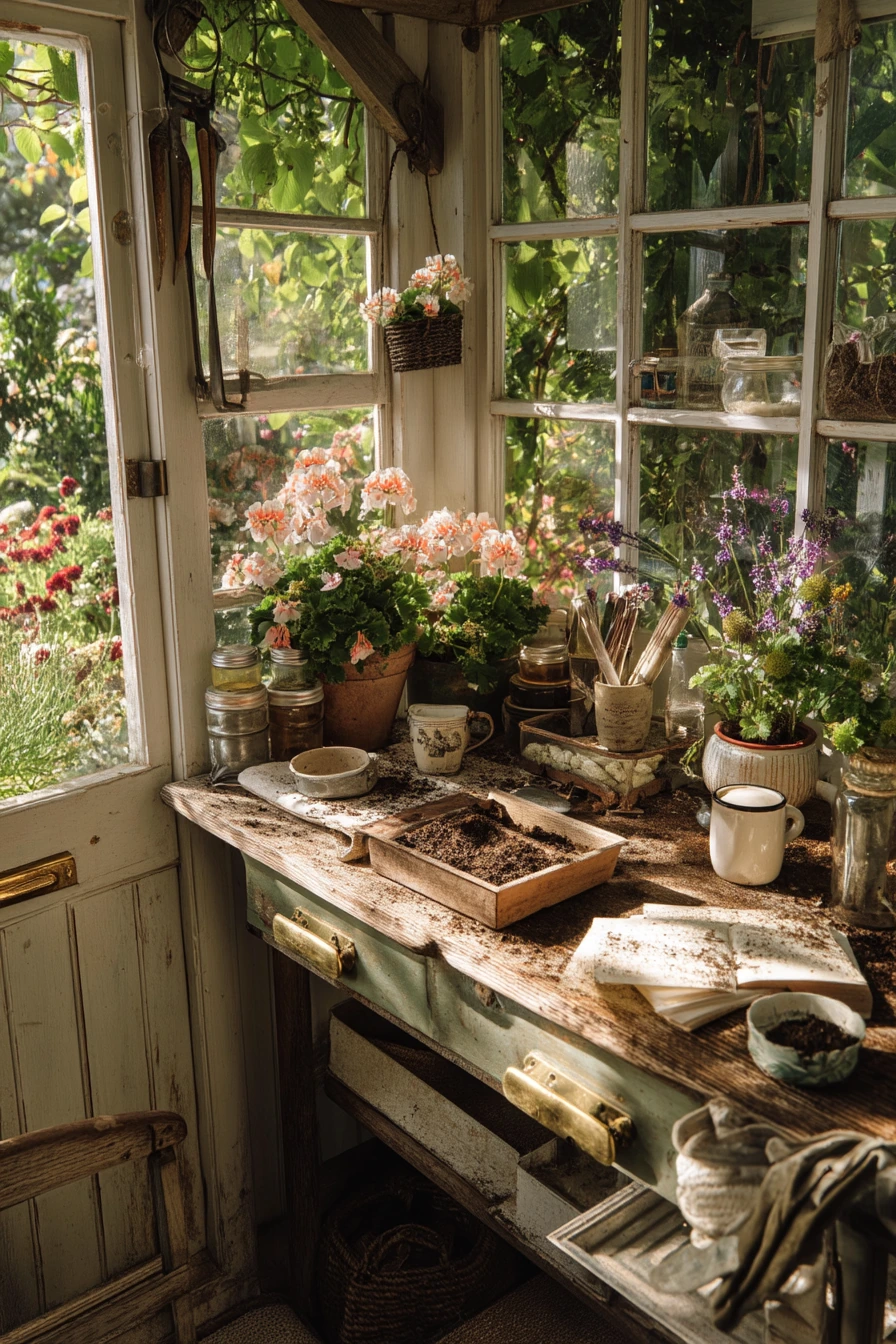
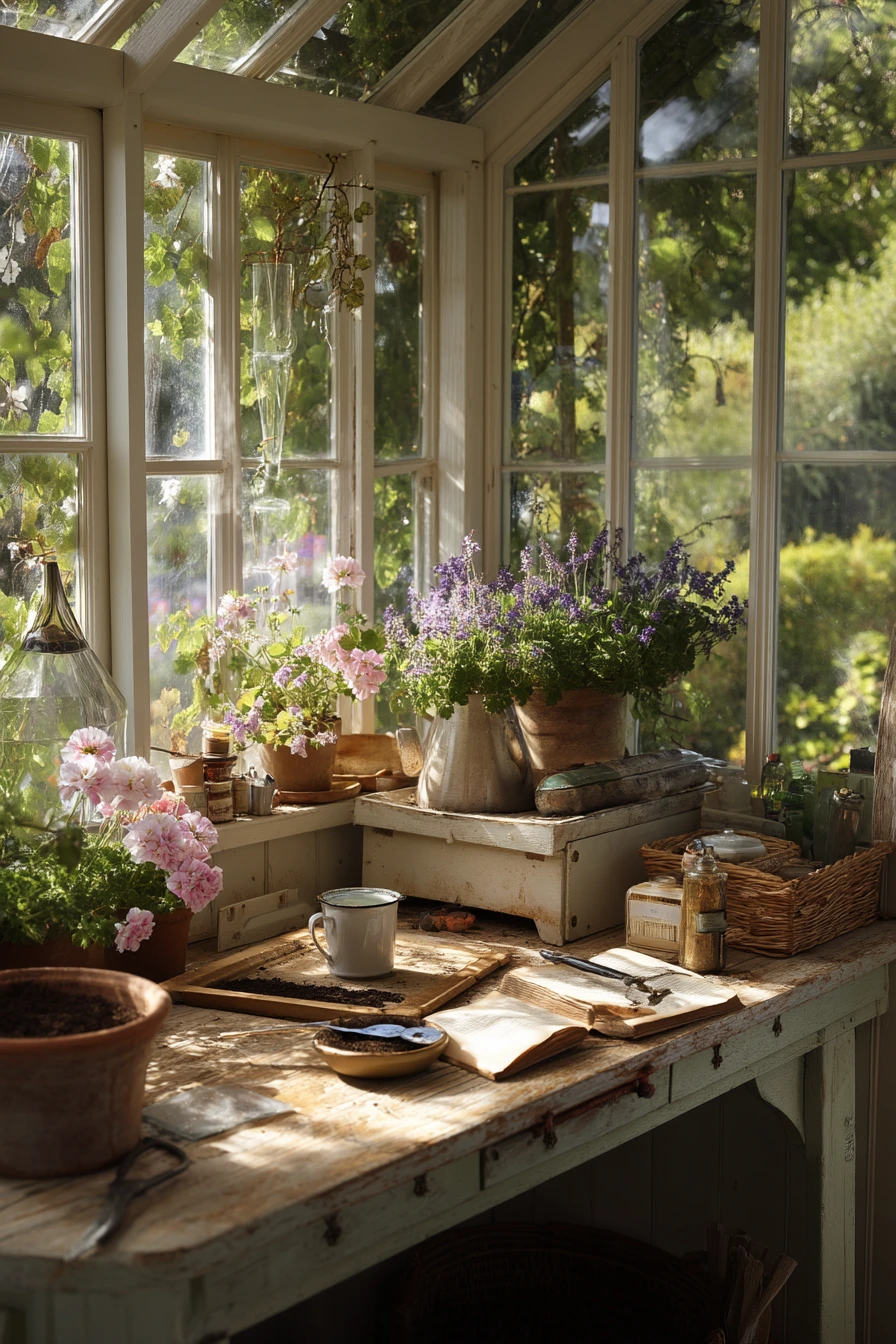
A cottage breakfast room corner greenhouse feels cozy and useful, especially with a tiny potting bench for a retired gardener. Painted wood and aged brass handles add charm, and glass panels keep the corner bright. This setup is nice in a room where you drink coffee and check on plants each morning, since the care routine becomes part of the day.
Geraniums and lavender bring color and a soft scent, but they still need good airflow and the right watering. Geraniums like to dry a bit between waterings, while lavender hates soggy soil. Use a gritty potting mix for lavender and a pot with strong drainage holes. Keep secateurs and a tin of seeds on the bench so you can deadhead and start new pots without hunting for tools. A seed tray scattered with soil is normal in this kind of corner, but add a small brush and tray so cleanup is quick before meals.
Style it with lived-in details that match cottage life. An enamel mug, a folded apron, and a novel left open on the bench make the space feel warm and personal. For a tidy look, group supplies into two zones: plant care on one side, and seating or serving on the other. Sun-dappled afternoon light is beautiful, but watch for hot spots on glass that can dry small pots fast.
- Use painted wood shelves for a soft cottage feel and easy touch-ups.
- Keep a small potting bench surface for trimming and quick repots.
- Plant lavender in gritty soil and avoid overwatering.
- Store seeds in a tin with a lid to keep out moisture and pests.
- Use a shallow tray and hand brush to keep soil off the breakfast floor.
Pro Design Tip: Choose one hardware finish, like aged brass, and repeat it on nearby hooks or a cabinet pull to tie the corner together.
Budget Considerations: Repurpose a small side table as a potting bench and add a glass-front cabinet door later when you find one secondhand.
10 10. Modern Family Room Corner Greenhouse Wall
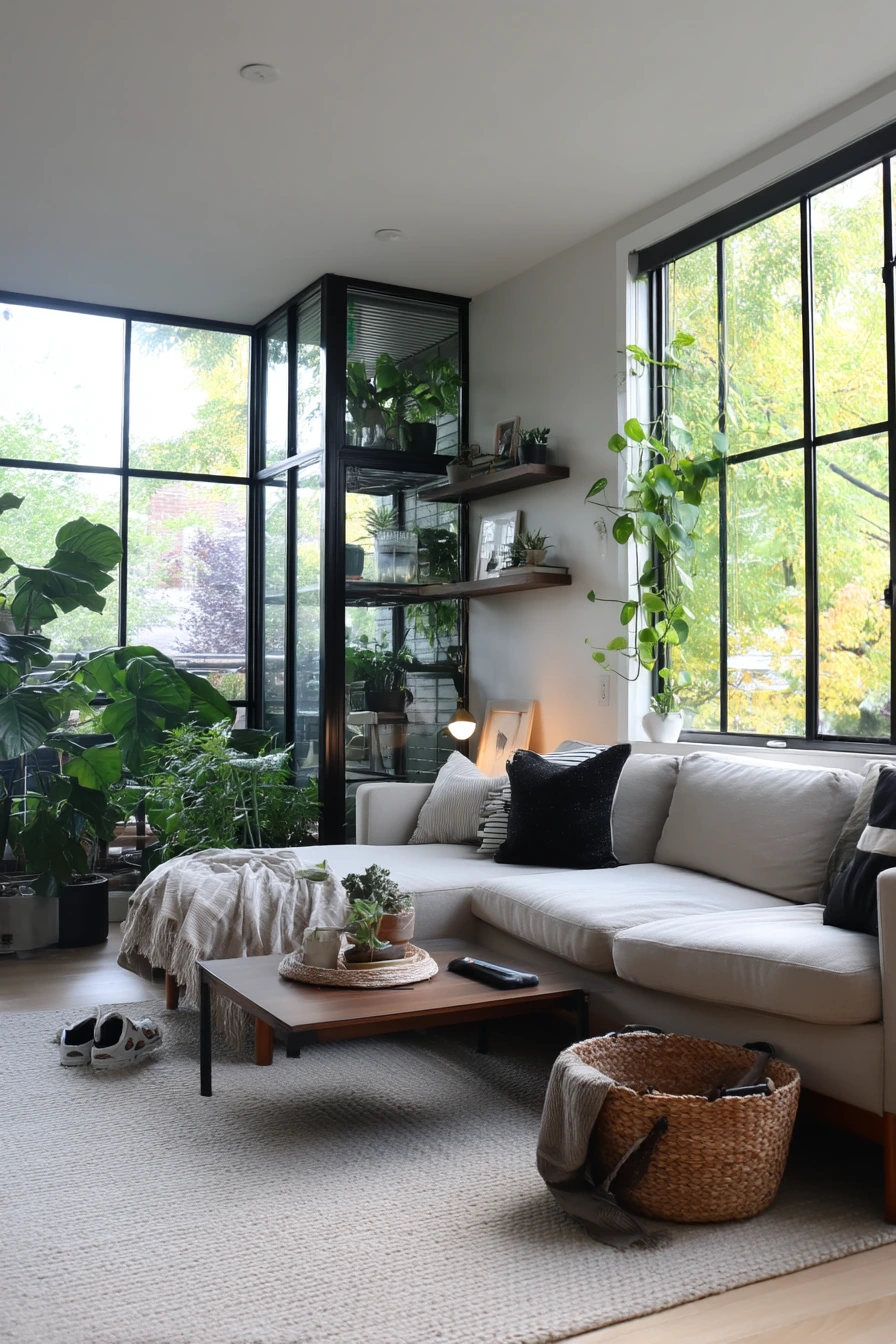
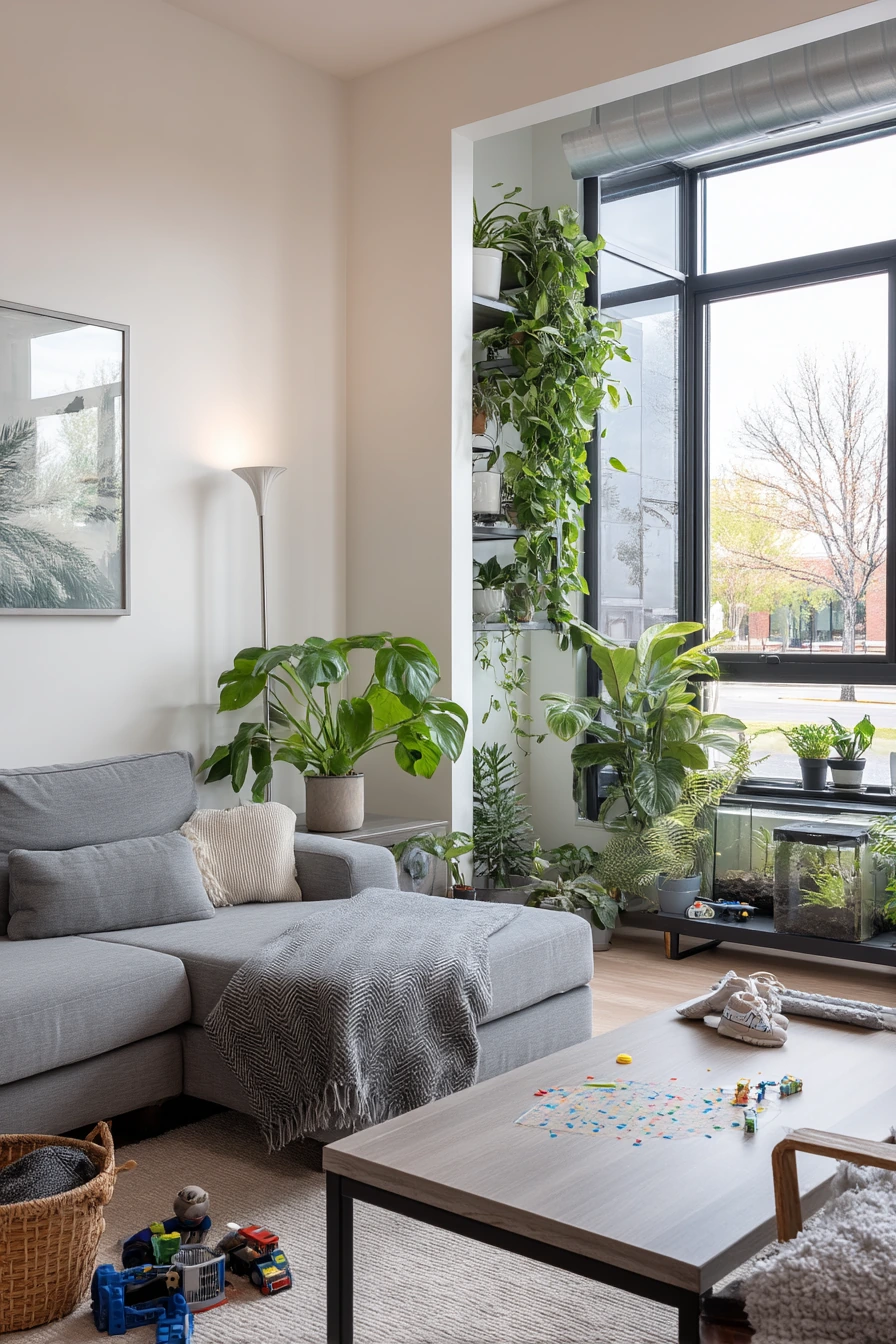
A modern family room can handle a sleek corner greenhouse wall section if it is planned for shared care. A slim black frame and ventilated glass look tidy, and they help keep humidity closer to the plants instead of spreading through the room. This kind of corner works well for common, forgiving plants like pothos and monstera, plus kitchen herbs like mint for easy picking.
Make it kid-friendly by keeping the lowest shelf for safe watering tools, like a small spray bottle, a measuring cup, and a microfiber cloth for spills. Ventilated glass helps prevent mold, which matters in a busy family space. Plan a simple care schedule, like watering on the weekend and checking soil midweek. If you see toy baskets, markers on the coffee table, and sneakers by the sofa, you know the room is active, so protect the greenhouse with a sturdy base and rounded corners where possible.
For styling, keep the greenhouse corner grounded and not too precious. A blanket draped over the armrest can match the greenery with a calm color like olive, tan, or gray. Use a few matching pots so the display looks organized even when the rest of the room is lively. Soft evening window light plus a warm lamp glow can make leaves look rich, but plants still need daytime brightness, so keep the corner near a window.
- Use ventilated glass or small vents to reduce condensation and mildew.
- Choose easy plants like pothos and monstera for a family learning setup.
- Keep kid-safe tools on the lowest shelf and store sharp tools up high.
- Add a drip tray and a wipeable mat to protect floors from spills.
- Label plants with simple tags so kids can help with care and learning.
Pro Design Tip: Build in a low “tool ledge” that is separate from plant shelves, so watering items do not crowd roots and leaves.
Budget Considerations: A wall-style corner unit can be a bigger project; start with a slim shelving corner and add vented panels one side at a time.
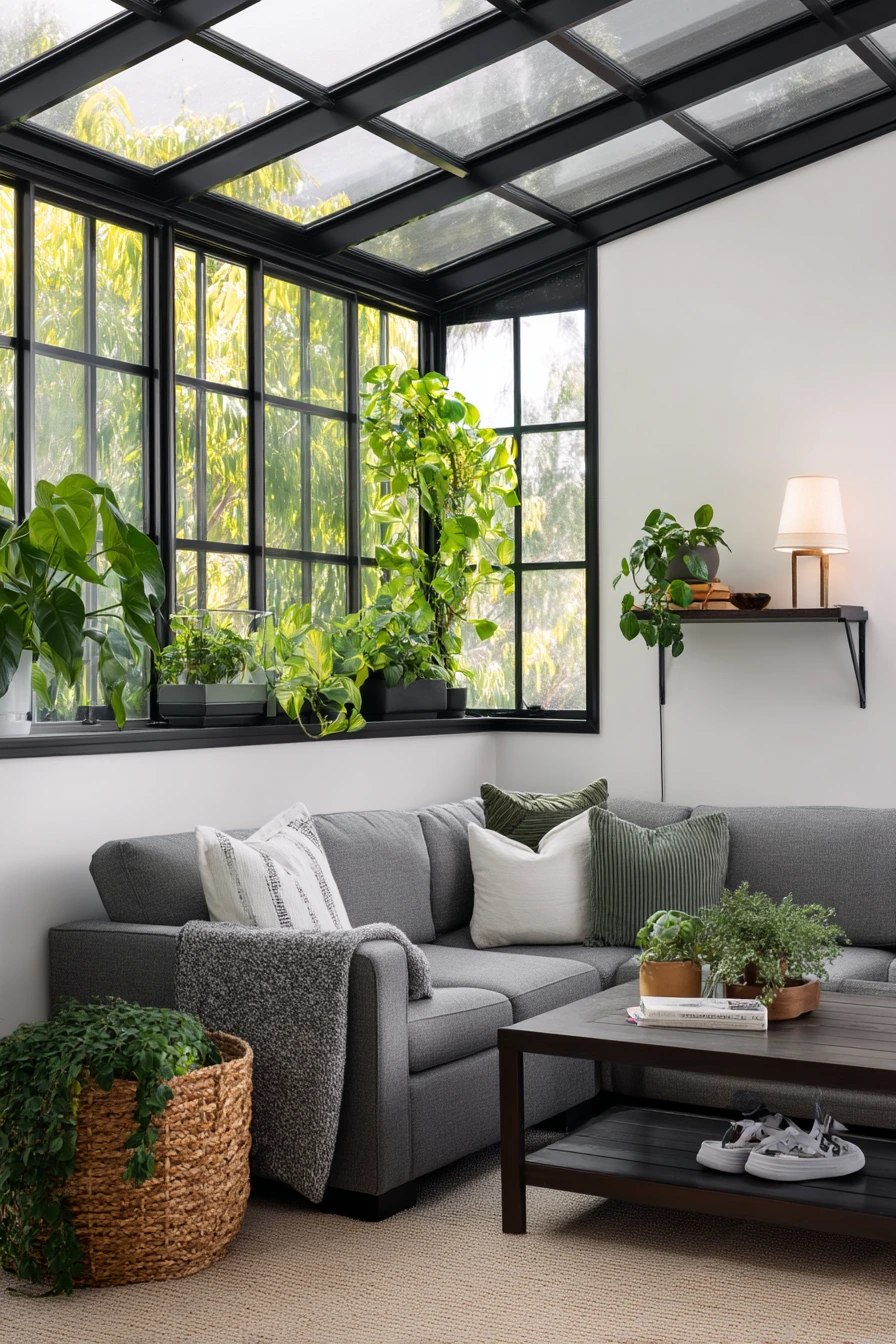
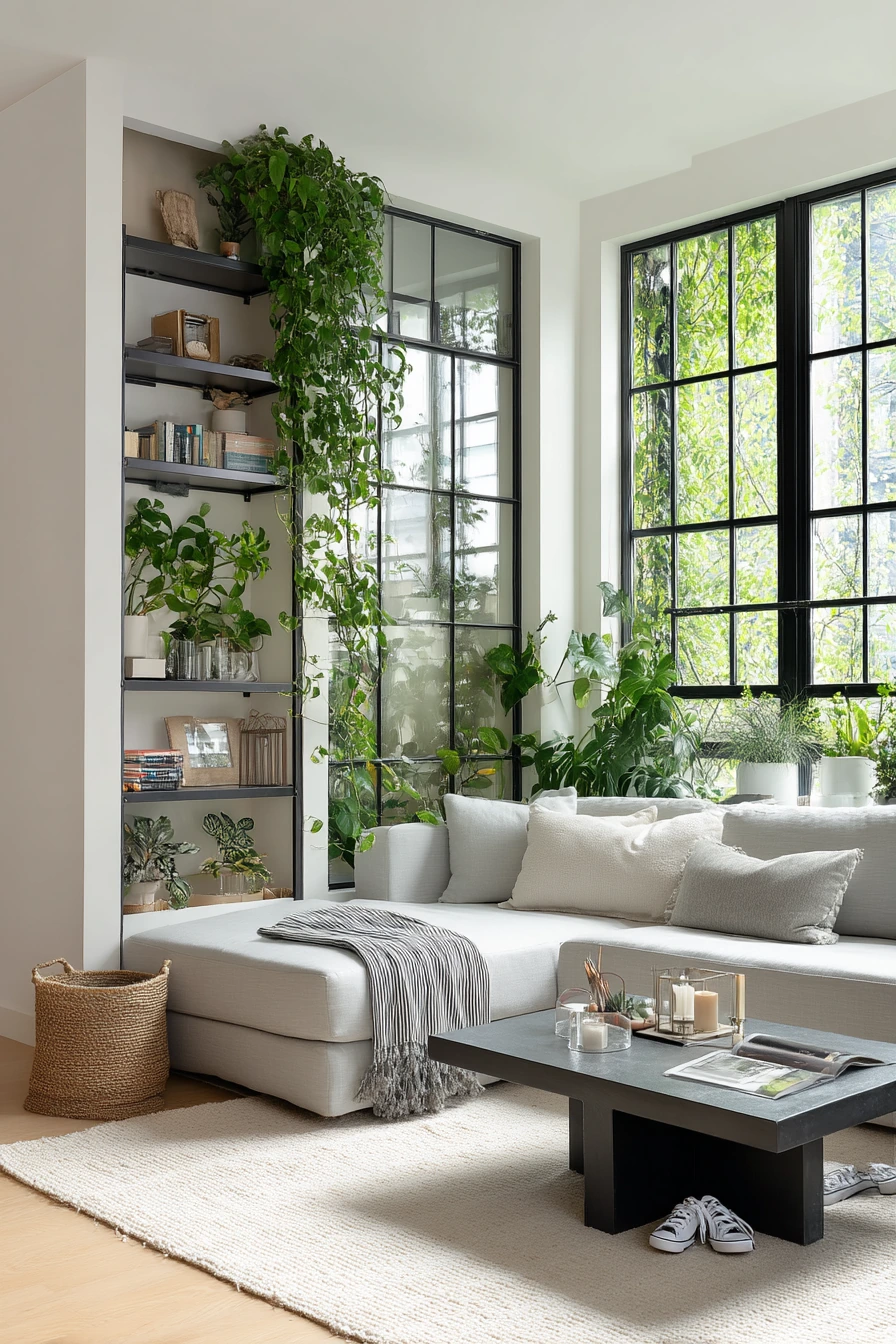
A corner greenhouse can fit almost any home, from an apartment window angle to a mudroom work zone. Start by choosing the corner with the best light and the safest traffic flow, then pick plants that match that spot.
Keep your setup simple at first: strong shelves, a drip tray, and a few reliable plants. Once the routine feels easy, add upgrades like clear panels, a small humidifier, or better ventilation.
Use the ideas above to copy a look you like and adjust it for your space. A small corner can become a steady place for herbs, cuttings, and calmer daily moments.
FAQ
What is the best place for a corner greenhouse indoors? The best spot is near a bright window with steady temperatures. Avoid direct heat vents and spots with cold drafts from doors.
Can renters build a corner greenhouse without drilling? Yes. Use a freestanding shelf and attach lightweight acrylic panels with clips or removable tape. Add anti-tip straps if allowed, or use a wider base for stability.
Do I need a grow light for a corner greenhouse? Not always. If your window is bright, many houseplants and herbs will do fine. A small grow light helps in winter or in shaded rooms.
How do I keep humidity up without causing mold? Use ventilation and do not overcrowd plants. A pebble tray and occasional misting can help, but wipe condensation and let air move.
What plants work best for a kitchen corner greenhouse? Start with rosemary, thyme, mint, and basil. Keep mint separate, and give basil the brightest shelf for best growth.
How do I make a corner greenhouse safe for kids and pets? Use stable shelving, secure panels, and store tools and fertilizer out of reach. Choose non-toxic plants when possible and use trays to control spills.