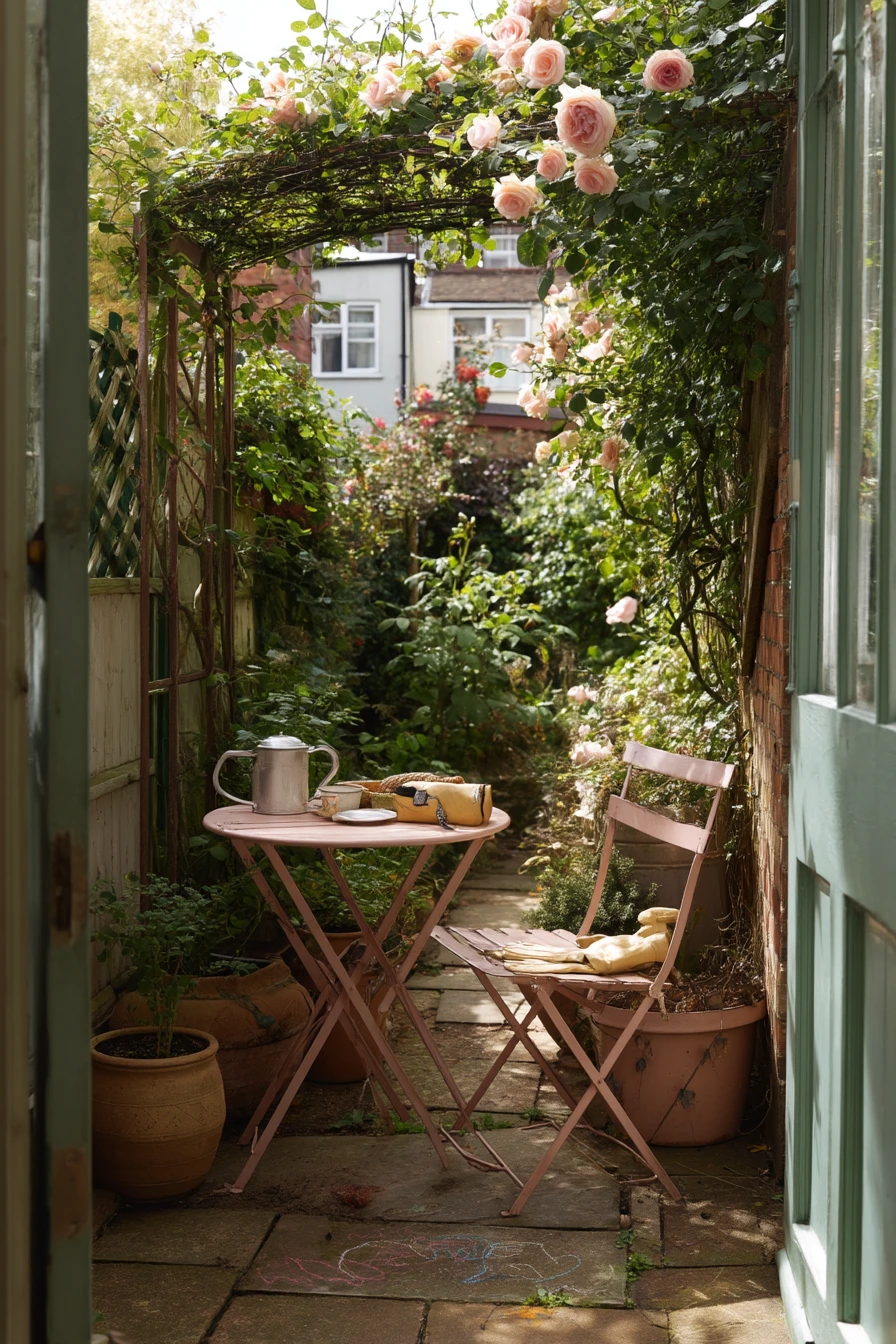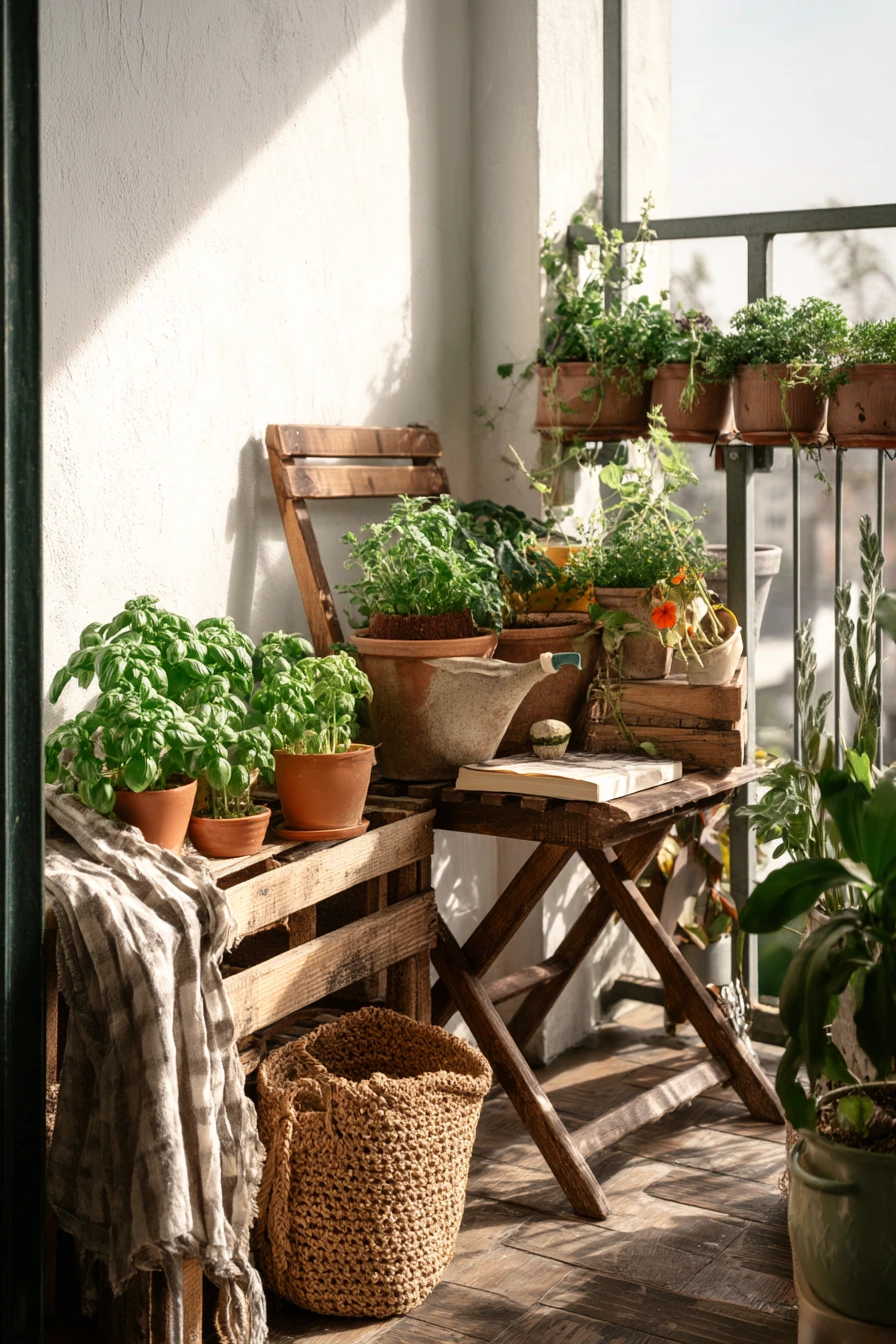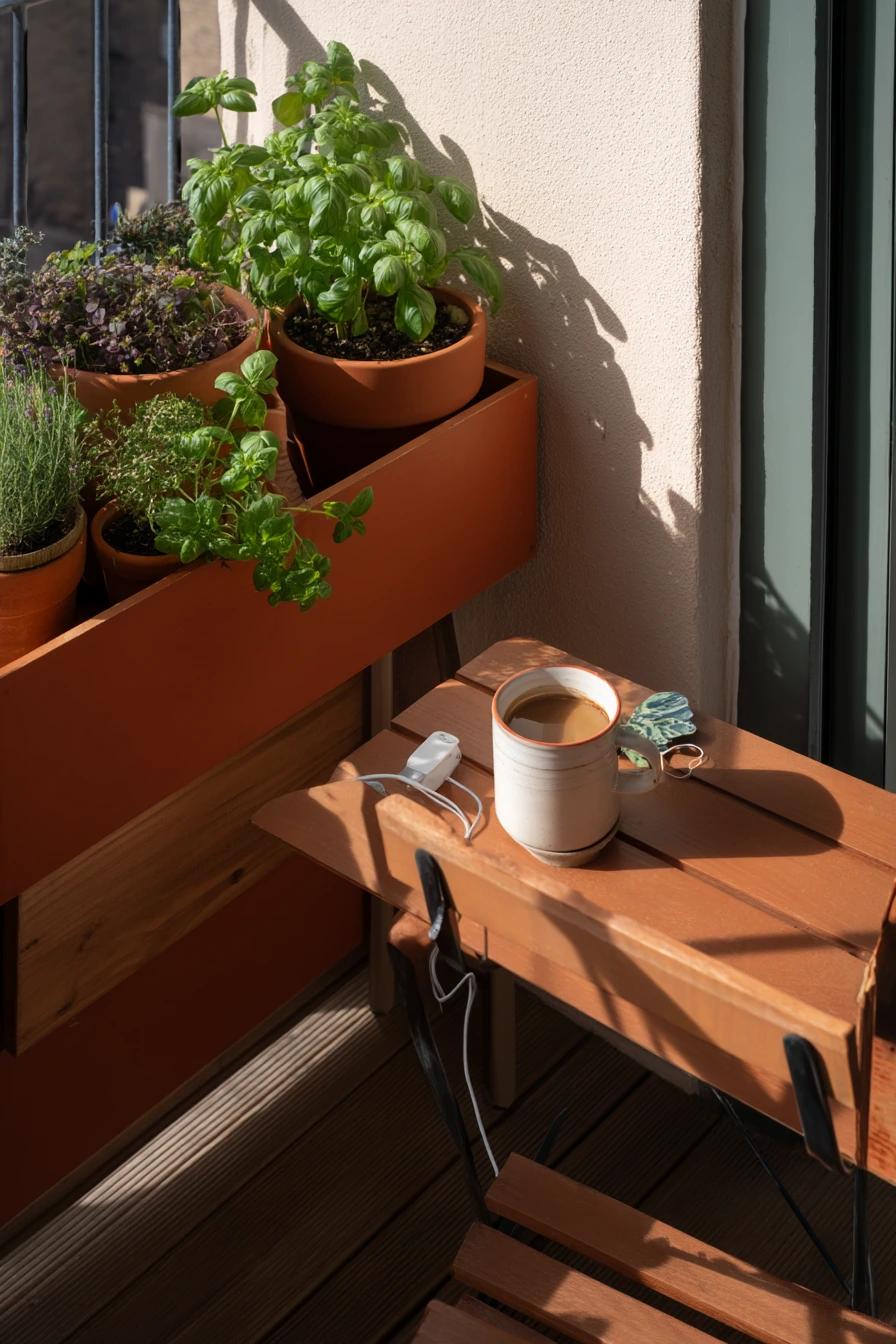

Victorian front garden ideas can make a plain terrace look cared for and welcoming. Even a small frontage can feel special with the right path, edging, and plants that suit your light and lifestyle.
This guide shares practical layouts you can copy, from clipped box edging and wrought-iron gates to gravel beds and terracotta pots. Each section is tied to a real front garden scene, so you can picture how it will look from the sidewalk.
You will also get simple styling steps, plant picks for sun or shade, and small details that boost curb appeal, like a boot scraper, a bicycle by the wall, or warm window light at dusk.
Use these ideas to plan one upgrade at a time, keep maintenance easy, and still get that heritage-rich Victorian feel.
1 1. Terraced House Cottage Border
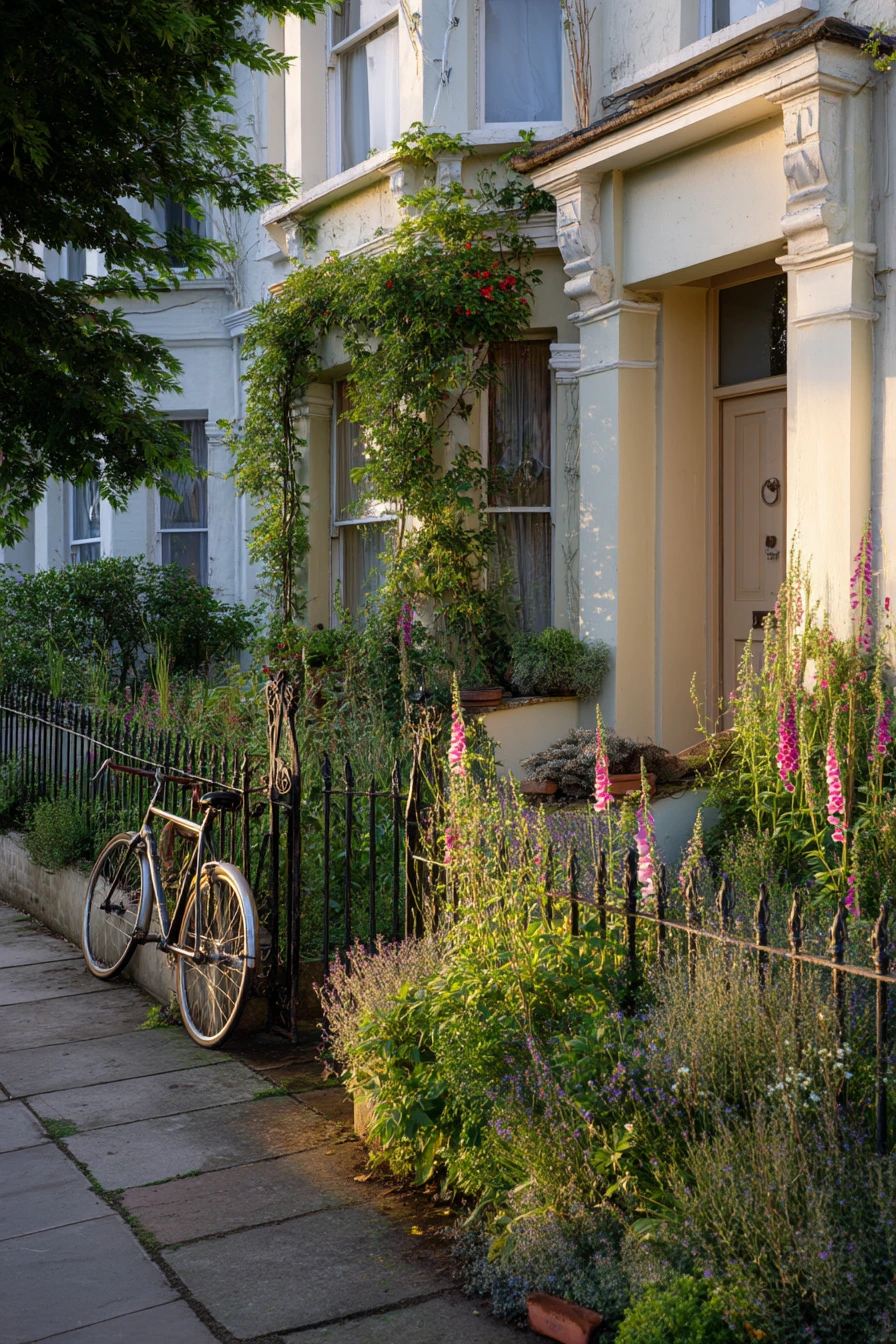
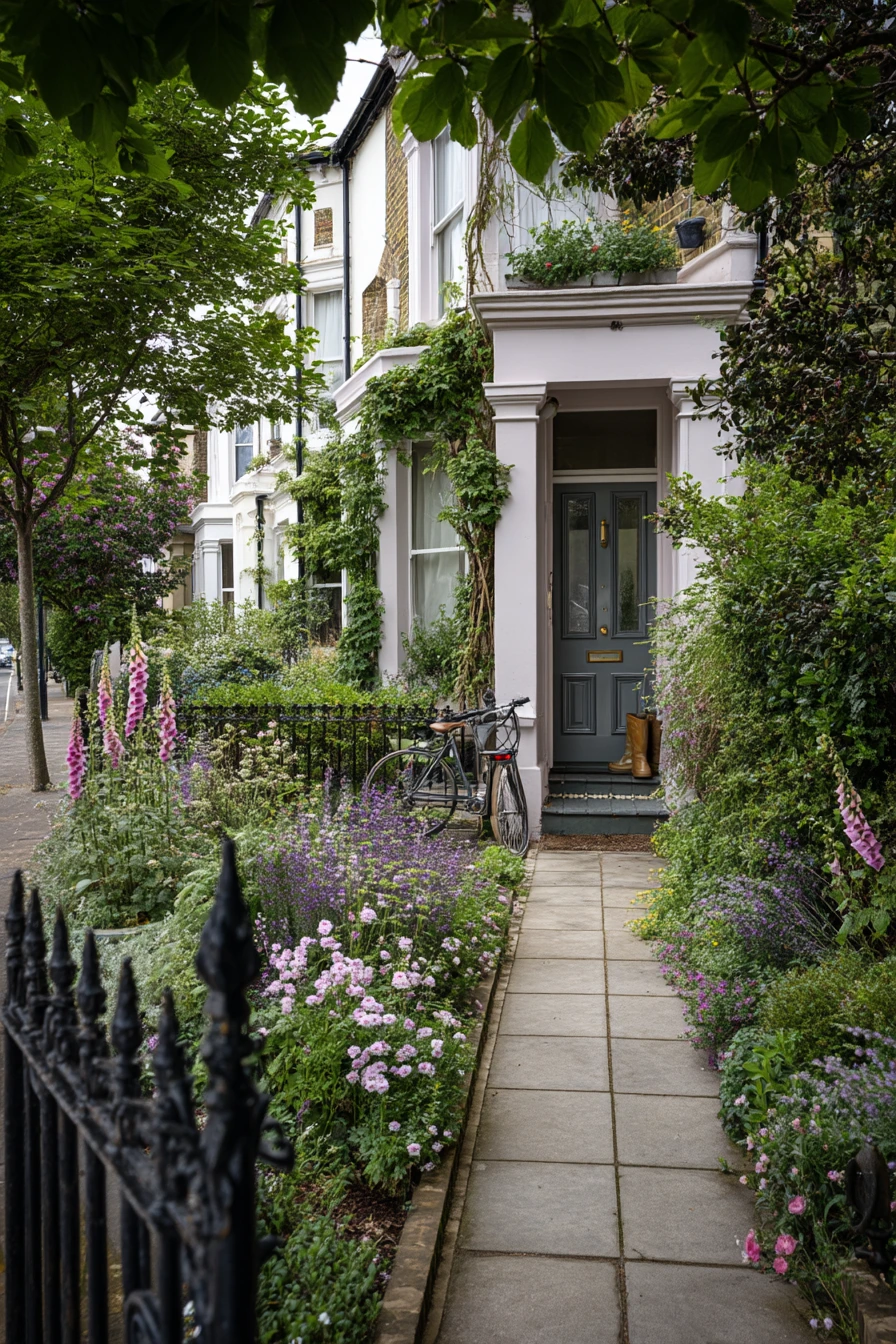
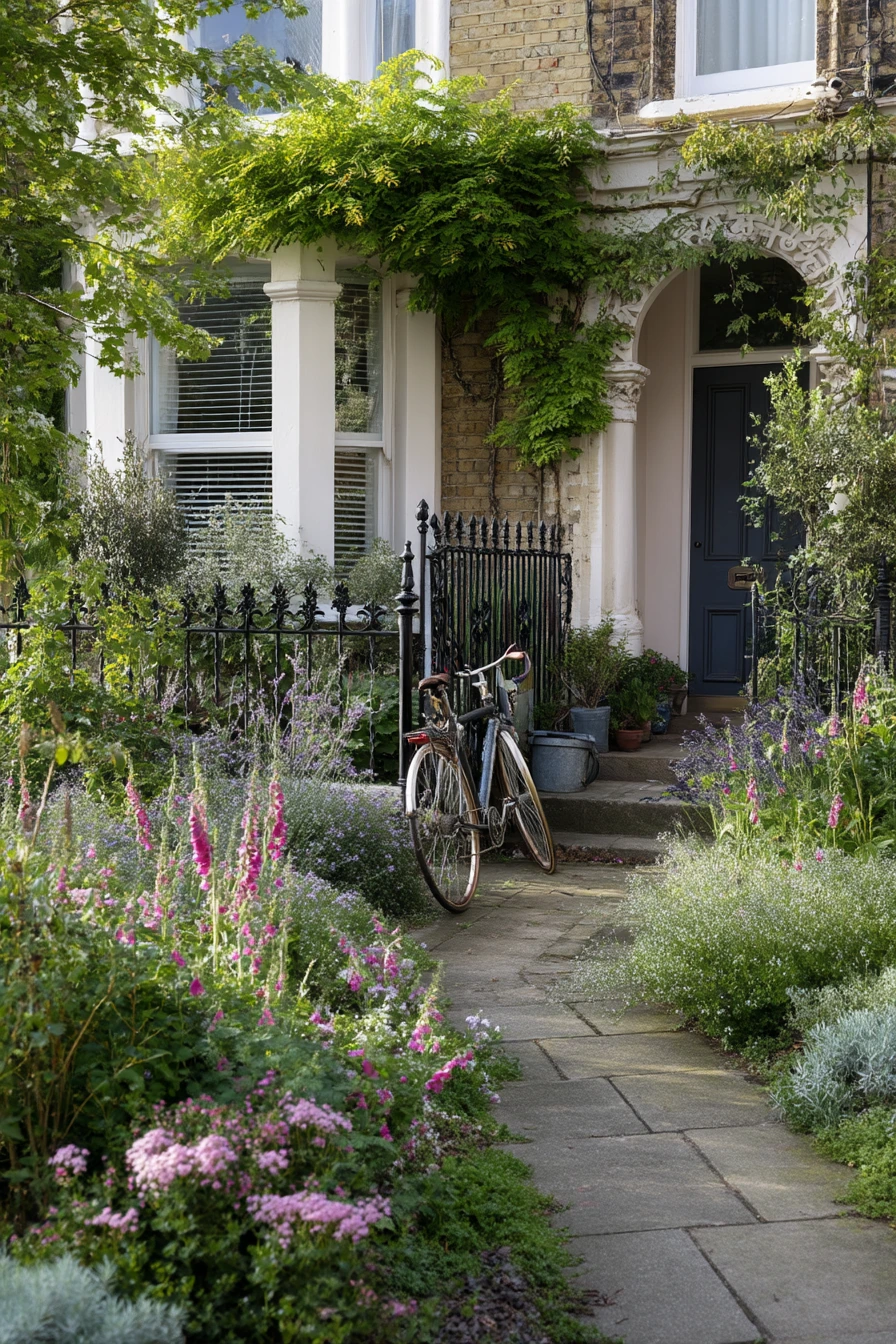
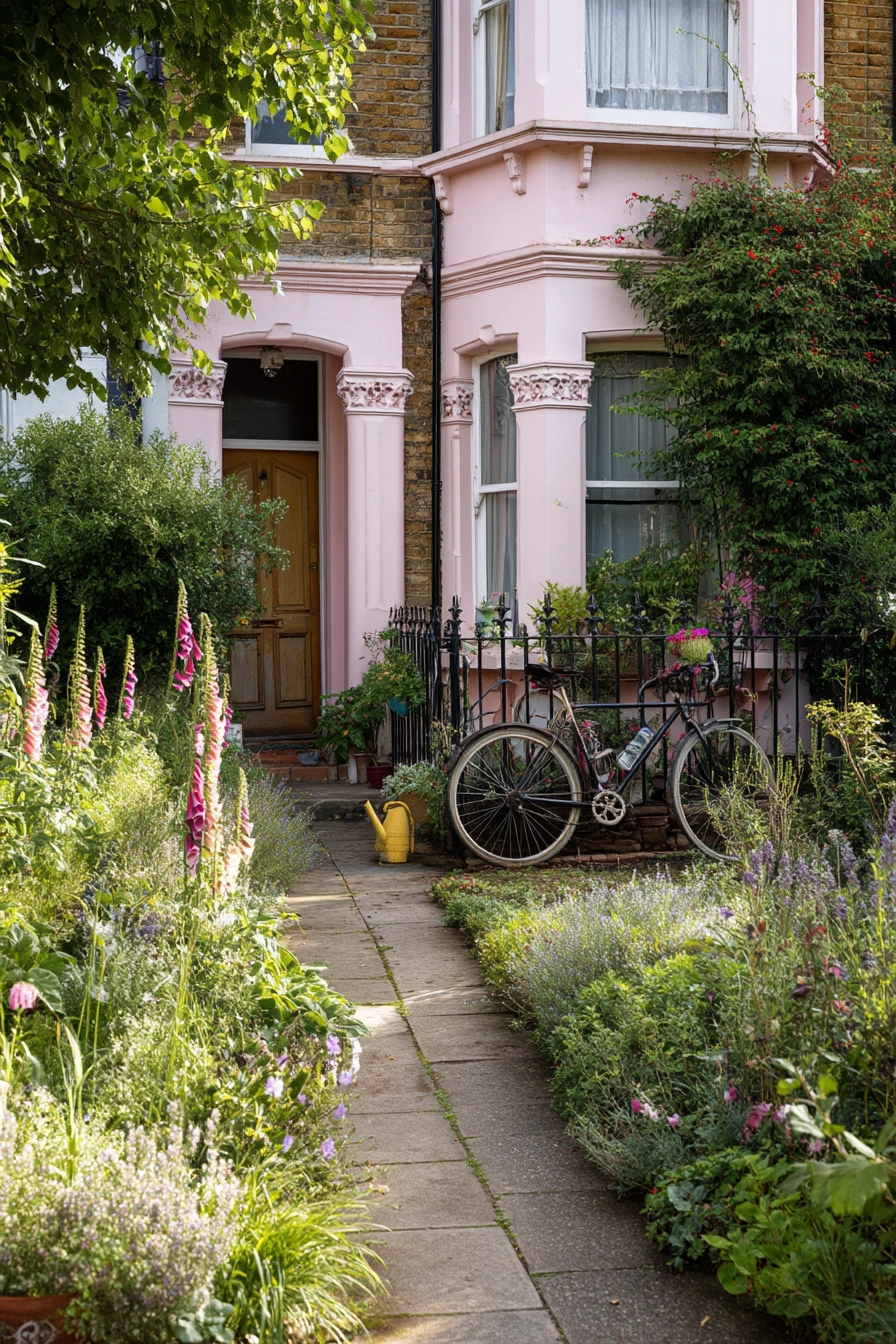
A Victorian terraced London home often has a narrow strip between the sidewalk and the front step. Make it feel wider with a slim path and clipped box edging that draws the eye forward. Keep the line clean, then soften it with lavender, foxgloves, and climbing roses on a wrought-iron gate. This mix looks classic and calm, and it smells good when you walk in.
Start by setting a clear route from gate to door. A straight or gently curved path works, but keep it narrow so you still have planting room. Box edging is the tidy frame. If you like a looser look, swap part of the box for low thyme in one section, but keep one strong edge so it still feels Victorian.
For styling, lean into lived-in touches without clutter. A bicycle against the wall and a watering can near the door make the space feel used, not staged. Muddy boots can sit on a tray by the step so the entrance stays neat. Use morning window light to your advantage by keeping plants a bit lower near the bay window so the glass still feels bright.
- Clip box twice a year to keep the edge sharp.
- Plant lavender in small drifts for a simple rhythm along the path.
- Train rose canes on wires so the gate can still open easily.
- Stake foxgloves early so they do not flop into the walkway.
- Add one small pot by the step for seasonal color swaps.
Pro Design Tip: Repeat one shape, like clipped mounds (box or lavender), then add tall spires (foxgloves) behind it for an easy layered look.
Budget Considerations: Box plants can be pricey; buy smaller sizes and let them fill in, or use inexpensive rosemary as a temporary edge.
2 2. Small Front Yard With Seating Nook
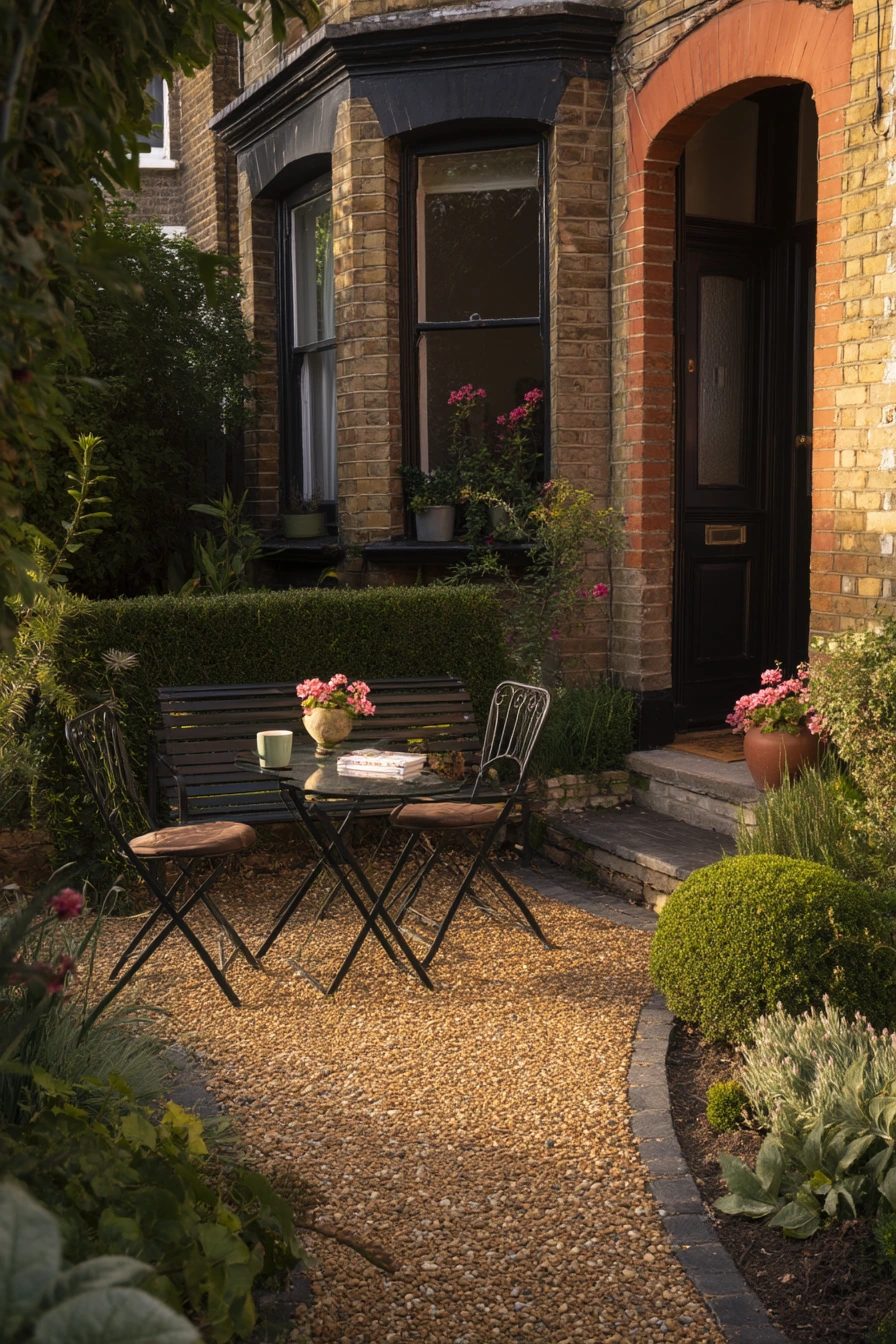
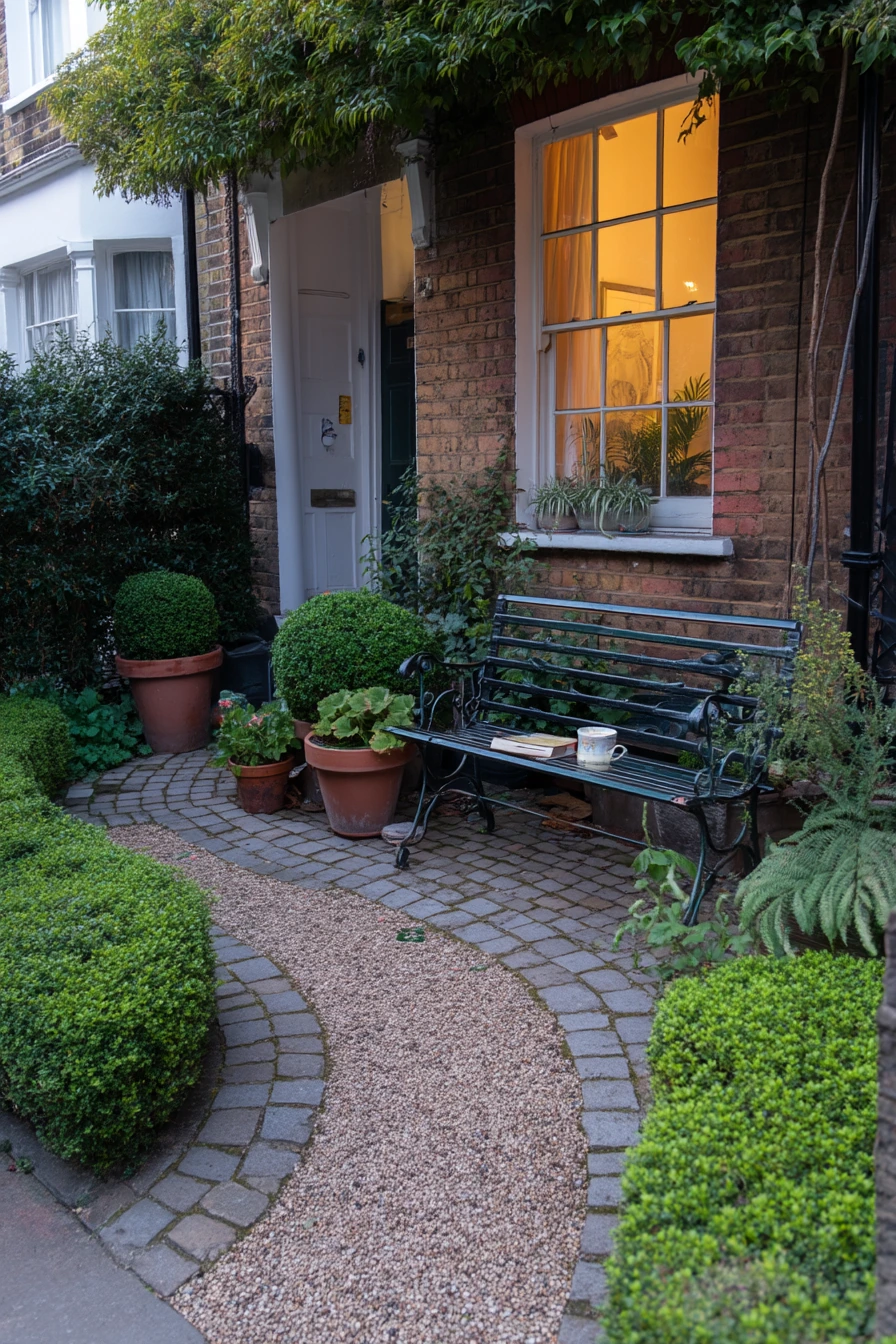
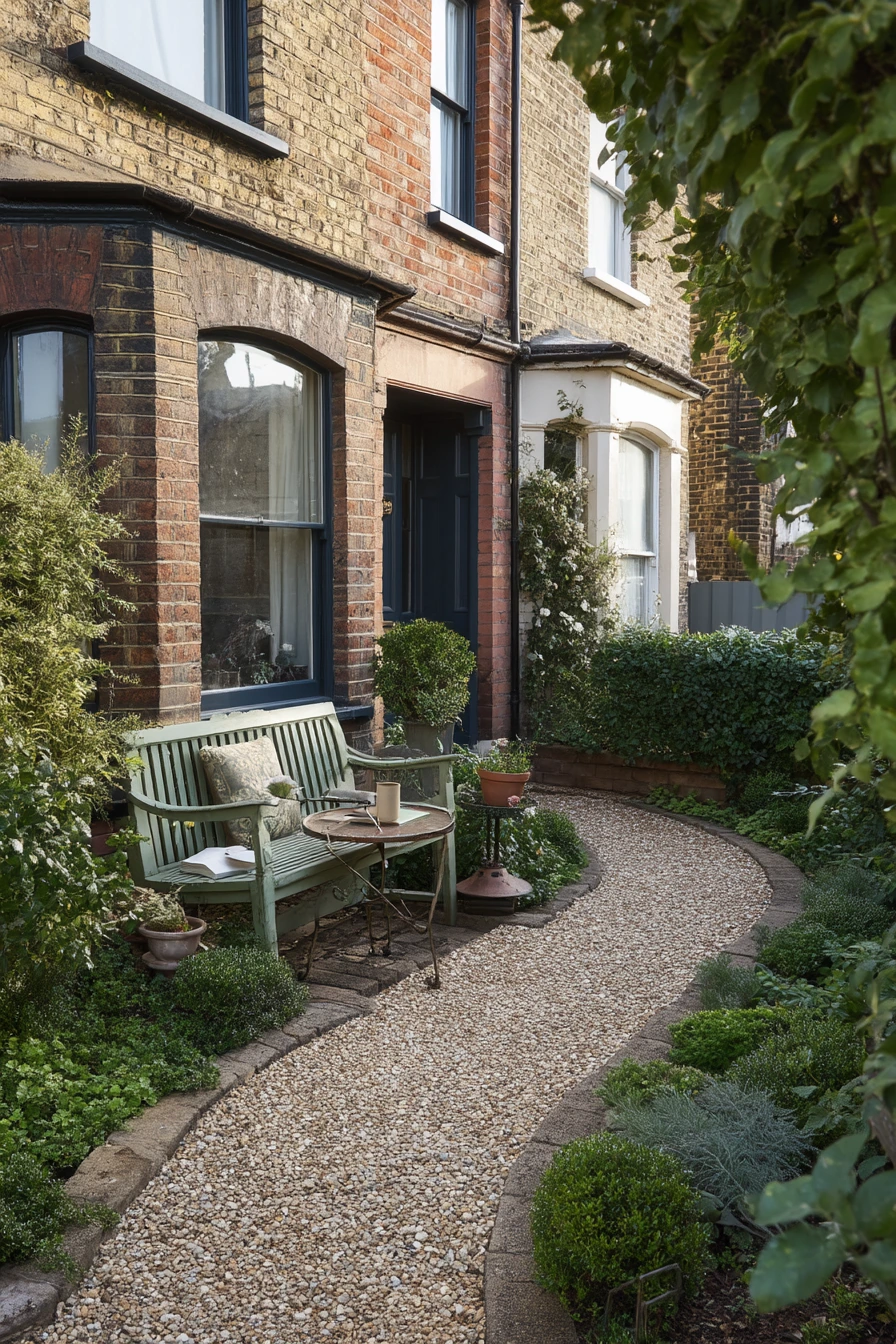
If your Victorian front garden is tiny, treat it like a pocket patio with plants. A curved gravel path is a smart small-space solution because it slows the eye and makes the frontage feel deeper. Pair it with compact brick edging to keep gravel in place and give the layout a finished look.
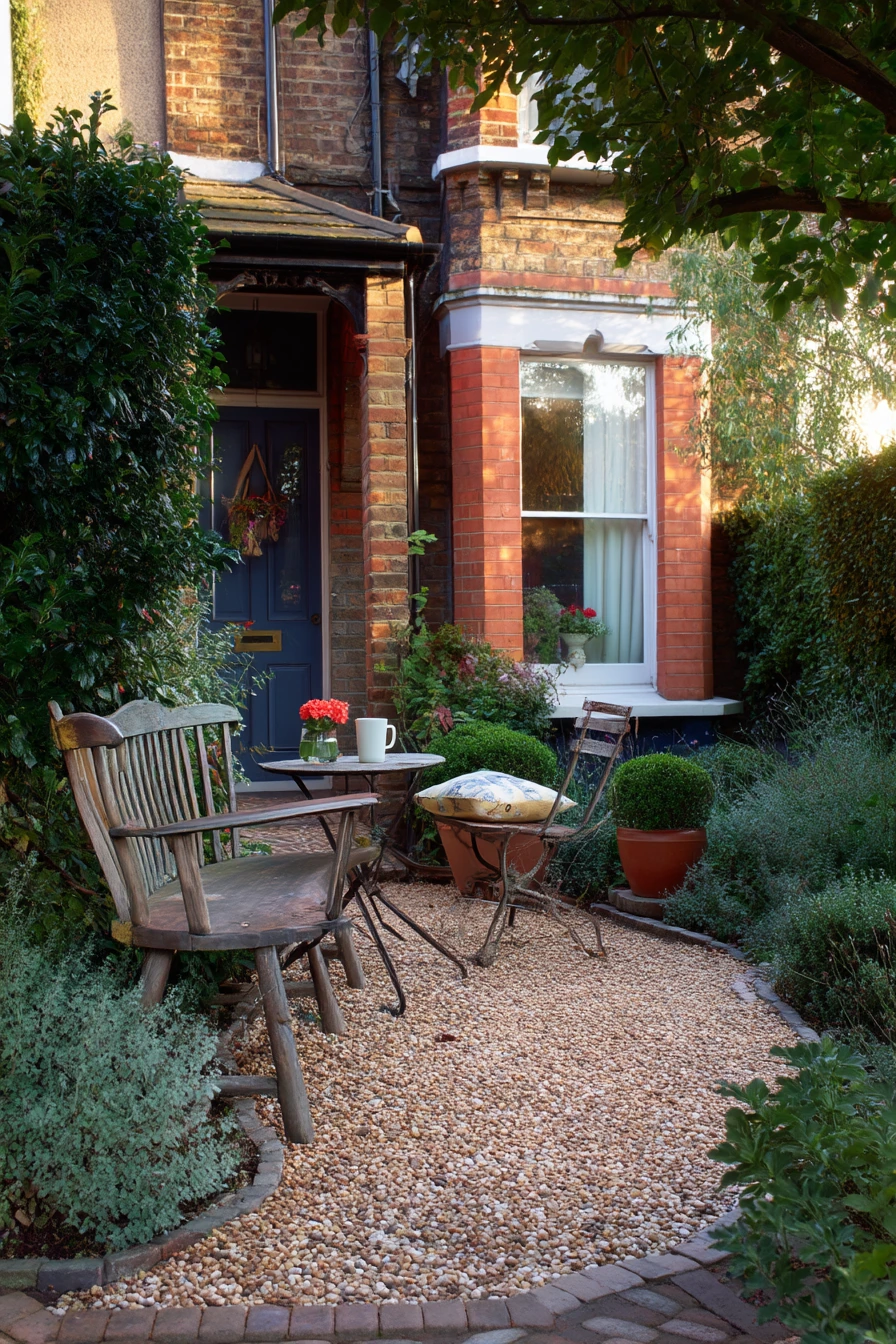
Use seating only if it fits without blocking the door swing. Two weathered bistro chairs can work if they tuck into the corner. Add a slim iron bench along the hedge line where it reads as part of the boundary, not extra furniture. Keep plants in pots so you can move them for cleaning, deliveries, or repainting the facade.
For planting, go for strong shapes and reliable bloom. Potted pelargoniums give color for months, and dwarf yew balls add structure all year. A paperback and a tea mug on the chair make the space feel used, and a kid’s chalk set near the path can be stored in a small basket by the door. In late afternoon, warm light from inside will highlight the pots, so choose terracotta and dark green foliage that look good in that glow.
- Choose fine gravel for a neat look and easier sweeping.
- Use pot feet so terracotta drains and does not stain brick.
- Group pots in threes for a simple, balanced cluster.
- Keep one clear “landing spot” near the step for bags and parcels.
- Trim yew balls lightly in summer to hold their shape.
Pro Design Tip: Keep the furniture and pots in the same metal tone (black iron) to make a small frontage feel calm and planned.
Budget Considerations: Bistro sets vary a lot in price; check secondhand shops and repaint mismatched metal chairs with exterior paint.
3 3. Family-Friendly Front Boundary
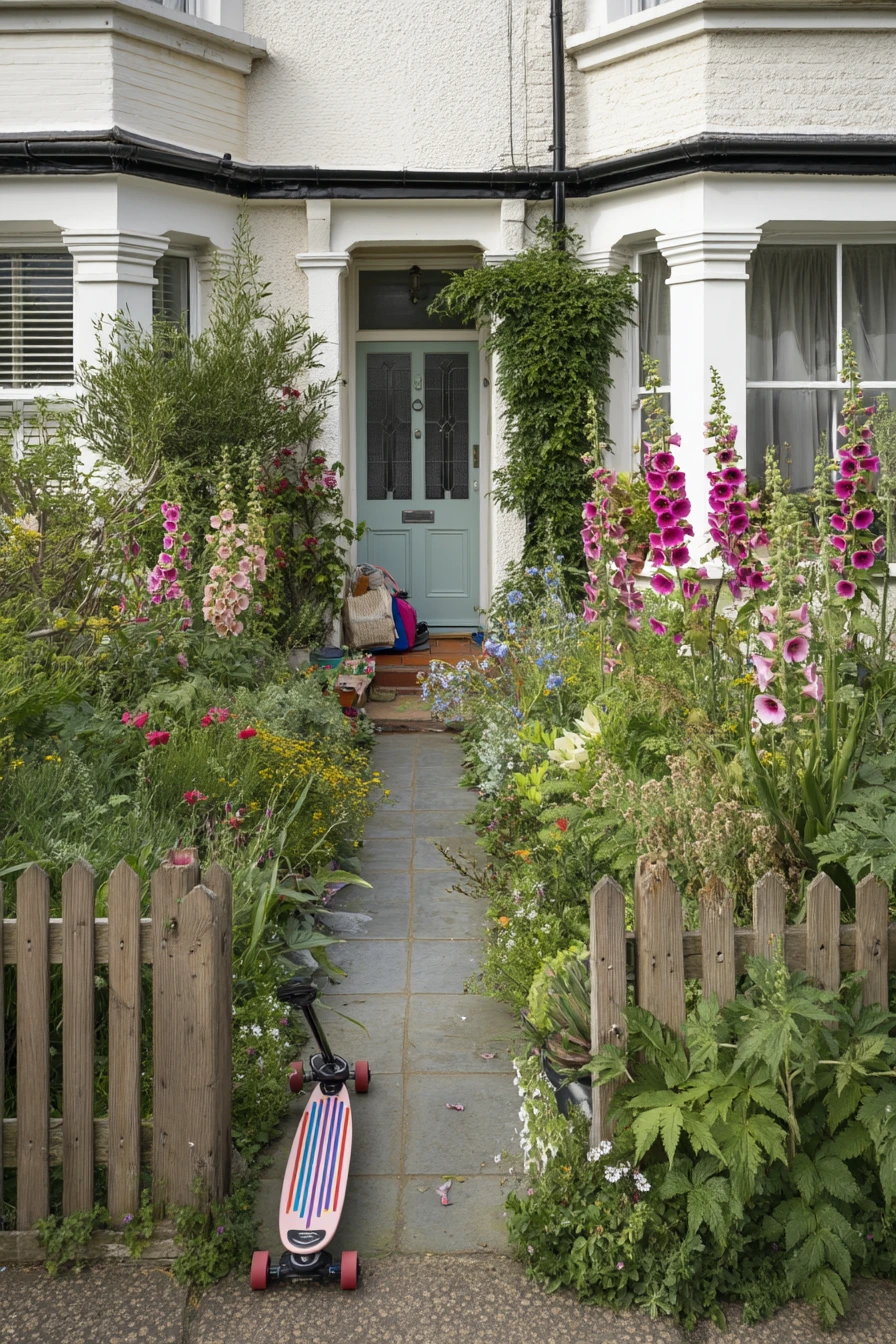
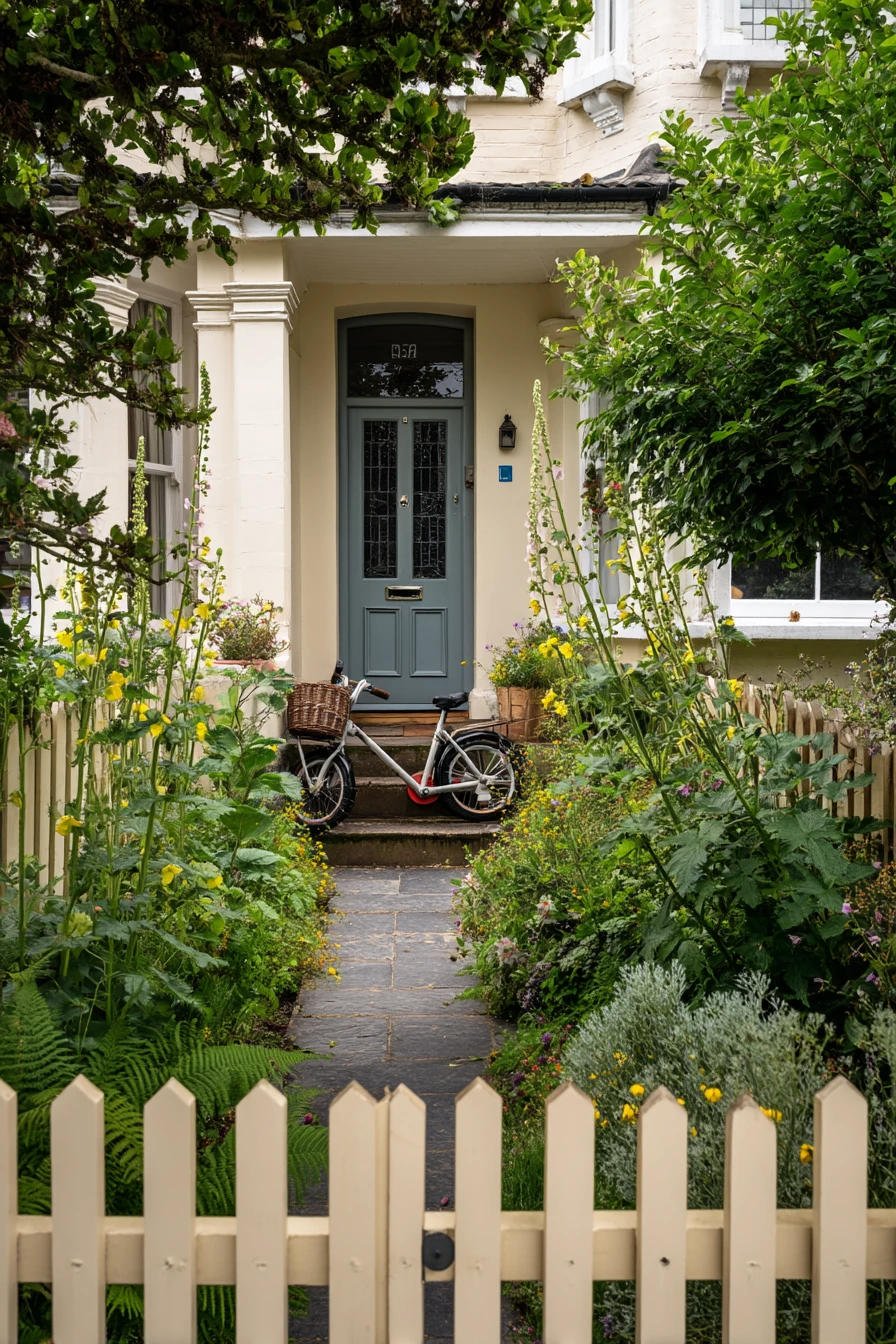
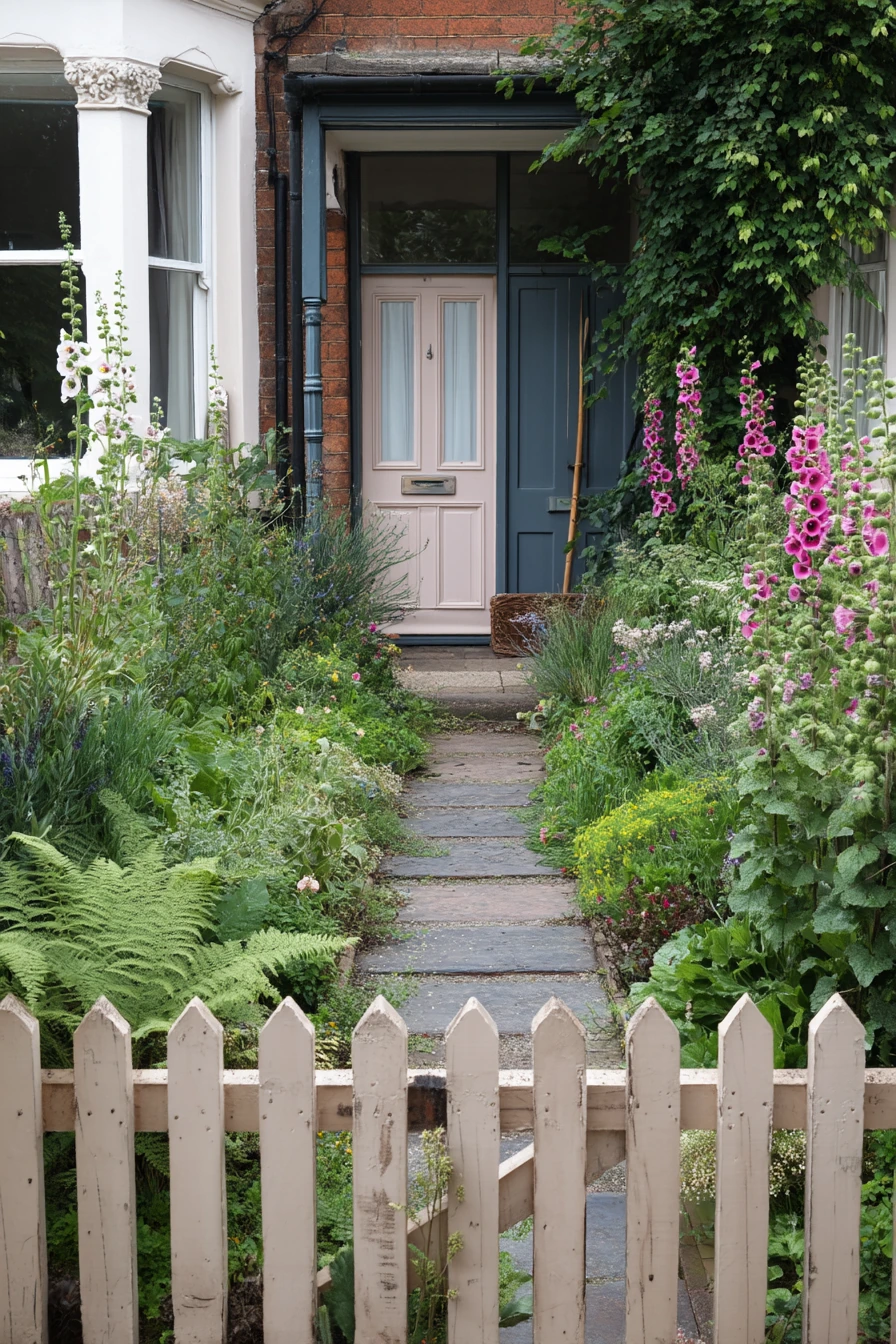
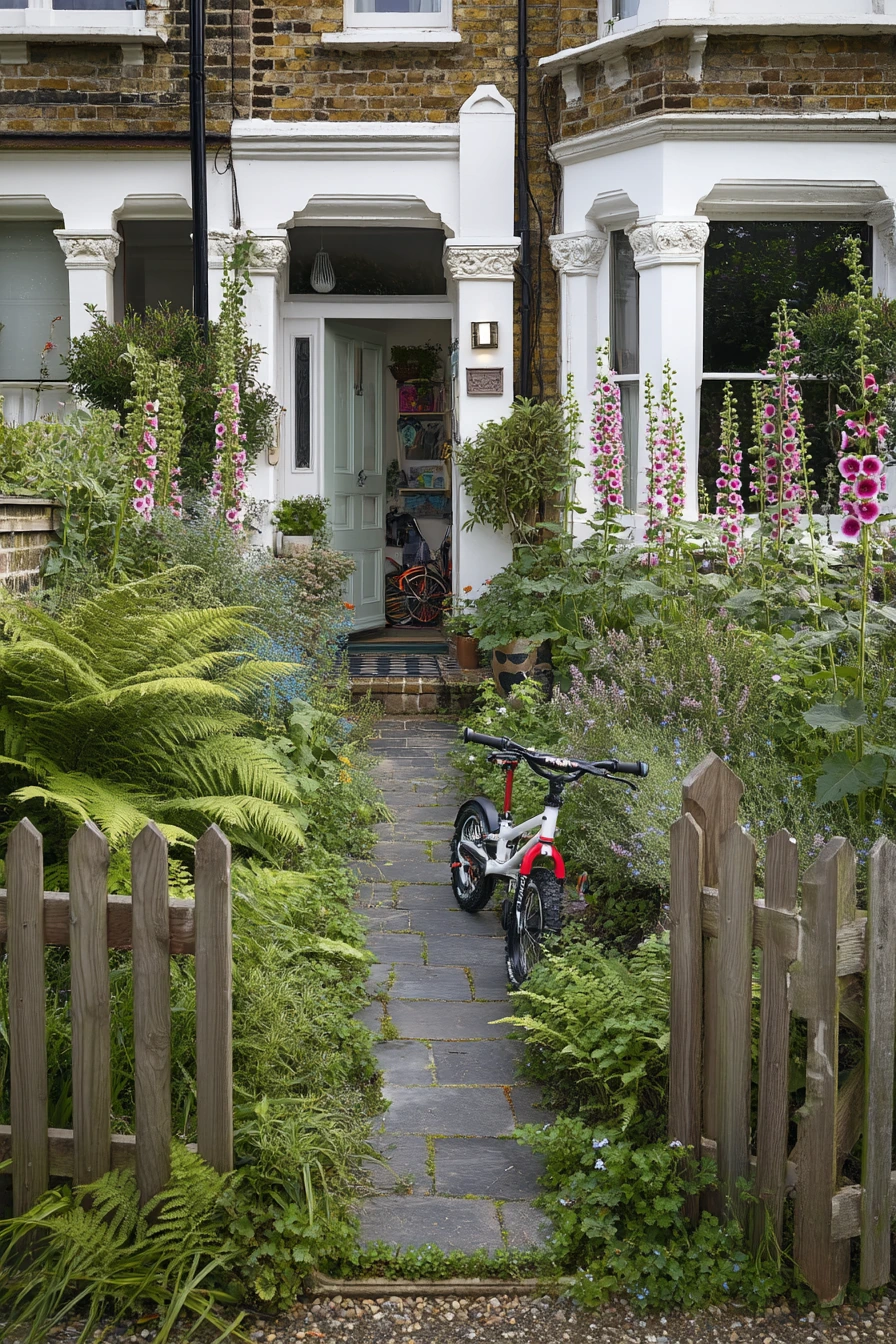
A family home front garden needs to be welcoming and practical, not precious. A low picket fence is a great Victorian detail that also keeps kids and pets from running straight into the street. Behind it, layered planting gives you color without needing lots of space. Hollyhocks and salvia bring height and long bloom, while hardy ferns fill gaps and look fresh even in cooler weather.
Make the route to the door clear with a central slate stepping path. Slate feels period-appropriate and stays grippy in rain. Set the steps level, with the same spacing all the way, so it is safe for children and easy to carry shopping. If you have a painted front door, pull one color from it into the planting, like deep purple salvia with a dark door, or soft pink hollyhocks with a warmer shade.
Real-life items can still look tidy. Park a scooter in one planned spot, like against the inside of the fence, so it does not fall across the path. Add a small toy basket by the threshold for chalk or balls, and use a wall hook inside the glass panel for a school bag so the entry stays organized. Keep plants away from the latch area so hands can reach the gate without brushing wet leaves.
- Set fence pickets with a small gap so light and air can pass through.
- Plant tallest flowers at the back so the fence line stays visible.
- Use ferns and low groundcovers to reduce weeding.
- Place one solar step light near the gate for darker mornings.
- Mulch borders to keep slate steps cleaner.
Pro Design Tip: Use one repeating “anchor plant” (like salvia) in three spots so the border looks linked and not messy.
Budget Considerations: Slate can be costly; mix slate with reclaimed stone pavers, keeping the same size and spacing for a matched look.
4 4. Budget Gravel Makeover
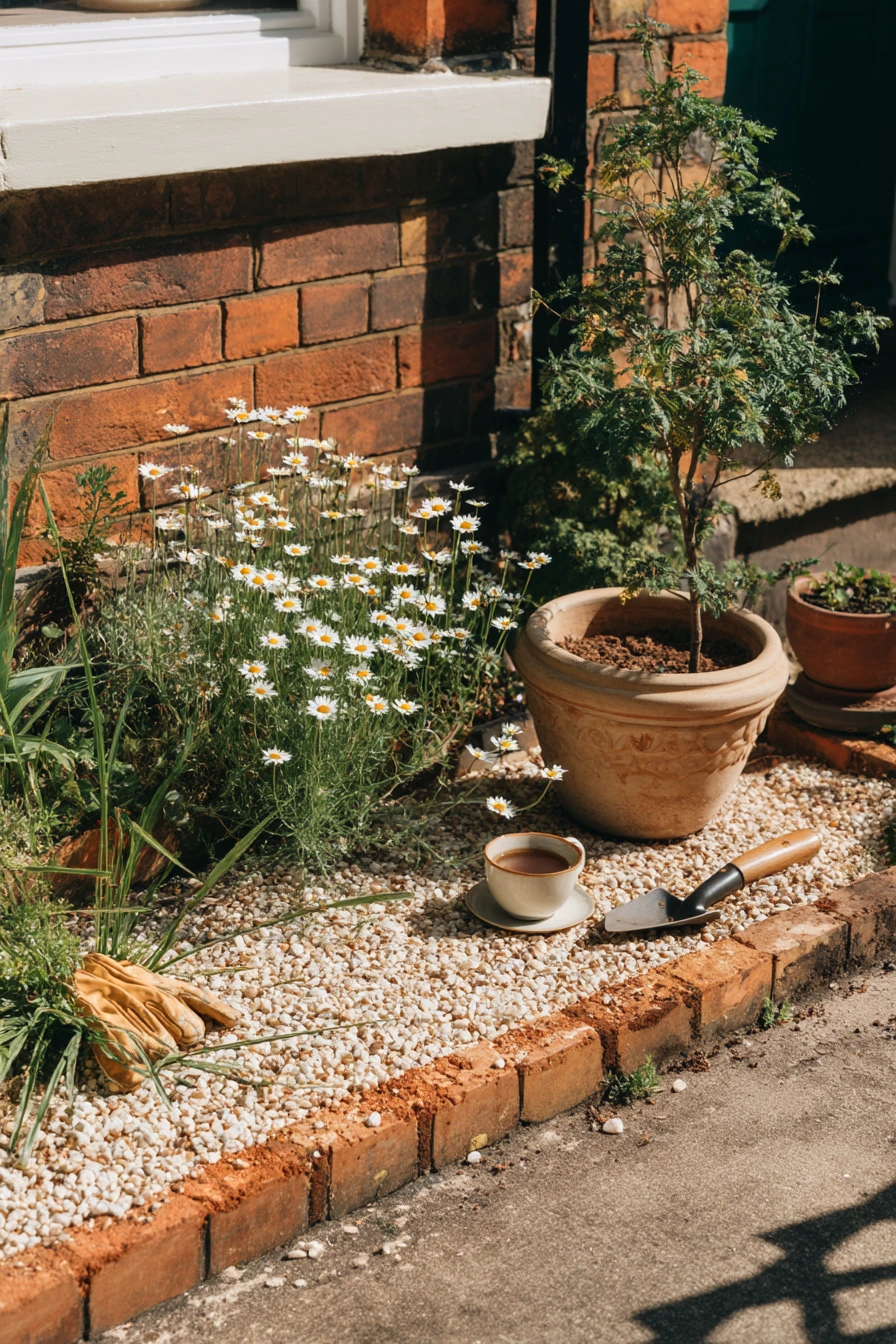
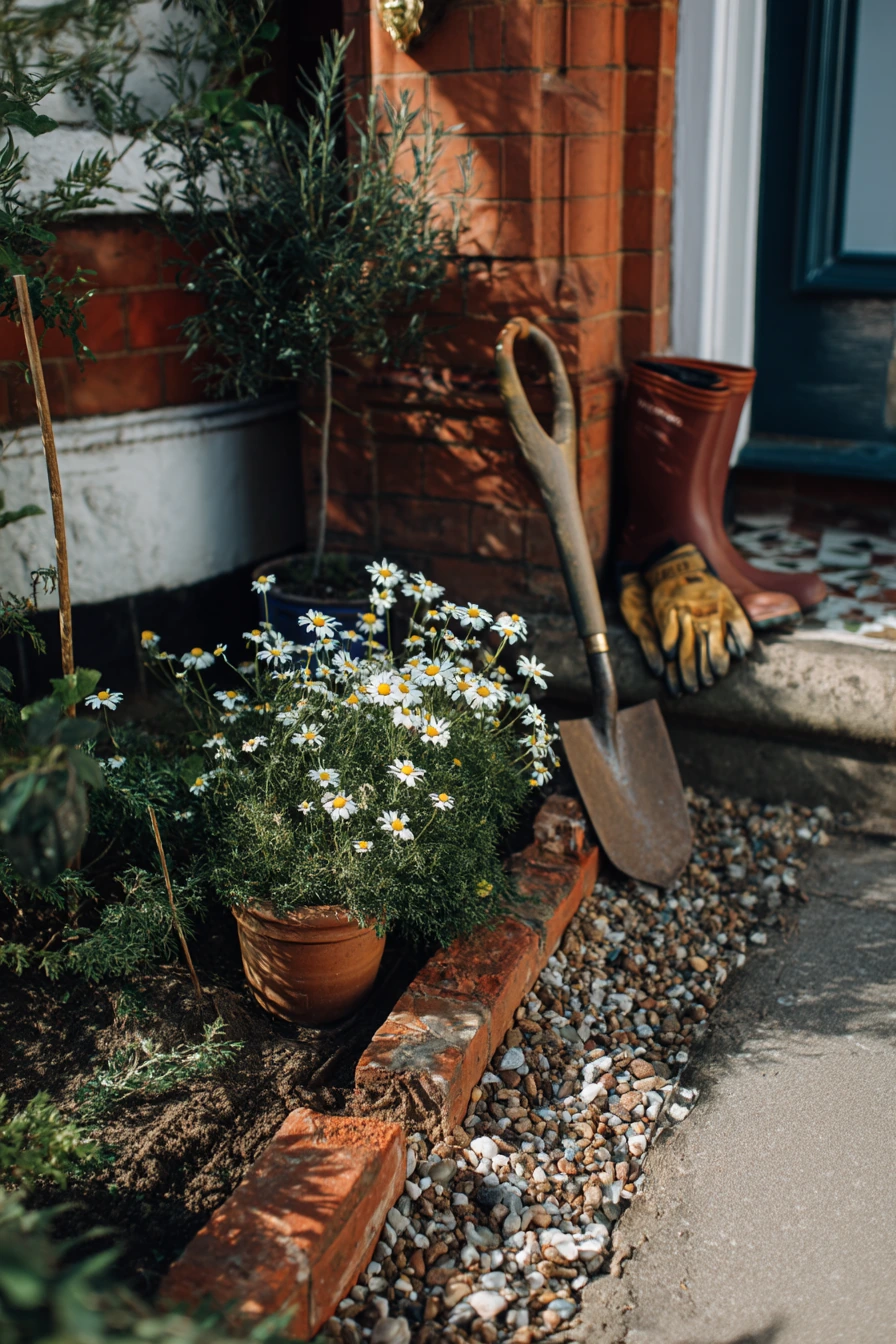
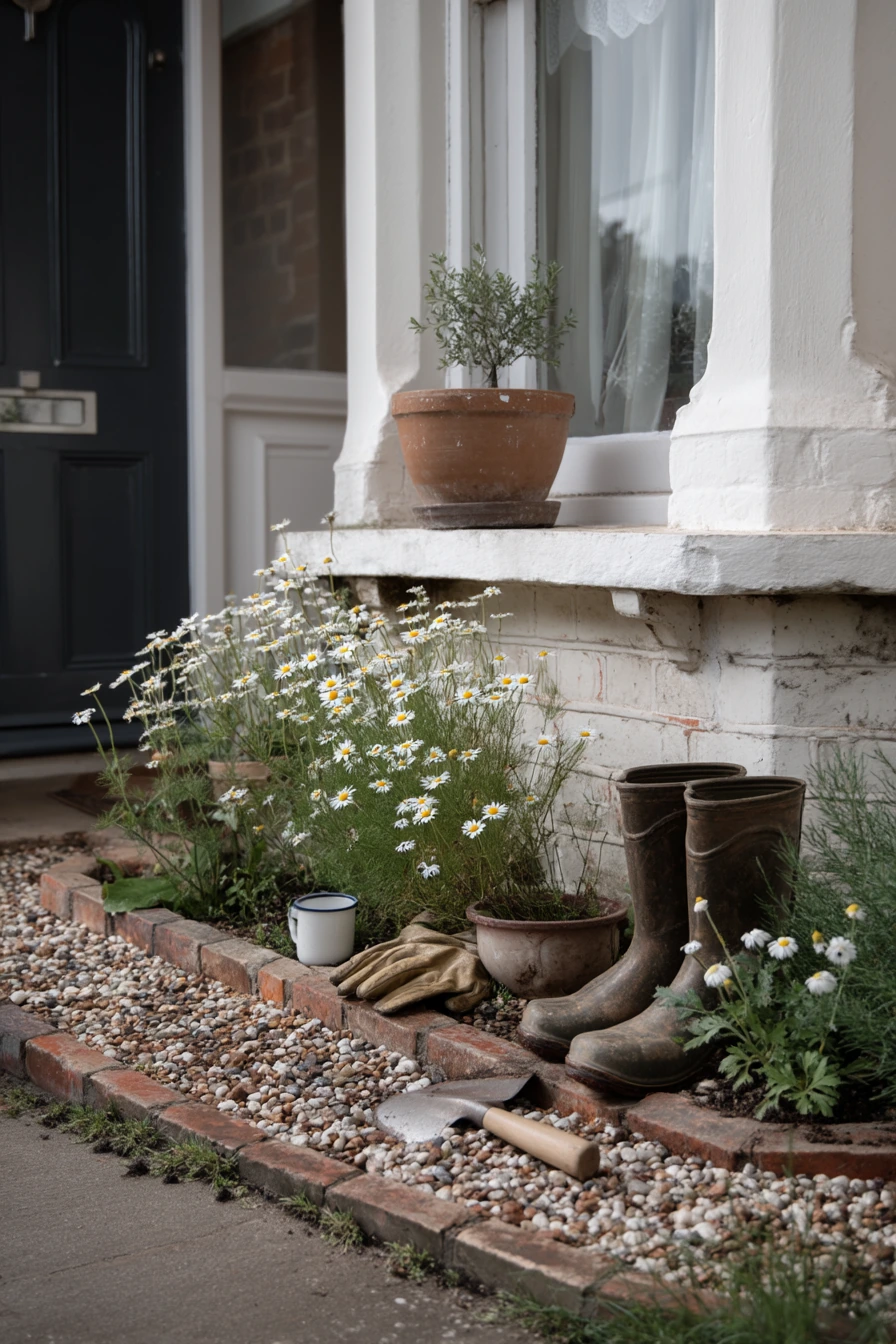
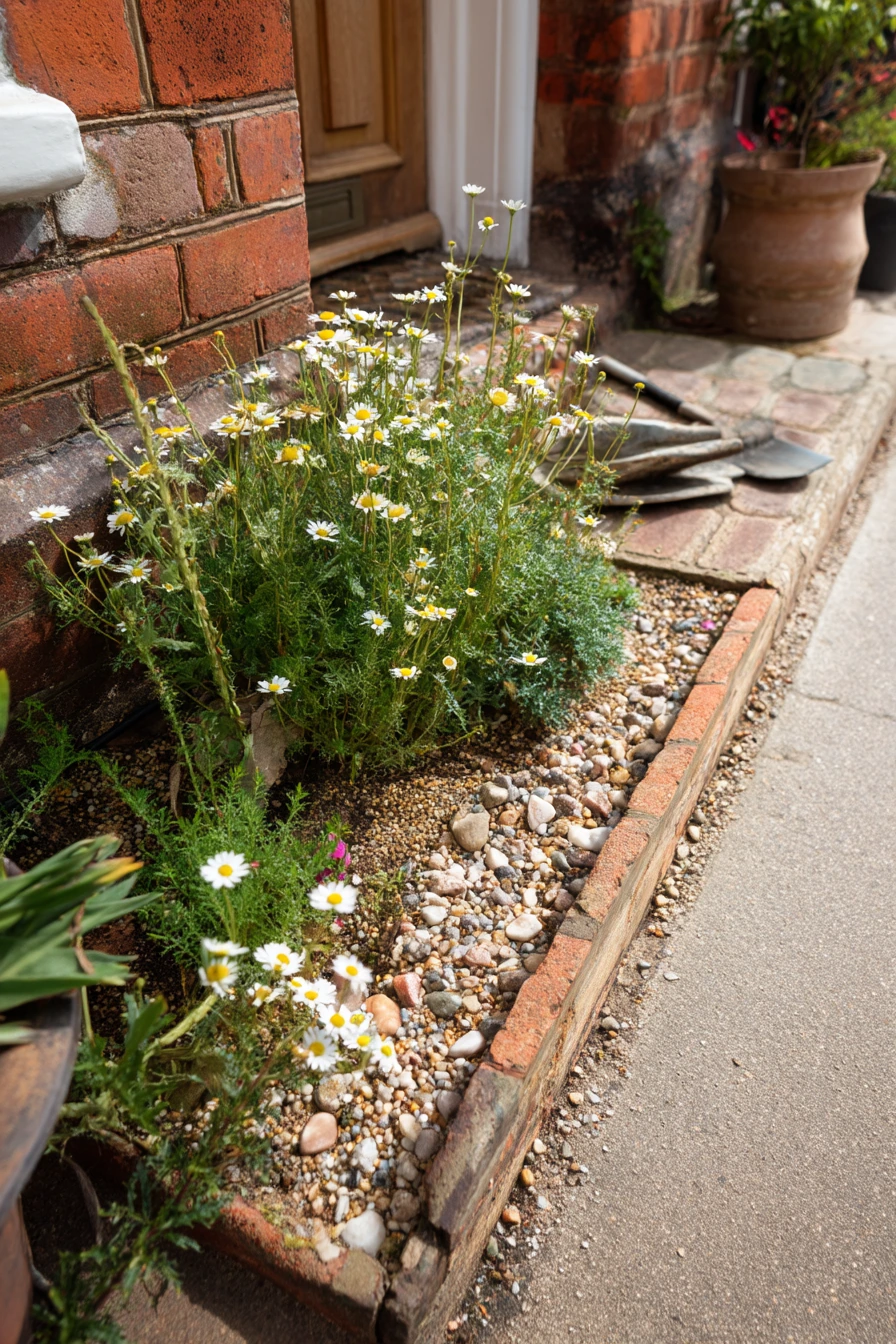
A budget refresh can still look true to a Victorian frontage when you focus on edging and a few strong plants. Start with a simple gravel bed and reclaimed brick edging. Bricks add warmth and make gravel look intentional, even if the space is small or uneven. Keep the line straight or gently curved, and bed the bricks firmly so they do not tip.
Choose plants that are tough and useful. Self-seeded daisies bring a relaxed cottage feel and fill bare spots fast. Rosemary adds scent and can be clipped into a neat mound. A small pear tree in a terracotta pot gives height without digging up the whole garden, and it can move if you change the layout later. Add an old cast-iron boot scraper by the step to keep dirt out of the house and to add a period detail that feels right on a brick terrace.
Keep the DIY moment tidy by giving tools a “home.” A trowel can rest on a small paving slab in the border instead of on bare gravel. Garden gloves on the sill and a half-full coffee cup are real, but use a tray so it looks neat. Bright, diffused morning light will show every detail, so rake gravel smooth and brush brick dust off the step before you take photos for Pinterest.
- Use landscape fabric under gravel to cut down weeds.
- Pick two brick tones and stick to them for a cleaner look.
- Top-dress pots with gravel to reduce splash on the wall.
- Trim rosemary after flowering to keep it compact.
- Place the boot scraper where it is easy to use, not in the planting.
Pro Design Tip: Match the edging material to one other item, like brick plus terracotta, so the garden feels coordinated on a small budget.
Budget Considerations: Reclaimed bricks can be cheap but uneven; buy a few extras so you can reject cracked ones and still get a straight edge.
5 5. Pollinator-Friendly Front Garden
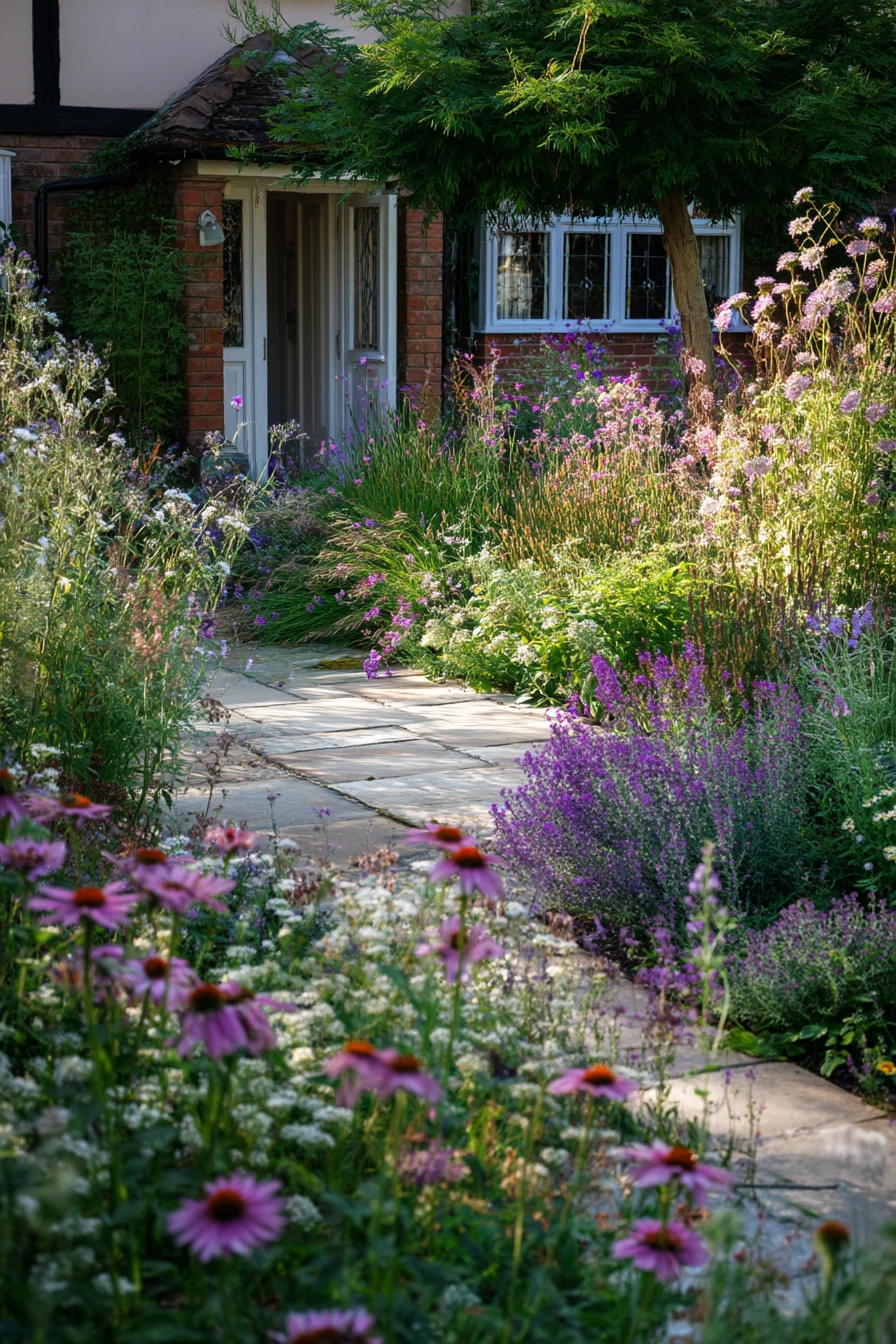
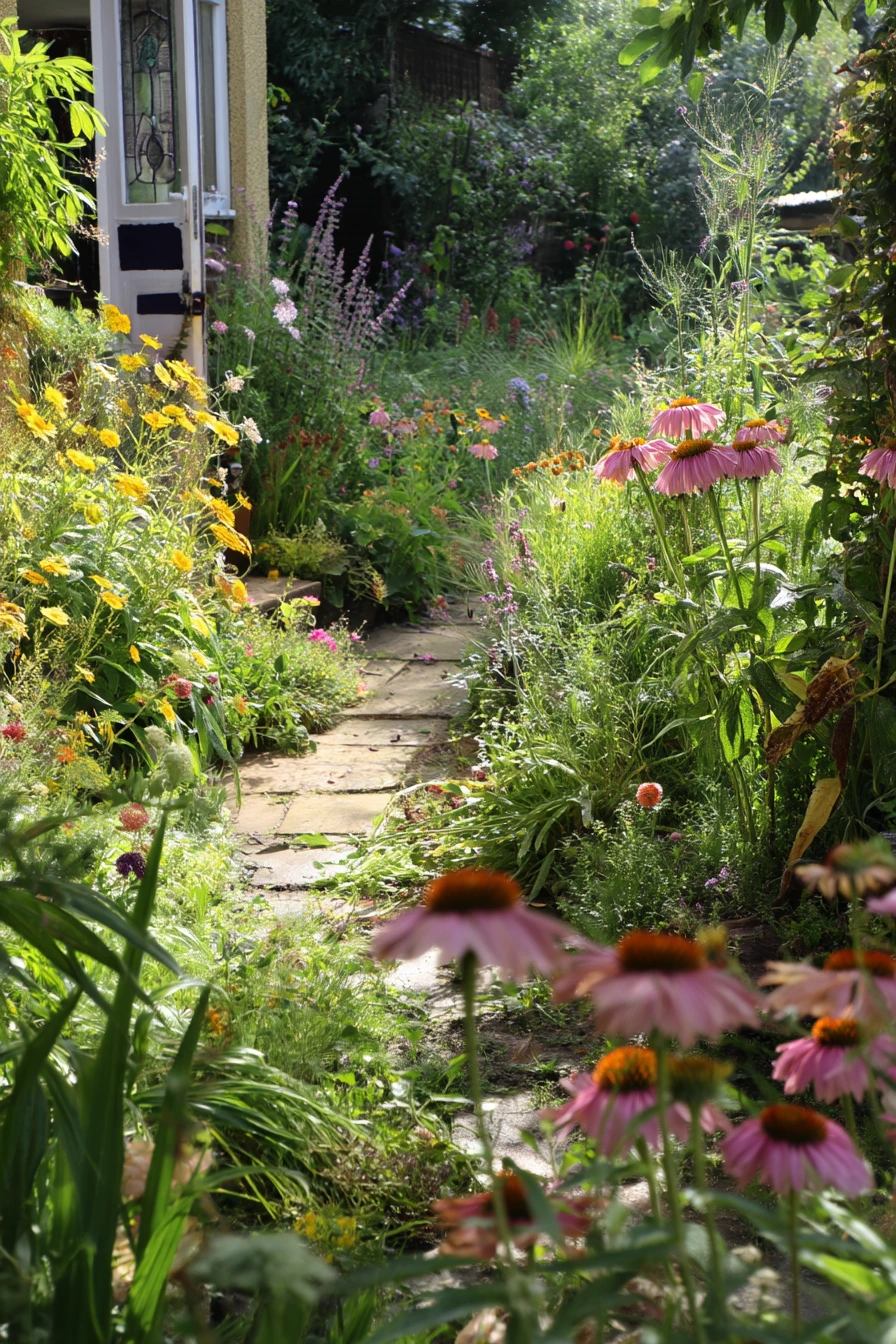
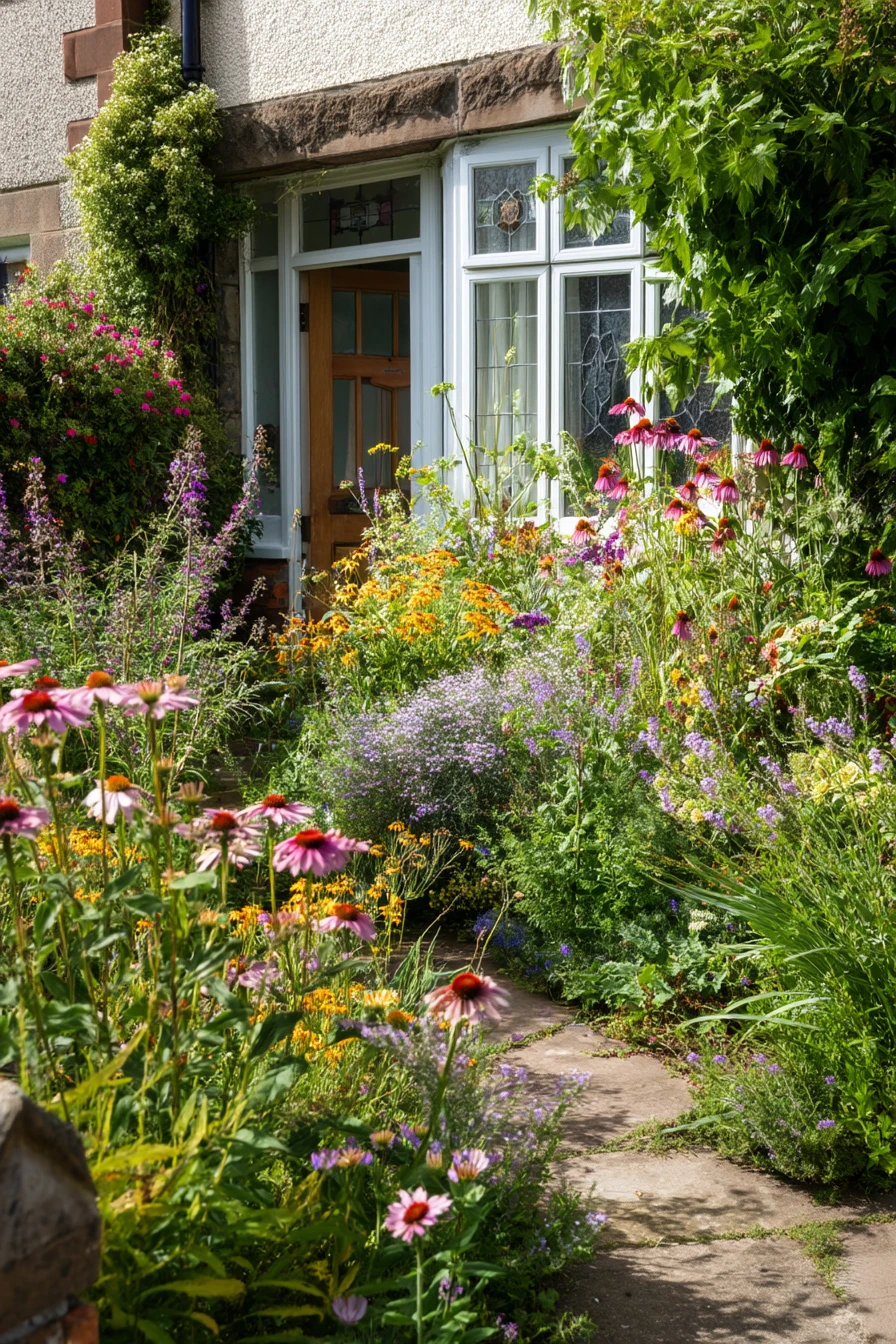
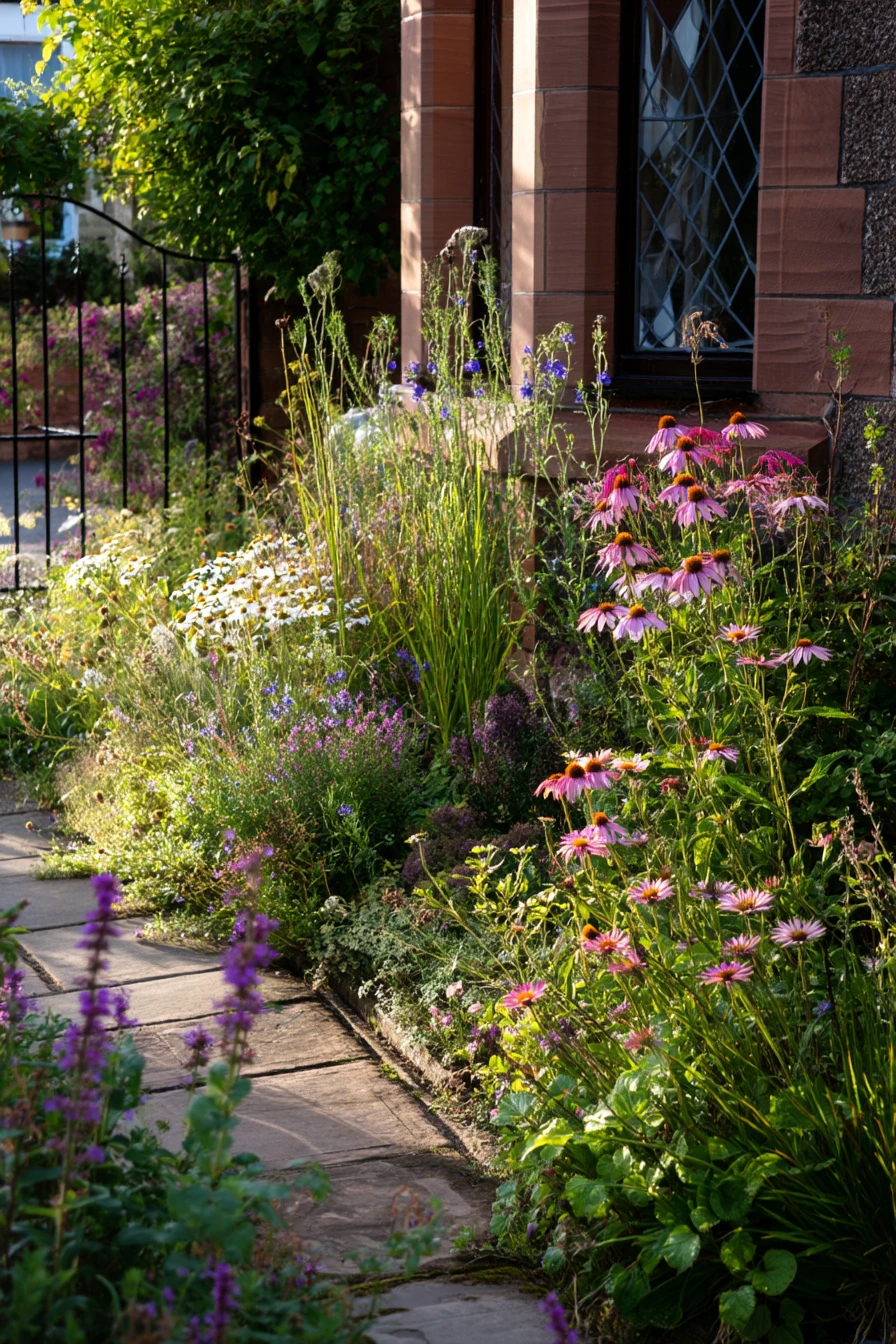
A pollinator haven can still look tidy and Victorian if you mix cottage flowers with a clear path and a simple structure. Start with a stained sandstone path or similar warm stone that looks good next to older brick. Then build mixed borders with echinacea, salvia, verbena, and nepeta. These plants flower for a long time and bring bees in without needing daily care.
Keep the planting believable by choosing a few colors and repeating them. For example, purple-blue salvia and nepeta can be your main thread, with pink or white echinacea as accents. Let verbena weave through for lightness. Add climbing jasmine on a wall or railing for scent and soft height, but train it so it does not cover door hardware or windows.
Small details help sell the “real home” look and encourage readers to stay on the page. A stack of gardening books by the front window hints at care and learning. A glass of water on the sill fits a summer day and gives scale in photos. If you want more wildlife, add a shallow dish of water near the border, but keep it out of the main walkway so it does not get kicked over.
- Leave a little bare soil in spring for ground-nesting bees.
- Choose single flowers over double blooms for better nectar access.
- Deadhead echinacea lightly, but leave some seed heads for birds later.
- Use a thin mulch layer so self-seeders can still pop up.
- Plant in clumps of 3 to 5 for a fuller look from the street.
Pro Design Tip: Keep the path edge crisp with hidden metal edging so the border can be loose while the layout still feels controlled.
Budget Considerations: Perennials add up fast; start with small plug plants and fill gaps with easy annuals like calendula in year one.
6 6. Classic Symmetry With Seasonal Pots
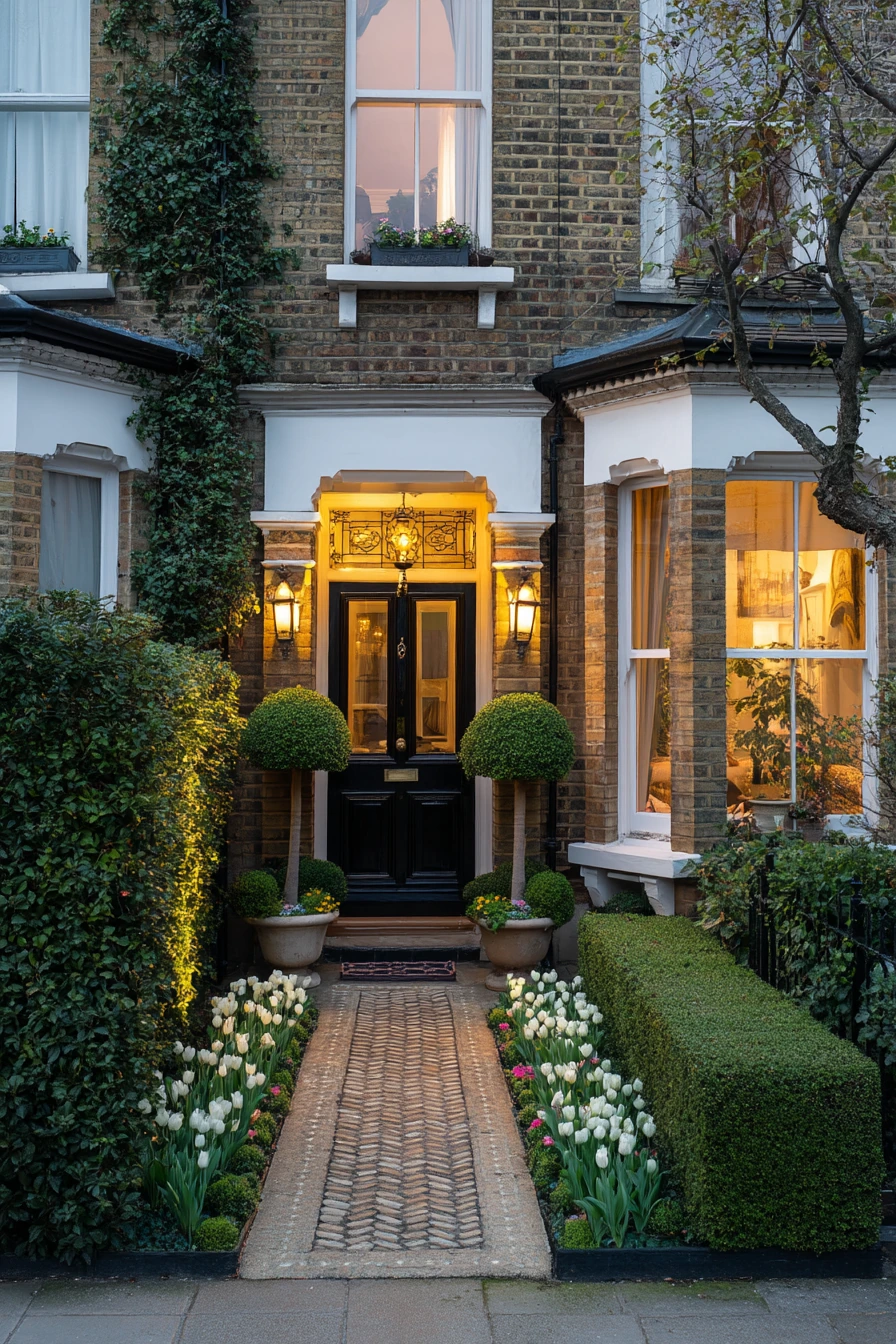
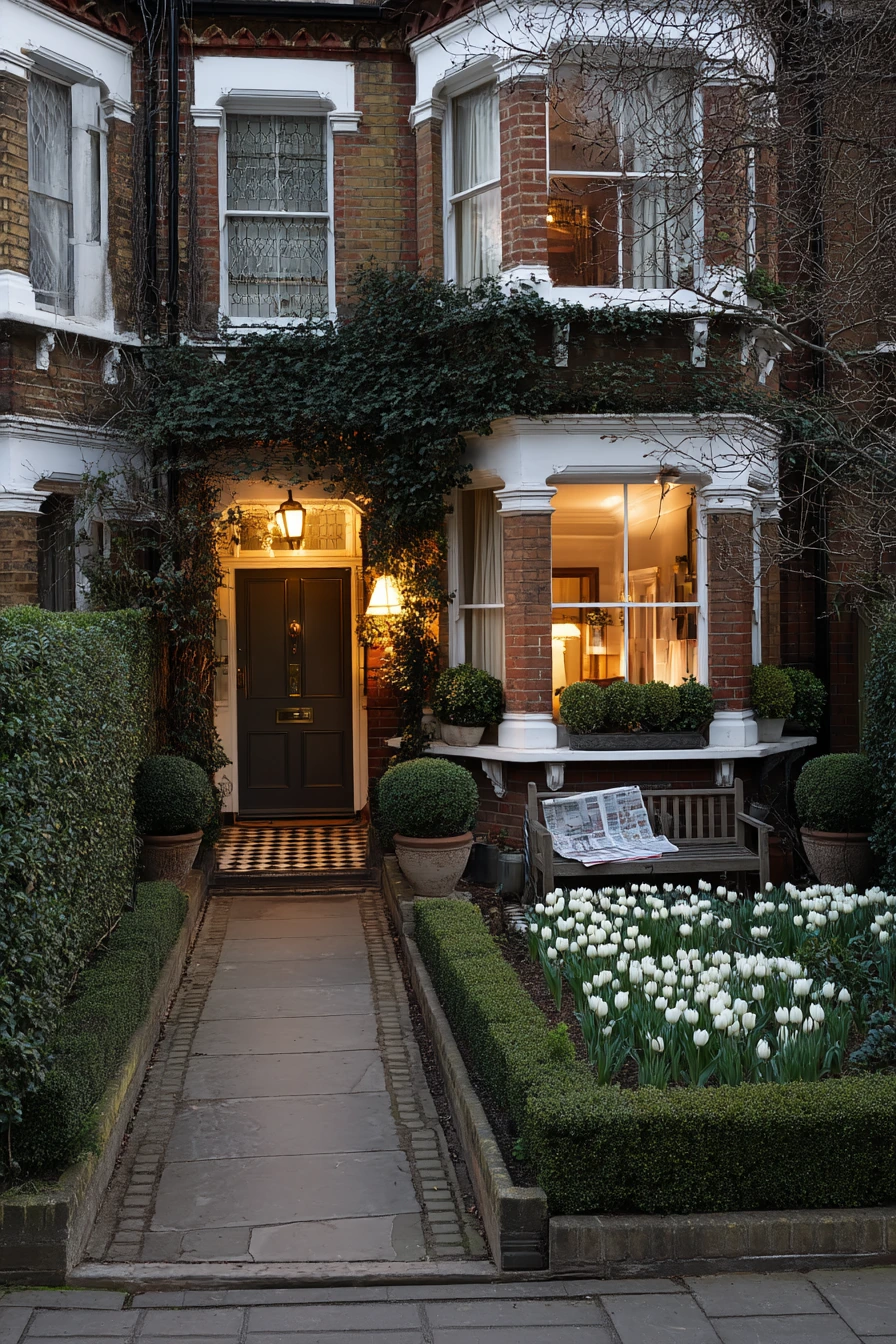
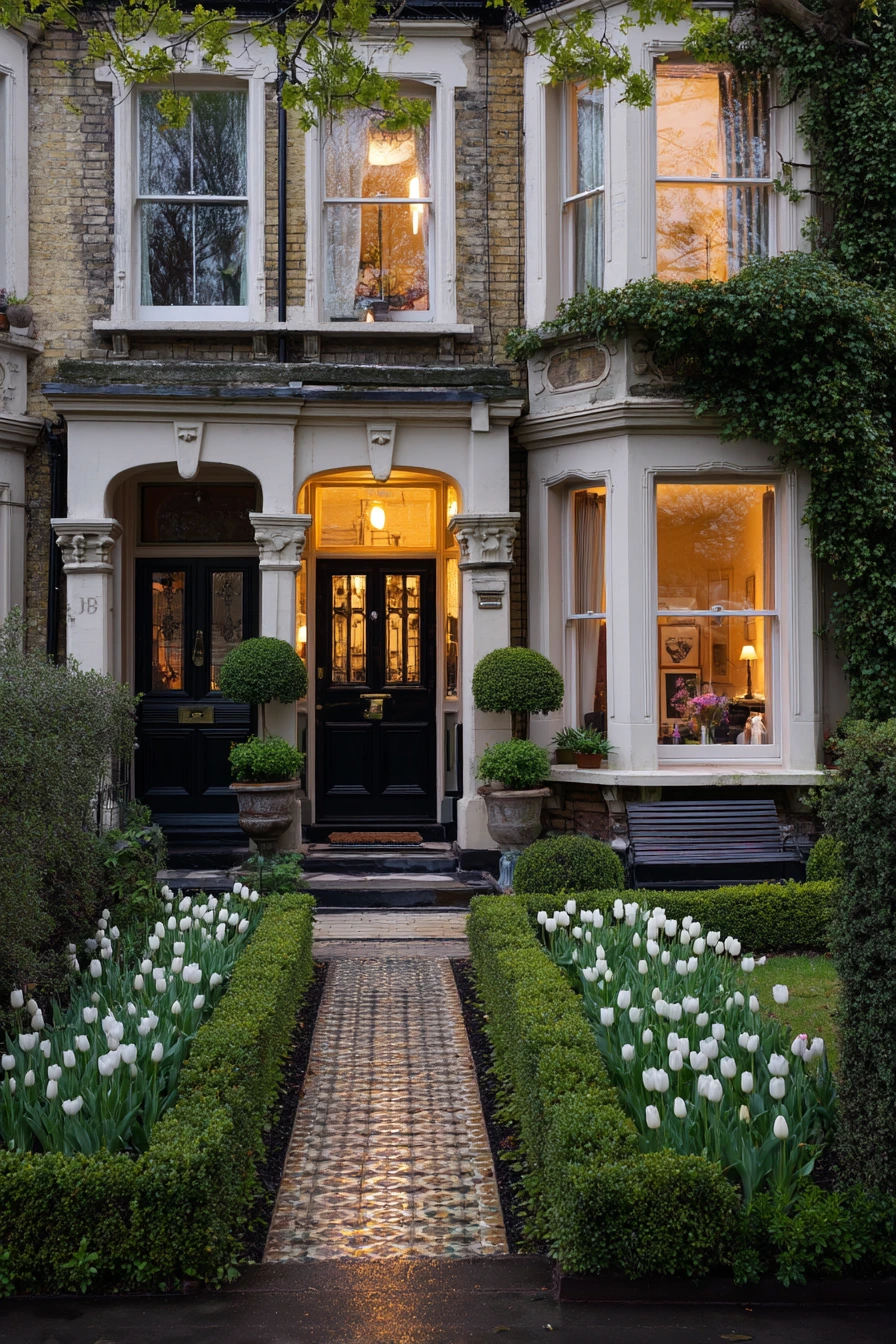
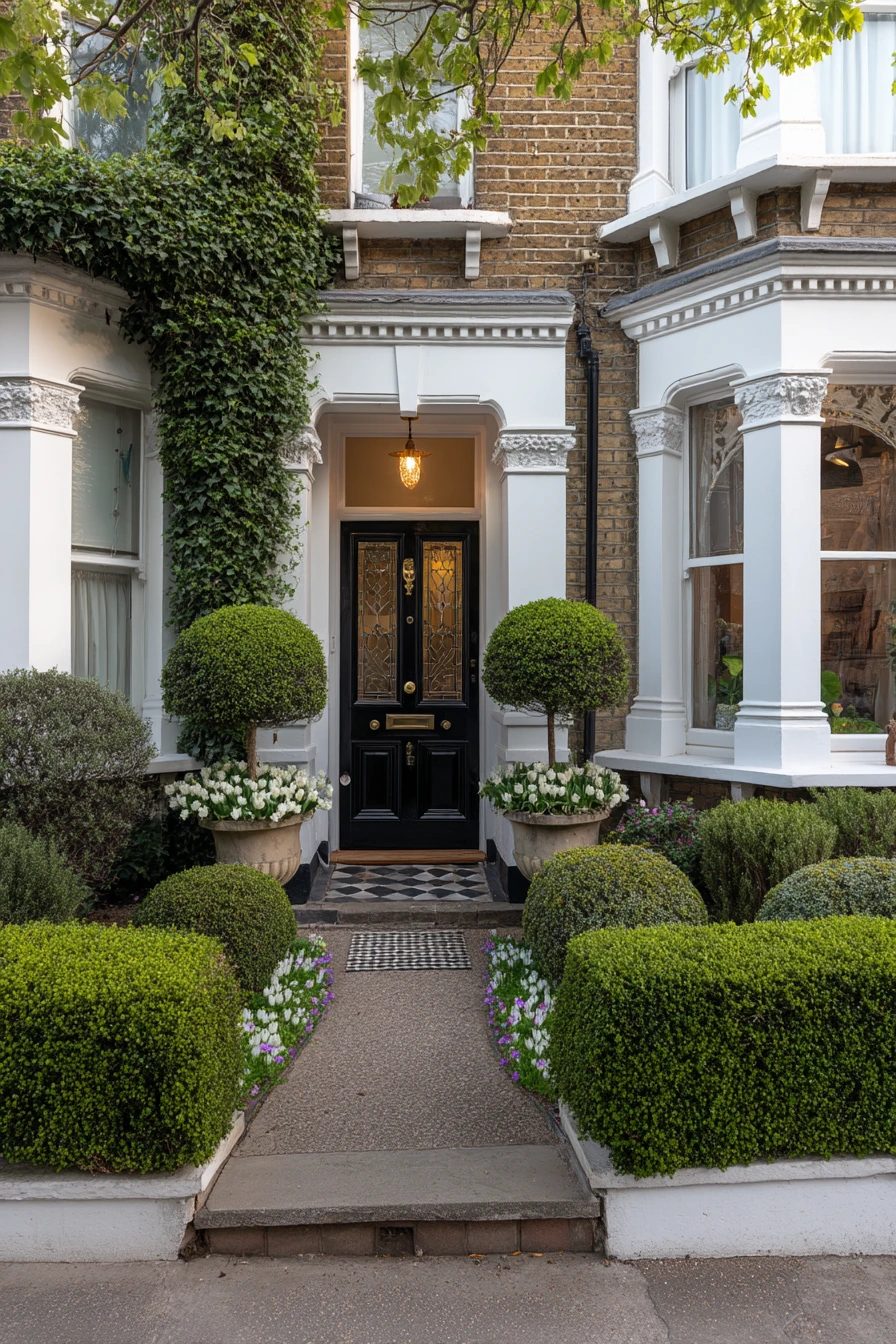
Formal symmetry suits many Victorian facades, especially those with bay windows and a narrow central path. The goal is simple balance, not stiffness. Twin bay-window pots filled with clipped topiary set the tone right away. Add white tulips and violas for seasonal color, and use deep green ivy to frame the path and soften hard lines.
Start by measuring. Place the two main pots the same distance from the window edges so the front looks even from the pavement. Keep the path clear and straight to the painted black door for a strong, classic axis. If you want a softer feel, add one small pot on each side of the step, but keep them matching in height so the doorway does not look crowded.
Make it feel lived-in with small, tidy signs of everyday life. A newspaper on the mat and a key bowl just inside the door read as normal, not messy. A slightly wrinkled throw in the front room can be seen through the glass and adds warmth. In warm evening lamp light, white flowers glow, so choose pale blooms near the front and keep darker foliage behind them for depth.
- Pick one pot style and repeat it to avoid a mixed look.
- Use slow-release feed for topiary so it stays deep green.
- Swap tulips for white alliums or lilies after spring.
- Clip ivy edges so it frames rather than sprawls.
- Clean the door hardware and letter plate for quick curb appeal.
Pro Design Tip: Use “paired items” in three places (two main pots, two small step pots, two matching path lights) to build symmetry without needing lots of plants.
Budget Considerations: Large topiary can be expensive; buy smaller shapes and underplant with violas to make the pots look full right away.
7 7. Renter-Friendly Potted Front Garden
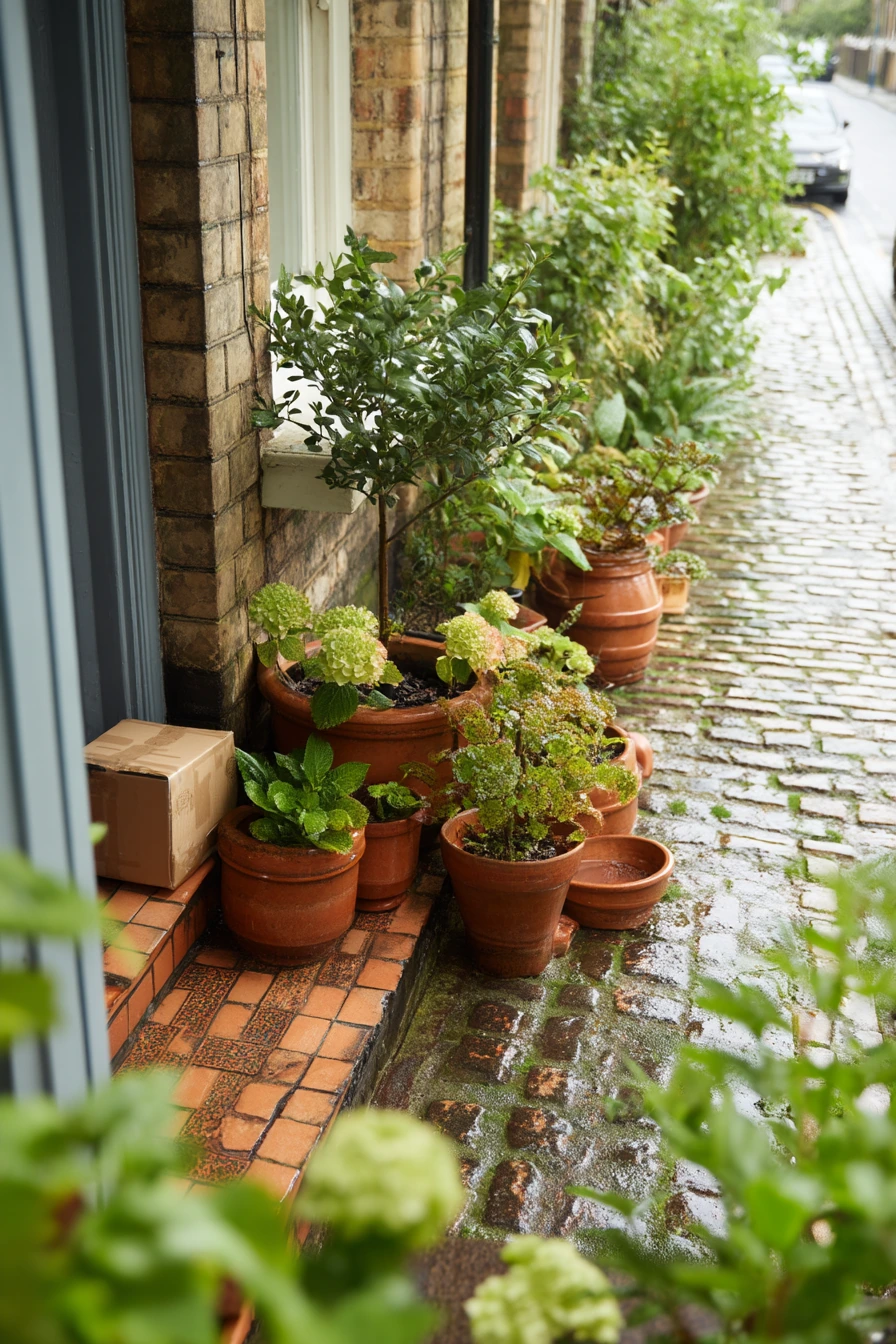
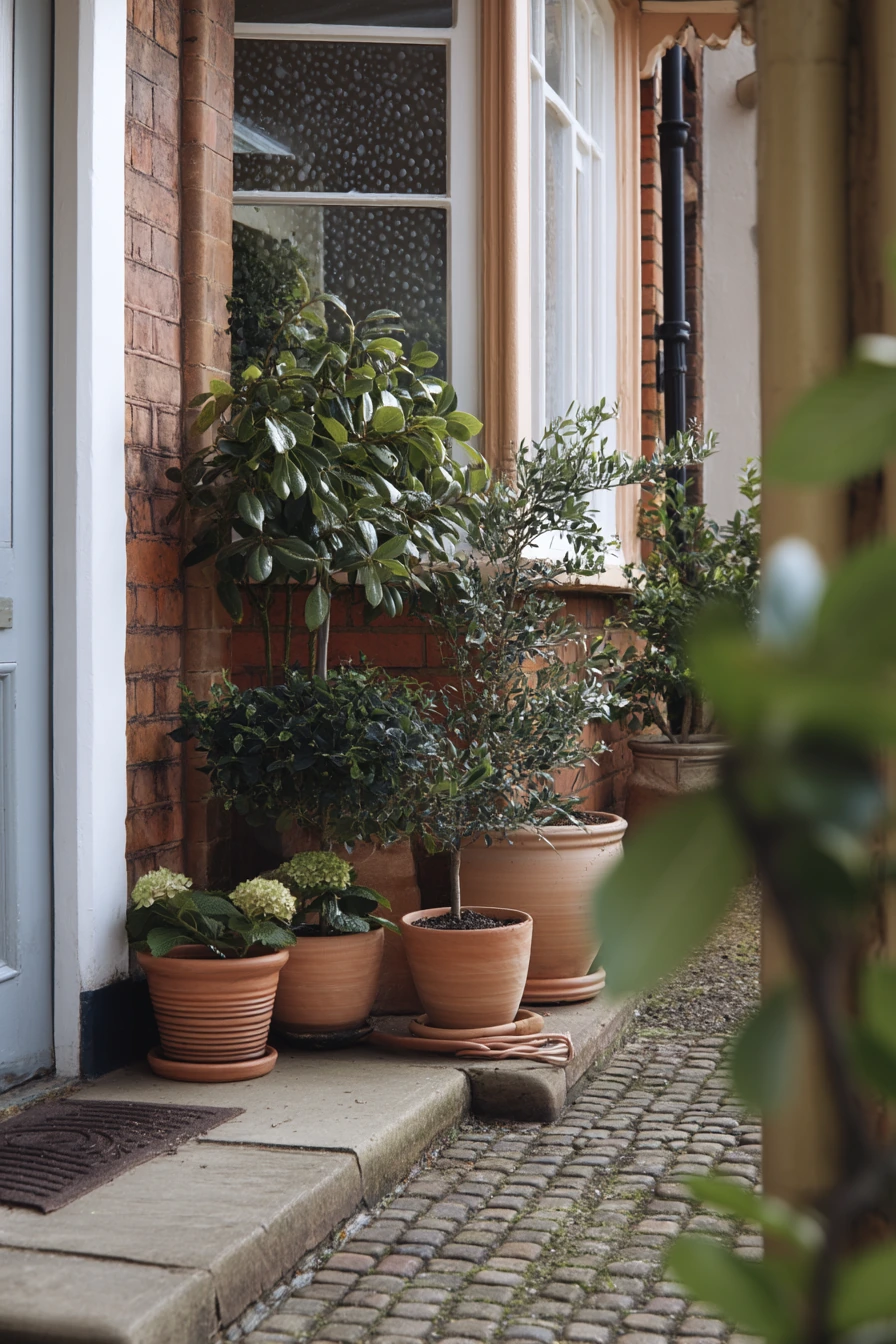
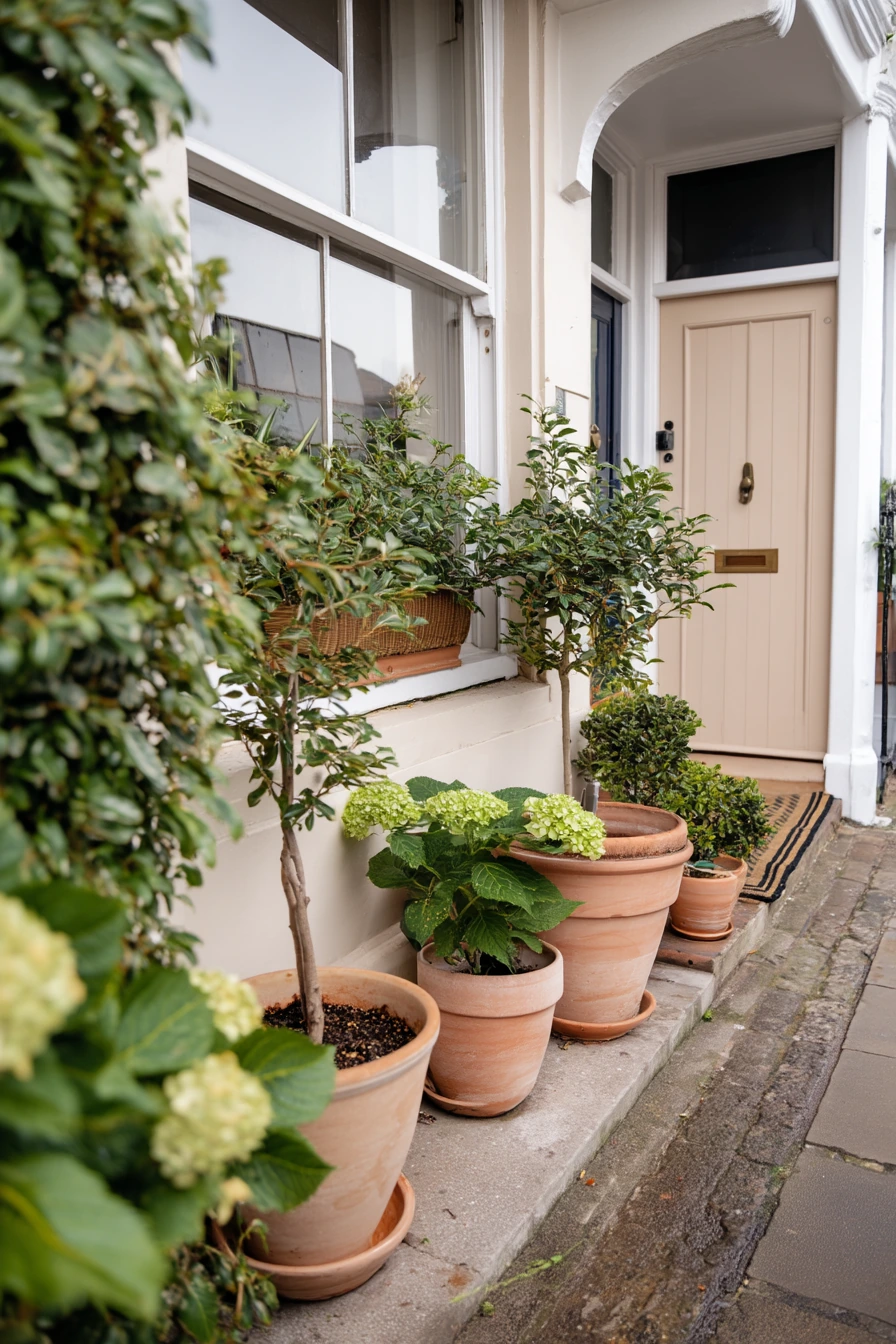
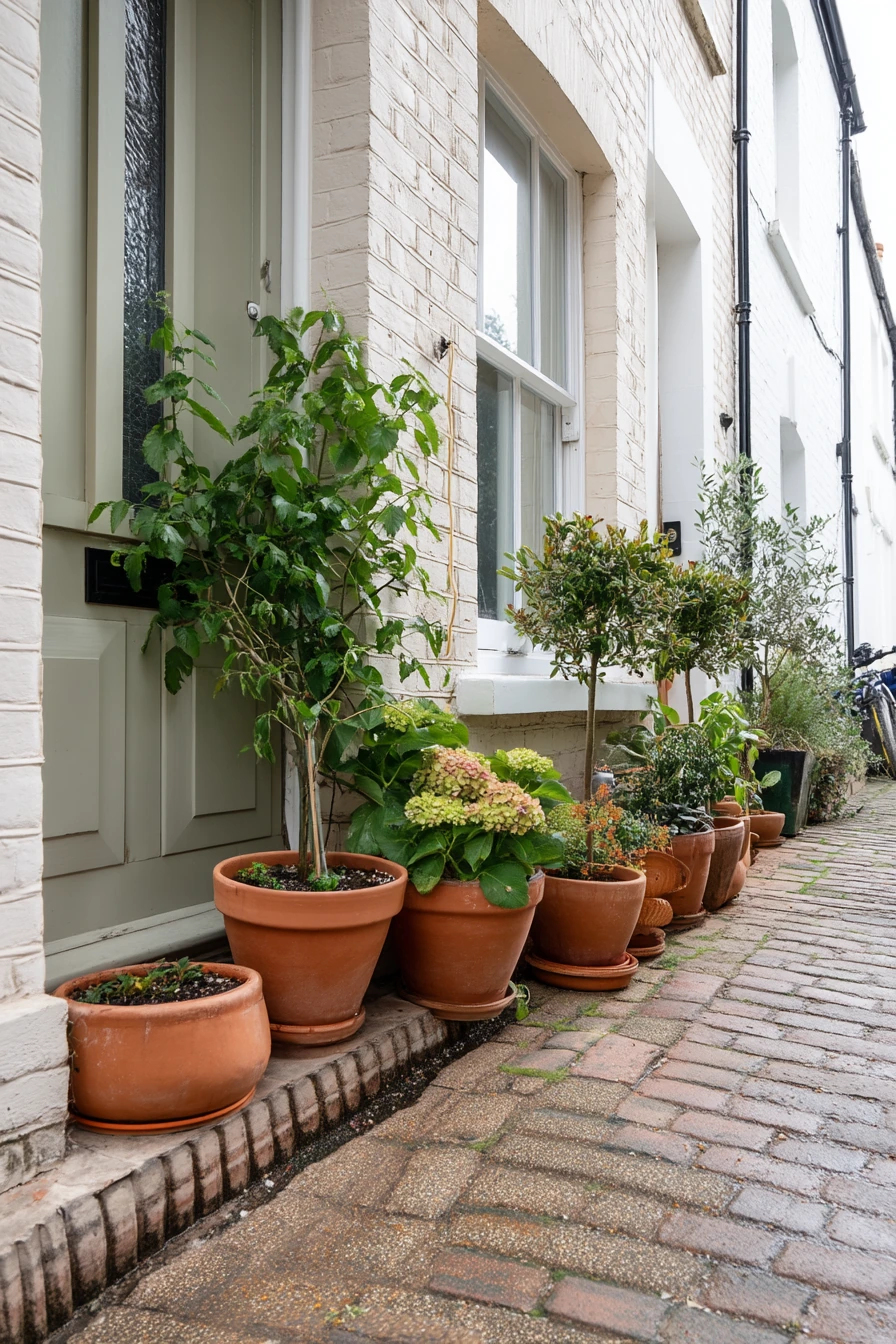
A renter-friendly Victorian front garden can look finished without digging, changing walls, or installing permanent borders. The easiest approach is terracotta pots grouped in clusters, with removable edging to define a small planting zone or gravel strip. This keeps things flexible if you move or if your landlord has rules.
Build the layout from the door outward. Keep a small mat by the door and a clear path for deliveries. Then place taller pots at the back near the wall, like bay trees, and medium pots closer to the front, like hydrangeas. Fill in gaps with herbs such as rosemary, thyme, and mint in its own pot so it does not take over. On a narrow cobbled frontage, a few well-chosen containers can do more than a crowded border.
Style it for real life. A delivery parcel tucked beside the wall is common, so leave a “parcel bay” that does not block the door. A coiled charging cable on the windowsill is also real, so keep the sill neat with one small tray. Rain-speckled leaves look pretty, but drainage matters, so raise pots on feet and choose saucers only where you can empty them easily.
- Choose frost-proof terracotta or use pot liners in winter.
- Use matching pot sizes for a calmer, more Victorian feel.
- Pick hydrangeas based on light level, not just flower color.
- Place herbs near the step so you brush past and smell them.
- Use removable edging to keep gravel off the cobbles.
Pro Design Tip: Limit your palette to two materials (terracotta and black iron) and one foliage tone (deep green) so the pots look like a planned set.
Budget Considerations: Containers and compost can cost more than plants; look for end-of-season pot sales and buy compost in larger bags for better value.
8 8. Drought-Tolerant Front Garden
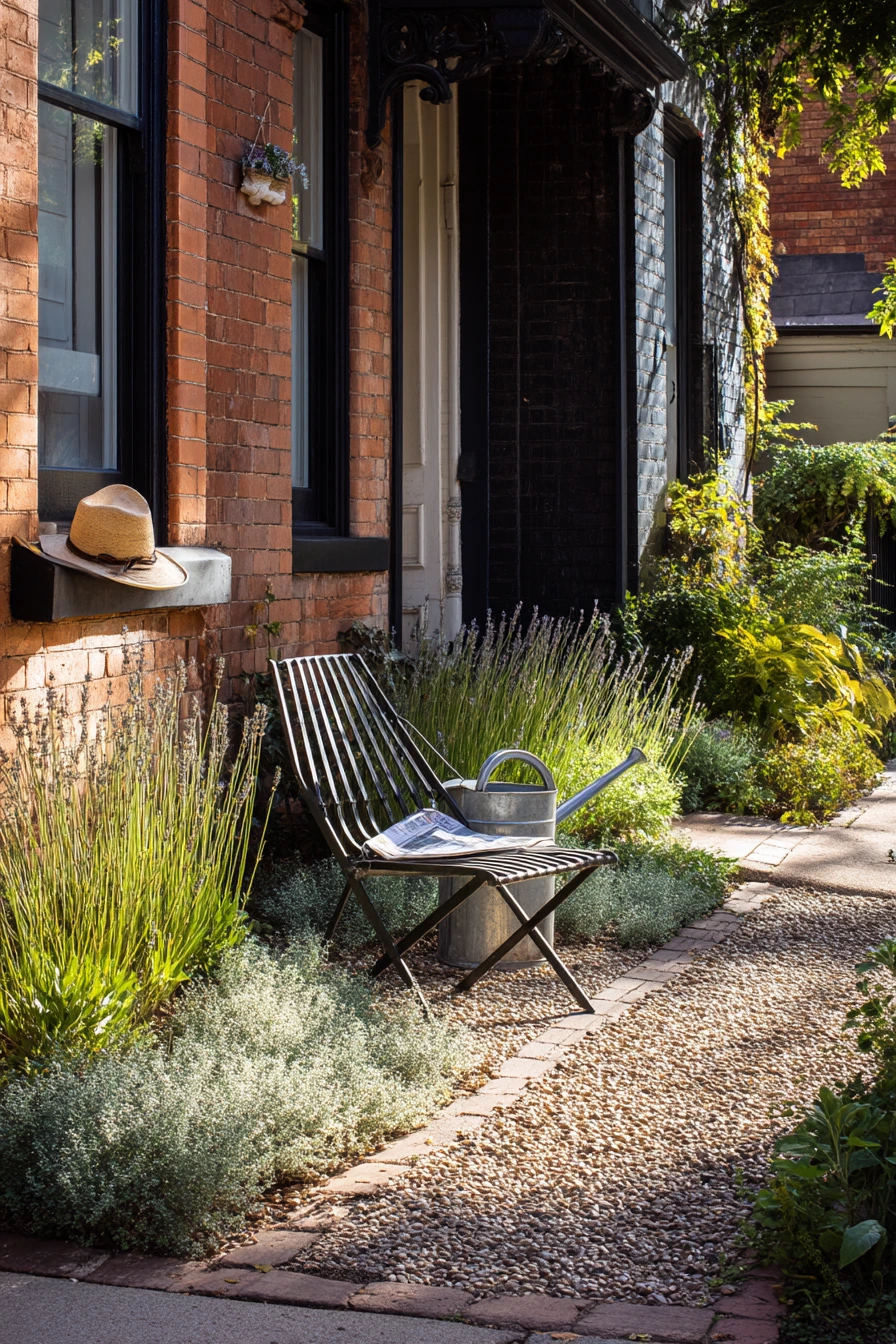
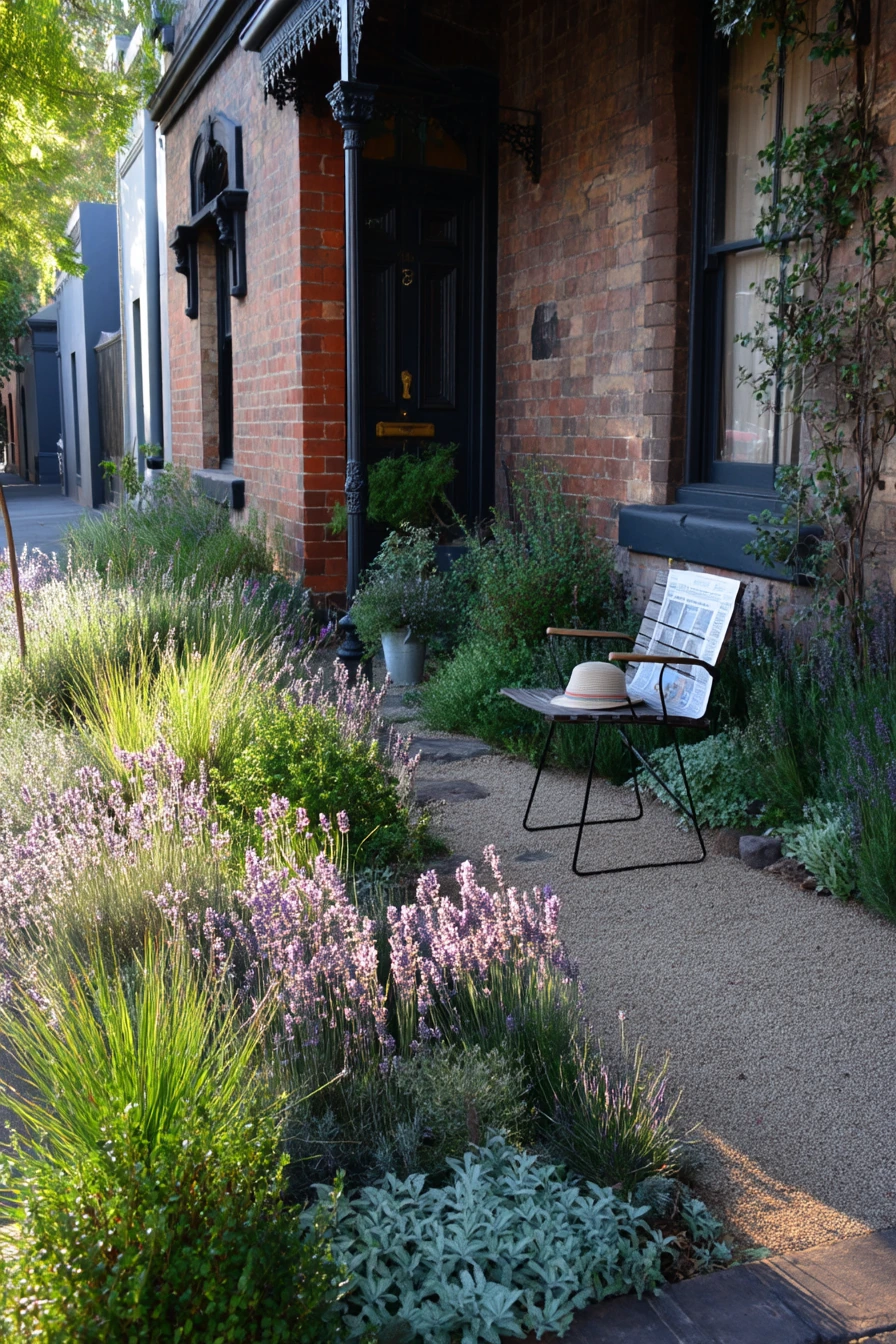
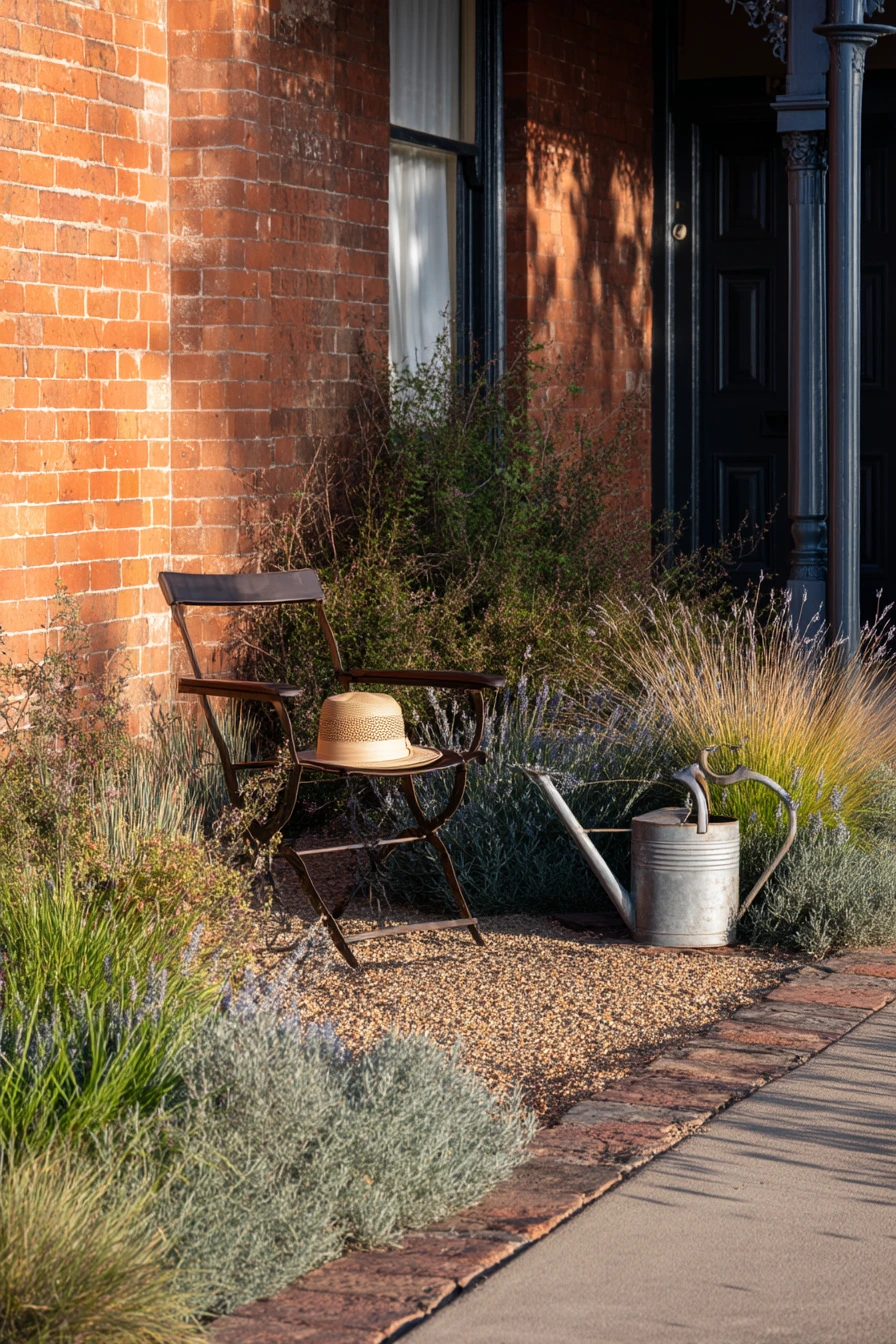
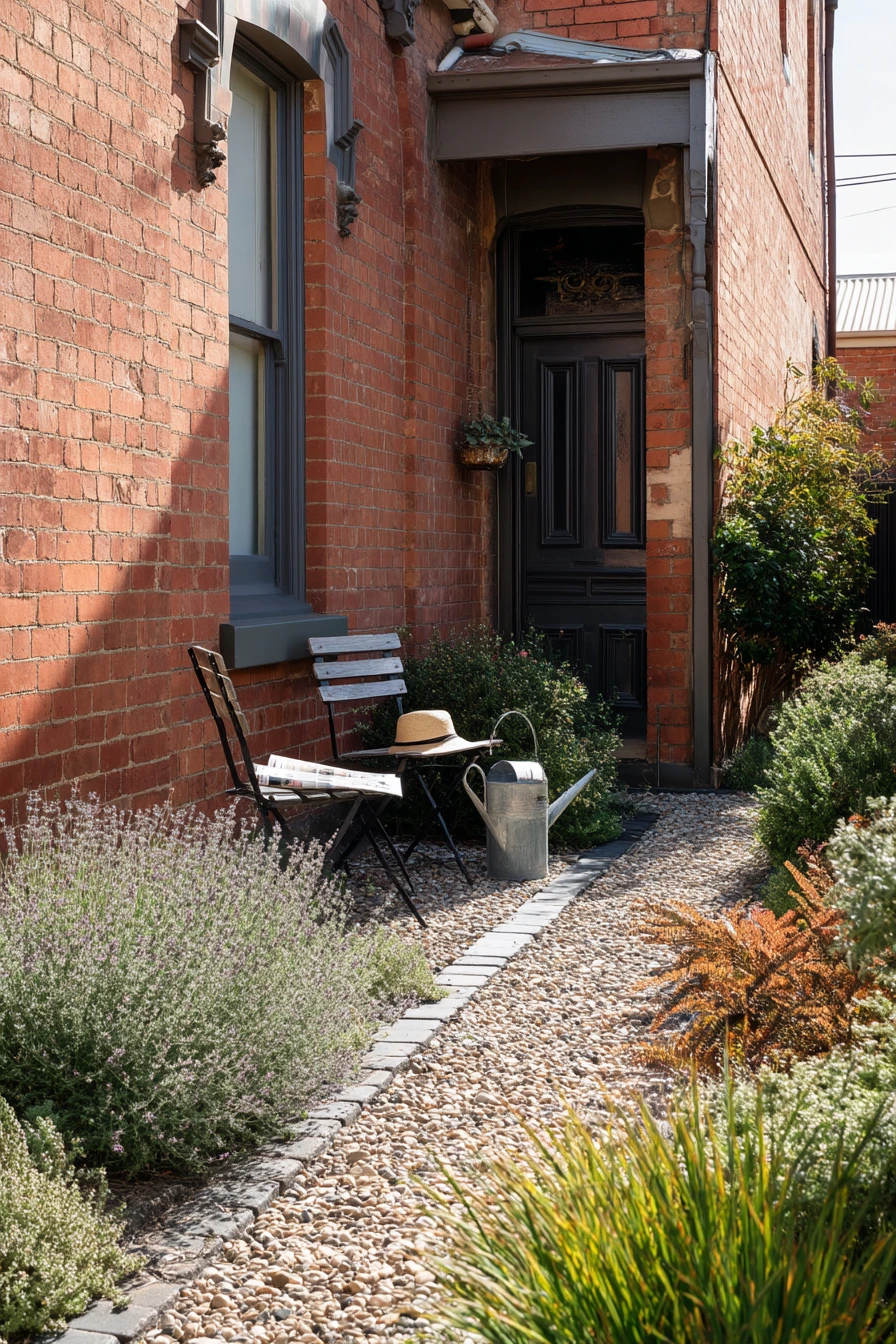
In a hot, dry climate, a Victorian front garden needs plants that look good with less water. Gravel mulch is your friend because it cuts evaporation, keeps soil cooler, and looks neat against a soot-dark brick facade. A narrow brick walkway gives that period feel while still handling heat well.
Choose drought-tolerant plants with texture. Dwarf lavender gives scent and soft color, sedum adds a low, fleshy ground layer, and sage brings a silvery tone that suits dry conditions. Ornamental grasses add movement without lots of watering. Keep the planting simple and repeat the same plants so it looks calm from the street, not like a mixed collection.
Style the space with practical items that fit the climate. A metal watering can looks right near the door and handles sun better than plastic. A sunhat on a chair adds a lived-in touch. If you keep a folded newspaper near the step, use a small tray so it does not blow away. In late afternoon light, gravel and grasses glow, so keep the border edges clean and avoid dark mulch that can look patchy in strong sun.
- Water deeply but less often to train roots to go down.
- Use a drip line under gravel for easy maintenance.
- Keep lavender off the wall to improve airflow and reduce mildew.
- Add one larger rock or pot as a focal point so the layout feels grounded.
- Choose bricks with a rough finish for better grip when dusty.
Pro Design Tip: Mix three textures (fine gravel, spiky grass, soft lavender) to get a rich look even with a limited plant list.
Budget Considerations: Gravel coverage is a big cost; reduce the area by widening the path slightly or using stepping stones in the planting.
9 9. Shaded North-Facing Entrance
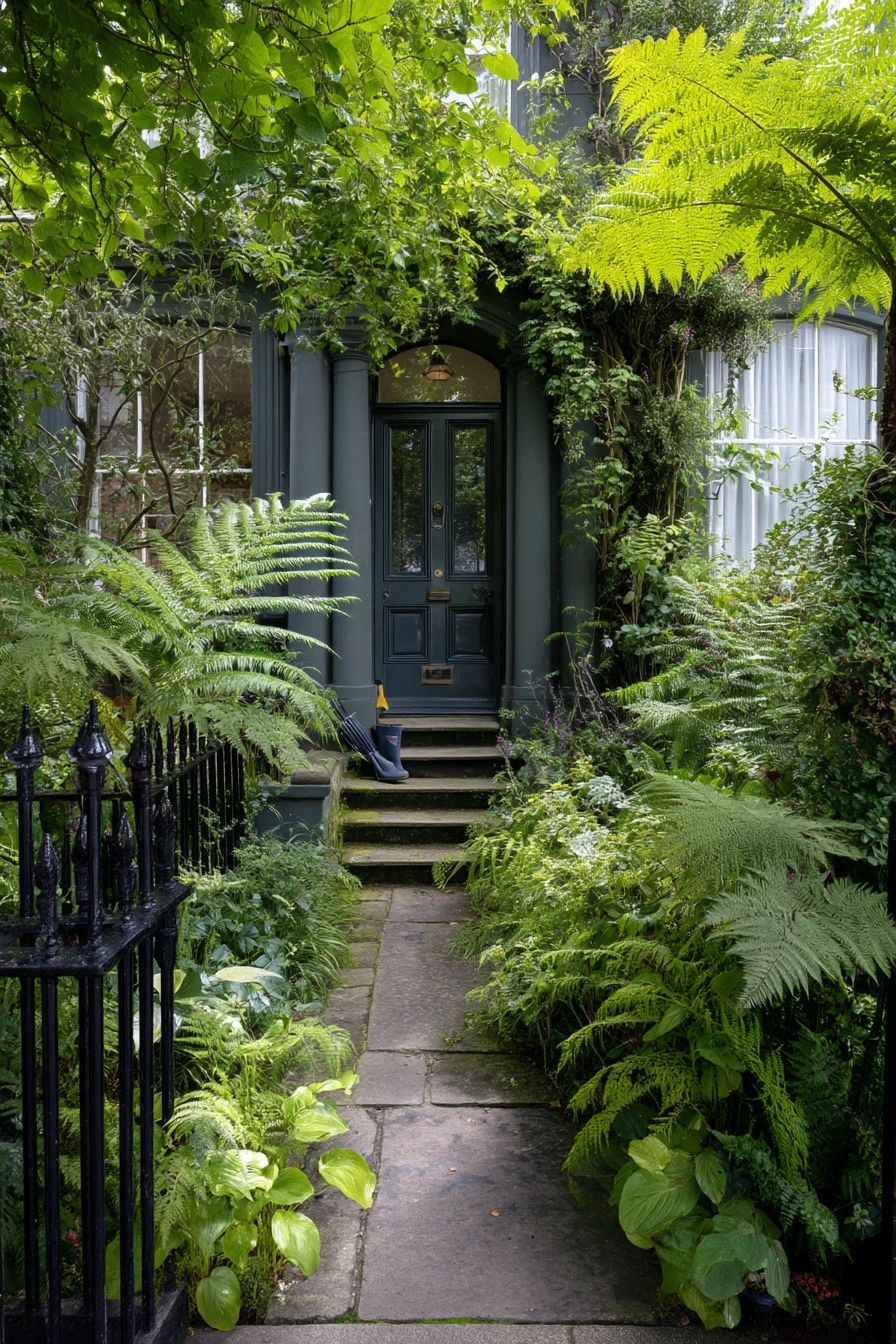
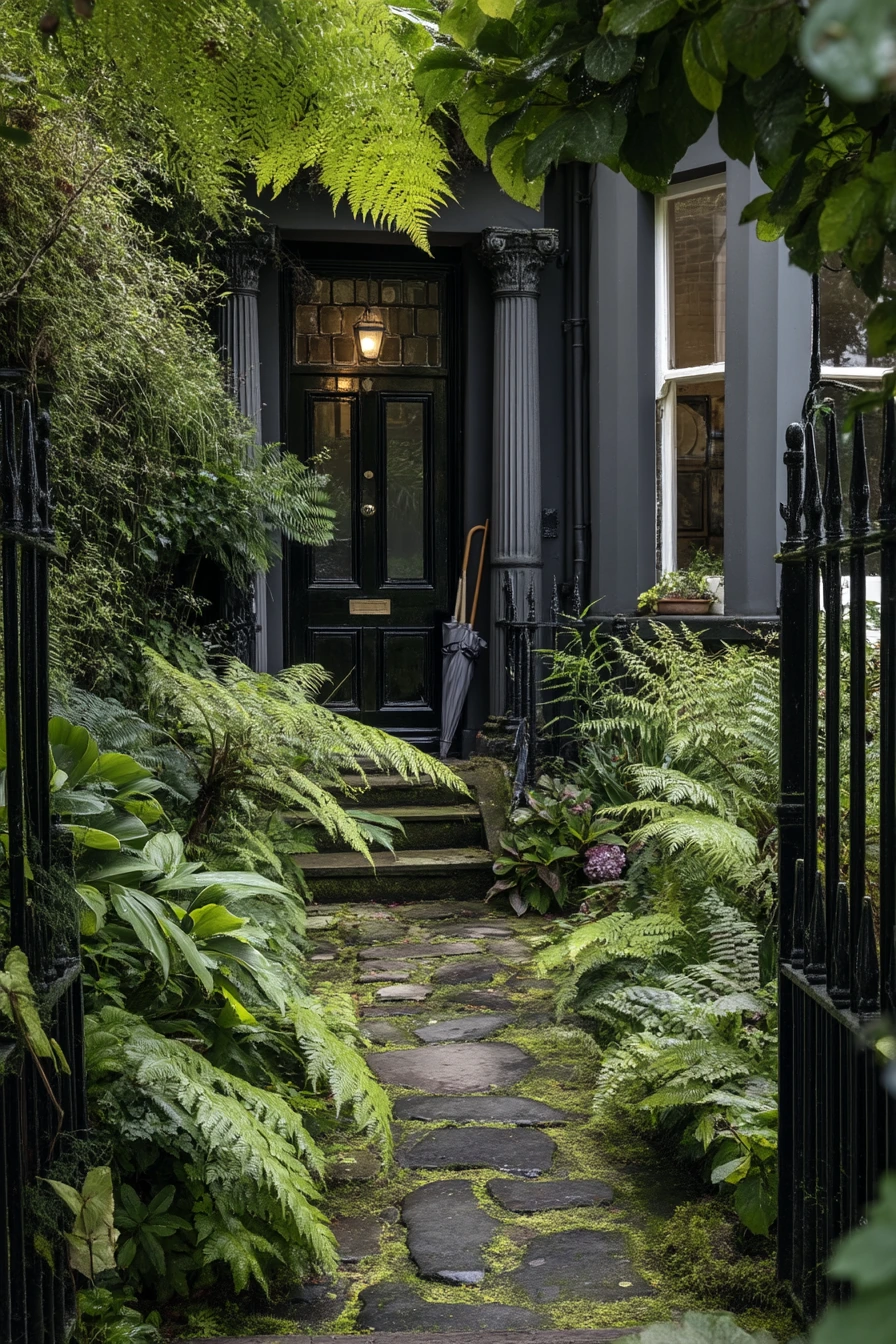
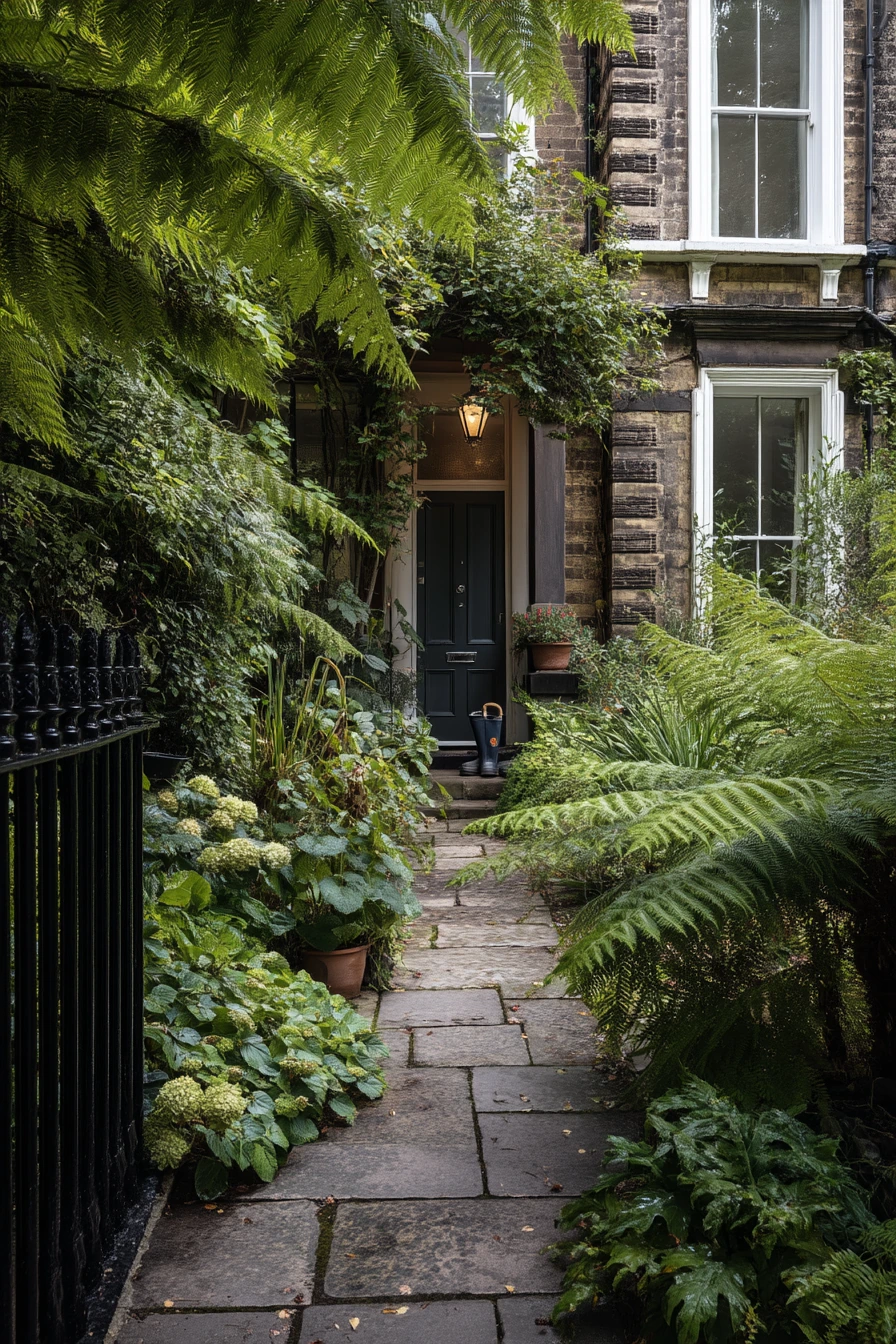
A shaded, north-facing entrance can be one of the prettiest Victorian front gardens if you pick plants that love low light. Aim for a moody, lush look with ferns, hellebores, and hostas. These give strong leaf shapes that read well from the gate, even when flowers are not in bloom. Climbing hydrangea can cover a wall or iron railings with soft green and white, and it suits older homes.
Start with the path. A slim stone path looks right for the period and helps keep feet out of wet soil. Keep railings clear so you can hold on in rain. Because shade gardens often stay damp, focus on drainage and air flow. Leave a small gap between plants and the step to stop slime and to keep the entrance safer.
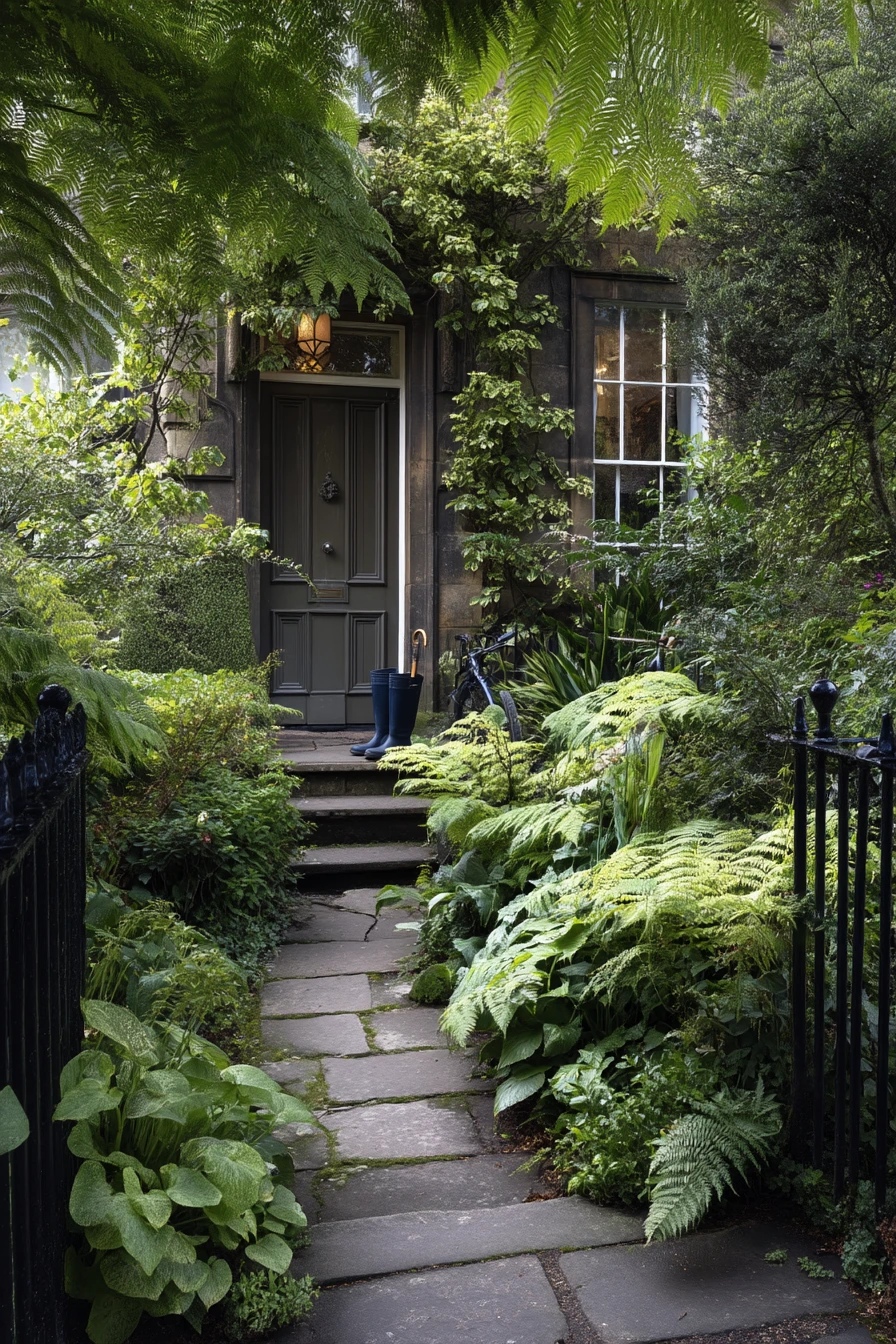
Use lighting and accessories to make the scene feel warm. A lantern by the door adds a gentle glow in early evenings. Wellies and a damp umbrella are realistic for a shaded spot, but place them on a boot tray so the step does not stain. If you want more color, add a pot of white impatiens or begonias near the door, but keep it simple so the green theme stays calm.
- Choose hostas with thicker leaves to reduce slug damage.
- Mulch with leaf mold or compost for a woodland feel.
- Plant hellebores near the path so you see winter blooms up close.
- Train climbing hydrangea with ties until it grips the wall.
- Add a small gravel strip at the step edge to reduce mud splash.
Pro Design Tip: Use contrast in leaf size (fine fern next to broad hosta) to make shade planting look designed, not accidental.
Budget Considerations: Shade plants can be slow to fill in; buy smaller ferns in multiples and let them spread, instead of one large specimen.
10 10. Evening Glow Curb Appeal
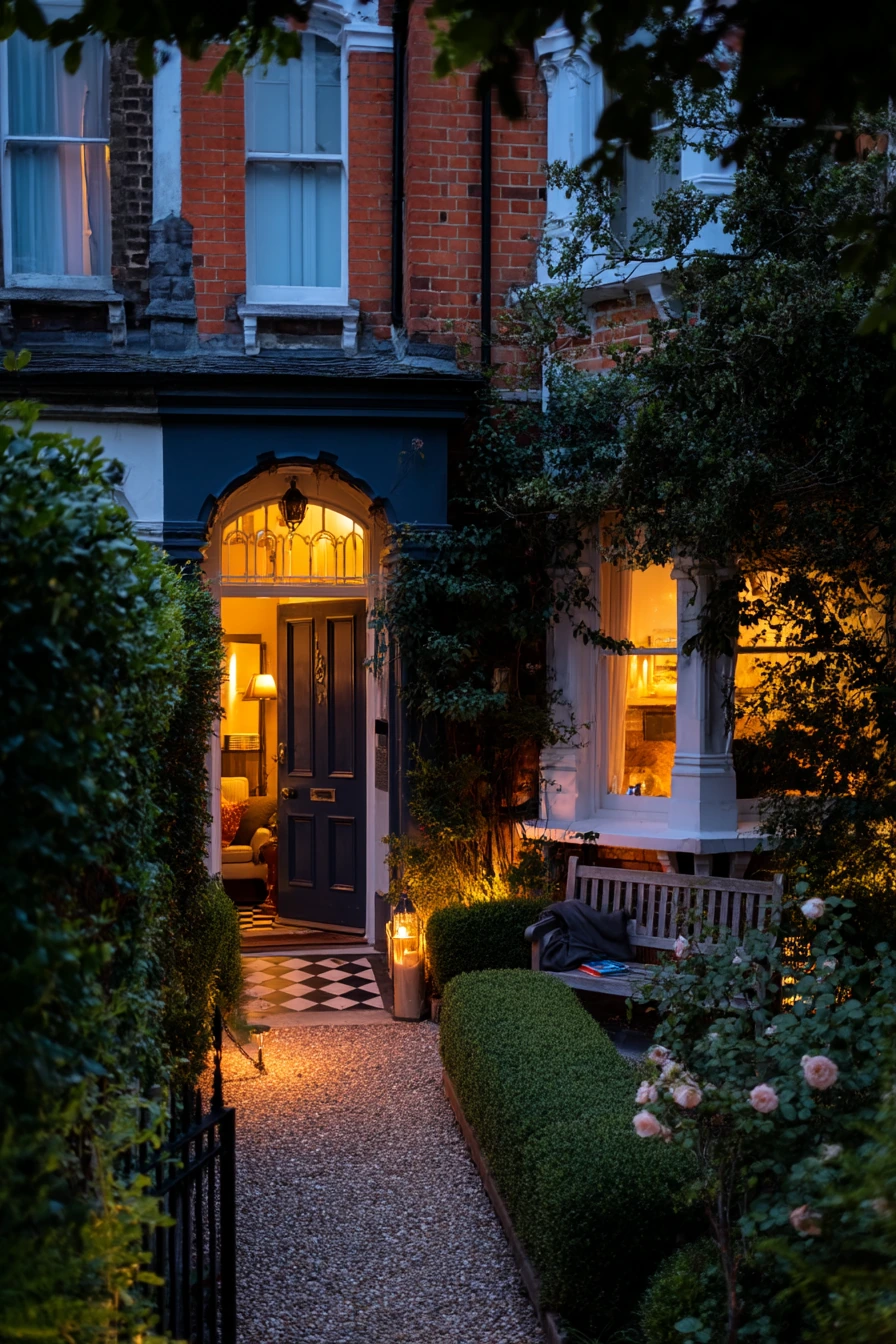
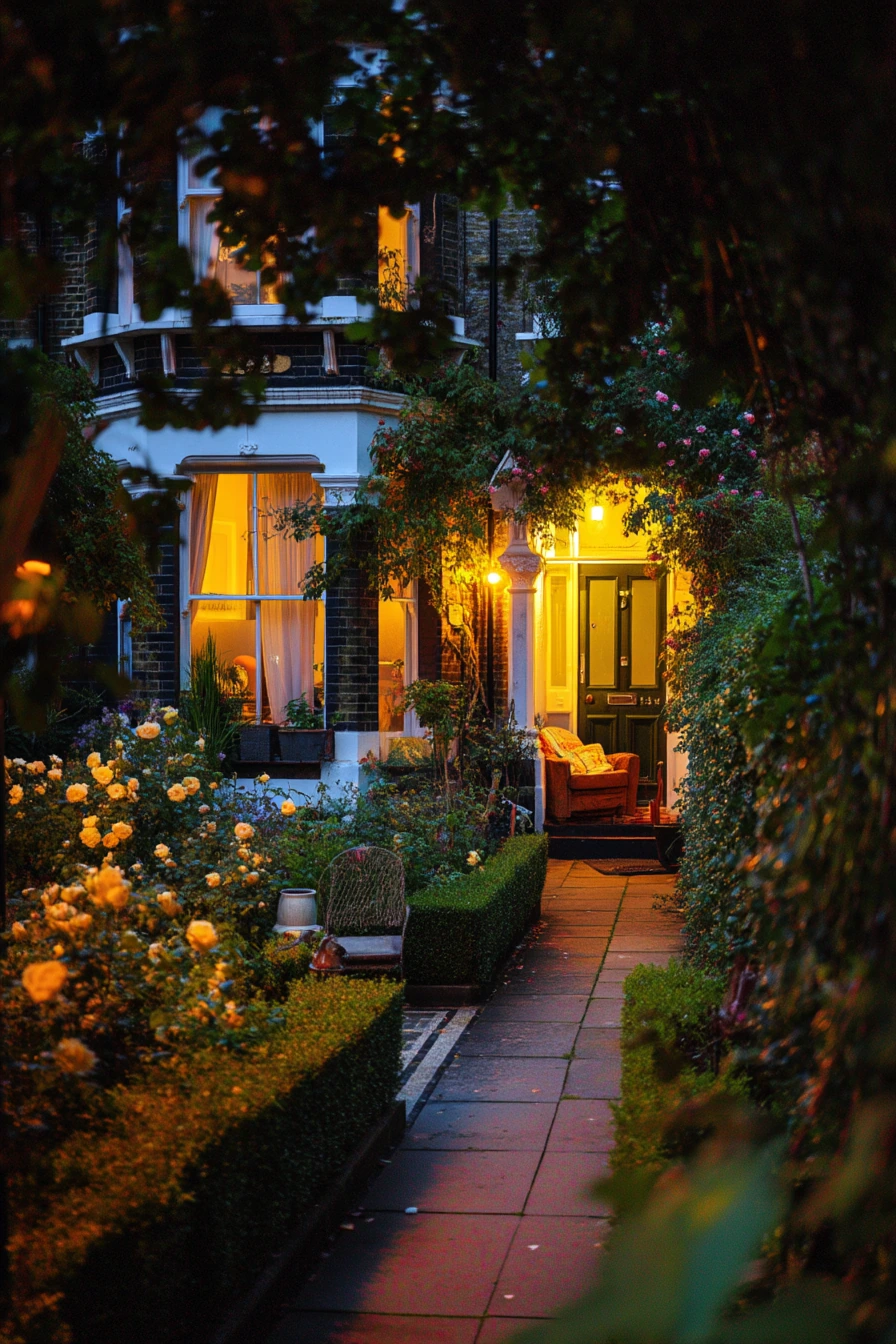
A dusk view can make Victorian front garden ideas feel extra inviting, and it is great for Pinterest clicks. The key is layered lighting that looks soft, not harsh. Warm path lights along a narrow walkway guide the eye to the painted front door, while clipped hedges and roses keep the scene structured and romantic without looking messy.
Start with the hardscape and shapes first. Clip hedges into clean lines so they catch light well. Keep rose growth trained and supported, with stems tied to a trellis or wires, so blooms sit where you can see them from the street. Brass details like a letterbox or door knob glow at twilight, so clean and polish them once a season.
Make it feel like a real home by including small indoor hints through the window. An armchair near the window and a mug on the sill add warmth. A dog lead hanging by the hook is practical and signals daily life. Balance amber lamp light inside with cool blue twilight outside by choosing bulbs in the warm range and shielding path lights so they do not shine into neighbors’ eyes.
- Use low, warm LED path lights for a gentle glow.
- Place lights at turns and steps for safety first.
- Pick repeat-bloom roses so color lasts beyond one short flush.
- Keep hedges slightly narrower at the top so light reaches the base.
- Add a small doormat and keep the threshold clear for a tidy look.
Pro Design Tip: Light the path, not the plants, then let foliage and roses catch the glow naturally for a calm, high-end look.
Budget Considerations: Wired lighting costs more; start with quality solar lights in key spots and upgrade later where you need brighter, steadier light.
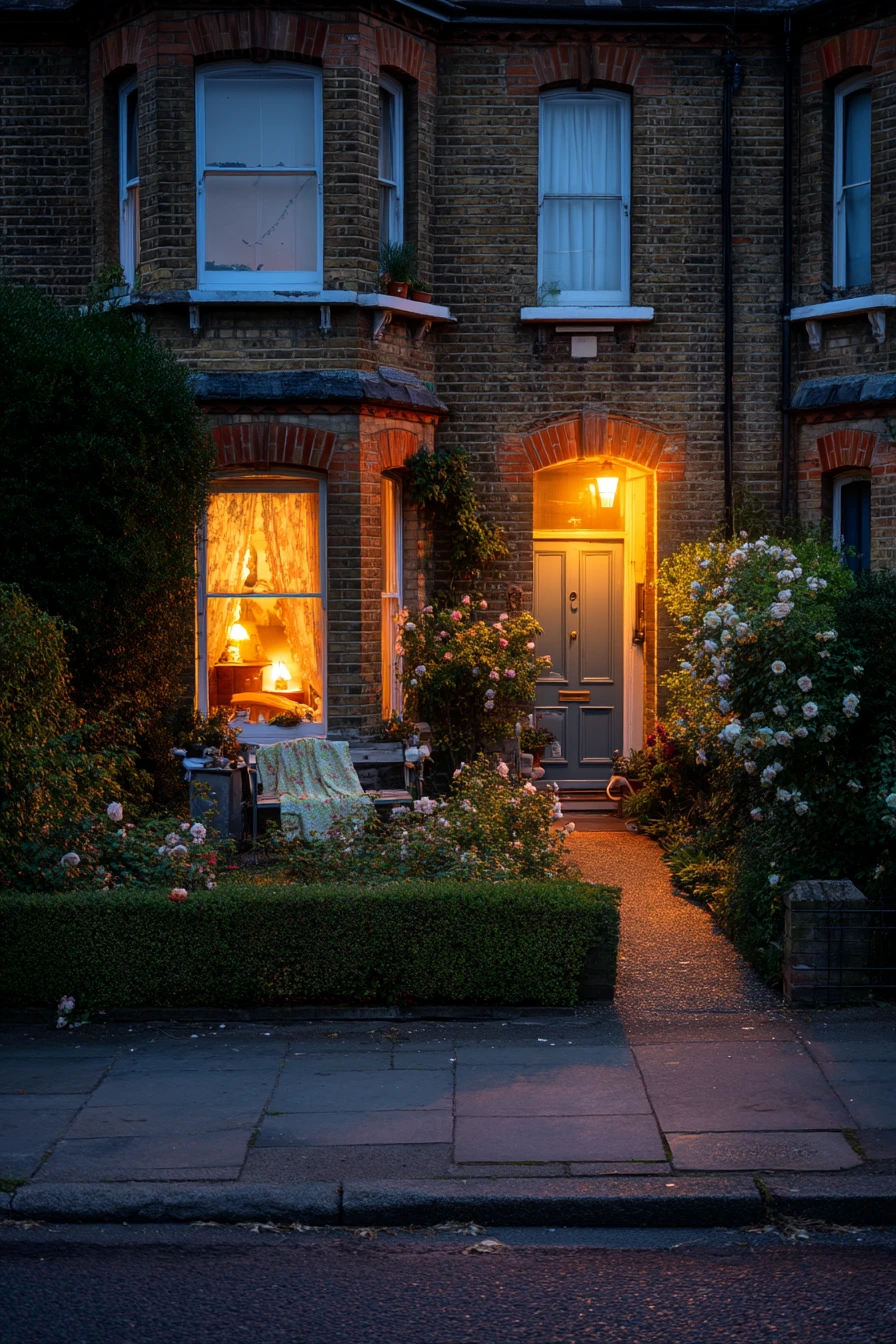
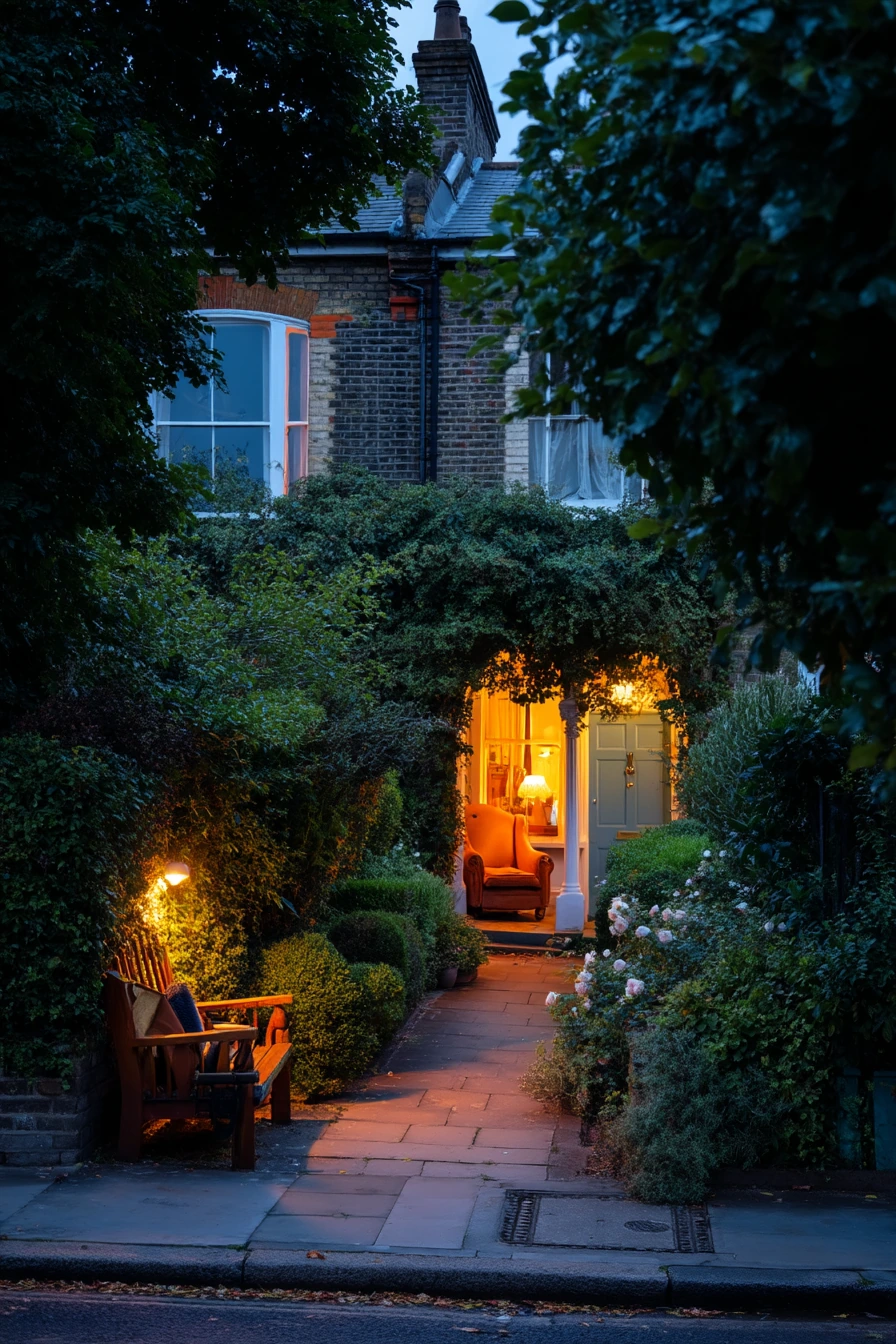
Victorian front garden ideas work best when you mix clear structure with soft planting. A strong path, neat edging, and one or two classic details like ironwork or terracotta pots can change curb appeal fast.
Pick a style that fits your home and your routine, whether that is a family-friendly layout, a renter setup, or a drought-tough border. Add small lived-in touches, keep the entrance clear, and make upgrades one step at a time.
FAQ
1) What plants suit a Victorian front garden best? Classic choices include lavender, foxgloves, roses, hollyhocks, and salvia. For shade, use ferns, hellebores, and hostas.
2) How do I make a narrow terraced front garden look bigger? Use a slim path with a clean edge, repeat a few plants in groups, and avoid too many small items. Curved gravel paths can also add depth.
3) Is box edging hard to maintain? It needs clipping once or twice a year. If you want less work, use rosemary or low thyme as a softer border.
4) What is the easiest budget upgrade for instant curb appeal? Tidy edging, fresh gravel, and one strong focal pot by the step. Cleaning the door and hardware also helps.
5) Can renters improve a Victorian front garden without digging? Yes. Use grouped pots, removable edging, and a portable gravel tray area. Choose plants that handle containers well, like bay, herbs, and hydrangeas.
6) What lighting looks best for a Victorian front garden at night? Warm, low path lights and a porch lantern create a calm look. Avoid bright cool bulbs that make brick and foliage look flat.
7) How do I support pollinators in a small front garden? Plant nectar-rich flowers like nepeta, verbena, echinacea, and salvia in clumps, avoid pesticides, and add a small water dish in a safe spot.