
Looking for inexpensive raised garden bed ideas that actually work in real homes. You do not need a big yard or a big budget to grow basil, lettuce, cherry tomatoes, or herbs.
This guide shares simple raised bed builds you can copy for a narrow urban lot, an apartment patio, a family backyard, or even a front walkway. Each idea focuses on low-cost materials, easy setup, and small styling details that look neat in photos.
You will also get practical tips for soil depth, drainage, and layout so your plants grow well. Use these ideas to plan a setup that fits your space and feels renter-friendly when needed.
Each section includes a pro design tip and a budget note, so you can keep costs down and still make your garden look pulled together.
1 Tiny Urban Yard With Cedar Beds
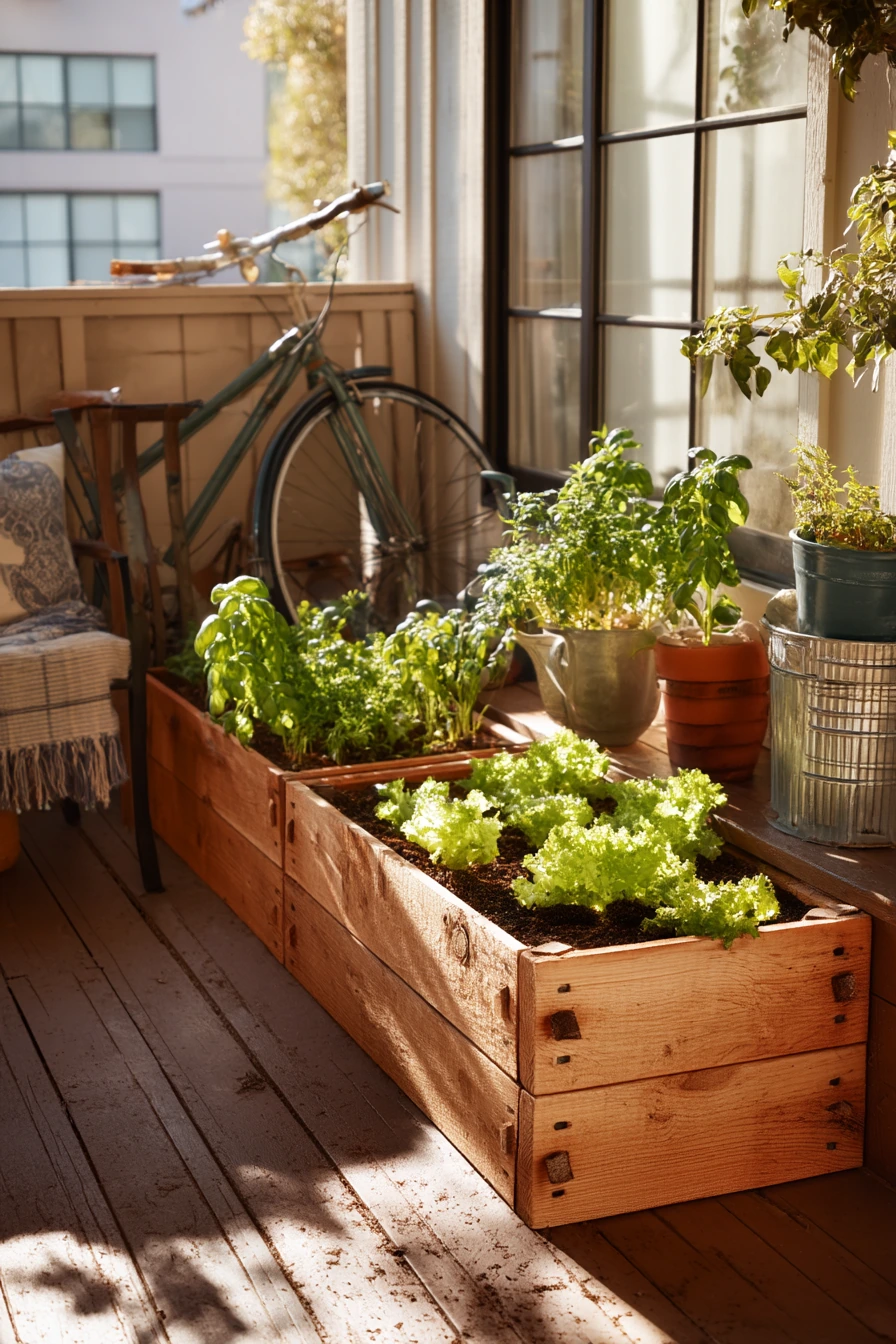
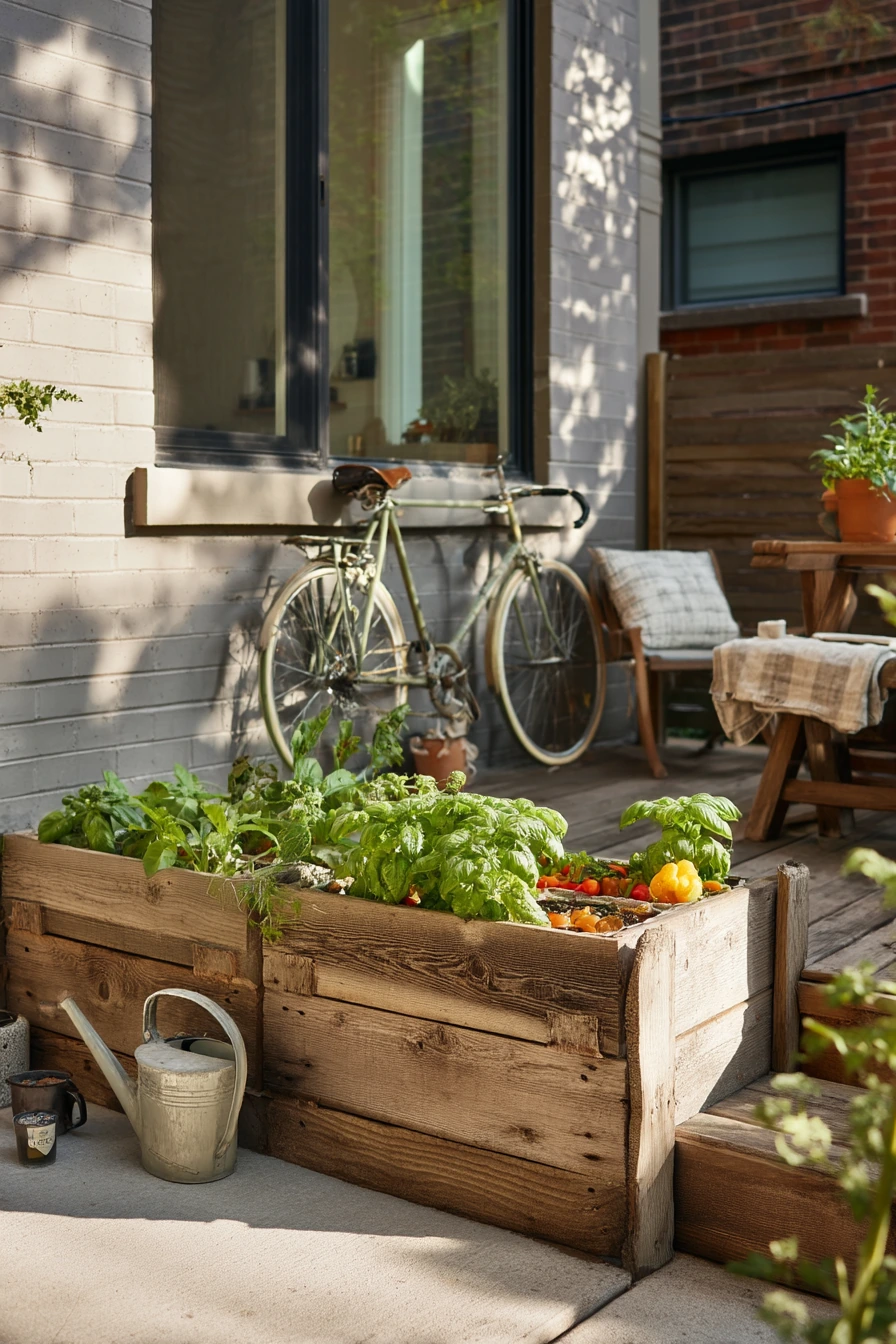
A narrow backyard can still fit inexpensive raised garden beds if you keep the layout simple. Rough cedar boards with basic corner brackets are a good choice because they are easy to cut, hold up well outdoors, and look clean next to a fence. Set the beds along the sunny edge of the lot so you keep a clear walking lane down the middle.
For plants, pick compact food crops that give a lot back. Basil, lettuce, and cherry tomatoes do well in small spaces, and they spill over the edges in a way that looks full. Place a galvanized watering can and a few clay pots nearby so you can water fast and start extra seedlings without clutter.
To style it like a lived-in home, lean a bicycle on the fence and keep a folded market tote on a chair for quick harvests. A mug on the step and soft window light from the kitchen make the space feel real, but the setup still stays practical. Keep the soil line about an inch below the top board so watering does not wash soil out.
- Build beds 12 to 18 inches deep for tomatoes and mixed greens.
- Use corner brackets and exterior screws to speed up assembly.
- Add cardboard under the bed to block weeds before filling.
- Keep a narrow path and use mulch or gravel to reduce mud.
- Group clay pots together so they look tidy and are easy to grab.
Pro Design Tip: Repeat one material, like cedar boards, in two spots, such as a bed edge and a small shelf, so the narrow yard feels organized.
Budget Considerations: Cedar costs more than pine, so save money by using cedar only for the visible top boards and a cheaper wood for the lower boards.
2 Budget Apartment Patio Garden Corner
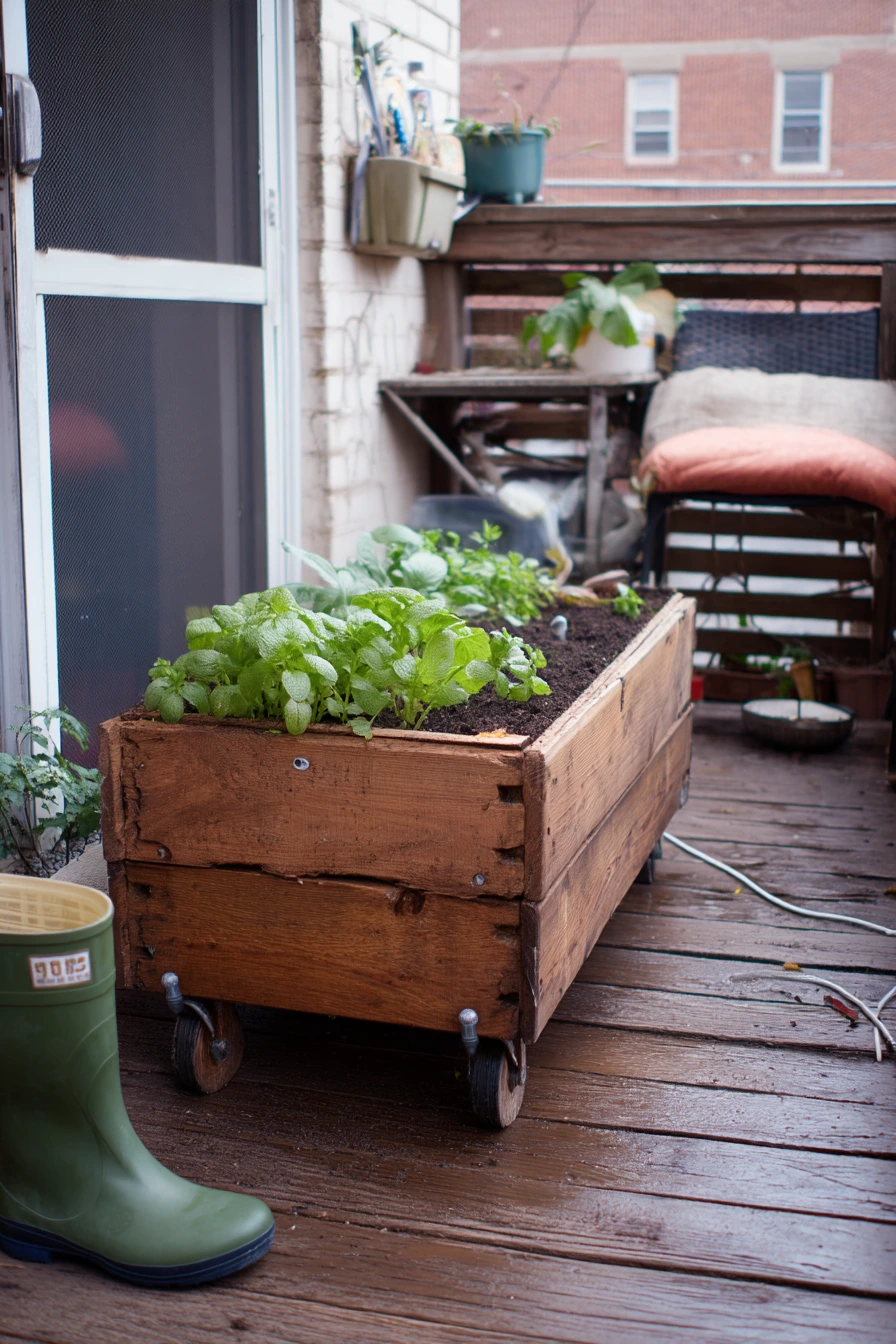
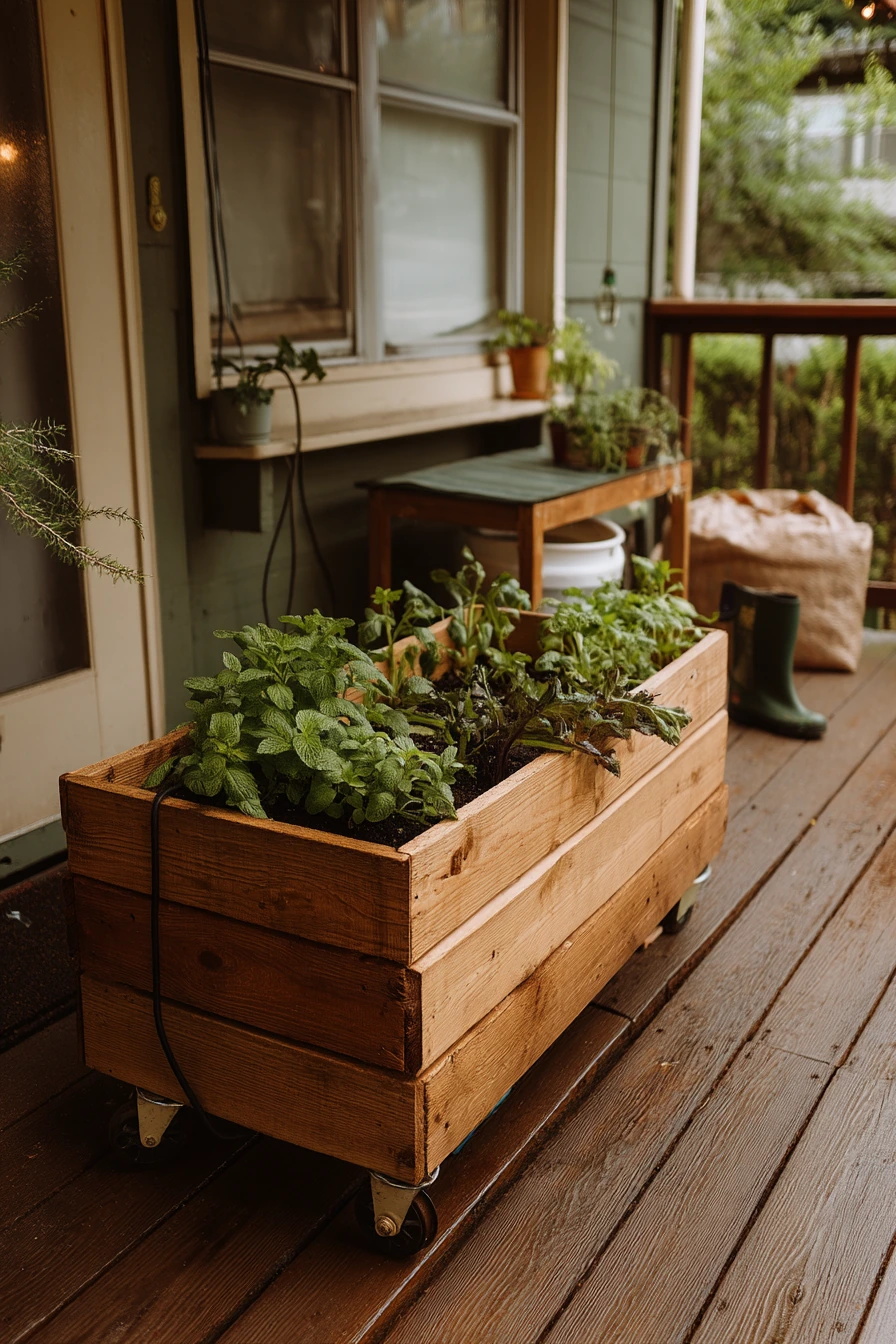
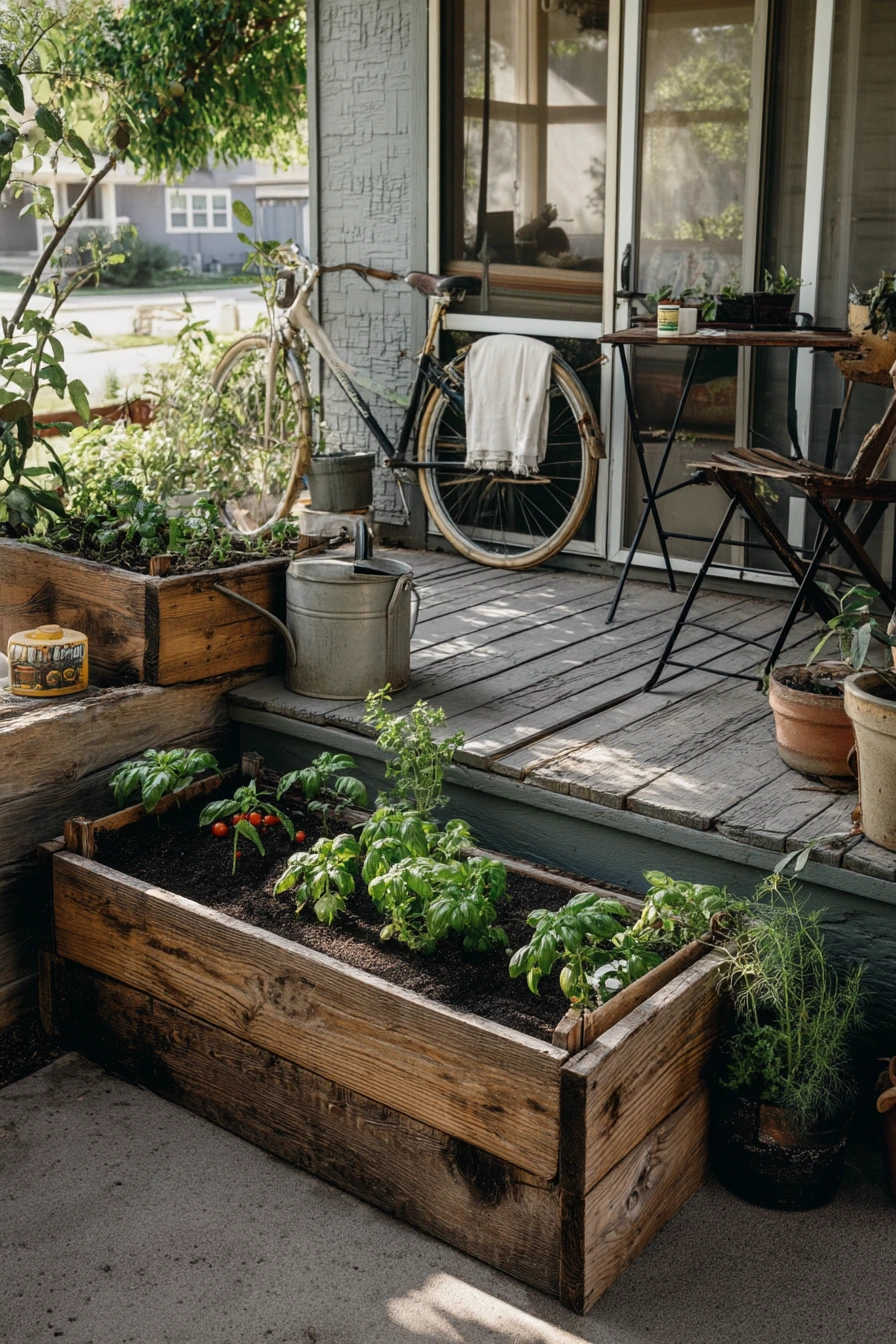
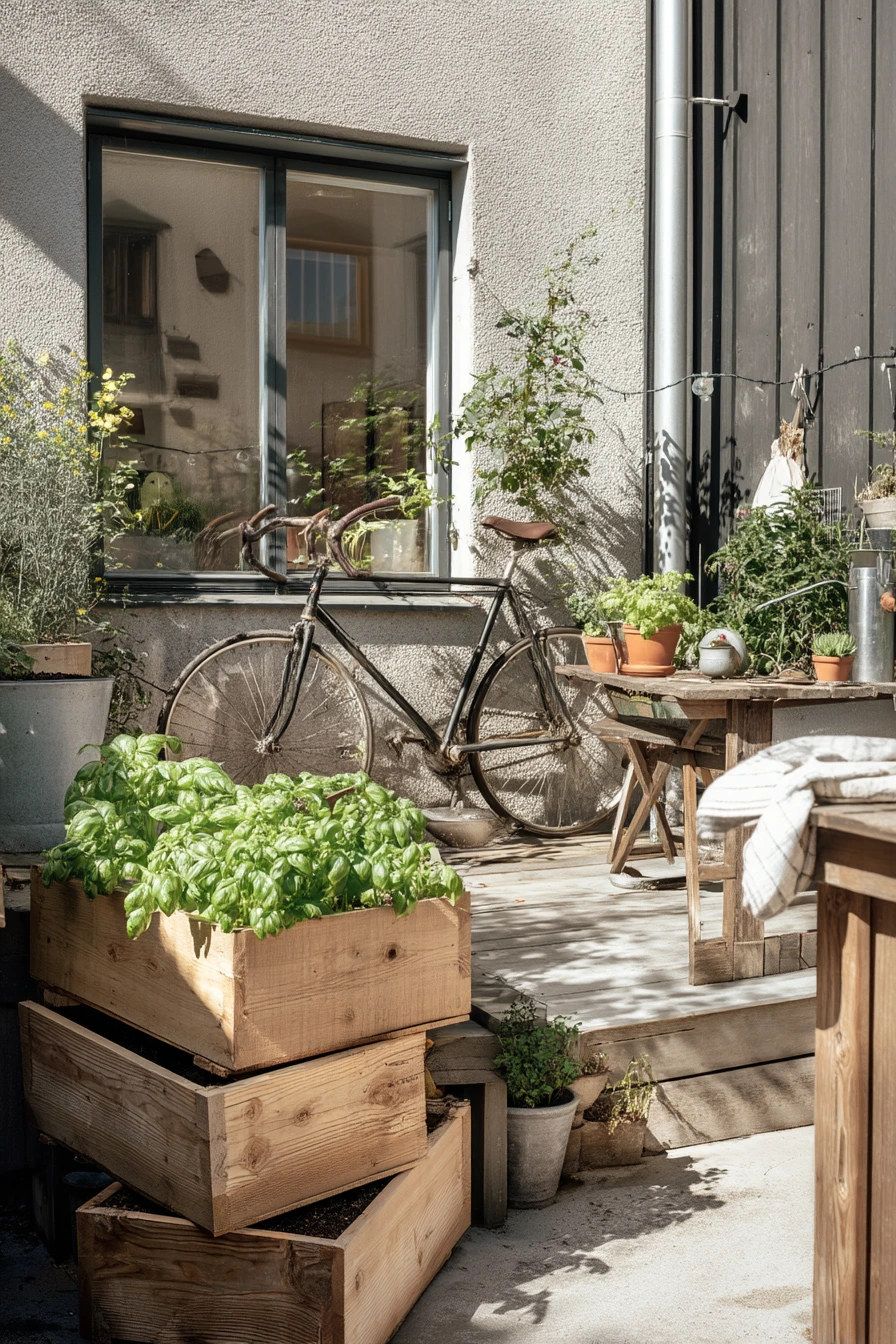
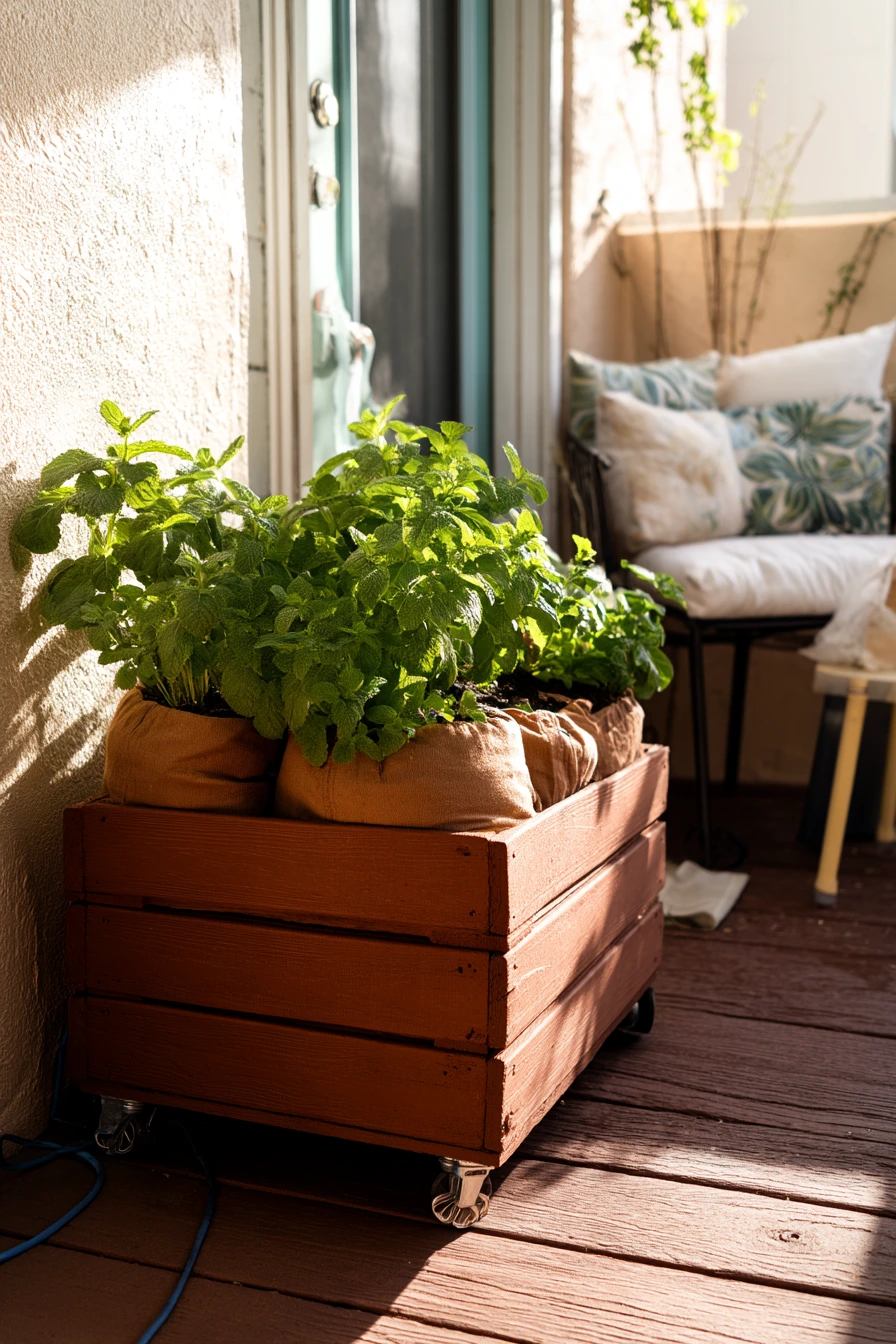
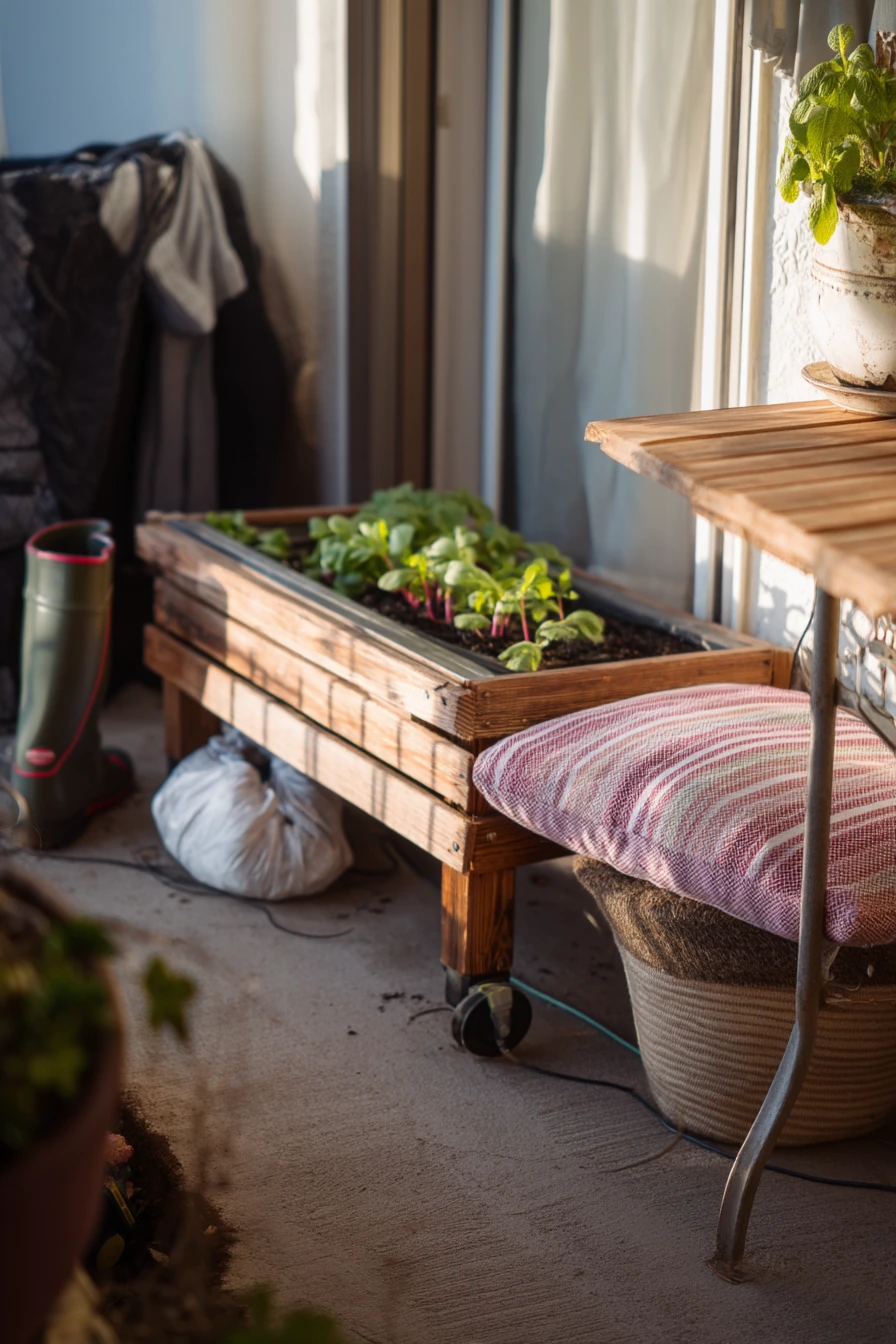
If you rent, a raised bed on casters is one of the easiest inexpensive raised garden bed ideas. A small bed made from thrifted wood slats can roll into the sun and back into shade. This helps you avoid drilling into walls or changing the patio surface. Use locking wheels so the bed stays in place when you water.
Mint and radishes are good picks for a compact patio setup. Mint grows fast, and radishes are quick to harvest, so you see results early. Keep potting soil bags tucked beside the bed so refills are simple, and store tools in a laundry basket by the door. A charging cable across the table and one rain boot by the step fits real life, but try to keep cords off the wet floor.
For a neat look, add one slightly wrinkled outdoor cushion on a chair and keep the rest minimal. Choose one pot color, like terracotta, and stick with it. Make sure the bed has drainage holes and a tray or mat under it if your patio needs protection. If the bed is shallow, grow greens, herbs, and smaller roots, not large tomatoes.
- Use a shallow bed for herbs and fast crops like radishes.
- Line the bottom with landscape fabric to hold soil in.
- Pick locking casters so the bed does not roll on slopes.
- Water in the morning to reduce mildew on a tight patio.
- Keep one basket for tools so the space stays renter-friendly.
Pro Design Tip: Roll the bed to the brightest corner and place one chair next to it so the patio looks like a small outdoor room.
Budget Considerations: Used wood slats can be free or low cost, but buy new casters since cheap wheels often fail under wet soil weight.
3 Kids’ Garden Strip Along the Fence
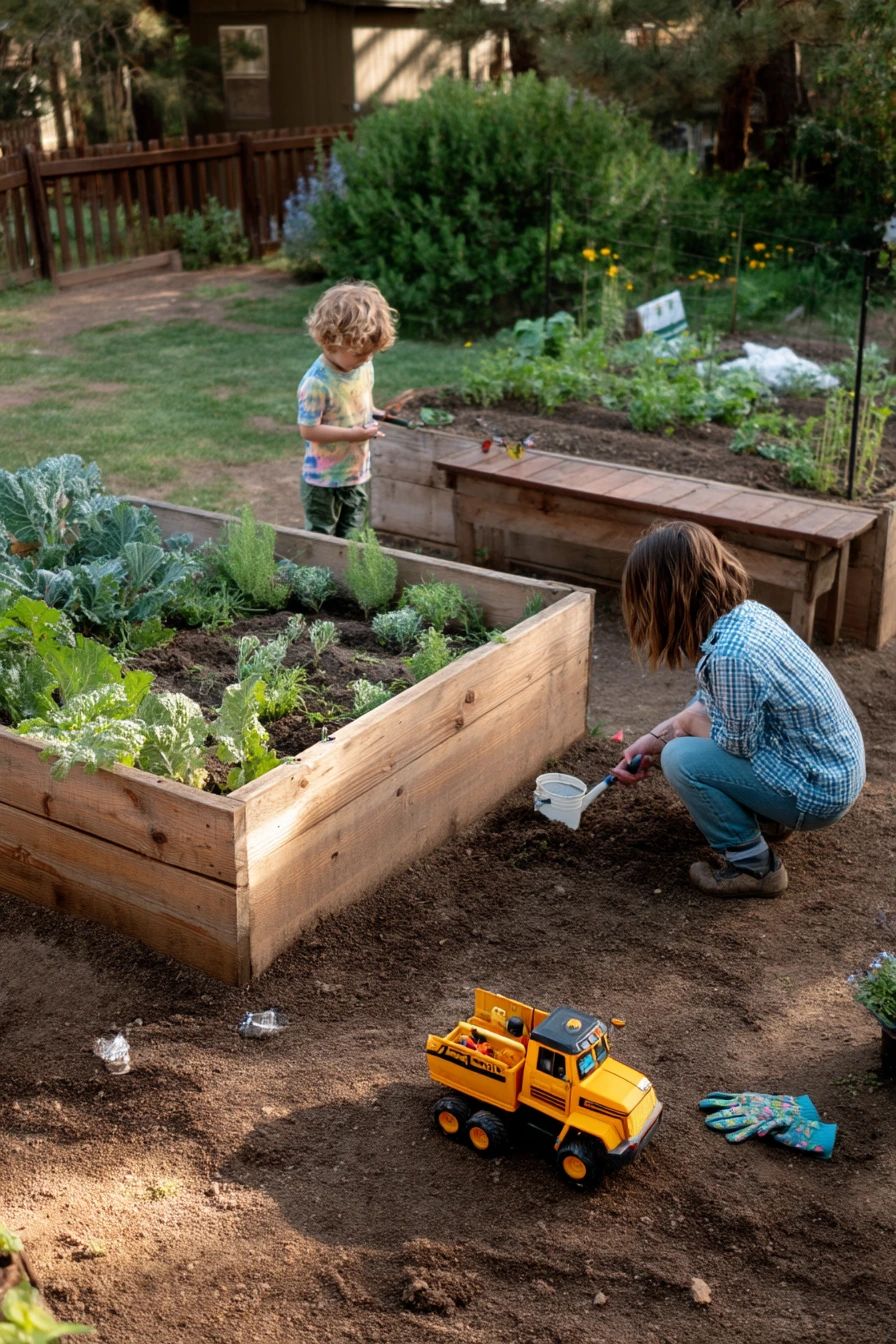
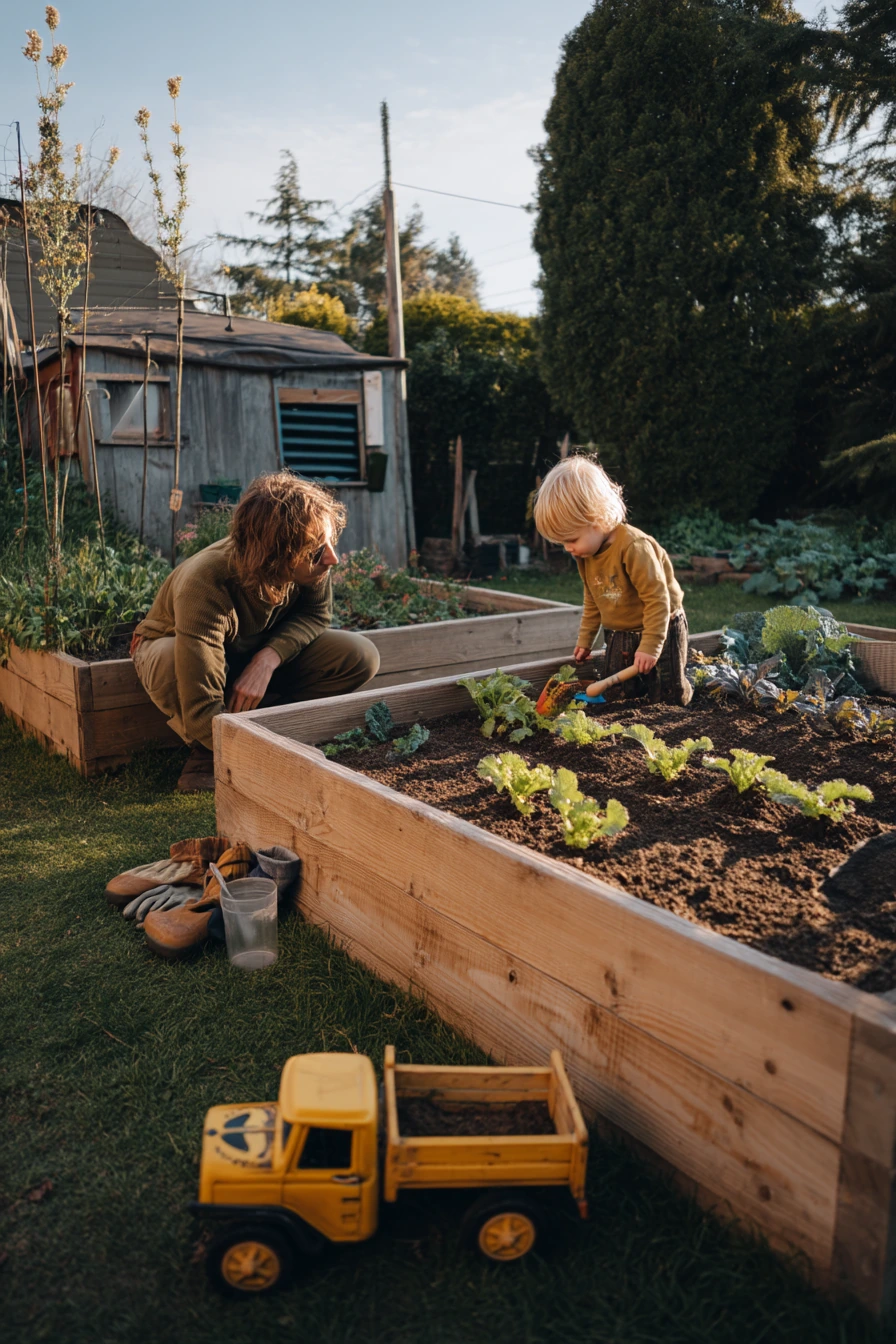
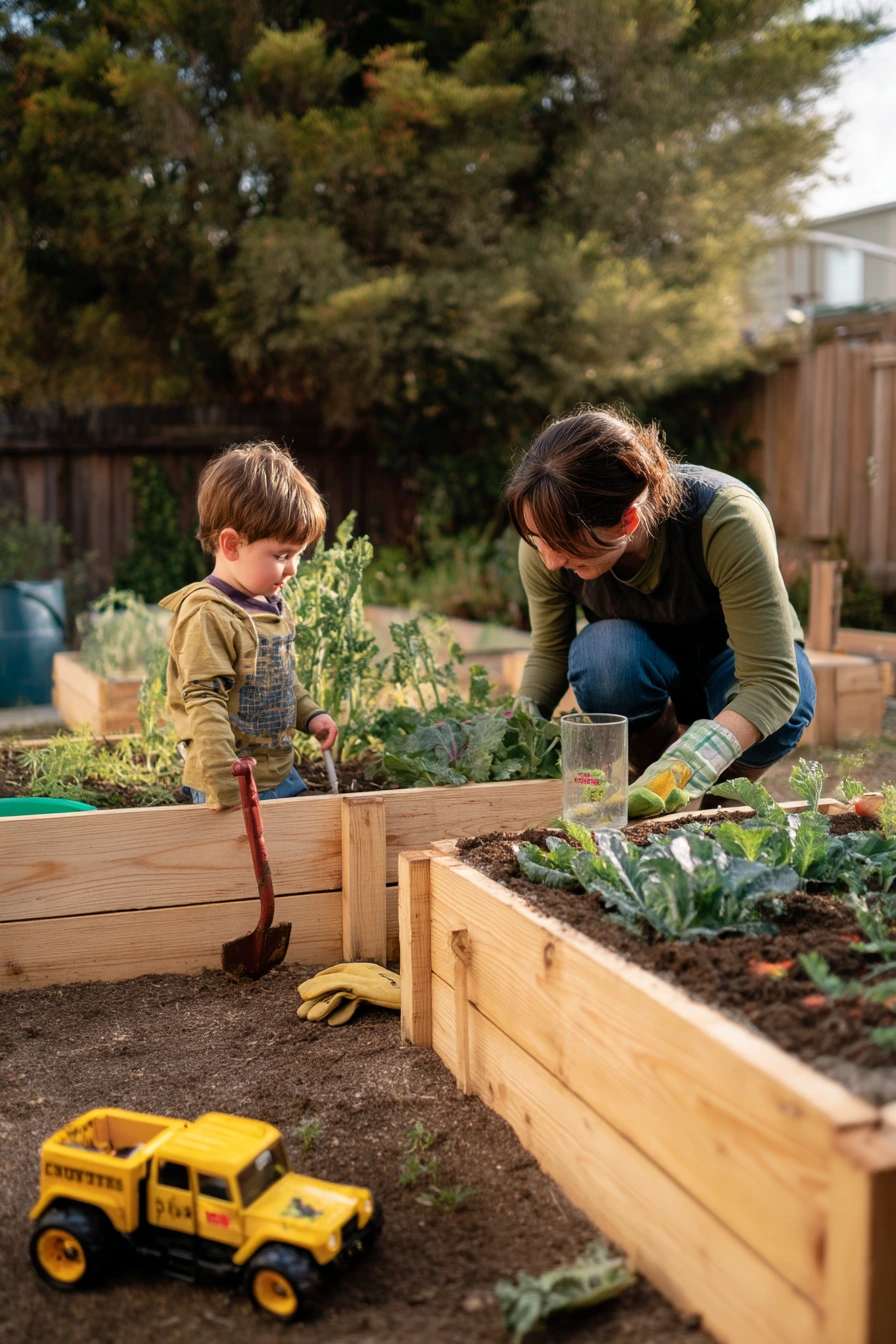
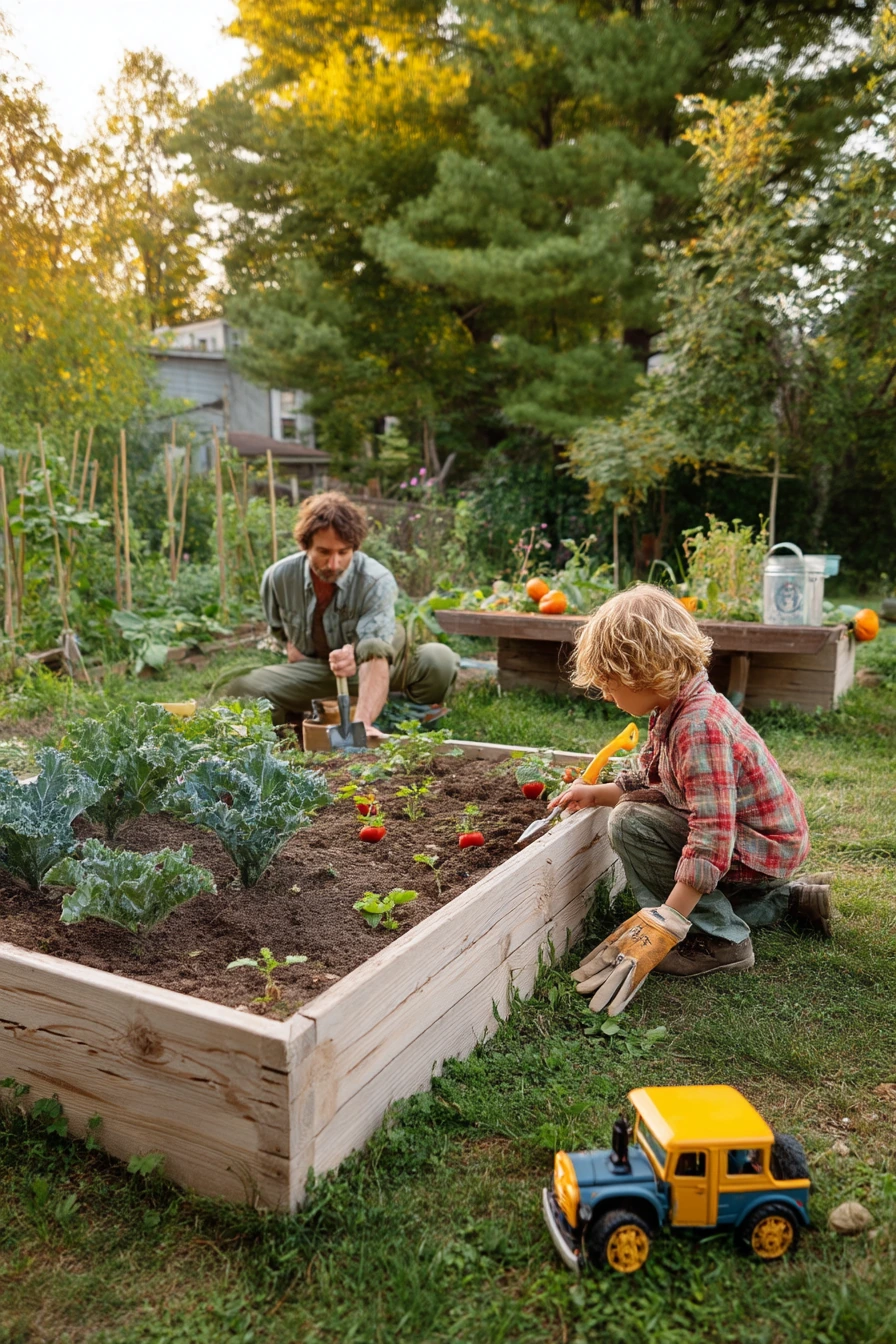
Painted pine is a common low-cost material for inexpensive raised garden bed ideas, especially for families. Two short beds are easier to manage than one long bed, and they give kids a clear place to help. Keep the height low so a child can reach the middle without stepping into the soil. A parent kneeling beside a child with a tiny shovel is not just cute, it is also a good reminder that access matters.
Plant a mix of strawberries, kale, and marigolds to keep the beds useful and colorful. Strawberries spill over edges and hide the soil line. Kale handles cooler weather and gives steady harvests. Marigolds bring bright color and can help with pests. Expect small messes like a spilled seed packet, toy truck in the grass, and gloves on the rail. Plan for it with a simple bench nearby to hold a water glass and tools.
Use a safe exterior paint or stain on the outside only, and keep the inside unpainted if you can. Add a thick layer of compost at planting time so the soil stays fertile without constant feeding. For styling, match the bed color to one backyard item, like a bench or fence panel, so it feels planned even with kid gear around.
- Build beds 10 to 12 inches tall for greens and strawberries.
- Paint only the exterior boards and let them cure before filling.
- Use mulch or straw under strawberries to keep fruit clean.
- Plant marigolds at corners for a simple, tidy border.
- Keep a small bin for seeds so packets do not blow away.
Pro Design Tip: Paint both beds the same color and align them with the lawn edge so the garden looks calm, even when toys are nearby.
Budget Considerations: Pine is affordable but rots faster, so extend life by adding a liner like landscape fabric and keeping boards off standing water.
4 Simple Front Walk Edible Beds
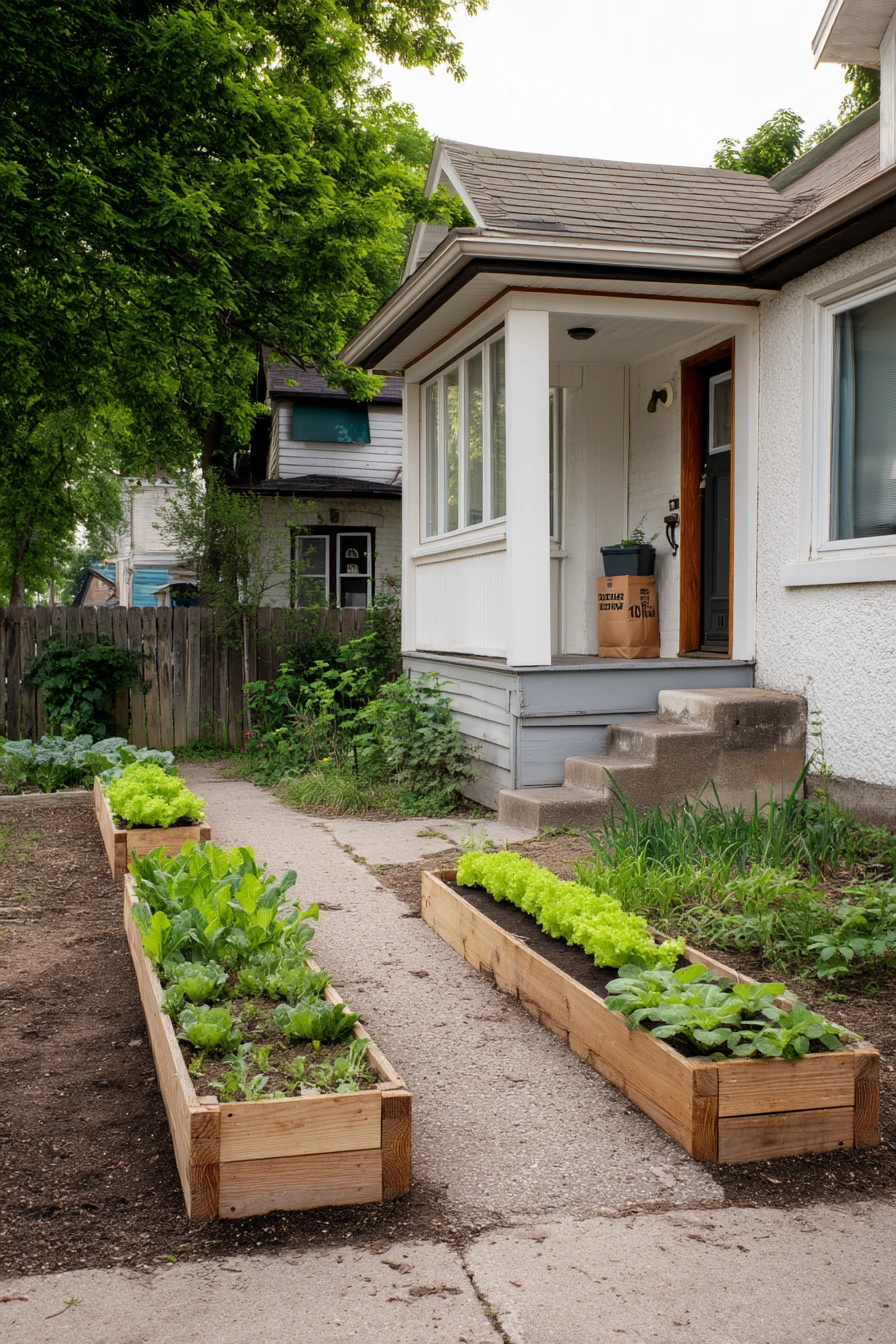
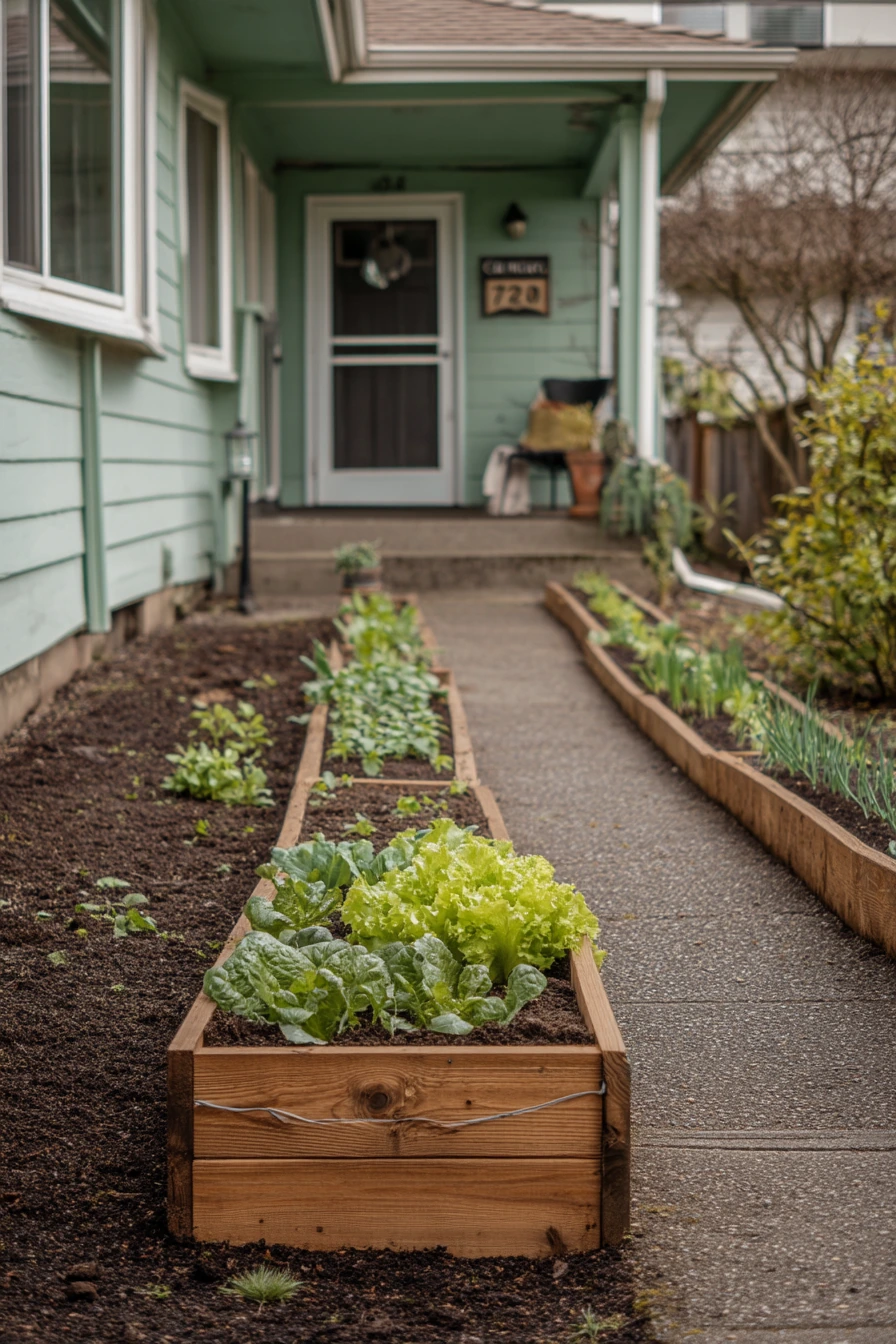
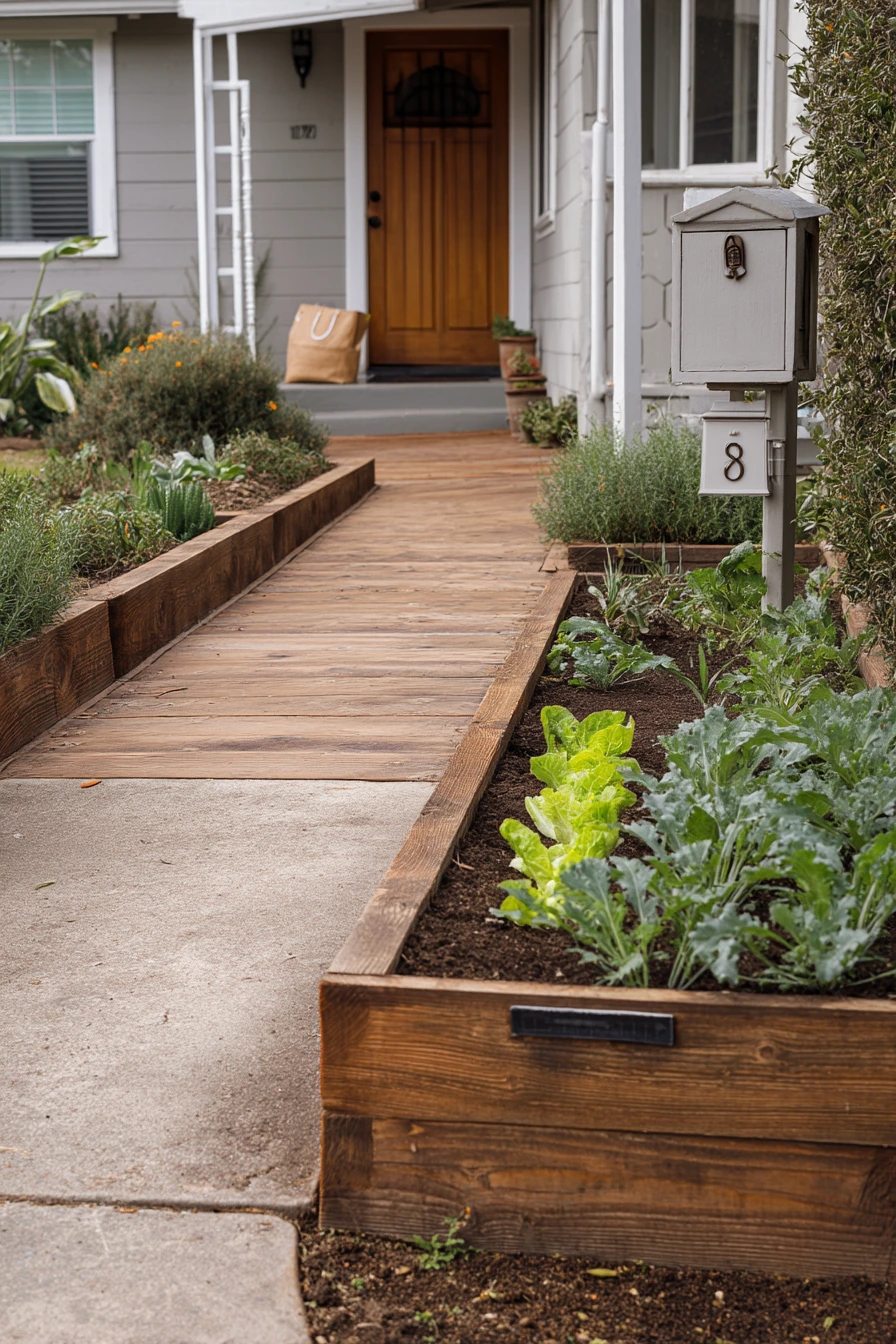
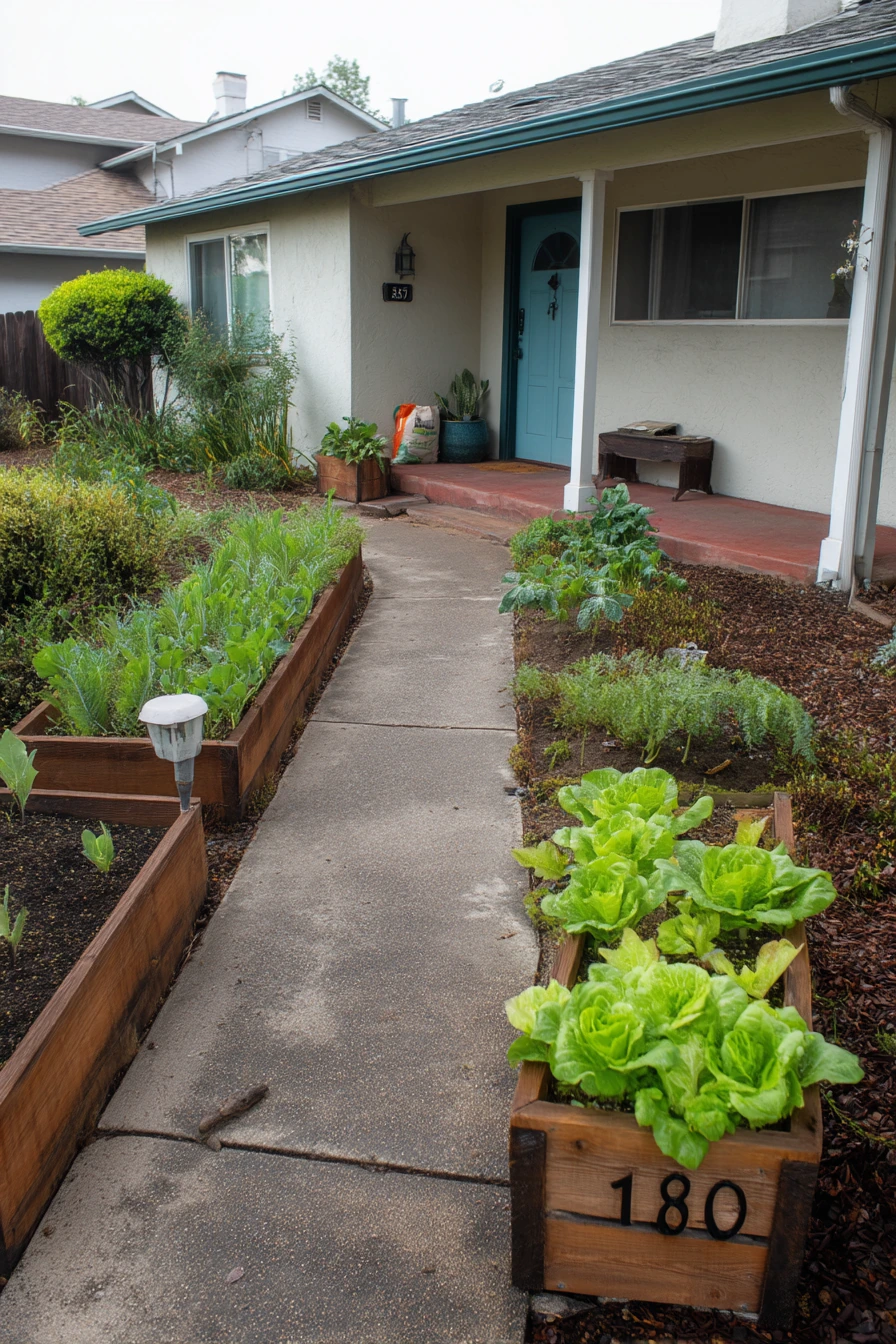
A front yard path is a smart place for slim inexpensive raised garden beds because the space is already a natural line. Use narrow beds bordering the walkway so you guide foot traffic and keep plants out of the path. Inexpensive lumber stained a soft cedar tone looks clean next to a mailbox and ceramic house numbers, and it can make the entry feel cared for without a full landscaping job.
Keep the planting plan simple and tidy. Herbs and lettuce in small clusters look neat from the street and are easy to cut for dinner. Add a few small solar lights so the border reads clearly at night. If you have a tipped planter or a grocery bag on the porch, it is a reminder to leave room for daily life, not just garden decor. Use a narrow drip line or a simple watering jug so you do not soak the walkway.
For curb appeal, repeat shapes and keep the color palette calm. One or two matching containers near the door is enough. Place keys on a side table inside, not on the garden edge, so the entry stays safe and uncluttered. Choose plants that can handle light shade if your front yard does not get full sun all day.
- Build beds 8 to 12 inches tall to keep the border low and safe.
- Stain boards for a warm look and better weather protection.
- Plant herbs in groups so the bed does not look busy.
- Add solar lights every few feet for a simple evening outline.
- Keep lettuce near the path for fast cut-and-come harvests.
Pro Design Tip: Match the stain tone to your house numbers or mailbox color so the walkway border looks intentional.
Budget Considerations: Solar lights can add up, so start with a small set at the corners and add more later as needed.
5 Weekend DIY Bed Build in Progress
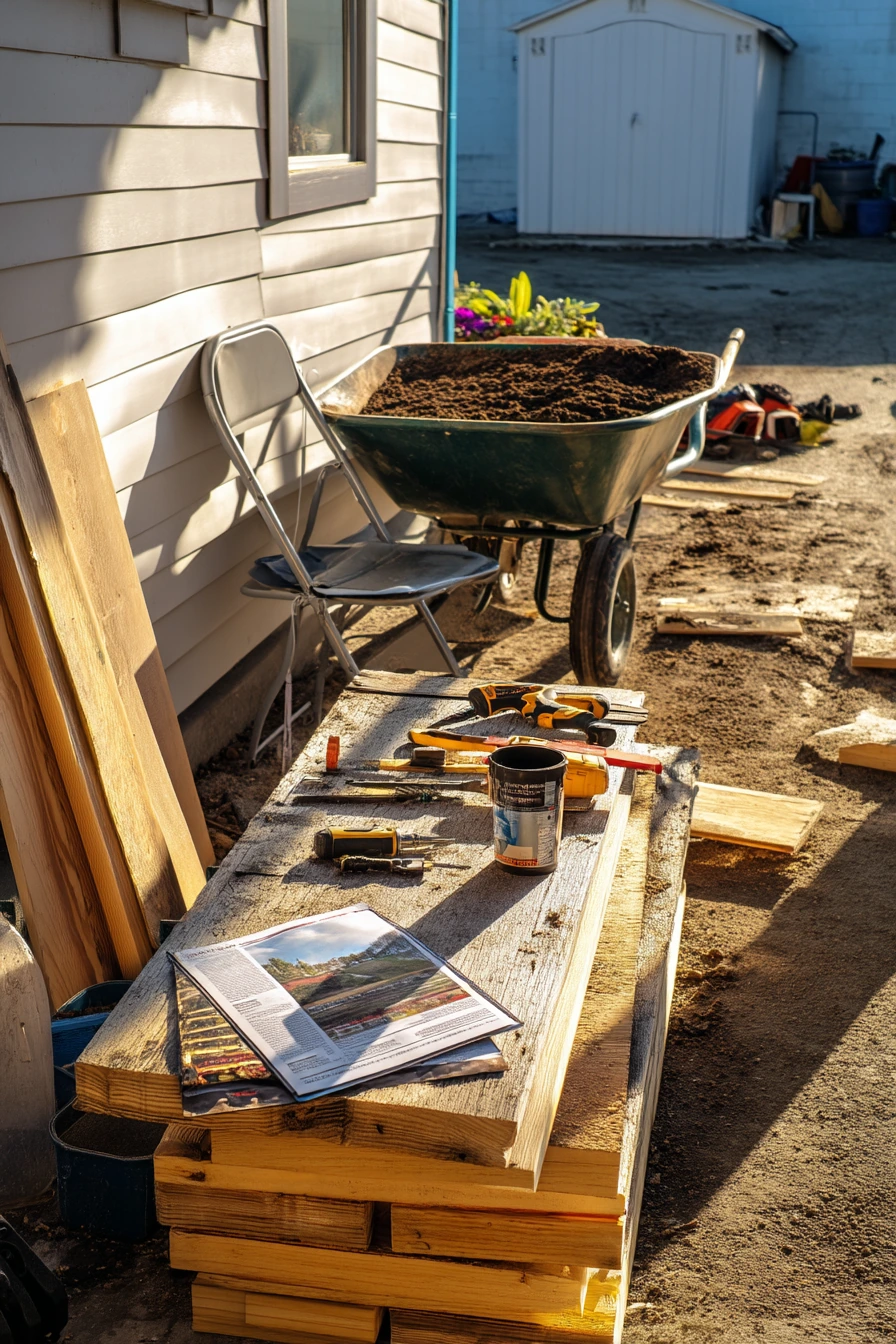
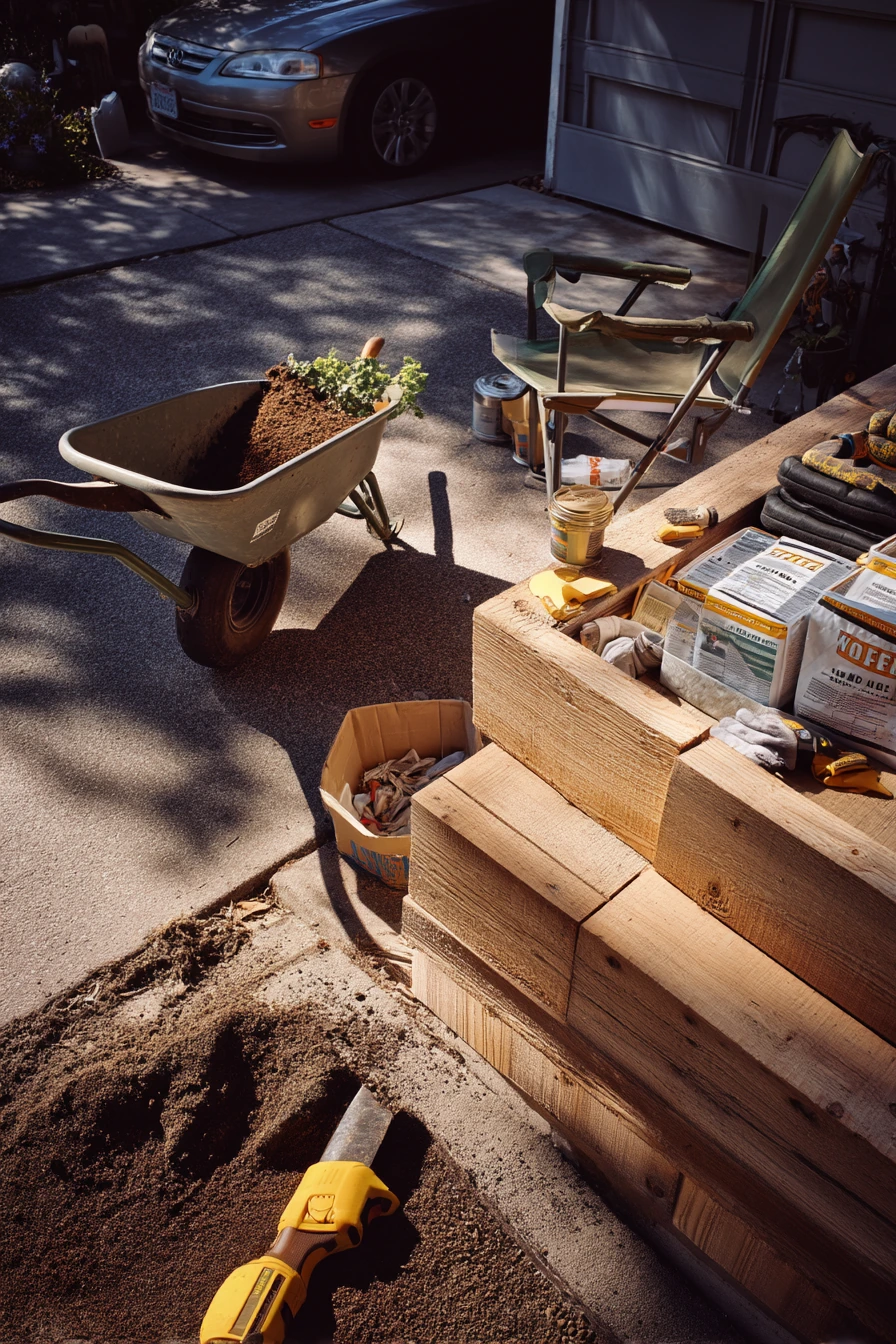
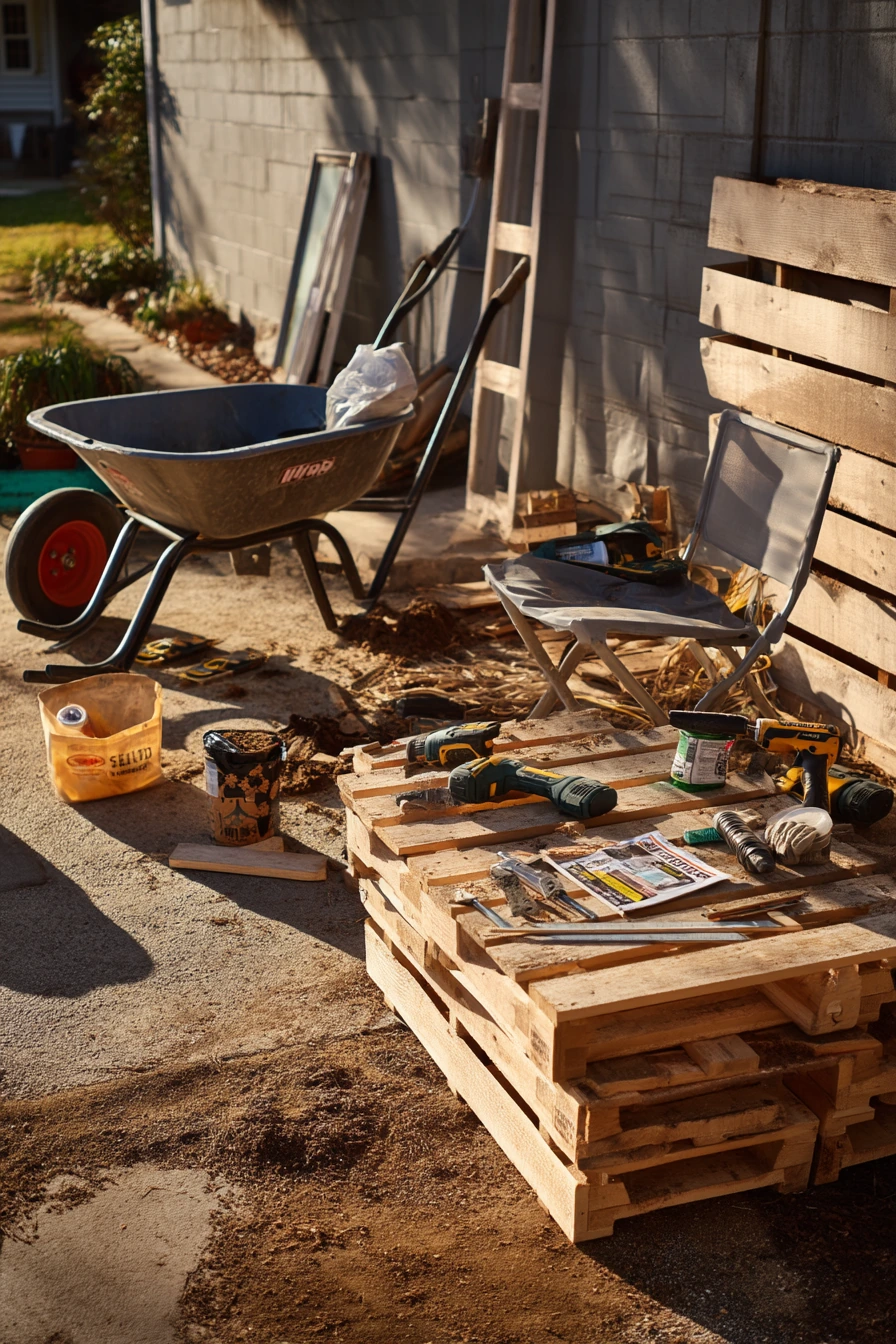
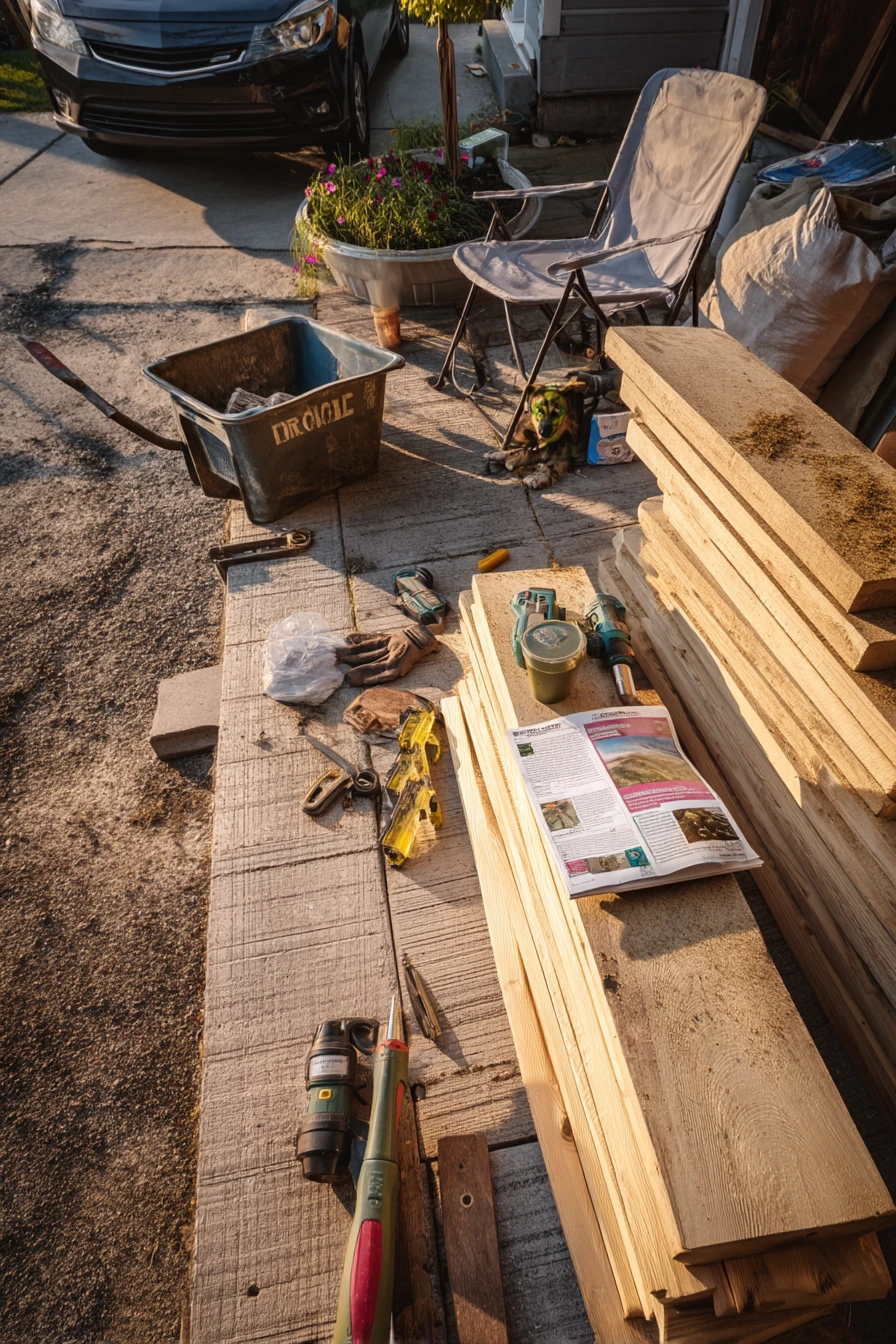
Many inexpensive raised garden bed ideas start in a driveway because it is flat and easy to work on. Stack boards near a wheelbarrow and keep your drill, screws, and measuring tape in one spot so you do not lose time. Sawdust will happen, so lay down a tarp if you want faster cleanup. A folding chair with a cold drink nearby makes it easier to take breaks and check measurements.
If you are building your first bed, keep it basic and square. A 4 by 8 foot bed is common, but you can go smaller if you need less soil. Use exterior-rated screws and pre-drill holes to reduce splitting. Keep your garden catalog or sketch open on a crate so you remember your planting plan while you build. Watch for small distractions like a dog toy near the garage, and keep cutting tools out of the way.
When the frame is done, move it to the final spot before you fill it with potting mix. Soil is heavy, and dragging a filled bed can damage the base. If you want the bed to last, add corner braces and a middle support board to stop bowing. For styling, store leftover screws and gloves in a small bin so the space looks clean when you take progress photos.
- Measure twice and cut once to avoid wasted boards.
- Use exterior screws and simple corner bracing for strength.
- Add a center support for beds longer than 6 feet.
- Move the empty frame to its final spot before filling.
- Keep tools in one tote so the driveway stays safe.
Pro Design Tip: Build two matching beds at once so the yard looks balanced and you save time on repeated cuts.
Budget Considerations: Buying screws, brackets, and a saw blade can cost more than expected, so check what you already own and borrow tools when possible.
6 Rental-Friendly Deck Garden Setup
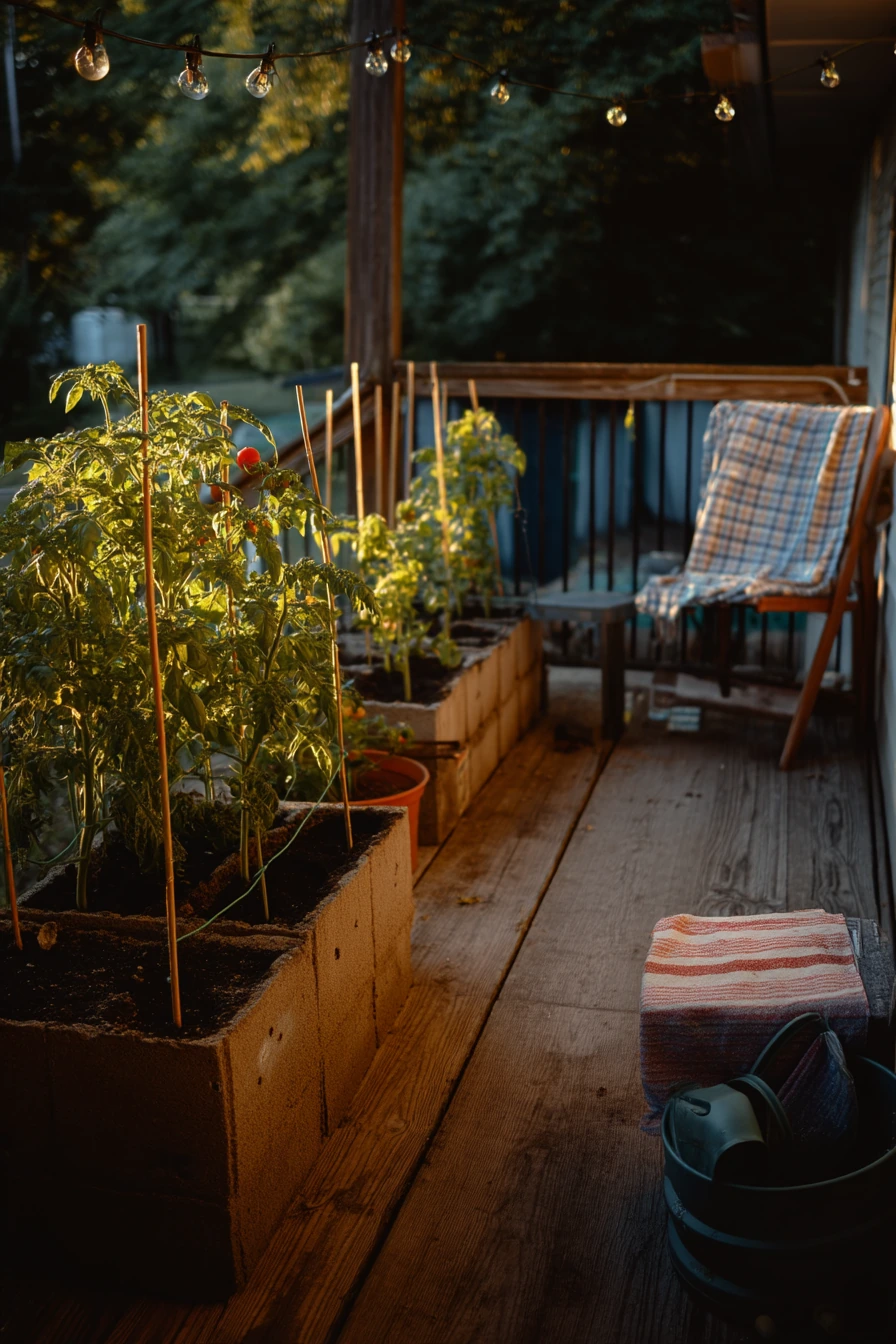
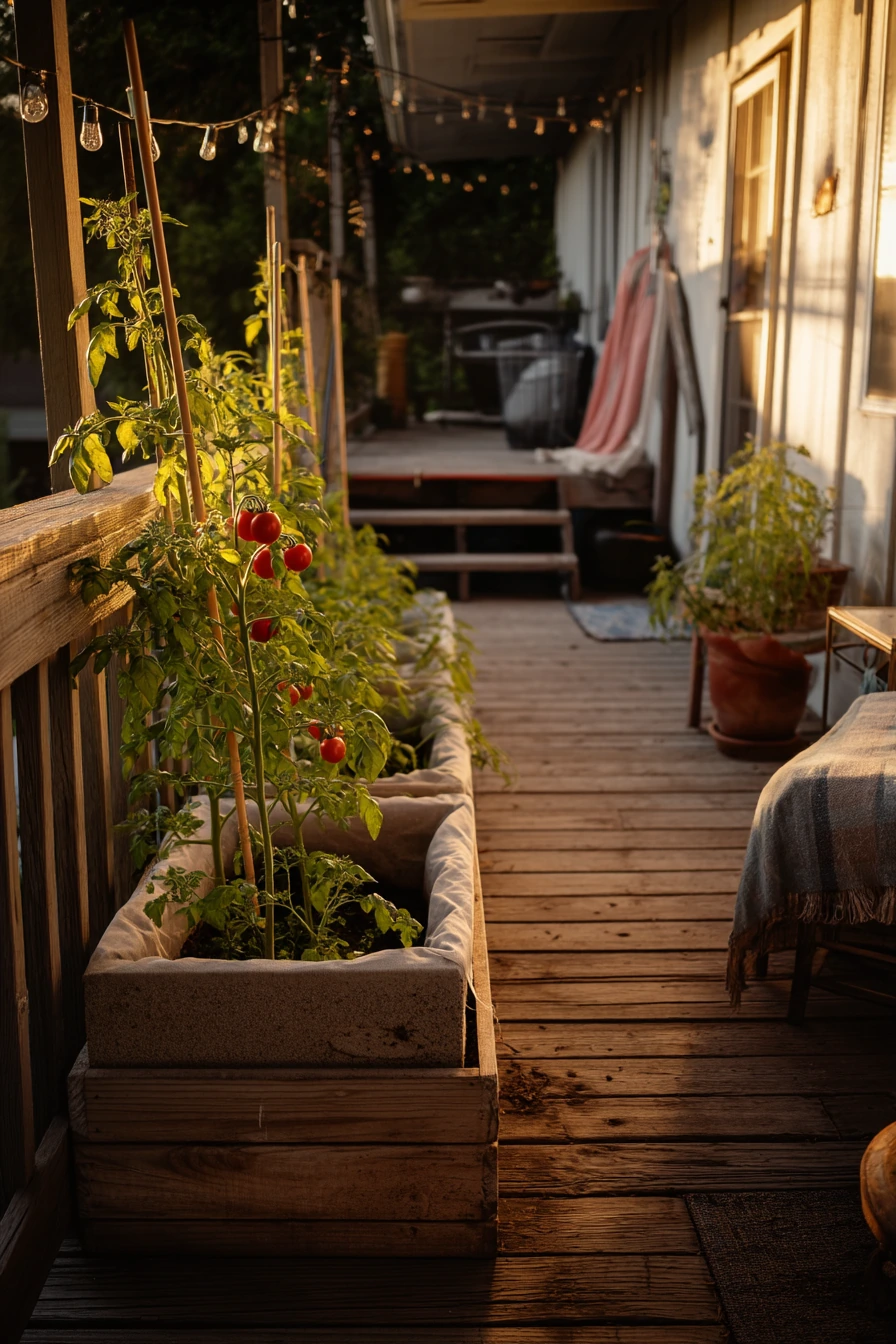
A rental deck can handle garden space if you choose portable inexpensive raised garden beds. Cinder blocks are budget-friendly and easy to move later. You can set them in a rectangle and place boards across the top, or you can use blocks as the sides and fill the center with soil inside a lined frame. Landscape fabric helps keep soil from washing out and protects the deck surface.
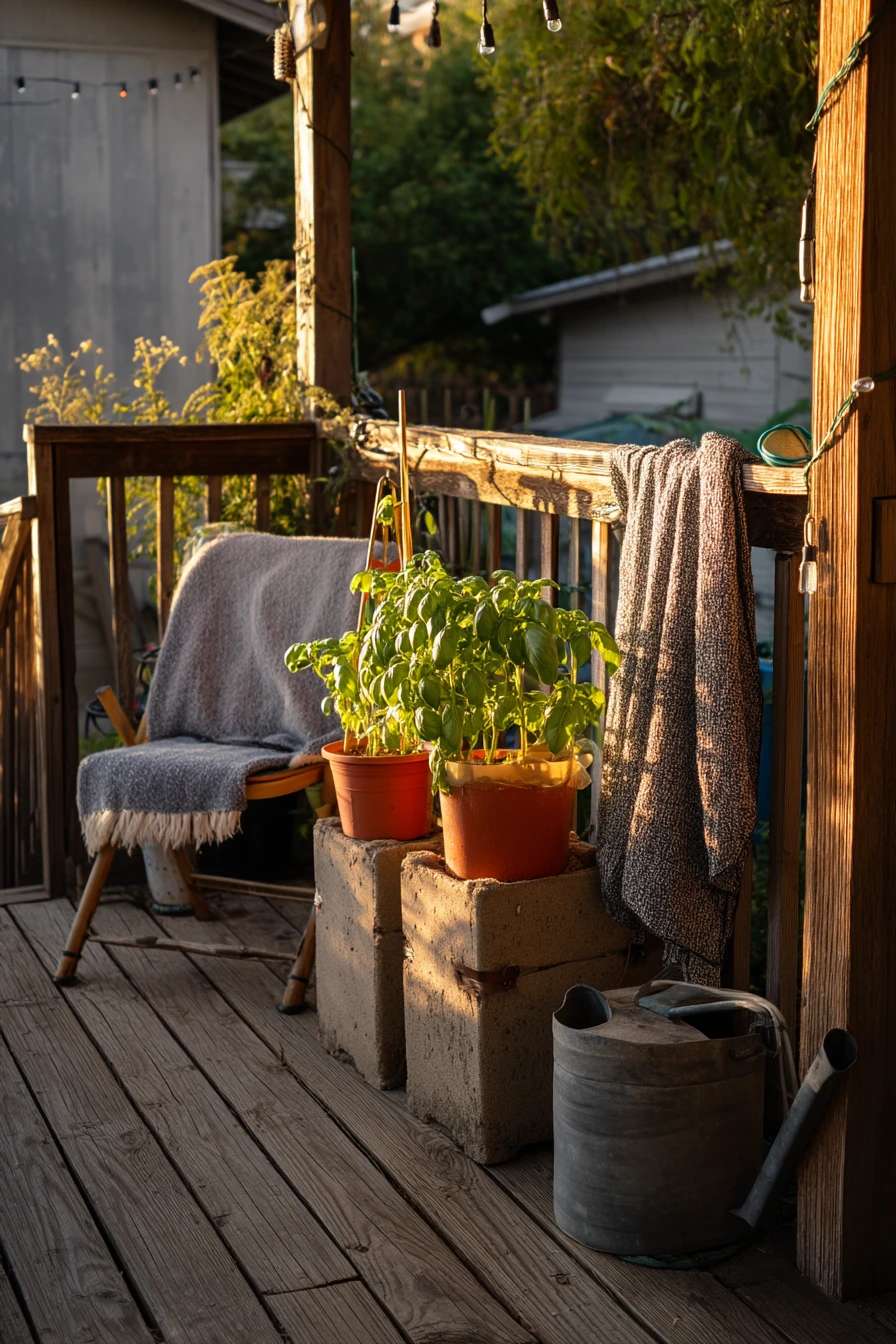
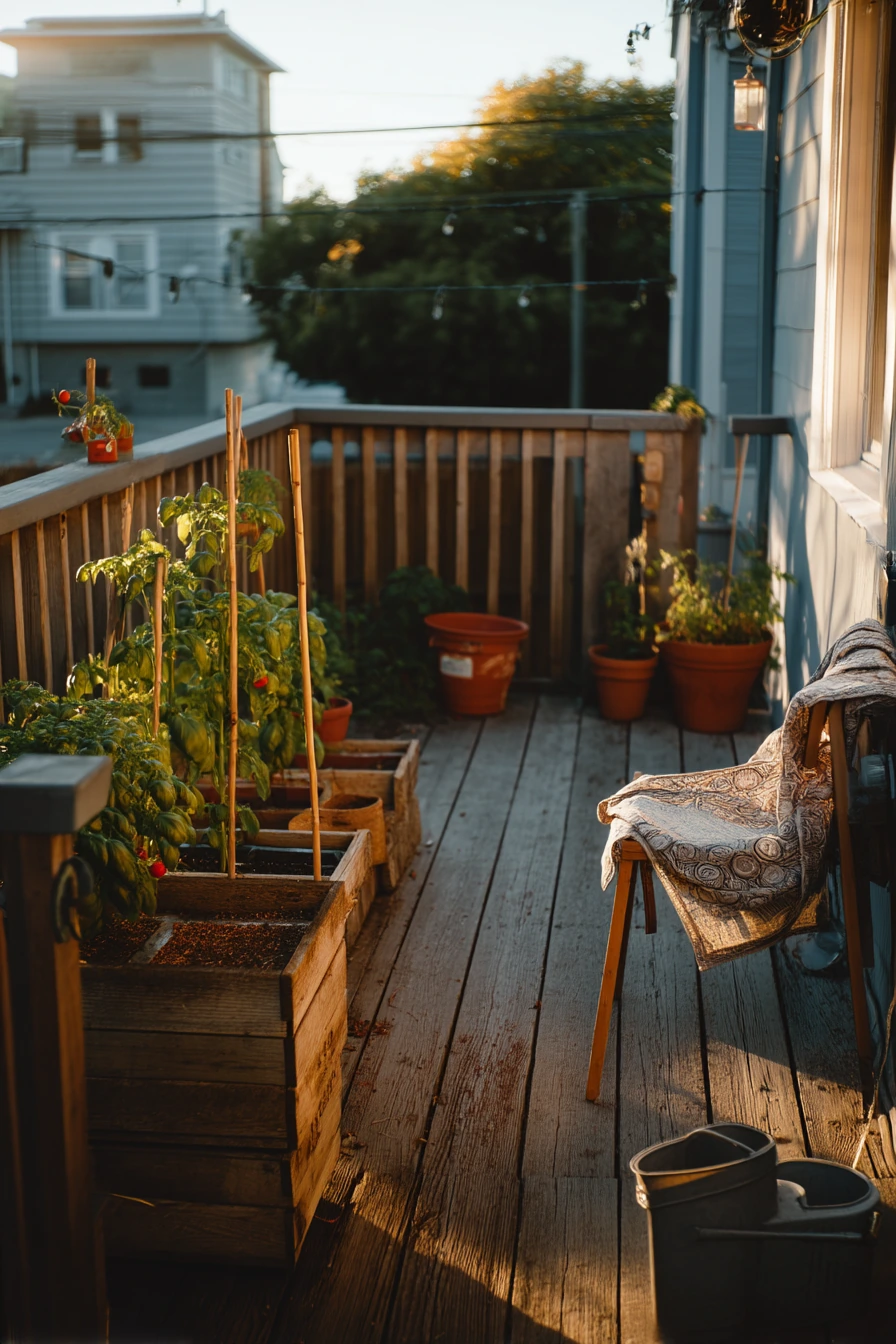
Tomatoes on bamboo stakes and basil in terracotta are a solid combo for a deck because they smell good and are useful in meals. Keep a watering can by the stairs so you do not forget daily watering in summer. If you have string lights on the railing, even unplugged, they add a soft look in the evening. A folded throw blanket on a chair makes the space feel like a place you actually sit, not just a plant station. Keep the phone charger hanging from the outlet up high so it stays dry.
Watch the weight. Wet soil is heavy, and decks have limits. Use a lighter potting mix and do not oversize the bed. Make sure water drains away from the house, and use saucers or a waterproof mat if needed. For styling, keep the blocks in straight lines and use matching stakes so the plant supports look tidy.
- Use landscape fabric to line the bed and protect the deck.
- Choose bamboo stakes for tomatoes to keep costs low.
- Keep herbs in terracotta for a simple, classic look.
- Use a waterproof mat under the bed if your deck needs it.
- Limit bed size to reduce weight on the structure.
Pro Design Tip: Align the cinder blocks with deck boards so the setup looks built-in, even though it is portable.
Budget Considerations: Cinder blocks are cheap, but delivery fees can be high, so buy from a store with pickup or look for local extras.
7 Back Fence Kitchen Garden on a Budget
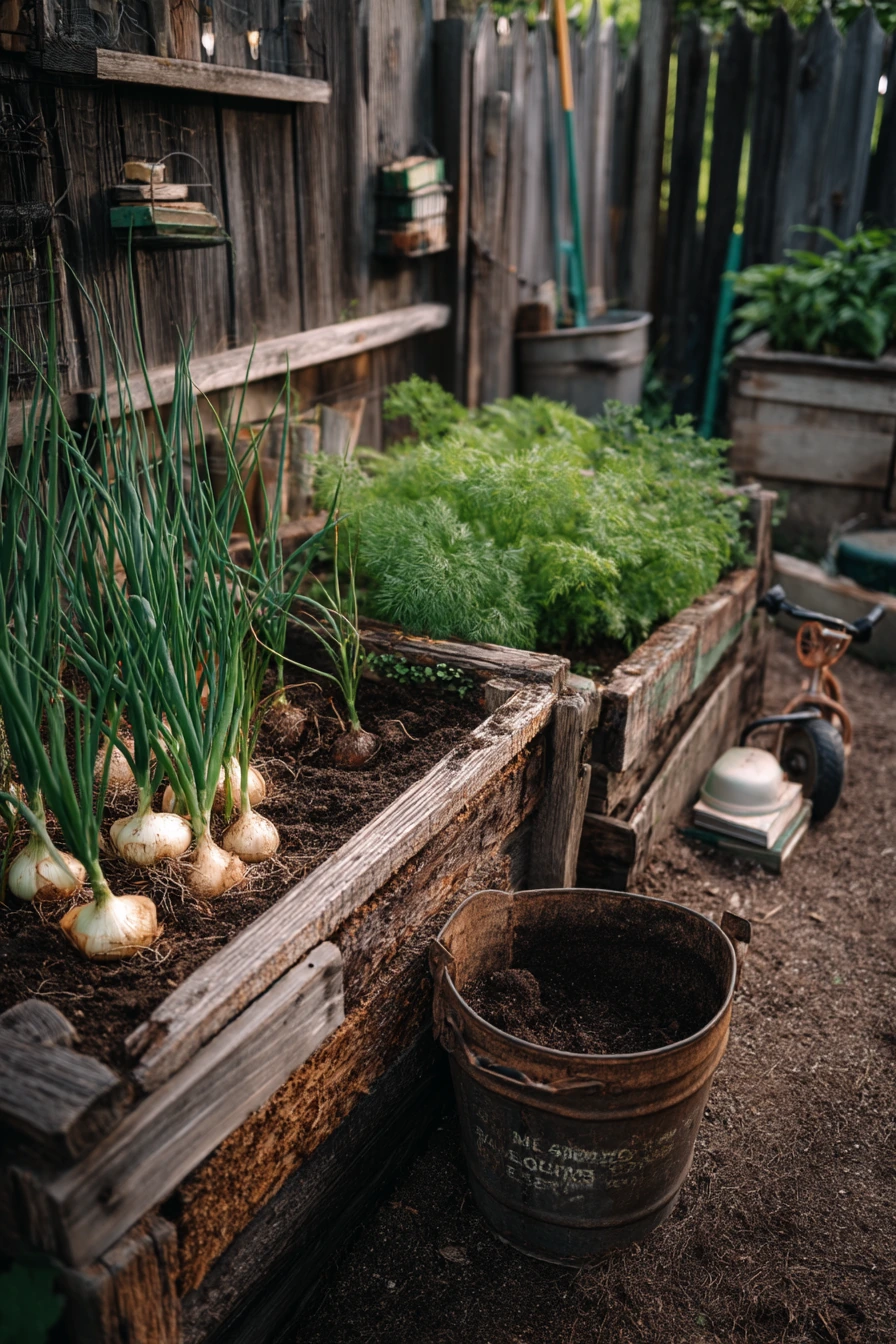
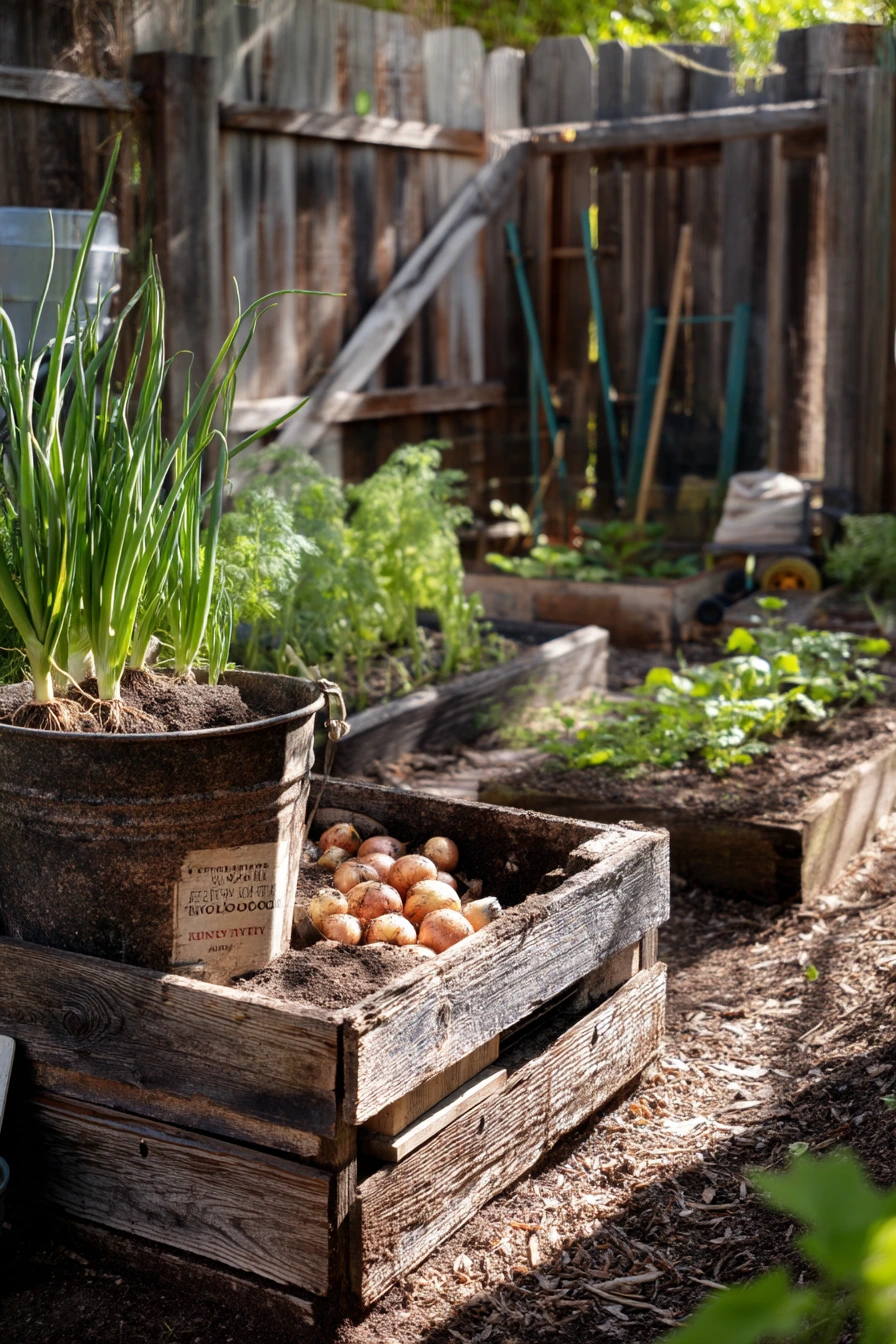
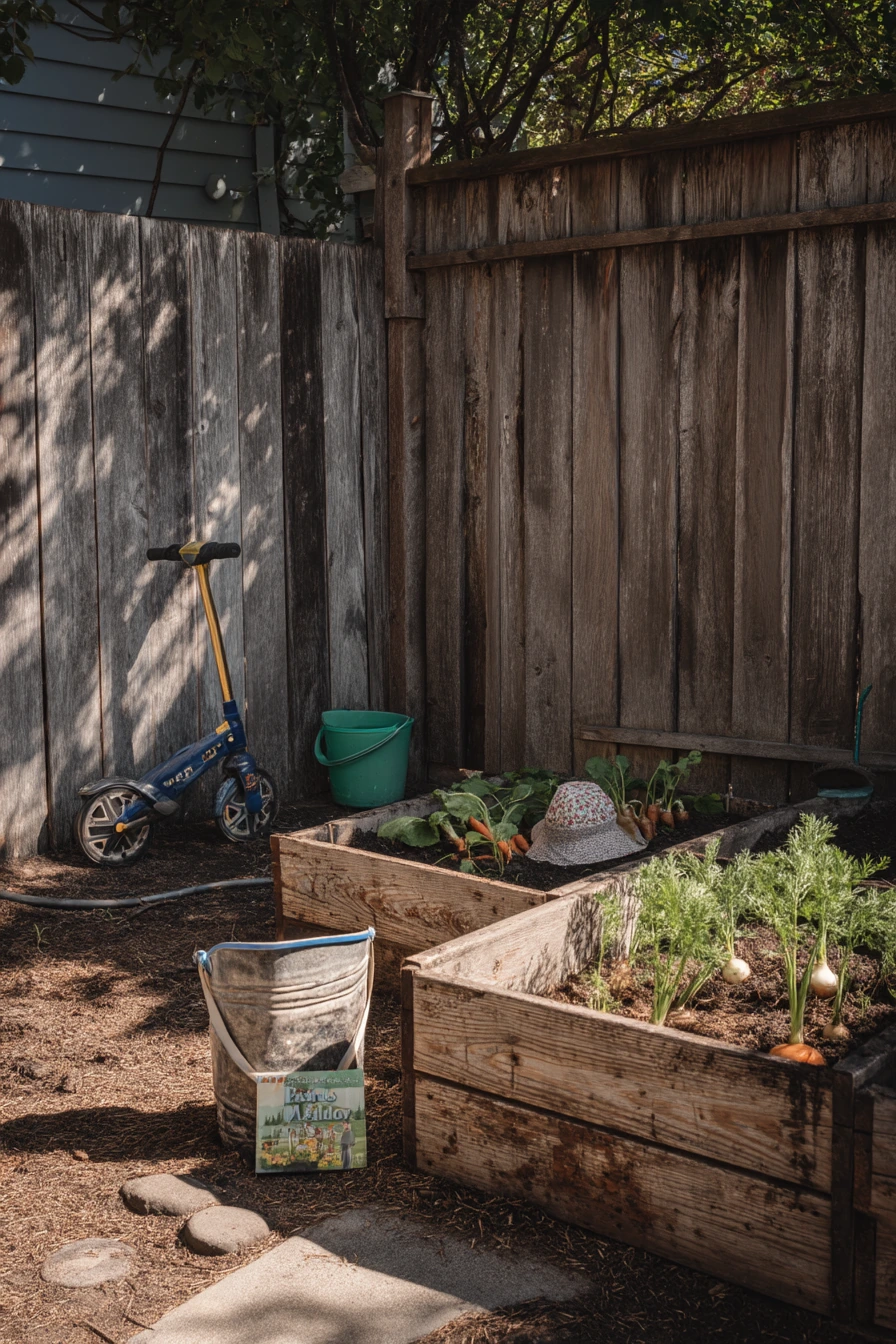
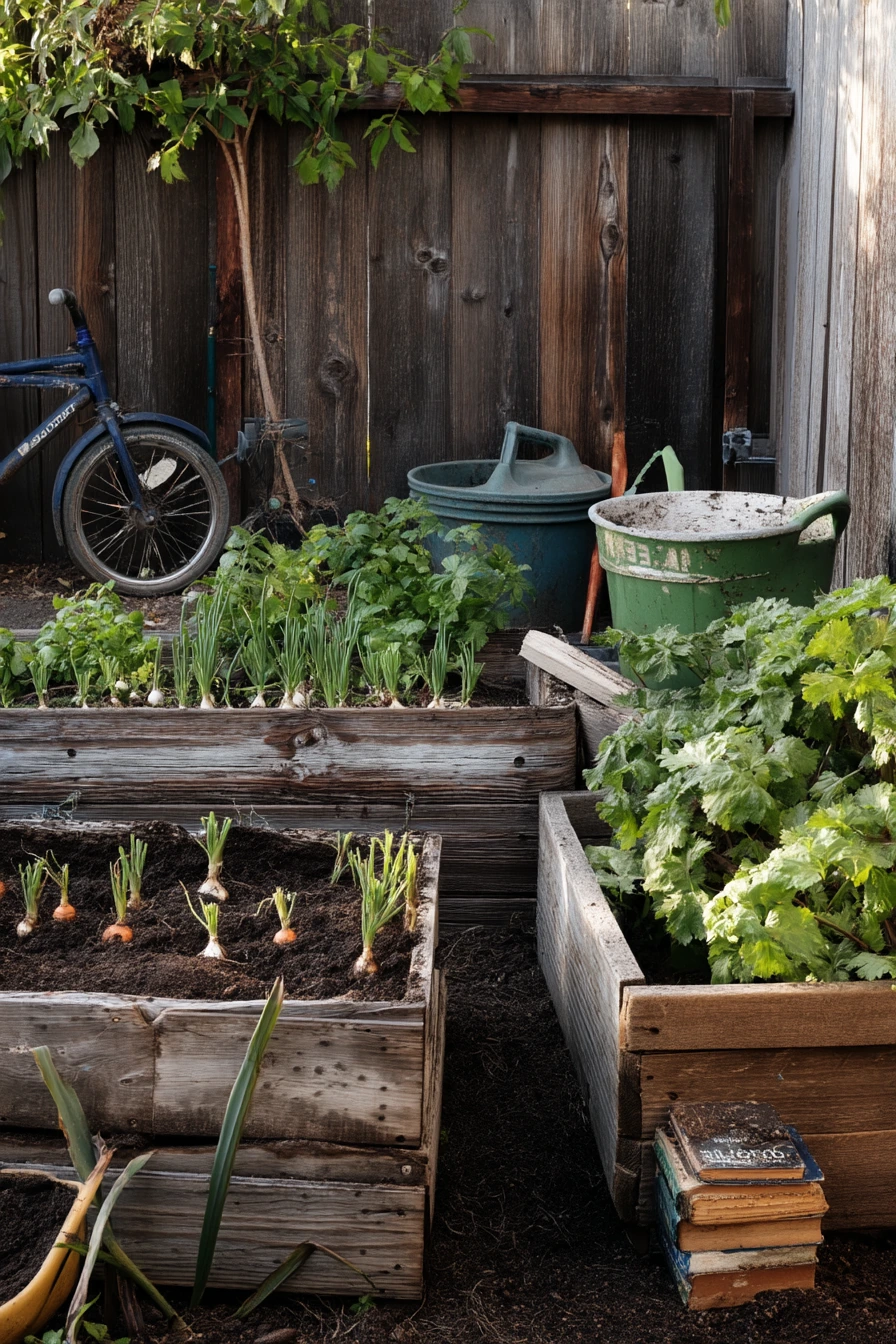
Reclaimed wood is one of the best inexpensive raised garden bed ideas when you have a fence line to work with. Three low beds assembled from old boards can fill an awkward strip of yard and make it productive. The fence also helps block wind and gives you a spot to hang a hose or tools. Keep bed height low if your boards are thin, since taller beds need stronger lumber.
Onions, carrots, and parsley grow well in simple rows and do not need fancy supports. Add a compost bucket nearby so kitchen scraps have a place to go. A hose coiled near a bucket makes watering easier and keeps the yard from looking messy. If you like to spend time outside, a paperback book on an upturned crate and a garden hat with soil marks fits the space. Kids gear like a scooter near the gate can stay, but keep the path clear so you can bring in compost and soil.
Before building, check reclaimed boards for nails, rot, and old paint. Sand rough edges so you do not get splinters. If you are not sure about the wood history, line the inside with landscape fabric and grow food crops in a separate soil bag layer. For styling, repeat one detail, like black screws or metal corner plates, across all three beds for a more finished look.
- Inspect reclaimed boards and remove old nails before building.
- Keep beds low if wood is thin or weathered.
- Line with landscape fabric if wood history is unknown.
- Plant root crops in looser soil and thin seedlings early.
- Store compost and hose in one corner for a cleaner yard line.
Pro Design Tip: Use the same height and spacing for all three beds so the fence line looks even and calm.
Budget Considerations: Reclaimed wood can be free, but plan for extra screws, sanding paper, and a liner to make it safe and sturdy.
8 Small-Space Balcony Herb Beds
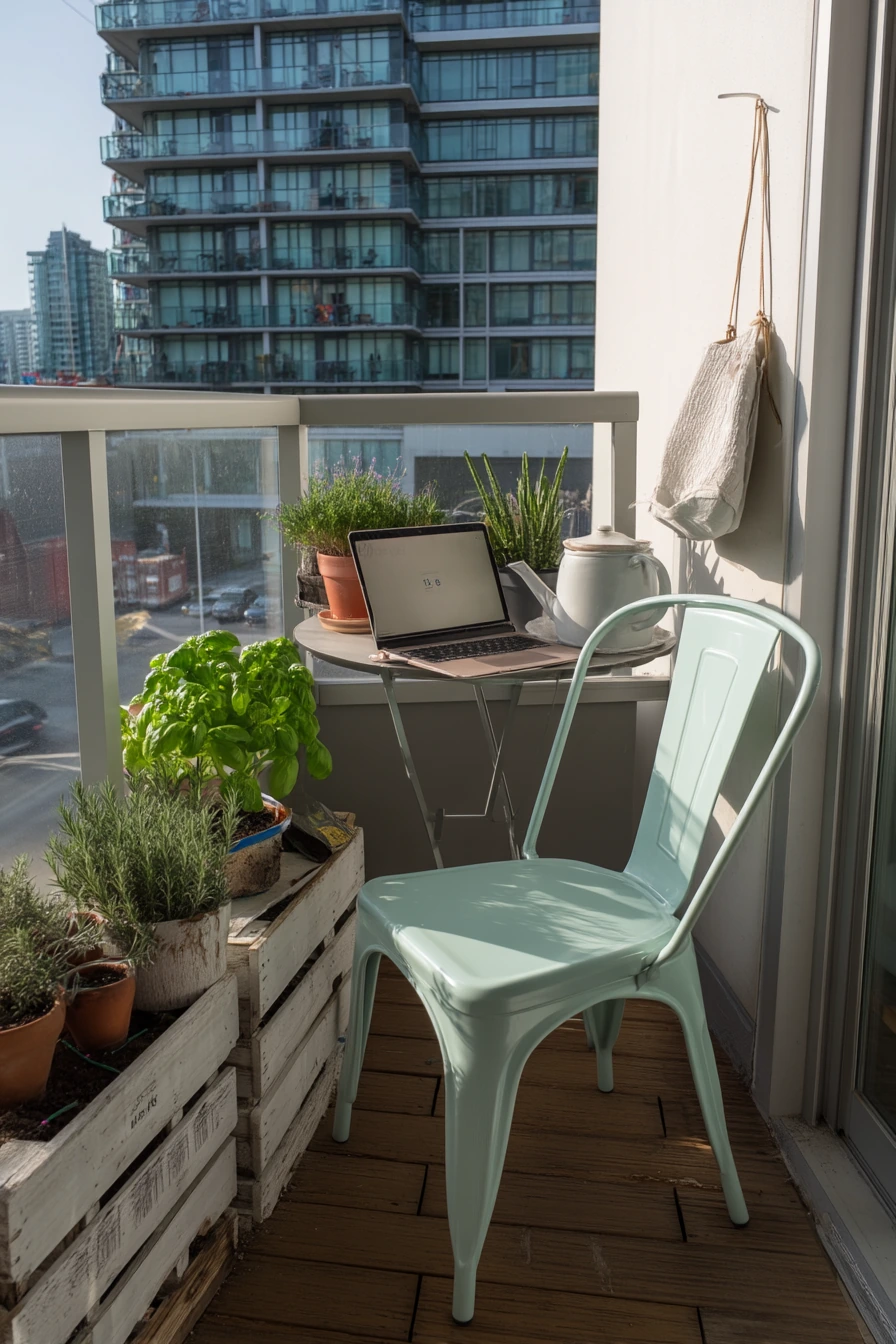
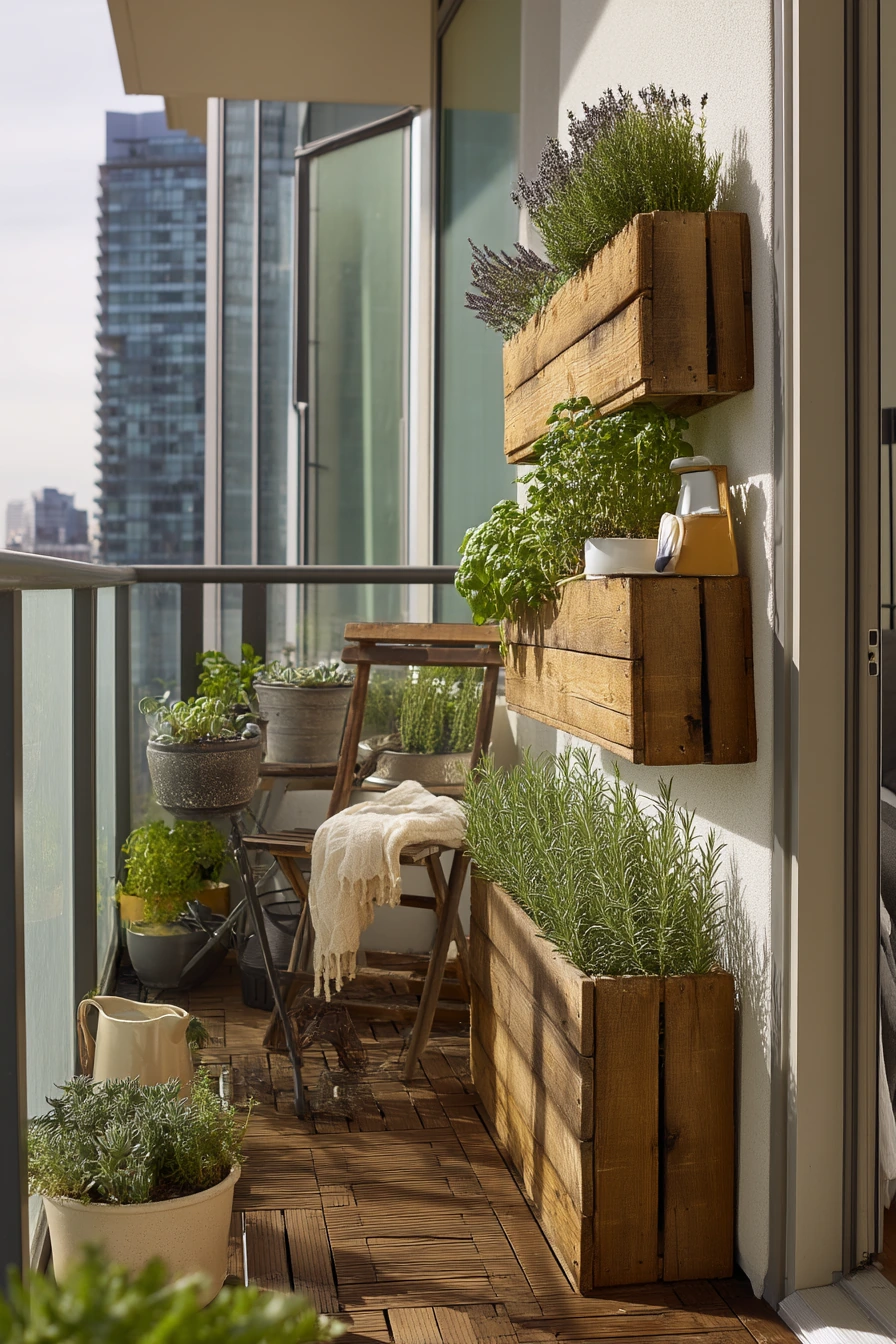
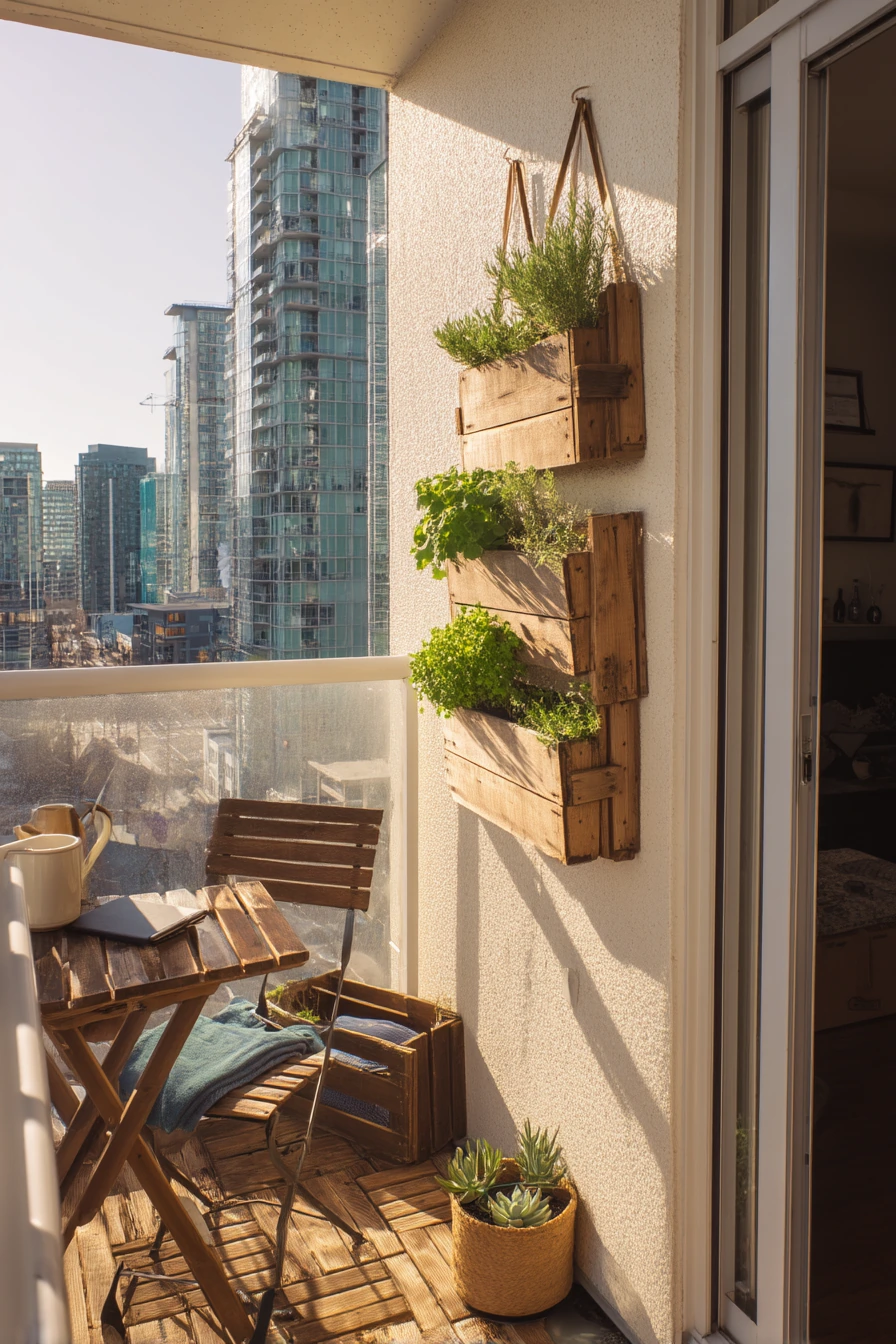
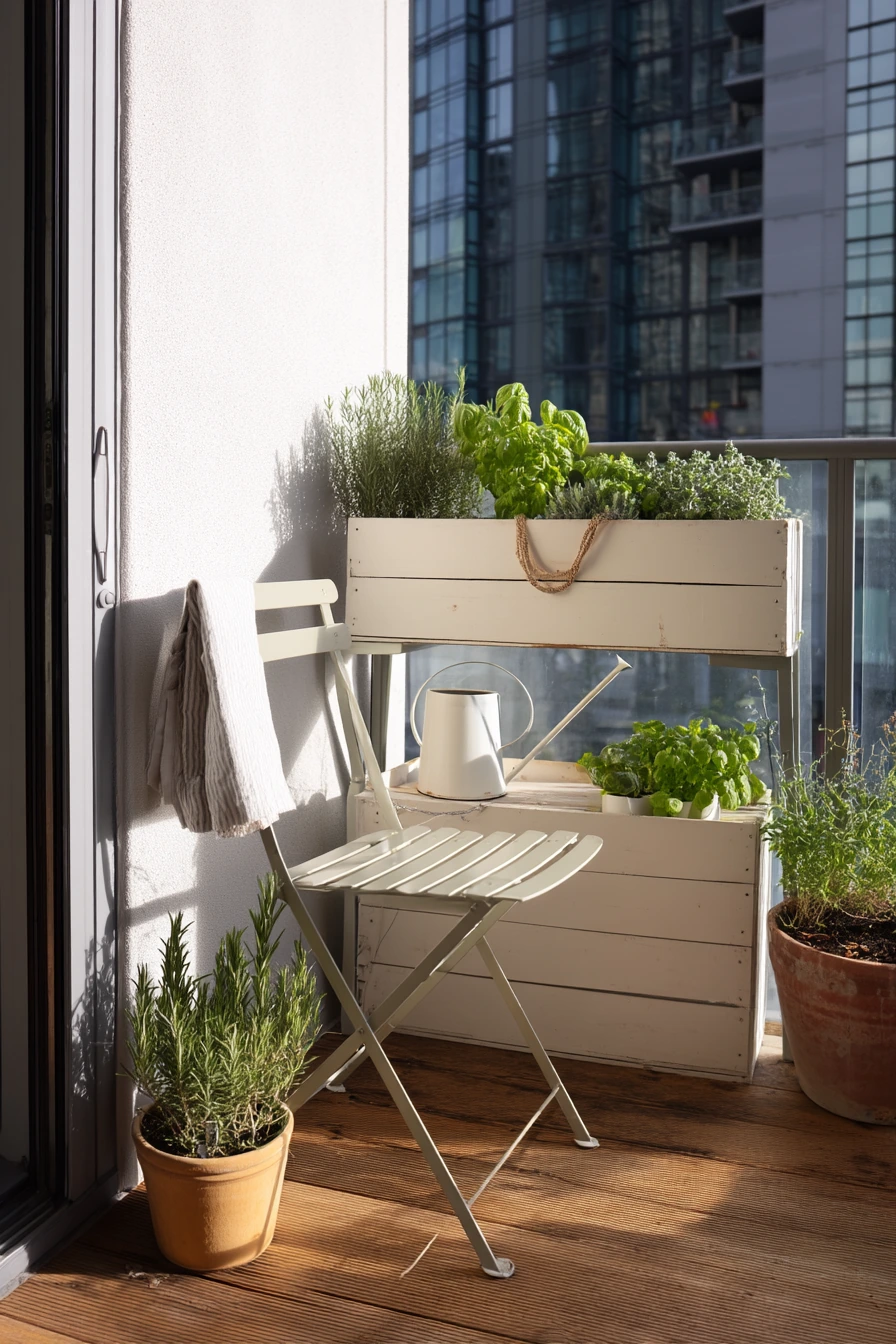
A compact balcony can still handle inexpensive raised garden bed ideas if you think slim and vertical. Fence pickets are a low-cost material that can become narrow planters that fit along a railing or wall. Keep the planters light and shallow so you can move them for cleaning. Place them where they get steady morning light if that is what your balcony offers.
Rosemary, thyme, and chives are great balcony herbs because they do not need deep soil and they handle pots well. Add one café chair so you can sit and clip herbs without crouching. A ceramic bowl can hold clippers and plant labels, and a small watering jug is easier than a big can on tight space. If you work from home, a laptop sleeve by the door is common, but keep it away from damp soil and splashes.
For a clean look, dry a small string of herbs on twine near the door and keep one potted succulent on the floor as a simple accent. Use a towel to wipe spills quickly. Make sure each planter has drainage holes and a tray, so water does not drip to neighbors below. If wind is strong, use heavier pots at the corners or add a small tie to keep planters steady.
- Build slim planters from fence pickets to save space.
- Choose hardy herbs that handle containers well.
- Use trays to catch water and protect the balcony floor.
- Keep one small chair to make the space usable, not crowded.
- Dry herbs on twine for a simple, useful decoration.
Pro Design Tip: Stick to two materials, like natural wood and terracotta, to keep a small balcony from feeling busy.
Budget Considerations: Fence pickets are cheap, but you may need a saw and screws, so compare the total cost to buying one ready-made planter.
9 Starter Garden After a Rain
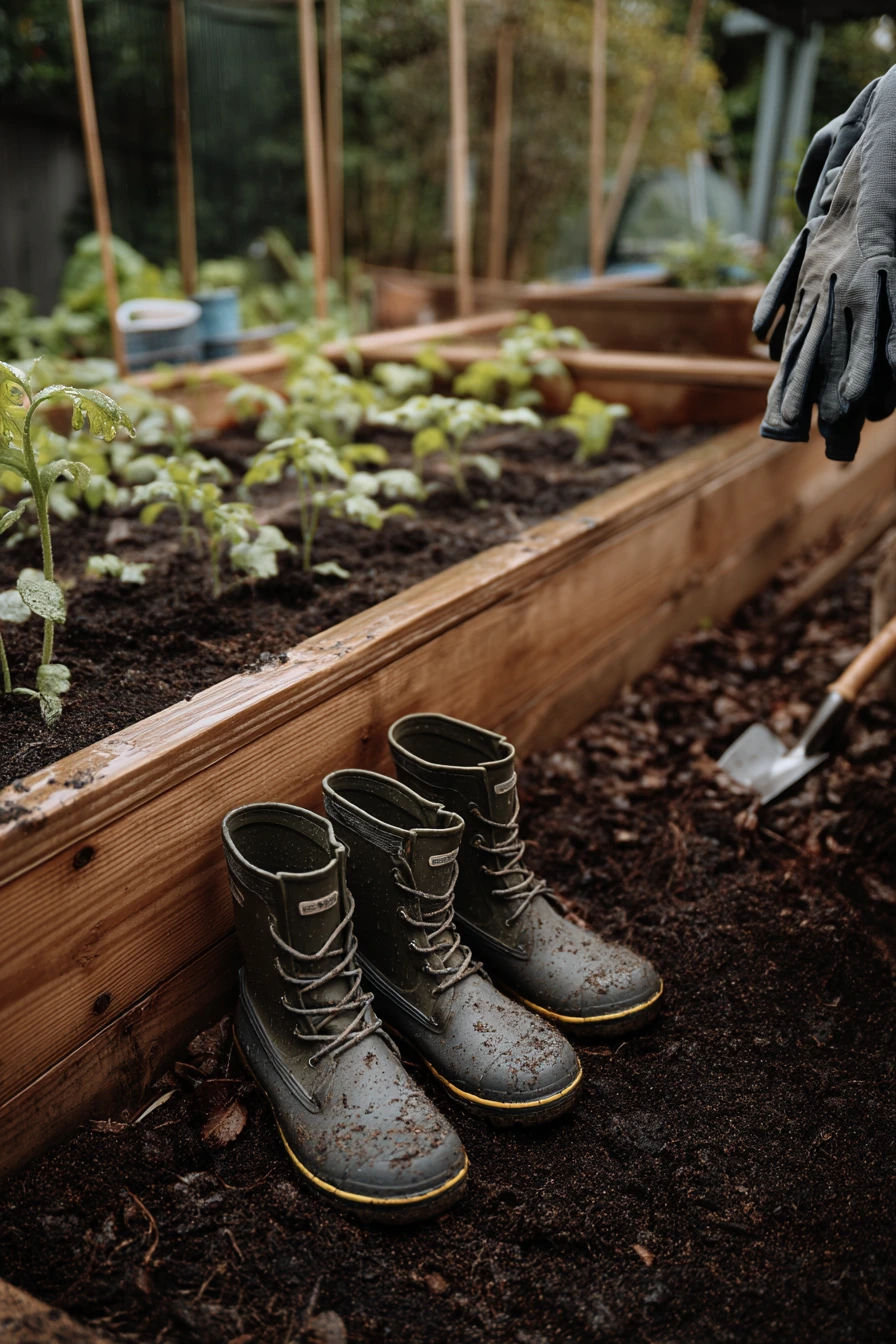
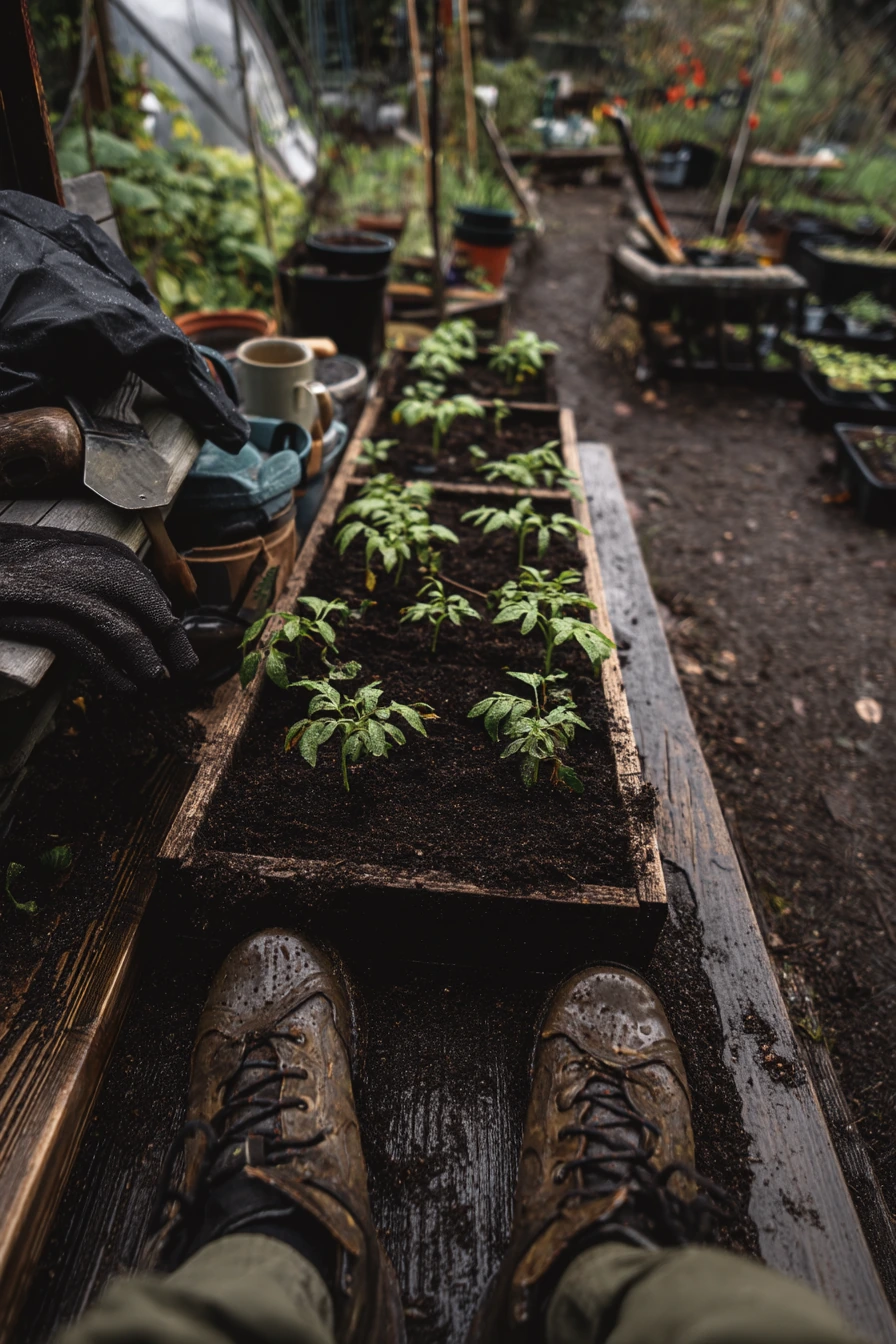
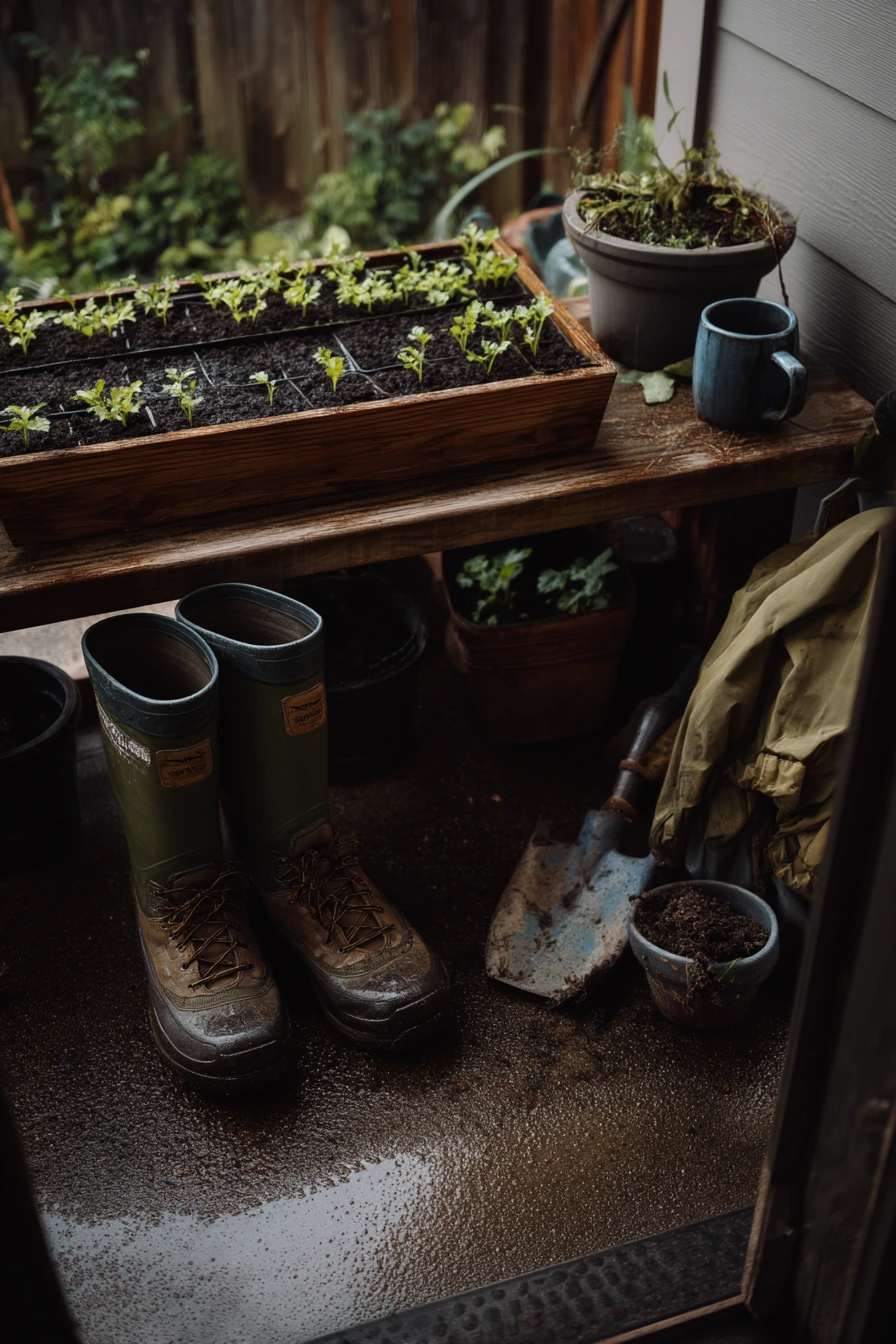
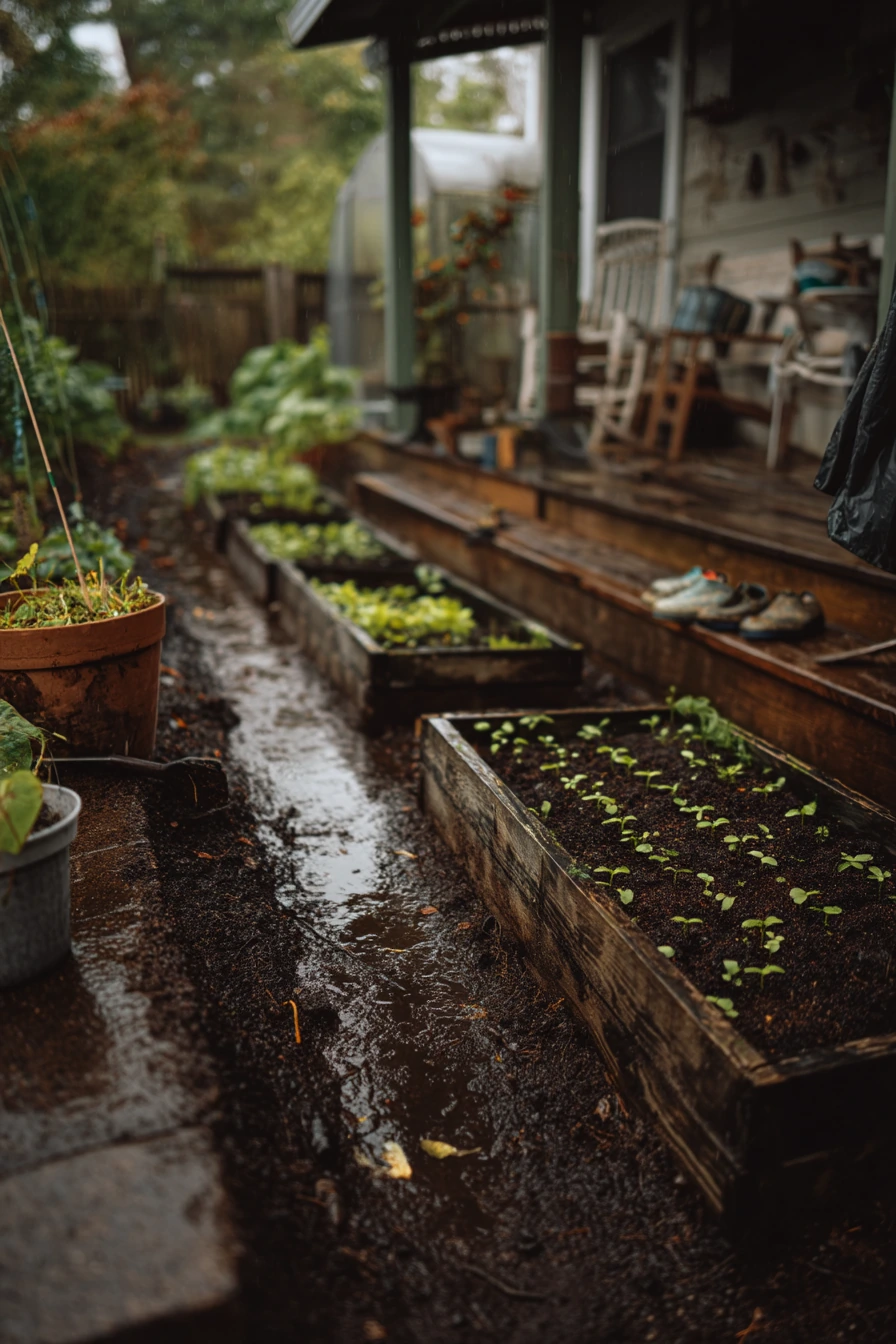
After a light rain, inexpensive raised garden beds often look darker and richer, but wet soil can also show problems fast. If water pools on top, you may need more compost, perlite, or coarse mix to improve drainage. Seedlings in neat lines are easier to weed and thin, especially when the soil is damp. Cheap plastic labels help you remember what is planted where, which matters when everything is still small.
Plan for the muddy reality. Keep muddy sneakers by the step and a rain jacket over a chair so you can check the garden without tracking dirt indoors. A tea mug with steam on the ledge makes rainy garden time feel calm, but put it on a stable spot away from the bed edge. Keep garden gloves and a hand trowel together so you can pull weeds quickly when the soil is soft. This is also a good time to look for slug damage and reset any labels that shifted.
To make the beds look neat even in cloudy light, brush soil off the boards and keep the path clear. Add a thin layer of mulch once seedlings are stronger to reduce splash and keep weeds down. If the bed is in a low spot, raise it with extra boards or add gravel under the base for better drainage. A simple routine after rain helps your garden stay healthy without extra spending.
- Check for pooling water and loosen soil if needed.
- Thin seedlings early so plants have room to grow.
- Use labels that can handle rain and sun without fading fast.
- Keep a dry tool spot near the door for quick checks.
- Mulch after seedlings size up to stop mud splash.
Pro Design Tip: Use one label style and place labels in a straight line so the bed looks orderly, even when plants are small.
Budget Considerations: If drainage is poor, improving soil with compost and perlite costs less than rebuilding the bed in a new spot.
10 Thrifted Cottage Yard Bed Mix
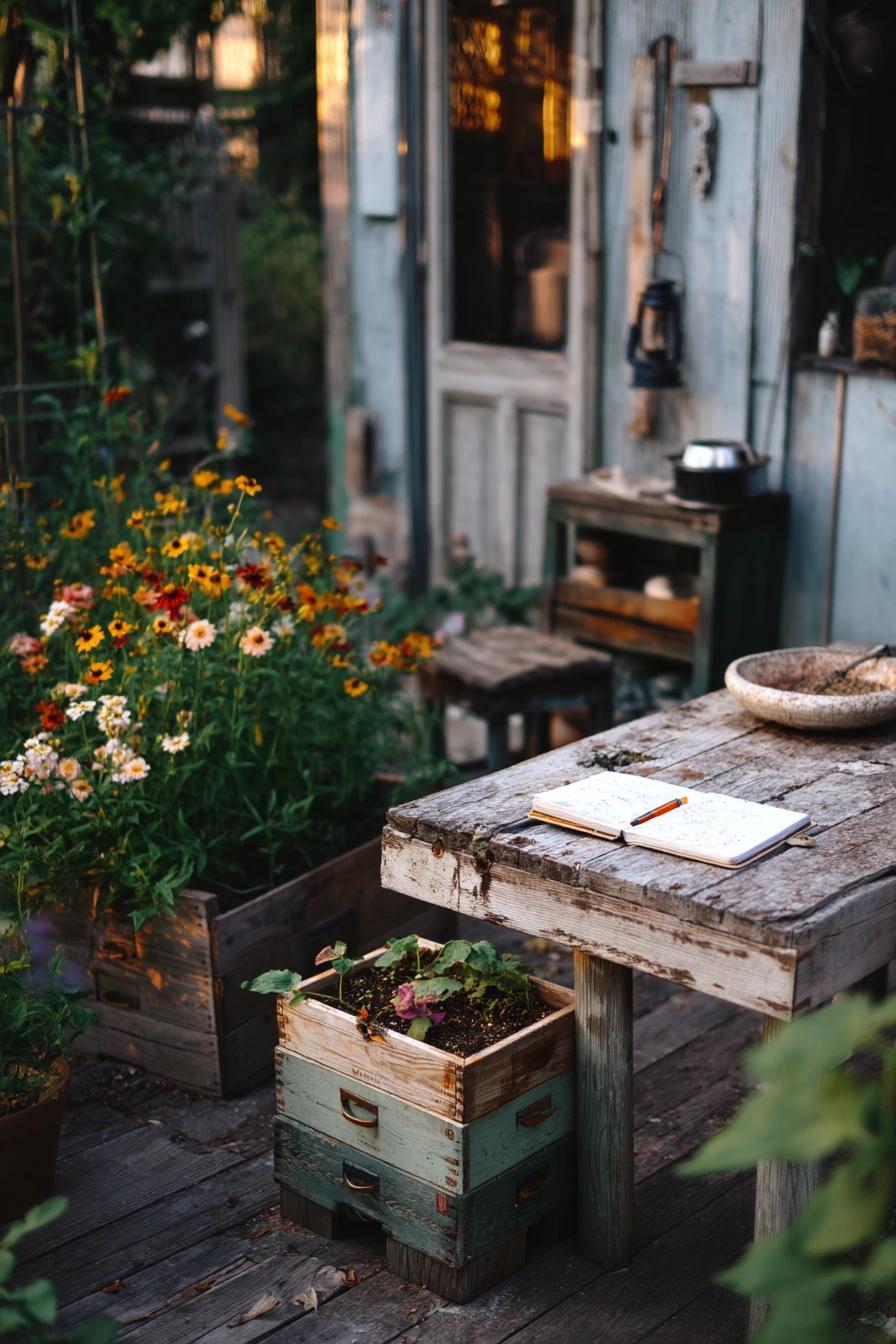
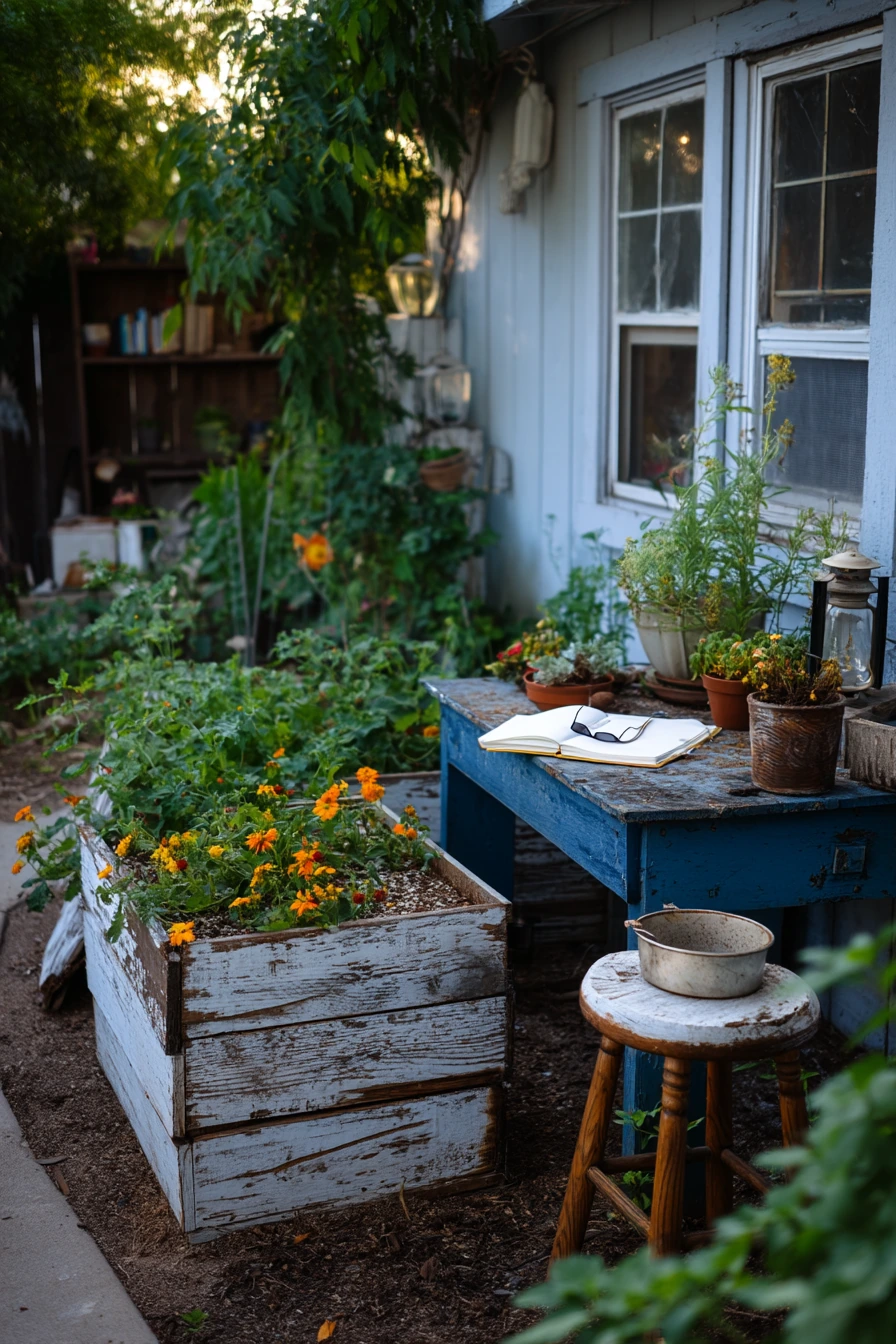
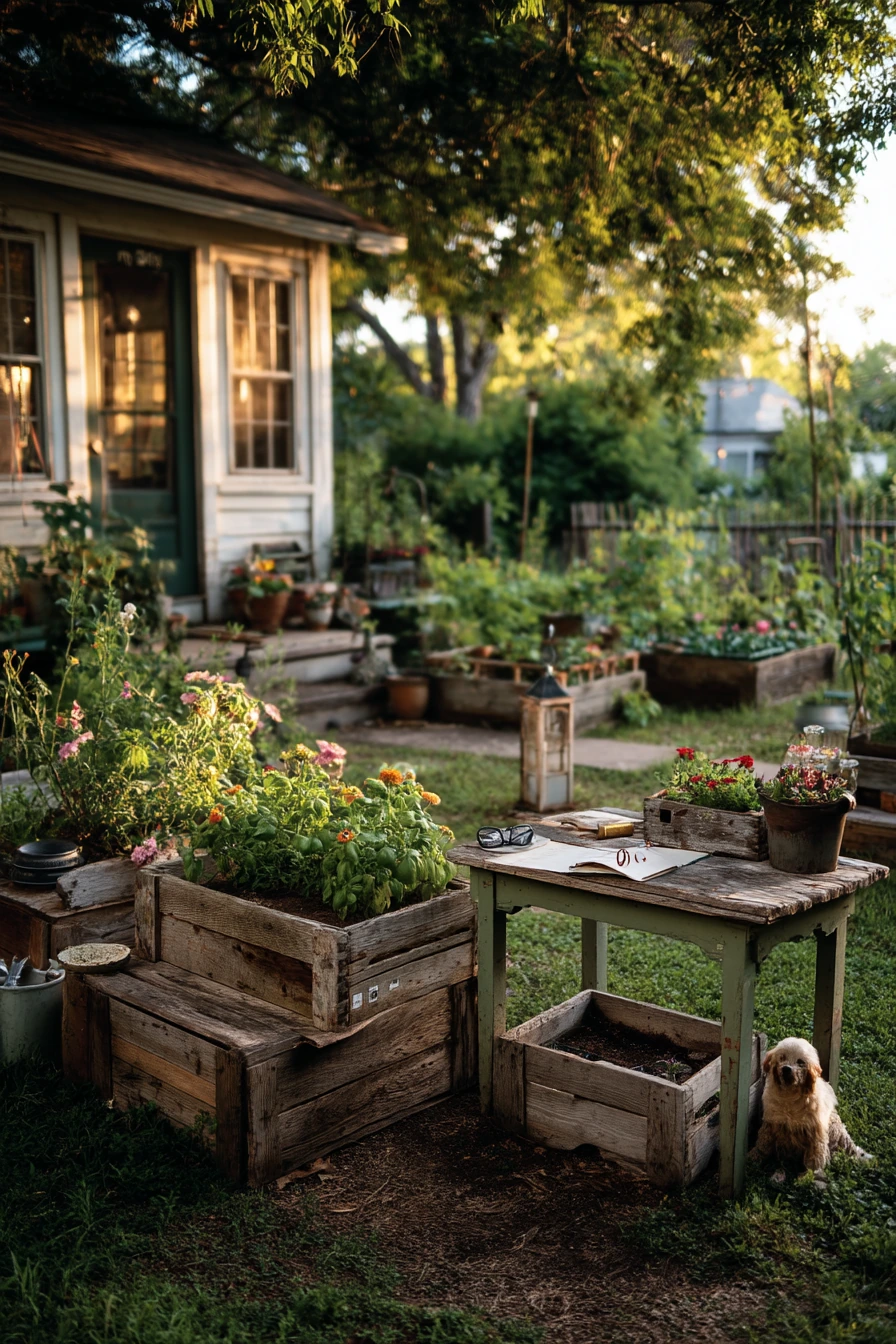
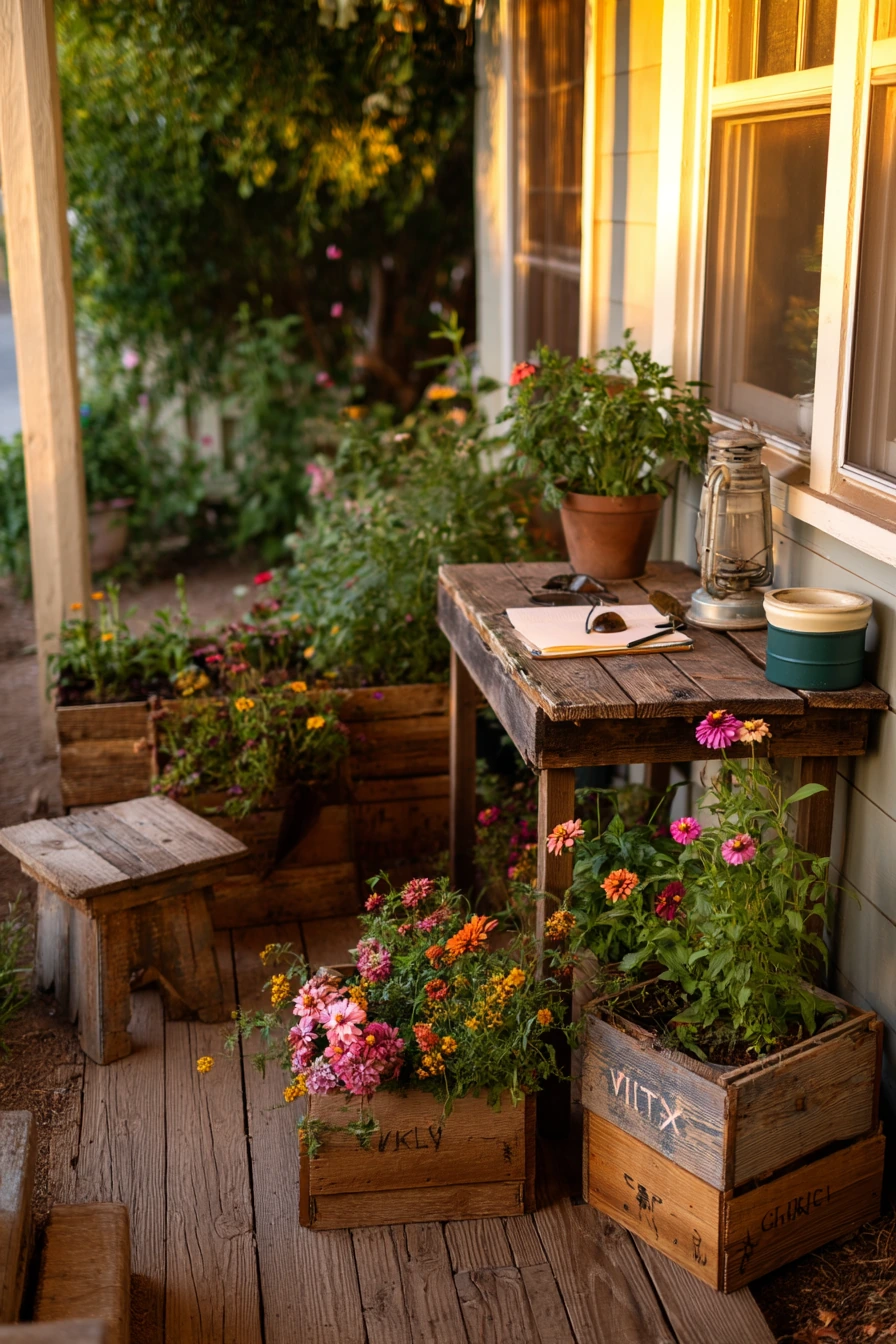
A small cottage-style yard is perfect for mix-and-match inexpensive raised garden bed ideas. You can combine reclaimed wood beds with painted crate planters for a casual look. The key is to repeat a few things so it does not feel messy. Pick one paint color for crates, and keep the rest of the wood in natural tones. This makes mismatched pieces feel like they belong together.
Zinnias and herbs are a strong pairing here. Zinnias fill space with color and bring in pollinators, while herbs give you daily harvest. Let a few plants overflow the edges for a soft look, but keep the path edges trimmed so you can walk through. A thrifted stool works as a plant stand or a place to set tools. Add a weathered lantern and an open notebook with planting sketches to make the space feel personal. Keep sunglasses on the table and a dog bowl near the back door, but try to group small items on one surface so the yard looks calmer.
For function, make sure each bed has enough soil depth for what you grow. Crates are better for herbs and flowers than for deep root crops. Check for sharp edges and weak joints on old items. If you want a quick styling win, add one simple ground cover, like mulch or pea gravel, between beds so everything looks finished and weeds stay down.
- Repeat one paint color across crates to tie the look together.
- Use zinnias for easy color and pollinator support.
- Keep herbs near the door for fast harvest while cooking.
- Add mulch or gravel paths to reduce weeds and mud.
- Use a stool as a small work surface for tools and notes.
Pro Design Tip: Group beds in a loose triangle so your eye moves through the yard and the mixed materials feel planned.
Budget Considerations: Reclaimed items can need repairs, so set aside a small amount for screws, paint, and a liner to make them last.
Inexpensive raised garden bed ideas work best when you match the build to your space. A narrow urban lot may need simple cedar frames, while a balcony does better with slim picket planters.
Start with one bed, grow easy crops like herbs and greens, and expand once you learn how your light and watering habits really are. Keep materials simple, focus on drainage, and add small styling touches that also help you use the space every day.
FAQ
What is the cheapest material for a raised garden bed? Reclaimed boards, untreated pine, and fence pickets are often the lowest cost. Cinder blocks can also be affordable if you can pick them up locally.
Is it safe to use pallets or old painted wood for vegetables? Only if you know the wood is untreated and the paint is not lead-based. If you are unsure, avoid it or line the bed and use clean soil in a separate inner barrier.
How deep should a cheap raised bed be? For lettuce and herbs, 8 to 12 inches can work. For tomatoes and larger plants, aim for 12 to 18 inches for better roots and moisture control.
Do raised beds need a bottom? Most beds work best with no solid bottom so roots can reach down and water can drain. Use cardboard or landscape fabric to block weeds at the base.
How do I fill a raised bed without spending a lot on soil? Use a base layer of sticks and leaves if allowed, then add compost and a quality top mix where roots will grow. Avoid filling the whole bed with bagged potting mix if it is too expensive.
What grows best in small raised beds on patios or balconies? Herbs, radishes, lettuce, and compact cherry tomatoes do well. Choose varieties labeled container-friendly and keep up with watering.
How can I make my raised beds look nice for Pinterest photos? Keep paths clear, repeat a few materials like terracotta or matching labels, and group tools in one basket. A simple chair, watering can, and tidy edges make a big difference.