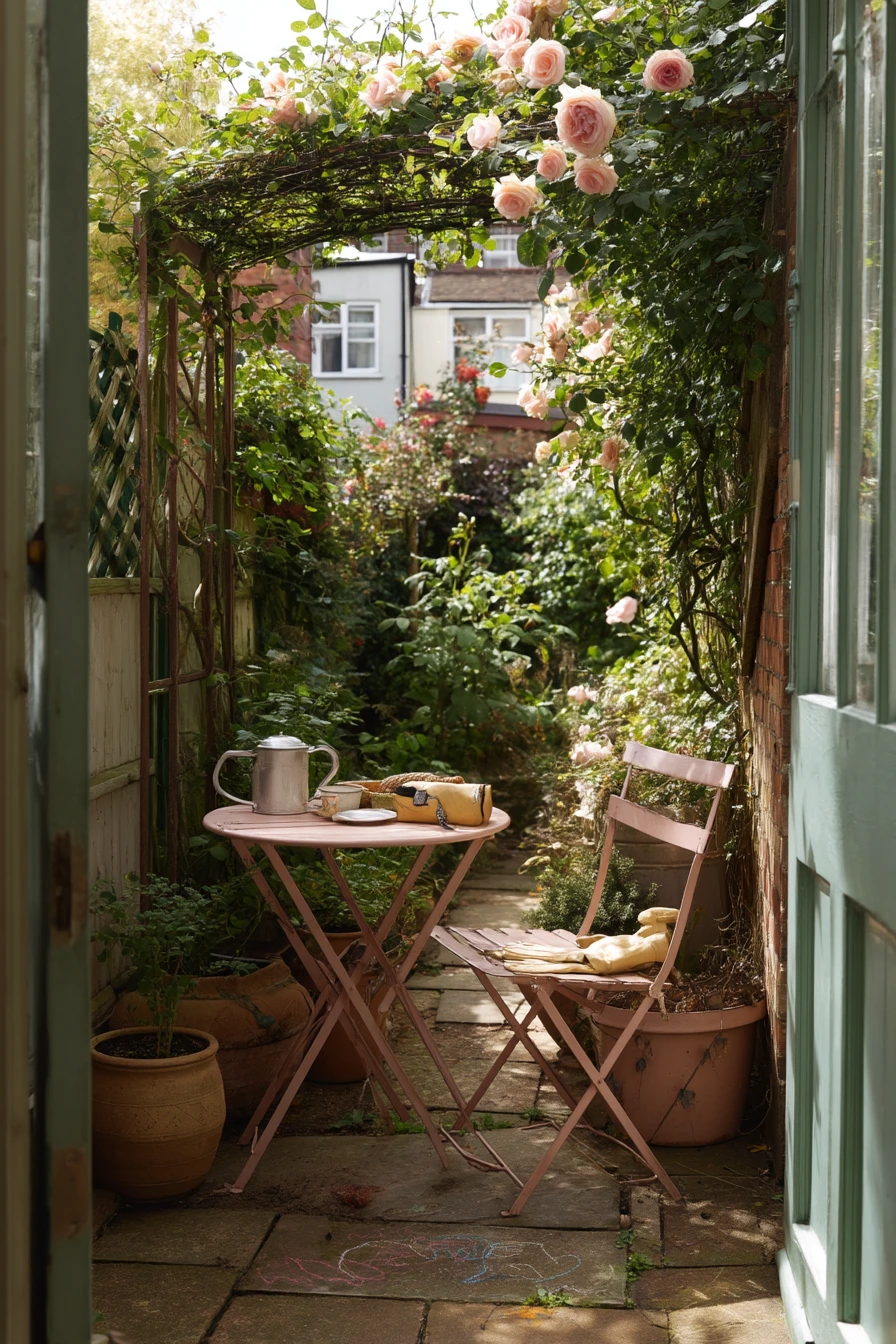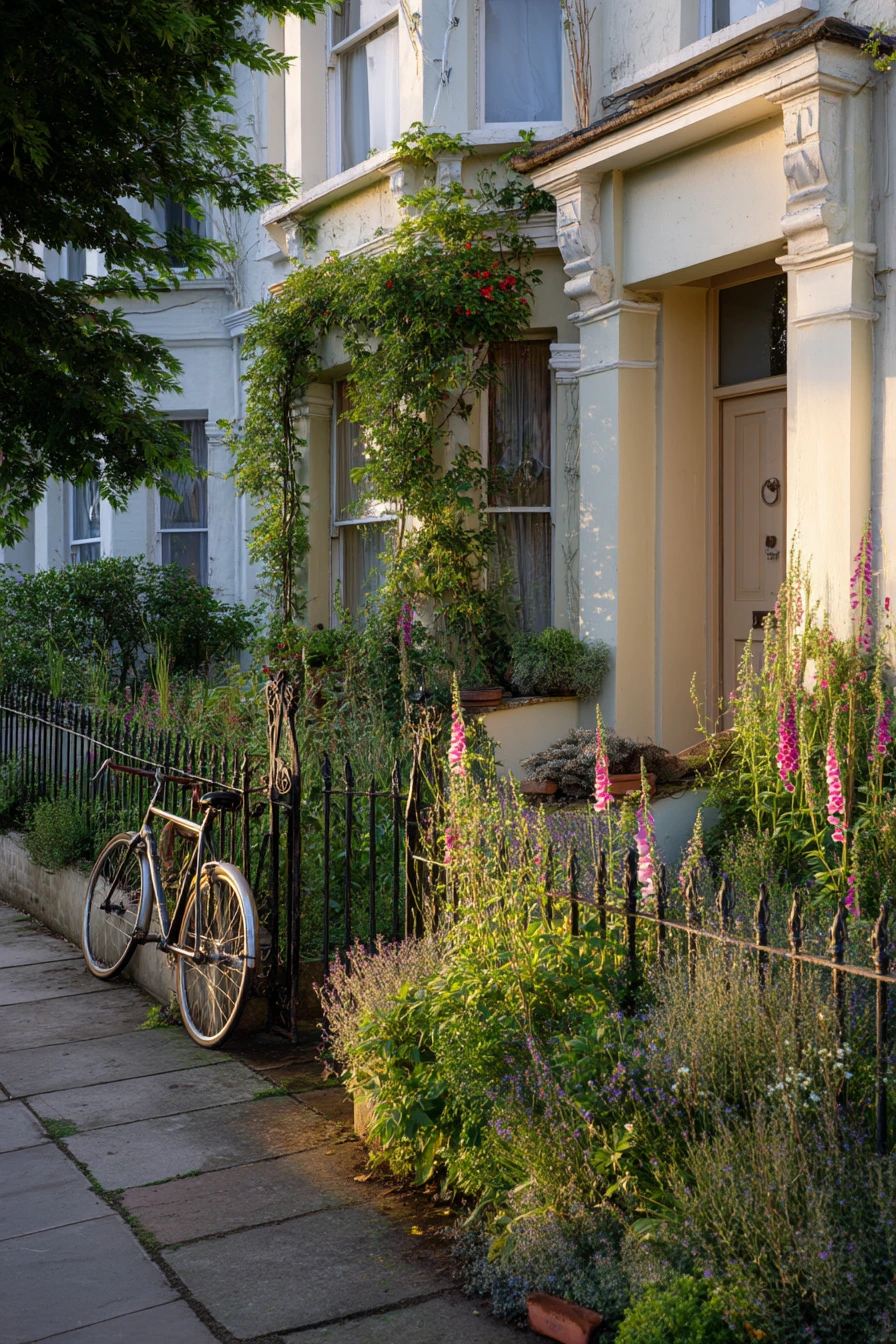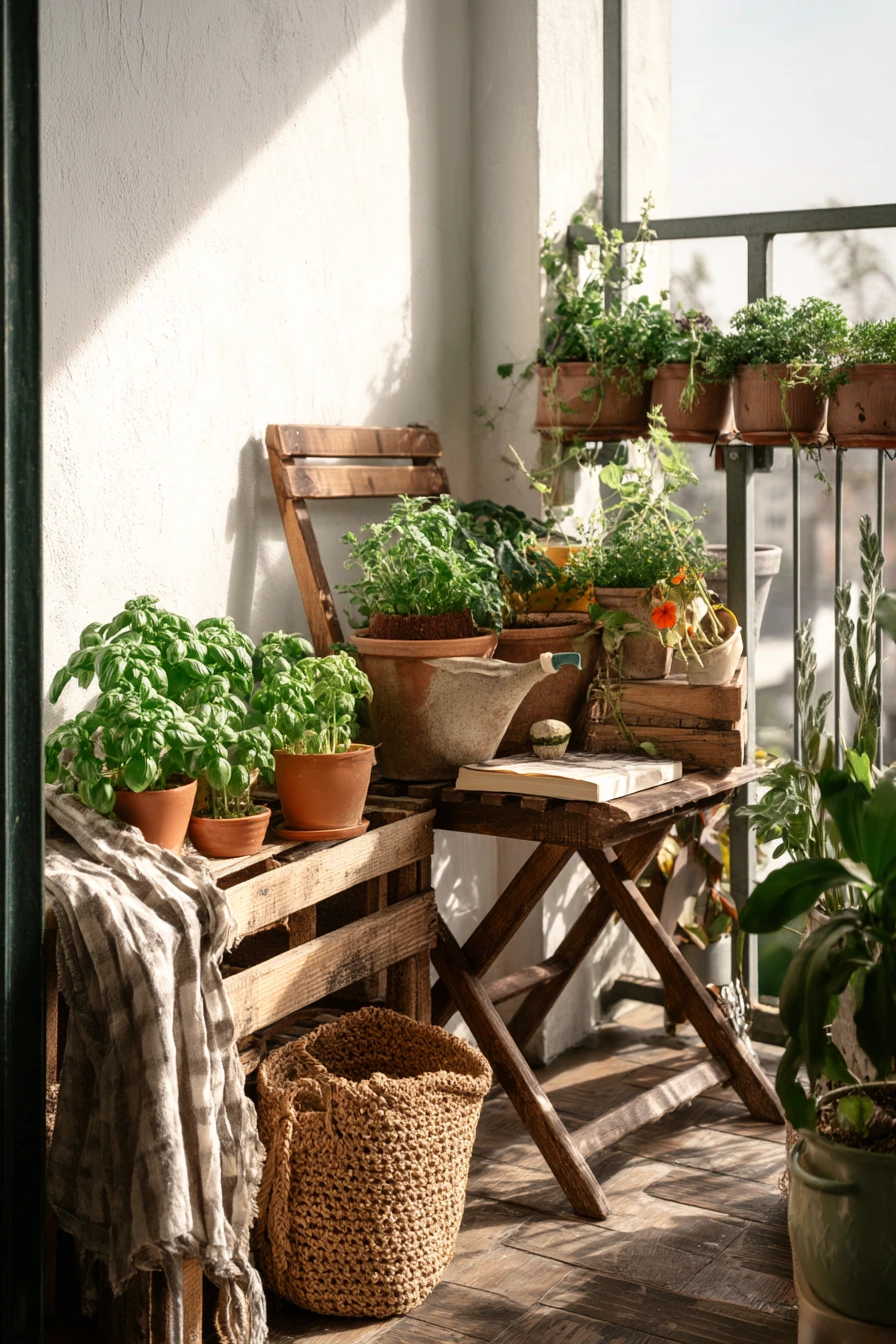

A raised garden bed along a fence is one of the easiest ways to turn an empty boundary into a productive strip. It works for herbs, tomatoes, flowers, and even a low-maintenance evergreen border.
In this post, you will find raised garden bed along fence ideas based on real backyards, from a weathered cedar fence with terracotta pots to a narrow urban fence line with clean timber boxes and a slim trellis.
Each section shares a simple layout, what to plant, and small styling details that make the space feel finished without adding clutter. You will also get a pro design tip and a budget note for every idea.
Use these examples to plan spacing, paths, trellises, and everyday tools so your garden looks good and is easy to maintain.
1 Narrow Cottage Garden Along the Fence
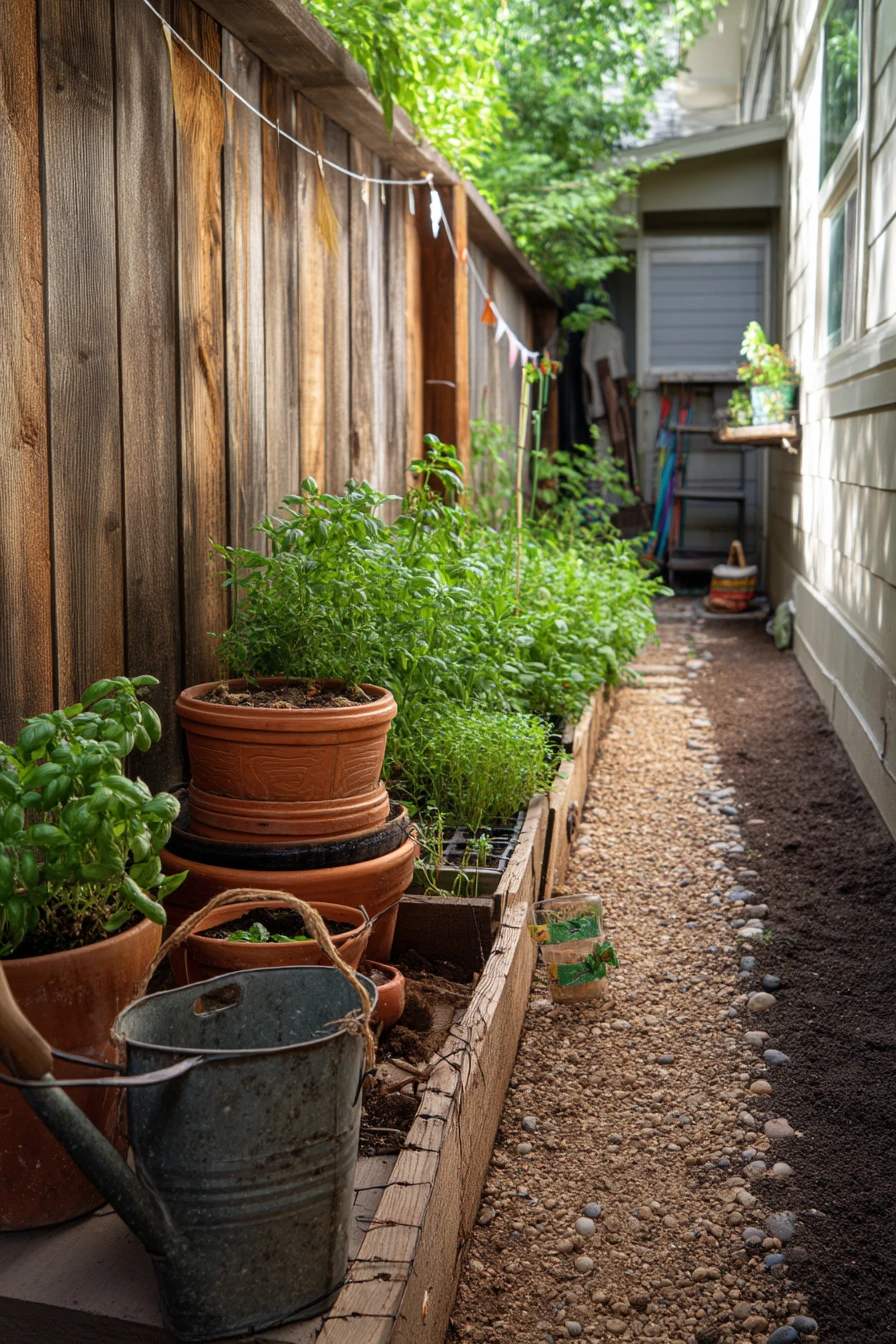
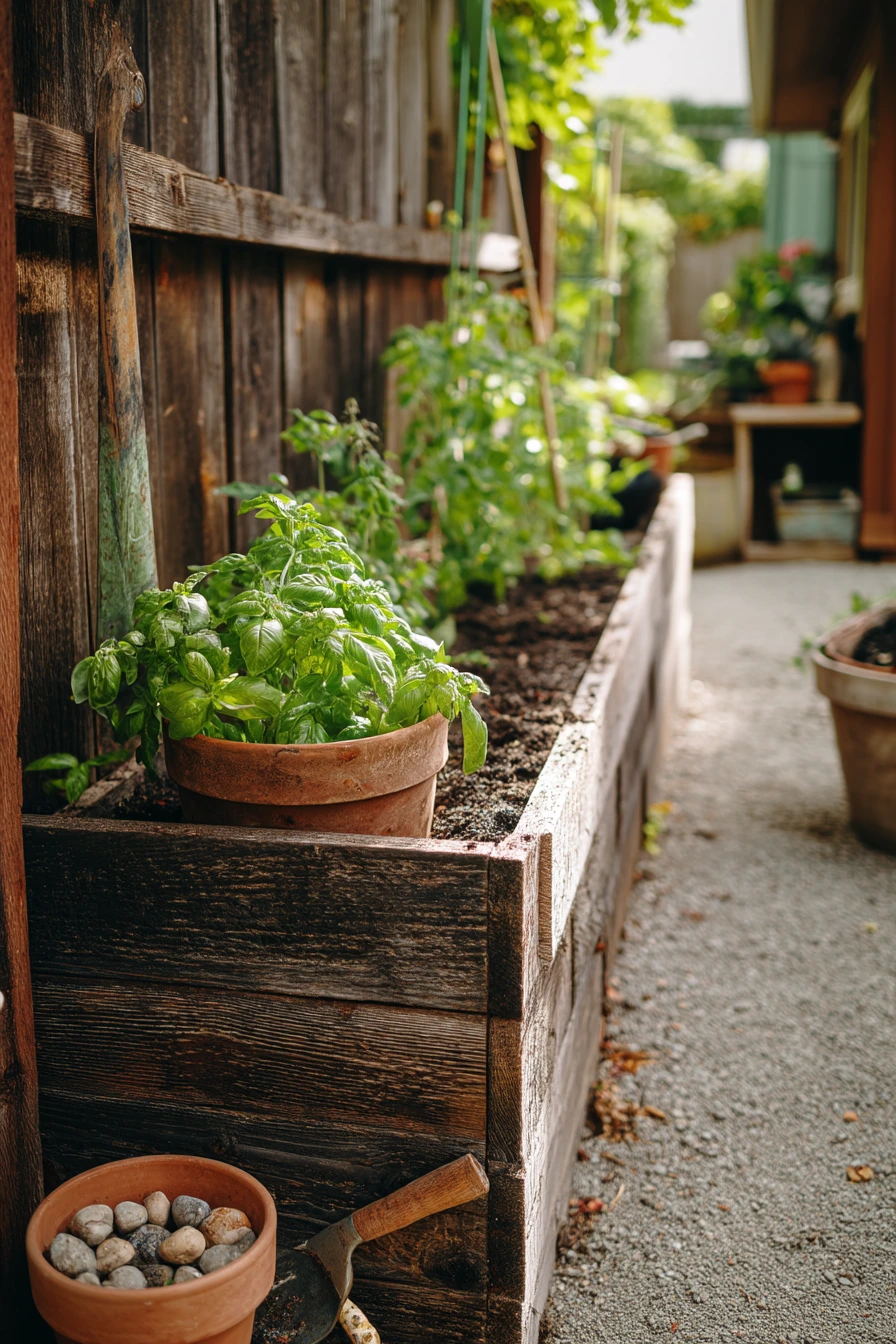
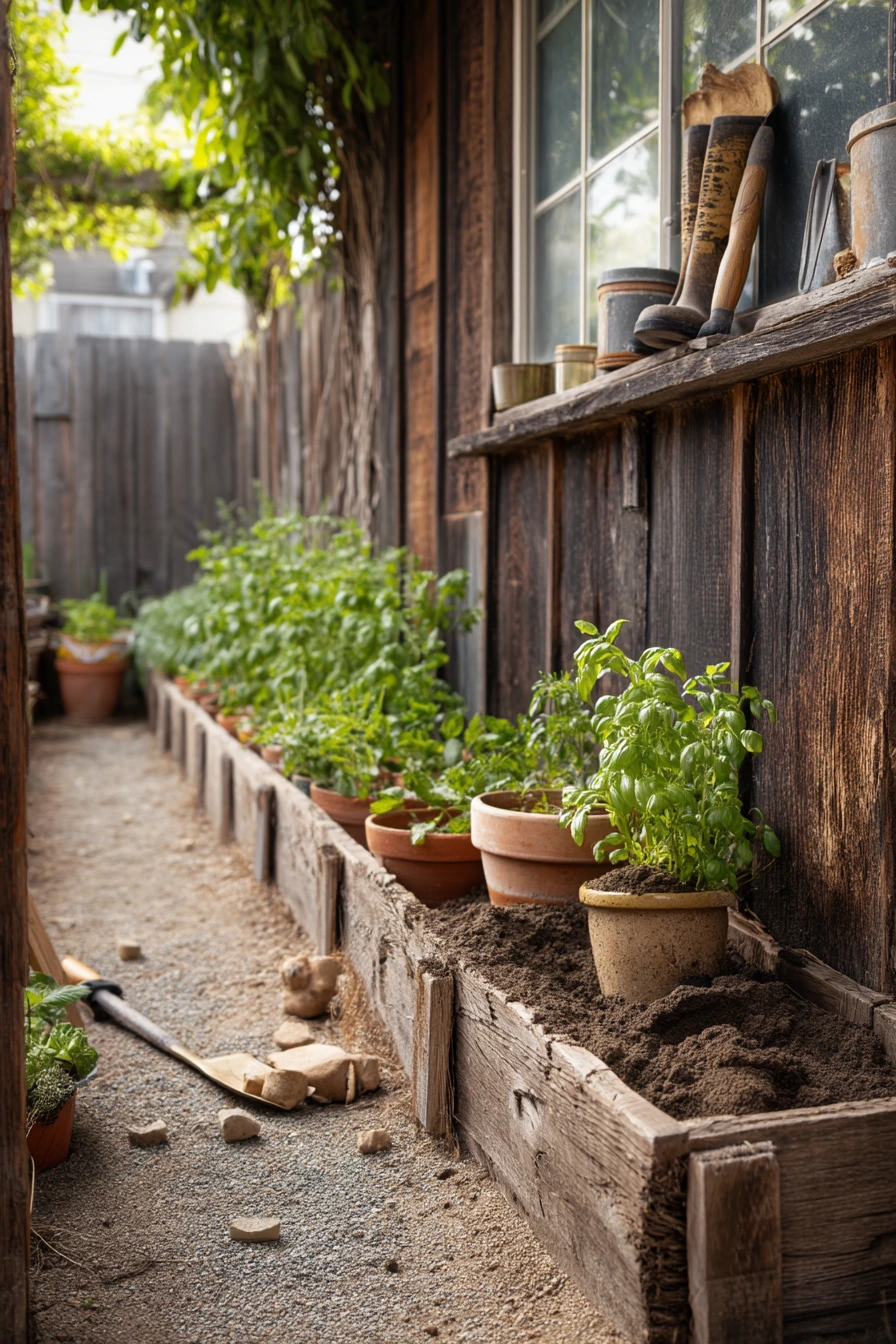
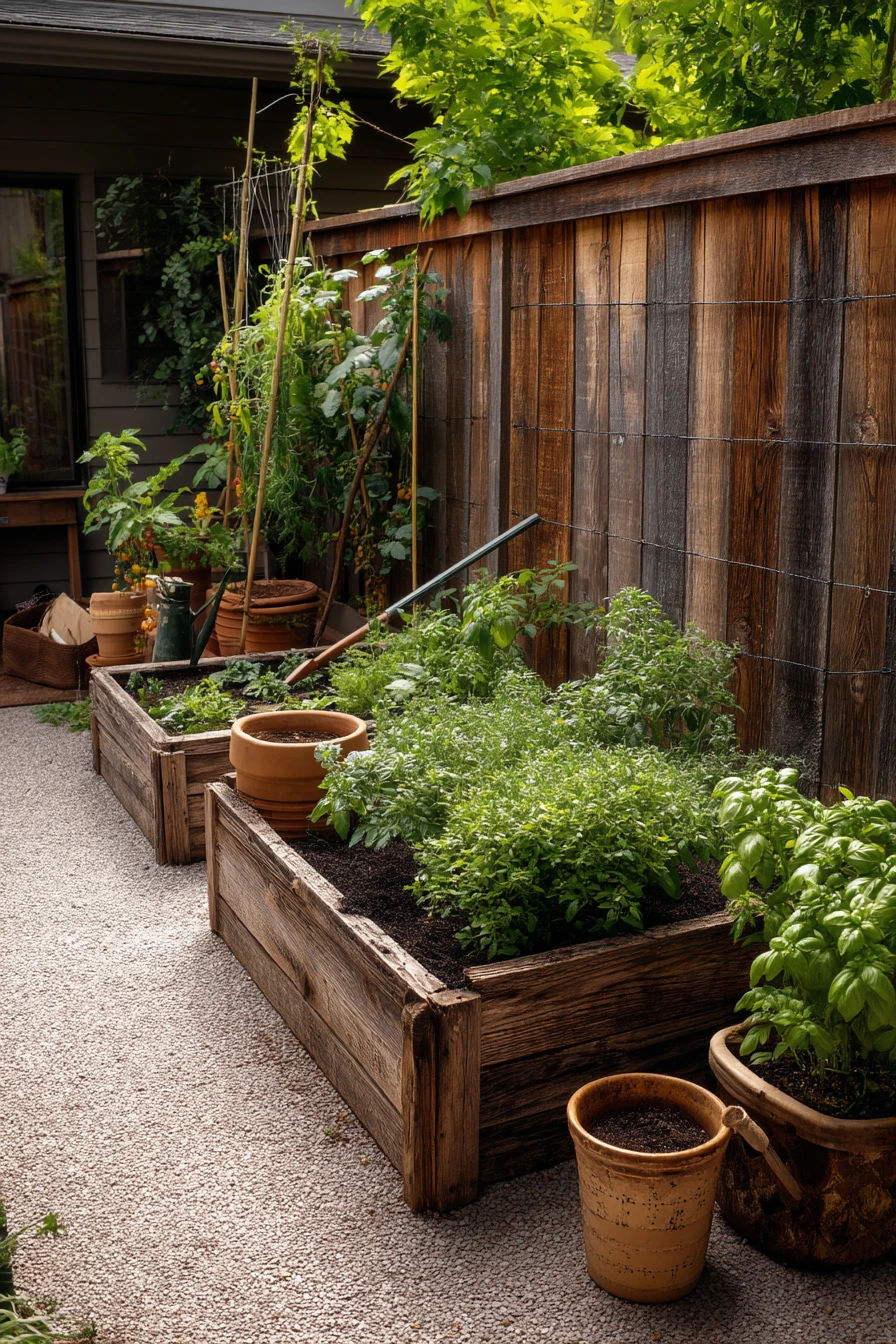
A weathered cedar fence is a great backdrop for a raised garden bed along a fence because it already has warmth and texture. Keep the bed long and narrow so you can reach the back row without stepping into soil. Plant basil, parsley, and thyme near the front edge, then tuck cherry tomatoes toward the fence where you can add twine for support.
Make the area feel lived-in and easy to use. A compact gravel path helps with muddy boots, and it keeps weeds down. Add terracotta pots near the patio for extra basil clippings or a small rosemary that can move with the seasons. A vintage watering can, hand trowel, and a chalk bucket for kids make the space feel like part of daily life, not a separate project.
For how to style it, repeat one material three times: terracotta, cedar, or gravel. Keep tools in one spot, like a hook on the fence or a small crate, so the bed edge stays clear. If window light spills from the kitchen, place the prettiest pots where you will see them from inside.
- Build the bed 12 to 18 inches tall for herbs and tomatoes.
- Use a tomato cage or twine tied to fence-safe hooks.
- Mulch with straw to reduce splashing on tomato leaves.
- Leave a 24 to 30 inch gravel path for easy watering.
- Add one small tray for clippings and harvest to keep the patio clean.
Pro Design Tip: Paint or stain the bed a shade darker than the fence so the plants stand out, then use matching twine and simple labels for a tidy look.
Budget Considerations: Cedar can cost more; if you need to save, use pine with a safe liner and plan to restain every couple of years.
2 Small-Space Veggie Strip for a City Yard
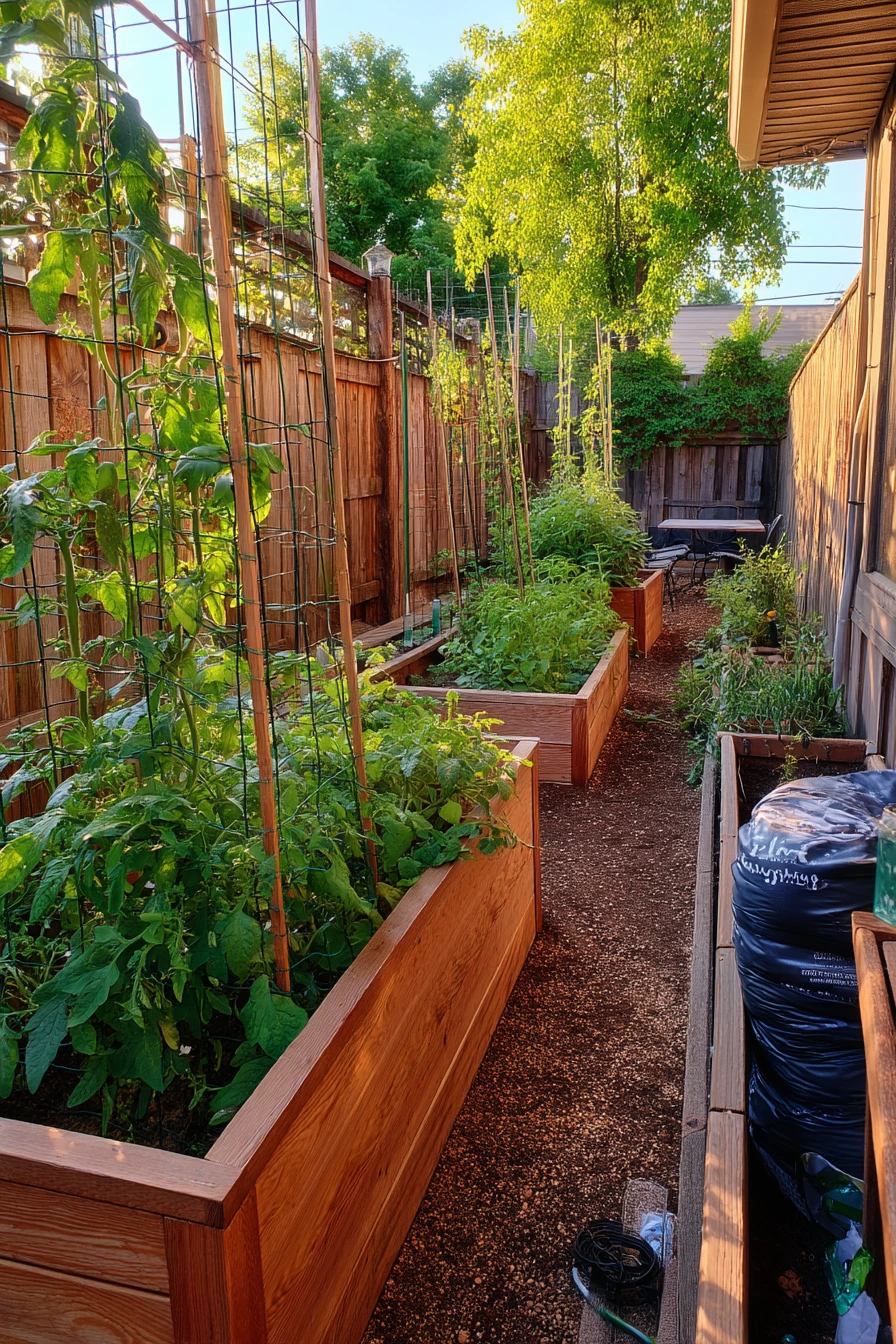
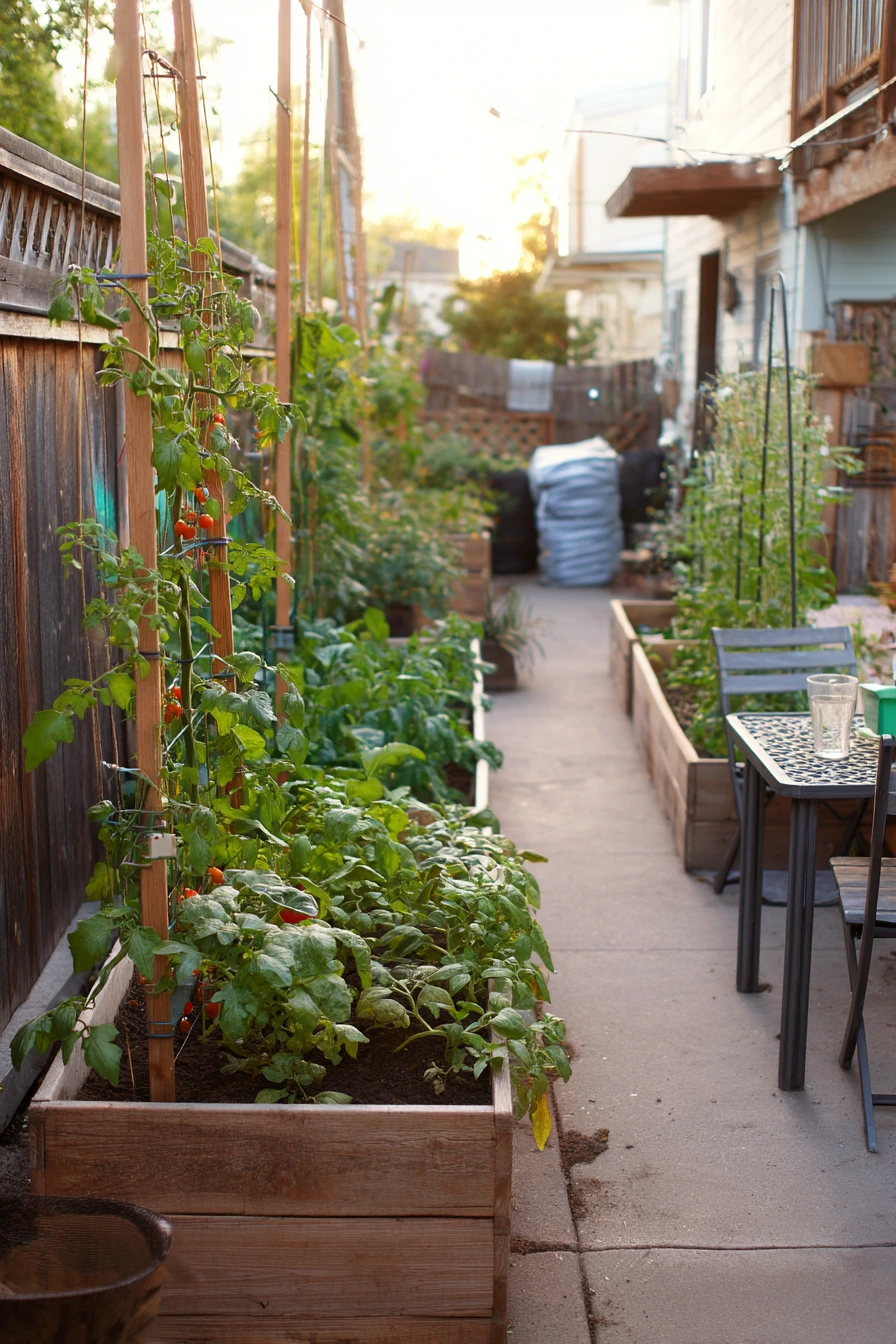
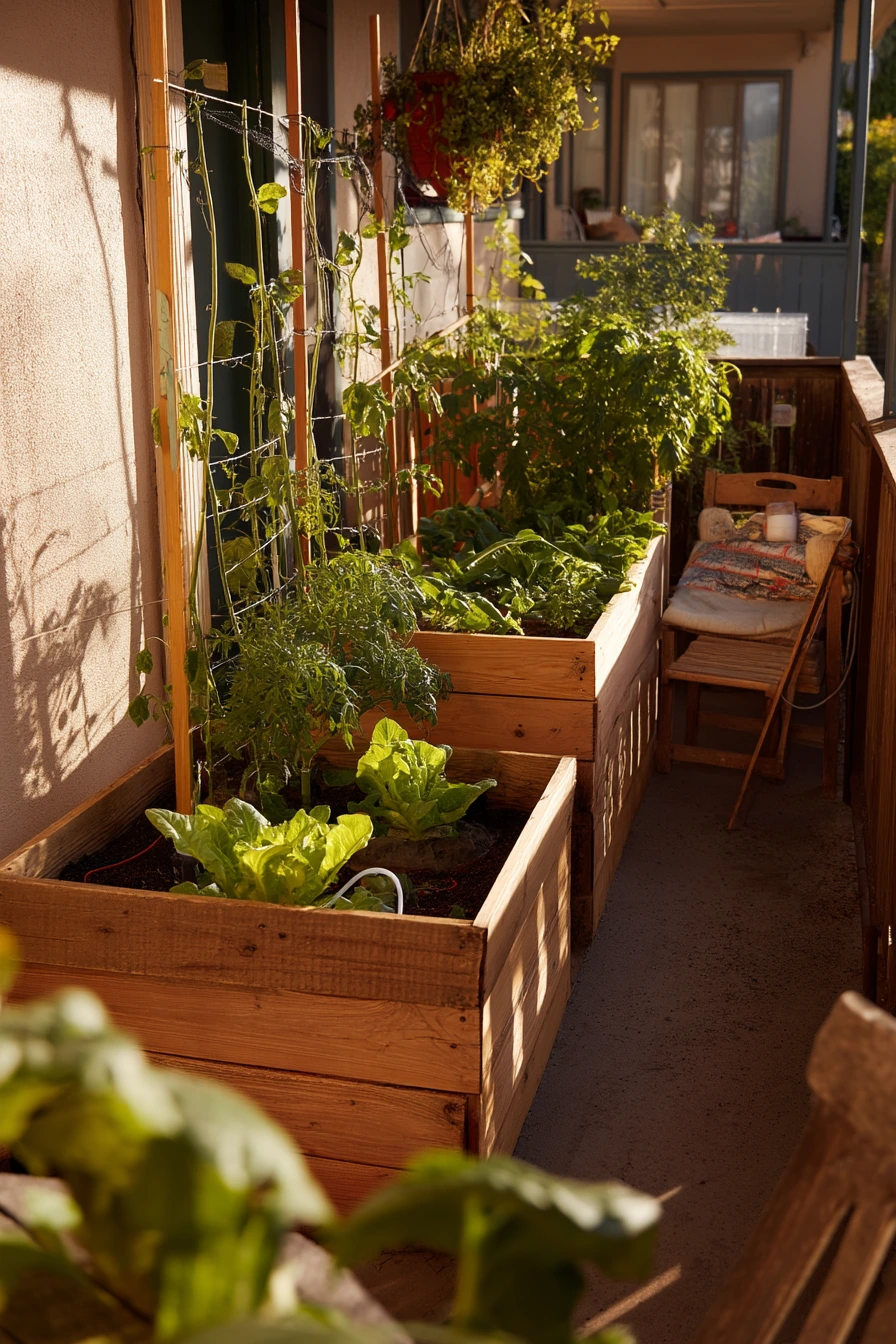
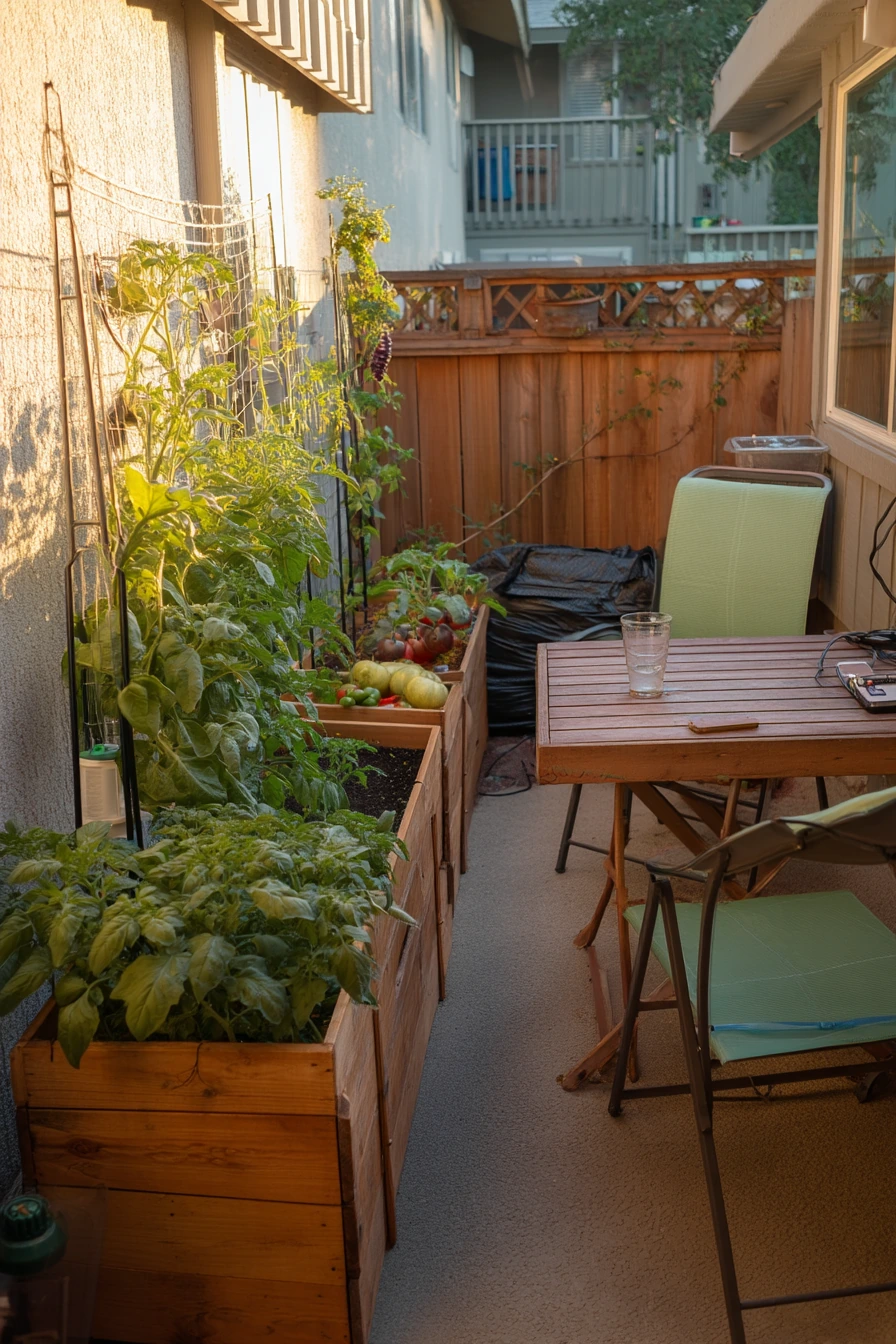
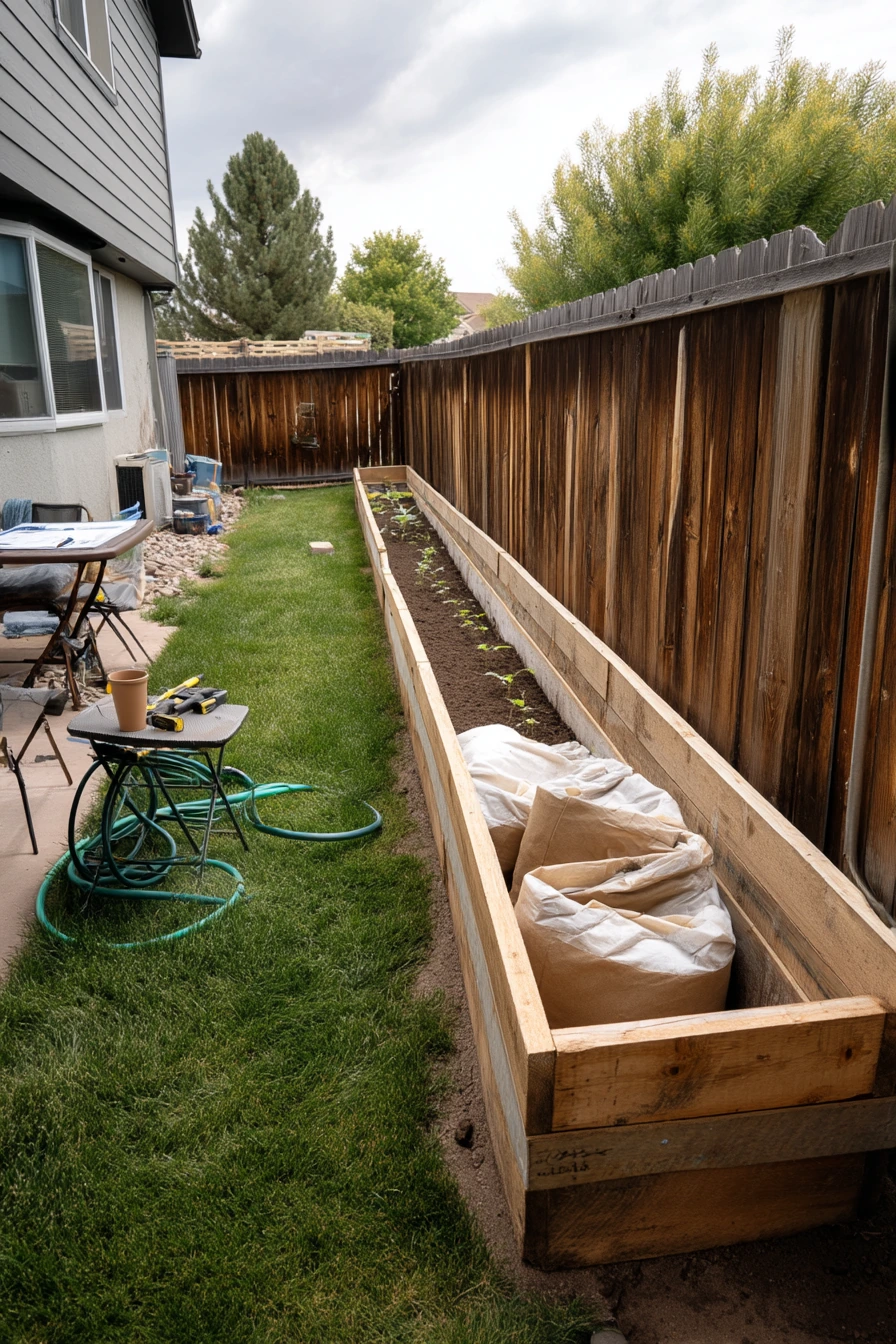
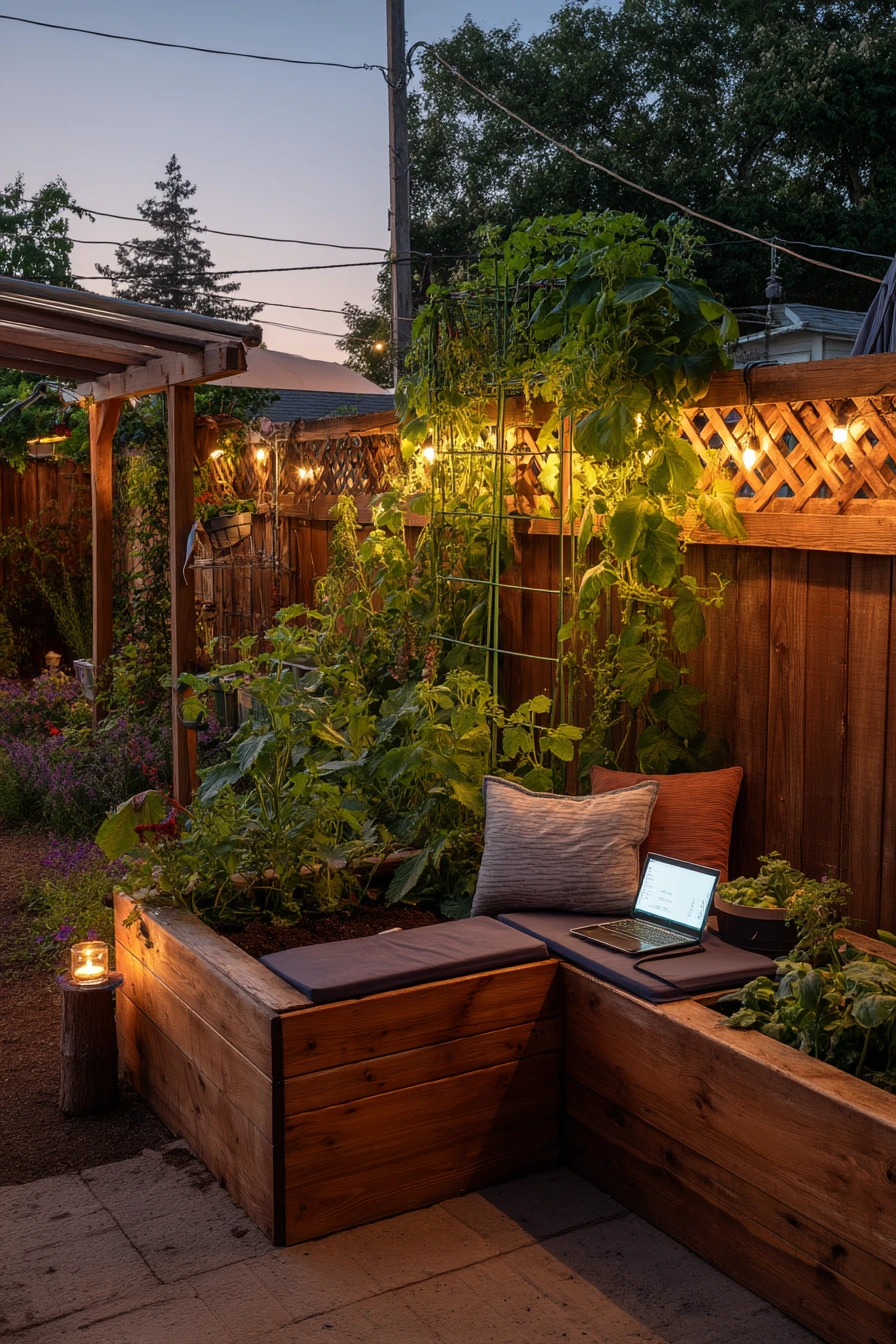
In a tiny yard, a raised garden bed along a fence should do two jobs: grow food and keep the space open. Use clean timber boxes in a straight line and keep the depth around 18 to 24 inches. That is enough for lettuce and peppers while still leaving room for a folding chair and a small patio table.
Go vertical to get more harvest without crowding. Add a slender trellis for climbing beans, set at the back edge of the bed. Place compost bags tucked behind the boxes so they are close but not in the way. Since renters often need flexible setups, use pots for anything you may want to move, like extra herbs or flowers for color.
For styling, aim for calm and practical. Keep one spot for gloves, a water glass, and a phone charger so the patio does not look messy. Use one or two matching planters, and let the greens be the main decoration. Late-afternoon light looks best when the bed edge is clean, so sweep the path and keep soil off the patio.
- Choose beds with legs only if the yard floods or drains poorly.
- Plant lettuce in front, peppers in the middle, beans on the trellis.
- Use a narrow drip line to reduce hand watering.
- Store compost and fertilizer in a lidded bin behind the bed.
- Leave a 30 inch clear zone for chair and walkway.
Pro Design Tip: Use a simple grid layout in the bed so each plant has a square, which keeps a small garden looking organized.
Budget Considerations: If new timber boxes are pricey, look for secondhand planters or build a basic frame and line it well to protect the wood.
3 Kid-Friendly Backyard Boundary Garden
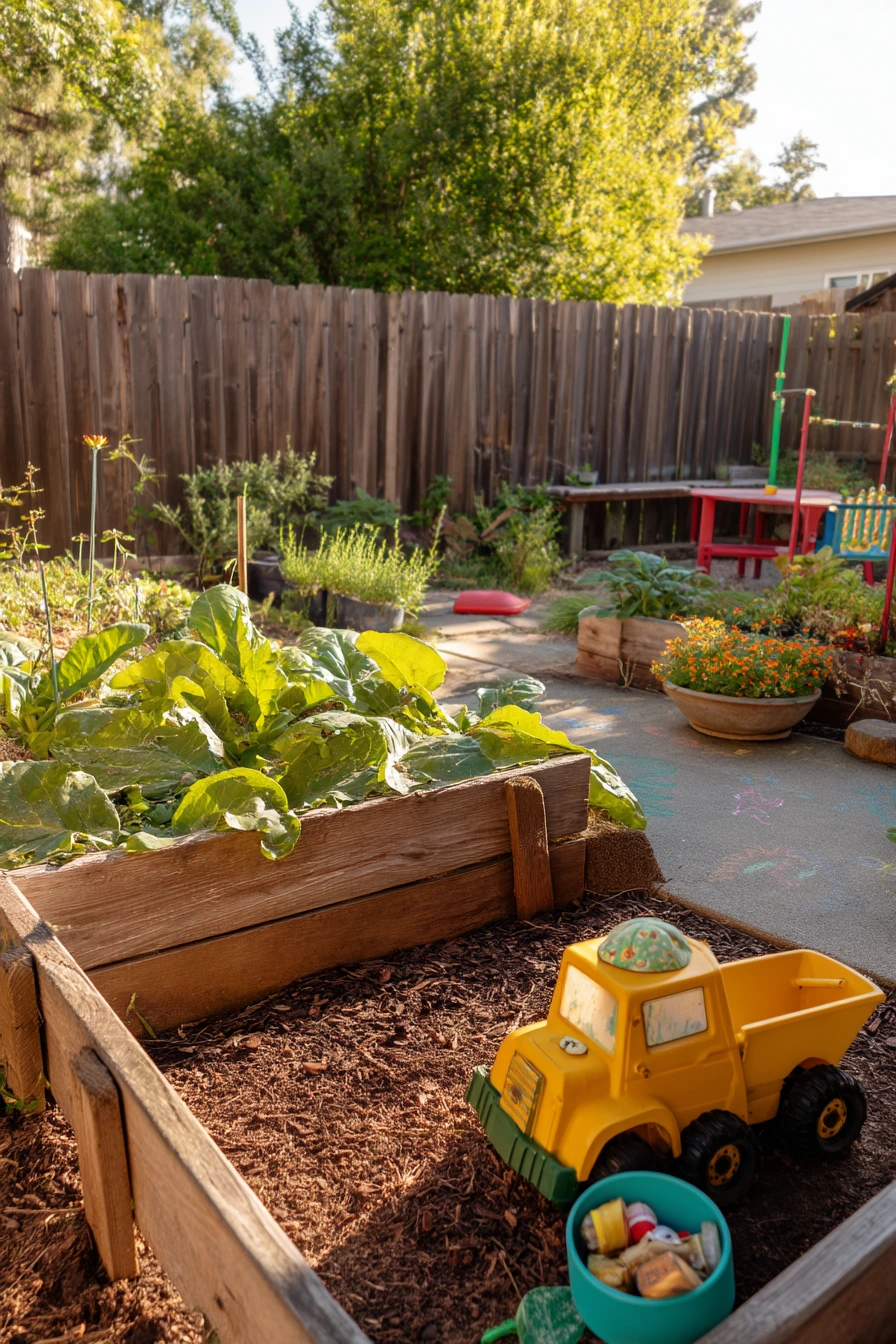
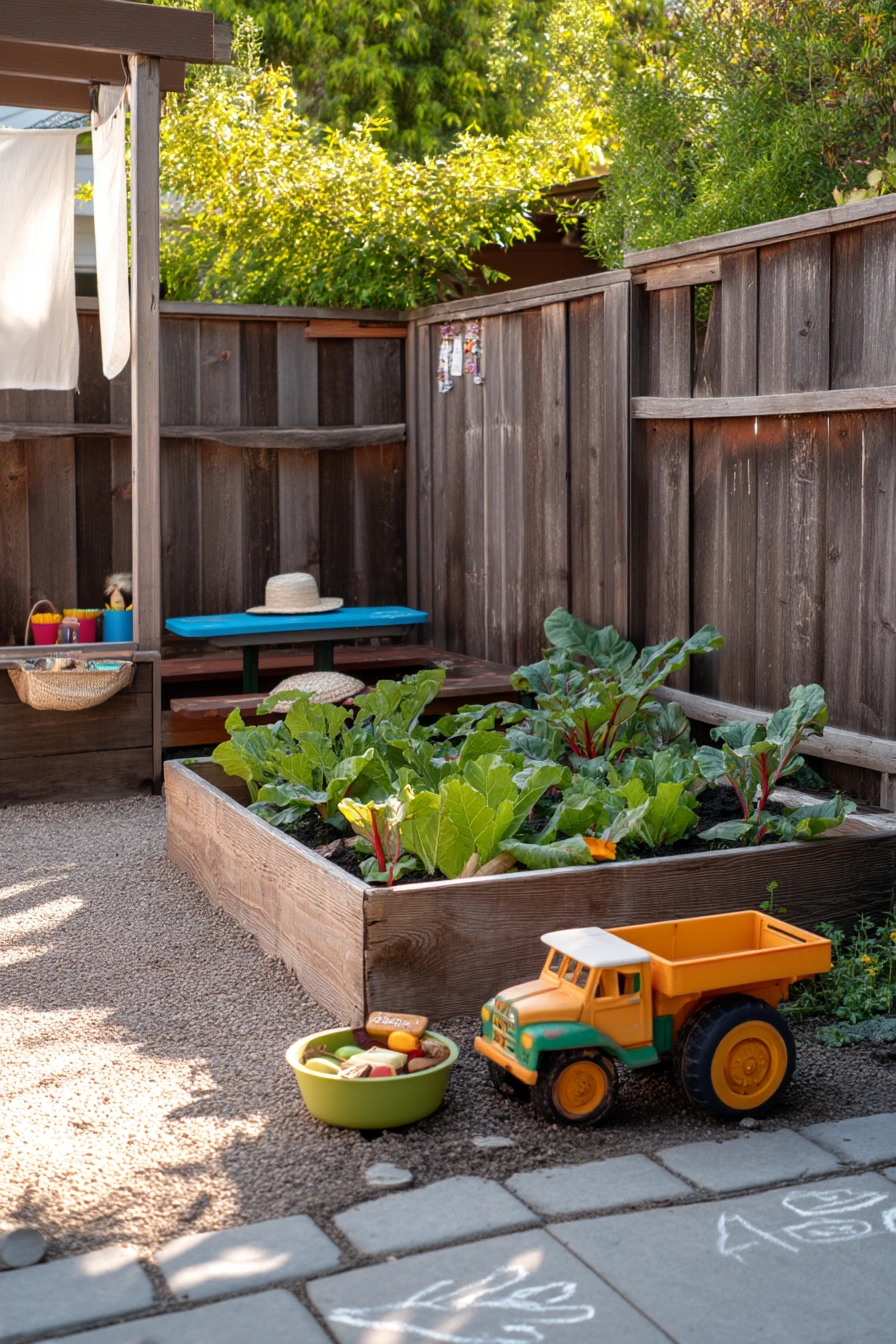
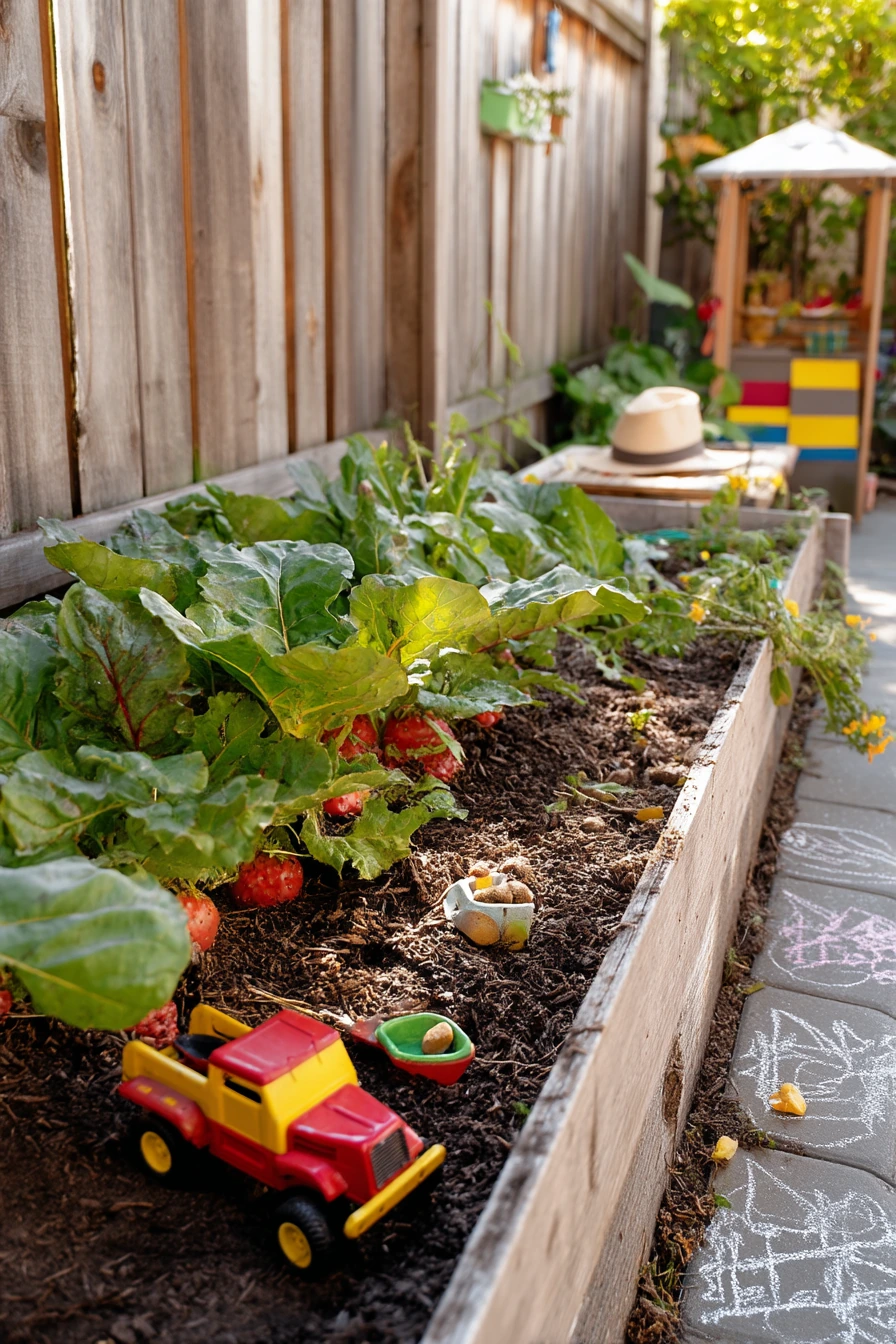
A family home garden works best when kids can help without damaging plants. For a raised garden bed along a fence, keep the bed lower with wide edges that are safe to sit on. Plant strawberries along the front where little hands can pick easily, and fill the middle with rainbow chard for bright color that grows fast.
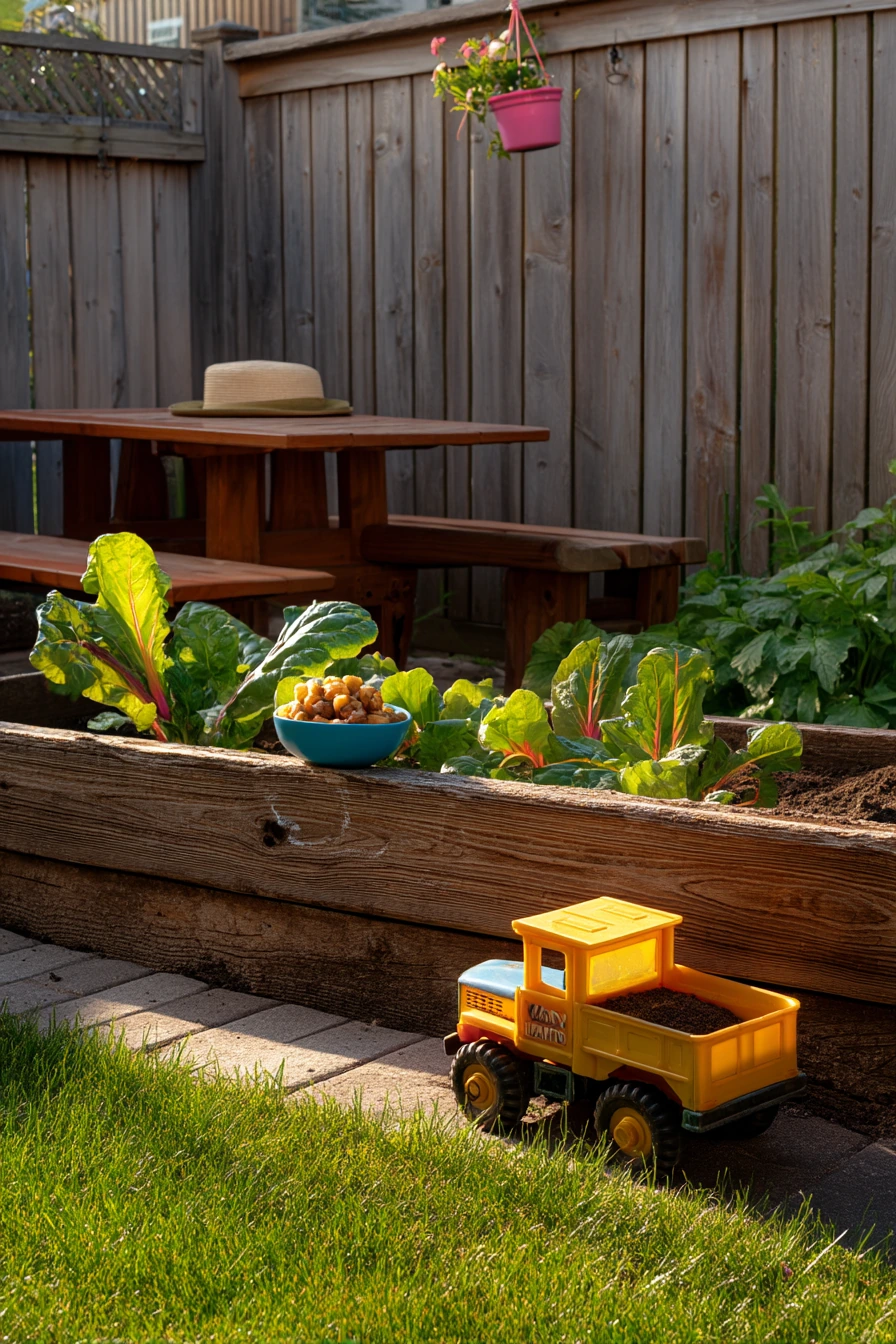
Add marigolds near the ends to help with pests and to bring in pollinators. Mulch the bed well so it stays neat even if a toy dump truck ends up half-buried in the mulch. Place a snack bowl on the table and a sunhat on a bench nearby so garden time feels simple and normal.
For how to style it, use kid-proof cues. Chalk marks on pavers can label zones like “berries” and “greens.” Keep one small bucket for tools and one for harvest so kids do not mix soil and food. Warm morning light makes this setup look cheerful, but it also shows clutter, so keep toys in one corner and clear the path after gardening.
- Build the bed 10 to 14 inches tall for easy reach.
- Plant everbearing strawberries for longer picking.
- Use soft mulch like shredded leaves or straw for comfort.
- Add a simple stepping path so kids avoid the bed.
- Choose non-toxic plants only, and skip thorny types.
Pro Design Tip: Make the bed edge wide enough to sit on, then seal it smooth so it works like a small bench along the fence.
Budget Considerations: Strawberries can be started from small plugs; buying fewer plants and letting them spread can cut the first-year cost.
4 Budget DIY Fence-Line Planter Build
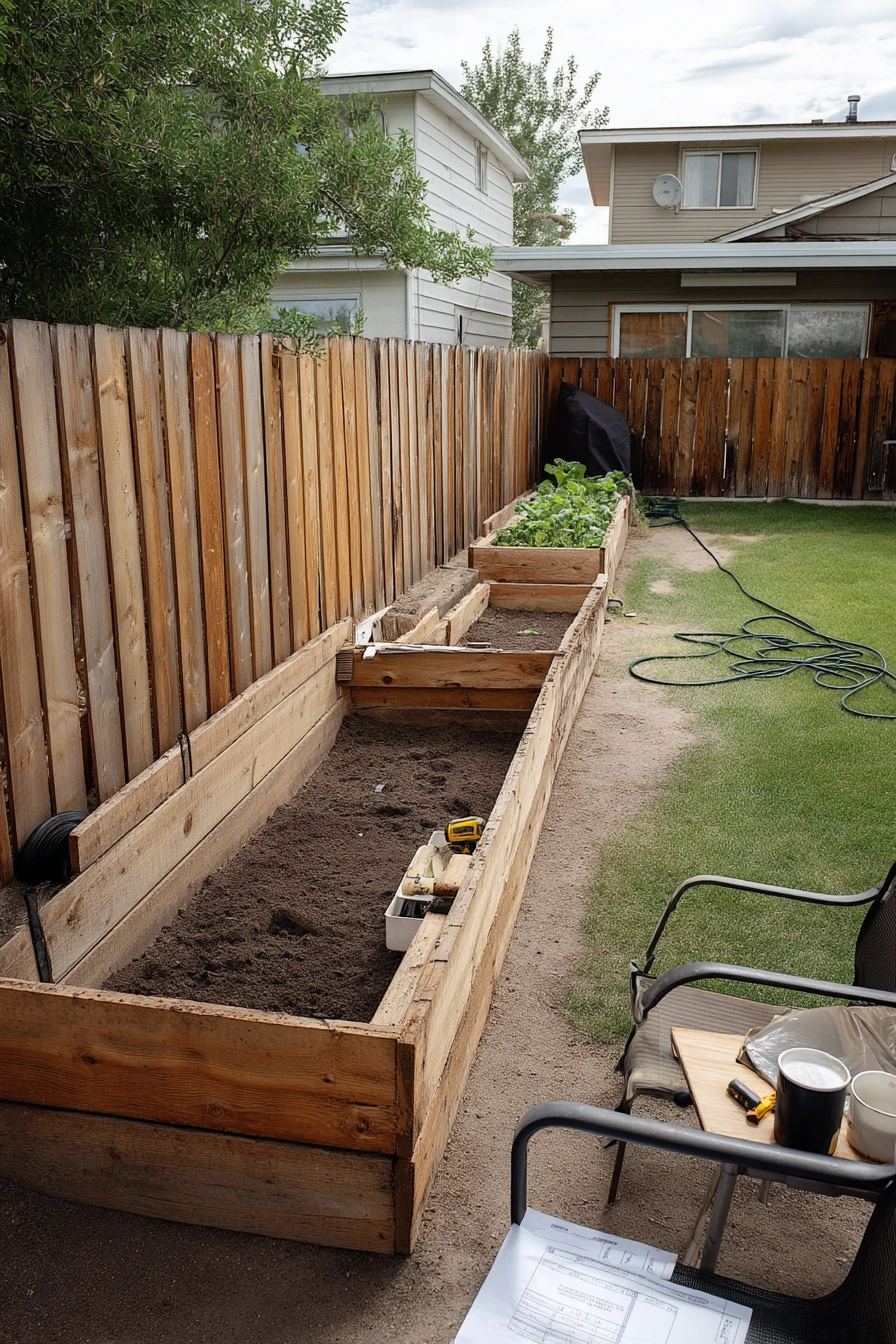
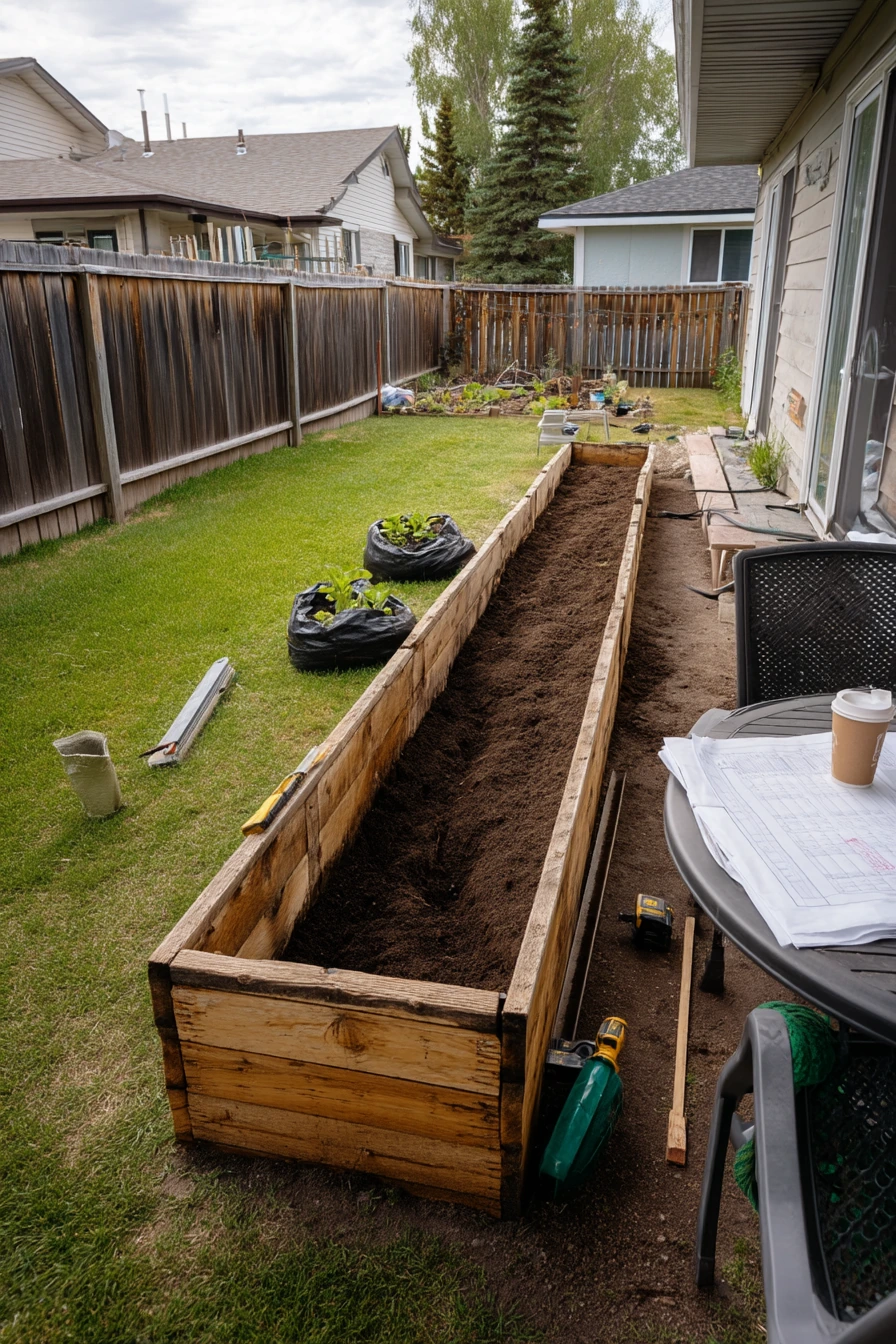
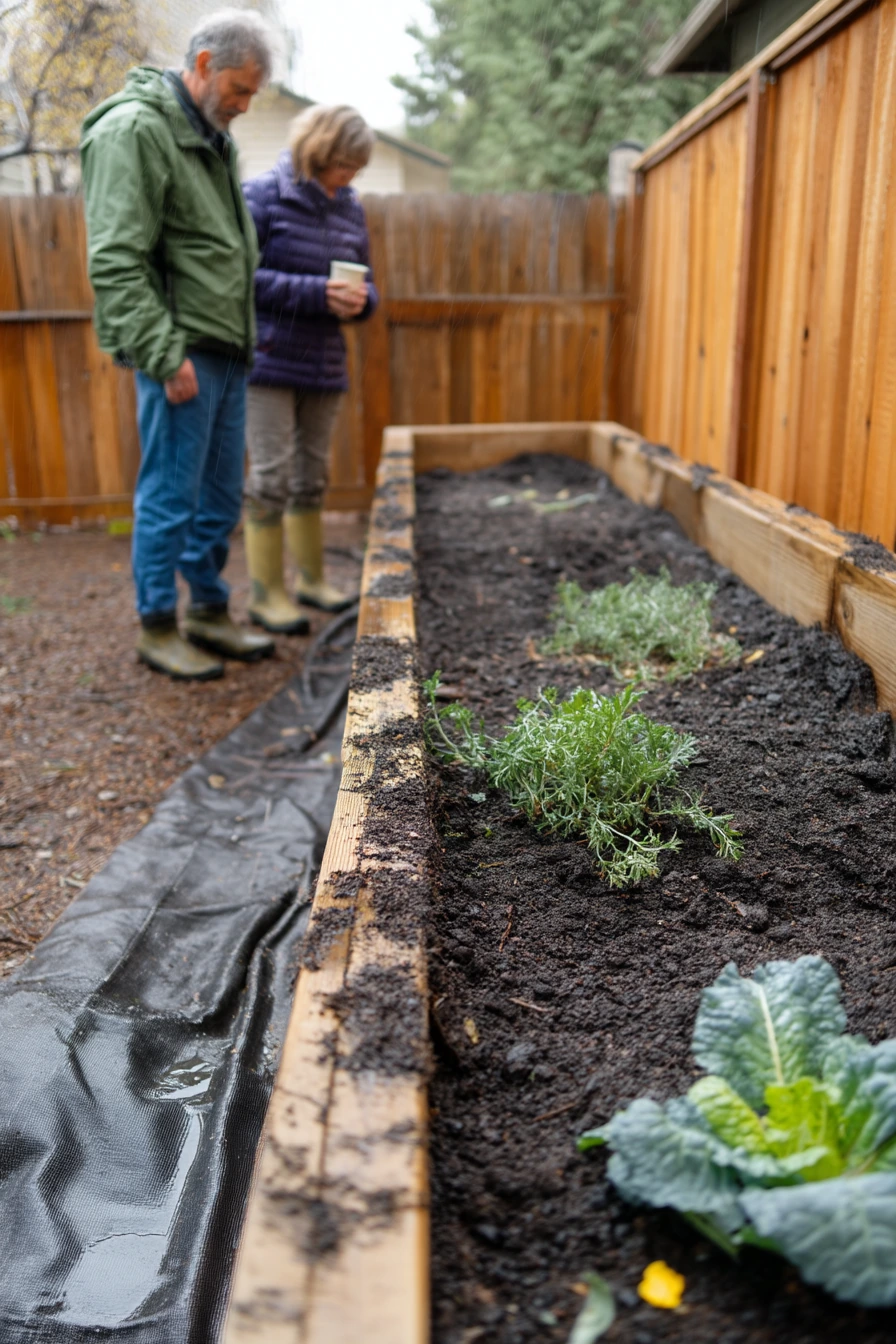
A simple reclaimed lumber bed is a smart way to start a raised garden bed along a fence when you want function first. Keep the design straight, with a single long strip that follows the fence line. This makes measuring easier and helps you use soil bags with less waste.
Set up your tools before you begin. A drill, level, gloves, and spare screws should be close by, and keep the hose snaked across the grass so you can water as you fill. If you are working from a folded blueprint on a patio chair, mark the bed corners with stakes so you do not lose your line when you pause for coffee.
For styling, let the DIY look feel clean, not rough. Trim the top edge boards so they align, and cap the corners if the lumber has splinters. Once planted, add a simple gravel or mulch strip on the outside edge to keep soil from washing onto the lawn. Overcast daylight is great for building, and it also helps you see if the bed looks straight against the fence.
- Pick boards that are solid and not treated with harmful chemicals.
- Use corner brackets if the lumber is uneven.
- Line the inside with cardboard before adding soil.
- Fill with a mix of topsoil, compost, and a little perlite.
- Plant easy starters like zucchini, bush beans, and herbs.
Pro Design Tip: Run a string line along the fence and measure from it at three points so the bed stays parallel and looks professional.
Budget Considerations: Reclaimed boards are often cheap or free, but plan for extra screws and hardware since older wood can split.
5 Pollinator Bed for a Sunny Side Yard
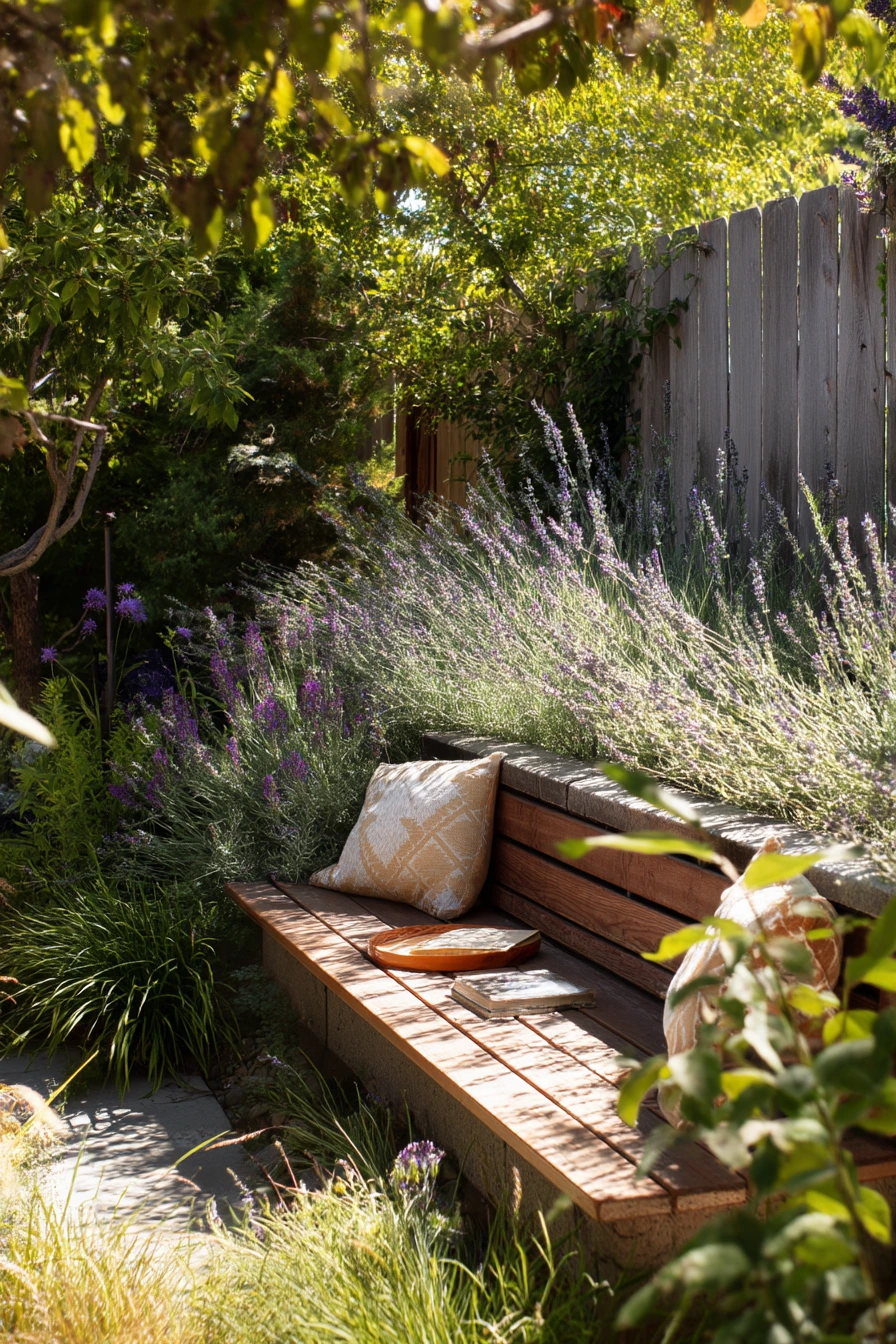
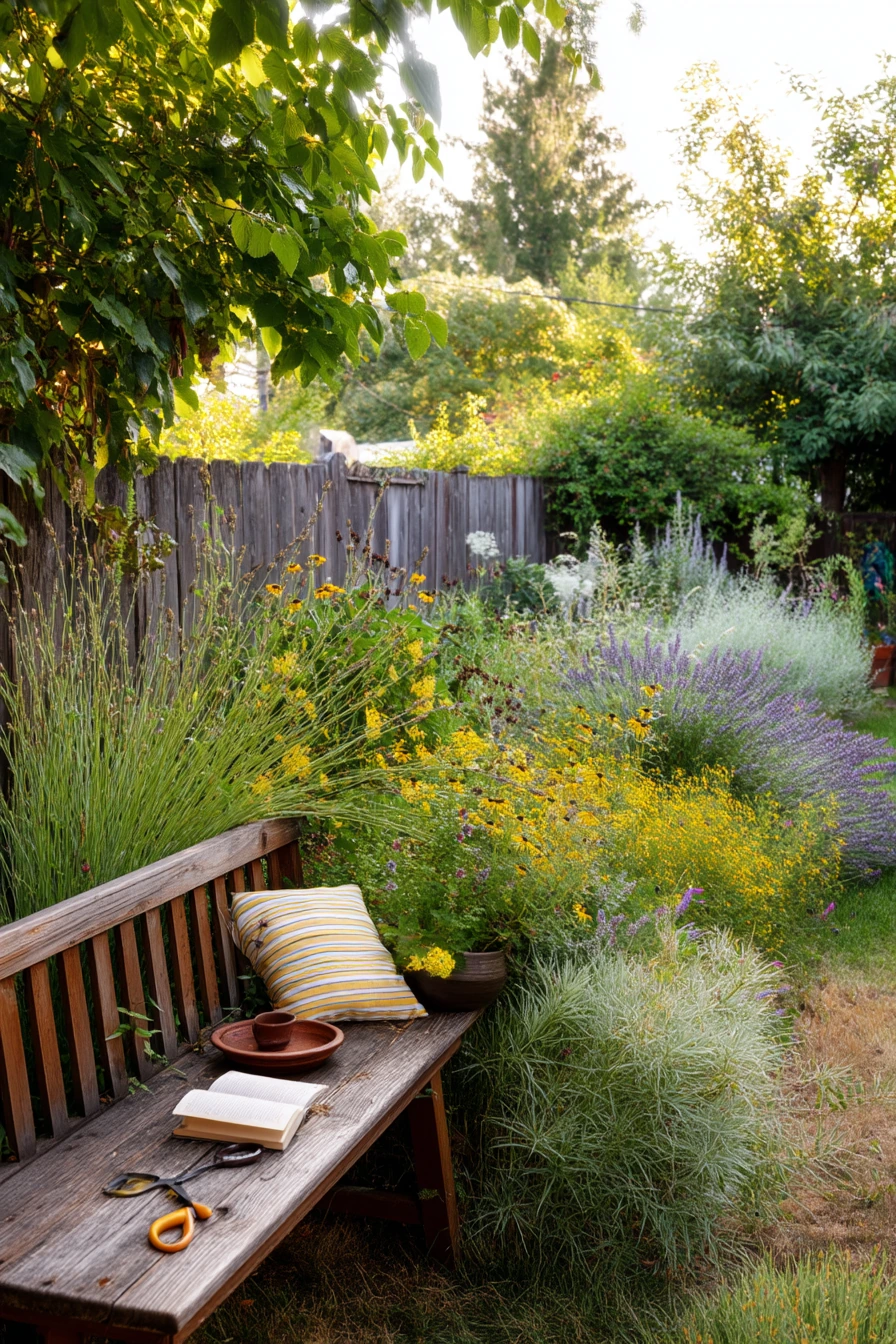
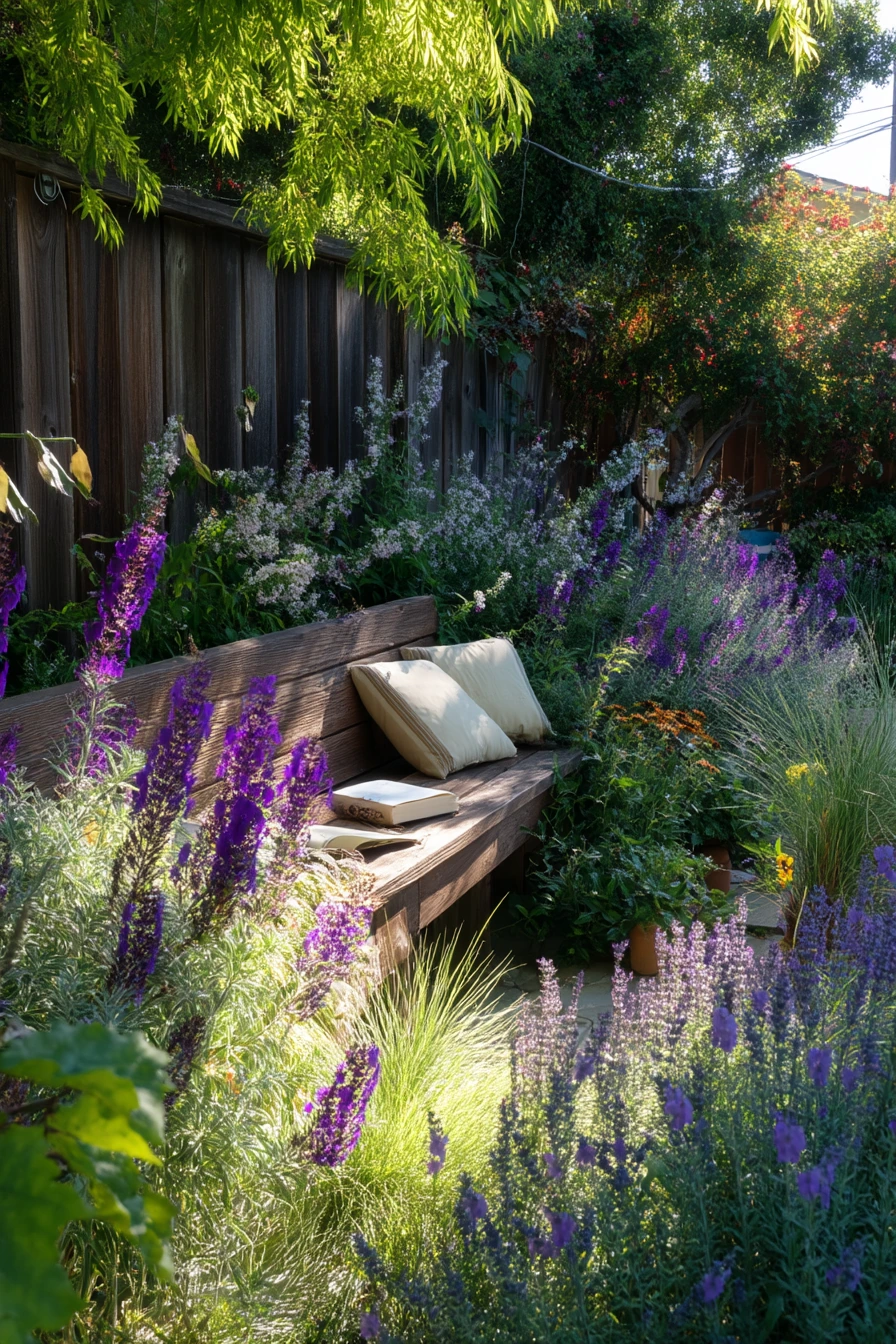
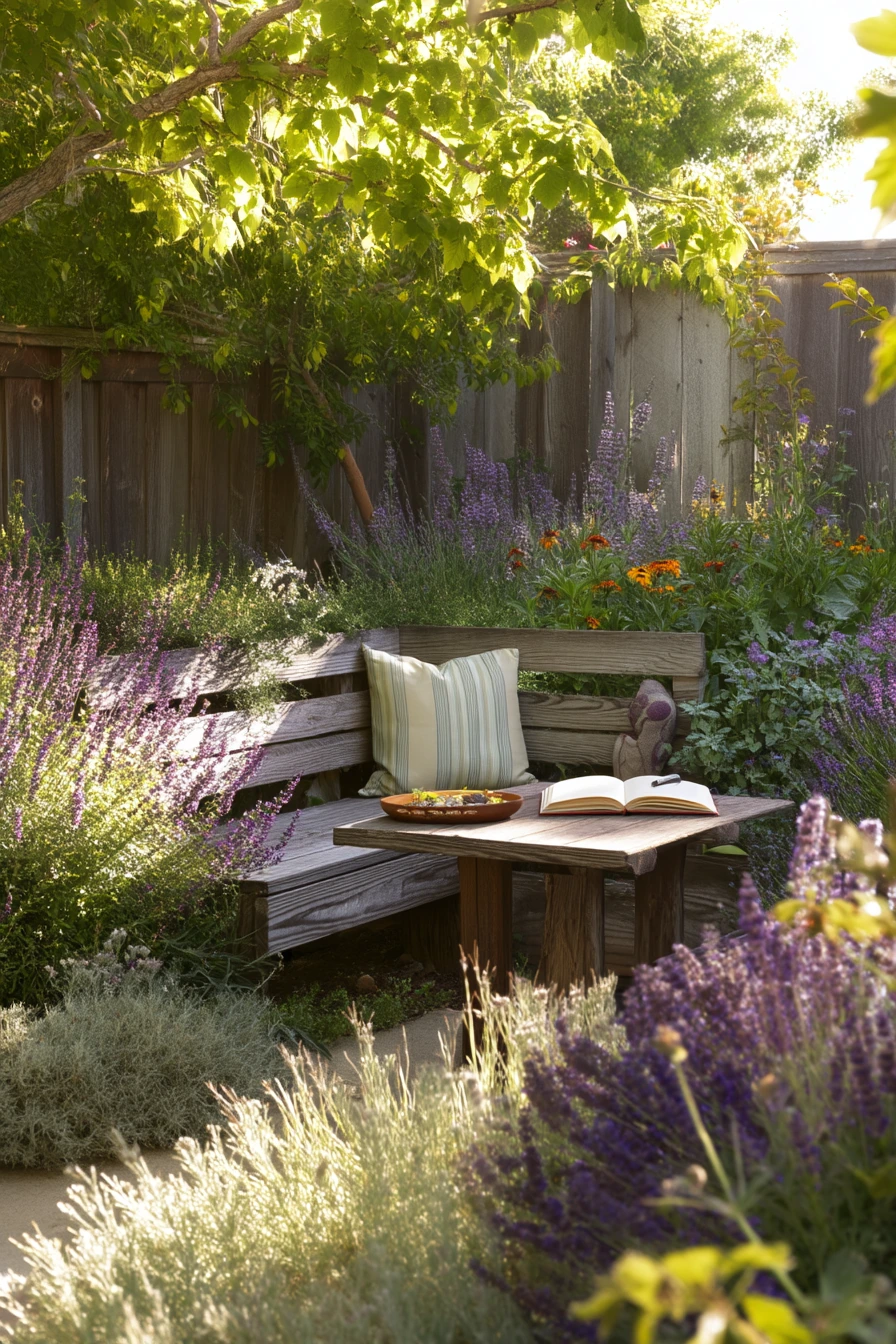
If you want a calmer yard, build a raised garden bed along a fence that focuses on pollinators and scent. Lavender, salvia, coneflowers, and ornamental grasses handle sun and heat well, and they look good even when you miss a week of deadheading. The fence gives a clear backdrop, so the flower colors read stronger.
Leave room for small care habits. Keep pruning shears nearby and add clay saucers for water, especially during hot afternoons. When bees hover around the blooms, it becomes a simple daily view. A book left open on the outdoor table and a bench with a slightly wrinkled throw pillow makes this area feel like a place to rest, not just a planting zone.
For how to style it, repeat soft shapes. Use grasses to create movement and place the tallest plants toward the fence. Add one neutral pot at each end to frame the bed and hide the soil line. Dappled light looks best when the bed edge is clear, so avoid too many small decorations and let the plants do the work.
- Plant lavender in groups of three for a fuller look.
- Mix bloom times so something flowers from spring to fall.
- Add a thin gravel top-dress to reduce weeds and splash.
- Leave a small gap near the fence for airflow and access.
- Water deeply, then let the bed dry slightly between waterings.
Pro Design Tip: Use a limited color palette, like purple, soft pink, and green, to make the border look planned and relaxing.
Budget Considerations: Perennials cost more upfront; buy smaller starter plants and let them fill in over two seasons.
6 Privacy Screen Garden With Climbing Trellis
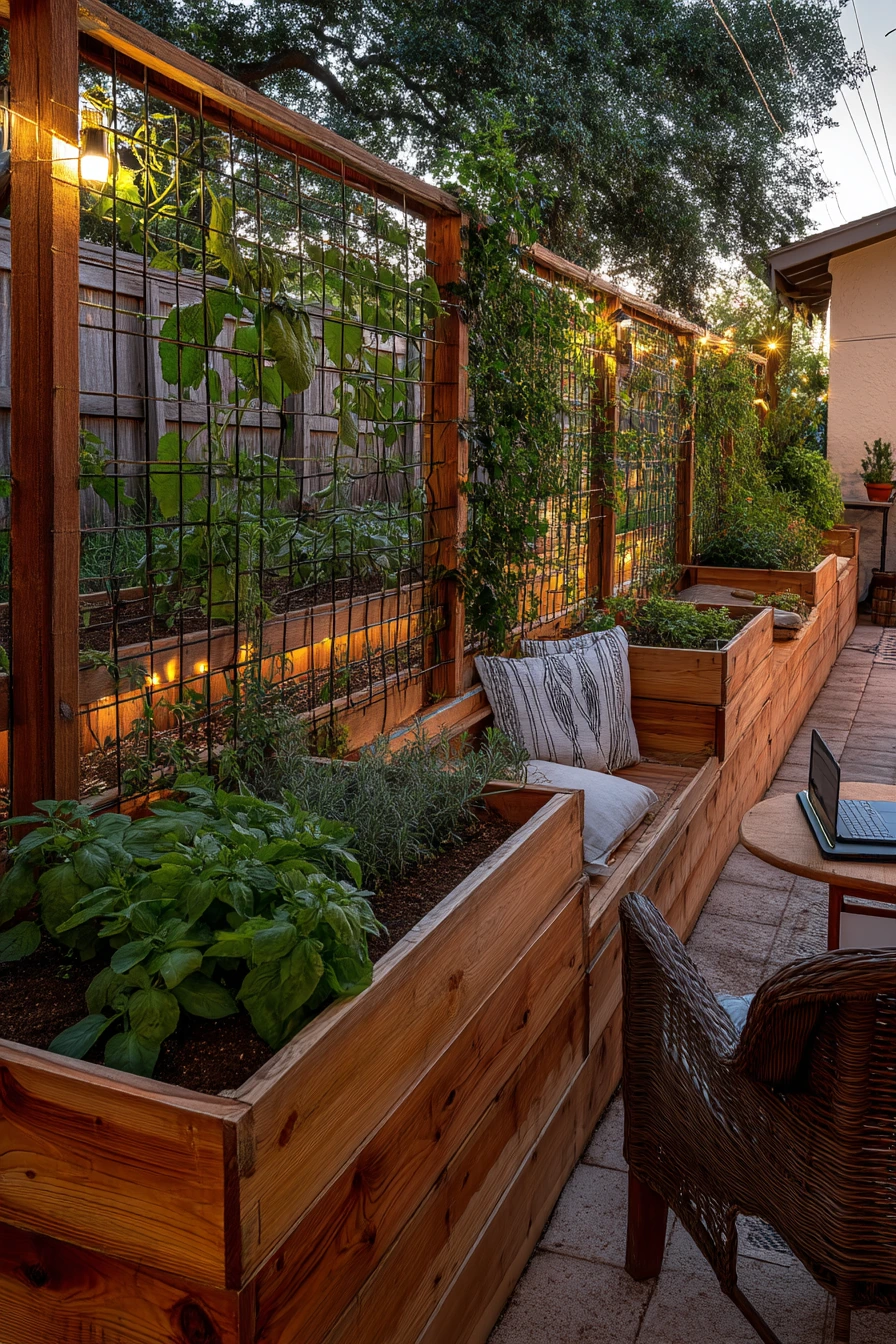
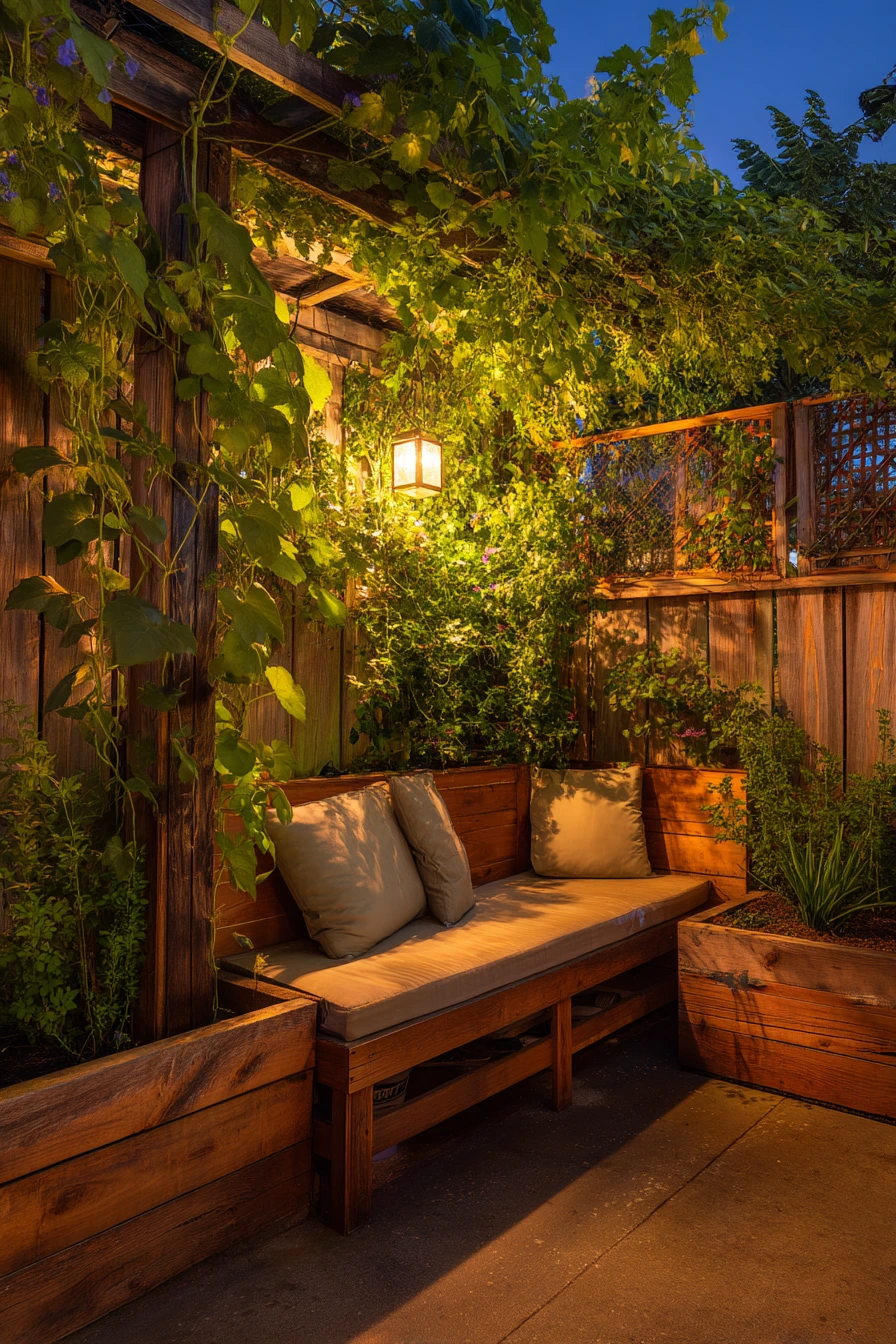
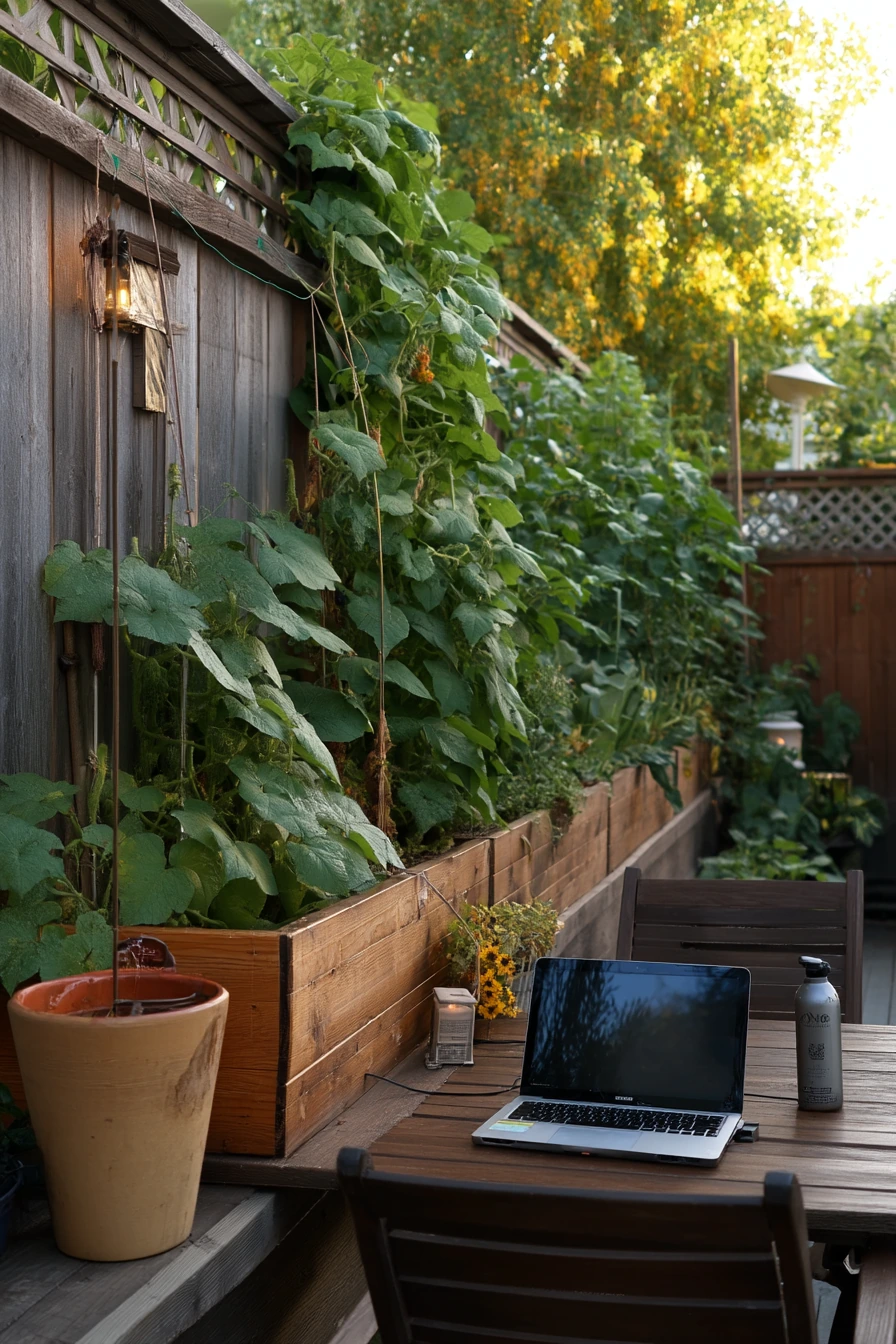
A tall, blank fence can feel harsh, but a raised garden bed along a fence with trellises adds layers fast. Cedar beds work well here because they look warm in evening light and hold up outdoors. Add trellises every few feet so the fence line becomes a green wall instead of a flat surface.
Choose climbers that are both pretty and useful. Jasmine can add scent, and cucumbers give quick growth and shade. Keep garden twine on hand and tie stems loosely so they do not snap. A lantern, citronella candle, and a water bottle nearby makes the corner feel like a real backyard retreat, even if you are still checking notes on an open laptop.
For styling, think in vertical layers. Place the tallest trellis sections where you want the most privacy, and use lower plants at the front edge for a clean finish. Warm light after sunset highlights texture, so keep the bed edges simple and avoid shiny items that distract. If the area gets muddy, lay a small stepping pad or gravel strip to keep shoes clean.
- Space trellises so each vine has its own climb zone.
- Plant cucumbers at the base and train them early.
- Add a low row of herbs like thyme to cover bare soil.
- Use lantern light to make the fence line usable at night.
- Keep gloves and twine in a small weatherproof bin.
Pro Design Tip: Stagger trellis heights slightly along the fence to create rhythm and make the long line feel more designed.
Budget Considerations: Cedar and pre-made trellises add up; you can build trellises from simple wood strips or cattle panels to save money.
7 Rainy Day Maintenance Along the Fence
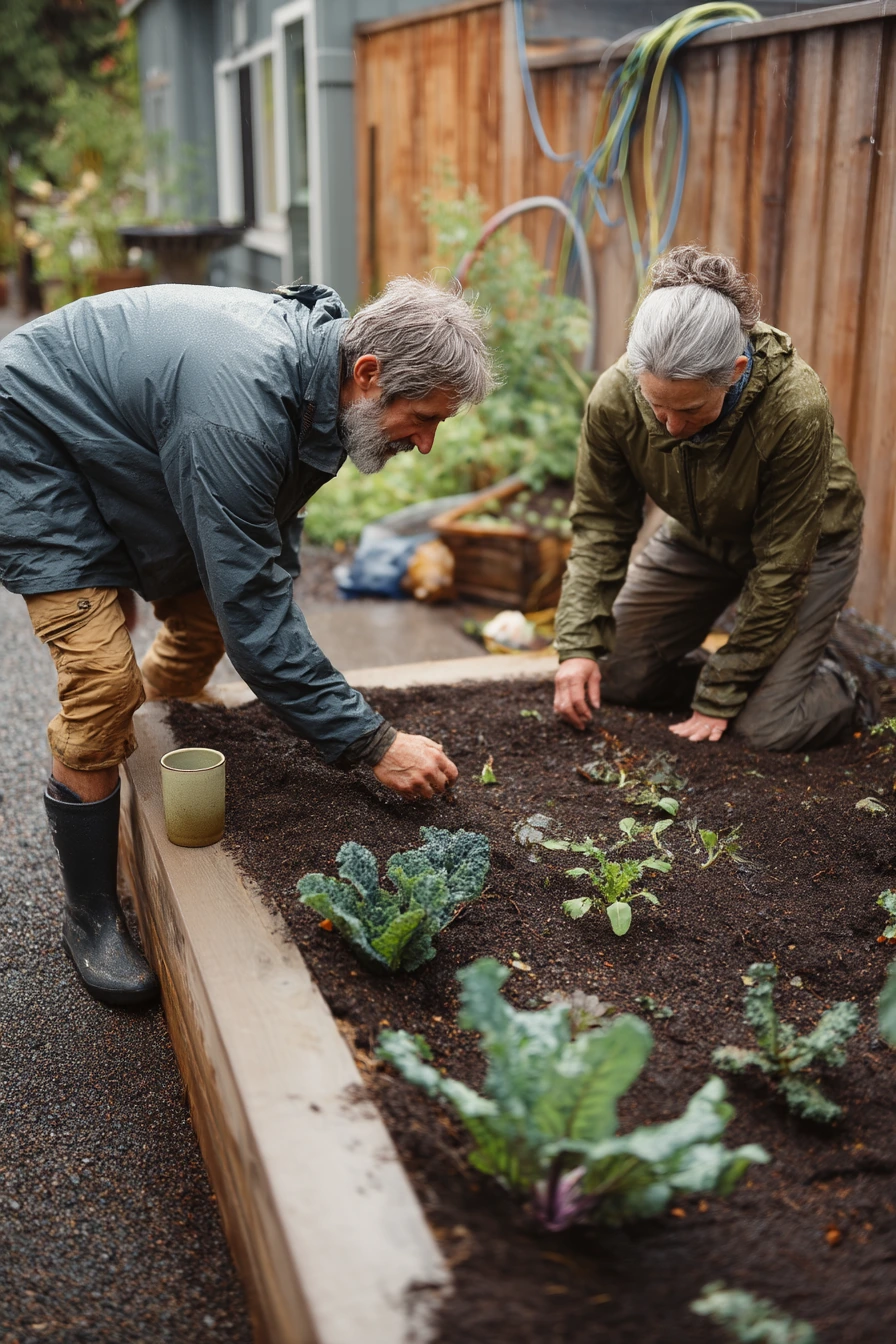
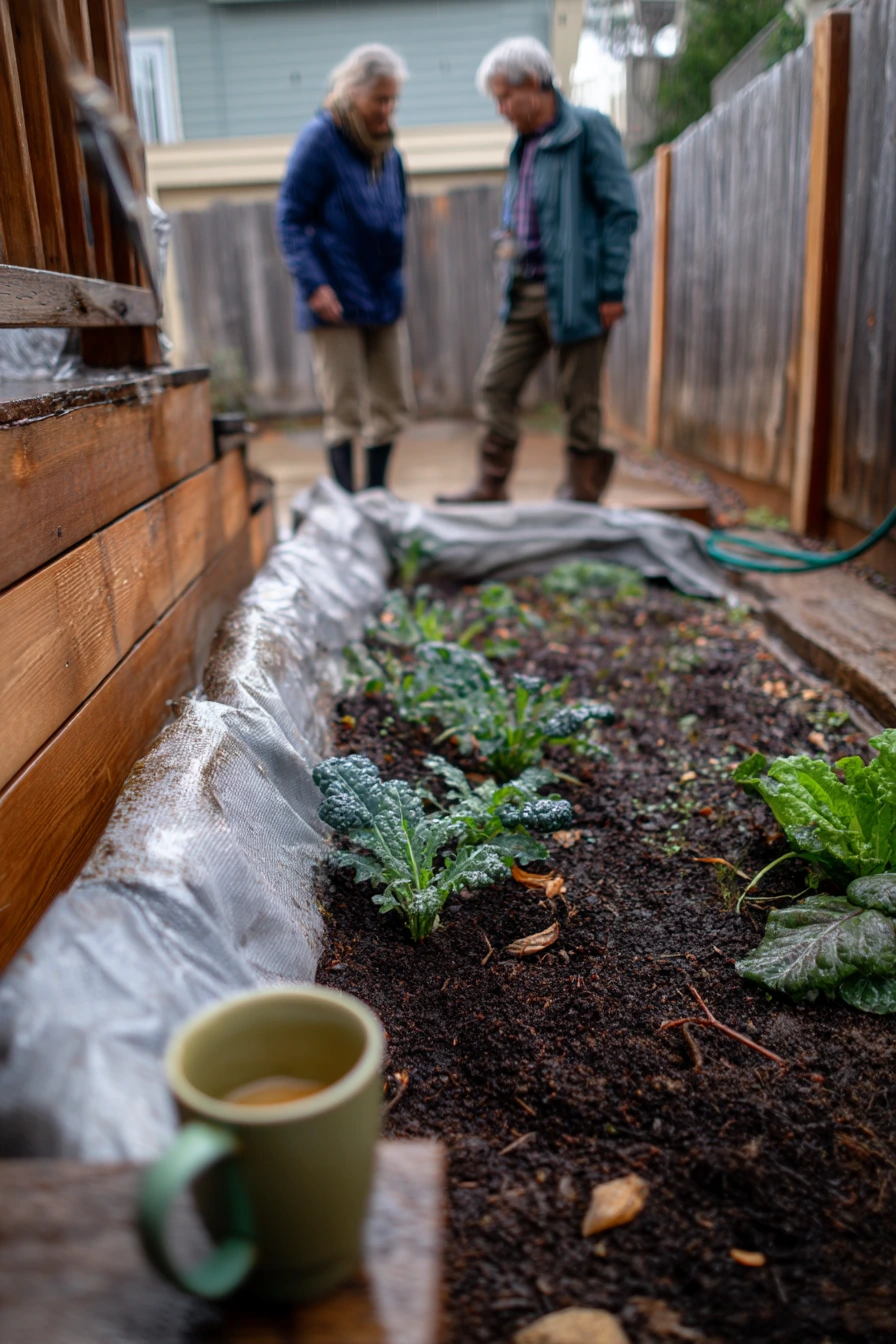
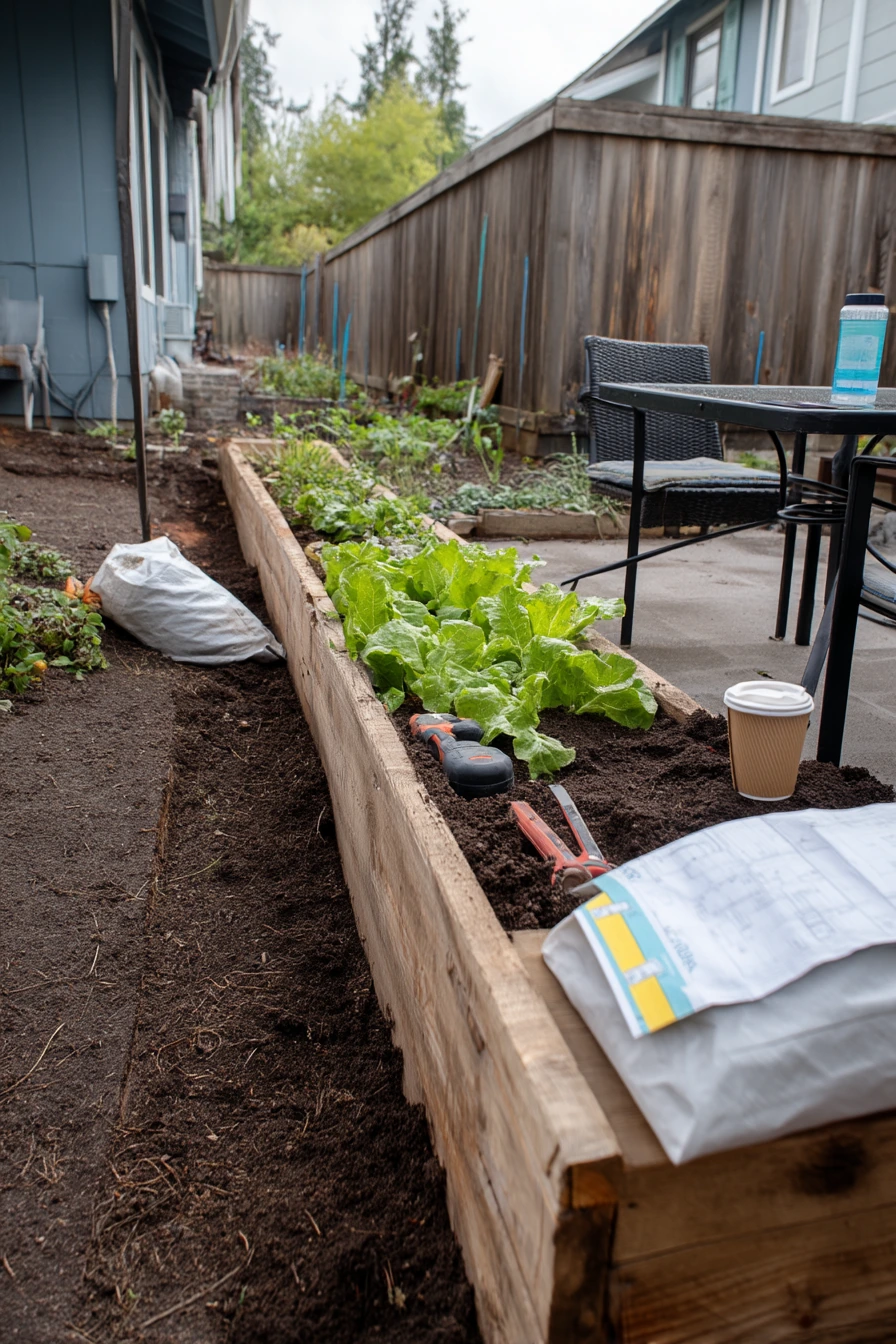
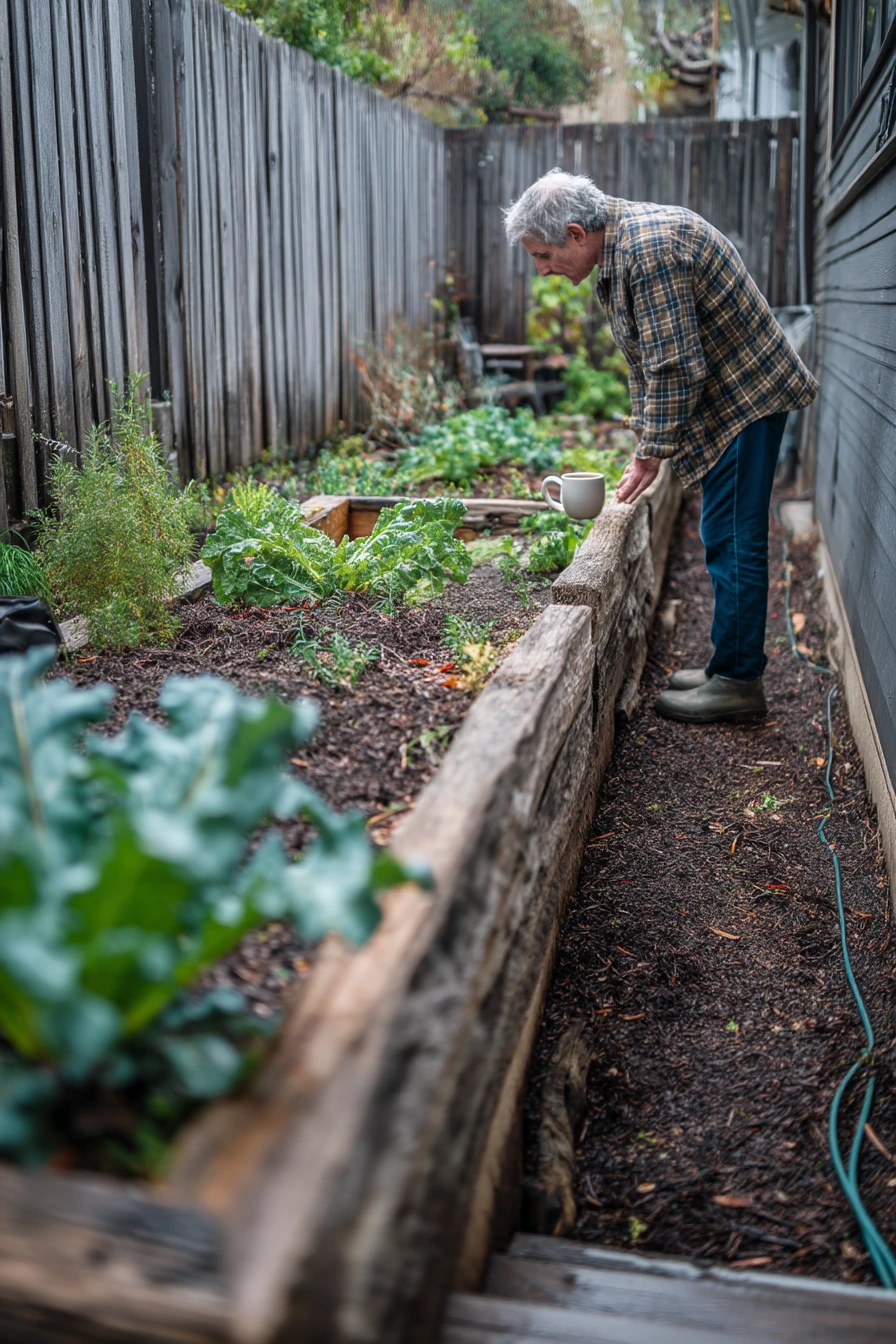
After a light rain, a raised garden bed along a fence shows you what is working and what needs fixing. If the board edges are damp and water sits near the fence, you may need better drainage. Start by checking where the water flows, then look for low spots in the soil surface.
Plant choices like kale, rosemary, and strawberries can handle a range of weather, but roots still need air. Add mulch to protect soil, but keep it pulled back a little from plant crowns. If you use a folded tarp during messy jobs, store it dry so it does not mold. A tea mug on the step and a hose coil nearby makes maintenance feel like a small routine instead of a big chore.
For how to style it, keep the maintenance tools neat. Use one hook on the fence for the hose and one for a hand rake. Boot prints in the soil are normal, but a defined path helps the bed look cared for even on gray days. If the fence recedes behind the bed, repeat the same mulch and edging all the way down so it feels continuous.
- Check if water pools at the fence line after rain.
- Top up soil if it has settled below the bed edge.
- Add compost, then cover with 2 to 3 inches of mulch.
- Use a simple border to keep mulch from spilling onto the path.
- Water less often after rain to prevent soggy roots.
Pro Design Tip: Create a slight slope in the soil surface away from the fence so extra water moves toward the front where it can evaporate.
Budget Considerations: Mulch is one of the cheapest upgrades; ask your local tree service for free wood chips if you need a low-cost option.
8 Pet-Friendly Garden Border for a Backyard
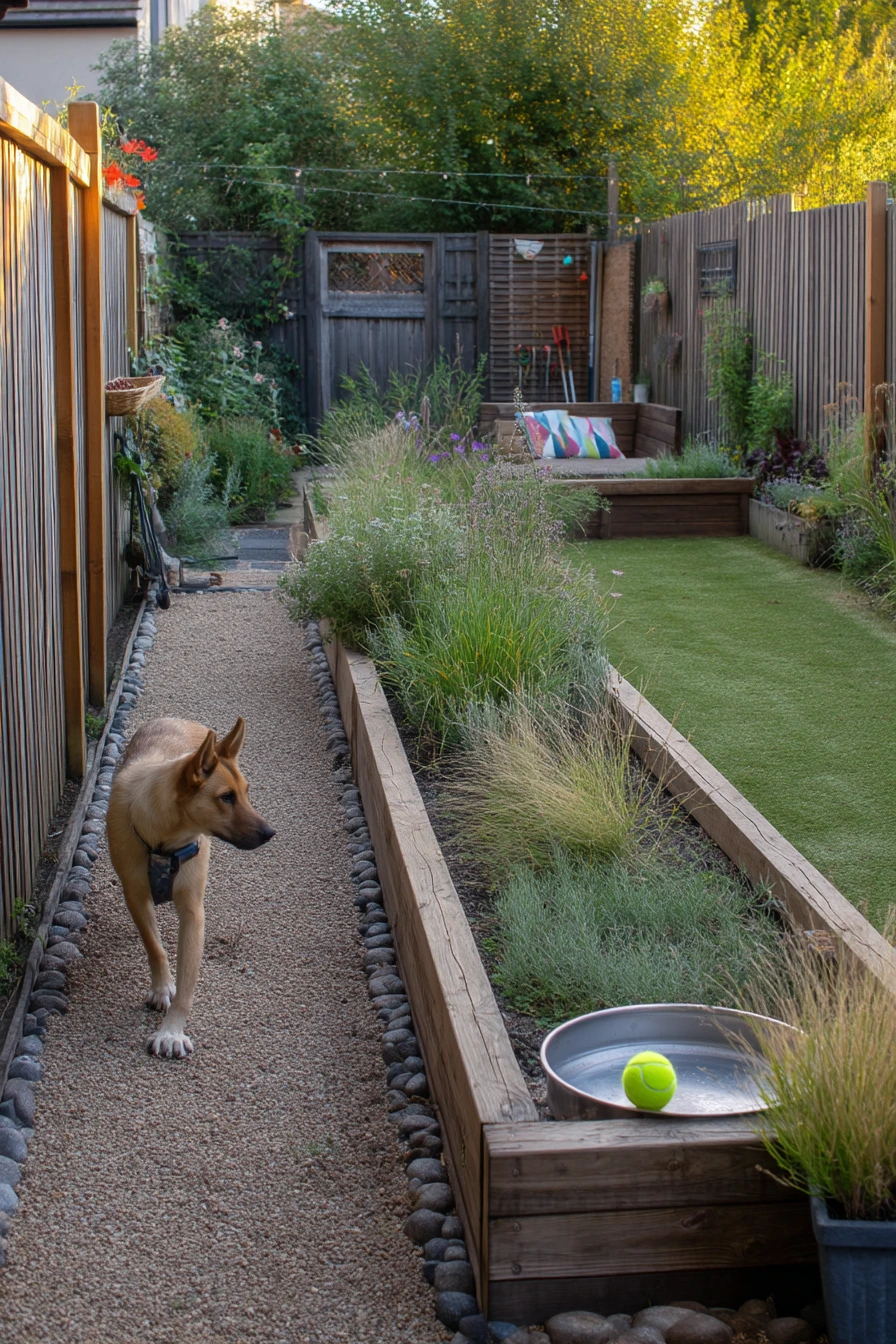
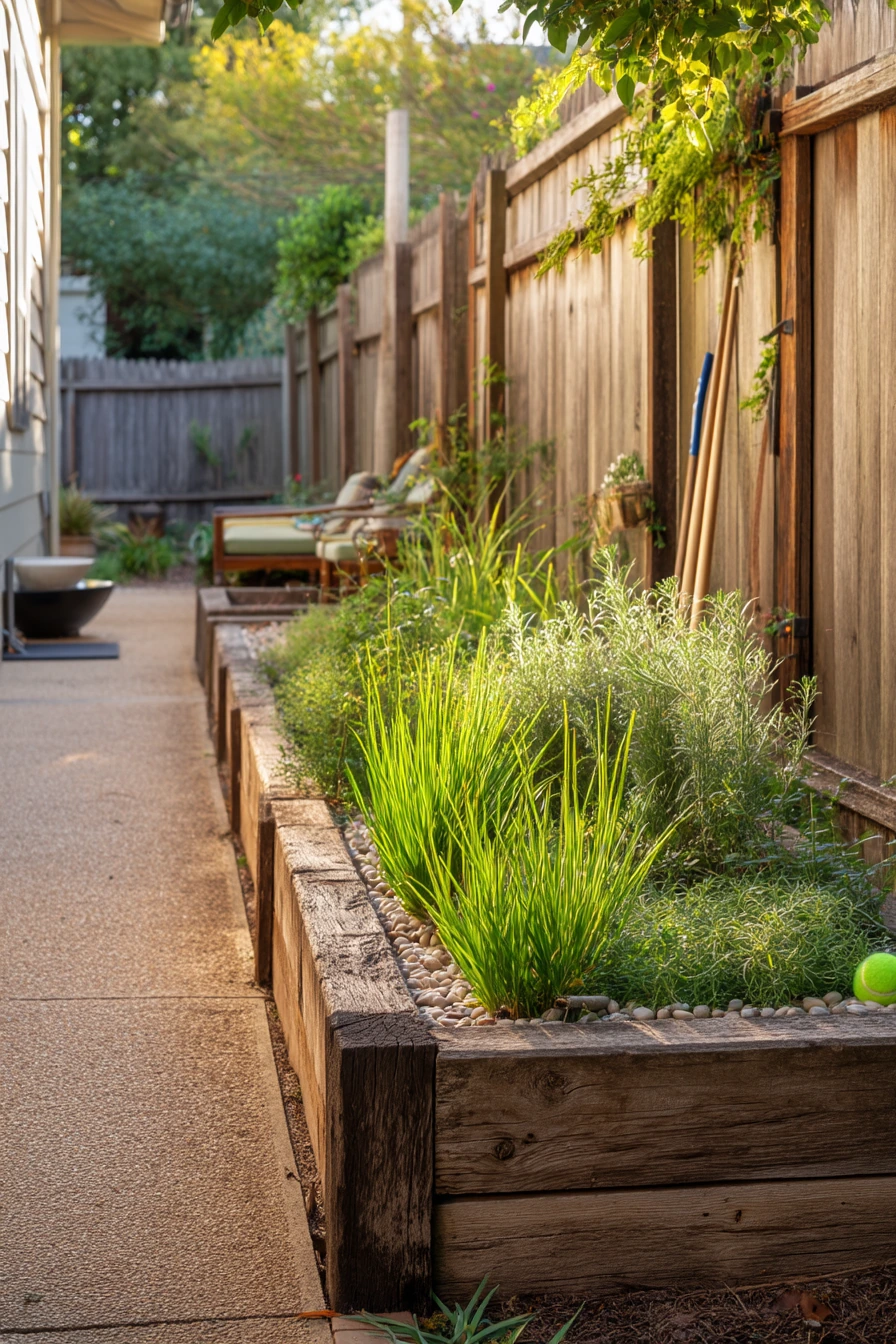
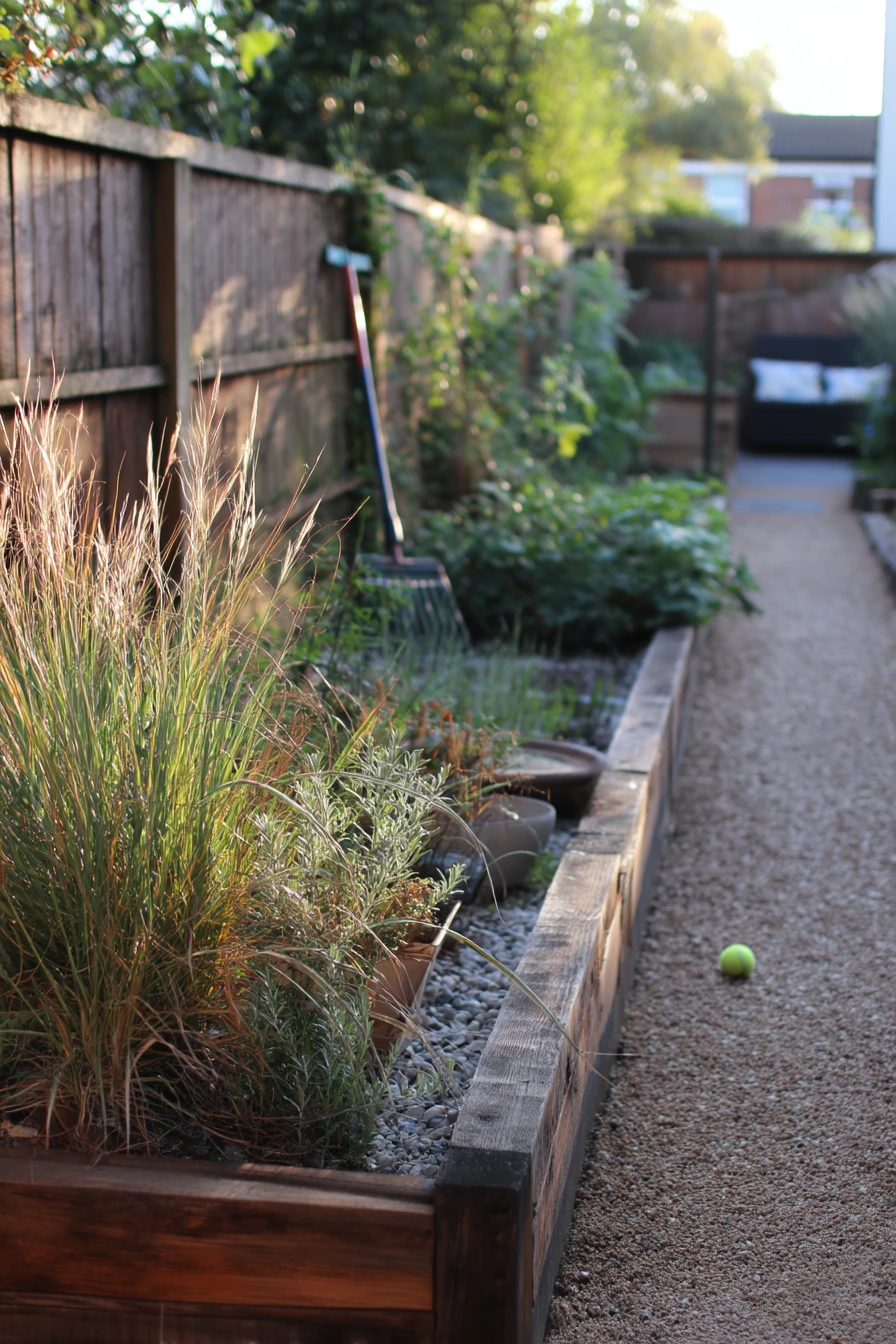
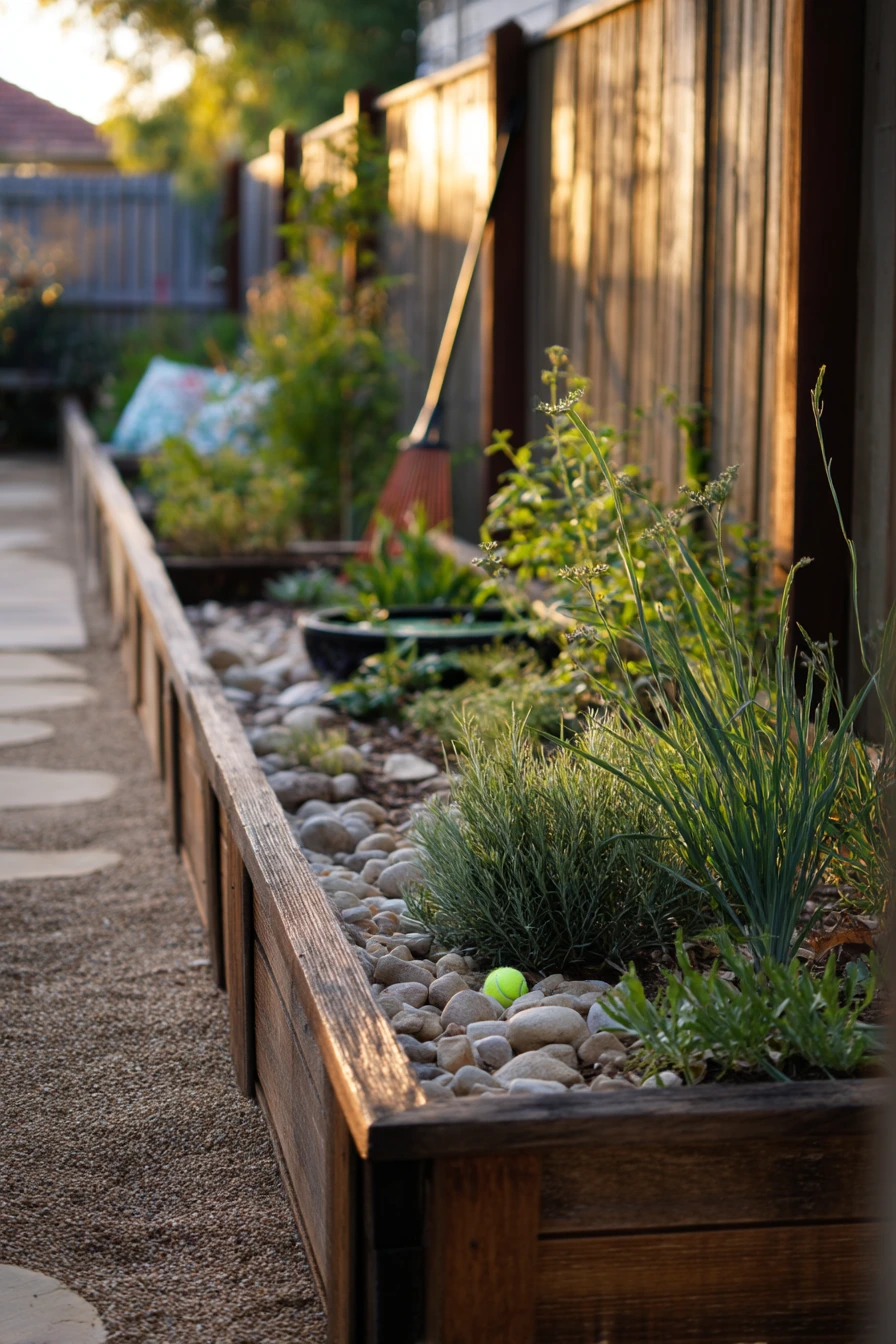
A dog-friendly yard needs a raised garden bed along a fence that can handle traffic. Use a raised timber border and protect the planting area with small edging stones so paws do not dig into roots. Pick hardy herbs and grasses that bounce back, and avoid plants that can be unsafe for pets.
Make the layout match real life. Hang a dog leash on a hook near the patio door, and keep a water bowl close to the path. A tennis ball will land where it lands, so plan for a clear run zone and keep the bed narrow enough that it does not block movement. An outdoor cushion slightly askew and a garden rake leaned against the fence fits a space that is used every day.
For how to style it, use durable details. Choose dark mulch that hides dirt, and keep the bed edge smooth so it does not snag leashes. Add one simple planter at the corner to soften the fence and signal that this is a garden area. Soft evening light makes the yard feel relaxed, but you will notice clutter more, so store toys in one basket when you are done.
- Raise the bed at least 12 inches to reduce digging.
- Use edging stones or a short barrier to protect plants.
- Pick tough plants like rosemary, sage, and fountain grass.
- Keep a clear path for zoomies and family traffic.
- Rinse muddy paws before they reach the bed line.
Pro Design Tip: Install a narrow fence-side strip of gravel between the bed and the main walkway to reduce mud and keep the area looking clean.
Budget Considerations: Edging stones can be expensive; use leftover pavers or bricks from other projects to create a simple protective border.
9 Modern Farmhouse Fence-Line Kitchen Garden
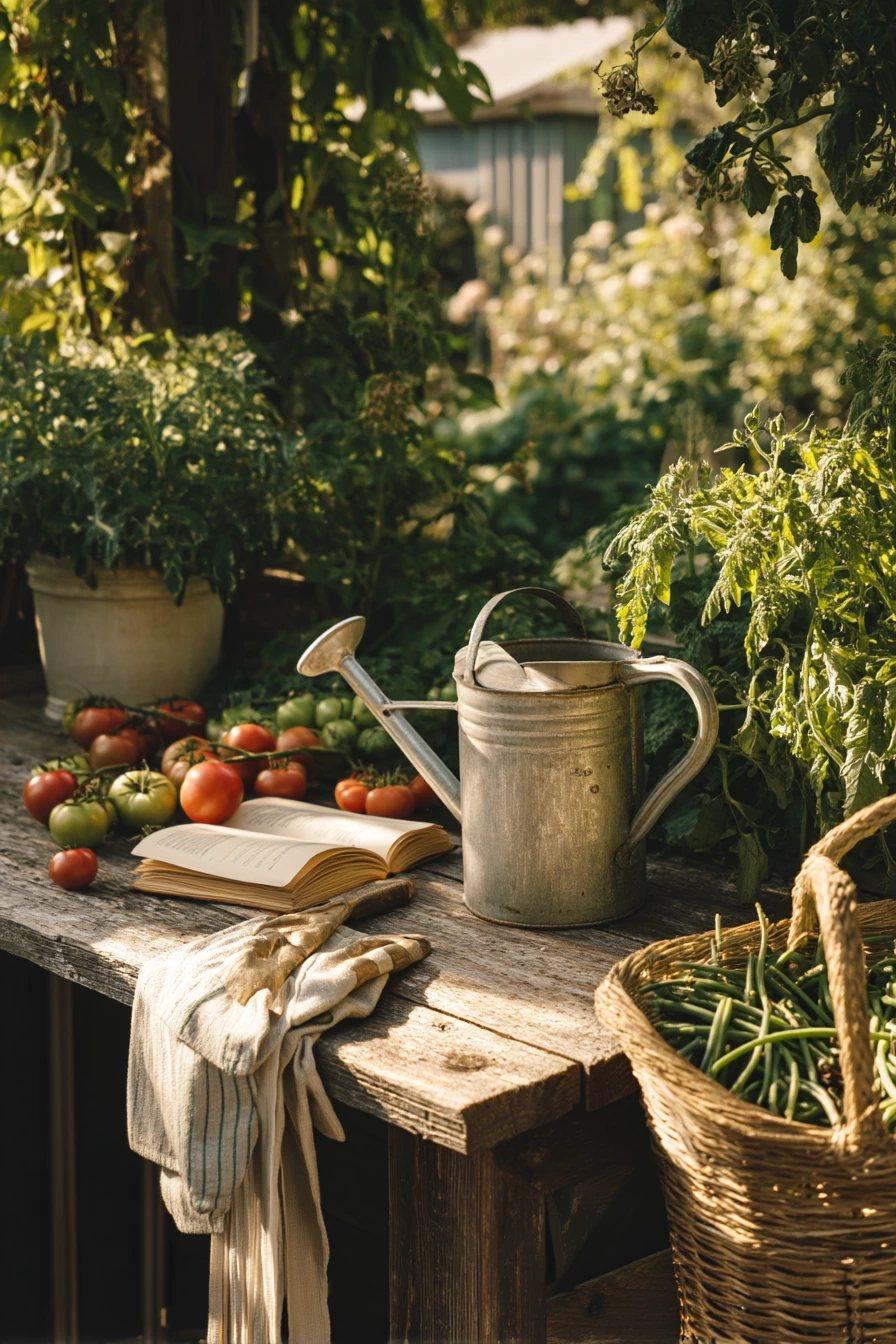
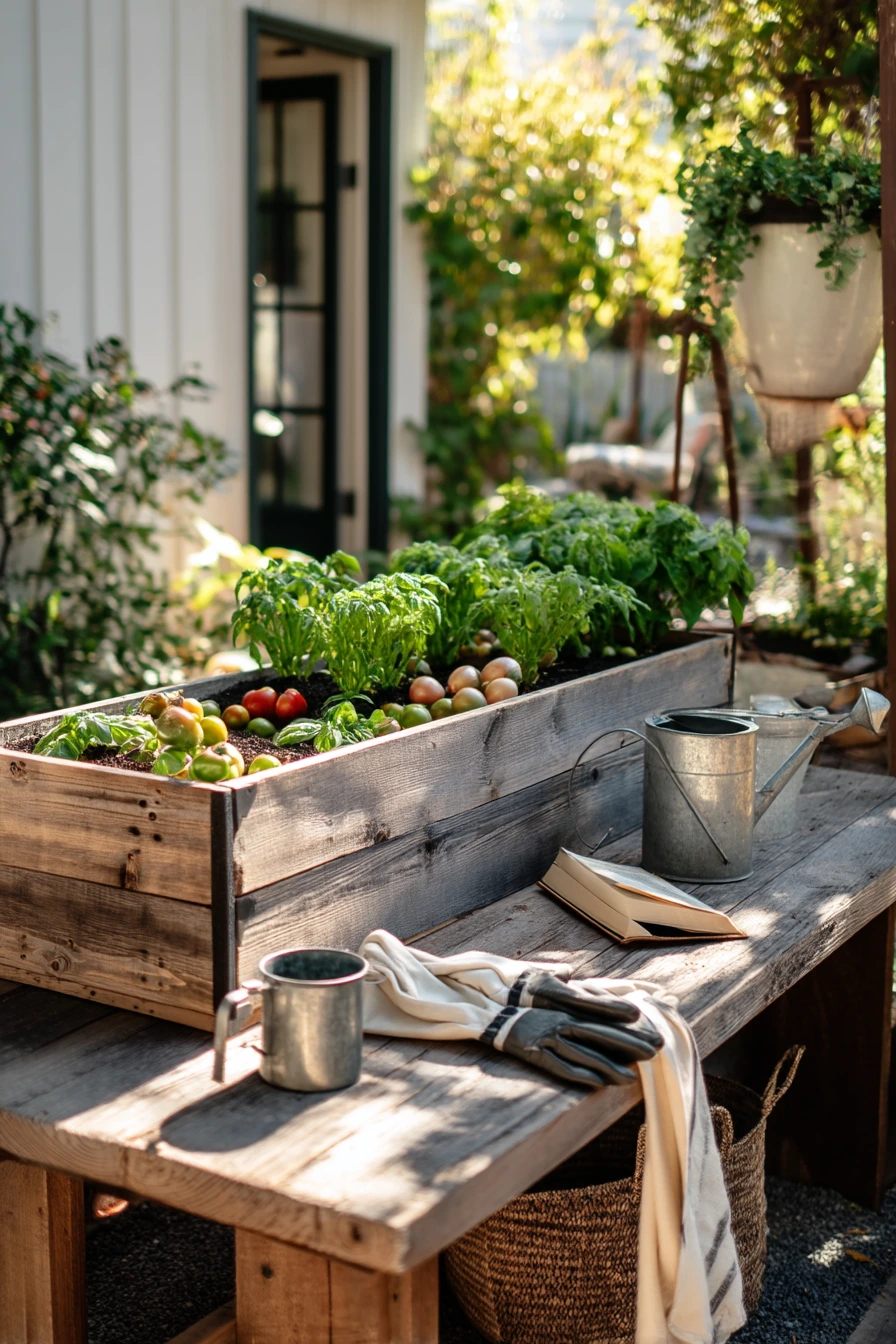
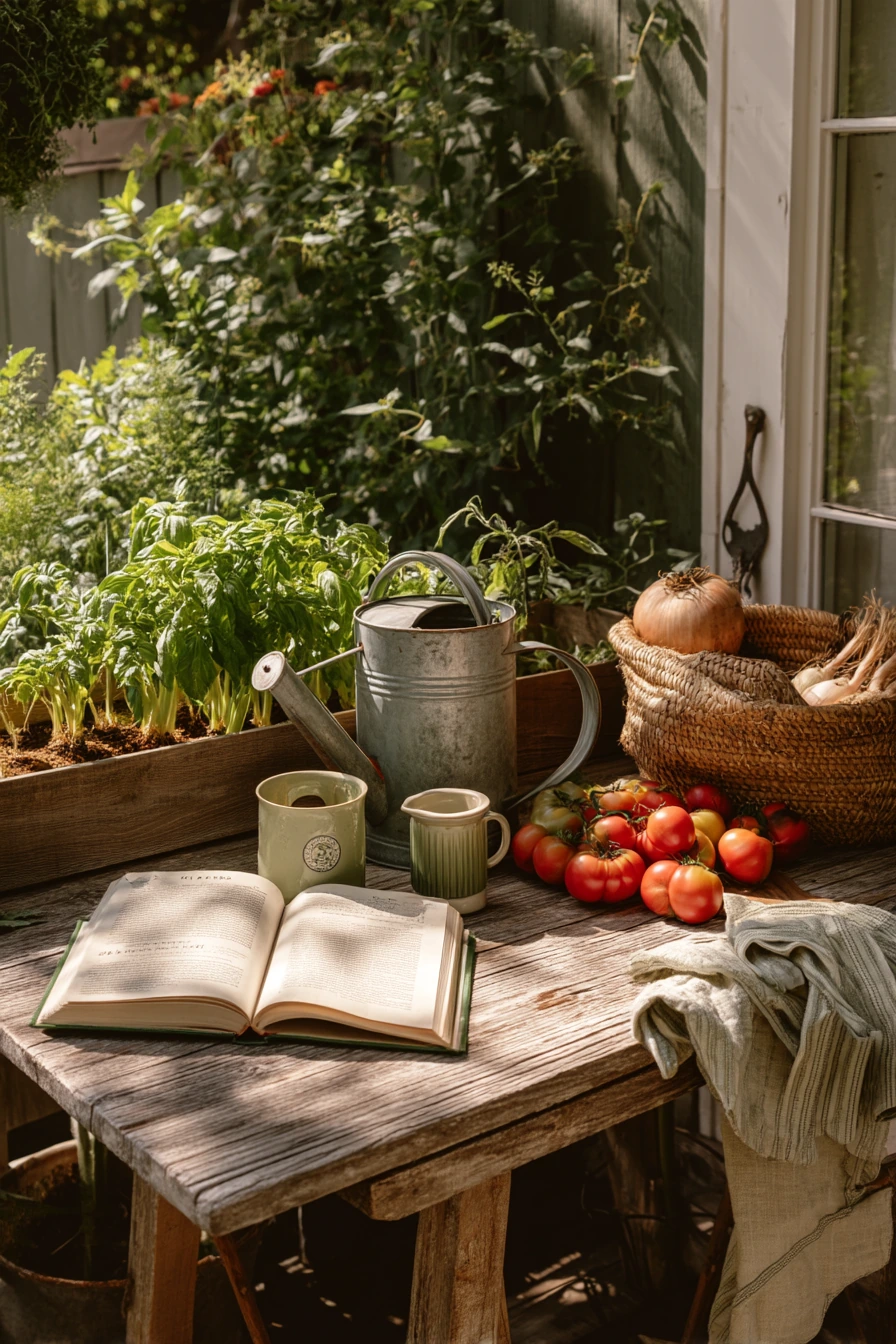
A modern farmhouse look pairs well with a raised garden bed along a fence because it favors clean lines and useful tools. Create neat rows of tomatoes, onions, basil, and snap peas. Keep spacing even so air flows and the bed looks crisp from the back door.
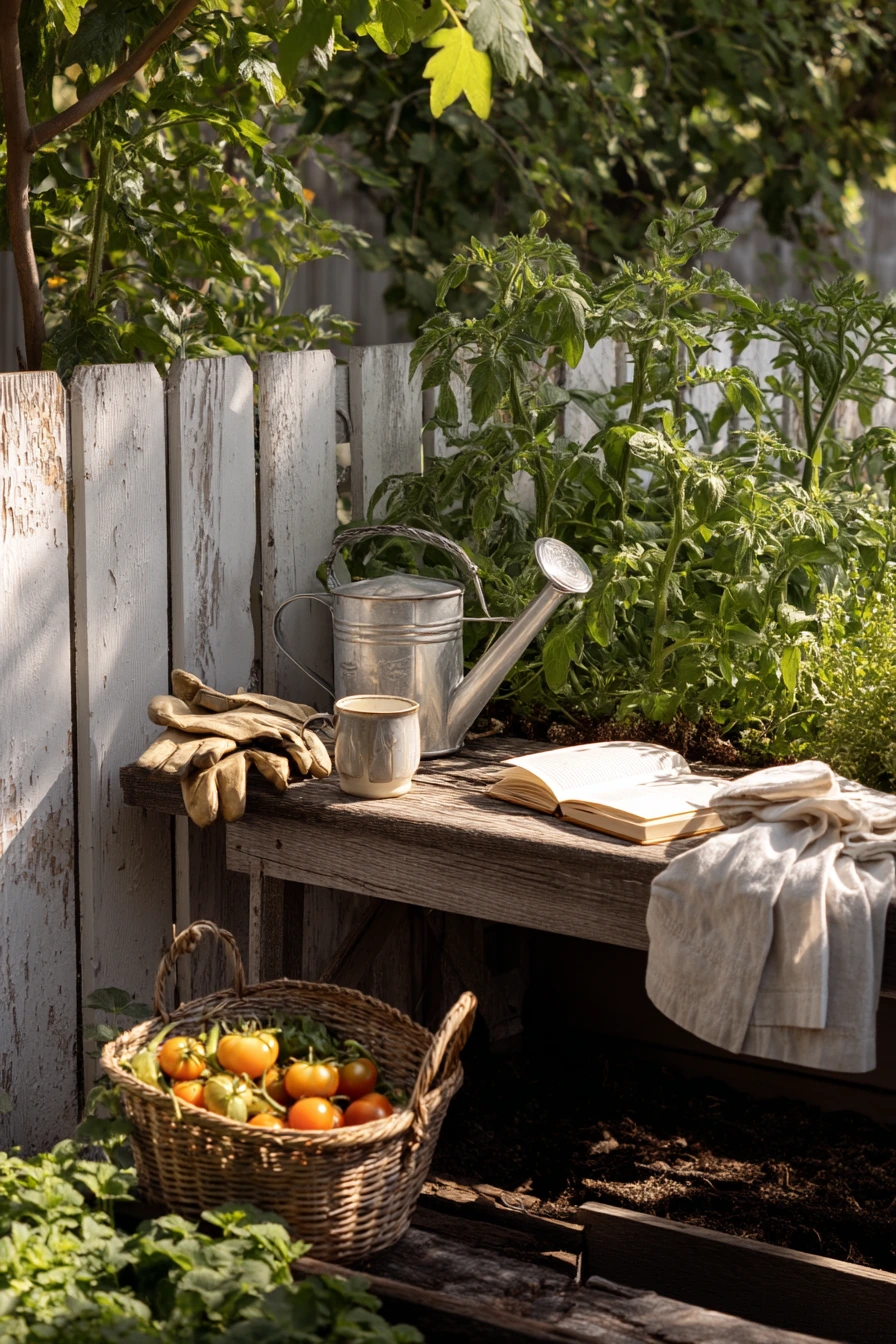
Lean into simple, familiar items. A galvanized watering can, an enamel mug, and a cookbook open on the table makes the garden feel connected to cooking. Place garden gloves beside a basket of harvest so you can pick and rinse quickly. Warm morning window light highlights the greens, so keep the soil surface tidy with mulch and remove yellow leaves often.
For how to style it, repeat a few materials: galvanized metal, wood, and linen. A linen towel draped over a chair adds softness without being fussy. Use one basket style for harvest so the scene looks consistent in photos, which helps Pinterest visitors picture the routine. If the fence is plain, add a simple trellis section for peas and let the plants become the decoration.
- Plant basil near tomatoes to simplify harvesting.
- Use stakes or a trellis to keep vines off the ground.
- Mulch to hold moisture and keep rows defined.
- Keep a small table or shelf for tools and cookbooks.
- Harvest often to encourage more growth.
Pro Design Tip: Align plant rows with the fence boards so the whole bed looks straight and intentional from the house.
Budget Considerations: You can skip fancy containers by using one sturdy basket and a basic metal watering can that will last for years.
10 Low-Maintenance Evergreen Bed for the Fence
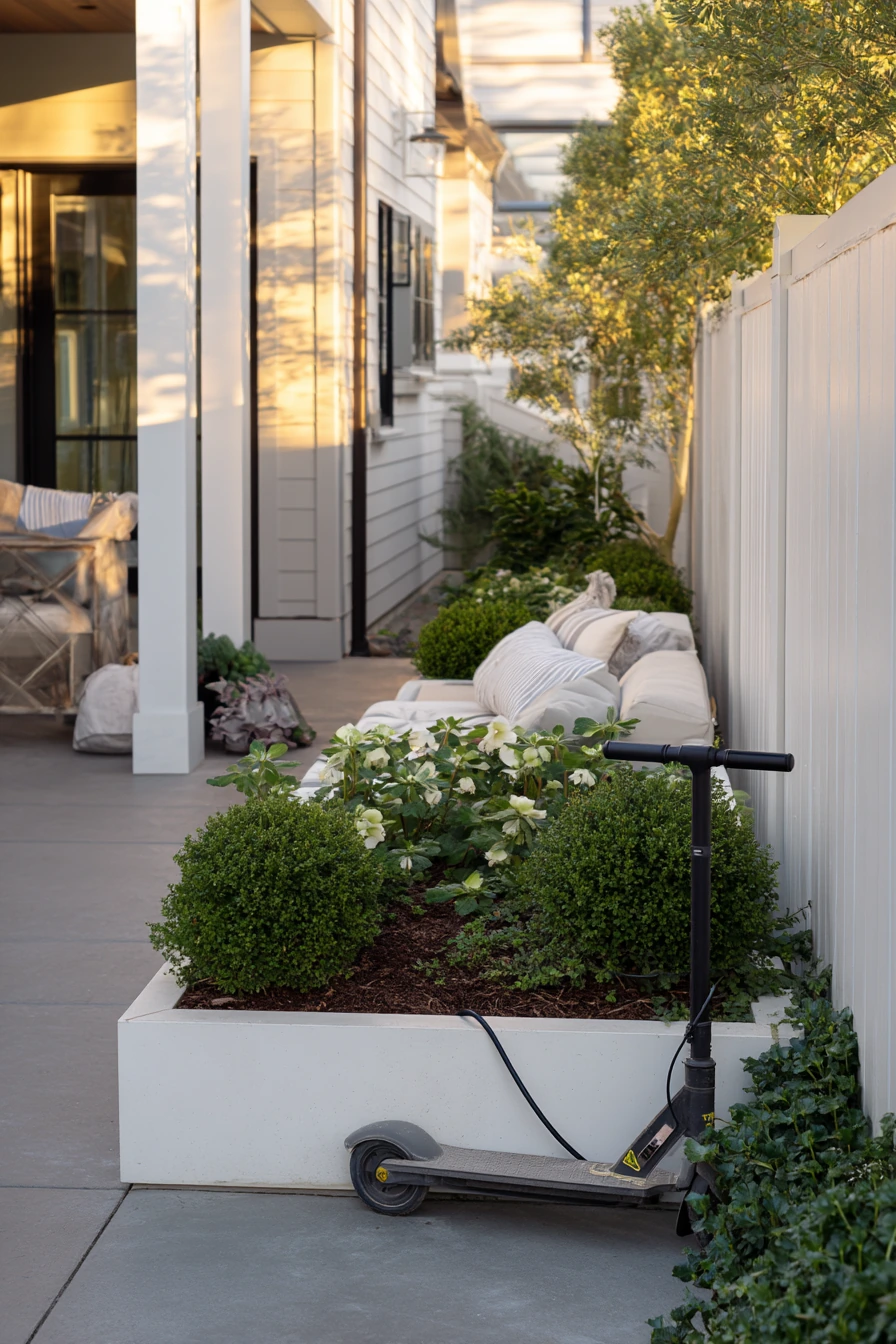
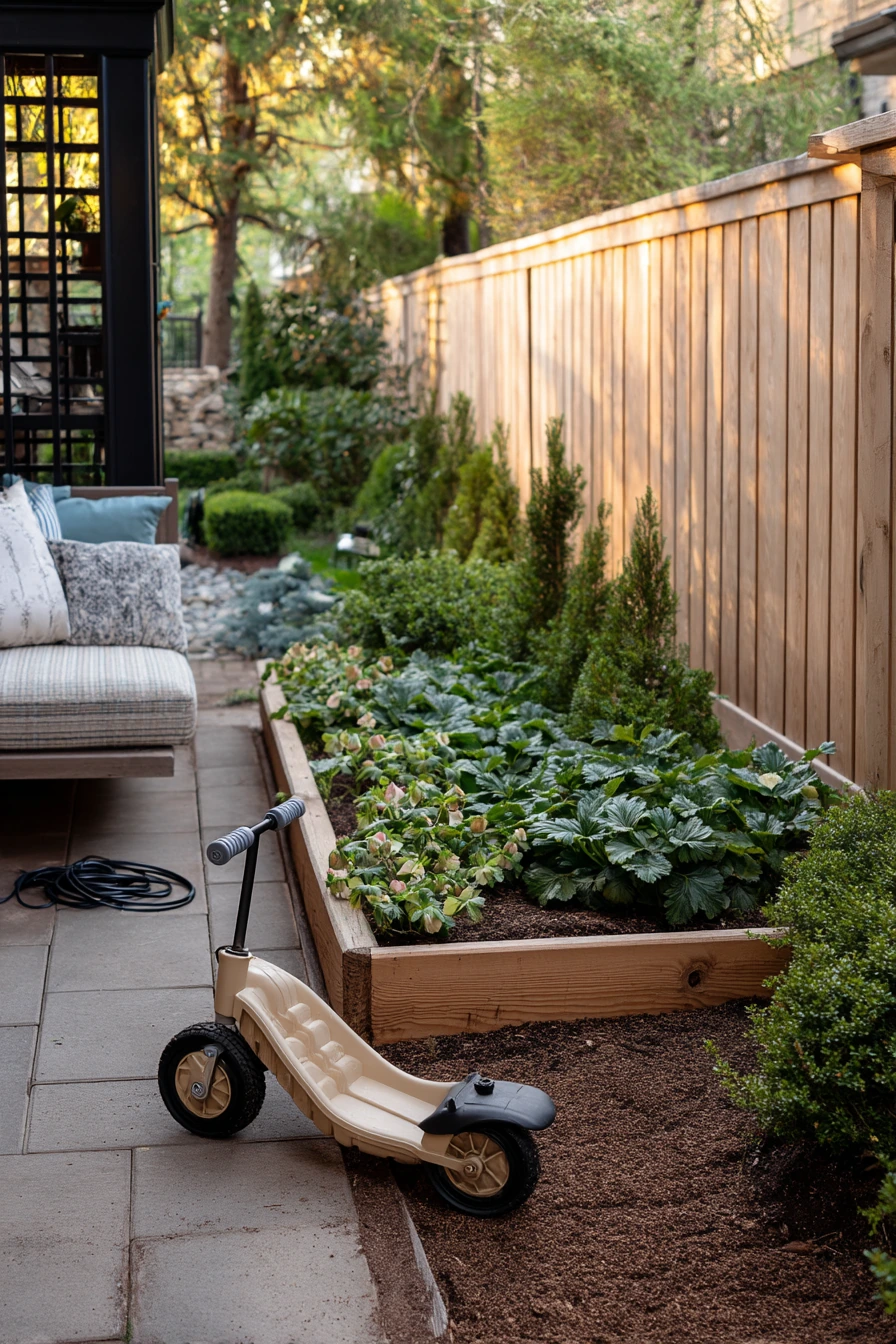
For a busy household, a raised garden bed along a fence can be more about structure than harvest. Evergreen shrubs, dwarf boxwood, hellebores, and a thick mulch layer create a tidy border that looks good in every season. This is a strong choice if you want the yard to feel calm even when life is loud.
Keep the bed simple and easy to care for. Choose plants that do not need daily watering and that hold shape without constant trimming. A toddler scooter parked nearby is a good reminder to keep corners rounded and paths clear. If you have an outdoor outlet with a charging cable, plan the bed so cords stay away from soil and sprinklers.
For styling, focus on clean edges. A straight side-on line along the fence looks best when mulch stays inside the bed. Use one type of mulch and refresh it once or twice a year. A slightly rumpled cushion on patio seating is fine, but avoid too many loose items near the bed so it still reads as a polished border in golden hour light.
- Pick 2 to 3 evergreen types and repeat them down the fence line.
- Add hellebores for shade-friendly blooms and winter interest.
- Use landscape fabric only if weeds are a big problem.
- Mulch 3 inches deep to reduce watering and weeding.
- Prune lightly once a year to keep shapes consistent.
Pro Design Tip: Repeat the same plant spacing all the way down the fence so the border feels calm and not busy.
Budget Considerations: Evergreens can be costly; buy smaller sizes and space them correctly so they grow in over time without crowding.
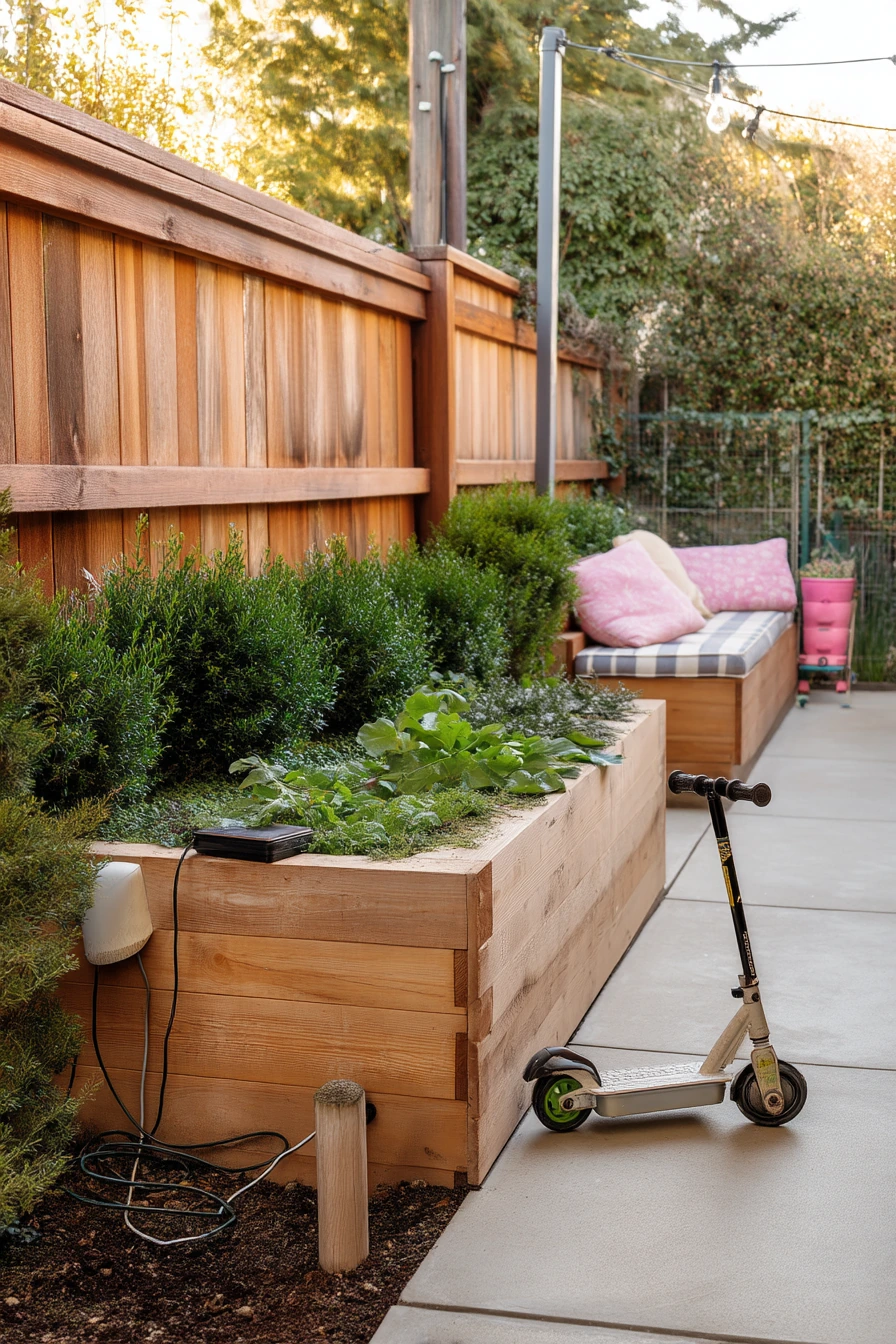
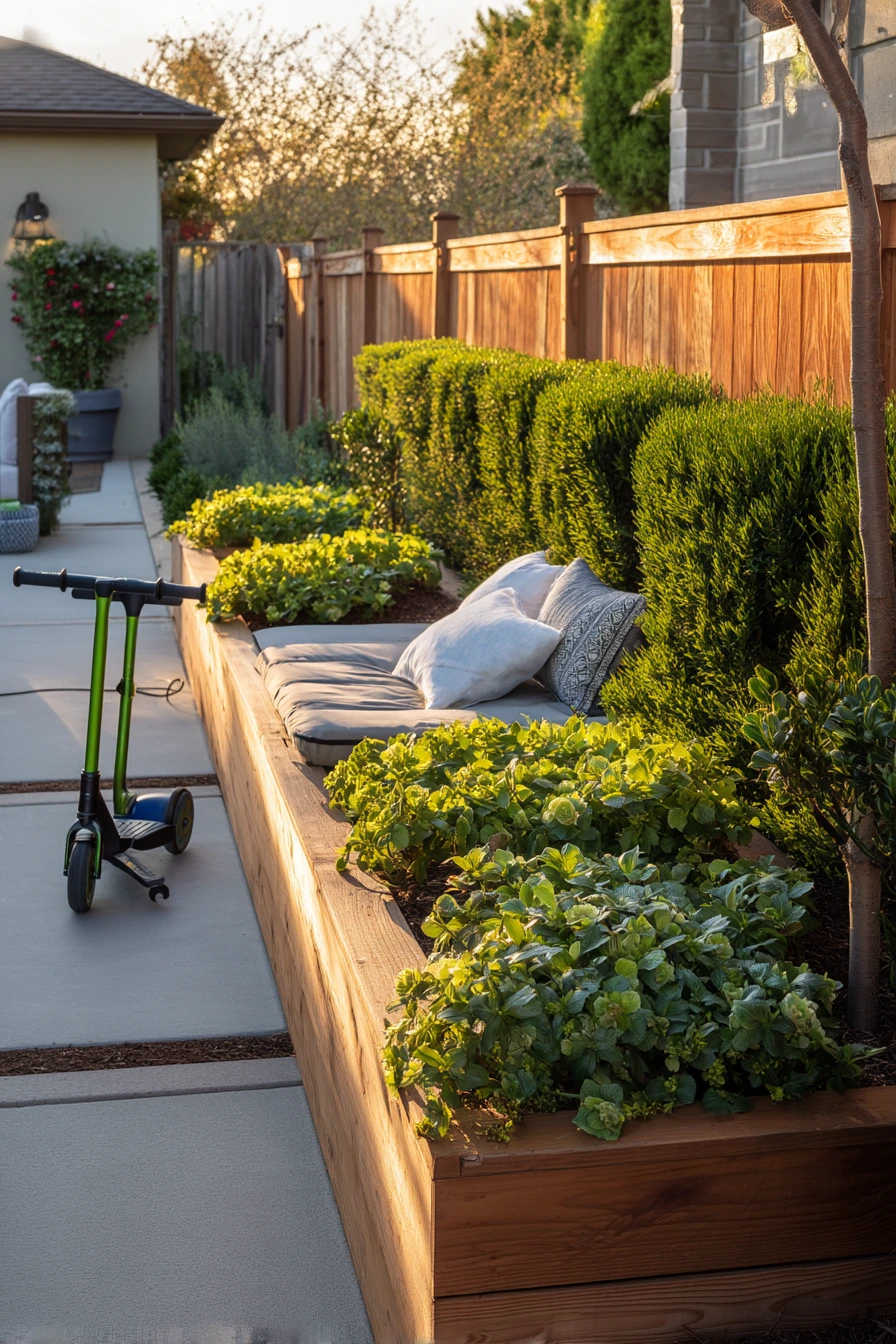
A raised garden bed along a fence can be productive, kid-friendly, pet-safe, or low-maintenance, depending on how you plan the strip. Use the fence as a backdrop, keep paths clear, and add vertical support when space is tight.
Start with one section, build a routine for watering and mulch, and add style with simple repeats like matching pots, gravel, or one clean trellis design.
FAQ
What is the best width for a raised bed along a fence? 18 to 24 inches works well for most fence-line beds because you can reach the back without stepping into soil.
Should I leave a gap between the bed and the fence? Yes, a small gap helps airflow and makes it easier to clean leaves and check for pests.
Can I attach a trellis to my fence? You can, but use fence-safe mounts and leave space so the fence can dry after rain.
What plants do best along a sunny fence? Tomatoes, peppers, basil, lavender, salvia, and coneflowers all do well with strong sun and warmth.
How do I keep the area from getting muddy? Add a gravel or mulch path, edge it well, and keep hoses coiled off the ground when not in use.
What is the easiest low-maintenance planting plan? Use evergreen shrubs, dwarf boxwood, hellebores, and a thick mulch layer for a tidy border with minimal care.
How do I make a fence-line bed look finished? Repeat one material, keep edges straight, store tools neatly, and add one focal point like a trellis or matching pots.