
Spiral garden design ideas are a smart way to grow more plants in less space. A spiral bed gives you different sun and moisture zones, so herbs, greens, and flowers can share one compact shape.
This post walks through 10 spiral garden setups that feel like real homes, from a small suburban backyard by the kitchen door to an urban rental courtyard with portable planters. Each section includes simple styling ideas you can copy, plus practical notes to make it work day to day.
You will also learn what materials hold up best, how to place plants like rosemary, thyme, basil, chives, mint, and strawberries, and how to keep the area tidy even with kids, pets, and busy schedules.
Use these examples to plan your own spiral herb garden, pollinator spiral, or compact patio spiral, then adjust for your light, your budget, and your time.
1 Compact Spiral Herb Garden by the Kitchen Door
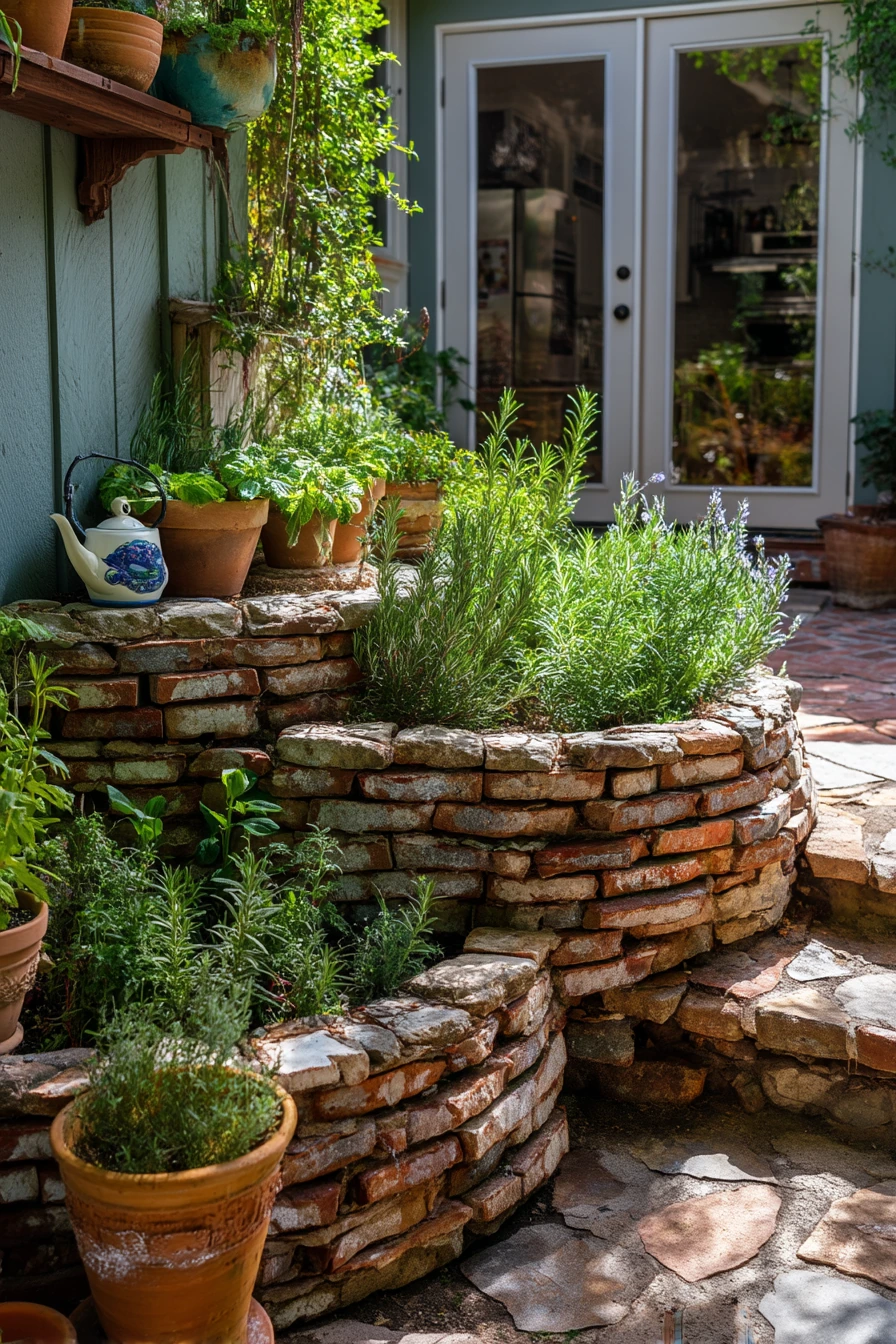
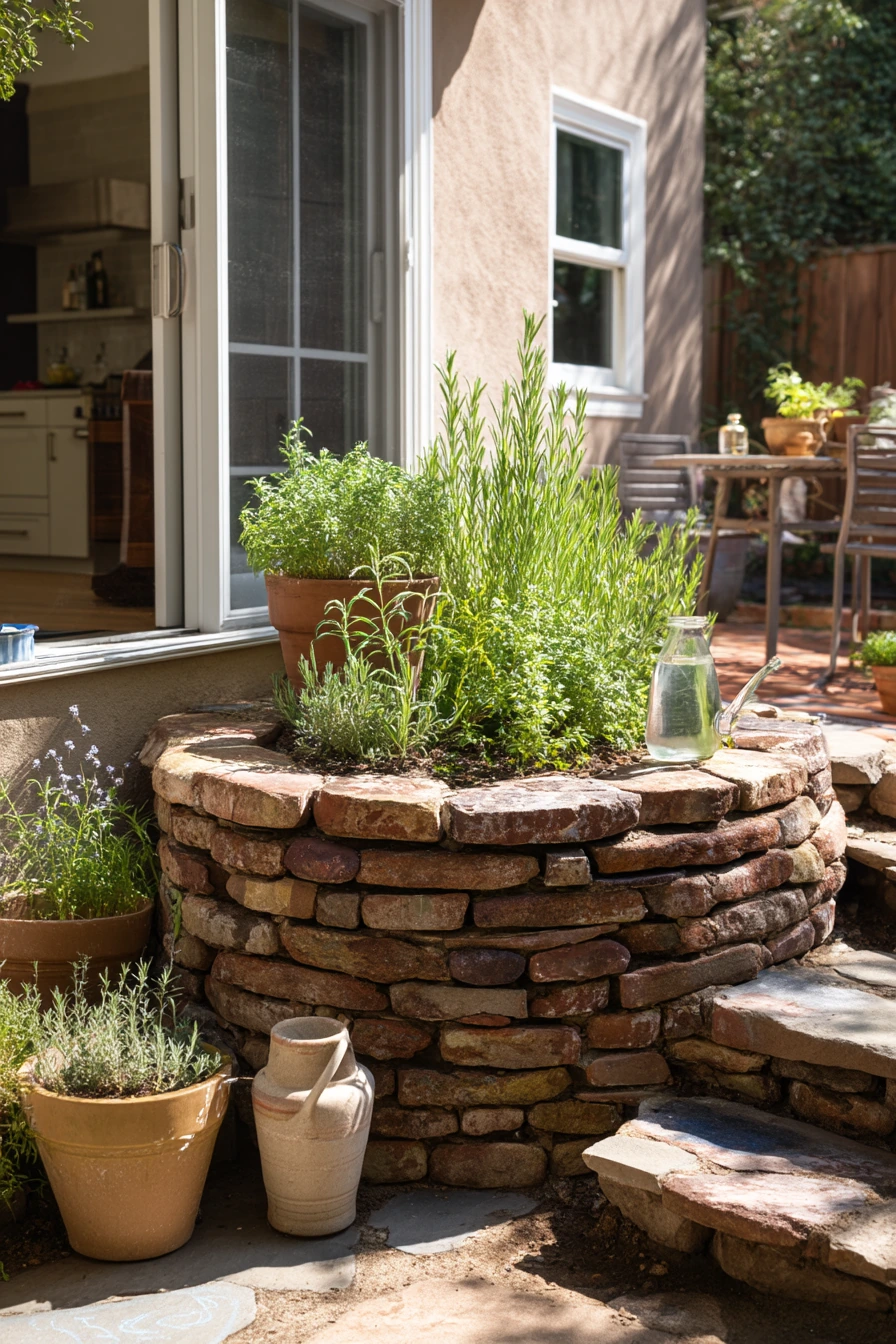
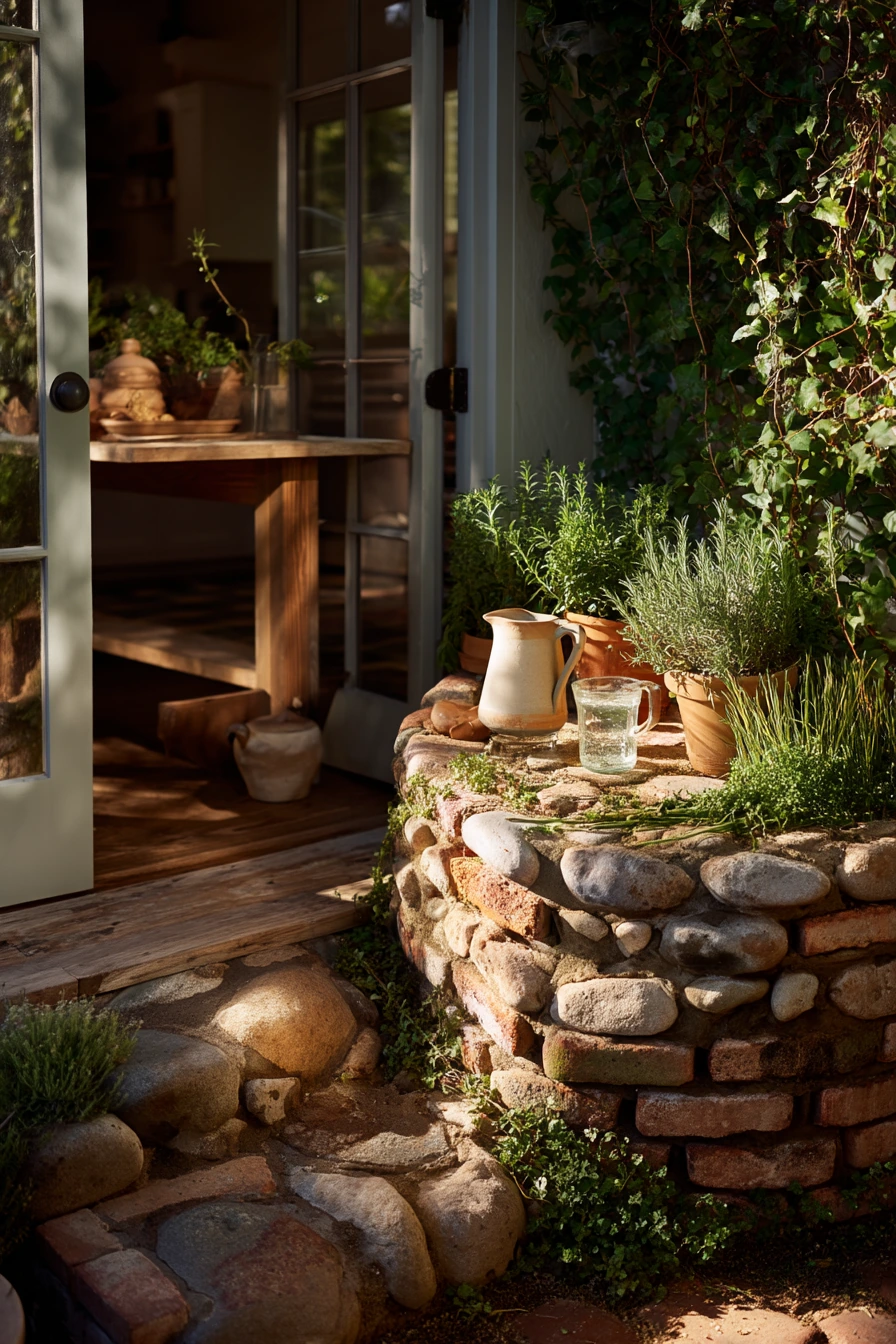
A small spiral herb garden beside the kitchen door is one of the easiest layouts to keep using. When the bed is right by the patio step, you can grab rosemary, thyme, basil, and chives while cooking, then water on your way back inside. Stacked river stone and weathered brick add weight and texture, which helps the spiral feel stable and “built-in” even in a suburban backyard.
Start by placing the spiral where morning light hits, but the house gives a little shade later. Keep the highest point of the spiral on the side that gets the most sun. Plant drought-tolerant herbs like rosemary and thyme near the top, then put basil and chives lower where the soil stays a bit cooler. Add slightly muddy terracotta pots around the edge for overflow herbs, and keep a ceramic watering can on the step so watering stays simple.
For a lived-in look that still feels neat, use small cues like a half-full water glass on an outdoor table and a bit of kid’s chalk nearby, but keep the main walkway clear. Edge the patio side with a flat brick row so feet do not kick loose stones. If your spiral is close to the door, leave an 18 to 24 inch gap between the bed and the step for safe traffic.
- Use river stone for the outside wall and brick for inner rings to reduce wobble.
- Mix compost into the lower tiers where basil needs richer soil.
- Mulch lightly with fine gravel to cut mud splashes on terracotta pots.
- Add small plant labels so kids can help pick herbs without guessing.
- Water from the top so moisture trickles down through the spiral.
Pro Design Tip: Repeat one material (brick or stone) along the patio edge to create a clean border line that makes the spiral look planned, not random.
Budget Considerations: River stone and old brick can be costly if bought new; ask neighbors, check local salvage yards, or use concrete pavers and hide them with gravel.
2 Renter-Friendly Spiral Garden in Raised Planters
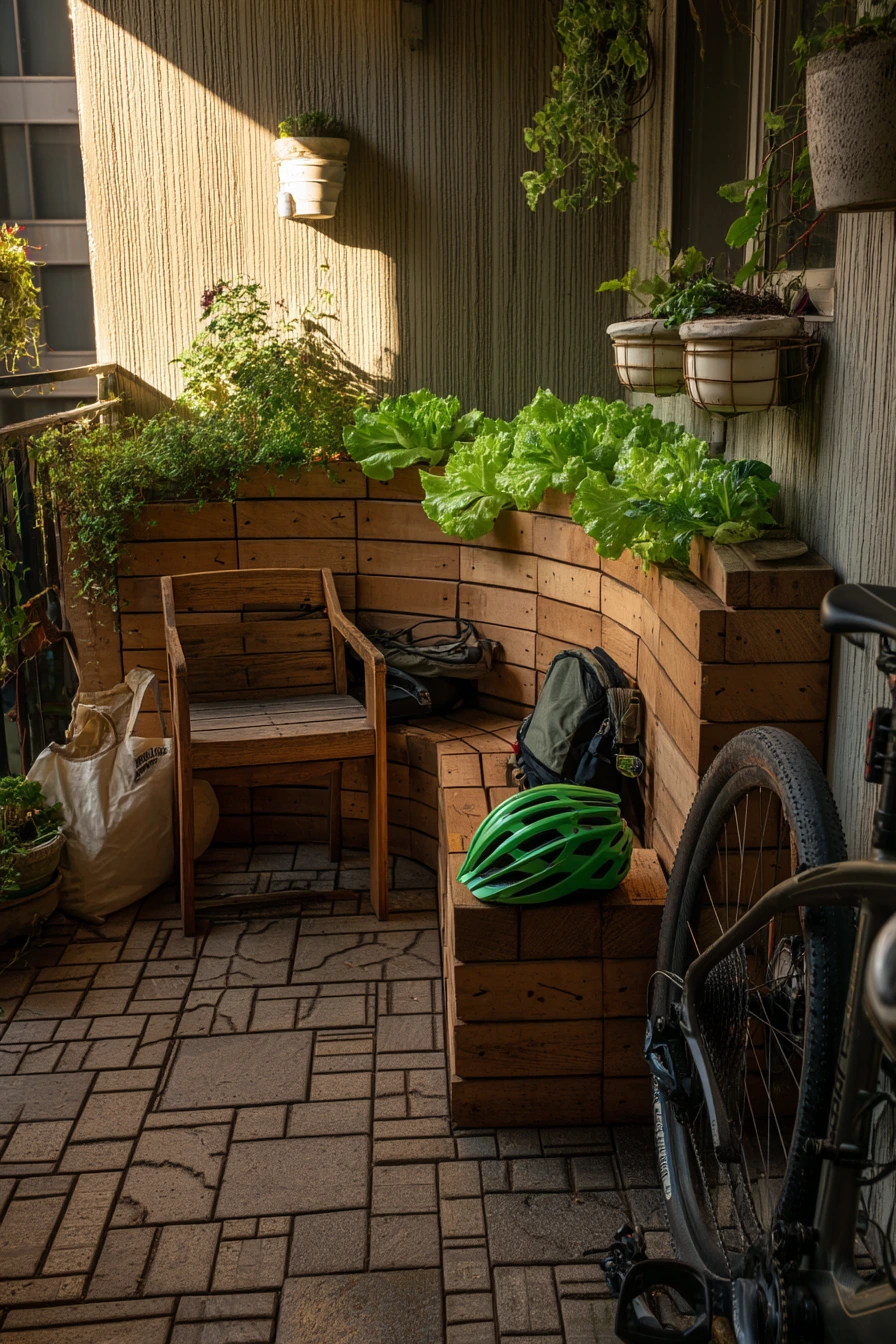
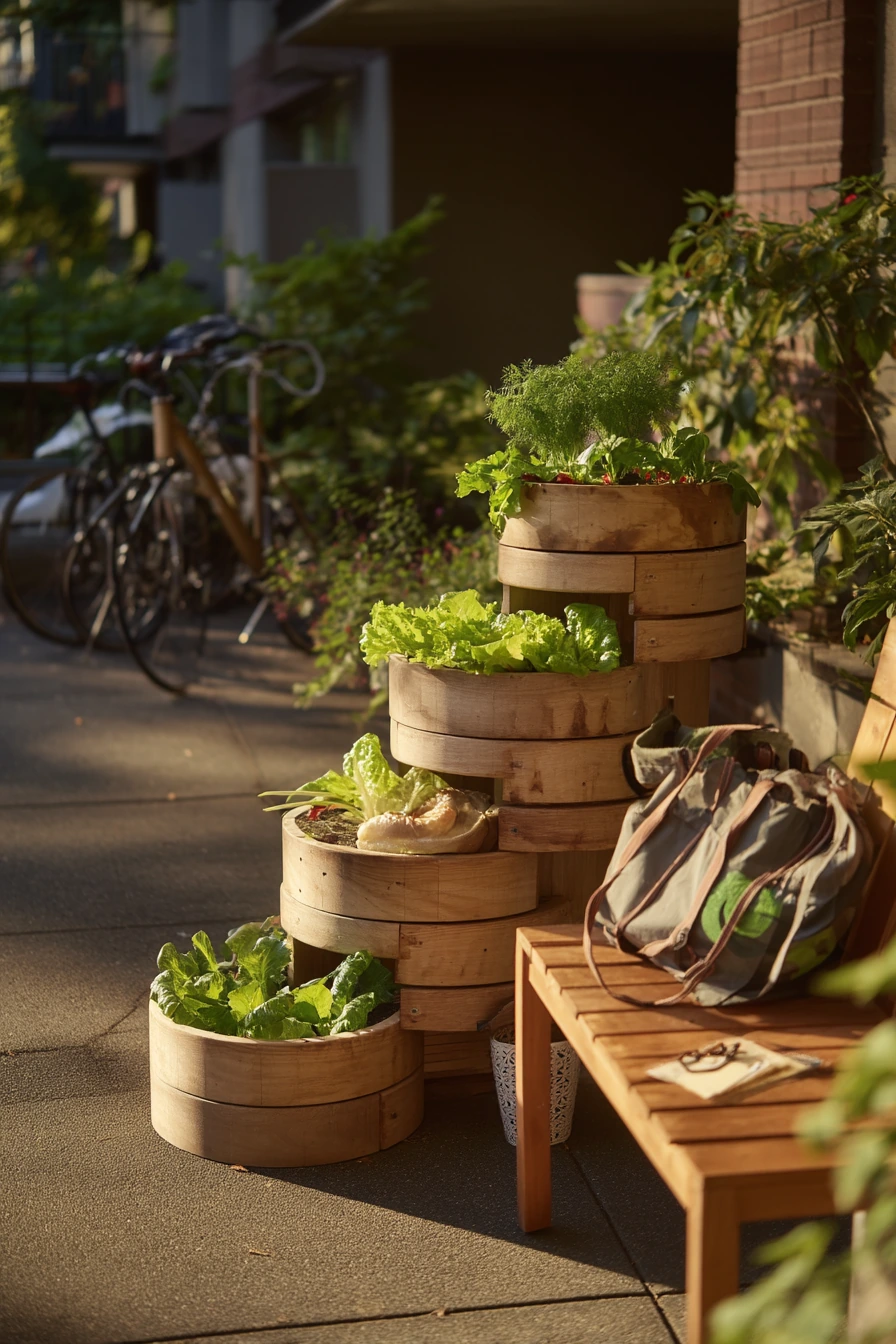
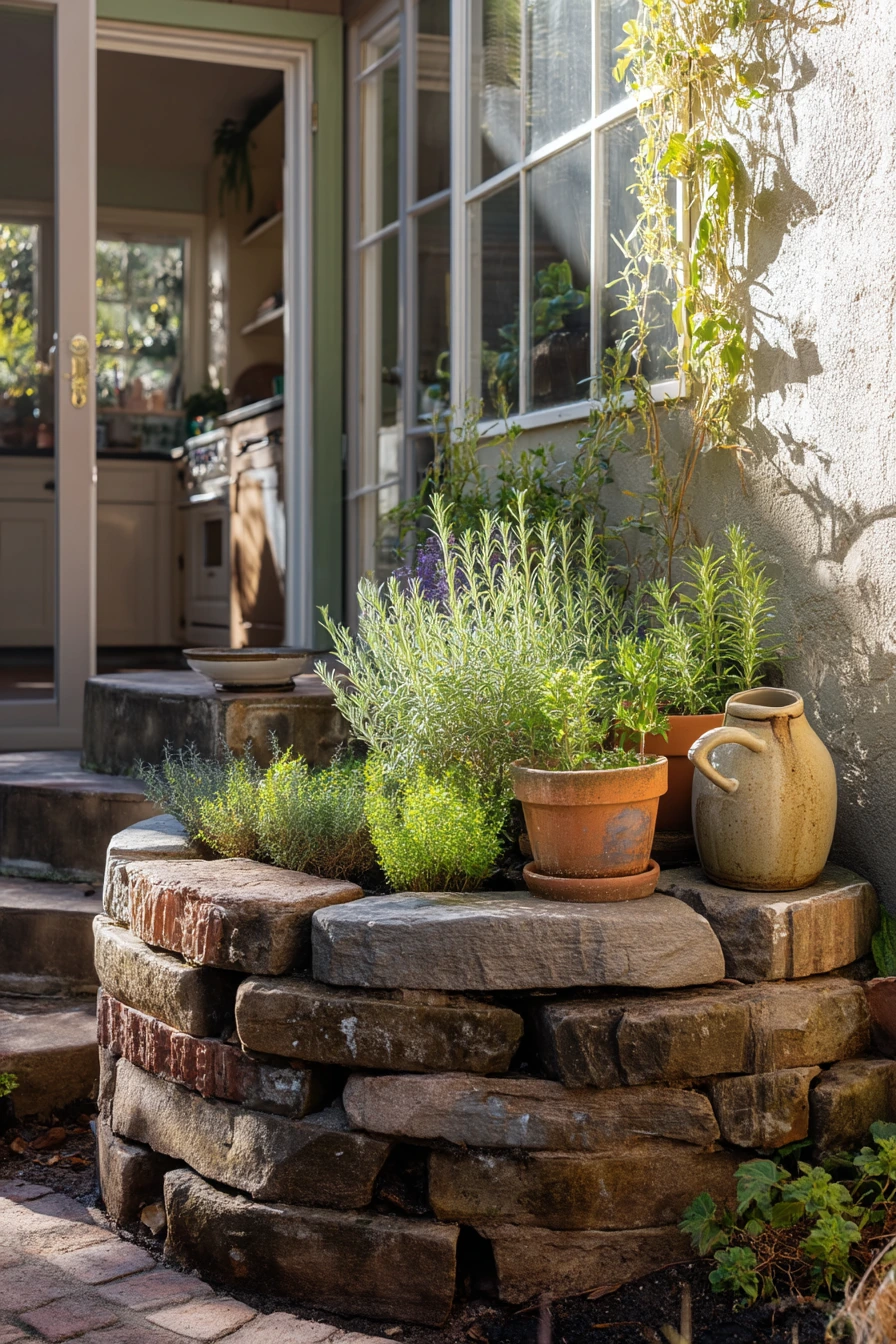
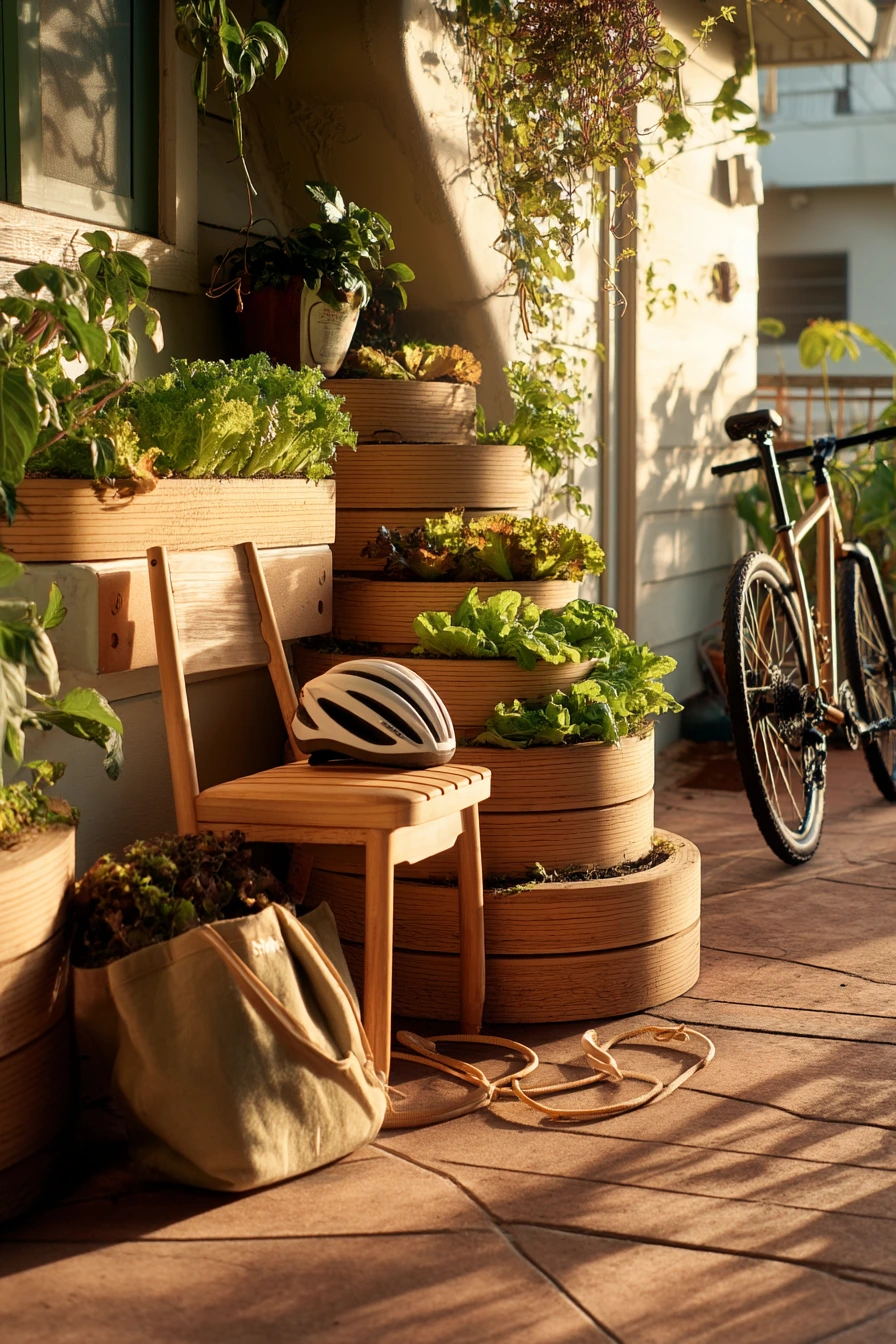
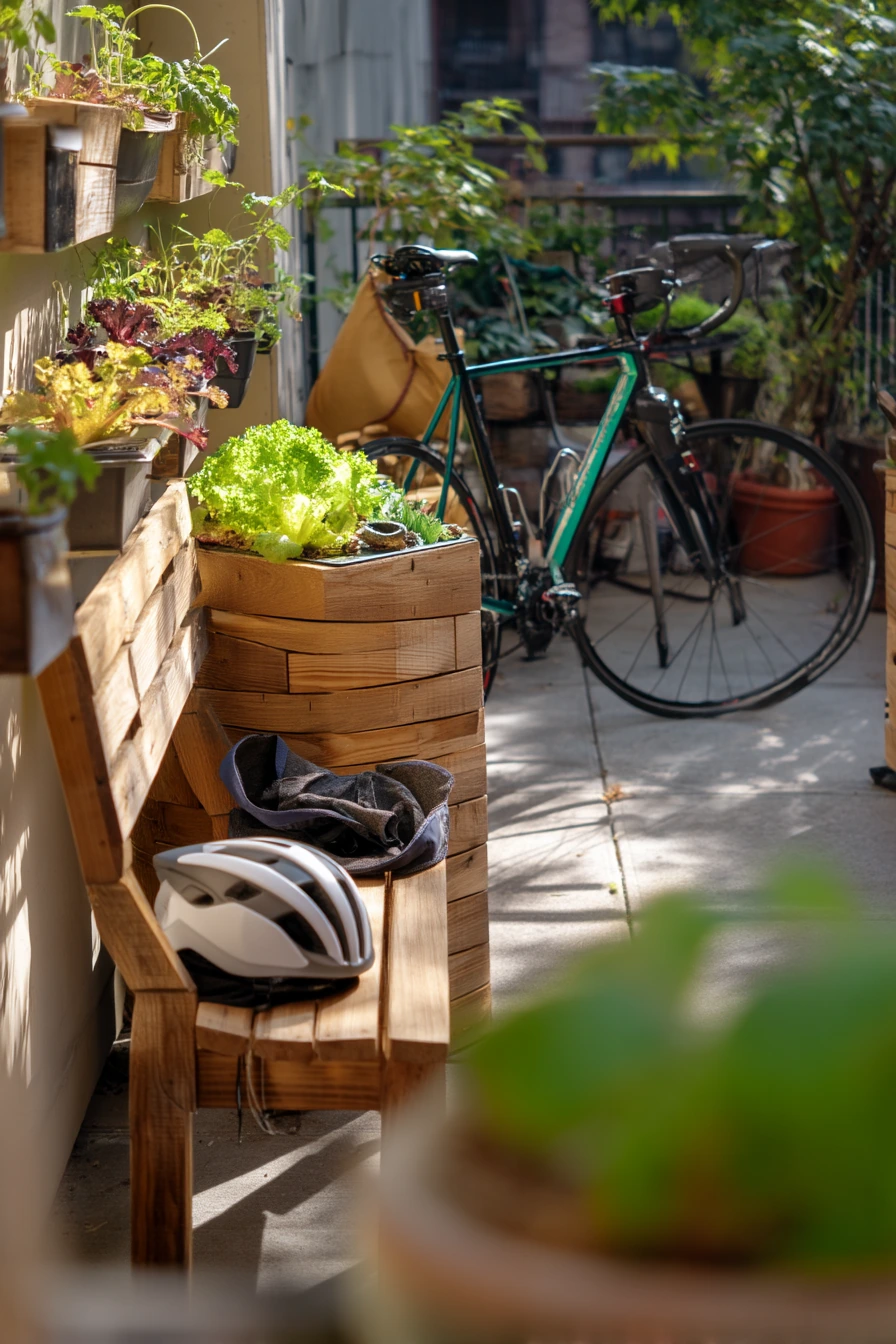
If you rent, a portable spiral garden made from modular cedar planters and reclaimed pavers lets you garden without digging. A compact helix is perfect for an urban courtyard because it holds many plants in a small footprint. Lettuce, nasturtium, mint, and strawberries do well here, and they look good spilling over the edges.
Build the spiral like a puzzle: place the pavers in a spiral path on the ground, then set planters along the curve to create height. Use the tallest planter as the center and step down as the spiral expands. Put mint in its own container so it does not take over, and tuck strawberries into the lower outer tiers where they can cascade. Nasturtium can trail from the side and also acts as a salad flower.
To keep the scene practical, add a small chair or bench nearby for tools and harvest bowls. A bike helmet on the chair and a coiled charging cable on the bench make it feel like a real, lived-in space, but keep cables away from watering zones. Store grocery totes and gardening gloves in a lidded bin so the courtyard stays tidy. Late-afternoon light is great for photos and for checking pests like aphids on lettuce.
- Line the planters with landscape fabric so soil does not wash out.
- Use a drip tray under mint and strawberries to protect rental surfaces.
- Plant lettuce on the shadier side to slow bolting in warm weeks.
- Pin trailing stems with small clips so the walkway stays clear.
- Keep a small watering can that fits under the faucet indoors.
Pro Design Tip: Choose two planter sizes and repeat them around the spiral so the shape reads as one unit, even if it is modular.
Budget Considerations: Cedar planters cost more; if needed, use food-safe plastic tubs with drainage holes and wrap them with thin wood slats for a similar look.
3 Family Spiral Garden for Pollinators
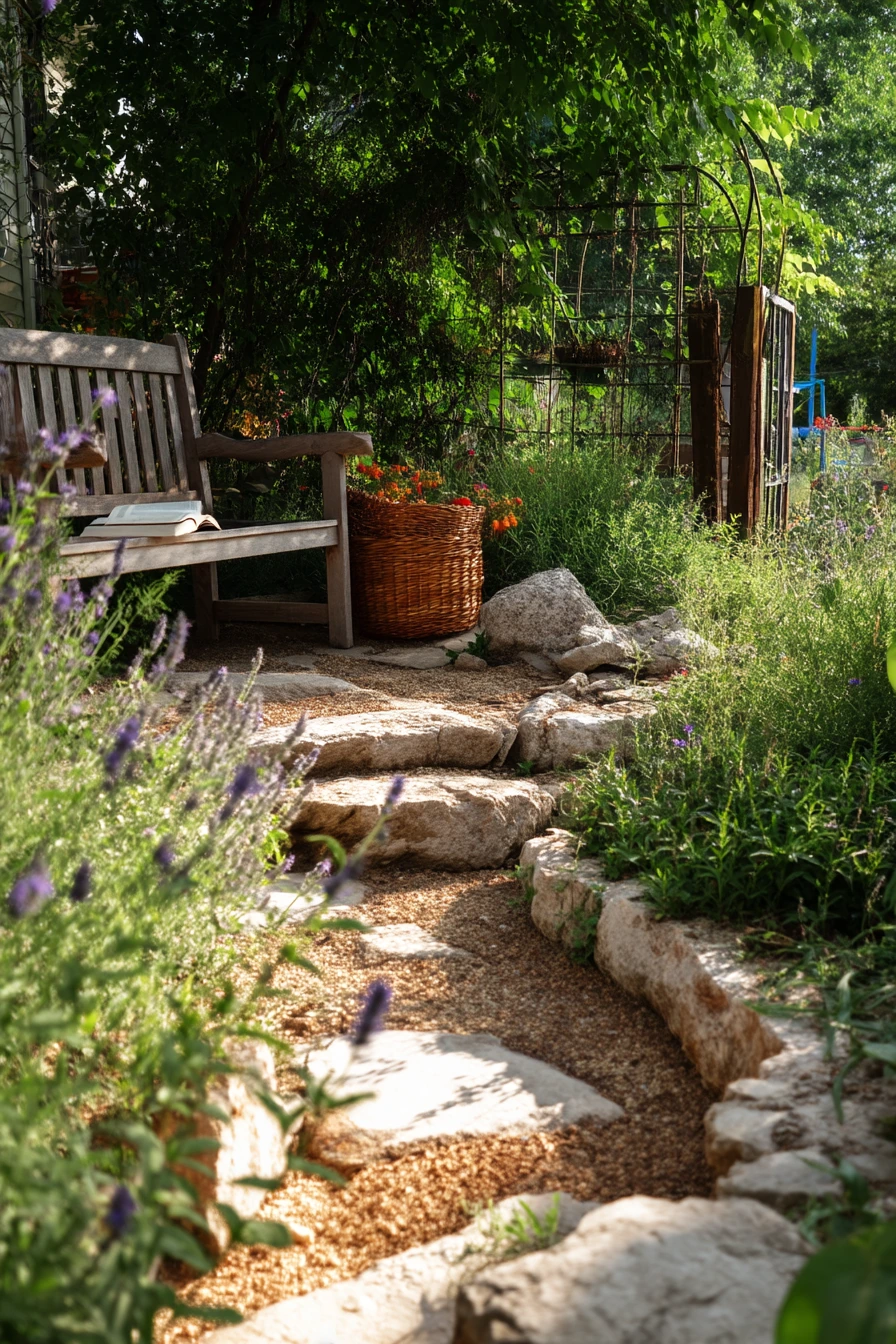
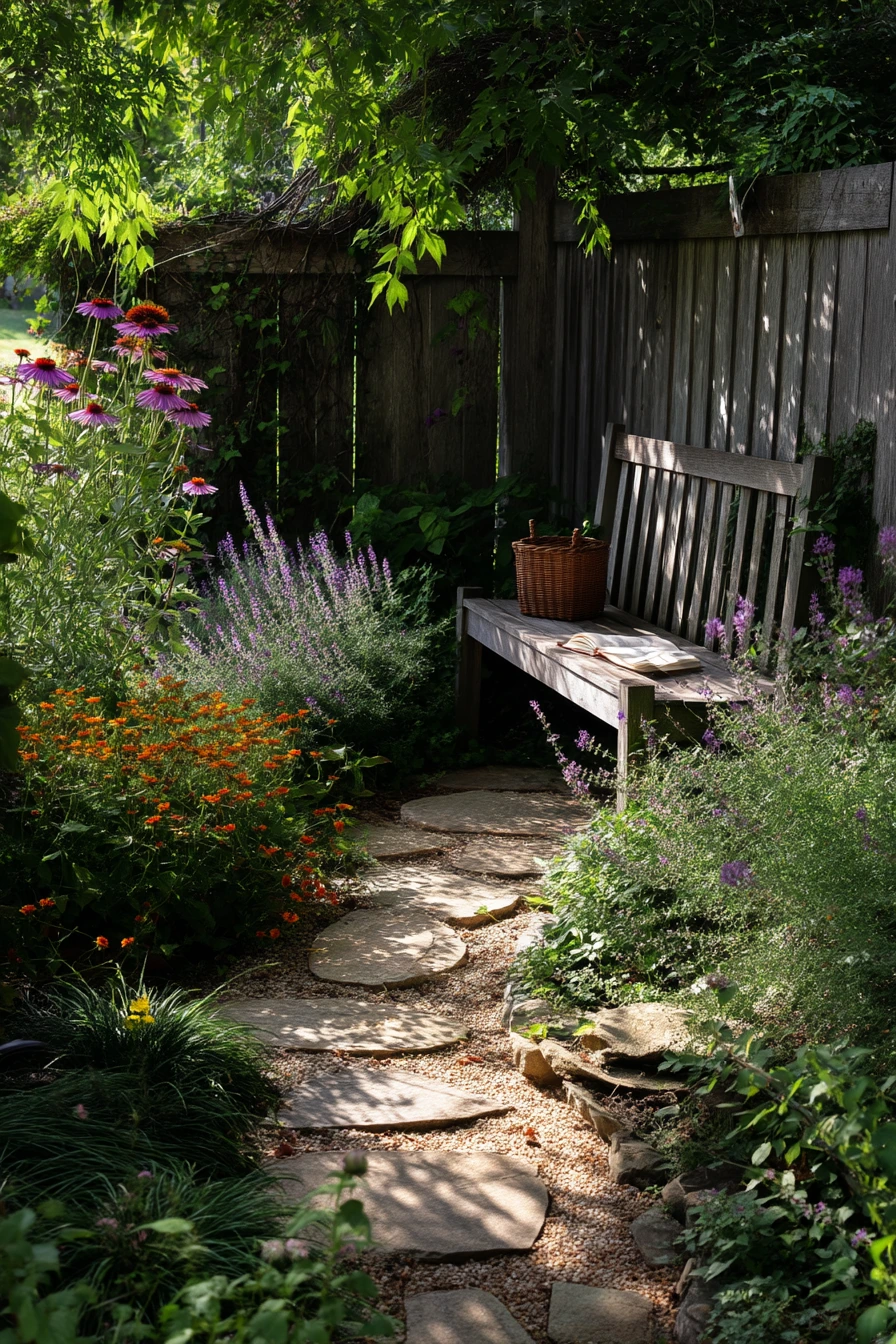
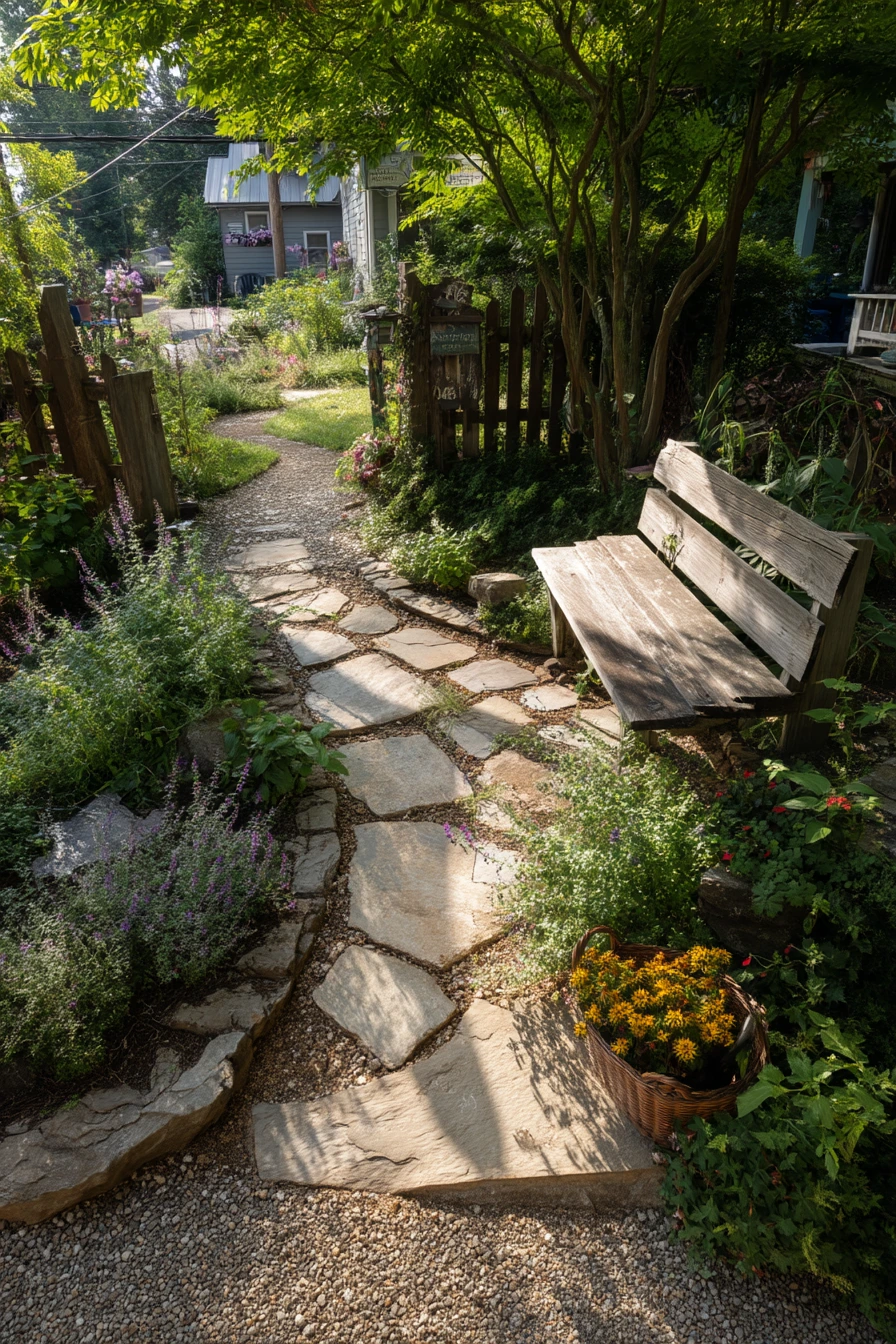
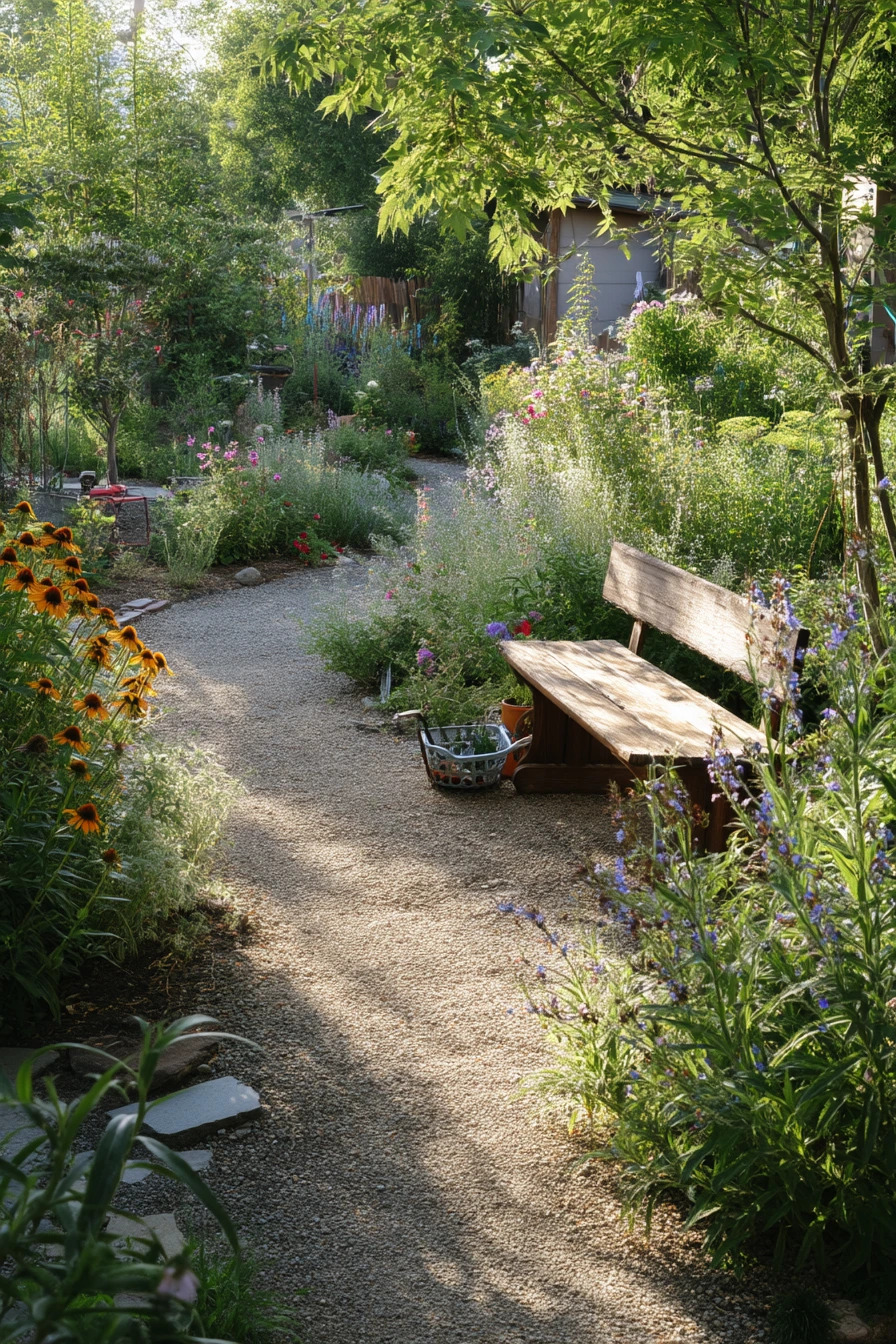
A pollinator spiral garden is a great way to mix herbs and flowers in a layout that supports bees and butterflies. Rough limestone walls and gravel paths give the bed good drainage, and they warm up in the afternoon sun. Plants like bee balm, lavender, sage, and marigolds create steady color and nectar through the season.
Plan the spiral so the path invites you in, not blocks you out. Keep the gravel path wide enough for a watering can and small feet, especially if there is a child’s toy basket by the gate and family traffic nearby. Place lavender and sage higher up where the soil stays drier. Bee balm likes more moisture, so set it lower in the spiral where runoff collects. Marigolds can fill gaps and help discourage pests near nearby veggie beds.
Styling matters, but it should stay useful. A hose loosely curled is realistic, yet you can hang it on a simple hook to avoid tangles. An open book on the bench makes the space feel calm, but use a small tray so it is easy to pick up before watering. In sun-dappled light, plant shadows across pavers look beautiful, and they also help you notice where the shade falls during the day.
- Use a simple plant plan: 1 tall bee balm group, 2 lavender clusters, 2 sage clumps, 5 marigold pockets.
- Add a shallow water dish with pebbles for pollinators to land safely.
- Choose gravel that is comfortable underfoot, like pea gravel.
- Deadhead marigolds weekly to keep blooms coming.
- Leave a small “wild corner” near the spiral for extra habitat.
Pro Design Tip: Plant in repeating drifts (lavender, sage, then lavender again) so the spiral looks intentional from the gate and from the patio.
Budget Considerations: Limestone can be expensive; mix in local fieldstone and use gravel for the inner walls where it is less visible.
4 Night Watering Moment in a Courtyard Spiral Bed
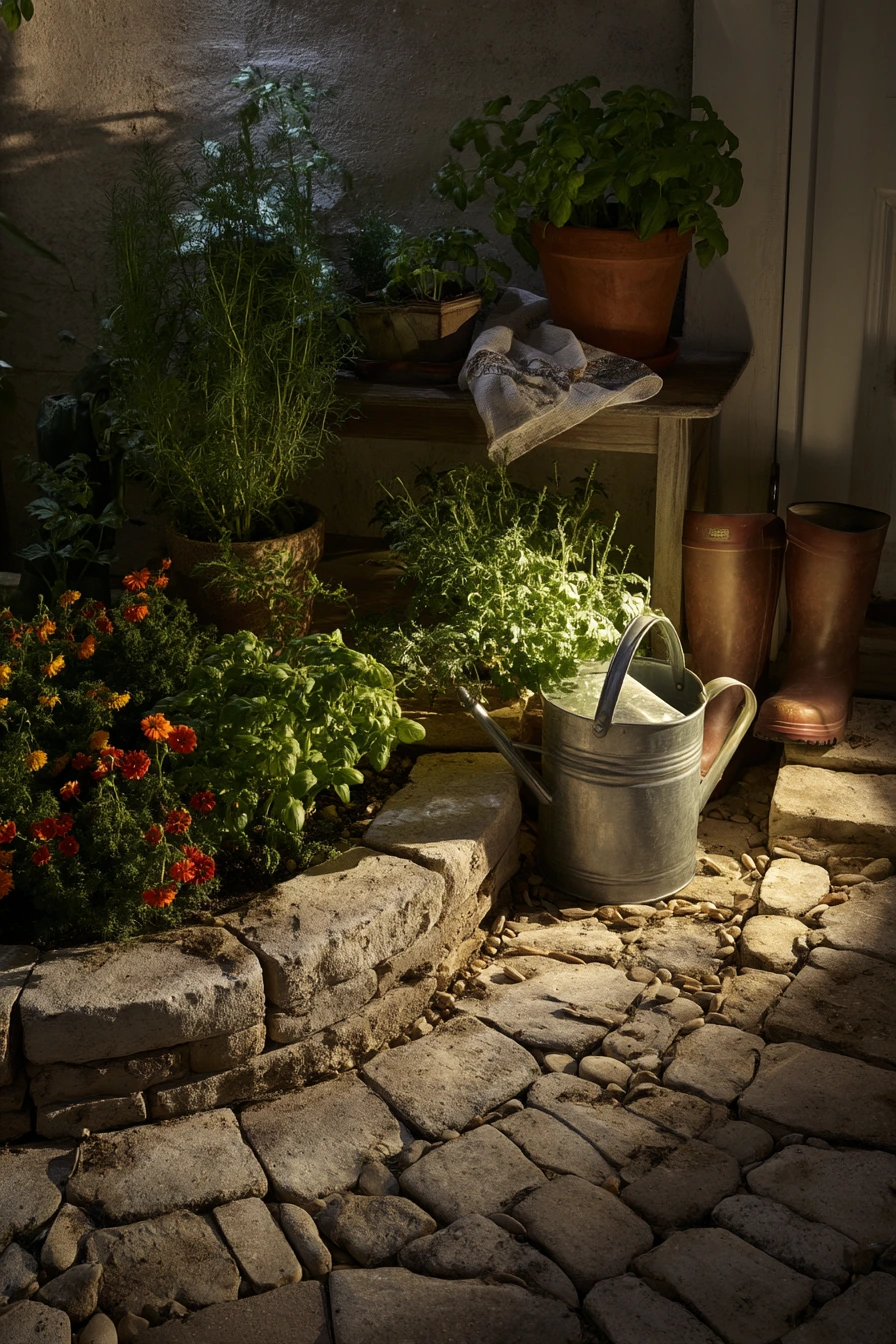
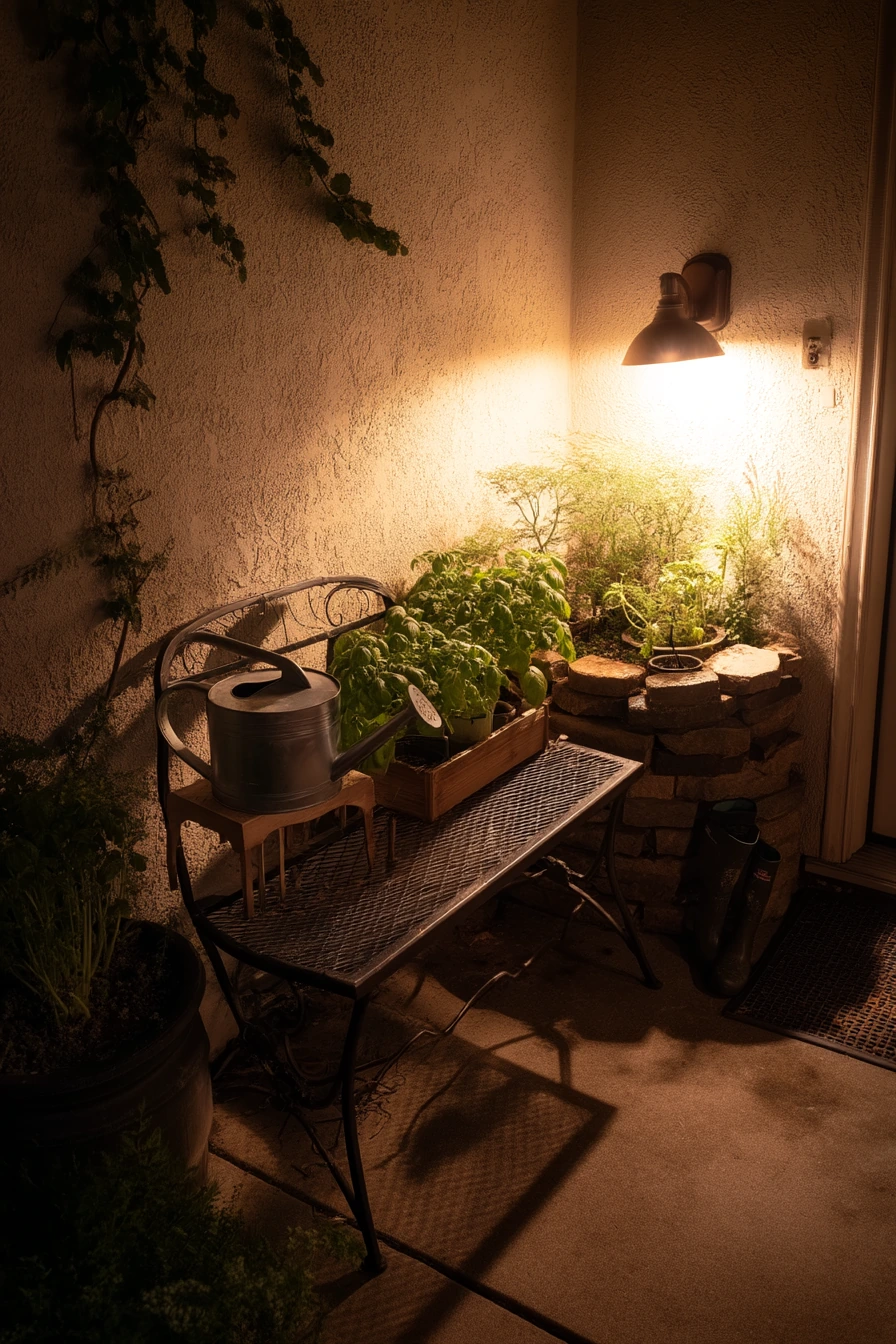
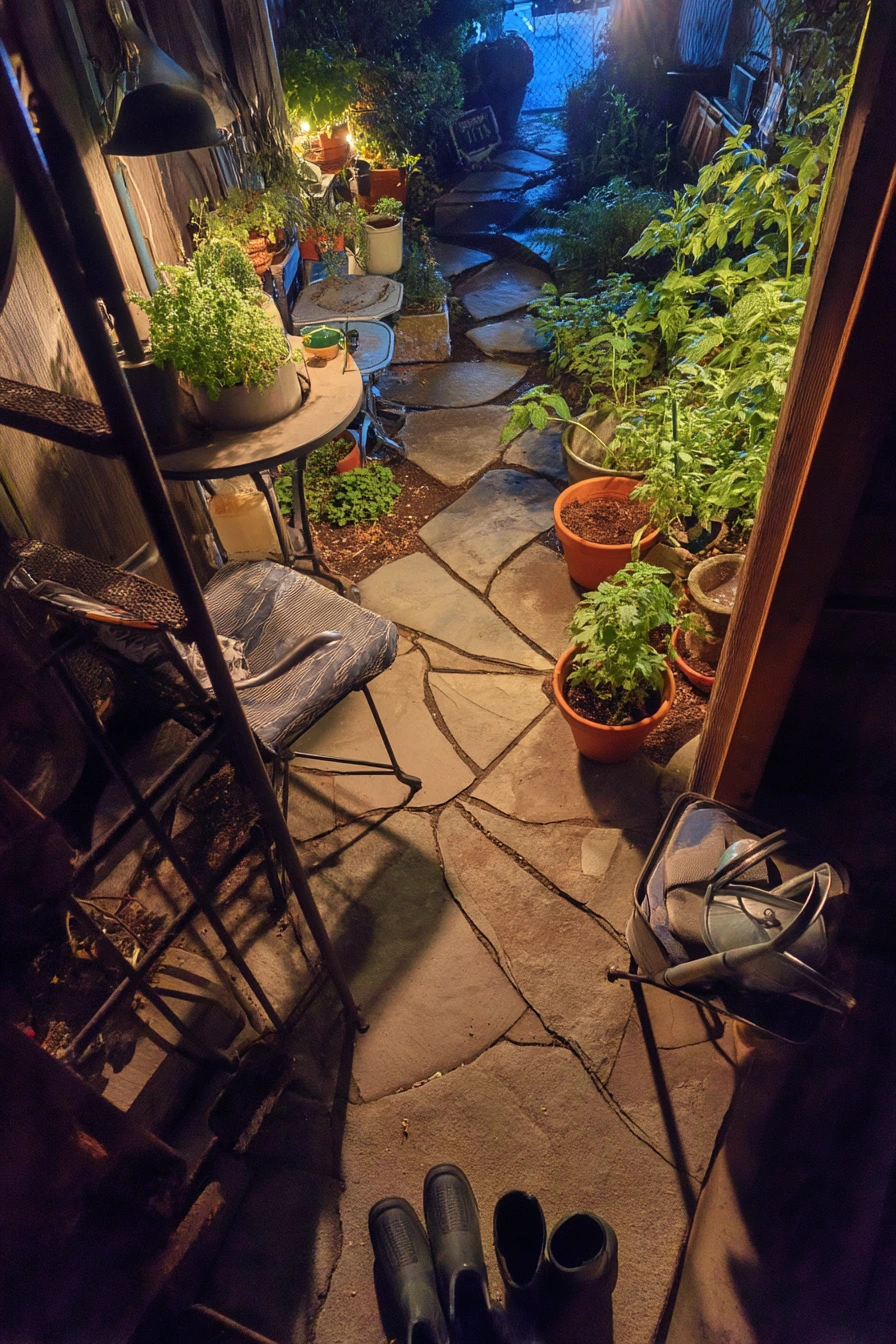
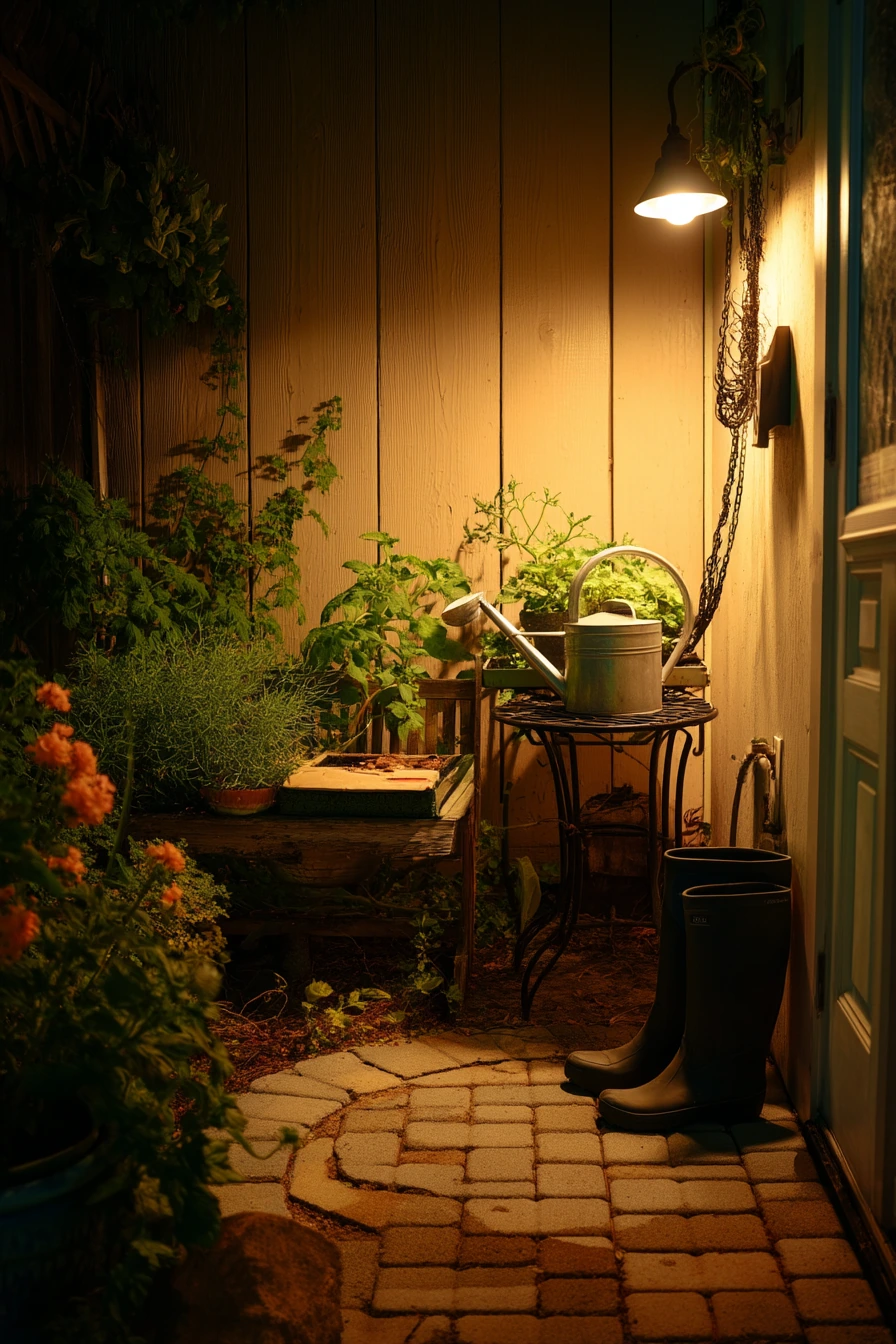
A small courtyard spiral garden can still work after dark if the layout supports quick, easy care. Under a single warm porch lamp, stacked stone looks rich and textured, and the spiral shape is easy to read even in deep shadows. Compact tomatoes, parsley, basil, and calendula are a good mix because you can harvest herbs at night and still enjoy color.
Design for evening habits. Keep the watering can close, like a metal watering can parked by the bed, and use a folded dish towel on a side table for quick clean-up. If reading glasses end up on the table and one garden boot is kicked off, it means the space is used. Make sure the spiral edge is stable and not a tripping hazard. Set the outer ring slightly higher than the surrounding ground so soil does not wash onto the courtyard floor.
Plant placement should match the light and the watering pattern. Put tomatoes toward the brightest side and give them a small stake early so they stay upright. Place basil in the middle-lower tier where it stays evenly moist. Parsley can handle a bit more shade, so tuck it on the side that falls into shadow. Calendula can sit on the edge for easy picking, and it softens the stone with orange and yellow.
- Add a small solar stake light along the path if the lamp is dim.
- Use dark mulch or fine gravel so soil does not splash in low light.
- Keep a small tray for tools so nothing gets lost at night.
- Water in the morning when possible to reduce mildew on tomatoes.
- Trim basil tips often to keep plants full and not leggy.
Pro Design Tip: Aim the porch lamp downward and slightly outward so the spiral wall casts soft shadows that show the curve without harsh glare.
Budget Considerations: If adding lighting, start with one affordable solar spotlight instead of rewiring; place it at the spiral’s outer curve for the biggest impact.
5 DIY Spiral Garden Under Construction
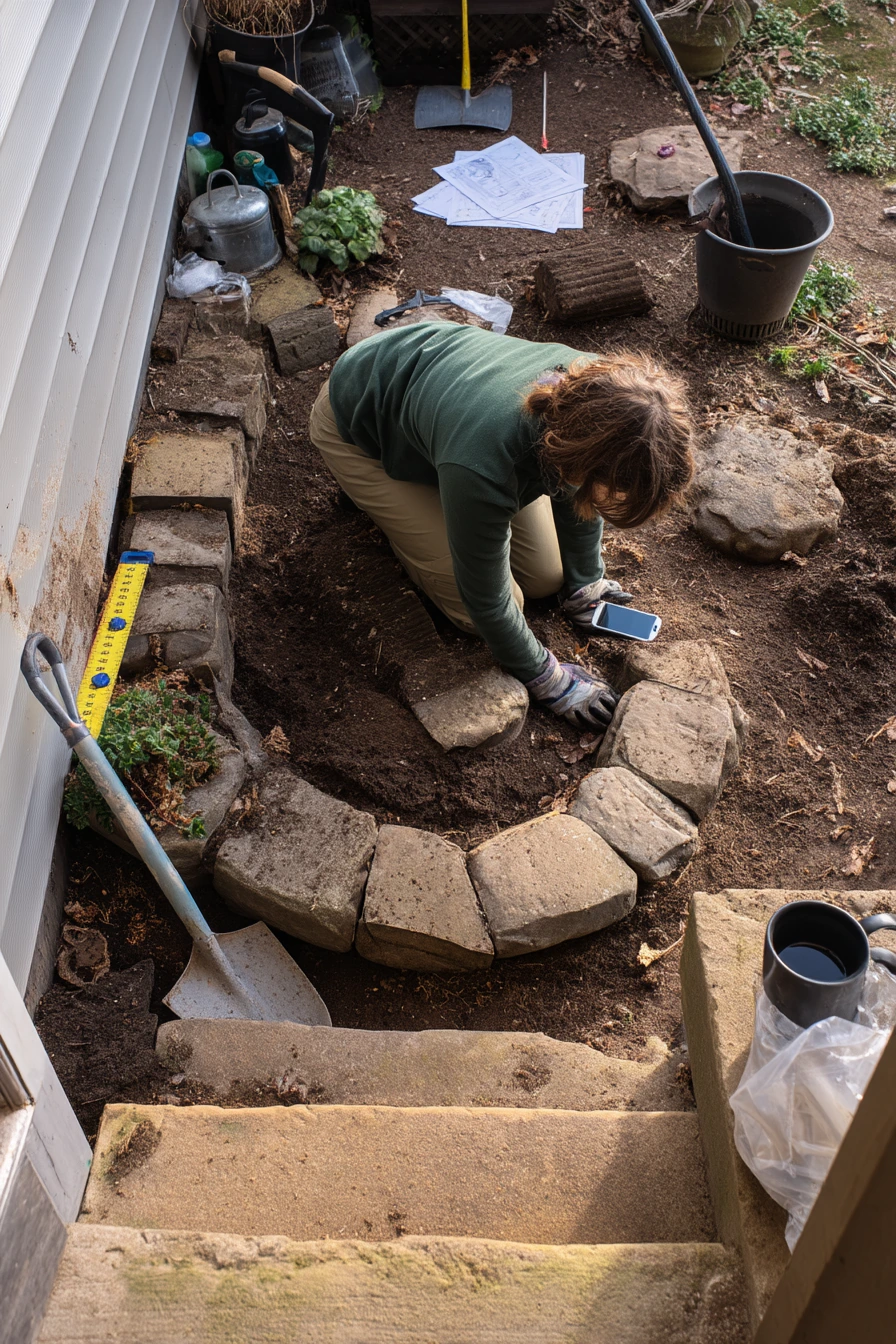
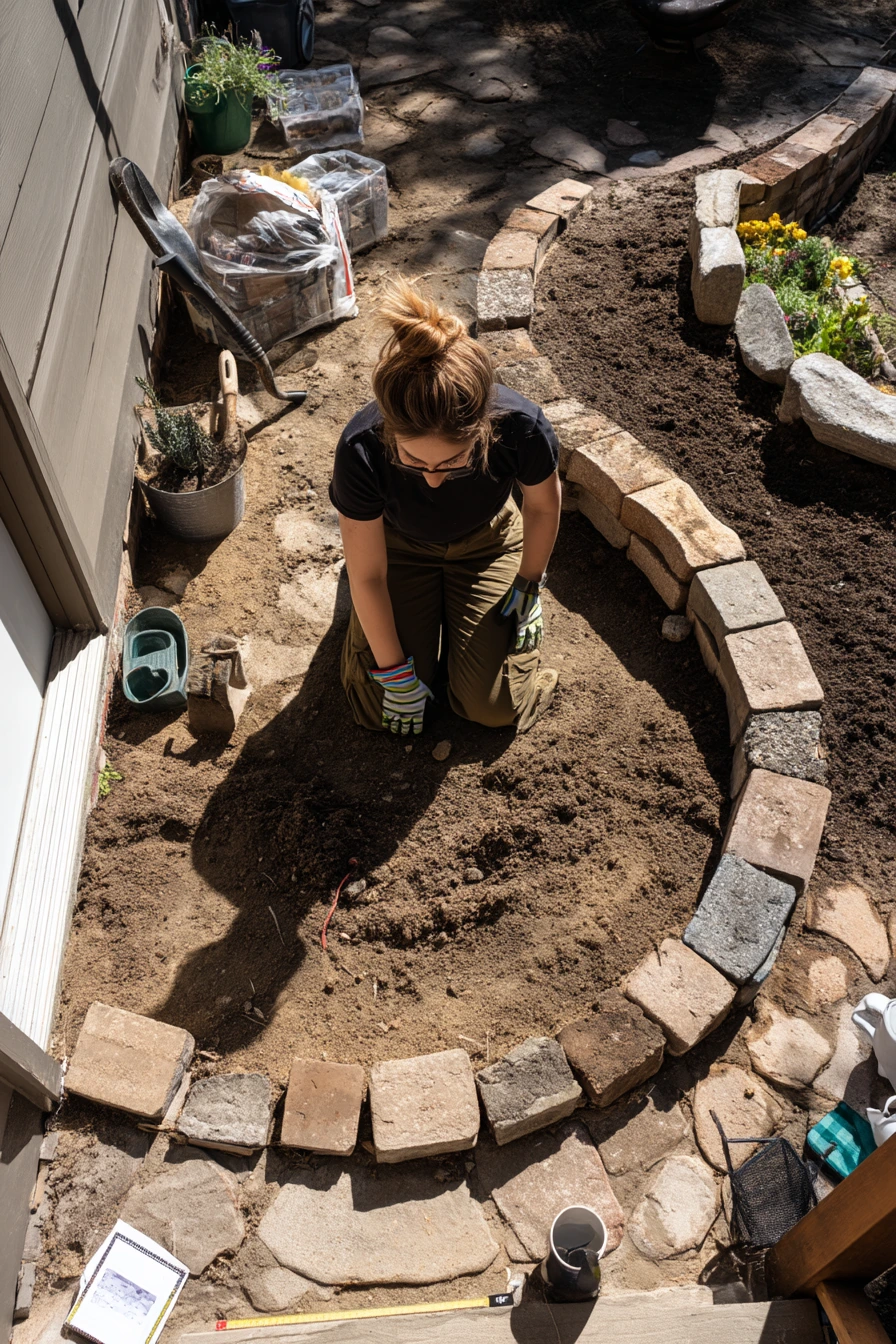
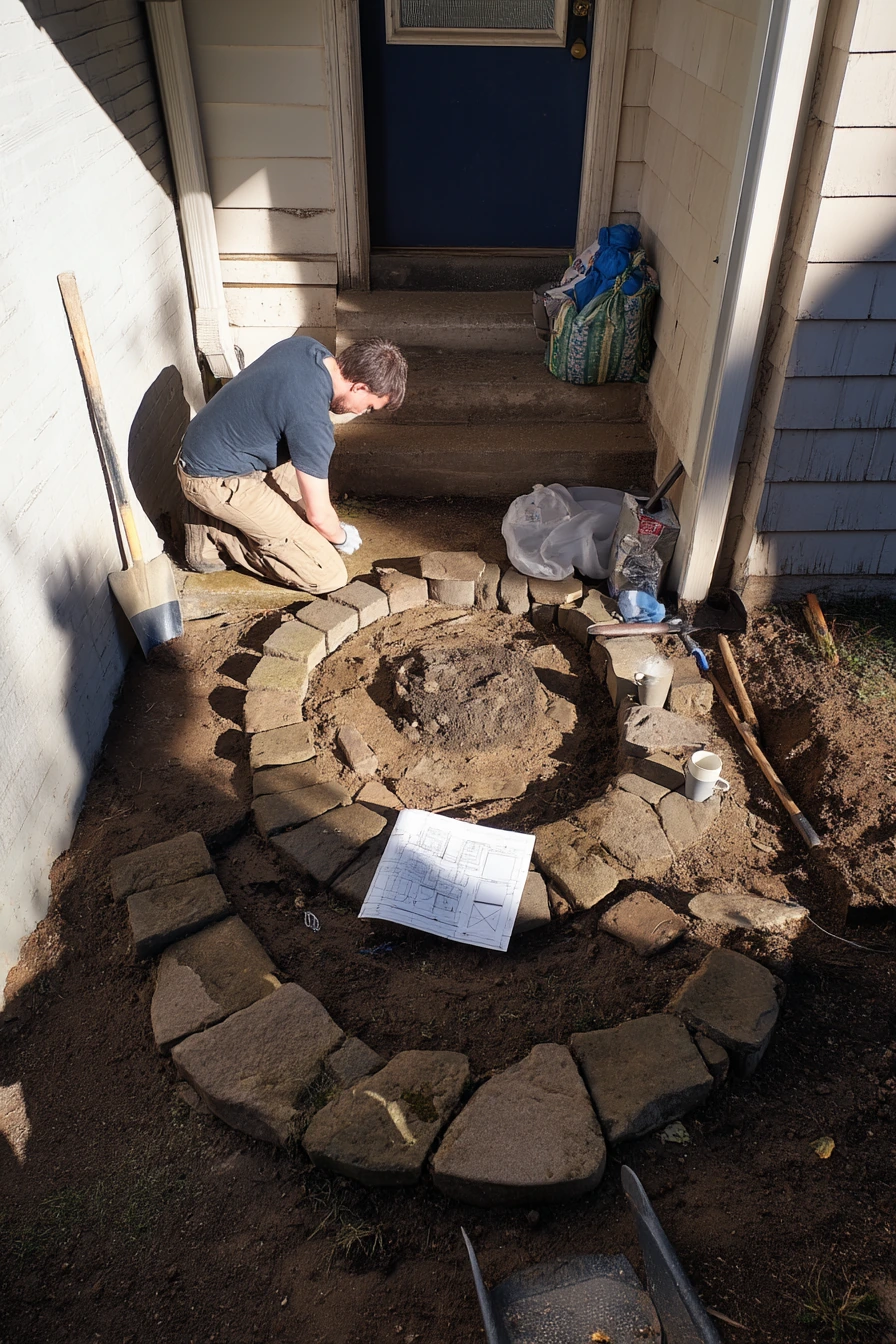
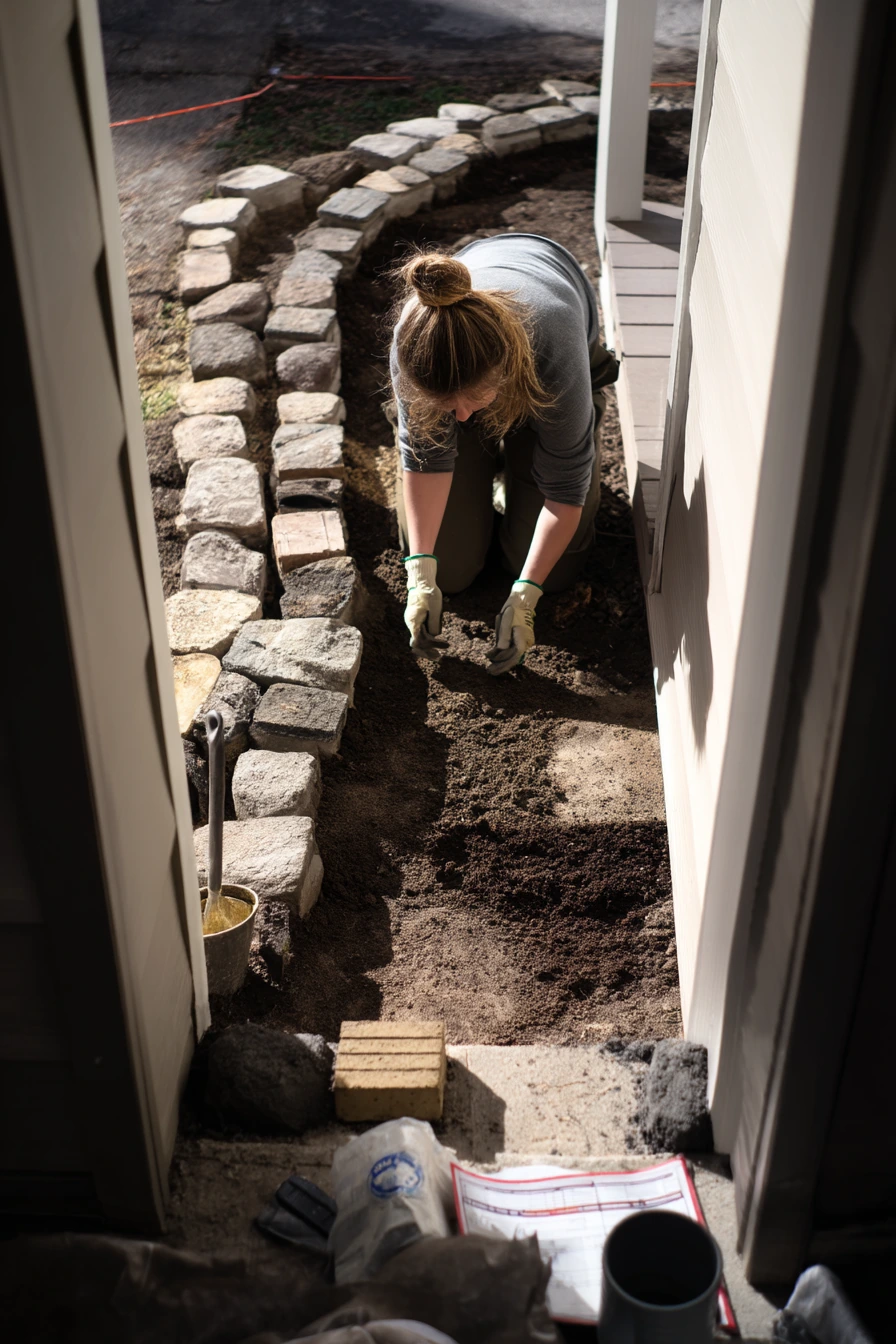
A half-finished DIY spiral garden is the real starting point for most yards. Bricks, topsoil, and a simple central stone core let you shape the helix before you commit to plants. This is the best time to check height, level, and how the spiral fits the space, especially if you are building in a suburban side yard.
Work from the center out. Set the core stones first, then lay bricks in a widening curve. Use a measuring tape to keep the path even, and step back often so the spiral does not drift into an oval. Keep a shovel and compost bag close, but also keep a clear spot to stand so you do not compact the soil. If you have muddy footprints, it is a sign the soil is wet, so pause and let it dry a bit before stacking higher walls.
This stage is also when you plan your planting zones. The top will be drier and warmer, the bottom will stay moist. Sketch a simple plan on paper or on your phone: top for rosemary and thyme, middle for oregano and sage, lower for basil, cilantro, and chives. If a coffee mug sits on the step and a folded garden plan is nearby, you are already using the space like a daily routine, which is what makes a spiral garden last.
- Lay cardboard under the spiral to smother grass and reduce weeds.
- Backfill walls with gravel for drainage and stronger stacking.
- Use a soil mix: 60% topsoil, 30% compost, 10% sand for herbs.
- Test the hose reach before you finish the build.
- Leave one “access gap” so you can step in for planting and repairs.
Pro Design Tip: Dry-stack your bricks first without soil, then adjust the curve and height, and only then fill with soil to lock the layout in place.
Budget Considerations: New bricks add up fast; mix in broken pavers, leftover edging, or free bricks from local listings, and reserve the nicest pieces for the outer edge.
6 Small Patio Spiral Garden for Apartment Living
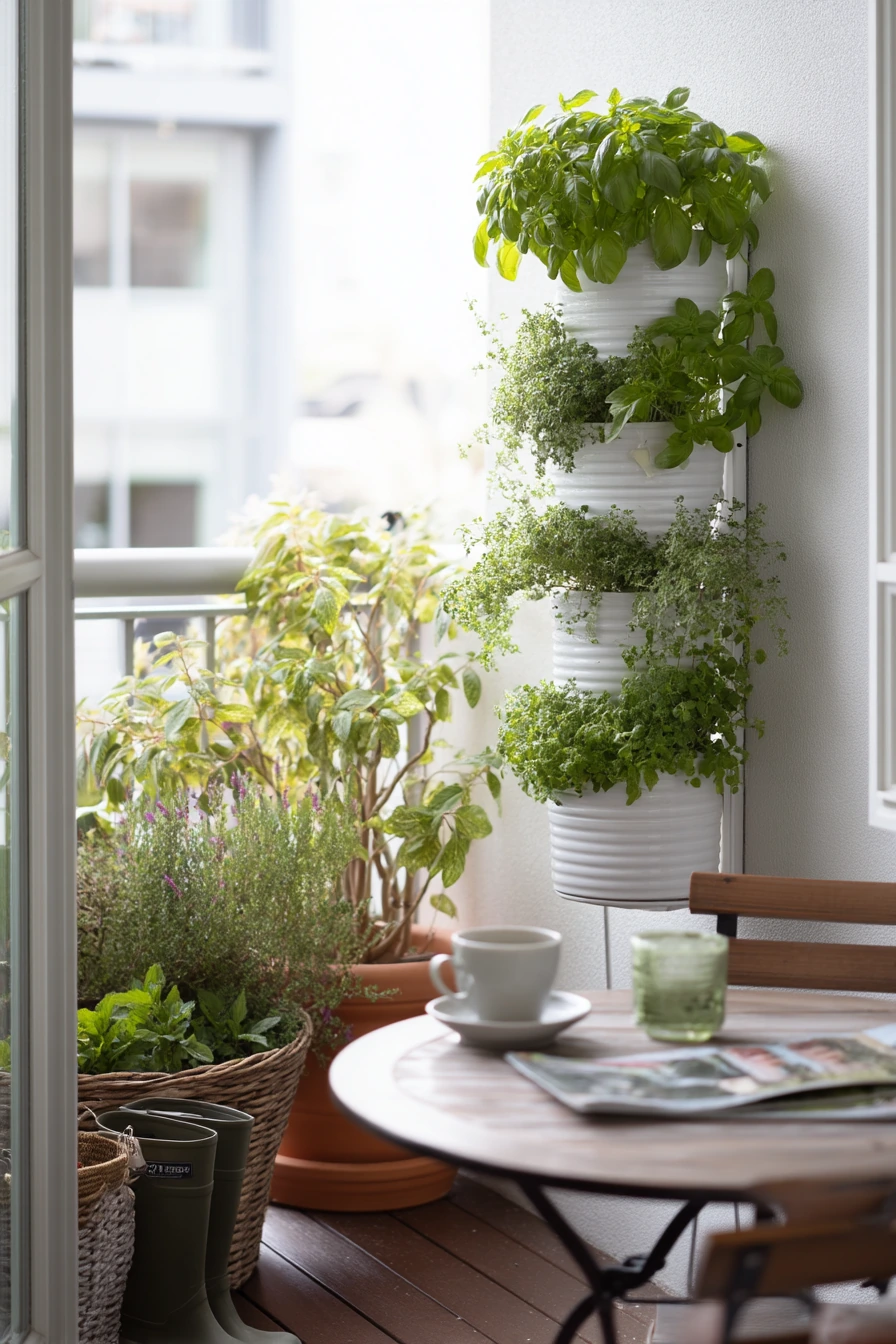
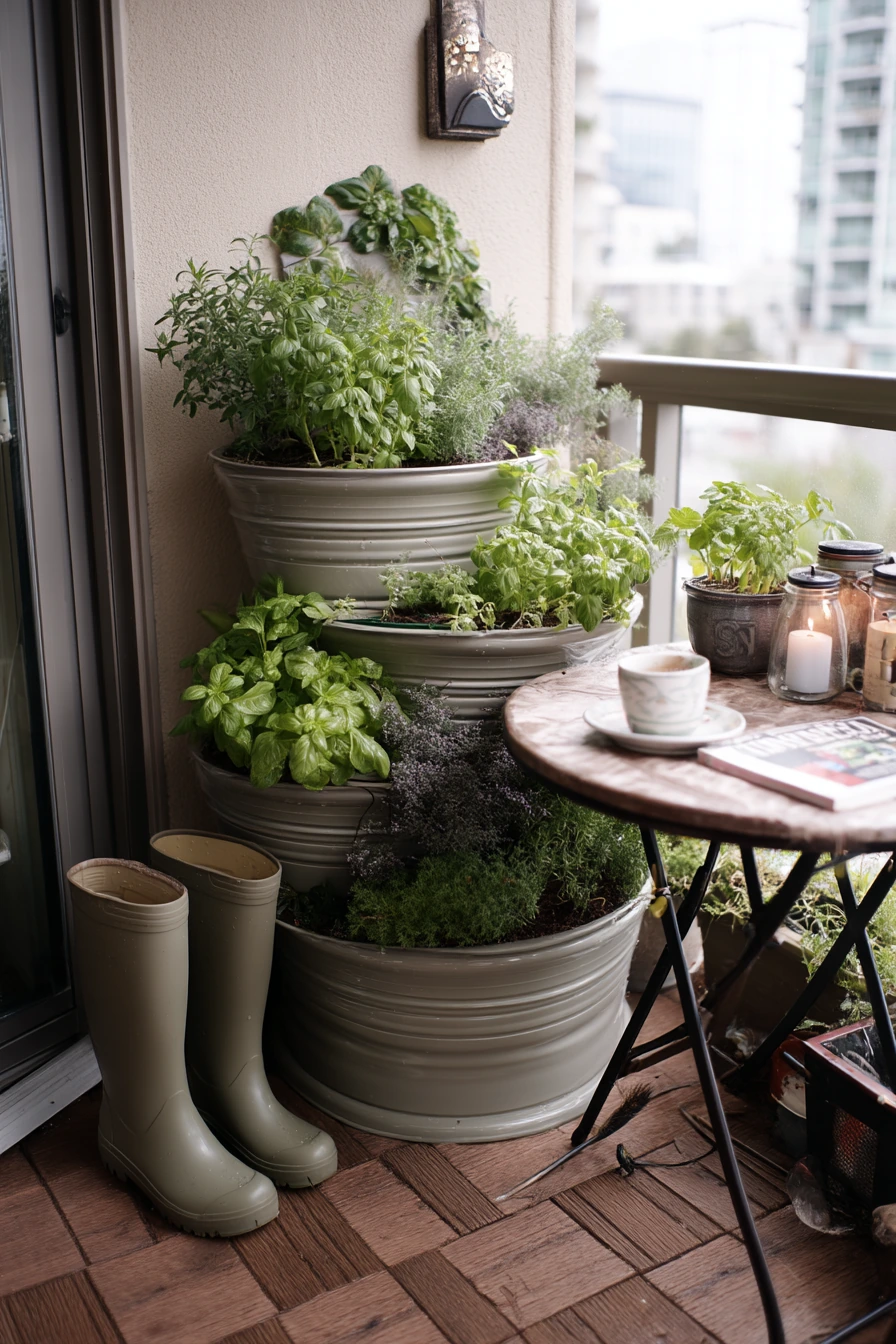
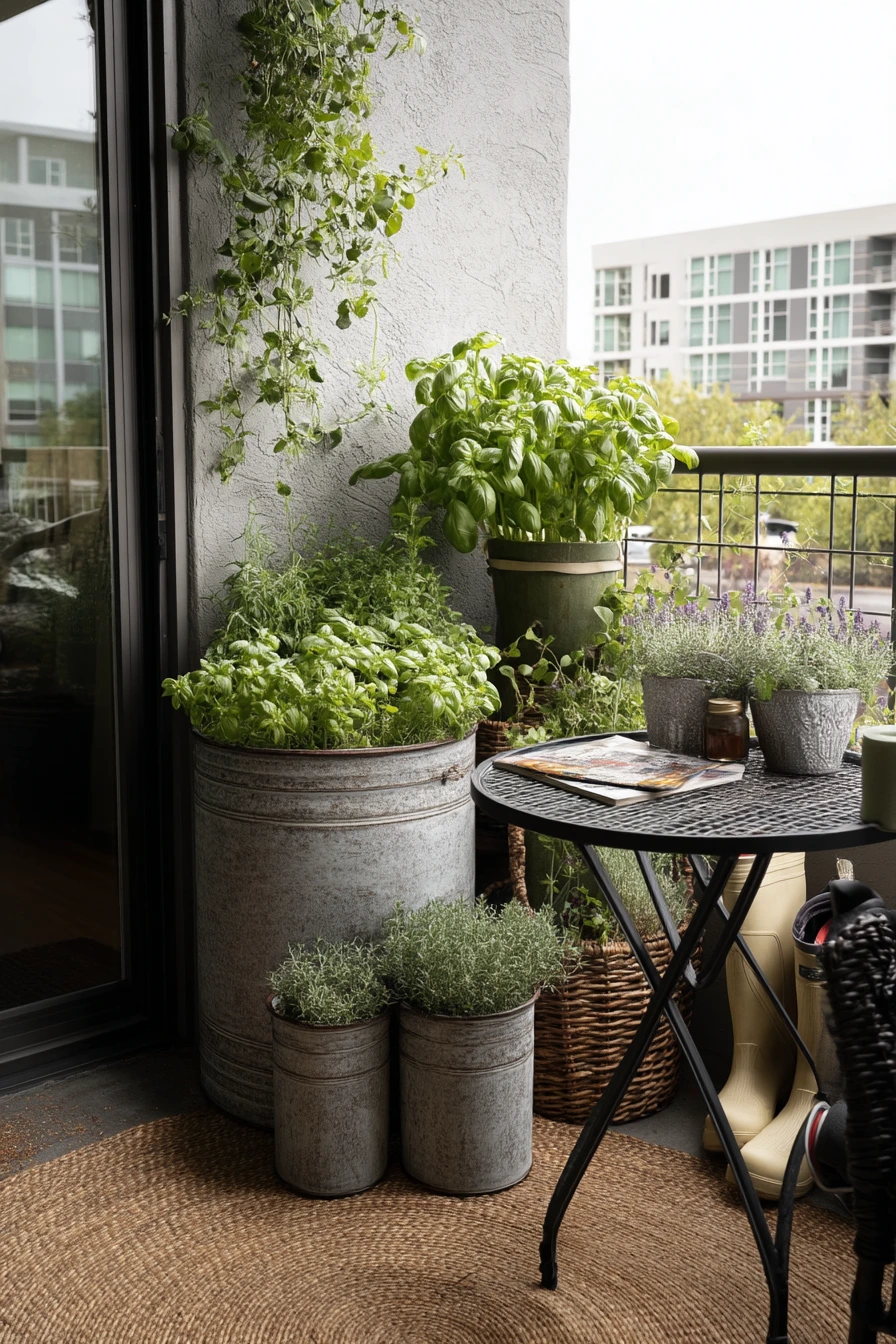
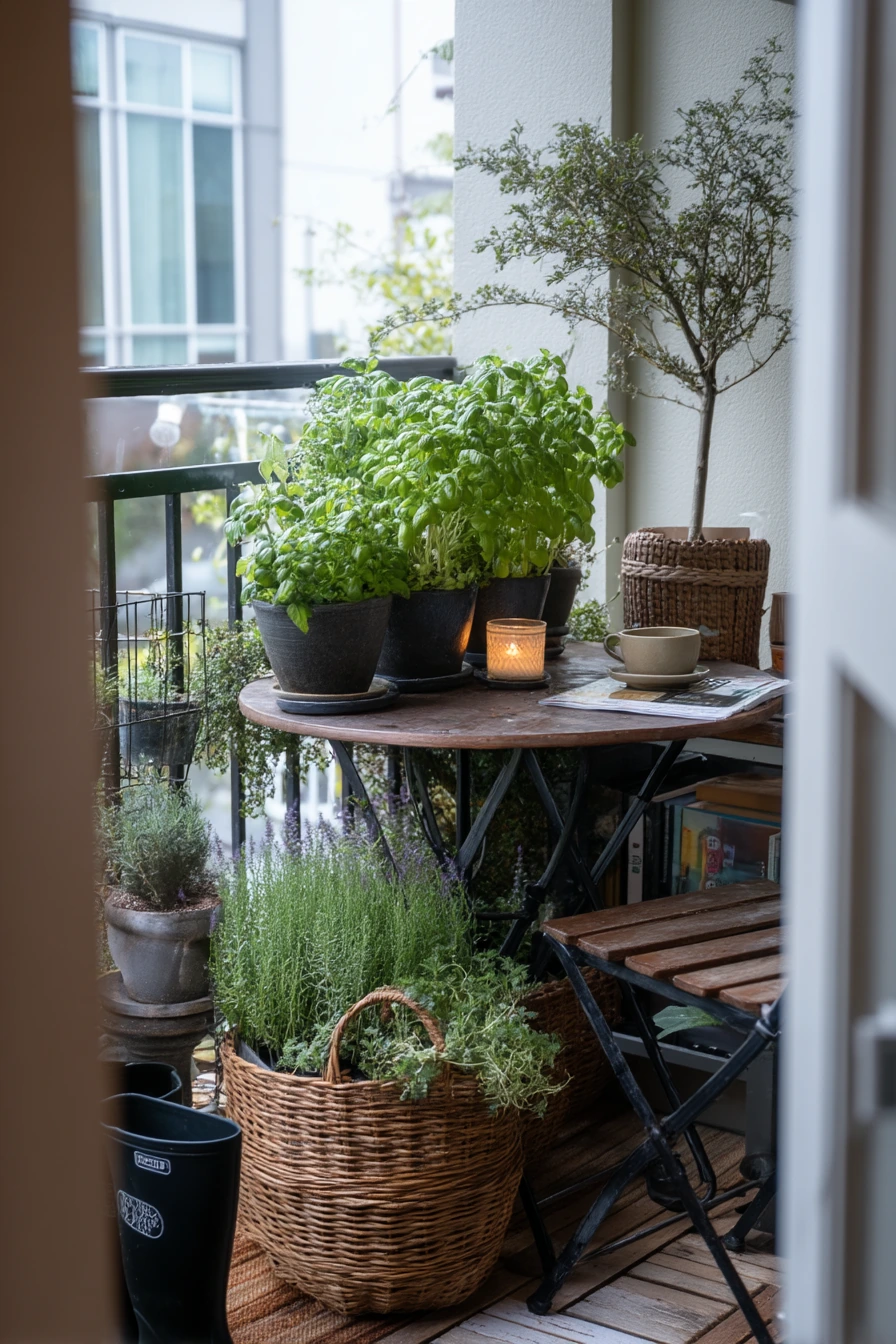
A tabletop-height spiral herb garden is a strong option for a tiny city patio. When you build the helix in glazed containers, you can garden at chest height, keep the area clean, and move pieces if the light changes. It also works well for apartments where you want a “real everyday refuge” without taking up the whole floor.
Choose containers with similar colors so the spiral feels calm, then vary the heights to create the spiral rise. Mint, basil, oregano, and trailing thyme fit this setup well. Put trailing thyme on the outer edge so it spills down and softens the container line. Keep basil in a slightly larger pot because it drinks more water. Mint should be isolated in its own pot to prevent root spread and to make trimming easy.
Styling should support daily use. If you have a laundry basket near the door, rain boots by the wall, and a candle stub on the table, keep the garden grouped in one zone so the rest of the patio still functions. A magazine and ceramic cup on a bistro table make it inviting, but leave a small gap for harvesting. Overcast window light is fine for herbs if the patio gets a few bright hours, but rotate the pots weekly so plants do not lean.
- Use a shallow tray under each pot to protect the patio surface.
- Water from the bottom for basil to reduce fungus on leaves.
- Pinch oregano tips often to keep it compact in a small spiral.
- Add one small trellis clip for thyme to guide the trail direction.
- Keep a small pair of scissors on a hook for quick snips.
Pro Design Tip: Limit the palette to two glaze colors and repeat them around the spiral so the containers look like a set, not a mix of leftovers.
Budget Considerations: Glazed pots can be pricey; mix in basic terracotta and paint only the rims with outdoor paint for a similar styled look.
7 Mediterranean Spiral Garden with Outdoor Meals
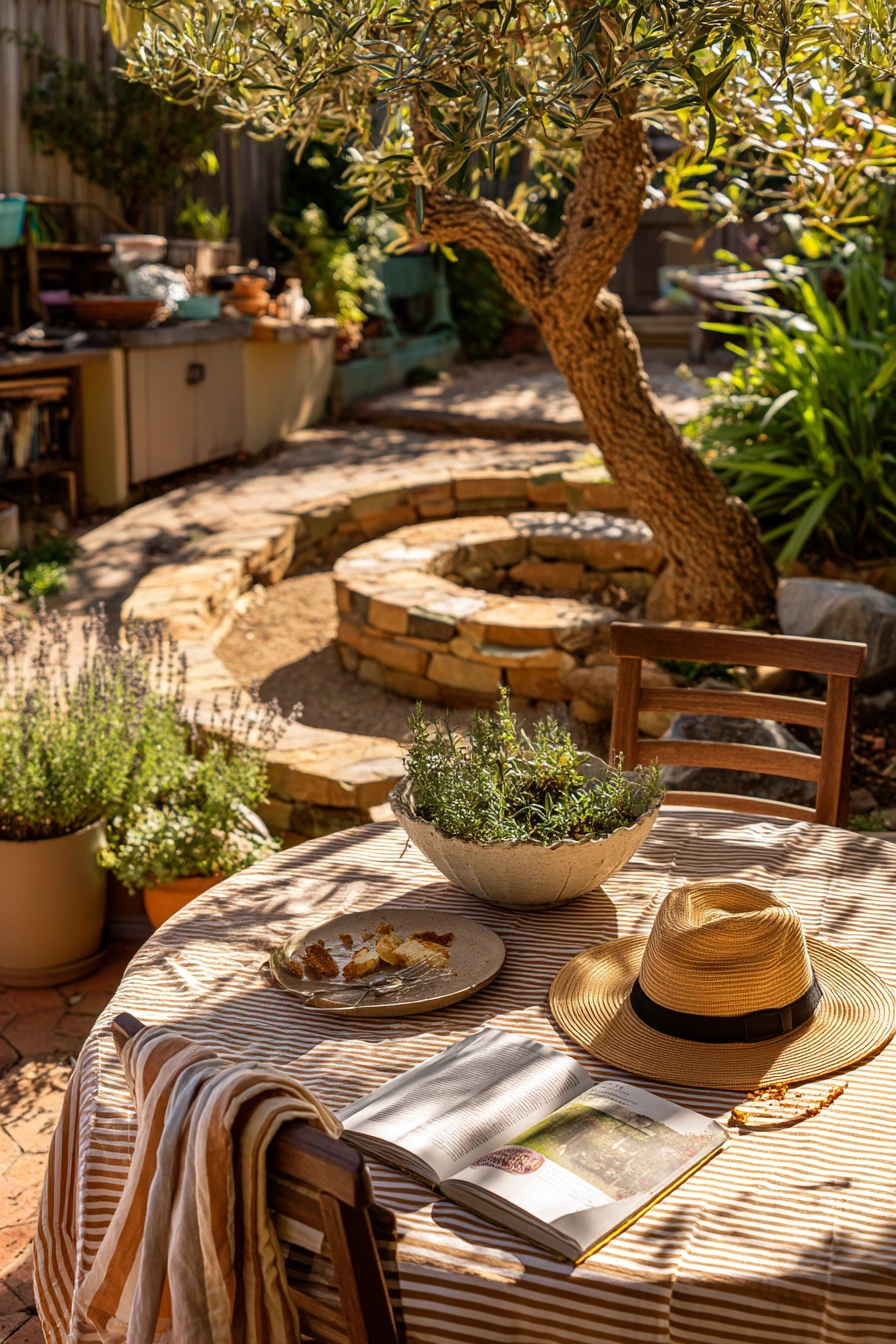
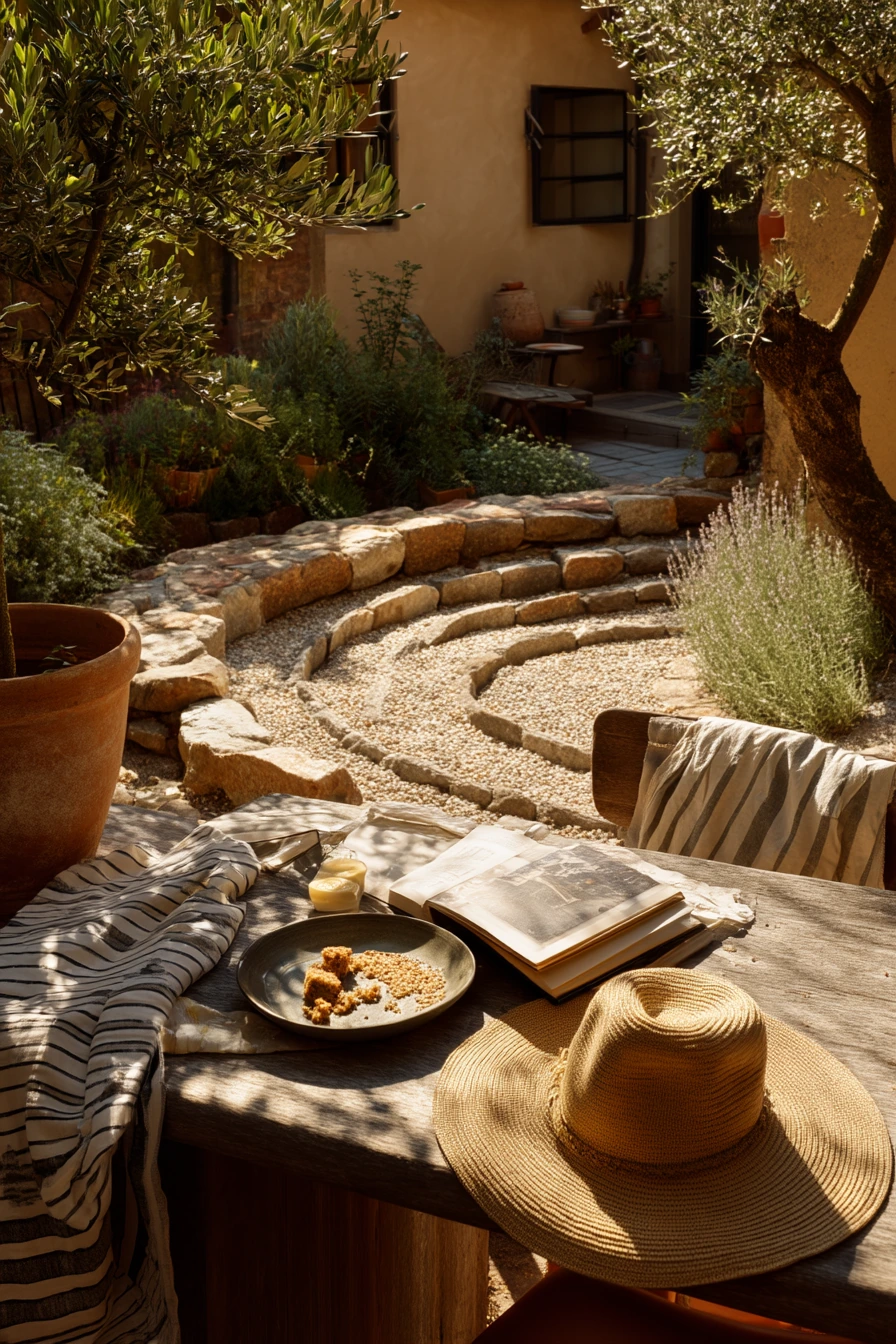
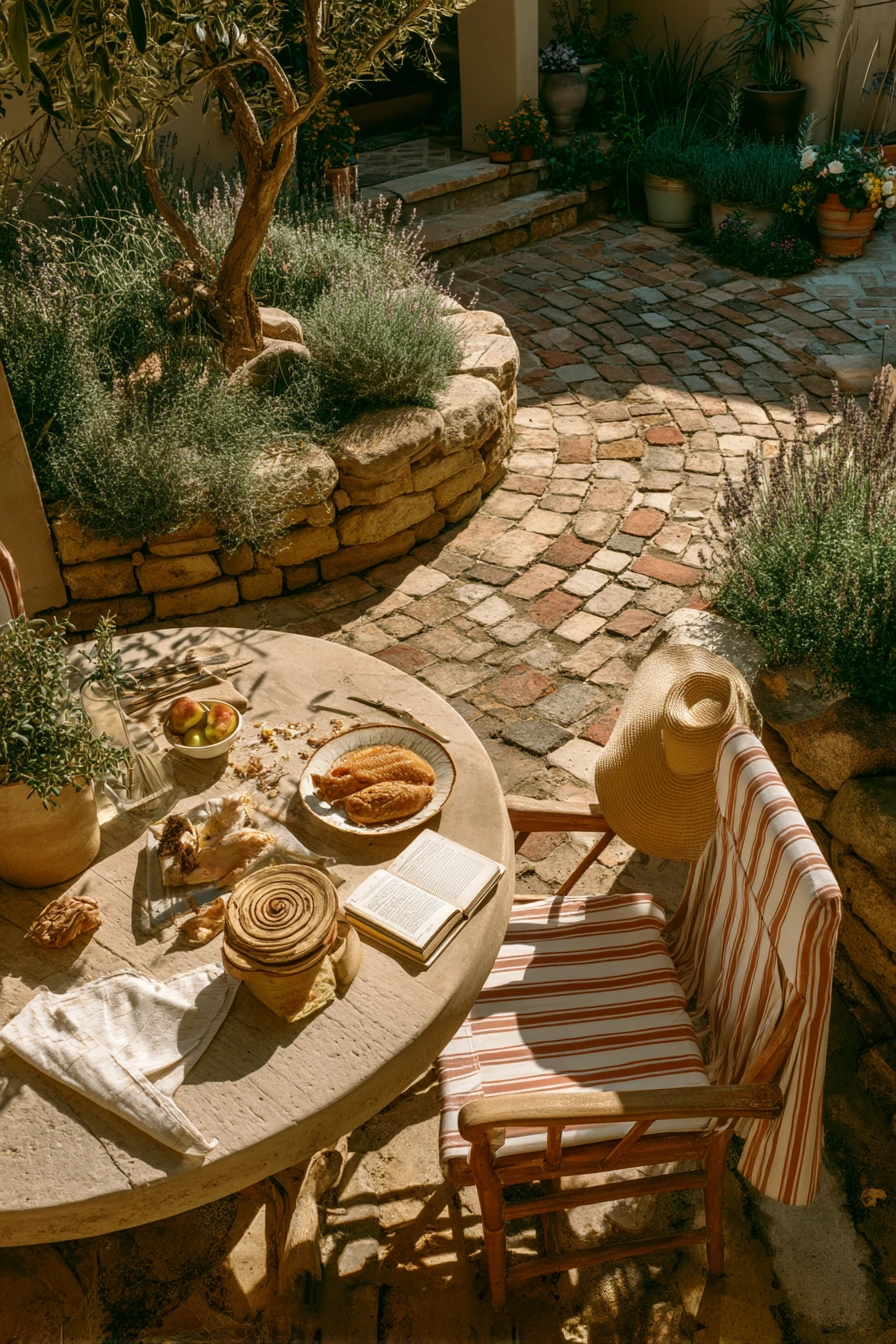
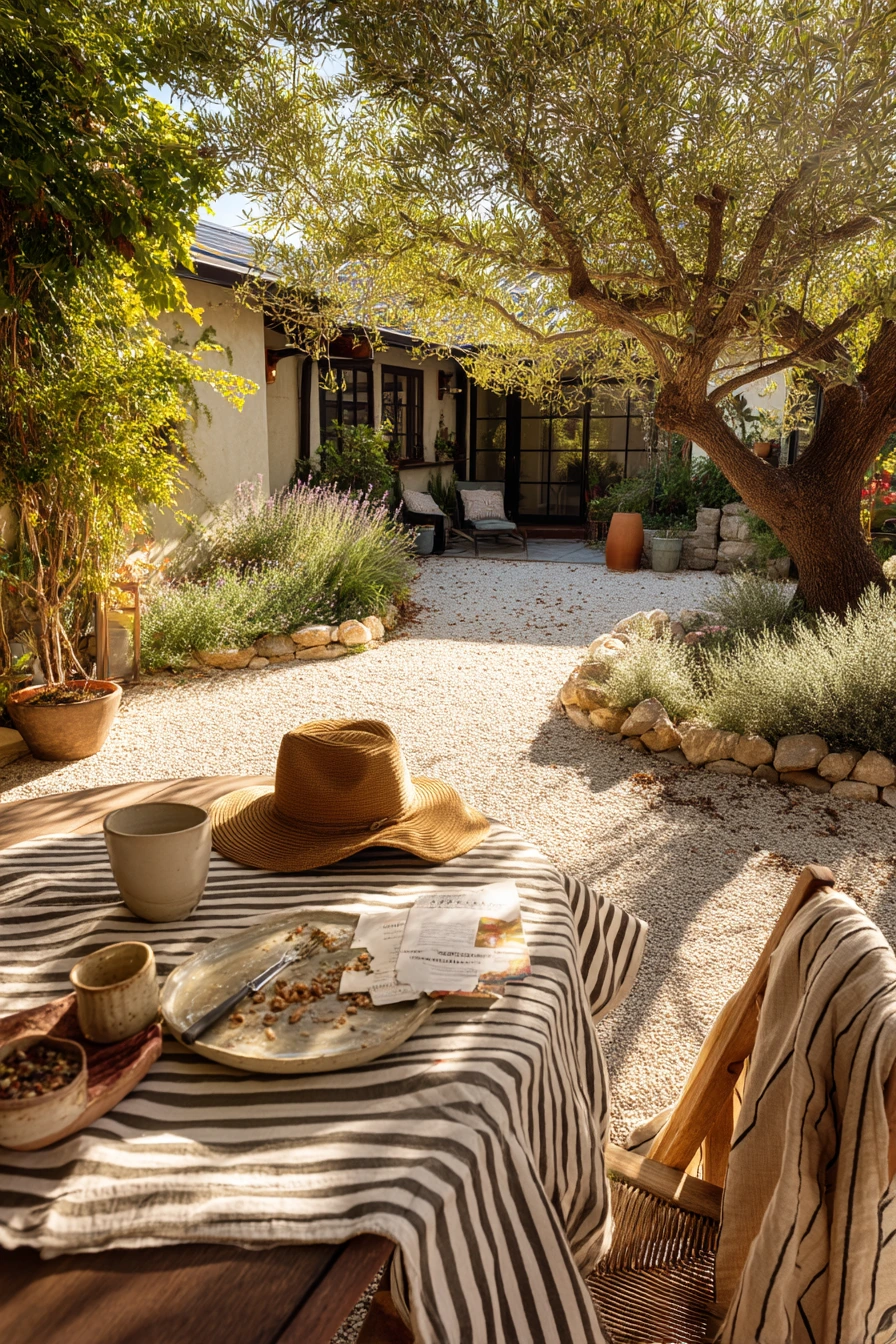
A low spiral garden of stacked sandstone can turn a warm residential courtyard into a relaxed, useful planting space. Adding a small olive tree sapling at the center gives the spiral a focal point and a bit of shade. Around it, rosemary, lavender, and lemon balm create a fragrant ring that fits outdoor meals and family dinner time.
Keep the spiral low enough to sit near, but high enough to hold soil on curves. Sandstone blocks are easy to stack and look natural in golden afternoon light. Place rosemary on the highest, sunniest section so it stays dry at the crown. Lavender can go slightly lower, still in full sun. Lemon balm likes more moisture, so place it on the lower outer tier, and trim it often so it does not crowd neighbors.
Style the area like a working courtyard, not a staged one. If there is a picnic plate, striped napkin, opened cookbook, and crumbs on the table, plan the spiral so it does not shed soil onto the dining zone. A sun hat draped over a chair is fine, but keep seating paths clear. Add a small gravel strip between the spiral and the table to catch stray leaves and make sweeping simple.
- Leave a 3 to 4 foot dining clearance from the spiral edge.
- Mulch with small stone to keep herbs clean for cooking.
- Prune the olive sapling lightly to keep the center airy.
- Harvest rosemary from the outside tips to keep a rounded shape.
- Use lemon balm in a pot sunk into the soil to control spread.
Pro Design Tip: Center the olive tree slightly off-center within the spiral so the curve has a “lead-in” view from the table and looks balanced in photos.
Budget Considerations: Olive trees and sandstone can raise costs; choose a smaller sapling and mix sandstone with affordable concrete retaining blocks hidden on the back side.
8 Spiral Garden Beside a Playful Family Deck
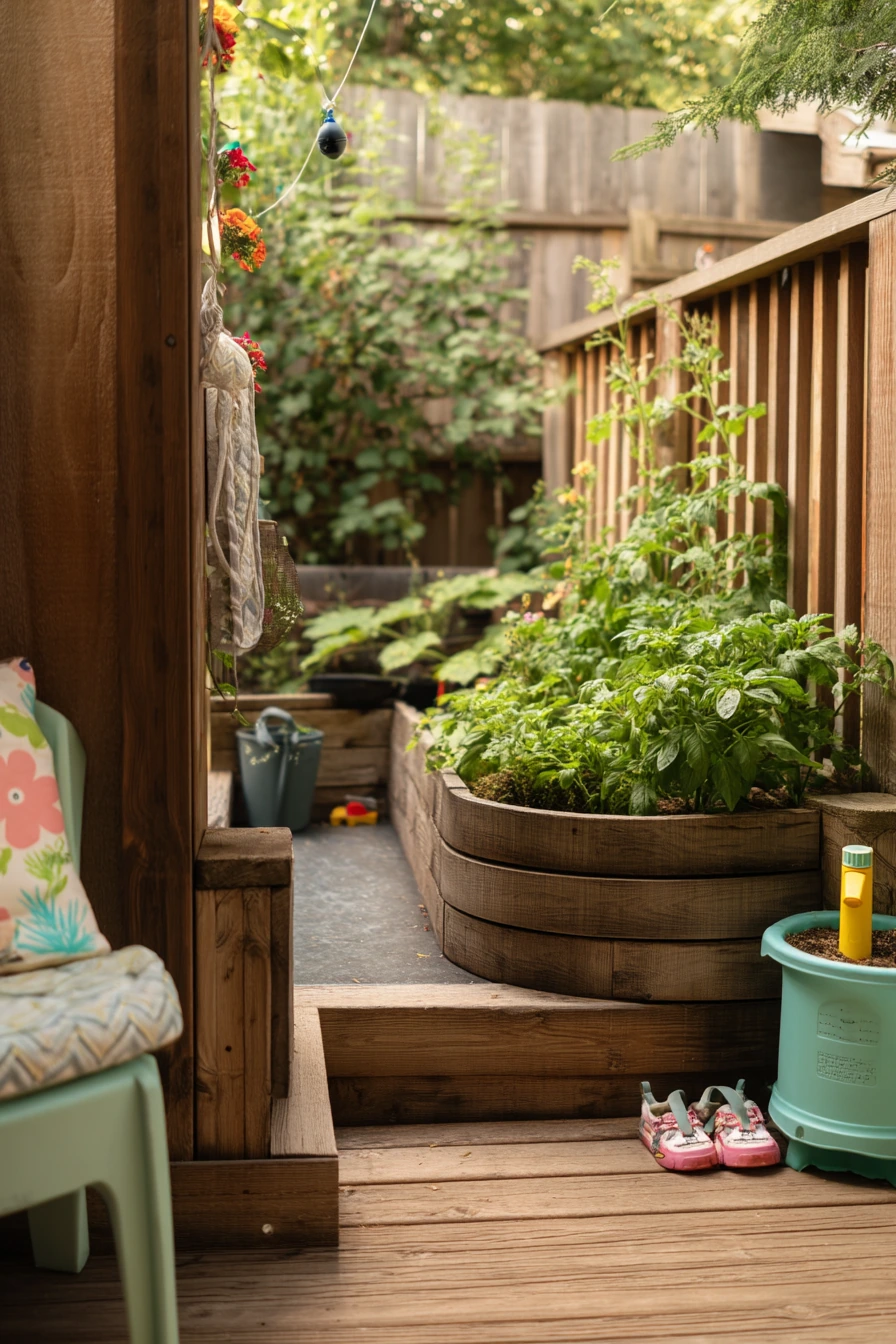
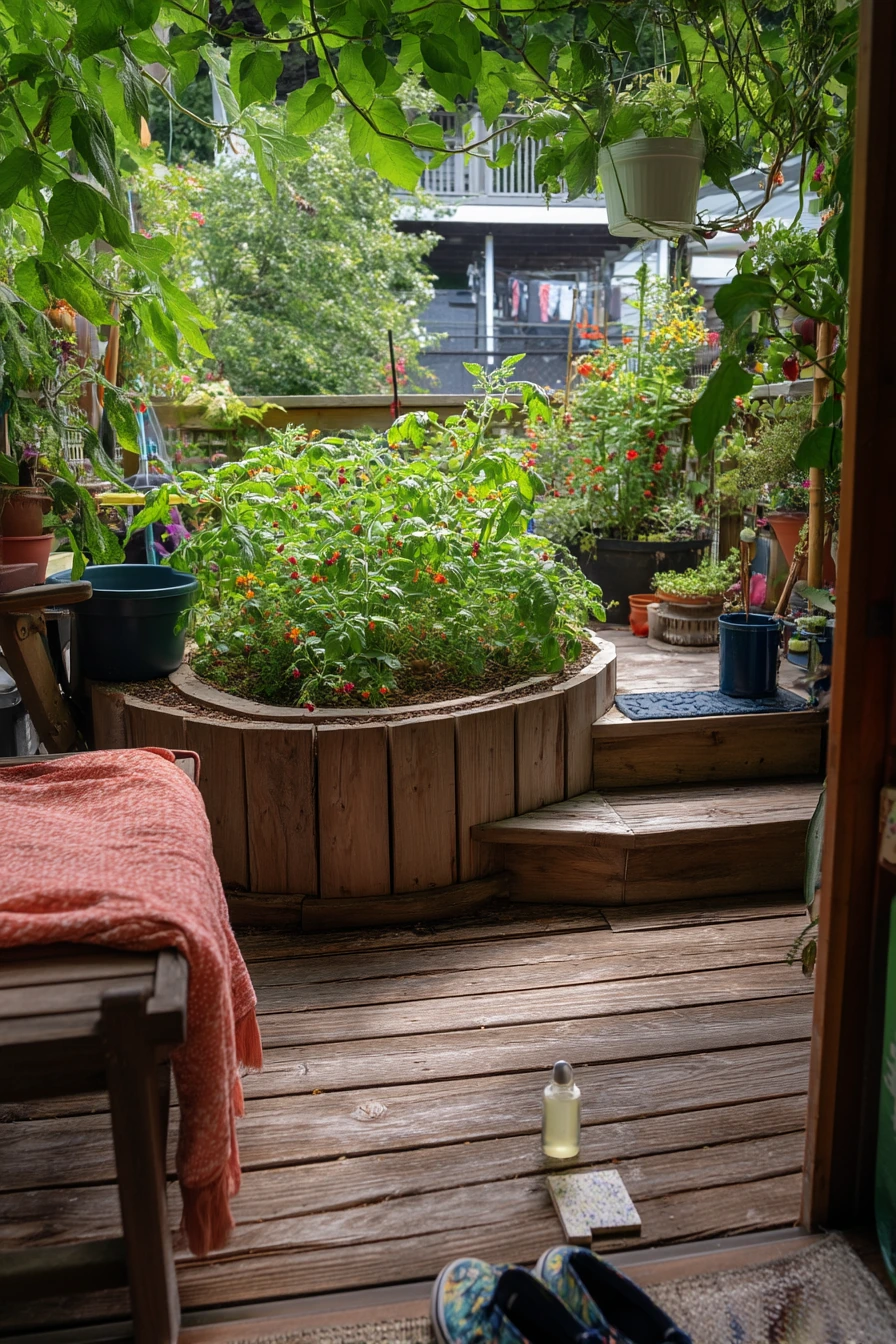
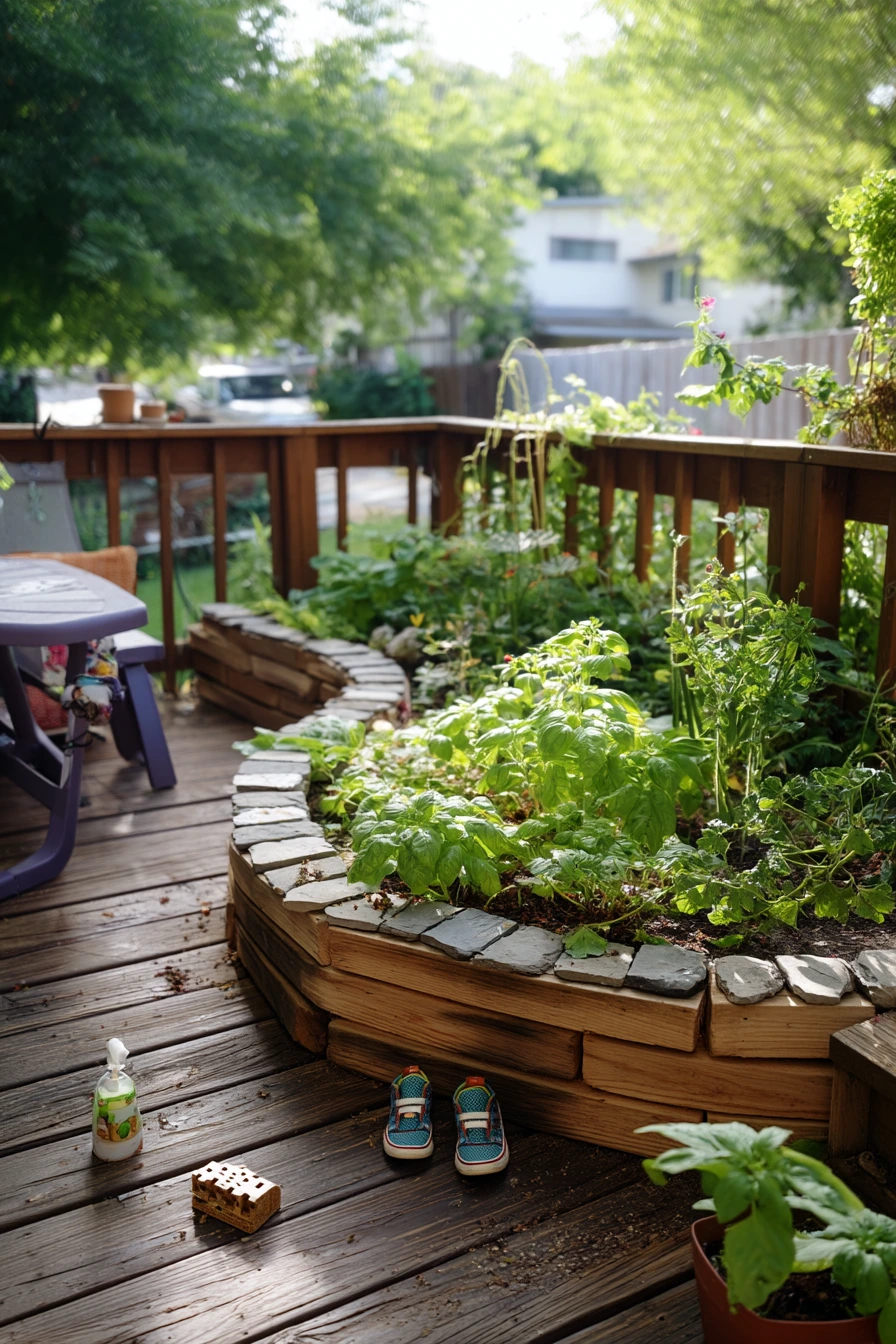
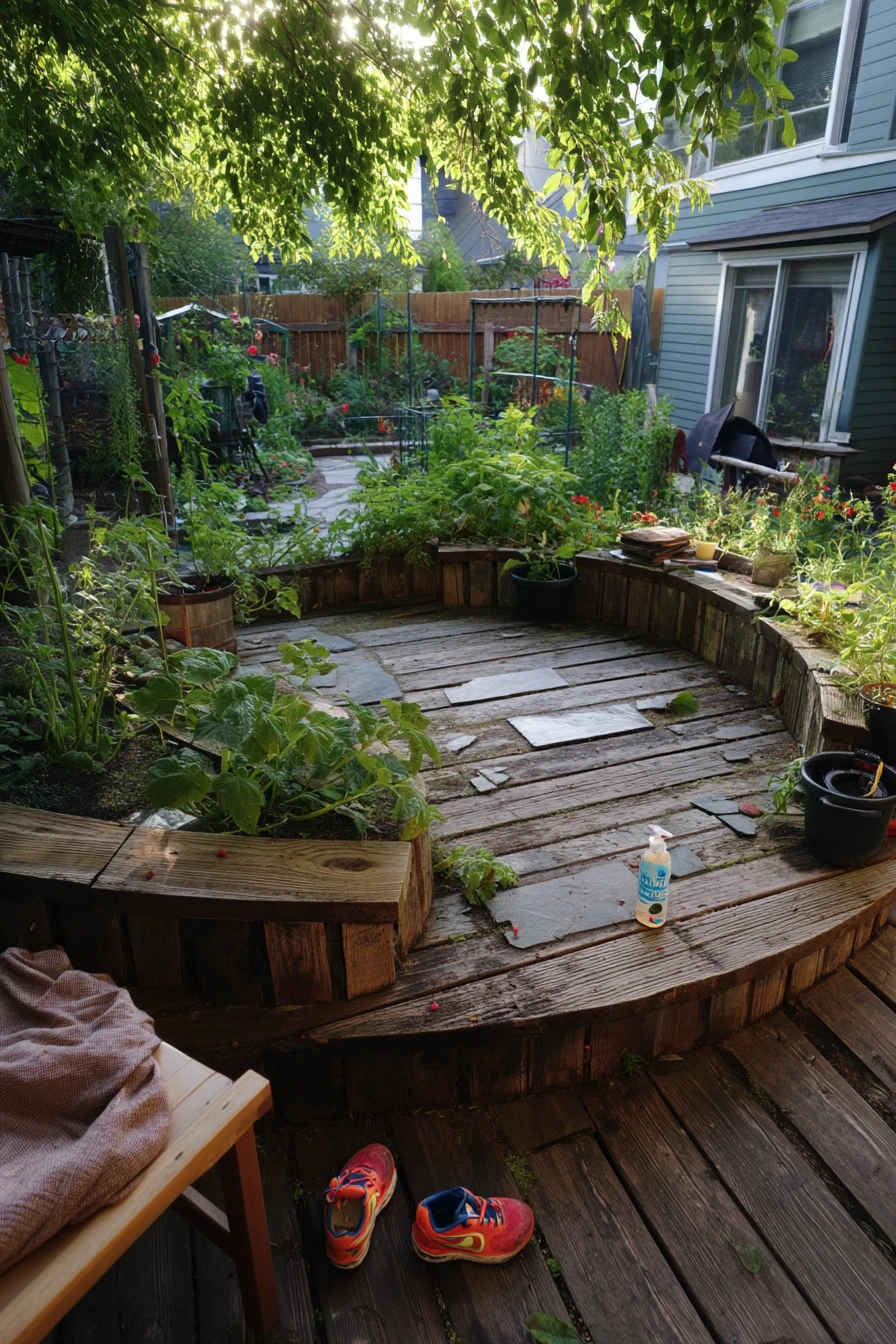
A spiral bed on a back deck works best when it is sturdy, raised, and easy to clean around. Reclaimed timber and slate create a warm, practical look, and they fit well with casual family life. With strawberries, basil, snapdragons, and dwarf peppers, you get edible plants plus color in one small footprint.
Because it sits on decking, drainage and mess control matter. Line the base with a waterproof tray or heavy-duty pond liner, then add drainage holes or a gravel layer so roots do not sit in water. Build the spiral walls with timber for the main structure, then use slate pieces as inner accents to shape the curves. Place strawberries on the outer edges so fruit hangs away from the soil. Keep peppers toward the center where warmth is higher, and tuck basil in the middle where moisture is steady. Snapdragons can fill gaps and bring height without taking over.
To keep it real and livable, plan for kid items like a toddler sneaker by the step, a puzzle piece on the boards, and a watering spray bottle left out. The trick is creating a “home zone” for garden tools so the deck does not feel cluttered. Add one small hook or basket for the spray bottle and scissors, and shake out a slightly wrinkled throw on the chair so seating still feels inviting.
- Use food-safe sealant on reclaimed timber to reduce splinters.
- Place a doormat by the spiral to catch spilled soil during planting.
- Rotate strawberry runners back into the bed to keep edges neat.
- Pinch pepper flowers early if plants are small to boost later harvest.
- Choose compact snapdragon types so they do not flop into walkways.
Pro Design Tip: Run the spiral curve parallel to the deck boards so the lines look calm together and the bed feels built for the space.
Budget Considerations: Slate can be expensive; use a few slate pieces on the visible front curve and fill the rest with cheaper stone or leftover pavers.
9 Seasonal Spring Planting in a Spiral Bed
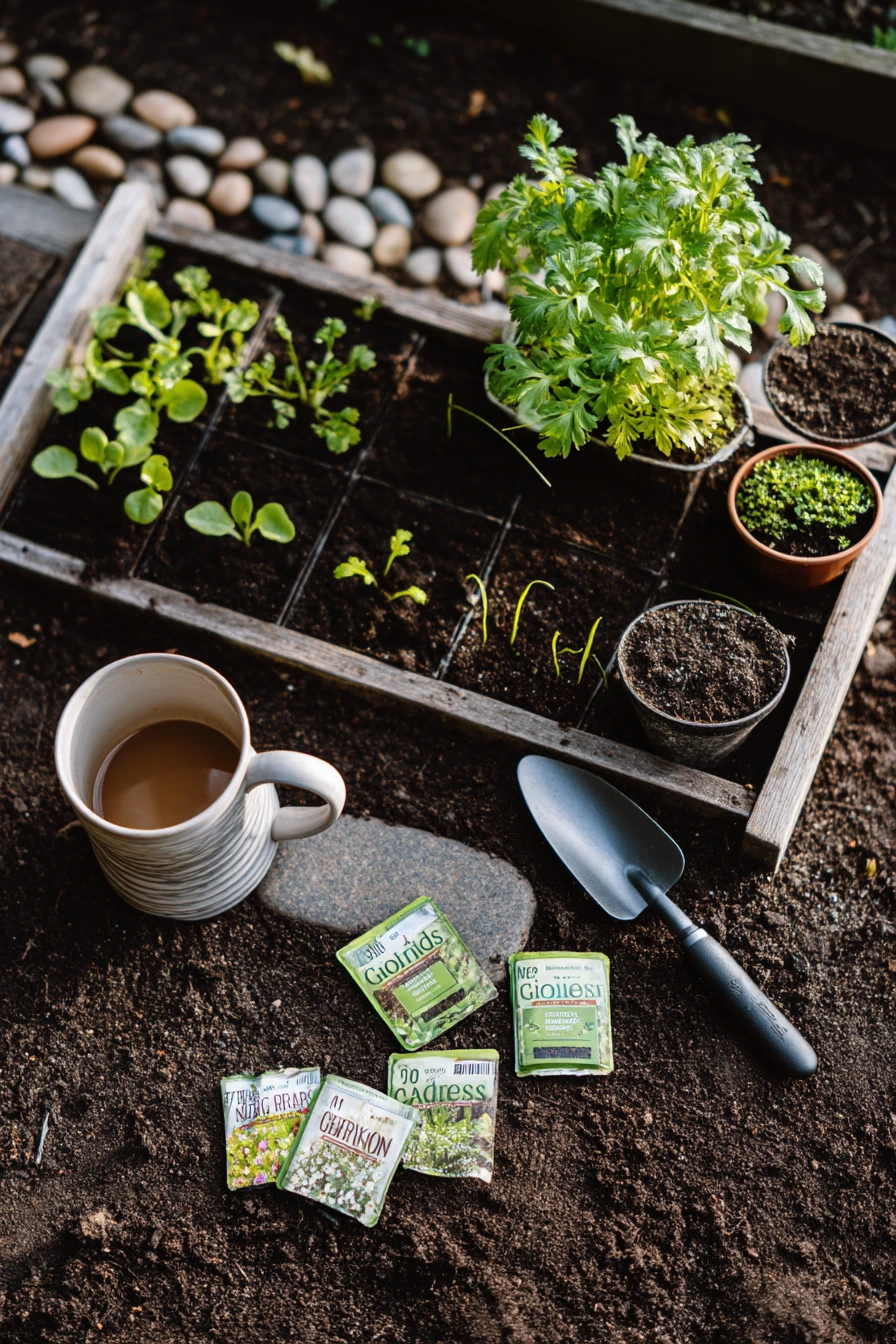
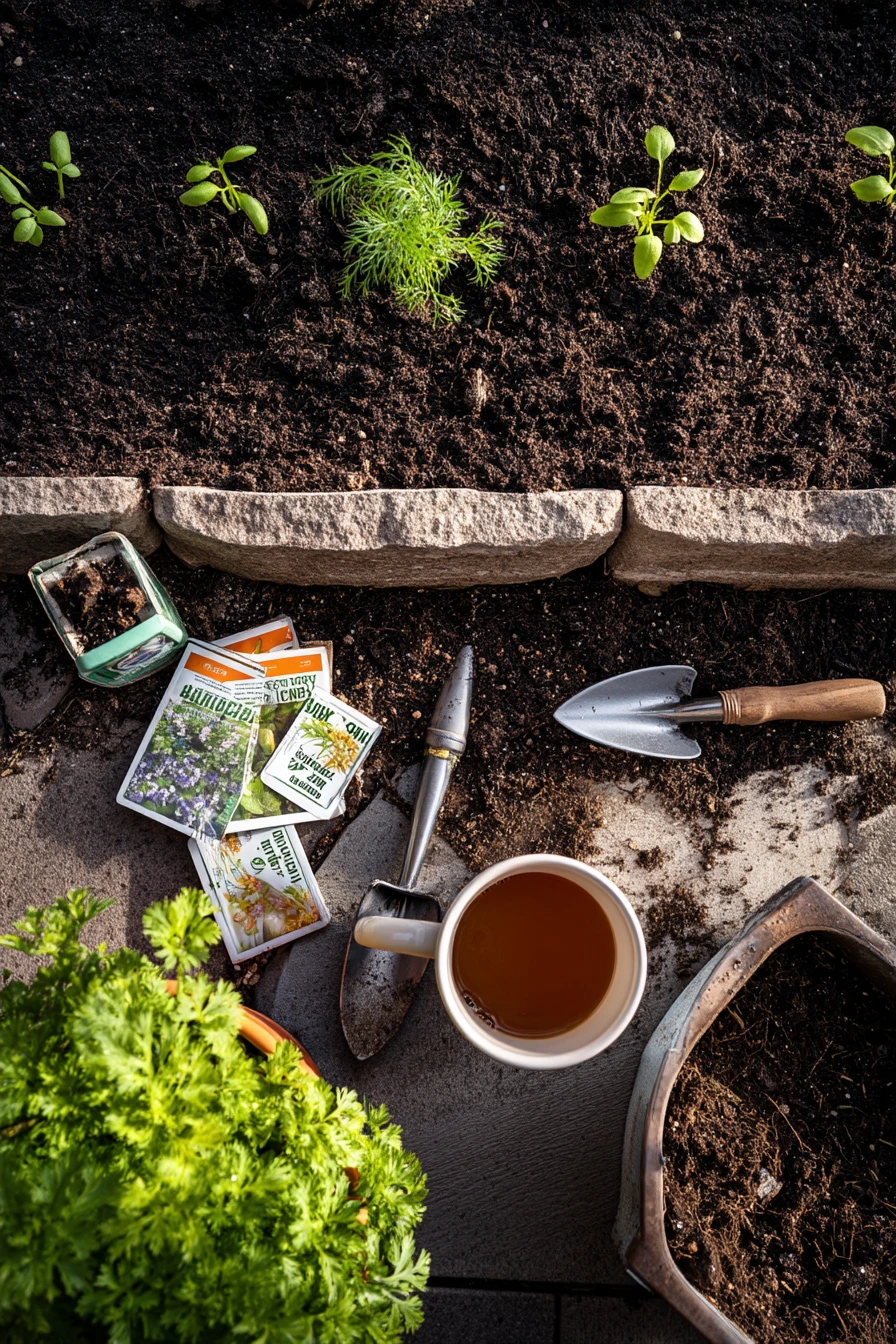
A fresh spring spiral garden in a compact suburban front yard can look neat while still being productive. Dark soil, tidy stone edging, and small seedlings create a clean first impression. Early plants like lettuce, dill, cilantro, and violas fit the season and help the spiral fill in fast.
Front-yard spirals need order. Keep the curve low and the edge crisp so it reads as landscaping, not a messy veggie patch. Plant lettuce on the cooler side of the spiral and violas along the edge for color. Dill can go mid-spiral because it grows tall and adds a light, airy look. Cilantro fits lower zones where soil holds moisture. A folding stool with seed packets, a trowel, and a gardening notebook makes the space feel active, and it helps you track what you planted and when.
After rain, damp earth can compact, so work gently. If you have a half-finished mug of tea nearby, it is a good reminder to slow down and not rush the spacing. Thin lettuce seedlings early so heads can form. Use small stone edging to keep the spiral line sharp and to stop soil from washing onto the lawn or sidewalk. Keep one small sign or label near the spiral so visitors know it is a garden bed, not a random mound.
- Plant in short rows that follow the spiral curve for a tidy look.
- Add a thin layer of compost on top instead of mixing deep to protect seedlings.
- Use netting if rabbits are common in your area.
- Harvest cilantro often to slow bolting as days warm up.
- Water gently with a rose nozzle to avoid washing out seeds.
Pro Design Tip: Edge the spiral with one consistent stone size and keep the line smooth; a clean outline makes young seedlings look intentional and styled.
Budget Considerations: Buying edging stone by the bag can cost more; look for local bulk gravel yards or reuse stones from other areas of the yard.
10 Luxury Real Home Spiral Garden Retreat


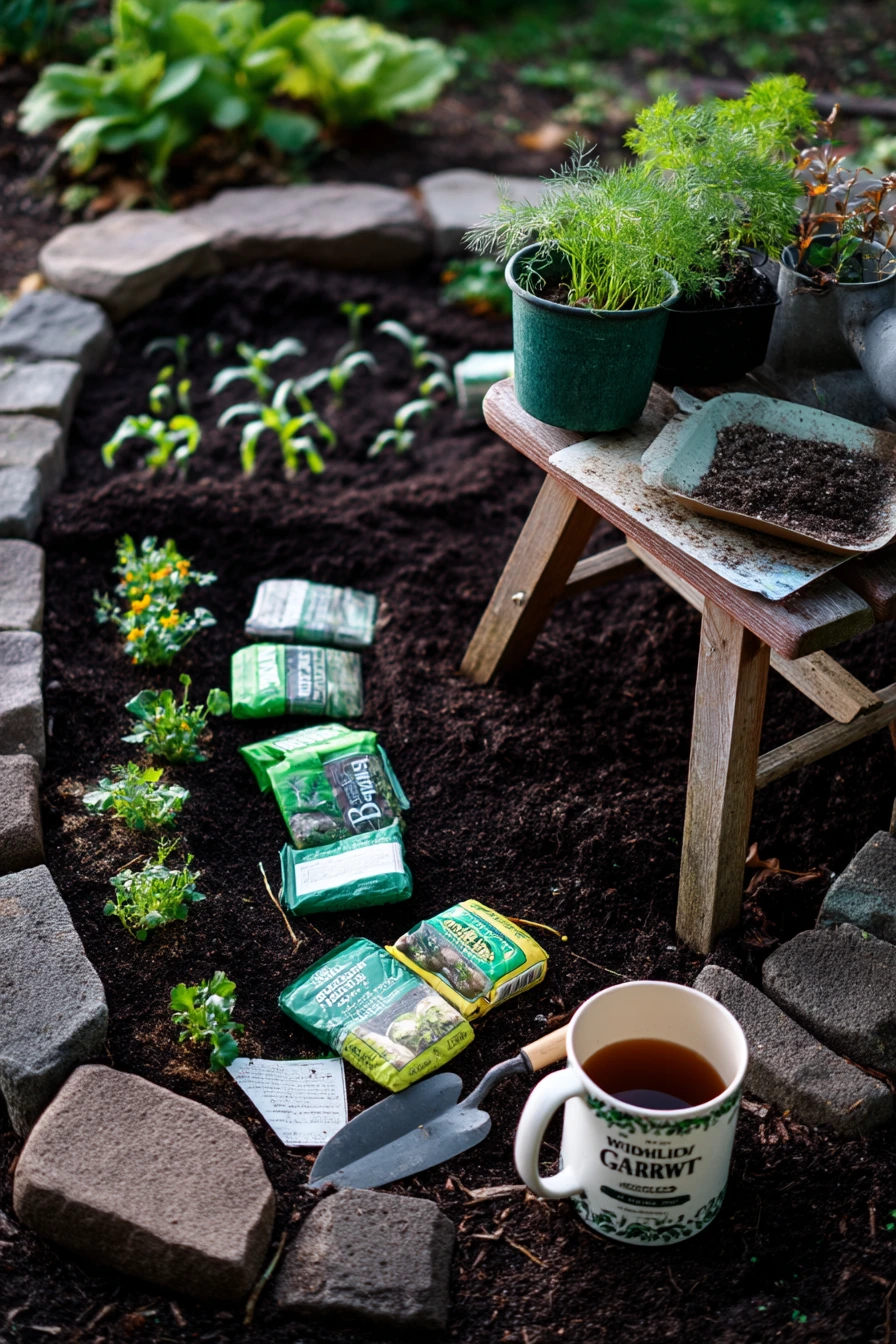
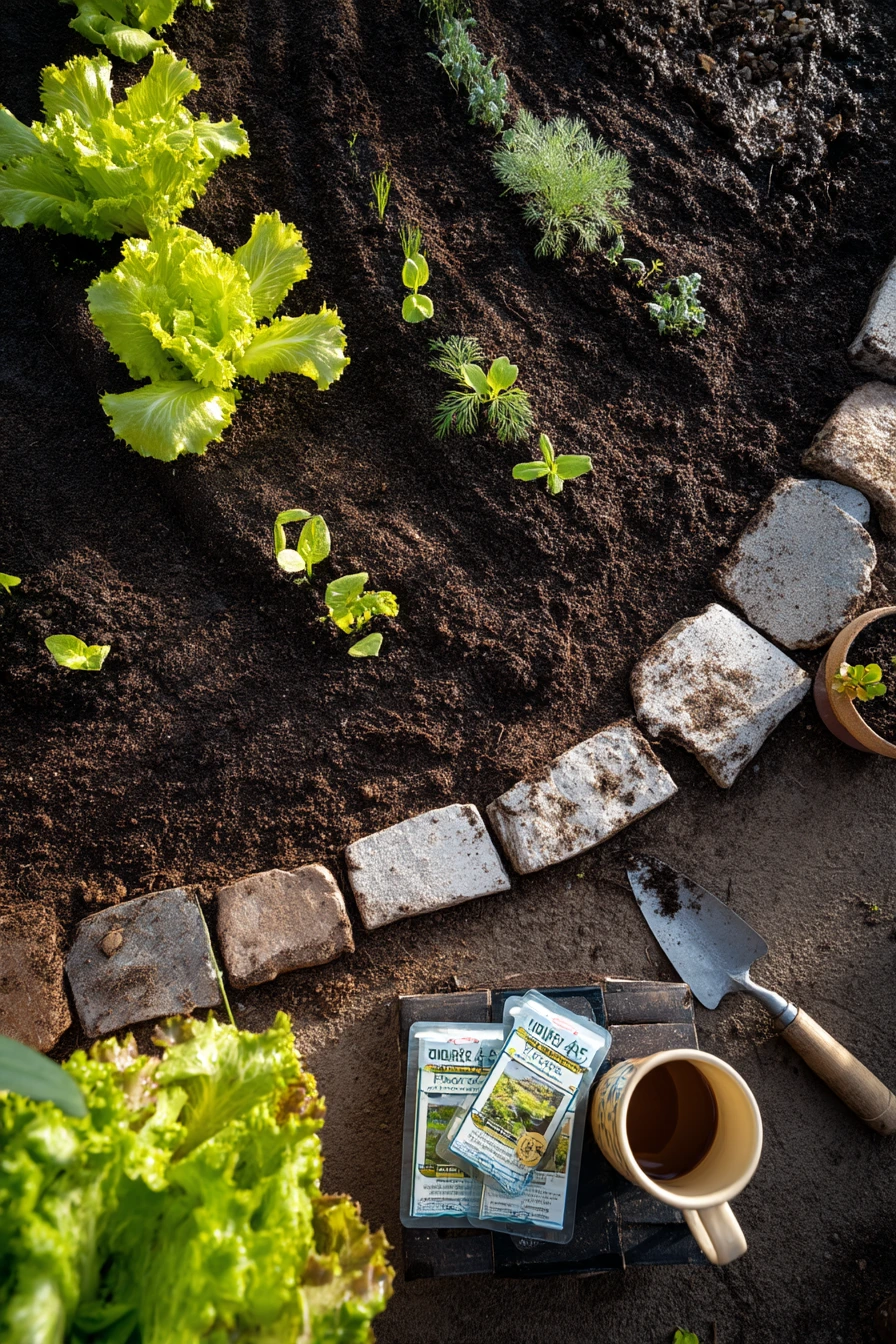
A refined spiral garden can still feel lived-in when you mix clean materials with everyday items. Limestone, mossy gravel, and layered planters create a calm look, while a linen cushion, water glass, open novel, and a phone charging cable show the space is used. This kind of spiral works well in a quiet residential courtyard where you want a designer feel without being precious.
Plant choices should match the mood and the light. Ferns like shade and steady moisture, so place them in lower tiers or in planters that hold water well. Thyme fits higher, drier spots and adds a tidy groundcover edge. Hellebore brings structure and blooms in cooler months, and dwarf boxwood gives year-round form. Arrange the plants so the spiral feels full even when flowers are not in season: boxwood as anchors, hellebore as feature points, thyme as filler, and fern as a soft base.
For styling, keep it simple and functional. Use one chaise or chair facing the spiral, and leave a clear gravel path for watering and pruning. At dusk, soft window light from the house plus a warm lamp glow makes limestone look smooth and adds depth to the spiral curve. Hide the charging cable in a small cord cover or route it behind the chaise so it does not cross the path. This keeps the scene safe and still realistic.
- Use mossy gravel as mulch to reduce weeds and keep the look clean.
- Trim boxwood lightly to keep a compact spiral outline.
- Group hellebore in odd numbers for a natural rhythm along the curve.
- Place ferns where roof runoff or drip lines add extra moisture.
- Keep a small hand broom nearby for quick gravel and leaf cleanups.
Pro Design Tip: Use layered planters to create height changes without making the limestone wall too tall; it keeps the spiral refined and easy to maintain.
Budget Considerations: Limestone and boxwood can be premium items; swap limestone for concrete “limestone look” blocks and use one boxwood as a focal point instead of many.


Spiral garden design ideas work in many spaces because the shape creates natural planting zones and a clear layout. You can build one with stone and brick, make a rental-friendly version with modular planters, or keep it small with a tabletop spiral on a patio.
Pick a style that matches your daily habits, then place plants based on sun and moisture from top to bottom. Start simple, keep the path clear, and add details that make watering and harvesting easy.
FAQ
1. How big should a spiral herb garden be? A common size is 5 to 8 feet across, but a patio version can be 2 to 3 feet wide. Choose a size you can reach from the outside without stepping into the bed.
2. What is the best material for a spiral garden wall? Stone, brick, and concrete blocks last a long time. For decks and patios, reclaimed timber can work if it is sealed and lined to manage moisture.
3. Which herbs go at the top of the spiral? Put drought-tolerant herbs like rosemary, thyme, and oregano near the top. They prefer better drainage and slightly drier soil.
4. Which plants belong at the bottom? Place moisture-loving plants like basil, cilantro, parsley, and some flowers lower where water collects. Leafy greens also do well in cooler, lower tiers.
5. How do I water a spiral garden without making a mess? Water slowly at the top and mid-level so moisture moves down. Add mulch or fine gravel to reduce splashing and keep paths cleaner.
6. Can I build a spiral garden in a rental? Yes. Use modular planters, pots, and reclaimed pavers on top of the ground. Add drip trays to protect surfaces and keep it easy to move.
7. How do I keep mint from taking over? Grow mint in its own pot, even if it sits inside the spiral. Trim it often and do not let runners touch open soil.
Choose one spiral idea from this list, then adapt it to your light, your space, and your budget. A small, well-placed spiral garden is easier to maintain than a big bed, and it tends to get used more often.