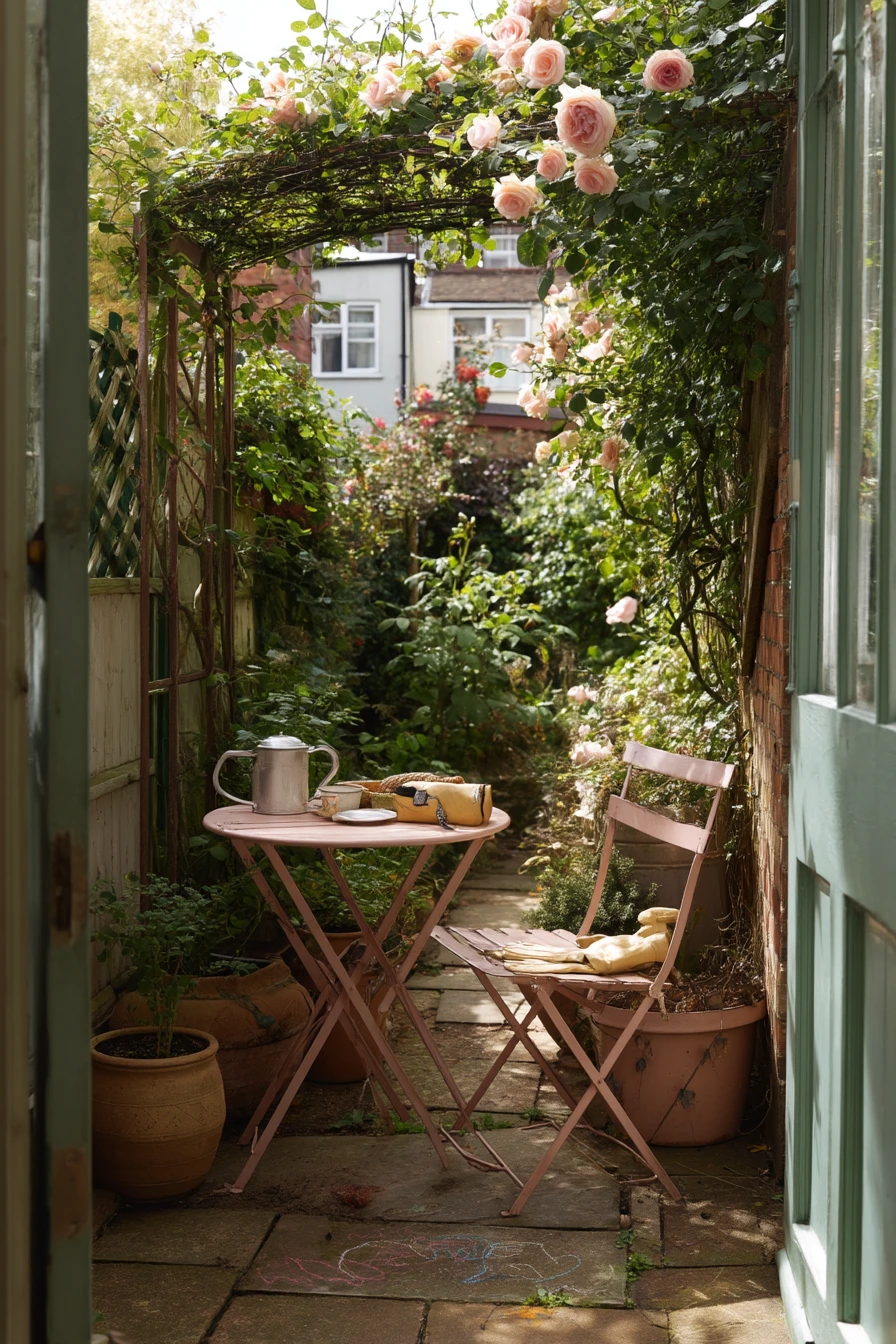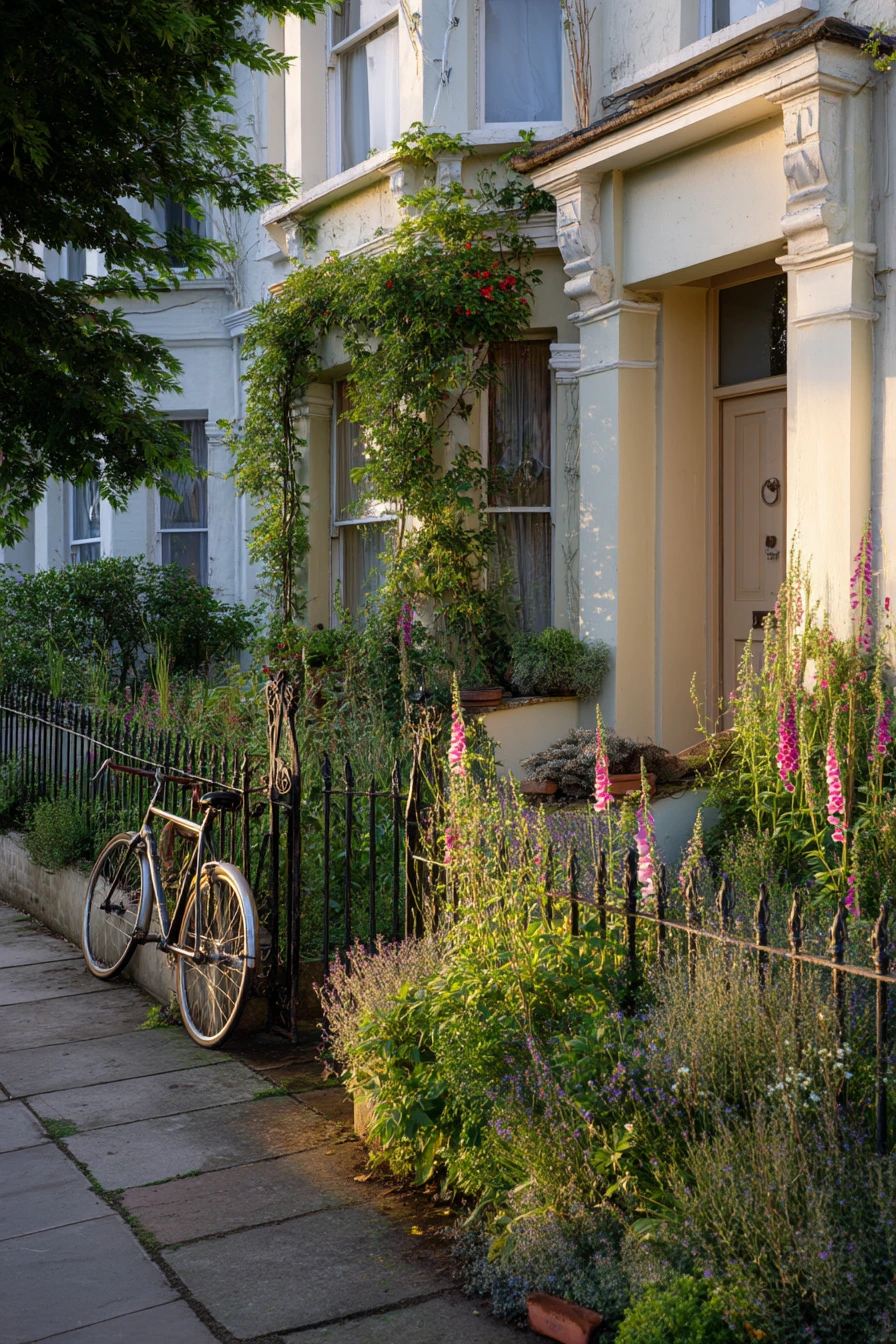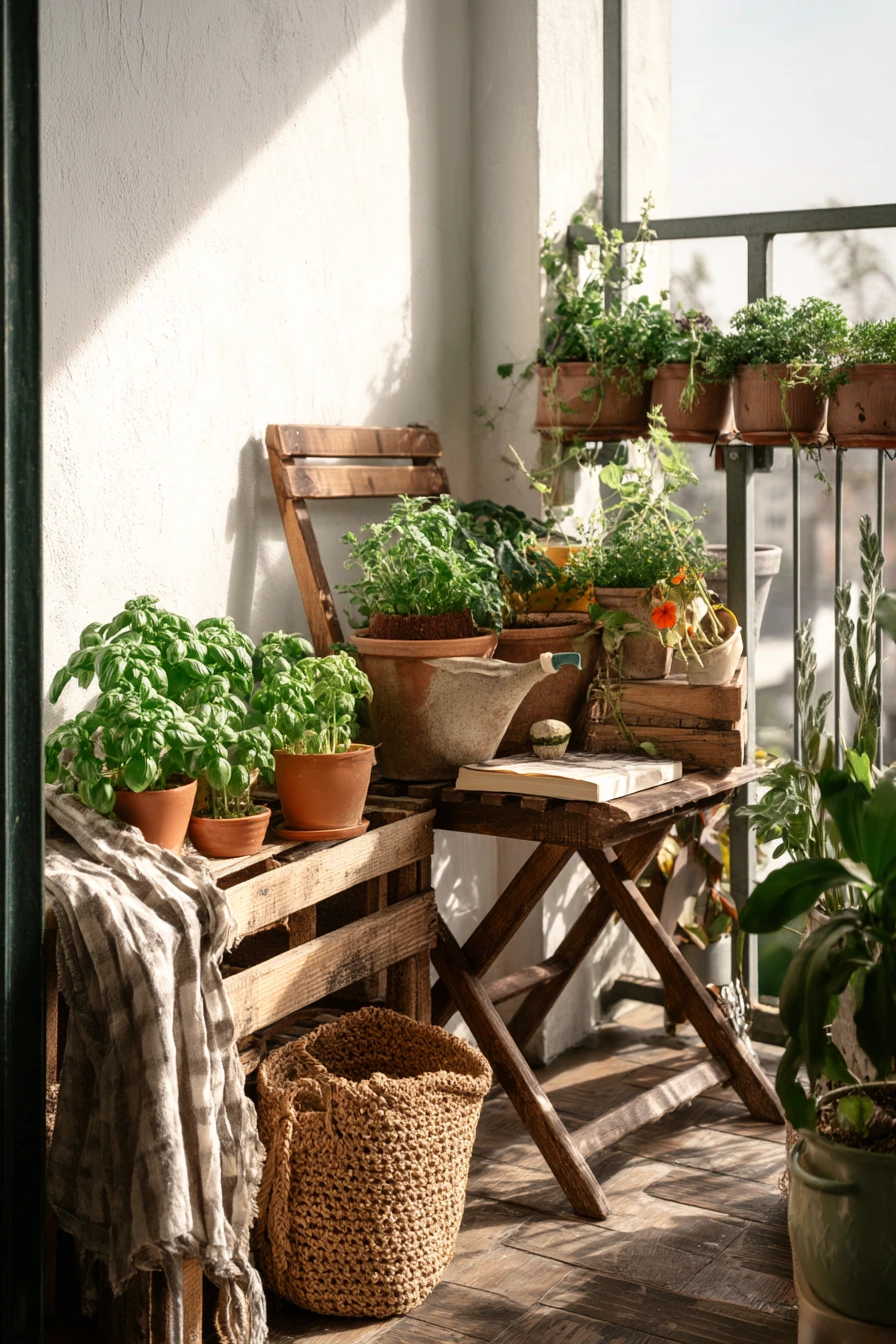

Tropical garden ideas can work in almost any home, even if you only have a balcony or a narrow side yard. The key is using big-leaf plants, layered greenery, and a few simple outdoor pieces that fit your space.
In this guide, you will see tropical setups inspired by real-life spots like an apartment balcony, a modest backyard, a shaded courtyard, and a poolside patio. Each one uses common plants like monstera, bird of paradise, palms, crotons, ginger, and ferns.
You will also get easy styling steps for seating, planters, paths, and lighting. These ideas help Pinterest visitors turn one photo into a plan they can copy at home.
Every section includes a pro design tip and a budget note, so you can choose what to splurge on and what to keep simple.
1 1. Renters’ Tropical Balcony Nook
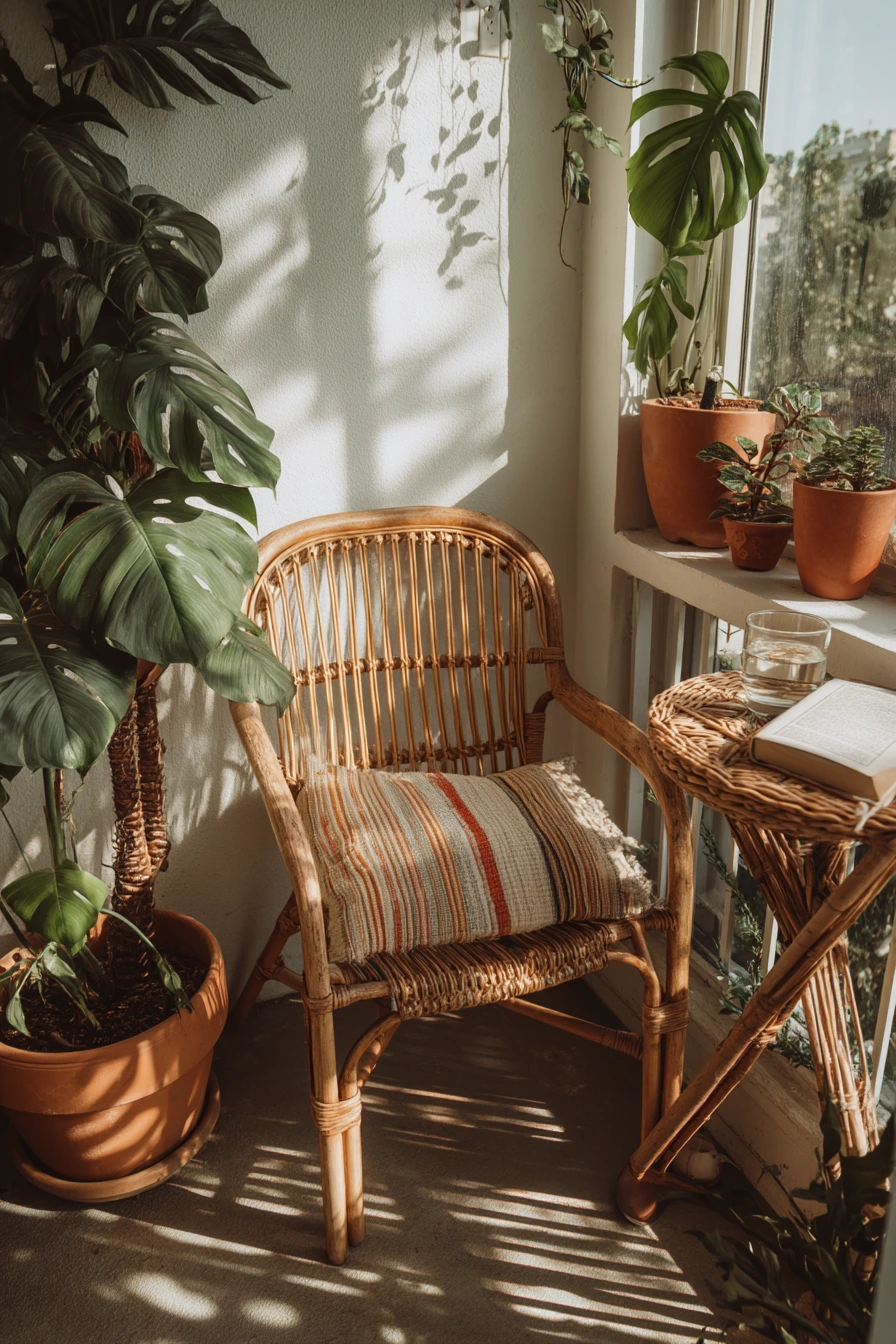
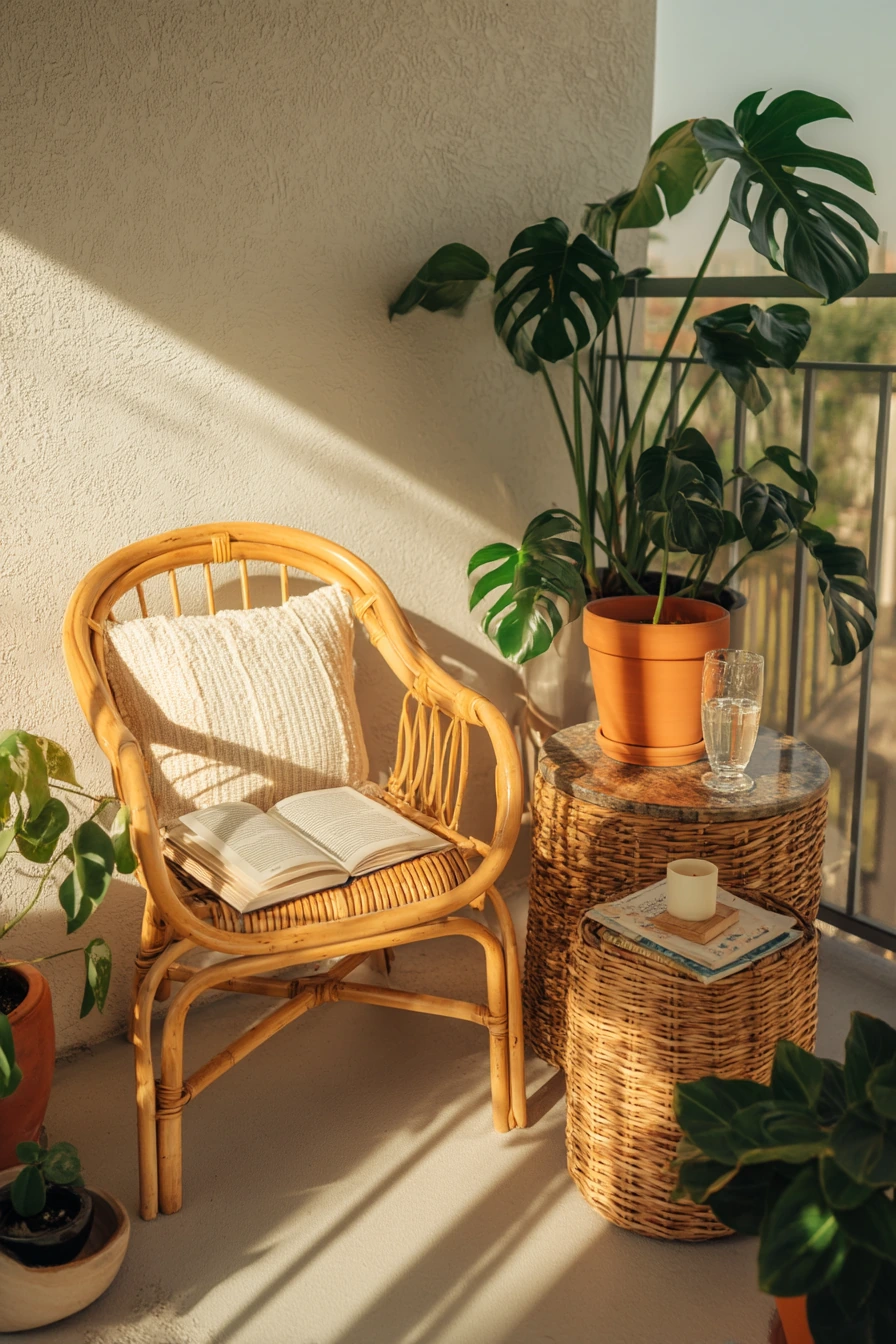
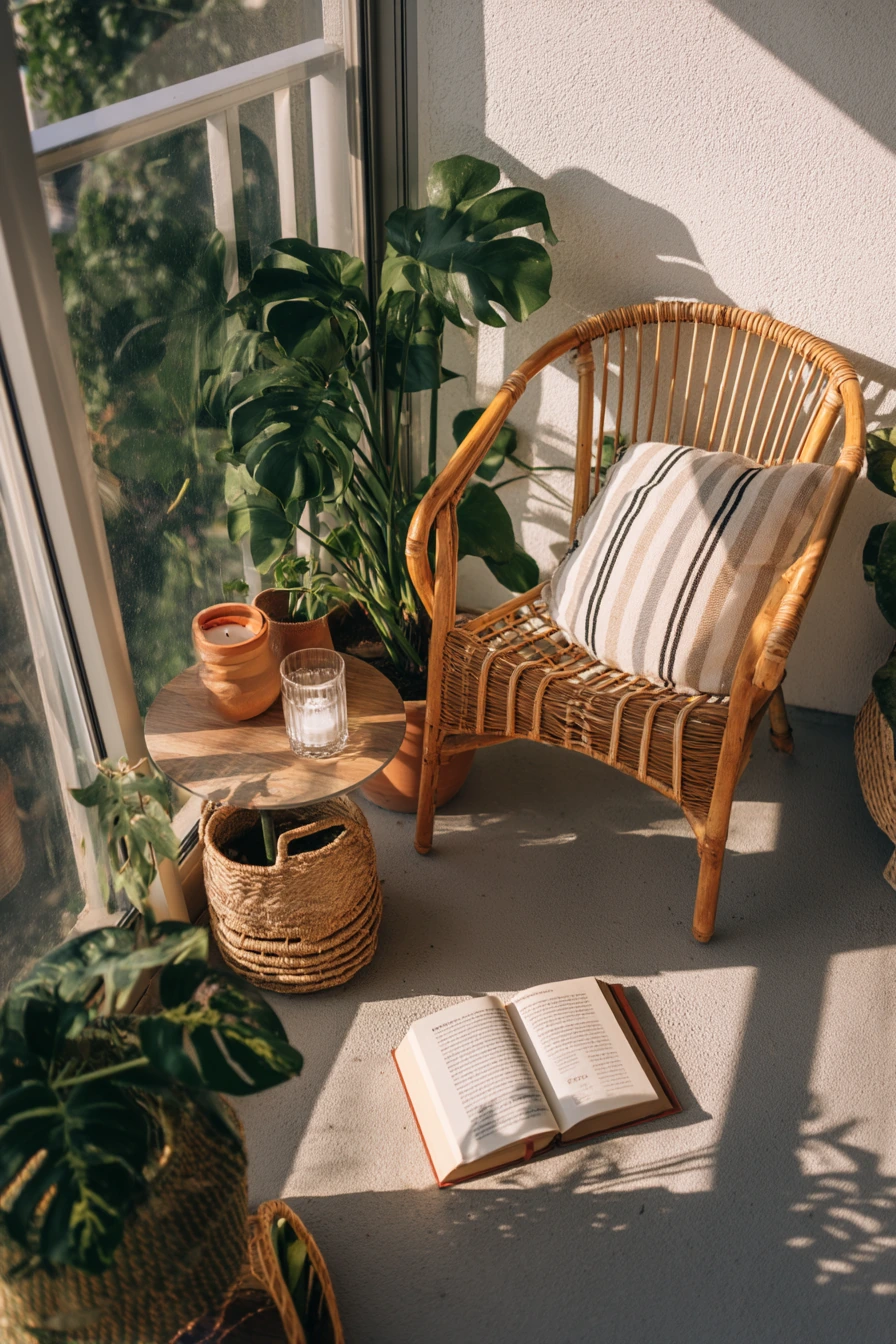
A small balcony can feel like a tropical retreat when you focus on a few bold plants and warm textures. Start with a compact rattan chair and a small bistro table so the space still feels open. Add clay planters and one thrifted striped cushion for color without making it busy.
Choose statement plants that read “tropical” from the doorway. A monstera and a bird of paradise give height and wide leaves. Add trailing pothos on the railing or in a hanging pot so you get layers. In late day light, the plant shadows on concrete look calm and lived-in.
Style it like a real hangout spot, not a showroom. Place a woven storage basket for tools or a small throw. Put a citronella candle on the table for summer nights. Leave a water glass and an open paperback for a relaxed feel, and keep one corner clear so you can step out easily.
- Group pots in odd numbers, like three clay planters together, for a natural look.
- Use one tall plant, one medium plant, and one trailing plant to create a simple “stair step” shape.
- Pick a cushion fabric that can handle sun, or store it in a basket after use.
- Water in the morning, then wipe drips so the balcony stays neat for renters.
- Choose saucers under pots to protect concrete and keep neighbors below happy.
Pro Design Tip: Place the tallest plant slightly off center behind the chair, then angle the bistro table toward the door so the layout feels welcoming and the leaves frame your view.
Budget Considerations: Rattan chairs and bistro sets can be pricey; check thrift stores, Facebook Marketplace, or use a simple folding chair with a woven seat cover.
2 2. Small Backyard Jungle Path
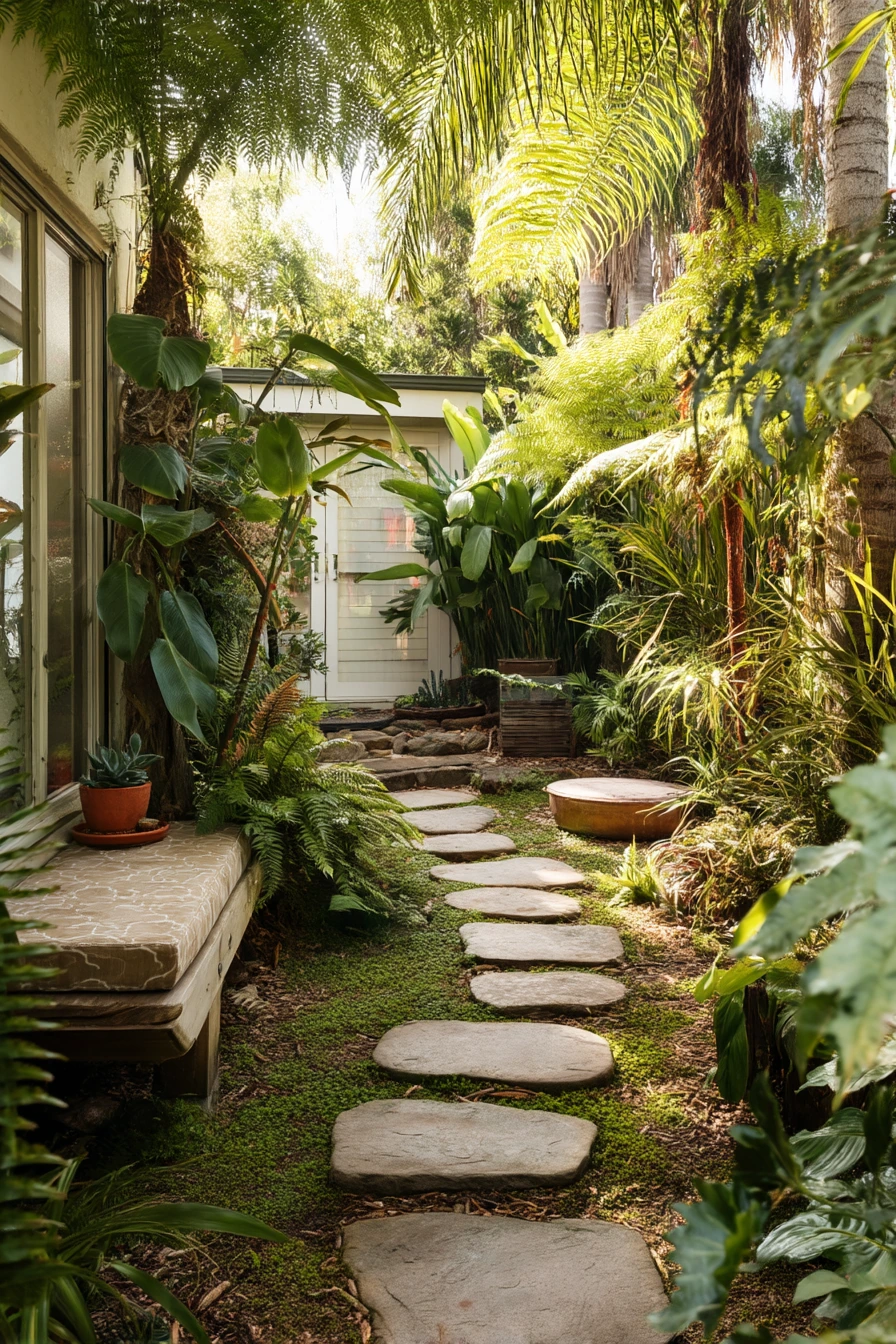
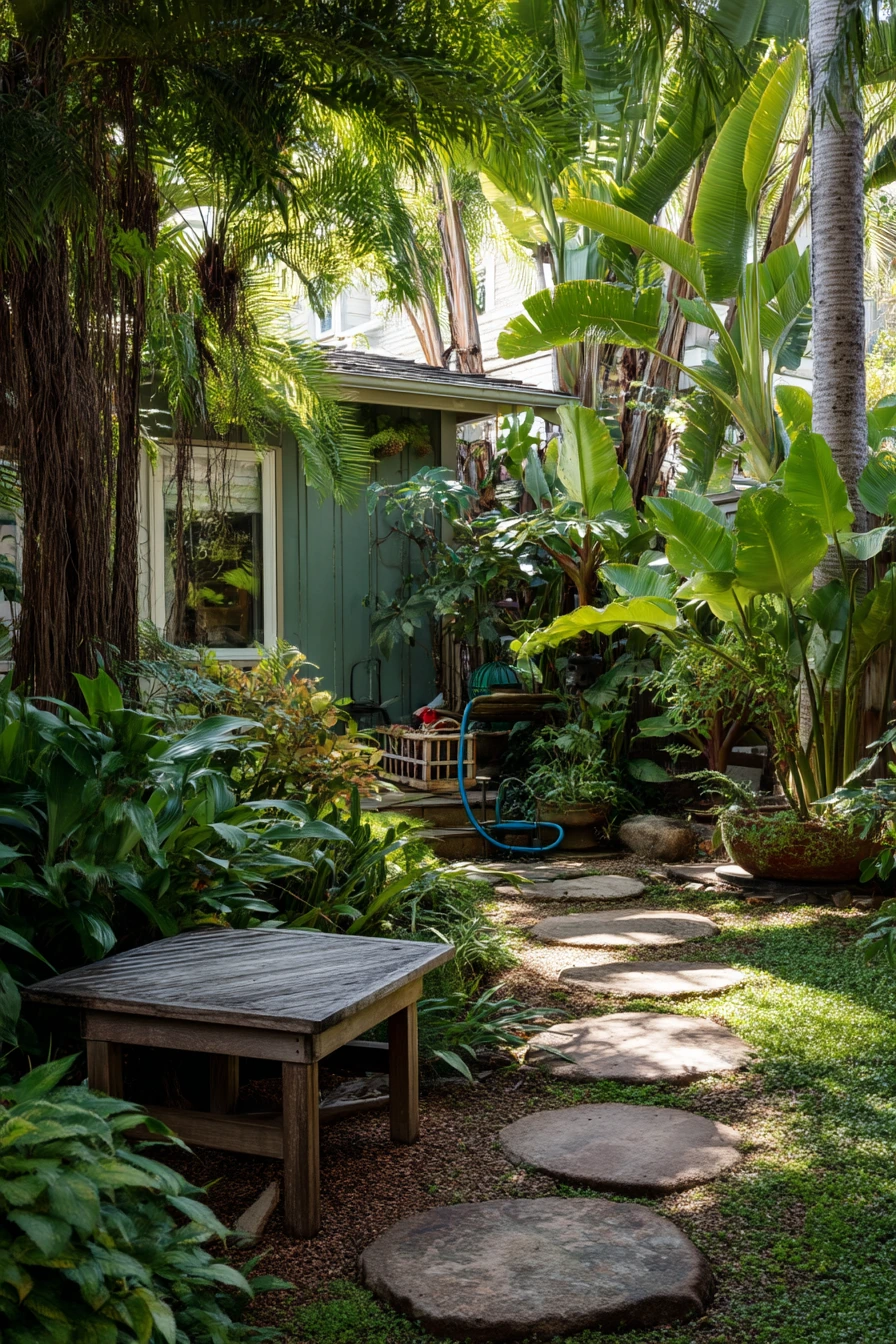
A modest suburban backyard can still feel lush if you design it for weekend hosting and daily family life. Use stepping stones through tropical borders so people can move without crushing plants. This also helps after watering, when mulch is damp and the yard feels humid and green.
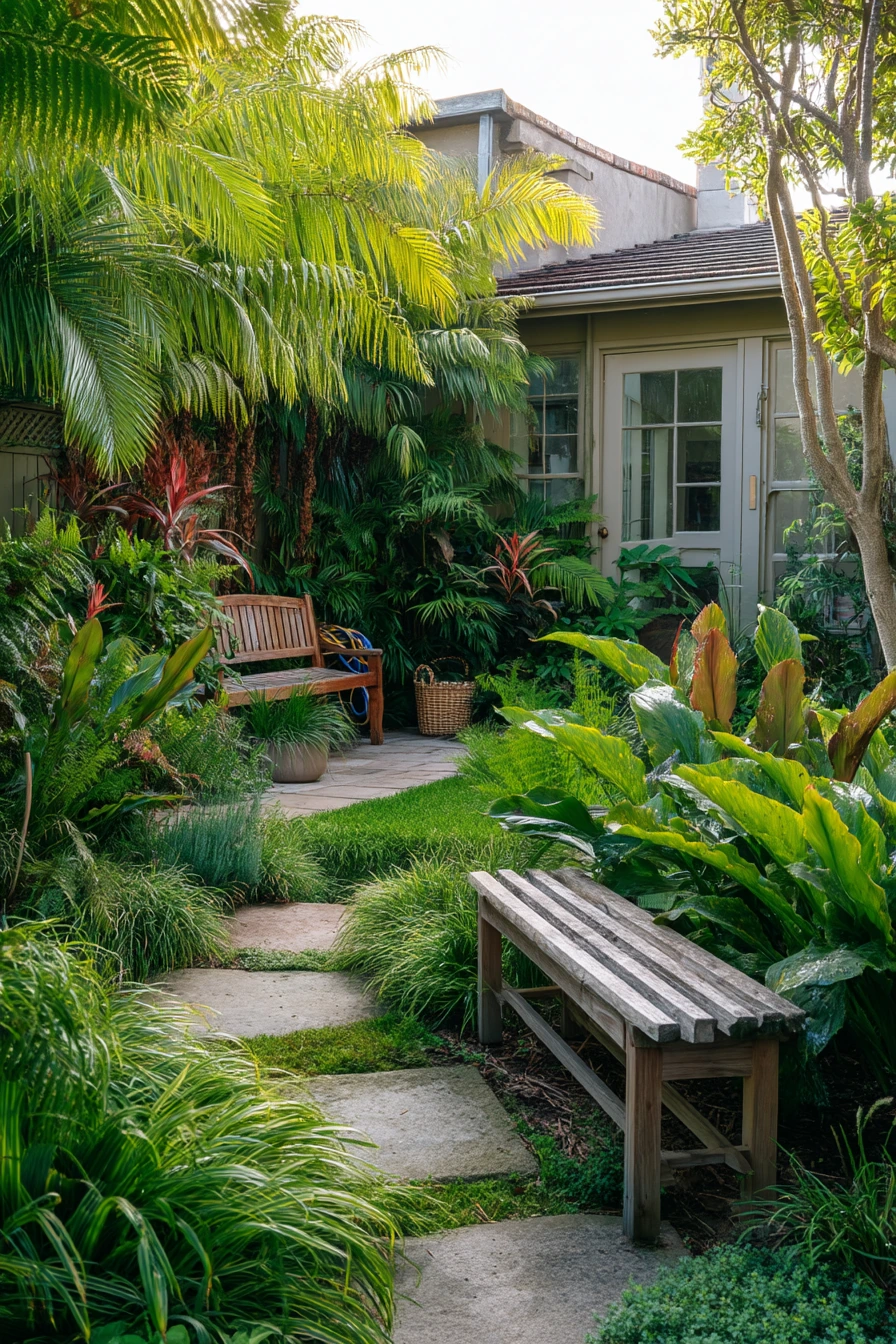
Build the border with easy, full plants like dwarf palms, ginger, dense ferns, and heliconia if your climate allows it. Keep the tallest plants toward the back fence, then step down in height as you come toward the lawn or patio. A weathered teak bench gives a place to sit, and it makes the garden feel like a destination.
Let the space show real use. A kid toy basket near the patio door keeps clutter in one spot. Leave garden gloves on a potting stool so you can jump in for five minutes and pull weeds. A hose loosely coiled works better than a tight reel when you water often, and it looks casual but still tidy.
- Plan a path that is at least two stepping stones wide near the patio to prevent traffic jams.
- Use mulch to hold moisture and make tropical plants happier in hot weather.
- Edge the planting bed with a clean line so the yard does not look overgrown.
- Mix leaf shapes: palms for height, ginger for texture, and ferns for soft fill.
- Add one “pause point” like a bench or small stool to make the garden feel bigger.
Pro Design Tip: Repeat one plant in three spots along the border (like dwarf palms) so the yard looks planned, not random.
Budget Considerations: Large palms and heliconia can cost more; start with smaller sizes and let them grow, or use ferns as quick, affordable fill.
3 3. Shade-Loving Courtyard Hideaway
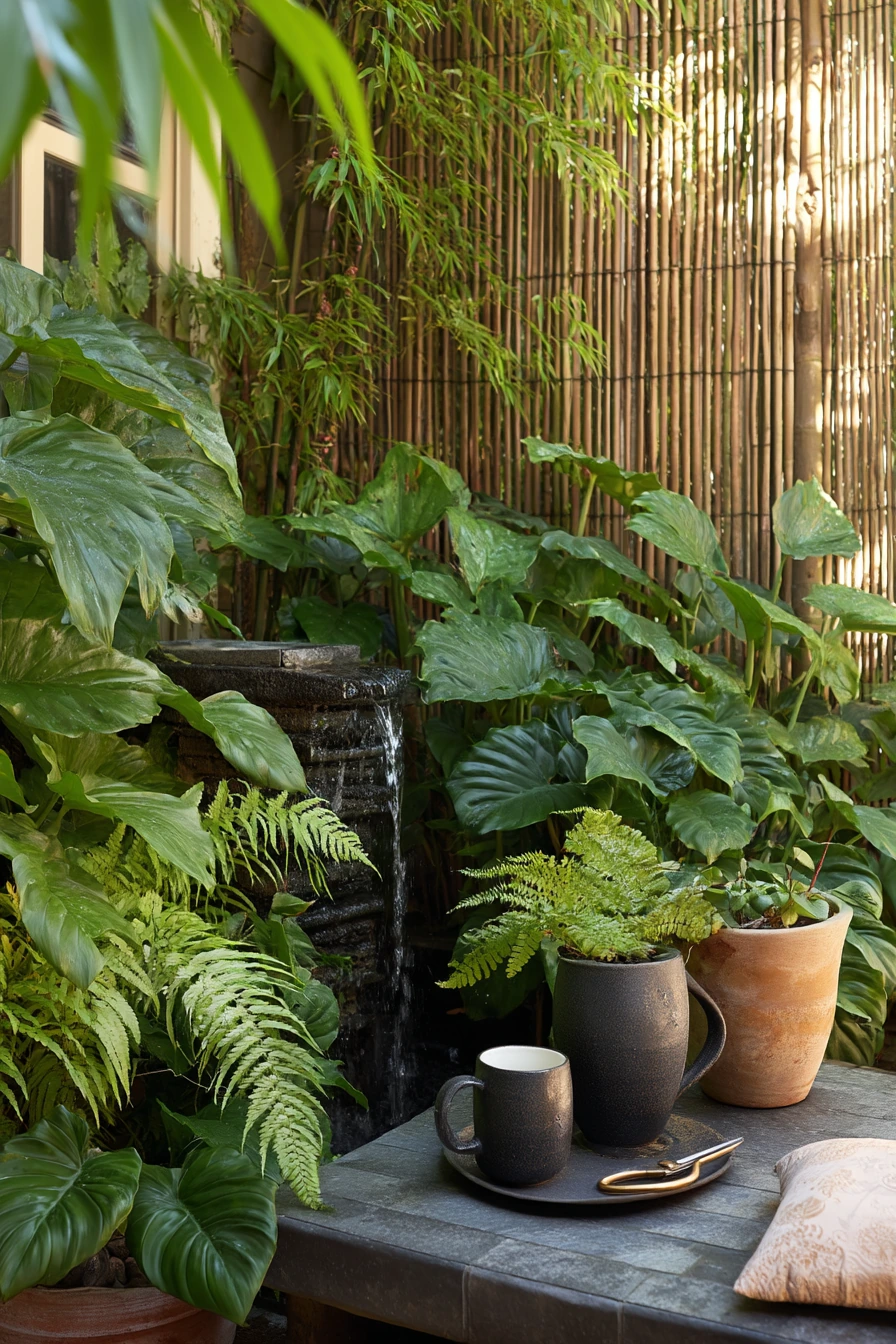
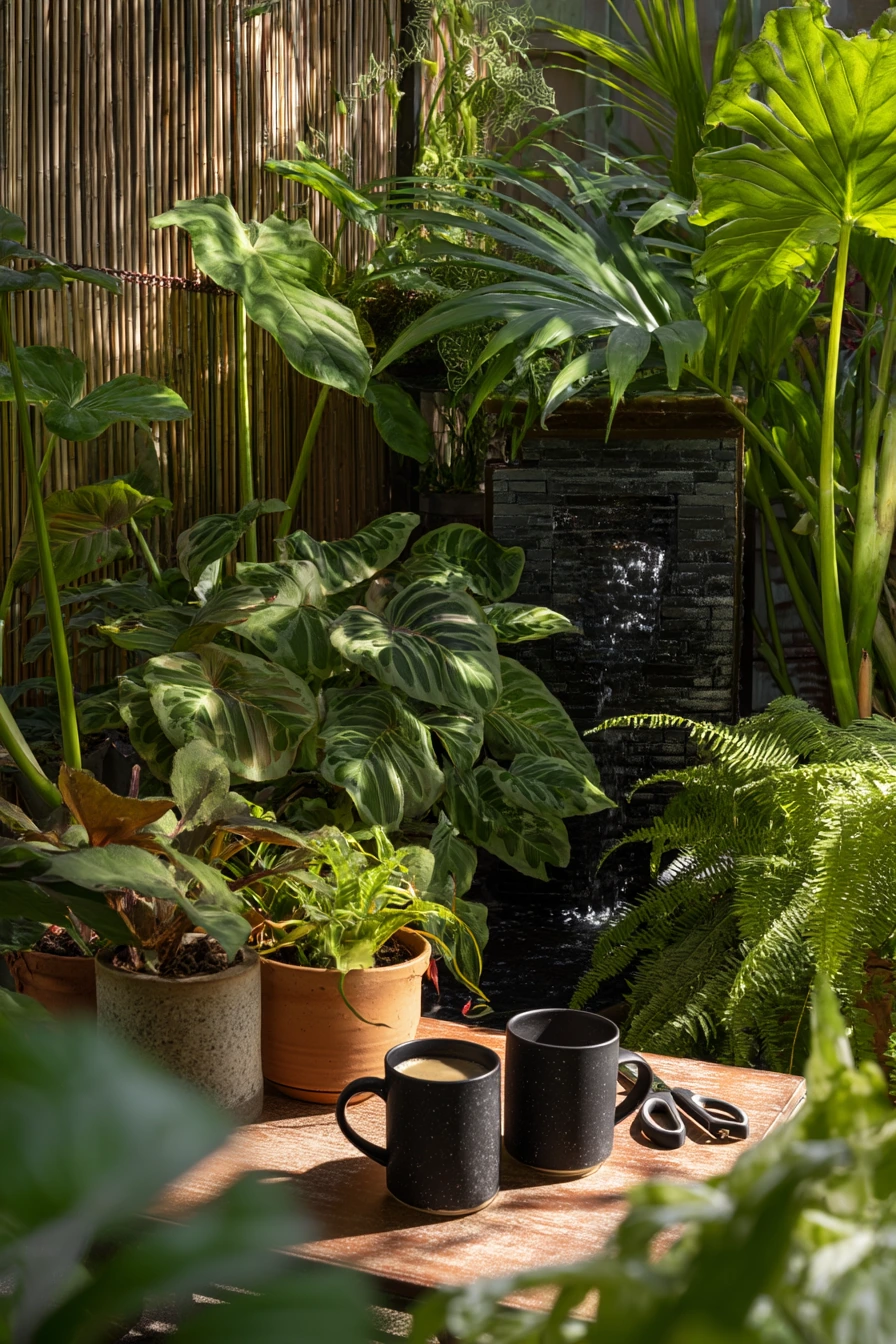
An older home courtyard often has shade and walls that bounce soft light. This is perfect for a cool, restorative tropical garden. Focus on shade lovers like philodendron, caladium, and ferns. Their leaf color and patterns bring life even without strong sun.
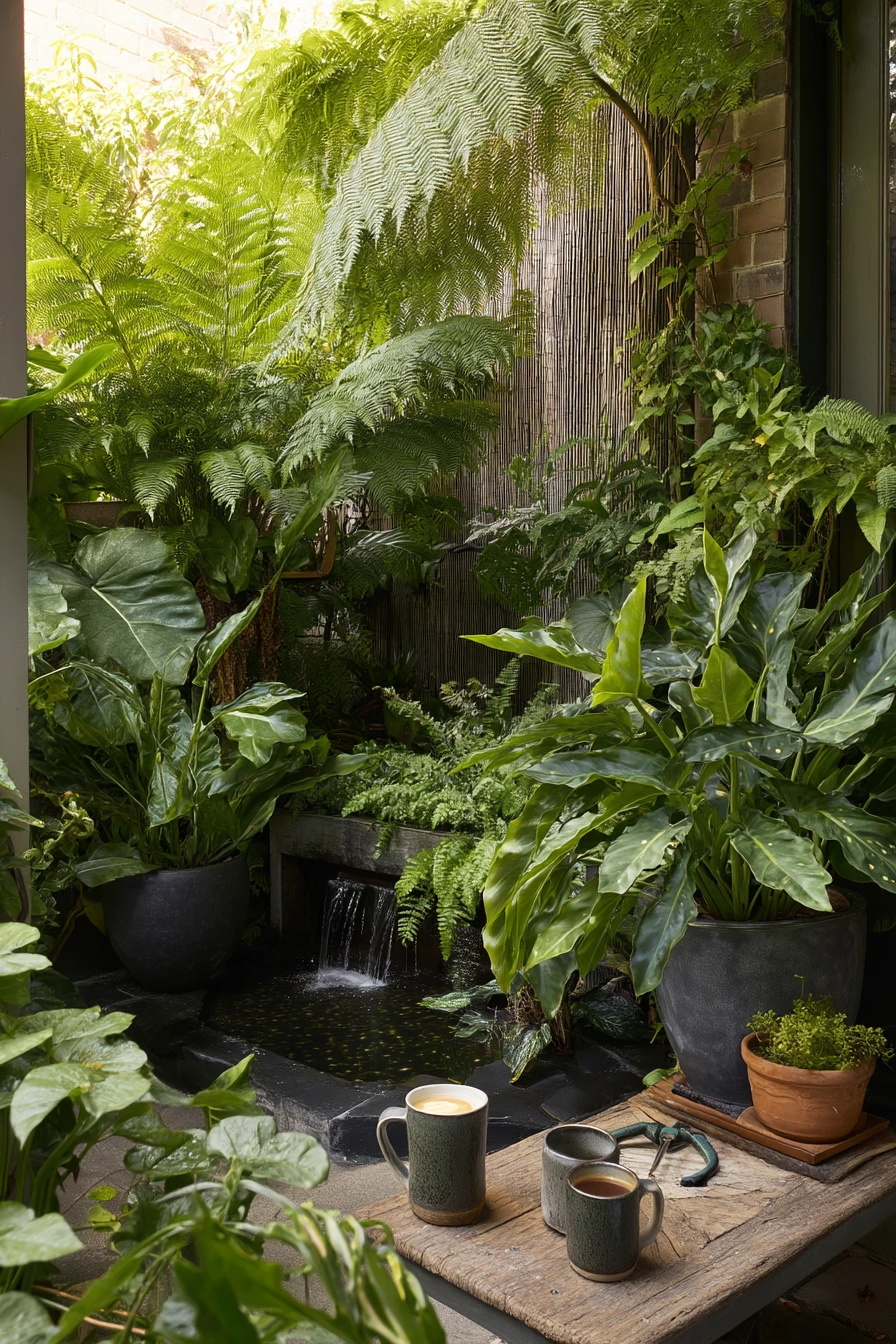
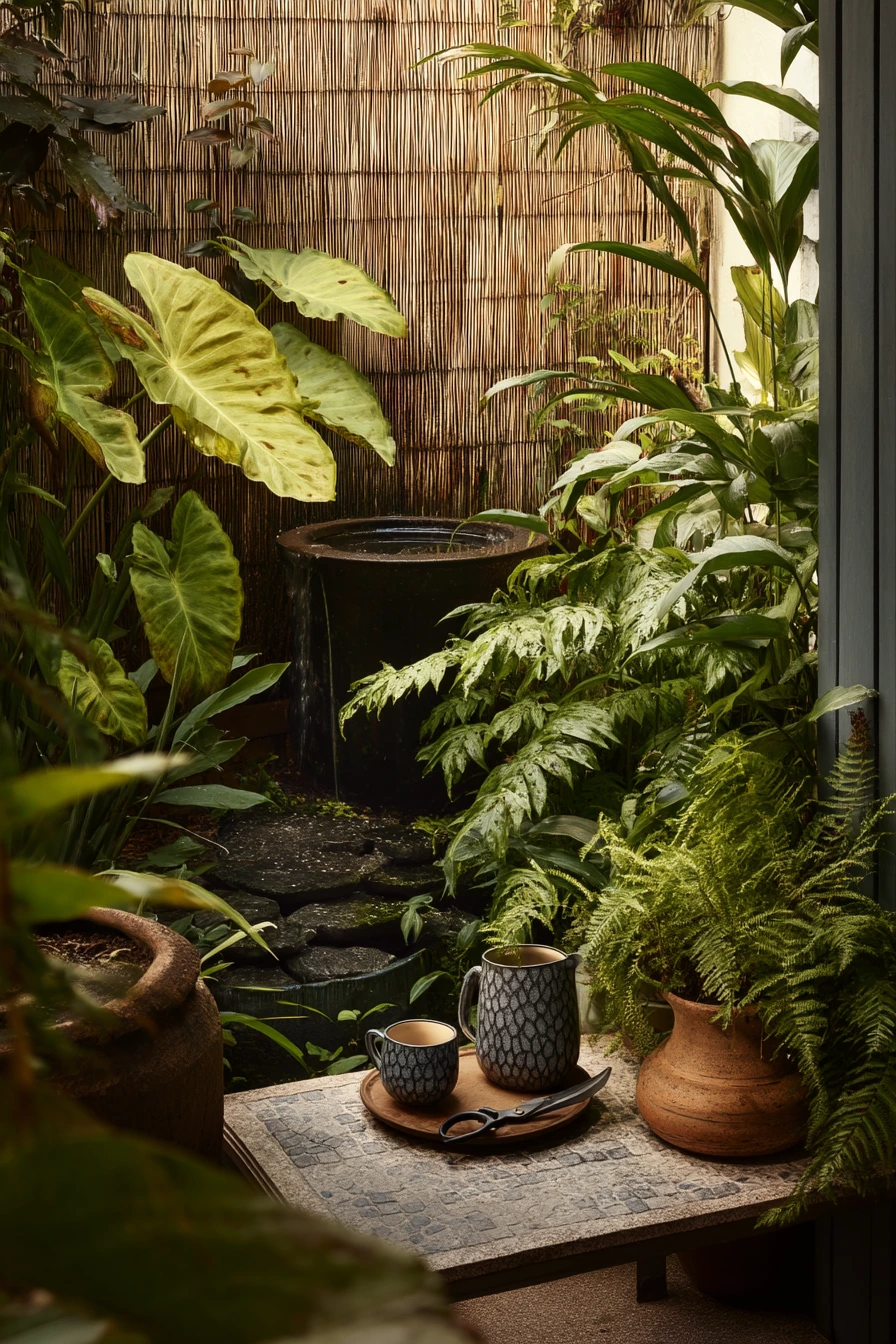
Keep the hardscape simple and calm. Black basalt pots make the plants look rich and modern, and they hide dirt. Add a slim water feature for gentle sound. A bamboo screen gives privacy and a warm backdrop for green leaves. With a low table and two ceramic mugs, the space becomes a quiet daily spot, not just a pretty corner.
Style it to feel lived-in. Leave one slightly wrinkled throw on a chair or bench for softness. Keep gardening shears in a safe spot near a terracotta pot so you can trim dead leaves fast. The best courtyard gardens are easy to maintain, because shade can also mean slower drying and more leaf litter.
- Use pots with drainage and elevate them slightly so roots do not sit in water.
- Choose caladium for color, then balance it with deep green ferns and philodendron.
- Keep the water feature narrow so it fits small spaces and stays easy to clean.
- Add a bamboo screen behind plants to hide walls and make the greenery stand out.
- Use a small tray on the table to hold mugs, shears, and a candle without clutter.
Pro Design Tip: Light a courtyard by contrast: pair dark basalt pots with lighter gravel or pale paving so the plants “pop” even in shade.
Budget Considerations: Water features vary a lot in price; a simple recirculating tabletop fountain can give the same calming sound for less.
4 4. Poolside Tropical Entertaining Edge
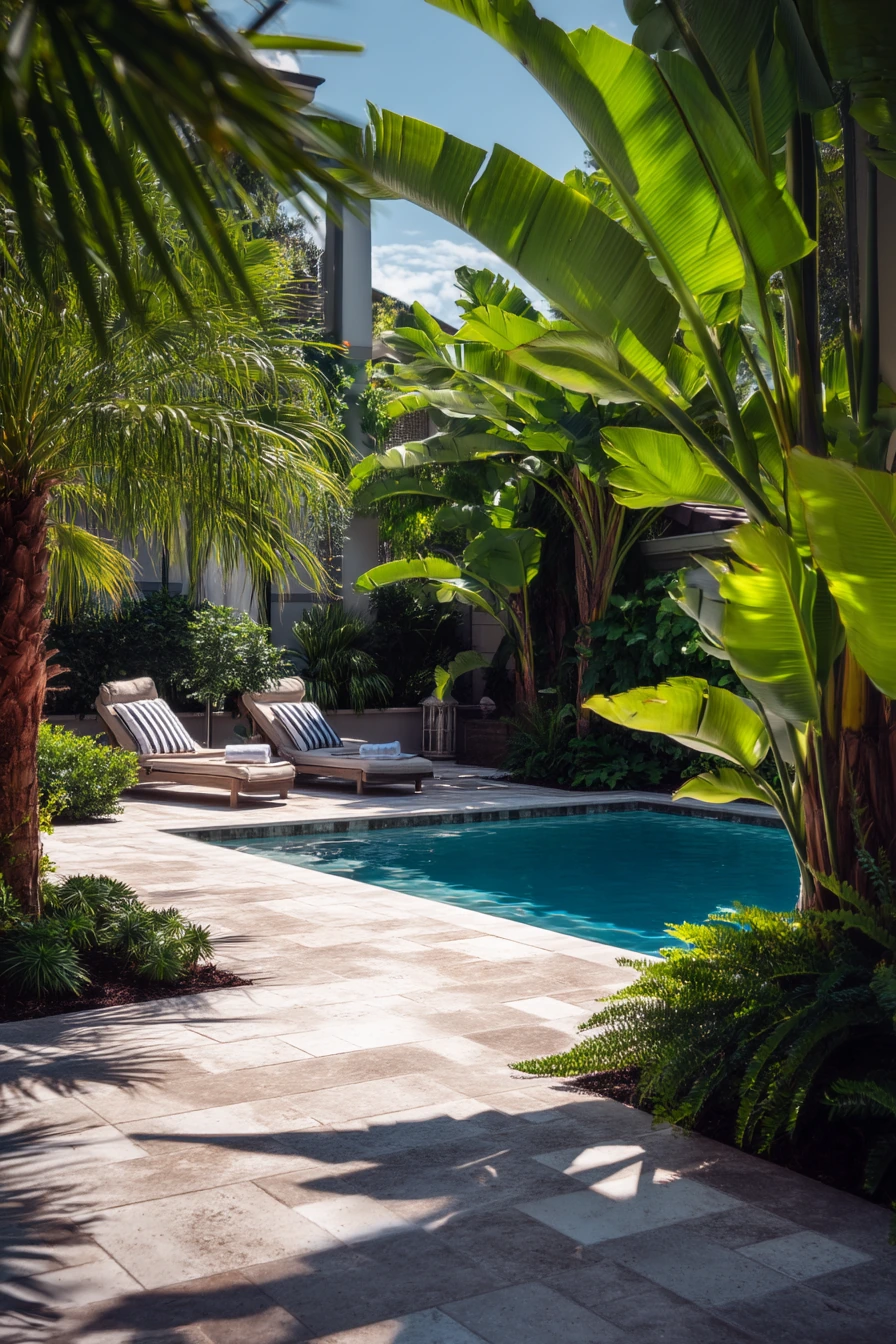
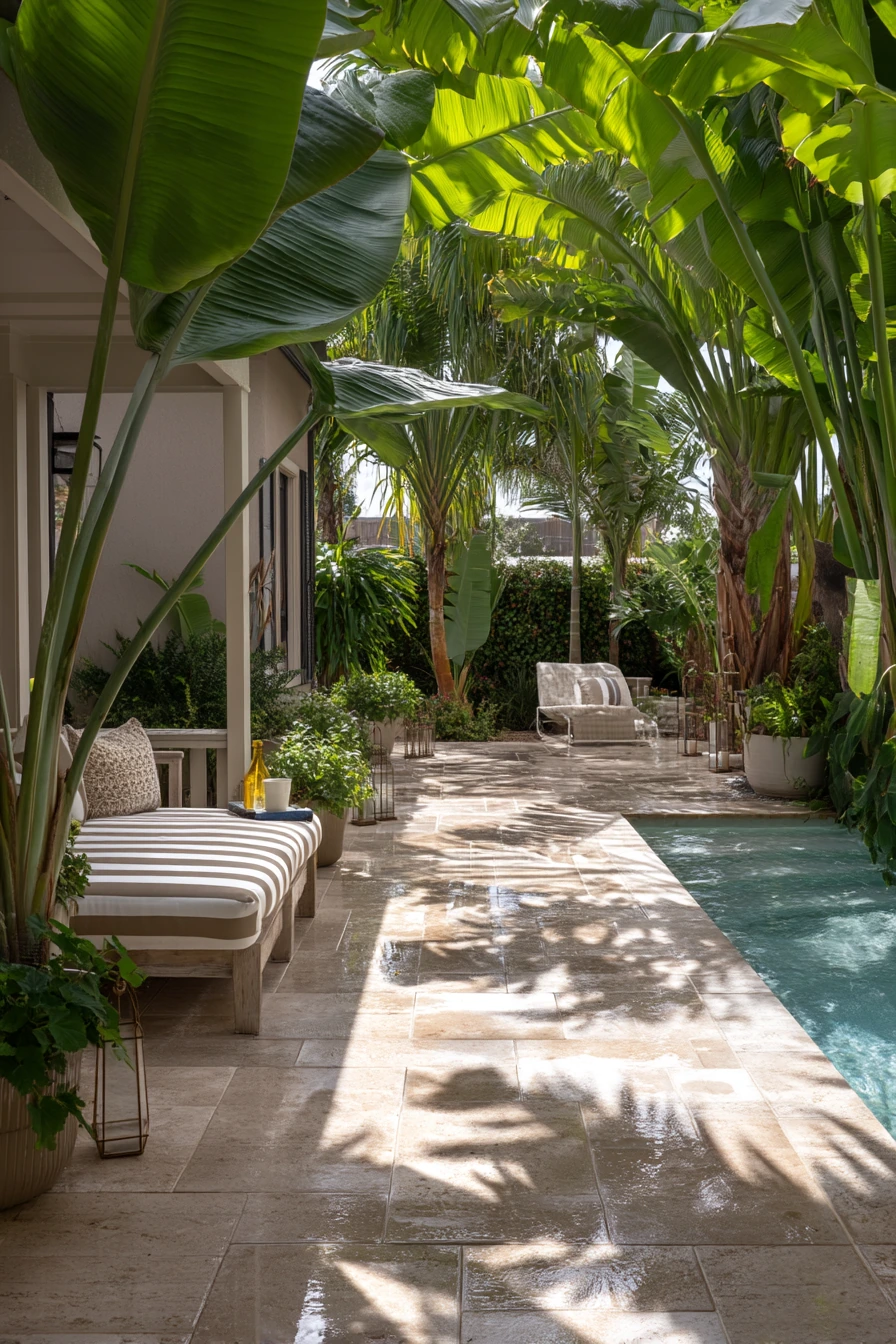
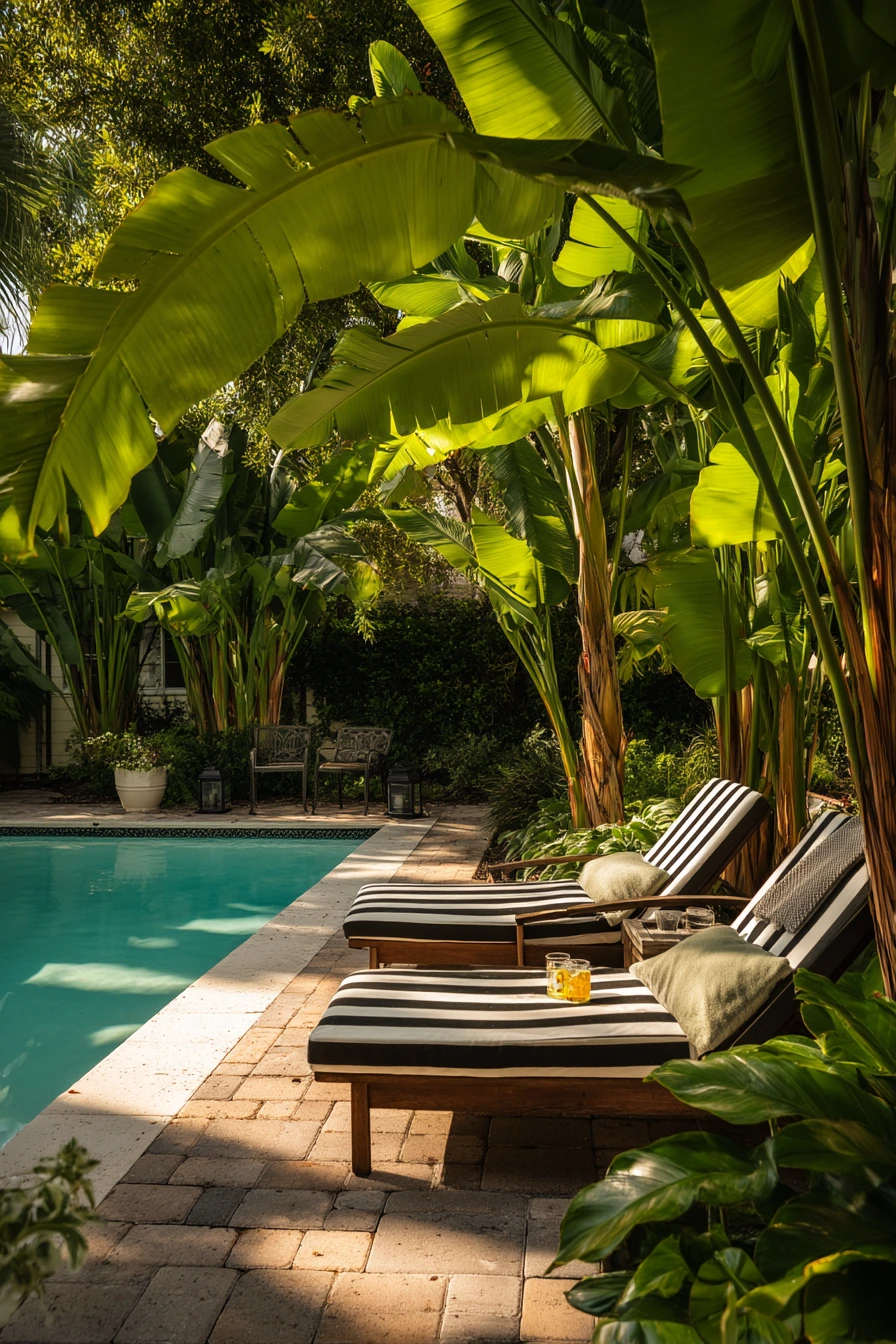
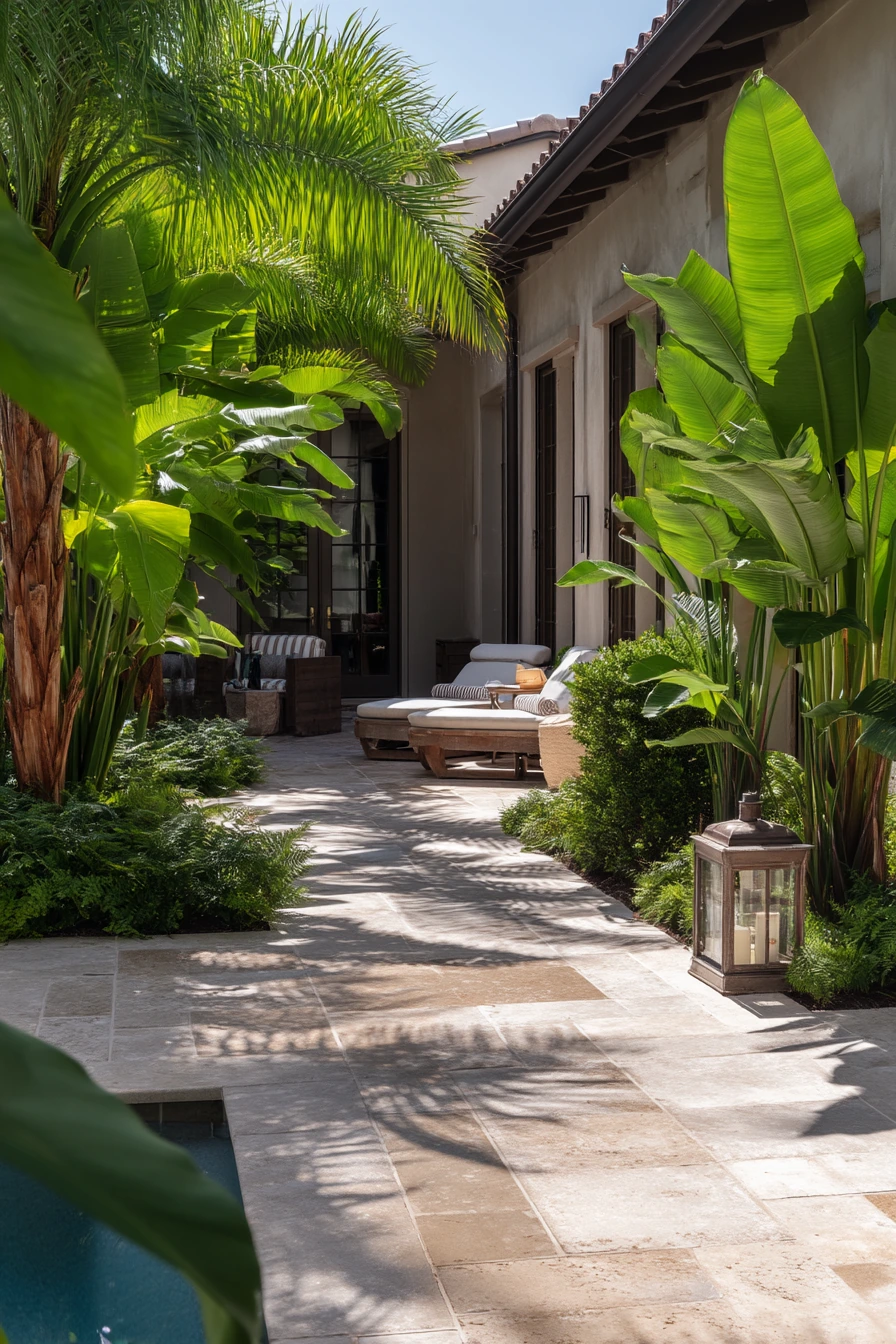
A poolside garden should feel lush, but it also needs clear walking space and easy cleanup. Start with layered palms, banana leaves, and ti plants to create that tropical look. Place them in beds around travertine pavers so the pool area stays tidy and comfortable under bare feet.
Design the layout like an outdoor room. Low lounge chairs should face the pool, with enough space for wet footprints and towels. Add a small side table for sunscreen, a half-finished lemonade, and a book. Lanterns waiting for evening bring warmth once the sun drops, and they make the pool area feel safe and used.
Think about plant placement and mess. Banana leaves can drop old leaves, so keep them a step back from the water edge. Ti plants add color without taking over. Use drip irrigation or a soaker hose under mulch so the beds stay moist without spraying the deck.
- Pick plants that handle sun and heat, and group them by water needs.
- Leave a clear towel zone near seating so wet items do not land on plants.
- Use mulch in beds to reduce splash-back dirt onto pavers.
- Add lanterns or solar lights to guide steps at night around the pool.
- Trim lower palm fronds so sightlines stay open for safety.
Pro Design Tip: Place the tallest palms at the far corners of the pool zone to frame the view, then step down with banana and ti plants for a layered, resort-like edge.
Budget Considerations: Travertine and mature palms cost more; you can use concrete pavers and smaller palms at first, then upgrade pieces over time.
5 5. Front Yard Tropical Curb Appeal
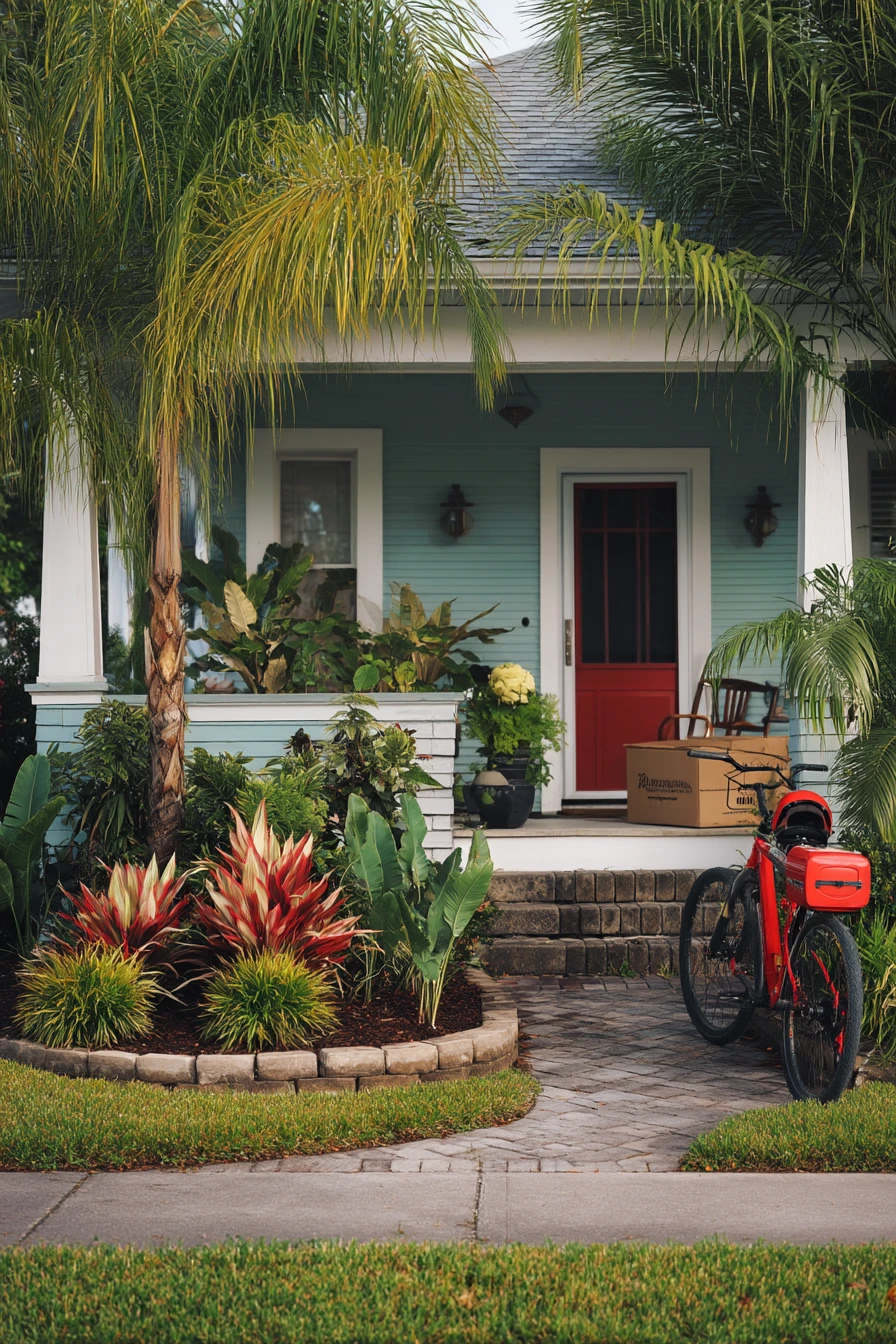
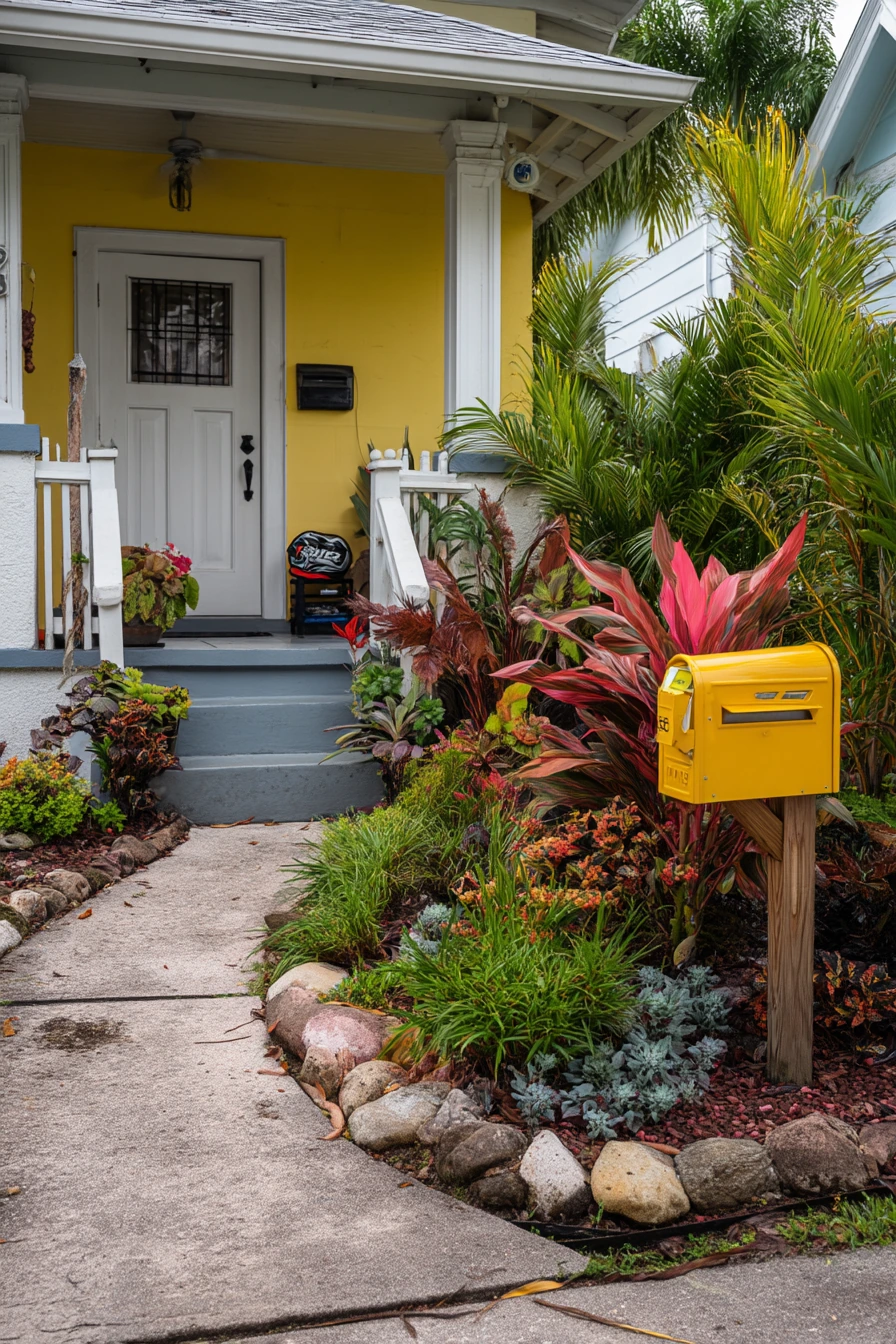
A welcoming front yard tropical look is about neat structure, not a jungle. Use compact palms for shape, crotons for color, and shell ginger for bold leaves. Keep them in clean mulch beds with curved stone edging so the yard looks cared for even on busy weeks.
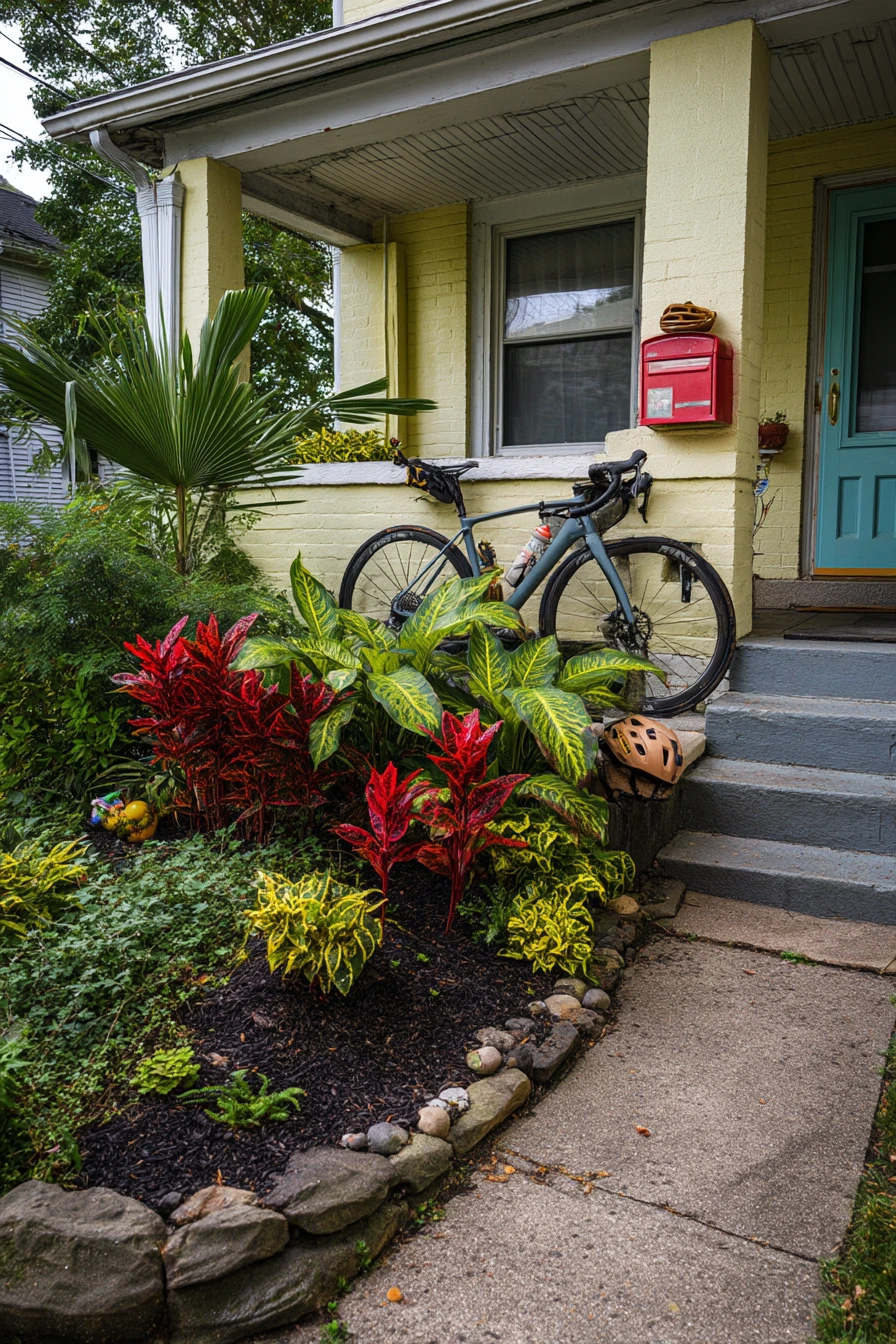
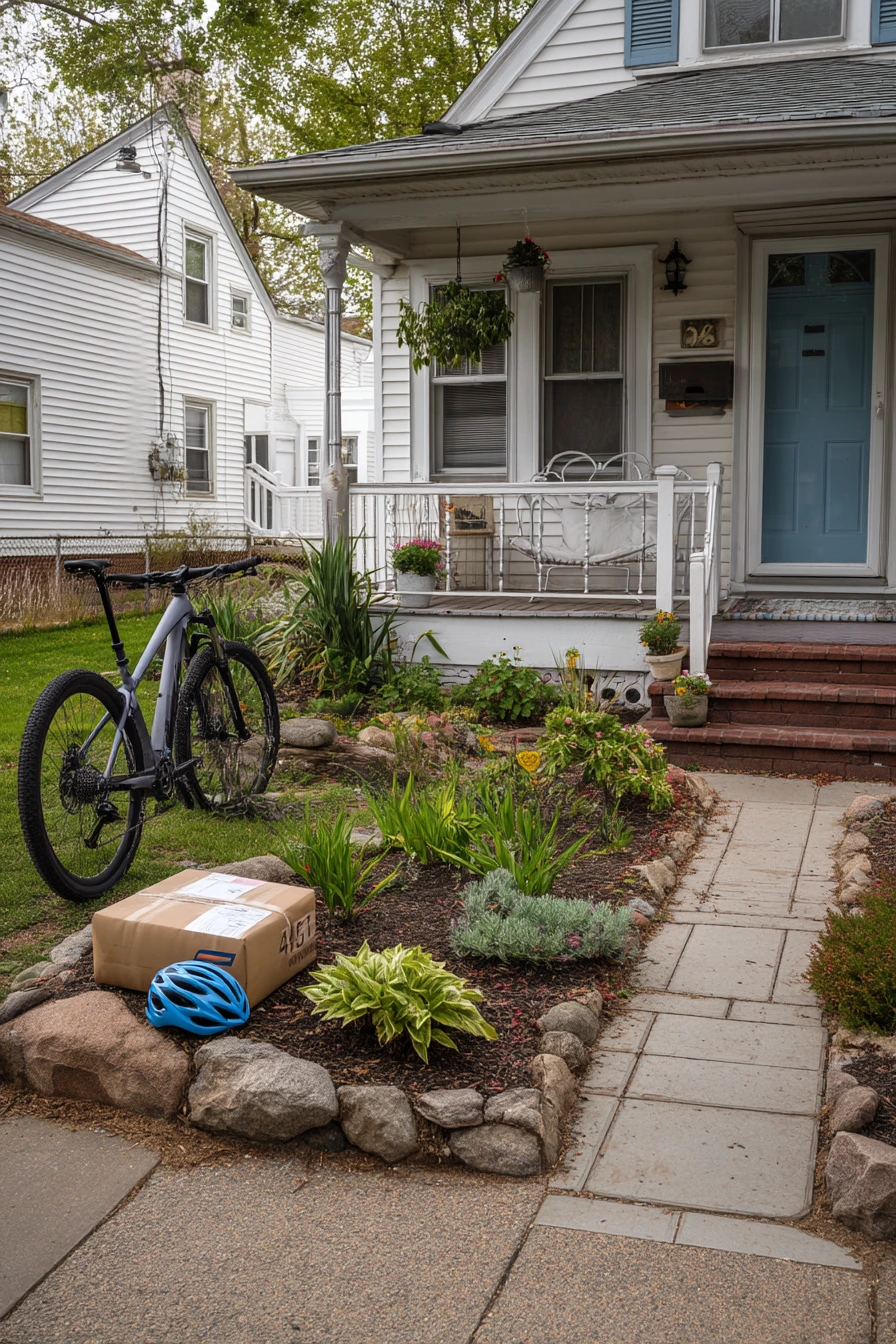
Make the entry feel friendly and real. A weathered mailbox adds charm. A bike helmet on the porch step and a delivery package by the door are normal, so the garden should support everyday life. A porch swing with a folded throw invites you to sit, and it ties the house to the planting beds.
Plan for simple maintenance. Choose plants that do not block windows or walkways. Leave a small gap between plants and the house for airflow and easy sweeping. In soft overcast light, crotons still show strong color, so you can keep the palette simple and let the leaves do the work.
- Use curved edging to guide the eye toward the front door.
- Plant in clusters of three to look full without buying too many plants.
- Keep the tallest plants away from the mailbox so it stays easy to reach.
- Add a small path light so the entry feels safe after dark.
- Refresh mulch once or twice a year for a clean, tropical finish.
Pro Design Tip: Repeat one accent color from the house (like black or white) in planters or edging so the tropical plants look intentional, not random.
Budget Considerations: Stone edging can add up; a simple metal edge or a clean trench edge can still look sharp for less.
6 6. Indoor-Outdoor Sunroom Garden
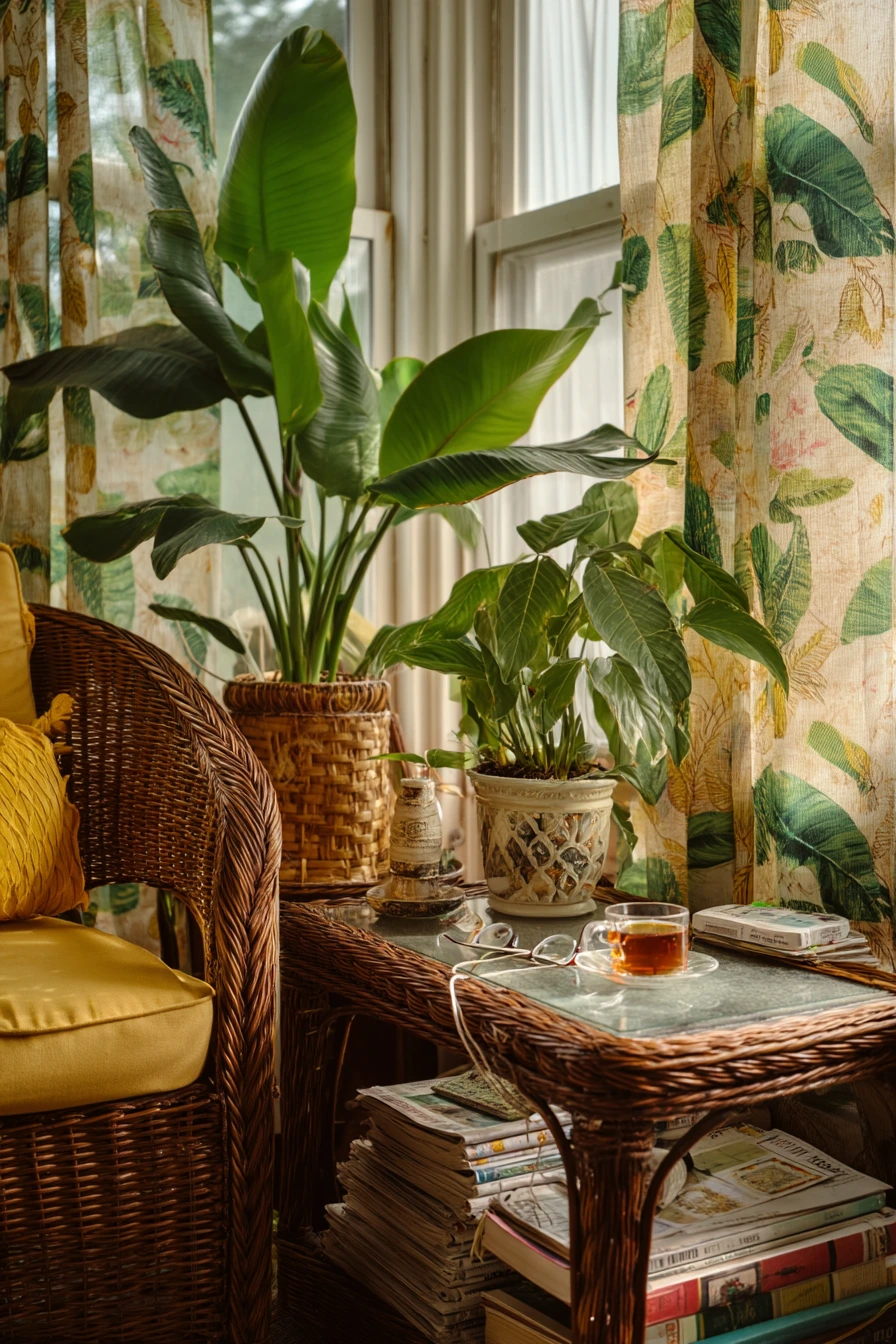
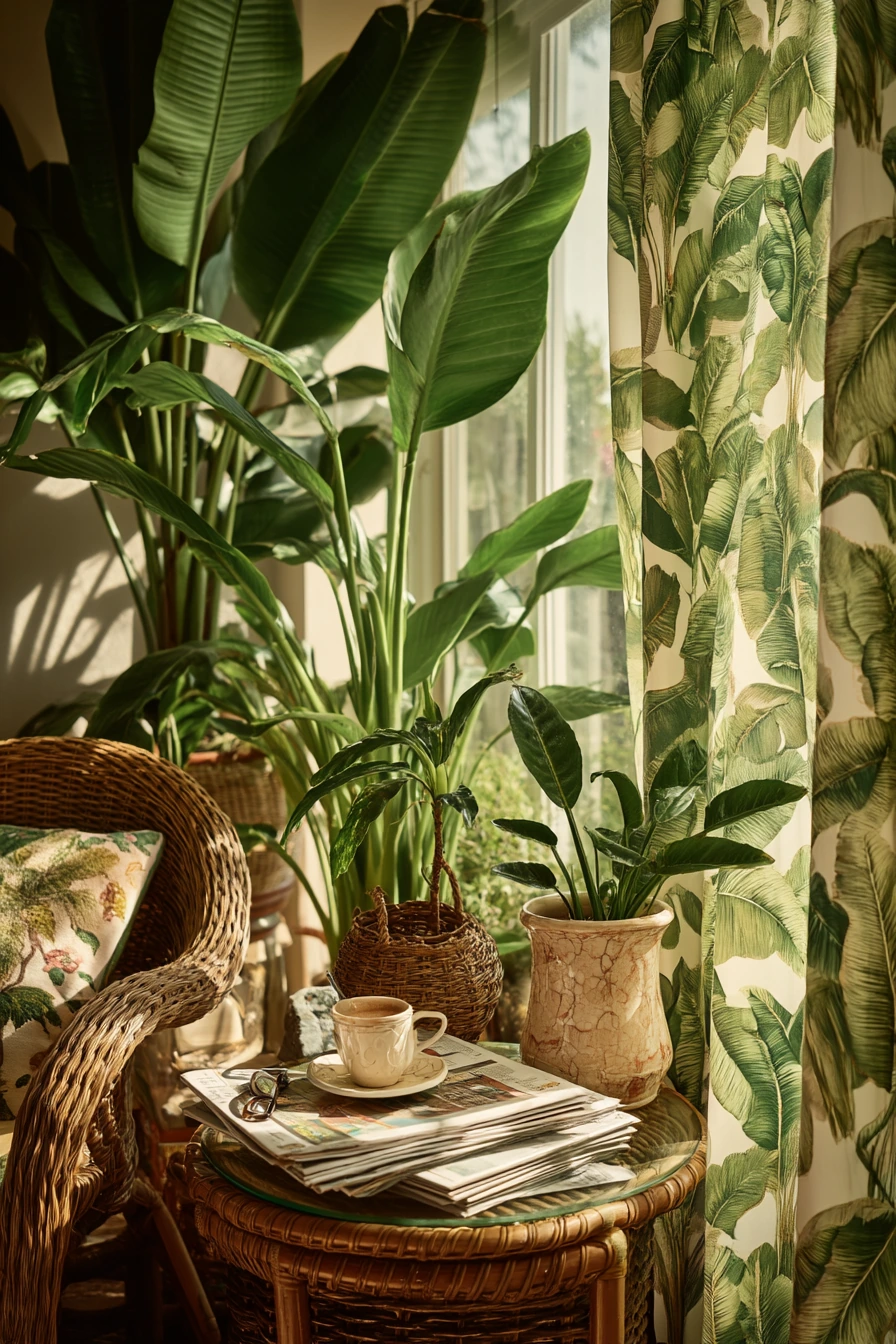
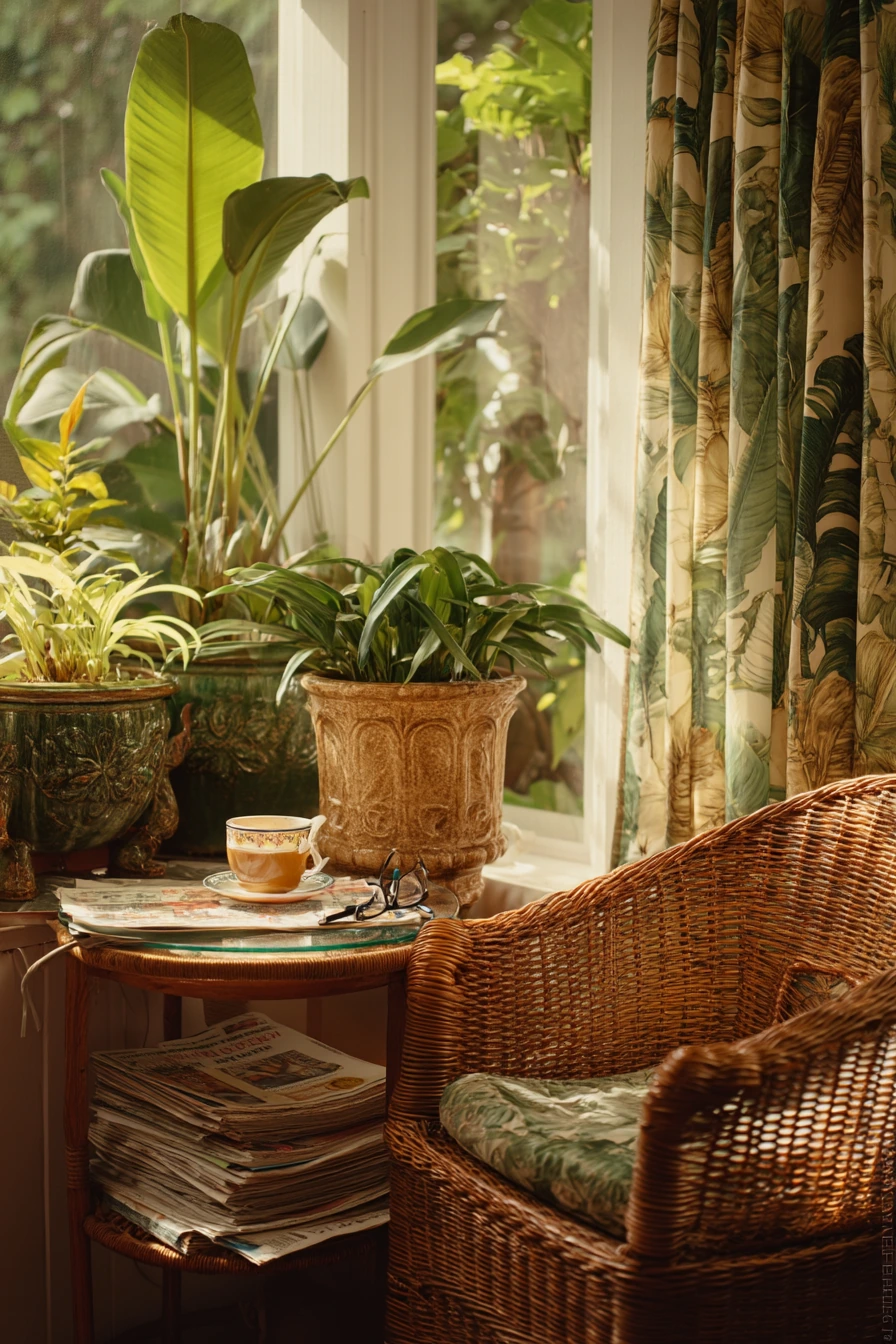
A sunroom is one of the easiest places to create a tropical feel because plants love the light and you can control water and temperature. Use ceramic stands to lift pots and bring leaves closer to the glass. When greenery presses near windows, it feels like you are sitting inside a garden.
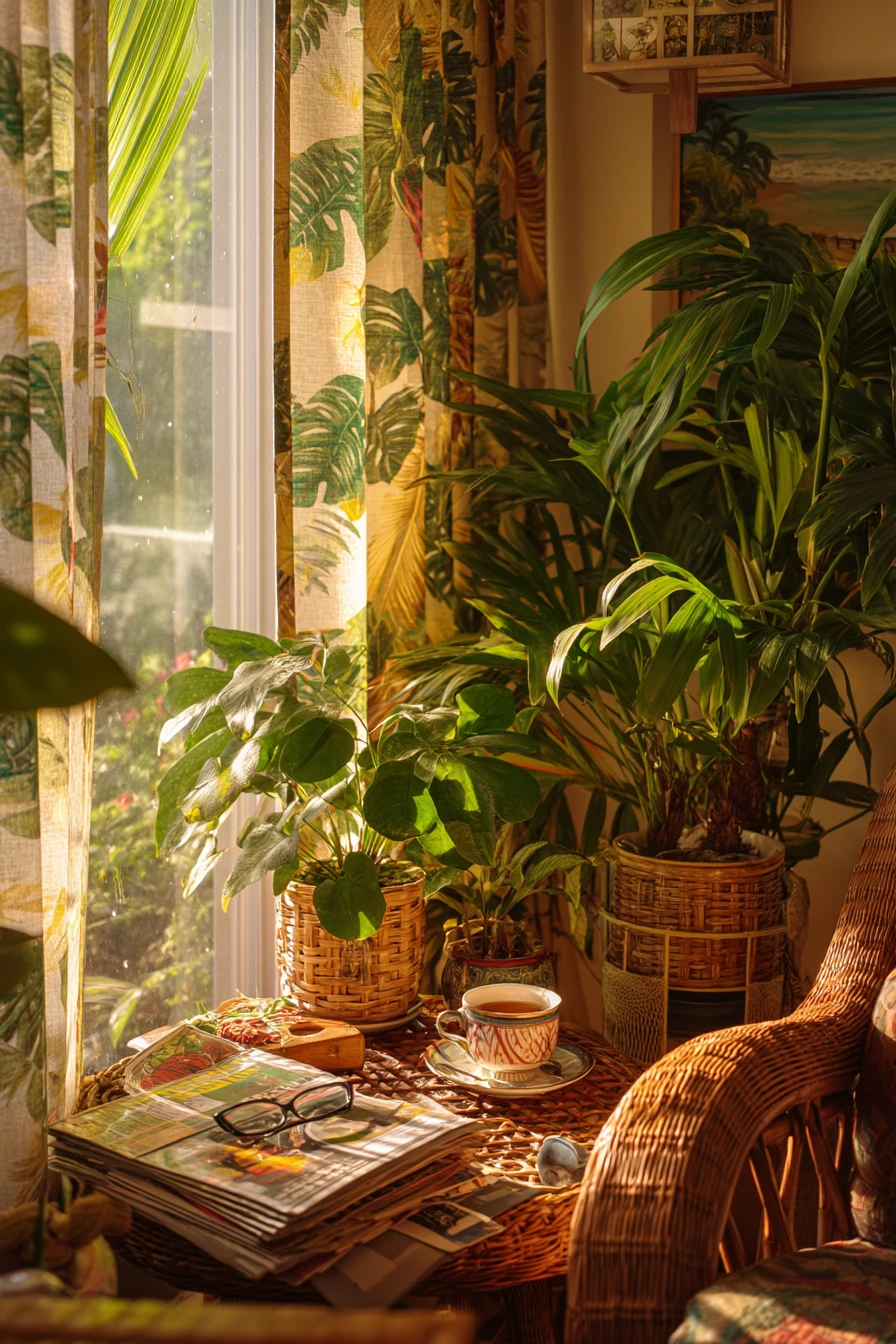
Style the room with simple patterns and warm materials. Banana leaf print curtains add a tropical theme without needing more decor. A wicker chair keeps the look light. On a side table, real-life items like reading glasses, a charging cable, and a half-drunk tea make the space feel used, not staged.
Keep plant care practical. Place the thirstiest plants closest to the light and where you can water easily. Rotate pots every week so growth stays even. Use trays under planters to protect floors, and wipe condensation if the room gets humid in the morning. Stacked magazines can hide on a lower shelf so the room stays calm.
- Mix one large leaf plant with a few medium plants for a balanced look.
- Use plant stands to create height without crowding floor space.
- Choose washable curtains if the sunroom gets dusty or damp.
- Add a small fan to reduce mold risk in humid rooms.
- Use a simple schedule: water, wipe leaves, and check pests once a week.
Pro Design Tip: Create a “green corner” by clustering plants on two sides of the chair, then keep the third side open for light and easy movement.
Budget Considerations: Ceramic stands can be costly; flip sturdy baskets, use wood stools, or stack bricks with a tray on top for a lower-cost riser.
7 7. Budget Tropical Container Garden
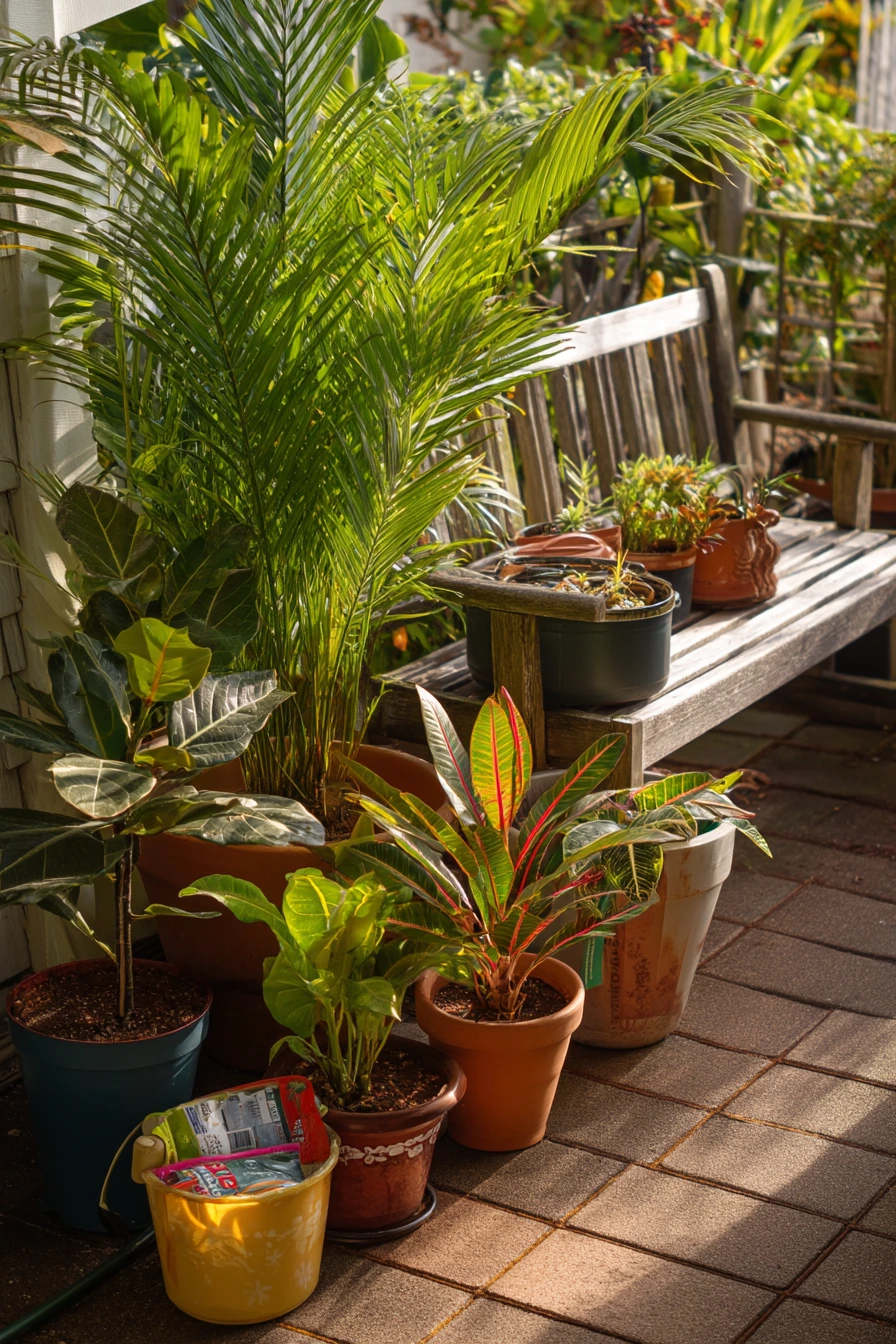
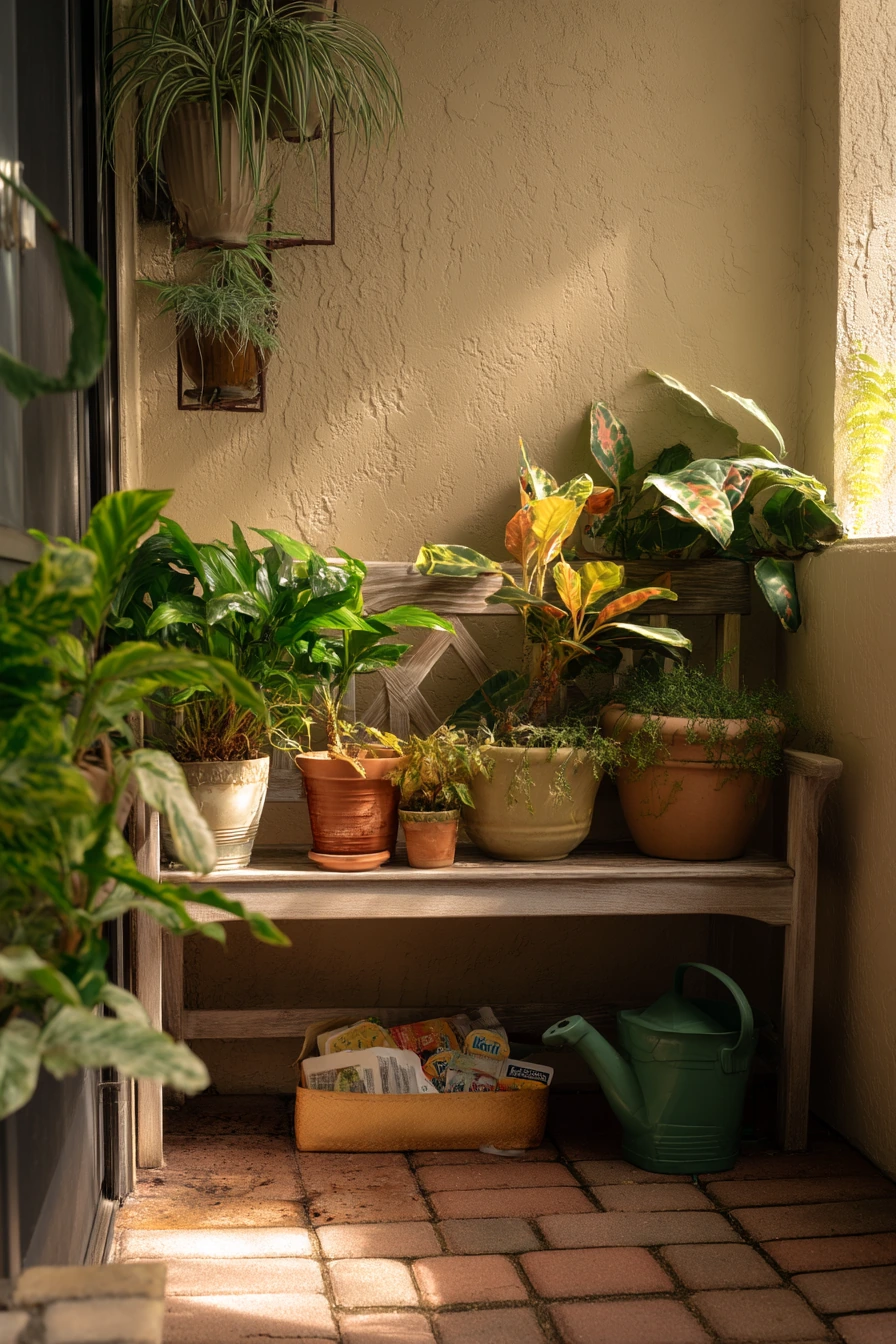
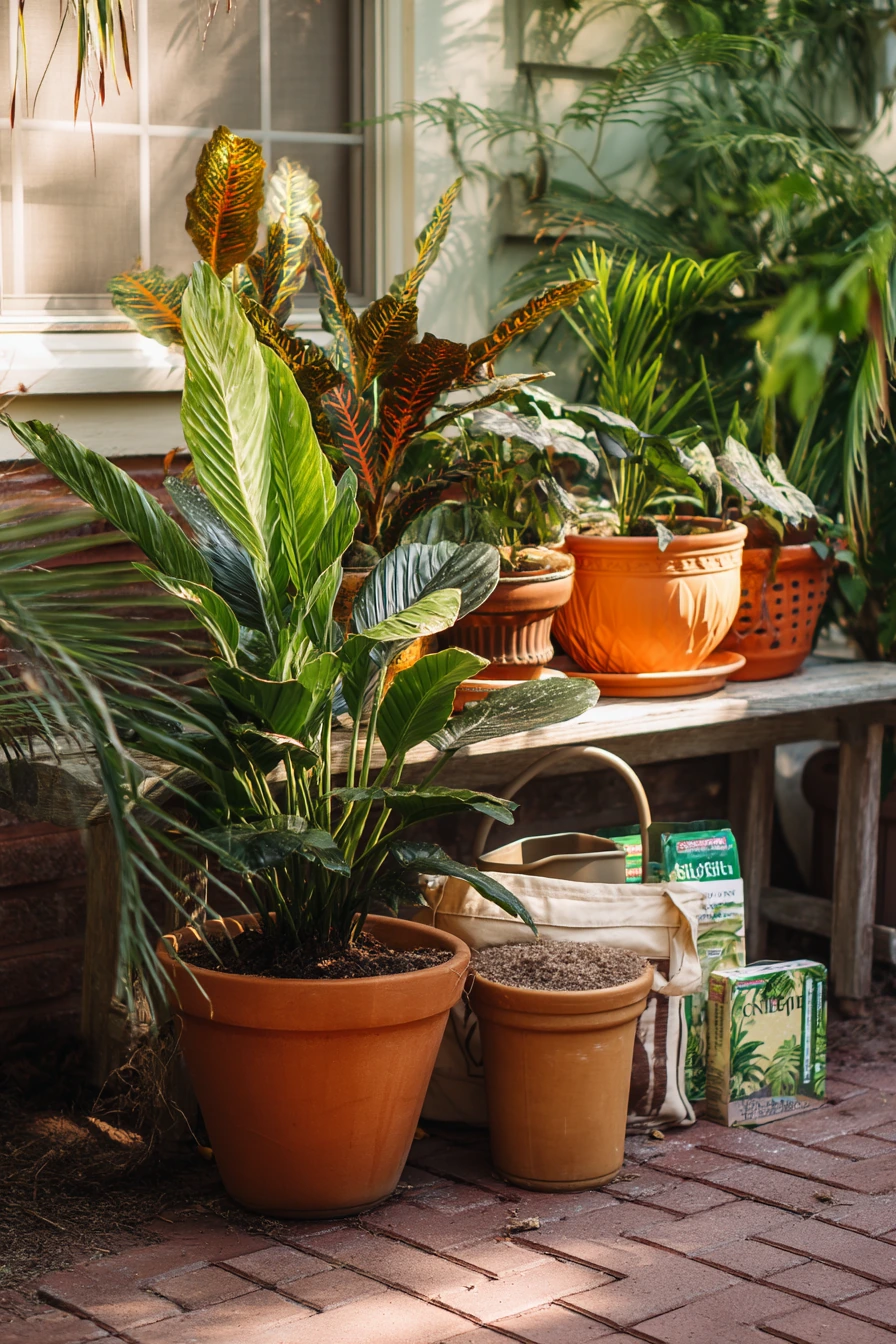
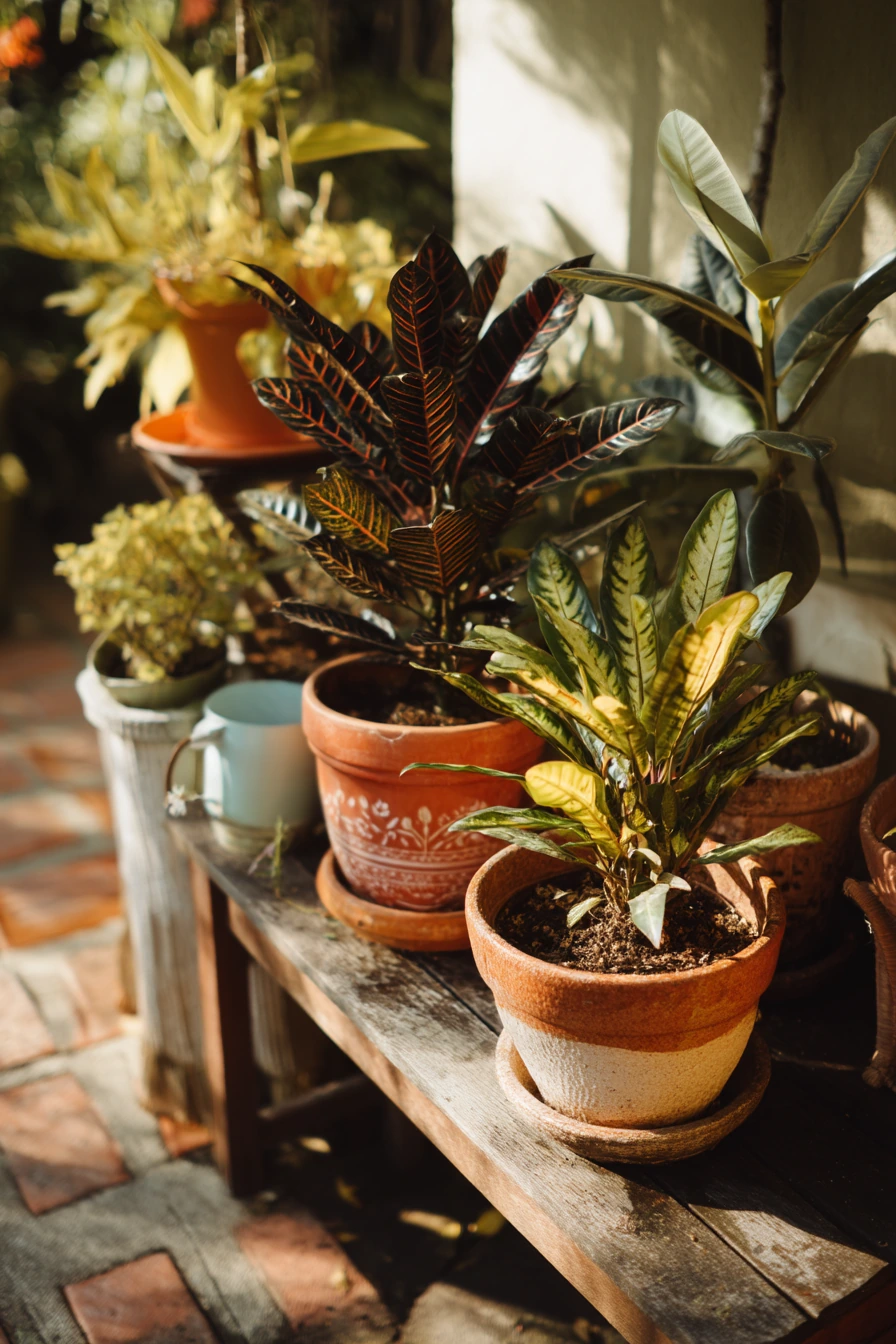
A budget-friendly patio tropical garden is all about smart grouping. Container plants let you test what works before you commit to digging beds. Use palms for height, crotons for color, and peace lilies for a softer, shady layer. Painted terracotta pots add personality and can make inexpensive plants look styled.
Set up the space so you actually use it. A secondhand bench creates a clear seating spot. Keep a reusable watering can nearby, along with seed packets and a bag of potting soil tucked to the side. A gardening tote helps you carry tools, and it keeps the patio from looking messy.
Work with what you have, even if pavers are slightly dusty. Sweep, then place pots in small clusters so the ground still shows and the area feels bigger. Add one small outdoor mat if you want a softer look. When plants grow, you can shift them around to catch better light or to fill gaps.
- Group pots by size: tall in back, medium in the middle, small in front.
- Choose pots with drainage holes to avoid root rot.
- Use the same pot color in at least three places for a pulled-together look.
- Add one fragrant item like a citronella candle for outdoor evenings.
- Label plants and keep seed packets in a waterproof box to stay organized.
Pro Design Tip: Use one “anchor” container that is bigger than the rest, then build around it with smaller pots to make the patio look designed.
Budget Considerations: New planters add up fast; paint basic terracotta, reuse food-safe buckets with drainage, or watch end-of-season sales for discounted pots.
8 8. Tropical Courtyard Dining Corner
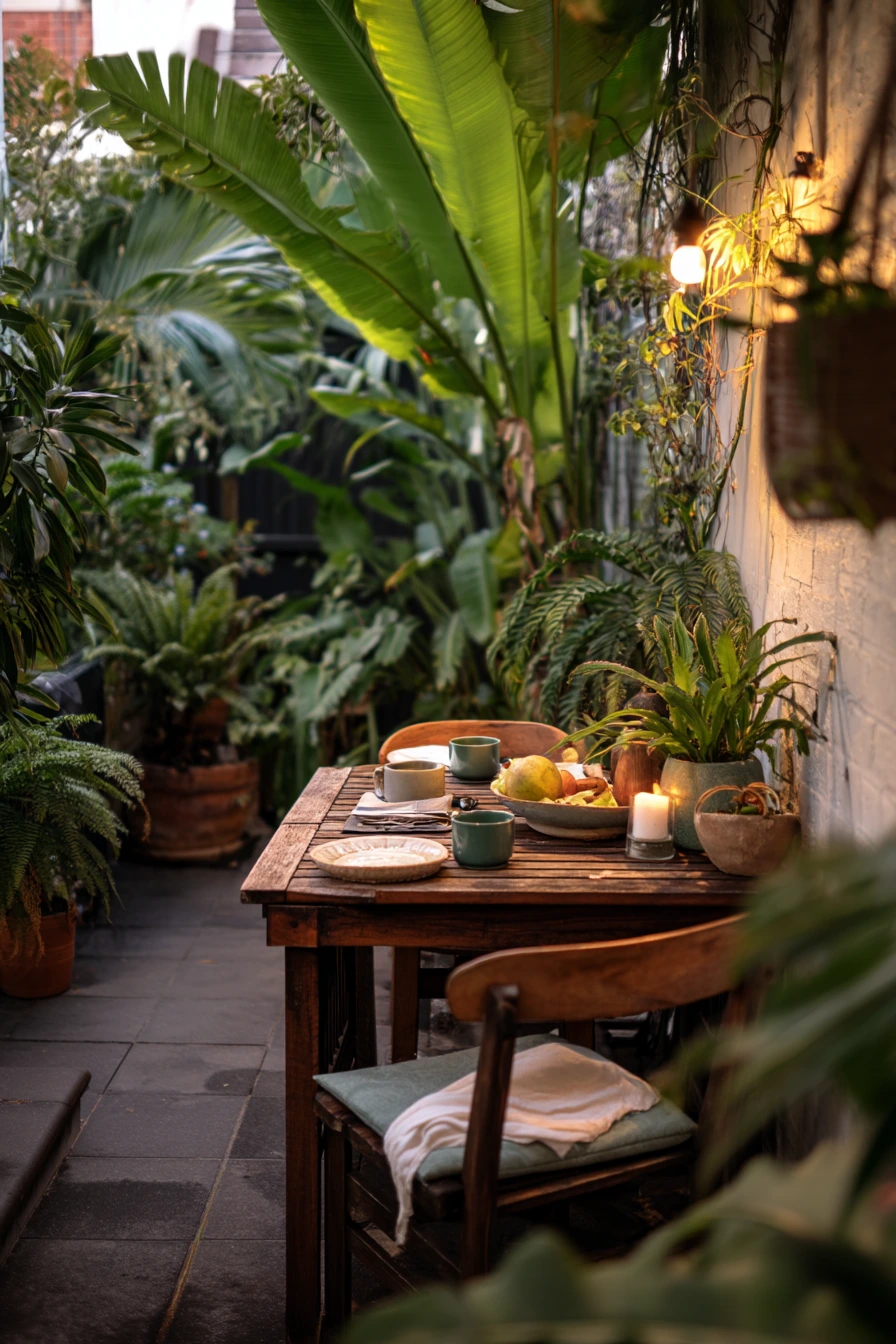
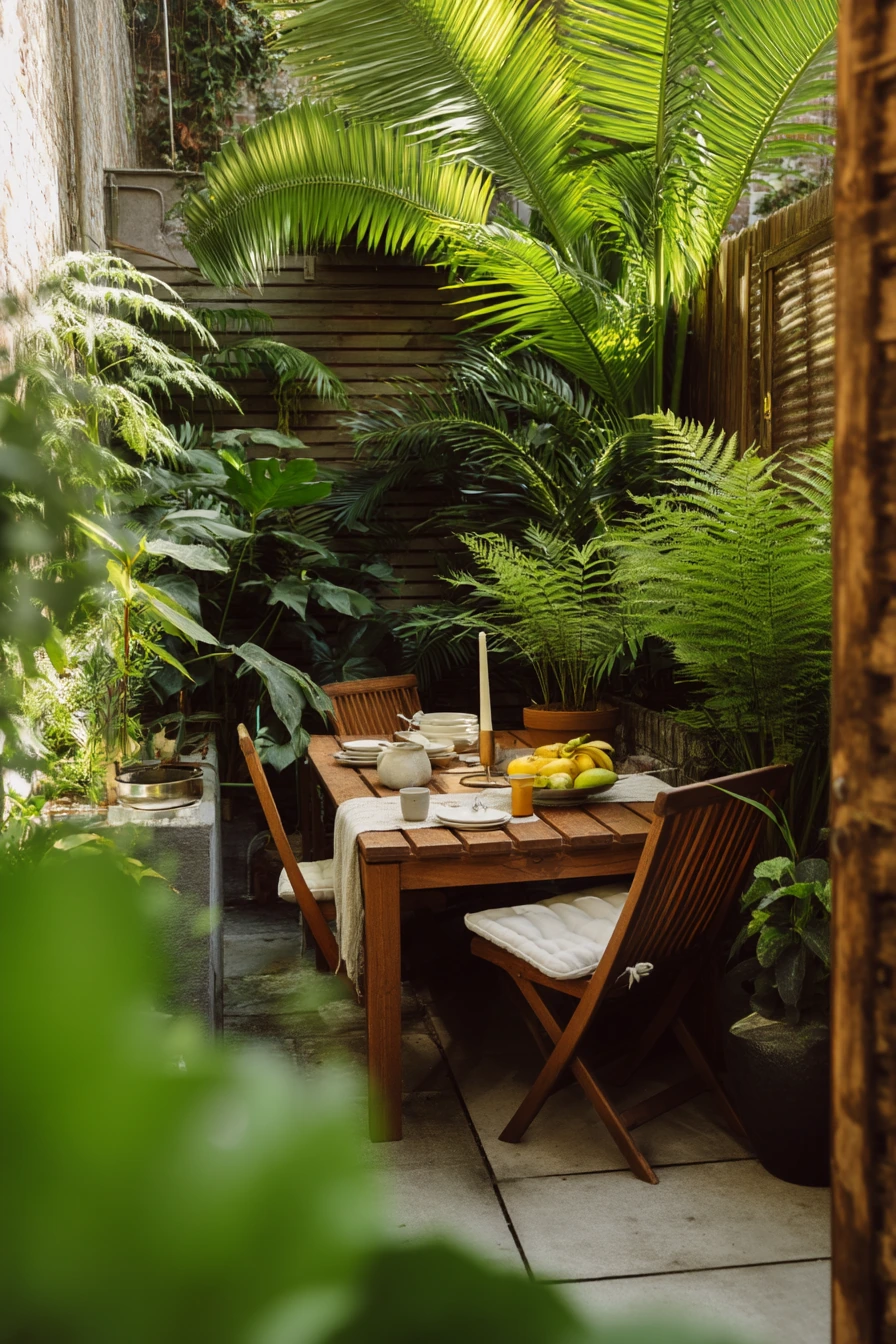
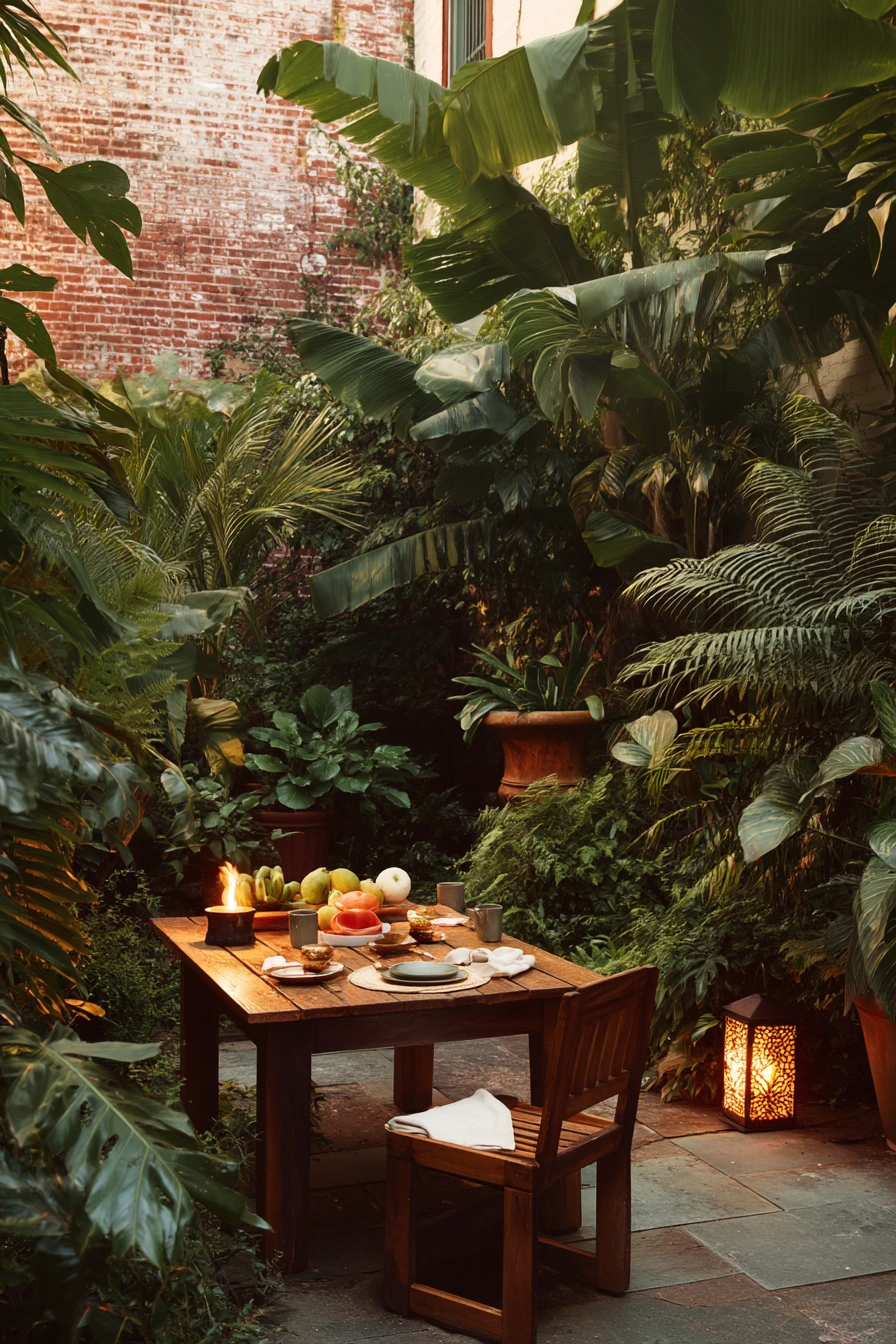
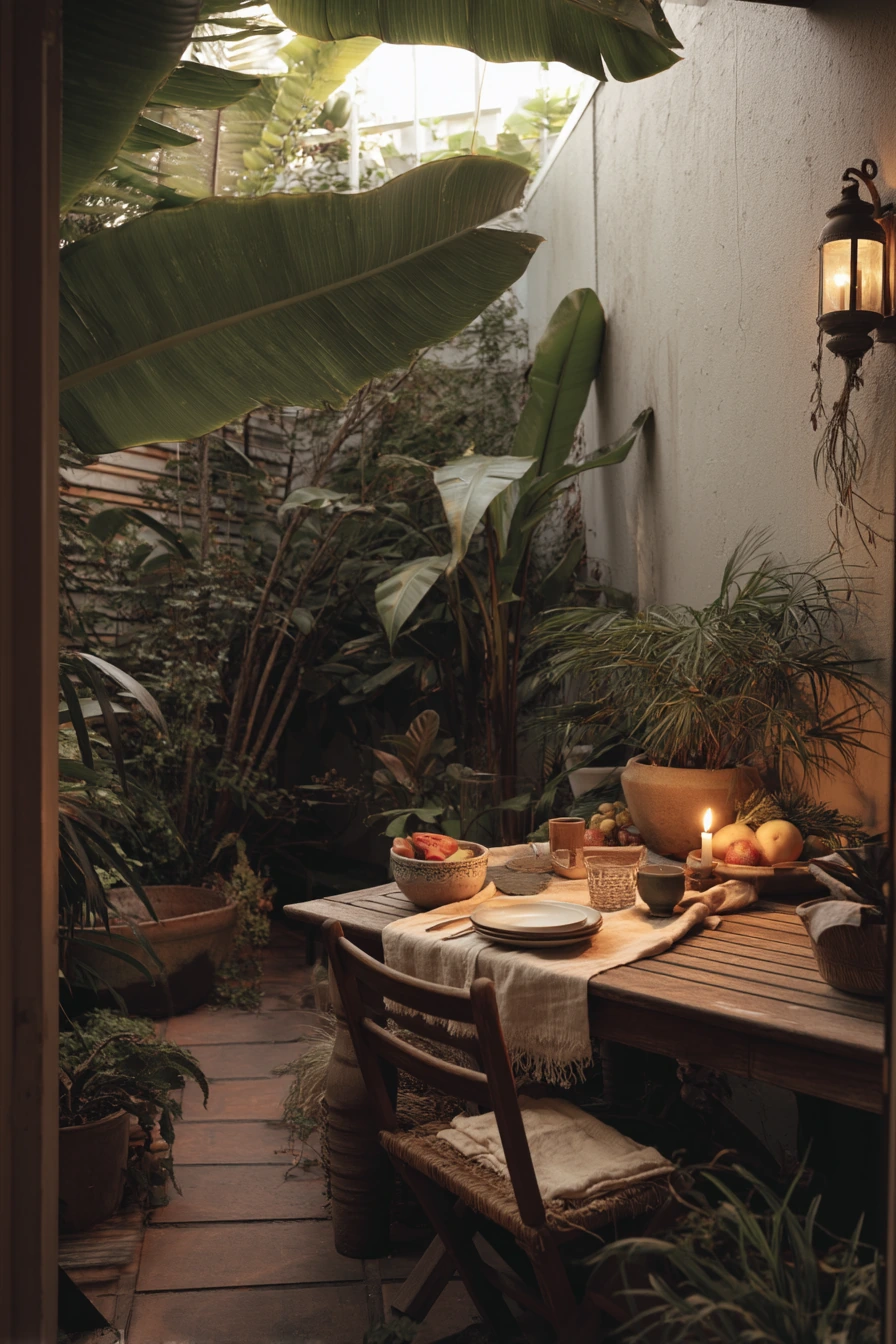
A small urban courtyard can become your daily dining spot with the right tropical planting. Start with a compact wooden dining table and keep the chairs light so you can move them easily. Surround the eating area with banana leaves and ferns to make it feel private without building a fence.
Use ceramic planters for a clean look that fits city spaces. Add a citronella torch to handle bugs and to create a warm mood at night. Linen napkins, cut fruit, and one chair pulled back make the setup feel ready for real meals. A child’s cup on the table keeps it honest and family-friendly.
Lighting matters here because many courtyards lose sun early. Mix lantern light with the last bit of daylight, and keep the light source low and warm. If your courtyard is tight, use tall plants at the corners and keep the center clear so you can serve food and walk around the table without bumping leaves.
- Keep a 30-inch walking space around the table so meals feel relaxed.
- Use tall corner planters to frame the dining zone and add privacy.
- Choose easy-clean table surfaces for outdoor use.
- Bring in one soft texture like linen or a small cushion to prevent a hard look.
- Use herbs in small pots near the table for quick flavor and extra green.
Pro Design Tip: Place the brightest light source behind the table, not above it, so faces look soft and the plants cast gentle shadows in the background.
Budget Considerations: Outdoor dining sets can be expensive; a simple indoor wood table can work if you keep it covered and reseal it once a year.
9 9. Tropical Garden Path After Rain
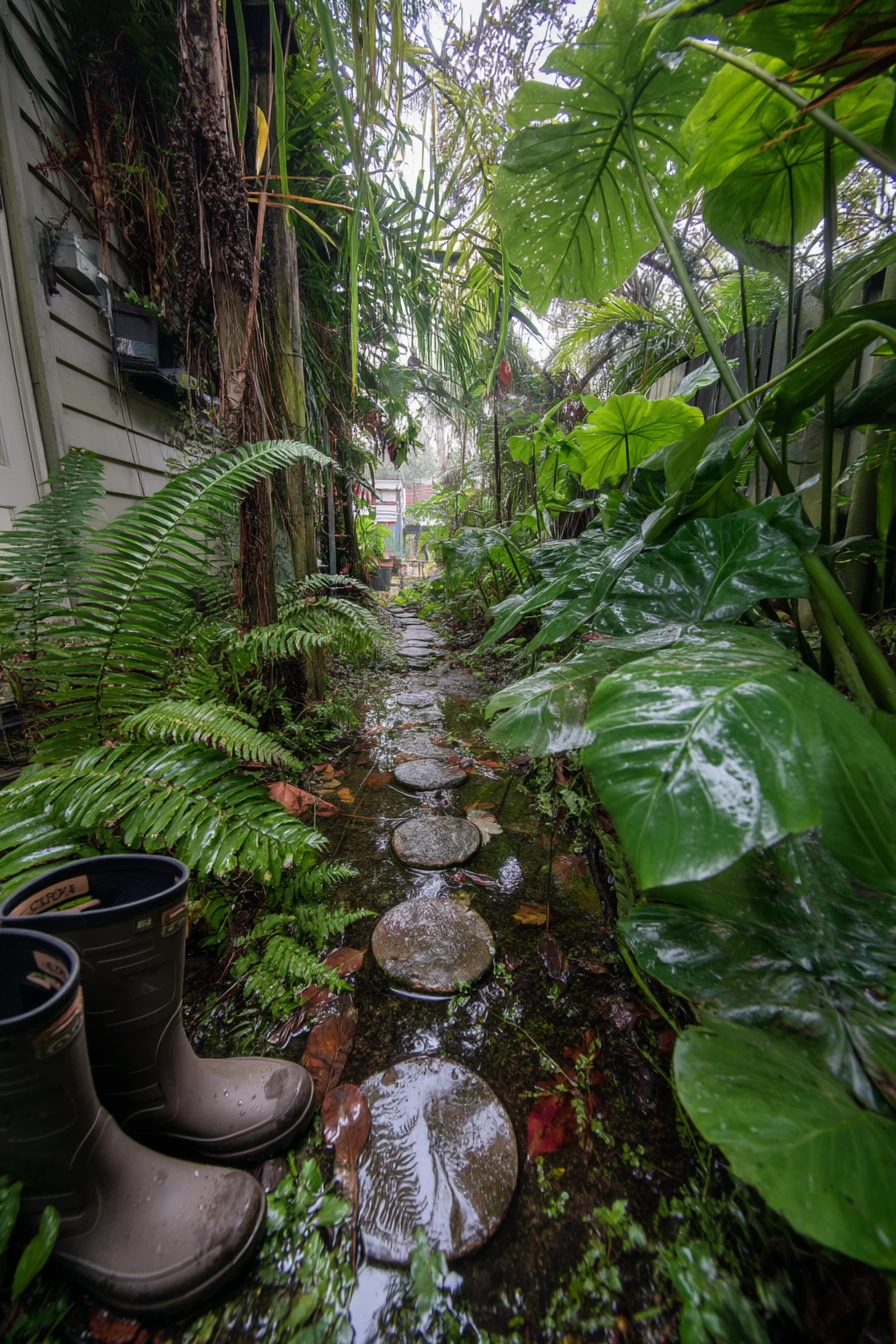
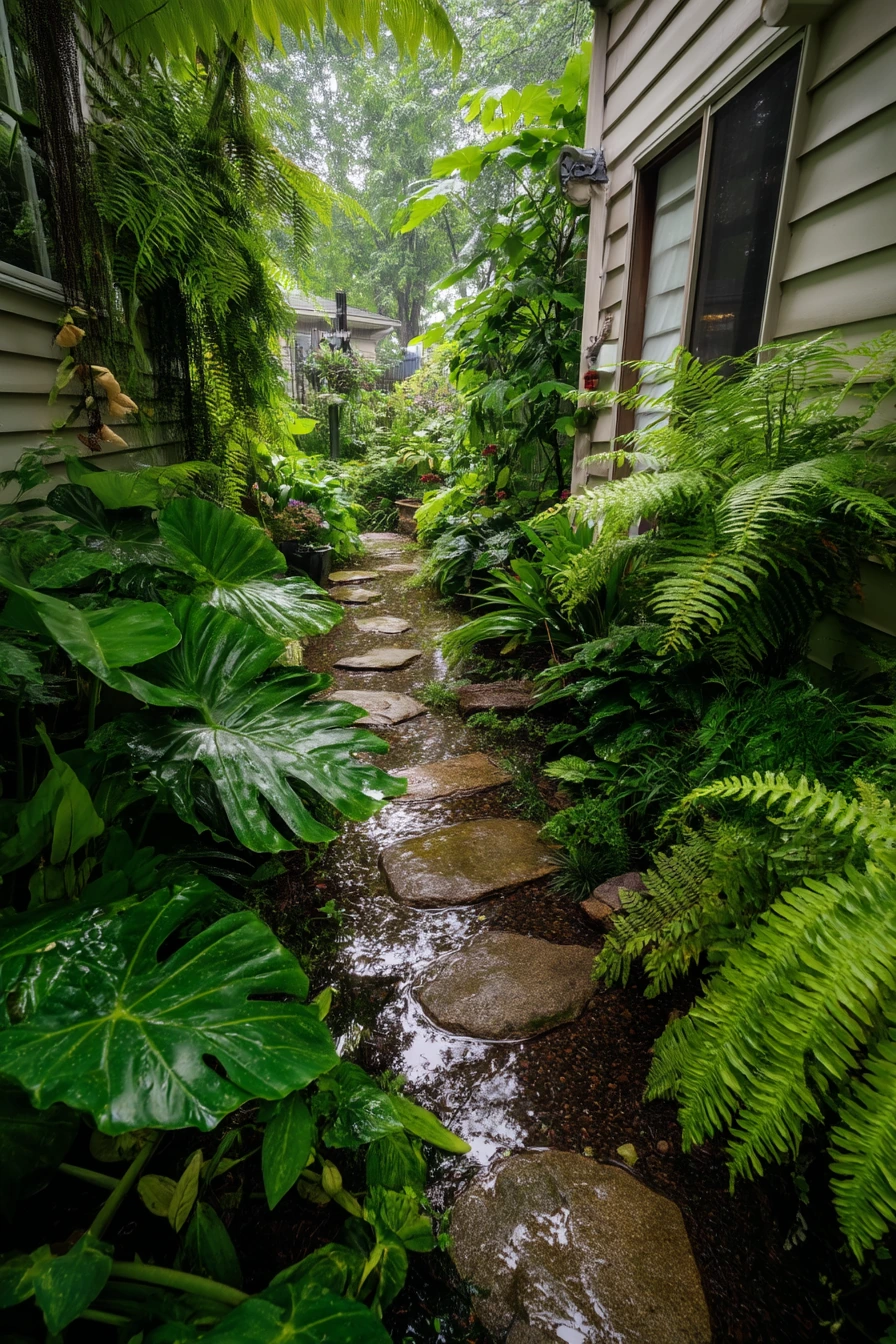
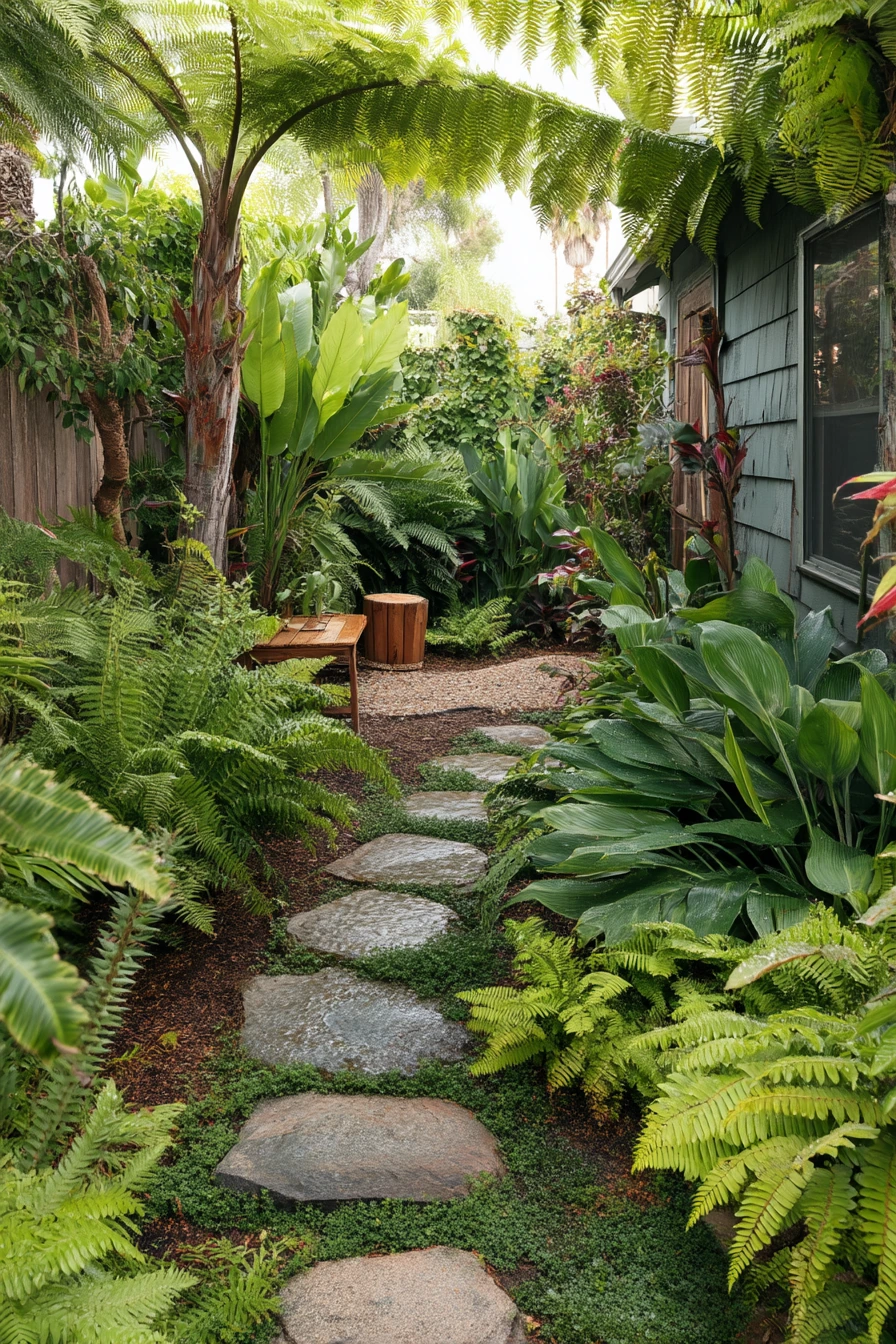
A side garden path is often ignored, but it can become one of the most refreshing parts of your yard. After rainfall, glossy leaves and shallow puddles make a tropical space feel alive. Use stepping stones so you can walk through without getting stuck in mud, even when mulch is damp.
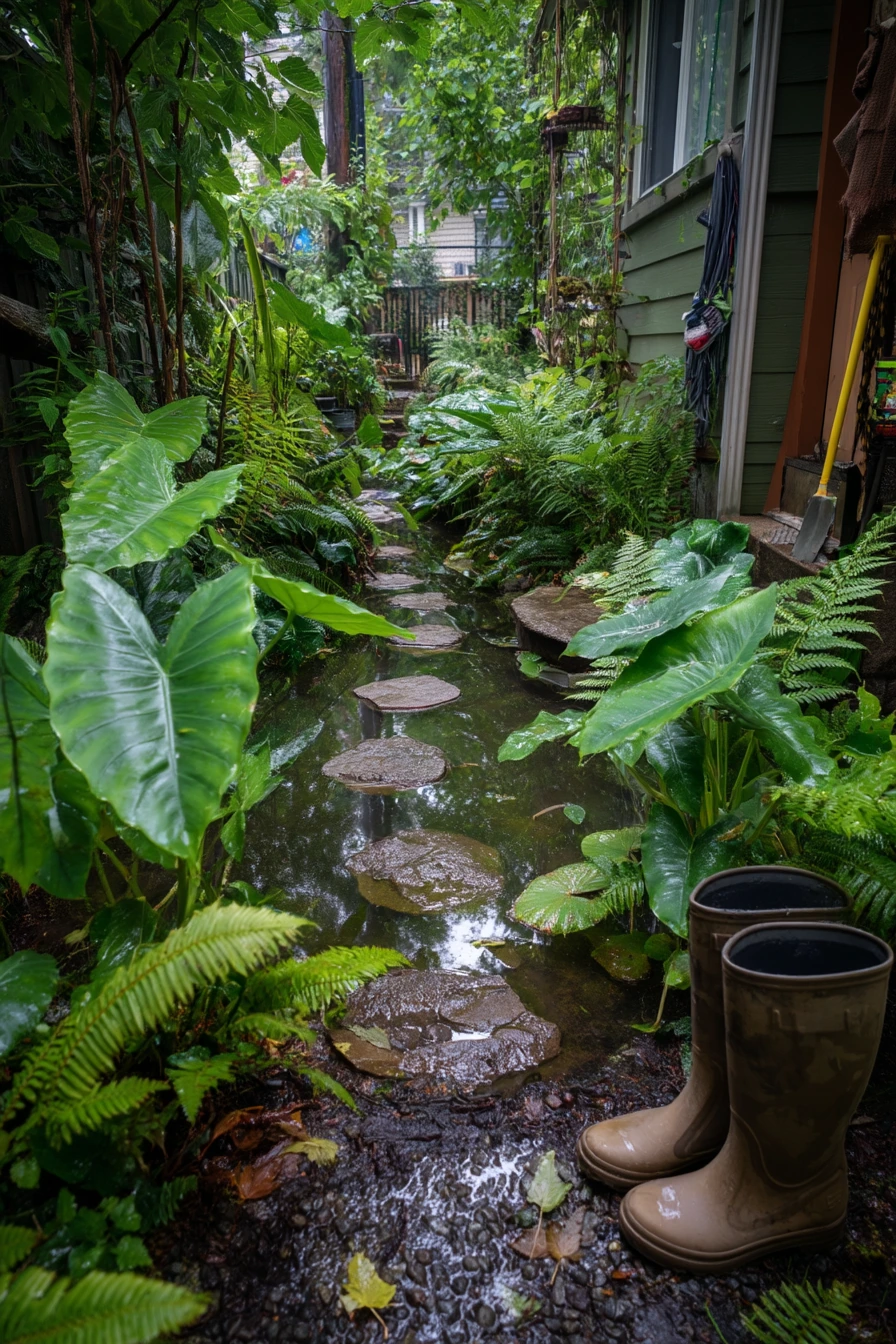
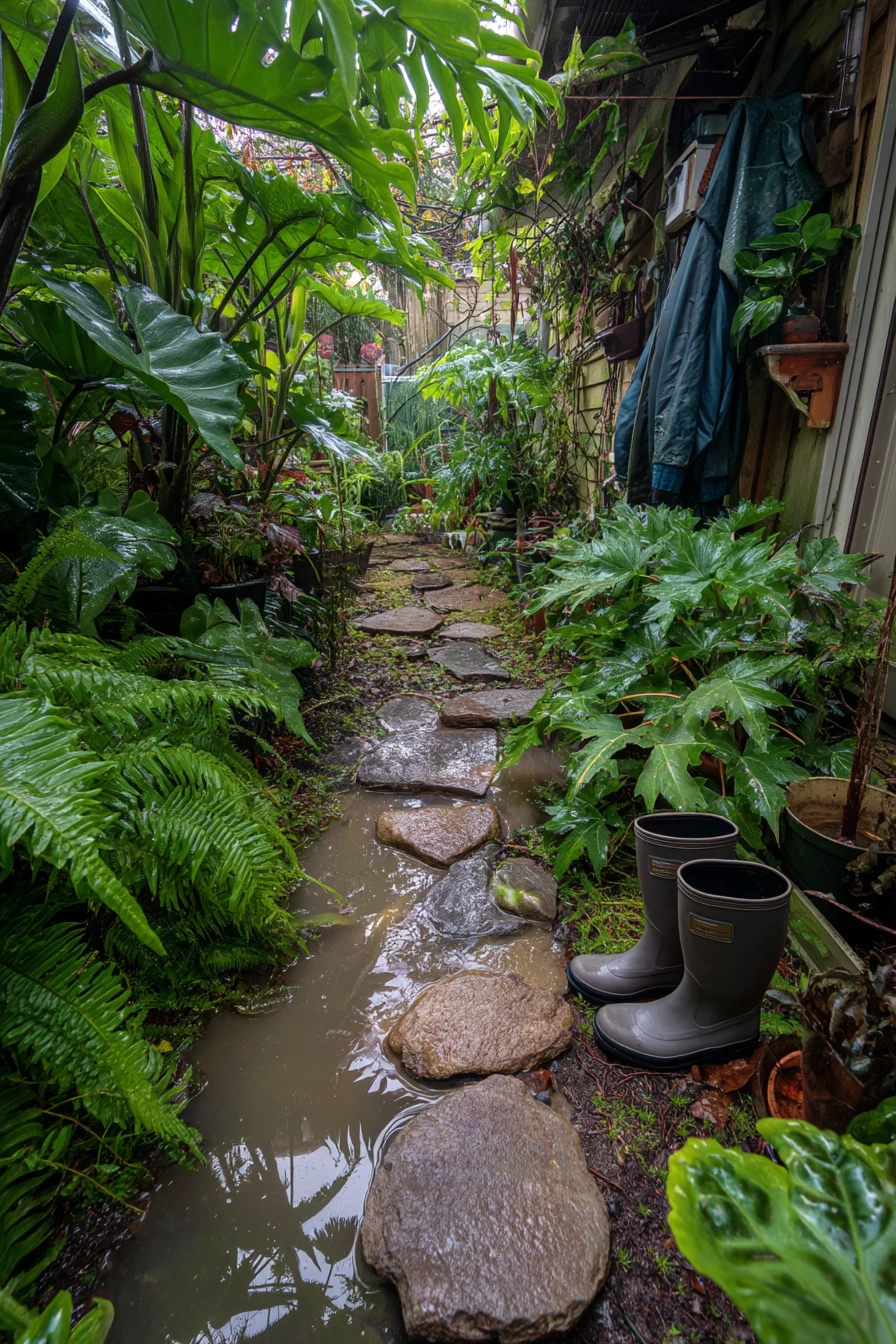
Plant for strong texture. Elephant ears bring huge leaves and a bold shape. Add croton for color, and fill gaps with ferns for a soft, layered base. Keep the path wide enough for a person carrying tools. A hook by the back door for a rain jacket and a spot for muddy boots makes the area more useful and less messy.
Style the zone like a working garden that still looks good. Leave a garden trowel in a small caddy or on a shelf, not on the ground. If puddles form, check drainage and adjust the stepping stones or add gravel under them. The goal is a sensory walk that feels clean, safe, and easy to maintain.
- Space stepping stones for your normal stride so walking feels natural.
- Add a thin gravel strip along the path edge to reduce mud splash.
- Keep elephant ears away from tight corners so leaves do not block the path.
- Prune croton lightly to keep color strong and shape neat.
- Use a simple wall hook setup for rain gear to prevent clutter indoors.
Pro Design Tip: Angle the stepping stones slightly as the path turns so the curve feels smooth and your eye follows the plants, not the fence line.
Budget Considerations: Large pavers can be costly; you can use smaller stepping stones or cut concrete squares, then fill around them with mulch or gravel.
10 10. Tropical Patio Reading Corner
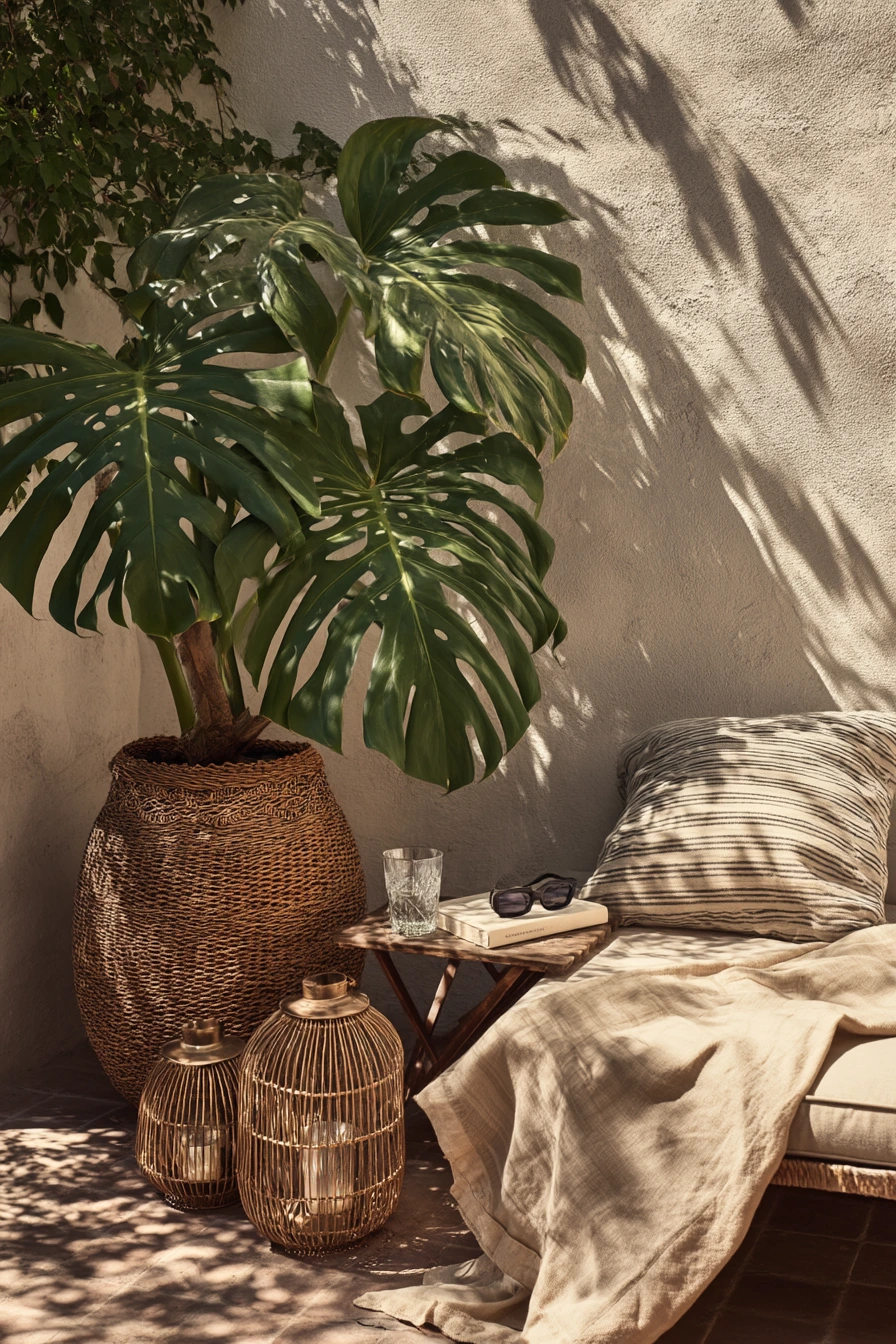
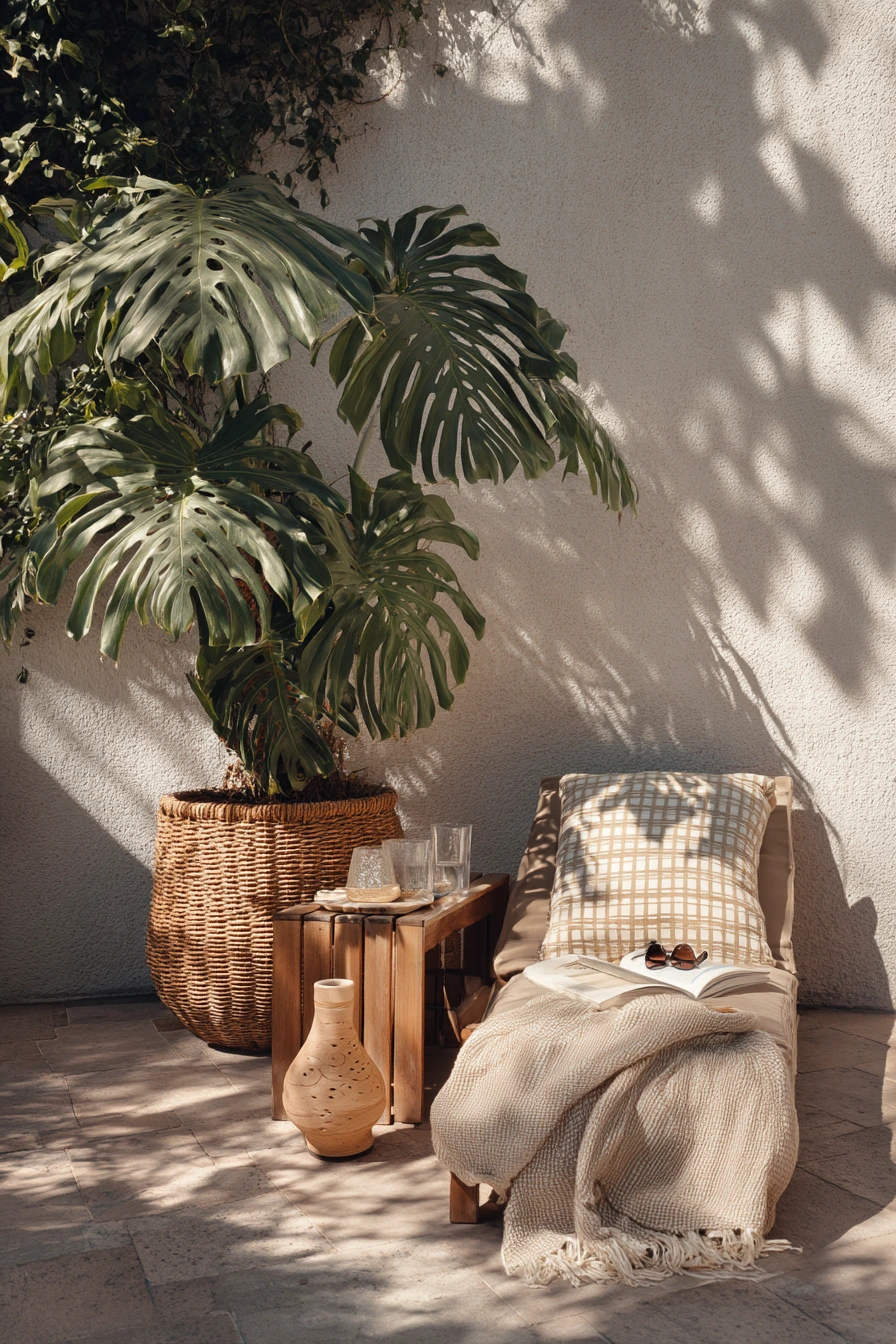
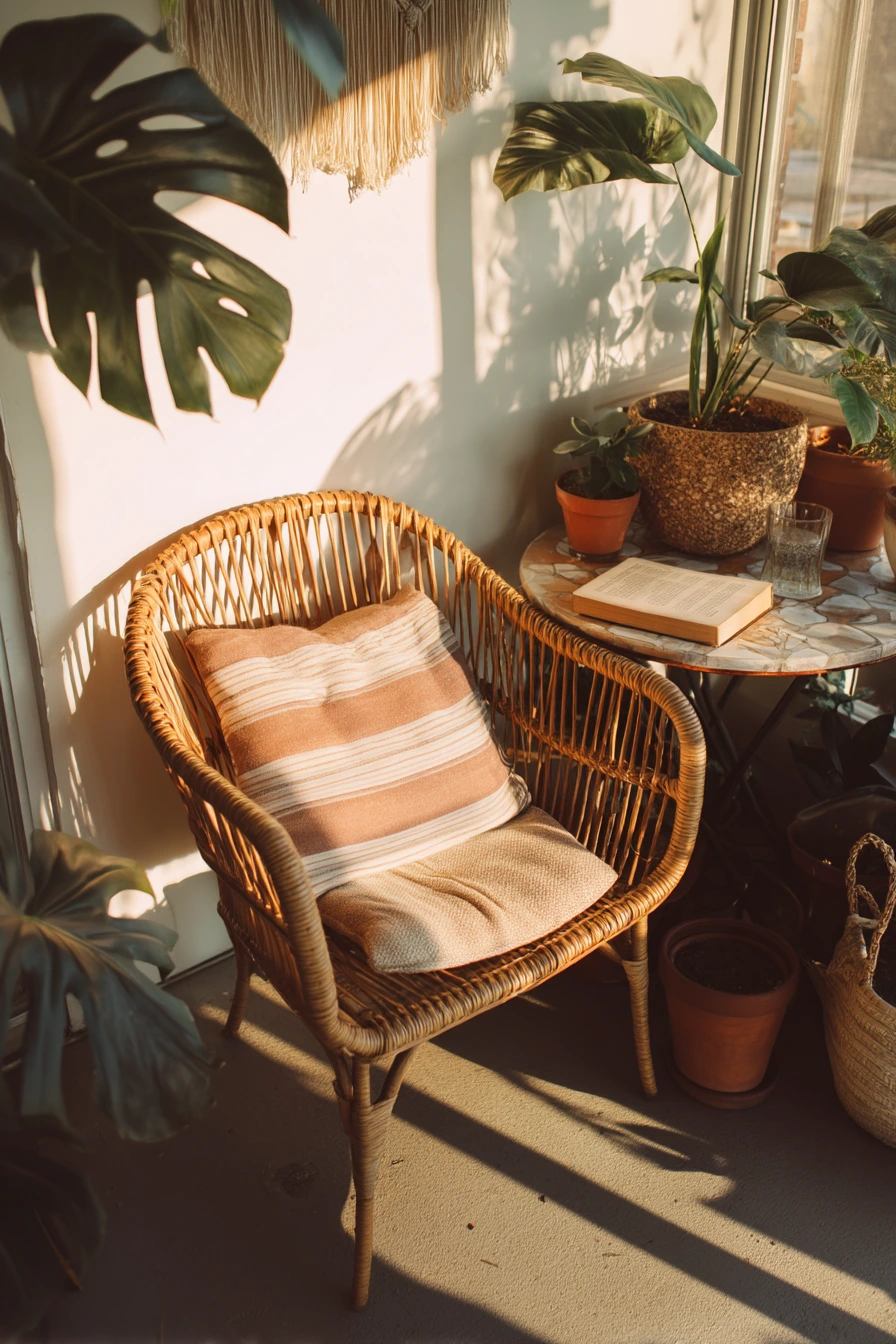
A quiet patio corner can feel like a mini getaway when you keep it simple and comfortable. Start with an oversized palm in a woven basket for height and a relaxed texture. Add a monstera for bold leaves and a strong tropical shape, then place a low lounge chair where it catches sun-dappled light.
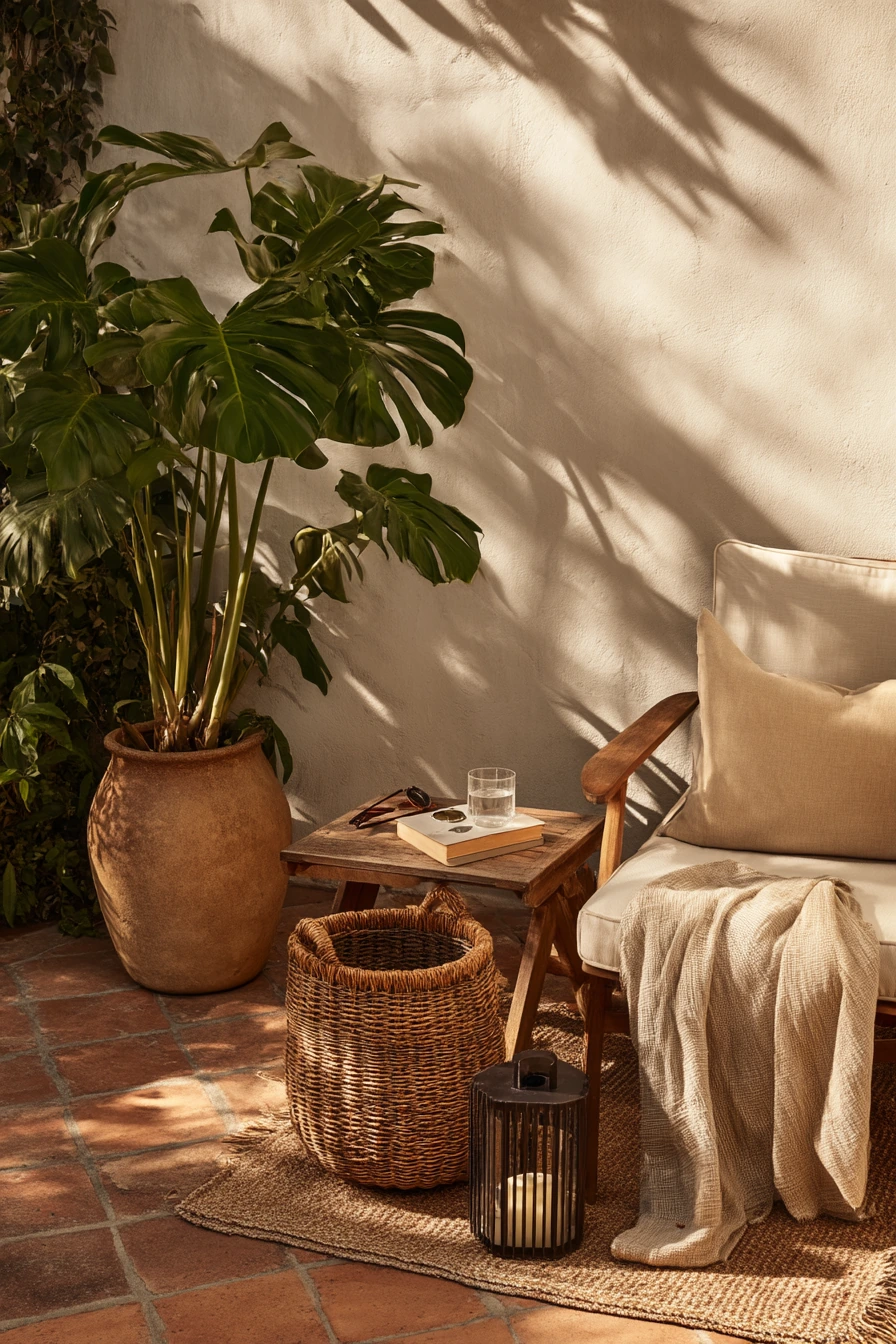
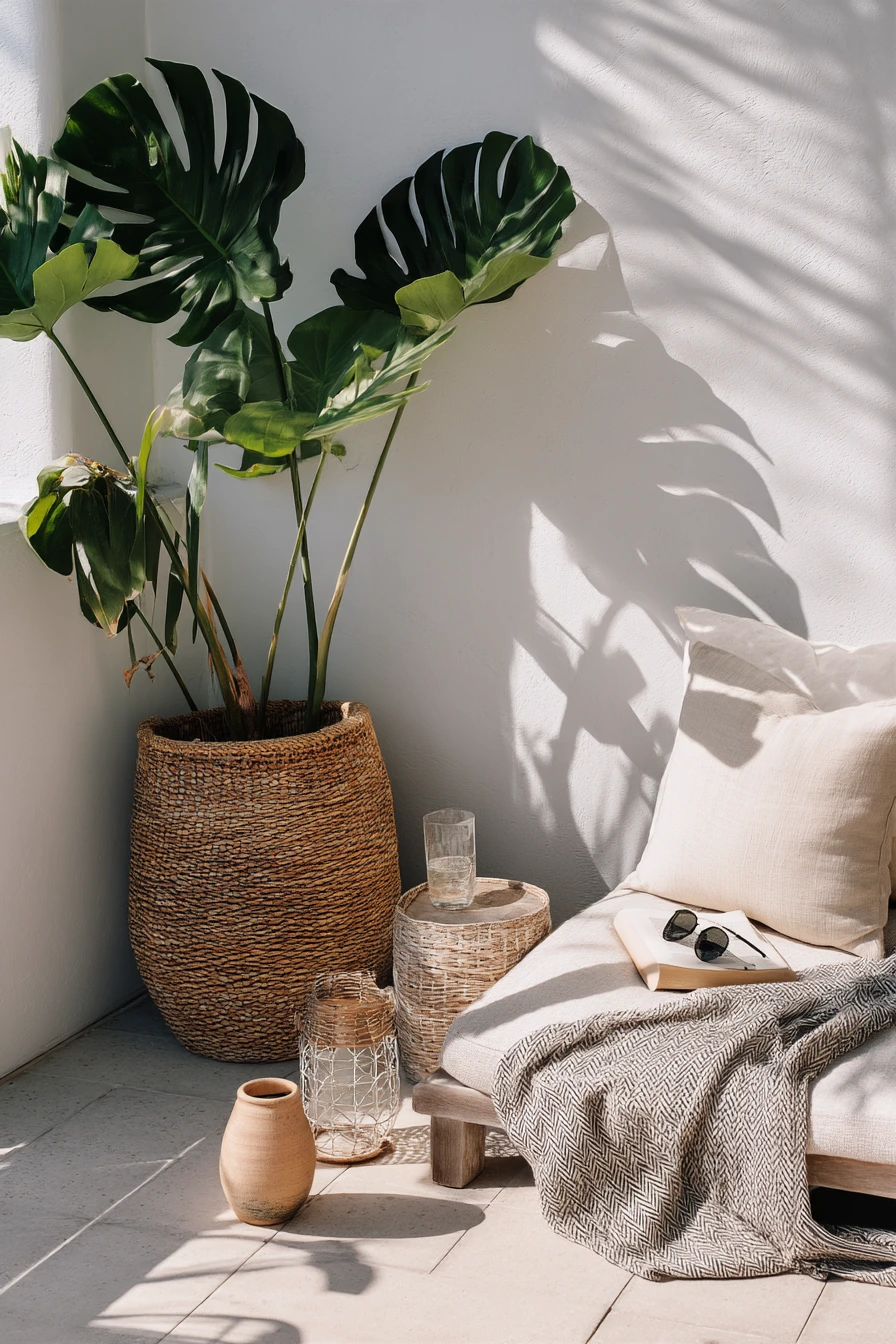
Style the seating like you would inside your home. Use a slightly rumpled linen cushion so it looks inviting. Keep a blanket folded at the edge for cooler mornings. Add a small side table with a novel, sunglasses, and a water glass so the corner feels ready for a break at any time.
Finish with small details that work at night too. Clay lanterns can sit on the ground or table and add soft light later. Layered shadows from leaves are part of the look, so avoid too many extra items. Keep the floor clear so sweeping is easy, and rotate the palm basket so the plant grows evenly.
- Place the chair at an angle to make the corner feel open, not boxed in.
- Use one large plant and one medium plant to avoid a crowded look.
- Add a small tray on the table to keep items tidy and easy to move.
- Choose outdoor-safe linen or store cushions in a basket when not in use.
- Use warm lighting so green leaves look rich in the evening.
Pro Design Tip: Keep the lowest plant leaves slightly above seat height so you feel surrounded by greenery without having leaves brushing your shoulders.
Budget Considerations: Big palms can be expensive; buy a smaller plant and use a tall stand or basket to give it height while it grows.
Tropical garden ideas work best when you focus on bold leaves, layered heights, and simple seating that fits your daily life. Start with one small zone, like a balcony chair corner or a short path, then build outward as your plants grow.
Use the sections above to match the look you want, from a family backyard with stepping stones to a shady courtyard with ferns and a water feature. Small styling choices like baskets, lanterns, and clean edging make the space feel finished without a big remodel.
FAQ
What are the easiest tropical plants for beginners? Monstera, pothos, peace lily, many ferns, and some palms are beginner friendly if you match them to your light and water regularly.
Can I get a tropical look in a cold climate? Yes. Use containers so you can bring plants indoors, and focus on tropical-style leaves like canna, colocasia, or hardy palms where possible.
How do I make a small space feel more lush? Layer one tall plant, a medium plant, and a trailing plant. Group pots, repeat the same planter color, and add a screen or tall plant for privacy.
What kind of soil works best for tropical container plants? Use a high-quality potting mix with added perlite or bark for drainage. Avoid heavy garden soil in pots.
How often should I water tropical plants outdoors? It depends on heat, wind, and pot size. Check the top inch of soil. Water when it feels dry, and water deeply so roots grow strong.
How can I keep mosquitoes down in a tropical garden? Remove standing water, keep gutters clear, use citronella candles or torches, and consider a small fan near seating to reduce bites.