
Vertical pallet garden ideas are a simple way to grow herbs, greens, and flowers when you do not have much floor space. A wooden pallet can hold many small planters, so you can garden on a wall, fence, or porch corner.
This post shares renter-friendly setups for balconies, kitchens, patios, and entryways. Each idea matches the photo themes, with practical steps, plant picks, and small styling details that look natural in a lived-in home.
You will also learn how to mount a pallet safely, how to water without mess, and how to keep plants healthy in sun or shade. Use these ideas to save space, add privacy, and make your home feel greener.
If you came from Pinterest, read each section like a mini plan. You can copy the layout, then swap plants to fit your light and your routine.
1 Small Balcony Herb Wall
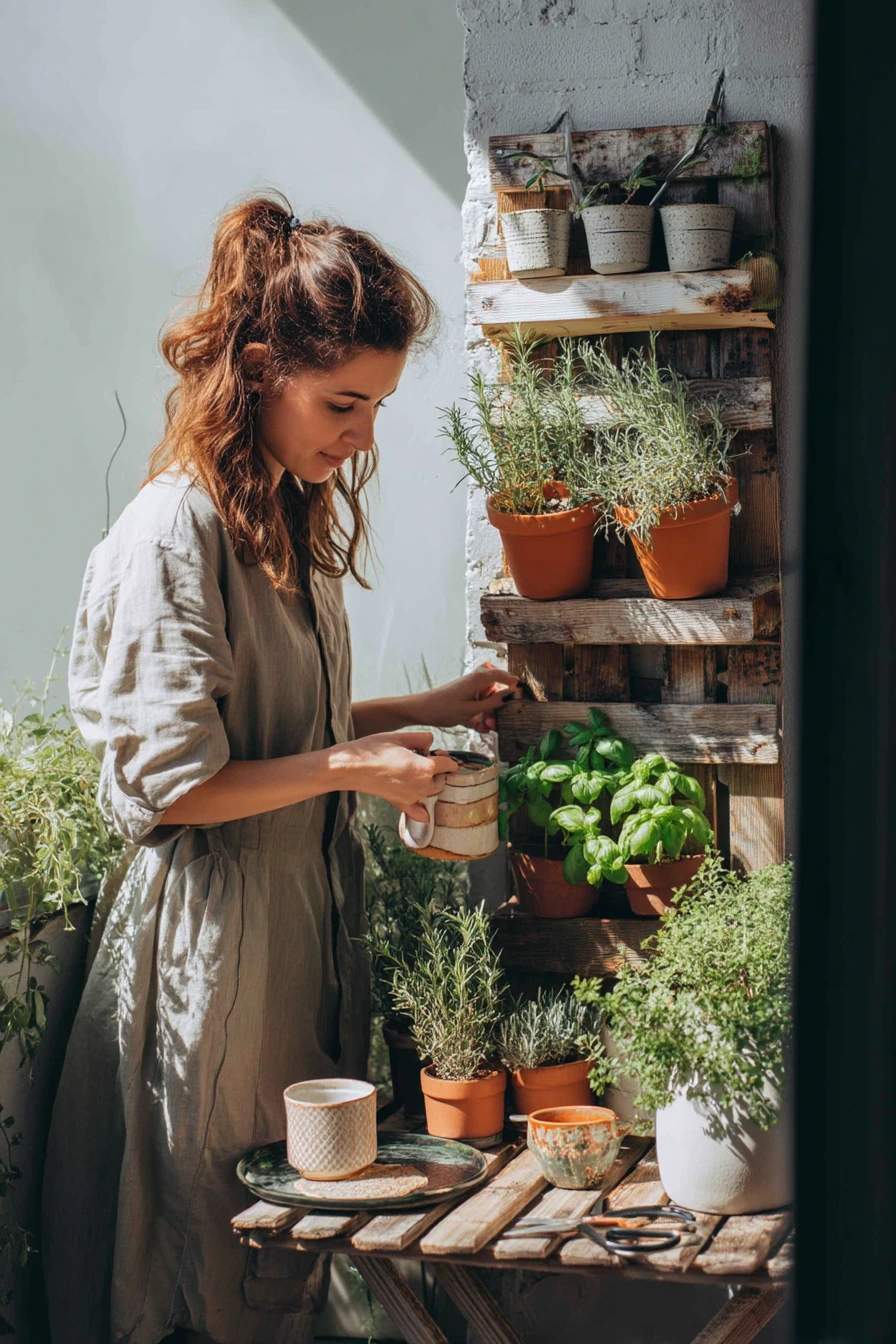
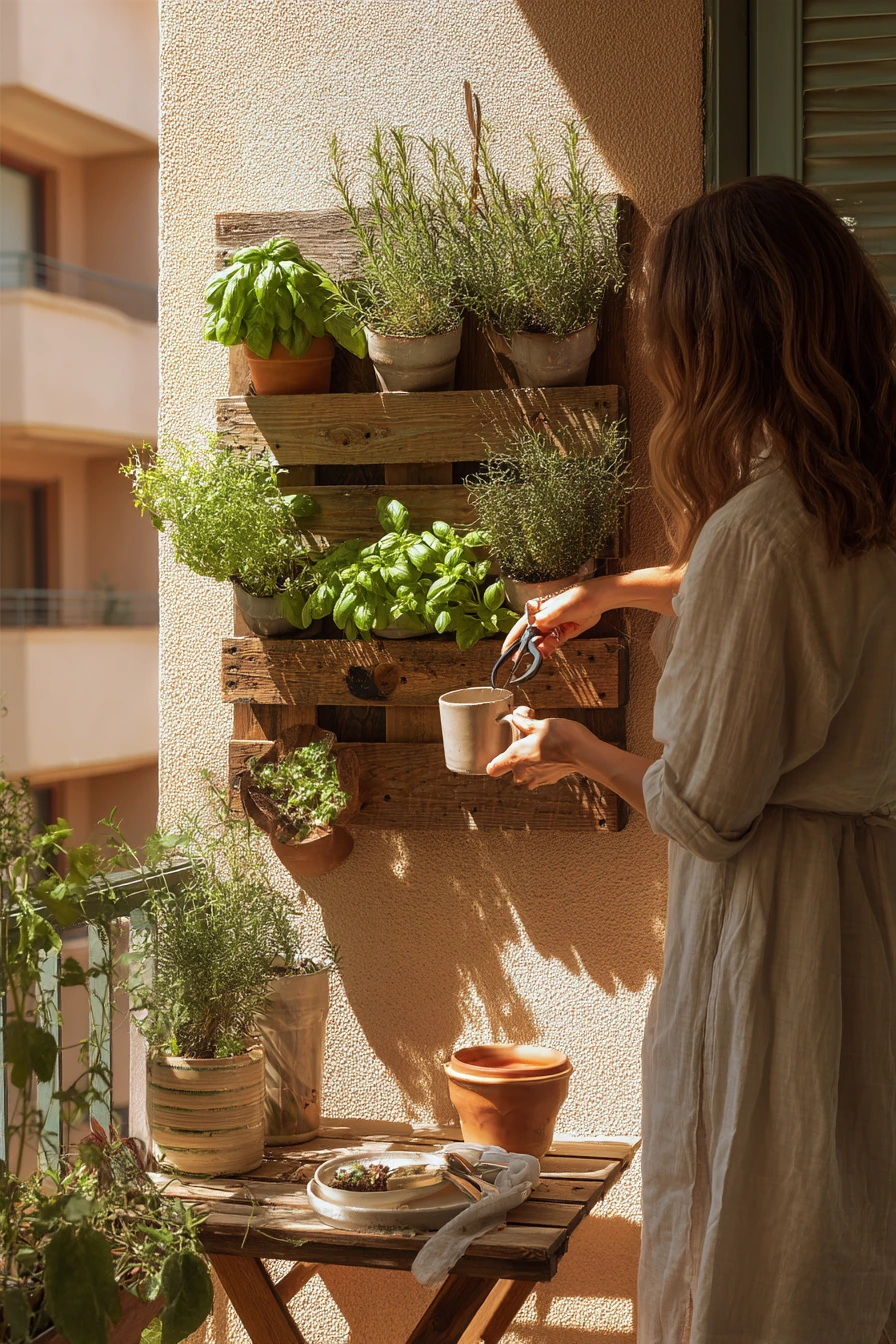
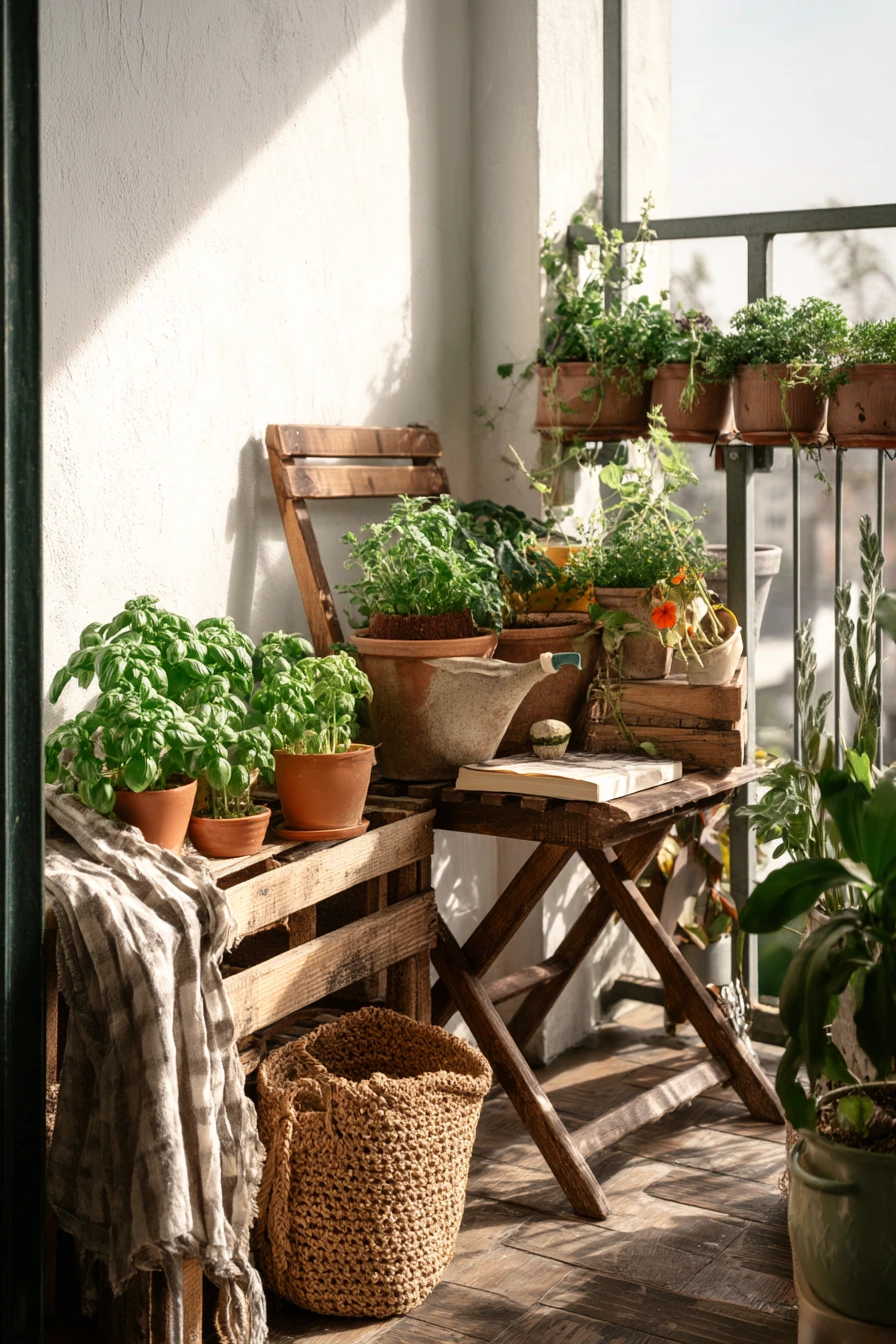
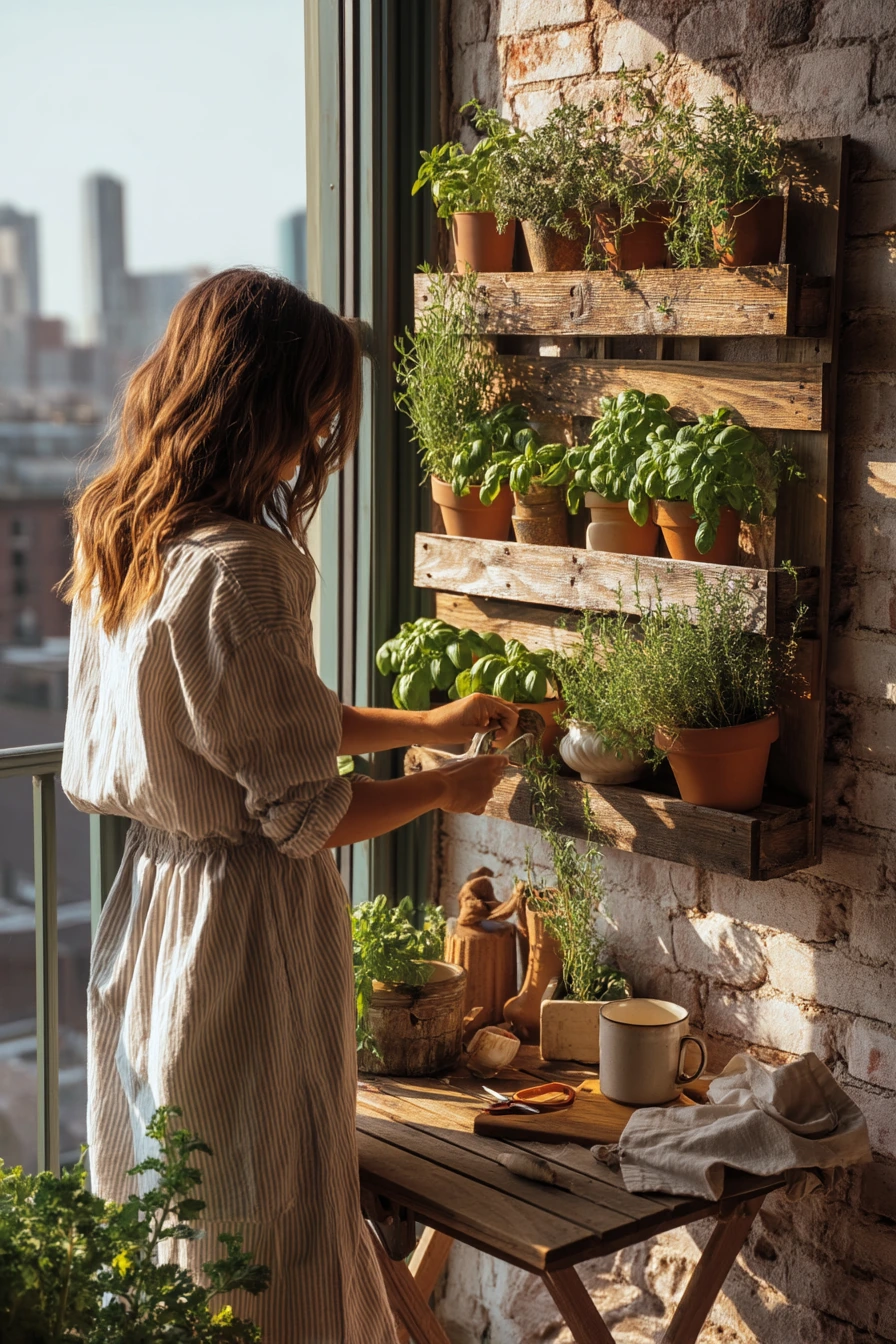
A tiny apartment balcony can still hold a useful herb garden if you build up instead of out. Mount a renter-friendly wooden pallet on a brick wall using masonry hooks rated for outdoor use, or hang it from a sturdy balcony frame so you do not drill. Add mismatched terracotta and metal planters for a relaxed look, and keep the layout tight so you still have room for a small bistro chair.
For the plant mix, choose dinner herbs you will use often: basil, mint, rosemary, and trailing thyme. Put rosemary higher where it stays a bit drier, and place mint in its own pot so it does not take over. Trailing thyme looks best near the bottom edge so it can spill down and soften the pallet lines. Water with a small can and keep herb snips on the ledge, so you can clip what you need right before cooking.
Style it like real life, not like a showroom. A folded market tote by the chair, a ceramic mug with a tea ring, and a simple watering routine makes the space feel calm and practical. If your balcony is windy, tuck the pallet into a corner so the plants do not dry out too fast, and add a shallow tray under each pot to catch drips.
- Use a heat-treated pallet (HT stamp) and sand rough edges to avoid splinters.
- Line the back of the pallet with a thin plastic sheet to protect the brick from water stains.
- Group herbs by water needs: basil and mint together, rosemary and thyme together.
- Choose lightweight pots and add S-hooks so you can move planters for more sun.
- Water in the morning and pinch basil weekly to keep it bushy.
Pro Design Tip: Keep the top row for upright herbs and the bottom row for trailers, so the whole pallet reads as one clean vertical shape.
Budget Considerations: Use thrifted terracotta and recycled metal containers; spend your money on strong wall anchors and a small drip tray set.

2 Kitchen Window Salvage Garden
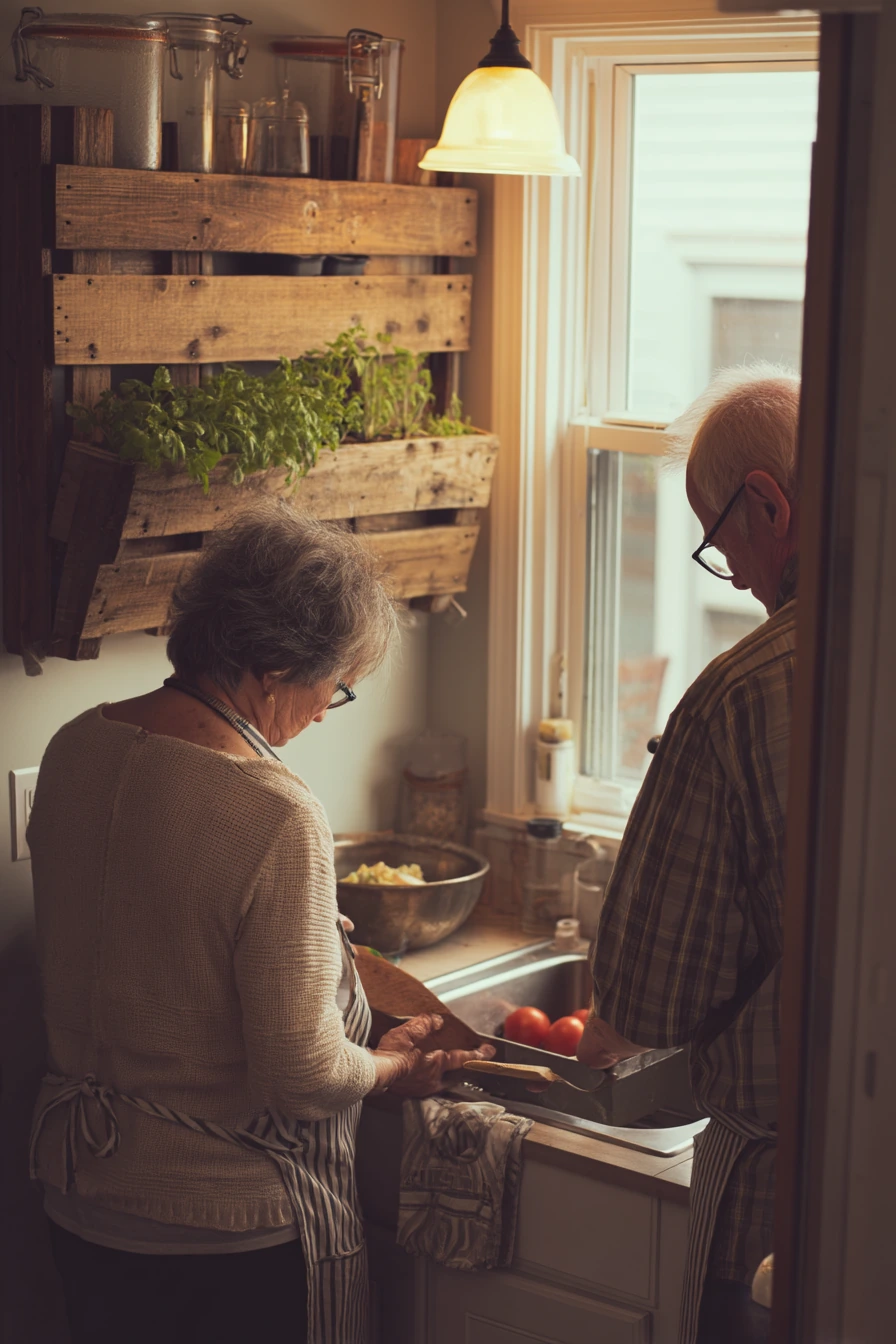
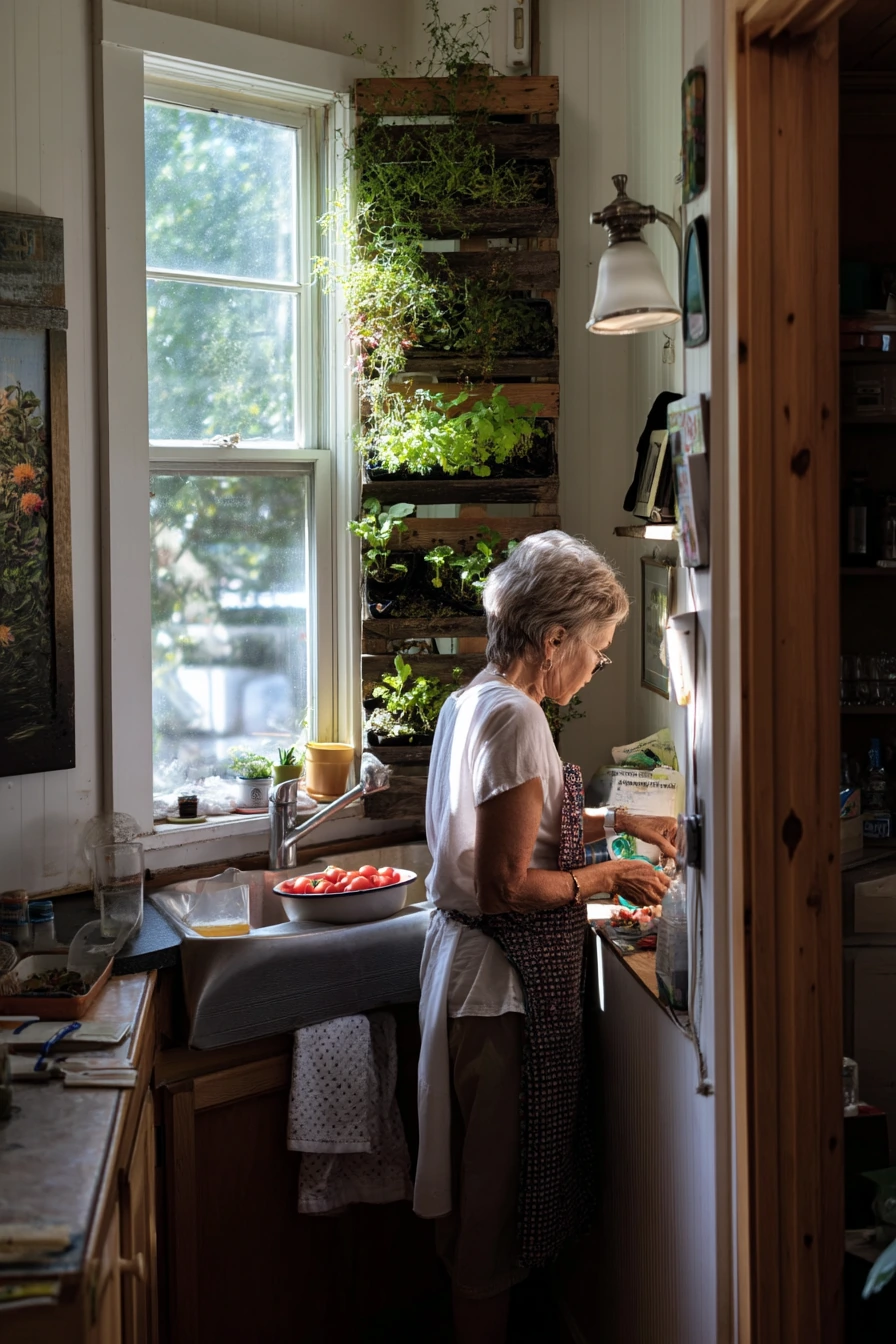
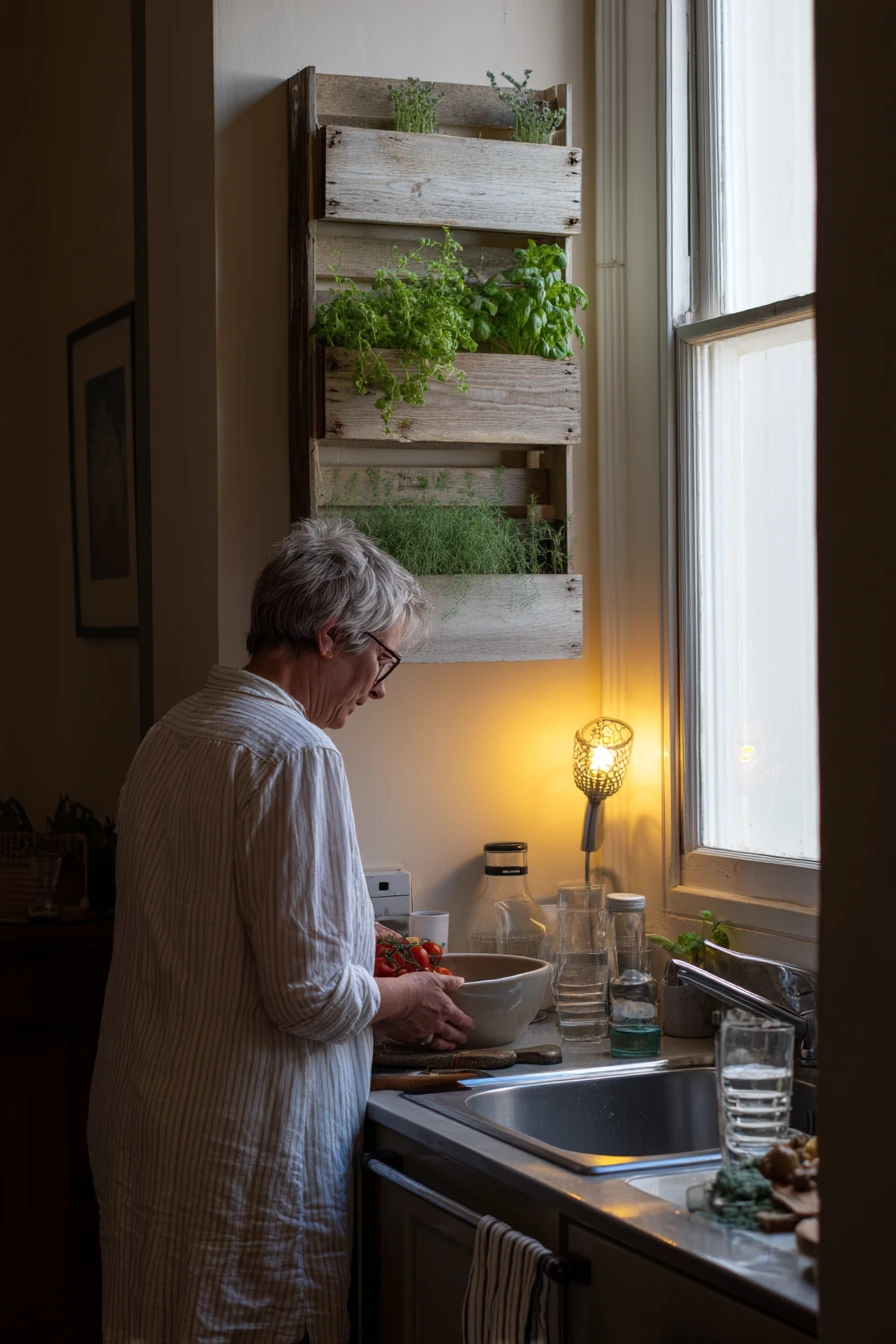
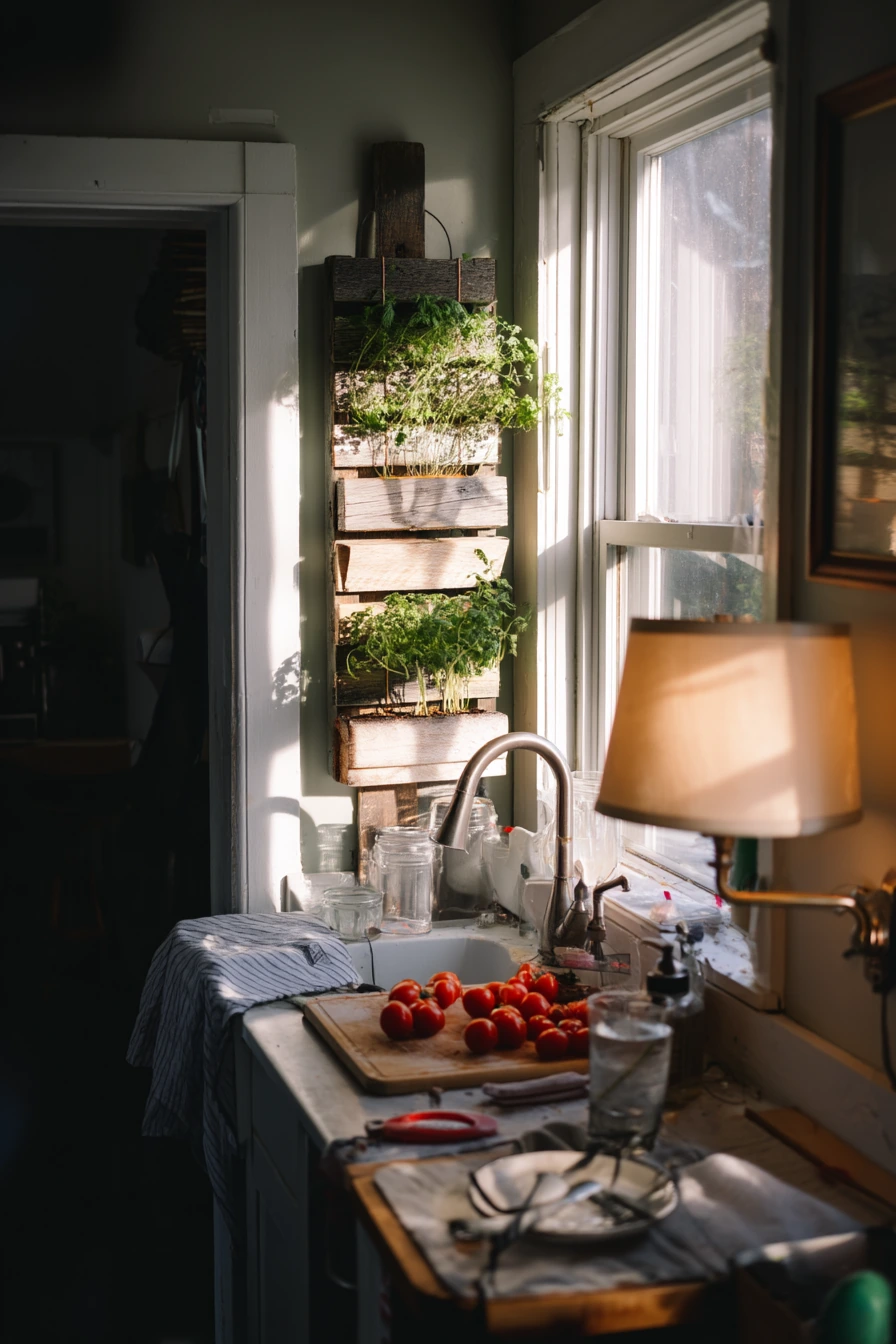
A narrow cottage kitchen often has one bright window and not much extra wall space. A slim vertical pallet garden beside the window turns that light into fresh flavor. Use a salvaged pallet cut down to a narrow panel, then attach small shelves or pocket planters that hold parsley, chives, strawberry starts, and calendula.
This setup works best when it is close to where you cook. If you are prepping dinner with a bowl of tomatoes on the counter, you can snip herbs without leaving the sink area. Keep it honest and functional: a dish towel half-draped, reading glasses nearby, and a water glass by the sink fits real kitchen life. Calendula adds color and can handle indoor light, while strawberries need the brightest spot closest to the window.
To style it, keep the pallet wood visible and let the plants be the main detail. Use simple labels on each pocket so anyone in the house knows what to cut. Place a small catch tray below the lowest pots to protect the wall and floor. If the room has warm lamp light mixed with afternoon window light, choose planters in one finish (all clay or all zinc) so the scene stays calm.
- Seal the pallet with a water-based clear coat so it wipes clean.
- Use a narrow profile so it does not bump elbows in a tight kitchen walkway.
- Rotate pots weekly for even growth toward the window.
- Deadhead calendula to keep blooms coming and reduce mess.
- Keep a small spray bottle for quick watering when the top soil dries.
Pro Design Tip: Match planter height to eye level at the sink, so herbs feel easy to grab and the wall garden becomes part of the kitchen workflow.
Budget Considerations: A salvaged pallet is often free; buy a few quality herb pots with drainage and reuse yogurt cups as hidden drip liners.
3 Backyard Fence Privacy Garden
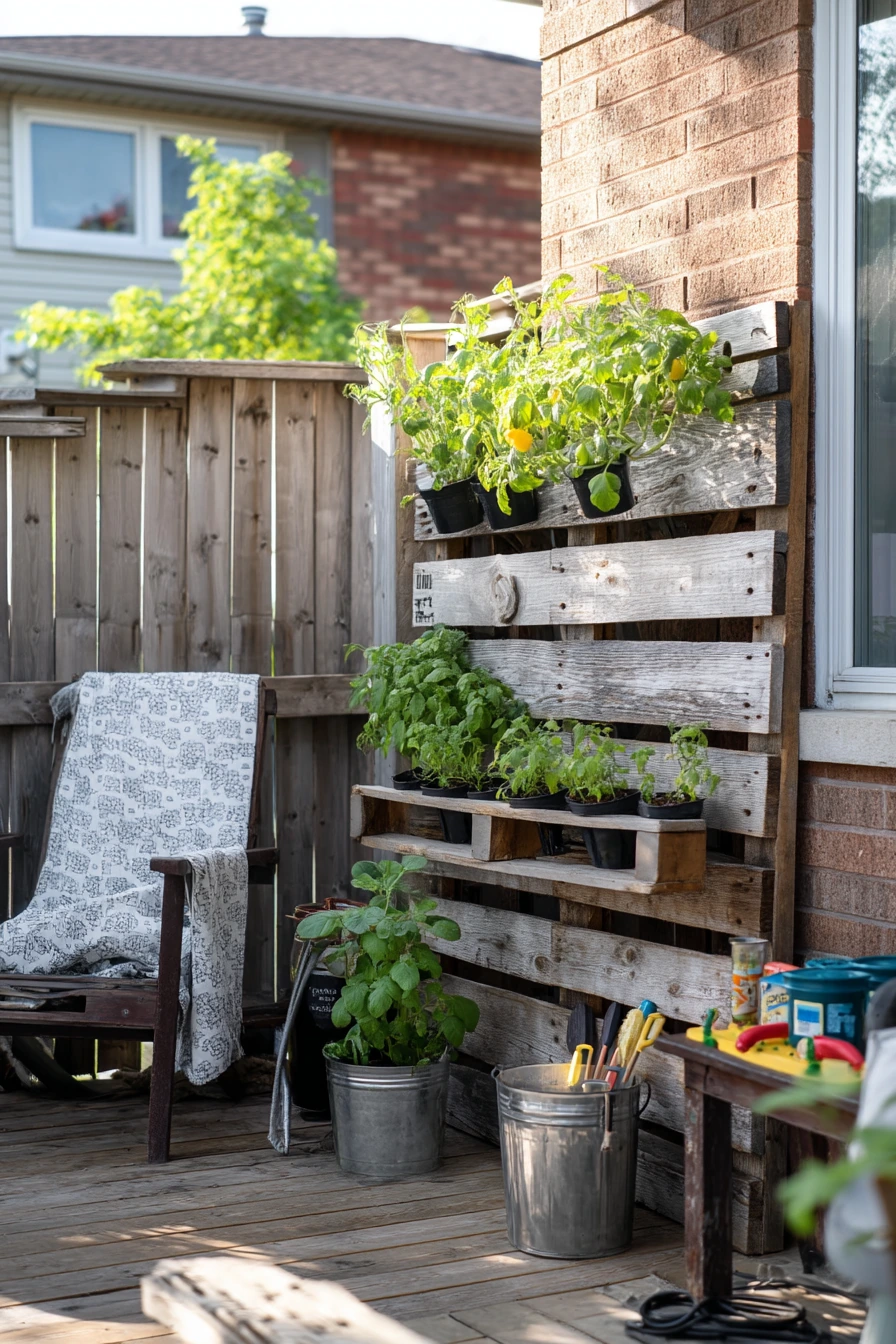
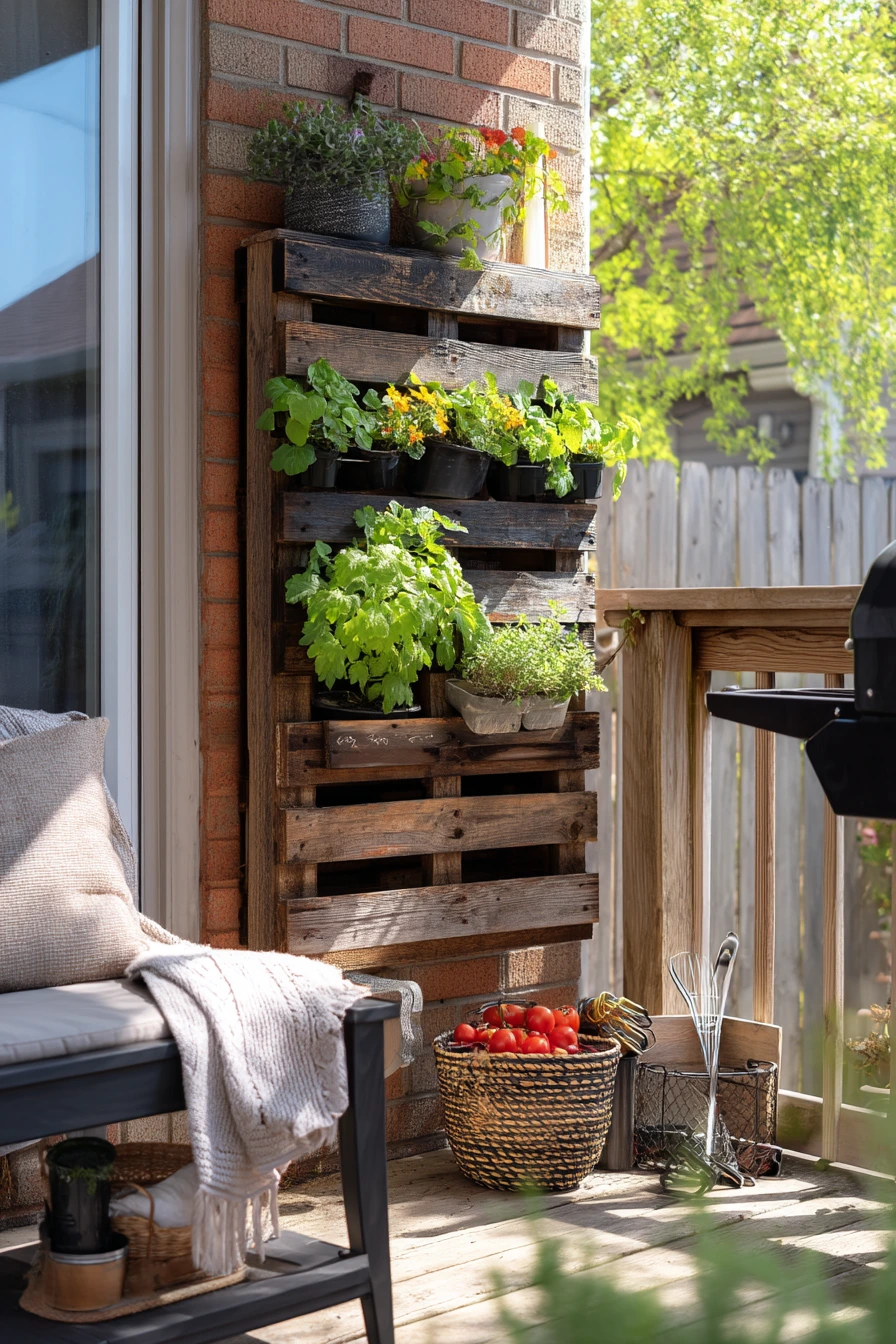
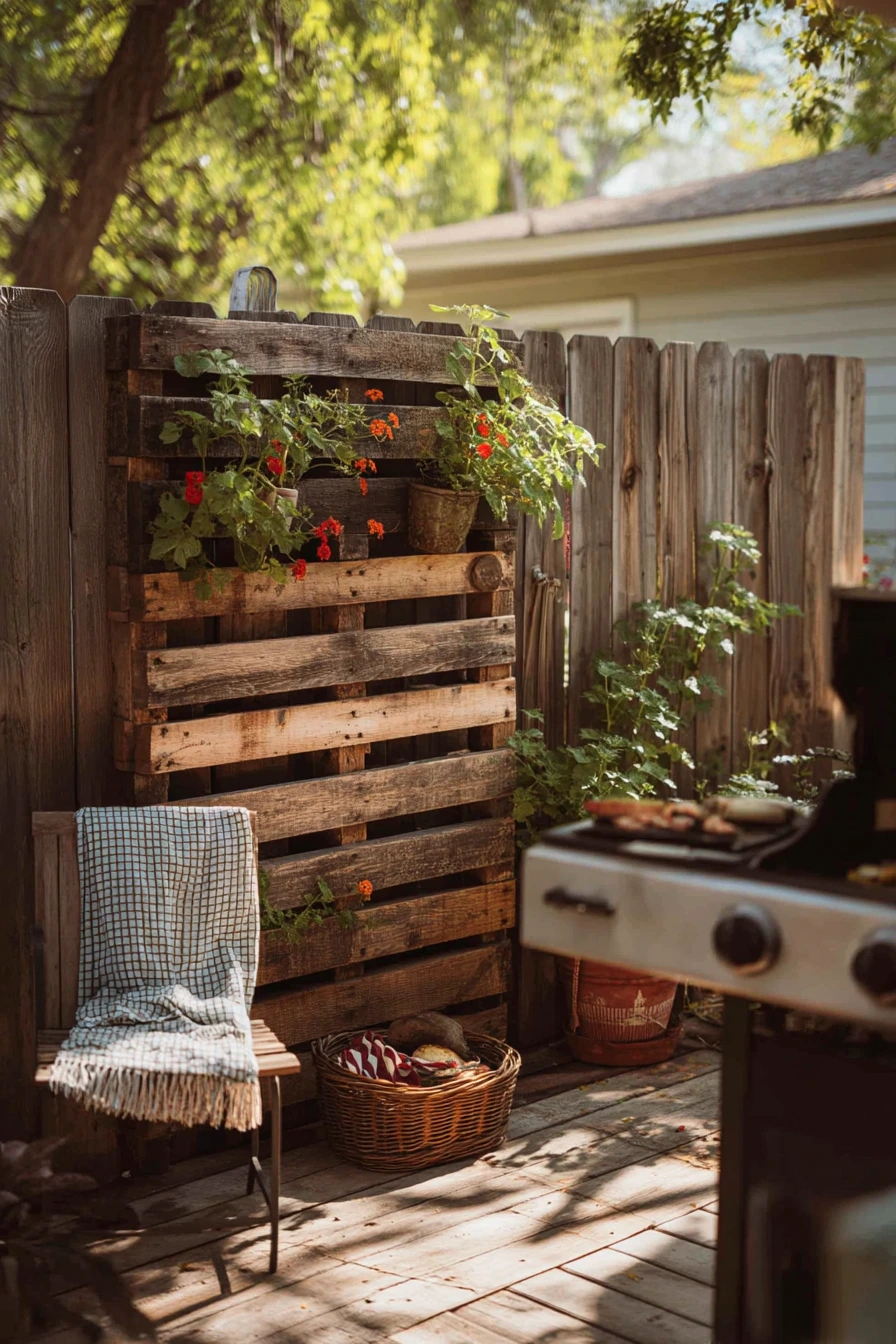
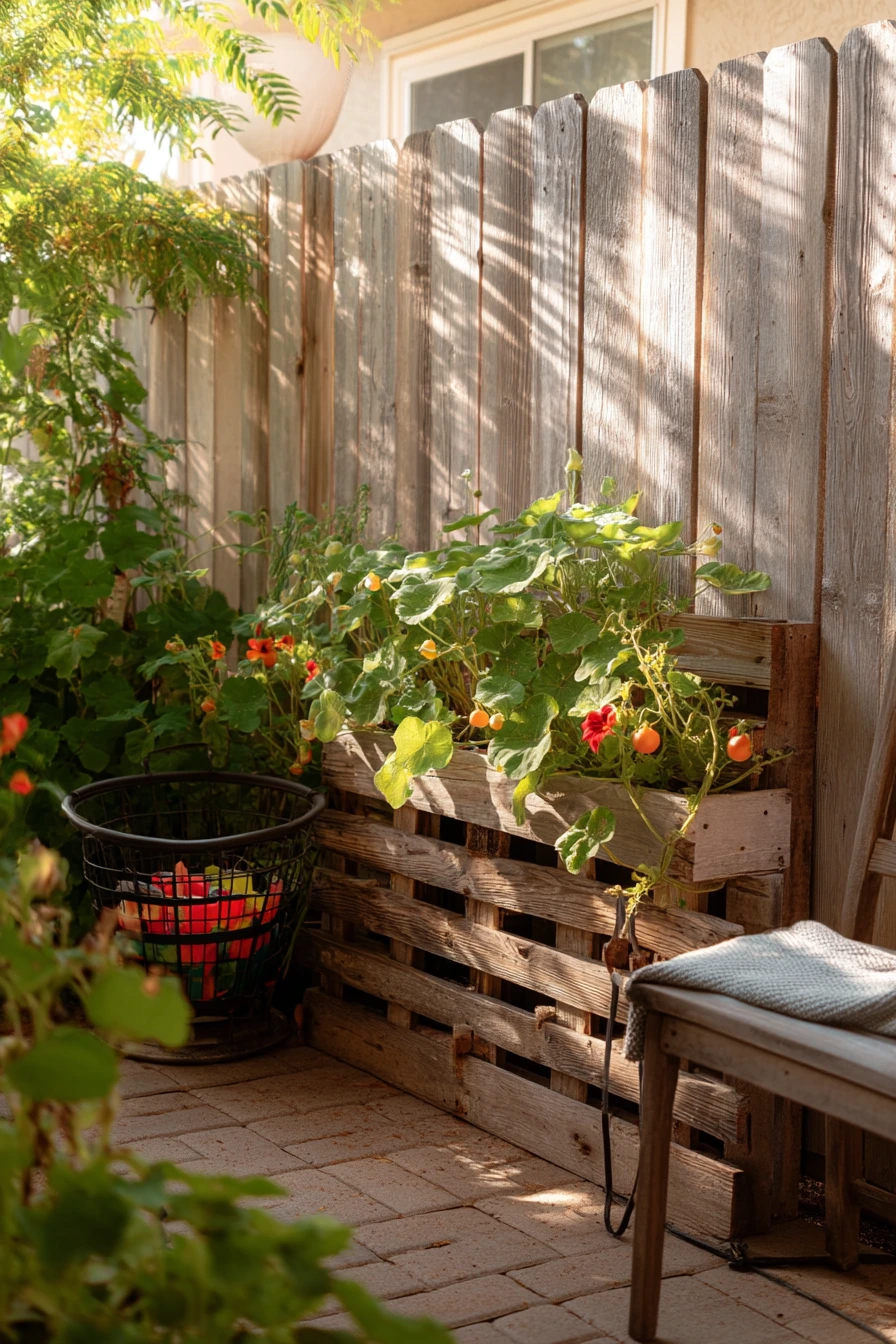
A weathered backyard fence is the perfect place for a vertical pallet garden that also works like a budget privacy screen. Stack pallet slats to create a taller panel, then attach recycled tins as planters. This adds height and greenery without taking up patio space, which helps during a weekend barbecue when chairs, toys, and a grill already fill the yard.
Choose plants that look full and handle outdoor sun: pepper plants, nasturtiums, and cherry tomatoes. Put tomatoes and peppers in the largest containers, and use nasturtiums to spill over edges and cover gaps. Recycled tins can work, but always add drainage holes and a layer of small stones at the bottom. In a family yard, keep it safe by placing heavier pots low and securing the pallet panel to fence posts so it cannot tip.
To style it, lean into the easygoing suburban mood. A kid toy basket near a patio chair, grill tongs on a side table, and a slightly wrinkled throw on a bench makes the space feel real and welcoming. Add a simple string of hooks on the side of the pallet for gloves and a small hand rake. If evening light comes from the house, tuck a small solar light at the base so the plants are visible after sunset.
- Use exterior screws and two brackets to anchor the pallet panel to the fence.
- Pick compact tomato varieties to reduce weight and keep pruning simple.
- Water deeply and less often, since tins dry out fast in summer.
- Train tomato stems with soft ties so fruit stays off the ground.
- Plant nasturtiums near edges to soften the look and attract pollinators.
Pro Design Tip: Repeat the same tin size in rows for a cleaner look, then add one or two different containers as accents.
Budget Considerations: Recycled tins are cheap, but spend a little on outdoor potting mix and plant supports so vegetables produce well.
4 Tiny Patio Apartment Corner
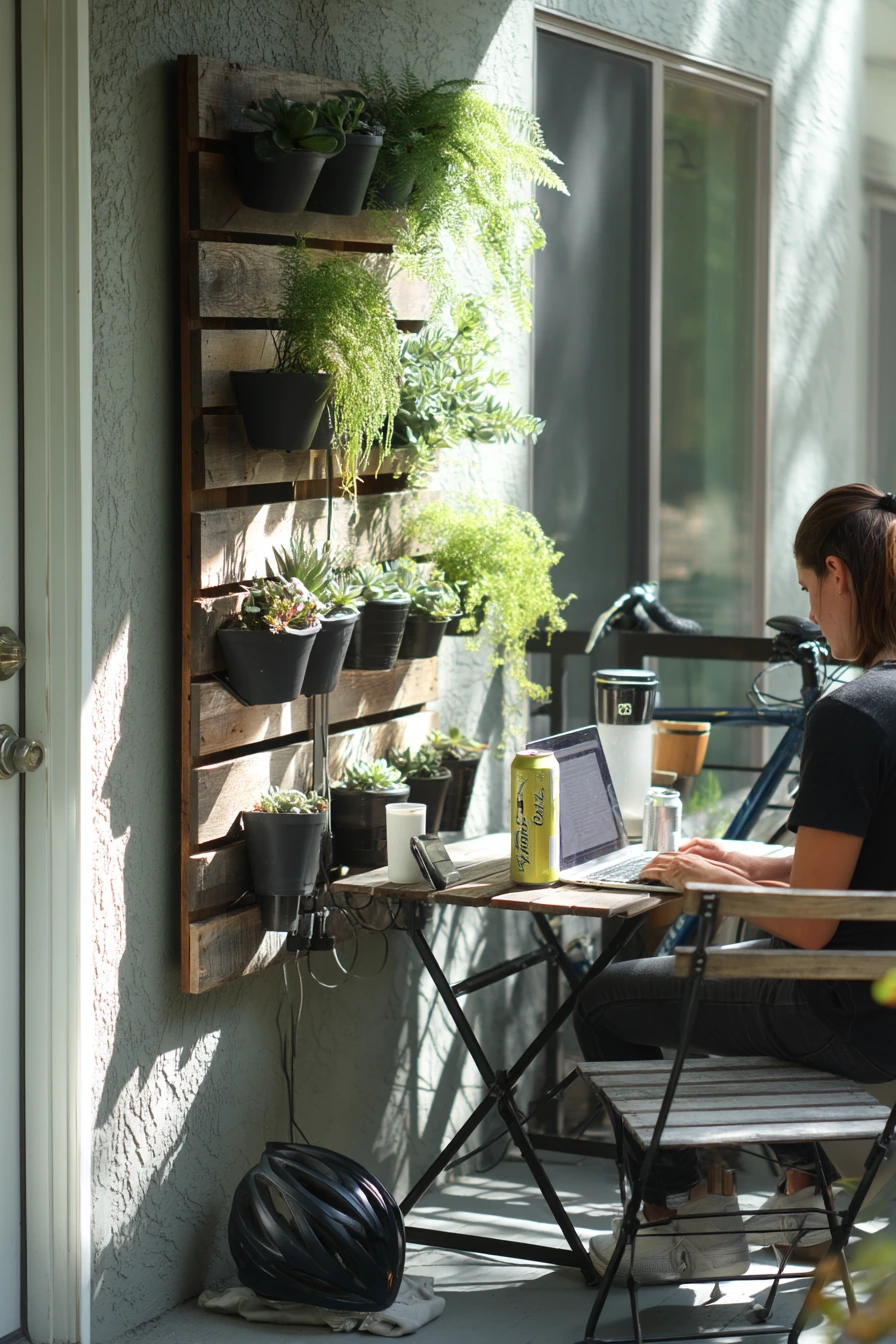
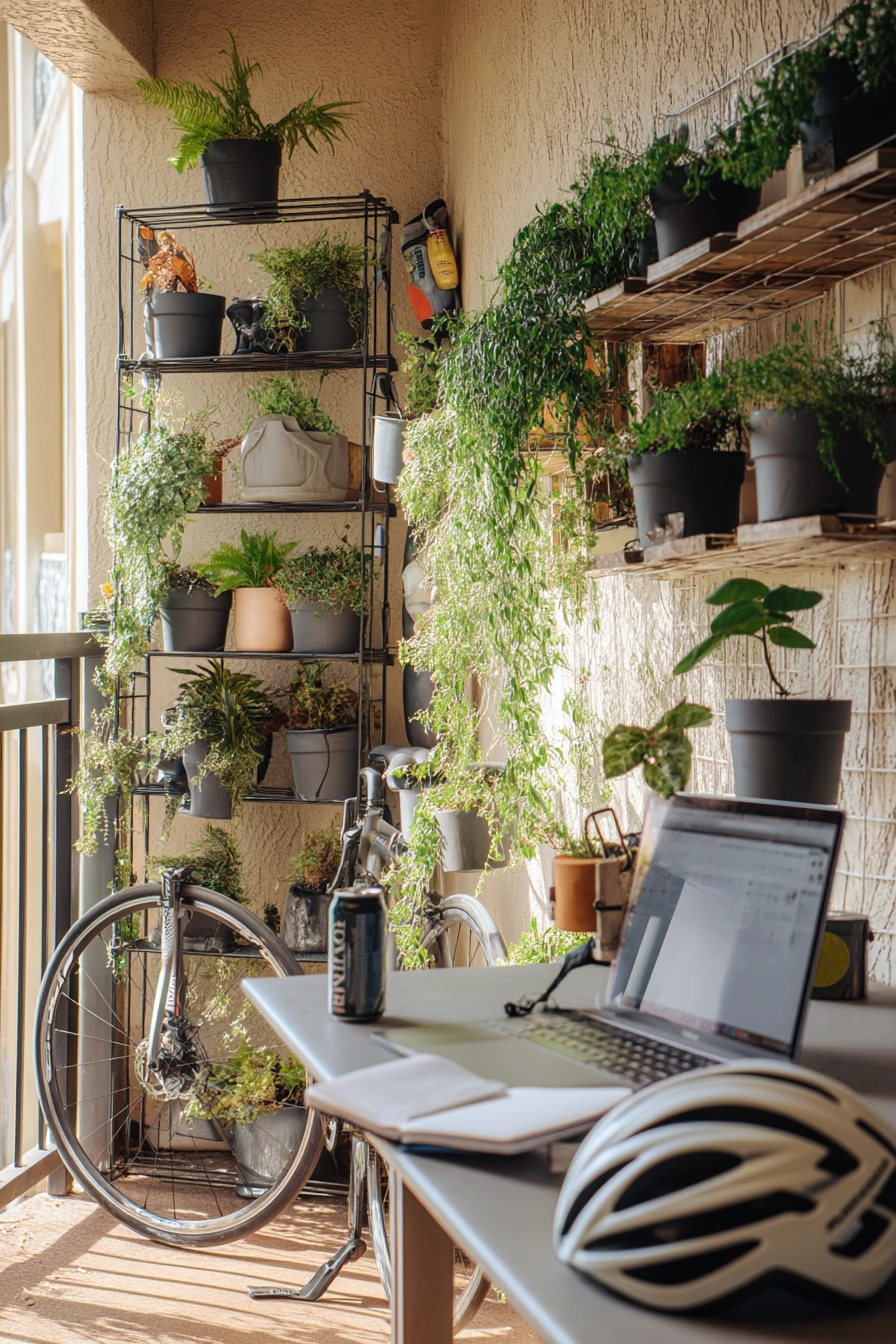
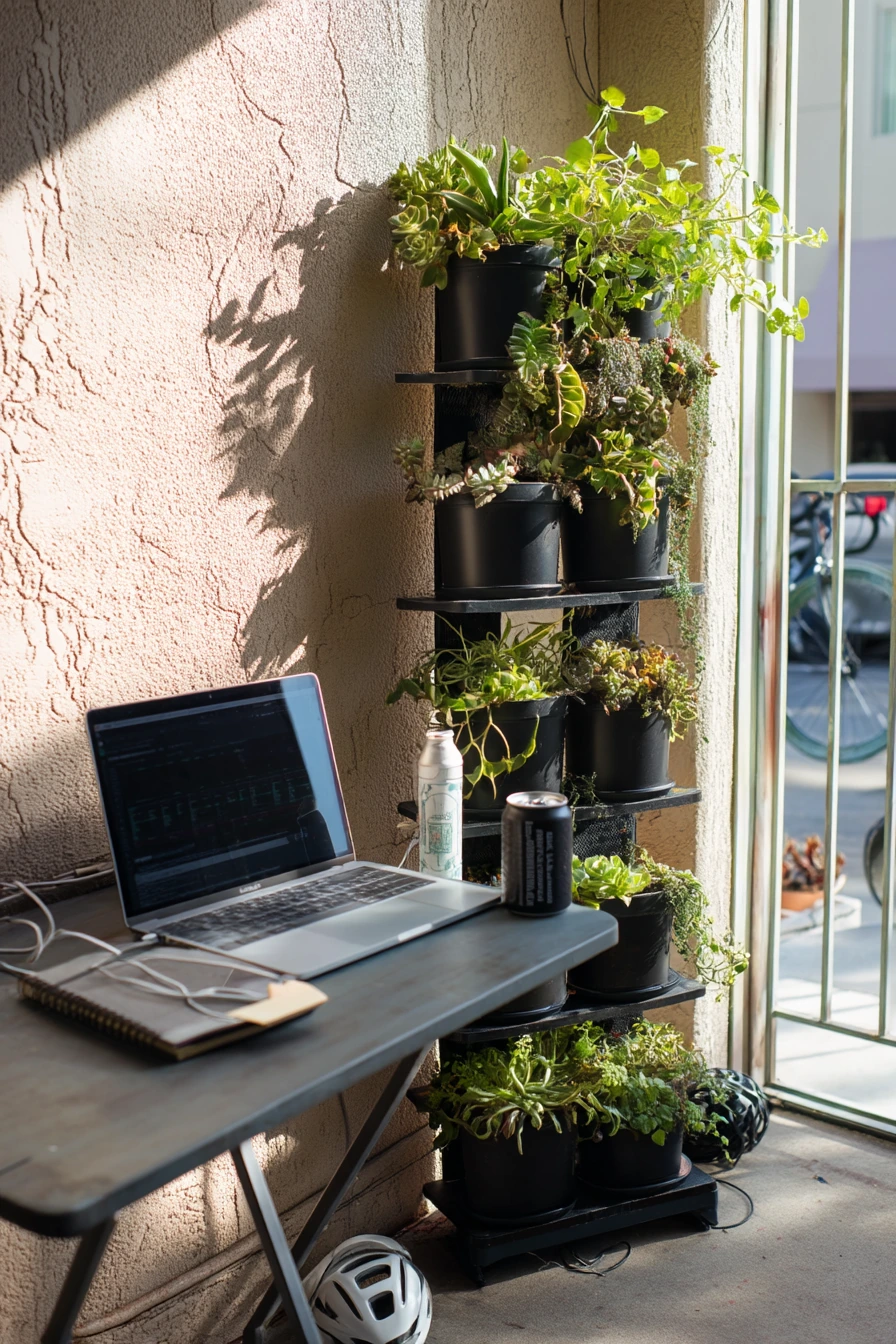
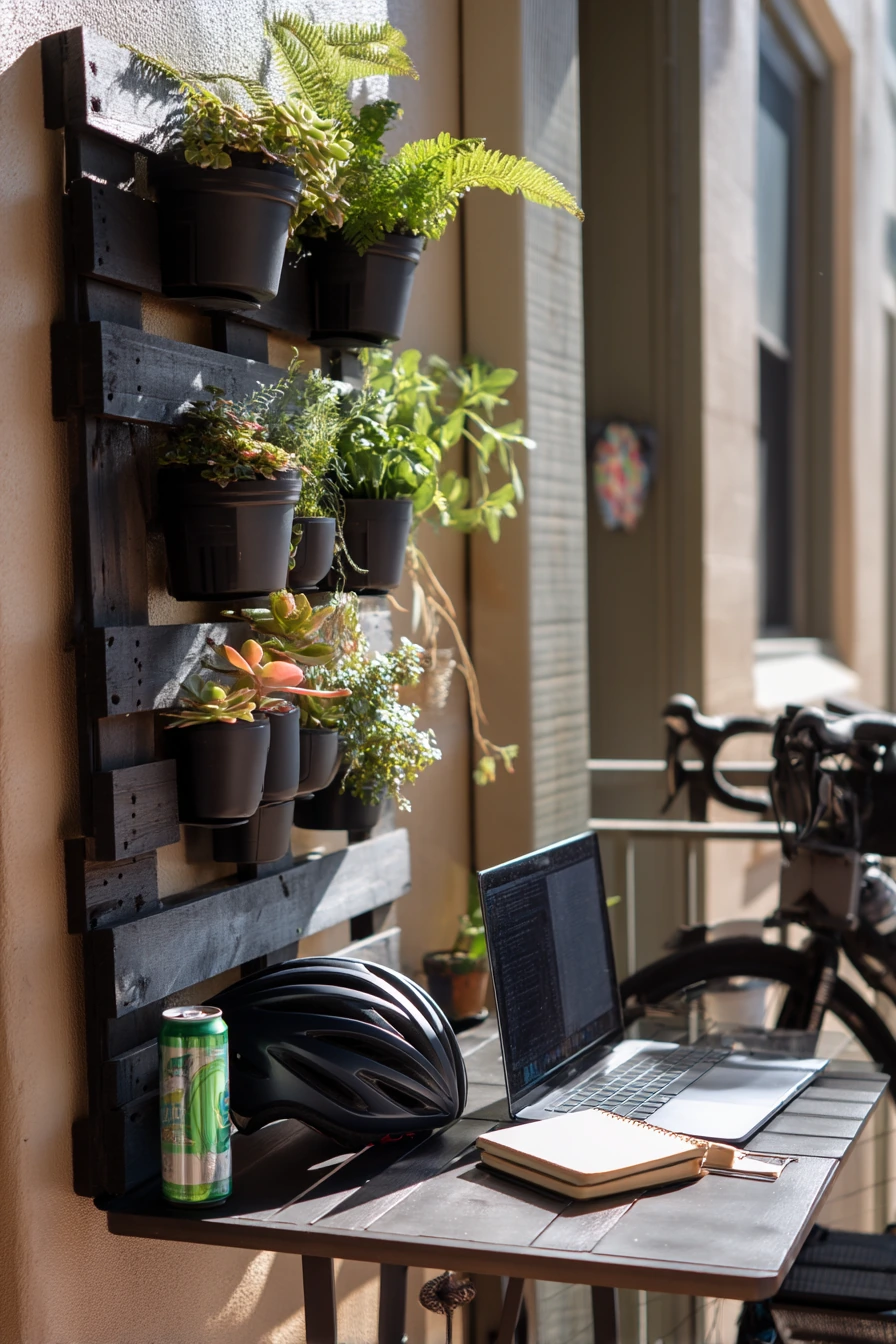
A city patio corner can feel crowded fast, so a slim pallet rack is a smart way to add plants without losing walking space. Use a narrow pallet frame and attach small shelves for matte black pots. This keeps the look clean but still lived-in, which fits an urban home where a fold-out table and laptop may share the same spot.
Pick plants that suit bright, bouncing light off stucco. Succulents do well with morning sun, trailing pothos fills space quickly, and compact ferns add soft texture if the corner stays partly shaded. Place succulents on the top shelf where they get the most light, and put ferns lower where the air is cooler. If you work outside, keep a cold seltzer can and a notebook on the table, but make sure water stays away from the laptop. A small watering bottle with a narrow spout helps you control drips.
Style details matter in a small scene. A bicycle helmet by the door and a phone charging cable can look messy, so corral them with a small tray or wall hook beside the pallet. Use pots in one color (like matte black) so different leaf shapes stand out. Add one trailing pothos at the side to frame the rack and make the corner feel taller.
- Choose a pallet rack depth under 10 inches to keep the patio open.
- Use saucers under every pot to protect concrete or tile from stains.
- Group plants by light needs and avoid mixing high-sun succulents with deep-shade ferns.
- Water succulents only when soil is dry; ferns need more steady moisture.
- Add a small wall hook for tools and keep cords off the floor.
Pro Design Tip: Keep pot color consistent and vary only plant texture, so the vertical garden looks calm even in a busy city corner.
Budget Considerations: Start with a few small plants and fill in over time; pothos cuttings root easily in water and cost very little.
5 Kids Helping in the Mudroom
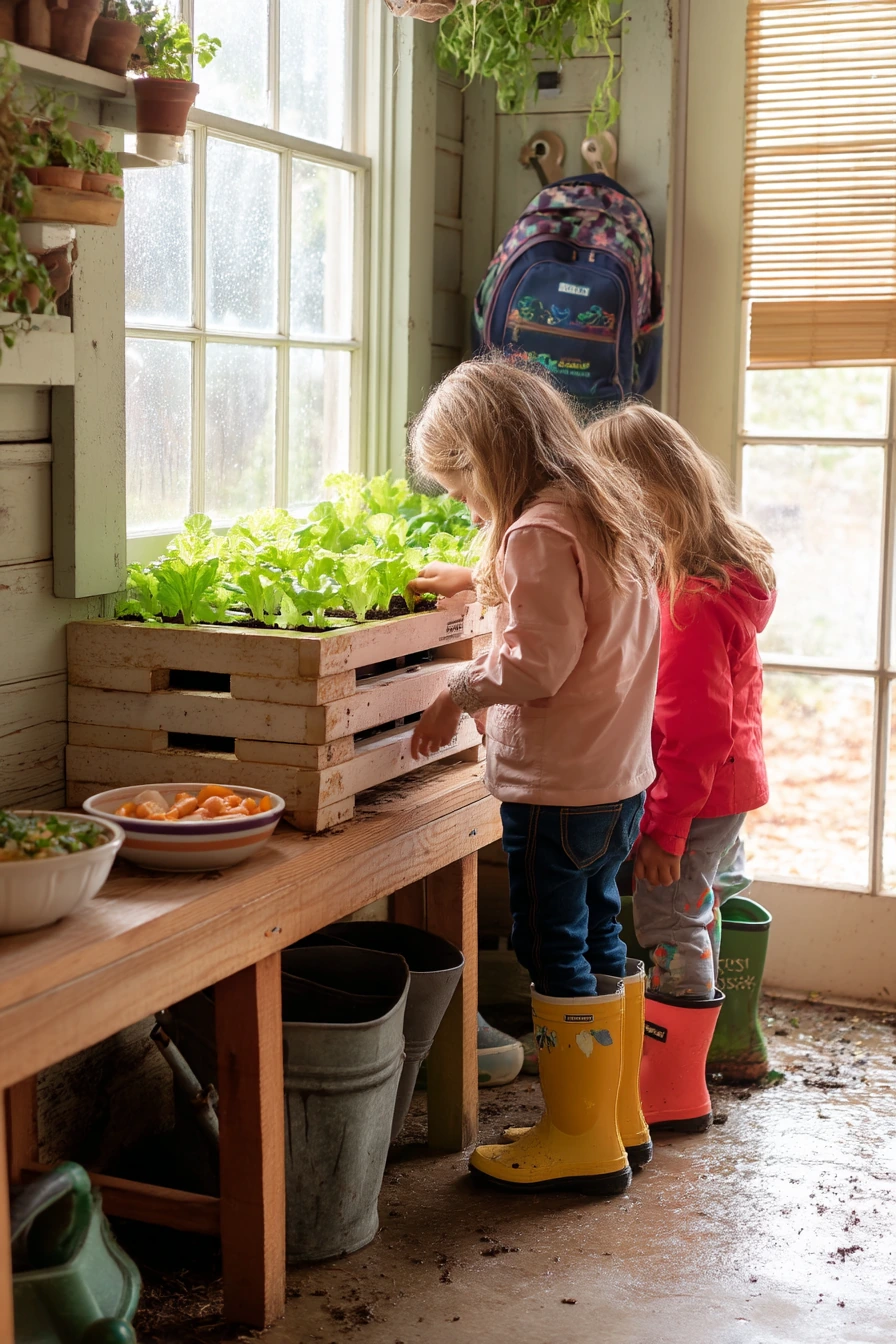
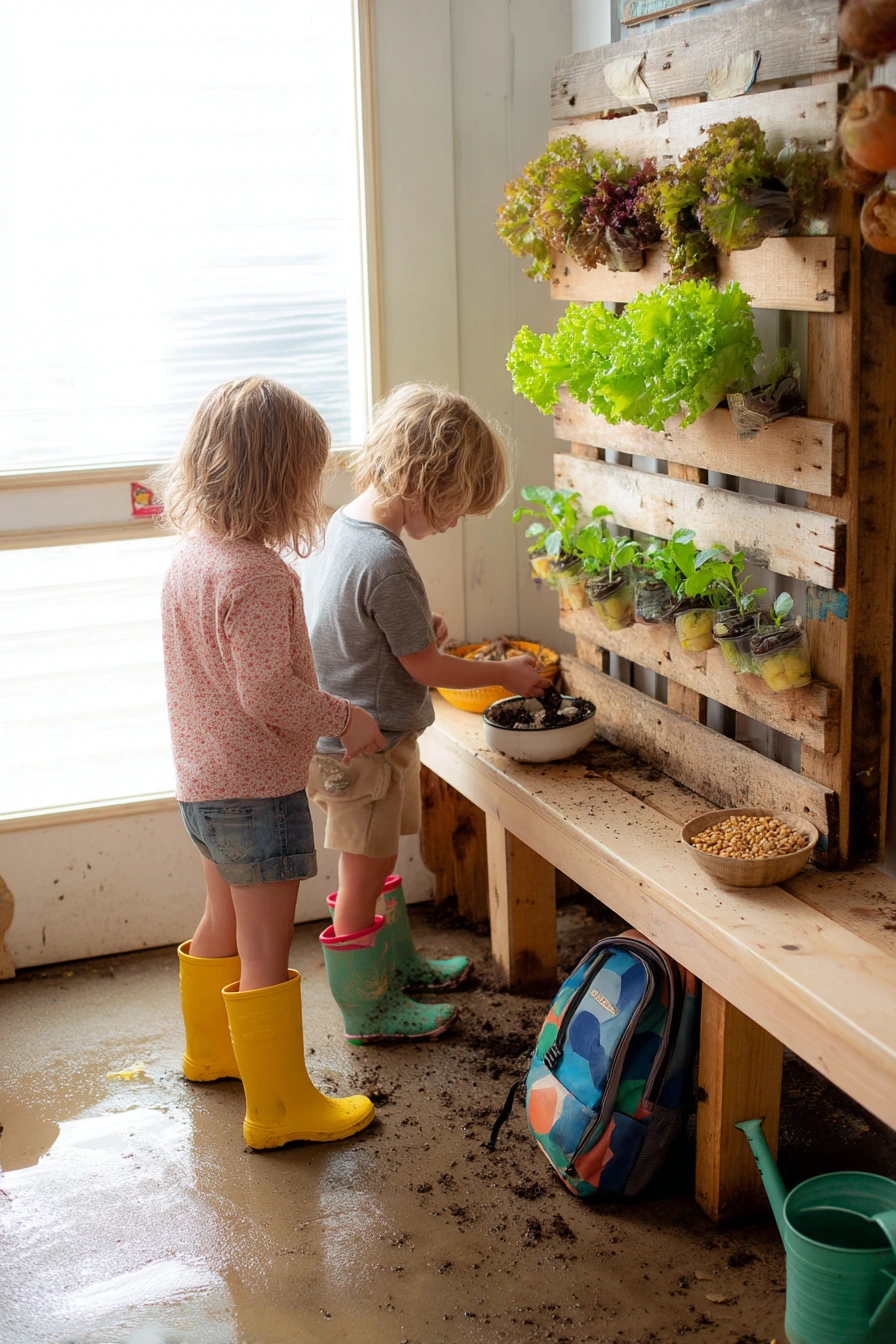
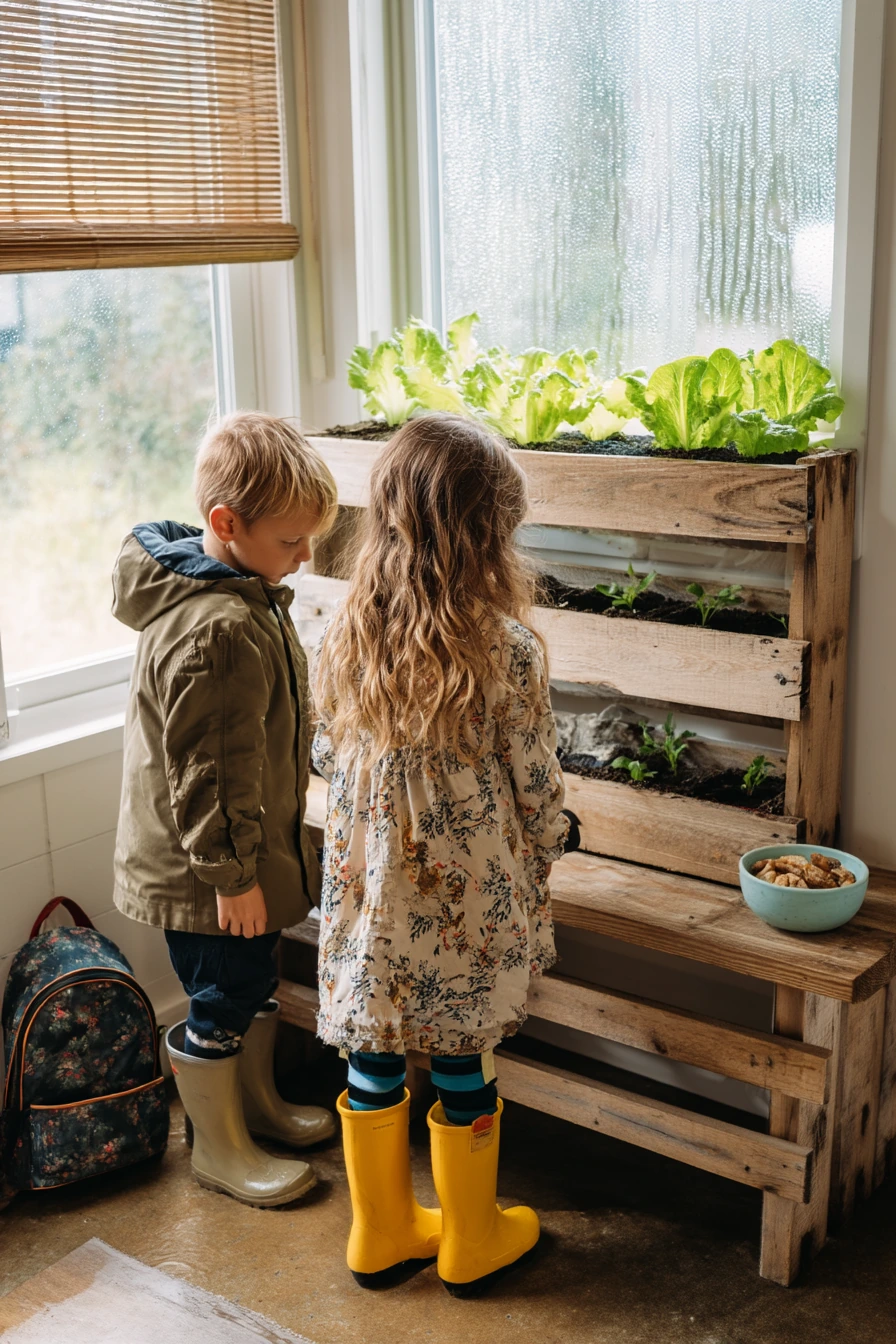
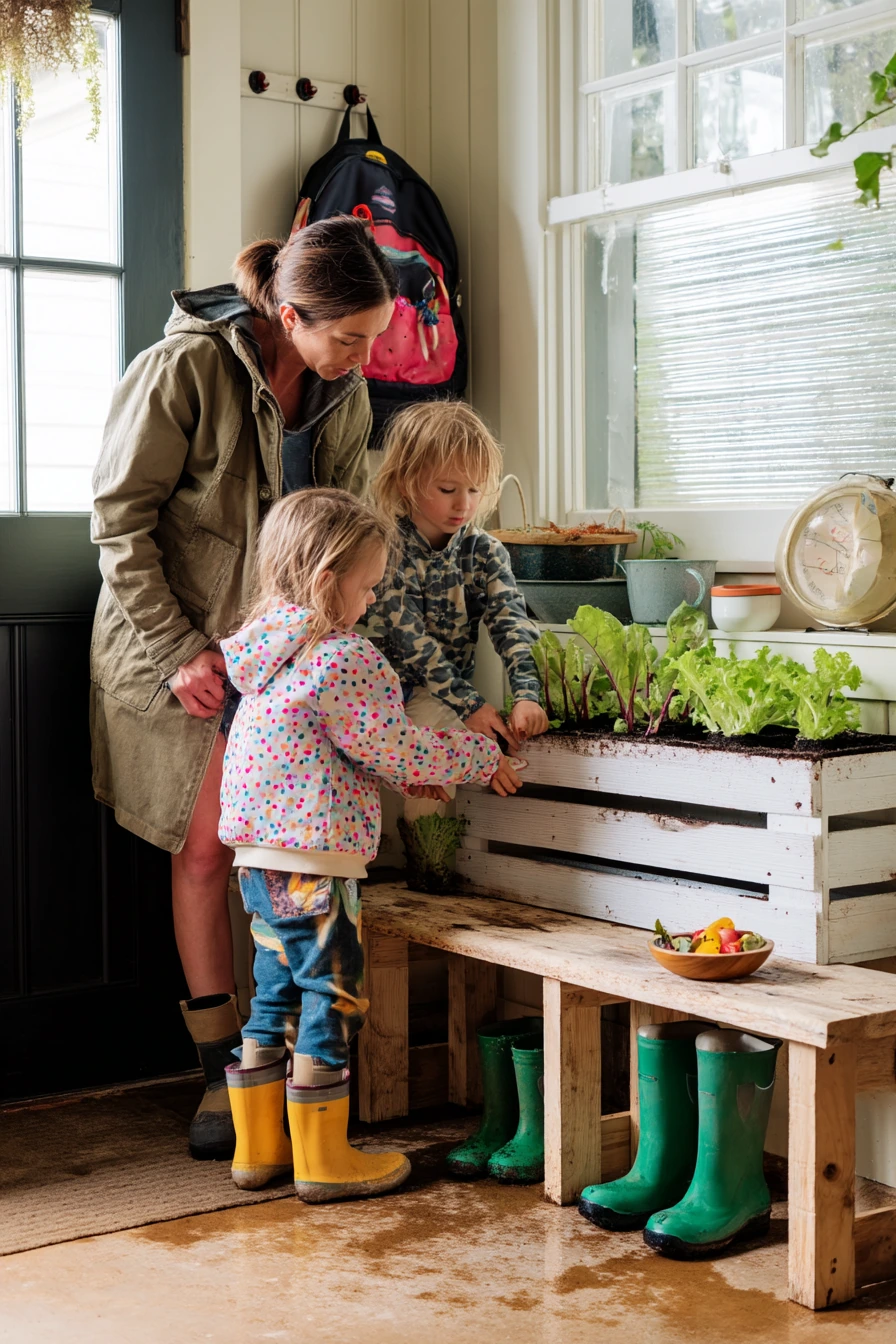
A mudroom off the back door is a smart place for a family-friendly vertical pallet garden. It is close to the yard, close to the sink, and easy to check every day. A sturdy pallet planter with pockets can hold lettuce, spinach, and marigolds, so you can harvest greens while you are already taking off shoes and putting down backpacks.
Make it kid-ready. If two kids in rain boots are placing seedlings with a parent, keep the lowest pockets for the plants they can reach. Marigolds belong near the edges because they add color and help reduce pests when the pallet is later moved outdoors. Muddy paw prints and a chipped watering can are normal in a busy entry, so protect the wall with a waterproof backing and place a boot tray underneath to catch drips and soil.
To style it, keep the mood warm and a little messy. A snack bowl on the bench and a simple hook row above the pallet keeps life moving. Use clear labels for each pocket so kids know what they are planting and what can be picked. If the mudroom gets sun-striped window light, rotate the pallet or swap pockets so greens do not stretch toward the brightest side.
- Use shallow pockets for lettuce and spinach since they have small root systems.
- Add a waterproof liner behind the pallet to stop moisture damage.
- Keep a small scoop and gloves in a hanging caddy on the side.
- Harvest outer leaves first so plants keep producing.
- Choose marigolds to add color and help with pest control when moved outside.
Pro Design Tip: Put the highest-use greens at adult hand height and the kid-friendly pockets lower, so everyone can help without crowding.
Budget Considerations: Use basic nursery six-packs for seedlings and reuse a boot tray you already own to catch water and soil.
6 Rental-Friendly Porch Upgrade
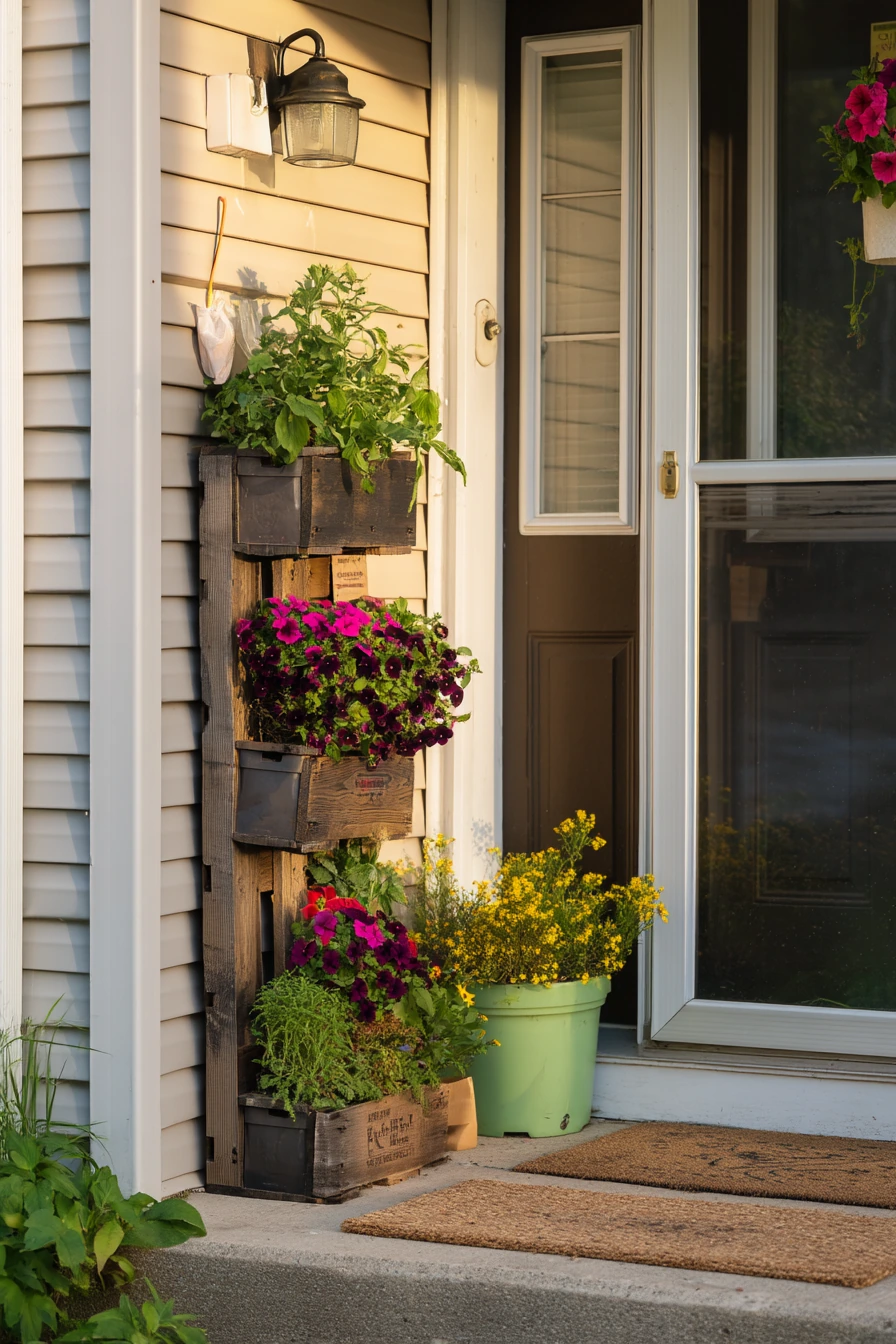
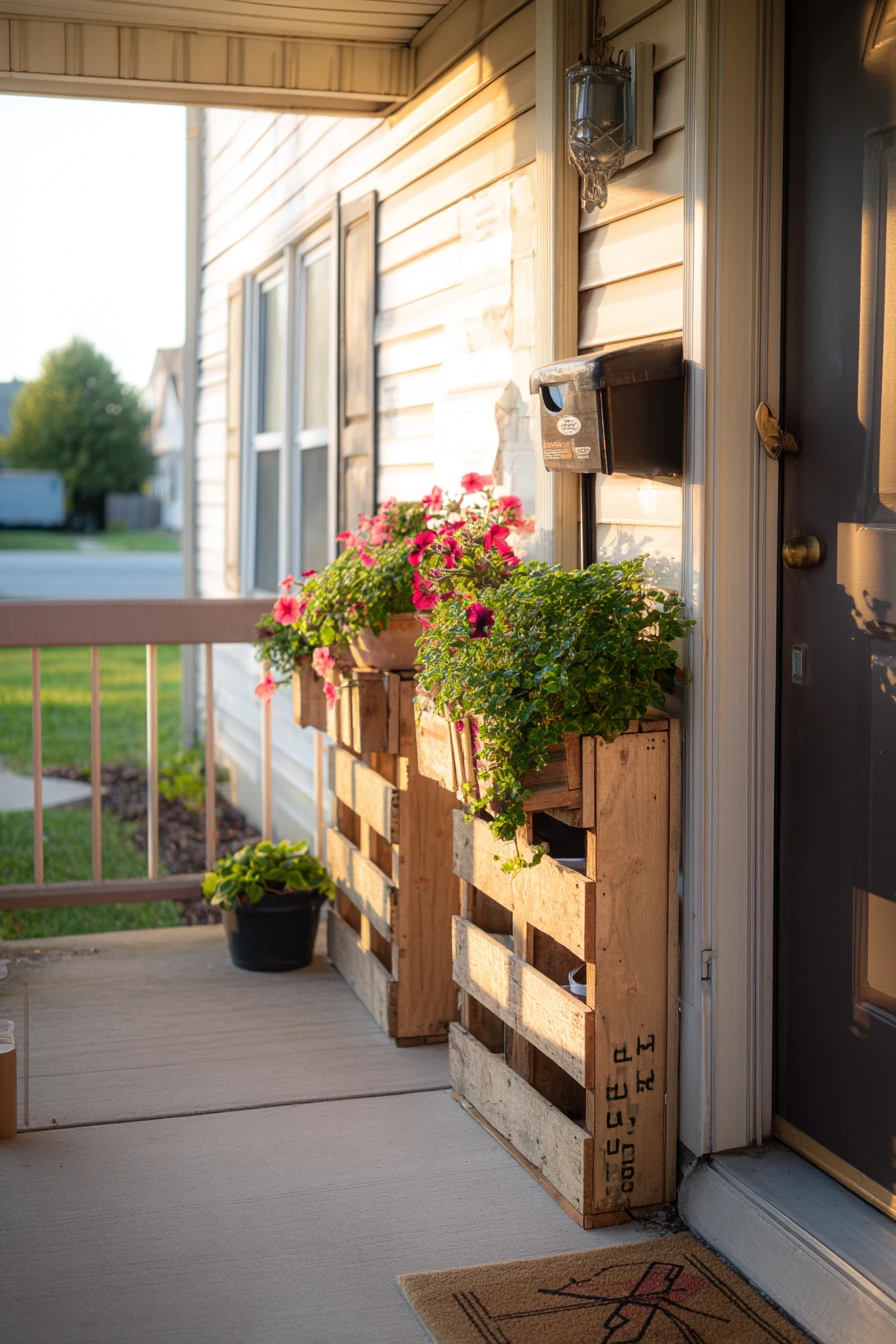
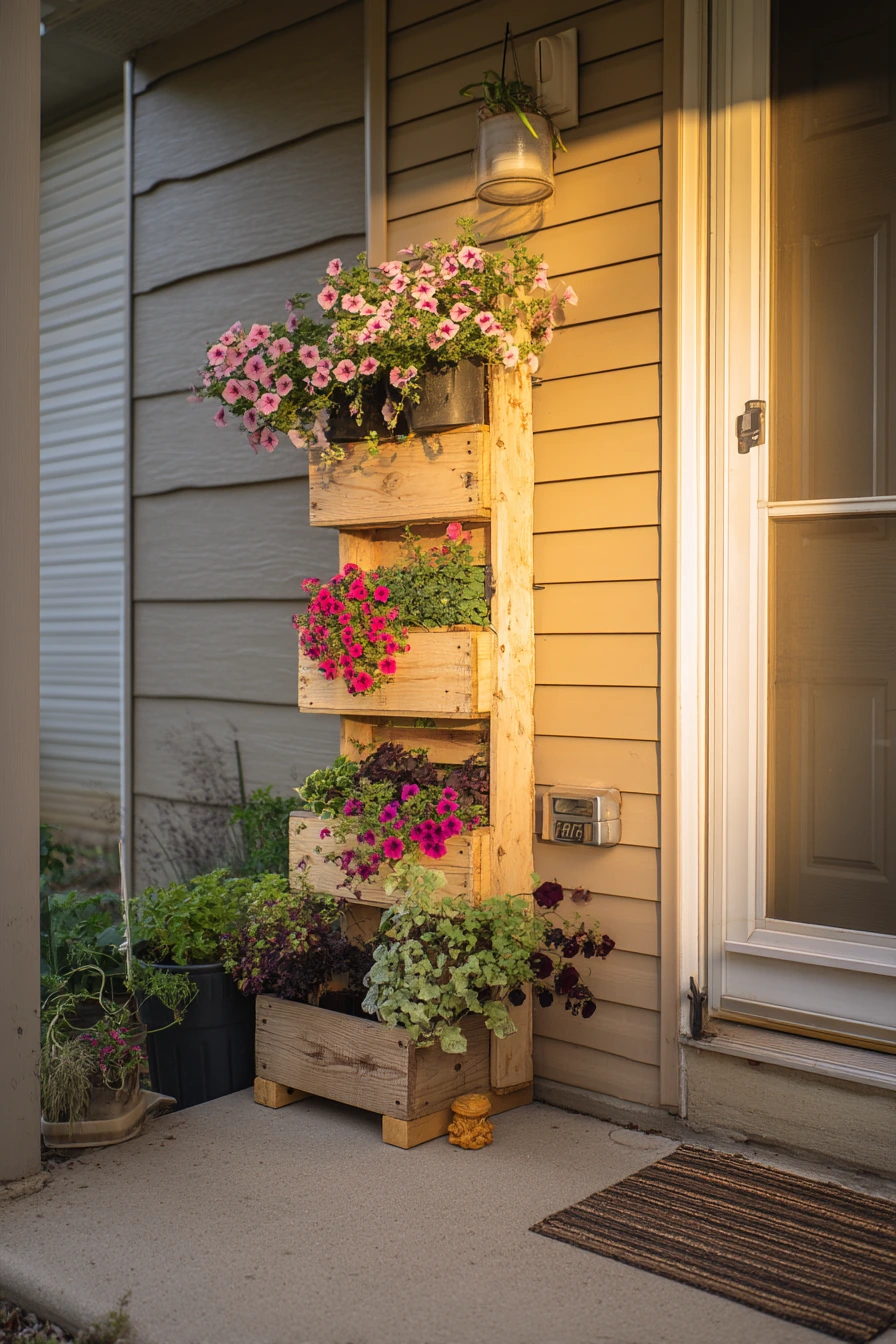
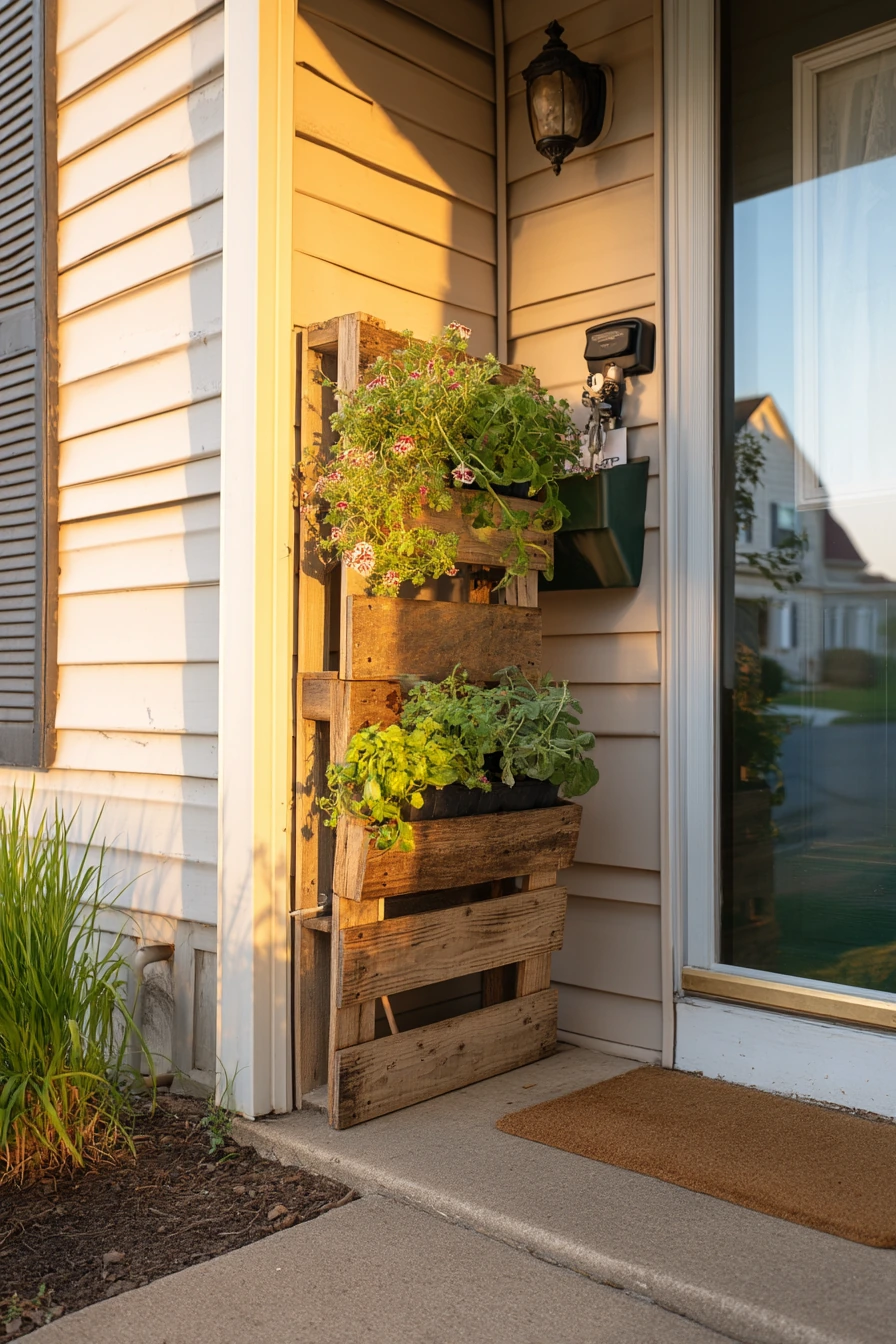
A small front porch of a rental house is a good spot for a freestanding vertical pallet garden because you can take it with you later. Instead of mounting, lean a pallet safely against siding and secure it with two anti-tip straps or a simple base so it cannot slide. This keeps it renter-friendly and still gives you height for more plants.
Use easy swap planters so the display changes with the season. Petunias add color, compact coleus gives leafy texture, and a few herbs make the porch useful. If a tenant is carrying groceries inside, the garden should not block the path. Keep it to one side of the door and leave room for a delivery box and a doormat with a bit of dust. A half-finished iced coffee on a small shelf makes it feel real, but make sure the shelf is stable and not in the drip zone.
For styling, aim for humble curb appeal. Choose planters in two finishes at most, and repeat them in a simple pattern. Add a small hook strip on the pallet side for mailbox keys and scissors. At golden hour, porch light and sunset can mix, so pick plants that look good in warm light, like petunias and chartreuse coleus. Water early so the porch is dry by evening.
- Secure the pallet with anti-tip straps or a weighted base for safety.
- Keep the bottom row for heavier pots to prevent wobble.
- Use matching trays to protect porch boards from water stains.
- Swap in cold-tolerant plants as the weather changes to keep the porch fresh.
- Place a small tool cup on a shelf for snips and gloves.
Pro Design Tip: Use one tall trailing plant near the top corner to draw the eye up and make a small porch feel larger.
Budget Considerations: A free pallet plus a few affordable annuals can make a big impact; reuse containers and buy plants in small sizes to save money.
7 Rustic Cottage Entry Garden
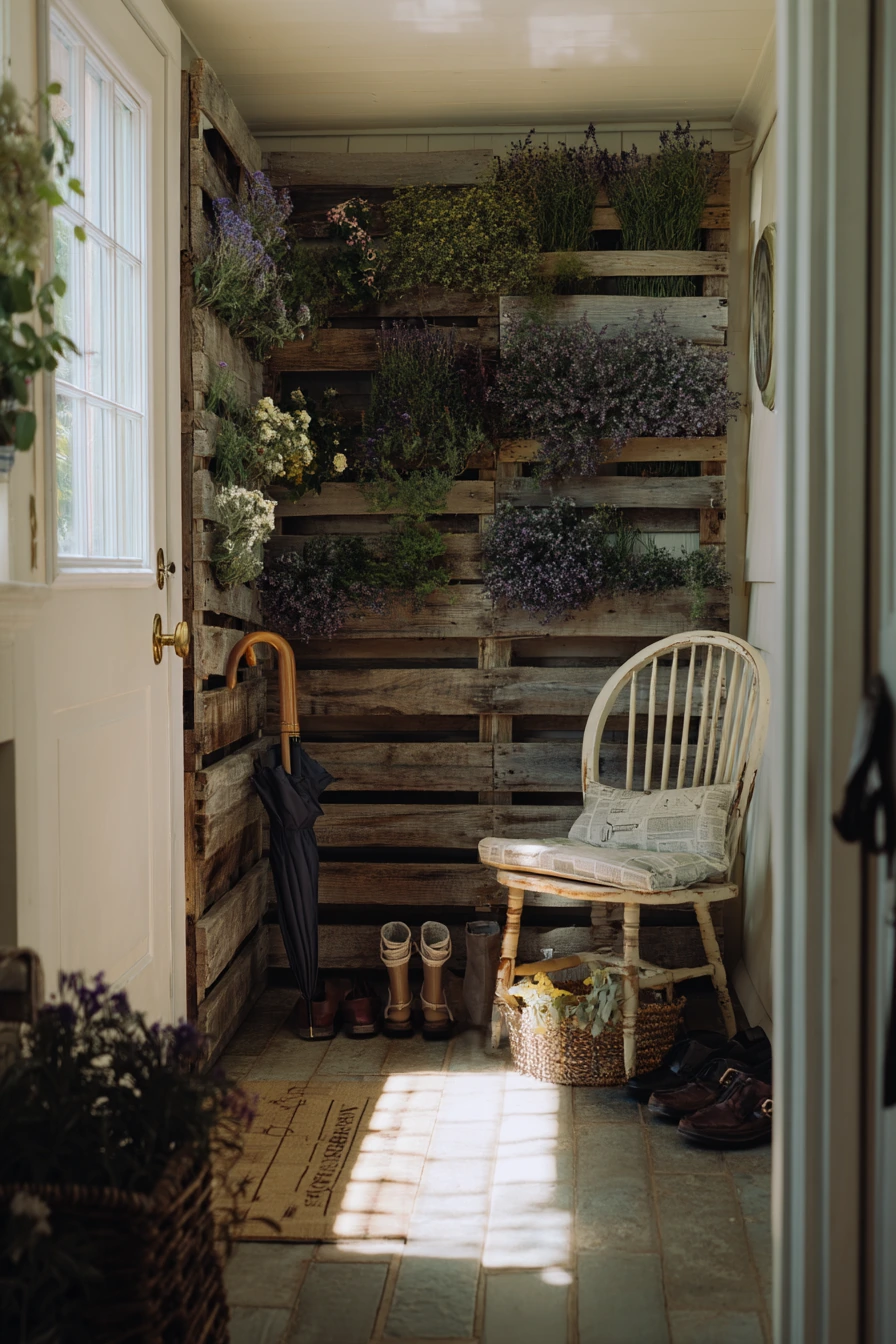
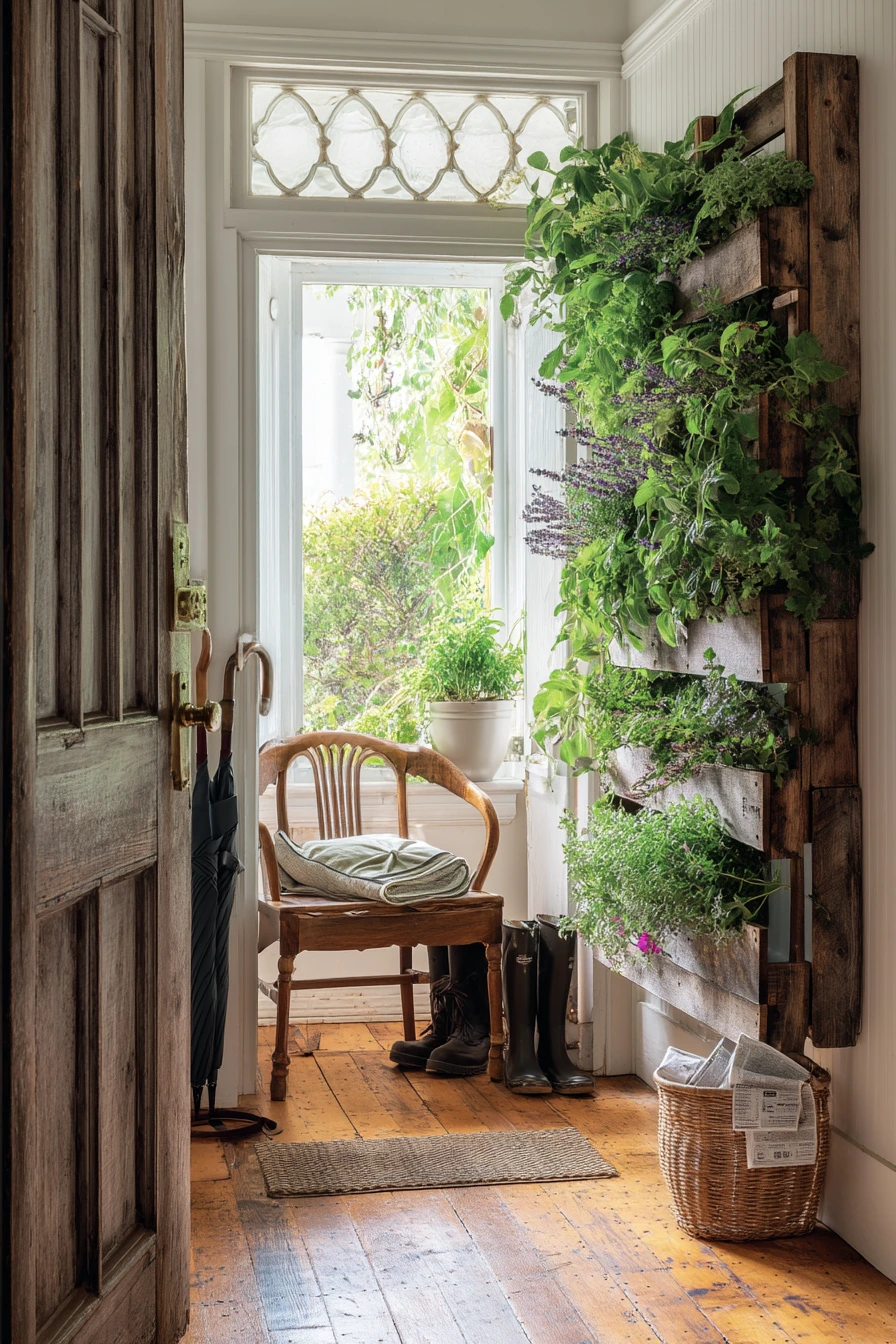
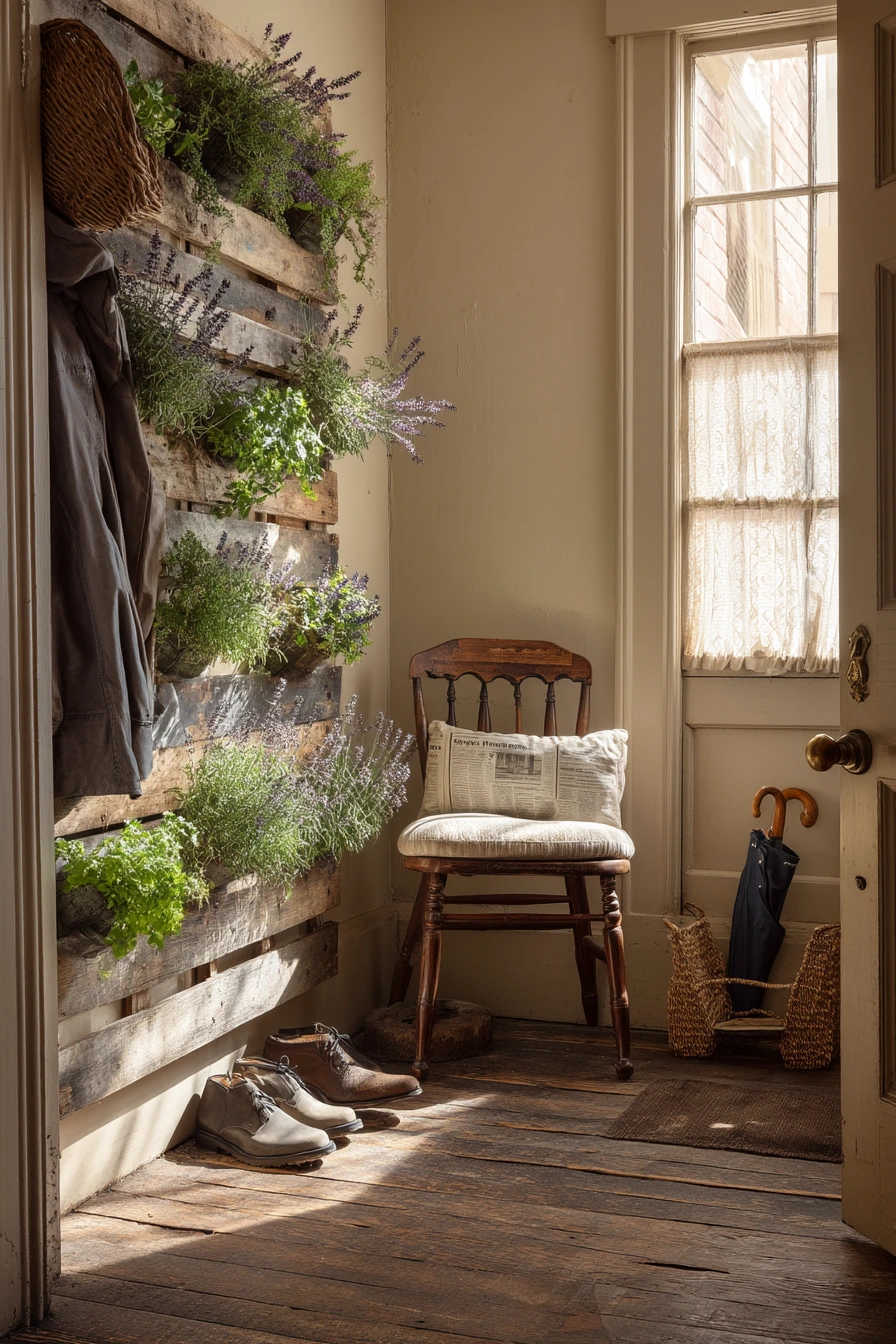
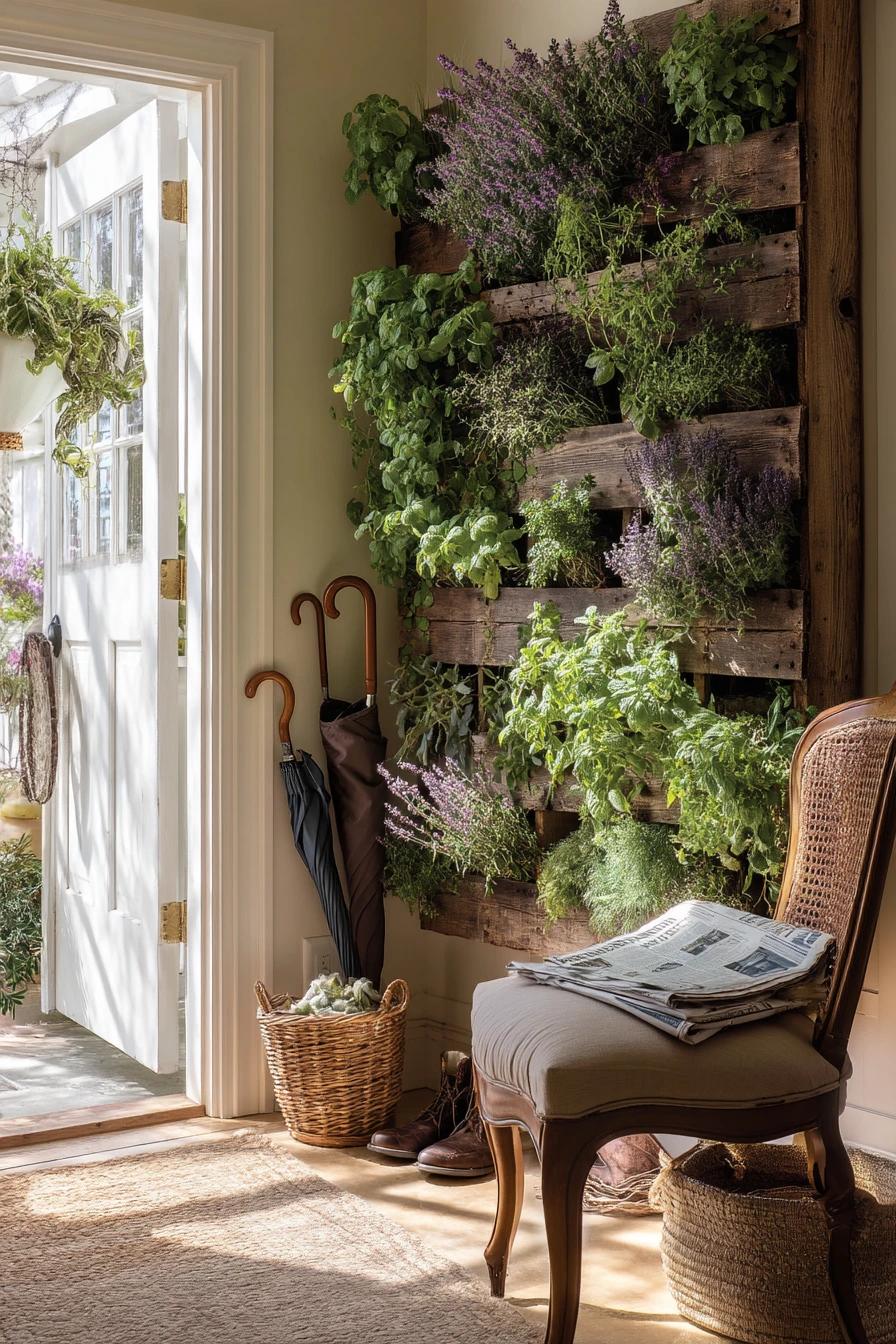
A cottage entryway is a calm place for a vertical pallet garden that smells good when you walk in. A reclaimed pallet can become a fragrant wall garden with lavender, sage, and alyssum. These plants add soft color and a gentle scent, and they look right at home with rustic textures like a cane-backed chair and a woven basket of shoes.
Mount the pallet where it gets bright, indirect light, such as near a transom window. If the entry gets quiet morning light, lavender and sage can still do well as long as they are not in deep shade all day. Use small planters with good drainage, and avoid overwatering. Sage and lavender prefer drier soil, while alyssum likes a bit more even moisture, so keep alyssum in its own pocket with a liner that holds water slightly longer.
For styling, keep it simple and useful. An umbrella stand, a folded newspaper, and a slightly rumpled cushion makes the space feel lived-in. Add a small catch shelf under the pallet for a drip tray and a place to set keys. If you want a neater look, hide plastic saucers inside a shallow wooden tray that matches the pallet color. Trim lavender after blooming to keep it compact and tidy near the door.
- Choose smaller lavender varieties that stay compact in containers.
- Use gritty potting mix for sage and lavender to prevent root rot.
- Place alyssum lower so it can trail and soften the pallet edges.
- Keep a small hand brush by the door to sweep dropped leaves.
- Install a drip tray shelf to protect floors in an entryway.
Pro Design Tip: Repeat one plant in two pockets, like sage, to create rhythm and make the wall garden look intentional.
Budget Considerations: Reclaimed pallets can be low cost; spend on quality potting mix and a few matching containers so the entry looks pulled together.
8 Modern Kitchen Herb Nook
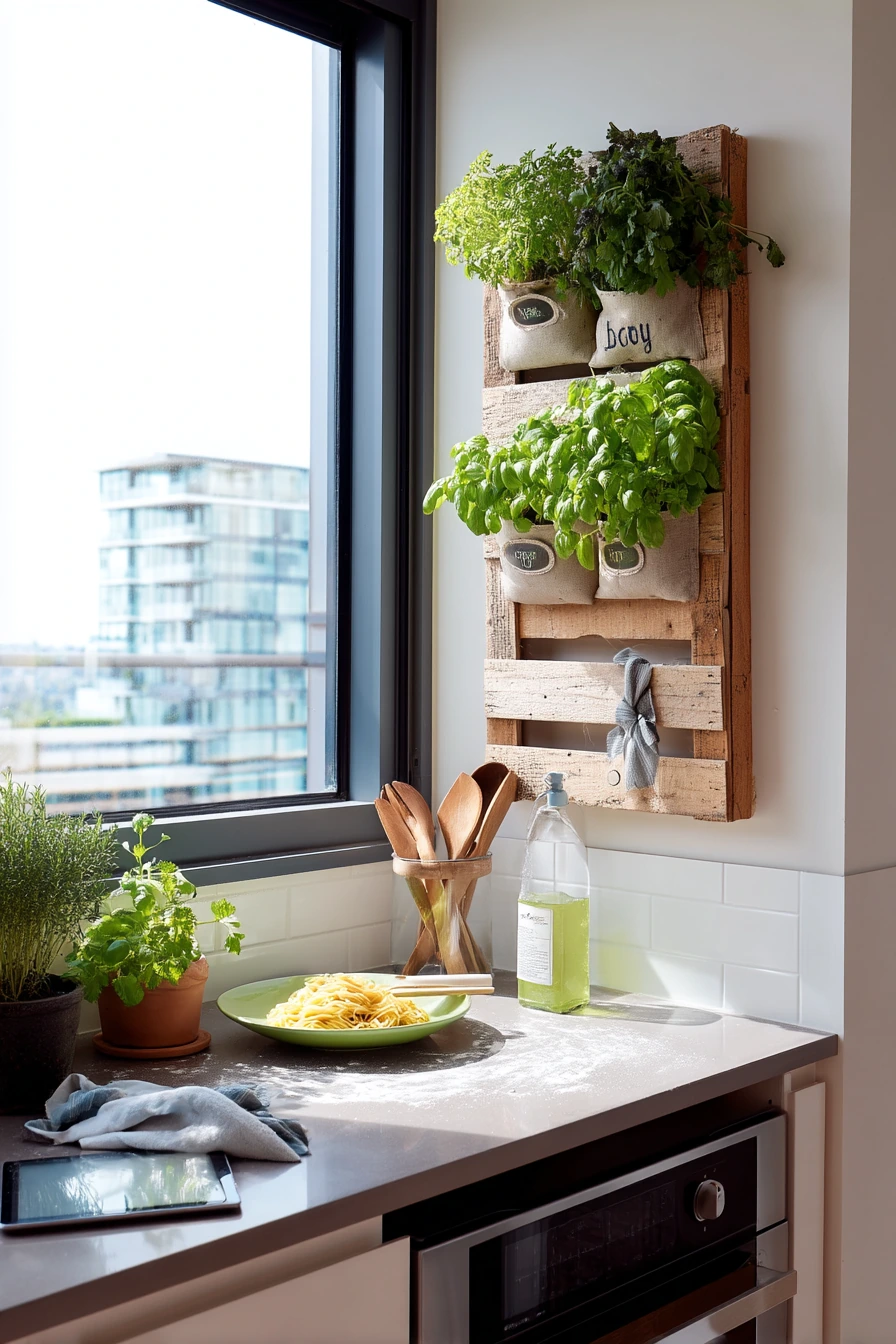
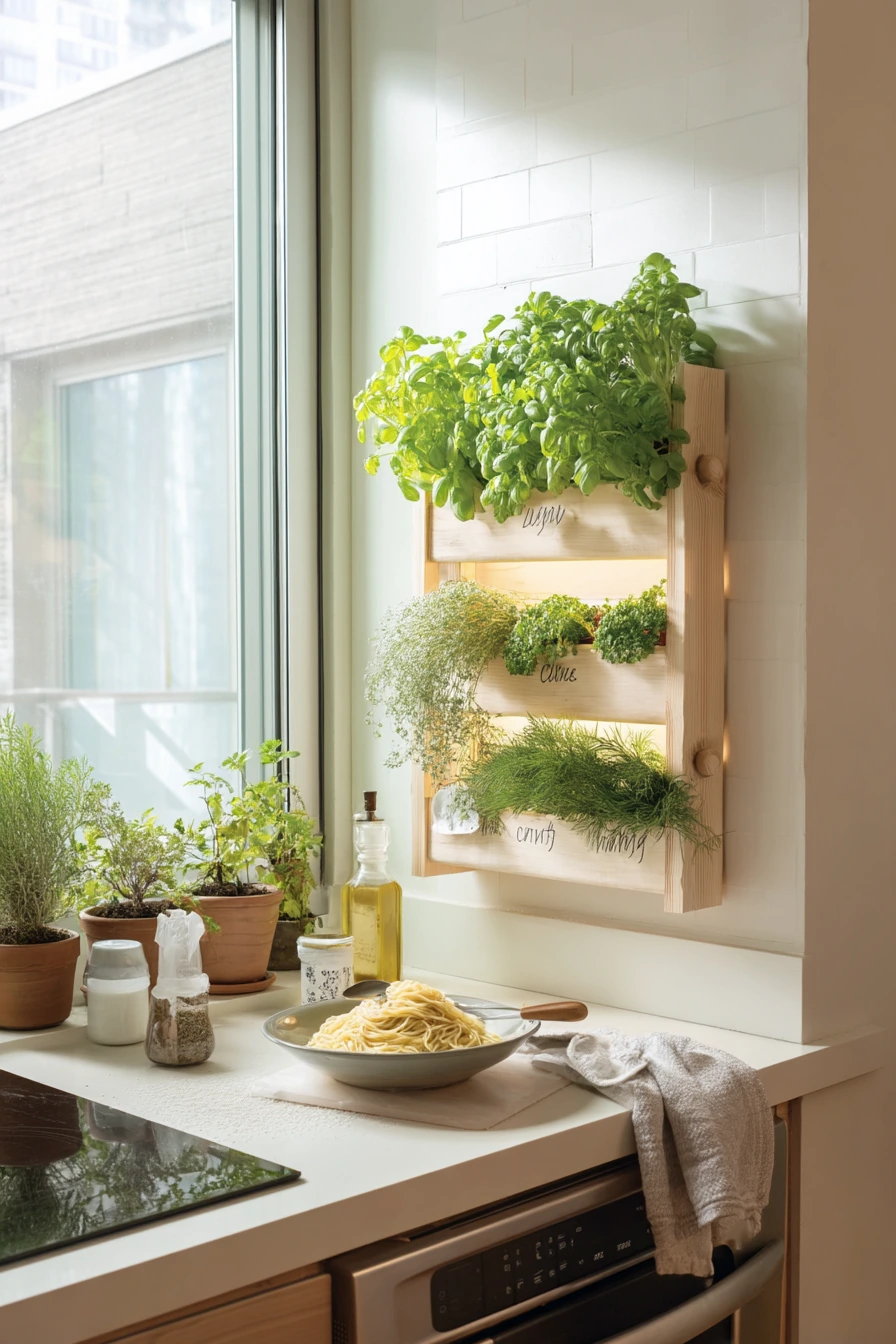
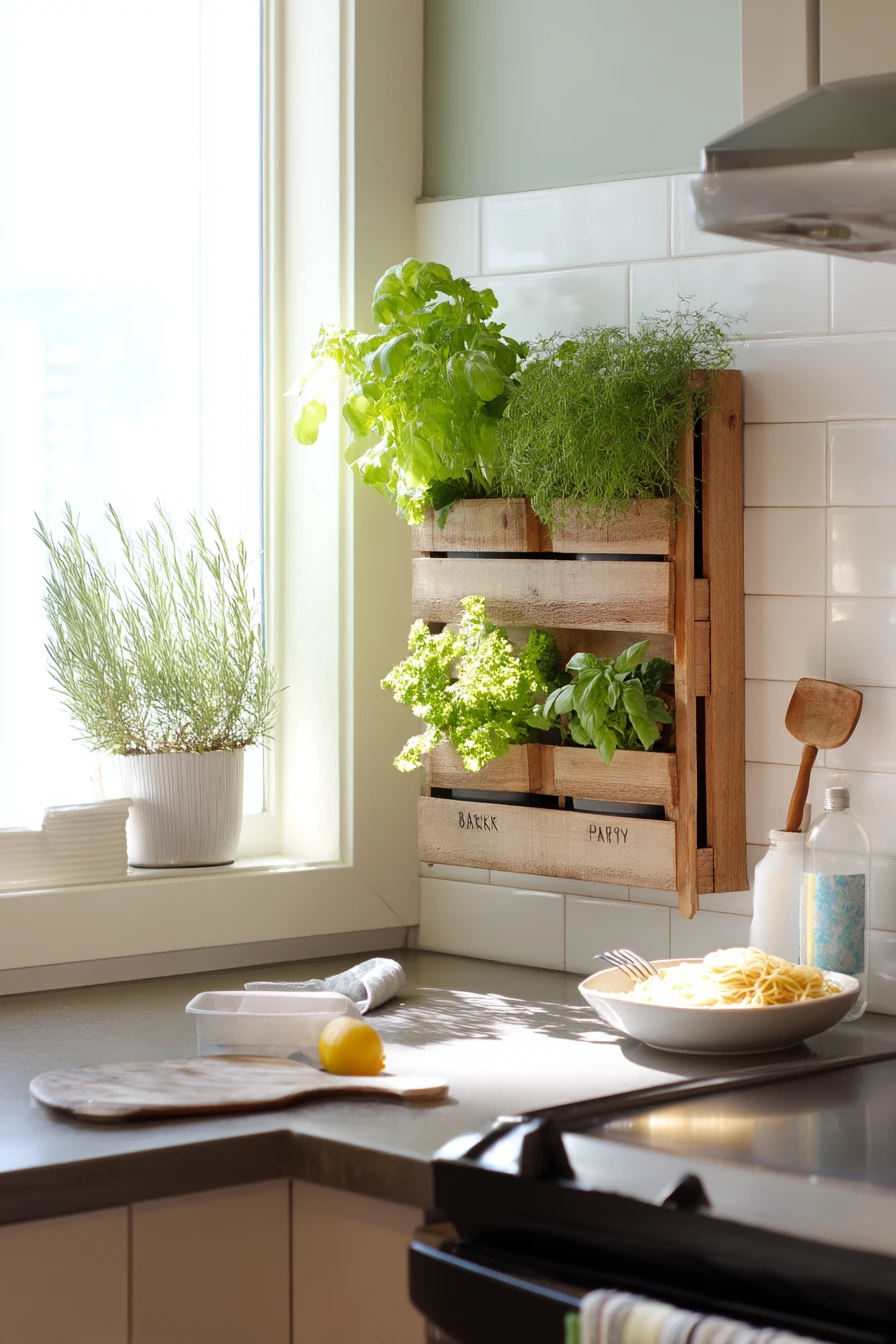
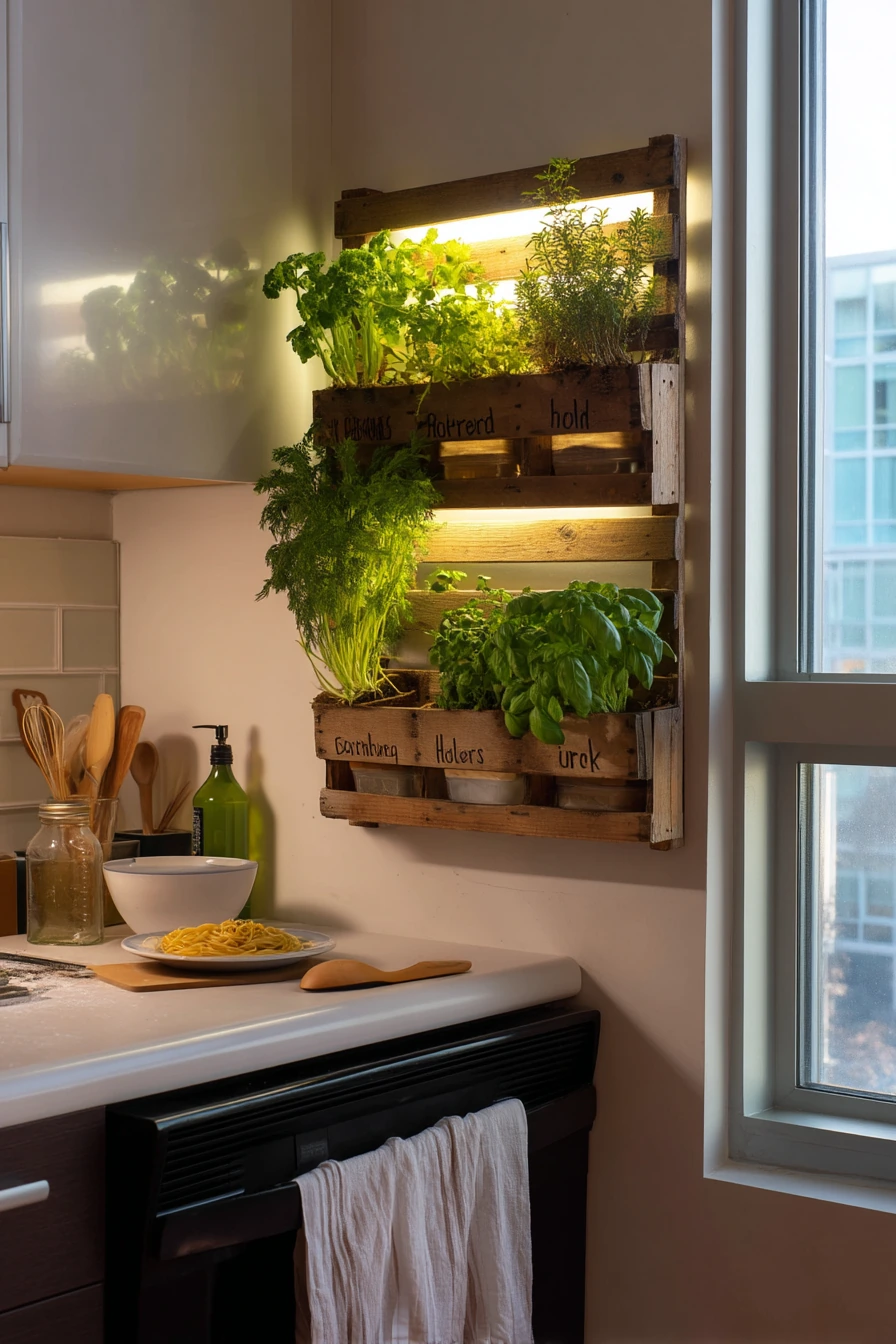
A modern condo kitchen nook is ideal for a slim vertical pallet garden with labeled herb pockets. It keeps herbs close to the stove without using counter space. Build a narrow pallet panel and add fabric or plastic pockets for baby kale, cilantro, and oregano. Clear labels help you harvest the right plant fast while cooking.
This setup works best when it supports your routine. If you are plating pasta and a recipe tablet glows nearby, you want clean hands and quick access. Keep a wooden spoon, dish soap, and a tea towel on the oven handle as normal, but make sure the wall garden has drip control. Use inner liners in each pocket and empty them often. Baby kale likes steady moisture, while oregano prefers to dry a little between waterings, so separate them by row and water with a small squeeze bottle for control.
To style it, keep it fresh but not glossy. Use simple planters and let the green leaves be the color. A little flour dust on the counter makes the space feel active and real. Add one small rail or hook on the side of the pallet for herb snips. If your nook gets soft afternoon window light, rotate pockets weekly so cilantro does not lean too hard toward the glass.
- Label pockets clearly so anyone can help harvest without guessing.
- Use liners and a bottom tray to prevent water from hitting walls.
- Keep baby kale higher for easy picking and cleaner leaves.
- Pinch oregano tips often to keep it dense and prevent leggy growth.
- Set a weekly check time to remove yellow leaves and wipe any drips.
Pro Design Tip: Align pocket rows with the lines of cabinets or tile so the pallet garden looks built-in and neat.
Budget Considerations: Pocket planters can be DIY from sturdy fabric; if you buy a kit, choose one with removable liners to avoid replacing the whole unit.
9 Seasonal Autumn Pallet Display
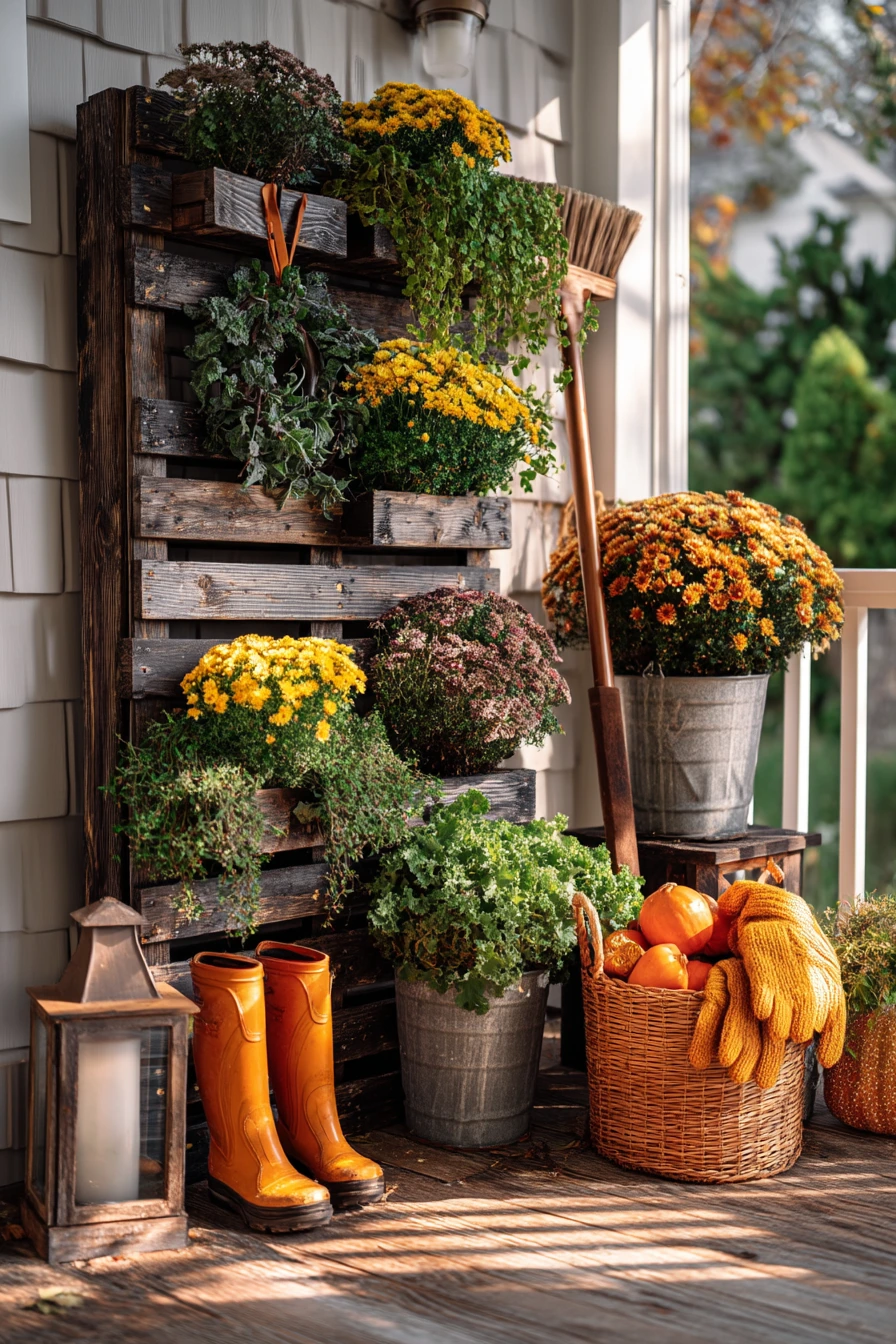
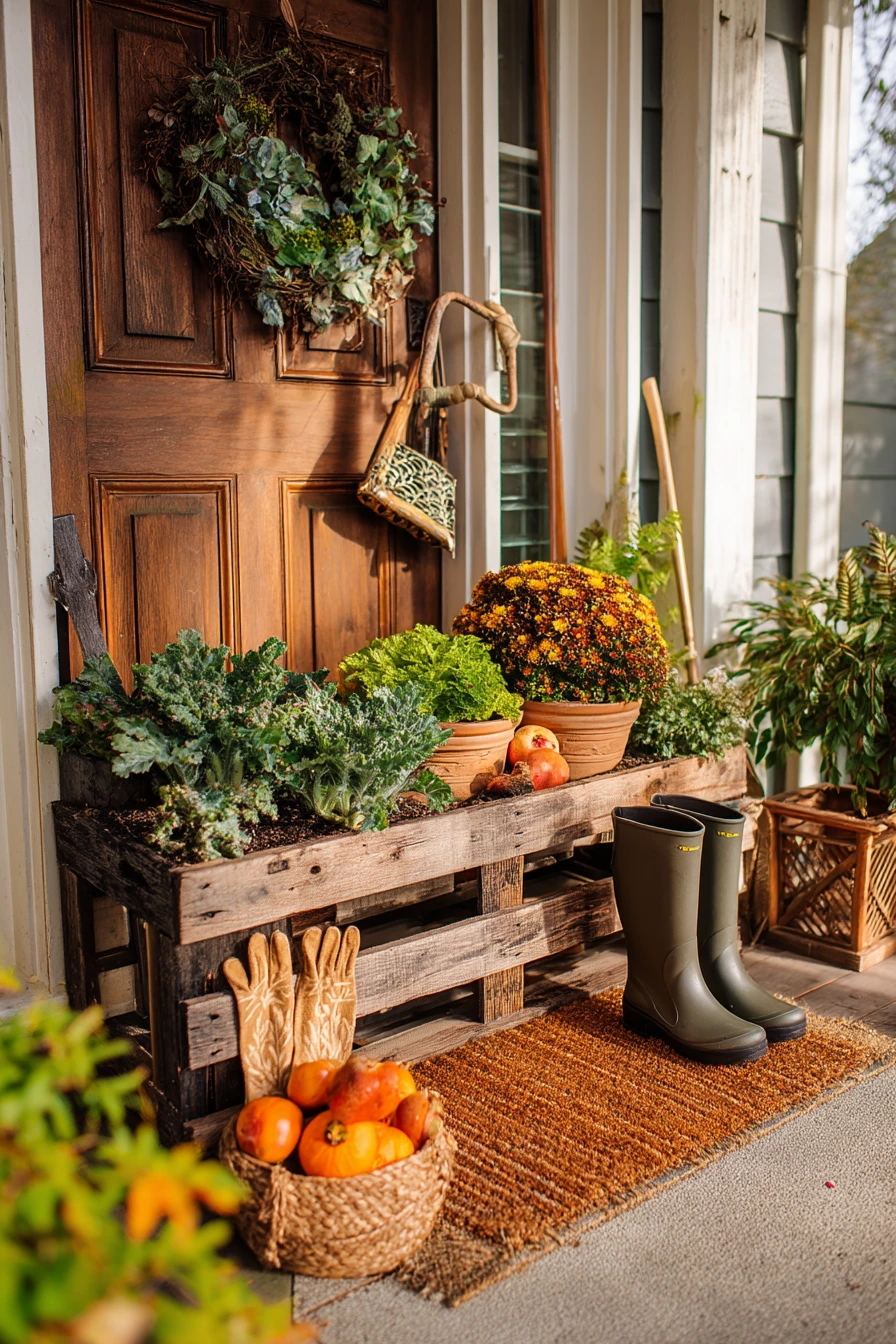
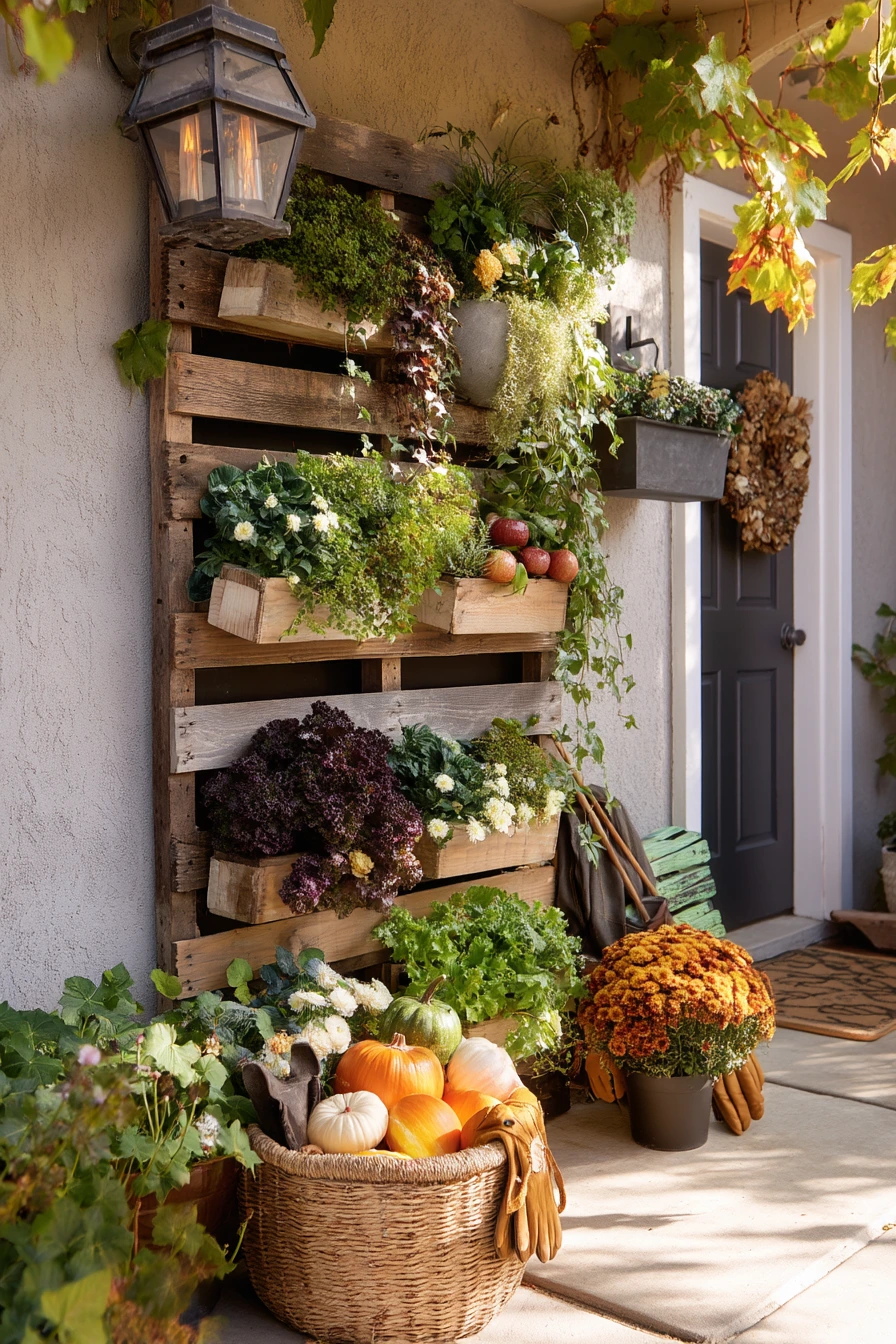
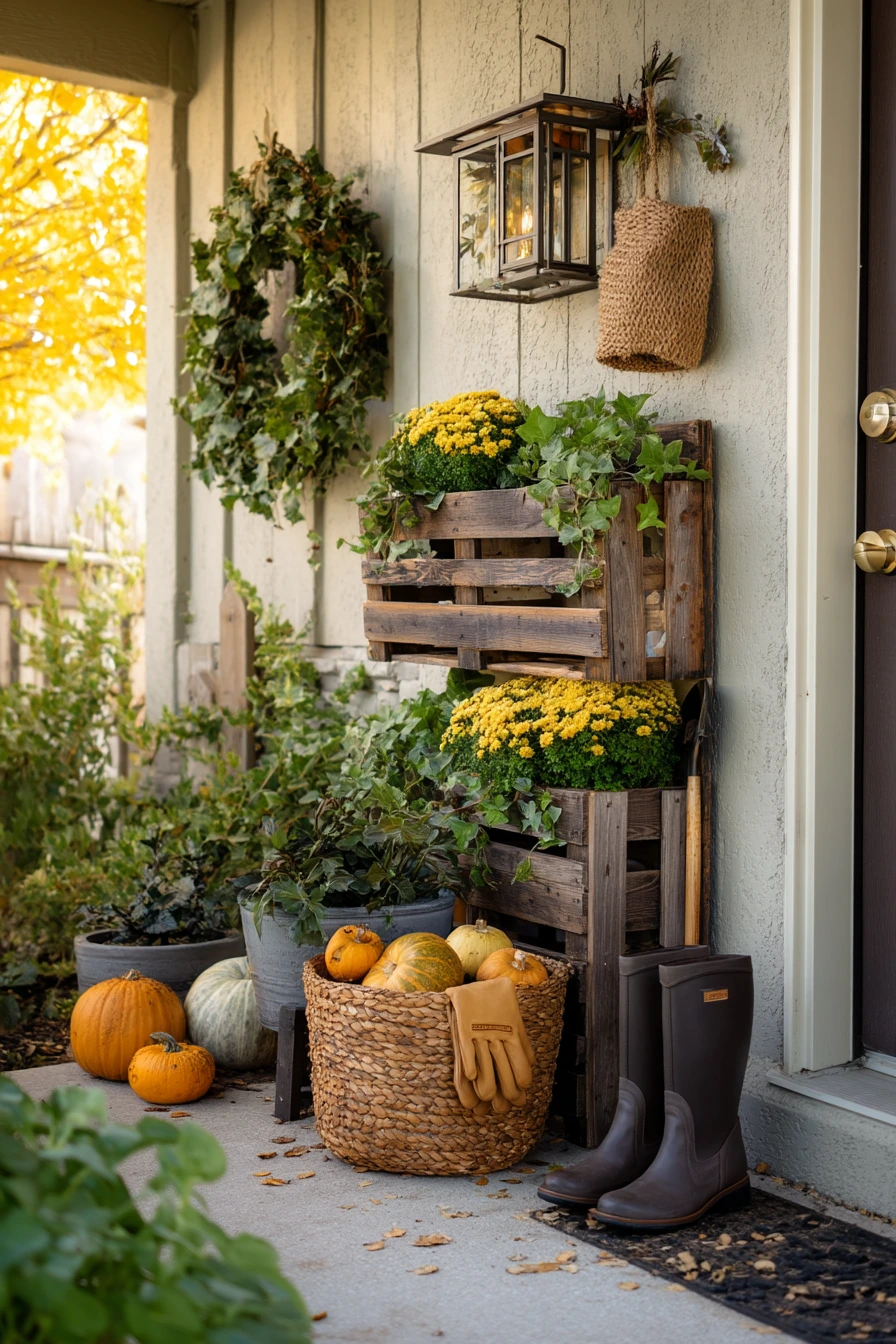
A fall front yard refresh is easy with a vertical pallet garden that doubles as seasonal decor. Use a pallet frame and add sturdy planters filled with mums, ornamental kale, and ivy. Tuck small pumpkins between planters so the display feels layered instead of flat. This works well near a porch lantern and a front door where you might also hang a wreath.
Plan the layout with color in mind. Mums bring bold fall tones, ornamental kale adds texture, and ivy trails to soften the frame. Put mums in the center where they look full, and place ivy near edges so it drapes. Keep a rake nearby for leaves, and use knit gloves and muddy boots as normal porch items, not props. Amber late-day sunlight plus warm lantern glow can make colors look richer, so choose mums in shades that do not clash, like rust, cream, and deep purple.
For styling, add one basket of apples near the base and keep the rest simple. A wreath on the door should match the pallet garden tones, so use similar leaves or dried stems. Water mums often because they dry out fast in containers, especially on windy porches. If you want the display to last longer, swap pumpkins for faux ones once real pumpkins start to soften.
- Use a stable pallet frame and secure it so wind cannot tip it.
- Choose hardy mums and keep soil evenly moist for longer blooms.
- Pair ornamental kale with ivy to mix ruffled and trailing textures.
- Place pumpkins low so they do not strain shelves or fall.
- Match your wreath colors to the planters for a cohesive front porch look.
Pro Design Tip: Limit the palette to 2 or 3 main colors, then repeat them across flowers, pumpkins, and the wreath for a clean fall look.
Budget Considerations: Buy smaller mums and let them fill in over a week; reuse the pallet frame each season and only replace the plants and small decor.
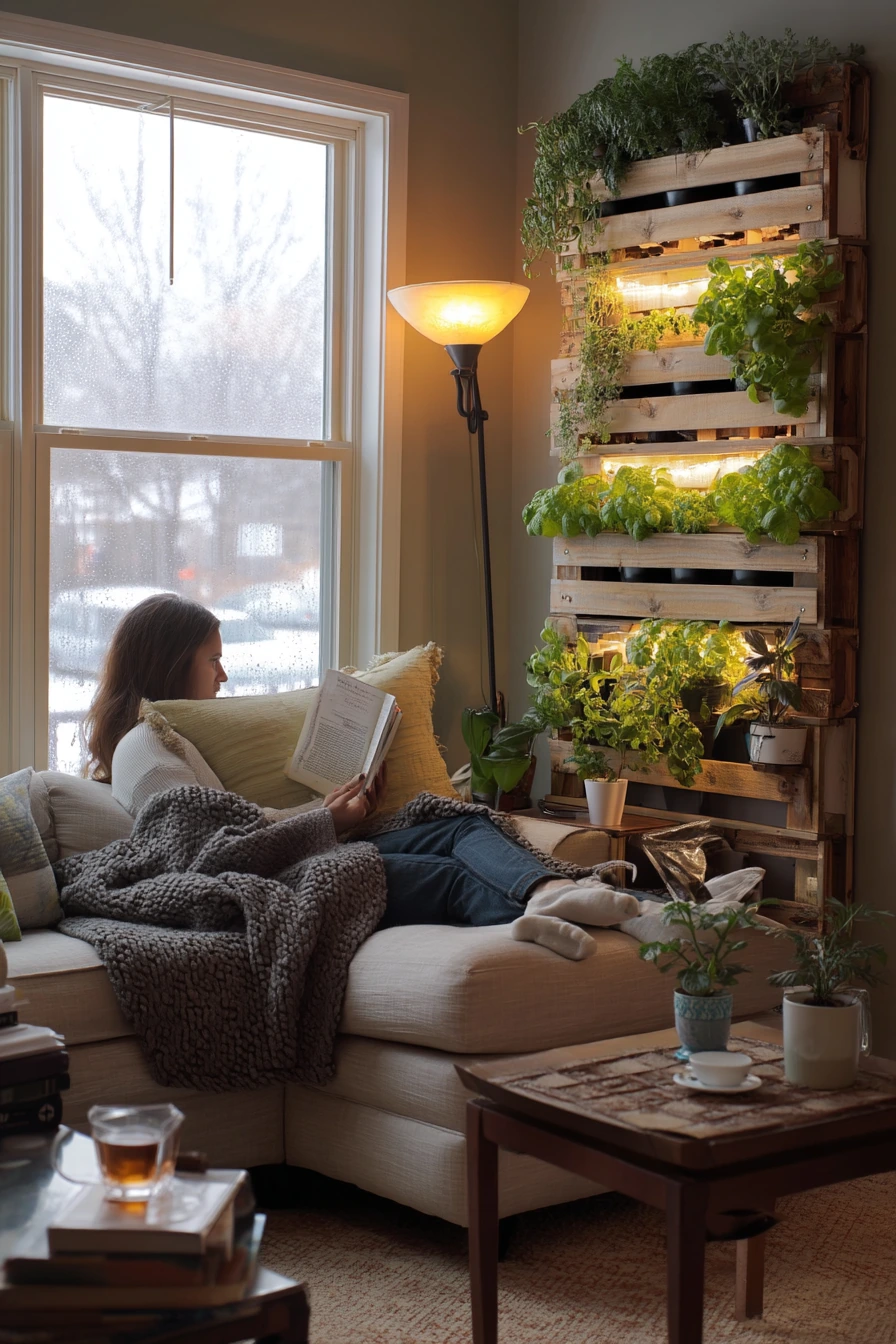
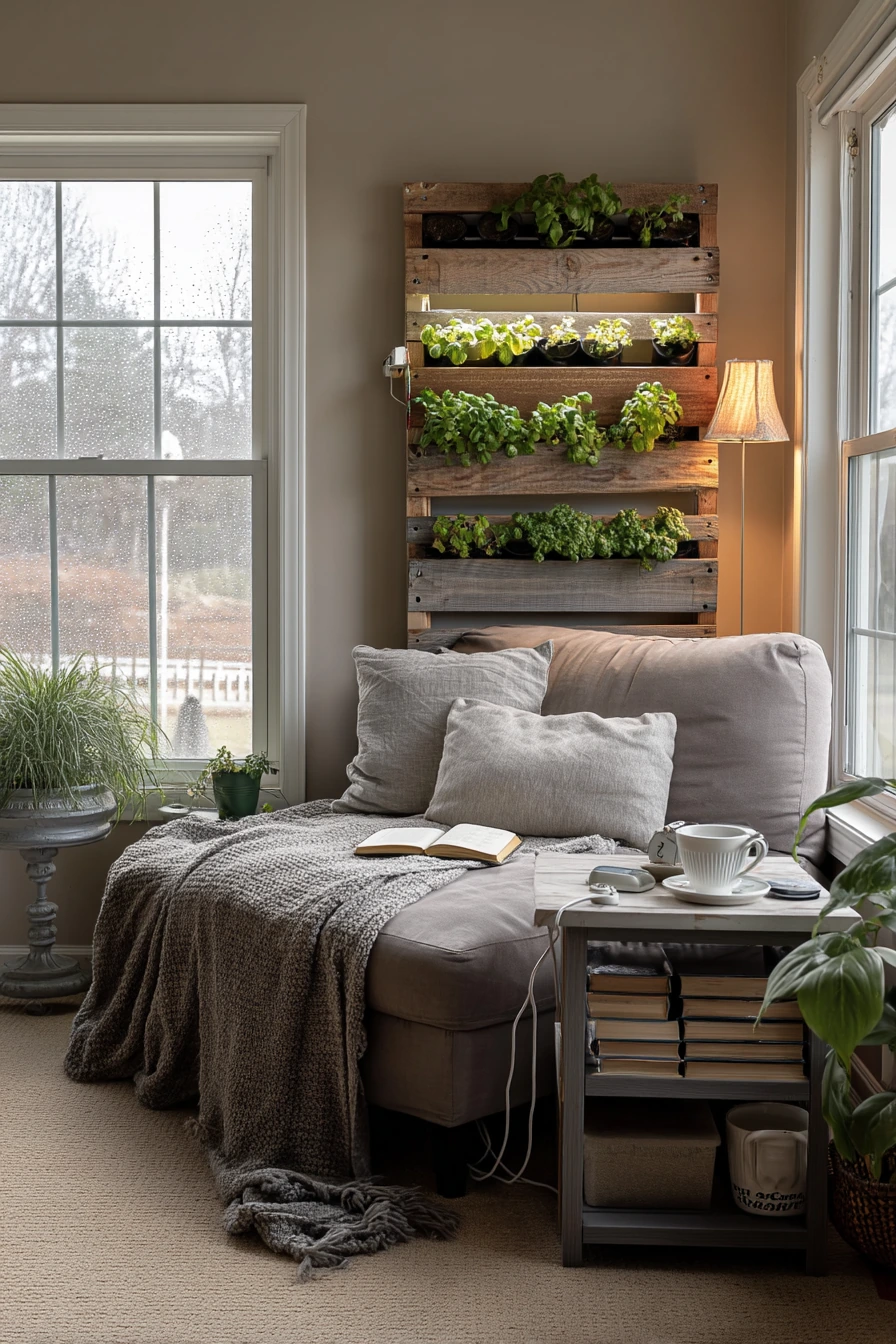
10 Indoor Winter Grow Wall
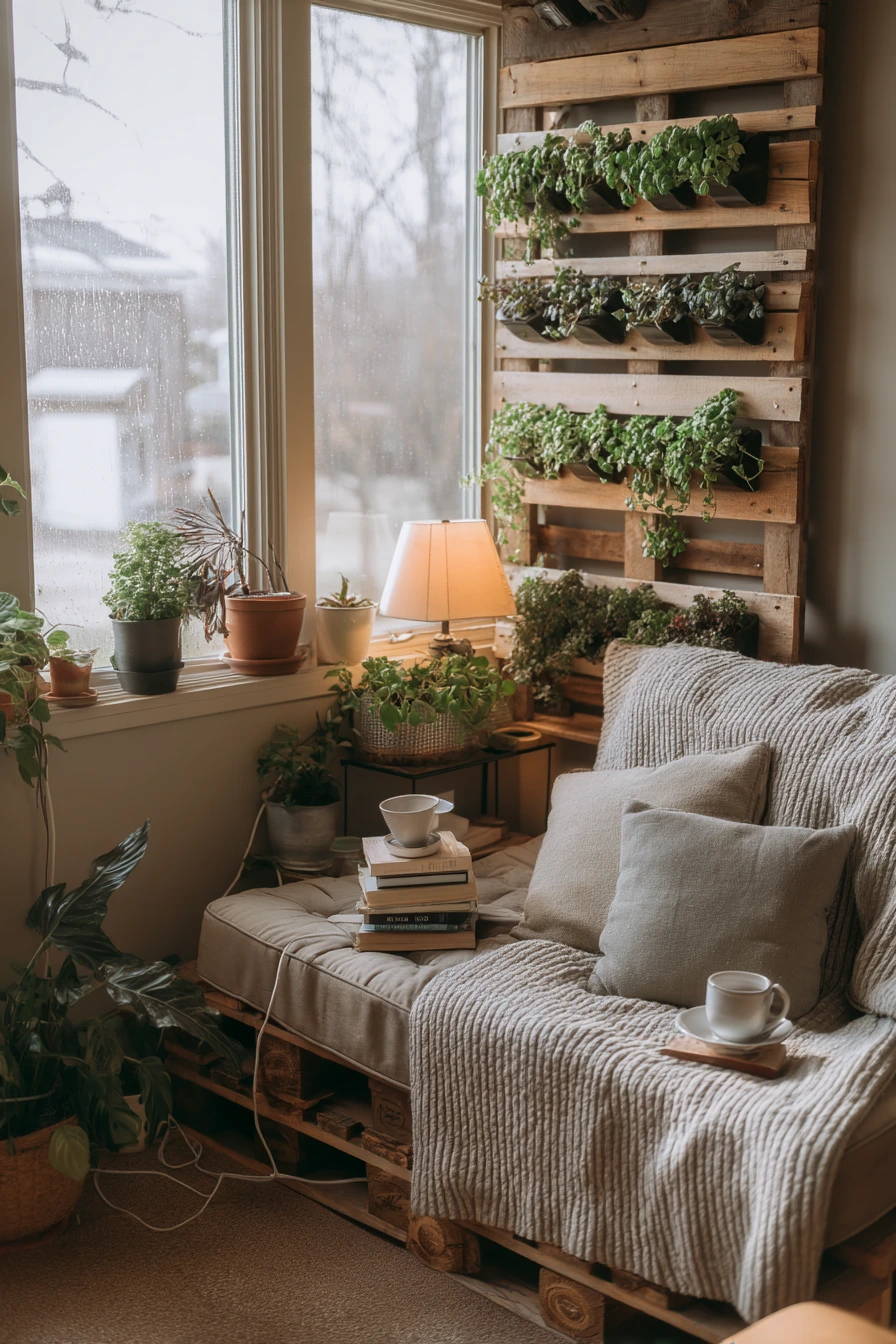
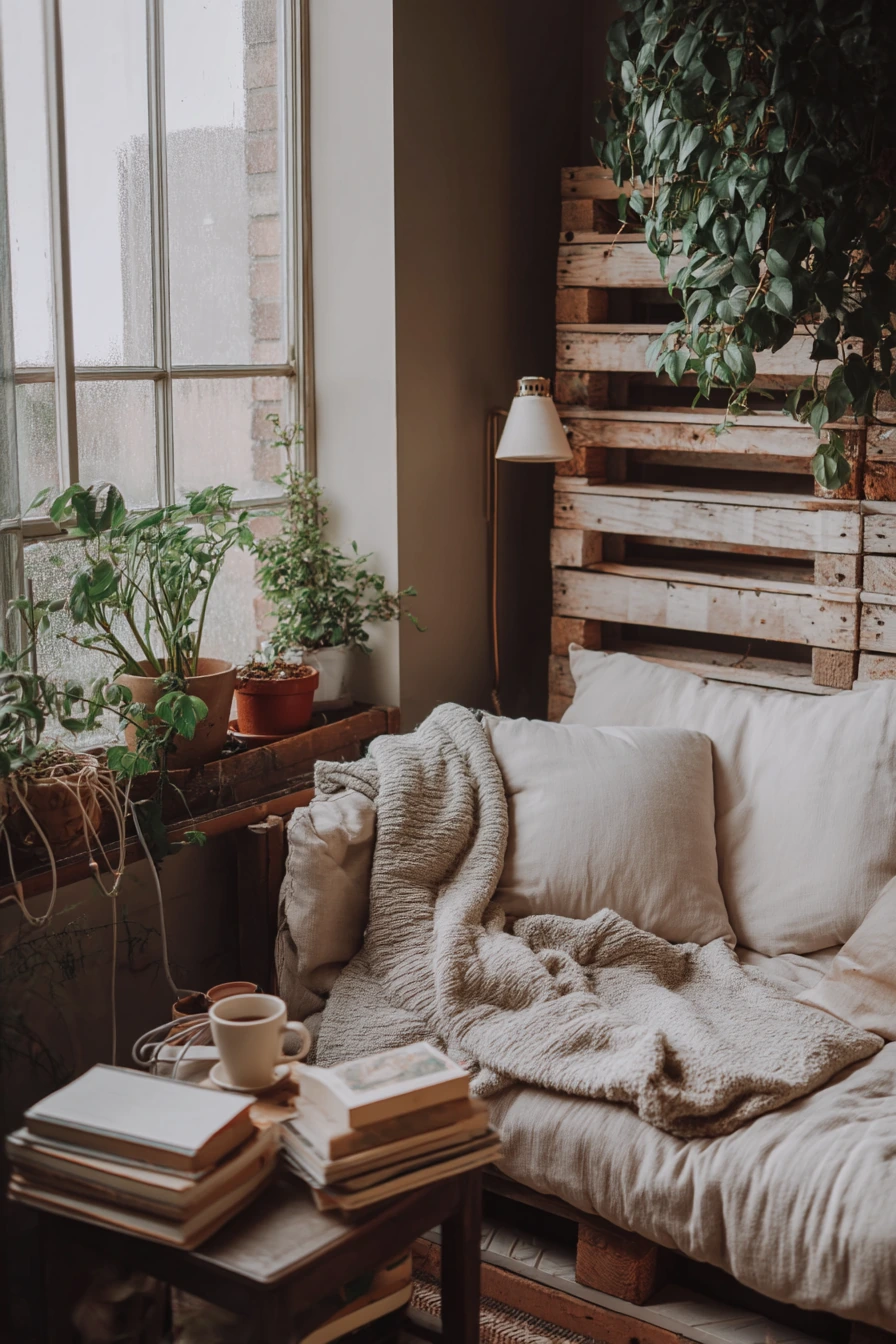
A sunroom during winter can feel gray, so a compact vertical pallet garden adds calm green color when you need it most. Mount a small pallet wall and use simple grow strips to support mint, microgreens, and pothos. This is a good choice if you spend time reading on a loveseat and want plants nearby without taking up table space.
Set it up for low effort. Mint can handle indoor light but grows best with extra help from grow strips in short winter days. Microgreens are quick and rewarding, and pothos is forgiving if you miss a watering. Keep a tea cup on the side table and stacks of books close by, but run the charging cable neatly so it does not cross the watering area. If you see condensation on the windowpane, watch for mold and keep air moving with a small fan on low.
Style it to feel restorative. Use neutral pots and let the leaves be the focus. Add a wool blanket on the loveseat and one warm lamp to balance soft gray daylight. For watering, use a small tray system under each pocket or pot so winter indoor floors stay clean. Harvest microgreens with kitchen scissors and re-seed a small tray every week so you always have a fresh patch.
- Install grow strips on a timer for steady light without daily fuss.
- Keep mint in its own pot to control spread and reduce mess.
- Start microgreens in shallow trays and harvest in 10 to 14 days.
- Use drip trays and wipe condensation to protect walls and windowsills.
- Choose pothos for easy trailing greenery in lower light.
Pro Design Tip: Hide cords with a simple cable cover painted to match the wall so the winter garden looks calm and tidy.
Budget Considerations: Basic LED grow strips are affordable; microgreen seeds give many harvests from one bag, which keeps costs low all season.
Vertical pallet garden ideas help you grow more plants in less space, from a renter-friendly balcony to a winter sunroom. Pick one setup that matches your light and daily routine, then keep it simple with good drainage and easy access for watering and harvesting.
Start small, build a safe frame, and choose plants you will use. When the garden is practical and easy to reach, it is more likely to stay healthy and be part of your day.
FAQ
What kind of pallet is safe for a vertical garden? Look for heat-treated pallets marked HT. Avoid pallets marked MB, and always clean and sand the wood.
How do I stop water from damaging the wall? Use liners, drip trays, and a waterproof backing behind the pallet. Empty trays often.
Can I do a vertical pallet garden in a rental? Yes. Use a freestanding pallet, lean it safely with anti-tip straps, or hang it from existing rails instead of drilling.
Which herbs grow best in small vertical planters? Basil, mint, thyme, parsley, and chives do well. Keep mint in its own pot and pinch herbs often for fuller growth.
How often should I water a pallet garden? Check soil with your finger. Many small containers need water more often, especially in sun and wind.
What are the easiest plants for low light indoors? Pothos and some ferns handle lower light. For edible greens, add a small grow light for better results.
How do I keep a vertical pallet garden from tipping? Anchor it to studs or fence posts when mounted, or use a wide base and straps when freestanding. Put heavier pots on the bottom row.