
Tuscan kitchen design ideas bring warmth, texture, and an easy everyday feel. Think terracotta tile, cream plaster walls, aged wood beams, and honest materials that look better with use.
This guide shows practical ways to get the Tuscan look in real homes, from a busy family kitchen to a small apartment and a renter-friendly setup. You will see how to use color, lighting, storage, and styling so the room feels inviting, not staged.
Each section includes simple steps you can copy, plus a pro design tip and a budget note. Use these ideas to plan a remodel, refresh your cabinets, or add a few details that make your kitchen feel sun-kissed and lived-in.
Save your favorite looks, then pick one theme to try this weekend. Small changes like a linen runner, open wood shelving, or aged bronze hardware can shift the whole mood.
1 Sunlit Family Tuscan Kitchen with Everyday Warmth
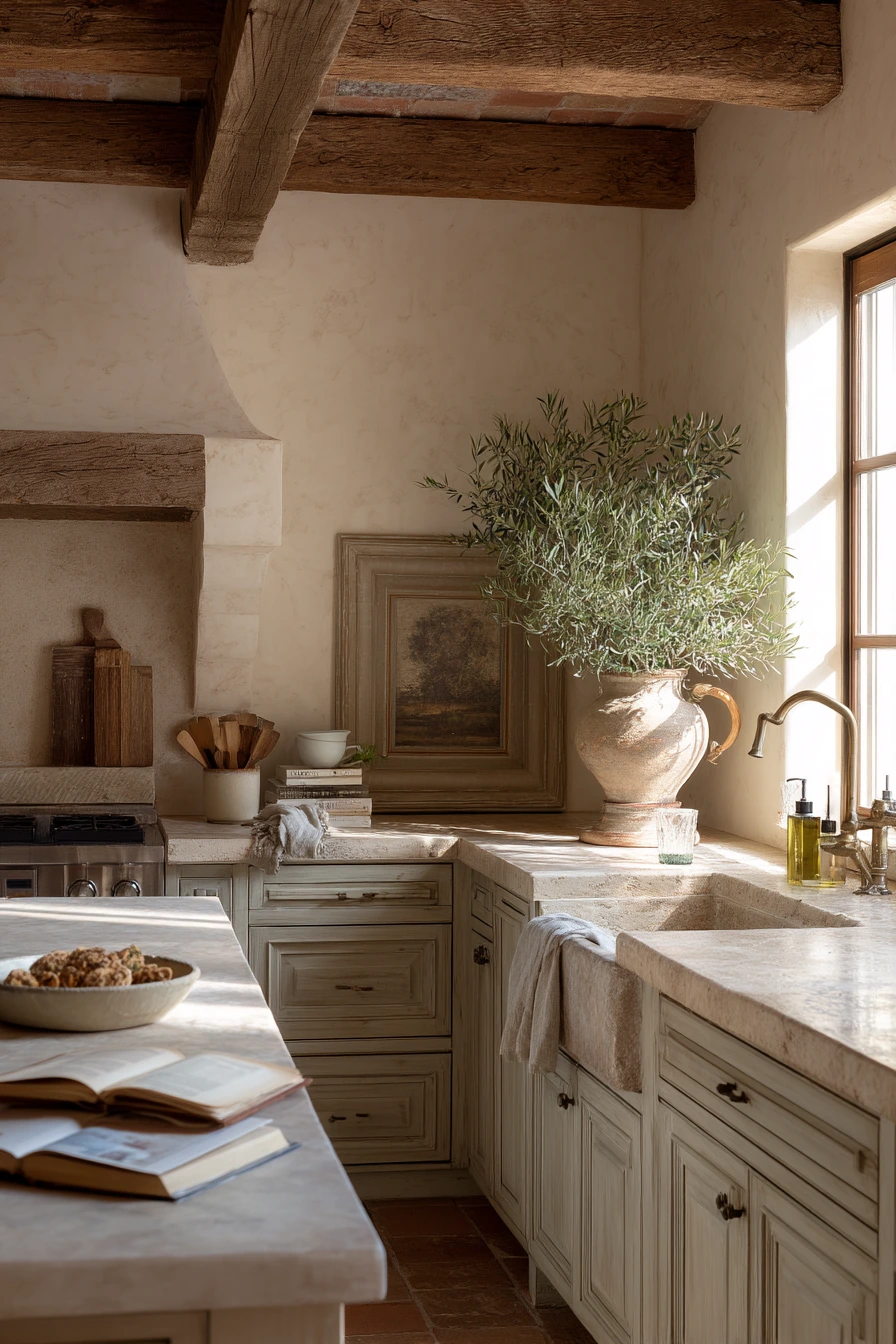
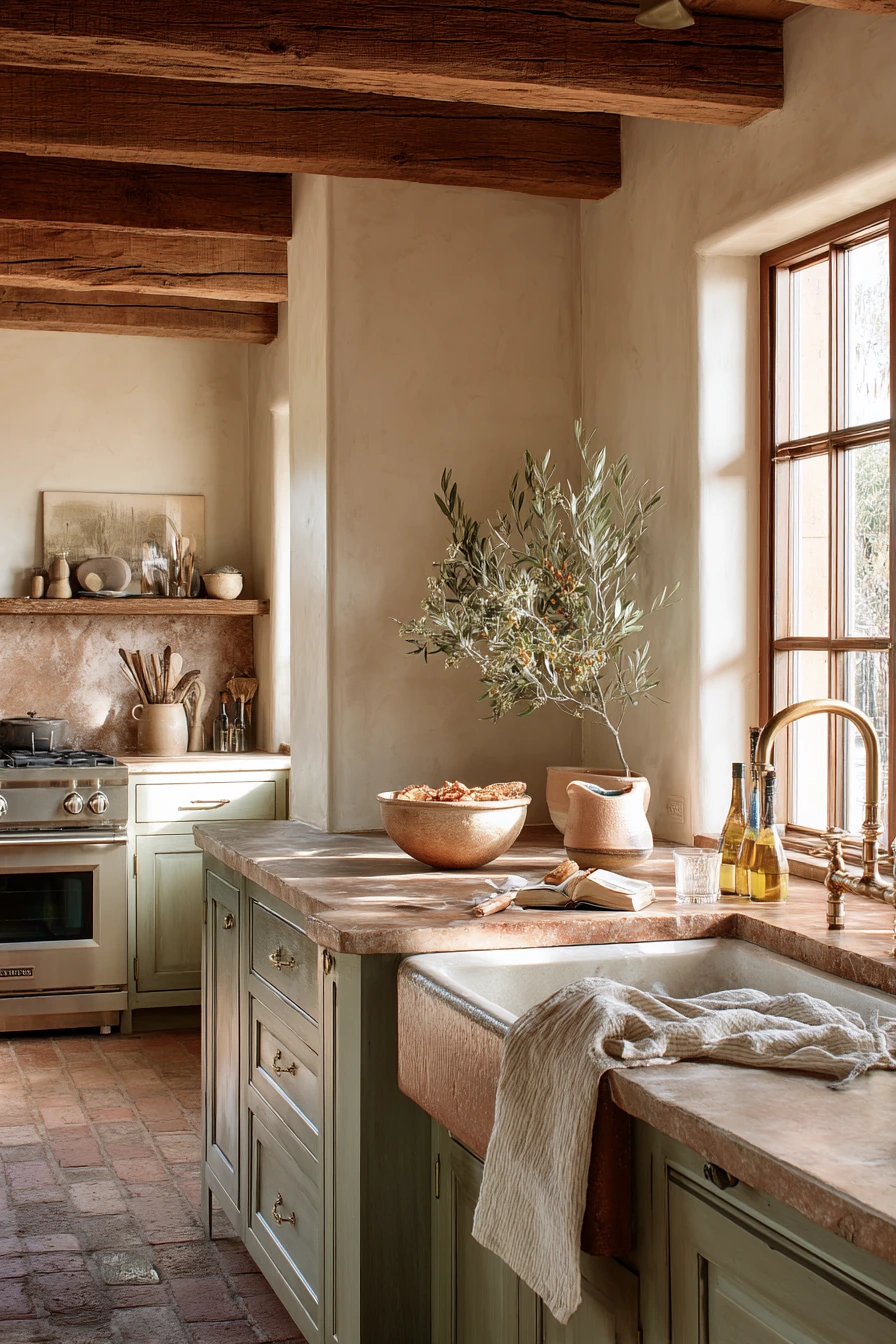
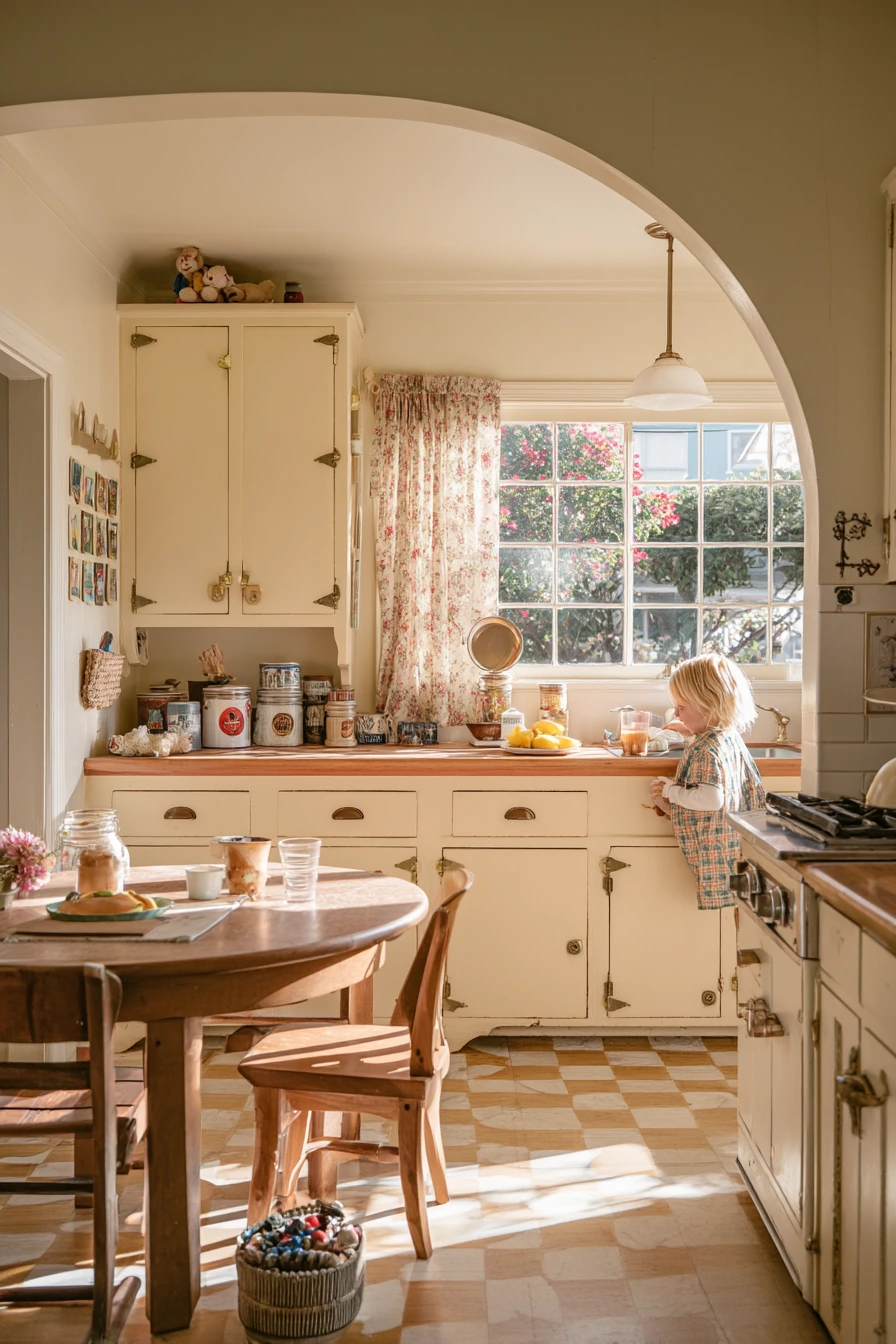
A Tuscan family kitchen works best when it feels warm and used every day. Start with warm terracotta tile underfoot and cream plaster walls. These two choices add instant softness and help hide the little marks that come with real life. Aged oak beams or even faux beams add the old-world ceiling detail that makes the room feel grounded.
For cabinetry, muted sage is a smart pick because it reads earthy, not trendy. Pair it with honed stone counters for a matte finish that looks calm in soft morning window light. A large farmhouse sink and brass faucet give that classic working-kitchen look. Keep a ceramic utensil crock by the stove so tools stay close, and leave a cookbook open where you cook most often.
To make it feel lived-in, style the island like a real family uses it. Add a slightly wrinkled linen runner, a kid snack bowl, and an olive branch in a simple water glass. The key is mixing practical items with one natural touch so the kitchen feels tactile and quiet, not cluttered.
- Choose terracotta or terracotta-look tile with a warm, varied tone.
- Paint cabinets muted sage and keep walls a creamy off-white.
- Use honed stone or a matte-look quartz to avoid shine.
- Style with a linen runner, utensil crock, and one small branch or herb.
- Keep one “real life” item out, like a snack bowl or open cookbook.
Pro Design Tip: Use three finishes only for a calm Tuscan palette: warm wood (beams or stools), one metal (brass), and one stone (honed counter). Repeating these keeps the room from feeling busy.
Budget Considerations: If real terracotta or stone is out of reach, use porcelain tile that mimics terracotta and a matte quartz or laminate that has a honed-stone pattern.
2 Small Tuscan Kitchen in a Narrow City Home
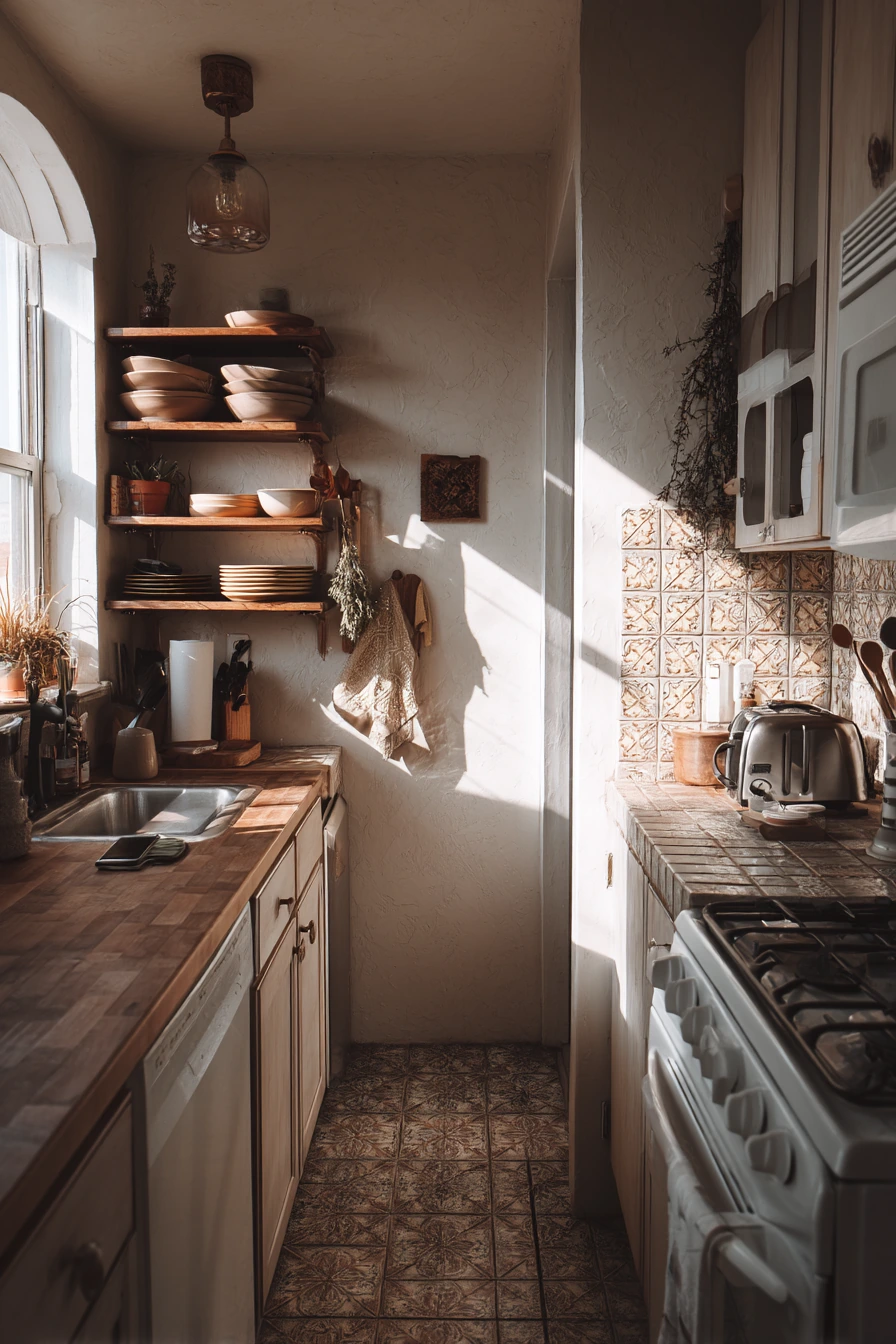
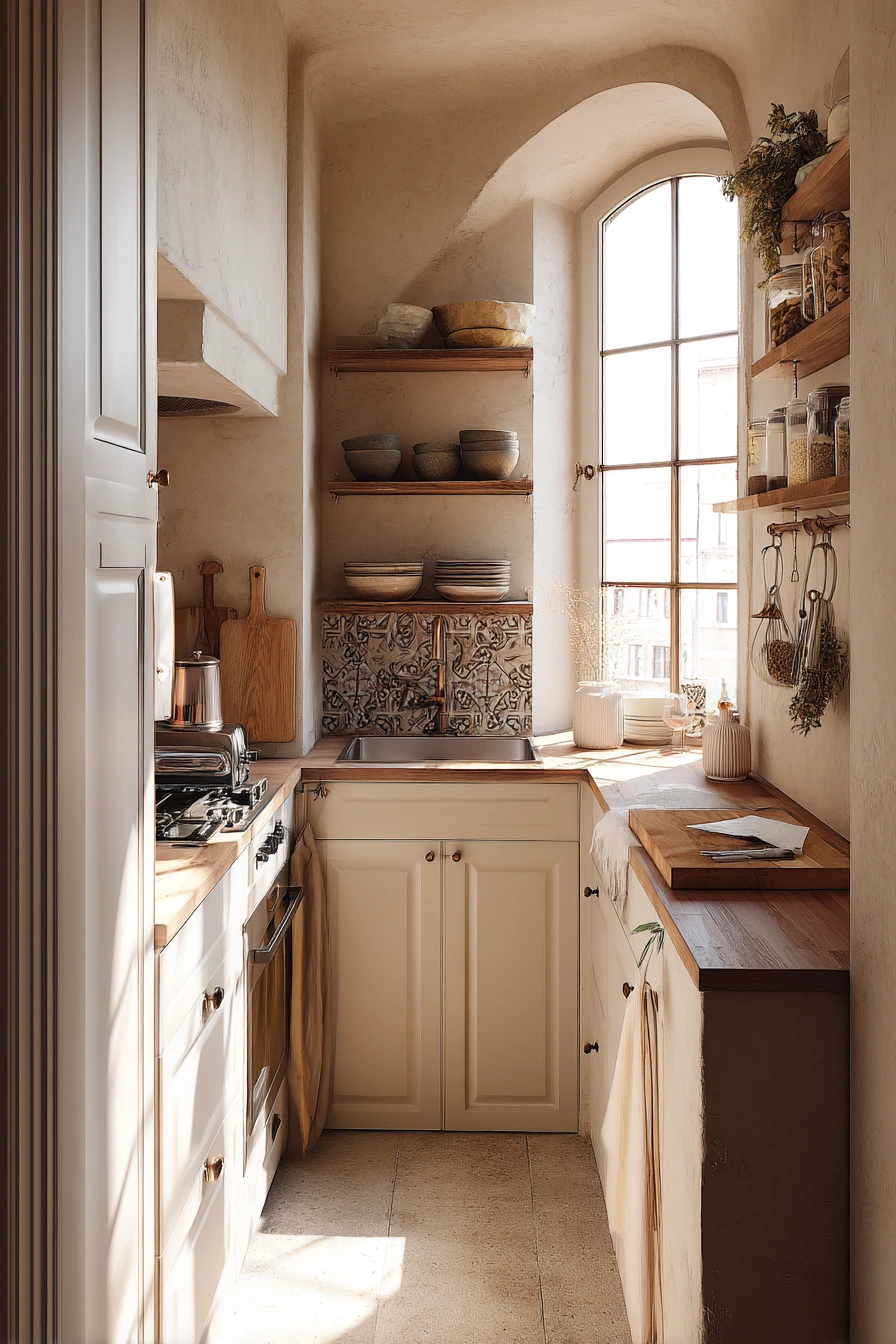
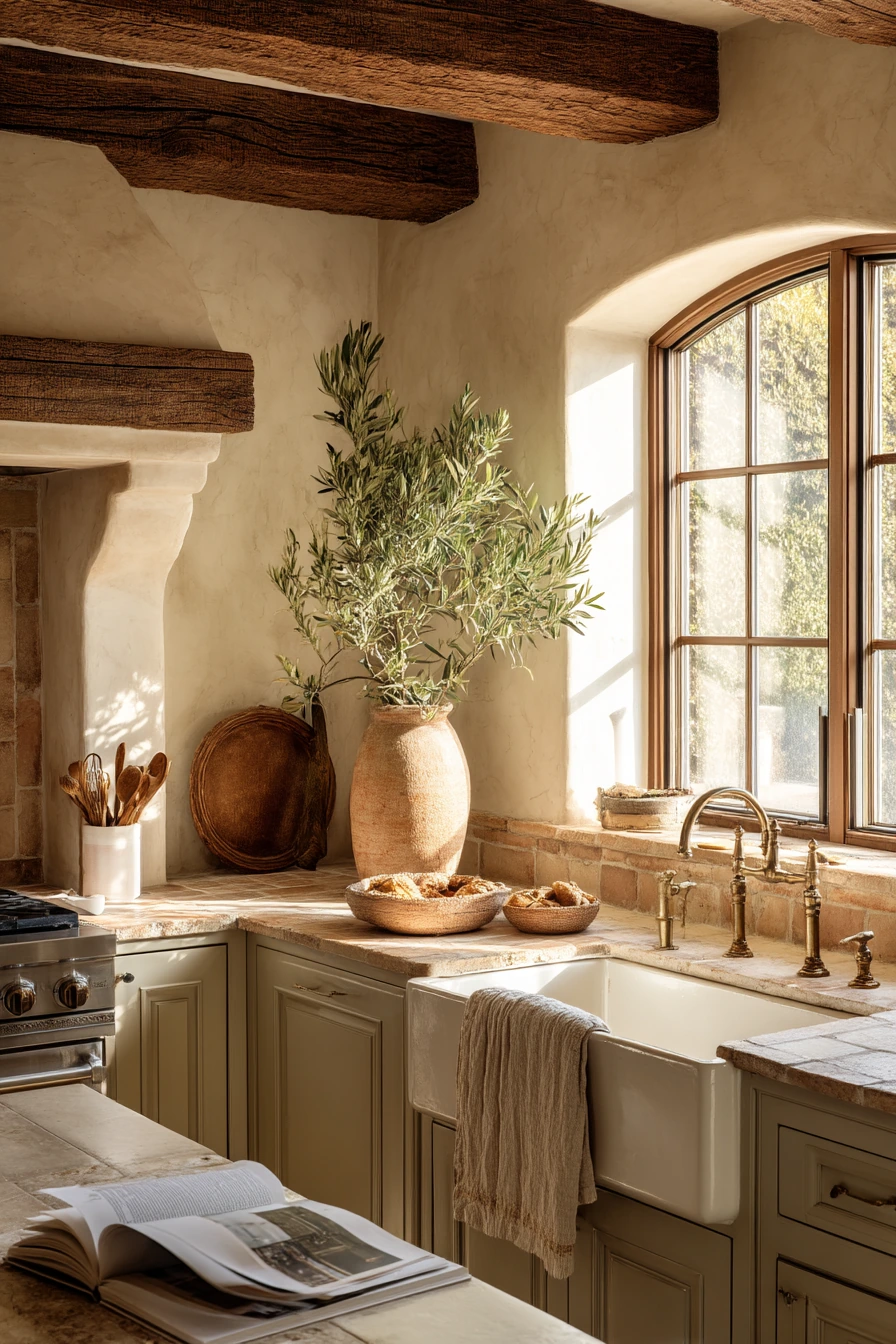
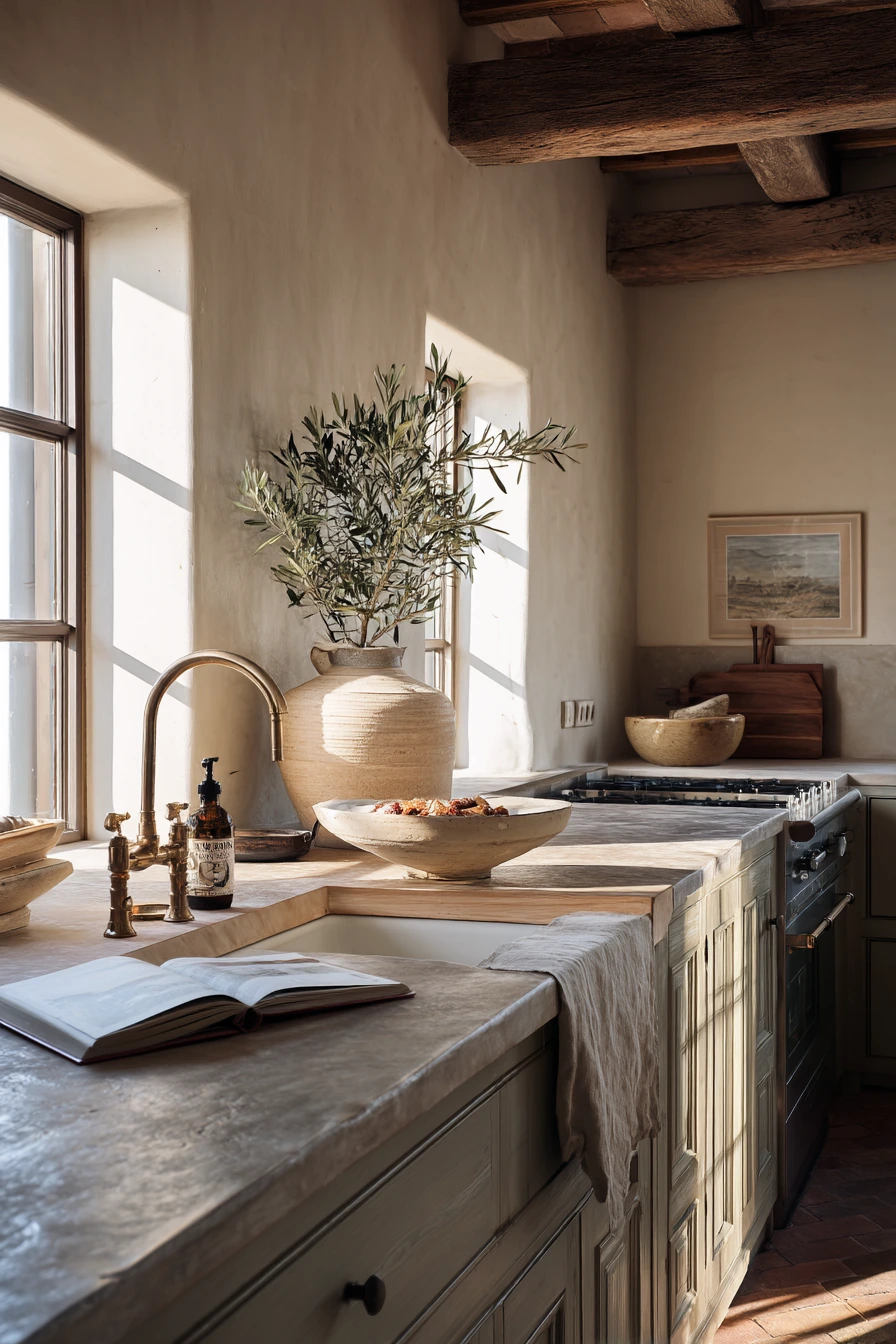
Tuscan kitchen design ideas can work in a small-space apartment when you focus on warmth and smart storage. A compact U-shaped kitchen is perfect for this style because everything stays close. Use warm ivory plaster walls or a plaster-look paint to soften corners and bounce light. A narrow limestone-look floor keeps the space bright but still rustic.
Open wood shelving adds the Tuscan feel without heavy upper cabinets. Keep it practical by limiting what you display: a stack of bowls, a few everyday glasses, and a small jar for cooking tools. A patterned ceramic backsplash brings in old-world character in a tight space. Aged bronze hardware is a small change that makes basic doors look more classic.
Lean into real life details so the kitchen feels intimate and sun-kissed. Let herbs hang near the window. Make room for a petite butcher-block prep area, even if it is a slim cart. It helps a lot in a small kitchen. Keep cords and mail controlled with one tray, so the charging cable near the kettle and mail by the toaster look tidy, not messy.
- Use warm ivory wall color to keep the kitchen light and soft.
- Add open wood shelves and display only daily items.
- Pick a patterned ceramic backsplash in warm tones.
- Swap to aged bronze pulls for a quick Tuscan update.
- Use a slim butcher-block cart for extra prep space.
Pro Design Tip: In small kitchens, keep the backsplash pattern busy but the counters quiet. A calm counter surface makes the room feel bigger and helps the tile look intentional.
Budget Considerations: Open shelving can be simple pine boards stained to look aged, and limestone-look vinyl or porcelain can give you the color without the cost of real stone.
3 Renter-Friendly Tuscan Touches with Easy Layers
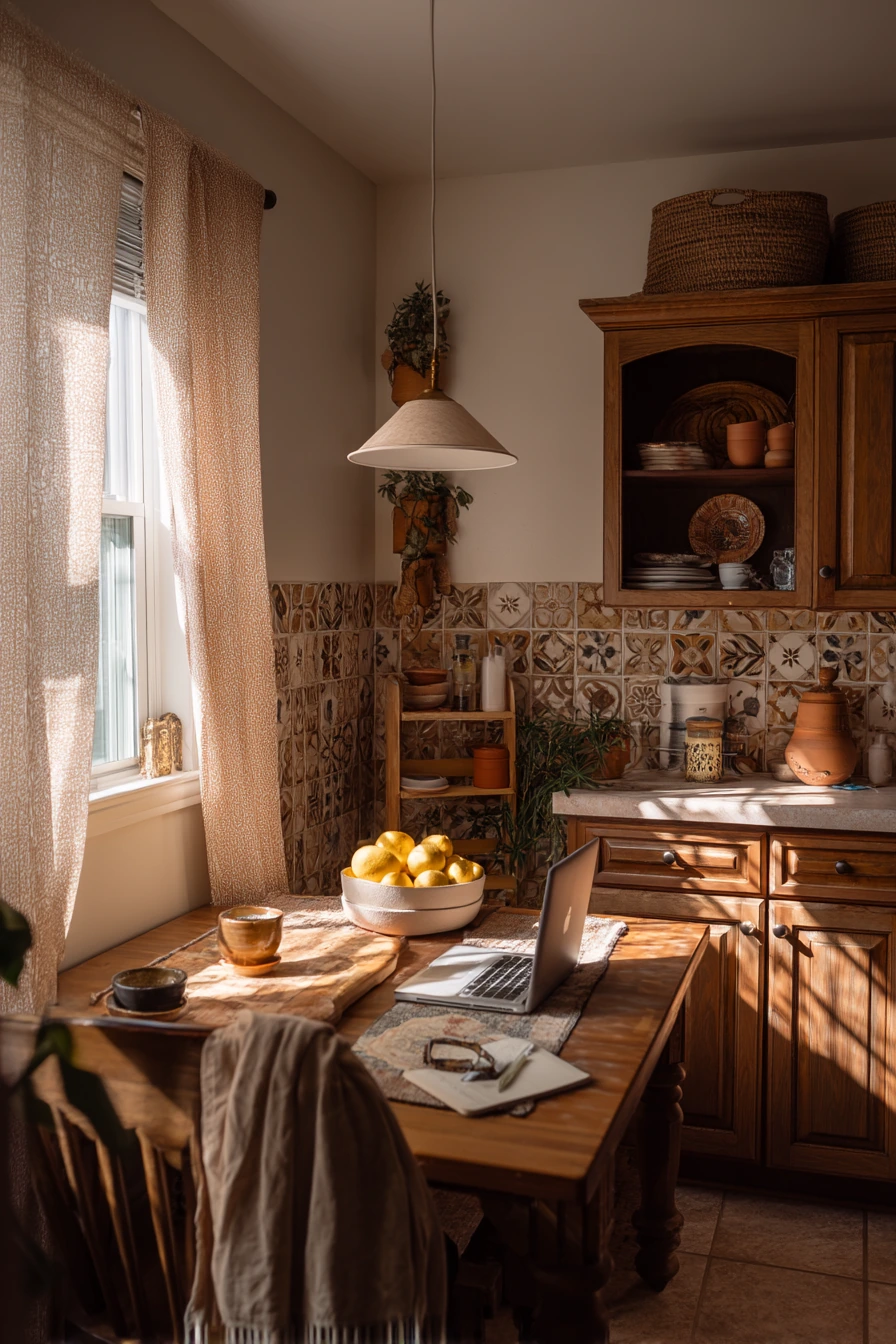
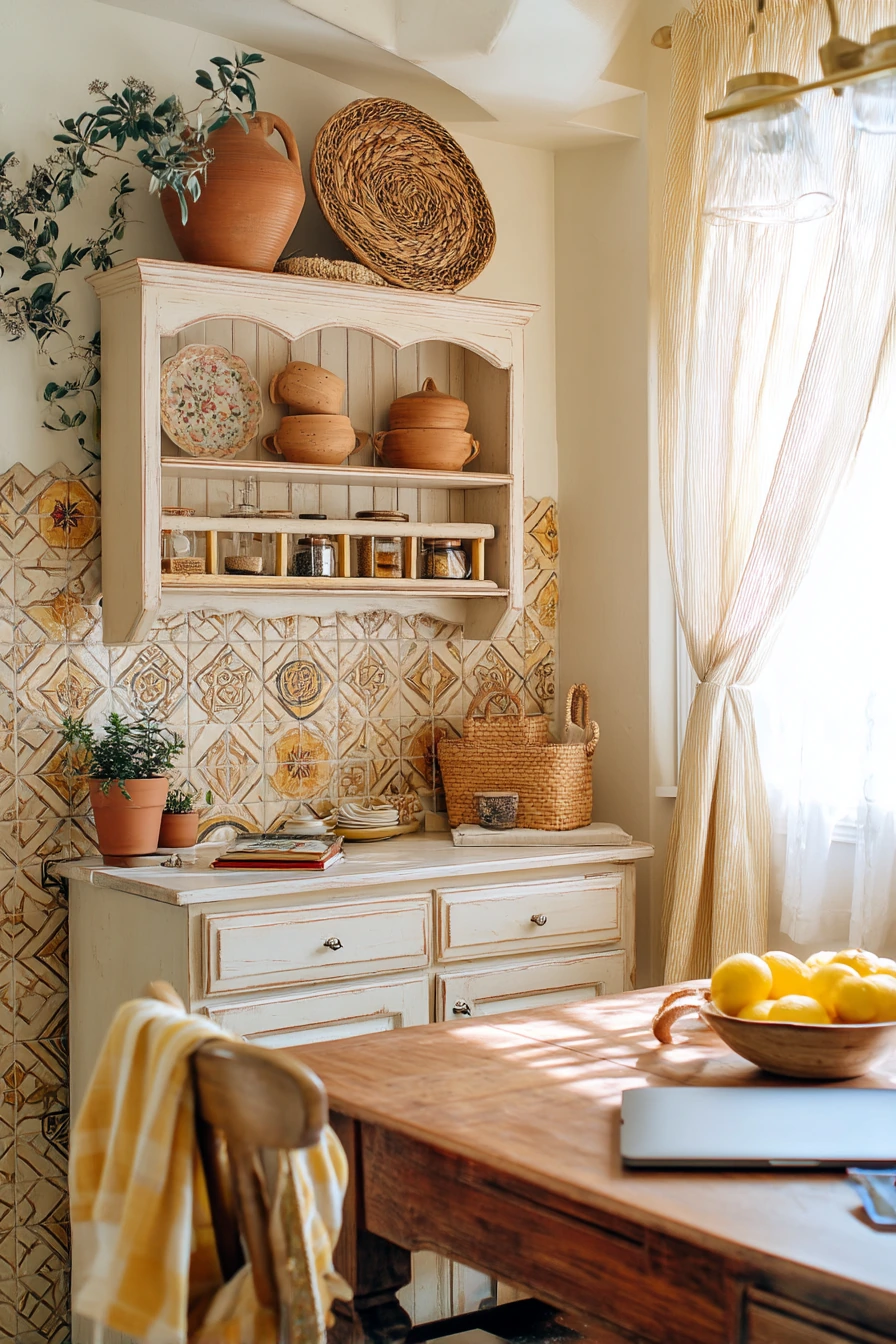
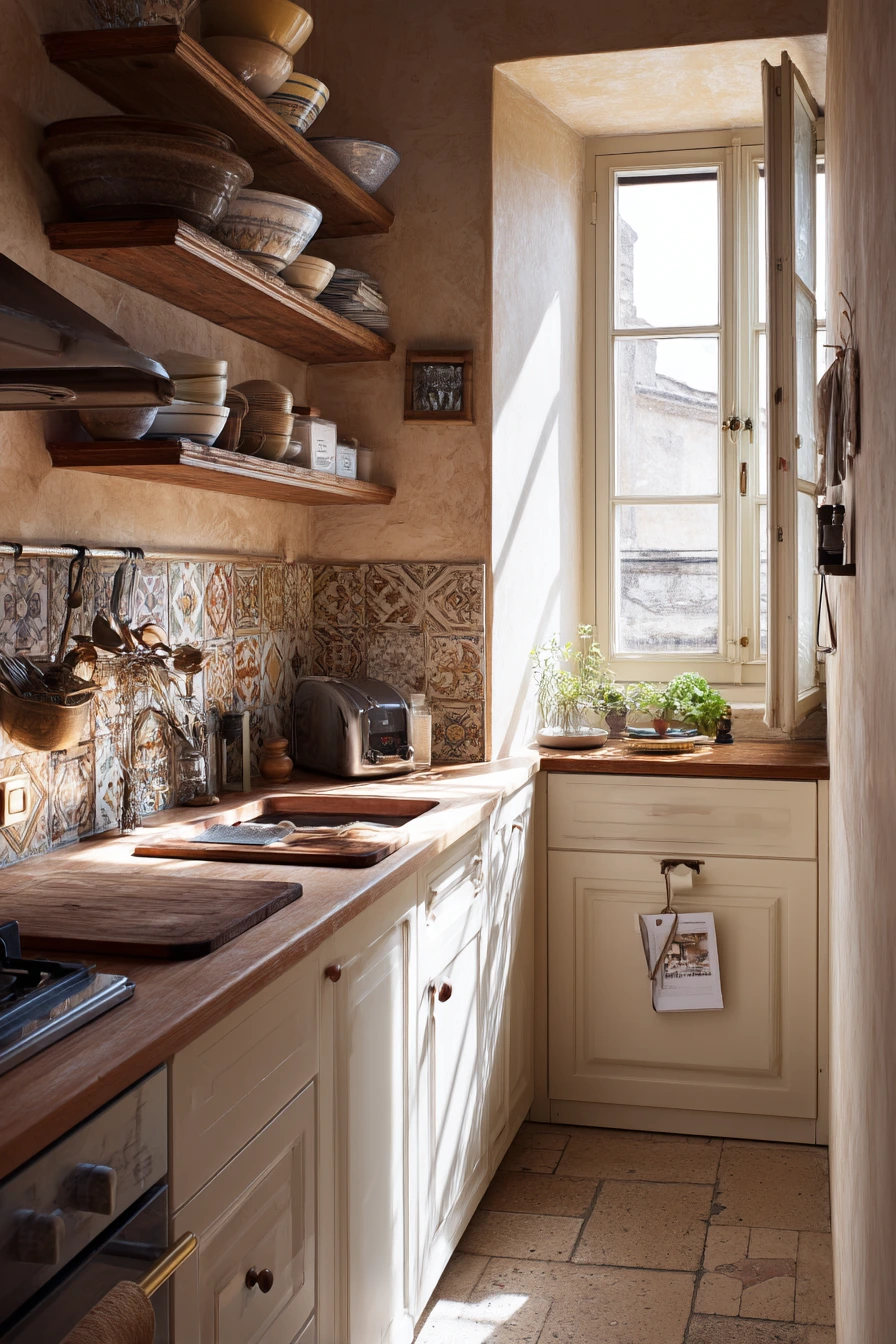
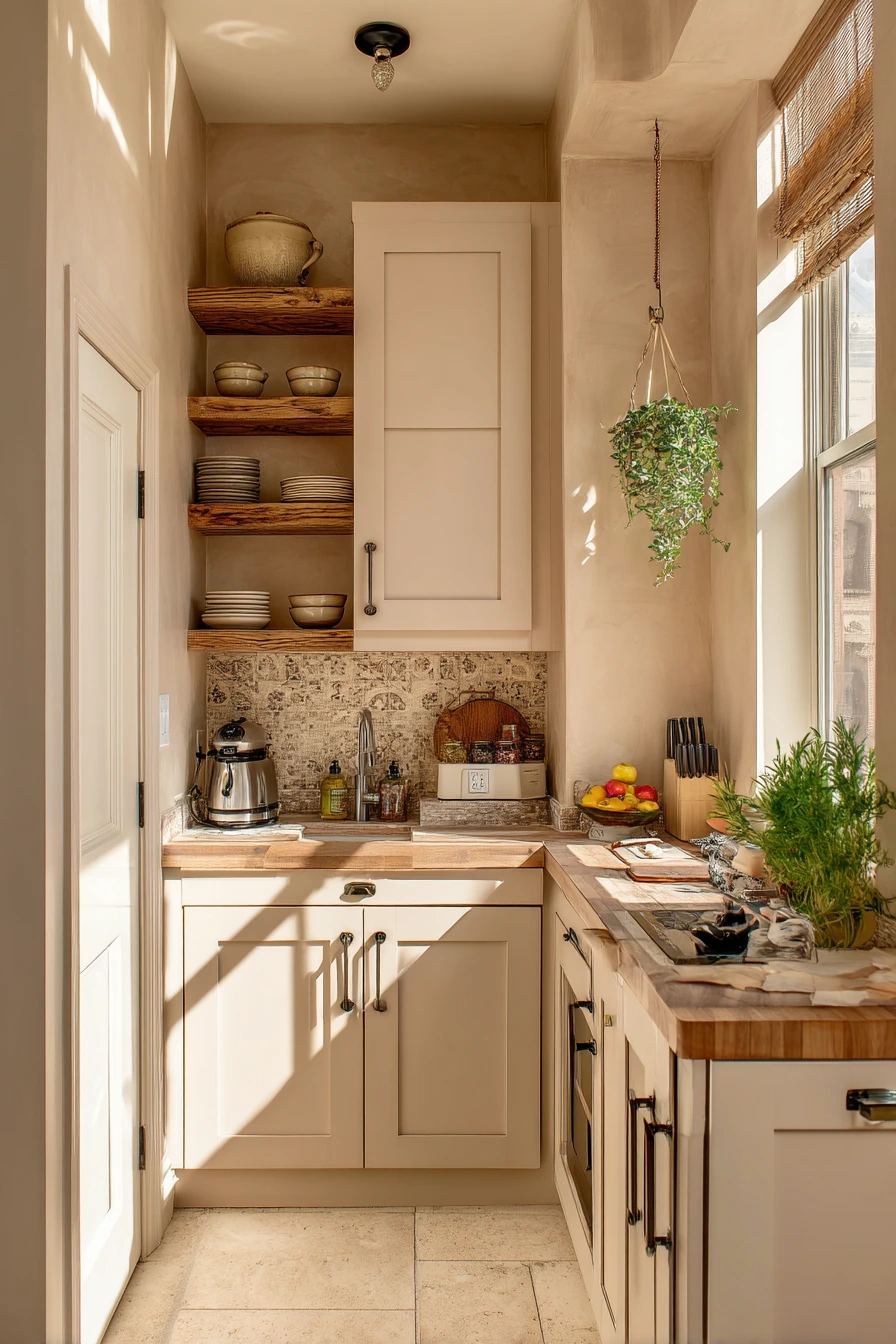
A renter-friendly Tuscan kitchen is about layers you can remove later. Start with a removable warm-toned tile decal backsplash. Look for patterns that feel handmade, like small mosaics or simple squares with variation. Pair it with cream curtains and a soft wall color so the room still feels light. If your kitchen has basic lighting, switch to a simple pendant you can take with you.
Furniture does a lot of the heavy lifting in a rental. A freestanding vintage hutch adds storage and instant character without changing the cabinets. Use woven baskets inside the hutch for snacks, linens, or pantry items. Add thrifted terracotta pots on the window ledge or shelf for that Tuscan clay tone. An oak-look table and a portable spice rack make the space work for everyday cooking.
Style it like a real corner of life, not a showroom. Put a lemon bowl on the table, drape a tea towel over a chair, and let a casual lunch moment happen. If you work from the kitchen, a laptop and notebook can fit the mood when the rest of the space is warm and nostalgic. Keep the color story tight: cream, terracotta, warm wood, and a little green from herbs or lemons.
- Use peel-and-stick tile decals in warm, earthy colors.
- Add a freestanding hutch for storage and Tuscan charm.
- Bring in terracotta pots, baskets, and simple cream curtains.
- Use an oak-look table to warm up a plain rental floor.
- Keep counters clear and group items on one tray or board.
Pro Design Tip: Choose one “anchor” piece that looks old, like a hutch, then keep the rest simple. One strong vintage item makes the whole kitchen feel more Tuscan.
Budget Considerations: Tile decals and thrifted furniture are lower cost than renovations. Check local resale shops for a sturdy hutch, then update it with wax or a soft paint wash.
4 Country Tuscan Kitchen with Slow Sunday Breakfast
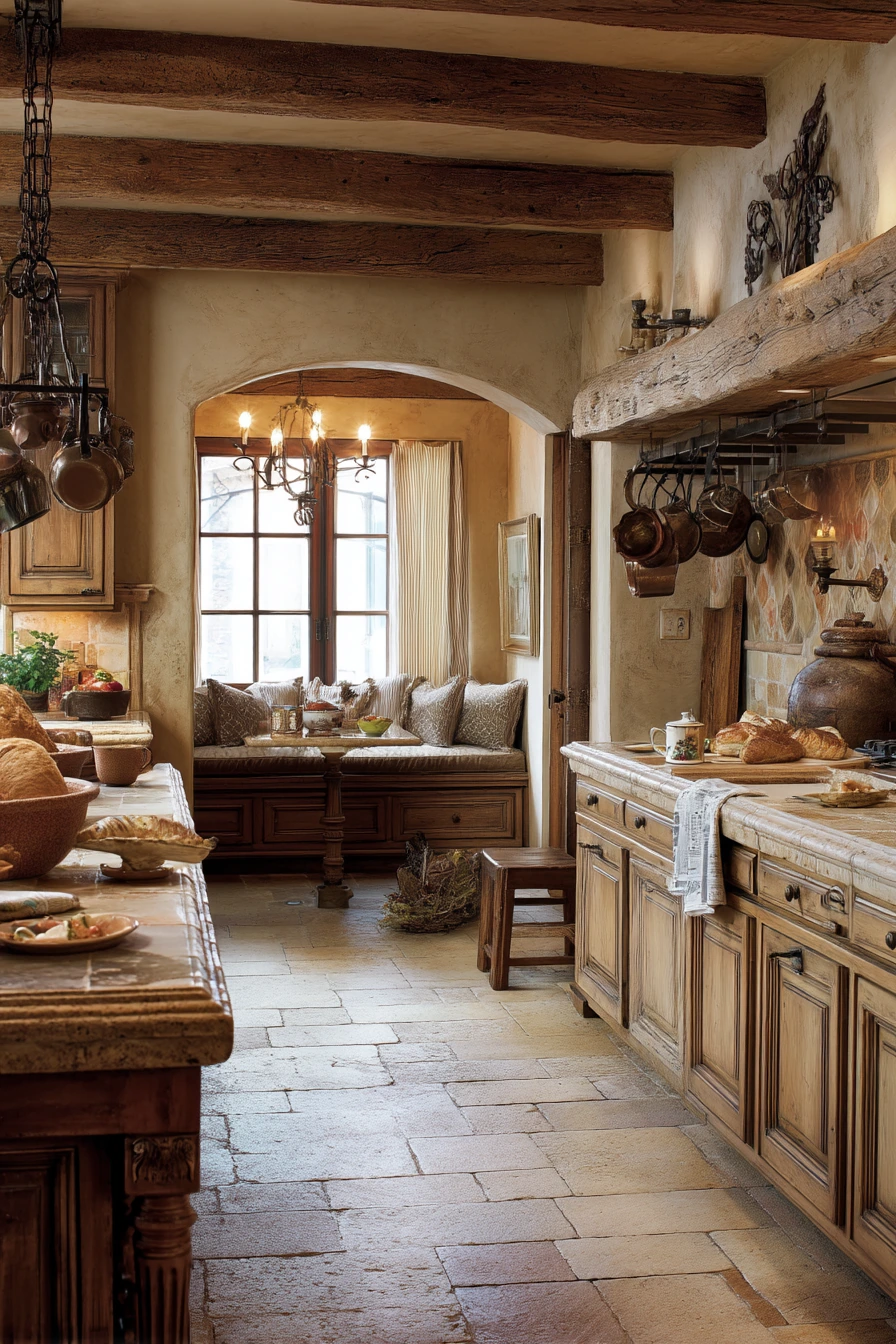
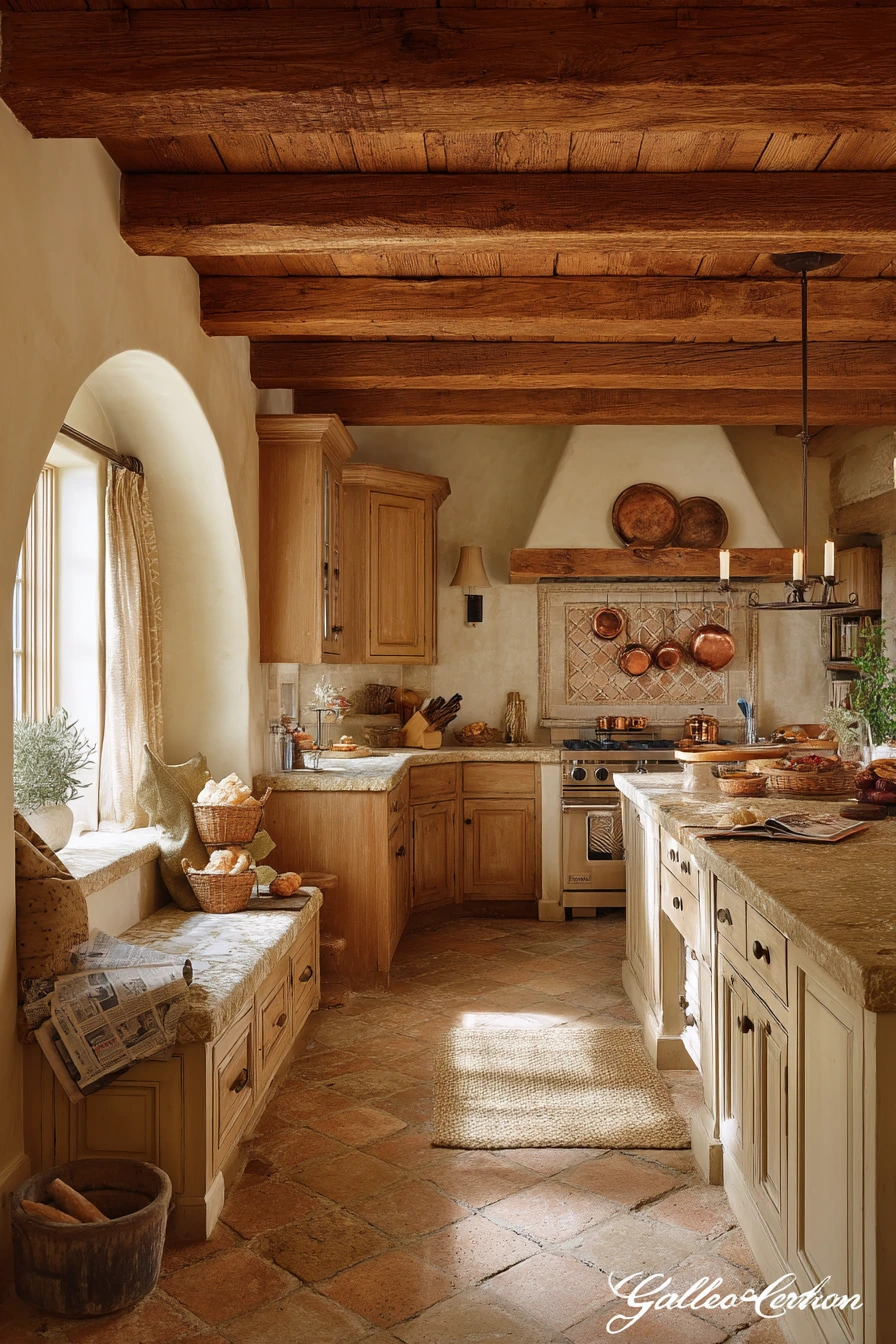
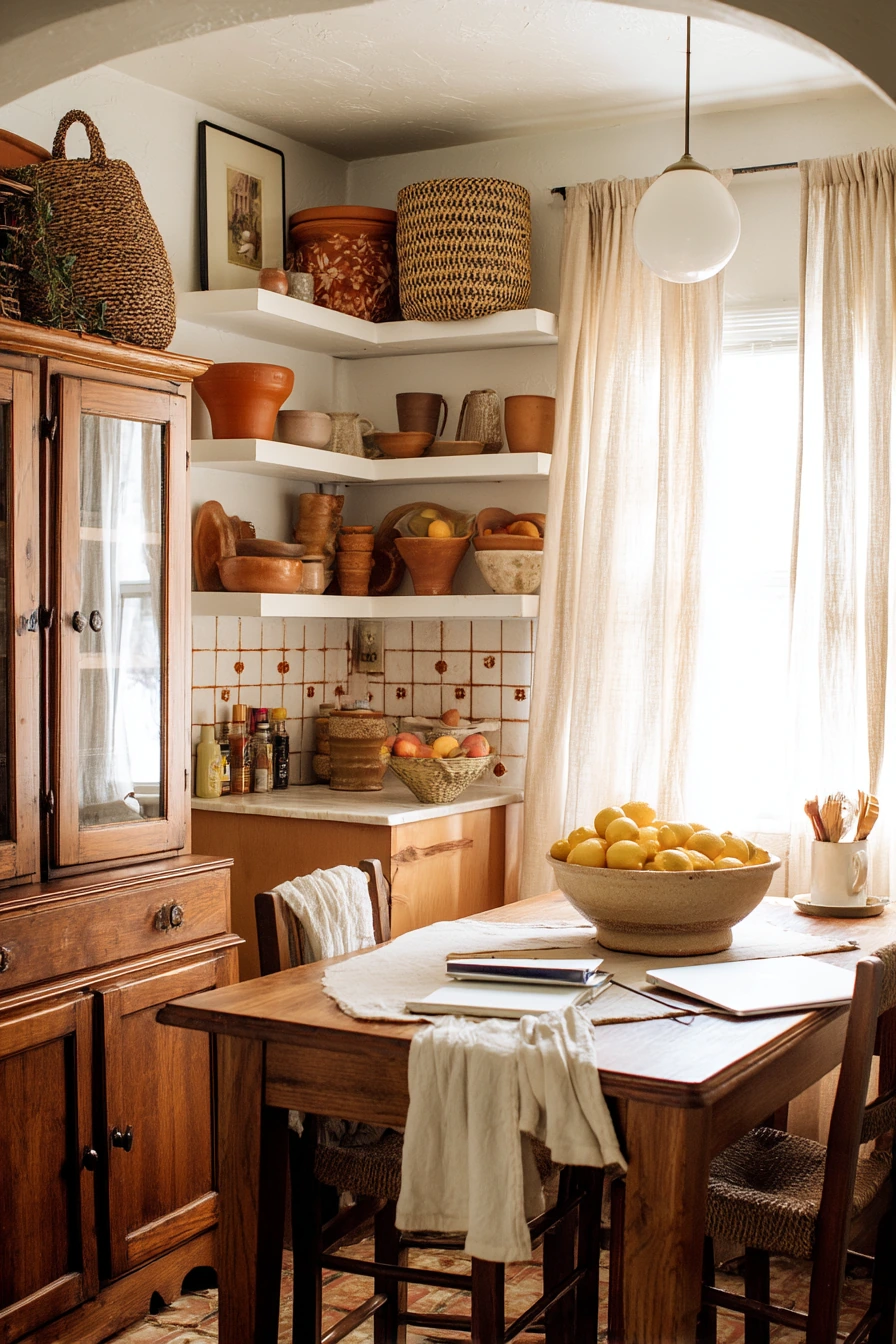
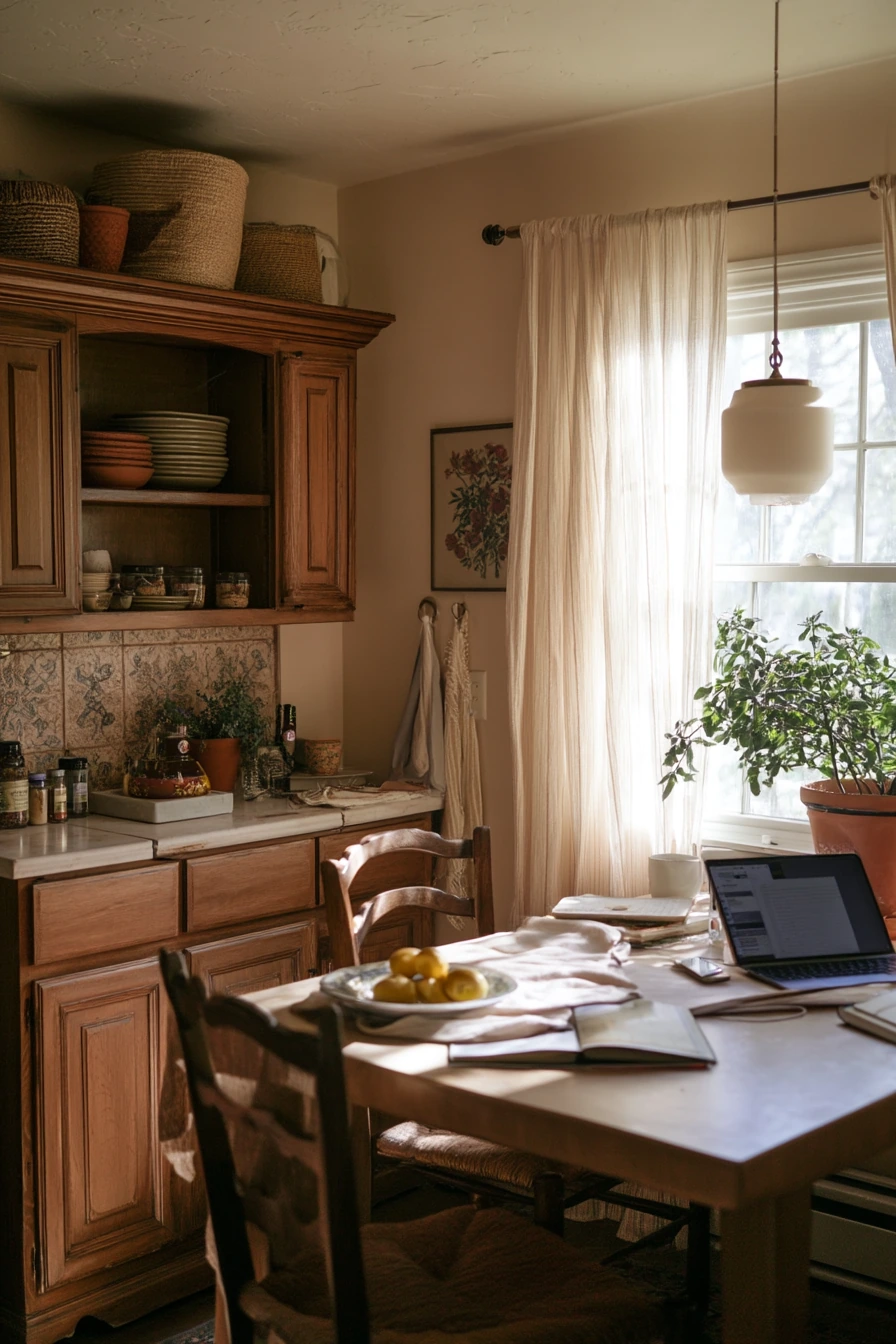
A countryside Tuscan kitchen often centers on a generous stone island. It becomes the place for breakfast, baking, and slow mornings. Choose a stone top with visible movement and a soft finish. Pair it with creamy cabinetry so the room feels bright even with heavy materials. Exposed wood beams add depth and make the space feel tied to the land.
Backsplash tile matters in this look. Hand-glazed tile brings gentle shine and uneven edges that feel real. Add a wrought-iron pot rack to use vertical space and bring in that classic Tuscan metalwork. Copper pans add warm reflections, especially in golden morning window light. Keep the palette tight: cream, stone, warm wood, iron, and copper.
To style the room, create a simple breakfast scene. A bread loaf, jam jar, coffee mugs, and a folded newspaper feel natural, not staged. A rustic bench nook makes the kitchen more social and gives you extra seating without crowding the floor plan. If you have pets, a dog bowl near the doorway fits the real-life vibe and keeps the room honest.
- Use a stone island as the main work and gathering surface.
- Combine creamy cabinets with exposed beams for warmth and light.
- Add hand-glazed tile for texture behind the range or sink.
- Hang a wrought-iron pot rack and display copper pans.
- Style with breakfast items on a board for an easy lived-in look.
Pro Design Tip: Mix matte and shine on purpose. Use mostly soft finishes (stone, plaster, wood) and add small shiny accents (copper, glazed tile) so the room has depth.
Budget Considerations: A full stone island is expensive. To save, use a butcher-block base with a stone remnant top, or choose a quartz that looks like honed limestone.
5 Elegant Tuscan Kitchen with a Hosting Mood
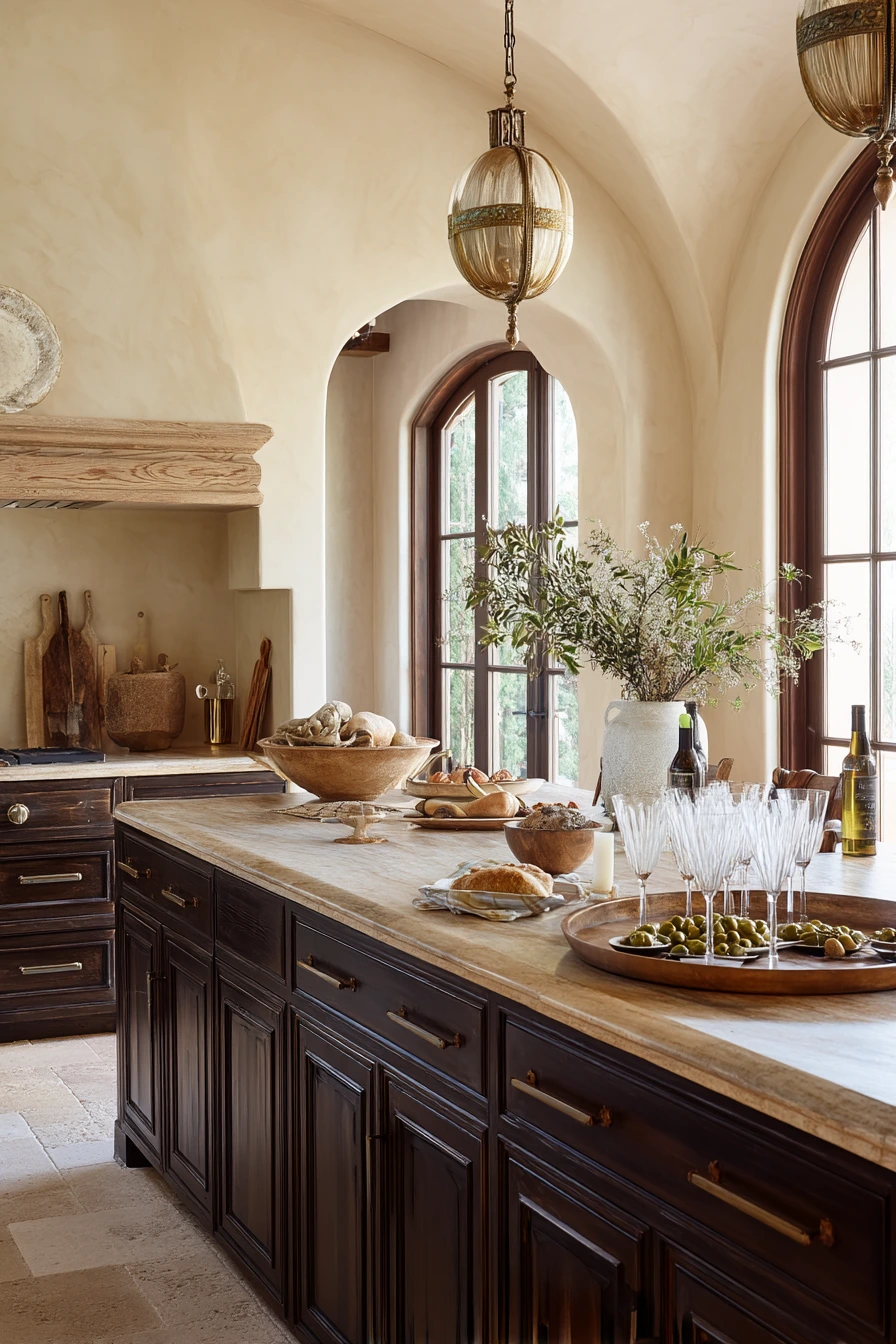
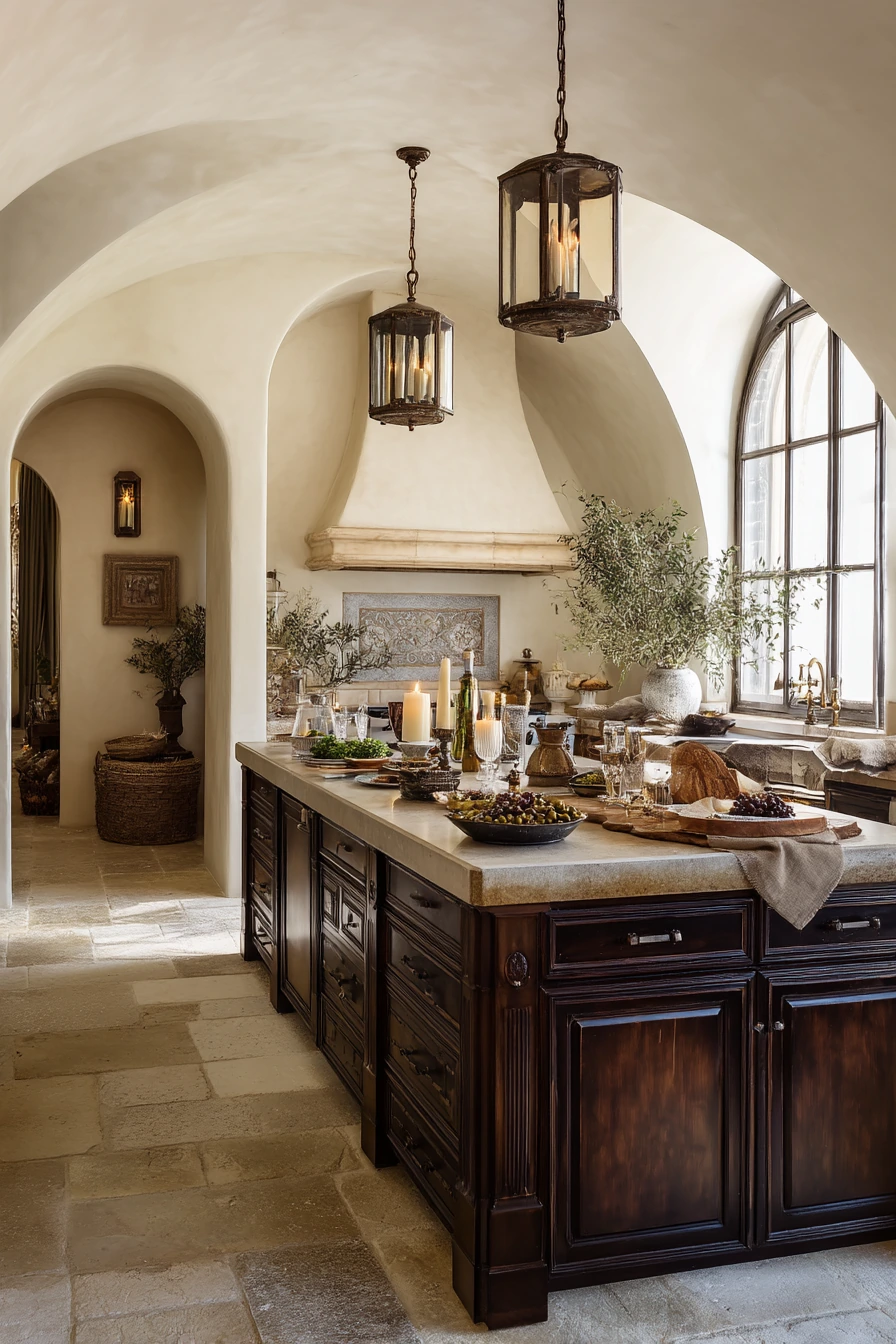
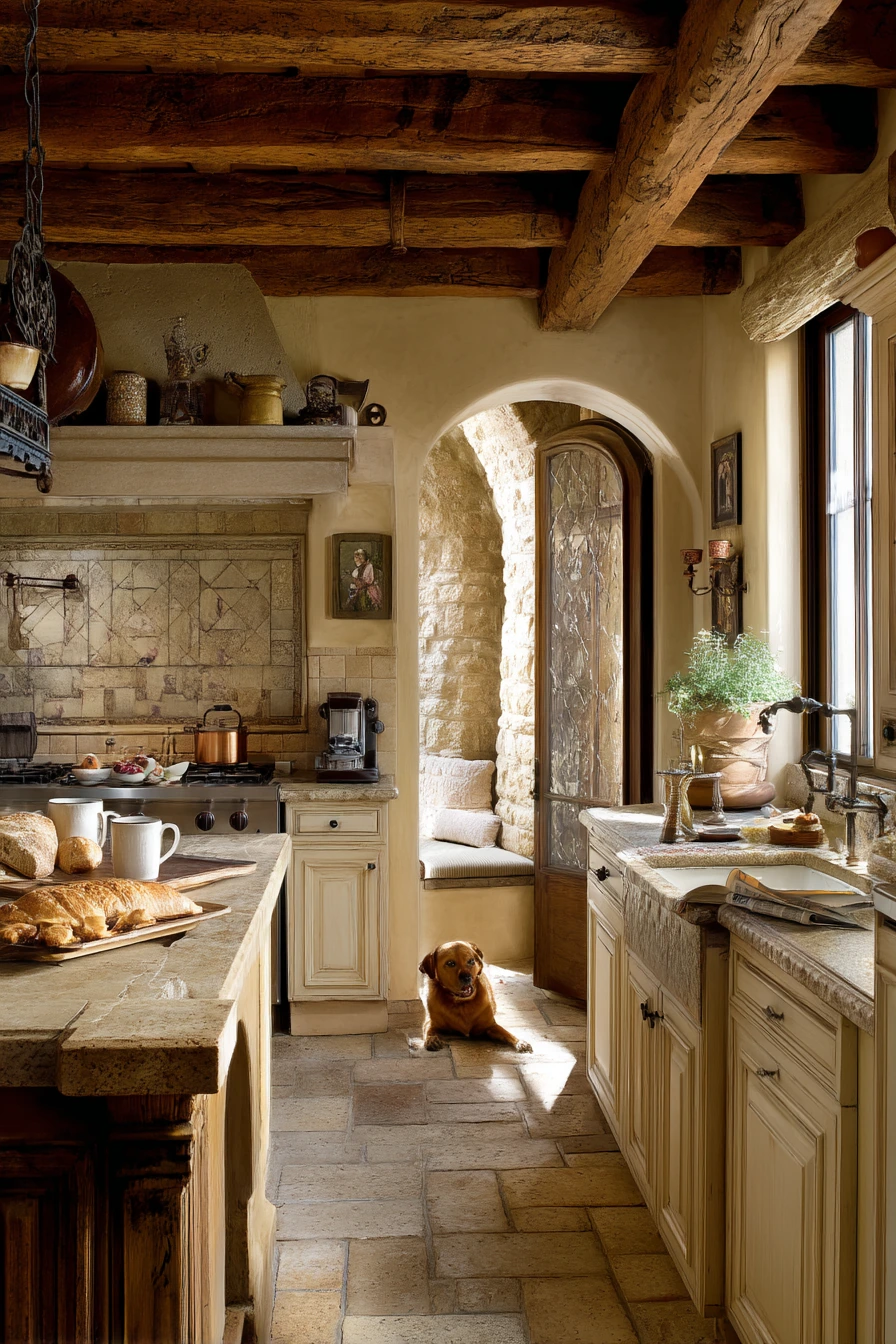
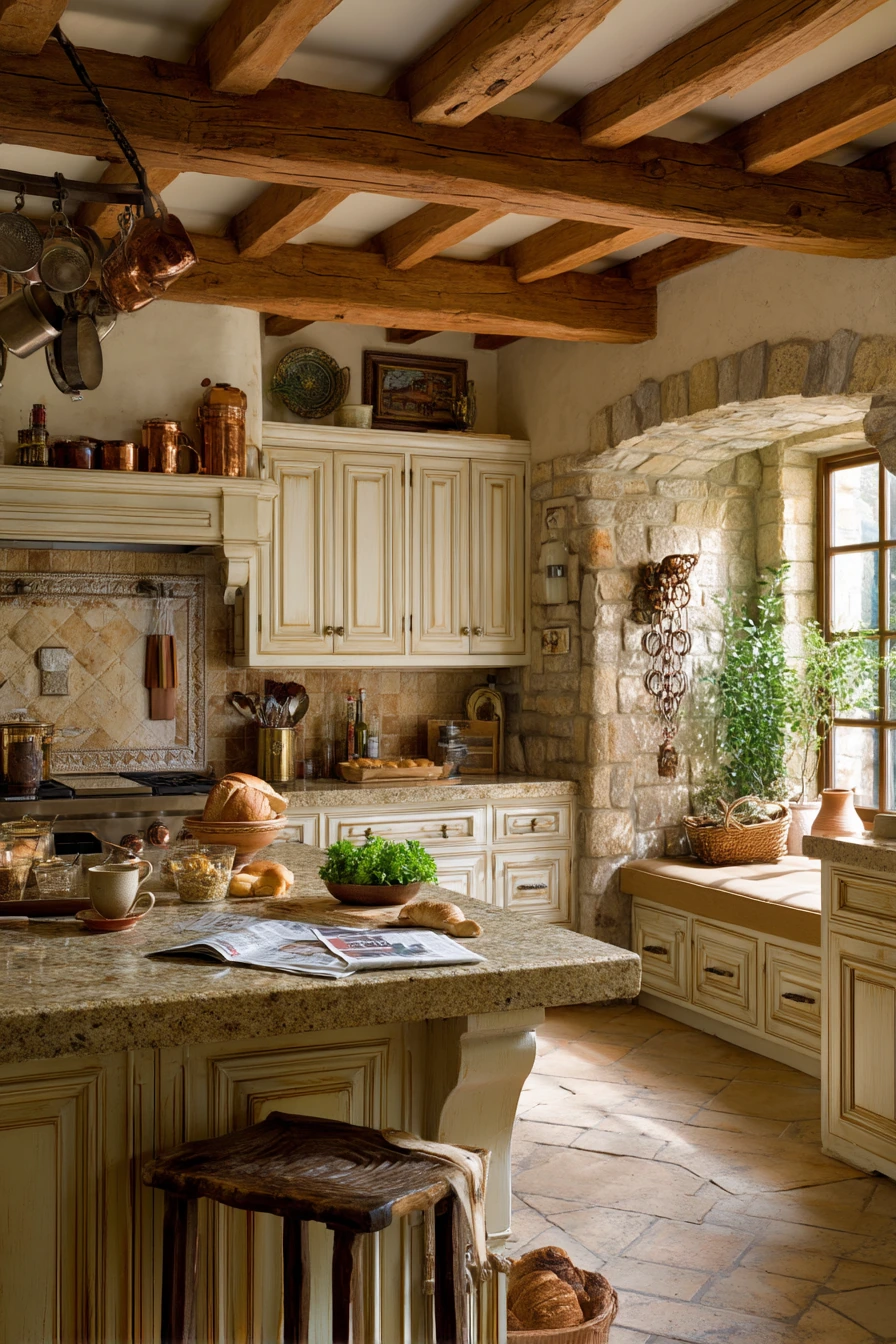
A gracious entertaining kitchen in the Tuscan style should feel refined but still relaxed. An arched alcove is a strong architectural detail that brings old-world shape into the room. Pair it with creamy plaster on the hood or walls so the arches look soft, not harsh. Limestone flooring keeps the palette calm and helps the space feel connected from room to room.
For the center, a dark walnut island adds contrast and makes the kitchen feel grounded. Use aged brass pulls to warm up the darker wood. Vintage-inspired pendants give a gentle glow without looking too modern. Keep curated ceramics on open shelves or inside glass-front cabinets, and repeat colors like cream, olive, and clay so everything feels connected.
When styling for hosting, aim for “ready but not perfect.” Put wine glasses waiting on a tray, set out olives and a breadboard, and add linen napkins for texture. A half-finished floral arrangement is a great detail because it feels like you are mid-prep. In soft evening window light, keep counters mostly clear and group serving items in one zone so guests can help themselves.
- Use arches or an arched niche to add Tuscan character.
- Choose a dark walnut or deep stained island for contrast.
- Swap to aged brass pulls and warm vintage-style pendants.
- Style a simple hosting tray with glasses, olives, and bread.
- Use linens and ceramics to soften stone and wood surfaces.
Pro Design Tip: Create one “serving runway” on the island. Keep one long section empty, then place a tray at the end. It makes hosting easier and looks clean in photos.
Budget Considerations: If you cannot replace flooring, add a limestone-look runner and focus spending on lighting and hardware, which change the feel fast for less money.
6 Tuscan Kitchen with Garden Harvest Counter
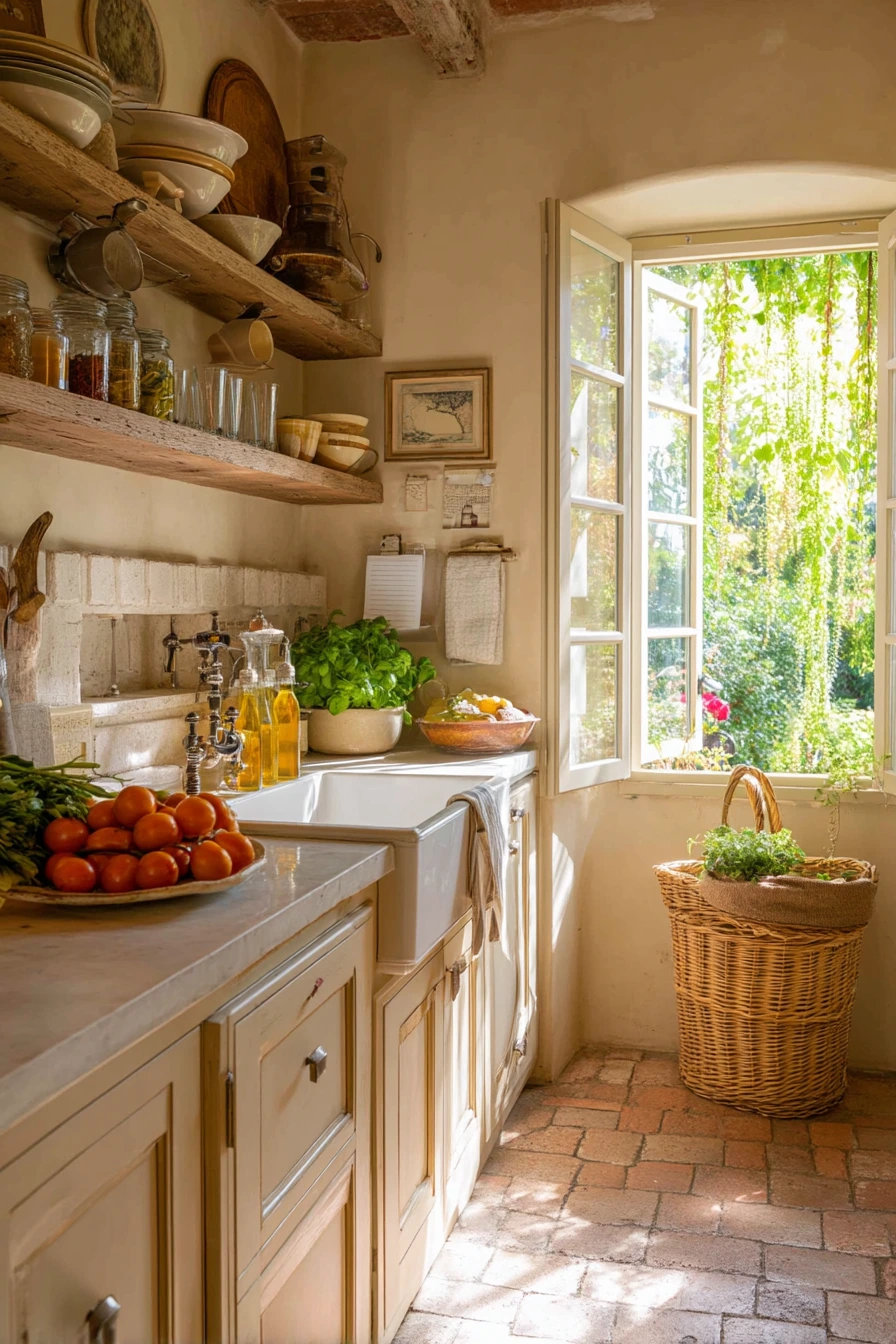
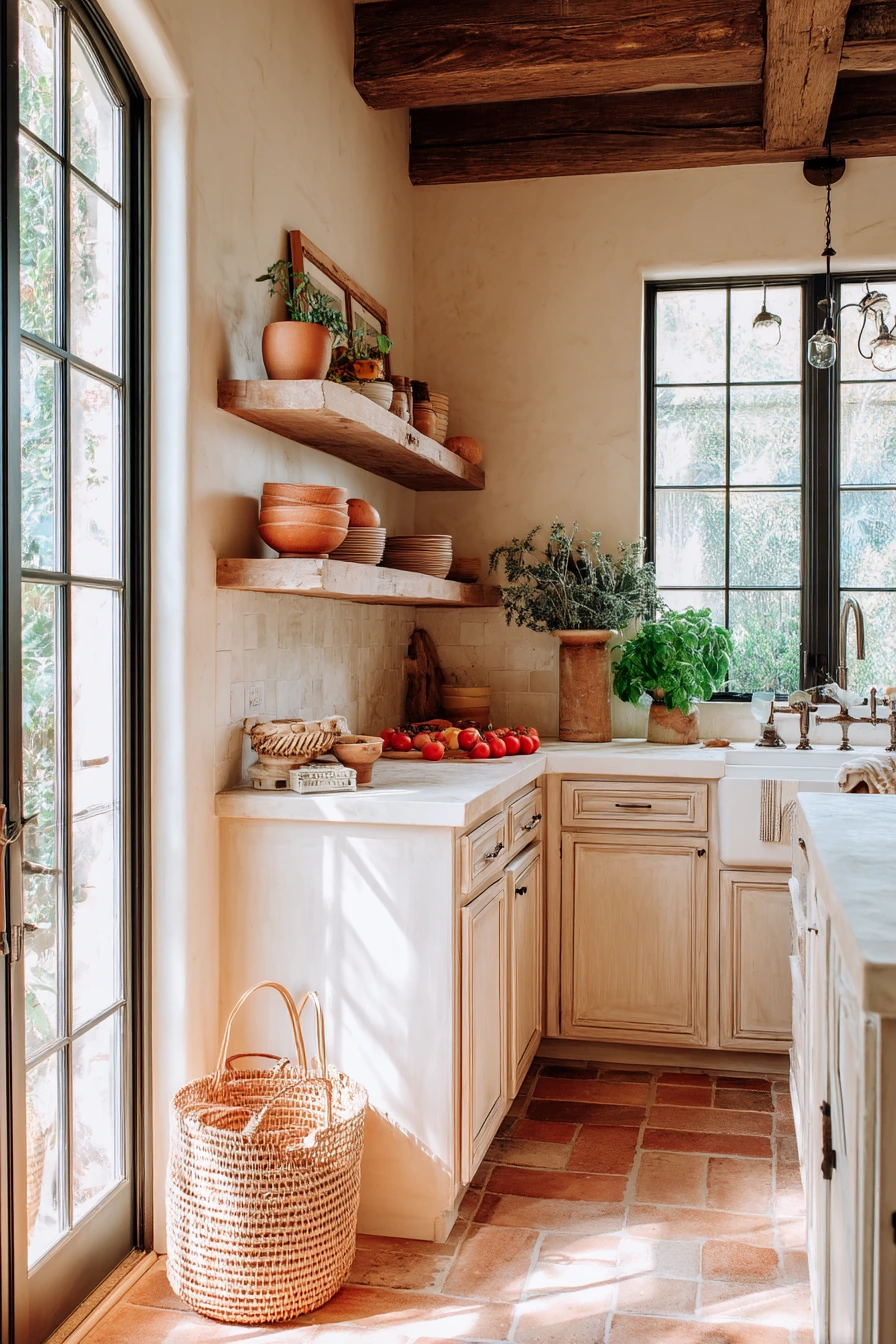
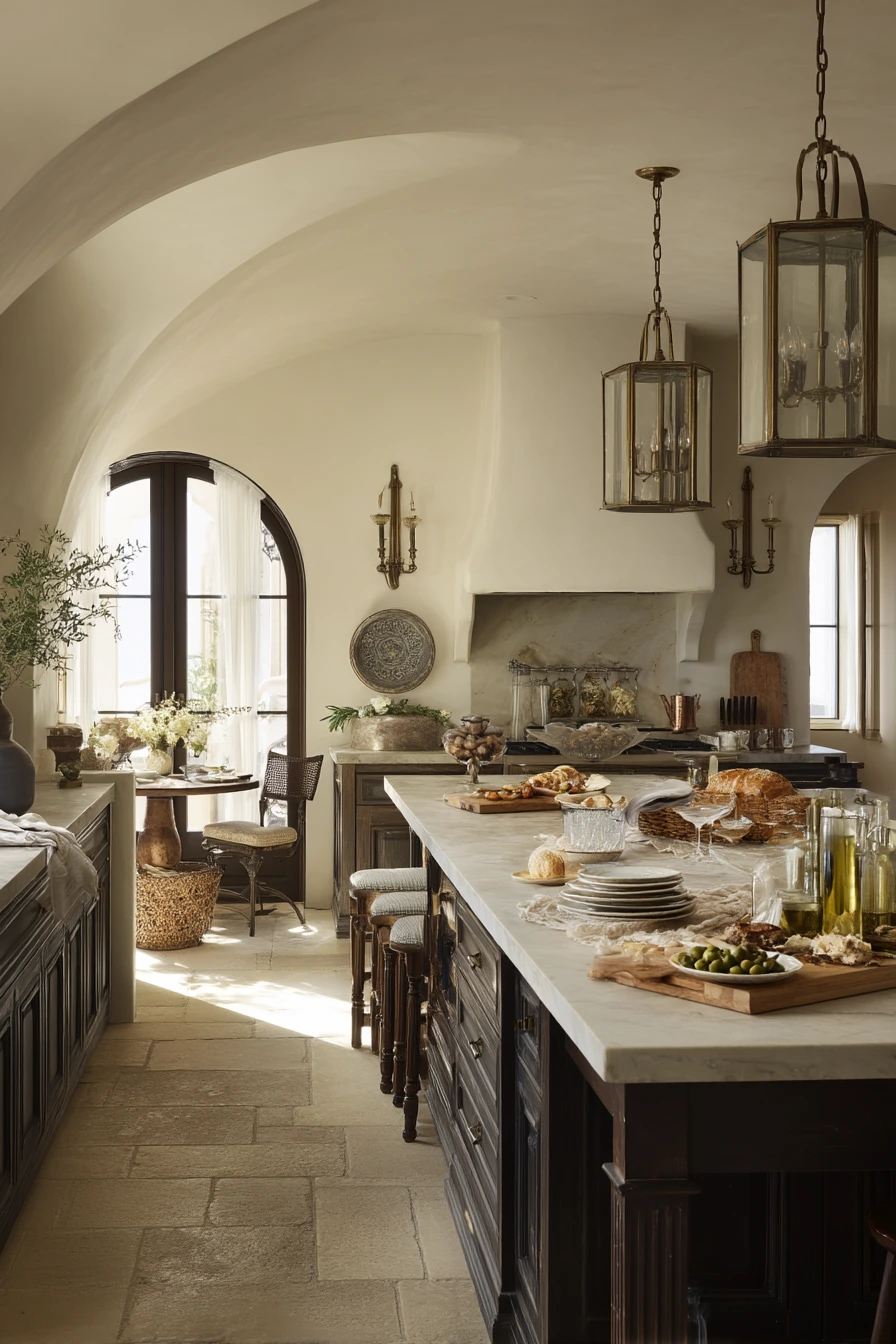
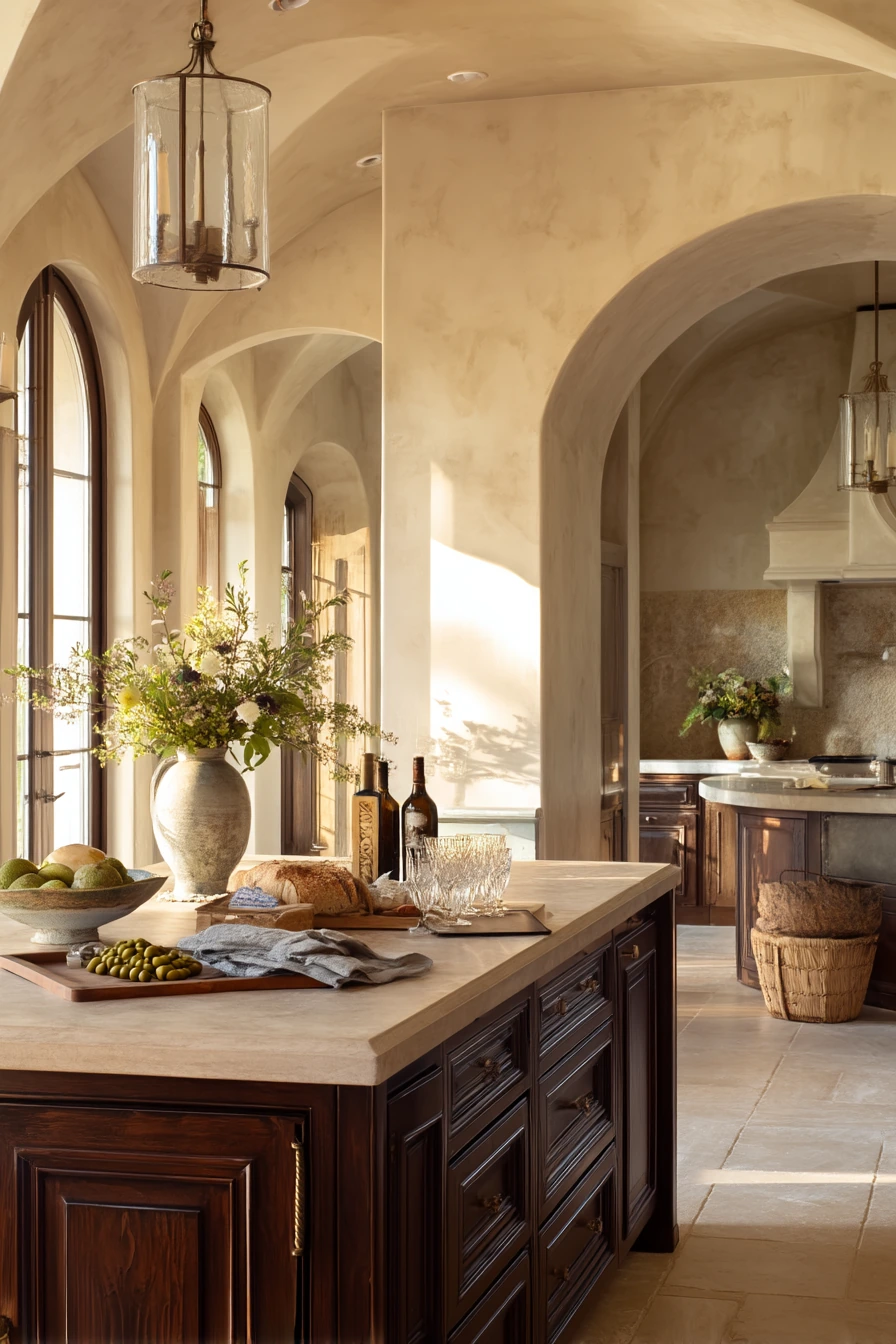
A garden-to-table Tuscan kitchen should support daily cooking and washing up. Put a farmhouse sink under a bright window if you can. It is practical and it becomes a focal point. Terracotta floor adds warmth and hides dirt from outdoor routines. Creamy cabinets keep the room from feeling heavy, while weathered oak shelves add that rustic texture.
For the backsplash, stone works well because it looks natural and stands up to splashes. Open shelves are best when they hold items you use often, like bowls and jars. Style the counters with real produce: bowls of tomatoes, basil, and peaches bring color that fits the Tuscan palette. A wicker market basket near the door makes sense for harvest days and looks right at home.
Let practical life show in a tidy way. Muddy clogs by the door tell the story, but keep them on a small mat or tray. Pin a recipe card near the fridge for that everyday cooking feel. If herbs are fresh, leave a few water droplets on them before you set them in a bowl. This small detail makes the kitchen feel sun-warmed and real.
- Center the sink under a window for light and function.
- Use terracotta flooring or a warm look-alike for rustic warmth.
- Add weathered oak shelves and keep them simple and useful.
- Style with bowls of produce and a wicker market basket.
- Create a small drop zone for garden shoes and tools.
Pro Design Tip: Use repeating “harvest colors” as your decor: tomato red, basil green, and creamy neutrals. When your styling matches real food, the kitchen always looks right.
Budget Considerations: If a farmhouse sink is not possible, use a deep stainless sink and add a bridge-style brass faucet for a similar Tuscan feel without major plumbing changes.
7 Quiet Tuscan Kitchen for Empty Nest Calm
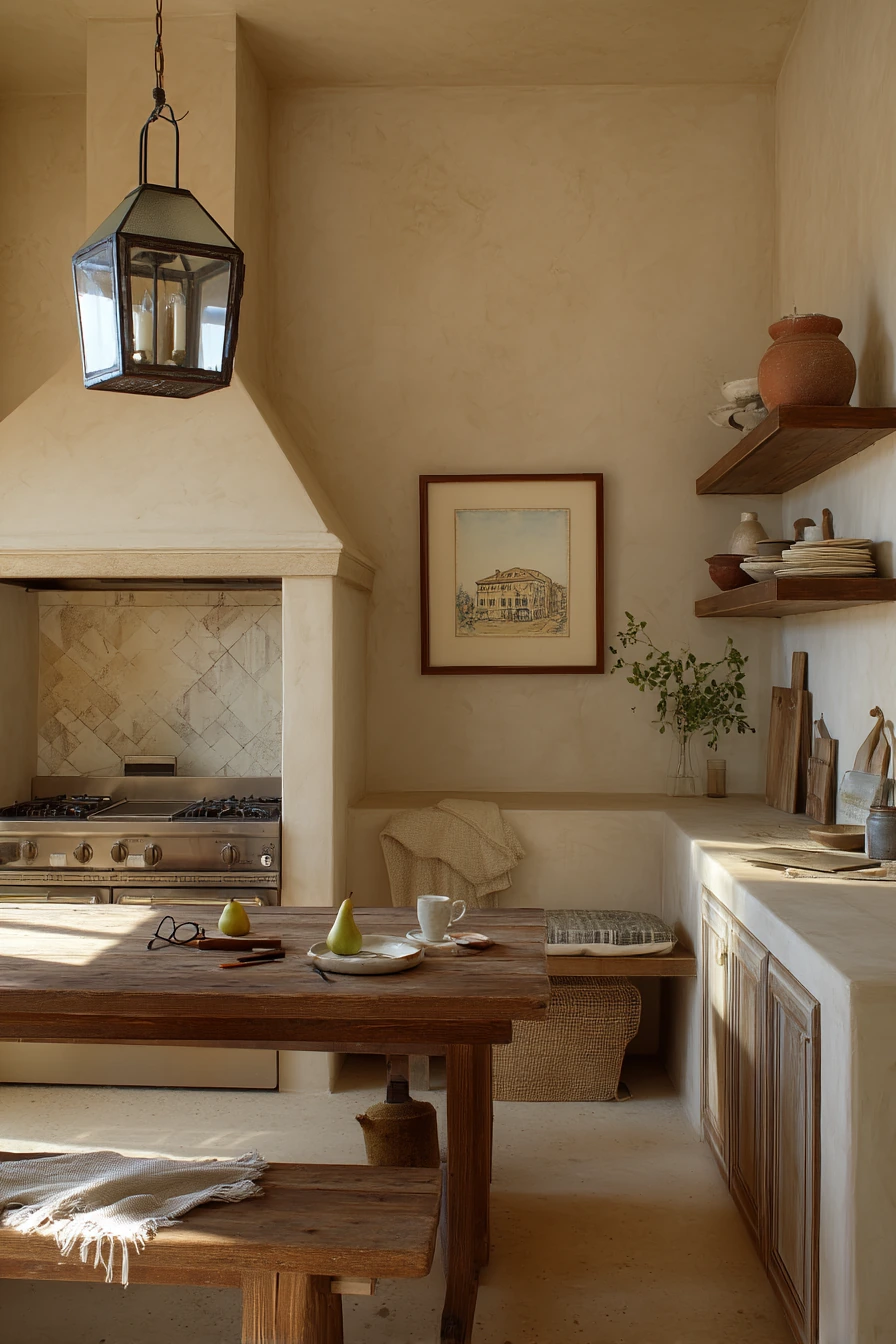
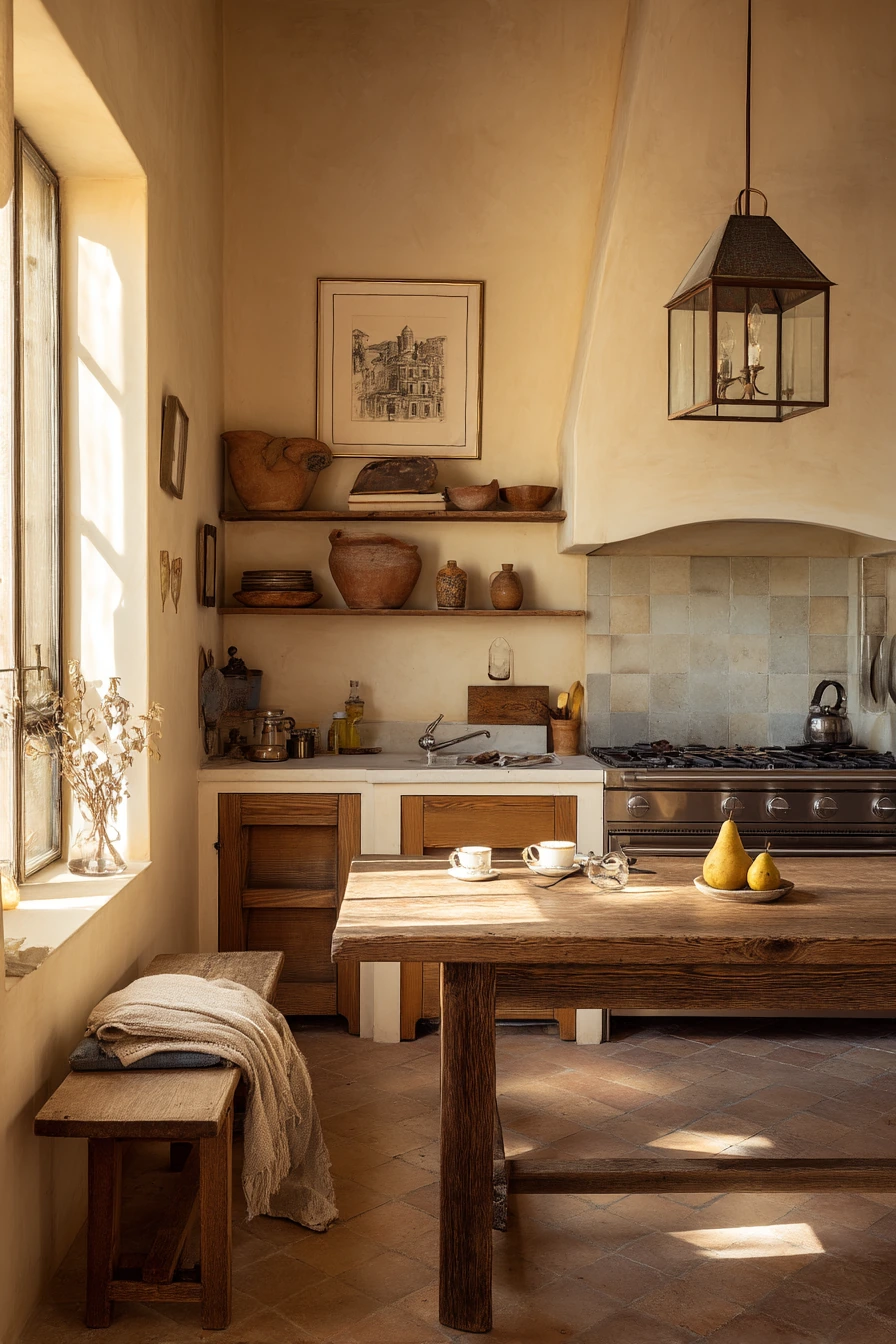
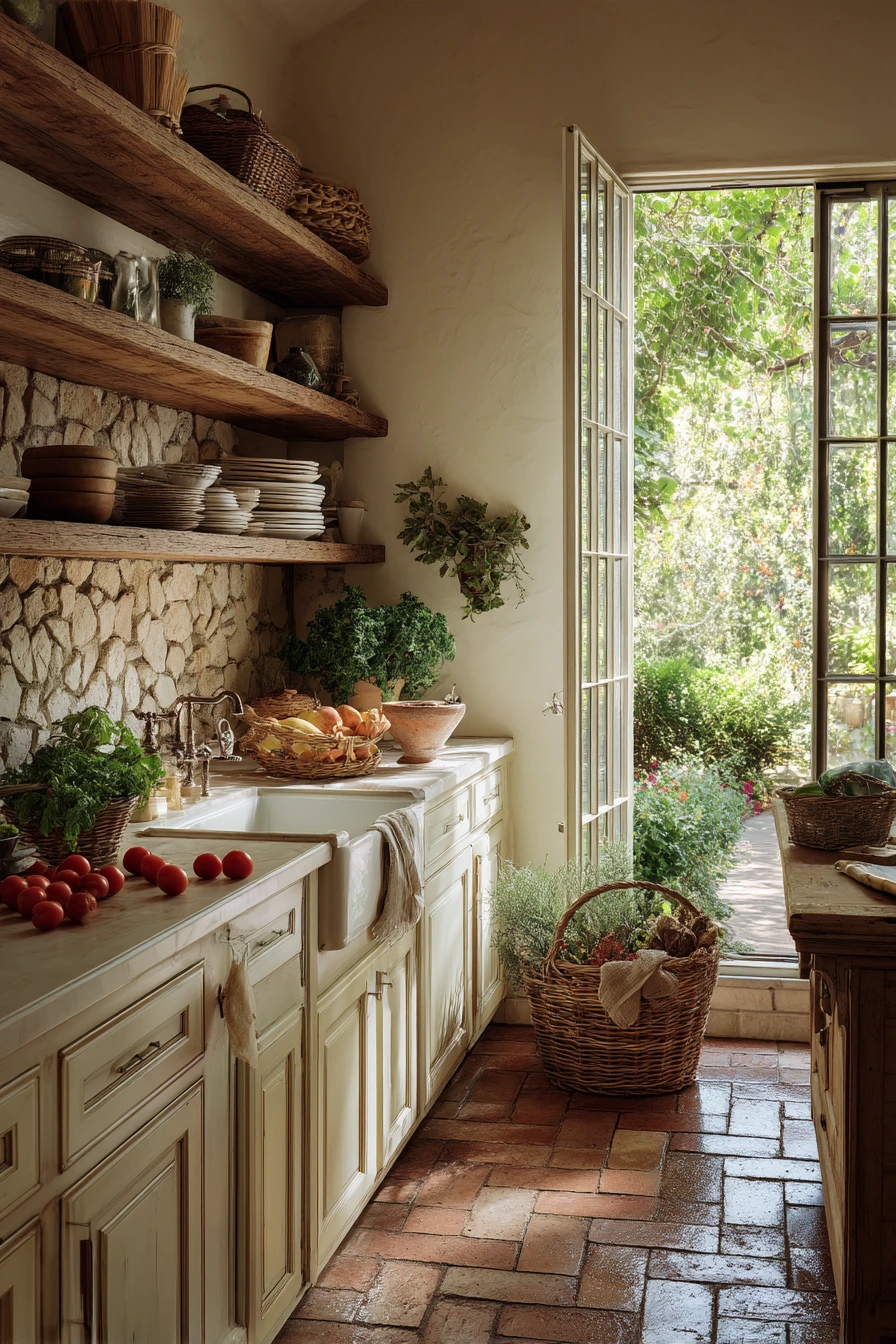
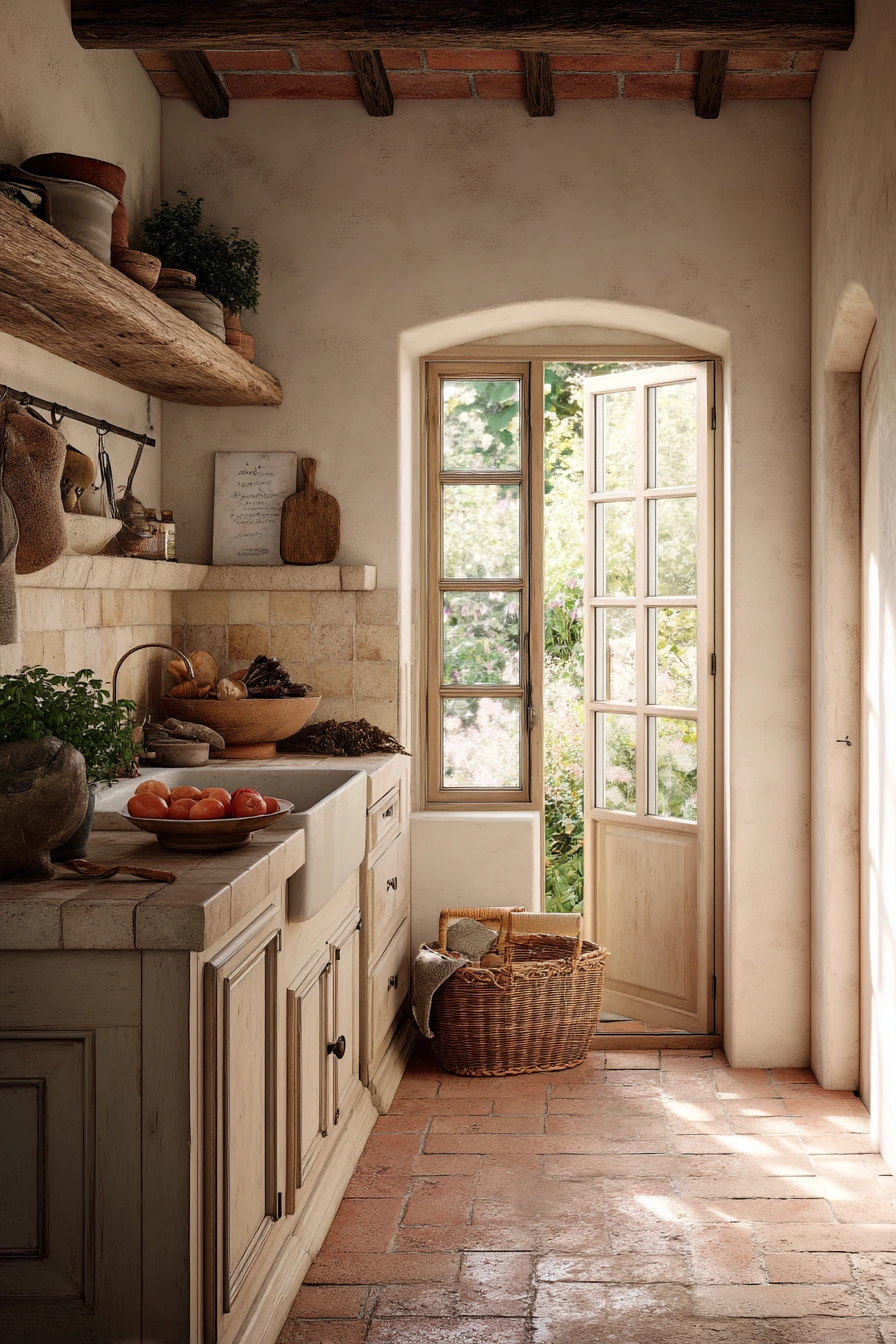
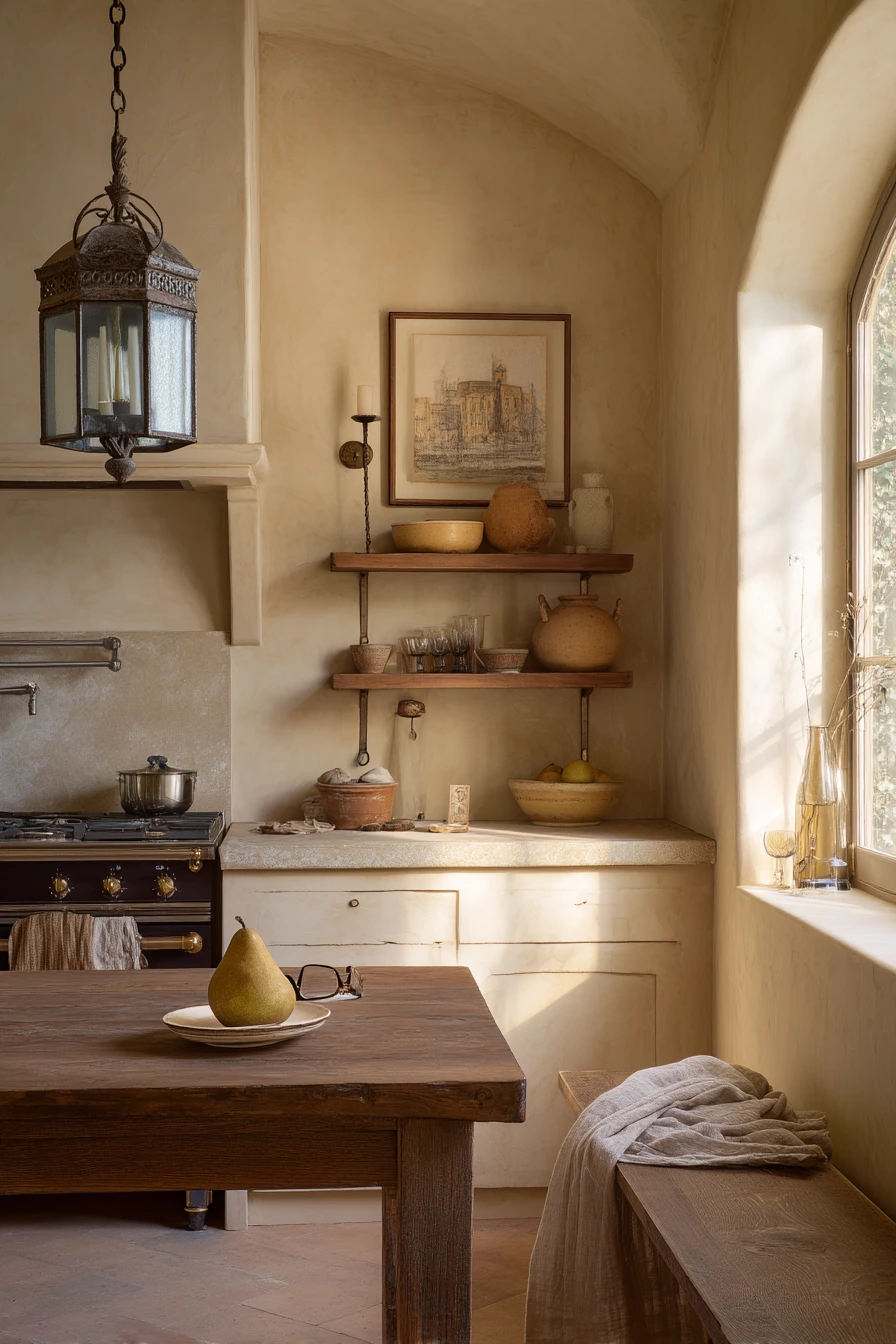
A serene empty-nest Tuscan kitchen is quieter and more personal. Warm sand plaster walls set a mellow base that flatters wood and pottery. An antique wood table becomes the heart of the room, even if you have a smaller range and a compact layout. Choose a tiled surround for the range to add old-world detail in a controlled area.
Open shelves with mismatched pottery bring charm without trying too hard. Keep the shelf styling functional: plates you use, a small jar for tea, and one or two serving bowls. A lantern-style pendant gives soft light and fits the Tuscan mood. Add a framed village sketch or simple landscape art to keep the room feeling rooted and calm.
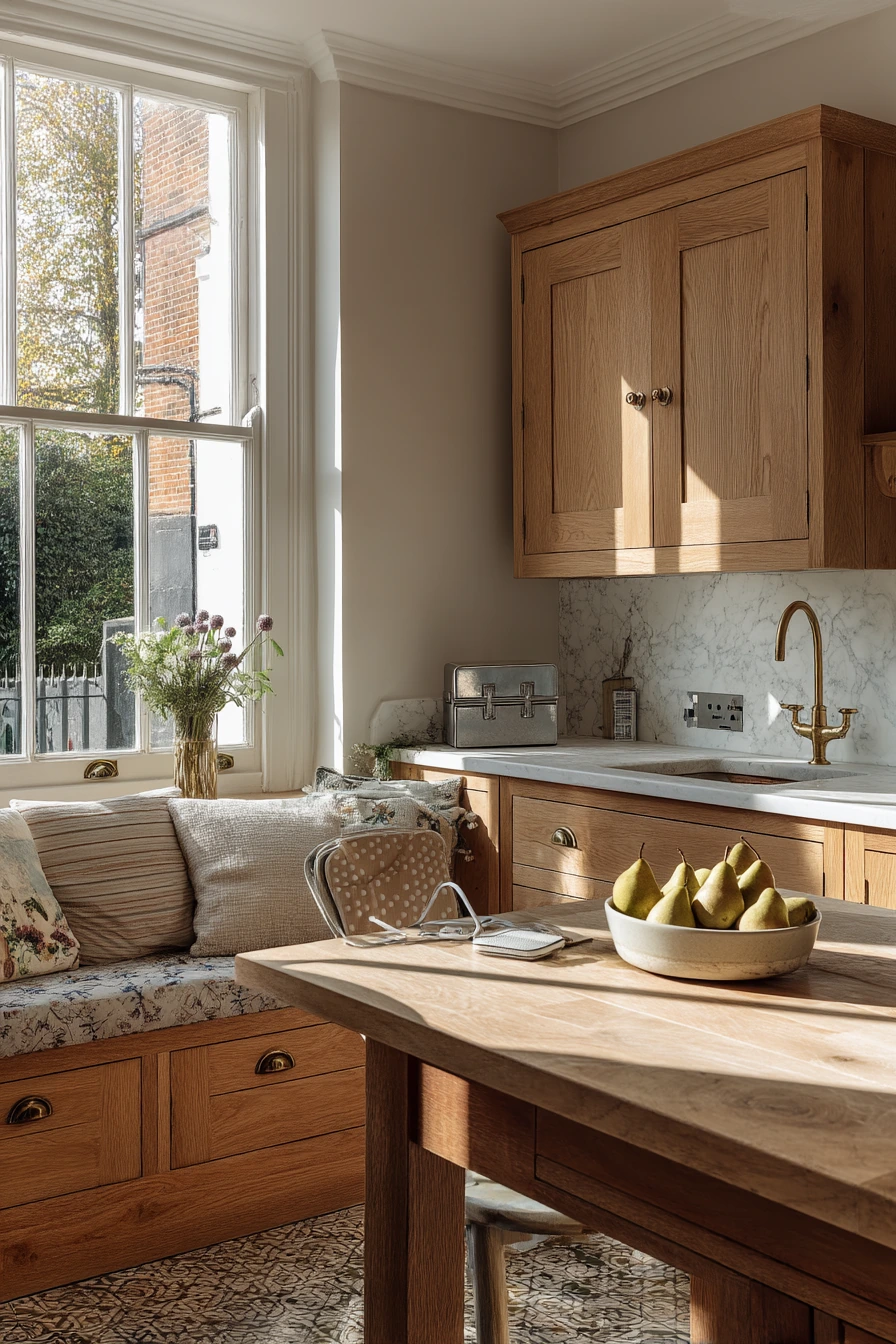
For styling, focus on one small moment. Reading glasses beside a teacup, a folded throw on the bench, and a single pear on the counter create a gentle story. Keep surfaces mostly clear so the texture of plaster, wood, and tile stands out. This kind of kitchen feels honeyed in soft afternoon light because it is not crowded with decor.
- Use warm sand or clay-toned wall color for a soft Tuscan base.
- Anchor the space with an antique-style wood table and bench.
- Add a tiled surround around the range for character.
- Display mismatched pottery on open shelves, but keep it useful.
- Style one quiet vignette with tea items and simple fruit.
Pro Design Tip: Leave negative space. In a calm Tuscan kitchen, one open wall or clear counter section makes the materials feel more special.
Budget Considerations: Antique tables can be pricey. Look for a solid used table and refinish it with a matte oil or wax, which gives an aged look without a full replacement.
8 Tuscan Kitchen with Kids After School
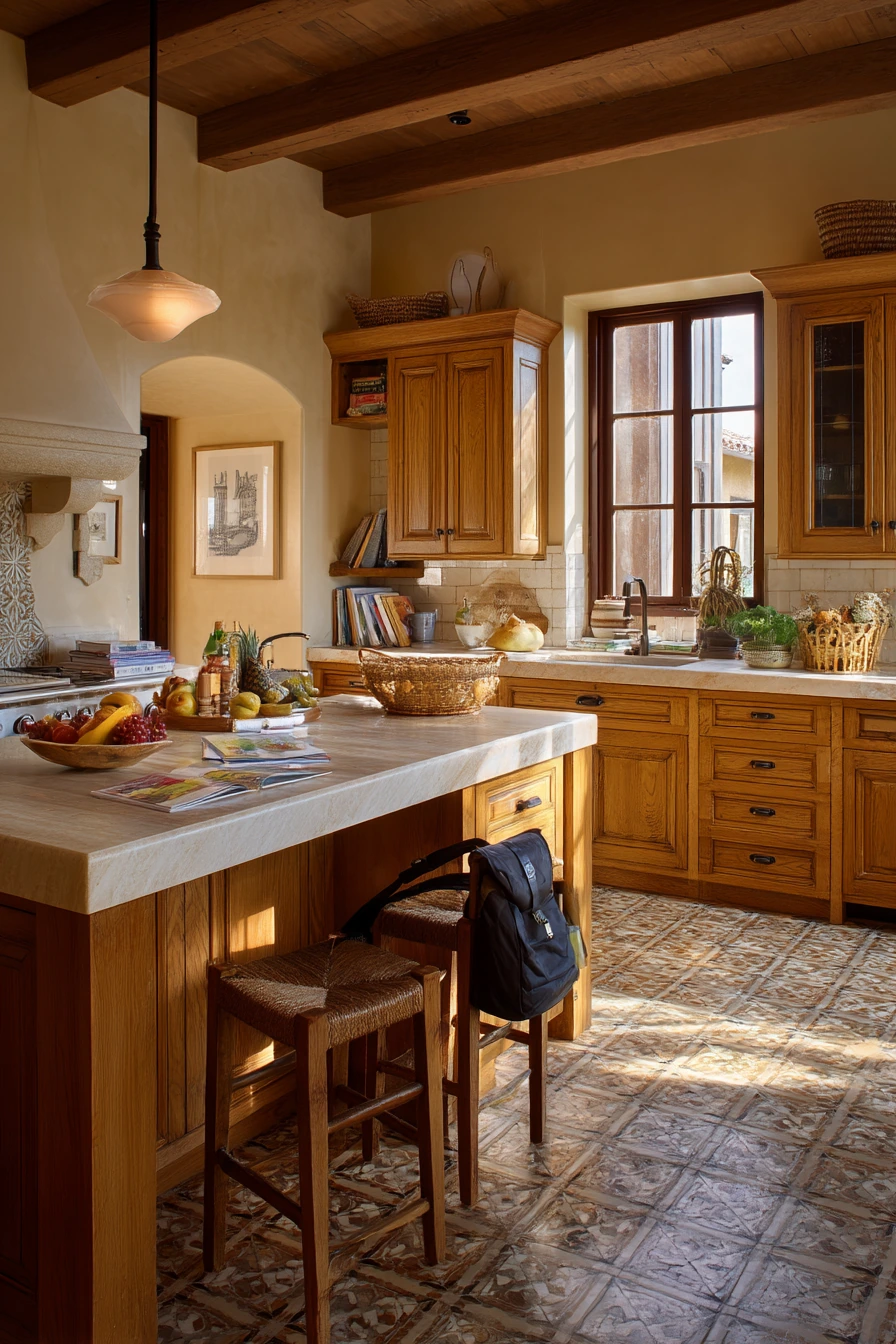
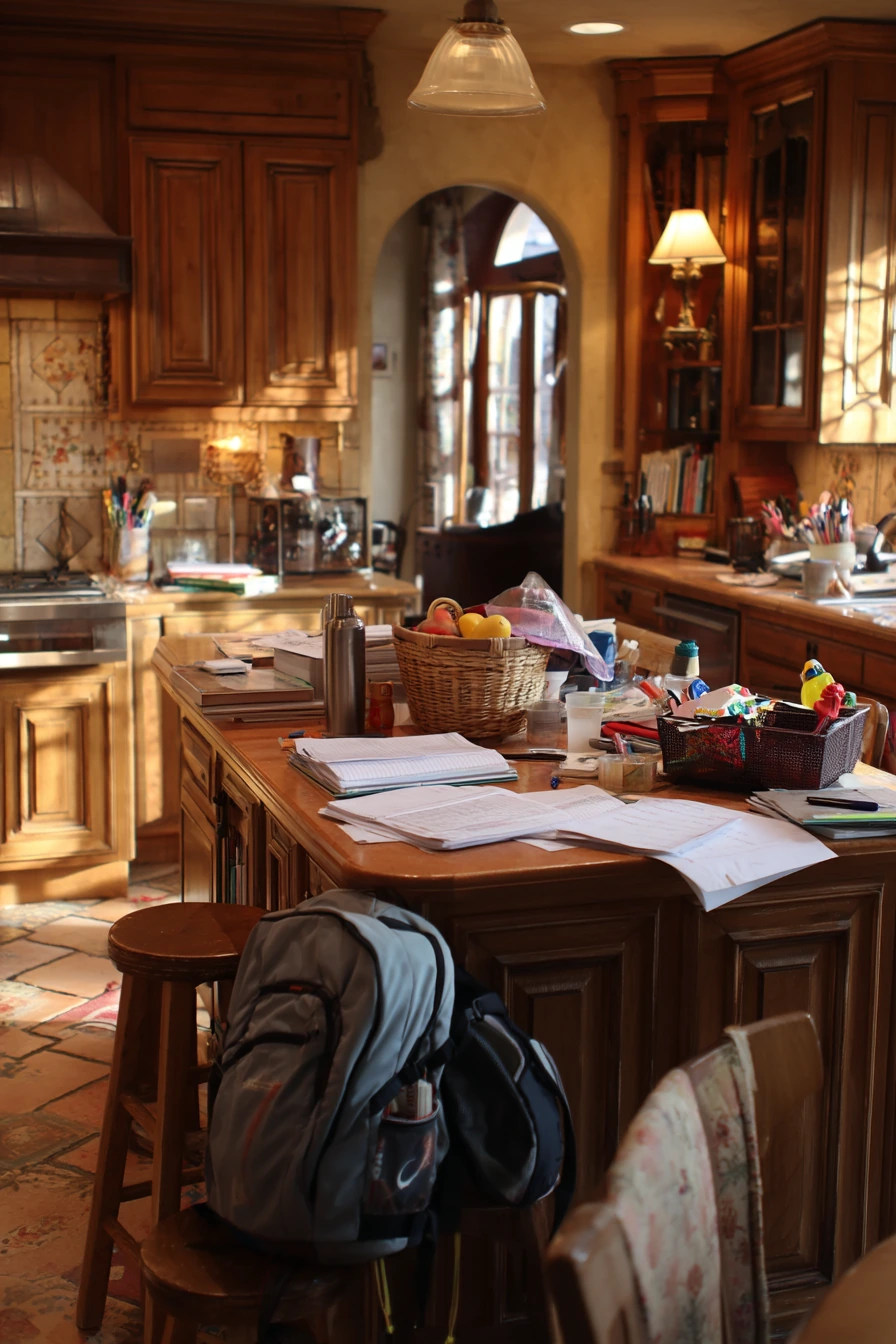
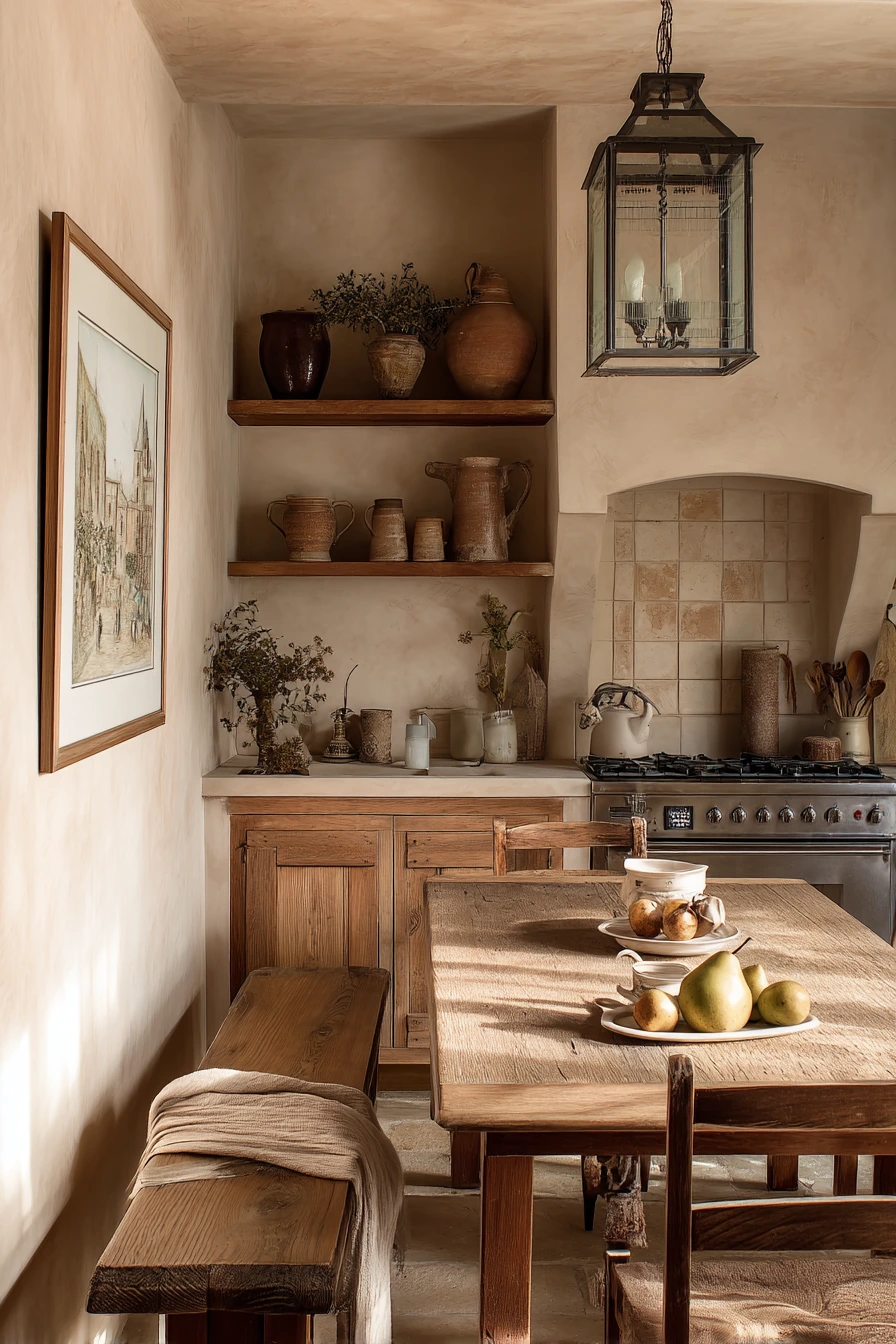
A busy family Tuscan kitchen needs to handle backpacks, homework, and quick snacks without losing its warmth. Start with durable stone counters that can take daily wear. Choose easy-wipe plaster walls or a scrubbable paint in a warm tone. Warm oak cabinets keep the space feeling cozy, and patterned ceramic tile adds character that hides splashes and crumbs better than plain white.
An oversized island is key for family flow. It gives kids a place to do homework while you prep dinner. Add stools that are easy to clean, and keep one drawer stocked with school supplies. Styling should feel real: a fruit bowl, half-filled water glasses, and a toy basket tucked by the pantry. These items help the kitchen feel functional and inviting, not messy on purpose.
Lighting matters after school. Mix warm lamp light with fading window light, and use dimmers if possible so the kitchen can shift from homework time to dinner. Keep clutter controlled with simple containers. A tray for papers, hooks for backpacks, and a basket for toys will keep the everyday rush from taking over the whole room.
- Choose durable counters and a warm, washable wall finish.
- Use oak cabinets and patterned ceramic tile for a Tuscan feel.
- Plan an island with space for homework and quick snacks.
- Add baskets for toys and a tray for school papers.
- Use layered lighting and dimmers for evenings.
Pro Design Tip: Add one “hidden clutter” zone. A cabinet near the entry with hooks inside can hold backpacks and lunch bags so the kitchen looks calmer fast.
Budget Considerations: If stone counters are not in the budget, choose a high-quality laminate with a matte finish and add a patterned tile backsplash to bring in the Tuscan texture.
9 Budget Tuscan Kitchen with Thrifted Character
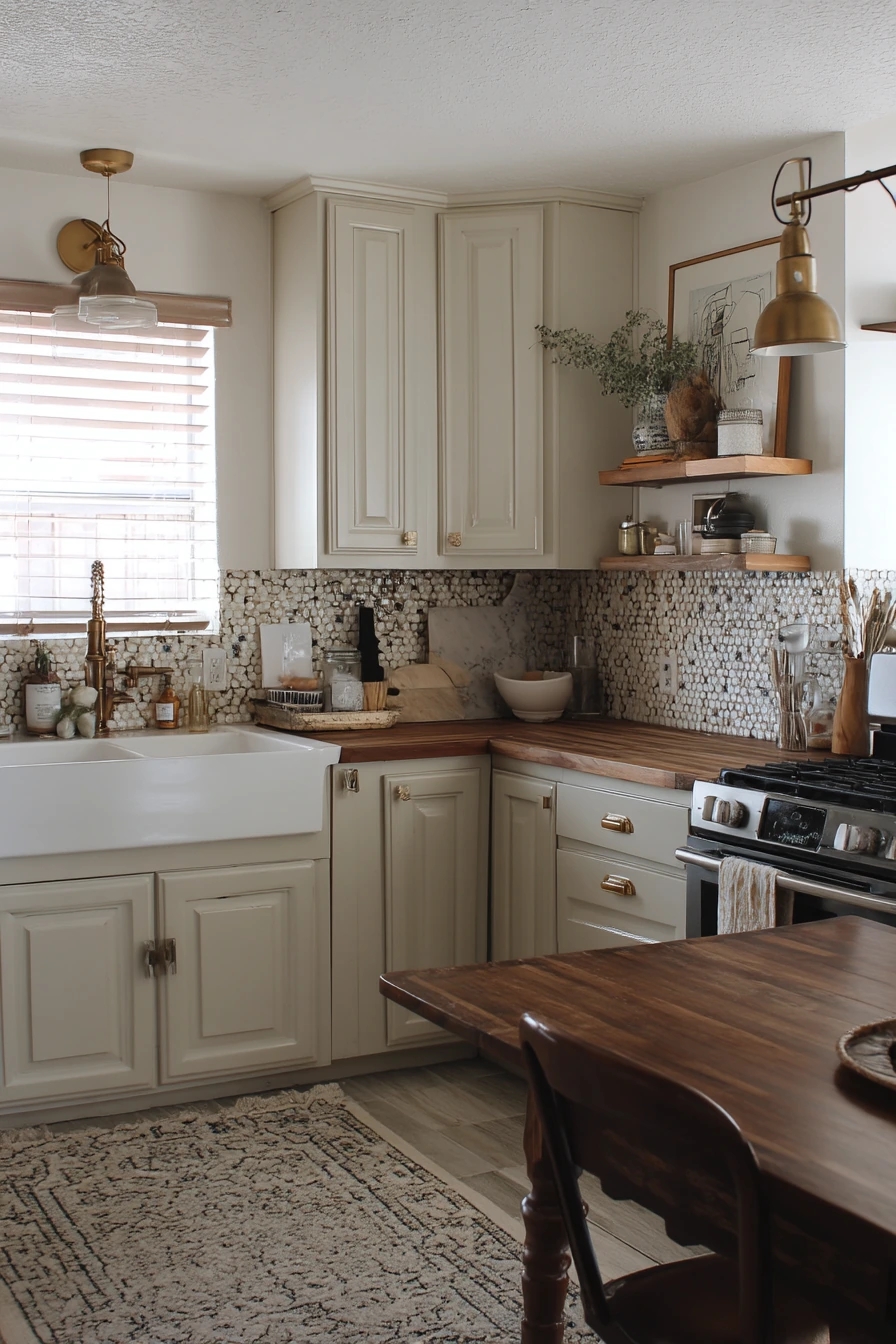
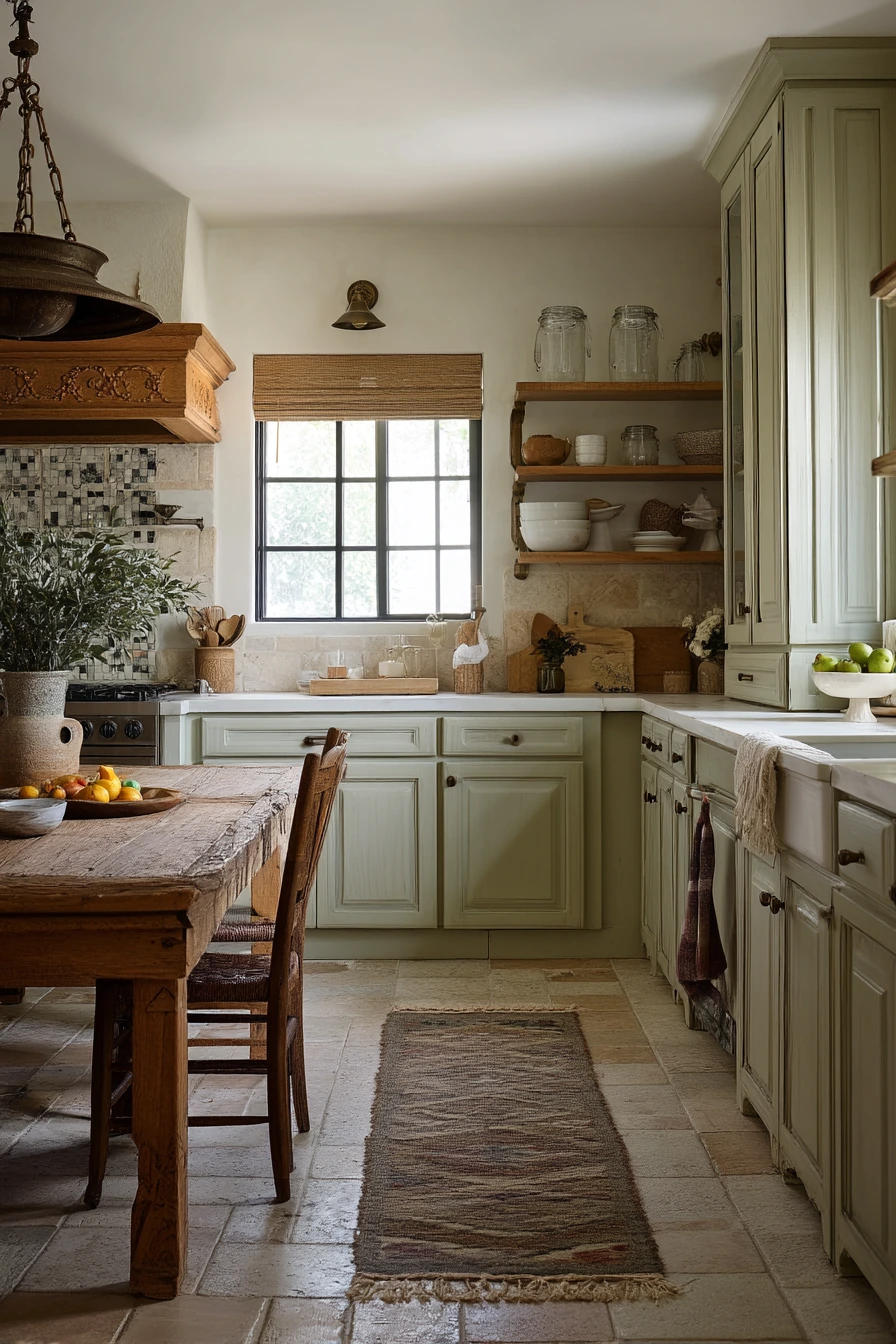
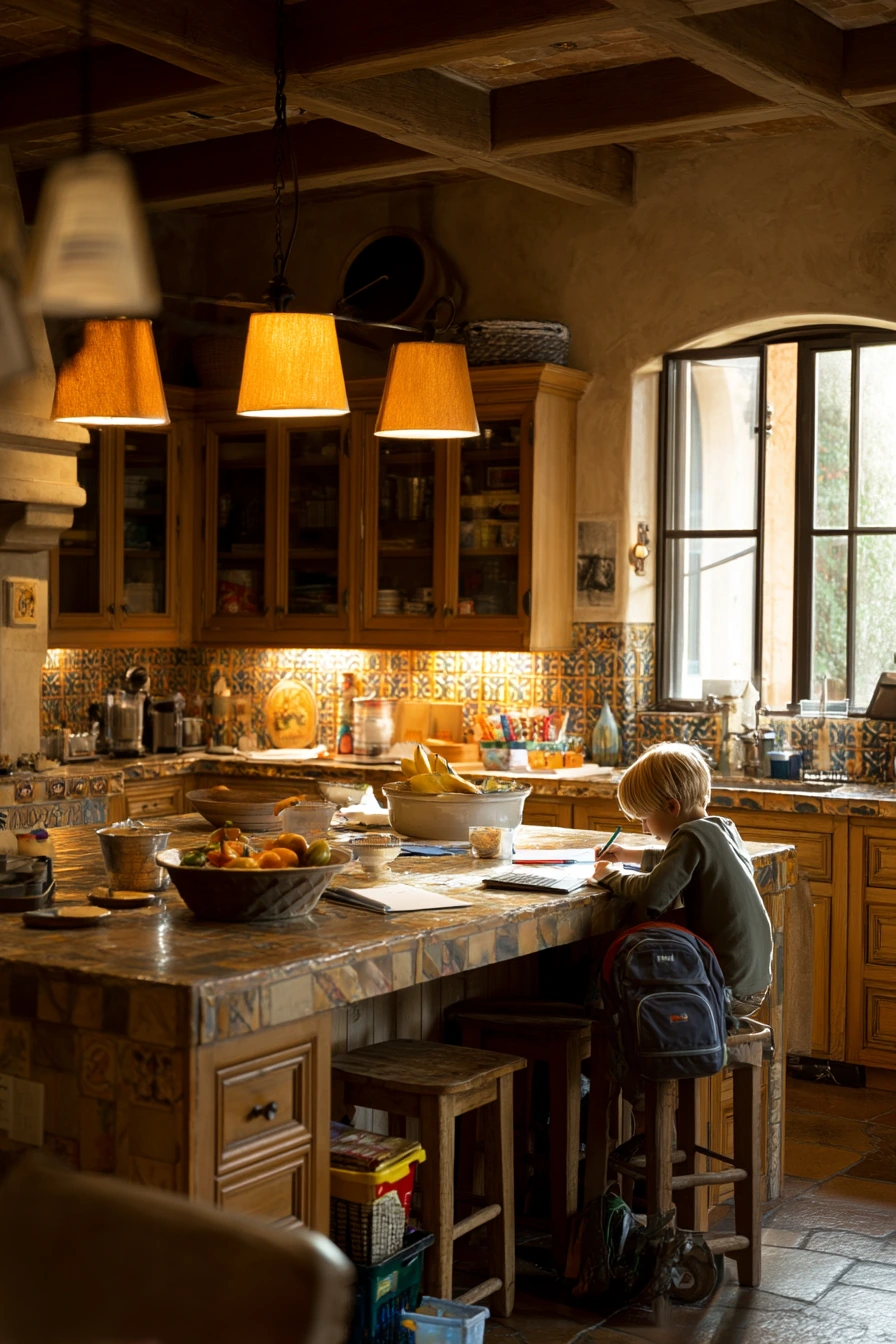
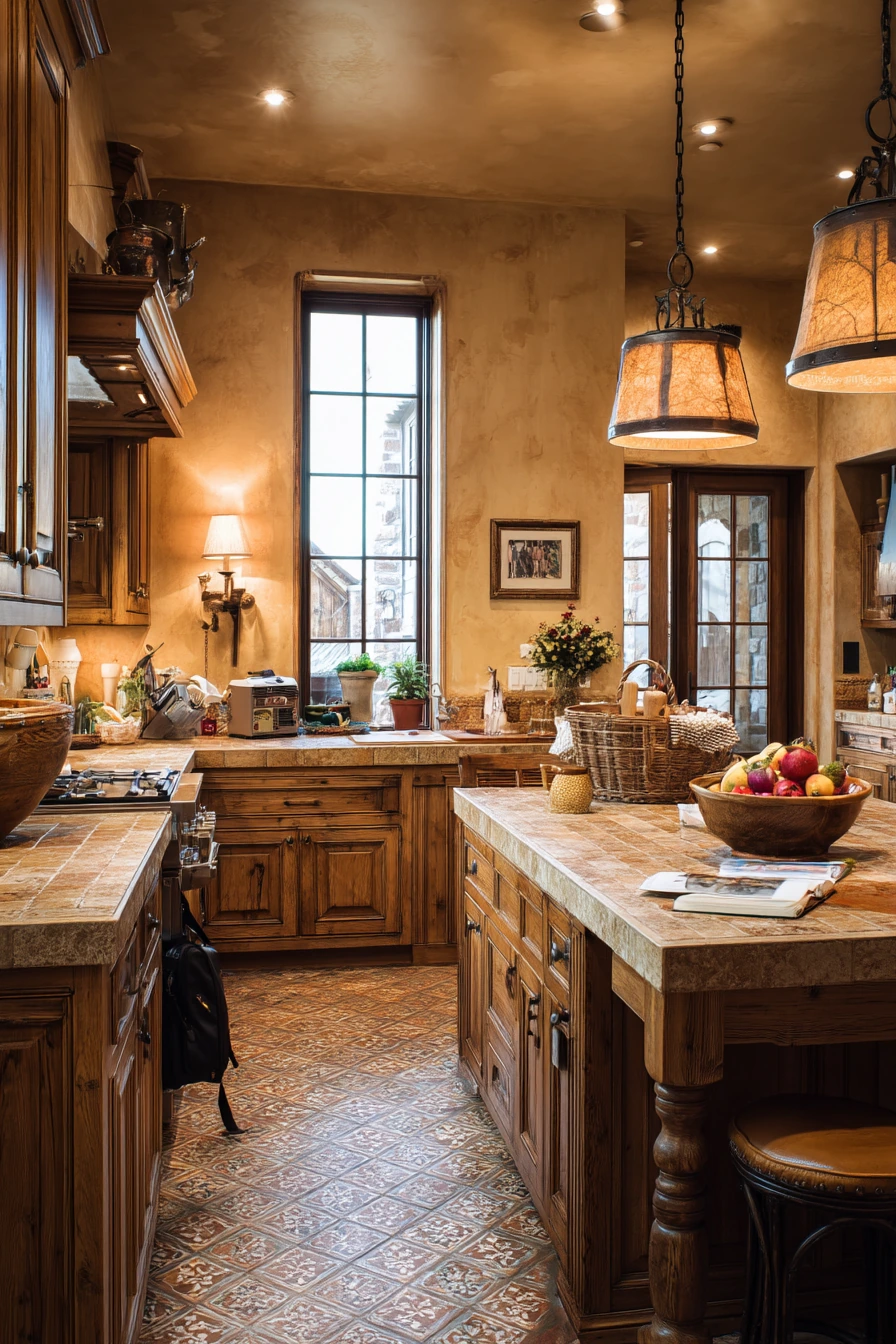
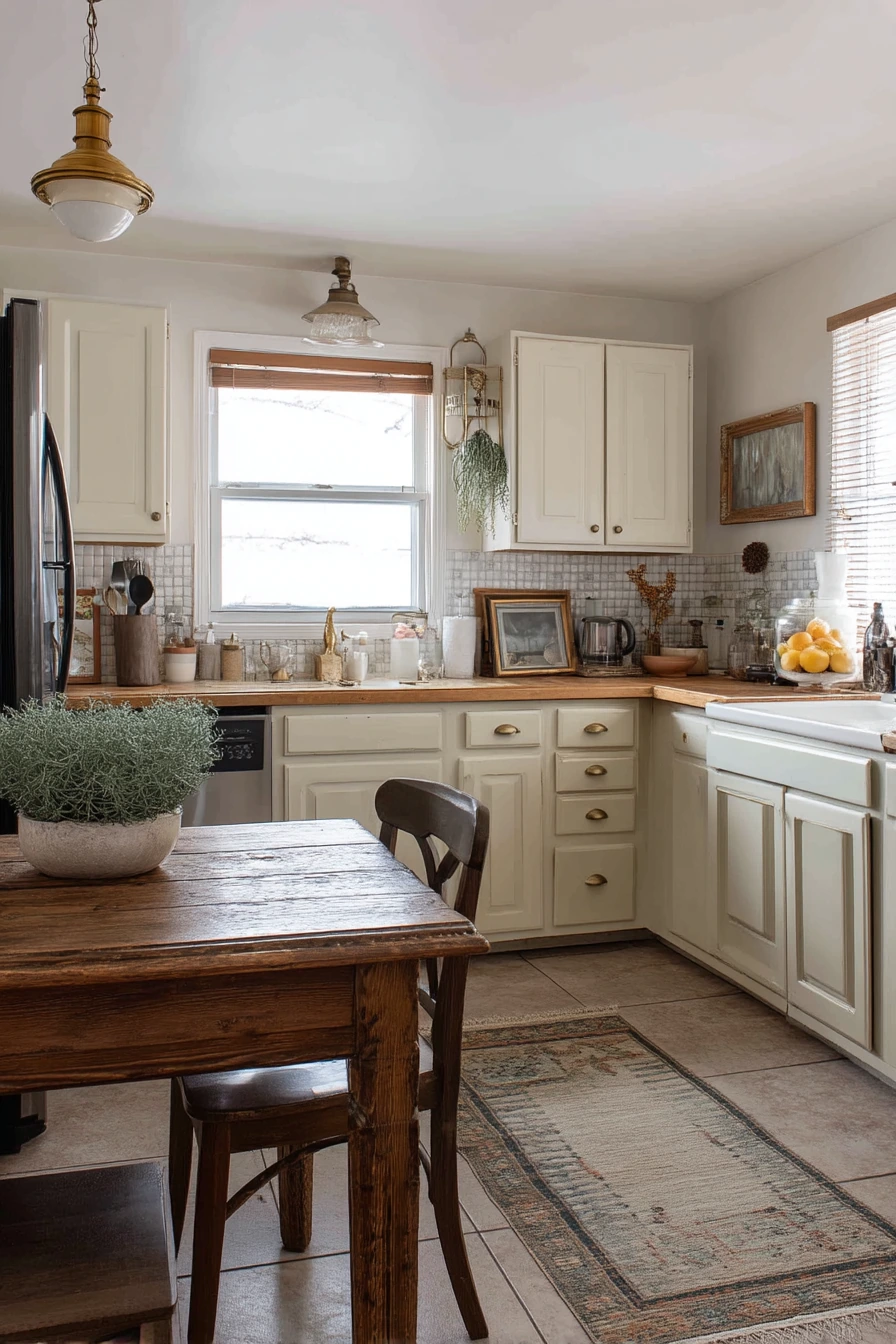
Tuscan kitchen design ideas can be done on a thoughtful budget by focusing on paint, secondhand finds, and easy upgrades. Painted cabinets in soft clay add warmth and look great with natural wood. Pair them with a thrifted wood table to bring in that worn, homey feel. A secondhand brass light can change the whole mood, especially when morning light comes through simple blinds.
A peel-and-stick mosaic backsplash is one of the fastest ways to add Tuscan pattern without tile work. Choose a design with warm neutrals and a little variation so it looks more like real ceramic. Add a stone-look runner to bring in the feeling of limestone flooring. Small details like mason jars for dry goods and a cast-iron skillet on the stove make the kitchen feel collected over time.
Keep the styling honest. A grocery list on the fridge, a dented fruit bowl, and one chair slightly pulled out feel natural. The key is to edit the clutter so it looks intentional. Use one basket for papers, one tray for oils and salt, and keep counters mostly open. With these steps, the kitchen reads warm and charming, not cheap.
- Paint cabinets a soft clay or warm beige for instant Tuscan color.
- Use a peel-and-stick mosaic backsplash in earthy tones.
- Shop secondhand for a brass light and a sturdy wood table.
- Add a stone-look runner to mimic limestone flooring.
- Style with mason jars, cast iron, and a simple fruit bowl.
Pro Design Tip: Match your warm tones. Keep paint, wood, and metals in the same warm family so the budget pieces look planned together.
Budget Considerations: Spend on paint and lighting first. Save on backsplash with peel-and-stick options, and use thrift stores for wood furniture that can be cleaned and re-oiled.
10 Tuscan Kitchen with Coffee Nook and Morning Ritual
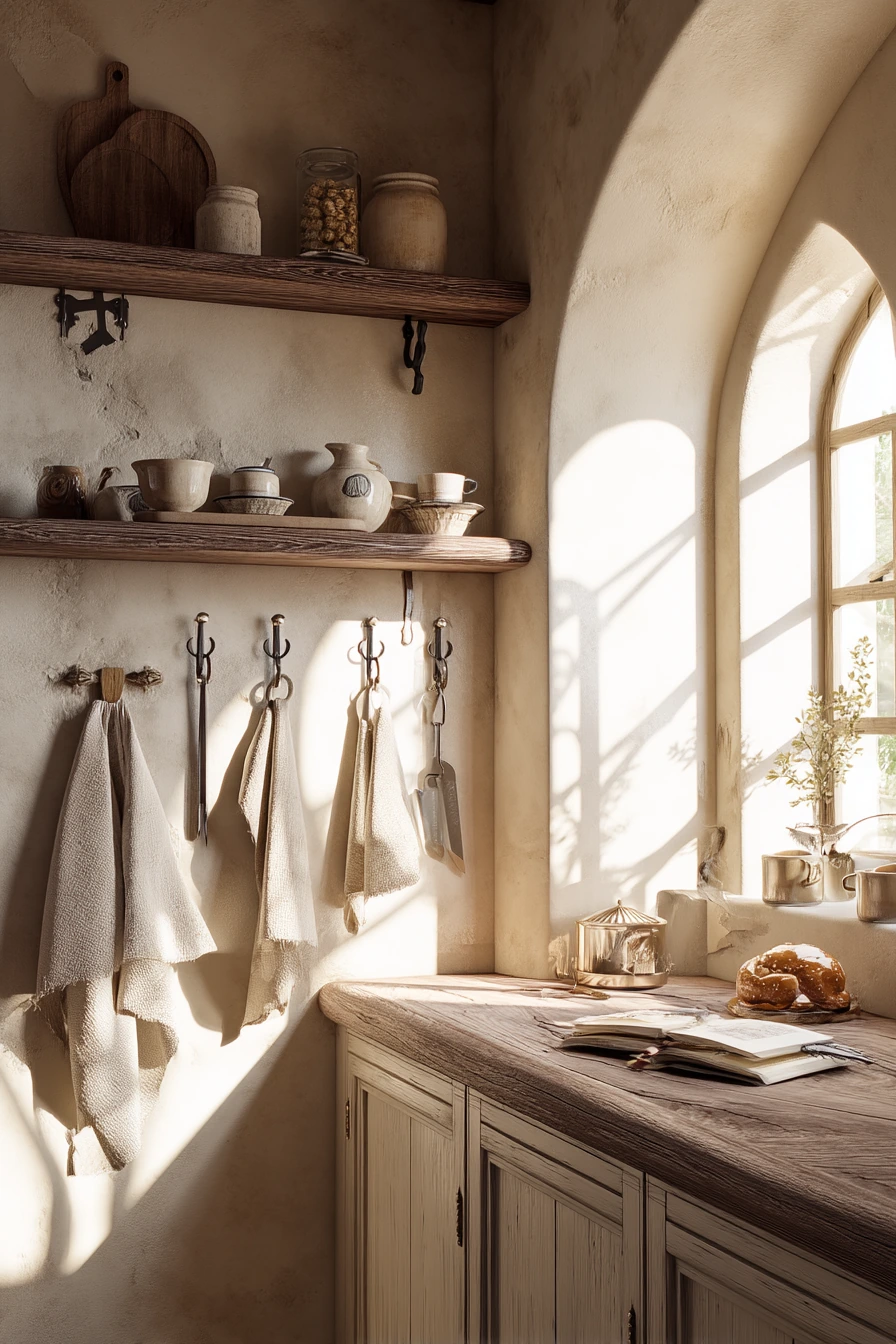
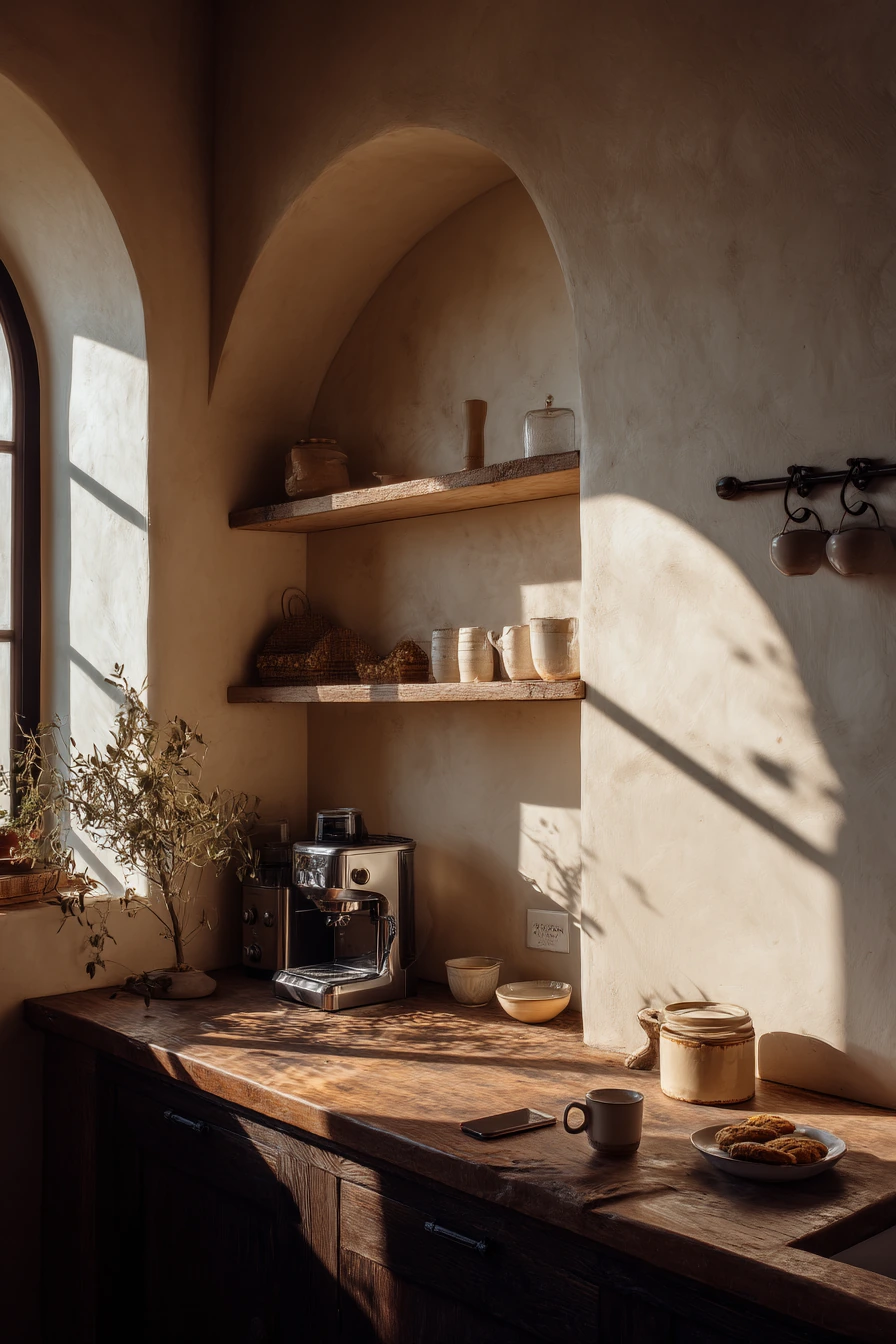
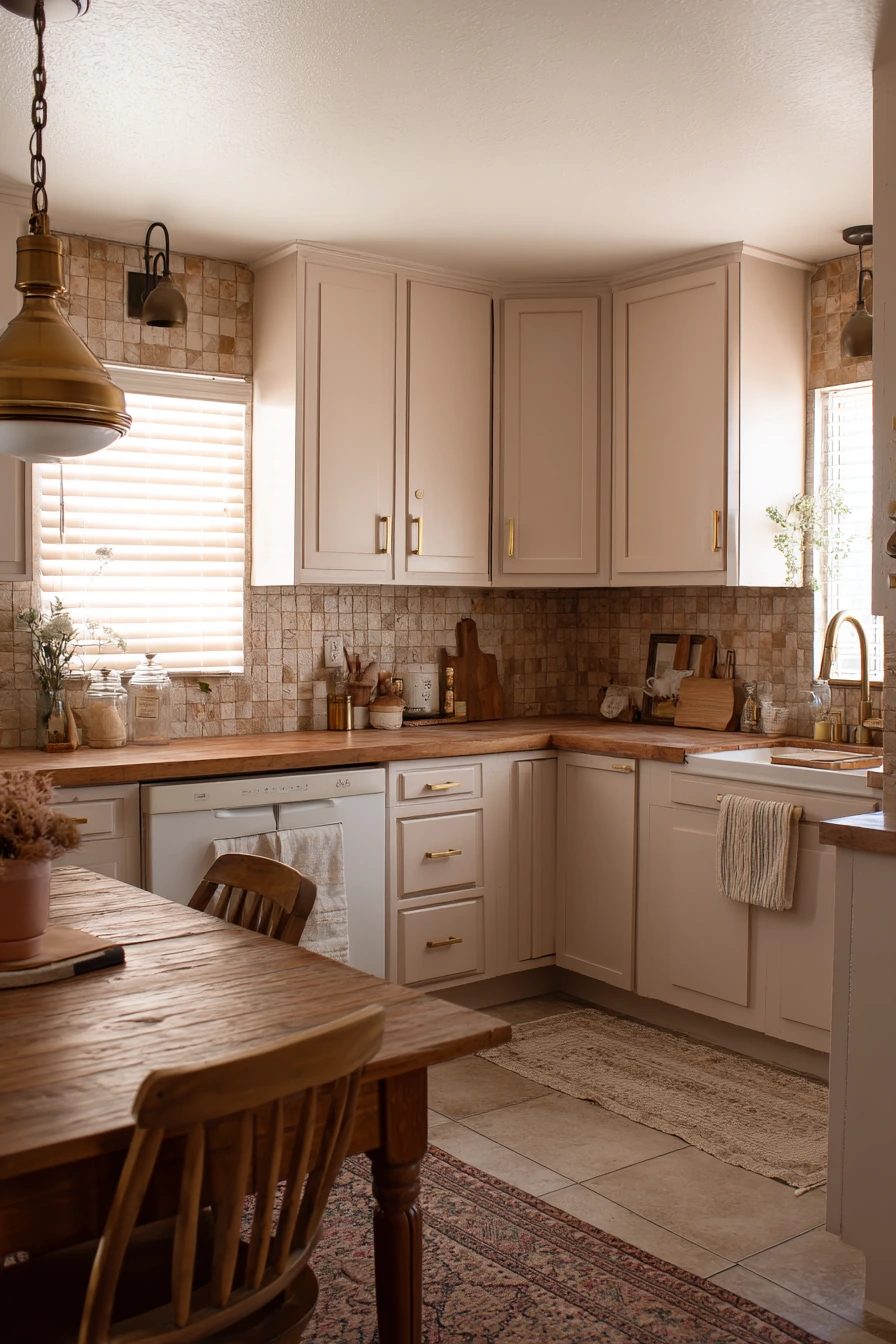
A daily coffee ritual fits the Tuscan style because it is simple and sensory. Set up a compact espresso nook where you can keep everything in one place. Arched shelving instantly adds that old-world shape, even if the rest of your kitchen is modern. Use creamy plaster walls or a plaster-look finish to make the nook feel soft and warm.
Choose a worn wood counter or a wood board surface for the station. Add iron hooks for mugs and tools, and keep ceramic cups in a small group so it looks calm. A biscotti tin or cookie jar makes the space feel welcoming without adding clutter. If you keep an open book nearby, it adds to the quiet morning rhythm, but store it in a basket when you need a clean counter.
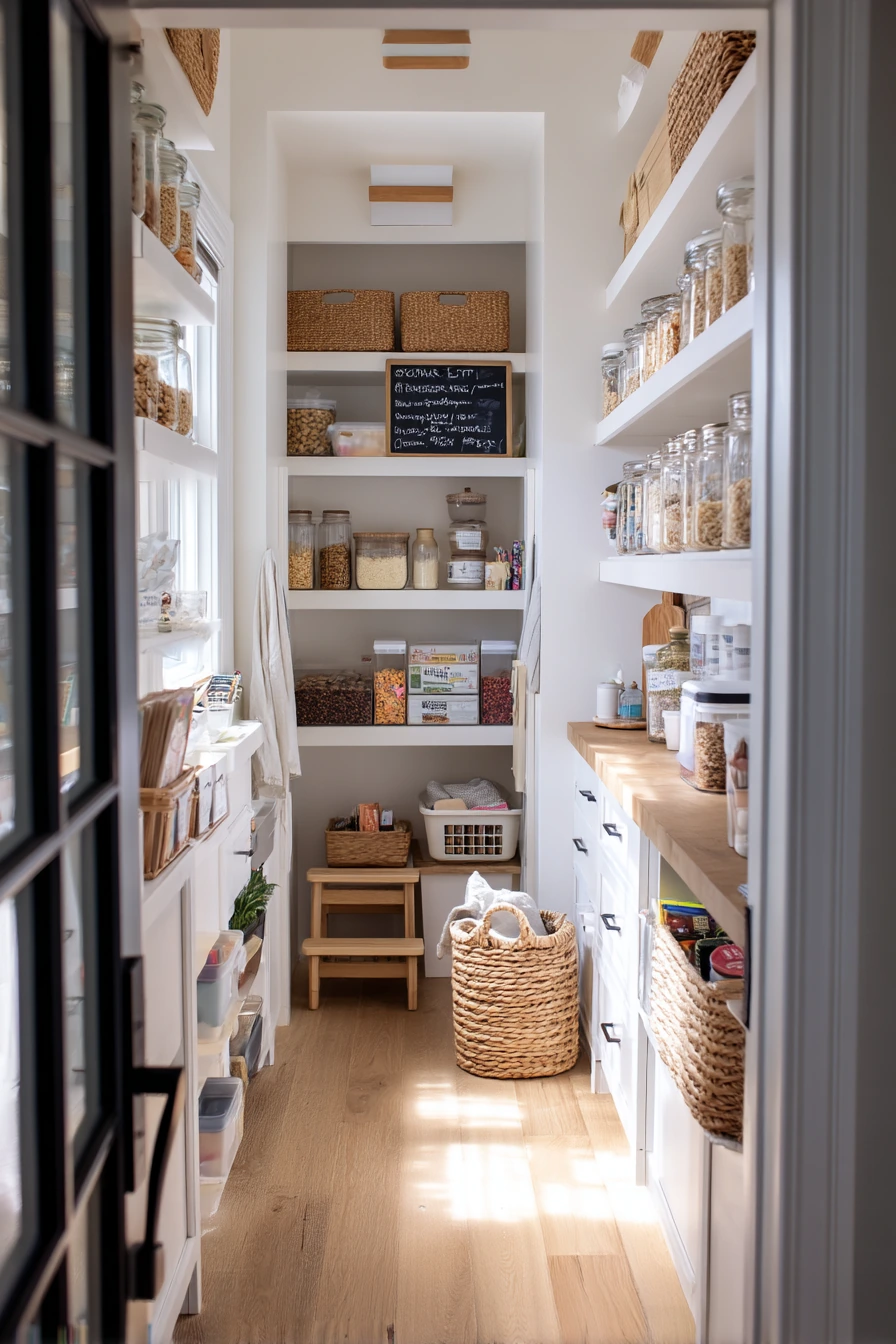
Keep it practical for real life. Hide the phone charging cable with a cord box or run it behind the shelf. Add a small plant that can handle window light and casts gentle shadows. A linen towel is a simple styling tool that also works for spills. The goal is an intimate, aromatic corner that is easy to use every day.
- Create a small coffee zone with one tray or one section of counter.
- Add arched shelving to bring in Tuscan shapes.
- Use iron hooks and ceramic cups for texture and function.
- Style with one tin, one plant, and one linen towel.
- Control cords and small clutter with a box or basket.
Pro Design Tip: Use a “two surface rule.” Keep only two surfaces visible in the nook, like plaster and wood, then add small accents (iron, ceramic) so it feels calm.
Budget Considerations: You can fake an arched shelf with an arched mirror or arched peel-and-stick trim on a simple shelf unit, then spend on a good tray and matching cups.
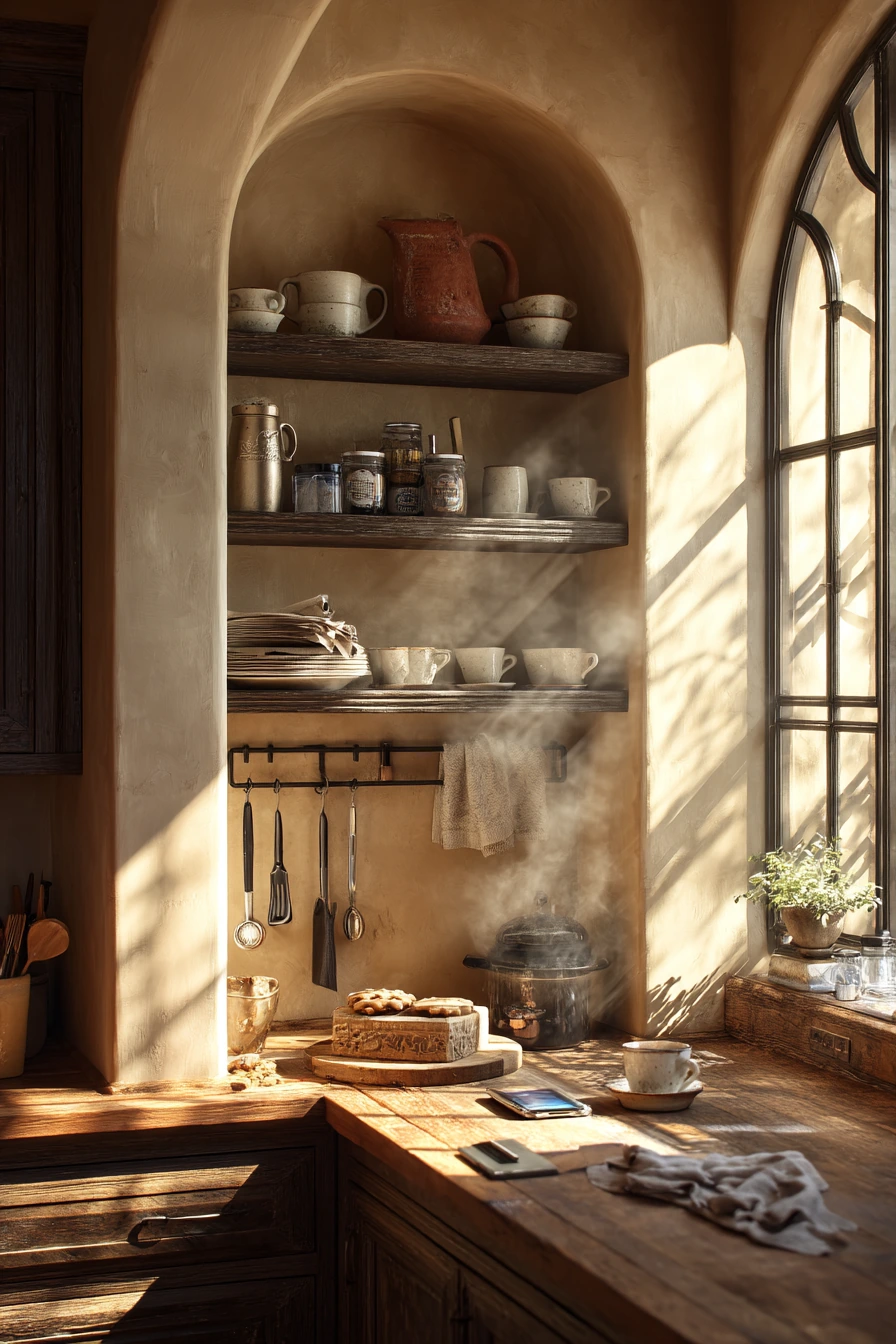
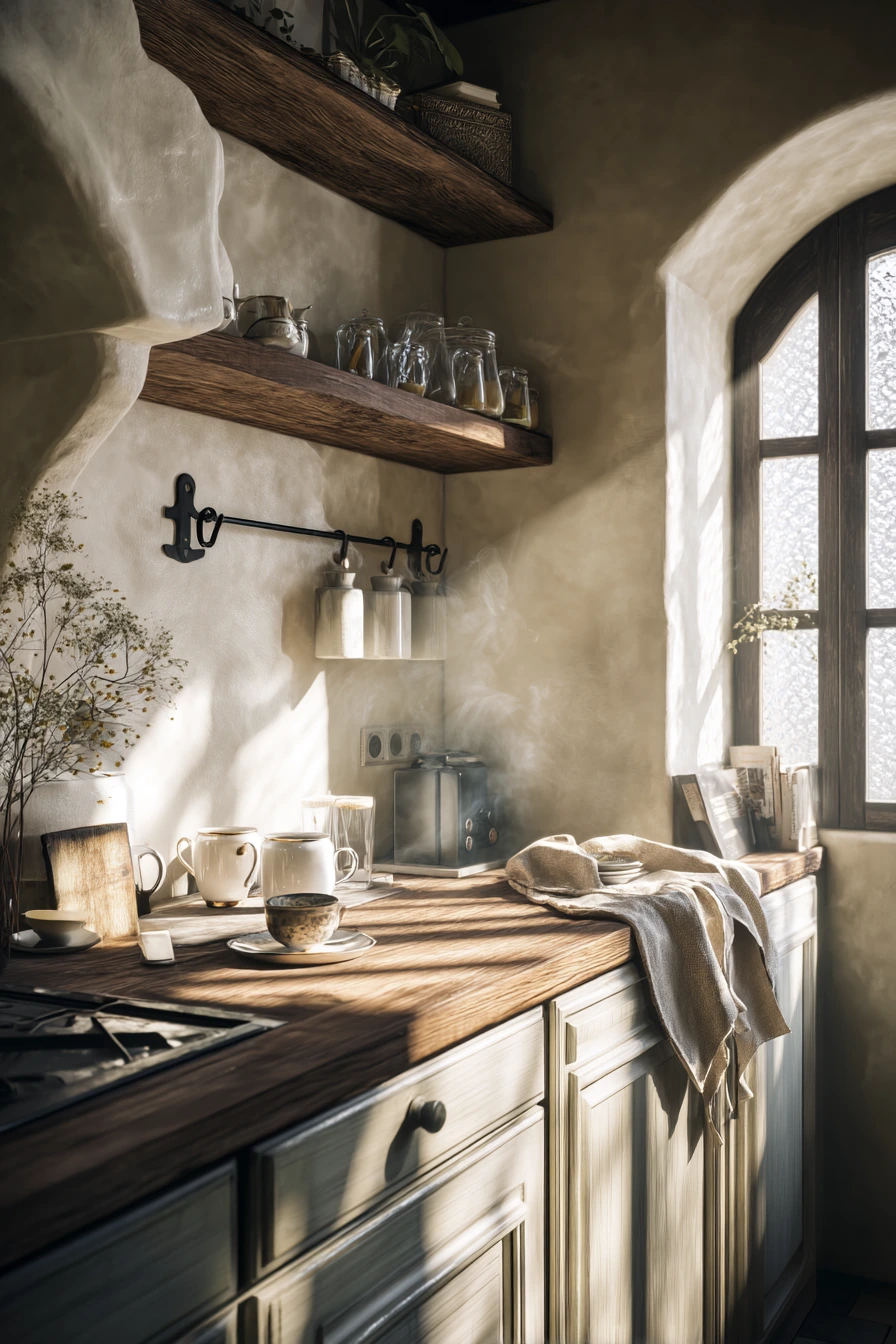
Tuscan kitchen design ideas work when you lead with warm materials, earthy colors, and a lived-in layout. Terracotta tones, creamy plaster, aged wood, and simple metals create a steady base that looks good in both small and large kitchens.
Pick one direction that fits your life, like a family-friendly island setup, a renter-friendly backsplash, or a coffee nook. Then add one or two styling details that feel real, like a linen runner, a bowl of lemons, or a tray for everyday tools.
FAQ
1) What colors make a kitchen look Tuscan? Warm creams, soft clay, muted sage, sandy beige, and deep wood tones work well. Add small accents in olive green and terracotta.
2) Do Tuscan kitchens have to be dark? No. Creamy plaster walls, lighter stone, and warm ivory paint can keep the room bright while still feeling rustic.
3) What countertop looks most Tuscan? Honed stone, soapstone, or matte-look quartz fits best. Avoid very shiny finishes if you want a calmer, old-world feel.
4) How can I get a Tuscan look in a rental? Use peel-and-stick backsplash tiles, a freestanding hutch, open shelving, and removable lighting. Add baskets, linens, and pottery for texture.
5) What lighting works for Tuscan kitchen design? Warm bulbs, simple pendants, lantern-style fixtures, and dimmers help. Layer with under-cabinet lighting for cooking.
6) How do I style open shelves in a Tuscan kitchen? Keep it useful. Use stacks of bowls, a few mugs, and small jars. Repeat colors and leave some empty space so it does not feel crowded.
7) What are easy budget upgrades for a Tuscan kitchen? Paint cabinets in warm tones, swap hardware to aged bronze or brass, add a patterned backsplash, and use a runner that looks like limestone.