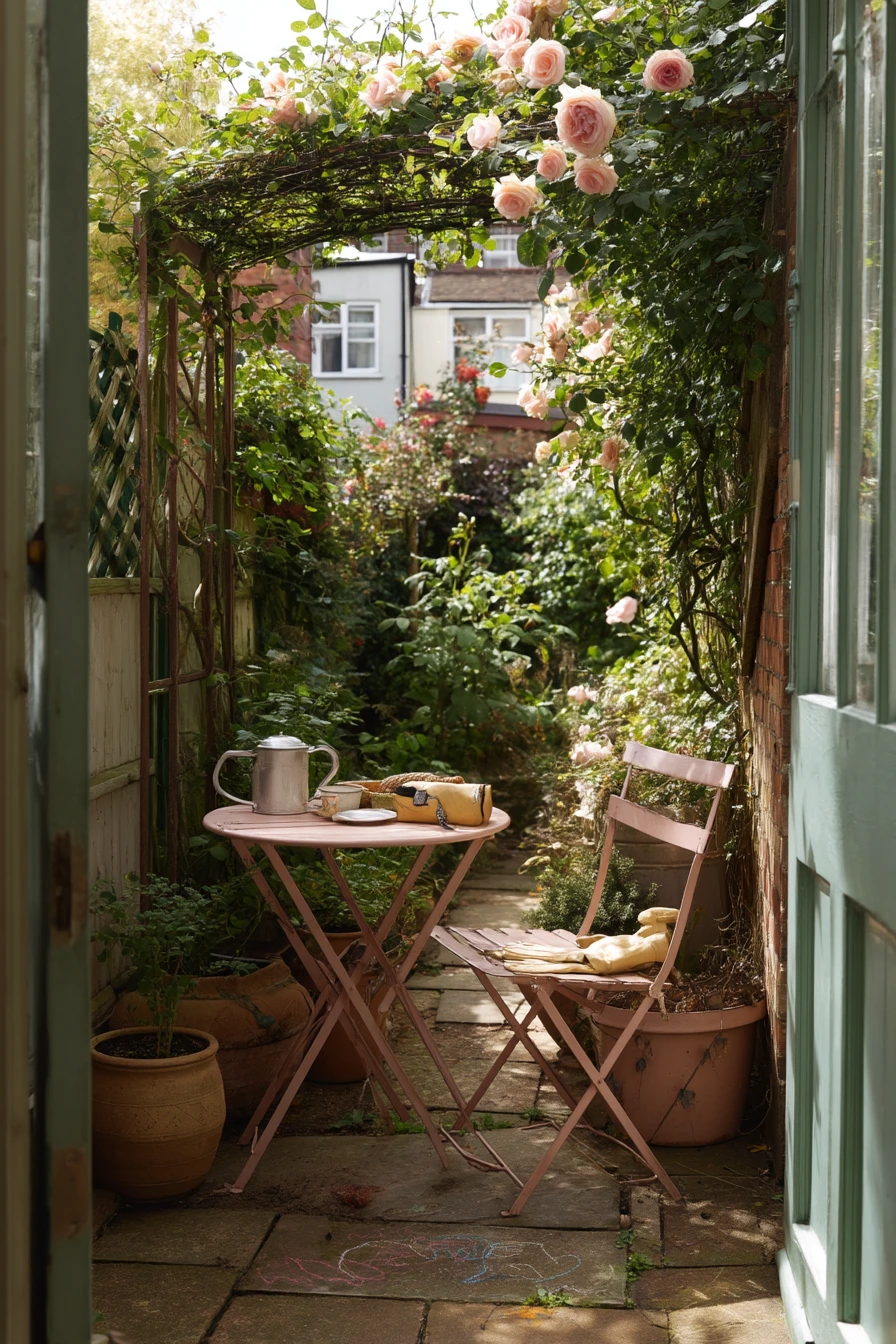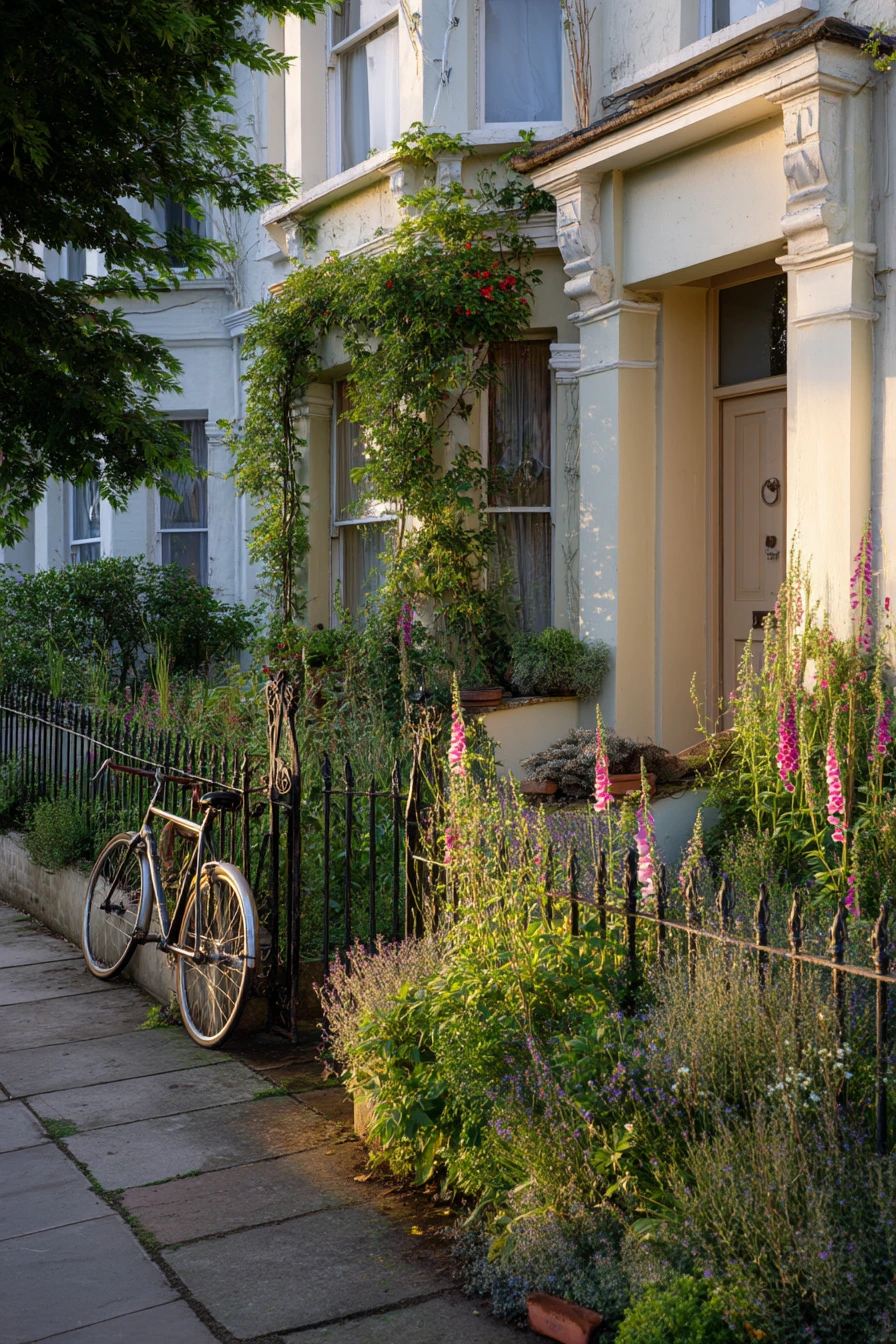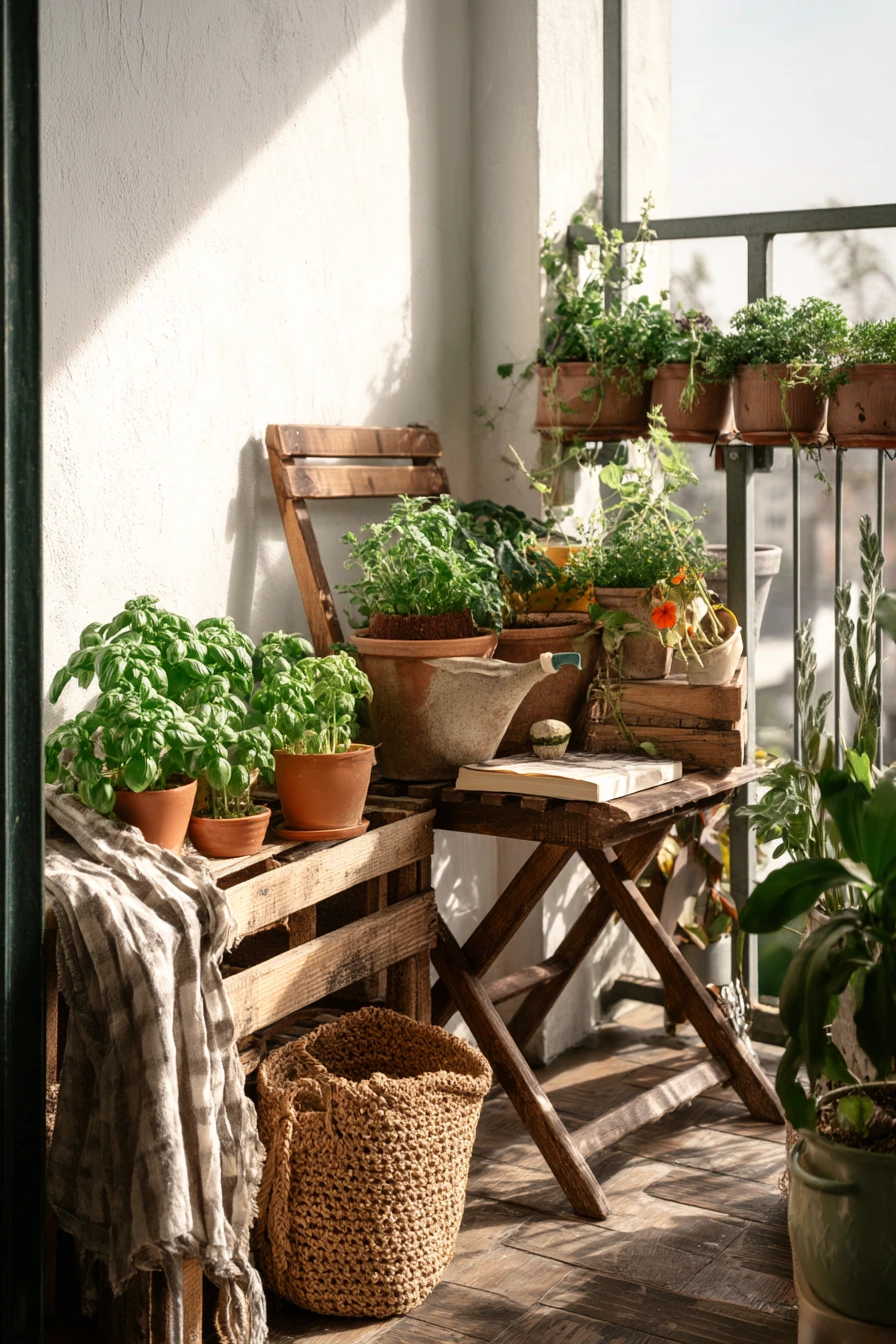

Tiered garden ideas help you grow more plants in less space. They are great for a sloped yard, a tight patio, or even an apartment balcony. By stacking planting areas in levels, you gain room, improve drainage, and make watering easier.
In this guide, you will see tiered layouts for family backyards, front yards, decks, side yards, and small courtyards. Each section matches a real-life setting, with practical steps you can copy using raised beds, retaining walls, plant stands, and layered containers.
You will also get simple styling ideas so your garden looks finished, not messy. Think cedar steps with herbs, stacked stone with geraniums, railing boxes with mint and basil, and clean corten steel edging with gravel paths.
Use these ideas to plan your own tiers, pick plants that fit each level, and avoid common mistakes like poor drainage and hard-to-reach corners.
1 Small Backyard Tiered Beds for a Busy Family
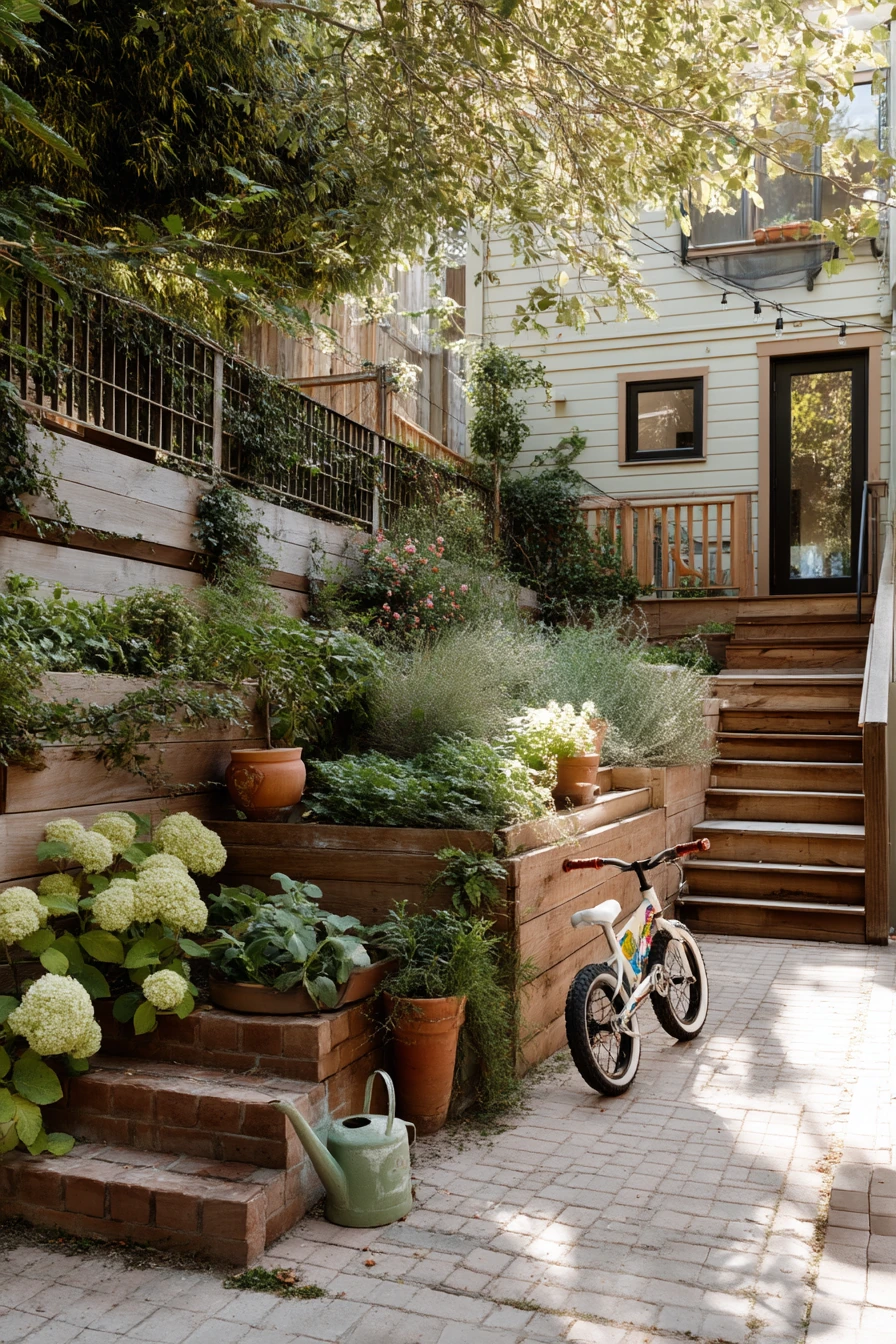
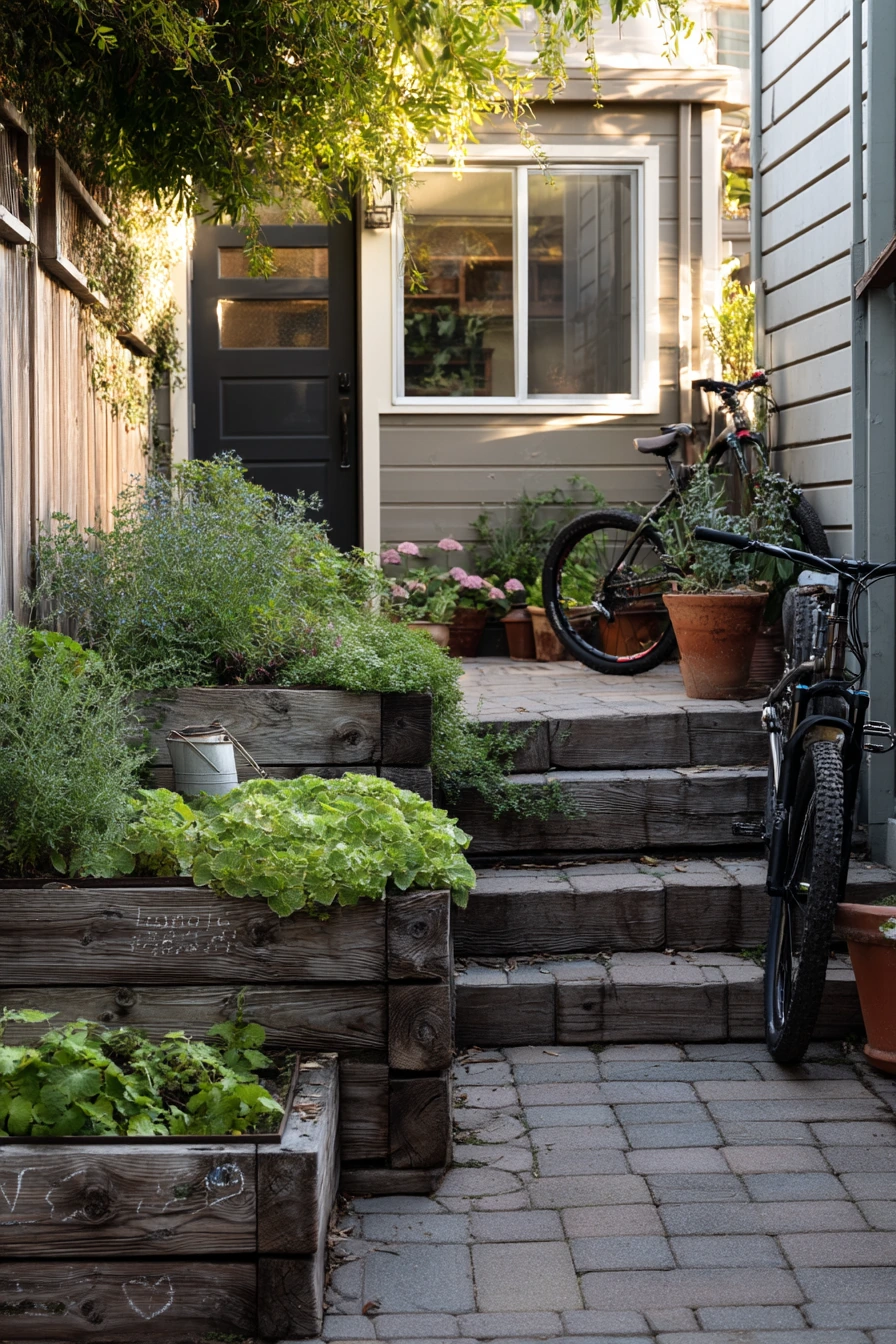
Tiered garden ideas work because they solve two problems at once. They control elevation changes and they turn unused vertical space into planting space. Even a compact slope can become two cedar retaining levels that feel tidy and easy to walk through.
Start by looking at how you move through the area. Notice where steps, doors, and fences sit, and where you already place tools like a watering can. In real family spaces, details like kids’ chalk marks on pavers and a bike near the fence are normal, so plan tiers that can take daily use.
Choose plants by level. Put hardy, drought-tolerant plants higher up, and thirstier plants lower where water collects. Herbs, dwarf hydrangeas, salvia, and strawberry runners are great for mixed tiers because they give color, scent, and food without taking over.
- Keep each tier 12 to 18 inches tall so it is stable and easy to plant.
- Use cedar or other rot-resistant wood for retaining edges in small yards.
- Add a narrow step path so you can reach every plant without stepping on soil.
- Mix textures by pairing woody herbs with soft blooms and trailing berries.
- Cluster terracotta pots near the door for extra height and quick seasonal swaps.
Pro Design Tip: Repeat one material across levels, like cedar boards or matching pavers, so the tiers look like one plan and not random add-ons.
Budget Considerations: Cedar costs more than pressure-treated wood; if you need to save, use treated lumber for structure and face it with cedar boards for the look.
2 Renter-Friendly Balcony Tiered Planter Setup
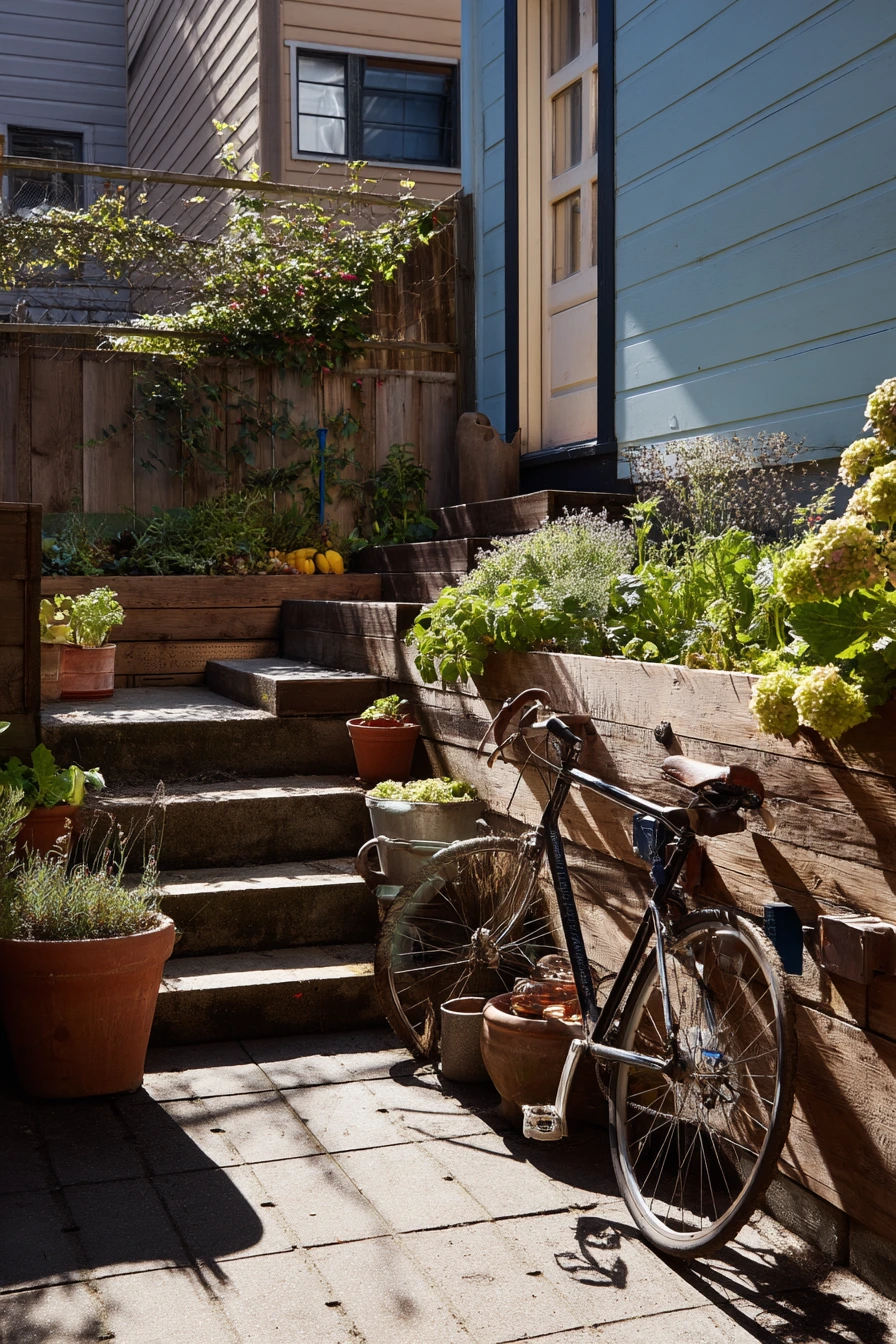
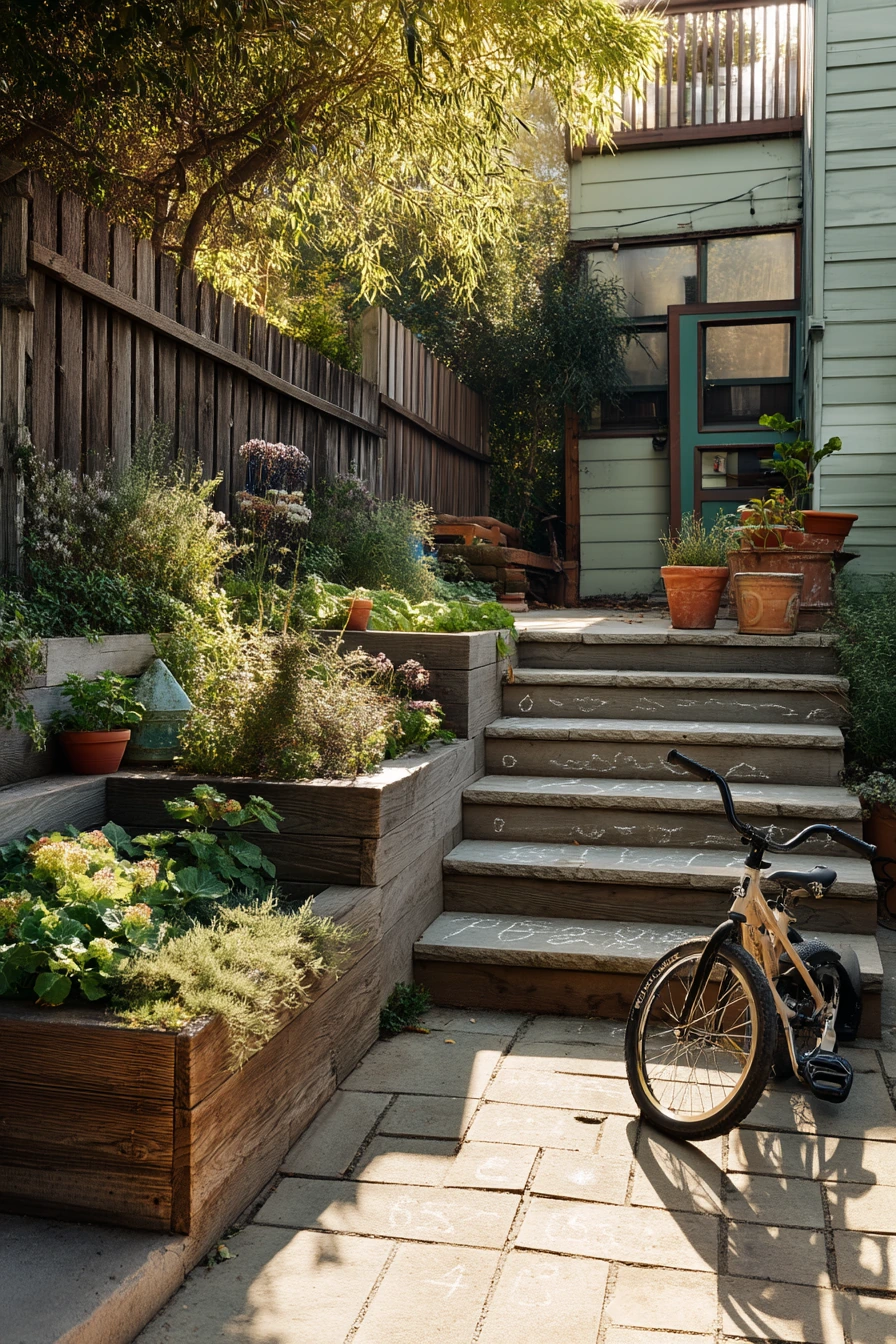
For a real family backyard, tiered garden ideas should feel sturdy and relaxed. Two cedar retaining levels on a compact slope can turn a hard-to-mow hill into neat planting beds with clear edges. Keep the steps wide enough for kids and for carrying a watering can, and use pavers that can handle chalk marks and muddy shoes.
Plant the top tier with herbs that like good drainage, like rosemary, thyme, and chives. In the middle, use dwarf hydrangeas for a soft, full look, then add salvia for long bloom time and pollinators. Let strawberry runners trail over the edge so the tiers look lush without adding more pots.
Style this space like a lived-in patio, not a show garden. A cluster of terracotta pots by the door adds extra layers and makes it easy to swap plants by season. Leave a small spot for a bike to lean near the fence, and keep leaf shadows and sun-warmed surfaces in mind when choosing seating and pathways.
- Line tiers with landscape fabric and gravel to help with drainage.
- Use step lights or solar markers for safer evening walks.
- Mulch with fine bark to reduce splash on pavers.
- Train strawberry runners so they trail in one direction, not into the steps.
- Add a small hook or shelf near the steps for gloves and hand tools.
Pro Design Tip: Plant in simple blocks, like one herb group per corner, so the layers read clearly from the patio and the fence line.
Budget Considerations: If cedar is out of reach, use concrete retaining blocks for the base and add cedar caps on top for a warmer finish.
3 DIY Slope Garden with Stone Steps and Herbs
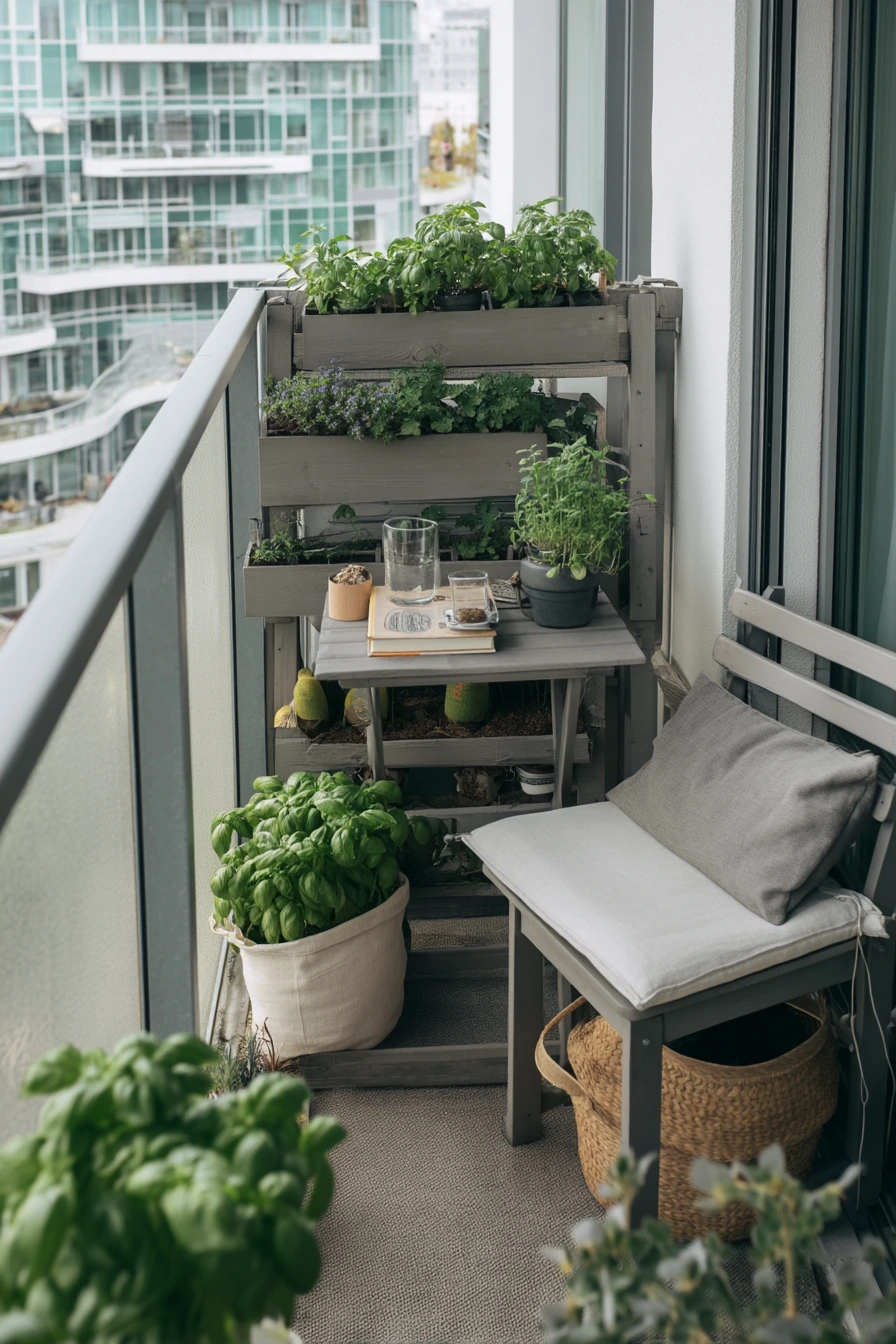
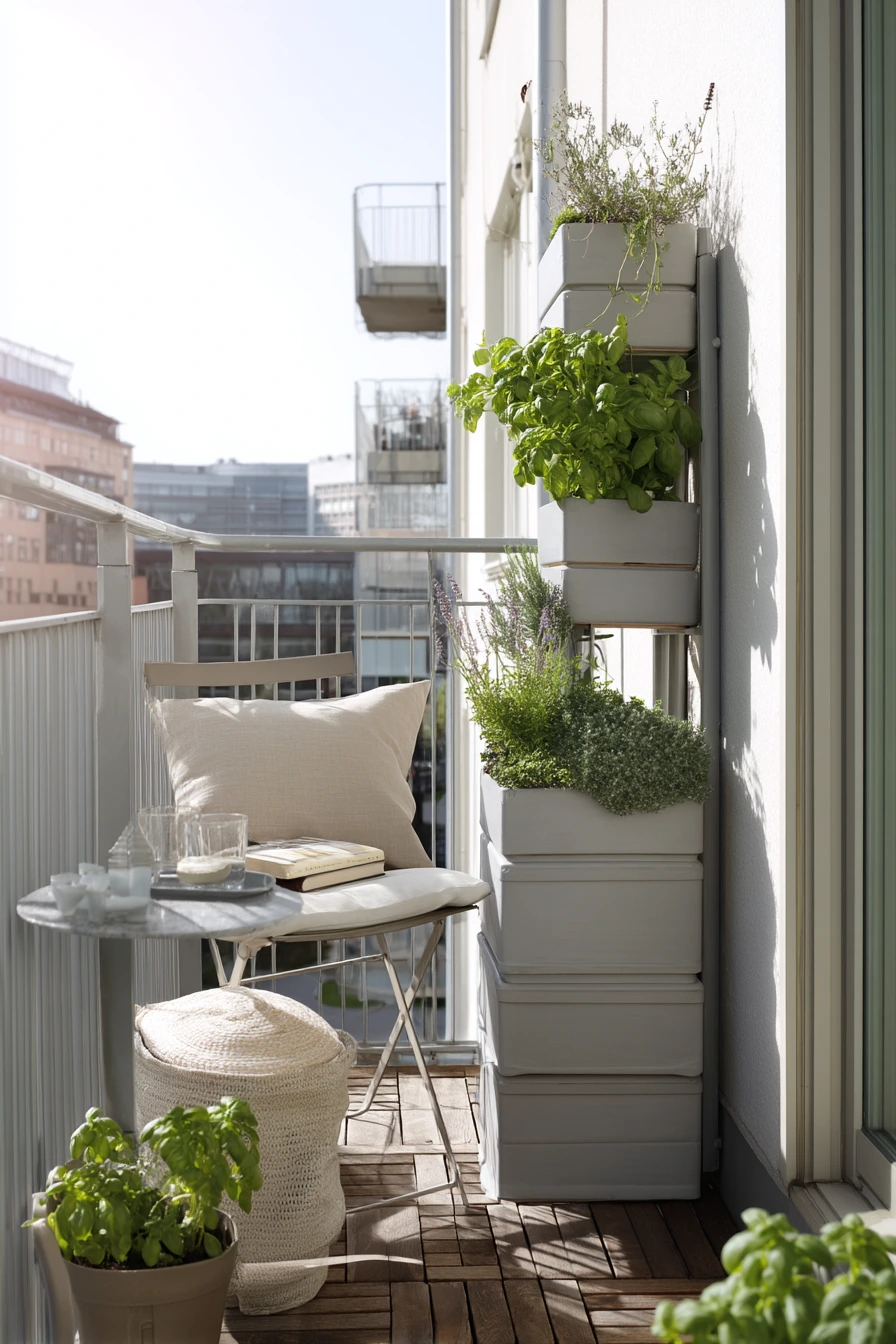
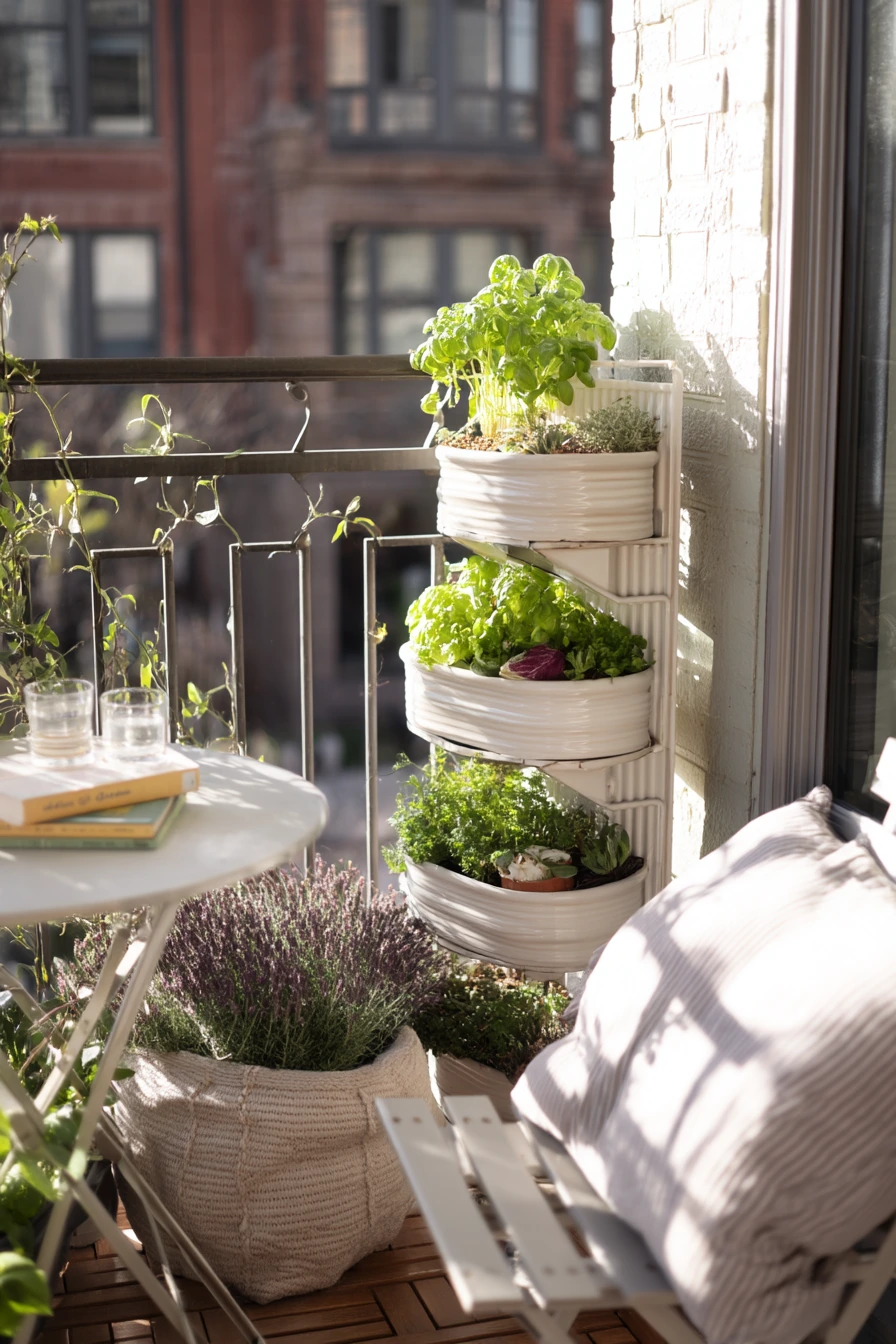
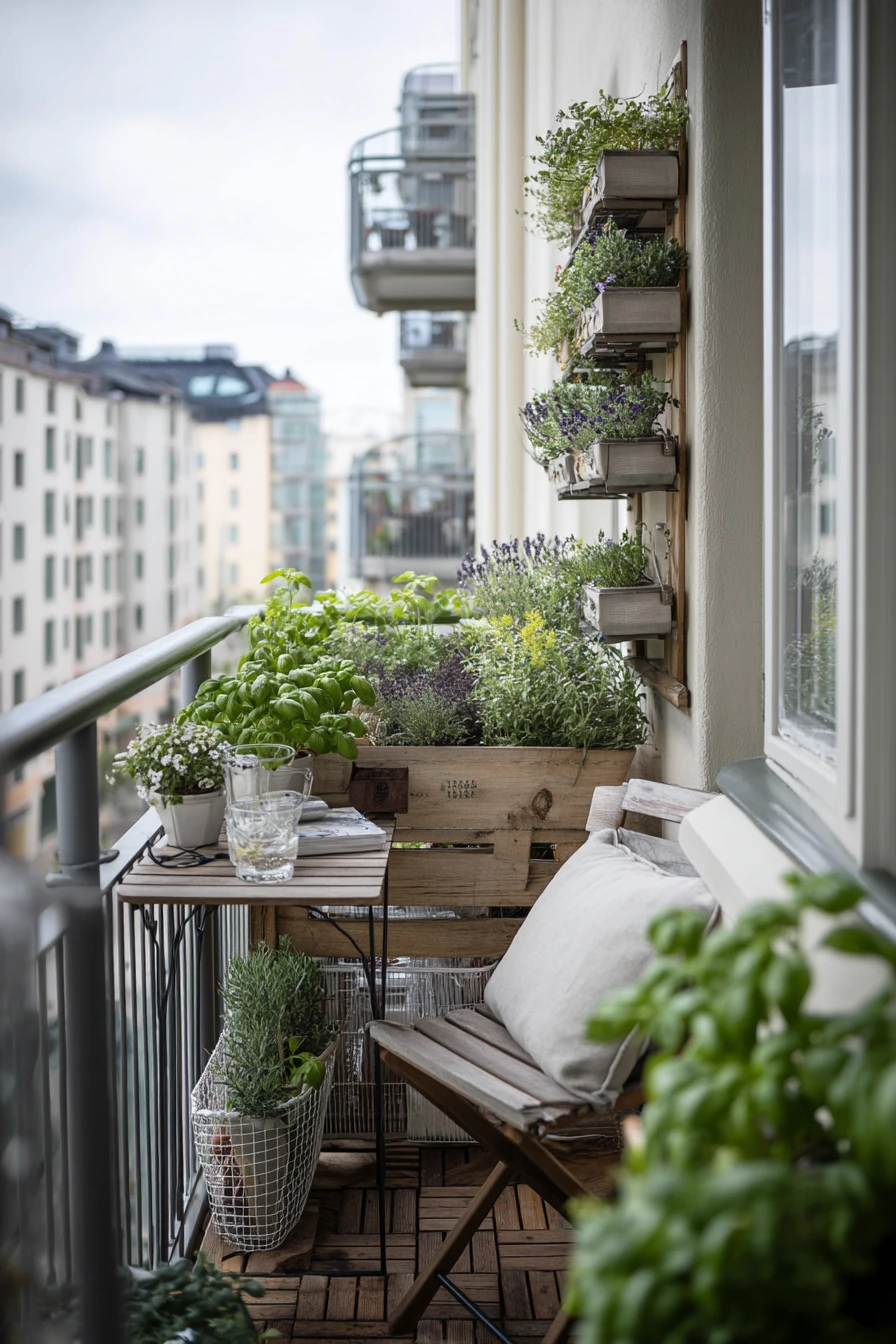
Tiered garden ideas on a compact apartment balcony depend on smart vertical space. Freestanding plant stands, stacked planters, and slim railing boxes let you grow more without blocking the walkway. Keep the layout practical so you can still use your bistro table, chair, and a small spot for a laundry basket.
Build your plant list around daily cooking and easy care. Mint and basil do well in railing boxes where you can pinch leaves fast. Trailing nasturtiums spill nicely from higher shelves, and lavender adds scent and texture without needing constant trimming. Use a drip tray or saucers so water does not run to the neighbor below.
Style matters on a small balcony because every item shows. Hide a charging cable with a cord clip under the table edge, and use one linen cushion that can handle sun. A half-full water glass and a book are normal, so plan shelves that do not bump your elbow when you reach for them. Morning light is perfect for herbs, but watch for hot afternoon sun on south-facing railings.
- Use a tall, narrow plant stand to keep floor space open.
- Group plants by water needs so you can water in one pass.
- Choose lightweight potting mix and plastic or resin pots to reduce weight.
- Add a small trellis on the top tier for nasturtiums to climb.
- Place lavender where air moves well so it dries after watering.
Pro Design Tip: Keep the tallest plants at the corners to frame the balcony and leave the center line open for a calm, airy look.
Budget Considerations: New railing boxes can add up; check local swap groups for used planters, then refresh them with a coat of outdoor-safe paint.
4 Kitchen Window Herb Terrace for Everyday Cooking
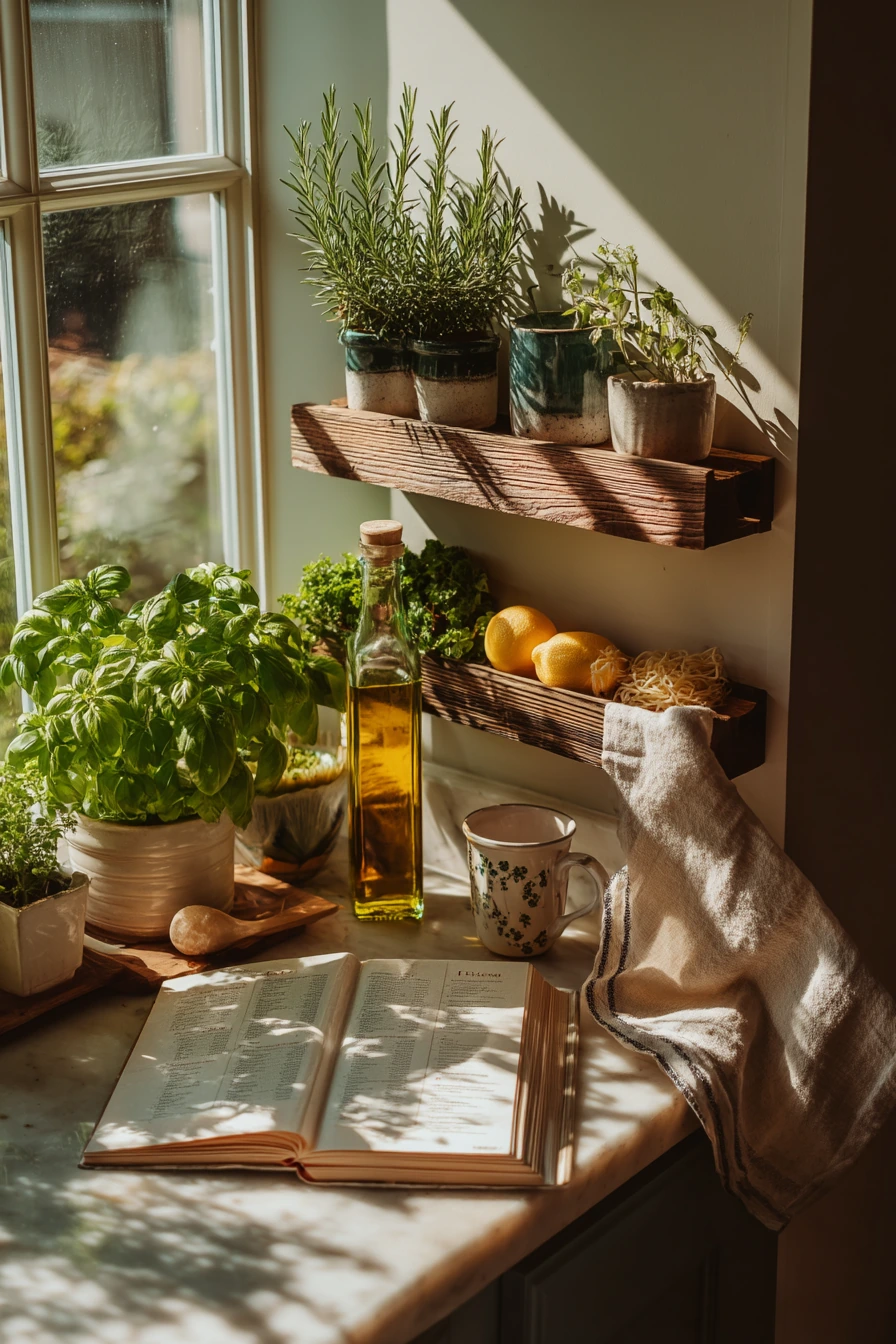
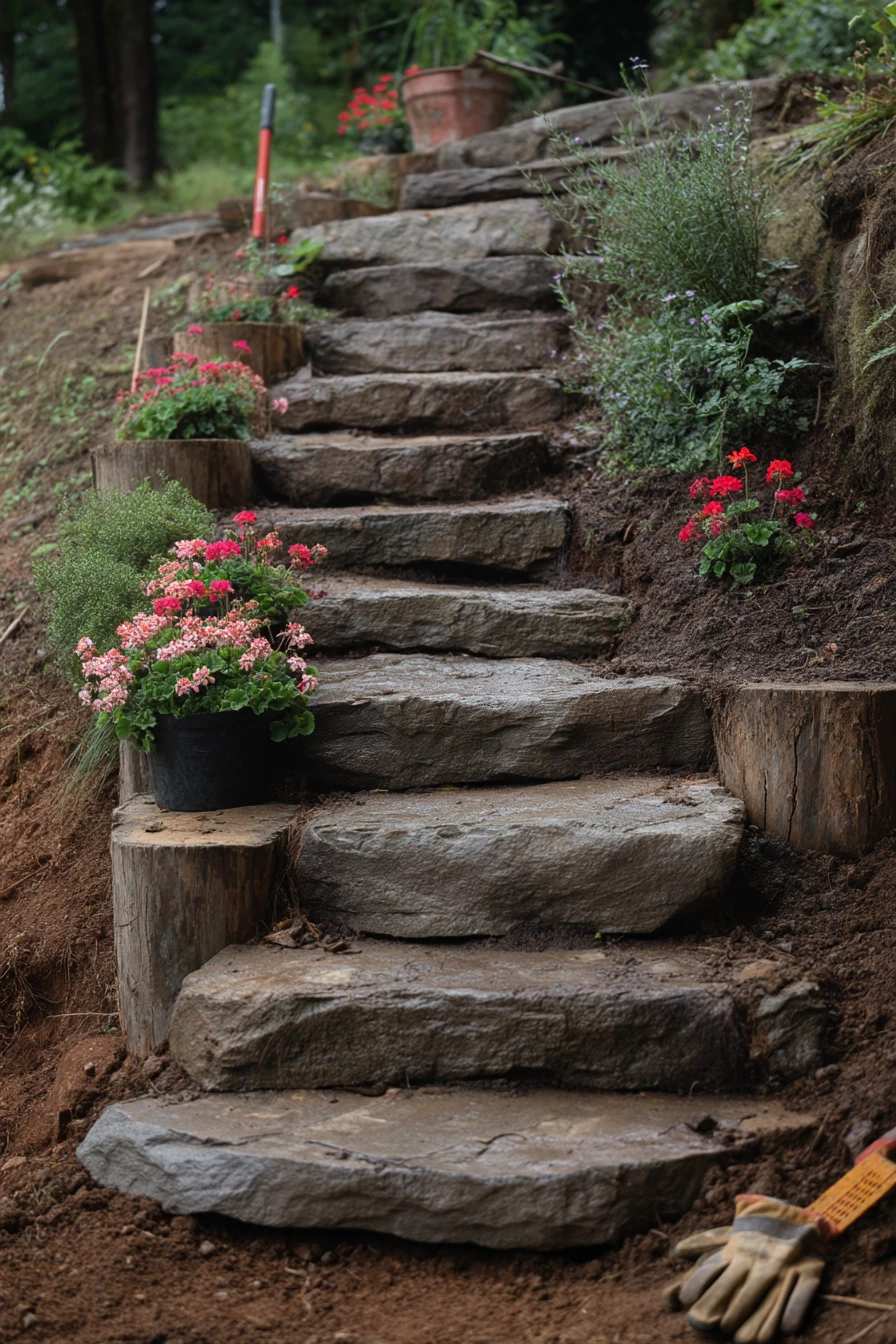
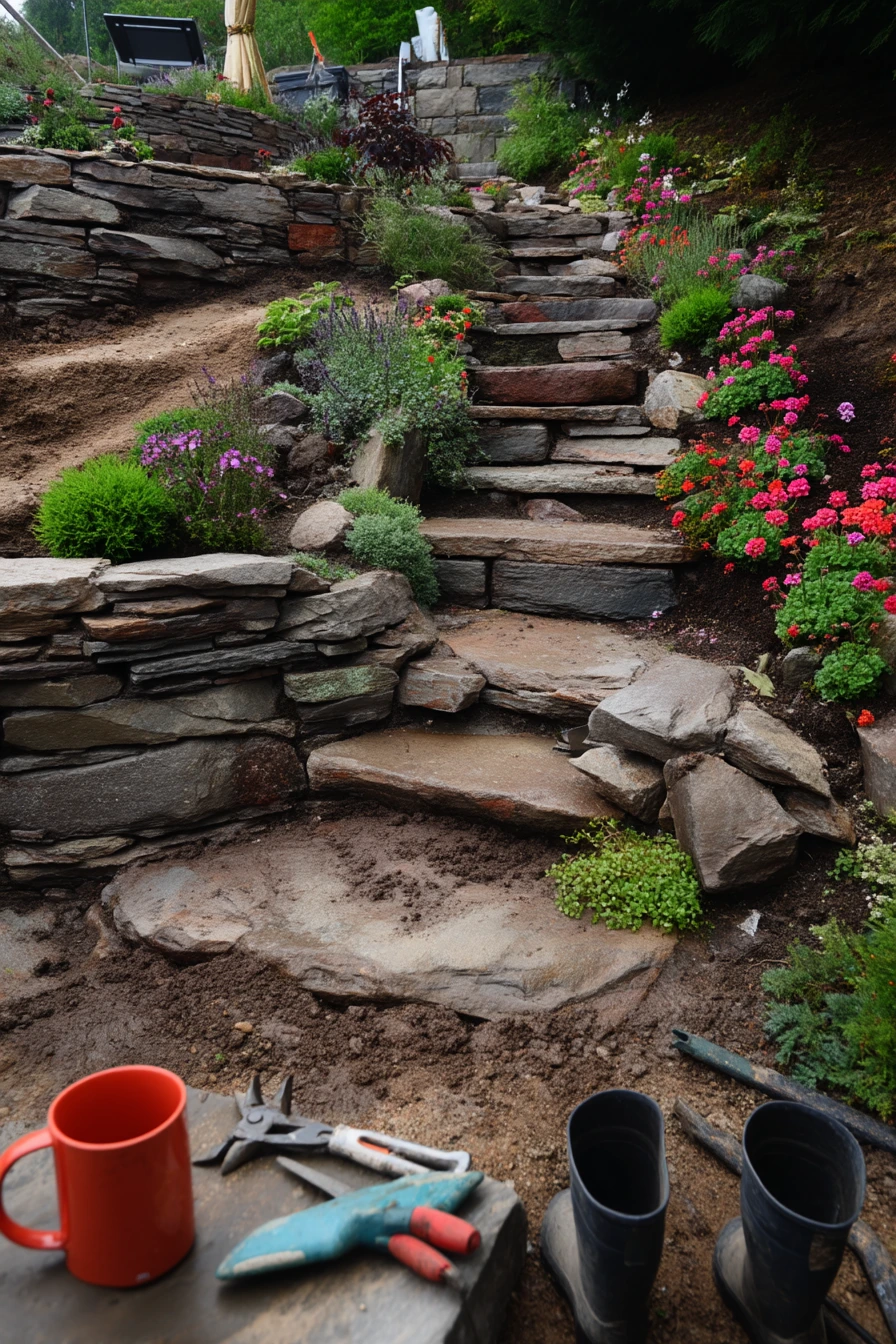
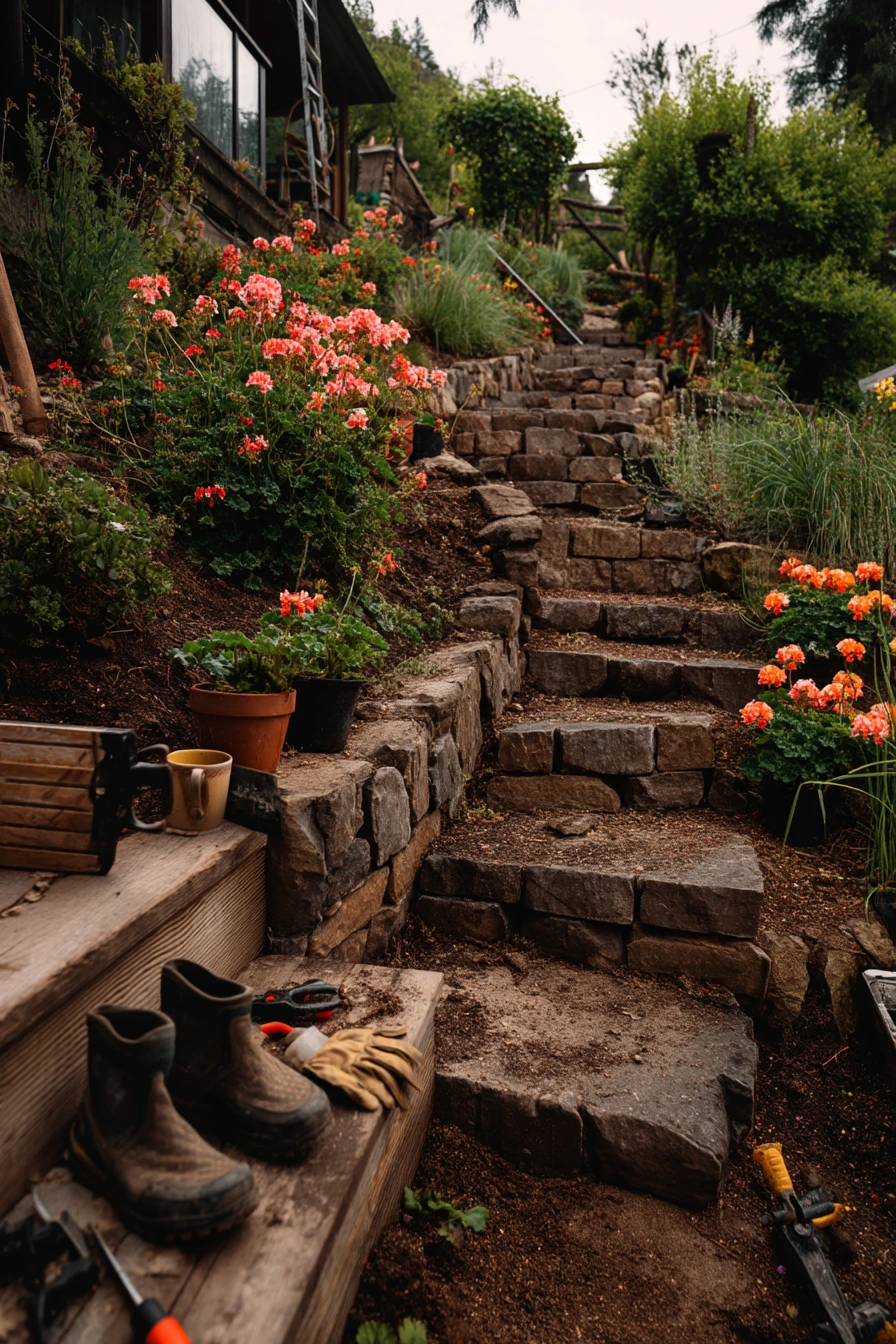
A believable DIY hillside garden needs tiers that lock into the slope and hold soil in place. Stacked stone works well for the main wall because it adds weight and feels natural. Timber edges can define planting pockets and make the lines cleaner, especially if you are building in stages with a tape measure, pruning snips, and a set of gloves always nearby.
Planting should match the handmade look. Rosemary and thyme handle the dry top areas, while coral-colored geraniums soften the edges and spill over each level. Let plants drape a bit so the stone does not feel harsh, but keep a clear step area so you do not brush wet leaves every time you pass.
Plan the build like a work site, not a weekend decoration. Mark each tier height, check for level, and compact the soil behind the wall. Add a simple gravel strip at the base to reduce mud and boot prints. A chipped mug on the lower terrace is fine, but keep sharp tools in one container so you are not hunting for them on planting day.
- Dig into the slope so the first course of stone sits below grade.
- Angle each tier slightly back into the hill for stability.
- Add drainage gravel behind stone walls to prevent bulging.
- Use ground cover or trailing plants to hide timber seams.
- Leave a small “tool rest” ledge for snips and twine while you work.
Pro Design Tip: Repeat one spill-over plant, like thyme, on every level so the terrace looks connected and not like separate beds.
Budget Considerations: Natural stone can be pricey by the pallet; mix in locally sourced fieldstone or use stone only on the visible face and compacted fill behind.
5 Front Yard Curb Appeal with Layered Planting
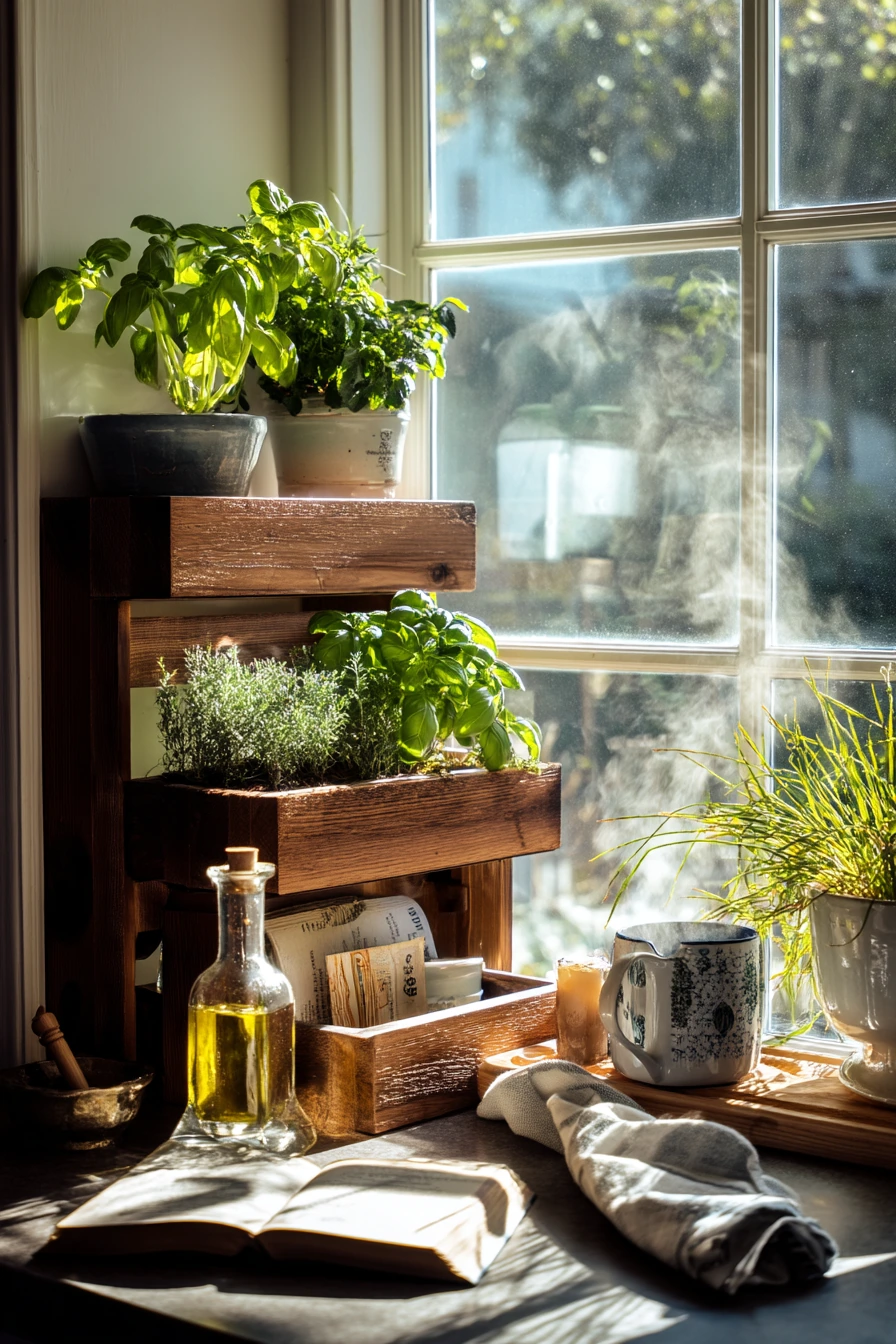
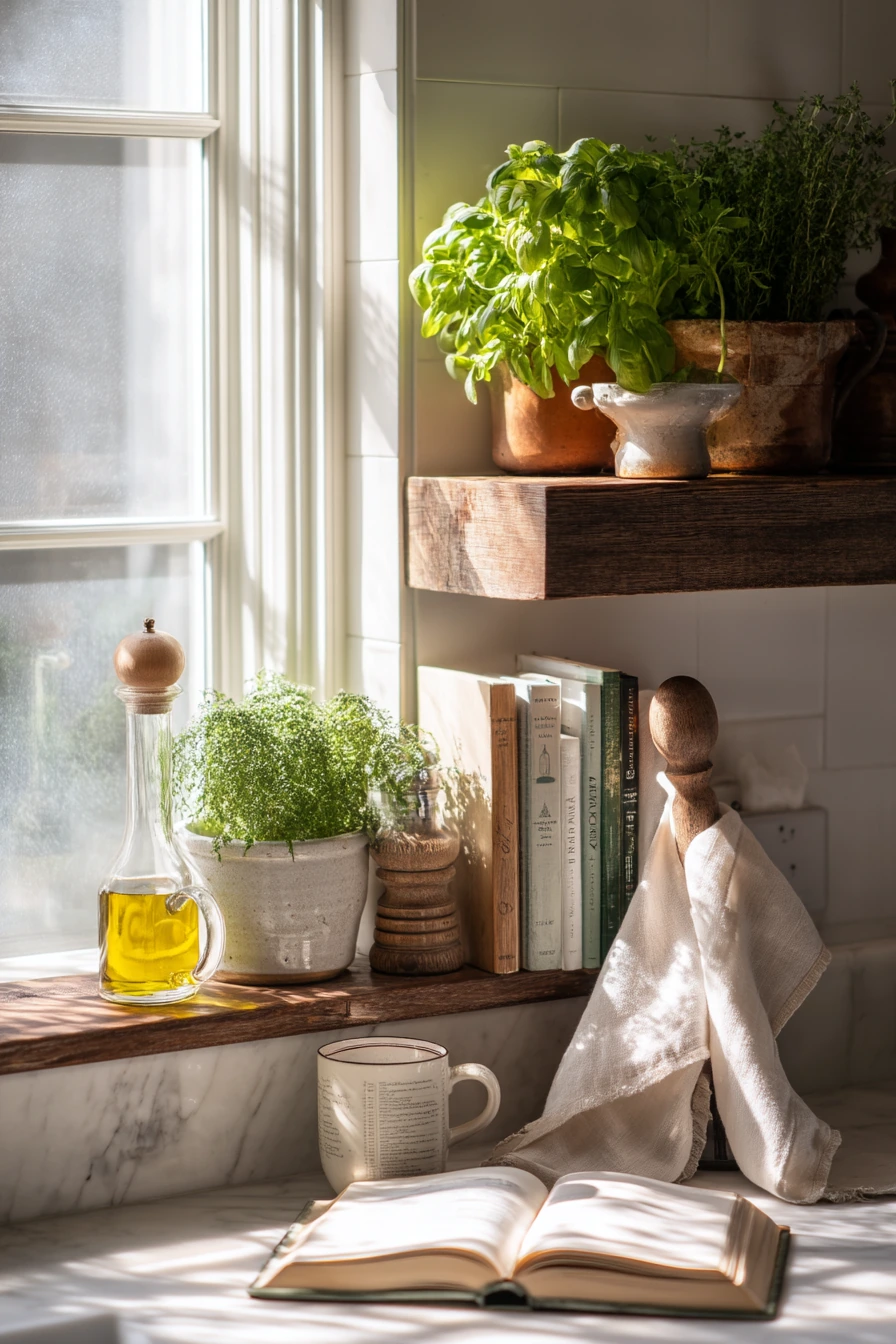
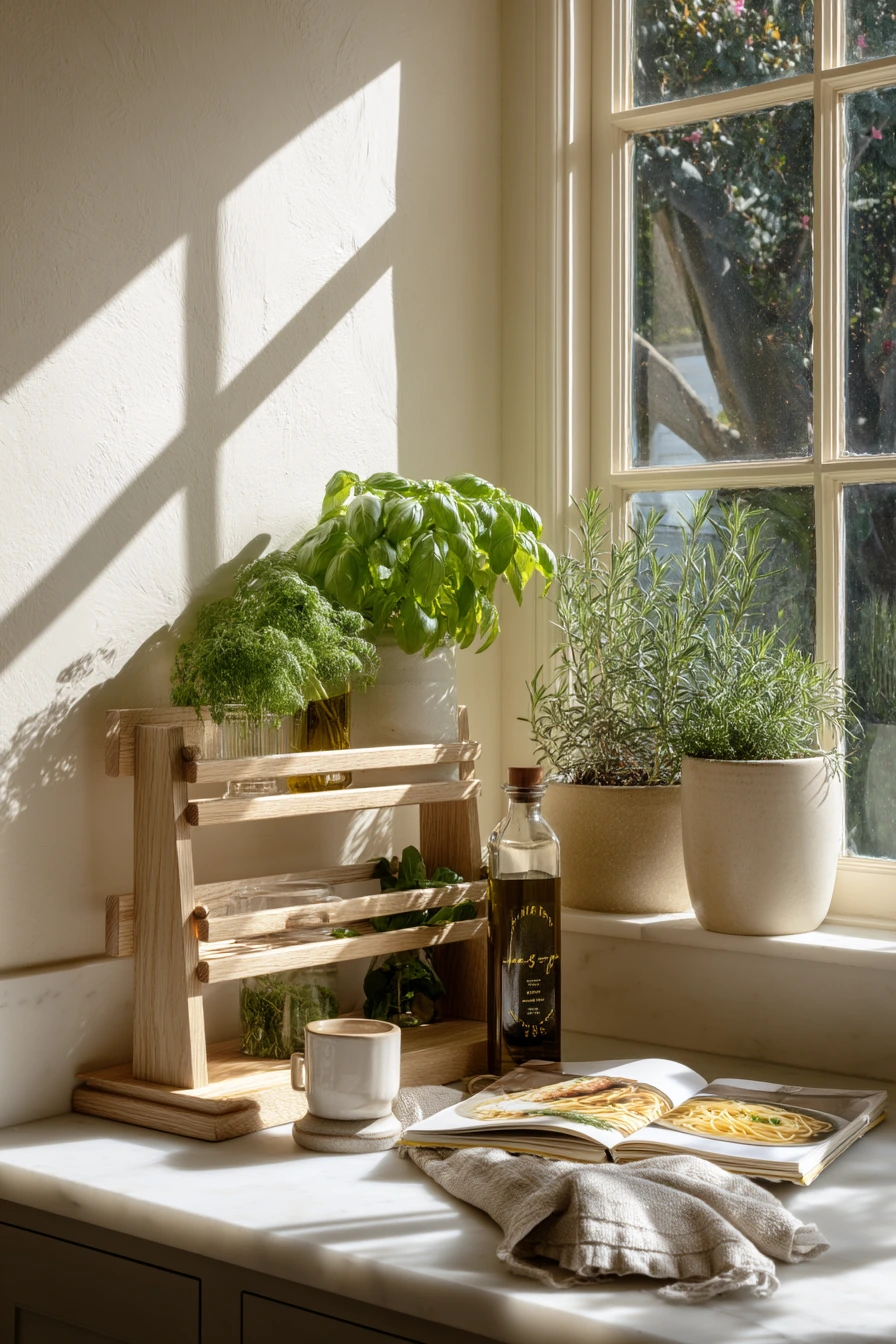
Tiered garden ideas can live indoors too, especially in a sunlit kitchen nook. A window bench with two wooden riser shelves gives you three heights: the bench, the first riser, and the second riser. This keeps herbs within reach while still letting light hit each pot.
Choose plants you will use often. Basil, parsley, and chives are easy on a bright sill, and a small lemon tree adds a fresh look and a steady green focal point. Keep a shallow tray under pots to protect the bench, and rotate plants weekly so they do not lean toward the glass. If you cook a lot, set the garden near your olive oil, spoon rest, and favorite cookbook so it becomes part of your routine.
Style it like a real working counter. A tea towel can be bunched and a mug can steam, but keep soil mess controlled. Use matching clay or simple white pots to calm the visual noise. Plant shadows across the counter are part of the charm, so avoid clutter that blocks the light. If your window is cold in winter, pull plants back at night or use a thin insulating mat.
- Use risers that are 6 to 8 inches tall so herbs do not shade each other.
- Keep a small watering bottle under the bench for quick top-ups.
- Pinch basil tips weekly to prevent legginess.
- Use a citrus-specific fertilizer for the lemon tree in spring and summer.
- Place a small catch-all dish for scissors and plant labels.
Pro Design Tip: Stick to two pot sizes and one wood tone so the tiered shelves look like built-in furniture, not a temporary setup.
Budget Considerations: Riser shelves are easy to DIY from scrap wood; sand and seal them with a water-based clear coat instead of buying new display stands.
6 Courtyard Oasis with Tiered Containers
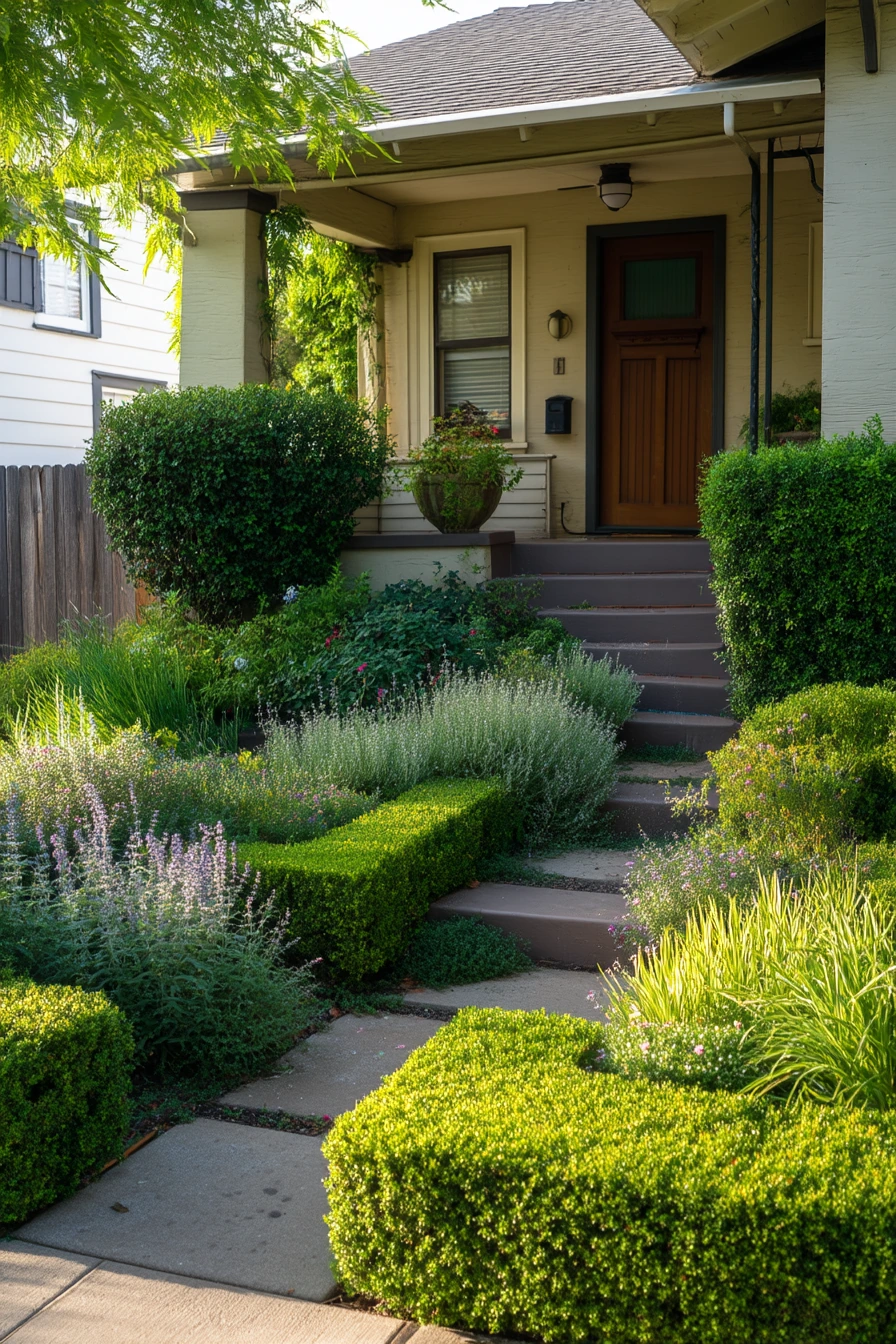
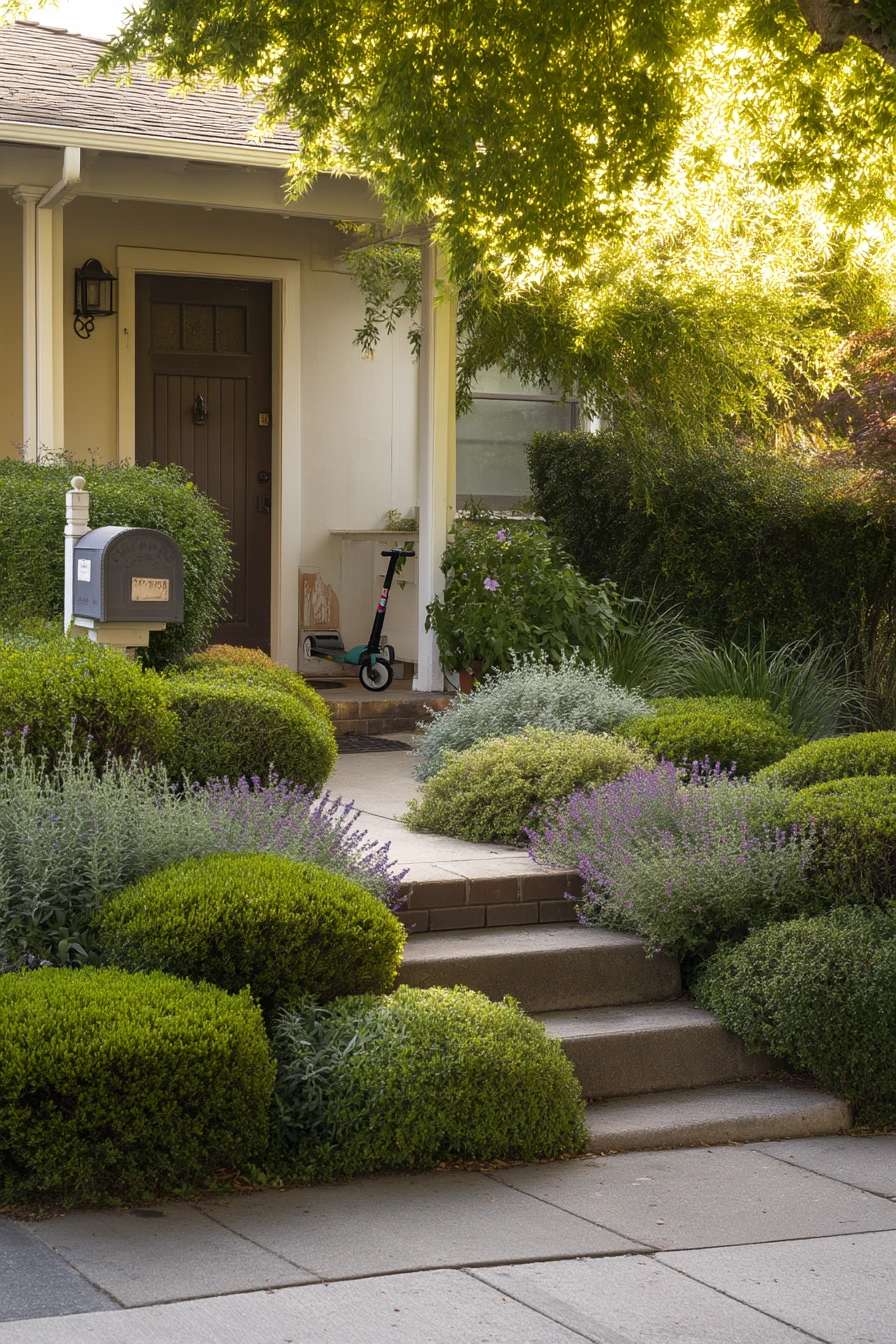
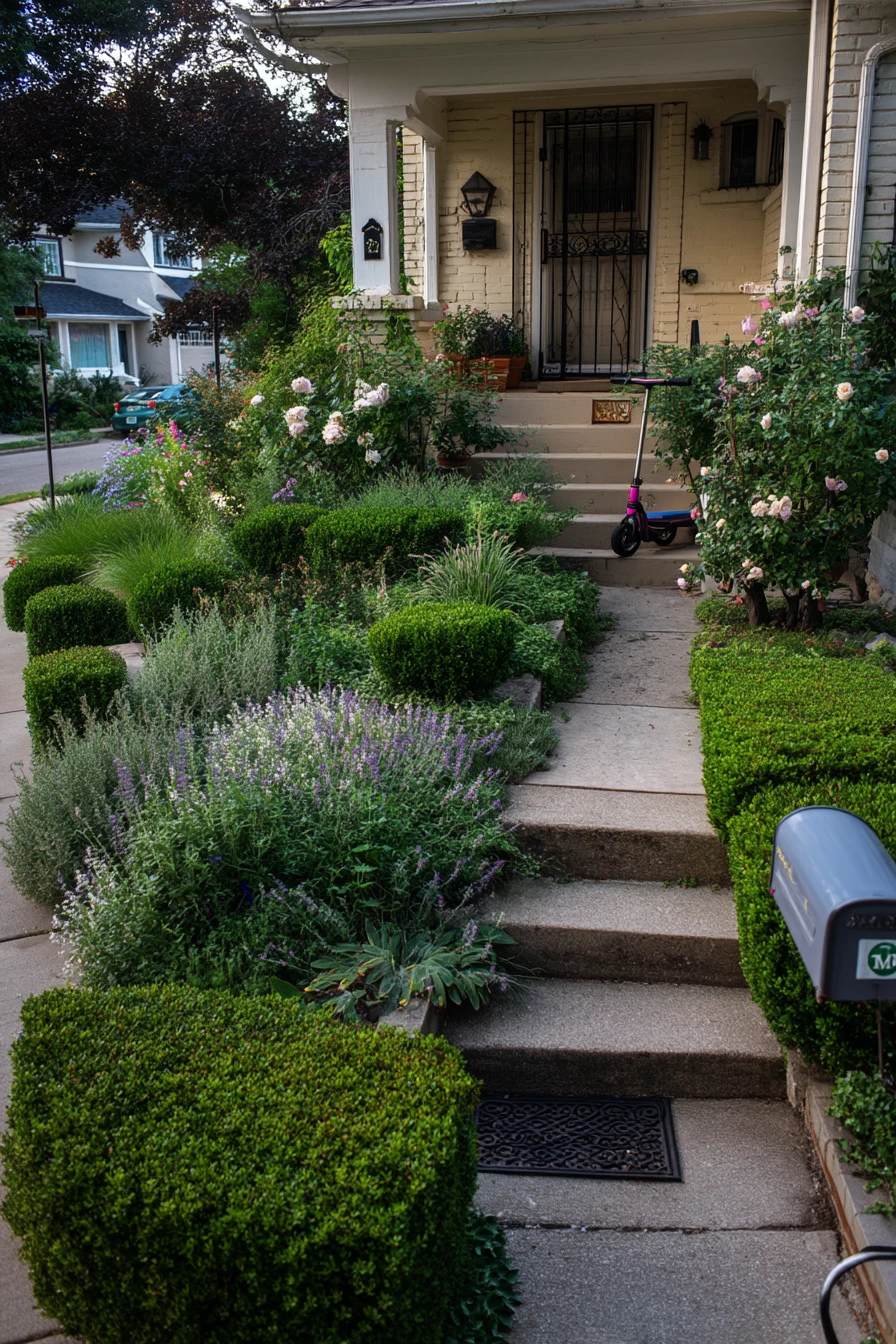
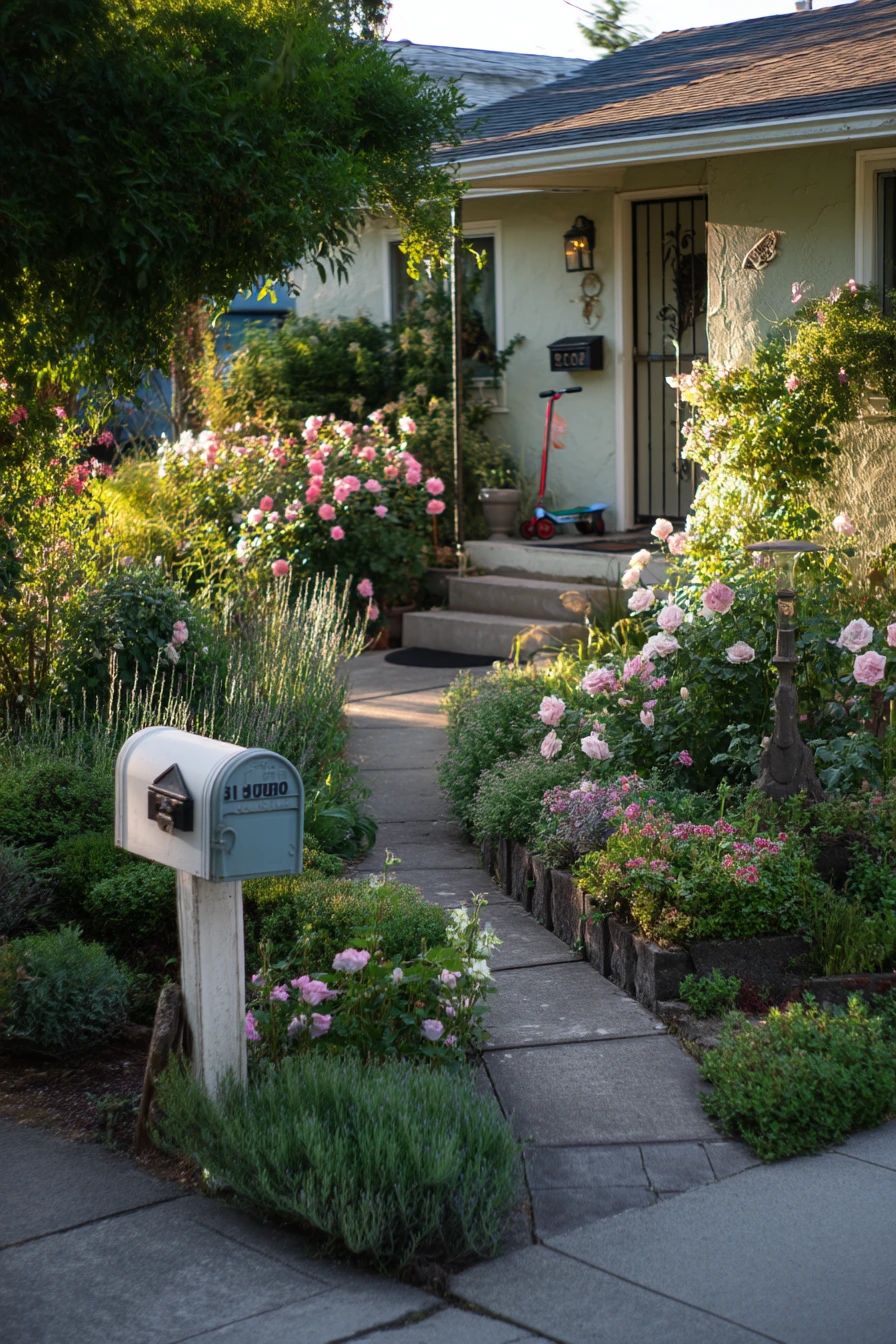
A modest suburban front yard can look polished without being fussy. Tiered garden ideas along a short path help guide the eye from the sidewalk to the porch. Staggered levels also keep plants off the walkway, which matters when kids park a scooter near the steps or when you need space to pull a hose to the gate.
Use low, reliable shrubs to anchor the tiers. Boxwood gives year-round shape, while salvias and nepeta add long bloom time and movement. Compact roses work well on a mid tier where you can reach for pruning without stepping into the bed. Keep the mailbox area simple so it does not feel crowded, especially if it has a faded sticker or other everyday details.
Styling is about order. Edge the beds cleanly and keep mulch even so the tiers look intentional from the street. Warm evening entry light will highlight plant form, so place the best shapes near the porch. A slightly askew doormat is real life, but a crisp garden edge can still make the whole front feel cared for.
- Place taller plants on the back tier so sight lines stay open.
- Use stepping stones or a narrow access strip for easy weeding.
- Deadhead salvias to keep blooms coming.
- Choose disease-resistant rose varieties for less spraying.
- Hide hose storage behind a shrub or low screen near the gate.
Pro Design Tip: Repeat one plant color, like purple salvia, along every tier so the path feels connected from sidewalk to porch.
Budget Considerations: Boxwood can be expensive; use smaller starter plants spaced correctly and let them fill in over time, or swap in inkberry holly in similar shapes.
7 Kitchen-to-Deck Transition with Edible Layers
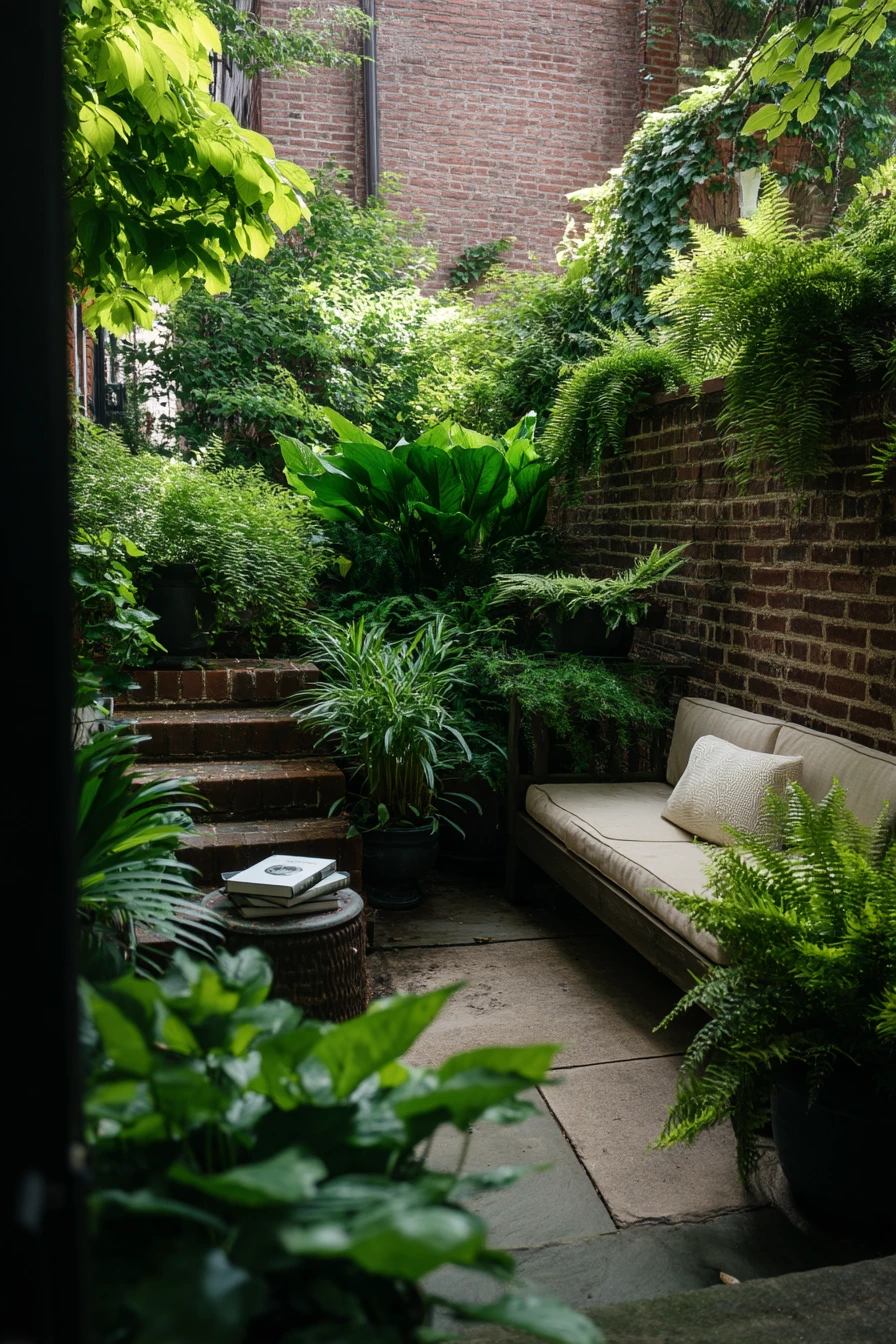
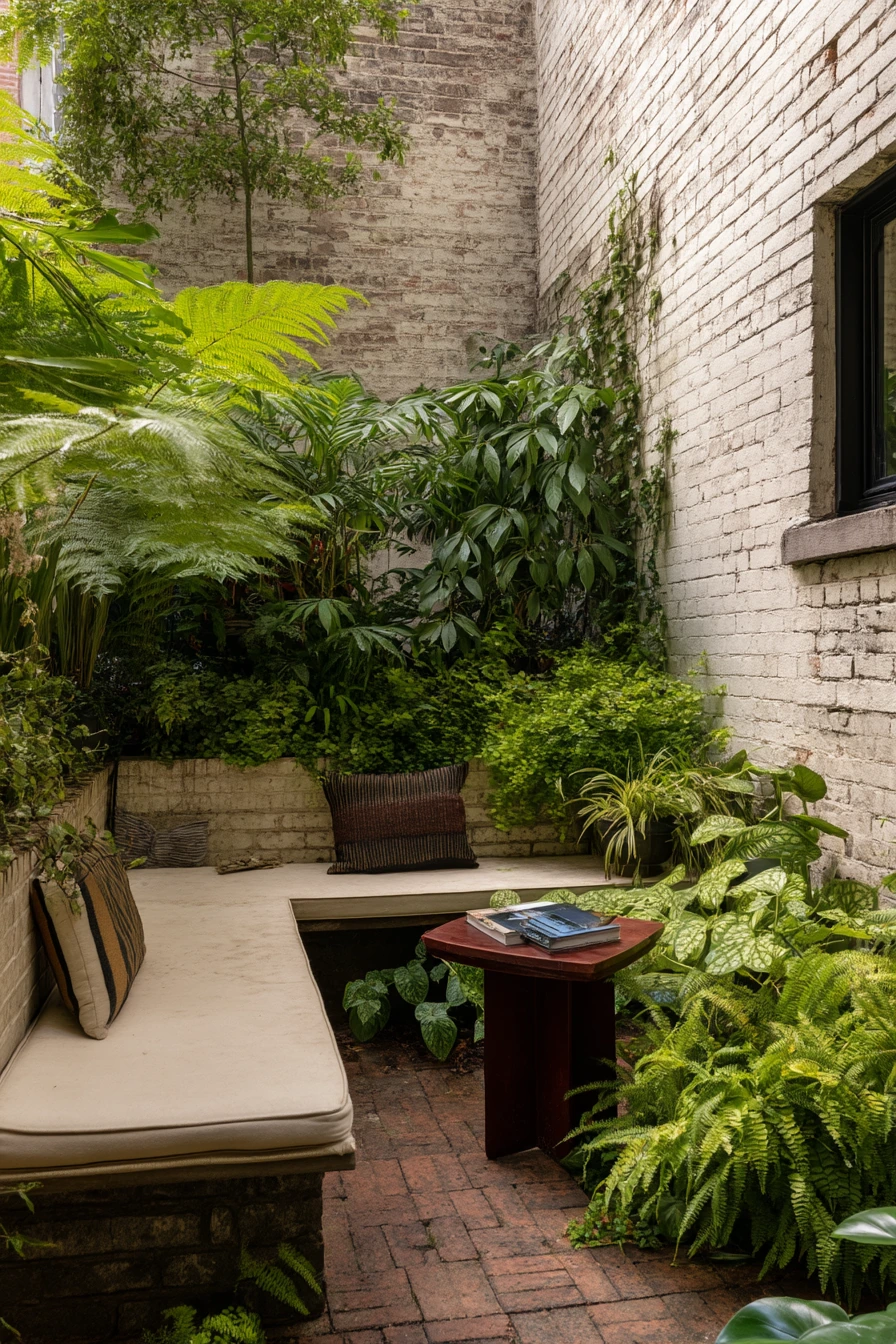
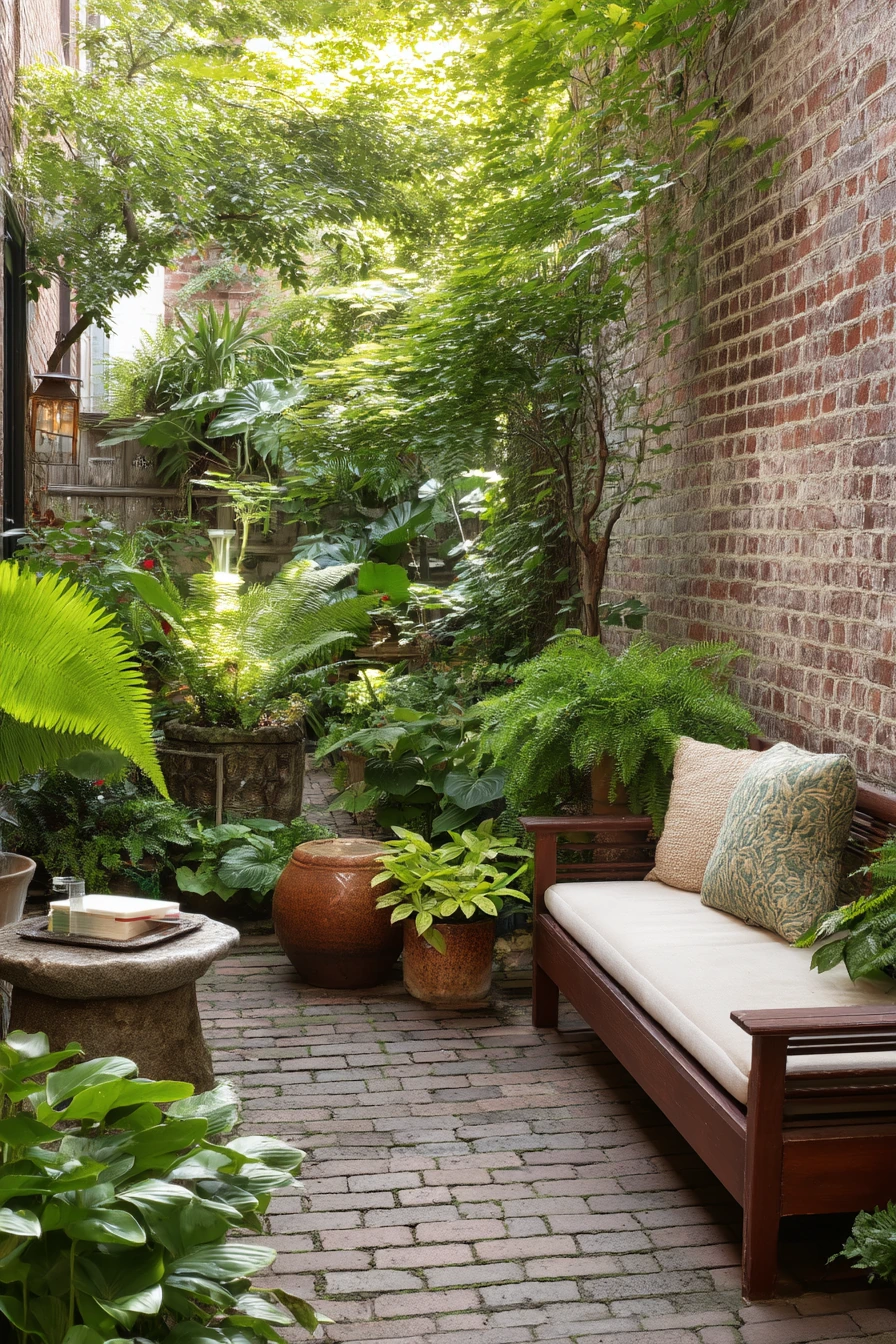
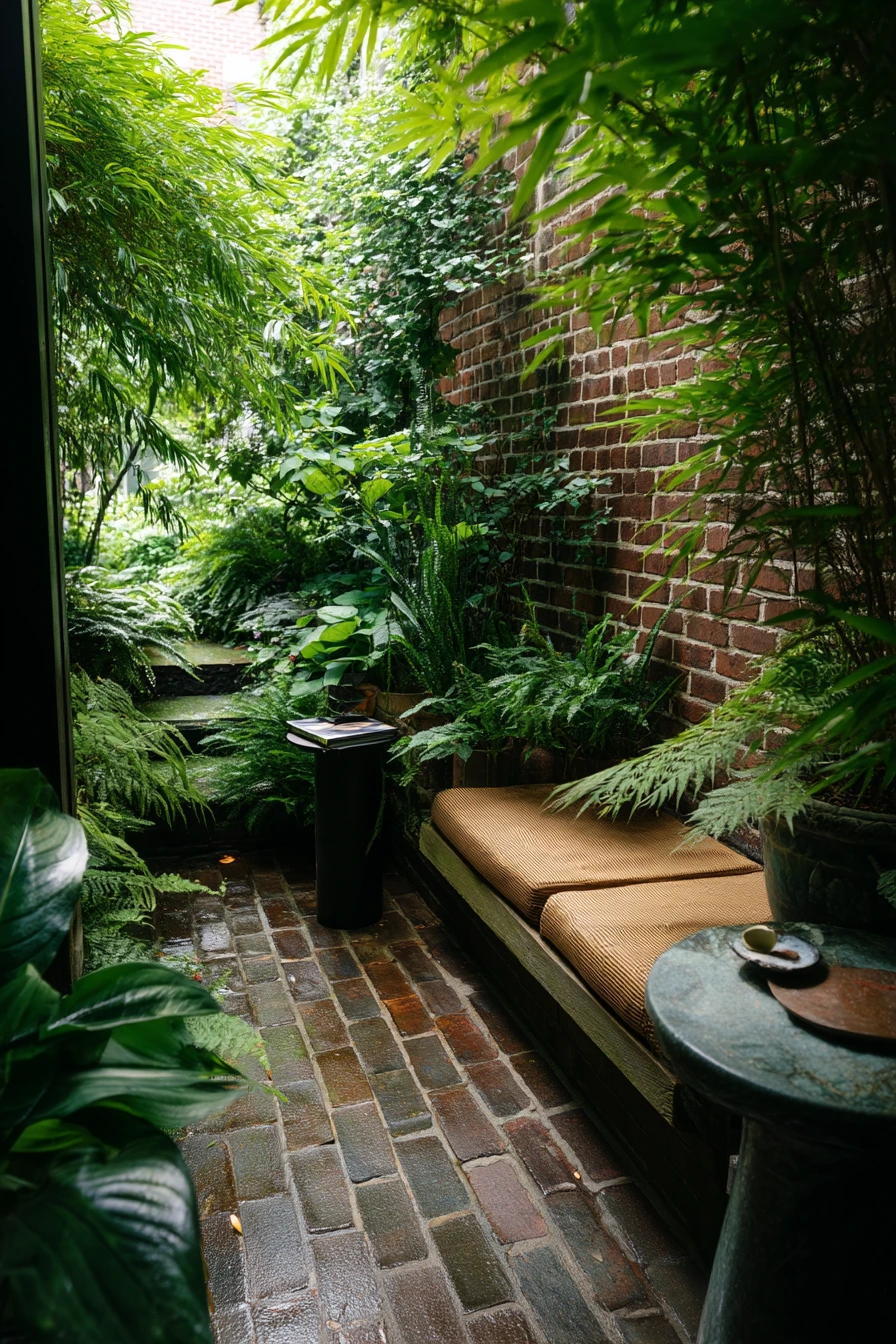
In a small brick courtyard, tiered garden ideas are often about containers, not digging. Layered pots on narrow benches create height without taking away walking space. This is perfect for city homes where you want a lush look but also need room for a chair, a side table, and daily life.
Pick plants that love shade and filtered light. Ferns and caladiums fill in fast and make the space feel soft. Dwarf bamboo adds a vertical screen, and trailing ivy ties levels together as it drapes from bench to pot. Keep the rhythm by repeating the same pot shape in a few spots, then add one standout container for a focal point.
Style it like a quiet reading corner. A paperback novel, a ceramic ashtray, and a water ring on the table can fit the mood, but aim for a tidy base layer. Use a simple outdoor rug or gravel strip to reduce splashes on the brick. If one cushion sags, add a washable cover and a thin outdoor foam insert so it feels better without buying new furniture.
- Use benches that are 10 to 12 inches deep to hold pots without tipping.
- Group pots on trays to protect brick and make watering cleaner.
- Choose a few leaf shapes and repeat them for a calm look.
- Trim ivy monthly so it does not swallow smaller plants.
- Add a small battery lantern to make the courtyard usable in the evening.
Pro Design Tip: Build your tiers with three heights only, low, medium, and tall, so the courtyard feels layered but not crowded.
Budget Considerations: Outdoor benches and large planters can cost a lot; use sturdy secondhand stools and shelves, then unify them with one paint color made for exterior use.
8 Minimal Side Yard with Clean Tiered Lines
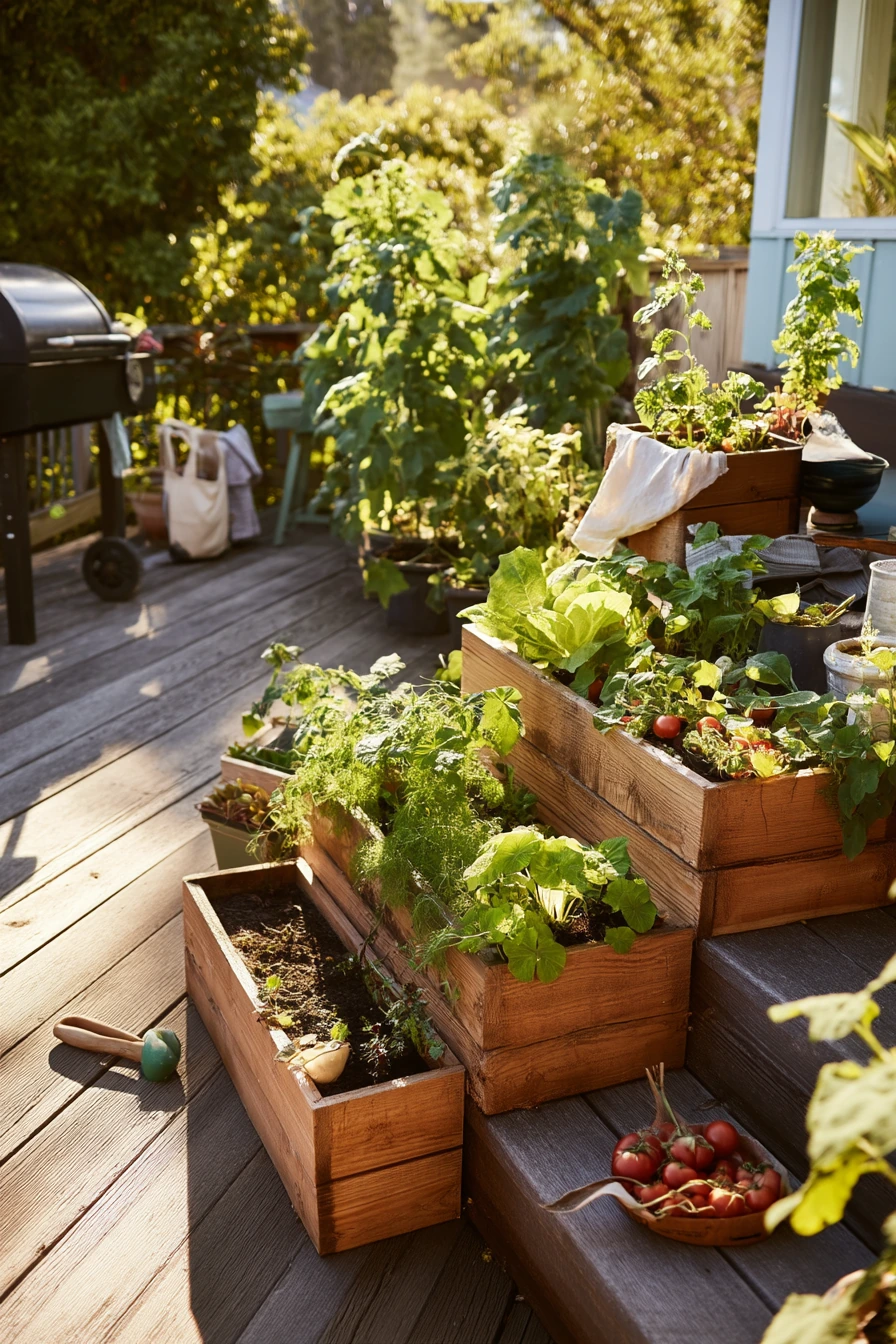
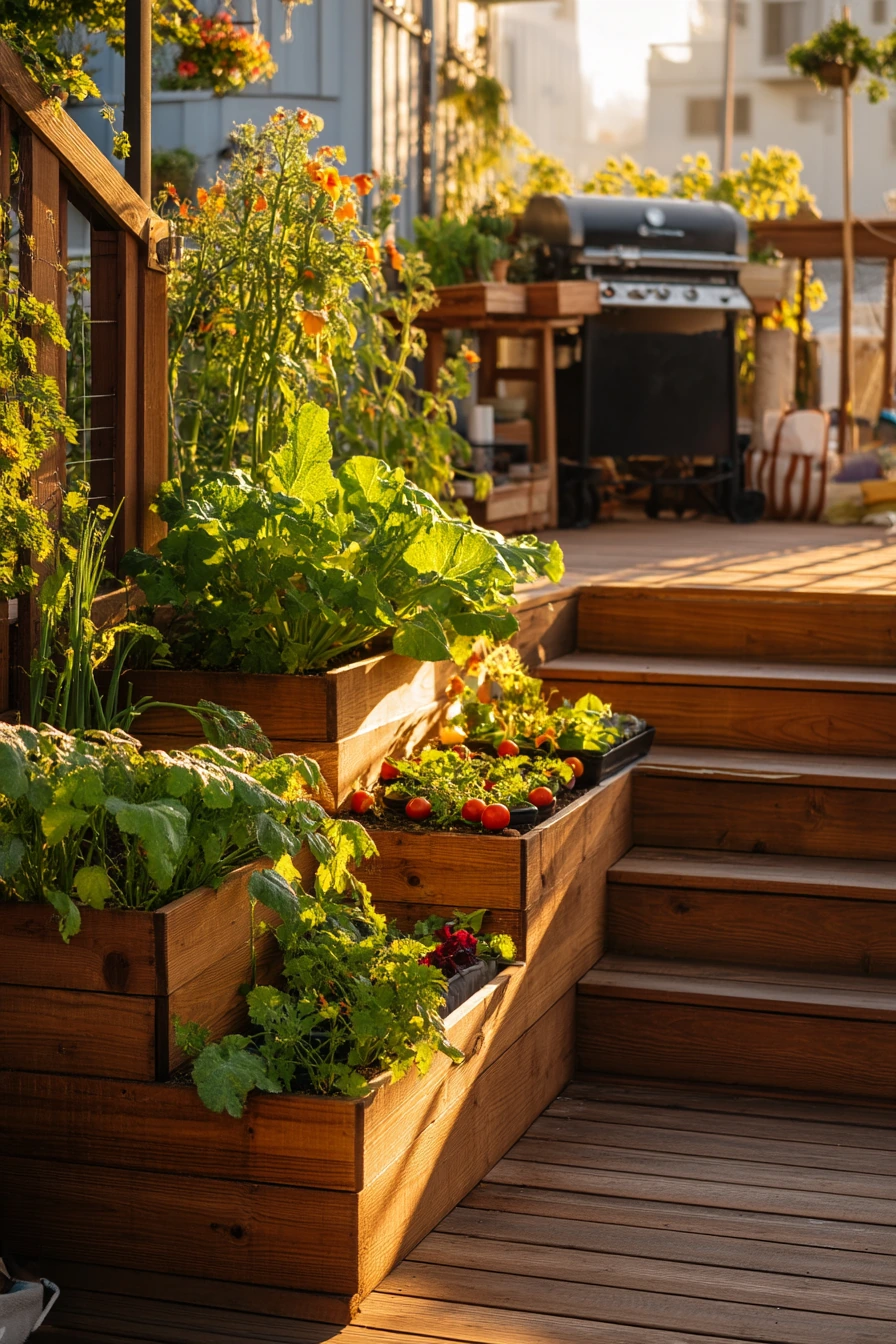
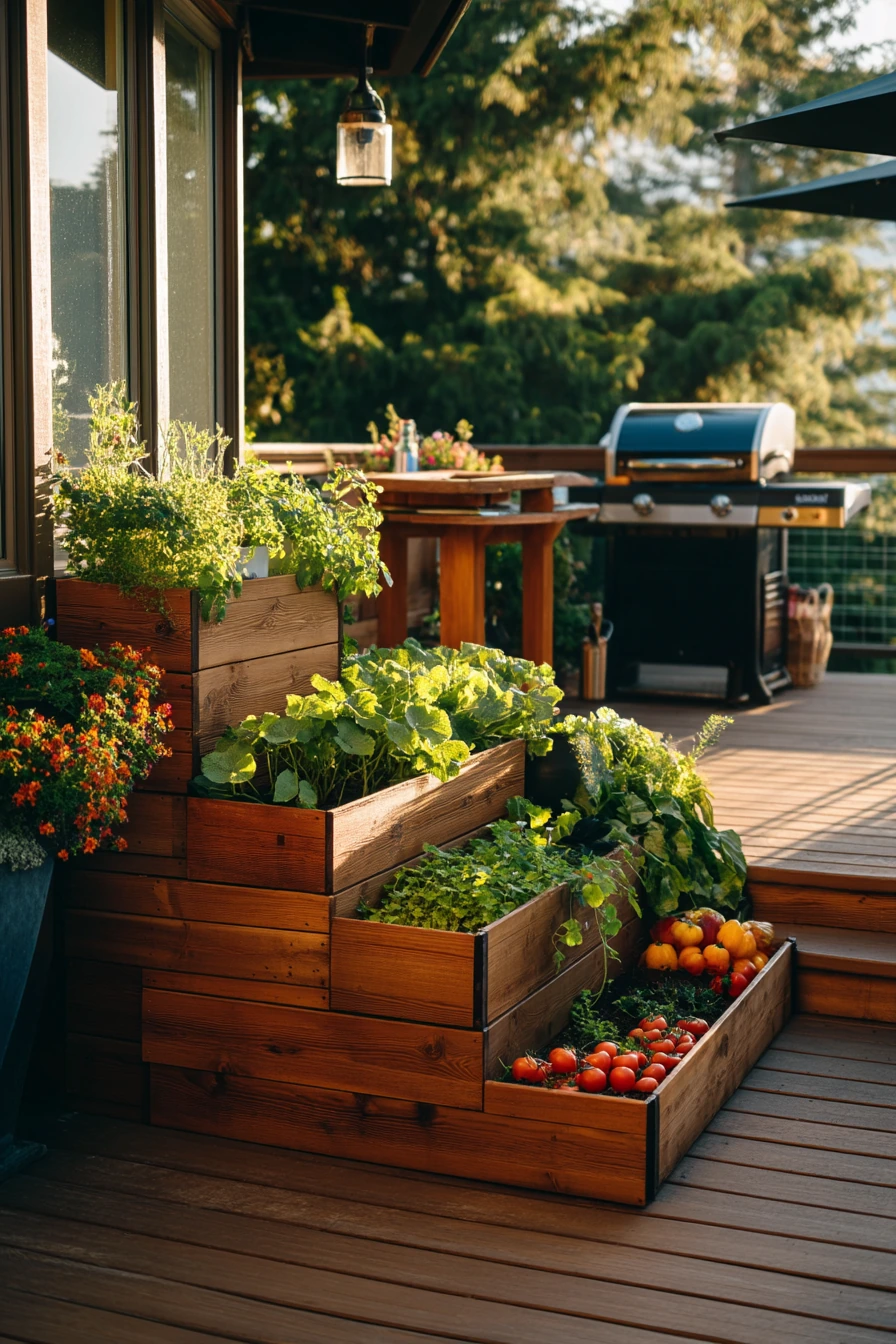
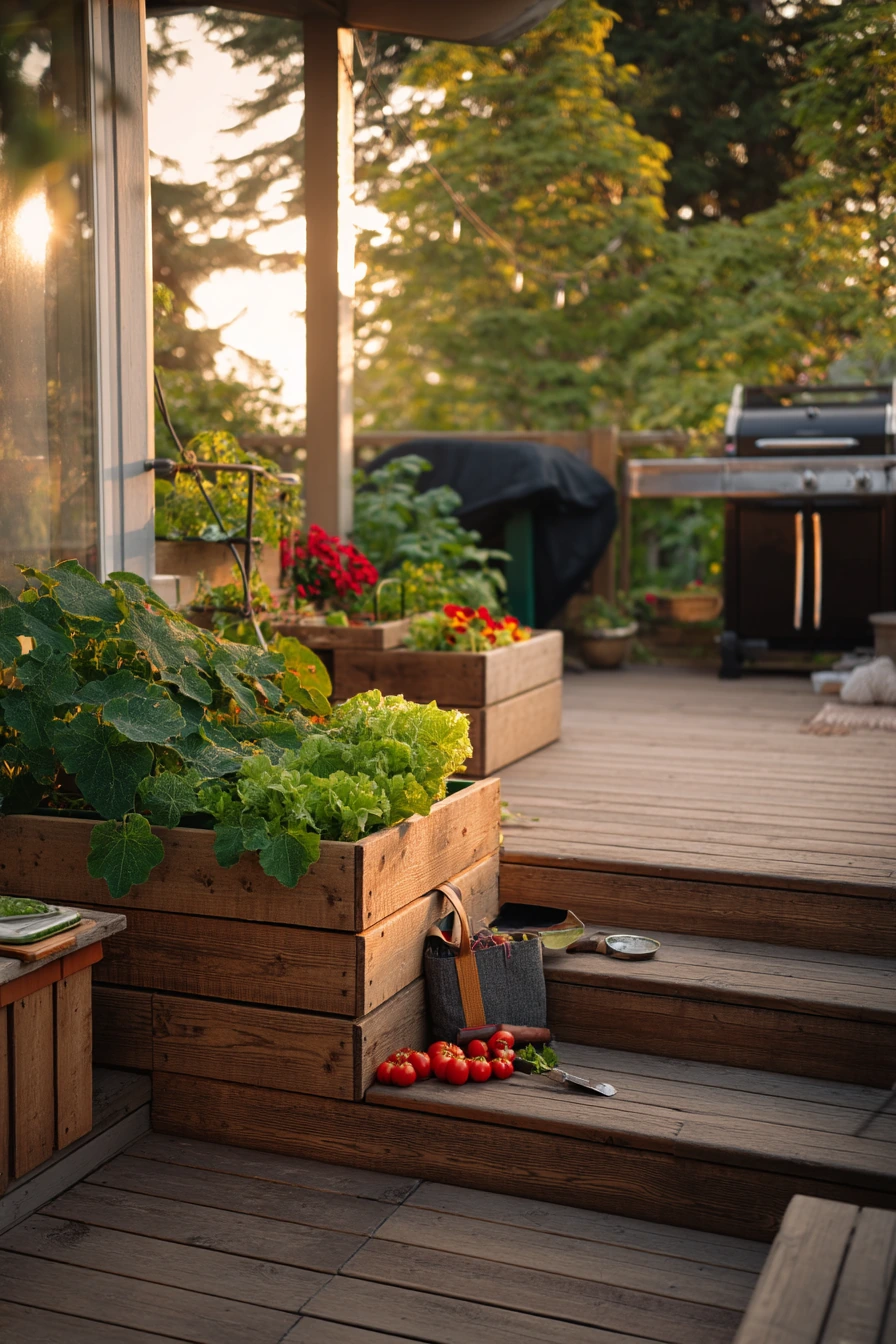
A family deck just off the kitchen is a great place for tiered garden ideas that focus on food. Raised cedar boxes and step-down planters let you organize crops by height, so sun hits everything and harvesting is fast. This setup also keeps soil off the deck boards and makes it easier to manage pests.
Use the top tier for taller plants like tomatoes, then place medium growers like lettuce in the middle, and trailing plants like nasturtiums and strawberries on the lower edge. Nasturtiums help fill gaps and attract pollinators, plus the flowers are edible. Keep a kid-sized trowel close so children can help without borrowing your main tools.
Style the space around real routines. If a grocery tote is half unpacked or a grill cover is folded nearby, the garden should still feel orderly. Use matching cedar planters and simple labels so it looks calm even when you are busy. Golden-hour light makes leaves glow, so place the tiers where you can see them from the kitchen window.
- Add a drip line or soaker hose to water each tier evenly.
- Use trellises on the back tier to keep tomatoes upright and off the deck.
- Plant lettuce in small batches every two weeks for steady harvest.
- Use straw mulch to reduce soil splash after watering.
- Keep one bin for tools and gloves so the deck stays safe for bare feet.
Pro Design Tip: Set the tallest tier on the north side of the deck planters when possible so it does not shade the lower levels.
Budget Considerations: Cedar raised beds can be costly; build frames from standard lumber and line the inside with a safe barrier, then add cedar trim only on the visible front.
9 Weekend Garden Project with Potting Bench
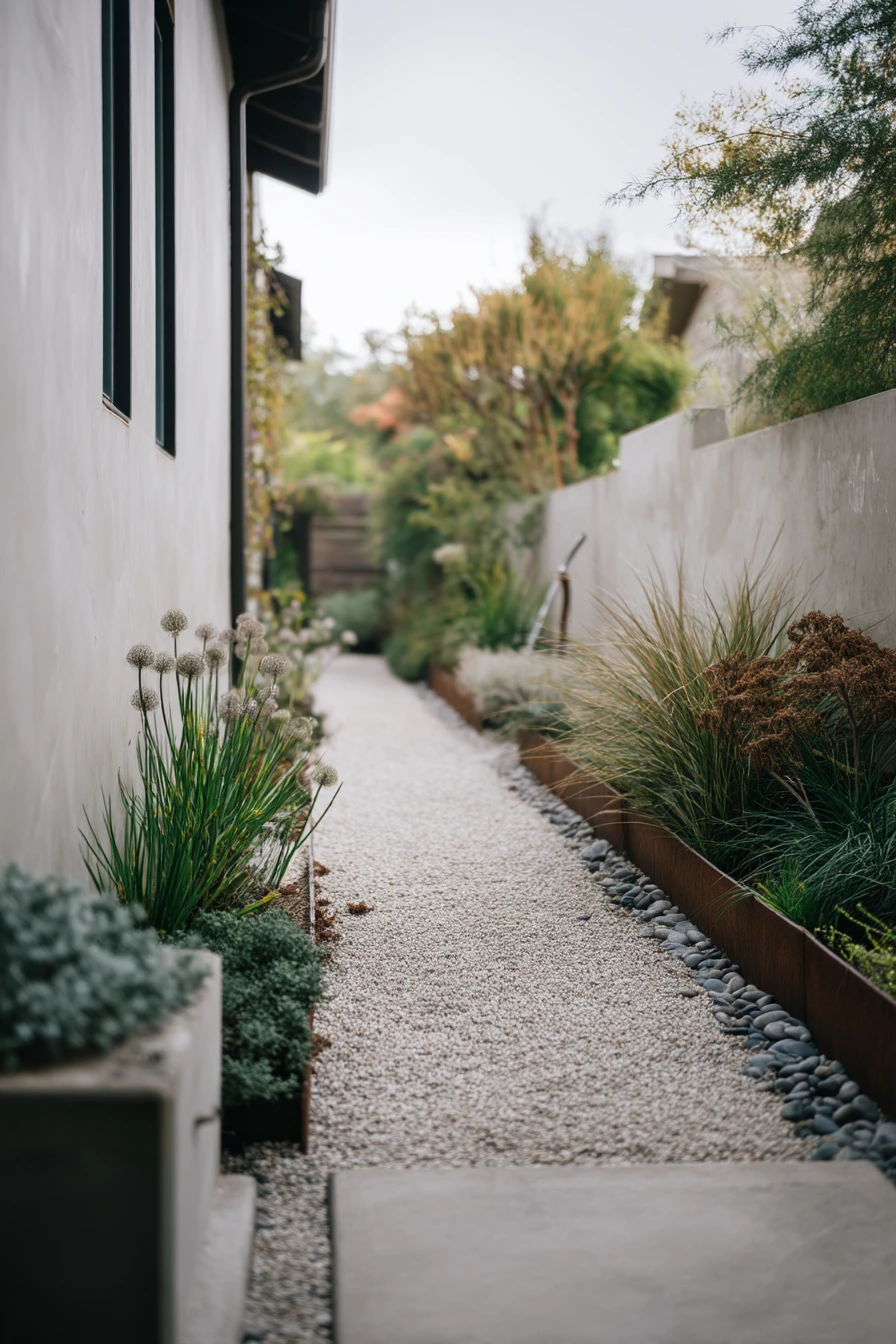
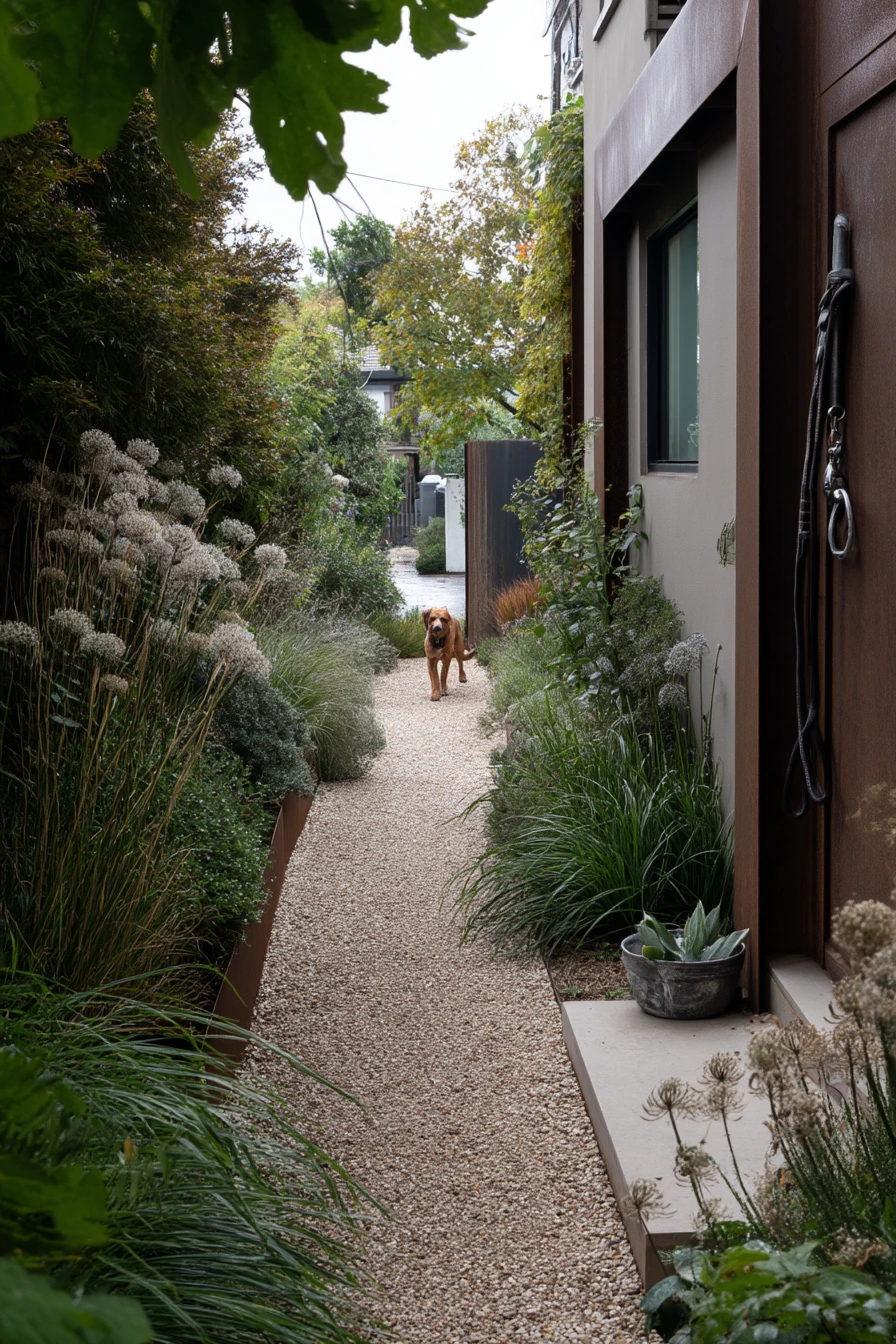
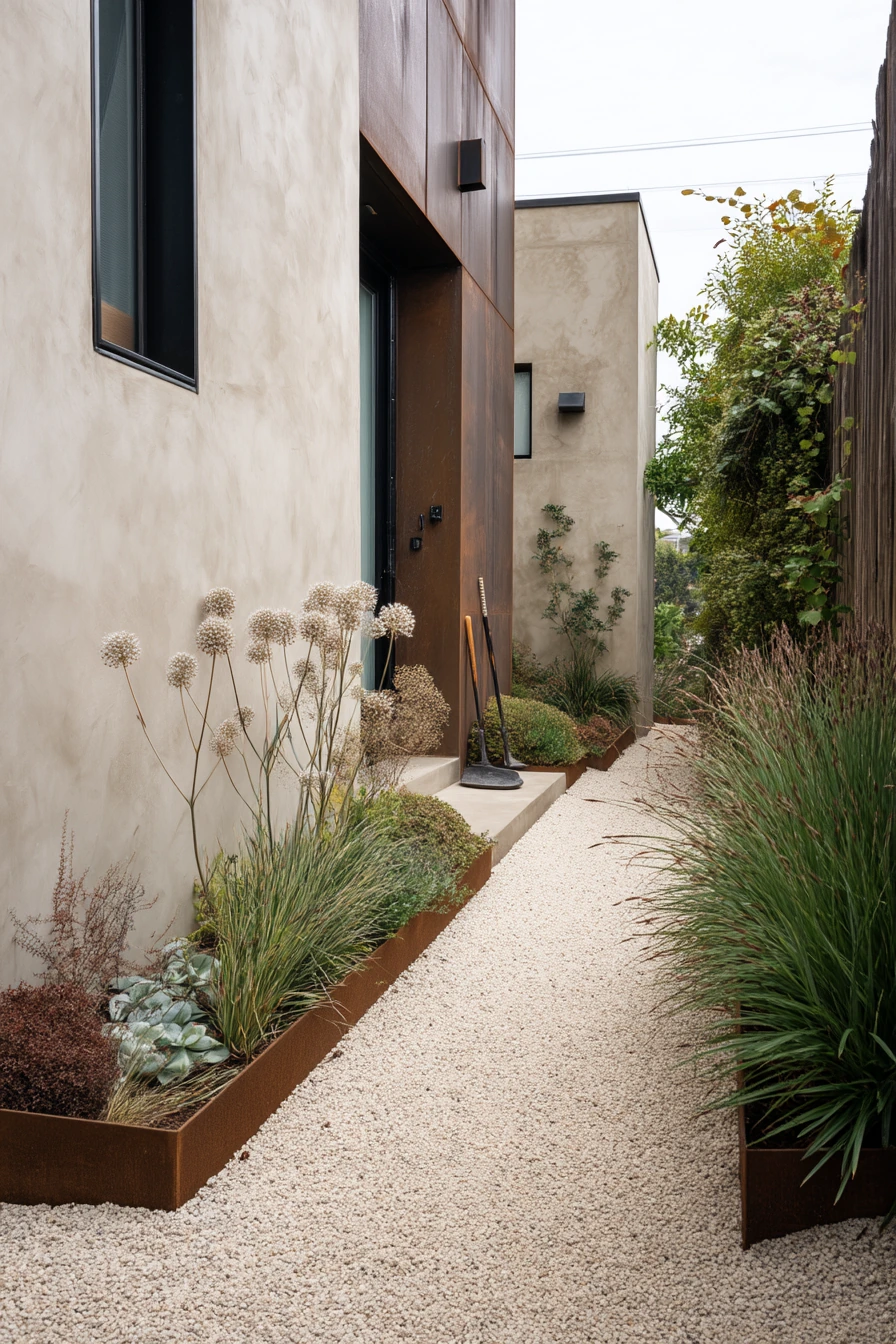
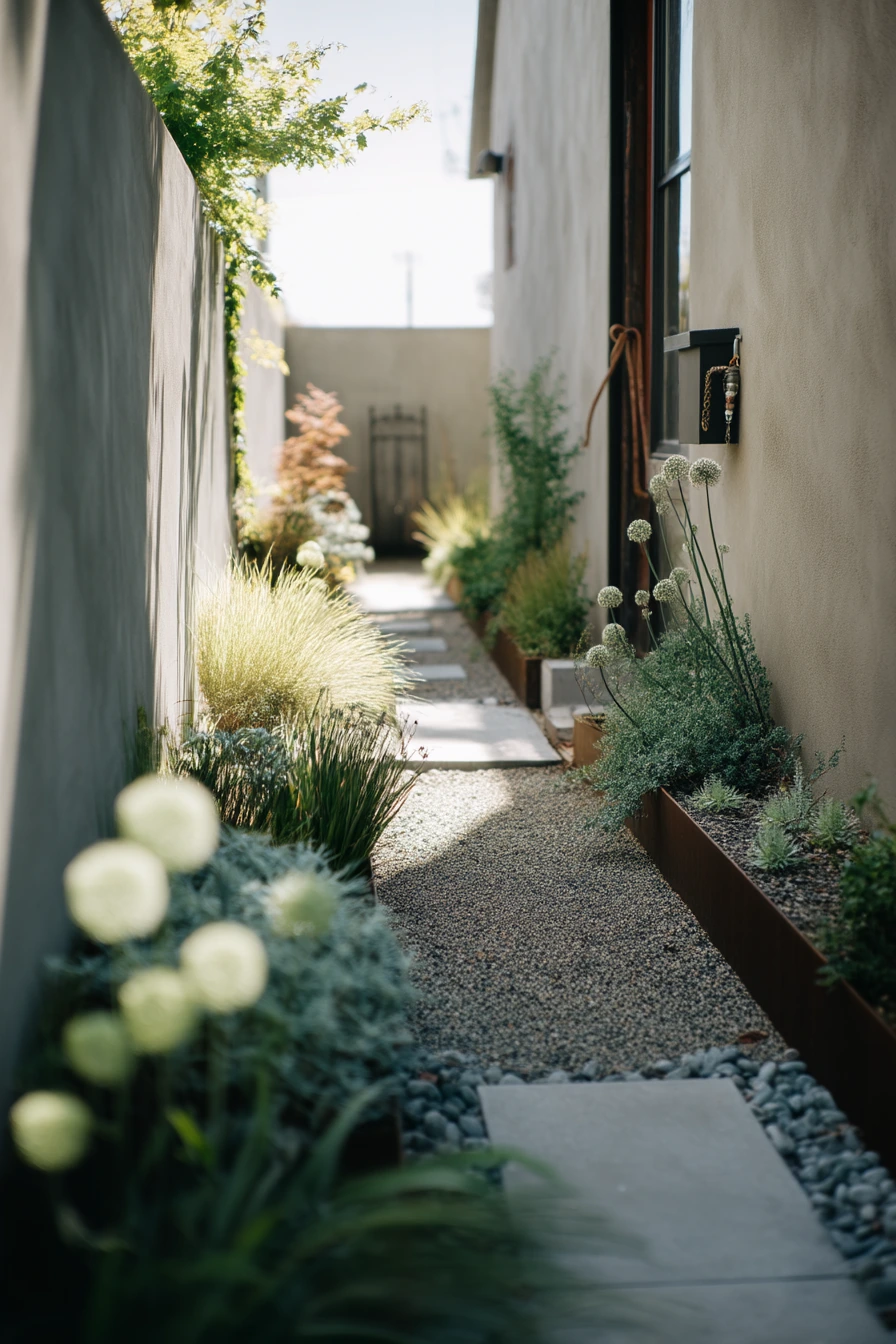
A narrow side yard often feels like wasted space, but tiered garden ideas can make it clean and useful. Crisp geometric levels with gravel paths and corten steel edging keep the look structured. This approach works well when you want a calm, low-maintenance corridor from front to back.
Choose plants that match the sharp lines. Ornamental grasses add movement without mess, alliums bring simple pops of bloom, and boxy succulents hold shape in dry spots. Keep the planting palette limited so the small area does not feel busy. A garden rake leaning against the wall and a dog leash on a hook are everyday items, so plan a tidy storage point that fits the design.
Styling comes from repetition and clean edges. Keep gravel raked flat and top up thin areas once a year. Wipe dirt smudges from the wall when you notice them, since side yards show marks more than main gardens. If you have a door along the path, leave a shoe tray so footwear does not end up in the gravel.
- Use edging to separate gravel from soil for easier cleanup.
- Install a weed barrier under gravel, then top with 2 to 3 inches of stone.
- Plant grasses in clusters of three or five for a strong pattern.
- Use drip irrigation so succulents do not get overwatered.
- Add one simple wall light to make the path feel safe at night.
Pro Design Tip: Keep the path straight and let the tiers step up in even increments so the long perspective looks intentional and modern.
Budget Considerations: Corten steel edging is premium; for a lower cost, use heavy-duty aluminum edging or concrete pavers set on edge for a similar clean border.
10 Evening Glow on a Tiered Zen Patio
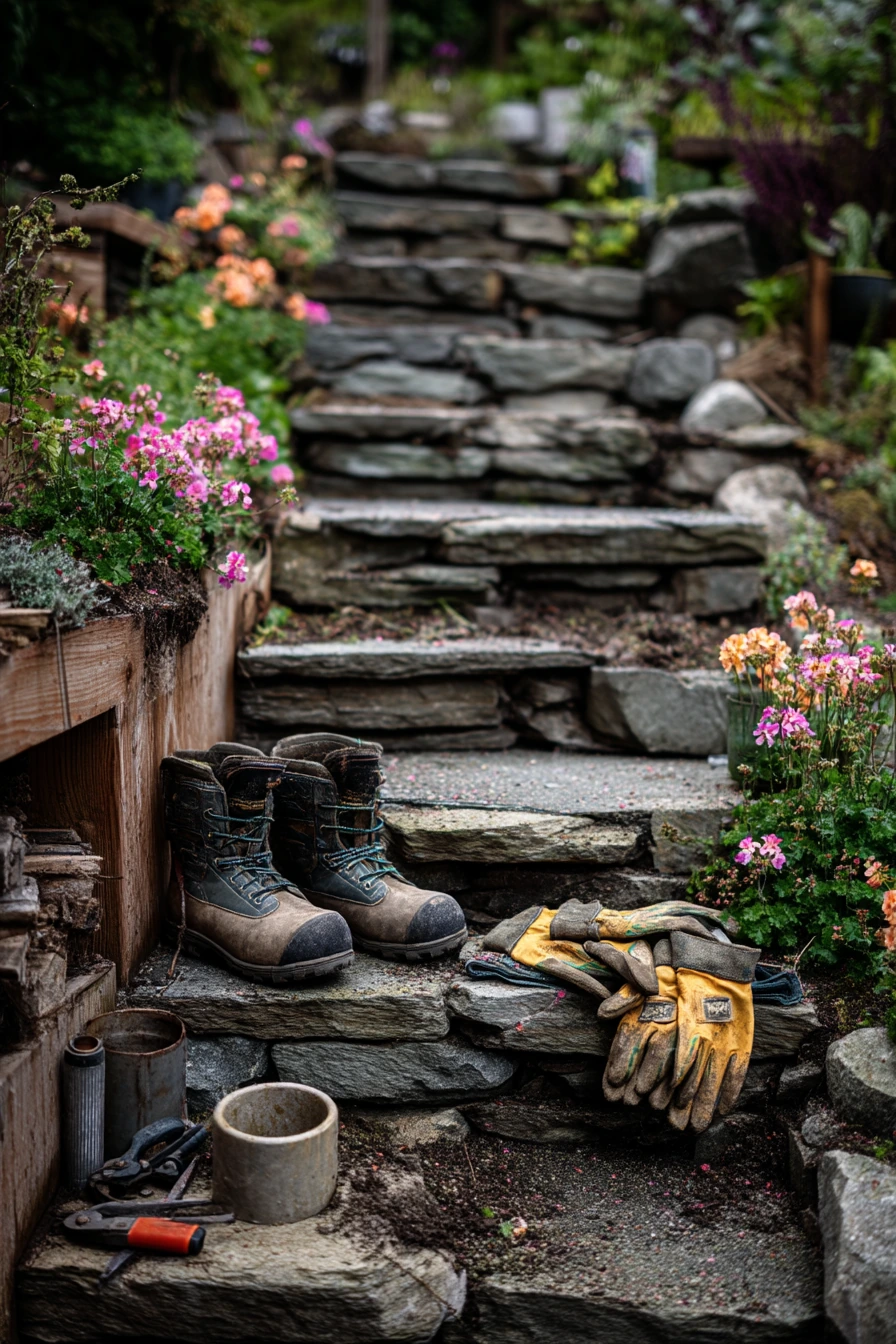
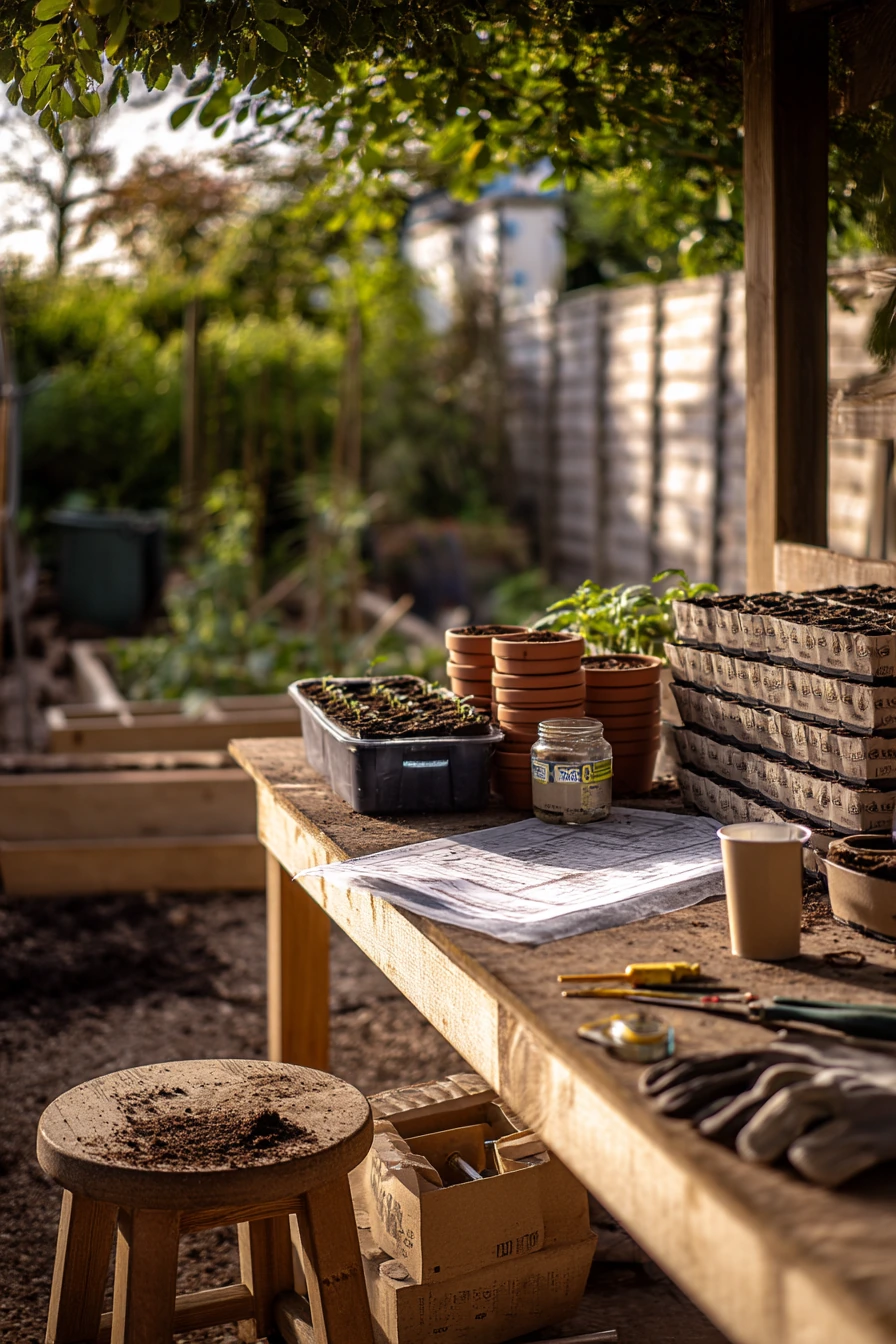
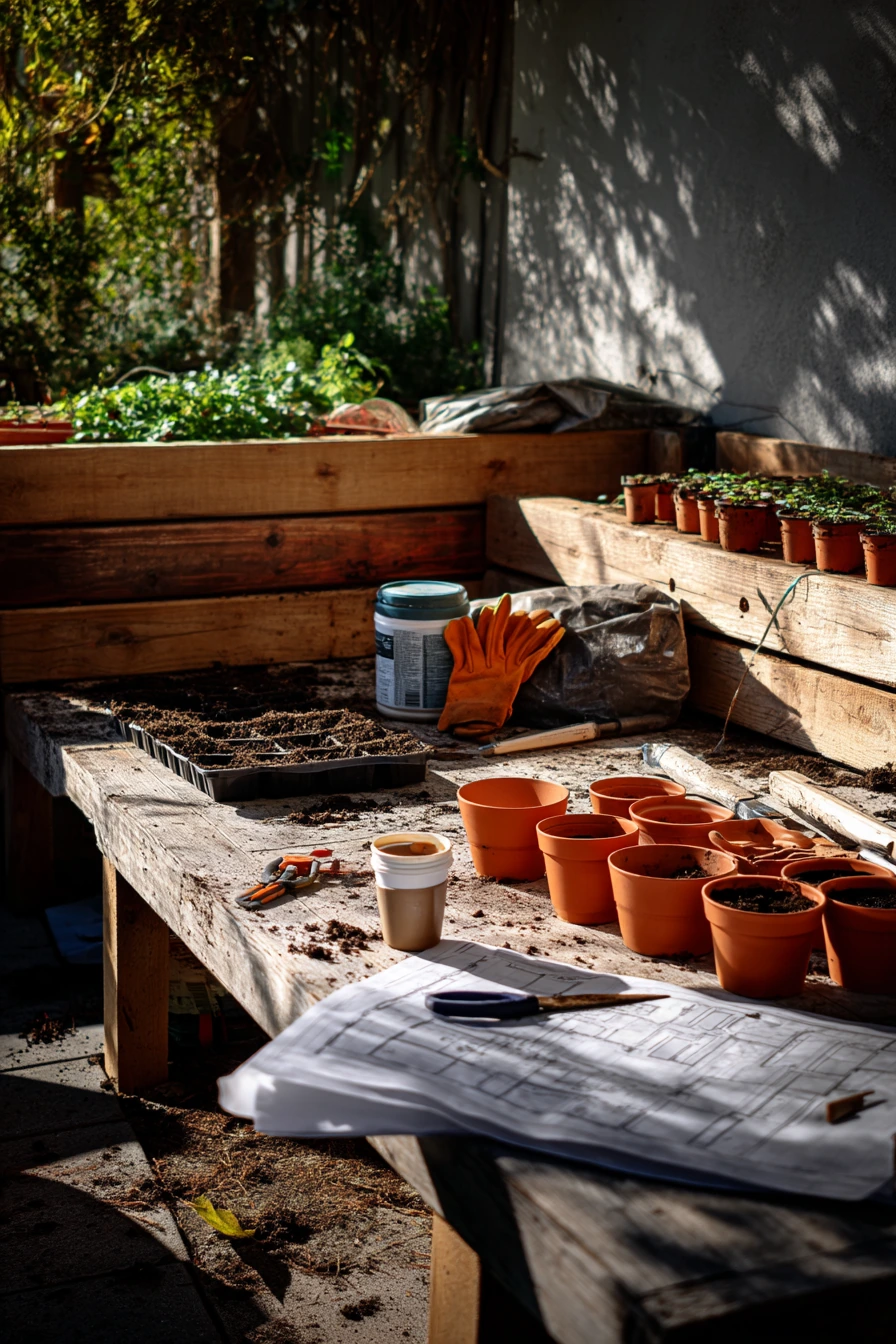
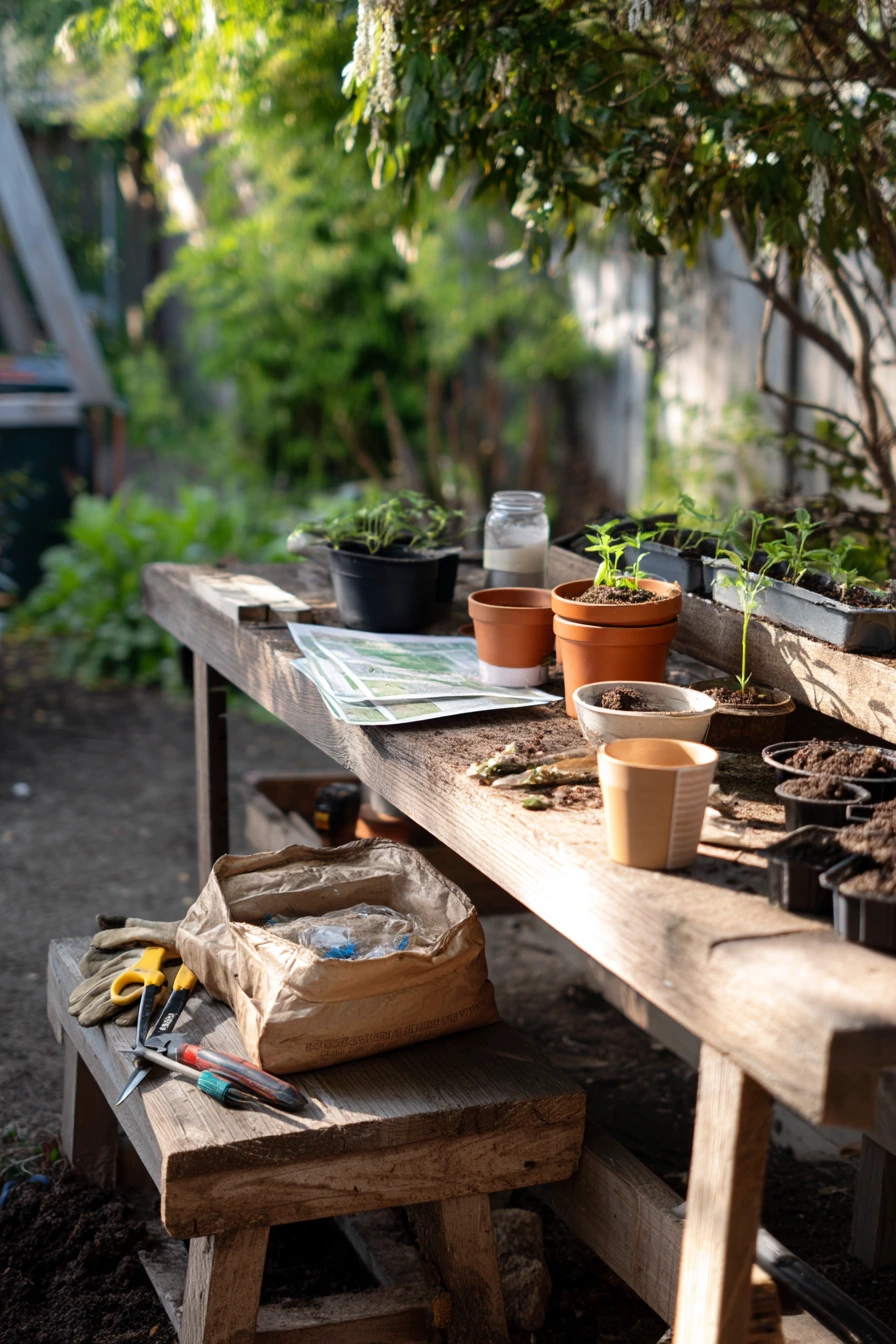
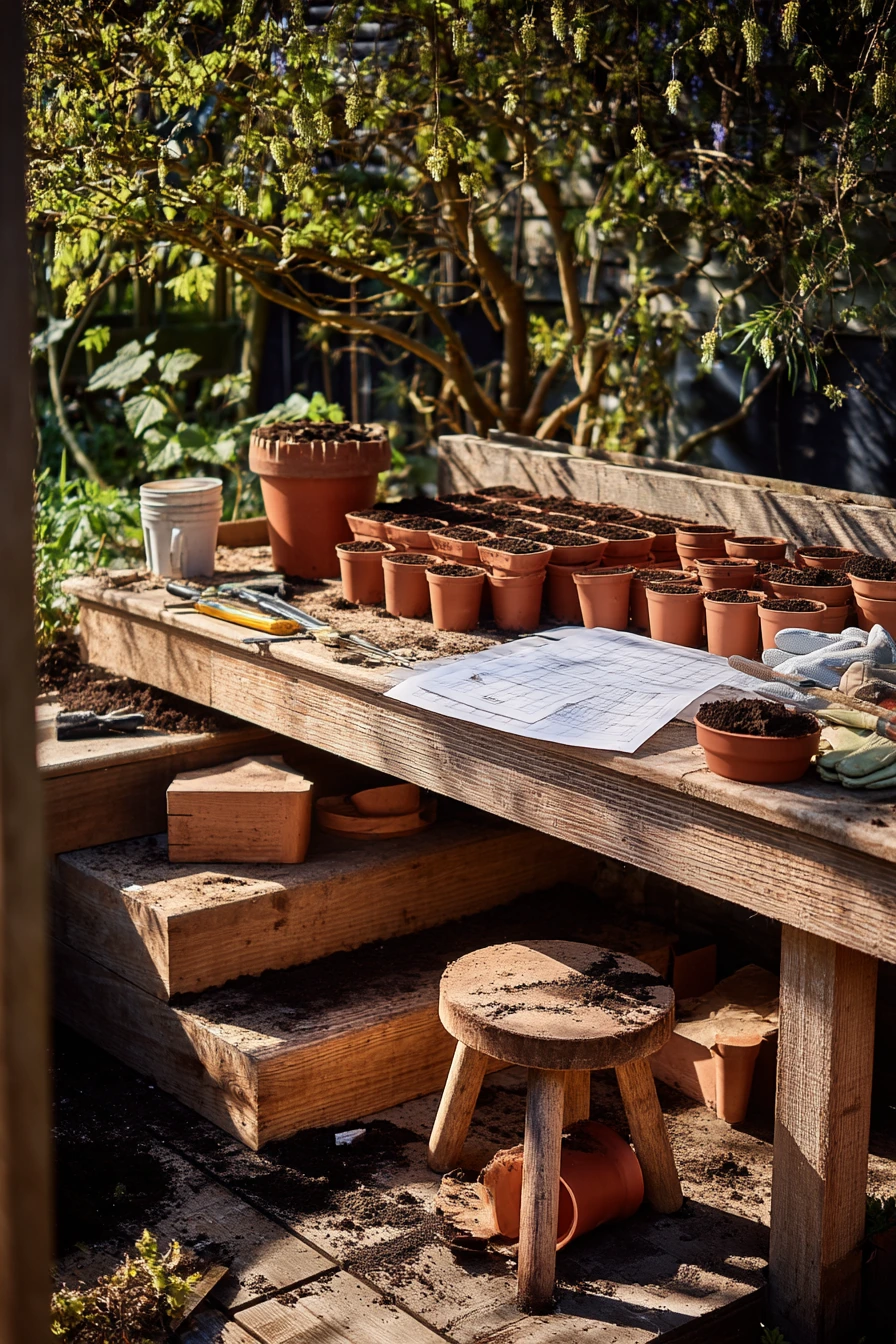
If your garden is mid-build, you can still use tiered garden ideas to stay organized. Unfinished timber tiers let you test heights and spacing before you commit. A work zone with potting soil, seedling trays, terracotta pots, and a jar of nails is normal, so set up the area to reduce wasted steps.
Start by planning what each level will hold. Reserve the sunniest tier for fruiting plants and the lower tiers for greens and fillers. Keep a folded blueprint or sketch on a clip board so it stays readable, even if the bench has coffee cup rings. Use temporary markers like stakes and string to keep lines straight while you build.
Styling at this stage is about safety and flow. Keep secateurs in a sheath or tool bucket, and put gloves on a hook instead of on a stool where they fall into soil. Store potting mix in a sealed bin so it does not get wet. Morning light through tree branches is great for working, but plan shade breaks so you do not rush and make mistakes.
- Pre-drill timber to reduce splitting and speed up assembly.
- Check each tier for level before adding soil.
- Add hardware cloth at the base if rodents are a problem.
- Stage seedlings by size so transplanting is faster.
- Keep one clean surface for measuring and labeling to avoid mix-ups.
Pro Design Tip: Build and fill one tier completely first, then repeat, so you can copy the same method and keep the whole structure consistent.
Budget Considerations: Buying soil in small bags is expensive; compare bulk delivery costs, or share a bulk order with a neighbor and split the load.
11 10. Tranquil Patio Tiers with Stone Risers, Moss, and Japanese Maple
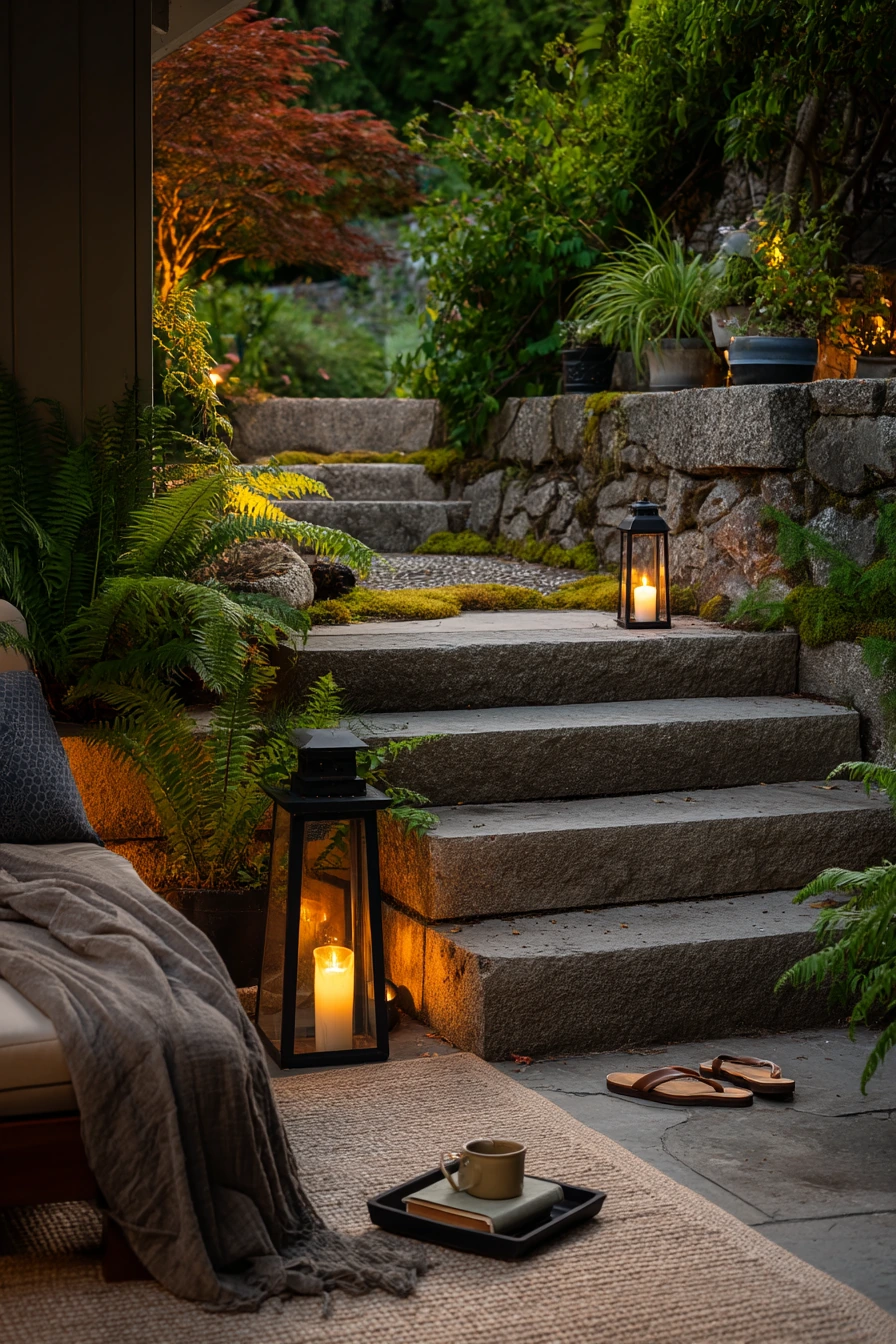
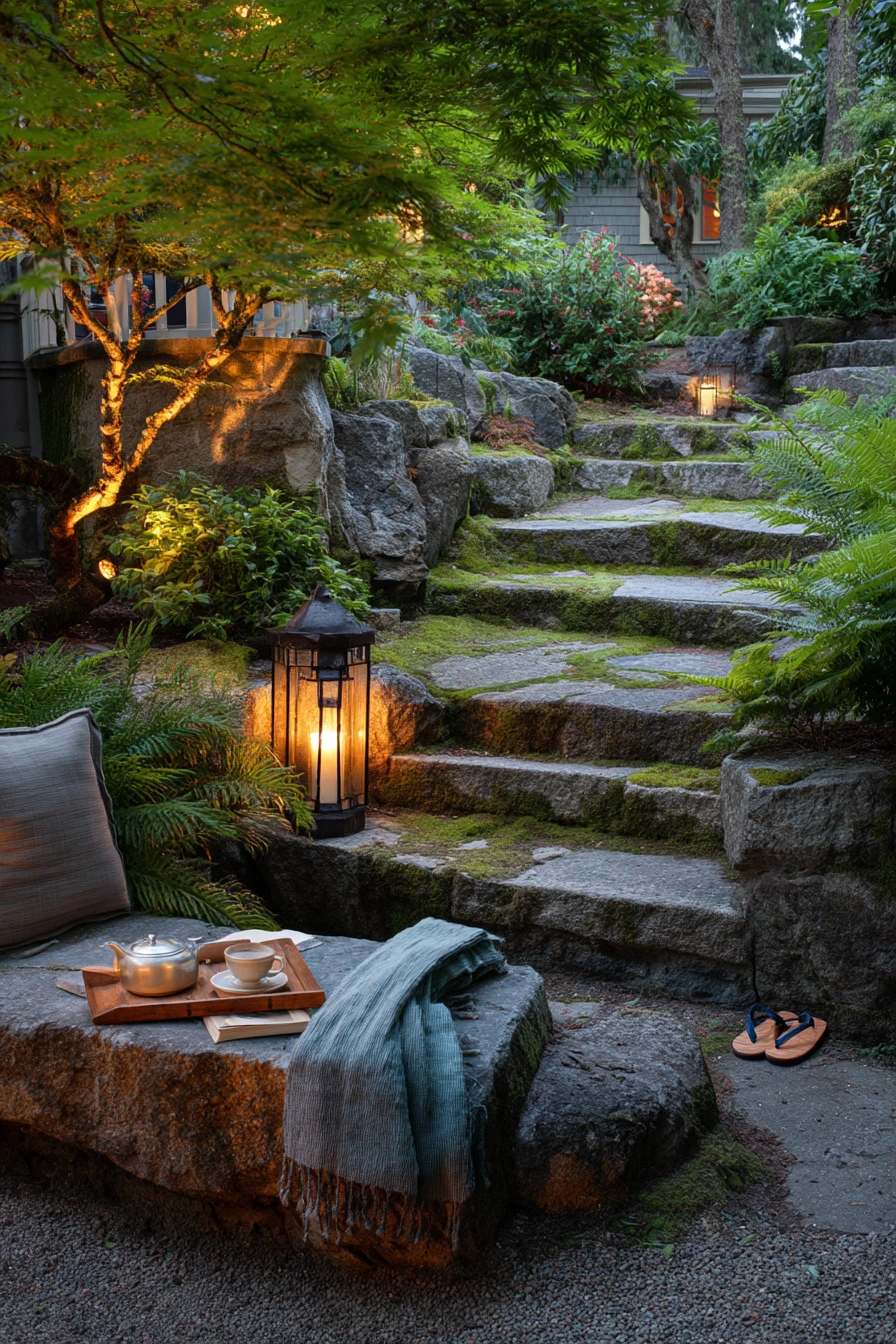
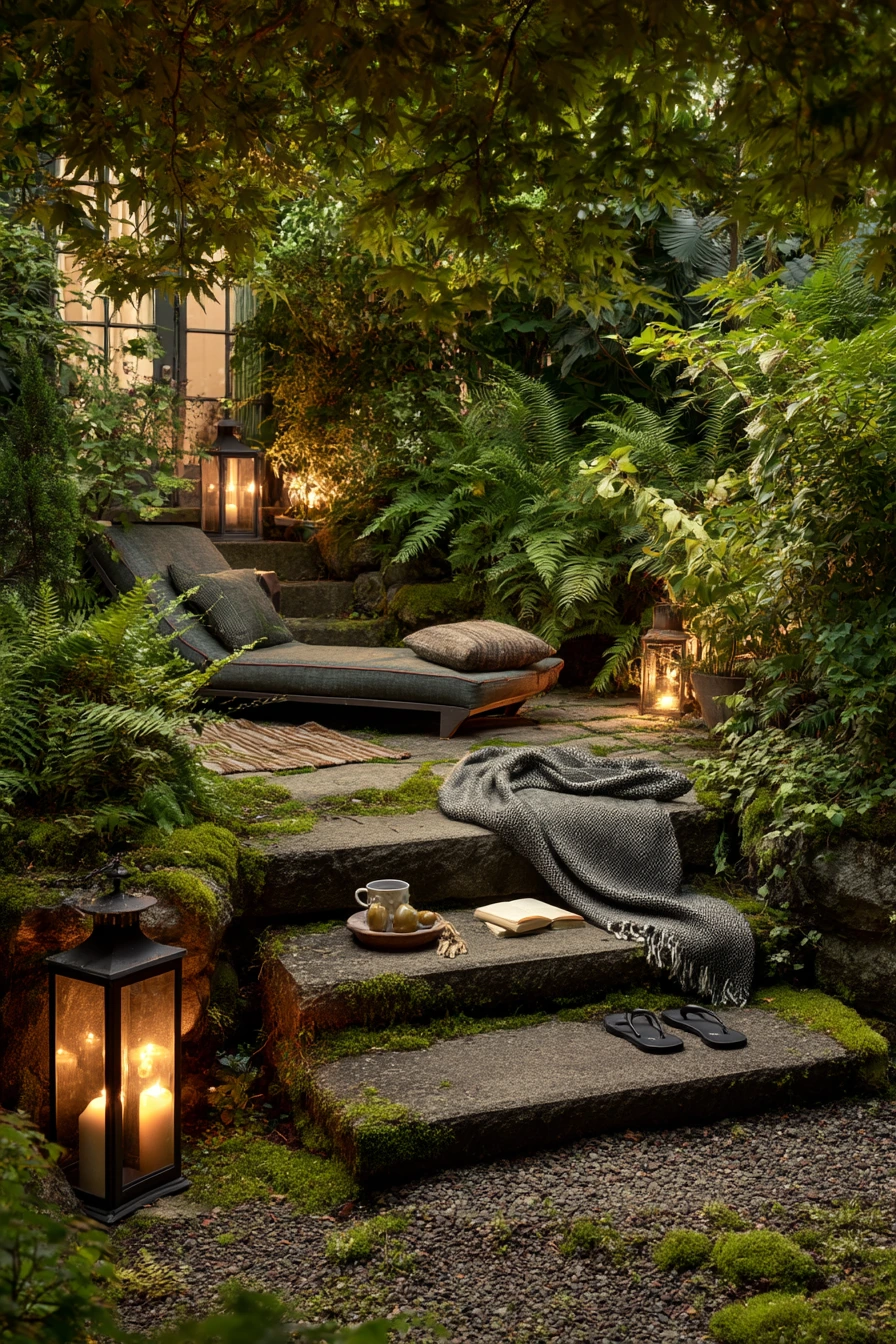
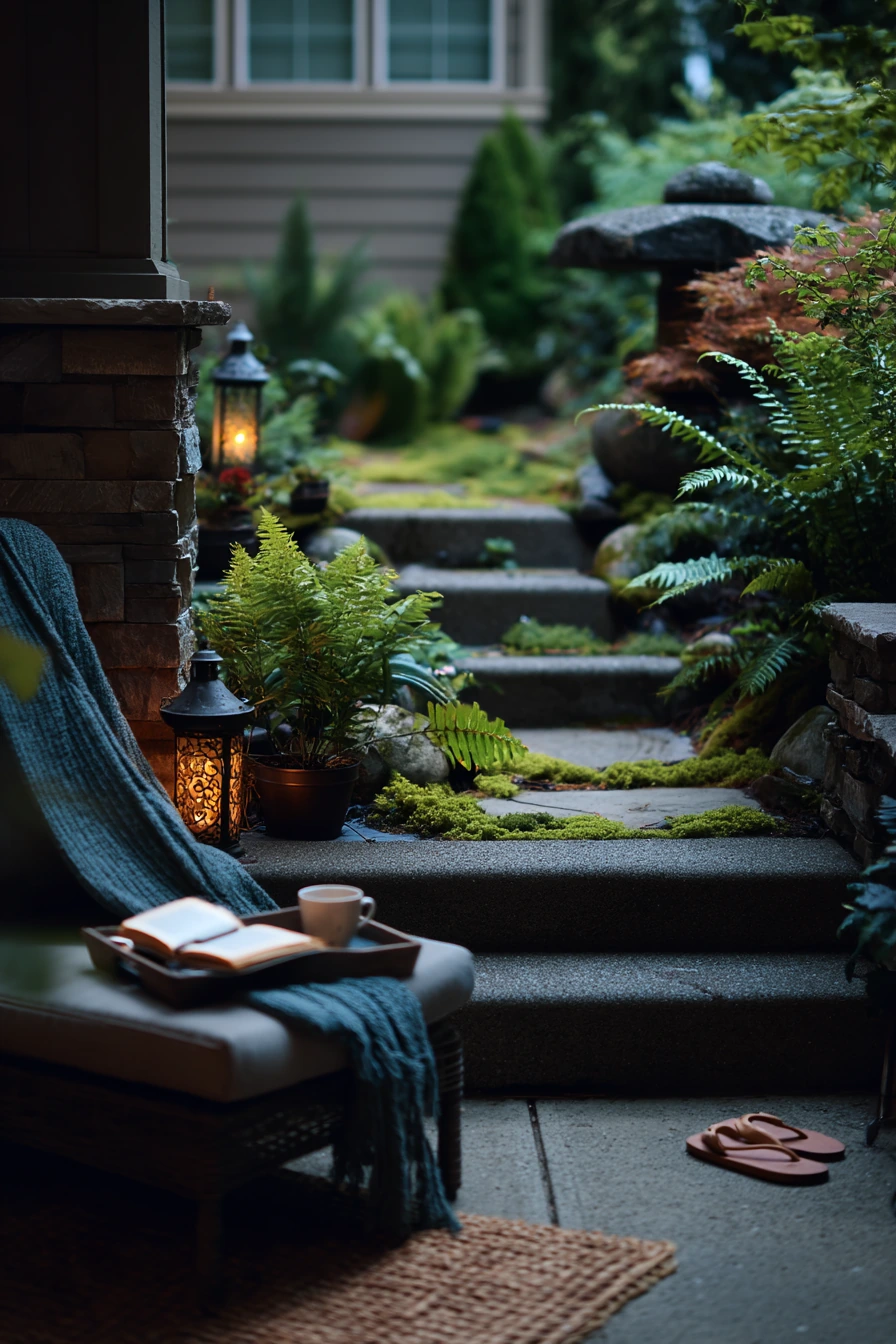
A tranquil patio can use tiered garden ideas to create a calm view from a lounge chair. Low stone risers make gentle steps for plants like moss, ferns, and a Japanese maple. This style works best when you keep the palette simple and let textures do the work.
Place the Japanese maple as the main shape, then layer ferns around it for soft volume. Moss can fill cracks and edges where soil stays damp. Add lanterns for a warm glow, and keep a small tray table for a tea cup and a book. Details like a slightly rumpled throw and a sandal near the step make the space feel used, not staged.
Style for dusk, since mixed lamp light and fading daylight is when this patio feels most inviting. Use one or two stone types, and keep riser heights low so the area feels safe and easy to walk. Add hidden drainage under moss areas so they stay healthy instead of slimy. If you want sound, a small bubbling bowl fountain fits the scale better than a big water feature.
- Use shade-tolerant ferns suited to your climate zone.
- Keep moss moist, but avoid constant puddles by adding gravel under it.
- Place lanterns at different heights to match the tiered look.
- Choose outdoor fabrics for throws so they handle dew.
- Trim the maple lightly to keep a clear view across the patio.
Pro Design Tip: Hide the riser edges with low moss and small stones so the tiers feel natural and soft from a seated angle.
Budget Considerations: Stone risers and Japanese maples vary in price; use local stone or concrete step blocks, and start with a smaller maple that can grow over time.
Tiered garden ideas help you turn tight spaces into useful planting areas, from a sloped backyard with cedar levels to a balcony with plant stands and railing boxes.
Pick a tier style that matches your space, then choose plants that fit the light and watering needs at each level. Keep paths reachable, edges clean, and storage simple so the garden stays easy to use.
Once the structure is set, small styling choices like matching pots, repeated plant colors, and tidy tool zones will make the tiers feel finished.
FAQ
What is the easiest way to build a tiered garden on a slope? Start with one low retaining tier, set the first row below grade, add drainage gravel, then build the next level after you see how water flows.
How tall should each tier be? Many home gardens work well with 12 to 18 inch tiers because they are stable and easy to plant and weed.
What plants work best for tiered garden beds? Use drought-tolerant herbs and shrubs on higher tiers, and thirstier plants on lower tiers. Mix in trailing plants like strawberries or nasturtiums to soften edges.
Do tiered gardens need drainage? Yes. Add gravel behind retaining walls, use well-draining soil mixes in planters, and avoid trapping water against wood.
Can I do tiered garden ideas on a balcony? Yes. Use plant stands, stacked planters, and railing boxes, and keep weight limits and drip control in mind.
How do I keep a tiered garden low maintenance? Limit your plant palette, mulch well, use drip irrigation when possible, and keep access paths so you can weed quickly.