
Victorian kitchen ideas work best when they feel real, not staged. The goal is a space with period character, warm materials, and daily-life function. Think shaker cabinets, marble or zellige tile, brass taps, and floors that can handle busy mornings.
In this guide, you will see 10 Victorian kitchen styles based on common homes like terrace houses, narrow city flats, and townhouses. Each section includes simple styling steps you can copy, plus a pro design tip and a budget note.
You will also get practical layout and storage ideas for small kitchens, rentals, and family homes. Use these ideas to plan a refresh, choose finishes, and make your kitchen feel collected over time.
If you are coming from Pinterest, save the looks you like, then use the checklists to shop your own space. Small changes like cabinet paint, rail storage, and the right lighting can make a big difference.
1 1. Family Victorian Kitchen with Breakfast Nook
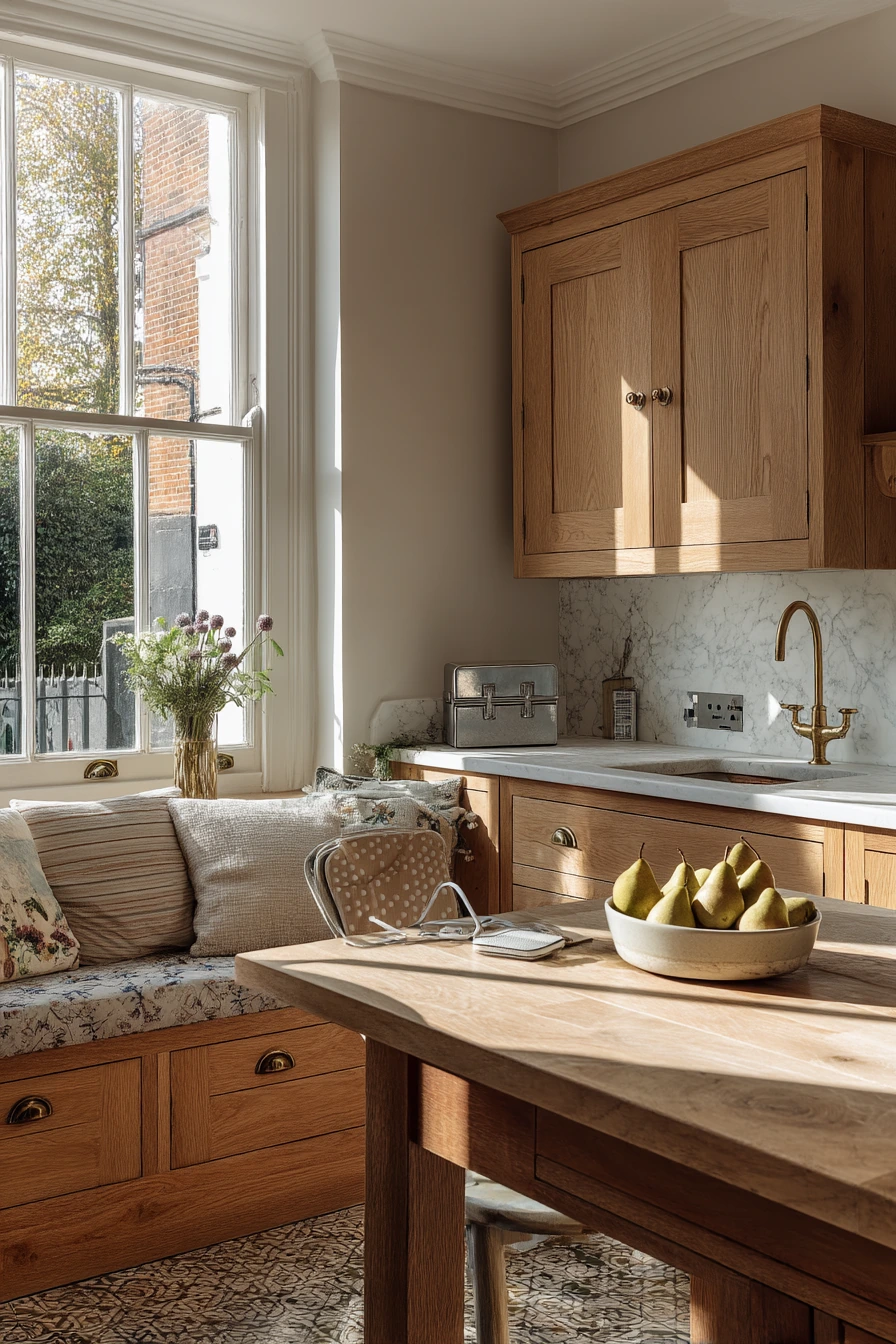
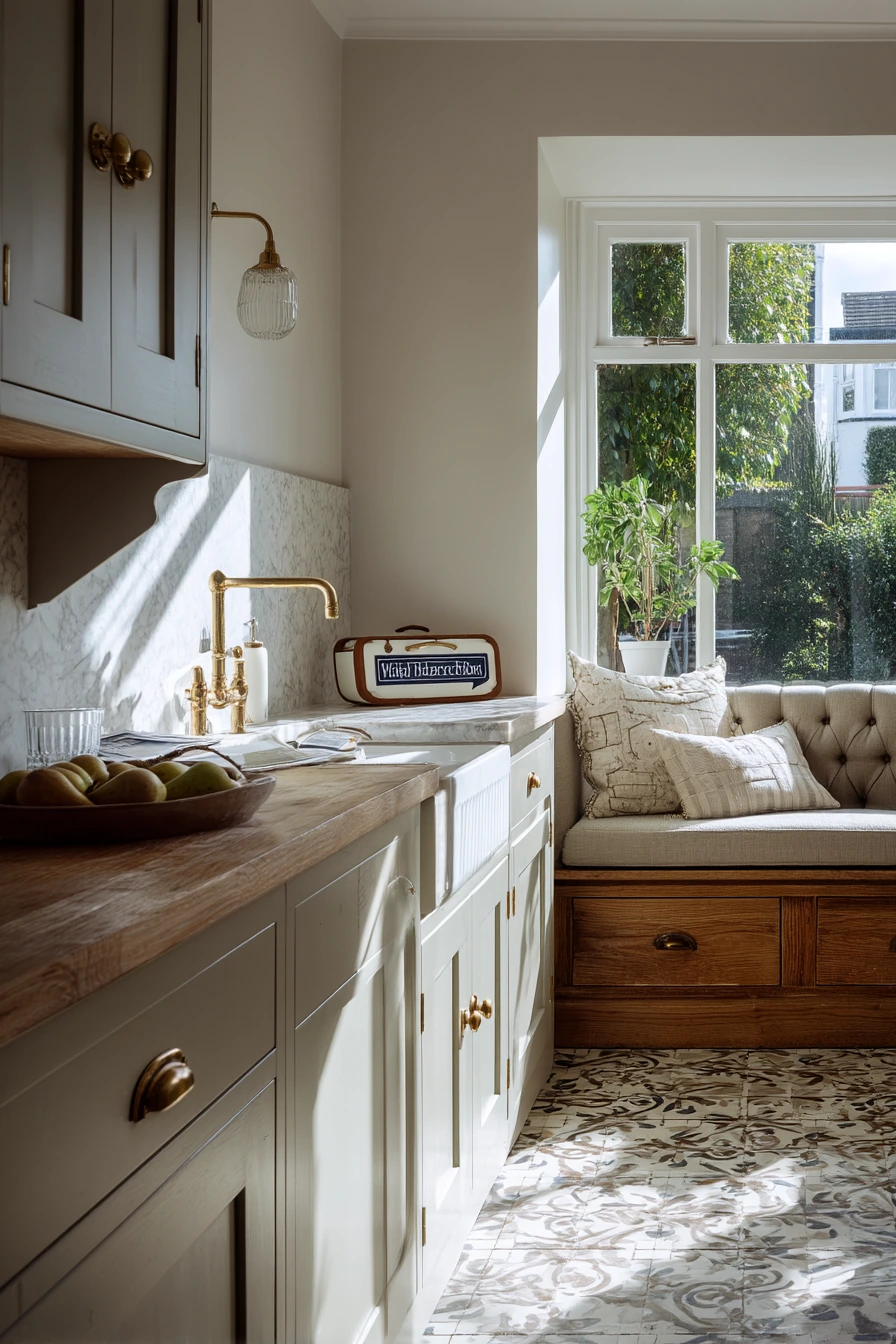
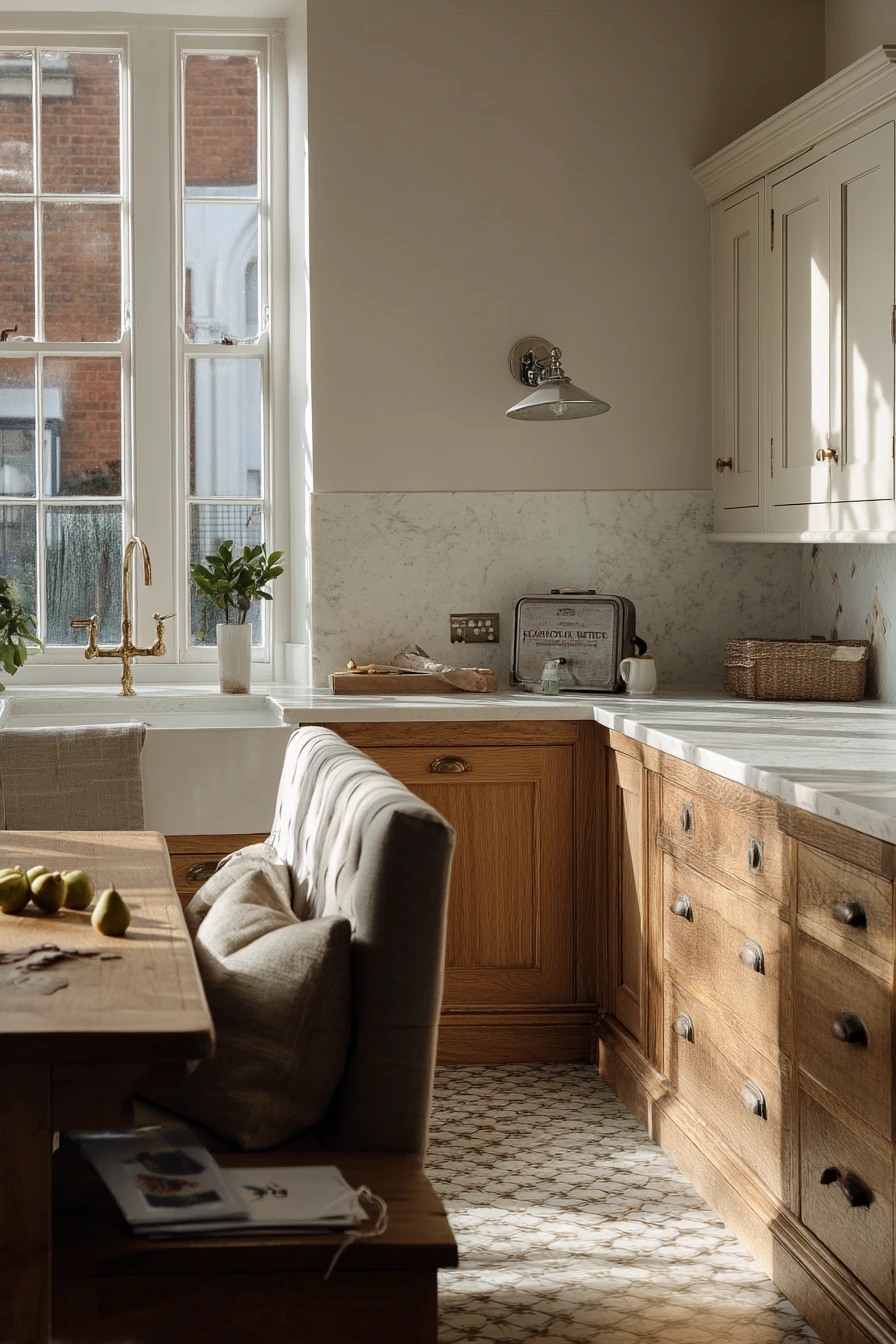
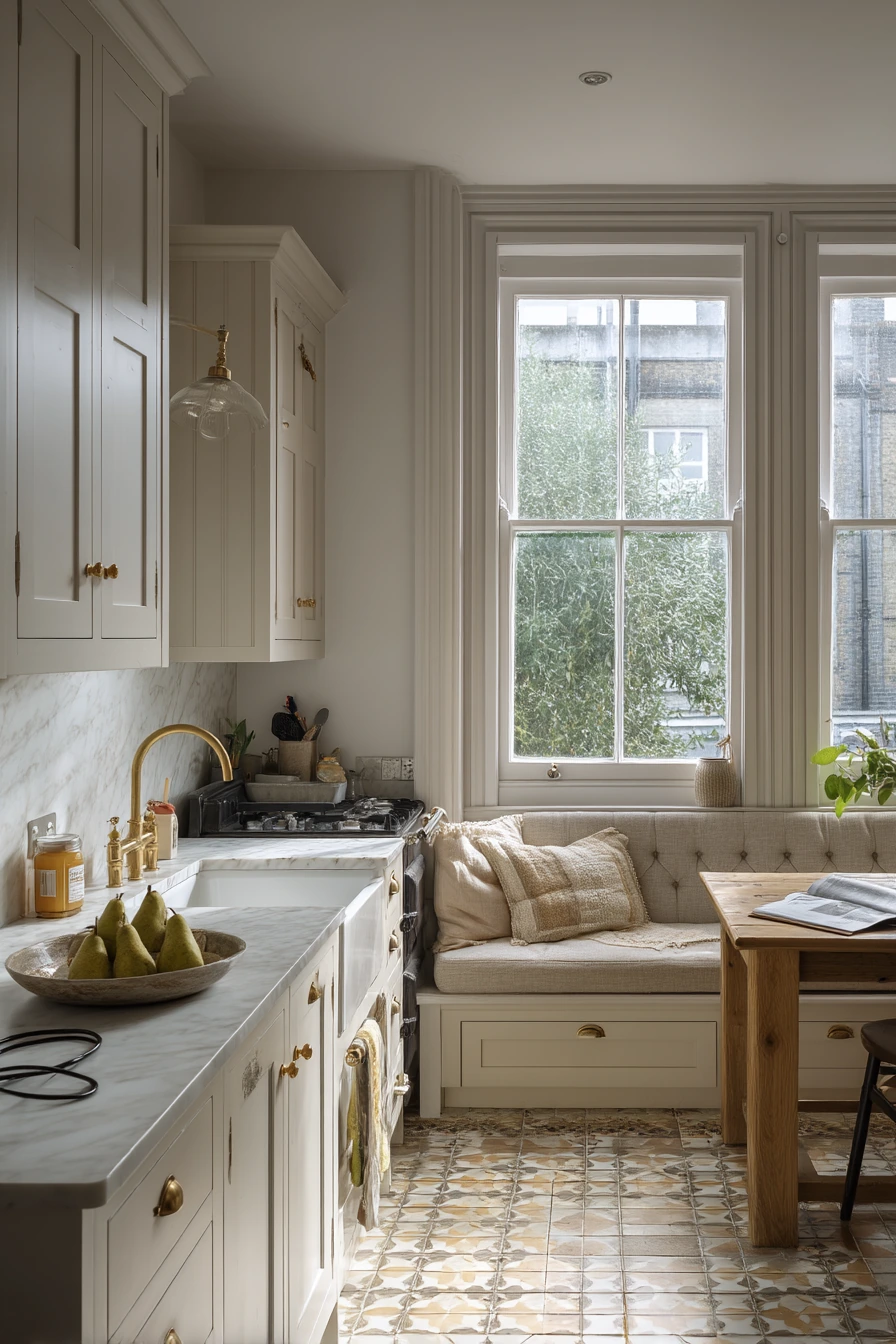
A lived-in Victorian kitchen should look warm and workable, like a true family morning. Start with painted shaker cabinets and a warm oak island to balance each other. Add a marble splashback for a clean surface that still feels classic with the right veining.
Make the room feel used, not messy. A built-in breakfast nook with a tufted banquette is perfect for quick meals and homework. Small real-life details help the look, like a fruit bowl with fresh pears, a school lunchbox near the door, and a slightly wrinkled linen cushion on the bench.
Finish with antique brass taps and patterned encaustic tile floor to bring in Victorian character. Keep counters mostly clear, but allow one or two everyday items, like a charging cable or a kettle, so the space feels honest. Soft window light and natural shadows make oak, marble, and brass feel more relaxed.
- Choose a shaker door with simple rails, not a busy profile.
- Use encaustic-style tile in two or three colors to avoid visual noise.
- Place a wooden bowl of fruit at the island to add warmth.
- Add one vintage-style sconce near the nook for evening light.
- Pick a wipeable banquette fabric that still looks like linen.
Pro Design Tip: Use two finishes that repeat around the room, like oak (island and shelves) and antique brass (tap and handles), so the mix feels planned.
Budget Considerations: Marble can be pricey; a marble-look quartz splashback gives the same clean Victorian feel with easier care.
2 2. Small Victorian Kitchen in a City Flat
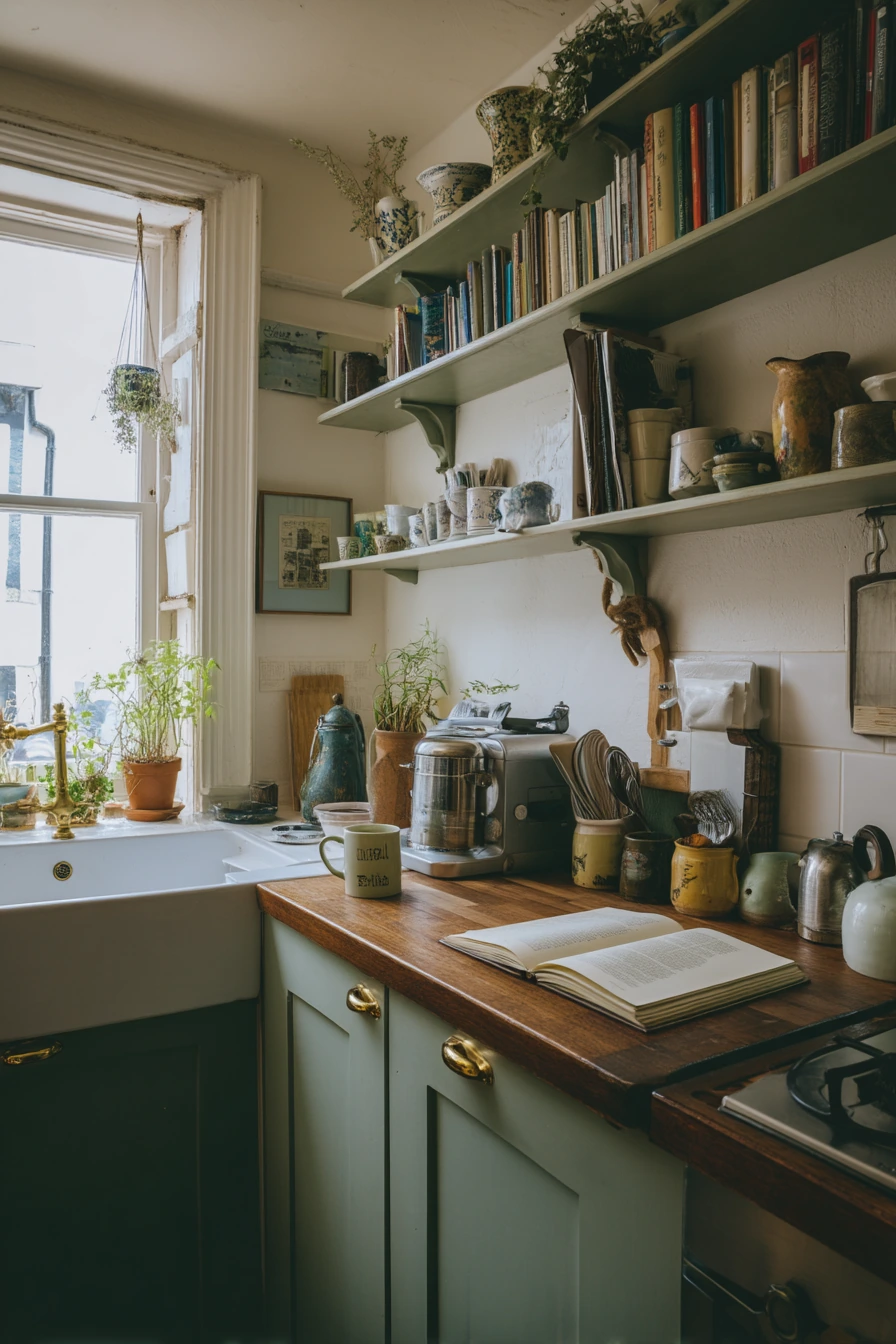
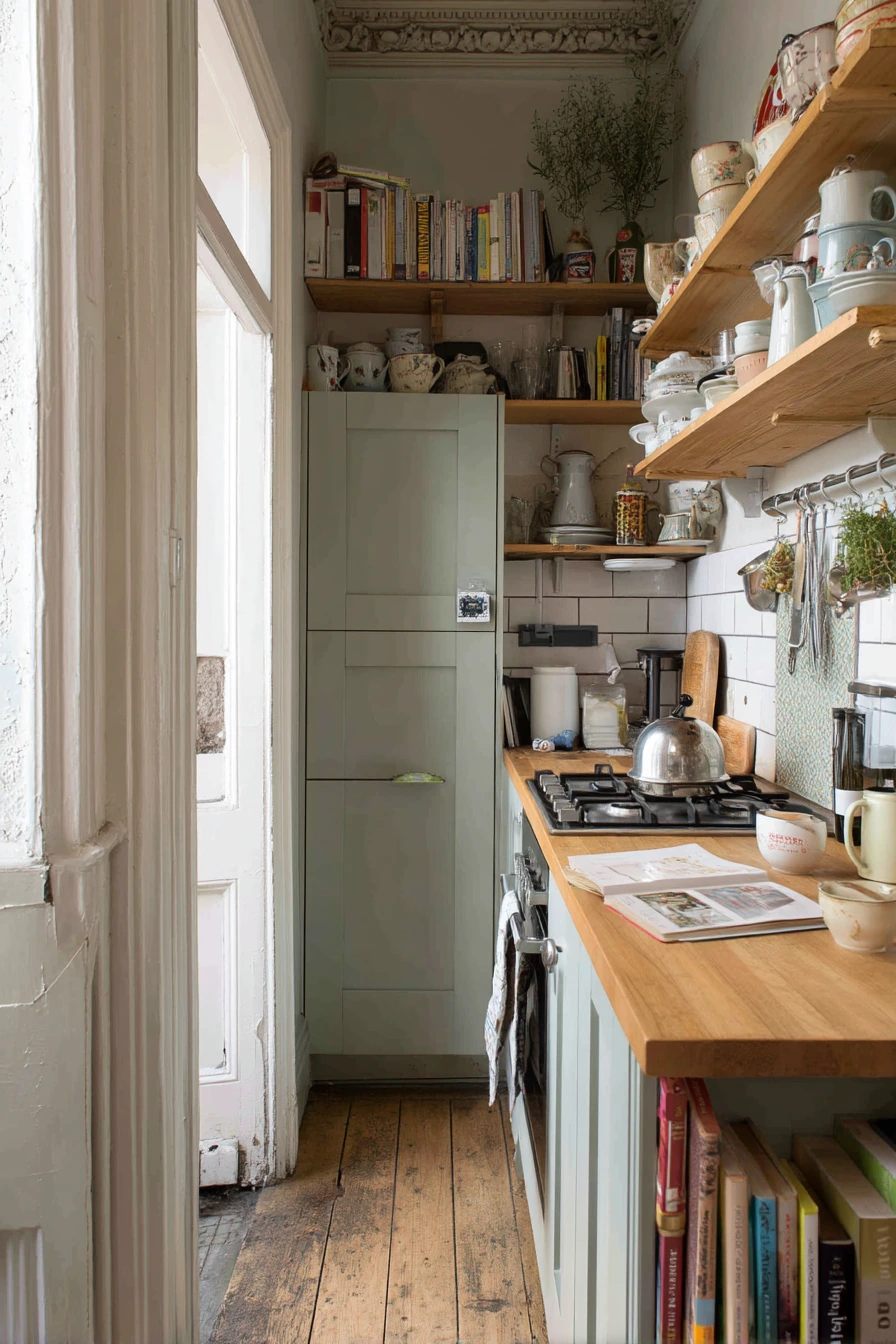
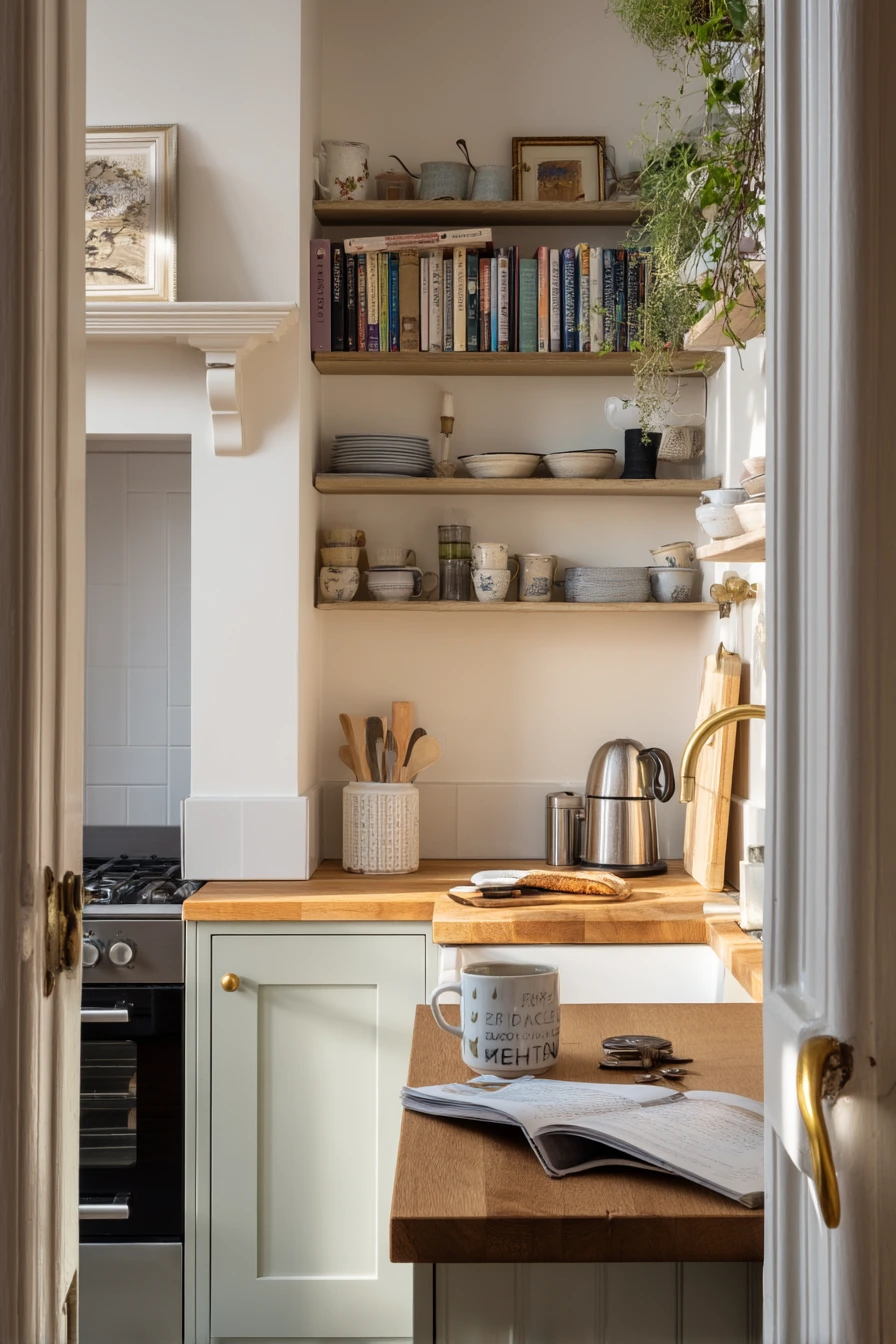
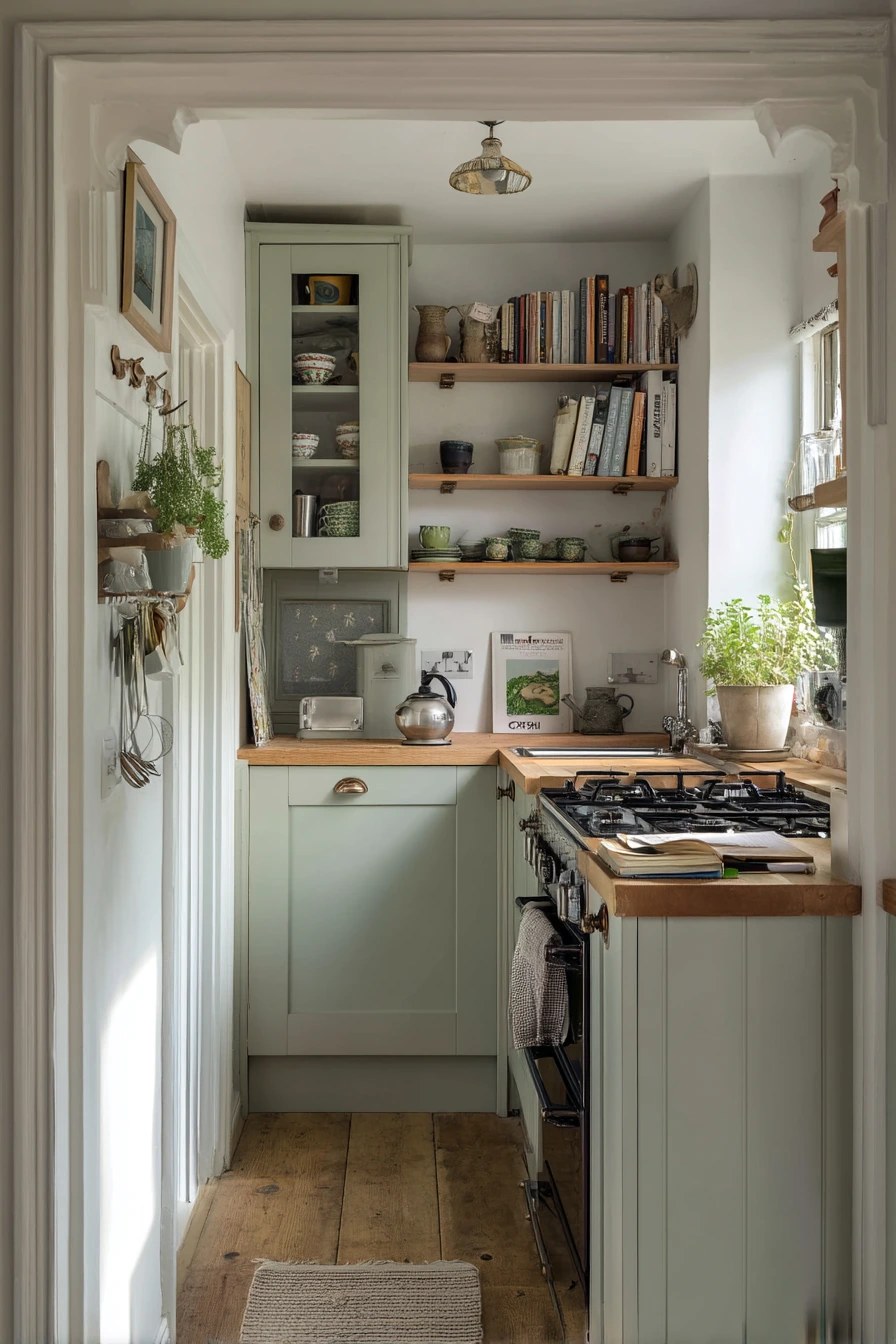
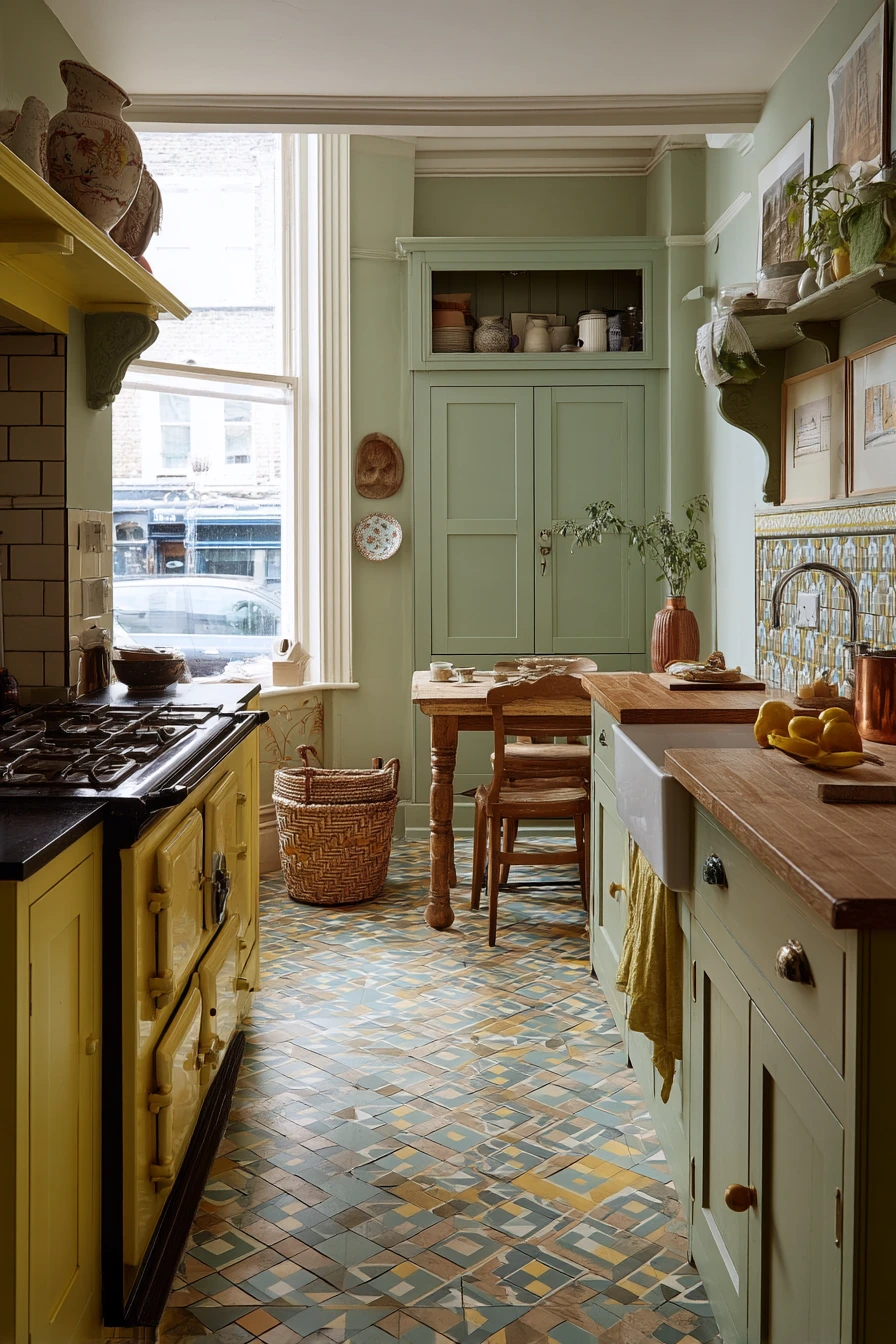
Compact Victorian kitchen ideas need light color, smart storage, and clear work zones. Sage lower cabinets keep the room grounded while open shelves keep the top half airy. In a narrow flat, a slim butcher-block prep counter can become your main landing spot for groceries and quick meals.
Keep period details where you can, like an original cornice. Then add practical vintage touches, such as an unlacquered brass rail for utensils and towels. A kettle warming on the hob, a cookbook propped open, and keys by the sink all fit the rhythm of a small space that gets used all day.
To avoid clutter, limit what lives on the open shelves. Mismatched ceramics look charming when they share one common link, like a cream base color or a similar shape. Add hanging herbs for life and scent, and leave one mug half-finished on a coaster to keep the scene relaxed and snug.
- Keep upper storage open, but group items in sets of three or five.
- Use a brass rail to move tools off the counter.
- Add a narrow cutting board that can stand upright to save space.
- Choose a small runner that can be washed often.
- Use one tray by the sink for keys and hand cream.
Pro Design Tip: In a galley layout, keep the prep zone between sink and hob, even if it is only a slim butcher-block strip.
Budget Considerations: Open shelves are cheaper than upper cabinets; use strong brackets and paint the wall behind them to look finished.
3 3. Heritage Kitchen with Modern Function
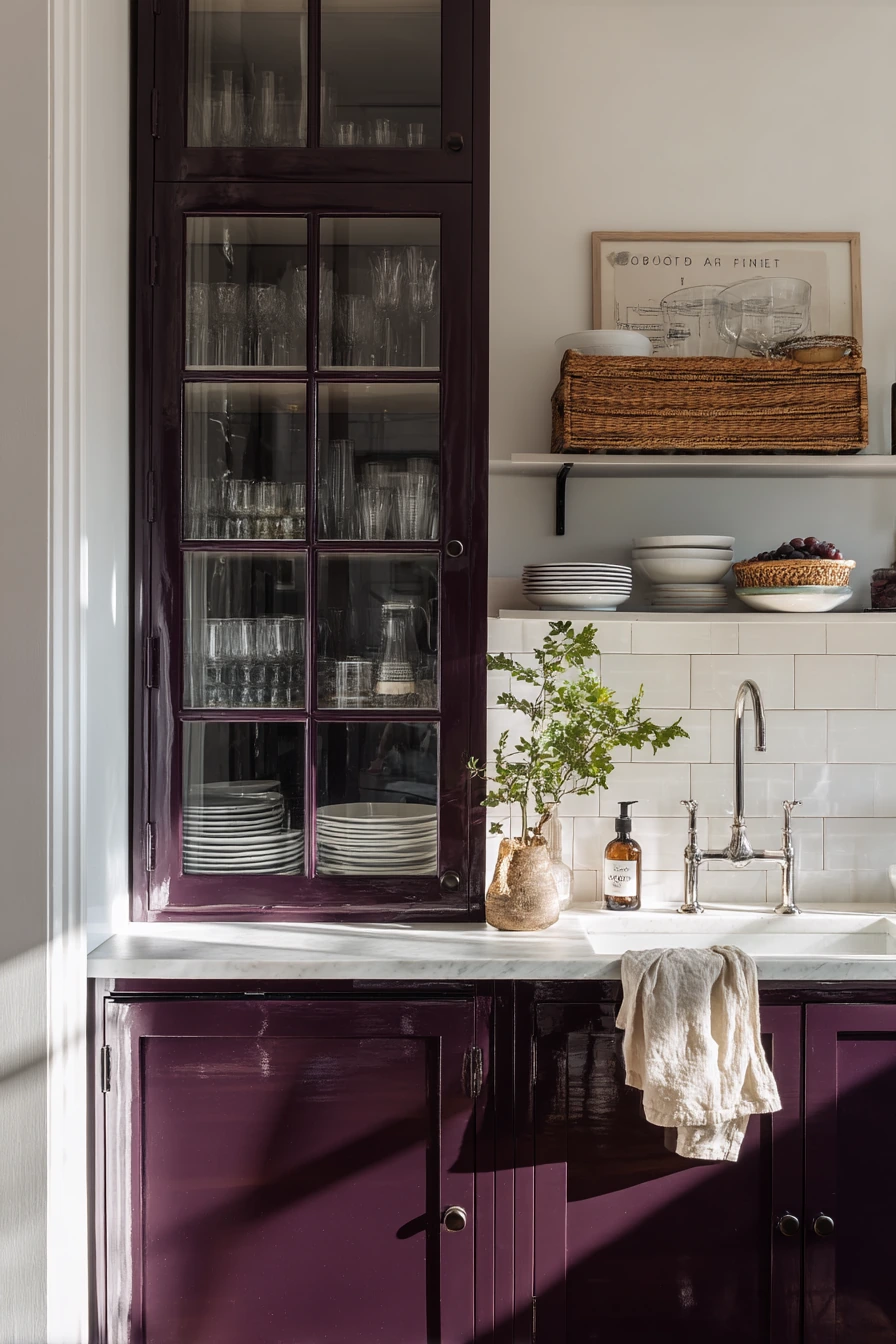
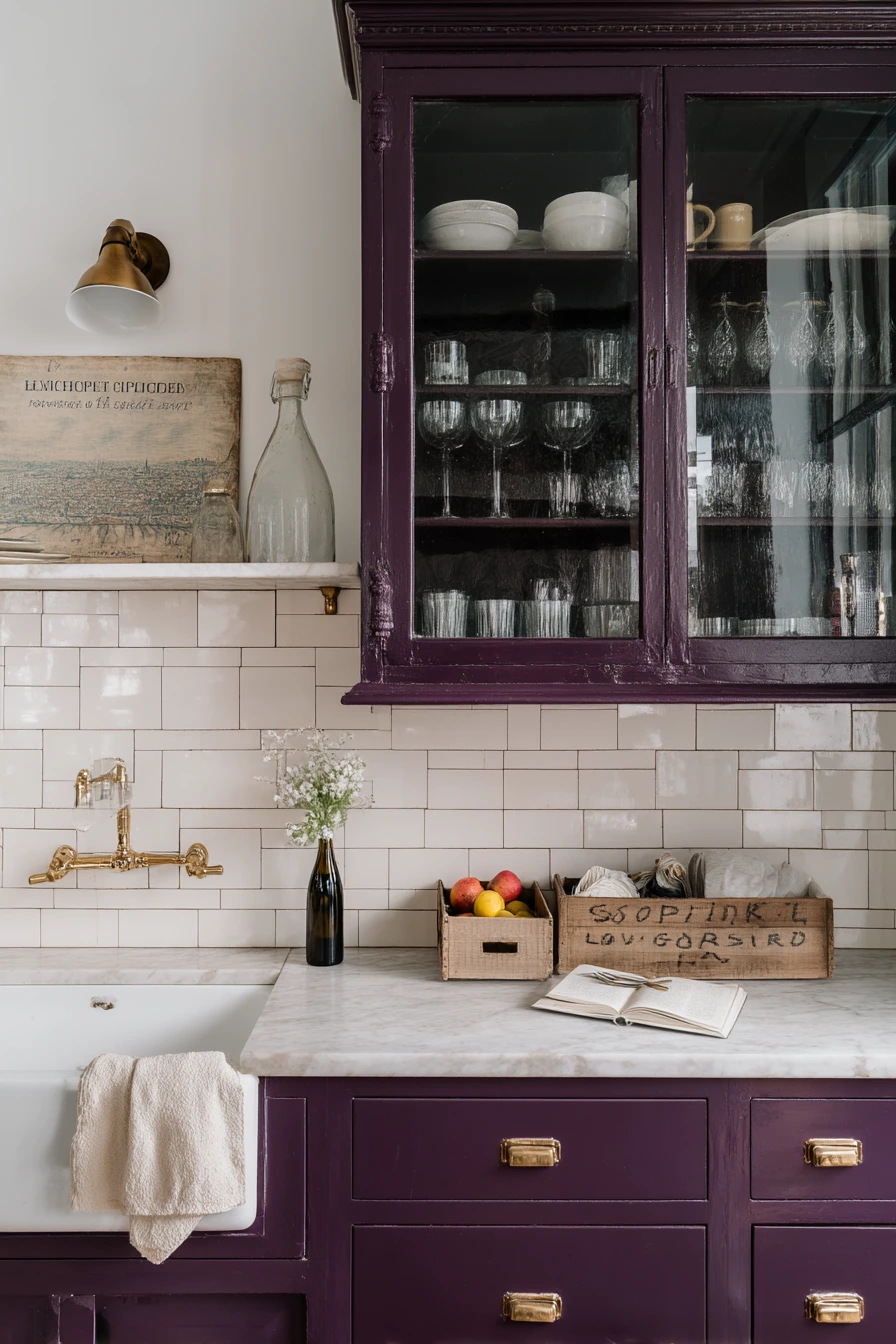
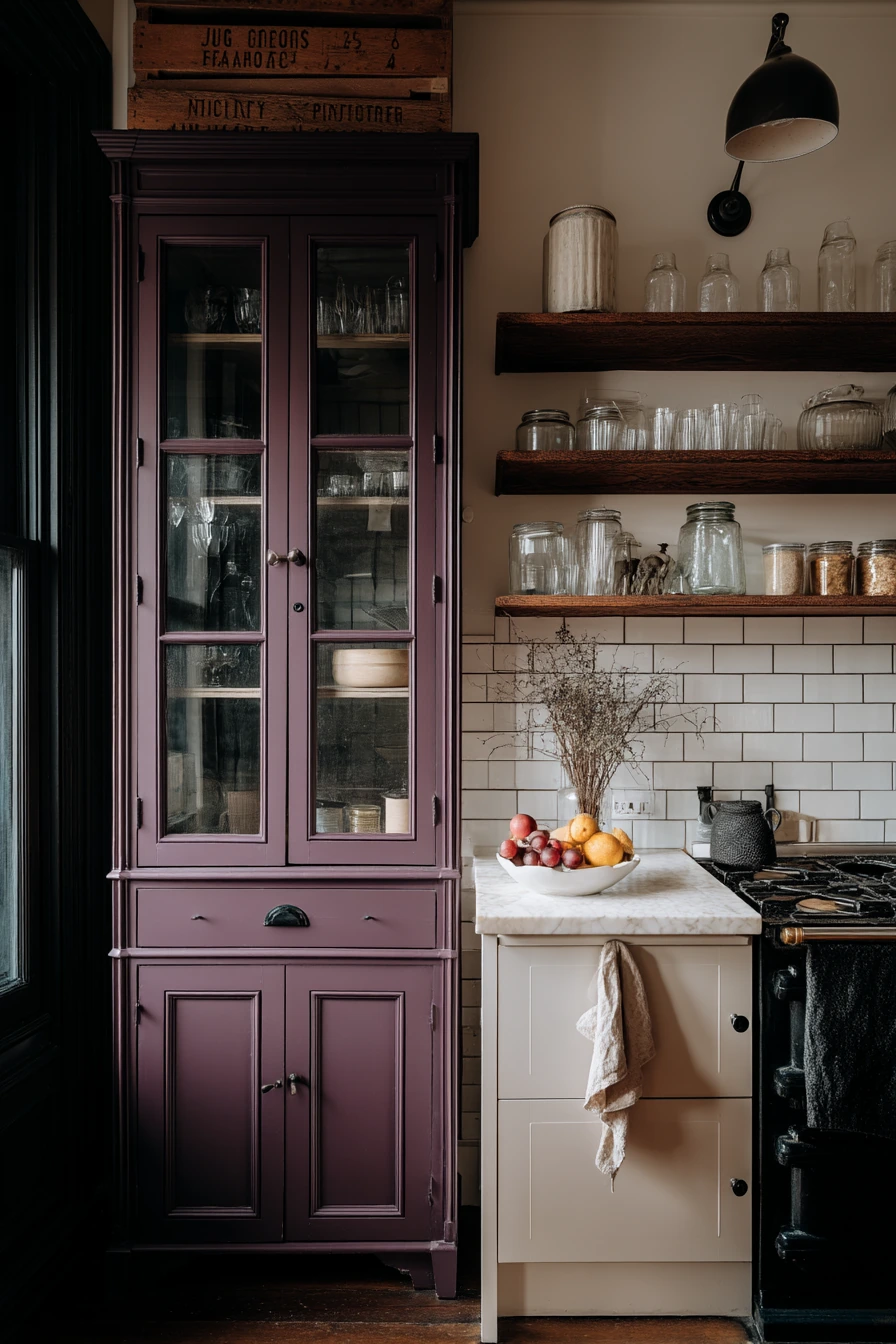
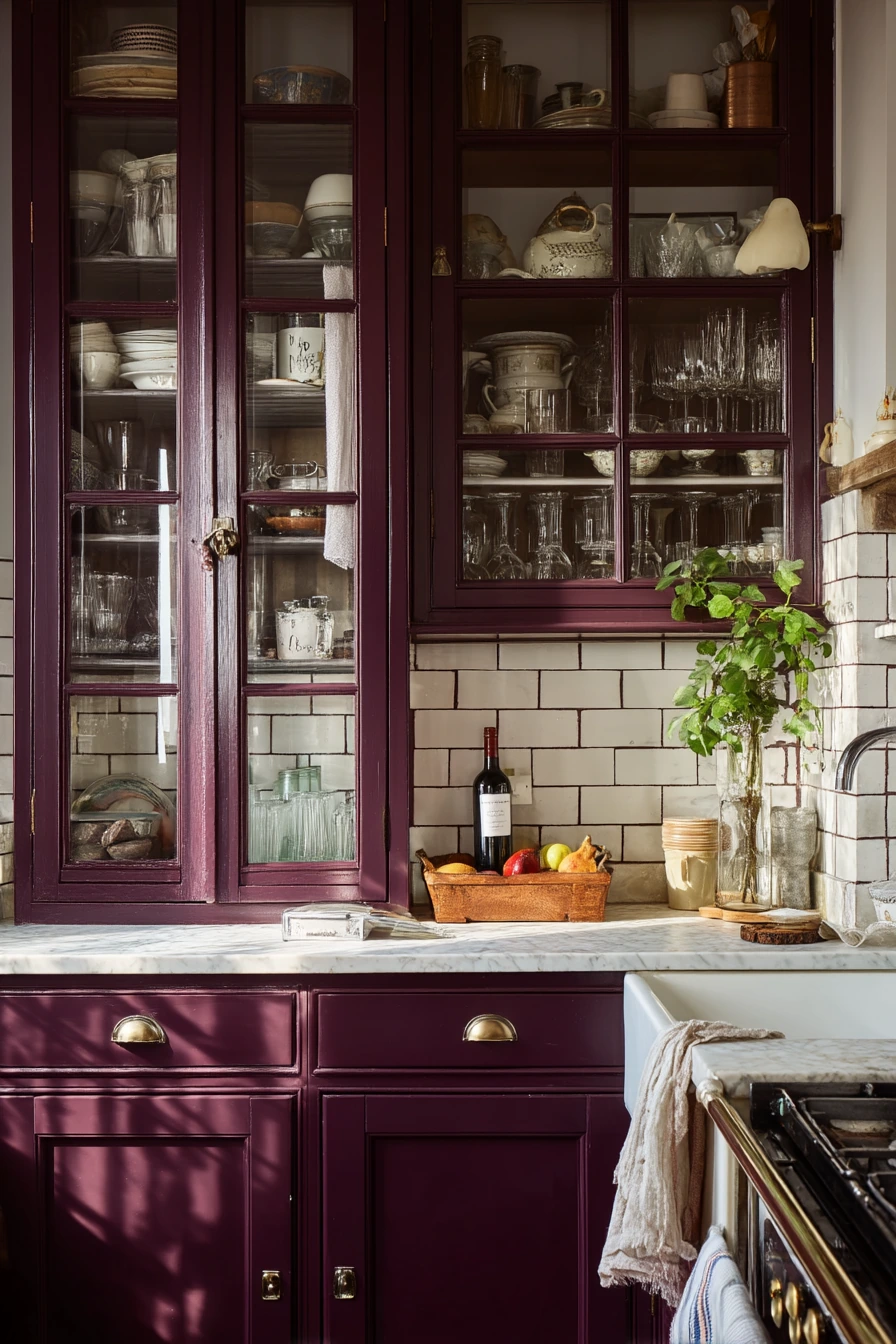
A restored Victorian kitchen can feel refined without becoming too formal. A deep plum pantry door adds color in a controlled way, especially when most surfaces stay light. Pair it with white zellige tile for a handmade look that suits older homes and brings soft texture to the wall.
Polished stone counters and a cast-iron range create a solid center for cooking. Add a glass-front cabinet with vintage glassware so storage becomes part of the decor. Keep the styling grounded with real items, like a handwritten grocery list, a fruit crate on the floor, and a linen tea towel draped loosely by the sink.
Lighting makes this look work. Use warm practical lamp glow in the evening, then let soft morning light show the tile variation and stone shine. Small moments, like a wine glass drying on a rack, make the kitchen feel like a place where people cook often, not just pose for photos.
- Use plum on one door or one run of cabinetry, not every wall.
- Choose zellige with slight variation so it looks authentic.
- Mix closed storage with one glass-front piece for balance.
- Keep one paper list or recipe on a clip for daily use.
- Add a small counter lamp to soften overhead lighting.
Pro Design Tip: Repeat the plum color in a small way, like a rug stripe or a cookbook spine, so the accent feels intentional.
Budget Considerations: Zellige can add up; use it only behind the range or sink and use a simpler tile elsewhere.
4 4. Budget-Friendly Victorian Rental Refresh
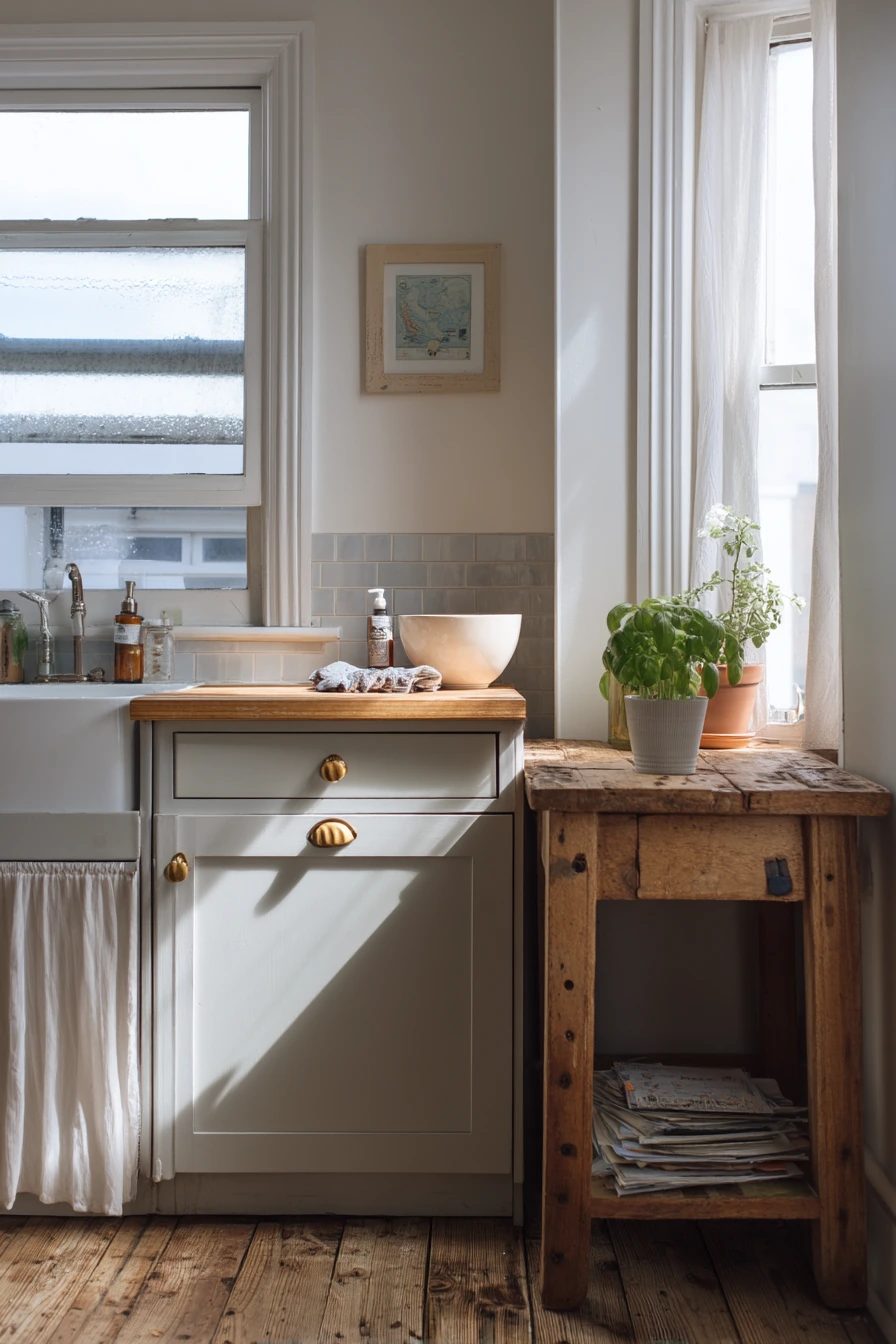
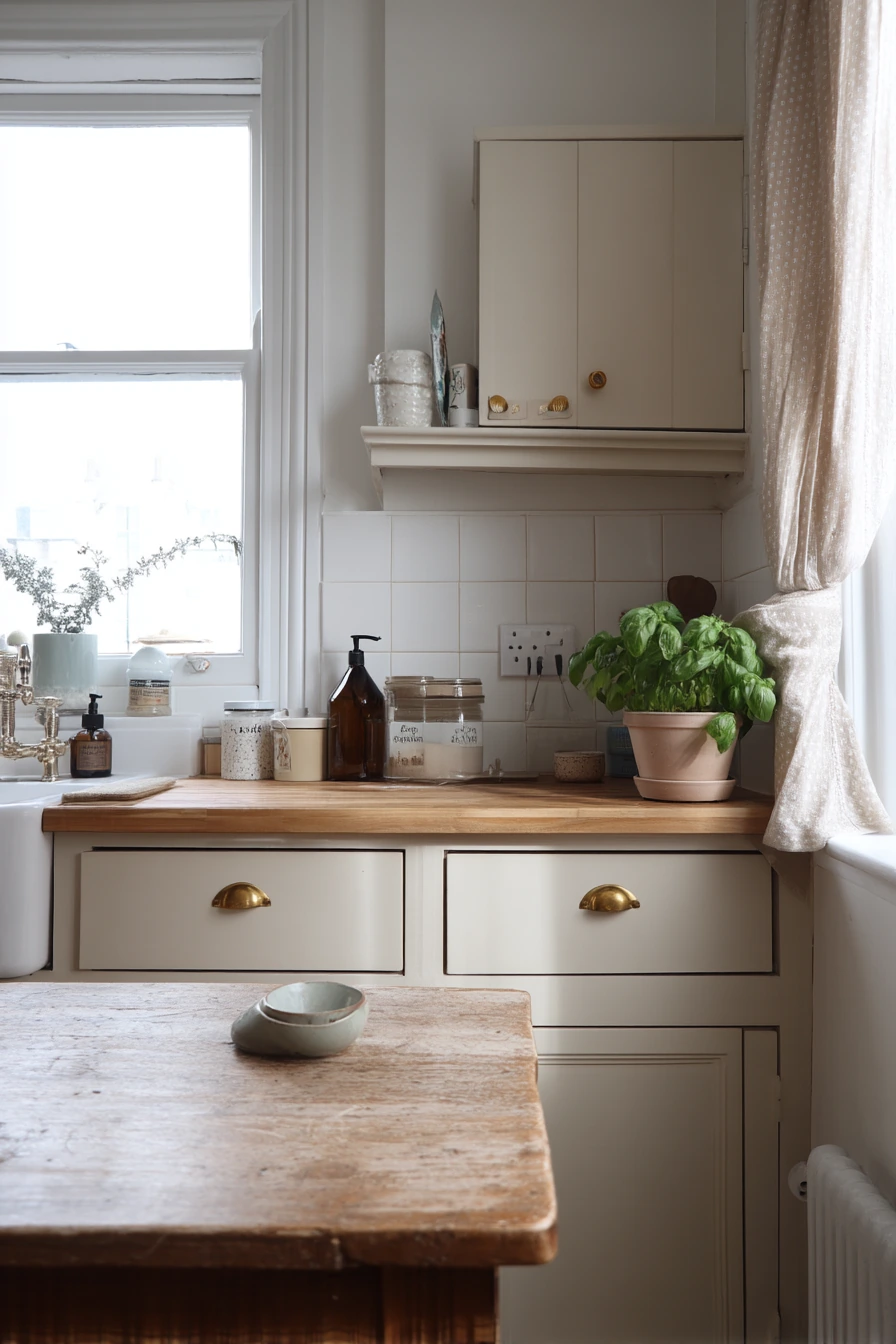
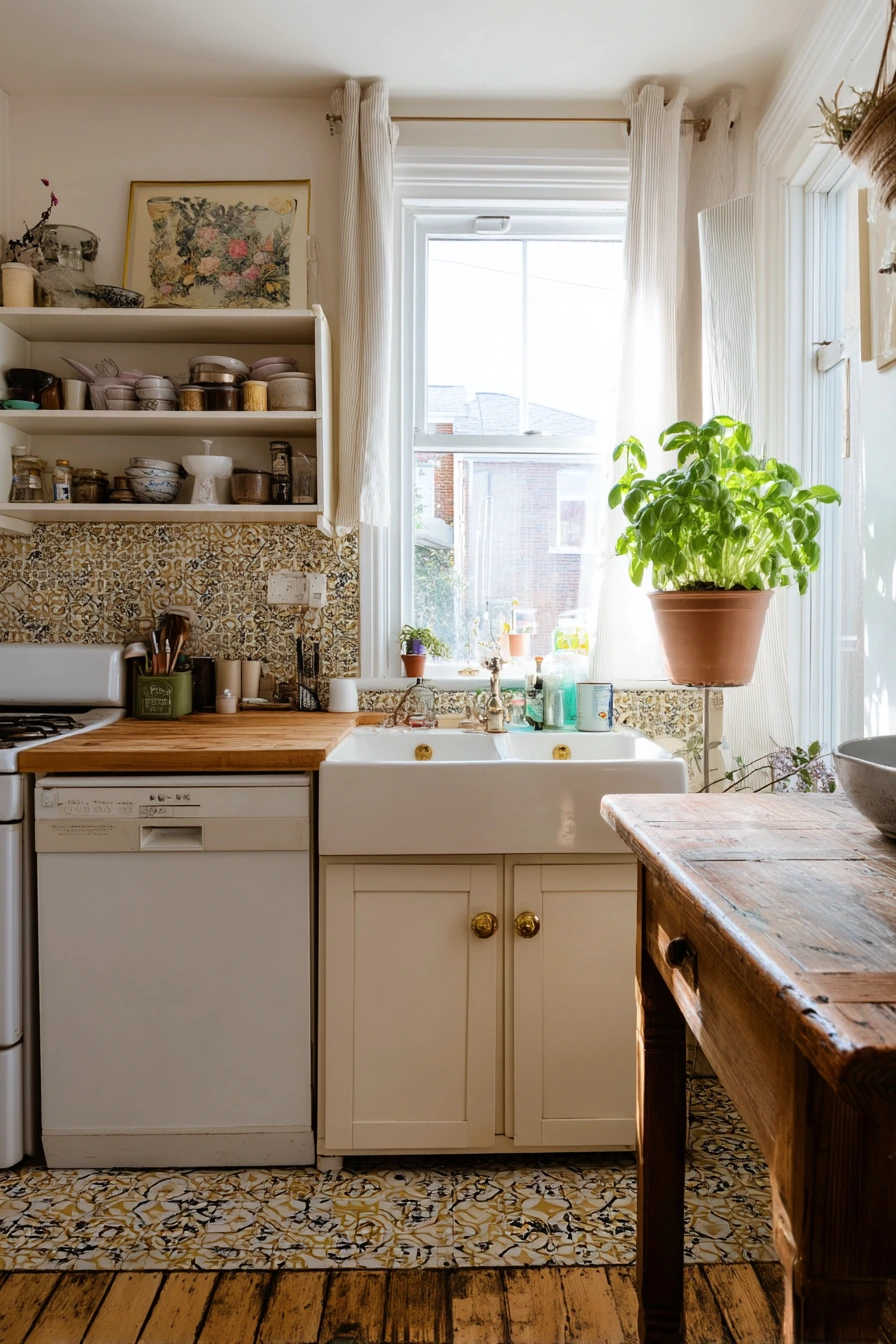
Rental-friendly Victorian kitchen ideas focus on changes you can reverse. Peel-and-stick tile accents can mimic classic patterns without grout work. Painted cupboards can also be a big upgrade if your lease allows it, especially when you choose a soft historic shade that suits older trim.
Hardware makes a fast difference. Brass knob upgrades give that Victorian touch even on basic doors. Add a secondhand pine table for warmth and a simple work spot, then use a curtain under the sink to hide cleaning supplies without permanent carpentry.
Keep the look real and resourceful. A potted basil by the window adds color and purpose. Let everyday items show, like a dish soap bottle, stacked mail, and a chipped mixing bowl that still gets used. Soft window light across worn floorboards helps the room feel calm, even if the finishes are not perfect.
- Use peel-and-stick tile as a small backsplash panel behind the sink.
- Swap knobs and keep the old ones in a labeled bag.
- Add a tension rod and fabric for an under-sink curtain.
- Use a thrifted tray to gather mail and keys in one spot.
- Place a washable mat near the sink to protect floors.
Pro Design Tip: Choose one metal finish for all visible updates, like brass knobs and a matching rail, so the rental changes look cohesive.
Budget Considerations: Peel-and-stick tiles vary in quality; buy one pack first and test removal in a hidden corner.
5 5. Victorian Kitchen for a Young Couple Who Cook
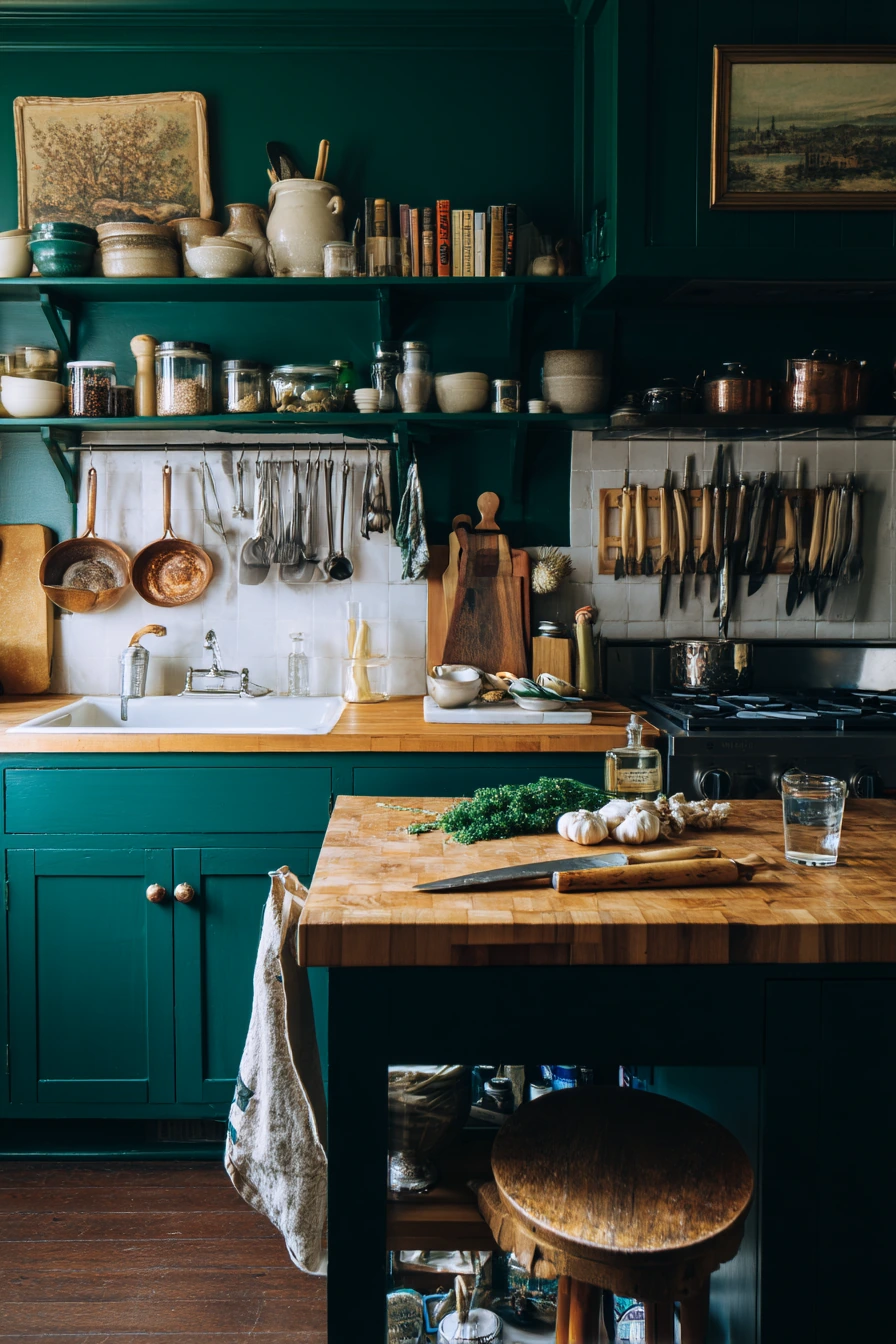
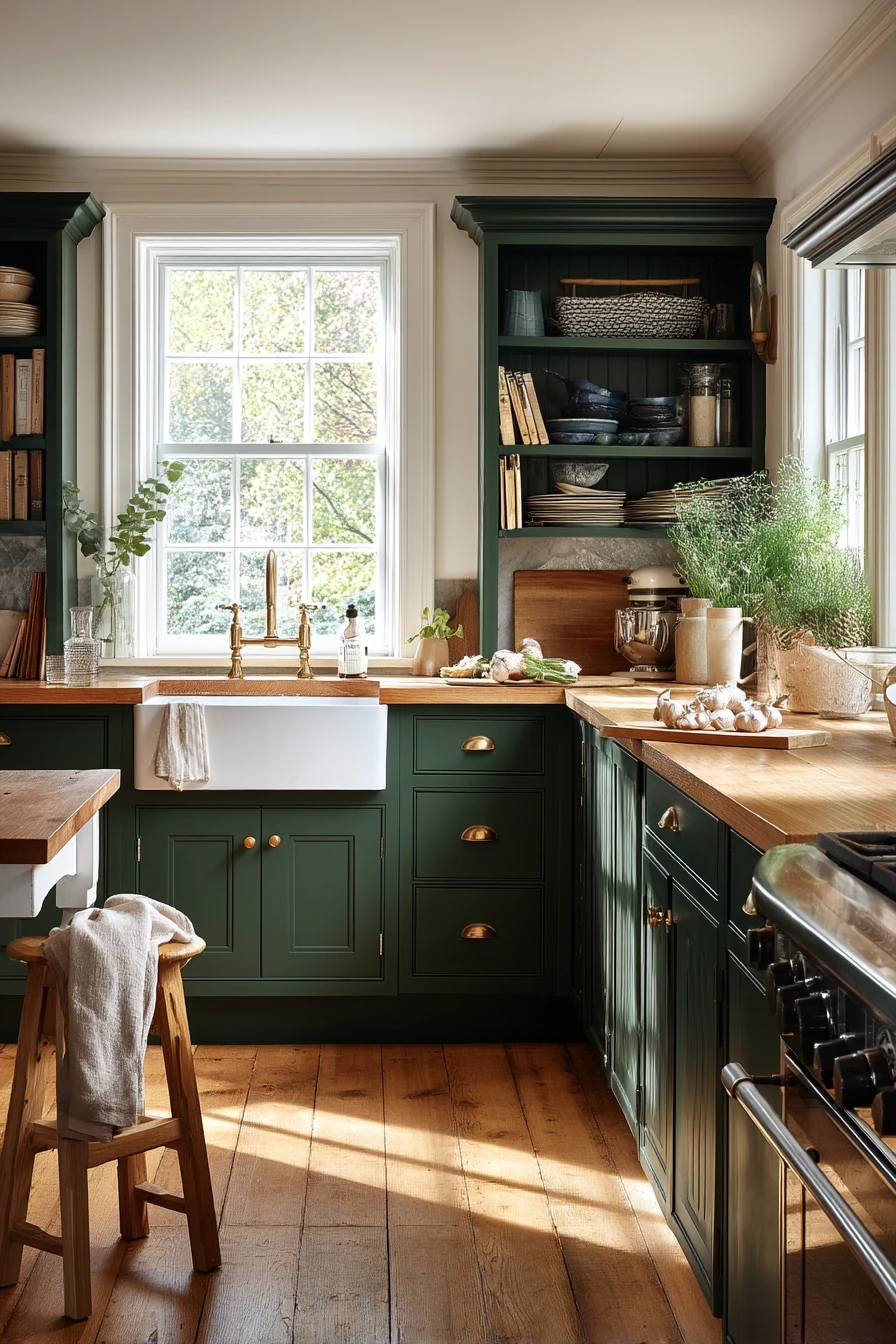
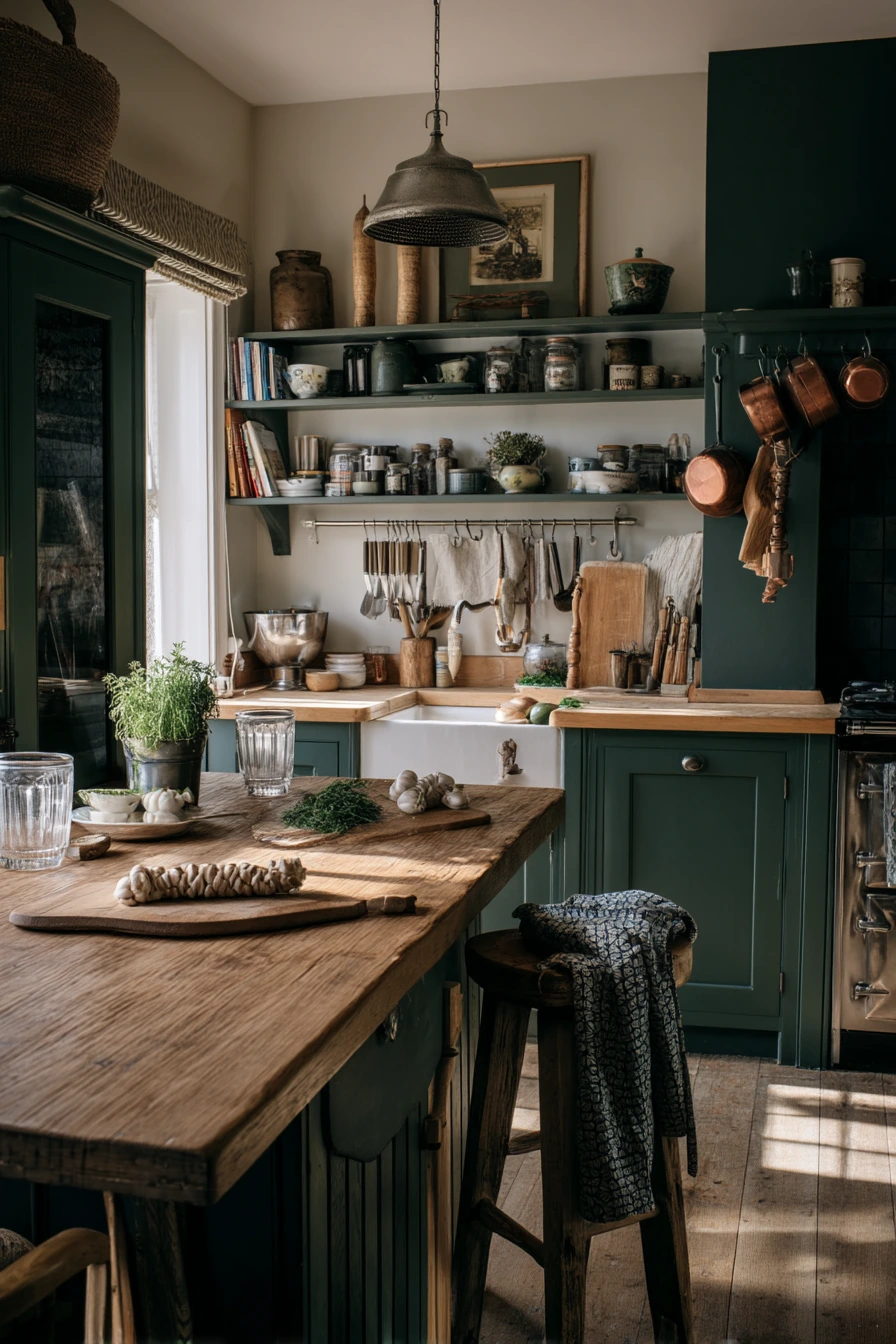
A working Victorian kitchen for weeknight cooking needs clear surfaces and tools close by. Forest-green cabinets bring depth and hide scuffs better than very light paint. An apron-front sink fits the era and handles big pots, while a butcher-block island adds a forgiving prep surface.
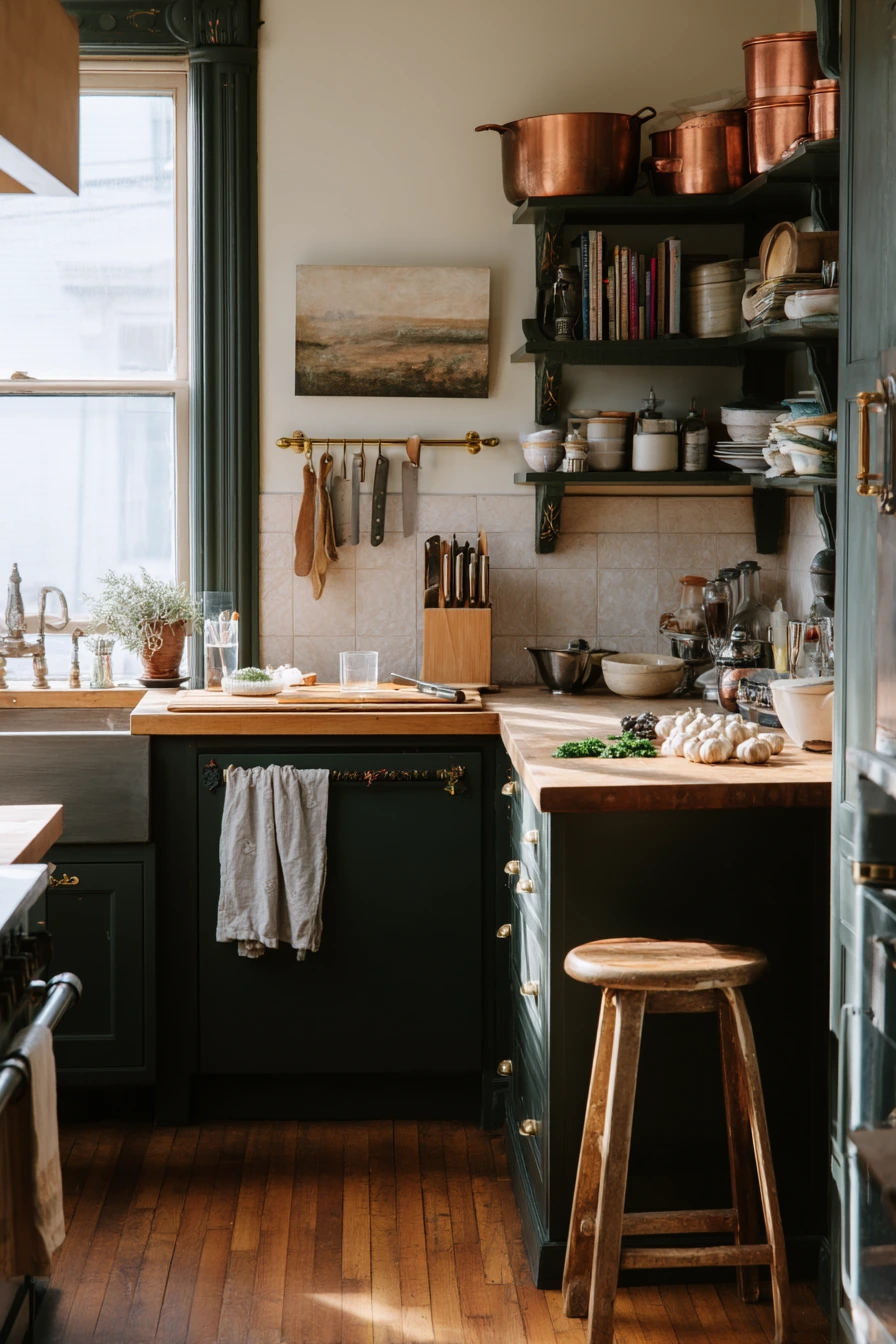
Open shelving can work if it is curated. Store spices and cookbooks you use daily, not every jar you own. A copper pan rack is both storage and decor, and it makes sense in a kitchen where cooking is the main event. Style with useful items like a garlic braid, a chopping board with herbs, and a water glass near the stove.
Keep it tactile and easy. Let a tea towel rest over a stool and keep one small bowl on the counter for scraps. Natural daylight is best, but add one warm lamp or under-shelf light so the space stays inviting after work. The result should feel culinary and lived-in, not precious.
- Keep one drawer just for prep tools like knives and peelers.
- Hang copper pans only if you use them often.
- Store spices in matching jars to reduce visual clutter.
- Add a cutting board that lives on the island full-time.
- Use a small lidded bin for compost or scraps.
Pro Design Tip: Place the island so you can move between sink, range, and fridge in a tight triangle, even in an older layout.
Budget Considerations: A real apron-front sink can cost more; a similar deep single-bowl sink can give the same practical benefit for less.
6 6. Moody Victorian Kitchen at Dusk
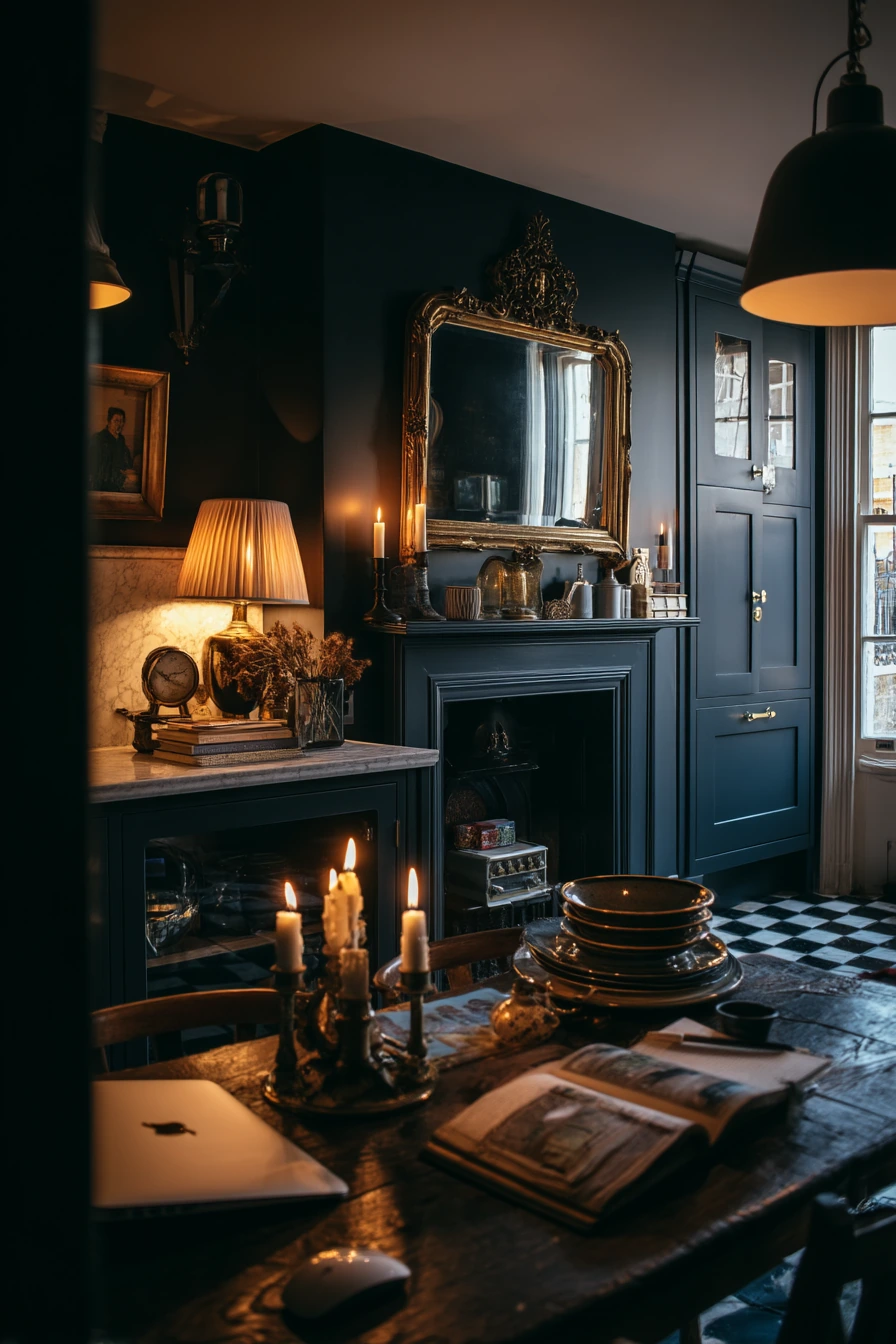
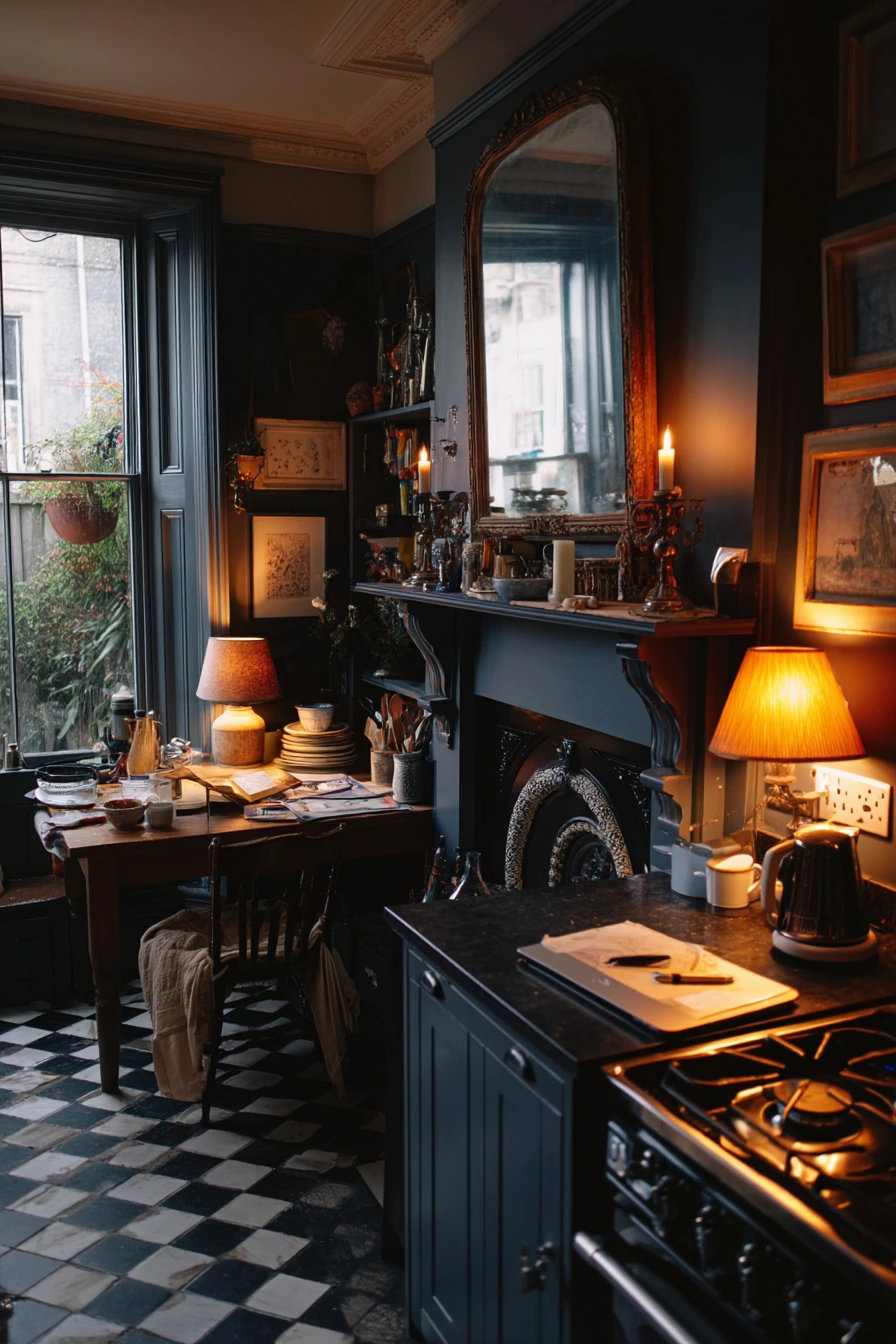
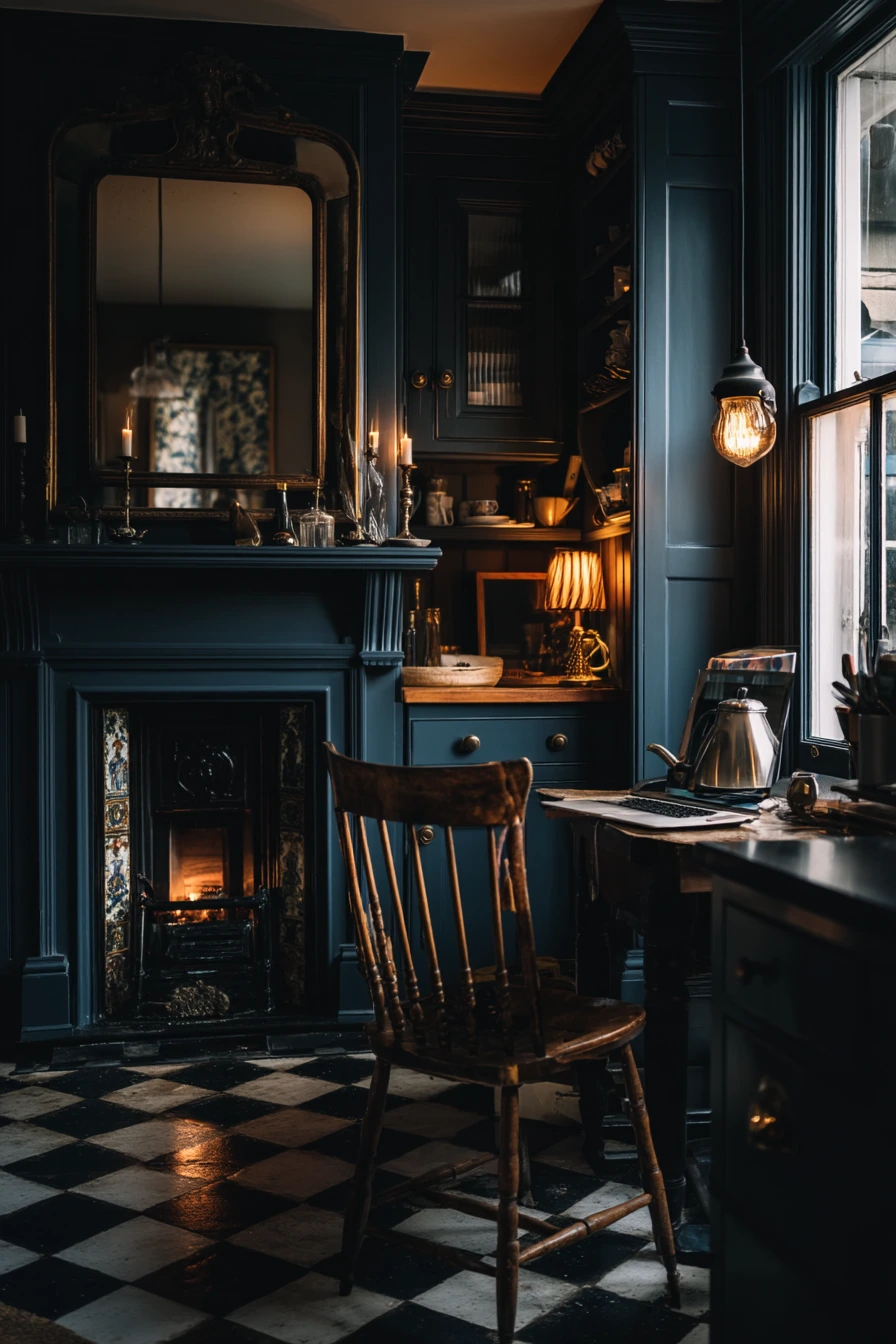
Moody Victorian kitchen ideas are perfect for narrow townhouses where light is limited. Inky blue cabinets add richness and make the room feel settled. Pair them with a black-and-white checkerboard floor for a classic look that still reads as period-friendly.
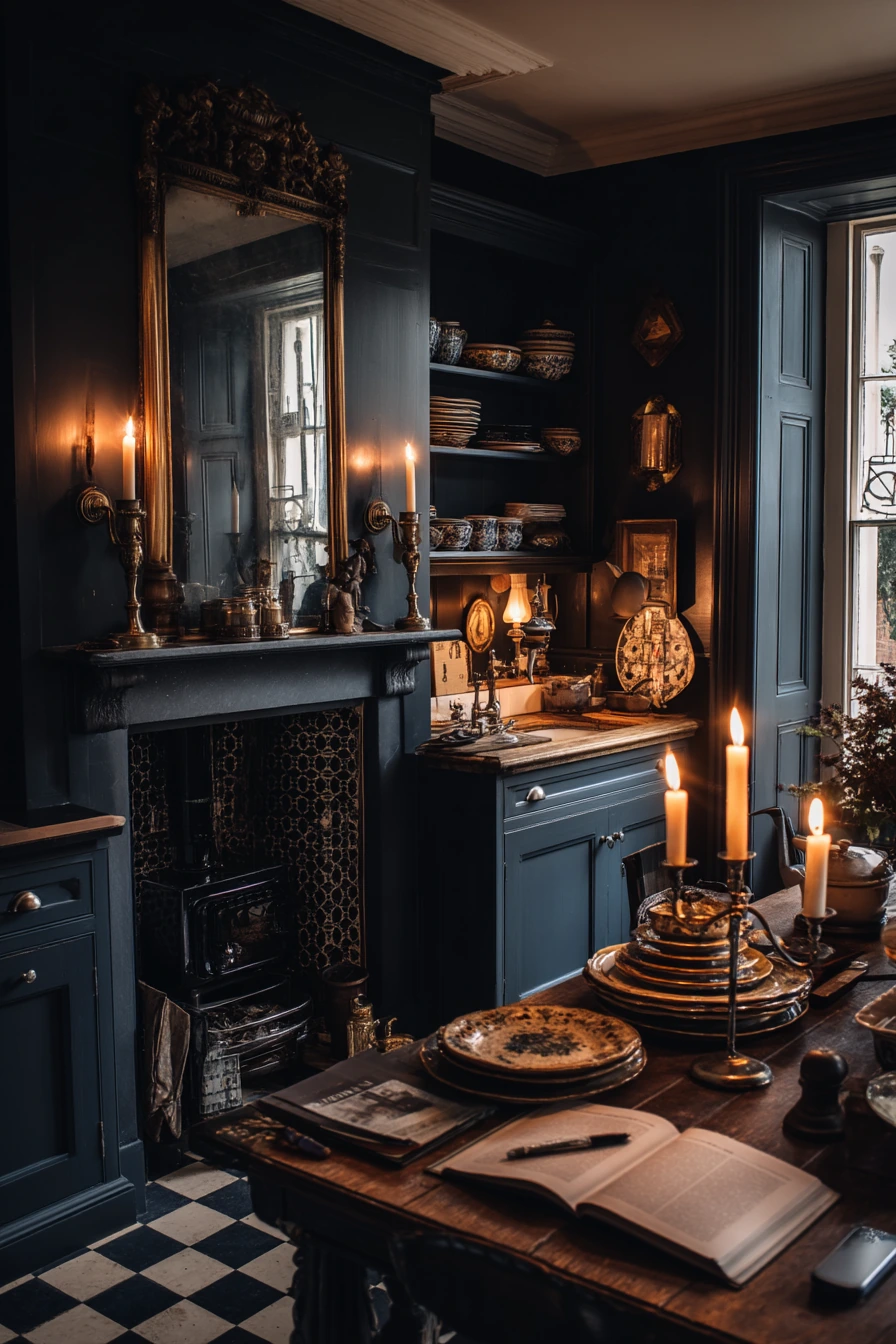
Use older-home details to your advantage. An antique mirror above the mantel can bounce light and add that layered Victorian feel. Keep the styling quiet and personal: stacked plates on a side table, a candleholder for soft evening light, and a half-read novel left where someone paused.
To keep it believable, let modern life show in small ways, like a laptop charger trailing near the kettle. Use warm lamps with dusk window glow so the room feels velvety and intimate, not dark and flat. Add one pale element, like a white shade or a light wood stool, to stop the blue from feeling heavy.
- Choose a satin paint finish so deep colors do not look chalky.
- Use warm bulbs to keep blue cabinets from turning cold.
- Add an antique mirror to reflect both lamps and window light.
- Keep the table styling simple: book, plates, one small vase.
- Use a checkerboard pattern in larger squares for small rooms.
Pro Design Tip: Balance a dark scheme with at least two light-catching surfaces, like glossy tile, a mirror, or polished hardware.
Budget Considerations: Real encaustic or stone floors can be expensive; vinyl checkerboard tiles can give the look and are easier to install.
7 7. Light-Filled Victorian Kitchen with Garden View
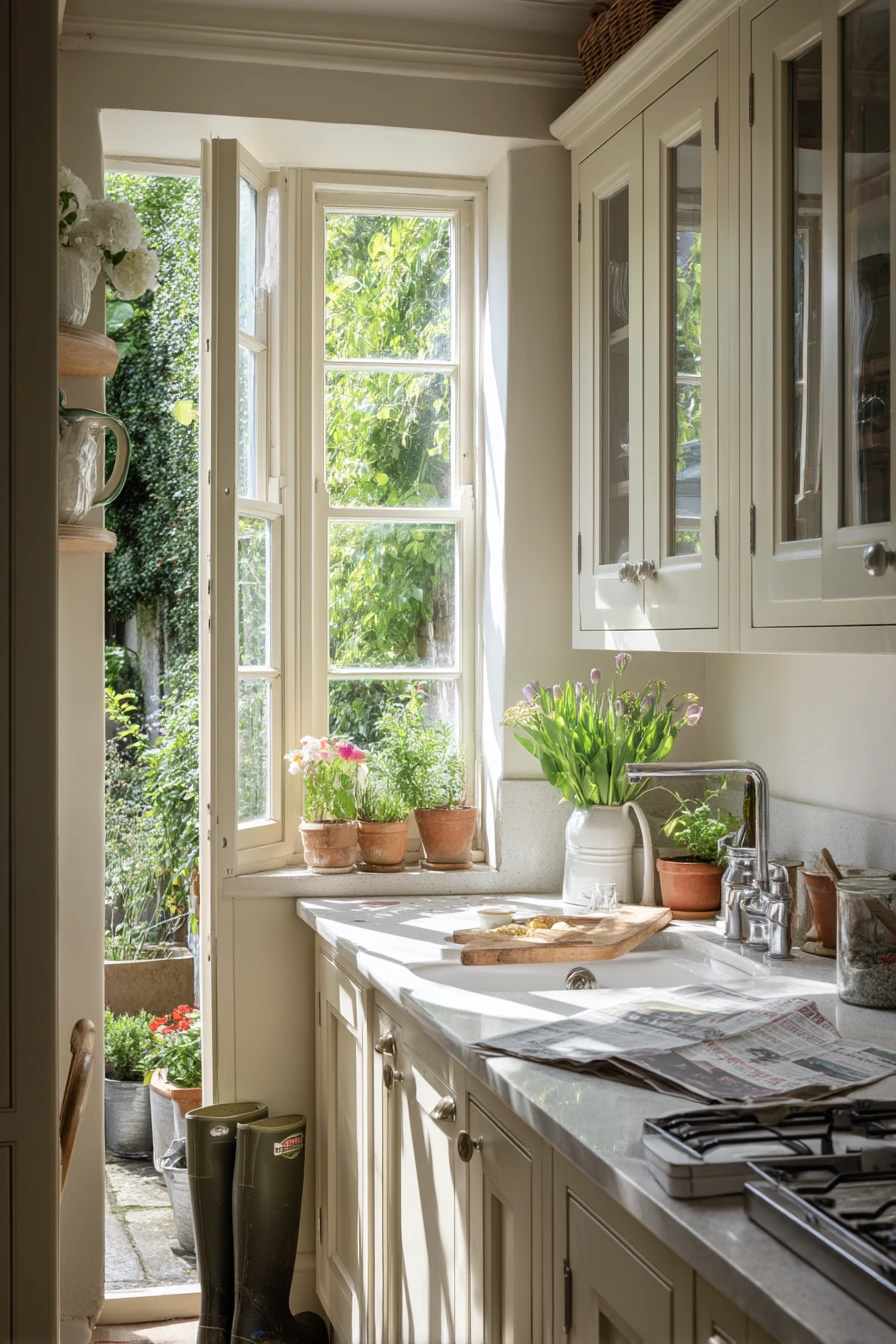
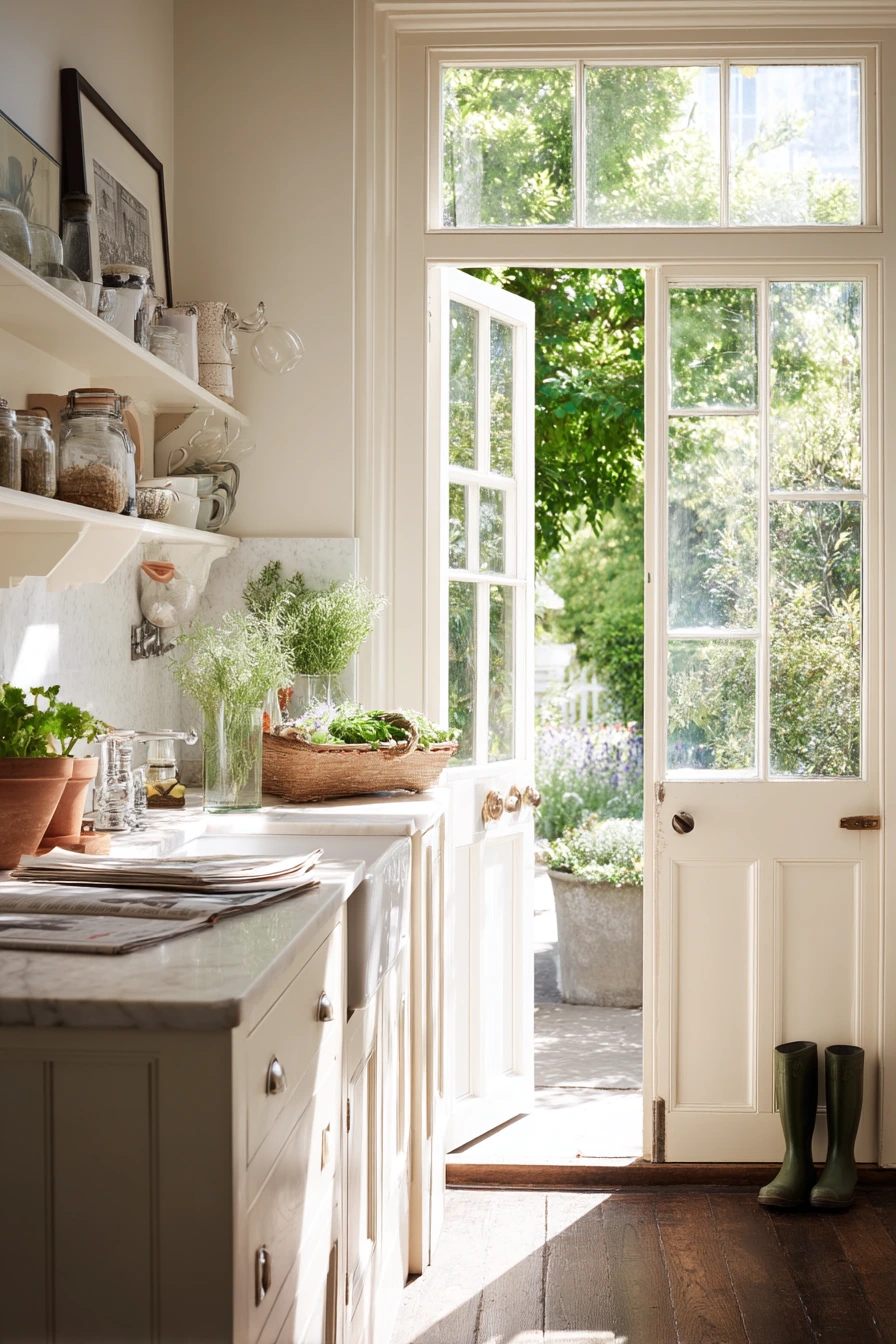
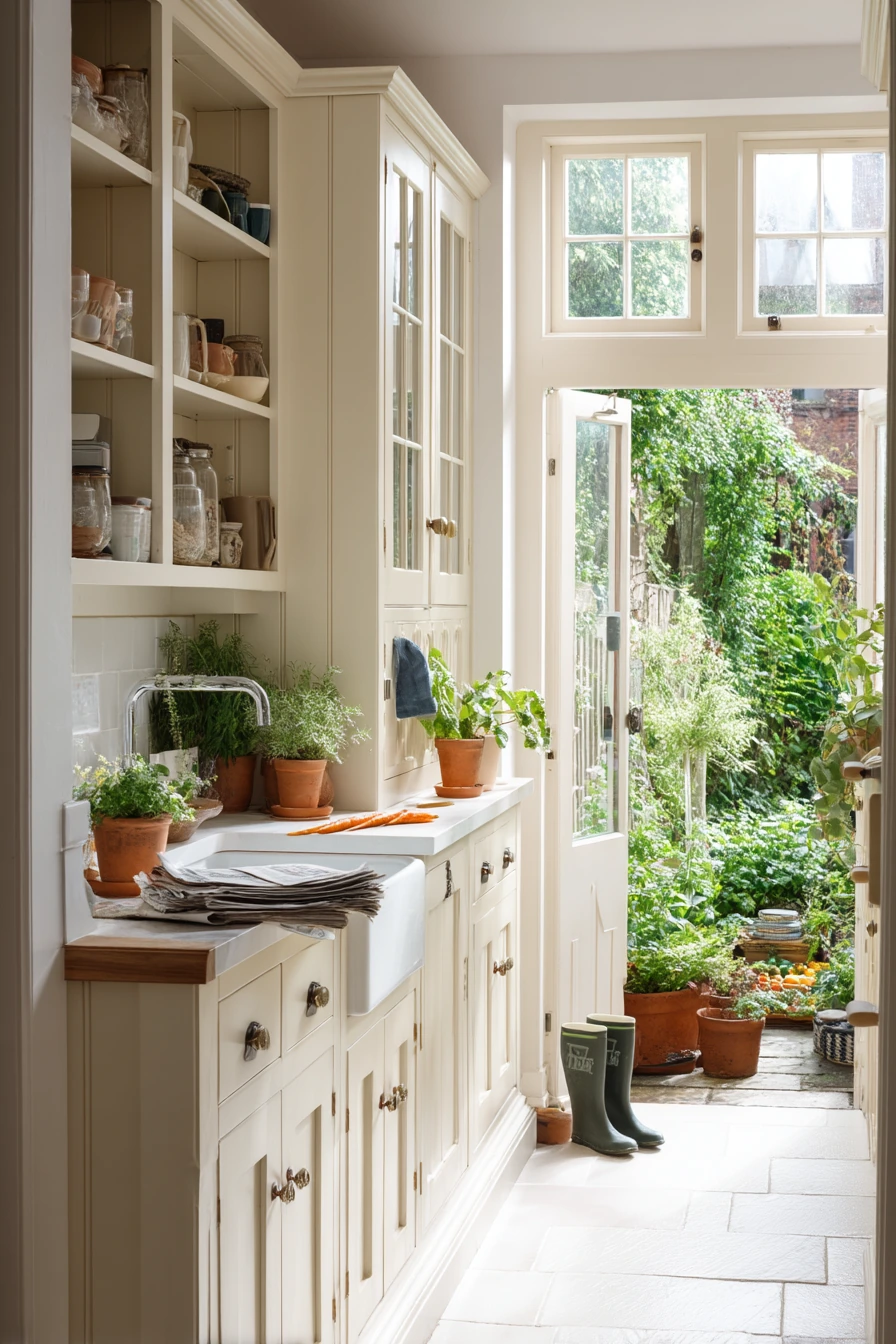
A bright Victorian kitchen that opens to a small garden should feel clean, airy, and ready for muddy shoes. Cream cabinets keep the room light, and glazed pantry doors add shine while still hiding most pantry clutter. Limestone counters bring a soft, natural look that suits sash windows and older brickwork.
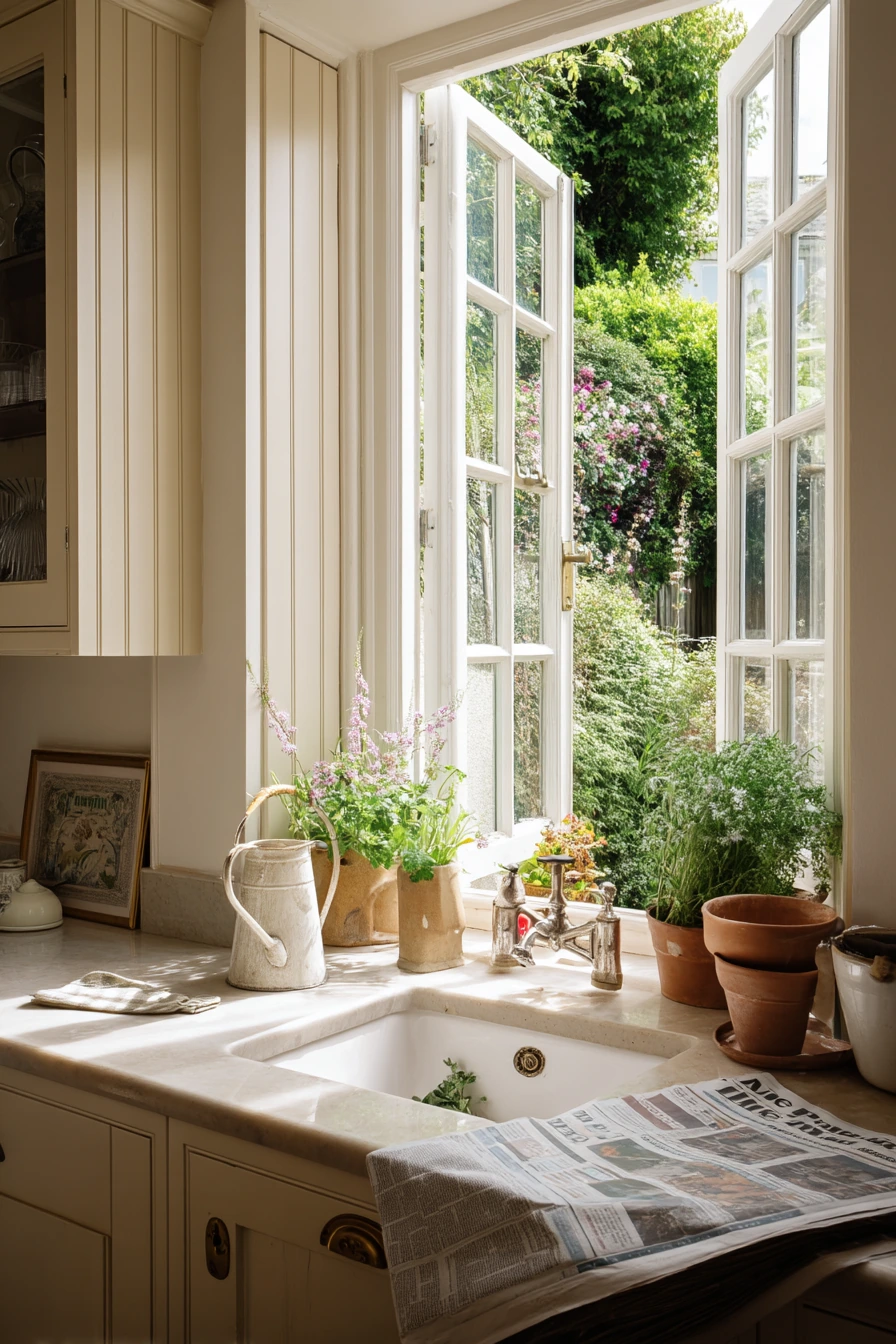
Let original details lead. Keep the sash windows clear, then style the sill with terracotta pots and small herbs. Add real-life touches that match the garden connection: muddy boots by the back door, a child’s watering can, and fresh-cut stems in a jug on the table.
To make it feel like a home in use, leave an open newspaper or a simple notepad near the kettle. Use sun-dappled daylight as the main feature, and avoid heavy window treatments. If you need privacy, choose a light cafe curtain that sits low and keeps the top half bright.
- Use cream paint with a warm undertone so it feels soft, not stark.
- Choose glazed pantry doors for depth and easy cleaning.
- Keep one boot tray by the door to protect floors.
- Group terracotta pots in odd numbers for a natural look.
- Use a clear jug for stems so the greens pop in the light.
Pro Design Tip: Match the counter tone to the garden view, like limestone or warm quartz, so indoors and outdoors feel connected.
Budget Considerations: Limestone needs care; a honed quartz in a warm stone look can be a lower-maintenance substitute.
8 8. Victorian Kitchen with Cottage Layering
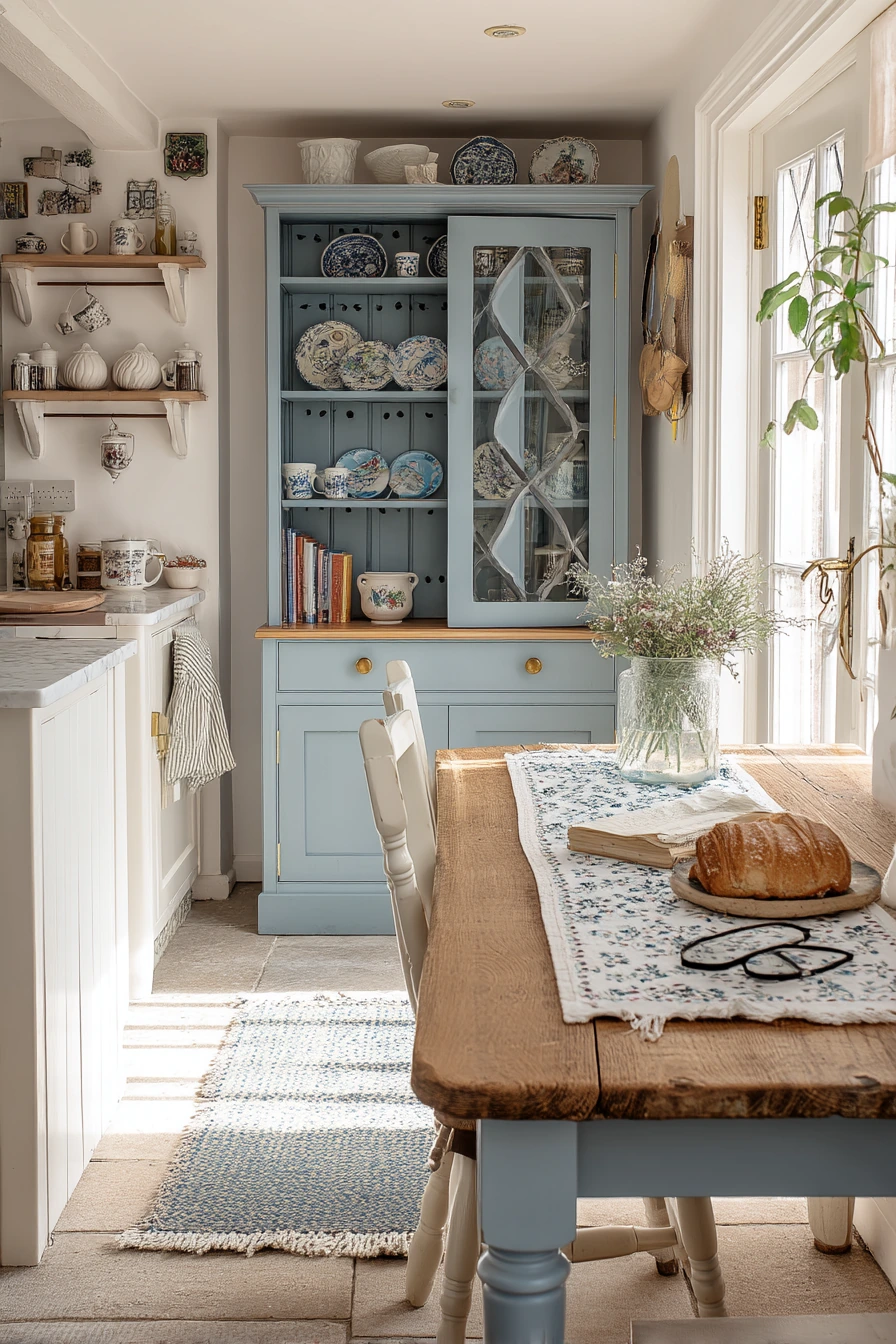
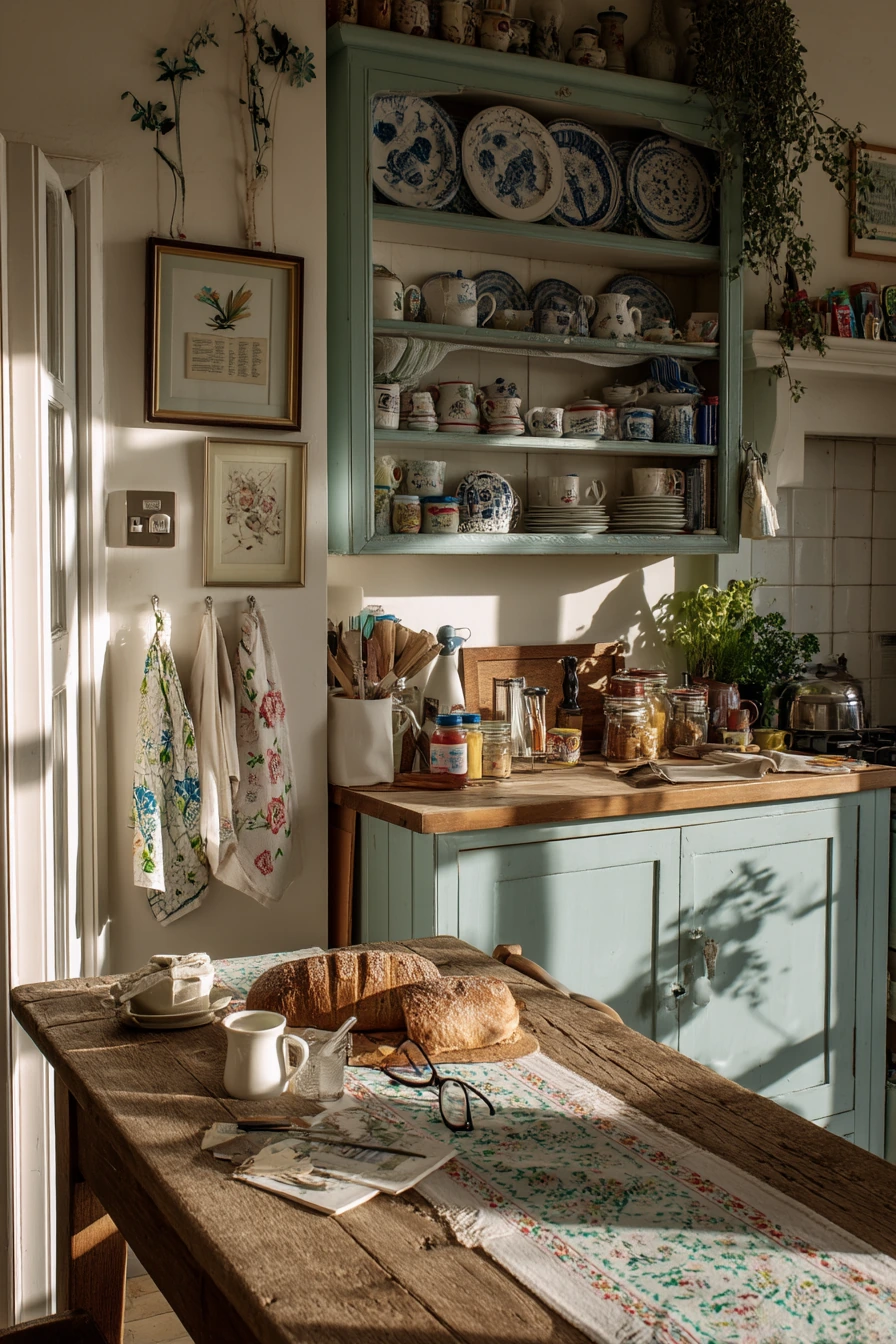
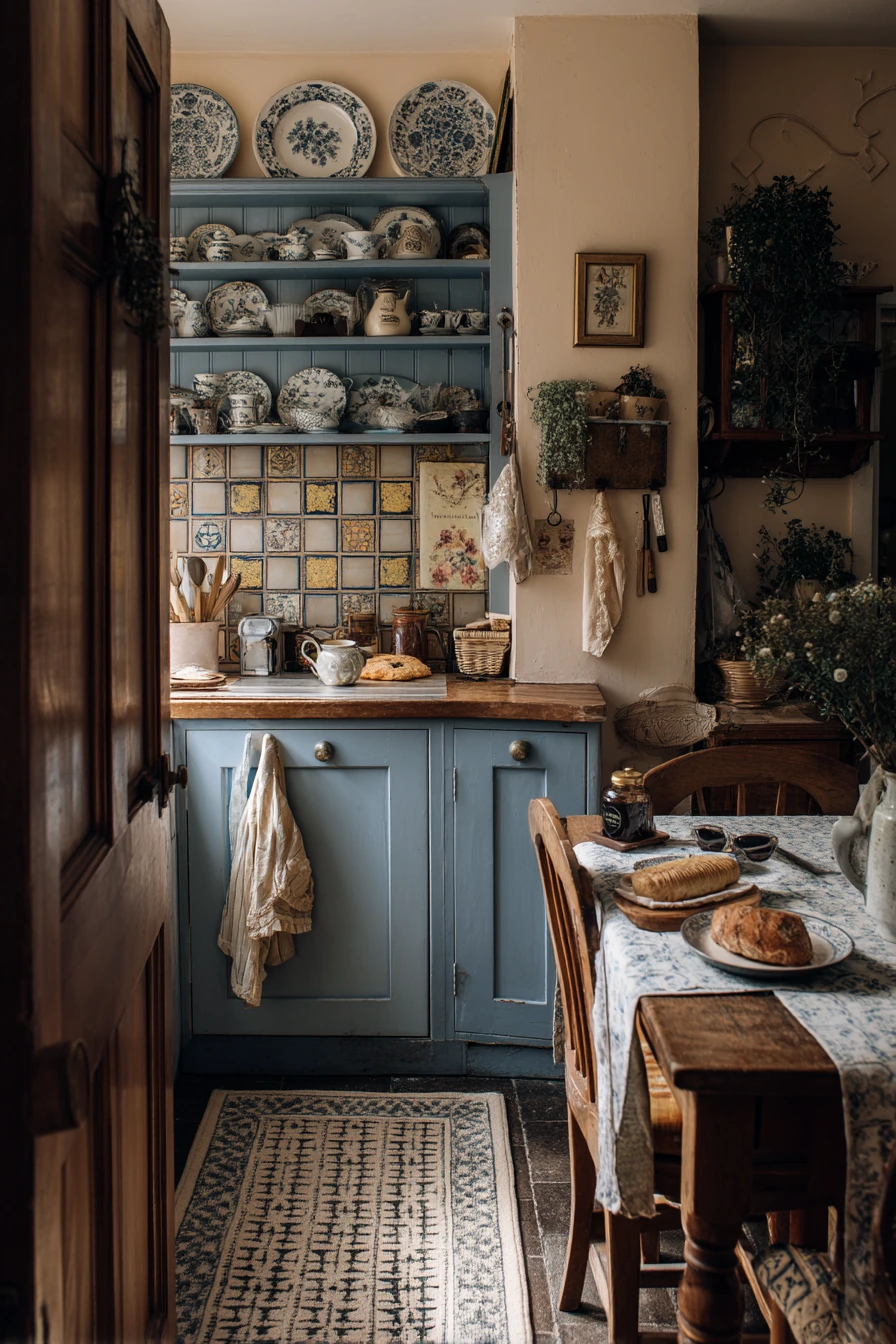
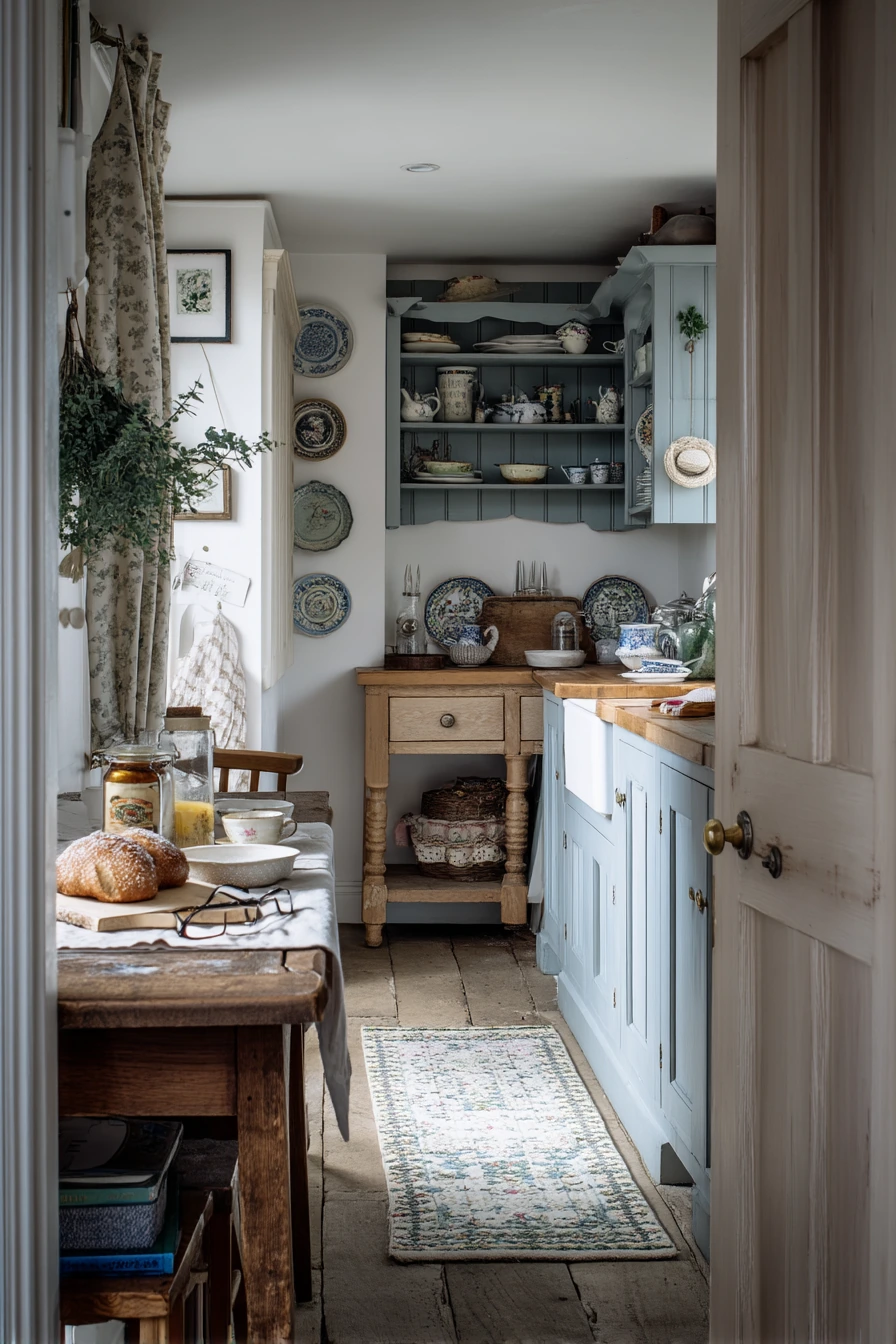
Victorian kitchen ideas can lean cottage without losing their roots. Faded blue cabinetry looks soft and collected, especially with a farmhouse table at the center. Add a patterned runner to bring in color and guide the eye through the room.
A plate rack filled with thrifted ceramics is a simple way to add storage and charm. Embroidered tea towels, a loaf of bread, and a jam jar make the kitchen feel welcoming, but still normal. Keep it personal with small items like reading glasses beside a recipe card, so it feels like someone is about to cook.
Work with gentle light. Soft overcast daylight and plant shadows on the wall add texture without needing busy decor. If you want more warmth, add one small lamp on a shelf or sideboard. The key is to mix practical pieces with a few sentimental ones, so the room feels calm and lived-in.
- Use a muted blue that pairs well with warm wood tones.
- Thrift plates in one color family for an easy mix-and-match look.
- Add a runner that can be washed and replaced easily.
- Keep table styling simple: bread board, jam, one vase.
- Hang tea towels where they are easy to grab, not just for display.
Pro Design Tip: Layer patterns in different scales, like a small floral towel with a larger runner print, to avoid a busy look.
Budget Considerations: Plate racks and open storage can be DIY; paint a simple wooden rack to match the cabinetry.
9 9. Heritage Kitchen with Clever Storage
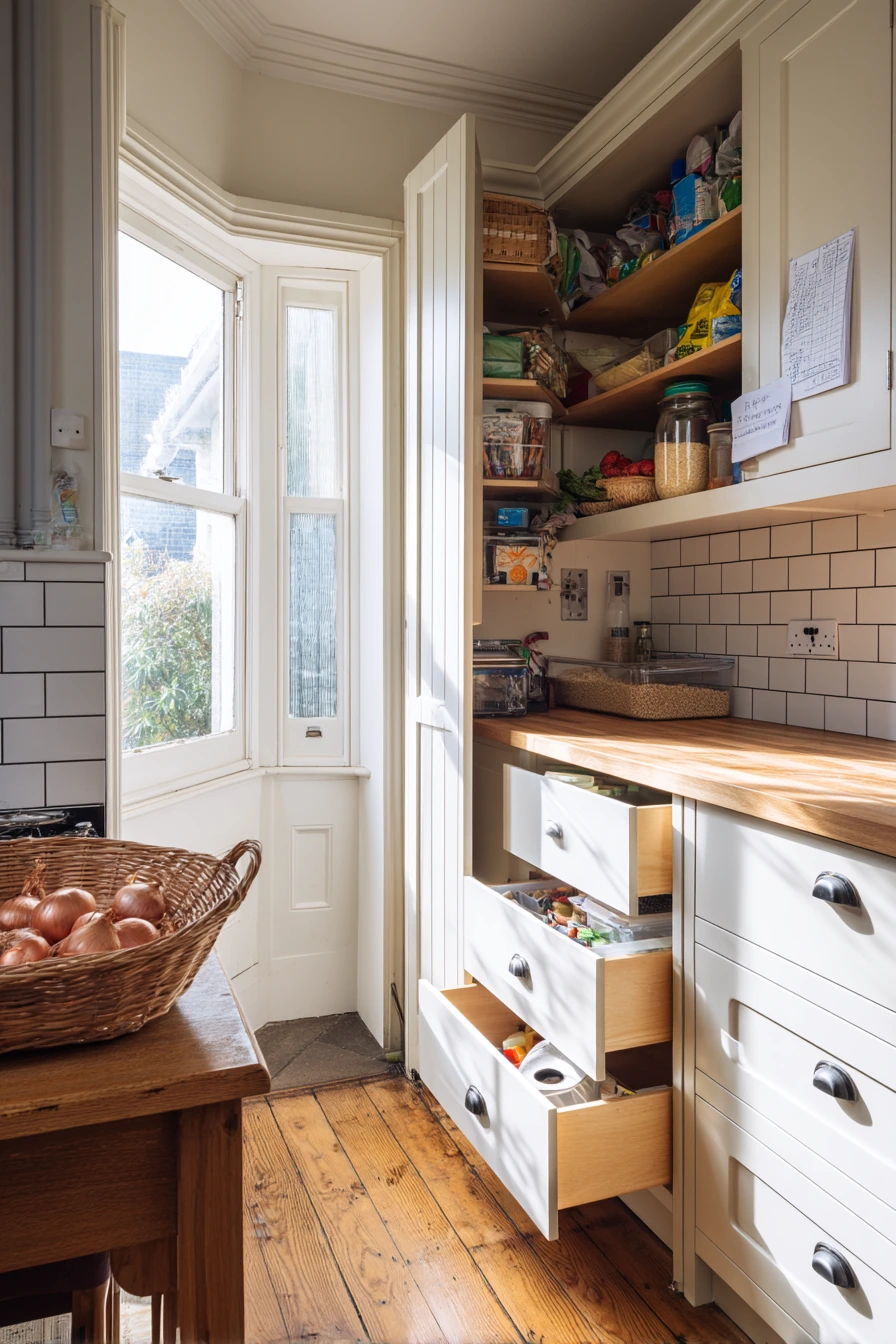
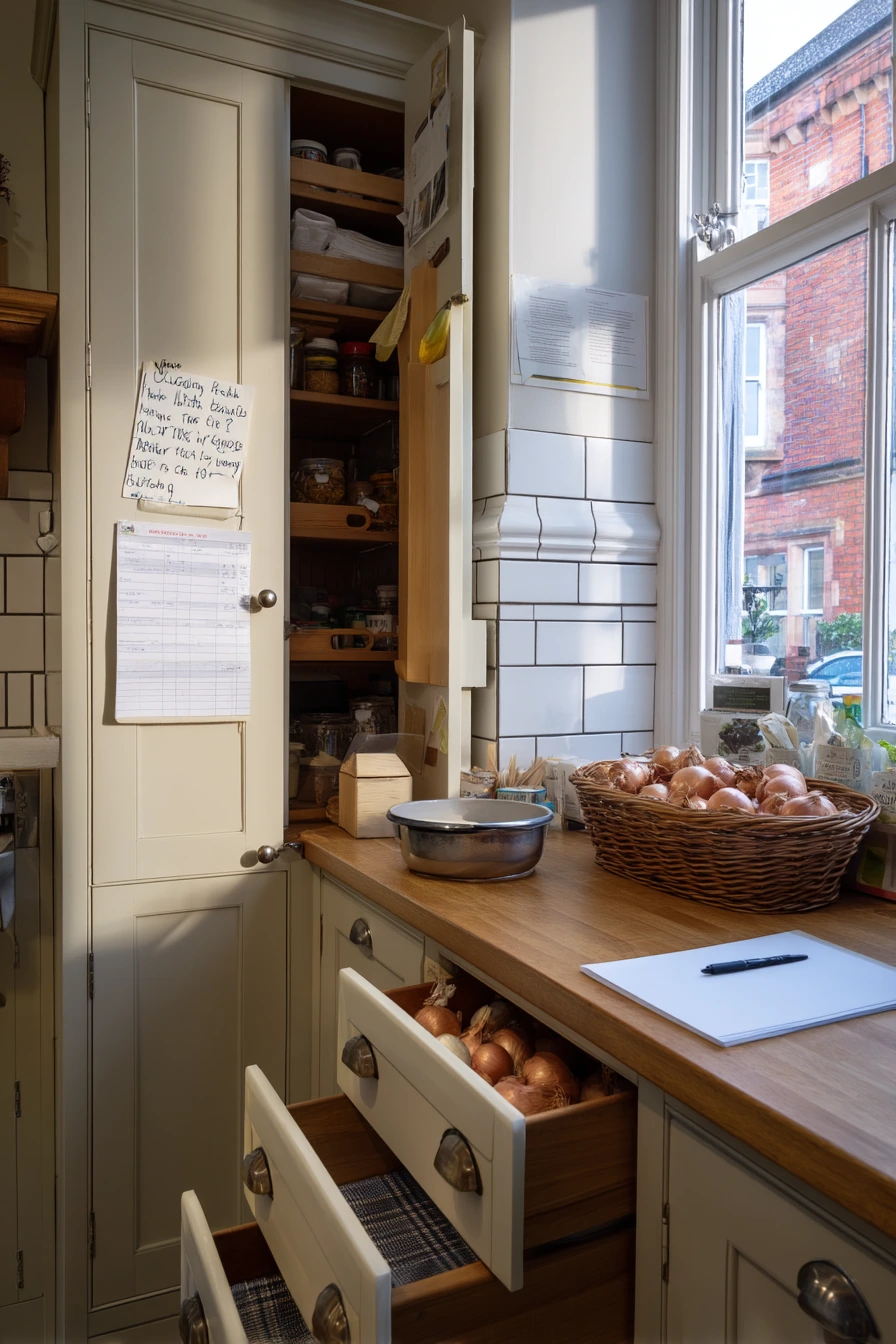
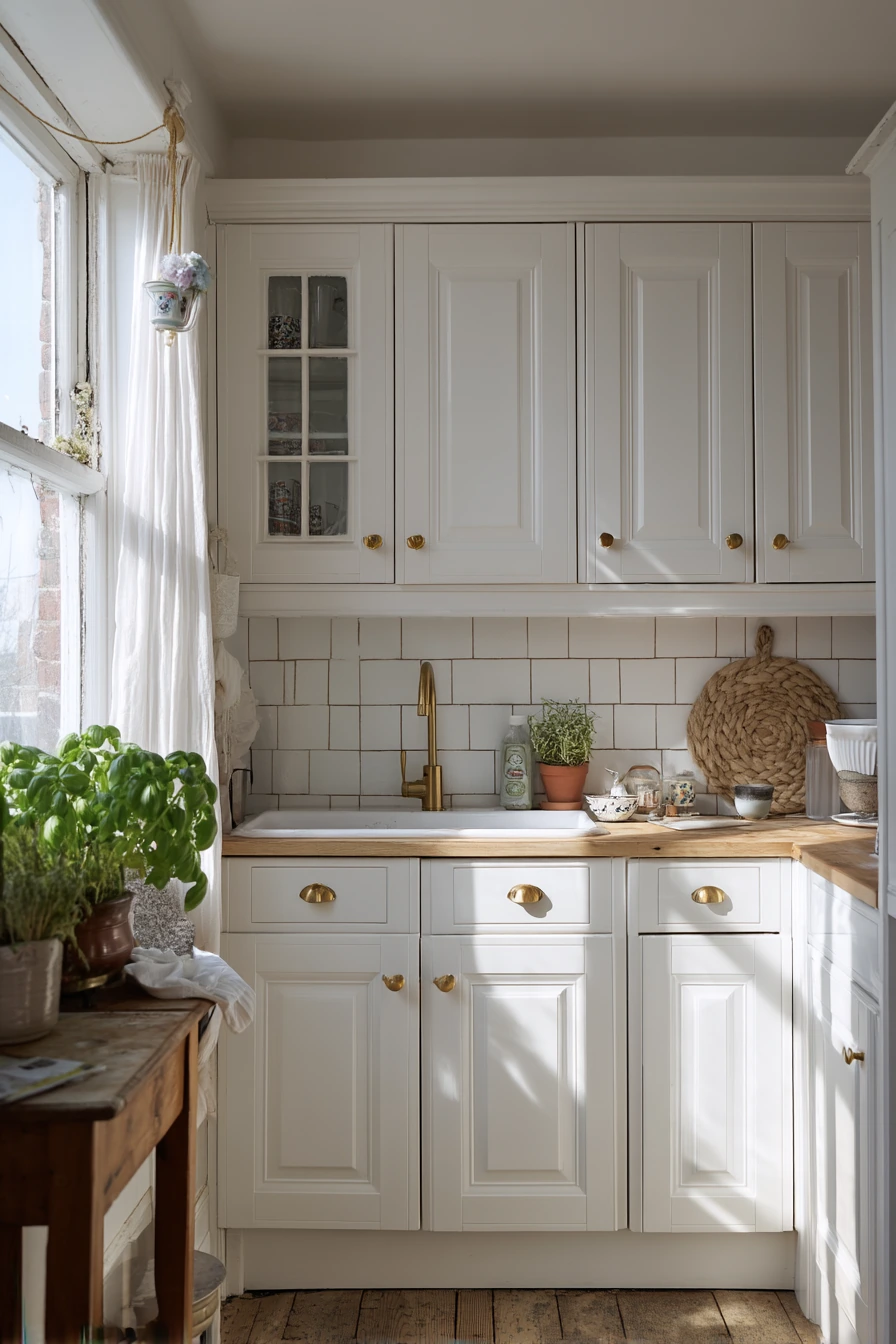
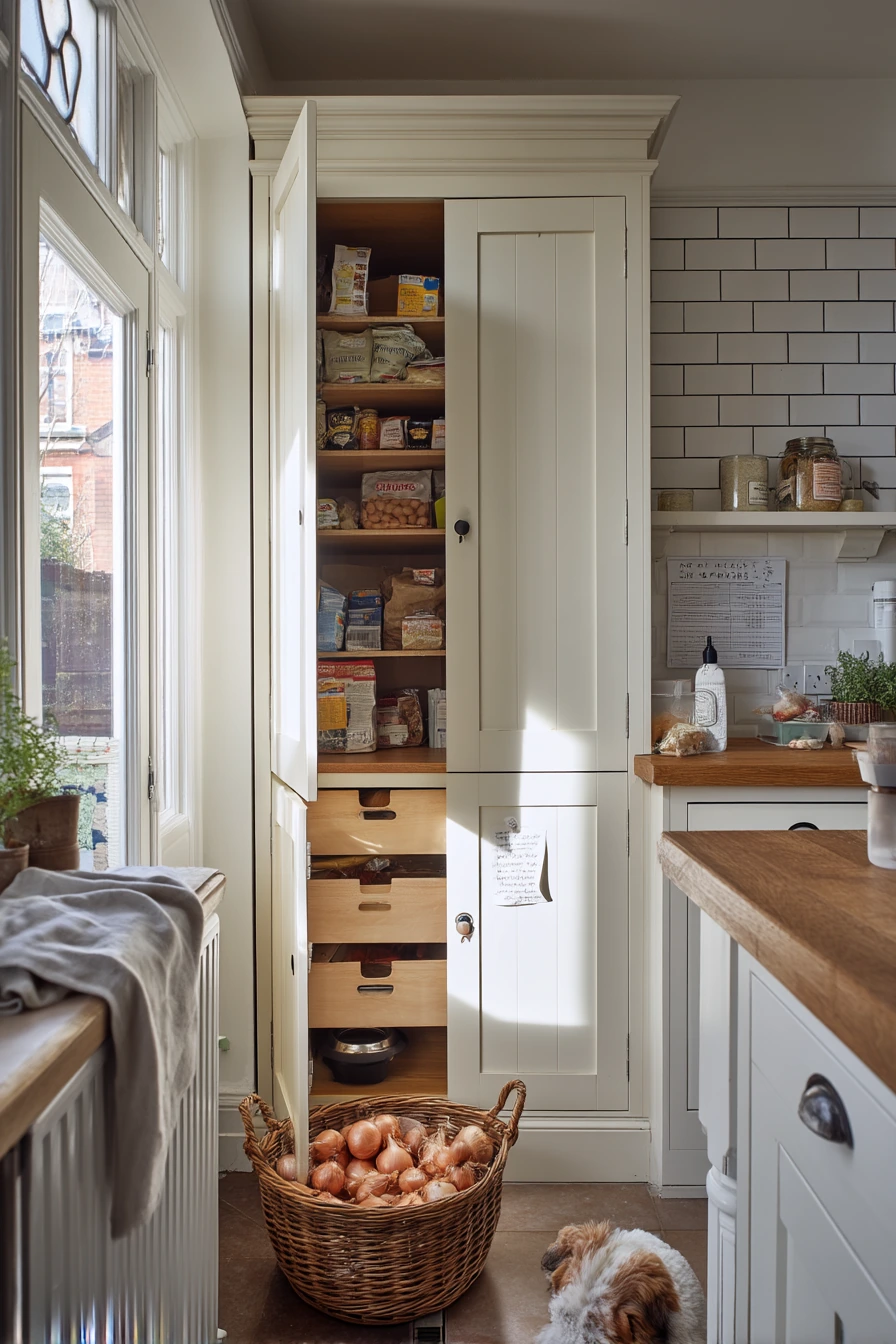
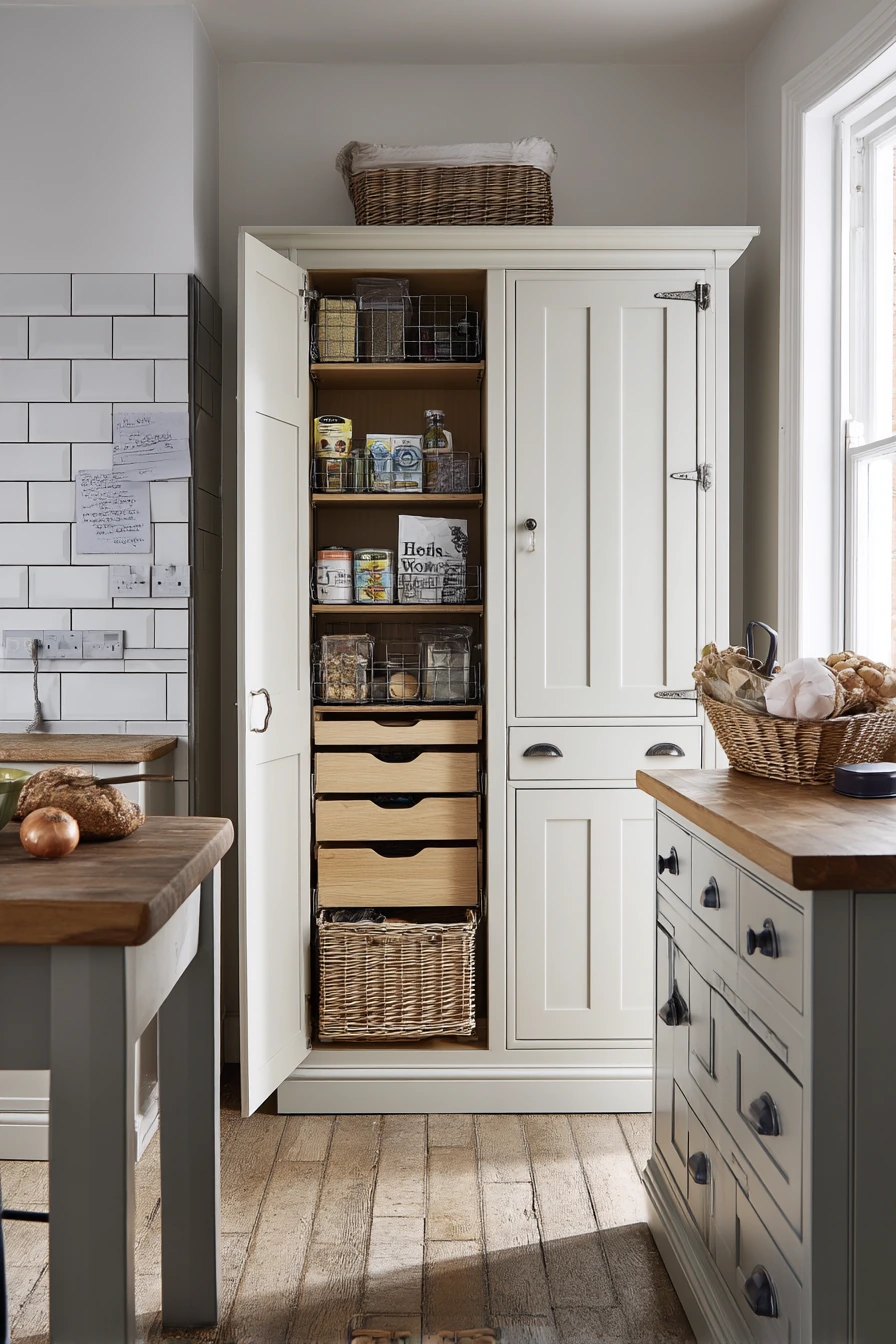
A practical Victorian kitchen for a busy household needs strong storage that still looks classic. Start with a tall larder cabinet for pantry items, then add deep drawers for pots, plates, and lunch supplies. Cream subway tile keeps the walls bright and easy to wipe down, while a timber counter adds warmth.
Make daily routines easier with rail storage for towels, utensils, and small baskets. Pull-out bins help with recycling and food waste, especially when the kitchen is used all day. Keep the styling honest: a basket of onions on the counter, school forms pinned near the door, and a reusable bottle ready for the next run out.
Plan for pets and people. A dog bowl under the table keeps the floor clear, and it stops the bowl from becoming a trip hazard in walkways. Keep surfaces mostly open so you can pack lunches and cook at the same time. Morning window light will make cream tile and timber feel fresh, even on hectic days.
- Use drawers instead of lower cabinets wherever possible.
- Add labeled pull-out bins to sort waste fast.
- Install a rail for tools to free up counter space.
- Create a small “paper station” with clips for school forms.
- Use a larder cabinet with adjustable shelves for changing needs.
Pro Design Tip: Measure your most-used items first, then plan drawer heights around them so storage fits real life.
Budget Considerations: Custom larders cost more; a freestanding pantry cabinet can give similar storage without a full remodel.
10 10. Victorian Kitchen with Period Detail and Everyday Life
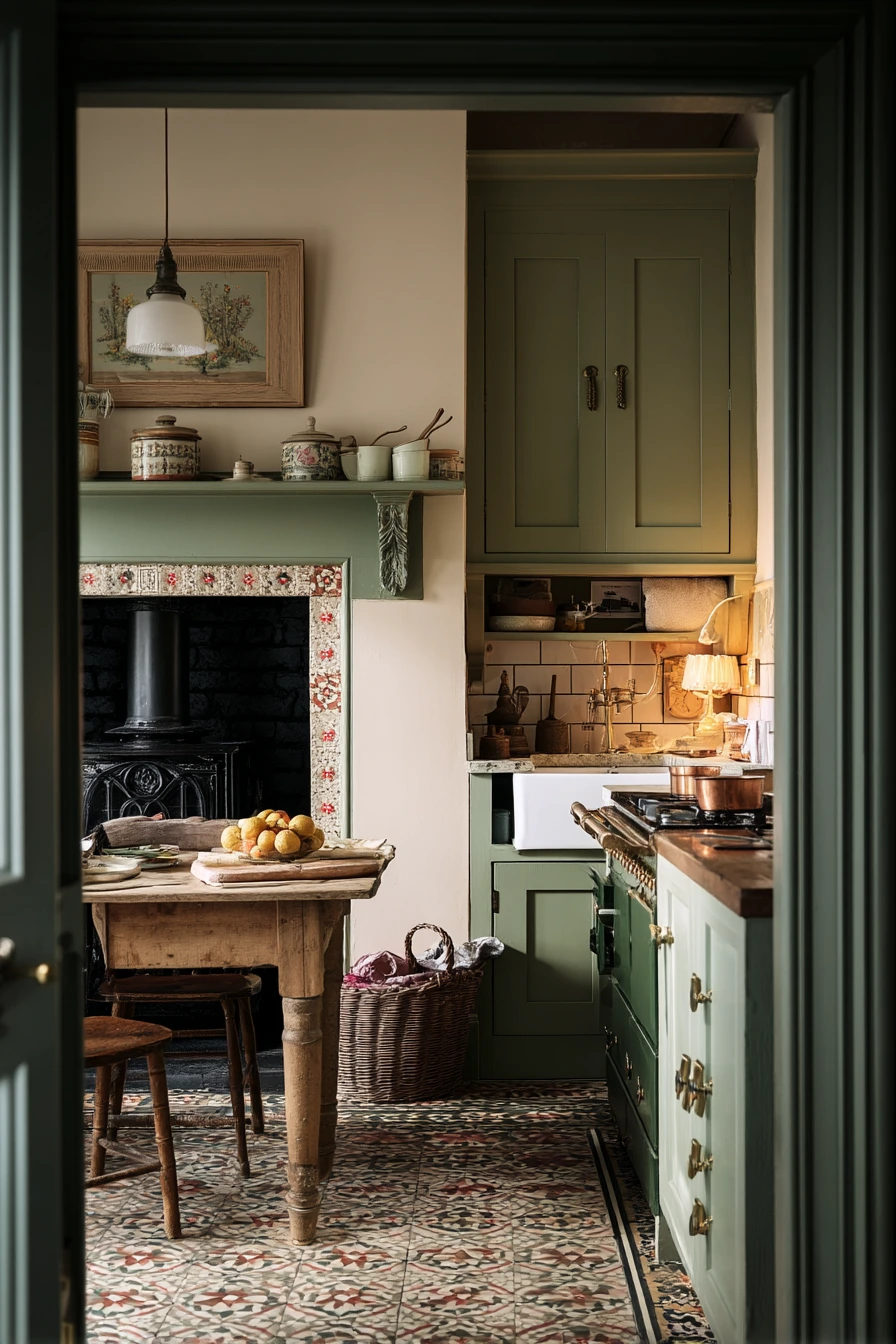
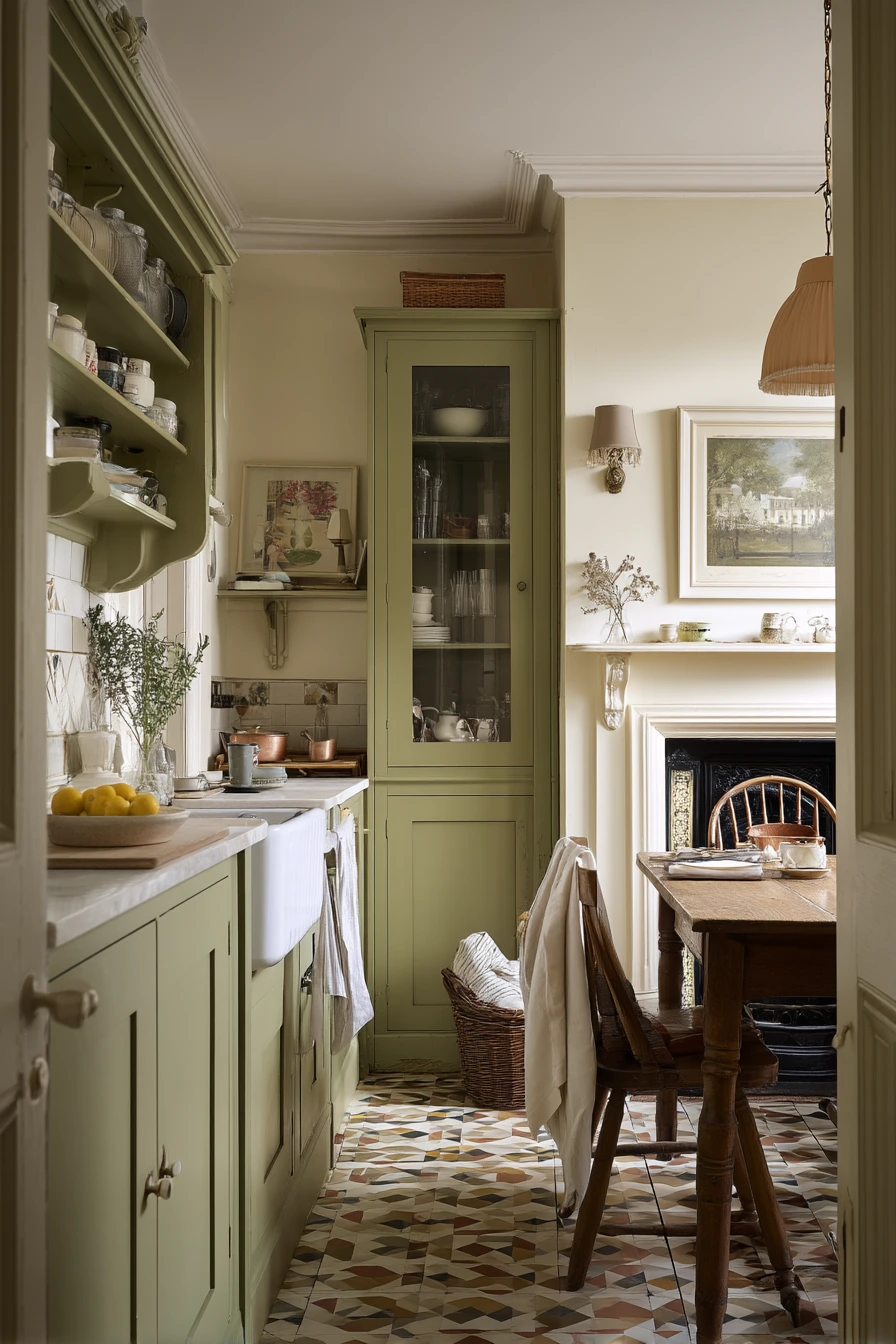
Classic Victorian kitchen ideas often start with period character that is already there. Olive cabinets feel traditional but not too dark. Decorative corbels add a crafted look around shelves or a hood, and an original fireplace surround can become the room’s focal point.
Bring in authentic materials and patterns. An encaustic-style floor adds instant heritage, while pantry shelves keep the space functional. A porcelain sink suits the era and pairs well with a copper saucepan and a simple lemon bowl on the counter.
To keep the room grounded, let family life show. A half-folded laundry pile on a chair and a toddler toy basket near the table can exist without ruining the style. Use warm lamp glow with pale daylight so the kitchen feels cozy early and late. The best classic Victorian kitchen looks polished, but it still works on an average day.
- Use olive paint in a matte or eggshell for a softer feel.
- Add corbels in one area, not everywhere, to avoid overload.
- Style the fireplace mantel with one mirror or one framed print.
- Keep a toy basket in a matching natural fiber to blend in.
- Use copper accents sparingly, like one pan and one utensil pot.
Pro Design Tip: Let one original feature lead the design, like the fireplace surround, then keep newer choices simple around it.
Budget Considerations: If original encaustic tile is out of reach, try a patterned tile-look floor that is durable and easier to maintain.
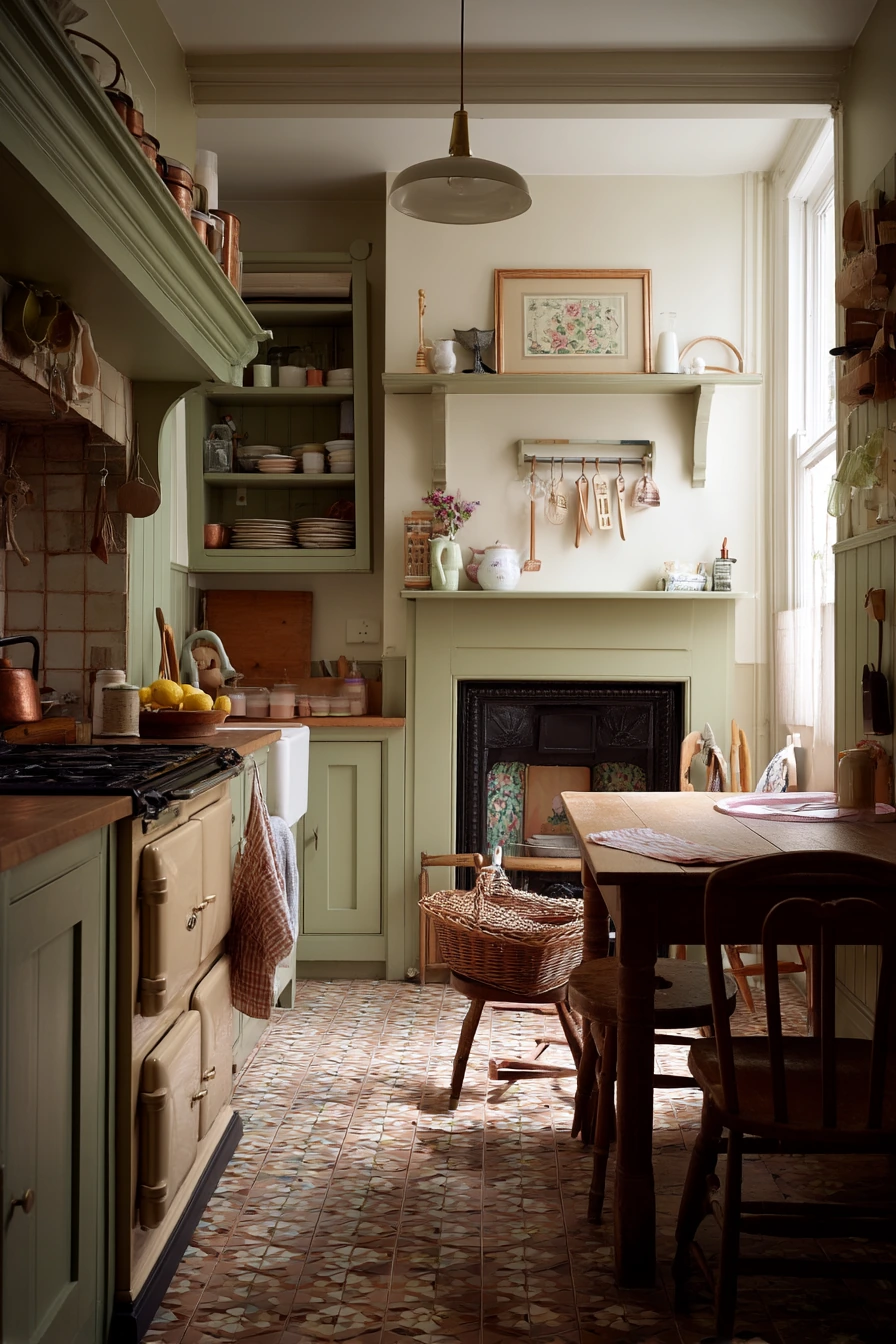
Victorian kitchen ideas are easiest to copy when you focus on a few strong choices: cabinet color, one statement surface, and practical storage. Period details like brass, corbels, and classic tile patterns do the rest.
Pick the look that matches your home and your habits, then make one change at a time. A better light plan, a rail for tools, or a painted pantry door can shift the whole feel.
FAQ
1) What colors work best in a Victorian kitchen? Olive, forest green, inky blue, cream, sage, and muted blues fit the era and pair well with brass and wood.
2) Are shaker cabinets Victorian? Shaker fronts are simple and common in Victorian-style updates because they feel classic and work with older trim and cornices.
3) What backsplash suits Victorian kitchen ideas? Marble, white zellige, and cream subway tile all work. Choose based on how much texture you want and how easy you need it to be to clean.
4) How can I add Victorian style in a rental? Swap knobs, add peel-and-stick tile, use a curtain under the sink, and style with warm wood, ceramics, and a vintage mirror.
5) How do I make a narrow Victorian kitchen feel bigger? Use lighter uppers or open shelves, keep counters clear, add reflective surfaces like a mirror, and use good task lighting.
6) What flooring looks right for a Victorian kitchen? Checkerboard and encaustic-style patterns are common. If you need a budget option, look for vinyl or laminate versions with a matte finish.
7) How do I keep open shelves from looking messy? Limit what you store, use matching jars or a shared color palette, and leave some empty space so the wall can breathe.
Use these sections as a checklist, then adjust for your layout. The best Victorian kitchen is one that keeps its charm while supporting everyday life.