
Asphalt walkway ideas are not just for driveways. A well-planned asphalt path can guide people to your front door, keep shoes clean, and make a yard feel more cared for.
This post shares 10 realistic walkway looks based on everyday home scenes, from suburban porches to city row homes. You will see ways to add plants, edging, lighting, and small details that make the path feel warm and lived-in.
Each idea includes simple styling steps you can do in a weekend, plus a pro design tip and a budget note. If you came from Pinterest, use these examples to plan your own layout and save time on decisions.
Whether your goal is a smooth, safe surface for kids, a narrow side yard upgrade, or a modern entry that stays tidy, these asphalt walkway ideas can help you get there.
1 Front Walkway Reset for a Busy Family Home
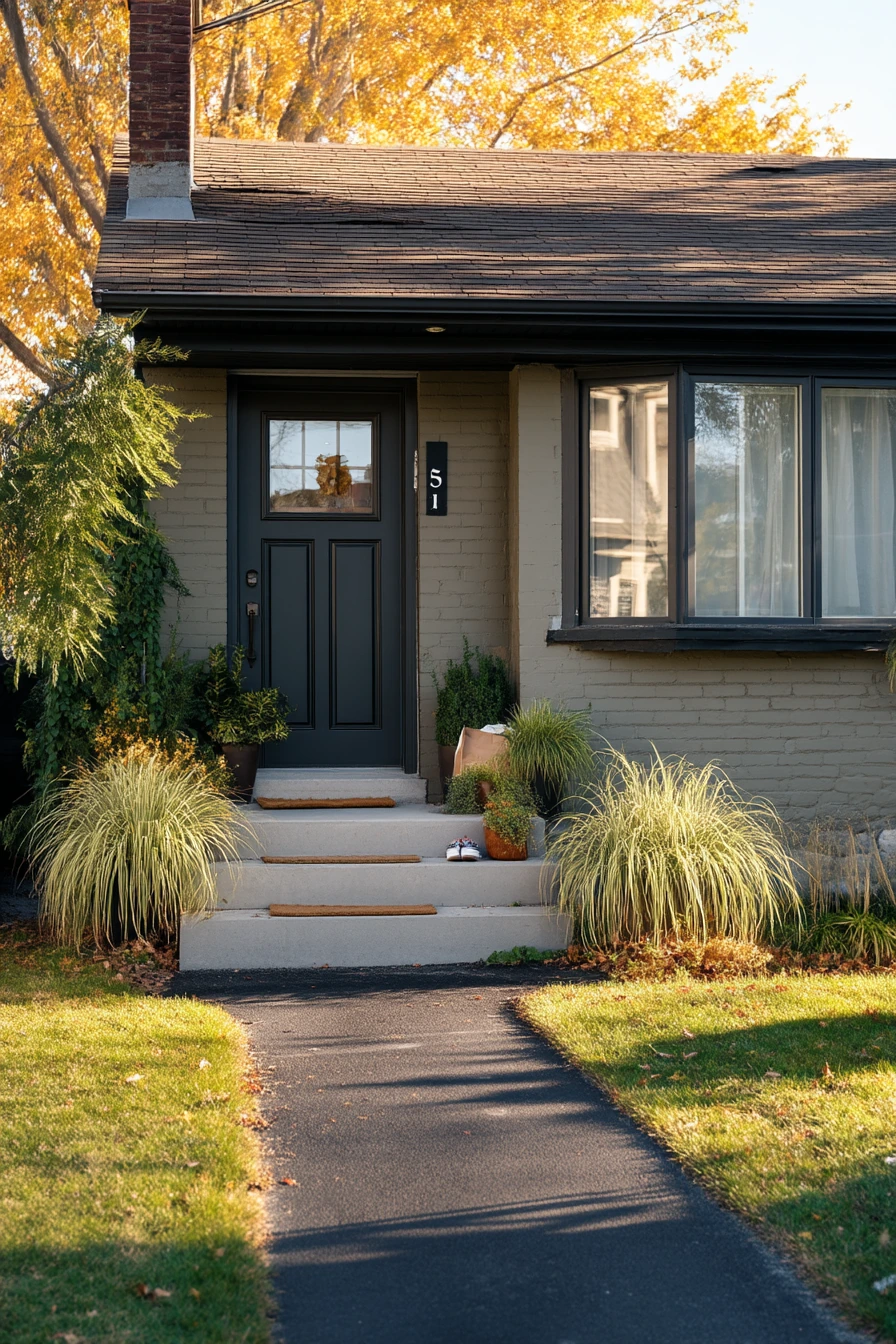
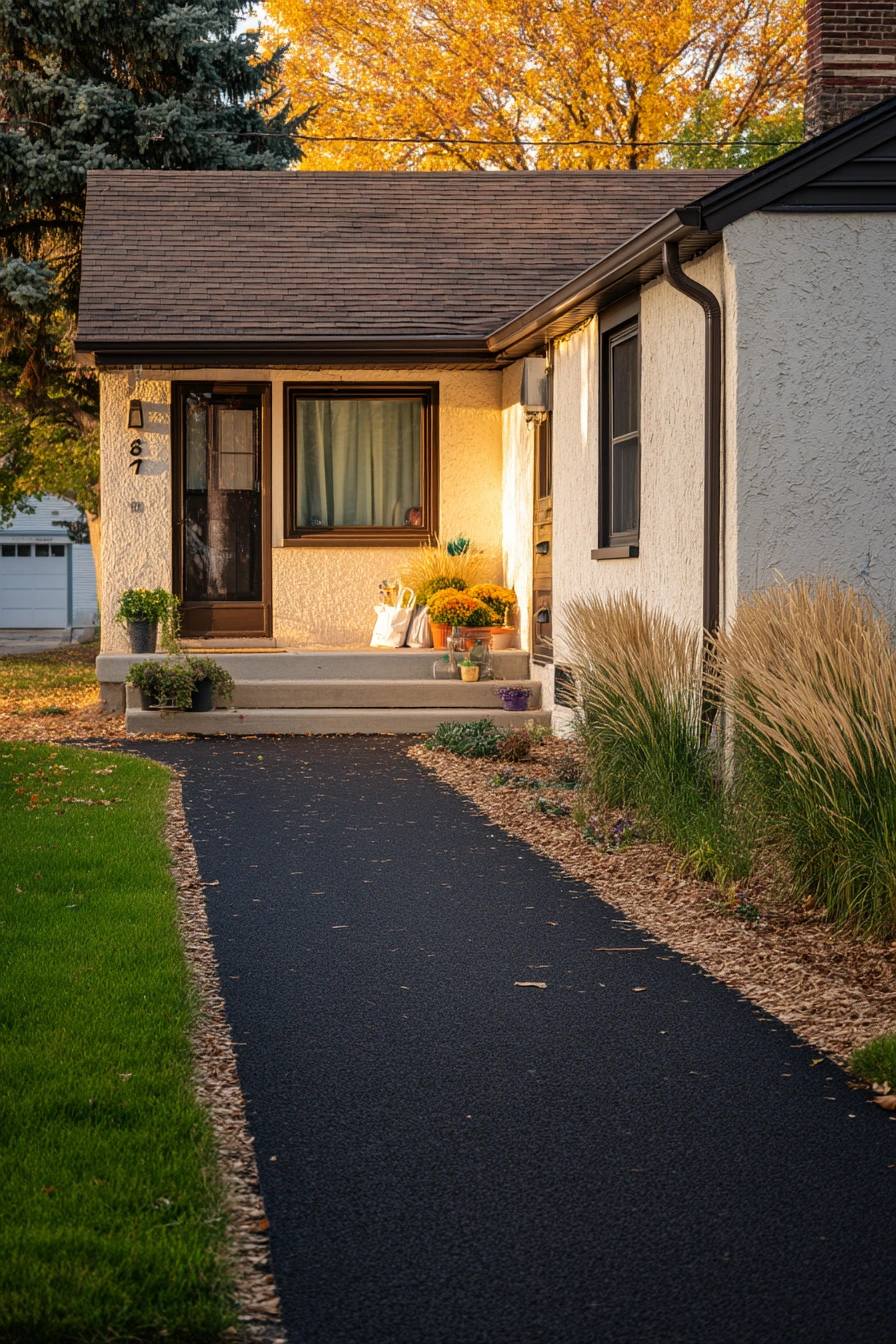
A fresh asphalt walkway can make a suburban family home feel practical and friendly right away. The surface is smooth underfoot, and it handles strollers, bikes, and wet weather better than many loose materials. To keep it from looking plain, frame it with simple layers that still feel lived-in, like potted grasses near the porch and damp leaves gathered near the curb after a windy night.
Edging is the detail that makes asphalt look finished. Low cedar edging adds a warm tone against the dark path, and it helps hold mulch and soil in place. Add matte black house numbers near the entry to tie in with lighting or door hardware. Keep the porch scene real: a slightly crooked welcome mat, kids’ sneakers by the steps, and a grocery tote on the landing. These little items make the entry feel used, not staged.
To style it, keep plant shapes simple. Use tall grasses in pots for height, then one or two lower containers for balance. If your walkway meets the curb, sweep the edge often so leaves and grit do not build up. Soft morning window light from inside will already do a lot, so you only need a few strong accents outside.
- Choose a gentle curve if your yard is wide; it feels calmer than a sharp angle.
- Set cedar edging slightly above soil so mulch does not spill onto the path.
- Use matching planters on both sides to make the front door feel centered.
- Place house numbers where they are easy to see from the street.
- Add a durable doormat with a tight weave so it stays flat.
Pro Design Tip: Keep a 2 to 3 inch clean border between asphalt and mulch so the edge reads crisp and is easier to trim and sweep.
Budget Considerations: Cedar edging and a few pots of grasses are low-cost upgrades; if you need to save, start with one side of the path and add the second set of planters later.
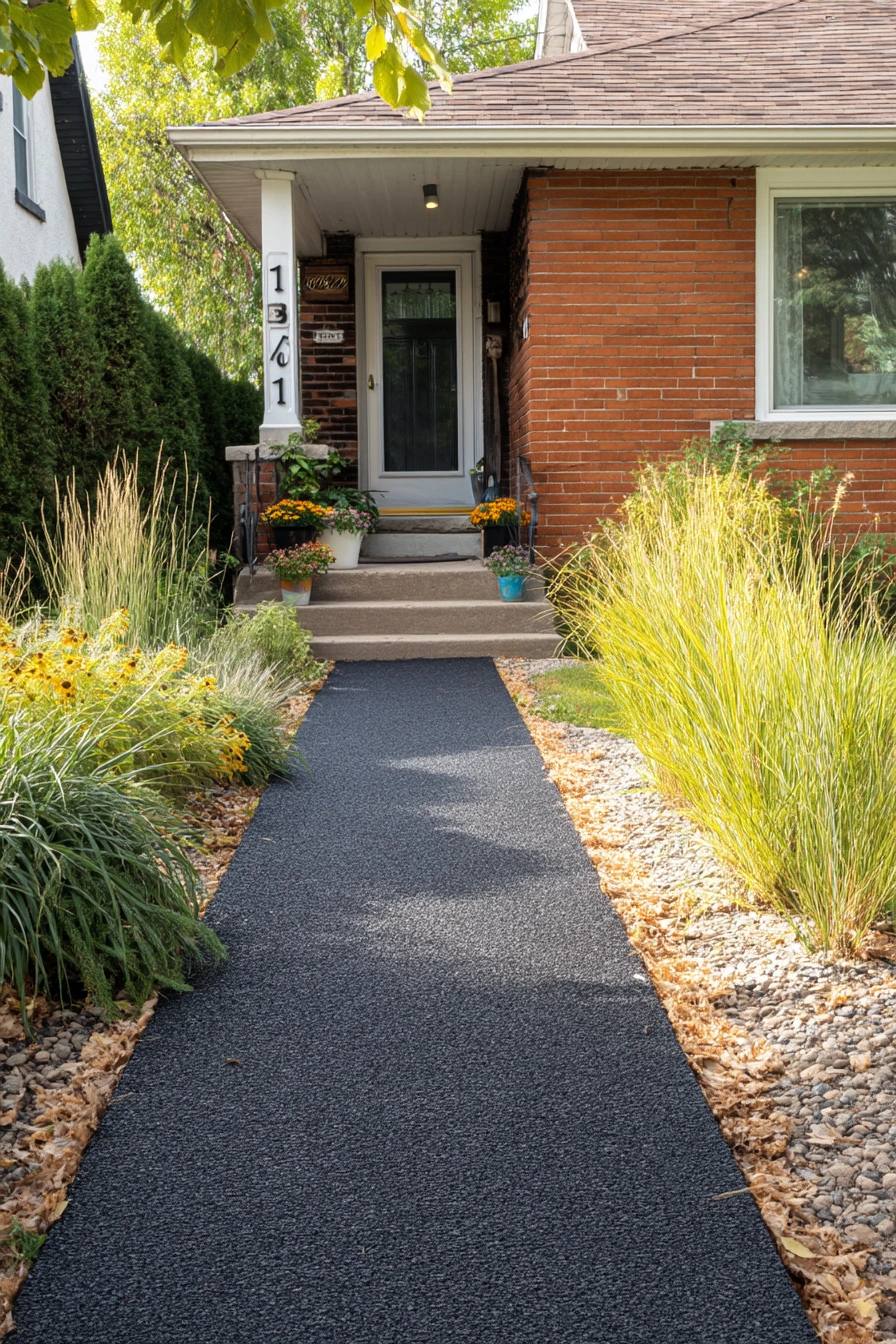
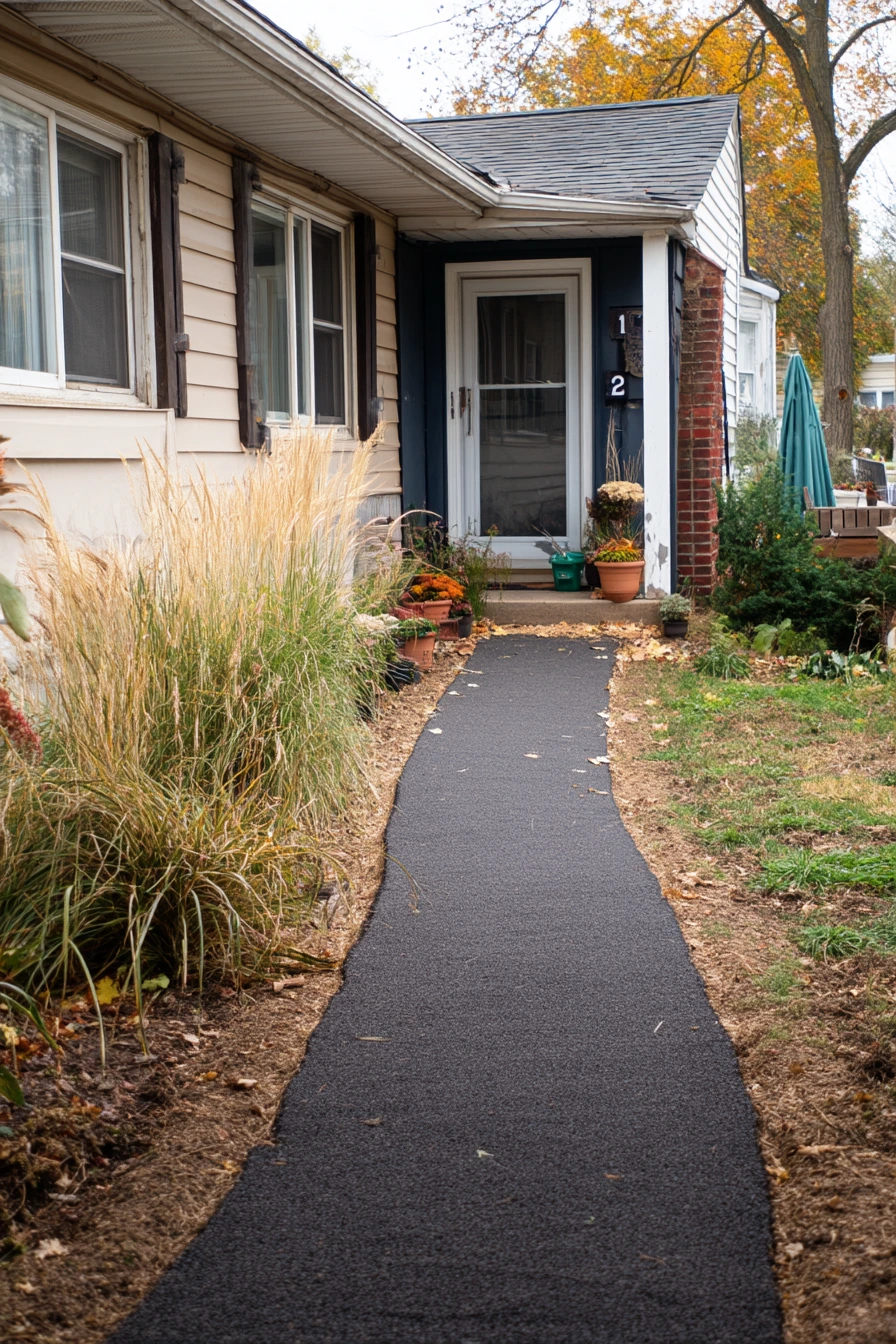
2 Budget-Friendly Side Path Upgrade
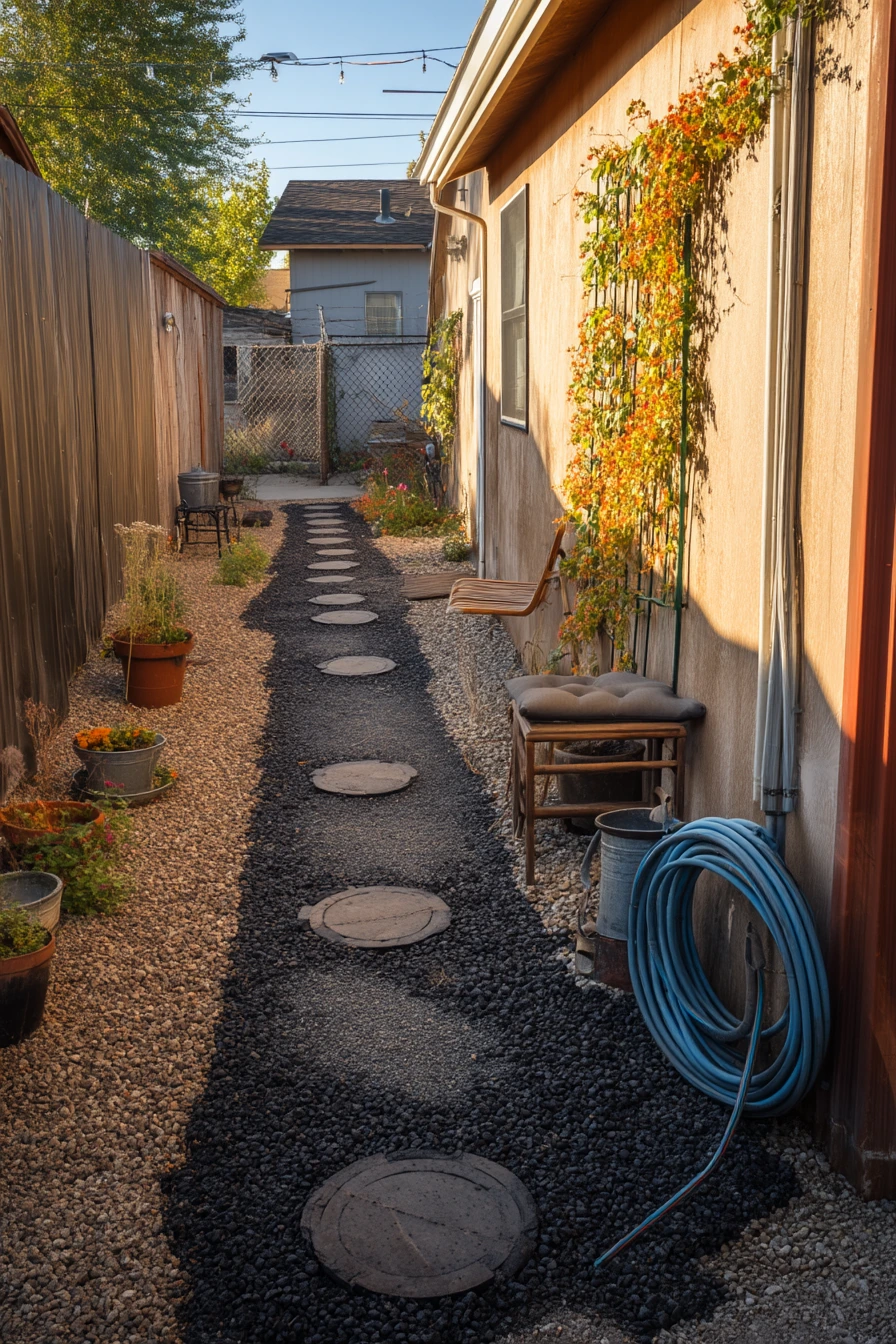
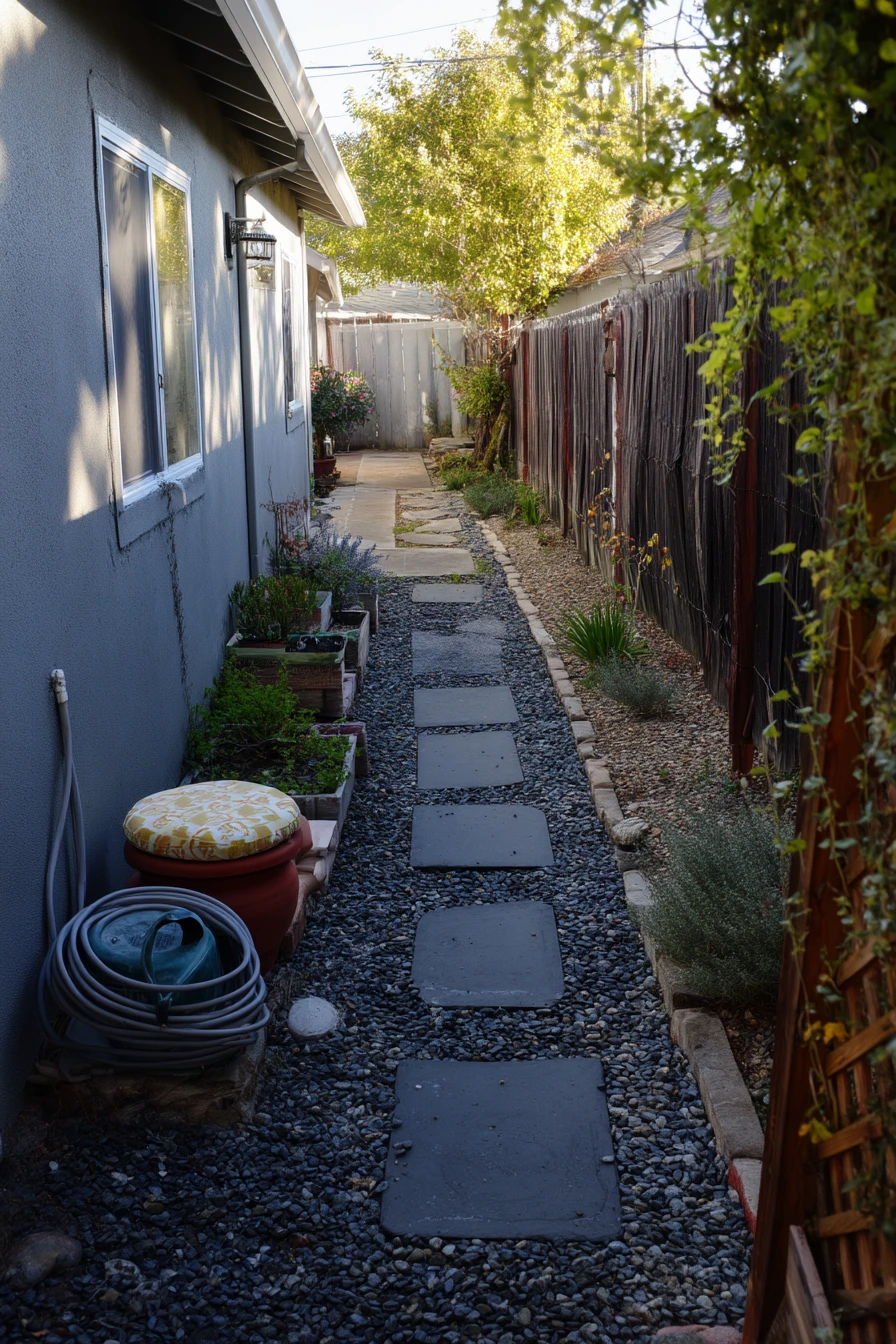
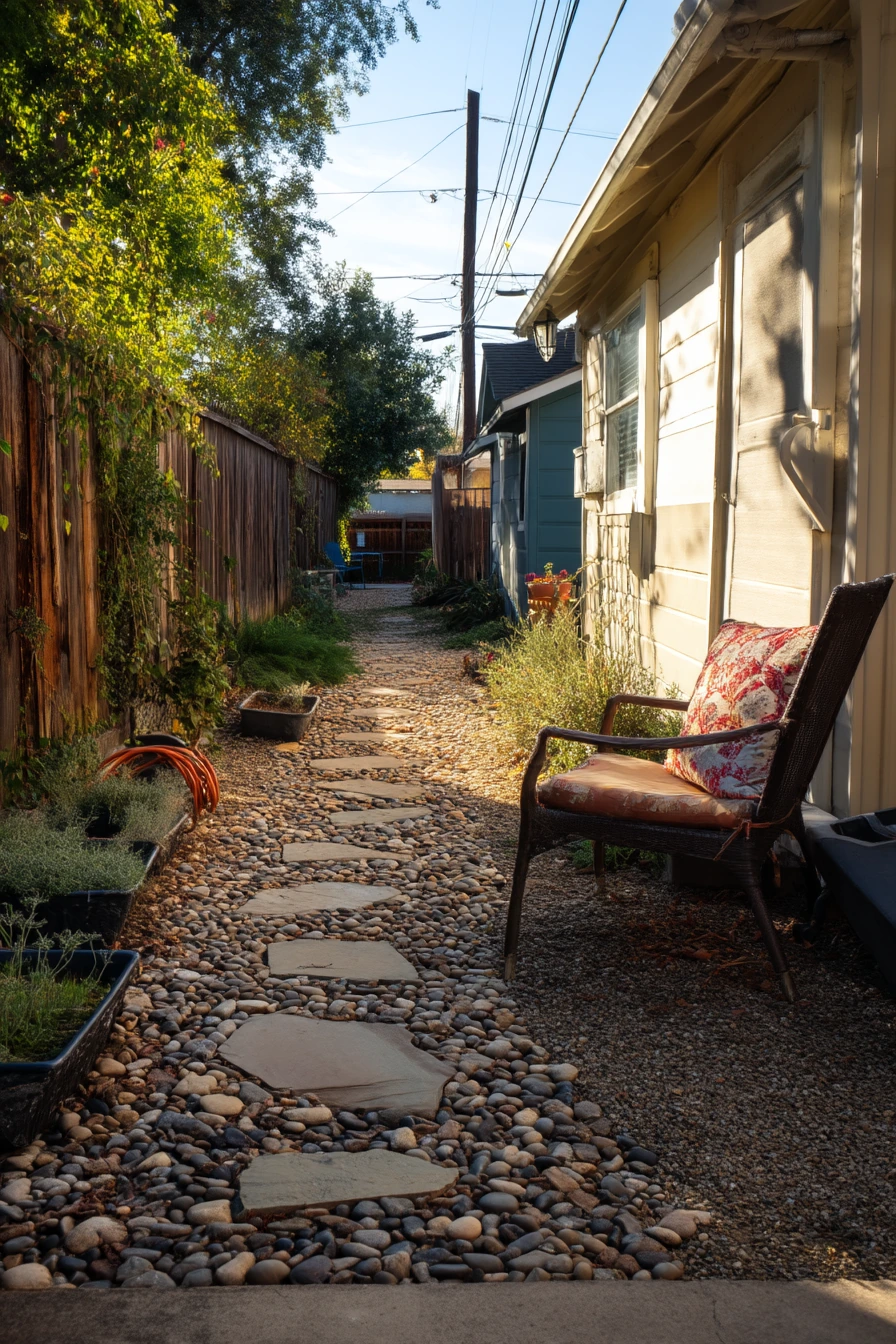
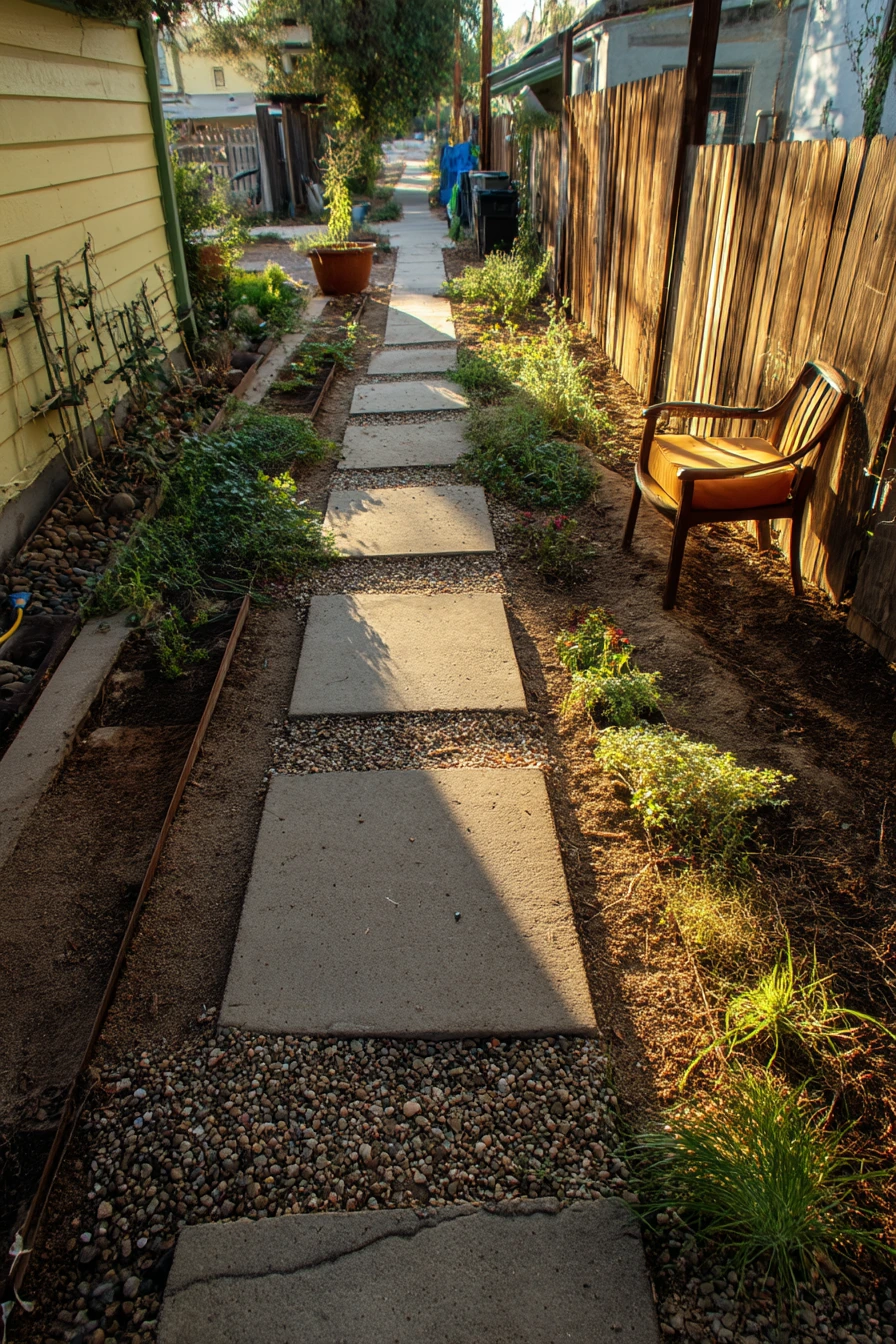
A narrow side yard walkway of smooth asphalt is a smart fix for a rental bungalow because it is simple, functional, and easy to maintain. If the space feels tight, break up the long line with gravel strips and staggered stepping pavers set into the edges. That small change makes the path feel planned, not like a forgotten side zone.
Keep the look clean but real. A garden hose coiled near the spigot, a watering can, and a bit of mud on the edge after watering fits how people use side yards. If there is a utility fence, soften it with climbing vines. This also helps the space feel more private. Add small herb planters near the door end of the walkway so you get something useful from the space, not just a passage.
For styling, stick with a few repeat items. Choose planters in one color, like black or terracotta, and keep them narrow so you do not shrink the walkway. Warm late-afternoon light makes asphalt look softer, so add one outdoor chair cushion or a small stool for a casual touch, but keep it minimal so the area stays easy to walk through.
- Keep the clear walking width at least 36 inches when possible.
- Use gravel strips for drainage and to reduce splash-back dirt.
- Train vines on simple wire to cover a plain fence faster.
- Place herb planters where they get 5 to 6 hours of sun.
- Store the hose on a wall hook to keep the path uncluttered.
Pro Design Tip: In side yards, use one repeated “module” (gravel strip + paver + planter) every few feet to make the long run feel designed.
Budget Considerations: A small bag of gravel and a few concrete pavers can change the look without major work; if you cannot add pavers, focus on vines and neat hose storage.
3 Modern Entry Walkway with Mailbox Stop
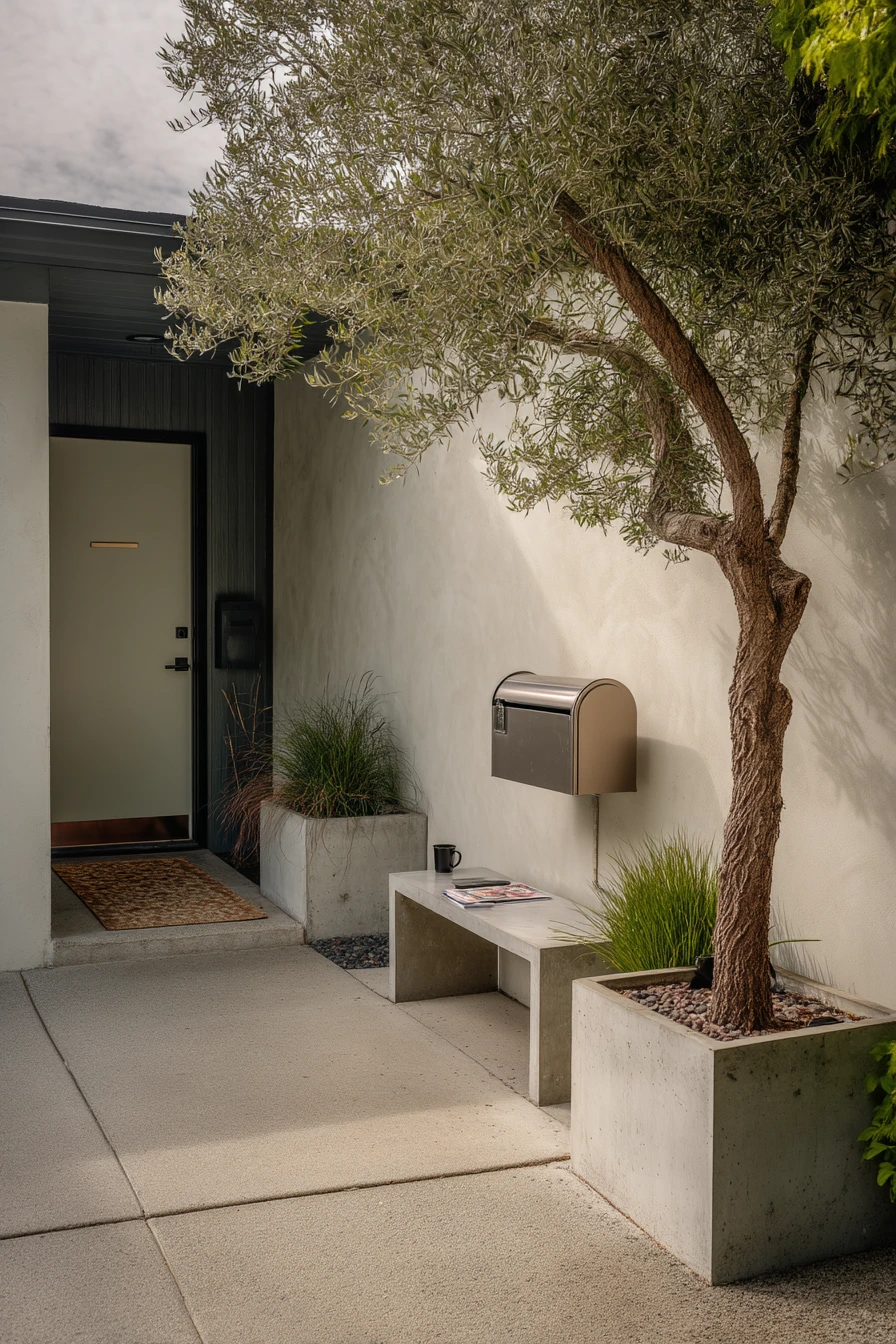
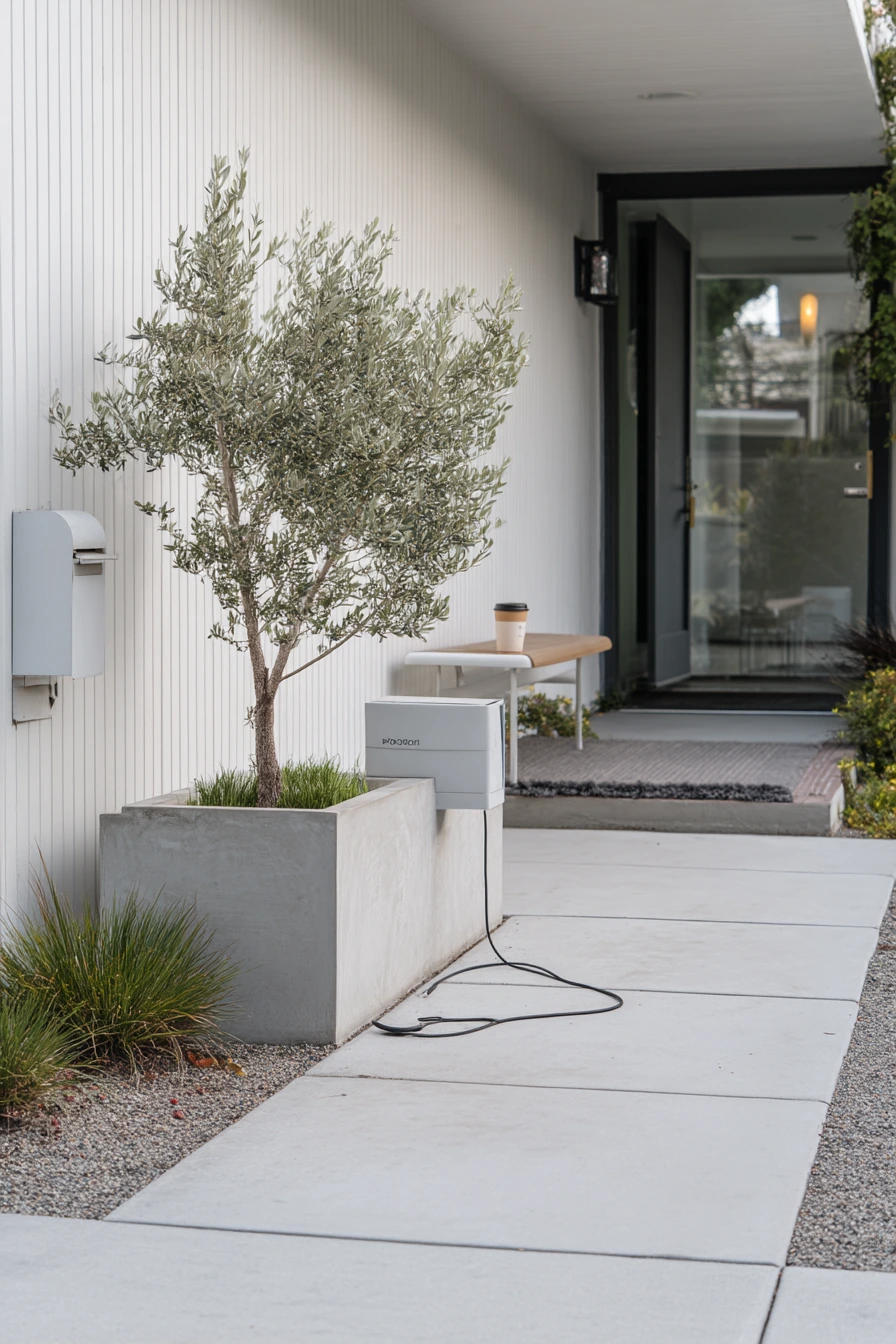
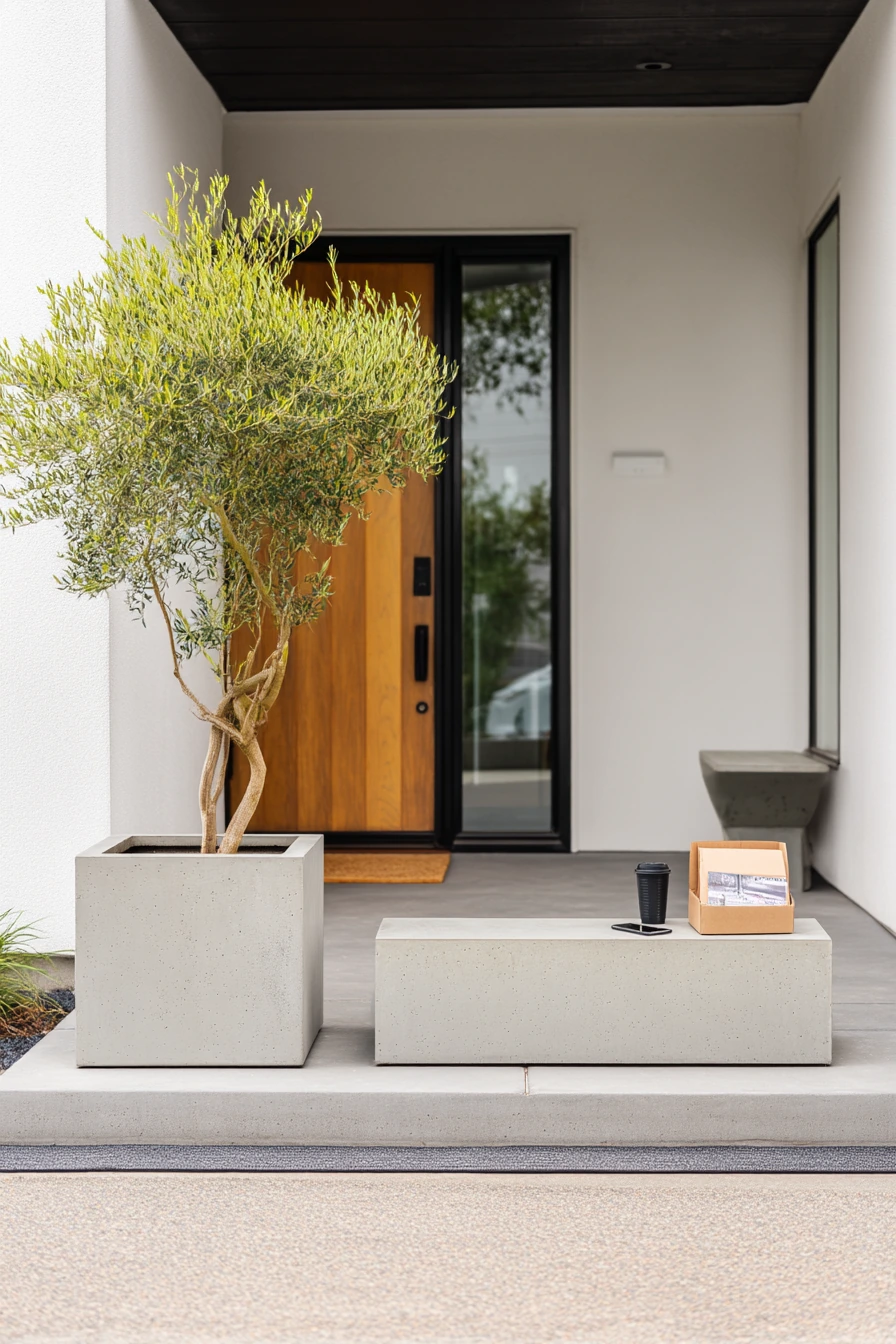
A clean asphalt walkway can work with a modern entry when the details are sharp but still practical. Pair the dark path with concrete planter boxes and a slender olive tree for a simple, structured look. The asphalt becomes the quiet base, while the plants and entry items add the style.
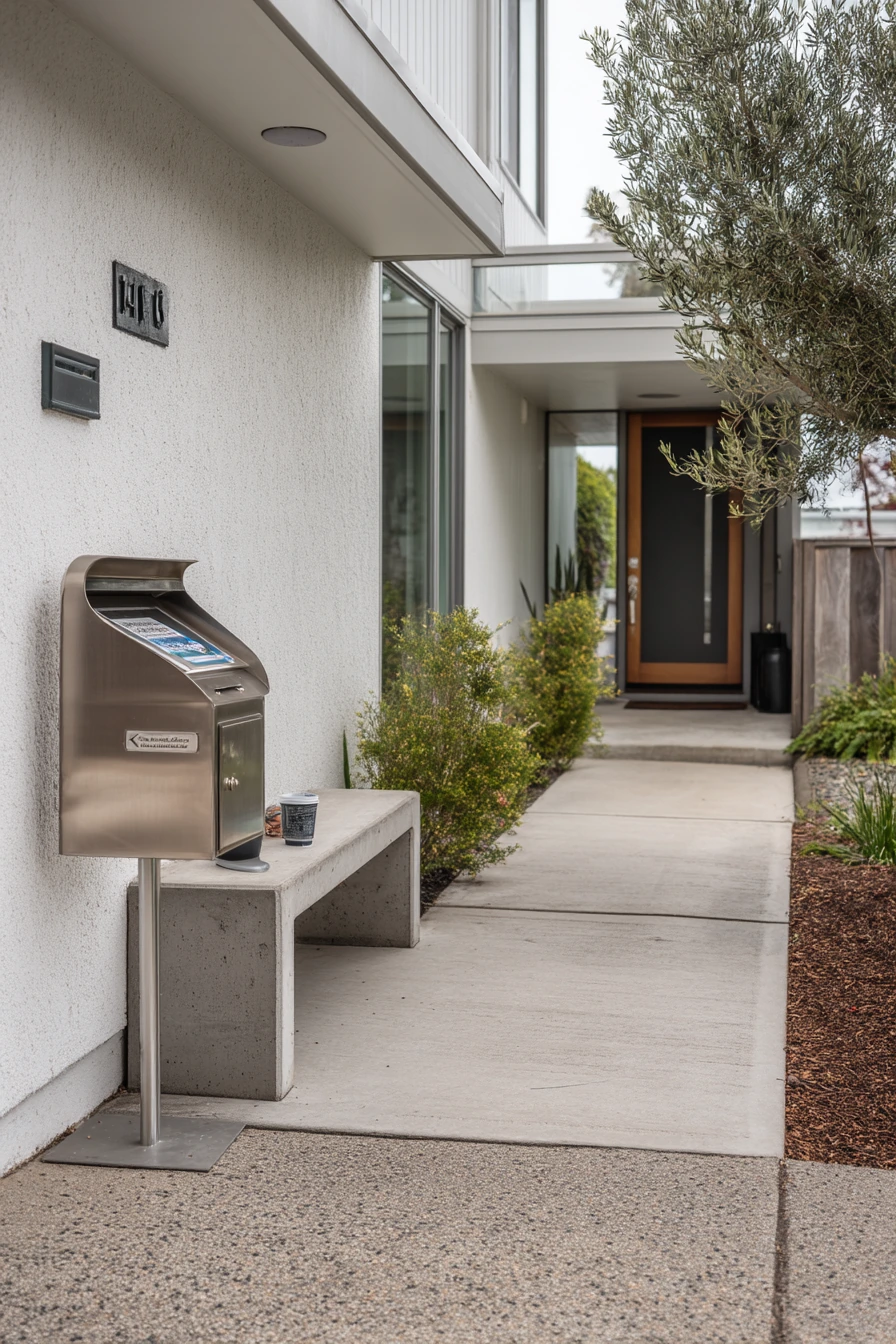
Modern does not have to feel cold. Add a textured doormat, a brushed steel mailbox, and a small bench near the door. Let the entry show real life: a delivery box half-open with a magazine and keys visible, and a coffee cup on the bench. If you can see a charging cable trailing from a phone inside, it tells a true story of how the space is used. Soft overcast daylight works well here because it keeps shadows calm and shows the surface texture.
To style it, choose a tight color palette. Black, gray, and warm wood tones look good with asphalt. Keep planter shapes clean and limit the number of plant types. One small tree and one ground plant repeated in both planters is enough. Wipe the mailbox and door hardware often so the whole scene stays crisp.
- Use straight walkway edges for a modern, tailored feel.
- Pick planters with the same height to keep the entry balanced.
- Add one bench or console piece so packages have a landing spot.
- Choose a doormat with strong texture for grip and style.
- Keep the entry clutter to one or two items, not a pile.
Pro Design Tip: Make the walkway width match the door zone; a slightly wider section near the entry feels intentional and helps with packages.
Budget Considerations: Concrete planters can be pricey; to save, use fiberglass planters in a concrete look and spend the extra on a good-quality doormat and mailbox.
4 Rainy Day Walkway with Safe Grip
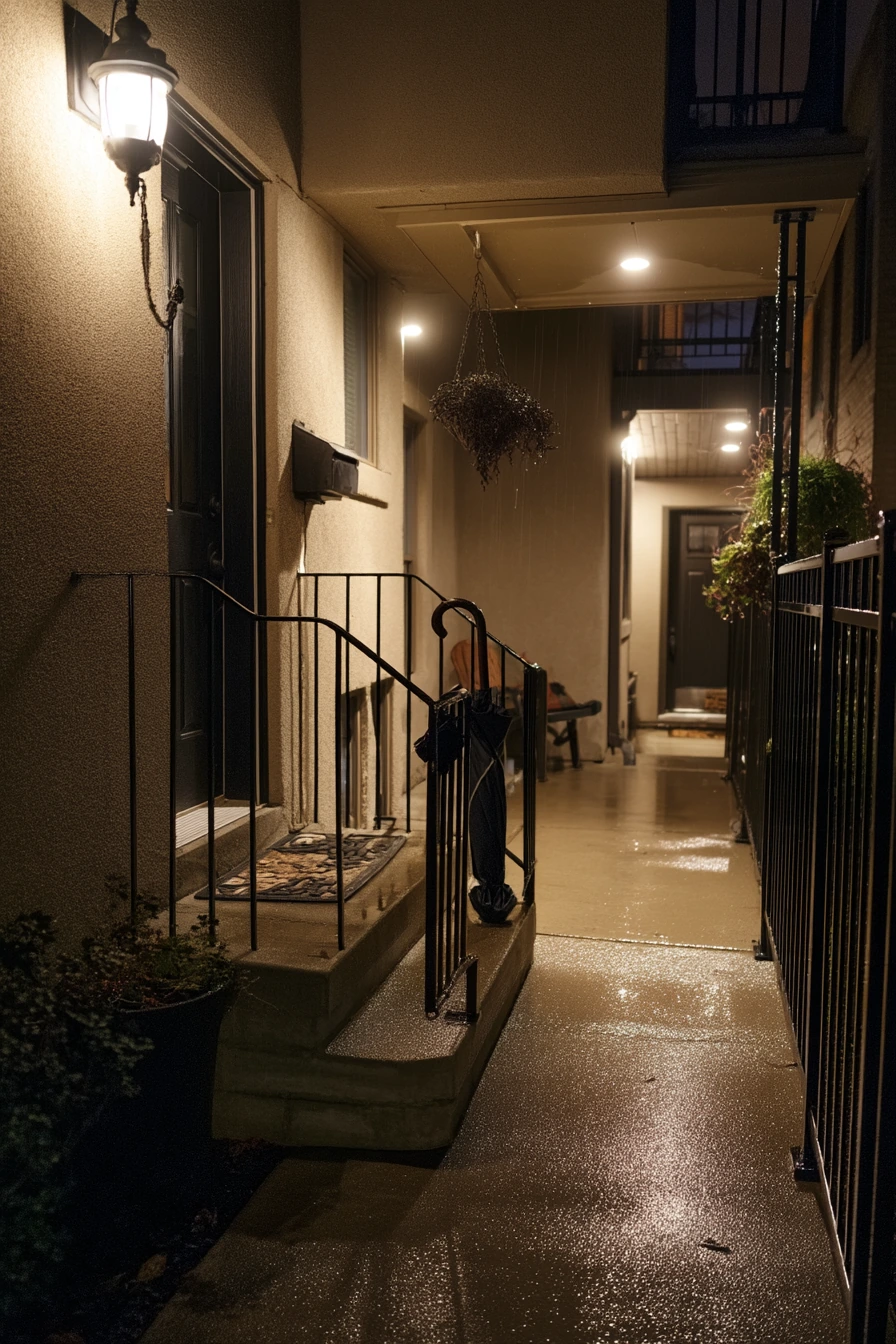
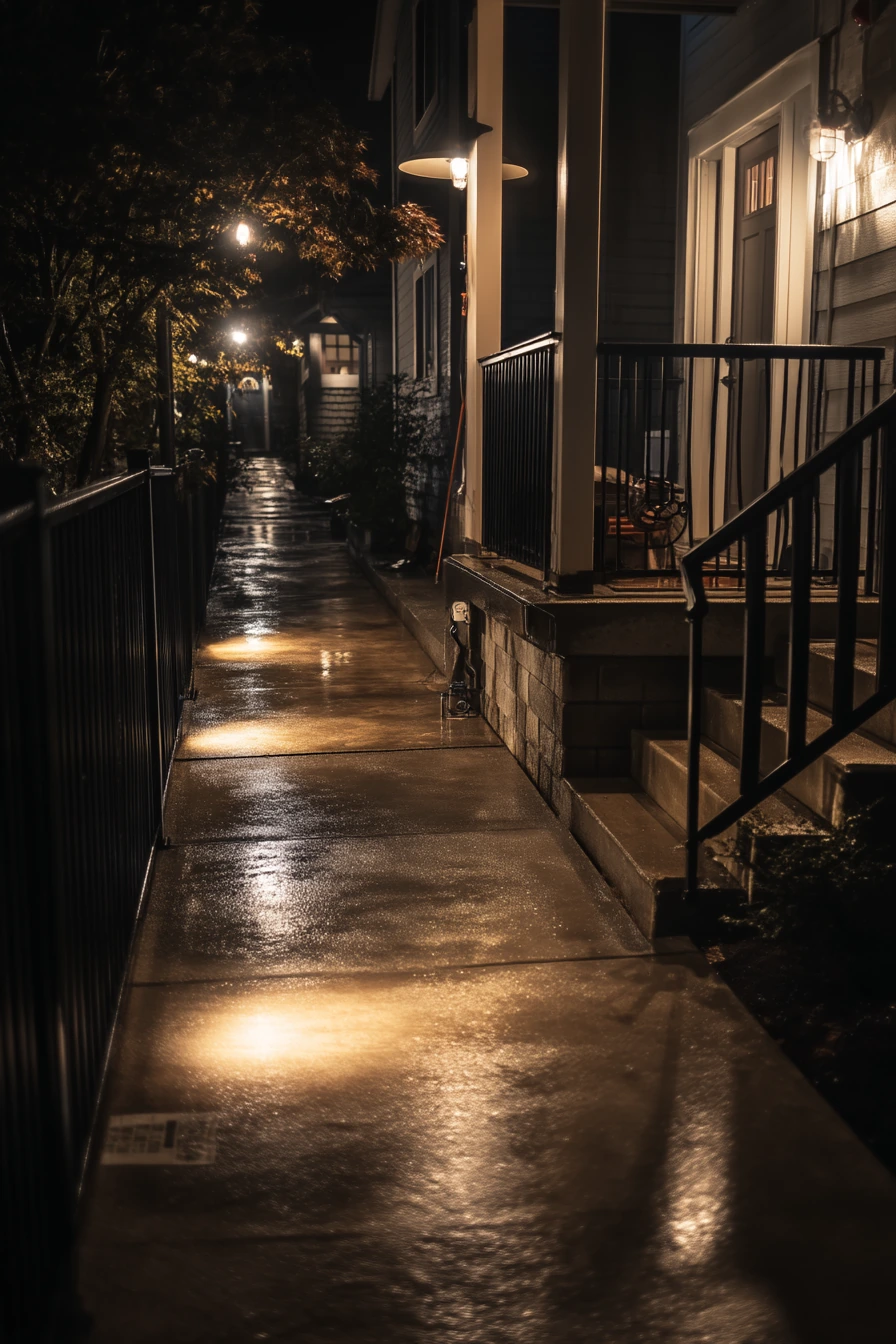
A wet asphalt walkway at a small townhouse should focus on safety first, then comfort. In rain, asphalt can look glossy, so choose a mix designed for traction or apply a non-slip surface treatment. The goal is a subtle sheen that still feels secure under shoes.
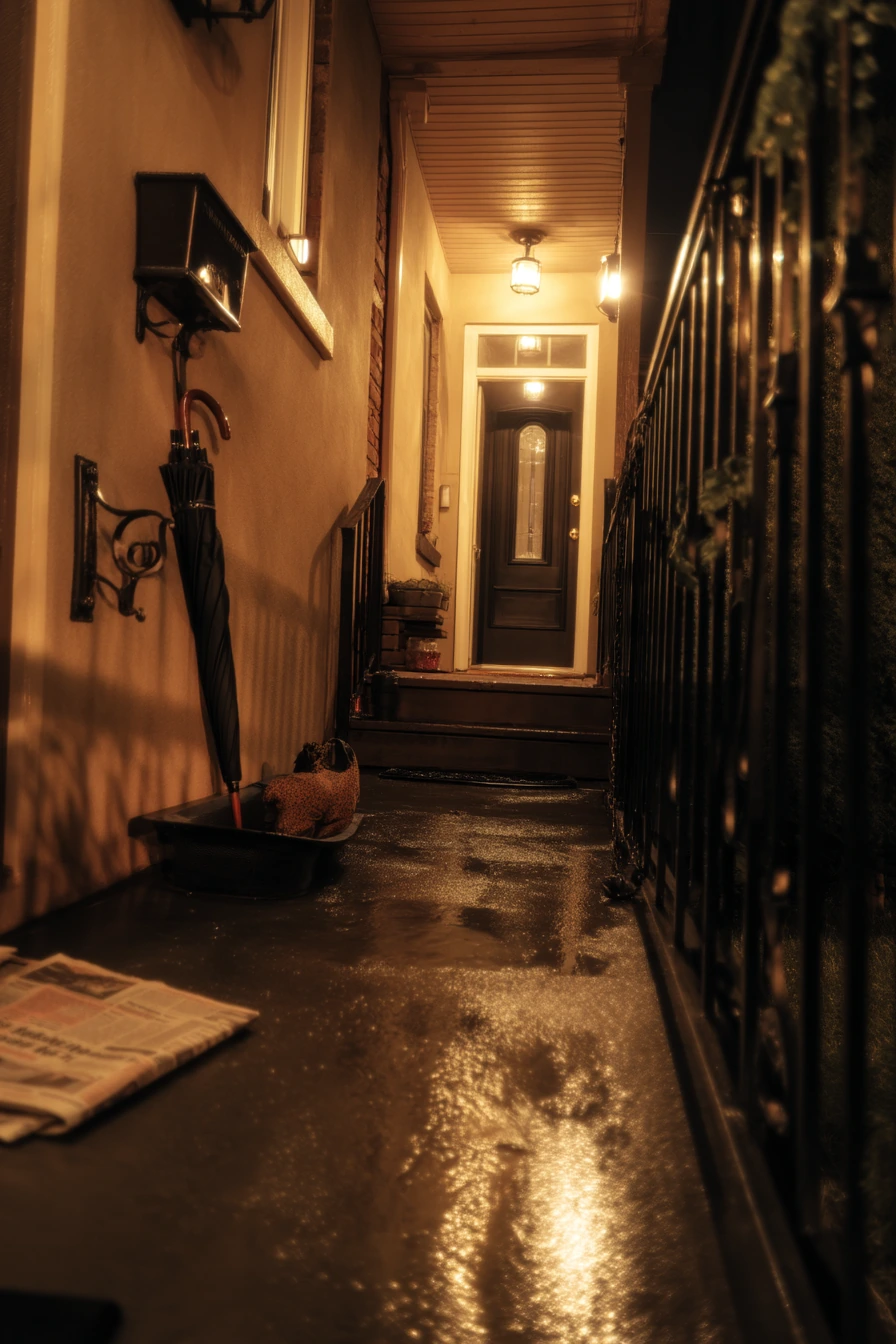
Lighting matters most on rainy nights. Add subtle edge lighting along the path so people can see the boundary without harsh glare. A black railing helps with support and looks clean against wet pavement. A compact rain chain near the entry is a practical detail that also adds a soft sound during storms. Style the porch for real weather: a boot tray by the entry, an umbrella dripping beside the door, and a dog leash hanging from a hook. A newspaper on the step and warm lamp glow from the hallway makes the space feel calm.
To keep it tidy, set up a simple “wet zone.” Place the boot tray and umbrella stand where water will not drip onto the walkway. Use a doormat with drainage holes or a thick fiber mat that dries fast. If you can, slope the asphalt slightly away from the door so puddles do not collect at the threshold.
- Add edge lights 12 to 18 inches from the path for clear guidance.
- Choose a railing with a comfortable grip size.
- Use a boot tray that is easy to rinse, not fabric.
- Install a rain chain into a gravel bed to reduce splashing.
- Keep a hook strip for leashes and umbrellas near the door.
Pro Design Tip: For townhouses, aim for layered light: one warm porch fixture plus low path lights so the wet surface does not create glare.
Budget Considerations: Solar edge lights and a basic boot tray are affordable; traction additives and professional sealing cost more but can be worth it for safety.
5 Front Garden Path with Native Plants
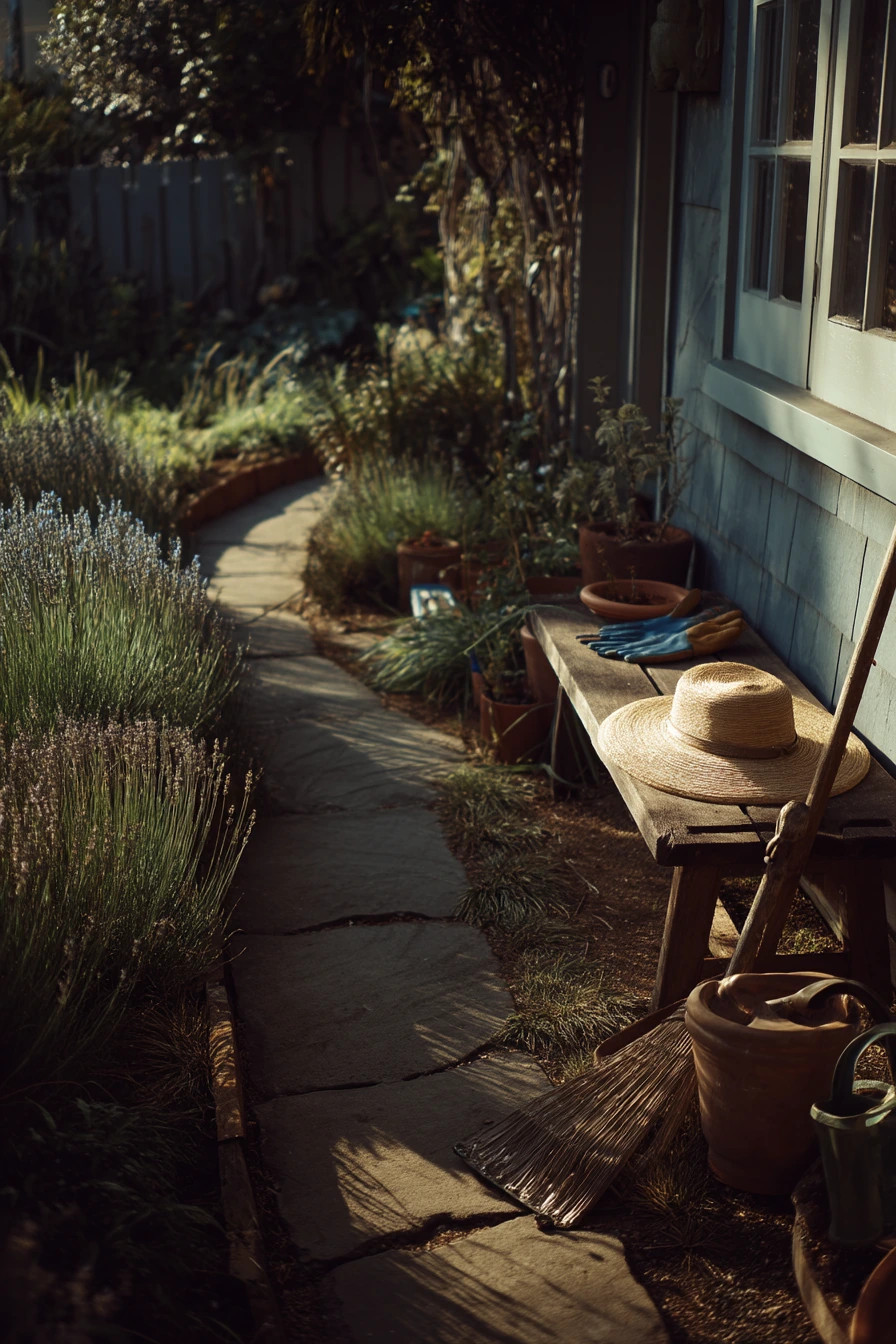
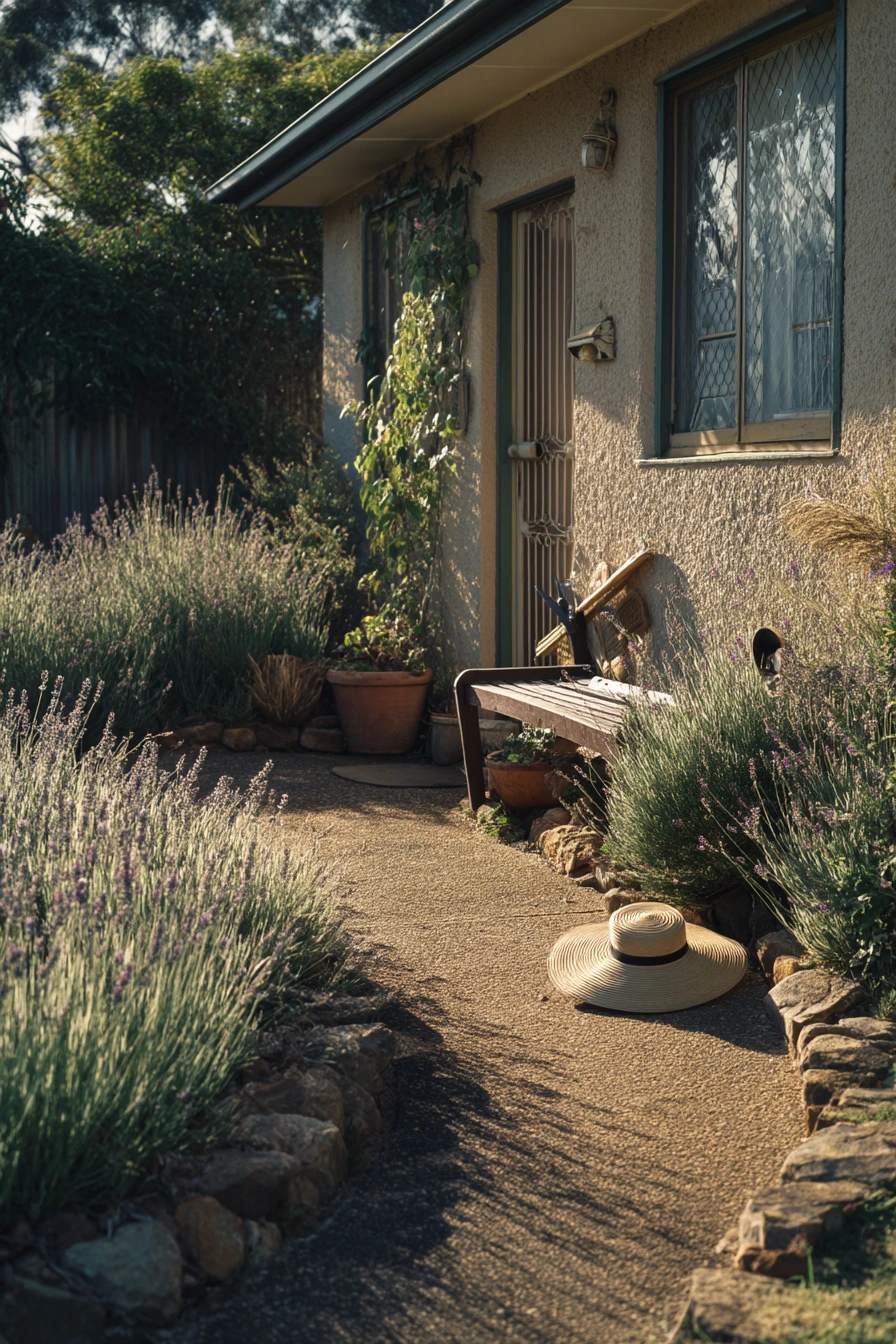
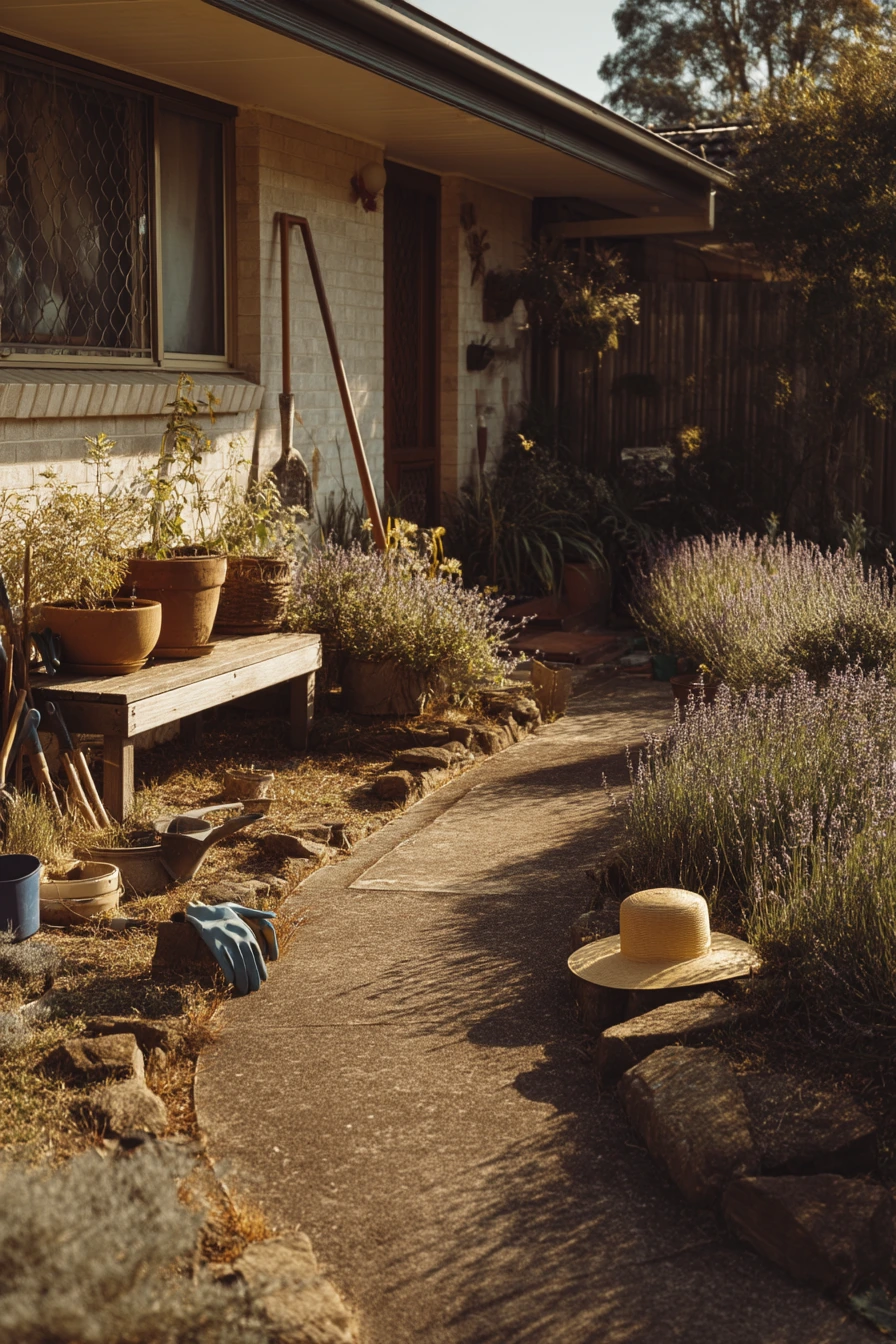
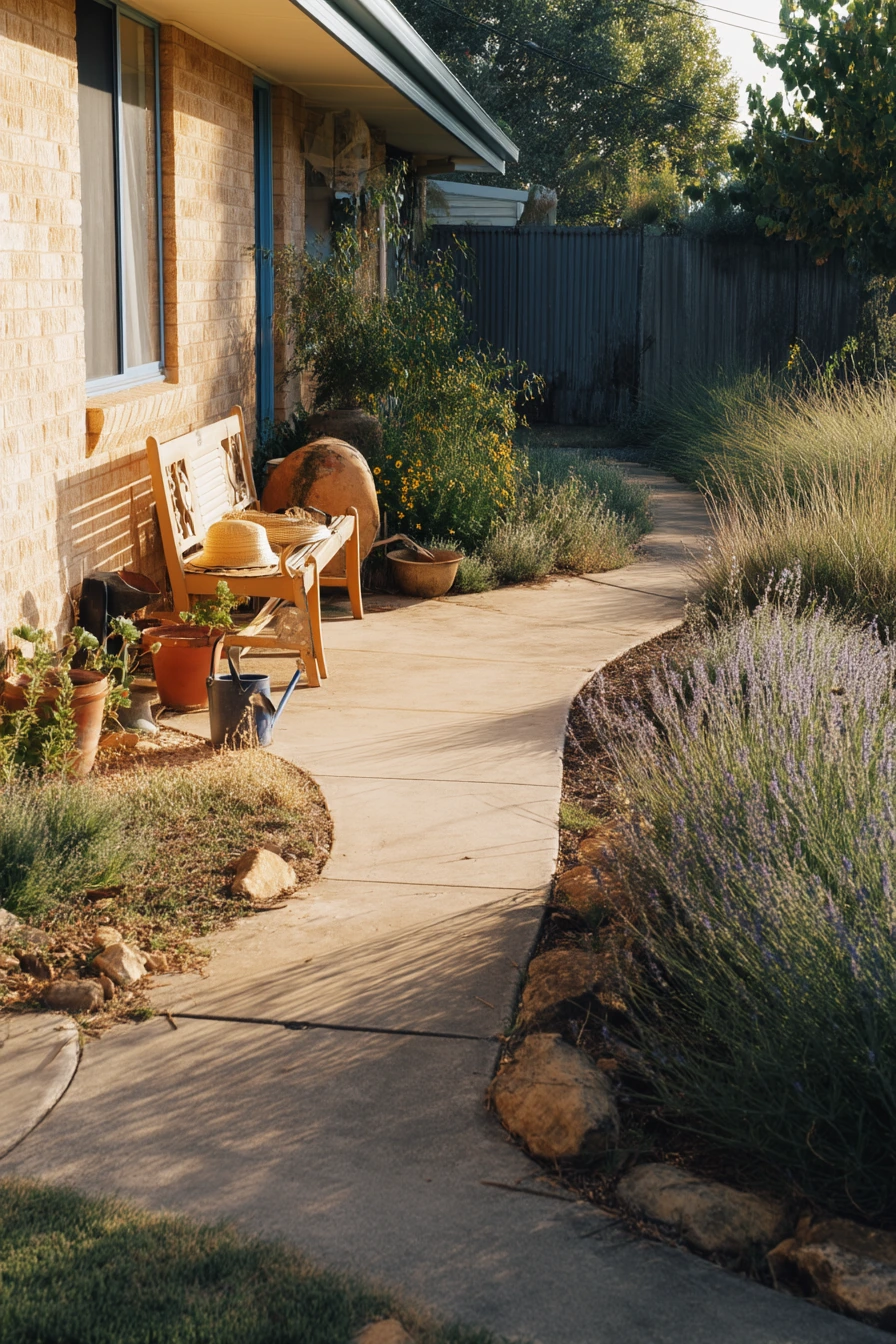
An asphalt walkway winding through a front garden can feel relaxed and natural when you soften the edges. Native grasses and lavender add movement, scent, and pollinator value. Bees in the flowers are a sign the planting is doing its job. Asphalt works here because it creates a smooth route through a planting-heavy yard without the shifting you get from loose stone.
To keep the garden look grounded, add low stone borders along parts of the path. This gives a natural transition from dark pavement to plants and helps keep soil from washing onto the walkway. Terracotta pots add warmth and make it easy to swap plants by season. Small lived-in details, like a rake leaning near the garage, a sun hat on a bench, and gardening gloves beside a watering can, make the space feel used and cared for.
For styling, repeat colors and textures. Lavender purple, grass green, and terracotta orange work well against asphalt. Keep the path edges slightly irregular, not perfectly sharp, so it fits the garden style. Sweep the walkway often, especially after pruning, so leaves do not break down and stain the surface.
- Curve the walkway gently to slow the view and highlight plant beds.
- Use stone borders where runoff is strongest, like near downspouts.
- Cluster terracotta pots in groups of three for a natural look.
- Pick native grasses that stay upright so they do not flop onto the path.
- Add a small bench where the path widens for a resting spot.
Pro Design Tip: Keep taller grasses and lavender set back 12 inches from the edge so blooms and blades do not narrow the walking space.
Budget Considerations: Start with smaller plants and let them fill in over time; use salvaged stone for borders if new stone is out of reach.
6 Small Porch Walkway for Urban Living
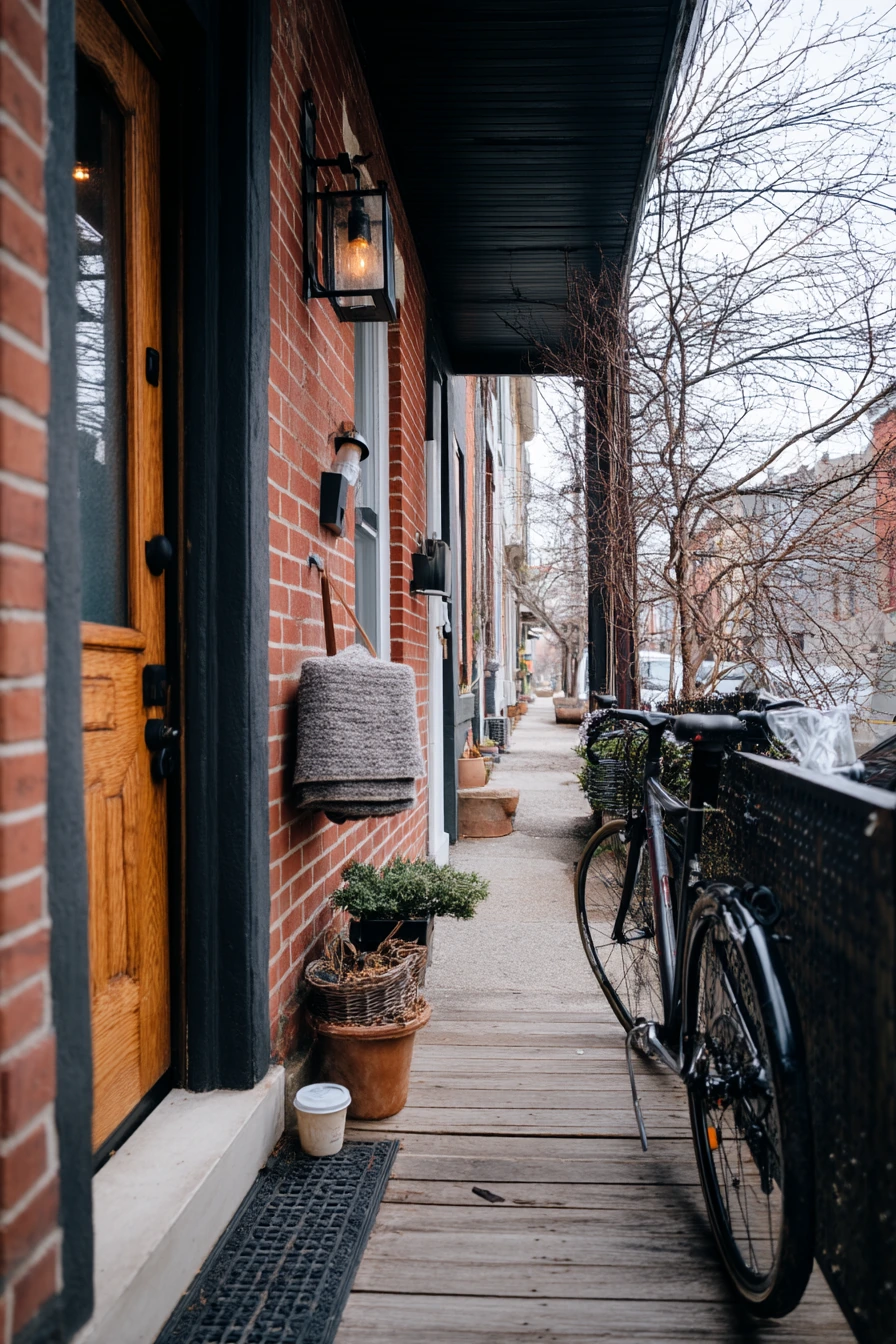
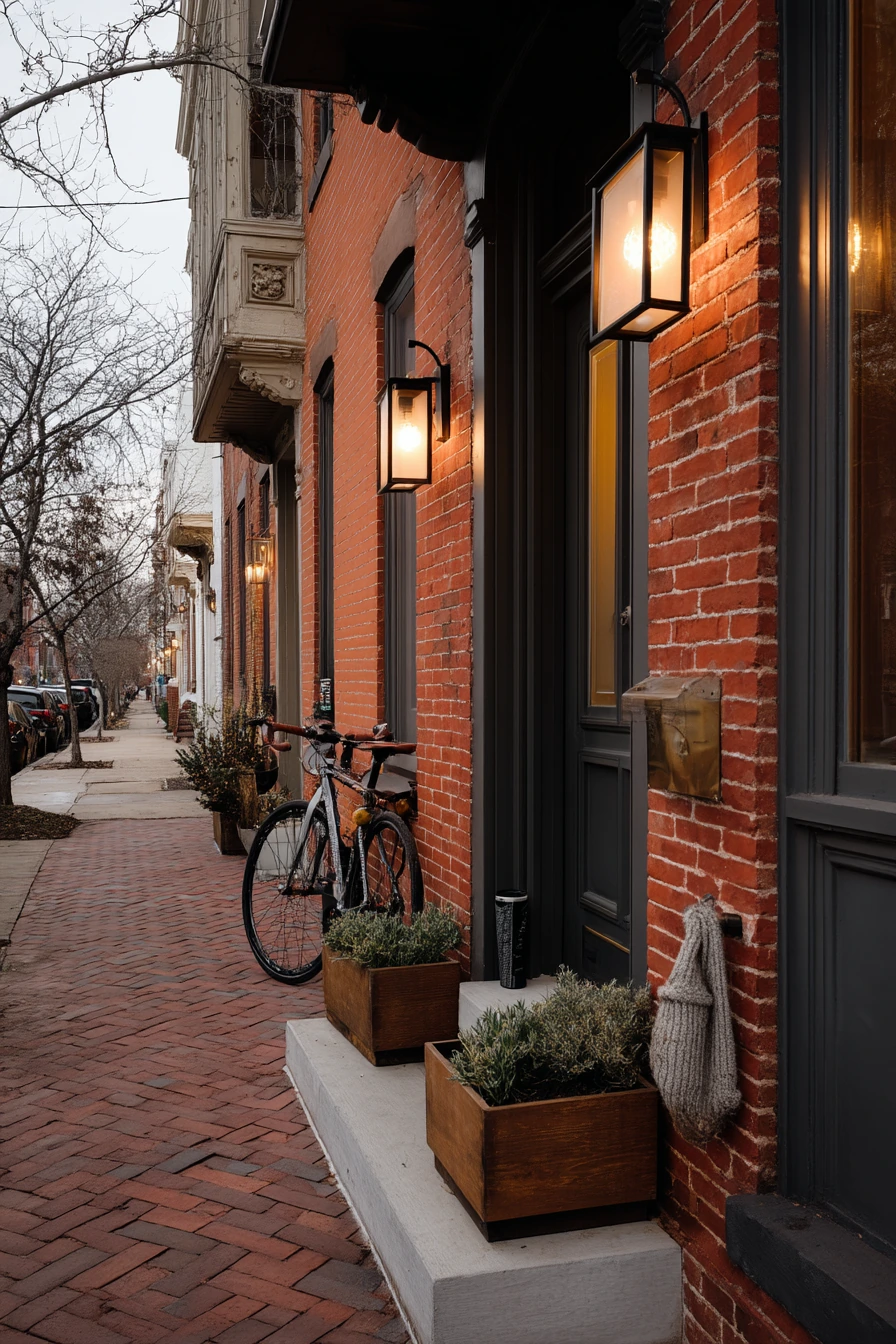
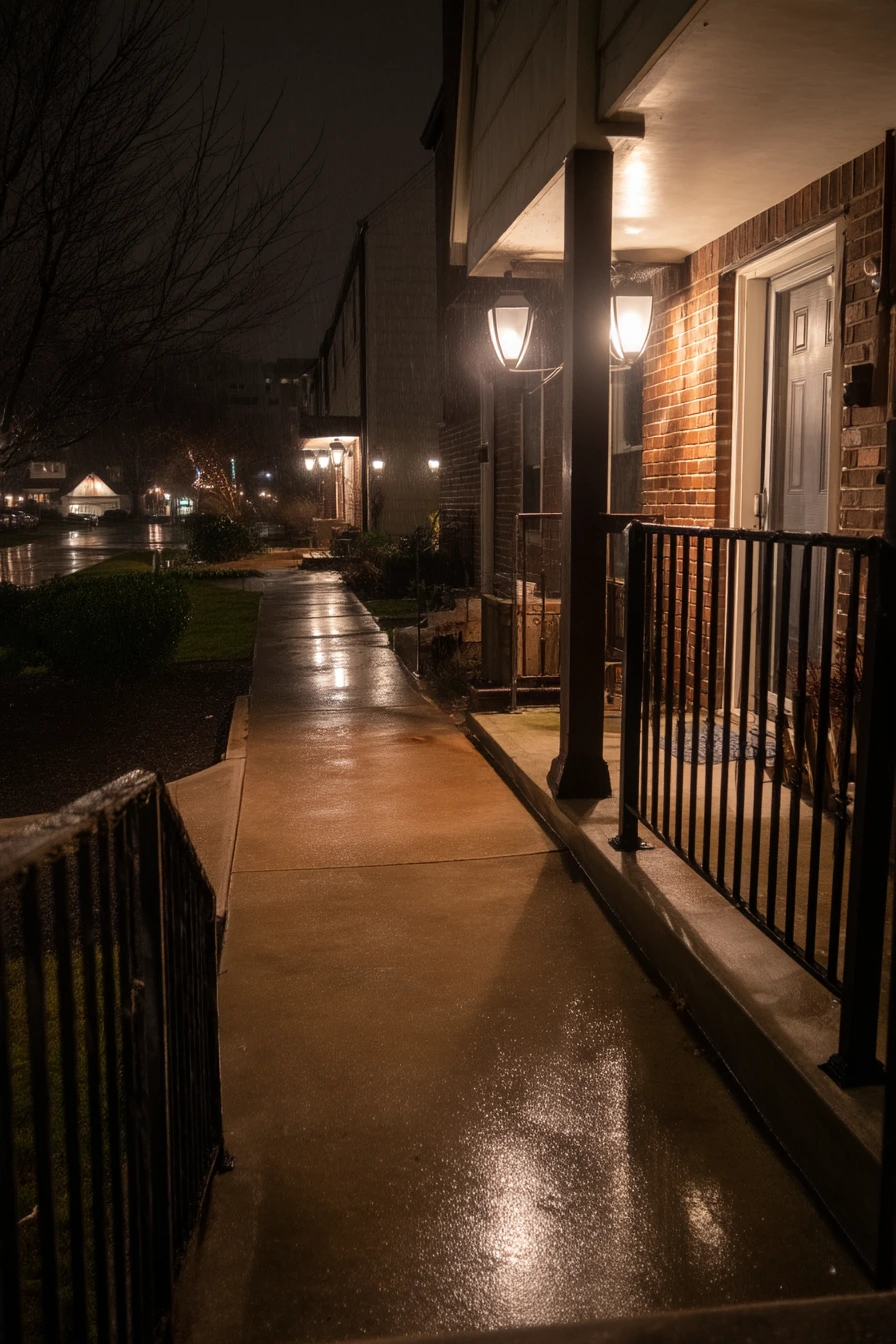
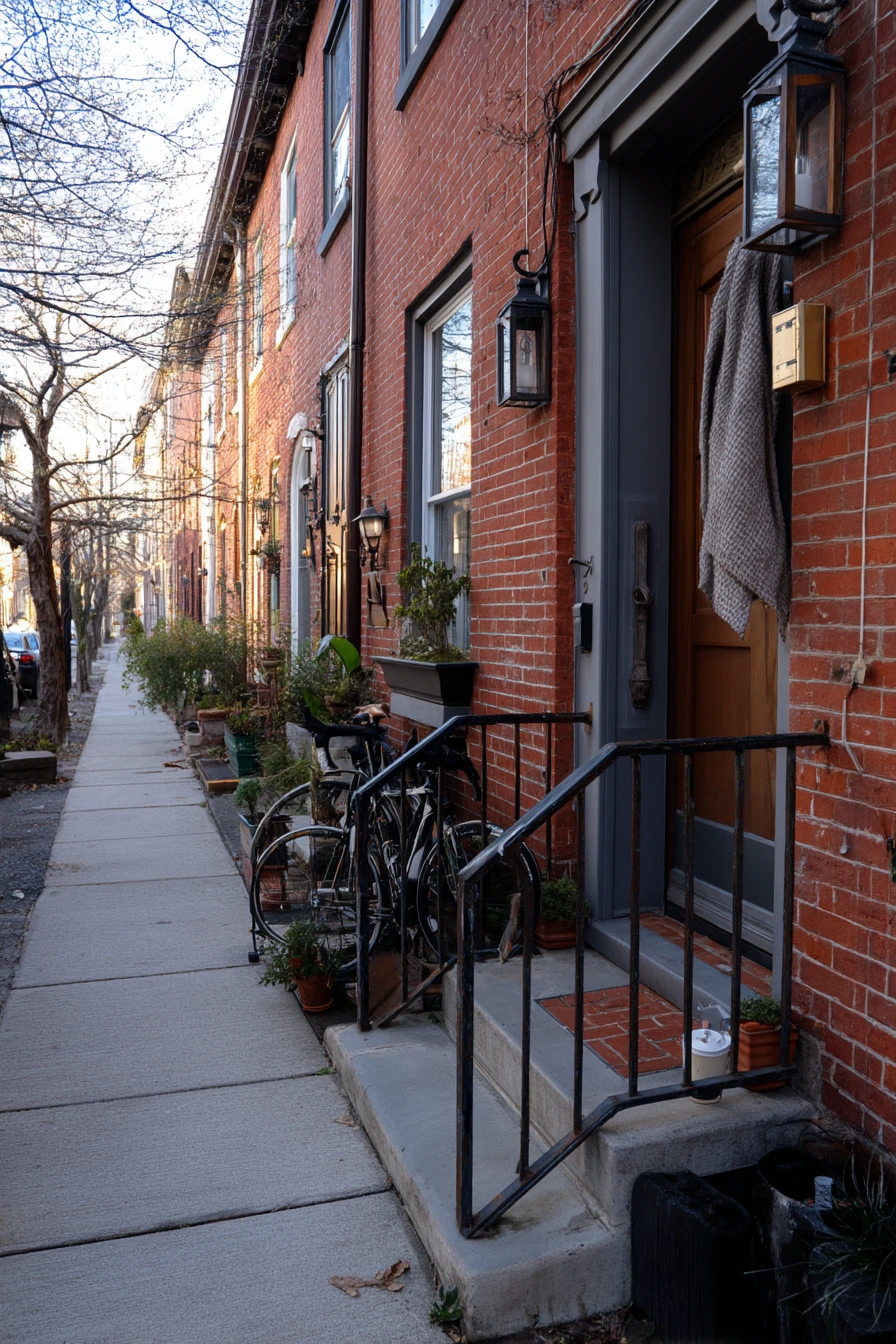
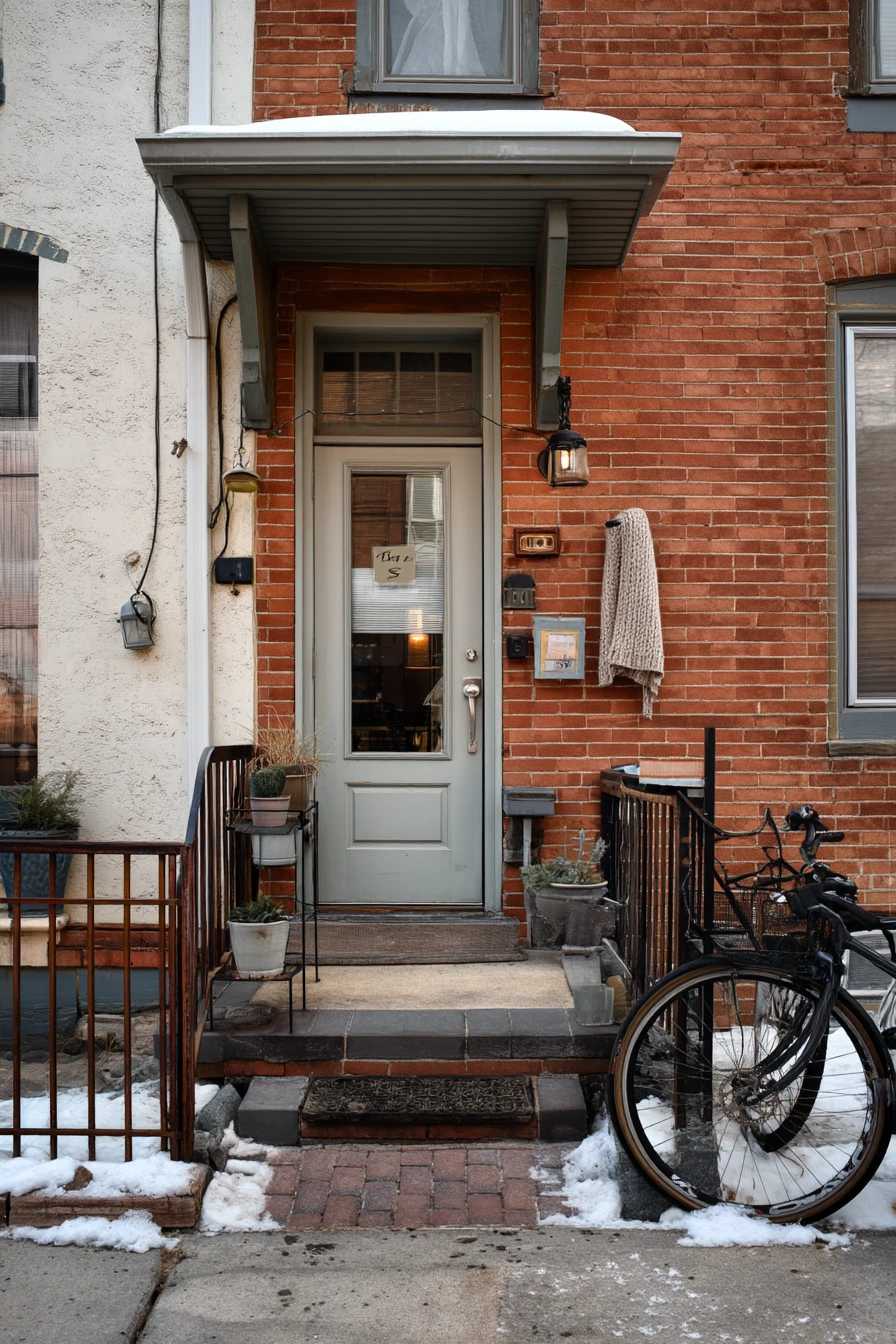
A compact asphalt walkway in a city row home needs to be efficient and stylish. Since space is tight, the finish details matter more than extra decor. A clean asphalt strip leading to a brick stoop gives you a simple base that works in all seasons, including winter when the daylight is pale and the ground stays damp.
To make it feel welcoming, add slim lanterns or narrow wall lights that do not crowd the path. Use narrow planters to bring greenery without taking away walking space. A bicycle wheel tucked to the side and a takeaway cup on the rail are realistic touches, but aim for neat, not messy. Inside the glass door, a small mail stack and a knit scarf on a hook makes the entry feel lived-in. The goal is a tidy rhythm of items, not clutter.
For styling, choose vertical elements. Tall, slim planters and upright lights draw the eye up, which makes the walkway feel less cramped. Use one strong material repeat, like black metal for lanterns and rail details. If snow is common, keep planters raised and easy to move so you can clear the path quickly.
- Keep the walkway edge straight for a clean city look.
- Use narrow evergreen plants for year-round structure.
- Mount lanterns at a height that lights faces and steps.
- Create one “parking spot” for a bike so it does not block the way.
- Add a small tray or shelf inside for mail to reduce porch piles.
Pro Design Tip: In small spaces, use fewer, better pieces: two matching planters and one good light fixture look more polished than many small items.
Budget Considerations: Battery or solar lanterns can save wiring costs; if planters are expensive, use simple black nursery pots inside a single decorative cover.
7 Night Walkway with Warm Welcome Lights
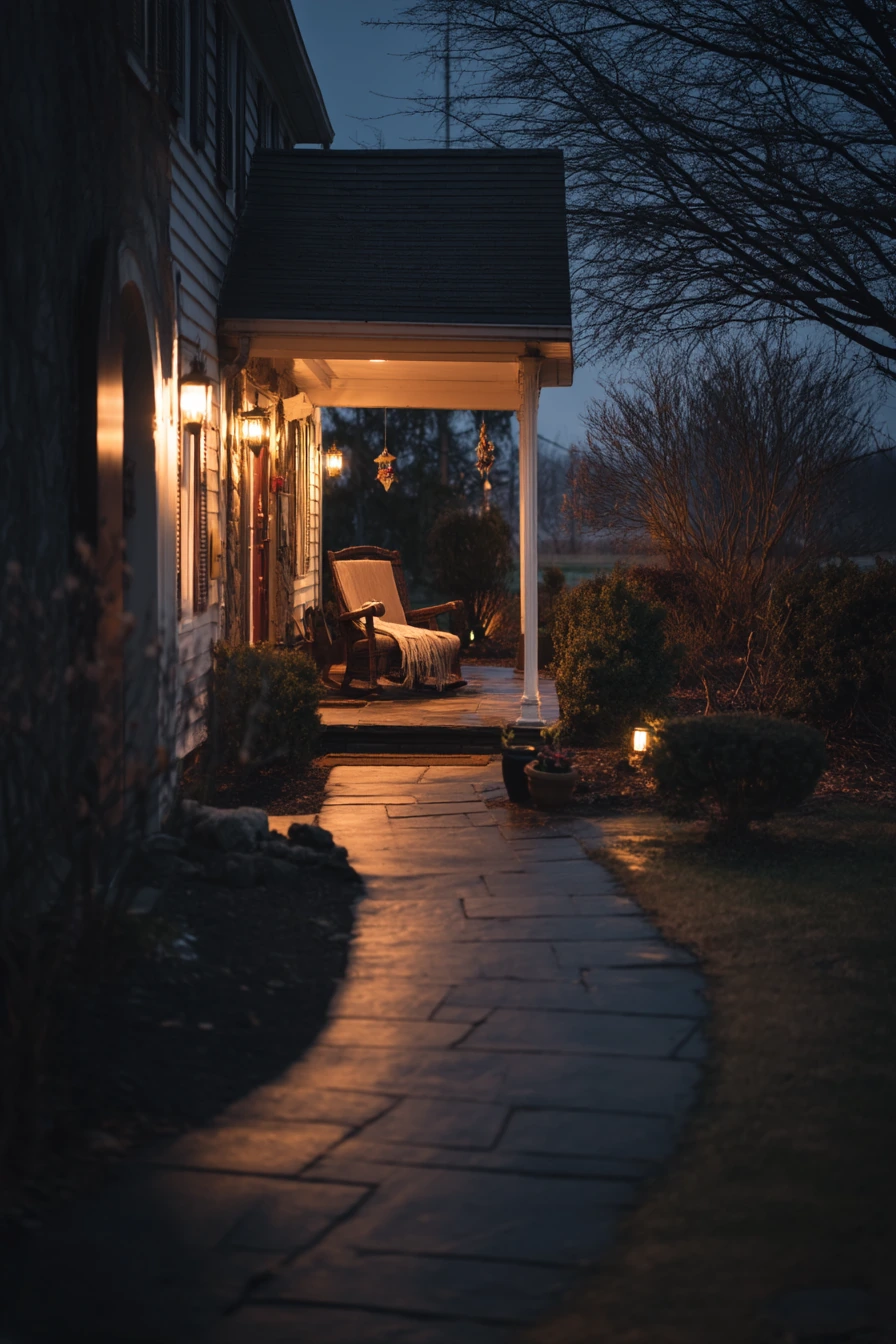
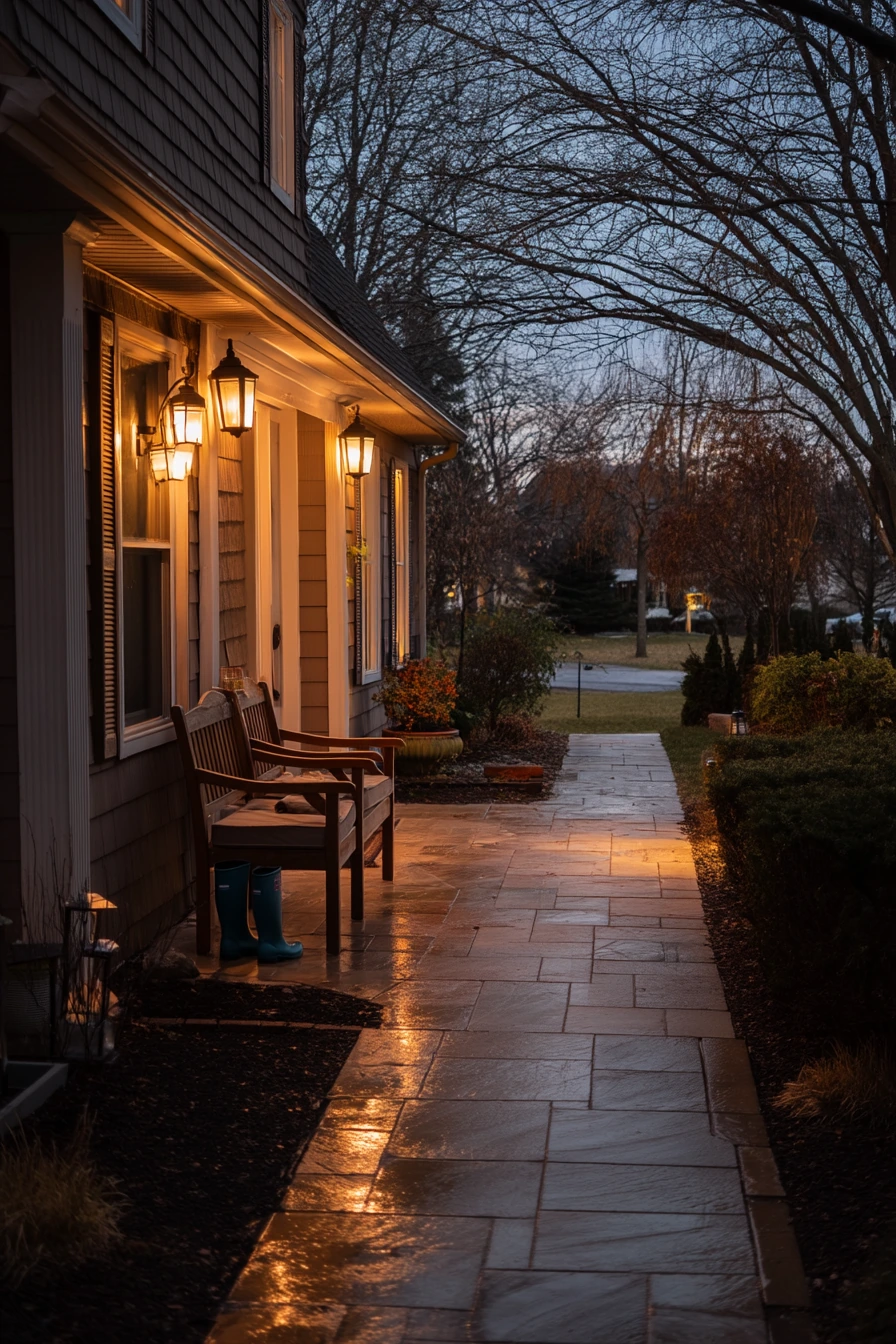
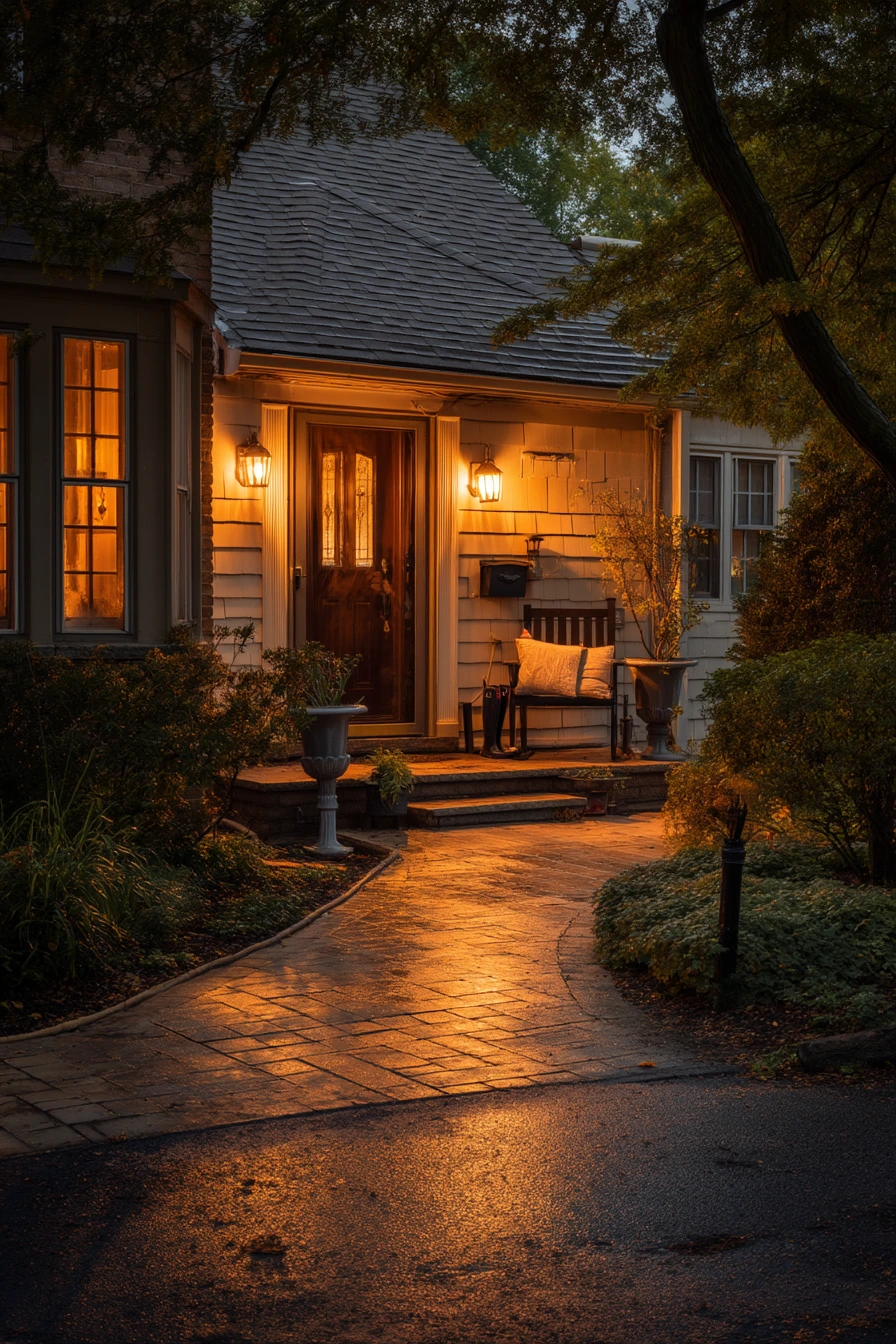
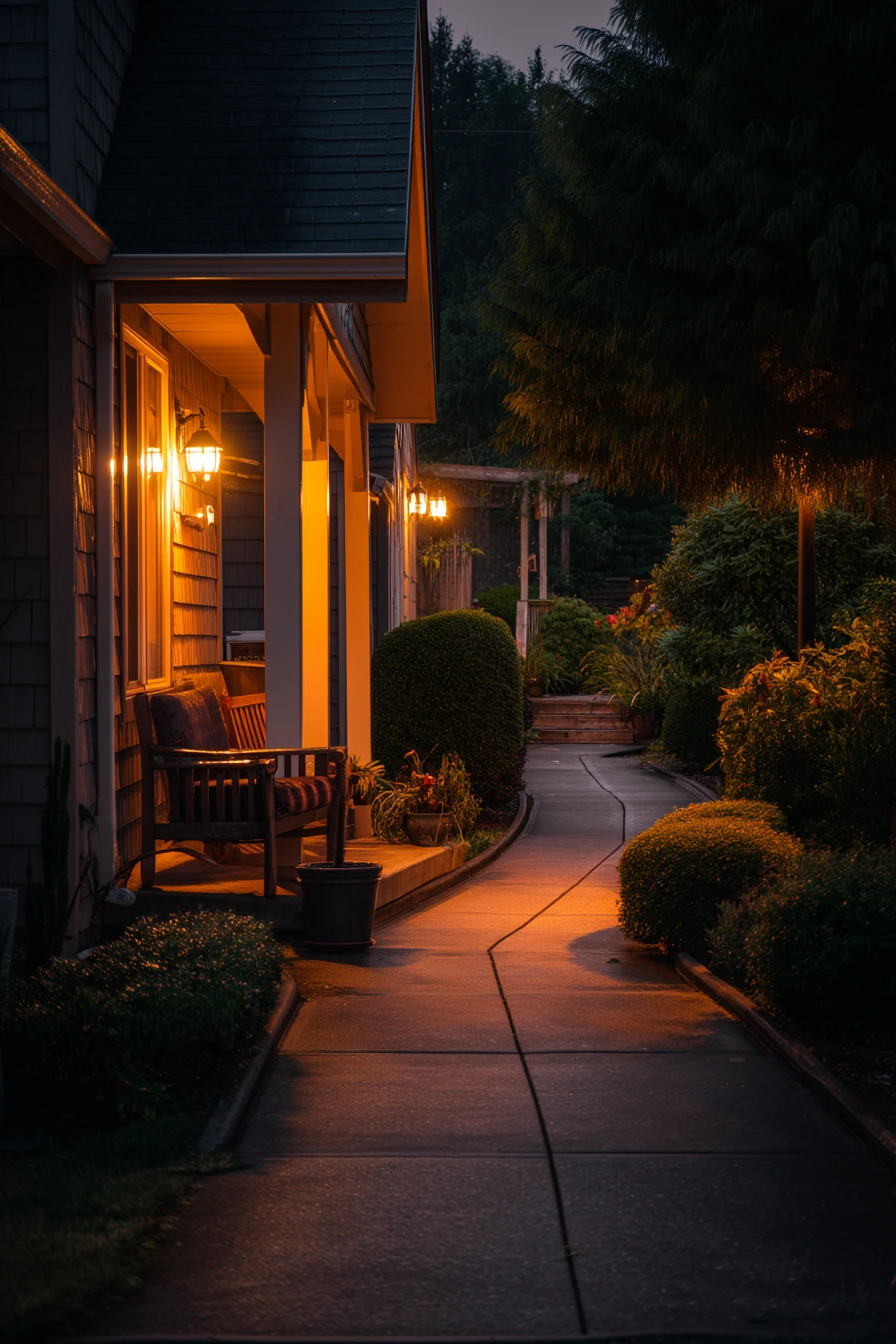
An asphalt walkway at dusk can feel inviting and secure when the lighting is planned. Asphalt reflects warm light well, so a few well-placed fixtures can make the whole path easier to follow. Warm path lights along the edge help guide steps, while soft uplight on shrubs adds depth without making the yard feel bright or harsh.
To make the entry feel like home, add glowing sconces by the door and keep porch seating simple. A porch chair with a folded blanket suggests a place to pause. A pair of rain boots by the door fits real family life and hints that the walkway is used in all weather. Reflections on the pavement can look nice at night, but you still need traction and good drainage so puddles do not sit where people step.
For styling, keep the light color consistent. Choose bulbs in the same warm range so the path does not look patchy. Hide cords and keep fixtures aligned. If you can see inside, a phone left charging on a side table adds a quiet, everyday touch. Make sure the door zone is brighter than the rest so guests know where to go.
- Place path lights 6 to 8 feet apart for even coverage.
- Use warm bulbs so the space feels calm, not stark.
- Aim uplights at shrubs, not windows, to avoid glare.
- Keep one clear spot for wet shoes and boots near the door.
- Check for shadows on steps and adjust light angles.
Pro Design Tip: Light the destination first (porch and door), then add path lights; the entry should always be the brightest point.
Budget Considerations: Solar path lights are the lowest-cost start; hardwired low-voltage lighting costs more but lasts longer and looks more consistent.
8 Accessible Walkway with Smooth Transitions
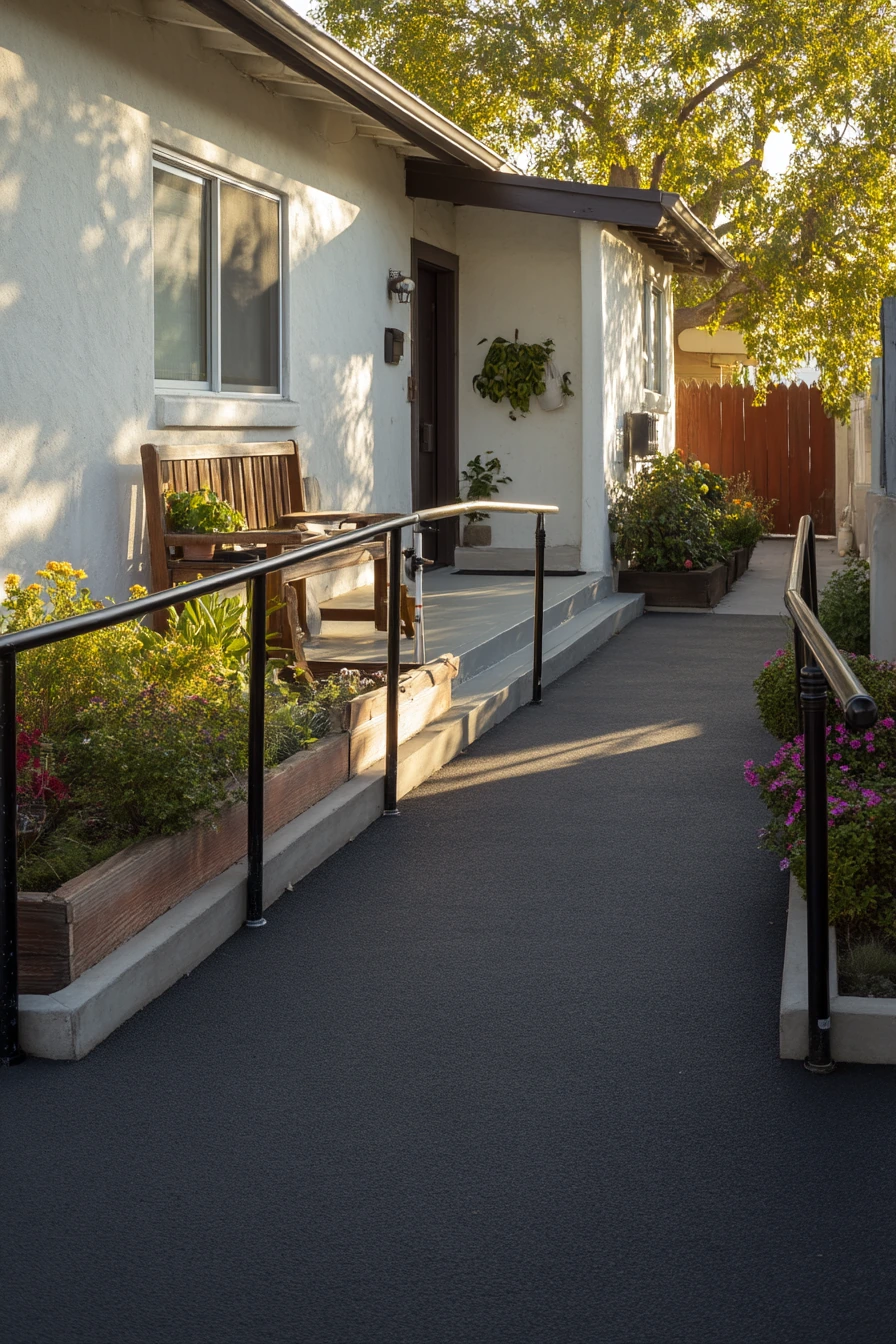
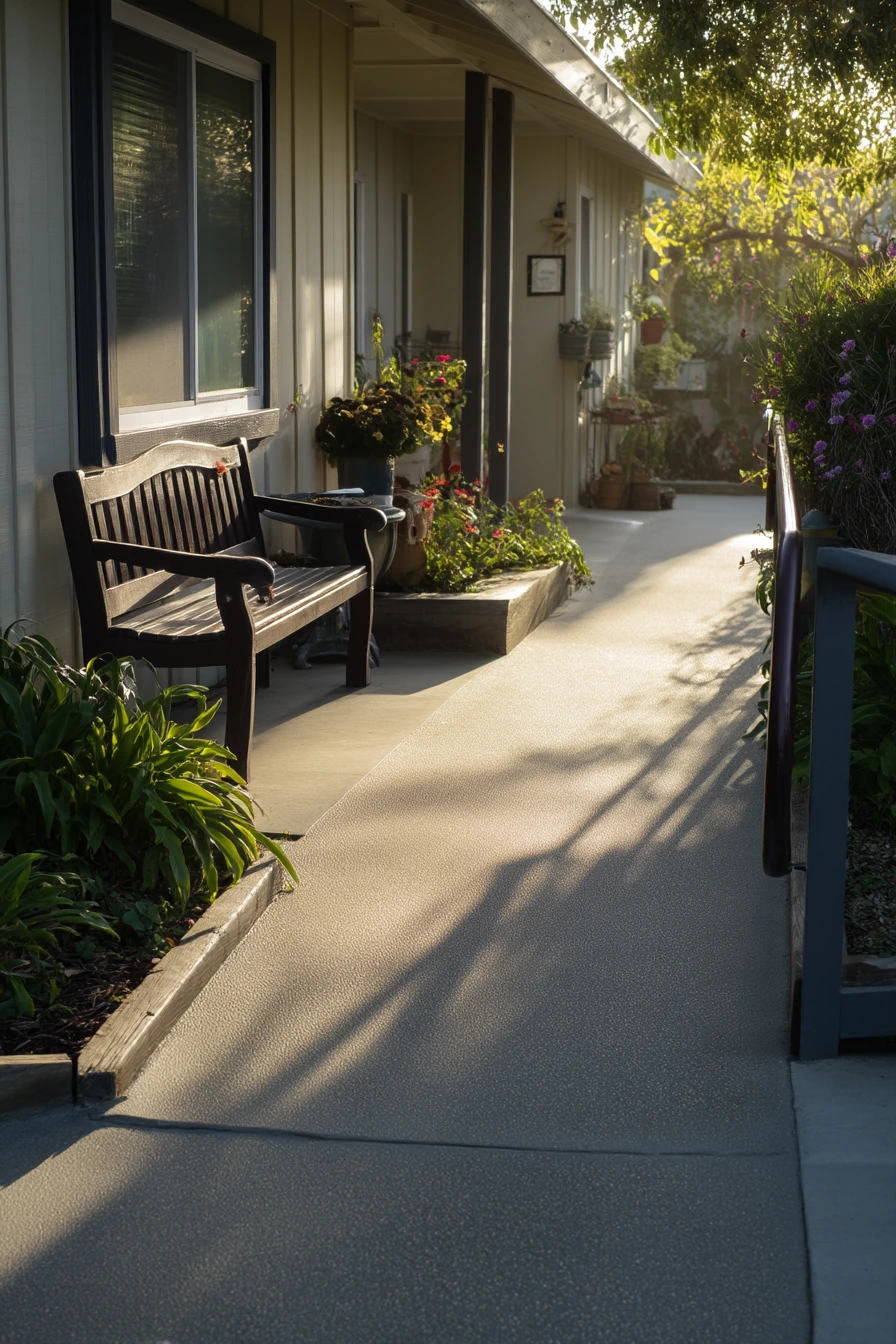
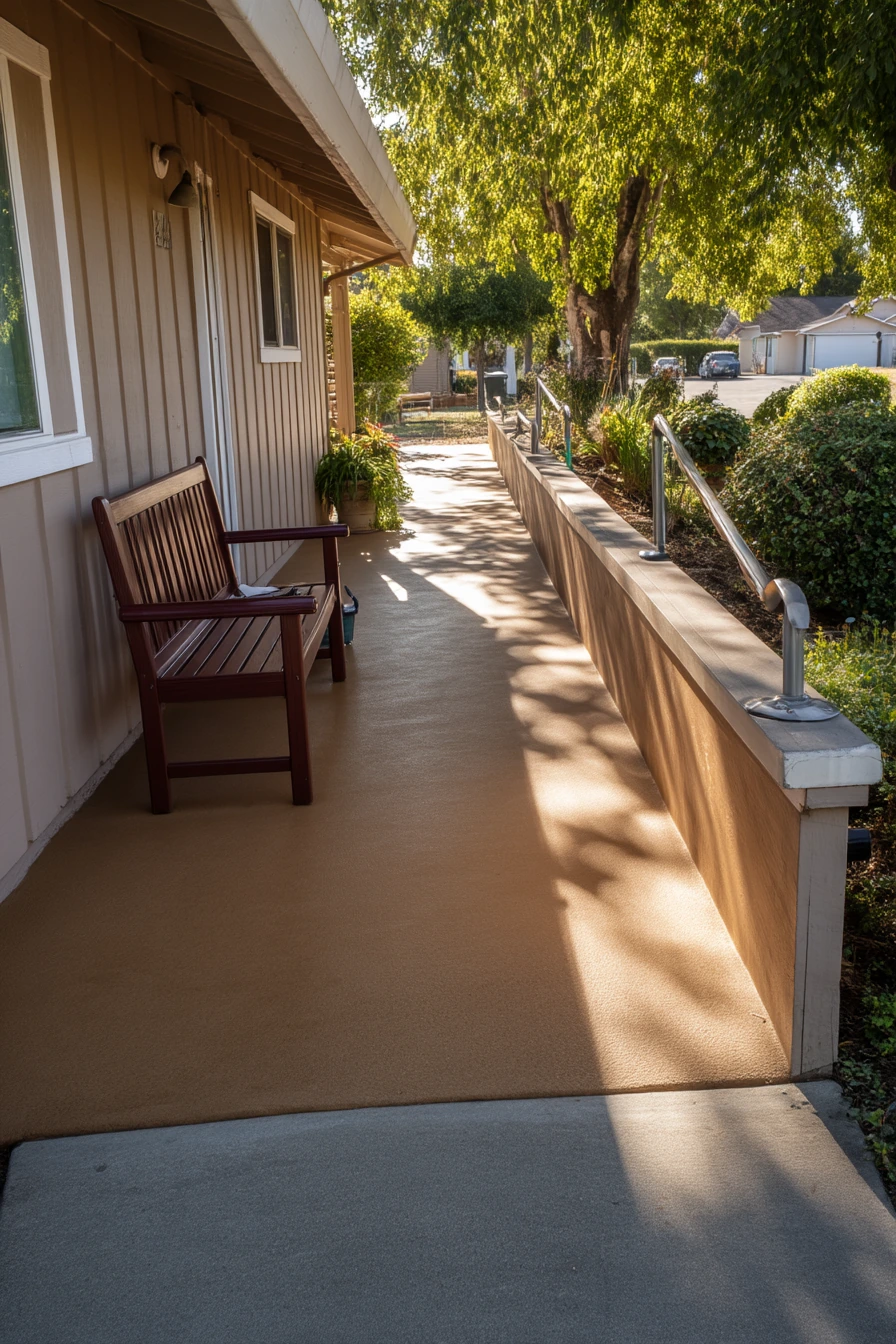
A barrier-free asphalt walkway is about comfort, safety, and ease of movement. A smooth surface and gentle slope help with strollers, wheelchairs, and anyone who prefers steady footing. Make the route wide enough for turning space near the landing, and keep the edges clear so there is no pinch point by planters or railings.
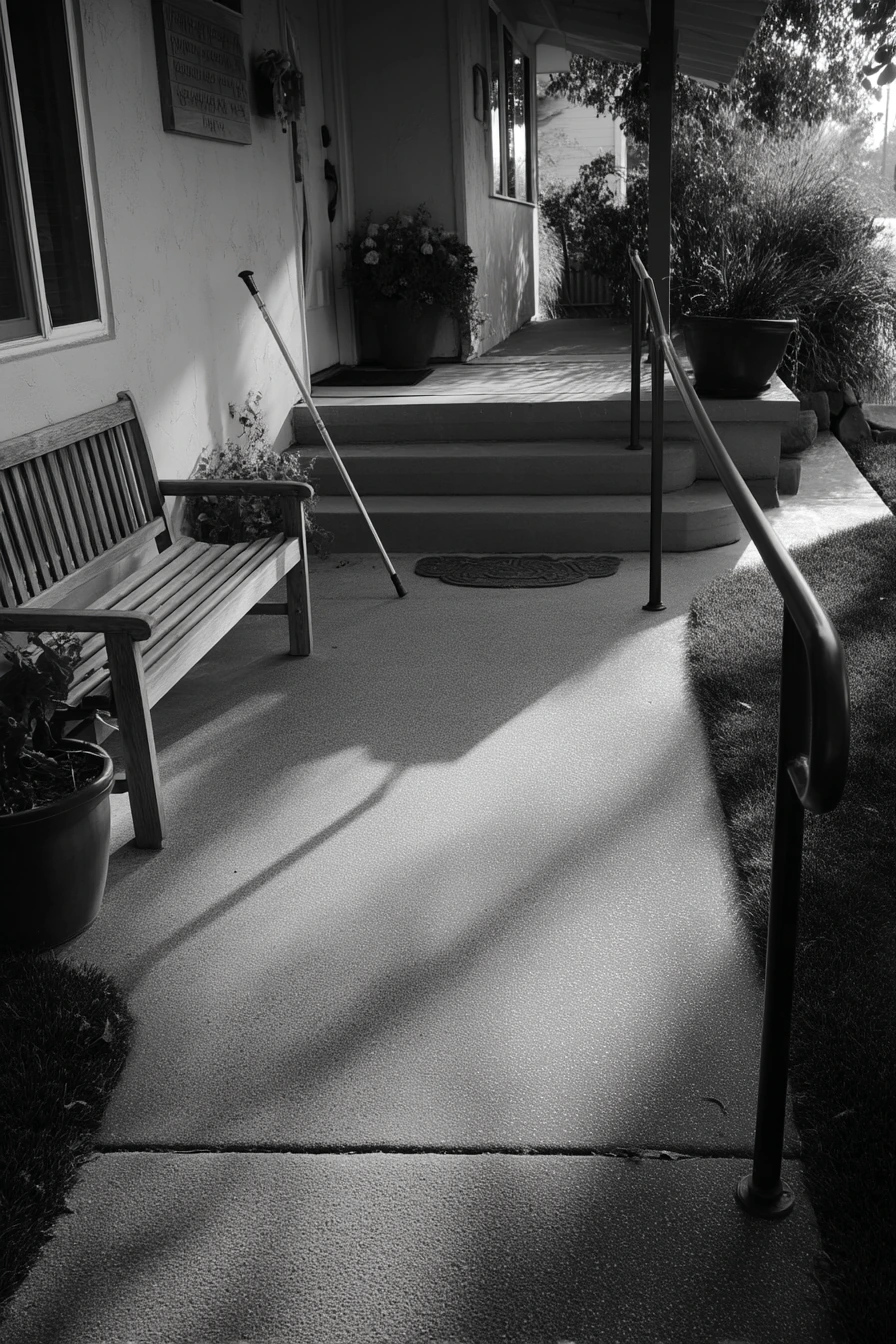
Raised planter beds are a great match for accessible design because they bring flowers and herbs closer without bending. A sturdy handrail adds confidence, especially on damp mornings when surfaces can be slick. Small details tell the story of daily use: a cane by the entry bench, a package on the landing, and reading glasses on a side table. Soft morning light and shadow helps show the path clearly without glare.
To style it, keep contrasts strong. Dark asphalt with light planter beds or pale gravel borders makes edges easier to see. Choose plants that do not spill into the walkway, like compact shrubs or upright grasses. Add a bench near the door so there is a place to pause, set down bags, and check keys before going inside.
- Aim for at least 48 inches of width for easier passing and turning.
- Use a consistent slope and avoid sudden dips where water can pool.
- Add a handrail with a smooth, easy-to-grip profile.
- Choose raised beds with rounded corners to prevent bumps.
- Keep the landing area clear for packages and safe turning.
Pro Design Tip: Use color and texture contrast at edges (like a light border strip) so the walkway outline is easy to read in low light.
Budget Considerations: A basic metal handrail and a simple bench are affordable wins; major grading for slope control costs more, so price that work first.
9 Family Entry with Playful Curb Appeal
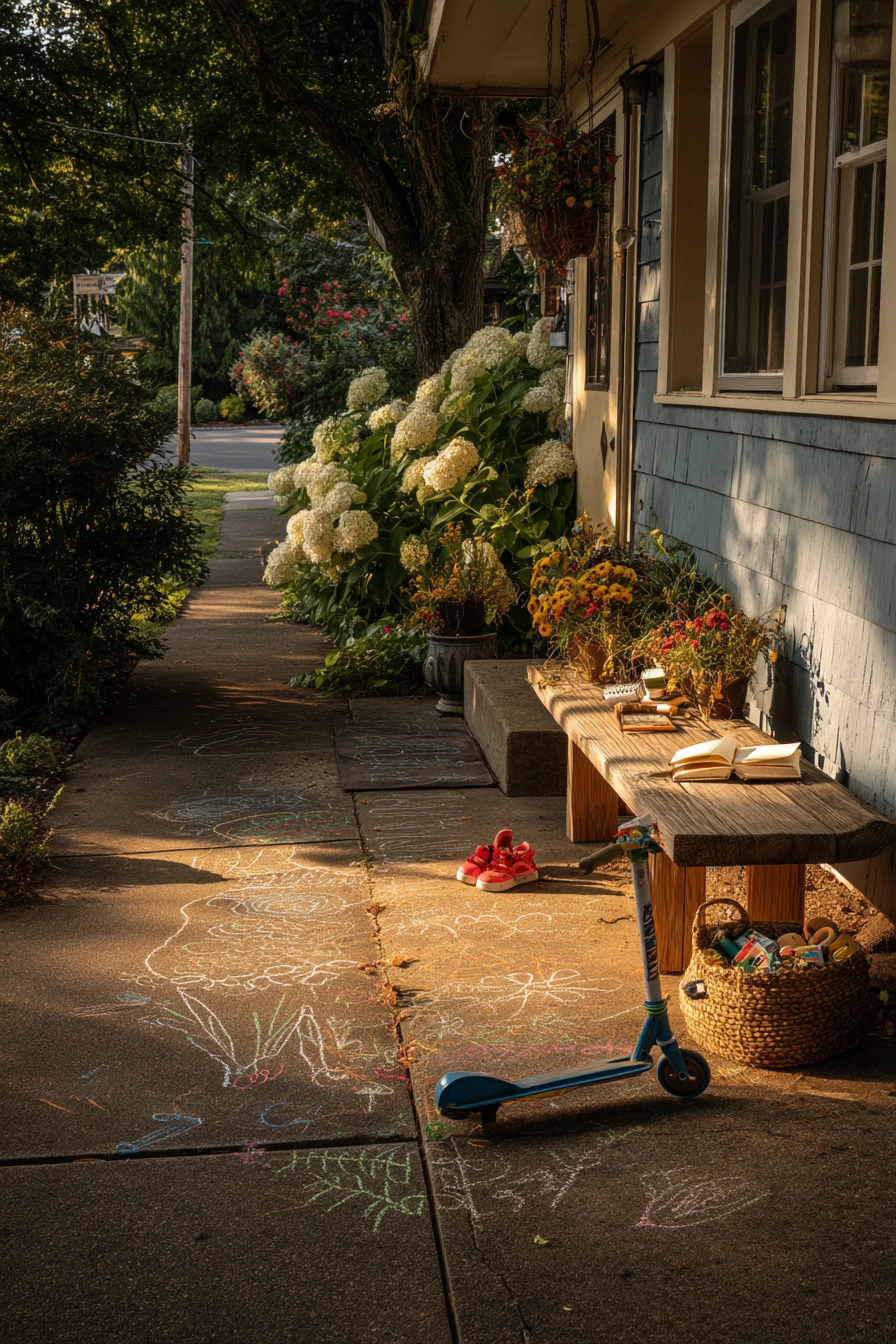
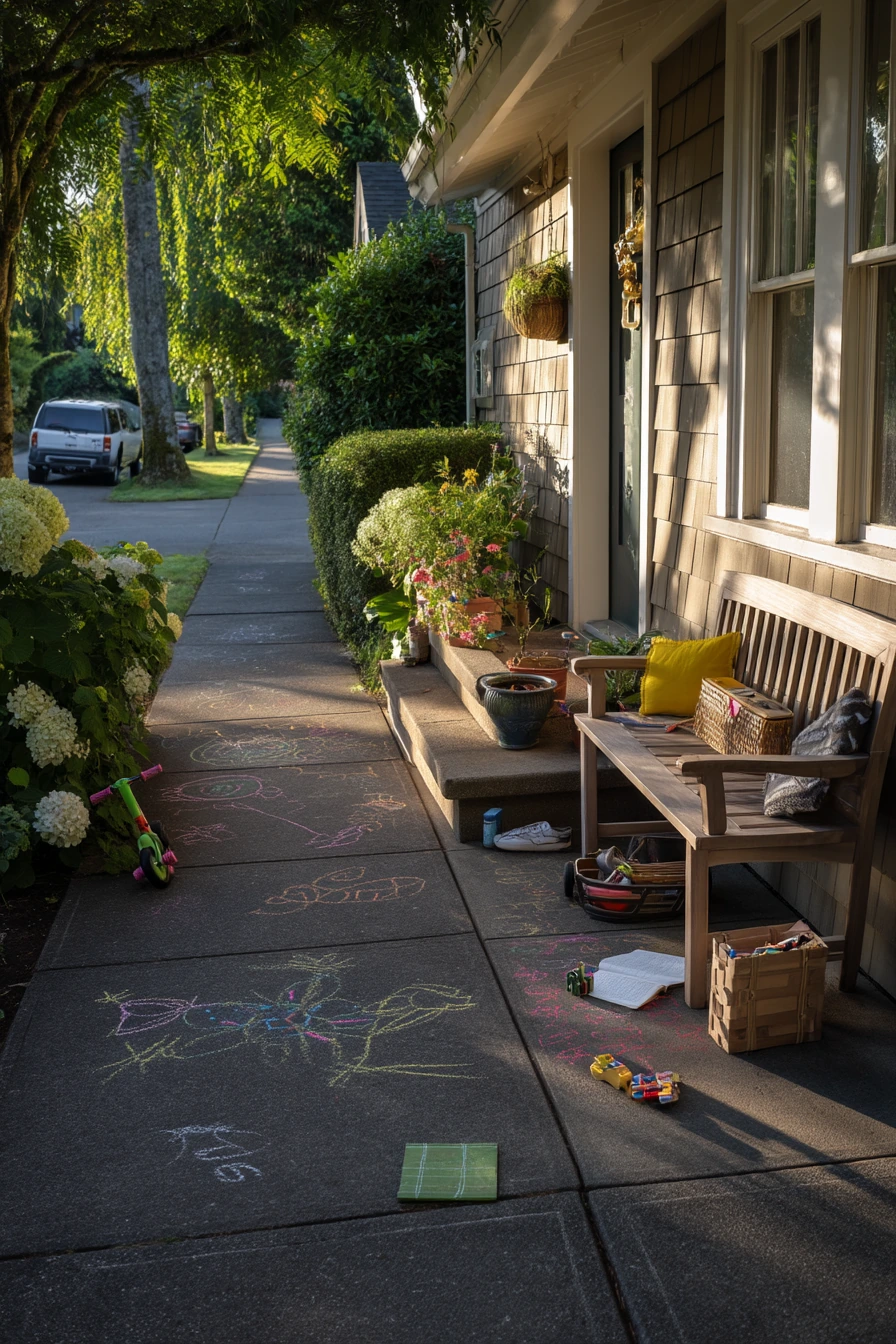
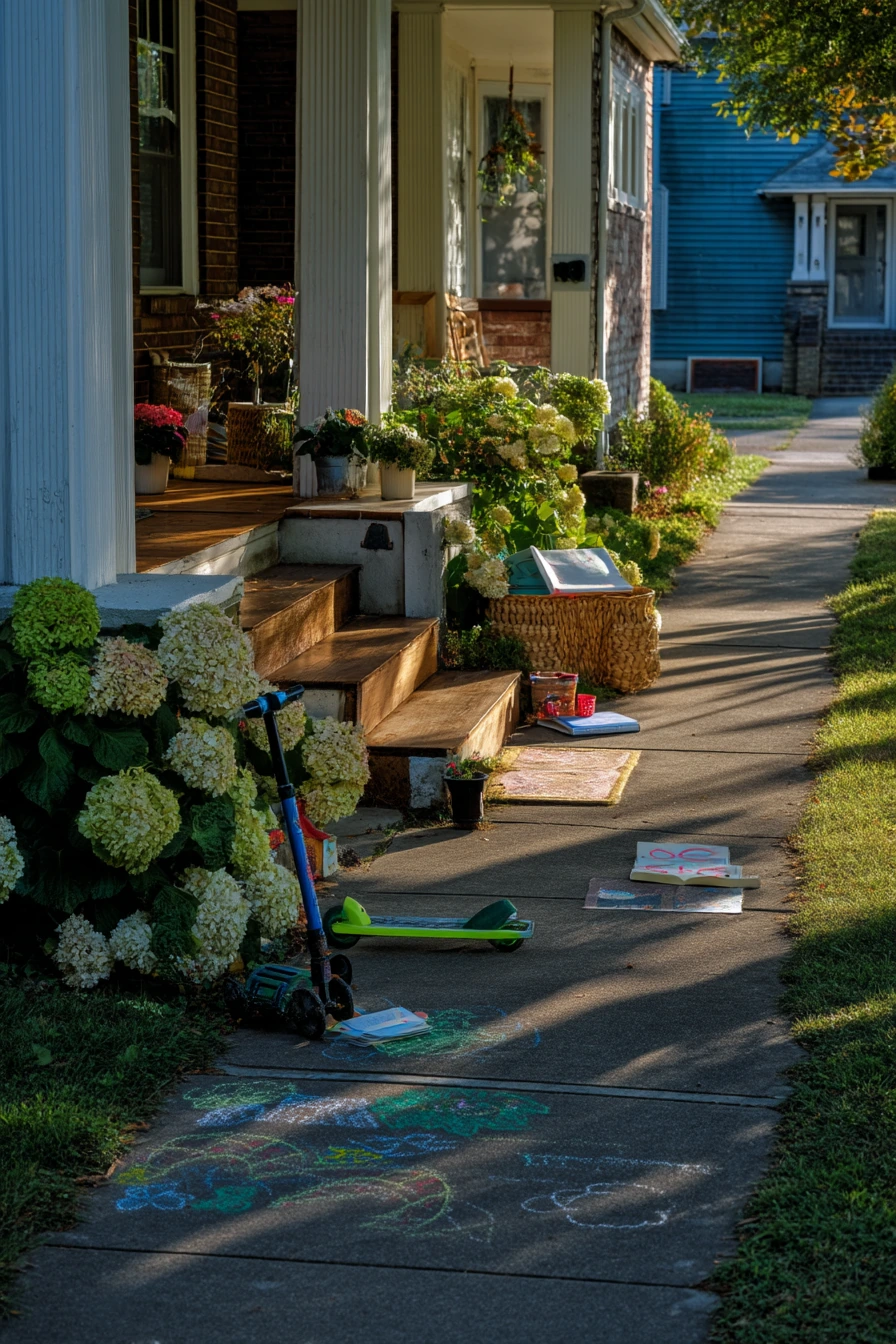
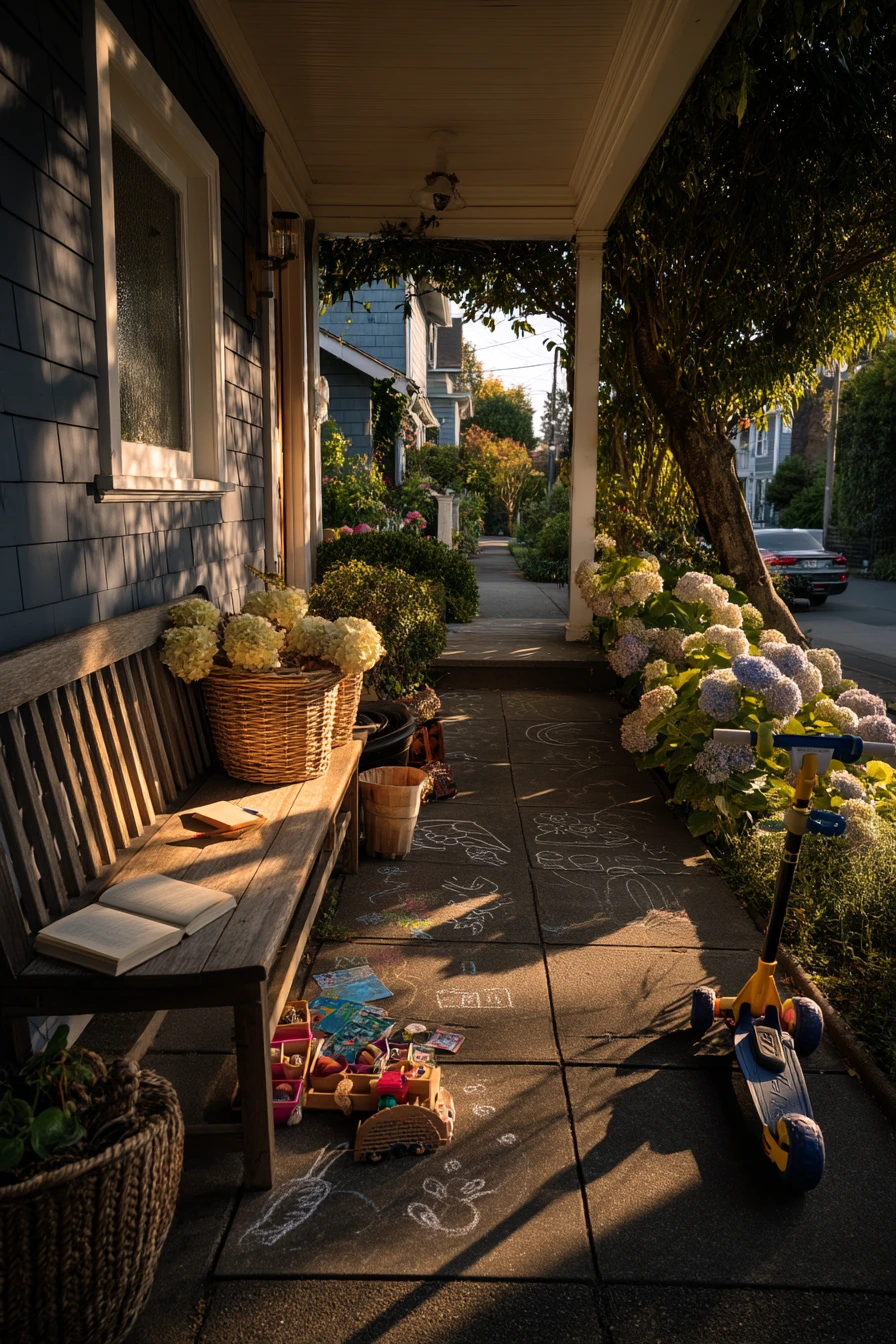
A friendly asphalt walkway to a lived-in family house can be playful and still look tidy. The key is to keep the base simple, then let small moments show family life. Chalk drawings near the curb can be part of the charm, especially when the rest of the entry is neat and the plants are trimmed.
Line the path with hydrangeas and dwarf boxwoods for a soft, full border that frames the asphalt. Add a scooter parked beside the mailbox, but give it a clear “home” spot so it does not block walking. On the porch, a woven basket of toys keeps things contained, even when shoes are scattered by the door. An open book on the bench and golden late-day window light makes the entry feel warm and real.
To style it, use storage that looks good. A lidded bin or basket makes quick cleanup easy. Keep the walkway edge defined with a simple border, like metal edging or a narrow mulch strip, so the chalk and toys do not make the whole front look messy. Refresh mulch and prune boxwoods so the border stays crisp all season.
- Create a scooter parking spot near the mailbox or porch corner.
- Use one large toy basket instead of many small bins.
- Plant boxwoods at even spacing for a clean outline.
- Choose hydrangeas that match your sun level for better blooms.
- Sweep the asphalt weekly so chalk dust and grit do not build up.
Pro Design Tip: Balance “kid life” with structure: one strong plant border and one storage zone keeps the entry looking calm.
Budget Considerations: Boxwoods and hydrangeas can add up; start with smaller sizes or mix in lower-cost shrubs, then fill gaps as the budget allows.
10 Weekend DIY Asphalt Walkway Refresh
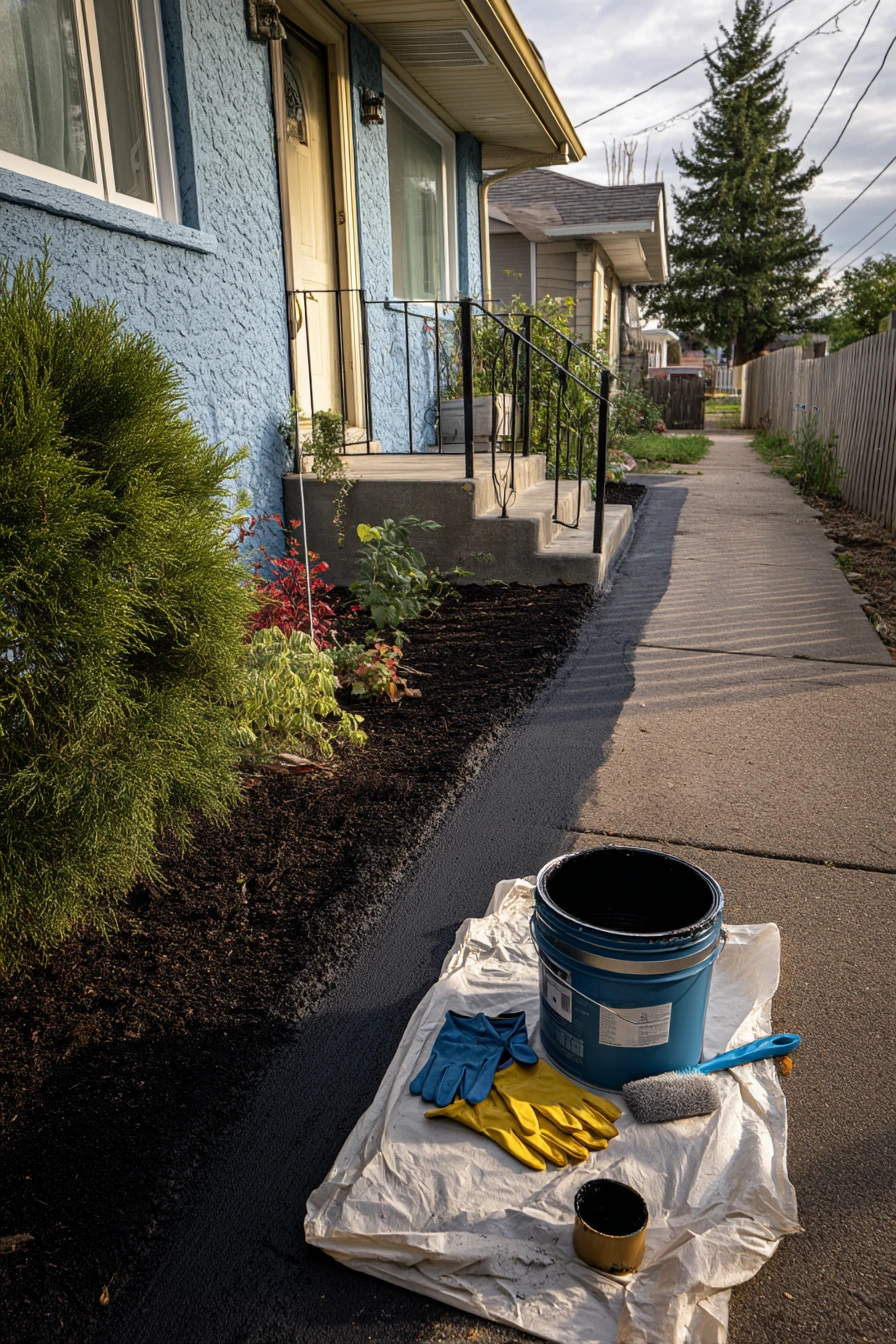
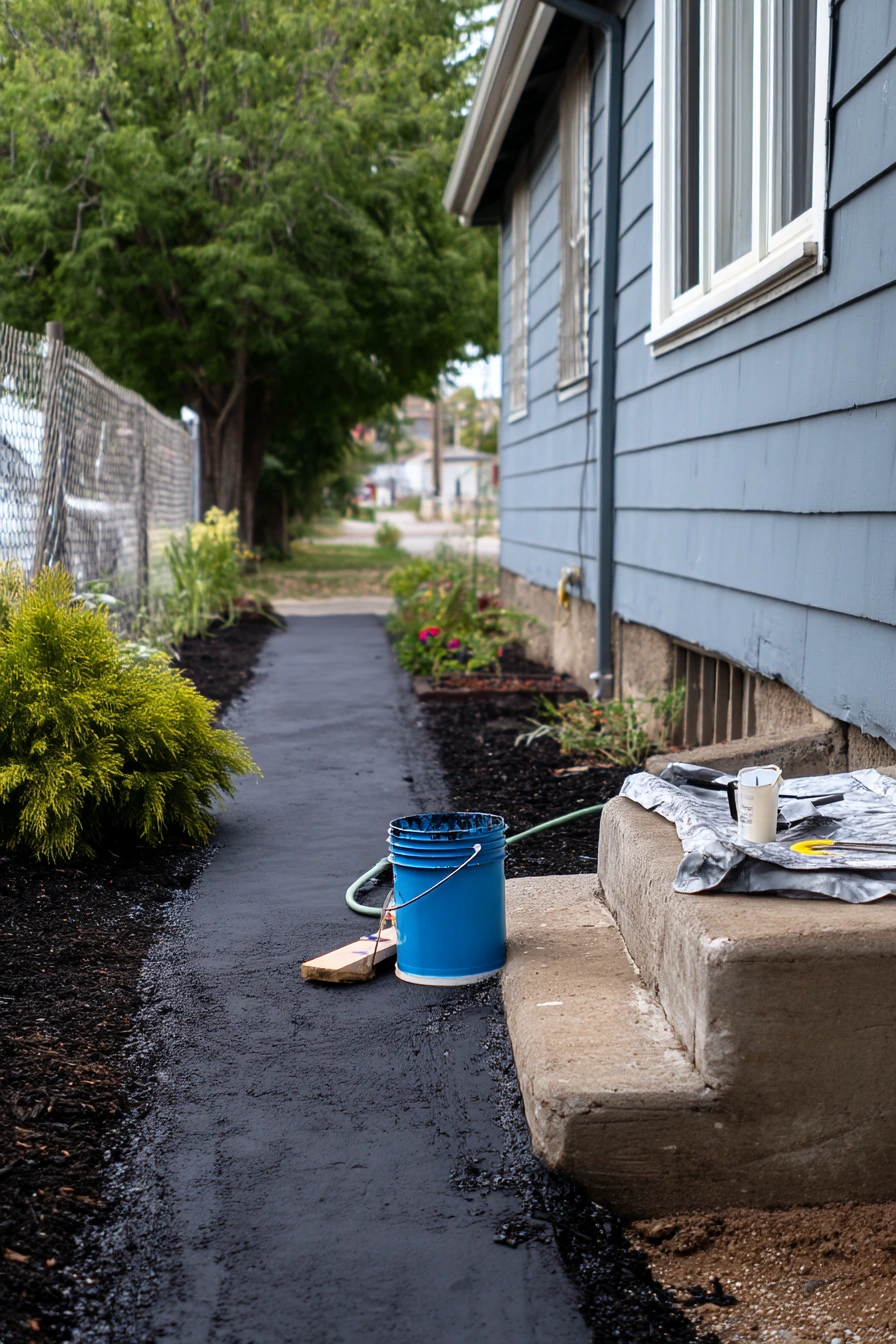
A freshly sealed asphalt walkway can make a modest home look cleaner fast, especially if the old surface was faded. A DIY sealing day is also a good time to tidy up the borders. New black mulch along the edge makes the walkway look sharper, and it helps the dark asphalt feel intentional instead of worn.
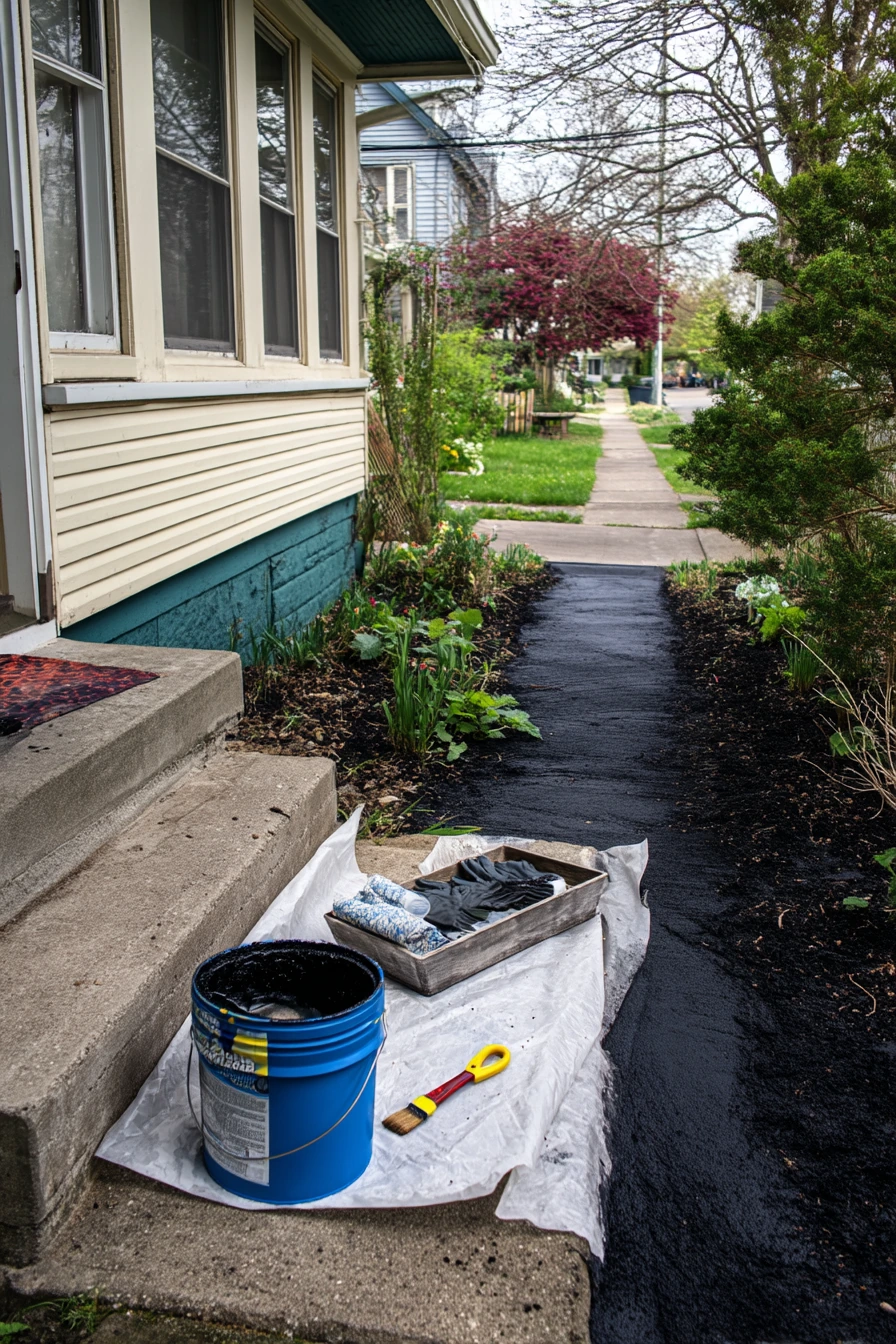
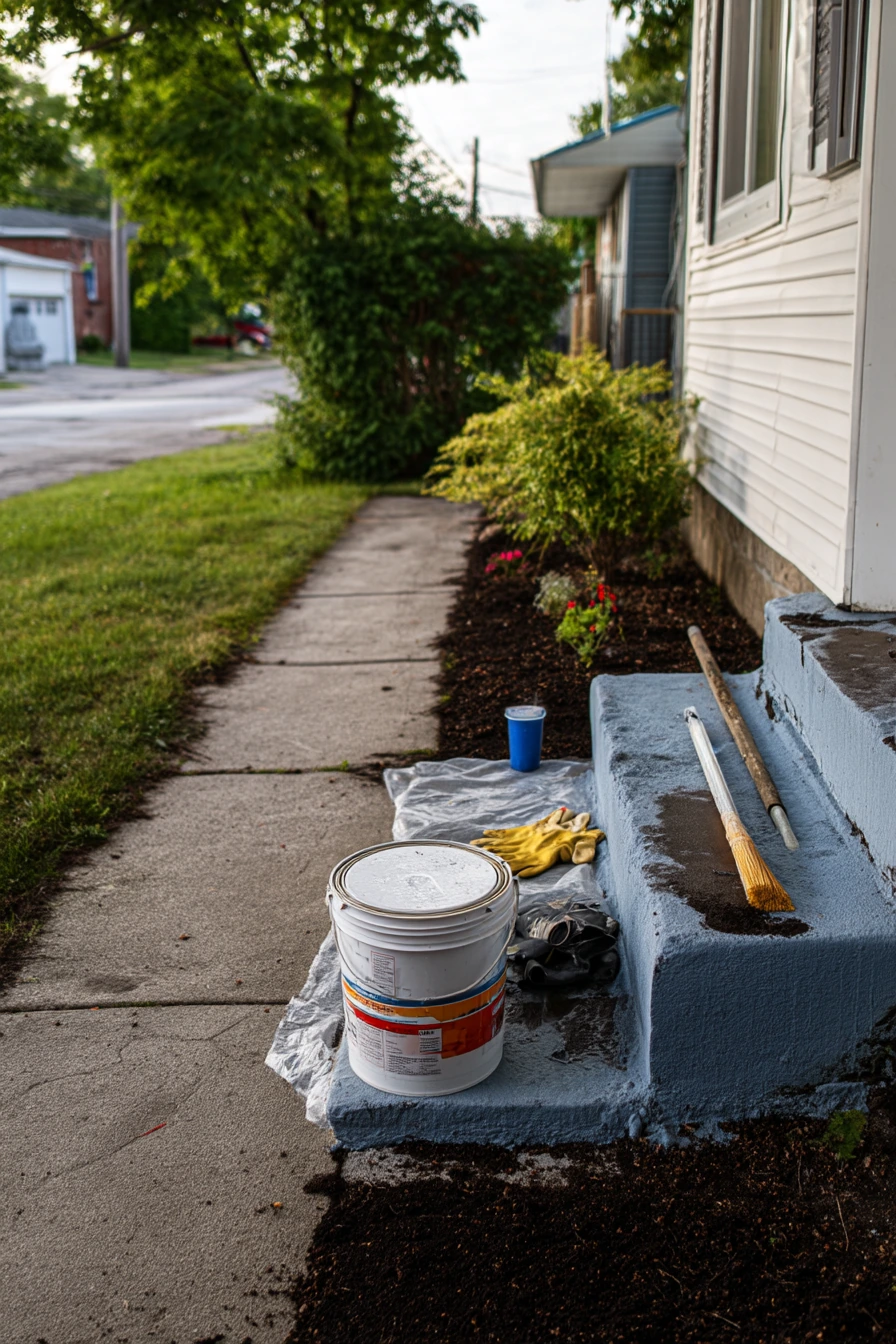
Plan your work area so the job stays smooth. Set out a neat paint bucket, roller tray, and gloves on the step. Use a tarp to protect nearby plants and the porch, even if it gets a little wrinkled. Keep a hose nozzle nearby for quick rinse, but do not wash the area while the sealer cures. A half-finished coffee beside the toolbox is realistic, but place it where it cannot spill onto the wet surface.
After sealing, style the space with a few simple finishing touches. Clean the doormat, wipe the step, and edge the mulch line so it is straight. If you have plant beds, add one or two fresh plants near the start of the walkway so the first impression looks cared for. Soft cloudy daylight is perfect for this kind of project because it keeps the surface from drying too fast.
- Check the weather and choose a dry window for curing time.
- Clean and blow off debris so the sealer bonds well.
- Mask edges where you need a straight line near steps or borders.
- Keep pets and kids off the walkway until fully cured.
- Refresh borders with mulch or edging after the seal coat dries.
Pro Design Tip: Do the borders last; crisp mulch lines and clean edging make the sealed asphalt look more professional.
Budget Considerations: DIY sealer is cheaper than resurfacing, but prep tools add cost; borrow a blower or edging tools if you can to keep the project affordable.
Asphalt walkway ideas work best when you treat the path like part of the home, not an afterthought. Small choices like edging, planters, and lighting can make a simple surface feel finished.
If you want the biggest impact, start with a clean border, a doormat that fits the style, and one strong plant frame. Then add safety items like traction, railings, and warm lights as needed.
Use the ideas above to match your space, whether it is a narrow side yard, a modern entry, or a family porch that sees a lot of daily traffic.
FAQ
1. Is an asphalt walkway cheaper than concrete? Asphalt is often cheaper up front, especially for longer runs. Concrete can last longer with less maintenance, so compare total cost over time.
2. How wide should an asphalt walkway be? Many homes do well with 36 to 48 inches. If you want barrier-free access or passing space, aim closer to 48 inches.
3. Do I need edging for an asphalt path? Edging is not required, but it helps the walkway look clean and keeps mulch and soil from spilling onto the surface.
4. How do I make an asphalt walkway less slippery in rain? Use a mix or coating made for traction, keep algae and leaves cleaned off, and add lighting so people can see wet spots.
5. Can I seal an asphalt walkway myself? Yes, many sealers are DIY-friendly. The main work is cleaning, drying, and blocking off the area until it cures.
6. What plants look best next to asphalt? Upright grasses, boxwoods, lavender, and compact shrubs work well because they keep shape and do not spill into the walking space.
7. How often should an asphalt walkway be sealed? It depends on climate and use, but many homeowners reseal every 2 to 4 years after the surface has fully cured and if it shows wear.