
Bathroom beadboard ideas are popular because they add texture, protect walls, and make a bathroom feel finished. Beadboard works in old homes, new builds, and rentals, and it can fit a tight budget.
In this guide, you will see beadboard half-wall and wainscoting ideas for small primary bathrooms, powder rooms, kid baths, and calm ensuites. Each section includes simple styling tips you can copy from real-life details like towels, trays, mirrors, and lighting.
You will also get practical notes on materials, moisture, paint sheen, and how to make beadboard look right with tile, stone floors, and different hardware finishes like brushed nickel and brass.
If you came from Pinterest, use this post as a checklist. Pick the look you like, then copy the height, color, and easy accessories to make it feel warm and lived-in.
1 1. Tiny Primary Bath, Beadboard That Opens the Room
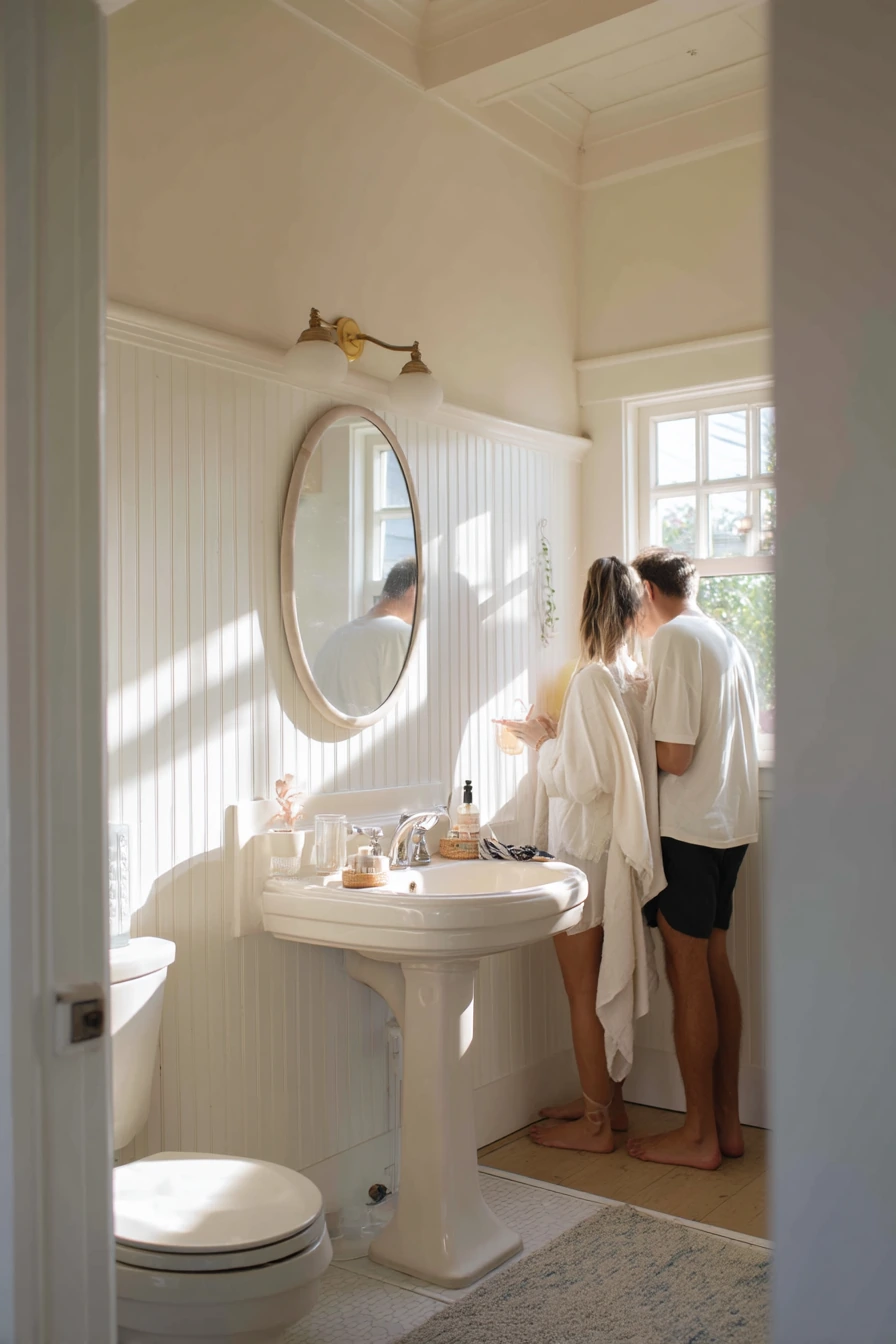
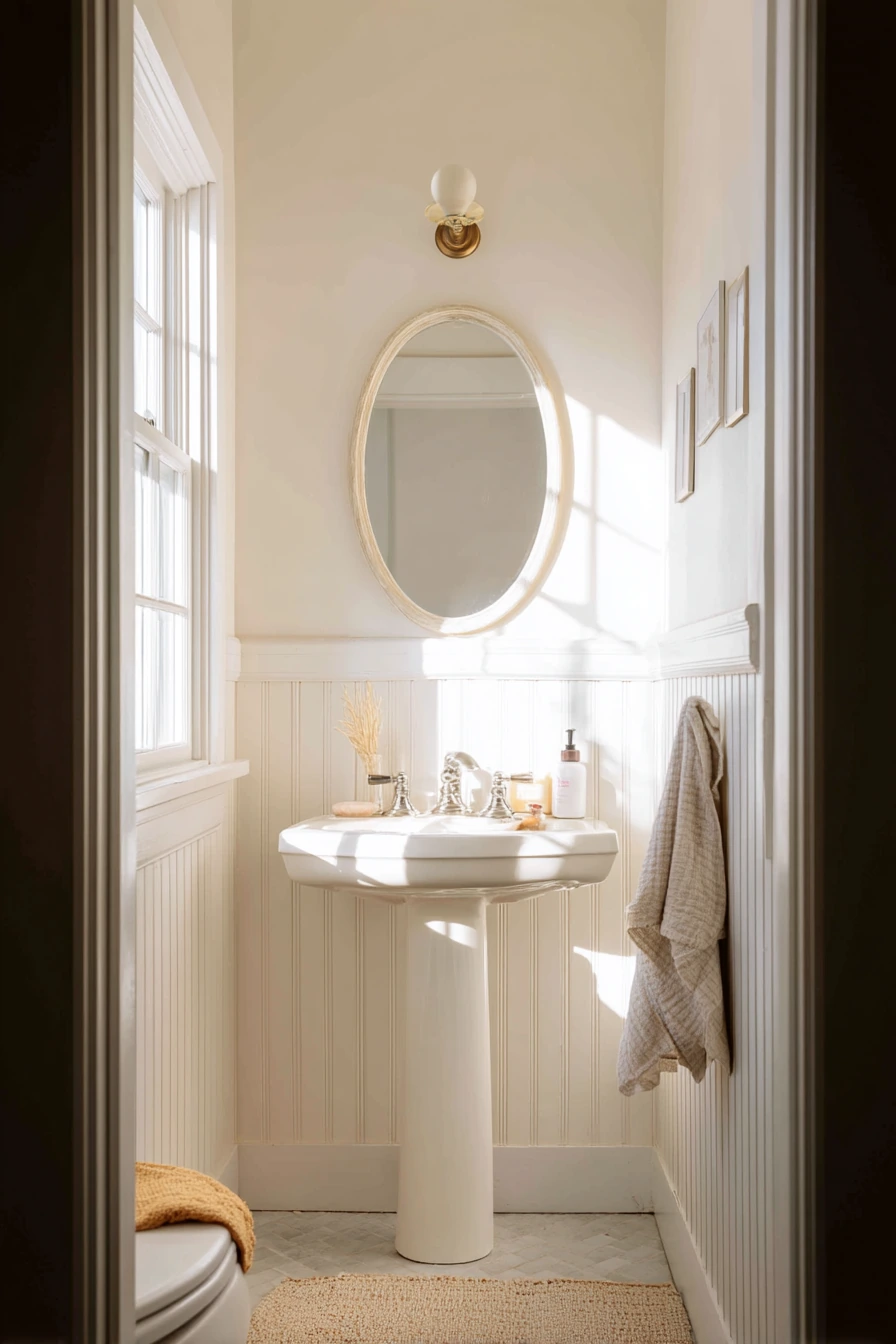
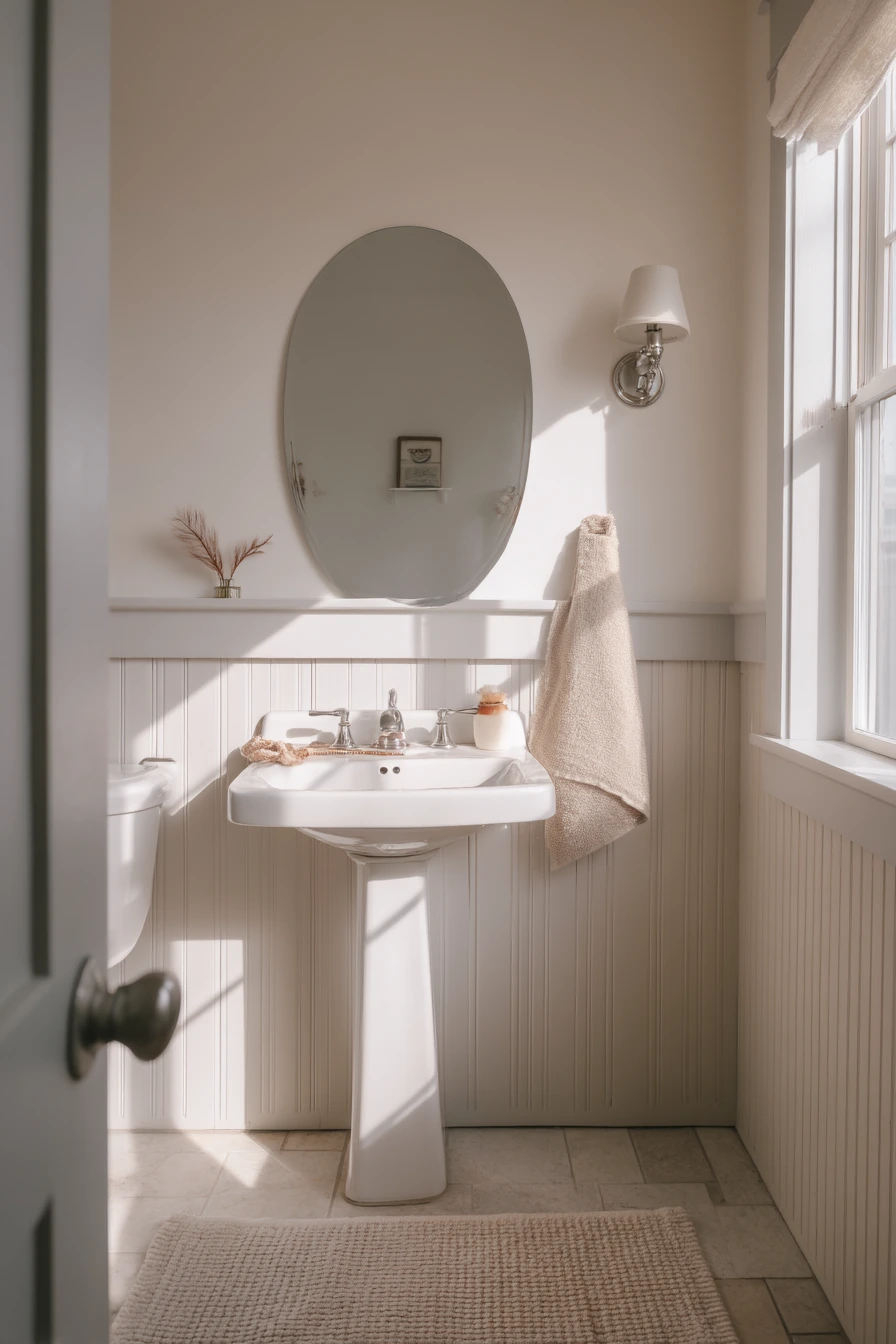
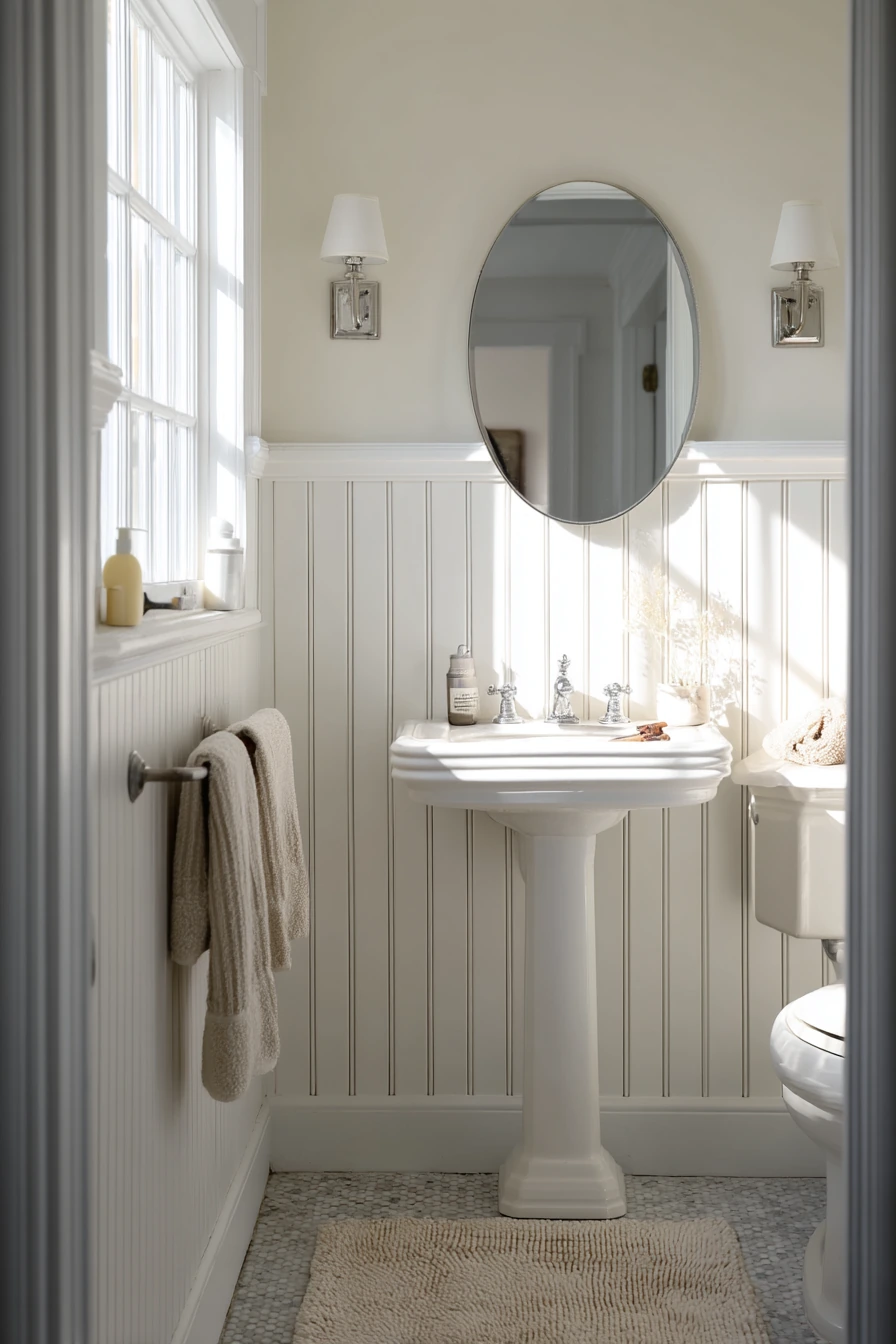
A small primary bathroom in a 1920s bungalow looks right with a white beadboard half-wall and a pale stone floor. The beadboard adds texture without making the space busy, and it pairs well with a simple pedestal sink. Keep the look light by using a clean white on the paneling and letting the soft morning window light do the work.
To keep it practical, choose trim that matches the age of the house. A simple cap rail and baseboard feel honest in an old home. Brushed nickel hardware is a safe choice with an oval mirror, and a quiet brass sconce can add warmth without turning the room yellow. Real life details matter, like a toothpaste cup, a folded hand towel, and a slightly rumpled bath mat. Those pieces make the room feel used, not staged.
How to style it: keep the counter mostly clear so the pedestal sink does not look crowded. Use one small cup for daily items and one hook or bar for a hand towel. If you want patina, pick one aged-looking piece, like a mirror frame or a sconce, and keep the rest simple so it does not feel messy.
- Paint beadboard in a washable satin or semi-gloss for easy wipe down.
- Set beadboard height at about 42 inches for a classic half-wall.
- Use a pale stone or light tile floor to keep the room airy.
- Match the mirror shape to the sink style, like oval with a pedestal.
- Add one warm light source, like a small brass sconce, for softer shadows.
Pro Design Tip: Run the chair rail cap around the whole room at one level, even behind the toilet, so the beadboard looks built-in and not like a patch.
Budget Considerations: Real wood beadboard costs more and needs good sealing; MDF panels are cheaper but should be well-primed and kept away from splash zones.
2 2. Renter-Friendly Beadboard Behind the Vanity
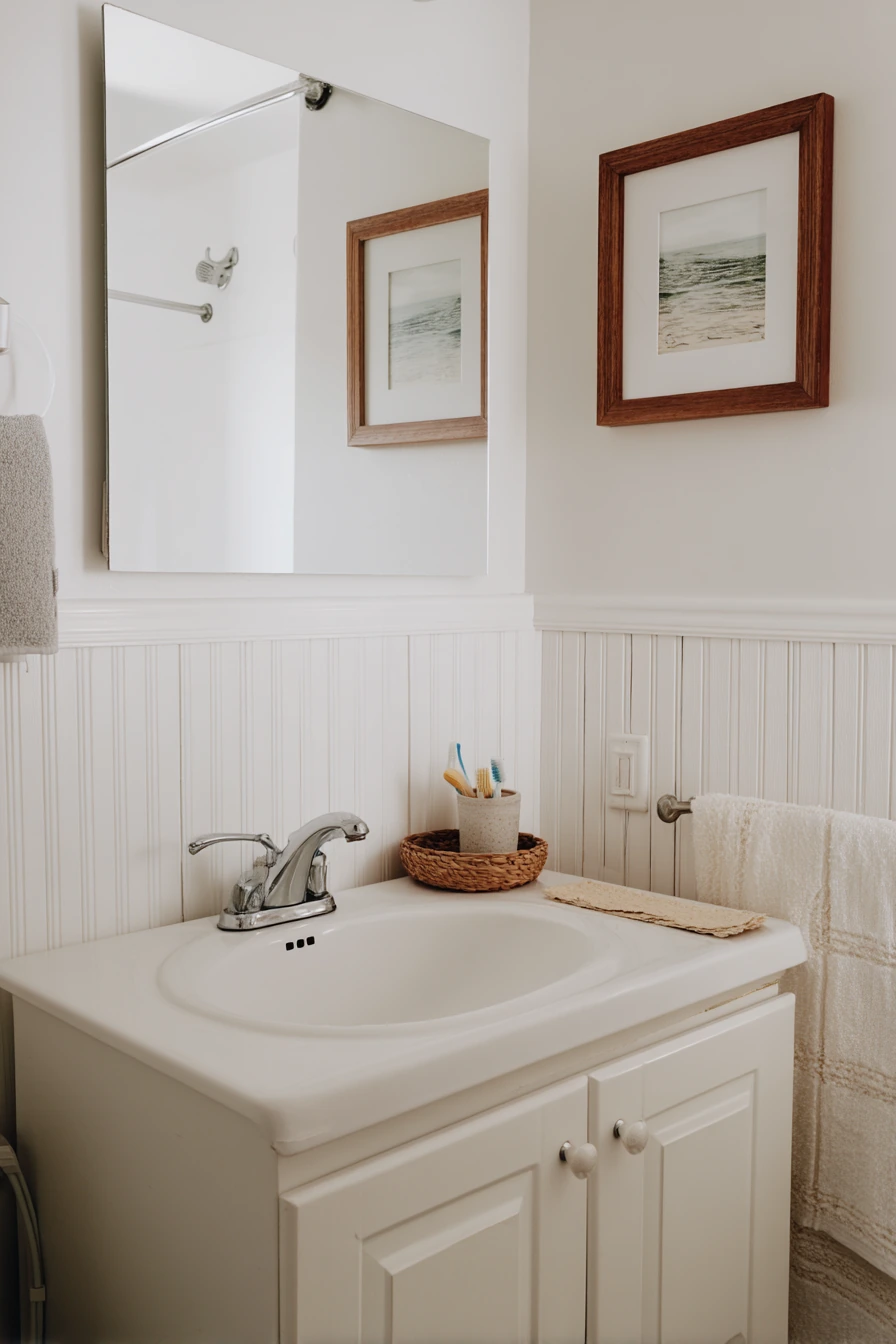
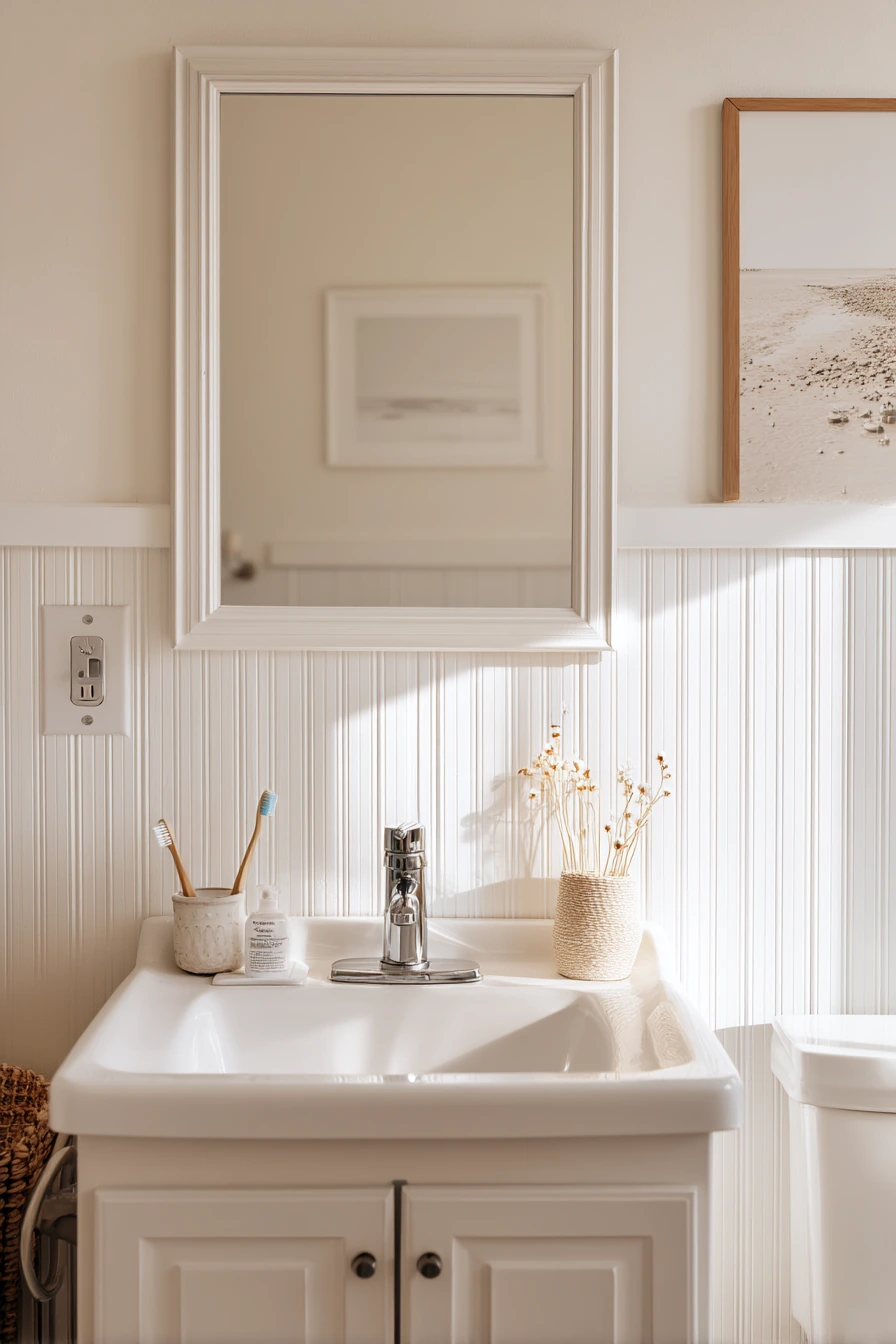
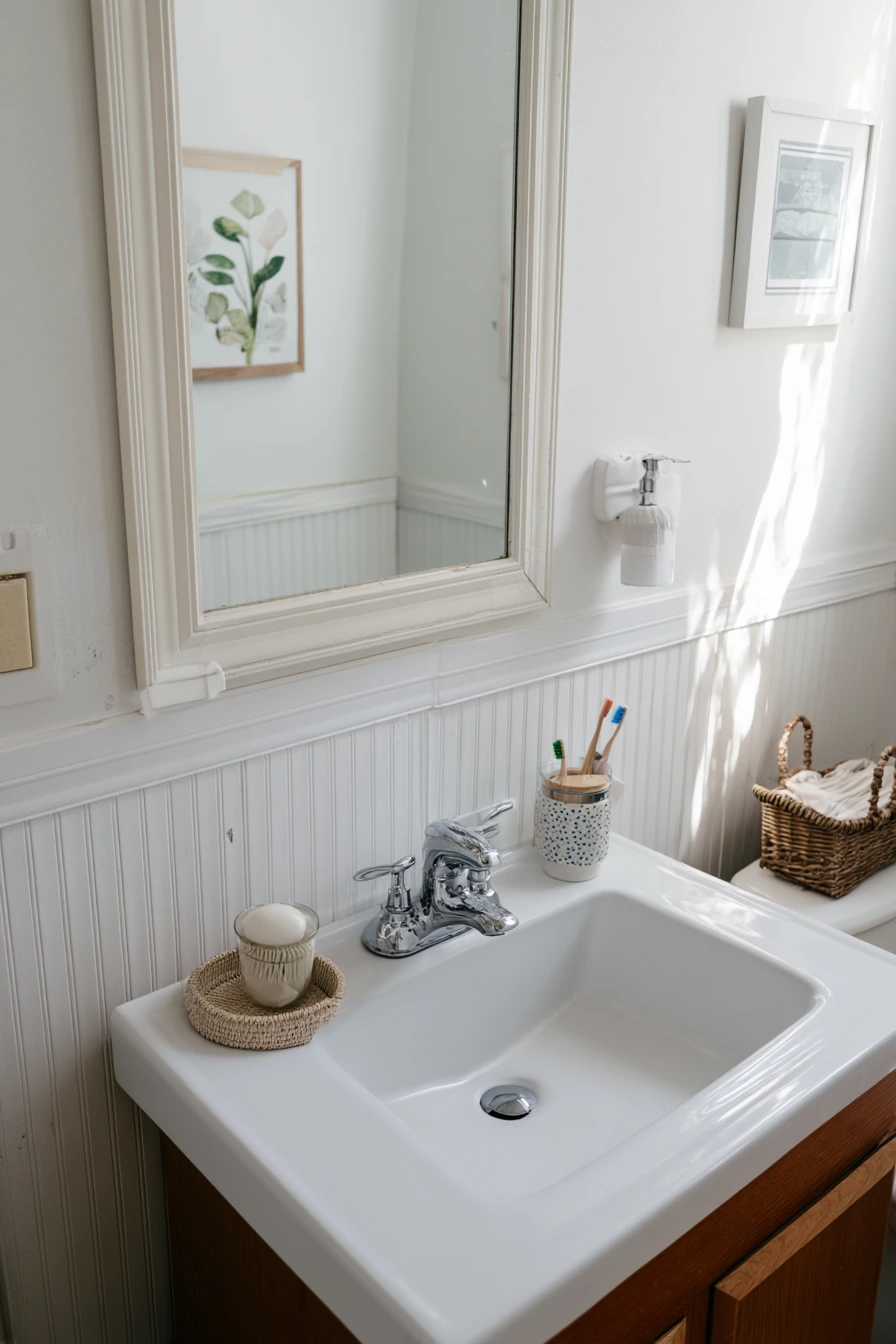
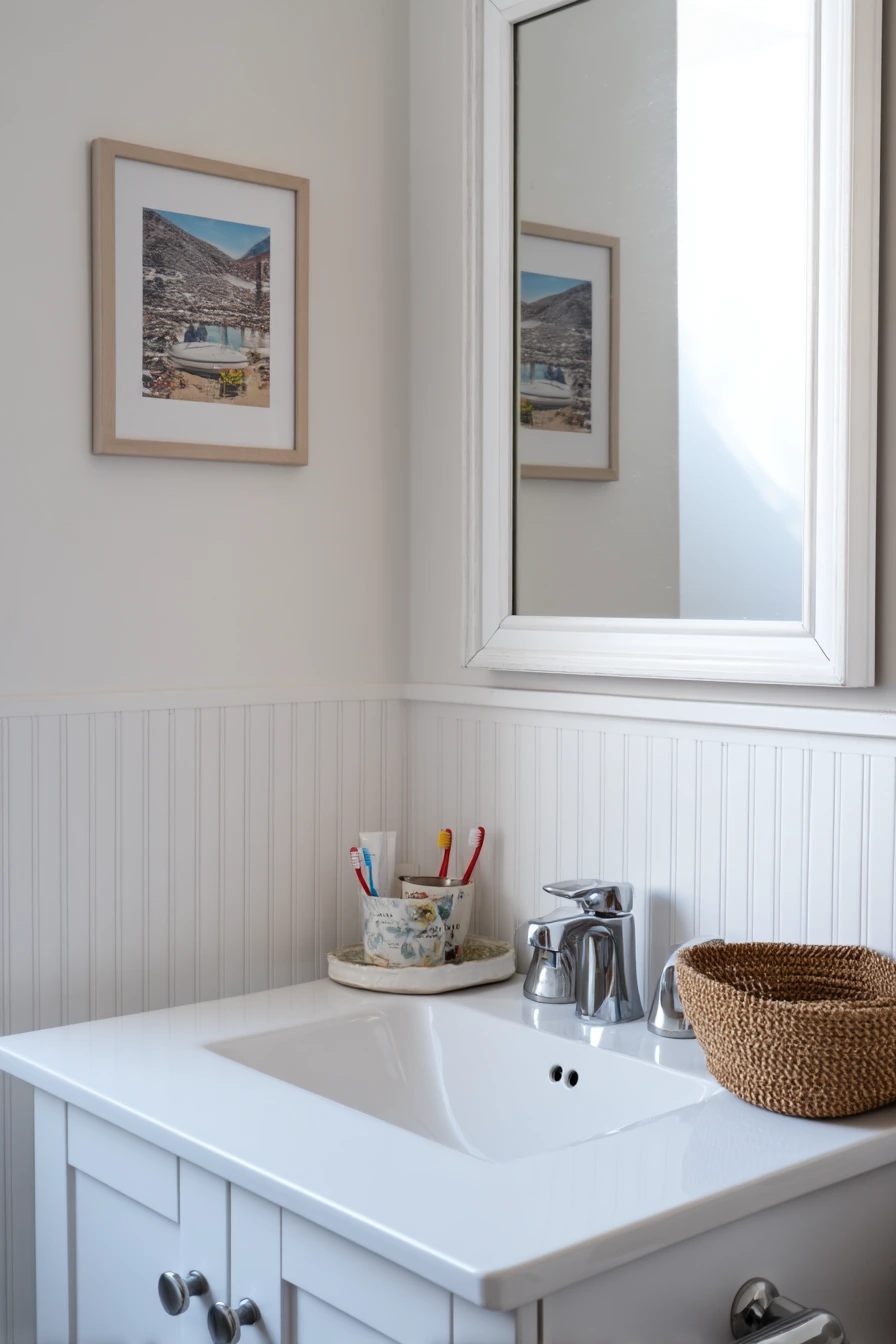
A rental bathroom refresh can still look finished with peel-and-stick beadboard panels in warm white. This gives you the beadboard look without nails and heavy construction. Pair it with a landlord-safe chrome faucet and a compact vanity so the room feels clean and updated.
Peel-and-stick panels look best when the wall is smooth and clean. Take time to wash the surface and remove dust so the adhesive holds. Plan your layout so seams land behind a mirror or near a corner. In real apartments you will see normal life items, like kids’ toothbrushes in a cup, a laundry basket peeking in, and a charger cord near the mirror. You can hide clutter with a small ceramic tray and a lidded bin under the sink.
How to style it: add one framed thrifted print to make the wall feel personal. Choose art with simple colors that match your towels. If a contact paper edge shows near the vanity, cover it with a thin piece of trim or a slim shelf. Late afternoon light can make warm white look creamy, so test a sample before you commit.
- Choose panels rated for bathrooms or high-humidity spaces.
- Press panels with a roller to reduce bubbles and lifting edges.
- Keep a small tray for soap and daily items to prevent sticky residue on the vanity.
- Use removable hooks for towels to avoid drilling.
- Pick chrome or stainless finishes for an easy match in rentals.
Pro Design Tip: Finish the top edge with a removable cap trim to hide panel seams and make the install look like real wainscoting.
Budget Considerations: Peel-and-stick panels are usually cheaper than wood, but you may need extra for mistakes; buy one extra pack for cuts and future repairs.
3 3. Cottage Powder Room With Painted Beadboard
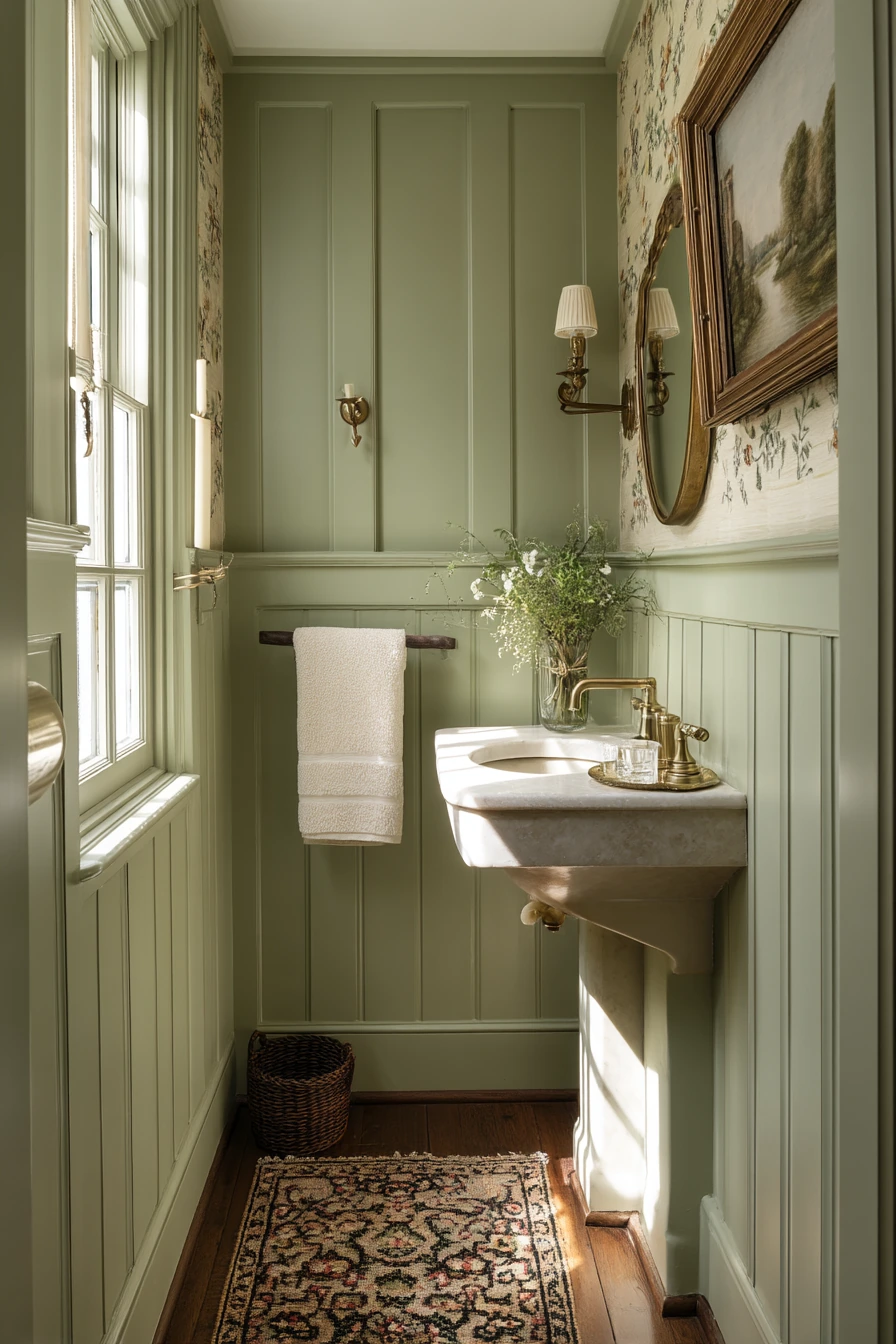
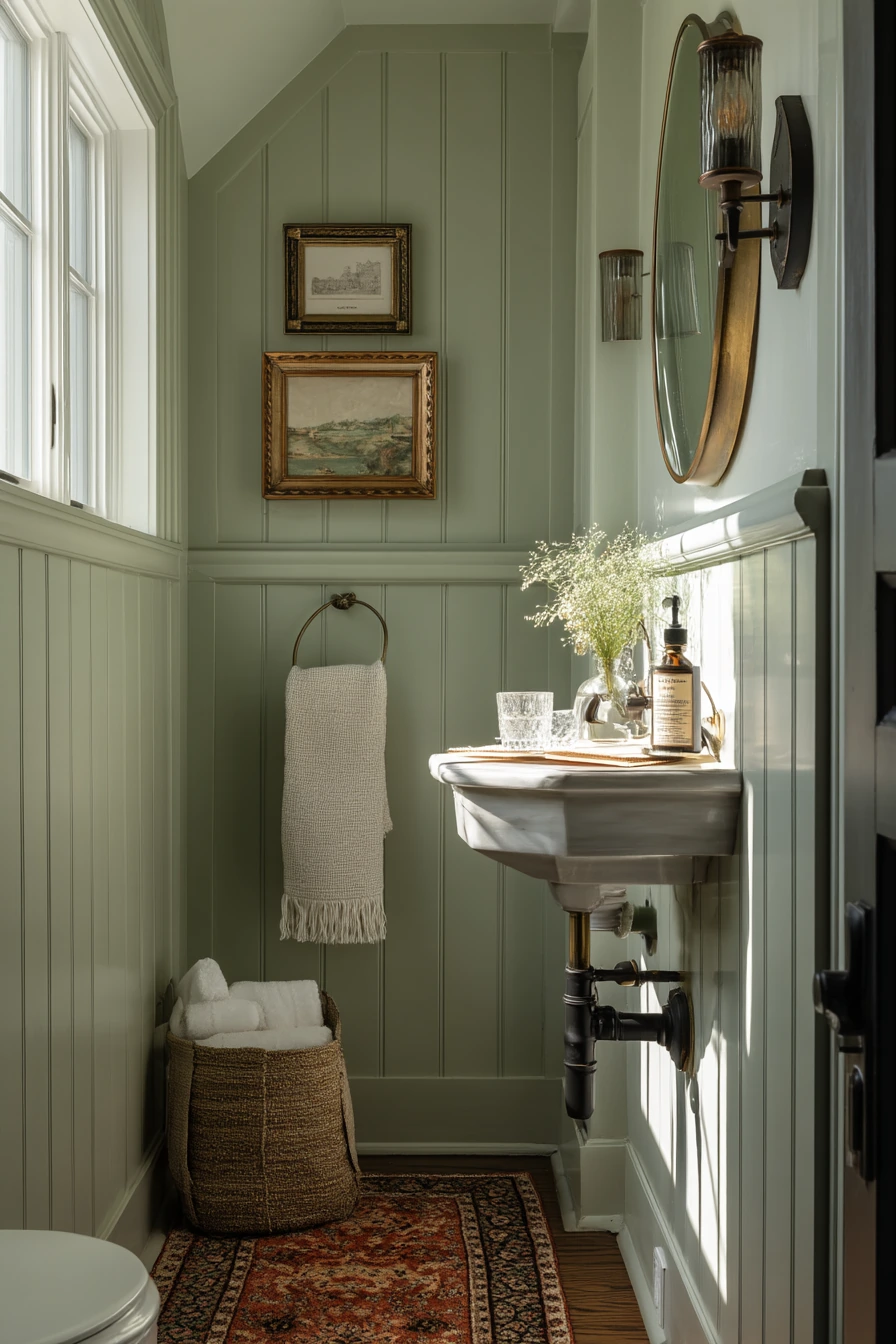
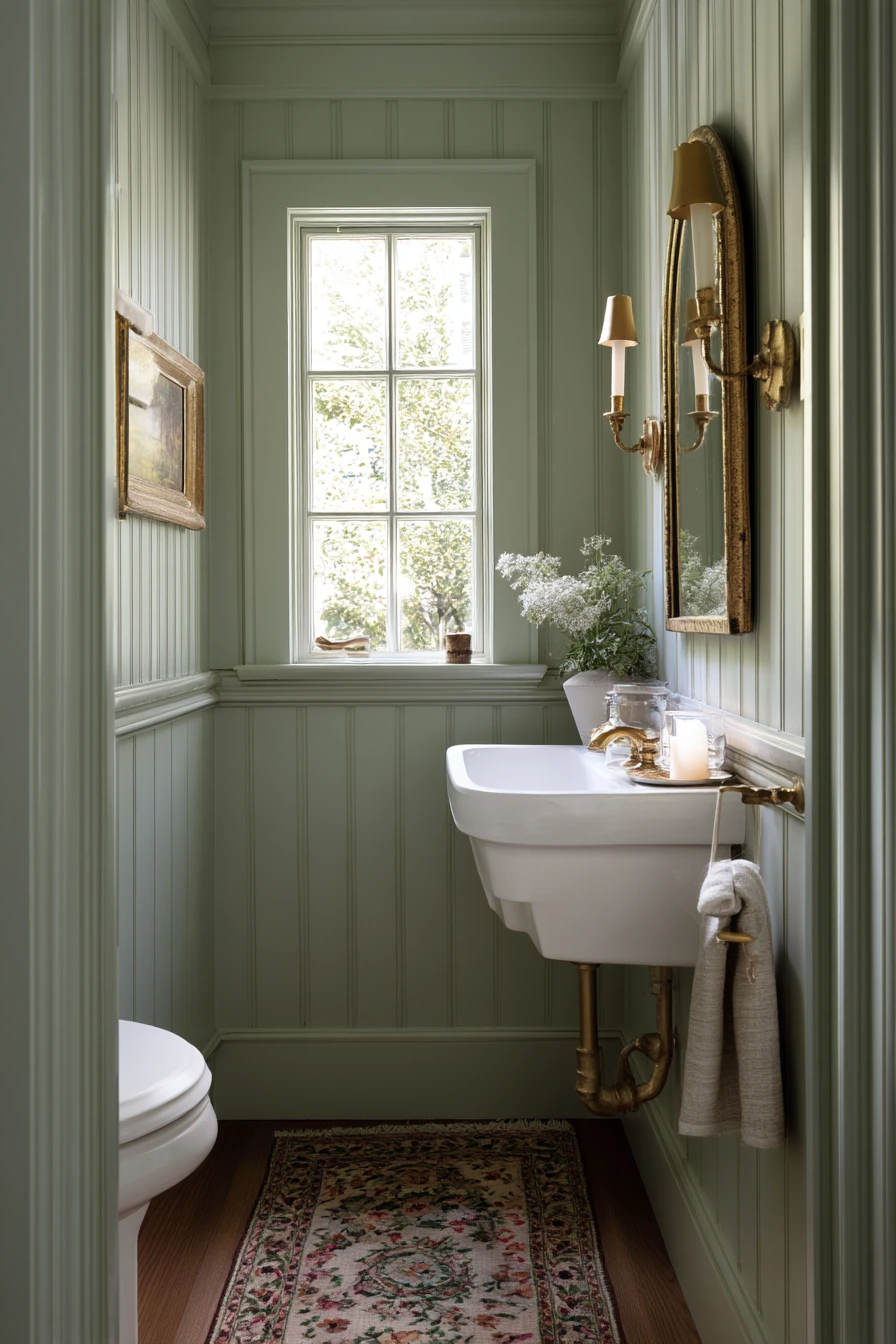
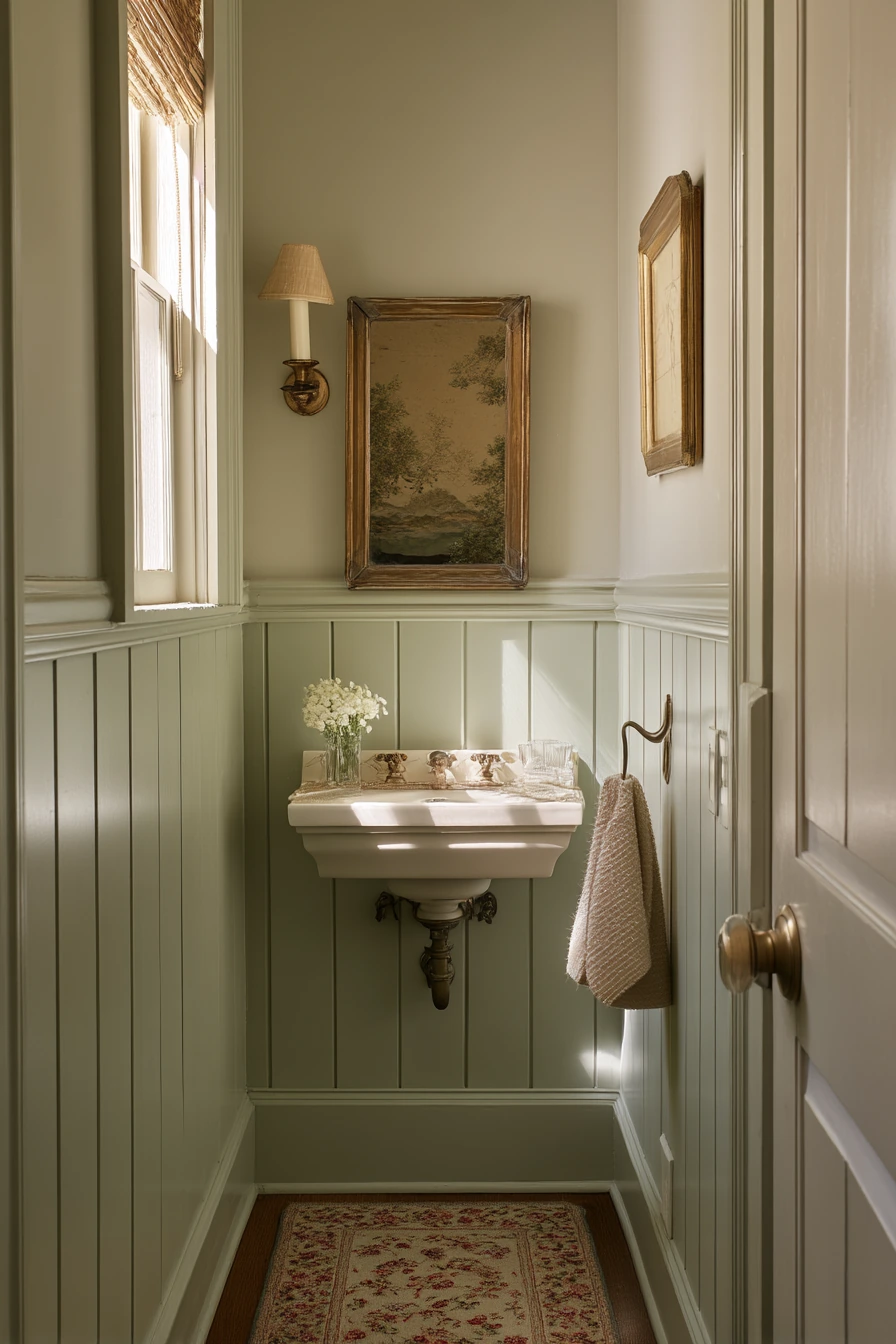
A narrow powder room is a great place for color, and soft sage beadboard to the chair rail adds calm without feeling dark. Because powder rooms have less steam than full baths, you can take more risks with paint and decor. A tiny skirted sink keeps sightlines open, and an antique brass mirror adds warmth against the green.
This look feels charming when you mix simple pieces with small lived-in details. A thin floral runner softens a hard floor and makes the room feel cared for. A wall hook with a linen guest towel saves space and adds texture. The scene can look real with a half-full water glass, a library book on the tank, a candle wick that needs trimming, and a soap dish that is slightly wet. Warm window light plus a dim sconce gives an intimate glow.
How to style it: keep the top wall neutral, like warm white, so the sage beadboard stays the focus. Use one brass finish for the mirror and hardware so the small room does not look mixed up. Add a small tray on the tank for a candle and matches, and swap in a seasonal hand towel for an easy update.
- Paint beadboard and trim the same sage for a smooth, built-in look.
- Use a narrow runner with a low pile so it fits the tight room.
- Add a single hook instead of a bar to save wall space.
- Pick a mirror with curved lines to soften beadboard grooves.
- Use a low-watt bulb in the sconce for a calm mood.
Pro Design Tip: In a narrow room, keep the chair rail line level and avoid busy wallpaper above it, so the space feels wider.
Budget Considerations: Sage paint is affordable, but brass mirrors can be pricey; try a secondhand frame and spray it with a brass-toned metal paint.
4 4. Family Bath With Durable Beadboard and Storage
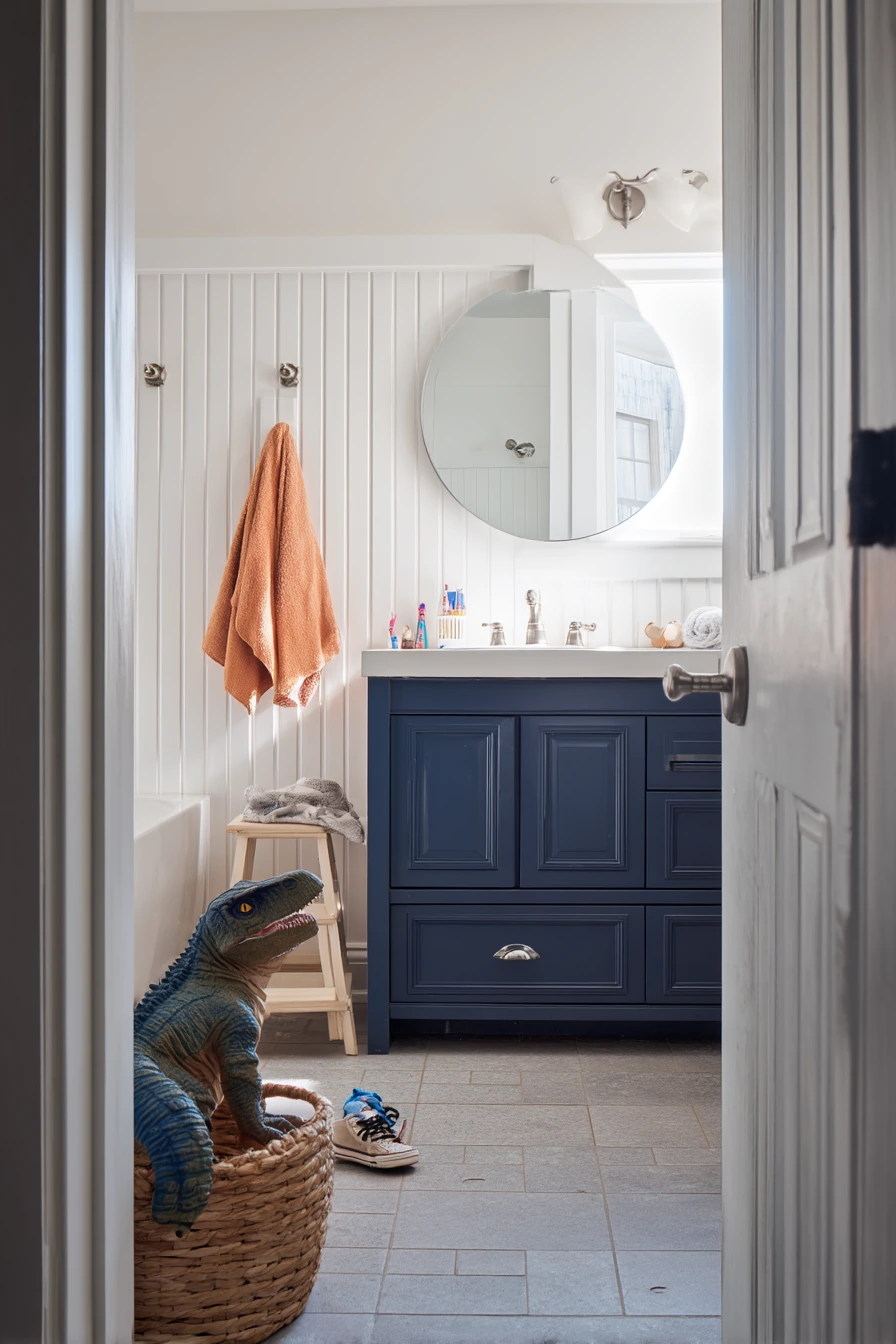
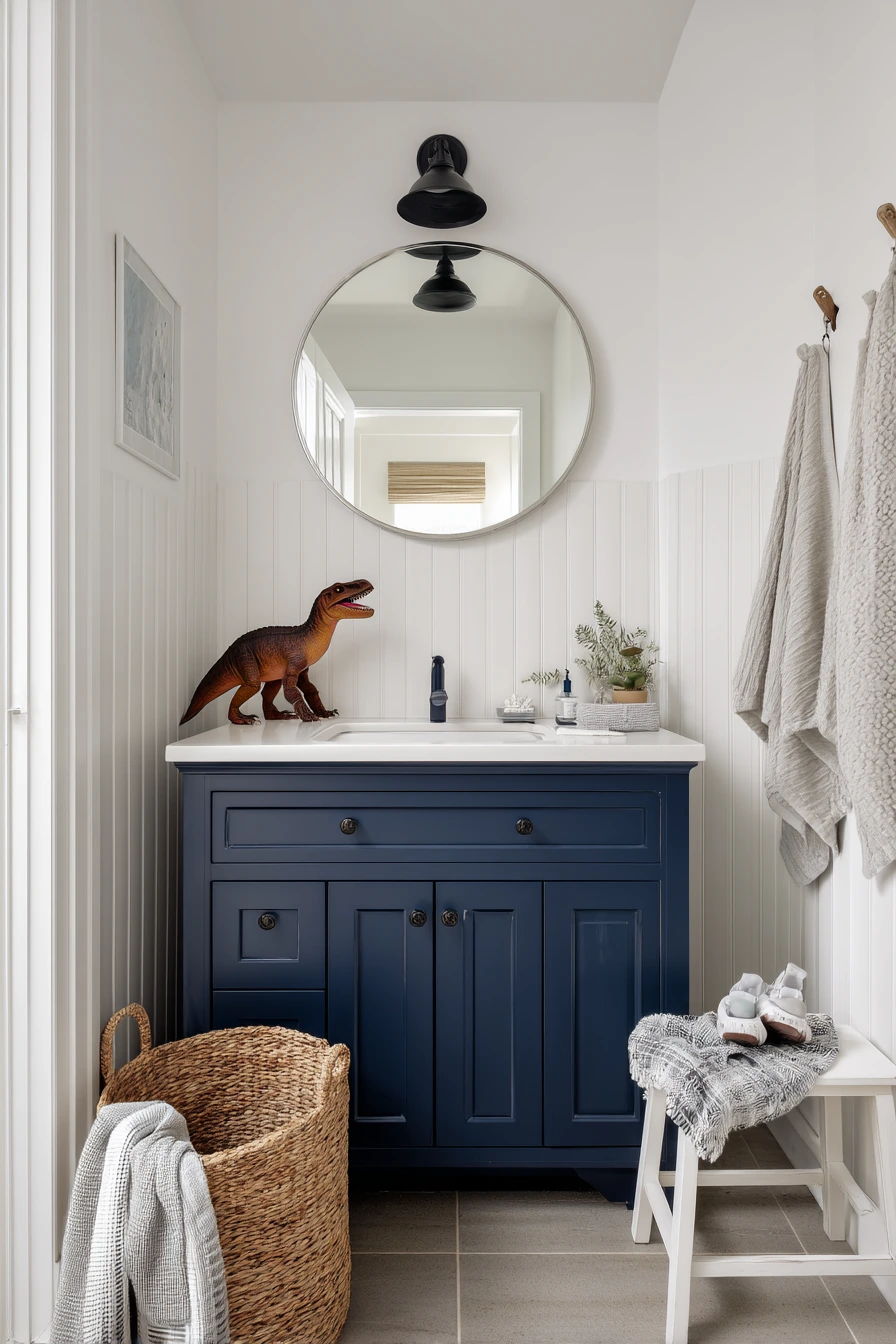
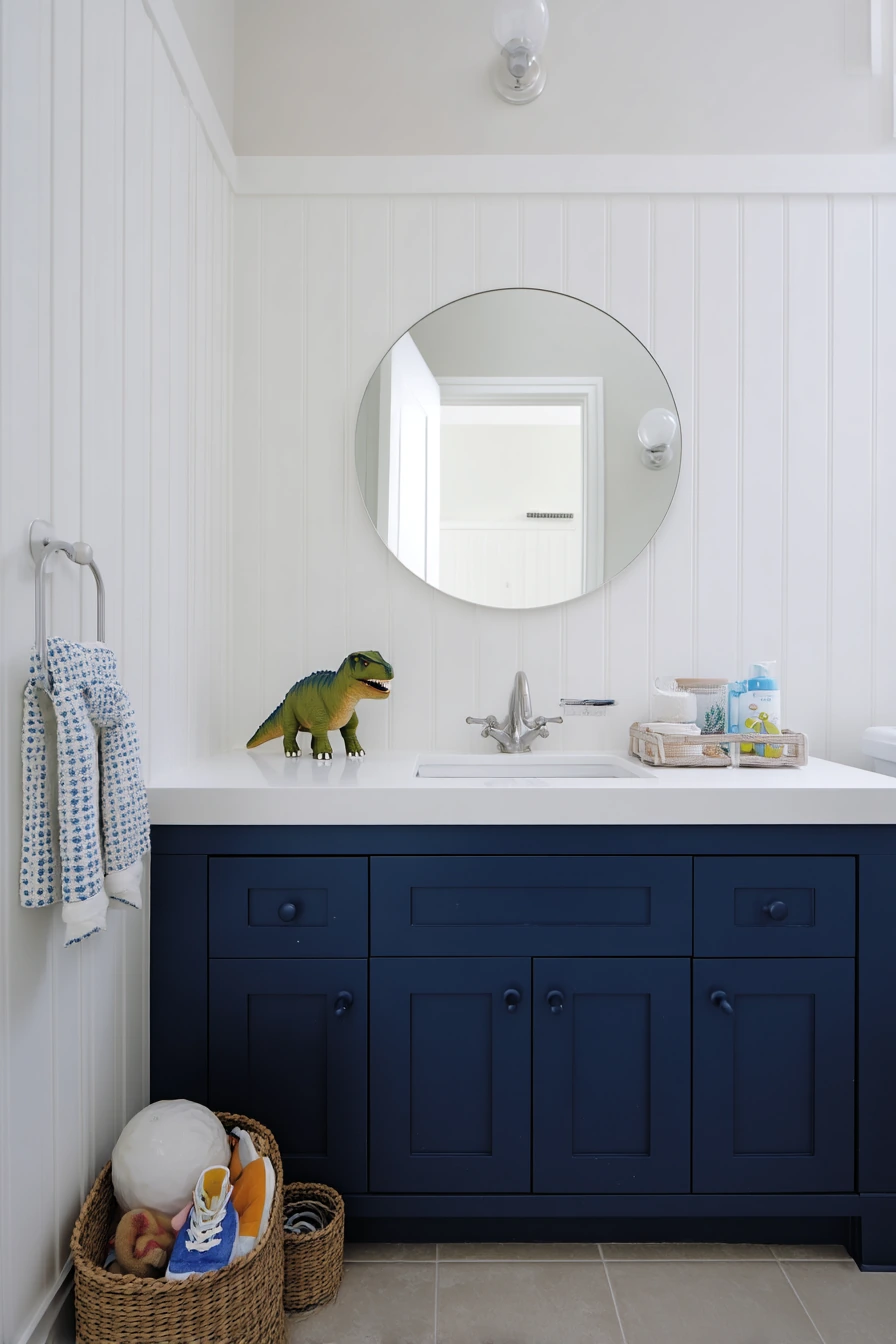
A busy family bathroom needs surfaces that can take daily wear. Durable white beadboard wainscoting protects the lower wall from splashes and bumps, and it looks good with a deep navy vanity. Add built-in cubbies and kid-height towel hooks so towels and bath gear have a home.
This style works because it is honest. Morning rush details like a plastic dinosaur in a basket, damp towels, a stepped stool, and a toothpaste smudge on the sink edge are normal. Beadboard helps here because you can wipe it down and touch up paint when needed. Pair it with a durable tile floor, and choose a round mirror to soften all the straight lines.
How to style it: choose baskets that match the vanity tone, like navy, gray, or natural woven bins. Label a few cubbies for each child. Keep one small lidded bin for extra toothpaste and hair brushes. If one sneaker by the door is a daily thing, add a slim shoe tray or a hook rack outside the bathroom for smoother mornings.
- Use semi-gloss paint on beadboard for easy cleaning.
- Install hooks low enough that kids can reach them alone.
- Choose a vanity with drawers to hide small items.
- Add a stool that tucks under the vanity or into a cubby.
- Keep a basket for bath toys so the floor stays clear.
Pro Design Tip: Use a darker vanity color to hide scuffs, then keep beadboard bright white to bounce light and prevent the room from feeling heavy.
Budget Considerations: Built-in cubbies cost more than a basic cabinet; for less, use wall shelves with matching baskets and simple labels.
5 5. Spa-Like Beadboard Bath With Natural Texture
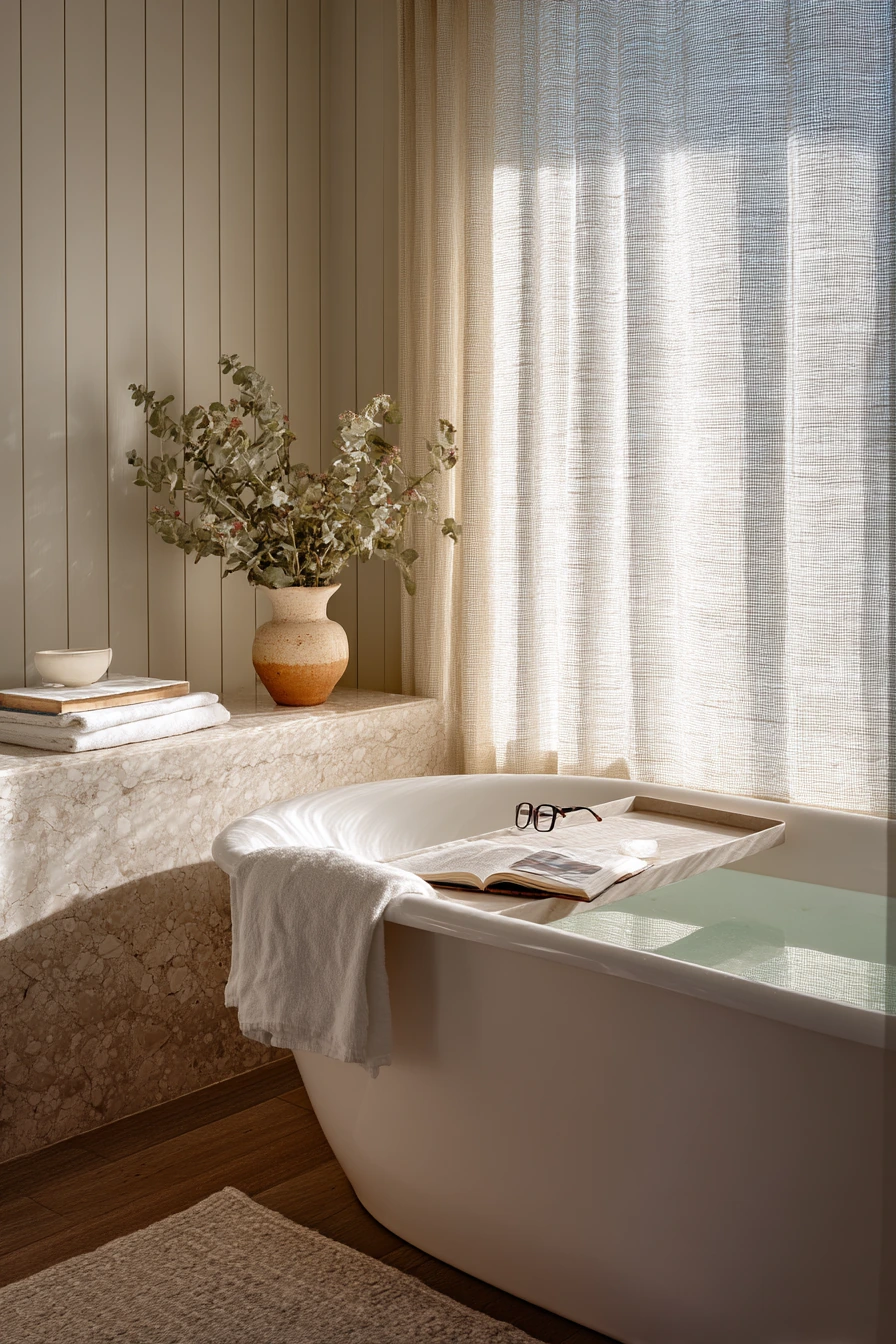
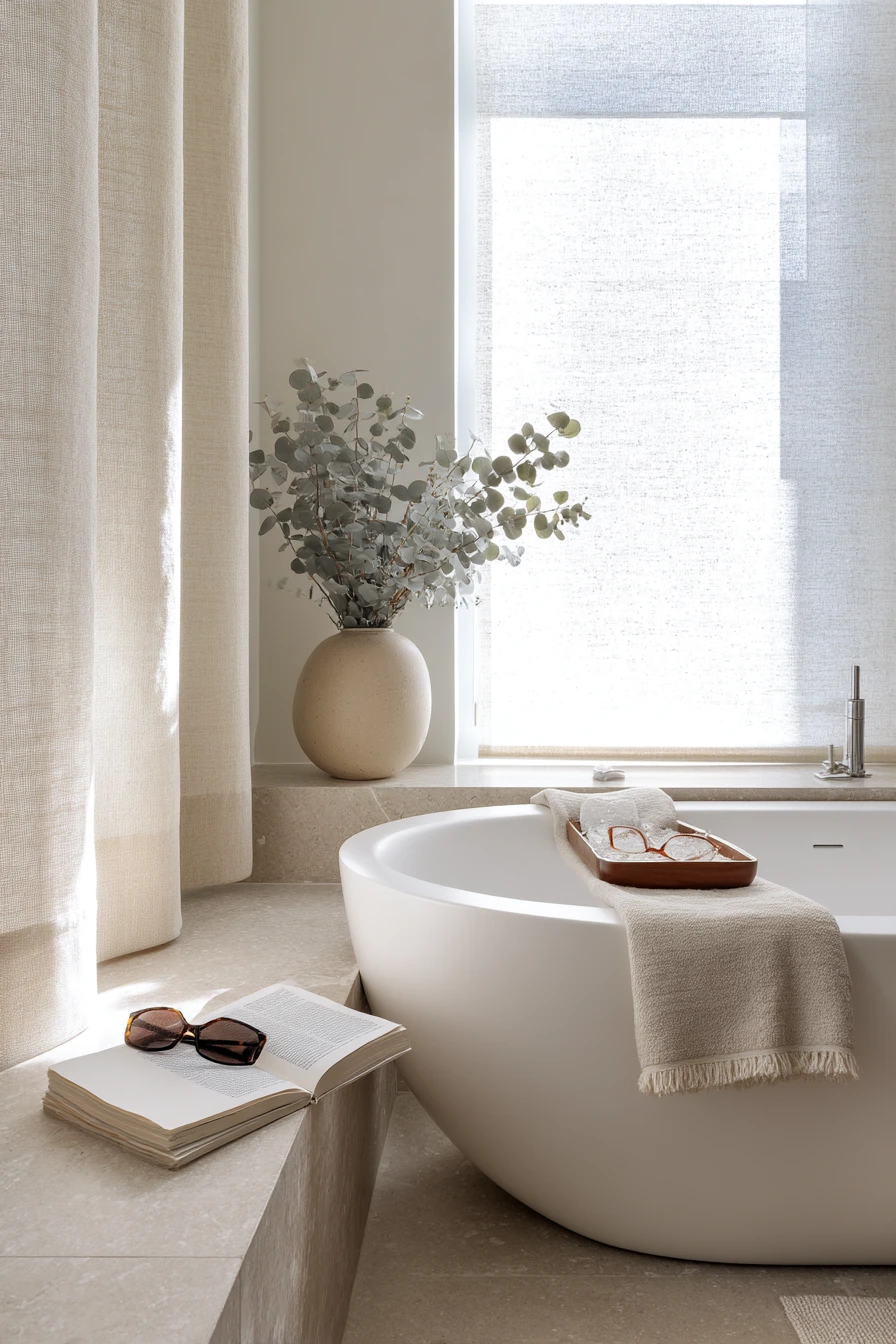
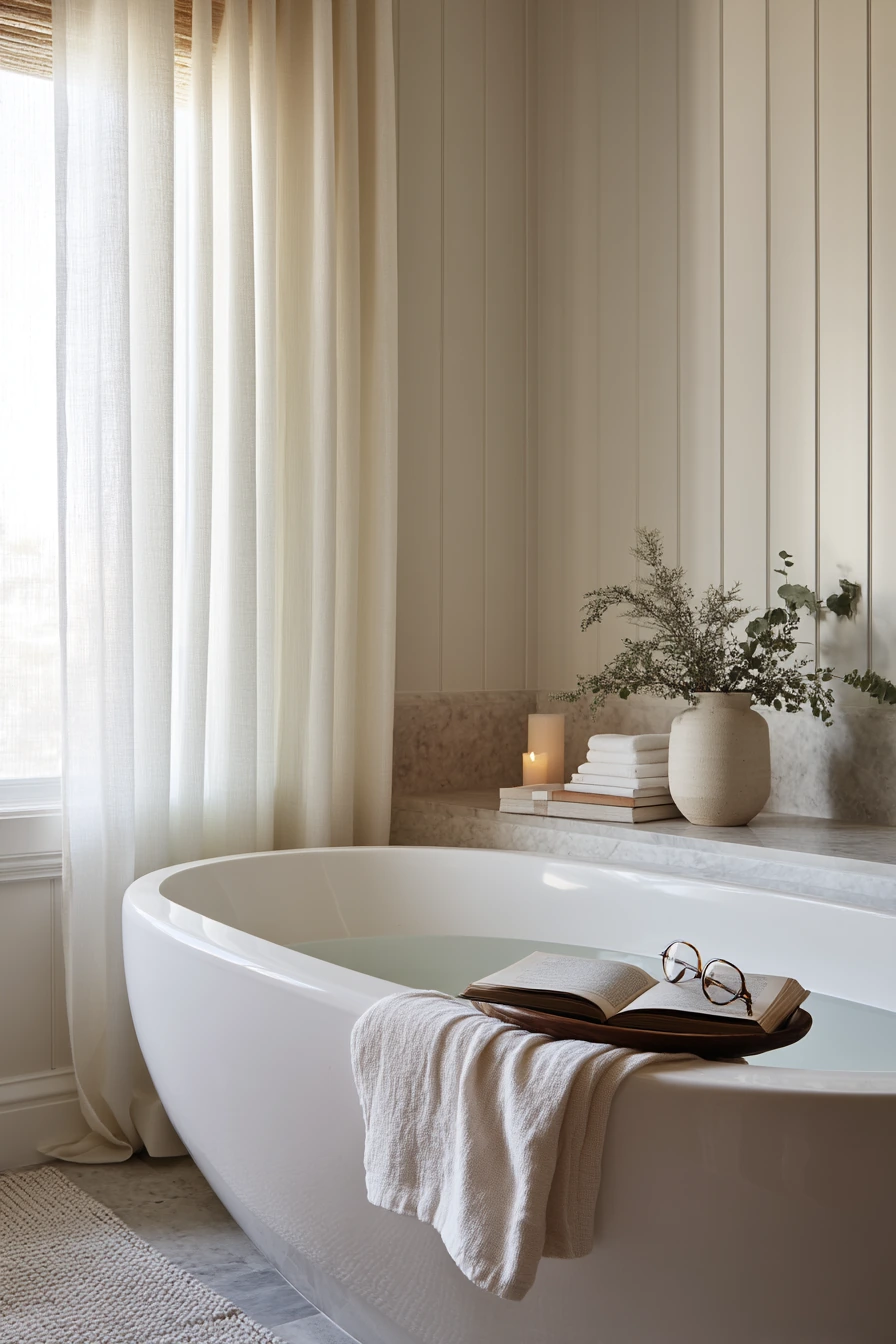
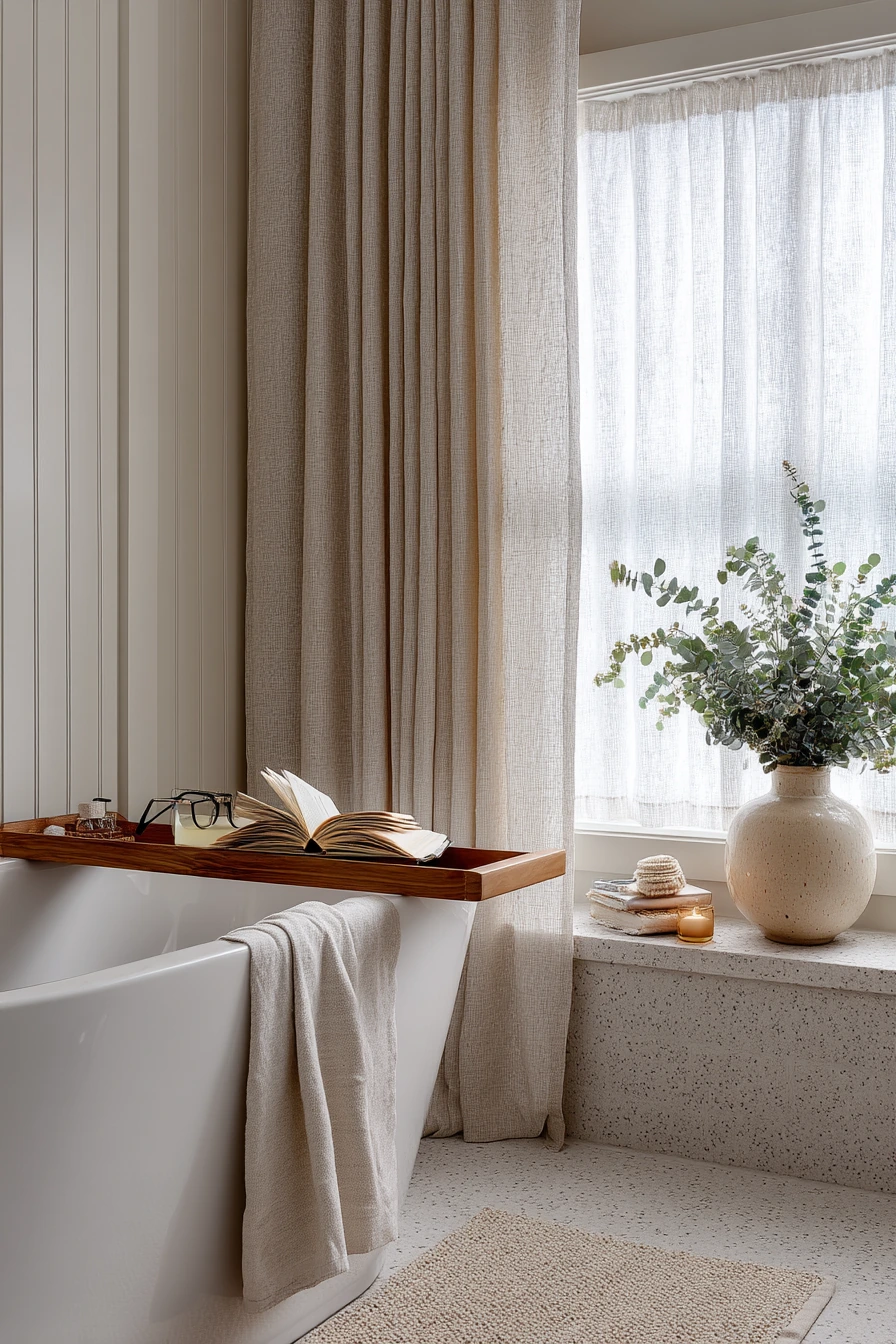
A calm ensuite bath can feel soft and restorative with creamy beadboard on the walls. Cream reads warmer than bright white, which helps the room feel gentle in late-day sun. Pair it with a matte limestone counter for a quiet, natural look, and keep shapes simple around a freestanding tub.
This space feels lived-in in a good way. A bath tray, reading glasses, a half-open paperback, and a steamy hand towel tell a real story. A linen roman shade adds texture and filters light, while a handmade ceramic vase and eucalyptus on the ledge bring a natural touch. Water droplets on the floor mat are normal in a tub room, so pick a mat that dries fast and can be washed often.
How to style it: keep decor low and wide so it does not compete with the tub. Use one or two natural materials, like linen and ceramic, and repeat them in small ways, like a linen hand towel and a woven basket. If your beadboard is creamy, avoid stark white towels. Choose warm white or oatmeal so everything blends.
- Pick a warm cream paint with enough contrast from the trim if you want definition.
- Use matte stone or stone-look counters to keep glare low.
- Add eucalyptus in a simple jar for an easy spa note.
- Choose a roman shade that can handle humidity, like lined linen or a good blend.
- Keep tub-side items on a tray so the ledge stays easy to wipe.
Pro Design Tip: Balance warm cream beadboard with cooler stone, like limestone, so the room feels calm and not too yellow.
Budget Considerations: Real limestone can be expensive and needs sealing; a porcelain slab or quartz in a soft stone pattern gives a similar look for less upkeep.
6 6. Small-Space Half Bath With Bold Beadboard Color
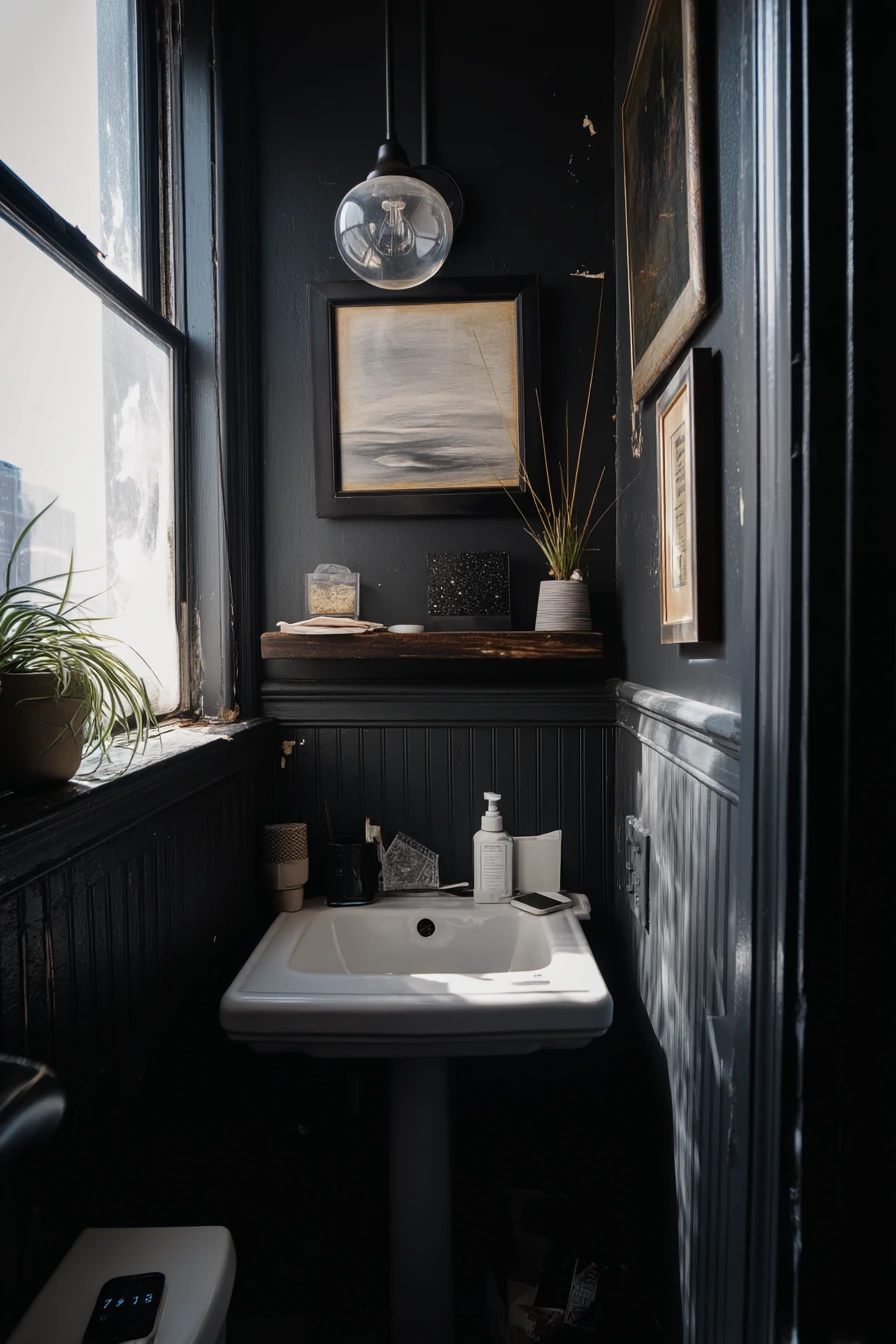
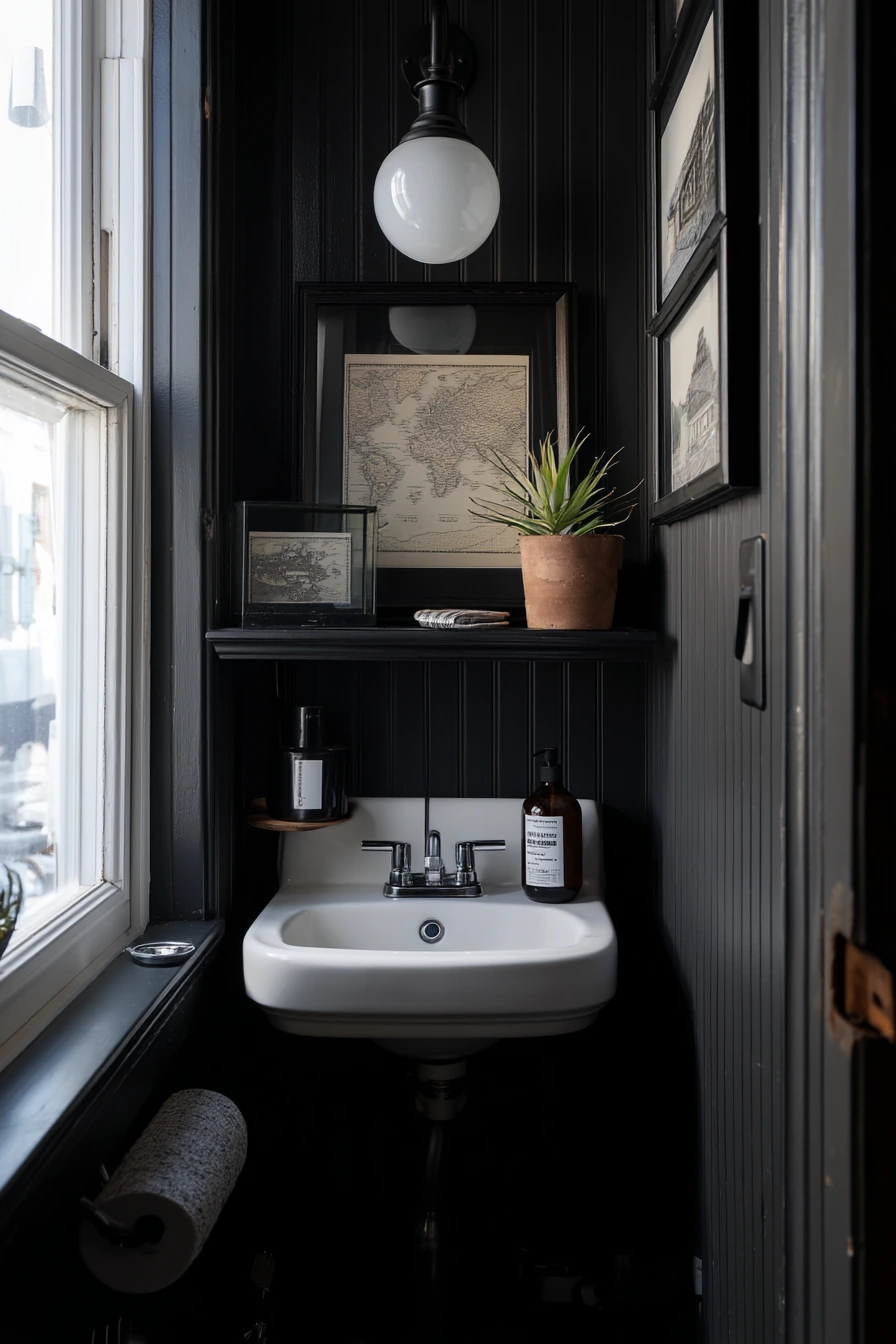
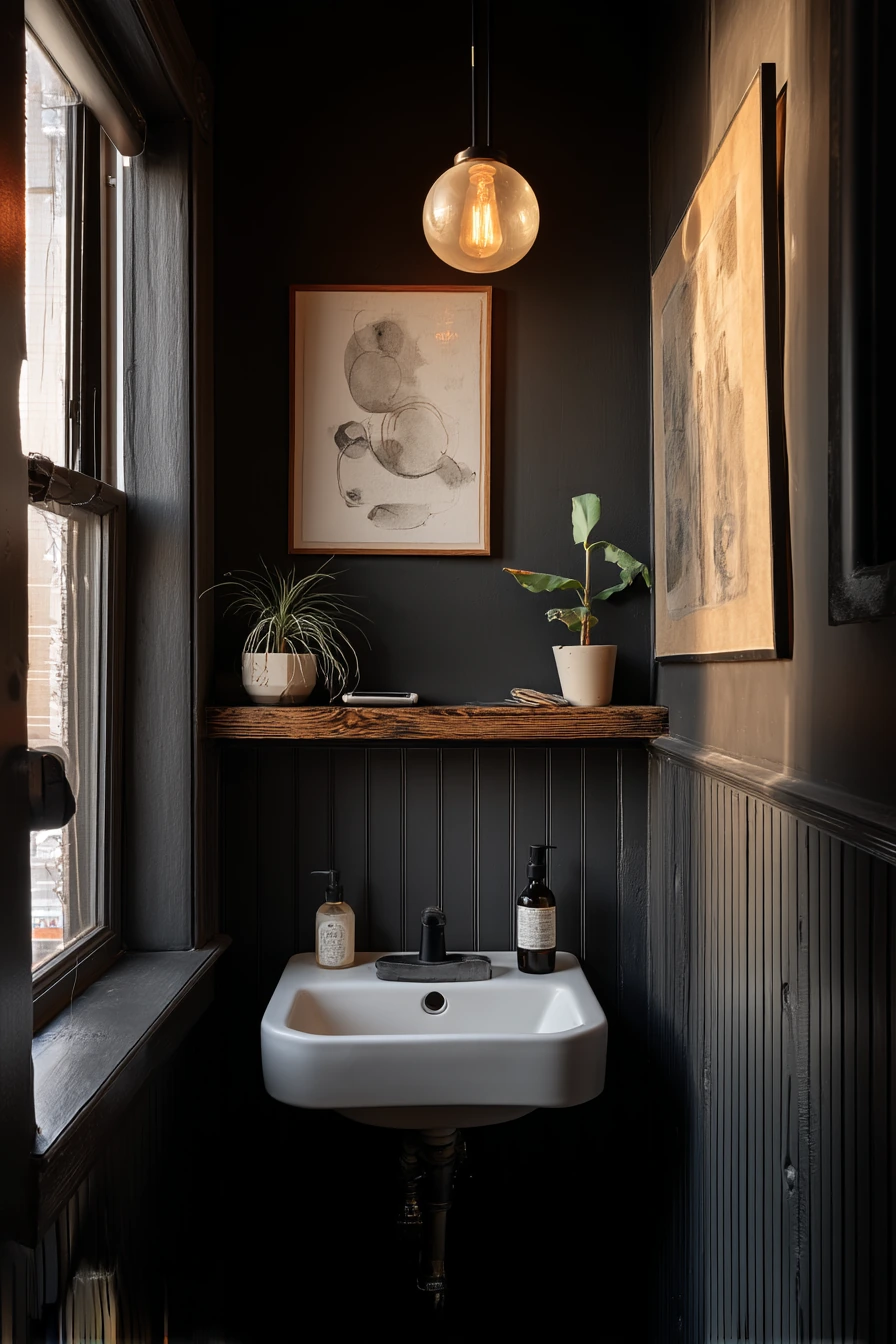
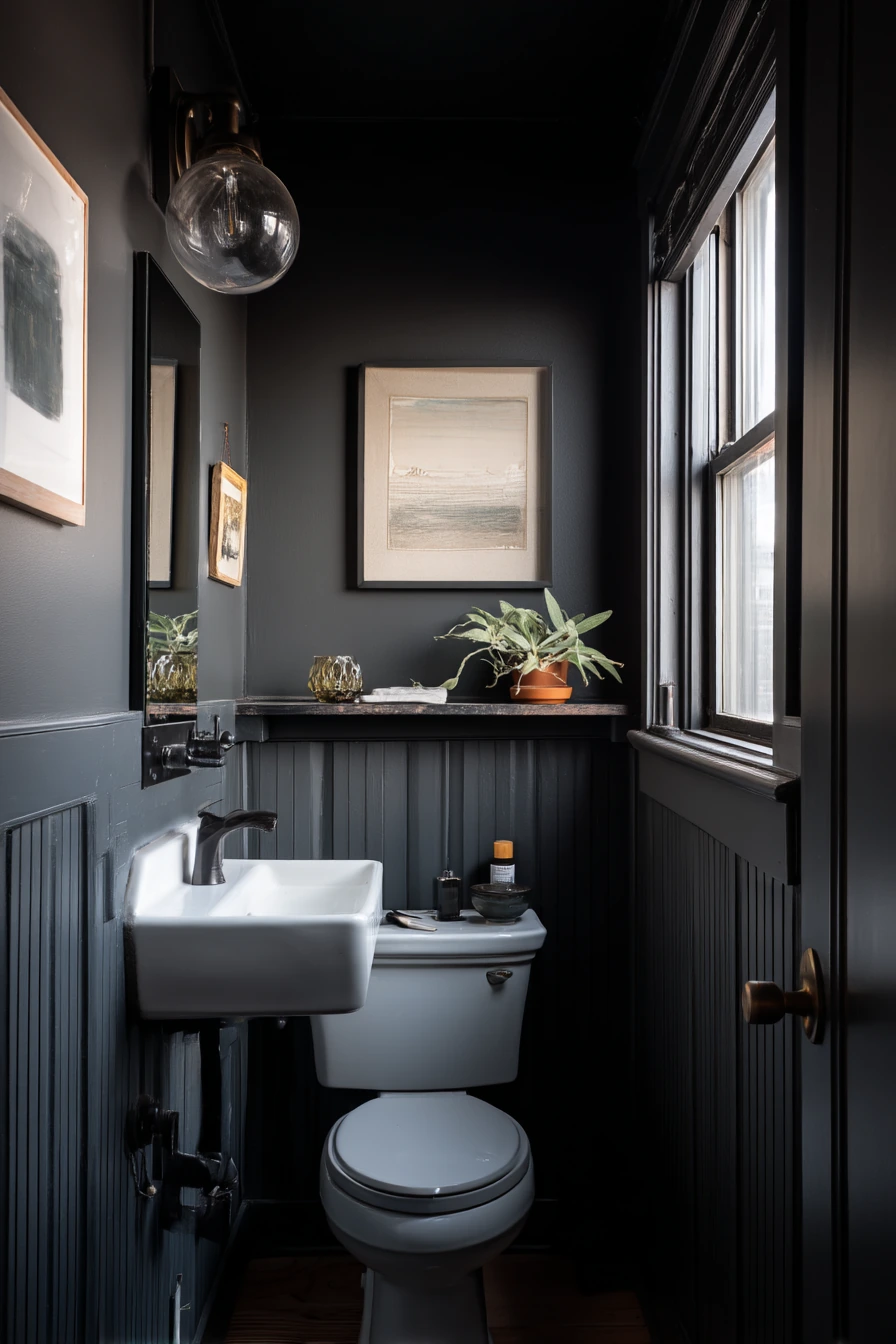
A tiny half bath can handle a bold color because it is a quick-stop space. Deep charcoal beadboard creates a graphic, modern look and hides scuffs better than white. Pair it with a compact white sink so the room does not feel too dark, and add a vintage globe light for a clean, classic glow.
This style works best when it feels real and functional. A narrow shelf with a small plant adds life, while black-framed art keeps the palette tight. Dark grout on tile or a small mosaic can look sharp, but it also shows soap residue, so plan for easy cleaning. Lived-in details like keys in a dish, a phone charging on the shelf, a folded receipt, and hand soap with water spots make the room believable.
How to style it: keep accessories simple and light. Use a white hand towel to pop against the charcoal beadboard. Add one small natural element, like a plant or a wood tray, to soften the dark walls. If the room has cool morning window light, choose a bulb that is warm enough to balance it, so faces do not look gray in the mirror.
- Use moisture-resistant paint in a satin finish to reduce fingerprints.
- Keep the top wall and ceiling lighter if the room feels too enclosed.
- Choose a clear or simple soap bottle to avoid visual clutter.
- Add a slim shelf for keys and small items to keep the sink clear.
- Use black frames and hardware for a cohesive urban look.
Pro Design Tip: In a dark half bath, use a larger mirror than you think you need, so it reflects more light and keeps the space from feeling tight.
Budget Considerations: Dark paint is affordable, but extra lighting may add cost; start with a brighter bulb and only upgrade the fixture if needed.
7 7. Farmhouse Bath, Beadboard and Everyday Laundry
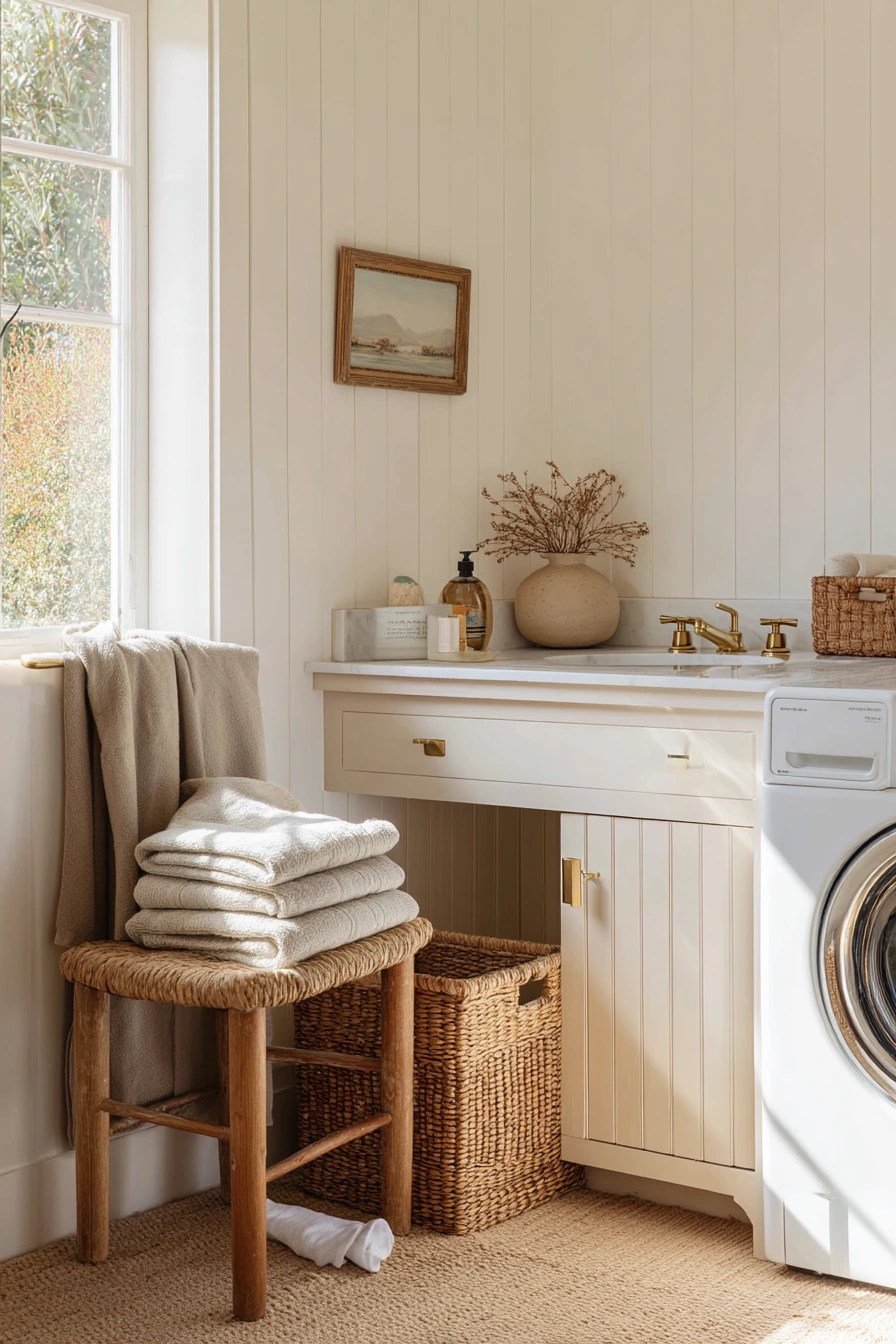
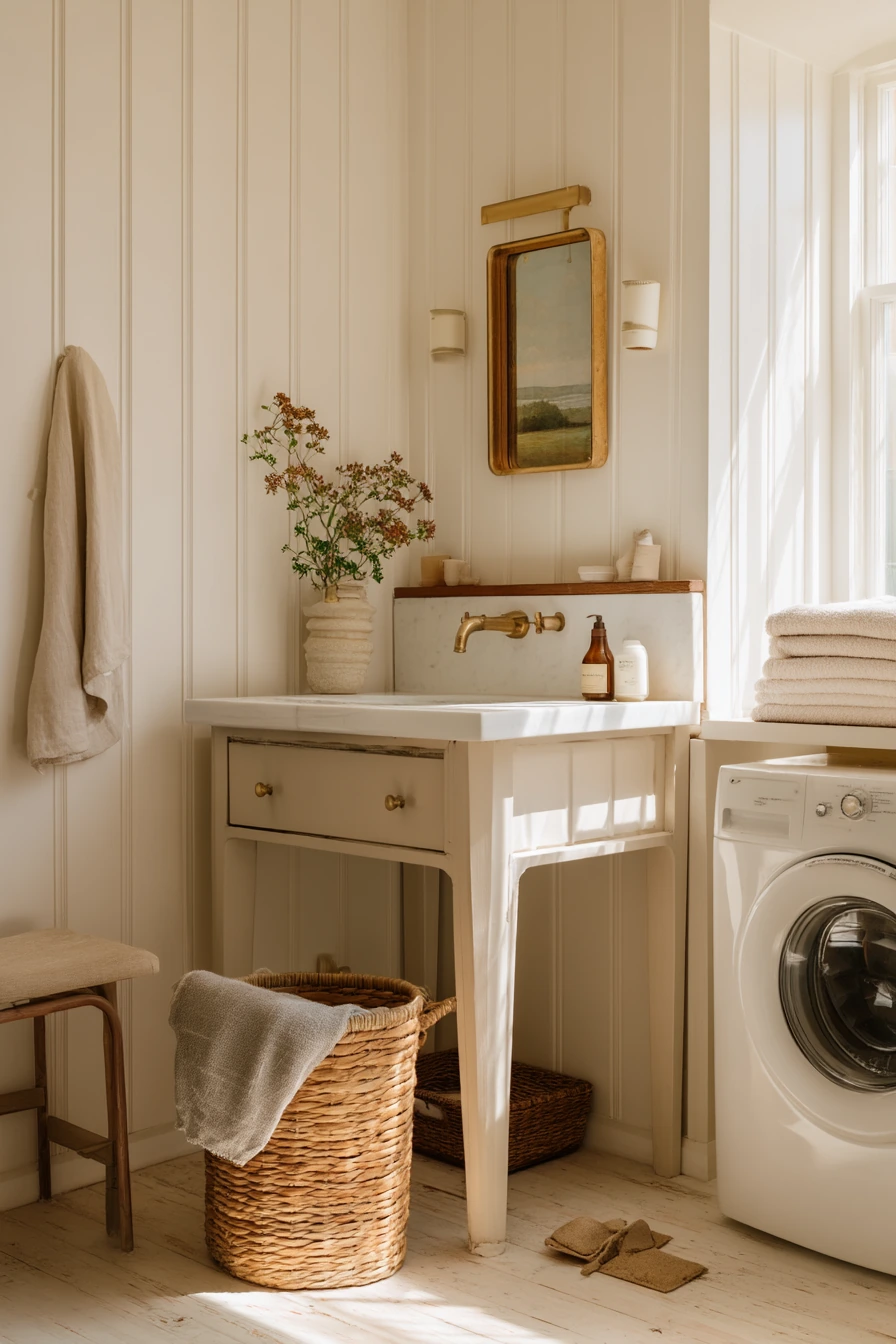
A bright farmhouse bathroom looks right with vertical beadboard. The vertical lines pull the eye up and can make an average ceiling feel taller. Pair it with an apron-front vanity and aged brass pulls for a warm, worn-in look that still feels clean.
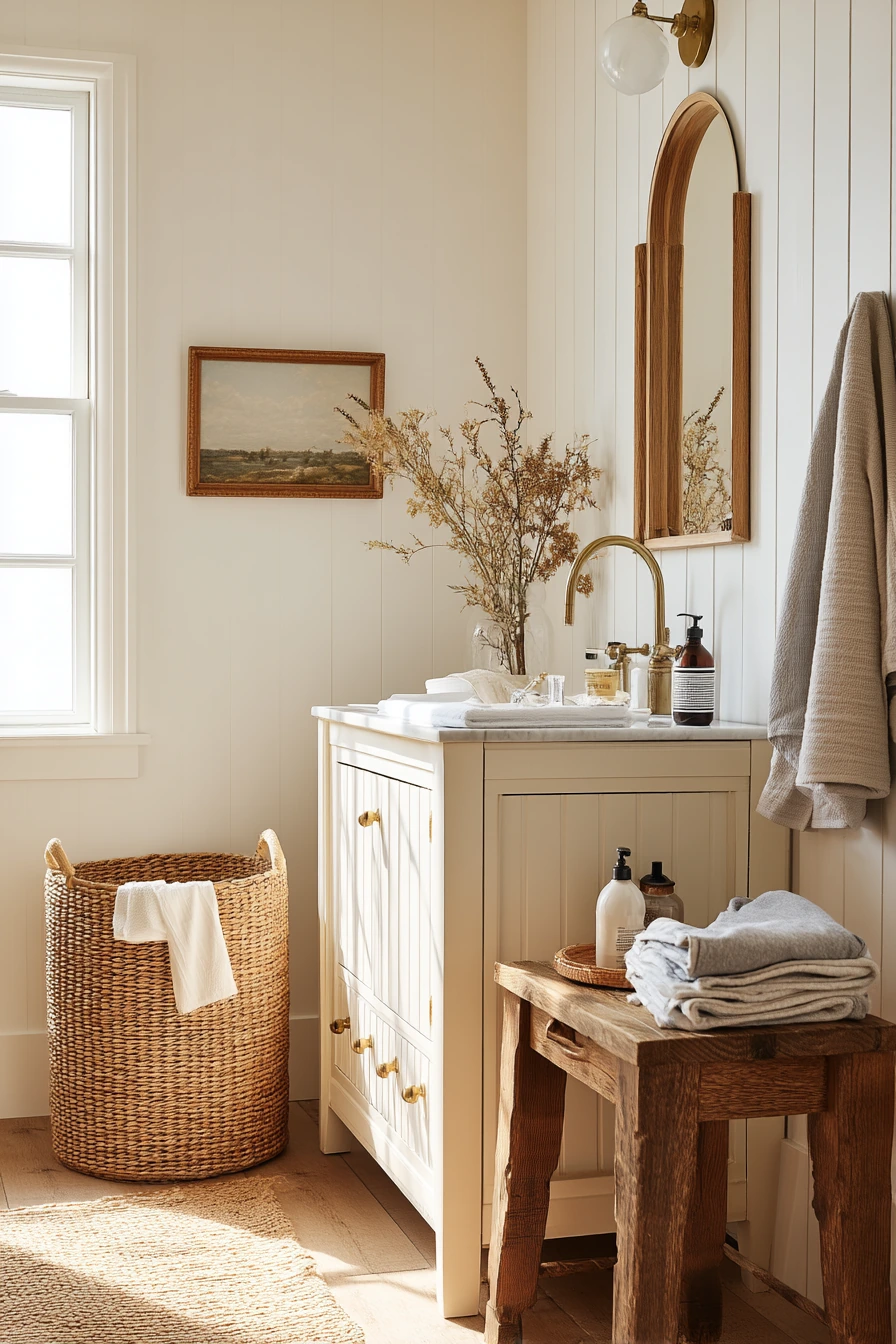
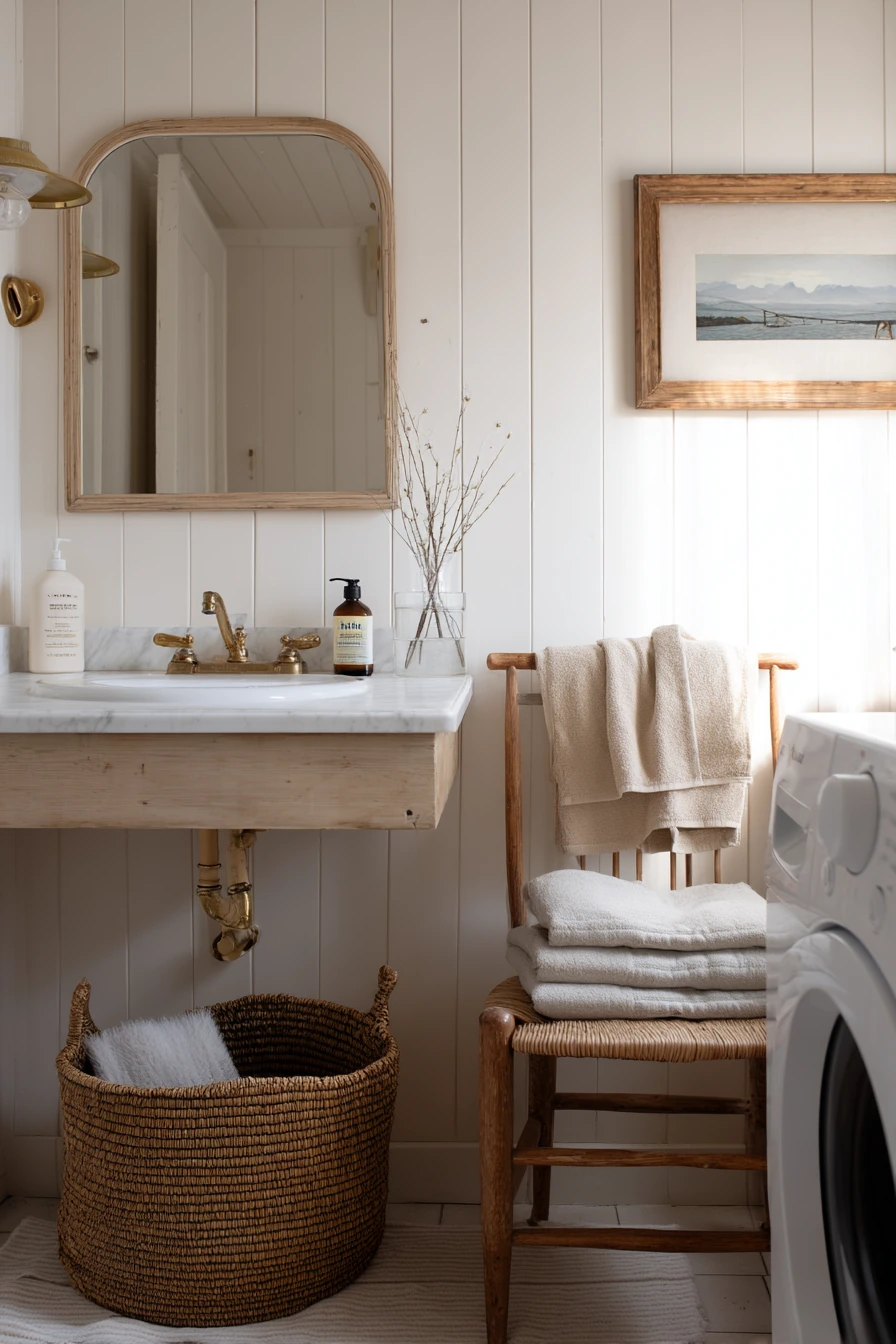
This style does not need perfect styling. A woven hamper, a framed landscape, and a simple mirror with a warm wood edge are enough. Laundry day details like fresh towels stacked unevenly, a detergent bottle, one sock on the floor, and a folded sweatshirt on a chair make the room feel like a working home. Midday light helps white beadboard look crisp, so it is a good choice if your bathroom gets a lot of sun.
How to style it: keep textiles soft and simple. Use white or cream towels and add one stripe or check pattern for interest. Choose a wood-framed mirror to bring warmth to all the white surfaces. If you want a farmhouse feel without clutter, pick one vintage-style item, like a glass jar for cotton pads, and keep counters mostly open.
- Use vertical beadboard behind the vanity to create a strong focal wall.
- Mix brass pulls with a simple faucet finish that matches your existing plumbing.
- Add a woven hamper for texture and easy storage.
- Hang one landscape print to soften the straight lines of beadboard.
- Use a small chair or stool for laundry day items, then clear it at night.
Pro Design Tip: Choose beadboard with a slightly wider groove spacing for farmhouse style, so it reads softer and less modern.
Budget Considerations: Apron-front vanities can cost more; you can get a similar look with a standard vanity and a beadboard face panel on the cabinet doors.
8 8. Kid-Ready Hall Bath With Easy-Clean Beadboard
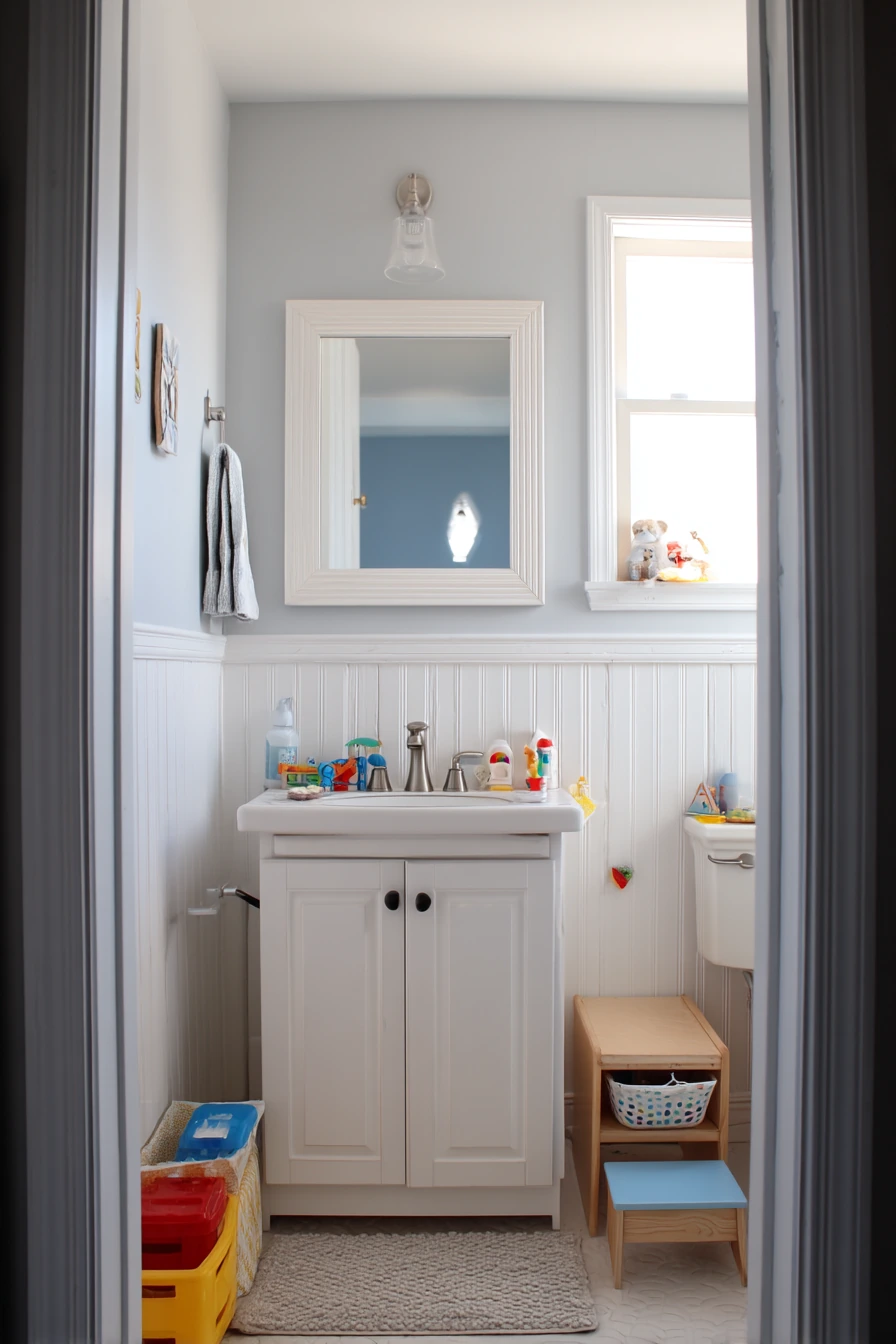
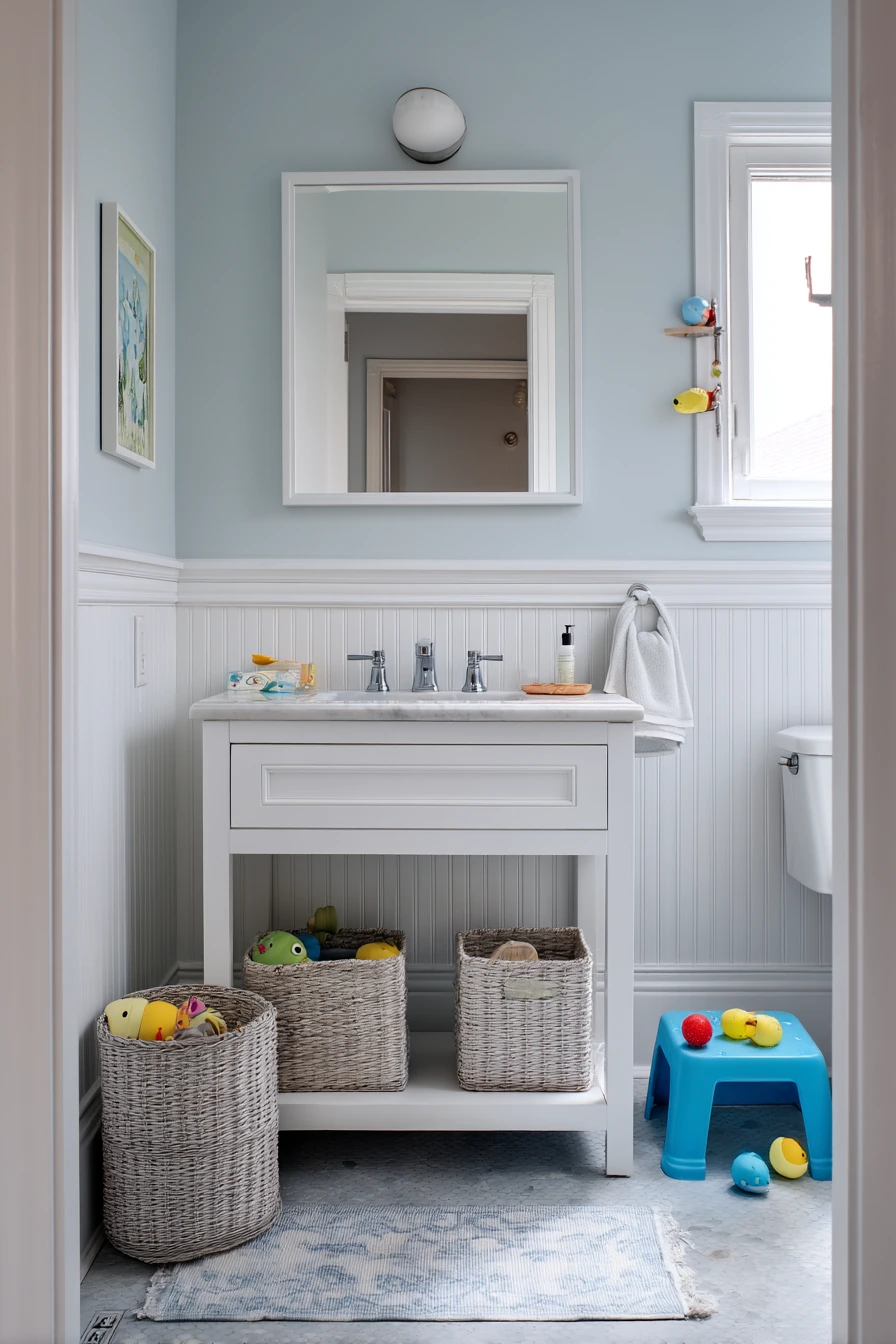
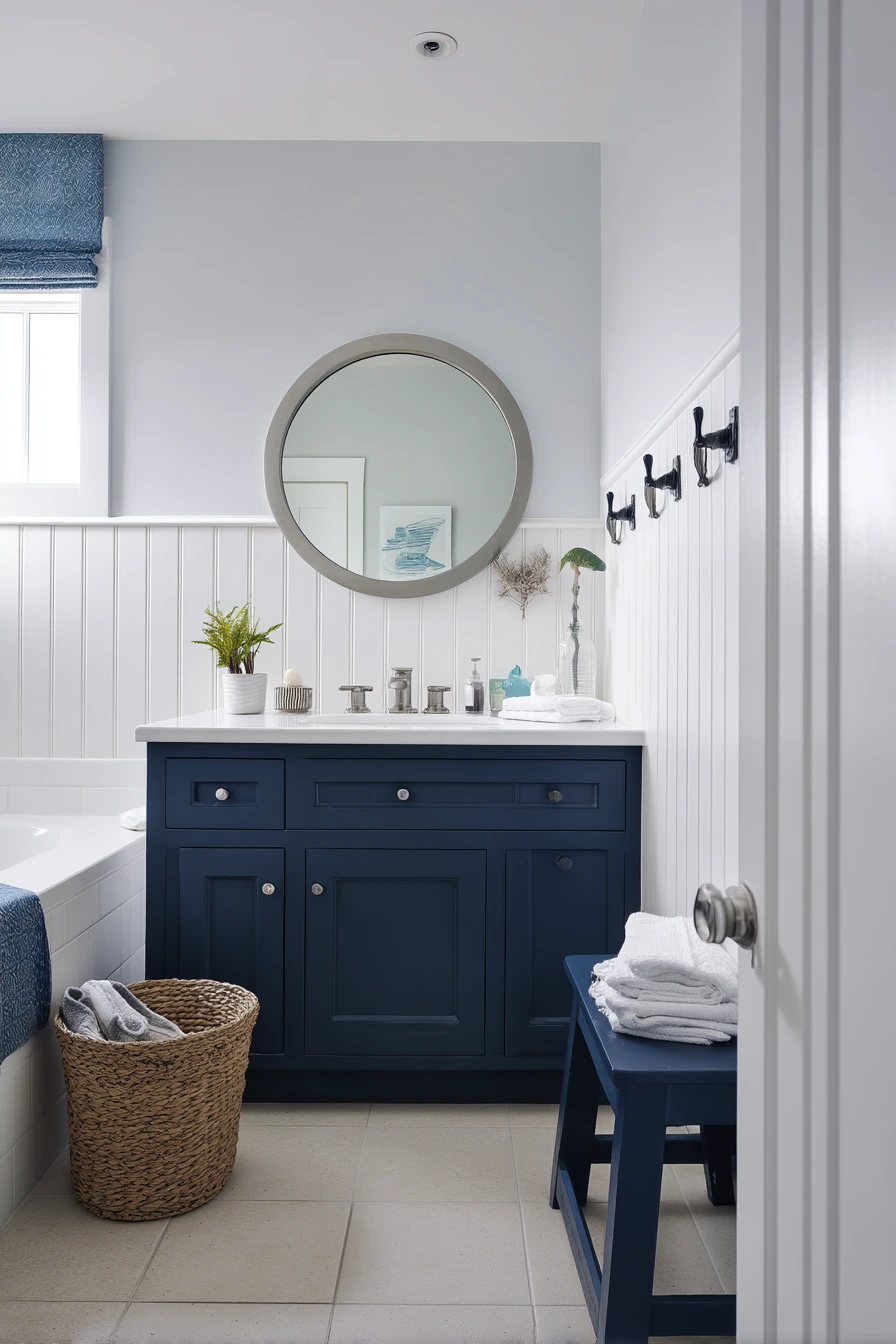
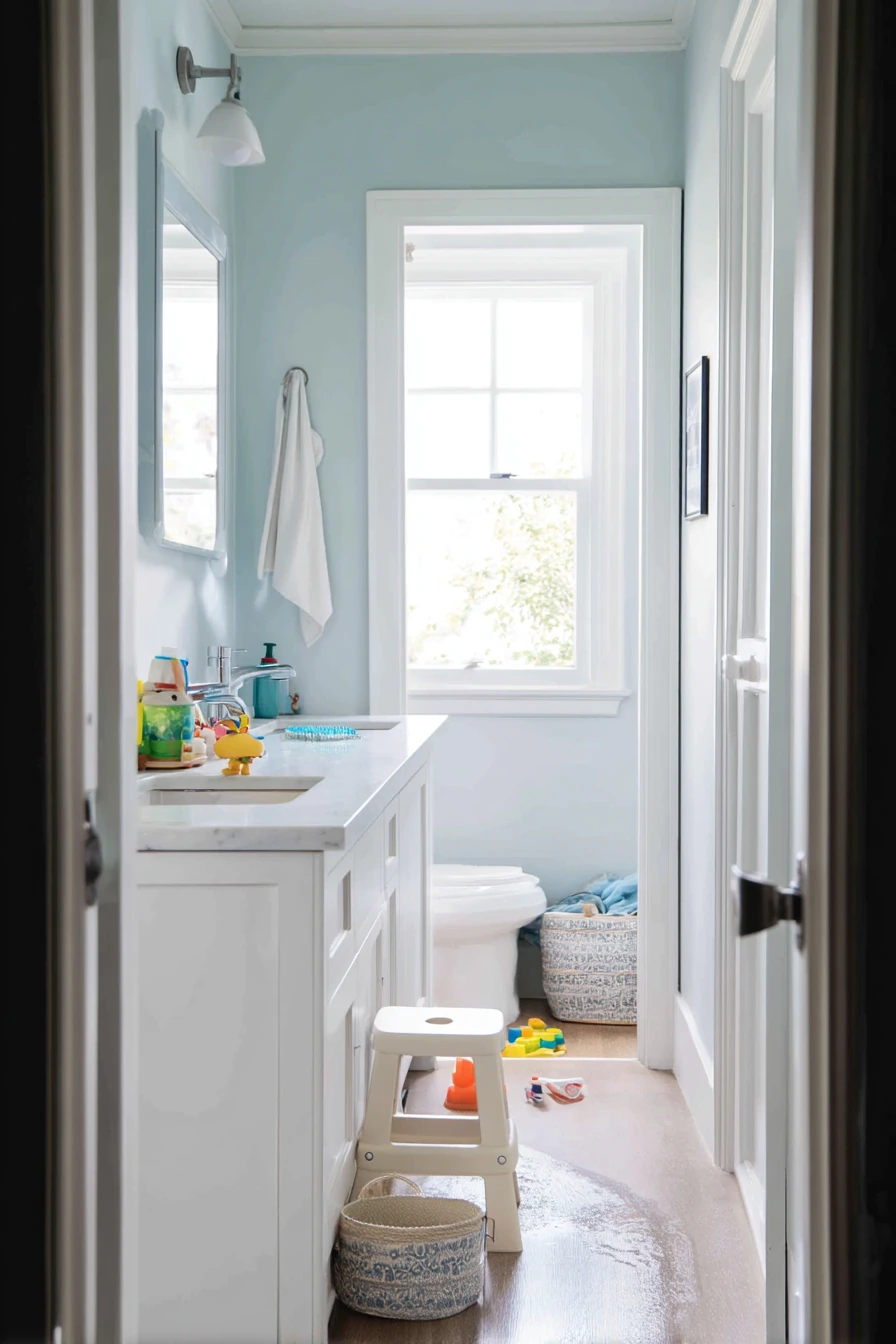
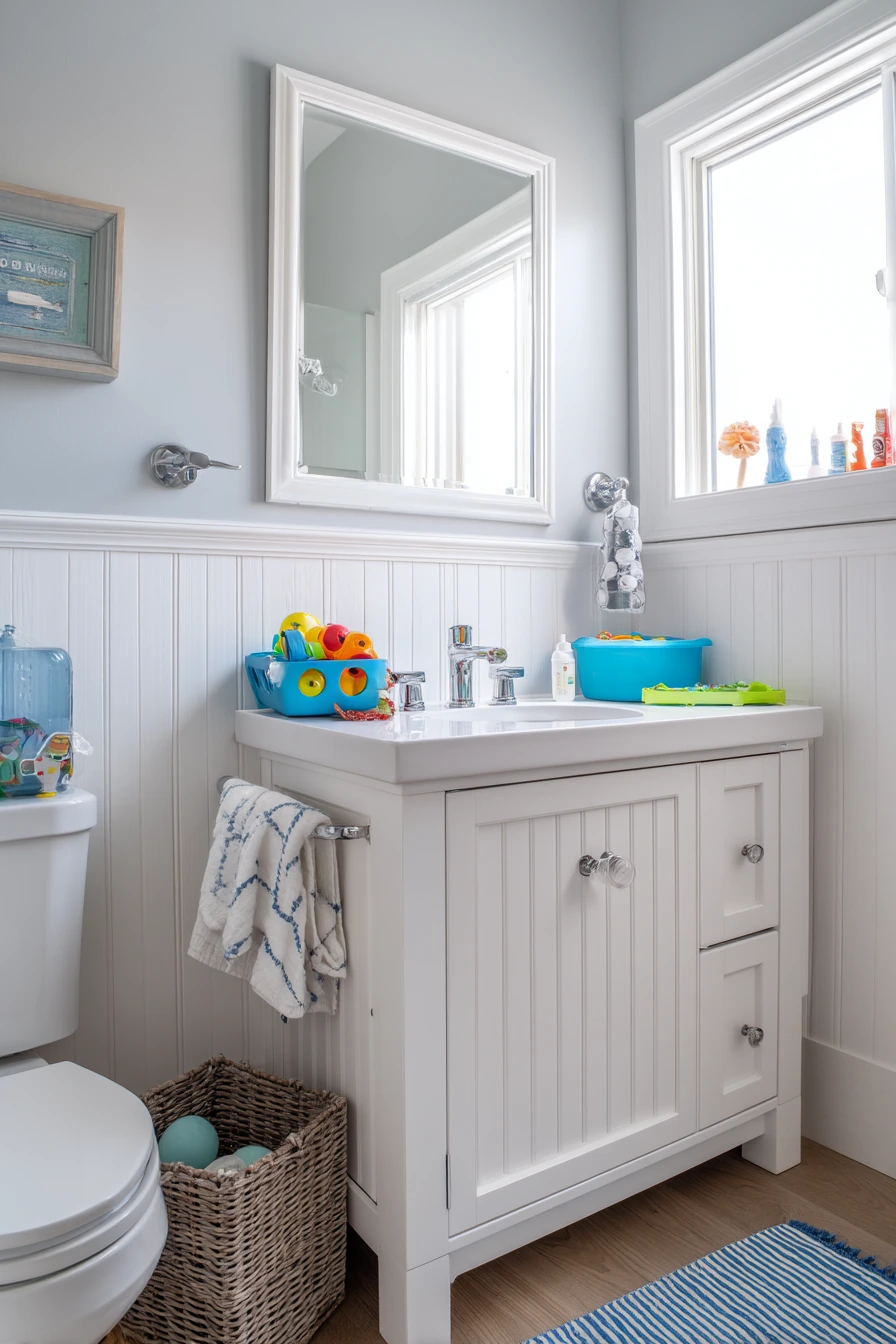
A shared hall bathroom for kids needs finishes that clean fast. Wipeable white beadboard on the lower wall is a smart choice because it handles splashes and bumps. Add cheerful blue-gray walls above to keep it fun but not too bright, and use a quartz vanity for easy care.
This room should support busy mornings. A wide mirror helps two kids use the sink at once, and a rounded faucet is easier for little hands. Labeled storage baskets keep hair items, bandages, and extra toothpaste in order. Real kid life looks like bath toys in a bin, a damp towel on a hook, a toddler step stool, a missing toothpaste cap, and tiny water splashes on the counter. Build systems around that reality instead of fighting it.
How to style it: repeat the blue-gray tone in small pieces, like a hand towel or a bath mat, so the room feels pulled together. Keep counter items in one tray so wiping takes seconds. Add a fun but simple print, like animals or shapes, and keep frames plastic or sealed wood so they can handle humidity.
- Use semi-gloss paint on beadboard for quick wipe downs.
- Install hooks at two heights for older kids and toddlers.
- Choose quartz for stain resistance and low upkeep.
- Label baskets by category, not by child, to reduce daily sorting.
- Add a step stool that fits under the vanity to keep the floor clear.
Pro Design Tip: Use one long mirror and a bright overhead light, so the space works for two kids without adding a second sink.
Budget Considerations: Quartz costs more than laminate; if you need to save, upgrade only the faucet and mirror first, then replace the top later.
9 9. Vintage-Inspired Beadboard Bath With Collected Details
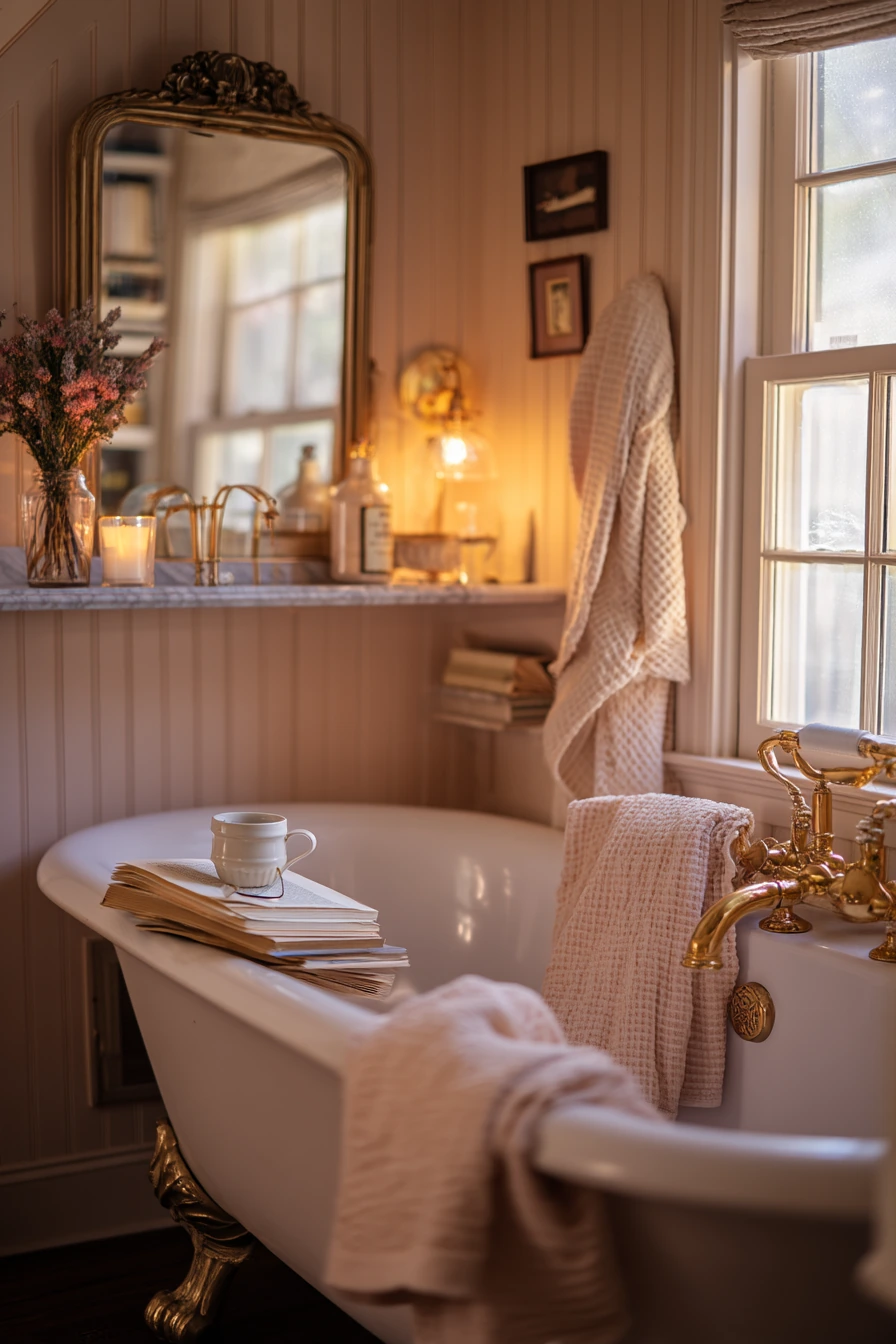
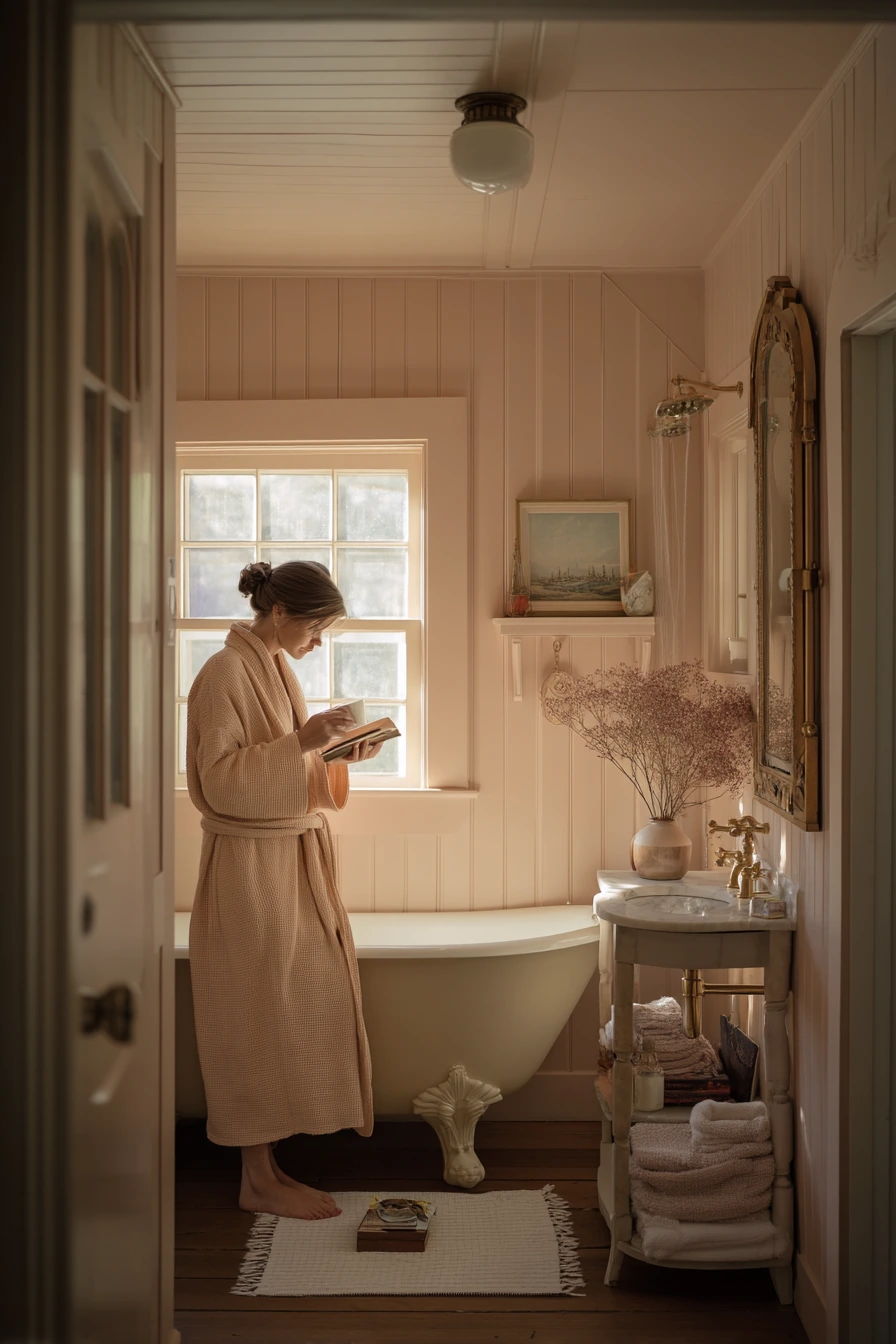
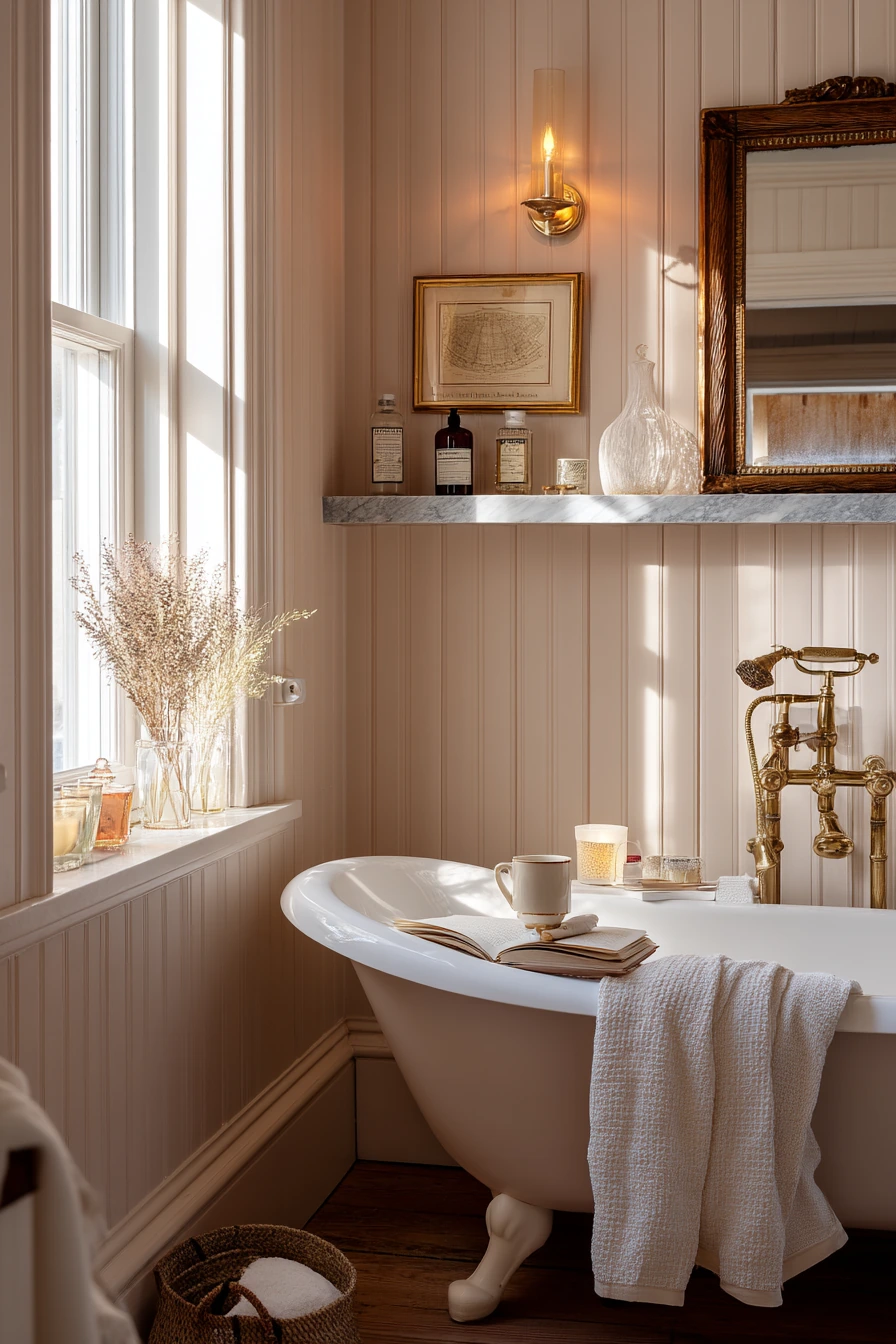
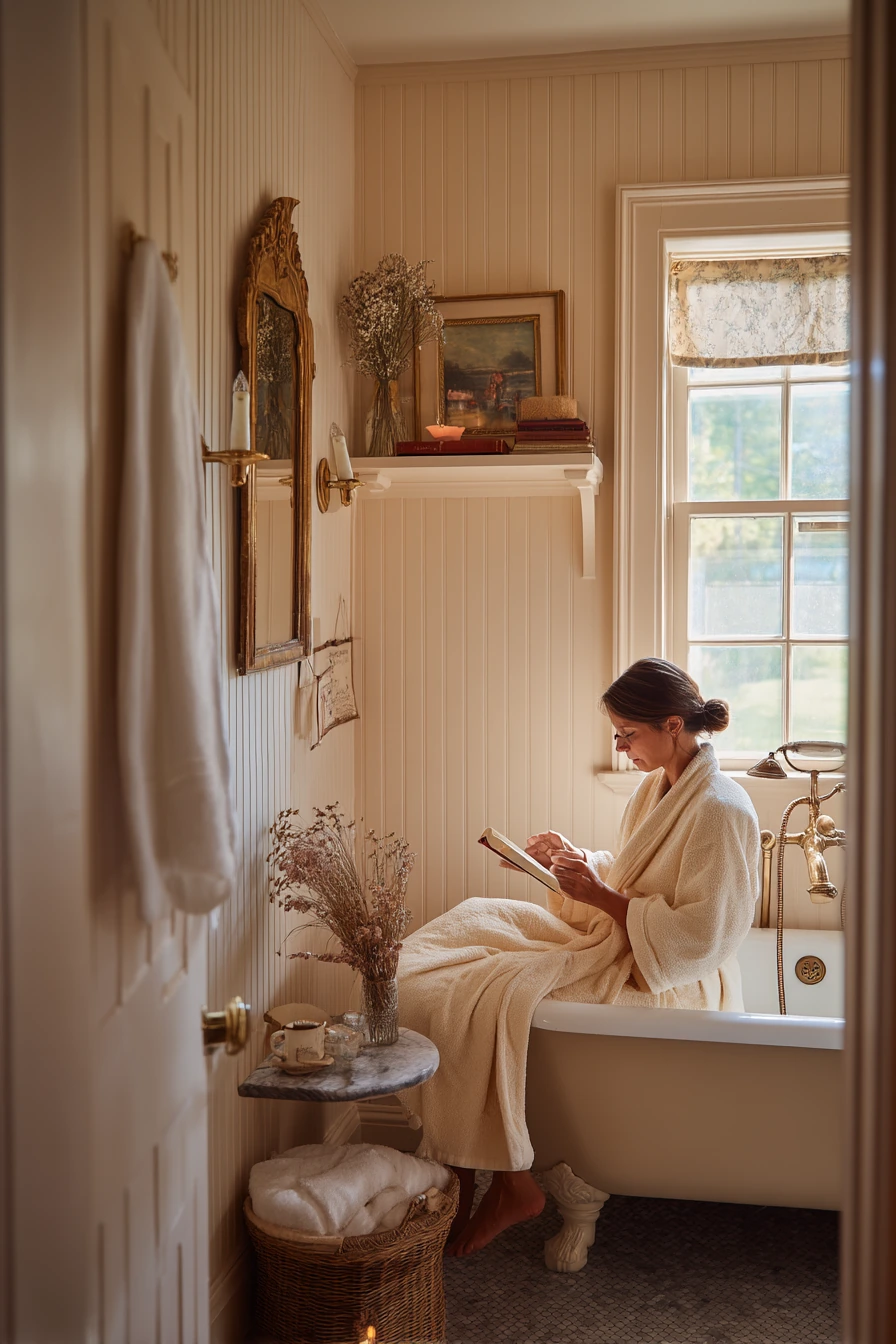
An old-house bathroom can feel soft and collected with pale blush beadboard. Blush adds warmth without feeling too sweet, especially when paired with unlacquered brass fixtures. A clawfoot tub brings period charm, and a marbled shelf gives you a spot for everyday items without a heavy cabinet.
This look works when it feels layered. An antique mirror adds history, and a small art stack leaning on the sill looks relaxed. The scene feels cozy with a homeowner in socks setting down a tea mug, an open novel, reading glasses, and a folded robe. Dried flowers in a bottle add texture and a gentle color note. Soft evening lamp glow plus the last light from the window makes brass look rich and warm.
How to style it: mix one old element with one clean element. For example, keep the beadboard paint fresh and even, but choose a vintage mirror or thrifted art. Use a simple white shower curtain so the blush and brass stay the focus. If you worry about pink feeling trendy, choose a muted blush with brown or beige undertones and balance it with white tile and warm metals.
- Choose a pale blush that looks calm in both daylight and lamp light.
- Use unlacquered brass if you like patina and small marks over time.
- Add a marble or stone shelf for a light, open look.
- Layer art by leaning small frames instead of hanging many pieces.
- Keep textiles simple, like a white robe and neutral towels.
Pro Design Tip: Test blush paint next to your brass finish at night, because warm bulbs can shift the color and make it look more peach.
Budget Considerations: Clawfoot tubs and brass fixtures can be costly; try a brass-look faucet and a vintage mirror first to get the feel without a full remodel.
10 10. Weekend DIY Beadboard Project in Progress
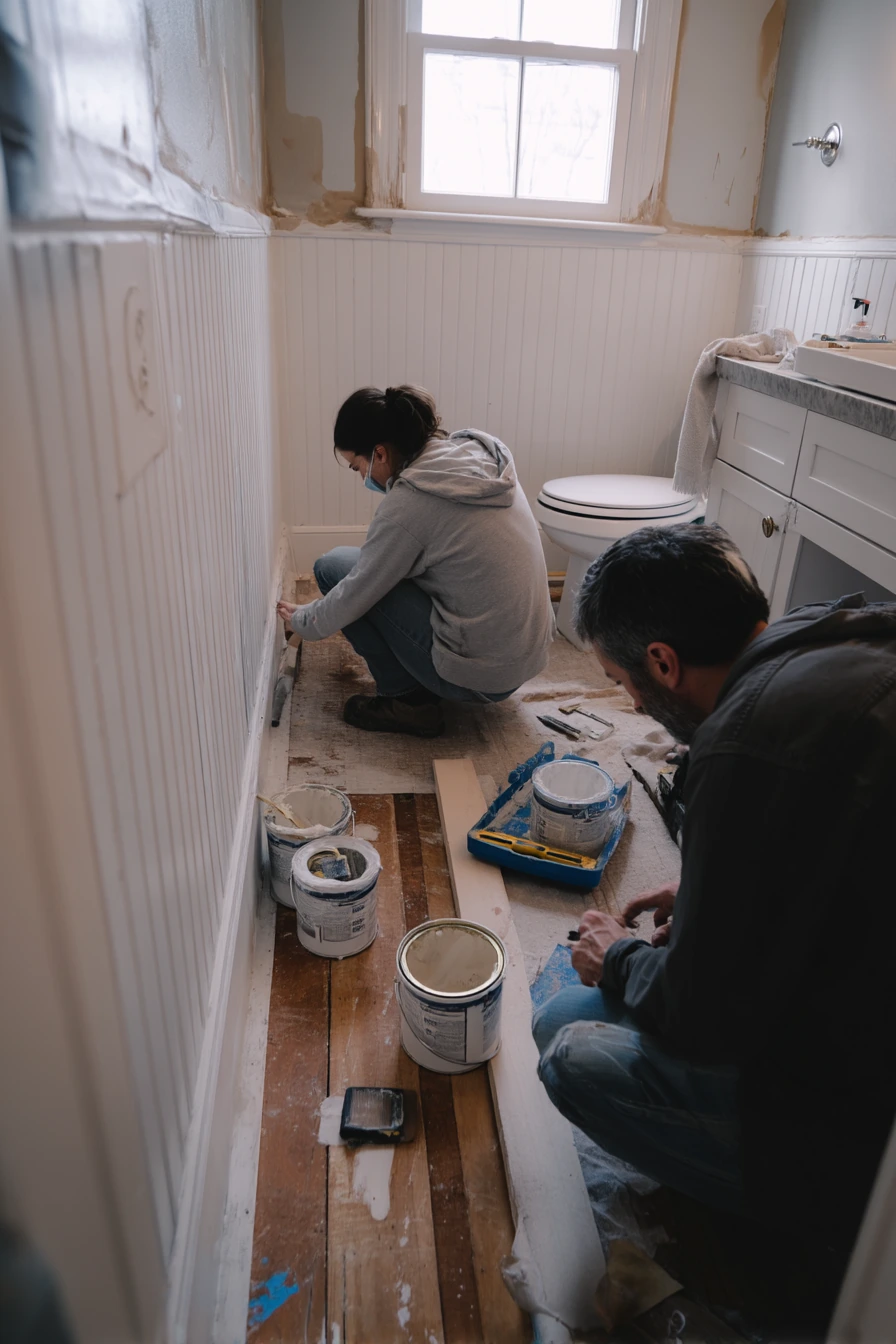
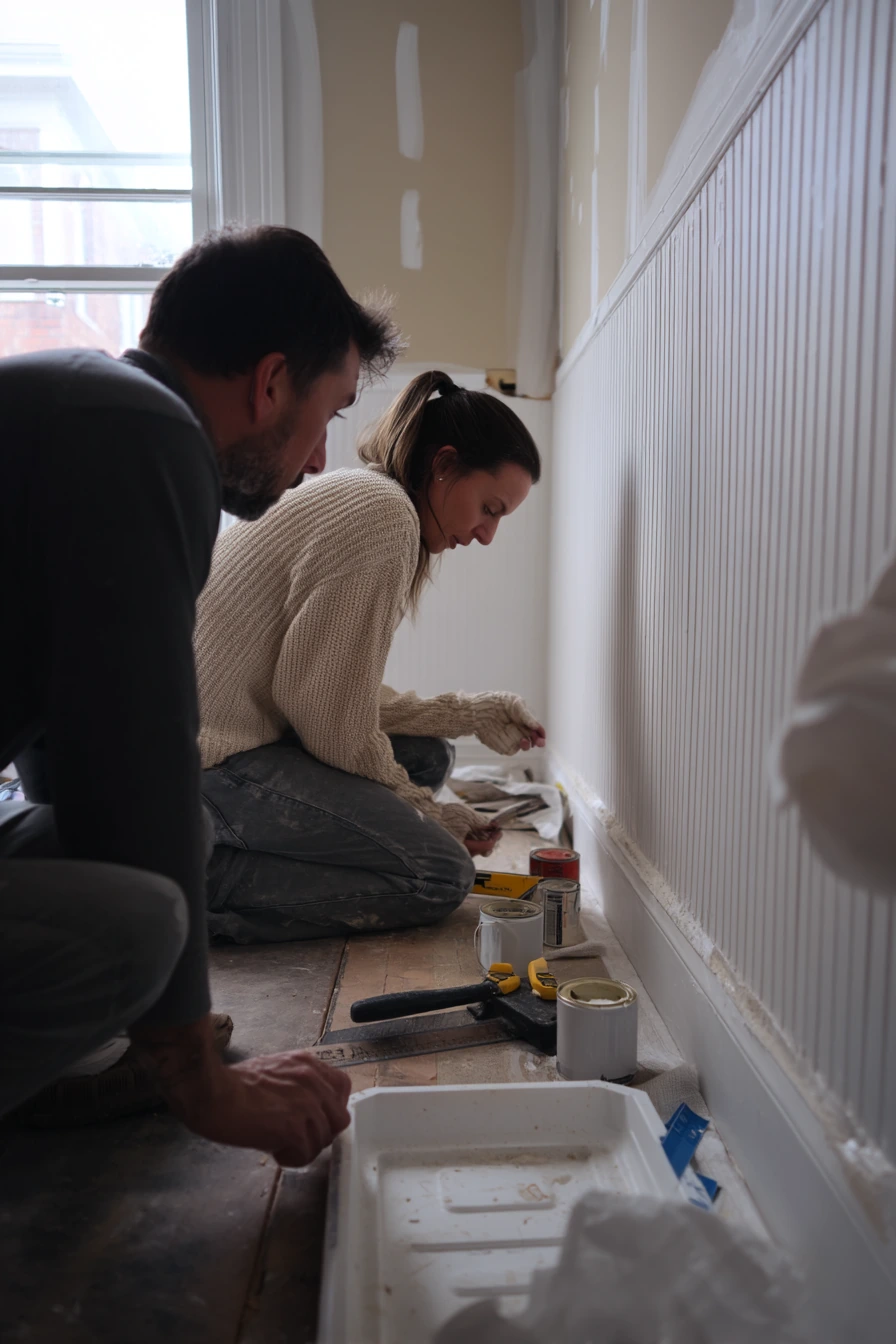
Installing beadboard wall paneling below the wainscot line is a common weekend renovation. It looks simple, but the finished result depends on careful measuring and good trim. In a mid-renovation bathroom you might see a paint tray, blue tape, a utility knife, drop cloth, unfinished trim, and raw drywall edges. That is normal, and planning helps you avoid rework.
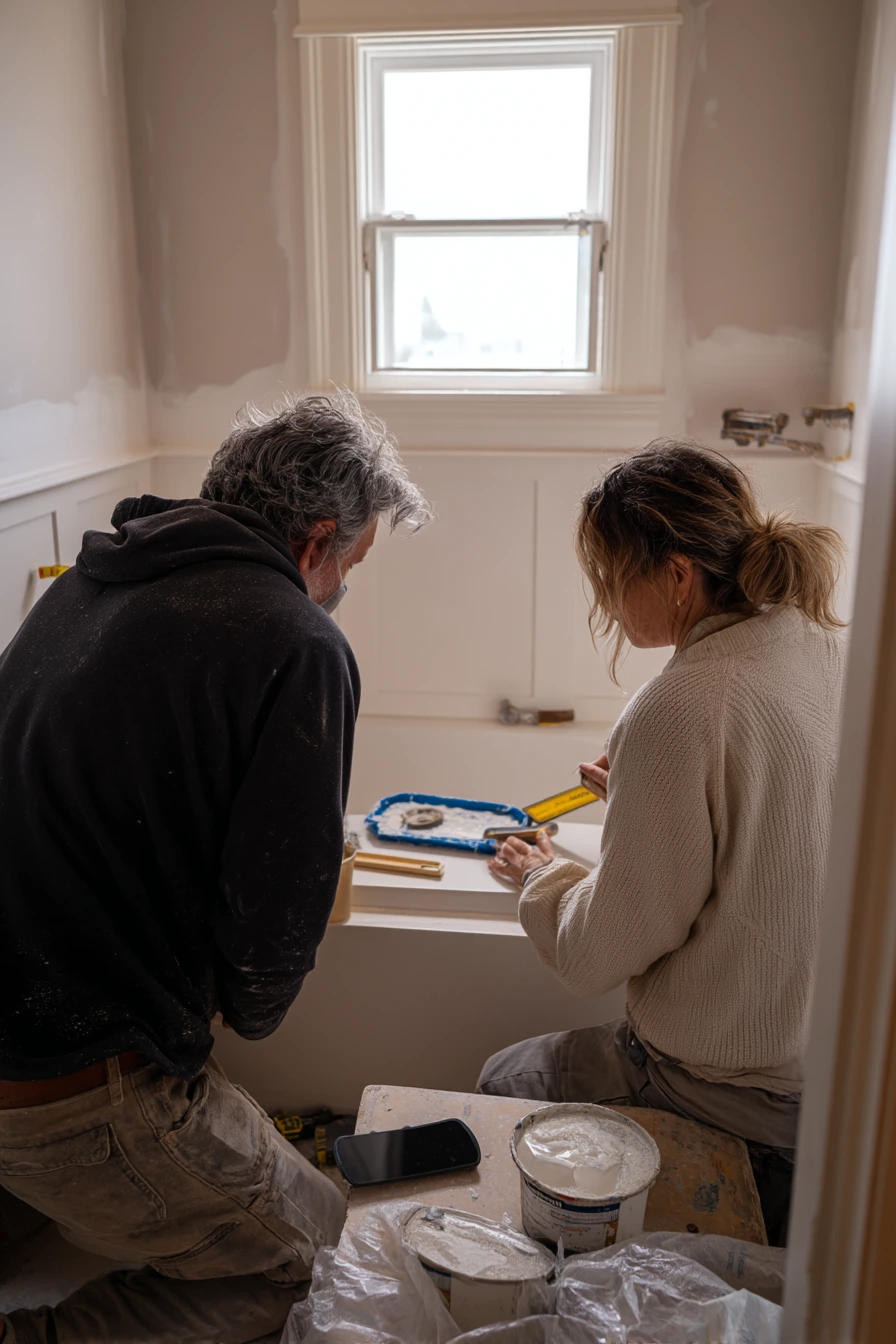
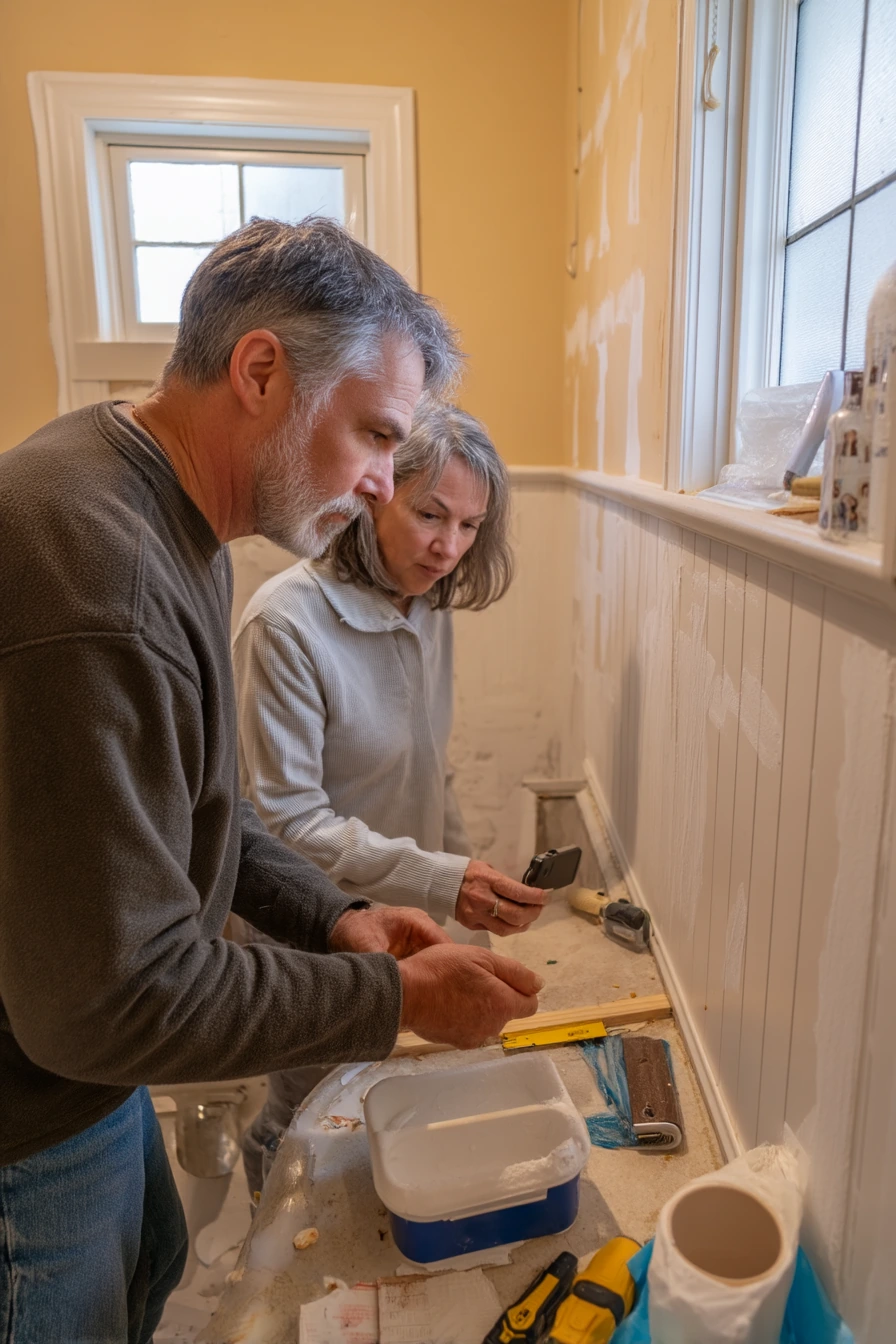
Start by choosing beadboard style and height. Traditional wainscoting is often 36 to 48 inches, but a small room may look better with slightly higher panels to balance the wall. Mark a level line around the room before you cut anything. Dry fit panels, then secure them with adhesive and brad nails if allowed. Keep corners tight and plan for outlets and plumbing cuts. If you are working as a couple, one person can measure boards while the other holds screws and checks level. Keep coffee cups and a phone with notes away from wet paint.
How to style it after install: once the beadboard and cap rail are painted, update one or two items so the work shows. A new mirror, a fresh towel set, and a simple bath mat can make the room feel complete even if the rest is unchanged. Let the paint cure before you hang hooks or stick accessories to the wall.
- Use a laser level or long level to mark the top line around the room.
- Prime all sides of wood or MDF to reduce moisture swelling.
- Caulk seams and nail holes for a smooth, built-in look.
- Leave a small gap at the floor and cover it with baseboard to hide movement.
- Choose a trim profile that matches your home style, simple for modern and shaped for vintage.
Pro Design Tip: Paint the beadboard panels before installing, then do a final touch-up after caulk, so you get full coverage in the grooves with less mess.
Budget Considerations: Full wainscoting with custom trim costs more; to save, use stock panels and basic cap molding, and spend your money on good primer and paint.
Beadboard can make a bathroom feel warmer, cleaner, and more finished, whether you live in a 1920s bungalow, a rental, or a busy family home. The best results come from choosing the right height, a washable paint finish, and a few practical storage pieces.
Use the sections above to match your space and your daily routine. Then copy the simple styling ideas like one tray, one art piece, and hardware that fits your home.
FAQ
1) Is beadboard good for bathrooms? Yes, when it is sealed and painted well. Use moisture-resistant primer and a durable paint finish, and keep wood products out of direct shower spray.
2) What is the best paint sheen for bathroom beadboard? Satin or semi-gloss is easiest to wipe clean. Matte looks nice but can show water spots and fingerprints more.
3) How high should beadboard wainscoting be in a bathroom? Many bathrooms look good at 36 to 48 inches. In small rooms, slightly higher can feel more balanced, but keep it consistent around the space.
4) Can I use MDF beadboard in a bathroom? You can, but it must be fully primed and painted, including cut edges. Avoid areas that get constant water exposure.
5) Do peel-and-stick beadboard panels hold up? They can work in low-splash areas if the wall is clean and smooth. Use a cap trim and press panels firmly to reduce lifting at the seams.
6) How do I clean beadboard in a family bathroom? Wipe it with a mild soap and water mix and a soft cloth. Touch up paint on scuffs, and re-caulk joints if you see gaps.
7) What hardware finishes look best with beadboard? Brushed nickel, chrome, matte black, and brass all work. Choose one main finish and repeat it so the room feels calm and planned.