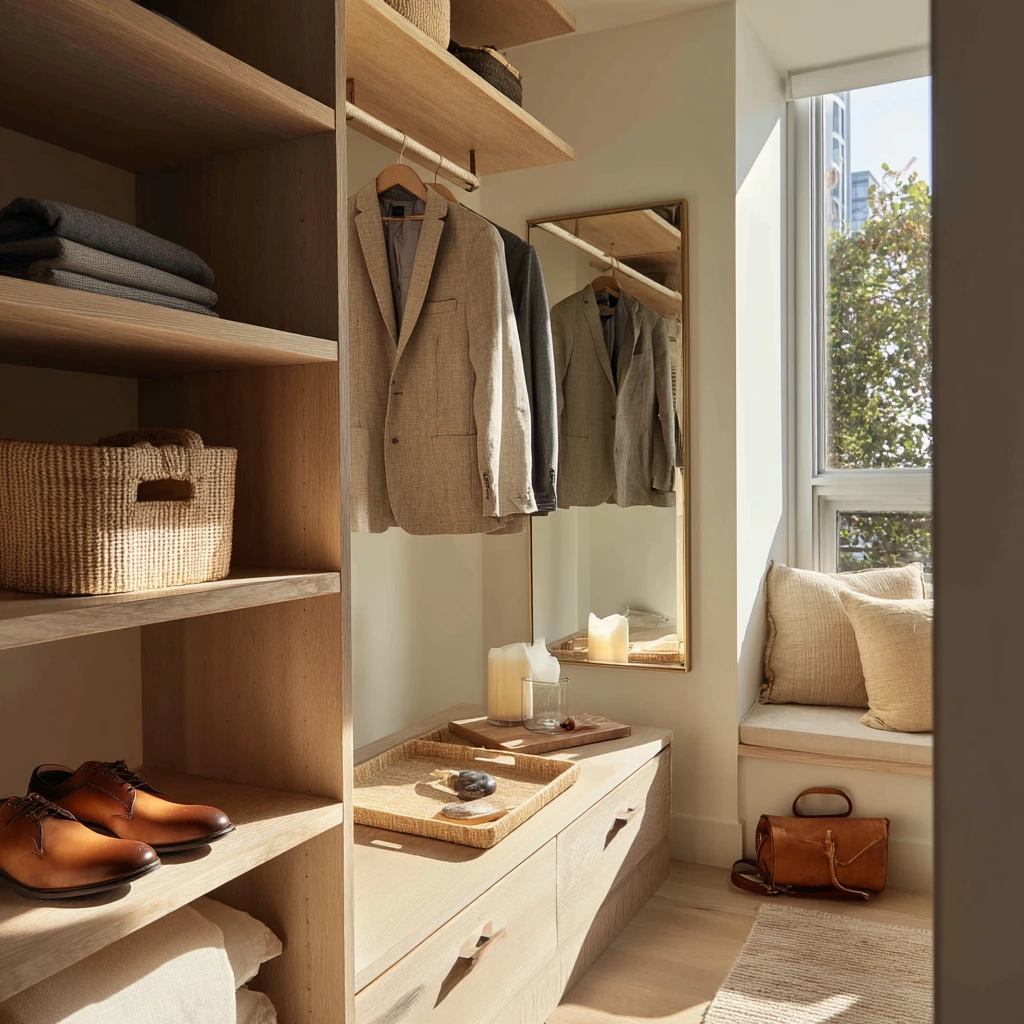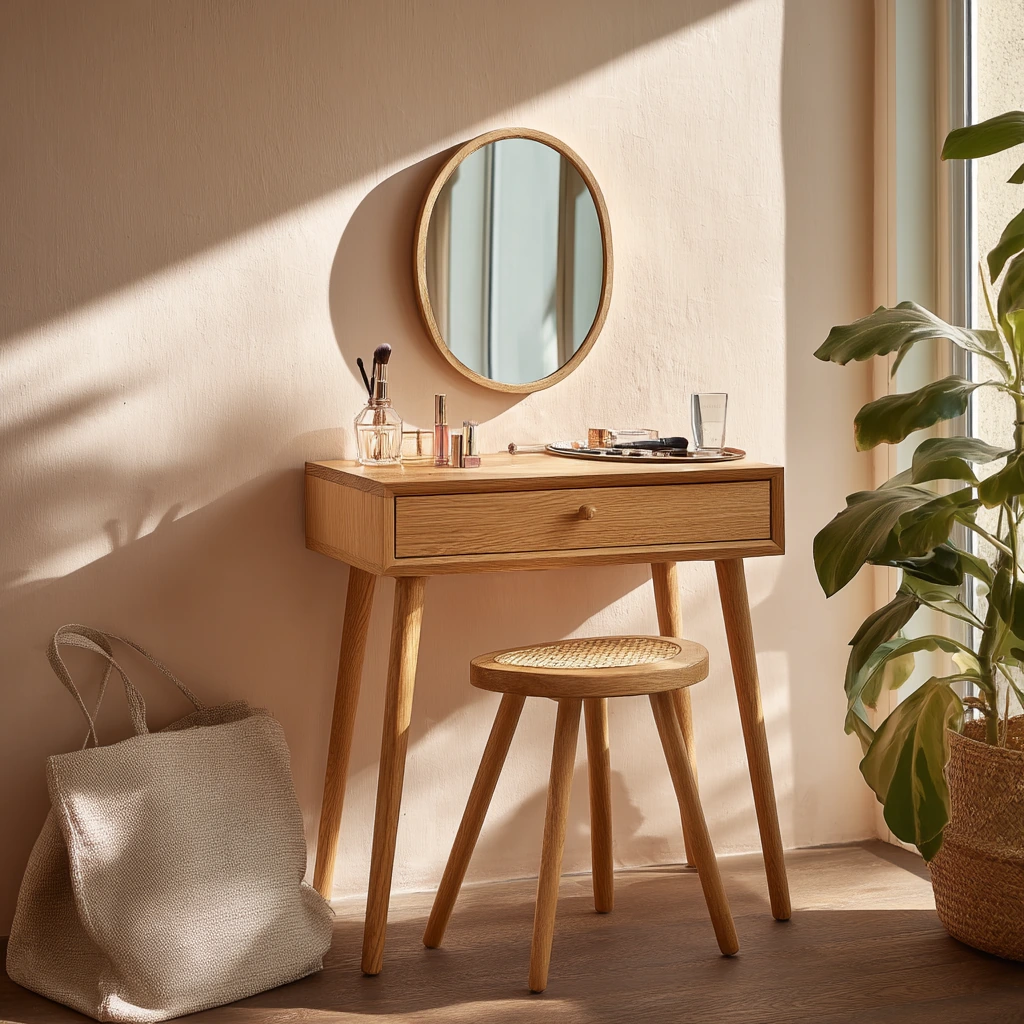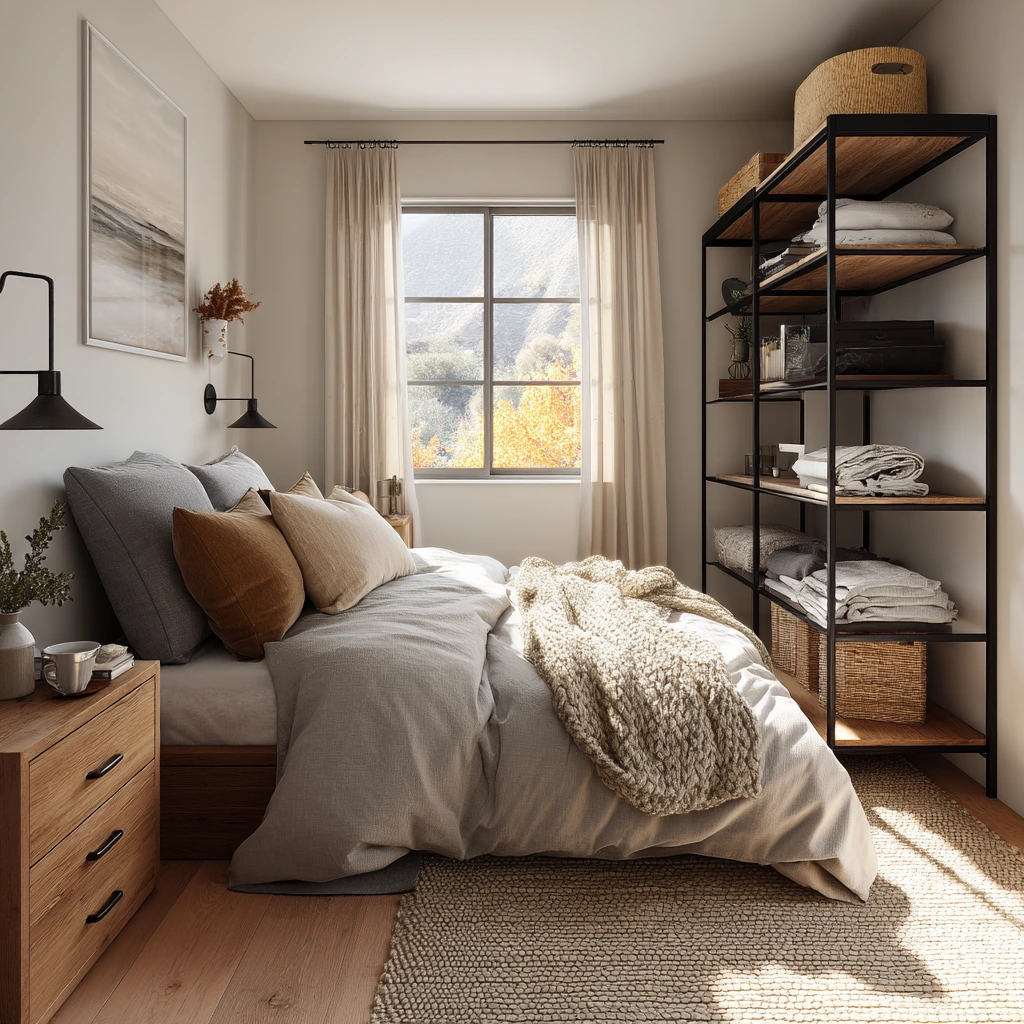

Good closet ideas make mornings easier, keep floors clear, and help you find what you need fast. The best setups are not perfect showrooms. They are calm, lived-in, and easy to keep up.
This guide walks through 10 real-life closet styles, from a compact reach-in with matte oak shelves to a busy entry closet with hooks and cubbies. Each section includes simple steps you can copy, plus small styling ideas that look good in photos and work in daily life.
You will also get a pro design tip and a budget note for every closet. Use these ideas to plan a quick refresh, a renter-friendly upgrade, or a full redo that fits your space and your routine.
If you came from Pinterest, save the layout that matches your home, then use the checklist bullets in each section to build it. Small changes like slim velvet hangers, woven bins, and clear labels can make a big difference.
1 Small Apartment Reach-In Closet Makeover
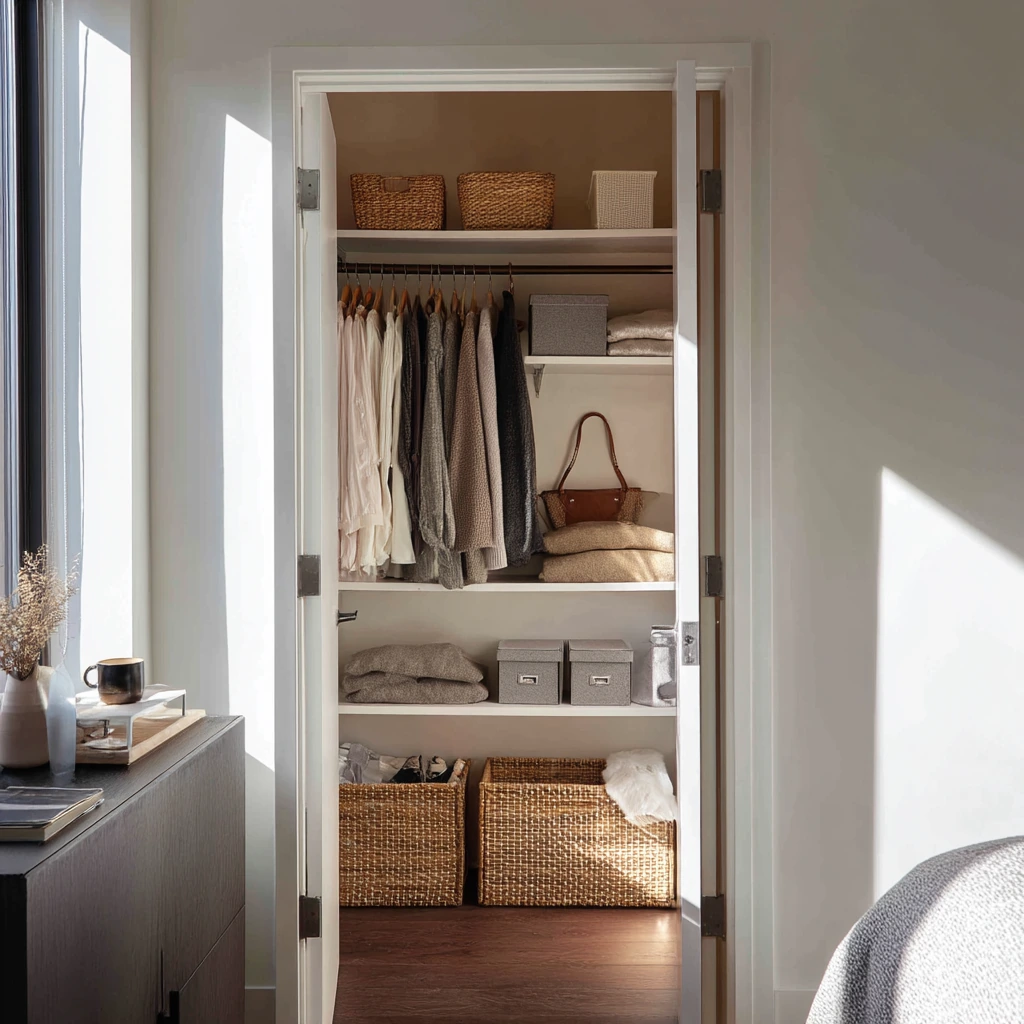
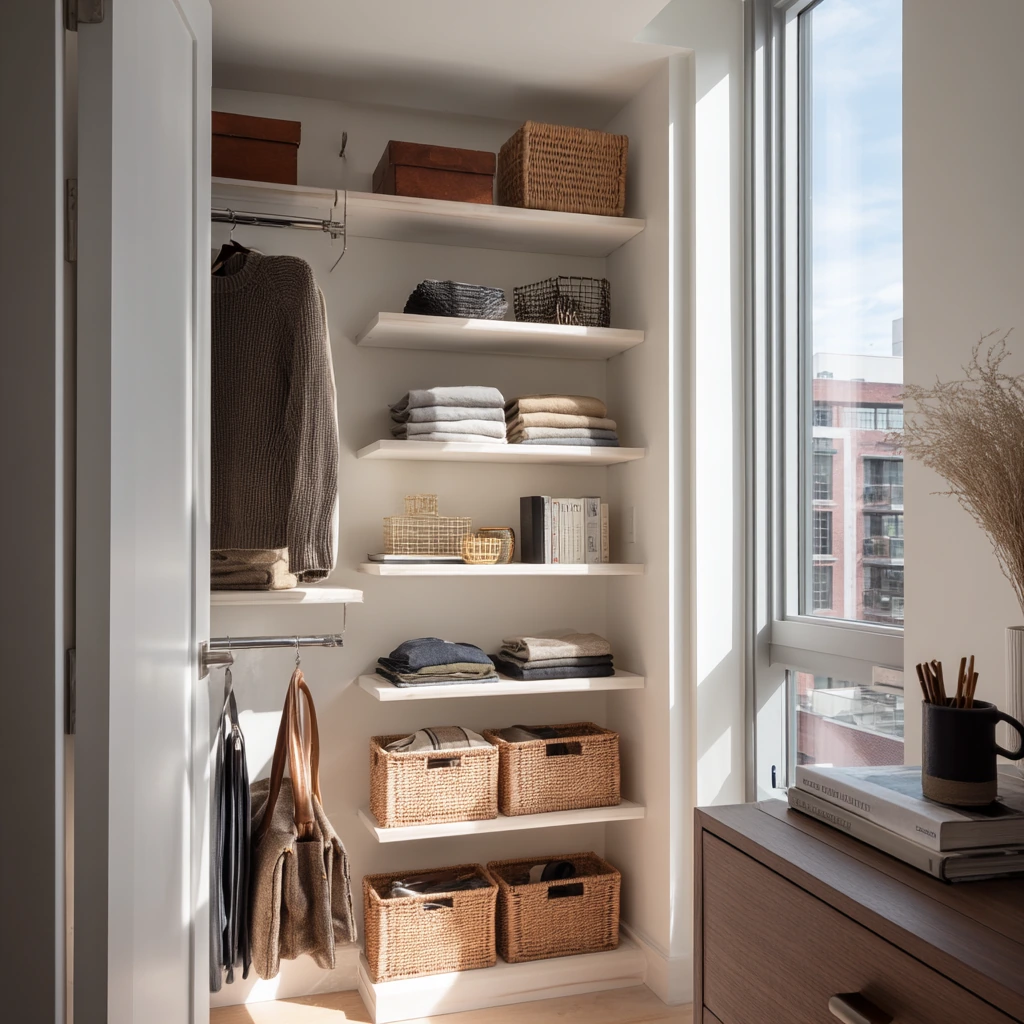
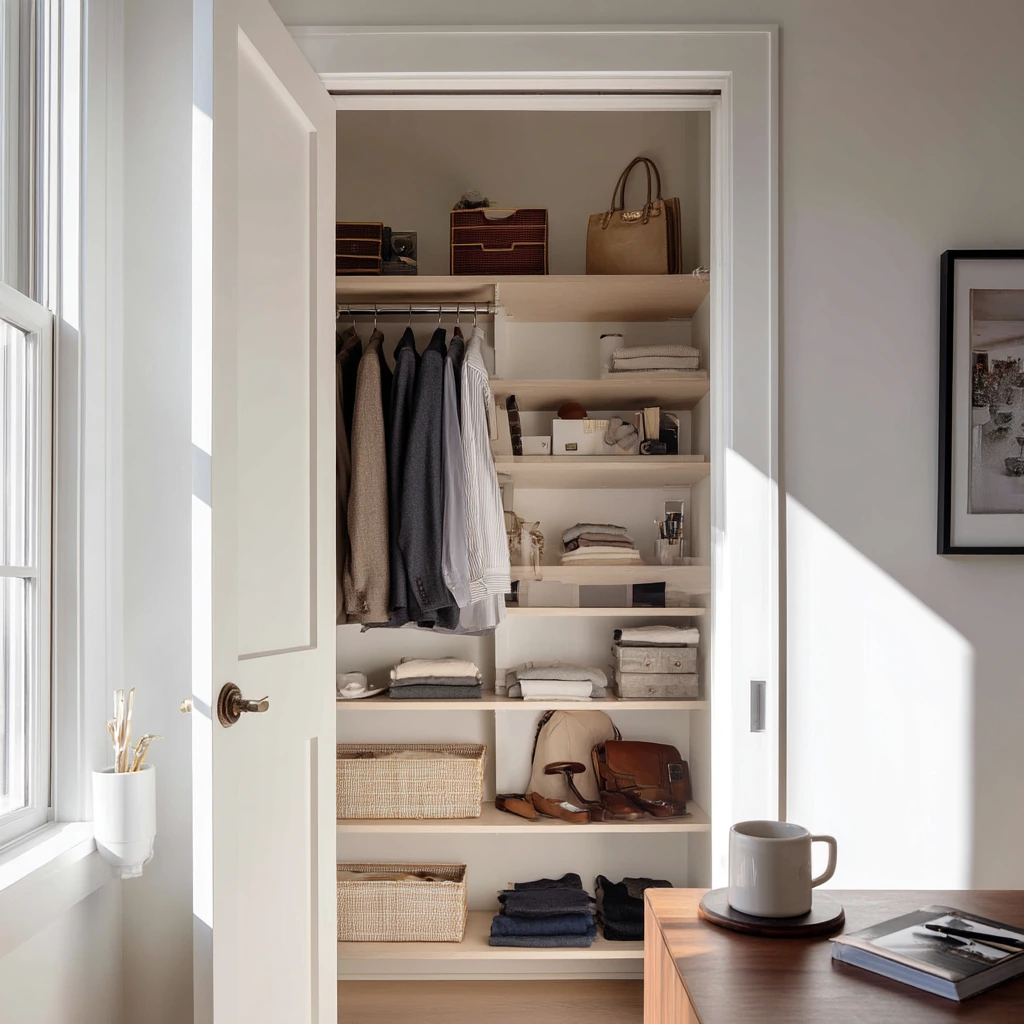
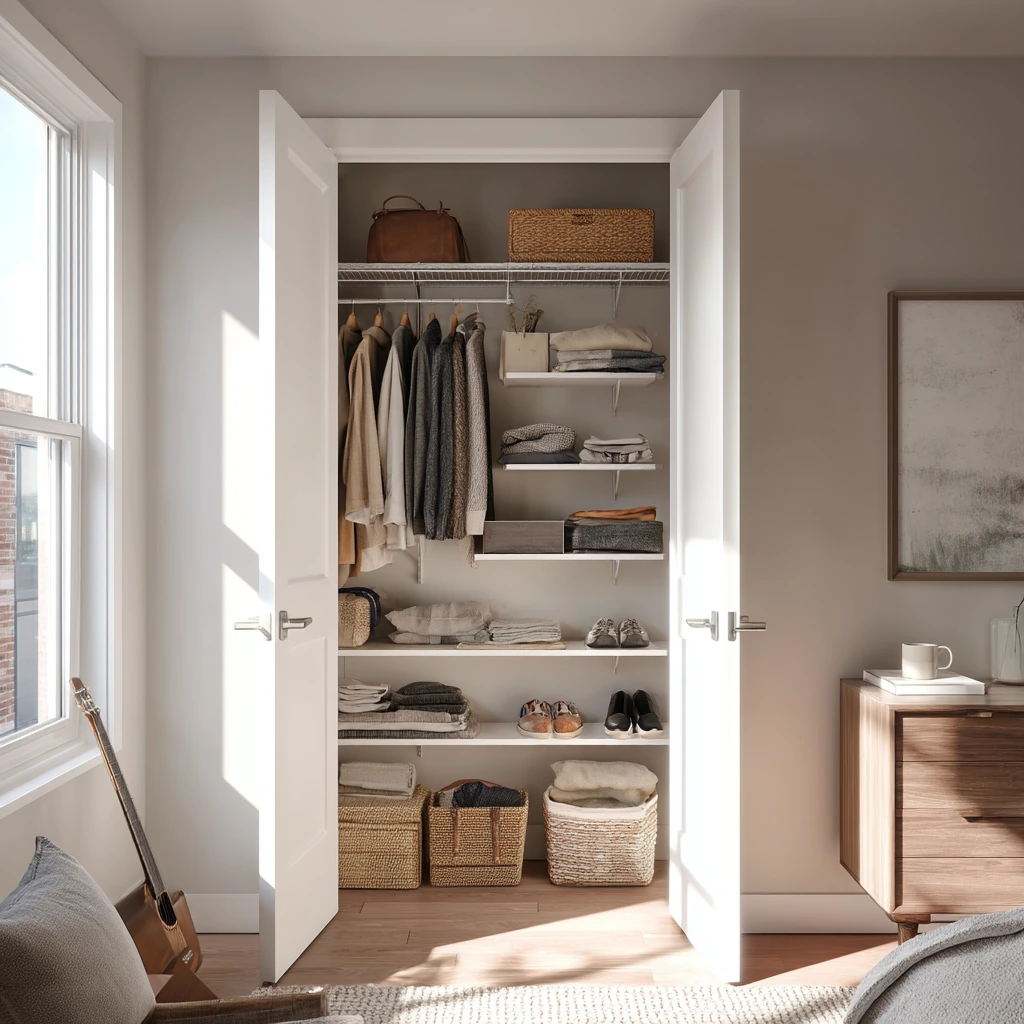
A compact reach-in closet can feel bigger when every inch has a job. In a one-bedroom apartment, a simple setup with white shaker doors and matte oak shelves keeps things clean and calm. Slim velvet hangers reduce bulk, so shirts and jackets sit closer together. Woven bins soften the look and hide small items that turn into clutter.
Start by sorting by how often you wear things. Put daily workwear at eye level and weekend layers on one side. Add labeled shoe boxes on an upper shelf for shoes you do not grab every day. A narrow valet hook near the doorway is useful for tomorrow’s outfit, a gym bag, or a tote with a charging cable draped nearby.
For a lived-in but tidy feel, keep one “landing shelf” where a half-folded sweater can sit until you finish laundry. That keeps piles off the floor. Style this closet with light neutrals, one texture (like woven bins), and matching labels. If a dresser sits nearby, keep the top mostly clear so a coffee mug or keys do not turn into a new clutter spot.
- Use slim velvet hangers to save rod space and stop slipping.
- Add one shelf for “today” items so they do not spread.
- Store off-season shoes in labeled boxes up high.
- Choose two bin sizes so the shelves look even.
- Hang a valet hook for bags and next-day clothes.
Pro Design Tip: Leave 10–15% of the rod empty so items slide easily and you can see outfits at a glance.
Budget Considerations: Add peel-and-stick labels and a single extra shelf before you replace doors or build custom storage.
2 Tiny Nursery Closet for a New Parent
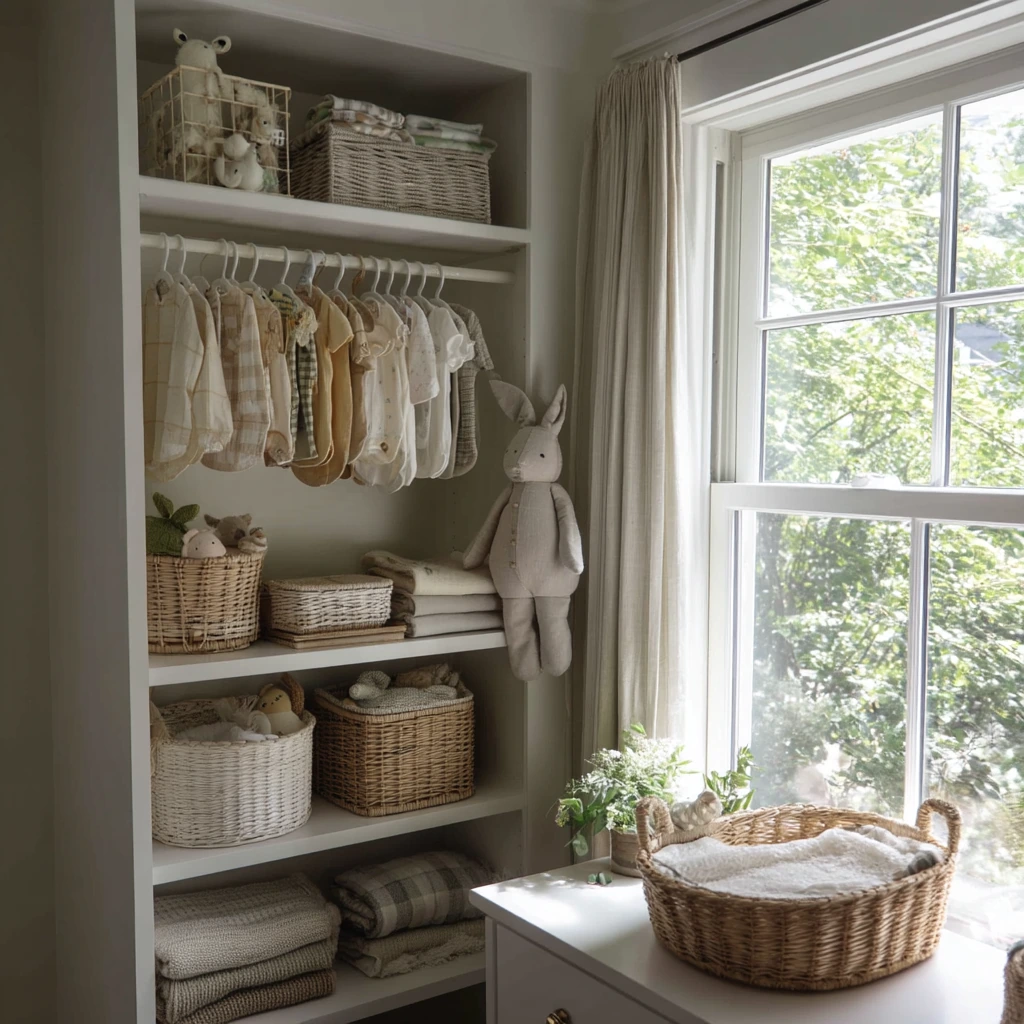
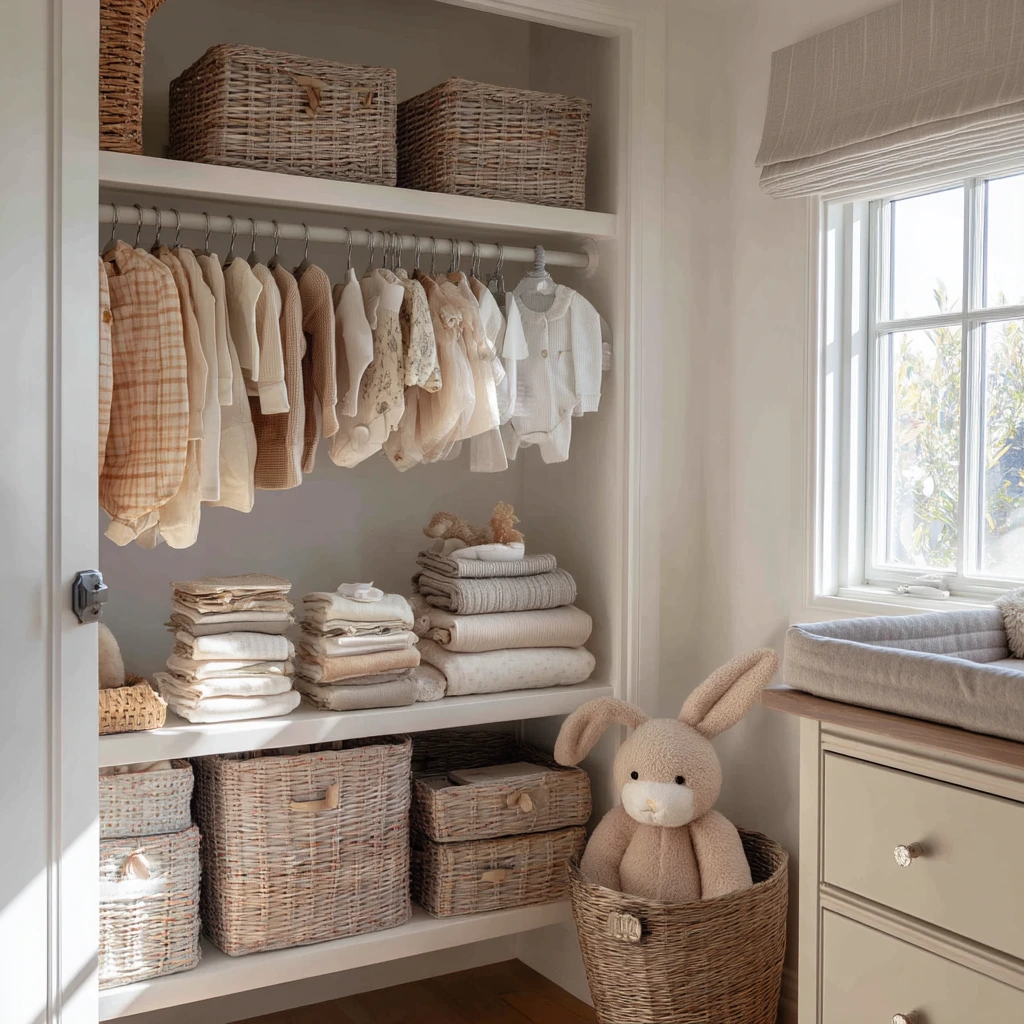
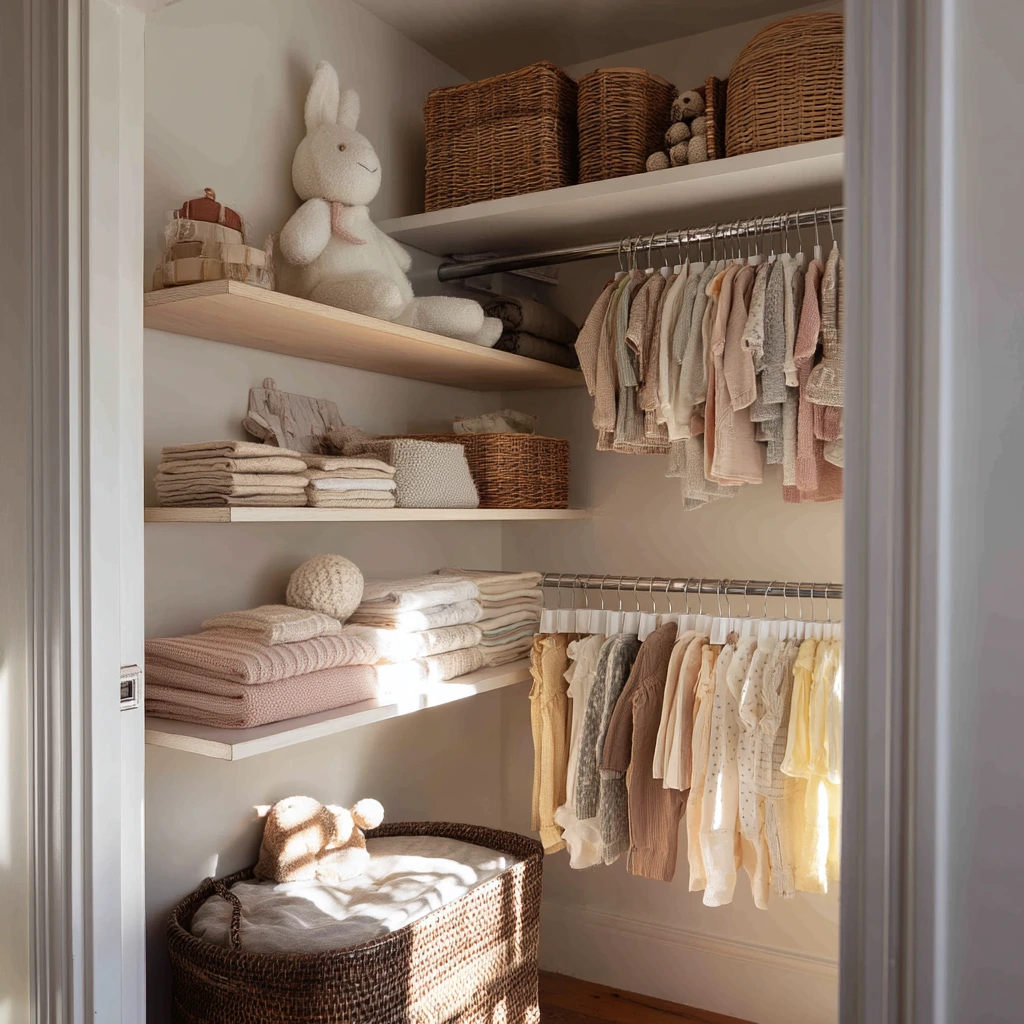
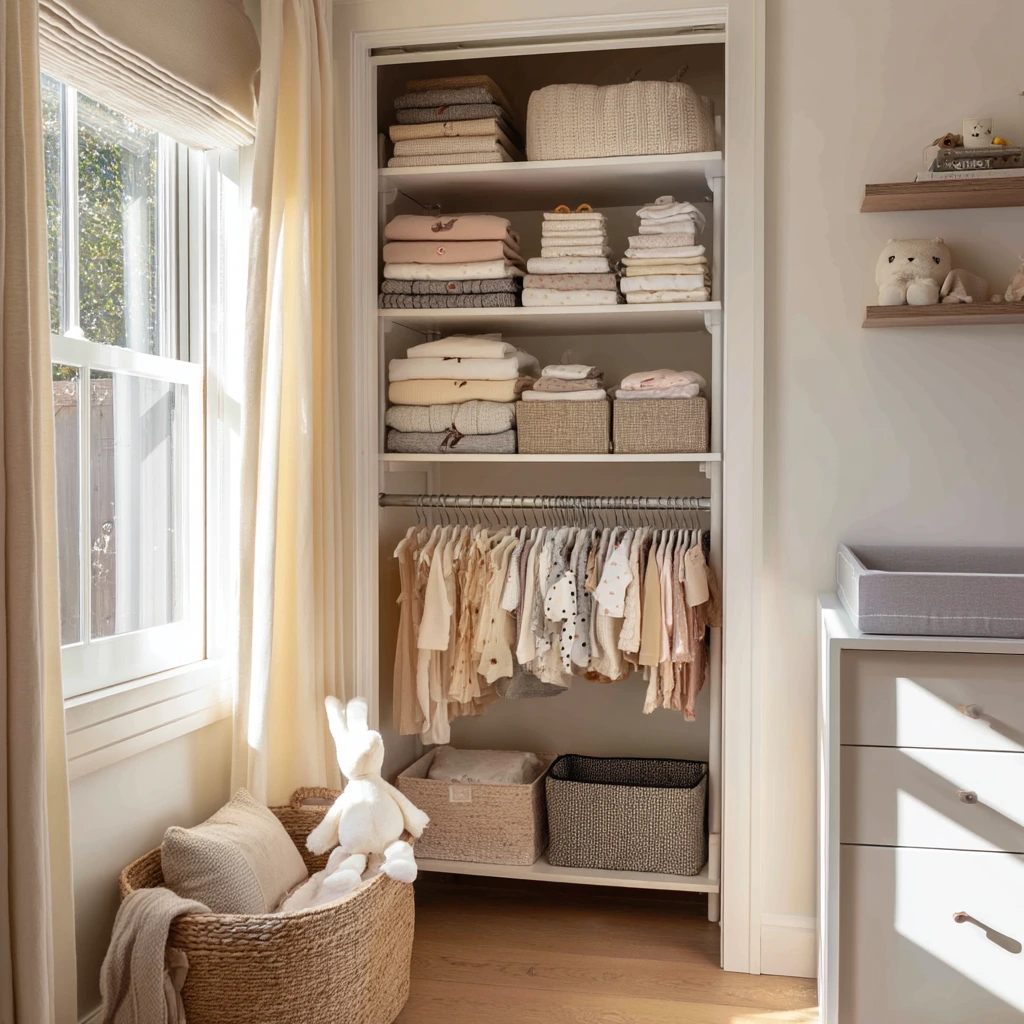
Nursery closet ideas work best when they are simple, soft, and easy to grab with one hand. Open shelving is great for onesies, folded blankets, and diaper caddies. Tiny baskets help keep socks, bibs, and washcloths in their own spots. A low rod makes baby clothes easy to reach, and it lets you see sizes quickly.
Set up zones based on tasks. Keep diapers, wipes, and extra sheets on the shelf closest to the changing area. Put daily outfits in the middle, and store keepsakes or next-size clothing higher up. If a burp cloth ends up hanging off a drawer, that is normal. Plan for it by adding a small hook or a basket right at the edge of the closet so you can toss items in fast.
For a warm, tender look, use soft neutrals and natural textures like cotton bins. Add one stuffed rabbit or one simple print to keep it sweet, not busy. How to style it: fold by color from light to dark, keep labels small, and use matching hangers. Keep a small “grab basket” for pacifiers and creams near the front, so you are not digging during a change.
- Make three zones: diapers, daily clothes, and backups.
- Use small baskets for tiny items so they do not scatter.
- Hang only what wrinkles, and fold the rest.
- Keep next-size outfits in a labeled bin up high.
- Add a hook for burp cloths and sleep sacks.
Pro Design Tip: Store outfits as sets (top, bottom, socks) in one stack to cut dressing time.
Budget Considerations: Dollar-store baskets and simple shelf dividers can replace pricey nursery organizers and still look neat.
3 Renter-Friendly Closet Organization
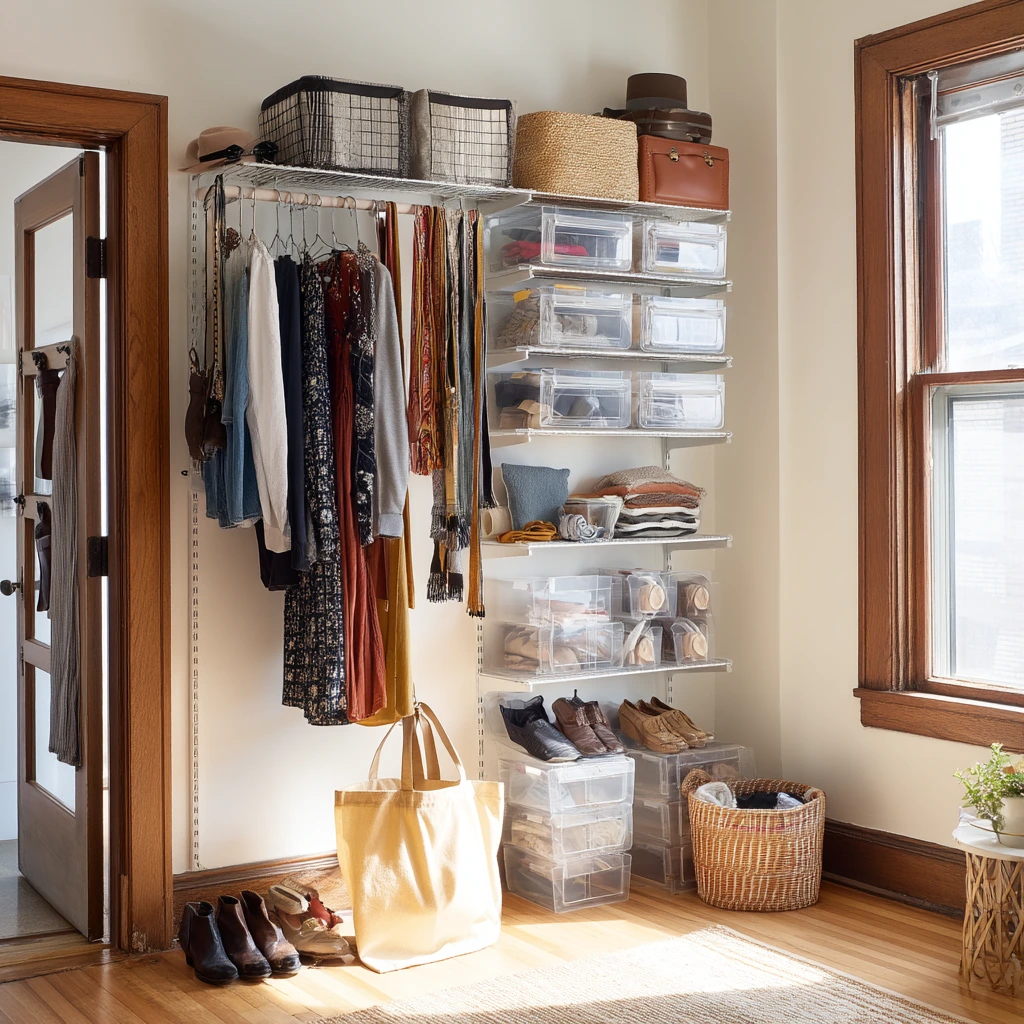
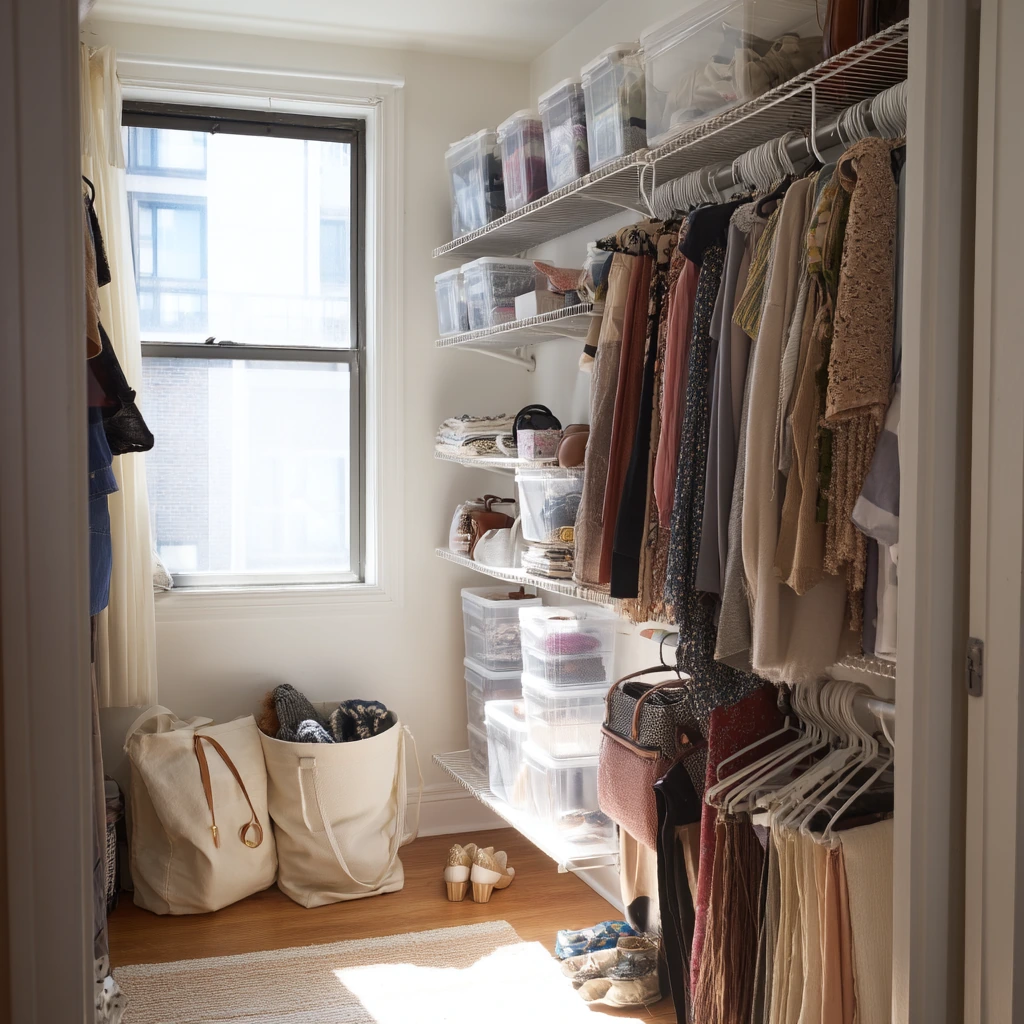
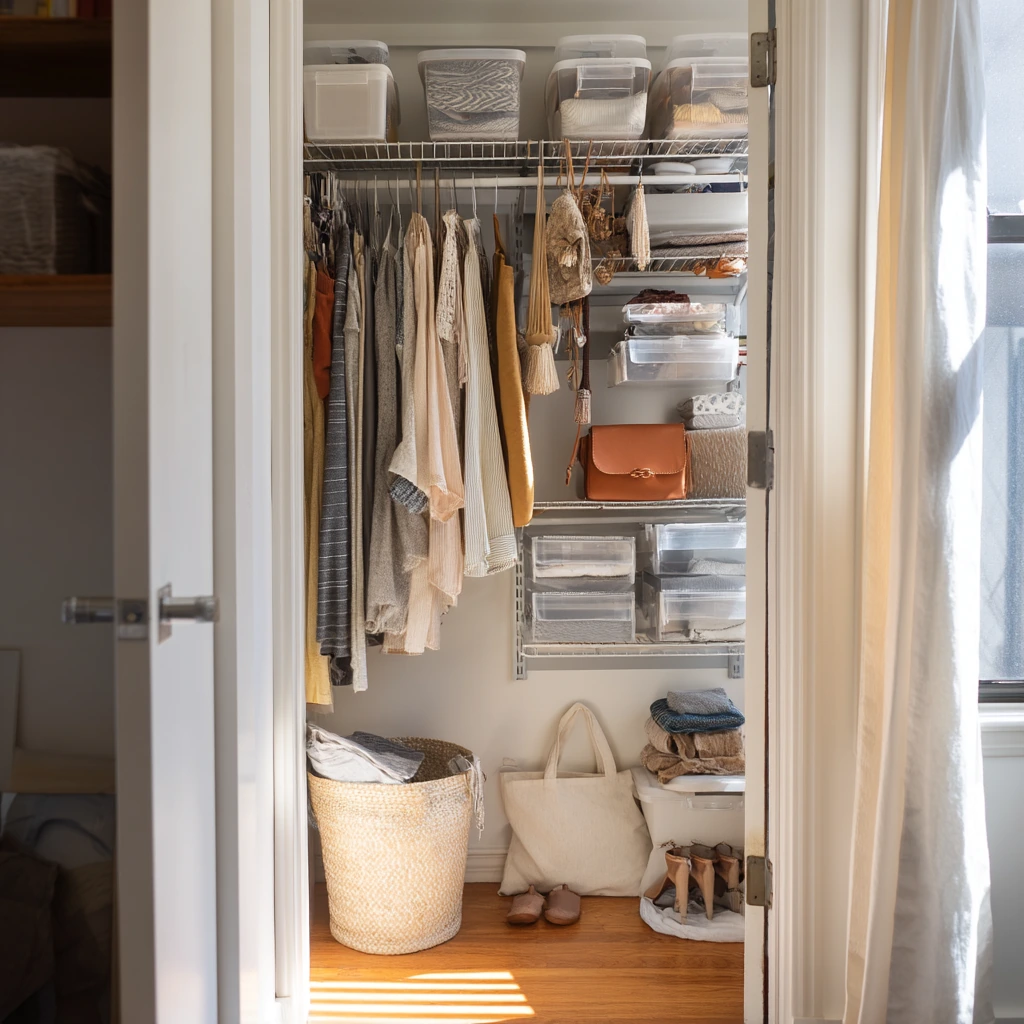
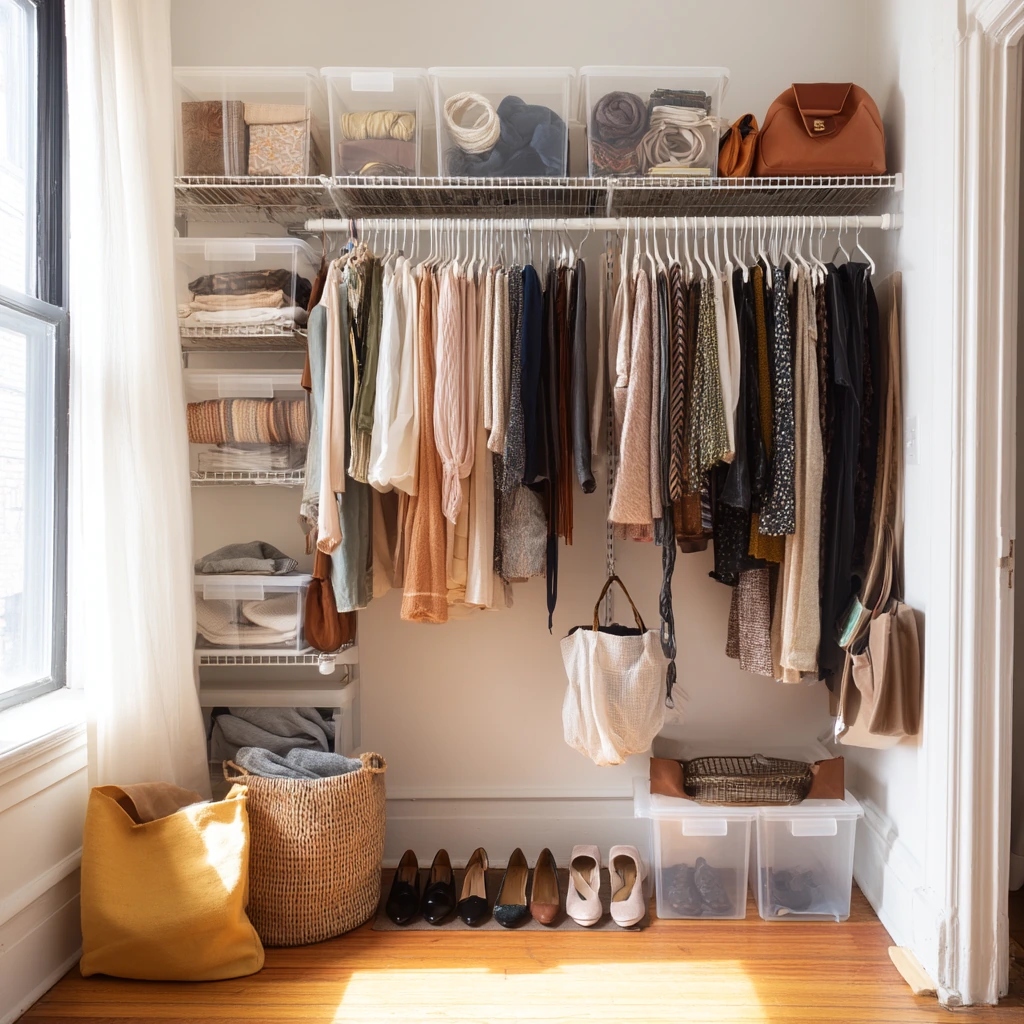
Renter-friendly closet ideas should be strong, temporary, and easy to remove. Freestanding shelving adds storage without drilling, and tension rods can create a second hanging level for shirts or kids items. Command hooks are perfect for hats, handbags, and light accessories. Clear bins help you see what you own, so you stop buying doubles.
Start with the mess you live with, not the closet you wish you had. If a grocery tote sits on the floor and a laundry basket collects mixed socks, plan a real spot for them. Put the laundry basket in the lowest corner, then add a small bin beside it for stray socks and belts. Use an over-the-door organizer for scarves, ties, and jewelry so small things do not get lost.
How to style it: keep bins the same shape and label the front with simple words. Group accessories by type, not color, so it is faster to put away. If you have one shoe kicked aside often, add a small shoe tray or a single basket at the bottom for “worn but not dirty.” This keeps the closet looking crisp, even with real-life use.
- Add a tension rod to double hanging space without tools.
- Use freestanding shelves for folded items and bins.
- Hang an over-the-door organizer for scarves and belts.
- Place clear bins on shelves for quick visibility.
- Create a “repeat wear” basket for in-between clothes.
Pro Design Tip: Use one consistent label style and font size so the closet looks calm and is easy for anyone to follow.
Budget Considerations: Tension rods, command hooks, and clear bins are low-cost upgrades and move with you to the next apartment.
4 Shared Closet for Two Adults
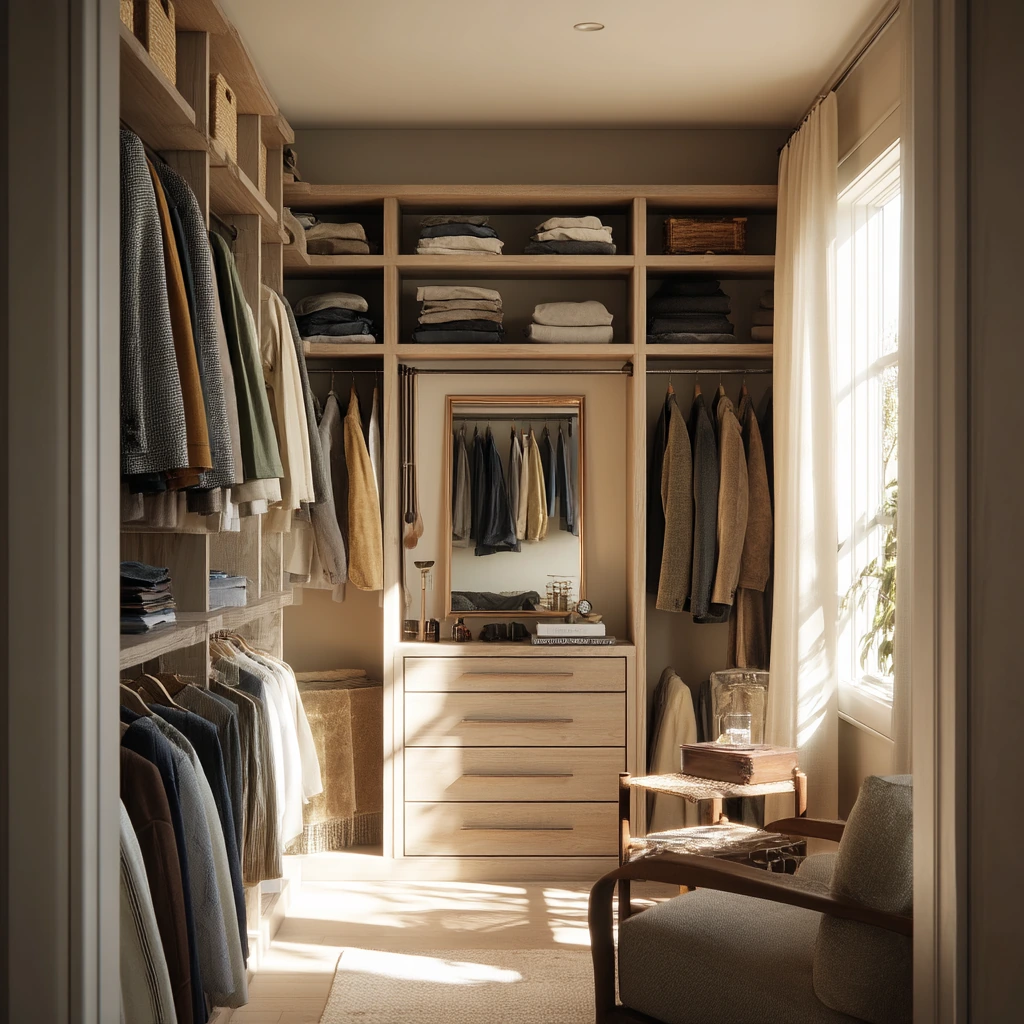
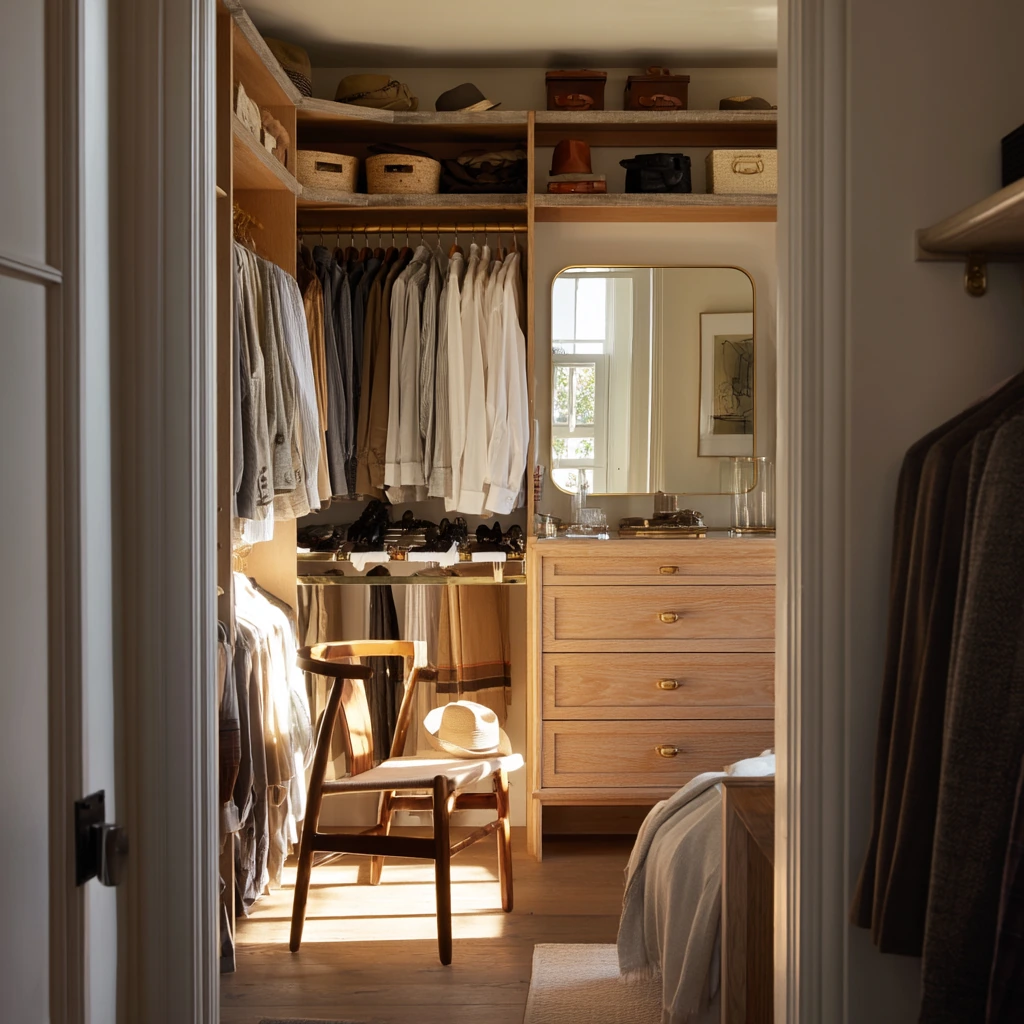
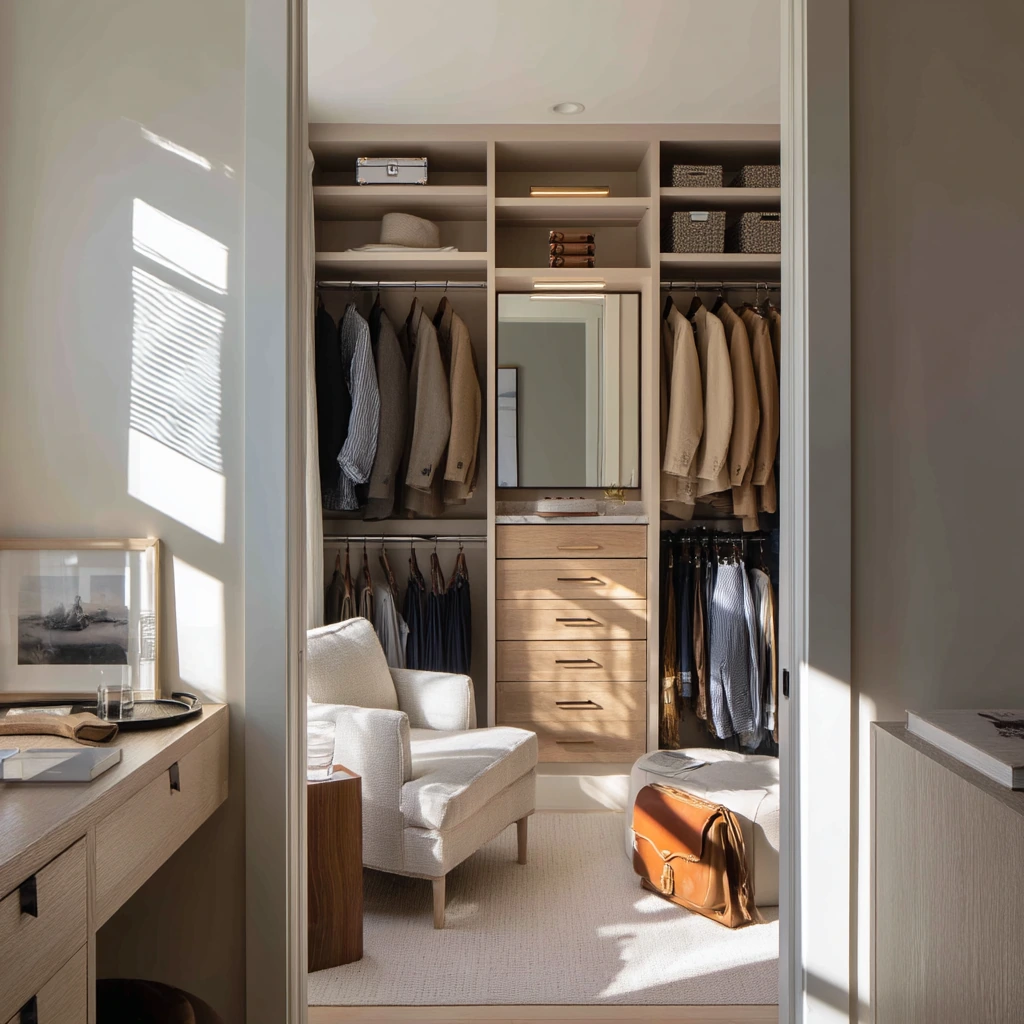
A shared primary bedroom closet works best when it feels fair and easy. Symmetrical hanging sections help a couple split space without stress. Oak drawers add warm texture and hide smaller items like tees, gym clothes, and pajamas. Linen bins are great for bulky pieces and keep the shelves from looking messy.
Set up the closet by routine. Give each person a hanging area for workwear, plus a second area for weekend layers. Put a central mirror where both people can use it without stepping on each other. If a watch sits on a dresser tray and one blazer gets draped over a chair, that is a clue. Add a hook inside the closet for “worn once” pieces and a small tray for daily items like watches and rings.
How to style it: match hangers across both sides, then use two bin colors at most. Mix wardrobe textures on purpose, like denim, knits, and tailoring, but keep the arrangement clean. Stack folded sweaters by weight, light to heavy. If a water glass or phone often ends up nearby, add a small catch-all shelf at the edge of the closet so the bedroom stays calmer.
- Split the closet evenly with mirrored hanging zones.
- Use drawers for small items to cut visual clutter.
- Add linen bins for bulky sweaters and workout gear.
- Place a tray for watches, rings, and keys.
- Install a hook for blazers and “wear again” items.
Pro Design Tip: Give each person one “flex shelf” for overflow so the rest of the system stays stable.
Budget Considerations: If built-ins are not possible, mimic symmetry with matching hanging bars and two identical sets of bins.
5 Walk-In Closet with Vanity Nook
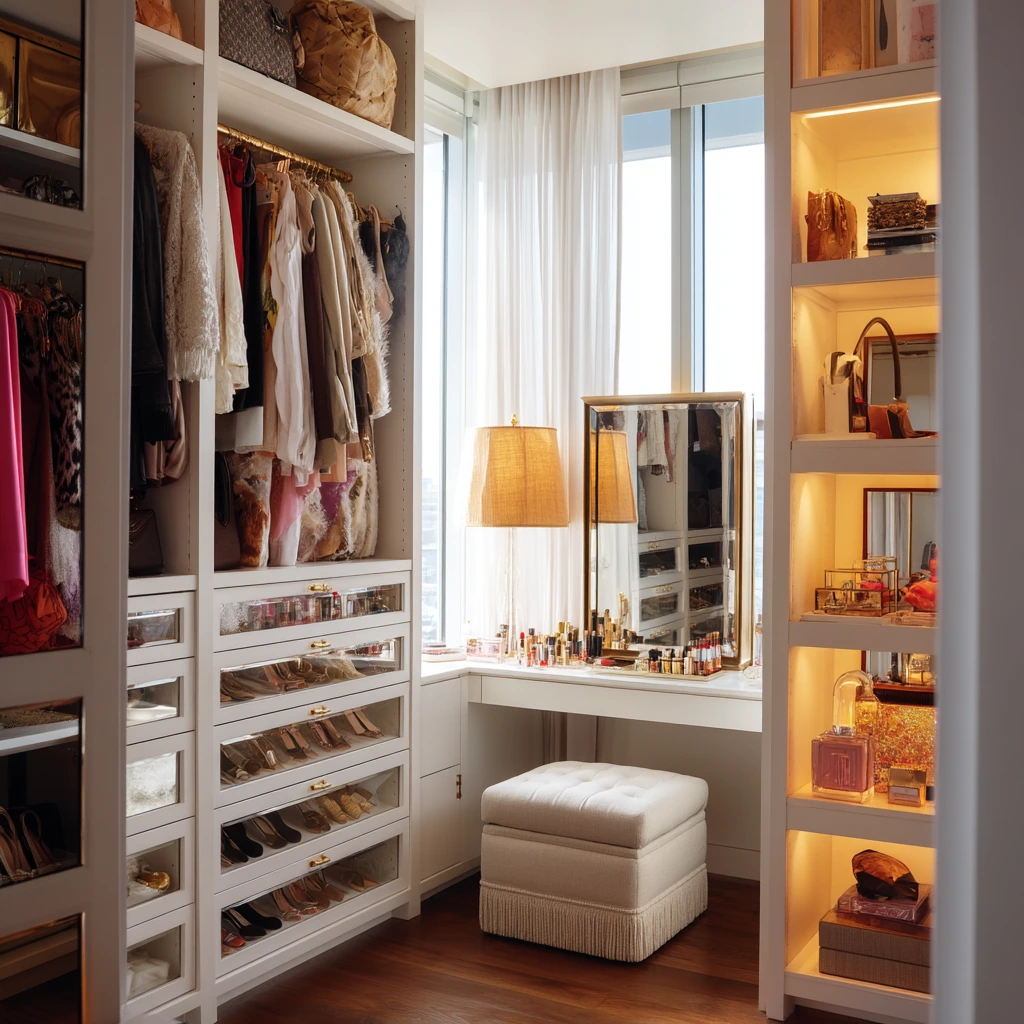
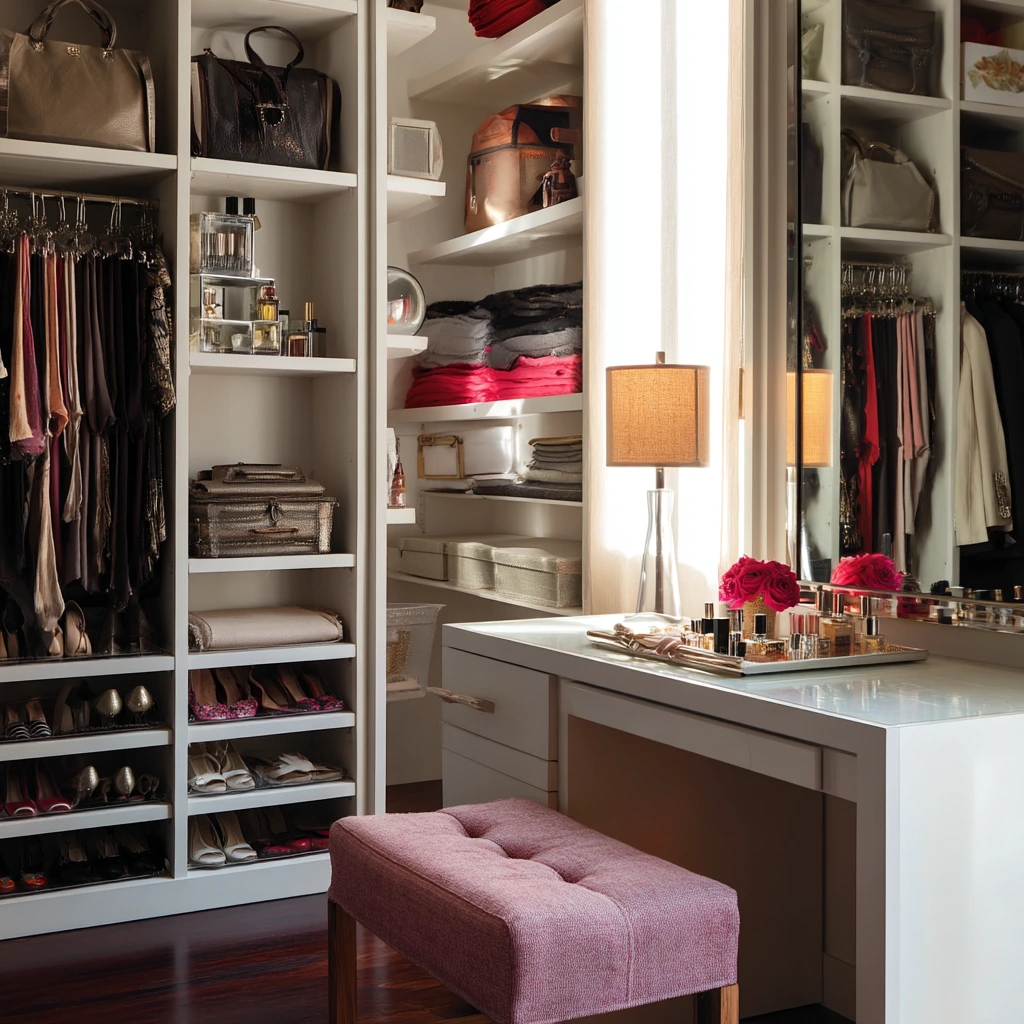
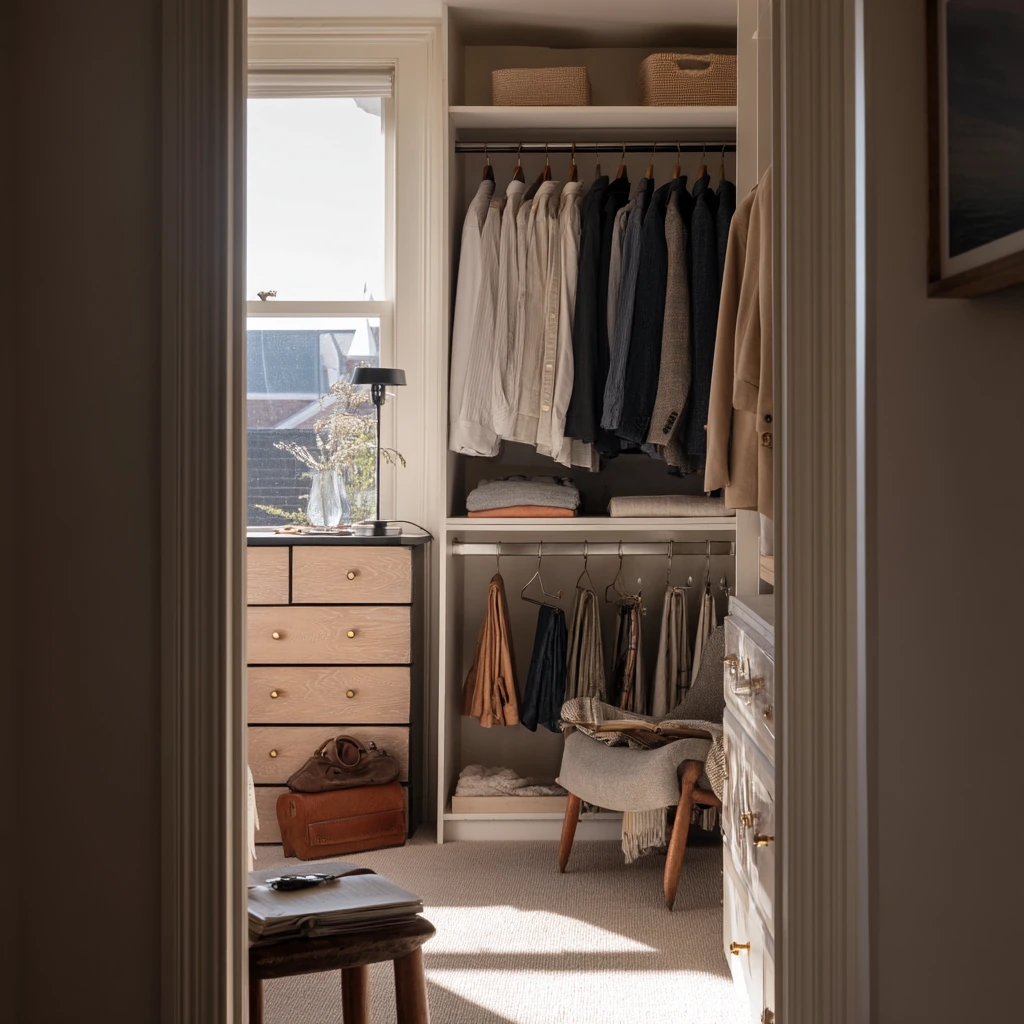
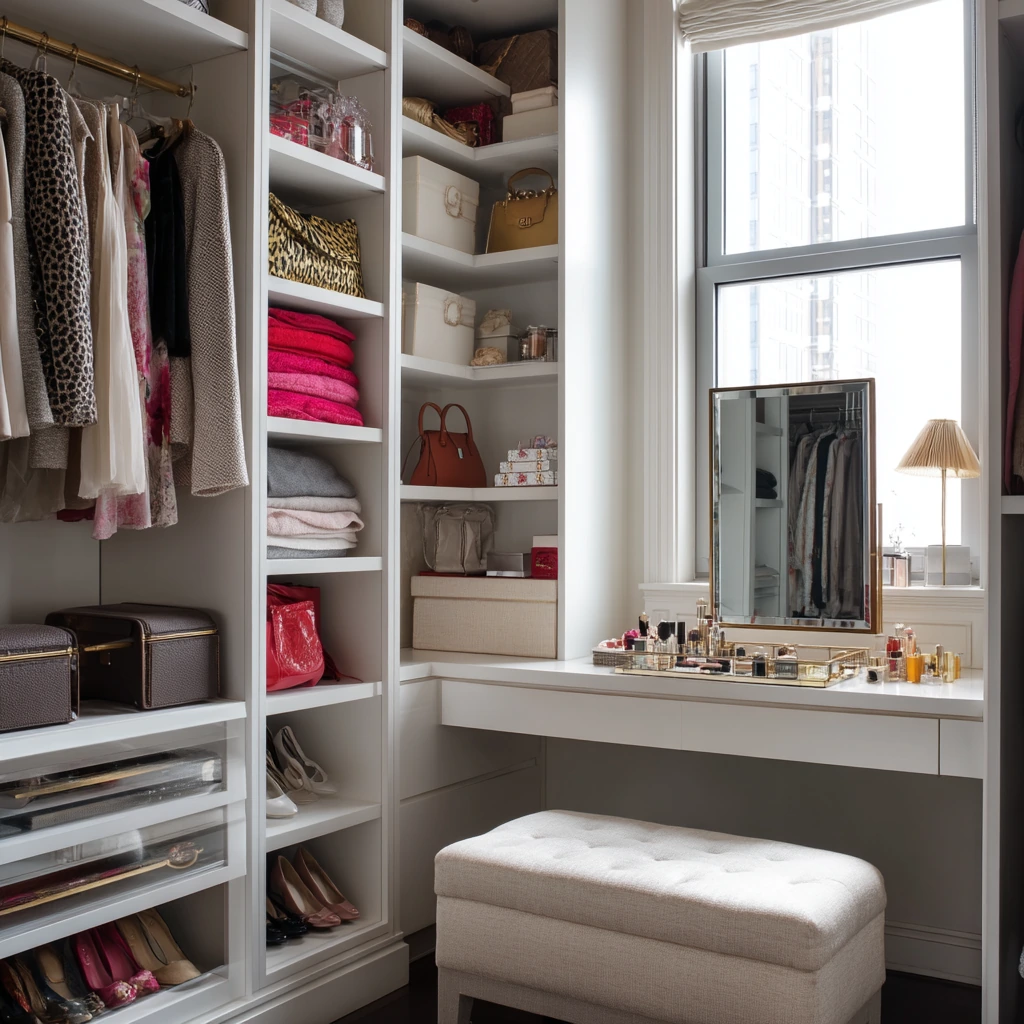
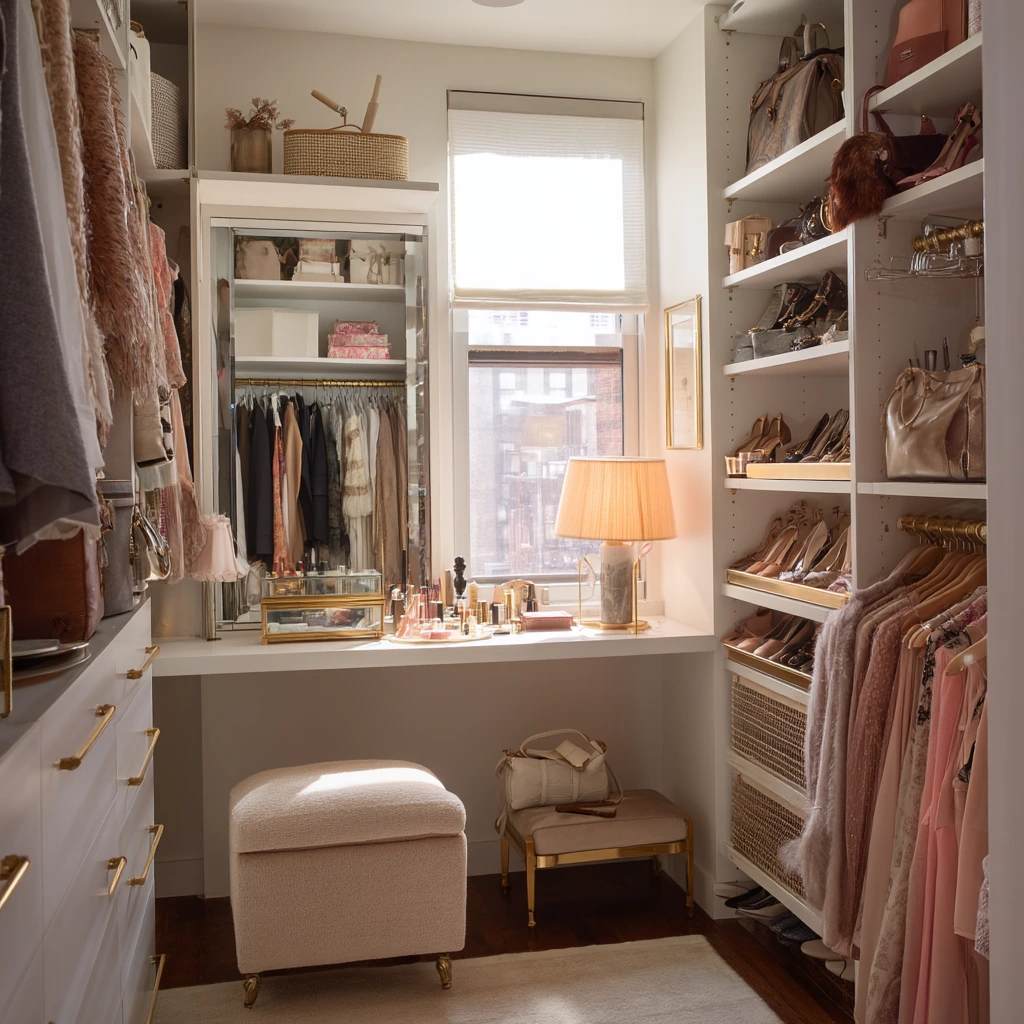
Walk-in closet ideas feel luxurious when they are organized, not when they are overfilled. Open shelving makes it easy to see handbags, shoes, and folded knits. A compact vanity nook turns a closet into a getting-ready zone, and jewelry trays prevent tangled chains. A cushioned stool adds comfort and gives you a place to set items while you change.
Build the layout around how you dress. Put your most-used shoes at ankle height and special pairs higher up. Keep handbags on shelves with a bit of space between them so they hold their shape. Use shallow trays for jewelry and sunglasses near the mirror. The small, real cues matter here, like a lipstick cap left open or a phone charger tucked near the mirror base. Add a tiny dish for makeup pieces and a cord clip so cables do not look messy.
How to style it: keep one color family on the shelves, then add one soft texture like a fabric bin or a scarf half-draped for a relaxed look. Use matching jars for accessories, and keep the vanity surface clear except for daily items. A small lamp mixed with soft window light makes the space feel warm and useful, not harsh.
- Use open shelves for bags and folded sweaters.
- Add a vanity nook with a mirror and a small light.
- Store jewelry in shallow trays to prevent tangles.
- Keep chargers tidy with clips and a small basket.
- Place a stool for comfort and quick outfit changes.
Pro Design Tip: Use shelf risers for handbags so smaller bags do not disappear behind larger ones.
Budget Considerations: Start with drawer organizers and trays before adding built-in shelving or a custom vanity.
6 Kids’ Closet That Actually Works
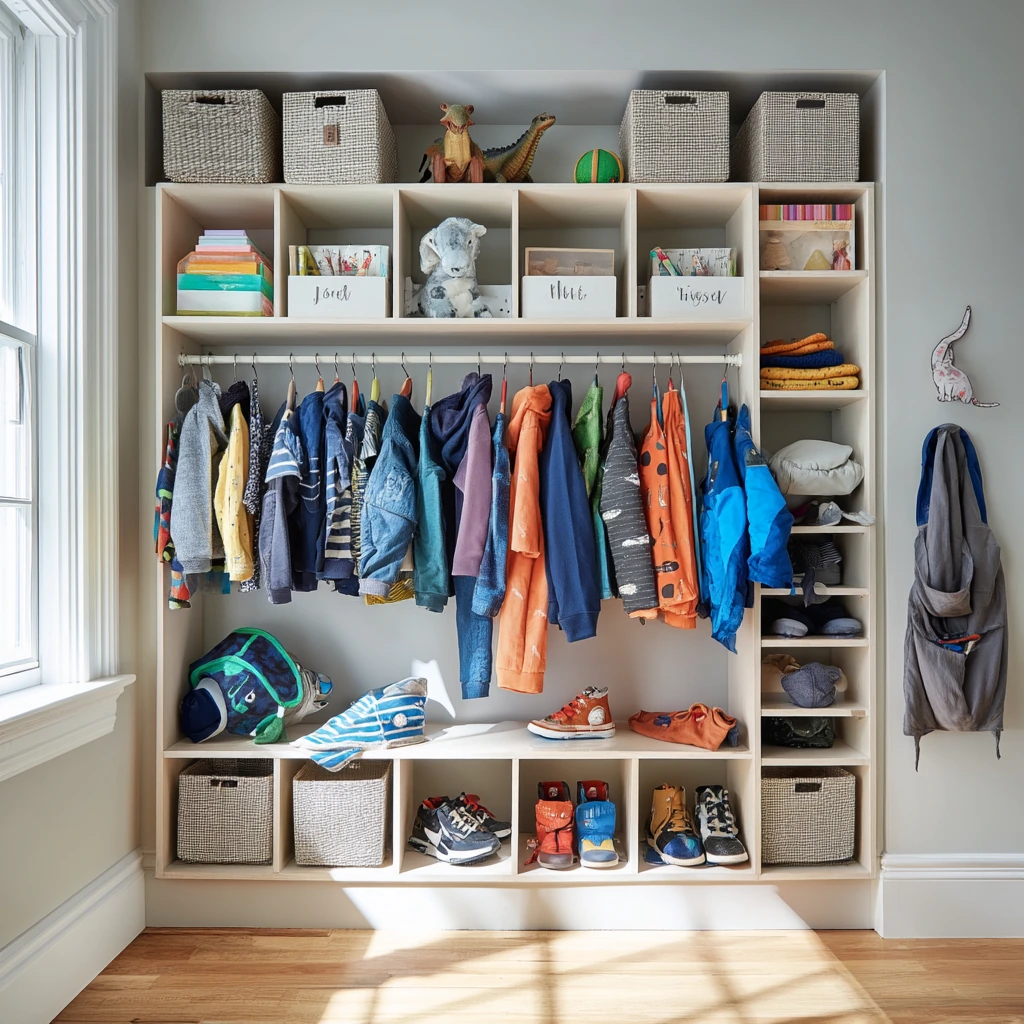
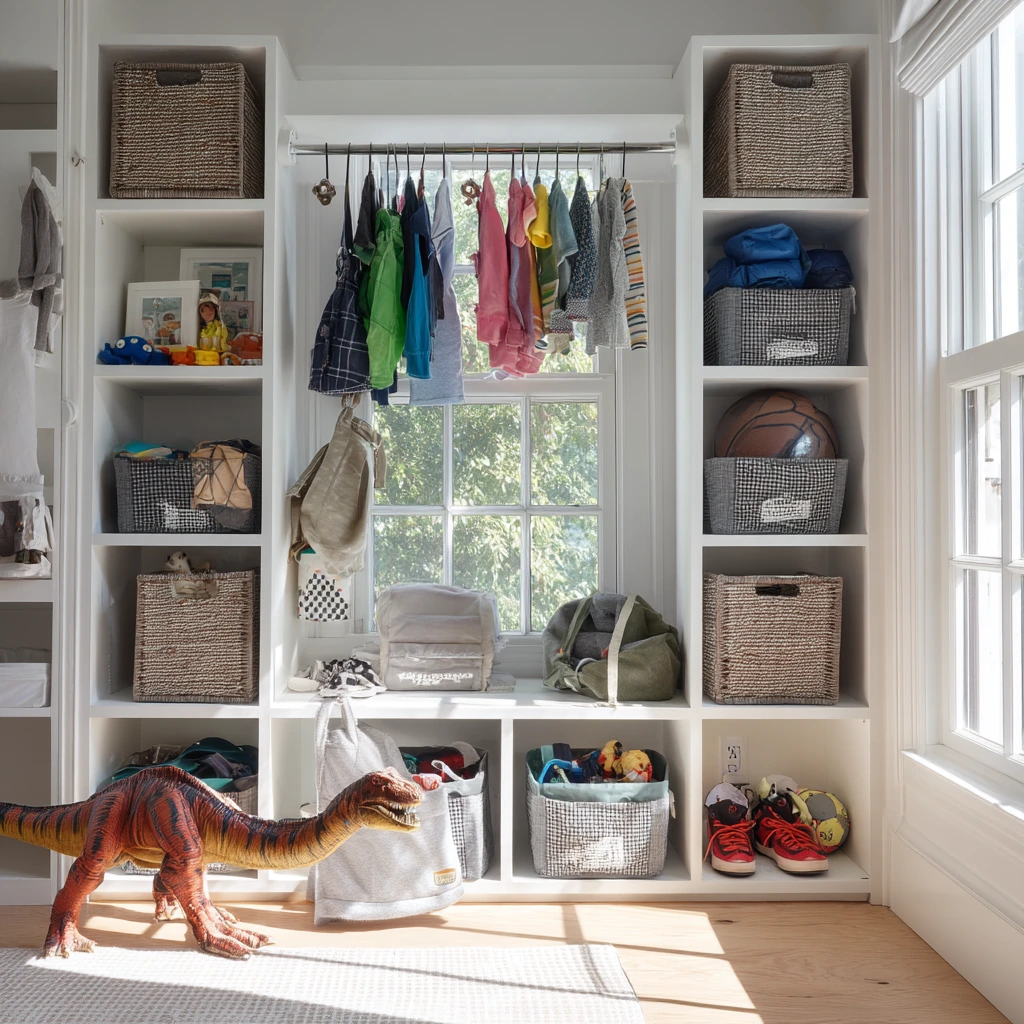
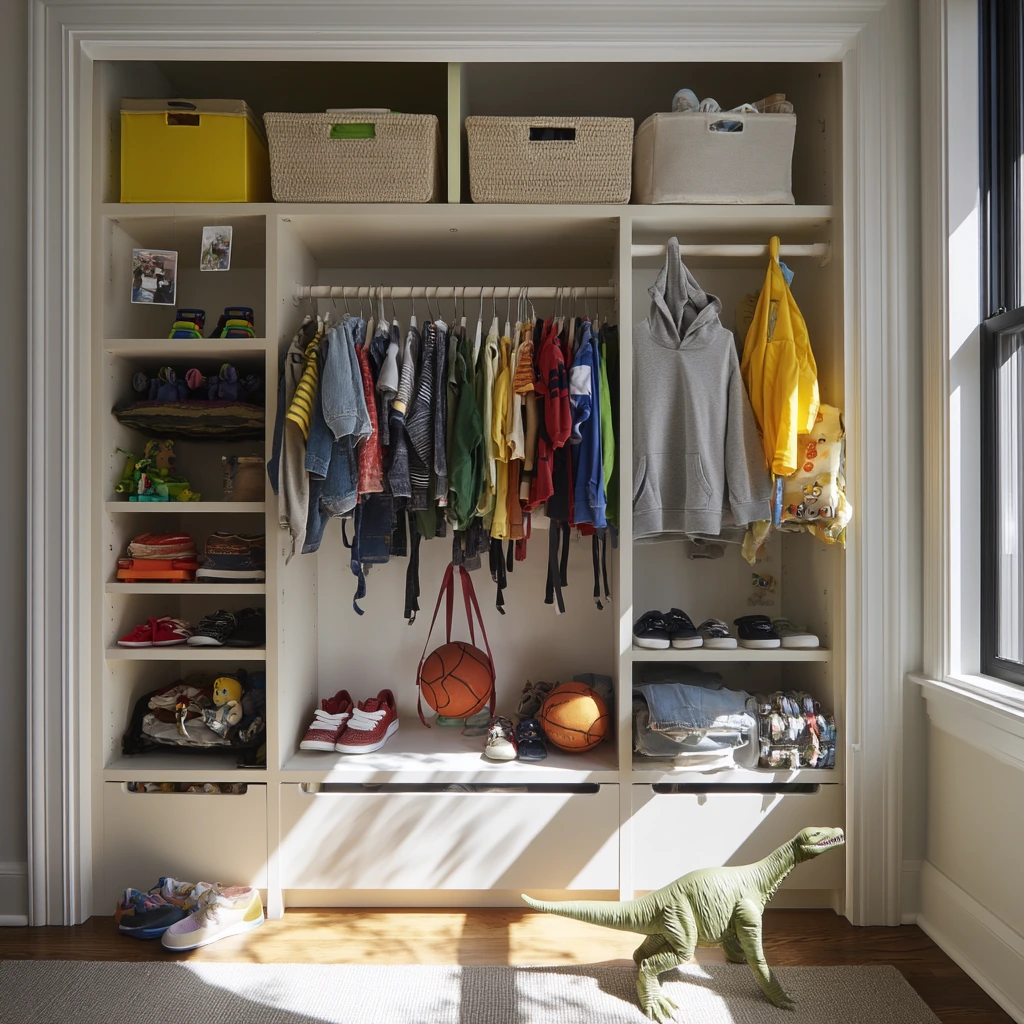
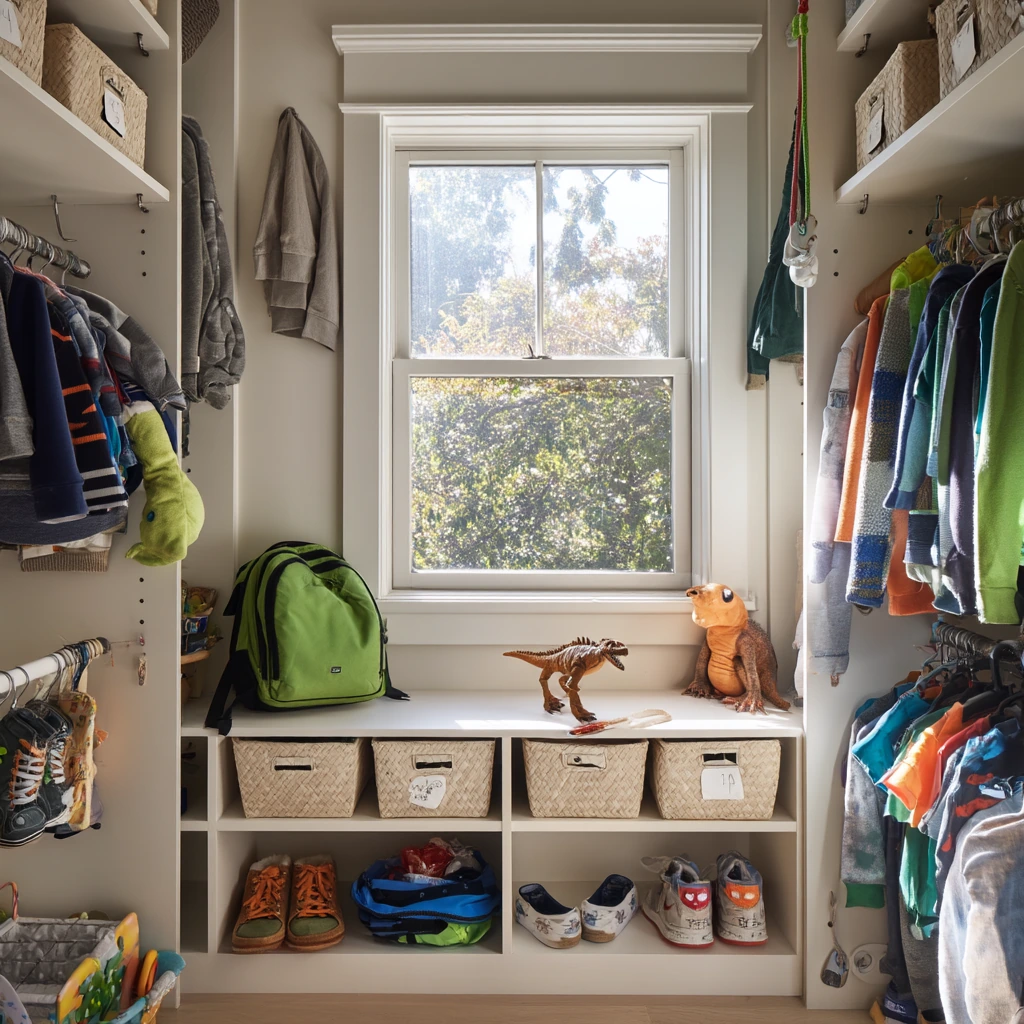
Kids’ closet ideas should match a child’s height and attention span. Low hanging rods let kids hang up jackets and school clothes on their own. Open cubbies and easy-access bins are faster than stacked piles. Picture labels help early readers and keep the system working even on busy mornings.
Create clear categories that fit your week. Try bins for pajamas, school clothes, and sports gear. Use toy baskets for items that drift into the closet, and keep one open spot for “random finds.” The lived-in cues are normal here, like a plastic dinosaur on the floor, a sneaker half out of a bin, or a hoodie snagged on a hook. Plan for that by using sturdy bins, wide hooks, and a shoe cubby that can handle quick toss-ins.
How to style it: use two or three bright label colors, then keep the bins neutral so it does not look loud. Fold shirts in short stacks so they do not fall. Put seasonal items up high, and keep daily items in the middle. If your child changes outfits often, add a small hamper inside the closet so dirty clothes do not end up behind bins.
- Install a low rod so kids can hang clothes by themselves.
- Use picture labels for each bin and cubby.
- Keep one bin for sports gear with a grab-and-go spot.
- Add wide hooks for hoodies and backpacks.
- Place a small hamper inside to catch dirty clothes.
Pro Design Tip: Limit categories to 6–8 total so cleanup takes under five minutes.
Budget Considerations: Print picture labels at home and use basic plastic bins before buying matching sets.
7 Seasonal Closet Refresh for Winter
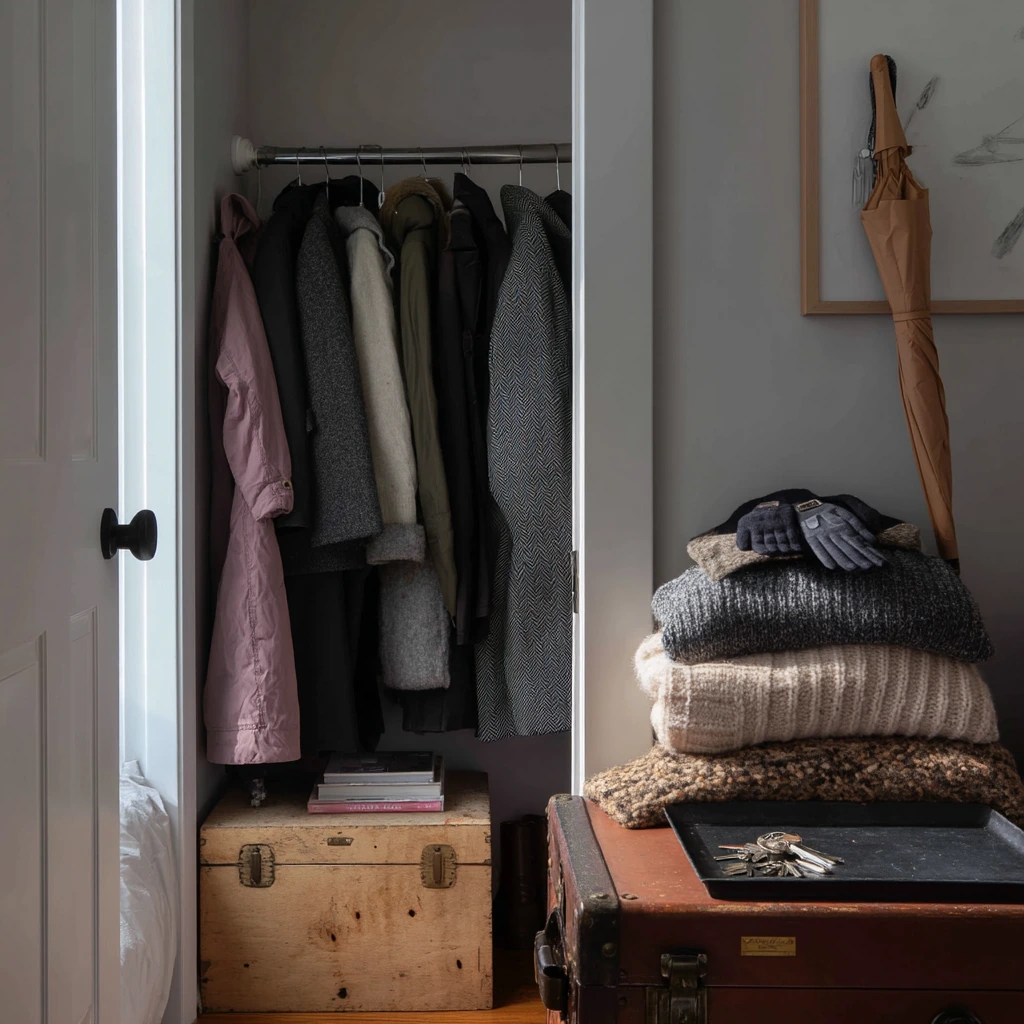
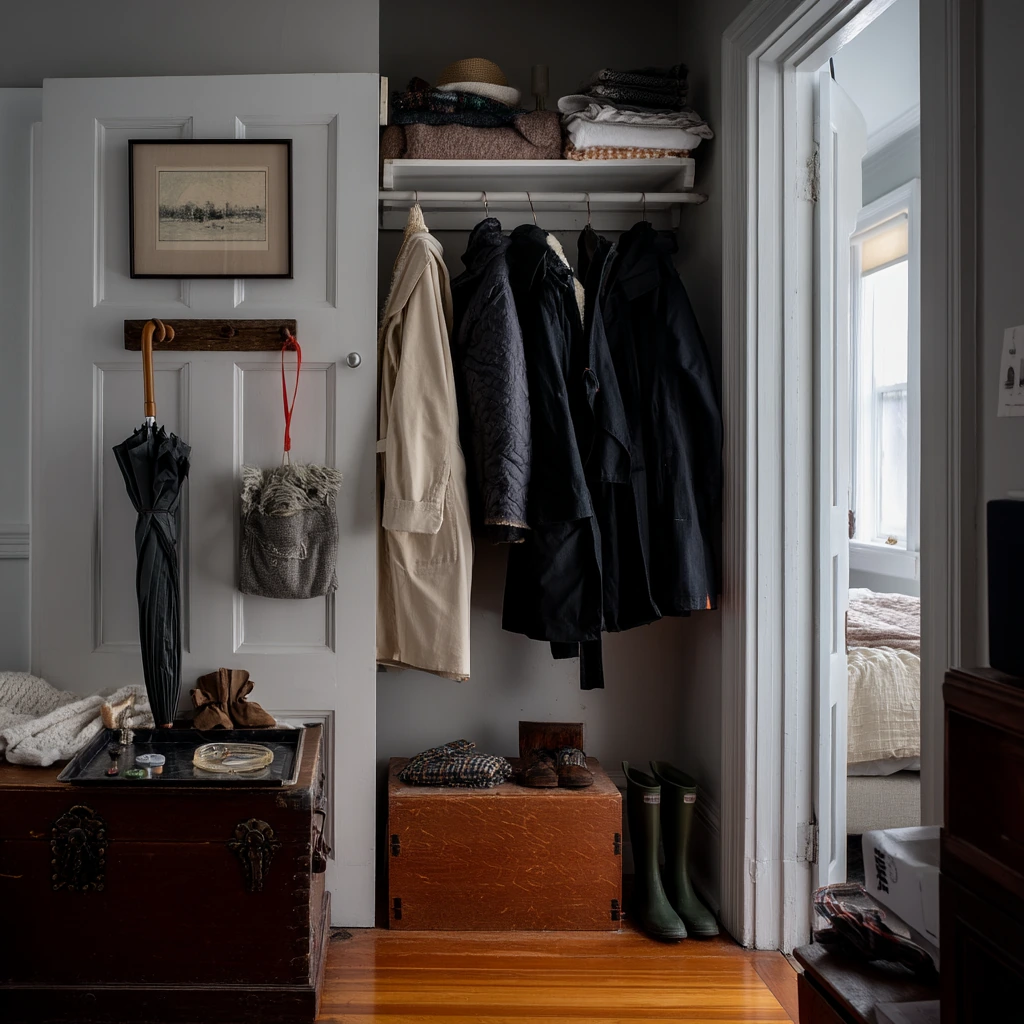
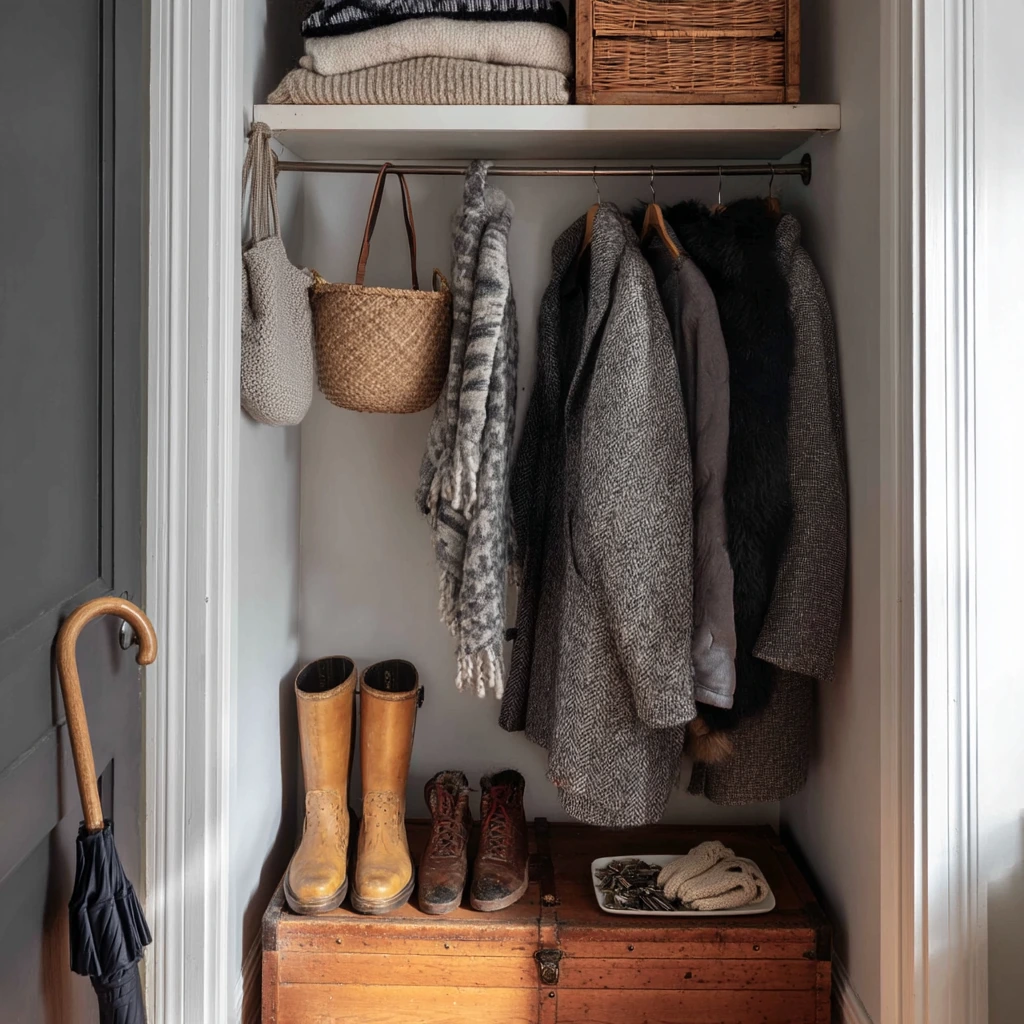
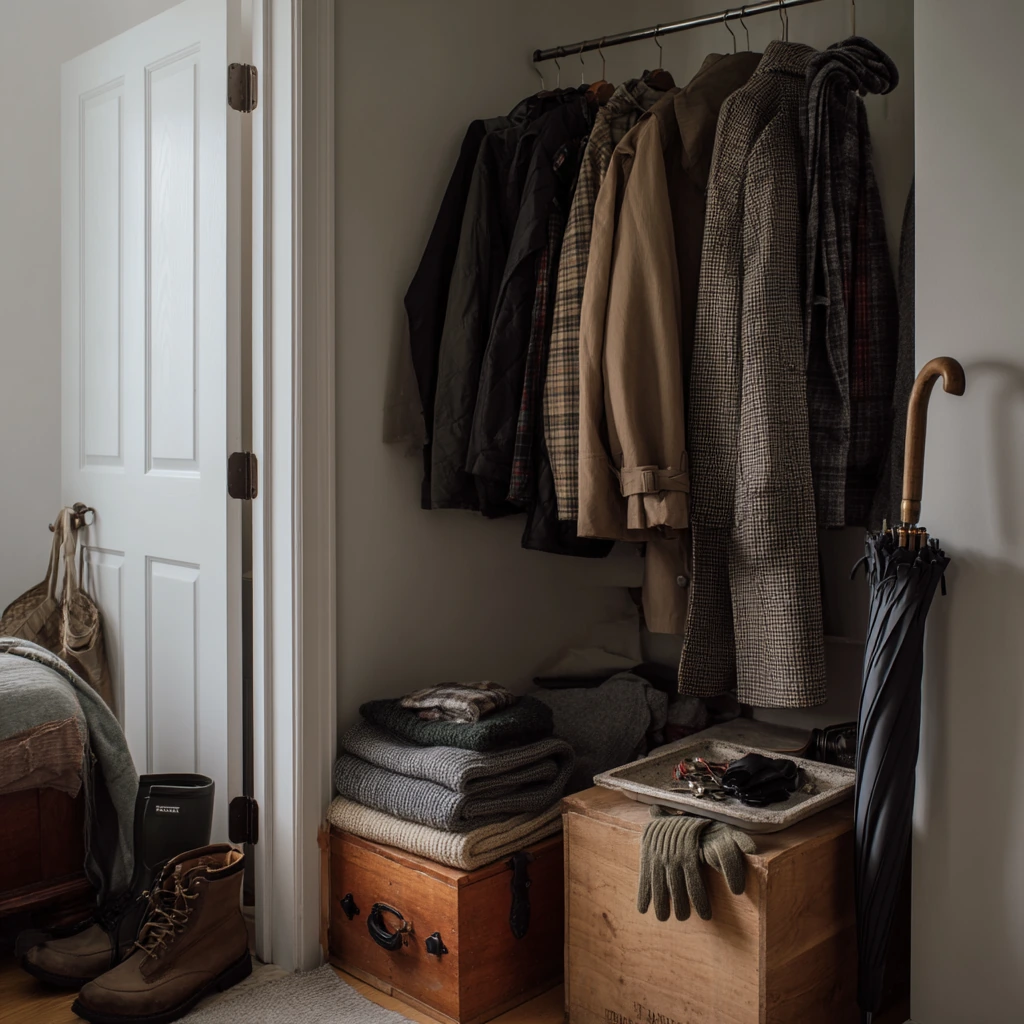
A seasonal closet refresh helps you rotate what you wear so your closet stops feeling stuffed. In winter, bring coats forward, stack folded sweaters, and place boots on a lower shelf where they can dry. Cedar blocks add a clean scent and help protect knits. A trunk is useful for off-season storage and looks better than loose boxes.
Start with a quick edit. Pull out items you will not wear in the next three months and move them into the trunk or labeled bins. Keep winter gear near the door side of the closet, so you can grab it fast. Real life shows up here, like a scarf tossed over the door, a damp umbrella in the corner, and knit gloves near a tray with keys. Add a hook for scarves, a drip tray for umbrellas, and one small basket for gloves and hats.
How to style it: group coats by length, then add one basket for small winter items so the shelves look calm. Keep boots upright with simple boot shapers or rolled magazines. If grey winter daylight makes the space feel dim, add a battery puck light on the top shelf. That makes it easier to see labels and keeps the closet from feeling gloomy.
- Rotate off-season items into a trunk or top-shelf bins.
- Place boots on a lower shelf with a drip tray nearby.
- Add a scarf hook to stop piles on the door.
- Use a basket for gloves, hats, and hand warmers.
- Set cedar blocks near knits to protect sweaters.
Pro Design Tip: Store sweaters folded, not hung, to prevent shoulder bumps and stretching.
Budget Considerations: A basic storage trunk or under-bed bins cost less than adding new closet cabinetry.
8 Budget Closet with DIY Shelves
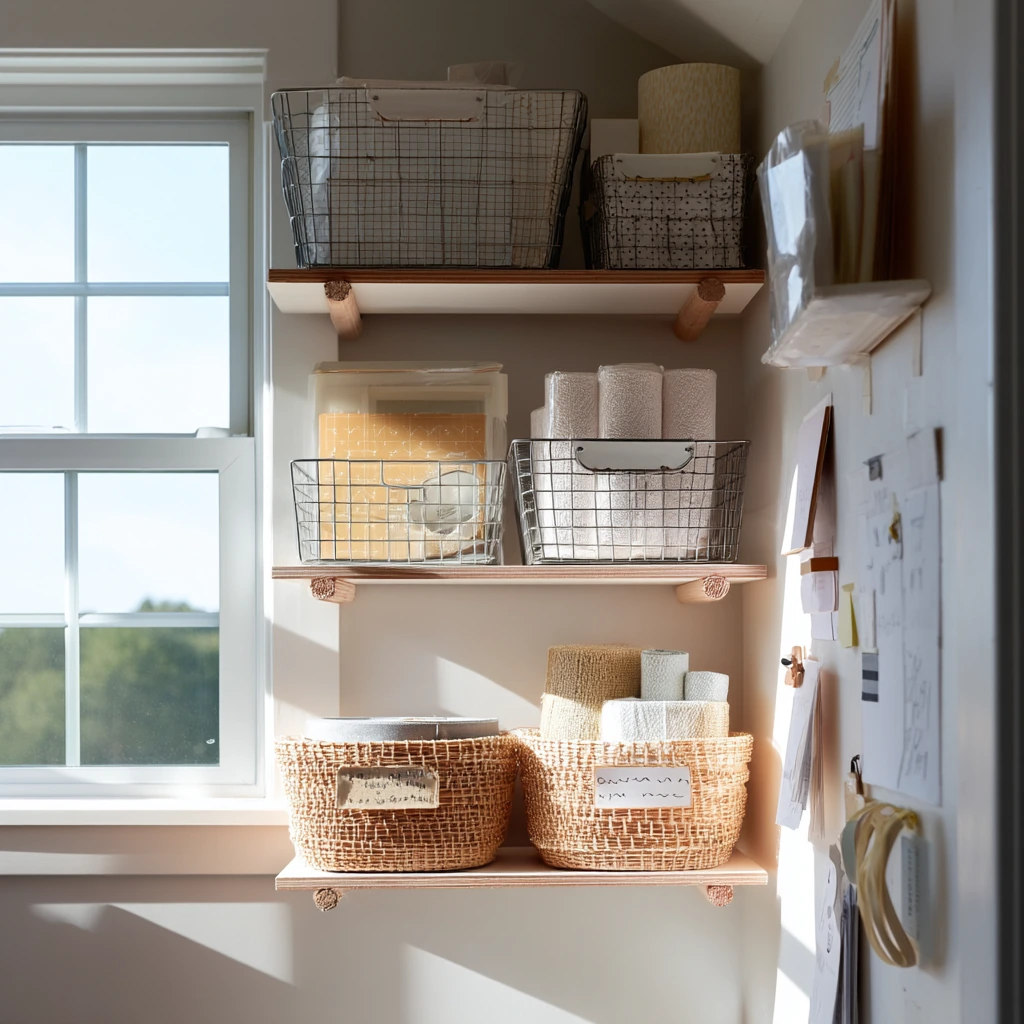
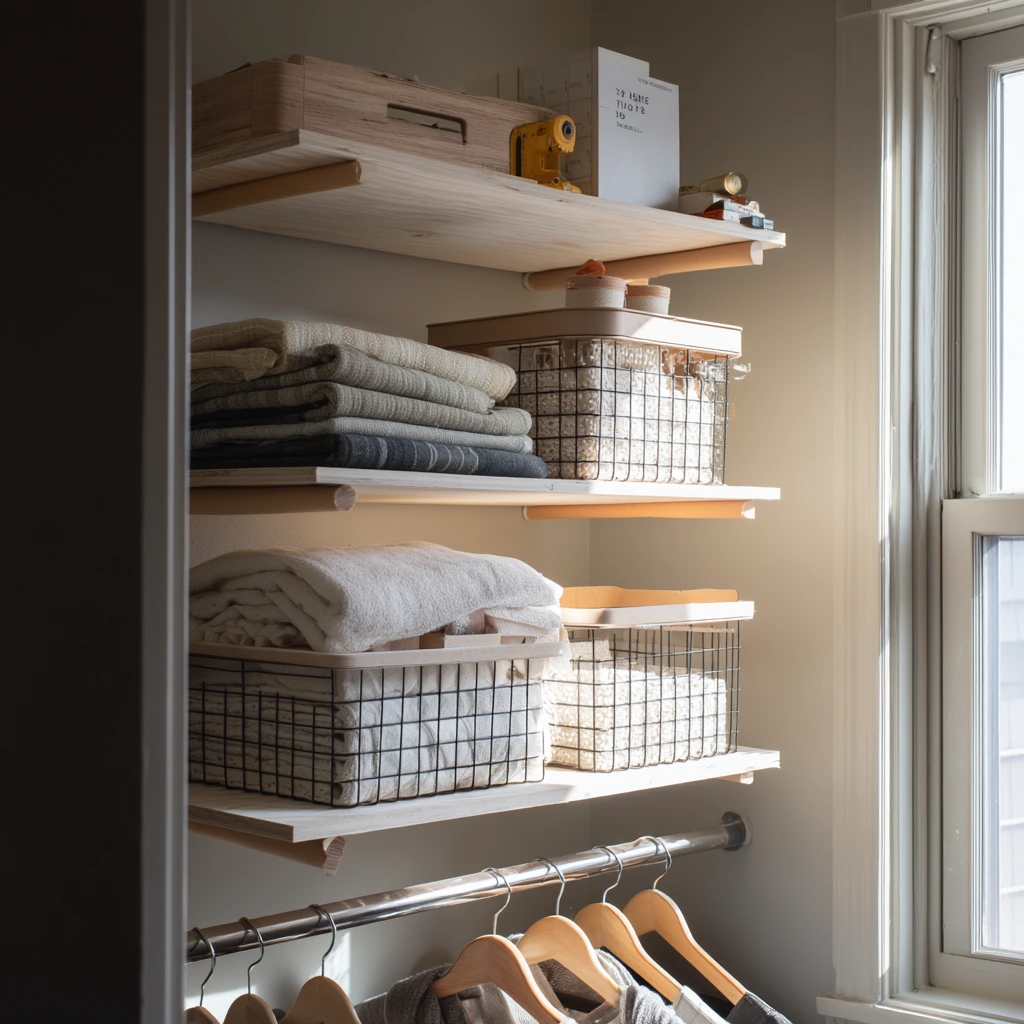
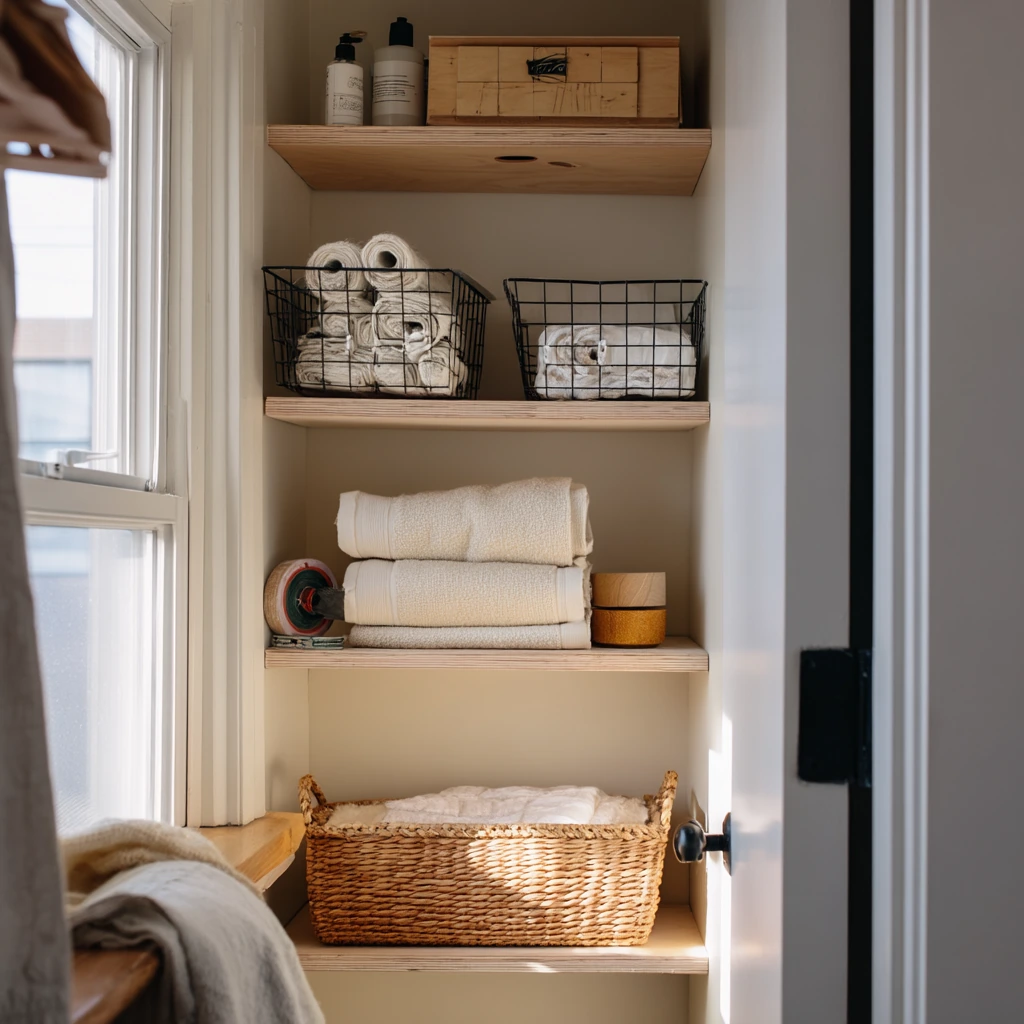
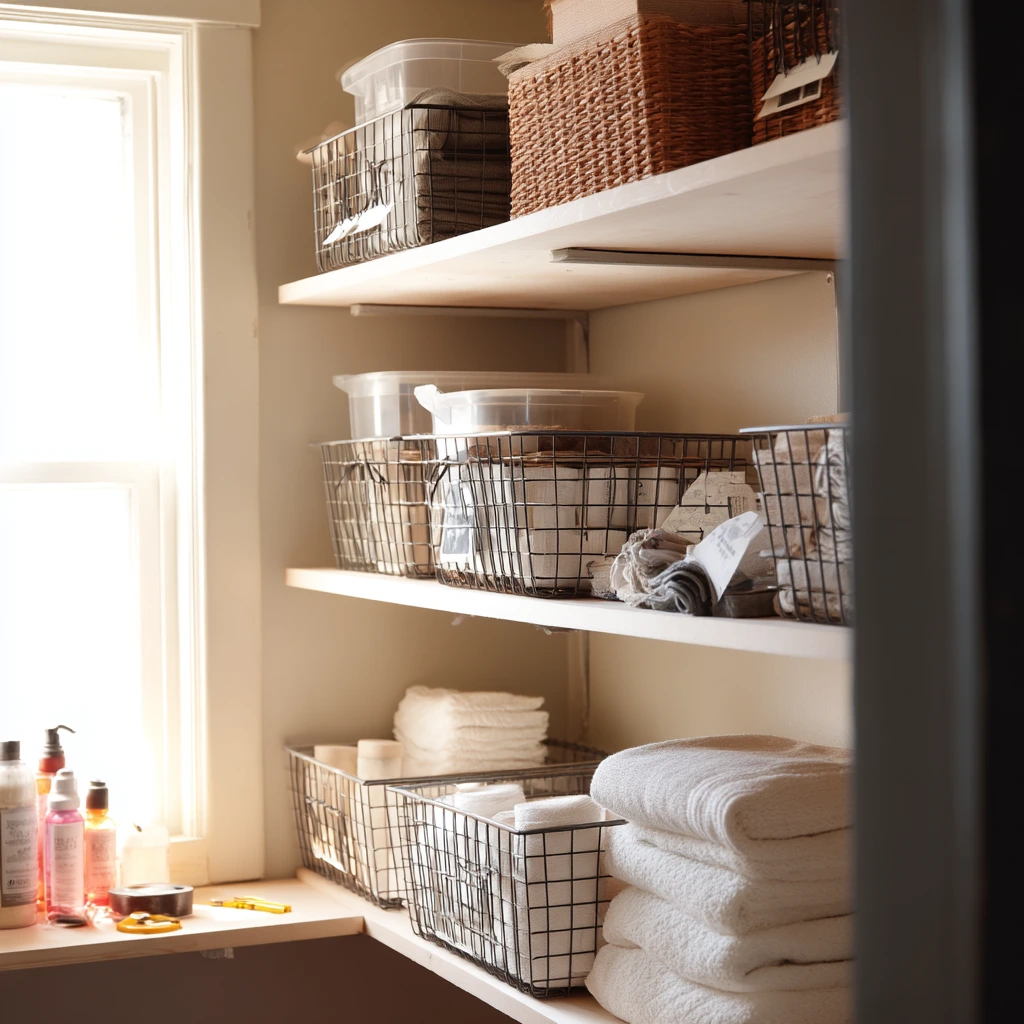
Budget DIY closet ideas can look clean and work hard without fancy finishes. Painted plywood shelves are strong and easy to customize. Simple dowels create hanging space, and wire baskets keep items breathable and visible. Peel-and-stick labels add order fast, which helps the system stick.
Plan the build around your inventory. Count how many items you need to hang and how many you can fold. Place shelves at heights that fit your bins, not random spacing. The lived-in details matter, like a tape measure on top of a bin, towels not perfectly aligned, and a paint sample card stuck to the wall. Leave a small “project shelf” for tools and touch-up paint so repairs are easy later.
How to style it: pick one paint color, like warm white or light greige, and use matching labels. Keep wire baskets in a straight row for a tidy look. If you store linens in the closet, roll towels instead of stacking them tall. Add one small mat on the floor to soften the space and catch dust. This kind of closet looks best when it is simple and honest, not overdecorated.
- Measure your bins first, then set shelf spacing to match.
- Use dowels for hanging to keep the build simple.
- Add wire baskets for socks, tees, and cleaning cloths.
- Label shelves and bins with peel-and-stick tags.
- Keep a small tool spot for quick fixes and updates.
Pro Design Tip: Prime and seal plywood edges so the paint stays smooth and does not absorb moisture.
Budget Considerations: Plywood, basic brackets, and wire baskets cost much less than a closet system kit, especially in small spaces.
9 Boutique-Style Bedroom Closet Corner
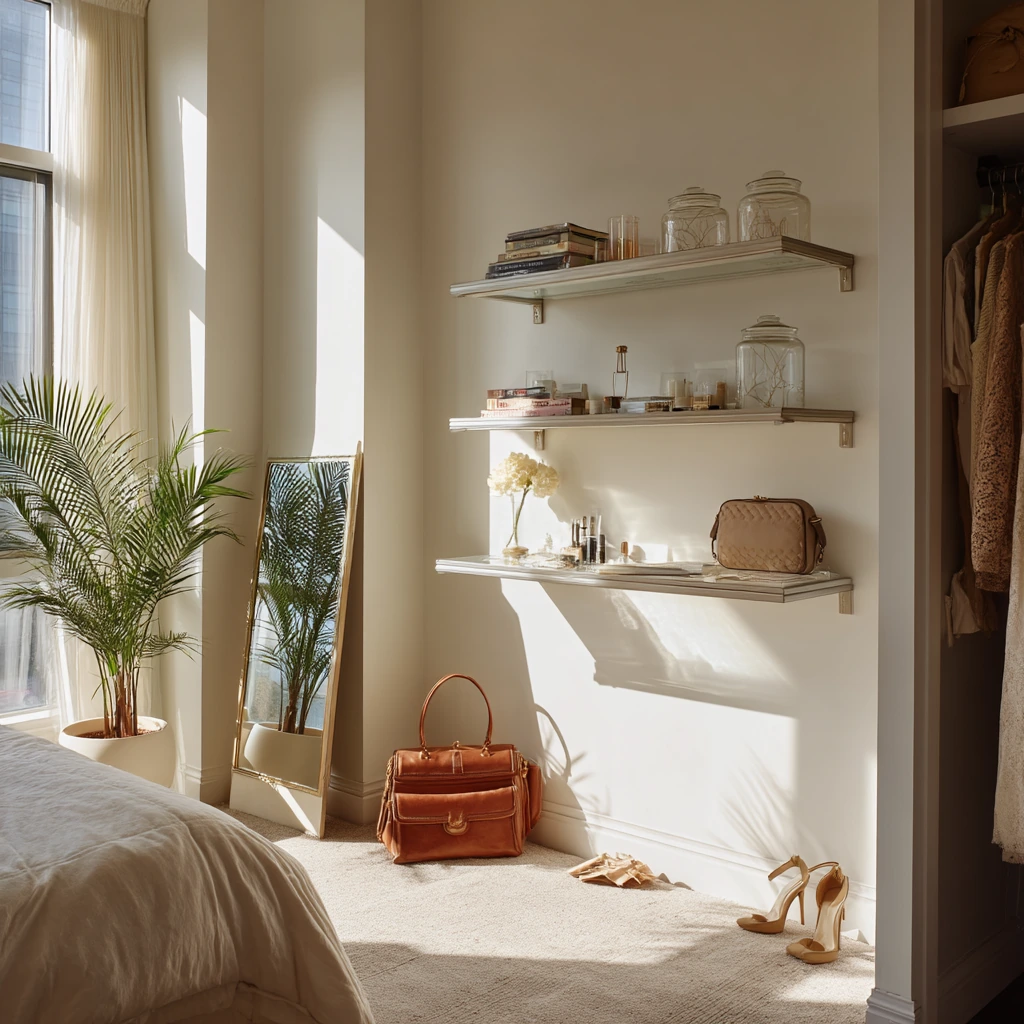
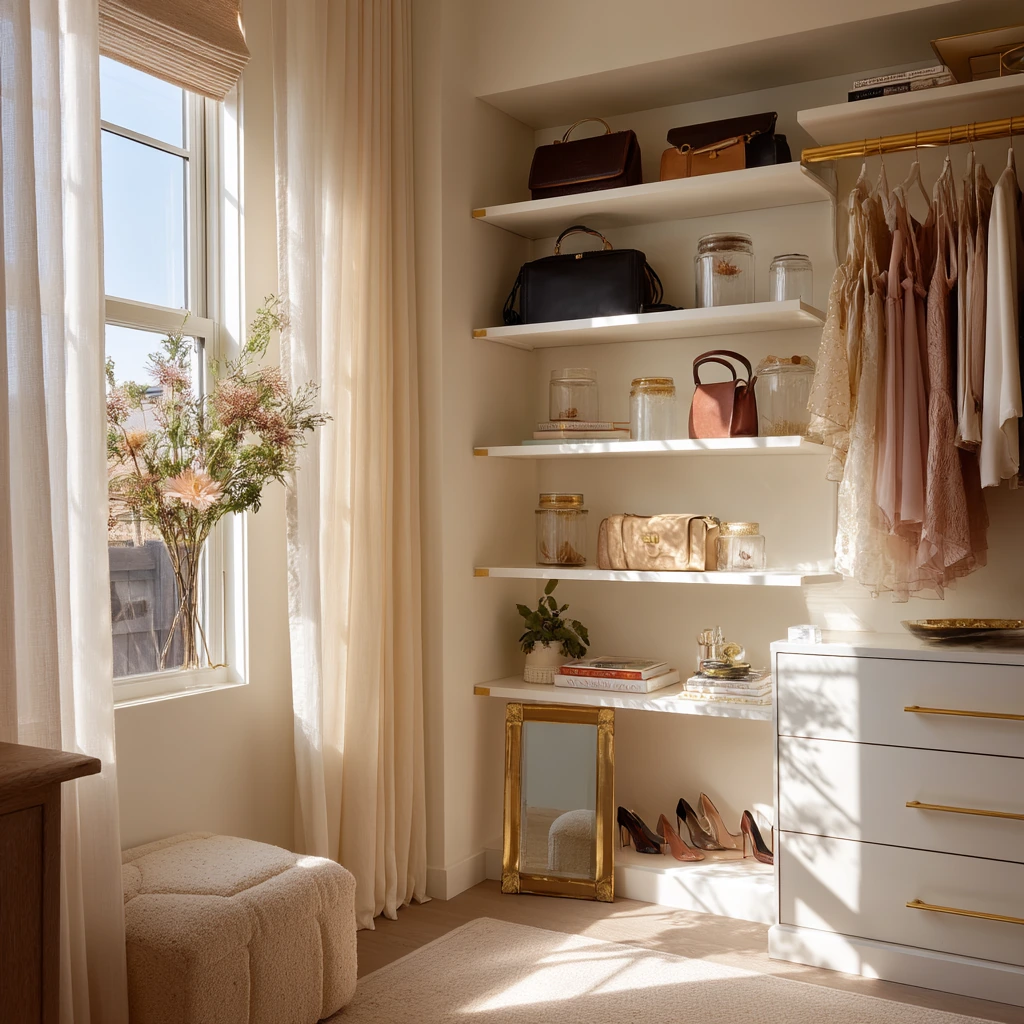
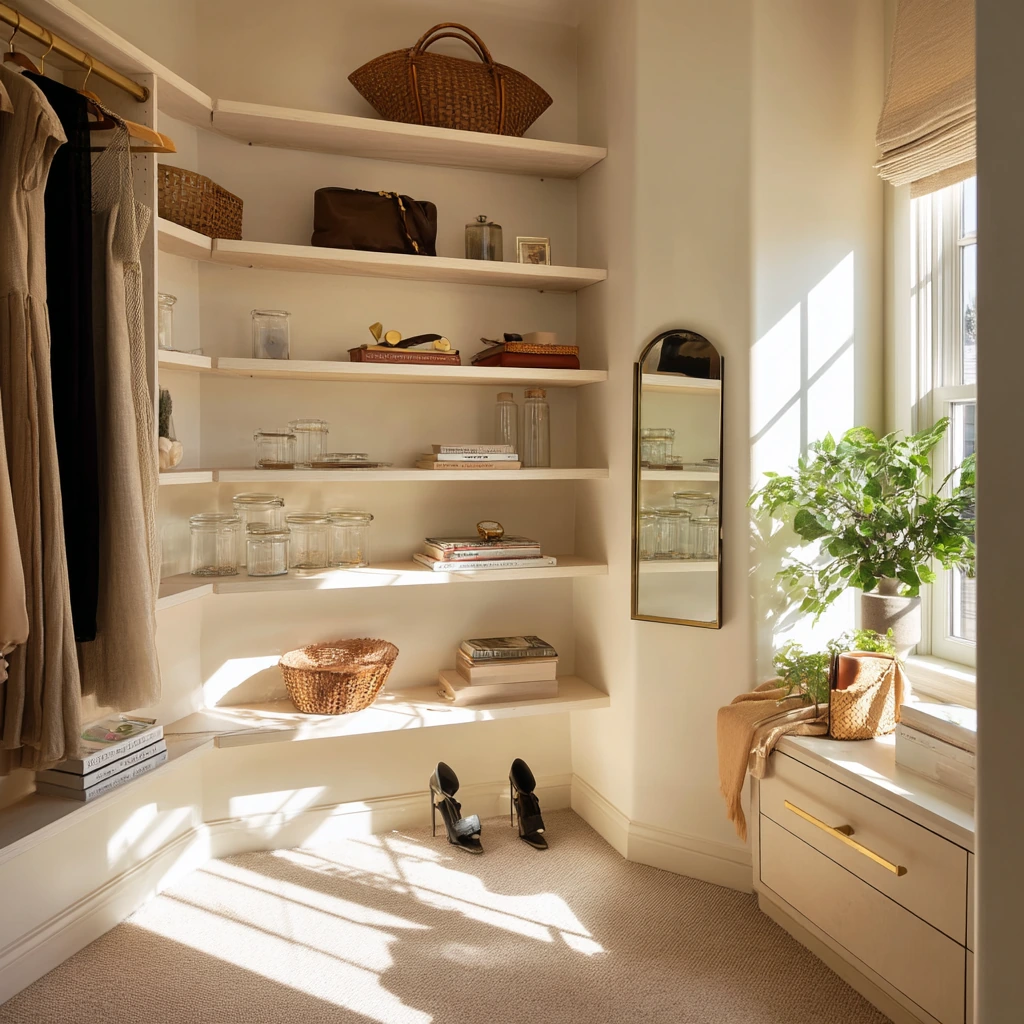
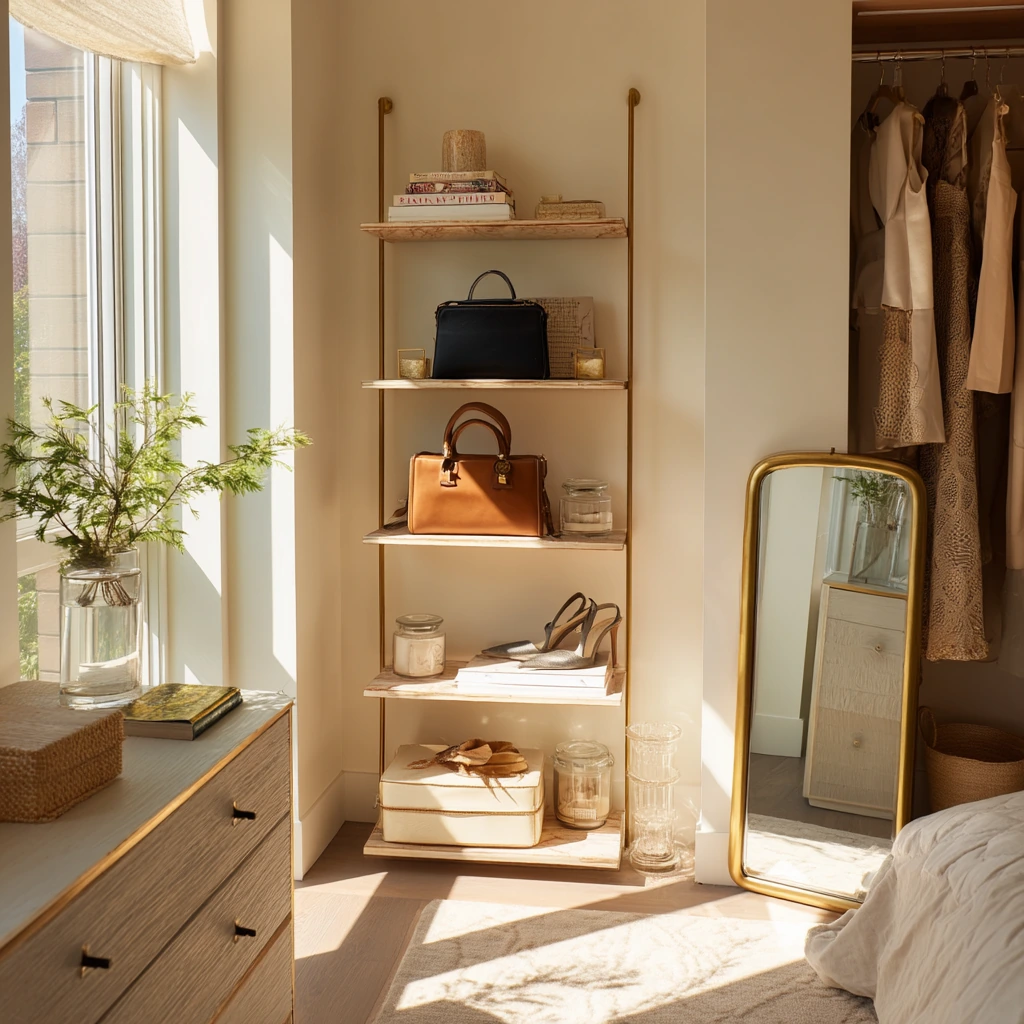
A boutique-style closet corner can make a bedroom feel more polished, even if it is just one wall. Open shelving for handbags turns storage into decor. A slim dresser adds hidden space for basics. Glass jars work well for accessories like hair ties, clips, and cotton pads, and they help you see when supplies run low.
Keep this corner curated. Choose your best-looking items to display and store the rest out of sight. A small mirror leaning against the wall is easy and makes the area feel larger. Real-life touches make it believable, like a paperback on the top shelf, one heel near the baseboard, and soft plant shadows on the floor. Add a shallow tray on the dresser for daily jewelry so it does not scatter.
How to style it: group handbags by size, then add one neutral basket for items that do not fit the look. Keep jar labels small and simple. If you like fragrance, place one small sachet inside a drawer, not on the shelf, so the area stays clean. This corner photographs well for Pinterest when you keep surfaces mostly clear and leave a little negative space around bags and jars.
- Display handbags on open shelves with breathing room.
- Use a slim dresser to hide extra items and reduce clutter.
- Store accessories in glass jars for quick visibility.
- Lean a small mirror to bounce light and save wall space.
- Add one tray for daily jewelry and watch storage.
Pro Design Tip: Use shelf liners or felt pads under bags to prevent scuffs and keep shelves looking new.
Budget Considerations: Thrifted jars, a secondhand dresser, and basic wall shelves can recreate the boutique look for less.
10 Entry Closet for Everyday Chaos
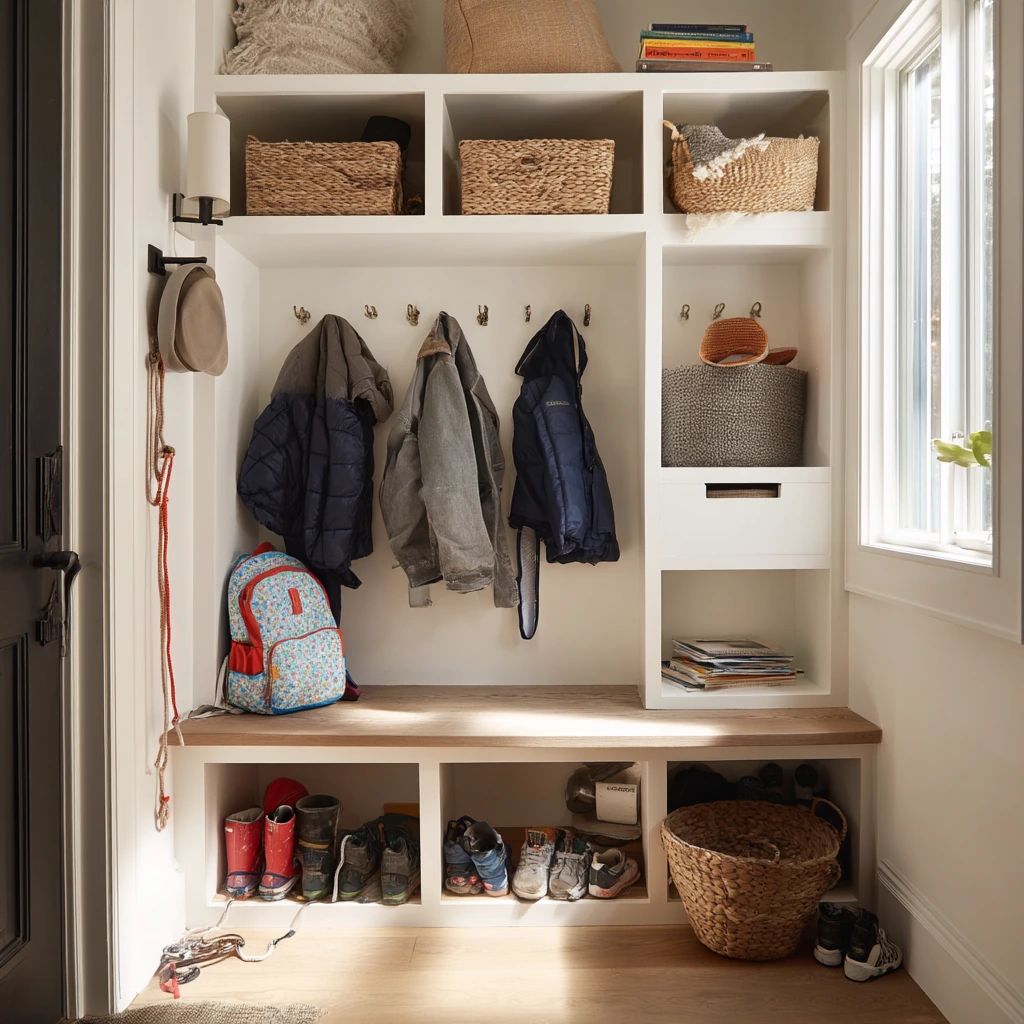
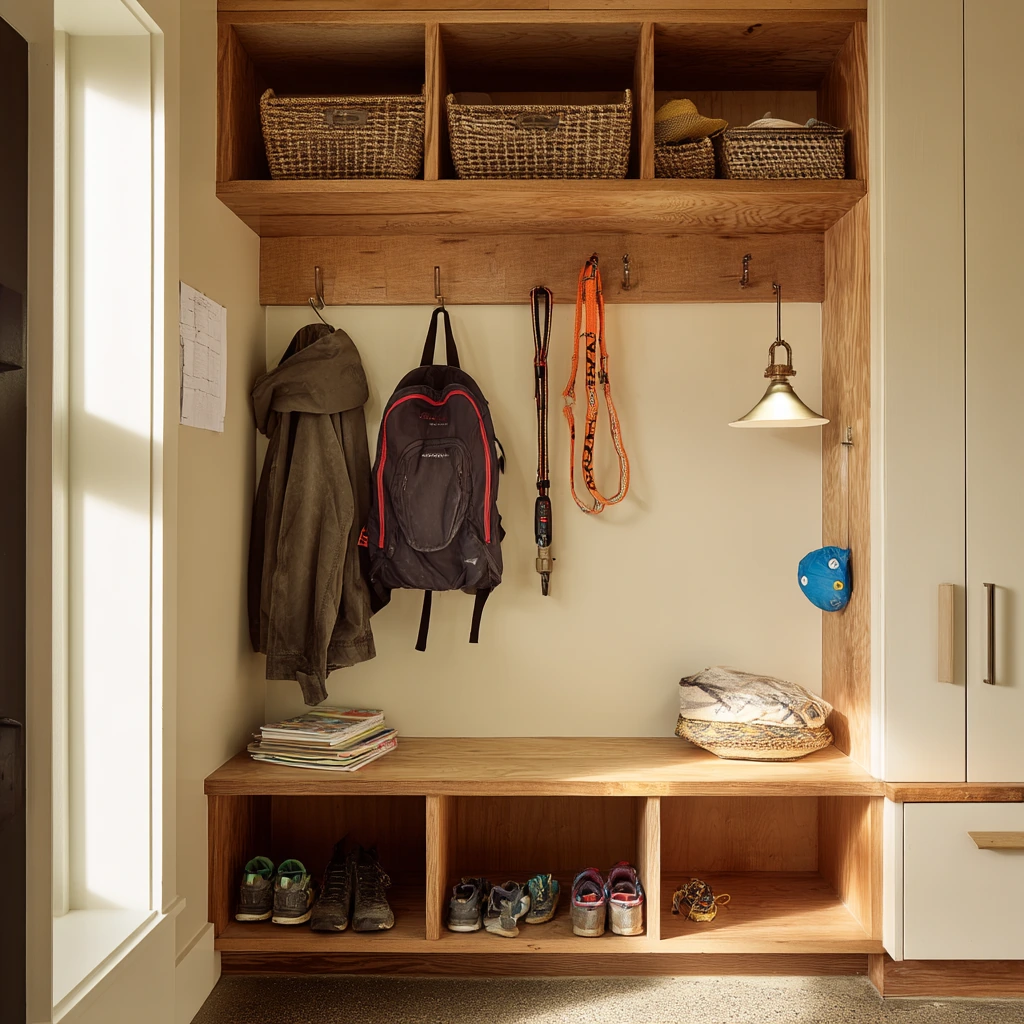
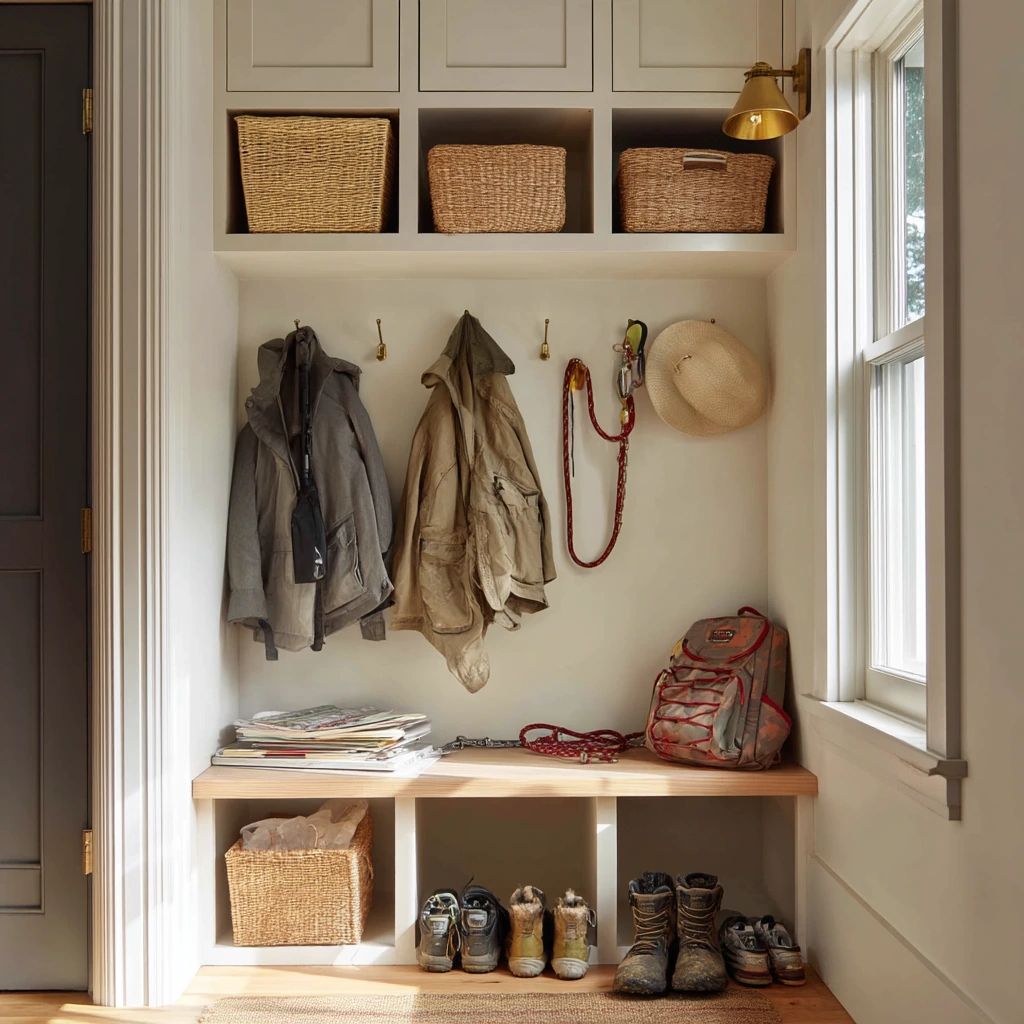
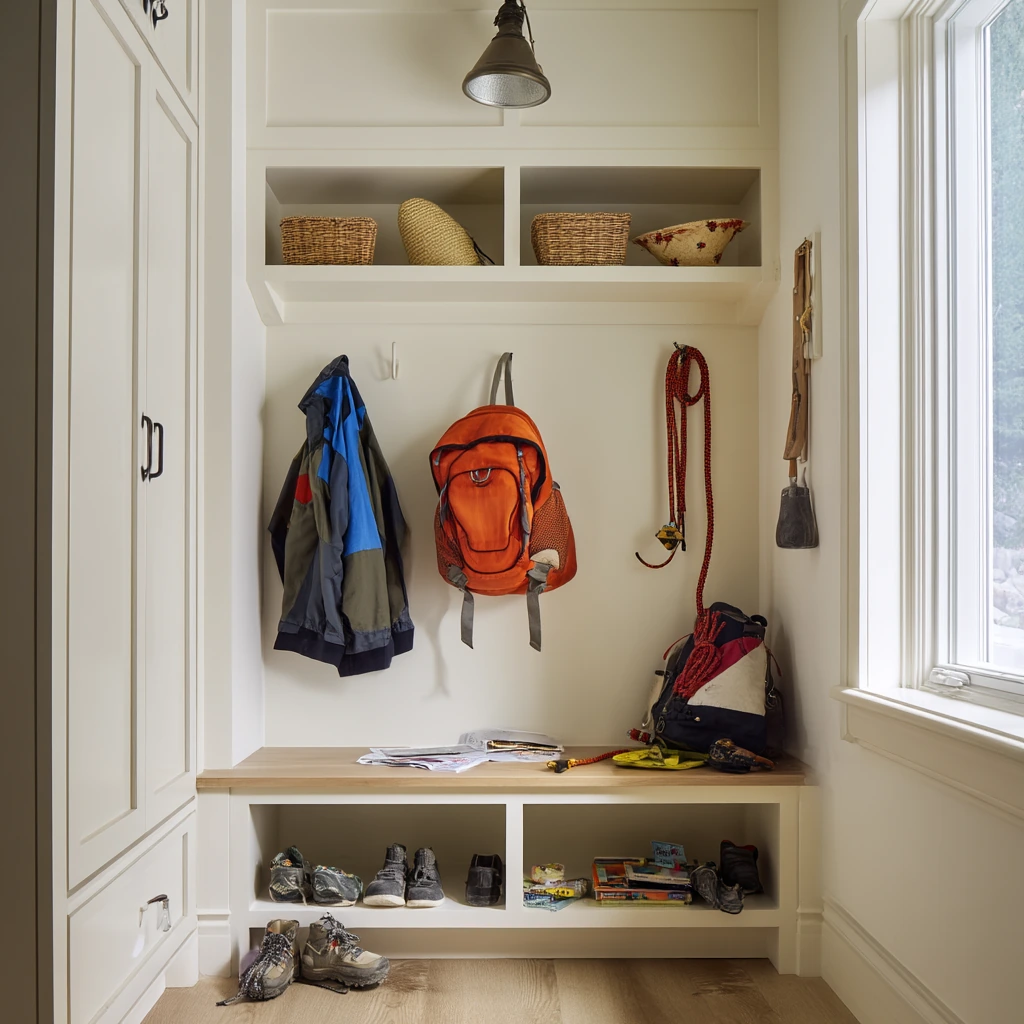
Entry closet ideas should handle daily drop-off without becoming a pile. Hooks for coats keep the floor clear. Cubbies for shoes stop muddy sneakers from spreading across the entry. Baskets work well for hats and gloves, and a bench with hidden storage gives you a place to sit while putting on shoes.
Design this closet around traffic flow. Keep the most-used hooks at kid height and one higher hook for adult coats. If a kid backpack slumps on the bench and mail stacks up crooked, you need a defined spot for both. Add one basket for backpacks and a small wall pocket or tray for mail. If you have a leash, loop it over a hook near the door so it is always ready.
How to style it: use matching baskets and simple labels, then keep the rest plain. Place a small boot tray for wet days, and keep a hand towel nearby for quick wipe-downs. Warm lamp light helps this space feel welcoming, even when it is a little chaotic. A good entry closet does not need to be perfect. It needs to reset fast every day.
- Install hooks at two heights for kids and adults.
- Use shoe cubbies or a boot tray to contain dirt.
- Add baskets for hats, gloves, and small winter gear.
- Include a bench with hidden storage for overflow.
- Create a mail spot with a tray or wall pocket.
Pro Design Tip: Keep one empty “buffer bin” for quick cleanups when guests arrive or the week gets busy.
Budget Considerations: A basic bench, a few sturdy hooks, and labeled baskets can outperform a full mudroom build for a fraction of the cost.
Closet ideas work best when they fit real habits. Focus on clear zones, easy labels, and storage that matches what you own.
Pick one layout from this list, copy the key parts, and improve it a little at a time. Even small changes like better hangers, a hook, or one new shelf can make your closet easier to use.
FAQ
1. What is the fastest way to organize a closet? Take everything out, sort into keep and donate, then put back by category. Add one bin for small items and label it.
2. How do I make a small reach-in closet feel bigger? Use slim hangers, keep shoes in labeled boxes up high, and leave a little empty space on the rod so items slide.
3. What are the best renter-friendly closet upgrades? Tension rods, command hooks, freestanding shelves, and an over-the-door organizer add storage without damage.
4. How should I store sweaters? Fold sweaters on shelves or in bins. Hanging can stretch the shoulders over time.
5. How do I keep a kids’ closet organized? Use low rods, open bins, and picture labels. Keep the number of categories small so cleanup is quick.
6. How often should I do a seasonal closet refresh? A simple swap twice a year works for most homes. Do a quick edit each month for items you are not wearing.
7. What should I label in my closet? Label any bin or box you cannot see into, plus shelves that hold shared items like accessories, linens, or sports gear.