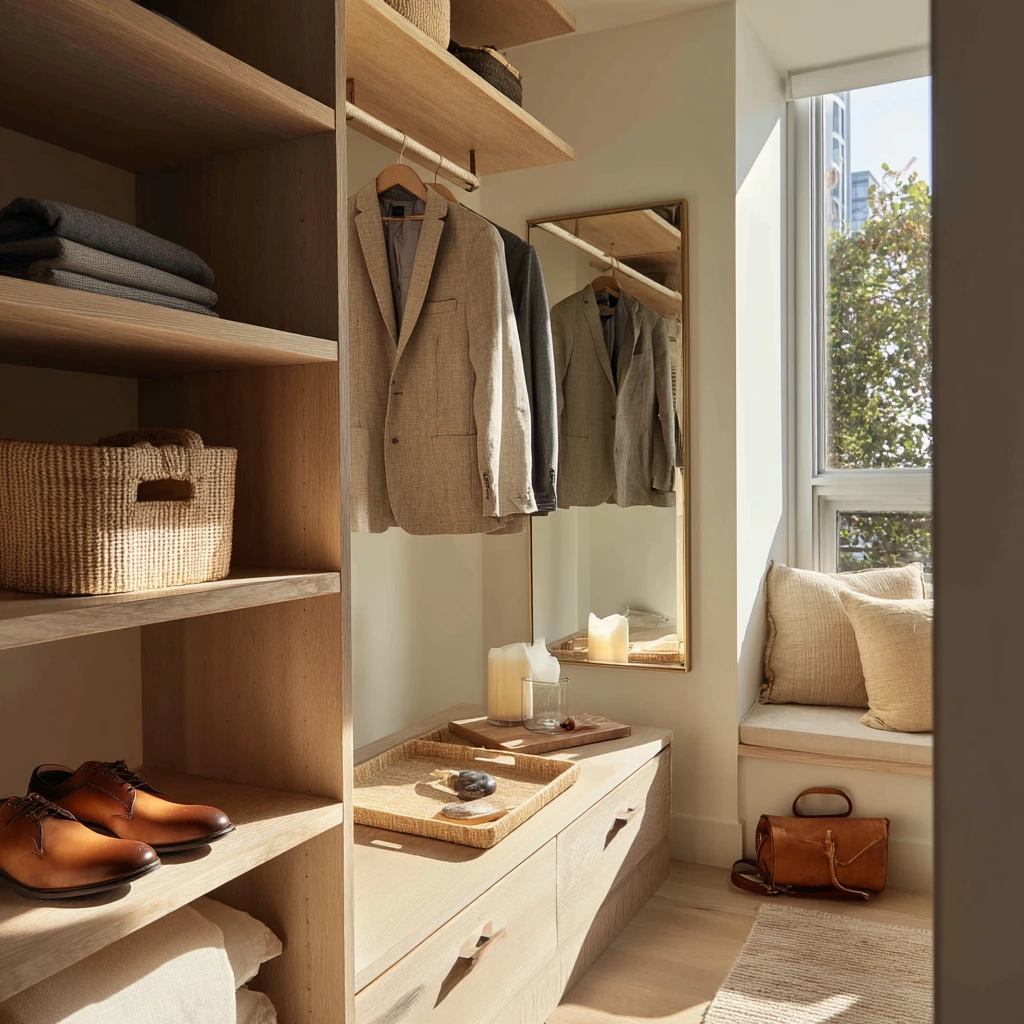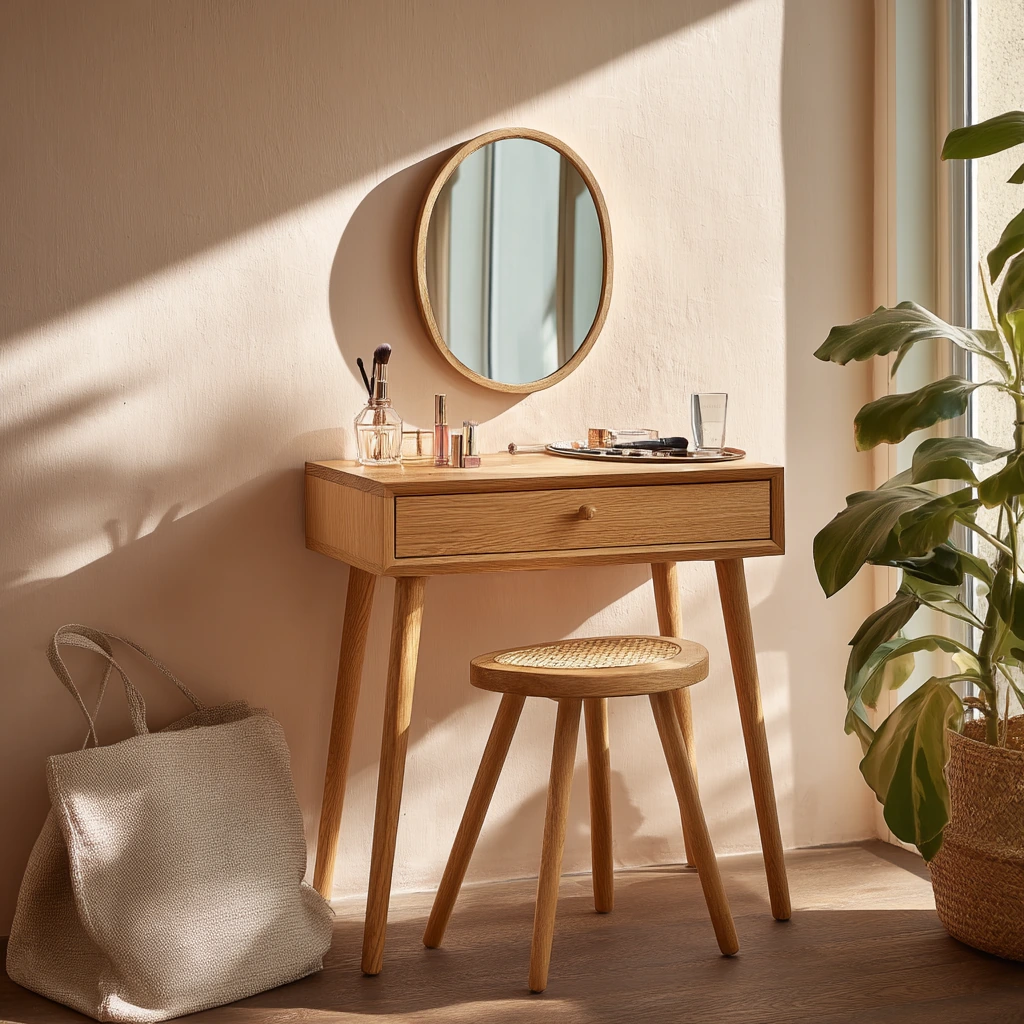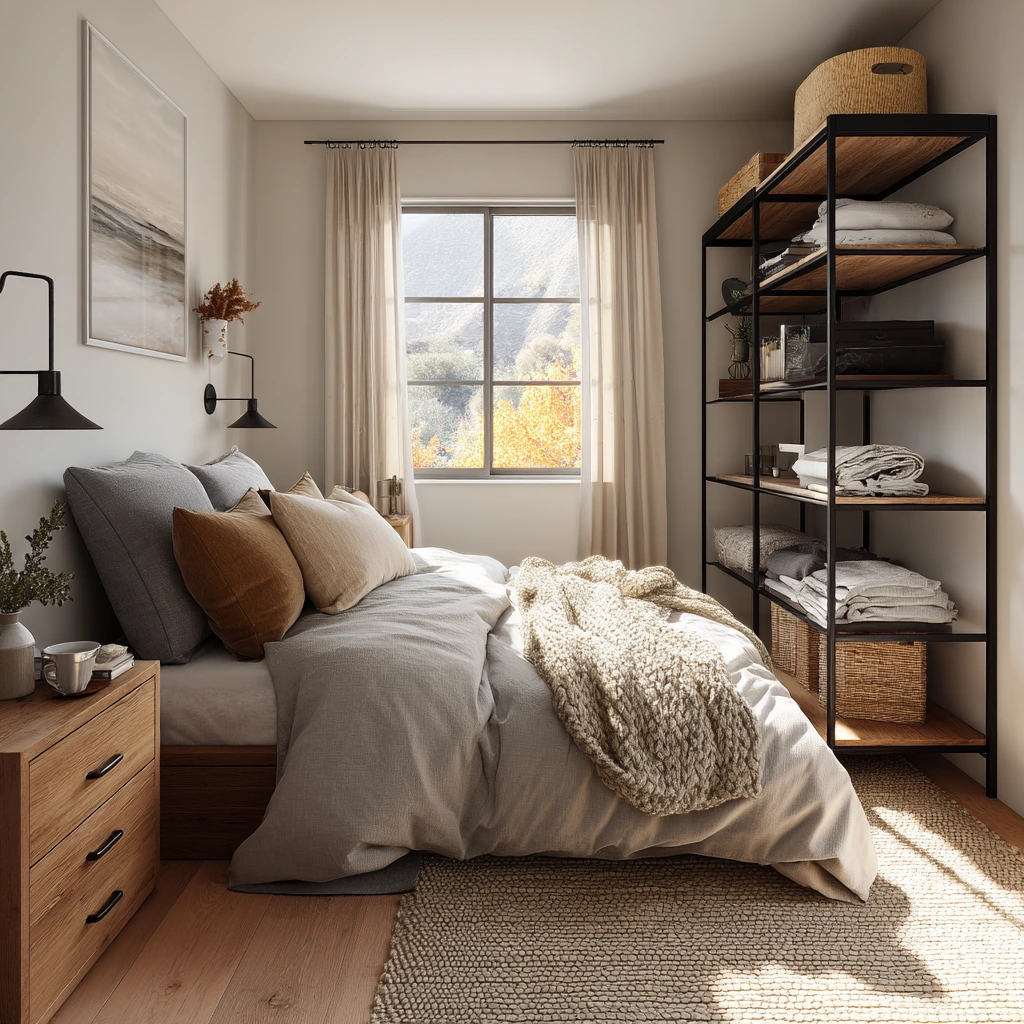

Good closet shelving ideas make it easier to find what you need, keep clothes in good shape, and use every inch of space. You do not need a huge closet or a full remodel to get a clean, calm setup.
This guide walks through 10 real-life closet layouts, from a narrow apartment bedroom closet to a family hallway closet and a roomy walk-in. Each section includes simple storage moves, what to put where, and small styling ideas that still feel lived-in.
You will see options like open shelving, woven bins, cube shelves, tension rods, shoe trays, and labeled fabric bins. These are practical choices for renters, couples sharing space, and busy mornings.
Use the tips to plan your shelf heights, pick bins that fit, and create zones for hanging, folded items, shoes, and accessories. The goal is a closet that stays organized, not one that looks perfect for one day.
1 Small Apartment Closet Shelving for a Daily Routine
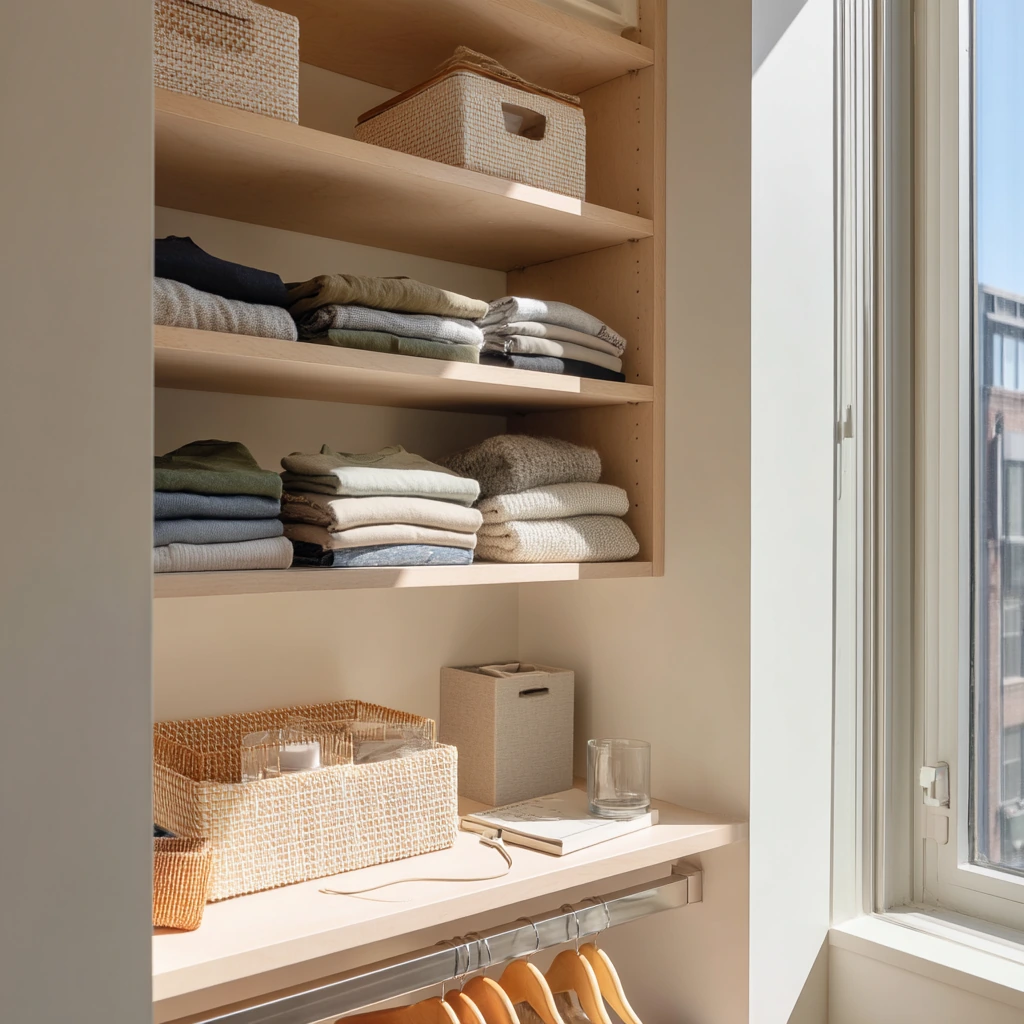
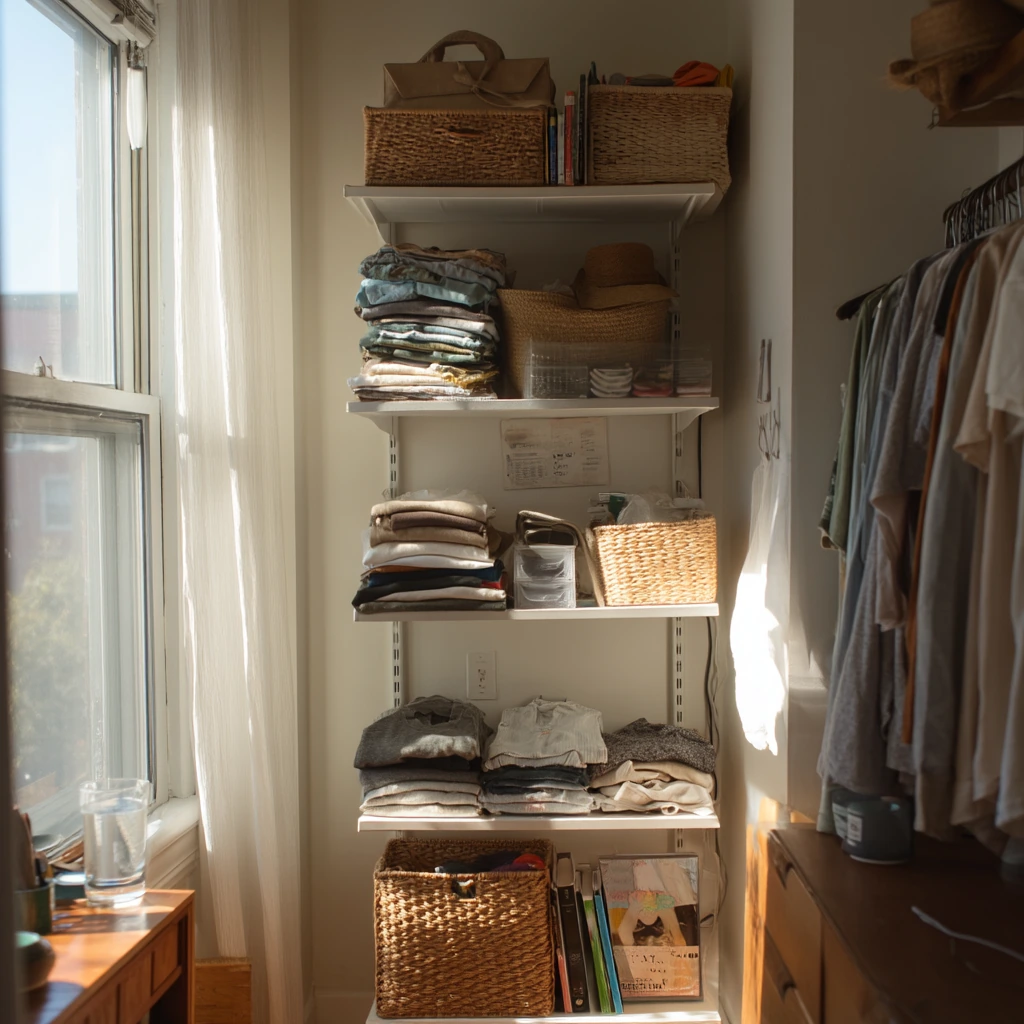
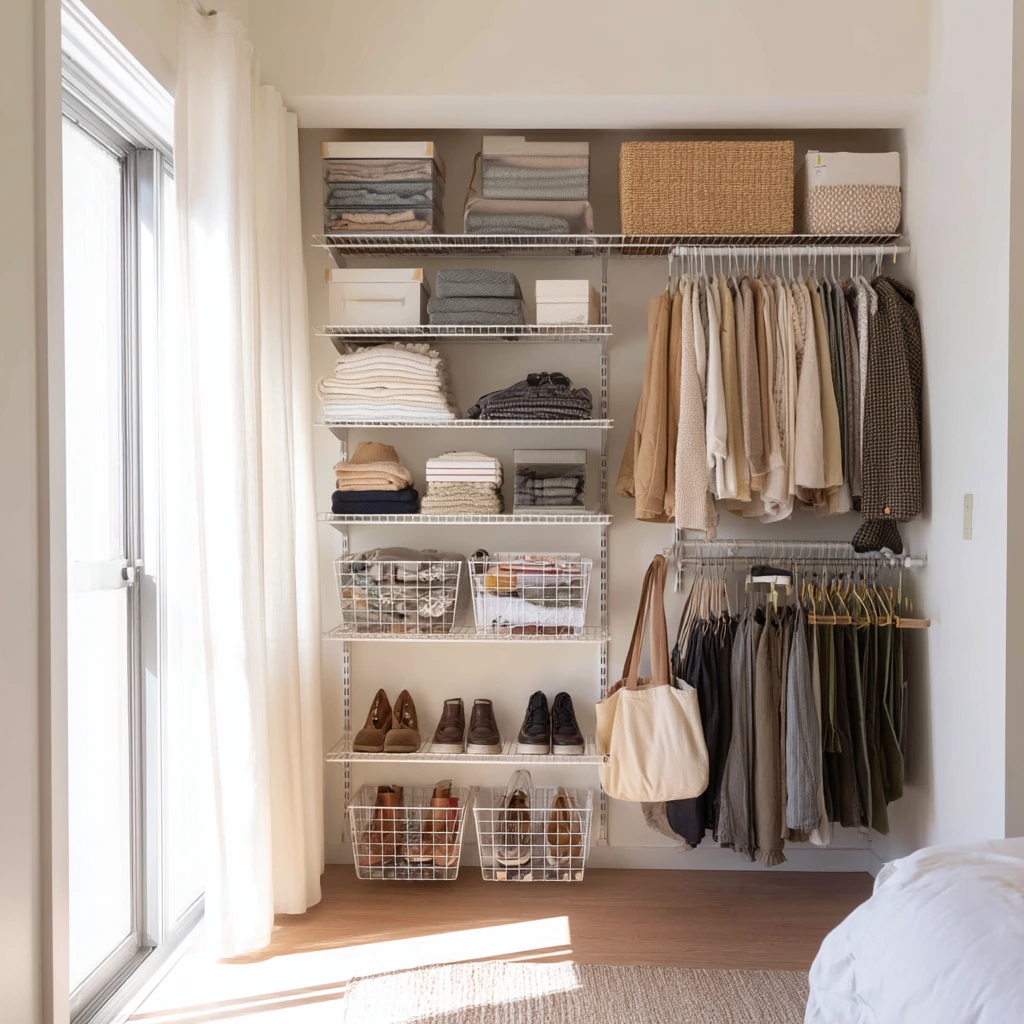
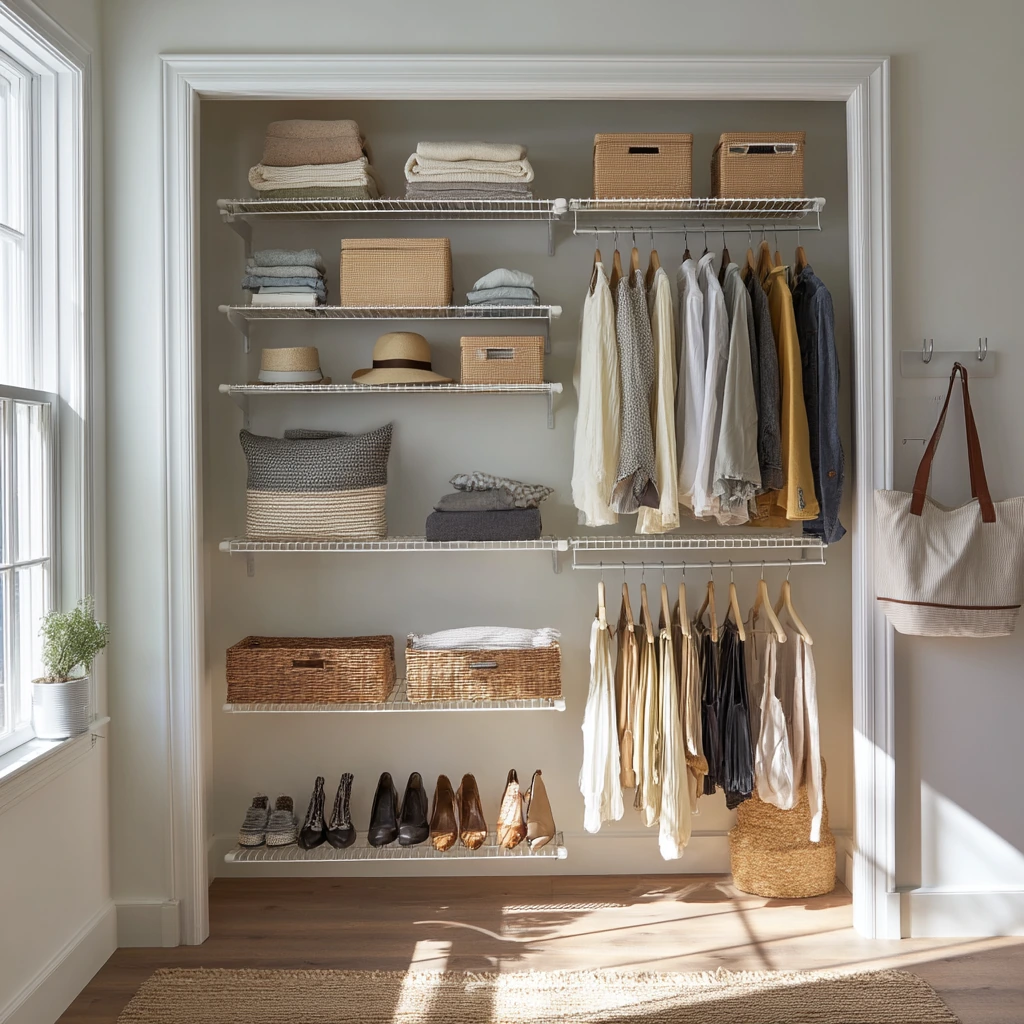
A narrow apartment bedroom closet can work well with practical open shelving instead of bulky drawers. Use one slim hanging rail for everyday pieces and add two to three shelves for folded tees and knitwear. Woven bins keep small items contained, and shoe trays on the floor help shoes line up fast.
Keep it realistic. Leave room for imperfect stacks so you do not fight the closet every morning. Add a small catch-all spot on the dresser for the lived-in stuff you really use, like a half-read paperback, a water glass, and a charging cable. When your “landing spot” is planned, the rest of the closet stays tidy.
How to style it: pick two bin colors and repeat them. Fold tees in the same direction so stacks look calmer, even if they are not perfect. Put the best-looking shoes on the front edge of the tray and push off-season pairs to the back.
- Install a top shelf for extra linens or a rarely used tote
- Use two medium woven bins for socks and workout gear
- Add a narrow shelf at eye level for daily grab items
- Place shoe trays under the hanging rail to catch dirt
- Use one small hook near the door for a belt or bag
Pro Design Tip: Leave 2 to 3 inches of open space above each folded stack so you can pull out one shirt without tipping the whole pile.
Budget Considerations: Basic closet wire shelving is cheap, but laminate shelves plus simple brackets often look cleaner and still stay affordable.
2 Family Closet Shelving with Kid-Ready Bins
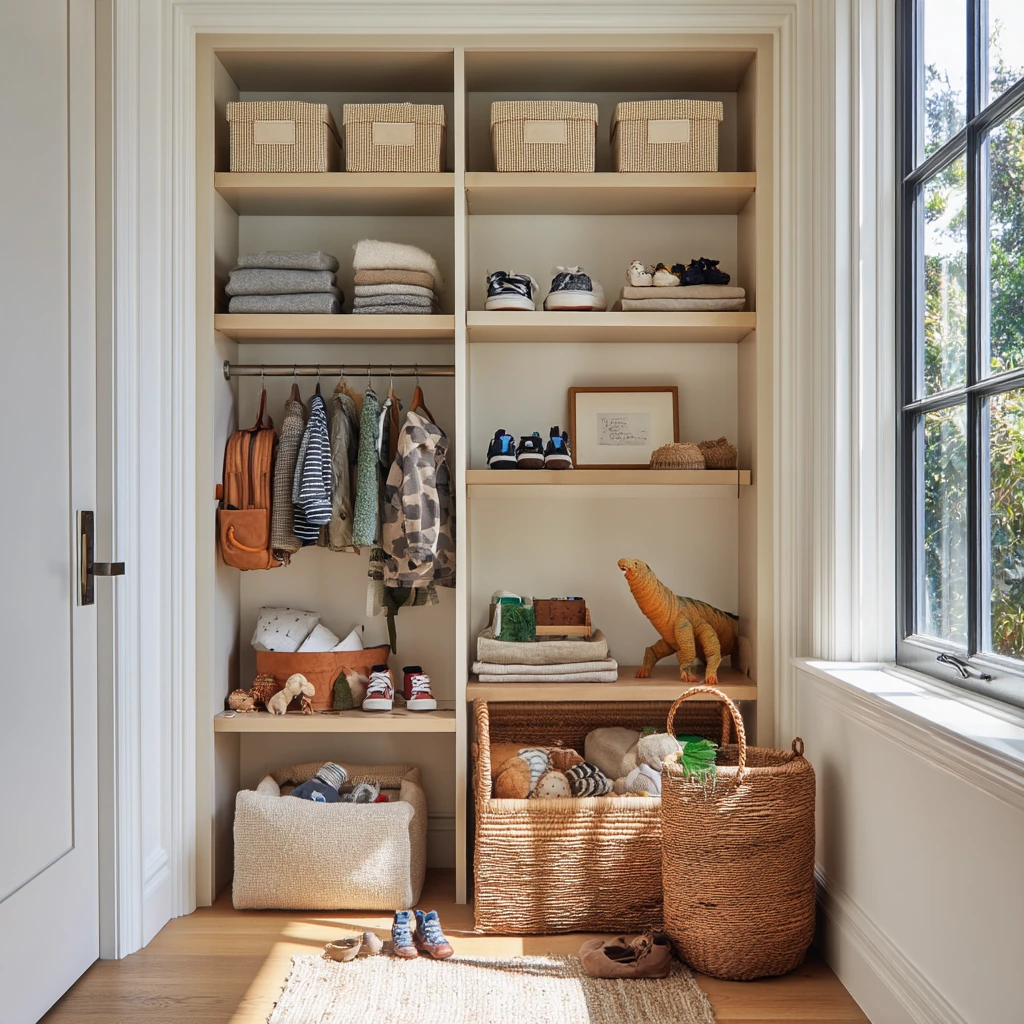
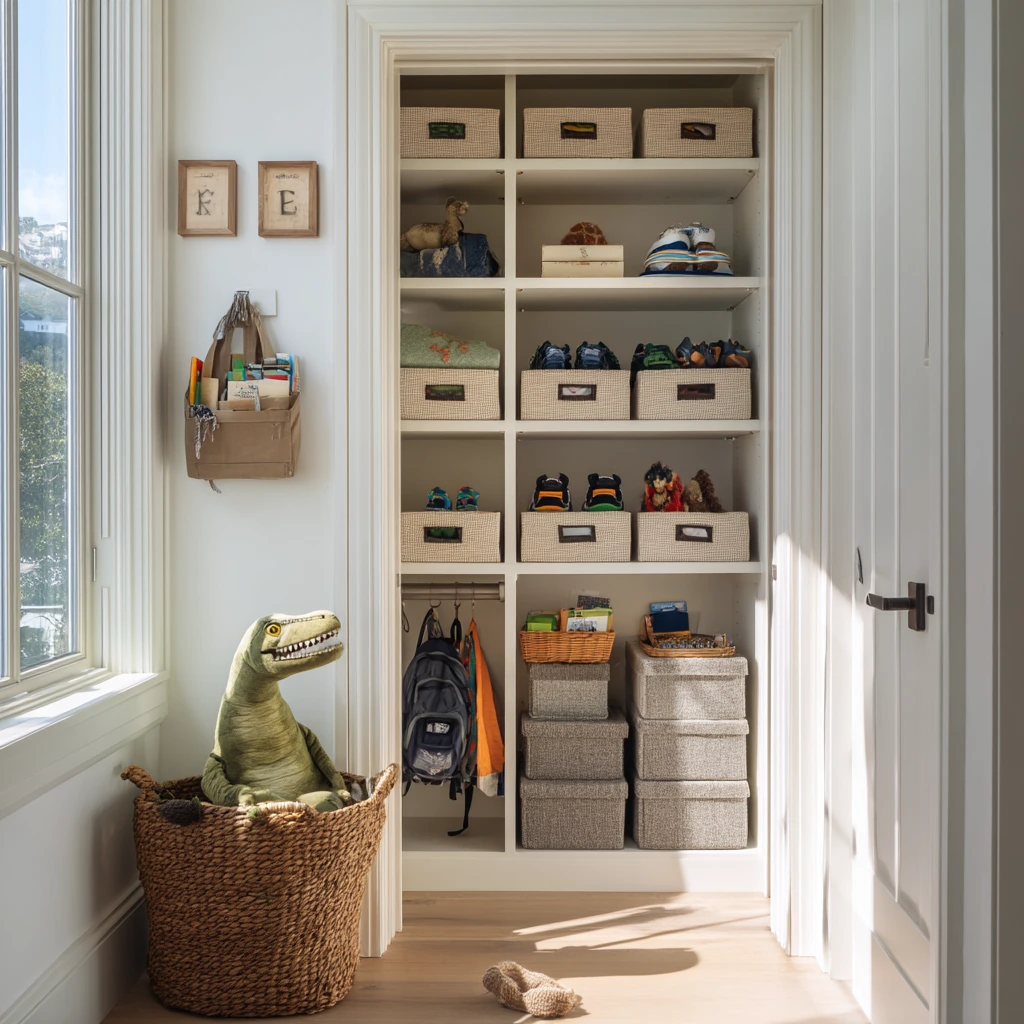
A family hallway closet works best when shelving is set at child height. Put labeled fabric bins where kids can reach them, and keep sneakers and backpacks on the lowest shelves. This supports rushed mornings because everyone can see what they need without asking.
Make it slightly playful but still functional. A toy dinosaur peeking out of a basket is normal, so plan one “messy bin” for random finds. Add a key tray for adults, and keep mail tucked in a small sorter so paper does not spread across the shelf.
How to style it: use matching labels in simple words like “Socks,” “Gym,” and “Hats.” Choose bins in a warm neutral so the closet looks calm even when it is full. Keep one small open cubby for a seasonal item, like a cap in summer or mittens in winter.
- Set one shelf at kid height for each child’s bins
- Use a low rack or tray area for daily sneakers
- Add hooks for backpacks and light jackets
- Keep a basket near the floor for stray socks
- Place a small key tray and mail slot on an upper shelf
Pro Design Tip: Label bins on the front and the top so kids can read them even when bins are stacked.
Budget Considerations: Fabric bins and stick-on labels are low cost; save custom work for one strong lower shelf that can handle heavy backpacks.
3 Budget-Friendly Closet Shelving Upgrade
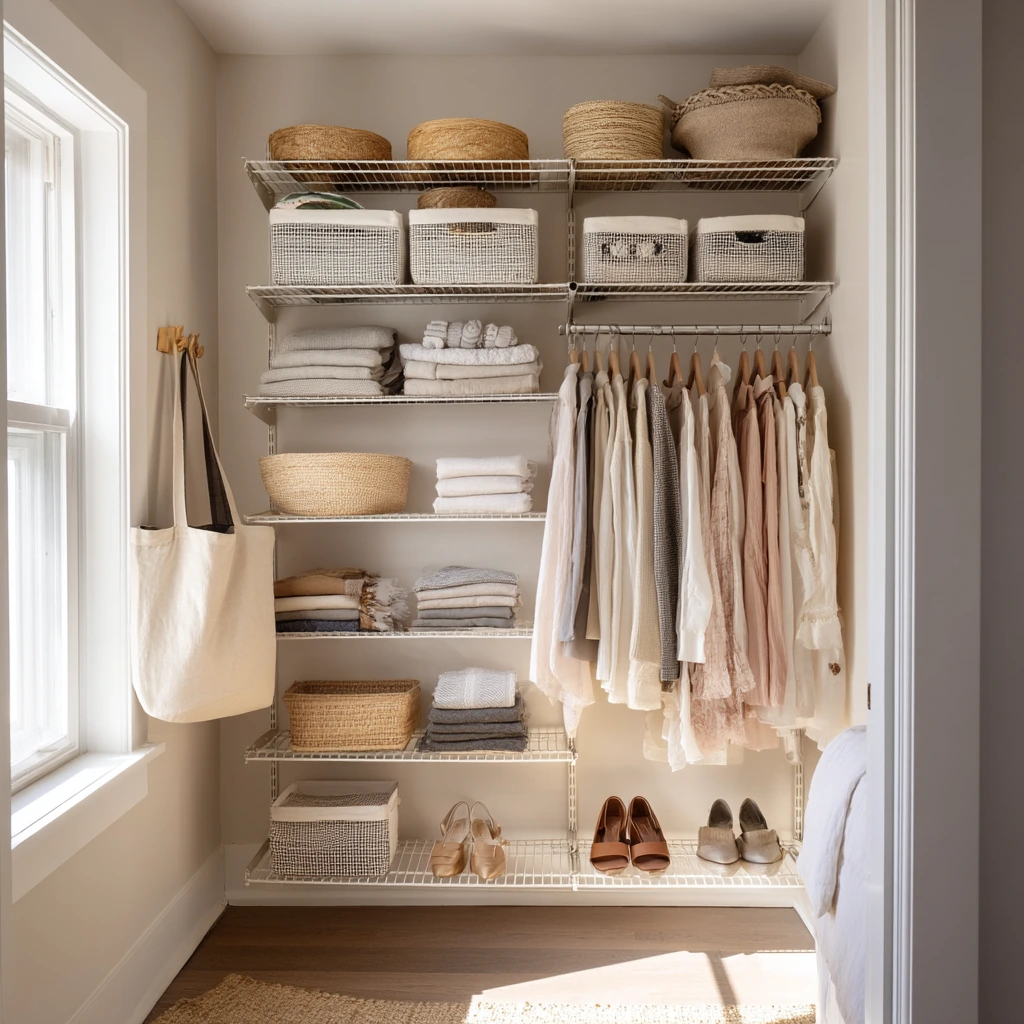
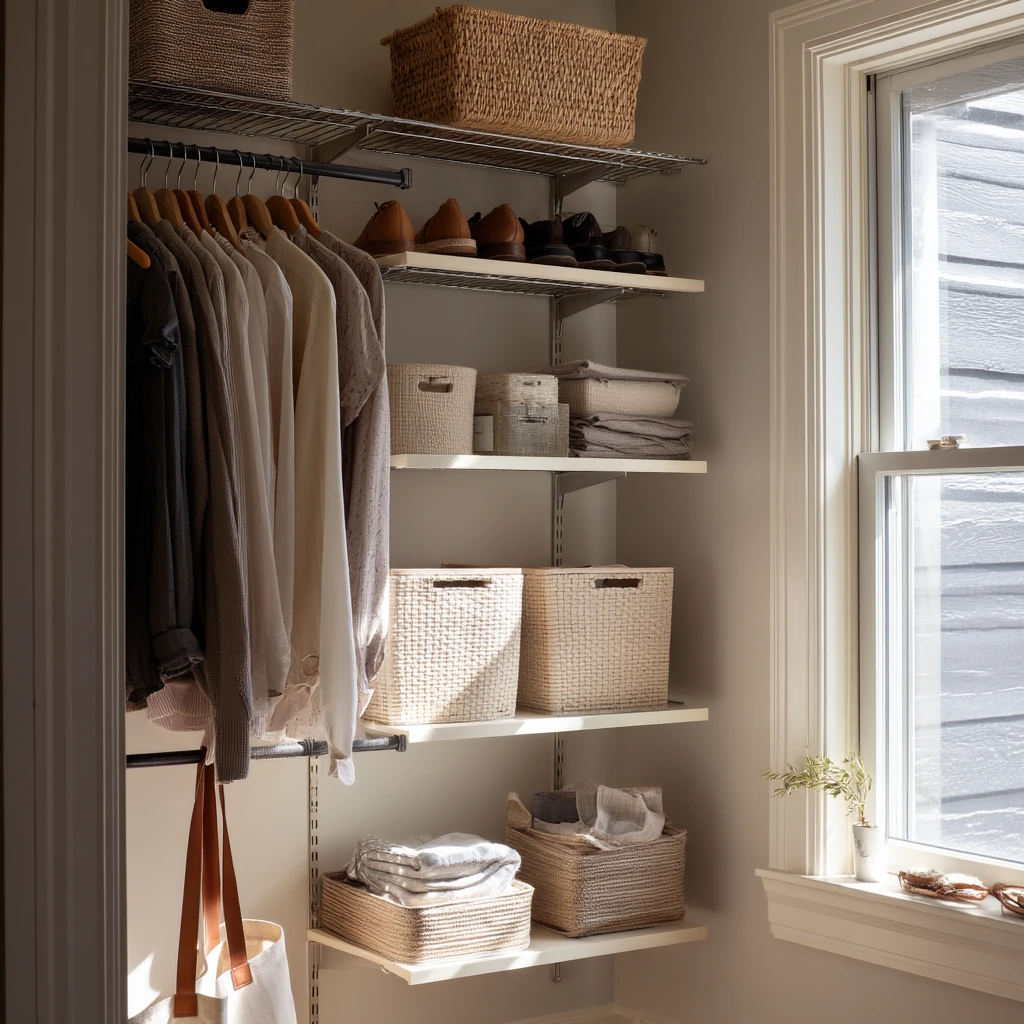
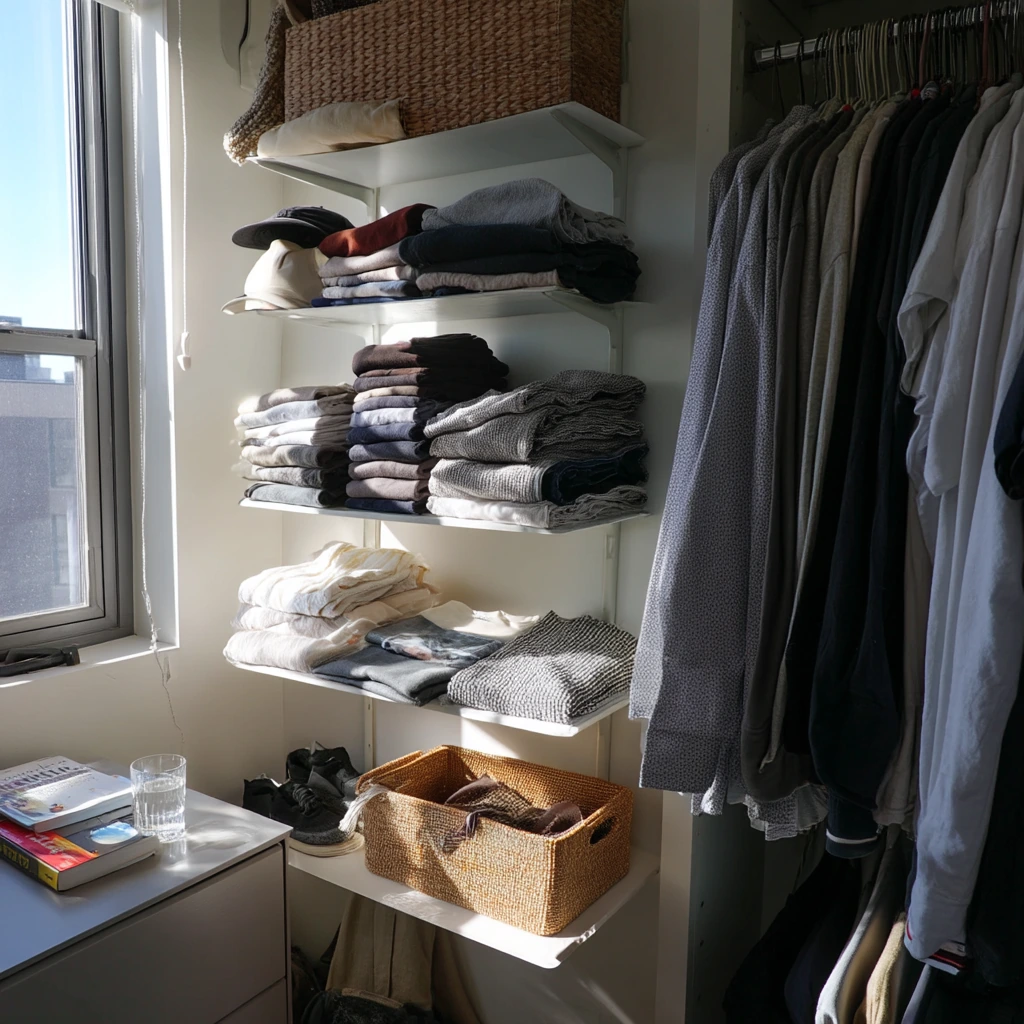
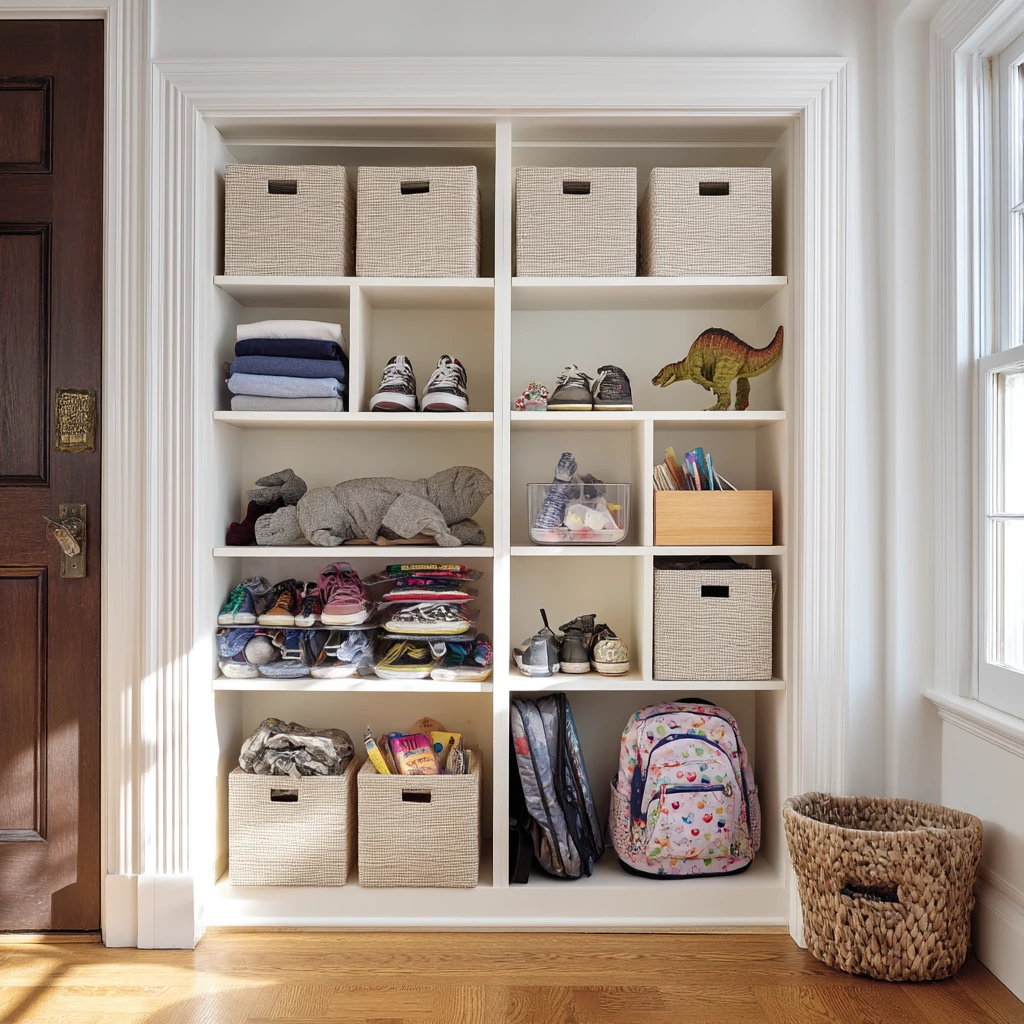
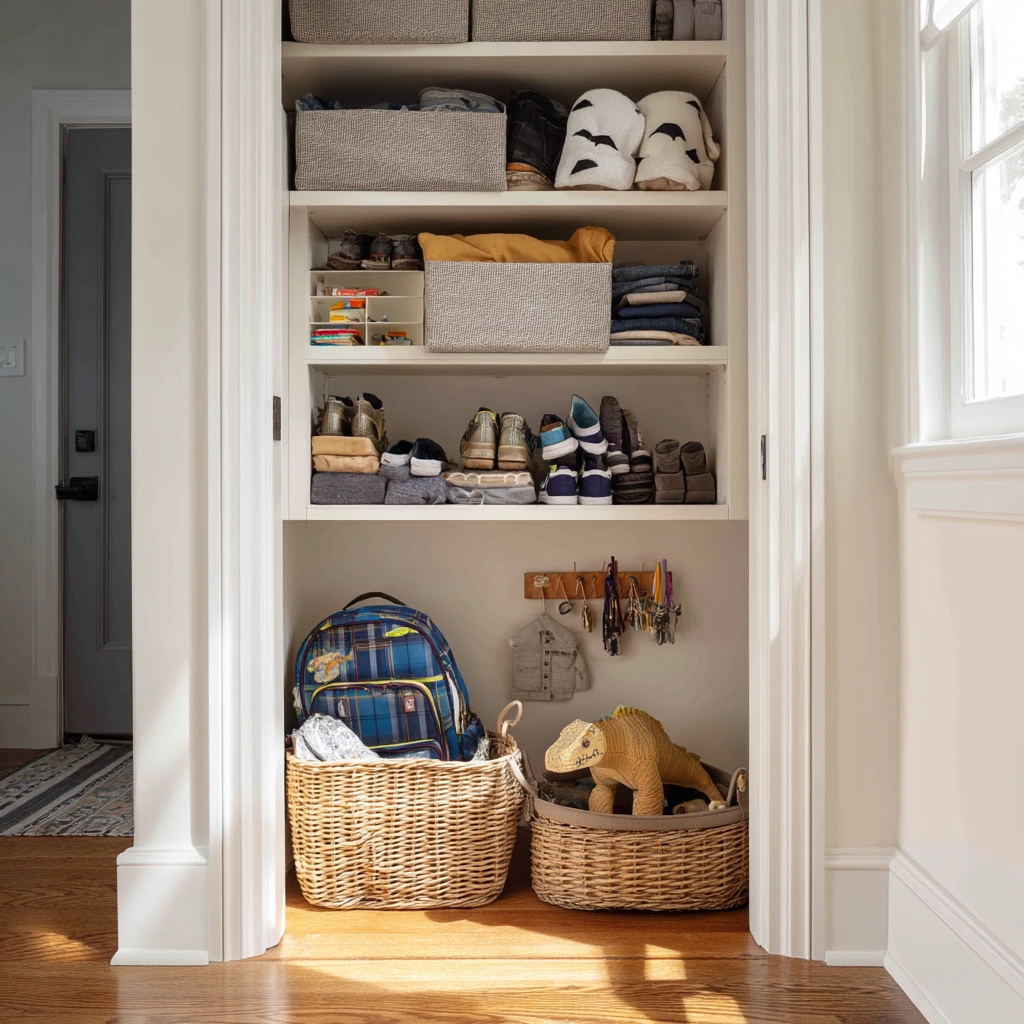
A modest primary bedroom closet can feel new with simple laminate shelving and a few smart add-ons. Use tension rods to create a second hanging level for shirts and lighter items, and keep one side for longer pieces like dresses. Stackable bins help two people share space without mixing everything together.
Plan for real life. A laundry basket with folded laundry waiting is normal, so give it a home spot. Add hooks for a tote bag and a small tray shelf where a hair clip, watch, or wallet can land. When small items have a place, they do not drift into piles.
How to style it: choose two bin styles, one for each person, so the closet feels balanced. Store shoes in neat rows on a lower shelf and keep the floor as open as possible. Use one “buffer shelf” for items that move in and out during the week.
- Use tension rods to double short-hang space
- Add stackable bins for each person’s small items
- Create a shared shelf for folded jeans and tees
- Install a lower shoe shelf to get pairs off the floor
- Add hooks for totes and a small tray for clips and keys
Pro Design Tip: Measure your tallest folded stack and set shelf spacing to that height plus a little room for your hand.
Budget Considerations: Laminate boards and basic closet rods are affordable; use one nicer bin set for the front row and mix cheaper bins behind.
4 Renter-Safe Closet Shelving with Removable Storage
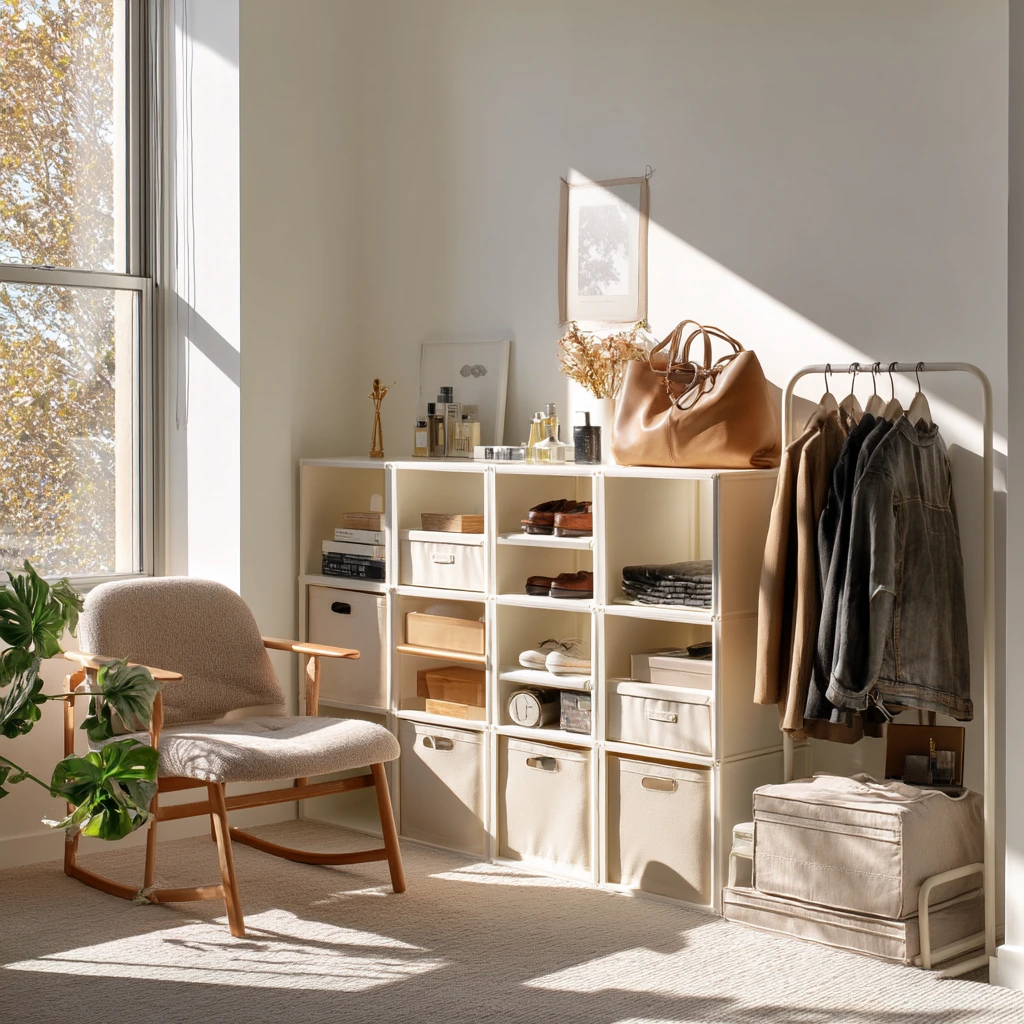
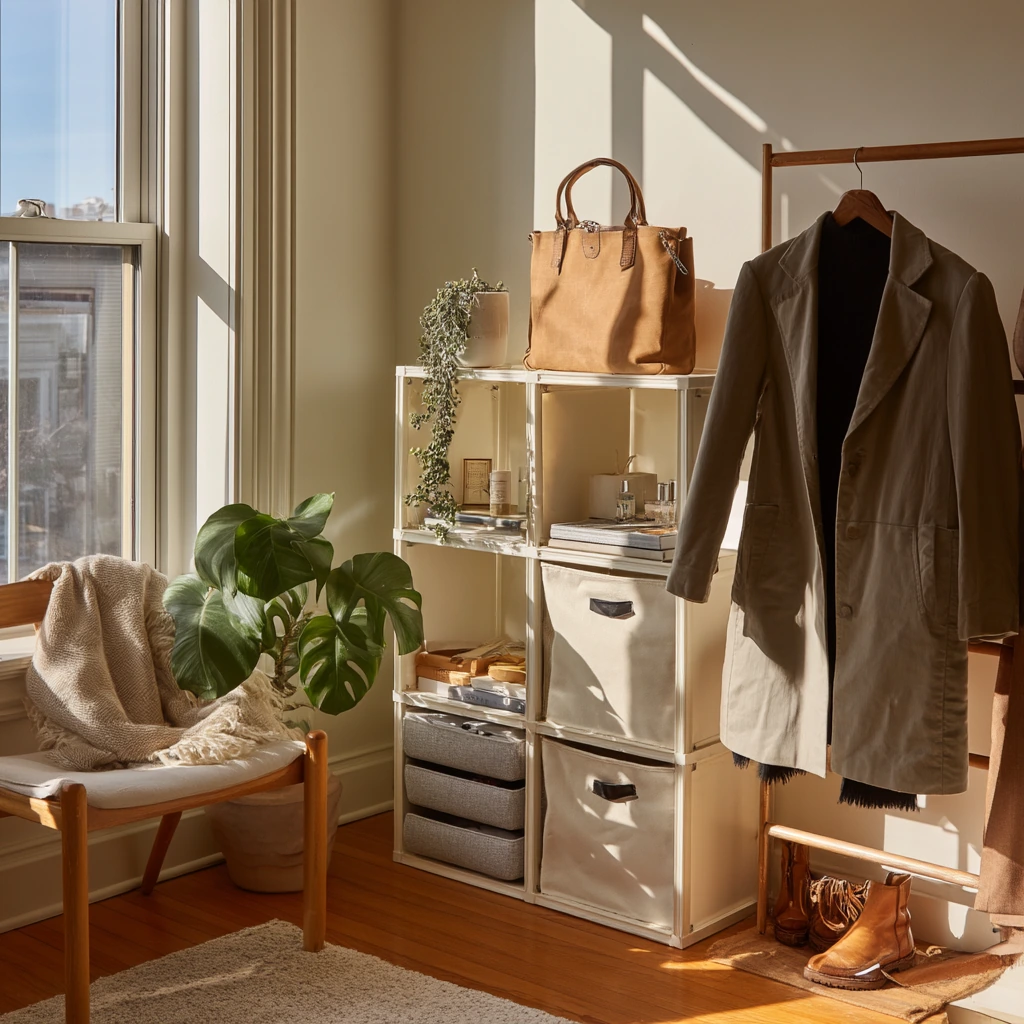
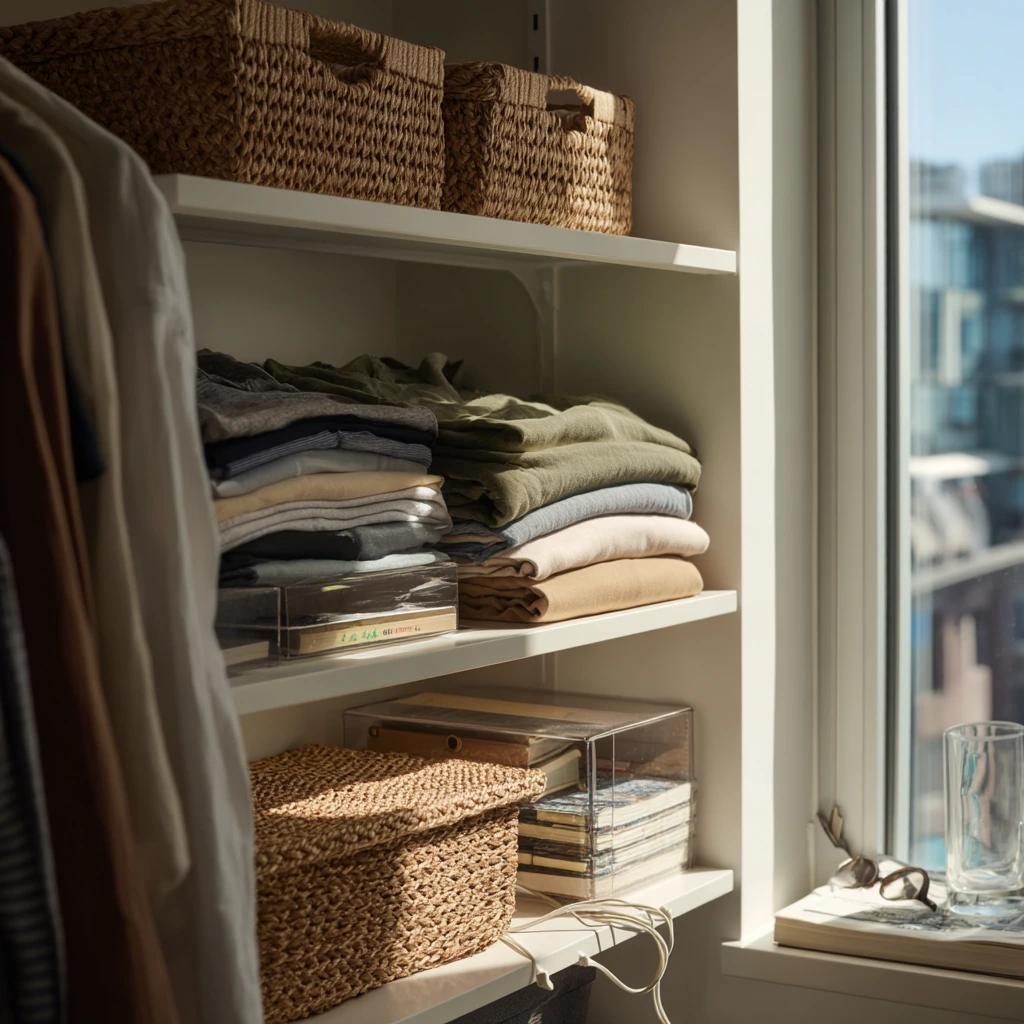
If you cannot drill or make permanent changes, freestanding cube shelves can create instant closet shelving. Add canvas drawers to hide clutter, and use slim boxes for accessories like scarves, tech, and belts. Removable hooks help add storage for bags and light jackets without damaging walls.
This setup works well when you move often. You can re-stack cube units, change the layout, and take it all with you. Keep a small top area for perfume, earbuds, and a charging cord so the shelf does not turn into a tangle. A plant near the closet can soften the look, but keep it out of the way of hanging clothes.
How to style it: choose one box color and one drawer color. Leave one cube open with a neat stack of tees or denim for a simple display. Keep the “drop zone” items in one tray so the surface stays clean.
- Use a cube shelf unit as a base for folded clothes
- Add canvas drawers for underwear and small items
- Store accessories in slim labeled boxes
- Place removable hooks for bags and hats
- Use a tray for cords, earbuds, and daily carry items
Pro Design Tip: Anchor freestanding units with tension between the unit and the wall using non-slip pads so they do not shift when you pull a drawer.
Budget Considerations: Cube shelves and canvas drawers are often low cost; buy fewer units and add a second later as your storage needs grow.
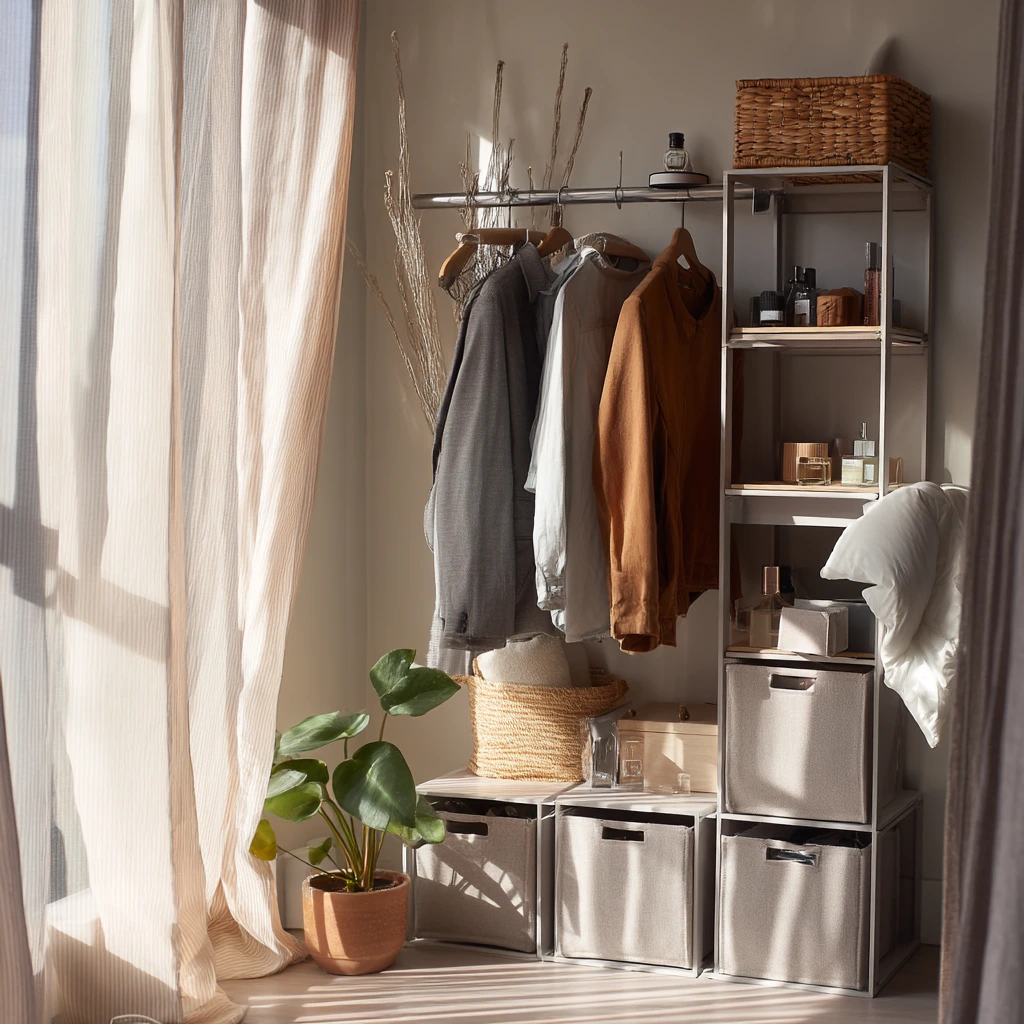
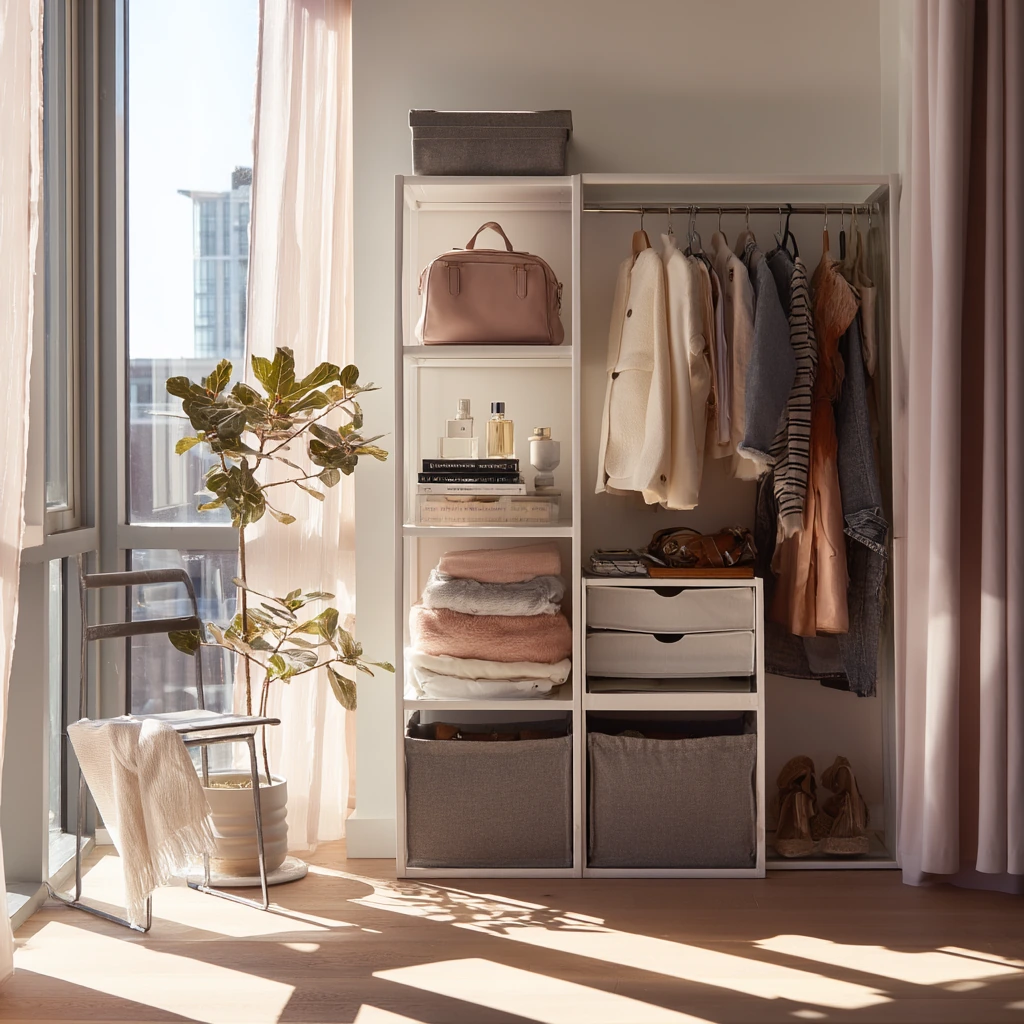
5 Luxury Walk-In Closet Shelving with Everyday Use
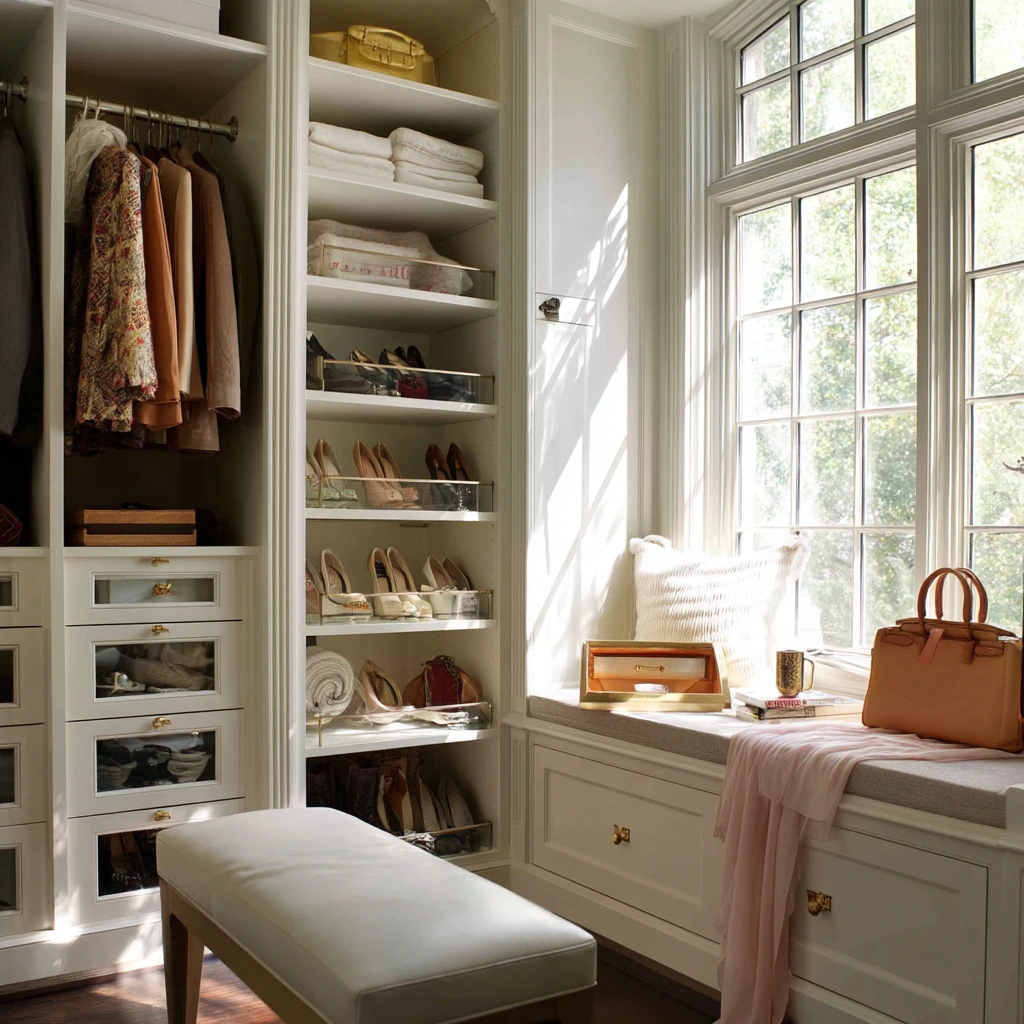
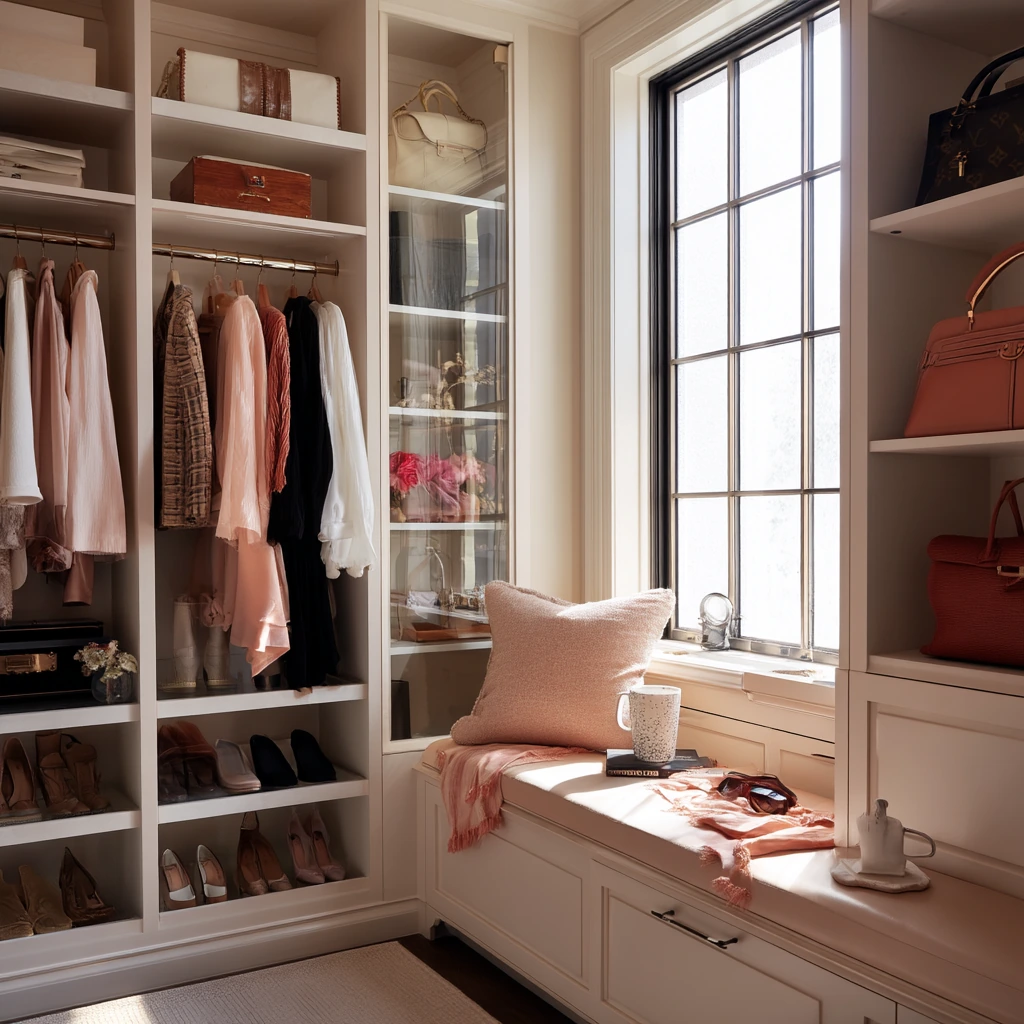
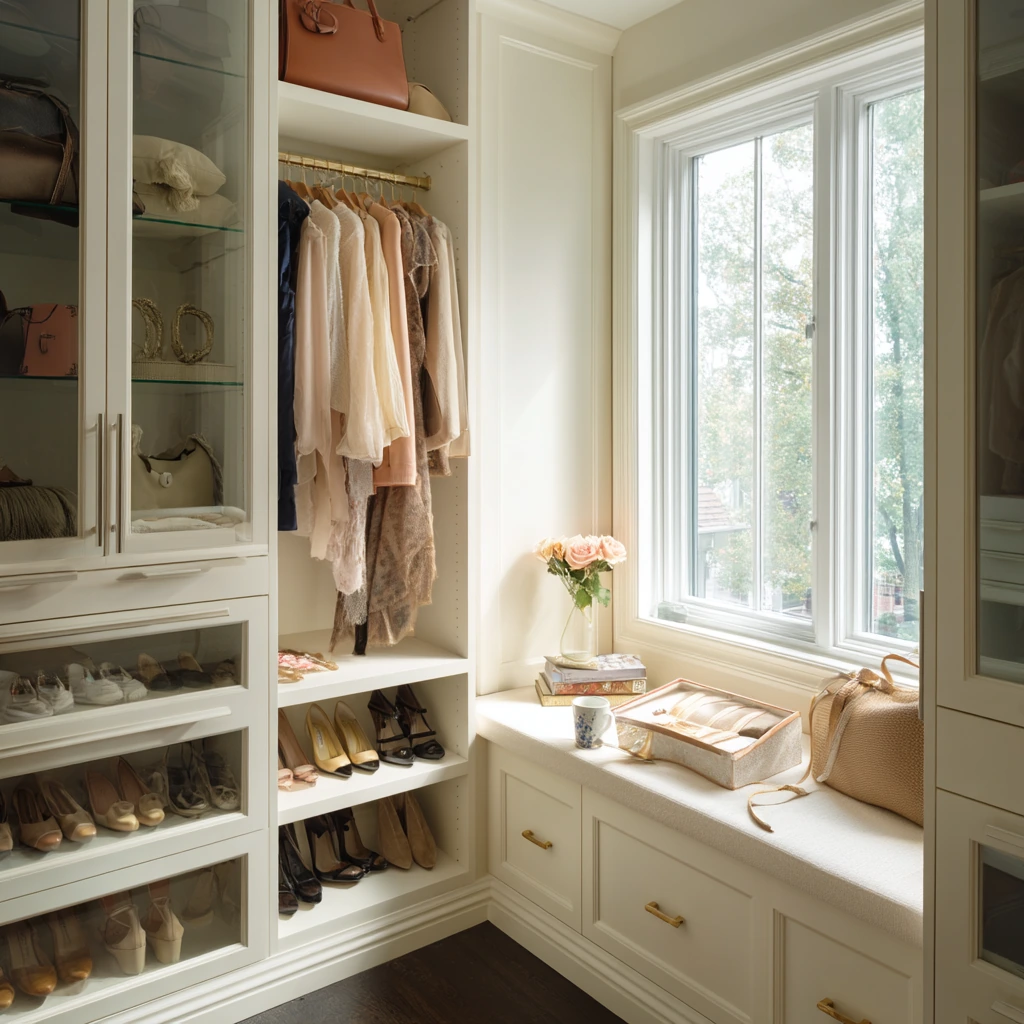
A spacious walk-in closet can be both elegant and practical with tailored shelving, glass-front drawers, and open display shelves. Create a clean zone for shoes and handbags so your best pieces stay protected and easy to see. A bench helps with daily routines and gives you a spot to set a coffee mug while you choose an outfit.
Keep it clearly used, not perfect. A watch box slightly open or a silk scarf draped on a shelf feels real. Plan one “in-progress” shelf where a garment can sit mid-choosing without messing up the whole closet. Use glass-front drawers for items you want to find fast, like workout gear or tees.
How to style it: group handbags by size, not color, so the shelf looks tidy. Use one tray for jewelry and one tray for watches. Leave a little negative space on display shelves so it looks calm and not crowded.
- Use open shelves for handbags and a few folded knits
- Add glass-front drawers for easy item checks
- Create a shoe wall or low shelves for pairs
- Keep a bench and one small tray for daily items
- Set one shelf as an “outfit in progress” spot
Pro Design Tip: Install lighting inside the closet, even simple puck lights, so shelves and drawers are easy to use early and late in the day.
Budget Considerations: Custom systems cost more; you can copy the look with ready-made closet kits and add a few clear drawer inserts over time.
6 Shared Closet Shelving for a Couple
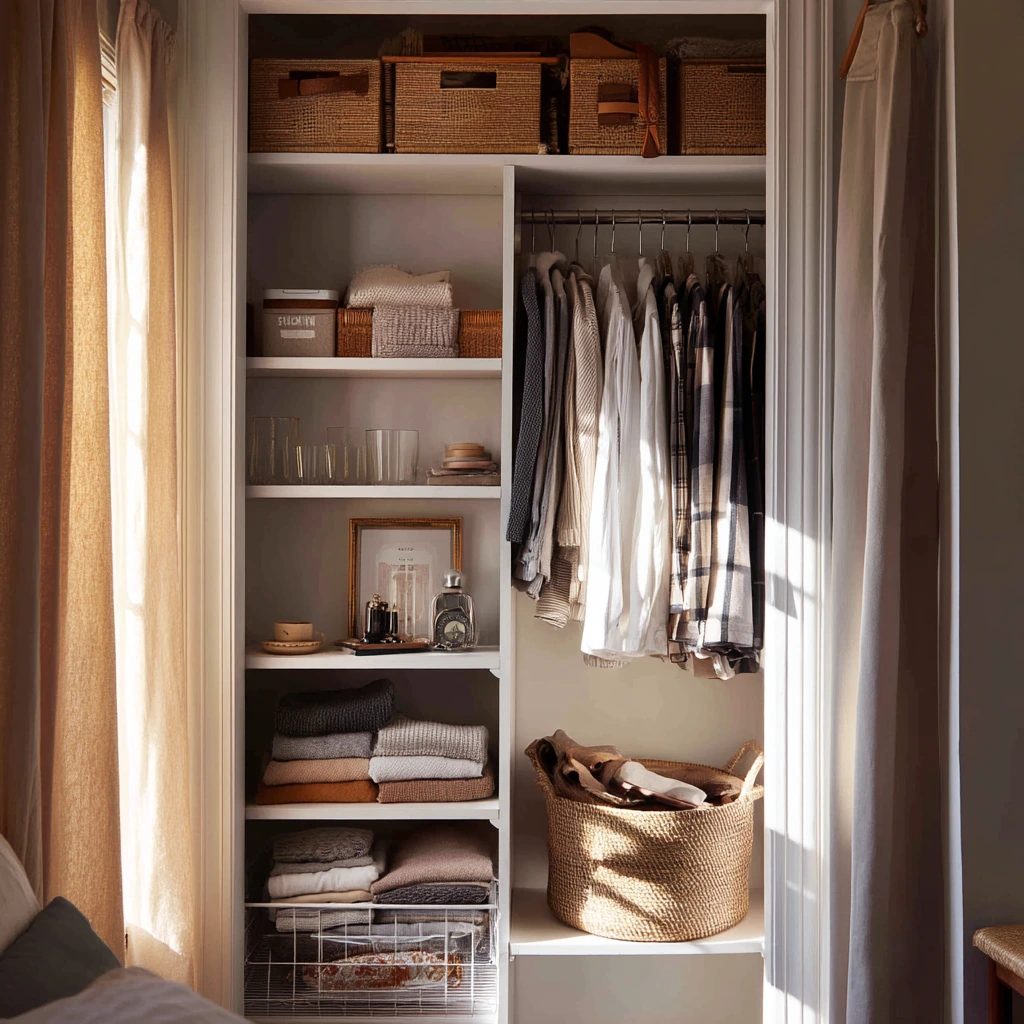
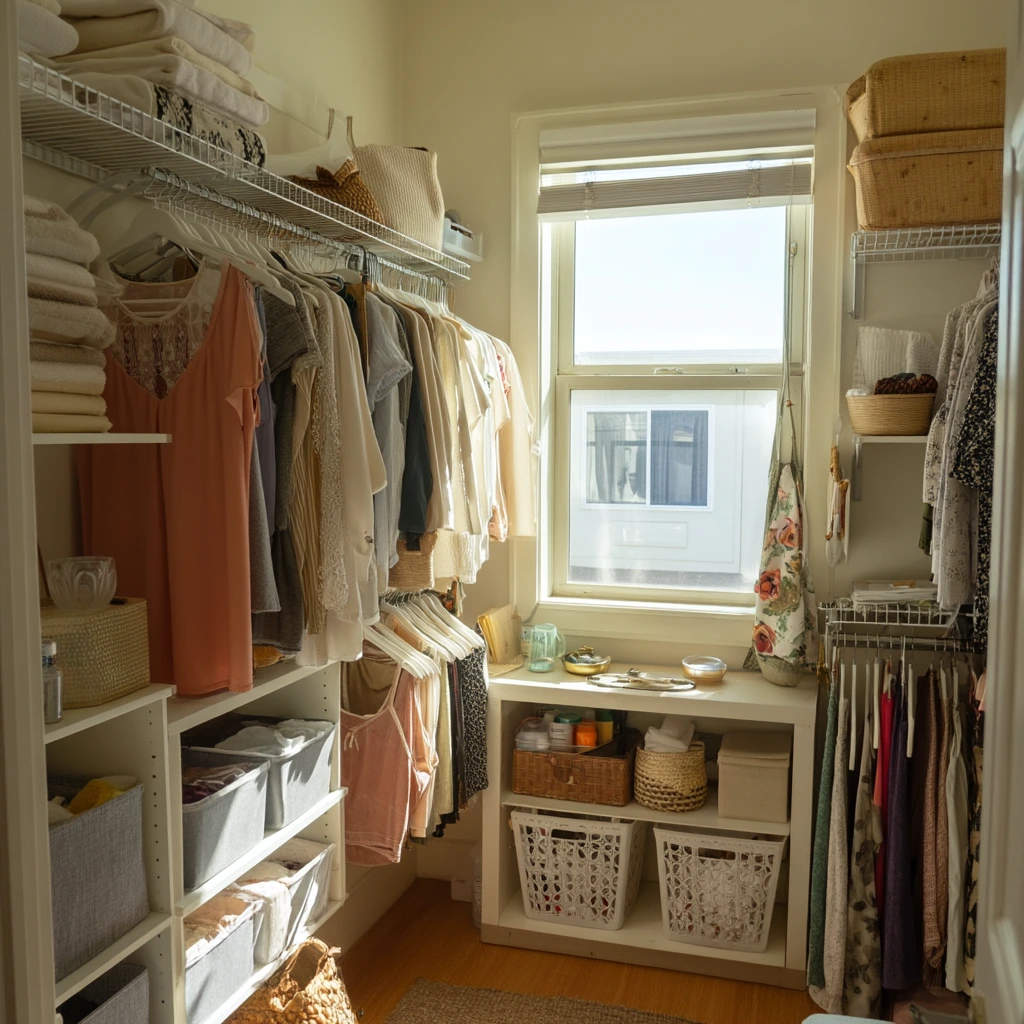
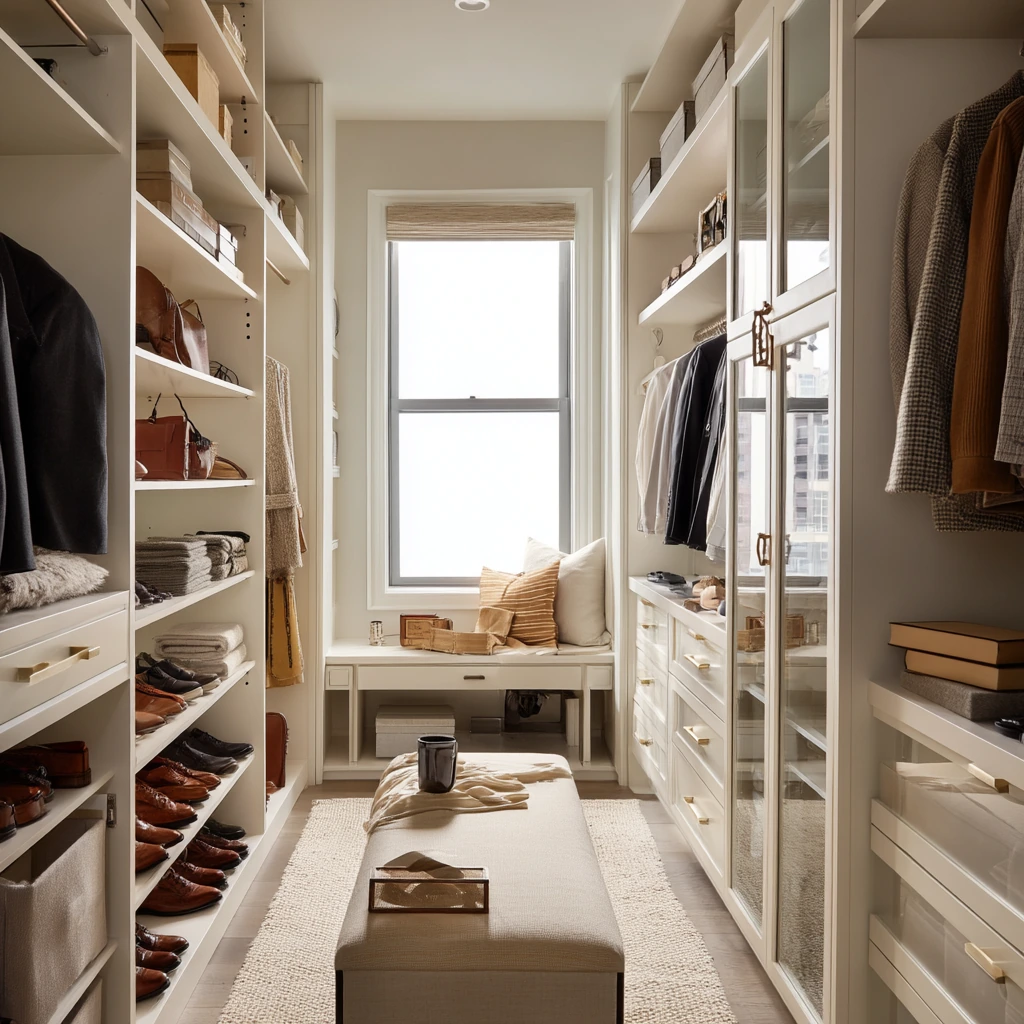
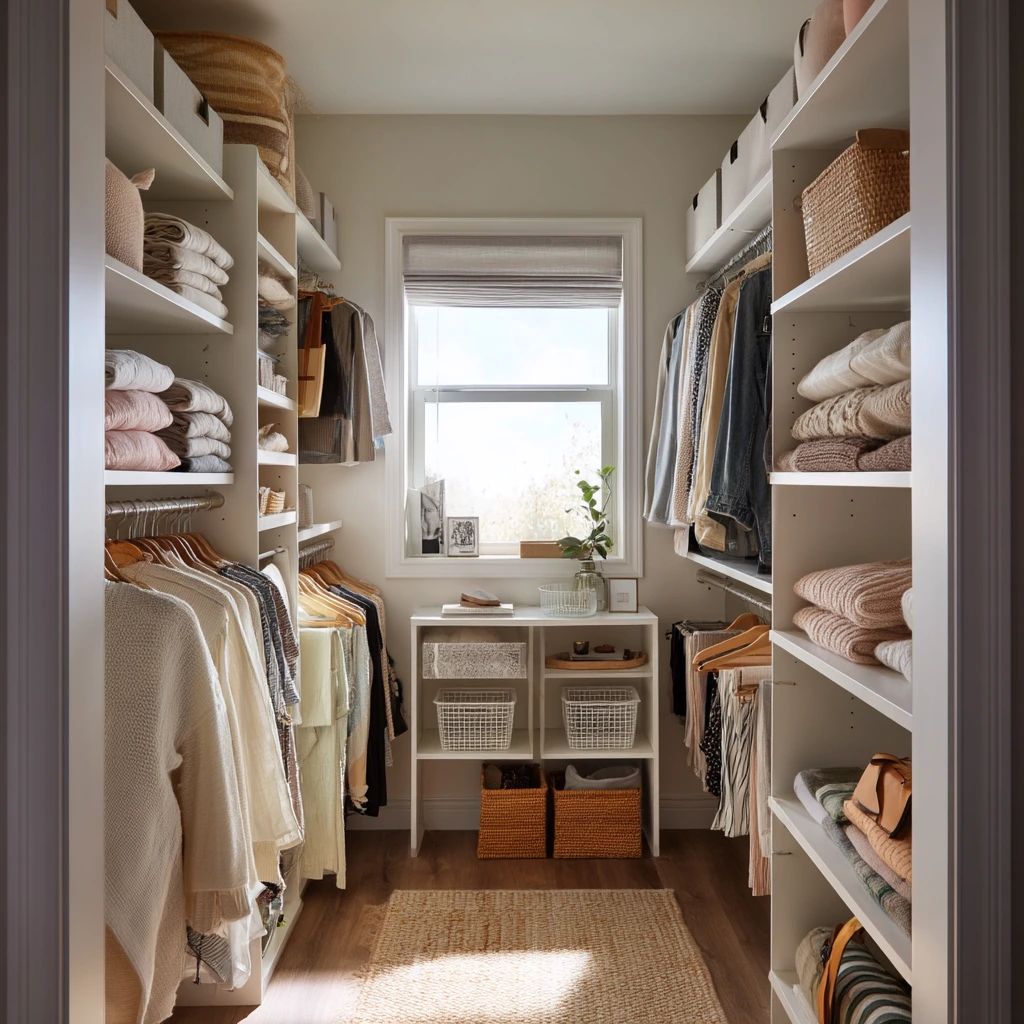
A shared bedroom closet stays peaceful when both sides match. Balanced shelving and coordinated hanging space make it clear who owns what. Use labeled bins for socks, gym items, and small accessories. A middle shelf for folded knits keeps the center tidy and easy to reach.
Design for daily habits. If you tend to set down a belt or toss a ring dish on a shelf, plan a small tray for it. If the laundry basket is always partly filled, give it a fixed spot at the bottom so it does not block shoes. The goal is steady order, not constant resetting.
How to style it: pick the same bin style for both sides, then use different label colors if you want a simple “his and hers” cue. Hang items in categories, like work shirts together and weekend tops together, so you can scan quickly.
- Split the closet into two equal zones with matching shelves
- Use a center shelf for folded sweaters and knits
- Add labeled bins for each person’s small items
- Keep one tray for watch, ring dish, and keys
- Assign a bottom corner for the laundry basket
Pro Design Tip: Use the same hanger type across the closet to reduce visual clutter and make spacing more consistent.
Budget Considerations: Matching bins and hangers can add up; buy a starter set for the most visible shelves and reuse what you already own in back areas.
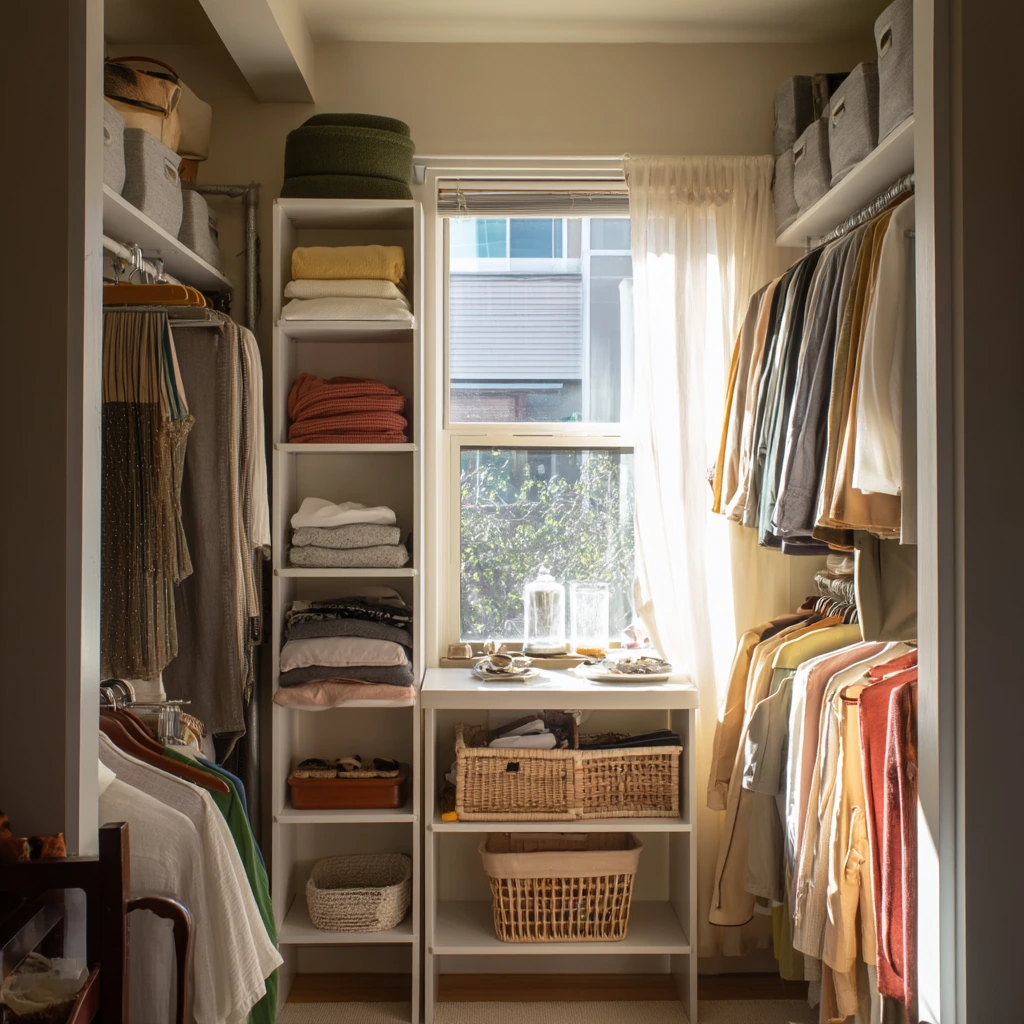
7 Seasonal Closet Shelving for Winter Layers
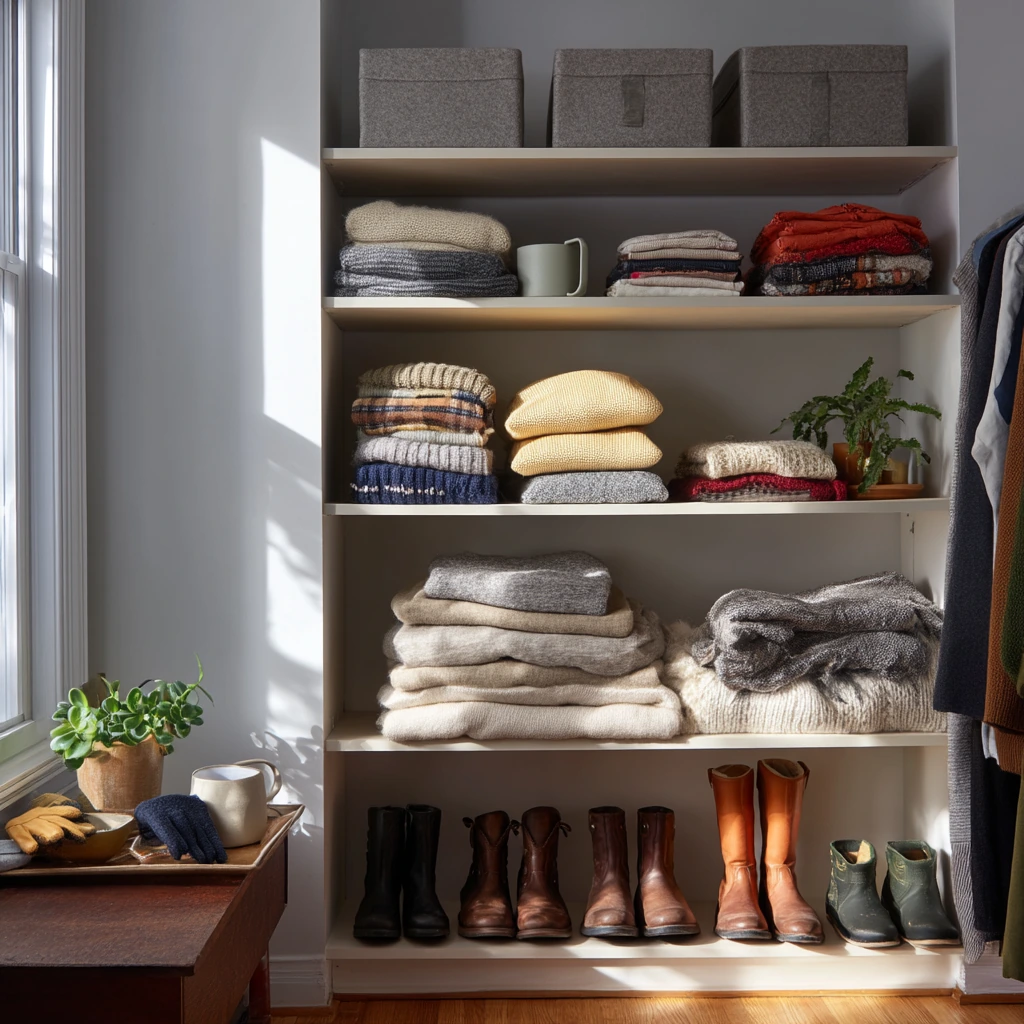
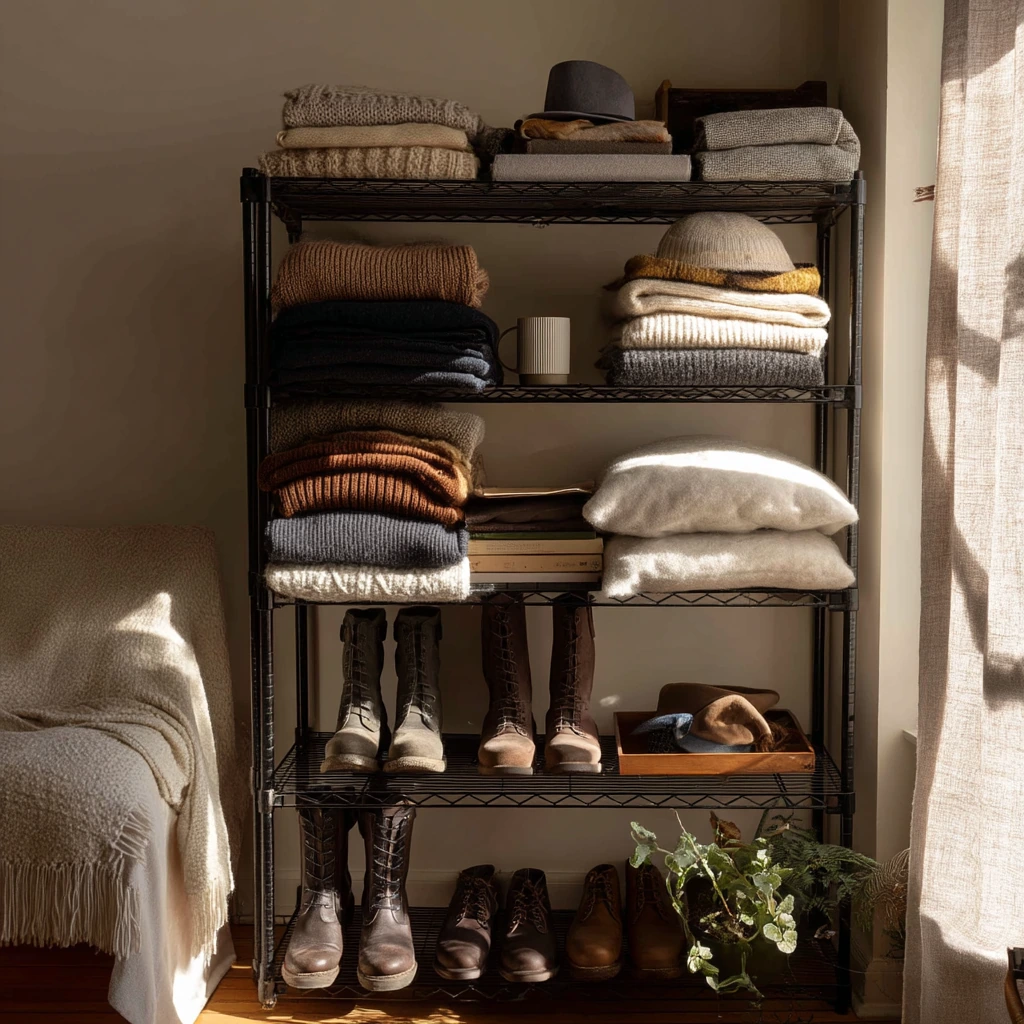
A winter-ready closet shelving setup focuses on bulkier items. Stacked sweaters need more shelf height, and boots need sturdy lower shelves. Felt bins are great for scarves and gloves because they hold shape and feel soft. Add a small tray for hats so they do not get crushed.
Expect a little disorder. One glove tucked out of place happens, so keep one open bin for quick drops. If you drink coffee while getting ready, use a washable shelf liner to protect edges from mug rings. Soft overcast light can make the space feel muted, so lighter bins help it look brighter.
How to style it: fold sweaters in even stacks and place the heaviest ones on the bottom shelf. Line boots up by height, with tall pairs on the ends. Add one folded knit blanket nearby if you have an open shelf, but keep it neat so it reads as intentional.
- Use taller shelf spacing for bulky sweater stacks
- Add strong lower shelves for boots and boot trays
- Store scarves and gloves in felt bins with labels
- Use a small tray for hats and ear warmers
- Protect shelves with liners to prevent stains and rings
Pro Design Tip: Store boots with simple boot shapers or rolled magazines so they keep their form and take up less floor space.
Budget Considerations: Felt bins range in price; budget options in neutral colors still look tidy, and you can upgrade labels later.
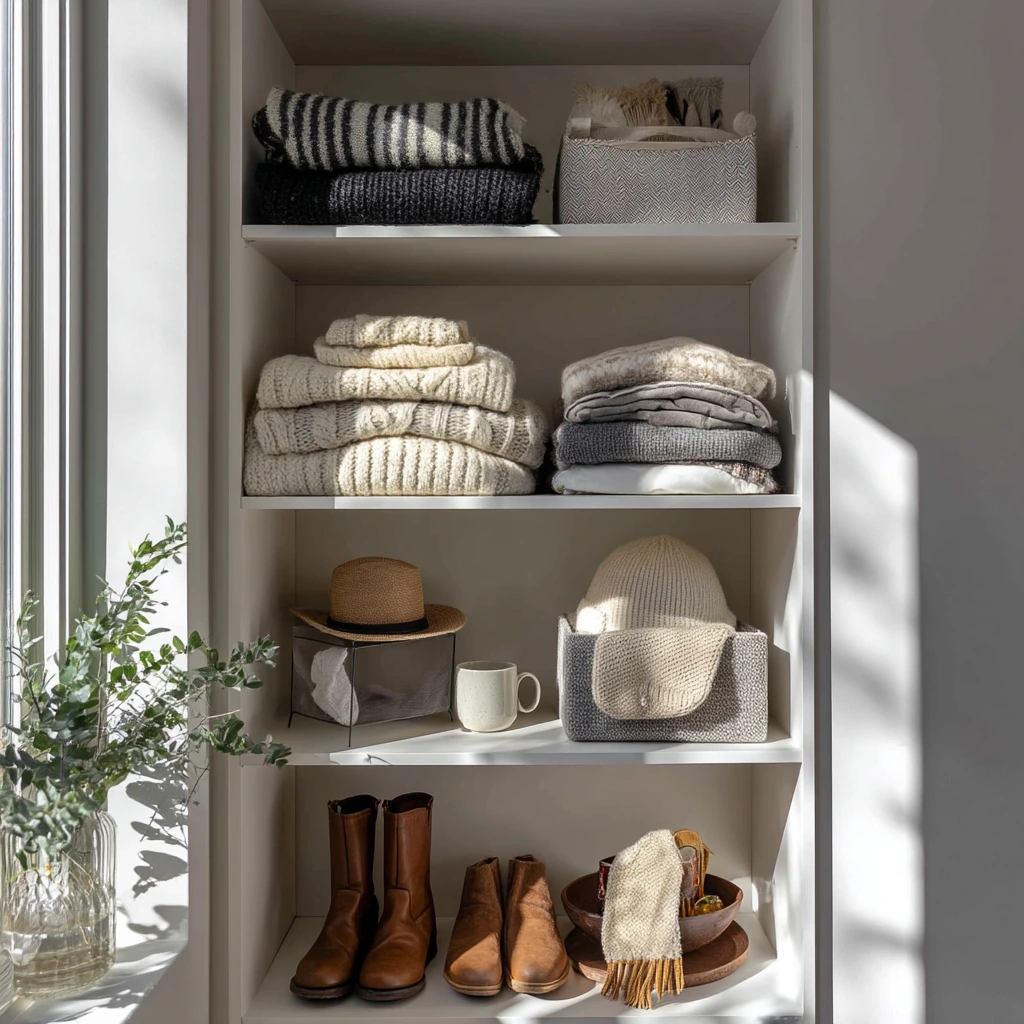
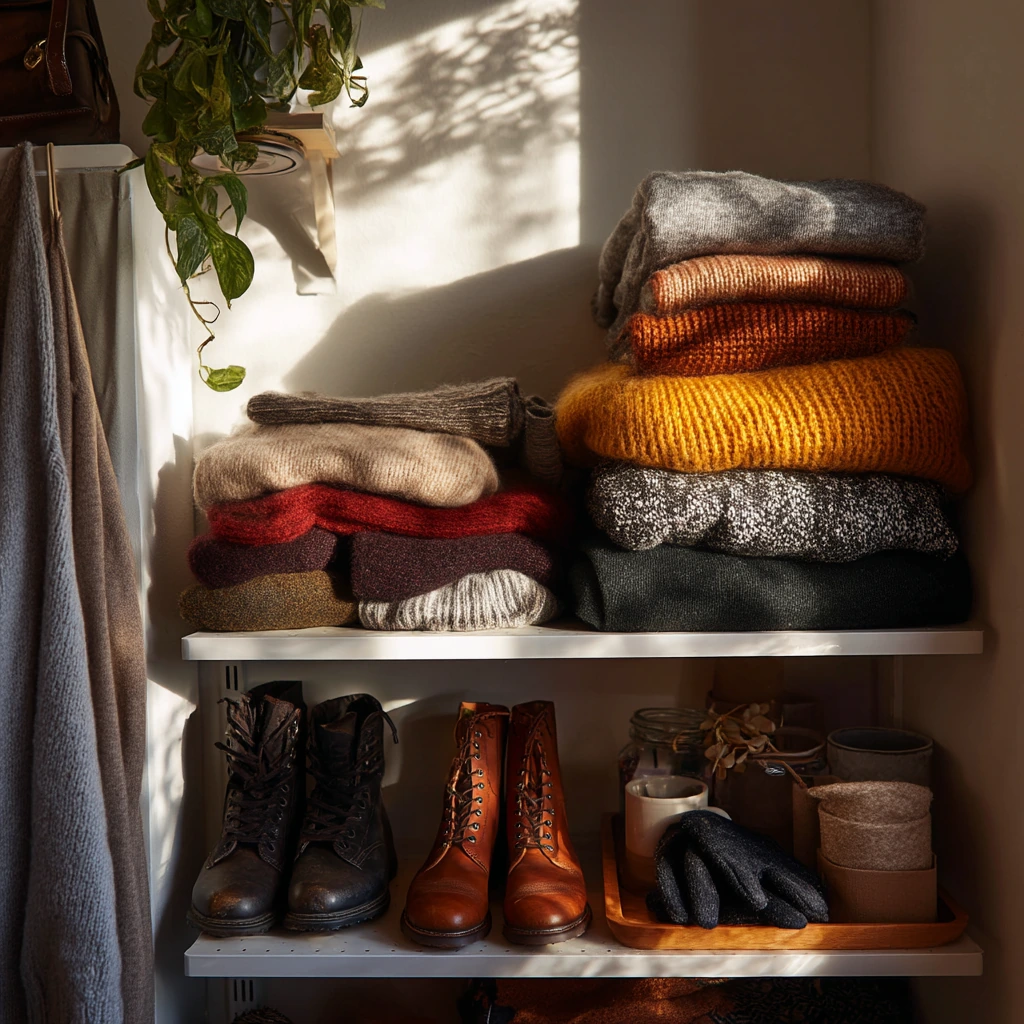
8 Minimal Closet Shelving for a Small Studio
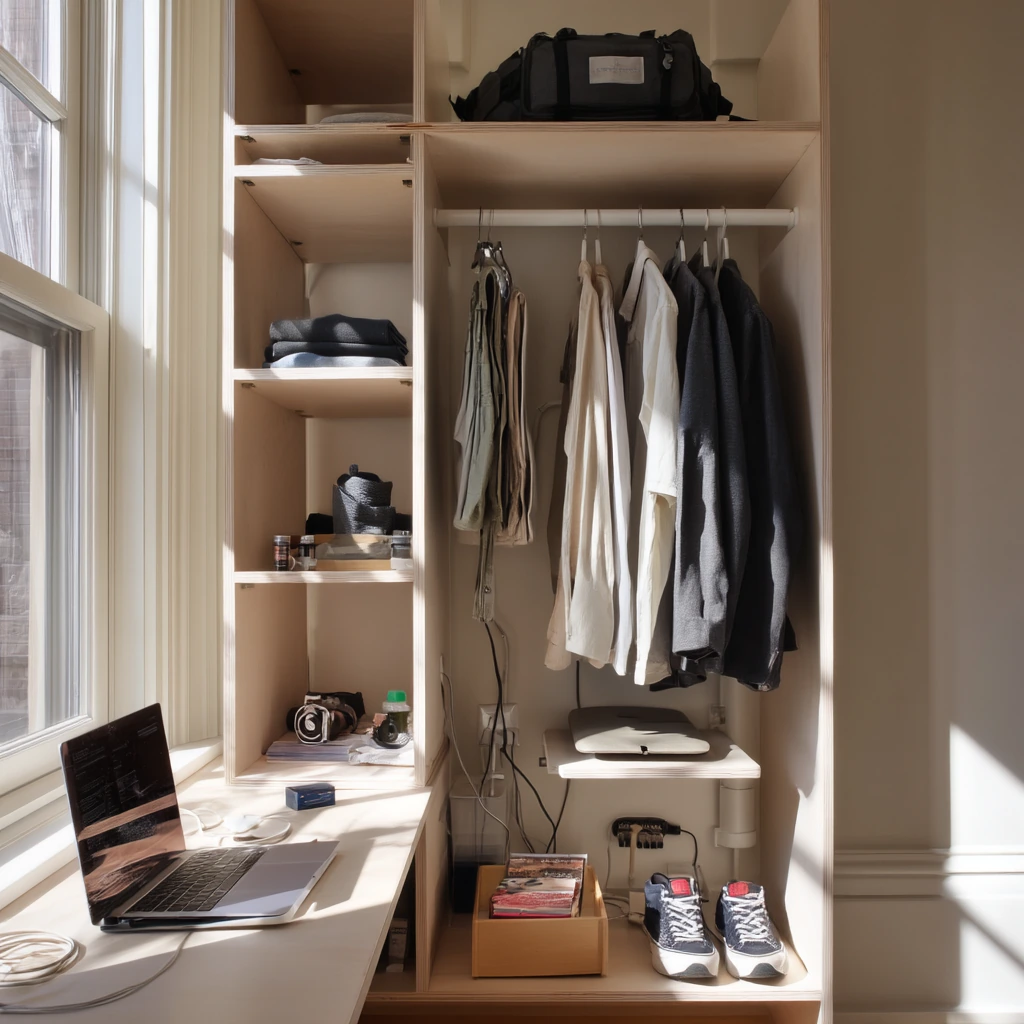
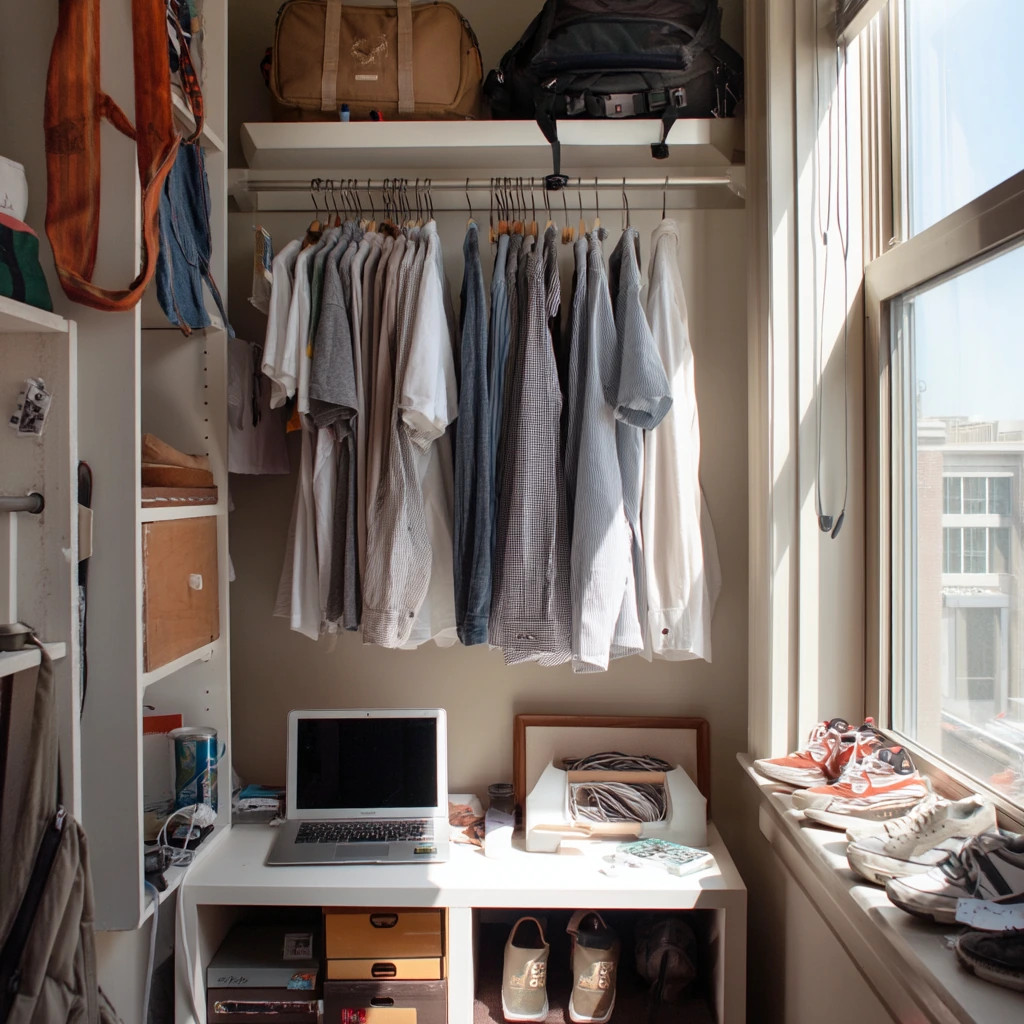
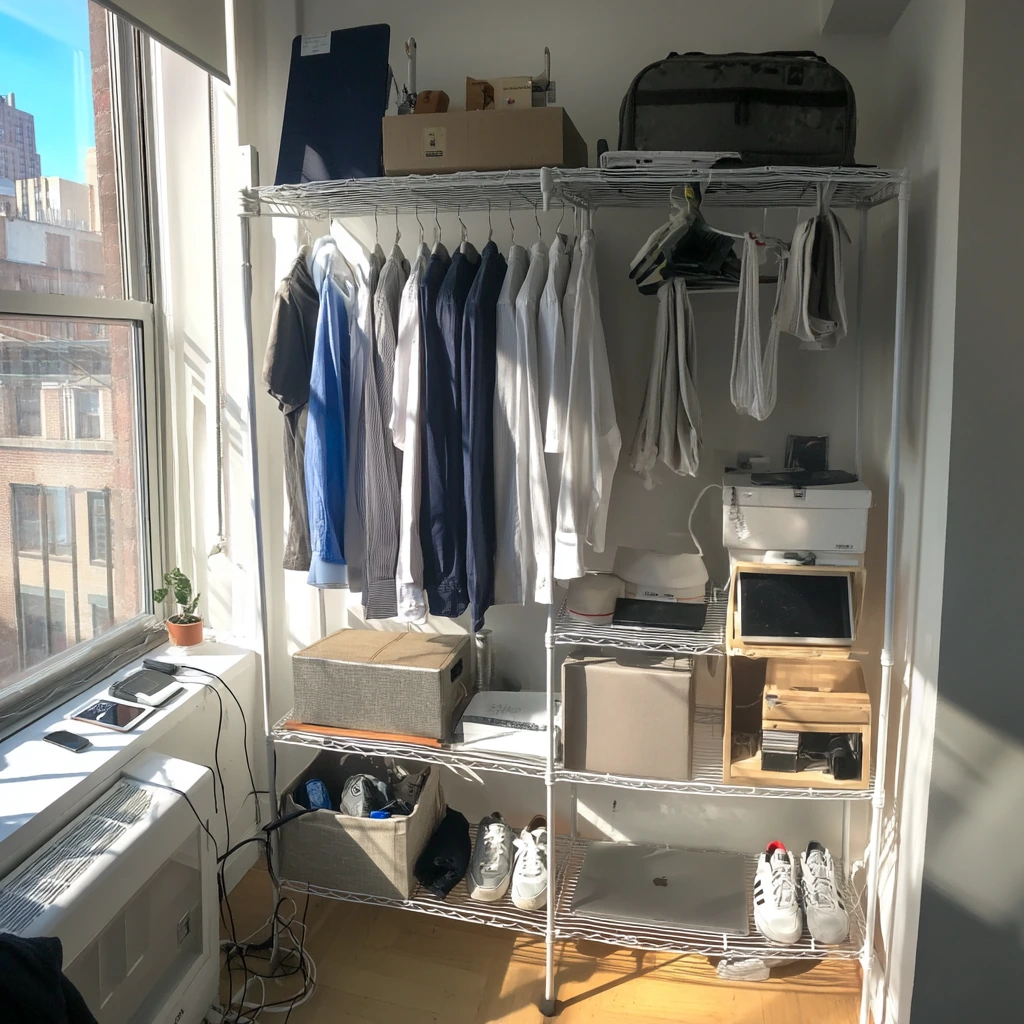
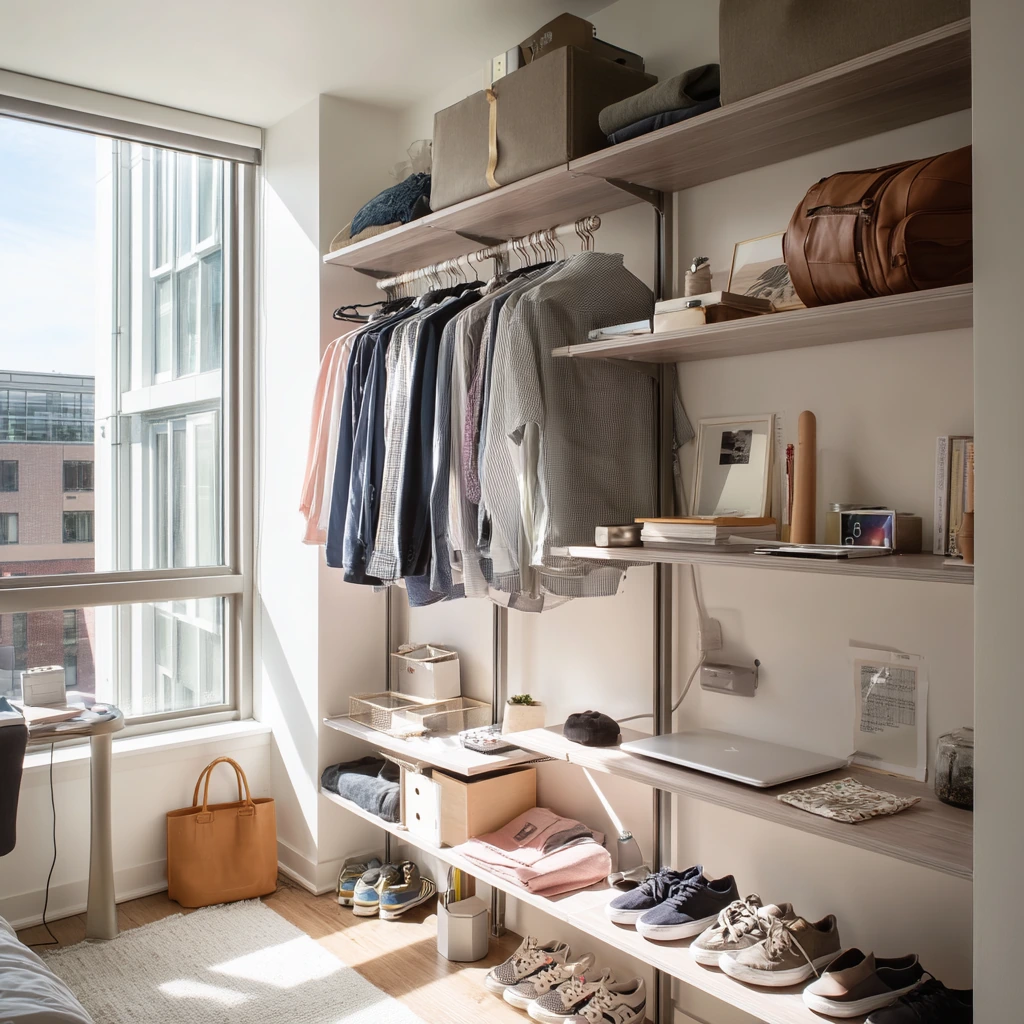
A compact studio apartment closet needs slim shelving and open cubbies that do not feel heavy. Keep hanging shirts on a narrow rod and use the top shelf for luggage. Open cubbies work well for daily items because you can see what you own and avoid overbuying.
Plan for the small stuff that shows up in studio life. A laptop sleeve, a receipt tucked under a tray, and a charging cable coiled near a box are common. Give these items a set home so they do not spread across your folded clothes. Keep sneakers by the base, but place them in a defined zone so the floor stays clear.
How to style it: use shallow baskets so they do not stick out into the closet opening. Keep the top shelf for items you use less often, and reserve eye-level shelves for everyday pieces. If you like a crisp look, stick to two colors for bins and boxes.
- Install slim shelves to save depth and walkway space
- Use open cubbies for folded items and quick access
- Reserve the top shelf for luggage and off-season items
- Create a small tech tray for cables and receipts
- Keep a defined sneaker area at the base of the closet
Pro Design Tip: Choose shelves that match the closet depth so nothing sticks out and catches sleeves as you reach in.
Budget Considerations: Basic closet kits can work in a studio; if money is tight, start with one shelf plus bins and add a second shelf later.
9 DIY Closet Shelving Weekend Project
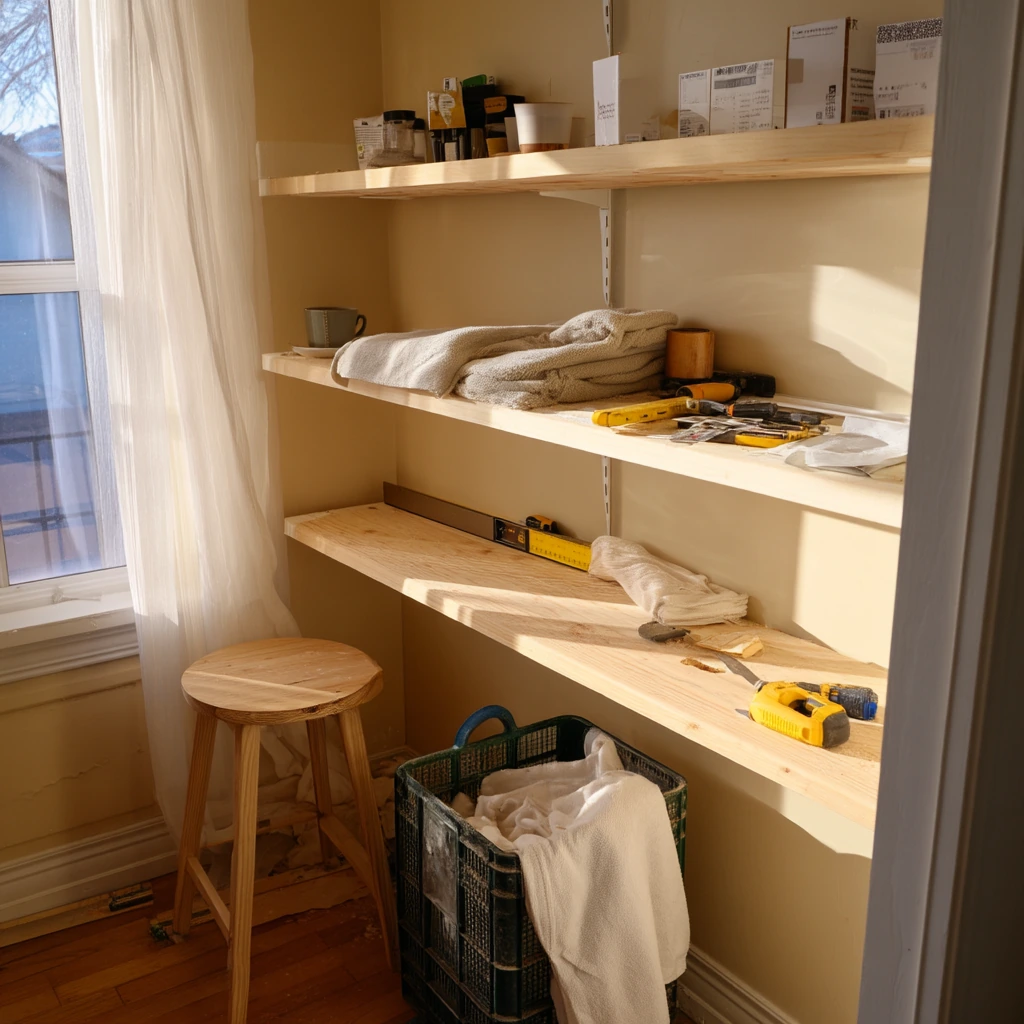
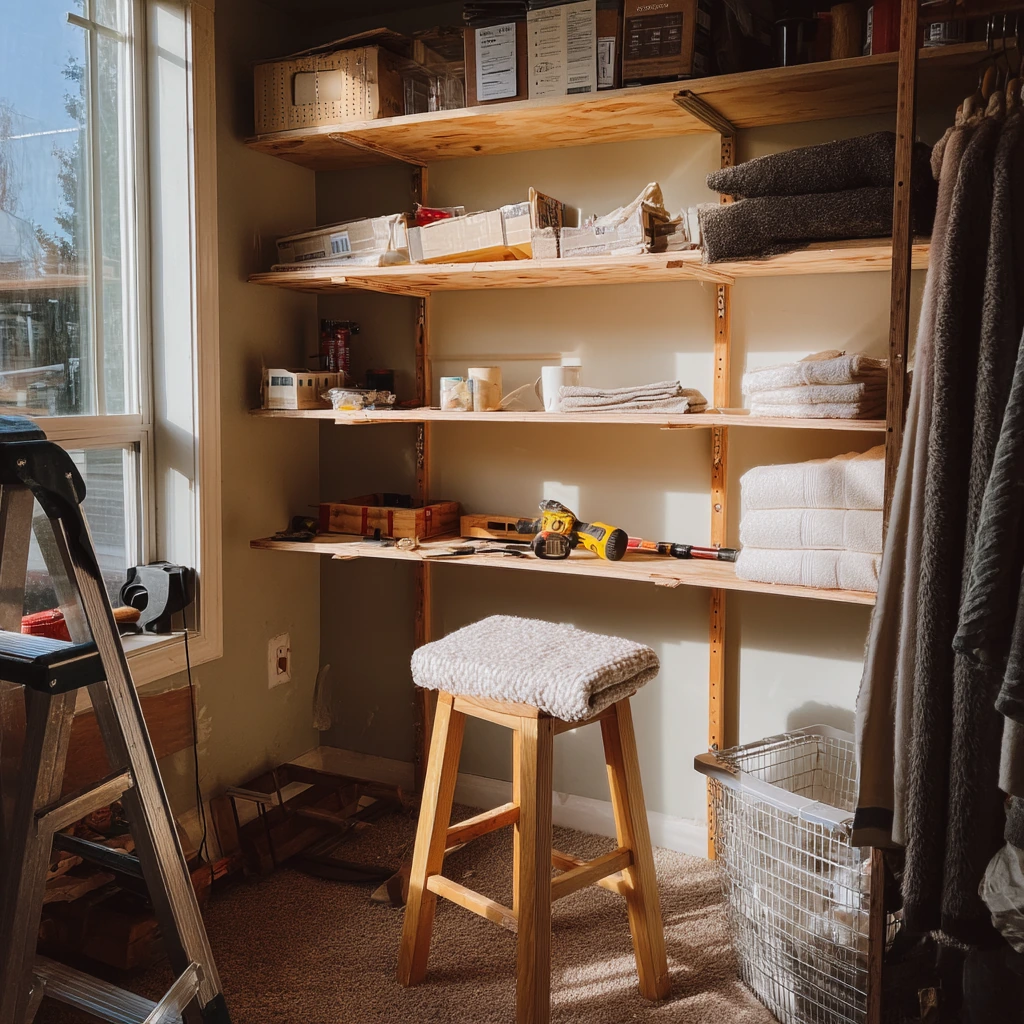
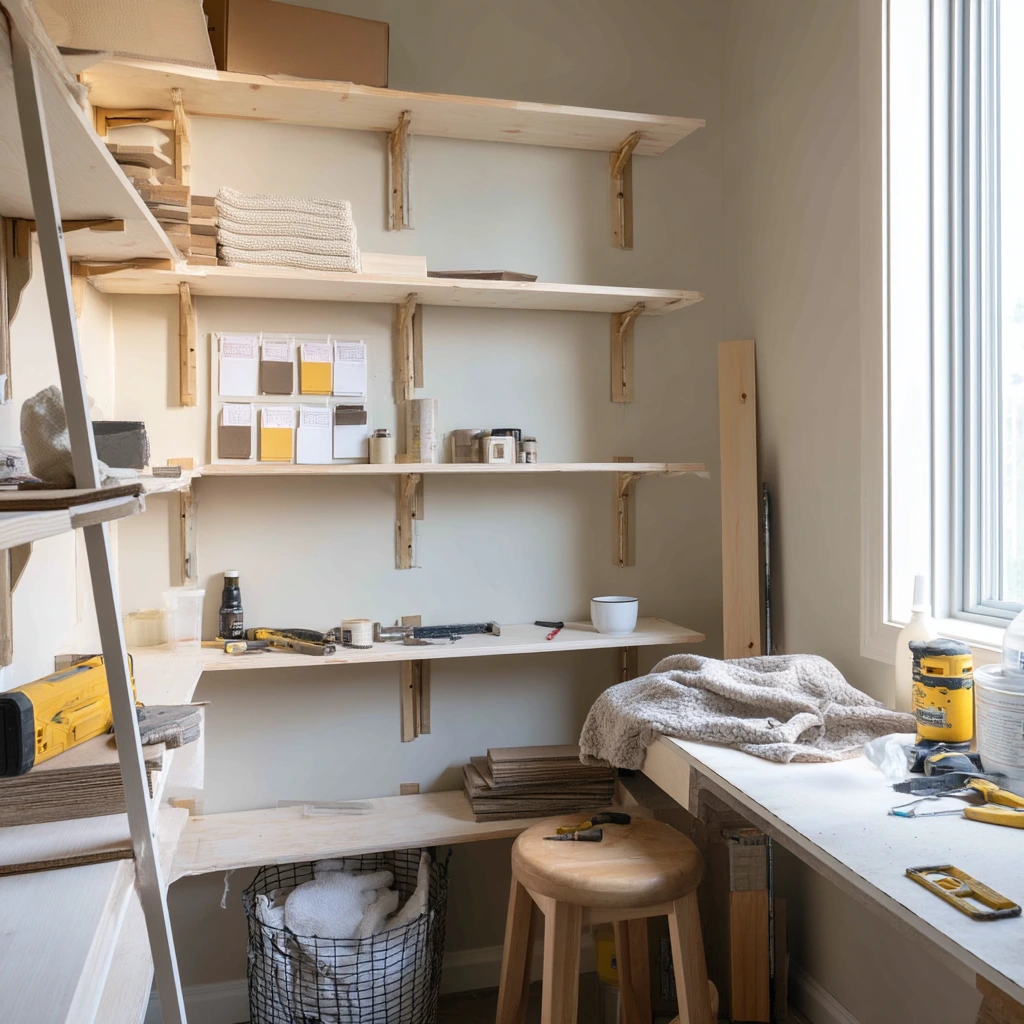
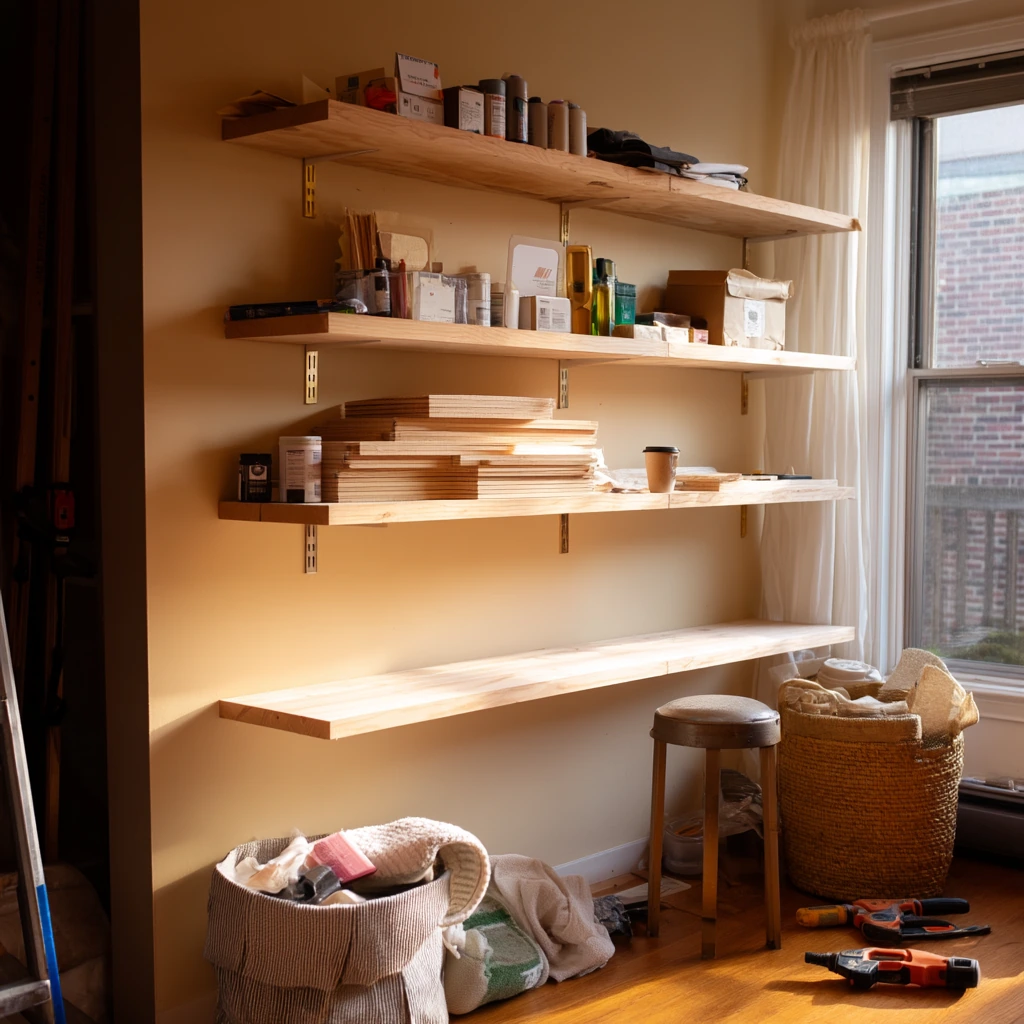
A partly finished DIY closet shelving project can still function while you work. Raw wood shelves with visible brackets are strong and easy to adjust. Keep paint sample cards close so you can match the room, and leave a small “tool zone” until the project is done.
This is a good route if you want custom shelf spacing without paying for a full system. Measure what you actually store, like folded towels, jeans, or stacked tees, then set shelf heights to fit. Keep a coffee cup on a stool if you want, but protect the surface so you do not spill on unfinished wood.
How to style it: once shelves are up, group items by type and use simple bins to hide the rough look until you paint or stain. Keep the front edge clear and align stacks, even if the back is messy. That one change makes the closet look more finished.
- Use brackets rated for the weight you plan to store
- Cut raw wood shelves to your exact closet width
- Keep tools and a tape measure in one bin while working
- Use paint samples to pick a finish that matches the room
- Test shelf spacing with your tallest stacks before final install
Pro Design Tip: Sand and seal shelf boards before installing if possible, so clothes do not snag and the surface wipes clean.
Budget Considerations: DIY wood shelves can be low cost, but brackets add up; compare hardware store prices and consider fewer, stronger supports.
10 Closet Shelving with Boutique Display for Accessories
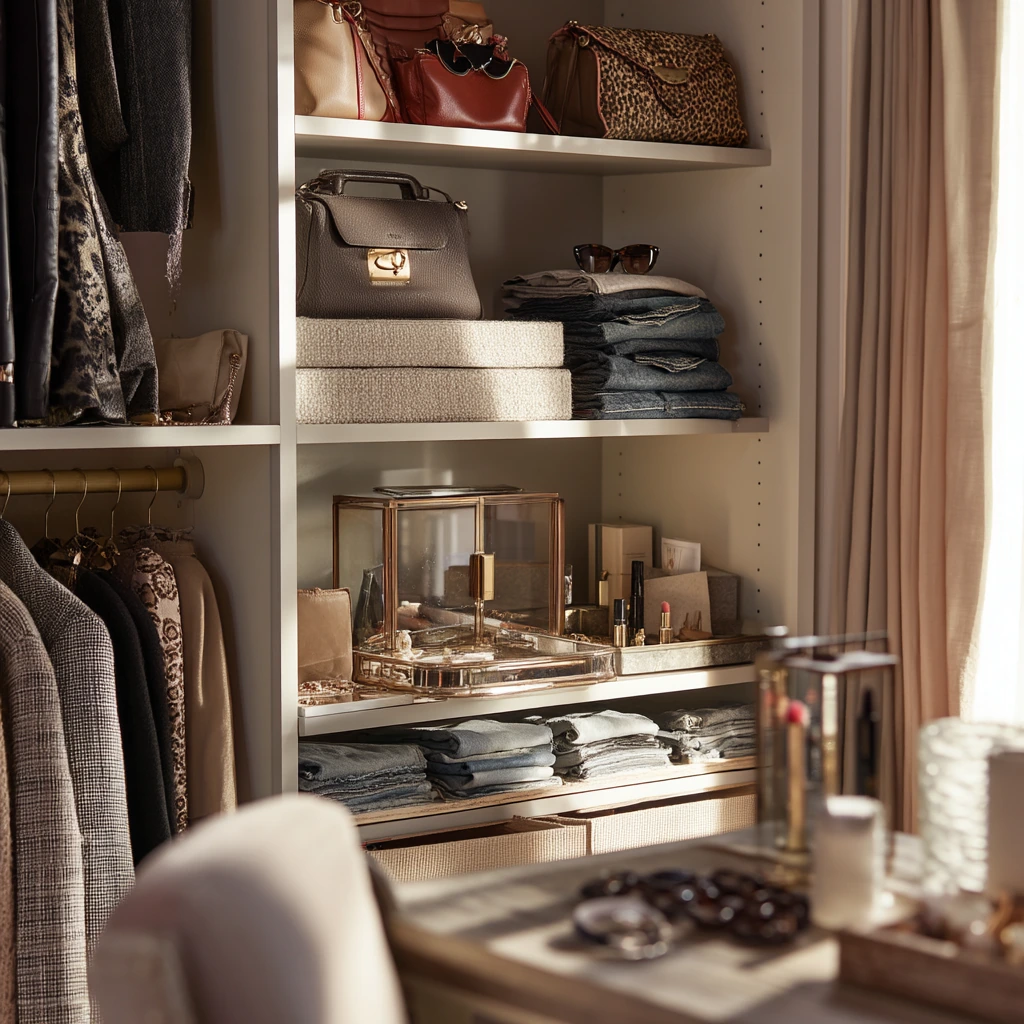
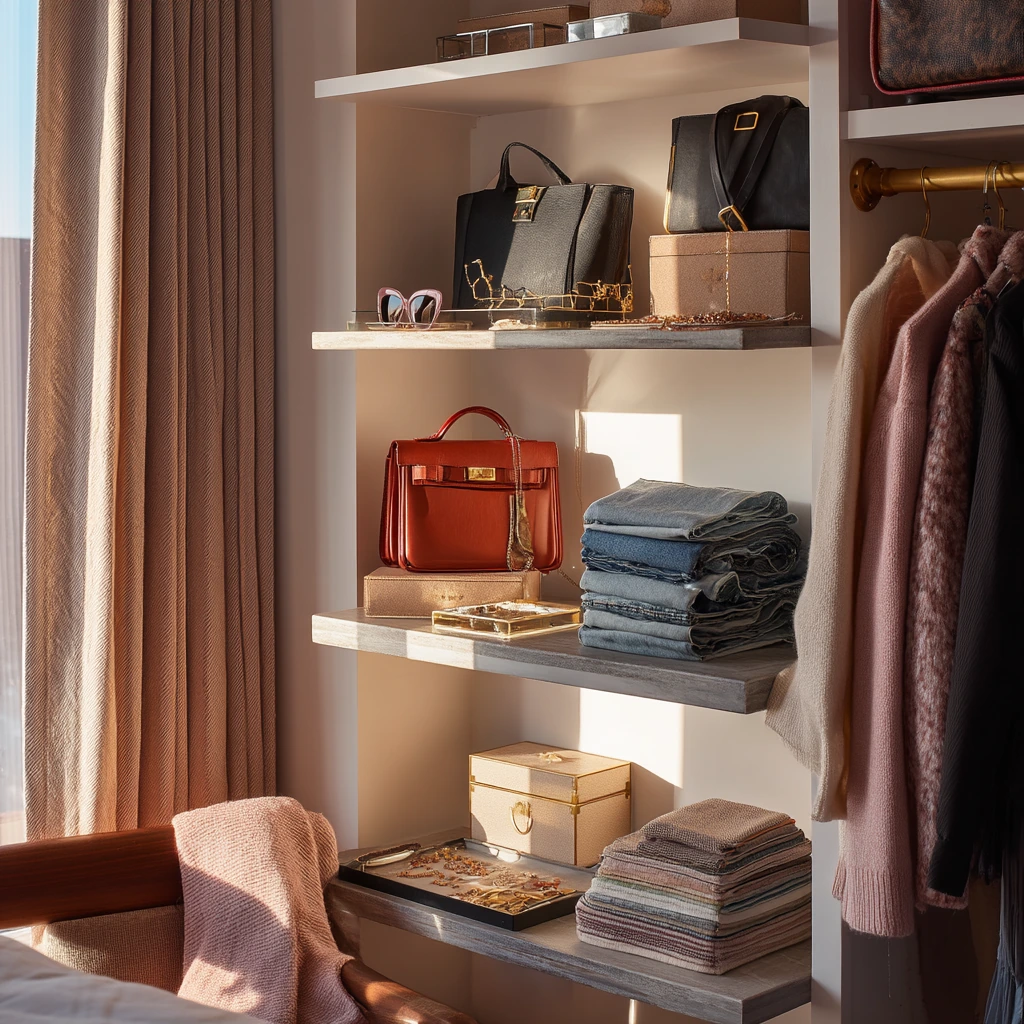
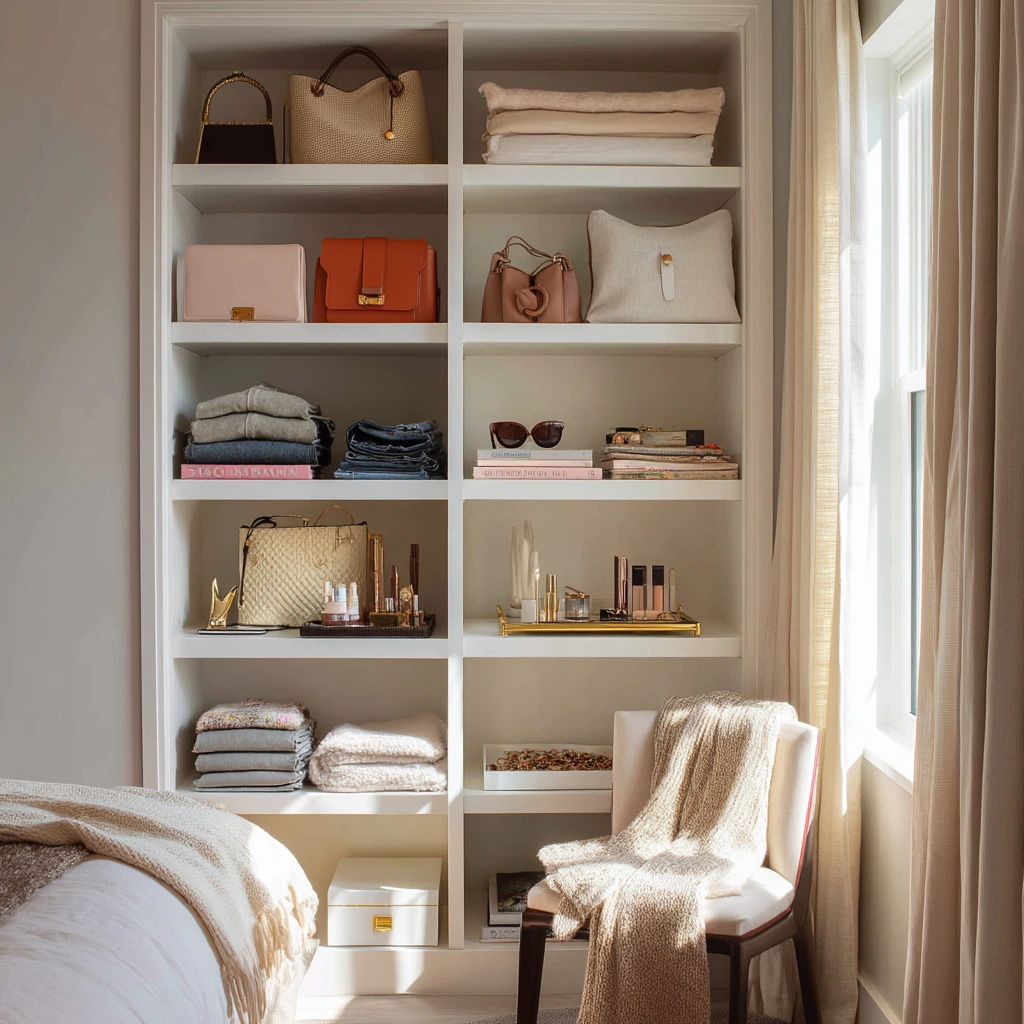
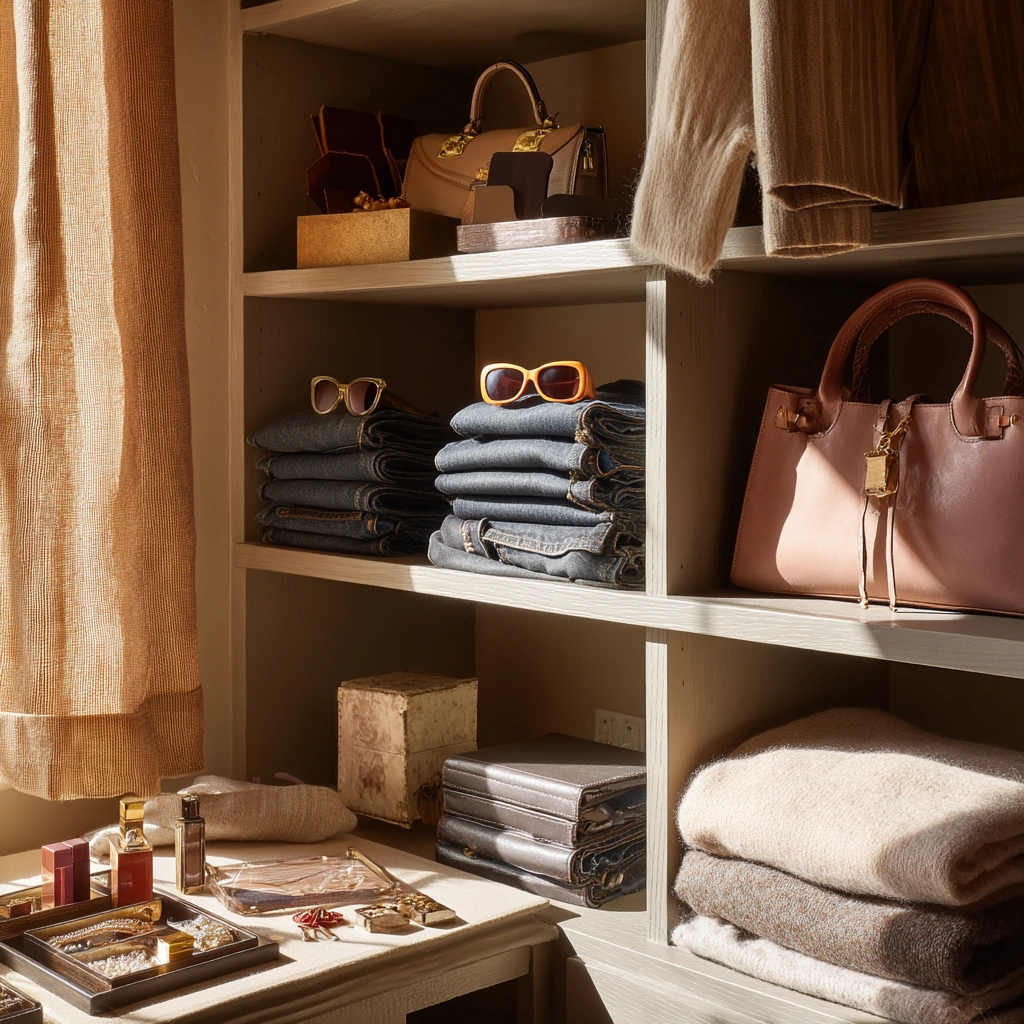
If you love accessories, use closet shelving as a display that still works for daily life. Open shelves can hold handbags, sunglasses, folded denim, and small trays for jewelry. This setup makes getting ready faster because you can see choices at a glance.
Keep it polished but real. A lipstick on a tray, keys and earbuds by the shelf, and a cardigan draped over a chair are normal daily cues. Plan one shelf as a “daily reset” area where you can put items back in under two minutes. Dust happens, so choose boxes that wipe clean and do a quick weekly pass.
How to style it: group sunglasses in one shallow tray and stack denim in even piles. Place one bag per shelf section so straps do not tangle. Use a small catch-all dish for rings and earrings so they do not slide around.
- Use open shelves to display handbags without stacking them
- Add trays for jewelry, sunglasses, and small daily items
- Fold denim into neat stacks on one dedicated shelf
- Create a keys-and-earbuds spot near the closet opening
- Keep one box for “not sure” items to sort weekly
Pro Design Tip: Use shelf dividers for denim and sweaters so stacks stay upright when you pull out one piece.
Budget Considerations: Acrylic trays and dividers can be pricey; look for simple plastic kitchen organizers that fit your shelves and cost less.
The best closet shelving ideas are the ones that match your daily routine. Start by zoning for hanging clothes, folded stacks, shoes, and small items, then pick bins and shelves that fit your space.
Small changes like labeled bins, a tray for cords, and better shelf spacing can make a narrow closet or a studio setup feel easier to use. Even a work-in-progress DIY build can stay functional with clear zones.
Try one section at a time, keep the system simple, and leave a little room for real life. A closet that is easy to reset will stay organized longer.
FAQ
What is the best shelf height for folded clothes? Most folded stacks work well with 10 to 12 inches of vertical space. Bulky sweaters may need 12 to 15 inches.
How do I organize a closet in a rental without drilling? Use freestanding cube shelves, tension rods, removable hooks, and bins. Choose pieces you can move and reconfigure.
How can I make a small closet look less messy? Use matching bins, one hanger style, and align the front edges of stacks. Keep a small tray for daily drop items.
What should go on the top shelf of a closet? Store luggage, off-season items, and rarely used extras up high. Use labeled boxes so you can grab the right item fast.
How do I store shoes with limited space? Add a low shelf, shoe tray, or narrow rack. Keep daily pairs in front and move special-occasion shoes to the back.
Are open shelves better than drawers? Open shelves are easier to see and often cheaper. Drawers hide clutter and can look calmer, but they cost more and take up space.