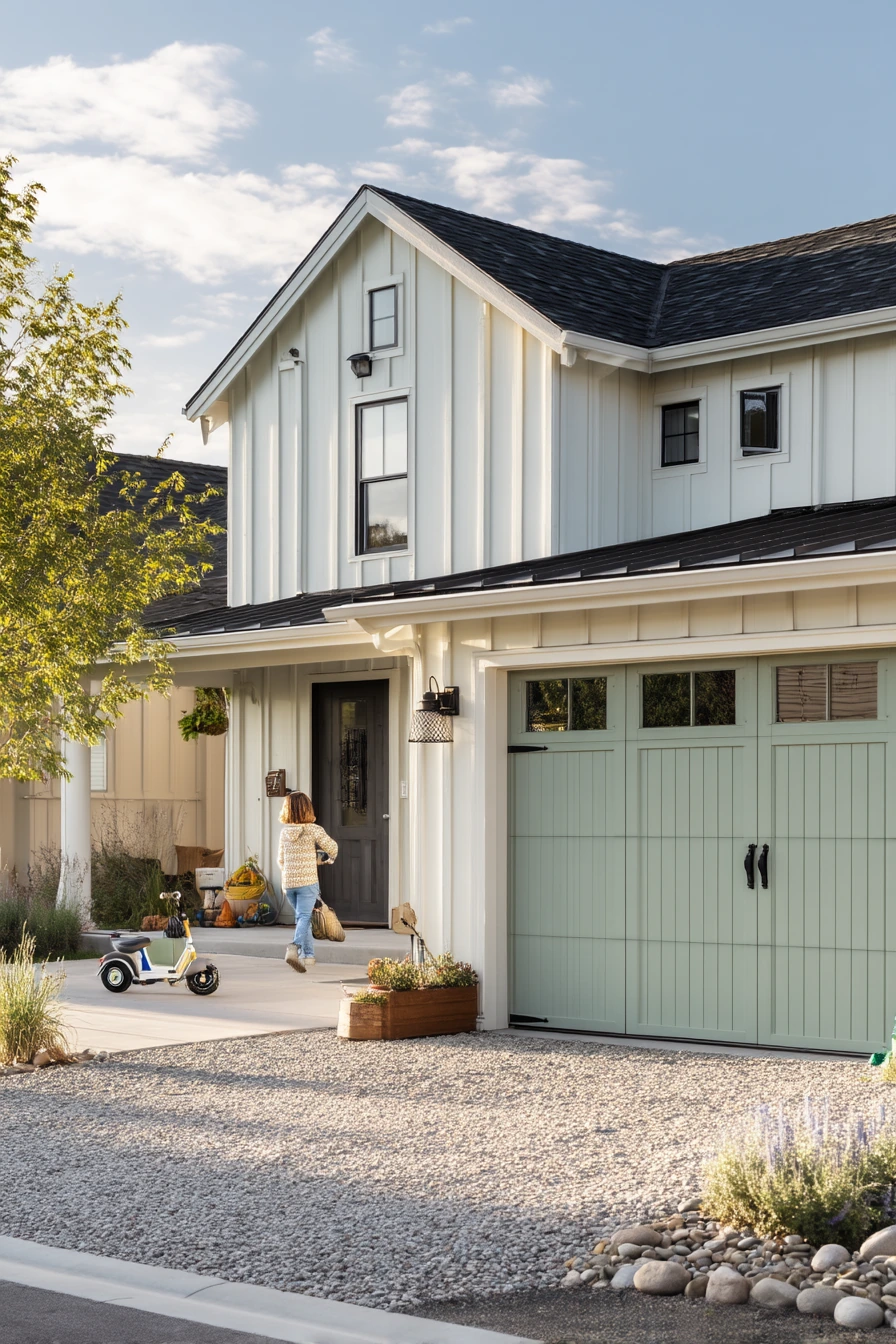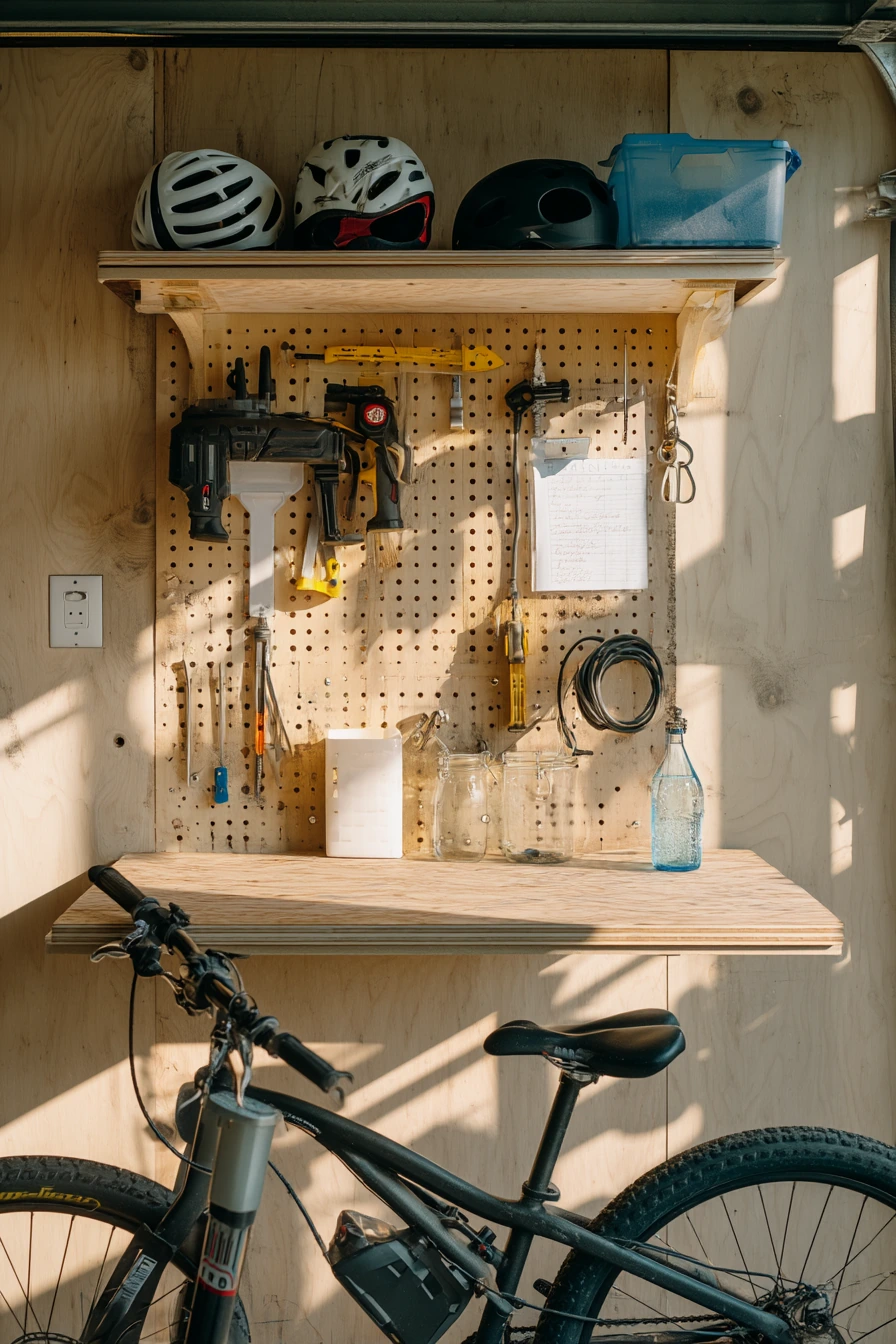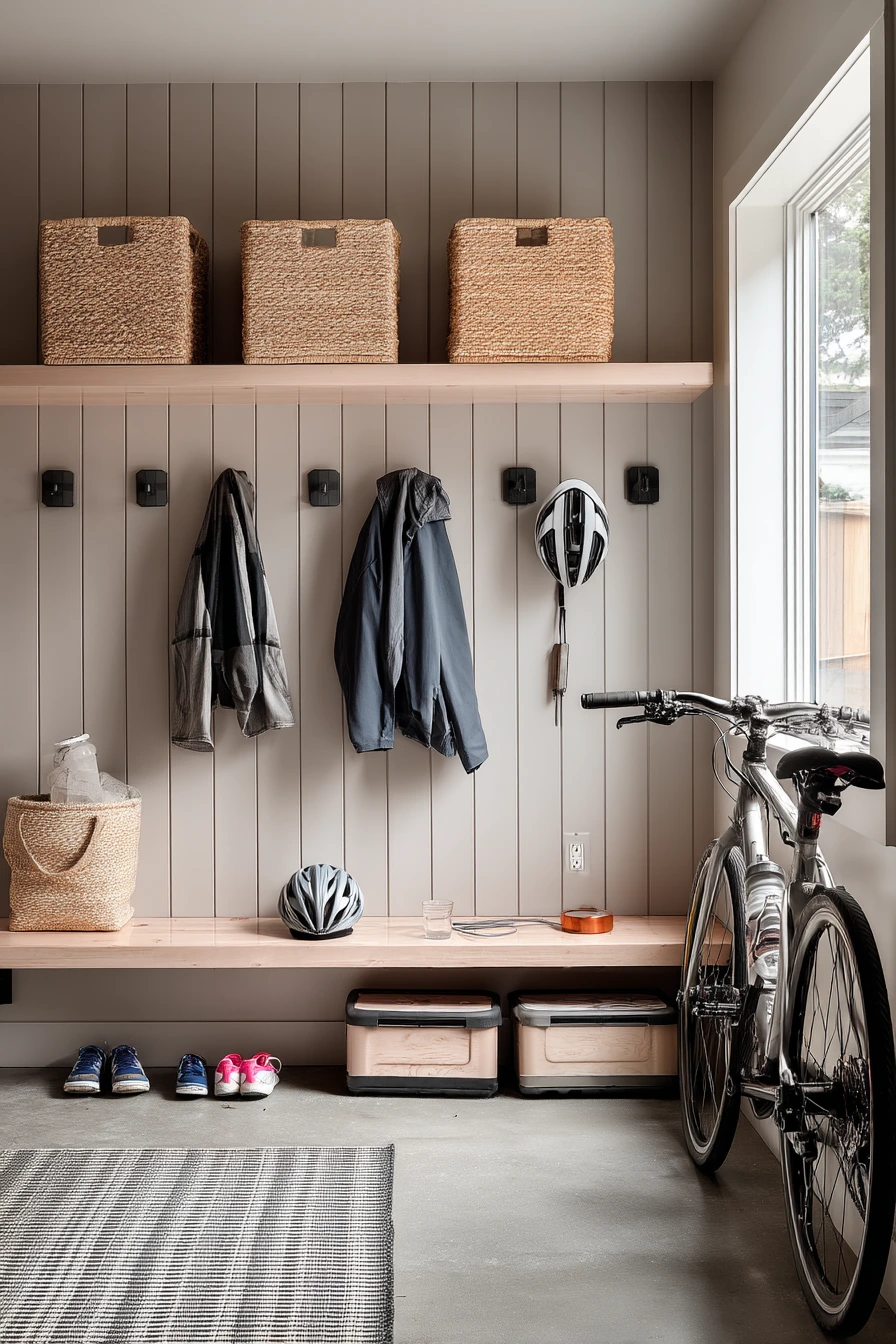

Garage flooring ideas can change how your whole home works. A better floor is easier to clean, safer to walk on, and makes storage feel less messy.
This guide covers epoxy, polyaspartic, painted concrete, peel-and-stick tiles, vinyl tiles, rubber tiles, and slip-resistant tile. Each option is tied to a real-life setup like a family drop-zone, renter-friendly space, home gym, and woodworking corner.
You will get simple styling ideas, what to buy, and what to watch out for with moisture, tire marks, and wear. Use the sections to pick a finish that fits your budget and your daily routine.
If you came from Pinterest, save the look you like, then use the tips here to copy it in your own garage with fewer mistakes.
1 Epoxy-Coated Family Garage with Everyday Storage
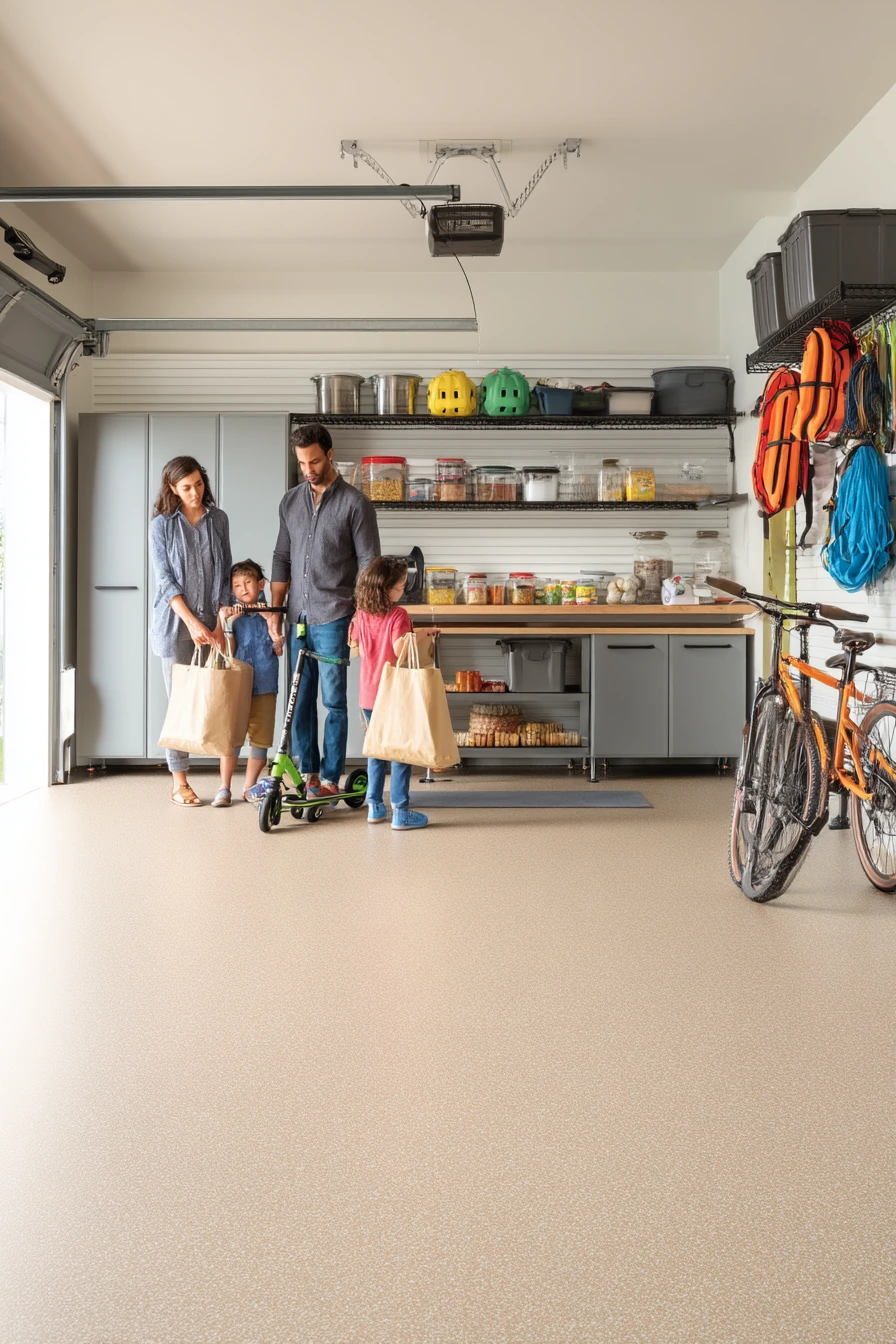
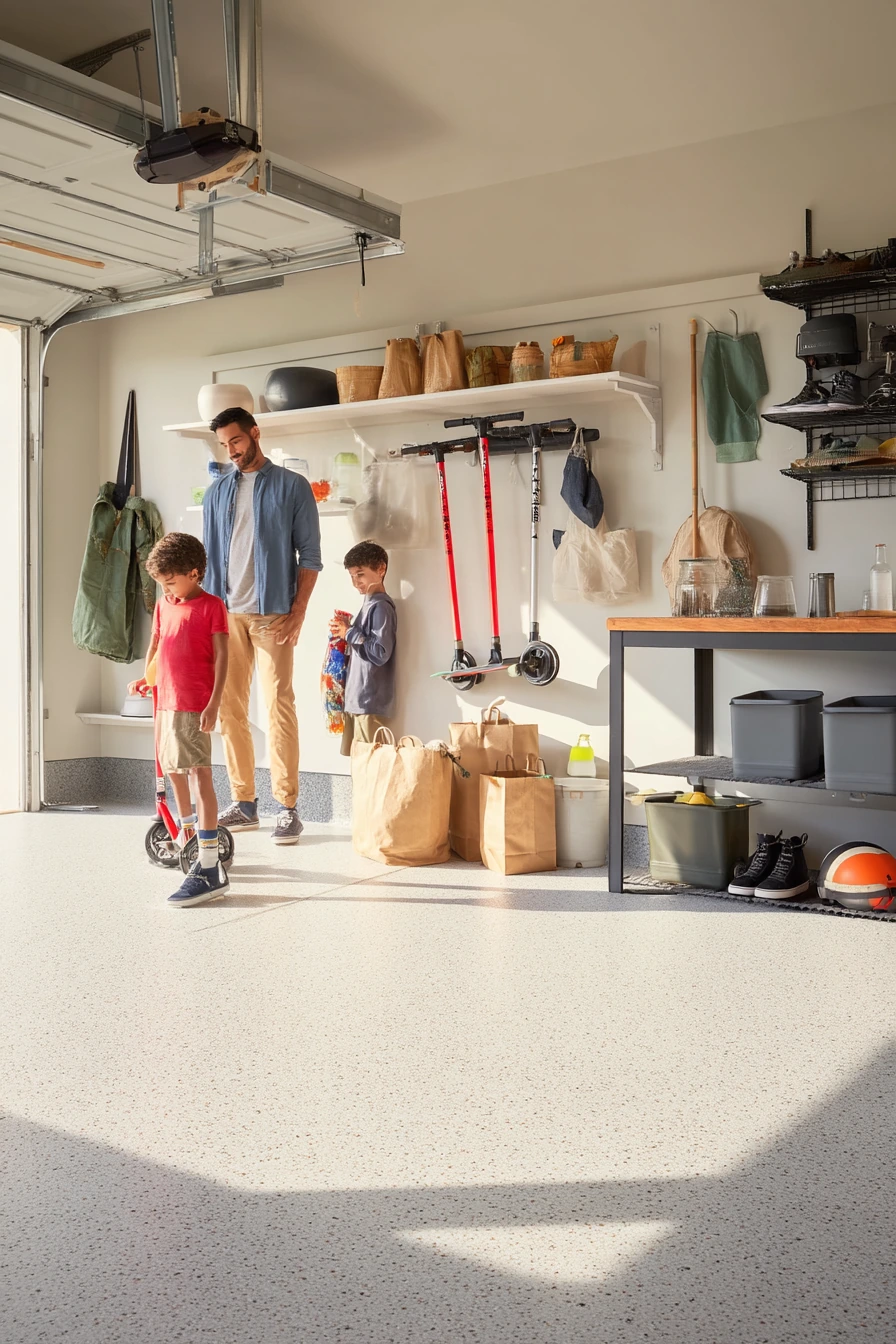
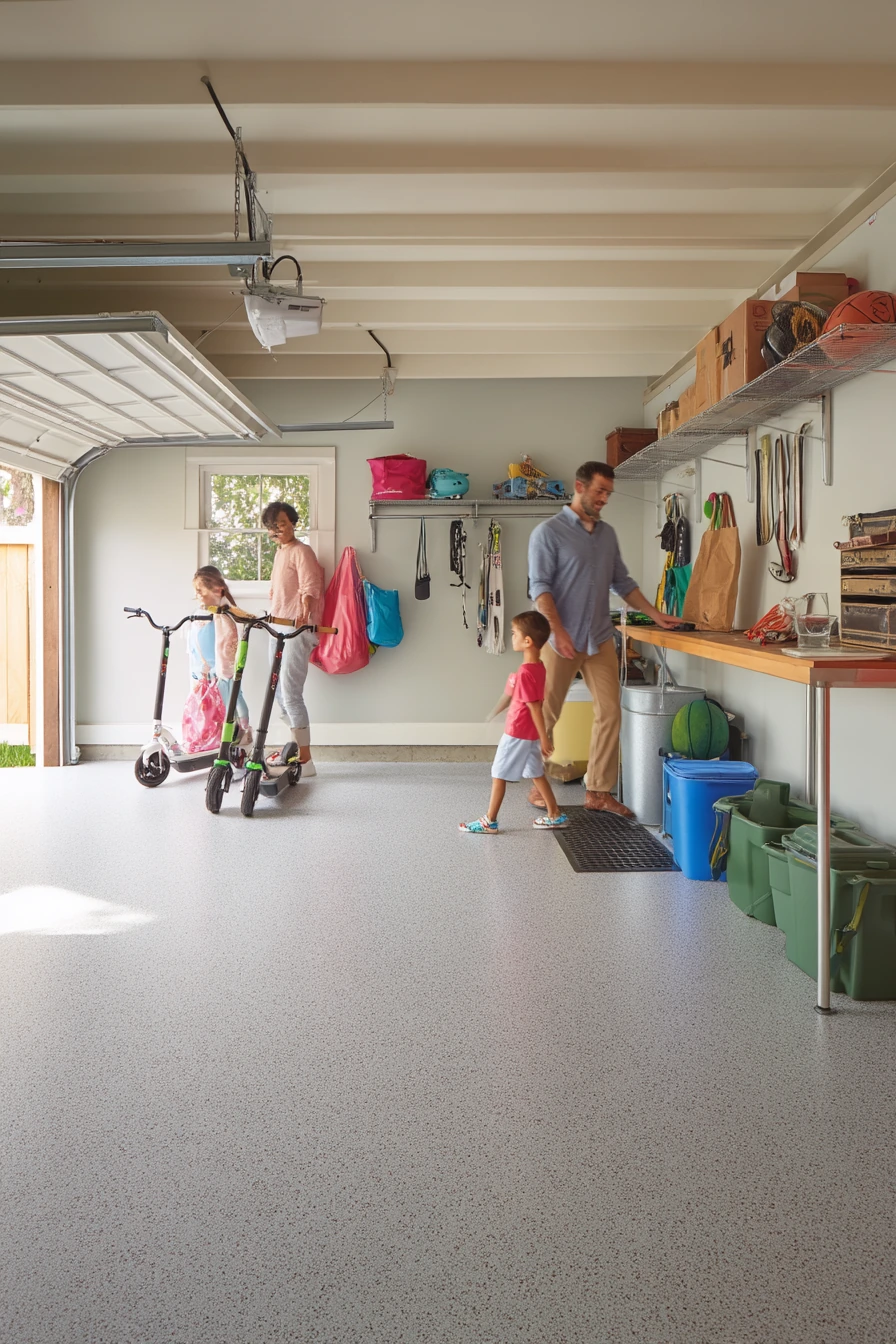
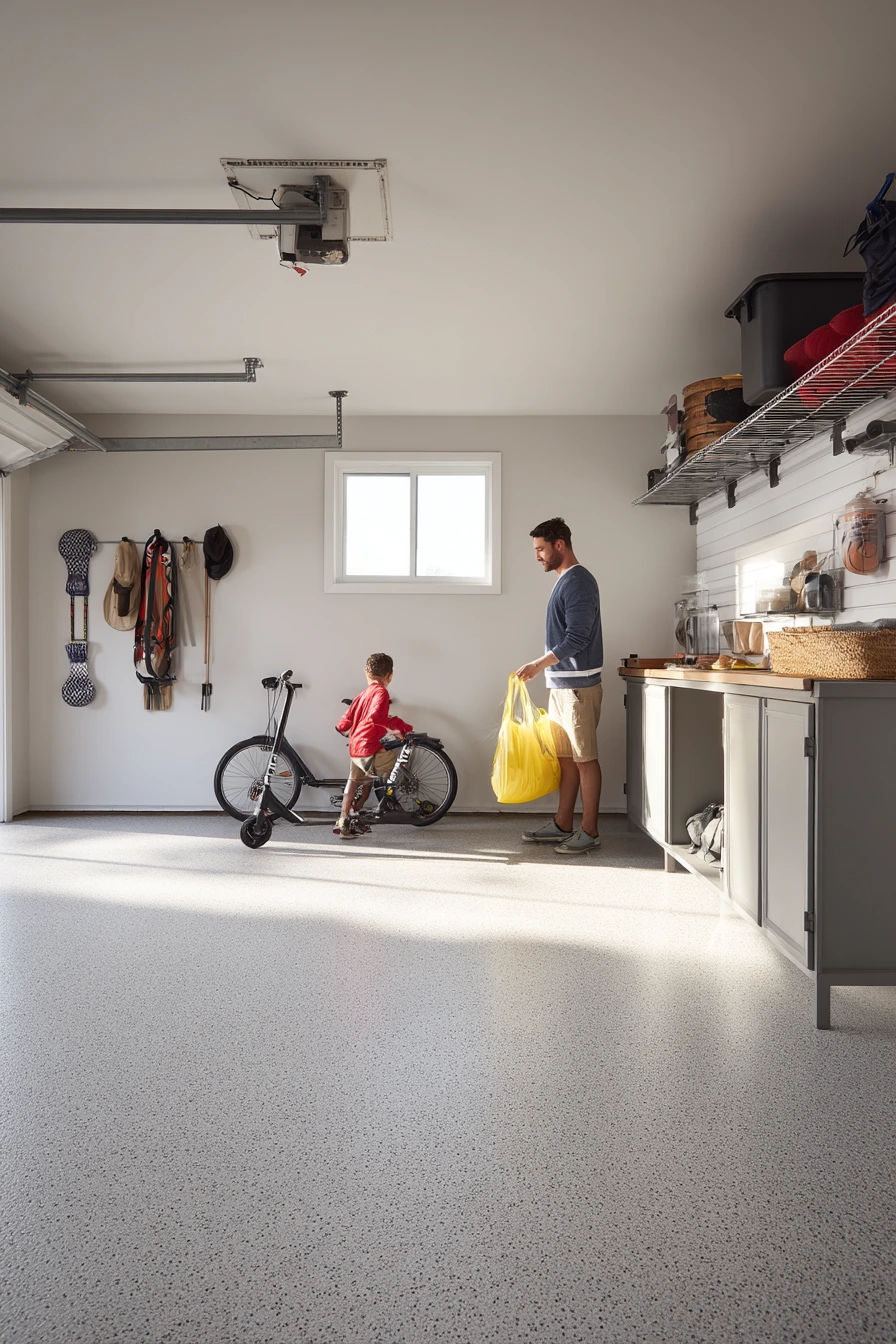
A warm gray epoxy-coated floor with a light flake texture is a strong fit for a suburban family garage. It hides dust, small scuffs, and the little marks that come from kids’ scooters, sports gear, and weekend errands. When the floor has a soft texture, it also feels less slippery than glossy paint, which helps near the door where boots come in wet.
To make it work as a tidy drop-zone, build the layout around real habits. Put steel shelving on the back wall for bins and pantry extras. Add wall hooks for backpacks and jackets. Keep a rubber boot tray near the entry, so mud stays in one place. A small workbench can double as a landing spot for grocery bags, charging cable, and a toolbox, but clear it daily so it does not turn into a pile.
Style it in a lived-in way that still looks clean. Match storage bins to the warm gray tone, then add one simple accent color like navy or forest green for helmets and scooters. Keep one towel or microfiber cloth in a drawer for quick wipe-ups. Morning window light shows dust, so a soft broom and a small hand vac should be easy to grab.
- Choose a warm gray base with subtle flakes to hide dirt and tire dust.
- Use a satin or matte topcoat to reduce glare and slipping.
- Place a boot tray and a washable mat right inside the door.
- Keep a “daily drop” shelf for keys, water glass, and small tools.
- Label bins for sports, car care, and seasonal items.
Pro Design Tip: Use the same color family on the floor, shelving, and bins, then add one contrasting stripe of wall hooks at kid height to make the drop-zone feel planned.
Budget Considerations: Epoxy kits vary a lot; basic DIY kits cost less but need careful prep. If prep feels hard, pay for grinding and do the coating yourself.
2 Checkerboard Peel-and-Stick for a Renter Garage
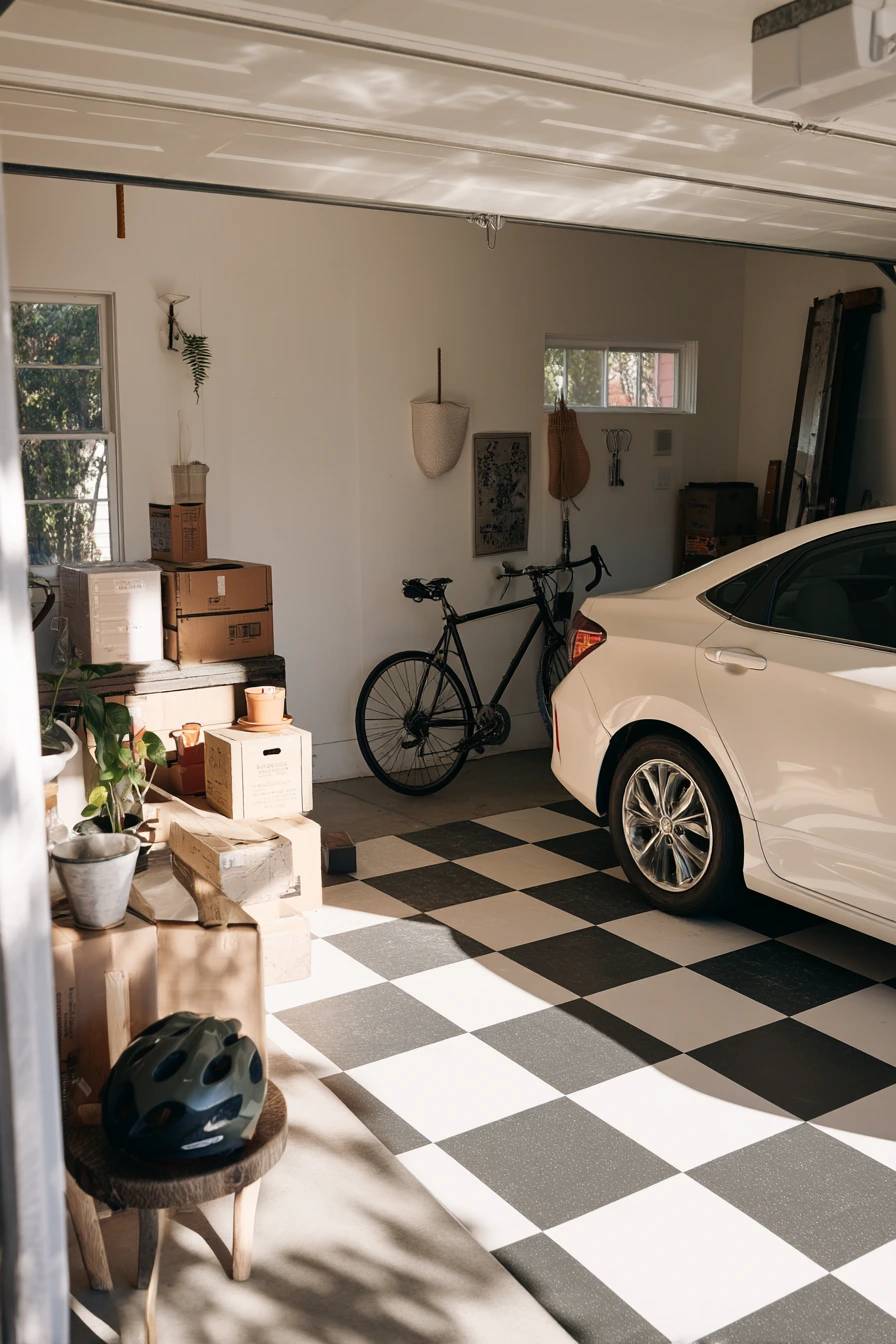
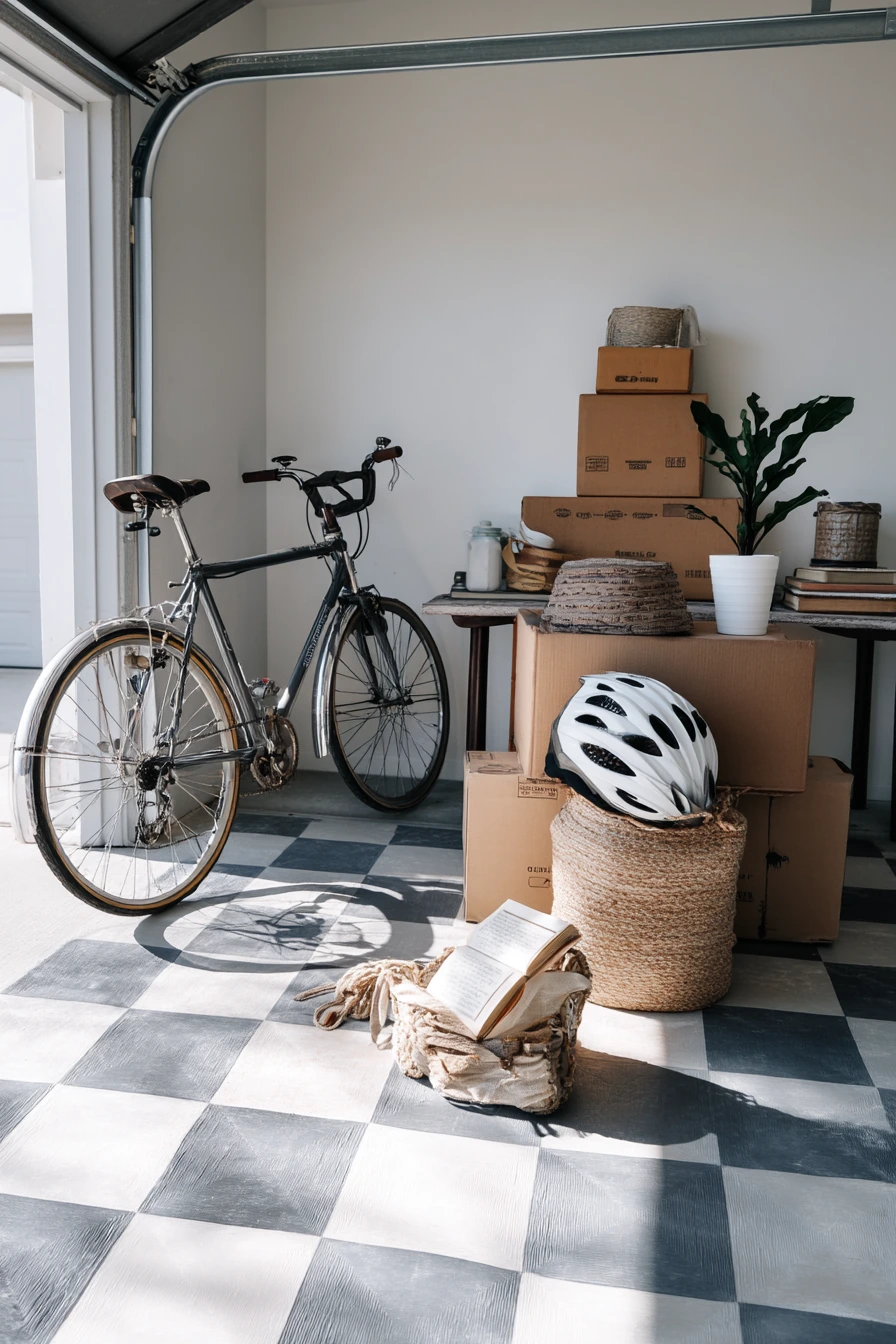
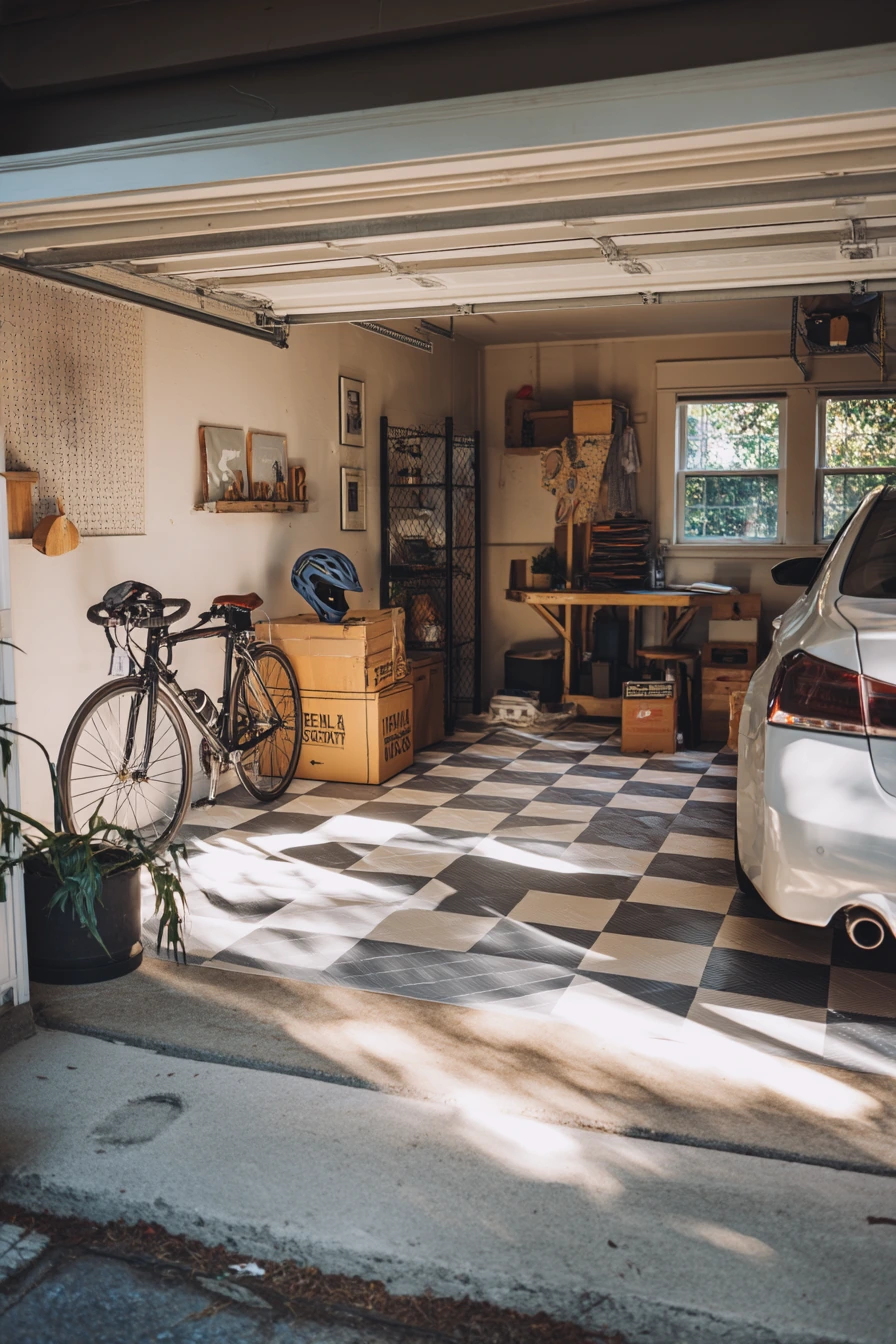
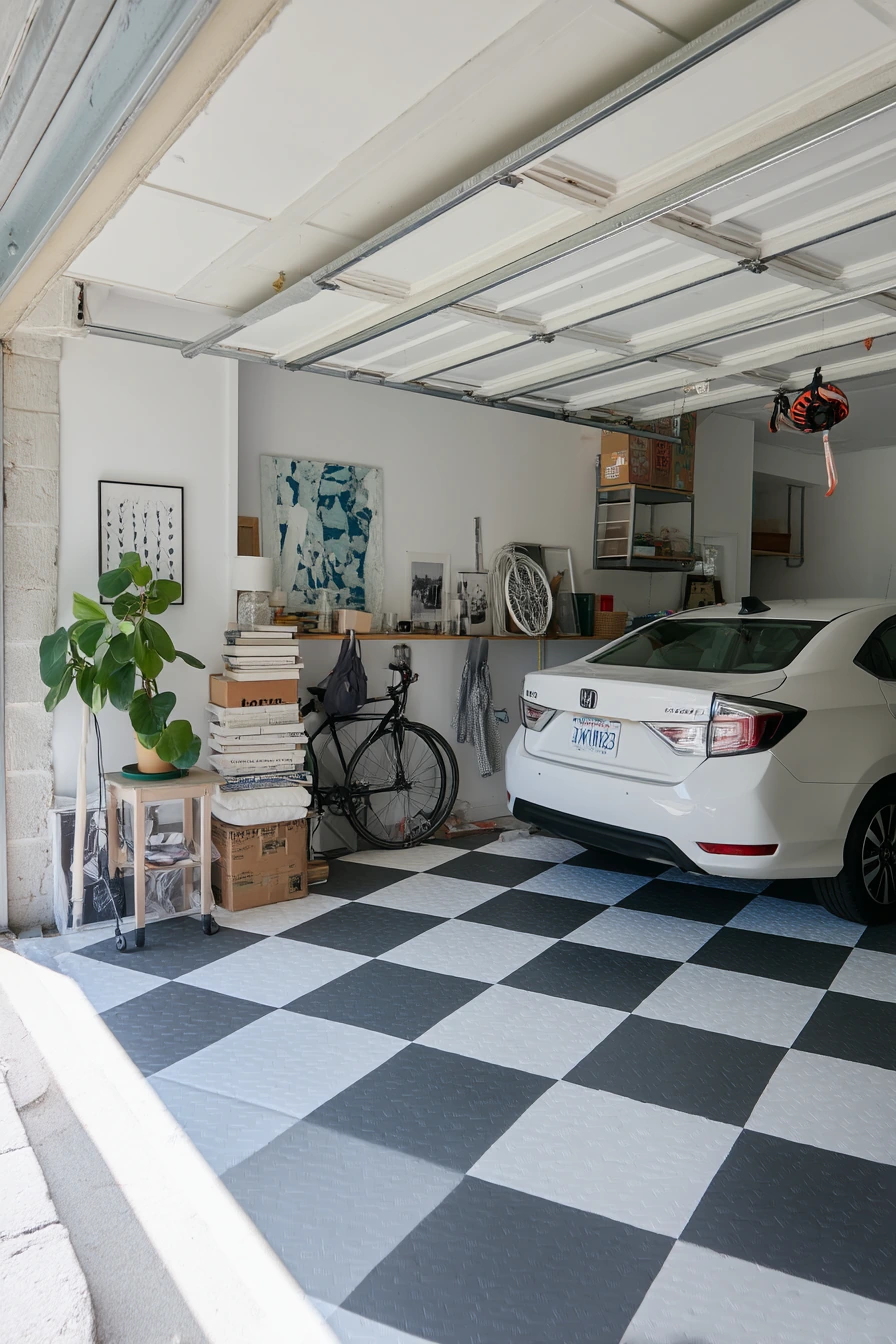
If you rent or you may move soon, peel-and-stick checkerboard tiles can give you a clean look without a big commitment. Charcoal and warm white tiles brighten a garage fast and make the space feel more finished, even with moving boxes stacked along the wall. Since the tiles are modular, you can replace one section if it gets damaged.
Prep matters more than people think. Start with a clean concrete slab and remove dust, oil, and loose grit. Most peel-and-stick products need a smooth surface to stay flat, so fill deep pits and let it cure. In a garage, temperature swings can lift edges, so press down each tile with a hand roller and avoid washing the floor for a few days.
Style this kind of floor like a simple studio. A thrifted plant on a milk crate adds height without using much room. Keep a folding table for keys, a book, and small projects like a paint tray. Hang a bicycle helmet on a wall hook so it does not land on the floor. If you park a small sedan nearby, use a clear parking mat or a thin runner where tires will sit to reduce wear and staining.
- Pick a warm white, not bright white, to hide smudges and dust.
- Use a roller to press tiles down and reduce edge lifting.
- Add a thin tire mat if a car will sit on the tiles.
- Keep heavy boxes on shelving, not directly on tile seams.
- Use a wrinkled drop cloth only for projects, then store it in a bin.
Pro Design Tip: Start the checkerboard pattern at the main doorway line so the first view looks centered, then cut the far wall edges last.
Budget Considerations: Peel-and-stick tiles can be affordable for a small bay. For a tight budget, tile only the main walking zone and leave the rest as clean concrete.
3 Polyaspartic Floor in a Home Gym Garage
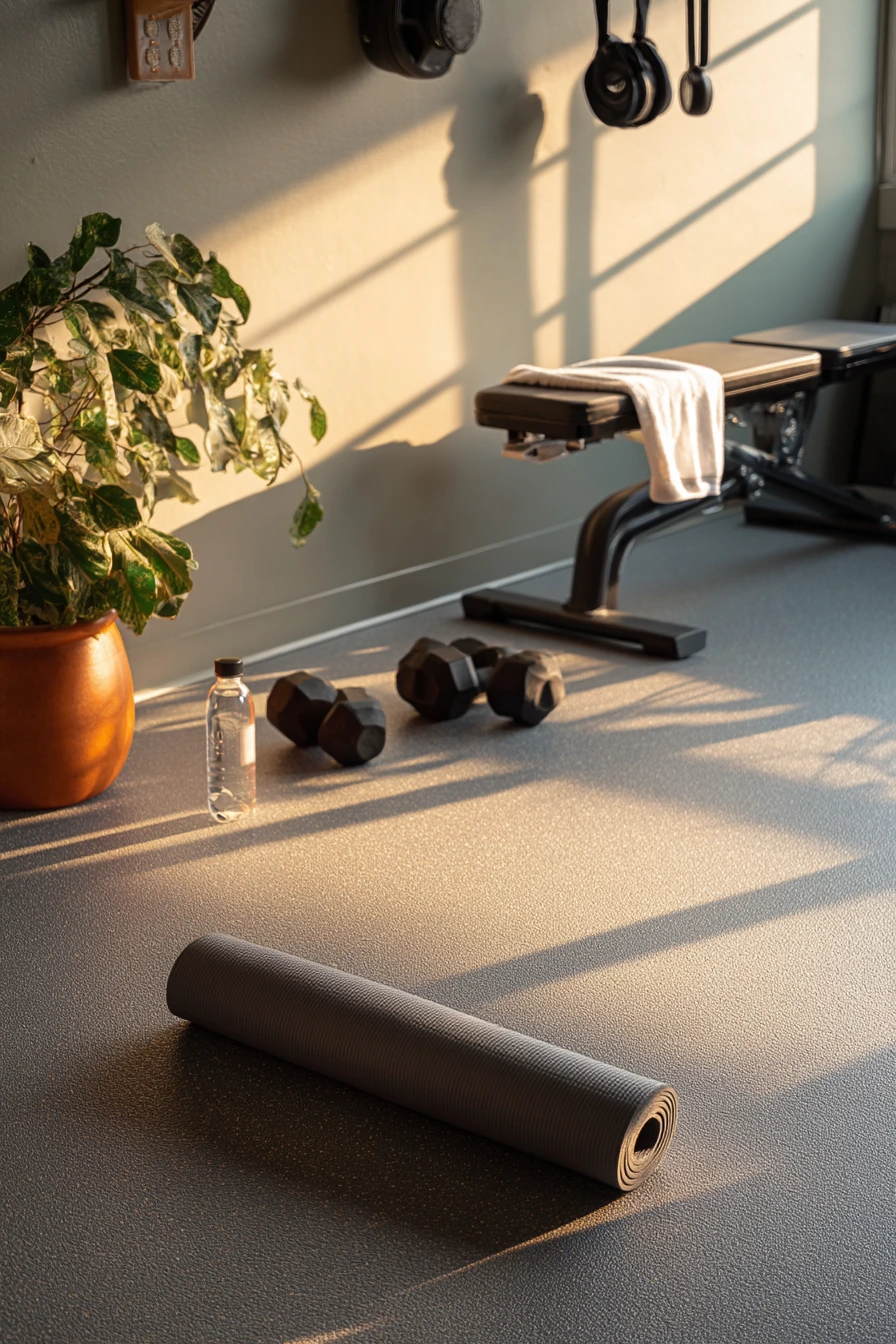
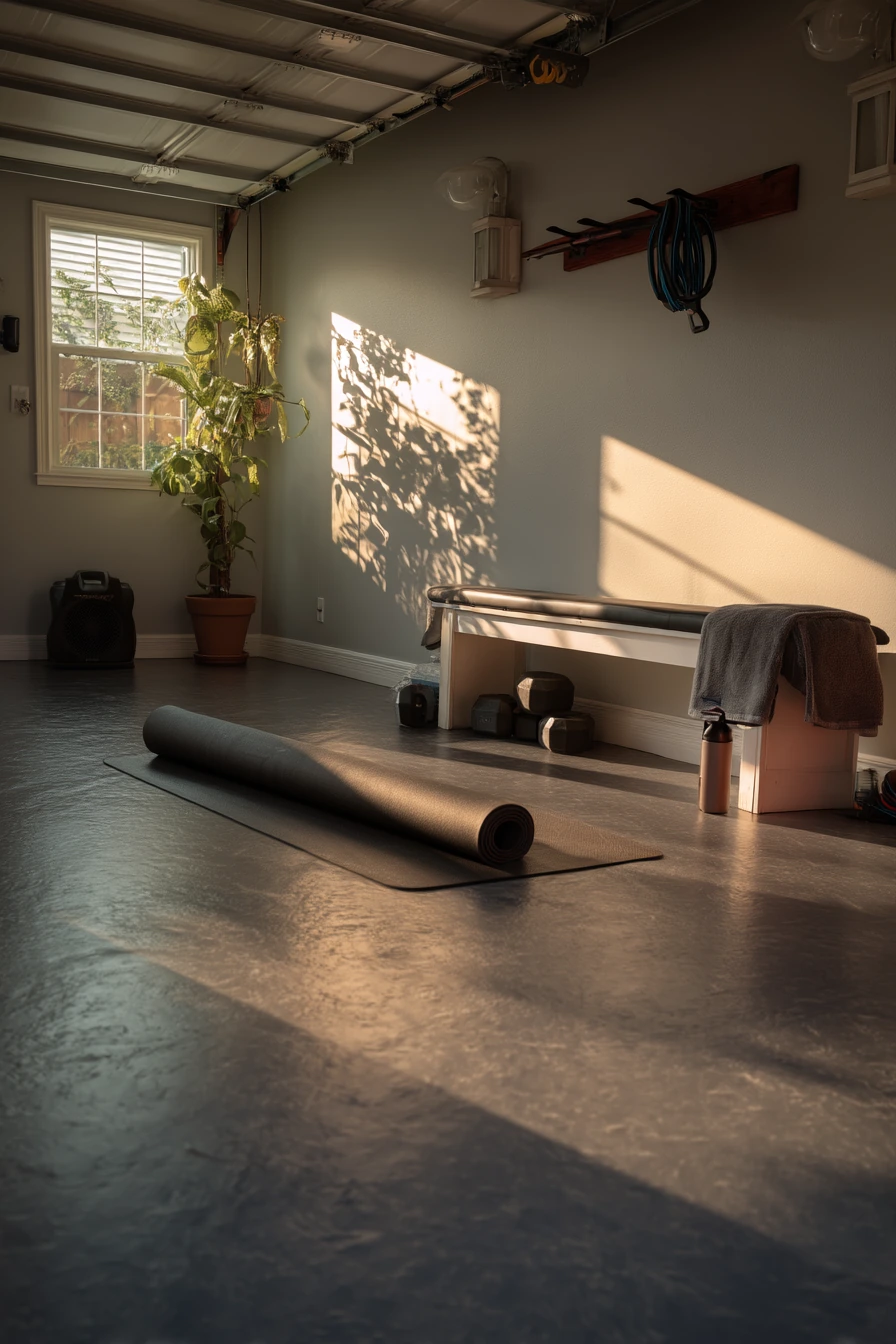
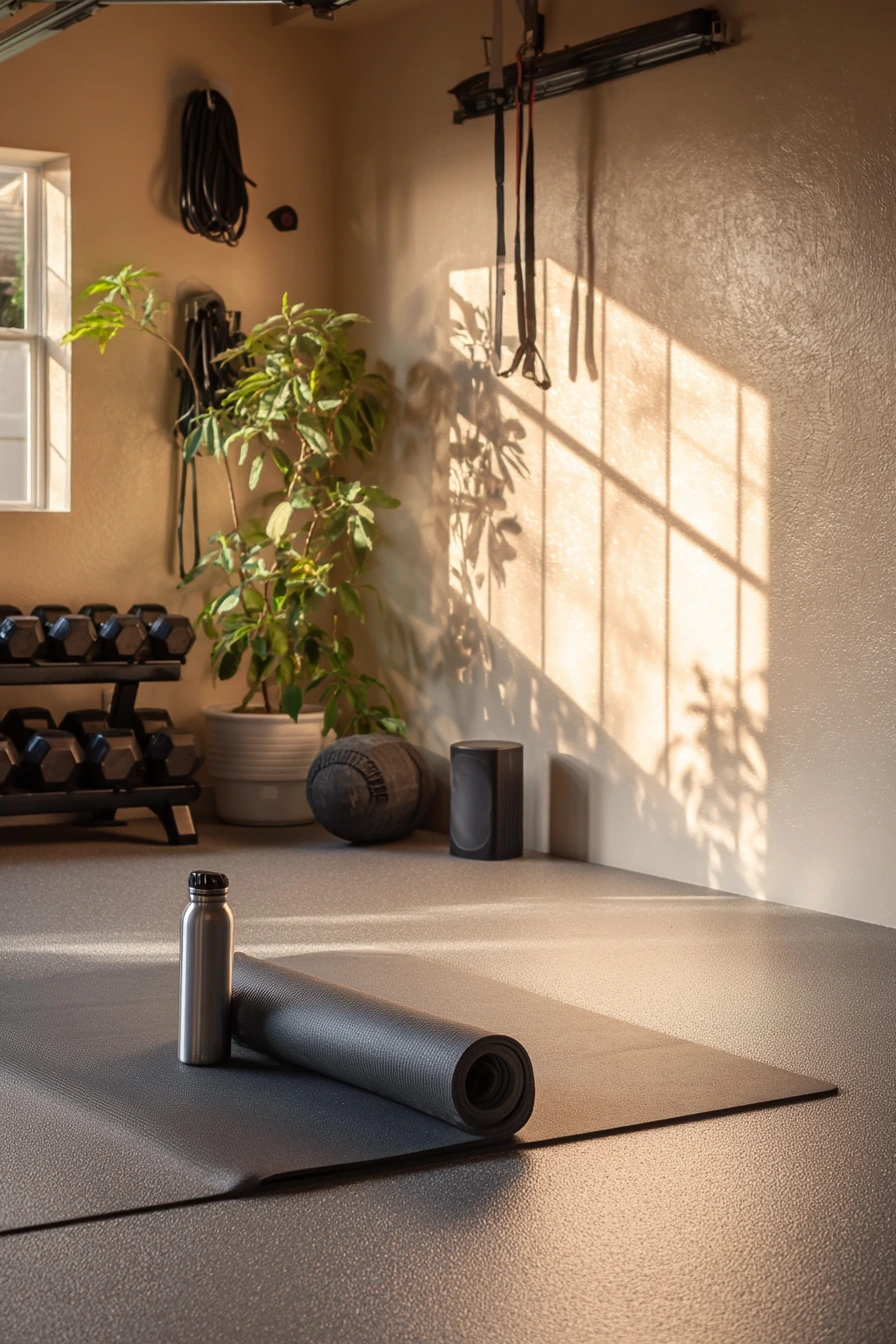
A seamless polyaspartic floor in soft graphite is a strong option for a garage gym conversion. It cures faster than many coatings, it resists sweat and cleaning sprays, and the satin sheen looks clean without being too shiny. The darker tone also helps the space feel focused, like a real workout room, while still hiding light dirt.
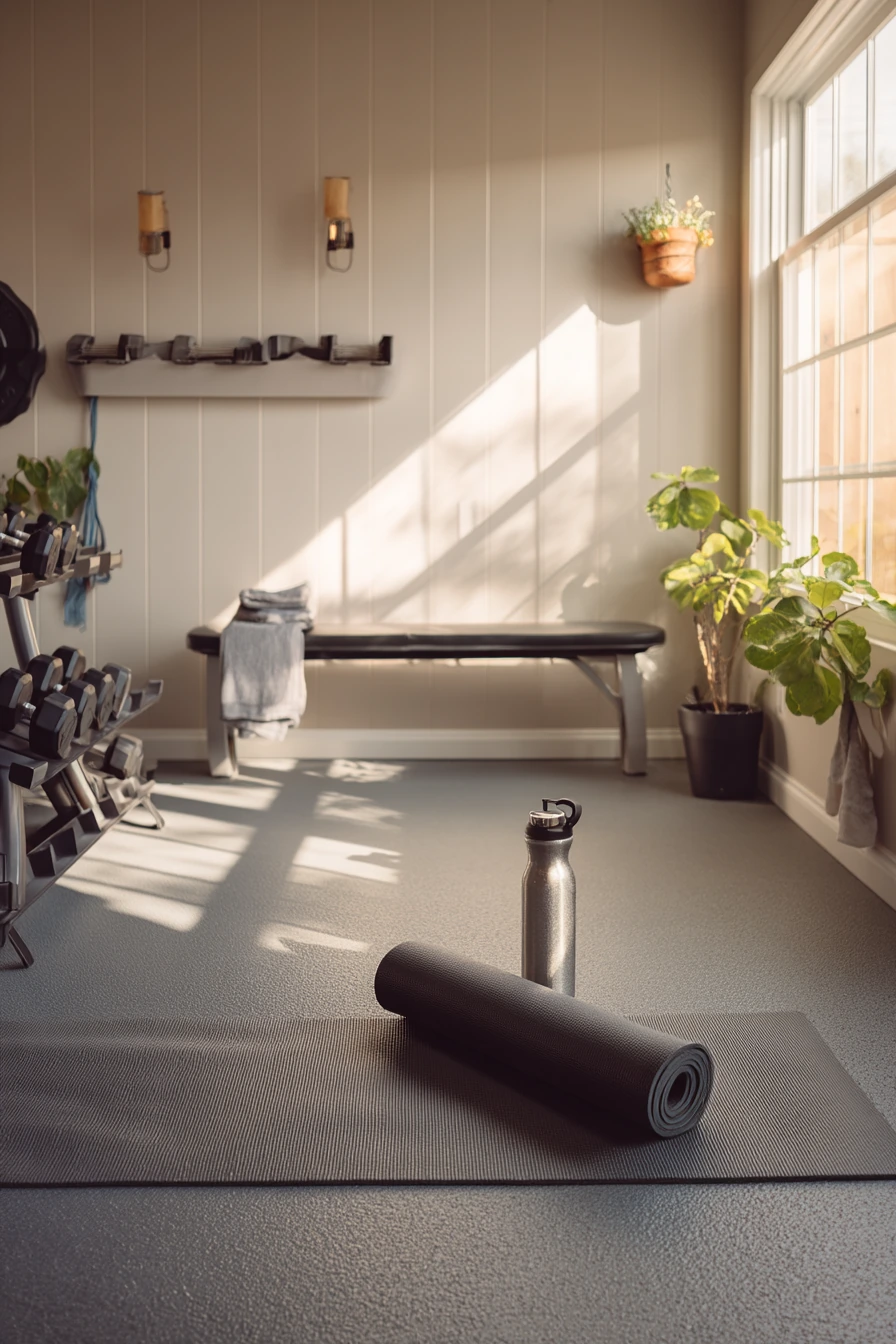
Plan the gym layout around impact and noise. Place rubber mats under a bench, dumbbells, and a small fan area to protect the finish from dropped gear. Keep a yoga mat rolled near the wall so it stays clean. Use wall hooks for resistance bands and a small shelf for a speaker and water bottle. Plant shadows from a side window can look great on a graphite floor, but keep plants off the ground so spilled water does not sit on the coating.
Styling is simple in a gym. Stick to two tones: graphite floor and black storage, then add one soft color with towels or bands. Use warm practical sconces or bright LED panels so you can see dust and wipe it quickly. For daily use, keep a towel on a bench and a foam roller in a corner bin. When everything has a home, the floor stays open and safer for lunges and stretches.
- Choose a satin topcoat for grip and easy cleaning.
- Add rubber mats in lifting zones to prevent chips.
- Use wall storage to keep the floor clear for movement.
- Clean sweat with a mild cleaner, not harsh degreaser.
- Keep a small fan and towel station to cut moisture on the floor.
Pro Design Tip: Mark workout zones with thin edge trim on your mats so the room looks organized even when gear is out.
Budget Considerations: Polyaspartic can cost more than epoxy. To save money, coat the full floor but use affordable rubber mats only where you lift.
4 Budget-Friendly Painted Concrete Workshop
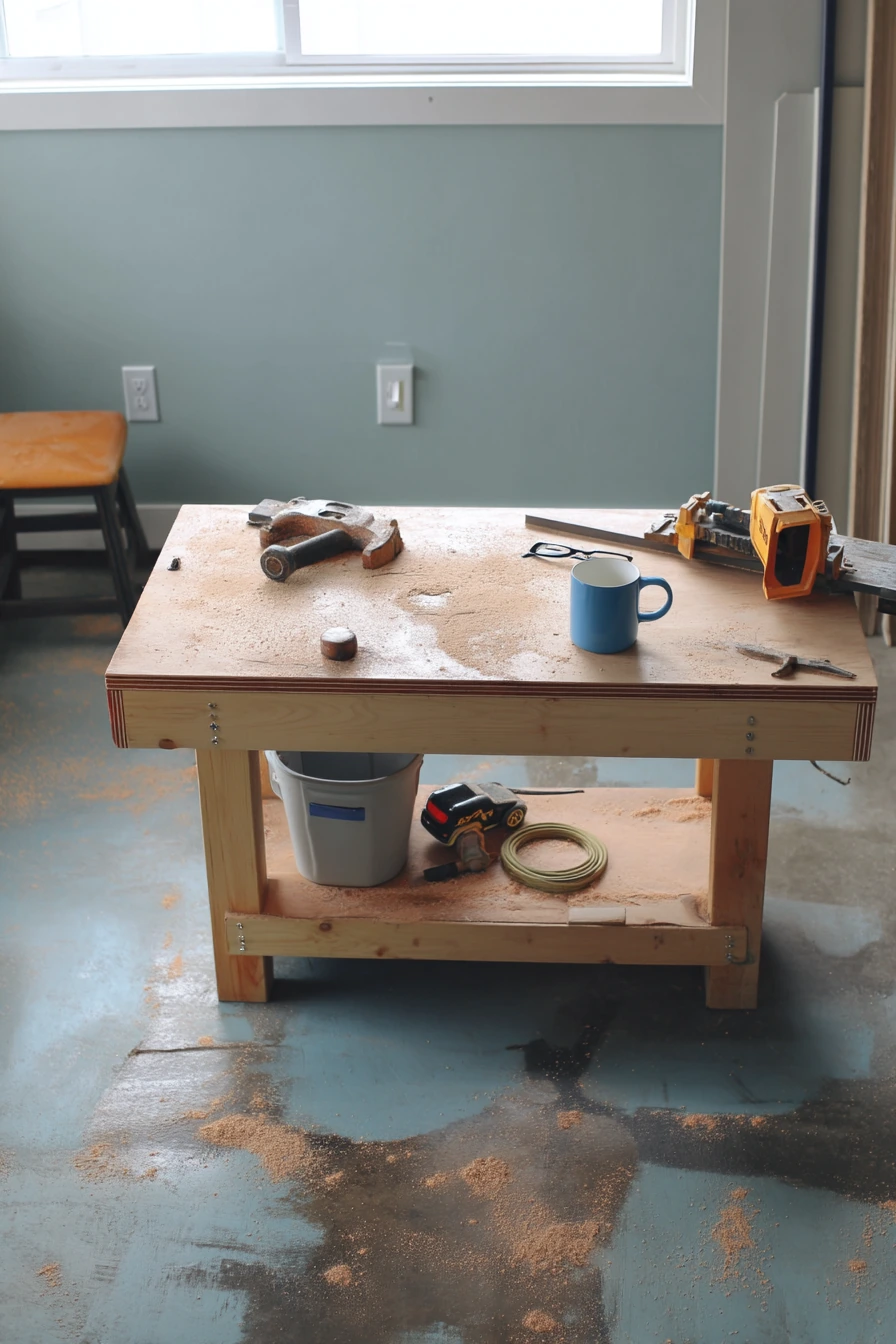
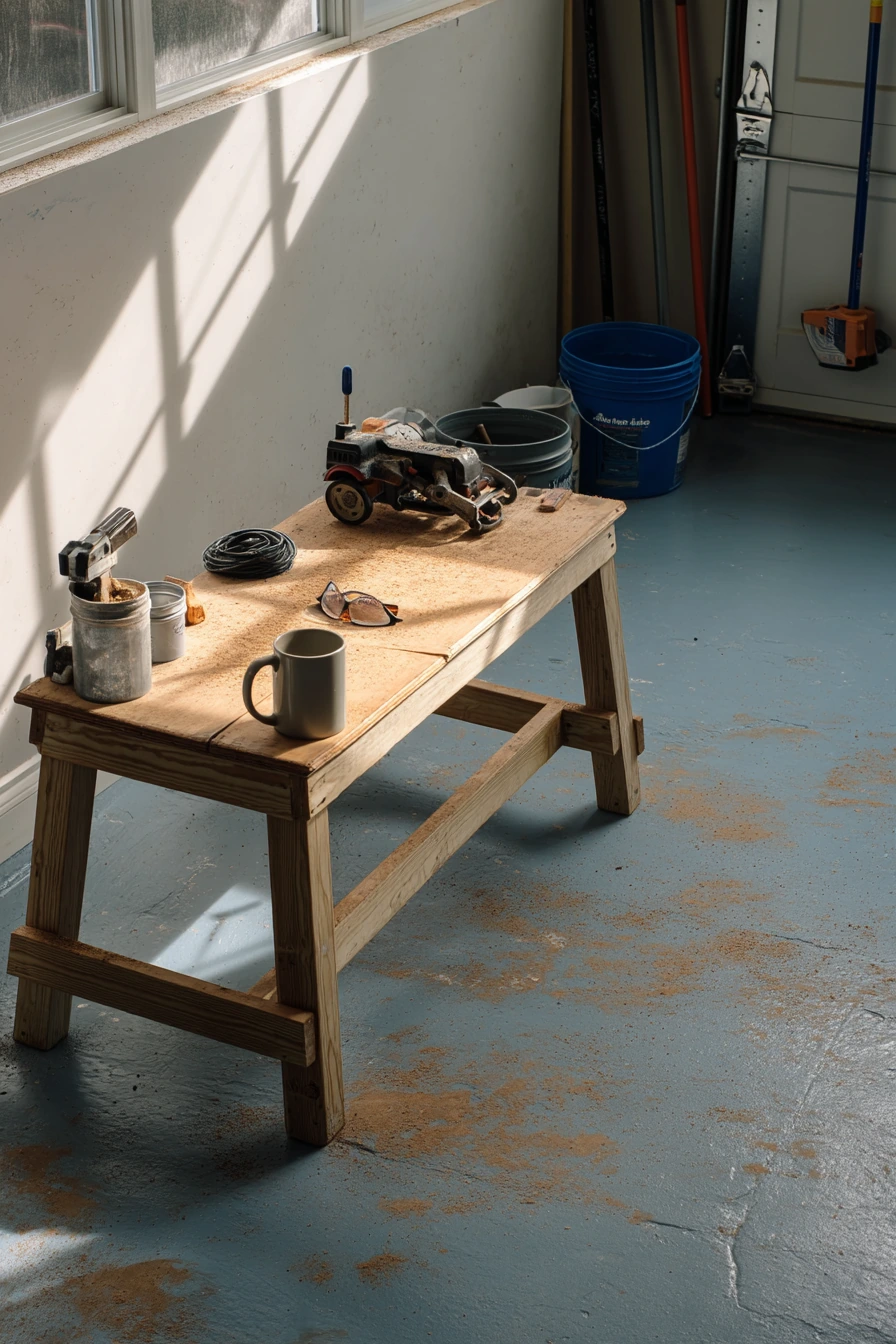
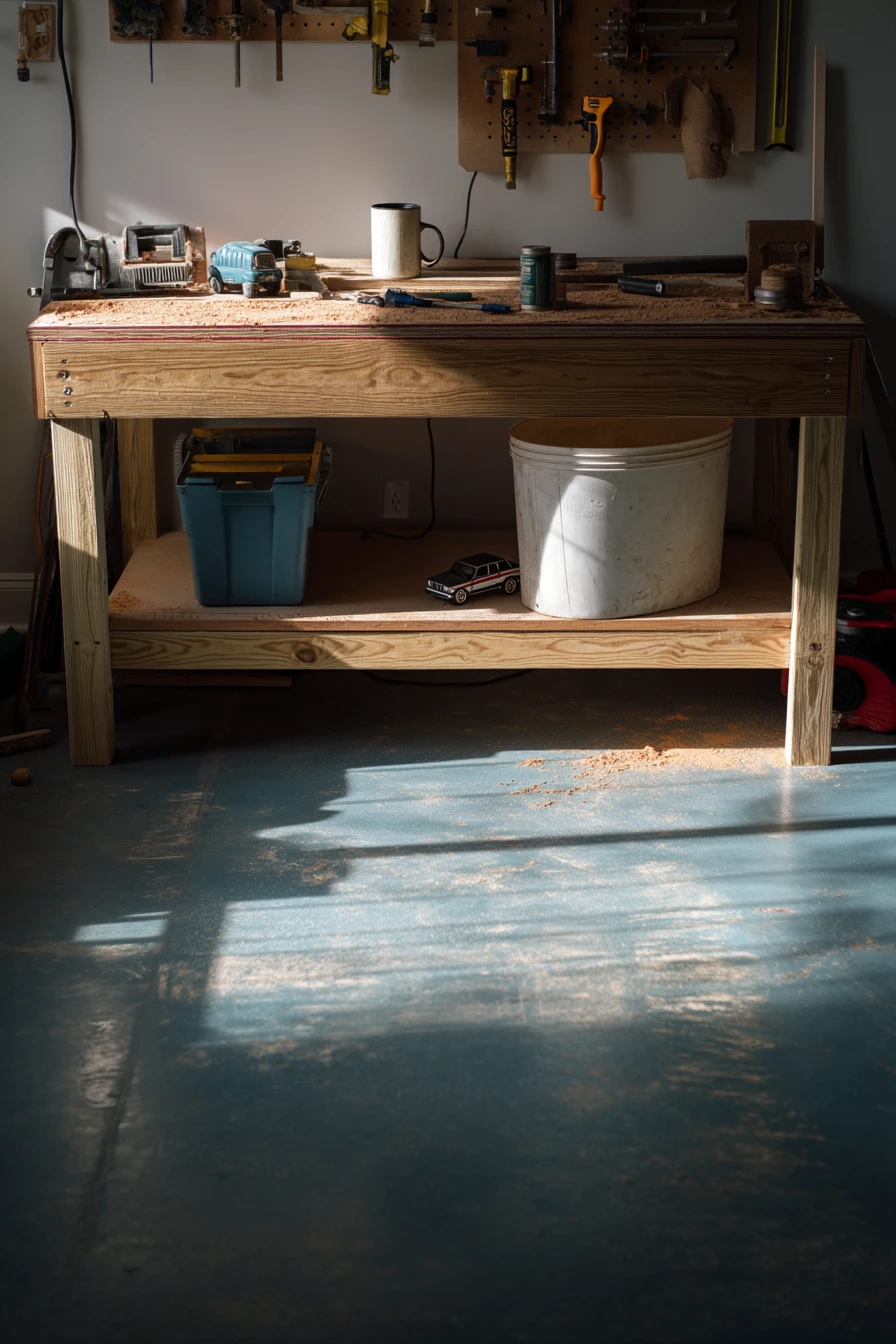
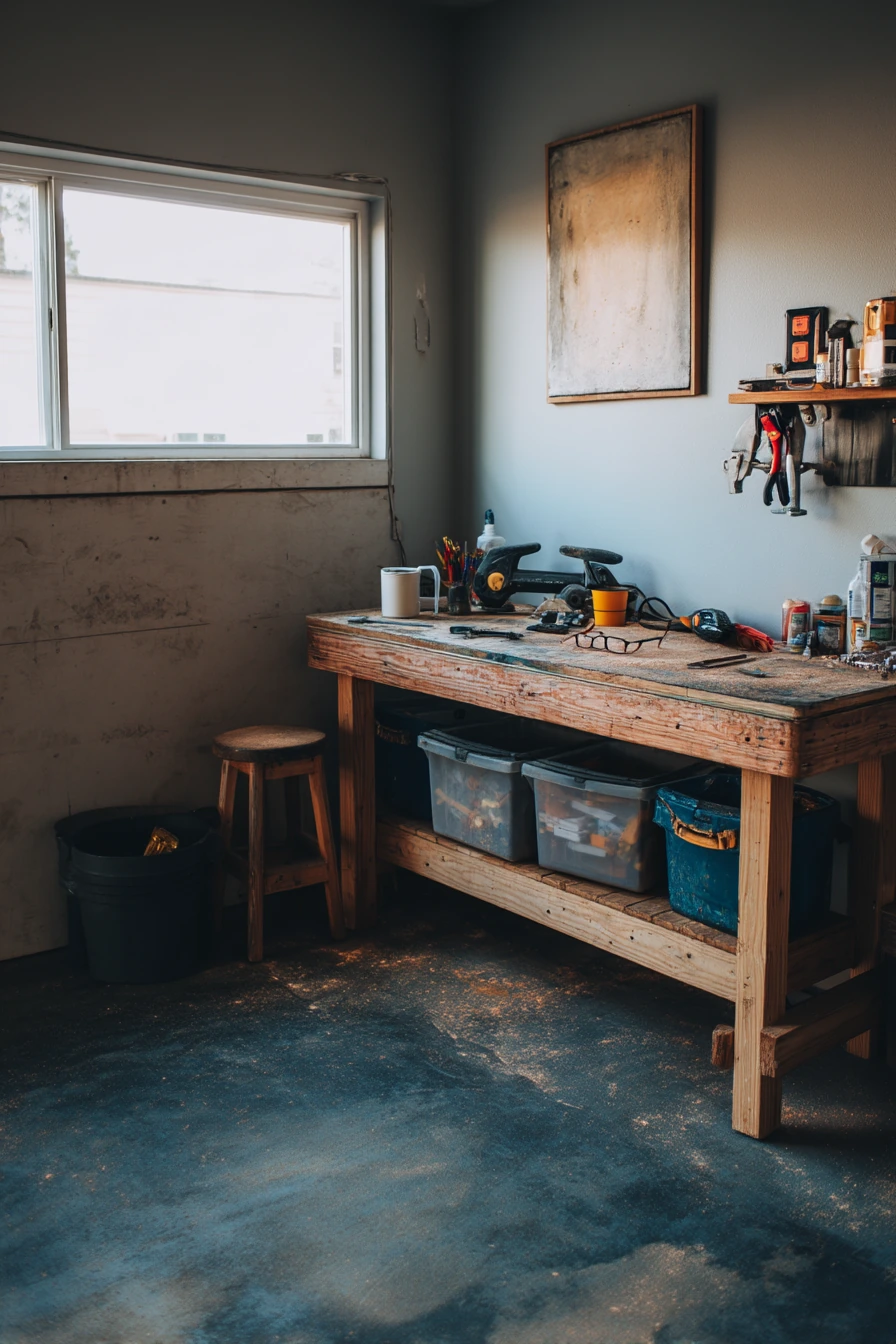
Painted concrete is one of the most budget-friendly garage flooring ideas, and it can still look good when done with care. A muted slate blue paint gives a workshop vibe that fits a woodworking bench, clamps, and storage bins. The scuffed edges and honest patina are normal in a working garage, especially where you drag lumber or roll tools.
To make painted concrete last, clean and prep well. Sweep, degrease, and rinse. Let it dry fully before painting. If the concrete is very smooth, lightly etch or sand so paint can grab. Use a porch and floor paint made for concrete, and apply two thin coats instead of one thick coat. Add a clear concrete sealer if you want better stain resistance, but keep it matte for safer footing.
Style this floor around function. Keep sawdust under control with a small shop vac parked near the bench. Use a rolled extension cord on a hook so it does not snake across the floor. Add two lidded storage bins for sandpaper, goggles, and rags. A coffee mug and reading glasses can stay on a small shelf, not the bench surface. If a kid’s toy truck ends up under the table, the blue floor hides it better than bare concrete.
- Pick a mid-tone color that hides dust and scuffs.
- Use painter’s tape at edges for a cleaner line near walls.
- Store cords on hooks to keep walking paths clear.
- Place a rubber mat at the bench to reduce leg fatigue.
- Touch up chips quickly to keep peeling from spreading.
Pro Design Tip: Paint a narrow border in a slightly darker tone around the room to frame the space and hide edge wear.
Budget Considerations: Floor paint is low cost, but prep supplies add up. If money is tight, spend on degreaser and a good roller first, then do touch-ups later.
5 Luxury Flake Floor for a Car Enthusiast
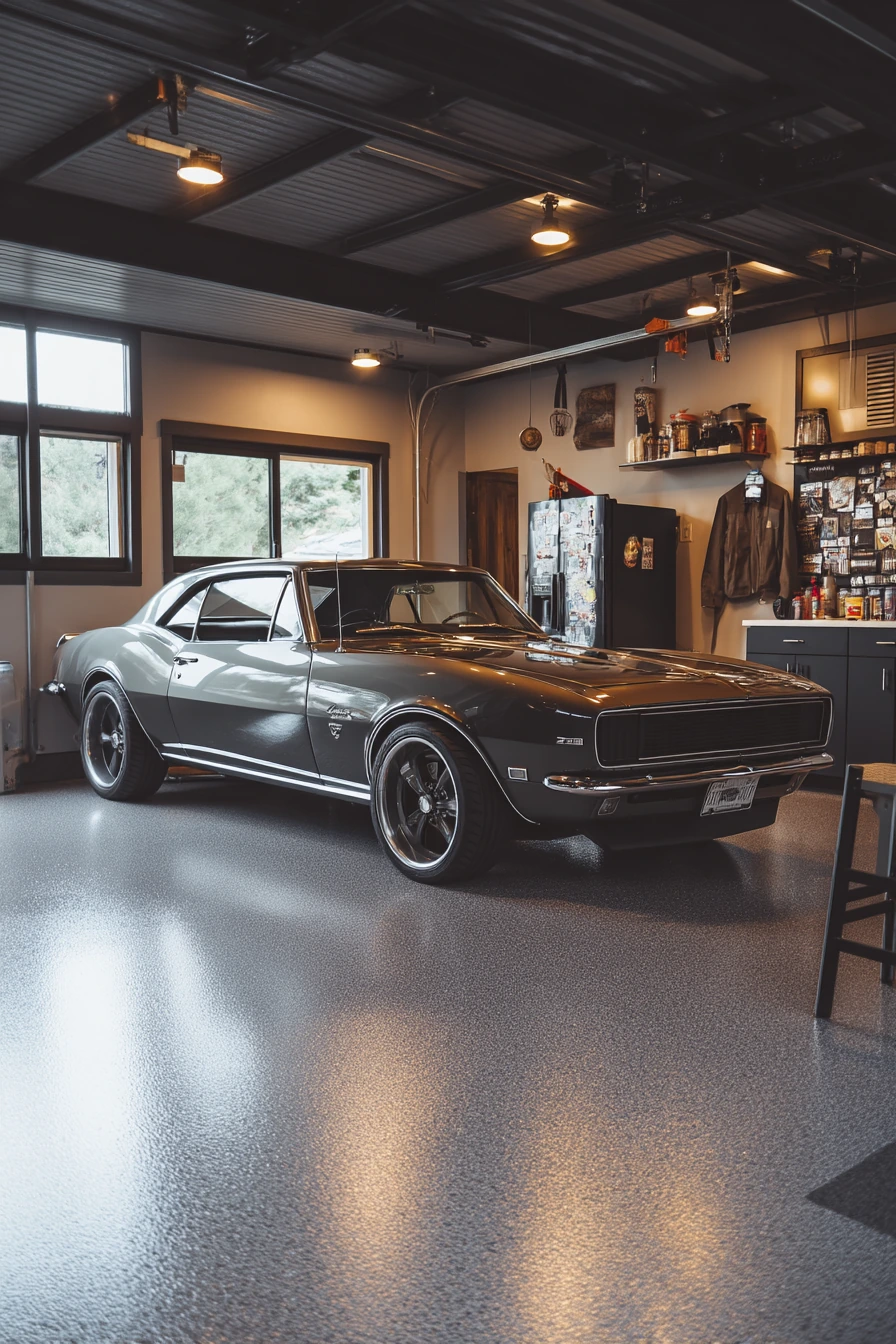
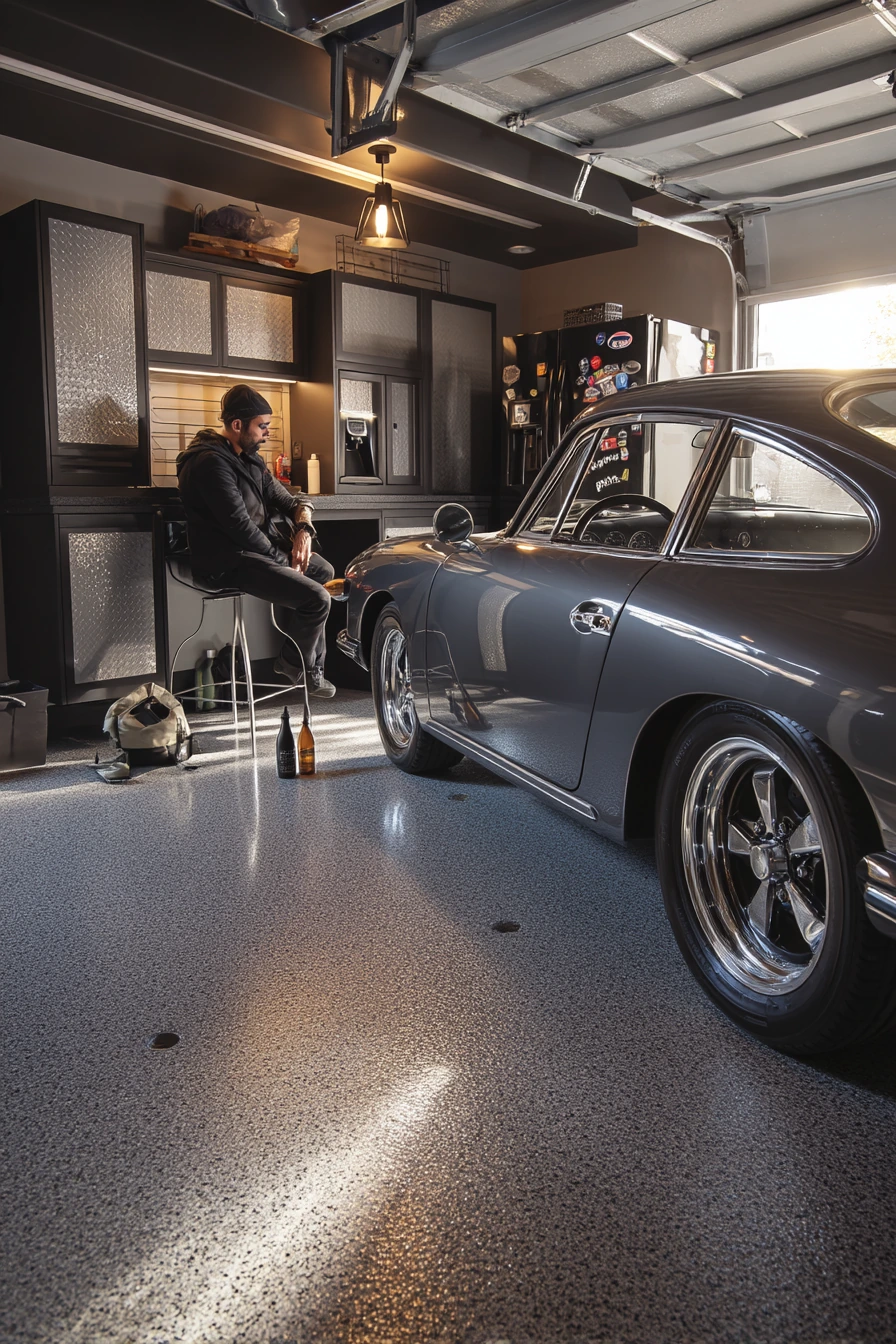
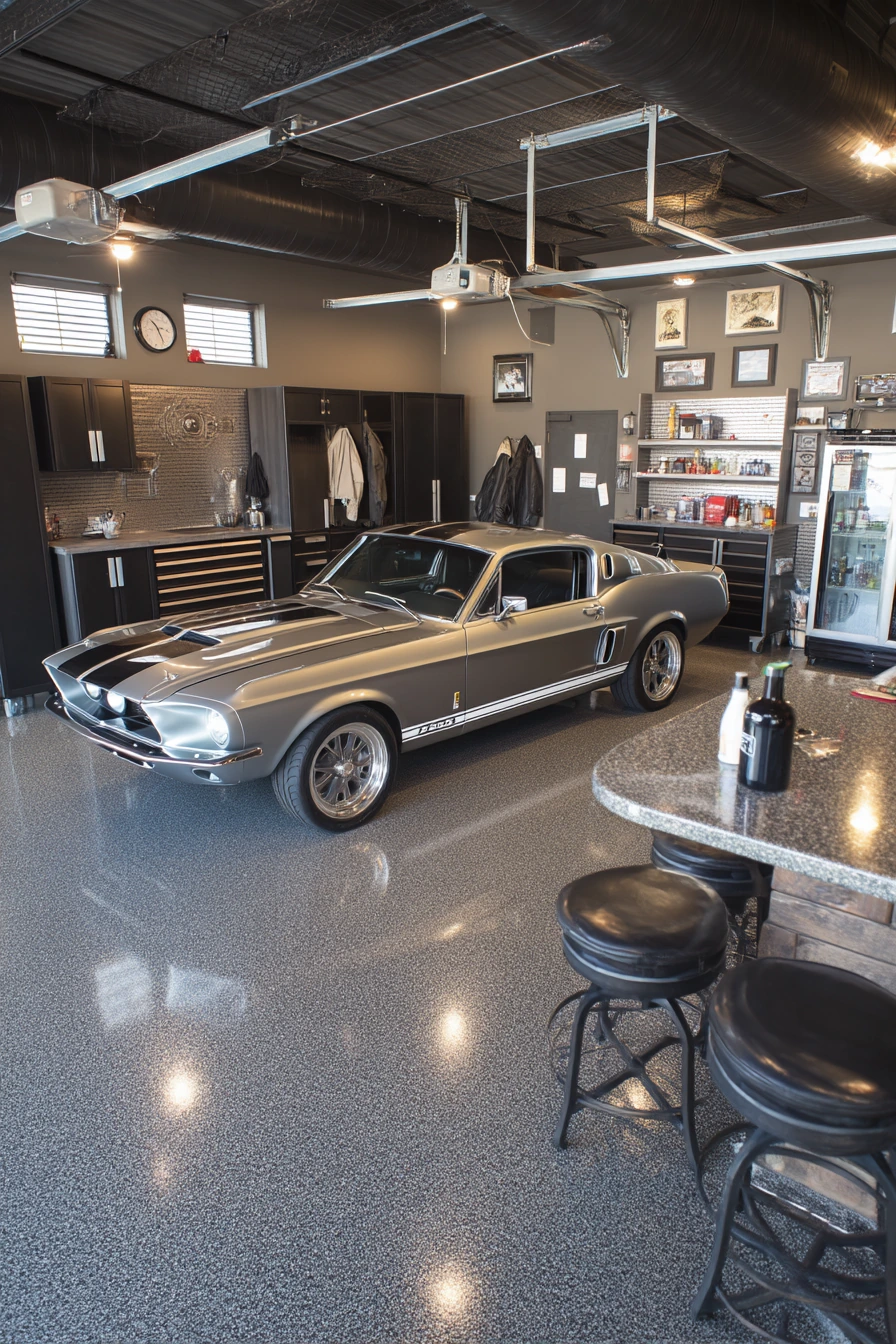
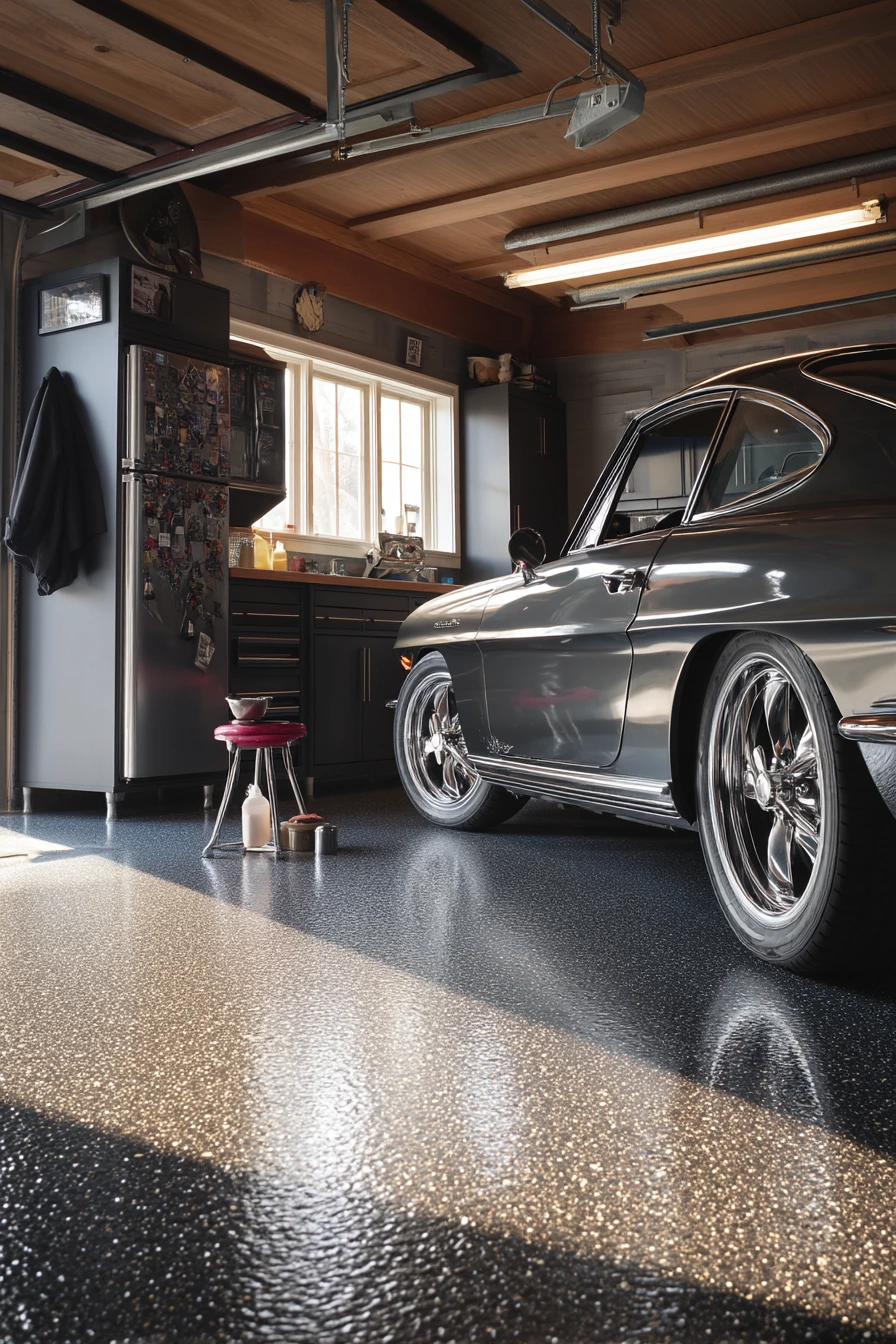
For a car enthusiast, a high-performance flake epoxy floor in charcoal, silver, and deep graphite looks polished while still being realistic for daily use. The flake blend breaks up dirt and helps hide small marks. It also gives the garage a clean backdrop for detailing tools like a tire shine bottle, microfiber cloths, and a stool with an open manual.
Think about what the floor will face: hot tires, drips, and rolling jacks. Use a topcoat rated for hot tire pickup, and keep the finish more satin than glossy so it does not show every footprint. Add a small tray or cart for car care products so spills do not sit on the epoxy. If you have a garage fridge with magnets and a counter, keep paper clutter like receipts in a bin so the room reads clean in photos.
To style the space, keep the palette tight. Match shelving and cabinets to charcoal or black, then add one metal accent like brushed steel. Hang the owner’s jacket on a single hook to reduce visual mess. Use a mix of cool daylight and a warm shop lamp to reduce harsh shadows when you work. A simple runner by the entry helps catch grit that can scratch when you roll creepers or stools.
- Use a topcoat made to resist hot tire pickup.
- Keep detailing liquids on a tray to prevent stains.
- Add soft, even lighting for both photos and work.
- Use microfiber towels stored in a closed bin to stay clean.
- Protect high-traffic lanes with a thin mat or runner.
Pro Design Tip: Choose flake size and density that match your garage scale; a medium flake in a two-car bay looks balanced and hides dust well.
Budget Considerations: Professional epoxy costs more but often includes grinding and warranty. If you DIY, spend extra on the topcoat since it takes the most abuse.
6 Soft-Toned Garage Flooring for a Mudroom Combo
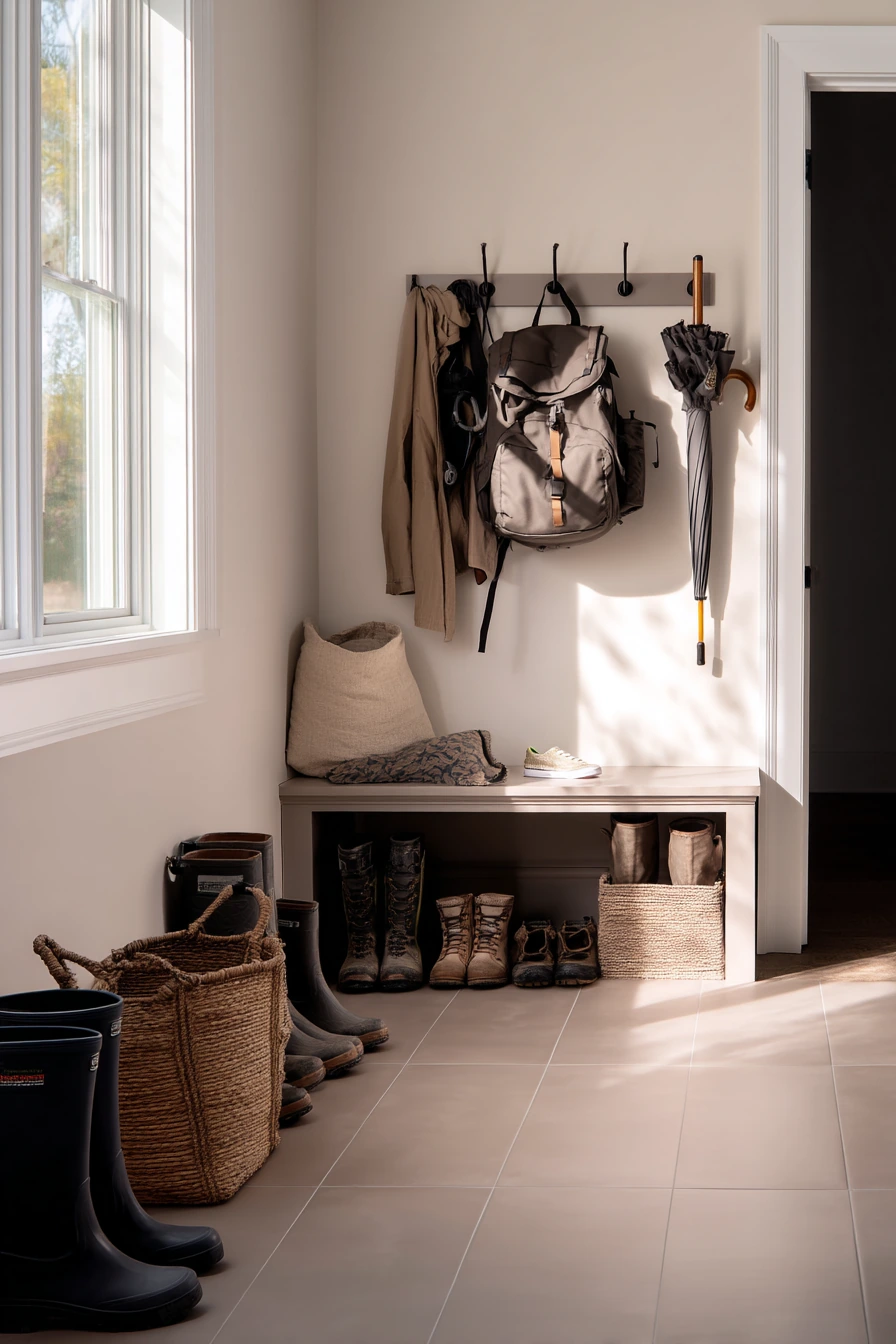
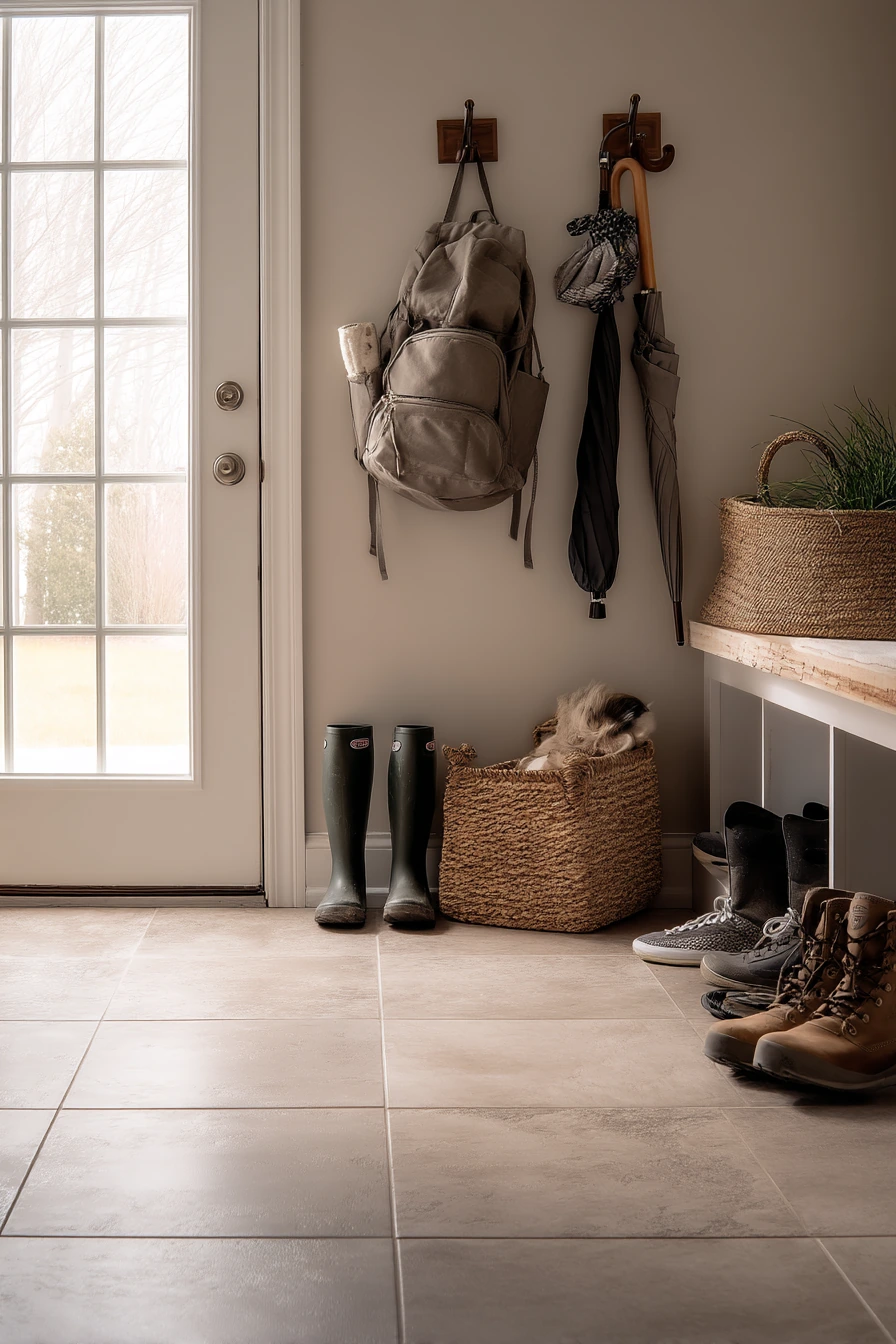
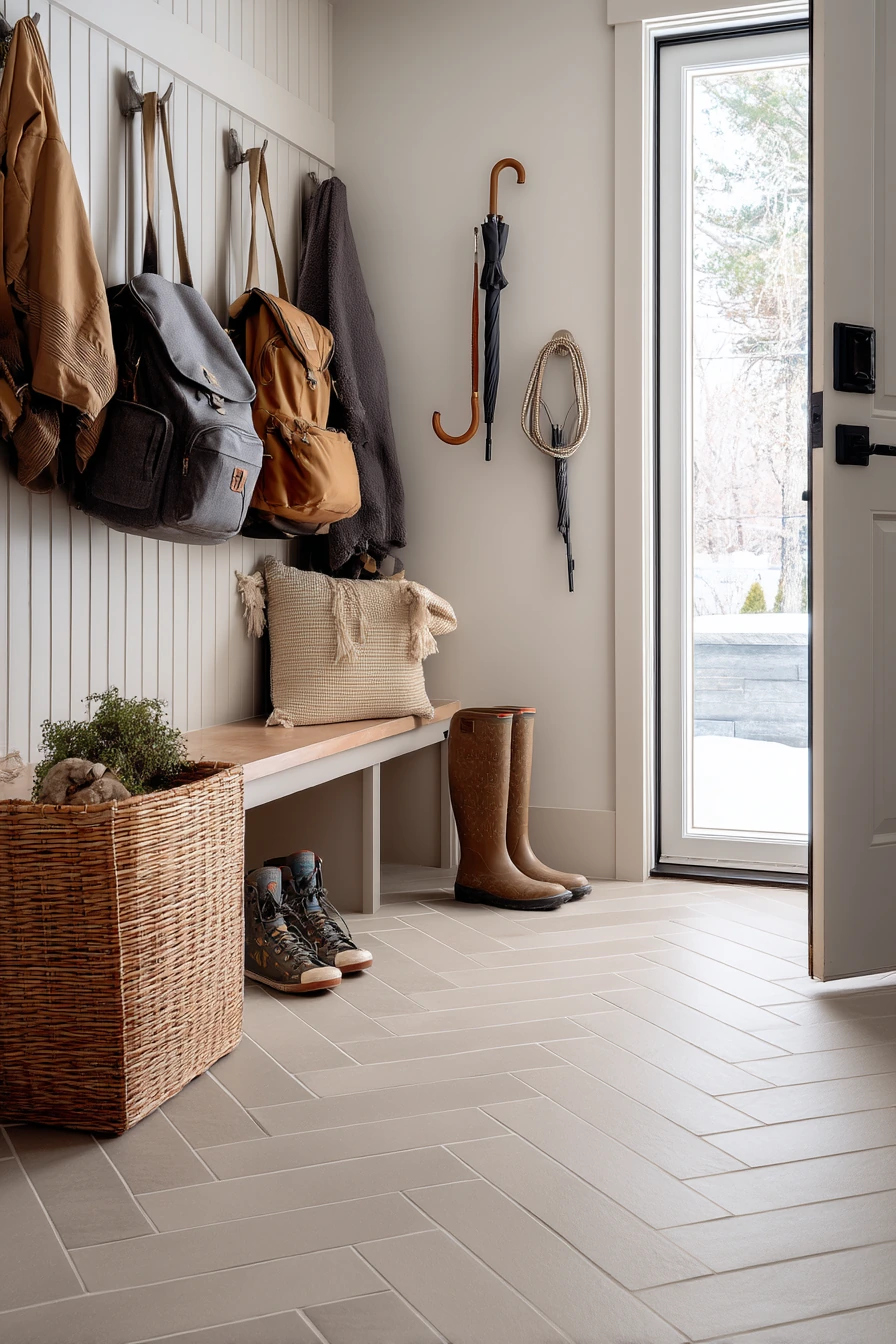
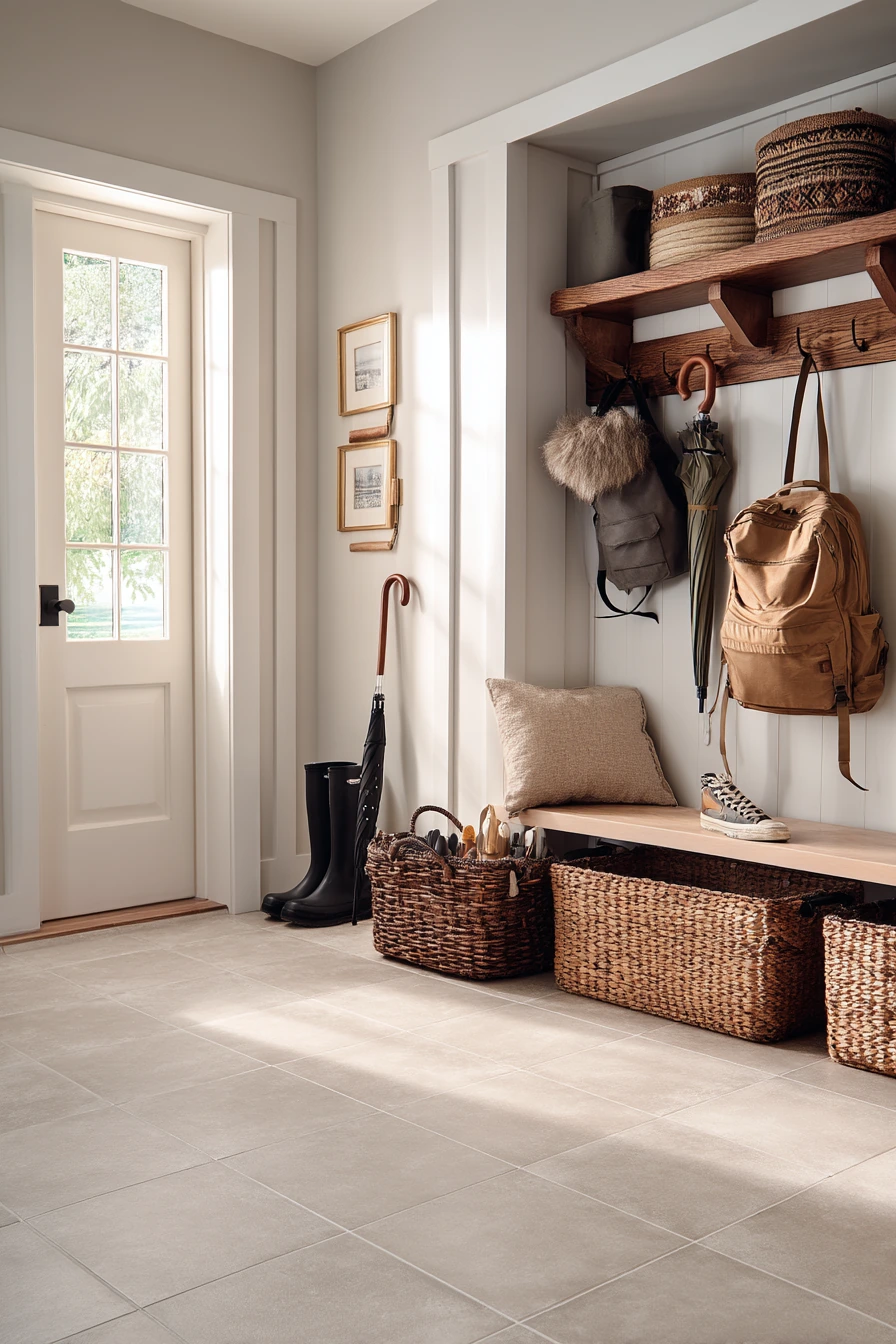
A mudroom-garage hybrid needs a floor that handles wet boots, backpacks, and daily traffic. Slip-resistant porcelain-look tiles in warm taupe are a smart choice because they are easy to mop and do not absorb water like unfinished concrete. The warm tone also makes the space feel calm and home-like, not like a cold utility room.
To make the setup work, build a clear “wet zone.” Place the tile in the entry area, then add a boot tray, an umbrella stand, and a basket of gloves close to the door. Hang the dog leash on a hook at hand level. Keep a grocery tote in a wall cubby so it does not end up on the floor. If one child’s sneaker is always left by the threshold, add a small shoe bin right there so it has a spot.
Styling can be simple and soft. Use pale wall paint and light wood shelves to match the warm taupe tile. Add one woven basket for hats or scarves to bring a hygge feel without clutter. Since tile grout can darken, seal it and wipe spills quickly. A small bench makes it easier to pull off wet boots and keeps muddy foot traffic from moving deeper into the garage.
- Choose a textured tile rated for slip resistance.
- Seal grout to reduce staining from mud and salt.
- Create a wet zone with trays and washable mats.
- Use wall hooks for backpacks to keep floors clear.
- Add a bench and shoe bin to control doorway clutter.
Pro Design Tip: Use larger-format tiles with a grout color close to the tile tone to make cleaning easier and keep the floor looking calm.
Budget Considerations: Tile and installation can be pricey. Save by tiling only the entry path and using a durable mat for the rest of the garage.
7 Modern Basement-Entry Garage with Rubber Flooring
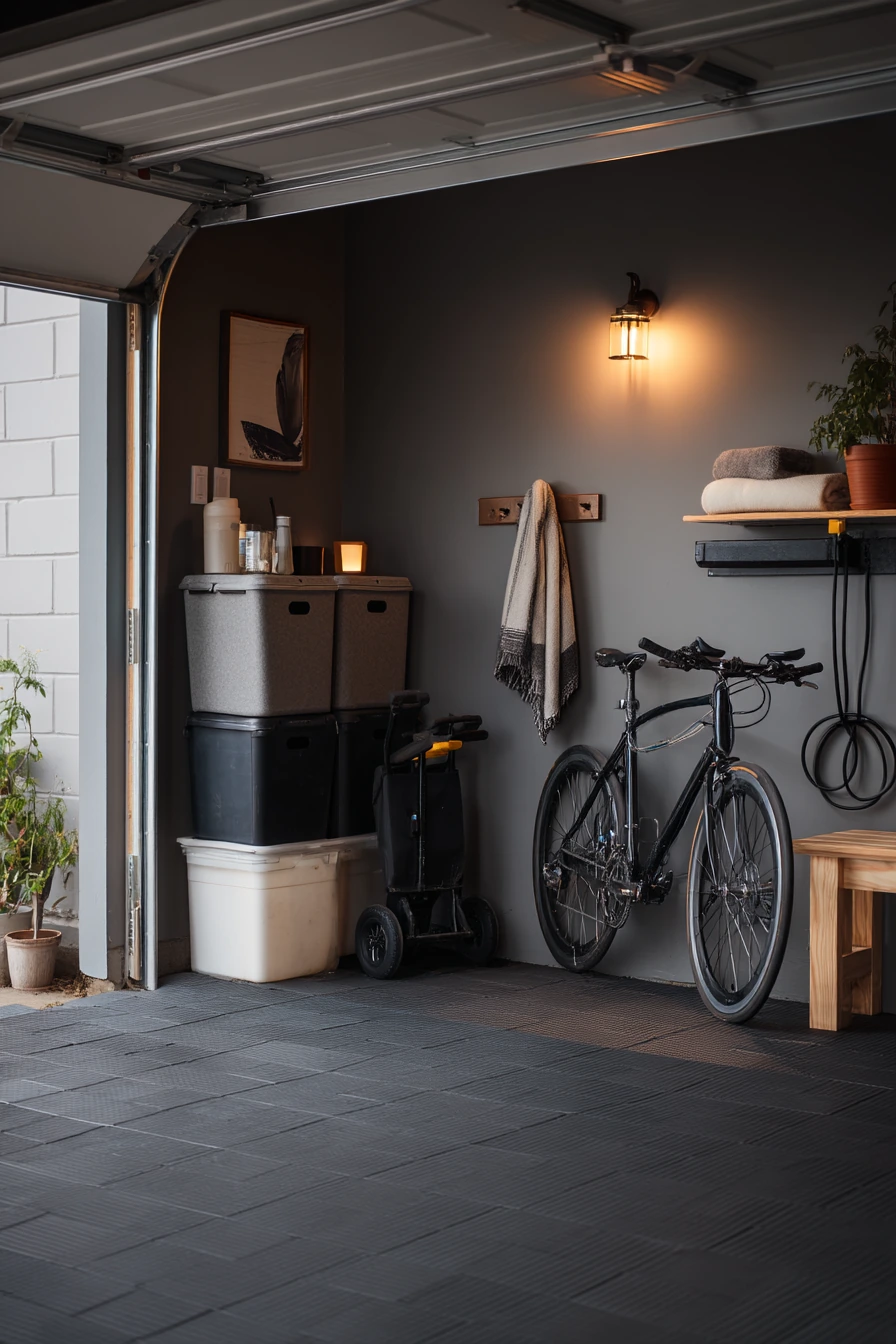
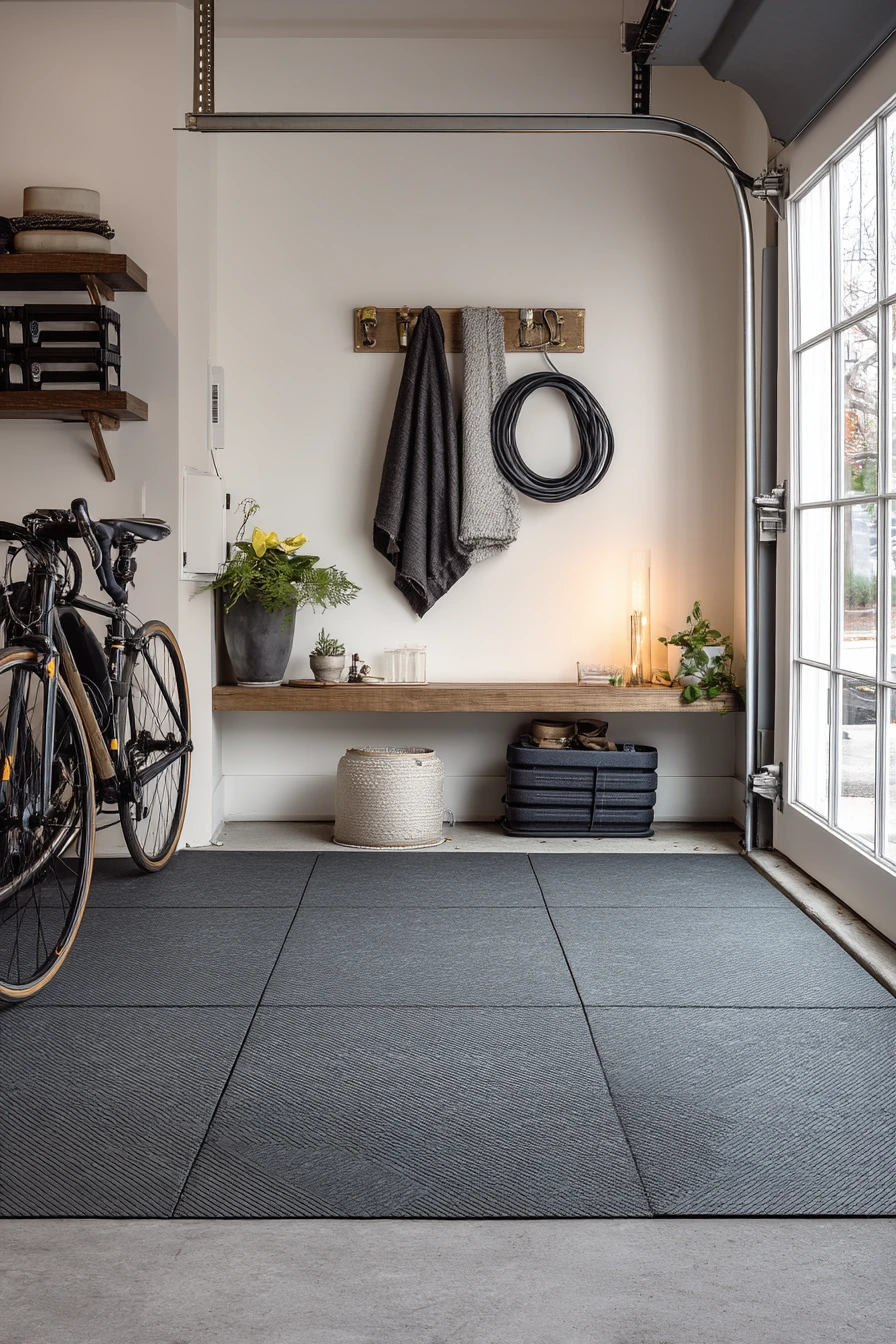
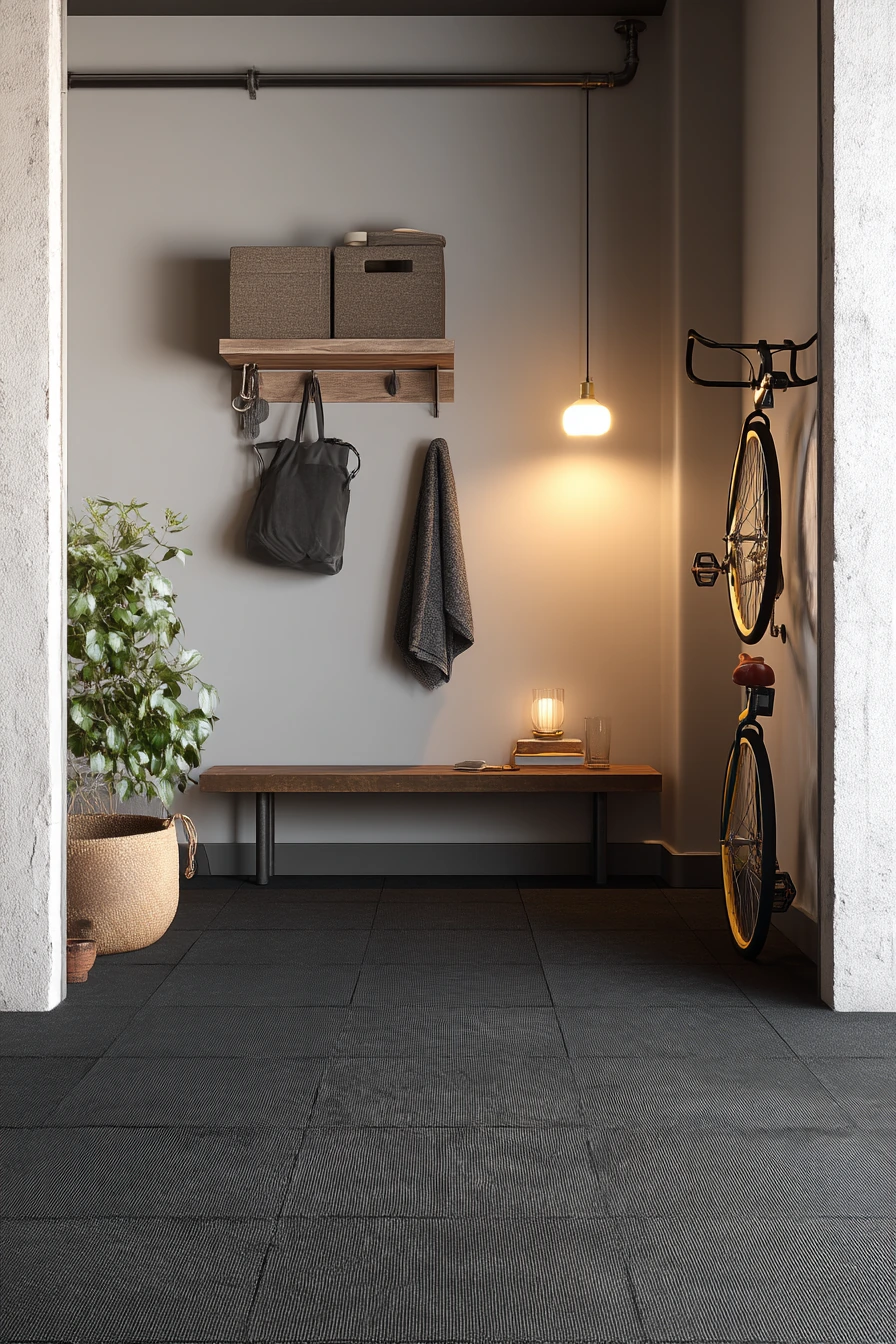
A basement-entry garage often becomes the main daily doorway, so comfort and traction matter. Interlocking rubber tiles in charcoal are tough, forgiving on joints, and quieter underfoot than hard coatings. The subtle texture helps with grip when you come in with wet shoes, and it stands up well to strollers, a bike pump, and stacked seasonal bins.
Rubber tile works best when the base is fairly flat and dry. Sweep the concrete, check for moisture issues, and fix any water seepage before installing. Let the tiles acclimate to temperature so they do not shrink later. If you have an outlet near the entry, manage cords with a cable cover or wall clips, so a charging cable does not become a trip hazard.
To style the space, use the rubber floor as a neutral base and focus on tidy storage. Keep a bench by the door for a folded blanket, a water glass, and quick drop items like keys. Add a small plant on a shelf for a softer look, but use a tray under the pot. Warm lamp glow plus overcast daylight can make the charcoal floor look rich, so choose light-colored bins or labels to keep it from feeling too dark.
- Pick thicker tiles for comfort and better sound control.
- Use edge ramps at doorways to reduce tripping.
- Keep cords off the floor with clips or a cover.
- Store stroller and bins in marked parking spots.
- Clean with mild soap to avoid residue and slipping.
Pro Design Tip: Lay tiles so the seams run away from the doorway path; it looks cleaner and helps wheels roll smoother.
Budget Considerations: Rubber tiles cost more than paint but are easy to install. Save by covering only the entry lane and adding a tougher mat at the threshold.
8 Bright Utility Garage with Decorative Stenciled Concrete
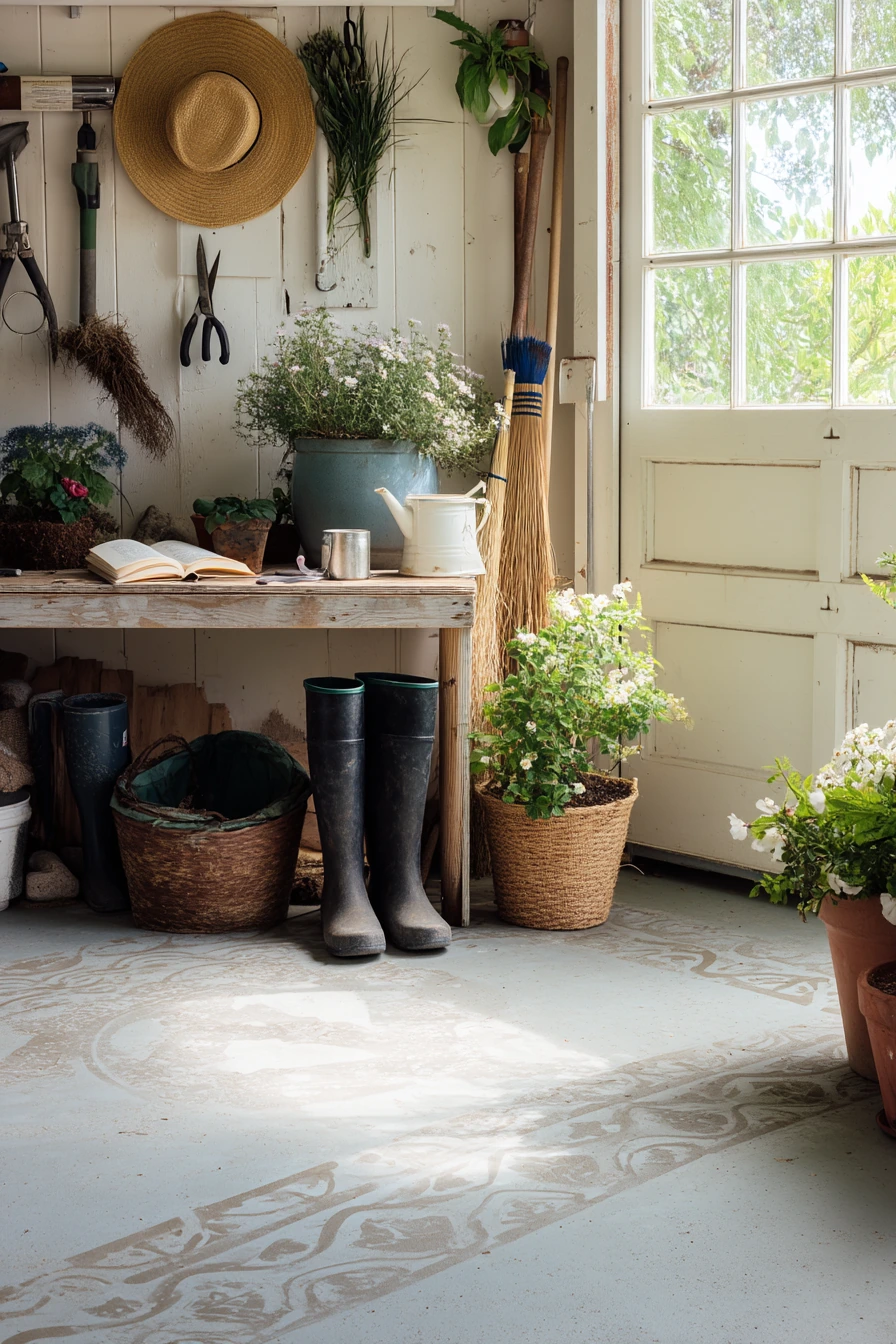
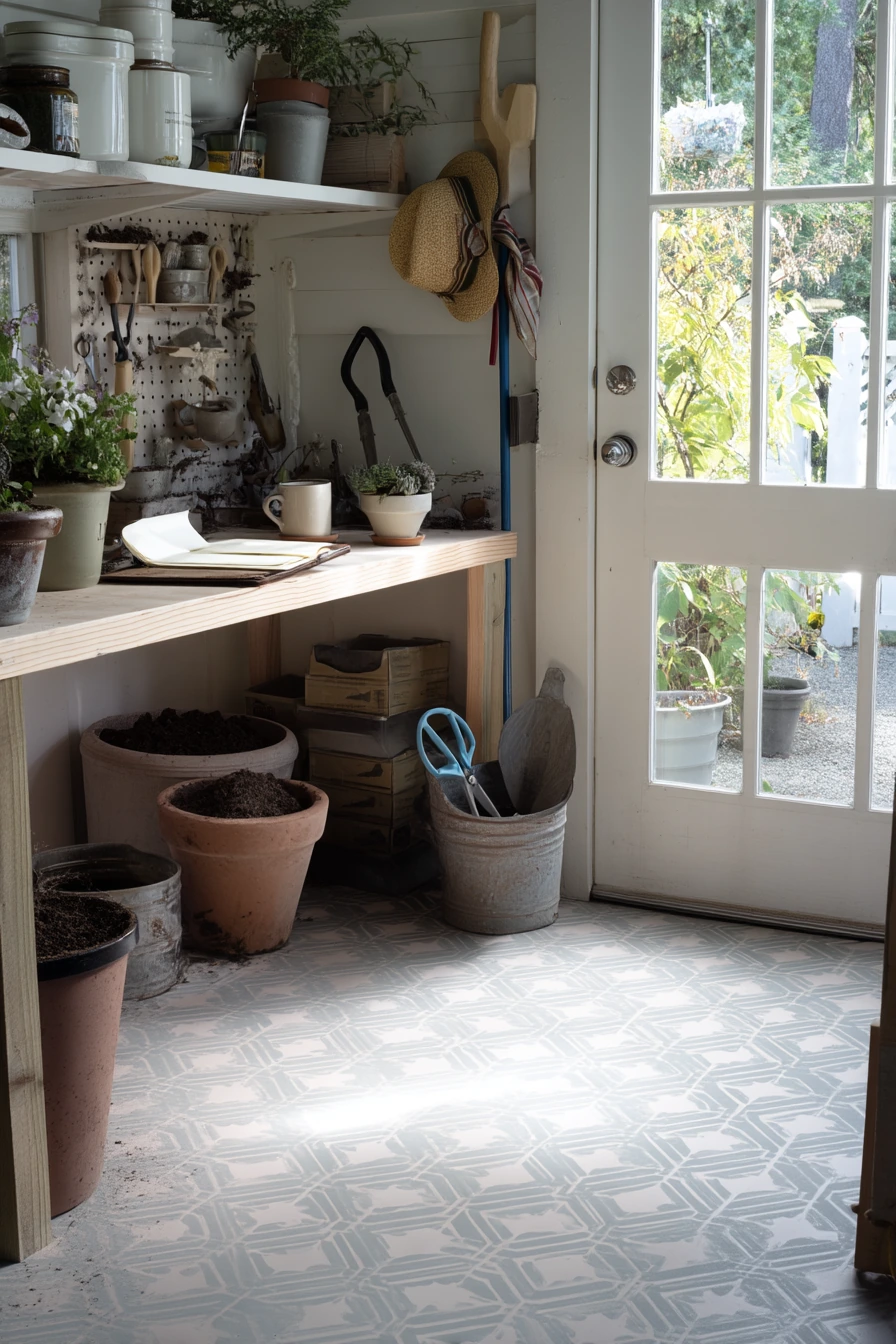
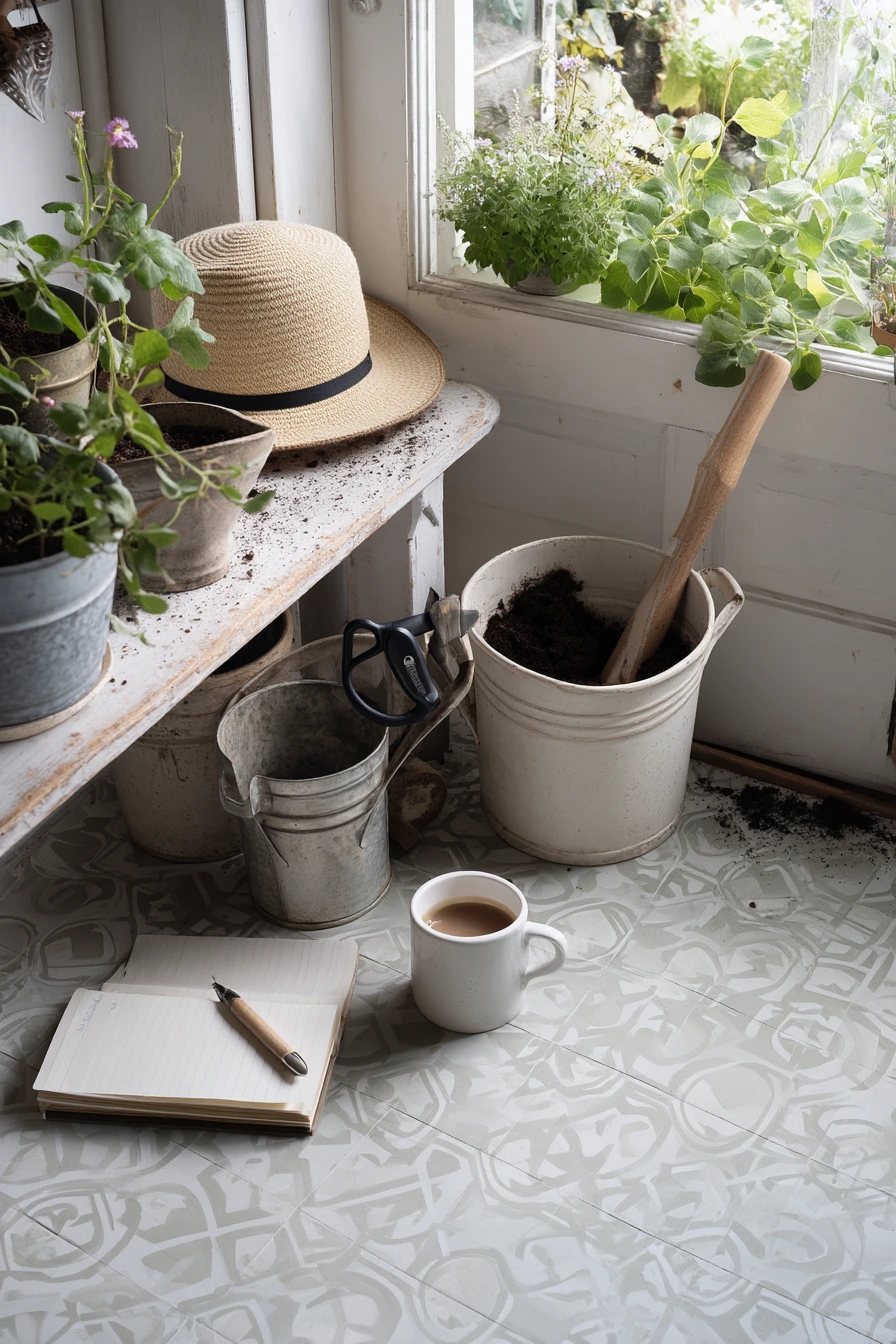
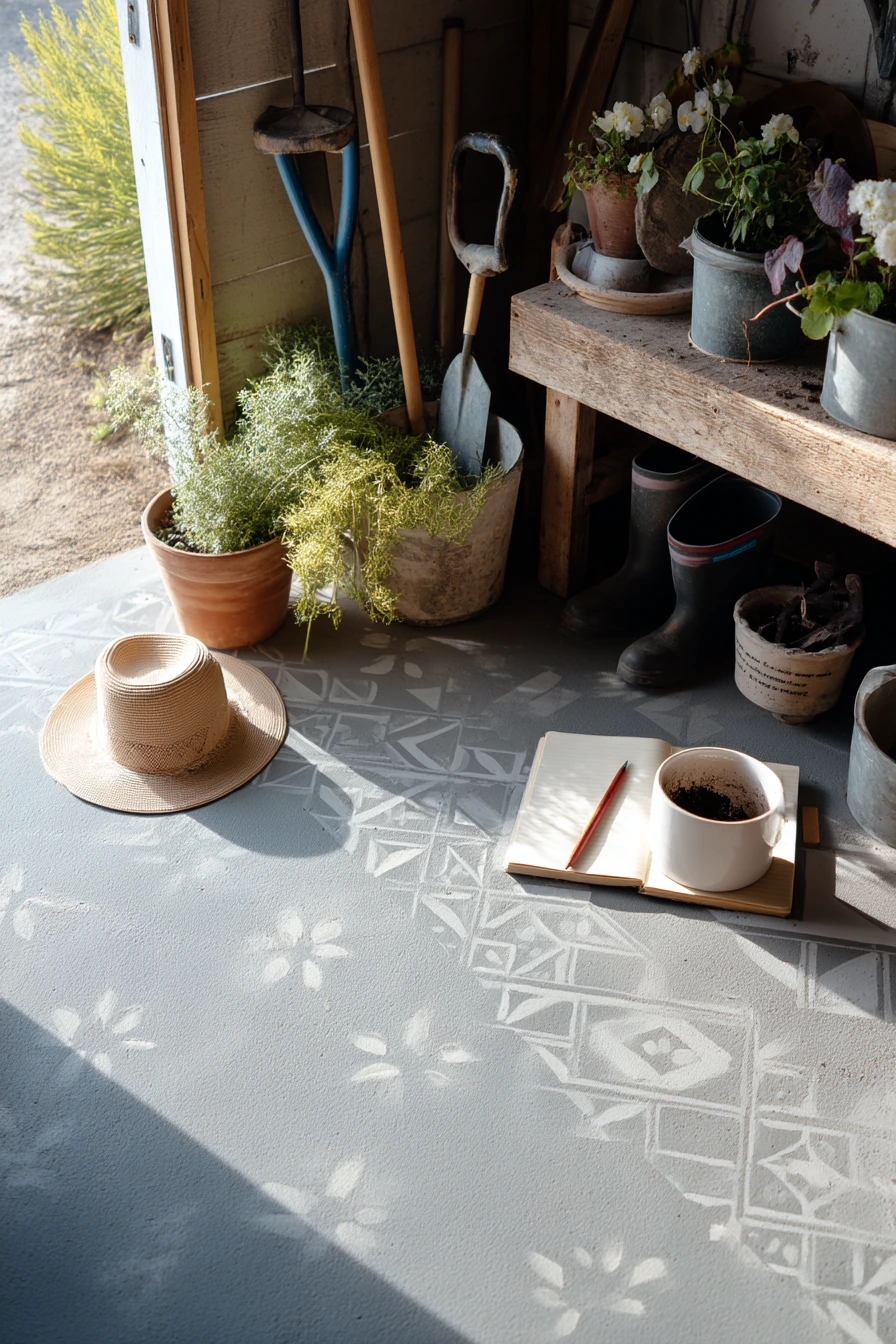
If you want garage flooring ideas that feel personal, a stenciled concrete floor can add pattern without a full renovation. A soft mineral gray base with a faint geometric border feels light and handmade. It suits a craft corner next to garden tools, ceramic pots, and potting soil. Small bits of tracked-in dirt will happen, and a mid-tone gray hides it better than bright colors.
Start with clean, sound concrete. Patch chips, then paint or stain the base color. After it cures, tape off the border and use a stencil for the pattern. Keep the design subtle so it does not look busy once the garage fills with supplies. Finish with a clear sealer made for floors. Use a matte or satin finish to reduce glare and help the pattern look natural in late-morning window light.
Style the zone like a small studio. Hang a sun hat on a peg and keep pruning shears in a wall caddy. Store potting soil in a lidded bin to cut dust on the floor. Keep an open notebook and a tea mug on a narrow shelf, not on the work surface where spills happen. If you want the area to photograph well for Pinterest, place two matching ceramic pots and one small basket, then leave some open floor space so the border can show.
- Choose a simple stencil pattern that reads well from a distance.
- Seal the floor to protect the design from scuffs and water.
- Use lidded bins for soil and small craft supplies.
- Add a washable mat under messy potting tasks.
- Keep one open area so the border is visible in photos.
Pro Design Tip: Repeat the stencil color in one small item, like a pot or hook, so the pattern looks tied into the whole space.
Budget Considerations: Stencils and sealer are affordable, but time is the big cost. If you need a quick fix, stencil only a border and leave the center solid.
9 Two-Car Garage with Interlocking Tiles for Storage and Staging
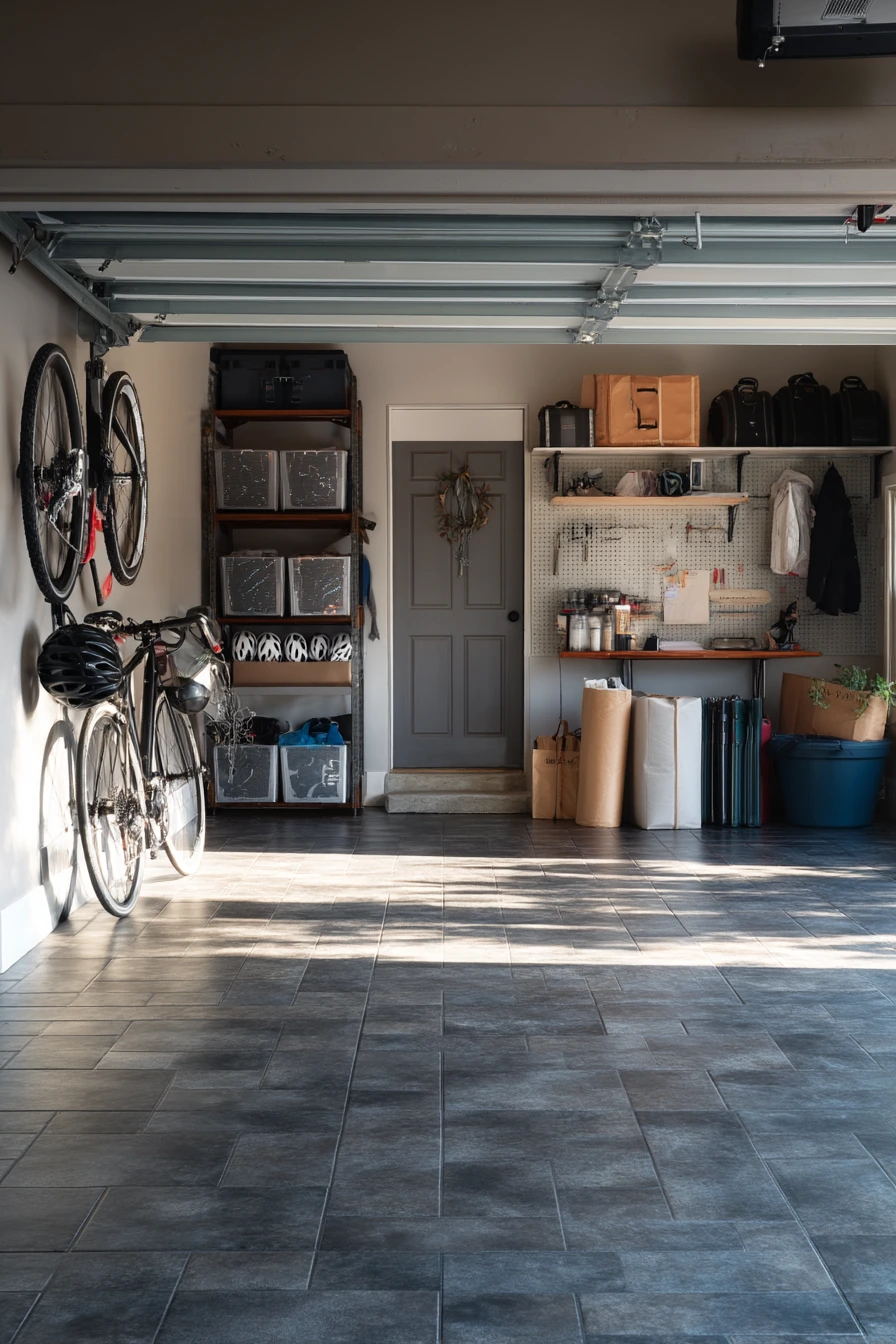
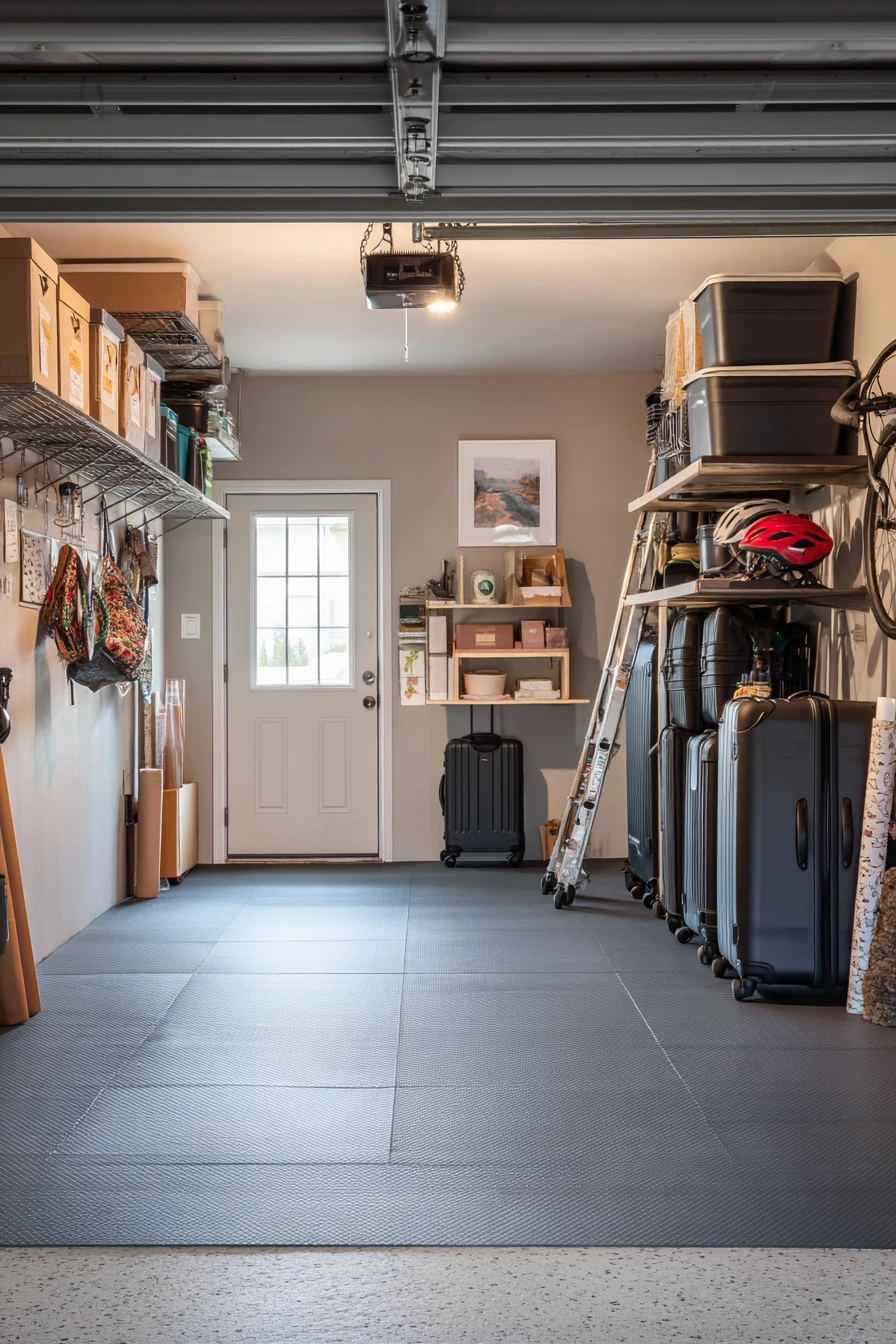
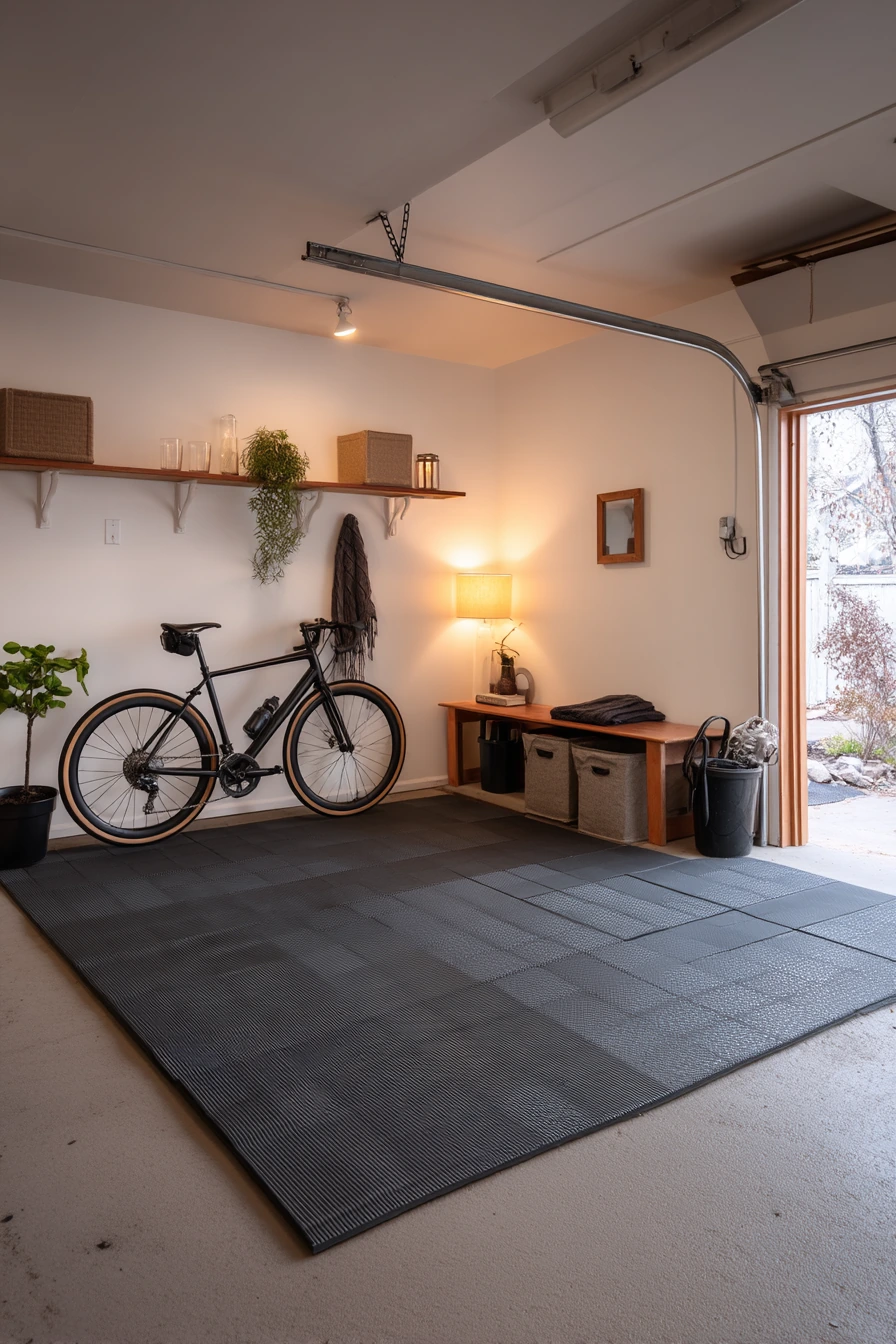
A busy two-car garage needs a floor that can change with the seasons. Interlocking vinyl tiles in deep slate are practical because you can install them fast, replace damaged pieces, and move them if you rework storage. The matte finish helps hide dust and footprints, which is helpful when one side is used for labeled bins, a folding ladder, and holiday staging.
Vinyl tiles like a smooth, clean surface. Remove loose debris and check for major cracks. If the garage gets very hot, look for tiles rated for temperature swings. Plan for expansion gaps at the edges so the floor does not buckle. In areas where you store suitcases or stack boxes, use shelving so weight does not press on tile seams over time.
To style a two-car garage, create “zones” that match how you live. One wall can be the storage wall with matching bins and clear labels. Keep a tote of gift wrap in a closed container so it stays clean. Add a small shelf for a pen and keys so they do not disappear. Leave a wide walking lane from the overhead door to the house entry. That open lane helps the floor feel calm and makes the deep slate color look more modern.
- Choose interlocking tiles with a matte finish for a softer look.
- Leave an expansion gap around the perimeter.
- Replace single tiles if oil or paint damages a spot.
- Use shelving to keep heavy items off tile seams.
- Keep a clear walking lane for daily entry and safety.
Pro Design Tip: Use the same bin style and label font across the storage wall so the garage looks organized even when it is full.
Budget Considerations: Vinyl tile prices vary by thickness. If you are saving money, buy thicker tiles only for the main traffic path and use a thinner style in low-use corners.
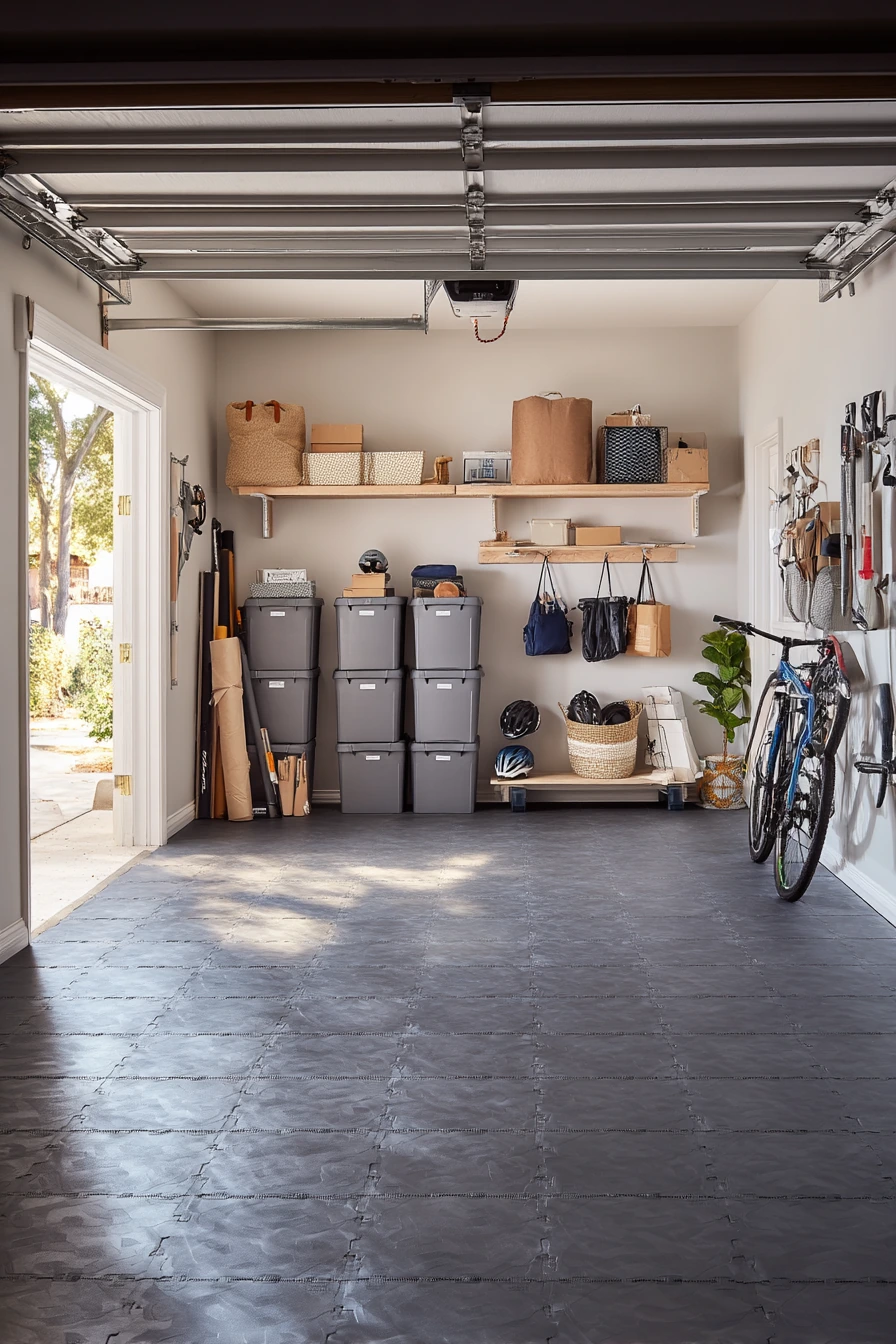
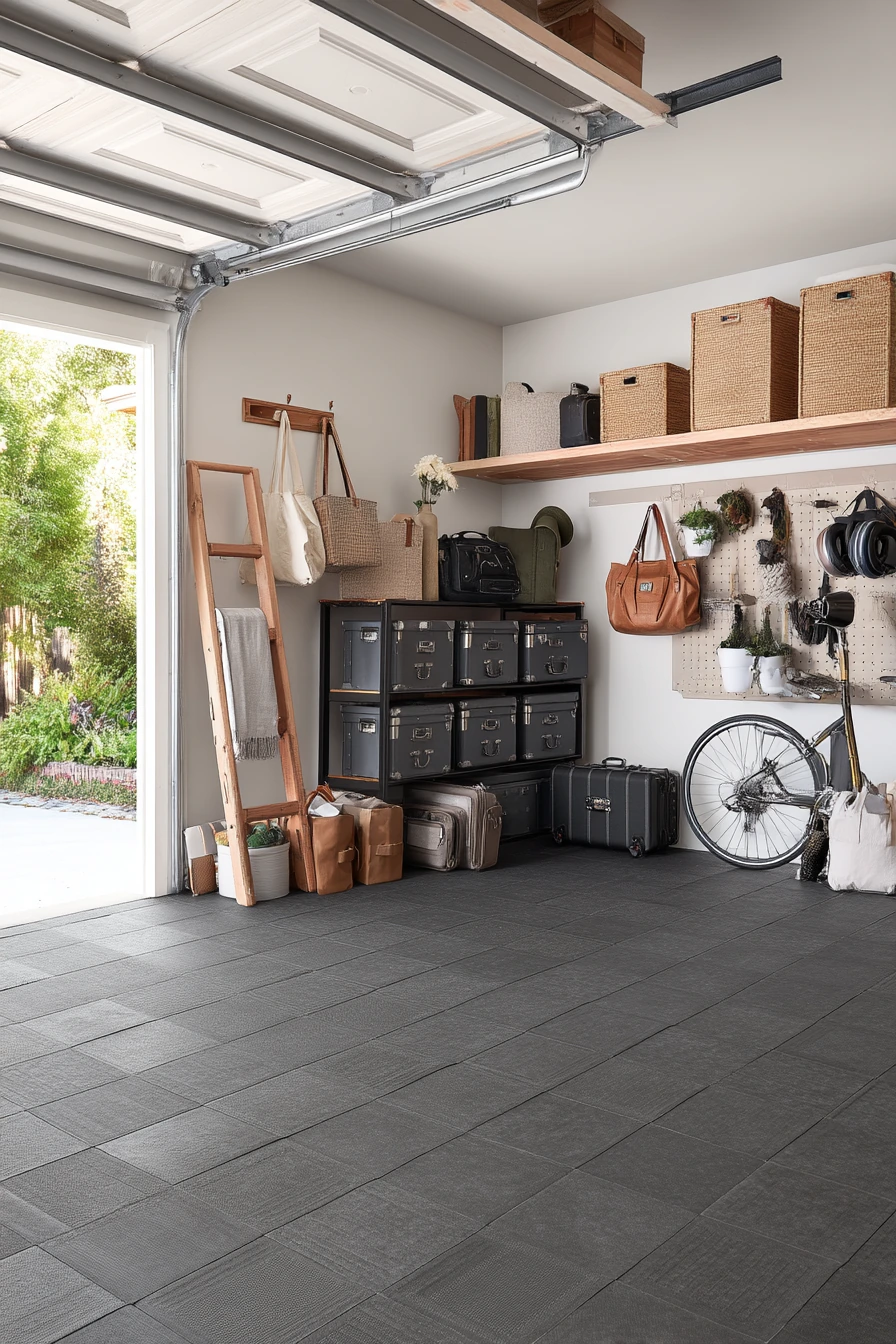
10 Weekend Project Garage with DIY Floor Paint Upgrade
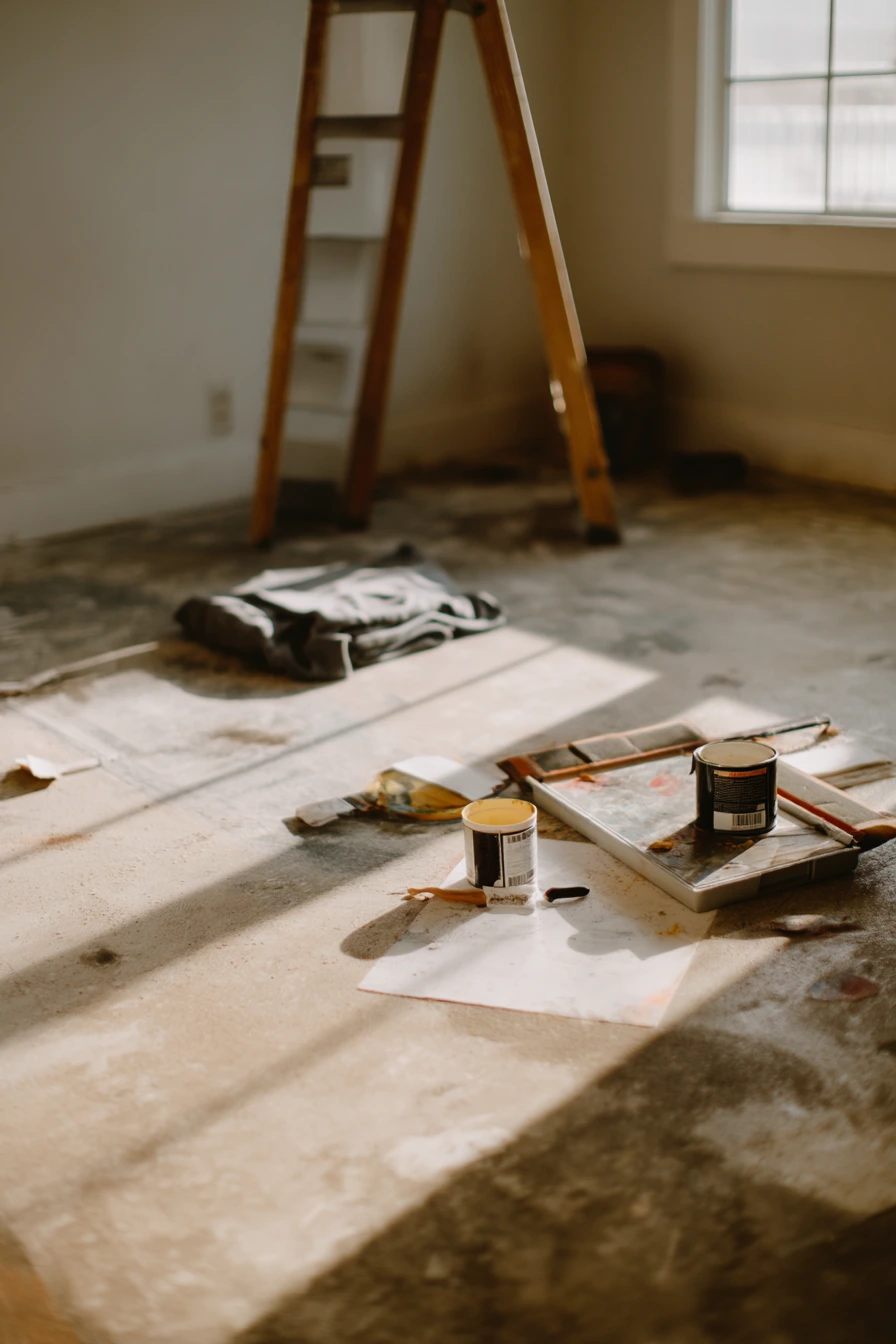
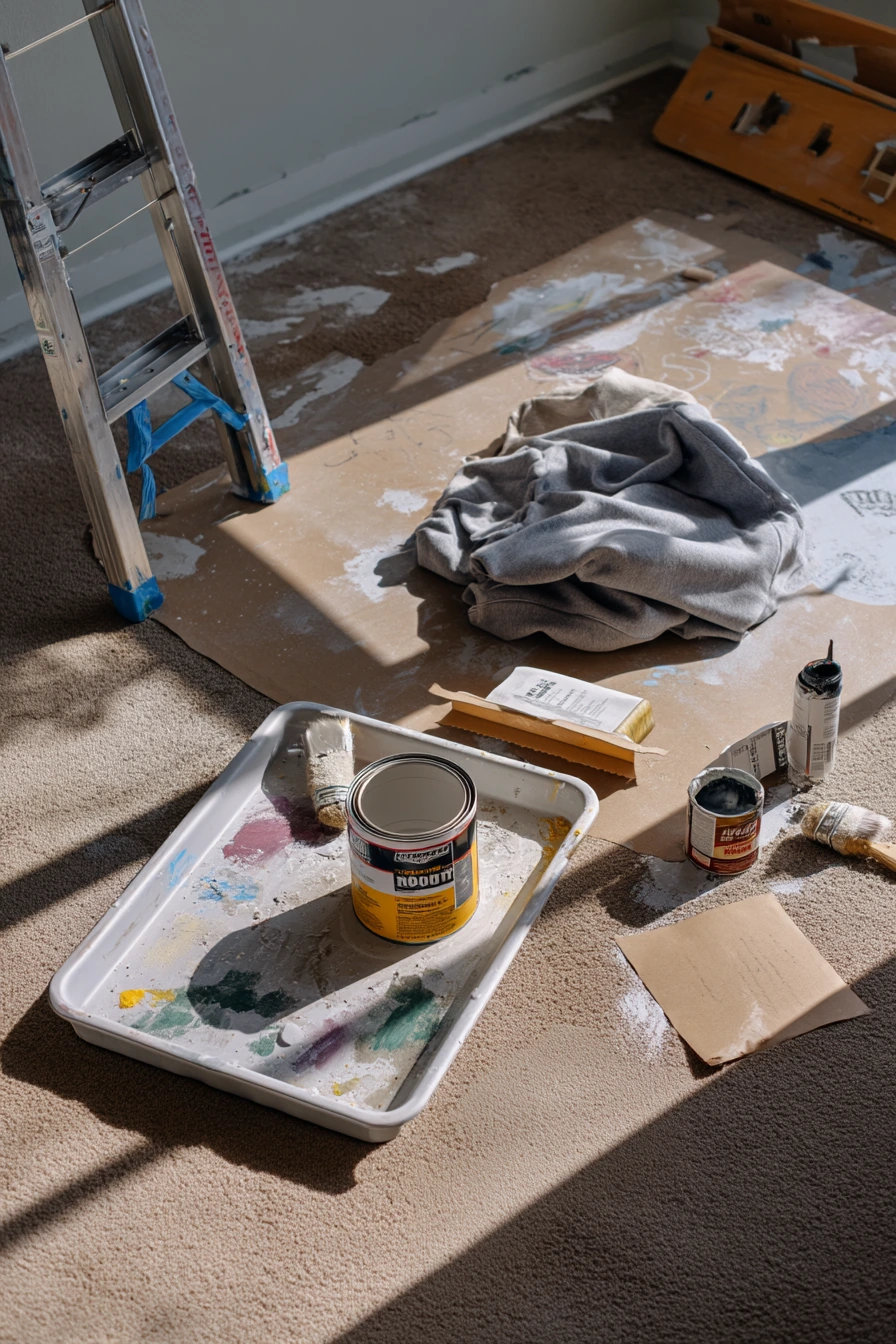
A real DIY weekend project can still give you a garage you like to walk into. Warm concrete beige floor paint is forgiving, looks brighter than bare slab, and works with almost any storage color. Imperfect edges and natural wear are normal, especially near the workbench where you set down tools, a roller tray, and a ladder.
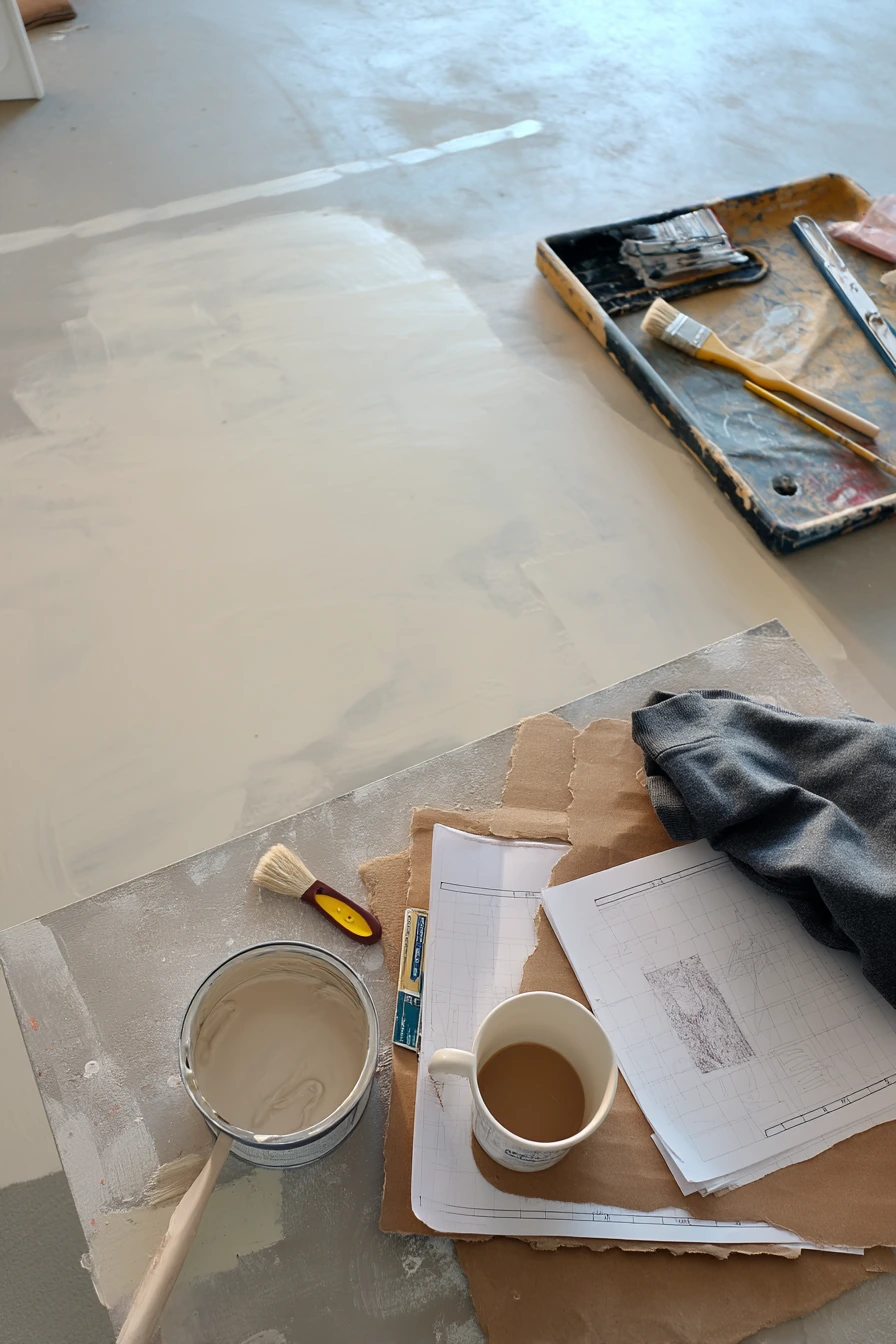
To get better results, follow a simple order. Clear the garage, sweep, and degrease. Rinse well and let the floor dry fully. Use painter’s tape at the wall line if you want cleaner edges, but remove tape while the paint is still a bit wet to avoid peeling. Read the instruction sheet and respect dry times. If you paint too late in the day, evening humidity can slow curing and leave a soft finish.
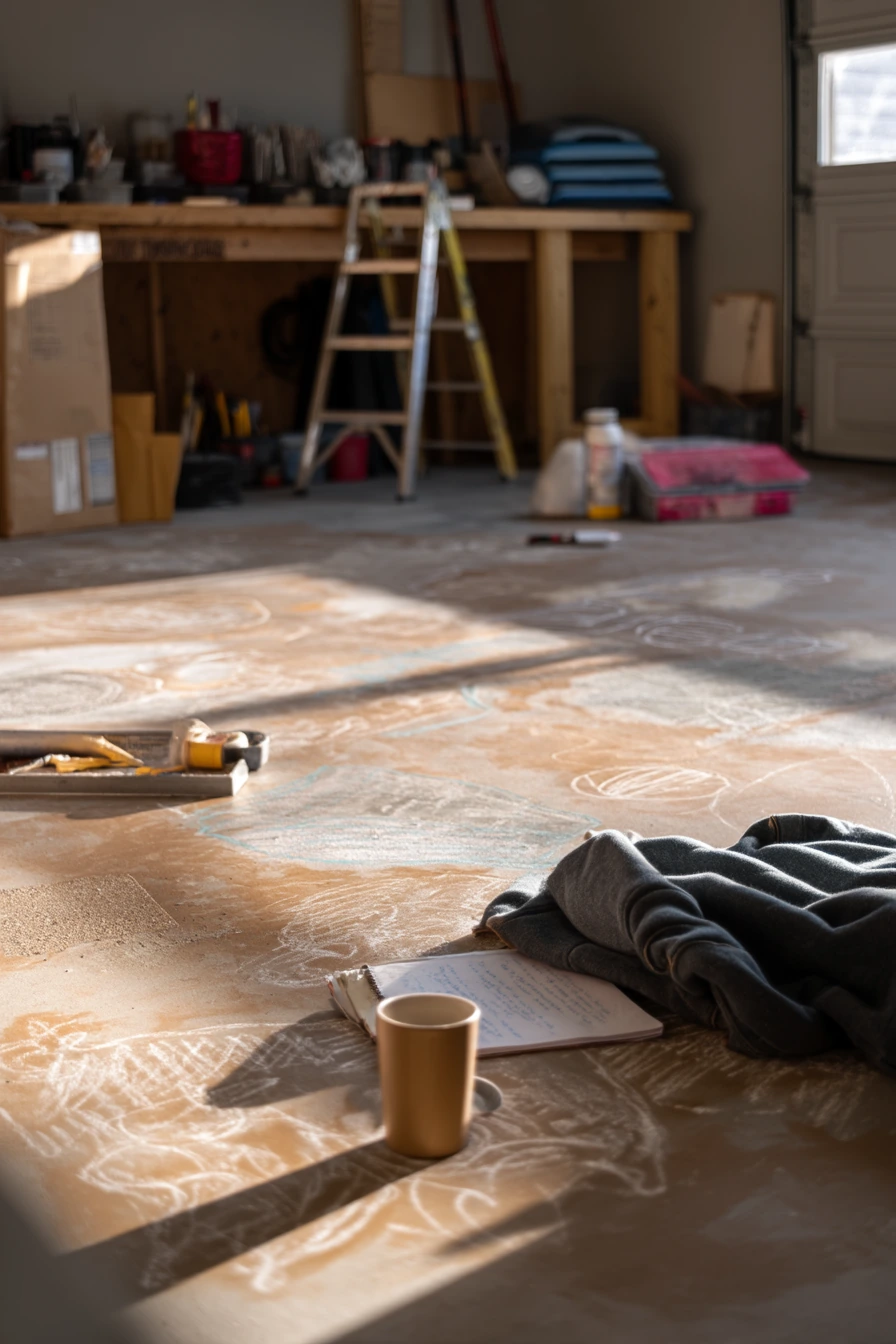
Style the space right after the paint cures. Put a small rug or mat by the door so grit does not scratch the new surface. Store the stray brush and tape in one bin, so you can do touch-ups later. If kids are around, give them a spot for chalk drawing on cardboard so the floor stays cleaner. A folded sweatshirt and coffee cup should live on a shelf, not the floor, to keep the beige looking fresh.
- Clean and degrease well so paint bonds to concrete.
- Apply two thin coats and keep a wet edge as you roll.
- Let it cure fully before parking or dragging heavy items.
- Keep leftover paint for quick touch-ups in high-wear spots.
- Add a mat at the threshold to protect the finish from grit.
Pro Design Tip: Roll in one direction for the first coat and the opposite direction for the second coat to reduce streaks and thin spots.
Budget Considerations: Paint is affordable, but skipping primer can cause peeling on some slabs. If you must choose, buy the right primer and use a basic paint.
The best garage flooring ideas match how you use the space, not just how it looks in photos. A family drop-zone needs easy cleanup, a gym needs grip, and a workshop needs a finish you can touch up.
Pick one option that fits your routine, then add simple storage and a clear walking path. Small choices like mats, trays, and wall hooks protect the floor and keep the garage easier to manage.
FAQ
1) What is the most durable garage floor coating? Polyaspartic and quality epoxy systems are both durable when the concrete is prepped well and the topcoat is rated for hot tires.
2) Can I put peel-and-stick tiles in a garage? Yes, in light-duty areas and on clean, smooth concrete. Use a tire mat if a car will park on them.
3) How do I stop garage floor paint from peeling? Clean and degrease, fix moisture issues, use the right primer when needed, and allow full cure time before parking.
4) Are interlocking rubber tiles good for daily entry? Yes, they are comfortable, slip resistant, and easy to replace, which helps in a basement-entry garage.
5) Do porcelain tiles get slippery when wet? Some do. Look for slip-resistant ratings and use a textured finish, plus mats for heavy wet zones.
6) What color garage floor hides dirt best? Mid-tone grays, graphite, and warm beige hide dust and marks better than bright white or very dark black.