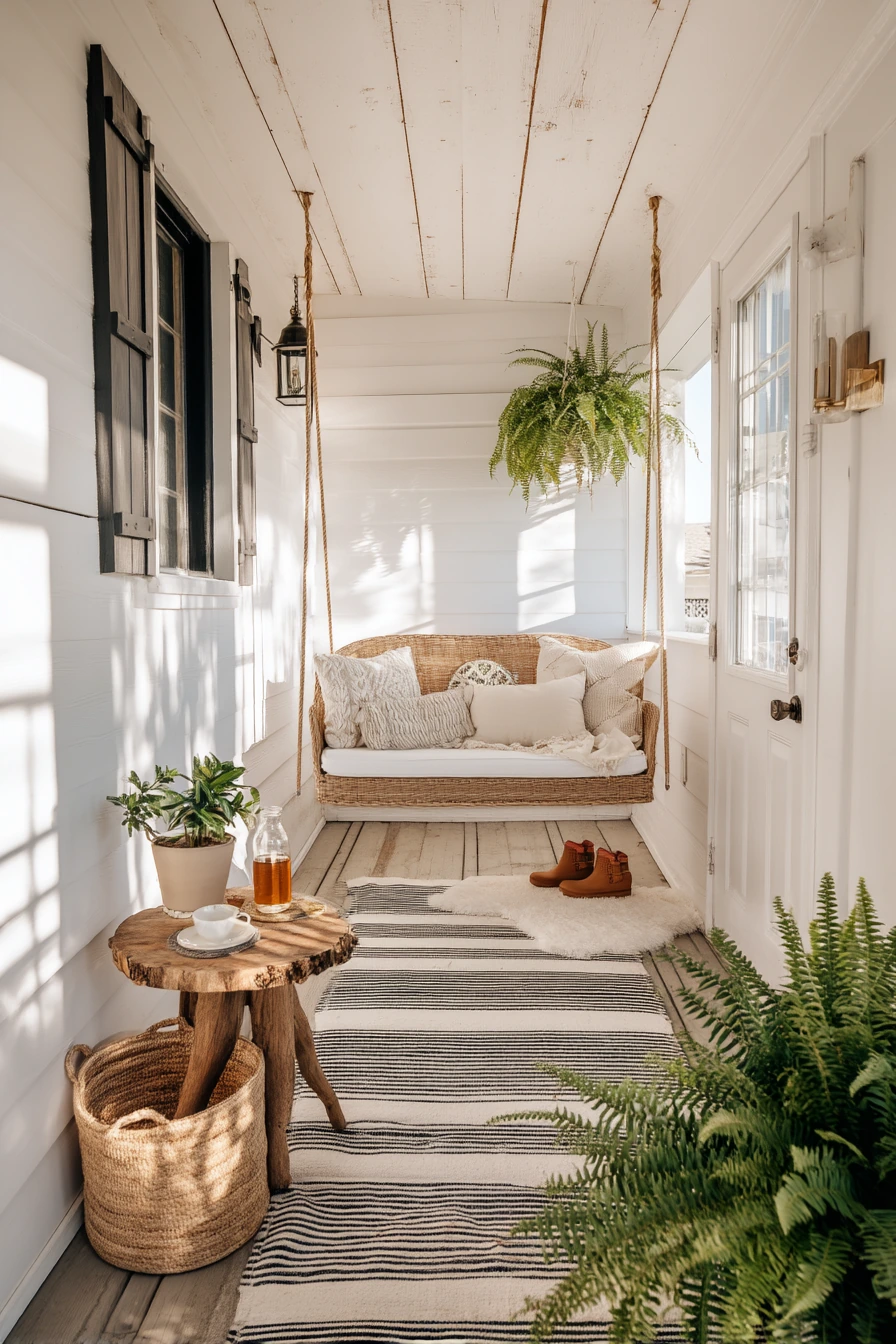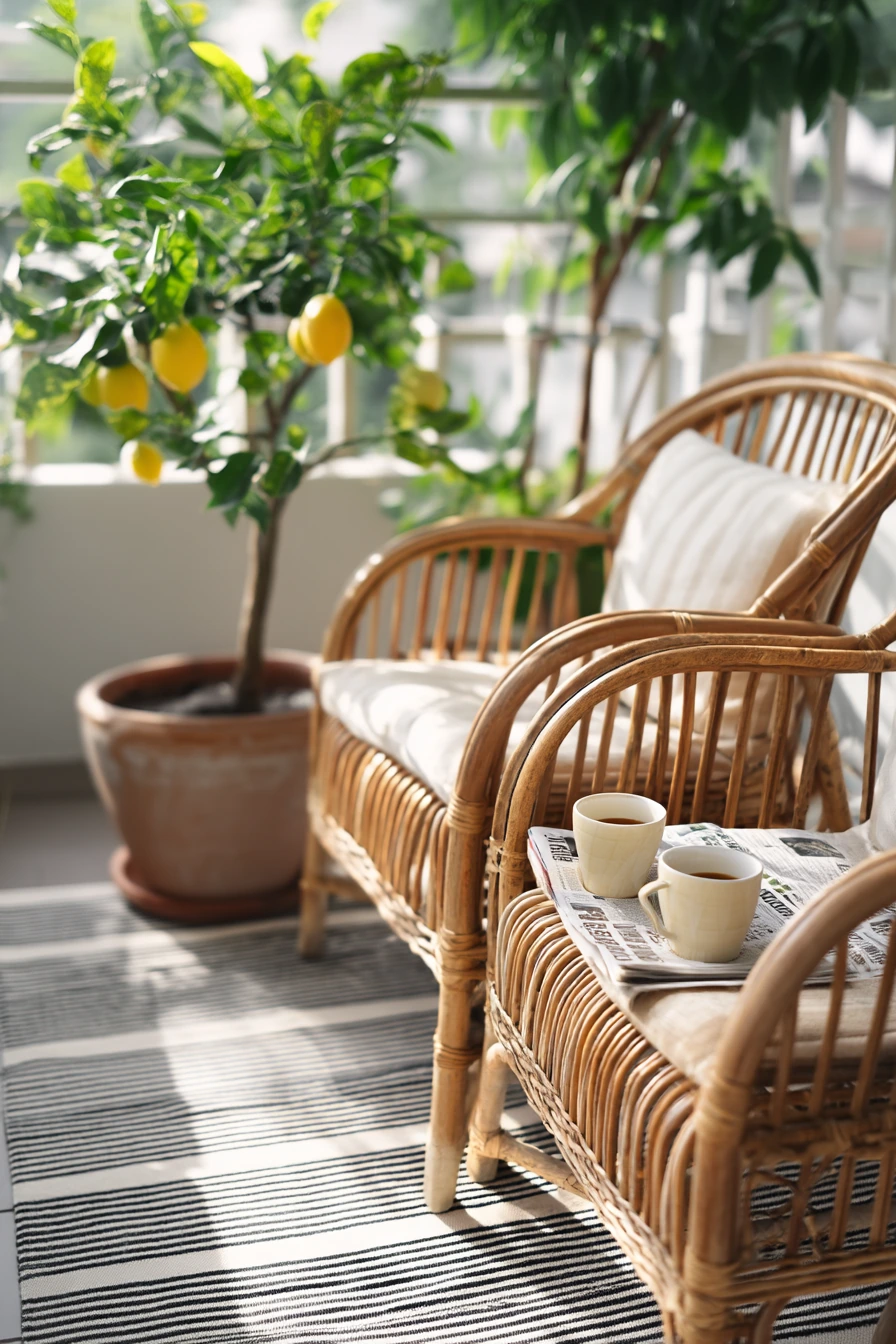

Choosing the right porch flooring can make your entry feel cleaner, safer, and easier to use every day. The best surface depends on your weather, foot traffic, pets, and how much upkeep you want.
This guide covers porch flooring options you can actually live with, from painted deck boards and reclaimed wood to porcelain pavers, composite decking, and patterned cement tile. Each section includes styling ideas you can copy and practical notes on slip resistance, drainage, and durability.
If you found this post on Pinterest, use it as a quick plan: pick a look you like, check the care level, and match it to your budget. By the end, you will know what works for a modest bungalow, a narrow townhouse, a screened porch reading nook, and more.
You will also find an FAQ near the end to help with common questions like outdoor rugs, sealing, and what to install over concrete.
1 Budget-Friendly Painted Porch Boards
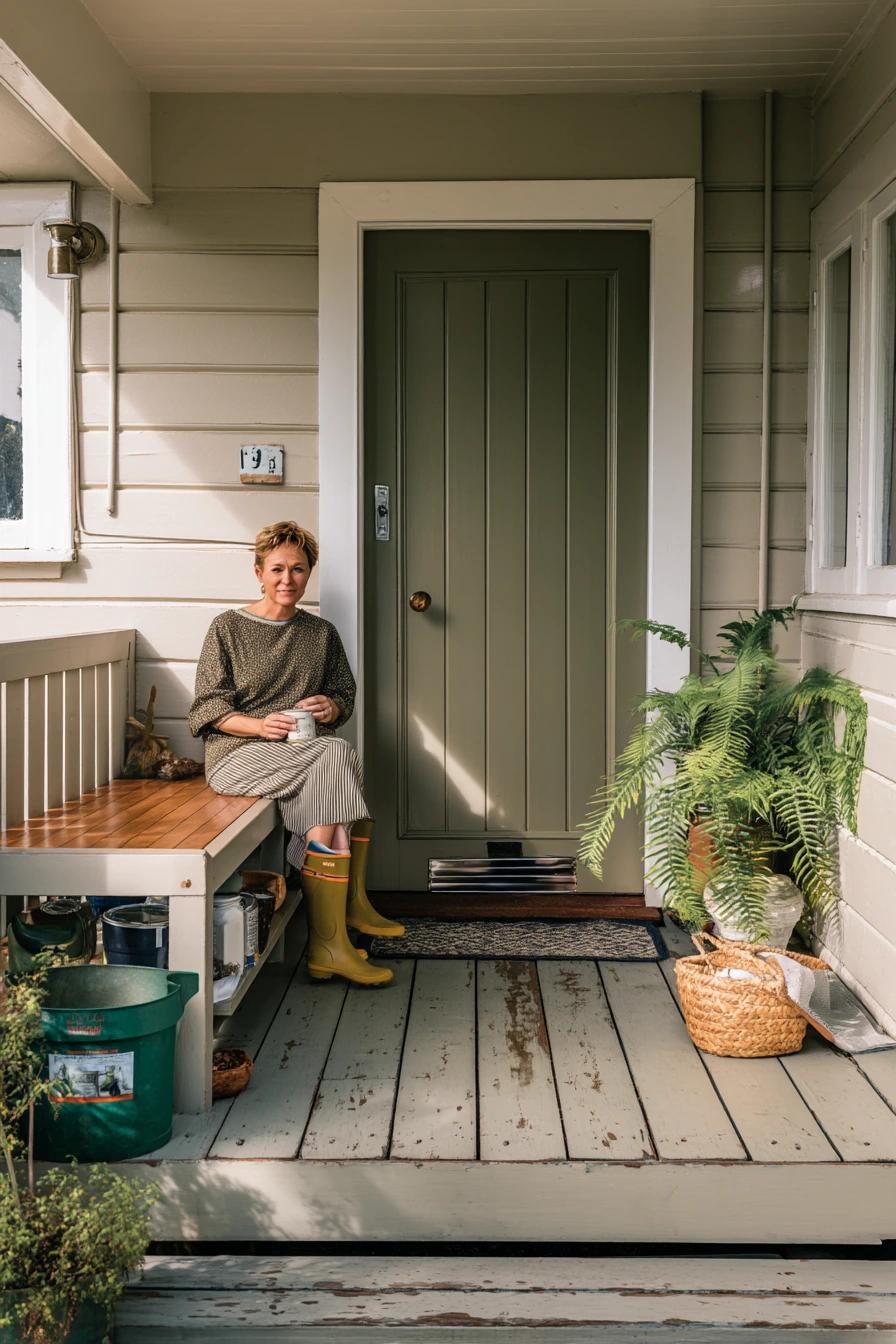
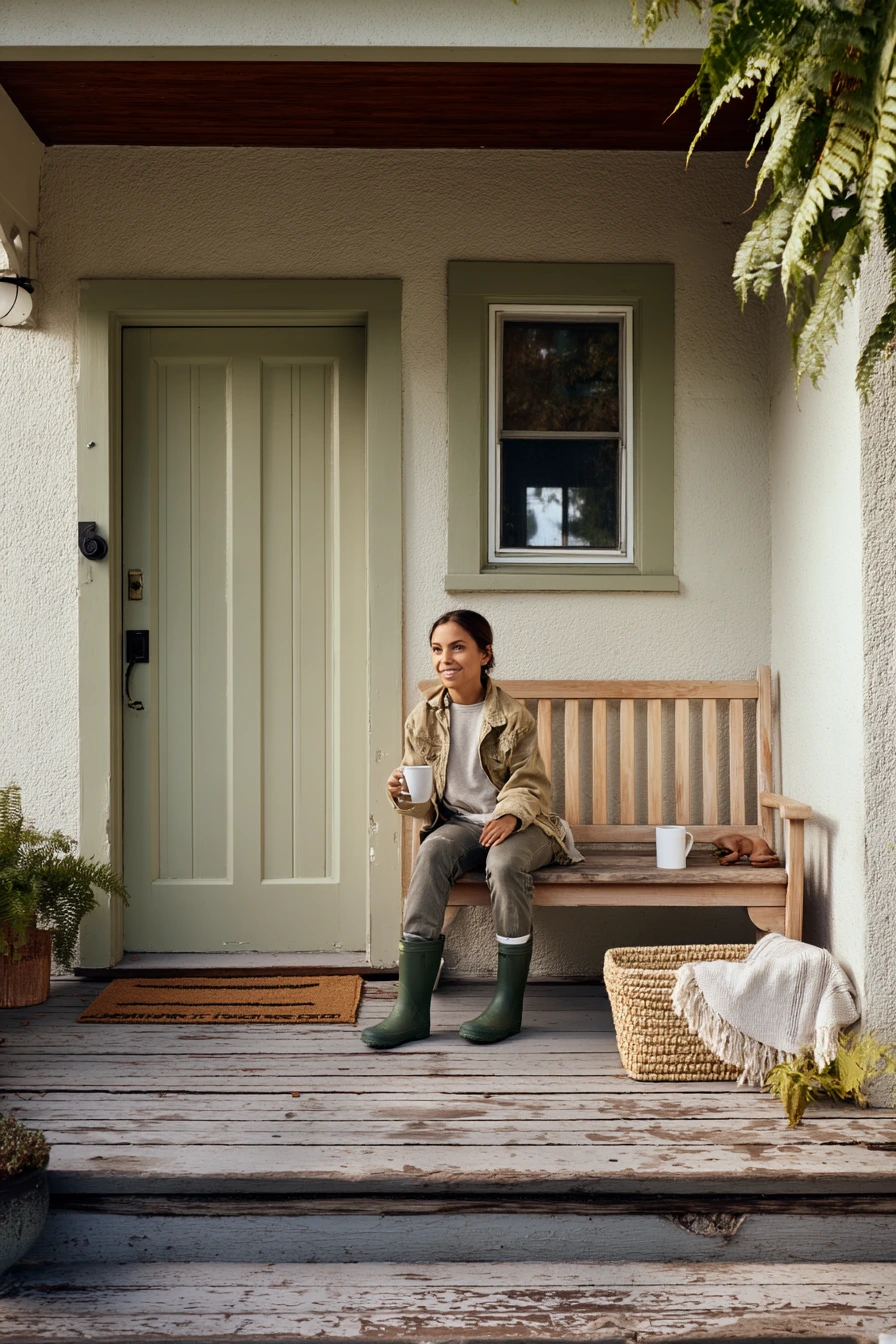
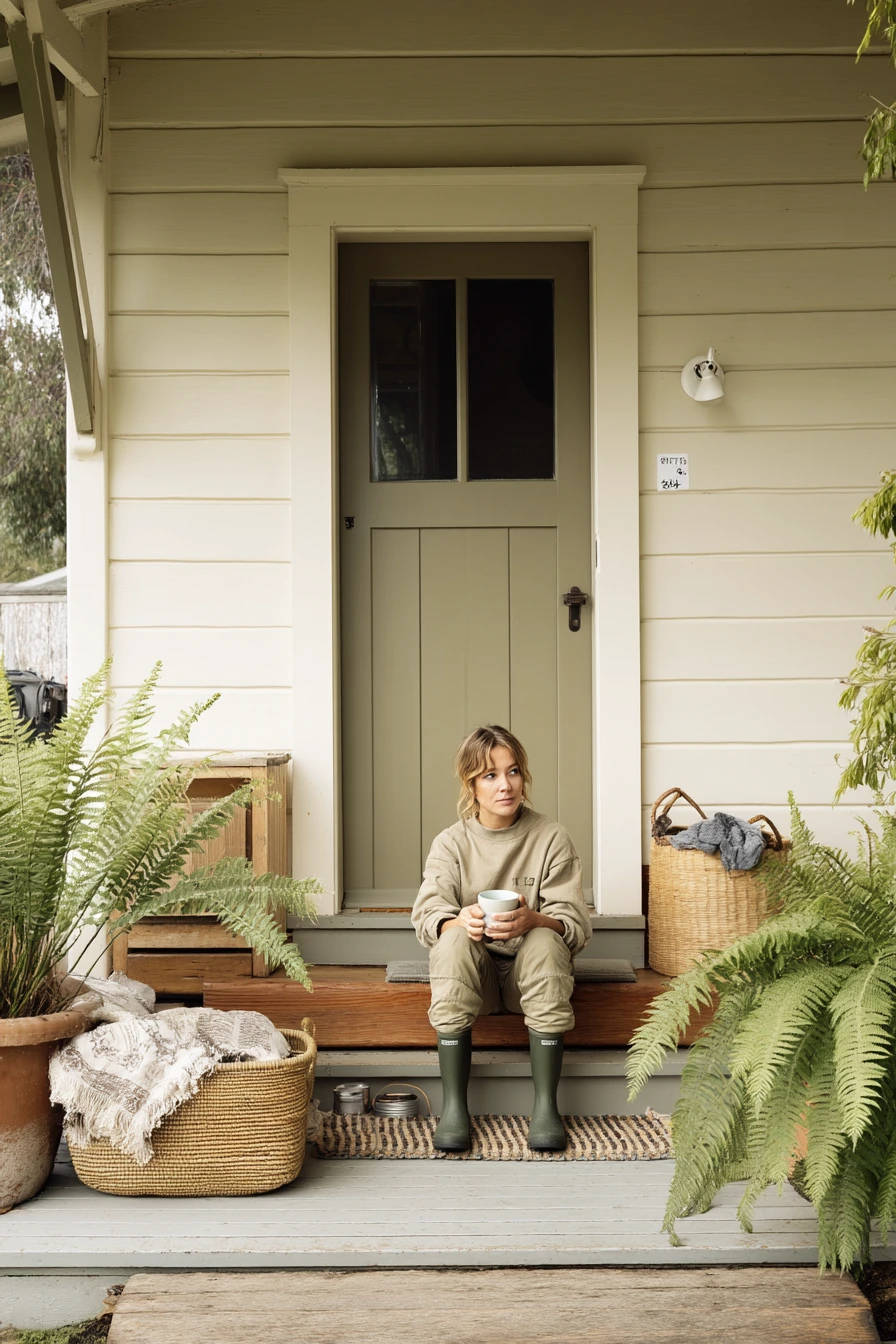
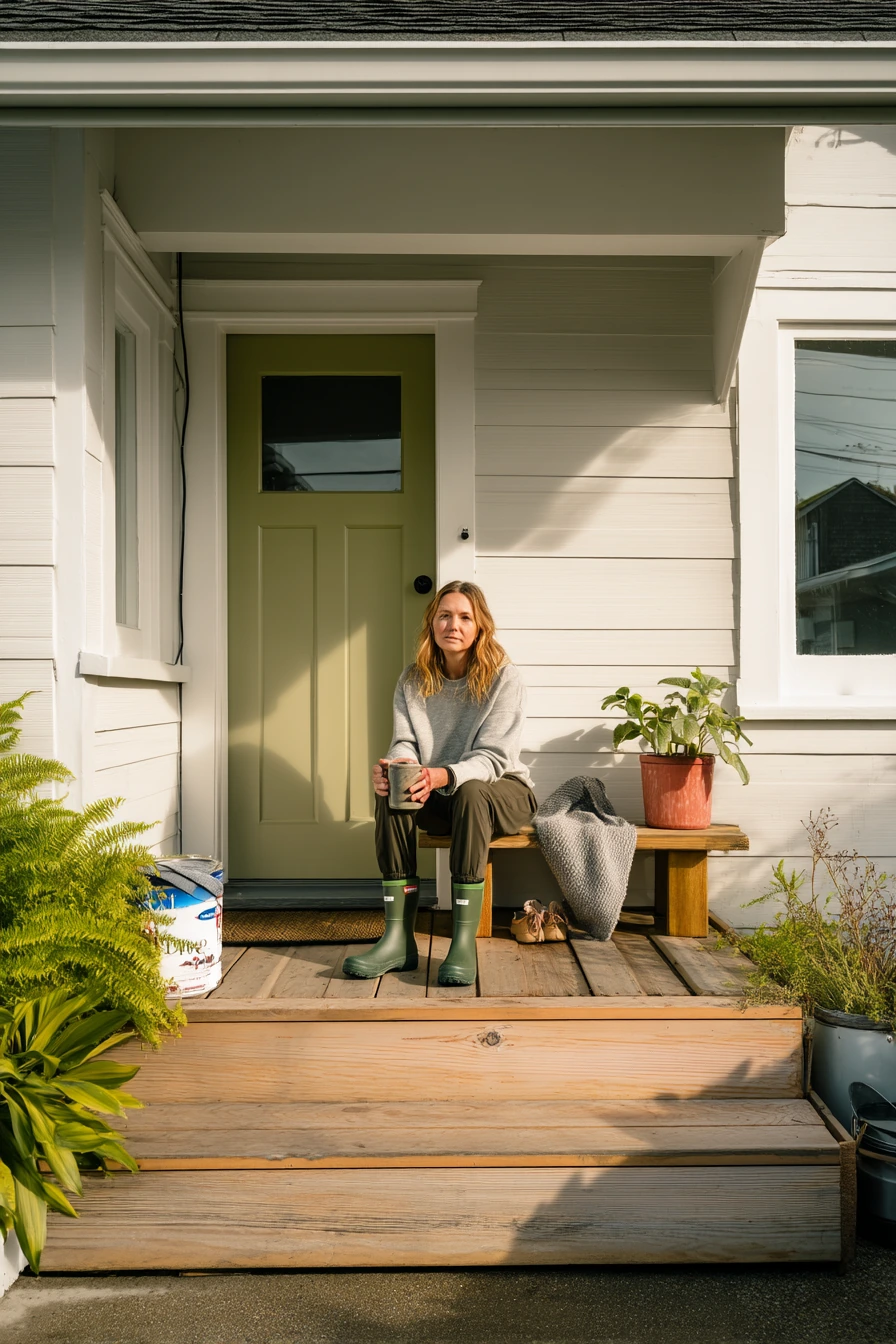
Painted deck boards are one of the fastest porch flooring options for a modest bungalow. Weathered sage and cream can hide dust, blend with landscaping, and still feel cheerful. If your porch boards are solid but tired, paint can be a practical reset that fits real life: a roller tray by the door, a half-open can of exterior paint, and kids’ rain boots lined up on the mat.
Start with prep so the finish lasts. Sweep well, then scrub the boards with a deck cleaner. Let them dry fully. Sand rough spots and feather peeling edges so you do not see ridges. Use a bonding primer if the old paint is chalky or if bare wood is showing. For a porch, a porch-and-floor enamel or exterior deck paint usually holds up better than standard wall paint. Add grit additive if the steps get slick in rain.
To style this look, keep it simple and lived-in. A slightly wrinkled outdoor throw on a bench, one trailing fern, and a small mat can make the space feel welcoming without feeling staged. Cream on the porch ceiling or trim can brighten morning window light, while sage grounds the space. If you have a busy household, choose a satin finish for easier wipe-downs and fewer scuff marks.
- Choose two colors: one for the main boards, one for trim or a border.
- Paint on a dry week so the floor can cure without dew or rain.
- Use painter’s tape for a clean line at the door threshold and steps.
- Keep a small touch-up jar for chips near the mat and bench.
- Pair with a low-pile outdoor rug so doors still clear it.
Pro Design Tip: Paint the boards lengthwise to make the porch look longer, and use the lighter color on the perimeter to make the space feel wider.
Budget Considerations: Paint is usually the lowest-cost porch flooring update, but plan for primer, deck cleaner, sandpaper, and a non-slip additive so you do not have to redo it next season.
2 Small Porch With Porcelain Tile Upgrade
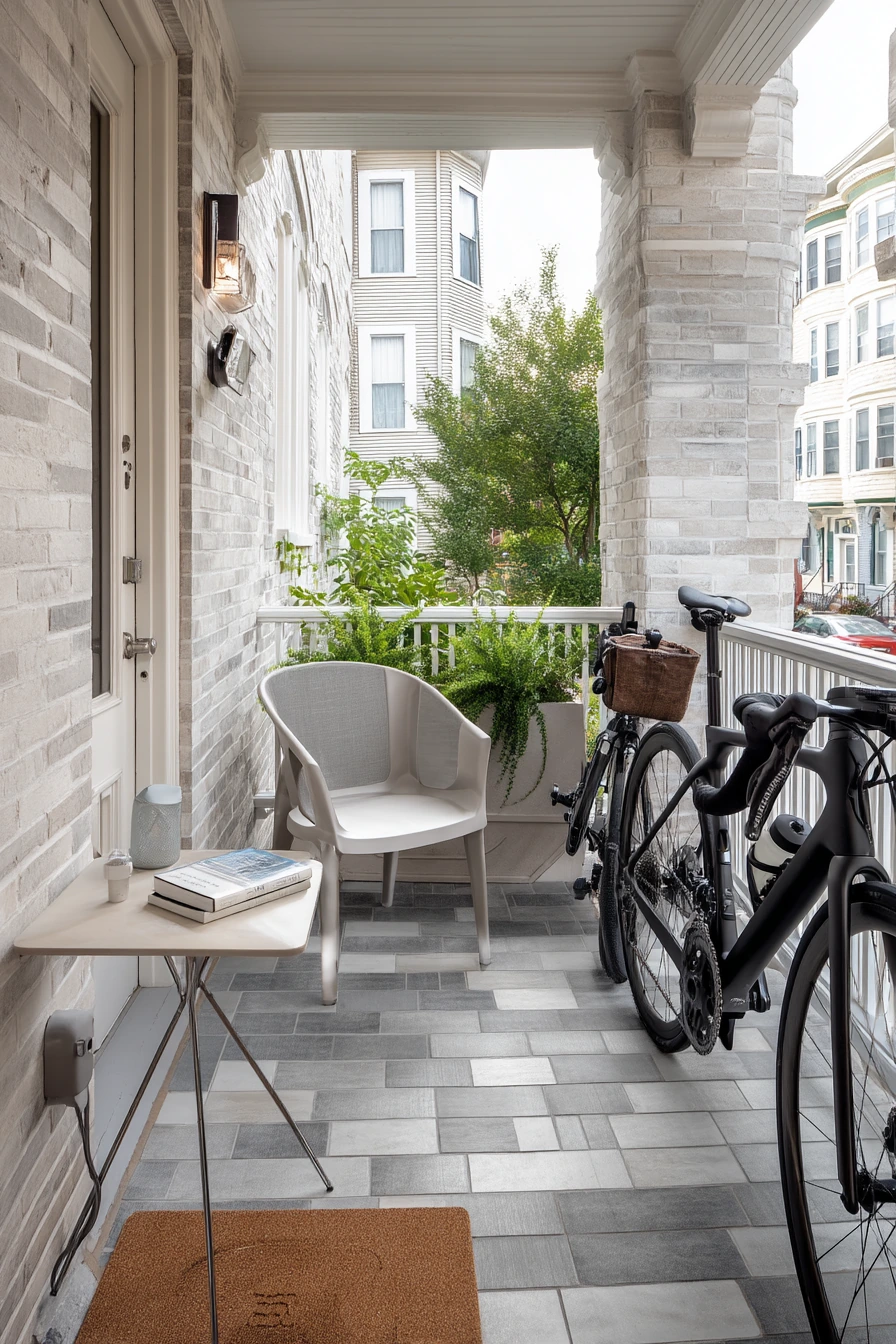
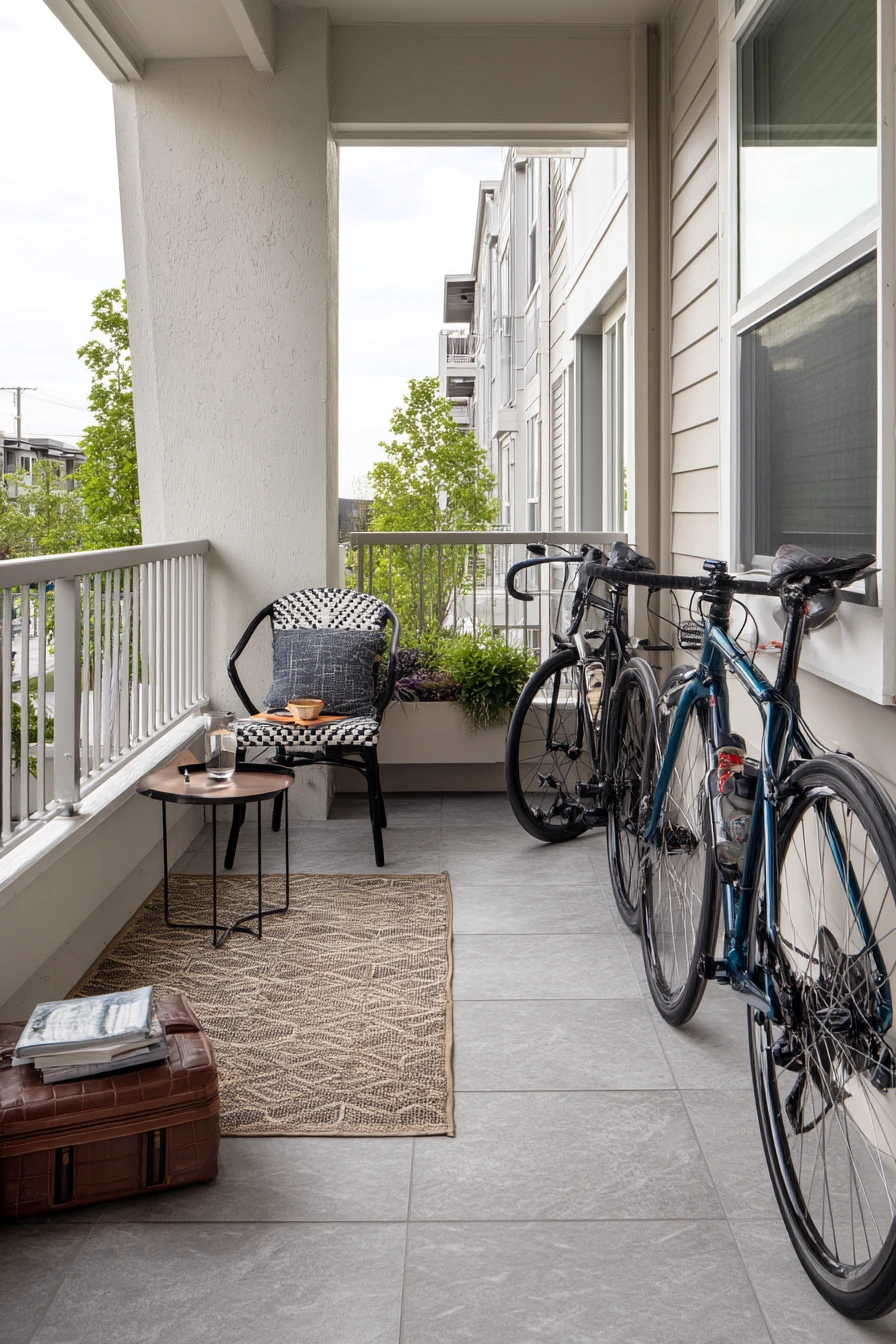
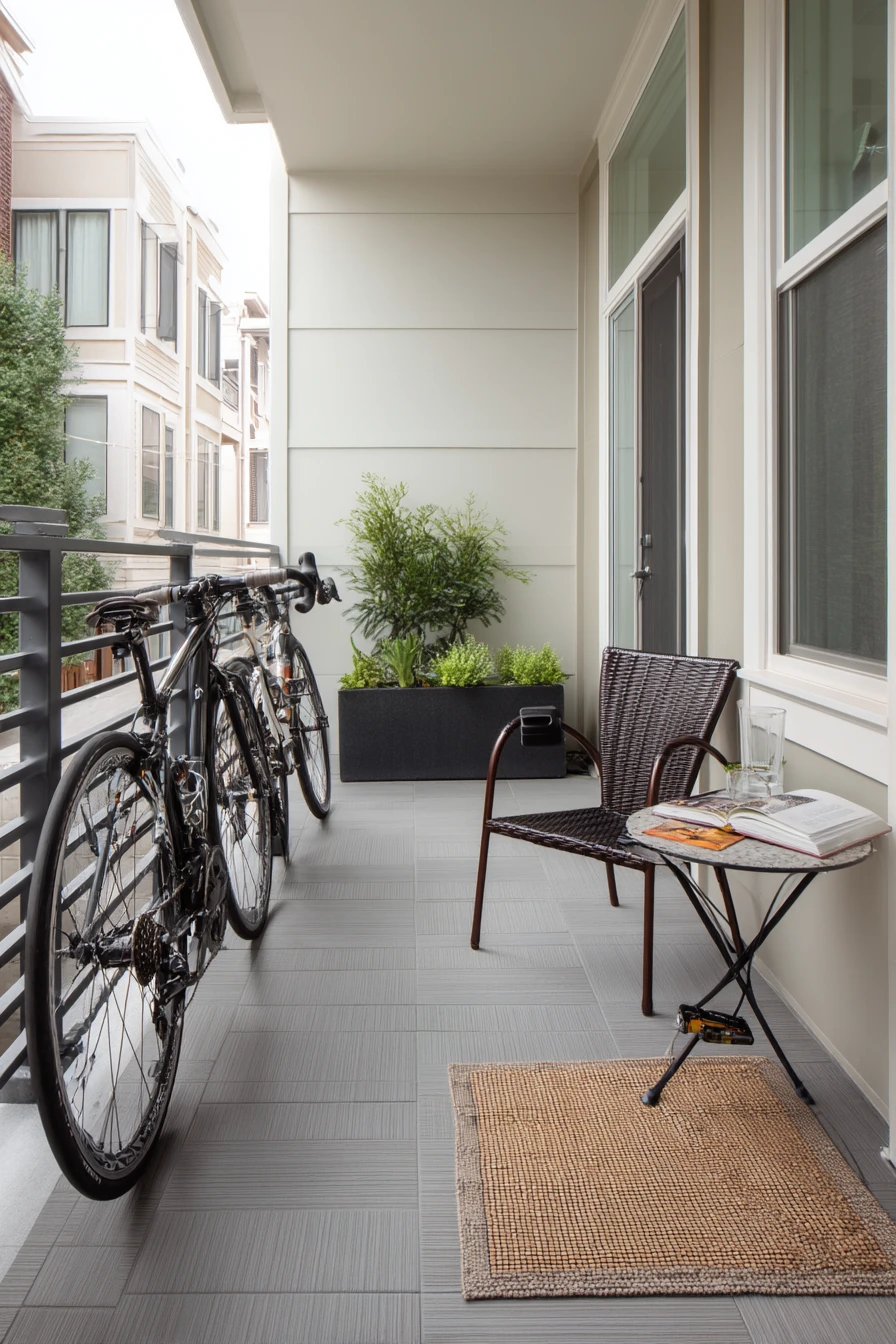
Porcelain pavers are a smart porch flooring option for a narrow townhouse because they are tough, stain resistant, and easy to hose off. Cool gray and sand tones look clean without feeling sterile, and they work with simple pieces like a compact bistro chair, a woven doormat, and a slim planter wall. If bikes lean against the railing and a charging cable runs from an outdoor outlet, porcelain handles scuffs and grime better than many softer surfaces.
Porcelain pavers are often installed on a stable base, on pedestals, or set into mortar depending on your porch structure. The big win is low absorption. That helps with freeze-thaw cycles, mildew, and spills from a water glass on the side table. Choose a textured or “grip” finish for better traction in overcast, wet weather. Keep the grout lines or joints consistent so the floor looks calm and intentional.
For styling, keep the palette tight. Gray and sand pavers pair well with black metal, light wood, and soft green plants. A paperback half-read on the table makes the space feel real, not staged. Add one outdoor pillow in a small pattern, and keep the rest solid. If the porch is very narrow, use vertical planters or a slim wall trellis so you do not lose walking space.
- Pick pavers rated for outdoor use with a slip-resistant surface.
- Use a neutral grout or joint sand that matches the paver tone.
- Add felt pads to chair legs to reduce scraping sounds.
- Choose narrow planters to keep a clear path to the door.
- Rinse regularly to keep city dust from dulling the finish.
Pro Design Tip: Run the pavers in a staggered pattern to make a tight porch feel longer and to hide small out-of-square edges.
Budget Considerations: Porcelain pavers cost more than paint, and installation can add up; save by using pavers only in the main traffic lane and keeping the edges as simple gravel strips or a slim border.
3 Classic Brick Porch for Everyday Family Life
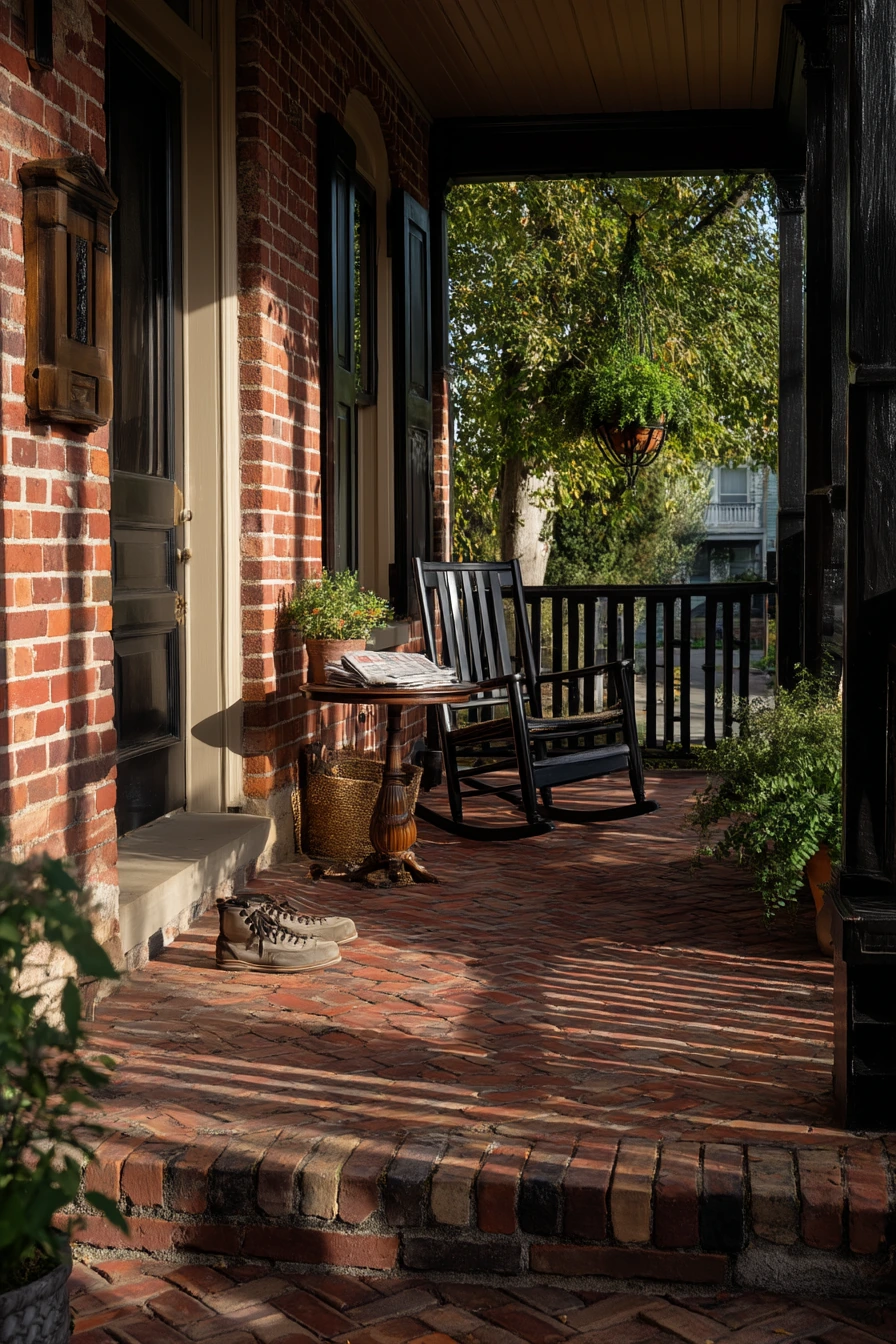
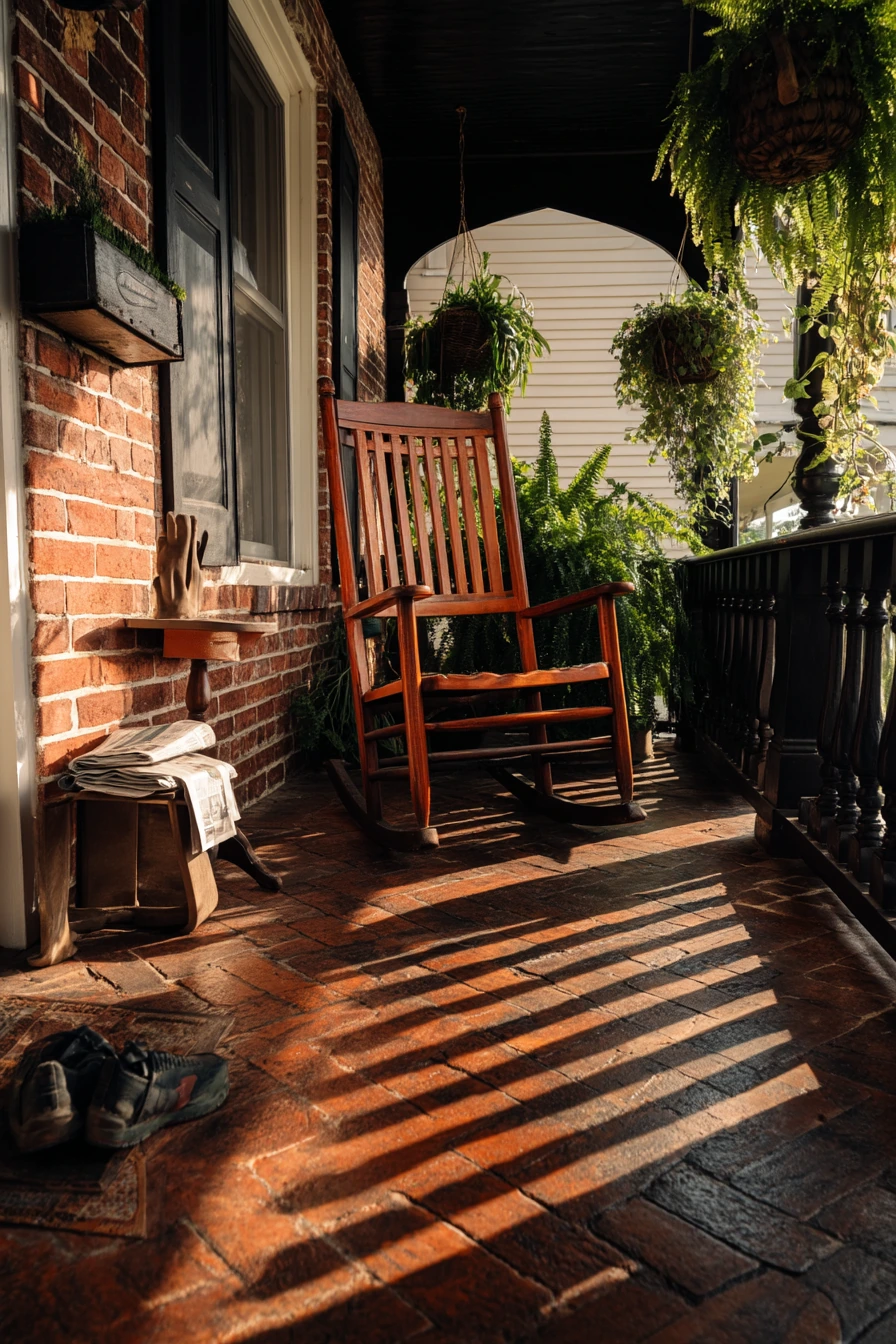
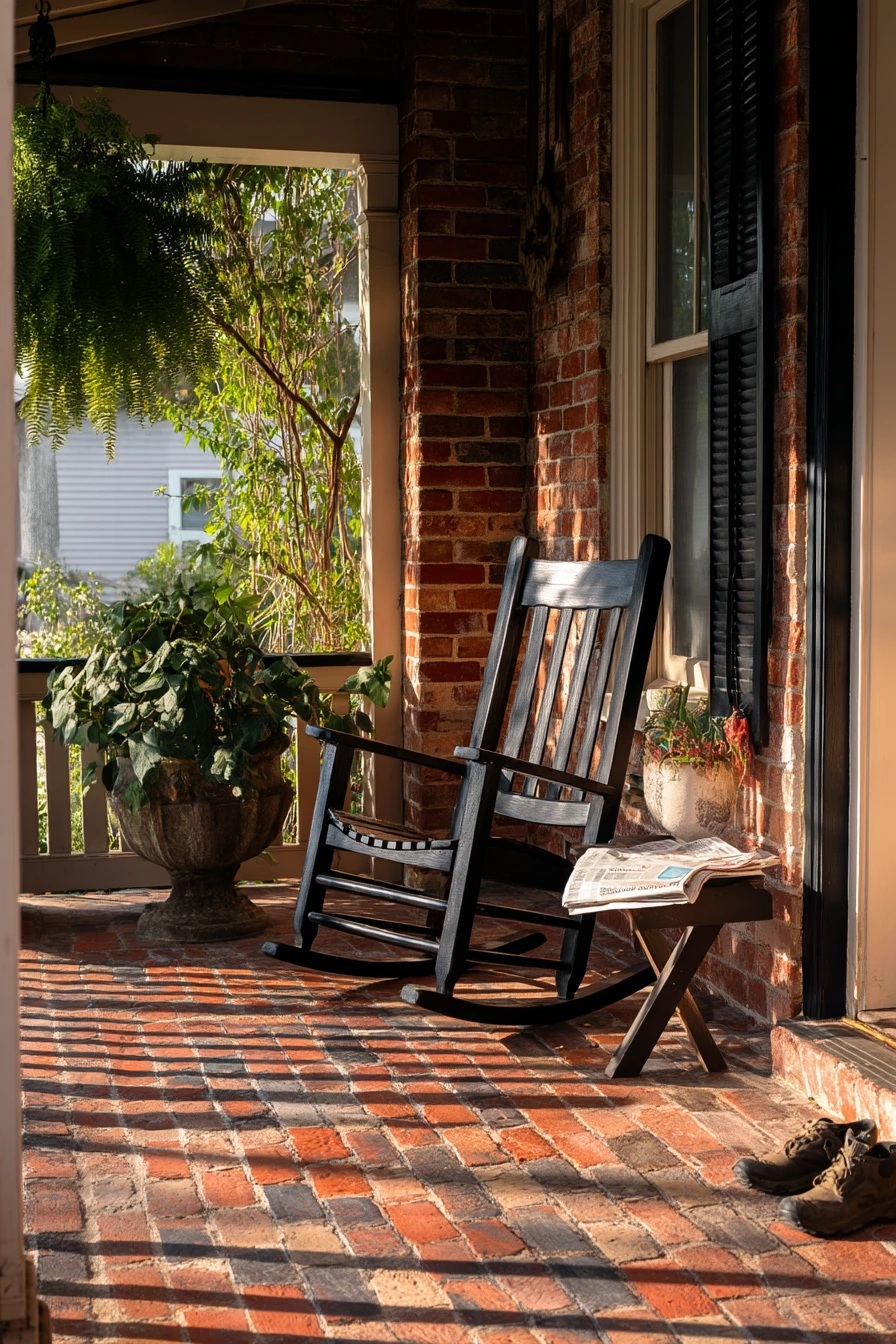
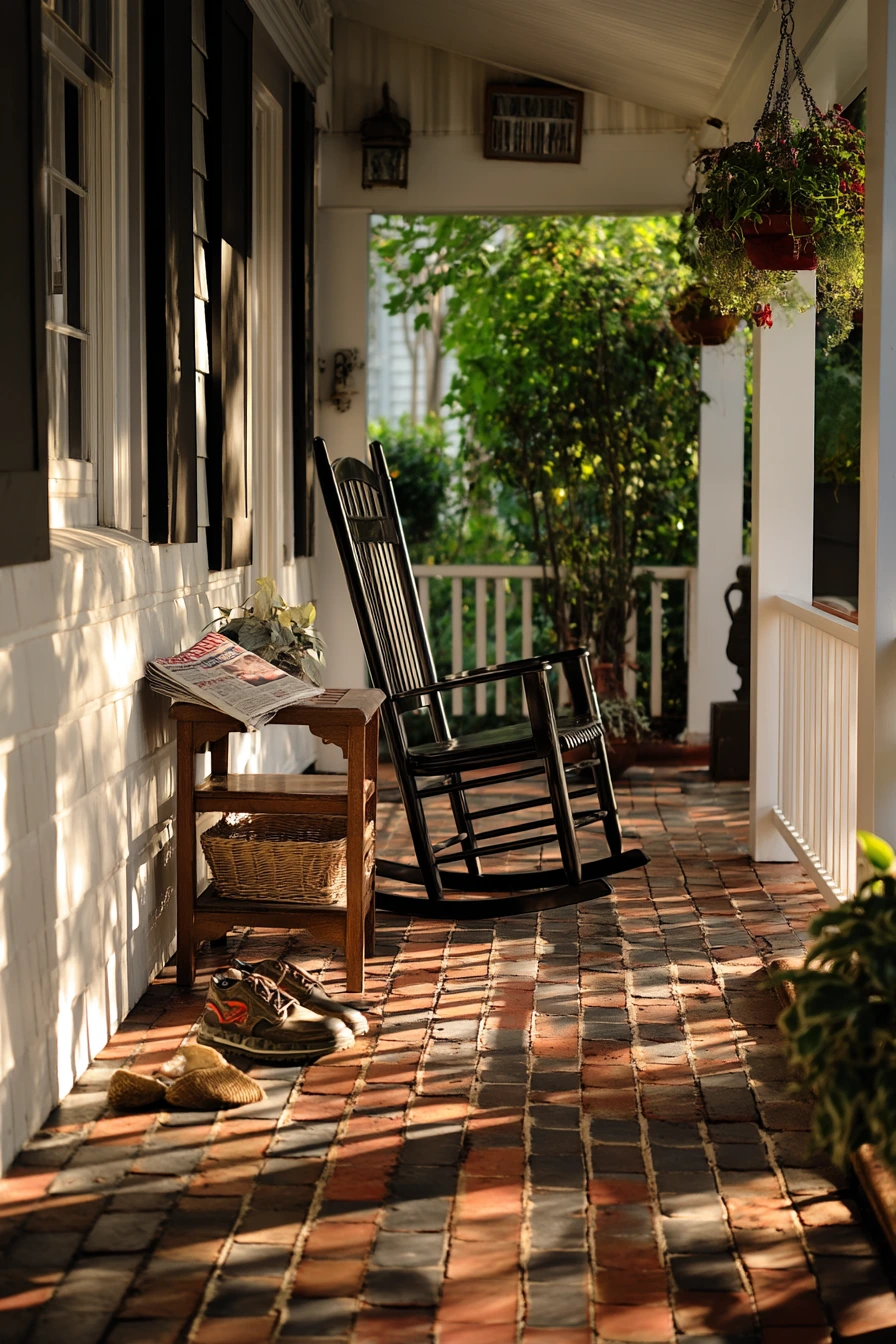
Brick porch flooring brings a grounded, traditional look that fits older homes and classic black railings. Warm red and charcoal tones hide dirt well, and the surface feels steady underfoot. The vibe is practical and nostalgic: a rocking chair, a small side table with garden gloves and mail, muddy sneakers by the threshold, and plant shadows moving across the bricks in late-afternoon light.
Brick can be laid in patterns like running bond, basket weave, or herringbone. For porches, drainage matters. A slight slope away from the door helps prevent puddles and slippery spots. Mortar joints can crack over time, especially in freeze-thaw areas, so plan for occasional repointing. If you like a softer, older look, choose reclaimed brick. If you want fewer chips and a cleaner finish, new clay brick can be more uniform.
Styling is easy because brick already has visual texture. Keep furniture simple so the floor can do the work. A black or natural wood rocking chair looks right at home. Add one outdoor cushion in a muted stripe, and use a small mat that does not cover the whole surface. Hanging herbs make the porch feel useful, and they match the earthy brick color. If you get a lot of shade, avoid heavy rugs that trap moisture; choose a breathable mat instead.
- Use a breathable sealer only if you need extra stain protection.
- Choose darker grout or joint sand if you track in soil often.
- Keep a stiff brush by the door for quick sweeps.
- Add a narrow bench for shoes so the floor stays cleaner.
- Use warm porch lighting to highlight the brick tones at night.
Pro Design Tip: Lay brick in a herringbone pattern in the center and a simple border around it for a high-end look without extra decor.
Budget Considerations: Reclaimed brick can vary in price and may need more labor to install; a budget-friendly route is standard brick with a simple running bond pattern.
4 Composite Deck Boards for a Busy Backyard Entry
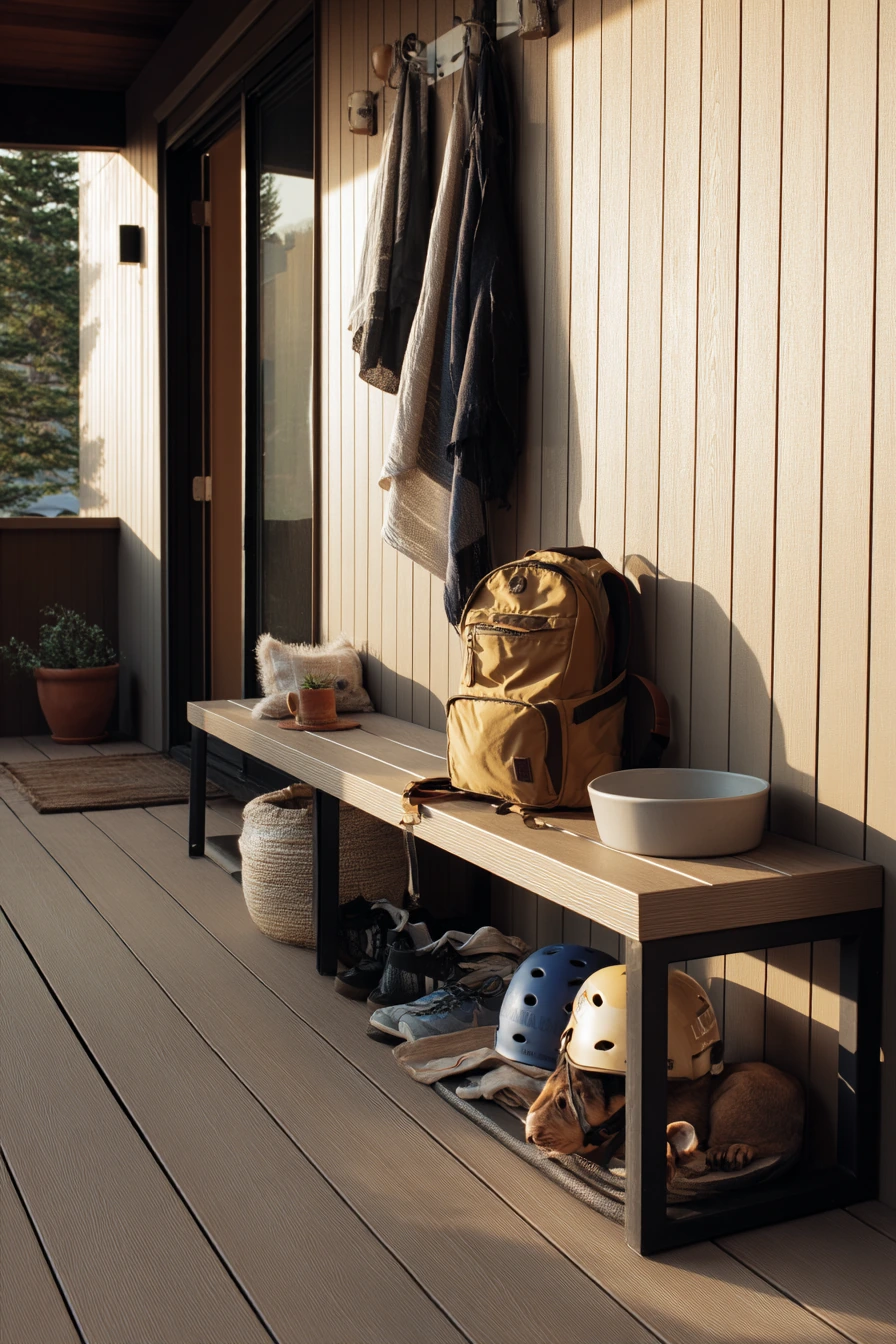
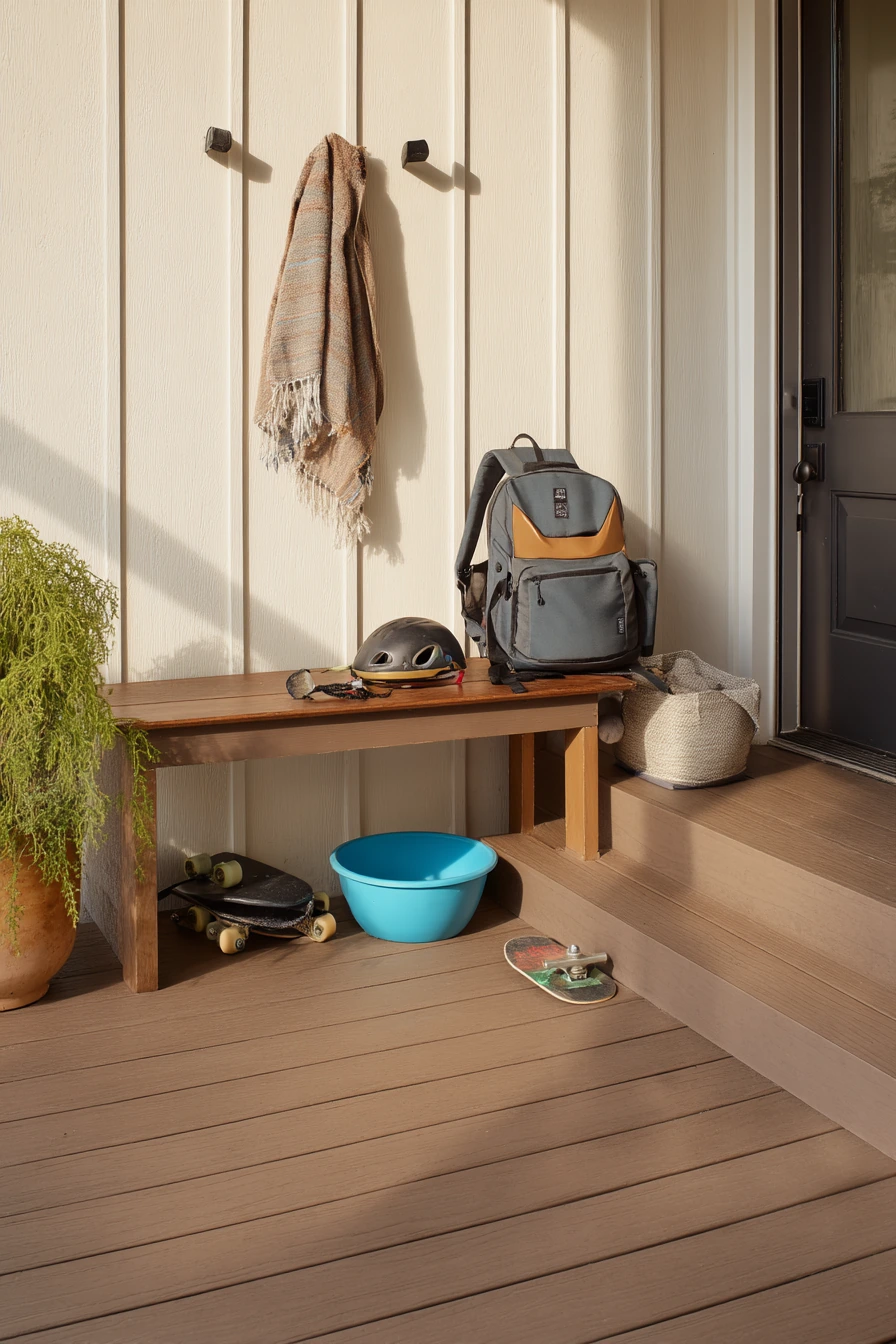
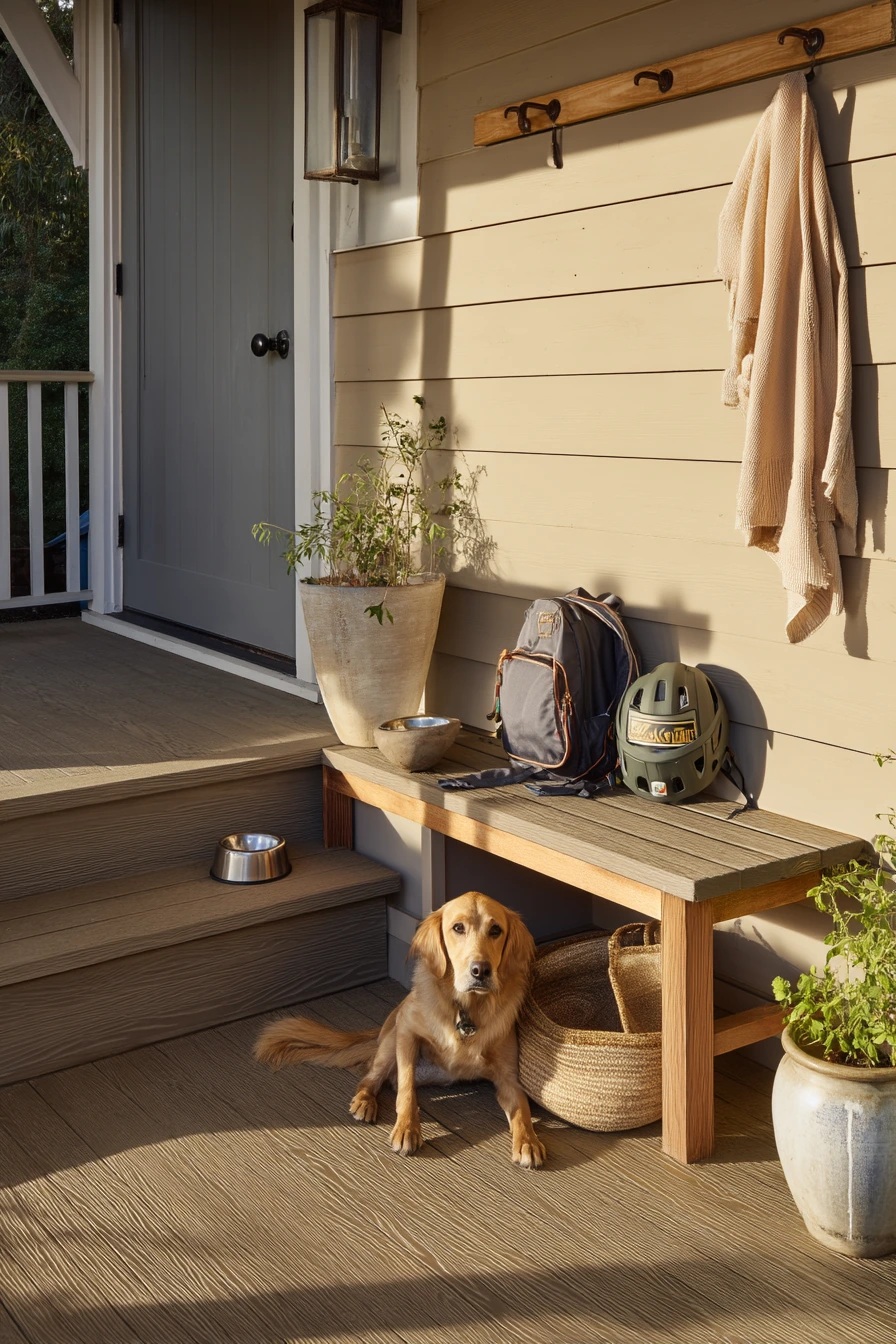
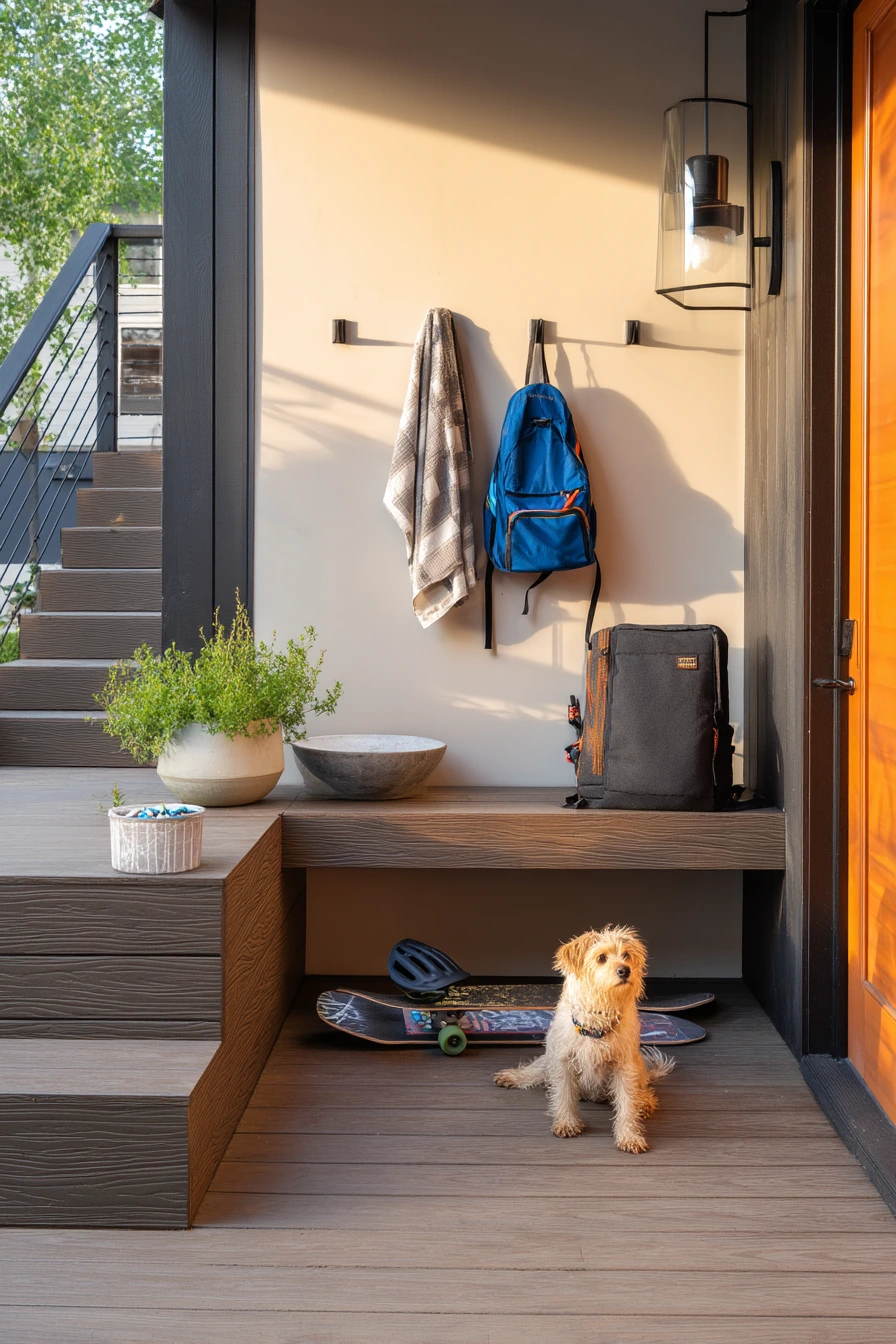
Composite decking is a low-maintenance porch flooring choice that works well for an active household. Smoky cedar tones look like wood but do not need staining as often. This is the kind of porch that sees backpacks dropped by the steps, a dog bowl near the door, a skate helmet on the bench, and a damp towel over the rail. Composite is built for that daily wear.
Composite boards resist rot and splinters, which helps if kids or pets run in and out. They also handle wet seasons better than many softwoods. Still, they can get slippery if they are smooth and covered in pollen, so choose a board with texture and clean it a few times each season. Think about heat too. Darker colors can feel warm in full sun. If your rear porch gets strong afternoon light, consider mid-tone planks and add shade with an umbrella or pergola.
To style composite decking, lean into easy, casual pieces. A simple bench with a storage bin keeps dog toys and sports gear contained. A chipped ceramic planter still looks good on smoky cedar tones, especially if you use plants with strong leaves like hosta or rosemary. Add one outdoor rug near the seating area, not right at the mudroom door, so you do not trap wet dirt where people walk most.
- Pick a composite line with good slip resistance and fade coverage.
- Use hidden fasteners for a cleaner look and fewer toe stubs.
- Place a boot tray by the door to protect the boards from grit.
- Wash with mild soap and a soft brush to prevent buildup.
- Add hooks near the mudroom for towels and backpacks.
Pro Design Tip: Run the decking boards toward the yard to guide the eye outward and make the porch feel larger and more connected to the outdoors.
Budget Considerations: Composite costs more upfront than pressure-treated wood, but it can save money over time by reducing staining, sealing, and board replacement.
5 Stone Slab Porch for an Airy Coastal Home
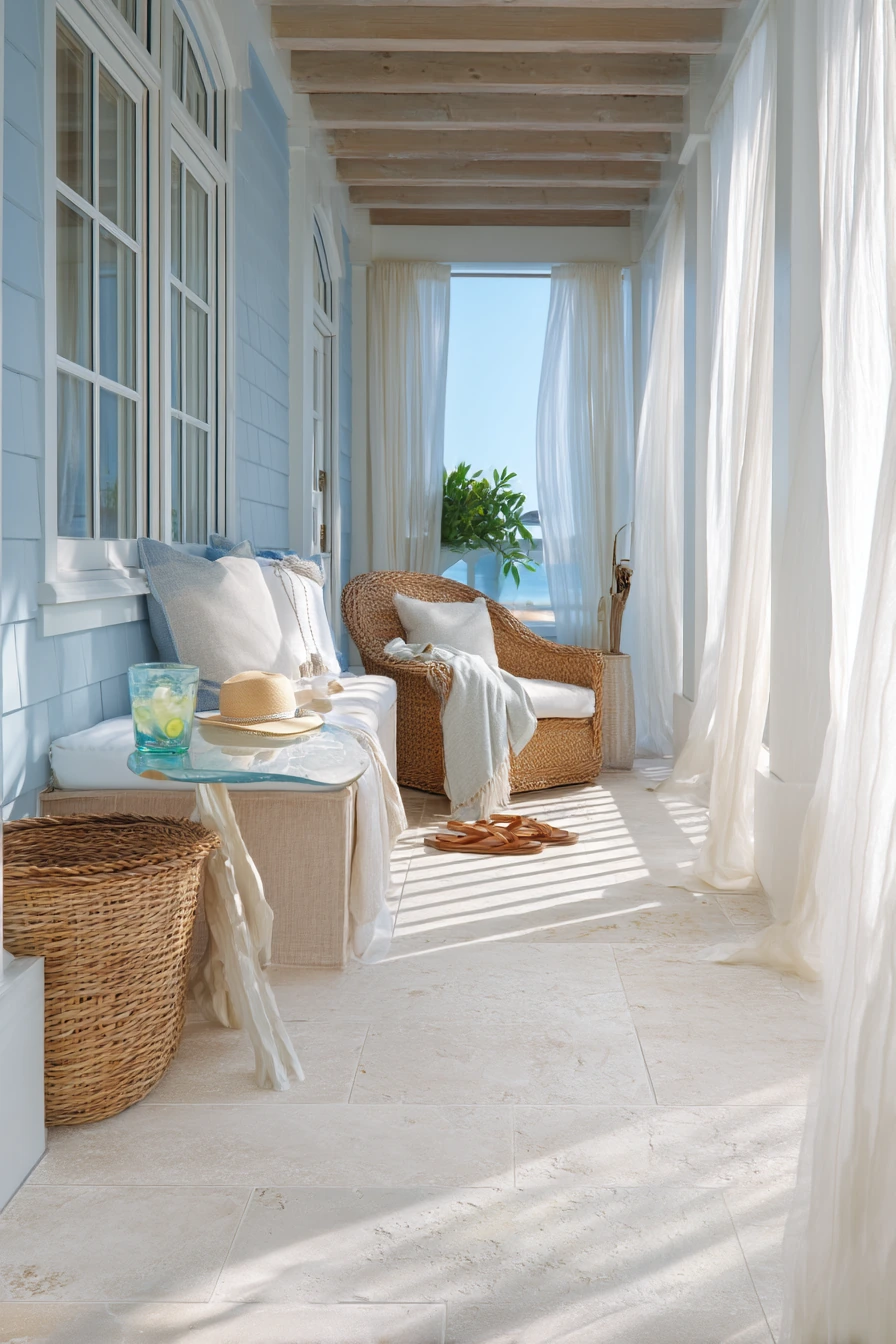
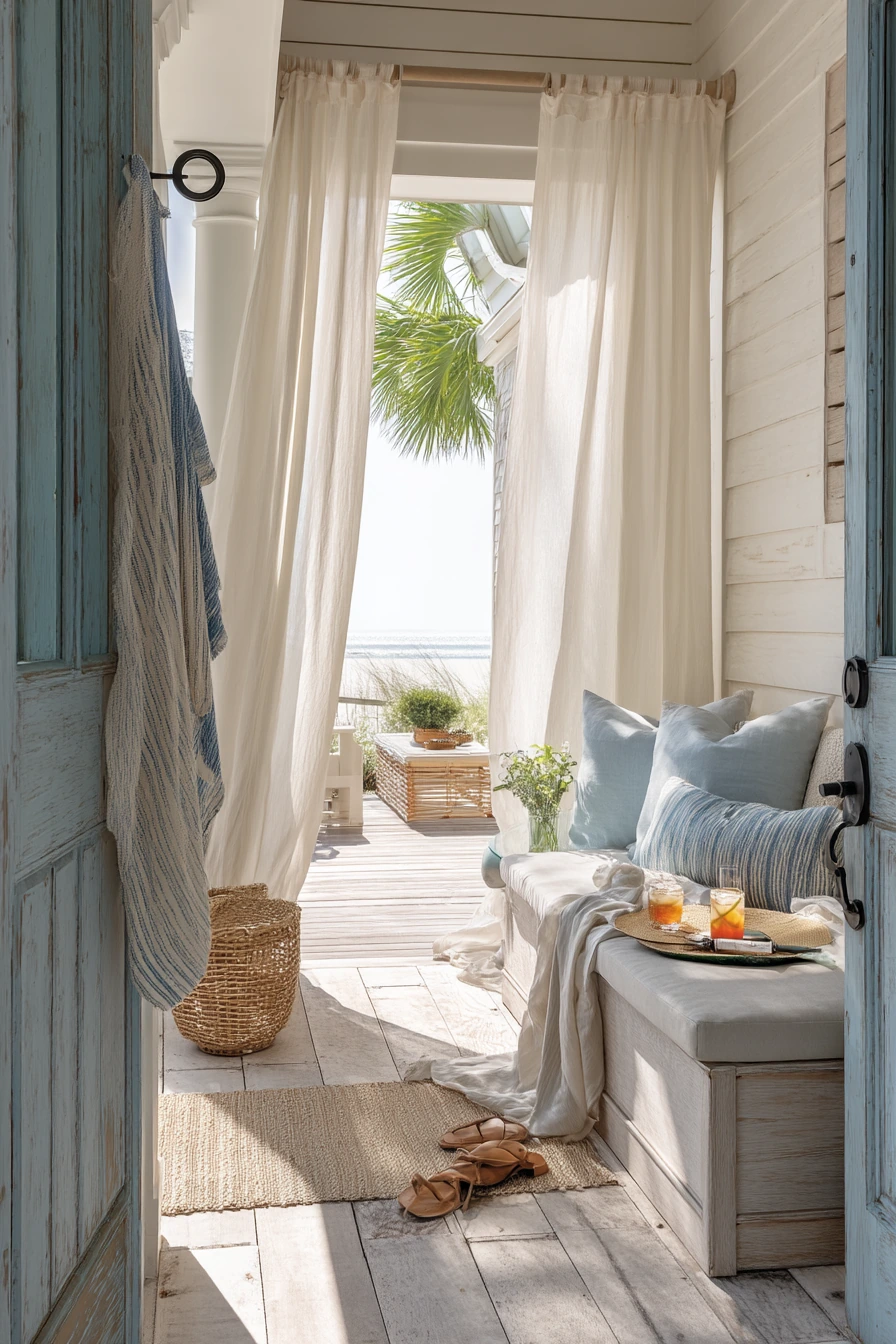
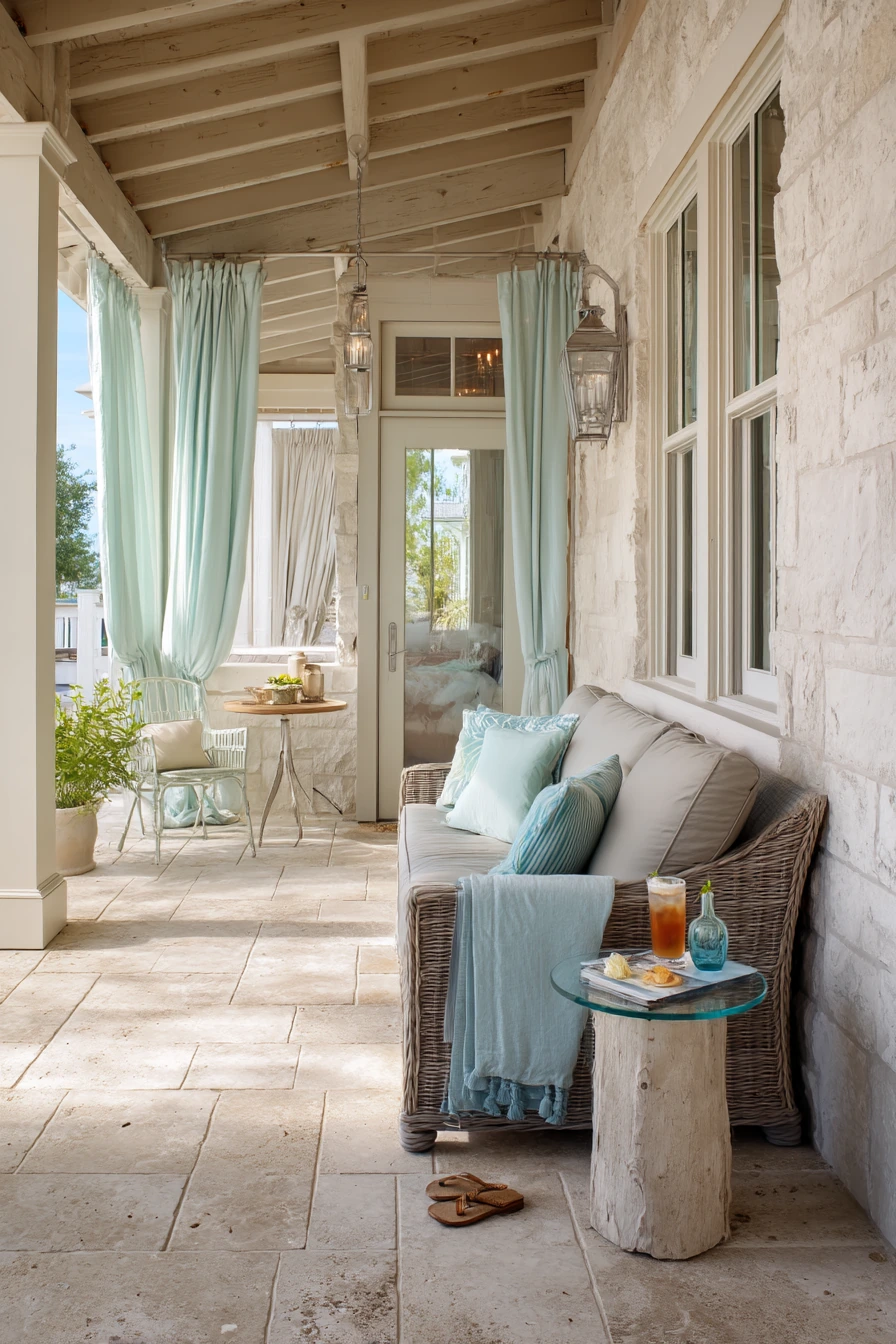
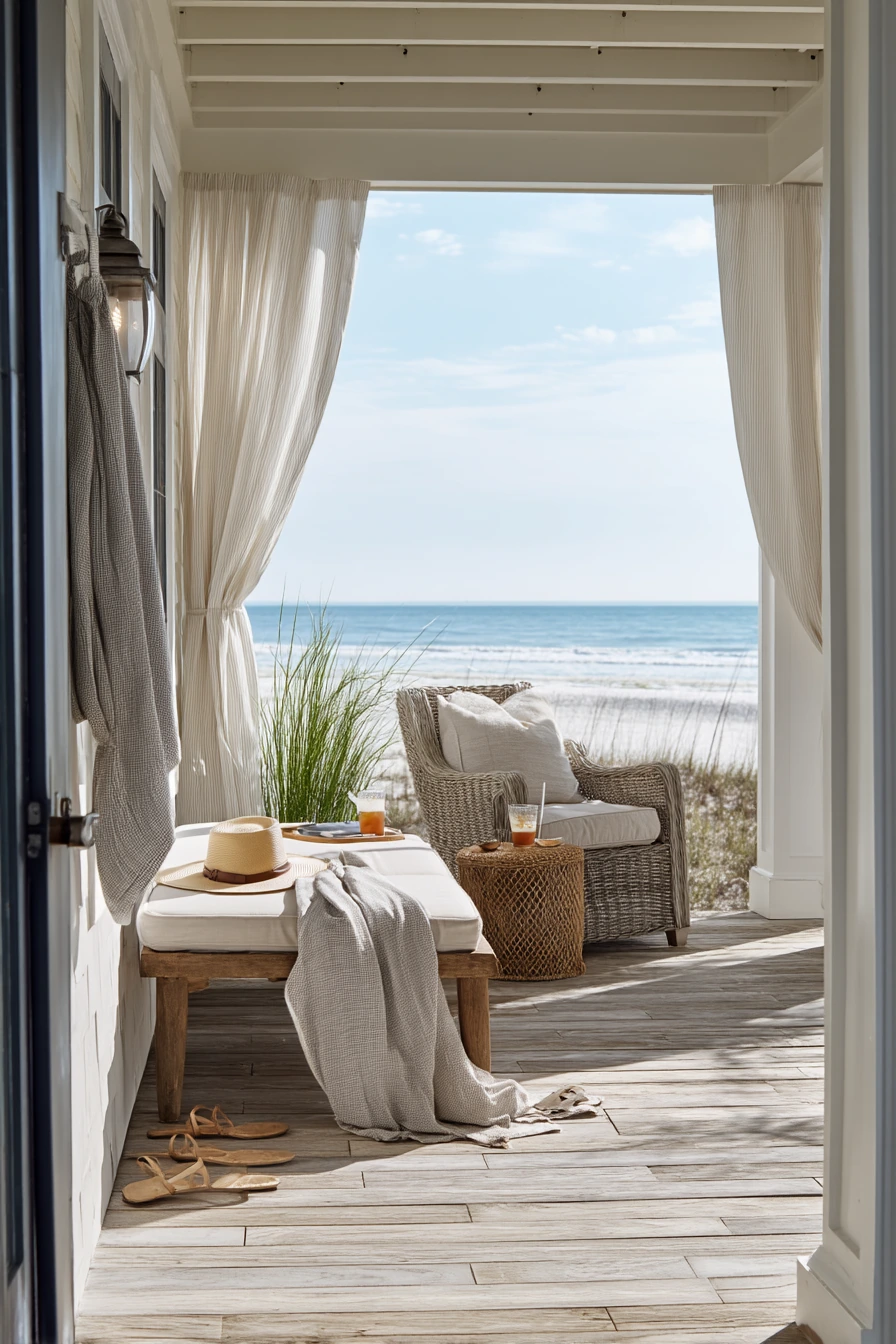
Large limestone slabs create a calm coastal porch floor that feels airy and simple. Pale driftwood tones work with breezy curtains, a woven lounge chair, and a sea-glass side table. This style suits a porch where people come back from the beach, drop sandy sandals by the threshold, hang towels on a hook, and set down a half-finished iced tea on the ledge.
Limestone is a natural stone, so it has variation and a softer, chalkier feel than porcelain. That is part of the charm, but it also means it can stain if spills sit too long. A good sealer helps, especially for drinks, sunscreen hands, and wet towels. Choose a finish with texture for slip resistance. In salty air, metal furniture can corrode faster, so use powder-coated frames and rinse them now and then.
For styling, keep your color palette light and relaxed. White, sand, and soft blue look right on limestone. Add texture with woven items instead of busy patterns. If you want a stronger look, bring in one darker accent like a navy pillow or a black lantern. To keep the space functional, set a basket near the door for flip-flops and a small tray for keys. A natural fiber mat looks good, but choose one made for outdoor use so it does not stay damp.
- Seal limestone to reduce staining and make cleaning easier.
- Use a soft bristle broom to avoid scratching the surface.
- Choose breathable outdoor curtains that dry quickly.
- Add a small rinse mat or brush for sand near the steps.
- Keep planters elevated slightly so water does not sit under them.
Pro Design Tip: Use larger slabs with fewer grout lines to make a porch feel more open and to keep the look calm and coastal.
Budget Considerations: Real limestone can be pricey and heavy to install; for a similar look on a budget, consider limestone-look porcelain that needs less sealing.
6 Tile Porch With Pattern and Personality
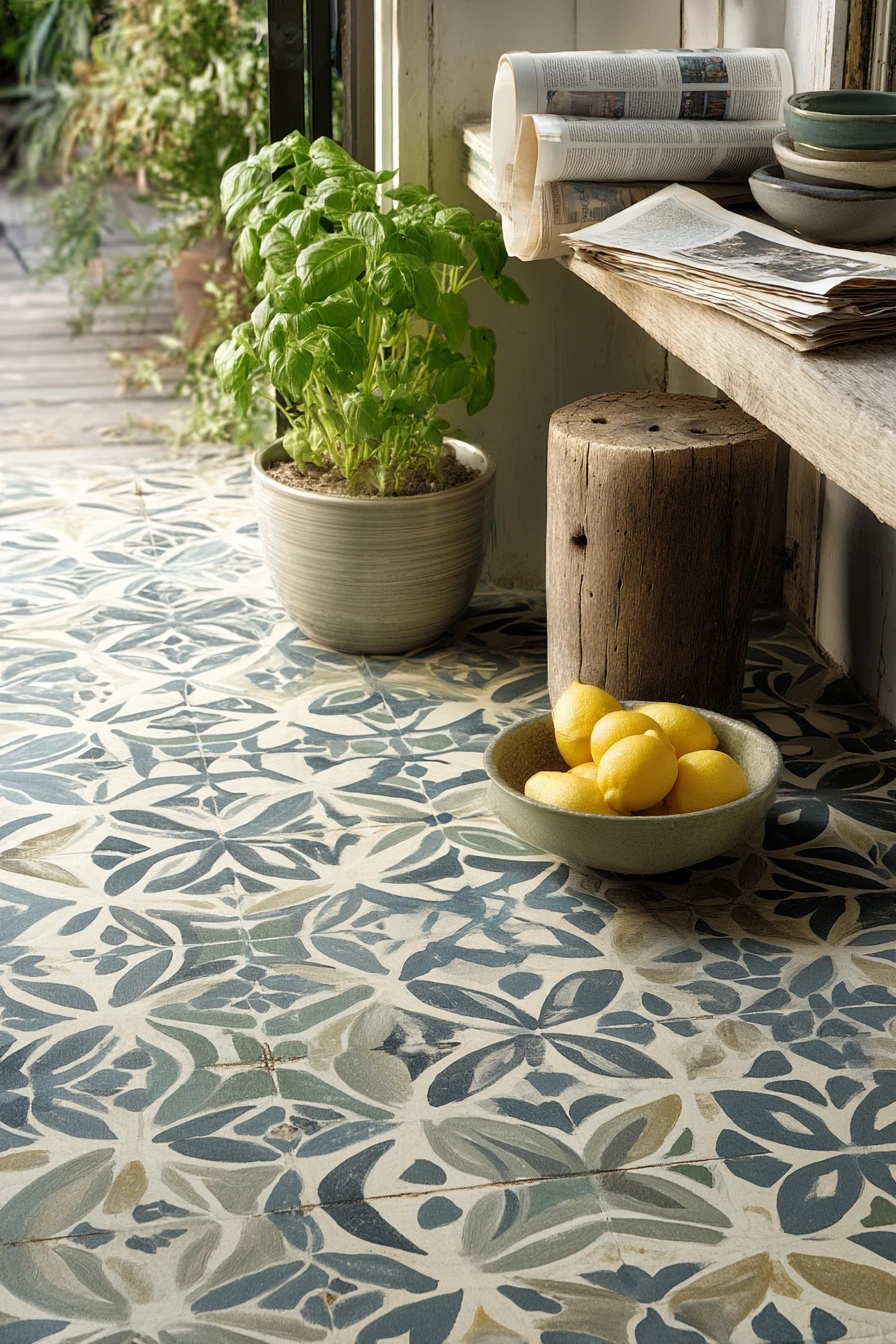
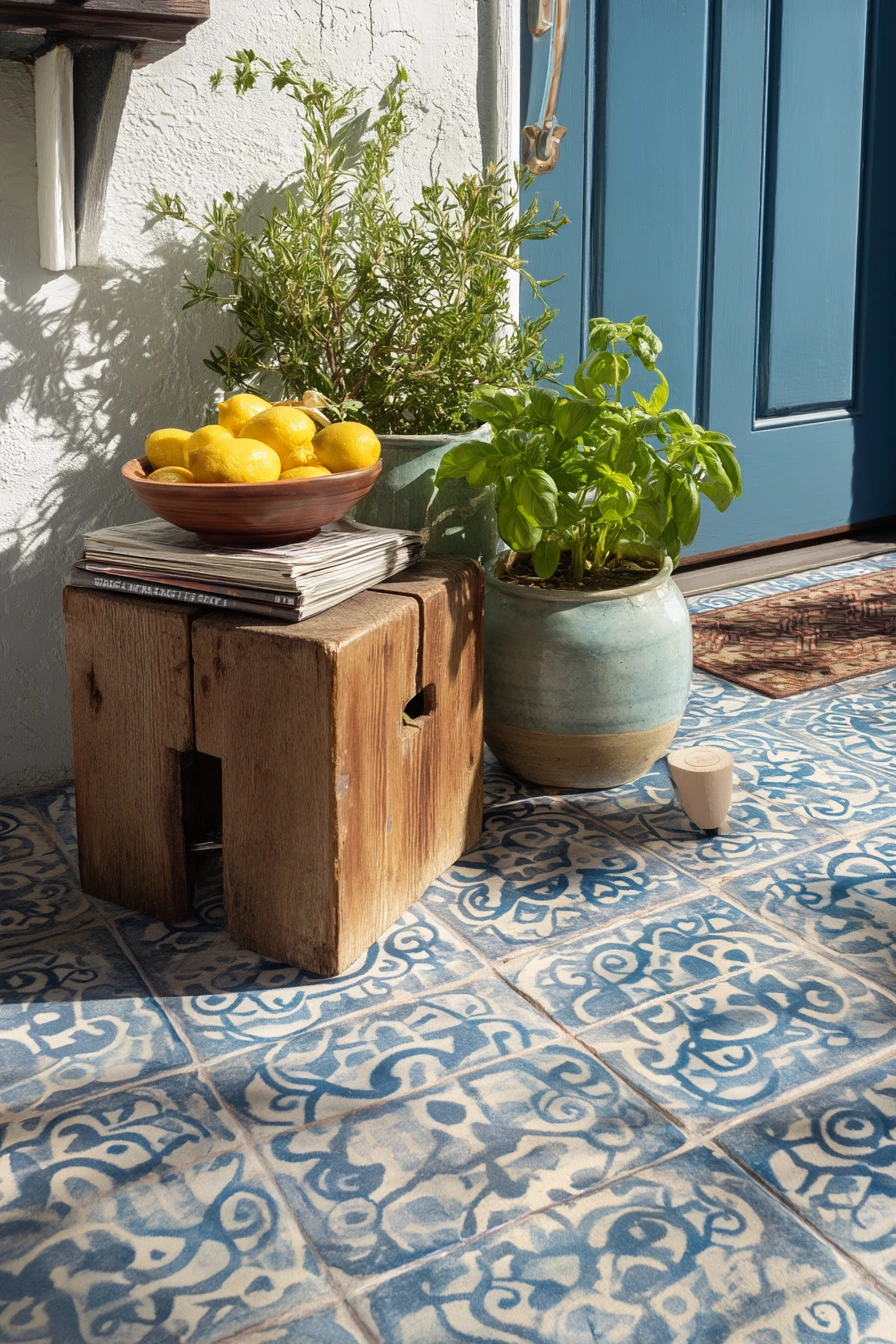
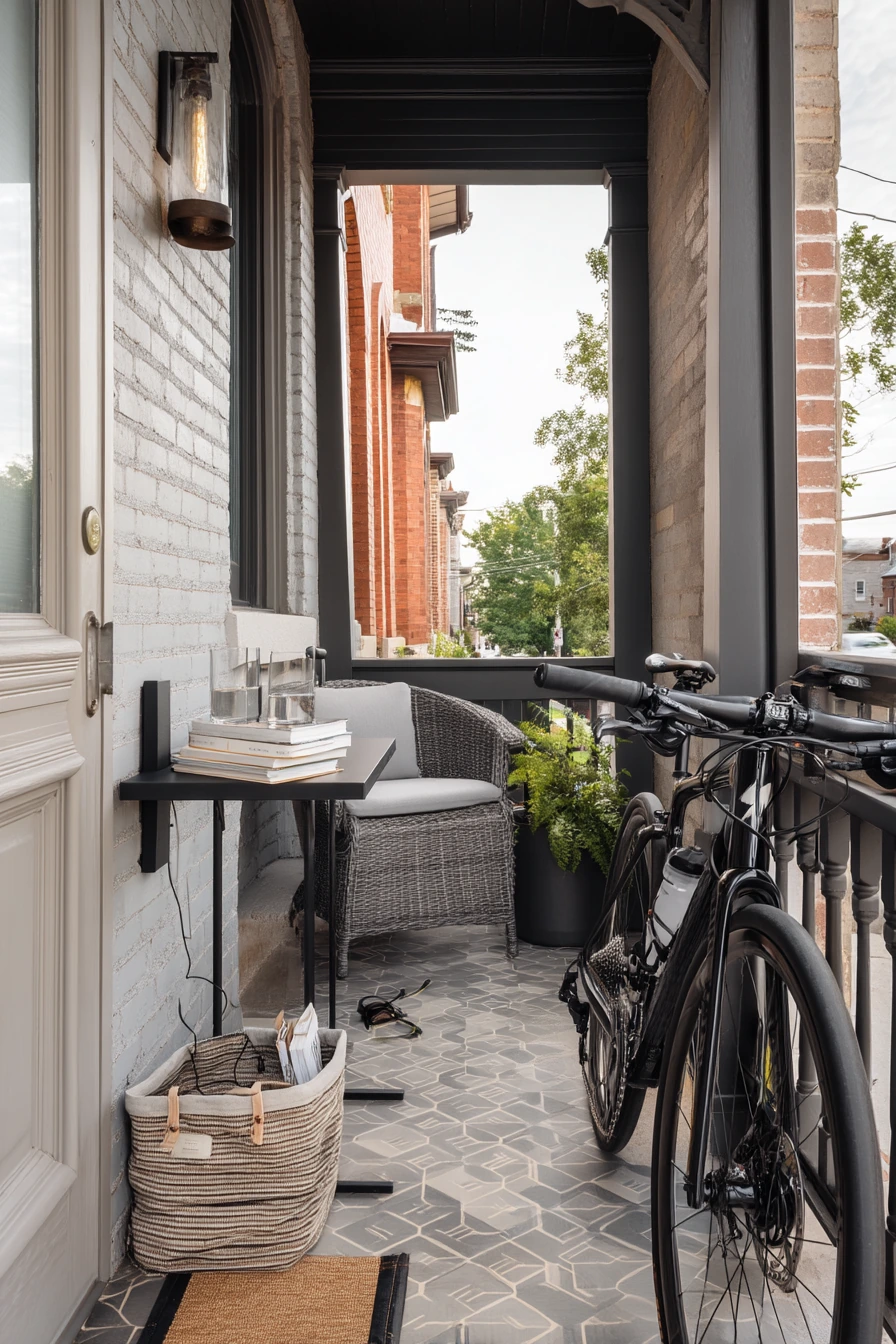
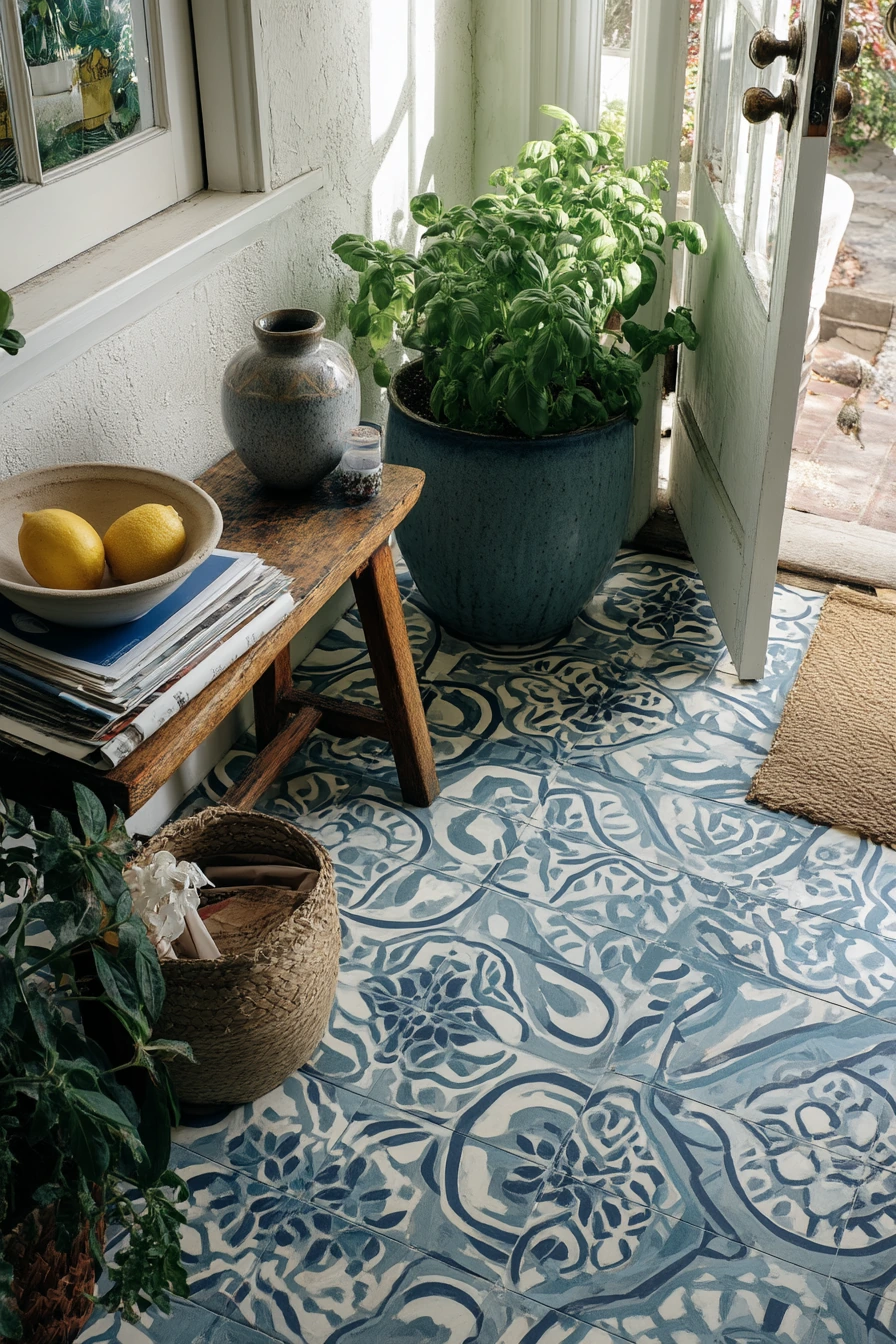
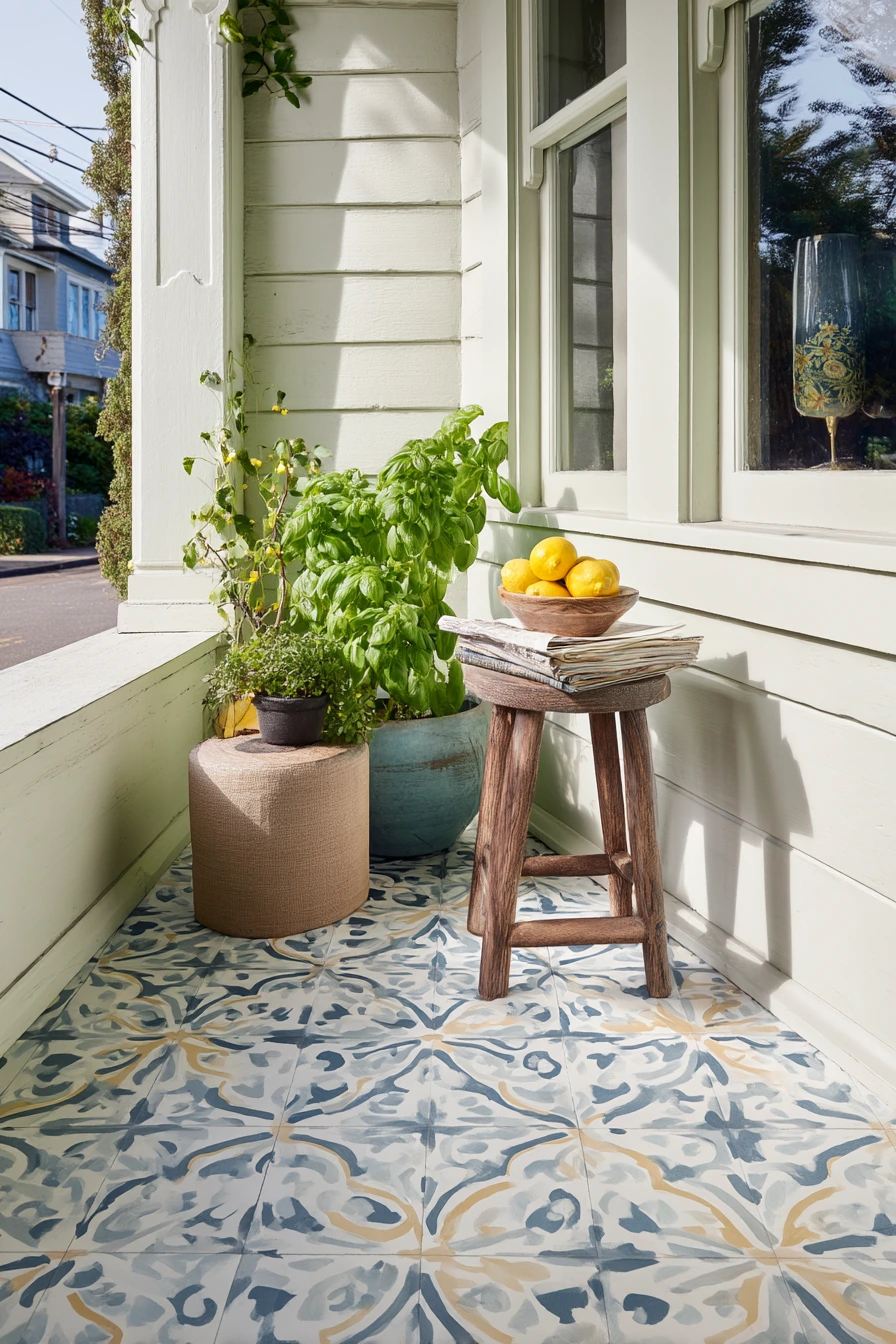
Encaustic-style cement tile gives a front porch instant personality. Muted indigo, clay, and cream patterns can turn a small space into a creative welcome. It fits a home where potted basil sits by the door, stacked magazines rest on a thrifted stool, and a paint roller on newspaper hints at weekend projects. Even a toddler’s chalk drawing on the edge can feel like part of the story.
For real cement tile, sealing is not optional. Cement is porous, so it can absorb water and stains. Seal before and after grouting, then reseal as needed based on your climate and traffic. If you want the look with less maintenance, choose porcelain tile that mimics cement patterns. Either way, confirm the tile is rated for outdoor use and has enough texture for slip resistance. Proper slope and a solid substrate help prevent cracks.
To style patterned tile, keep the rest of the porch simple. Let the floor be the main design feature. Choose one or two solid colors from the tile for your door paint or planters. Natural materials like terracotta, rattan, and wood look balanced with indigo and cream. Use a small doormat in a plain weave so it does not fight the pattern. If your porch is shaded, add warm lighting to keep the colors from looking flat.
- Seal cement tile and wipe spills quickly to prevent marks.
- Use light grout if you want a softer look, darker grout for easier care.
- Stick to simple furniture shapes to avoid visual clutter.
- Add herbs or citrus in pots to echo the tile’s warm tones.
- Use felt pads or rubber feet to protect tile from chair scratches.
Pro Design Tip: Pull one accent color from the tile for the front door and repeat it in one small decor item to make the porch feel planned.
Budget Considerations: Cement tile and professional installation can be costly; porcelain look-alikes usually cost less and are easier to maintain long term.
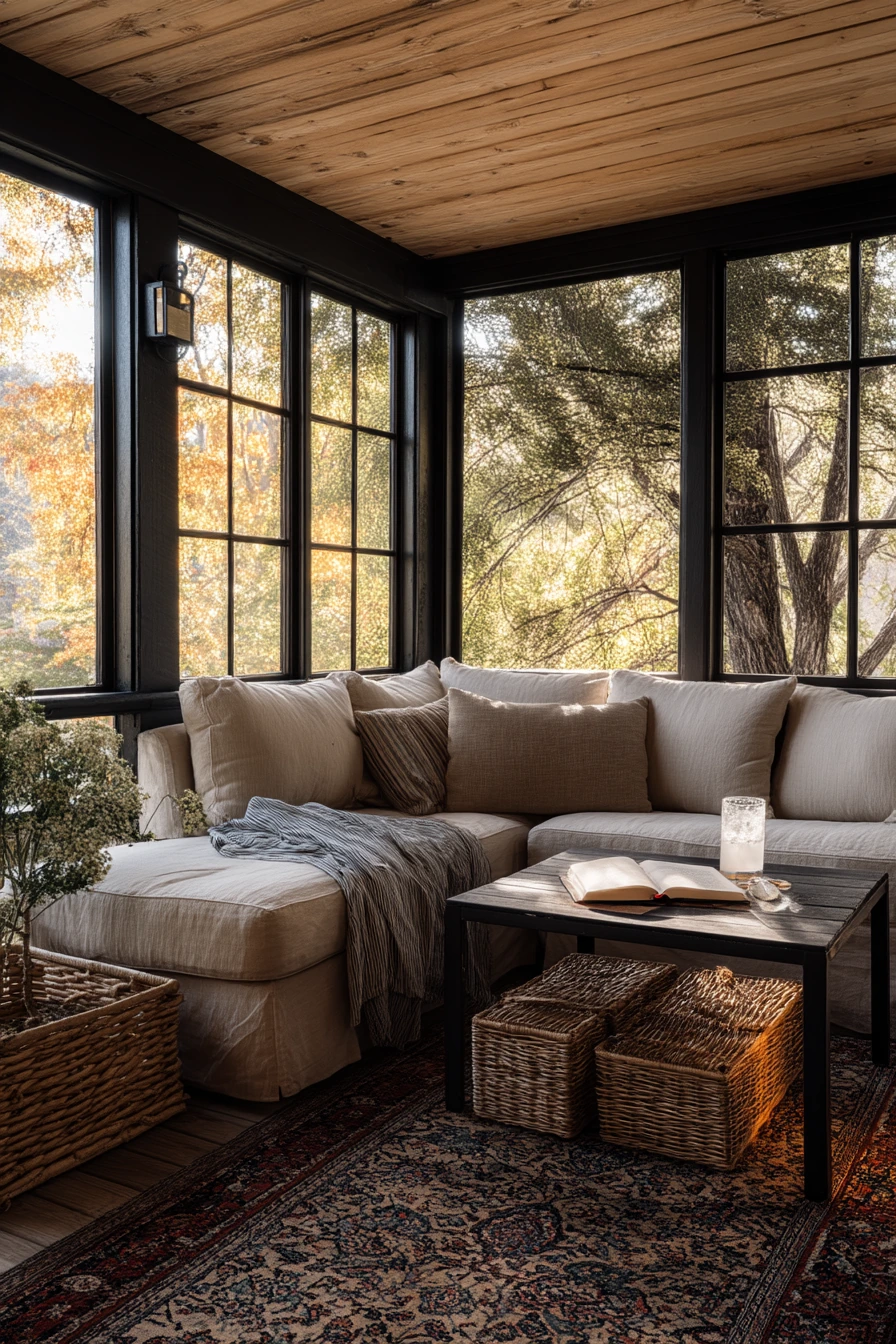
7 Covered Porch With Screened-In Wood Look Flooring
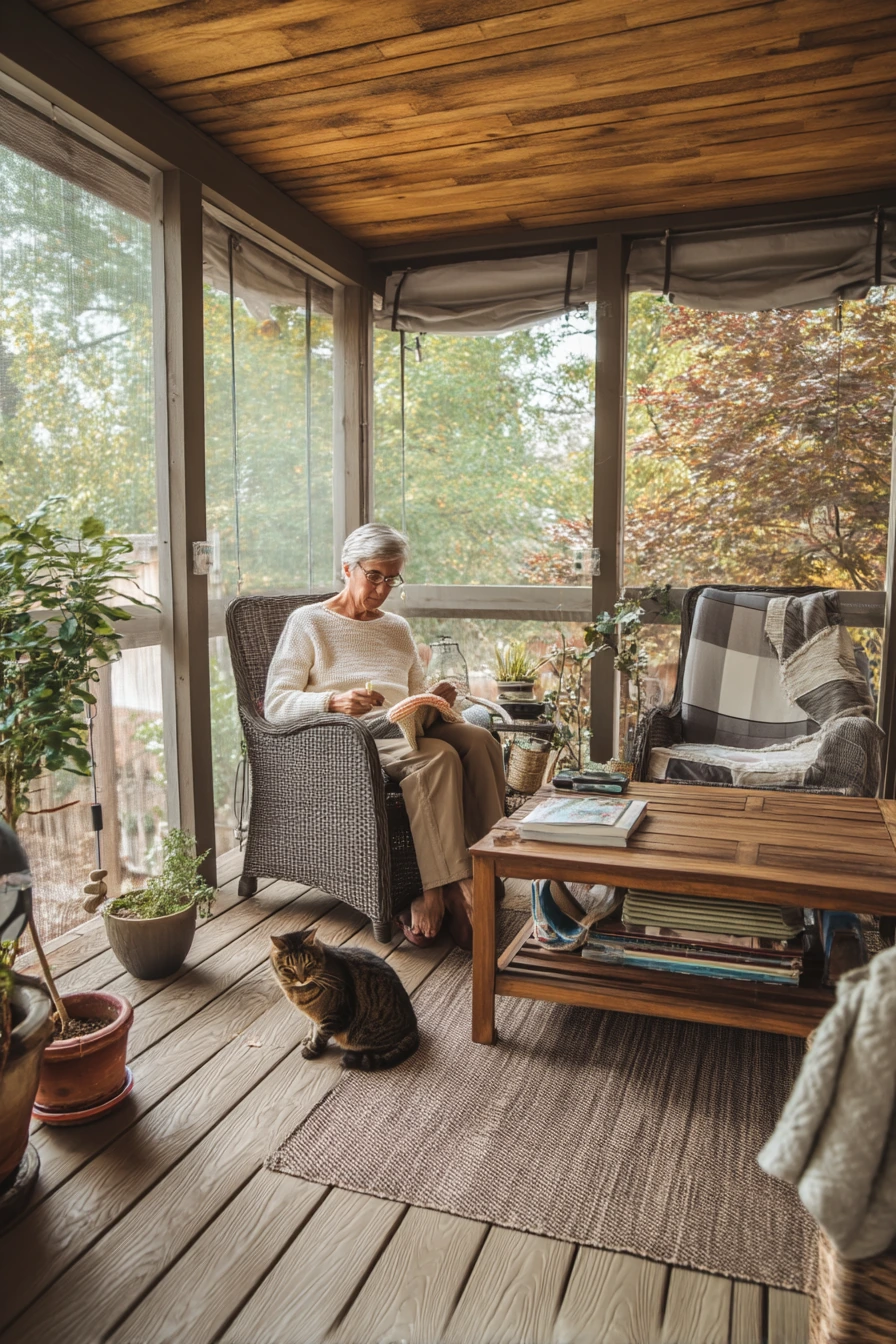
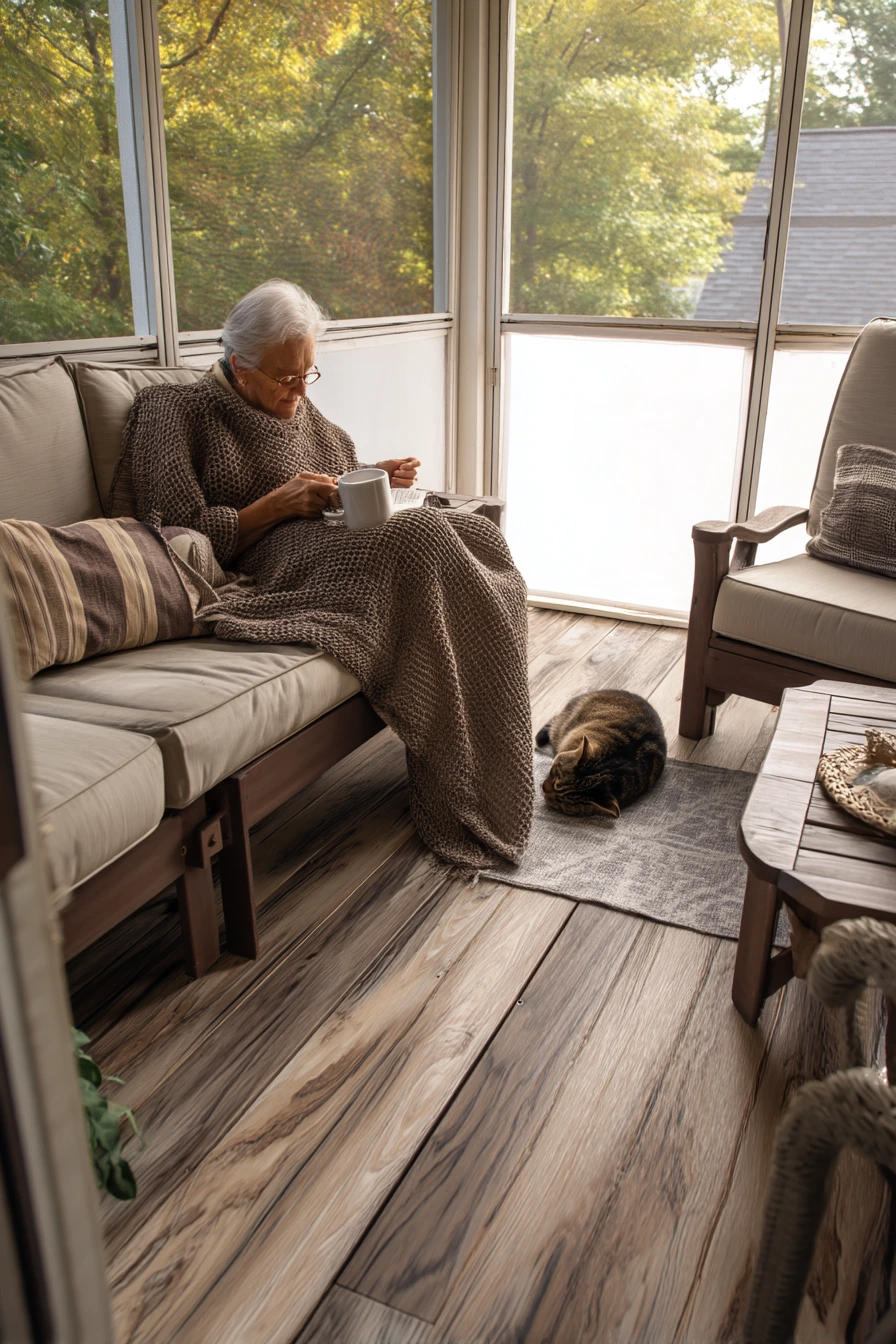
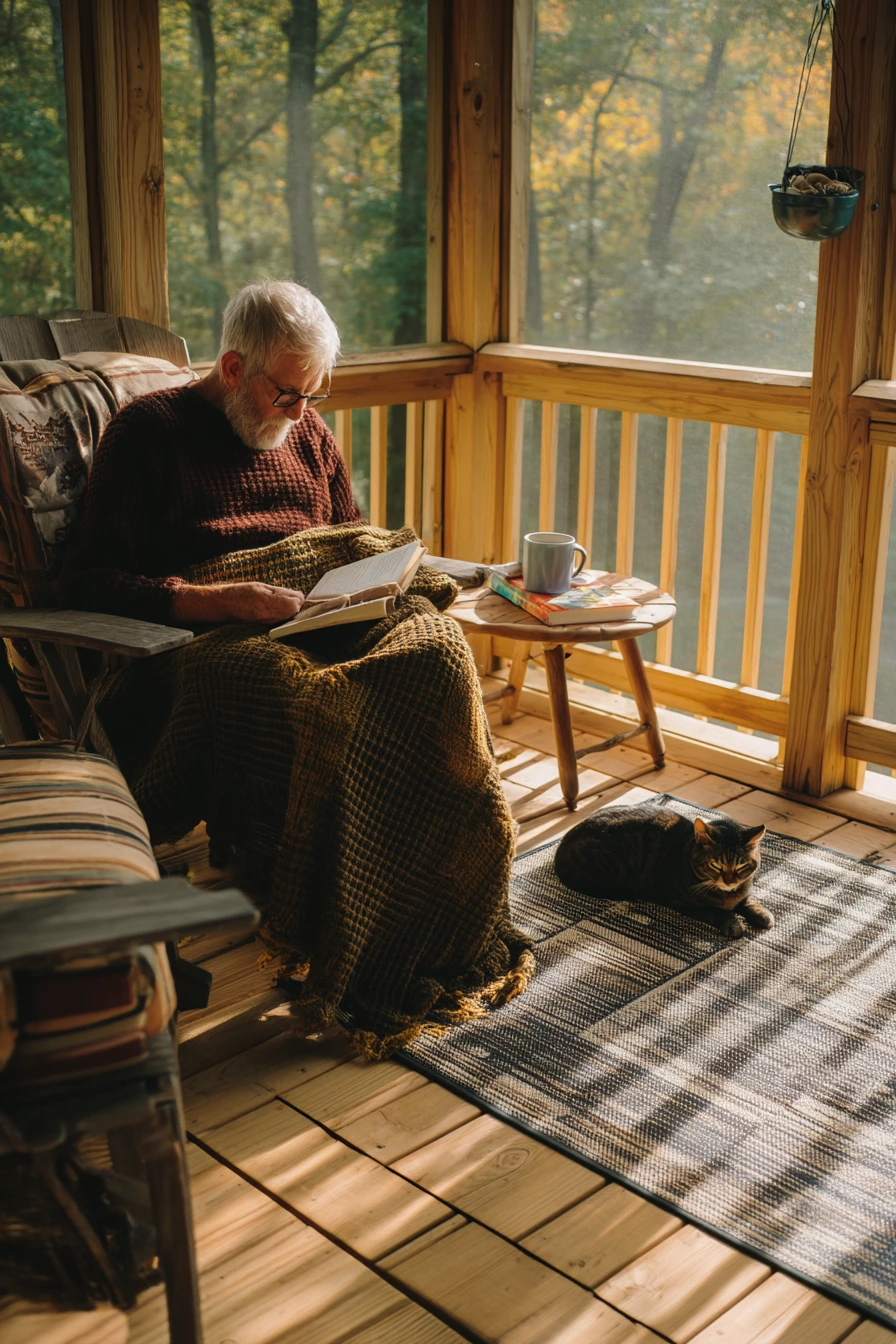
Wood-look planks are a cozy porch flooring option for a screened porch that doubles as a quiet reading nook. Warm oak tones make the space feel soft and homey while still being practical. This is the kind of porch where a grandparent knits in the afternoon, a half-drunk mug sits on the table, reading glasses rest on a novel, and a cat curls up on the rug.
You can get this look with outdoor-rated porcelain planks, composite boards, or treated wood depending on your structure. Porcelain planks are easy to clean and resist scratches, which helps with pets. They also handle humidity well behind screens. If you choose real wood, plan on sealing or staining on a schedule, especially where sun hits the floor. Whichever material you pick, choose a texture that is not slick and avoid high-gloss finishes.
For styling, think layers without clutter. Add a soft outdoor rug under the chair to warm up the look and help with sound. Use a throw that can be washed, and store it in a lidded basket when storms roll in. Keep your side table small so you have room to walk. Warm lighting, like a simple lamp or wall sconce, makes the oak tones feel richer and keeps the porch inviting after sunset.
- Choose planks with a realistic grain pattern for a warmer look.
- Add a rug pad made for outdoors to prevent slipping.
- Use light curtains or shades if screens let in harsh sun.
- Keep a small tray on the table for mugs and glasses.
- Vacuum or sweep often to stop grit from wearing the surface.
Pro Design Tip: Lay the planks in the same direction as the longest wall to make a screened porch feel more open and calm.
Budget Considerations: Porcelain plank tile can cost more to install because of labor; if your budget is tight, use composite or paint-and-stencil wood for a similar warm tone.

8 Renter-Friendly Outdoor Interlocking Tiles
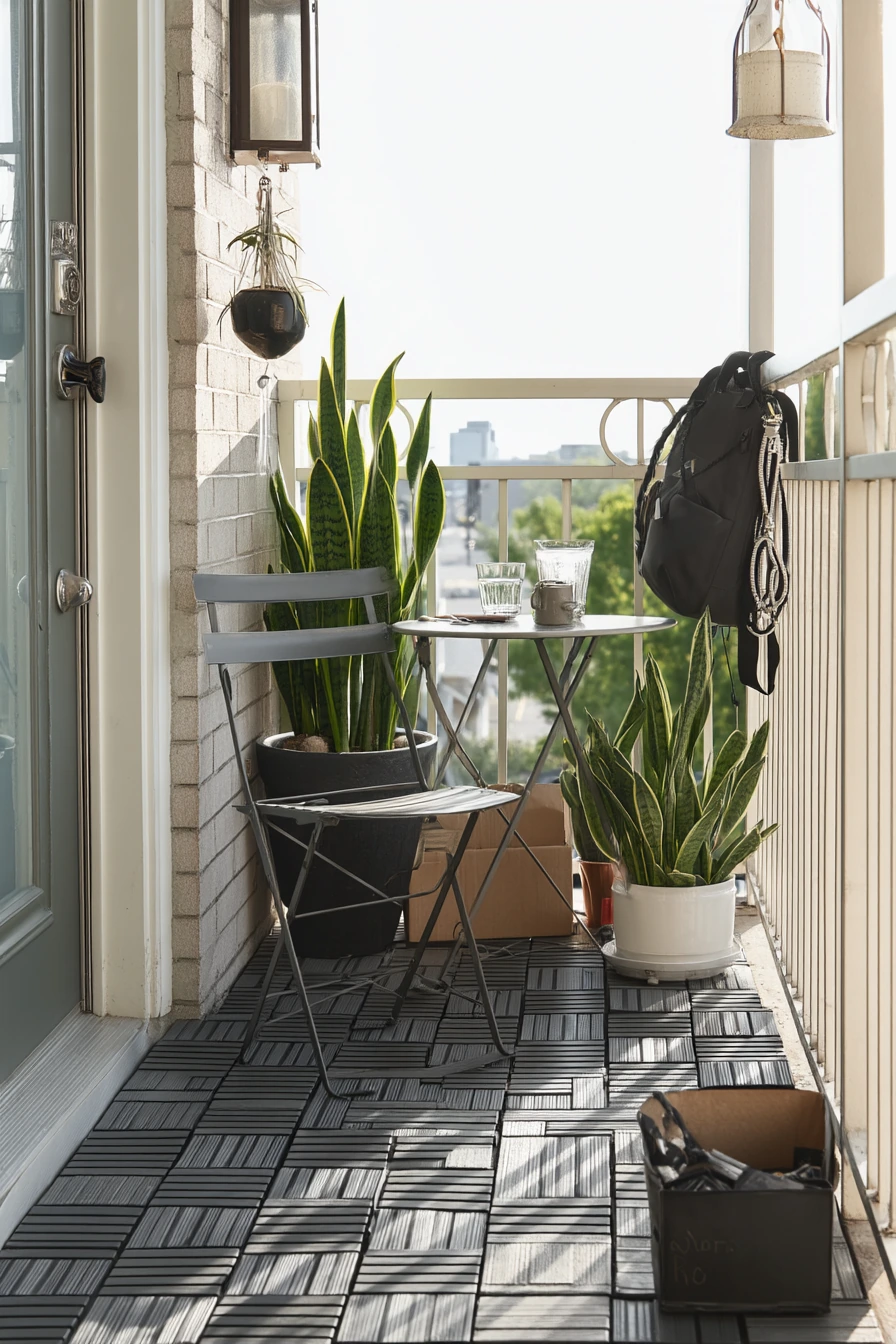
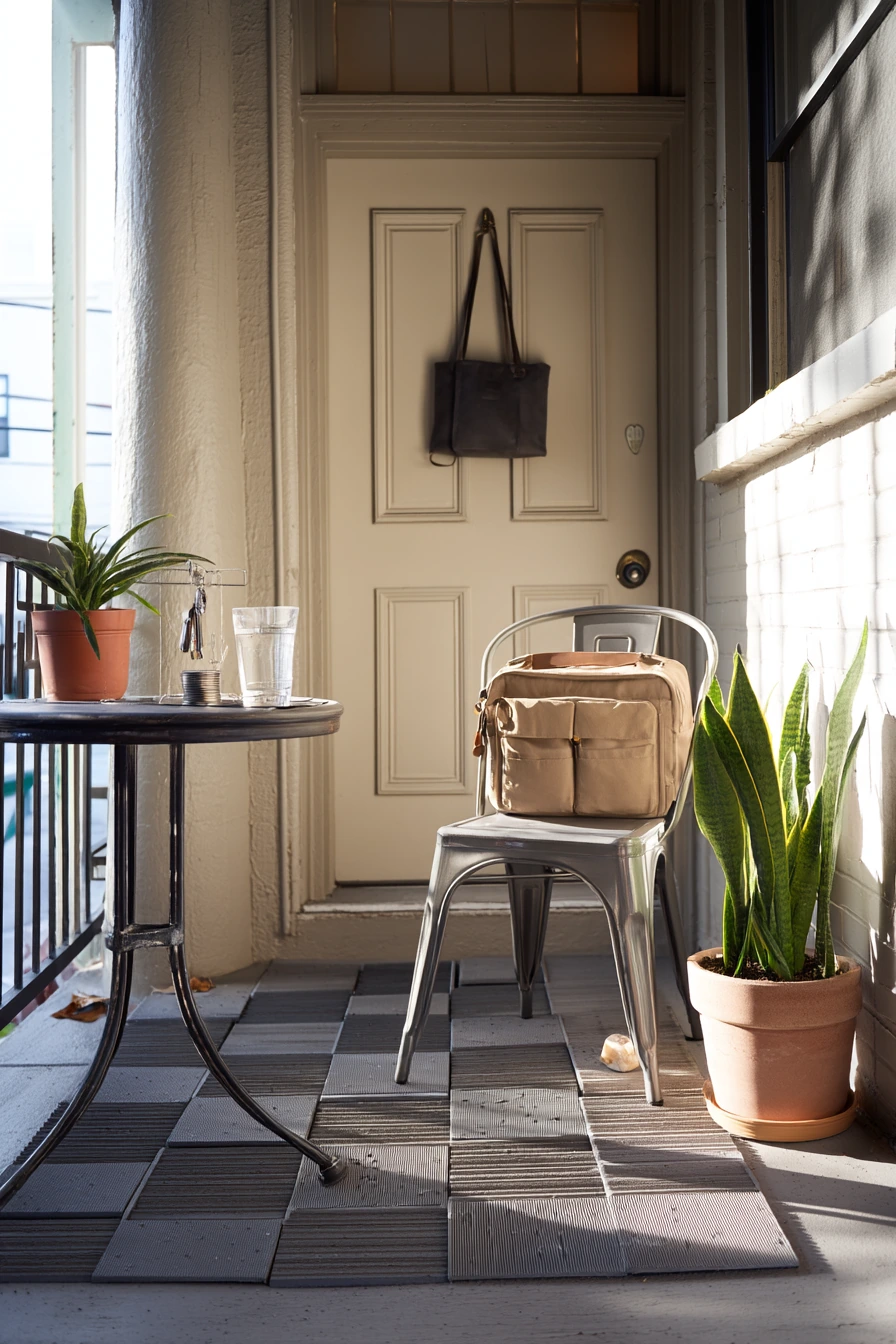
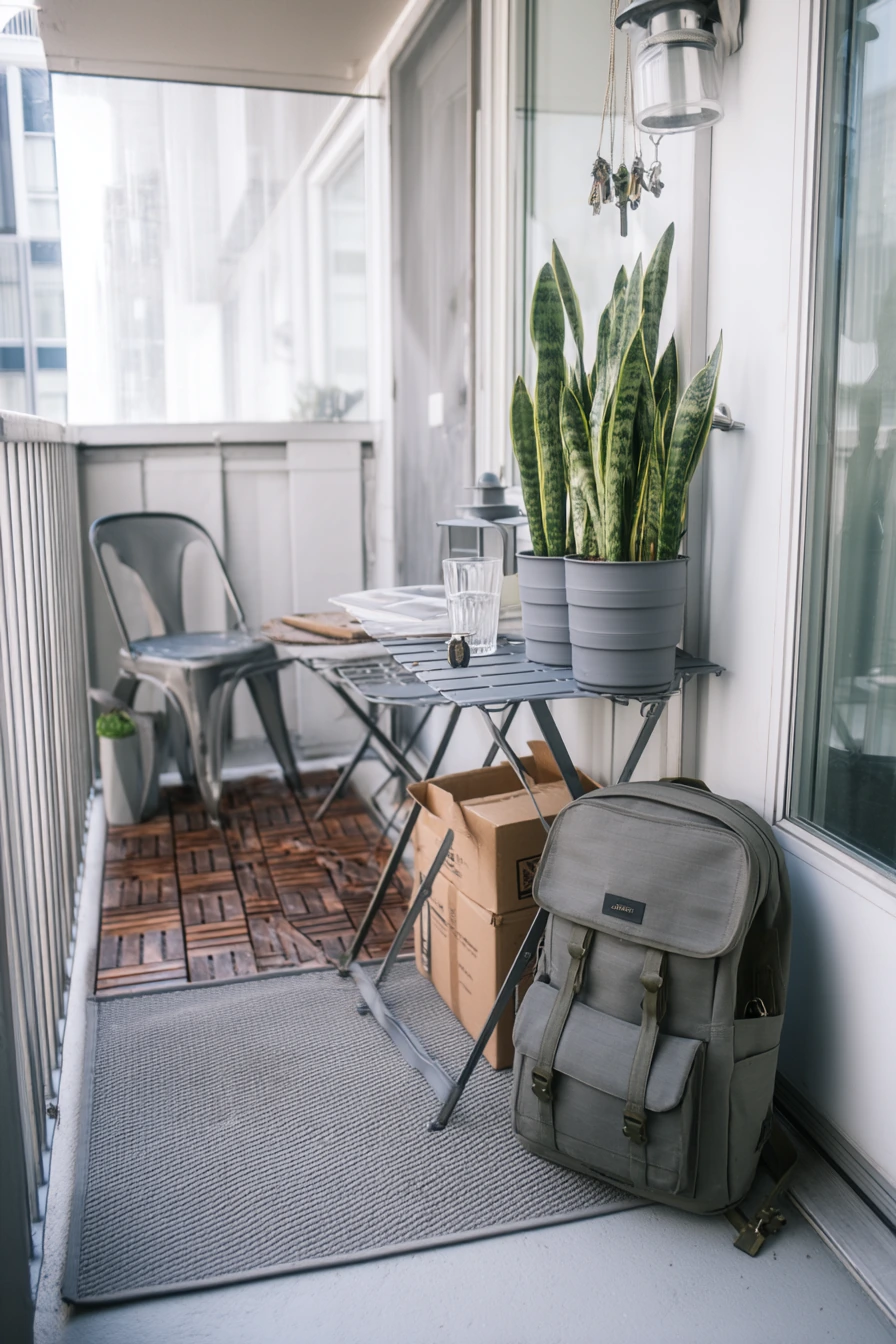
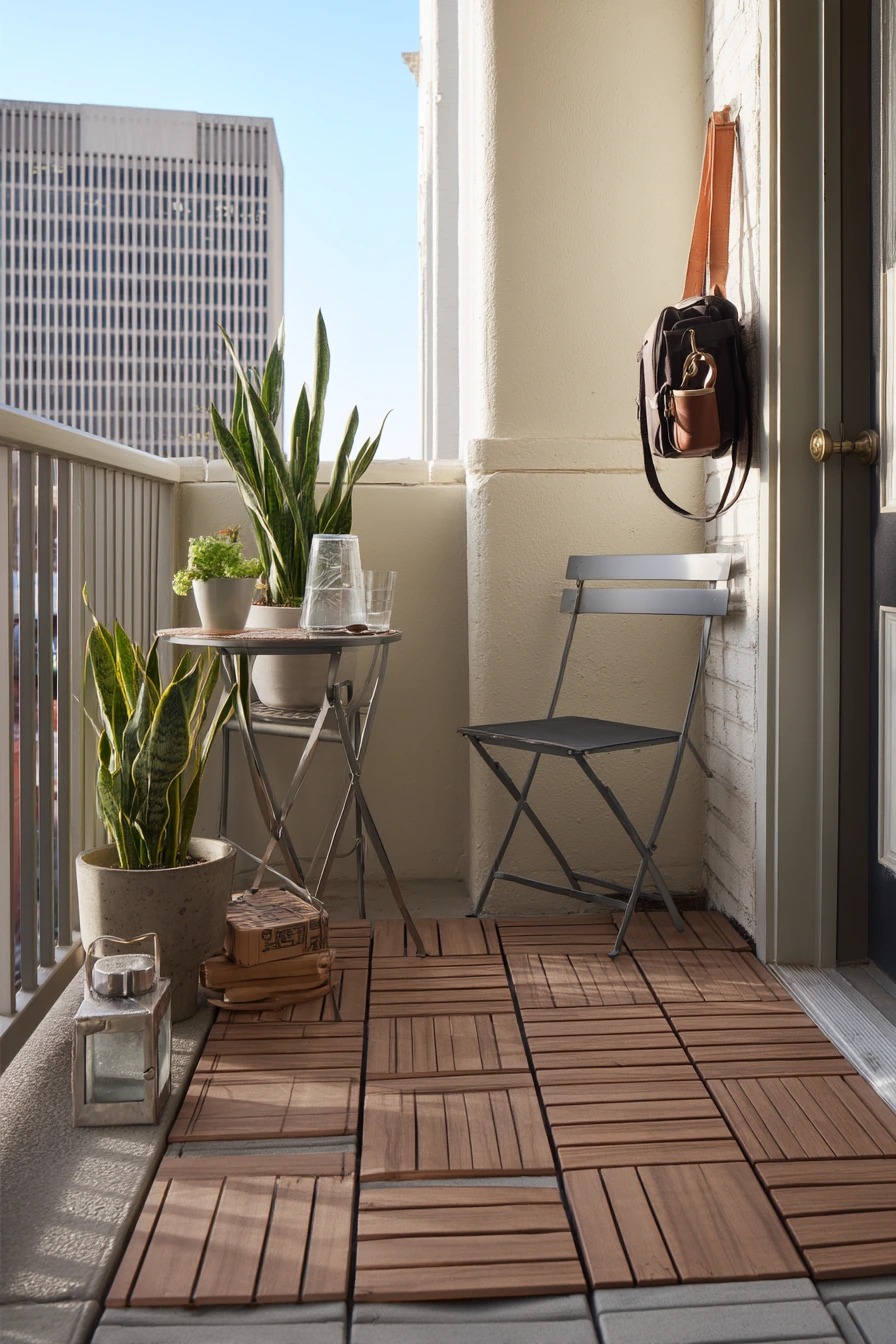
Removable interlocking deck tiles are one of the easiest porch flooring options for renters. They sit right over concrete and can be taken with you when you move. This works well on an apartment porch where space is tight, delivery boxes land near the door, and an extension cord sometimes needs to reach an outlet. With a few clicks, the floor looks more finished and less like a bare slab.
Deck tiles come in wood, composite, and plastic styles. Look for tiles with a drainage base so rainwater can flow under them. Measure carefully, especially around corners and door swings. Most tiles can be cut to fit with the right tools, but if you want a no-stress install, choose a layout that avoids tiny cuts. Keep the surface clean so dirt does not grind into the joints. If your porch gets strong sun, check fade resistance and choose a mid-tone color.
To style the space, go simple and city-friendly. A metal café chair and two potted snake plants create a clean look with little upkeep. Add one lantern for evening light and a small table for keys and a water glass. If you have cords for charging, use a cord cover or run the cable along the wall so it does not become a trip hazard. A small mat at the door helps keep dirt from falling into the tile gaps.
- Pick tiles with a ventilated base for drainage and faster drying.
- Leave a small expansion gap near walls for temperature changes.
- Use planters with saucers so water does not sit under tiles.
- Choose furniture that folds to free up walking space.
- Shake out mats often to keep grit from scratching the surface.
Pro Design Tip: Use tiles to create a clear “room” shape, then center your chair and plants on it so a small balcony feels organized.
Budget Considerations: Interlocking tiles are usually affordable and DIY-friendly; costs rise with premium woods, so composite tiles can be a good middle option.
9 Farmhouse Porch With Reclaimed Wood Boards
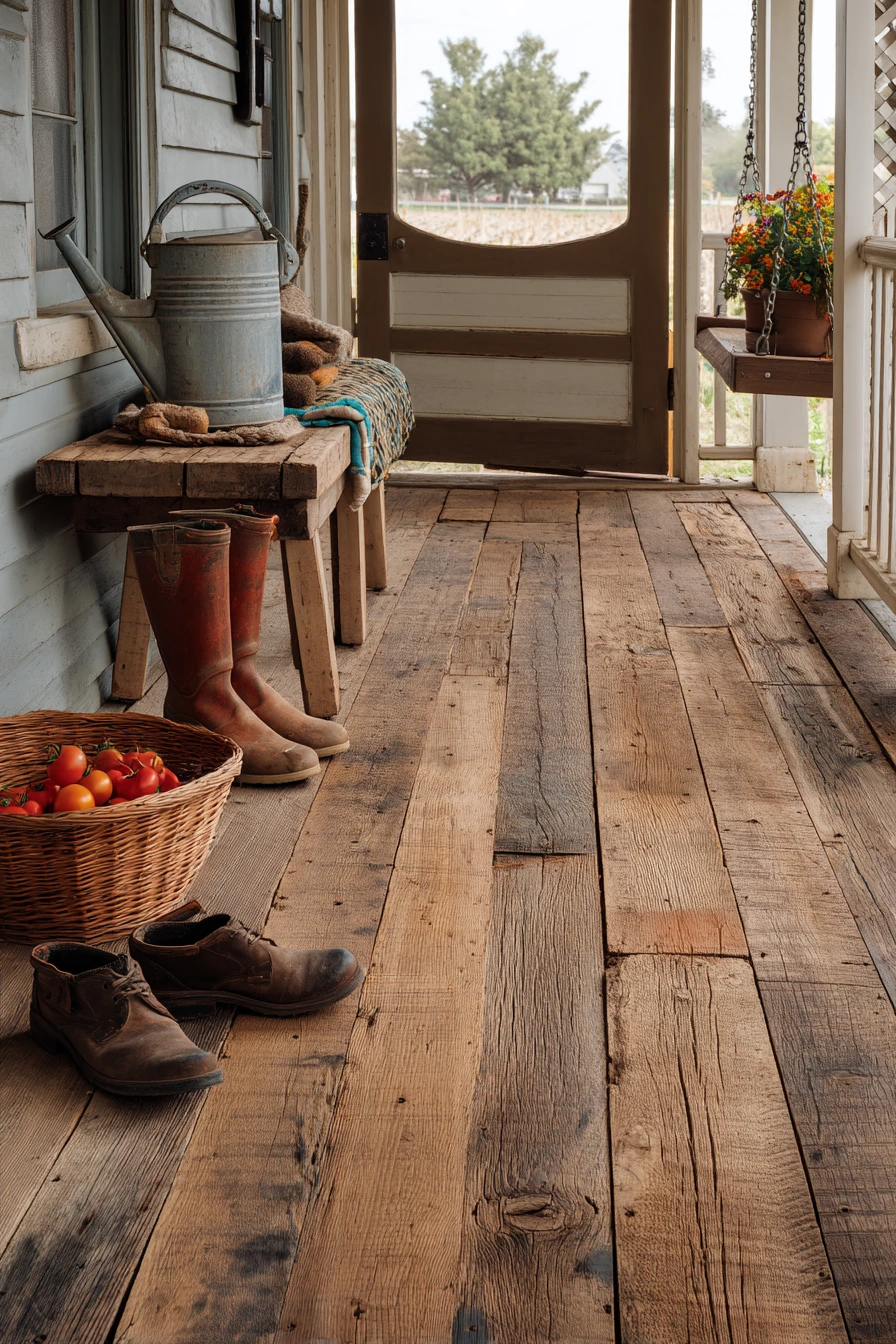
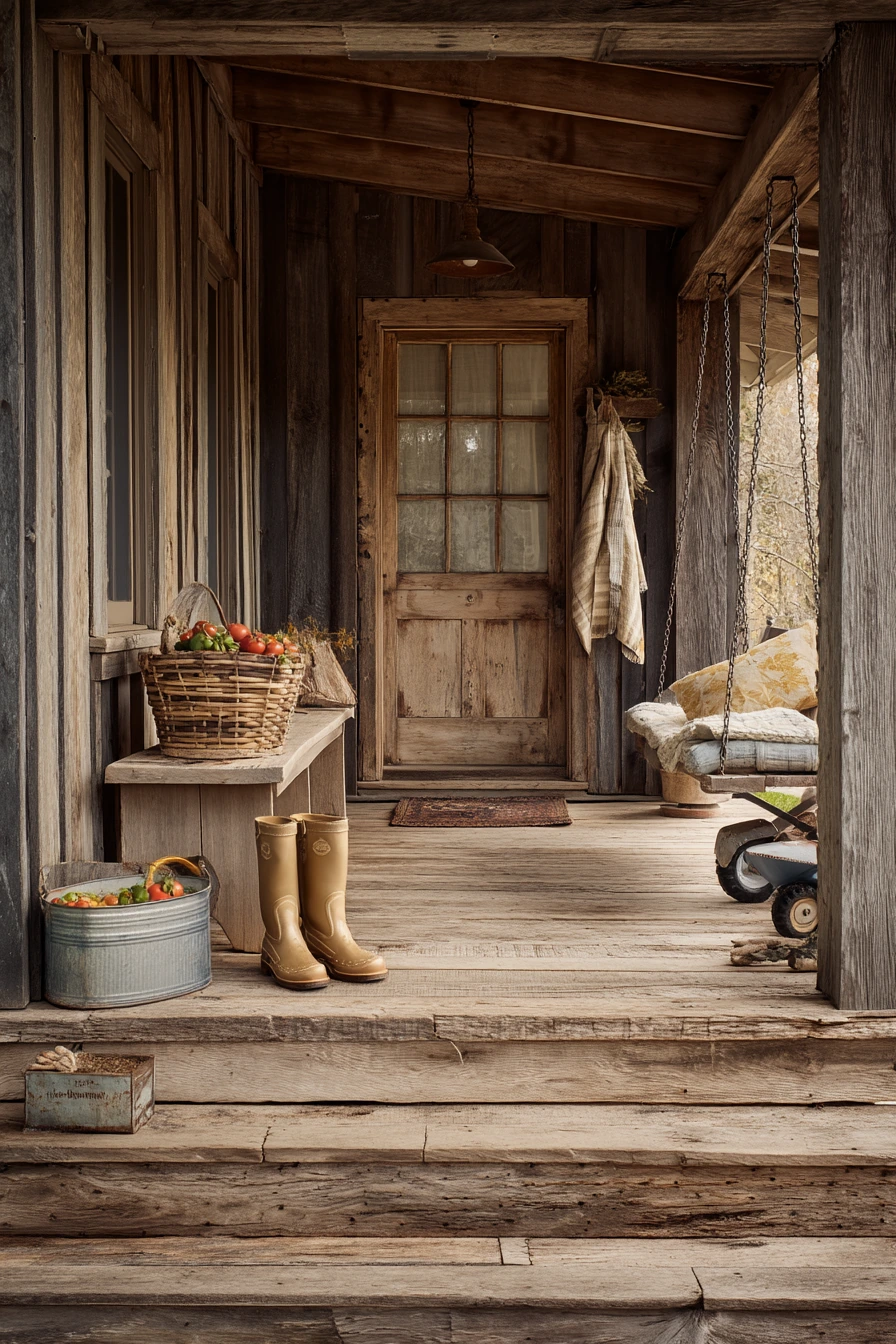
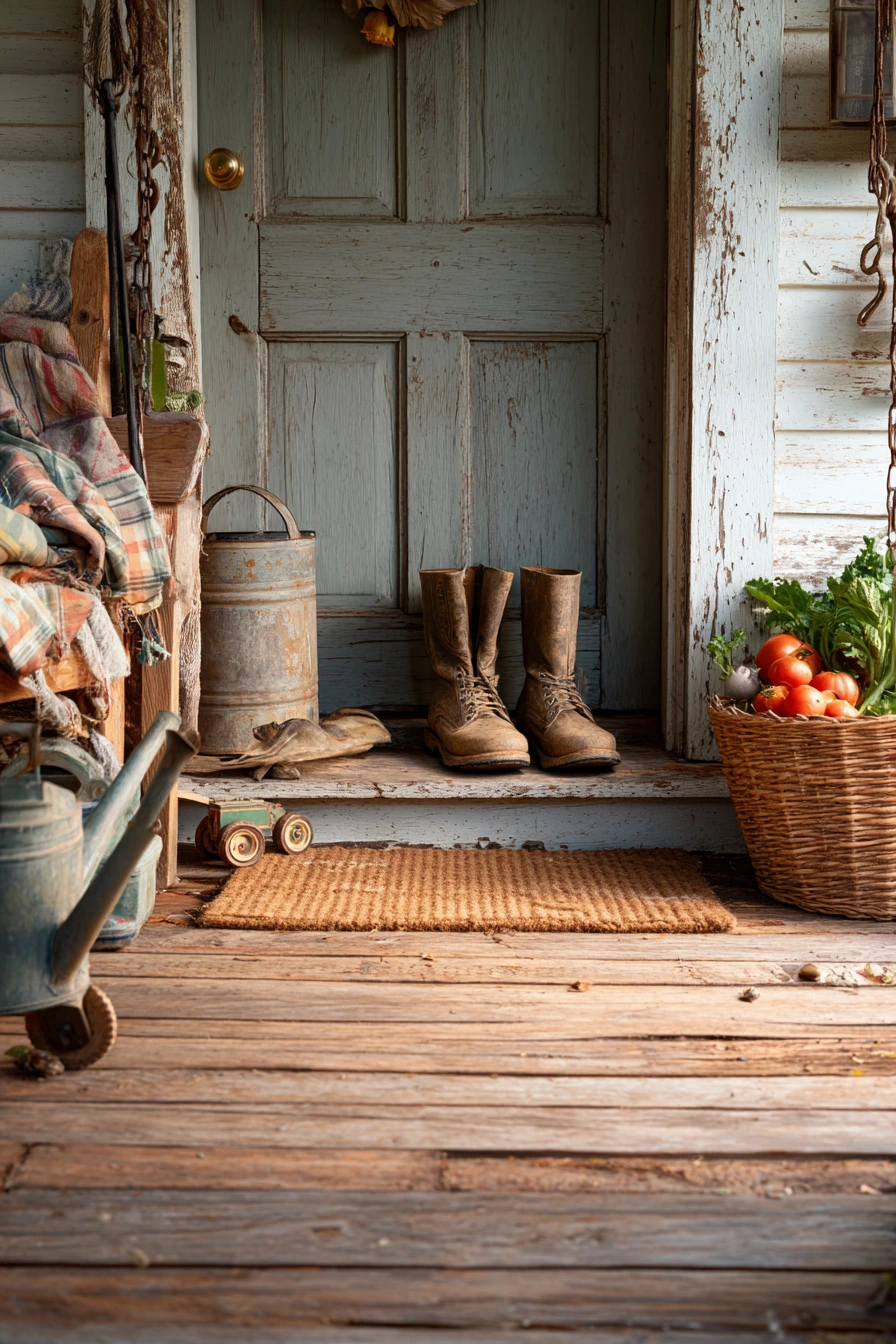
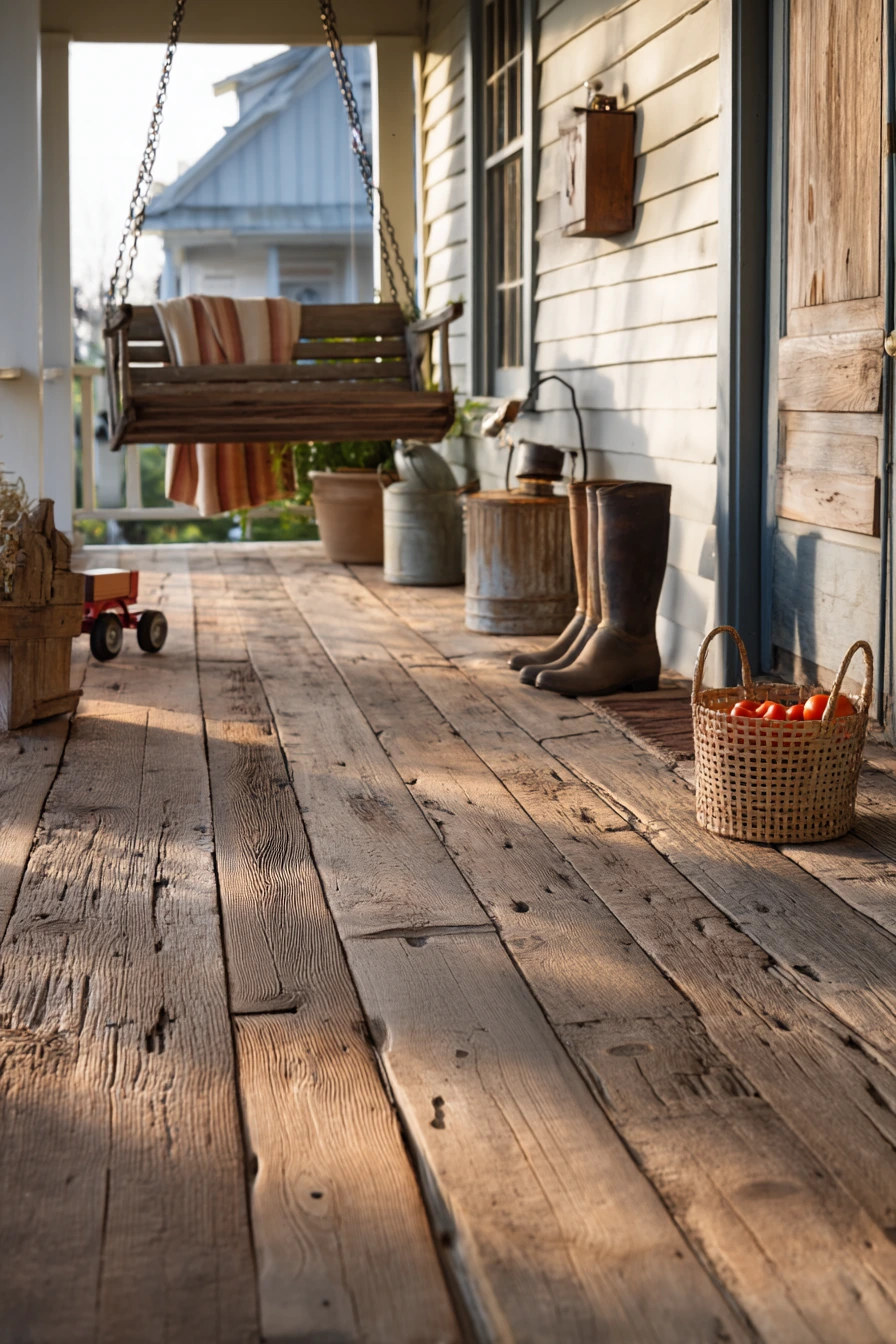
Reclaimed wood boards make a farmhouse front porch feel warm and personal. Honeyed, weathered planks with visible grain and gentle patina look good with porch swing chains, a folded quilt, a galvanized watering can, and a basket of tomatoes. It is a floor that tells a story, even with boots by the step and a toy tractor parked near the edge.
Because reclaimed boards have lived a life, check them carefully before install. Remove nails, test for soft spots, and make sure the thickness is consistent enough for a flat surface. Treat for pests if needed and consider planing only lightly so you keep the character. For outdoor use, sealing is key. A penetrating oil finish can be easier to touch up than a thick film finish, but it may need more frequent refresh. Make sure the porch has airflow under the boards to reduce moisture problems.
For styling, mix rustic with clean lines so it does not look messy. Use one classic doormat, a simple bench, and one or two planters. Let the wood color guide your choices: cream textiles, black metal, and muted greens all work well. Warm evening lighting makes reclaimed wood look richer, so consider a pair of simple sconces or a lantern near the door. Keep a boot tray nearby to protect the boards from wet soil and grit.
- Source boards from reputable salvage yards to reduce surprises.
- Use a durable outdoor sealer and recoat high-traffic areas first.
- Leave small gaps for drainage if your climate is wet.
- Add felt pads under furniture to prevent scratches.
- Use a soft broom, not a harsh pressure wash, to protect the finish.
Pro Design Tip: Balance the busy grain with solid-color textiles and one strong black accent, like railings or a light fixture, to keep the look crisp.
Budget Considerations: Reclaimed wood can be cheap or expensive depending on source and prep; if you are on a budget, mix reclaimed boards with new stained boards in less visible areas.
10 Seasonal Fall Porch With Durable Outdoor Flooring
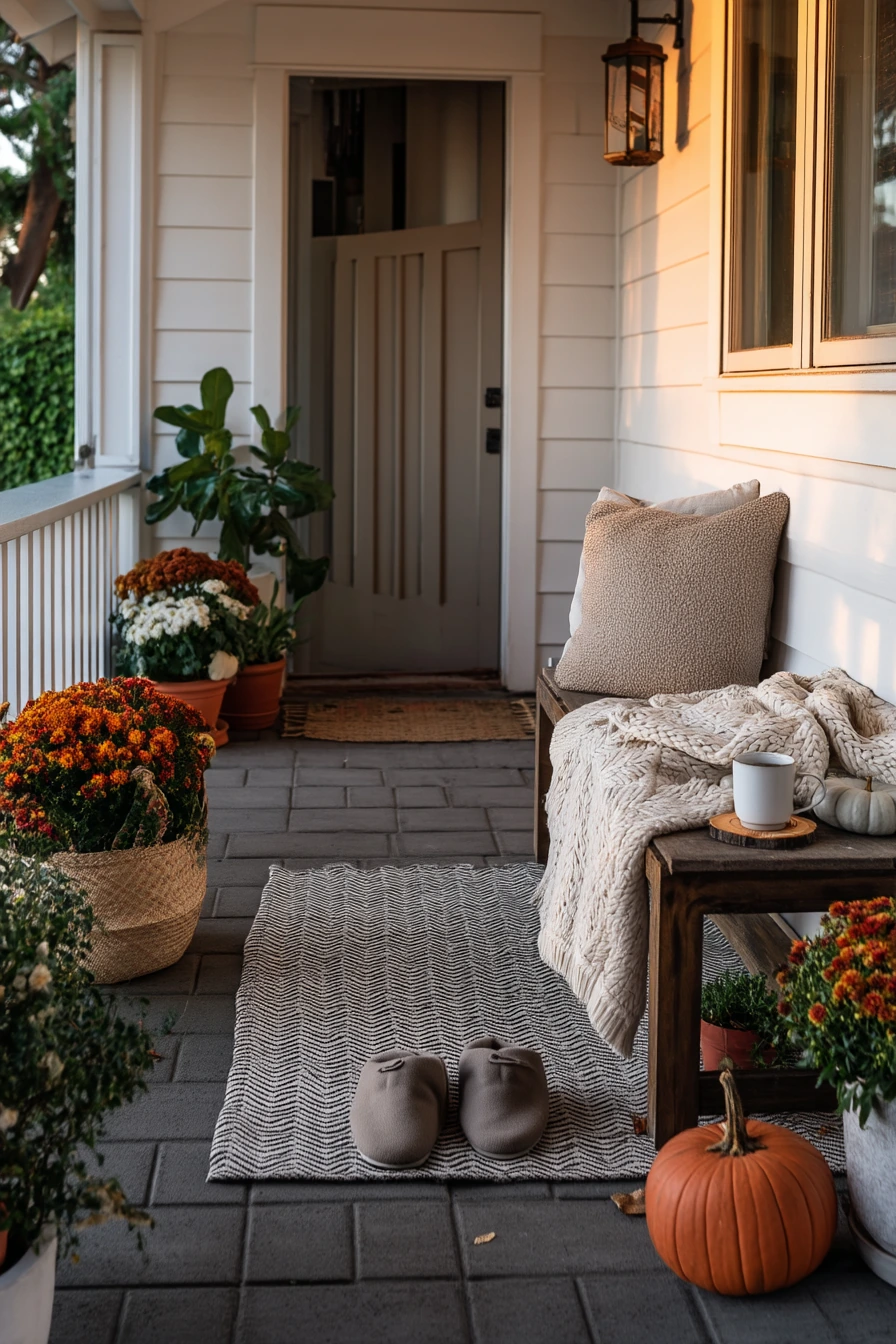
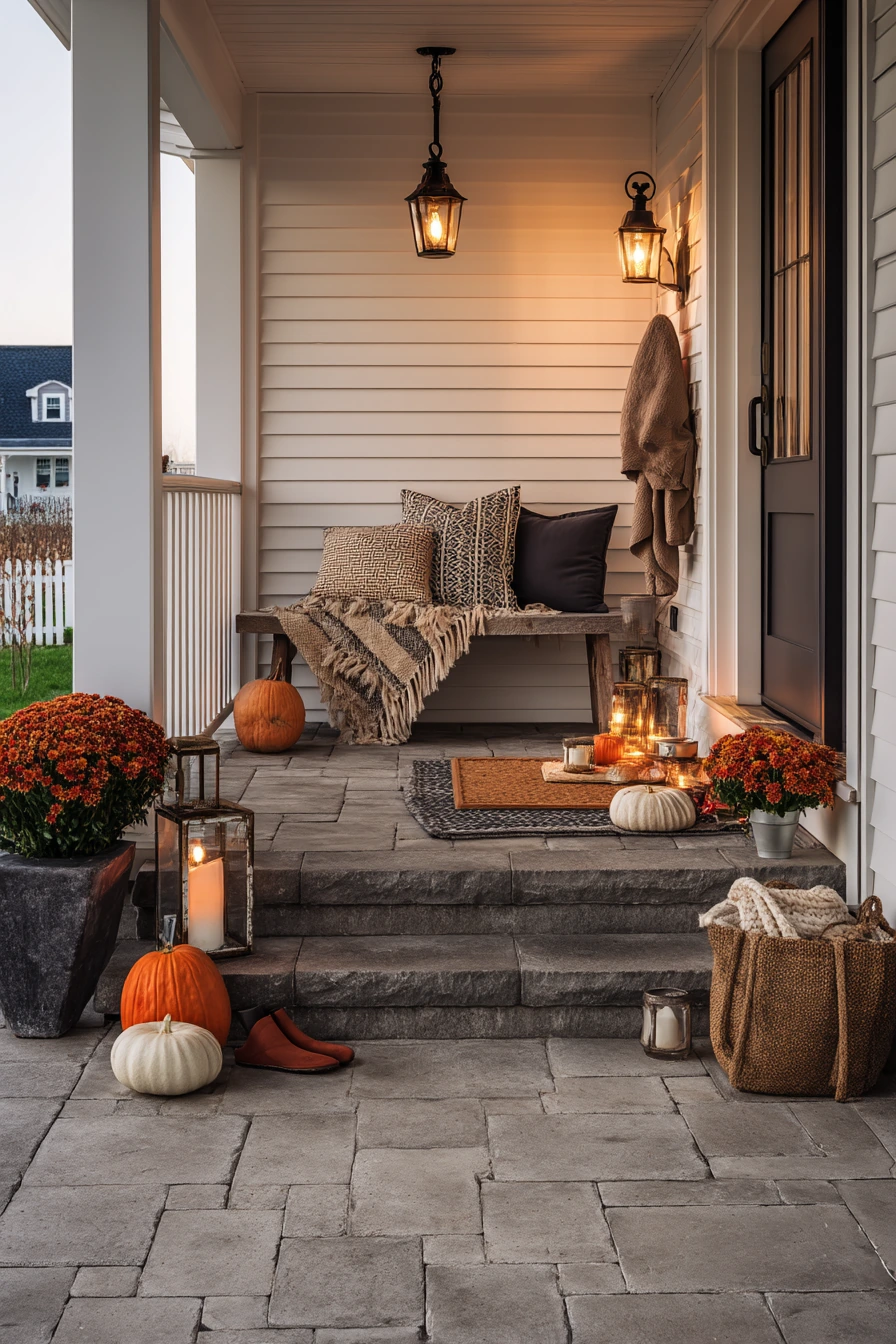
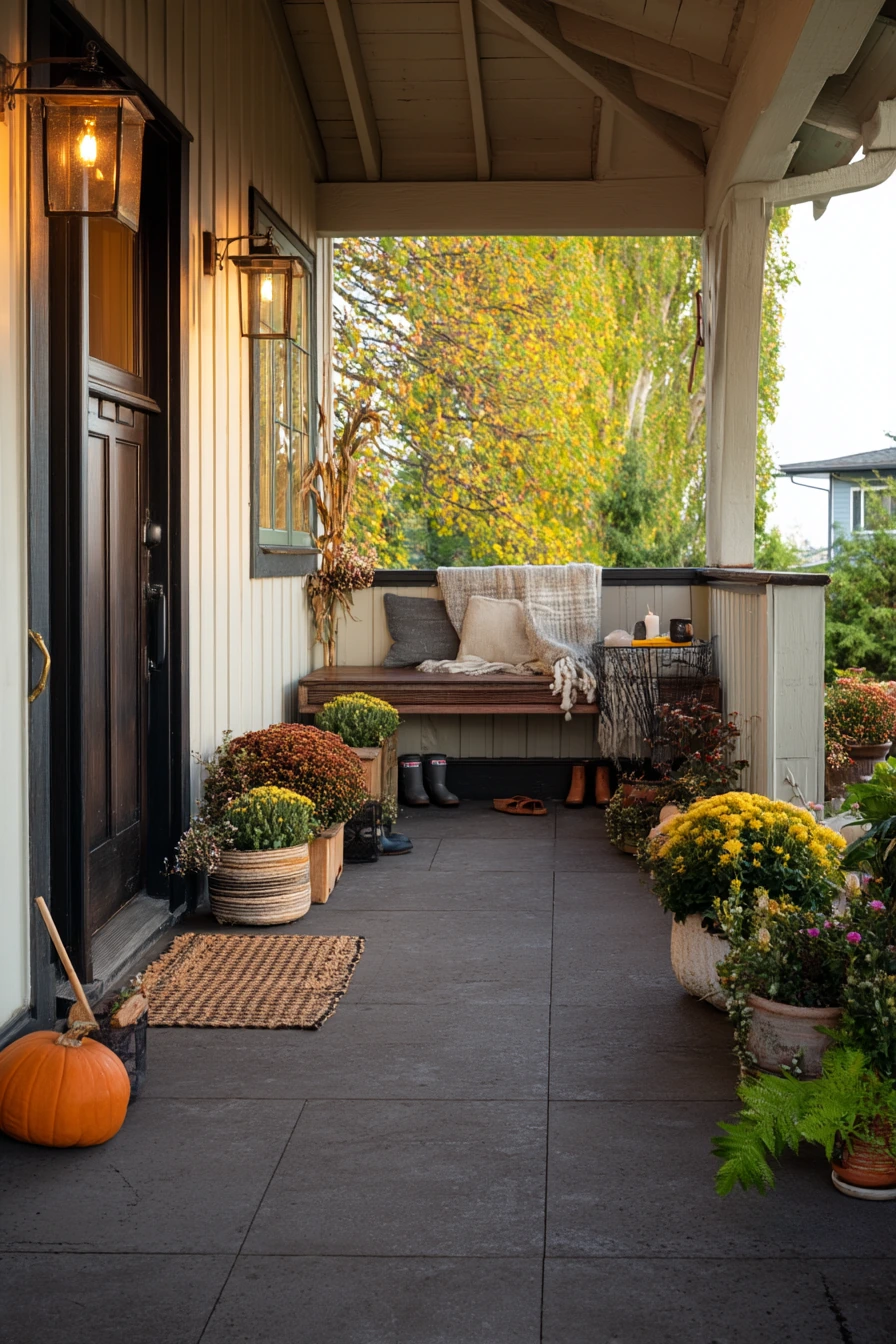
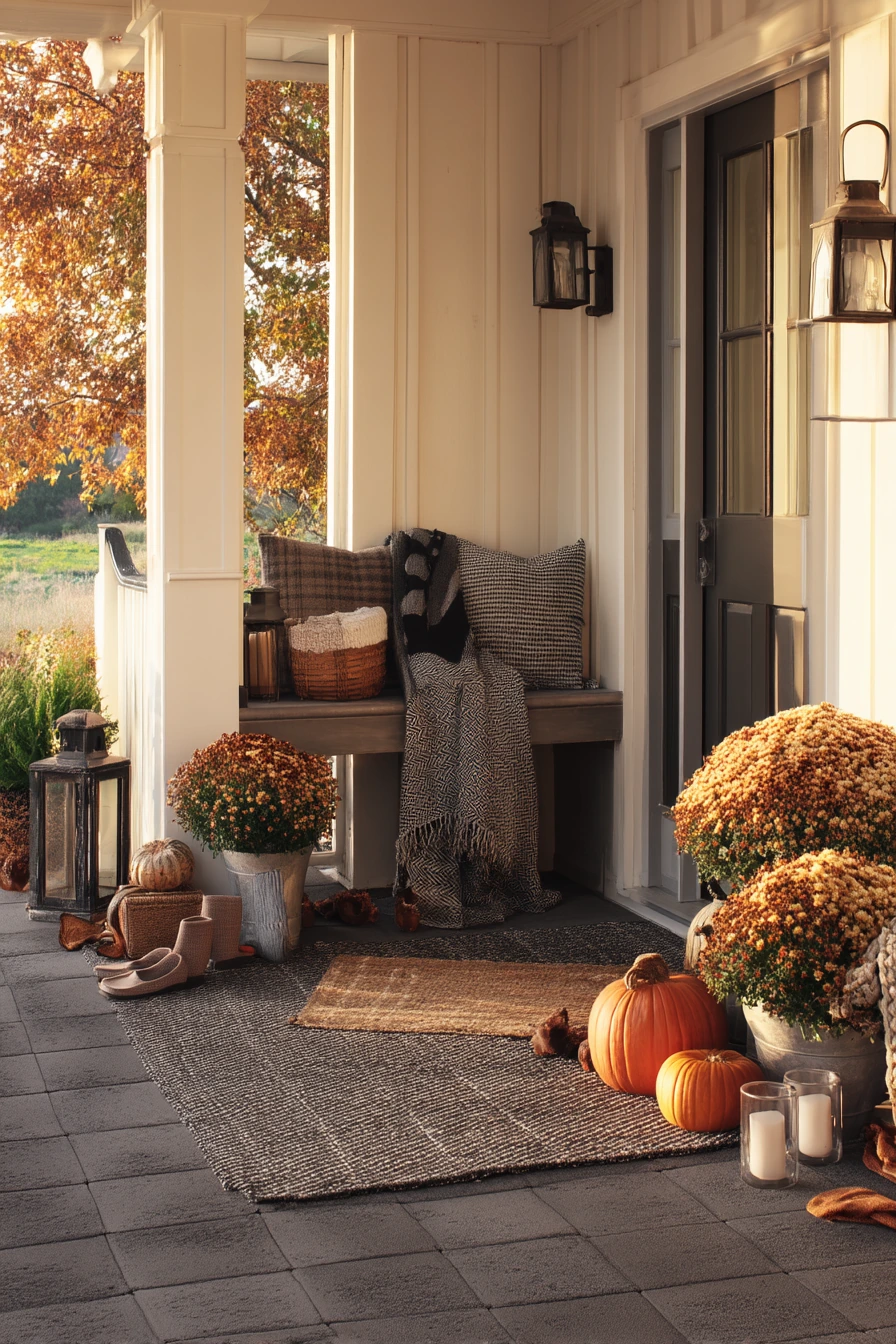
Concrete pavers are a durable porch flooring option that can handle heavy use and messy seasons. Charcoal pavers look sharp with autumn styling like mums, pumpkins, a wool blanket, and a lantern by the door. They also make sense for real routines: carrying groceries inside, muddy slippers waiting at the mat, and yard tools like a leaf blower sitting nearby.
Pavers work best with a stable base and good edging so they do not shift. For porches, pay attention to height at the threshold so the door clears and water does not run inside. Choose pavers with a textured surface for traction, especially in rain or frost. Polymeric sand between joints can help reduce weeds and ant tunnels. If you live where winters are harsh, use pavers rated for freeze-thaw conditions and avoid standing water by keeping the slope correct.
To style charcoal pavers, add warm textures so the space does not feel too cool. Brass or warm wood accents look great against deep gray. In fall, use a simple color plan: orange, cream, and deep green. For the rest of the year, switch to black-and-white patterns in pillows or a striped outdoor rug. A small bench near the door adds function and keeps packages off the floor, which is helpful if you get frequent deliveries.
- Use edge restraints to keep pavers from spreading over time.
- Sweep often so grit does not collect in the joints.
- Add a boot brush or scraper to reduce mud tracks.
- Rotate seasonal decor so the porch stays useful, not crowded.
- Choose planters with feet to prevent moisture rings on pavers.
Pro Design Tip: Pair charcoal pavers with one warm element, like a wood bench or brass lantern, to keep the entry from feeling too dark.
Budget Considerations: Concrete pavers are mid-range in cost, but labor and base materials can add up; save by using standard sizes and a simple layout instead of custom cuts.
Porch flooring should match your daily habits first, then your style. A painted floor can be a quick refresh, while porcelain pavers and concrete pavers bring long-term durability with low fuss.
If you want warmth, brick and reclaimed wood add character, while composite decking and interlocking tiles keep maintenance simple. For bold style, patterned tile makes a small porch feel special, and limestone slabs create an easy coastal mood.
Before you buy, check slip resistance, drainage, and how much cleaning you can realistically do each season. A good porch floor makes the whole house feel more welcoming from the first step.
FAQ
What is the best low-maintenance porch flooring? Composite decking, porcelain pavers, and concrete pavers are usually low upkeep. They handle dirt and weather well with basic sweeping and occasional washing.
What porch flooring is best for rain and wet boots? Textured porcelain, brick, and concrete pavers do well when wet, especially with good drainage. Add a boot tray and a scraper mat to protect any surface.
Can I install porch flooring over existing concrete? Yes. Interlocking deck tiles are the simplest DIY option. You can also use porcelain tile or pavers, but you may need a professional to address slope, cracks, and bonding.
Do I need to seal brick or stone on a porch? Often yes for stain resistance, but use a breathable sealer and follow product directions. Some materials do fine without sealing, but spills and leaf stains may be harder to remove.
What is the most budget-friendly porch floor update? Painting deck boards is often the least expensive, especially if the boards are in good shape. Focus spending on prep and non-slip steps so it lasts longer.
Are outdoor rugs safe on porch floors? They can be, but choose breathable rugs made for outdoors and lift them to dry after heavy rain. Rugs that stay wet can trap moisture and cause stains or mildew.