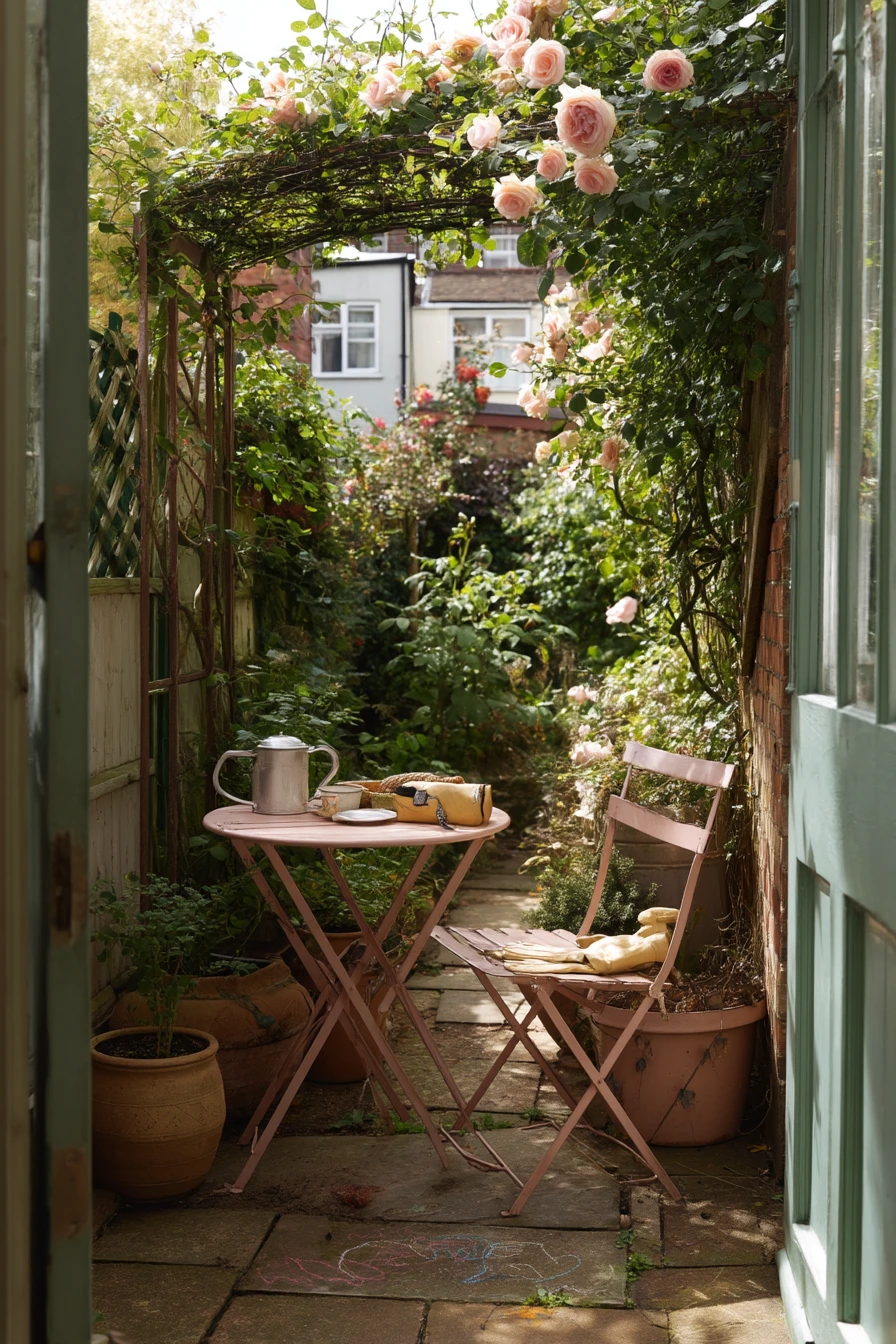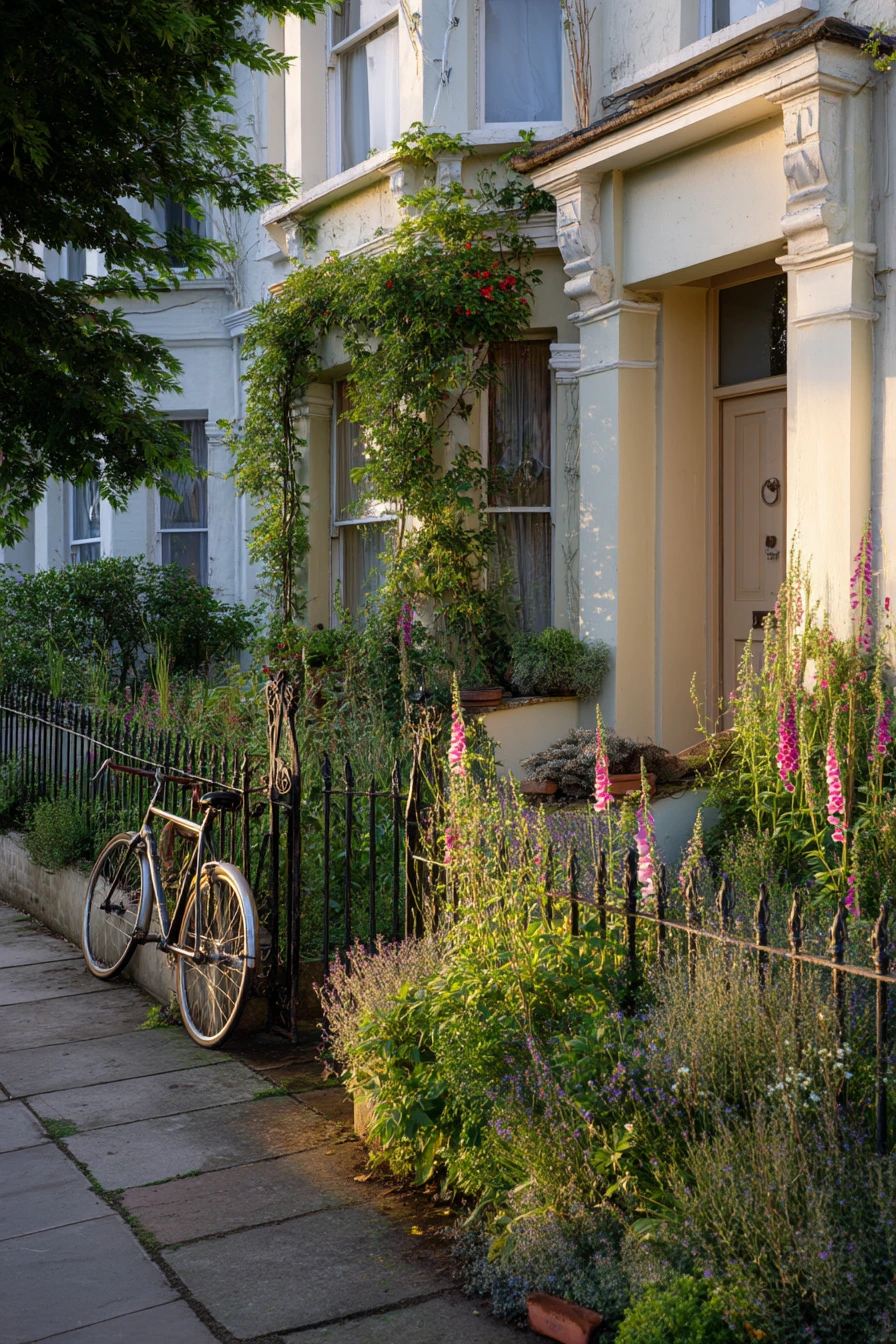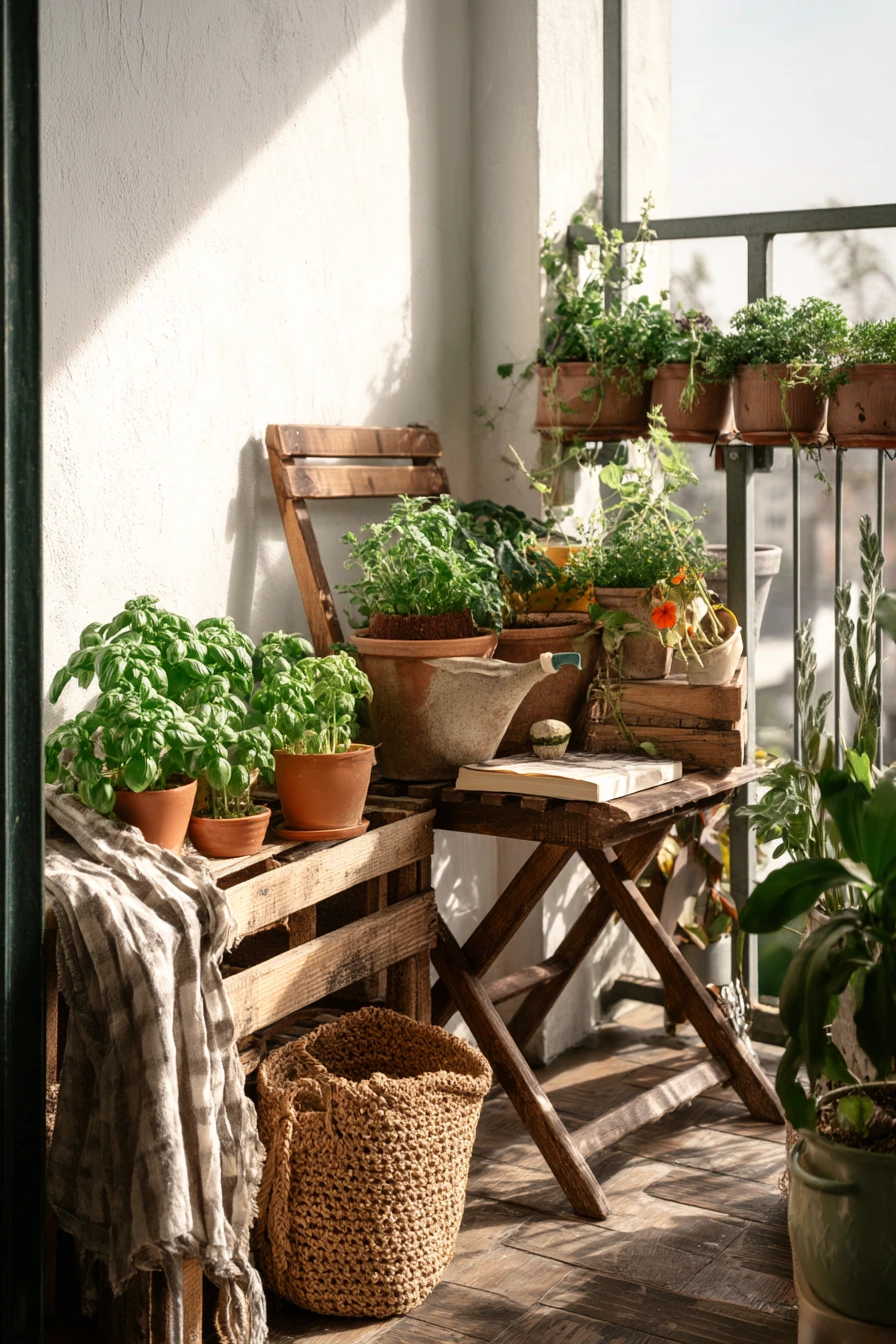

Potted plant arrangement ideas can make a room feel calmer without a big remodel. The trick is to group a few plants in the right spot, pick pots that fit your style, and keep care simple.
This guide shows easy layouts for a living room, kitchen, bedroom, bathroom, entryway, and more. Each idea is based on real home moments like a narrow windowsill, a rental-friendly corner, and a busy family table.
You will get styling steps, plant picks like pothos, snake plant, monstera, herbs, and ferns, plus small details that help, such as baskets, stools, and lamp light. Use these setups to get a Pinterest-ready look that still feels lived in.
For every section, you will also see one pro design tip and one budget note so you can make it work with what you have.
1 Sunlit windowsill cluster in a compact apartment
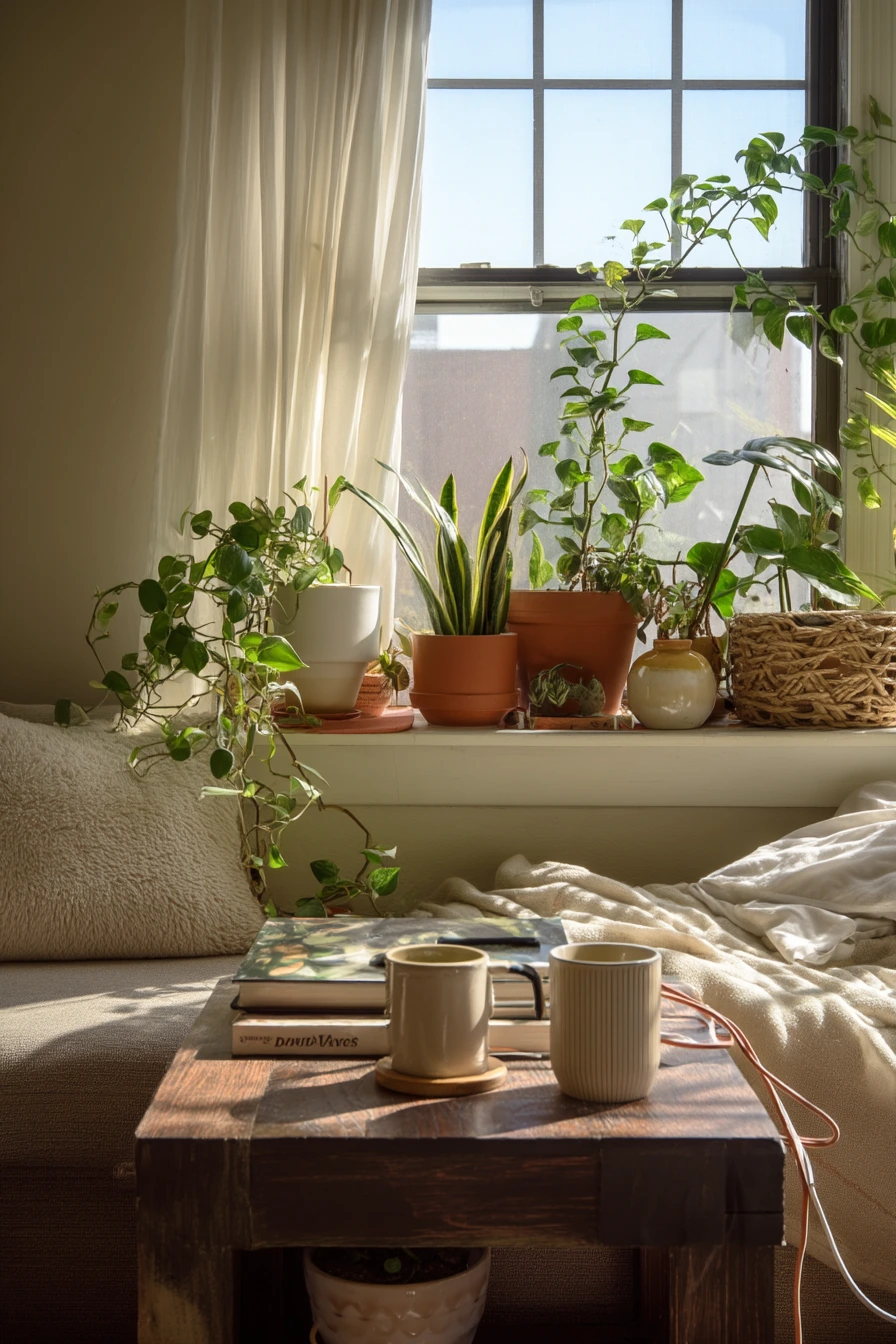
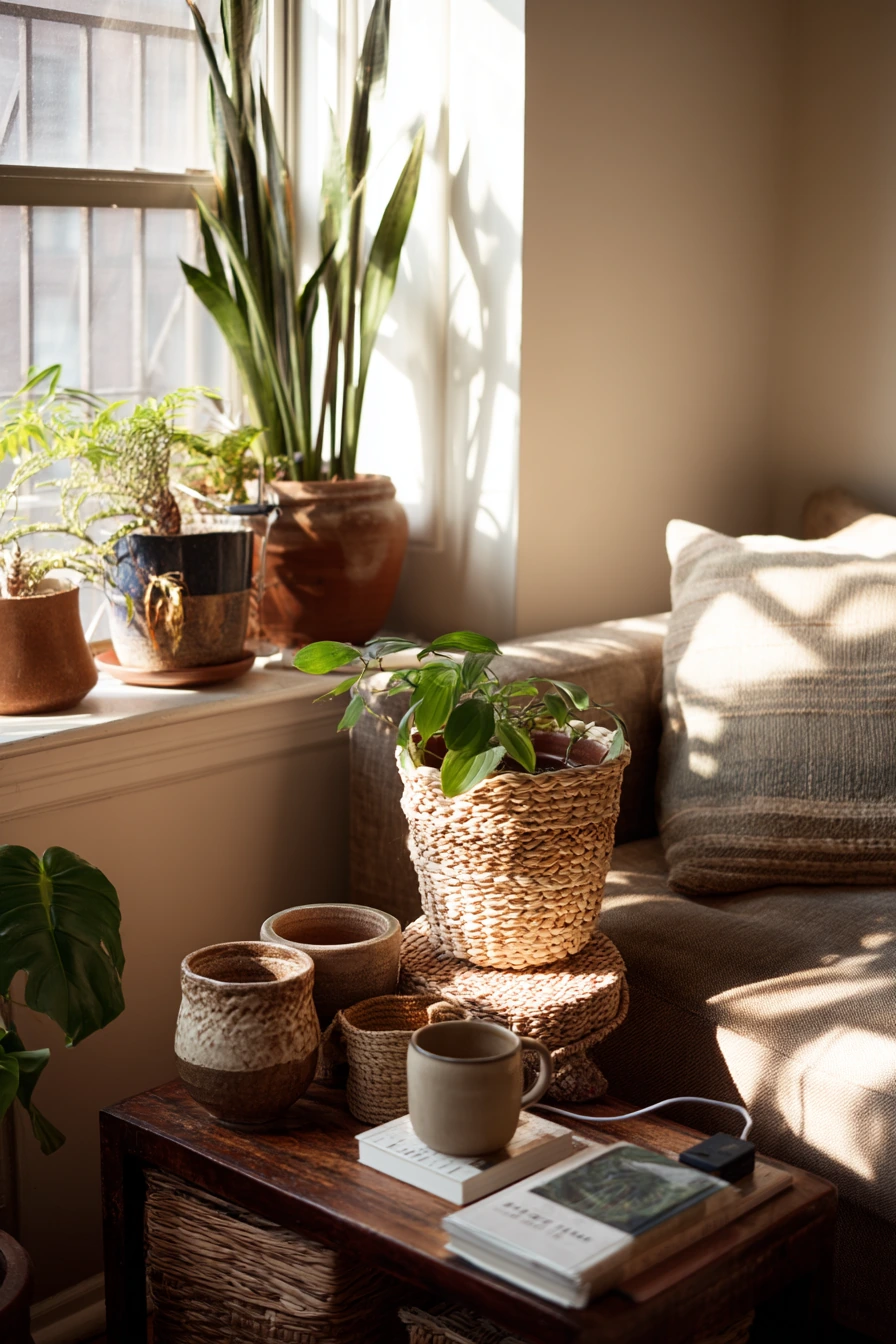
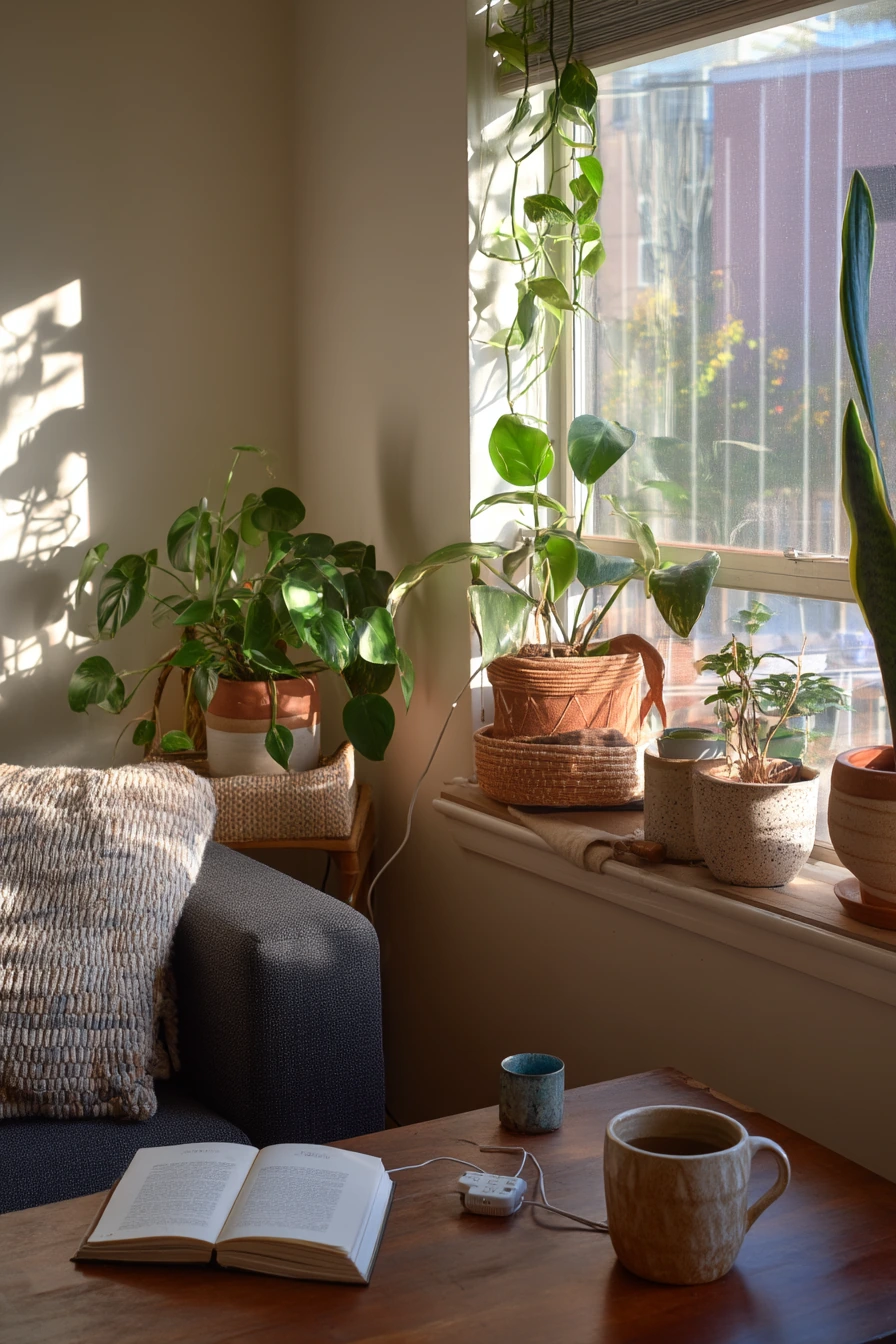
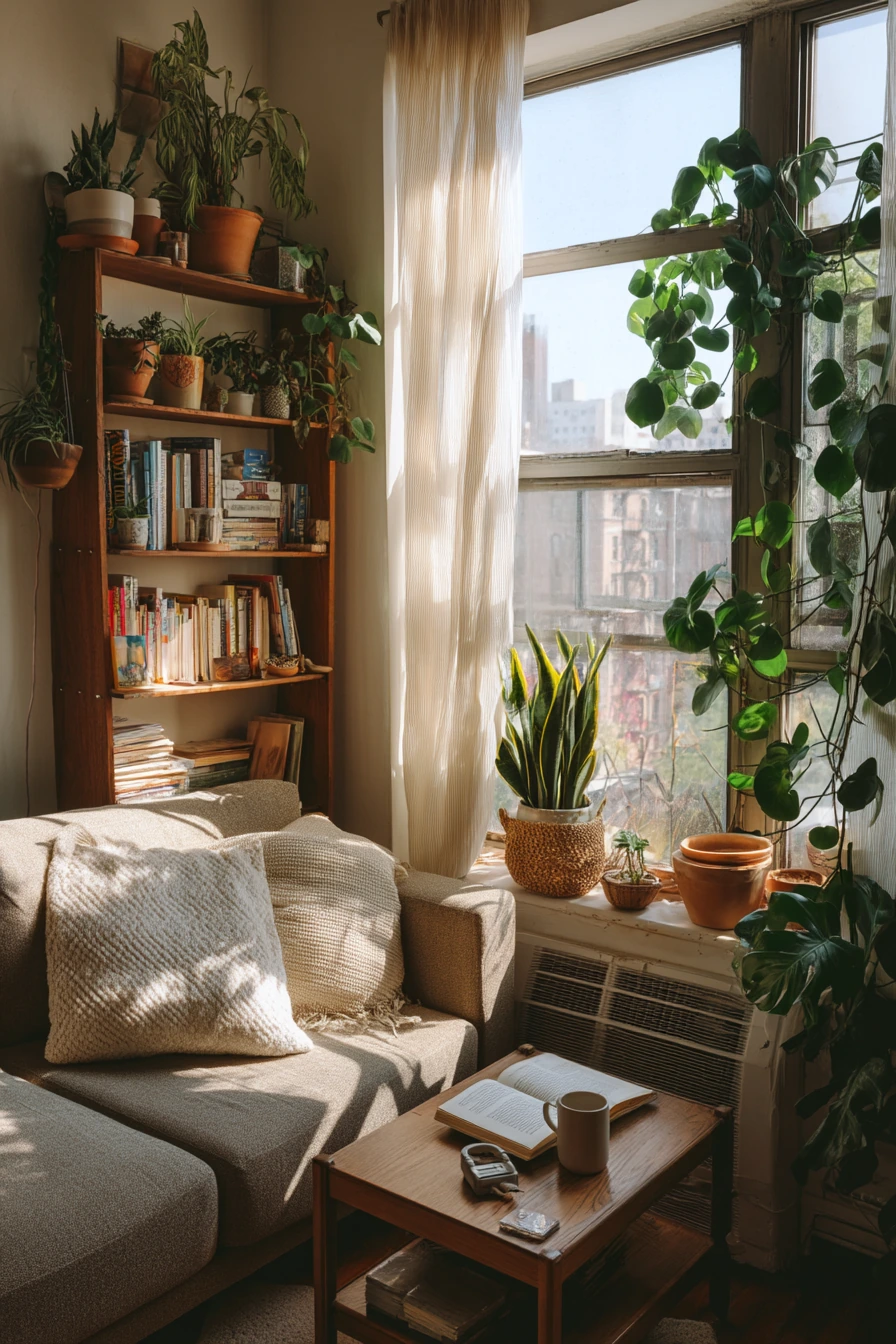
A narrow windowsill can still hold a strong potted plant arrangement if you treat it like a small display shelf. Start with a simple cluster: a trailing pothos to soften the edge, an upright snake plant for height, and a baby monstera for a bold leaf shape. Mix terracotta, smooth ceramic, and one woven basket so the group feels warm and real, not matchy.
Keep the scene practical, like a true small-city apartment living room. Leave room for daily items, such as a ceramic mug, a charging cable, or a half-open novel on the side table. These details make the arrangement look natural and help the plants blend into your routine. If the sofa throw is slightly wrinkled, that is fine. The point is cozy and lived in.
Use soft window light to your advantage. Place the tallest plant closest to the wall so it does not block the view. Let the pothos trail toward the side table, so the greenery connects both surfaces. Wipe the leaves once a week, since dust shows more in window light and makes plants look tired.
- Group in odd numbers: 3 plants reads as a set.
- Put the snake plant in a heavy pot so it will not tip.
- Use a saucer or tray under terracotta to protect the sill.
- Turn pothos weekly so it grows evenly toward the light.
- Hide cords with a small basket or a clip-on cable guide.
Pro Design Tip: Repeat one material twice, like two terracotta pots, then add one different texture, like a woven basket, to keep the cluster balanced.
Budget Considerations: Use basic nursery pots inside thrifted bowls or baskets; you can upgrade one statement pot later.
2 Renter-friendly plant corner by the sofa
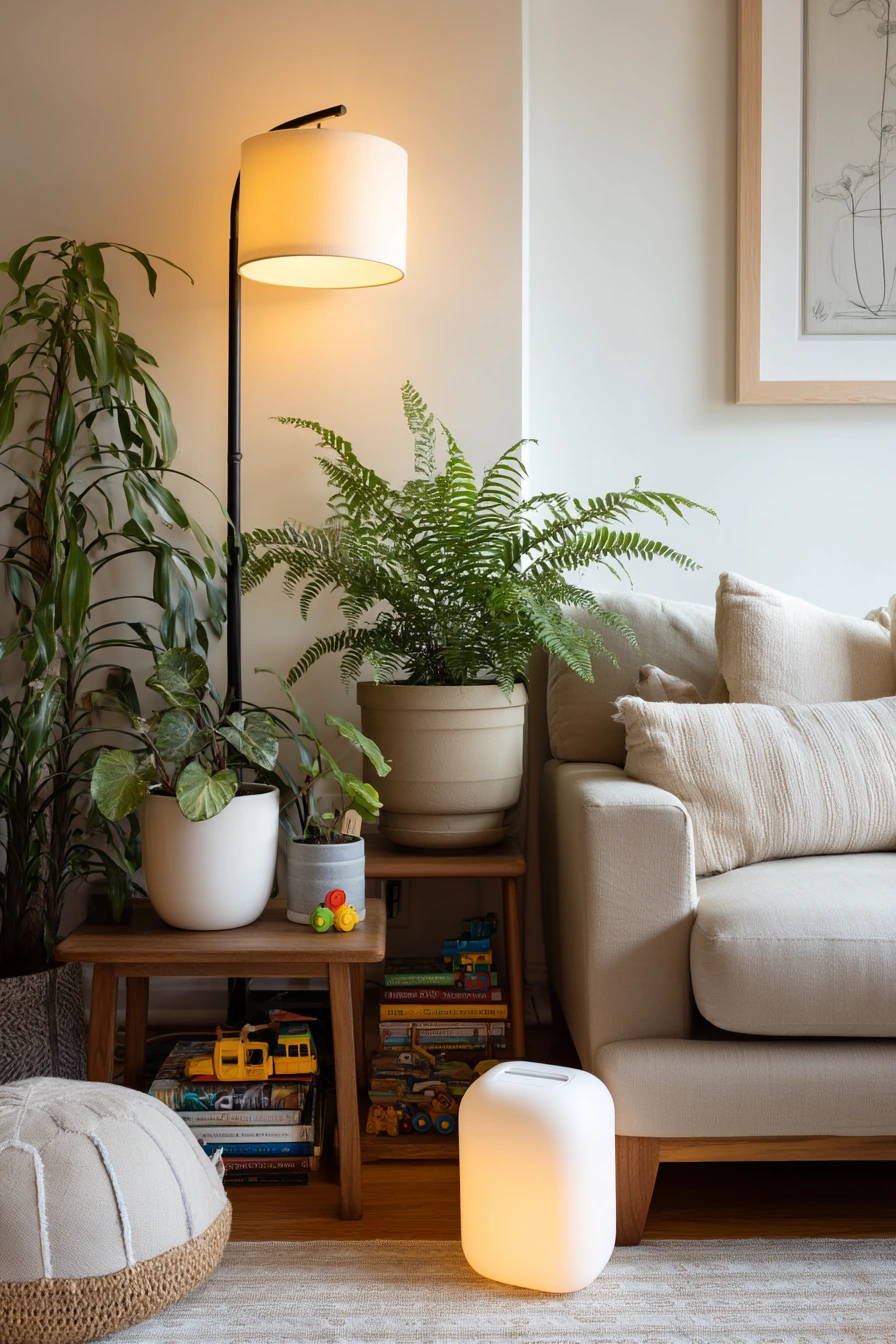
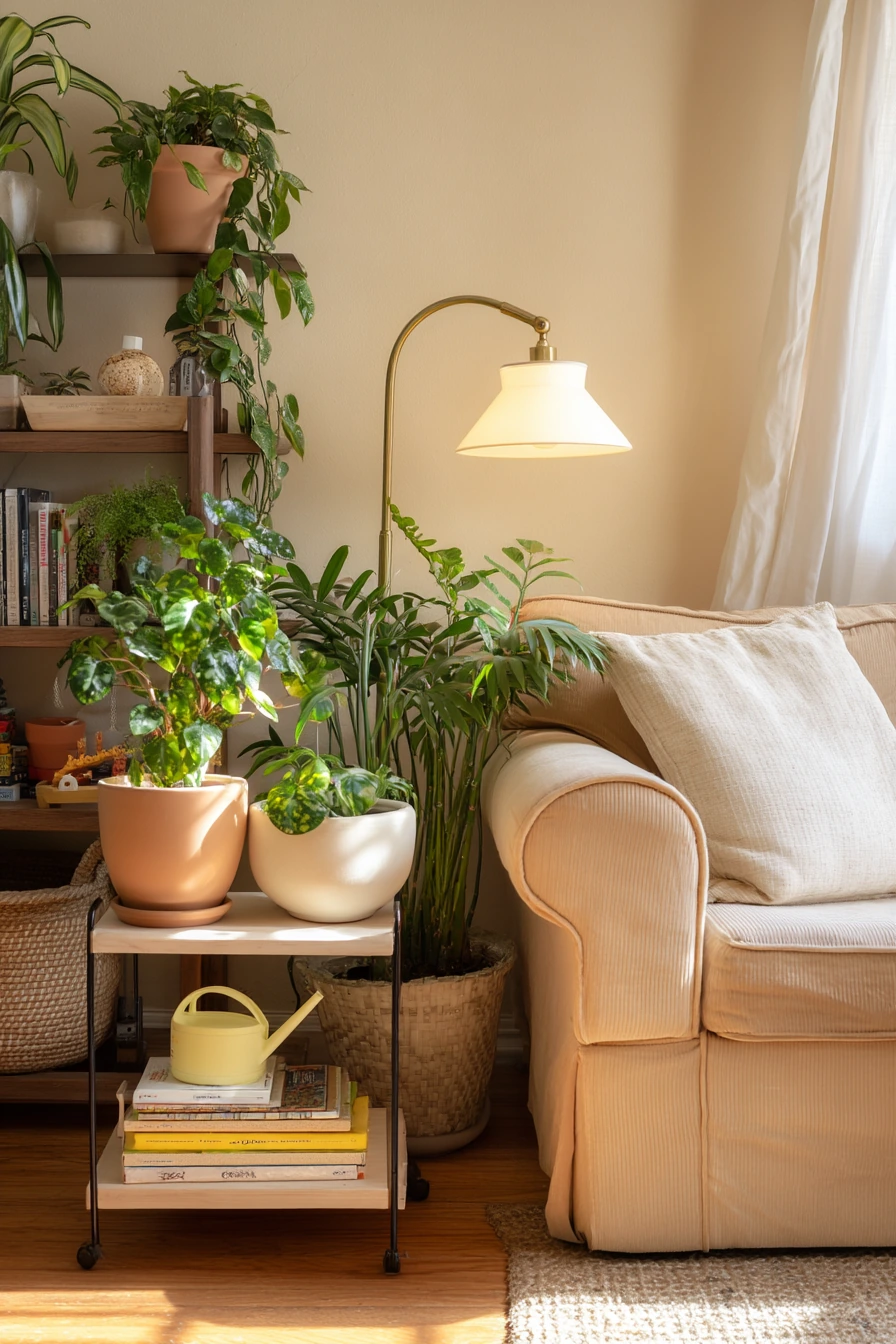
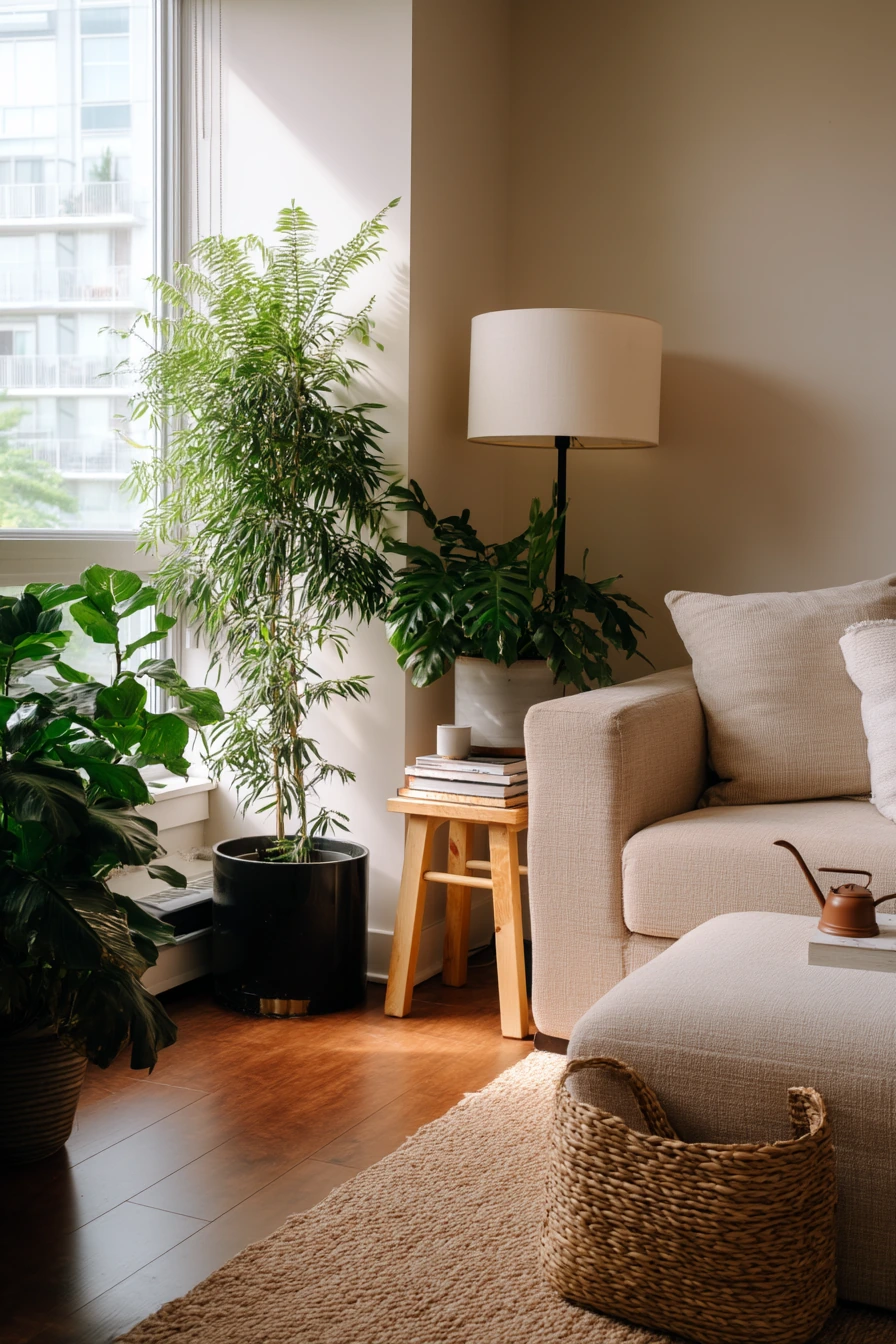
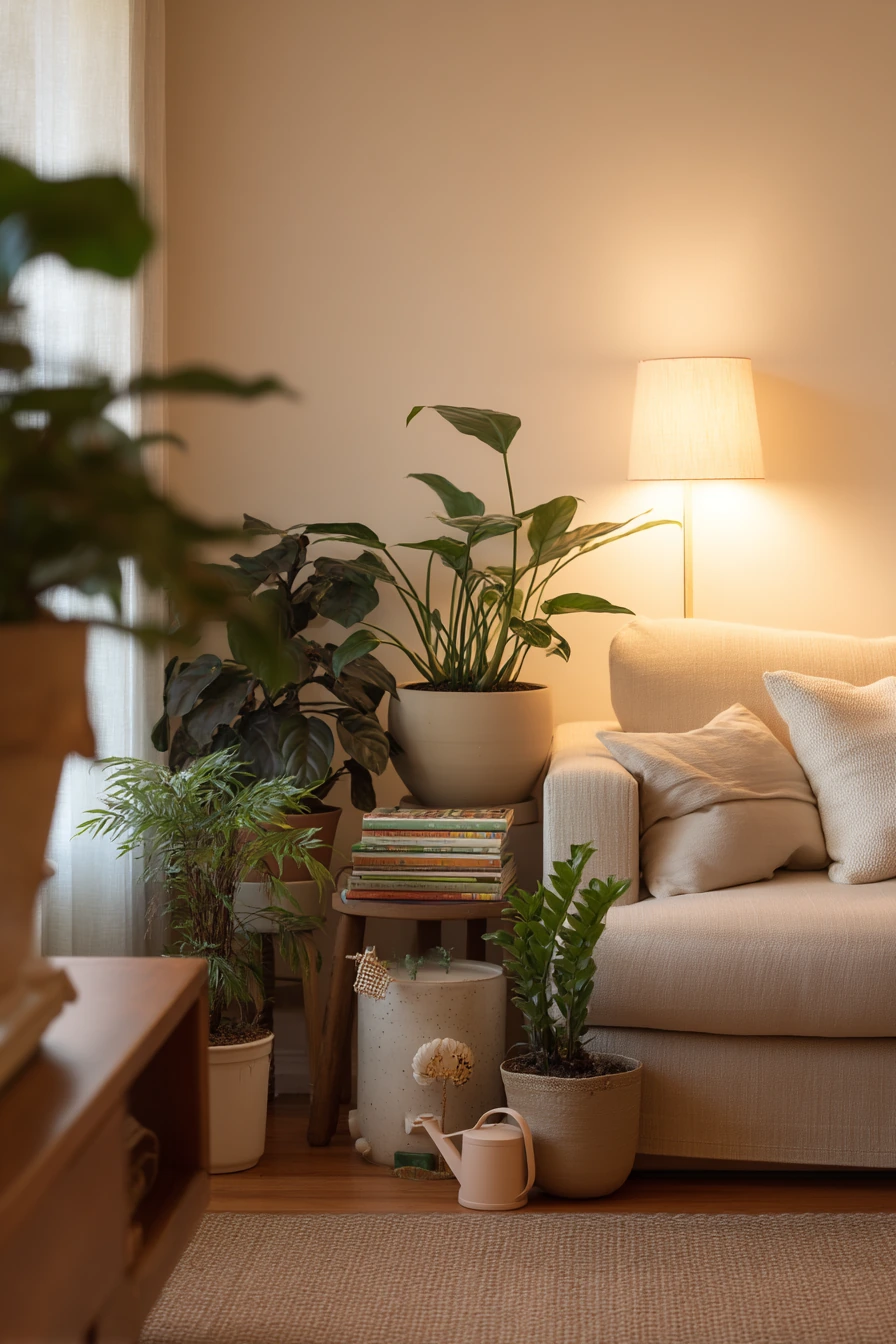
A rental-friendly plant corner should be easy to move and easy to clean around. Build your potted plant arrangement beside a beige sofa with three dependable plants: a rubber plant for glossy height, a fern for soft texture, and a ZZ plant for low stress care. Keep them in movable pots so you can shift them when you vacuum or when the light changes.
Make the corner feel like part of the room, not a plant stash. Add a small removable stool that can hold one plant or a stack of books. Tuck a watering can behind a pot so it is close by but not in the way. If you have a kid toy basket near the rug, let it stay. A real home has real life in it, and the plants should still look good next to it.
Light matters here. If you have warm lamp glow mixed with faint daylight, keep the fern closer to the window side and the ZZ plant slightly farther back. This keeps the fern happier and still lets the ZZ handle lower light. Rotate the rubber plant every week or two so it grows straight and does not lean hard toward the lamp.
- Use felt pads under heavy planters to protect rental floors.
- Choose medium pots so you can lift them without strain.
- Keep one tray for plant tools: pruners, wipes, and a small scoop.
- Stack books under a pot only if the pot sits on a waterproof tray.
- Leave a few inches between pots for airflow and easy watering.
Pro Design Tip: Build a triangle shape: tallest plant in back, medium in the middle, and the fern low in front for a clean layered look.
Budget Considerations: Buy plants in smaller sizes and let them grow; it costs less and often adjusts better to your space.
3 Kitchen herbs on a busy morning counter
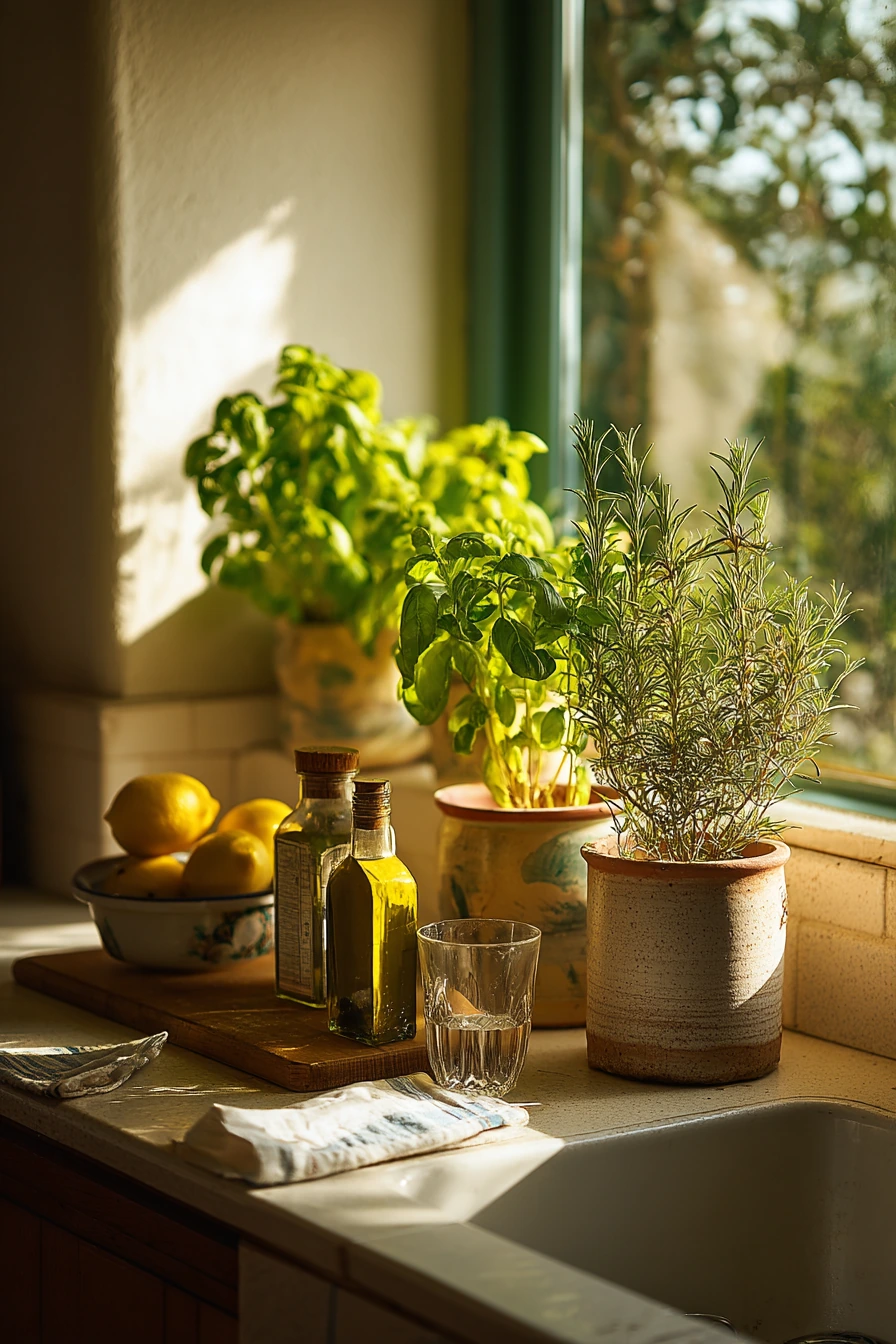
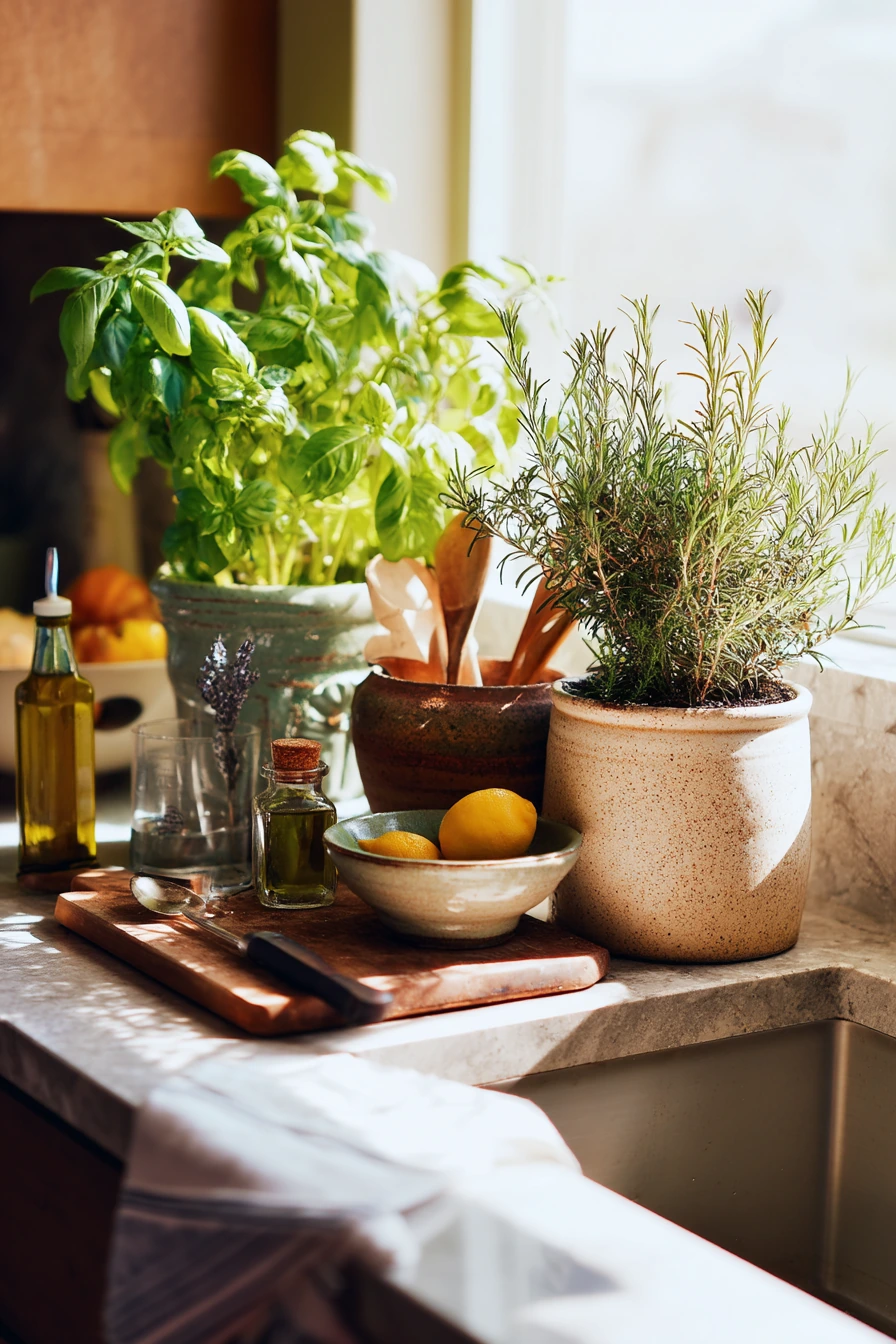
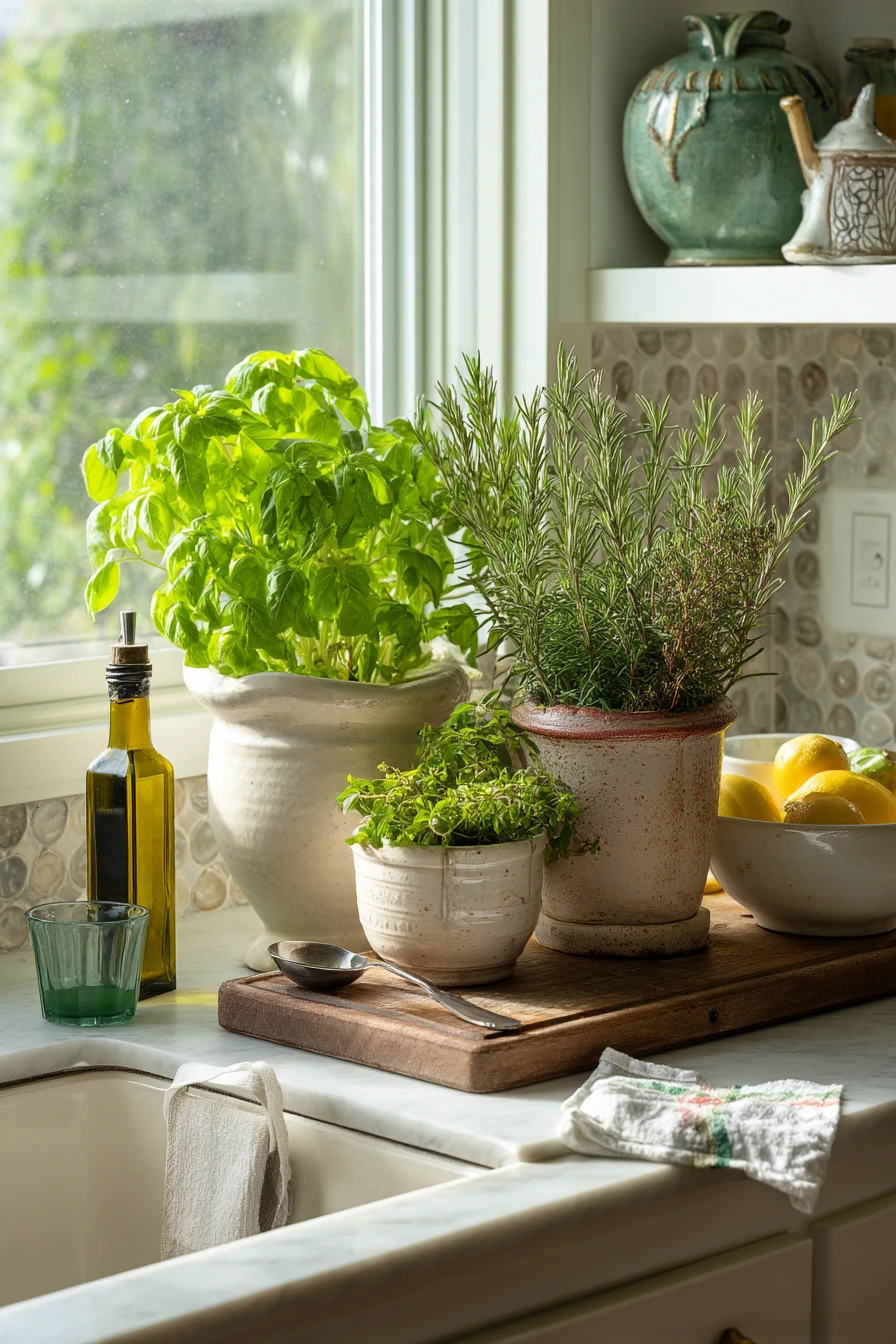
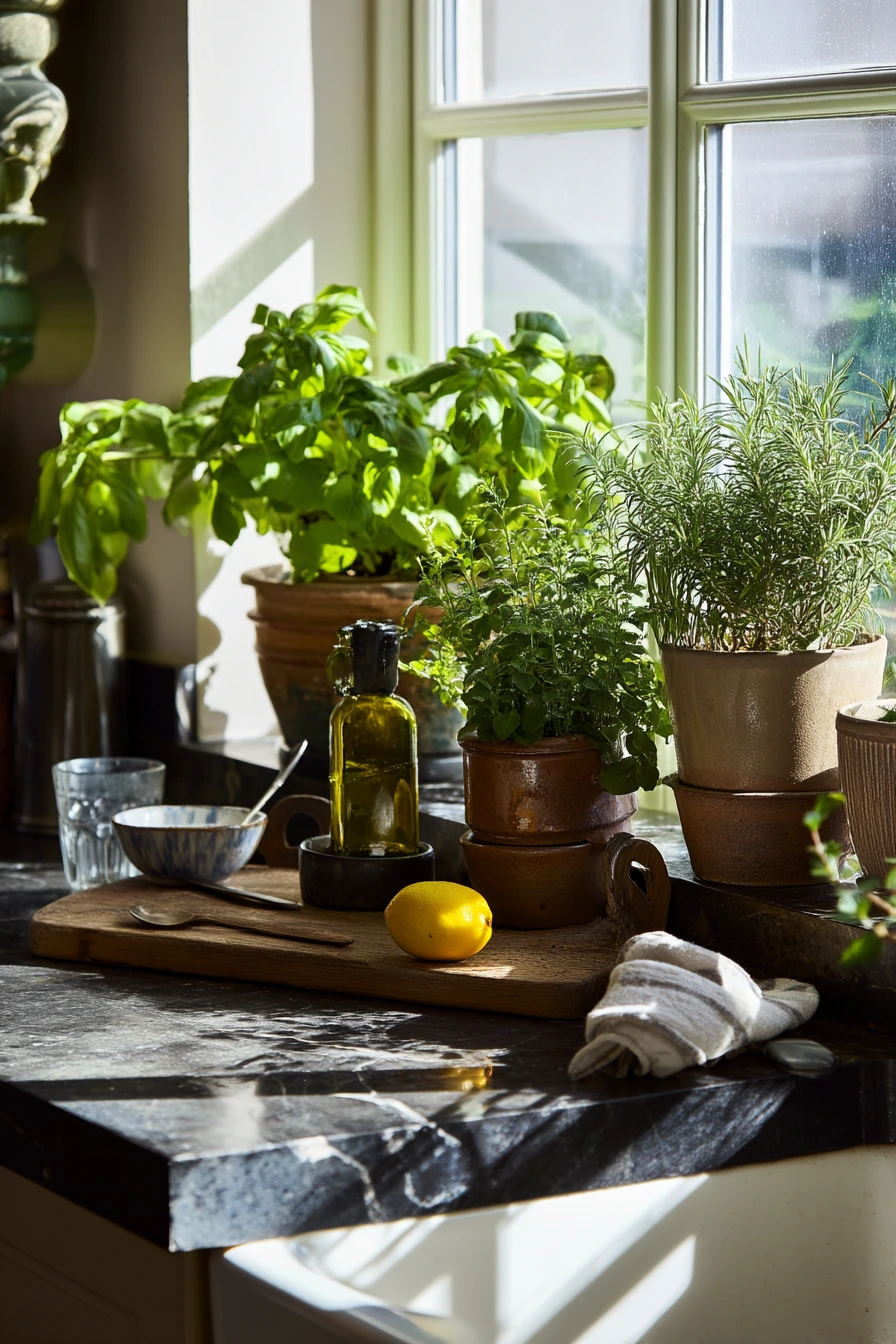
A kitchen counter herb setup is one of the most useful potted plant arrangement ideas because you can use it every day. Place basil, mint, and rosemary in mismatched clay pots beside the sink where you already rinse produce and fill water glasses. Clay helps herbs dry out between waterings, which many herbs prefer.
Style it like a real family kitchen counter, not a display. Set your cutting board nearby, keep an olive oil bottle within reach, and let a lemon bowl sit close by. A dish towel and a coffee spoon can stay out too. When the herbs live next to your cooking tools, you will remember to pinch leaves often, which keeps the plants fuller.
Think about small safety and mess issues. Water can drip onto the counter, so group the pots on a tray with a lip. If one water glass is left near the edge, shift the herb tray back a few inches so nothing gets knocked over. Morning window light is great, but if the counter is dim, add a small under-cabinet light to help growth.
- Label pots on the back with painter tape so you know what is what.
- Pinch basil tops weekly to stop it from getting leggy.
- Keep mint in its own pot since it spreads fast.
- Let rosemary dry a bit before watering again.
- Turn the tray once a week for even light.
Pro Design Tip: Use one long tray so the herb group reads as one piece and the counter looks less cluttered.
Budget Considerations: Start with grocery store herb pots, then transplant into clay pots as they outgrow their plastic containers.
4 Bookshelf plant mix in a quiet reading nook
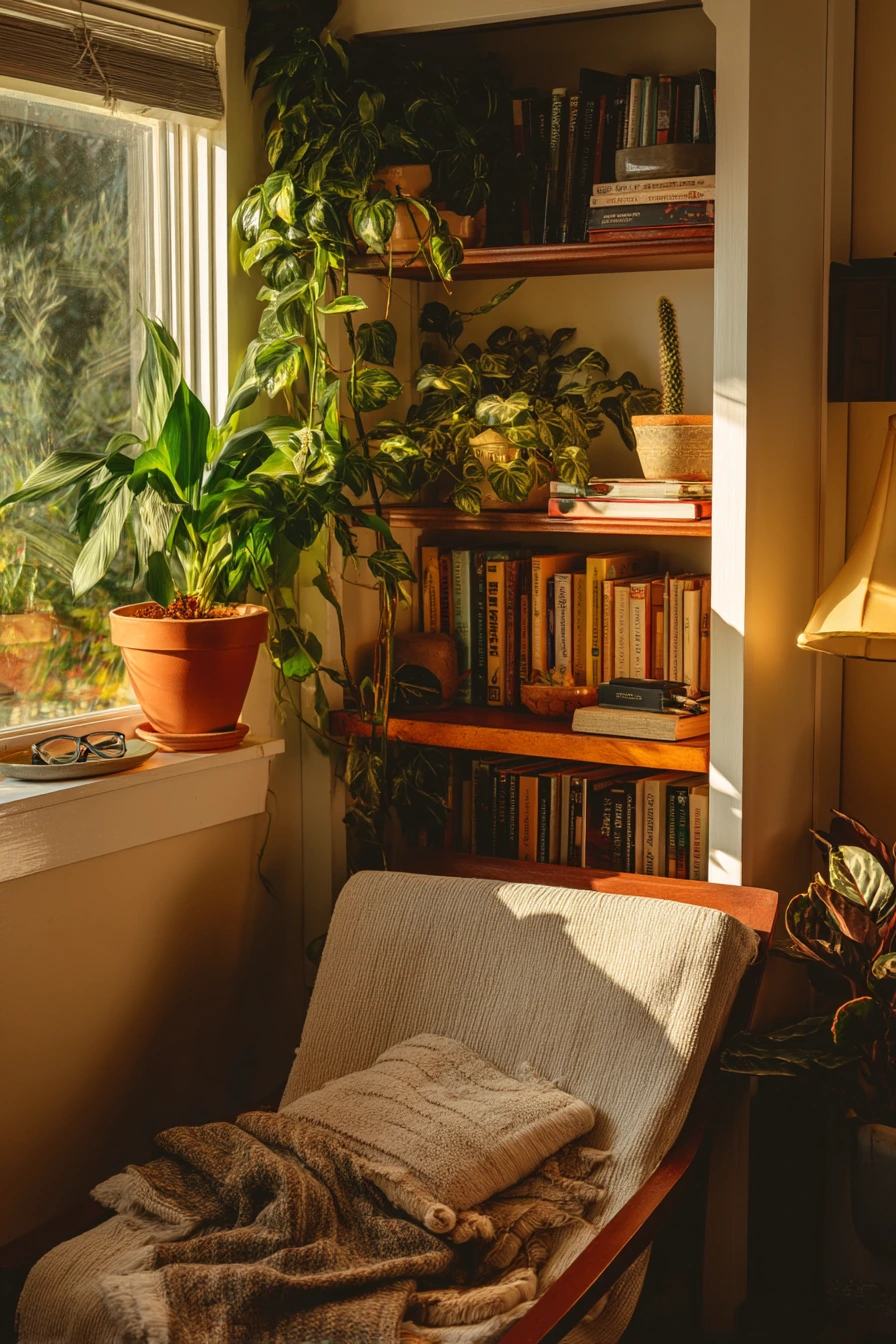
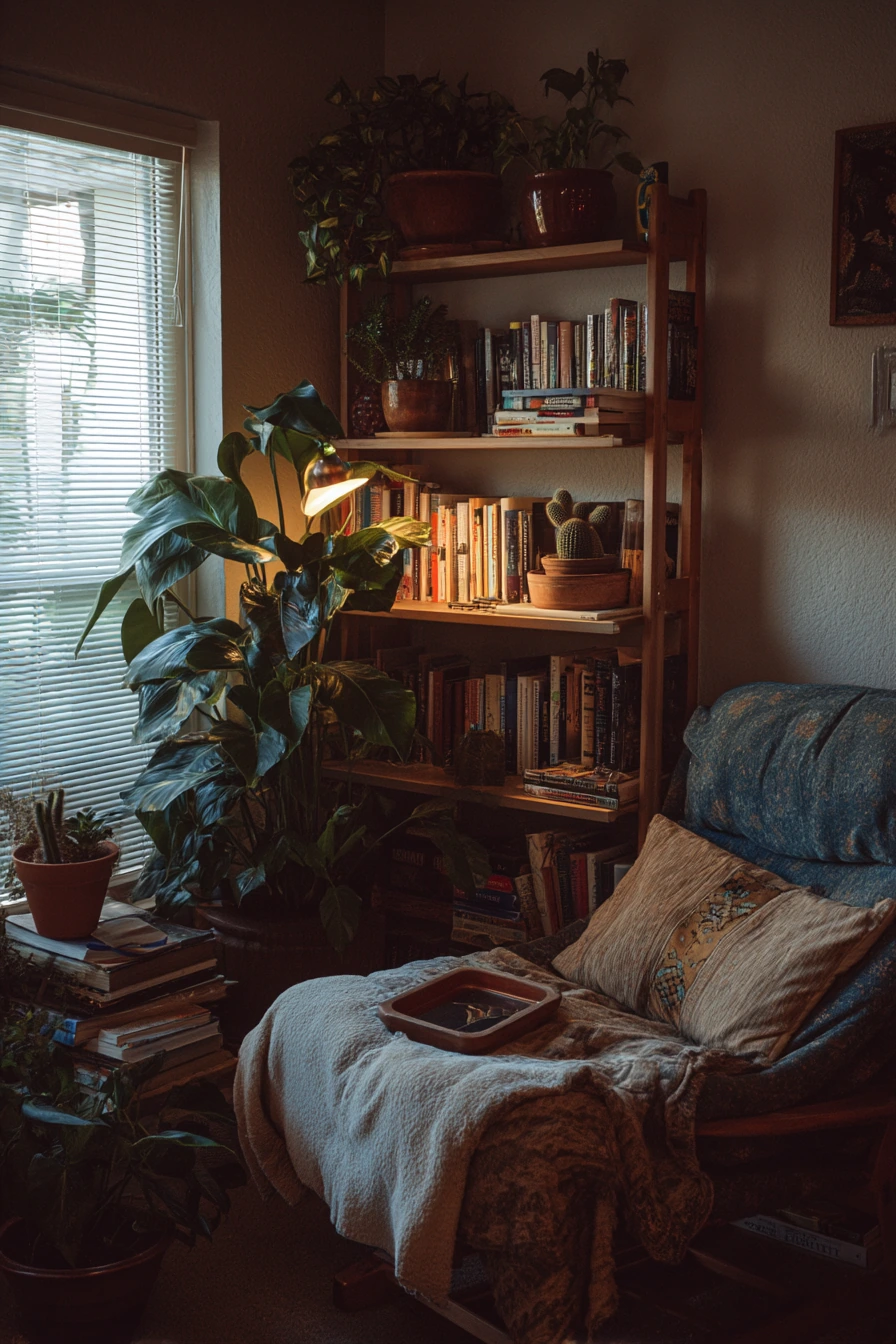
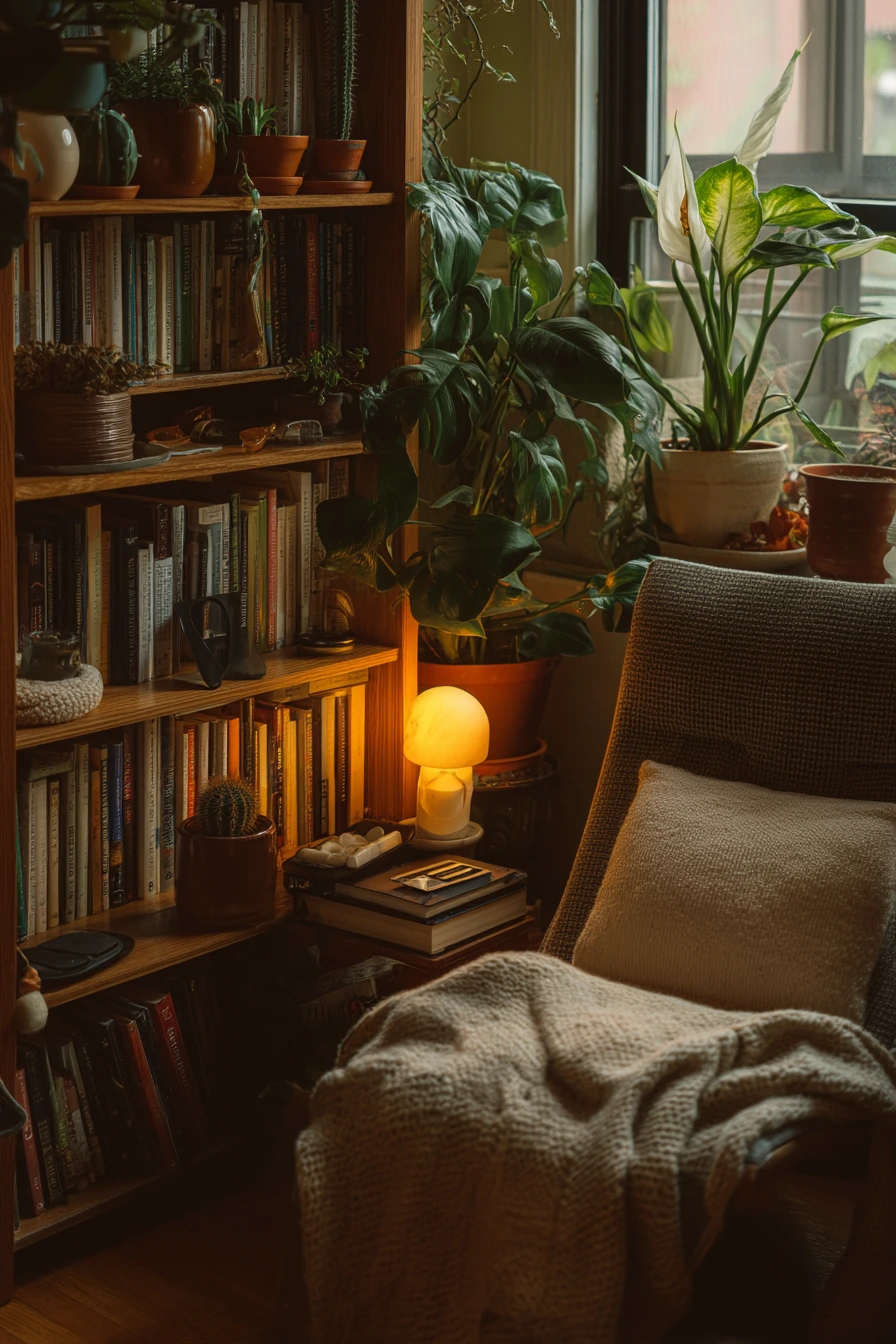
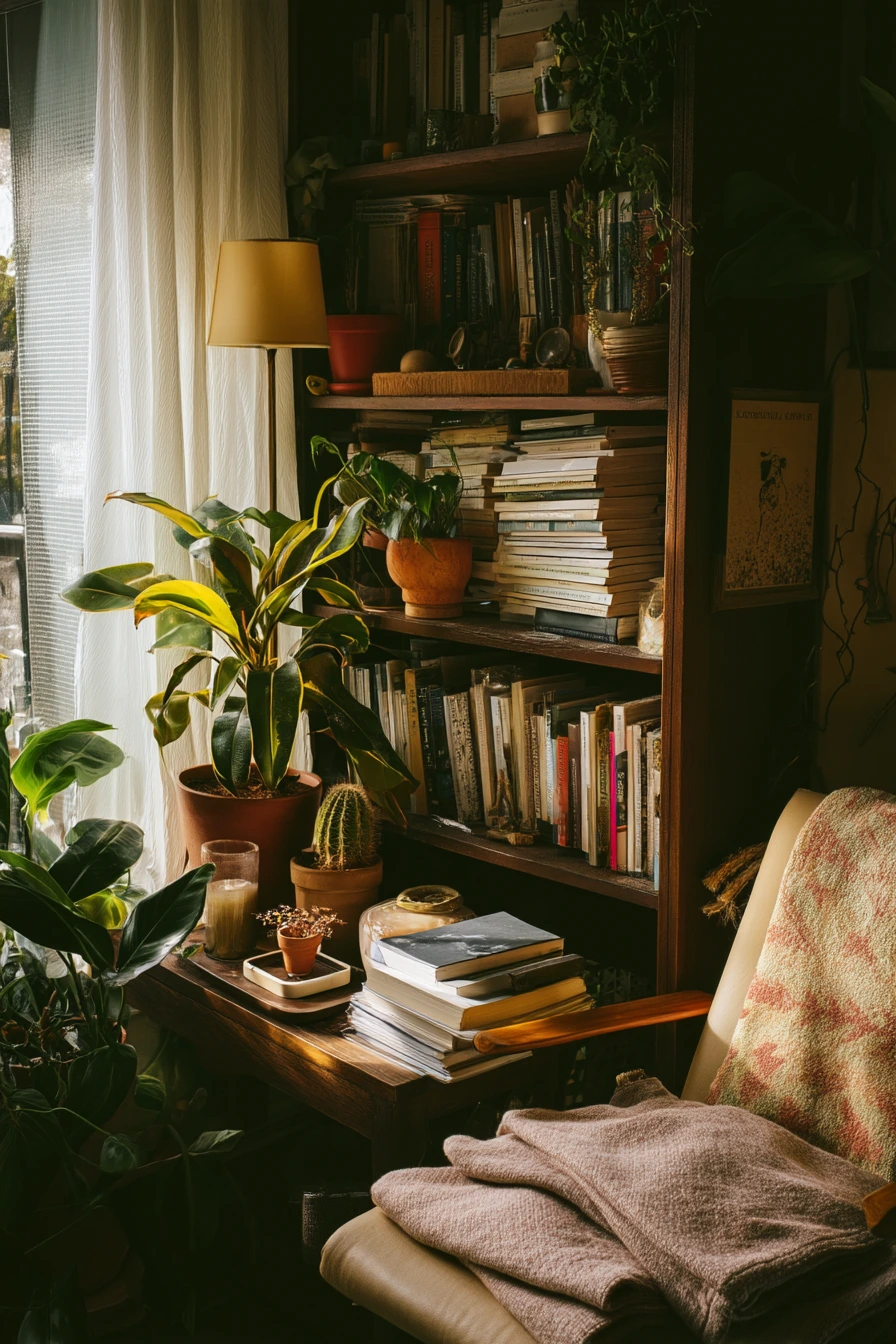
A reading nook is perfect for a calmer potted plant arrangement because it already has a quiet mood. Use a bookshelf and the space beside a lounge chair to create two small plant zones that feel connected. A peace lily adds soft white blooms and larger leaves, a philodendron adds trailing shape, and a small cactus brings contrast and needs little water.
Keep the shelf styling simple so it does not feel busy. Stack a few books sideways to make a stable base for a smaller pot. Let reading glasses rest on top of a book, and keep a folded blanket nearby. A ceramic ashtray tray can work as a catchall for coins, a lighter, or earbuds. Add a phone charger, but guide the cord behind books so it does not cut across the view.
Use warm lamp light with a bit of window spill for a cozy look. Put the peace lily closer to the window side since it likes brighter indirect light. Keep the cactus higher up or in the brightest spot, since shelves can be dim. Water carefully on shelves. Remove each pot, water at the sink, and return it once it stops dripping.
- Choose pots with a similar tone so the shelf looks calm.
- Keep plant height below eye level on most shelves.
- Use a small saucer under each pot to protect wood.
- Dust leaves and shelf edges twice a month.
- Leave one shelf with no plants for visual rest.
Pro Design Tip: Place one trailing plant on an upper shelf so the vines frame the books and soften hard shelf lines.
Budget Considerations: Propagate philodendron cuttings in water to fill the nook over time with very little cost.
5 Bedroom dresser greenery for a soft reset
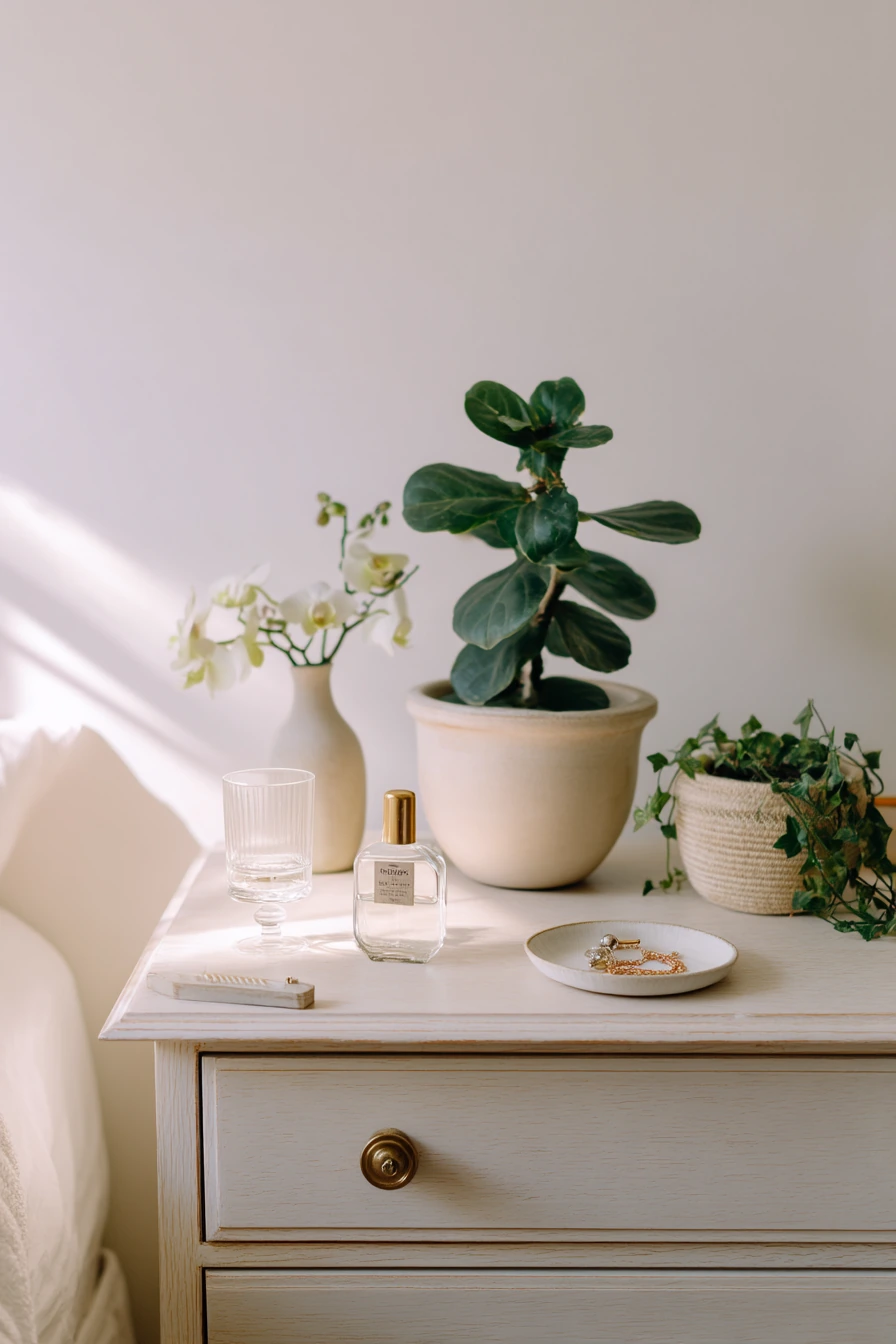
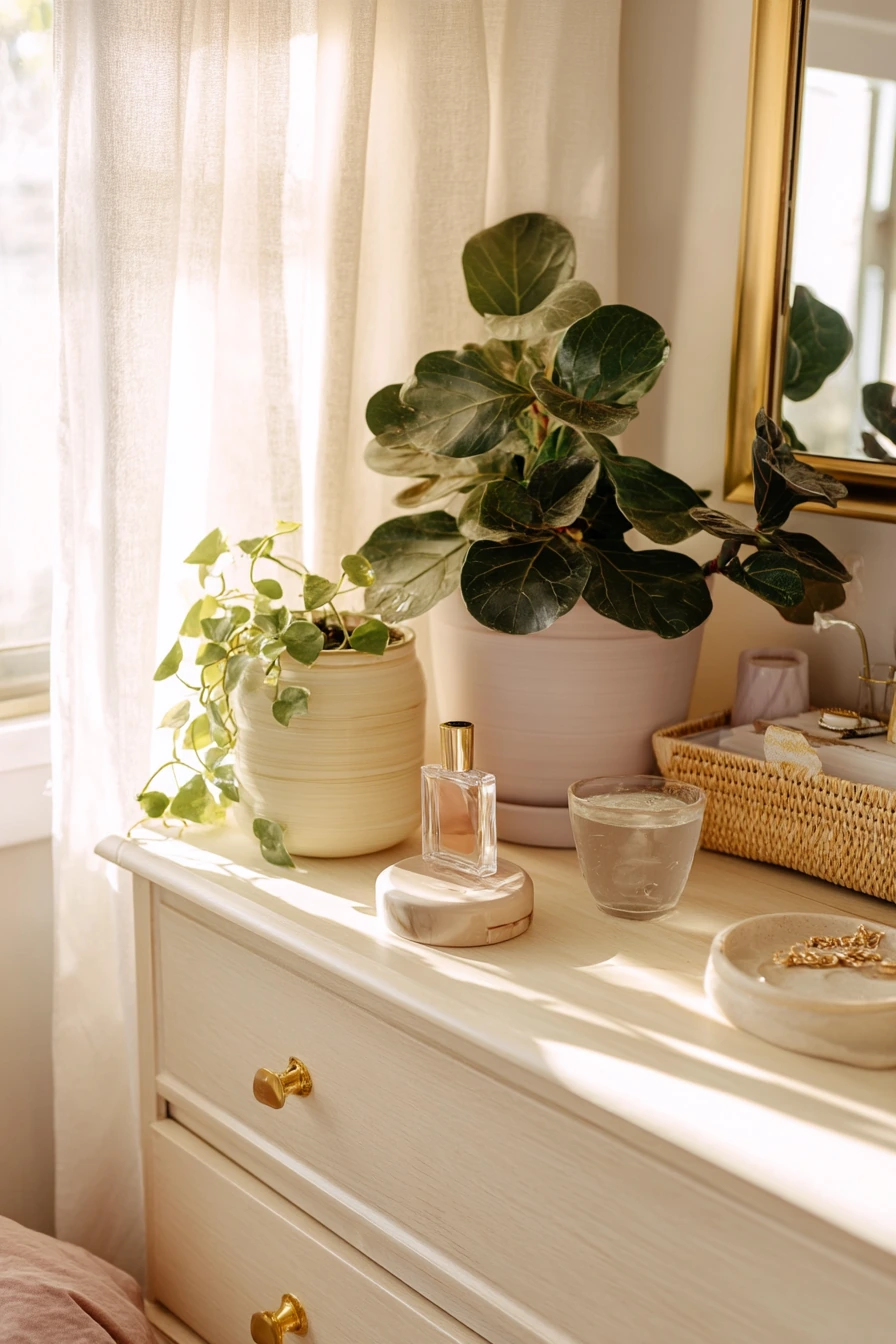
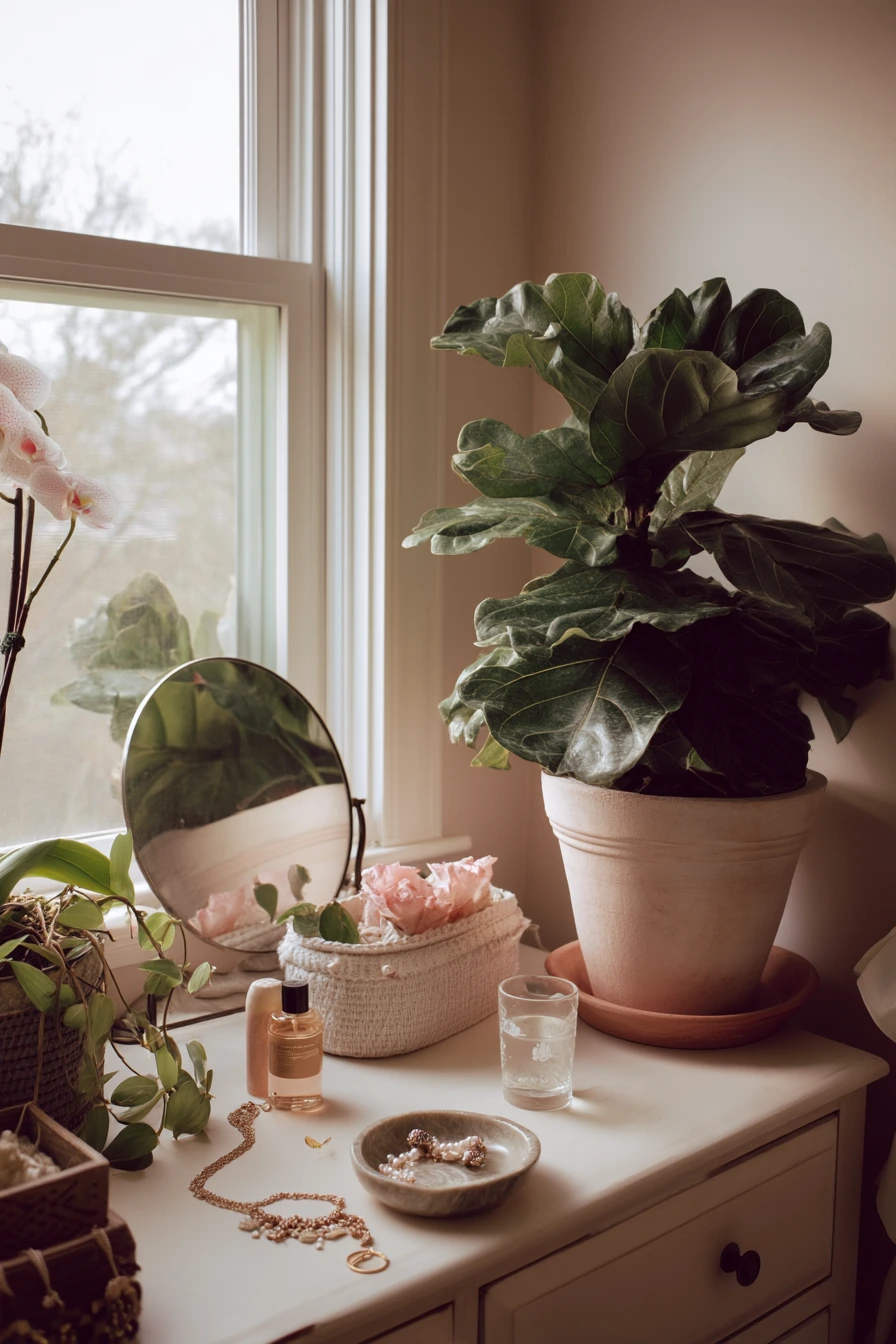
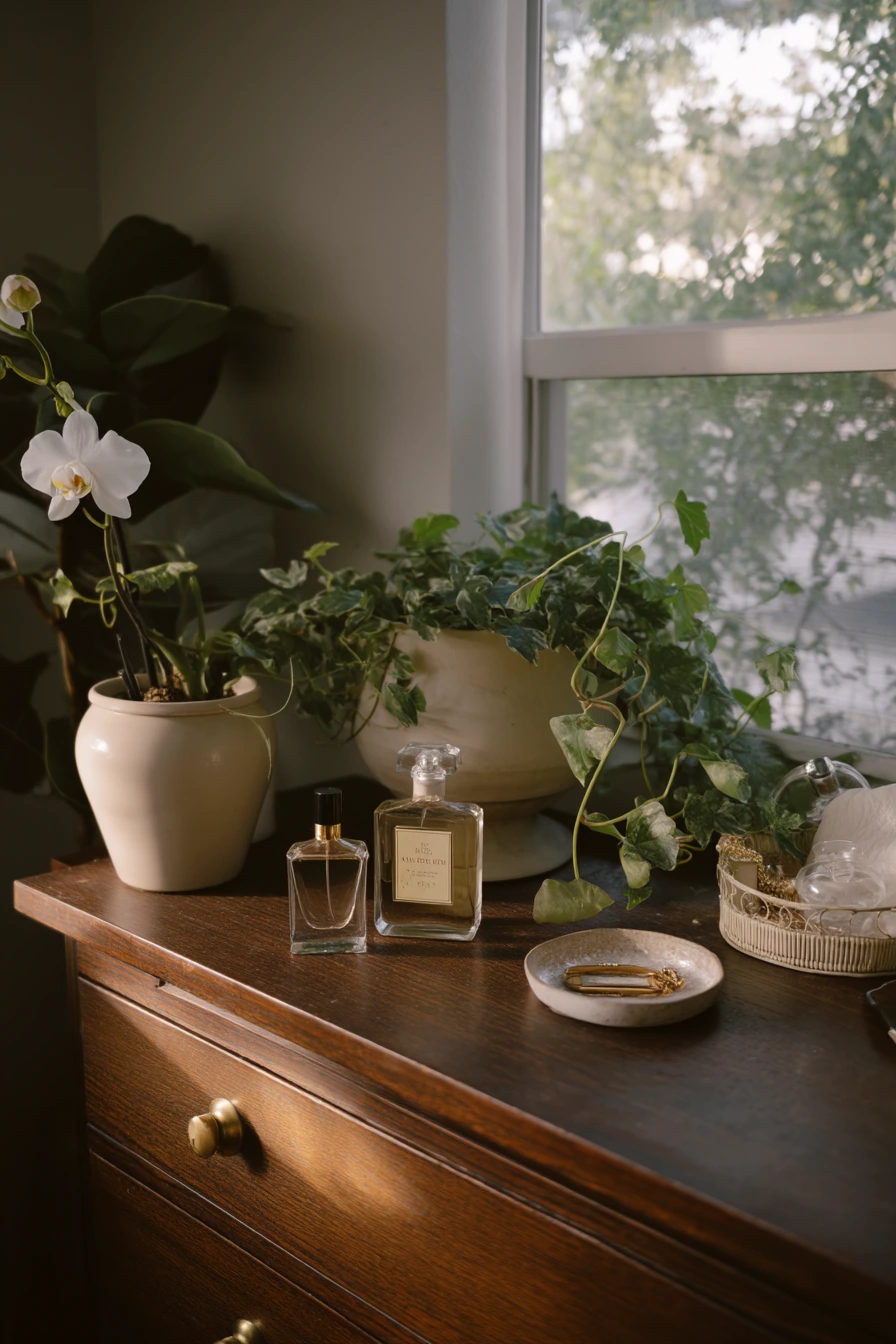
A bedroom dresser plant group should support a calm morning routine, not crowd your everyday items. Start with a compact fiddle leaf fig for structure, a small orchid for a clean pop of color, and trailing ivy to soften the edge of the dresser. Pale ceramic pots keep the look light and help the space feel airy.
Style around real life. If you keep perfume, a hair clip, a necklace dish, and a half-drunk glass of water on the dresser, plan the layout so nothing feels trapped. Put the taller fiddle leaf fig toward one side, then tuck the orchid closer to the center where you see it. Let the ivy trail away from your daily grab zone so it does not tangle with jewelry.
Light in bedrooms is often gentle. Place the arrangement where it gets window light but not harsh sun. Orchids like bright indirect light, and they do not like wet roots, so use a pot with drainage and empty the saucer. Keep a small cloth in the top drawer to wipe dust off leaves. If a laundry basket is half-full next to the dresser, keep the plants on the far end so they do not get bumped.
- Use a tray to gather the pots and protect the dresser top.
- Keep the glass of water on a coaster away from plant soil.
- Turn the fiddle leaf fig weekly to prevent leaning.
- Trim ivy tips to keep it neat and fuller.
- Choose a simple pot shape so the room feels restful.
Pro Design Tip: Keep the dresser styling in three zones: plants on one side, daily items in the middle, and a clear space on the other side for breathing room.
Budget Considerations: Skip pricey orchid pots; use a clear plastic orchid liner inside a basic ceramic cover pot for the same look.
6 Bathroom shelf plants in a tiny apartment
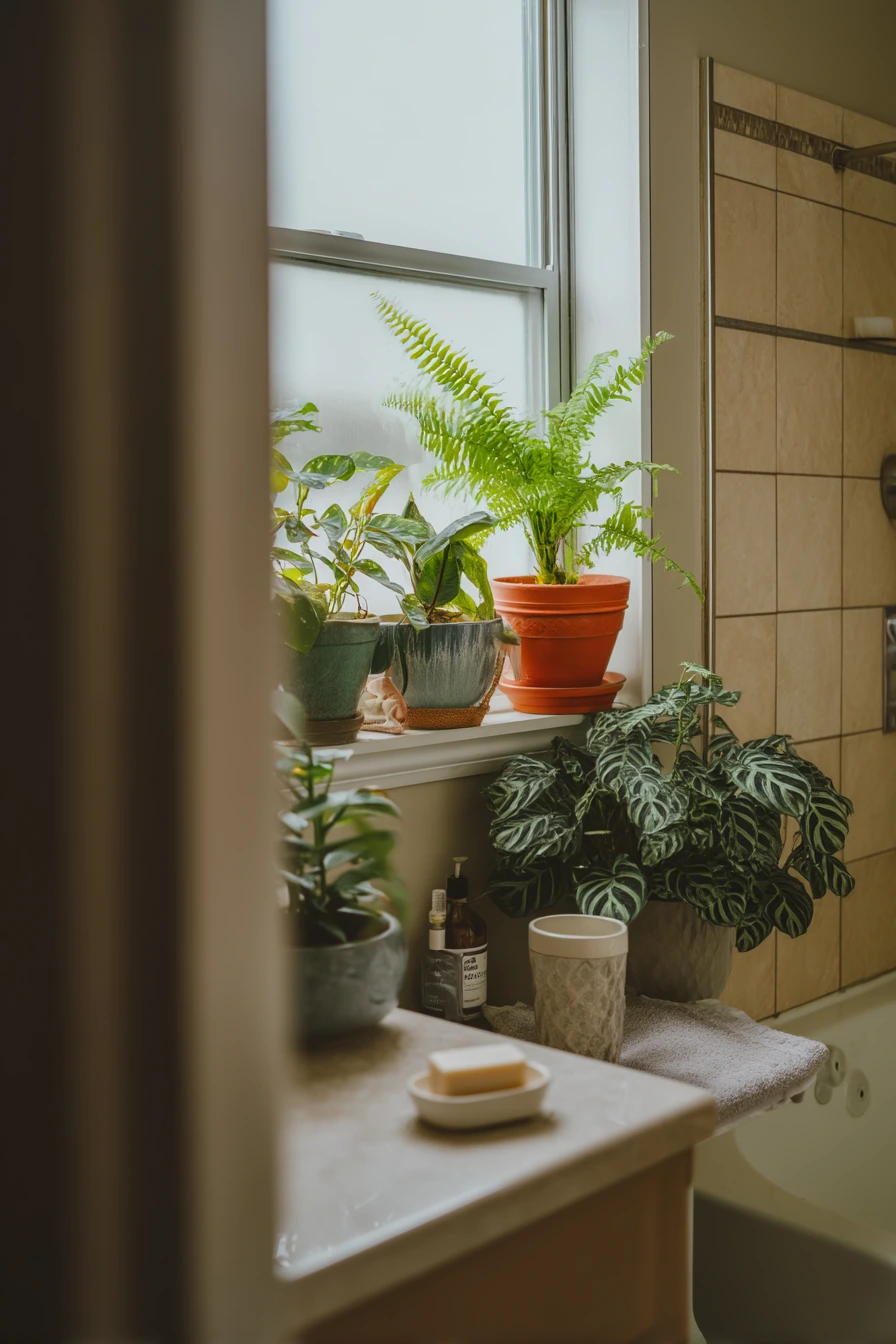
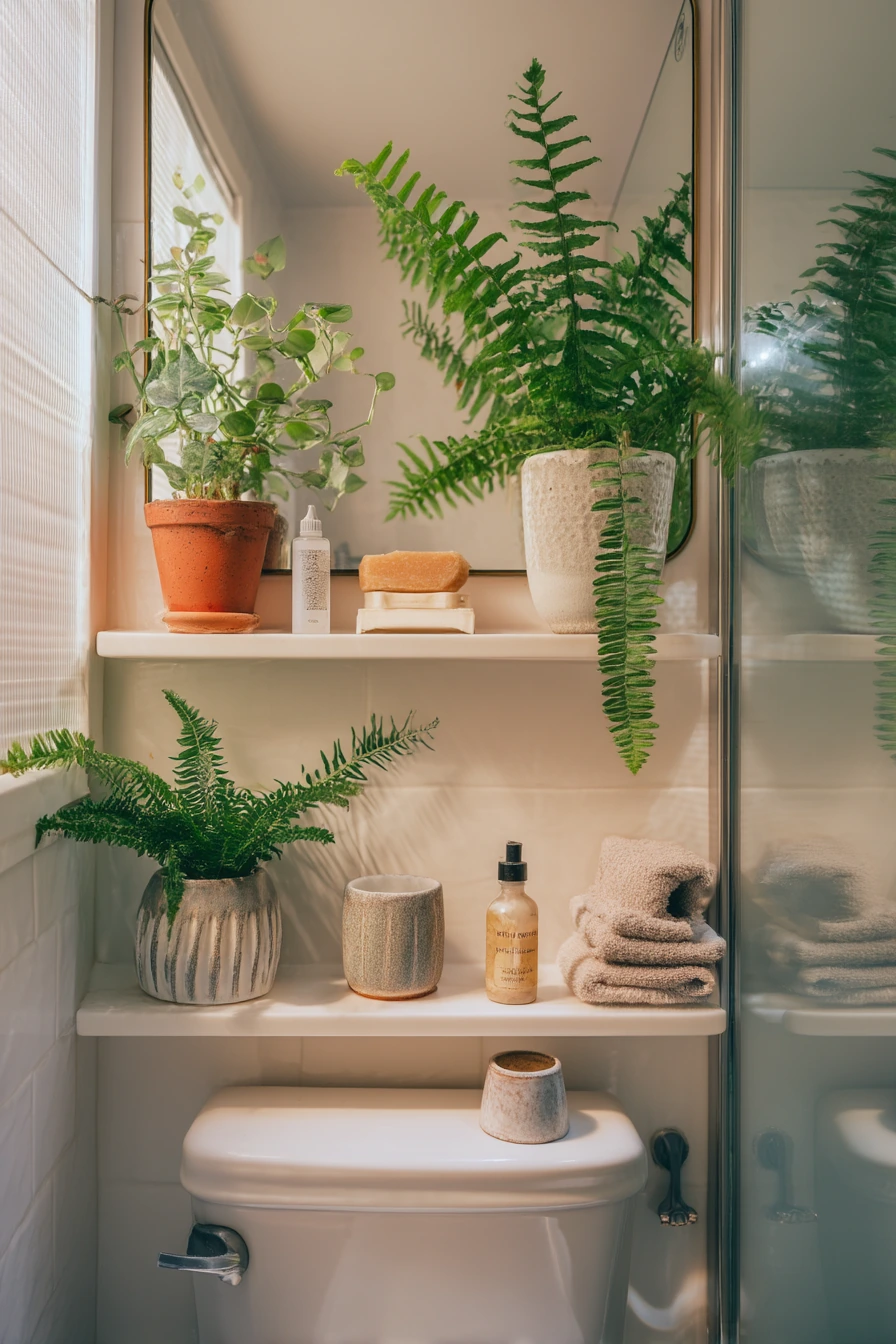
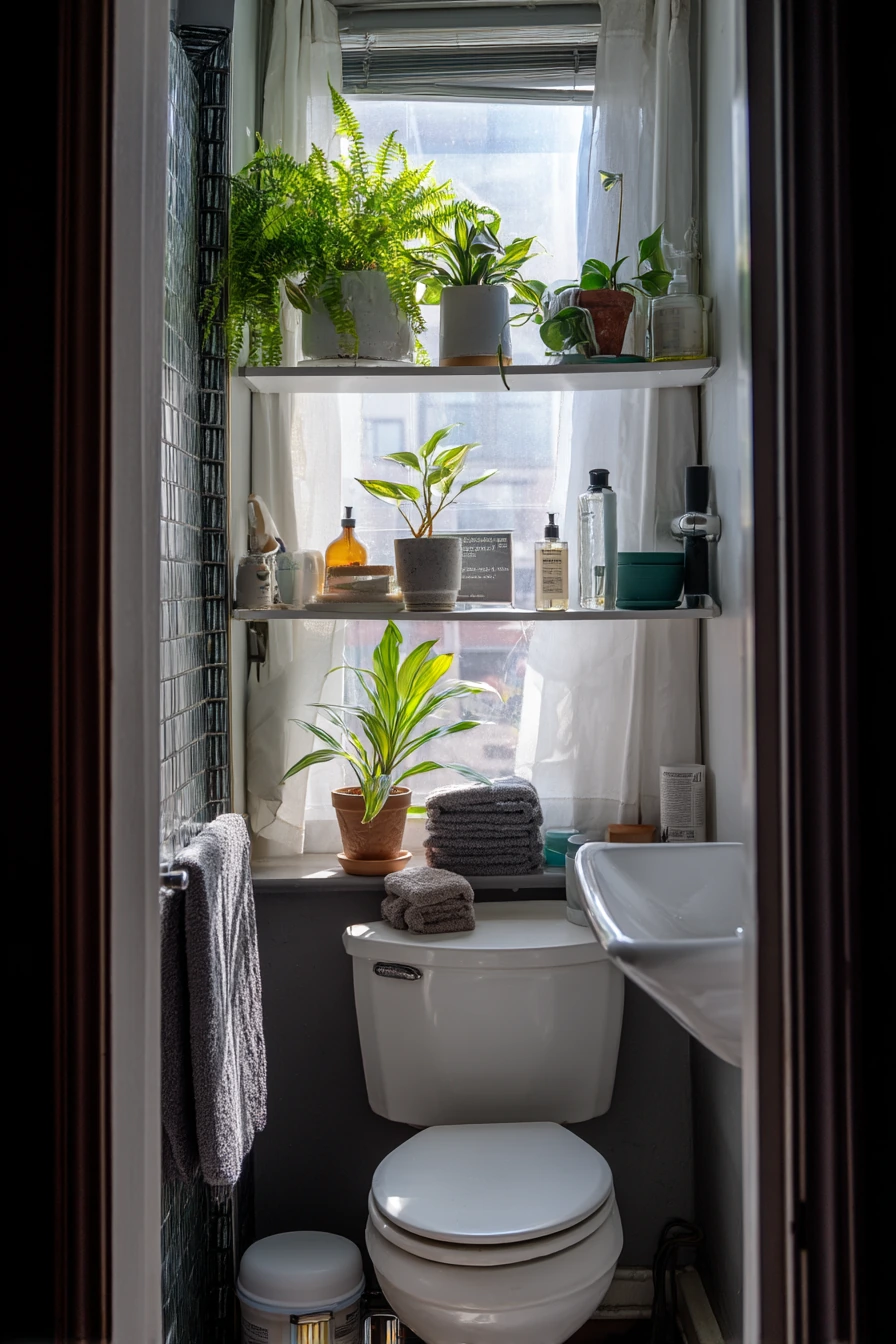
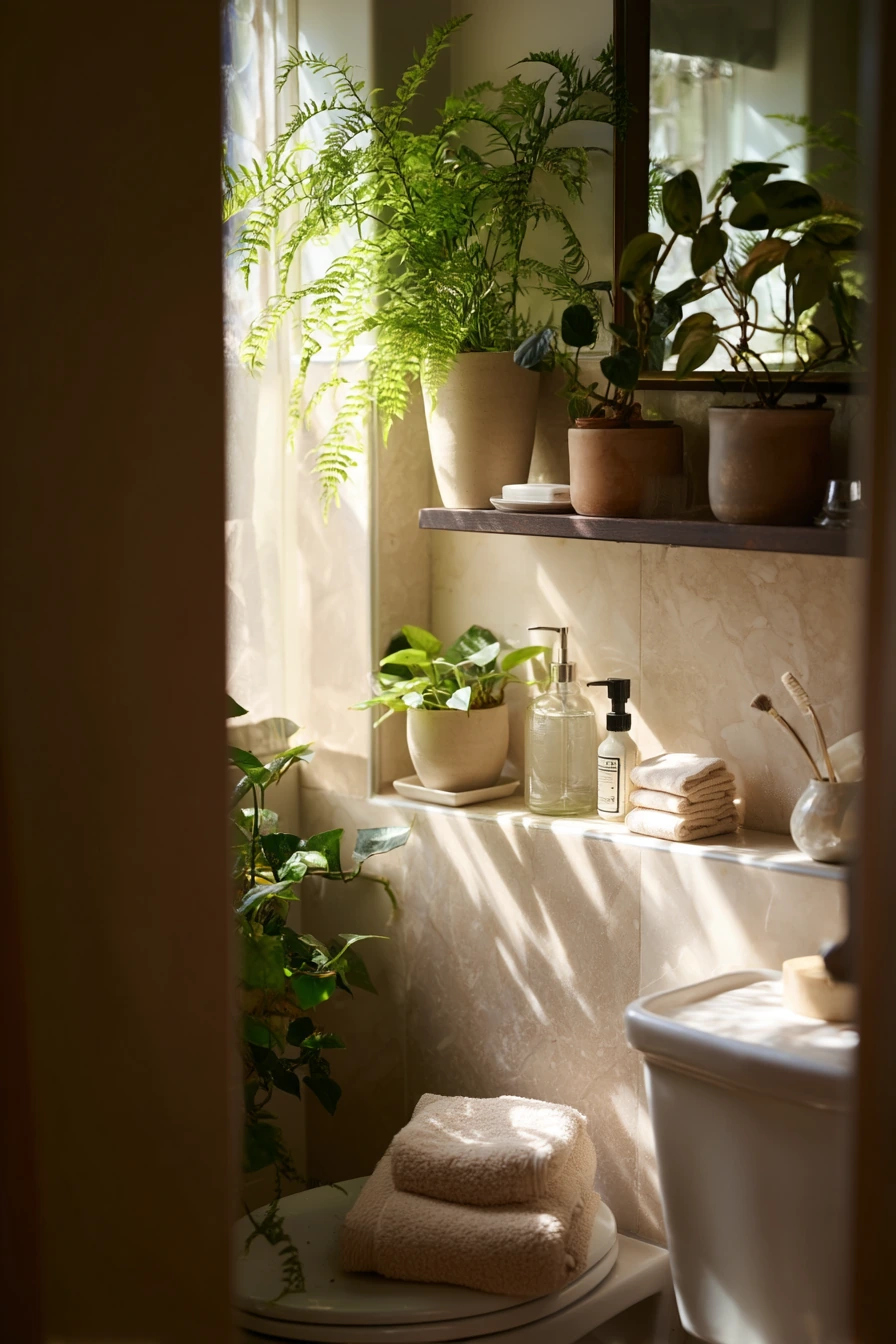
Bathrooms are great for moisture-loving plants, even in a tiny apartment. Create a potted plant arrangement on a narrow shelf and above the toilet using a fern, pothos, and a small peperomia. Glazed pots work well here because they handle humidity and wipe clean easily.
Keep it believable and tidy. Place folded towels and a soap bar where you can reach them, and make sure skincare bottles do not get blocked by leaves. If the bath mat is slightly askew, the space still looks fine, but the plants should not feel like they are in the way. A toothbrush cup should sit far enough from soil so it stays clean.
Bathroom light is often cool and indirect. Put the fern in the brightest spot, since it likes more light than many people think. Let pothos trail along the shelf edge for a soft line, but keep vines away from the toilet tank and flush handle. Water less than you think, since bathrooms can slow drying. Check the soil with your finger before watering, and always use drainage or a cachepot with a removable liner.
- Choose compact plants so they do not crowd the shelf.
- Use command hooks to hang a small plant tool pouch if needed.
- Wipe condensation off pots to prevent water rings.
- Trim pothos vines so they do not dip into wet areas.
- Open the door or run the fan to prevent mold on soil.
Pro Design Tip: Use one matching pot finish, like all glossy white, so the bathroom looks clean even with different plant shapes.
Budget Considerations: Peperomia and pothos are often low-cost; buy small starters and let them fill out in the humid air.
7 Dining table centerpiece with everyday clutter
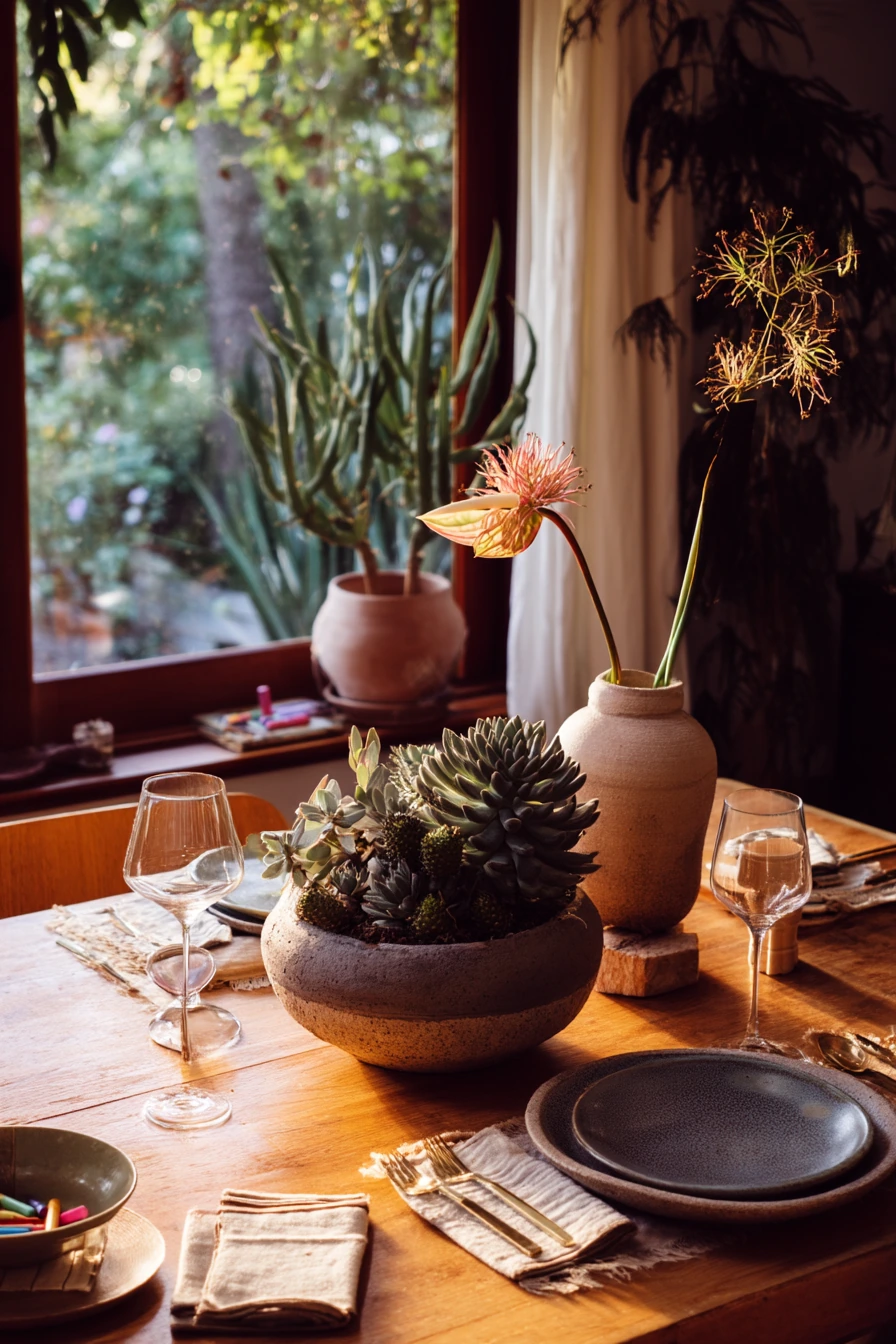
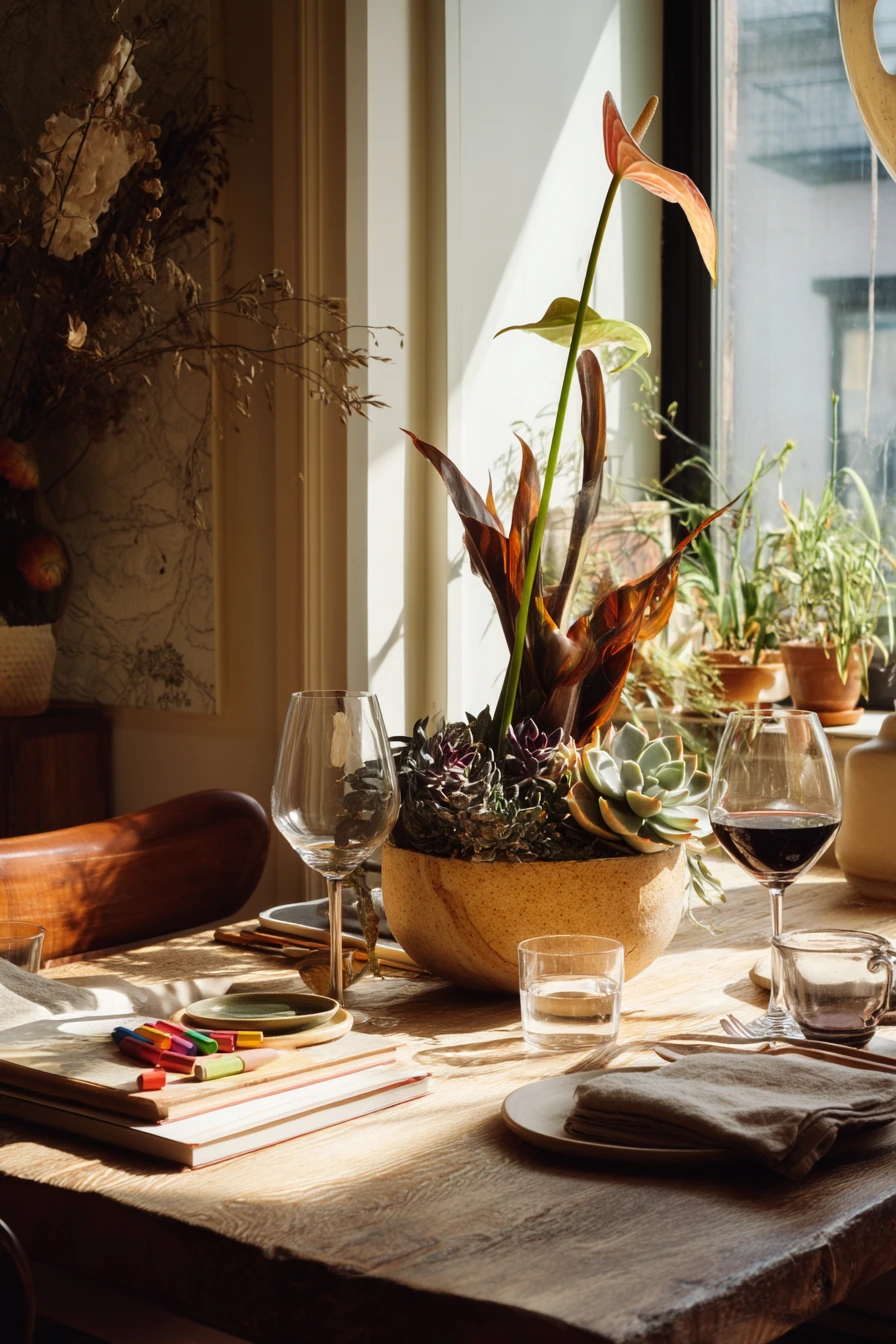
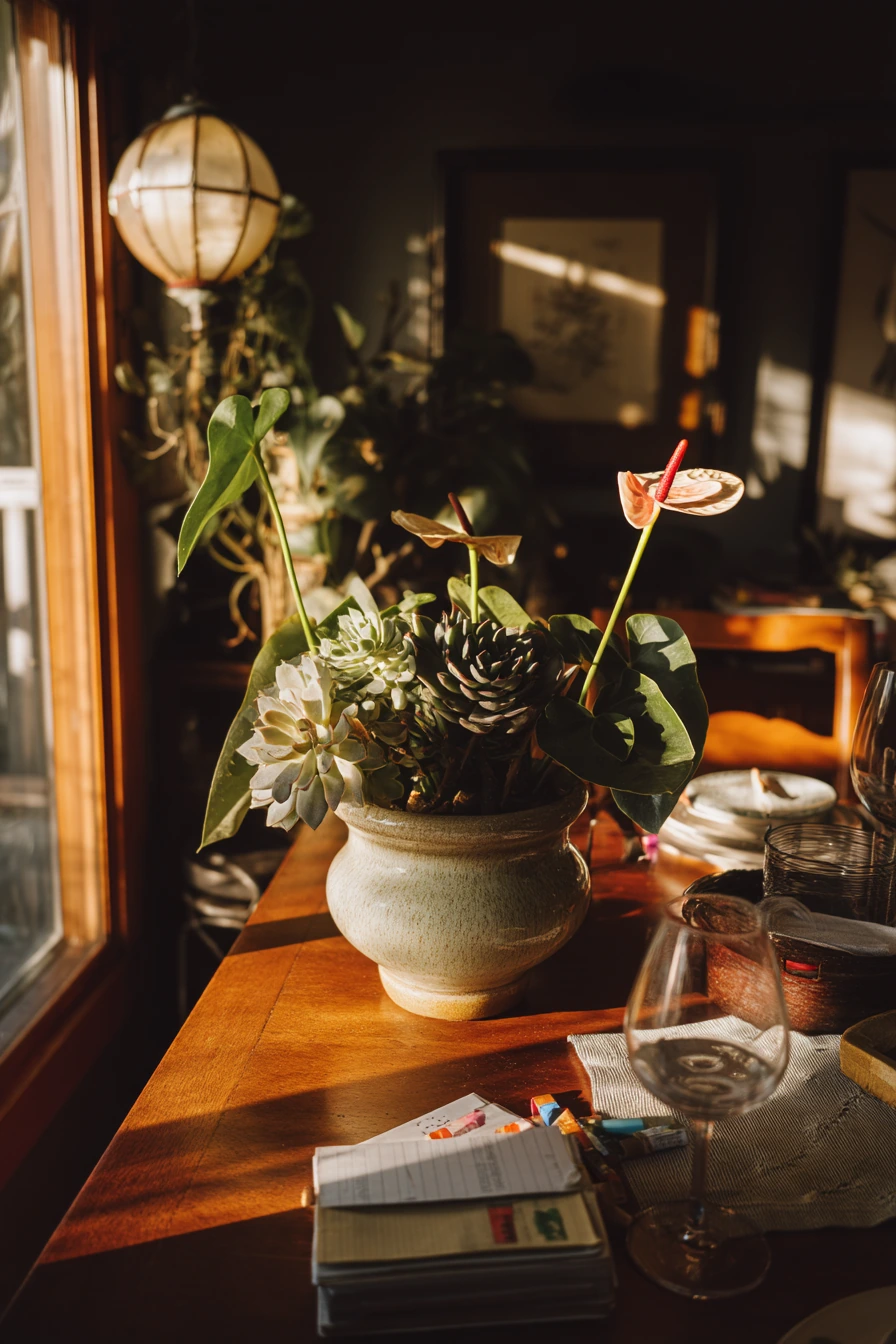
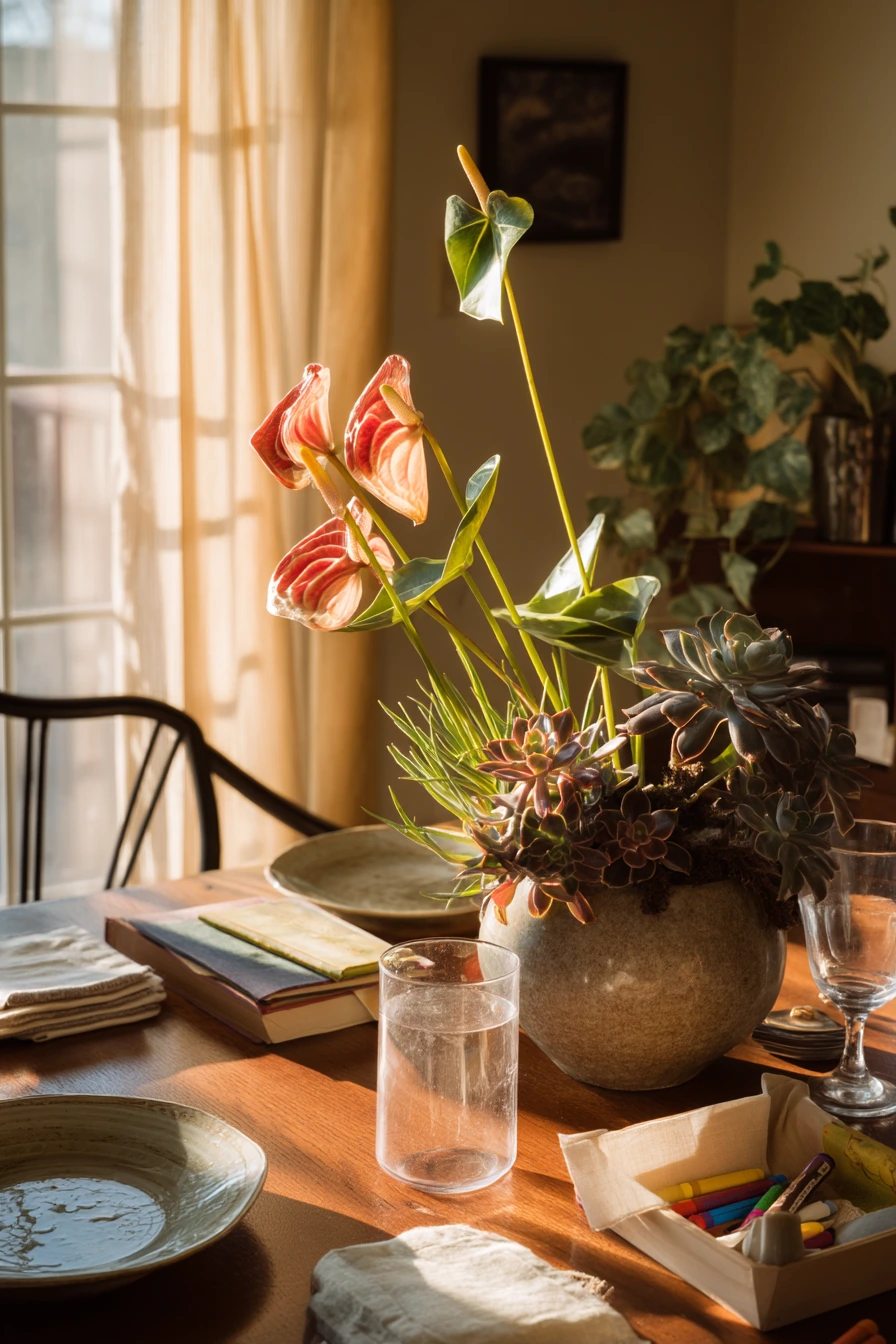
A dining table centerpiece needs to be low so people can talk across the table. Build a potted plant arrangement with a cluster of succulents, one blooming anthurium for color, and a single tall stem in a stoneware vase for height. Keep the tall stem slim and off to one side so it does not block views.
This works best when the table is used every day. Let place settings stay out if you normally keep them there. A mail stack, a kid crayon, and a wine glass can be part of the scene. The key is to keep the plant group on a tray or shallow platter so you can lift it and clear the table fast. Late afternoon window light will make the leaves and stoneware look warm and natural.
Succulents like bright light and dry soil, so place the centerpiece near a window if you can, or move it to a sunny spot for a few hours a day. Do not overwater just because it is on the table. Water on a schedule only after checking soil. The anthurium likes more consistent moisture, so keep it in its own pot inside the tray, and water it separately.
- Use a shallow tray to keep crumbs out of plant soil.
- Pick small succulents with different shapes for contrast.
- Keep the centerpiece under 10 inches tall, except the thin stem.
- Choose a vase with weight so it will not tip.
- Clear the tray before meals to avoid spills and stains.
Pro Design Tip: Mix matte and glossy finishes, like a matte stoneware tray with one glossy pot, to add depth without adding clutter.
Budget Considerations: Buy one anthurium as the focal point and fill the rest with small succulent cuttings or mini pots from a garden center.
8 Entryway plant landing spot for a busy household
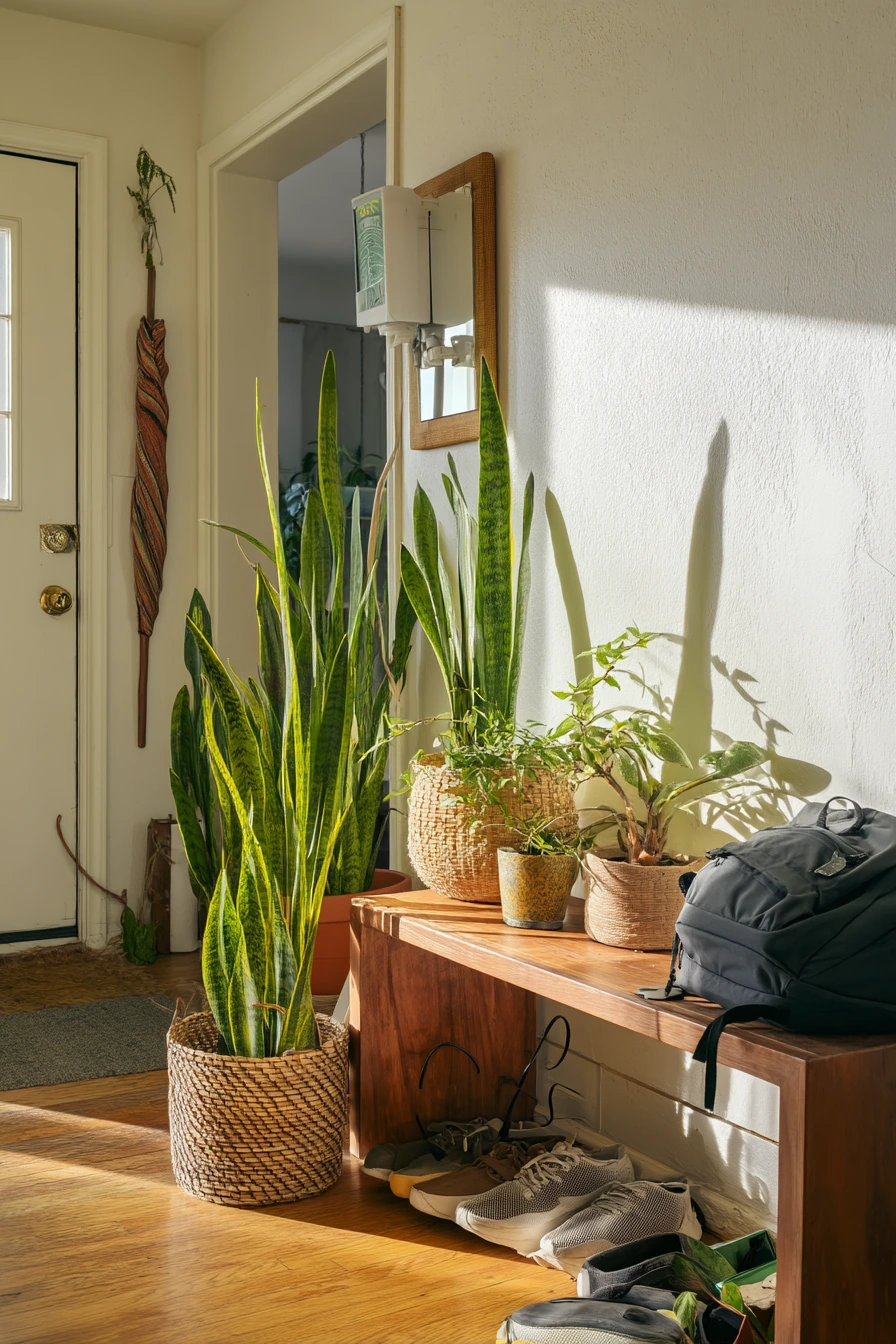
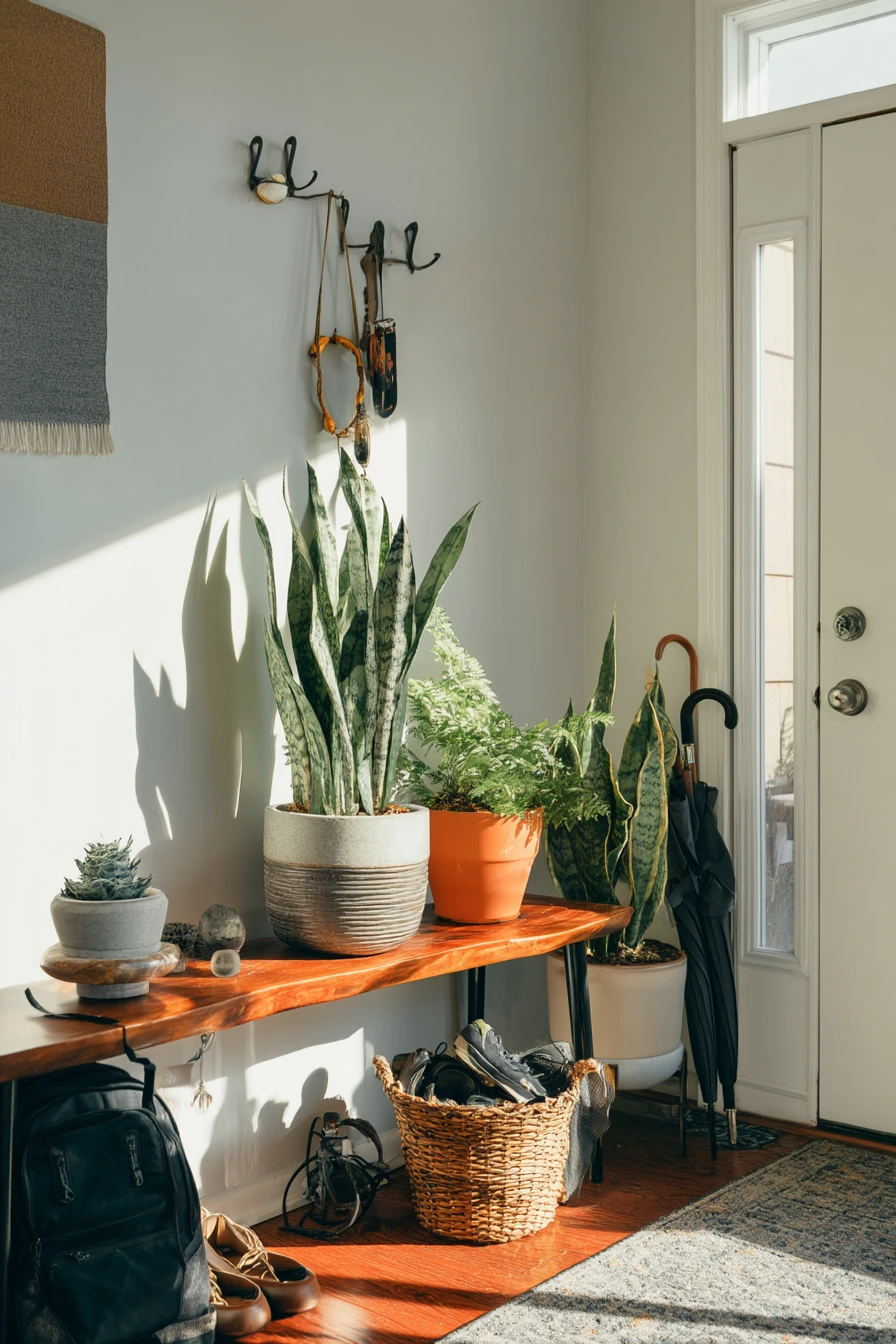
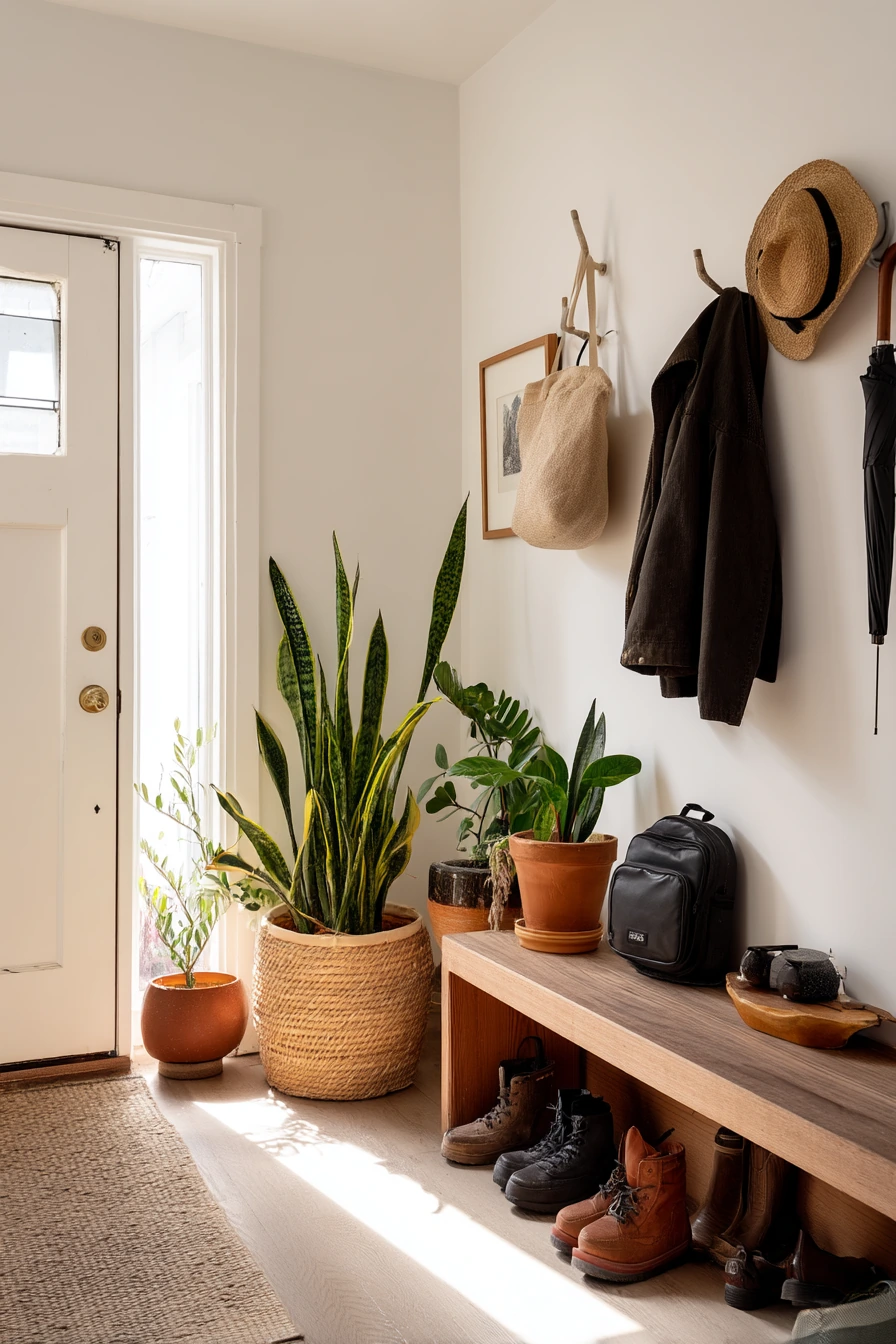
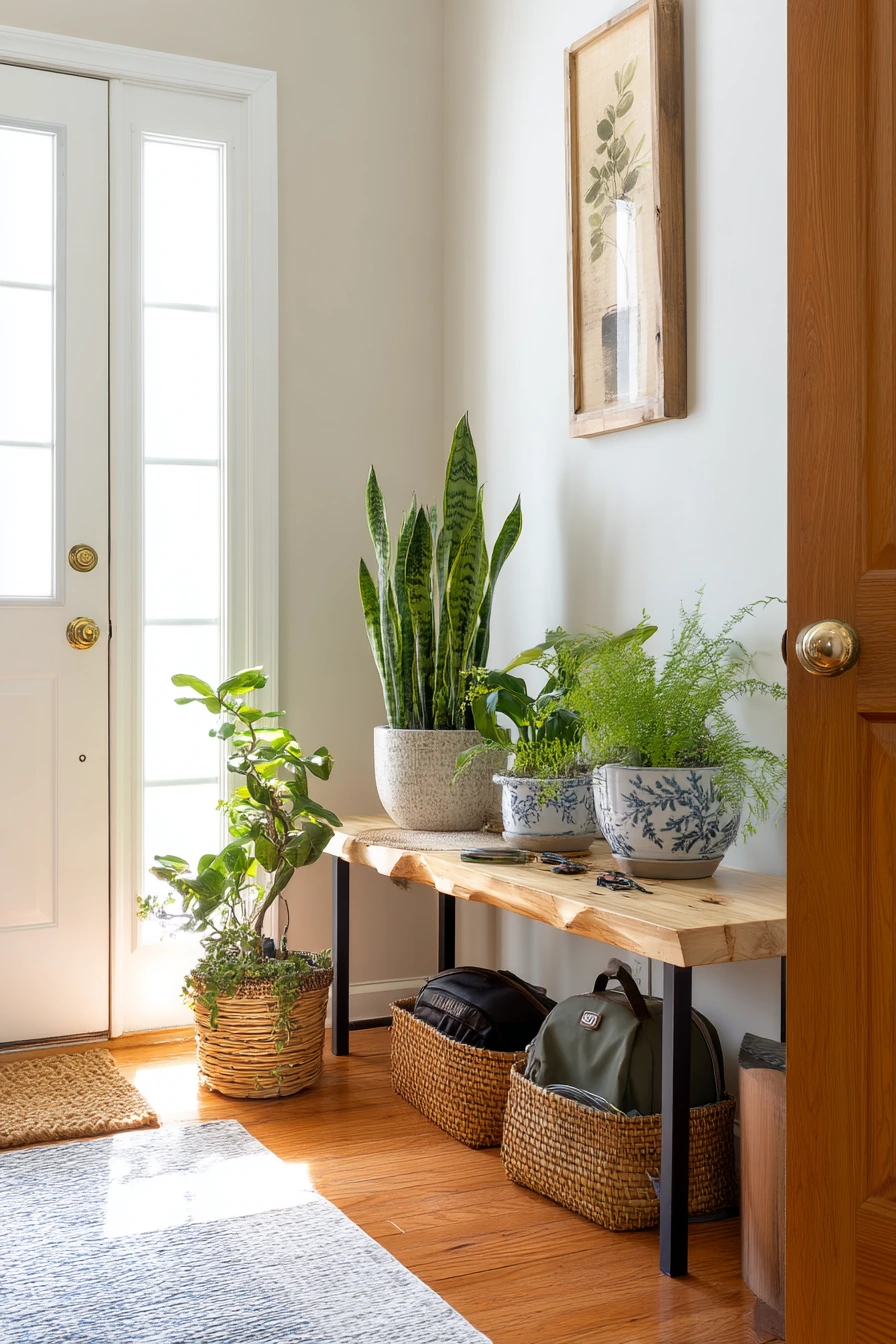
An entryway plant setup should feel welcoming but also tough enough for daily traffic. Create a potted plant arrangement across a bench and console using an upright snake plant, a fern, and a small citrus tree. Use a mix of baskets and ceramic planters so the area feels warm and grounded.
Plan around the clutter that always lands here. Keys, a backpack, shoes, an umbrella, and a charging cable looping off the side are normal. Give those items a clear home so the plants do not get knocked over. Put a small bowl or tray for keys, and place the snake plant on the floor beside the bench so it is stable. Keep the citrus tree near the front door light, but not where cold drafts hit it.
Soft daylight from the door is great, but entryways can be uneven. If the console is darker, place the fern there only if it still gets enough light, or swap it for pothos. Use a water-catching liner inside baskets to protect floors. Also leave a little walkway space, since leaves brushing coats and bags can break over time.
- Use a boot tray under baskets to catch water and dirt.
- Keep a small watering jug nearby so you do not skip care.
- Trim fern fronds that stick out into the path.
- Choose a narrow console so the area does not feel tight.
- Set a weekly reset: clear the bench, wipe leaves, and sweep.
Pro Design Tip: Match the plant height to entryway lines: tall plant on the floor, medium on the bench, and smaller pieces on the console for a smooth step-up look.
Budget Considerations: Baskets can be pricey; check thrift stores or use simple plastic pots and add one basket only for the main plant.
9 Plant shelf above the radiator in winter light
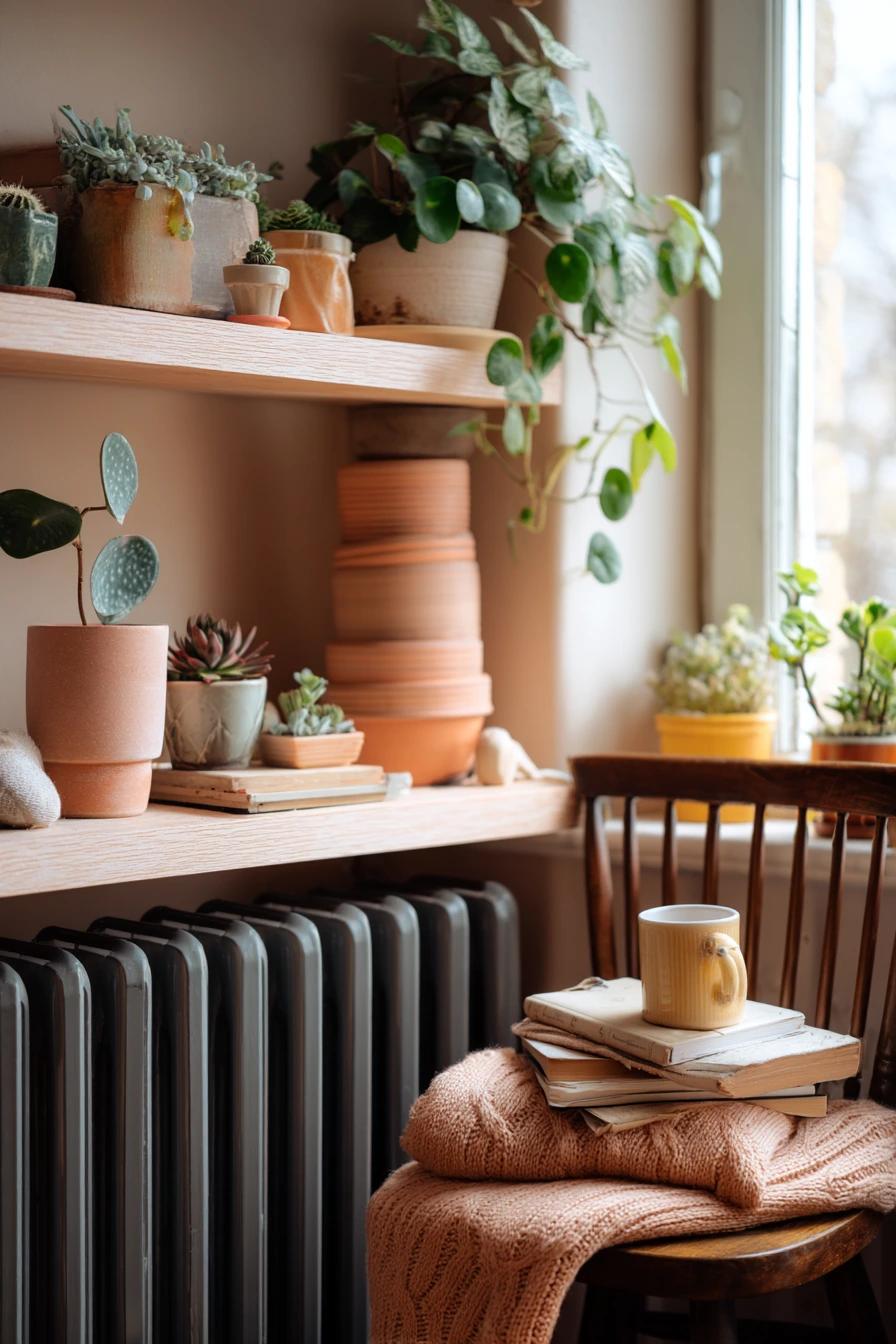
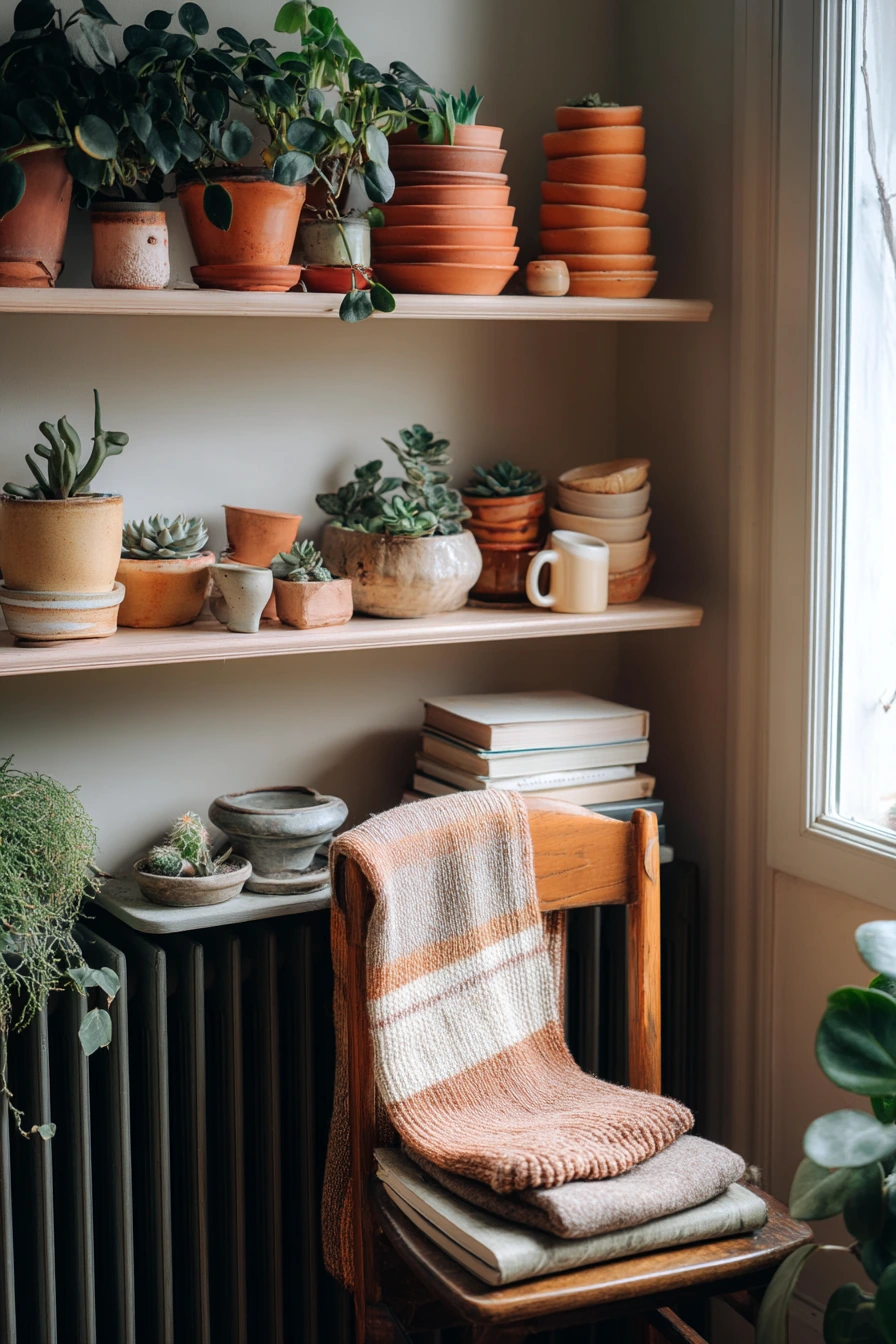
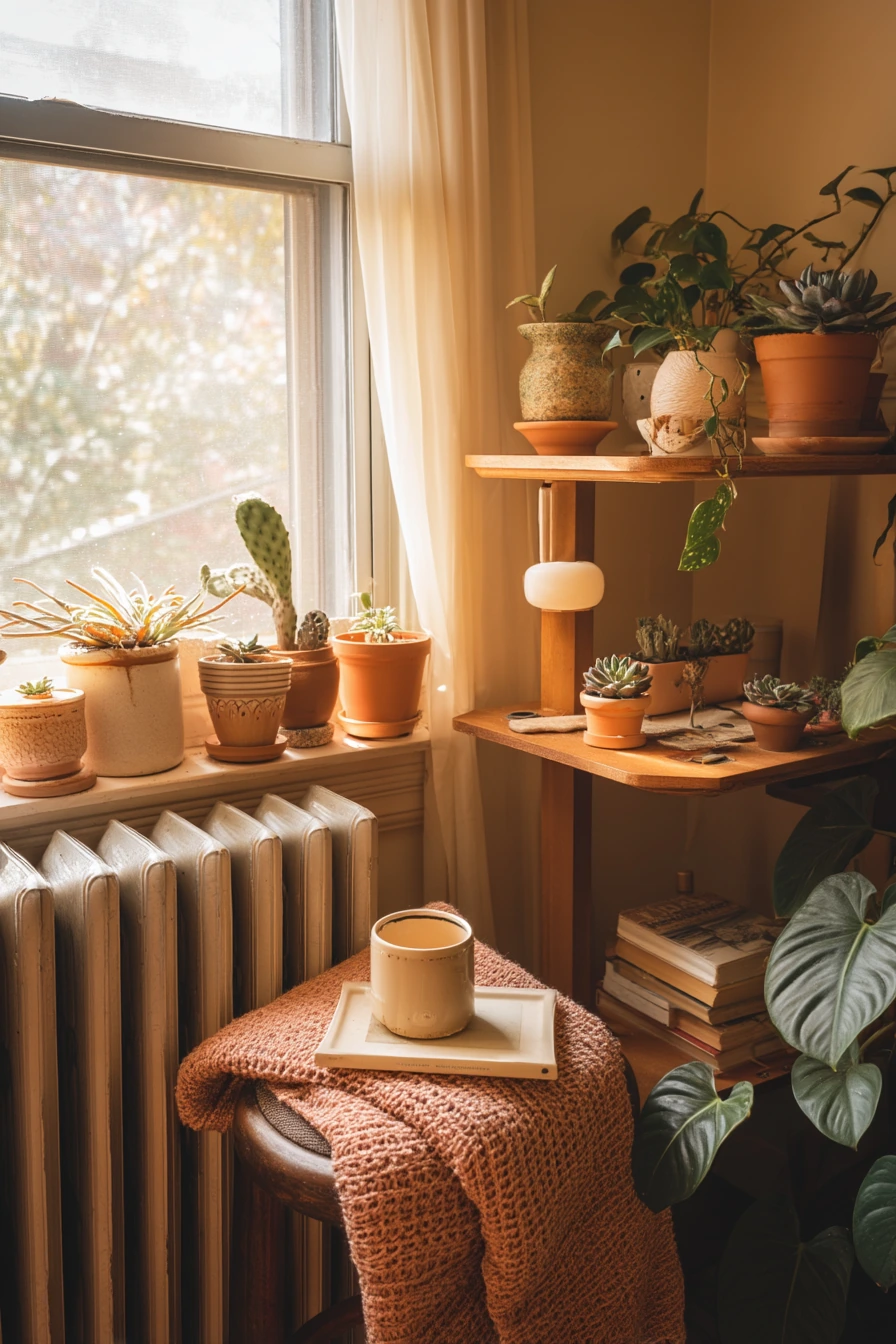
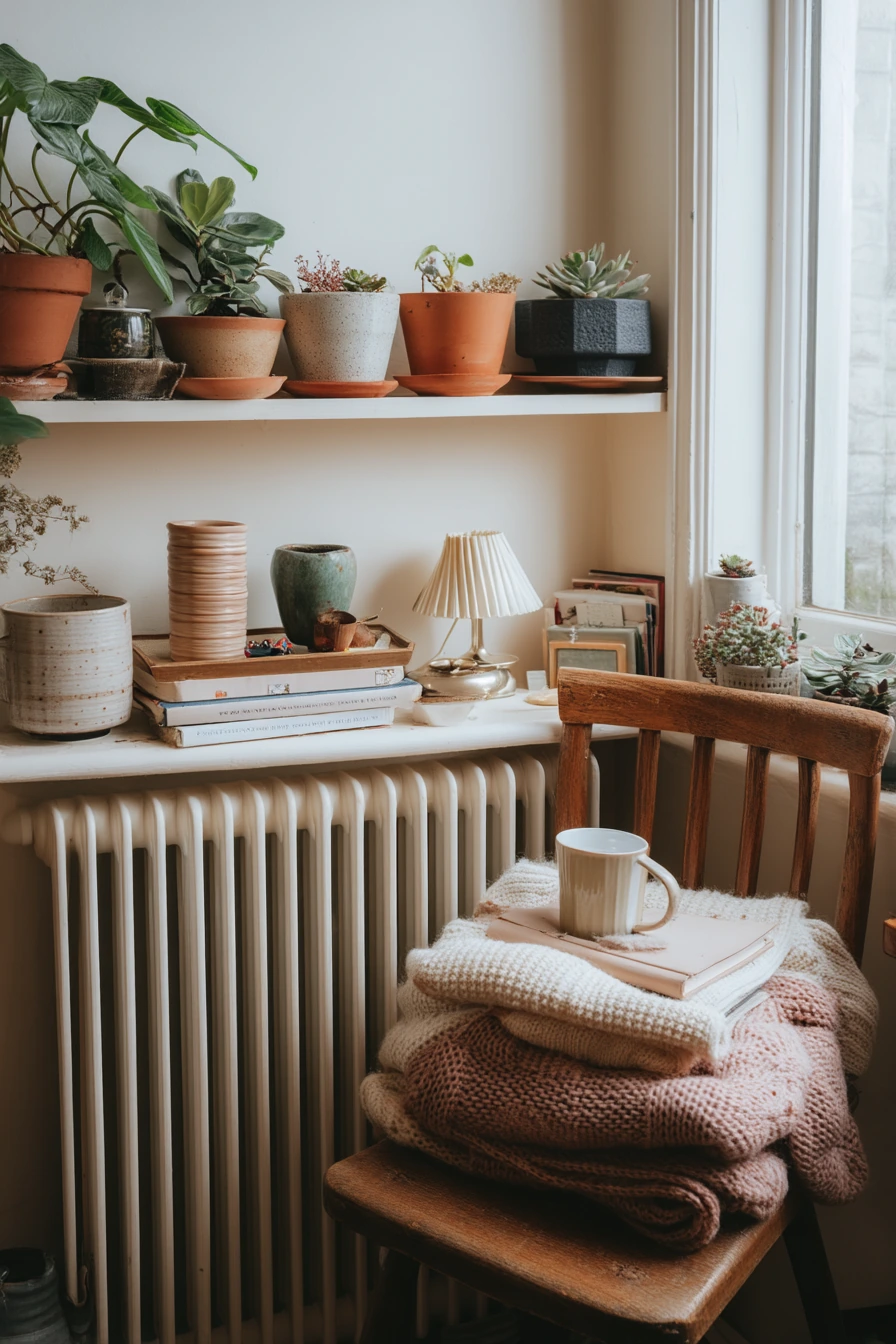
A shelf above a radiator can work for a potted plant arrangement, but you need the right spacing. Heat can dry plants fast, so use sturdy plants like pothos, a jade plant, and tiny succulent trays. Mix stacked terracotta with matte pots to add texture that feels cozy in pale winter light.
Style it like a quiet apartment corner. A tea mug, a knitted throw, a book stack, and a folded scarf on the chair make the space feel warm. Keep the plants on the shelf, not on the radiator itself. Use a small riser or a thick tray so pots do not sit right over the heat source. If you use warm lamp fill, aim the lamp away from leaves to prevent drying and brown edges.
Watering is the main challenge. Check soil more often in winter because indoor heat changes fast. Group plants by water needs: jade and succulents stay drier, pothos needs a bit more. If the shelf is narrow, keep heavy pots toward the wall side for safety. Also watch for dry air. A small pebble tray with water can help, but keep it stable so it will not spill.
- Leave 3 to 6 inches between the shelf and radiator heat line.
- Use drip trays under every pot to protect paint and wood.
- Choose compact succulents so the shelf does not look crowded.
- Rotate plants monthly since winter light is weak.
- Trim pothos vines to keep a clean edge near the chair.
Pro Design Tip: Repeat pot shapes, like two round terracotta pots, then add one matte cylinder pot to keep the shelf looking organized.
Budget Considerations: Terracotta is usually affordable; mix it with one or two modern matte pots to get the look without buying a full set.
10 Balcony door plant grouping for indoor-outdoor flow
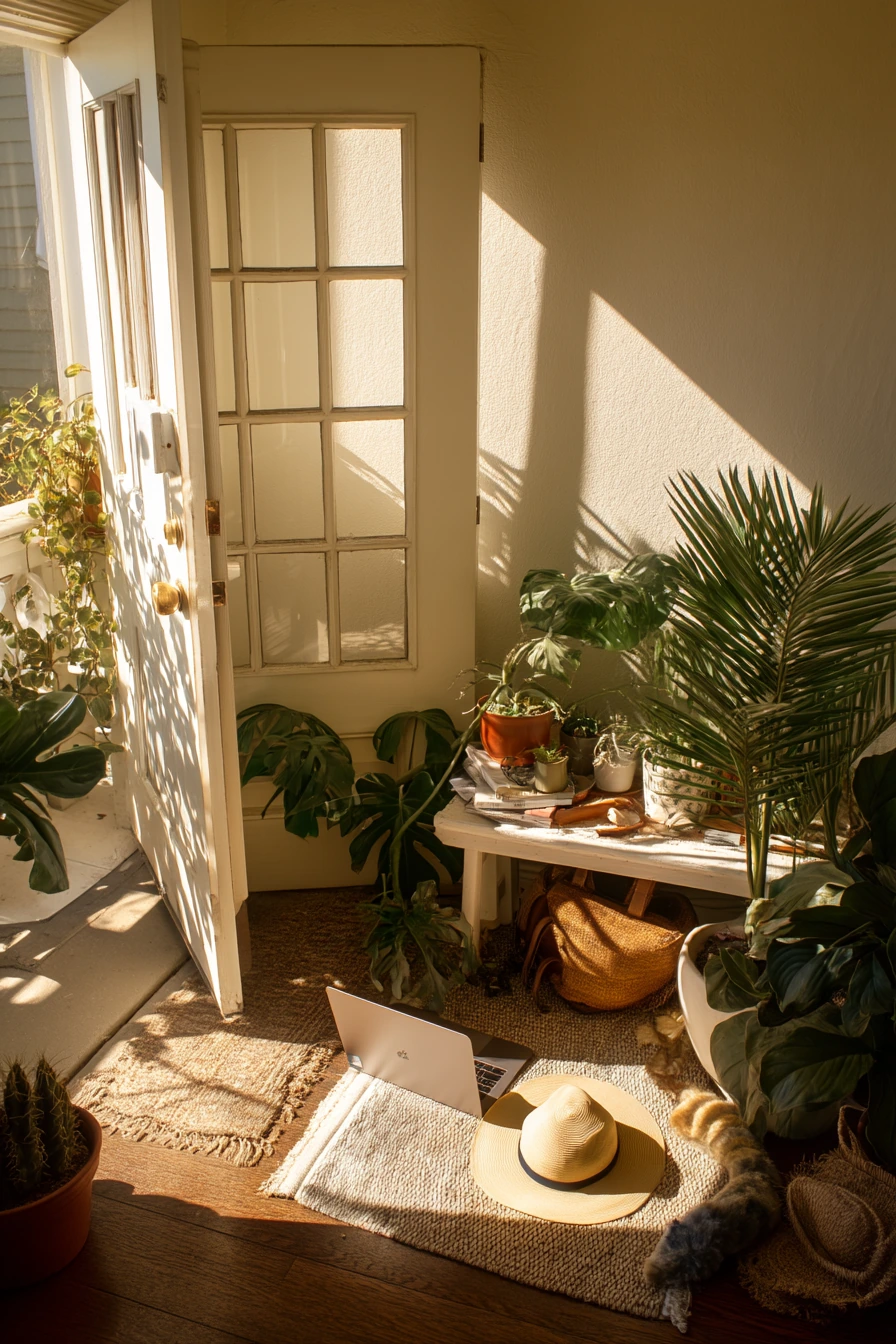
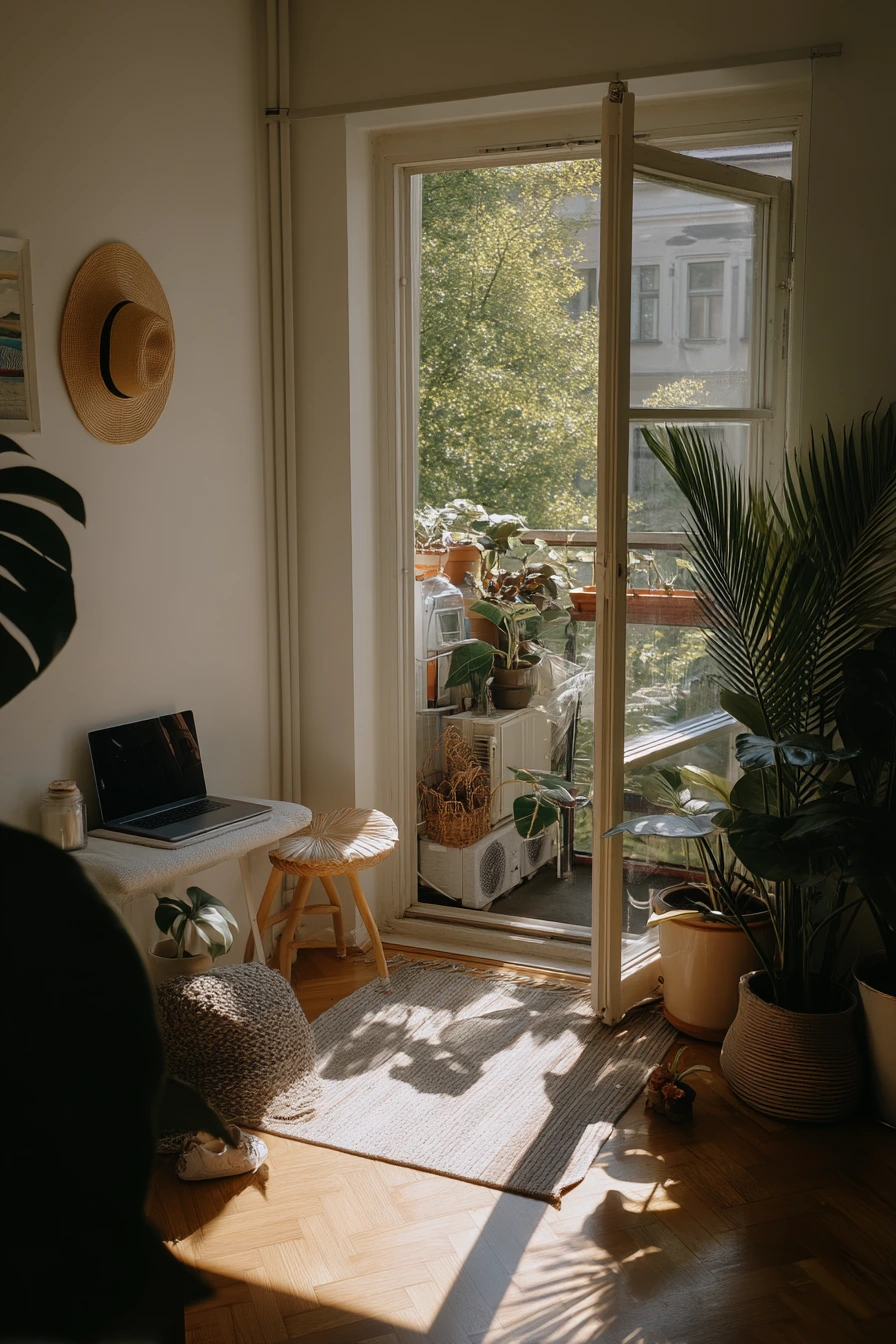
A balcony door area often has the best light in an urban home, so it is a great place for a fuller potted plant arrangement. Gather plants on the floor and a small bench: a monstera for big leaves, a palm for height and movement, a few herb pots for daily use, and a ceramic orchid pot for a clean accent.
Keep it functional because this spot is a pathway. If you have a watering can, an open laptop, a sunhat, and a dog toy near the threshold, plan for clear walking space. Place the bench to one side and cluster pots in a tight group so they do not spread into the doorway. Let the monstera sit on the floor, and raise the herbs on the bench so you can reach them without bending.
Bright natural window light can be strong. If the sun is direct, pull plants back a foot or use a sheer curtain to prevent leaf burn. Palms like steady moisture, while herbs can dry out faster in sun, so group by water needs or use separate trays. Keep a doormat and wipe leaves often since balcony areas bring in dust. If you open the door a lot, avoid delicate plants right at the draft line.
- Use a large waterproof tray under the main cluster to catch spills.
- Keep the tallest plant off to one side for a clean corner shape.
- Choose pots with drainage; empty saucers after watering.
- Use a small bench to create levels and reduce floor clutter.
- Store the watering can behind the bench to keep the path clear.
Pro Design Tip: Create a layered edge: palm in back, monstera mid, and herbs in front, so the group looks lush without taking more space.
Budget Considerations: Use a simple wood stool or thrifted bench; a coat of paint can make it look new without the cost of a plant stand set.
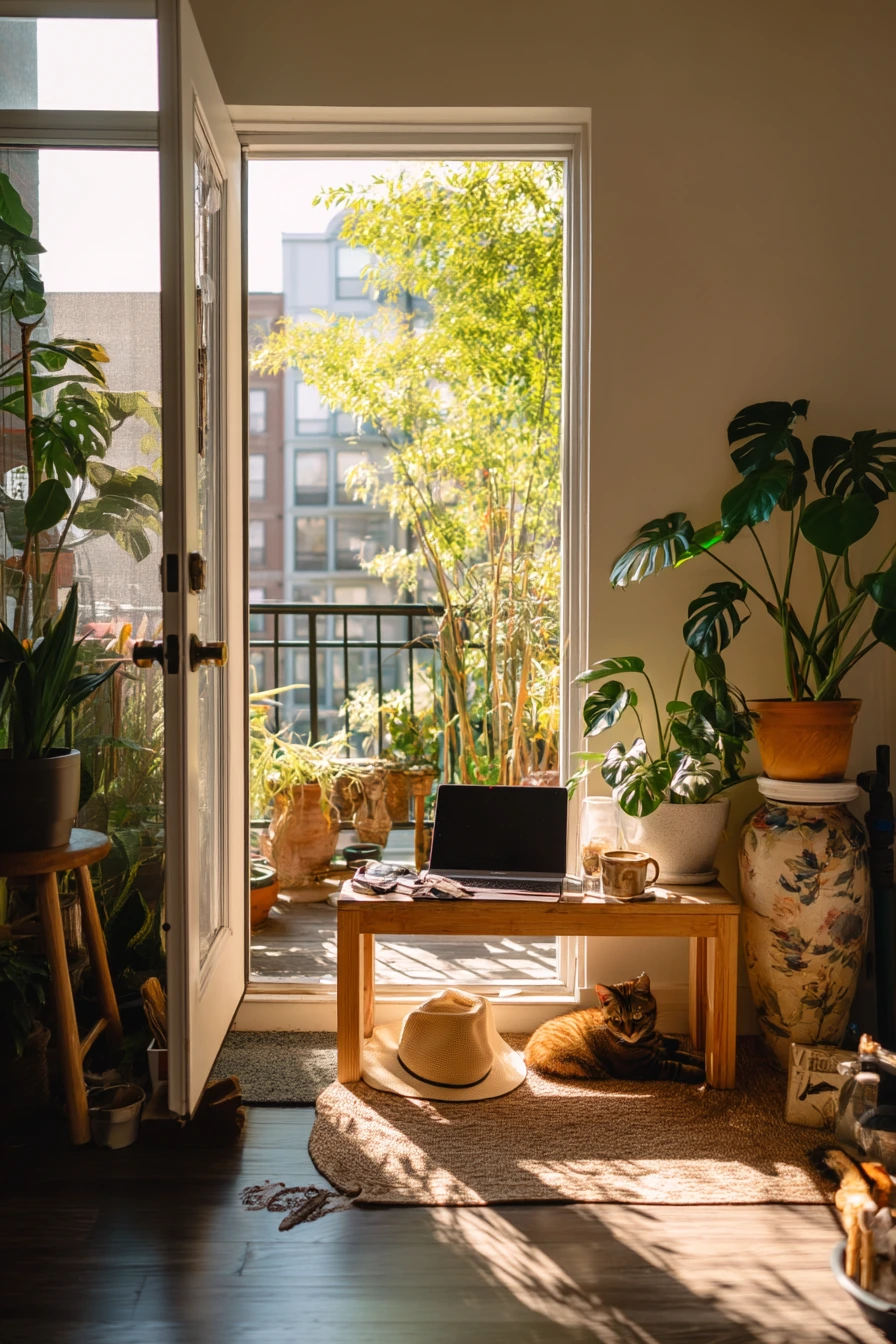
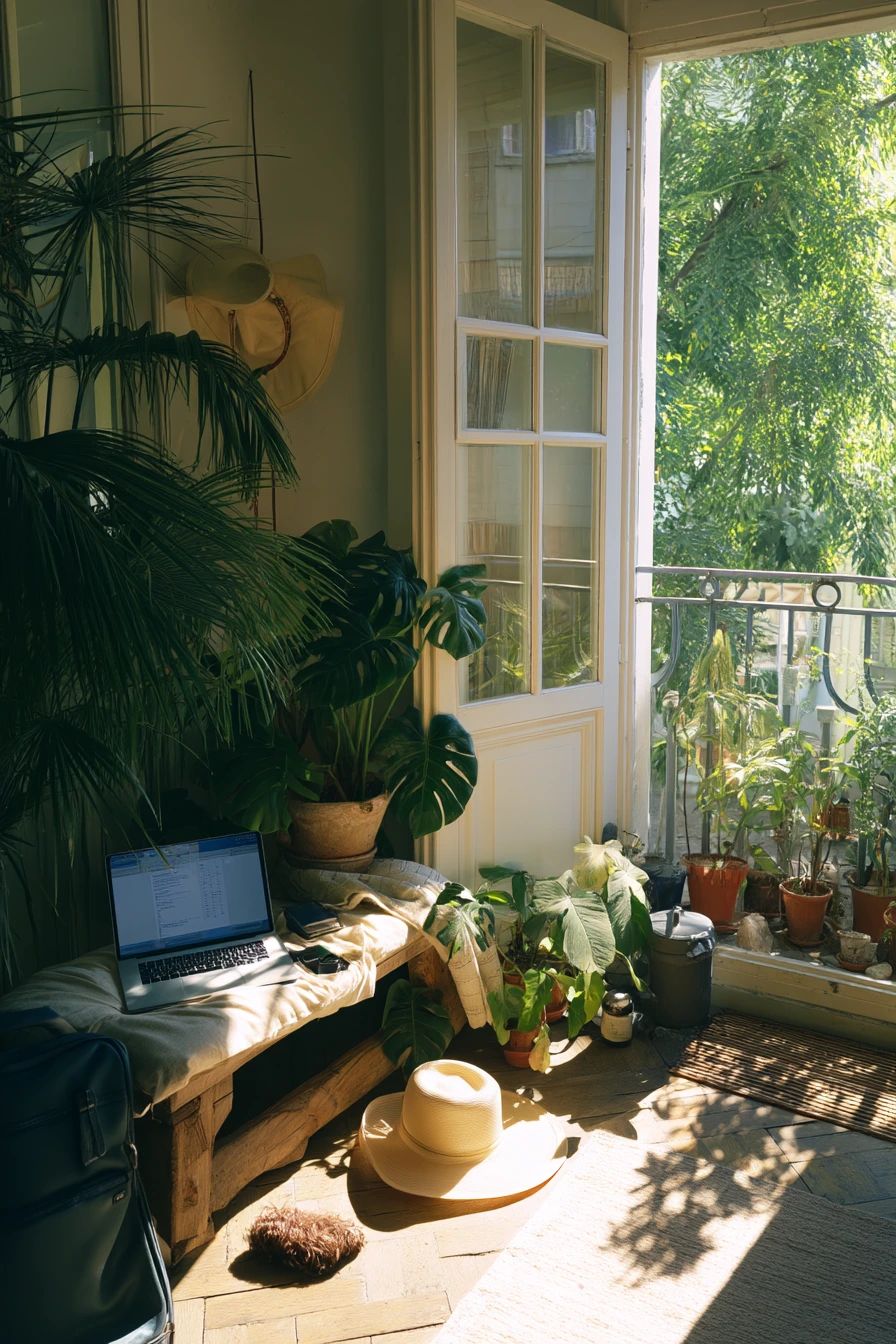
Potted plant arrangement ideas work best when they fit your real routines. Use clusters, mixed pot textures, and simple levels like a stool, bench, or tray to make plants feel intentional.
Start with one spot you see every day, like a windowsill, kitchen counter, or entryway console. Once that setup is easy to care for, copy the same grouping method in the next room.
FAQ
How many plants should I group together? Three is a simple starting point. It looks balanced and is easy to maintain.
Do my pots need to match? No. Match one element, like color tone or material, then mix the rest for a relaxed look.
What is the easiest plant for low light corners? ZZ plant and snake plant handle low light well and do not need frequent watering.
How do I stop water damage on shelves and wood furniture? Use saucers, waterproof trays, and water plants at the sink when possible.
Can I put plants near a radiator or heater? Yes, but keep space between the heat source and the pots, and check soil more often.
What is a good plant for a humid bathroom? Ferns, pothos, and peperomia often do well with bathroom humidity.
How do I make a plant corner look less cluttered? Put plants on one tray or in one tight cluster, and keep one clear surface nearby for visual rest.