
Good tomato trellis ideas help your plants grow tall, stay healthier, and give you cleaner fruit. When vines sprawl on the ground, they can break, get disease, and take up too much space.
This post shares practical trellis setups you can copy in a small suburban backyard, a narrow side yard, or even a compact apartment balcony. You will see options like a cattle panel trellis arch, bamboo stakes with twine, and sturdy concrete mesh.
Each section includes simple steps, a few “how to style it” ideas so your garden looks tidy, and notes on materials like cedar edging, terracotta pots, and jute ties. You will also get budget tips so you can build a strong support without overbuying.
Use these tomato trellis ideas to grow more in less space, keep paths clear, and make watering and picking easier all season.
1 Small Backyard Cattle Panel Trellis
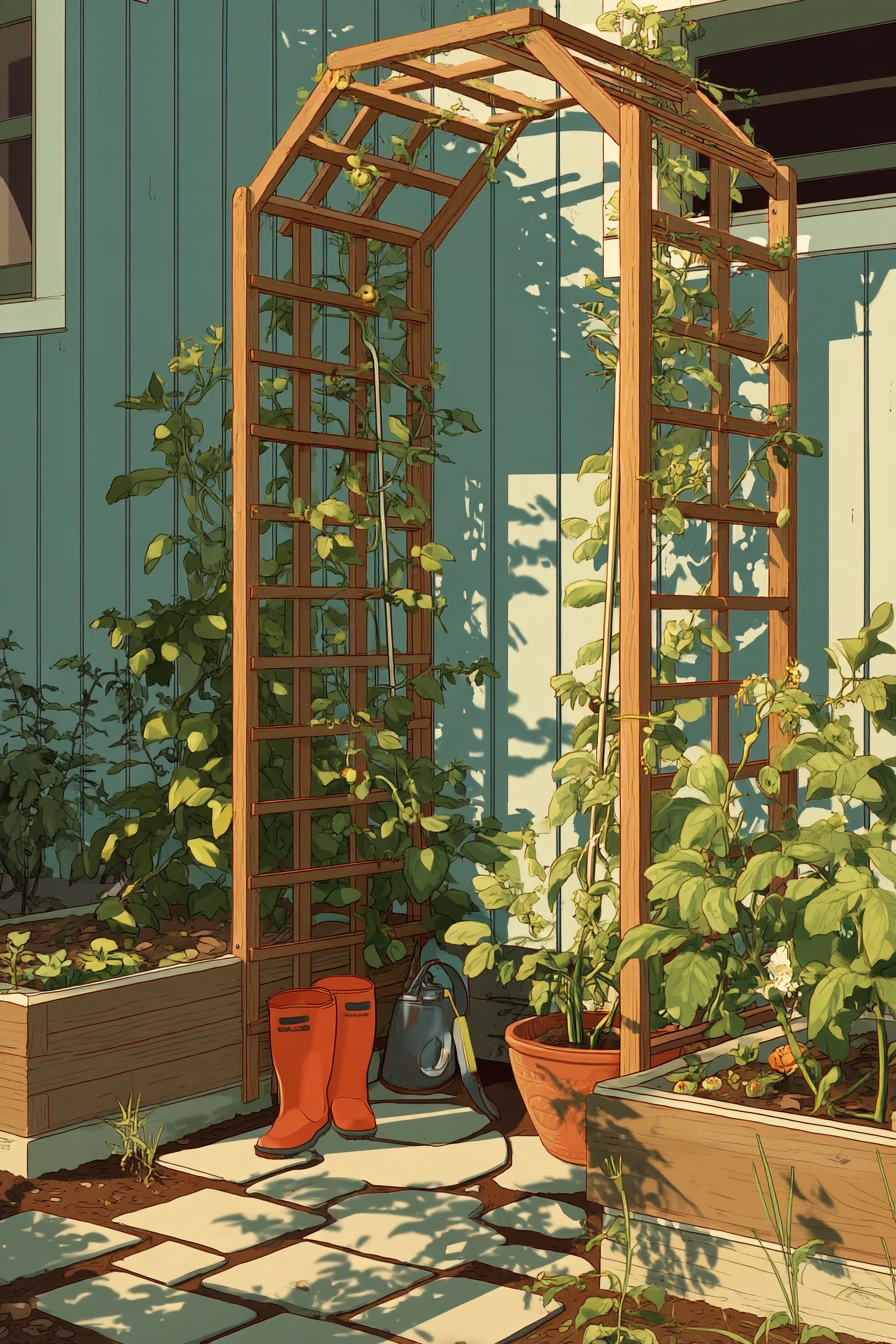
A cattle panel trellis arch is one of the best tomato trellis ideas for a small suburban backyard. It gives you a tall, strong tunnel where tomato vines can climb up and over. Set it between two raised beds edged in cedar so you can walk under the arch to prune and pick. This style also keeps fruit off the soil, which helps reduce rot and splashing disease after watering.
To build it, bend a cattle panel into an arch and anchor each side with T-posts or heavy rebar stakes. Start training vines early with slightly bent plant ties so stems do not crease. As the plants grow, guide them upward every week. Keep basil spilling nearby as a companion plant, and place terracotta pots at the ends of the beds to soften the look and hold extra herbs.
For a lived-in, easy-to-use setup, hang garden gloves on a fence hook and keep a watering can on the path near the kitchen door. Add a simple mulch layer to cut down on mud-smeared boots after rain. If you want a neat look for photos, tuck drips and hoses behind the cedar edging and line up a few matching pots.
- Use two beds with a walkway so you can reach both sides of the arch.
- Anchor the panel well so wind does not twist it.
- Train tomatoes up while stems are flexible, not when they are thick.
- Prune lower leaves to improve airflow under the arch.
- Style with terracotta and herbs for a warm, classic garden feel.
Pro Design Tip: Keep the arch centered on the path and repeat the same pot size at both ends for a balanced, clean look in a small yard.
Budget Considerations: Cattle panels cost more than stakes, but they last for years. Check farm stores or buy one panel and cut it to share across two shorter arches.
2 Renter-Friendly Balcony String Trellis
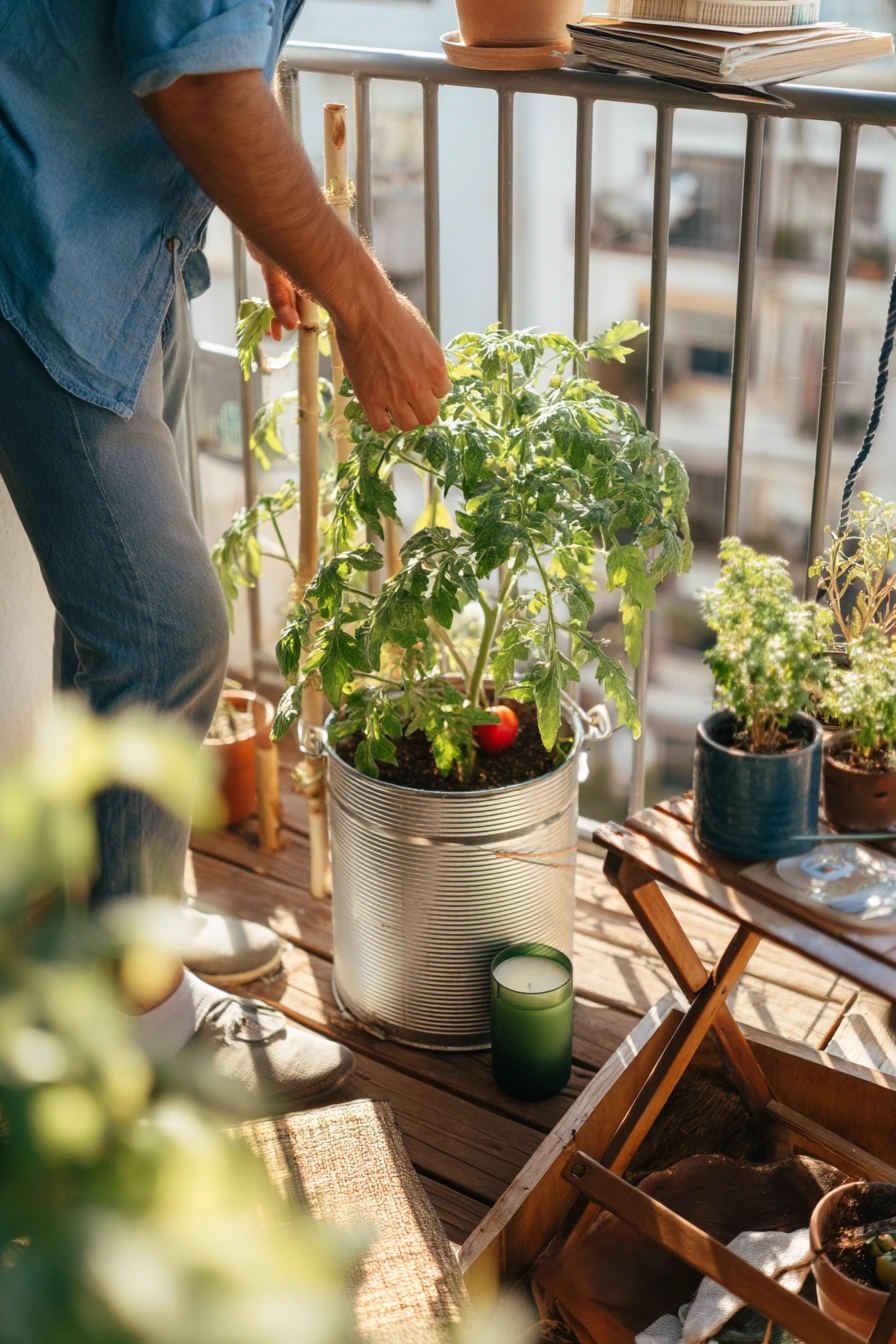
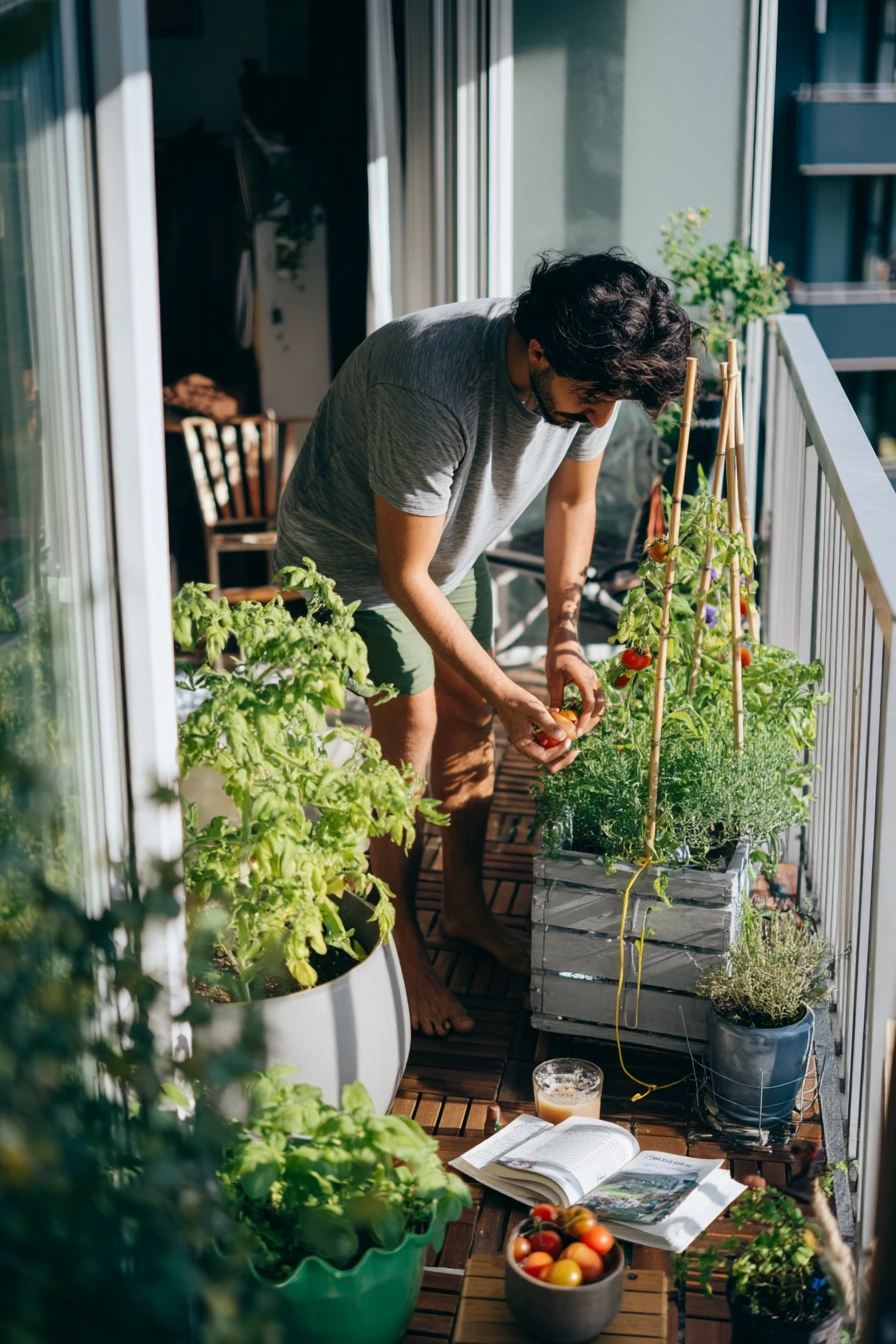
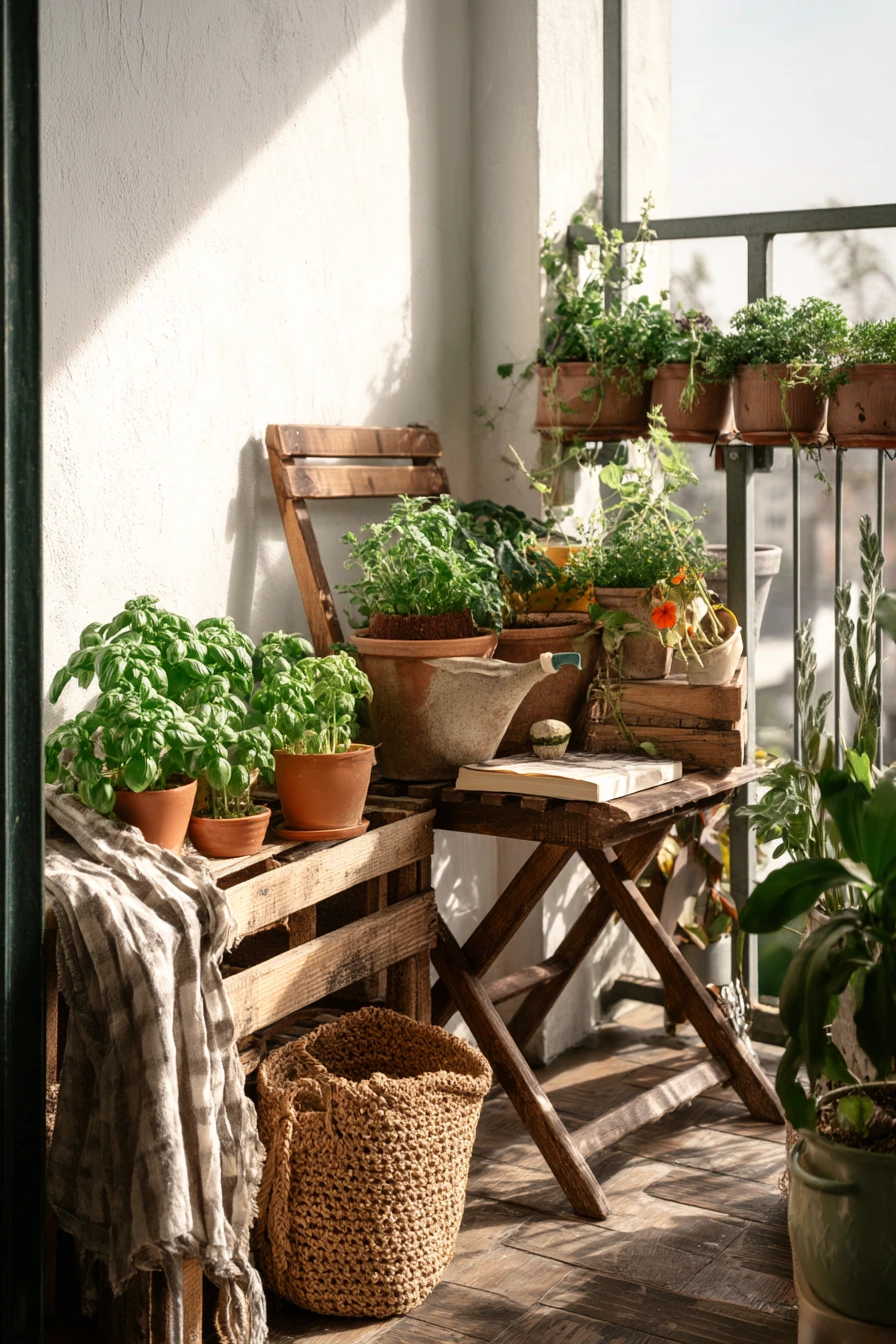
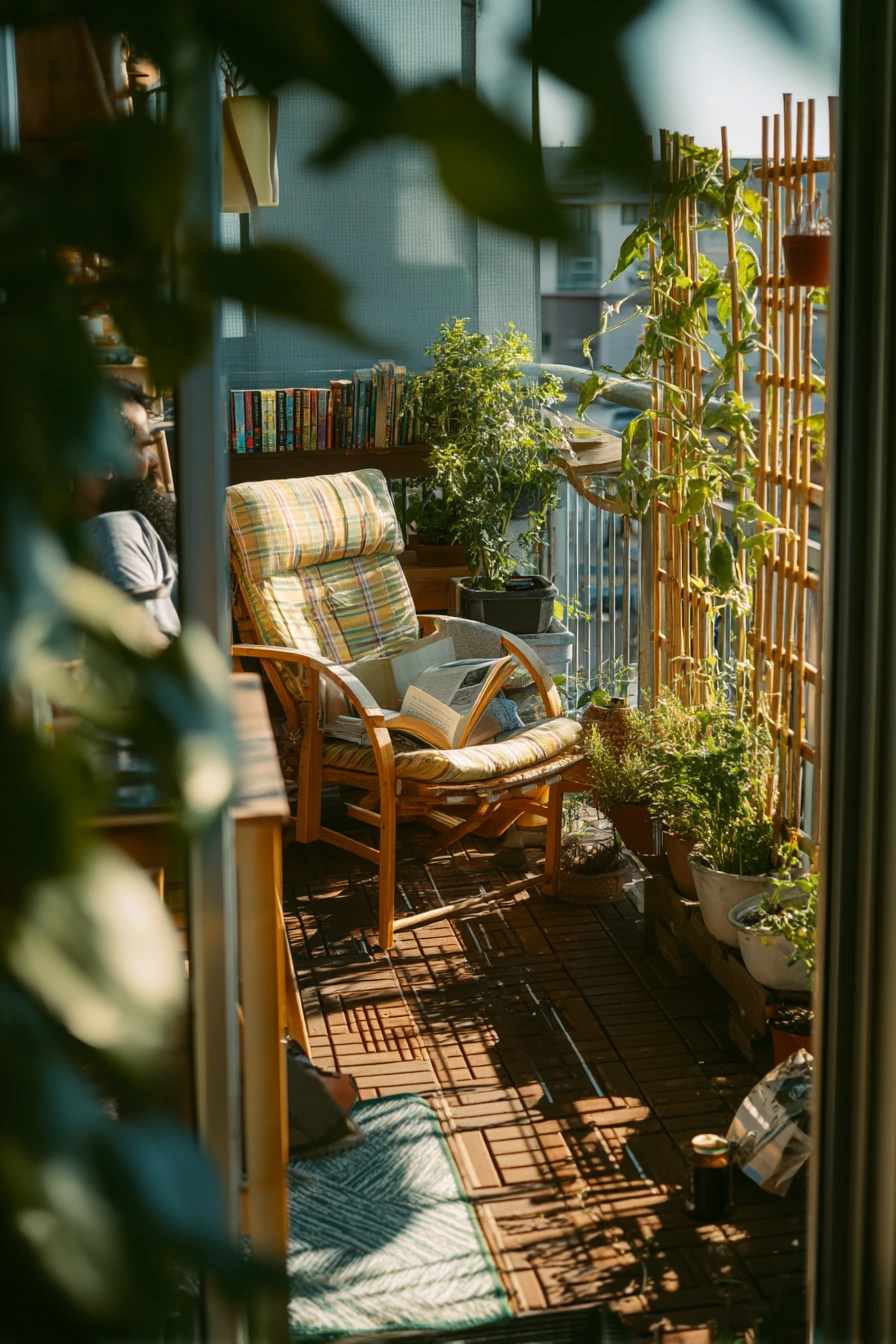
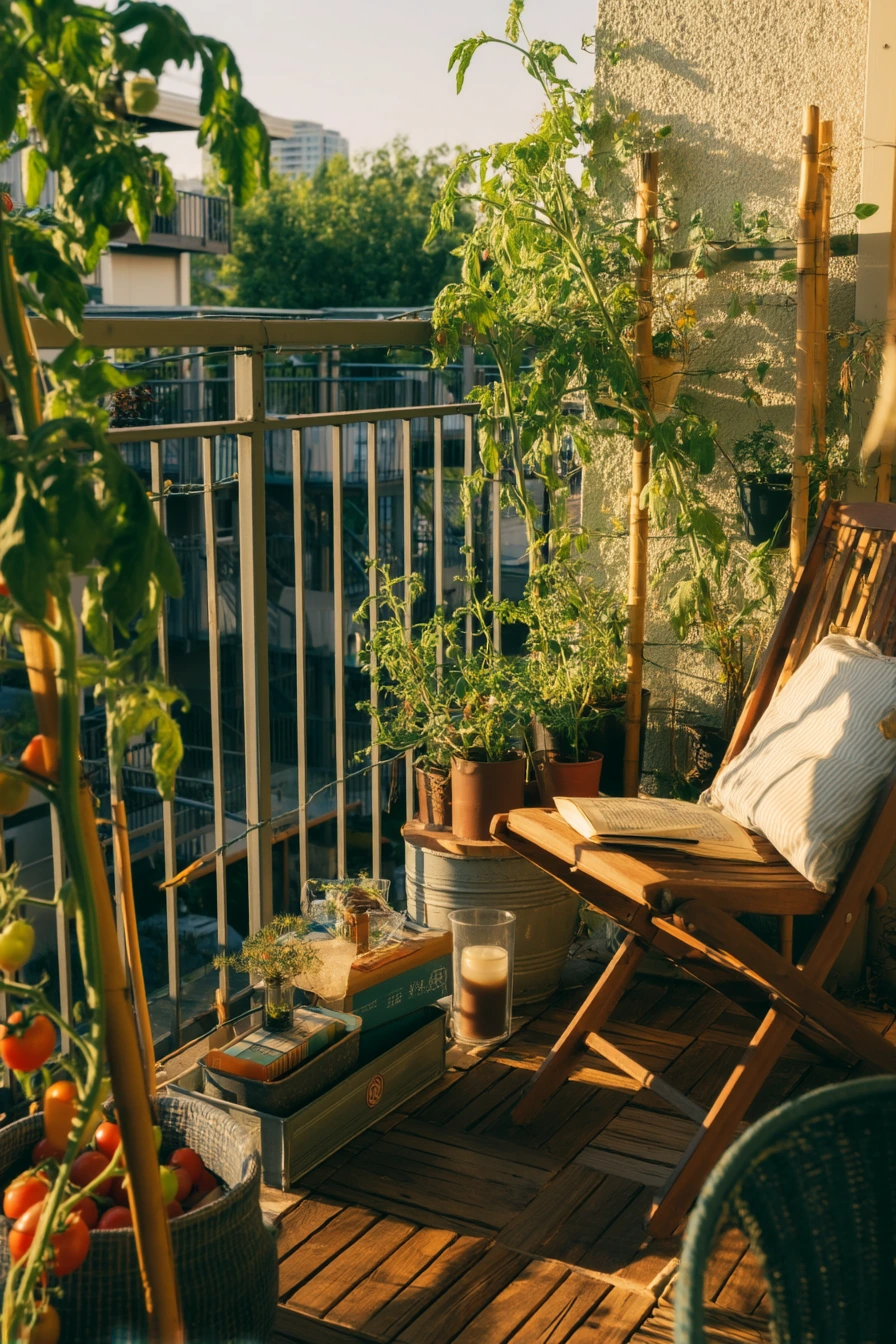
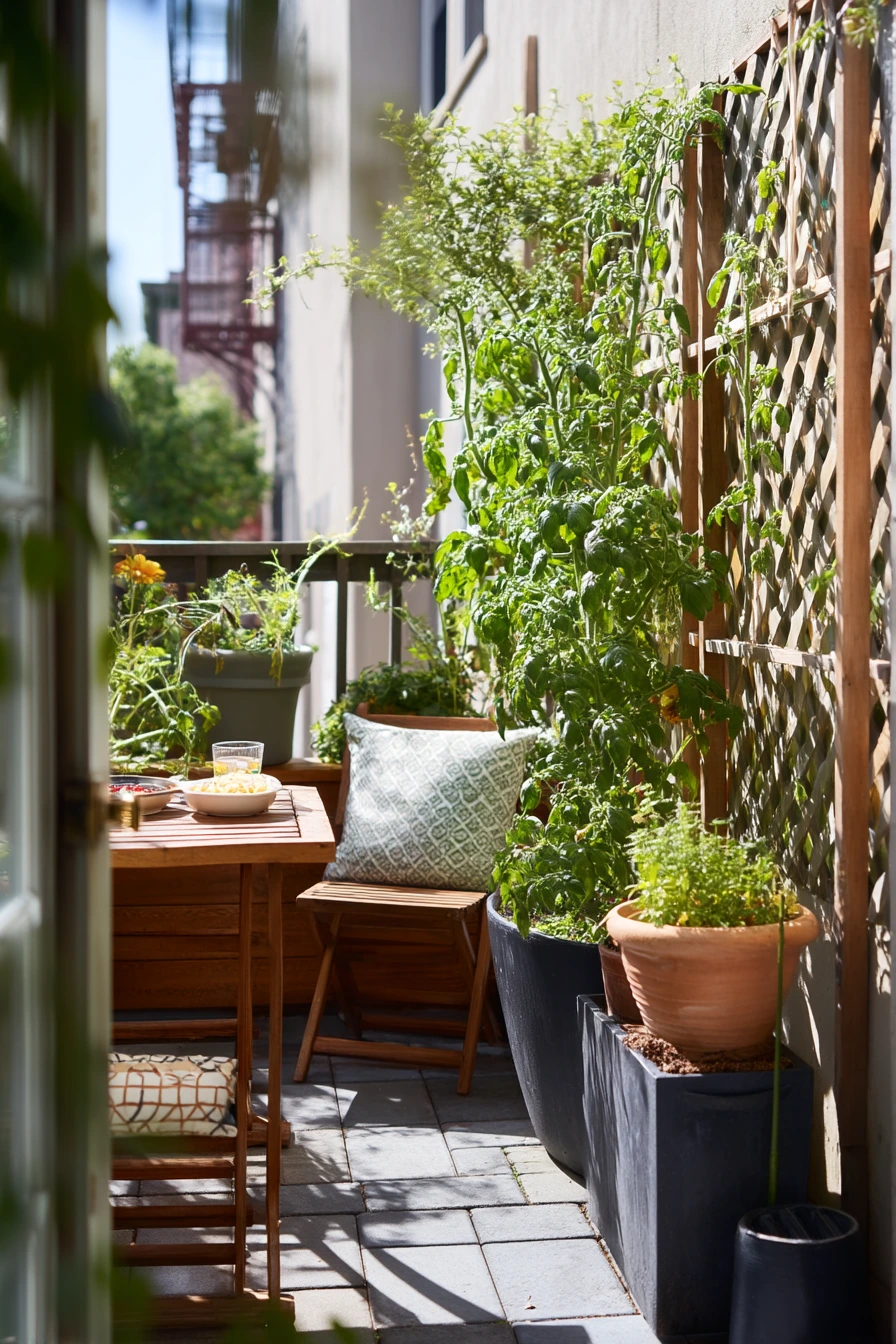
On a compact apartment balcony, a renter-friendly tomato trellis needs to be light, simple, and easy to remove. Bamboo stakes and garden twine in a galvanized planter are a solid choice. You can build a small grid or teepee shape that supports vines without drilling into walls or rails. This keeps the balcony usable, so you still have room for a folding chair, a paperback book, and an iced water glass.
Start with a deep container and good potting mix, then push three to five bamboo stakes down to the bottom of the planter. Tie them together near the top and add twine lines to create extra hold points. As tomatoes ripen, check ties often so stems are not pinched. If your balcony gets gusty, add a few extra twine wraps and keep the trellis slightly inside the railing to reduce wind stress.
For “how to style it,” lean into warm morning light and soft clutter, but keep it safe. Coil a charging cable in a small tray so it stays off wet surfaces. Place a citronella candle away from leaves. Group herb pots at the base for a full look, and keep a small saucer under each pot to protect the floor. A simple watering routine helps avoid drips that can bother neighbors below.
- Choose a sturdy planter that will not tip when vines get heavy.
- Use soft twine and leave a little slack for stem growth.
- Add a small clip-on fan or open space for airflow on humid days.
- Rotate the pot weekly so growth stays even.
- Style a reading corner with one chair and one small side surface.
Pro Design Tip: Use one main bamboo tripod plus two vertical side stakes so the plant has support from multiple angles and looks tidy from the street.
Budget Considerations: Bamboo stakes and twine are low-cost and easy to replace. Reuse clean twine each season if it is not brittle, or switch to jute for a natural look.
3 DIY Tomato Cage Upgrade in a Kitchen Yard
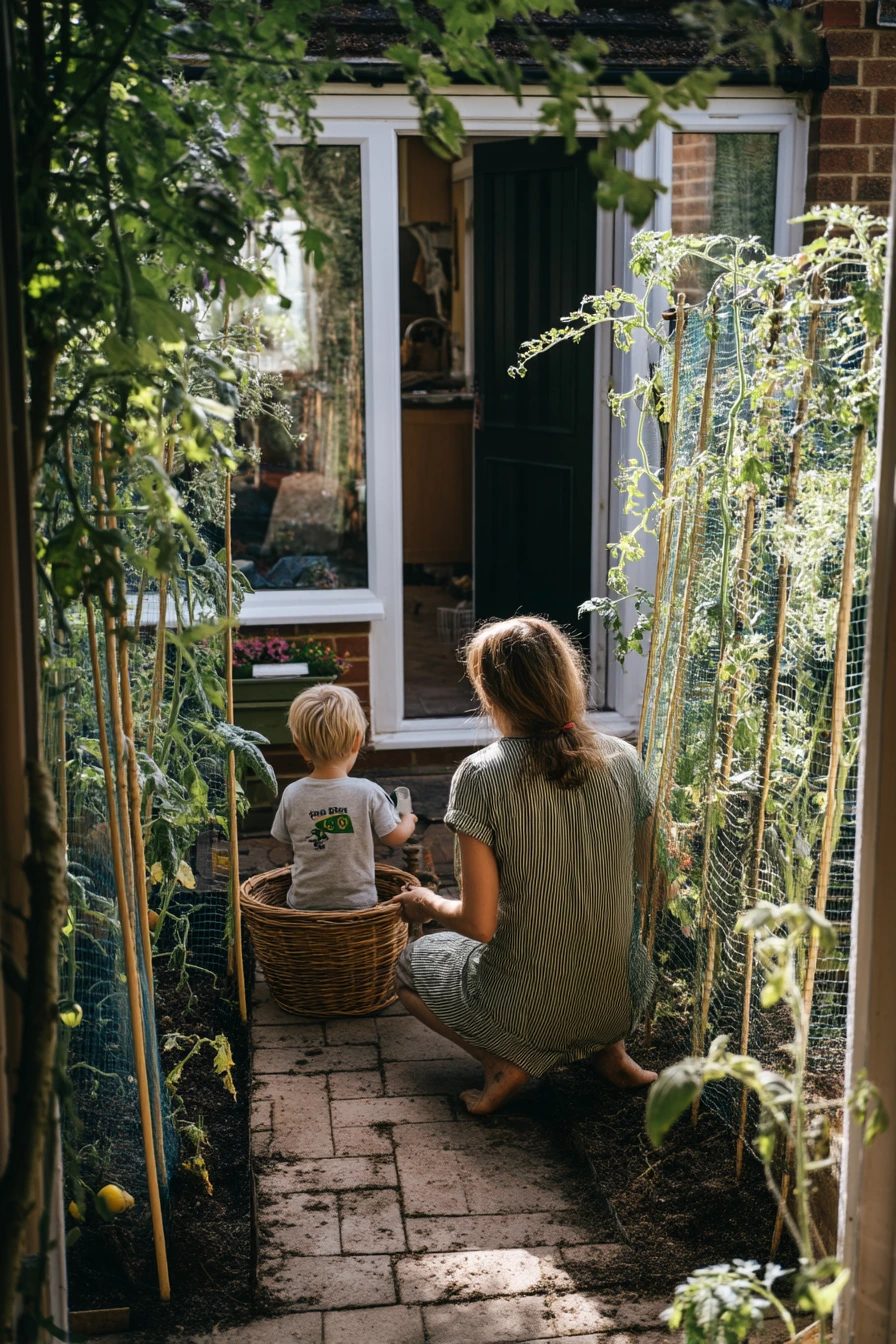
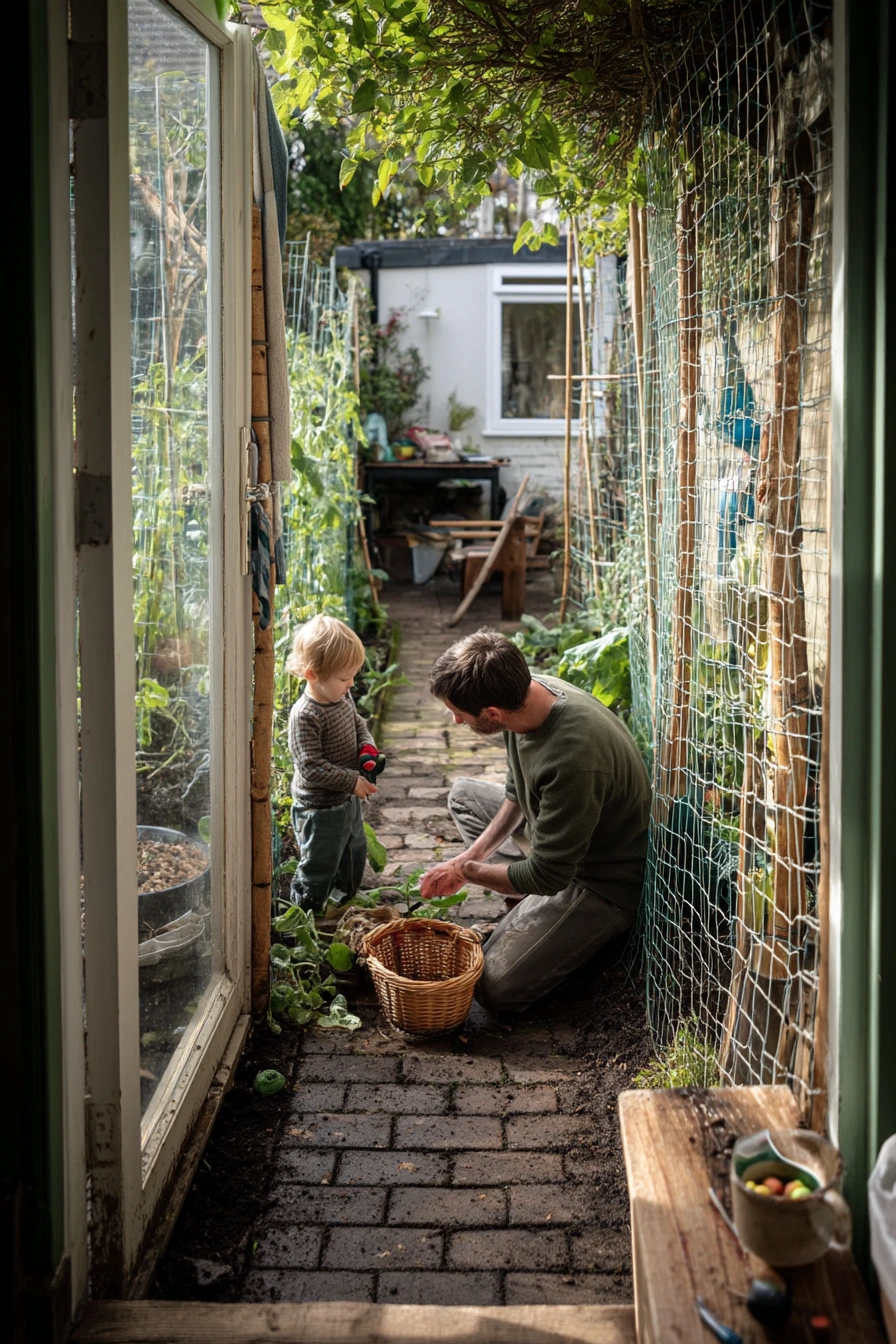
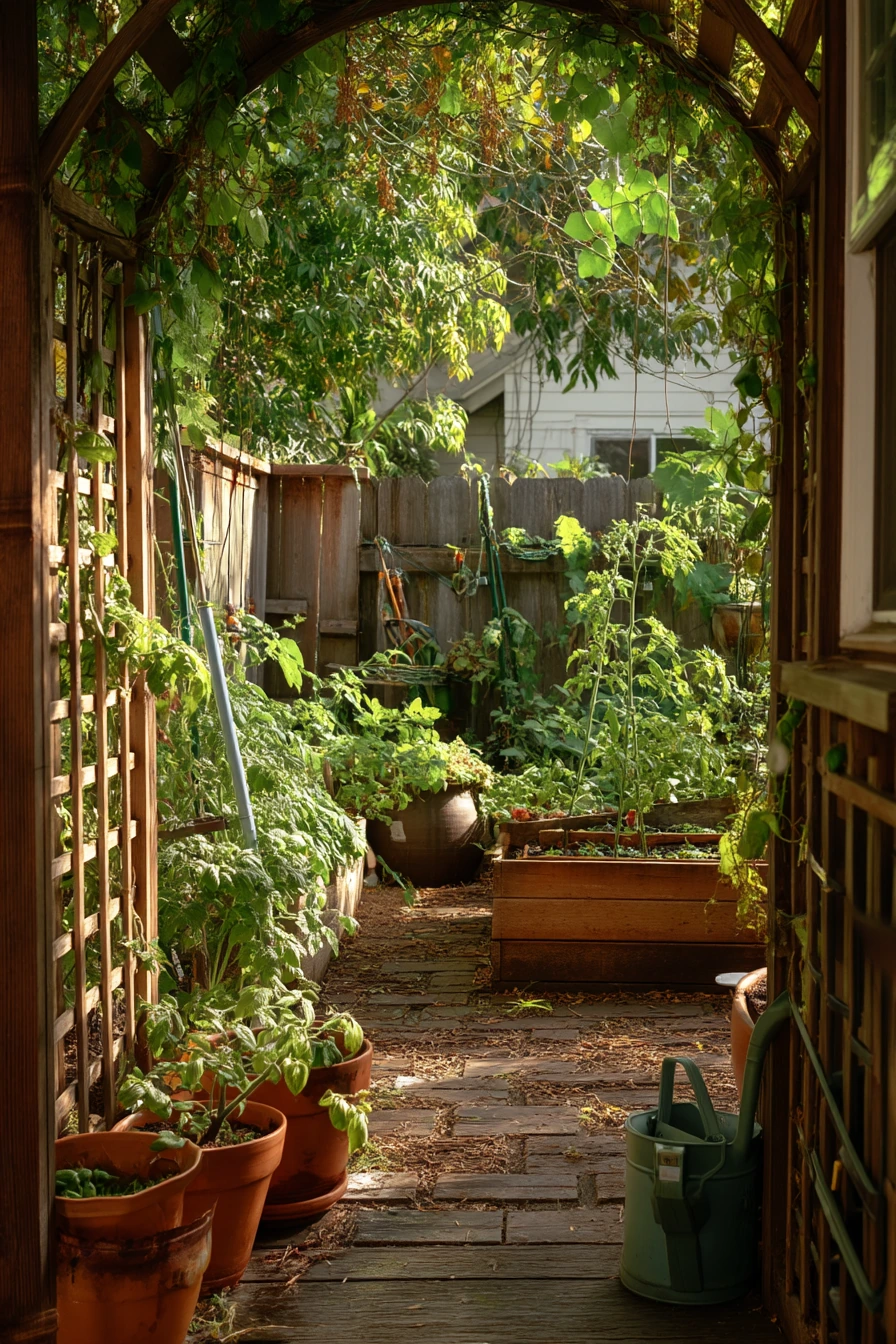
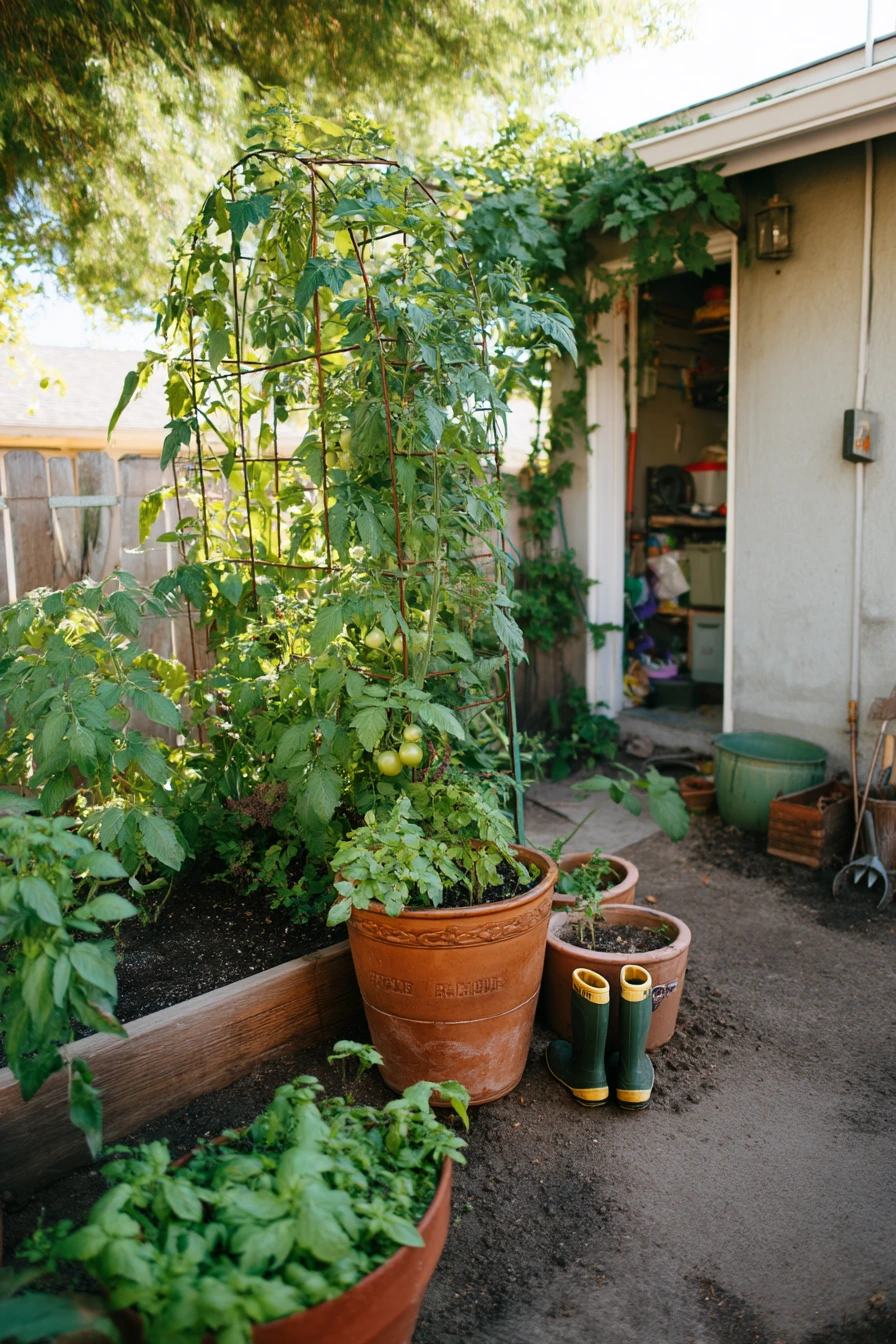
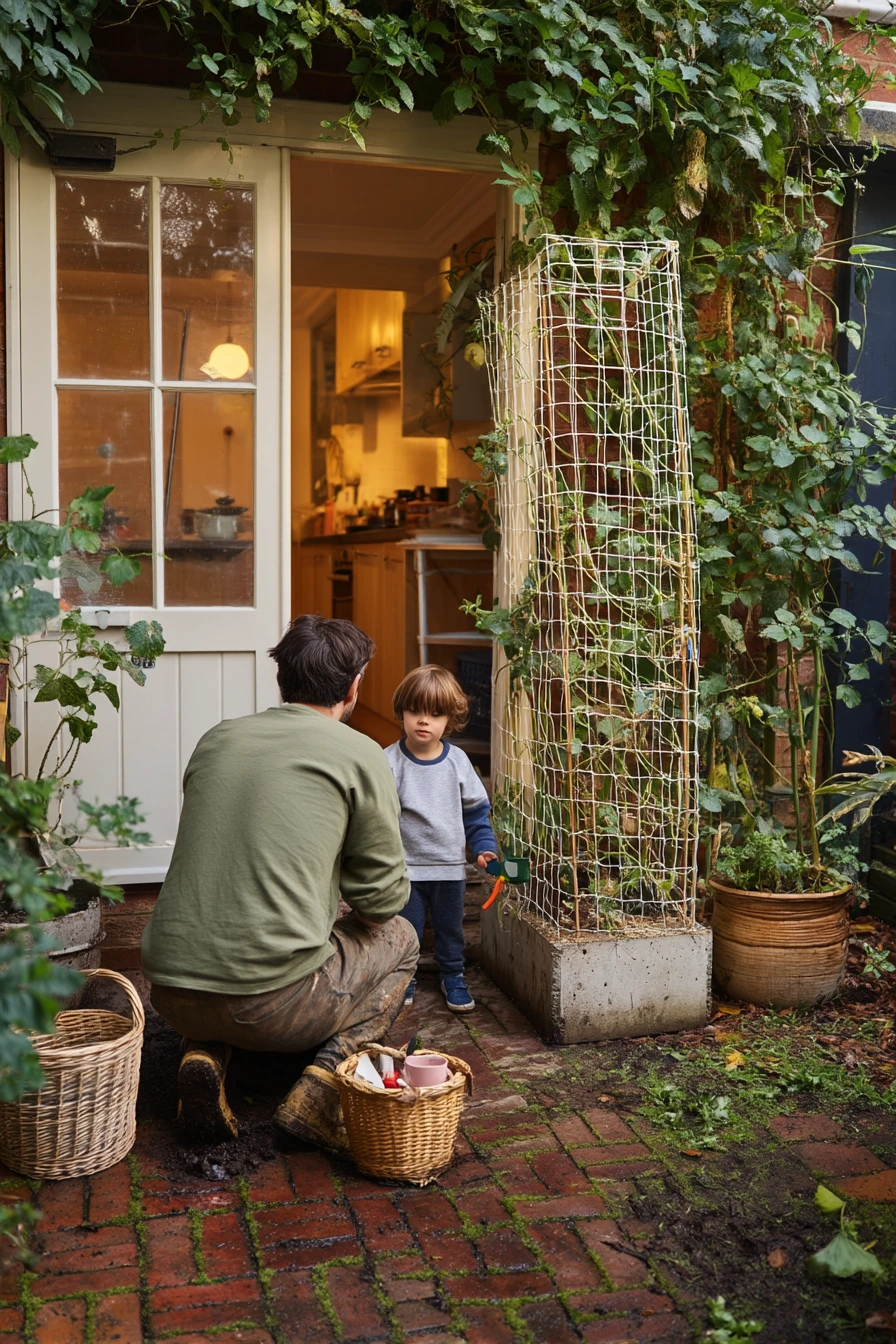
A DIY tomato cage upgrade with tall concrete mesh is a smart option for a modest kitchen garden behind a family home. These cages are stronger and wider than many store-bought wire cones. They keep plants upright, improve airflow, and make it easier to spot problems early. With a brick path nearby, you can keep your working area clean even when there is mud from watering or summer rain.
To make one, cut a section of concrete mesh, roll it into a cylinder, and secure it with wire or heavy zip ties. Set it over the tomato at planting time and push it a few inches into the soil. Use clipped jute ties to guide stems toward the mesh as they grow. Keep pruning shears close so you can remove suckers and lower leaves. This is also a great setup for teaching kids simple garden jobs, like handing you ties or collecting small trimmings into a toy basket.
For styling, keep the space honest and practical. A chipped mug on the step and a folded dish towel near the back door fit the everyday feel, but try to keep tools in one spot so you do not step on them. Store seed packets in a small tin to keep them dry. If you like a calm look, repeat the same cage size down the row and edge the path with one consistent border, like bricks or stones.
- Use concrete mesh with larger openings for easy hand access.
- Make cages tall enough for your tomato variety, often 5 to 6 feet.
- Anchor cages with a stake if your soil is loose.
- Tie stems loosely with jute to avoid rubbing damage.
- Keep a small tool tray by the door for fast daily checks.
Pro Design Tip: Paint the mesh cages matte black or dark green so they visually fade behind the foliage and the tomatoes stand out.
Budget Considerations: Concrete mesh is cost-effective per cage if you build several at once. Borrow bolt cutters or split a roll with a neighbor to lower the upfront cost.
4 Vertical Trellis Along a Narrow Side Yard
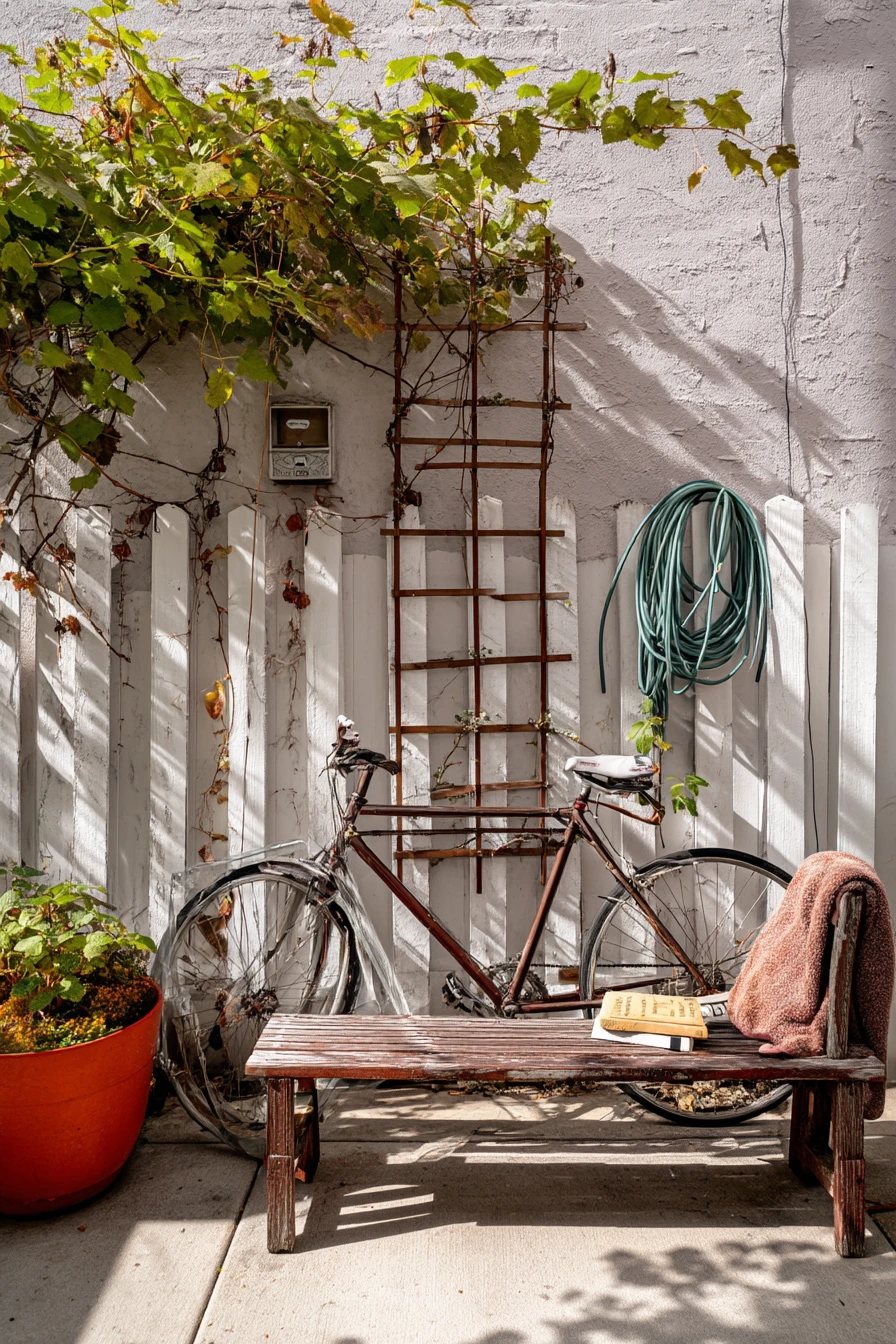
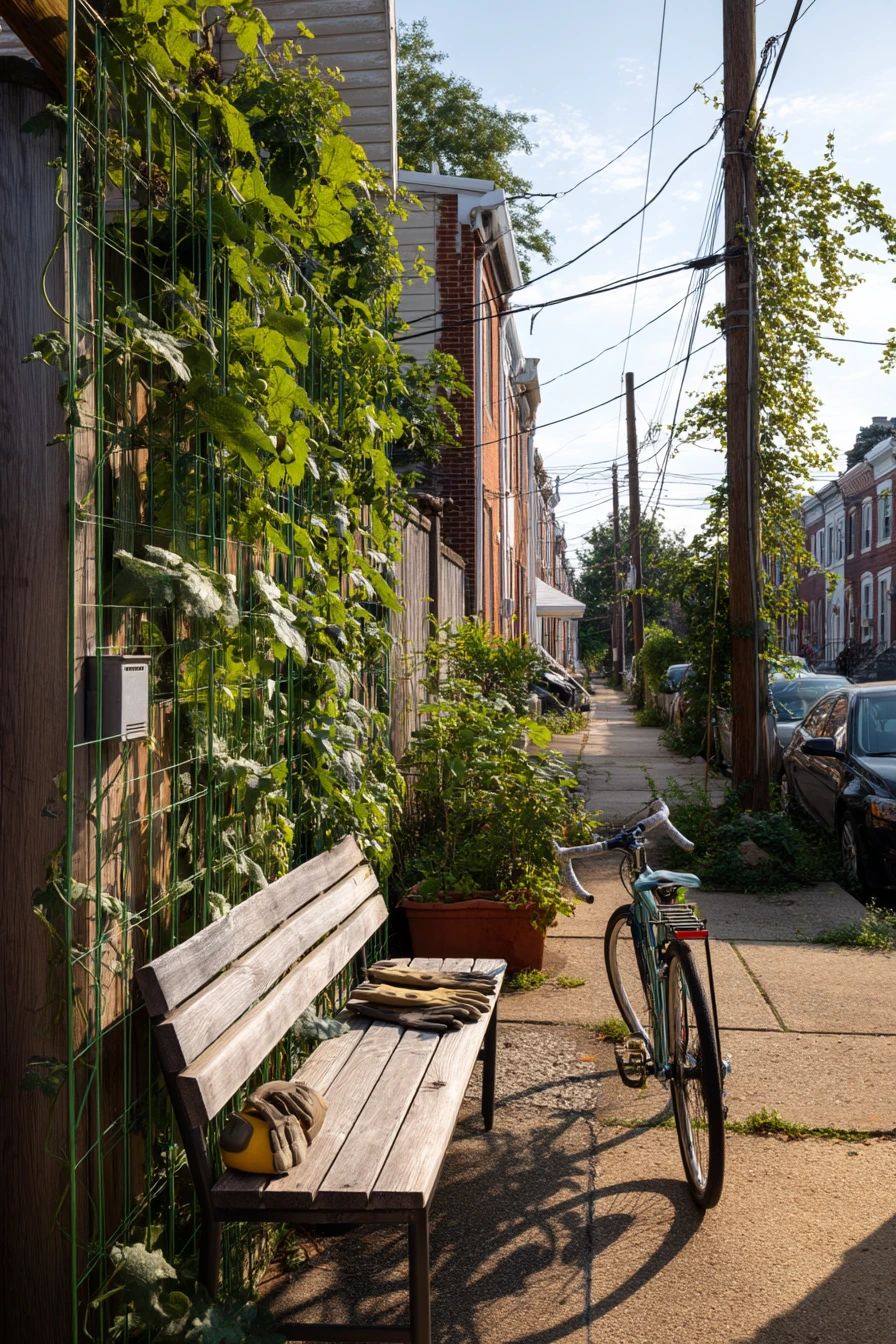
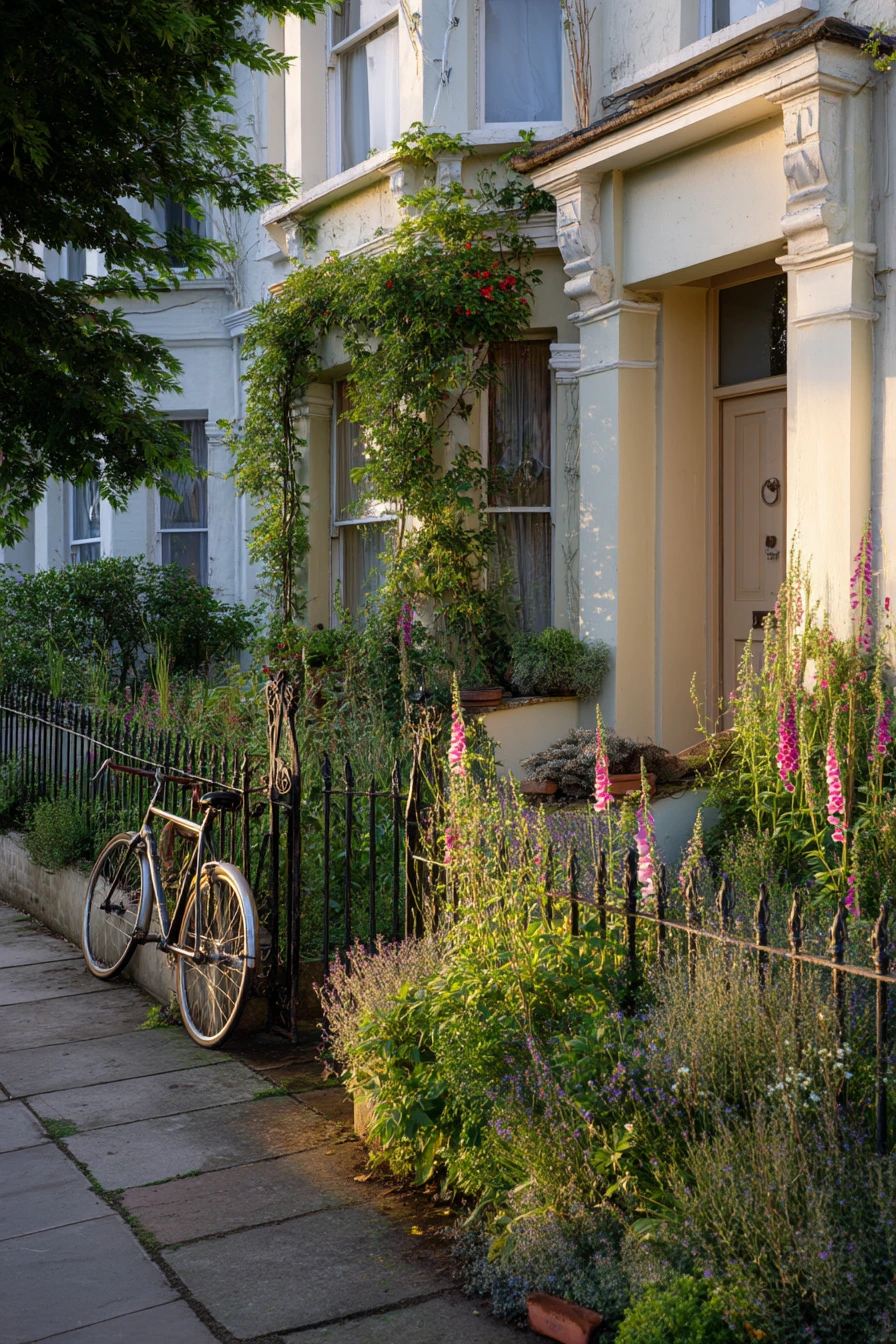
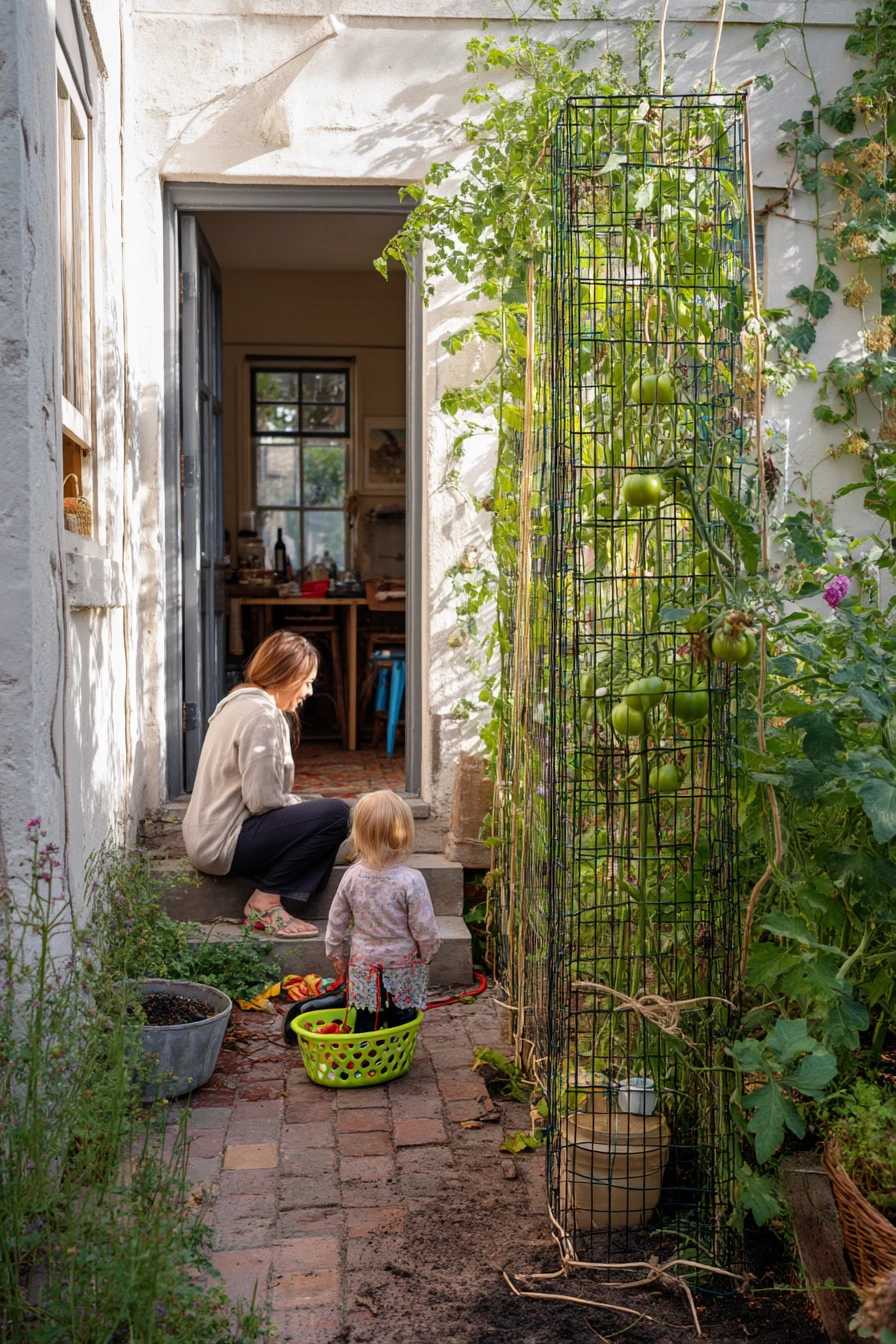
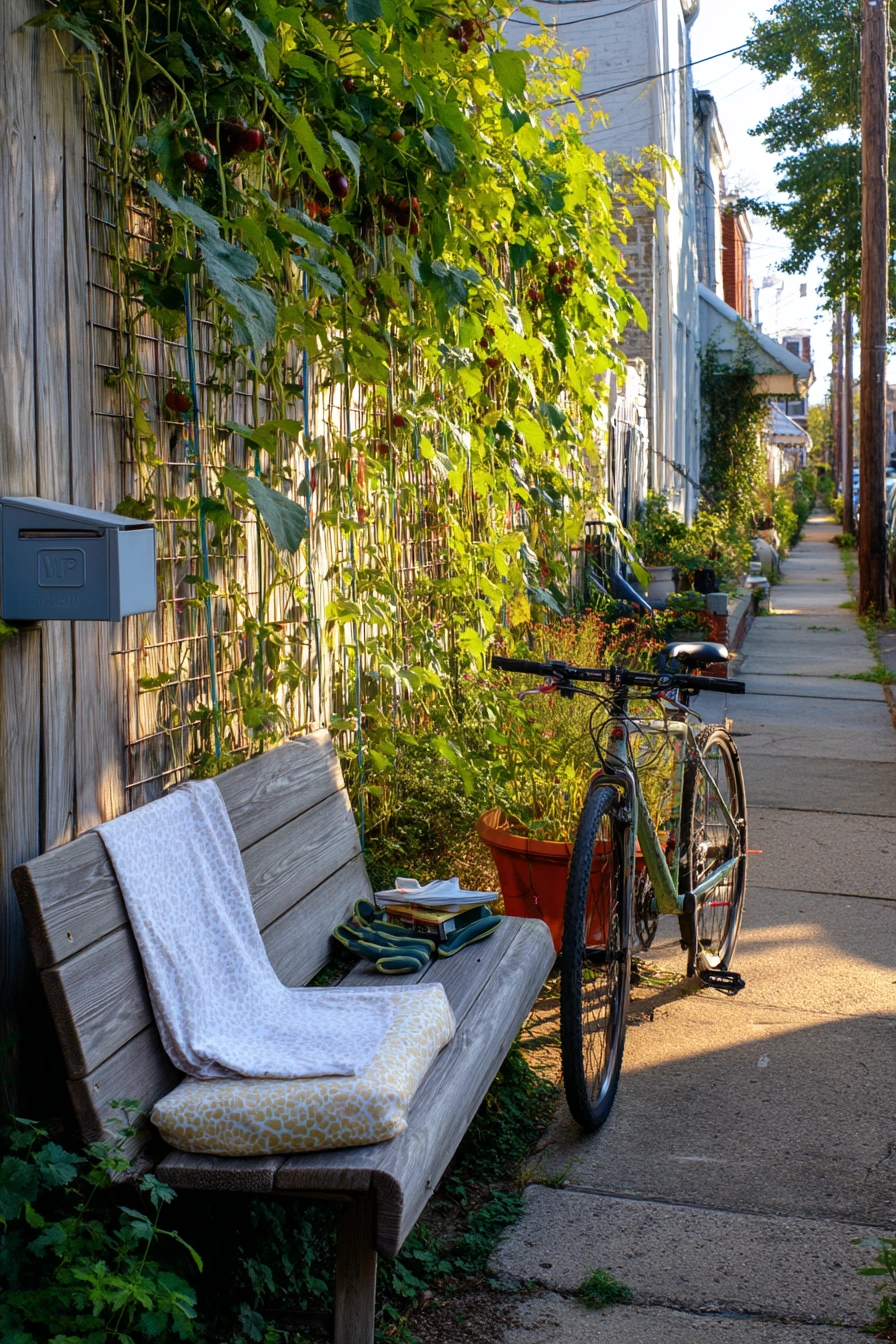
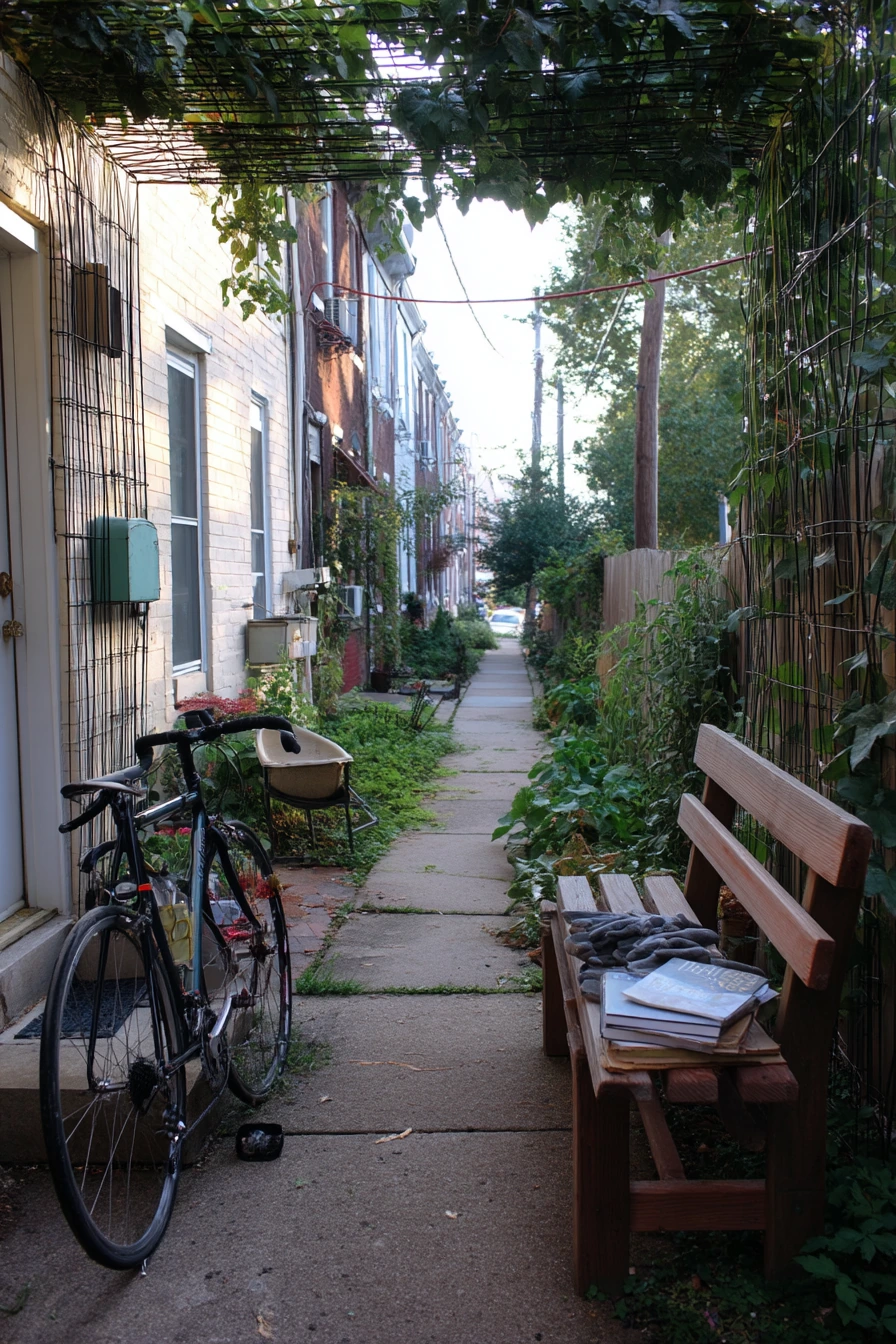
A narrow side yard beside a rowhouse can still grow great tomatoes if you keep the support system flat and organized. Slim trellis panels anchored to the fence are ideal when space is tight. Instead of tomato plants bulging into the walkway, vines climb in neat layers. This makes watering, pruning, and picking easier, and it keeps the path open for daily life, like rolling a bicycle past the garden.
Choose panels that are narrow enough to fit between posts, then secure them well with fence brackets or heavy-duty zip ties. Plant tomatoes 12 to 18 inches from the fence so roots have room, and use soft ties to guide stems onto the panel. Train one or two main leaders per plant to reduce crowding. A hose looped in a loose coil on a hook keeps the space safer than leaving it on the ground.
To style the side yard, aim for calm and simple. Put two garden books on a bench for a lived-in look, but keep the bench away from splash zones so pages do not get damp. Add a pair of work gloves on a hook and a slightly wrinkled throw on the seat for comfort on cool mornings. If your fence is busy, choose one panel finish and repeat it so the garden looks intentional.
- Pick a panel with openings you can reach through for harvesting.
- Secure the bottom so it does not swing and scrape plants.
- Mulch the base to cut down on splash and weeds.
- Water slowly so runoff does not pool in the narrow path.
- Style with one small bench and one wall hook system to reduce clutter.
Pro Design Tip: Run panels in a straight line and keep plant spacing even so the vine layers look orderly and the fence line feels longer.
Budget Considerations: Fence-mounted panels can be made from leftover lattice or old bed frames. If buying new, start with one panel and expand as you see what fits your space.
5 Patio Pot Trellis for a Small Family
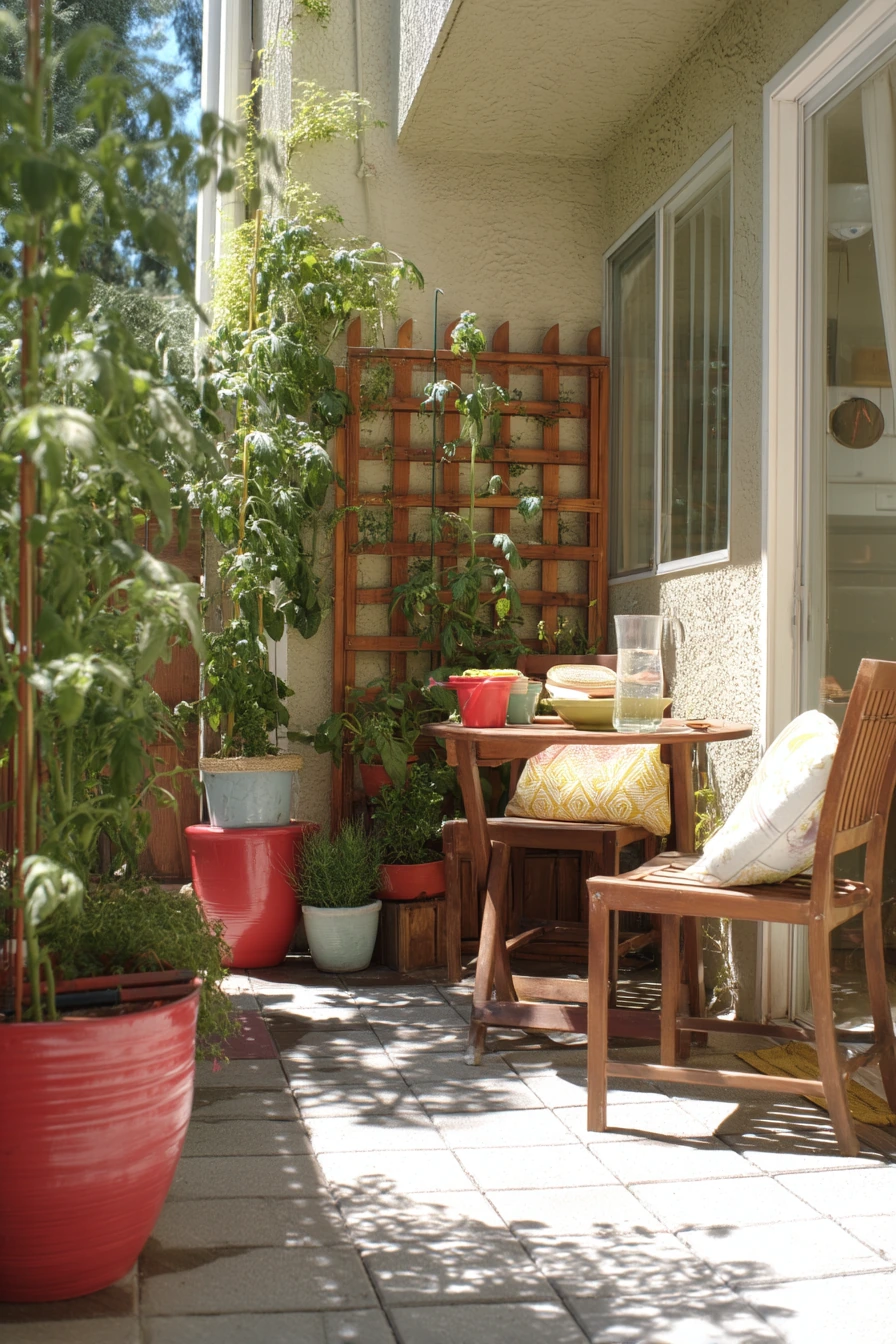
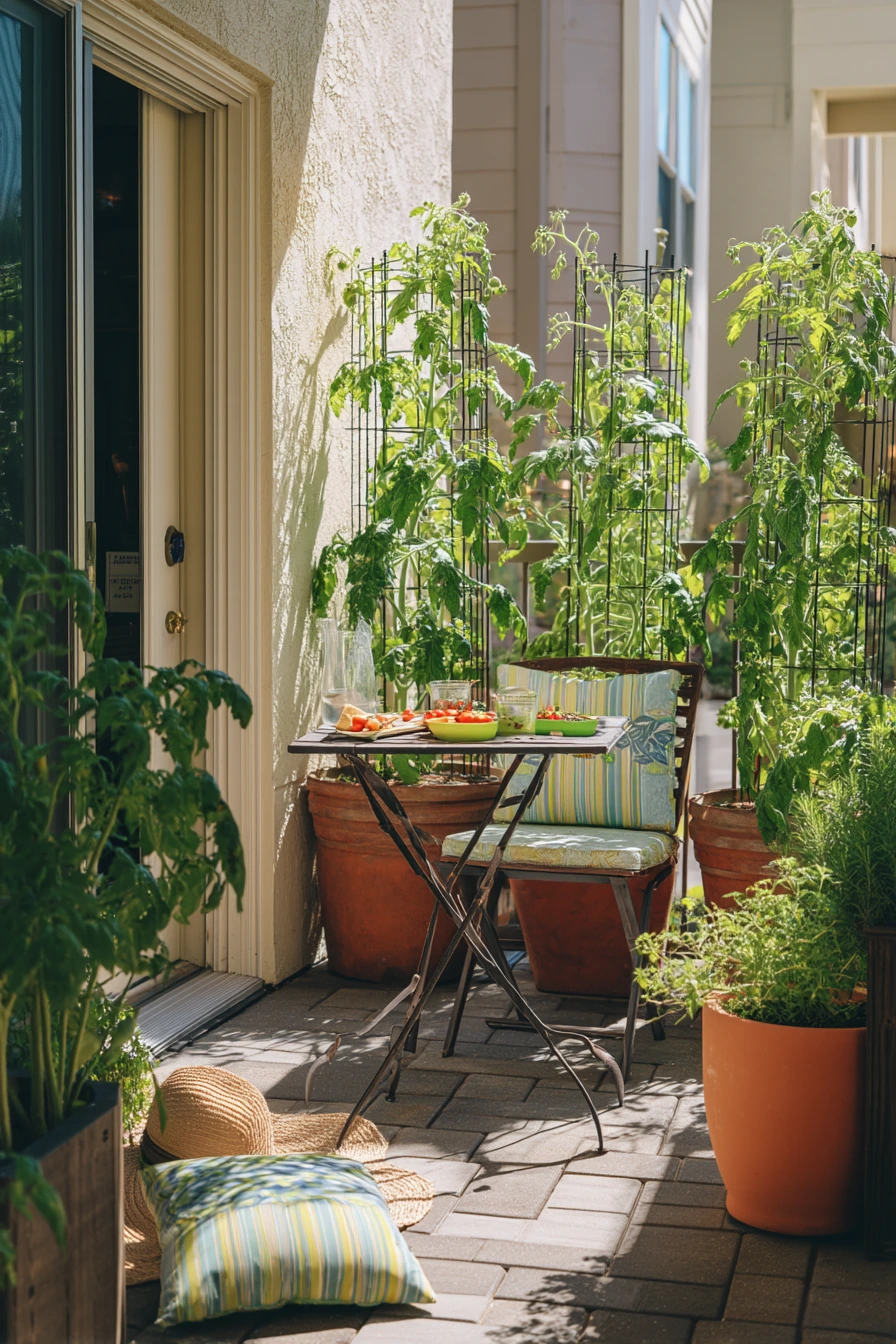
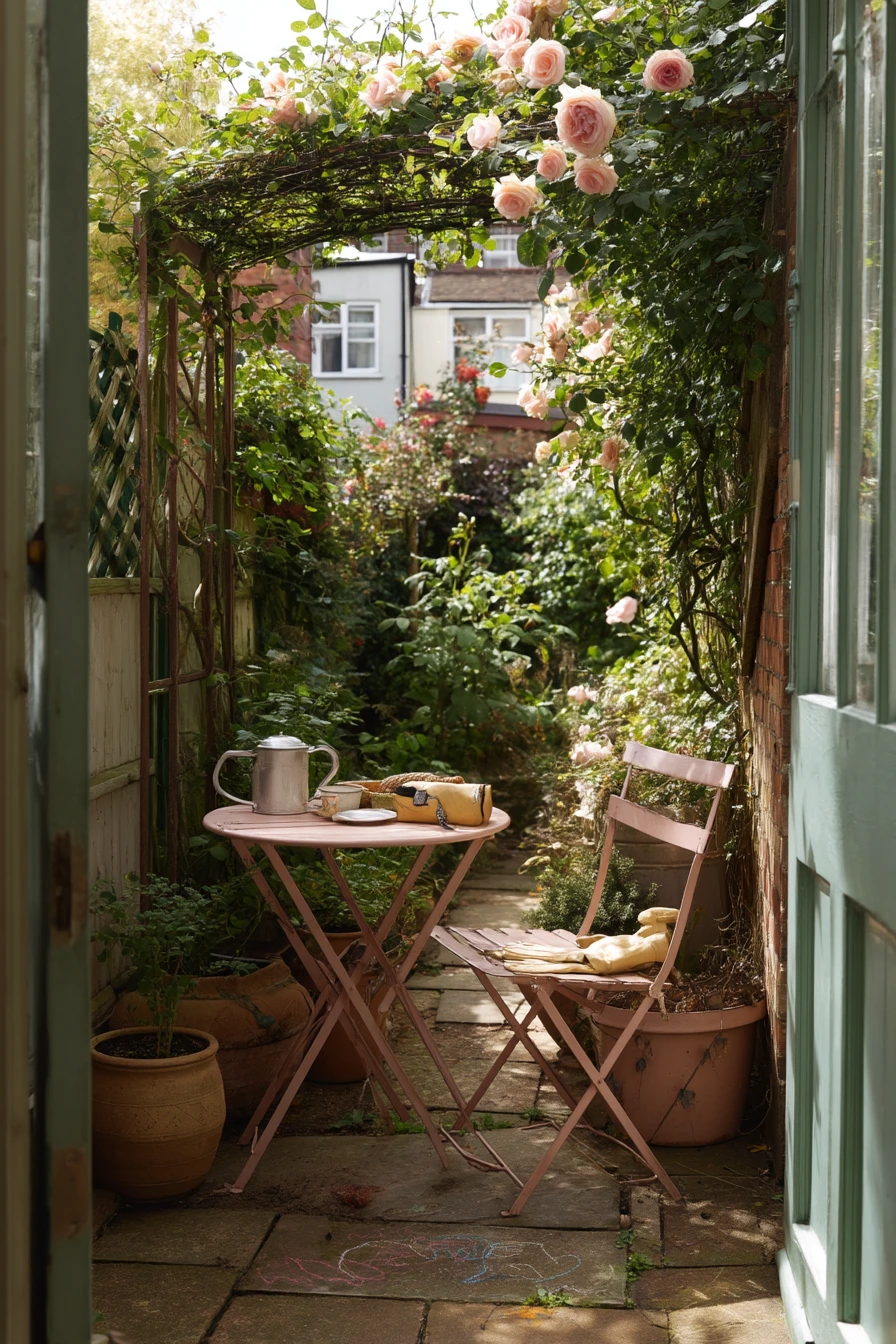
A small patio off a townhome often has just enough sun for container tomatoes. Compact stake-and-string systems work well because they fit inside large pots and still give good support. This keeps the patio usable for daily life, even when there are family breakfast leftovers on a bistro table, kid’s chalk on the pavers, and a sunhat waiting by the door.
For each container, push two sturdy stakes into the pot, on opposite sides of the plant. Add a top cross tie, then run string in gentle loops around the main stems as they grow. The goal is to guide the plant upward without squeezing it. Check the string weekly, especially after a growth spurt. Use a saucer or drip tray under each pot if your patio stains easily, and water early so leaves dry fast.
For styling, keep the look cheerful but not messy. Use one or two matching planters and add a seed tray or small herb pot in a similar color. If you have a weathered cushion on the chair, repeat that color with your twine or stakes for a simple match. Keep a clear spot for a water glass and pruning snips so you can do quick maintenance while you are already outside.
- Choose large containers so roots have room and the pot stays stable.
- Use thicker stakes for windy patios and tall tomato types.
- Loop string in a figure-eight to protect the stem.
- Prune side shoots to keep the plant narrow in tight seating areas.
- Style with one bistro table centerpiece, like a small herb pot.
Pro Design Tip: Place the tallest pots in the back and shorter herbs in front so the patio looks layered and the tomato vines read as a soft green screen.
Budget Considerations: Stakes and string are affordable, but big containers add cost. Look for end-of-season sales or use food-safe buckets with drainage holes as a low-cost option.
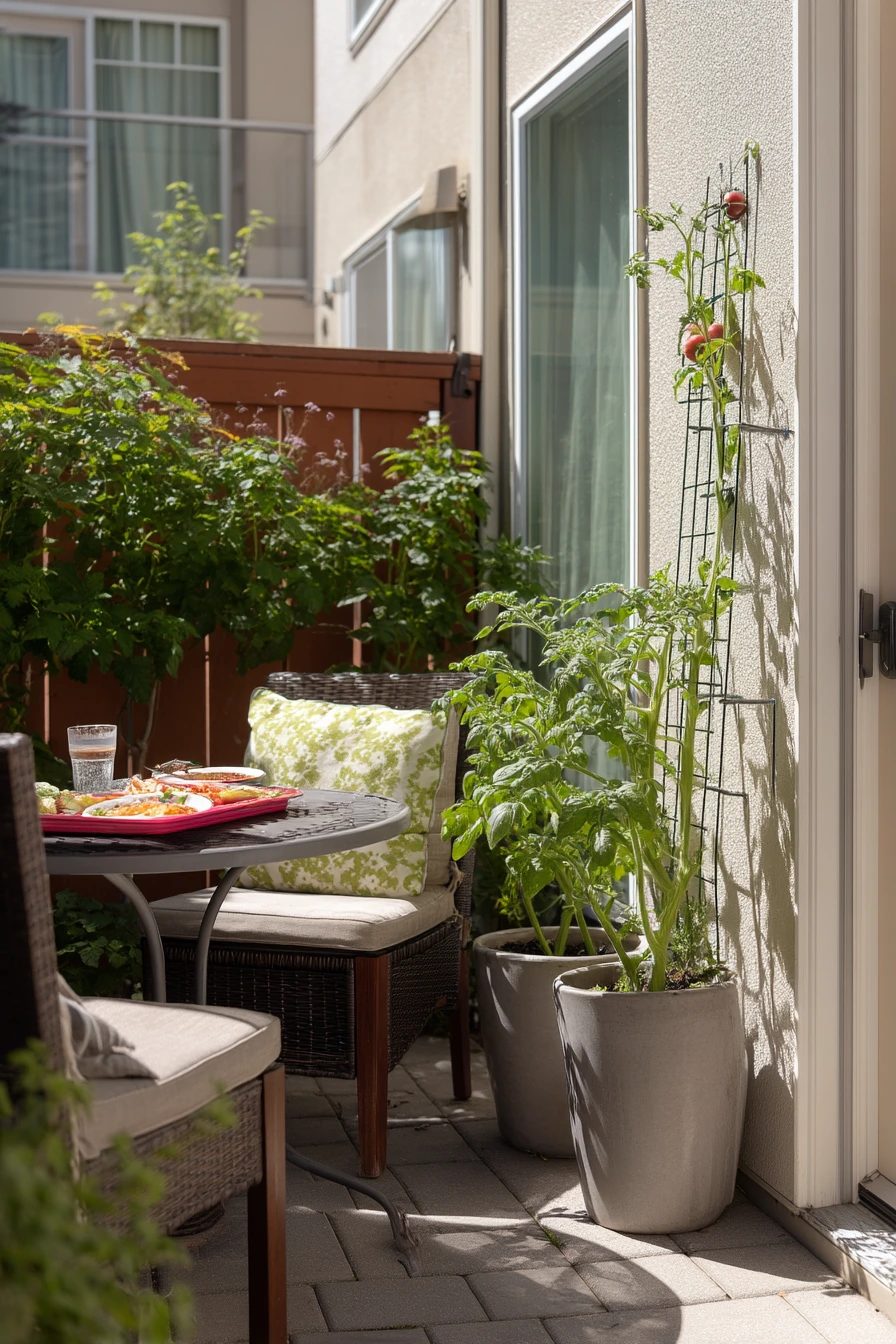
6 Kitchen Window Trellis in a Courtyard Garden
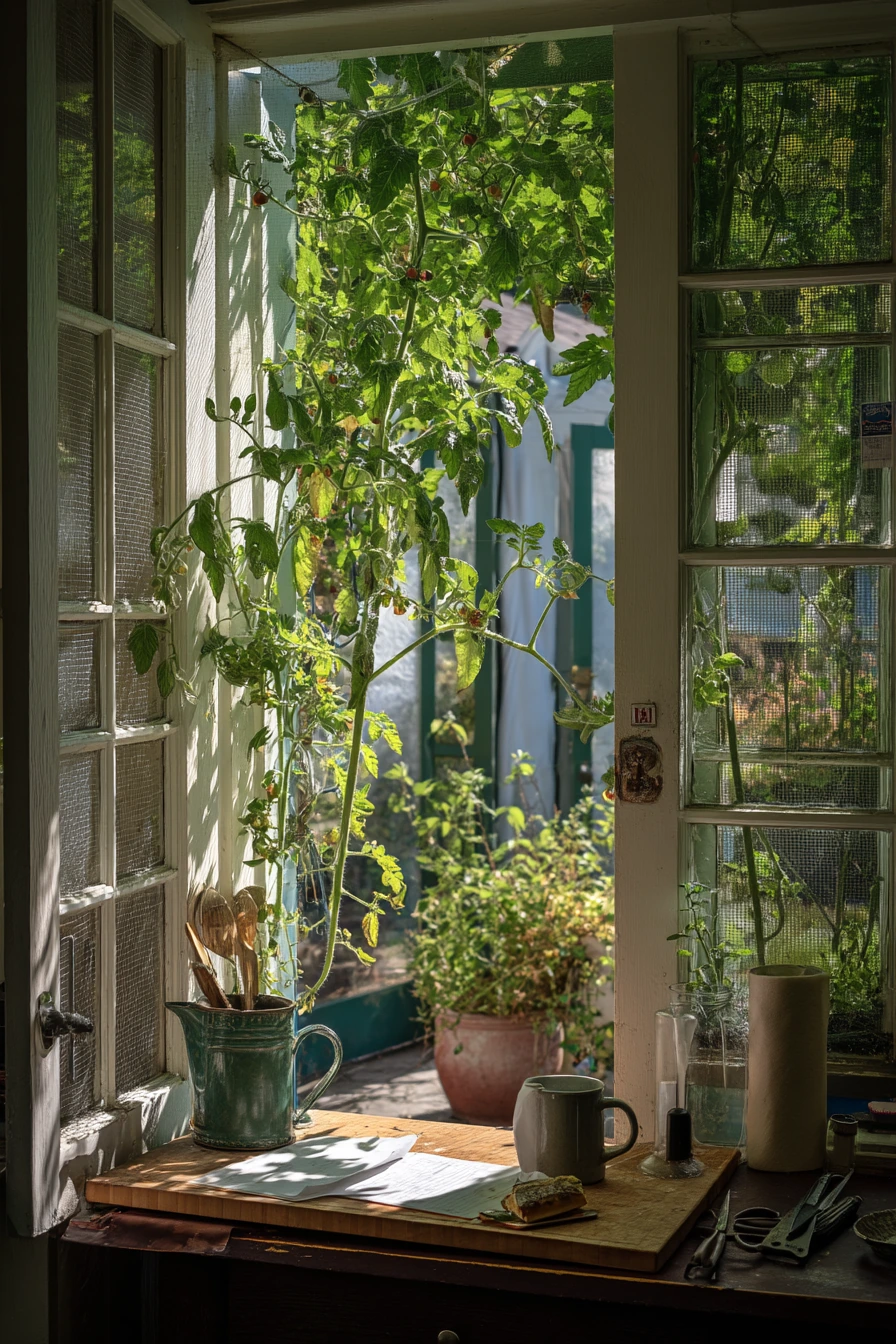
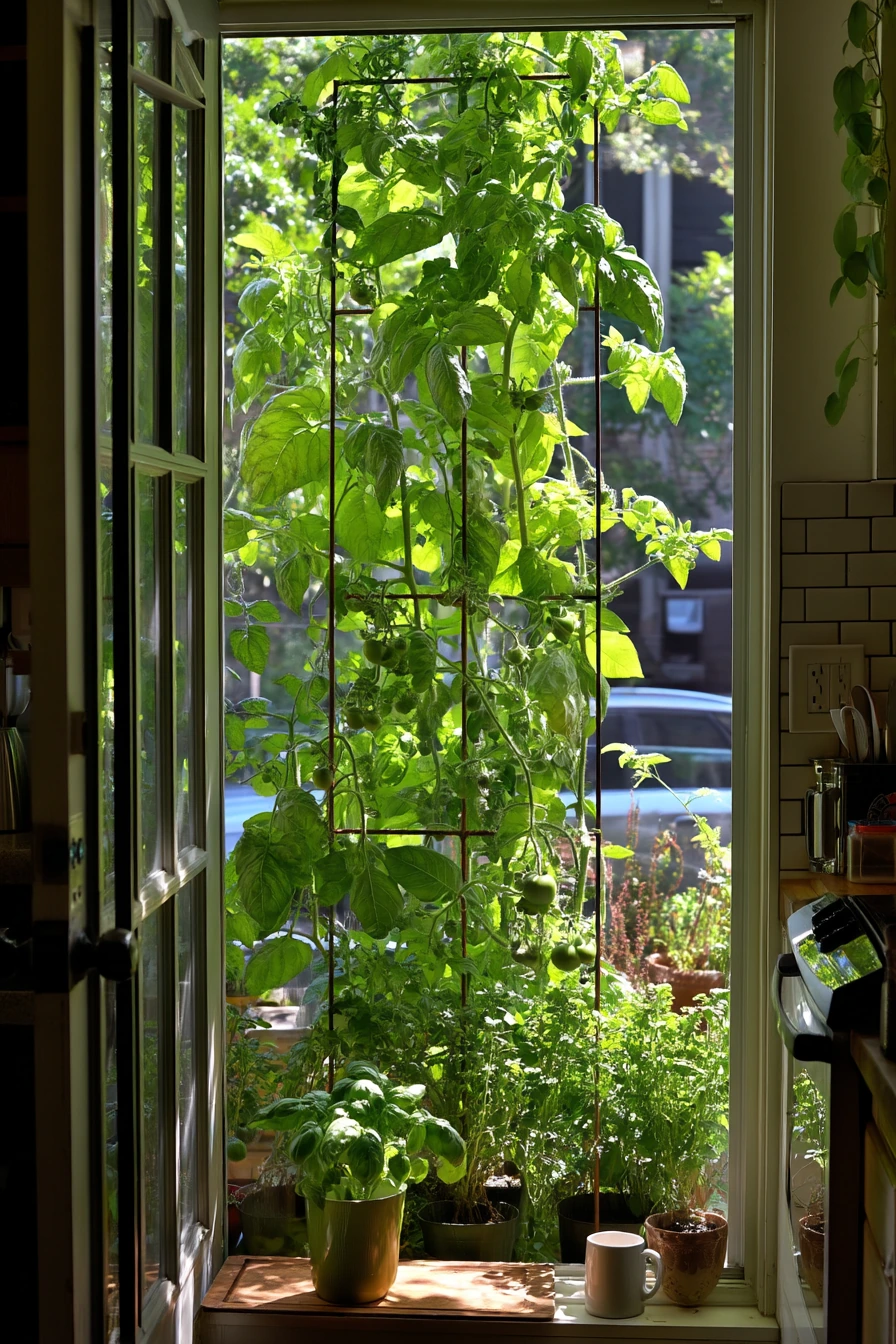
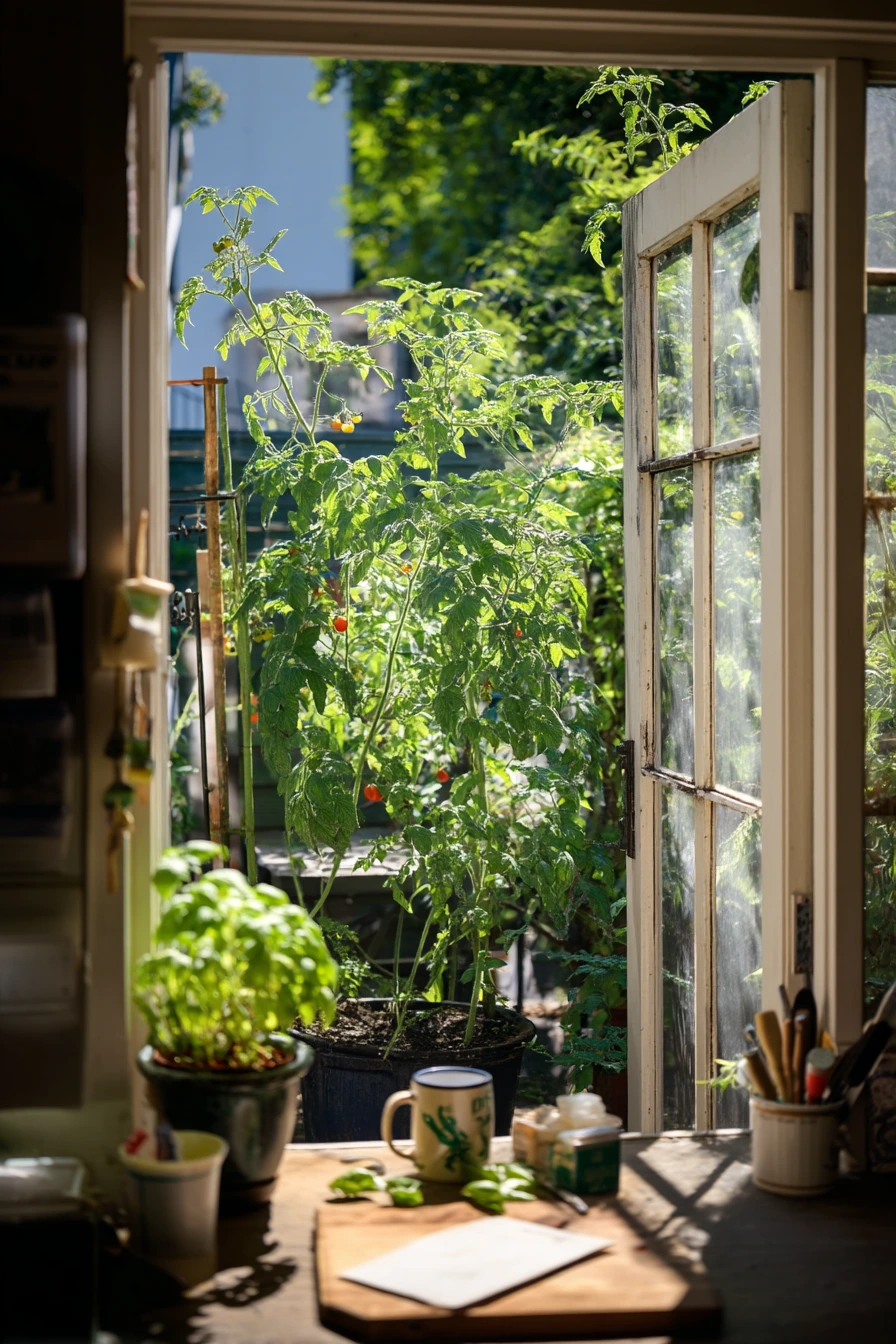
A simple obelisk trellis just outside a kitchen window is a great way to keep tomatoes close to where you cook. It works well in a courtyard garden where you can look out from an open window and spot new growth. This style is compact, upright, and easy to reach for quick picking. It also looks tidy next to everyday items like an enamel mug, cutting board, and a basil bunch on the counter.
Pick an obelisk that is sturdy and tall enough for your tomato variety. Set it in the ground or in a large container right outside the sill. As the vine grows, spiral it around the legs and use soft ties to hold it in place. Keep the lower 8 to 12 inches of foliage trimmed so air can move and soil does not splash onto leaves. If you use an open screen door for airflow, watch for pests and check leaves often.
For “how to style it,” keep the view clean. A recipe notebook on the counter and a dish soap bottle near the sink can stay, but try not to crowd the window ledge. On the garden side, use one small pot of basil or parsley at the base of the obelisk to make the green look fuller. If the trellis is metal, match it with simple hardware like black hooks or dark planters to make the scene feel calm and connected.
- Choose an obelisk with multiple tie points for easy training.
- Place it where it gets steady sun but is easy to water.
- Use mulch to keep soil from splashing onto leaves.
- Pick fruit often so the plant keeps producing.
- Style the window view with one or two kitchen items, not a full shelf.
Pro Design Tip: Center the obelisk in the window frame view so the vine becomes a natural focal point from inside the kitchen.
Budget Considerations: Store-bought obelisks can be pricey; make one with three wooden stakes tied at the top, or use a recycled metal plant stand if it is stable.
7 Budget Stake Trellis Beside a Shed
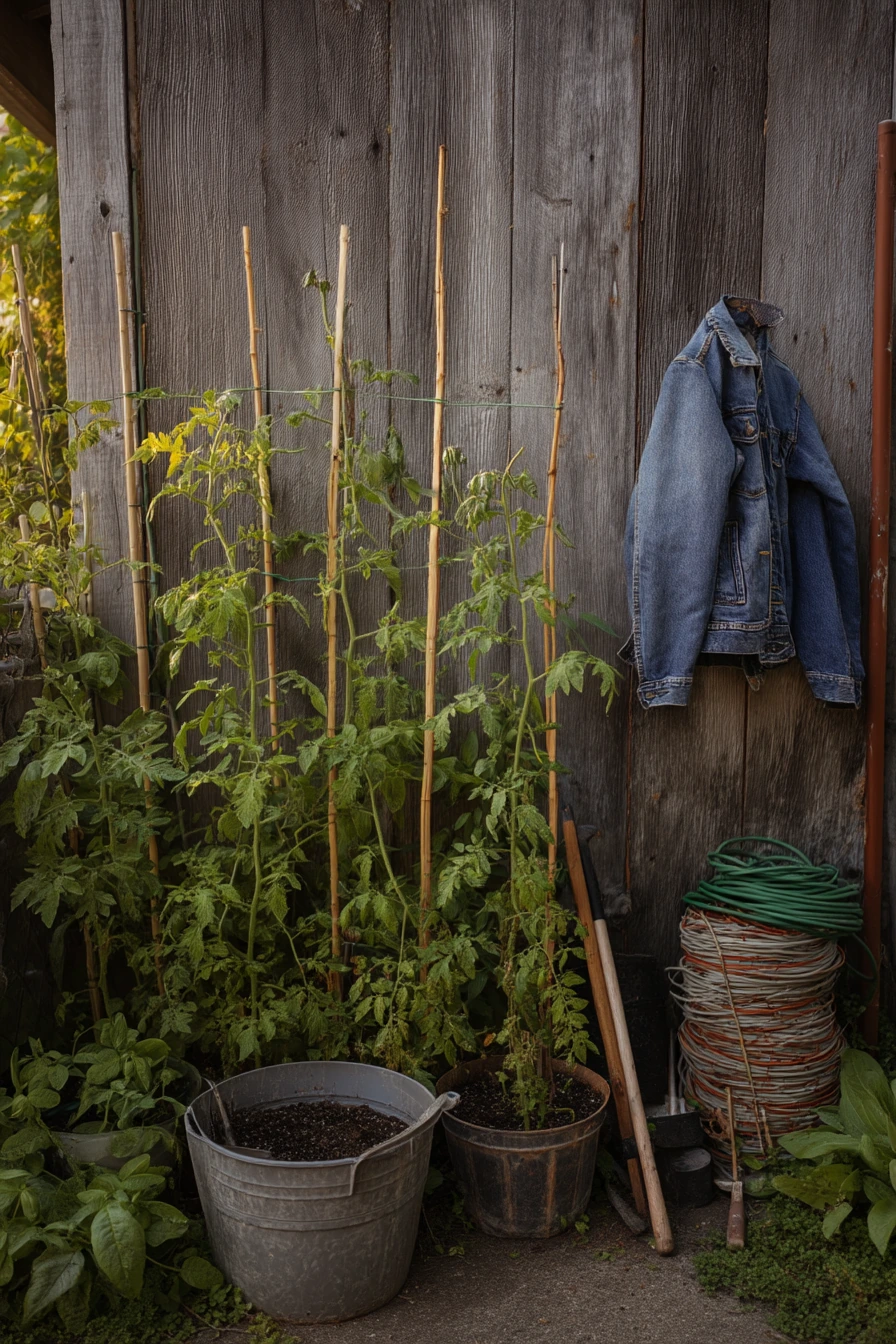
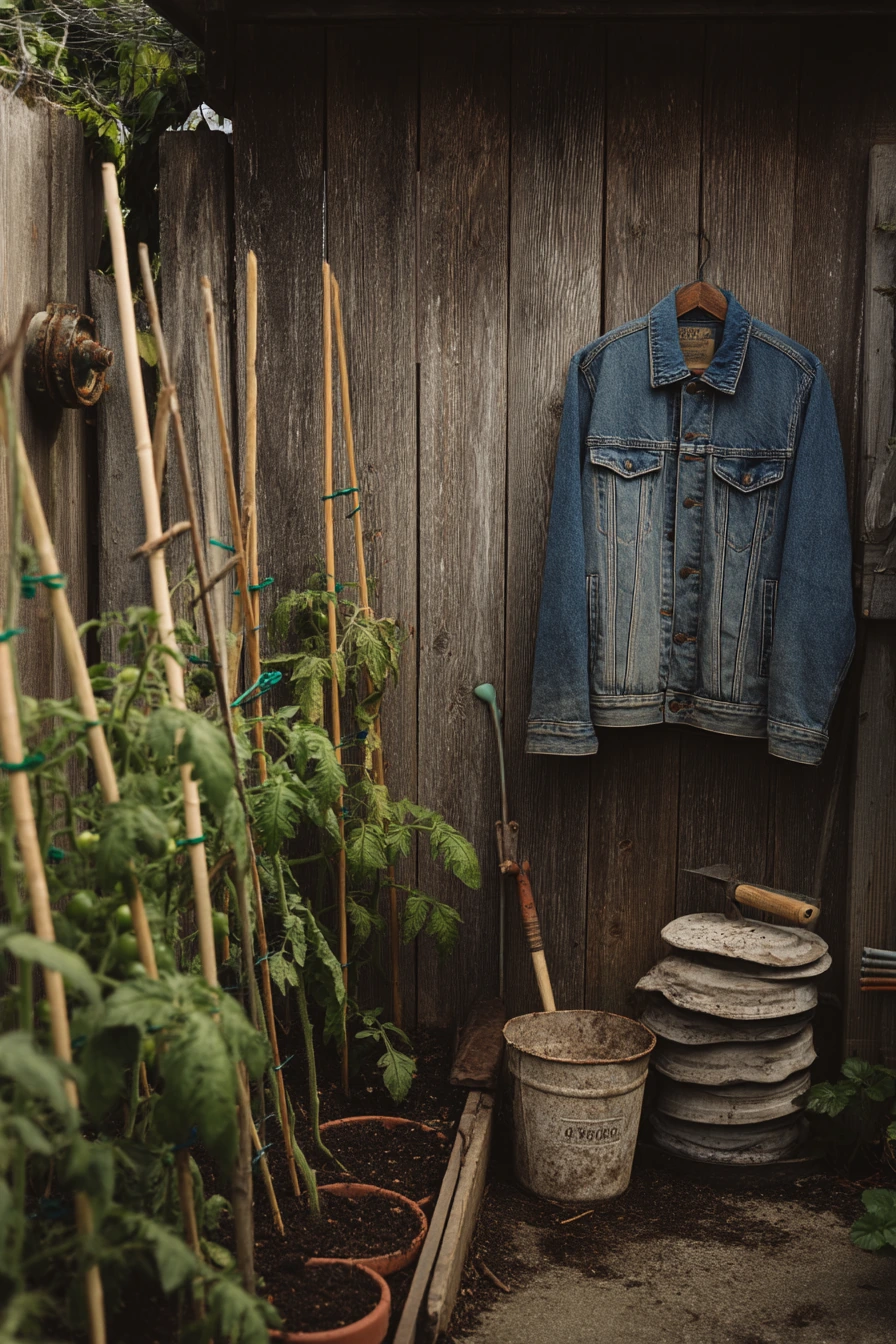
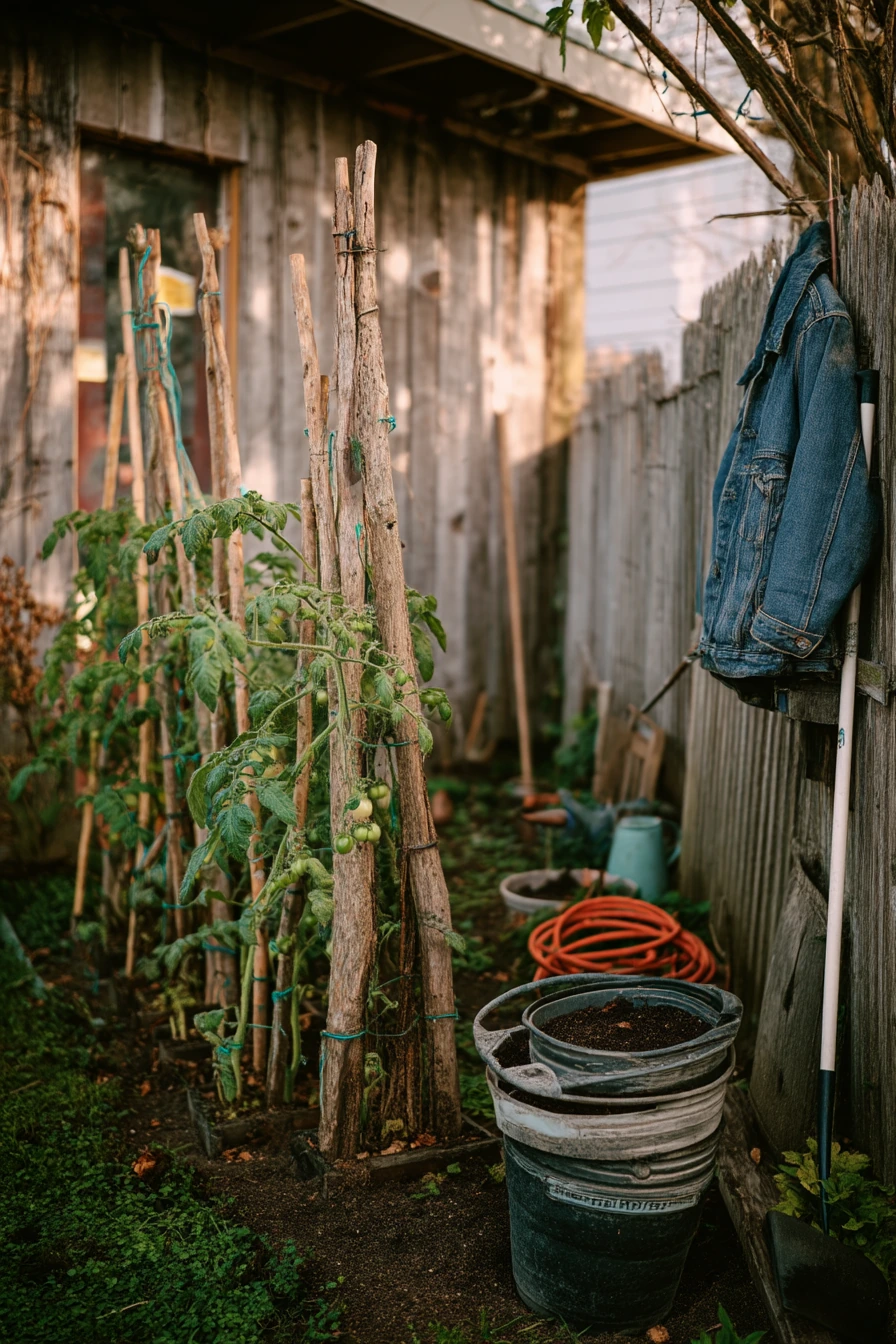
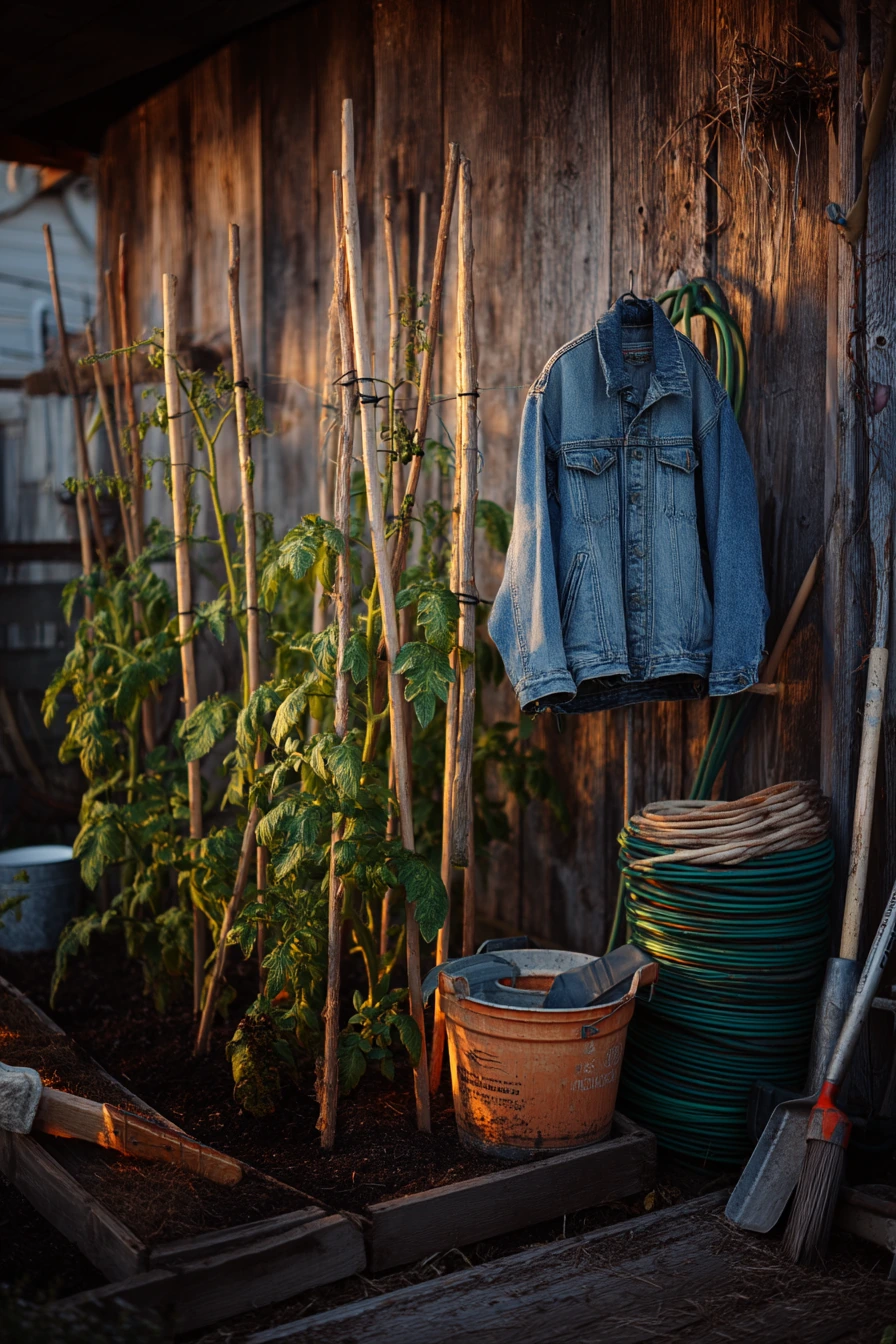
If you need budget tomato trellis ideas that work in a no-frills yard, wooden stakes and green twine near a weathered shed are reliable. This setup is simple to repair, easy to adjust, and quick to build for rows of plants. It fits a practical space with a compost bucket, a rusty trowel, and a stack of reused nursery pots ready for seedlings.
Drive stakes deep on either side of each plant or every few feet down the row. Run twine between stakes at different heights, creating a supportive lane that holds vines upright. Tie stems loosely as they grow, and add another twine line when the plant reaches above the last one. This method works best when you prune to one or two leaders so plants do not become too wide and fall out of the row.
For styling, keep it earthy but organized. Hang a denim jacket on a nail inside the shed so it stays clean and dry. Coil the garden hose on a wall hook to keep the ground clear. Line up reused pots in one stack so the area looks intentional, not messy. If you want the rows to look neat in photos, keep twine level and stakes evenly spaced.
- Use rot-resistant stakes if you can, like cedar or treated wood.
- Keep twine taut but not so tight it snaps in heat.
- Check knots after storms and retie before stems rub.
- Mulch between rows to reduce weeds and mud.
- Store tools in one bucket so you can move fast during daily checks.
Pro Design Tip: Run twine in straight, parallel lines and trim stray shoots so the row reads as clean and orderly even in a utility area.
Budget Considerations: This is one of the cheapest systems to start. Save money by using reclaimed stakes and reusing nursery pots, but replace twine each season if it frays.
8 Raised Bed Tomato Tunnel for a Busy Gardener
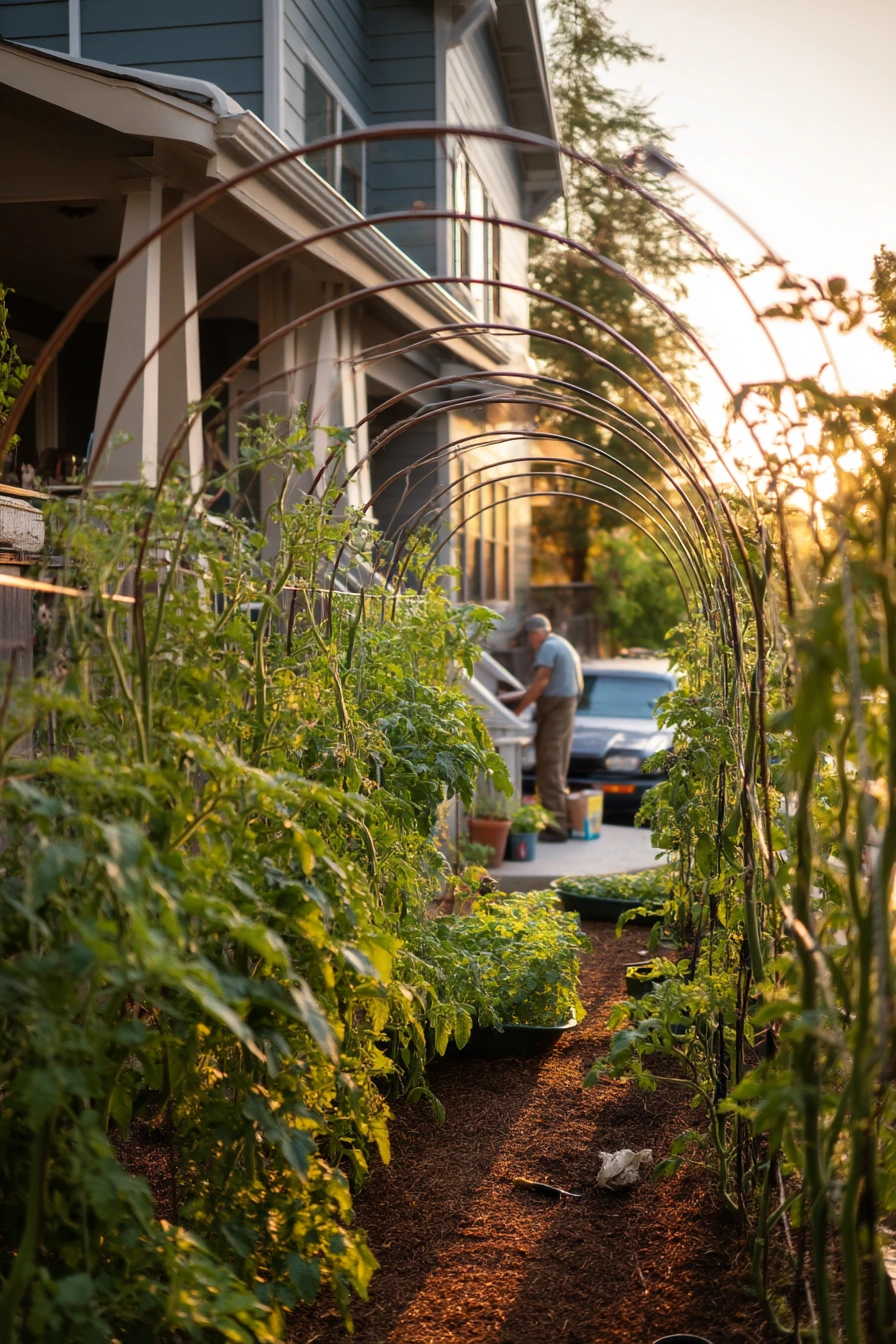
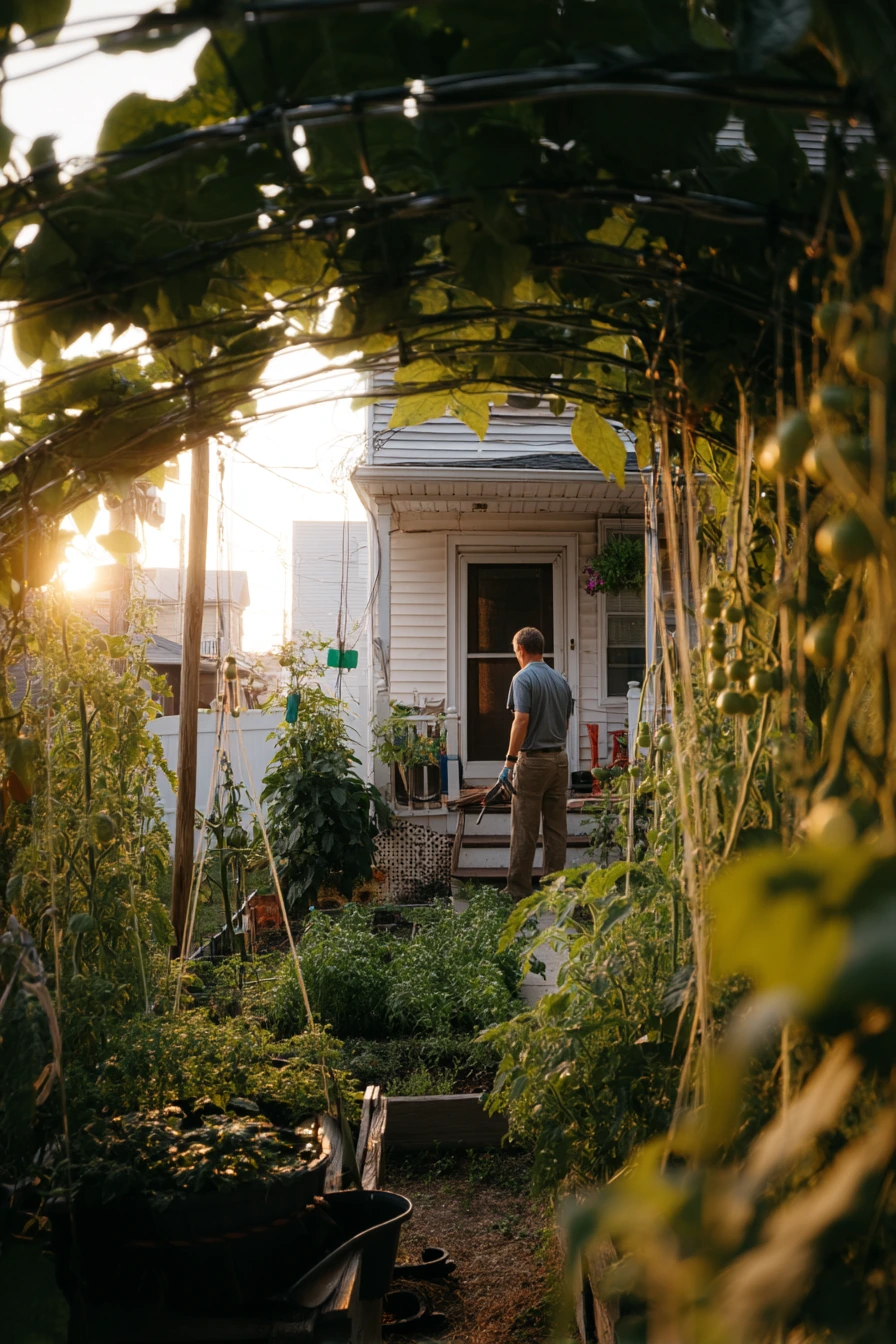
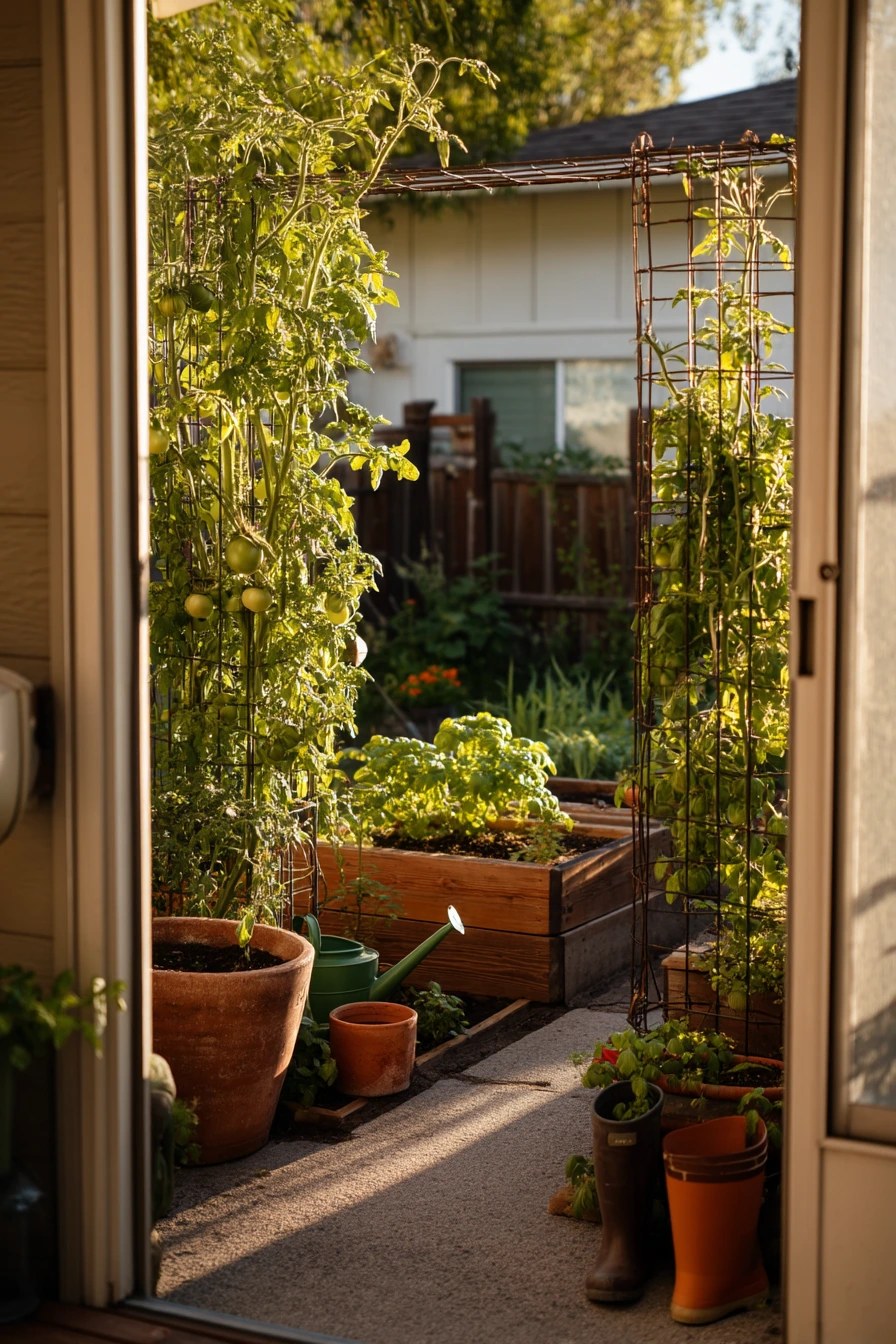
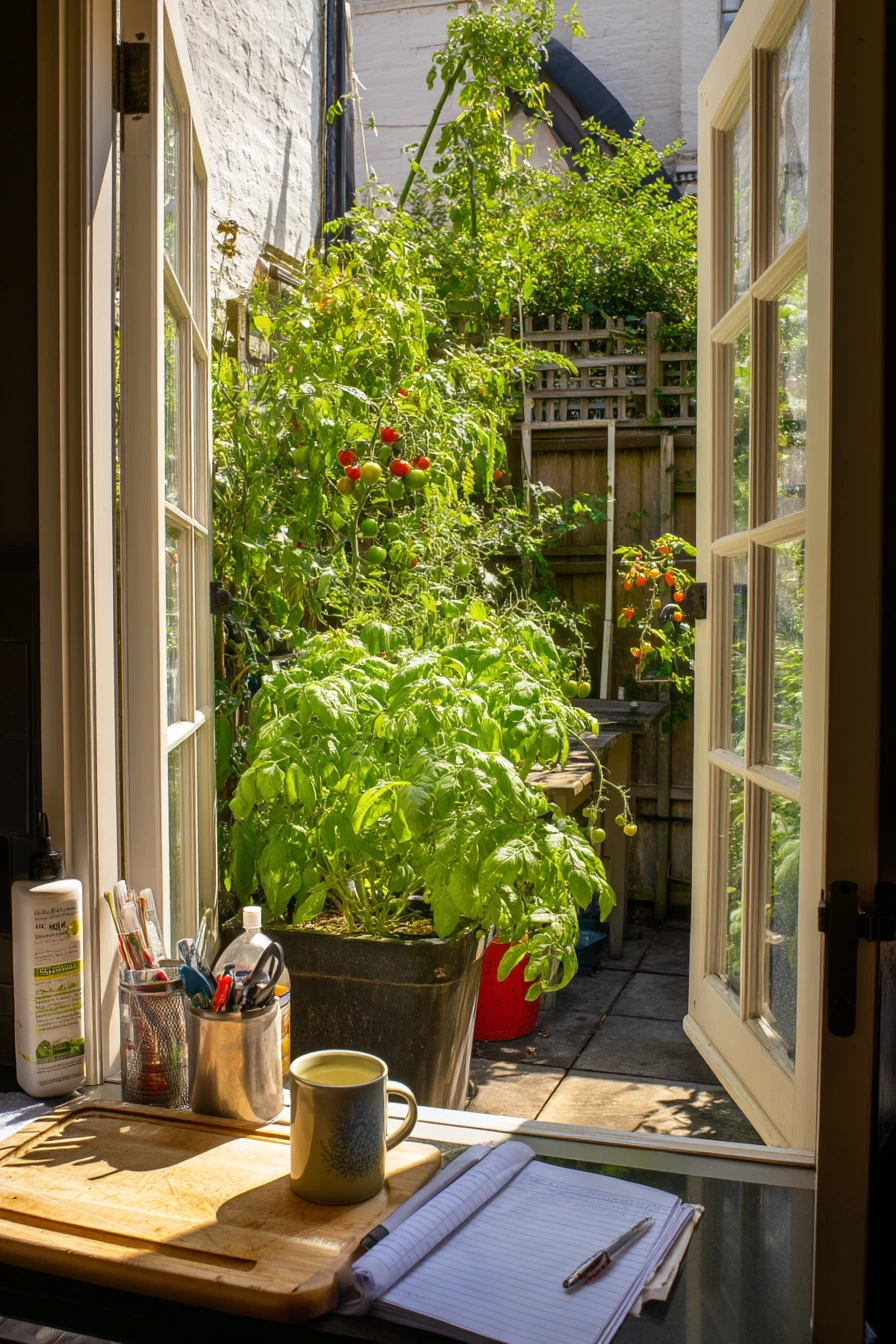
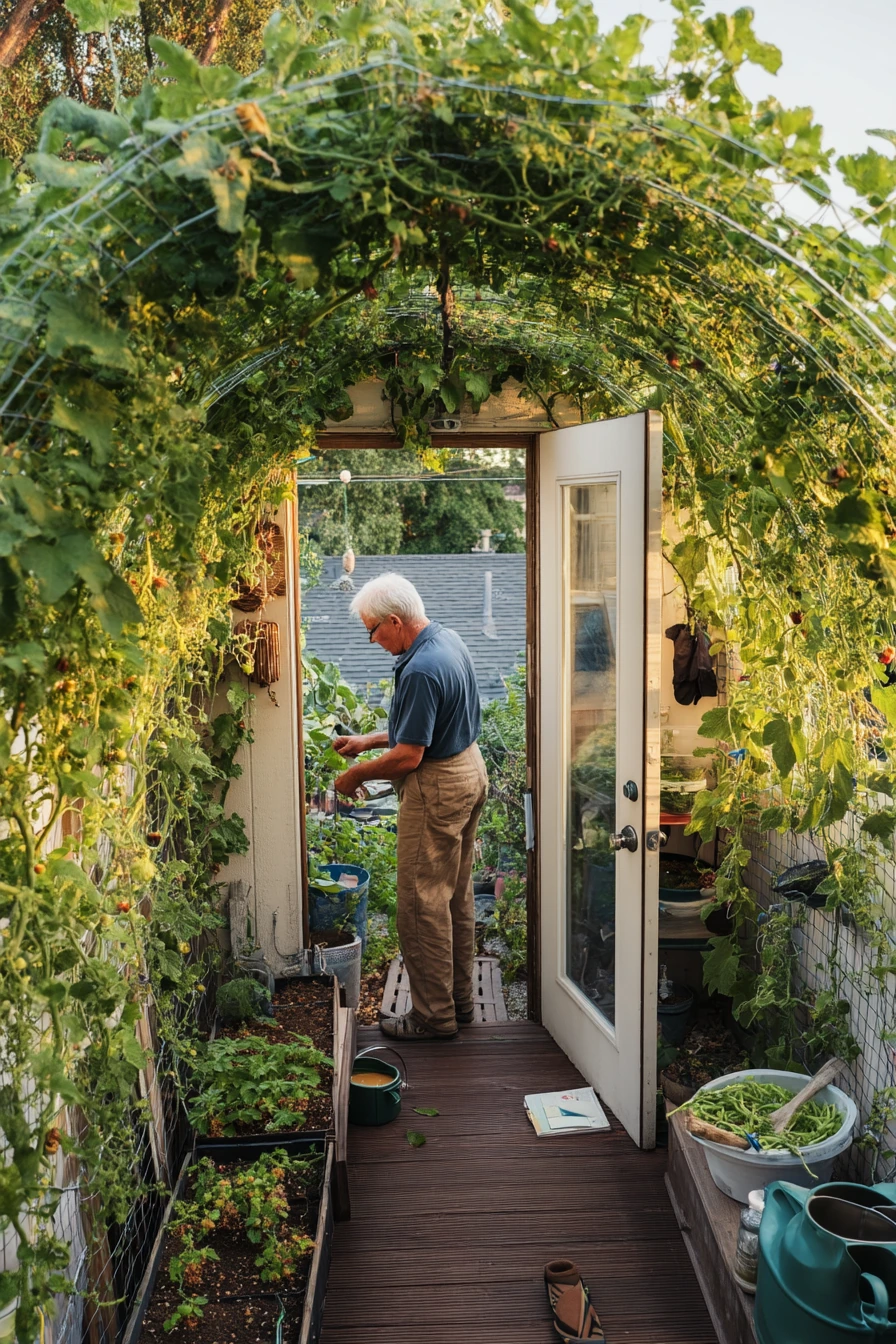
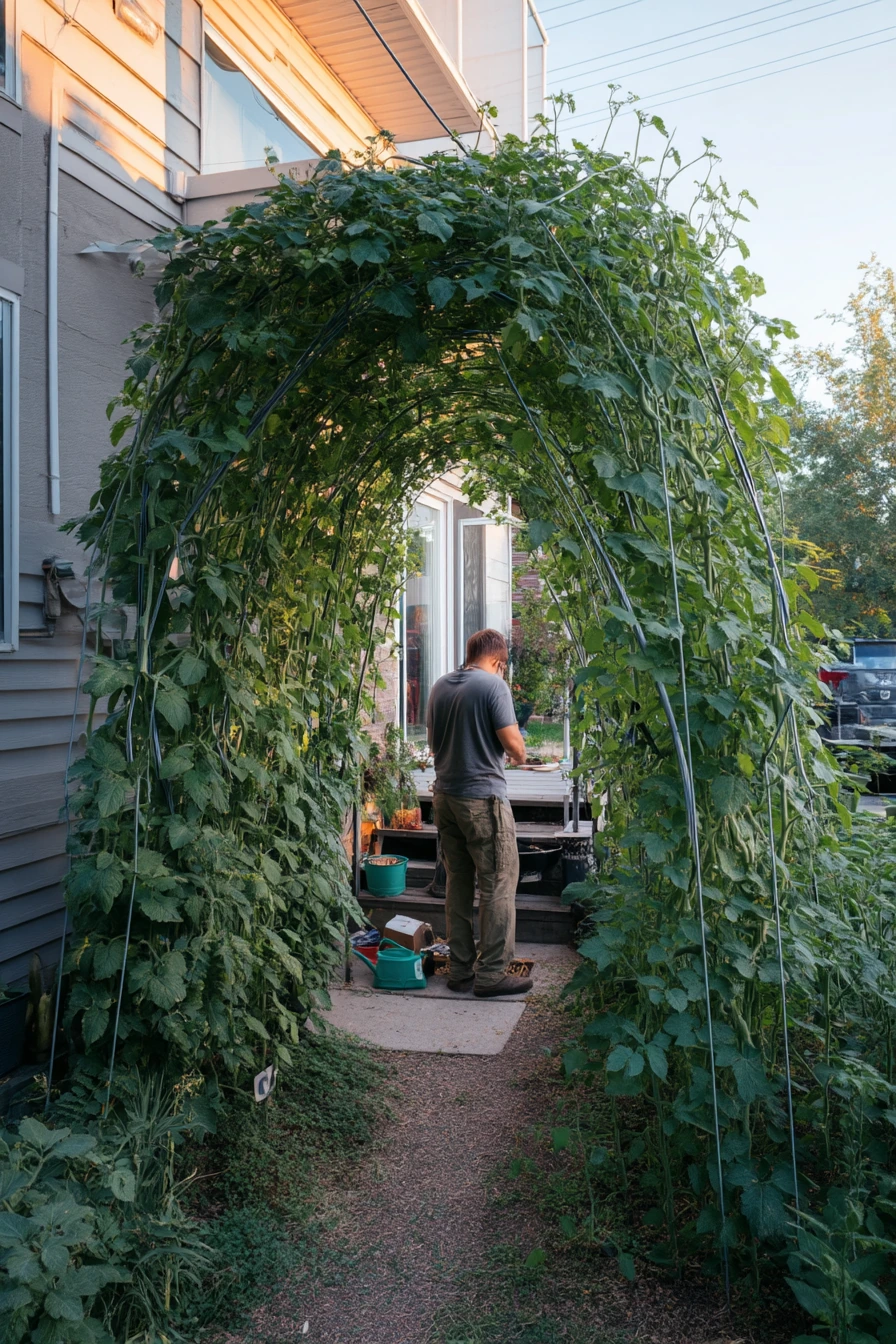
An arched tomato trellis tunnel made with metal conduit and clips is a strong choice for a raised bed garden behind a duplex. It creates a walk-through structure like a green hallway, which is helpful when beds are packed with dense vines. This design supports heavy growth and makes it easy to check ties quickly before dinner, even when life is busy and there are grocery bags on the back step.
To build it, bend conduit into arches and secure each end into the soil or into the bed frame. Add a ridge pole or cross braces if you need extra strength. Use clips to attach netting, wire, or horizontal strings that vines can grab. Train plants up and across the arch, and keep a gardening notebook nearby to track pruning and feeding. With this setup, you can work from both sides, which helps you keep fruit reachable and reduces broken stems.
For styling, keep it lived-in but calm. Place a watering can and a small tool caddy near the door so you actually use them. If the open door shows a bowl with keys, that is fine, but try to keep the step clear so you do not trip when carrying harvest. A forgotten sandal is real life, but set a small bin by the door for shoes to keep the path through the tunnel open.
- Use sturdy conduit and secure it well so it does not sway.
- Clip support lines at regular spacing for even training.
- Prune the lower leaves to improve airflow in a dense tunnel.
- Harvest from inside the arch so you do not crush plants at the edges.
- Style the entry with one tool spot and one watering station.
Pro Design Tip: Match the arch spacing to your bed width so the tunnel looks centered and you get a clean, symmetrical shape in photos.
Budget Considerations: Conduit and clips cost more upfront than stakes, but they hold up for many seasons. Start with one tunnel over the best bed and expand later.
9 Container Garden Trellis on a Sunny Deck
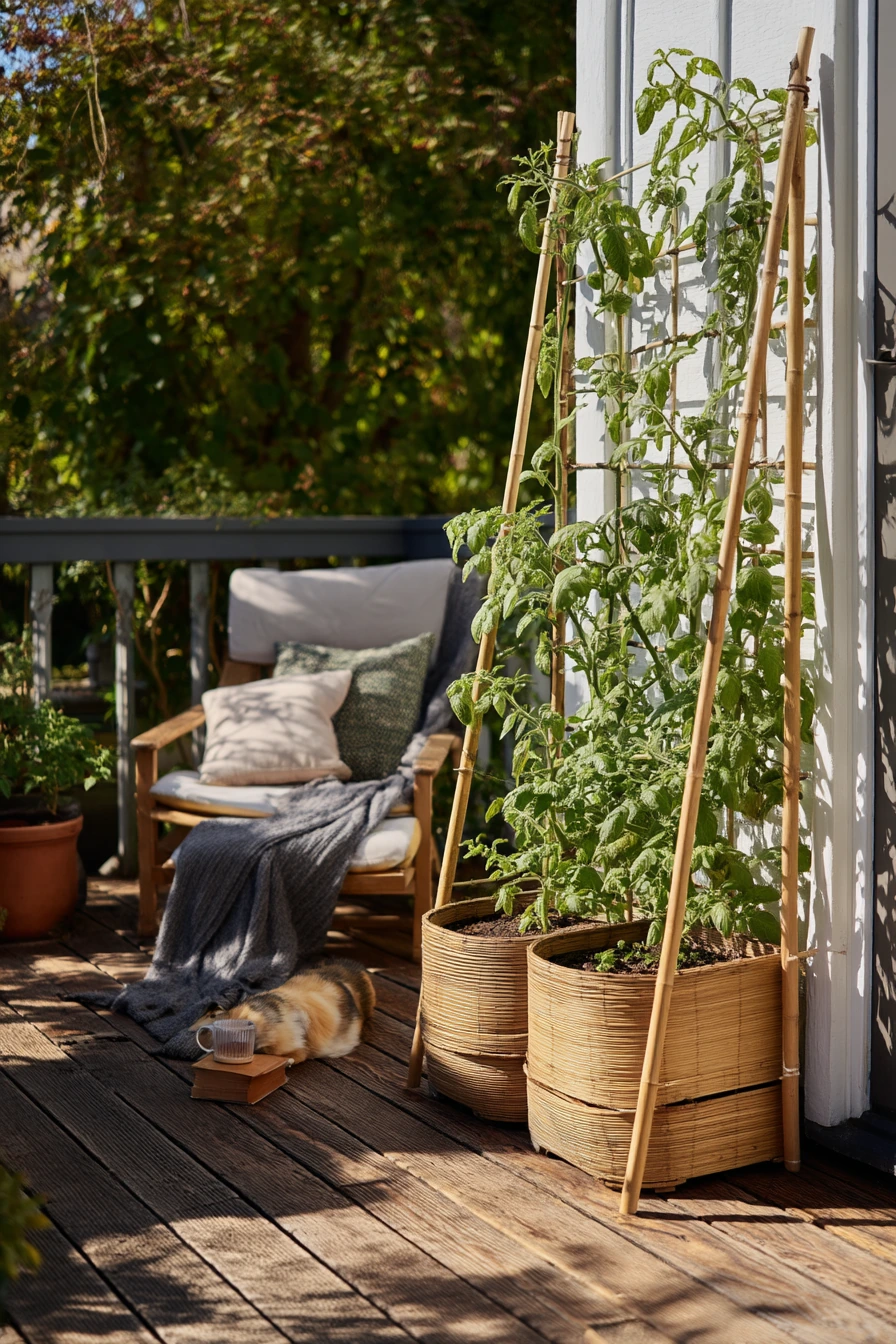
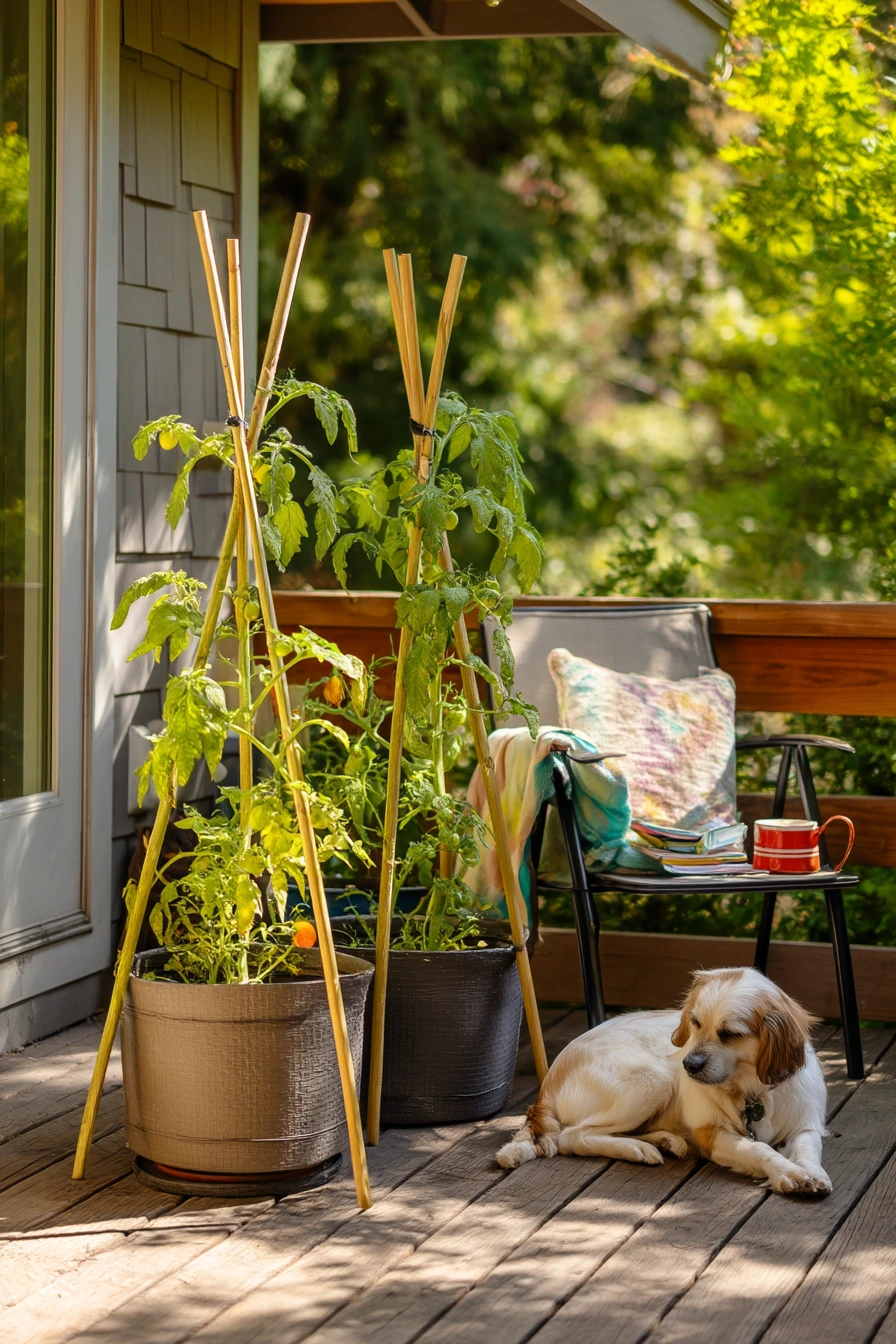
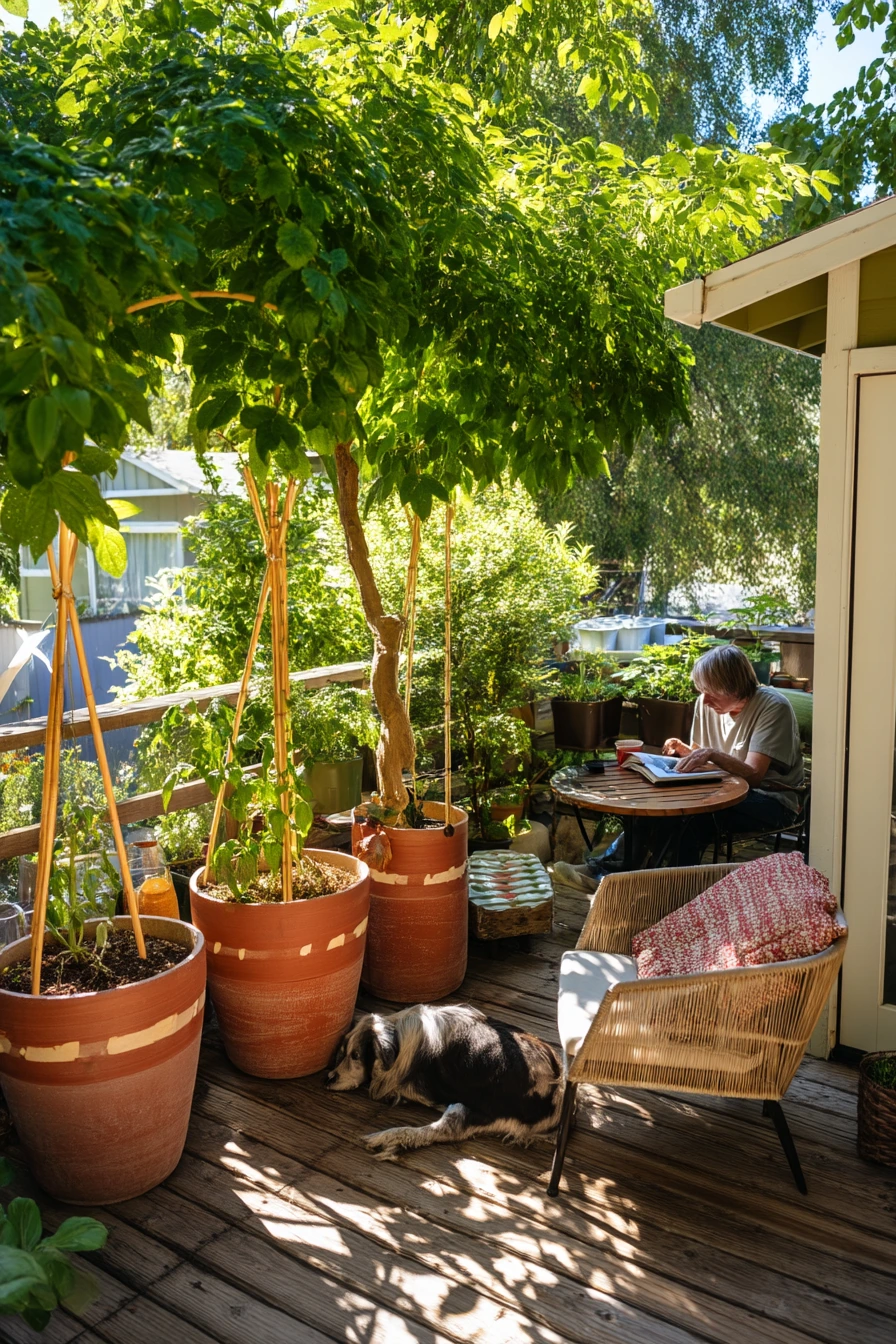
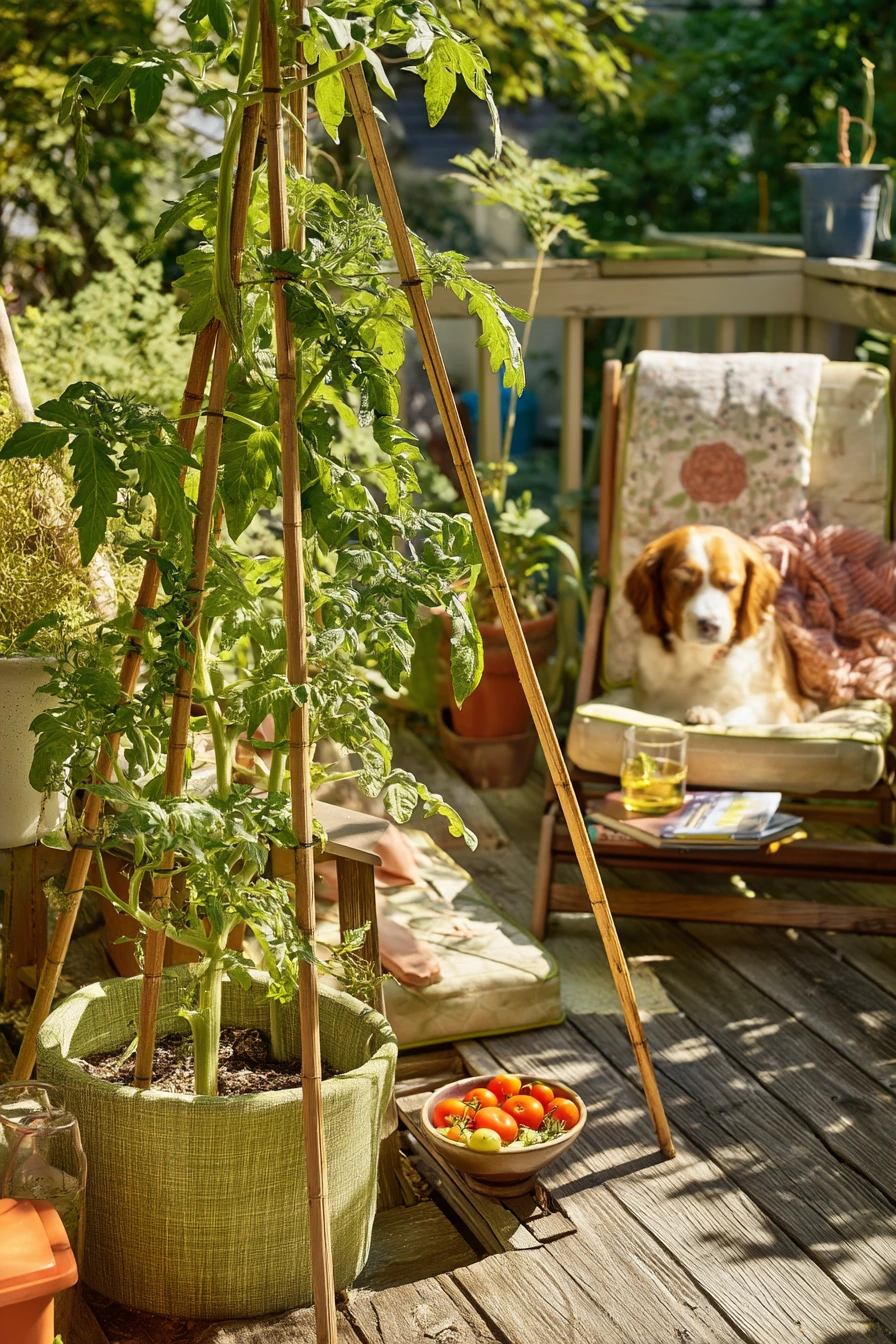
A tomato trellis in large planters with bamboo tripod supports is a flexible option for a wood deck outside a compact home. Tripods are stable, light, and easy to adjust as the plant grows. They also keep the deck feeling open, so you still have space for a patio chair, a folded sweater, and a quiet moment while a dog rests nearby.
Build each tripod with three bamboo poles tied near the top, then spread the legs wide in the planter for balance. Add a few horizontal ties or extra twine to create more places for vines to attach. Prune regularly so the plant does not become top-heavy. Since decks can dry out pots fast, check moisture often and use a thick mulch layer to slow evaporation. Midday light softened by a nearby tree is nice, but make sure the plant still gets enough sun to ripen fruit.
For styling, keep the deck cozy and practical. Choose planters that match the color of the boards or rail. Set a half-full tea glass on a stable table, not on the planter edge. If your cushion is sun-faded, repeat that soft tone with natural jute ties instead of bright plastic. Leaf shadows on the boards look great, but keep fallen leaves swept so they do not trap moisture near pots.
- Use thick bamboo for tall plants so the tripod does not bow.
- Push legs deep and firm the soil to prevent wobble.
- Add one central stake if your tomato variety gets very tall.
- Prune and tie after watering when stems are flexible.
- Style with one reading spot and keep tools in a small deck box.
Pro Design Tip: Angle the tripod slightly away from the main walking path so the plant leans into open space and stays out of your way.
Budget Considerations: Bamboo is affordable, but large planters can be the main expense. Watch for secondhand pots, or use fabric grow bags for a lower-cost option.
10 Kitchen Garden Trellis with Evening Check-In
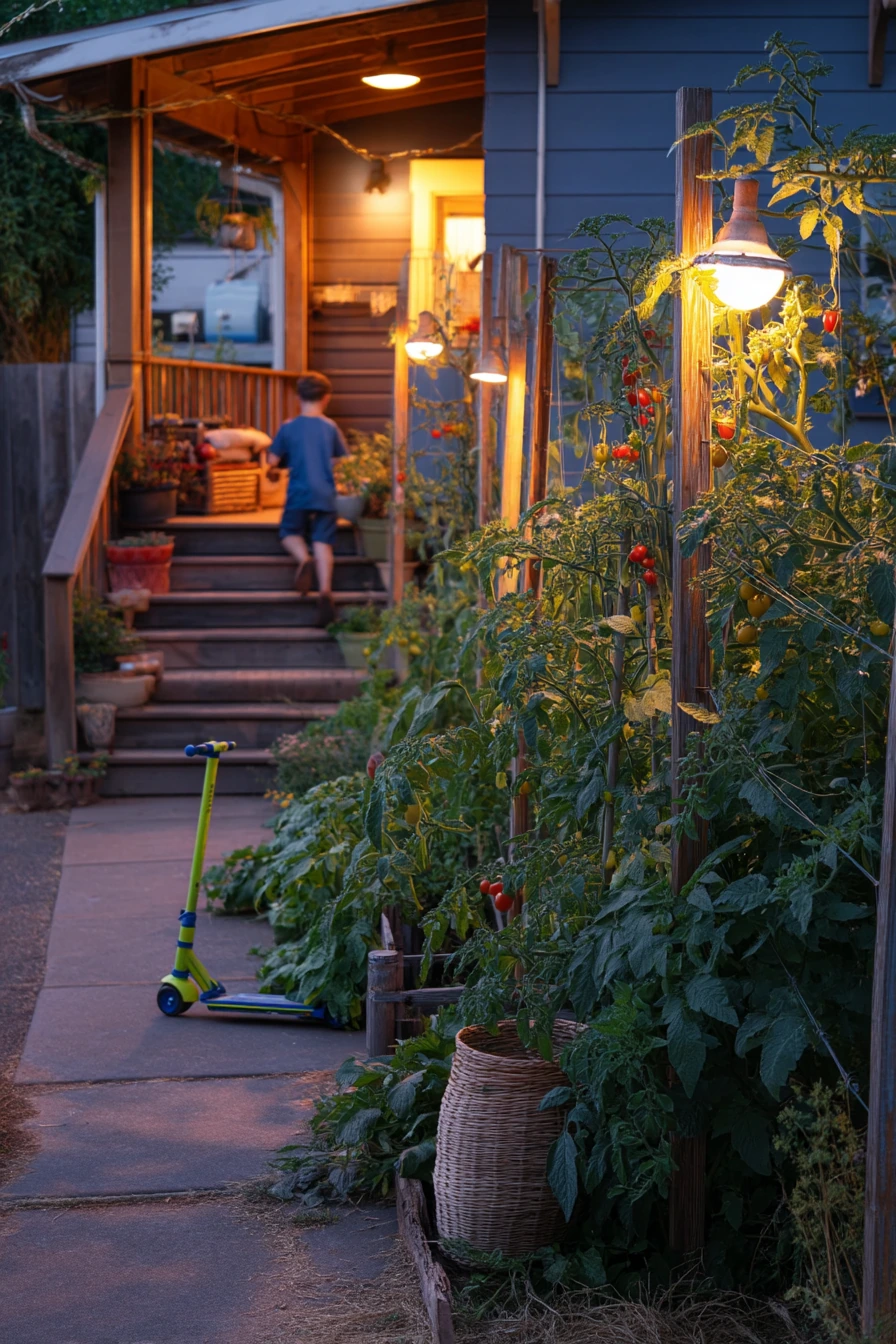
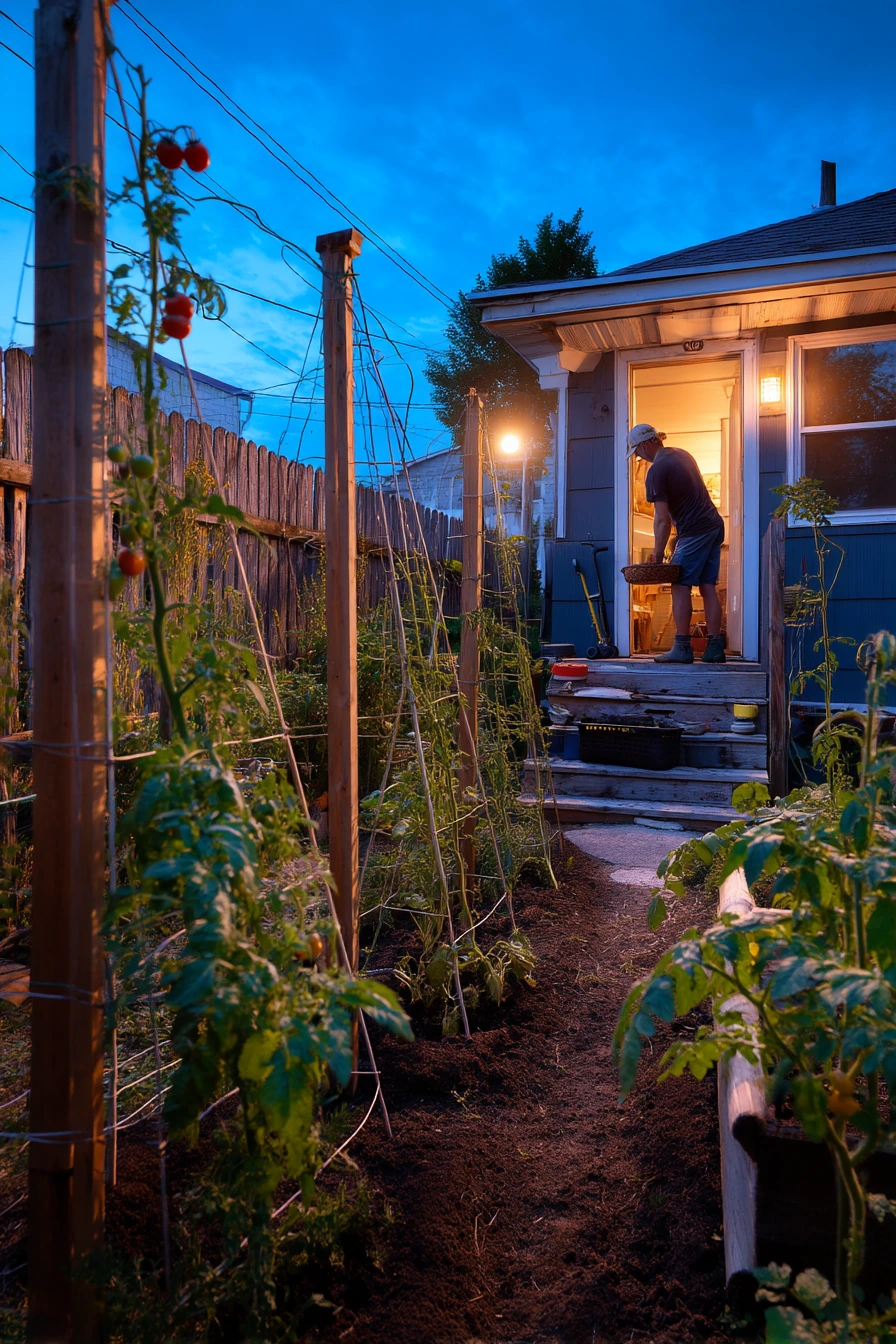
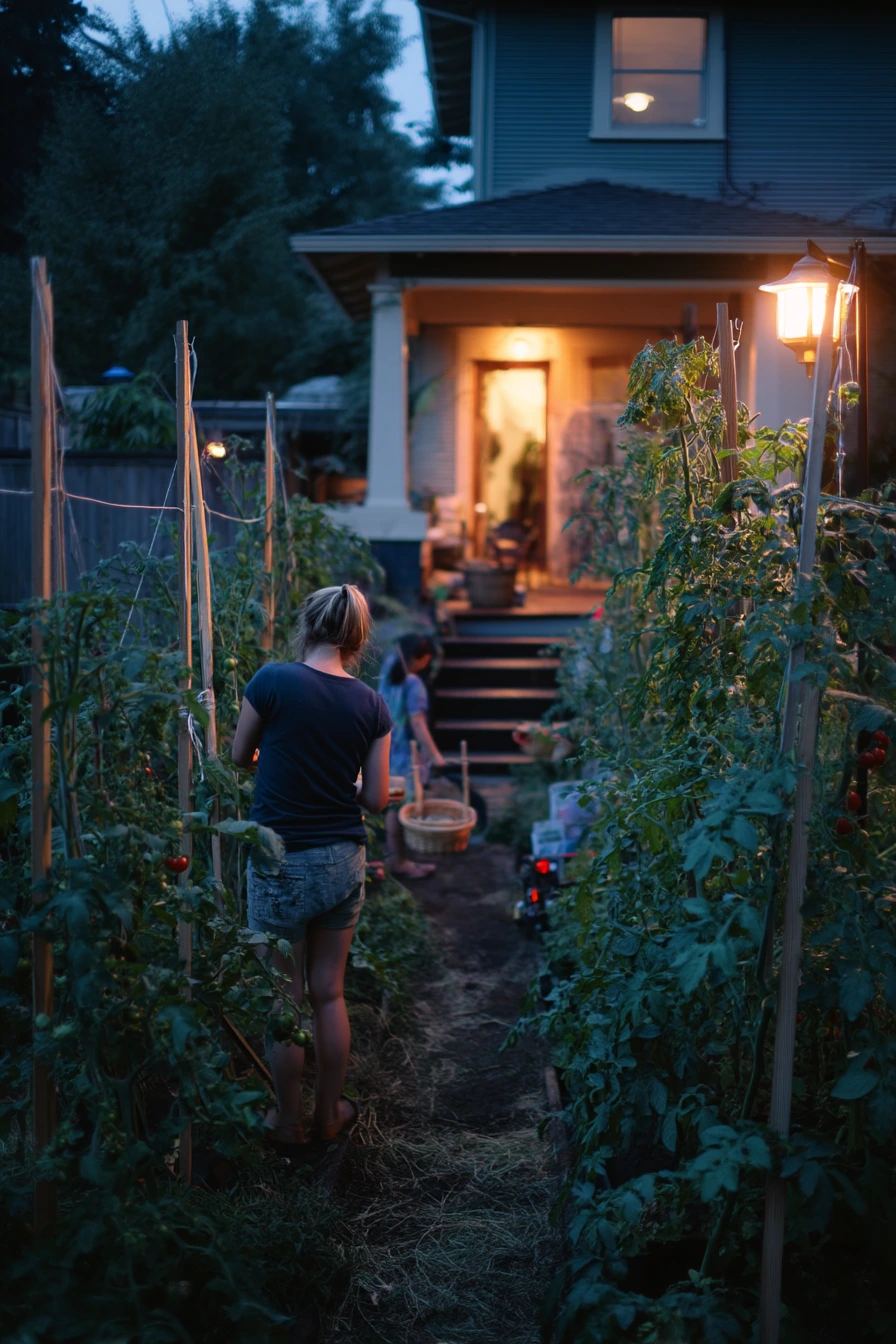
String line trellis systems with cedar posts are clean, classic tomato trellis ideas for a small backyard kitchen garden. They work well behind a back porch because the posts can line up with the fence and keep the garden looking neat. At dusk, it is easy to do a quick check with a basket on one arm, especially when a lantern glows near the steps and the back door is ajar.
Set cedar posts at the ends of a row and add a strong top line, like wire or heavy cord. From that top line, drop strings down to each plant and tie them near the base. As stems grow, twist them gently around the string or clip them with tomato clips. This system keeps fruit visible and makes pruning fast. It also keeps the ground clearer, so you are less likely to step in mud with muddy sneakers while reaching for a ripe cluster.
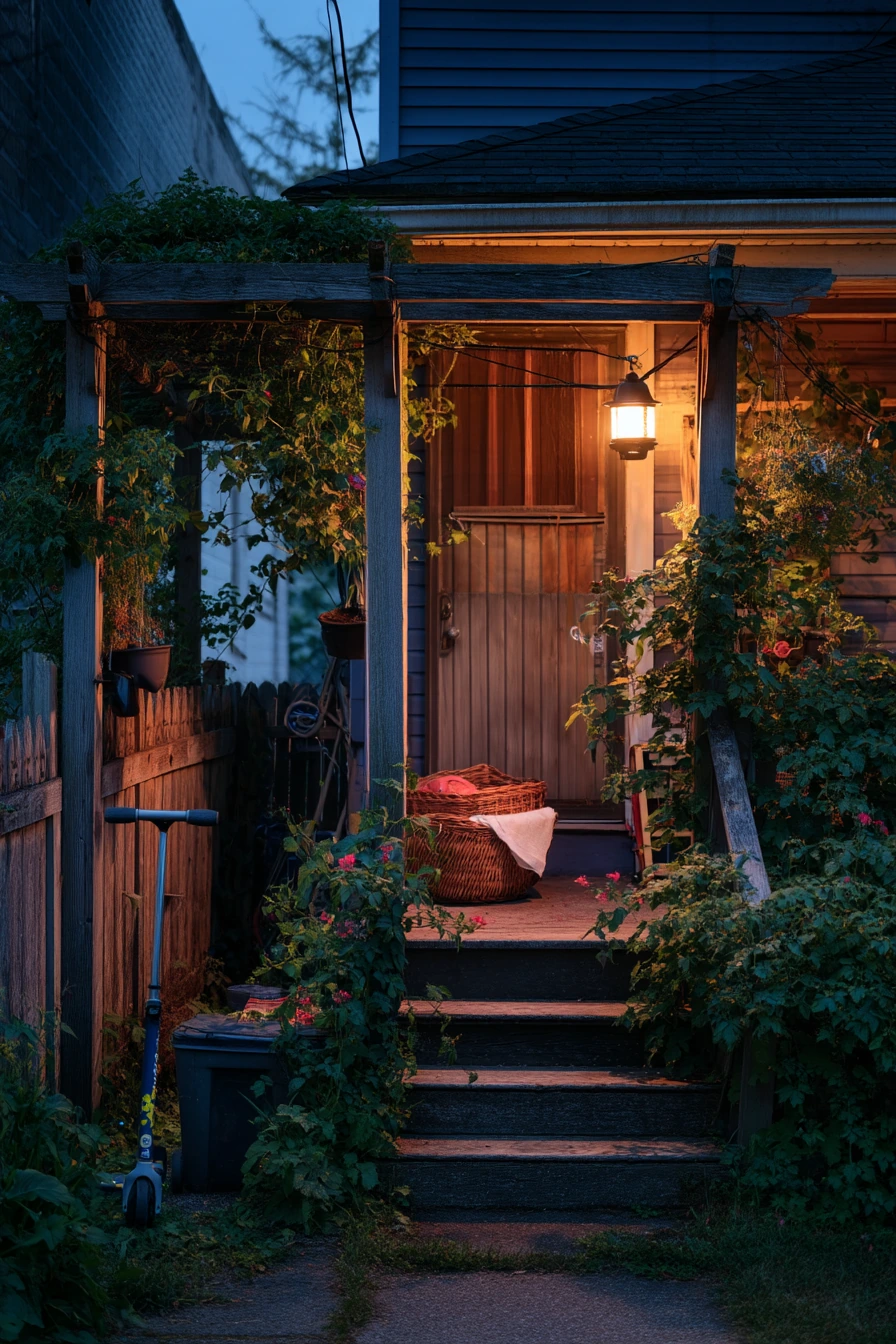
To style the space, keep it warm and quietly busy. A dish towel over the rail and a child’s scooter parked by the fence can stay, but make sure the path is wide enough for safe night picking. Use one consistent post color and matching string so the row looks intentional. If you want a soft look in evening light, add one small solar light at the row end to guide you without harsh glare.
- Use strong posts so the top line stays tight all season.
- Space plants so airflow is good, especially in humid areas.
- Check string tension after storms and retie if it sags.
- Keep a small basket near the door for fast harvest trips.
- Style the porch area with one lantern and a clear walking lane.
Pro Design Tip: Run the trellis line parallel to the porch and fence so the garden looks straight and calm, even when the rest of the yard is active.
Budget Considerations: Cedar posts cost more than pine, but they last longer outdoors. If you need to save, use pressure-treated posts and replace only the strings each year.
Tomato trellis ideas do not need to be complicated. The best support is the one that fits your space, your time, and the way you actually use your yard, patio, or balcony.
Start with one system, keep ties soft and loose, and do small weekly check-ins. A little training and pruning goes a long way for healthier plants and easier picking.
FAQ
1) What is the easiest tomato trellis for beginners? A simple stake-and-string setup or a bamboo tripod is easy to build and easy to fix.
2) How tall should a tomato trellis be? Most need 5 to 7 feet, but compact patio types can use shorter supports if you prune and top the plant.
3) Can I grow tomatoes on a balcony trellis? Yes, use a deep container and a renter-friendly bamboo and twine trellis, and protect plants from wind.
4) What ties are safest for tomato stems? Soft twine, jute ties, or tomato clips work well. Avoid thin wire that can cut stems.
5) How far apart should tomatoes be on a fence panel trellis? Aim for about 18 to 24 inches, depending on the variety and how much you prune.
6) Do trellised tomatoes need more water? Often yes, because trellised plants can grow larger and containers dry faster. Check soil moisture often and mulch well.
7) When should I start training tomatoes on the trellis? Start when plants are small, so stems bend easily and you can guide growth without cracking.