
Walk in pantry ideas work best when they match real life. The right shelves, bins, and labels can make food easy to find, keep backstock under control, and cut down on waste.
This guide uses practical pantry scenes you can copy, from kid-friendly snack drawers to narrow city pantries with pull-out wire bins. You will see how to set up zones, pick containers, and keep the space looking tidy without being perfect.
Each section includes simple styling notes, a pro design tip, and a budget consideration so you can choose what fits your home. Use these ideas to plan a pantry you can keep up with, even on busy weeks.
Save the layouts you like, then start with one small change such as labeled glass jars, a rolling cart, or baskets for quick grab items.
1 Family-Friendly Walk-In Pantry with Everyday Chaos
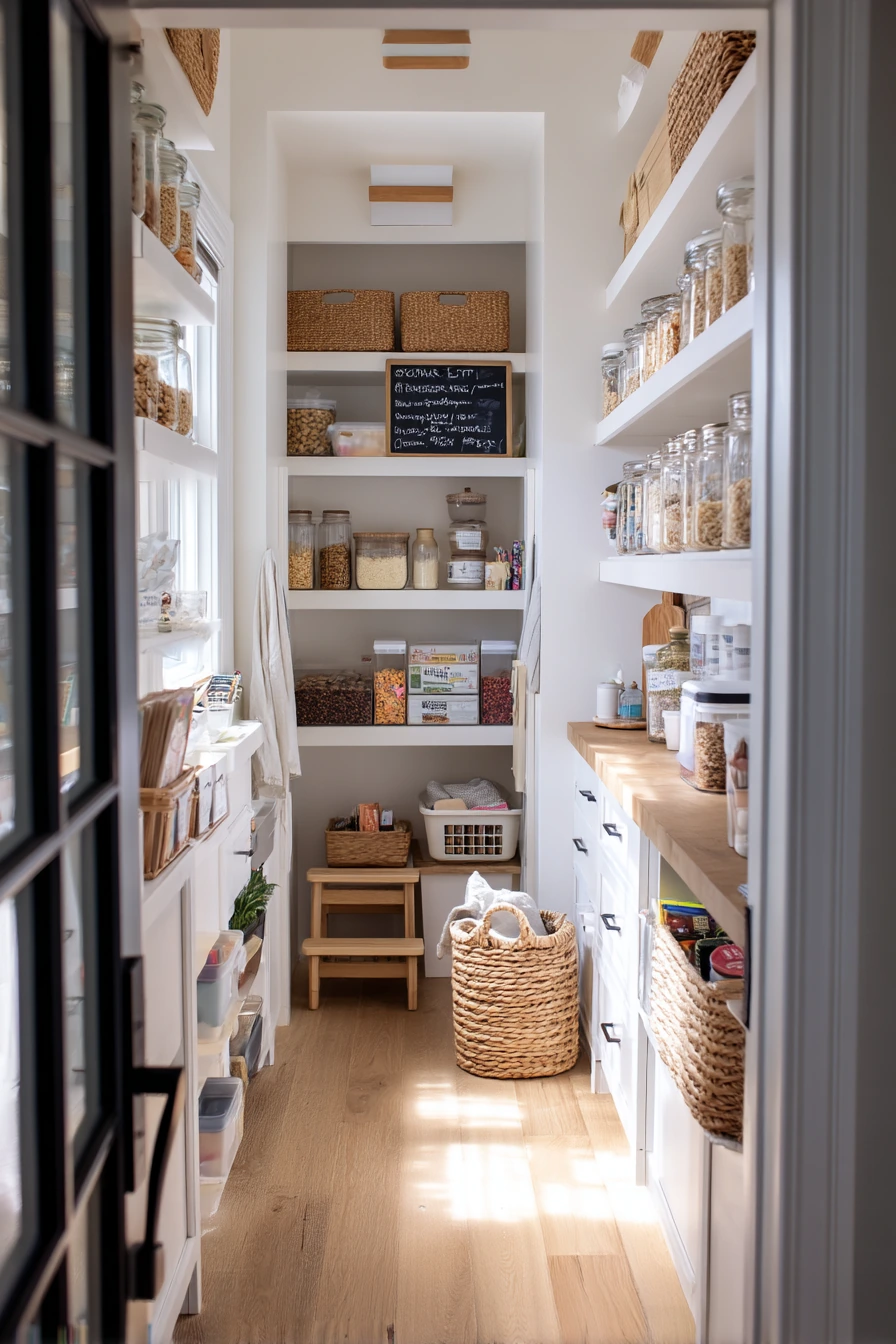
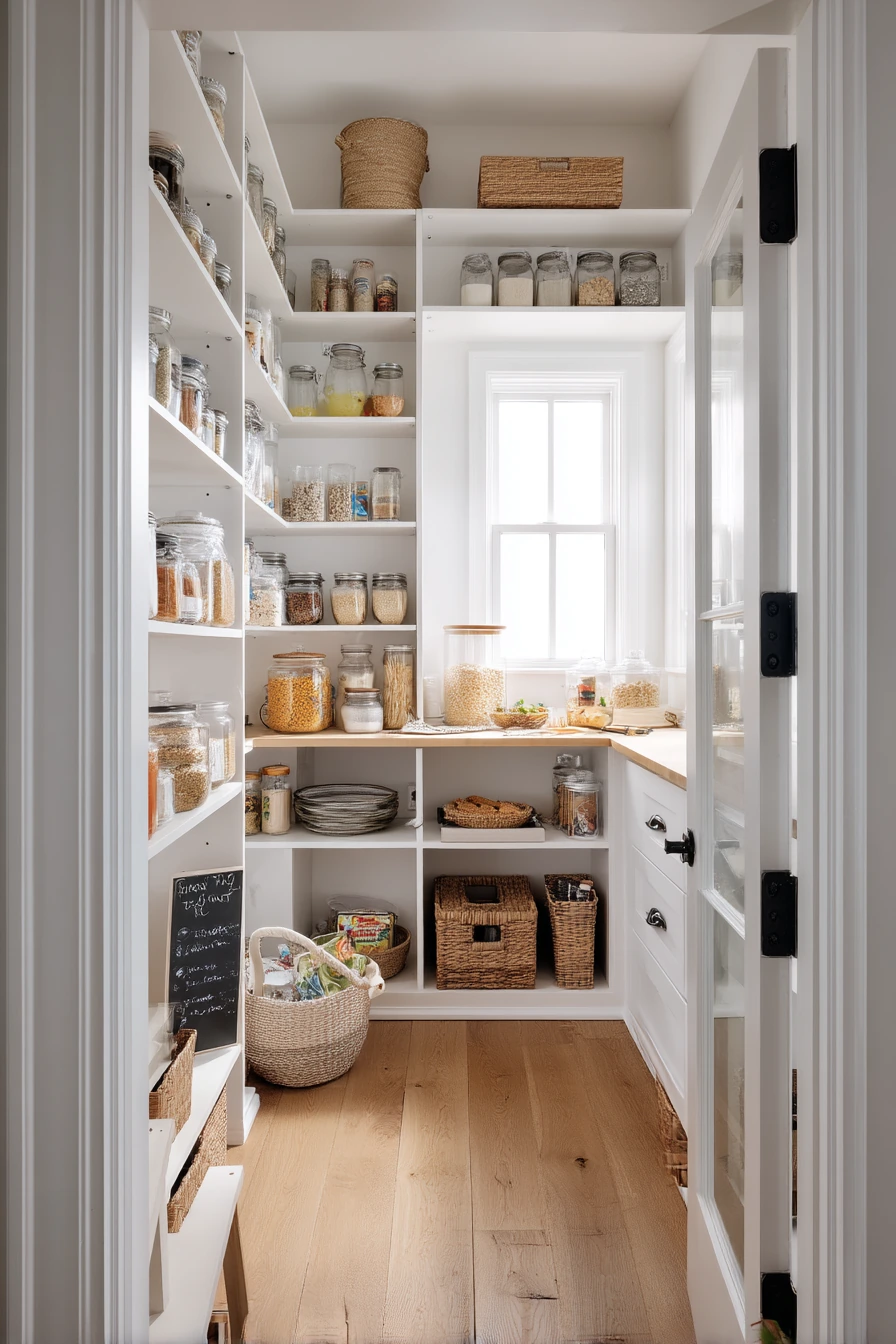
A real family pantry needs to work at kid speed. White oak shelves feel warm, but the real win is the layout: bulk cereal bins for fast breakfasts, labeled glass jars for staples, and woven baskets for messy packages. Keep snack drawers at waist height so kids can reach without pulling down whole stacks.
Build simple zones so you do not have to think. Put breakfast together, lunches together, and baking together. A small chalkboard grocery list near the door helps you notice what is low. A step stool tucked beside the door makes top shelves usable, while a toy basket on the floor keeps small items from spreading into the kitchen.
For styling, keep the look sun-washed and lived-in. Mix clear jars with a few baskets so the shelves do not feel like a store. Leave one reusable tote half open for returns and library books. Soft window light from the nearby kitchen makes the space feel calm even when it is busy.
- Use labeled glass jars for flour, rice, pasta, and snacks you buy often.
- Add bulk cereal bins and store refills on a higher shelf.
- Place snack drawers at waist height, with a simple one bin per kid rule.
- Keep a step stool by the door so adults can reach top backstock.
- Set one basket on the floor for toys and random kid items that show up.
Pro Design Tip: Keep the most used kid foods between knee and shoulder height, and put less used items up high so the pantry stays safe and easy to reset.
Budget Considerations: White oak shelving can be pricey; use pine boards stained warm, and spend your money on a few matching bins and good labels.
2 Small-Space Pantry Behind a Kitchen Door
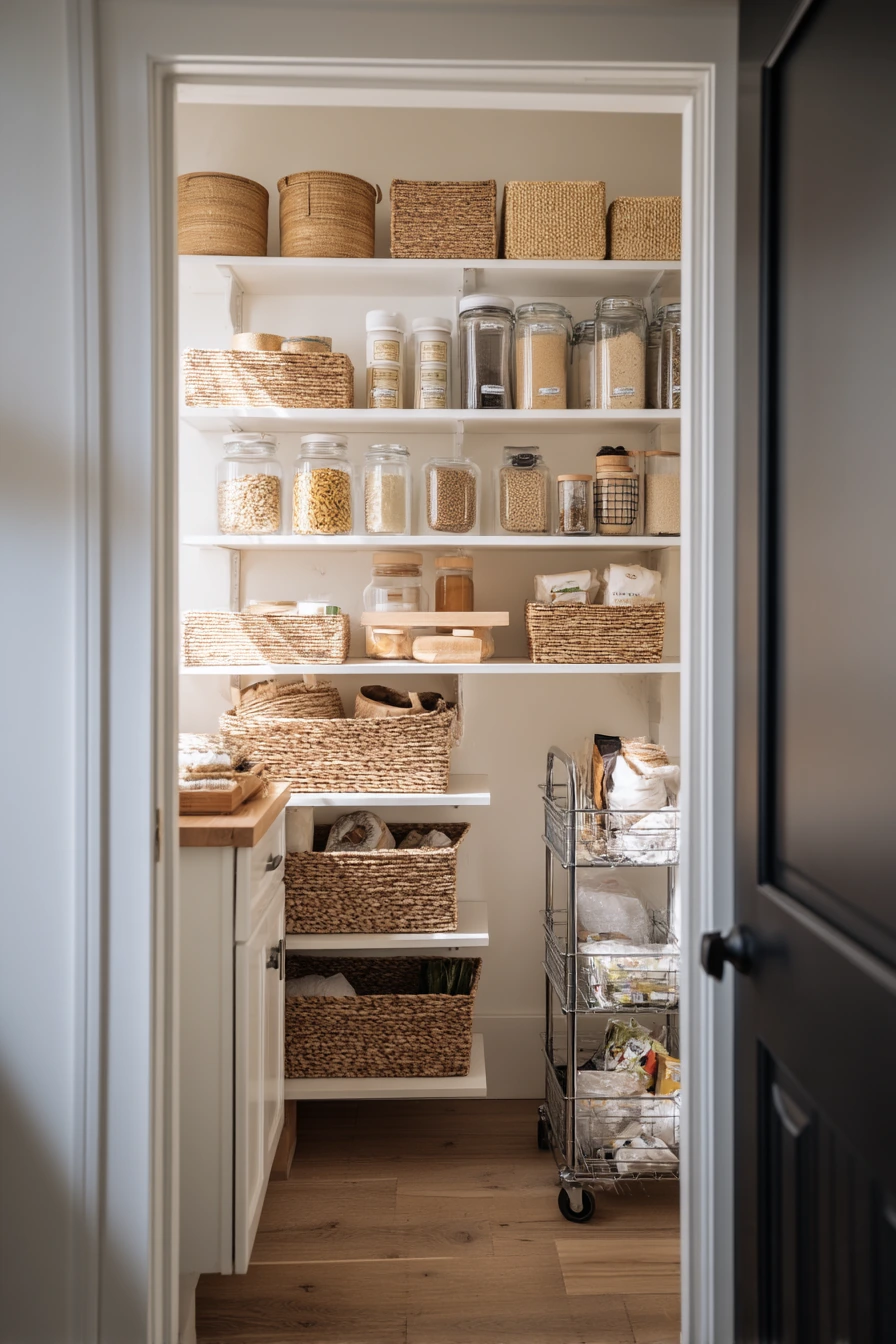
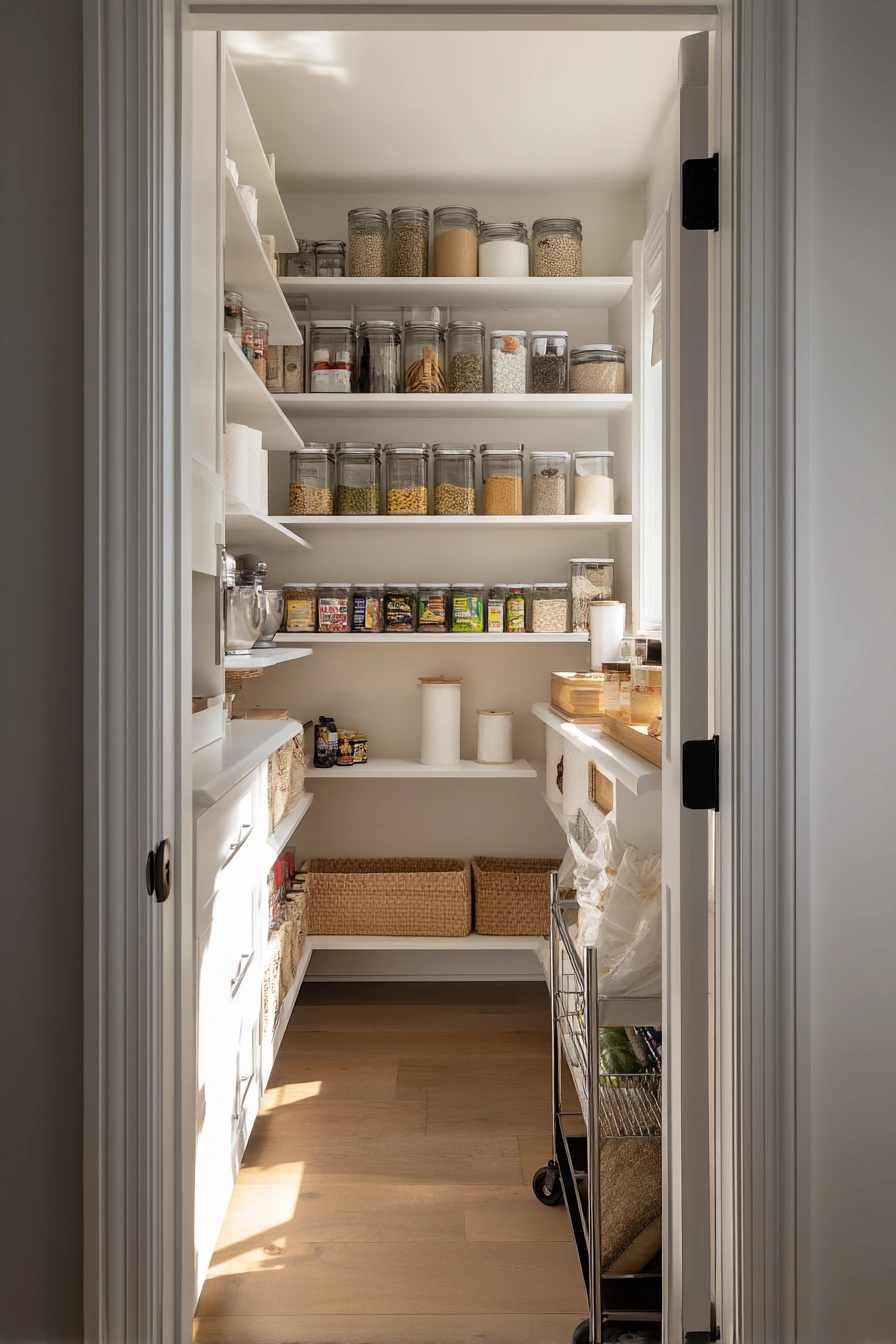
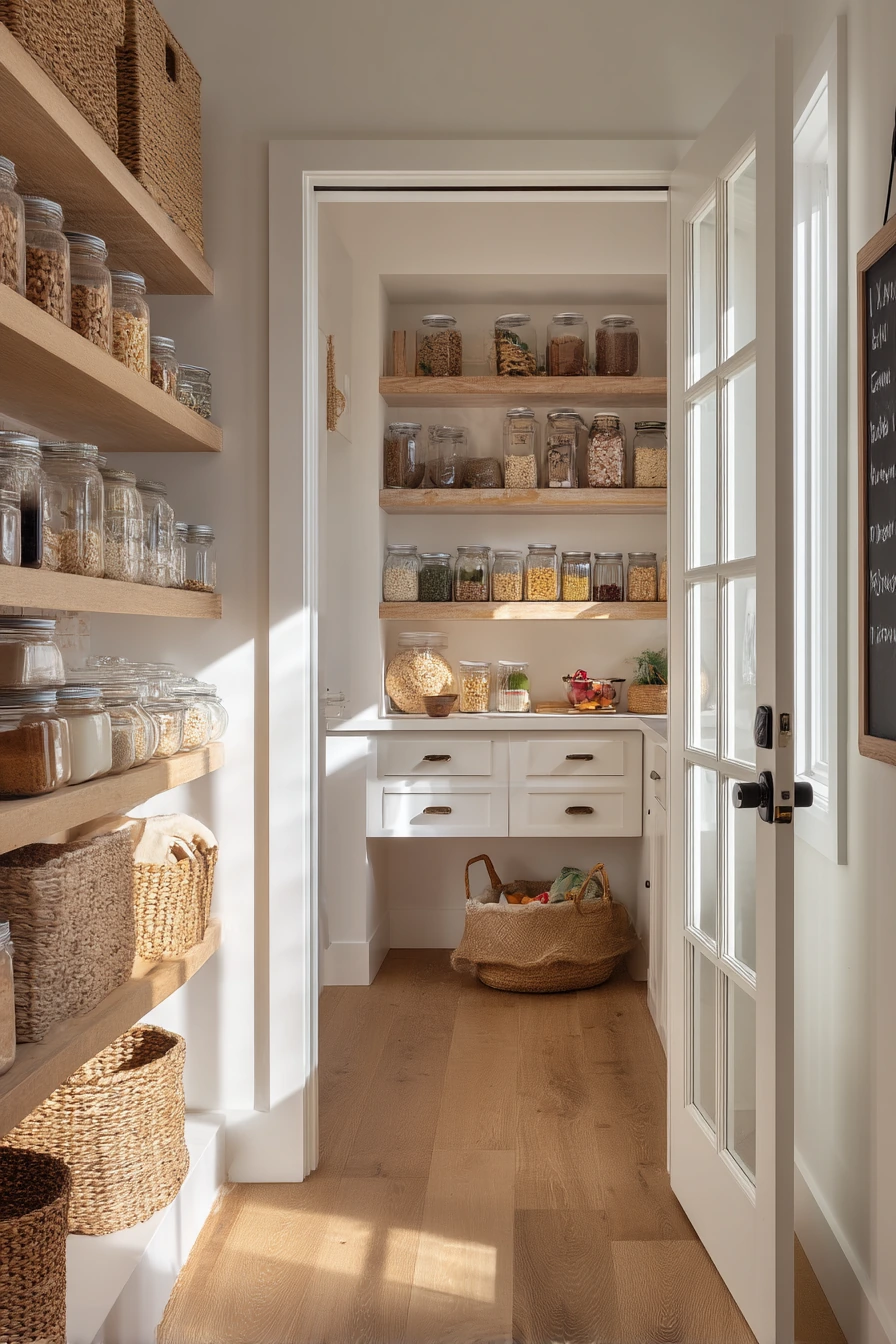
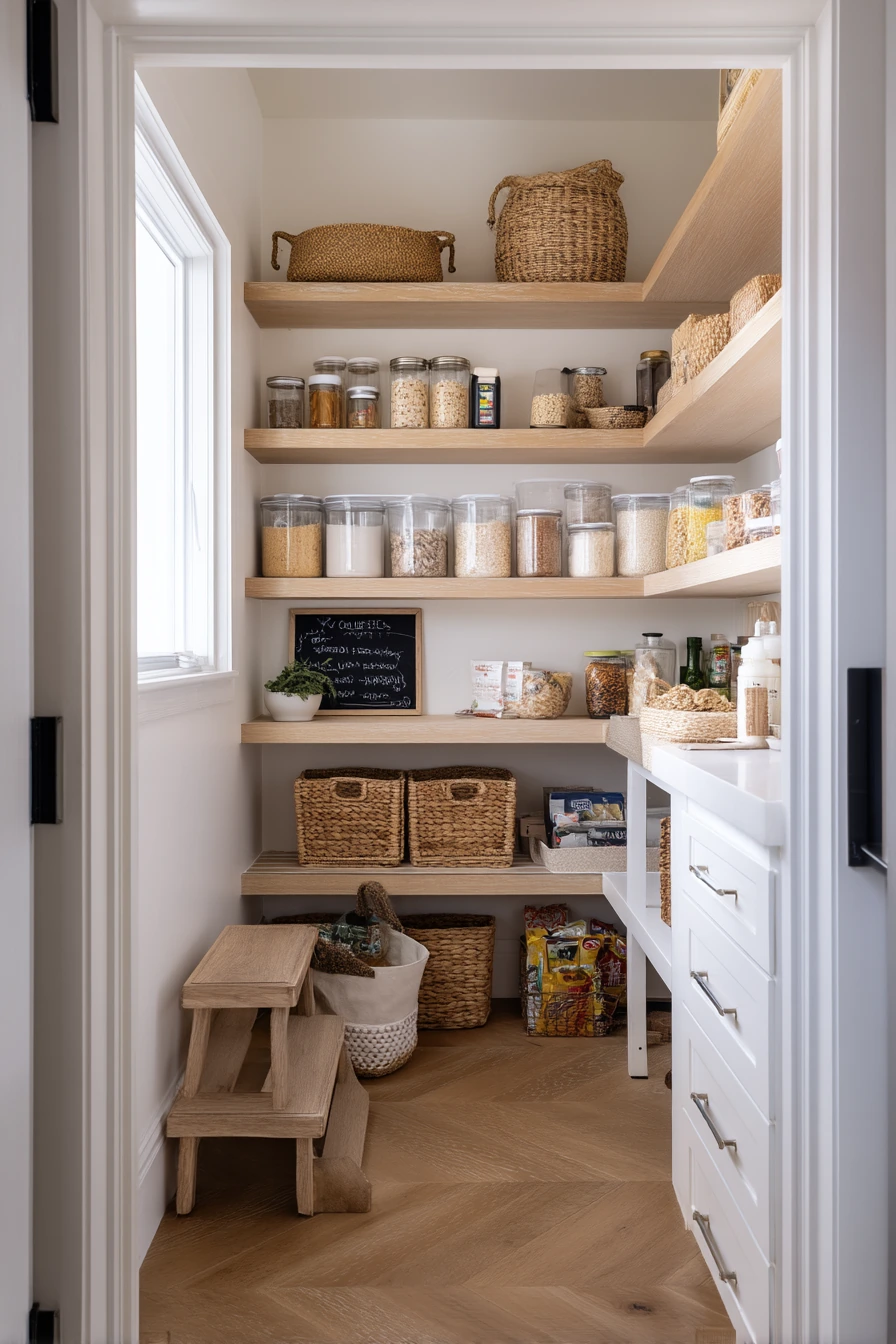
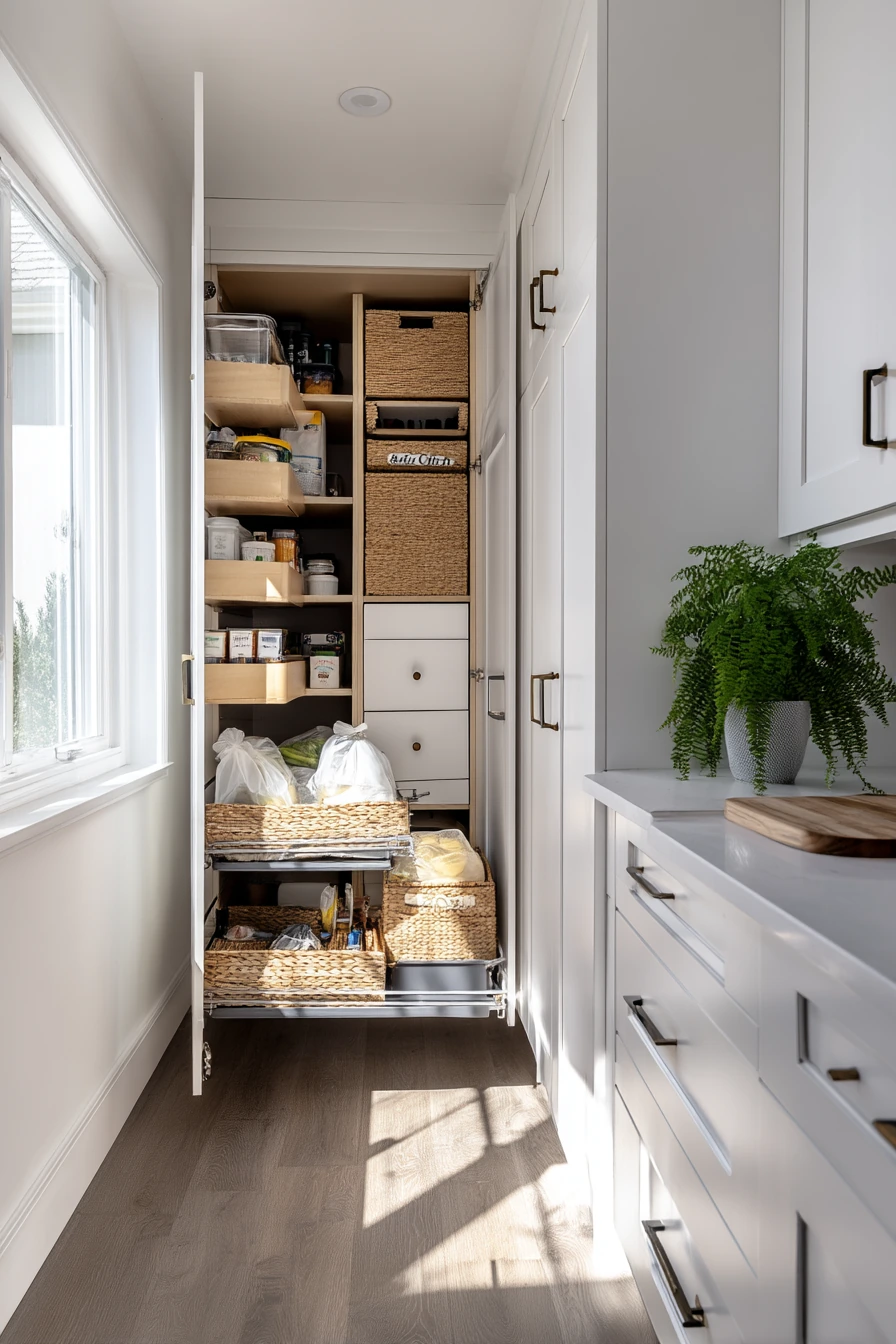
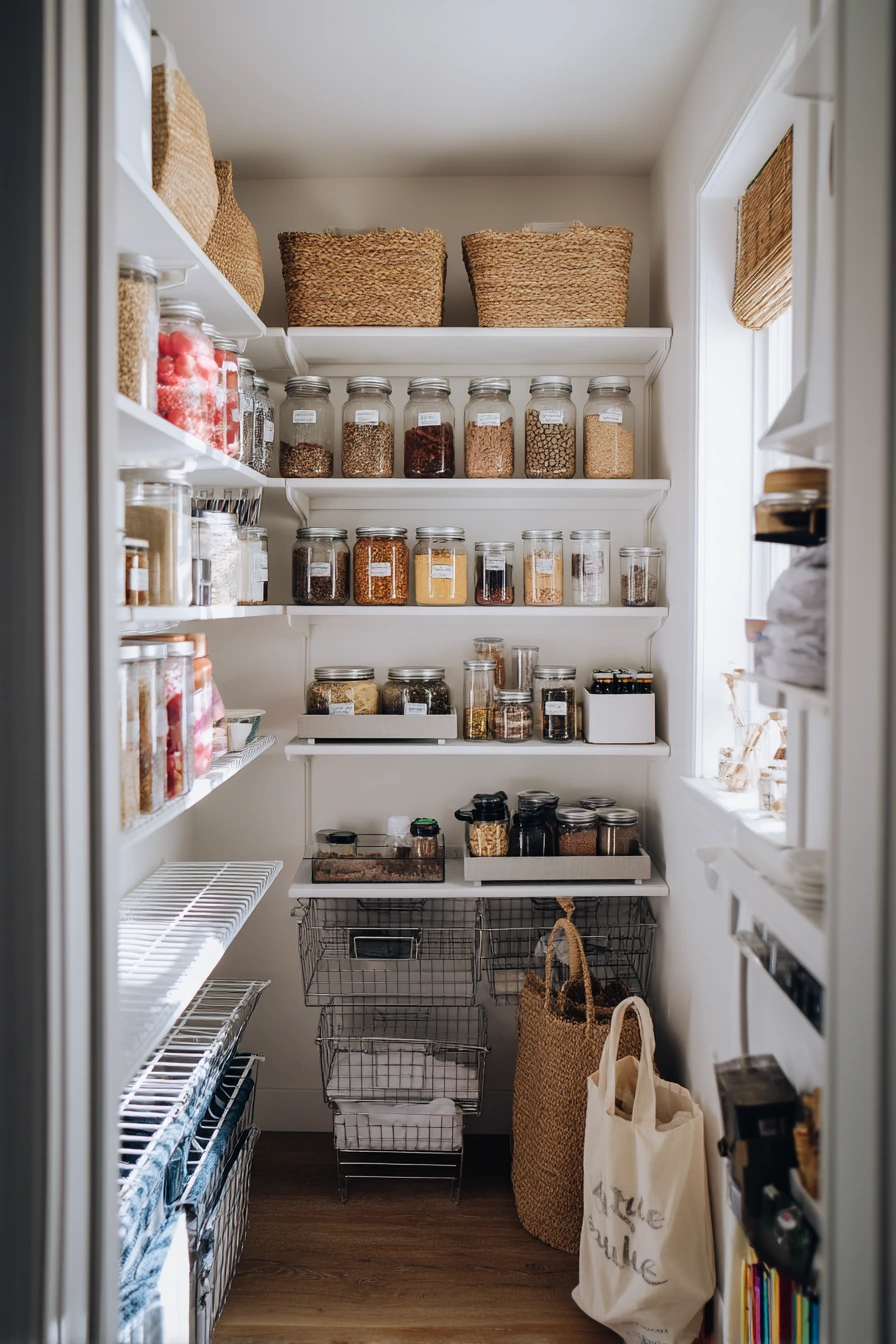
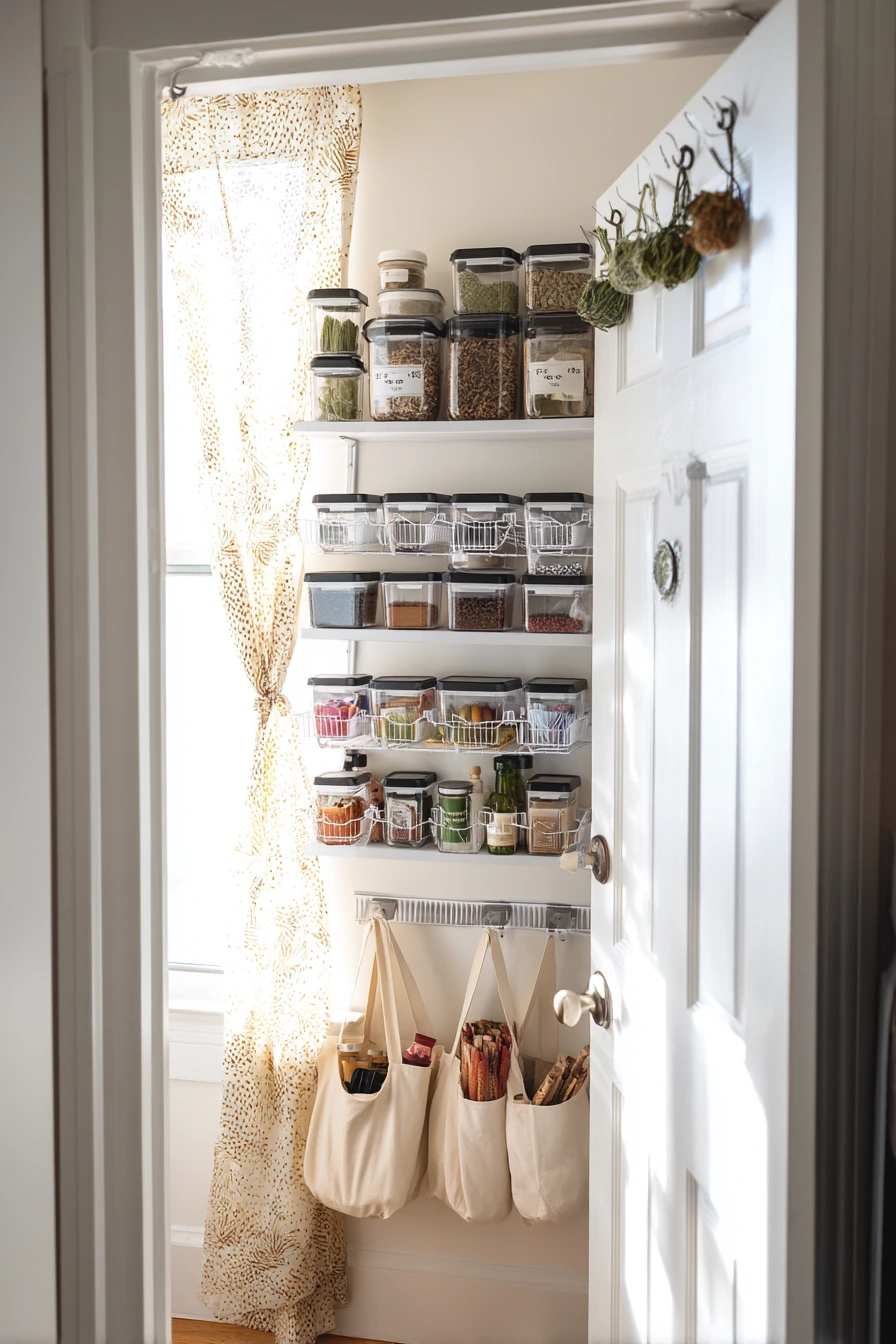
A narrow pantry can still feel organized when every inch has a job. Use floor-to-ceiling shelves with clear canisters so you can see what you have. Pull-out wire bins are great for potatoes, onions, and snacks because you can slide them out instead of digging in the back.
Use the door as storage. An over-the-door spice rack frees shelf space and keeps small jars from tipping. Stack paper towels and napkins on the highest shelf since you do not need them every day. A slim rolling cart can hold oils, vinegar, and backup drinks, then move into the kitchen when you cook.
Keep the scene honest, not staged. One grocery bag still unpacked is normal. Plan a landing zone for it so it does not block the walkway, like the bottom shelf or the cart. A charging cable near a wall outlet can be useful for a small vacuum or a label maker, but clip it to the wall so it looks neat.
- Choose shallow shelves so items stay in one row and do not hide behind each other.
- Add pull-out wire bins for snacks, produce, or backstock.
- Install an over-the-door spice rack to clear space on shelves.
- Use a slim rolling cart for oils, cans, or drinks in a tight footprint.
- Make a small unpack zone for one bag so clutter does not spread.
Pro Design Tip: In a narrow pantry, use consistent container sizes so shelves stack cleanly and you can pull items out without knocking others over.
Budget Considerations: Pull-out systems add up; start with one or two wire bins and a basic over-the-door rack, then add more as needed.
3 Budget-Friendly Pantry with Mixed Storage
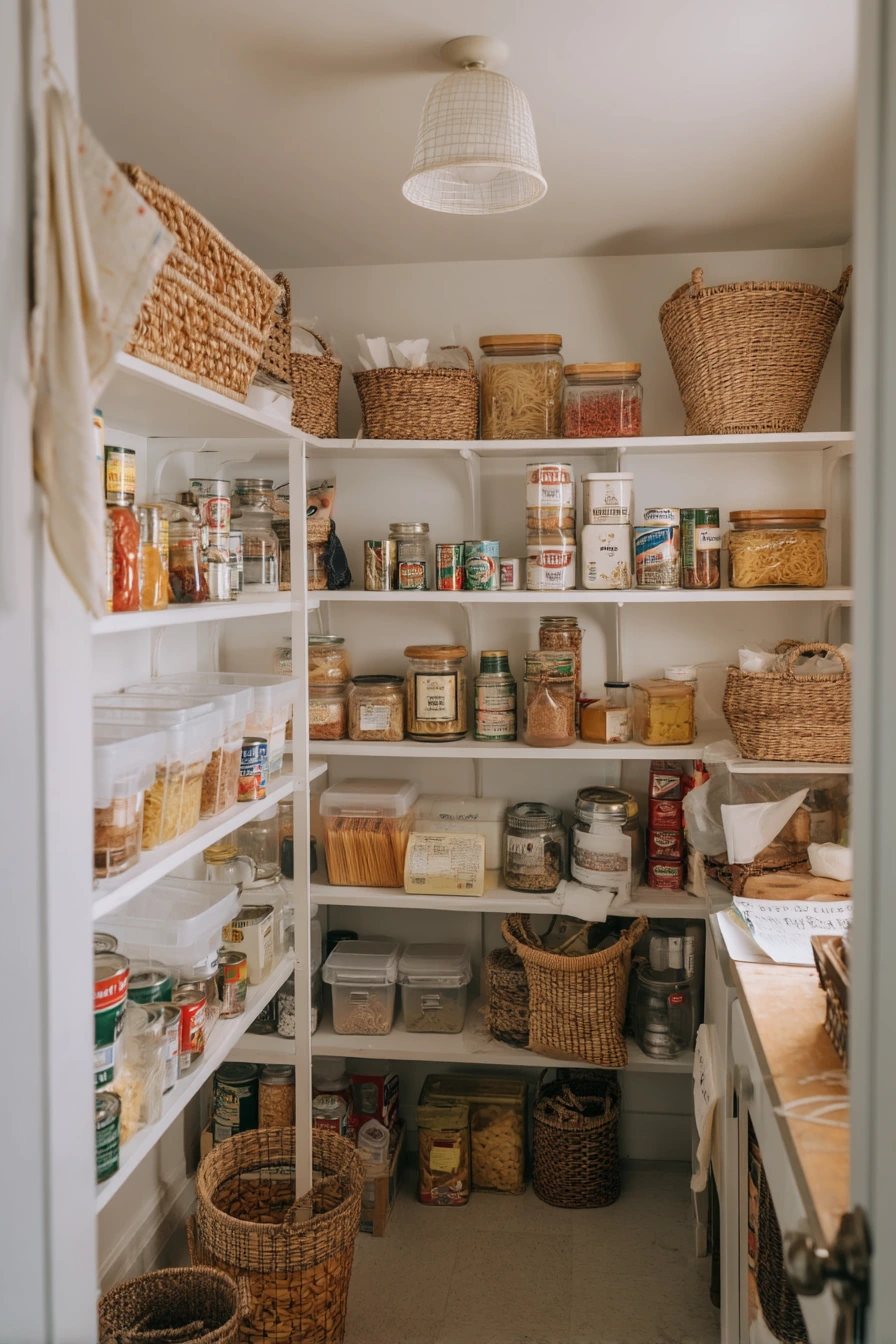
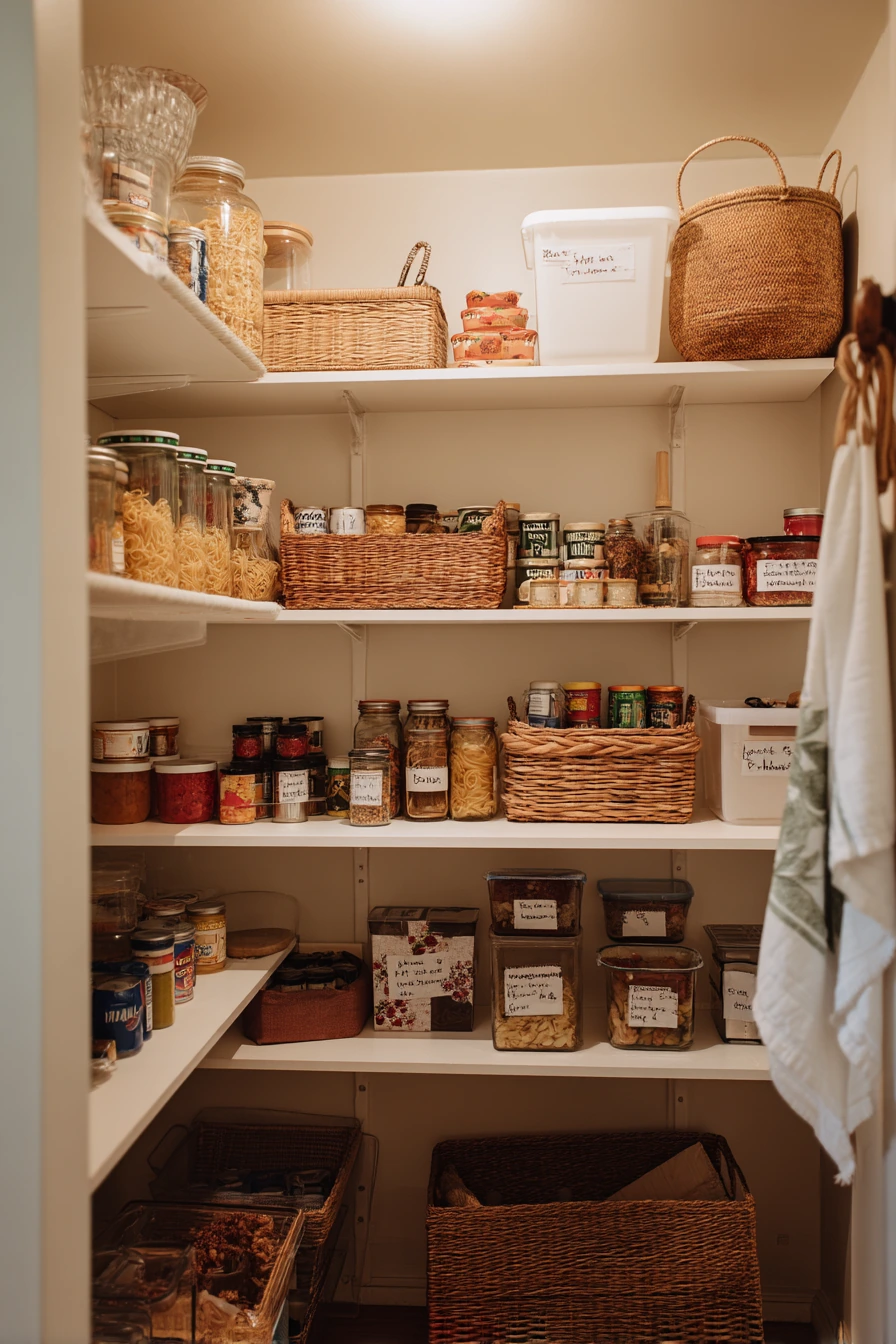
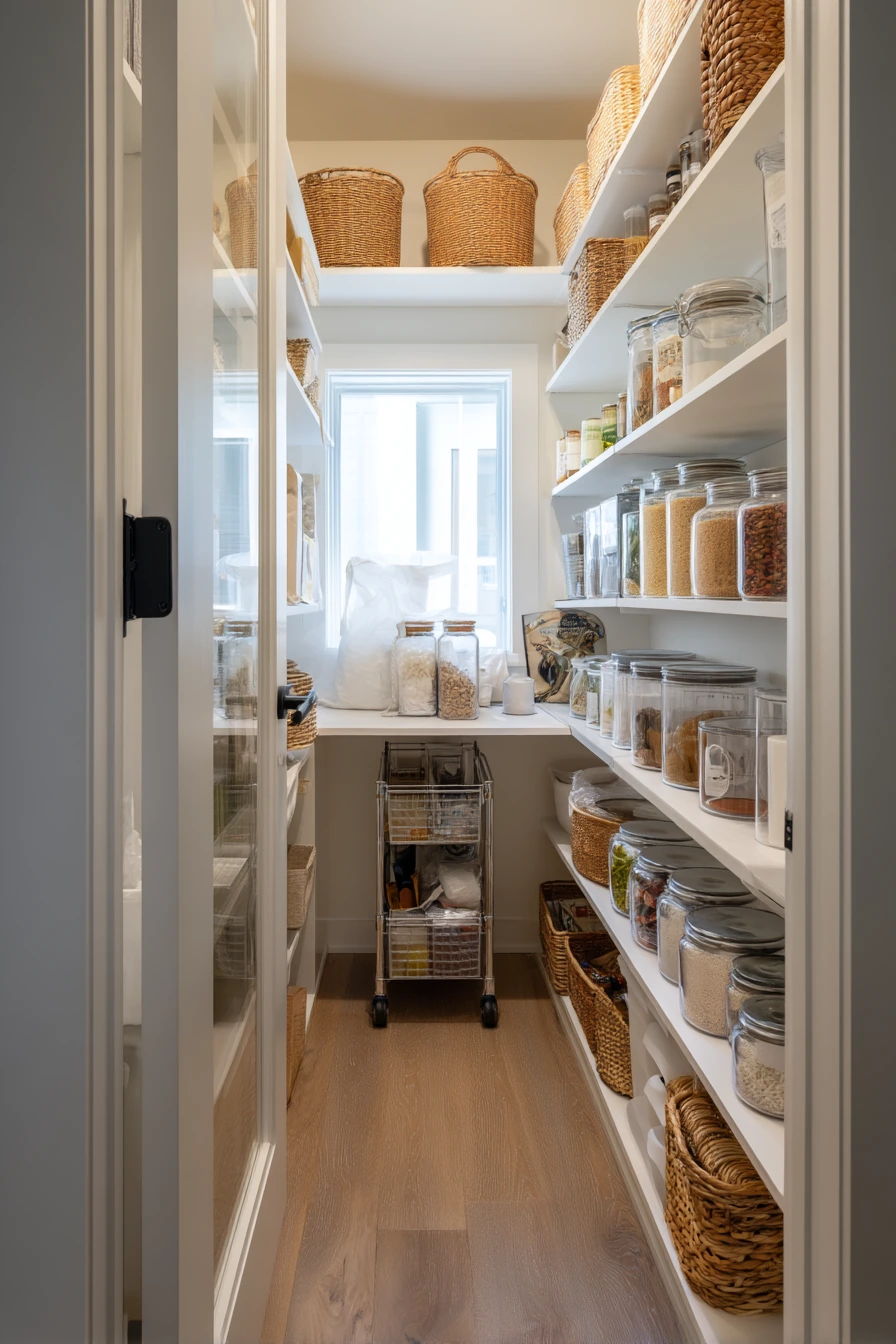
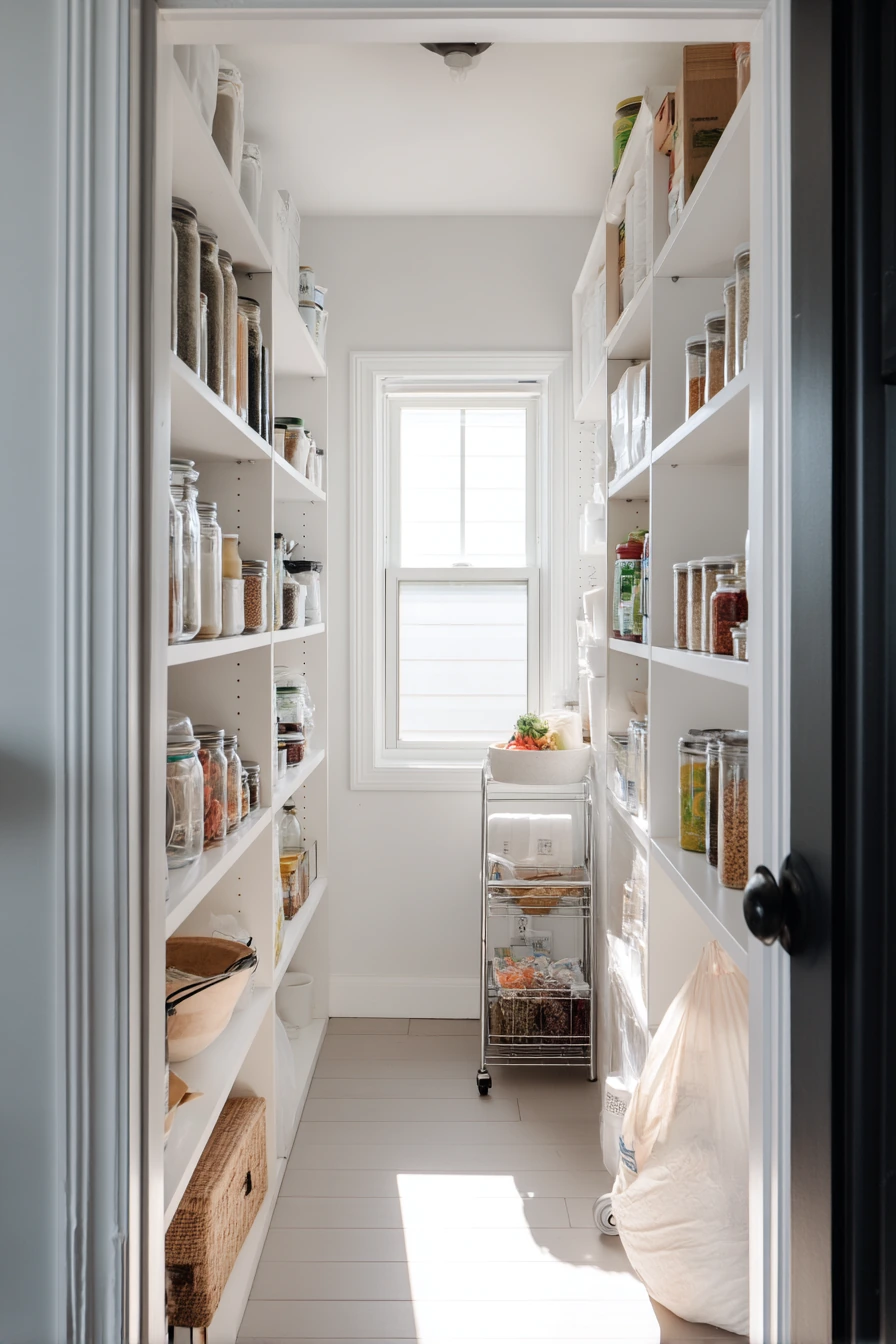
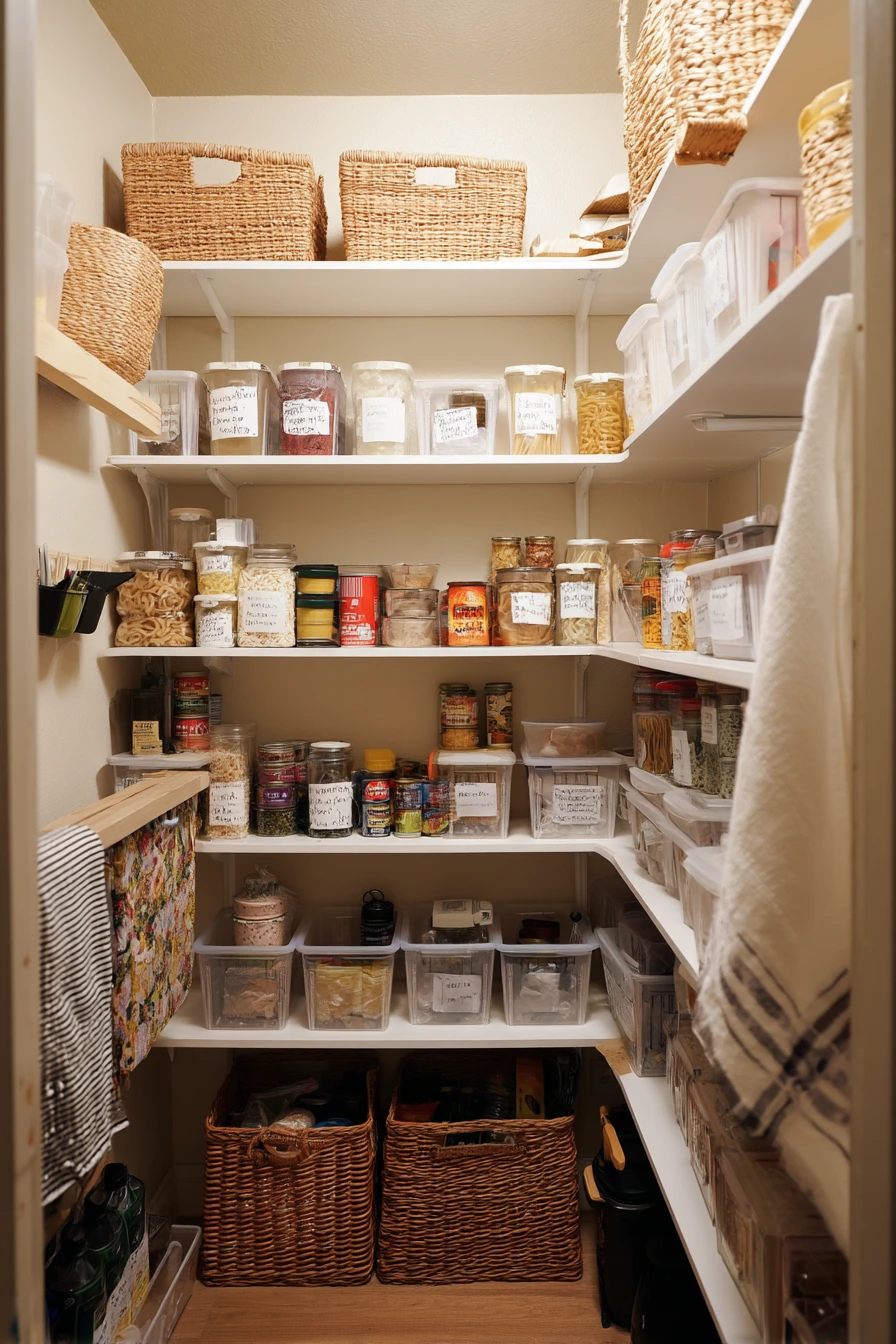
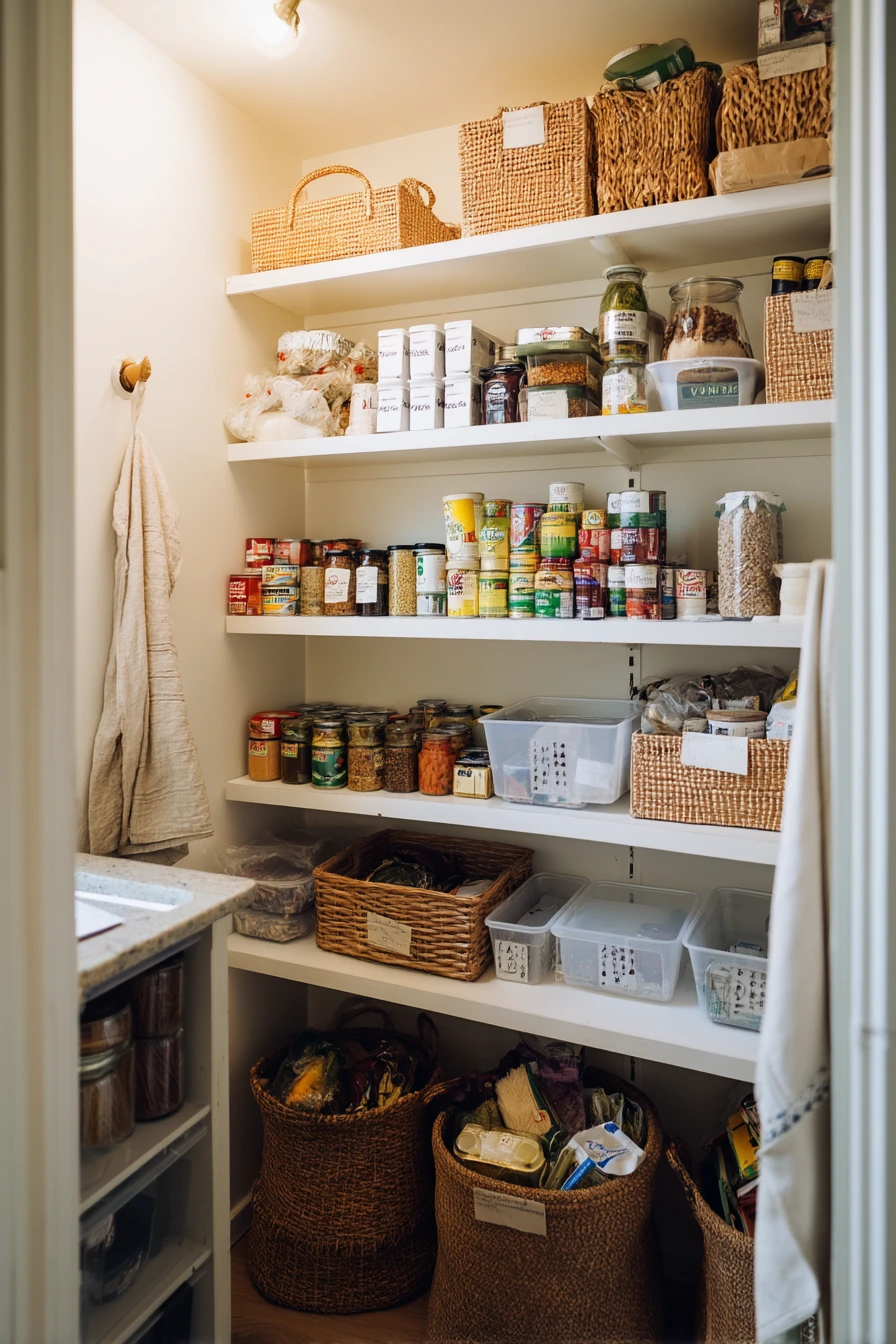
A budget pantry can look tidy even with mixed pieces. Simple white shelves are a good base. Combine plastic bins, thrifted baskets, and repurposed jars, then tie it together with the same label style. Handwritten labels on tape are fast, easy to change, and renter friendly.
Group food by type so you can restock quickly. Keep canned goods in one area, pasta in another, and baking items together. If you have a small counter or shelf ledge, leave space for the real-life stuff such as a receipt, a running list, or coupons. Add a dish towel on a shelf hook so spills get handled right away.
For styling, go for humble and orderly. Do not try to hide every package. Instead, decant only what you use a lot, like rice, flour, and cereal. Keep the rest in bins so it looks clean at a glance. Use warm lamp light if the pantry is dark, and choose one basket texture, like wicker, to add softness.
- Use plastic bins to corral chips, baking mixes, and kid snacks.
- Thrift a few baskets for odd shapes like onions, potatoes, and bread.
- Repurpose jars for grains, beans, and pasta you buy often.
- Label shelves and bins with tape so you can update as needs change.
- Store canned goods by category and keep heavy items on lower shelves.
Pro Design Tip: Pick one simple rule such as one category per bin, and keep an empty bin for overflow so the pantry never turns into piles.
Budget Considerations: Skip matching container sets; collect jars over time and invest in a roll of labels and a thick marker for a consistent look.
4 Coffee and Breakfast Pantry Nook
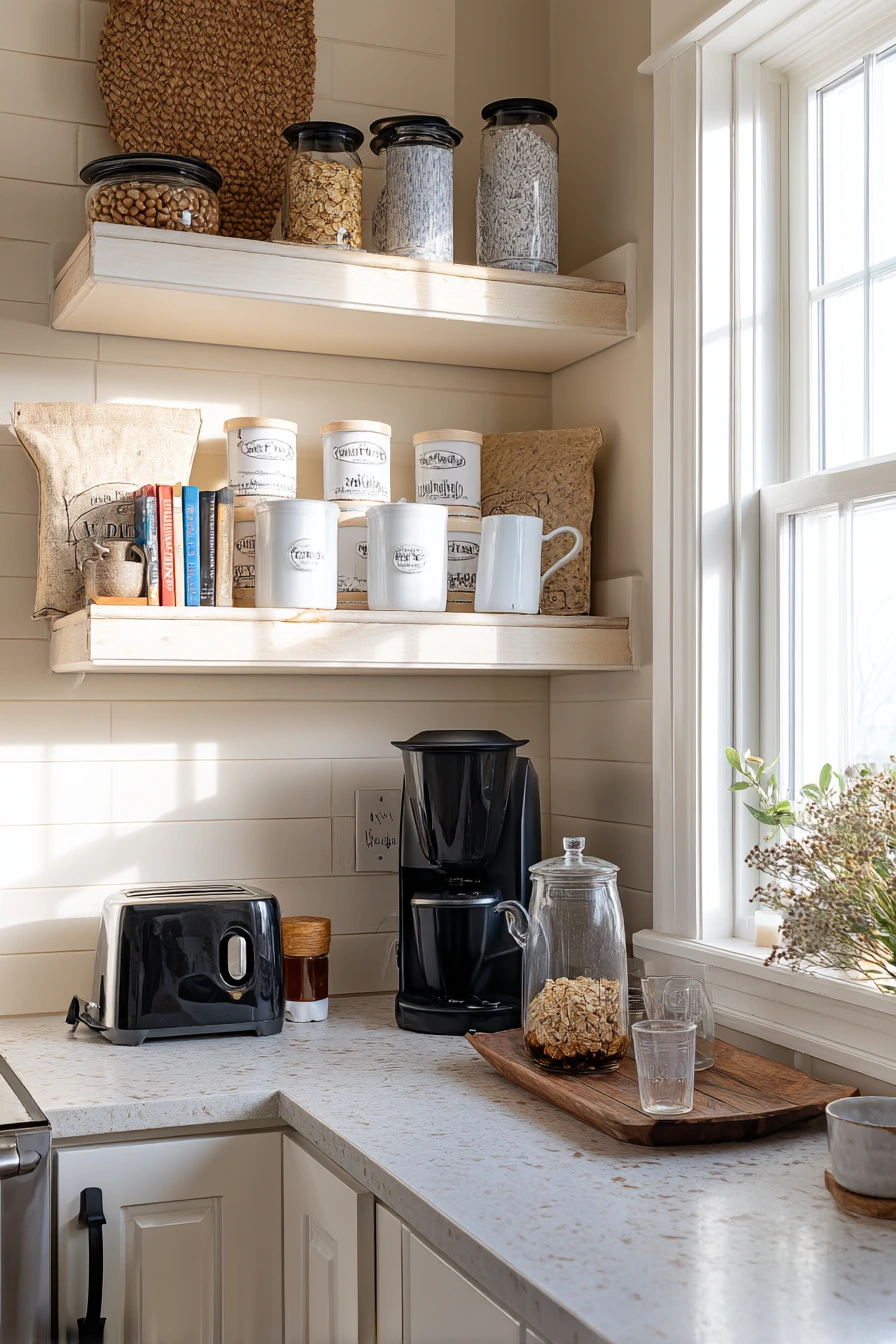
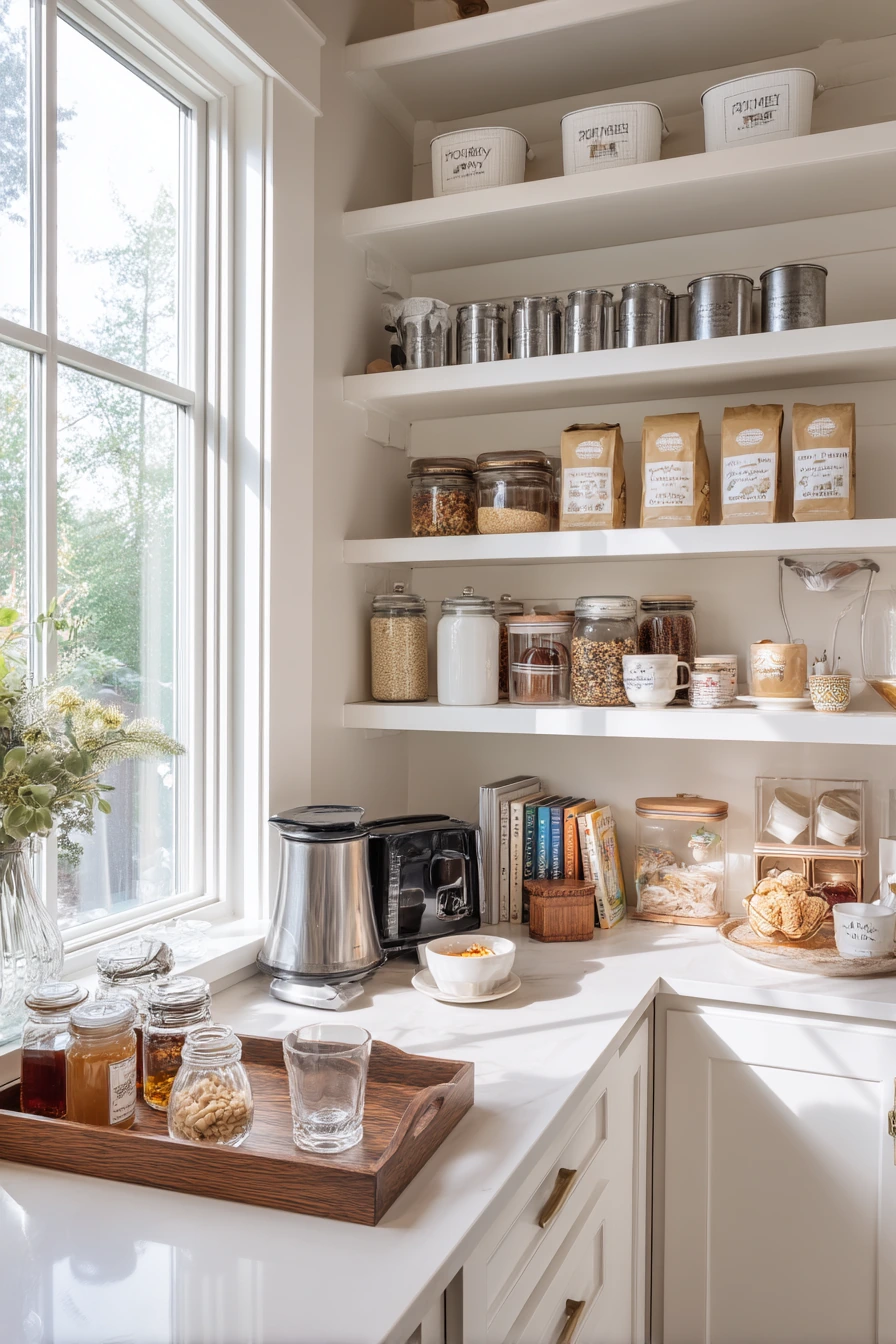
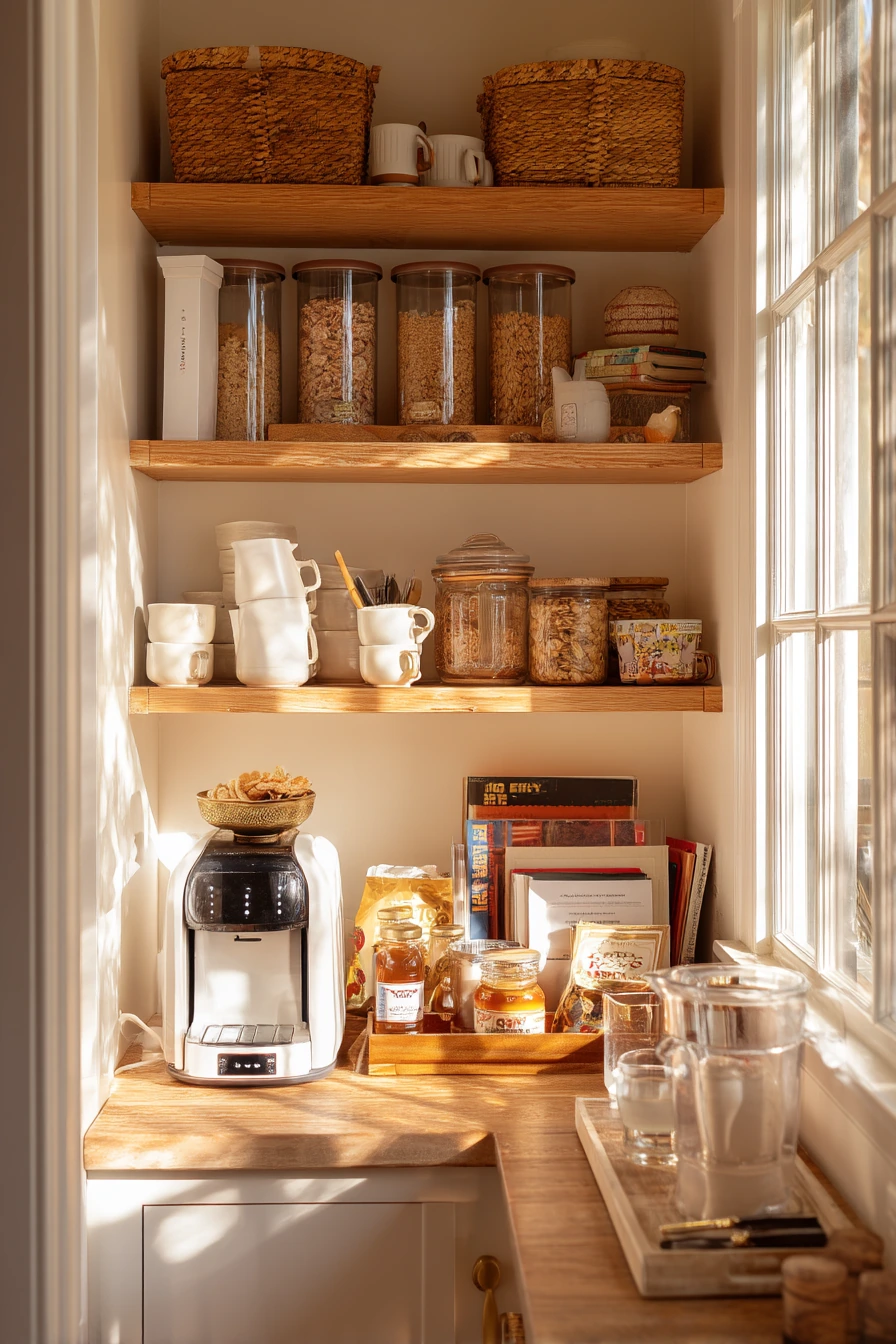
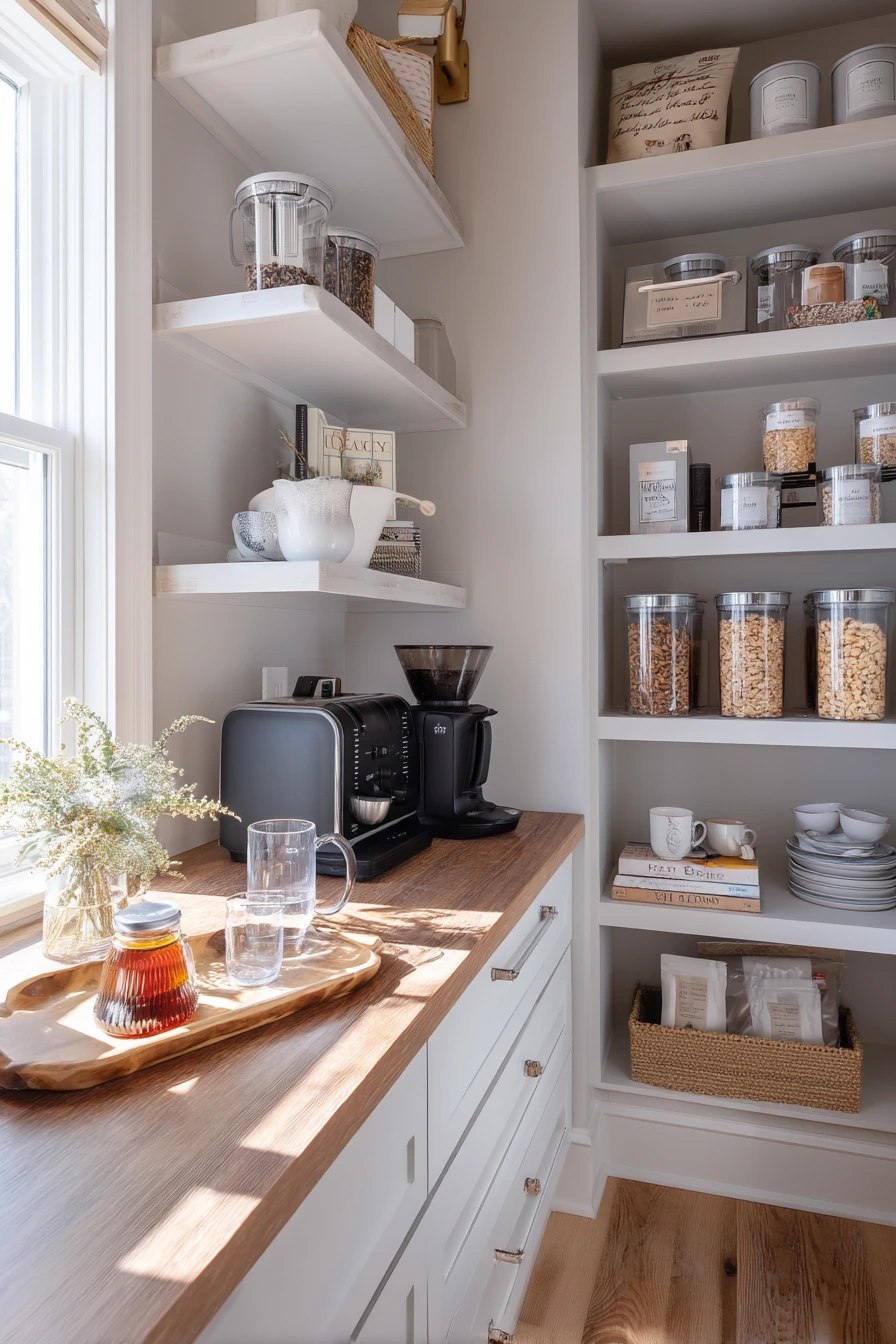
If mornings feel rushed, set up your pantry like a mini cafe. Keep coffee canisters, mugs, and a toaster on the counter or a sturdy shelf. Add cereal containers and a tray for honey and jam so breakfast is one easy stop. Recipe books can live nearby, but keep only the ones you use often.
Think about flow. Put mugs near the coffee, spoons near the cereal, and napkins within reach. A spoon rest and a small bin for tea bags prevent sticky mess. One water glass left on the counter is not a problem; it signals the station is used and makes it easy to reset when you have a spare minute.
For styling, aim for cozy and grounded. Keep counters mostly clear, with one tray that holds the daily items. Under-shelf lamp accents make the space feel warm and help you see early in the morning. If you notice crumbs, add a small handheld broom and dustpan on a hook so clean up takes 30 seconds.
- Create a coffee zone with canisters, filters, and sweeteners together.
- Stack mugs on a shelf or use a simple mug tree to save space.
- Use cereal containers so boxes do not fall over and rip open.
- Place jam, honey, and nut butter on a tray for quick grab breakfasts.
- Add a tiny clean up kit with a towel, wipes, and a crumb brush.
Pro Design Tip: Keep the morning station at counter height and store extras above it, so daily items stay easy to reach and the setup stays consistent.
Budget Considerations: You can build the whole station with a tray, a few jars, and hooks; skip built-ins and use shelf risers to create levels.
5 Deep Pantry with Pull-Out Organization
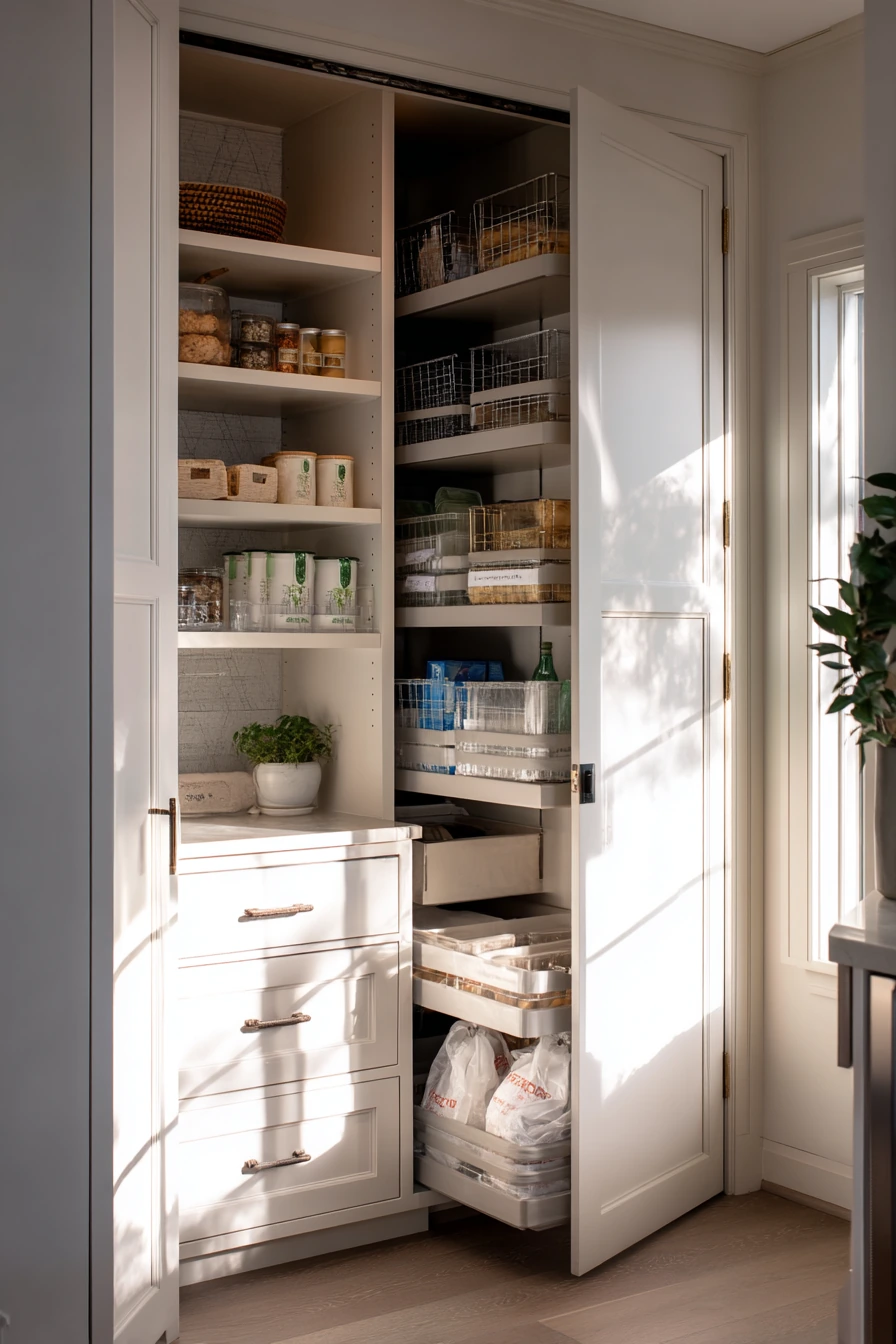
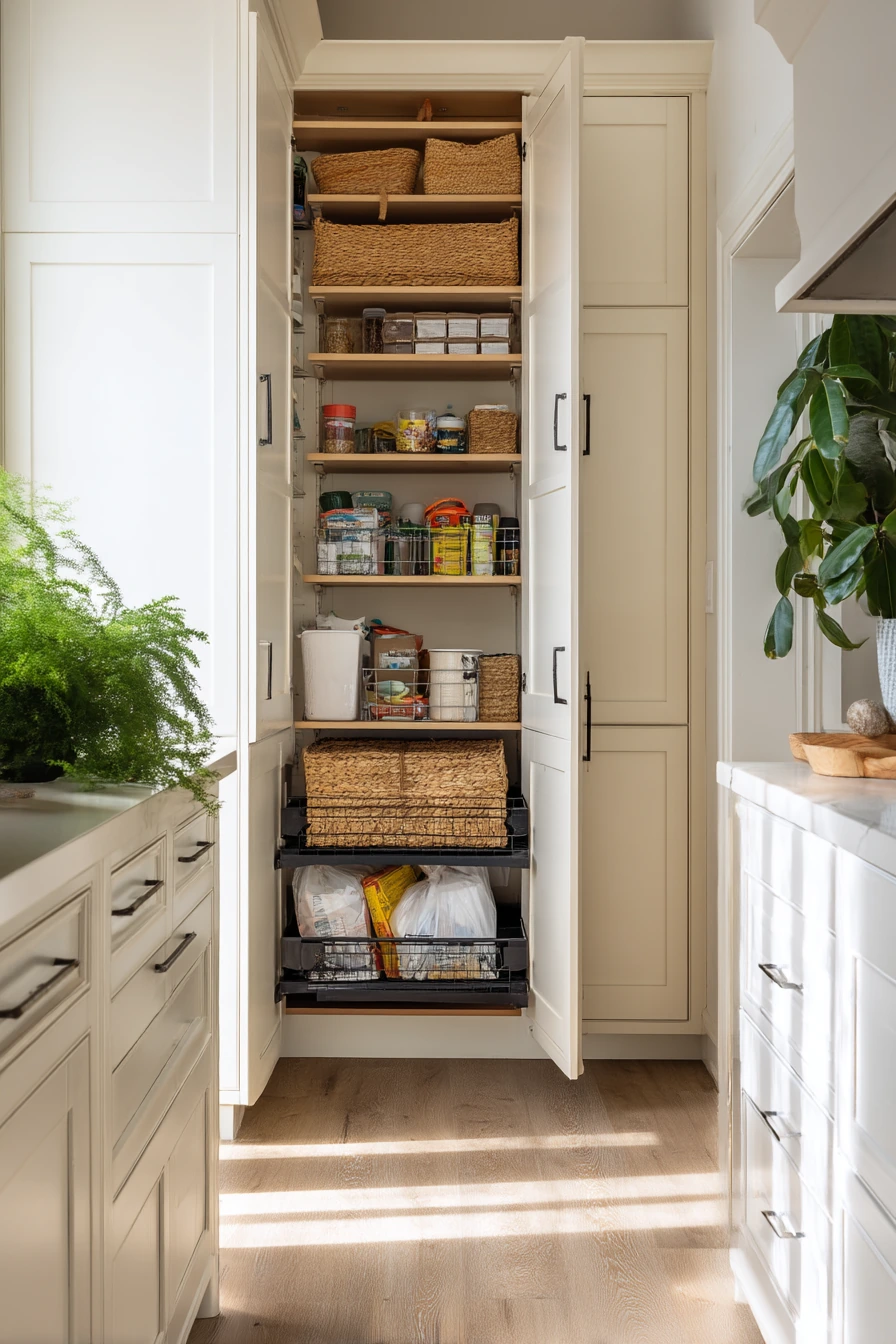
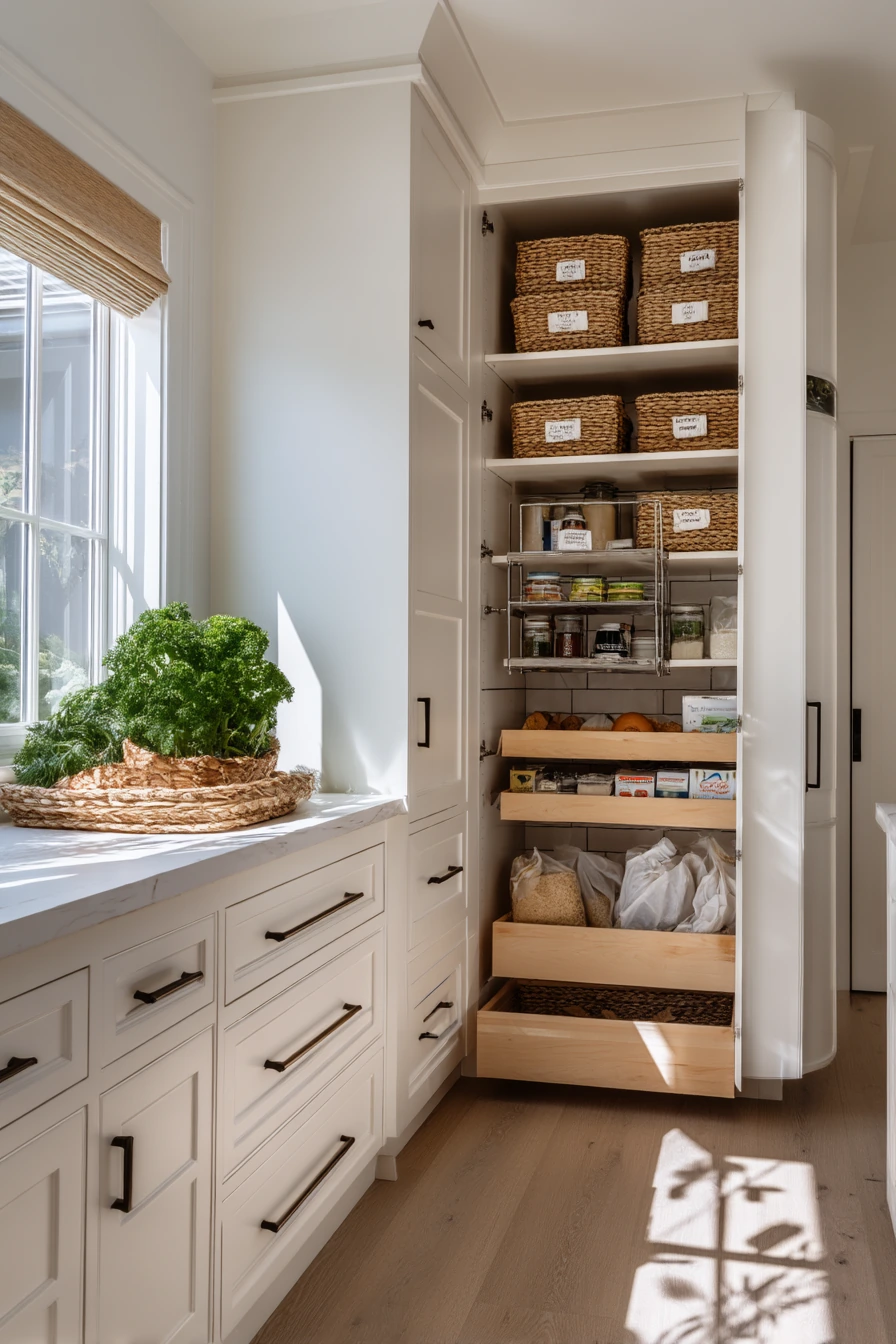
A deep pantry is great for bulk, but it can turn into a black hole without pull-out drawers. Tall cabinetry with labeled bins and drawers makes everything reachable. Add a sheet pan rack so baking trays stand upright, not stacked in a loud pile. Use baskets for potatoes and onions so air can move around them.
Plan the lower shelves for heavy and messy items. Cleaning supplies belong low for safety and to keep leaks away from food. Folded grocery bags can live in a bin or a drawer so they do not slide off shelves. Leave one drawer slightly open only if it is part of your habit, like a reminder that restock is not done yet.
For styling, keep it clean and tactile. Use a few matching bin labels, but do not overdo it. Let the pantry look lived-in with subtle real-life clutter, like a spare sponge or a bag of lemons. A leafy plant nearby can cast soft shadows and make the room feel less like storage.
- Add pull-out drawers for snacks, baking items, and backstock.
- Use a sheet pan rack for trays, cutting boards, and cooling racks.
- Store potatoes and onions in breathable baskets, away from heat.
- Keep cleaning supplies on a lower shelf in a leak-proof bin.
- Use one drawer or bin for folded grocery bags and reusable sacks.
Pro Design Tip: Use full-extension slides for deep drawers so you can see the back without unloading everything.
Budget Considerations: If custom drawers are not possible, use sturdy pull-out wire baskets or rolling bins that sit on the shelf and slide out.
6 Elegant Pantry for Entertaining Hosts
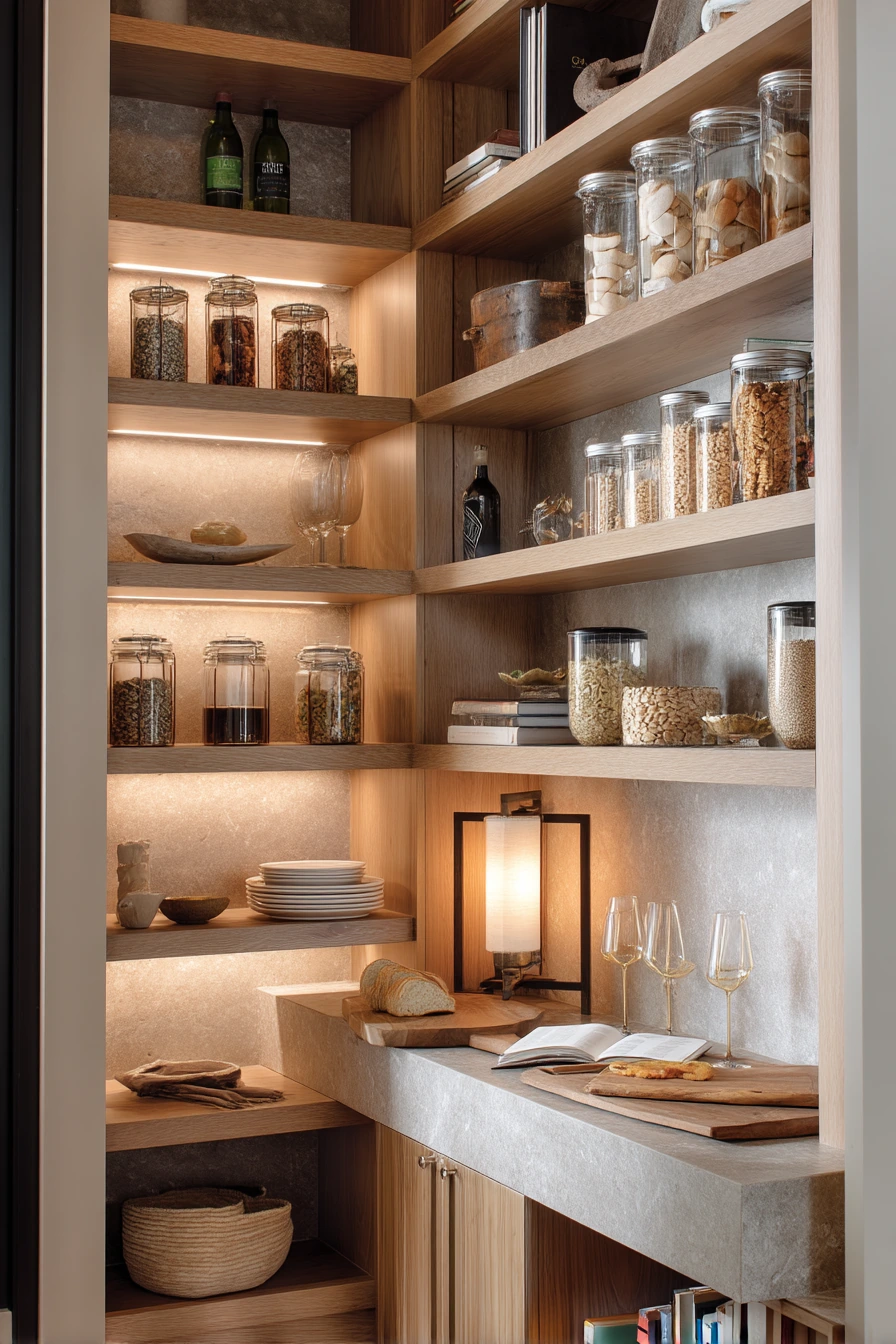
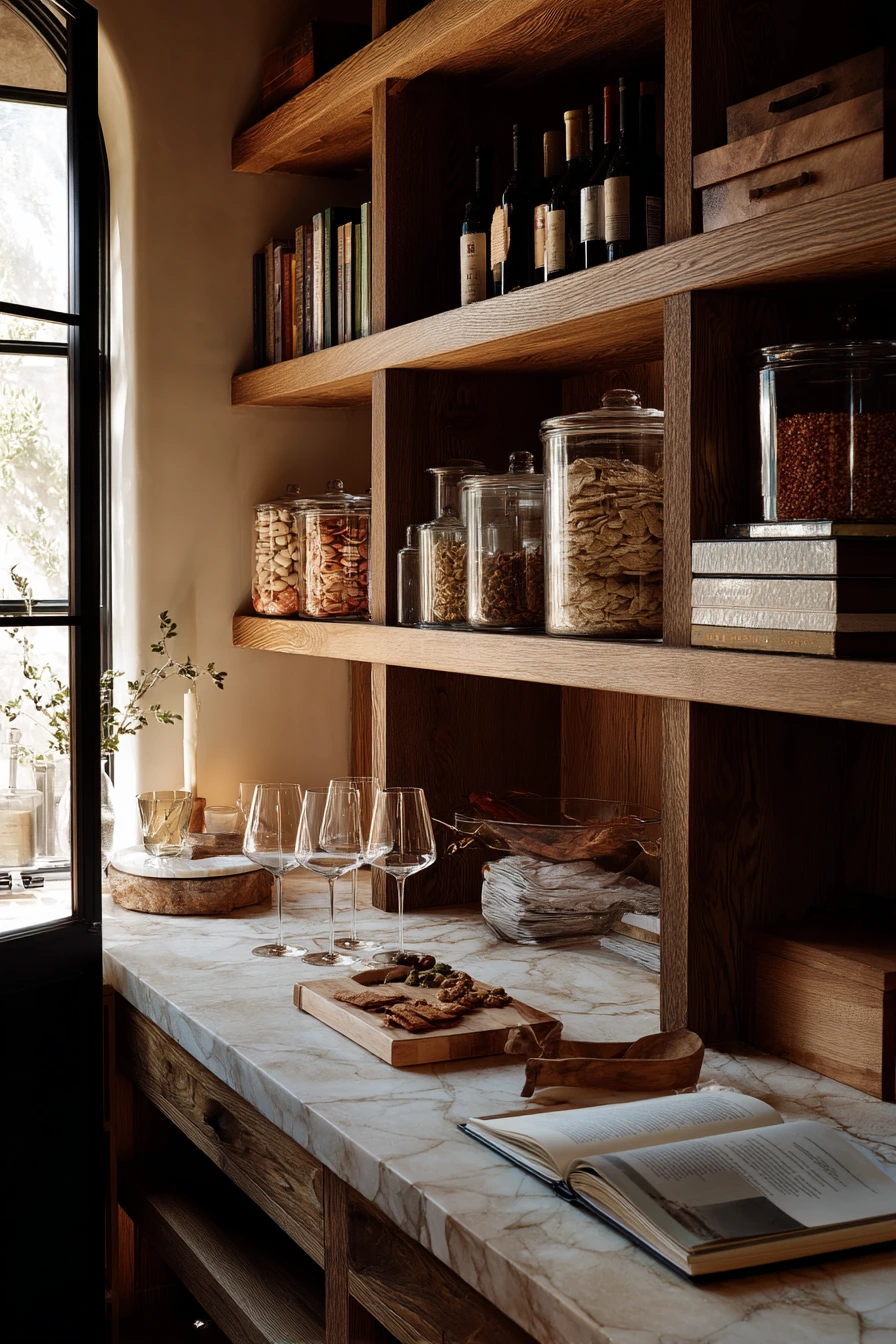
If you host often, your pantry can be part prep space and part serving closet. Warm wood shelving and stone-look counters feel polished but still believable. Decanted snacks keep the shelves neat, while serving platters, wine glasses, and linen napkins make it easy to set a table fast.
Store entertaining items by task. Keep platters and boards together, candles and matches in a small box, and extra drinkware on one shelf. Lean cutting boards casually against the backsplash to save space and add texture. An open cookbook on a dinner menu is a nice touch, but keep it on a stand or a tray so it can move when you need counter space.
For styling, choose a simple color palette so it stays calm, like warm wood, clear glass, and neutral linens. Leave two stemmed glasses ready if you like the look, but keep the rest in a clean row. Soft evening lamp light works well here and makes the pantry feel like an extension of the kitchen, not a back room.
- Use clear jars for snacks and nuts so guests can see options quickly.
- Store wine glasses and bar tools on one dedicated shelf.
- Keep serving platters and bowls upright with dividers or a plate rack.
- Fold linen napkins in a basket so they look tidy and are easy to grab.
- Set aside a small counter zone for plating and last-minute prep.
Pro Design Tip: Create an entertaining zone that is separate from everyday snacks so party prep does not disrupt the weekly routine.
Budget Considerations: Stone-look counters and wood shelves can be mimicked with laminate and stained pine; focus on good lighting and a few uniform jars for the upscale feel.
7 Pantry with Pet and Kid Life Stacks
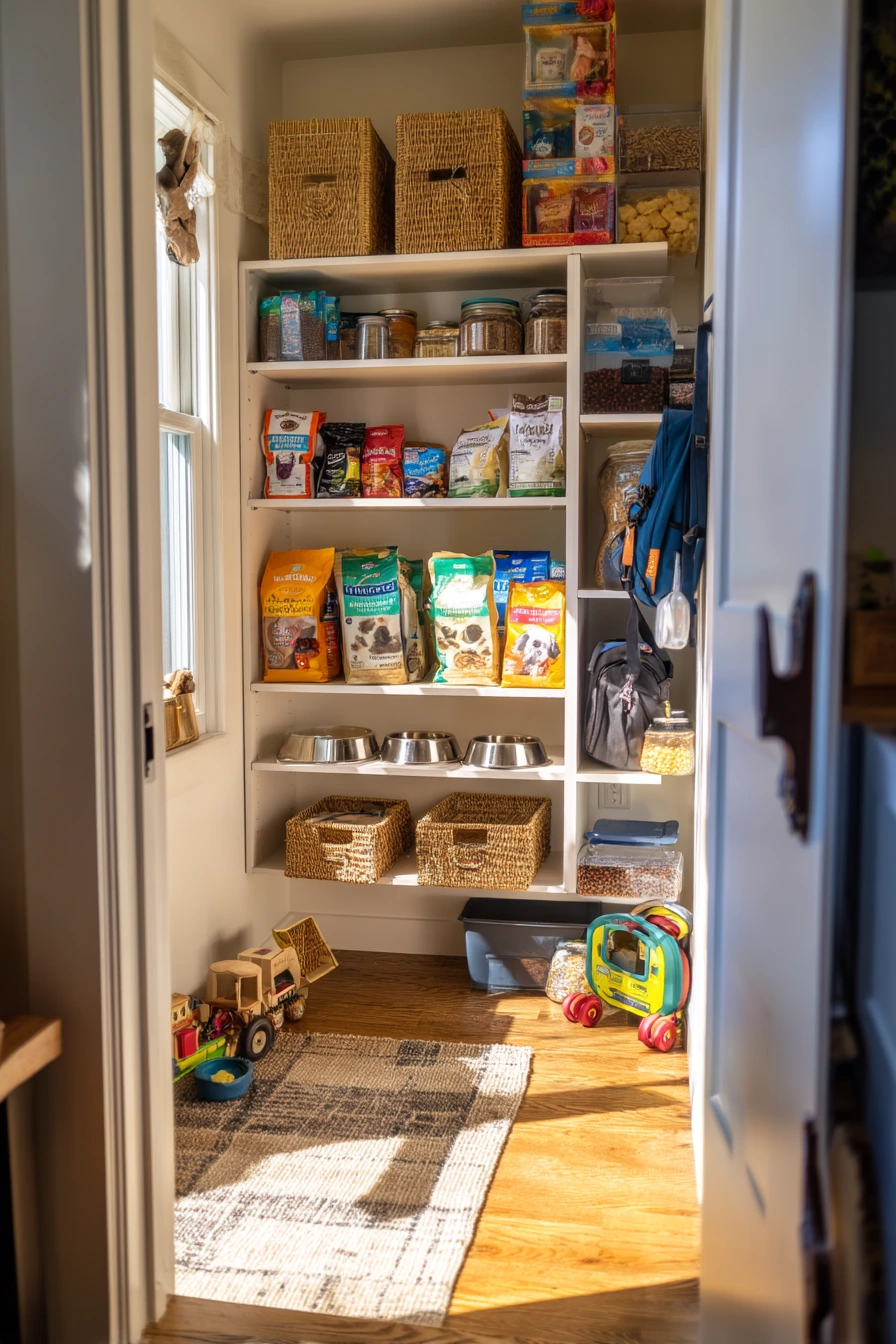
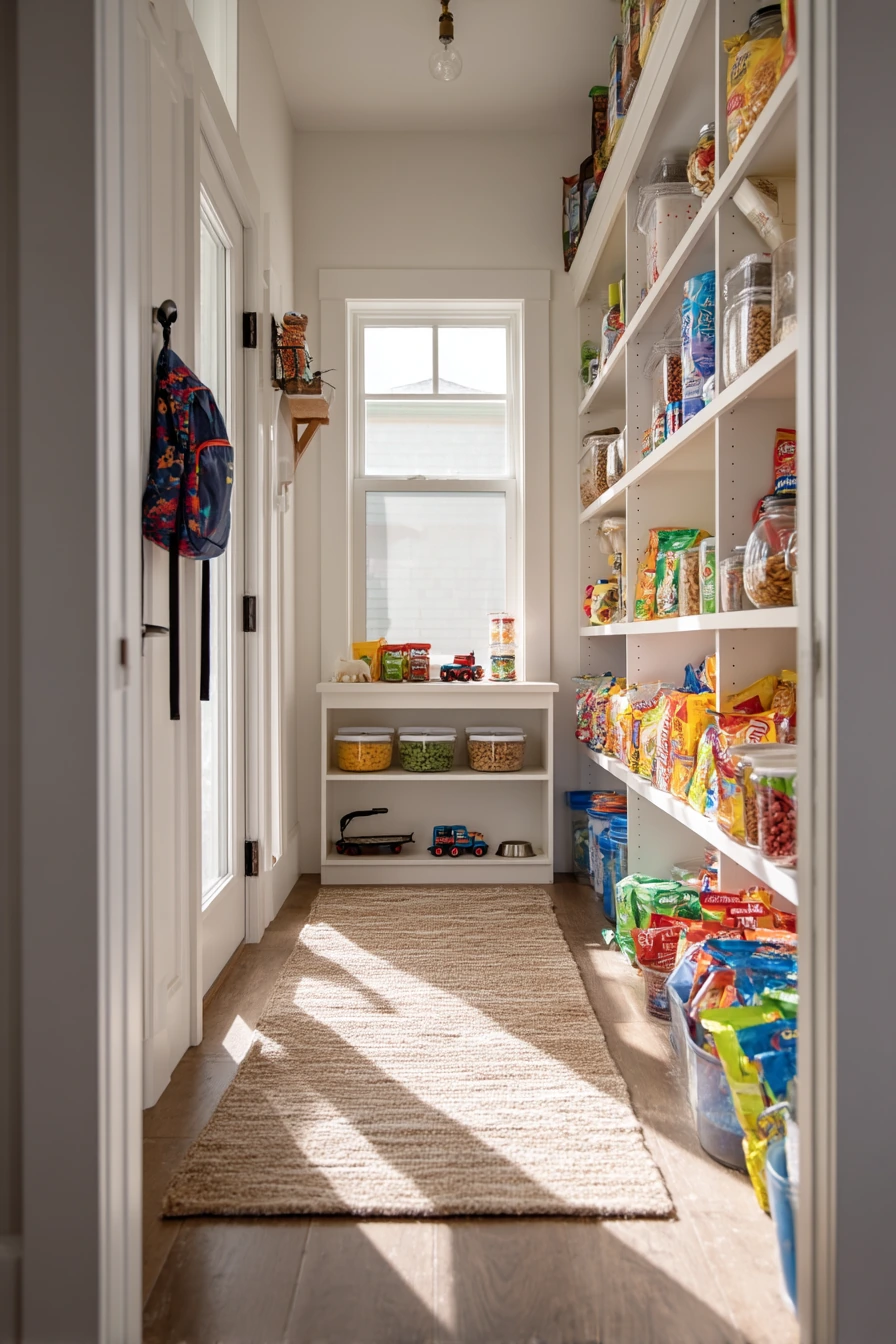
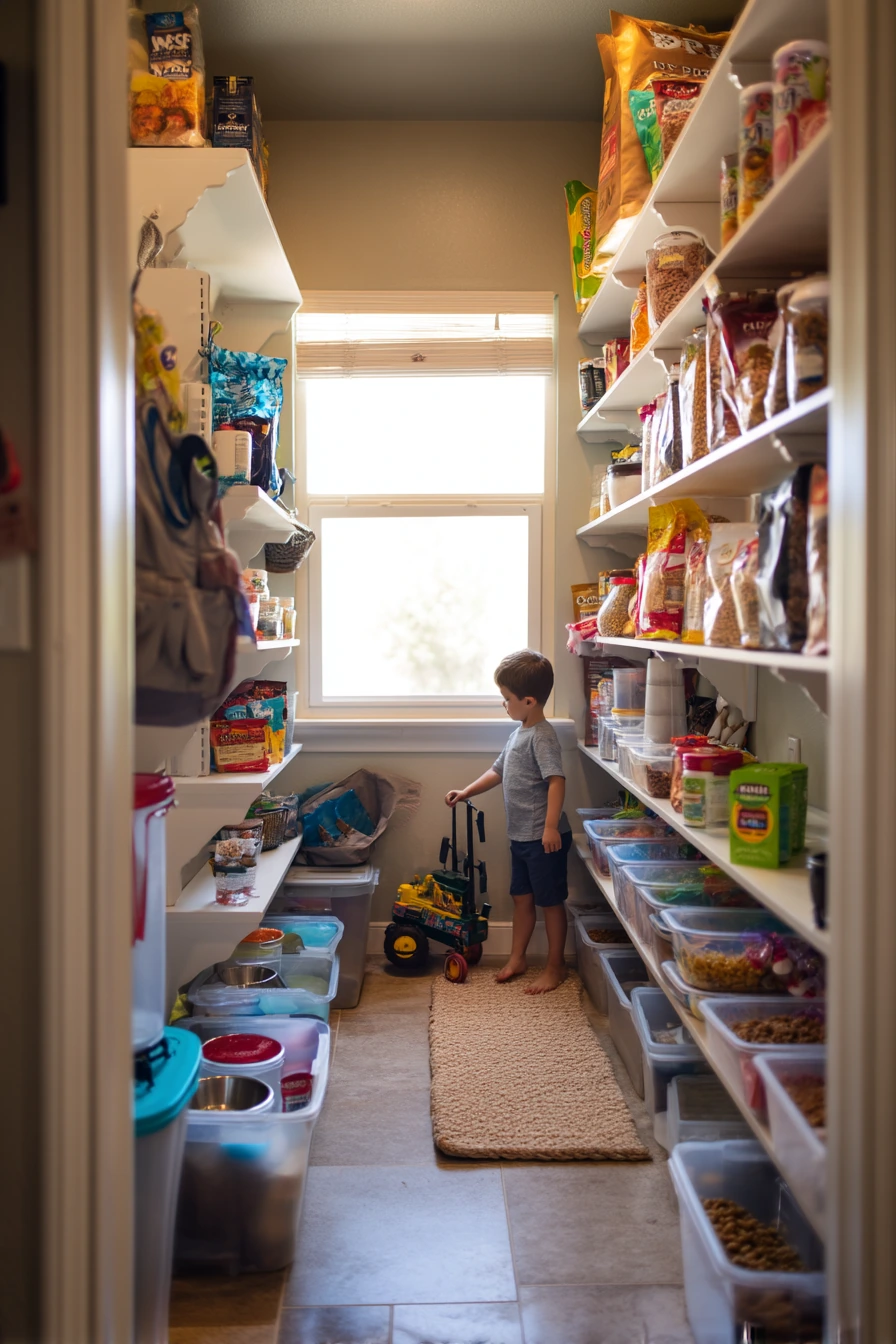
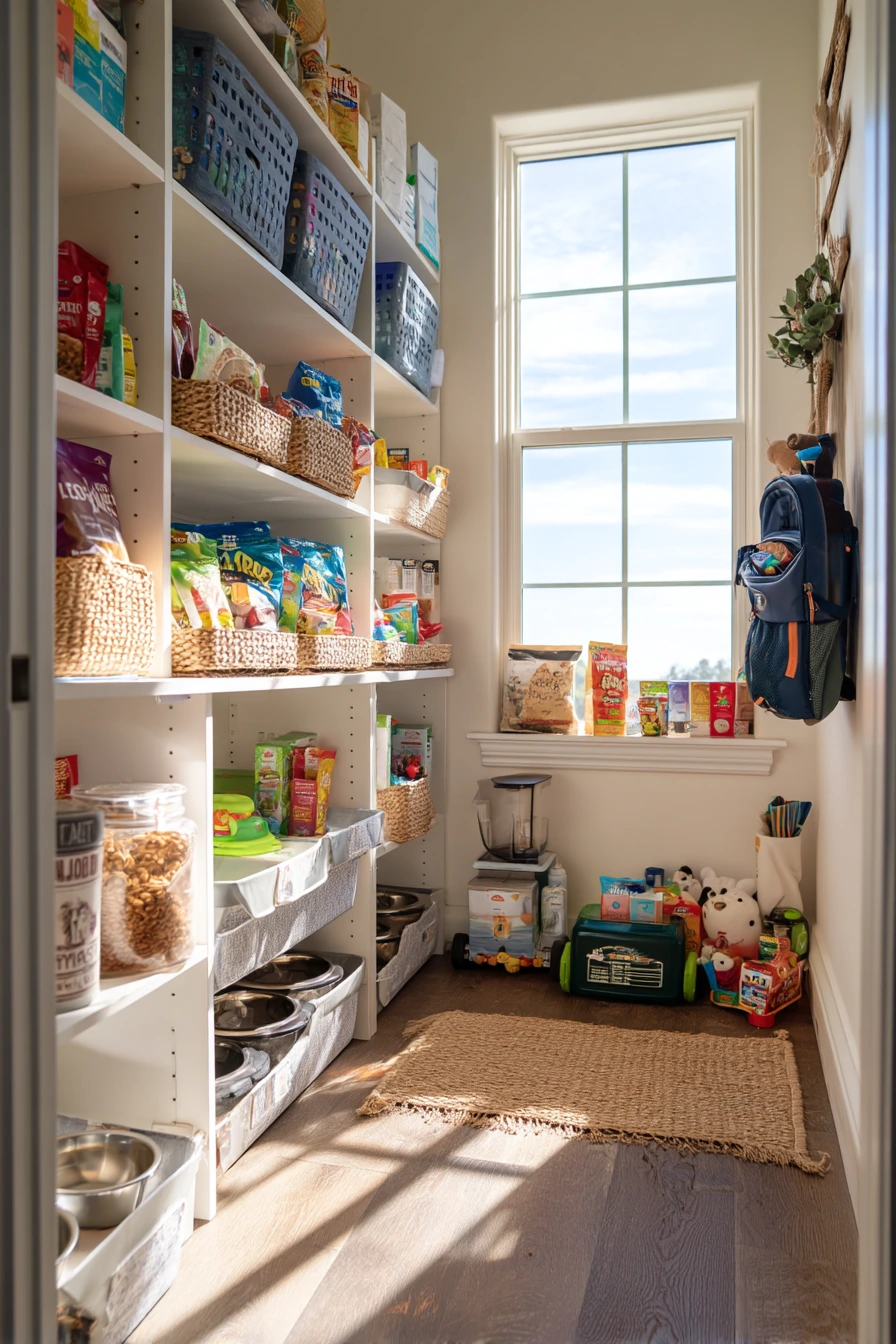
When pets and kids share the pantry, organization has to be clear and fast. Use lower bins for school items like granola bars, juice boxes, and lunch bags. Add a treat jar on a higher shelf so it stays out of reach when you need it to. Keep pet bowls on a mat so spills are easy to wipe and the area feels contained.
Hooks are your friend. Hang a backpack, a small tote, or an apron on the wall so the floor stays open. If a lunchbox is half packed, keep a small lunch zone with bags, wraps, and snacks in one place. A small toy truck near the baseboard is real life, so plan one tiny basket to catch those items before they spread.
For styling, lean into playful and orderly. Use labels with simple words and maybe one color per kid. Keep the morning light feeling warm by avoiding dark bins that hide what is inside. Clear containers work well for school snacks because you can see when you are running low.
- Set lower bins for lunch supplies so kids can help pack.
- Use a mat and bin for pet food so crumbs do not travel.
- Add wall hooks for backpacks and reusable bags to clear the floor.
- Keep one shelf for quick-grab snacks and restock it once a week.
- Use a small catch-all basket for toys and loose items near the baseboard.
Pro Design Tip: Give each daily routine a home, such as lunch, pet care, and snacks, and keep those zones on the lowest, easiest shelves.
Budget Considerations: Use basic plastic bins and adhesive hooks; save money by labeling with tape and a marker instead of custom decals.
8 Minimal Pantry with Calm Open Shelving
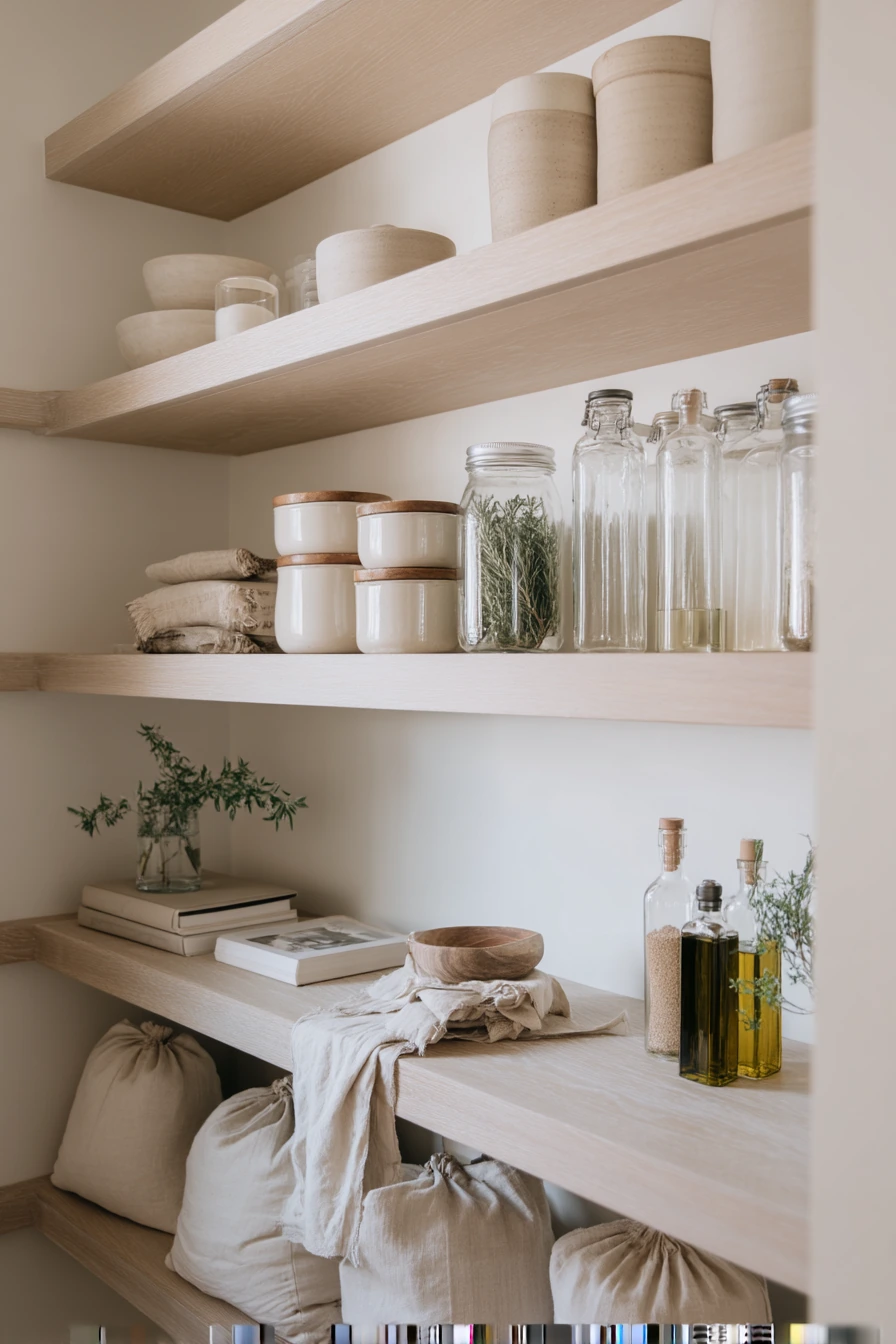
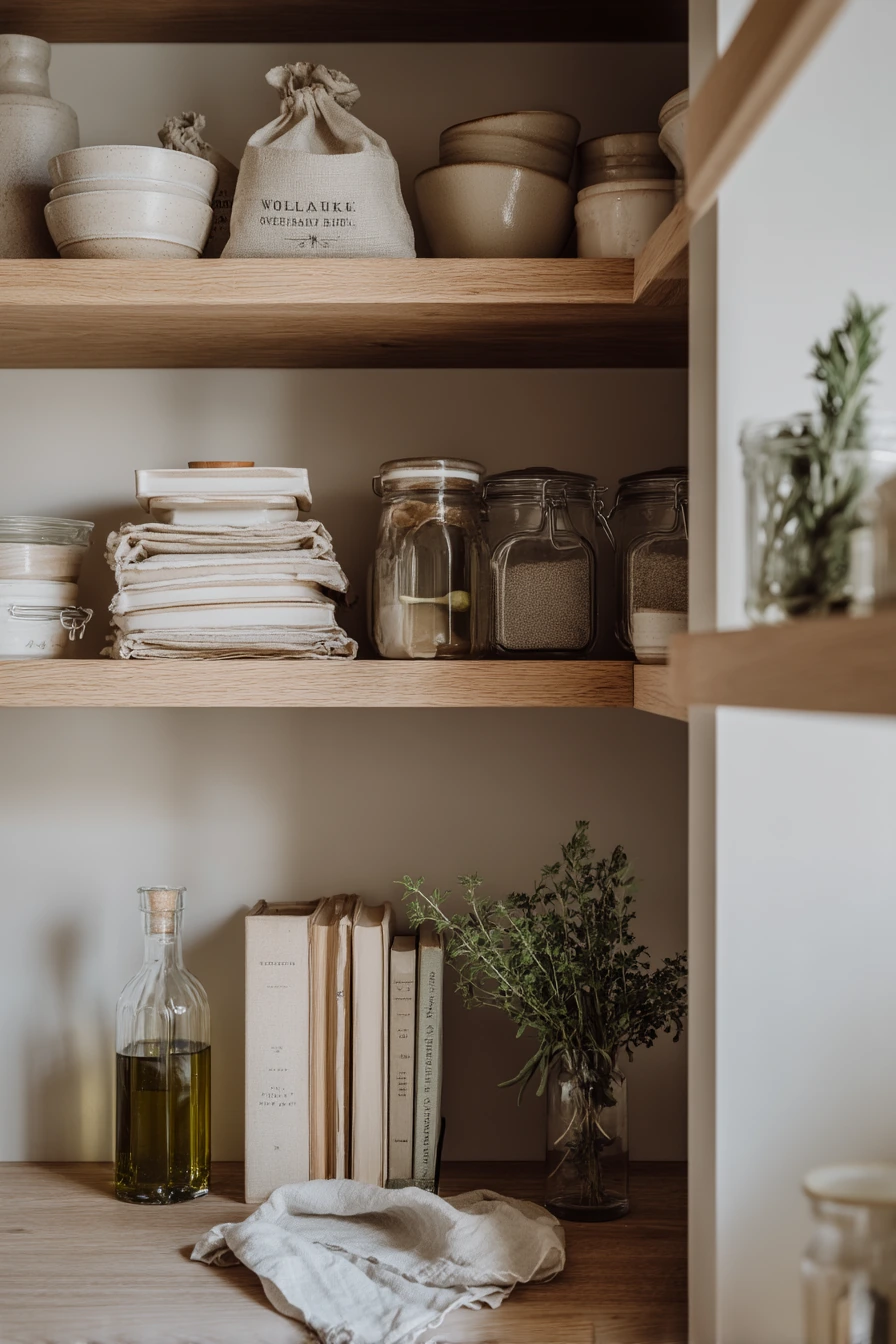
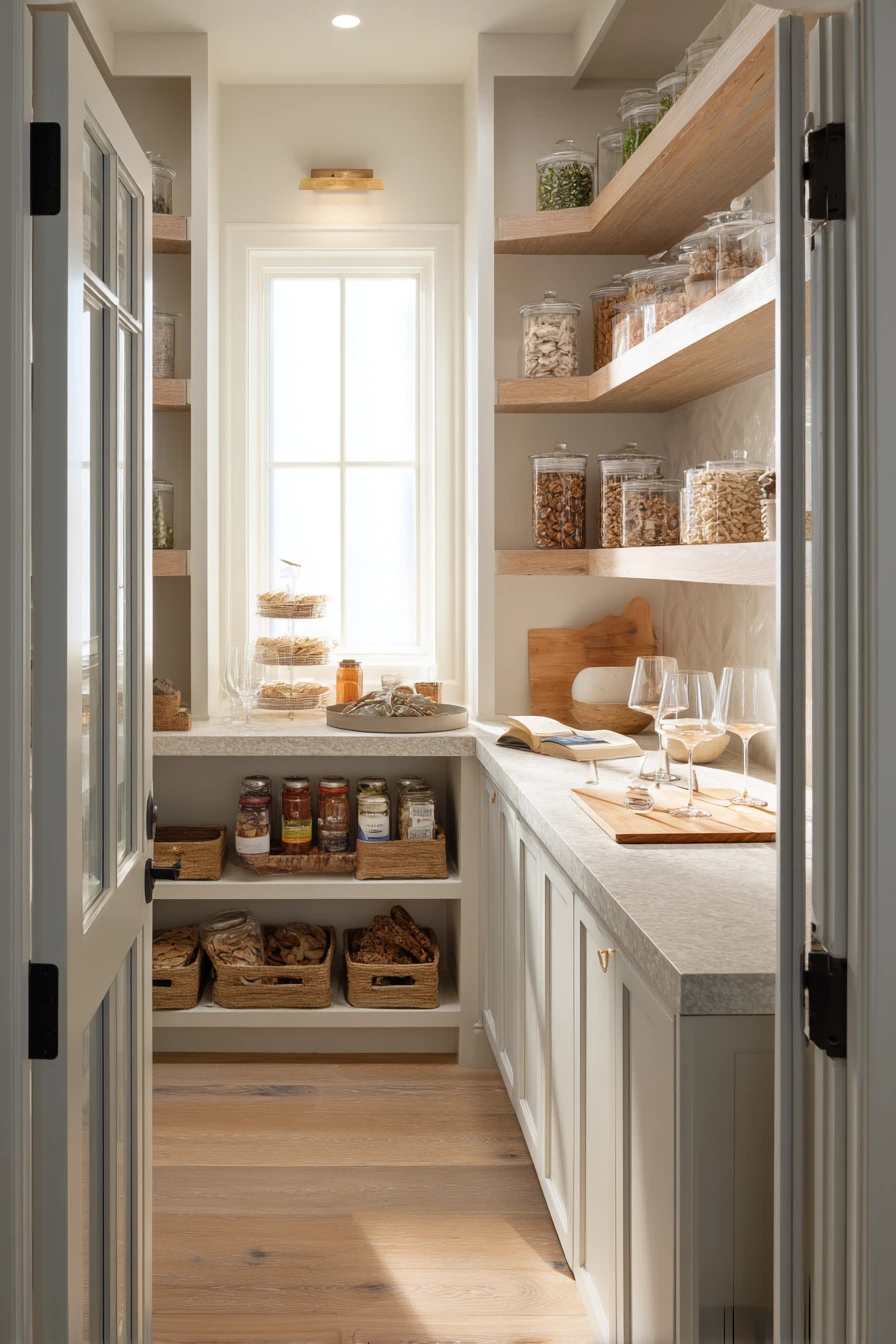
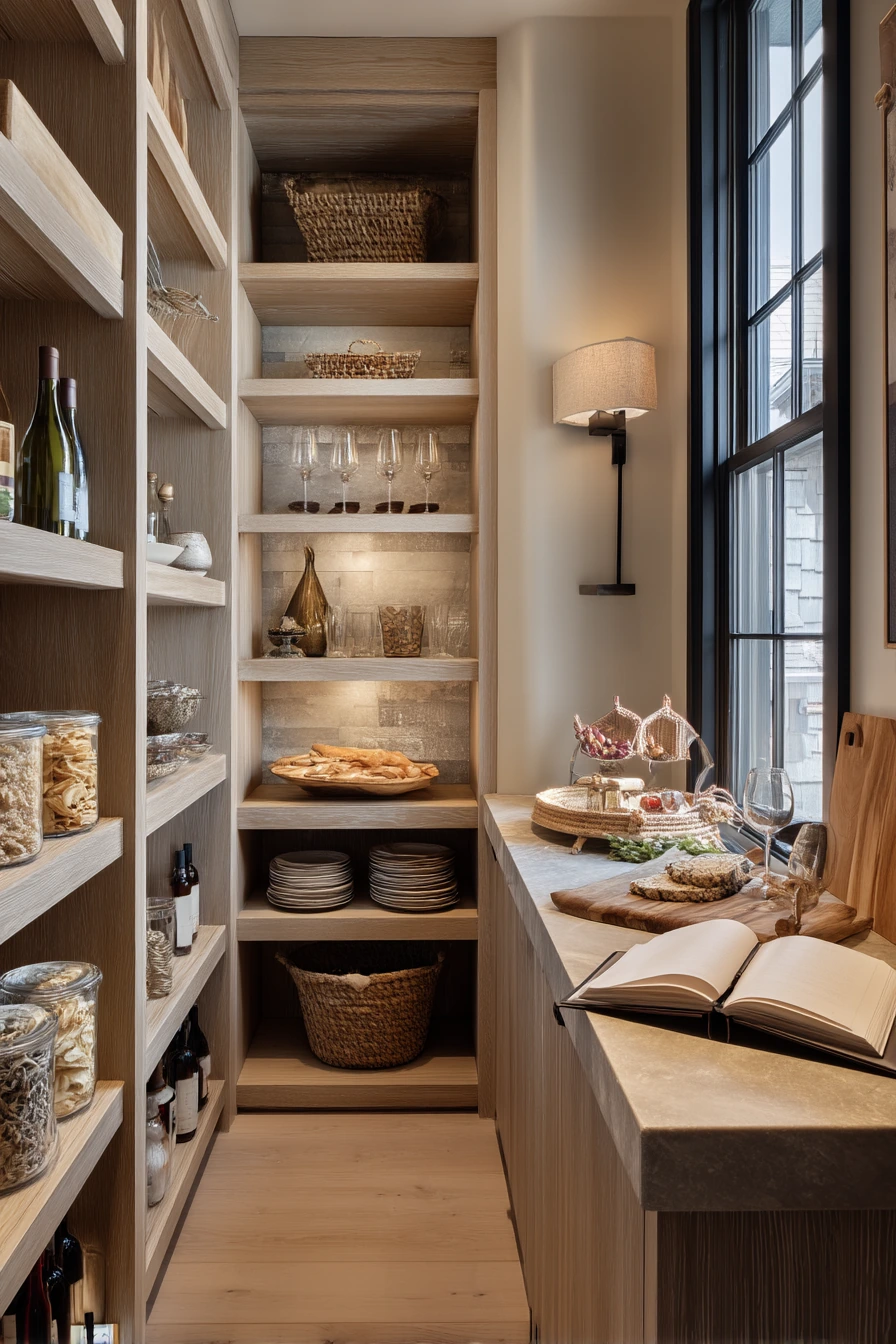
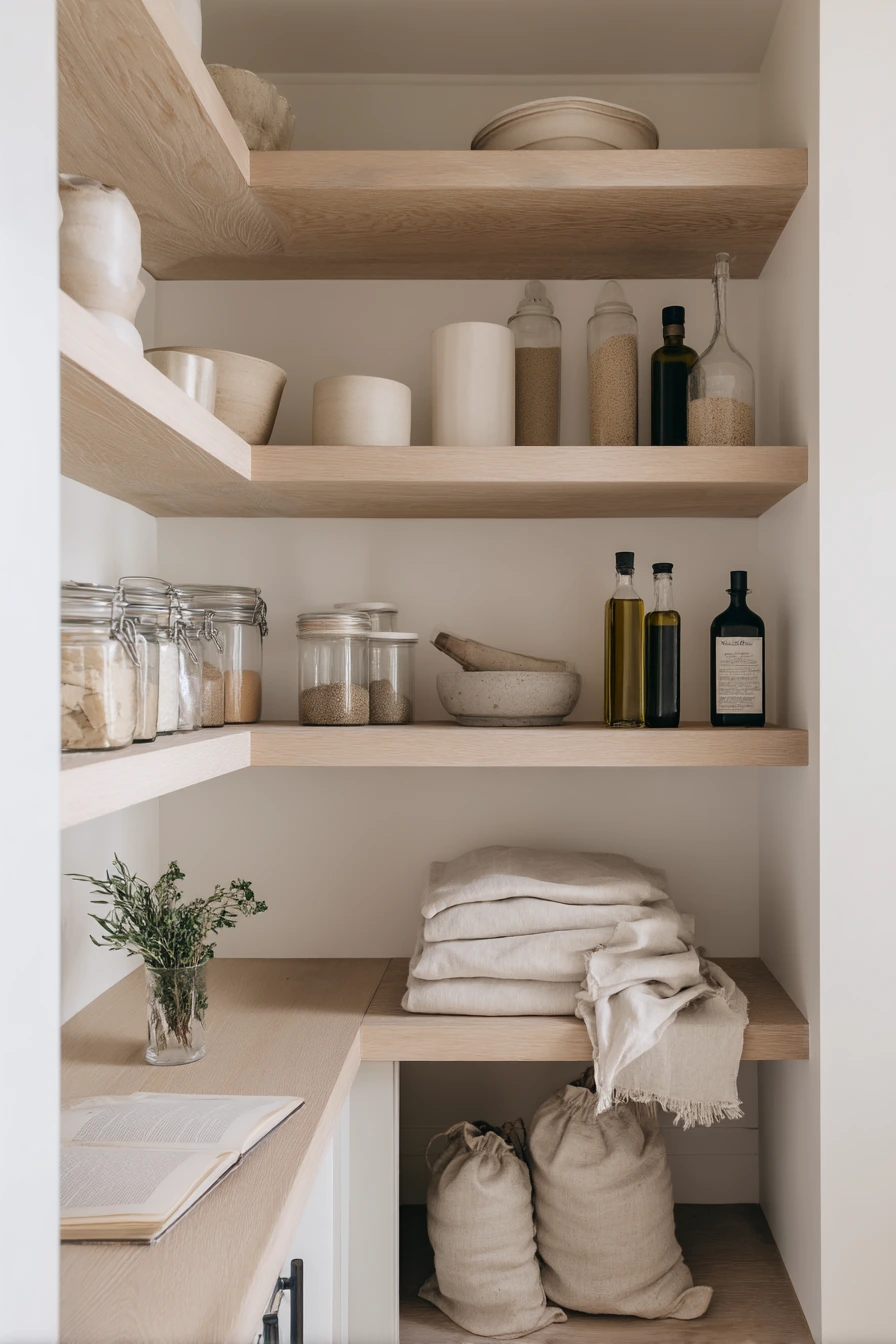
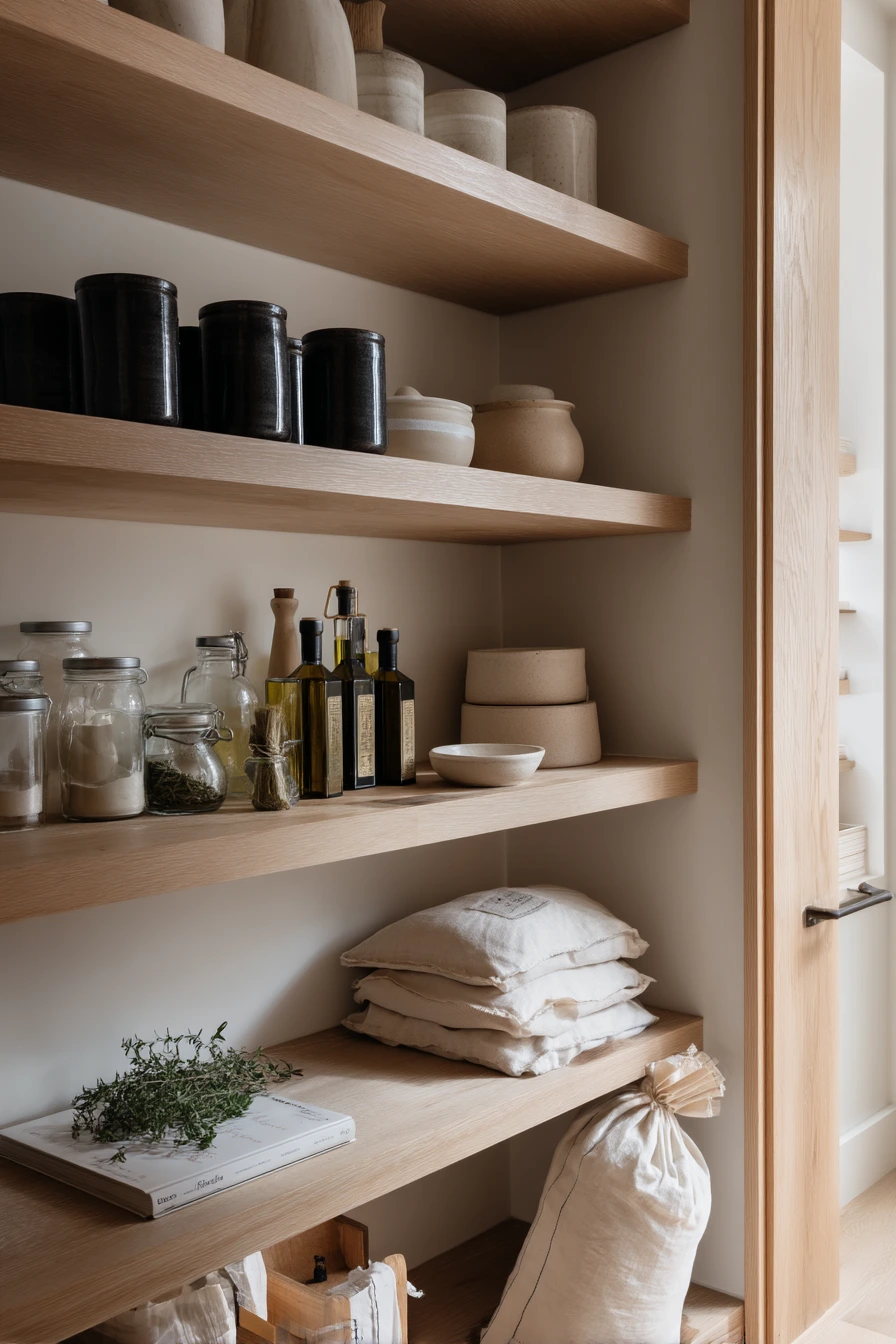
A calm pantry is easier to keep tidy because it feels good to use. Pale oak open shelves, neutral ceramic containers, and clear glass jars create a quiet look without feeling sterile. Cloth bags folded neatly can hold produce or bread and also add softness.
Keep the selection simple. Store olive oil bottles together on a tray to prevent drips. Add fresh herbs in a small vase for a gentle lived-in touch, and keep one cookbook and a tea towel on the counter so the space feels part of cooking, not just storage. Leave a little open space on each shelf so it does not look crowded.
For styling, stick to a tight color range: whites, creams, light wood, and clear glass. Use matching jar shapes for the front row and place taller items in the back. If you want a more relaxed feel, do not line everything up perfectly. Small imperfections, like a slightly tilted towel, keep it real and easy to maintain.
- Use clear glass jars for grains, pasta, and snacks so you can track levels.
- Add neutral ceramic containers for items you do not want in view.
- Fold cloth bags in a basket so they stay neat and ready to use.
- Keep oils and vinegars on a tray to catch drips and simplify cleaning.
- Leave a small styling spot with a cookbook and a tea towel for warmth.
Pro Design Tip: Design in negative space by leaving 10 to 20 percent of each shelf open so your pantry can handle real restocks without looking messy.
Budget Considerations: Ceramic canisters can be costly; mix in a few simple white canisters and use affordable glass jars for the rest.
9 Rental Pantry Makeover with Removable Fixes
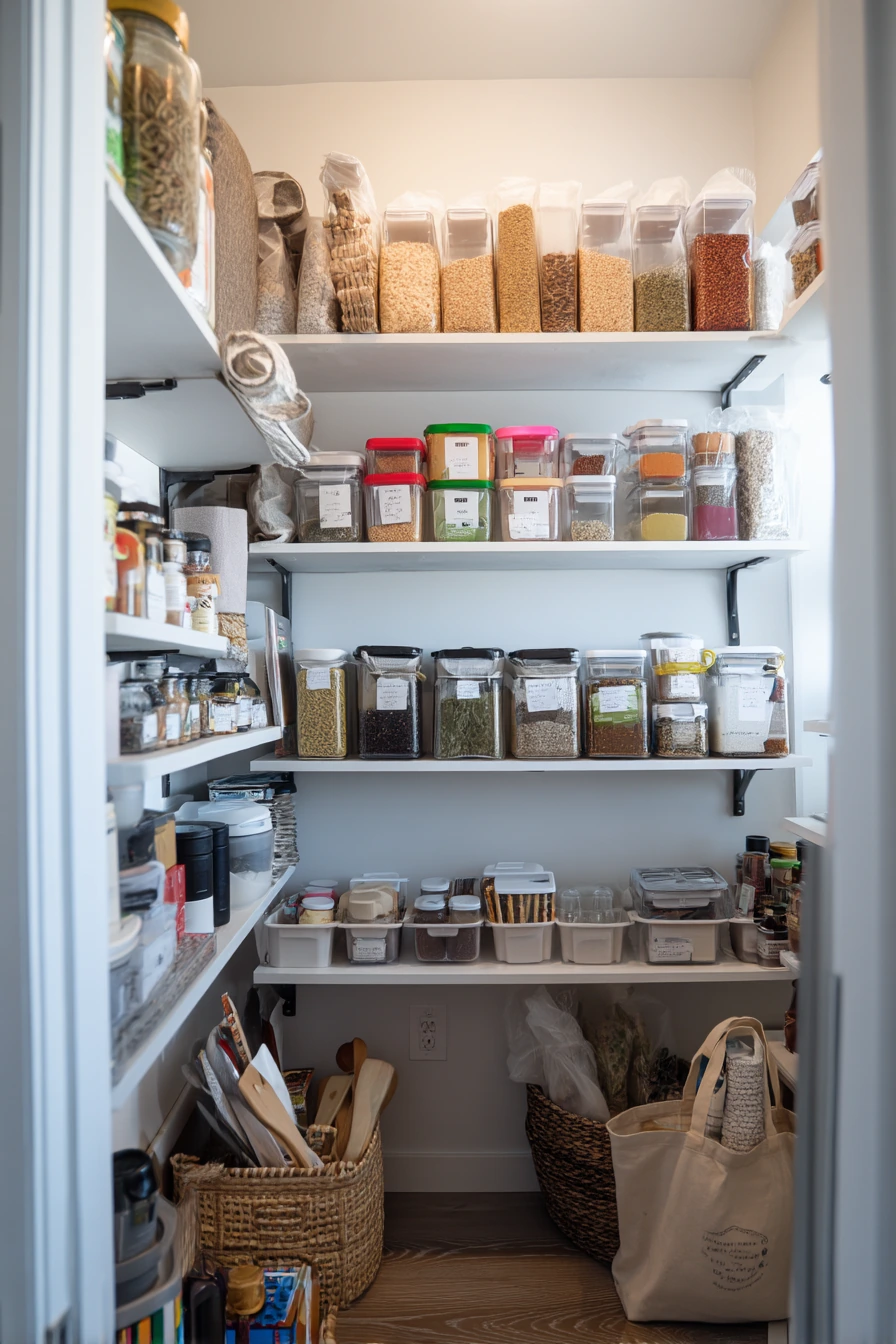
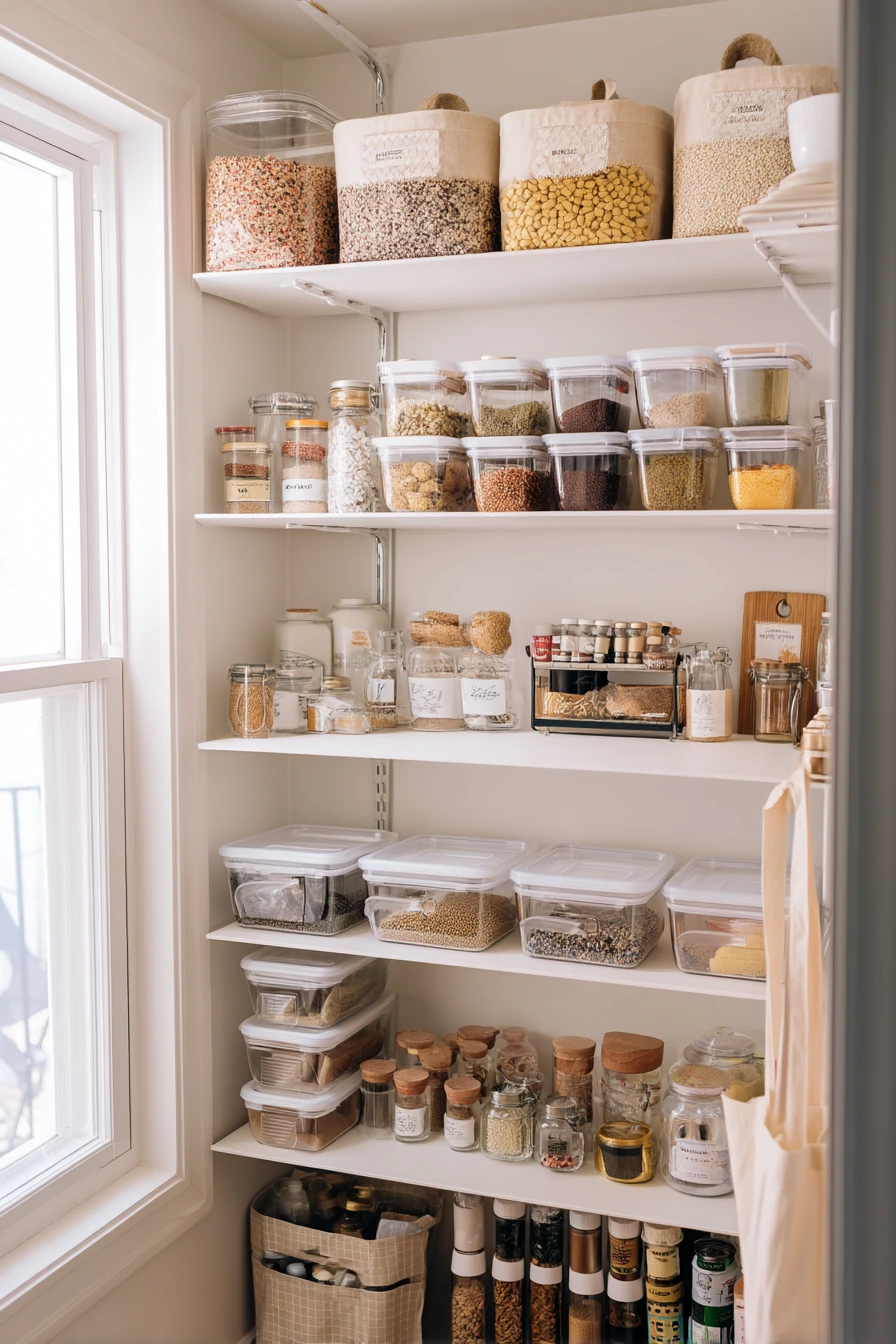
Renters can still get a pantry that looks put together. Peel-and-stick shelf liners protect shelves and add a clean base. Removable hooks create instant storage for small tools, bags, or a mini broom. A tension rod can hold aprons or reusable produce bags without drilling.
Use stackable bins to build vertical storage, especially for snacks and packets. Labeled pantry jars help with staples and make restocking simple. A compact spice rack is a must when cabinet space is limited. Keep a rolled-up shopping list nearby, and place one tote bag on the floor as a reminder to bring it on errands.
For styling, keep it fresh and adaptable. White walls and soft window light make small pantries feel bigger. Choose labels that peel off cleanly, and avoid anything that needs permanent mounting. When you move, you can pack the bins and jars and the system moves with you.
- Line shelves with peel-and-stick liner for a cleaner look and easy wipe-downs.
- Use removable hooks for aprons, small tools, or a dustpan.
- Add a tension rod to hang cloth items without drilling.
- Choose stackable bins to use height and keep categories separate.
- Use a compact spice rack and label jars for fast cooking prep.
Pro Design Tip: Make your setup modular by using bins and jars that fit standard shelves, so you can reconfigure when your pantry needs change.
Budget Considerations: Start with liner, a tension rod, and two stackable bin sizes; add more only after you see what you reach for every week.
10 Seasonal Pantry Reset After Grocery Day
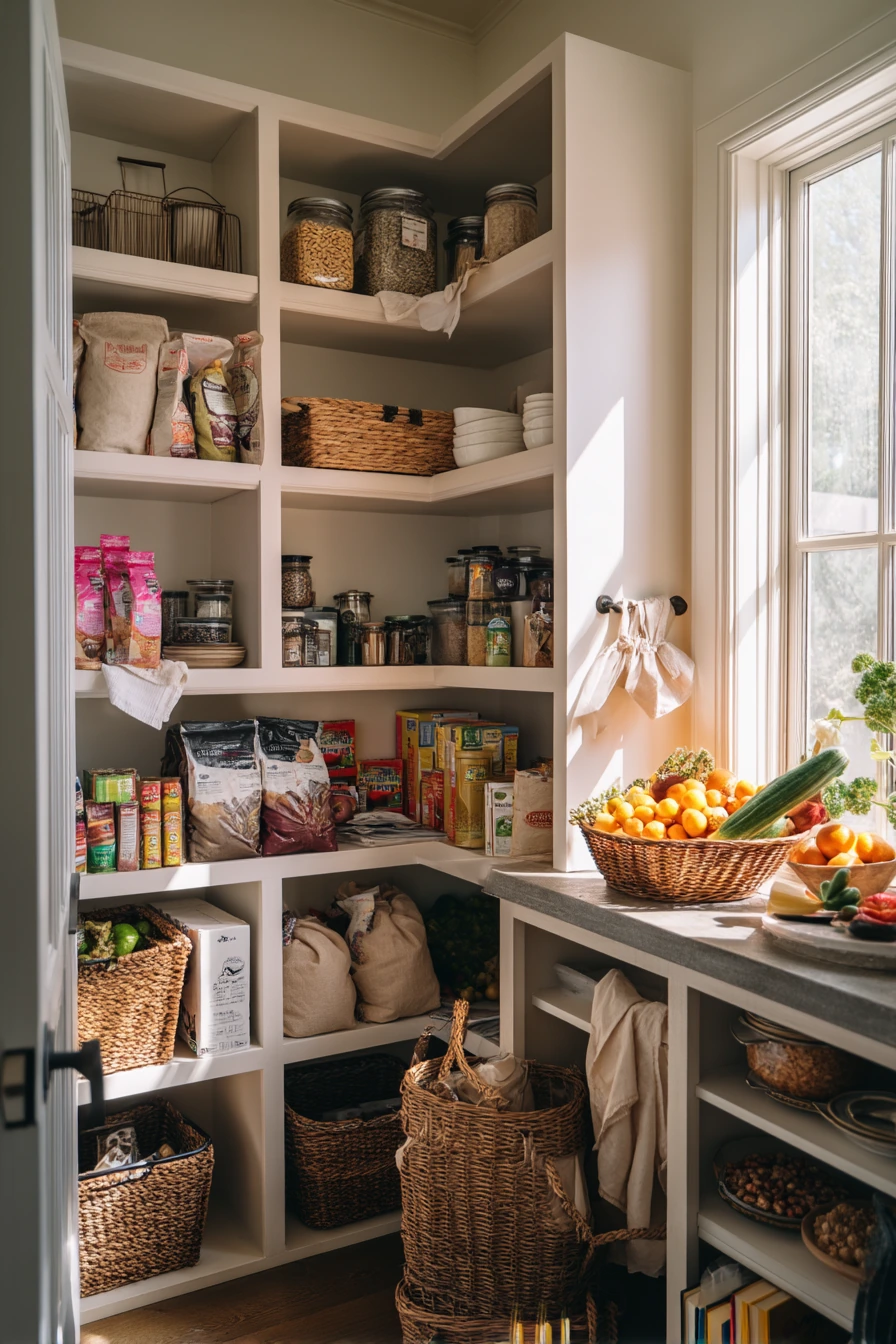
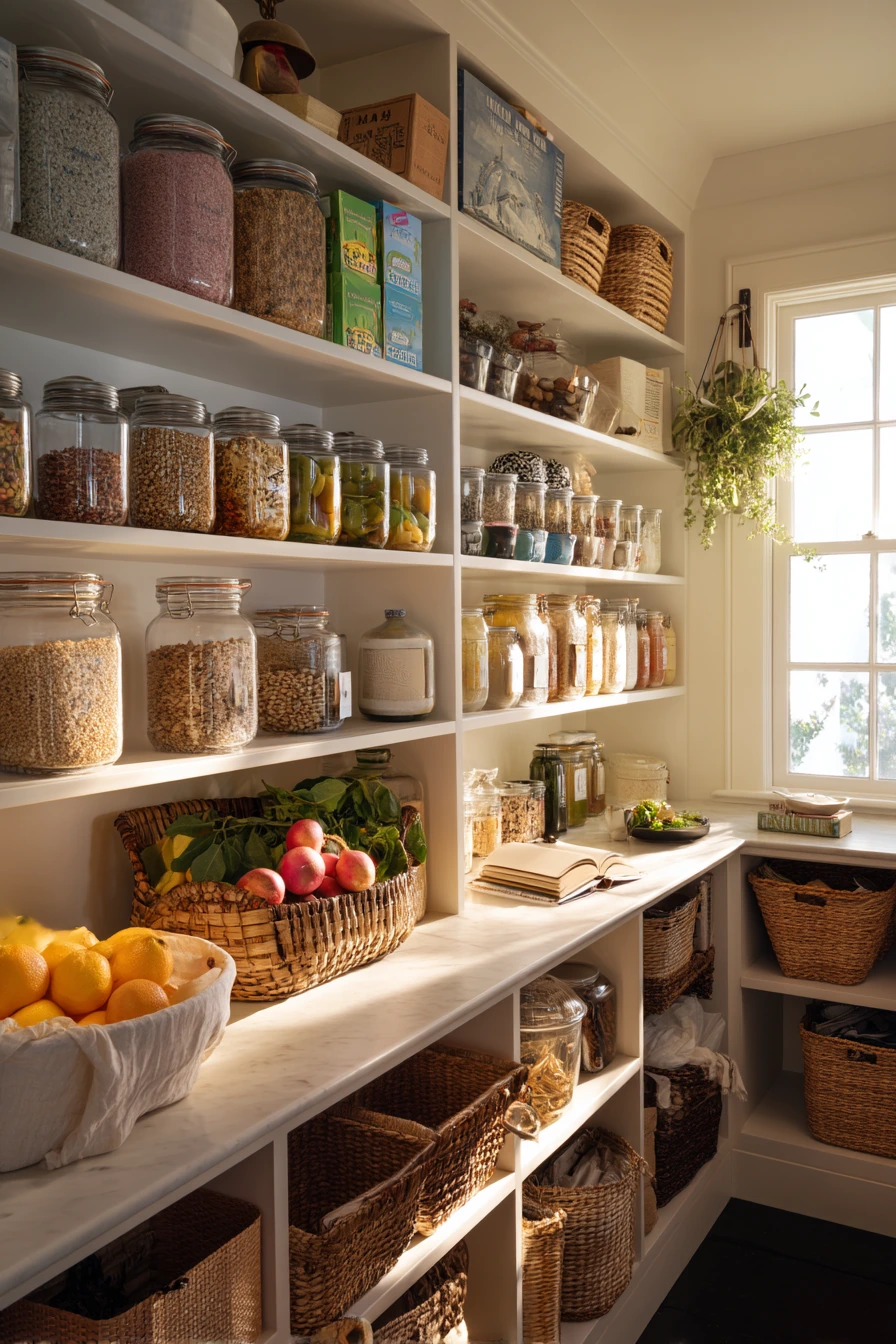
The best pantry system is one you can reset after a grocery run. Plan space for fresh produce in baskets, new cereal boxes, and pantry staples in mason jars. Expect a little disorder, like paper grocery sacks on the floor or a half-full flour container on the shelf. The goal is to get back to calm in 10 to 15 minutes.
Set a clear routine. First, toss old cardboard and check dates. Next, move backstock behind open items. Put citrus and other quick-use produce at eye level so it gets eaten. Keep a damp dishcloth and a small bin for recycling in the pantry during the reset, then remove them when you are done.
For styling, keep it abundant but honest. A cookbook open beside the shelves feels real and can guide meal planning right away. Late-afternoon window light makes everything feel warm, but the system should work in any light. Use labels to reduce decisions, and keep one empty basket for overflow so counters do not get covered.
- Keep produce in breathable baskets and rotate older items to the front.
- Decant staples like flour and sugar into jars, then label with dates if needed.
- Create a quick unload zone for grocery sacks so the floor stays clear.
- Store new boxes behind opened ones to prevent duplicates and waste.
- Do a 5-minute wipe-down during the reset using a damp dishcloth.
Pro Design Tip: Build a reset shelf near the door where groceries land first, then sort into zones so you never unpack directly into random spots.
Budget Considerations: You do not need all new containers; reuse mason jars, keep baskets for produce, and spend on a few labels to make the reset faster.
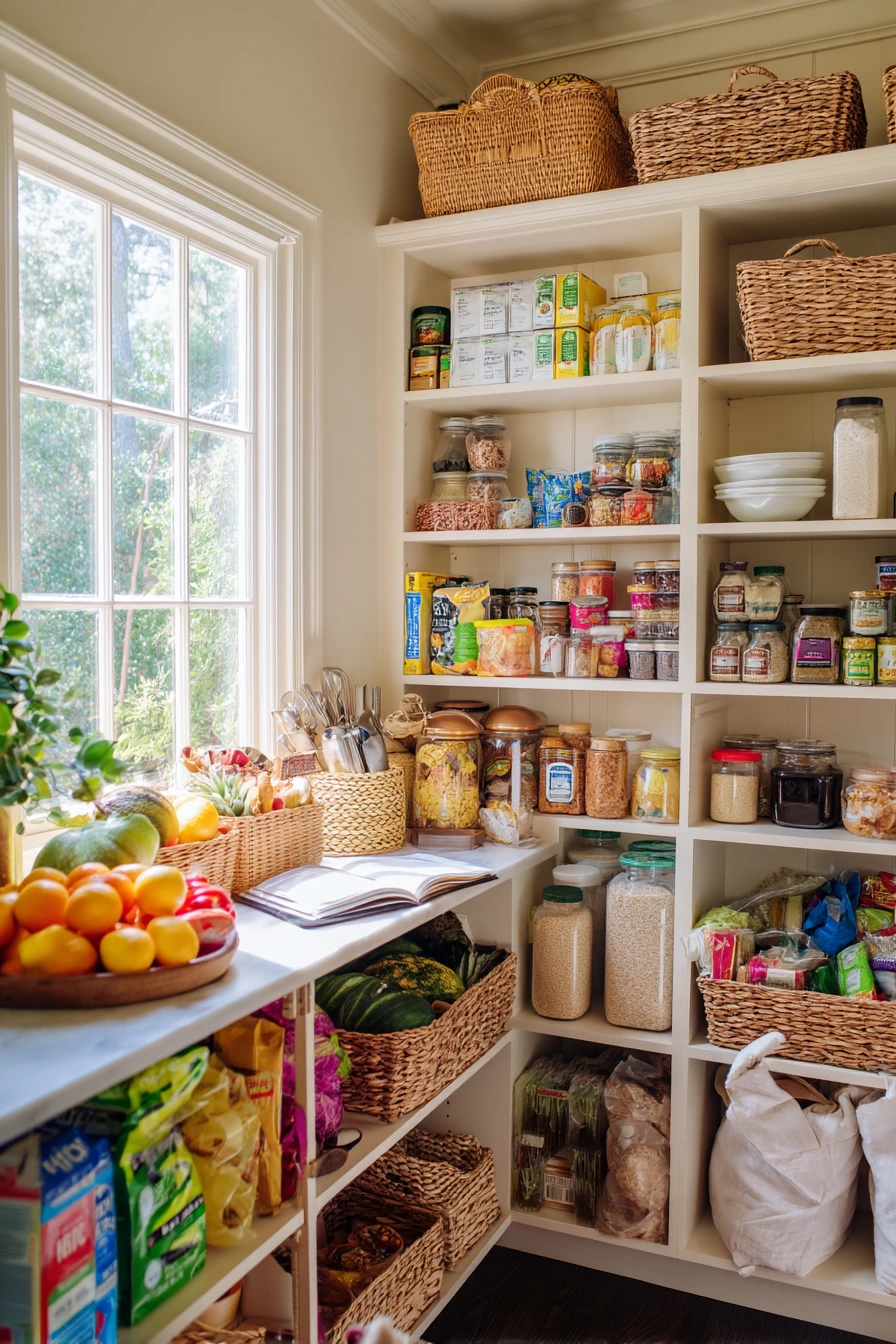
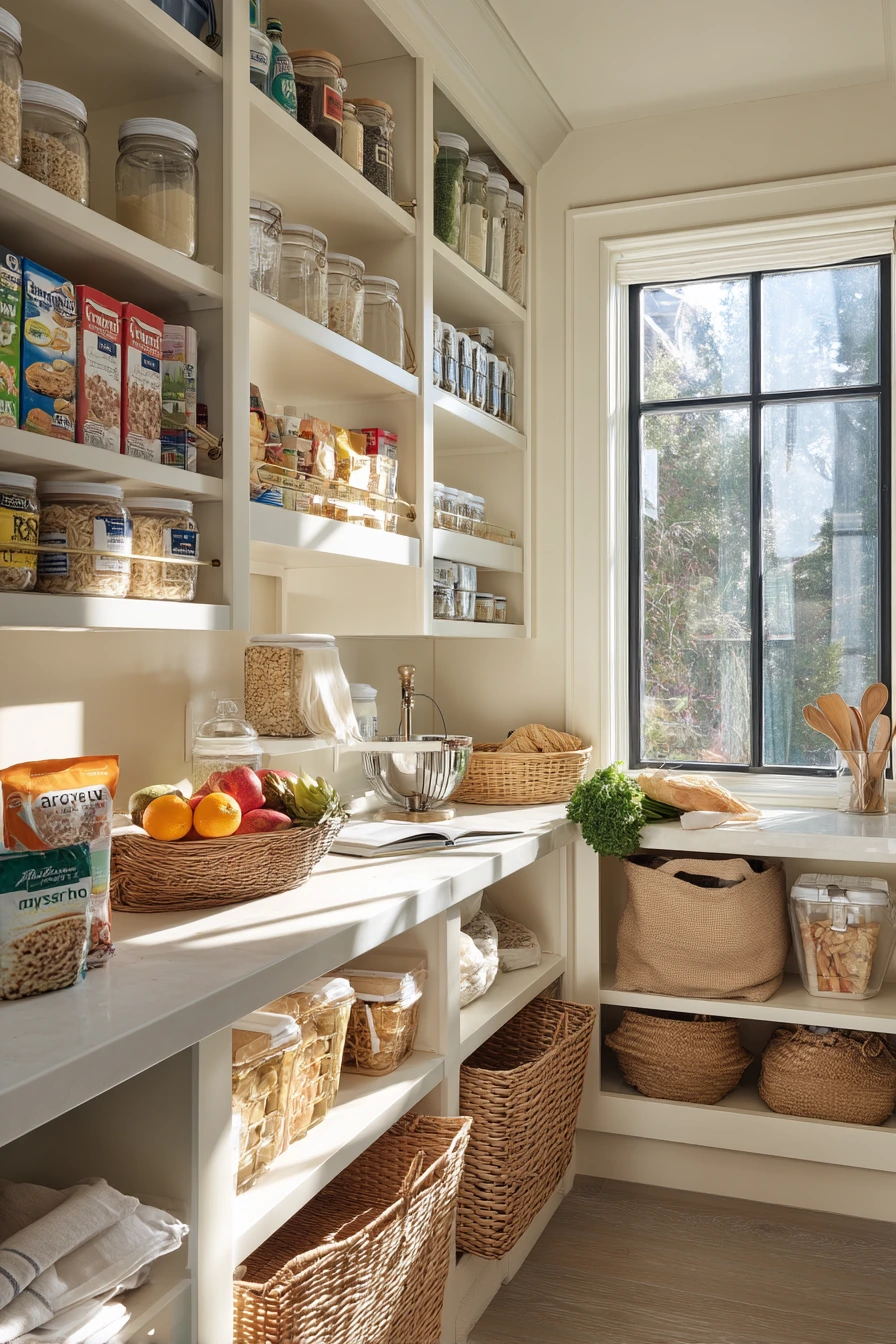
Walk in pantry ideas work when they fit your space and your schedule. Focus on zones, easy-to-grab storage, and a simple reset routine that you can repeat every week.
If you want the biggest change with the least effort, start by labeling a few key shelves, adding two or three bins, and setting one spot for backstock. Once the pantry feels easier to use, you can upgrade containers and lighting over time.
FAQ
How do I organize a walk-in pantry for kids? Put kid snacks and lunch items on lower shelves or in waist-height drawers, and keep a small restock bin so it is easy to refill.
What is the best shelf depth for a pantry? Shallow shelves, around 10 to 12 inches, help prevent items from hiding behind each other, especially in narrow pantries.
Do I need to decant everything into jars? No. Decant only the items you use often, like cereal, rice, and flour. Keep the rest in labeled bins to save time.
How can I make a pantry look tidy on a budget? Group items by category, use tape labels, and corral loose packages in a few matching bins or thrifted baskets.
What are the best renter-friendly pantry upgrades? Peel-and-stick shelf liner, removable hooks, tension rods, and stackable bins add function without permanent changes.
How do I keep my pantry organized after grocery day? Use a landing shelf, rotate older items forward, and keep one empty basket for overflow so you can reset quickly.