
Cinder block garden ideas are a simple way to add planters fast, even if you rent or only have a small space. You can stack blocks, fill the holes with soil, and plant herbs, flowers, or veggies in a neat grid.
This post shares ten real-life layouts for a backyard, side yard, front yard, patio, balcony, and even a potting corner. Each one is based on a lived-in setup with everyday items like a watering can, garden gloves, a hose, and a bistro chair.
You will get practical steps, styling ideas, and smart plant picks like basil, thyme, mint, tomatoes, lettuce, strawberries, lavender, and succulents. The goal is to help you build something that looks good, works well, and is easy to care for.
If you came from Pinterest, save the layout you like, then use the tips here to size it for your space, choose soil, and keep it tidy without spending much.
1 Renter-Friendly Cinder Block Herb Garden
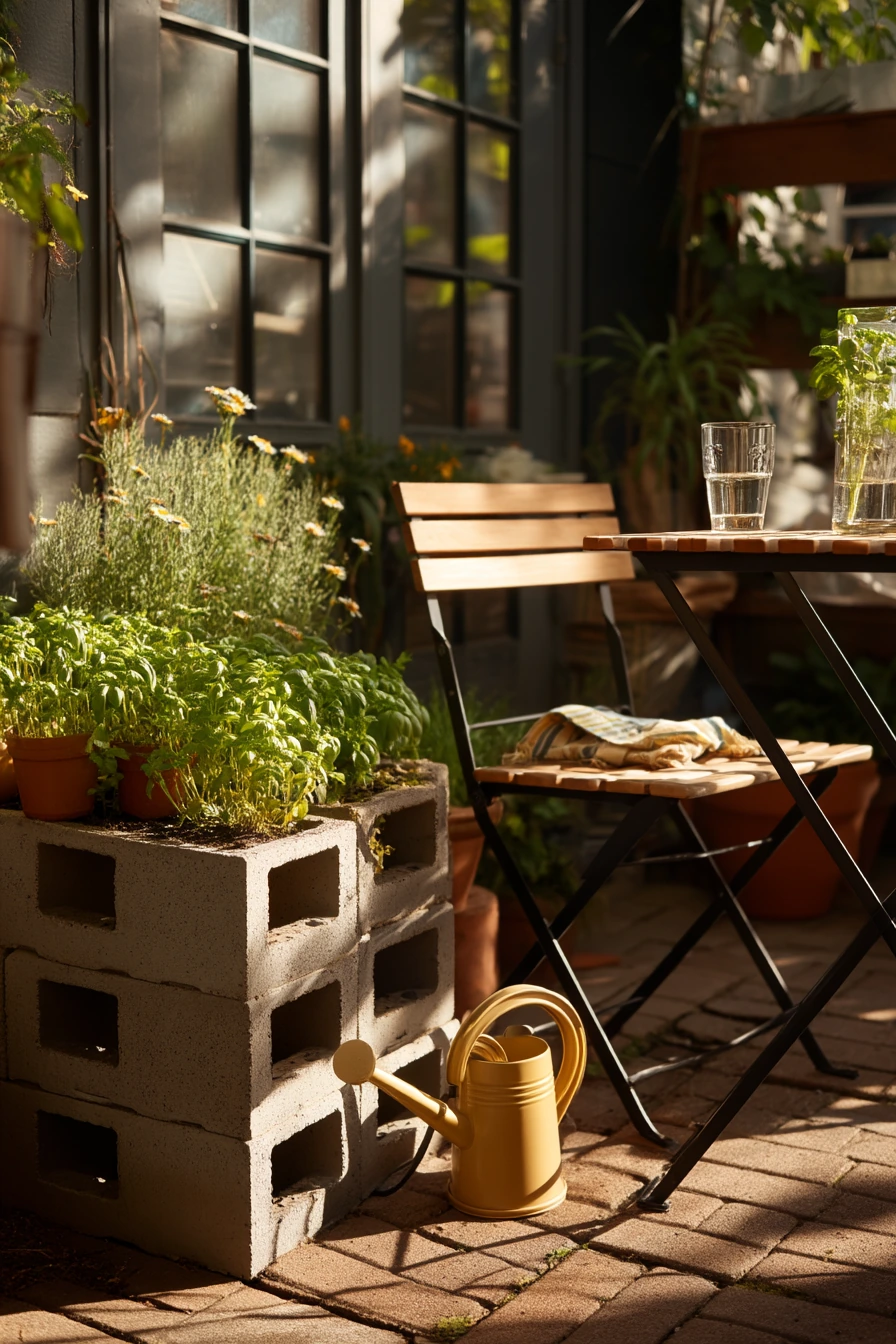
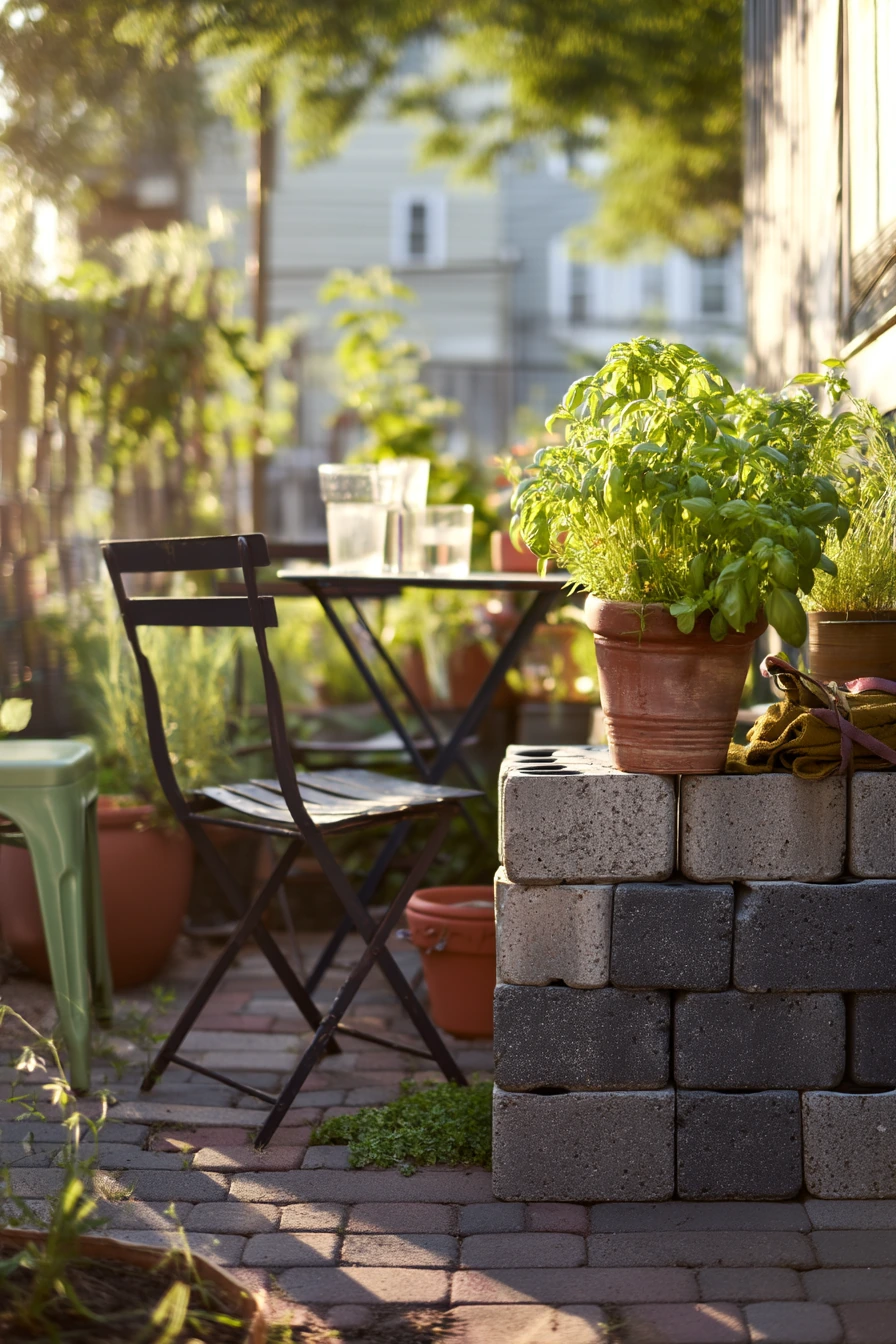
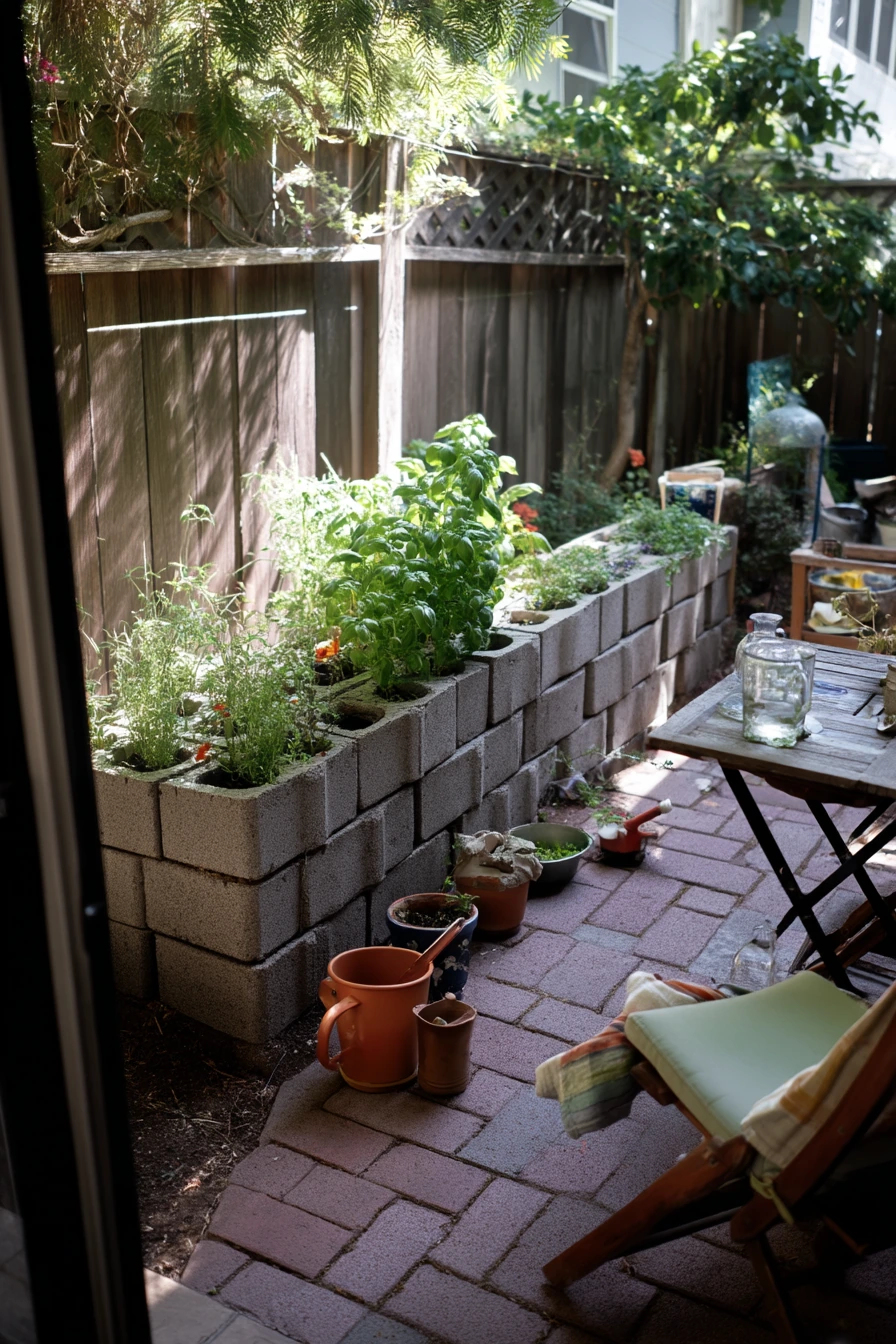
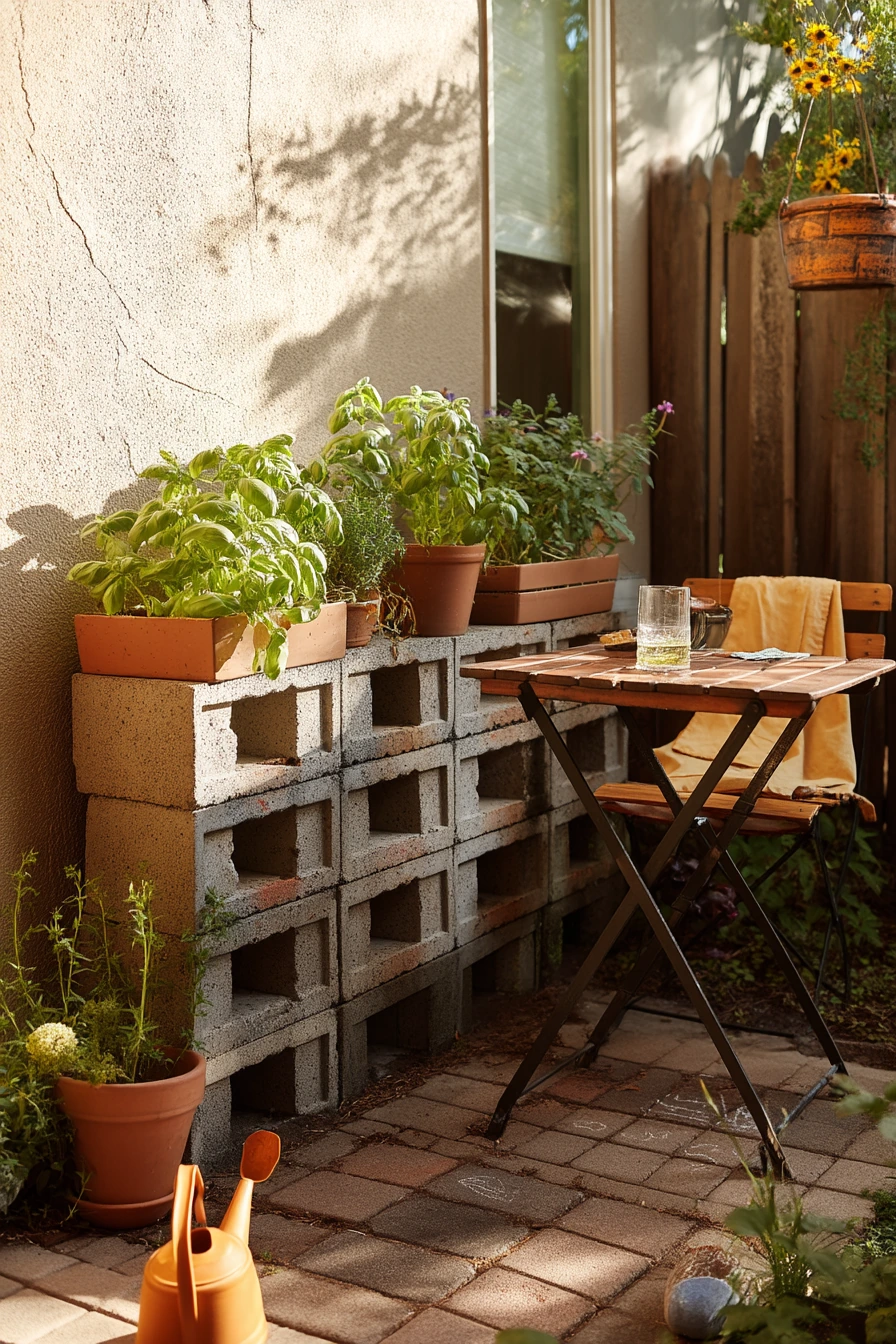
A small rental backyard can still fit a DIY cinder block garden along the fence. Stack blocks in a short run, keep it low for stability, and use the openings like mini pots. This works well for herbs and small flowers, so you get fragrance and color without taking up the whole patio.
Fill the block holes with a potting mix that drains well, then plant basil, thyme, mint, and marigolds. Mint spreads fast, so give it its own block cell or sink a small pot into one opening to keep roots contained. Marigolds help bring in pollinators and can deter some pests near herbs.
To style it for a lived-in look, place a folding bistro chair nearby with terracotta pots clustered at different heights. Keep a watering can on the ground so it feels easy to use. Small details like gloves on the chair and a water glass on the table make the corner feel like a real daily habit, not a staged setup.
- Choose solid, flat ground and level the first row before stacking.
- Turn a few blocks sideways to create deeper pockets for basil or marigolds.
- Line the inside of each opening with landscape fabric to reduce soil washout.
- Add a saucer under any terracotta pot to protect pavers from stains.
- Water in the morning or late afternoon so herbs do not scorch.
Pro Design Tip: Repeat one pot color (like terracotta) and one metal finish (like galvanized steel) so the rough concrete feels more intentional and calm.
Budget Considerations: Blocks are usually low cost, but delivery can add up. If you have a small car, buy a few at a time and build a shorter run first.
2 Tiny Patio Vegetable Wall
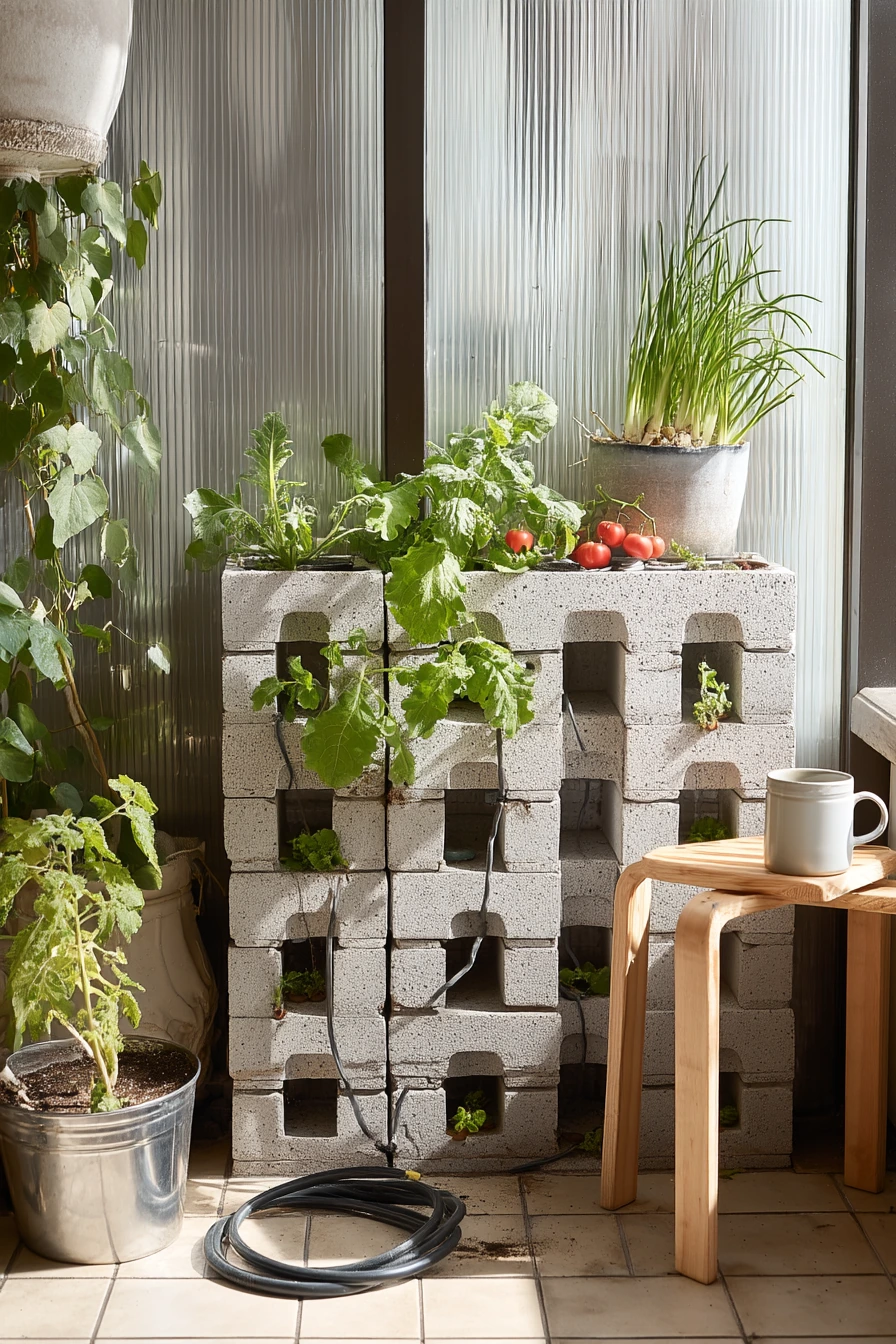
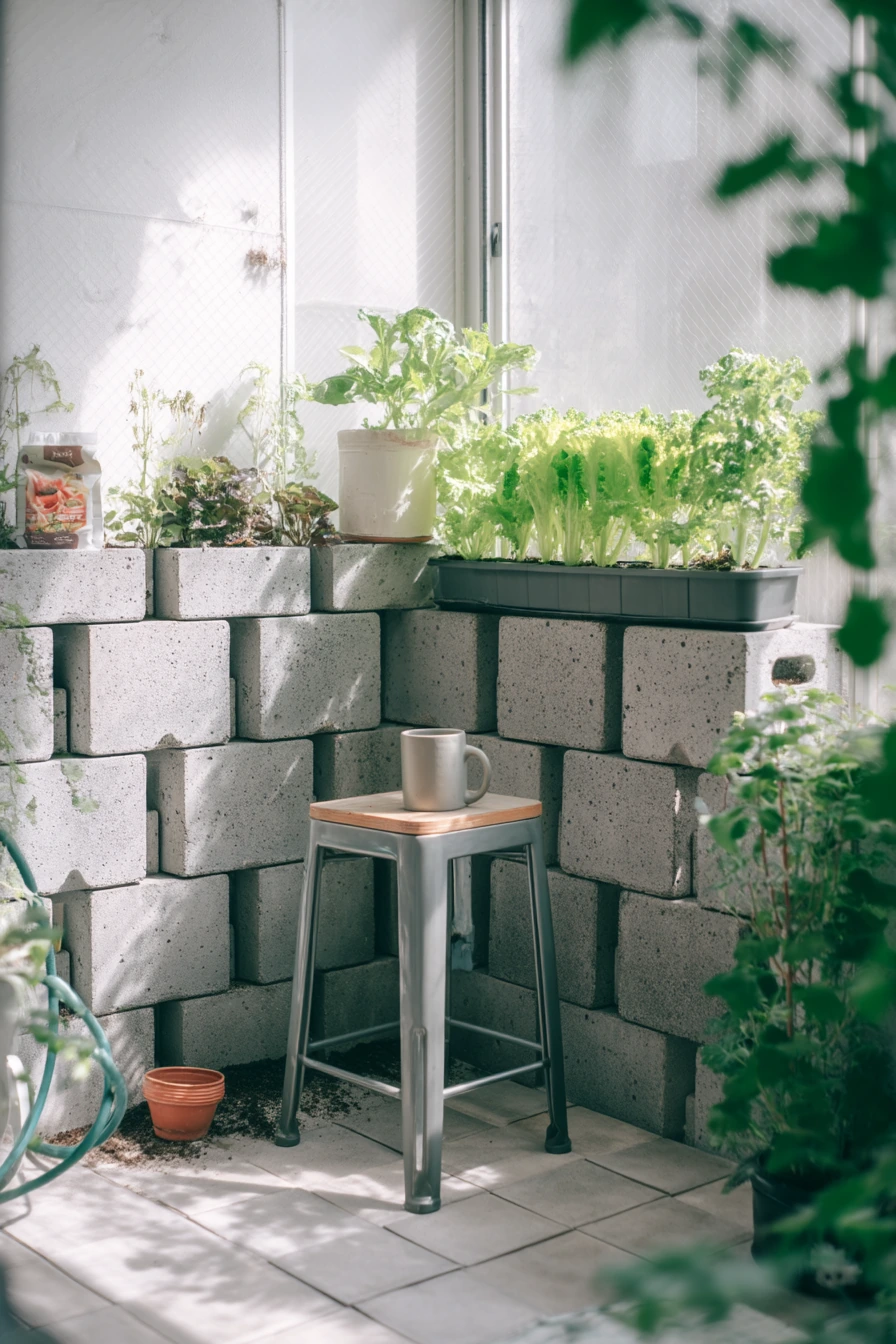
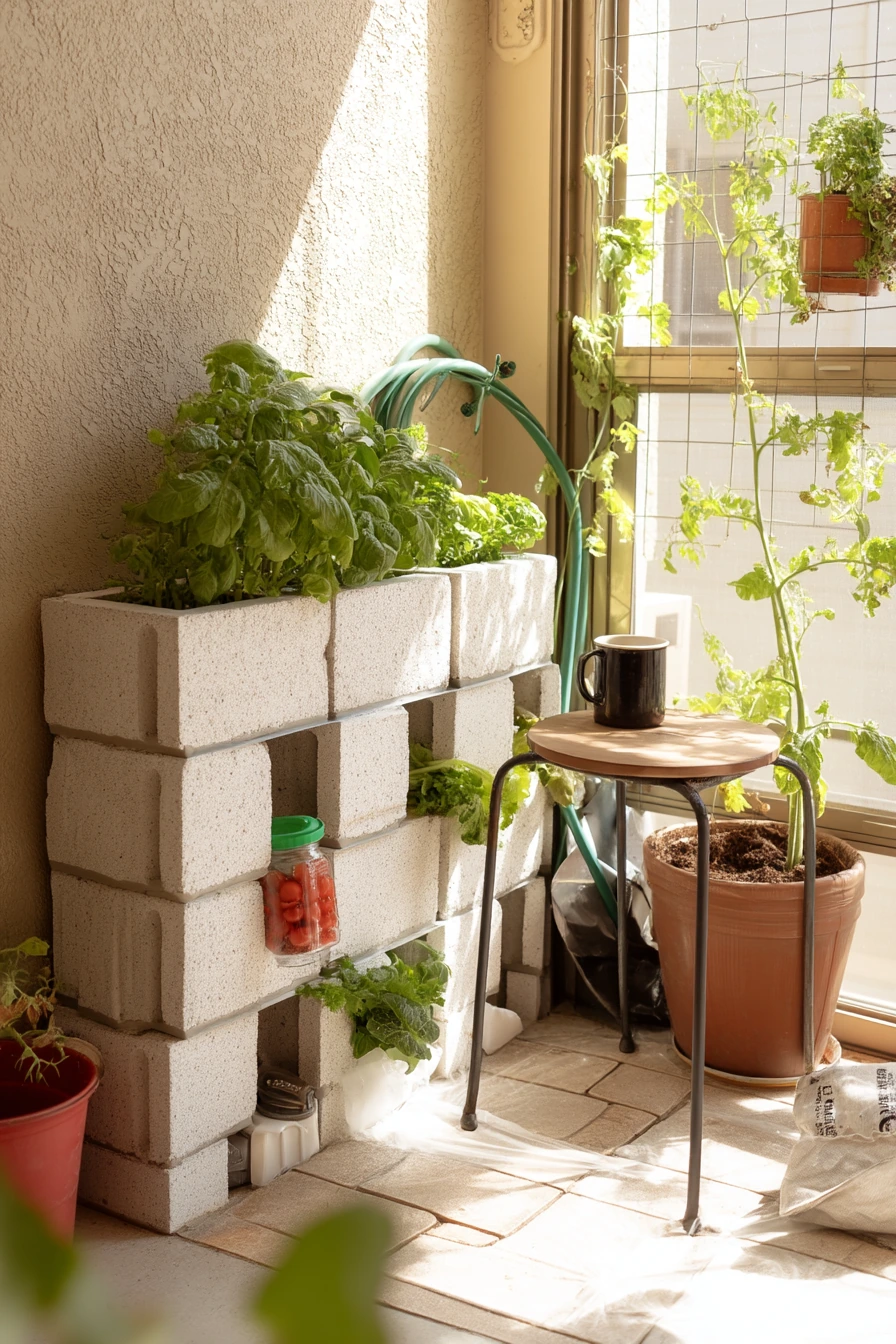
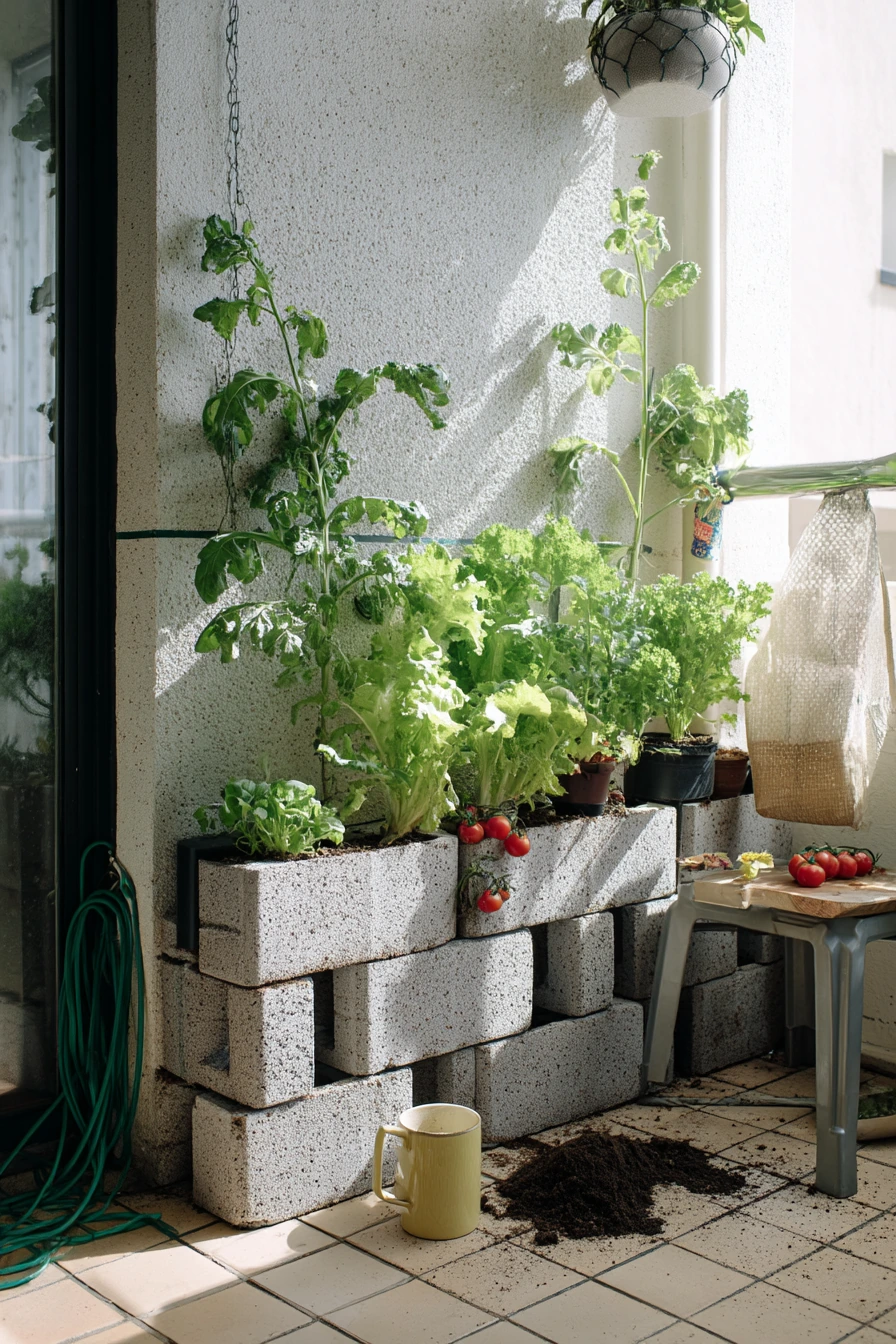
A compact apartment patio can handle a low vertical planter wall made from cinder blocks. Keep the height around waist level or lower so it stays safe and easy to water. A grid layout helps you grow more in less space, and it looks clean from a corner angle.
Use tomatoes, lettuce, scallions, and strawberries for a practical mix. Tomatoes need the most root room, so place them in the largest openings or in a pot set into a block bay. Lettuce and scallions do well in smaller cells. Strawberries look great spilling over edges, which softens the block lines.
Make it feel real and useful by keeping a narrow hose coiled beside the planter and a small metal stool close by for quick tasks. A tote bag with seed packets and a mug on the stool fits the morning routine. If your patio is windy, tuck the planter into a corner and add a small trellis tied to the blocks for tomato support.
- Plan sun first: tomatoes need the brightest spot you have.
- Use a moisture-retaining mix and mulch the top with straw to slow drying.
- Add a simple drip line or a soaker hose for steady watering.
- Rotate crops seasonally: lettuce in cool months, peppers or basil in warm months.
- Brush off soil dust on tiles often to prevent slippery spots.
Pro Design Tip: Keep planting in a pattern, like “greens on top, fruiting plants on the ends,” so the wall reads like a tidy garden shelf.
Budget Considerations: Skip pricey planters by using blocks plus one bag of quality potting mix. Buy one trellis now, then reuse it each season.
3 Budget Front Yard Pollinator Beds
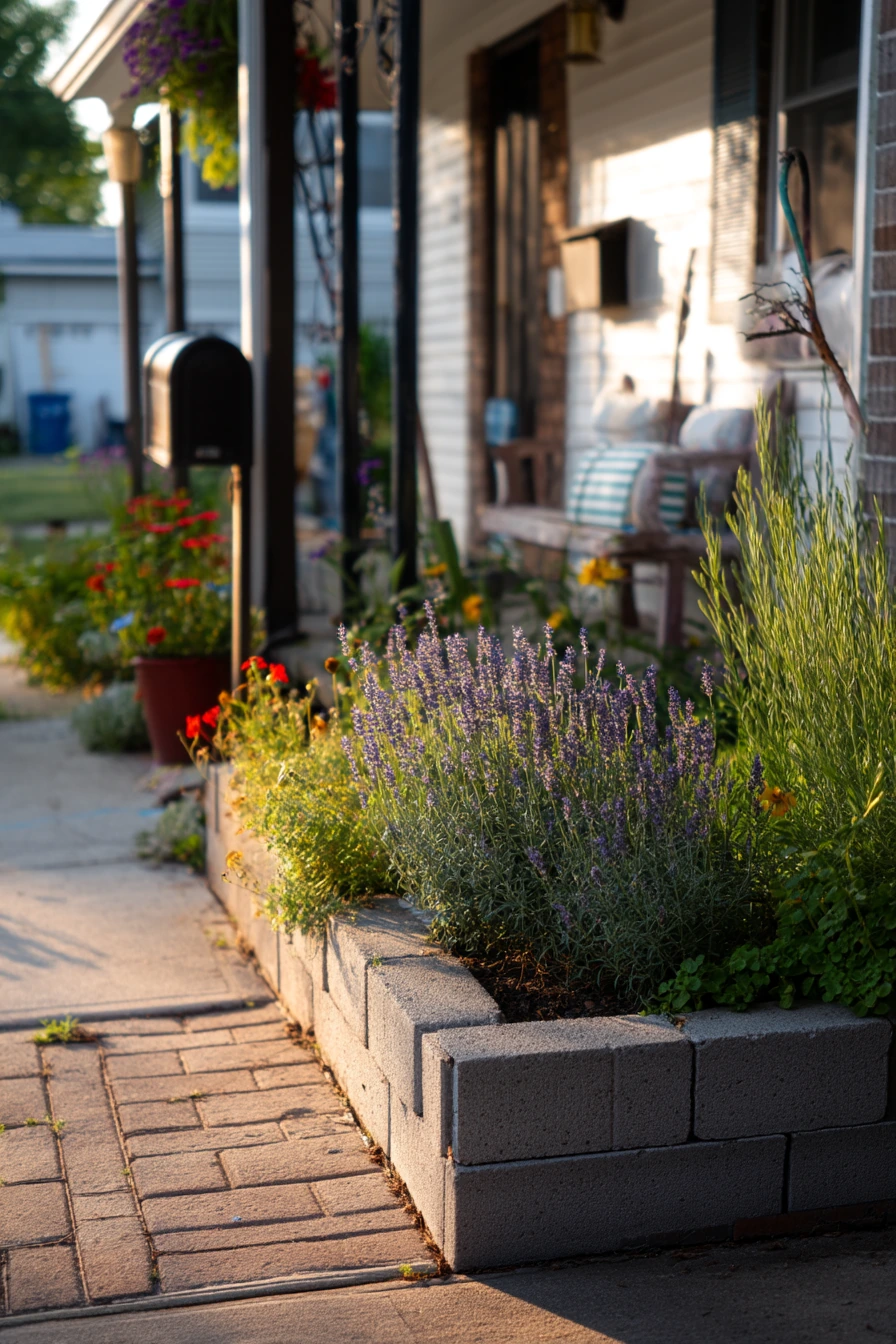
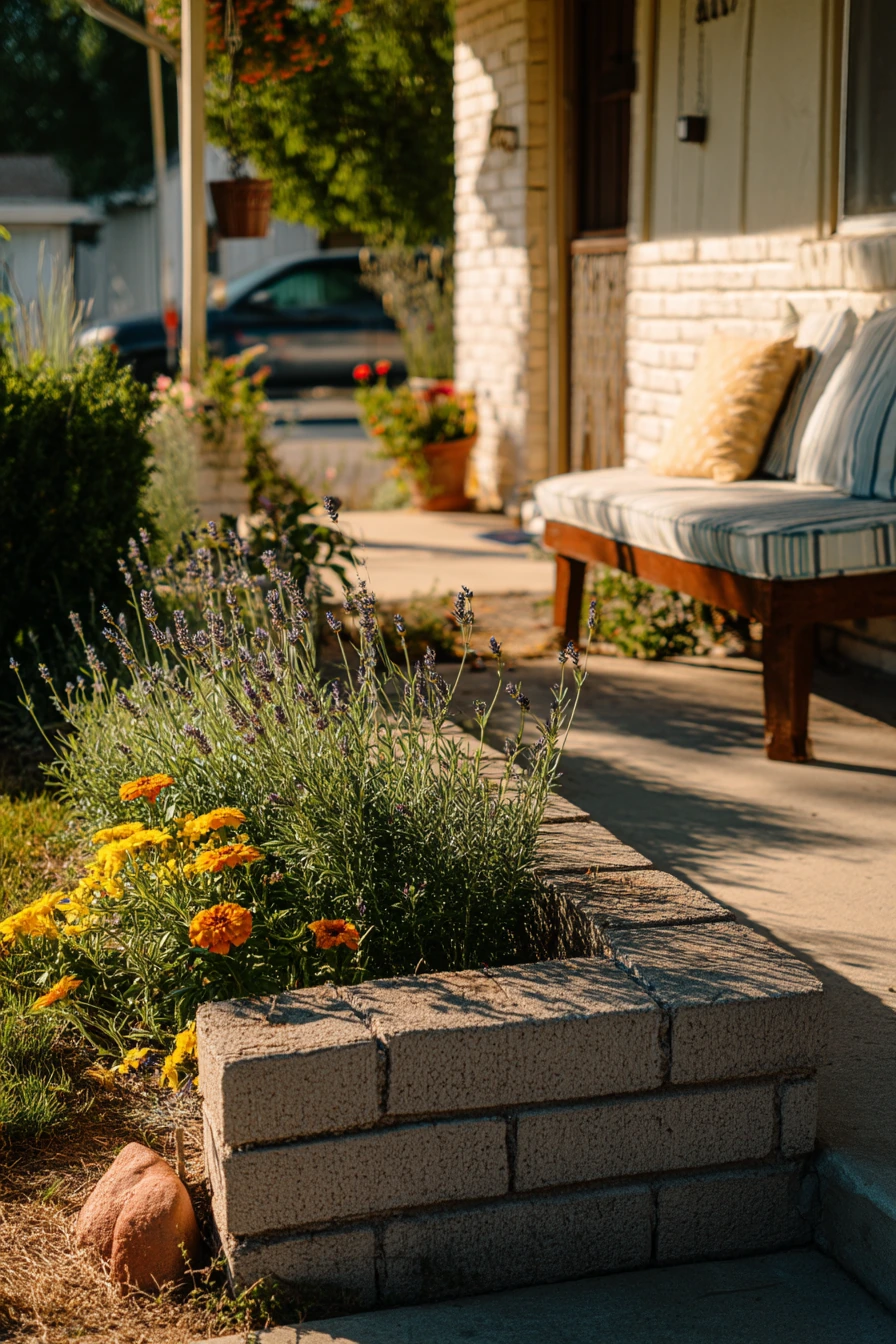
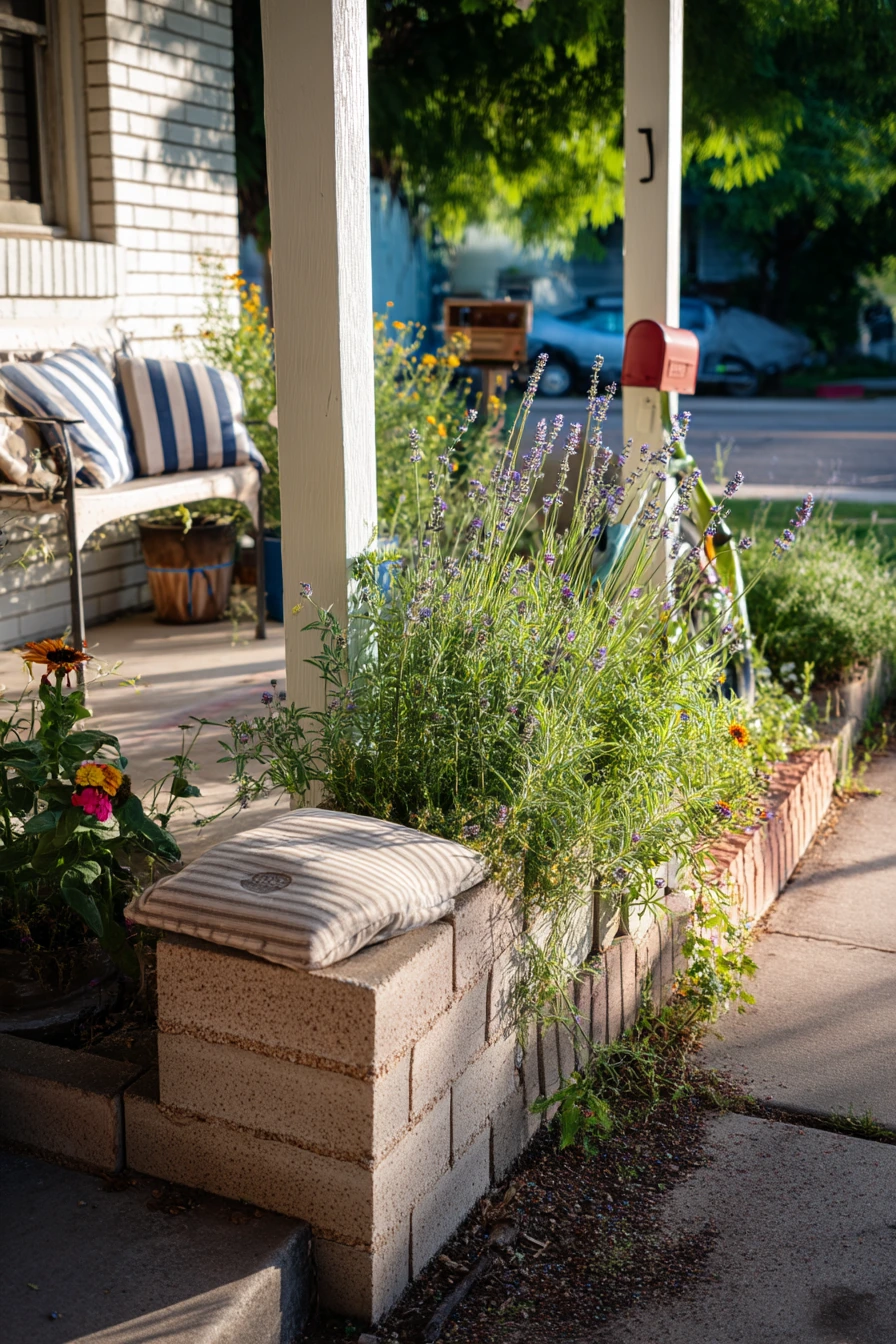
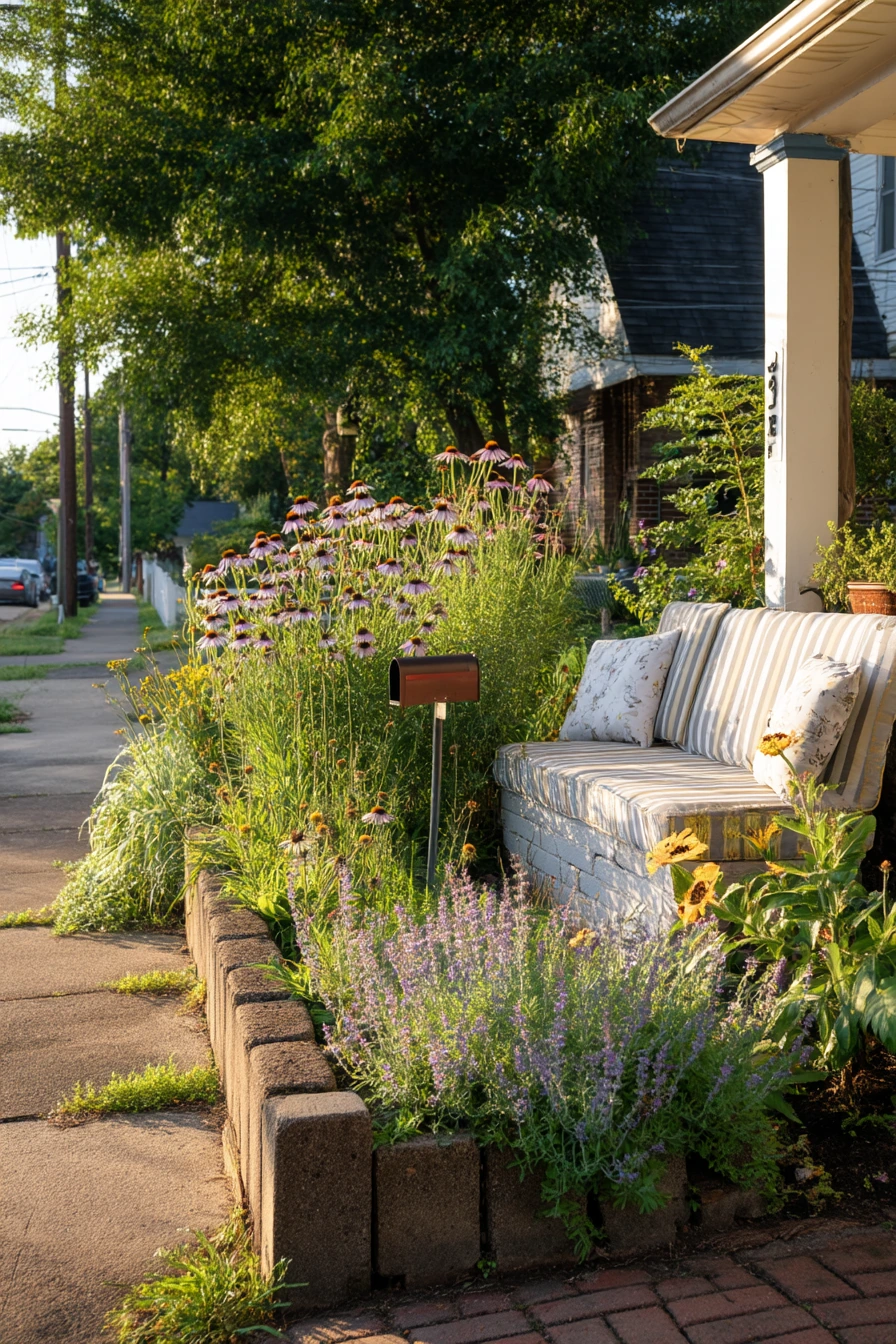
A modest front yard makeover can start with a neat cinder block planter border. Use blocks to frame a bed along the walkway so it looks organized and low effort. This adds a clear edge that keeps mulch in place and makes mowing easier.
Plant lavender, coneflowers, zinnias, and rosemary for a mix of structure and long bloom time. Lavender and rosemary give year-round shape in many climates and smell great when you brush past them. Coneflowers bring bees and butterflies. Zinnias fill gaps fast and give bright color near the mailbox.
For a friendly, lived-in feel, keep tools close but tidy. A garden trowel resting on the brick edge, a reused nursery tray, and a slightly wrinkled cushion on a porch bench all fit a real home. If you have kids, leave a little path space so scooters can pass without clipping stems. Aim for warm morning sun plants in the brightest part of the border and put the tougher ones near the sidewalk heat.
- Lay a weed barrier or thick cardboard under the border before adding soil.
- Angle the blocks so the openings face up for extra planting pockets.
- Mix in compost to help flowers bloom longer with less feeding.
- Deadhead zinnias weekly to keep new blooms coming.
- Use matching mulch color to make the concrete look intentional.
Pro Design Tip: Use a simple color plan, like purple (lavender), pink (cone flowers), and white accents, so the border looks calm from the street.
Budget Considerations: Perennials cost more up front but return every year. If needed, start with smaller pots and fill space with inexpensive zinnia seeds.
4 Family Kitchen to Backyard Harvest Path
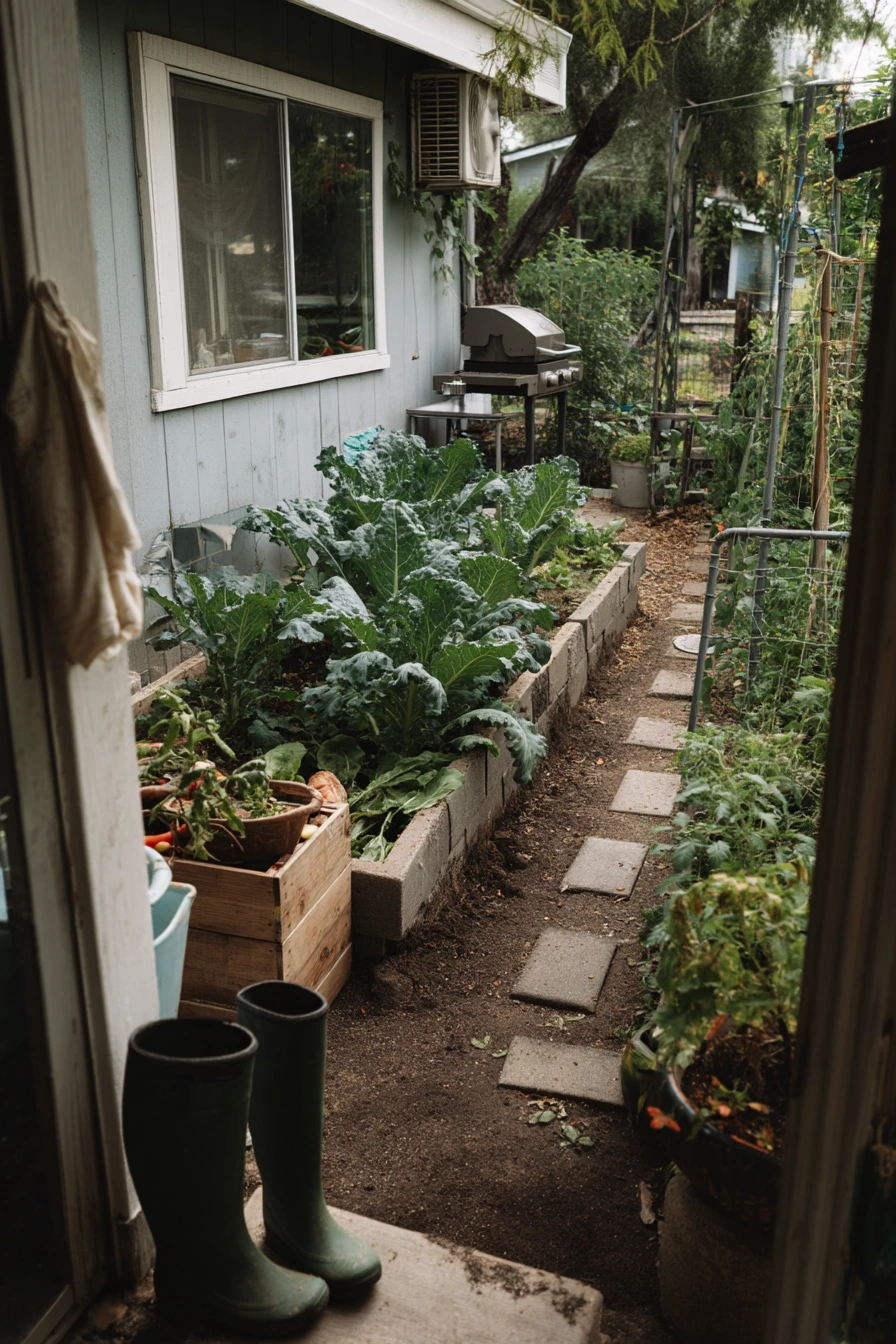
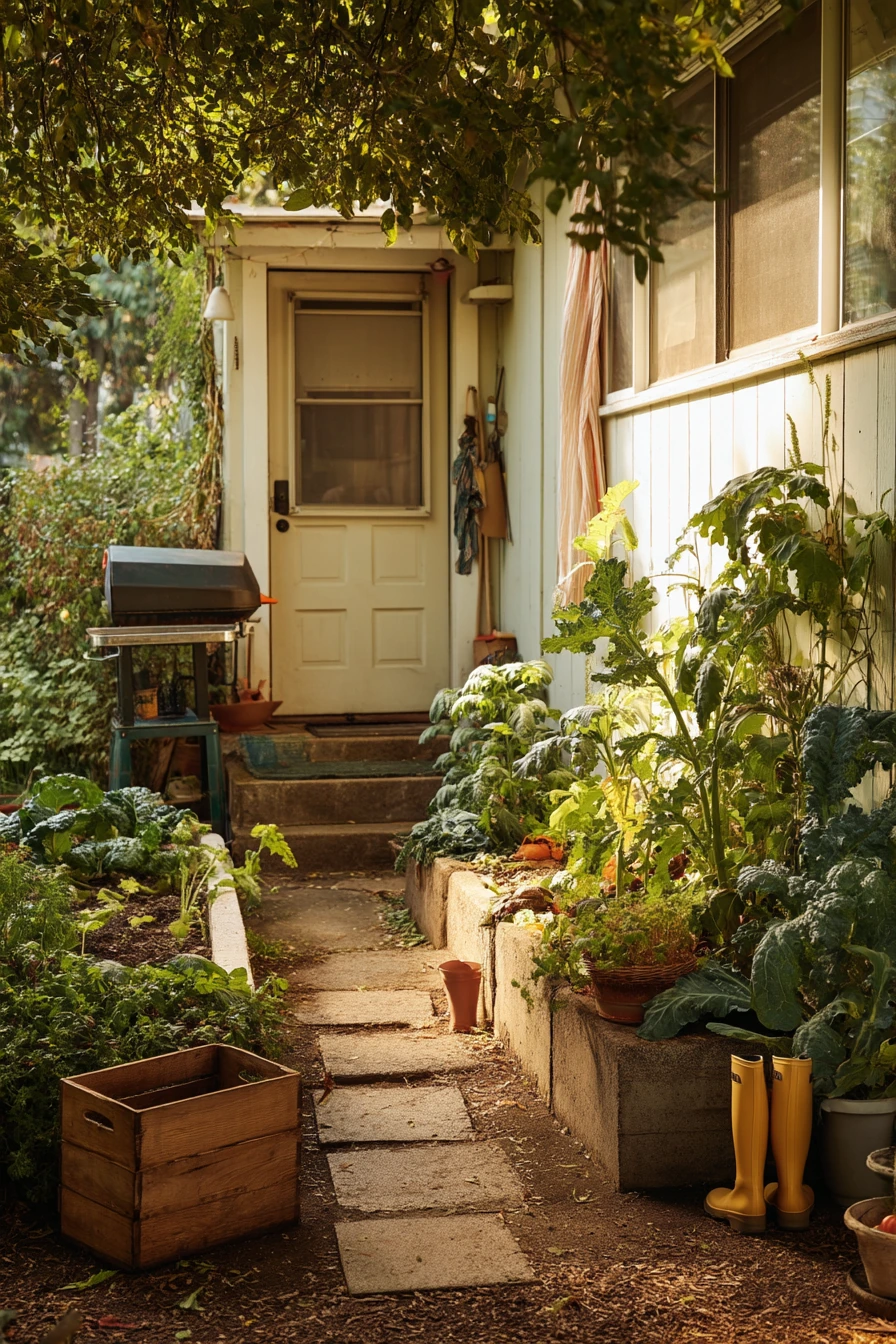
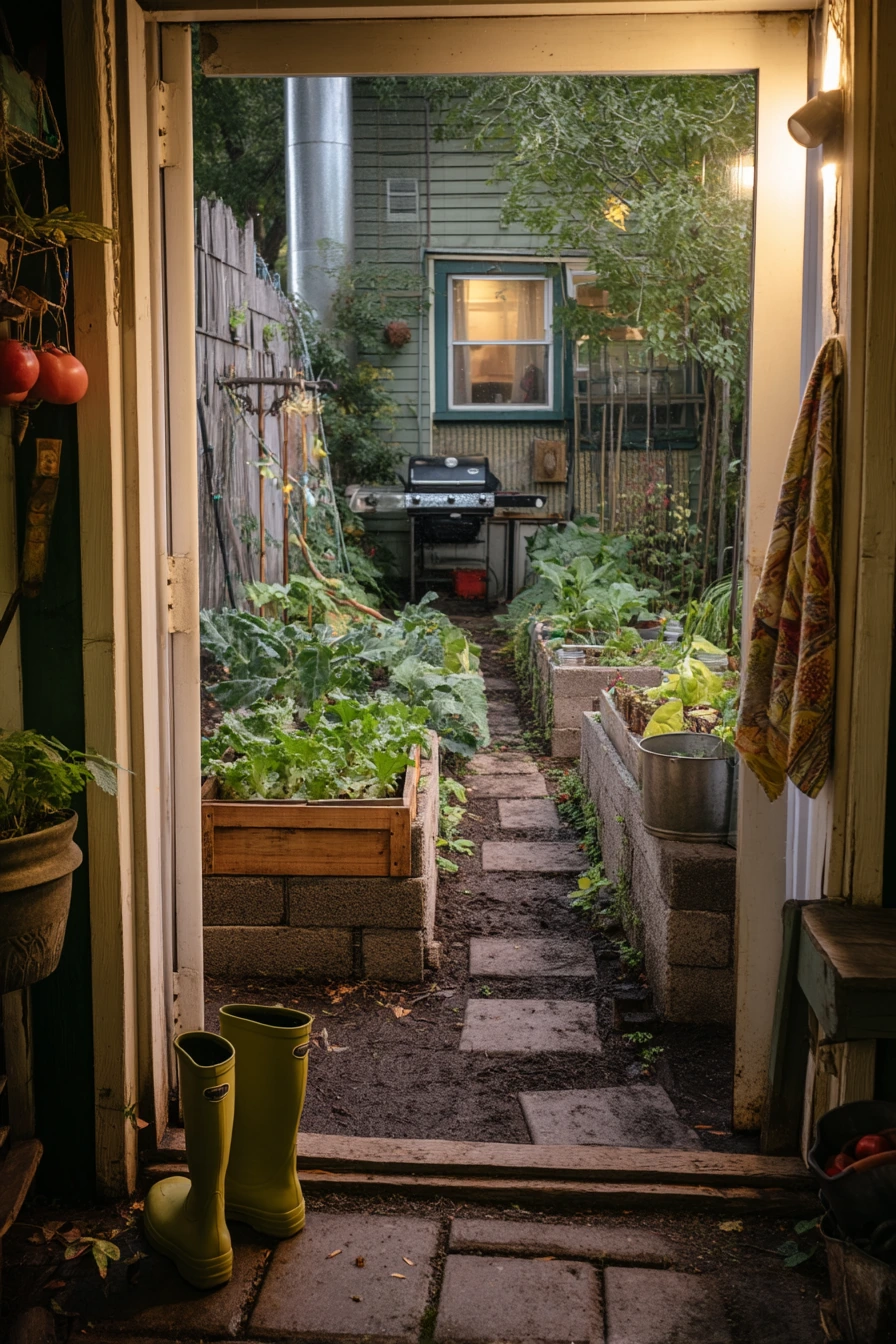
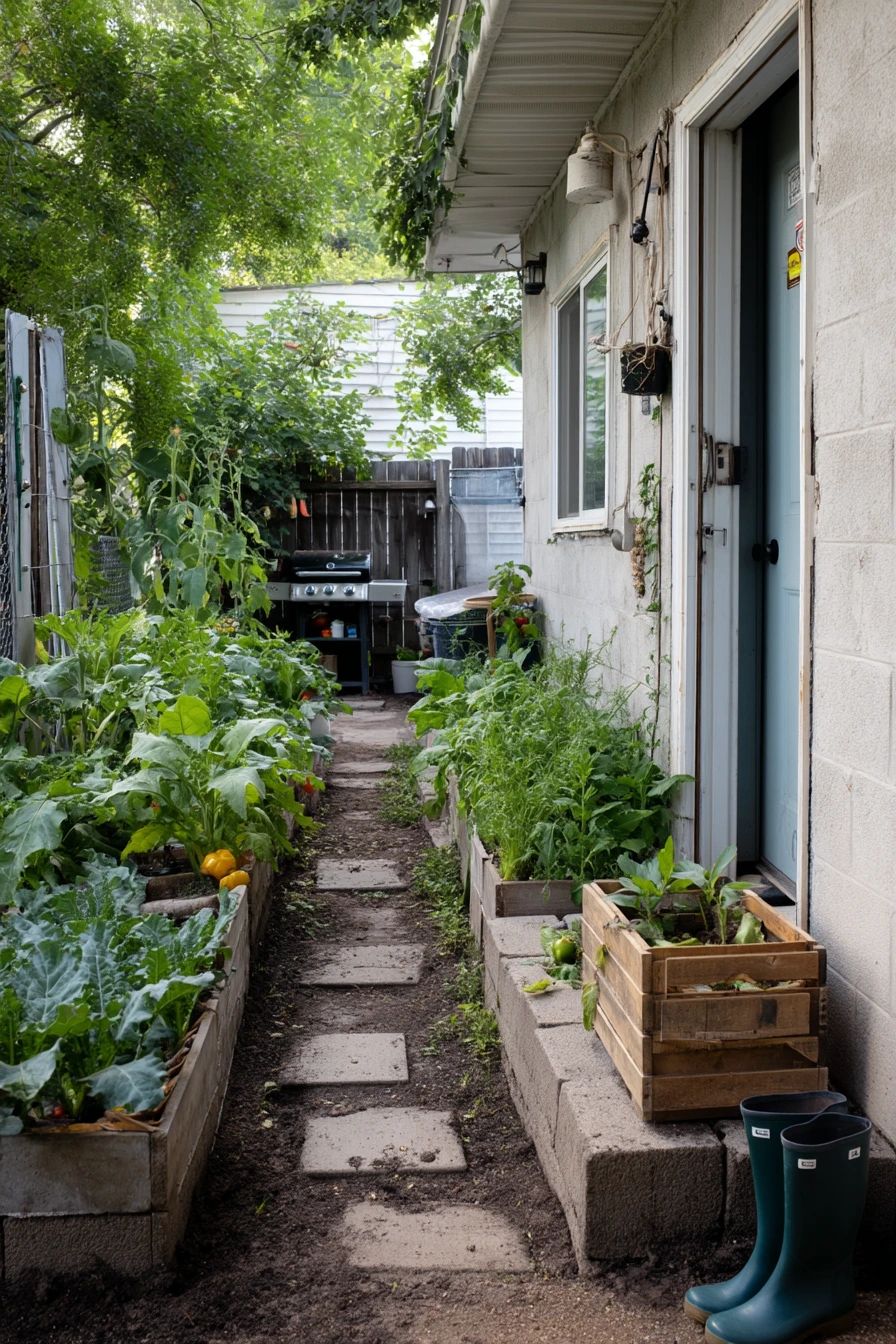
A cinder block bed right beside the family kitchen door makes homegrown food easier to use. When the garden is close, you grab herbs while cooking and keep up with watering. A stepping-stone path also helps keep mud out of the house.
Grow kale, peppers, and a mix of herbs that you cook with often. Kale handles cooler weather, peppers love heat, and herbs like parsley, oregano, and basil give quick wins. Use the block holes for small herbs, and keep the main bed area for larger plants. Add a wooden crate near the grill as a simple harvest spot for scissors, a bowl, and produce.
Keep the space practical and lived-in with a bucket for clipped tomato stems and a tea towel on the handle. A child’s rain boot by the door is normal, so plan a clear landing zone that stays dry. If pests are common, add a lightweight cover that can clip to the blocks. This setup is about daily use, not perfect rows.
- Make the bed no wider than you can reach from both sides, often 3 to 4 feet.
- Fill the center with a rich garden mix and top with compost each season.
- Stake peppers early so roots are not disturbed later.
- Place herbs in the block openings closest to the door for quick picking.
- Keep a small bin for scraps and stems to move to compost weekly.
Pro Design Tip: Match the stepping stones to your door trim or grill color so the garden reads like part of the home’s back entry.
Budget Considerations: Raised beds need more soil than in-ground beds. Save money by filling the bottom with sticks and leaves, then top with quality mix where roots grow.
5 Modern Desert Cinder Block Succulent Garden
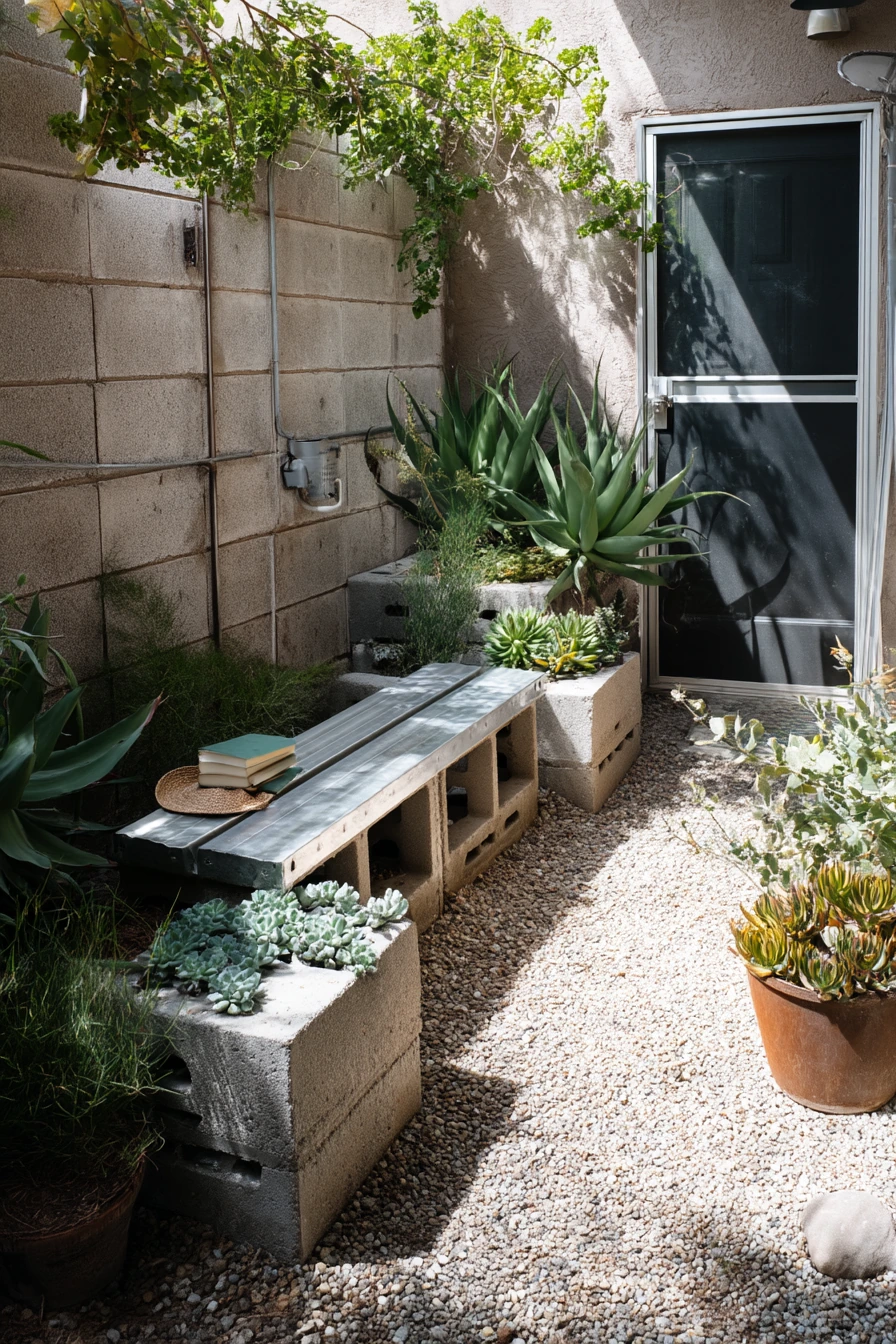
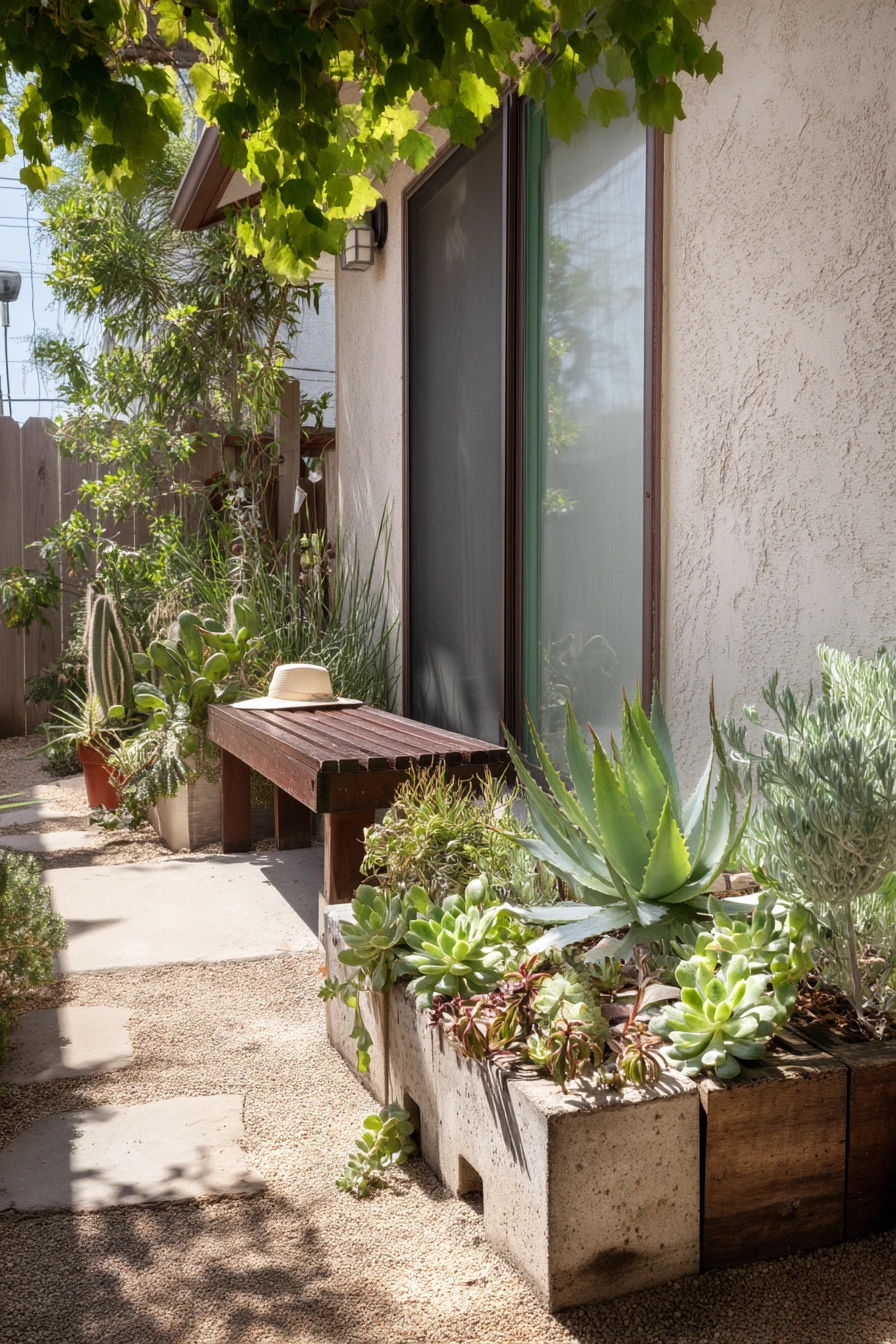
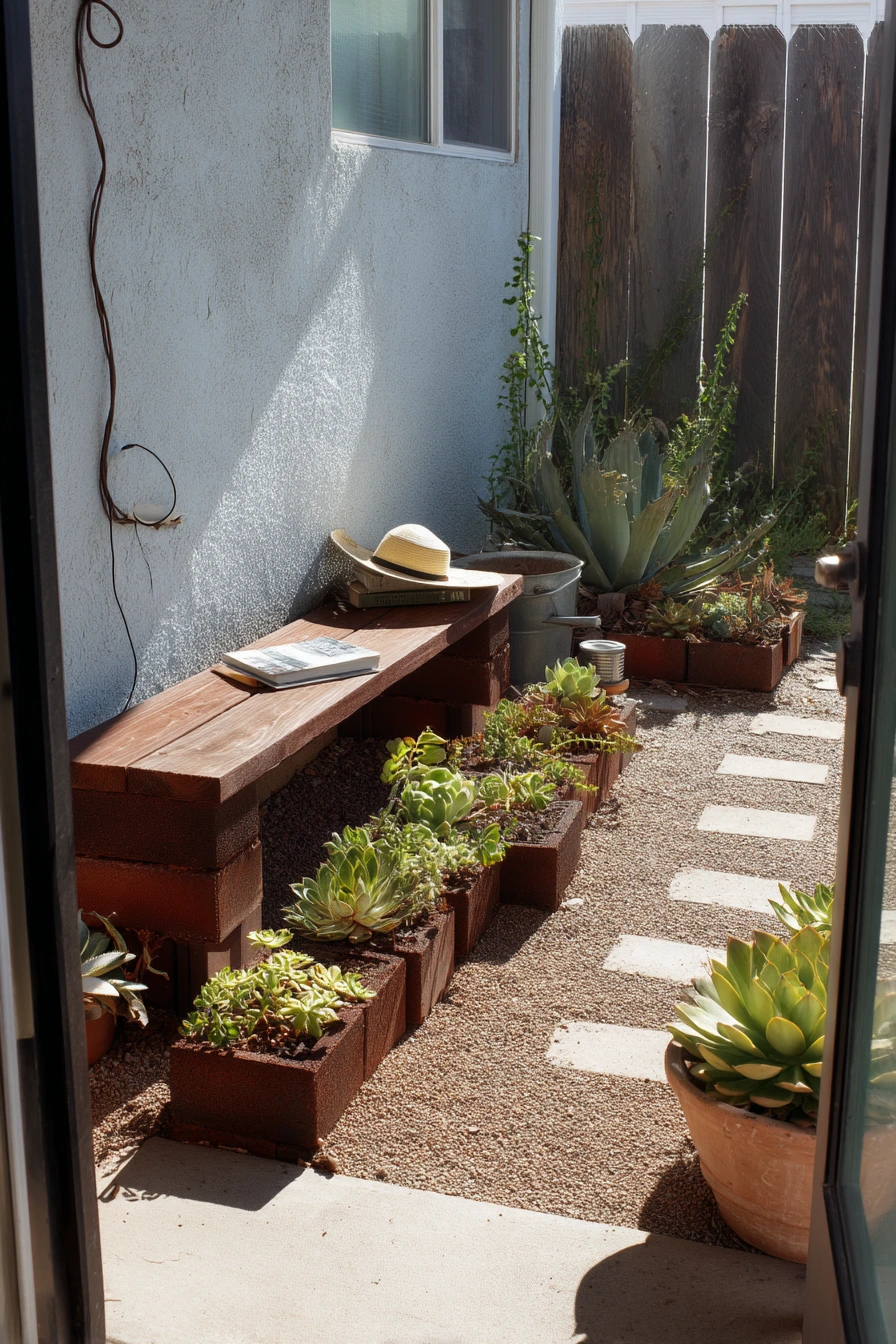
A sunny side yard is a great place for modular cinder block planters filled with succulents. The blocks create a clean, repeated shape that fits narrow spaces. Pair them with gravel to reduce weeds and make the area feel finished.
Plant agave, jade, and sedum for different heights and leaf shapes. Sedum can trail over edges and soften the concrete. Jade is easy to prune and can handle bright light. Agave adds a bold focal point, but give it space so spiky leaves do not poke walkways. If your side yard gets harsh sun, mix in a little afternoon shade with a simple bench placement or a light screen.
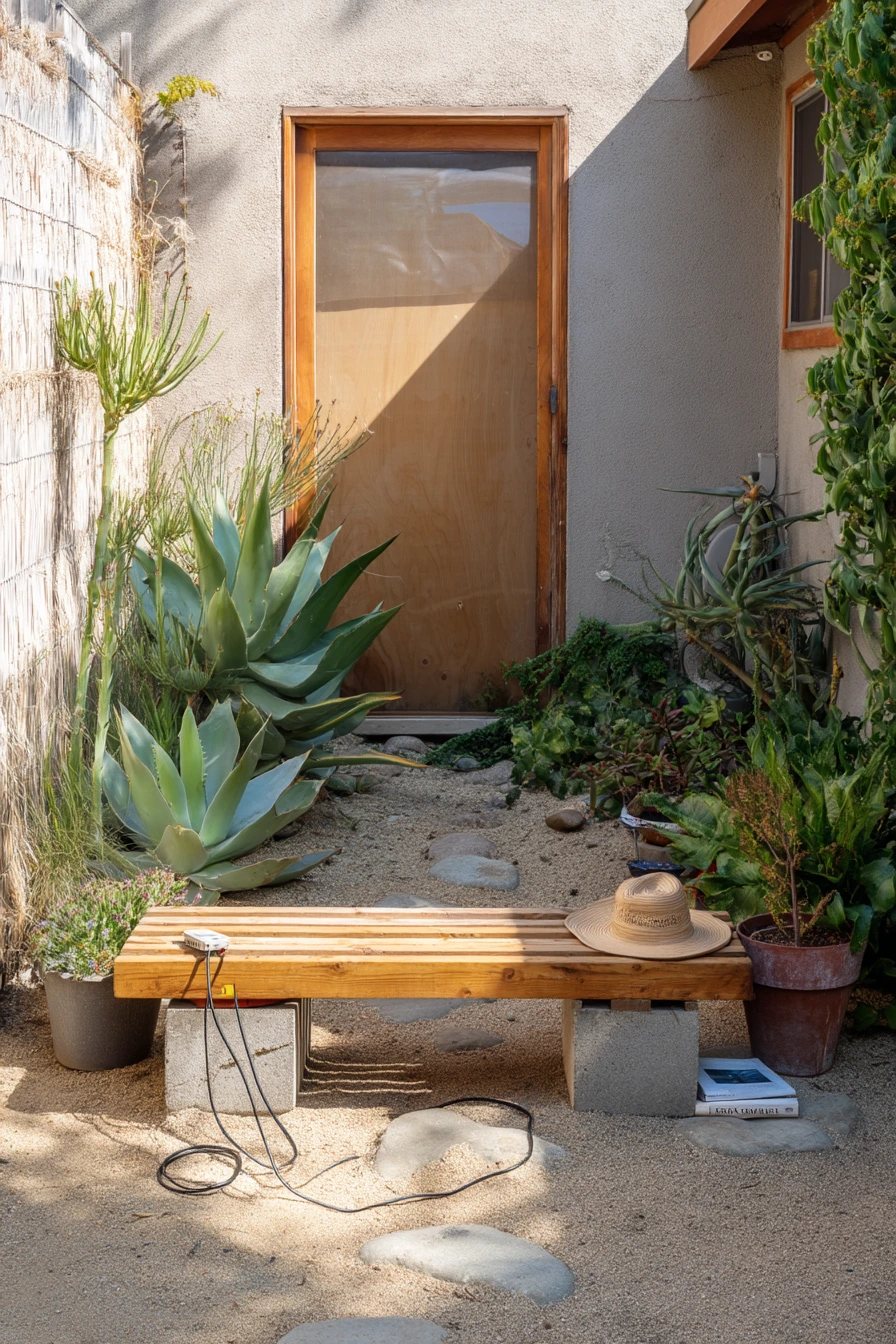
Style it like a small rest spot with a basic bench, a rusted steel watering can, and a paperback left on the seat. A sunhat and a charging cable by an open screen door makes it feel like an everyday hangout. Keep colors simple: gray blocks, pale gravel, and green plants look calm and modern without trying too hard.
- Use cactus mix or add extra perlite to improve drainage.
- Top-dress with small gravel to prevent soil splash and keep leaves clean.
- Group plants by water needs so you do not overwater drought lovers.
- Leave a clear walking strip so the side yard stays easy to use.
- In cold areas, choose hardy sedum and move tender jade indoors for winter.
Pro Design Tip: Repeat one bold plant (like agave) every few feet to create rhythm, then fill gaps with trailing sedum for a softer edge.
Budget Considerations: Succulents can get pricey in big sizes. Buy small starter plants and let them grow, or trade cuttings with friends.
6 Weekend DIY Cinder Block Build Day
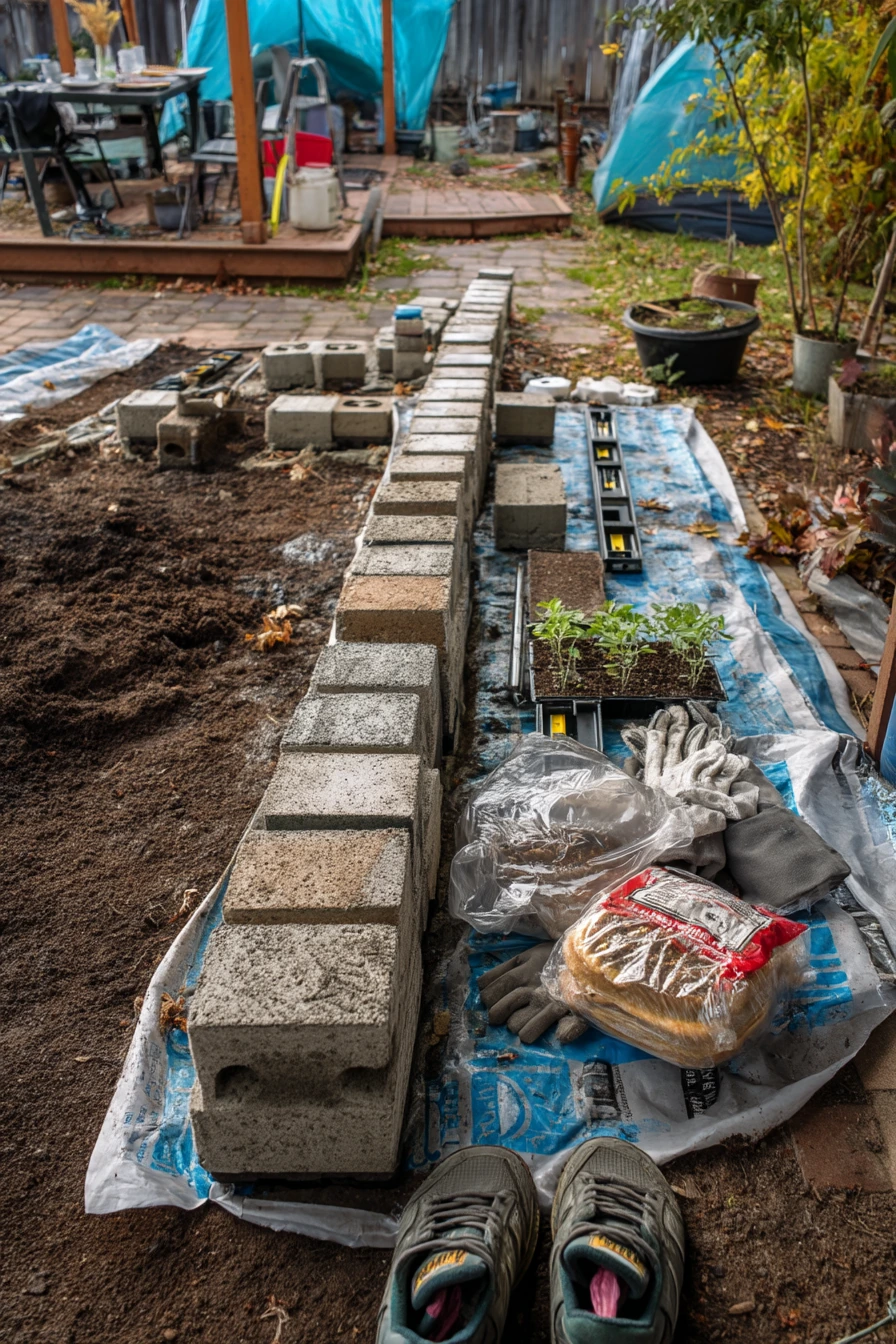
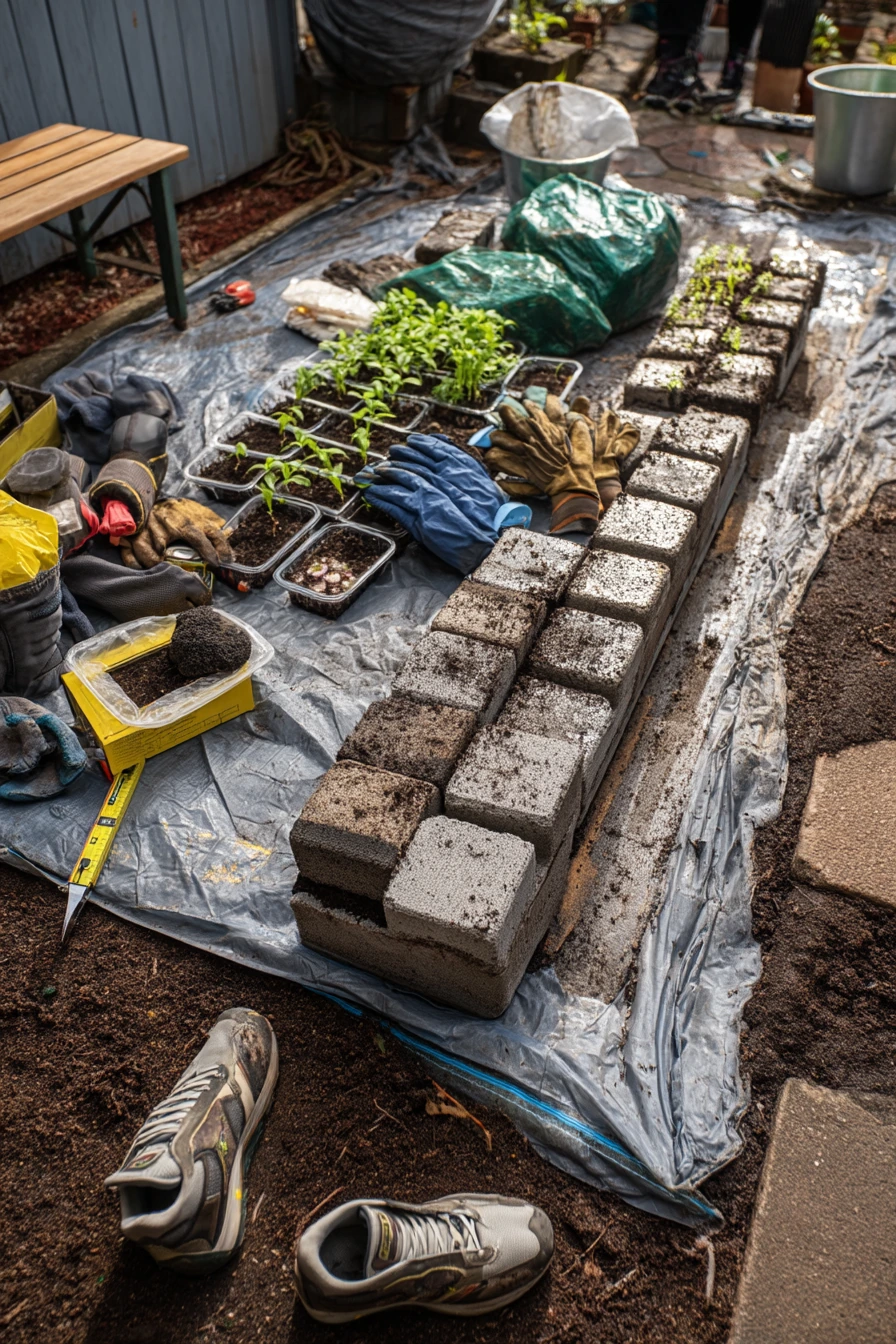
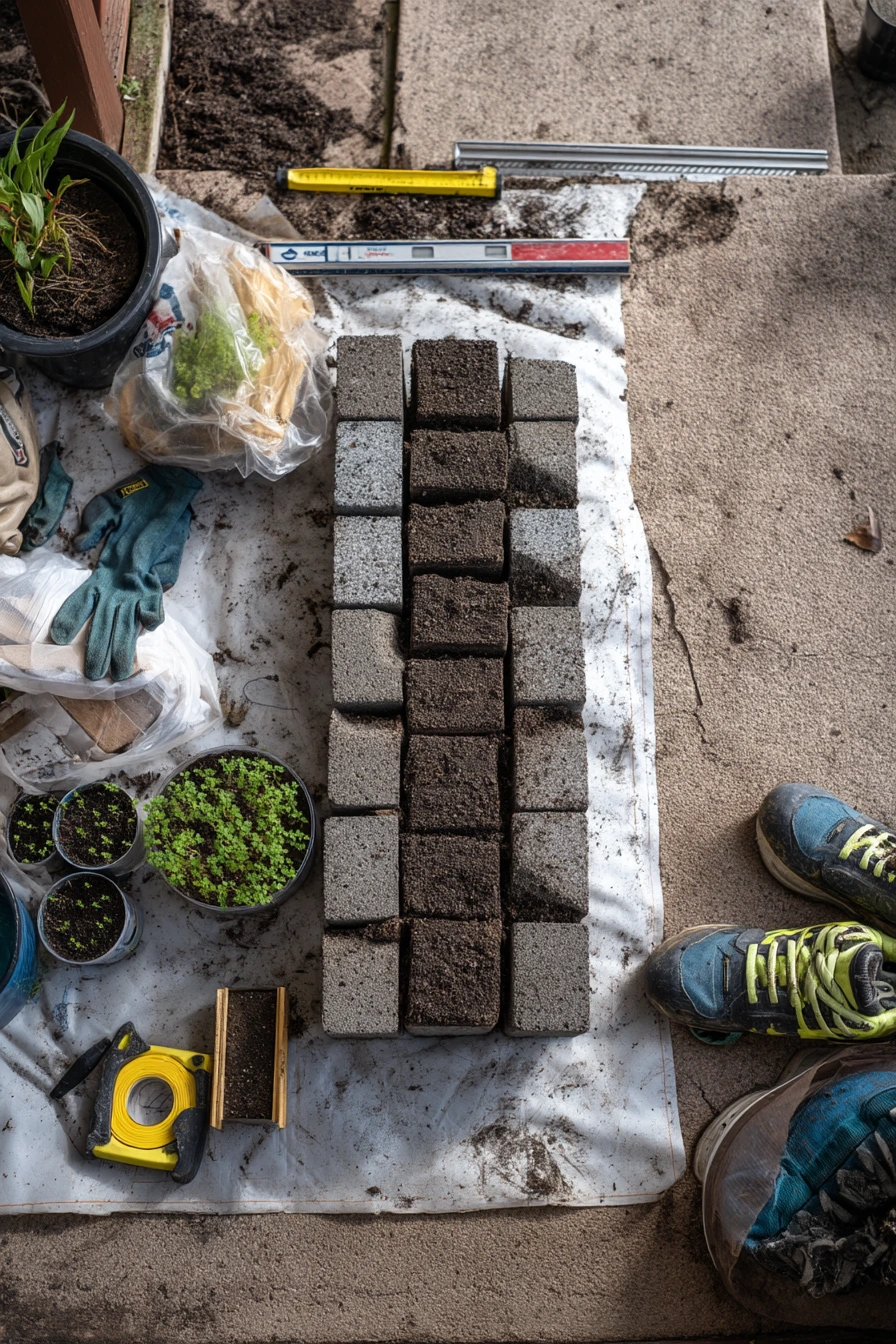
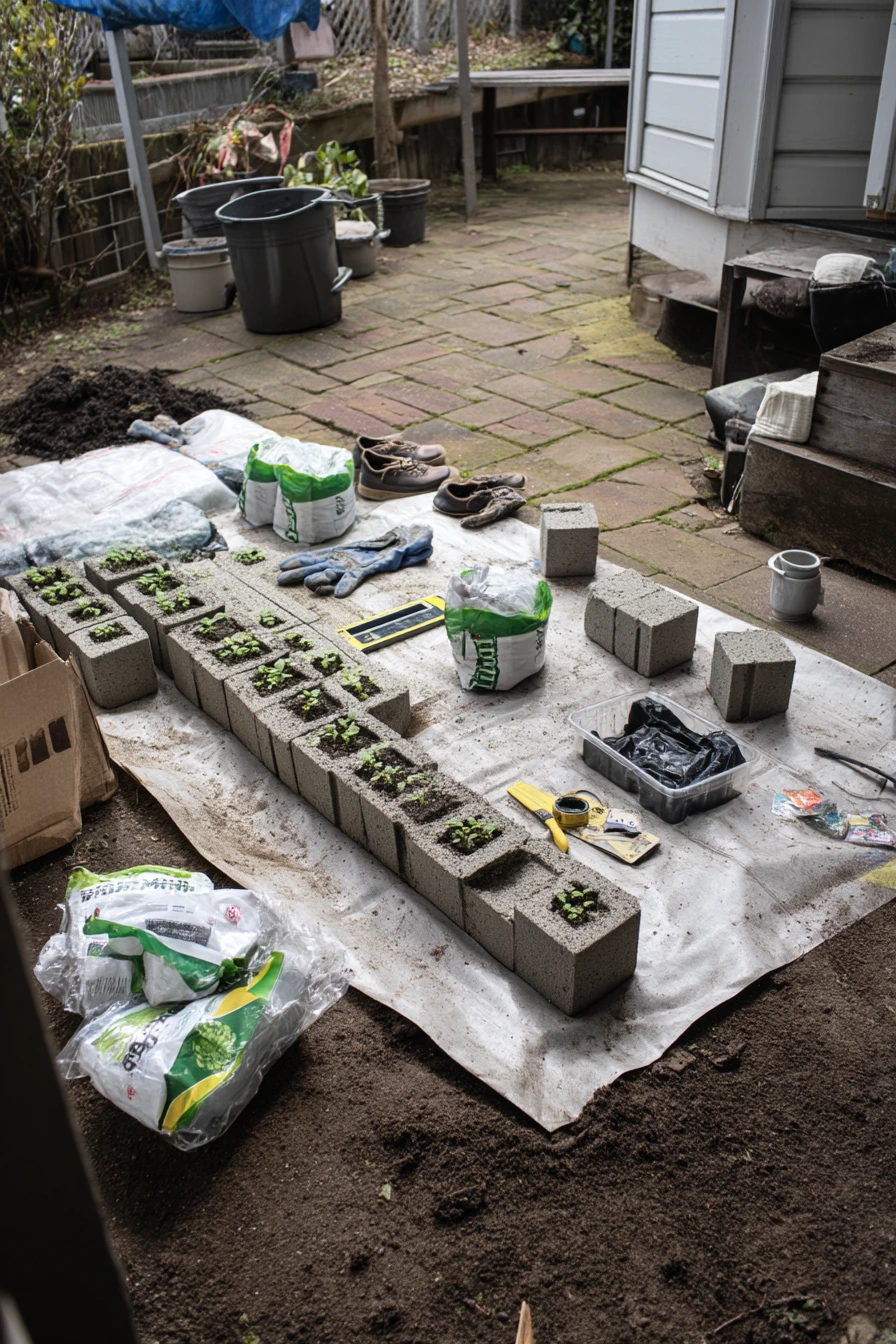
If you are building a cinder block garden on a weekend, set up like a real work zone. Lay a tarp to protect the lawn or patio, and stage blocks, soil bags, gloves, and a spirit level where you can reach them. This keeps the project moving and reduces mess.
Start by planning size and layout before you fill anything with soil. Dry-stack the first row, check it with the level, then adjust with sand or compacted soil. When the base is flat, the rest goes faster. Keep herb seedlings in trays in the shade while you work, and only plant after the structure is stable.
Expect it to look messy mid-build. A tape measure curled on the tarp, muddy sneakers by the step, and even a half-eaten sandwich nearby is normal. The key is to keep one clean path so you are not stepping over tools. When you finish, sweep the area and add a simple edging or mulch line so the bed looks complete, not like leftover blocks.
- Measure twice and mark corners with string before placing blocks.
- Stagger joints like bricks for a stronger, more stable bed.
- Wear gloves and lift with your legs to avoid strain.
- Water the soil after filling to help it settle before planting.
- Label seedlings early so you do not mix up herbs once planted.
Pro Design Tip: Use the same block orientation for the whole build, then turn only a few blocks sideways as planned “feature pockets” for herbs.
Budget Considerations: Tools like a level and tamper can cost money. Borrow from a neighbor or rent for a day, then spend the savings on better soil.
7 Small Courtyard Cutting Garden
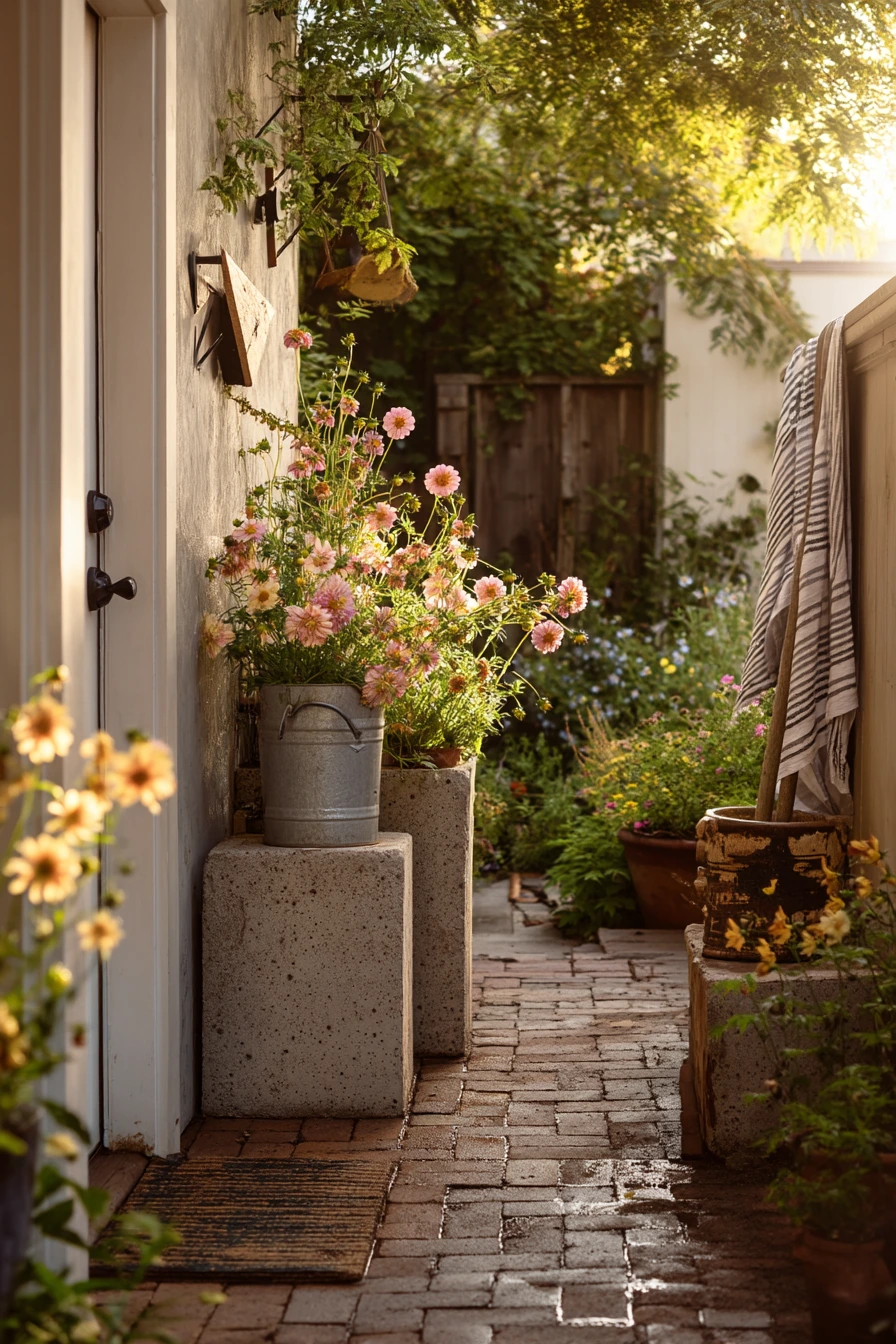
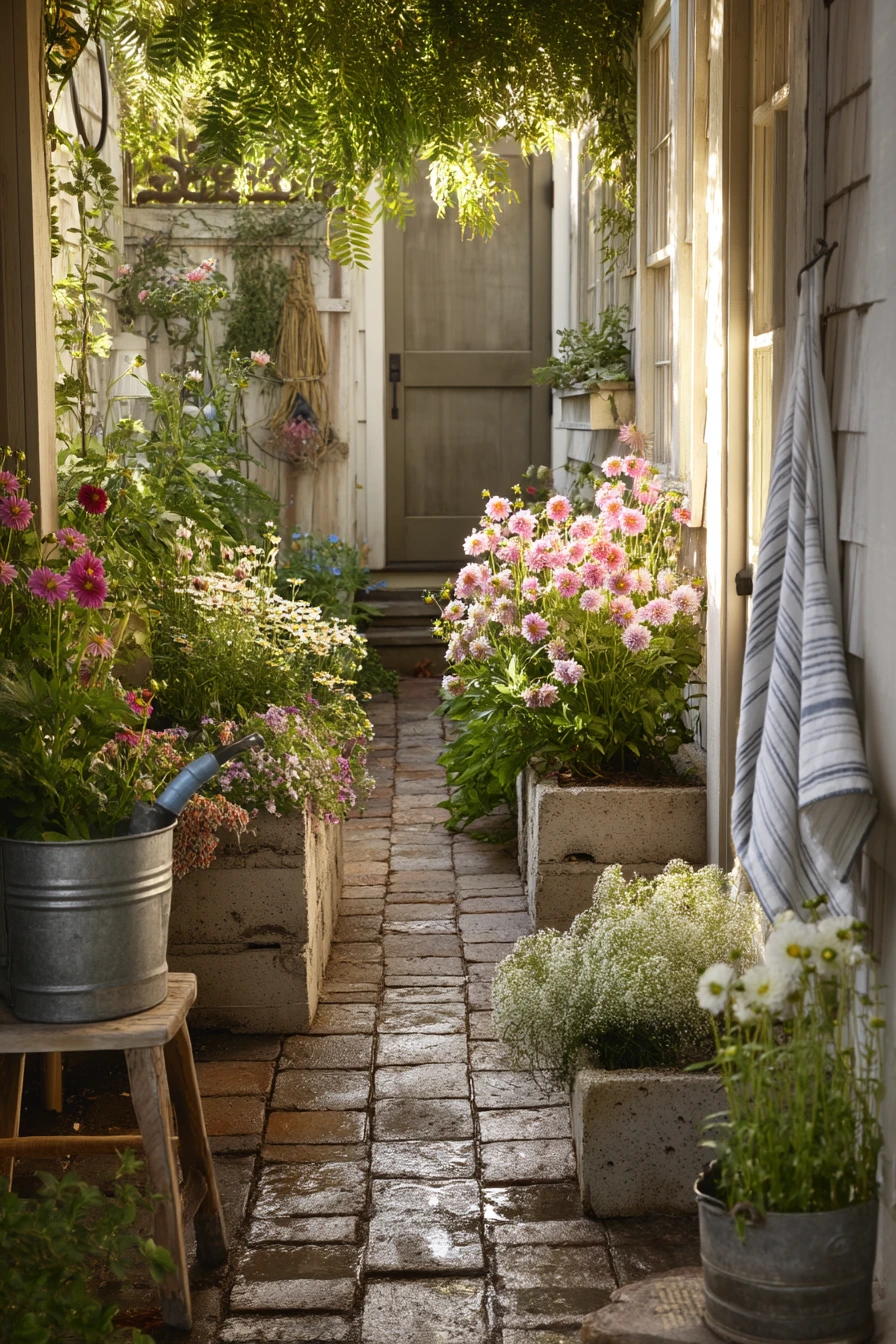
A narrow courtyard can still grow a strong cut flower garden with cinder block planters. The blocks create defined beds that keep the path clear to the back door. This is helpful in small spaces where every inch matters.
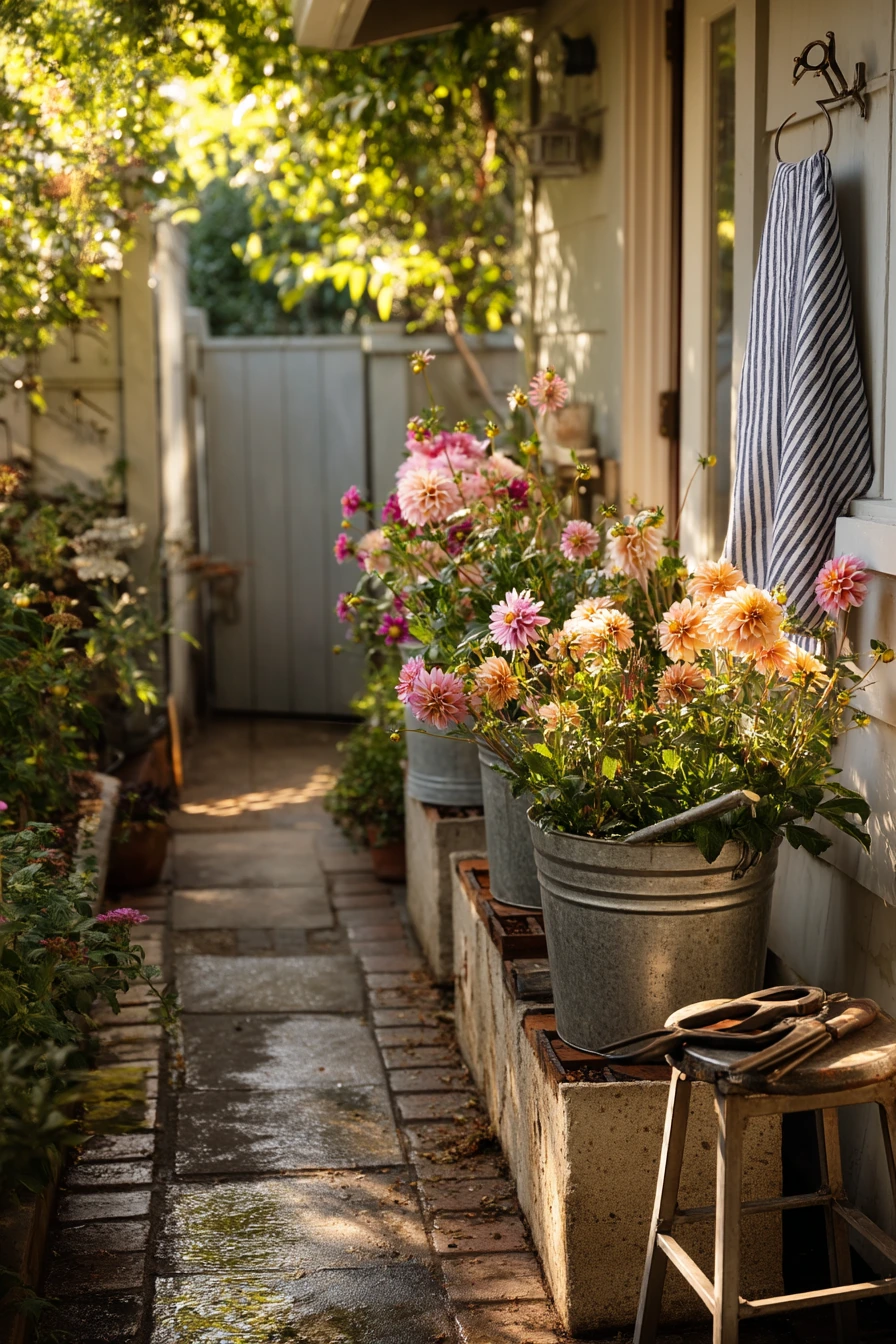
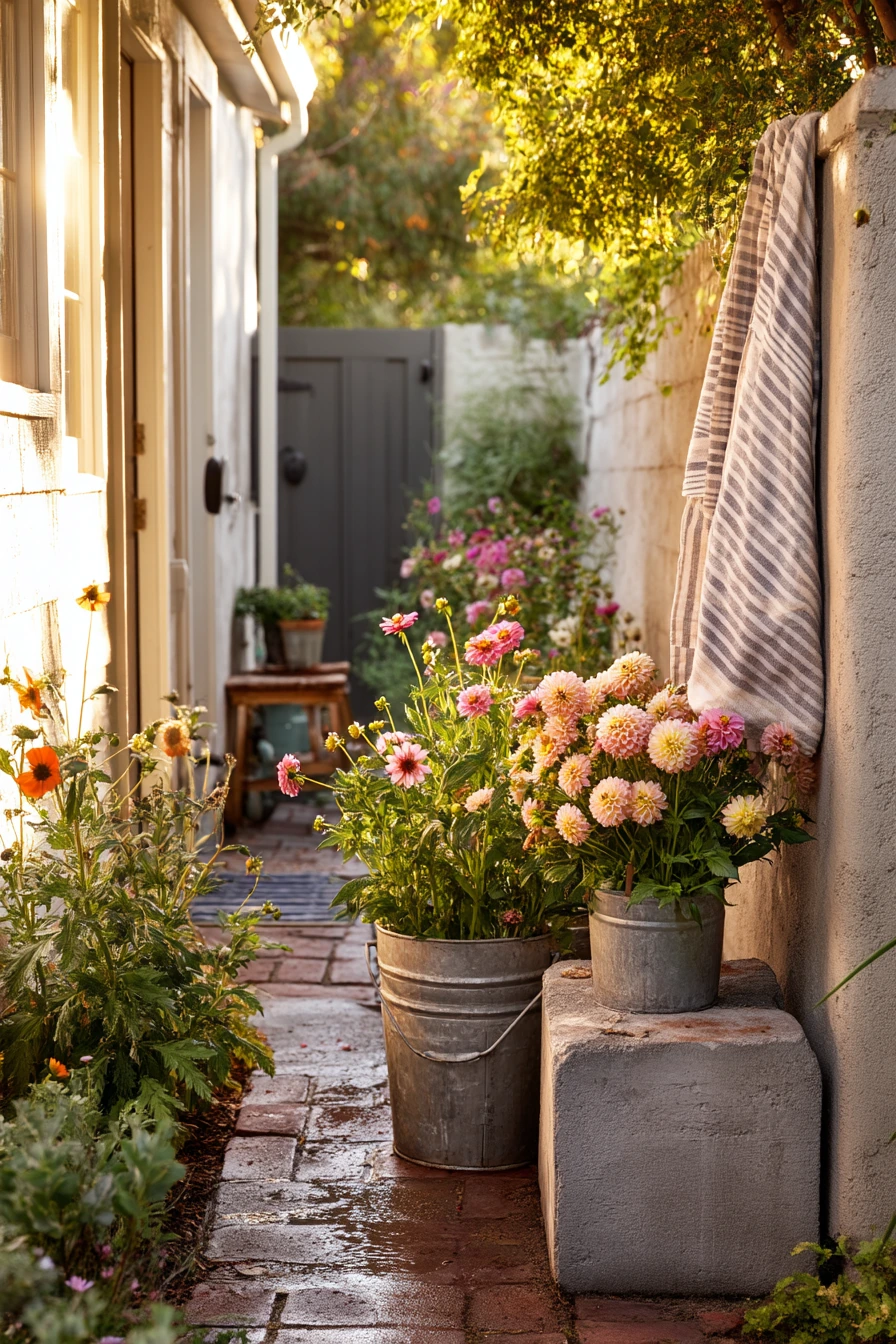
Choose dahlias, cosmos, and snapdragons for steady bouquets. Dahlias need more root room and support, so give them the larger planter area and add stakes early. Cosmos and snapdragons can go in tighter spots and still look full. Keep a galvanized bucket for fresh stems near the door so you can cut, drop them in water, and bring them inside fast.
For styling, lean into useful items that look good. Leave pruners on a small stool, hang a striped dish towel on a hook, and let water droplets on the pavers be part of the scene. If you want the courtyard to feel soft, add a few trailing plants in block openings near the edges, like creeping thyme or sweet alyssum.
- Plan a simple cutting schedule: harvest every 2 to 3 days in peak season.
- Use a grid of string for dahlias to keep stems upright.
- Feed flowers with compost tea or slow-release fertilizer once a month.
- Cut early in the morning for longer vase life.
- Keep one narrow shelf or hook for tools to avoid clutter on the path.
Pro Design Tip: Pick two main flower colors and one neutral so the courtyard looks calm, even when the beds are full.
Budget Considerations: Dahlias can be costly if you buy many tubers. Start with a few and fill the rest with inexpensive cosmos seed packets.
8 Urban Balcony Cinder Block Planter Hack
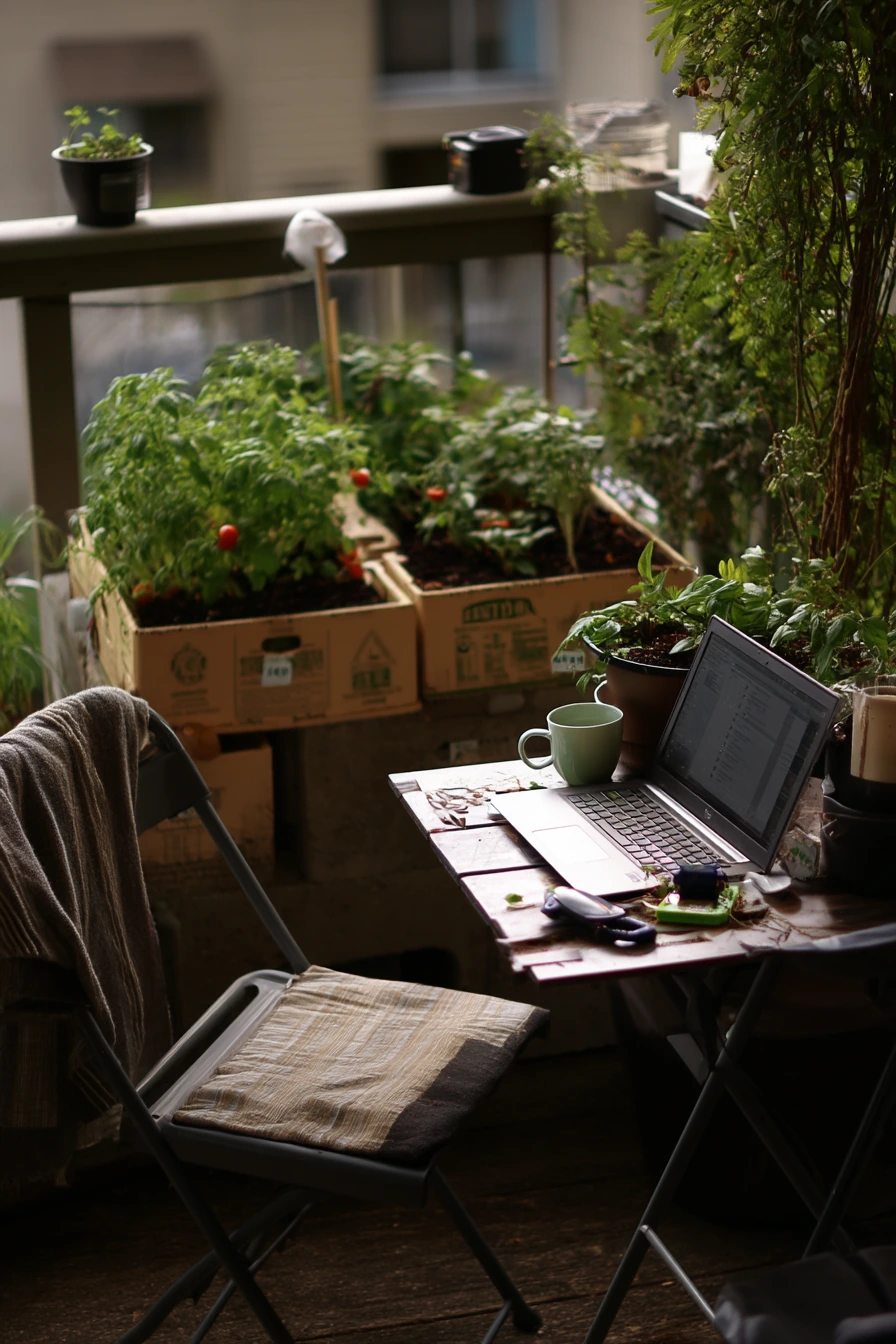
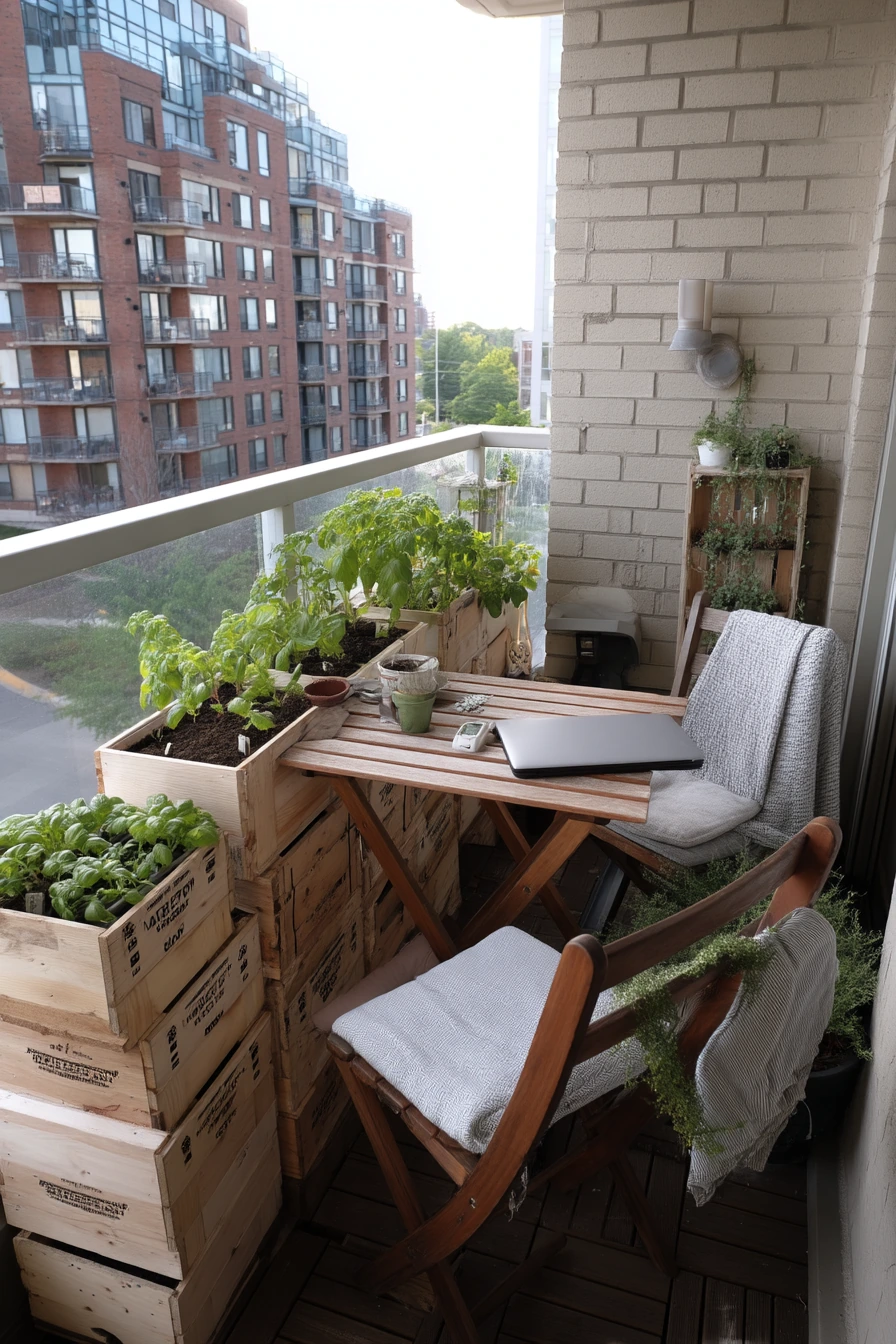
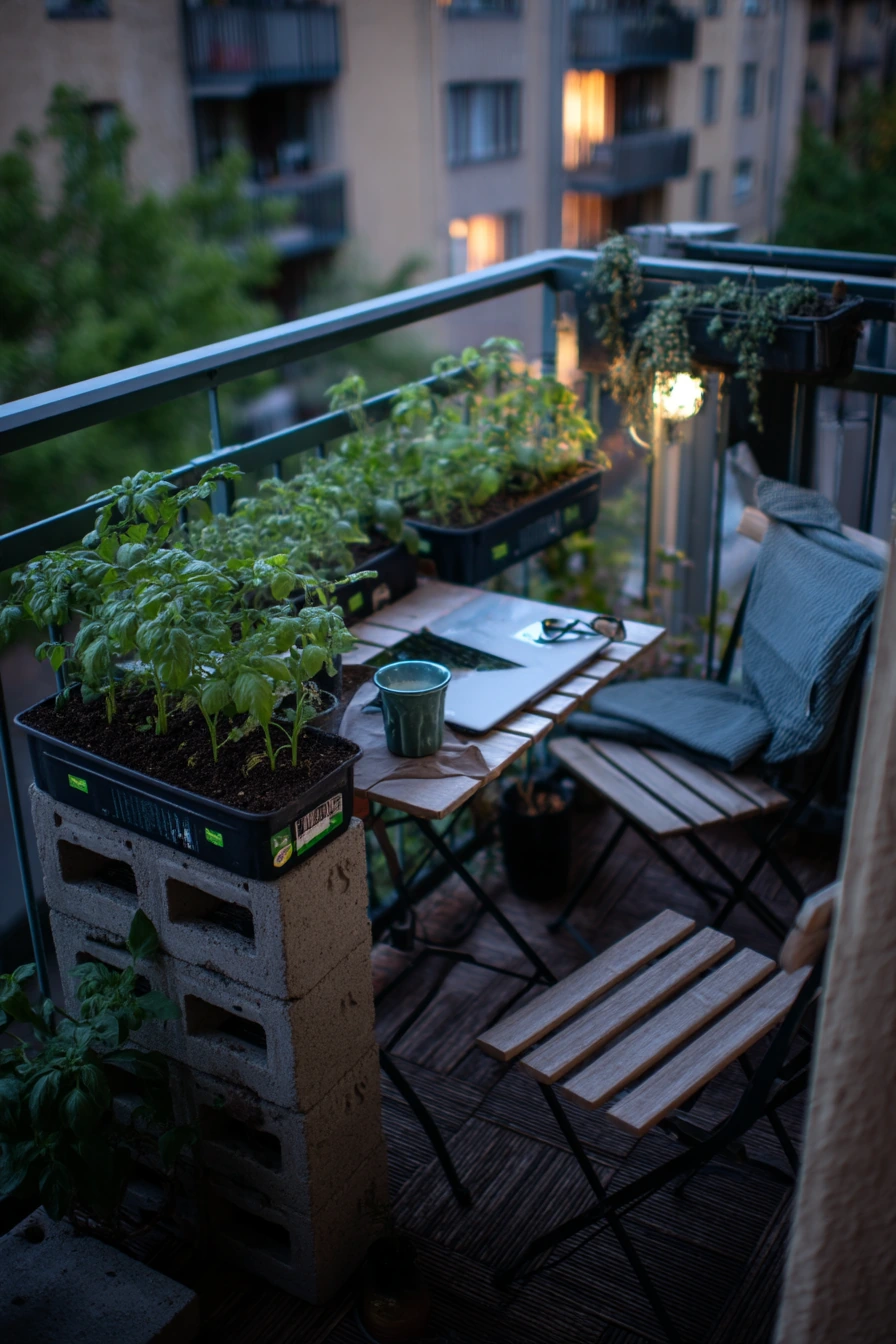
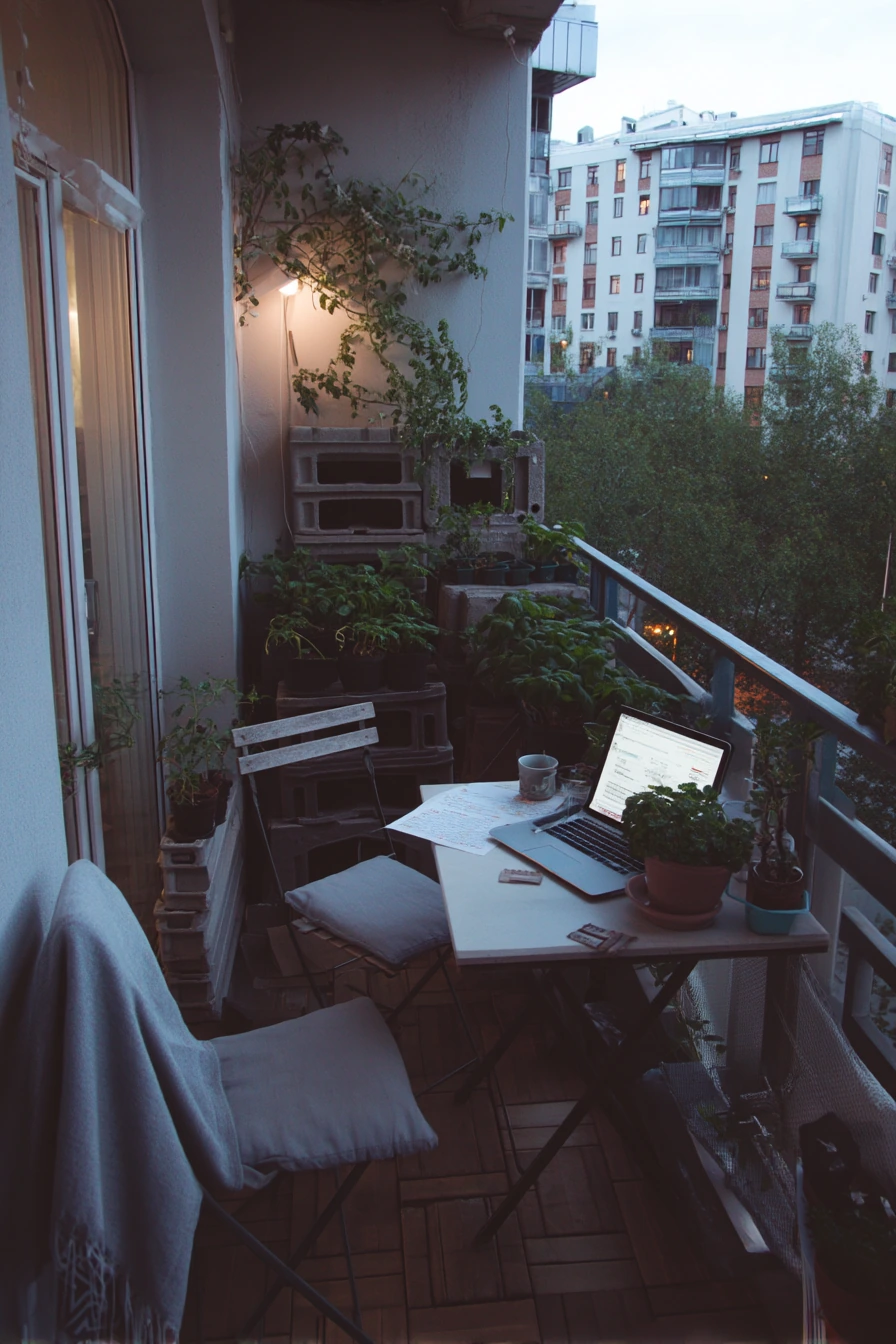
An apartment balcony can feel like a tiny garden room with cinder blocks used as raised planters. Stack them to lift plants closer to light and keep watering easier on your back. Place the planters beside a compact café table and foldable chairs so the space still works for meals.
Strawberries, trailing thyme, and dwarf peppers fit well here. Strawberries look great spilling over the edge, thyme softens corners, and dwarf peppers add color and stay manageable. Use plant tags in the soil so you remember varieties, and group plants by sun needs. If the balcony gets strong wind, place the tallest plants closer to the wall and use heavier pots in the corners for stability.
Keep the look cozy and real with a throw blanket on a chair and a closed laptop on the table for evening use. A ceramic spoon rest can double as a small dish for pruners or a scoop. Use soft lamp light plus fading daylight to make the balcony feel like a place you actually sit, not just a place you water.
- Check weight limits and keep the layout low and spread out.
- Use a tray under blocks or pots to catch runoff and protect the floor.
- Water slowly so soil absorbs and does not spill through gaps.
- Hand-pollinate strawberries with a small brush if bees are scarce.
- Pinch pepper tips early to encourage bushier growth.
Pro Design Tip: Keep furniture and planters in a tight “L” shape so the center stays open and the balcony feels bigger.
Budget Considerations: Balcony drip trays and saucers add cost, but they prevent damage fees. Use sturdy plastic boot trays as a cheaper option.
9 Rainy-Day Cinder Block Potting Zone
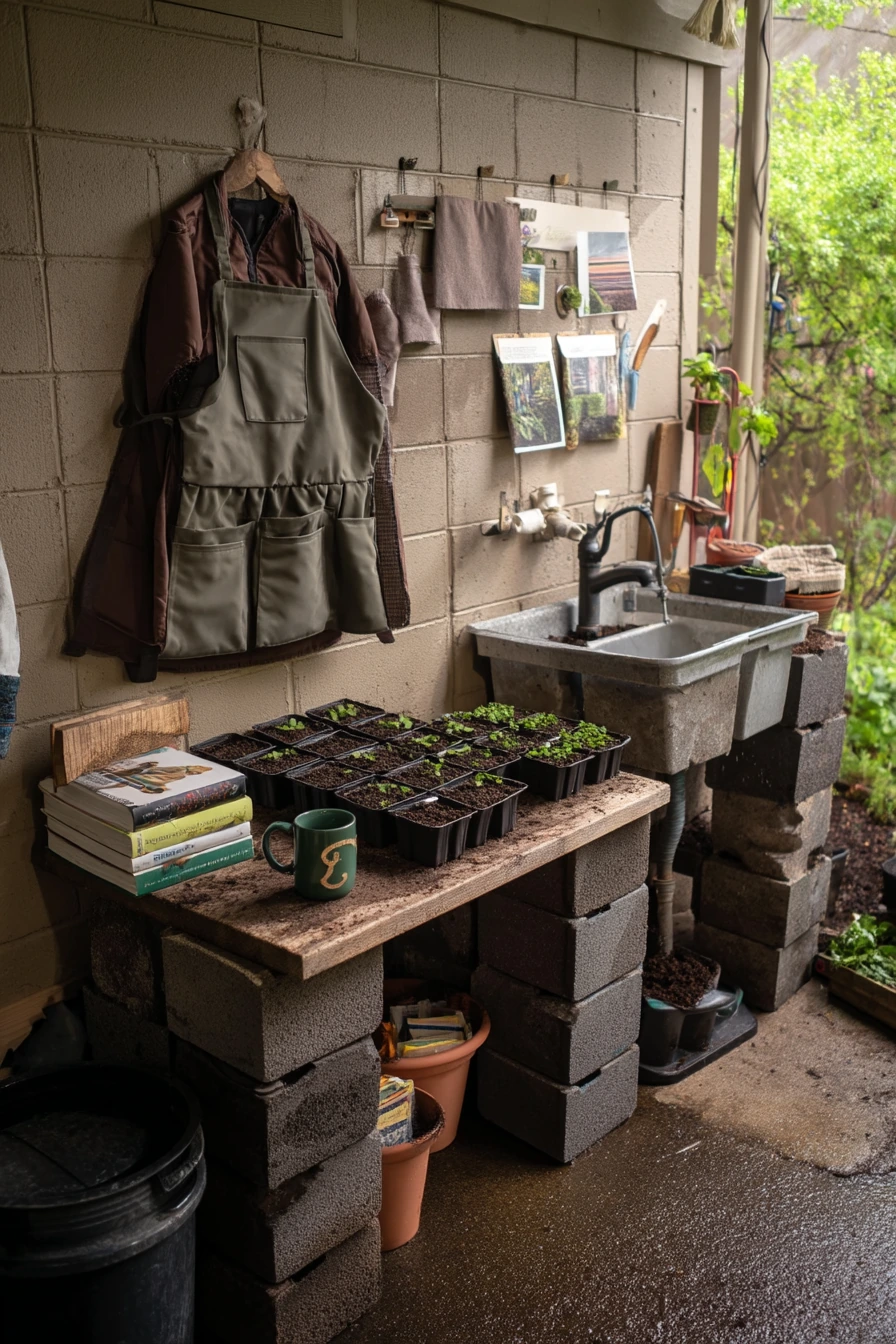
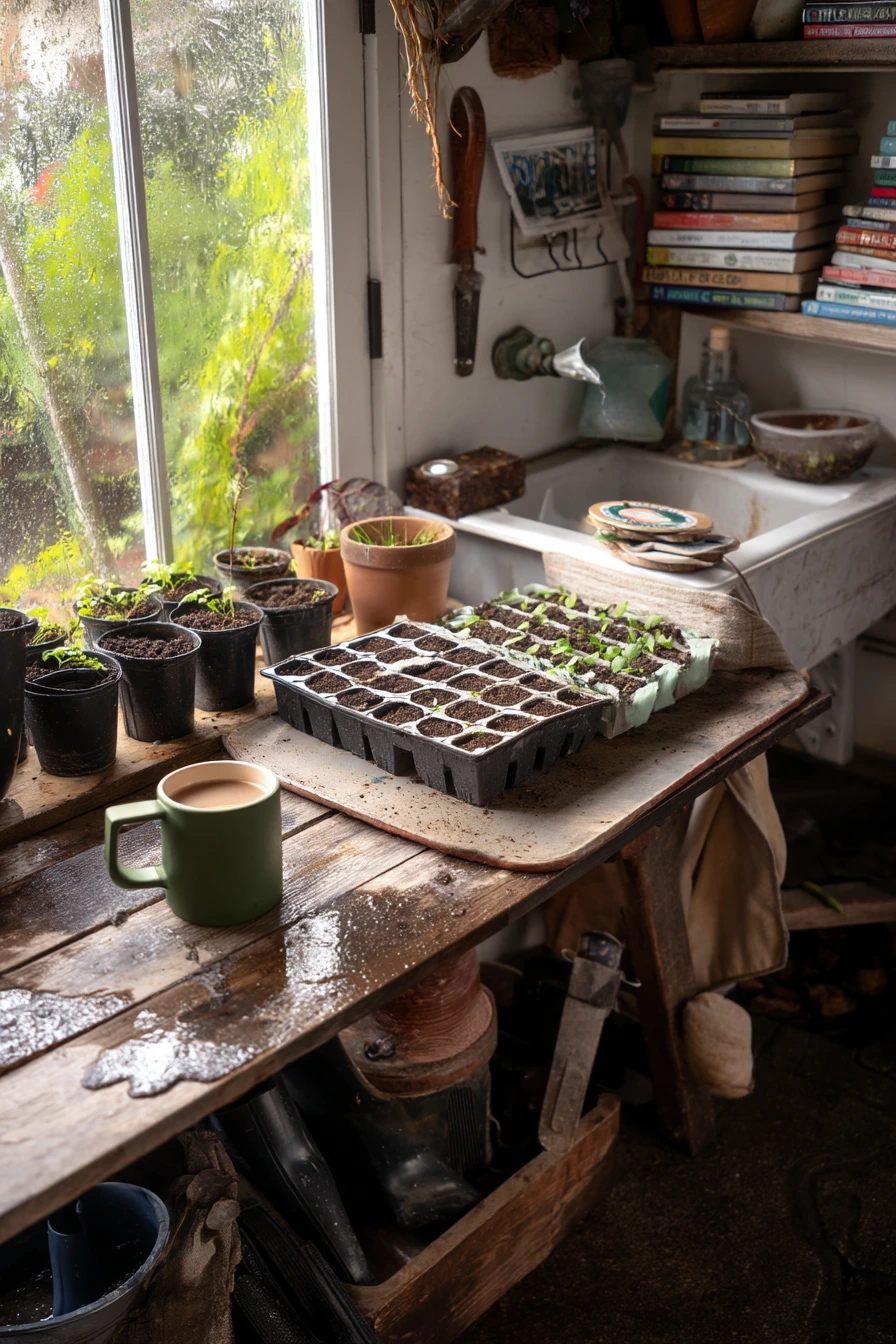
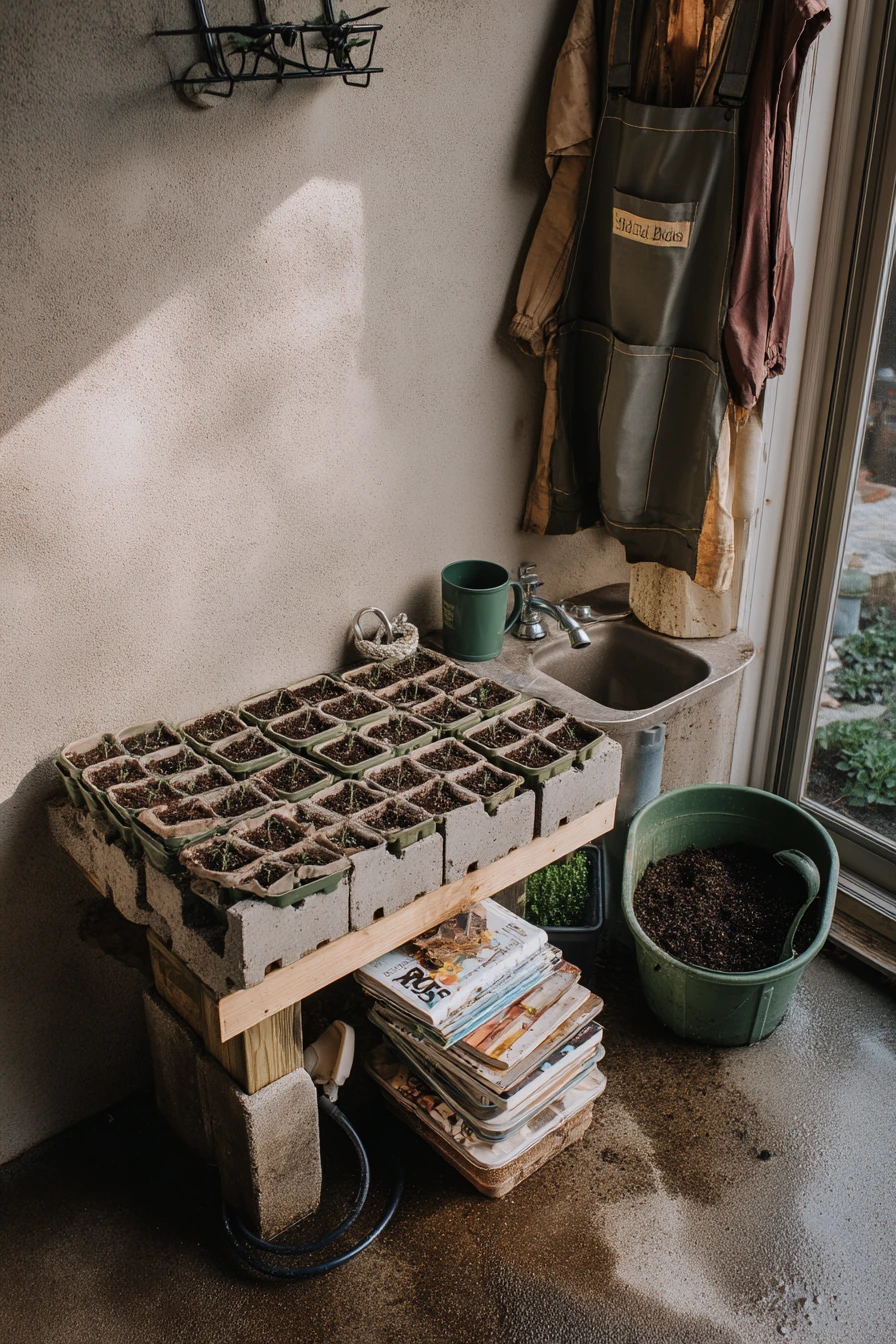
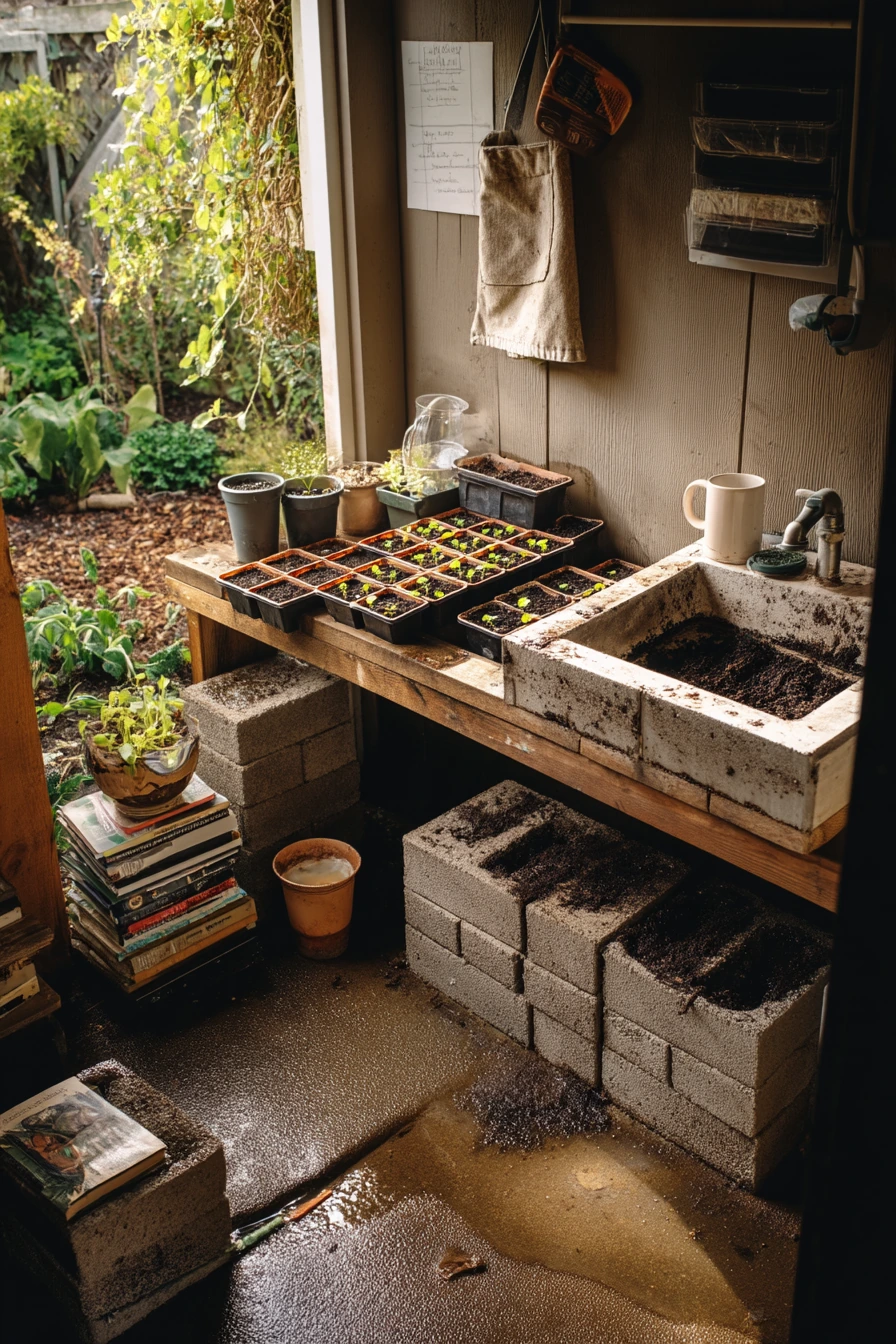
A covered backyard potting corner is a smart place to use cinder blocks as shelves and seedling stands. The blocks can hold trays of seedlings in the openings and raise them off the ground. This keeps plants cleaner after rain and makes the space easier to sweep.
Set up the corner near a hose bib and a simple sink setup, even if it is just a basin on a small table. Store seed envelopes and compost in a dry bin, and keep gardening books nearby for quick reference. After watering, wet footprints on the concrete are normal, so add a small rubber mat for traction and comfort while you work.
Style it in a simple, useful way: hang a mud-smeared apron on a hook, keep a mug of tea on a high shelf away from soil, and label everything. Use one or two matching containers so the area looks calm. If light is low, add a small clamp lamp for seed starting and keep cords neat and off wet spots.
- Use blocks as a base, then add a thick board as a worktop.
- Keep seedlings grouped by size so taller trays do not shade smaller ones.
- Store compost in a sealed bin to reduce pests.
- Keep a small brush and dustpan nearby for quick cleanup.
- Set a weekly reset time to toss dead leaves and restock labels.
Pro Design Tip: Create three zones: clean tools, dirty tools, and seedlings. When each zone has a spot, the corner stays usable all season.
Budget Considerations: A real utility sink can be expensive. Start with a deep plastic tub and a simple outdoor table, then upgrade later.
10 Cozy Evening Garden Glow
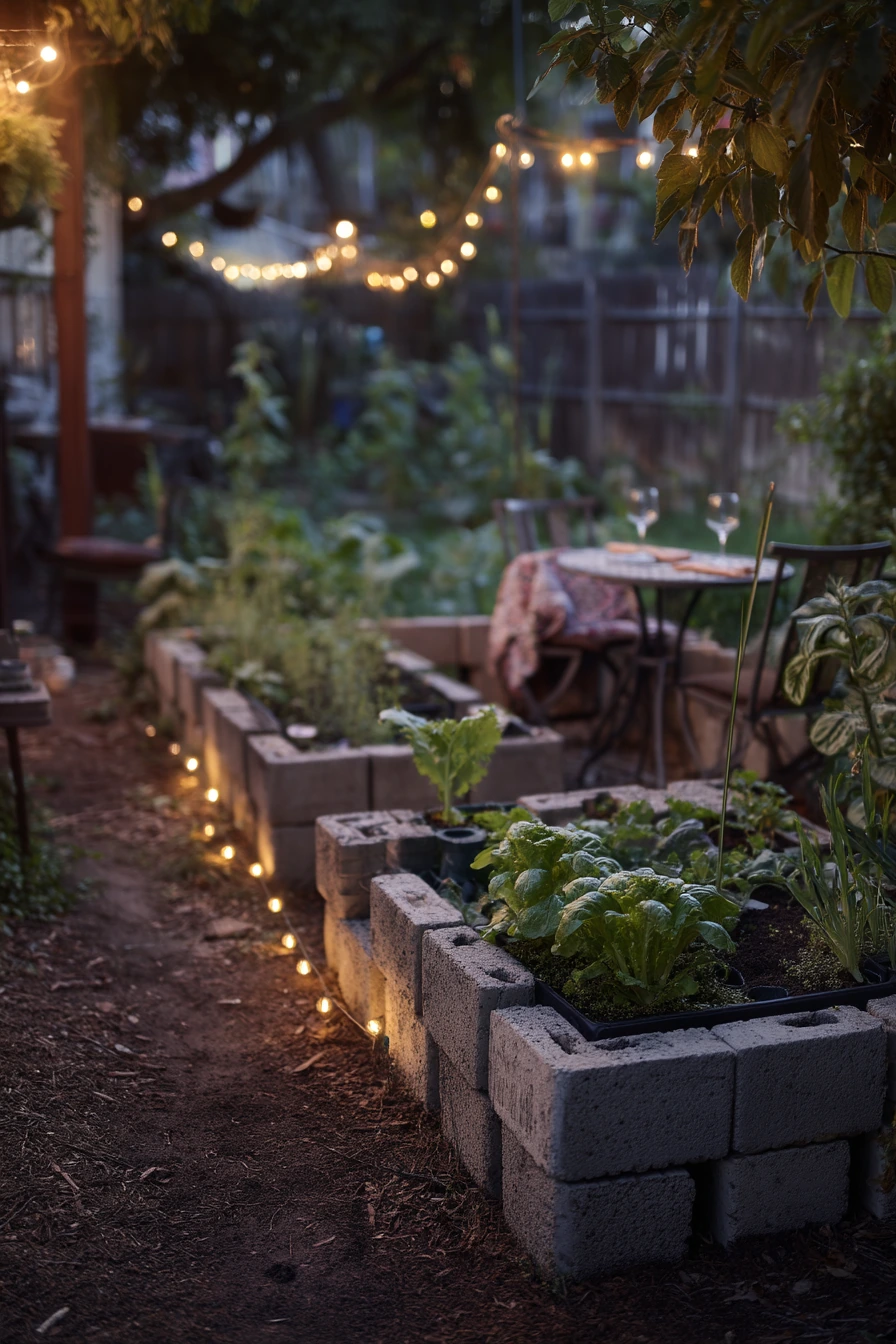
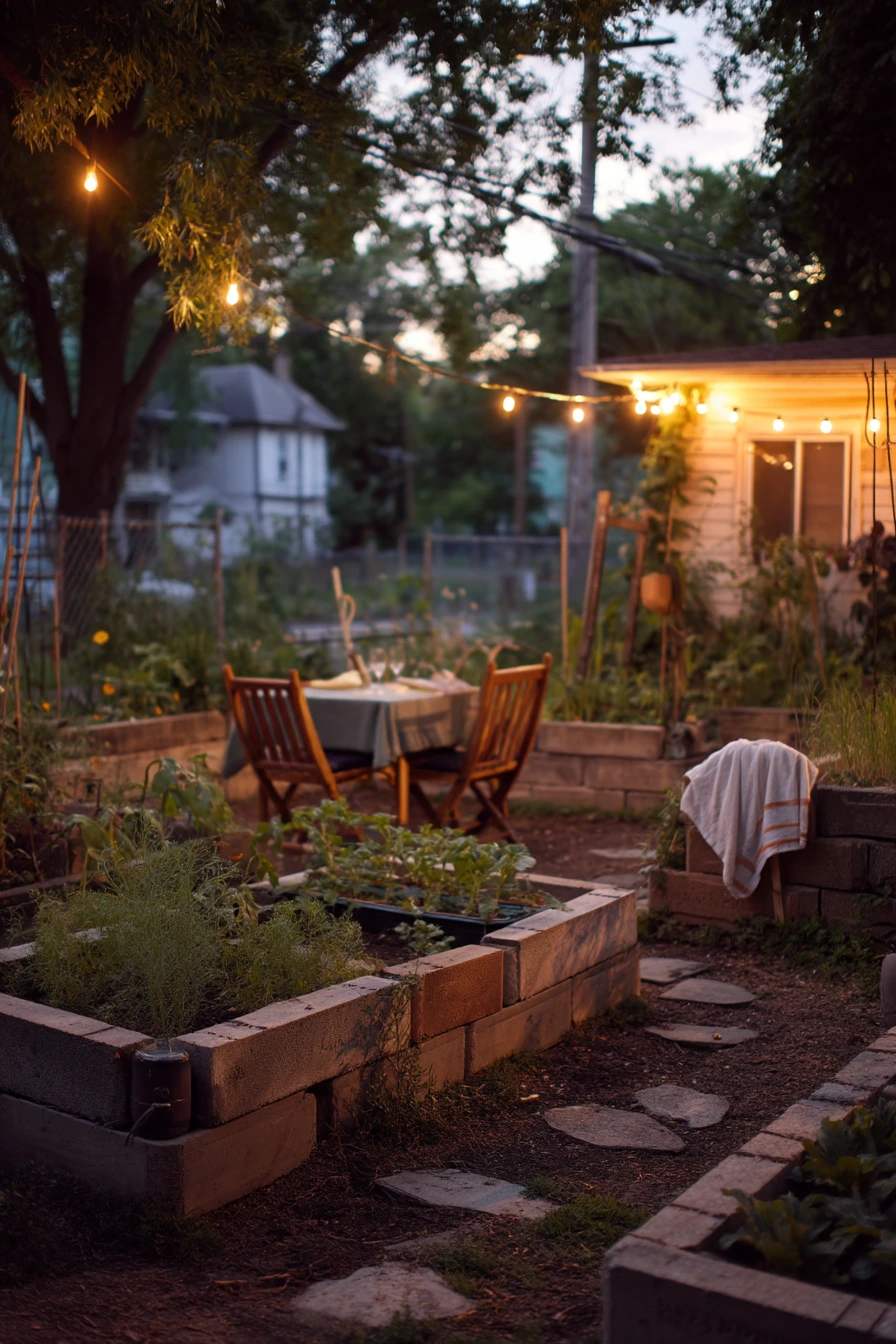
A quiet backyard at dusk is a great time to enjoy cinder block garden beds. Adding warm string lights along the edge makes the area feel inviting and helps you check plants in the evening. Keep the lighting soft and focused on the seating nook, not bright overhead.
Grow parsley, chives, lettuce, and nasturtiums for an edible mix that looks pretty. Nasturtiums spill over edges, bloom in warm colors, and the leaves and flowers are edible. Lettuce does well in cooler parts of the season, while parsley and chives keep producing with regular snips. Use the block openings for herbs and let lettuce fill the wider bed space.
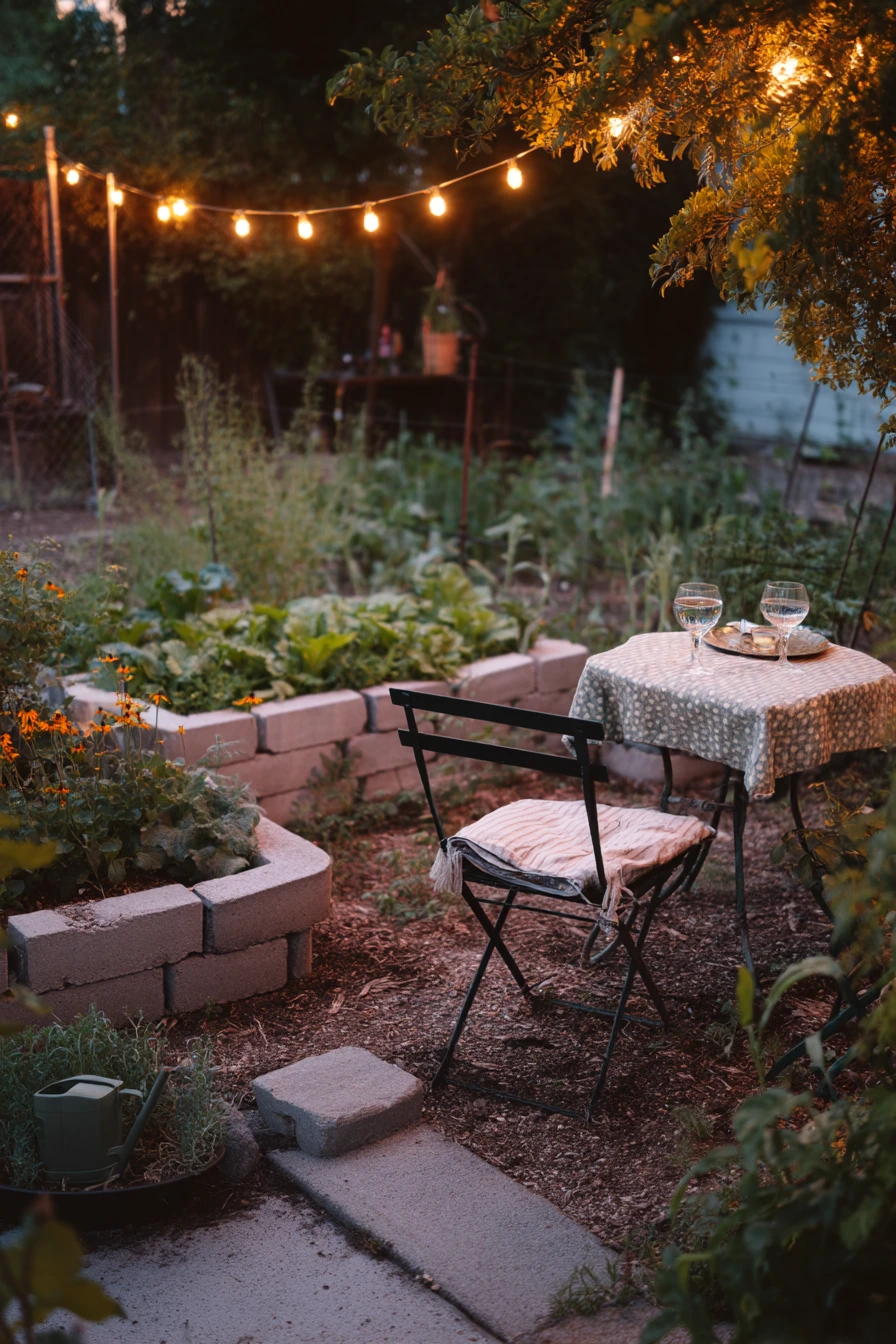
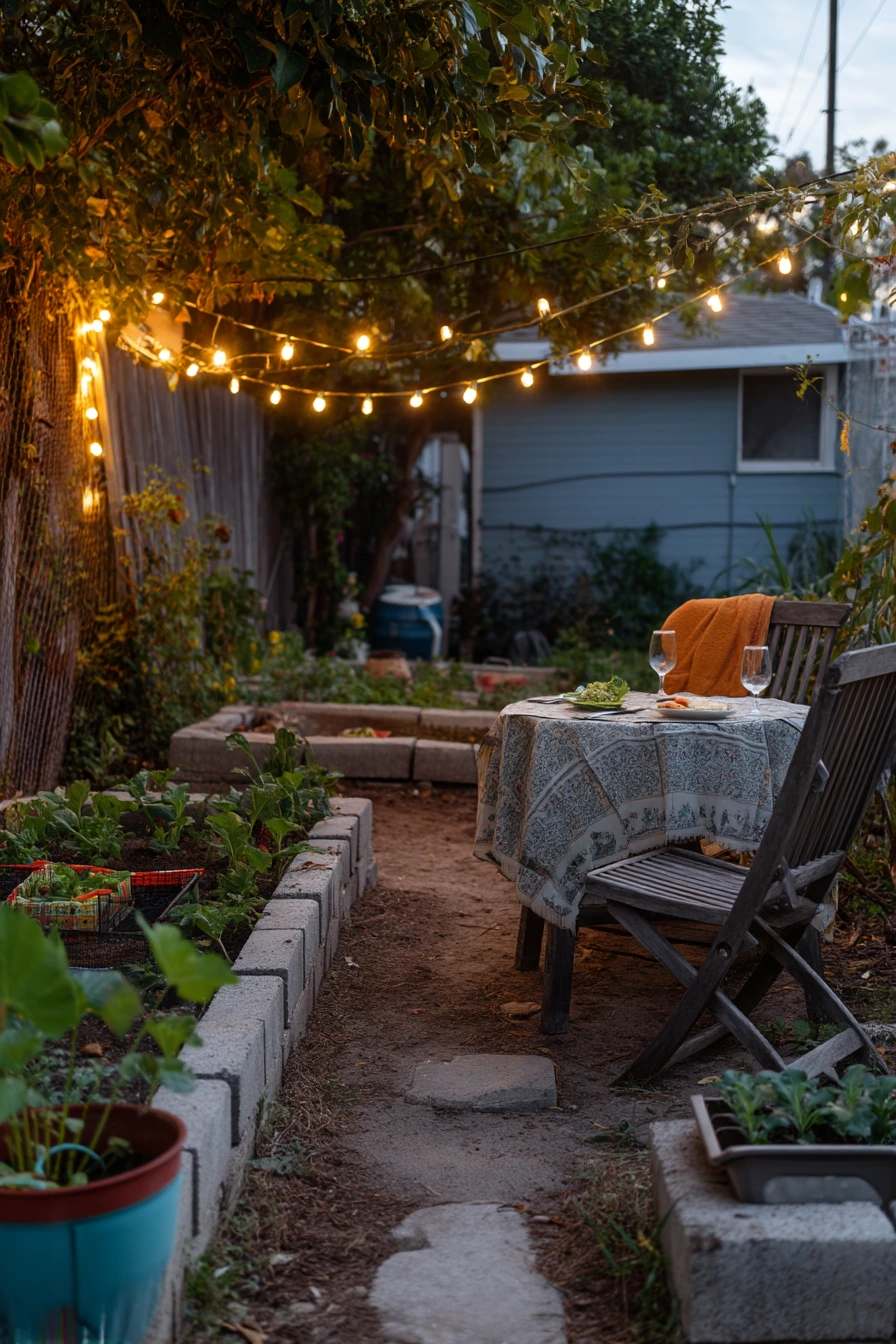
Style the space for simple dinners outside. Add a small bistro table, set out two wine glasses, and keep a folded napkin ready. A child’s watering can near the bed makes it feel like a family spot, and a blanket over a chair invites you to stay longer. Put a small bin or basket nearby to carry scissors, a bowl for harvest, and bug spray if needed.
- Choose outdoor-rated string lights and secure cords away from paths.
- Plant lettuce where it gets a bit of shade in late afternoon to slow bolting.
- Snip herbs often to keep them bushy and avoid woody stems.
- Use slug control if you see holes in lettuce leaves.
- Add a small candle or lantern on the table for extra warm light.
Pro Design Tip: Hide the light plug and extra cord behind a planter or bench so the glow looks clean and intentional.
Budget Considerations: Outdoor lighting can vary in price. Solar string lights cost less to run, but replace them every few seasons if brightness fades.
Cinder block gardens are easy to build, flexible, and a good fit for rentals, patios, and tight yards. You can stack a few blocks for herbs, or build full beds for vegetables and flowers.
Pick one idea that matches your light and space, then keep it simple with a clear layout, good soil, and a basic watering plan. Small styling choices like matching pots, a tidy tool spot, and a seat nearby help the garden feel like part of your home.
FAQ
Are cinder blocks safe for garden beds? Most are fine for ornamental plants. For edible gardens, choose newer blocks and consider lining the inside with landscape fabric or a food-safe barrier if you are concerned.
Do I need to glue cinder blocks together? For low planters, dry stacking often works. If you build taller walls, use construction adhesive made for masonry and keep the base level.
What soil should I use in cinder block planters? Use a quality potting mix for block openings and a raised bed mix for larger beds. Add compost each season to refresh nutrients.
How do I keep block planters from tipping? Build on flat ground, level the first row, and keep the height reasonable. Stagger joints and avoid top-heavy plants on the highest row.
How often should I water cinder block planters? Small pockets dry out faster, especially in sun and wind. Check daily in hot weather, and water when the top inch of soil feels dry.
Can I paint cinder blocks for a nicer look? Yes. Use masonry paint and let blocks dry fully first. Neutral colors help plants stand out and hide dirt.
What grows best in the small block holes? Herbs, lettuce, scallions, strawberries, sedum, and small annuals work well. Save larger spaces for tomatoes, peppers, and big flowers like dahlias.