
Good clothes storage ideas make mornings easier and help your home feel calm. When shirts, shoes, and laundry all have a spot, you waste less time searching and you keep piles from spreading.
This guide focuses on real-life storage in small apartments, hallway nooks, family mudrooms, and shared closets. You will see simple setups like open wardrobes with matching baskets, labeled fabric bins, tension rods, and rolling under-bed bins.
Each section includes practical steps you can copy, plus small styling ideas so the space looks neat without being fussy. You will also get a pro design tip and a budget note for every setup.
Use one idea at a time. Even a narrow shoe cabinet, a few wall hooks, or drawer inserts can make your closet work better fast.
1 Small Bedroom Wardrobe Wall
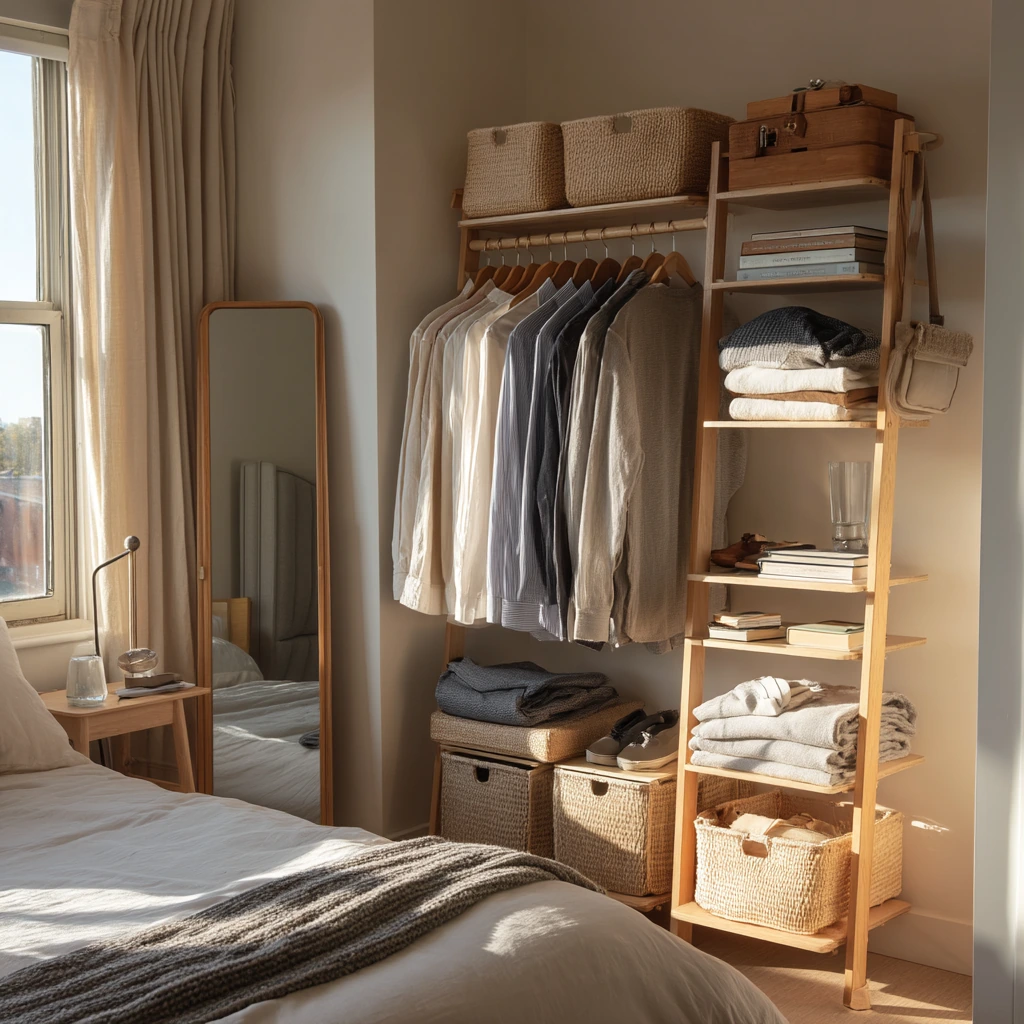
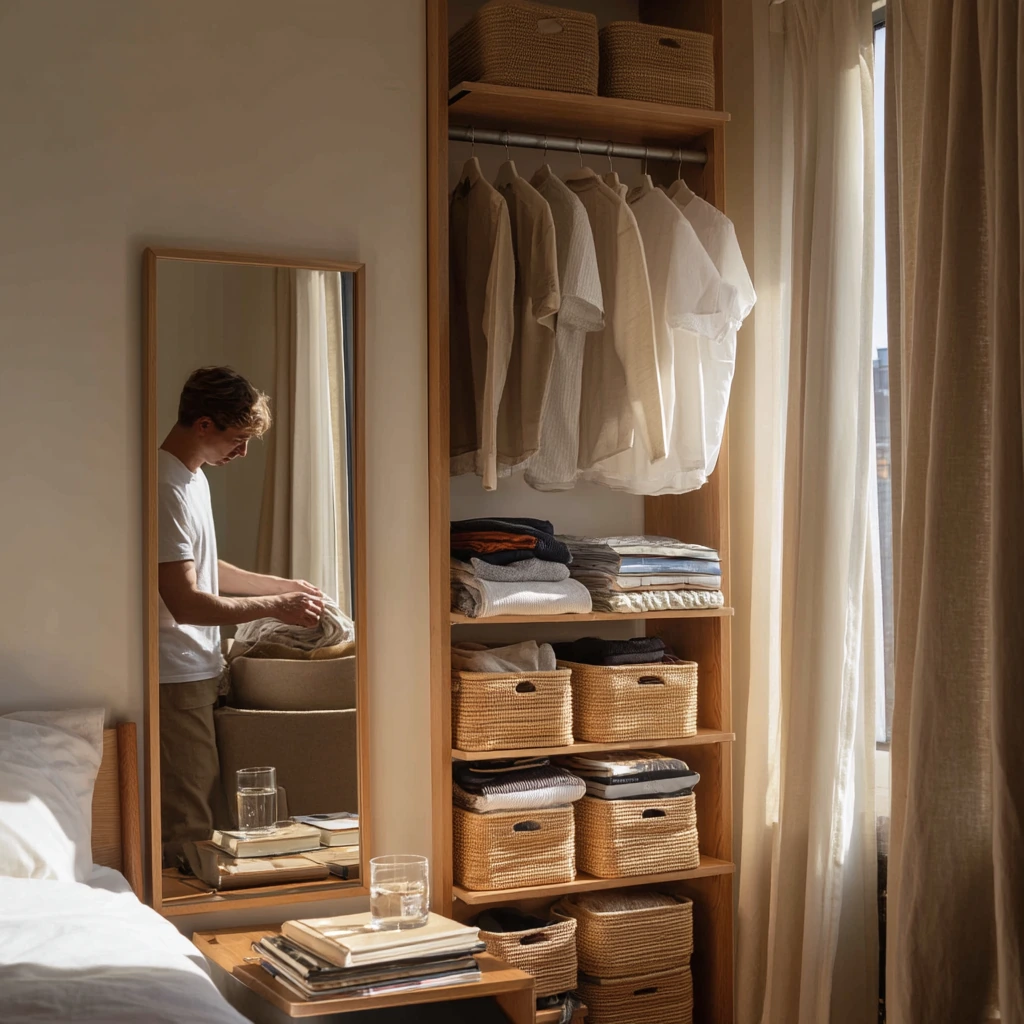
In a one-bedroom apartment, a slim open wardrobe can replace a bulky closet and still look tidy. Start by grouping clothing by type: hanging shirts on one side, pants and skirts on another, and a top shelf for folded knits. Use matching baskets for small items like socks, gym gear, and scarves so the open storage looks calm instead of cluttered. A shoe tray at the bottom keeps sneakers and flats from spreading across the floor.
Keep the area usable for real life. Put a small laundry basket nearby for daily pickups, and add a full-length mirror next to the wardrobe so you can check outfits without walking across the room. If your nightstand has a charging cable, books stacked unevenly, and one water glass, that is normal. The goal is a system that holds up on busy days, not a photo-only setup.
How to style it: warm oak accents and a neutral linen curtain soften the look of hanging clothes. Stick to one hanger color to reduce visual noise. Leave a little empty space on the rail so shirts do not bunch. If you fold laundry beside the wardrobe, reserve one basket as a “to put away” bin so clean clothes do not land on the chair.
- Use one slim open wardrobe with a top shelf and one lower rail.
- Add two or three matching baskets to hide small items.
- Place a shoe tray or low rack under hanging clothes.
- Hang everyday shirts at eye level for quick grabs.
- Keep a small mirror nearby to finish outfits faster.
Pro Design Tip: Place the wardrobe against the longest wall and align basket tops at the same height; that straight line makes an open setup look built-in.
Budget Considerations: Basic open garment racks and fabric bins are low cost; upgrade later with better hangers and a wood-look top shelf.
2 Closet Nook With Open Shelving
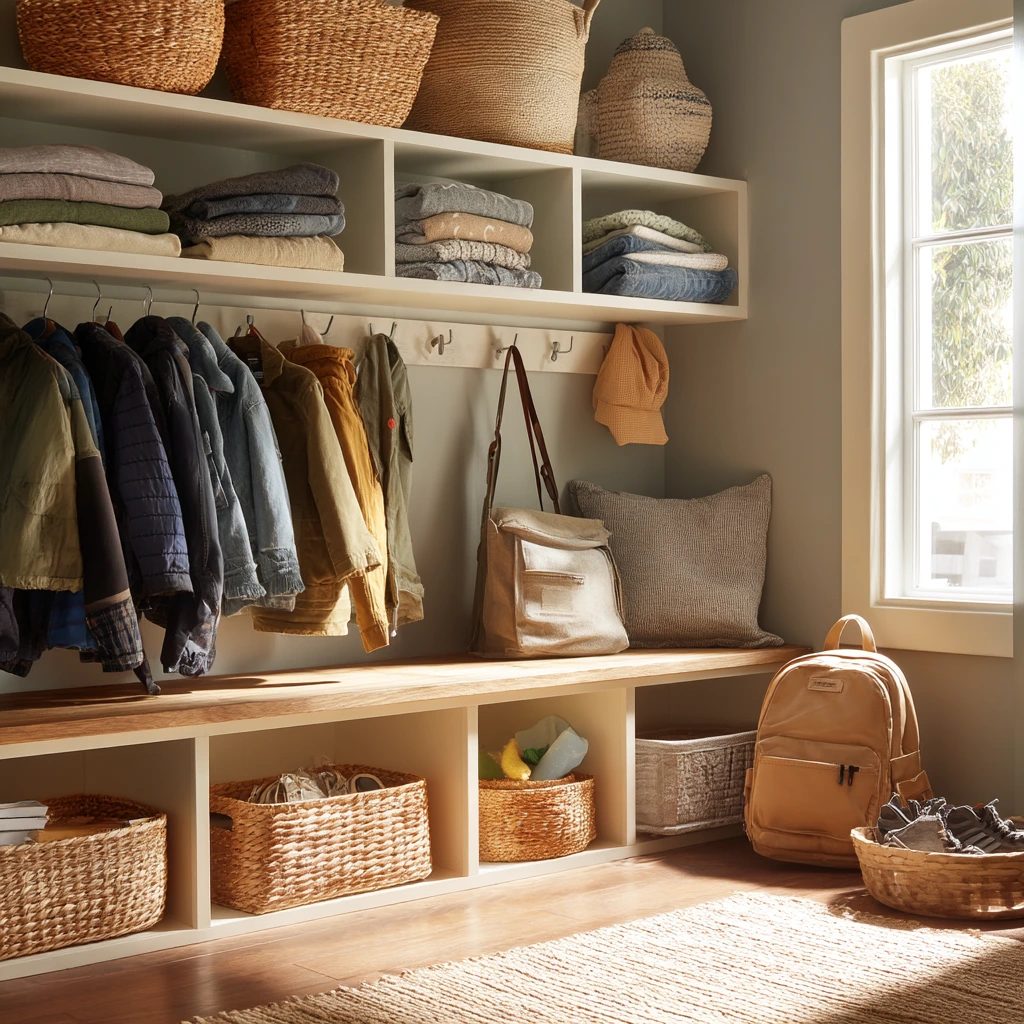
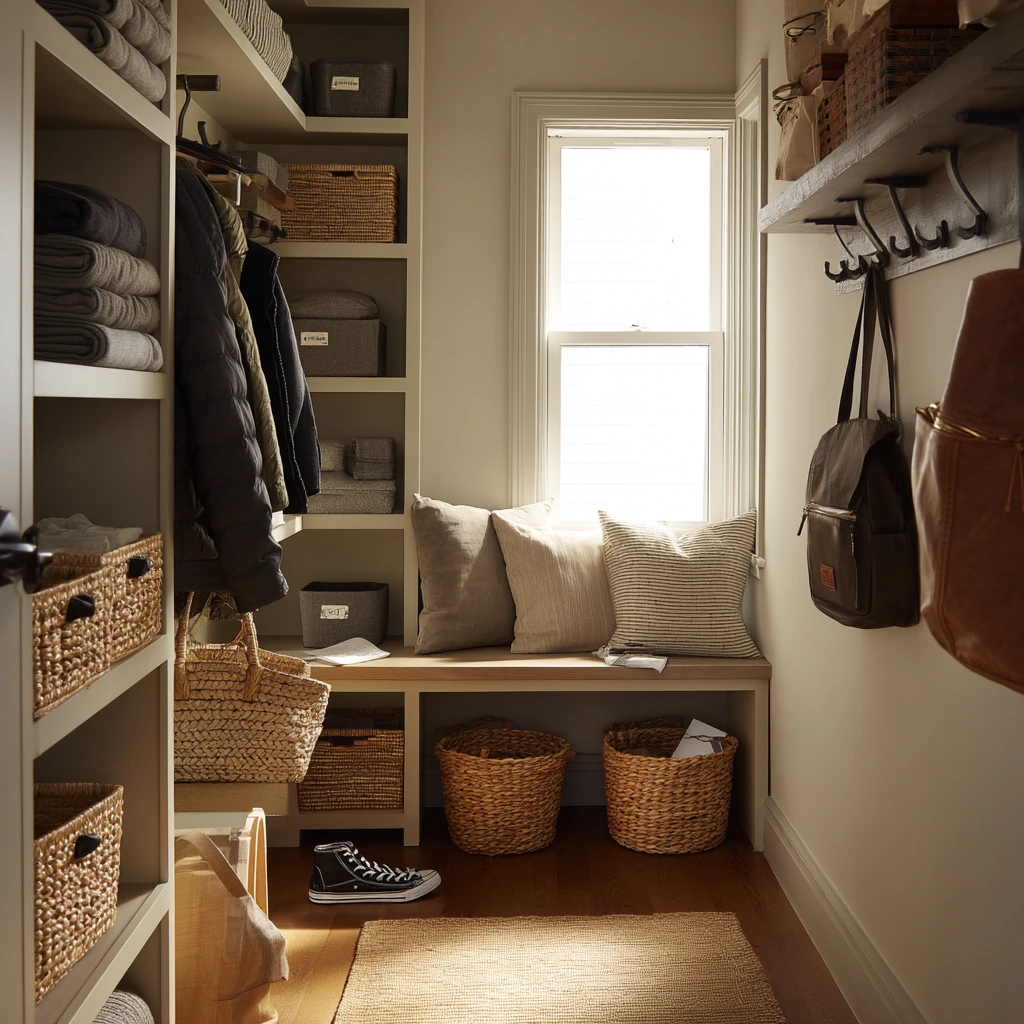
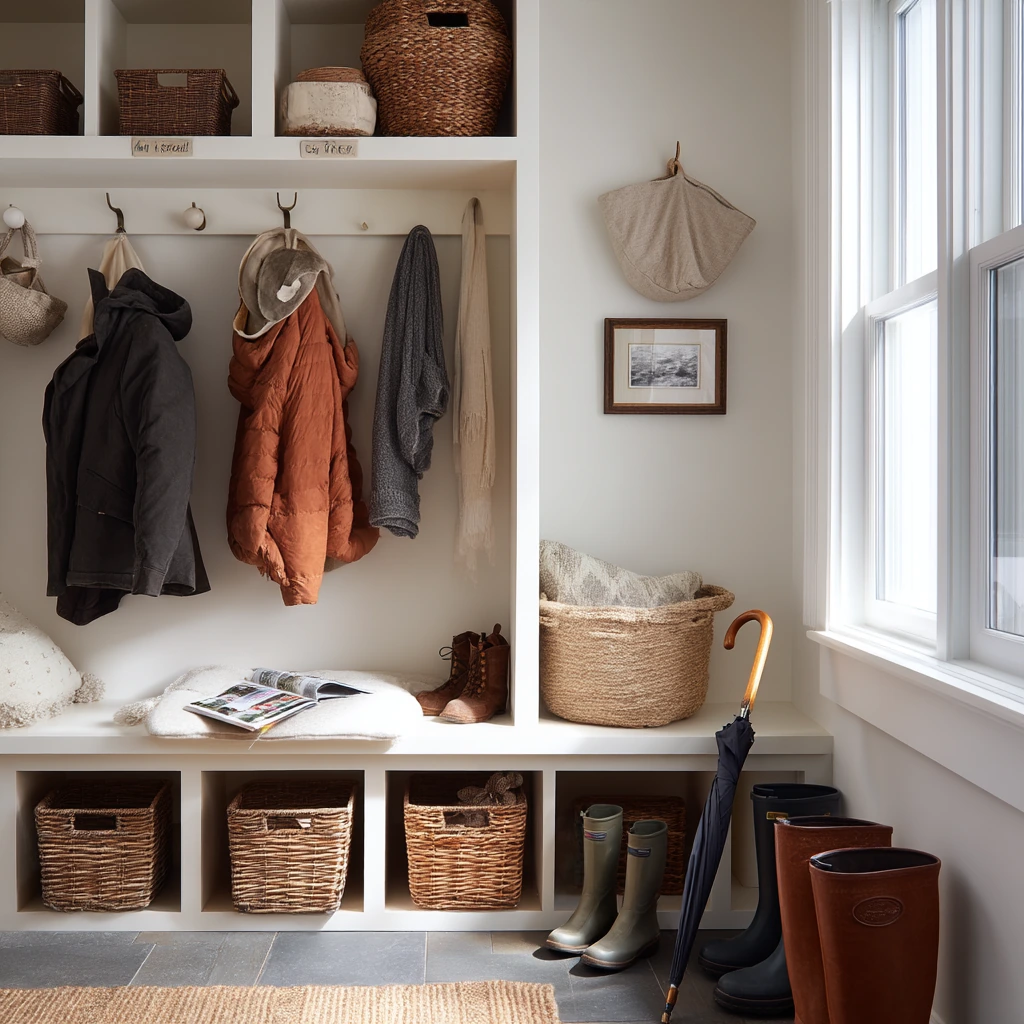
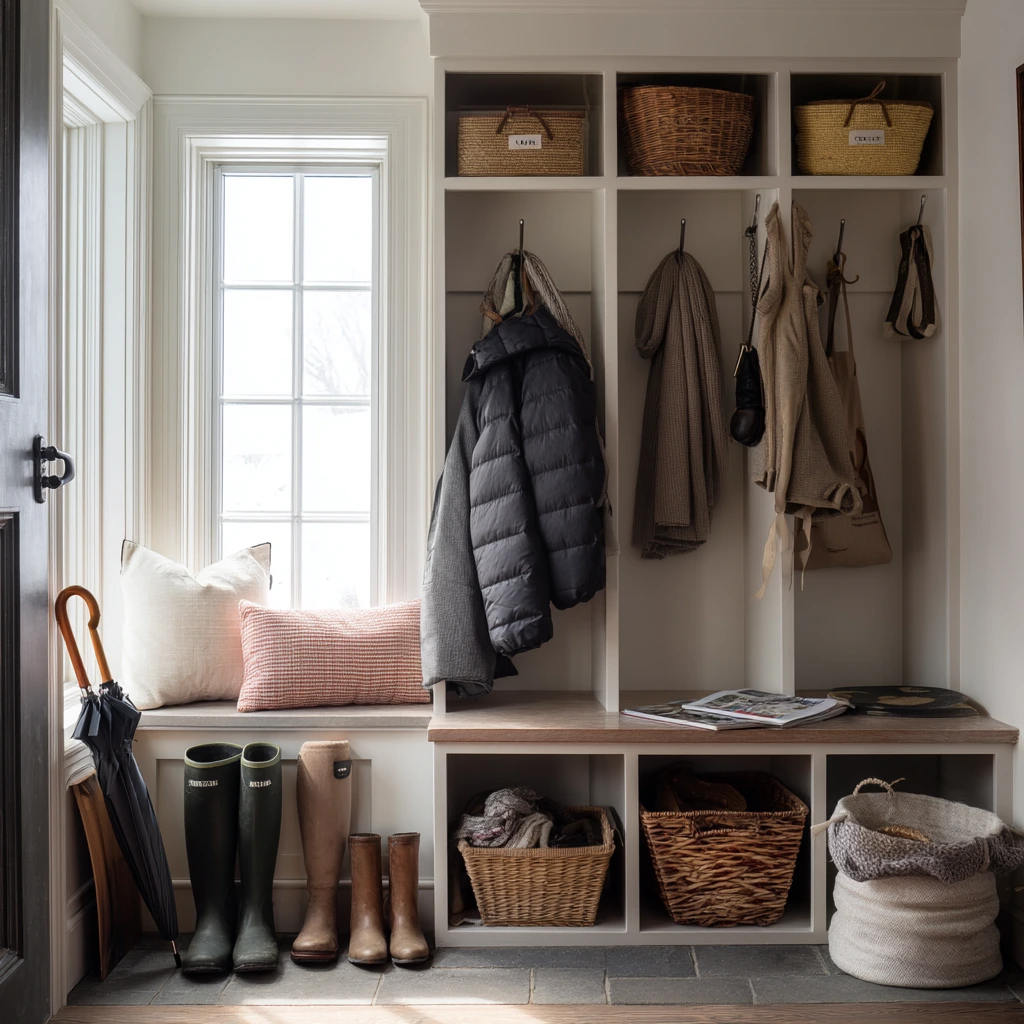
A hallway closet nook works best when every item has a clear zone. For kids’ jackets, use sturdy hooks at child height, then add one higher row for adult coats if needed. Open shelves above can hold folded sweaters, hats, and sports gear. Labeled fabric bins keep each child’s items separate, which cuts down on morning mix-ups.
Add a bench so backpacks have a landing spot. This is also where real life happens, like grocery receipts on the bench and one sneaker left on the floor. Plan for that by keeping a small catch-all tray for papers and a low basket for quick shoe tosses. Put a kid toy basket nearby so the entry does not turn into a drop zone for random toys.
How to style it: choose muted paint and woven basket textures so the area feels homey, not like a storage closet. Use matching labels (simple words or icons) and keep colors consistent. If the nook is tight, use slim hooks and narrow bins so the walkway stays clear. A warm practical lamp mixed with soft morning window light makes this corner feel welcoming.
- Install two rows of hooks: low for kids, high for adults.
- Use labeled fabric bins for each child’s hats, gloves, and small items.
- Fold sweaters on open shelves and keep stacks short.
- Add a bench and assign one backpack spot per kid.
- Keep a small paper tray to stop receipts from piling up.
Pro Design Tip: Mount hooks into studs when possible and leave 4 to 6 inches between hooks so bulky coats do not overlap.
Budget Considerations: You can build this with a simple shelf board, a row of hooks, and inexpensive bins; labels made with tape and marker work fine.
3 Renter-Friendly Freestanding Wardrobe
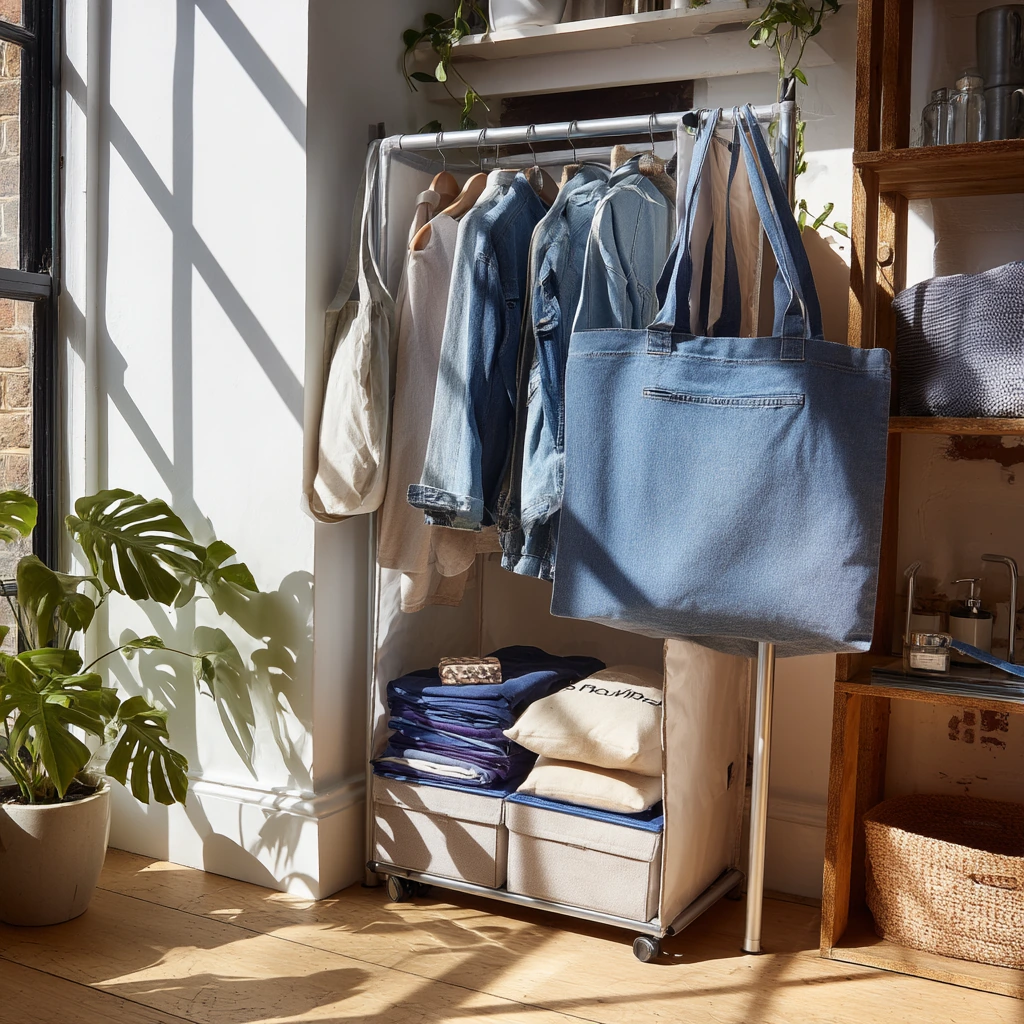
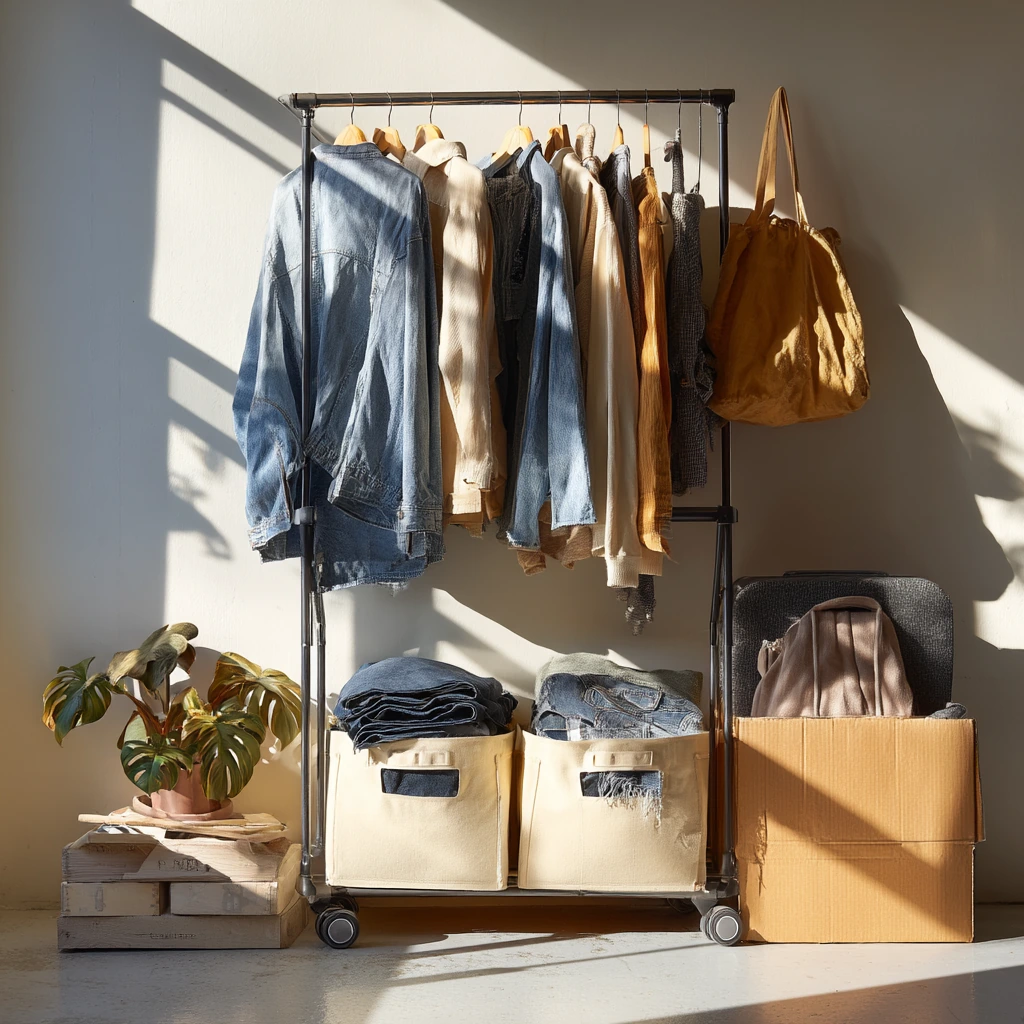
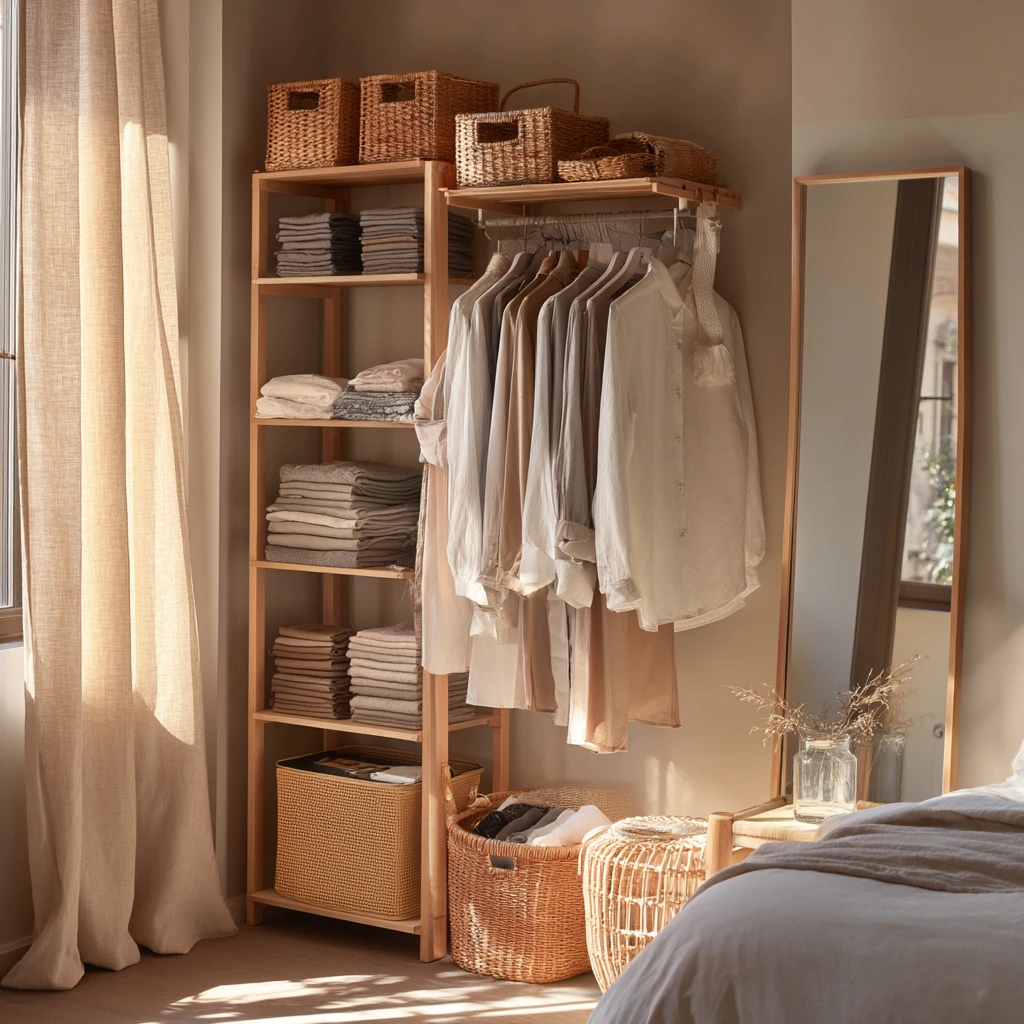
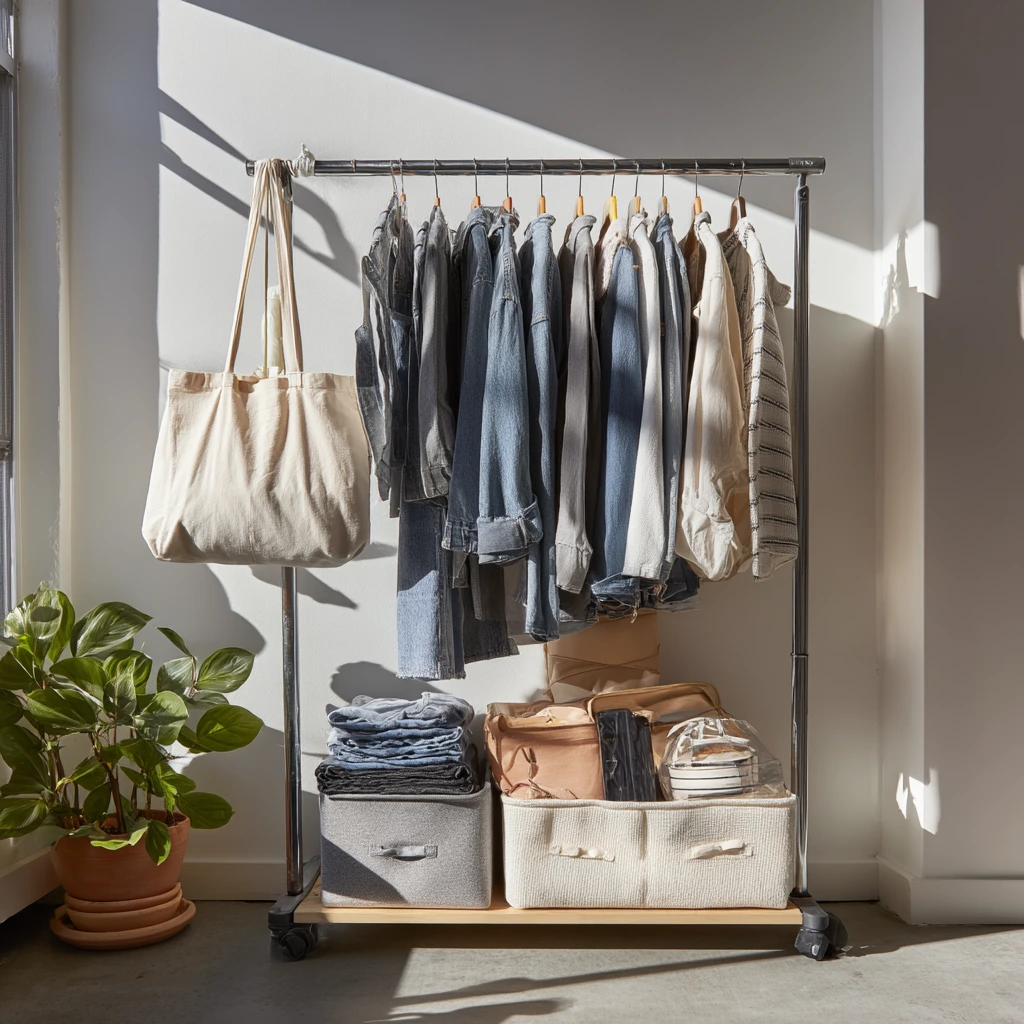
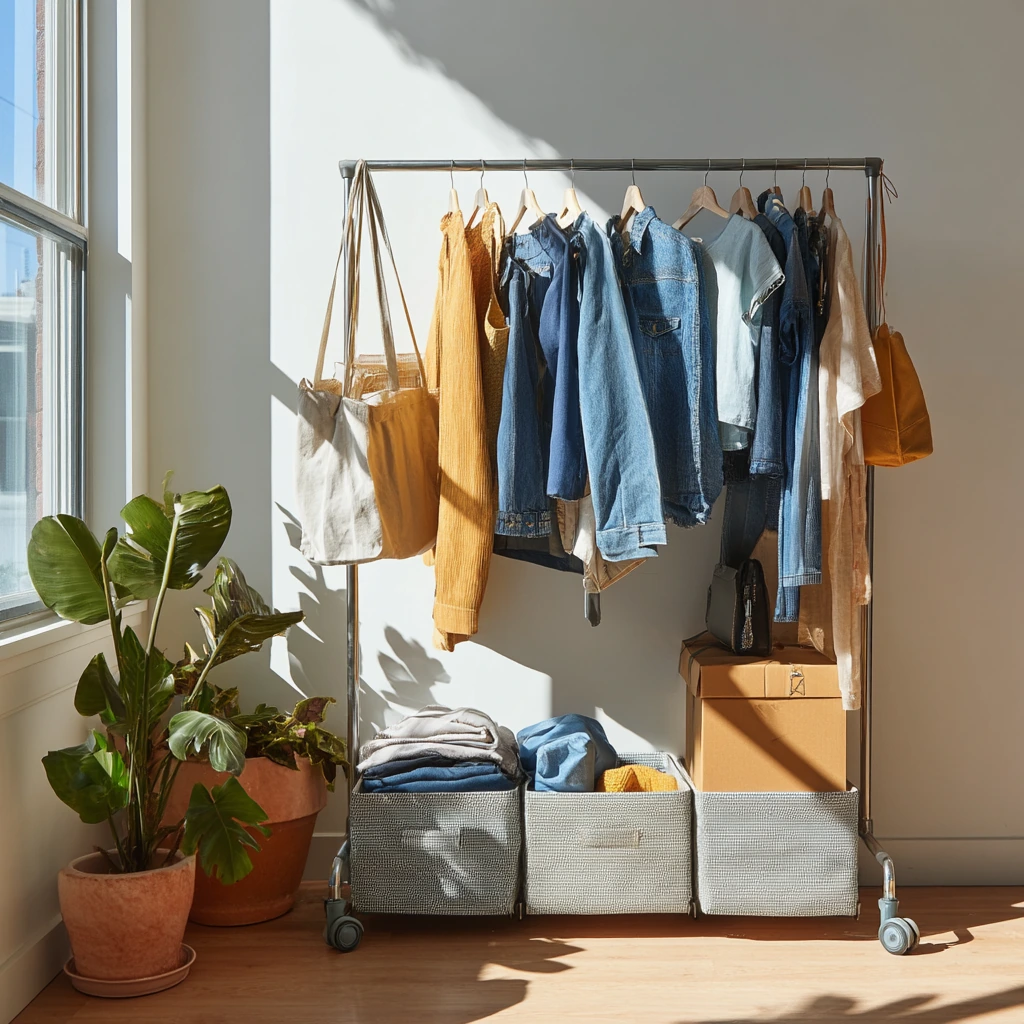
In a compact studio, storage needs to move and change with you. A freestanding wardrobe is a strong base because it adds hanging space without drilling. Pair it with a tension rod in a doorway or niche for extra jackets, dresses, or tomorrow’s outfit. Then use rolling under-bed bins for off-season items and bulky denim so your main area stays light.
Renter-friendly details matter. Peel-and-stick hooks can hold a tote bag, a belt, or a small crossbody near the door. Keep folded denim in one cube or drawer so it does not slide into messy stacks. If you have a makeup pouch and a half-packed parcel box on the floor, add one lidded bin as a “misc” spot so these items do not become a new pile.
How to style it: choose one neutral color for bins, then add one texture, like canvas, to keep the setup airy. Let a plant cast soft shadows on the wall for a lived-in look, and avoid overcrowding the rack. Leave room for two or three empty hangers so you can put clothes away quickly after laundry day.
- Use a freestanding wardrobe for your main hanging clothing.
- Add a tension rod for extra short-term hanging space.
- Store off-season items in rolling under-bed bins.
- Attach peel-and-stick hooks for bags, hats, and accessories.
- Create one “drop bin” for parcels and small clutter.
Pro Design Tip: Arrange by daily frequency: keep everyday pieces at the center of the rack and push special-occasion items to the ends.
Budget Considerations: Tension rods, peel-and-stick hooks, and plastic rolling bins are usually cheaper than installing closet systems, and they move with you.
4 Seasonal Swap Storage Bench
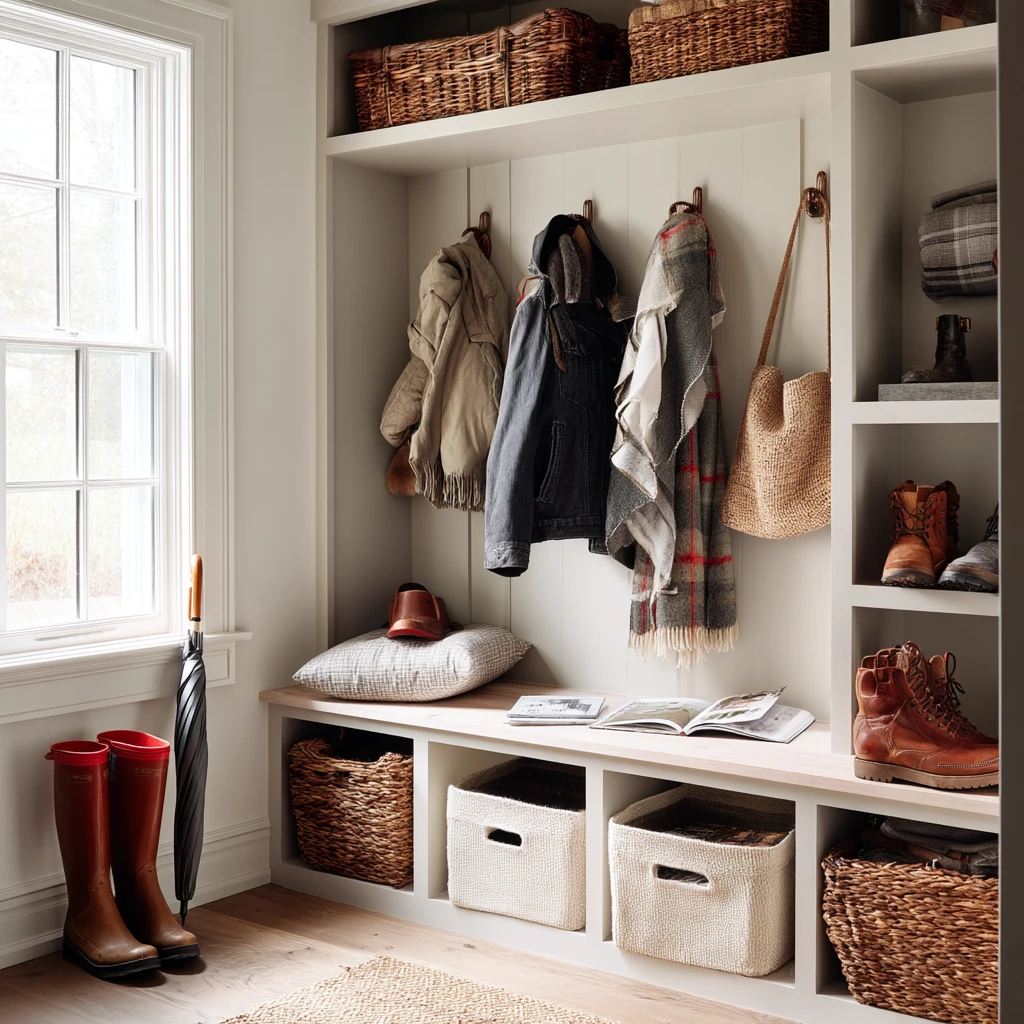
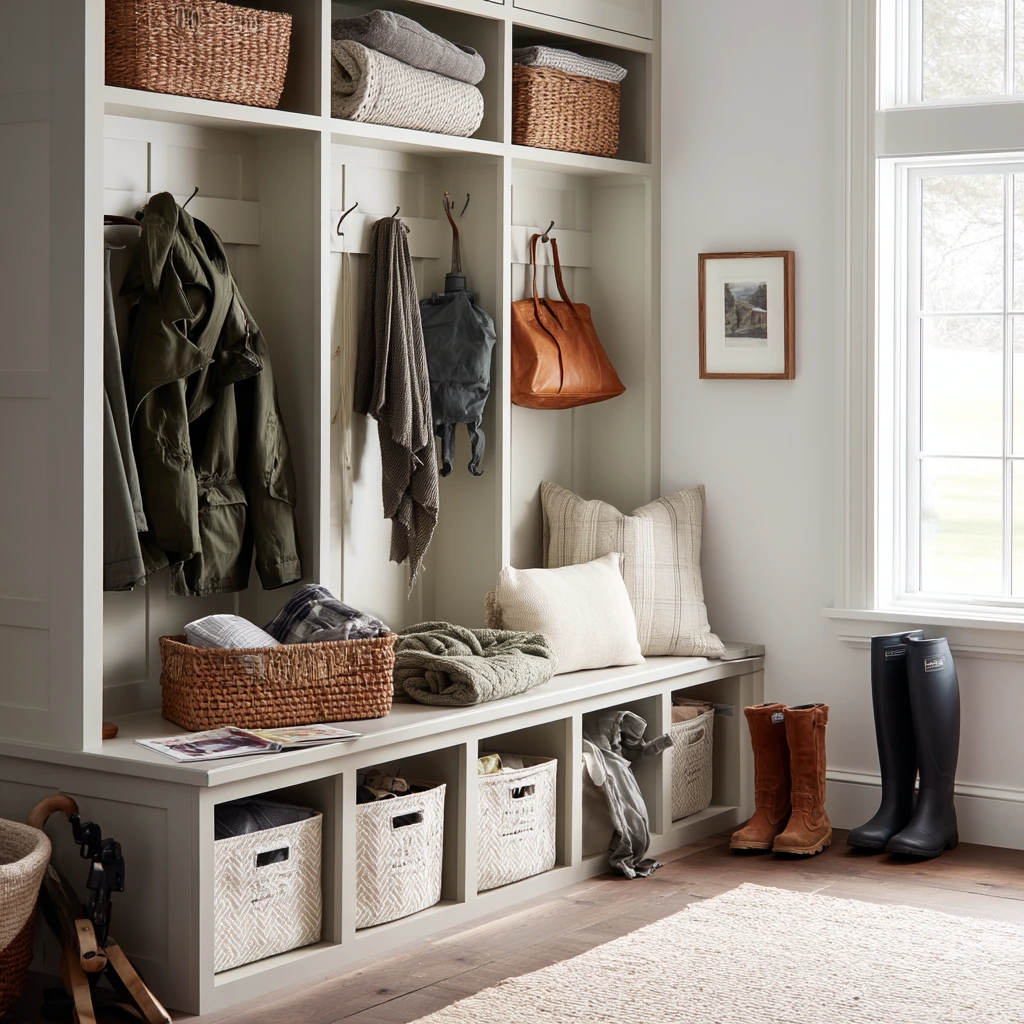
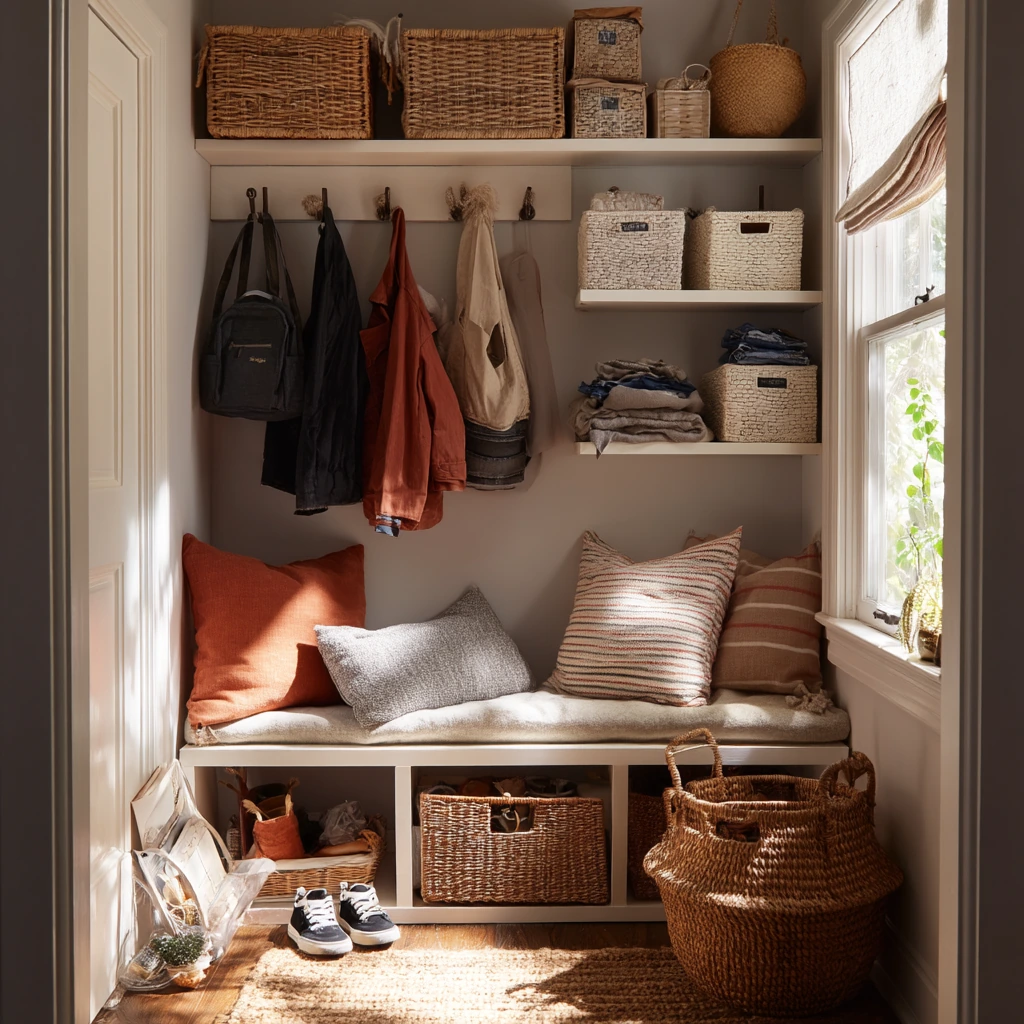
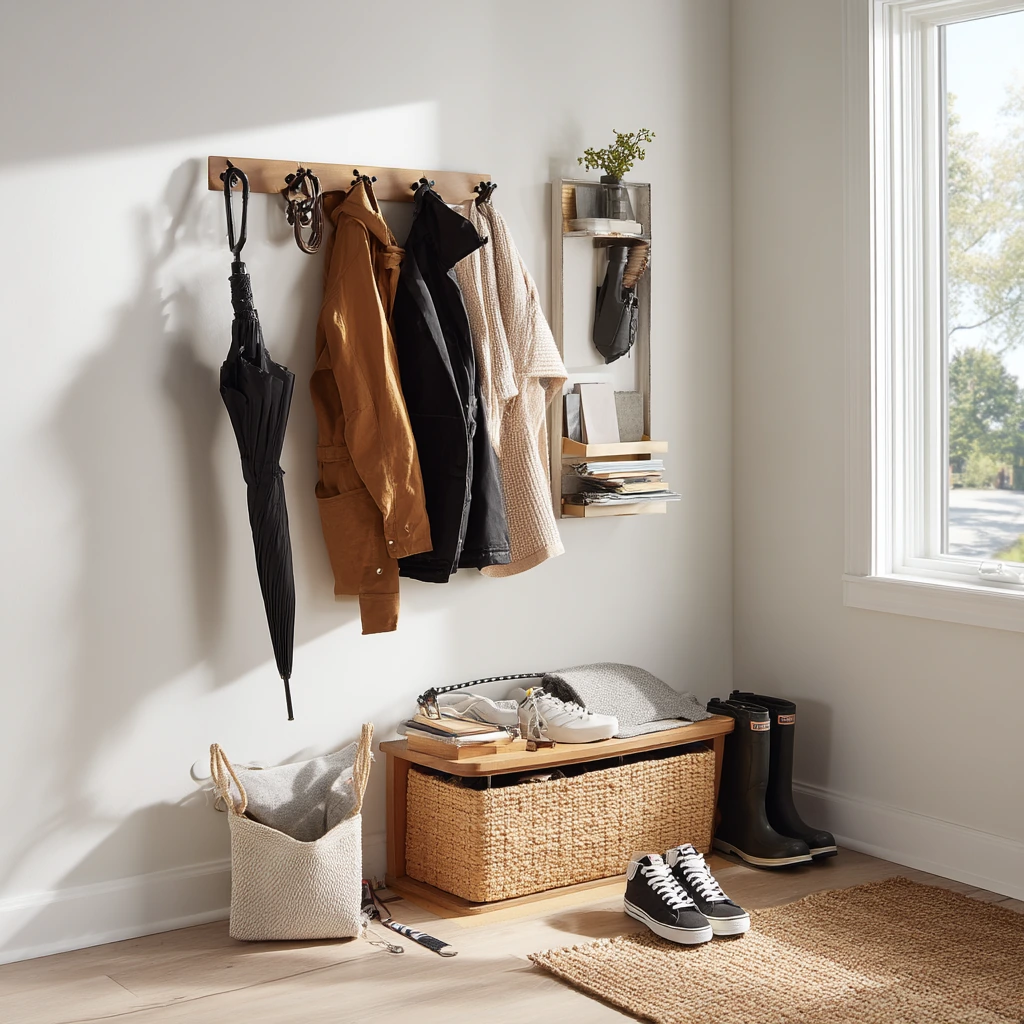
A mudroom is the best place to handle seasonal swaps because it is already built for mess. When winter ends, move heavy coats and wool scarves into labeled storage bins and keep only current-season jackets on wall hooks. A built-in bench makes it easy to sit, sort, and fold without dragging items into the living room.
Plan for wet and muddy items. Keep boots by the door on a tray, and place a wet umbrella in the corner where drips will not spread. Use canvas baskets for hats and gloves, and a folded throw on the bench for warmth on cold mornings. If a magazine ends up on the bench, give it one basket slot so it does not take over the whole seat.
How to style it: stick to two materials, like wood and canvas, so the area looks organized even when it is busy. Choose matching bin labels with clear words like “winter coats” and “snow gear.” Store the current season at eye level and put off-season bins on a higher shelf. Soft overcast daylight helps you see colors well, which makes sorting simpler.
- Swap seasonal coats into labeled storage bins twice a year.
- Use a boot tray to protect floors and keep pairs together.
- Store scarves and gloves in canvas baskets near the hooks.
- Keep one basket for reading or papers that land on the bench.
- Wipe down hooks and bench during each seasonal change.
Pro Design Tip: Label bins on two sides so you can read them whether they are stacked or slid under a bench.
Budget Considerations: Large plastic bins with simple labels work well; if you want a nicer look, add low-cost fabric bin covers or matching baskets over time.
5 Shared Closet for Two
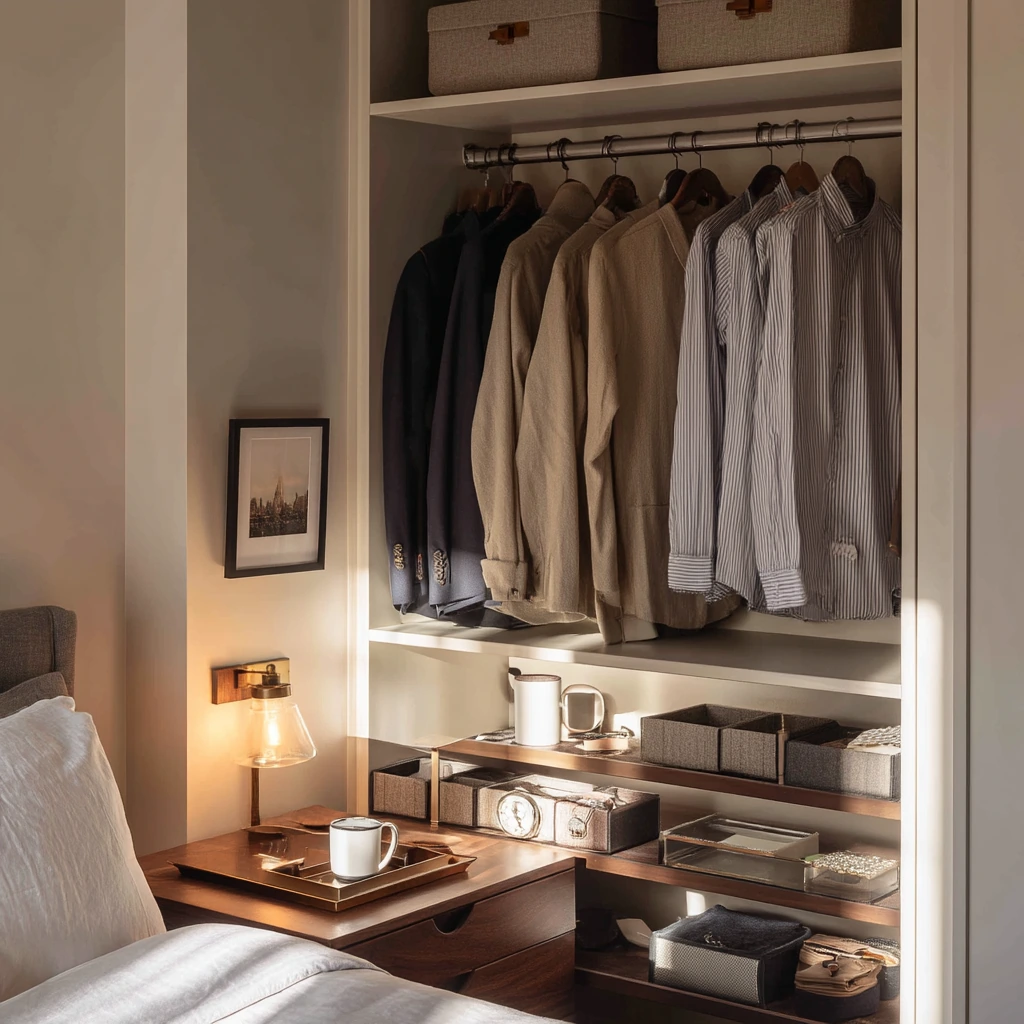
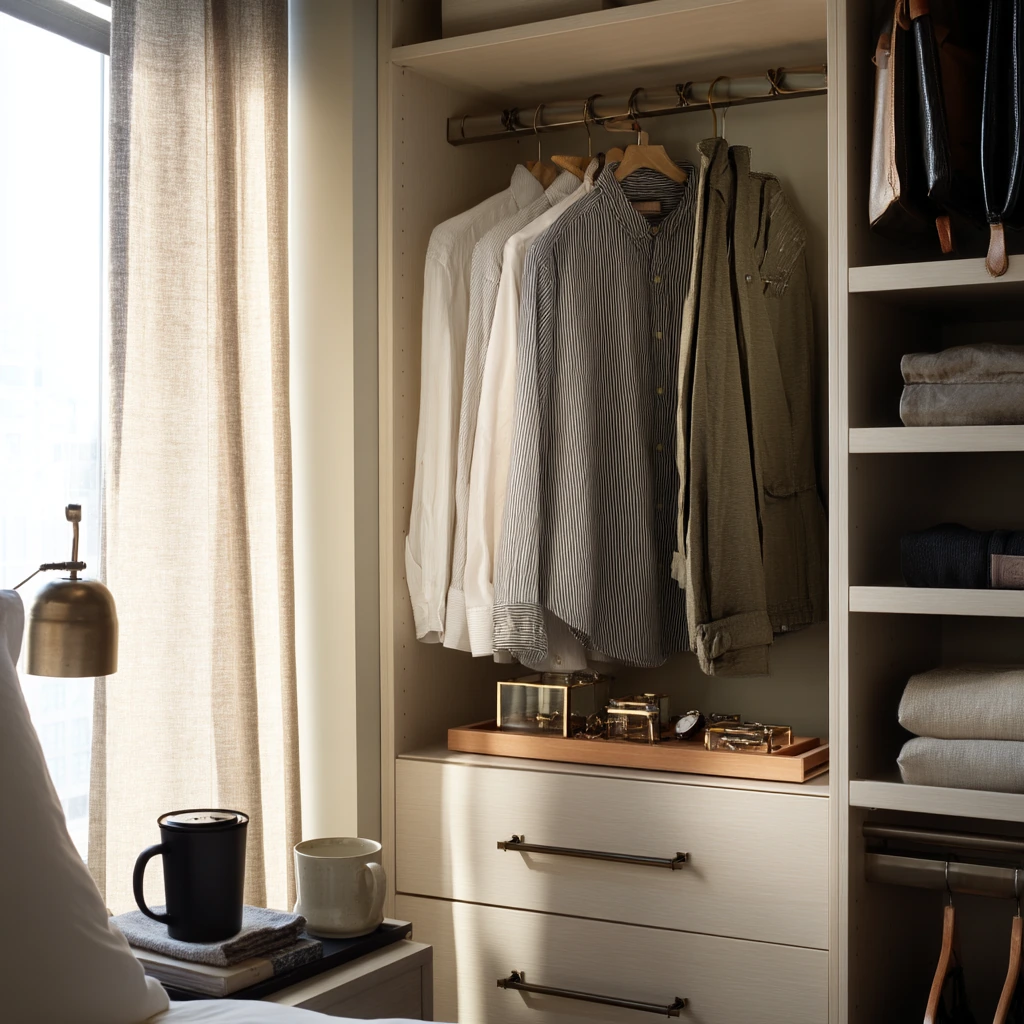
A shared closet works when it feels fair and easy to maintain. Start with symmetrical hanging sections so each person has the same layout: one long-hang space, one short-hang space, and a shelf. Use matching hangers so the closet looks calmer and clothes slide evenly. Add drawer inserts for socks, underwear, and workout gear so small items do not get mixed.
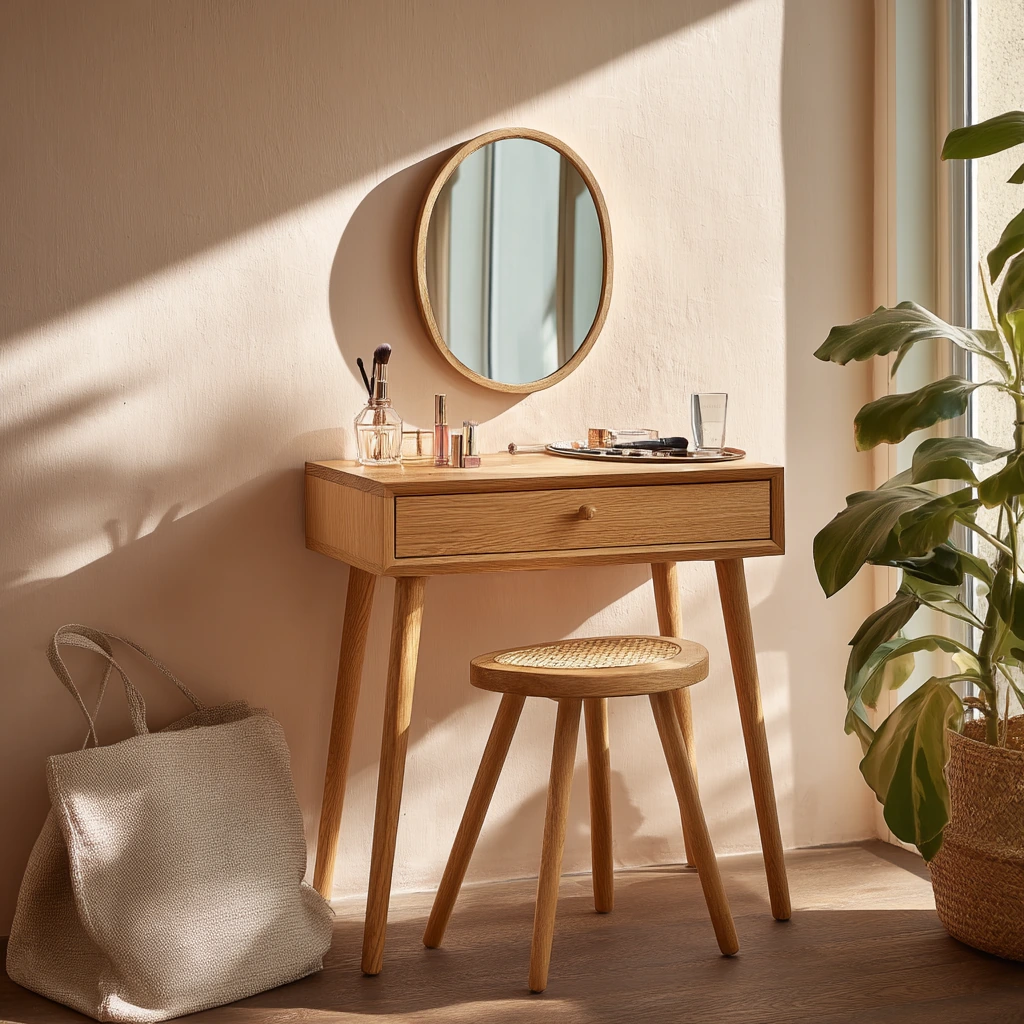
Daily-life details help keep peace. A slim valet hook is great for a slightly wrinkled linen shirt you plan to wear again, or for tomorrow’s outfit. Keep a small jewelry tray open on the dresser for quick drop-offs, and make a set spot for a watch so it does not get lost. If a coffee mug shows up in the bedroom, use a small tray to contain it until it goes back to the kitchen.
How to style it: choose two basket colors at most and keep the front edge of folded stacks aligned. Put frequently worn items at the easiest height and special pieces higher up. Warm bedside lamp glow makes this area feel serene, so keep surfaces simple and avoid too many decor items inside the closet.
- Split hanging space evenly and mirror the layout on both sides.
- Use drawer inserts to separate small clothing and accessories.
- Add slim valet hooks for re-wear items and next-day outfits.
- Keep one shared bin for lint rollers, sewing kit, and spare buttons.
- Do a quick weekly reset: rehang, refold, and return stray items.
Pro Design Tip: Use the same hanger style and turn all hooks the same direction; it makes the closet look cleaner and helps you scan faster.
Budget Considerations: Drawer organizers and valet hooks are inexpensive upgrades; you can keep your current dresser and just add inserts.
6 Tiny Entryway Coat and Shoe Zone
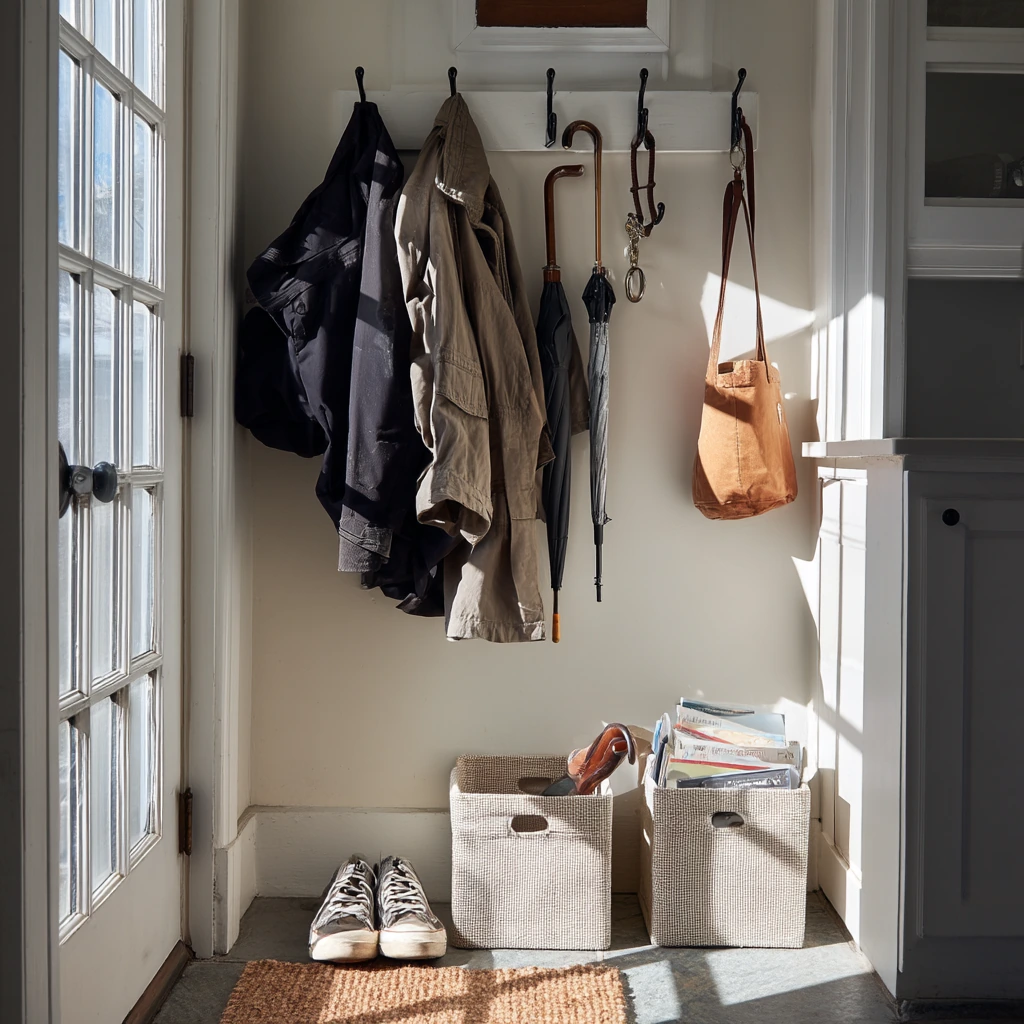
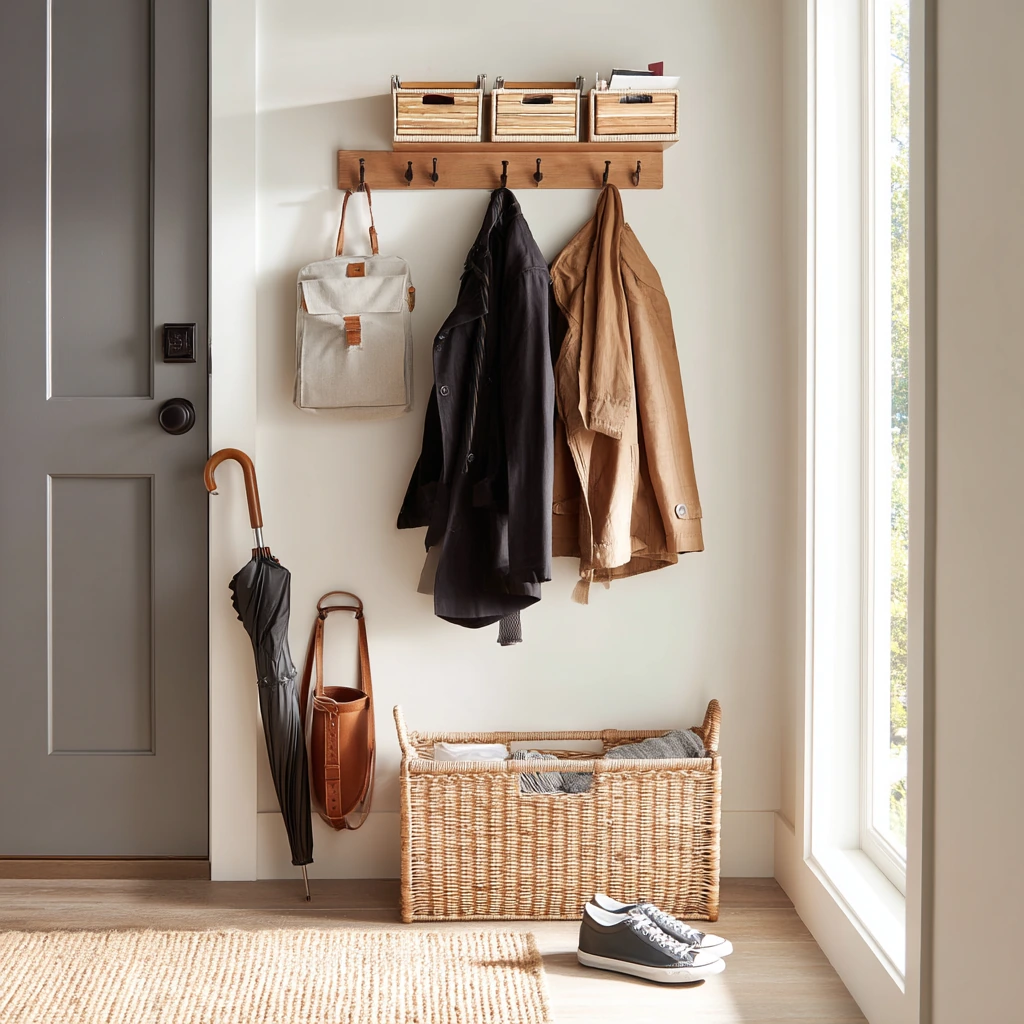
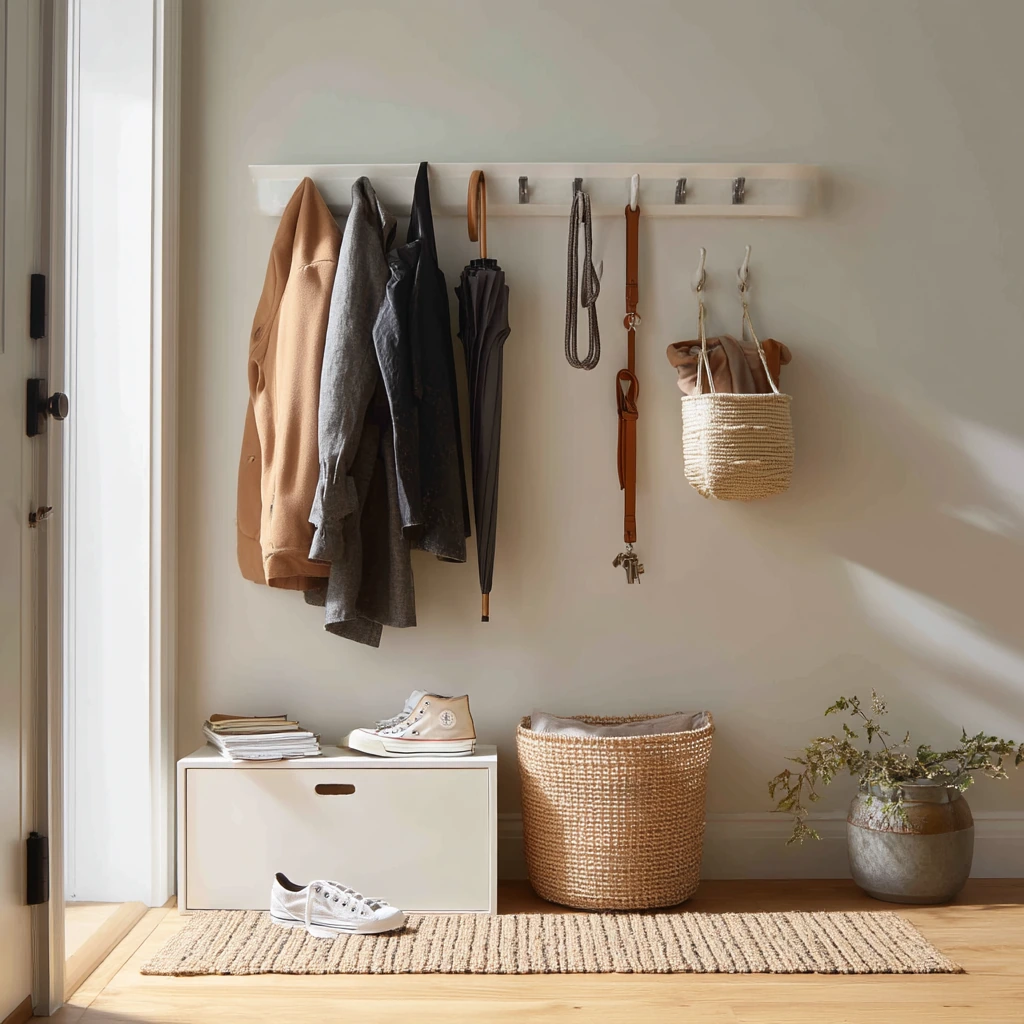
A tiny entryway needs storage that is shallow and fast to use. Start with compact wall hooks for coats and bags, and place them in a tight row so you can fit more without crowding. Add a narrow shoe cabinet to hide everyday shoes while keeping the floor clear. A shallow basket for scarves and gloves prevents loose items from landing on chairs or stairs.
Design for your real routine. If you have a dog leash on a hook, give it a dedicated spot at hand level so walks are easy to start. Put a small tray or wall pocket for mail so it does not become a messy stack. If umbrella drips land on the mat, keep the umbrella near the door and add a small towel or drip tray to protect the floor. One sneaker tilted off-center will still happen, but it will not derail the whole space.
How to style it: choose a simple hook finish and match it to the shoe cabinet hardware so the entry looks intentional. Keep the basket neutral and use one accent color in a scarf or doormat. Soft morning window light will highlight clutter, so aim for clean lines and a “one touch” system where each item goes back in place fast.
- Install a row of compact hooks for coats, bags, and a leash.
- Add a narrow shoe cabinet to hide pairs and reduce floor mess.
- Use a shallow basket for gloves, hats, and scarves.
- Create a mail spot with a tray, pocket, or small bin.
- Keep an umbrella drip area with a mat or small tray.
Pro Design Tip: Hang hooks in a straight line and keep the highest hook within reach; consistent heights make a small wall feel wider.
Budget Considerations: Basic hooks and a secondhand slim shoe cabinet cost less than custom entry built-ins; baskets can be thrifted.
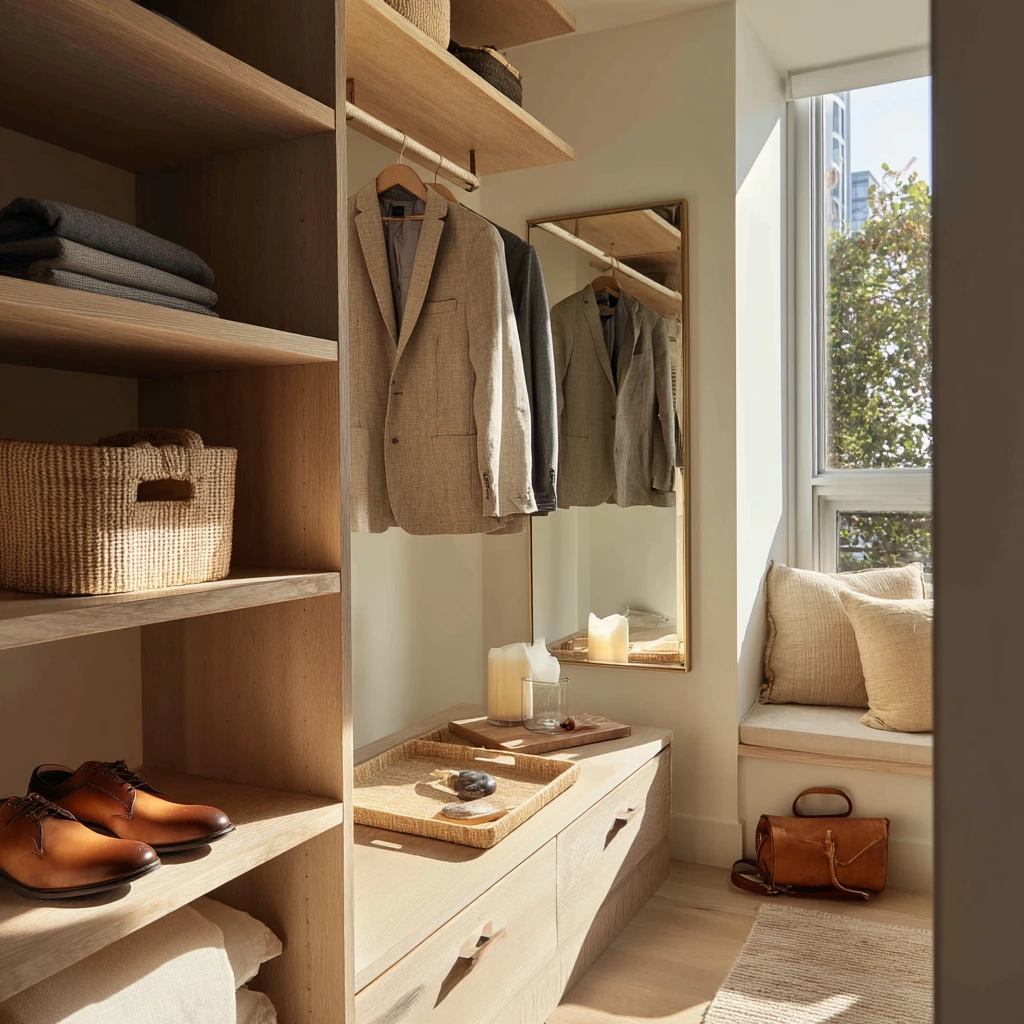
7 Open Closet With Styling Shelf
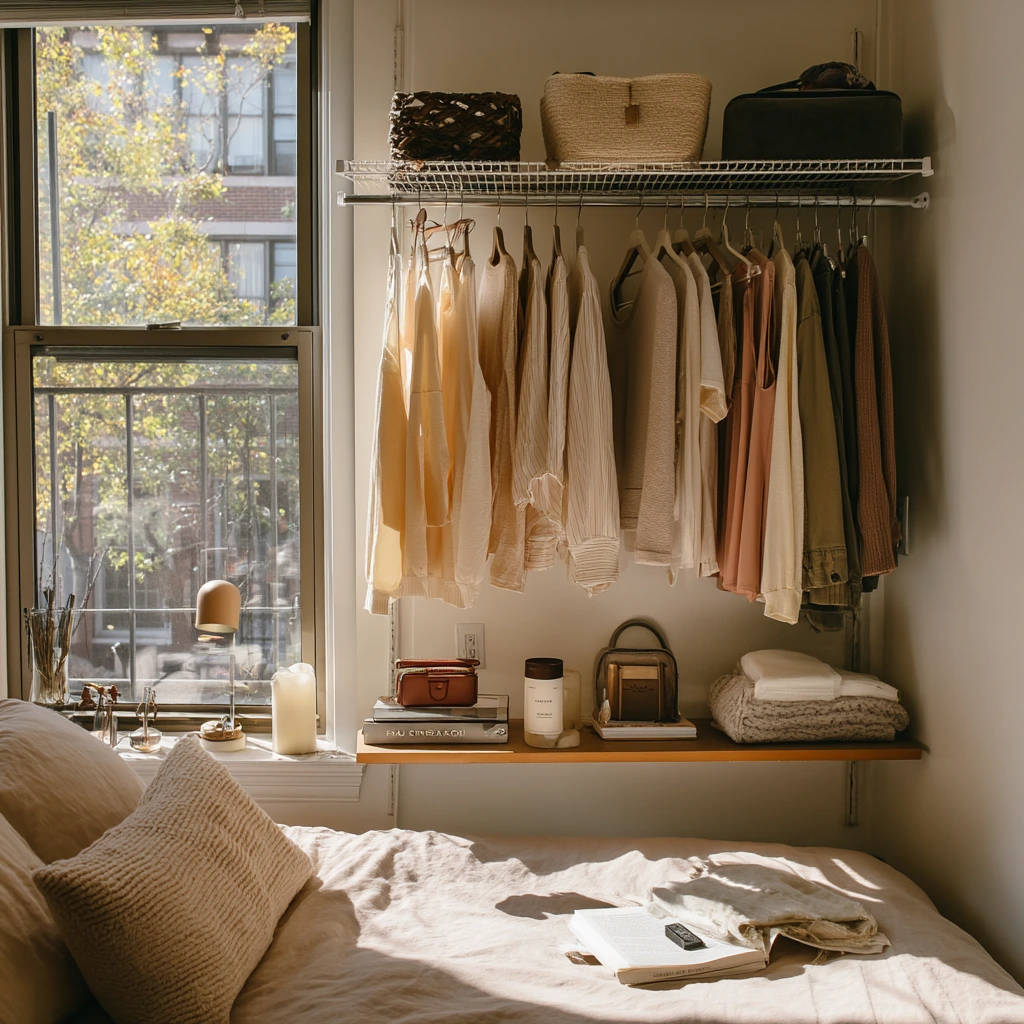
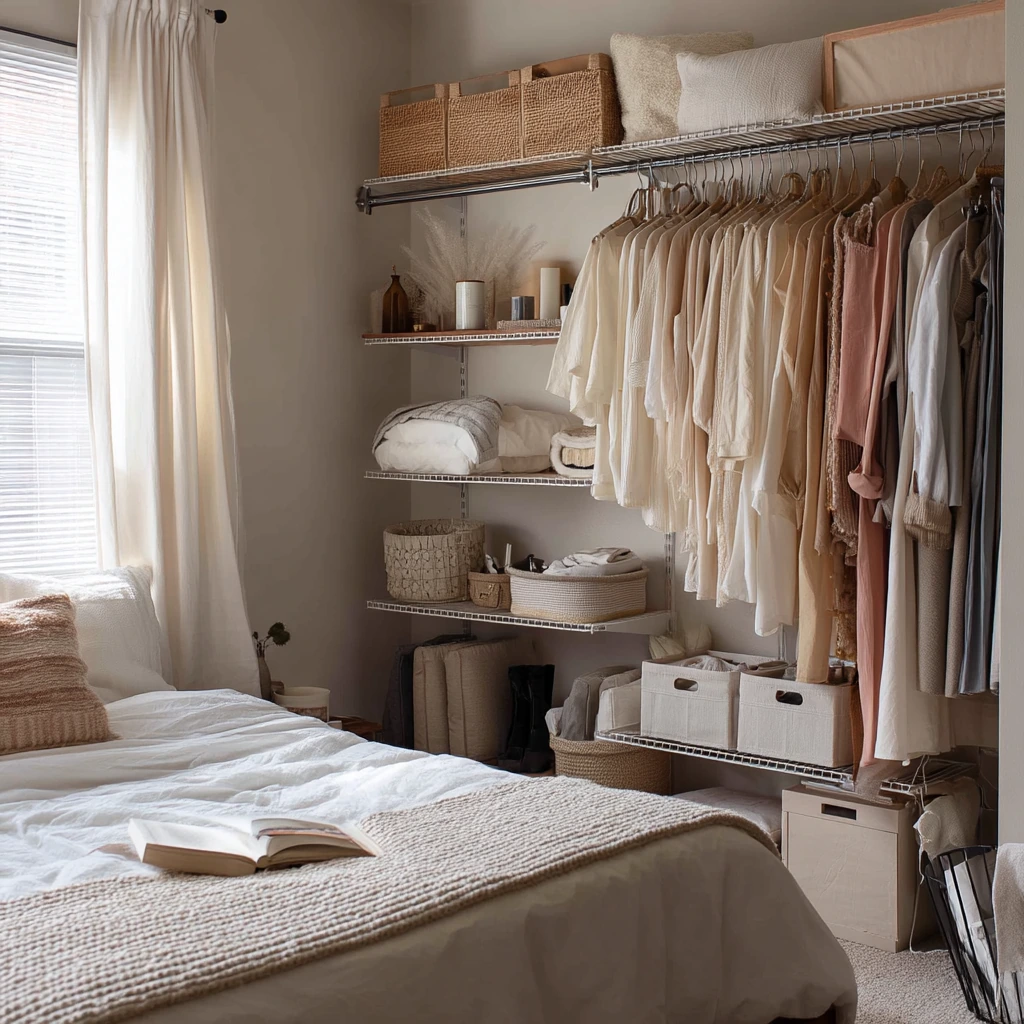
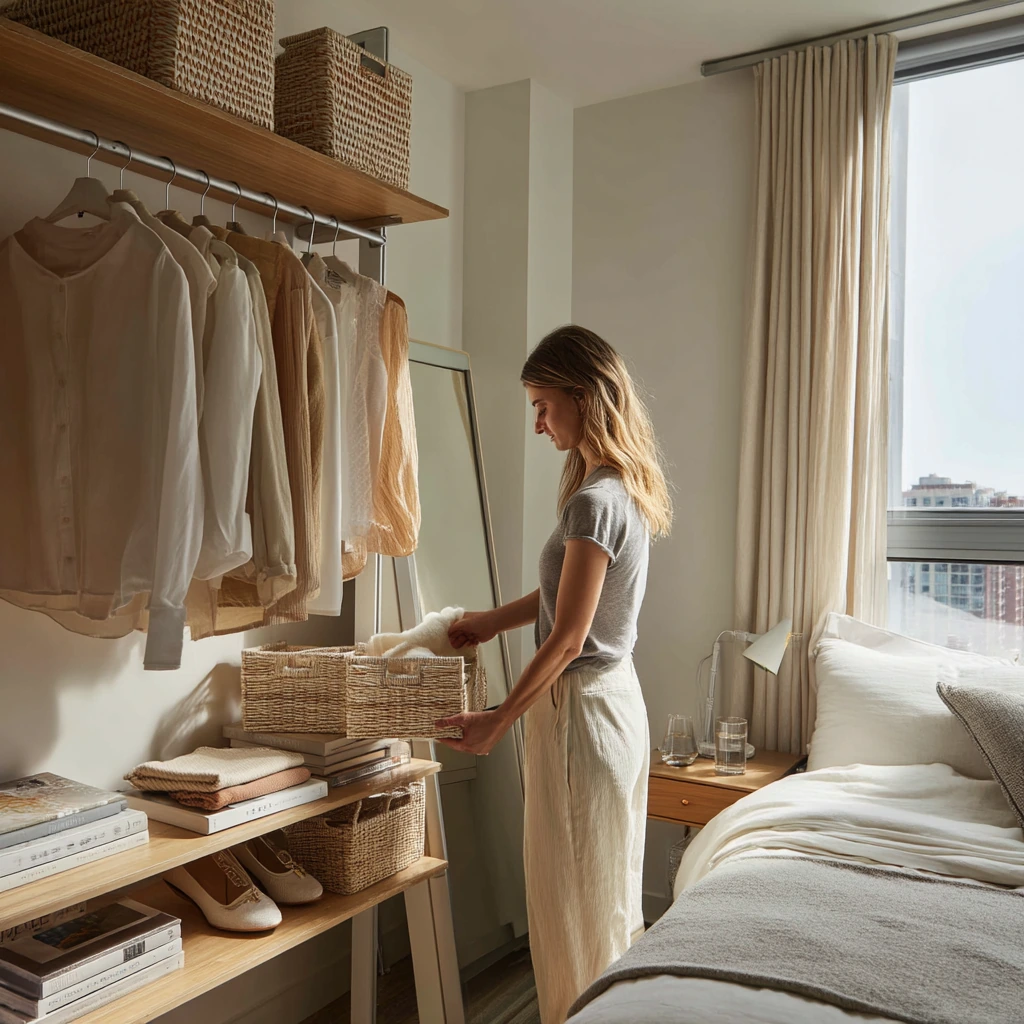
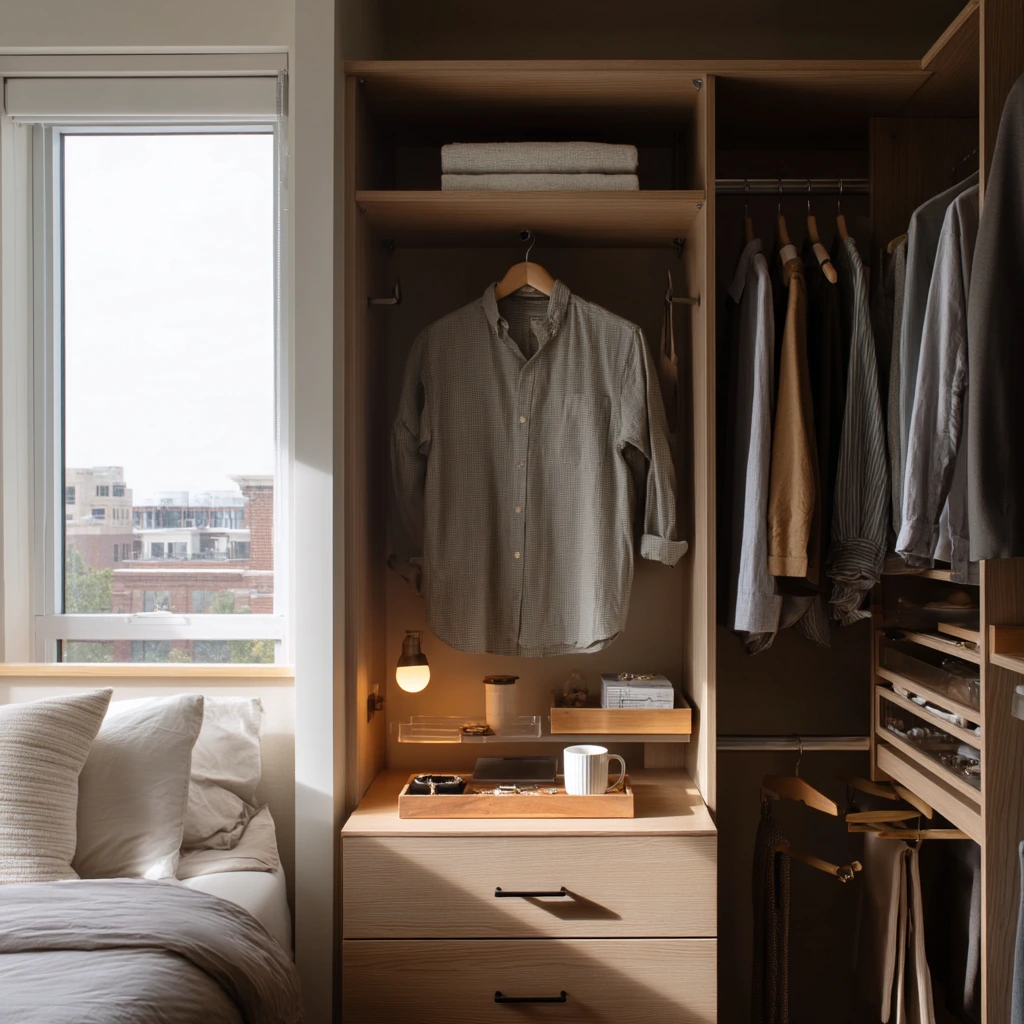
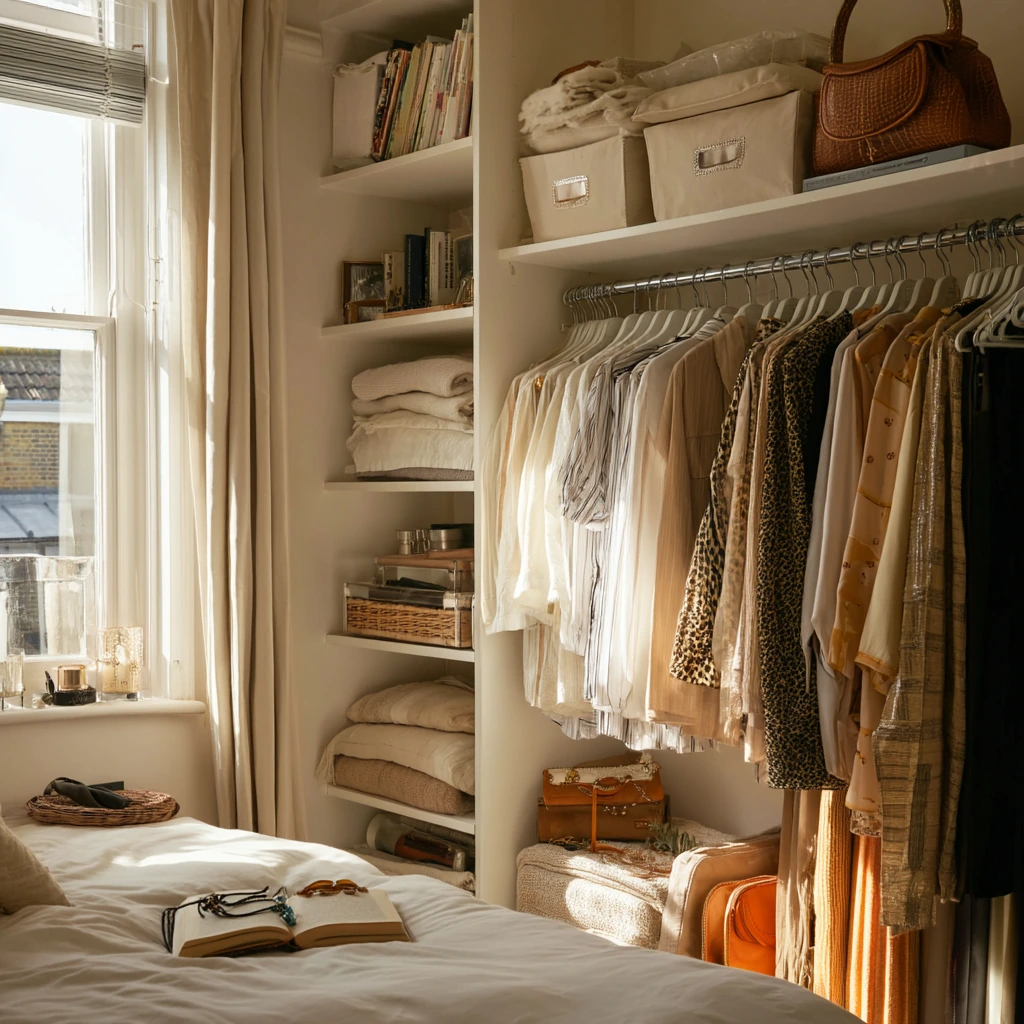
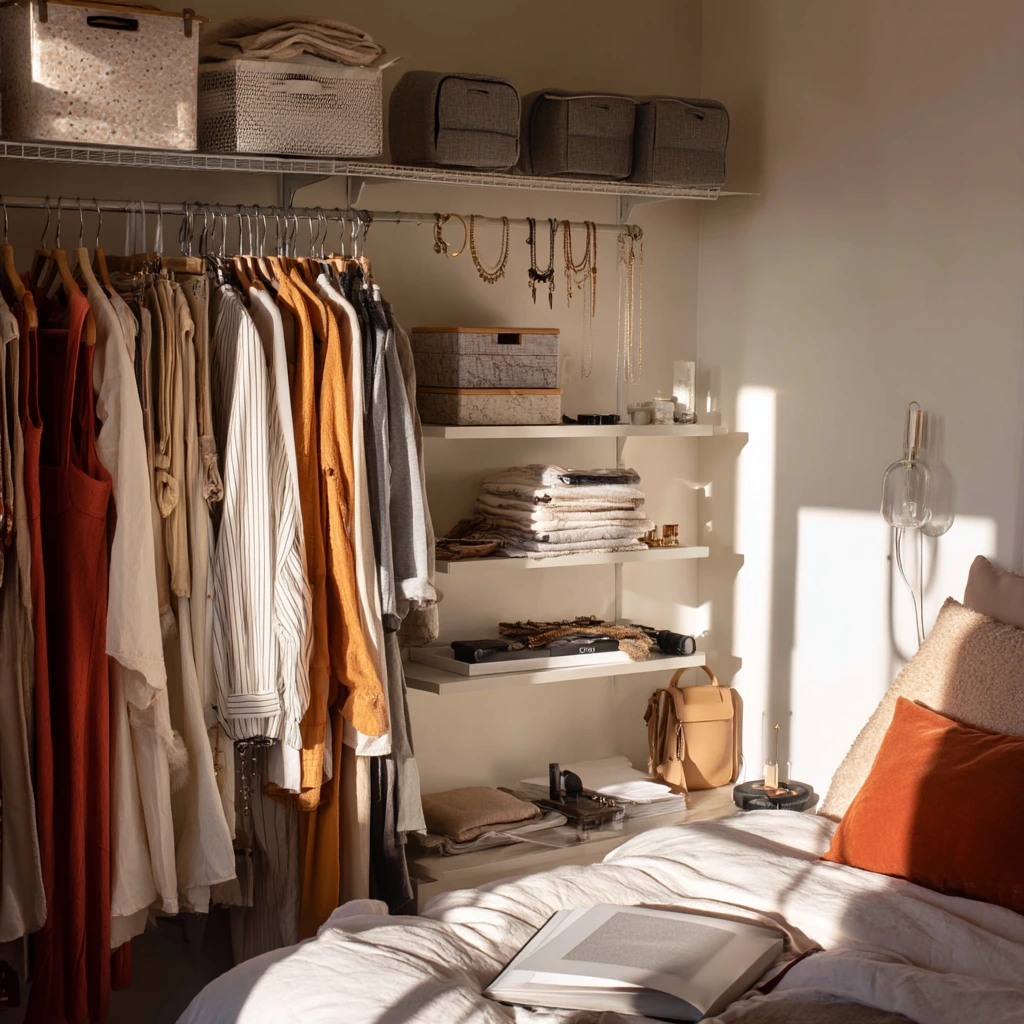
An open closet in a minimalist bedroom needs clear categories and a curated selection. Use hanging rails for everyday outfits and add folded shelves for tees, knits, and denim. Canvas bins are helpful for items you do not want to see, like gym wear or winter accessories. A small jewelry dish keeps rings and earrings from disappearing on the nightstand.
Set up a simple styling shelf so getting dressed feels easy. A candle, a small tray, and one or two fragrance items can make the closet feel like part of the room, not a utility corner. Keep the rest practical: store a glasses case and a charging cable in one small box so cords do not sprawl. If a book is open on the bed, that is fine, but keep clothing surfaces clear so the room stays quiet.
How to style it: limit your color palette on the rail, such as neutrals plus one accent color. Face hangers the same way and space items slightly. Use linen bedding and soft textures to balance the hard lines of rails and shelves. Late-afternoon window light can create strong shadows, so avoid overfilling shelves and keep stacks tidy.
- Use one rail for daily outfits and keep it slightly underfilled.
- Add folded shelves for tees and knitwear with short, stable stacks.
- Hide clutter in canvas bins and label them on the inside edge.
- Place a jewelry dish and a small tray on a styling shelf.
- Store cords, glasses, and small items in one box to reduce visual mess.
Pro Design Tip: Choose one consistent spacing rule, like two fingers between hangers; it makes an open closet look intentional.
Budget Considerations: Wall-mounted rails and simple shelves are affordable; if you rent, use a freestanding open closet frame instead of drilling.
8 Kids’ Clothes Storage Corner
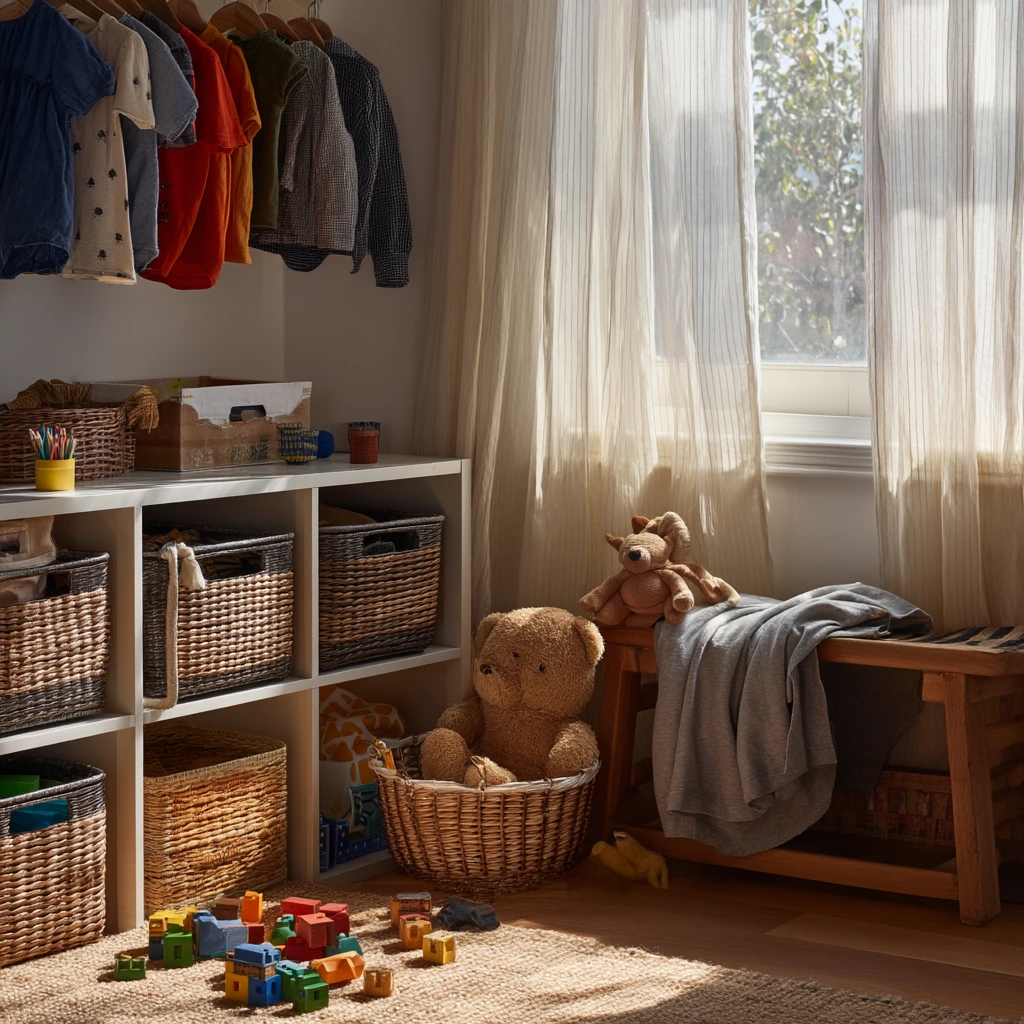
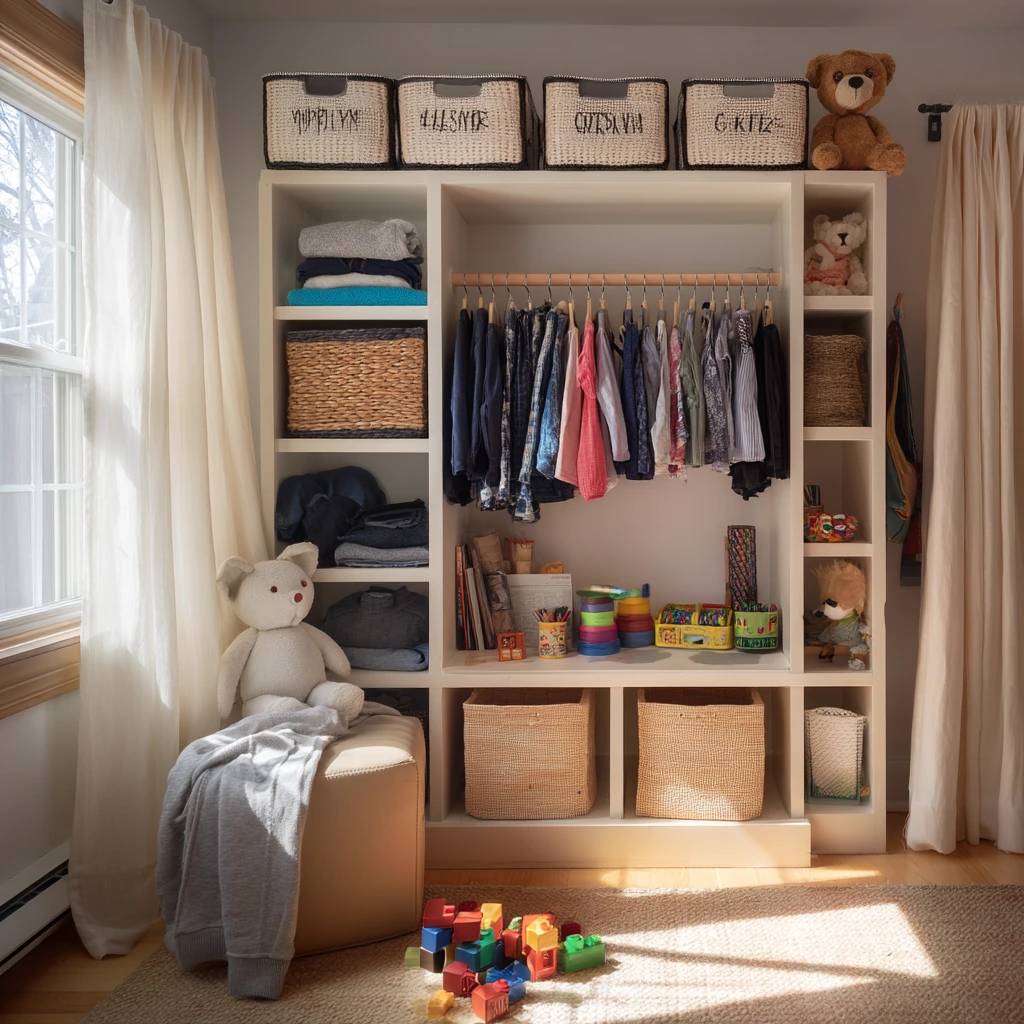
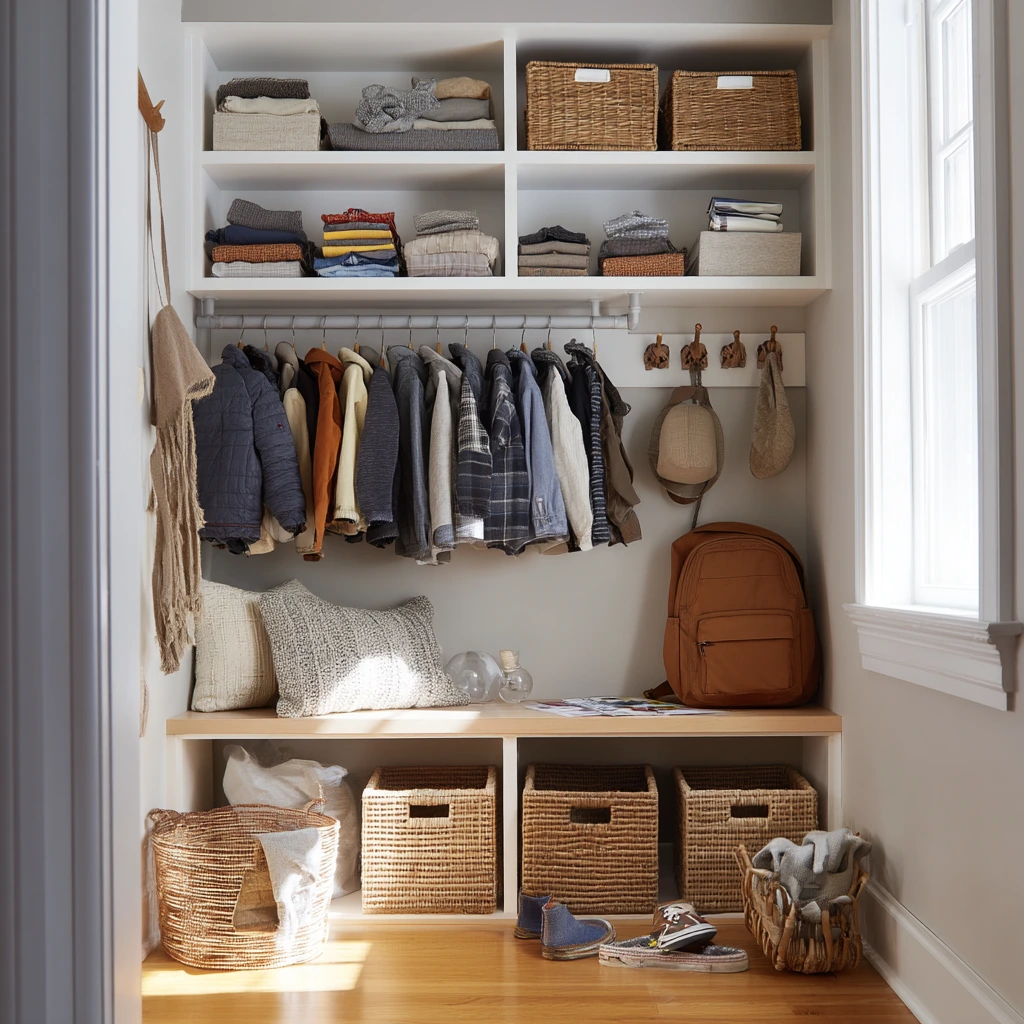
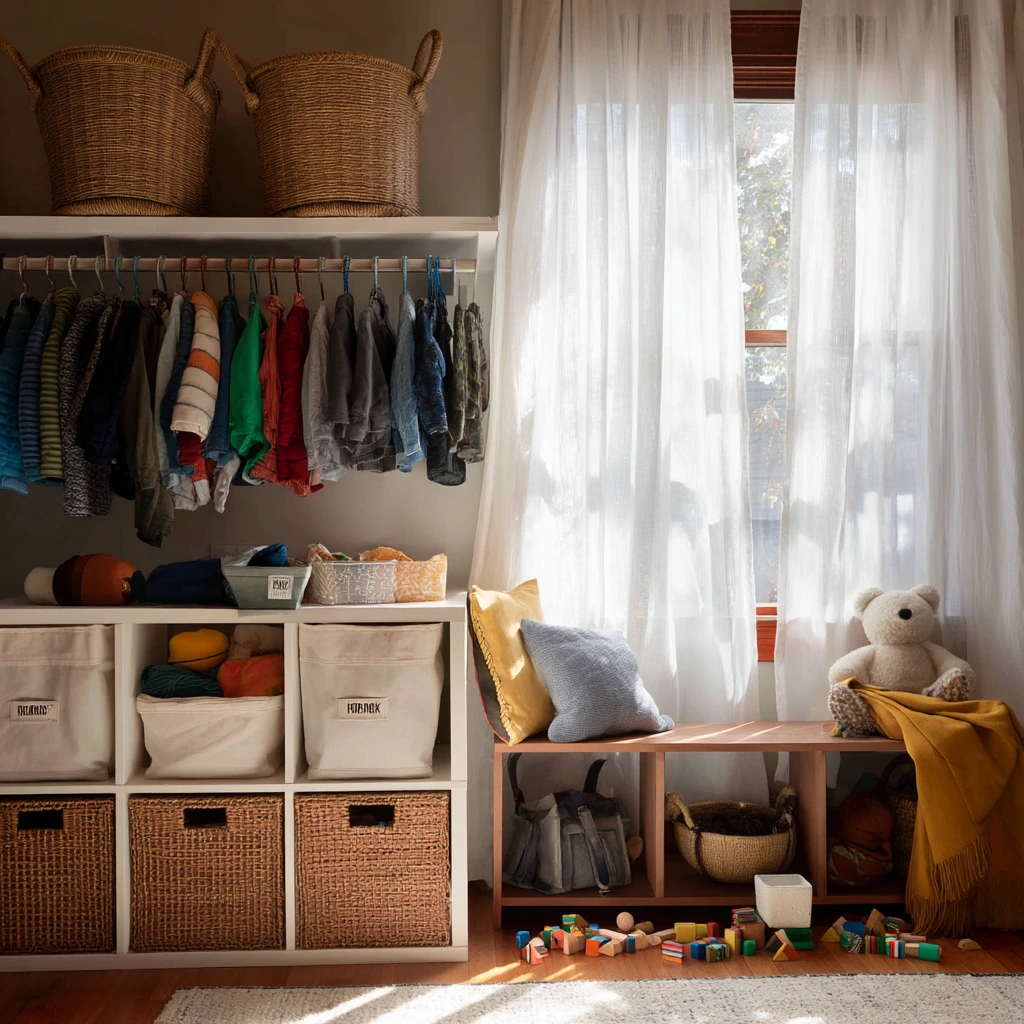
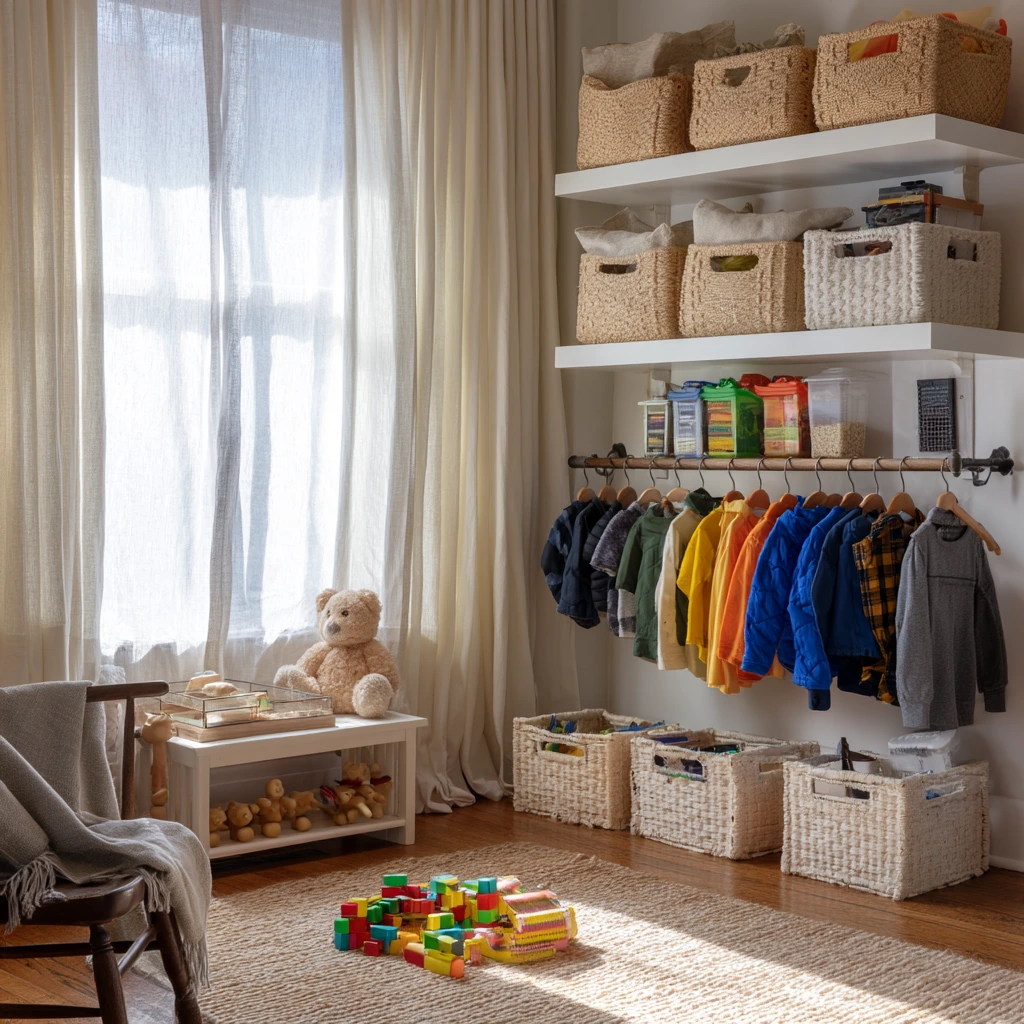
Kids’ clothes storage works best when children can reach and use it. Low shelves with labeled baskets make it simple to sort uniforms, pajamas, and play clothes. Add tiny hanging rods for dress-up items or school clothes so kids can practice putting things away. A small bench helps with shoes and gives you a spot to set out outfits for the week.
Expect playful mess. A stuffed animal peeking out, crayons near the basket, and building blocks on the rug are normal. The key is making cleanup fast. Keep one open basket for “today’s favorites” so the floor stays clearer, and keep one hamper or laundry bag close by so dirty clothes do not travel around the house. If a sweatshirt ends up draped over a chair, add one hook at kid height right next to that chair.
How to style it: use cheerful but soft colors and repeat them in labels and baskets so the corner looks orderly. Choose bins that slide easily and do not pinch little fingers. Warm daylight through sheer curtains makes the space feel friendly, so keep the setup near a window if possible and avoid tall furniture that blocks light.
- Set up low shelves with labeled baskets for each clothing type.
- Add a short hanging rod for uniforms and dress-up clothes.
- Use a bench for getting dressed and laying out tomorrow’s outfit.
- Keep one open toy basket nearby to prevent mixed piles.
- Place a small hamper in the same corner for quick laundry drops.
Pro Design Tip: Use picture labels plus words so young kids can match items to the right basket without help.
Budget Considerations: Cube shelves and fabric bins are budget-friendly; printable labels on paper taped to bins work until you upgrade.
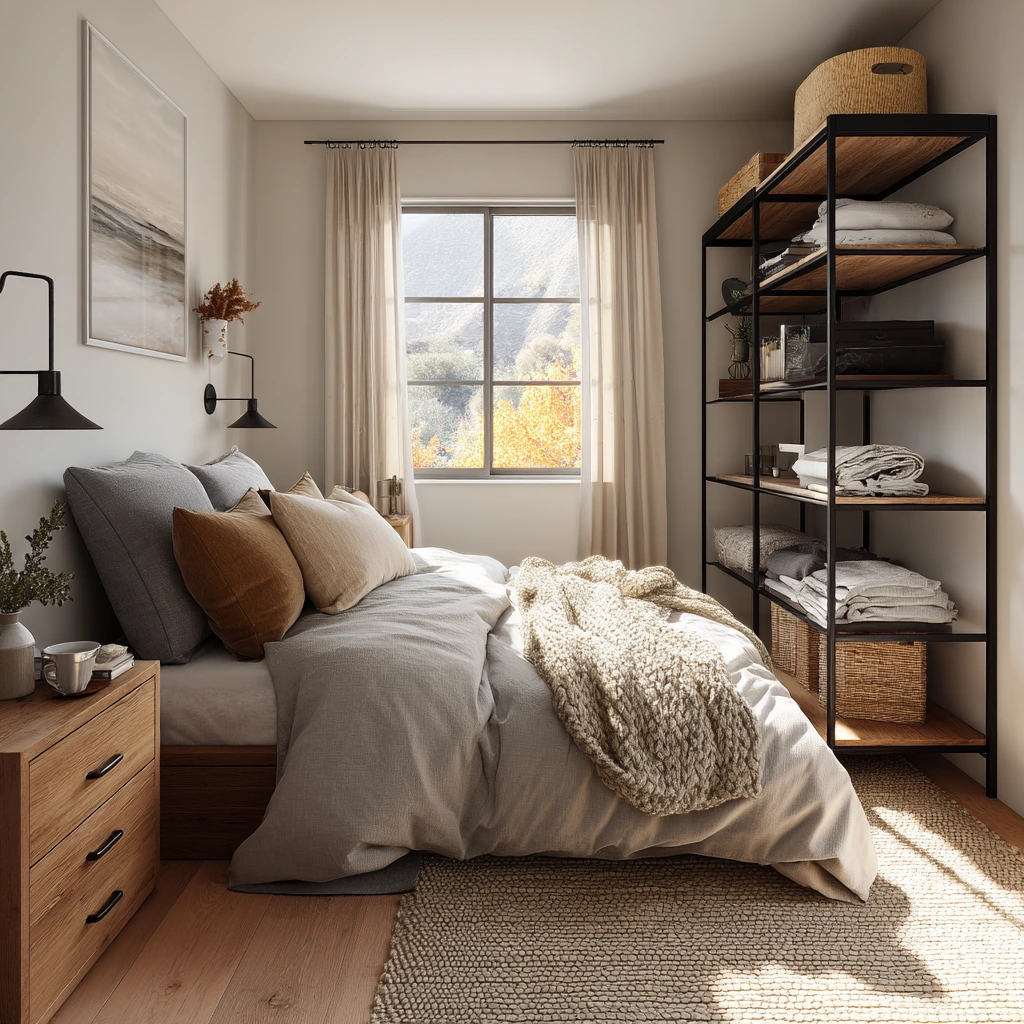
9 Under-Bed Storage for Small Apartments
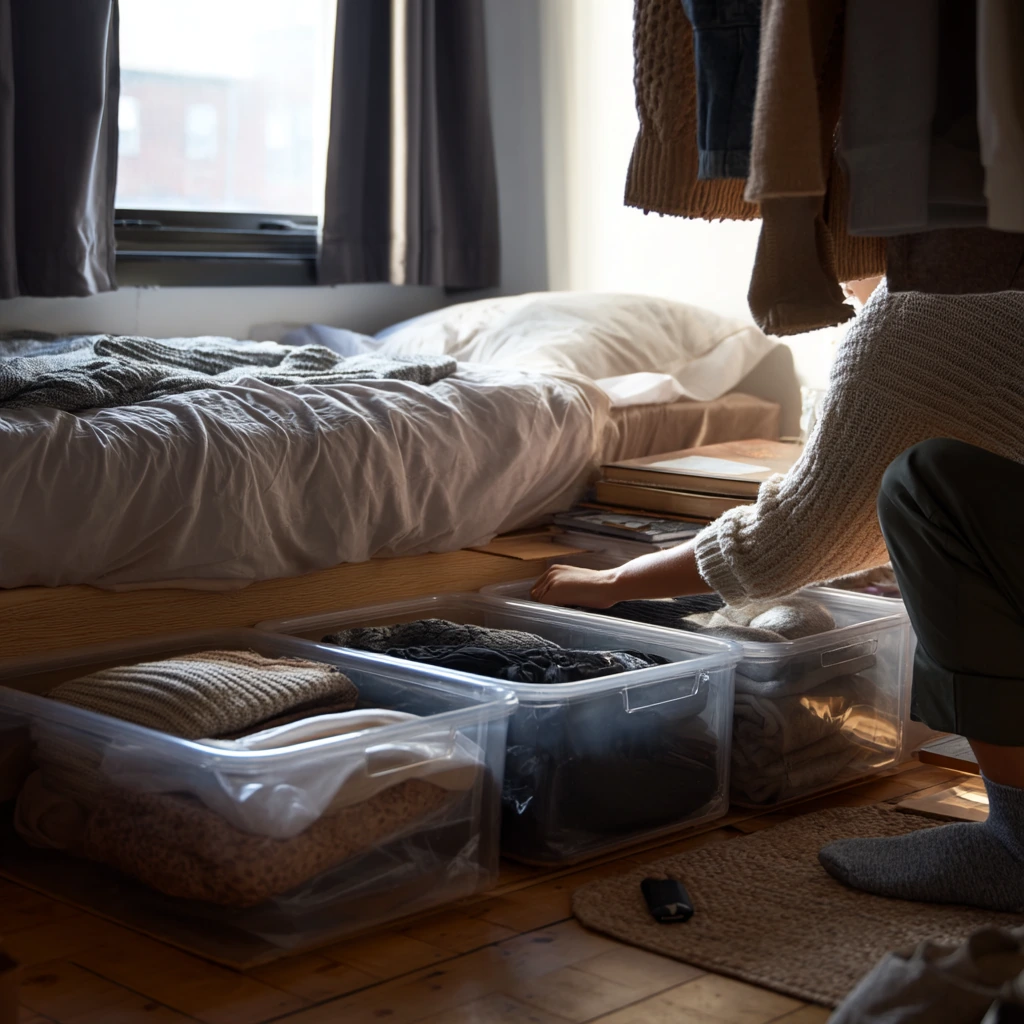
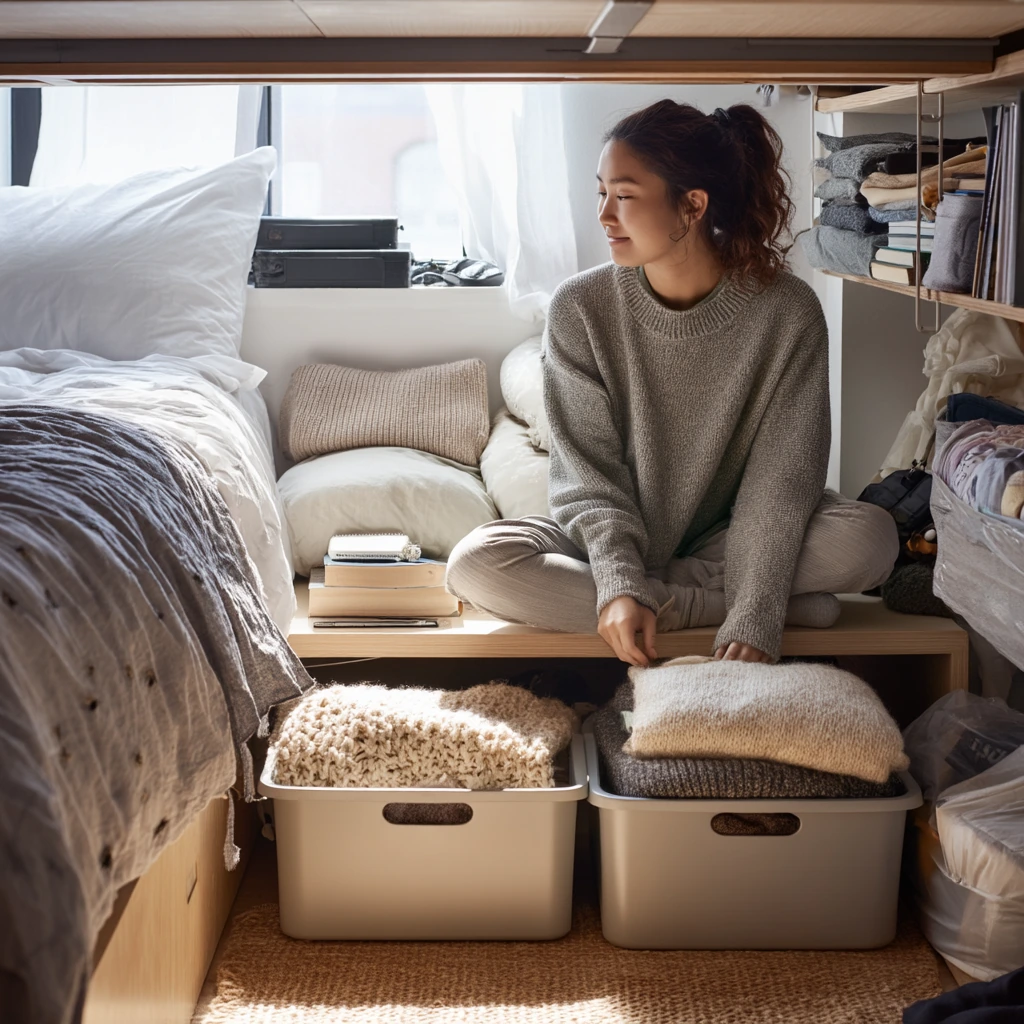
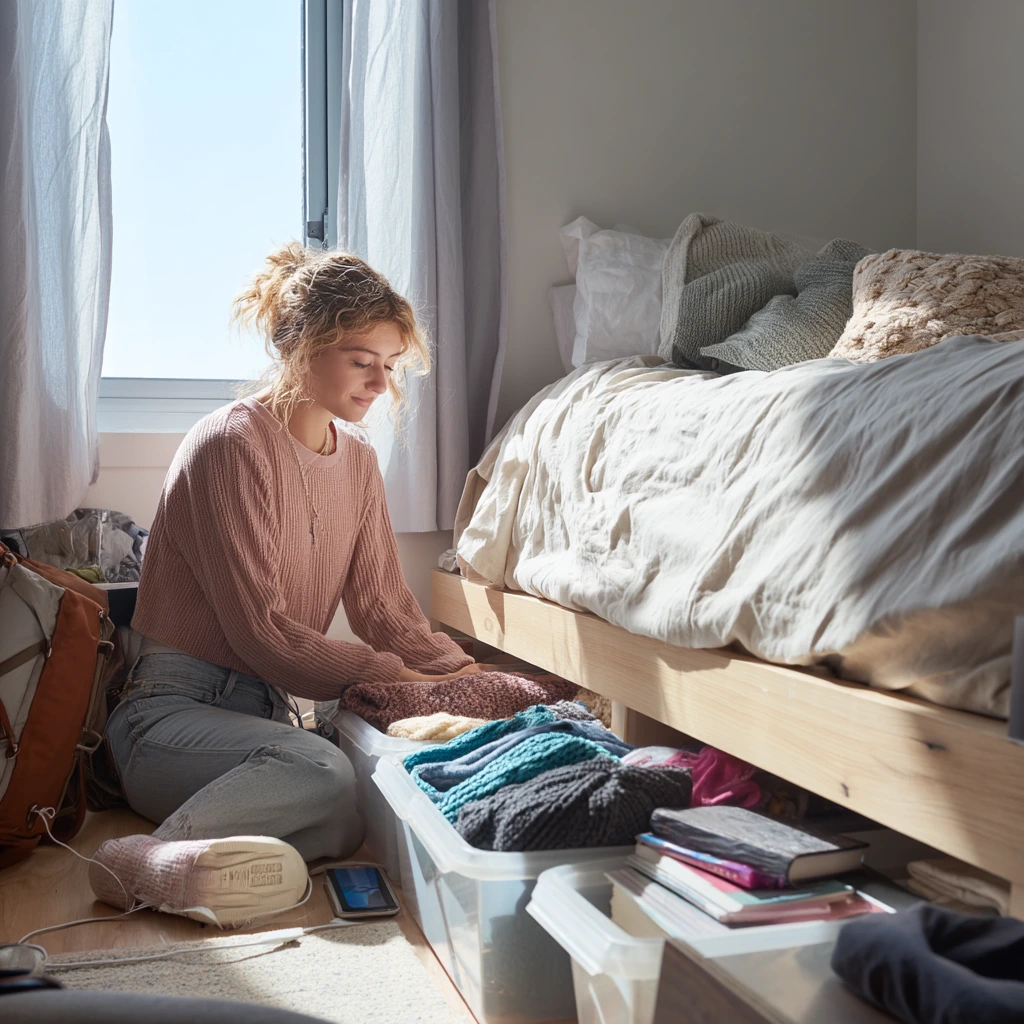
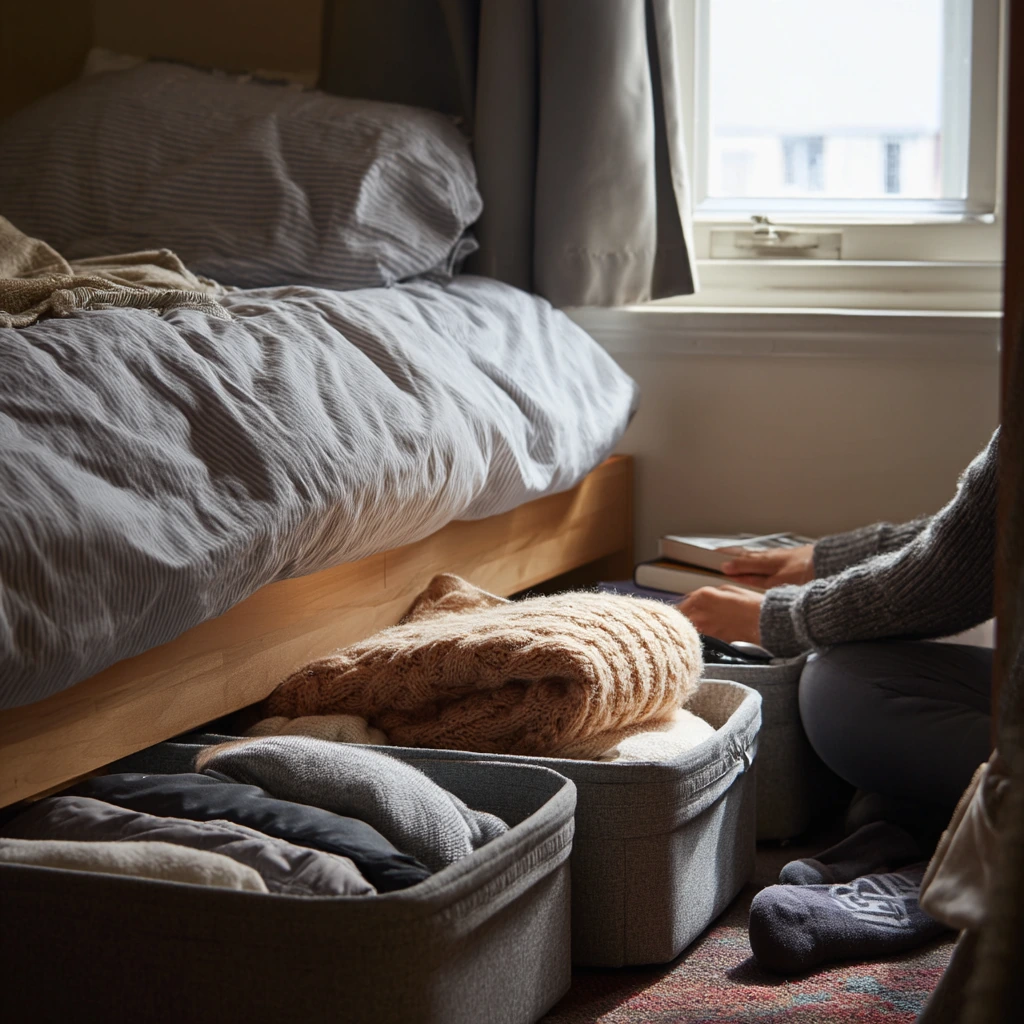
Under-bed clothes storage is one of the best ways to gain space in a compact bedroom. Flat bins slide easily under a low platform bed and keep items protected from dust. Vacuum bags are useful for bulky knitwear and off-season coats, especially when closet space is tight. A student setup can be simple: bins for clothing, one laundry tote, and a clear spot to pull items out without moving furniture.
Keep this system realistic. If your phone charger trails to the floor and books sit by the pillow, you need storage that does not add extra steps. Put the most-used under-bed bin on the side you naturally stand up on. Leave one small gap so your hand can grab the bin handle quickly. A sock near the bed frame is a sign your hamper is too far away, so move the hamper closer than you think you need.
How to style it: choose matching bins so the space looks neat when you peek under the bed. Use simple category labels like “sweaters” and “gym.” Store items in fabric pouches inside the bin to stop smaller pieces from shifting. Gentle morning window light helps you see labels, so face labels outward toward your main walking path.
- Pick flat under-bed bins that fit your bed height with room to slide.
- Use vacuum bags for bulky seasonal clothing to save space.
- Label bins by category so you can find items without dumping them.
- Keep a laundry tote near the bed to catch daily clothing.
- Rotate bins each season and donate items you did not wear.
Pro Design Tip: Store by season and by fabric weight; keep heavy winter items together so you only pull one bin when the weather changes.
Budget Considerations: Plastic flat bins are low cost; vacuum bags are a small add-on that can double your storage for bulky items.
10 Built-In Wardrobe With Laundry Day
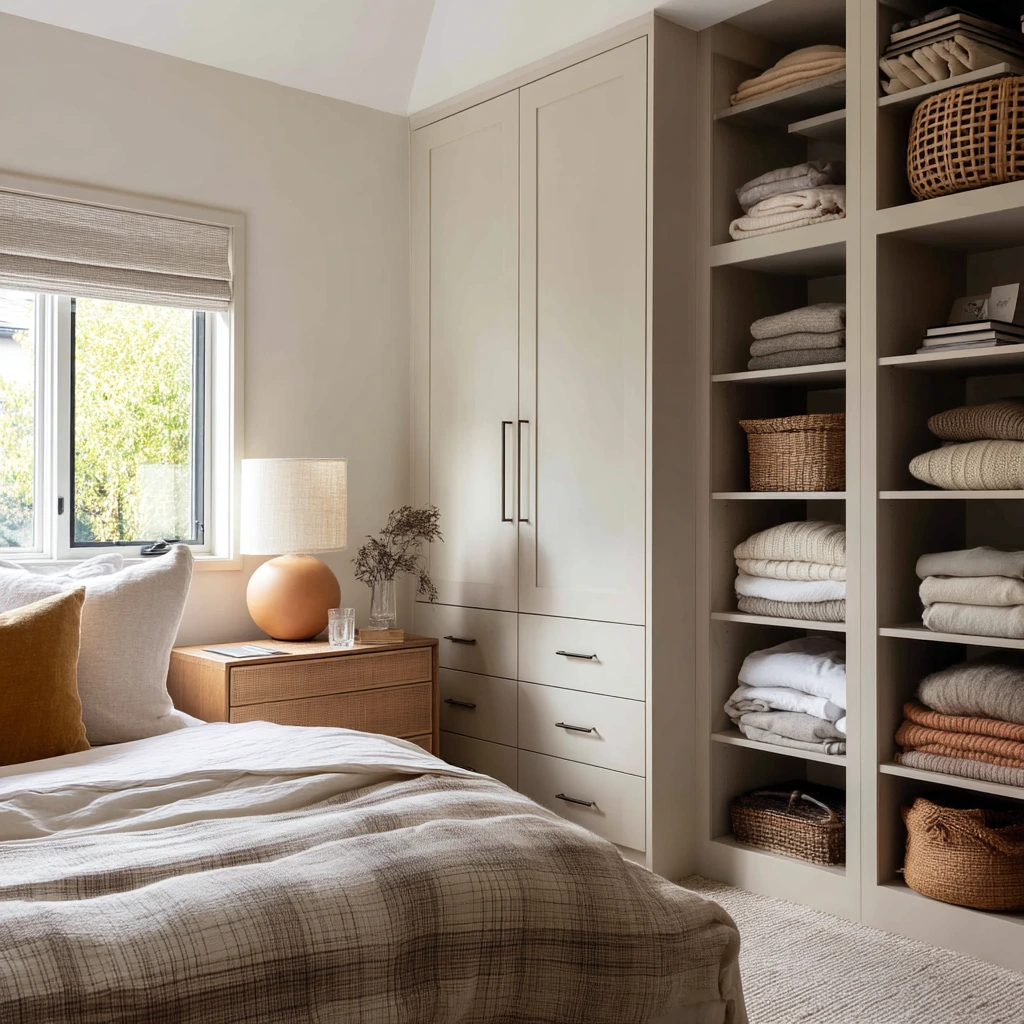
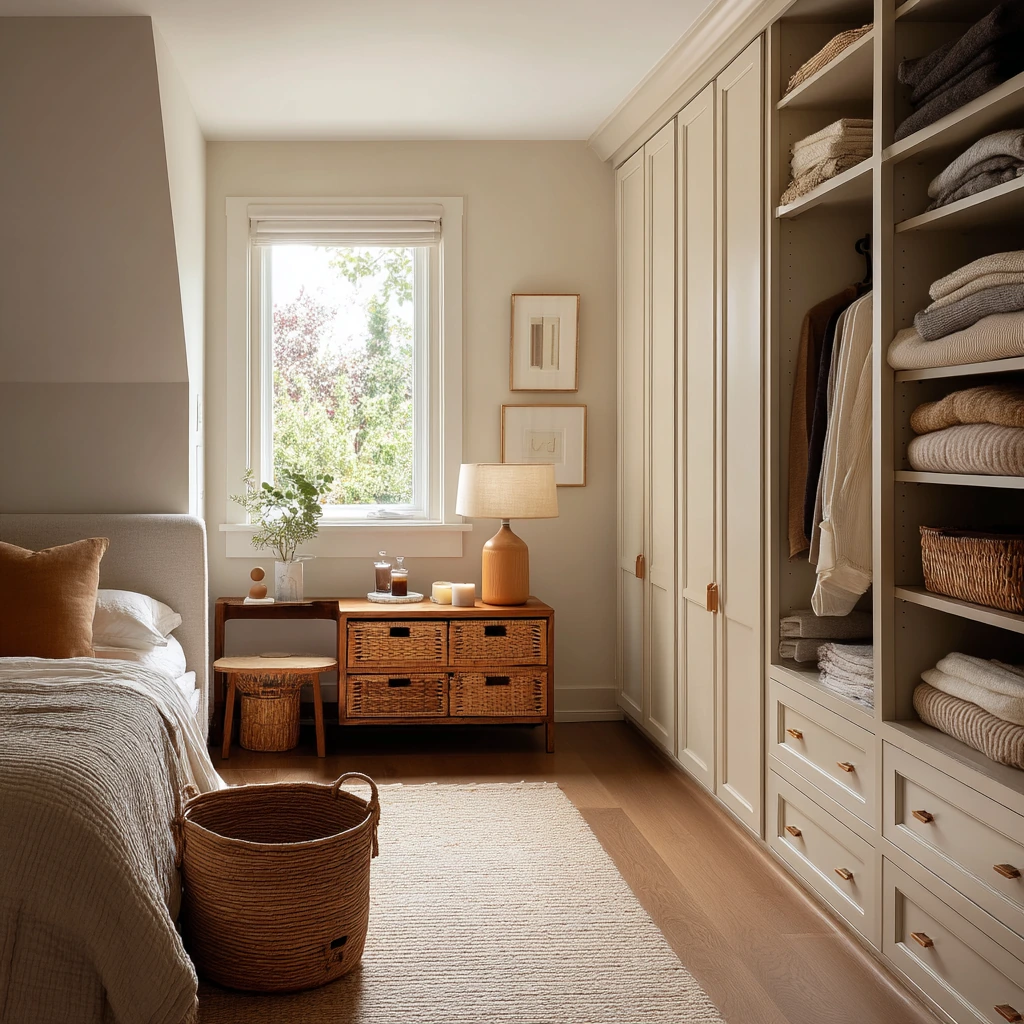
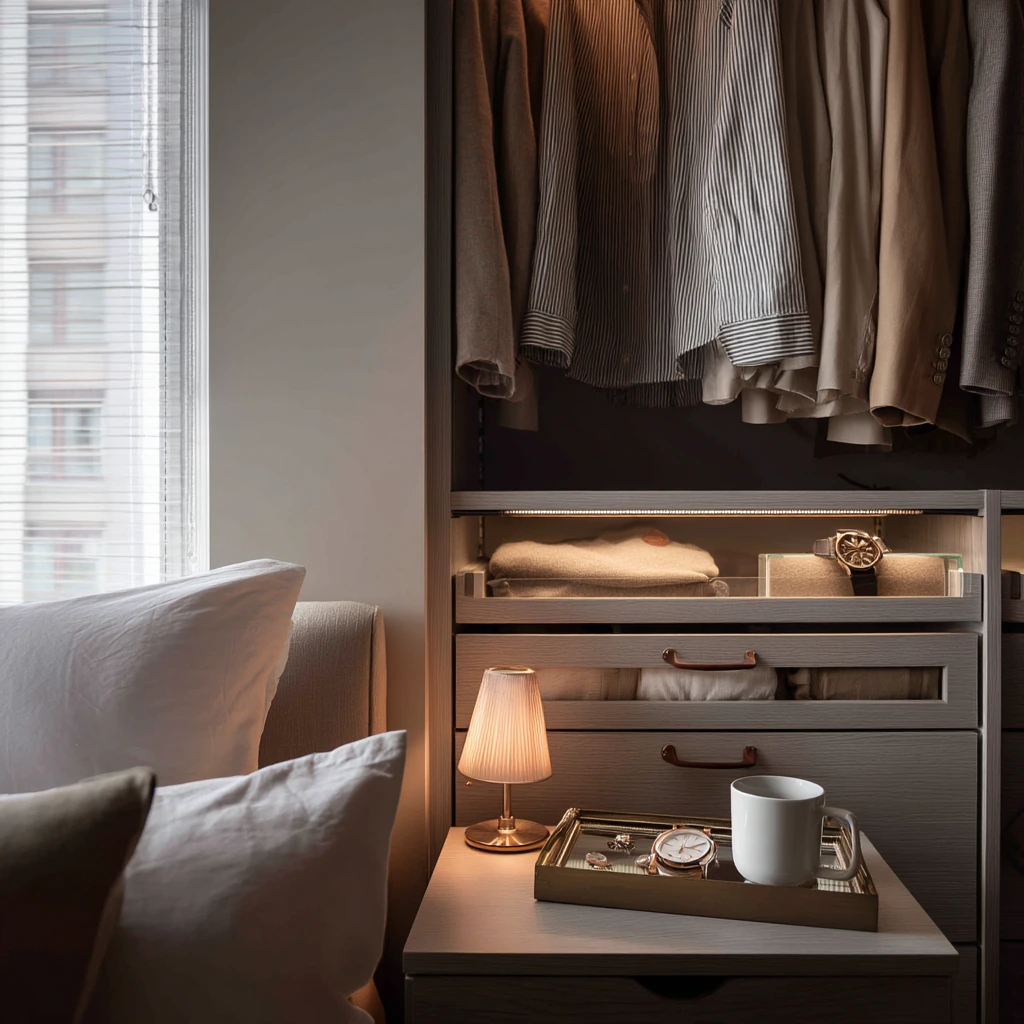
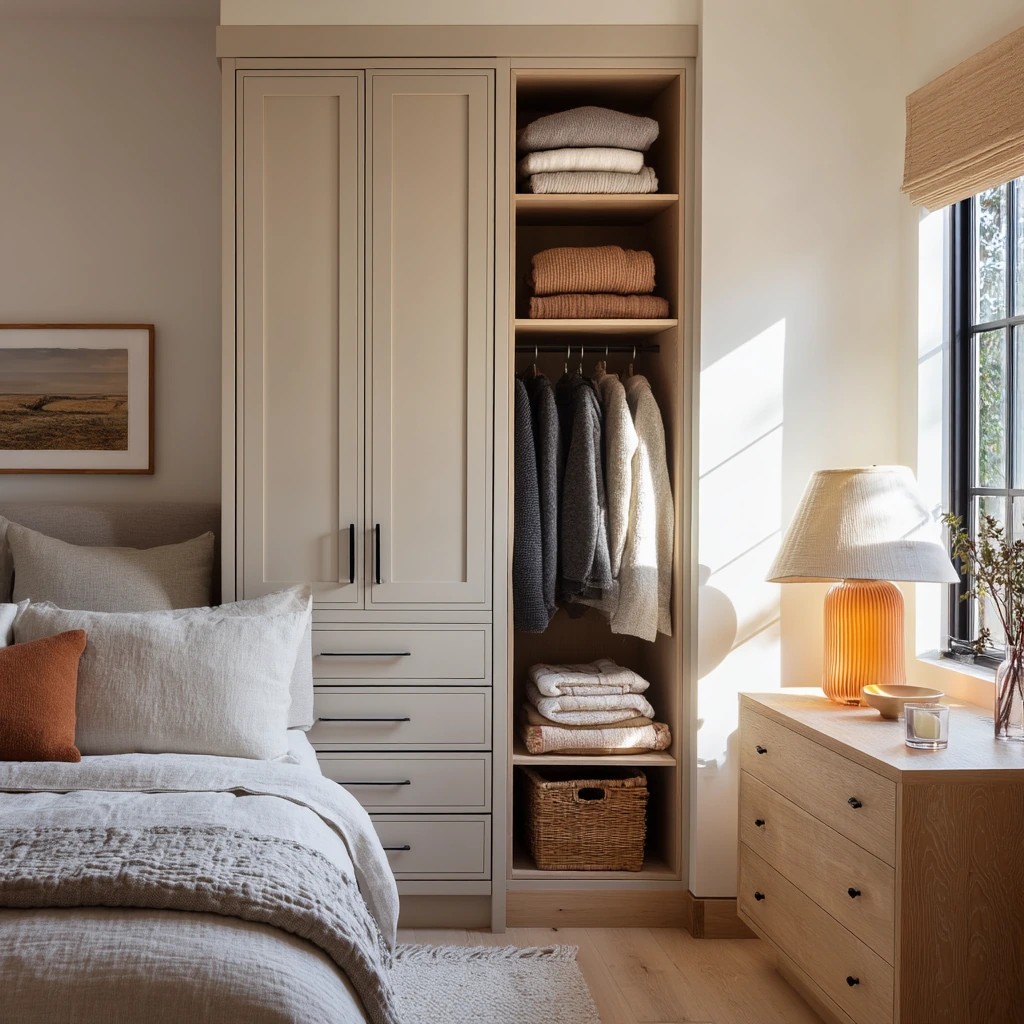
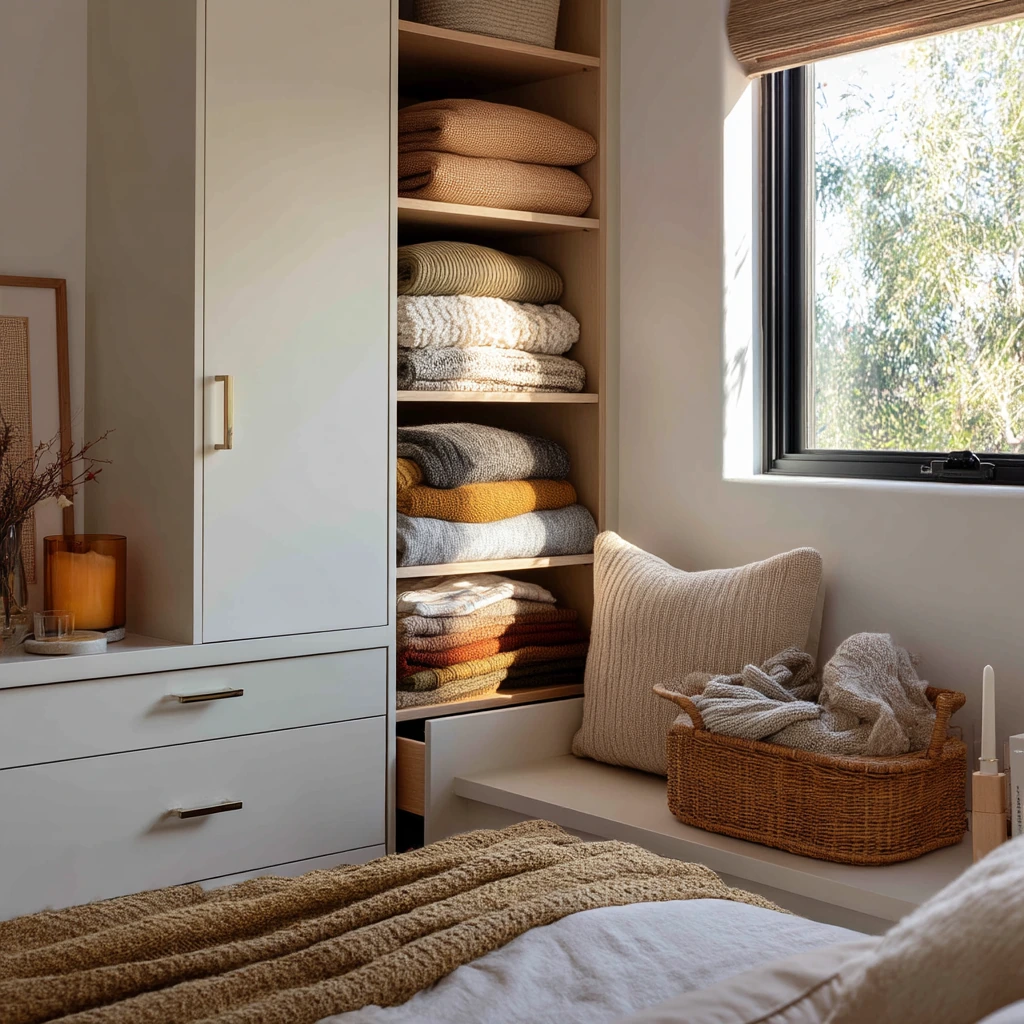
Built-in storage can make a primary bedroom feel calm because everything has a defined place. Tall cabinetry with drawers lets you separate categories like tees, workout clothes, and sleepwear. Pull-out hampers keep laundry hidden while staying easy to reach. Neatly stacked sweaters on open shelves work well when the stacks are short and folded the same way.
Make it functional for laundry day. Keep a basket of socks near the folding area and store spare linens, like a folded towel, in a designated drawer so it does not wander. Small everyday items belong on a tray, like a candle and a water glass, so the dresser does not turn into a catch-all. A slightly rumpled duvet is normal; the goal is that the storage supports the routine, not that the room stays perfect all day.
How to style it: use a warm amber lamp plus diffused window light to make wood tones feel cozy. Choose simple drawer pulls and keep countertop decor minimal. If you have open shelving, use matching baskets for items you do not want to display. This keeps the built-in look clean while still holding plenty.
- Use tall cabinets to maximize vertical space without adding floor clutter.
- Add drawers for categories and fold items the same way each time.
- Install pull-out hampers to keep laundry contained and sorted.
- Limit open shelves to a few neat stacks or baskets for a clean look.
- Keep a small folding station nearby for faster put-away.
Pro Design Tip: Plan drawer heights around what you store most, like shallow drawers for tees and deeper ones for sweaters; it prevents overstuffing.
Budget Considerations: Built-ins cost more upfront; if you are saving, mimic the look with tall dressers, a wardrobe cabinet, and two pull-out laundry bins.
Clothes storage ideas work best when they match your daily habits and your space. Start with one trouble spot, like the entryway or the under-bed area, and set up clear zones for hanging, folding, shoes, and laundry.
Use simple tools like labeled bins, drawer inserts, hooks, and slim cabinets. Keep the setup easy to reset, and add small styling touches like matching baskets and consistent hangers so it feels calm.
Once your storage is working, you will spend less time hunting for clothes and more time enjoying your home.