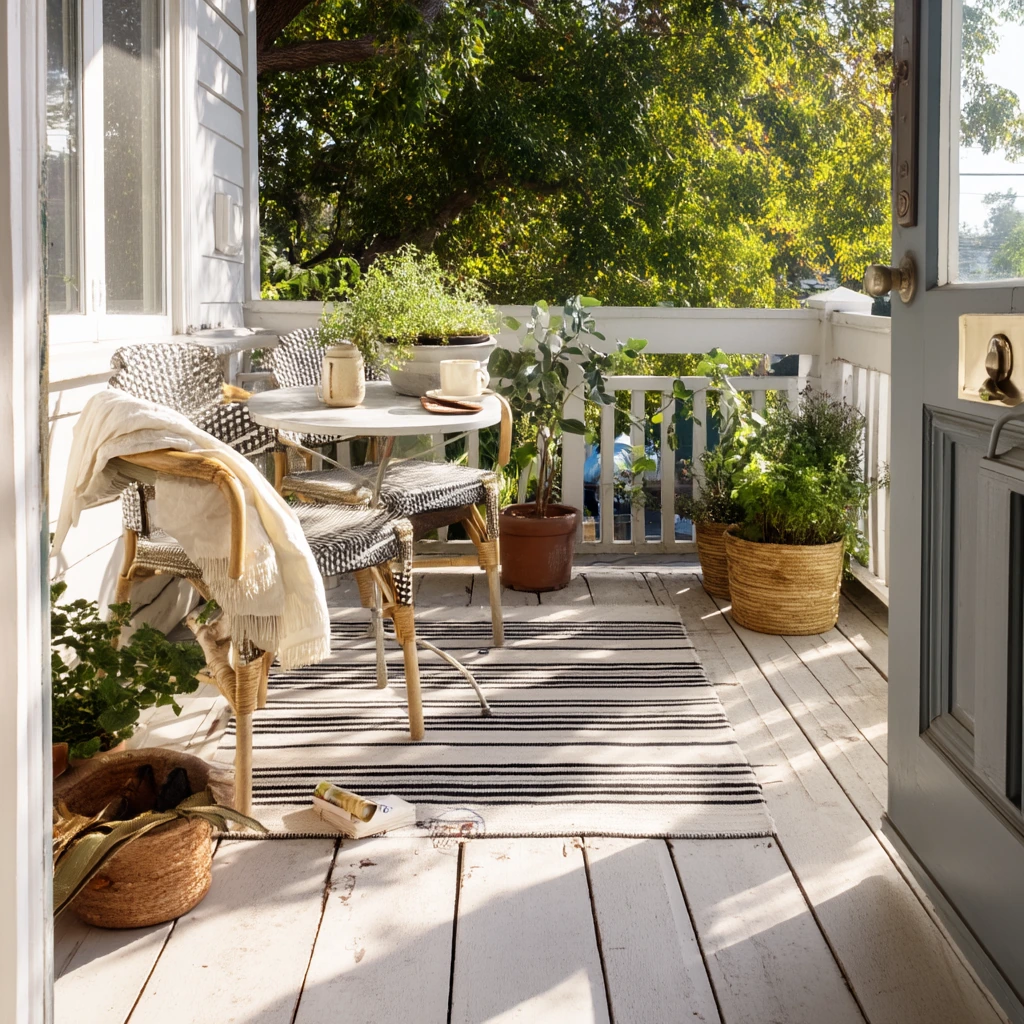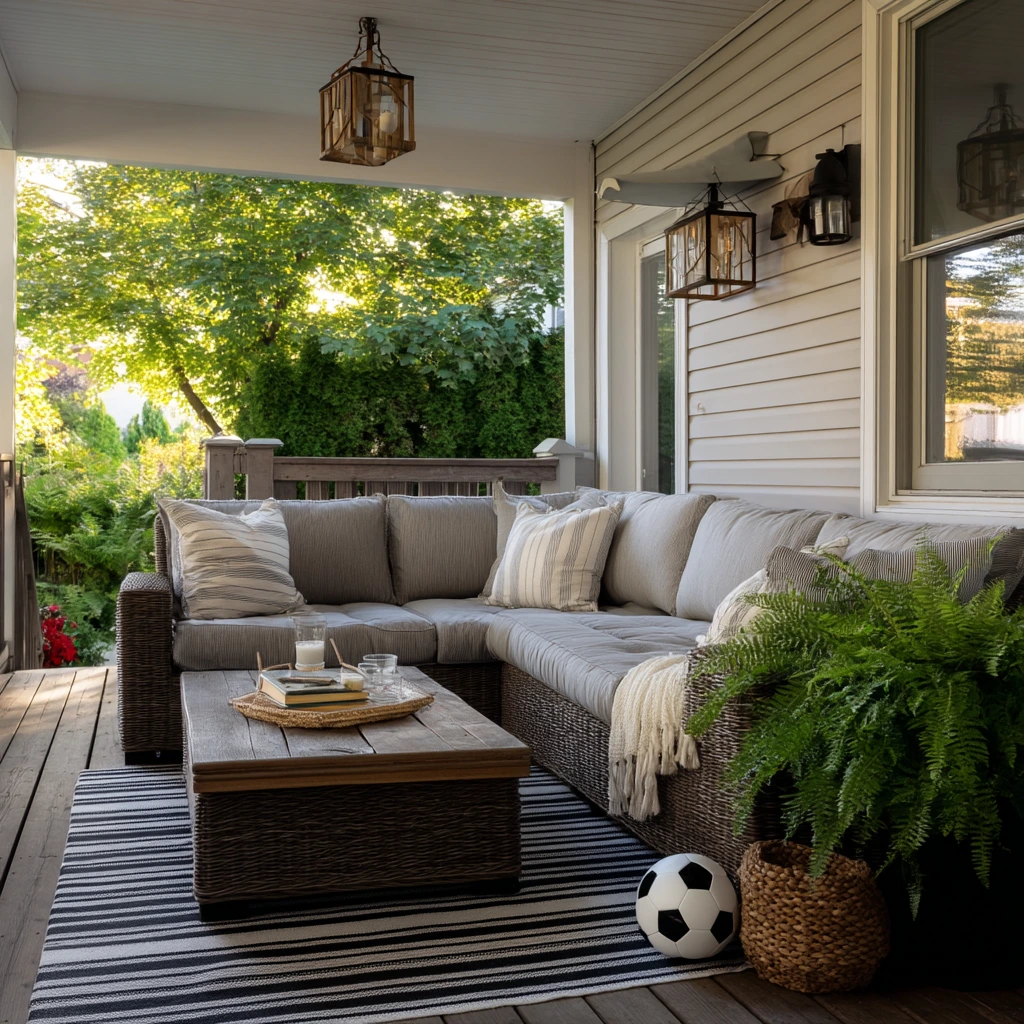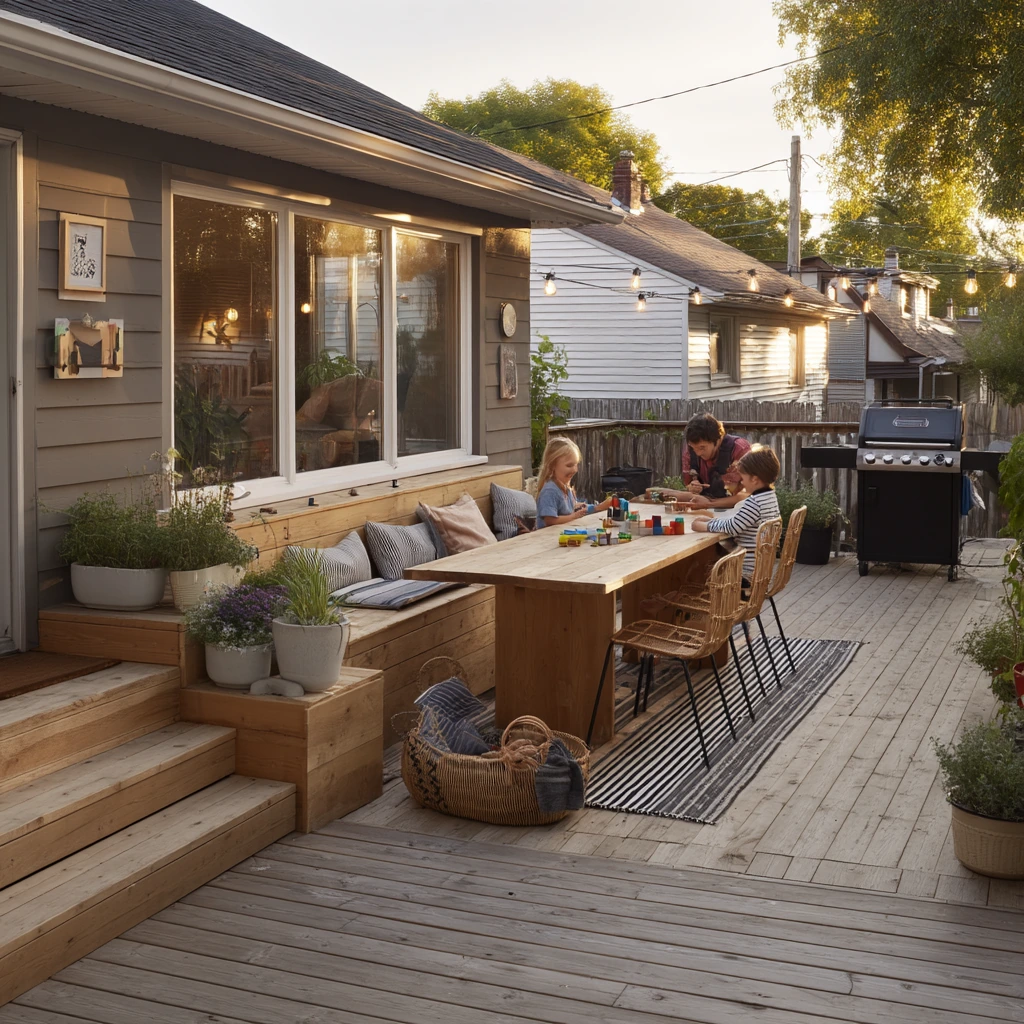

Floating deck ideas are popular because they add an outdoor living spot without a full patio build. A floating deck is a low platform that “floats” above the ground, often set on blocks, gravel, or short footings.
In this guide, you will see 10 real-home setups, from a compact city townhouse to a sloped suburban yard. Each one includes simple layout notes, styling ideas, and practical details like planters, outdoor rugs, benches, and string lights.
If you found this post from Pinterest, use it as a checklist. You will learn what to copy, what to measure, and what to buy first so your deck feels lived-in and easy to use.
Always follow local codes and check for utilities before you dig or place footings. If you rent, focus on portable modular deck tiles and furniture that can move with you.
1 Small Urban Deck Off a Kitchen Door
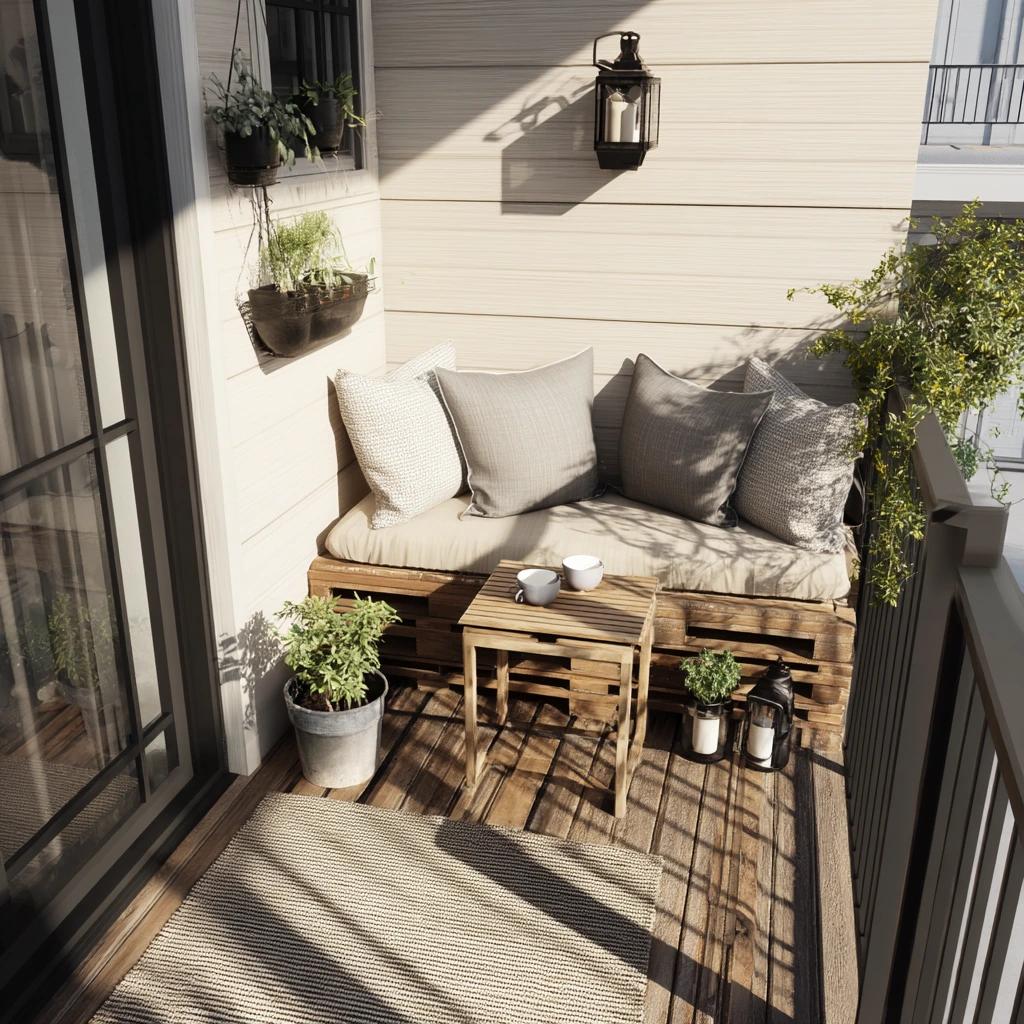
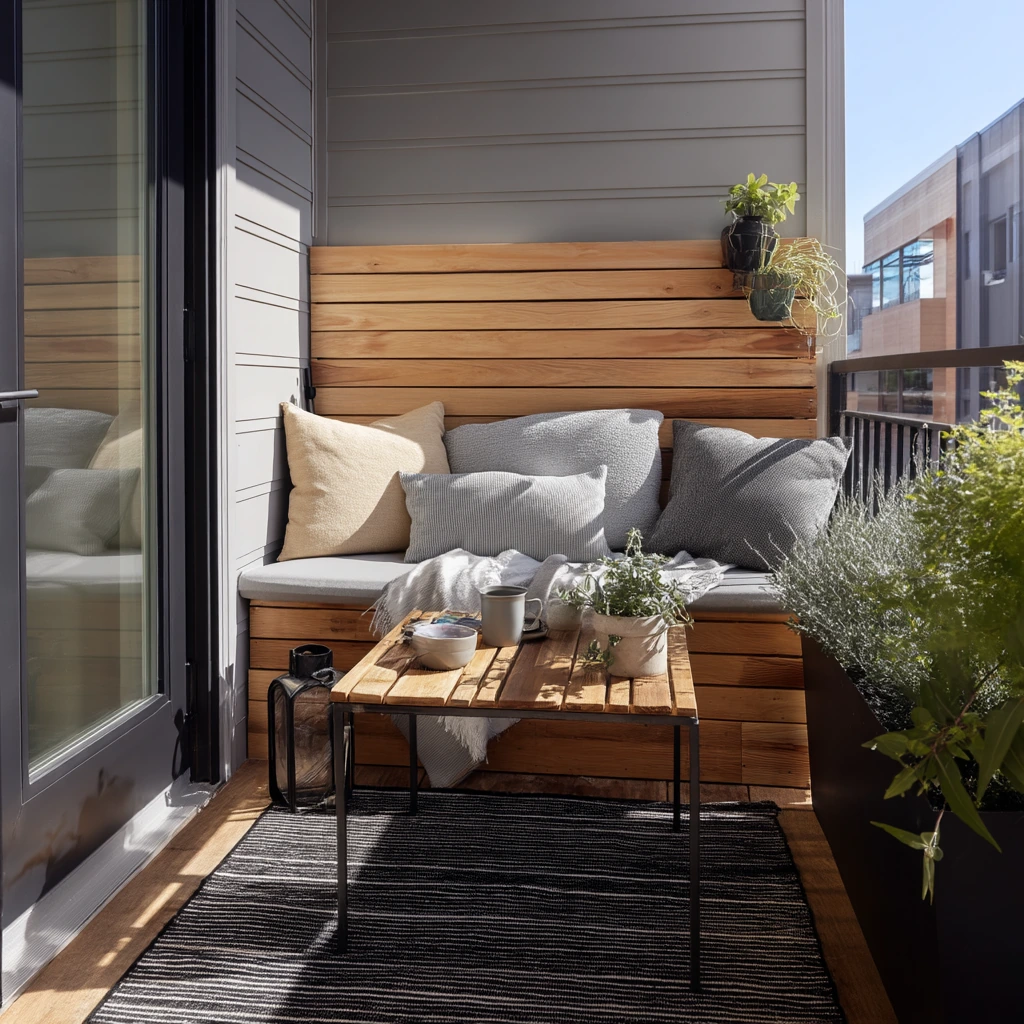
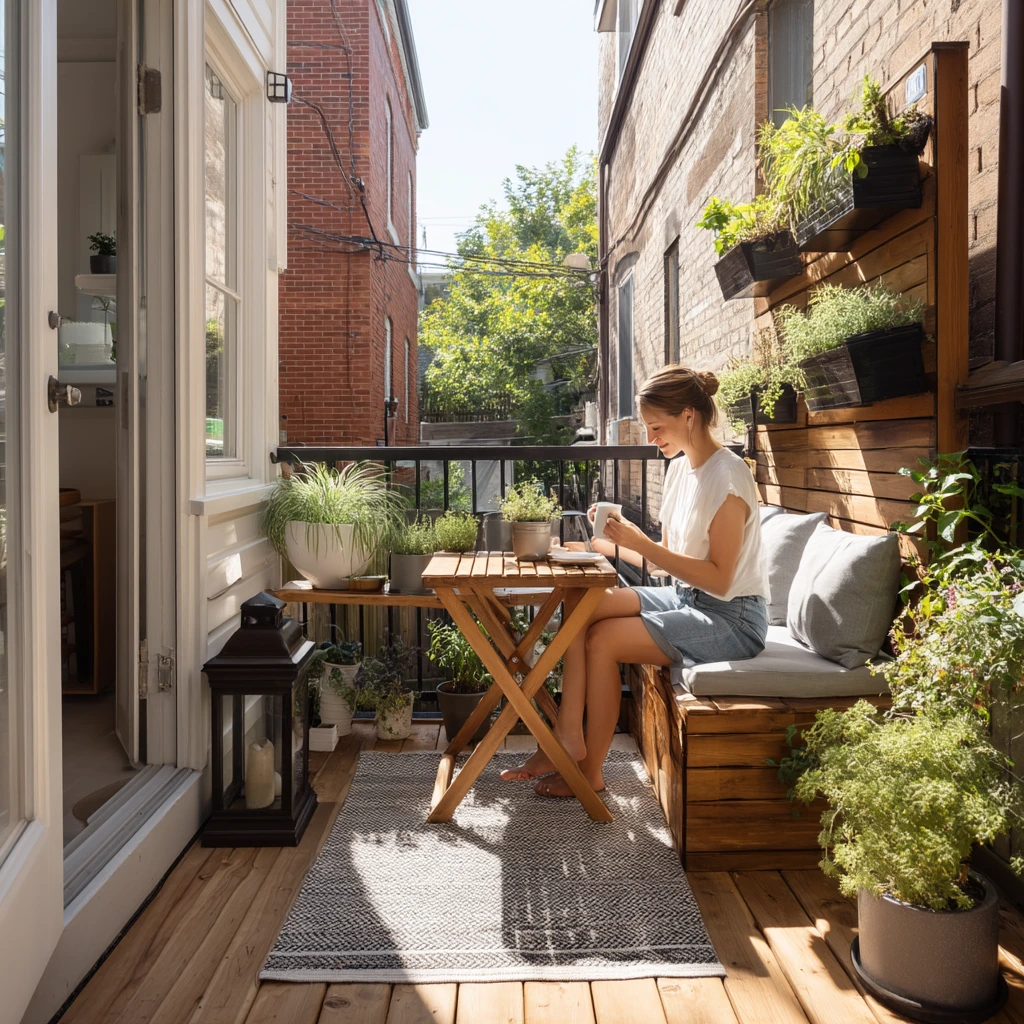
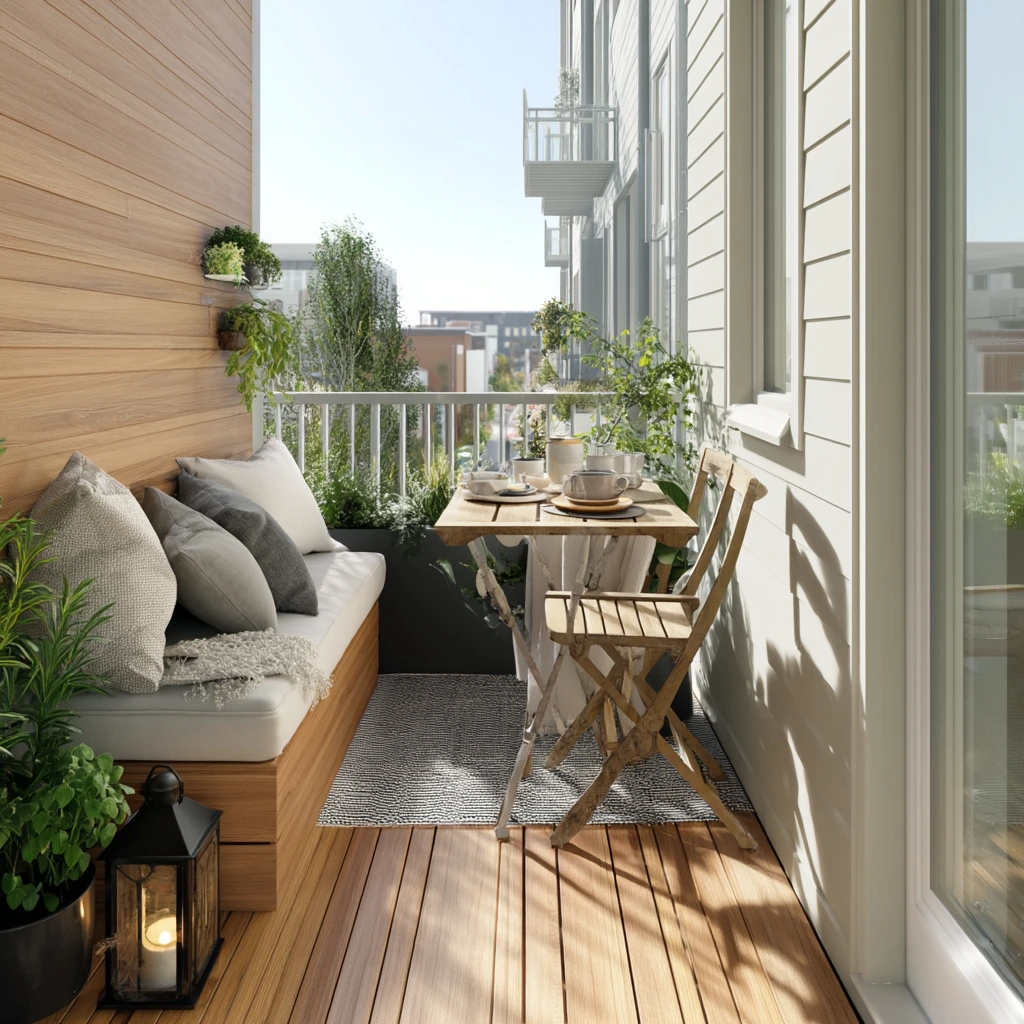
A compact floating deck right off a townhouse kitchen works best when it acts like an outdoor extension of the doorway. Keep the platform size tight and square so the door swing is clear, then place a tiny slatted teak table where two mugs can sit without wobbling. This kind of calm, practical layout is all about daily use, not special events.
Warm cedar tones make small spaces feel welcoming, especially when you add soft gray cushions and one slightly wrinkled throw that invites you to sit down. Add rail-mounted planters and potted herbs near the edge so you can grab basil or mint while cooking. A simple outdoor rug helps define the “room,” and it keeps chair legs from sinking between boards.
Make it feel real and easy: a black lantern by the wall, plant shadows on the siding, and a phone charging cable by the door for mornings when you step out with coffee. Use a small tray for sugar and spoons so the table stays tidy. If you get strong sun, choose fade-resistant cushion covers and keep a storage bin inside for throws.
- Leave a clear walkway from the kitchen door to the seating area.
- Pick a bistro set that fits the deck, not the store display size.
- Use herbs in matching pots to reduce visual clutter.
- Add one outdoor rug to soften sound and warm up bare feet.
- Mount planters on the railing to save floor space.
Pro Design Tip: Match the deck wood tone to your door trim or siding undertone so the deck looks built-in, even on a small platform.
Budget Considerations: Cedar and teak cost more; save money with pressure-treated framing and a small teak-look table, then spend on good cushion covers.
2 Renter-Friendly Floating Platform Patio
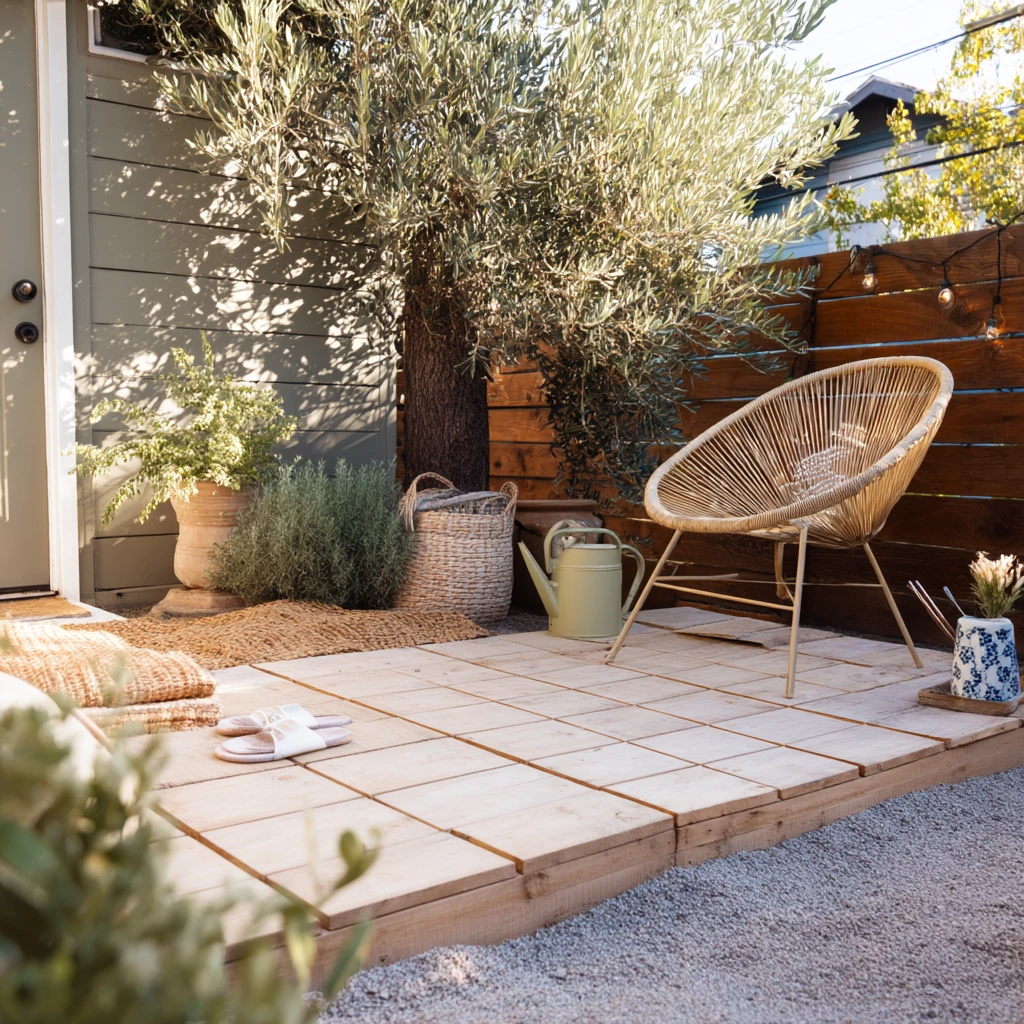
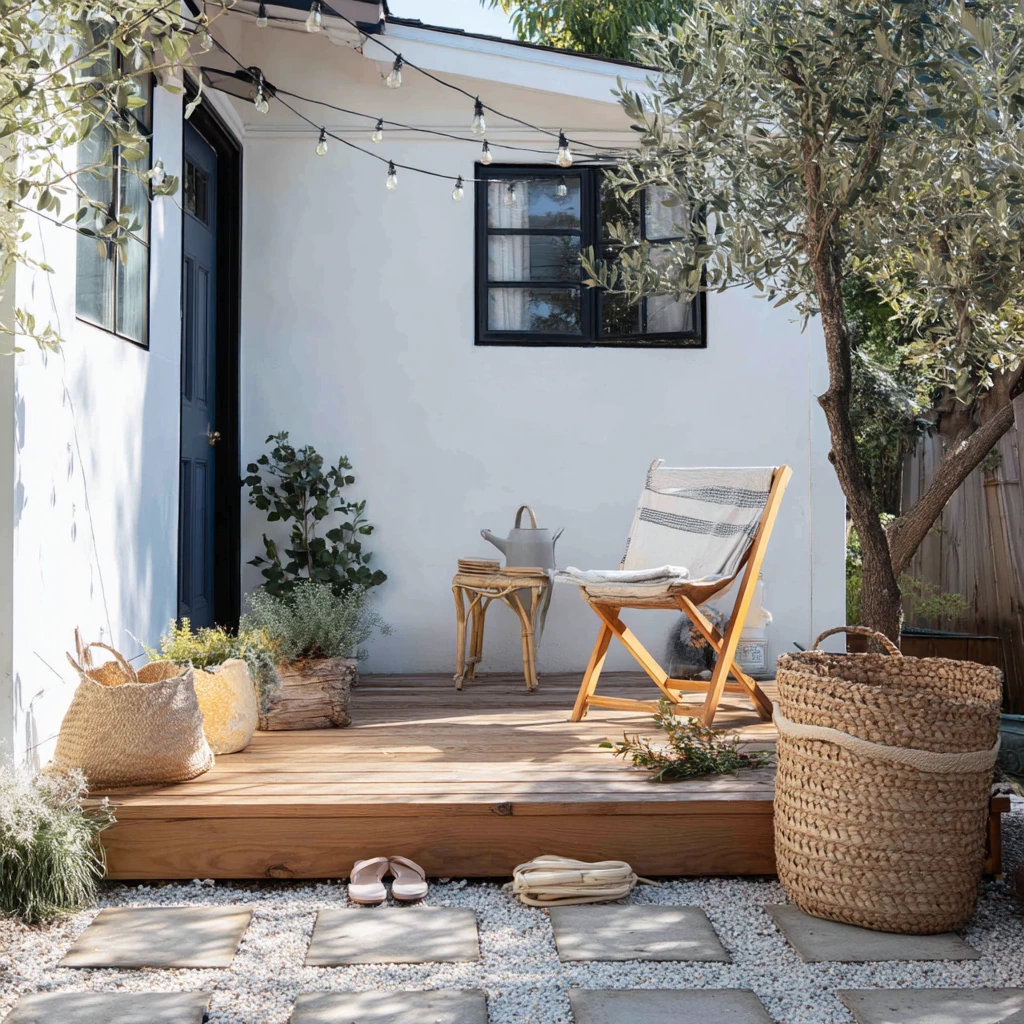
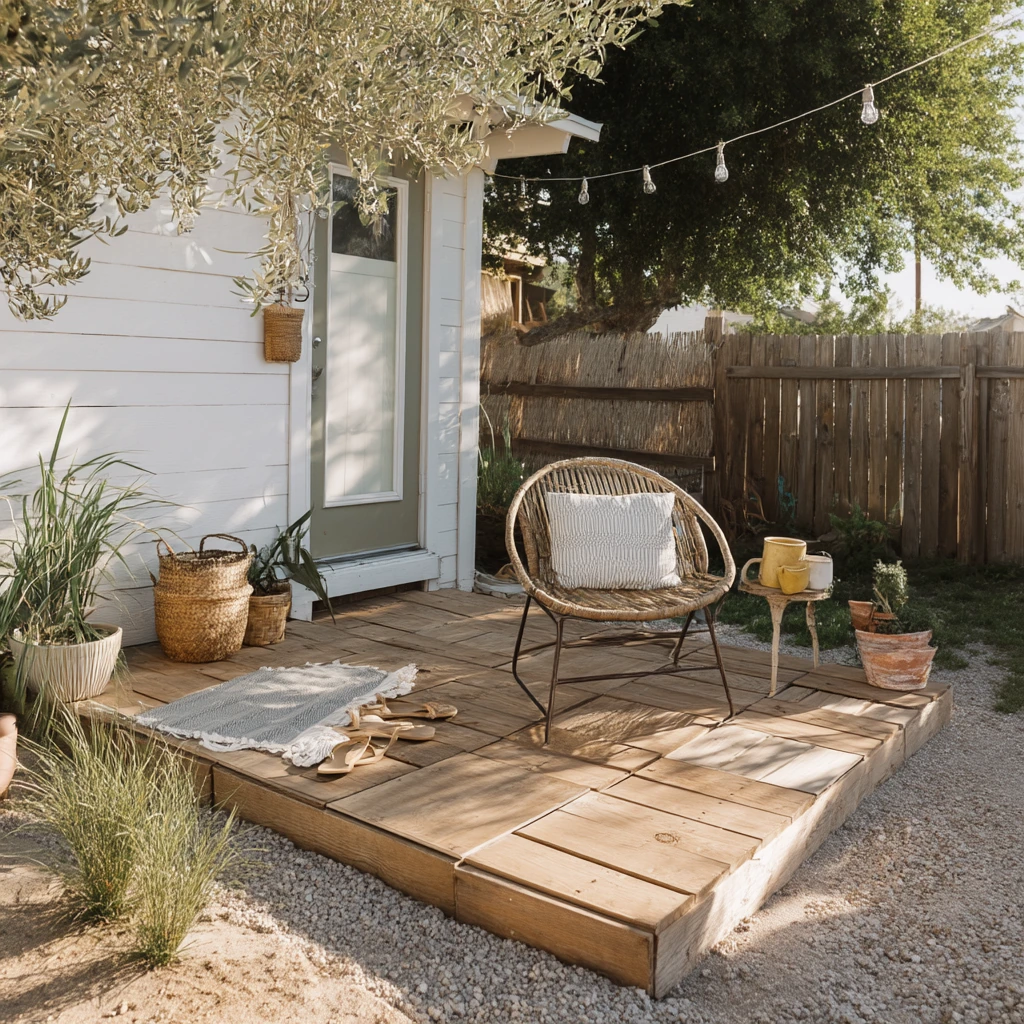
If you rent and want a simple floating deck idea, start with portable modular deck tiles set on level gravel. Gravel drains well, helps reduce mud, and makes it easier to get a flat base without digging deep. Keep the setup modest: one bistro chair and a foldable lounge chair can turn a plain patch of yard into a usable weekend spot.
Style it with a few items that look better as they age. A container olive tree adds height, and a woven basket can hold kid chalk so the space works for real life. Leave the string lights unlit during the day, then switch them on at night for soft glow. A watering can and a neatly coiled hose keep things practical and prevent the area from feeling messy.
Small details make this look believable and comfortable, like sandals near the threshold and a little scuffing or sun fade on the chairs. For comfort, add one seat cushion and a light throw you can shake out easily. If your landlord is strict, keep everything freestanding: no posts in the ground, no attached rails, and no permanent steps.
- Use landscape fabric under gravel to slow weeds.
- Level the base with a long board and a bubble level.
- Choose interlocking tiles that can be lifted to clean under them.
- Keep furniture foldable so you can store it fast.
- Add one tall plant to give privacy without building walls.
Pro Design Tip: Lay tiles in the same direction as the door path so the lines guide your eye and the small yard feels longer.
Budget Considerations: Deck tiles vary a lot in price; start with a small 6×6 area and expand later as you find deals or seasonal sales.
3 Family Deck With Play Zone
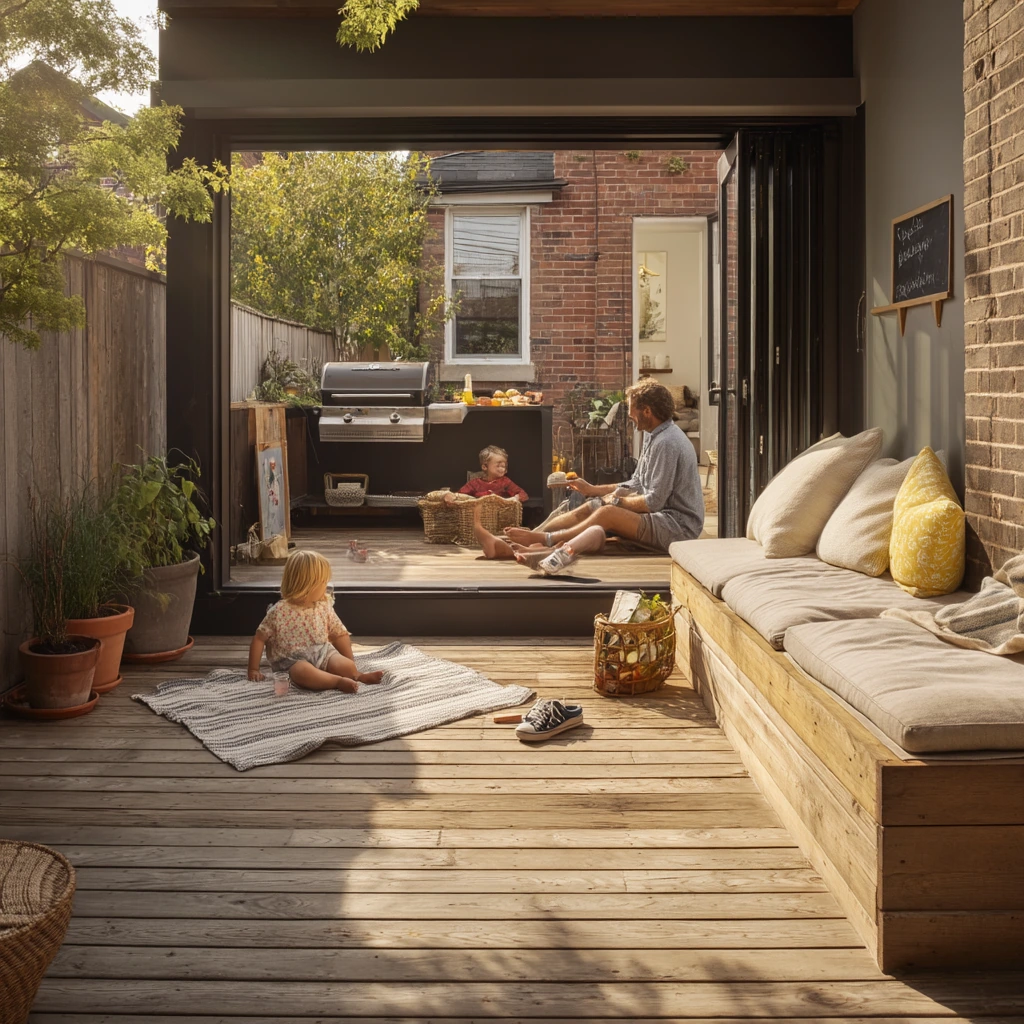
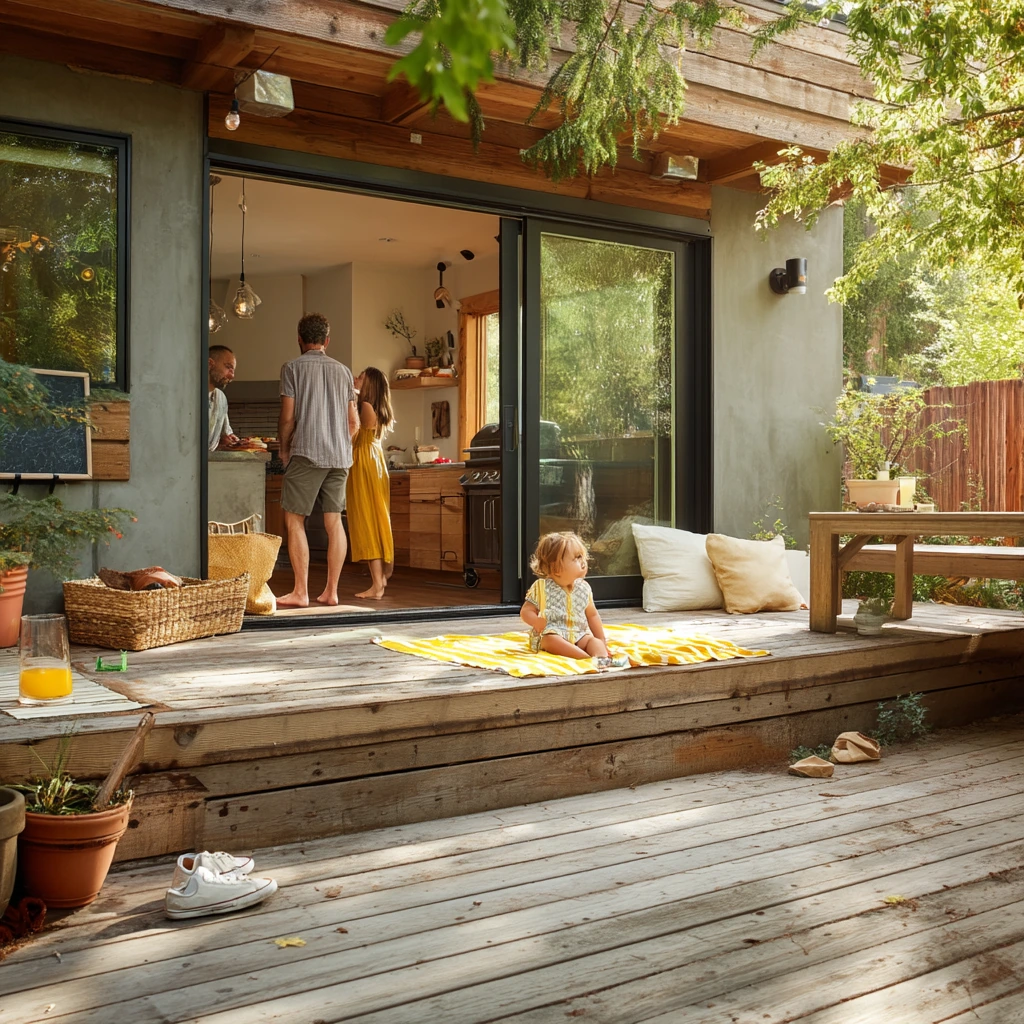
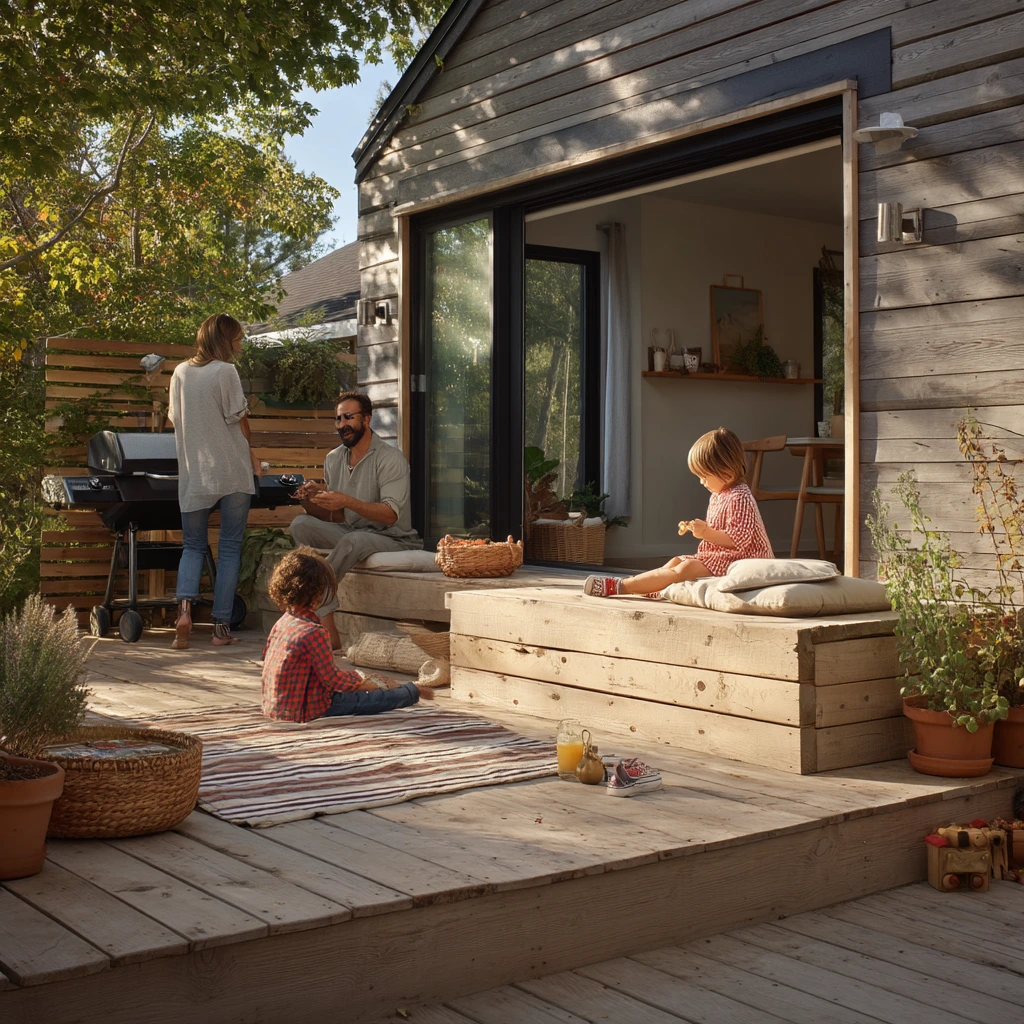
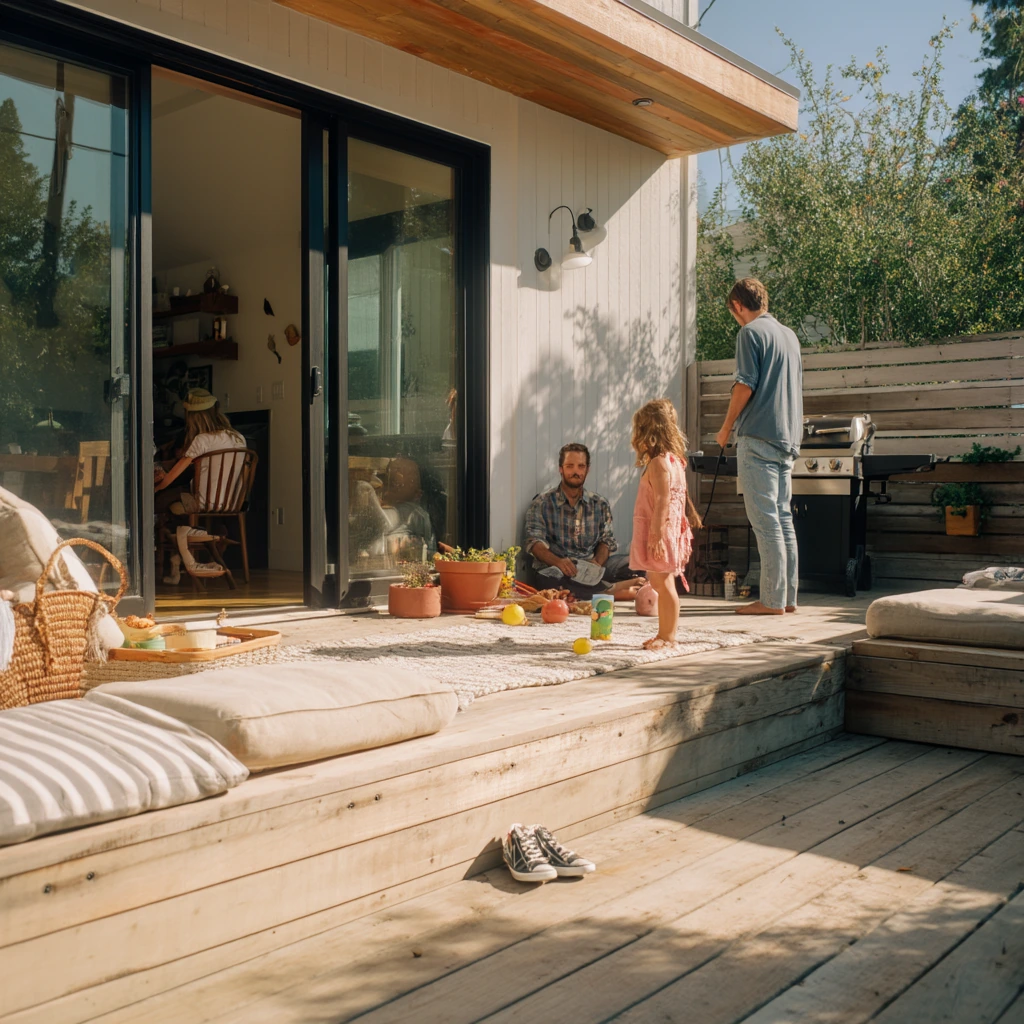
A family home floating deck beside a raised sliding door needs two things: safe circulation and easy cleanup. A built-in bench with oatmeal cushions is a smart anchor because it stays put when kids run in and out. Weathered cedar boards hide small scratches, and they look better over time than glossy finishes.
Set the “family zone” close to the door, then keep the grill slightly away from traffic so people are not squeezing past hot surfaces. Add terracotta pots for simple color, and place a citronella candle on the table for evenings. A striped picnic blanket makes a quick play mat, and it folds up fast when dinner is ready.
Let the scene feel lived-in. A basket of toys and a small chalkboard can sit in the corner, with one sneaker kicked off nearby. If there is a spilled lemonade glass, you want a surface you can wipe and a board gap that does not trap sticky spots. Choose cushion covers that can go in the wash, and keep a small outdoor bin for chalk, bubbles, and wipes.
- Use a bench for seating so you need fewer chairs.
- Place toys in one basket to avoid spreading clutter.
- Pick a grill mat to protect decking from grease.
- Add low lighting near the sliding door for safety.
- Choose planters that can handle bumps from play.
Pro Design Tip: Build the bench lid as hidden storage so blankets and toys disappear in seconds.
Budget Considerations: Built-ins add cost; a storage bench or two outdoor ottomans can copy the look for less.
4 Quiet Zen Deck for a Book-Lover
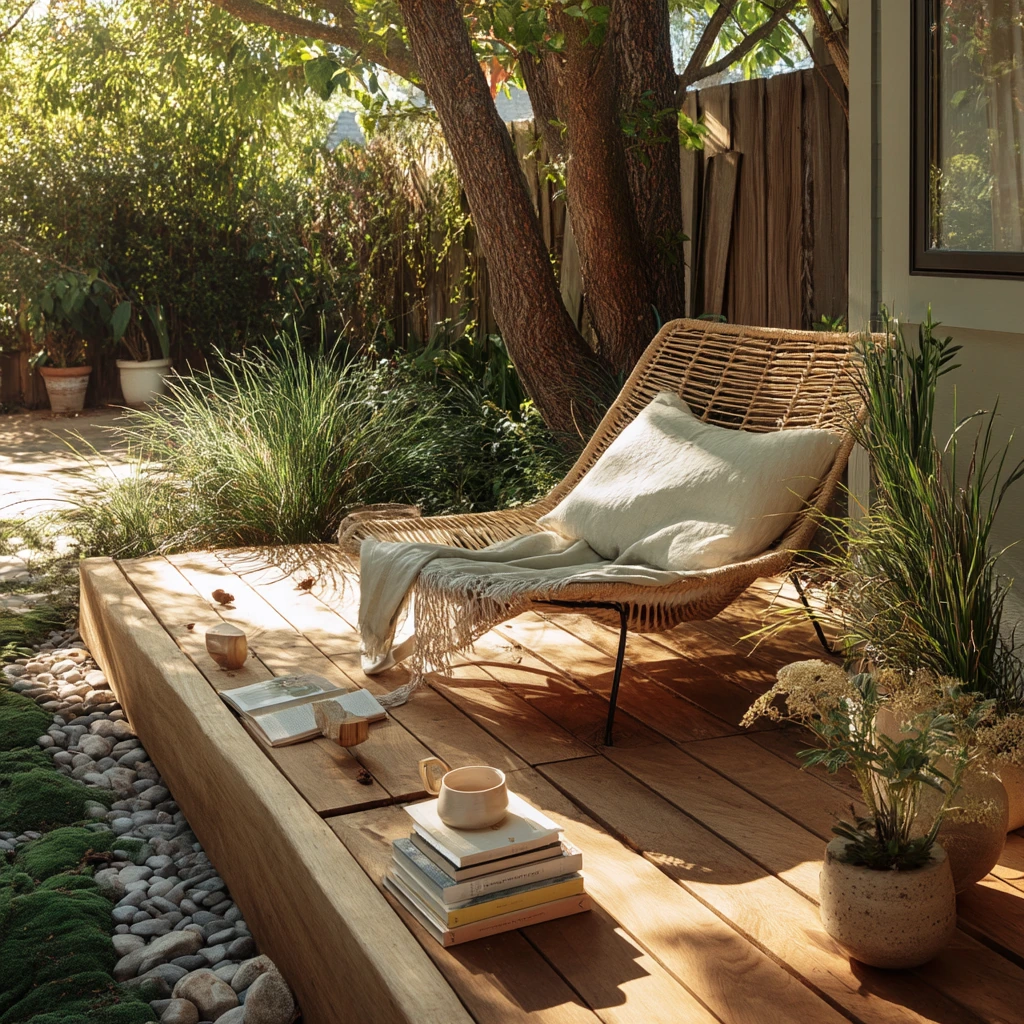
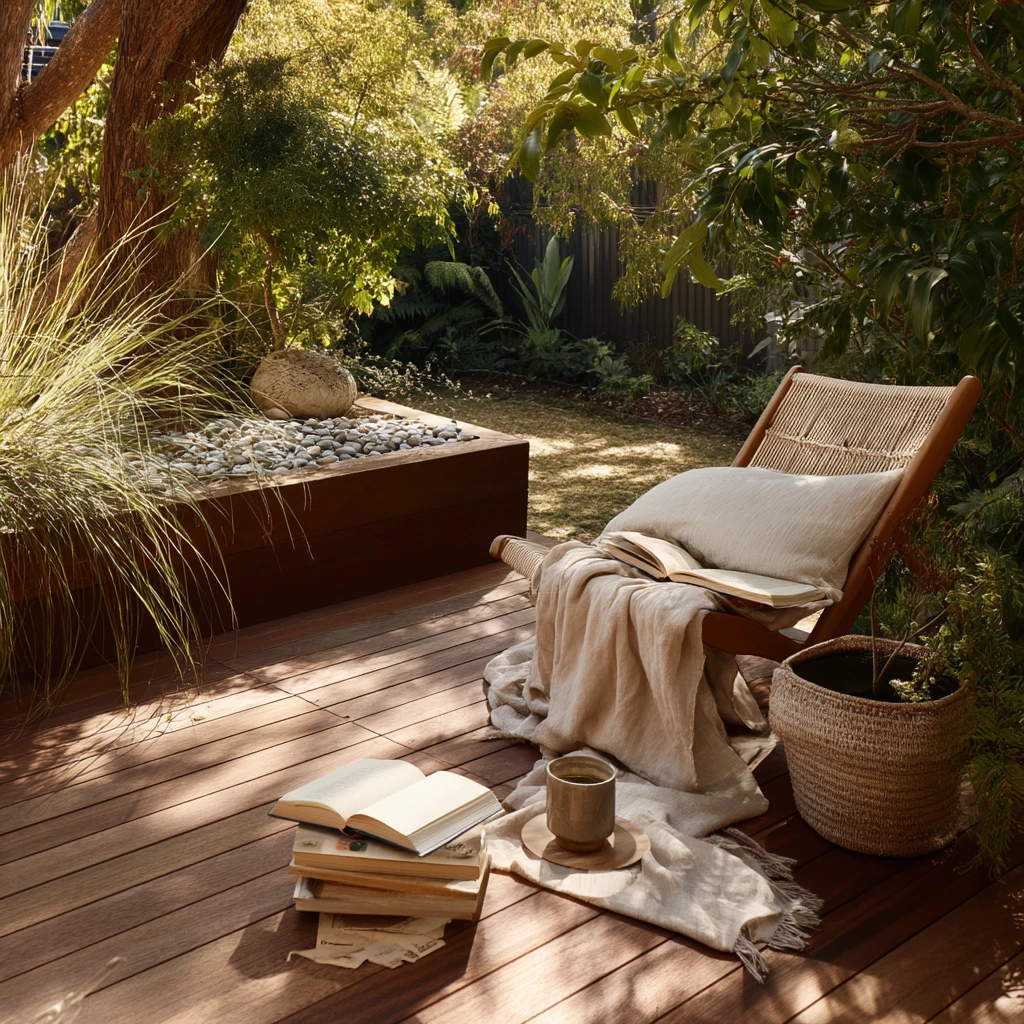
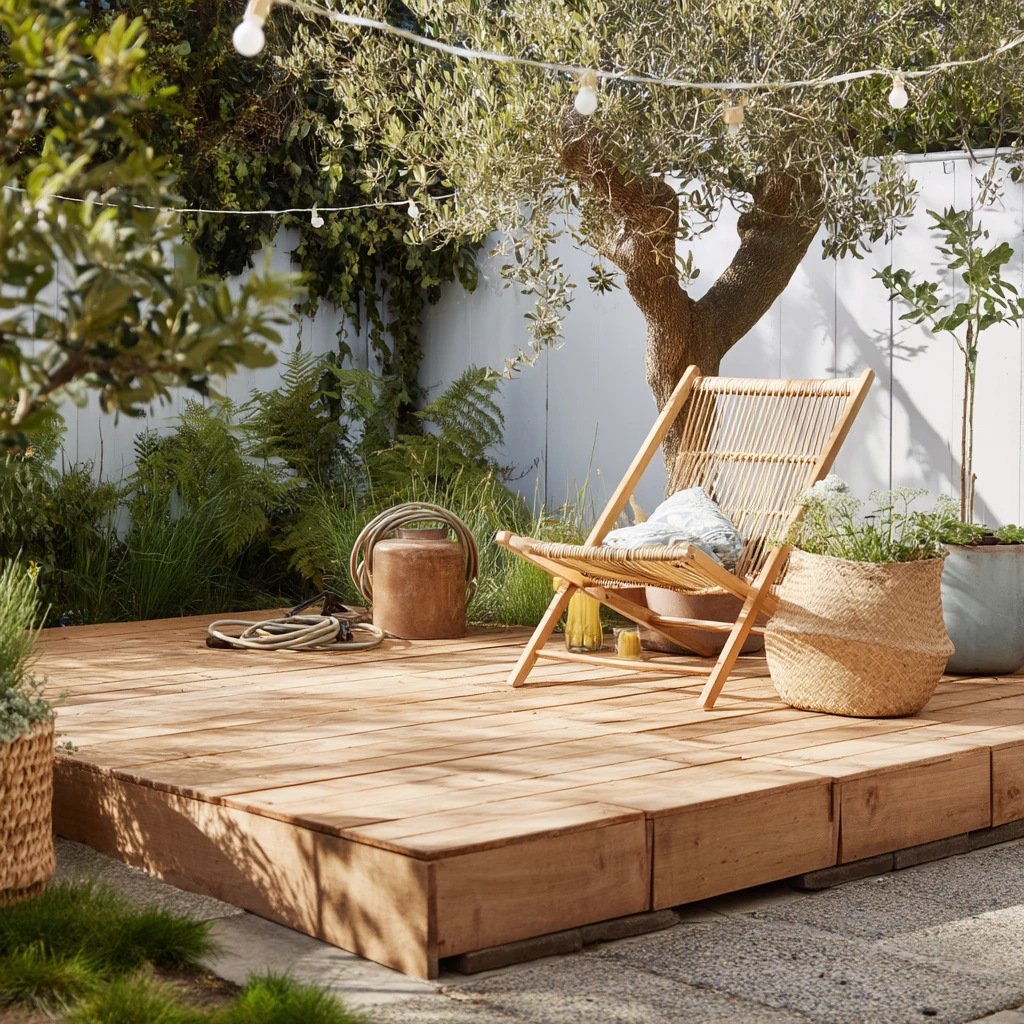
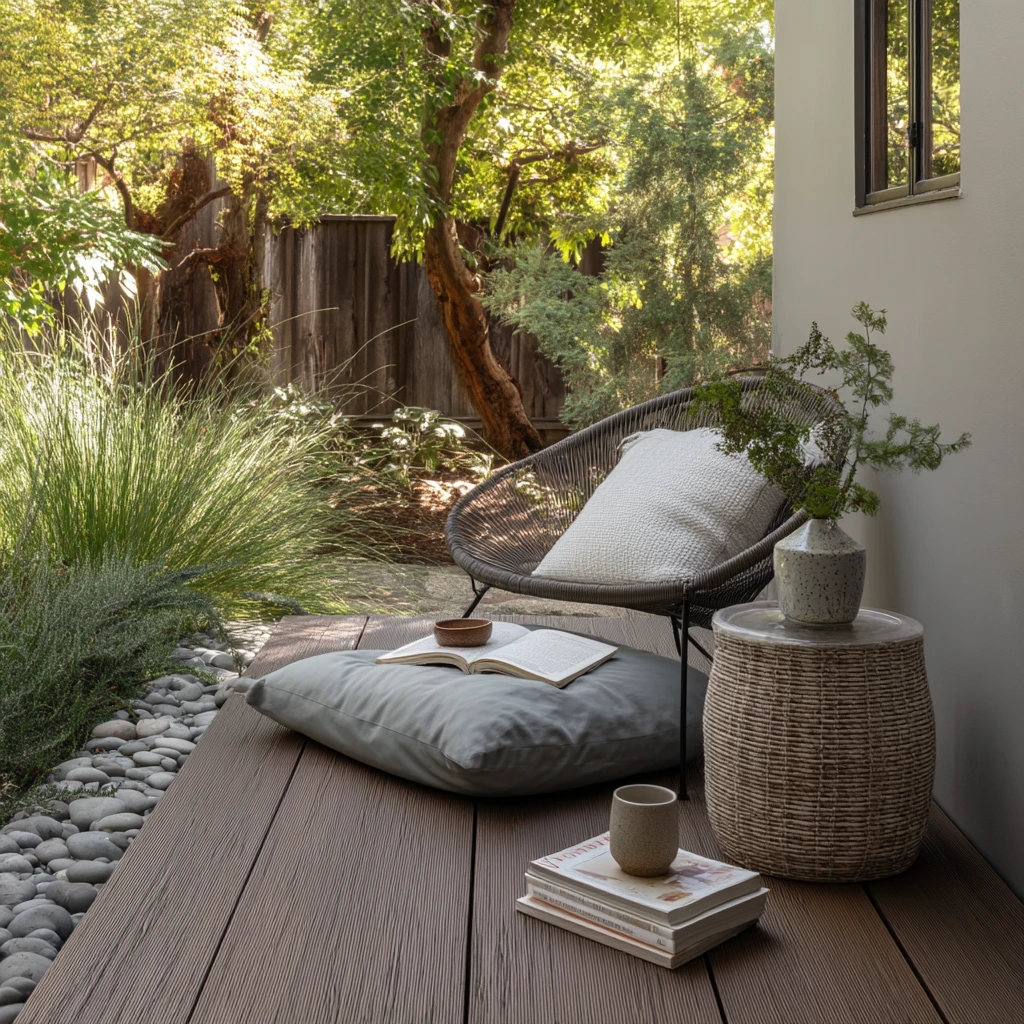
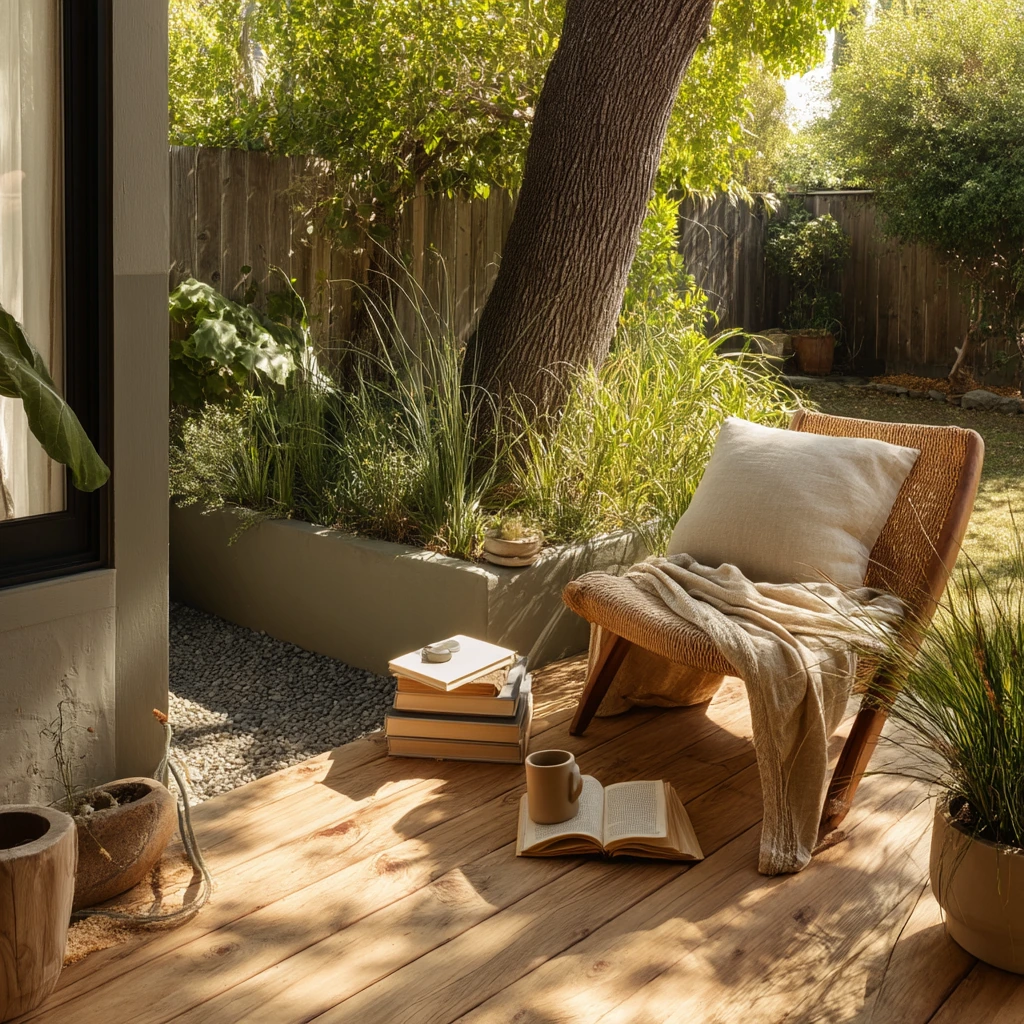
A secluded floating deck in a leafy suburban yard can be small and still feel special. Start with muted timber decking so the platform blends into the garden. Then add one woven lounge chair and a small side table. This keeps the space quiet and easy to maintain, with room for stacked books and a ceramic tea mug.
Comfort comes from soft textures. Use a linen pillow and a folded throw with gentle creases so it feels inviting, not staged. A low planter box filled with grasses gives you movement and privacy without blocking light. Smooth pebbles around the deck edge can help with drainage and create a clean border that looks finished.
Pay attention to what you do not see. Tuck the garden hose away so the corner stays calm. If you get dappled shade, choose plants that like part sun and cushion fabric that resists mildew. Keep a small outdoor caddy inside the door with bug spray and a book light, so the deck is ready for quick morning breaks.
- Choose one lounge chair with a supportive back for real reading time.
- Add a side table big enough for a mug and a book.
- Use grasses in a low planter box for soft screening.
- Border the deck with pebbles to reduce mud splash.
- Hide hoses and tools in a small storage bin.
Pro Design Tip: Place the chair so your eye looks past the deck into plants, not into fencing, for a deeper, more relaxing view.
Budget Considerations: Woven lounge chairs can be pricey; look for secondhand frames and replace the cushion with an outdoor pillow insert.
5 Entertaining Deck After Work
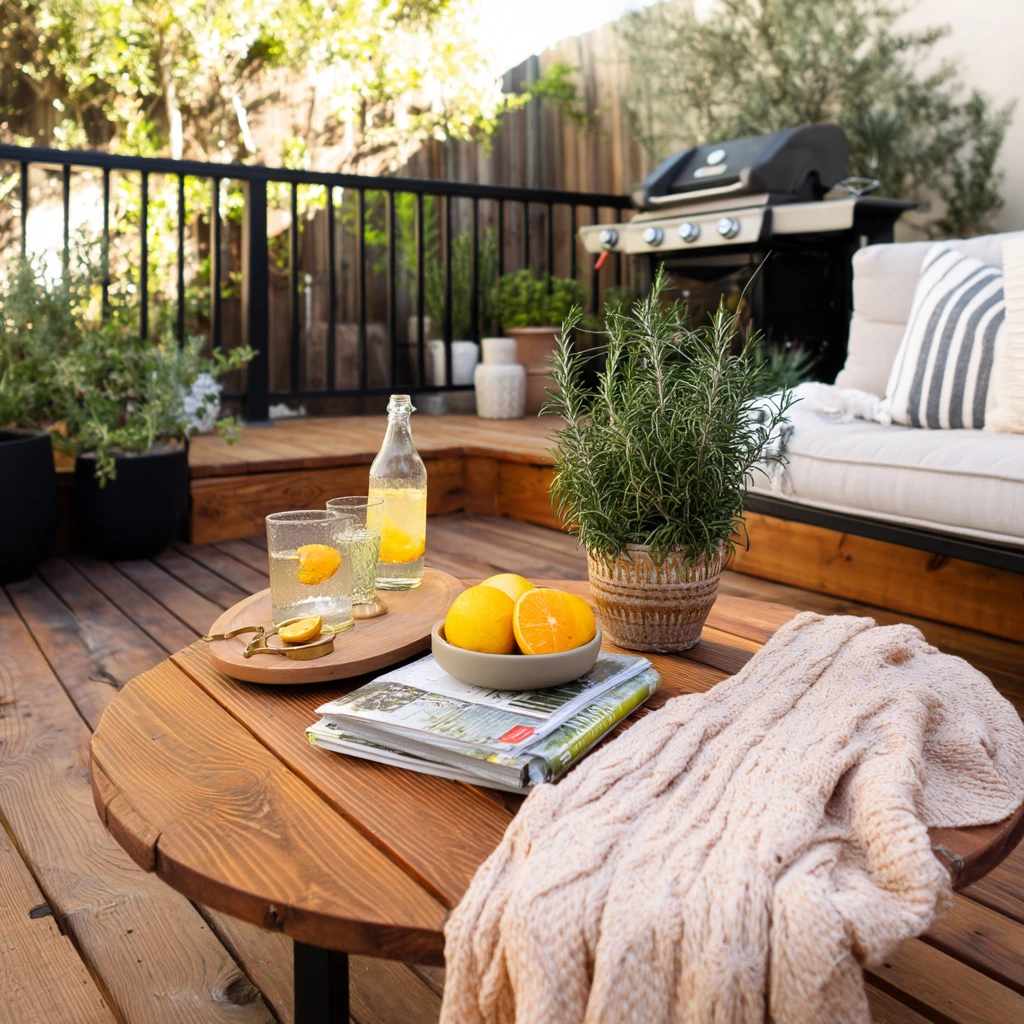
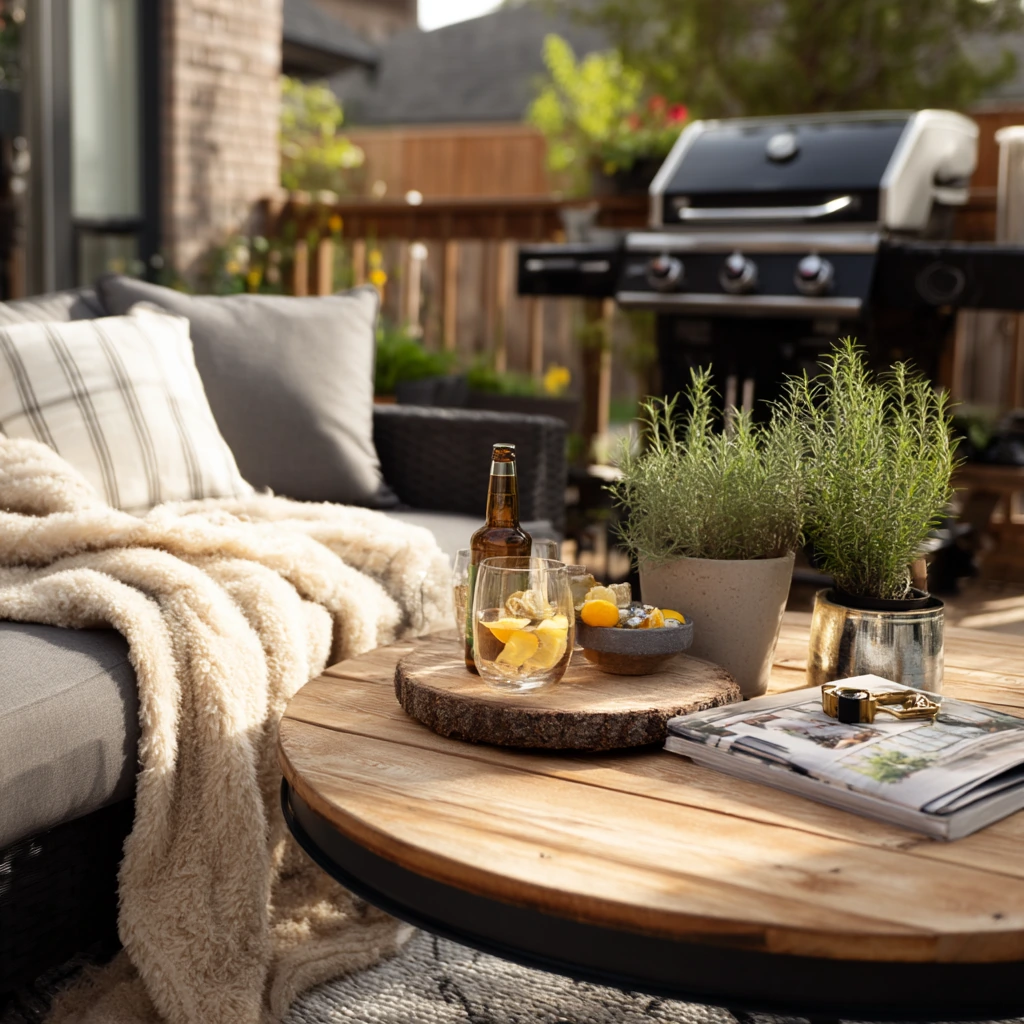
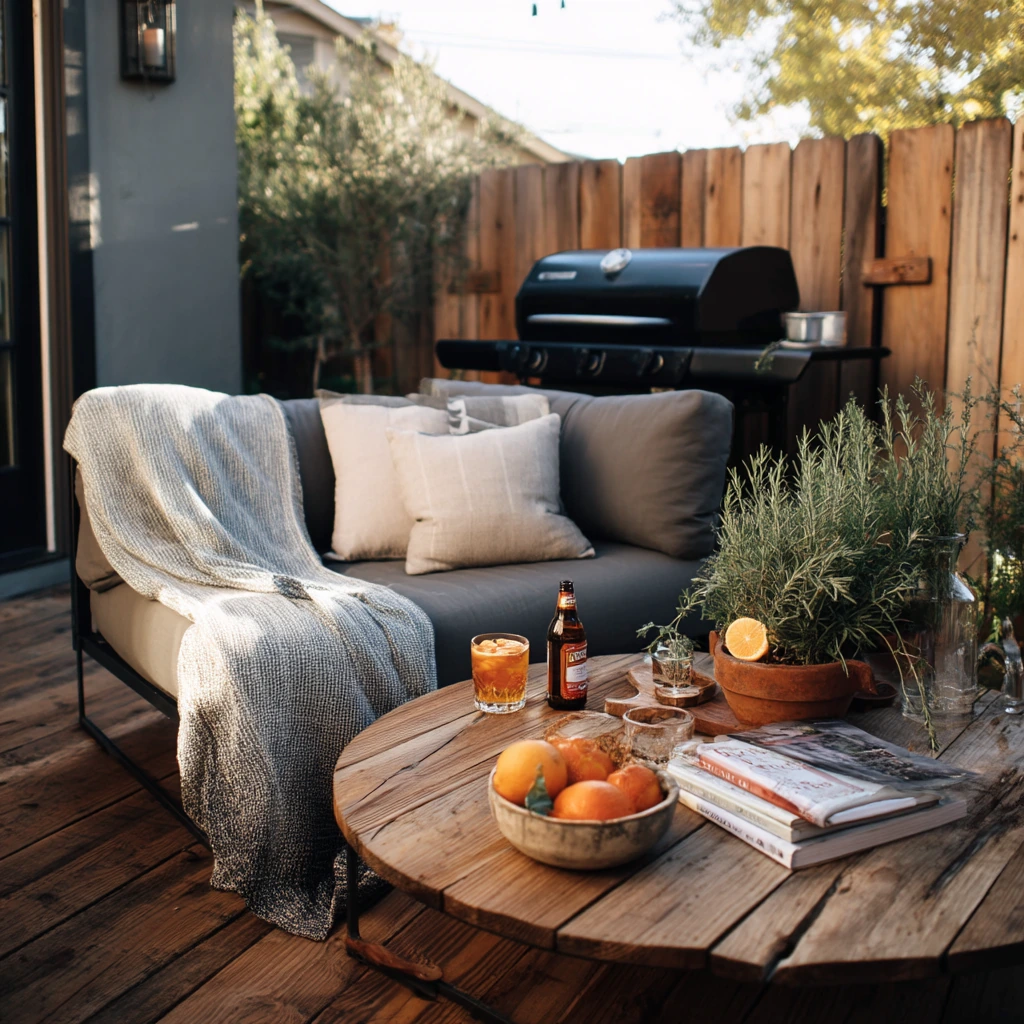
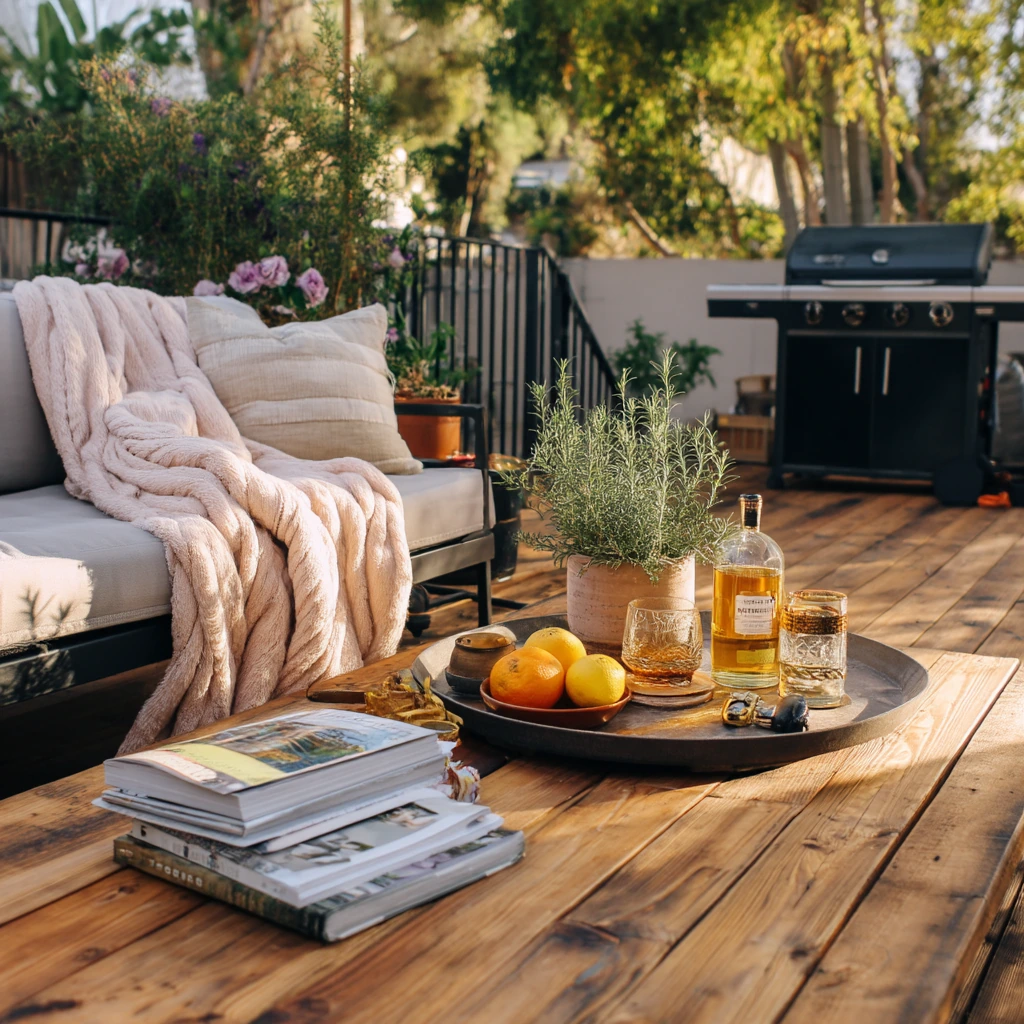
For hosting, a backyard floating deck should have clear zones: seating, drinks, and grill access. A compact outdoor sofa gives you the most seating in the least space, and a round coffee table keeps traffic flowing because there are no sharp corners to bump. Warm wood planks feel welcoming, and black steel edging gives the platform a clean outline.
Set up a simple drink station before guests arrive. Use mismatched glasses for an easy, collected look, plus a bottle opener that stays in the same spot. A bowl of citrus adds color and also works for water and mocktails. Add potted rosemary near the edge so people brush past it and smell it as they sit down.
Make it comfortable when the temperature drops. Drape a fleece blanket over the sofa arm and leave one open magazine on the table to make the space feel relaxed. Keep the grill in the background with a safe walkway so the cook is part of the group, not isolated. If bugs are an issue, add a lantern and a small fan near the seating area.
- Use a compact sofa instead of multiple bulky chairs.
- Choose a round coffee table for easier movement.
- Keep a tray for glasses so you can carry drinks in one trip.
- Add one herb pot like rosemary for scent and style.
- Plan a clear path from door to seating to grill.
Pro Design Tip: Repeat one dark accent (like black steel edging and a lantern) to make mismatched items look intentional.
Budget Considerations: Outdoor sofas cost more; try two armless chairs and a bench, then add a cheap outdoor slipcover set for a pulled-together look.
6 Lake House Floating Deck Moment
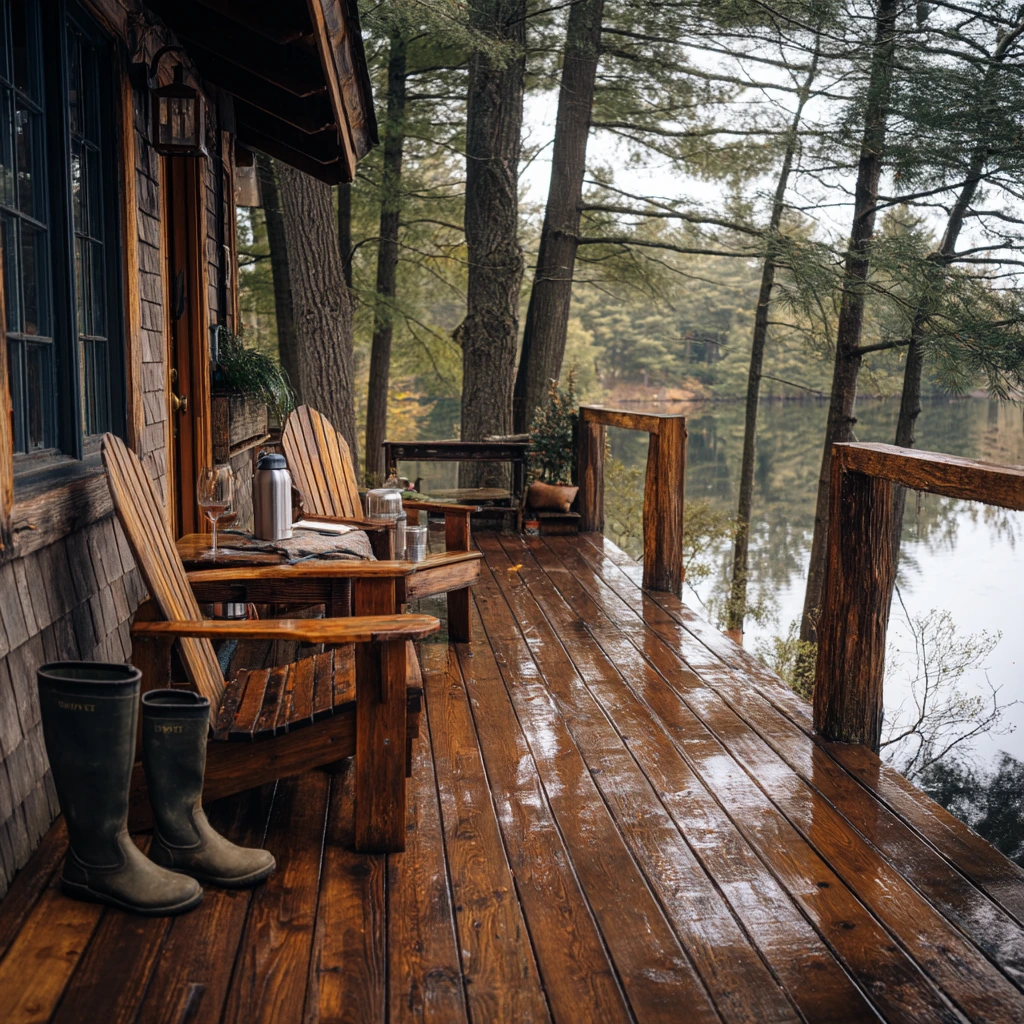
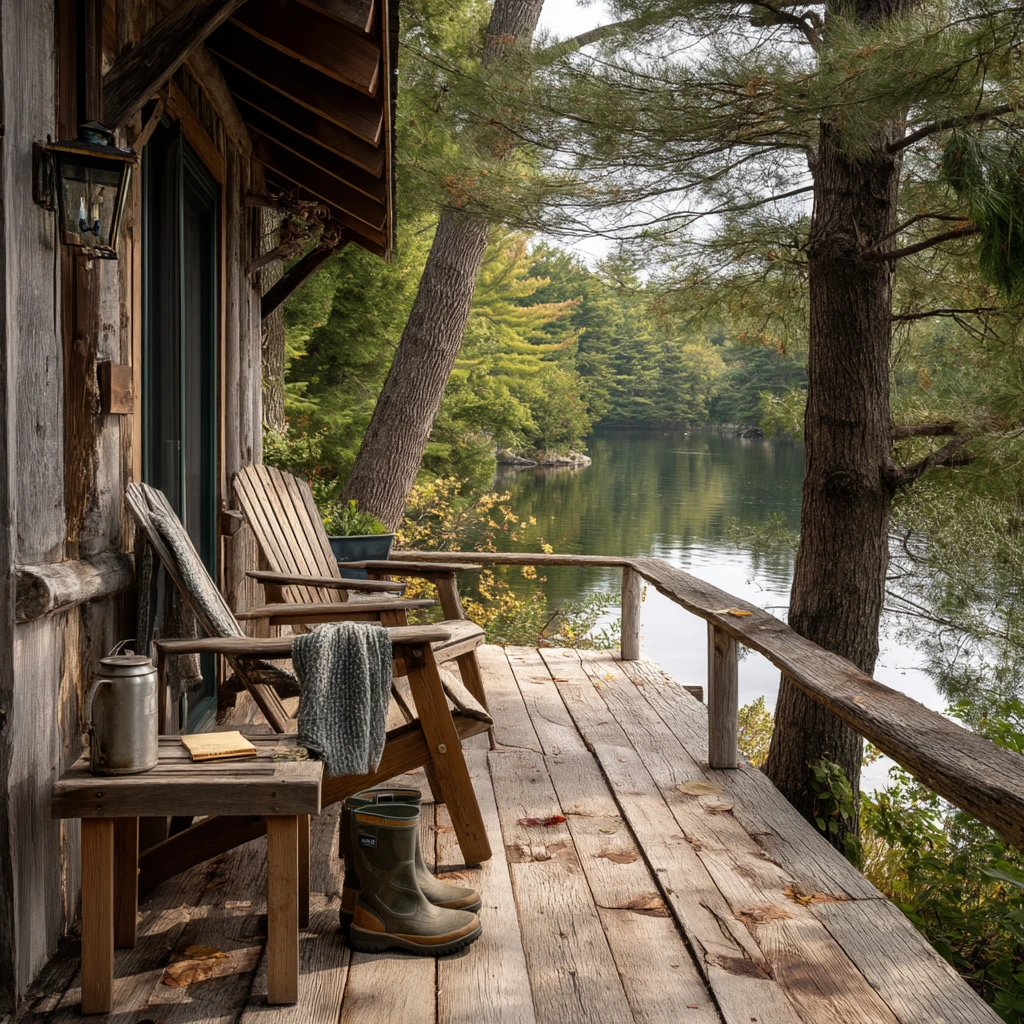
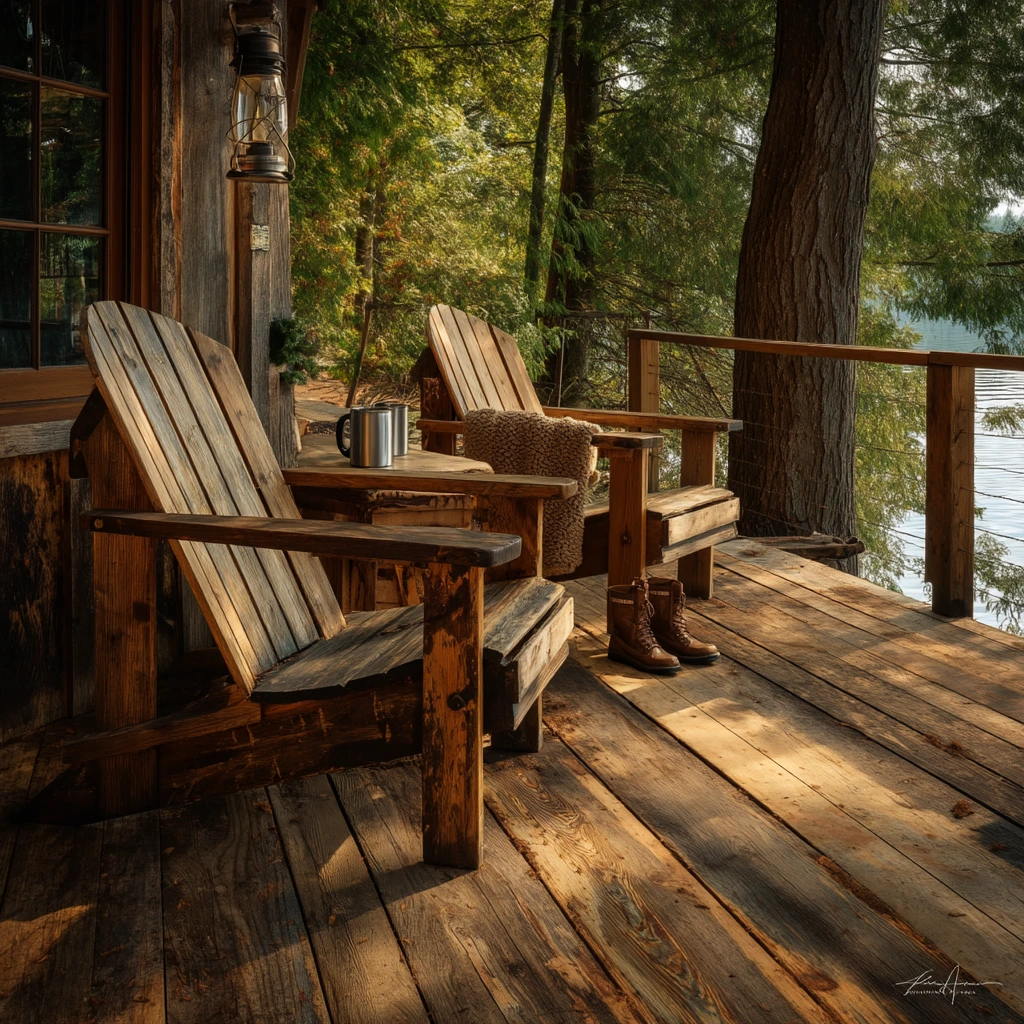
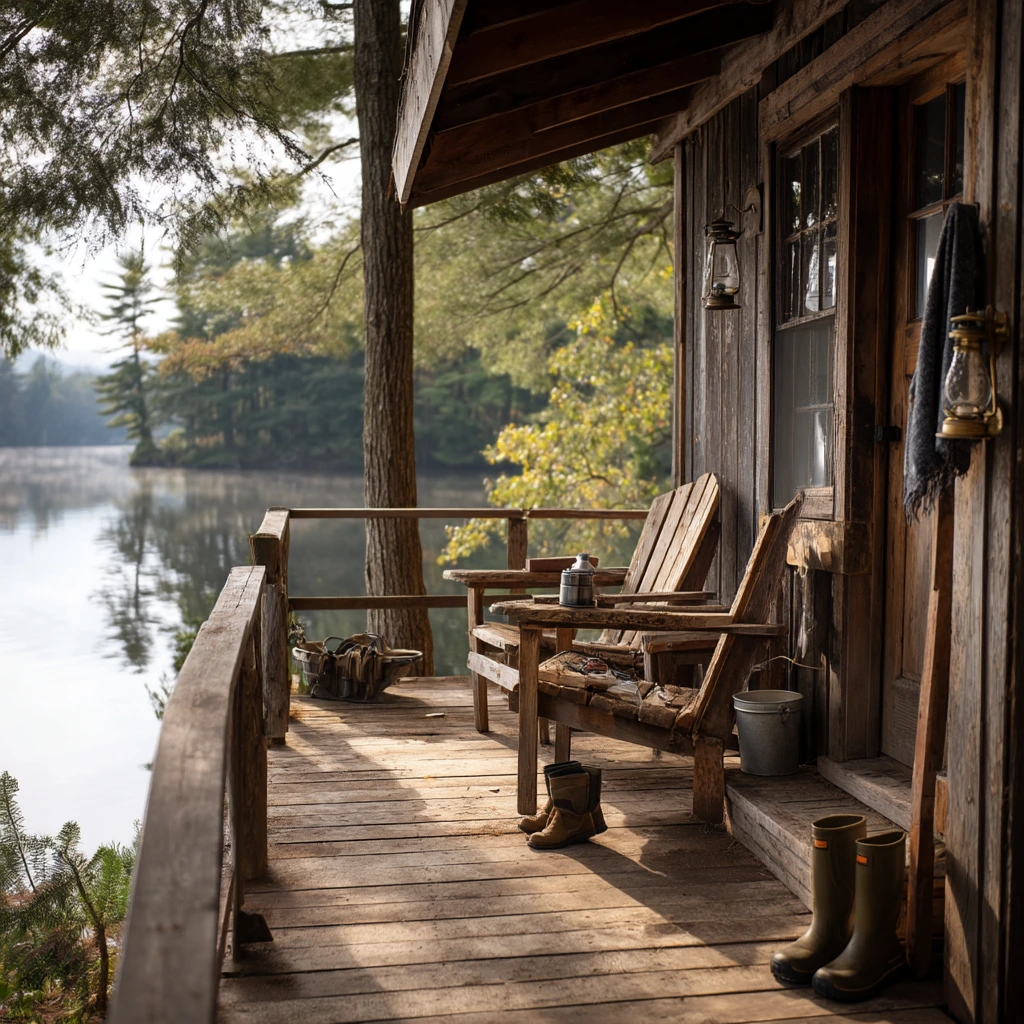
A rustic lake house floating deck extending over a gentle slope needs sturdy footing and a simple layout. Two Adirondack chairs facing trees create a classic view-first setup. Use weathered cedar with naturally silvering edges so the deck fits the landscape and does not look too new against pines and water.
Style this deck with practical weekend items. Fishing boots by the step, a thermos on the side table, and a towel over the railing all make it feel used, not precious. Add a lantern for evenings and early mornings. If you track in water, damp footprints will happen, so choose a finish that is not slippery when wet and add a textured doormat at the entry.
Keep storage simple so the deck stays calm. A small deck box can hold a folded map, bug spray, and a first-aid kit. If your deck sits on a slope, add a wide step or two with a solid handhold so carrying drinks is safer. Place a hook or peg rail near the door for towels and light jackets.
- Face seating toward the best view, not toward the house.
- Add a lantern for soft light without harsh glare.
- Use a doormat to reduce sand and pine needles.
- Include a small side table for drinks and maps.
- Plan safe steps if the ground drops away.
Pro Design Tip: Use wider chair spacing than you think you need so you can add a cooler, footstool, or extra chair on busy weekends.
Budget Considerations: Slope builds can raise costs due to footings; keep the deck smaller and spend on solid posts and hardware first.
7 Minimal Courtyard Deck With Planters
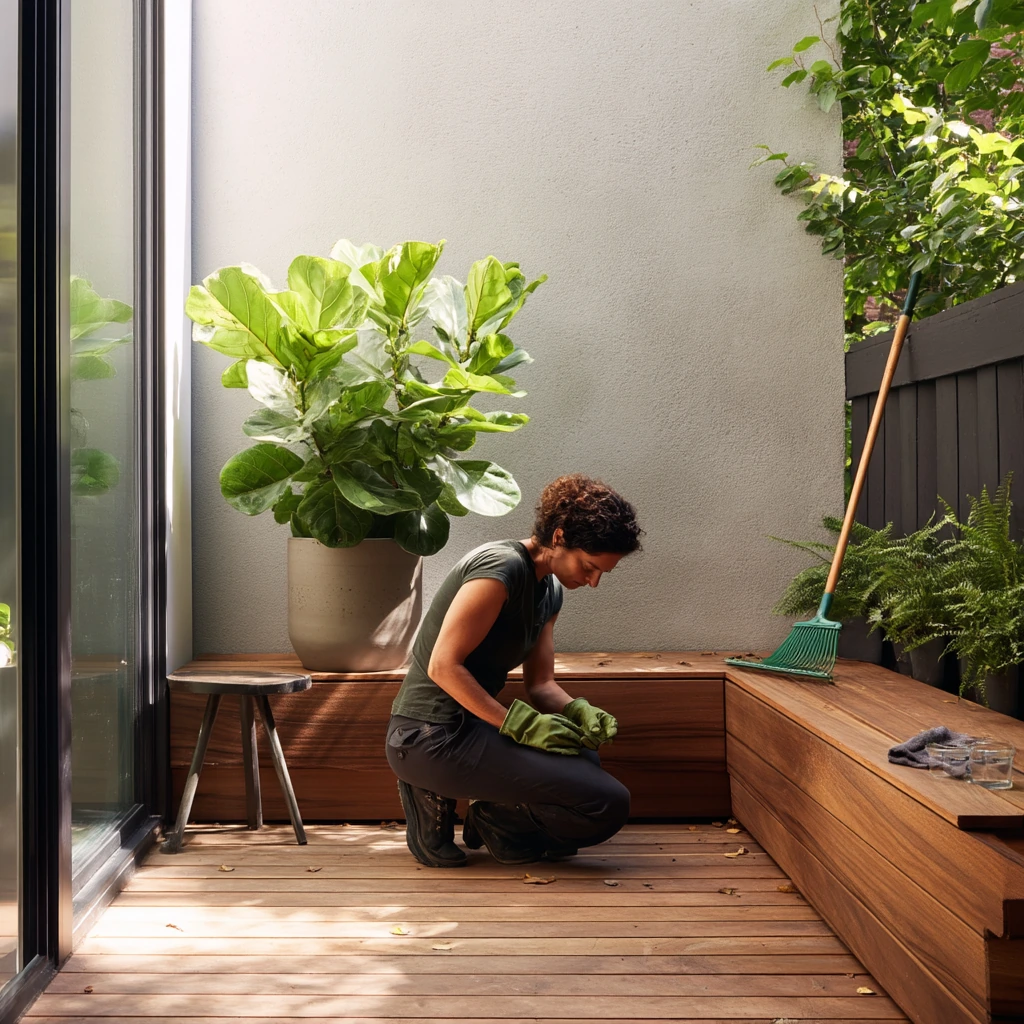
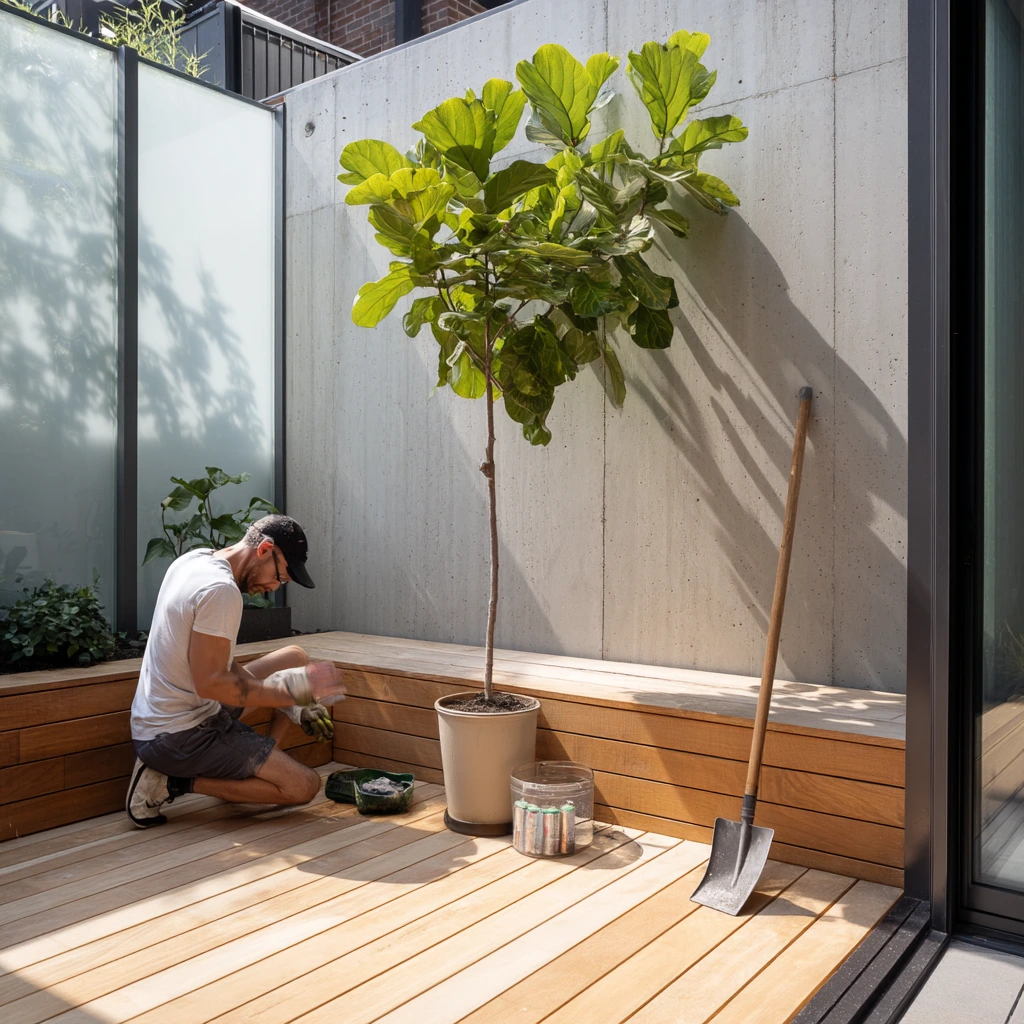
A small courtyard floating deck in a modern townhouse looks best with clean lines and a tight footprint. Clean cedar boards paired with steel frame edges create a sharp outline against a textured concrete wall. A built-in bench saves space and reduces furniture clutter, which matters in narrow courtyards.
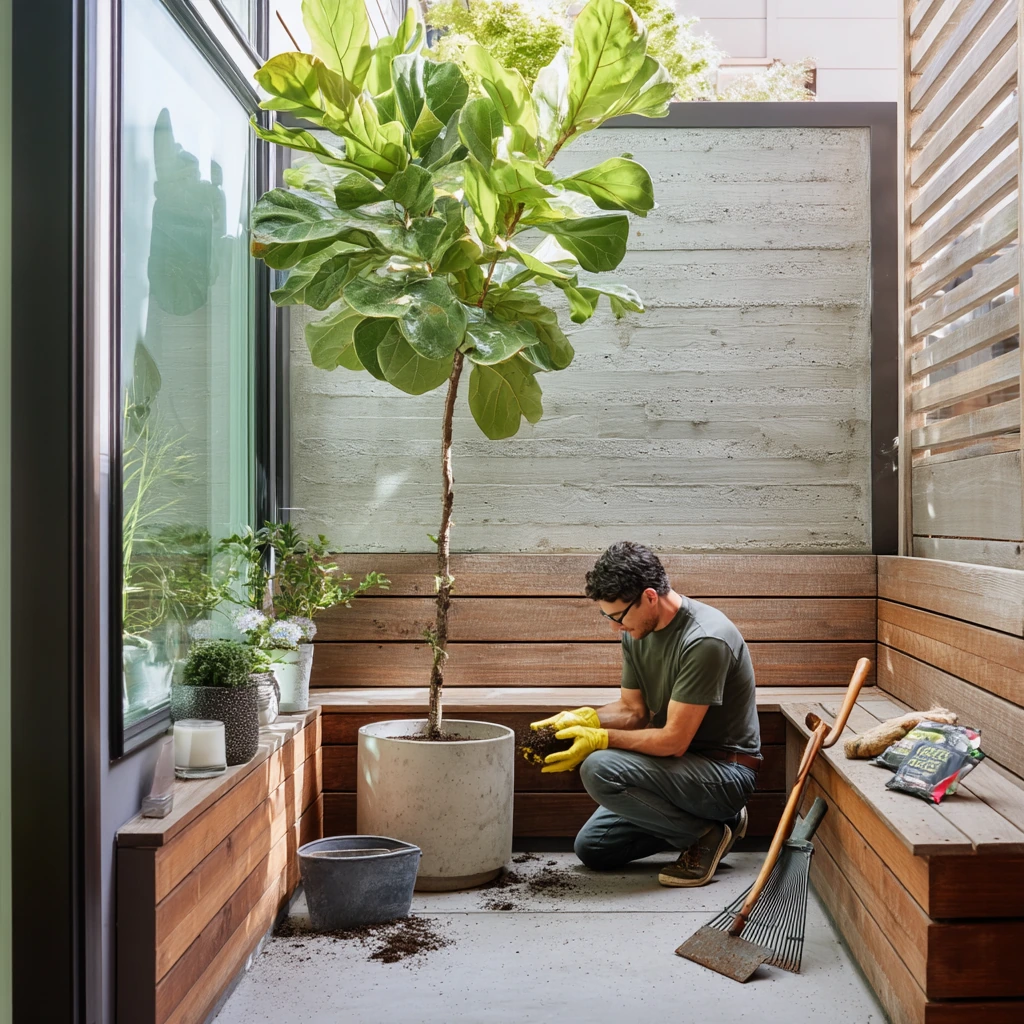
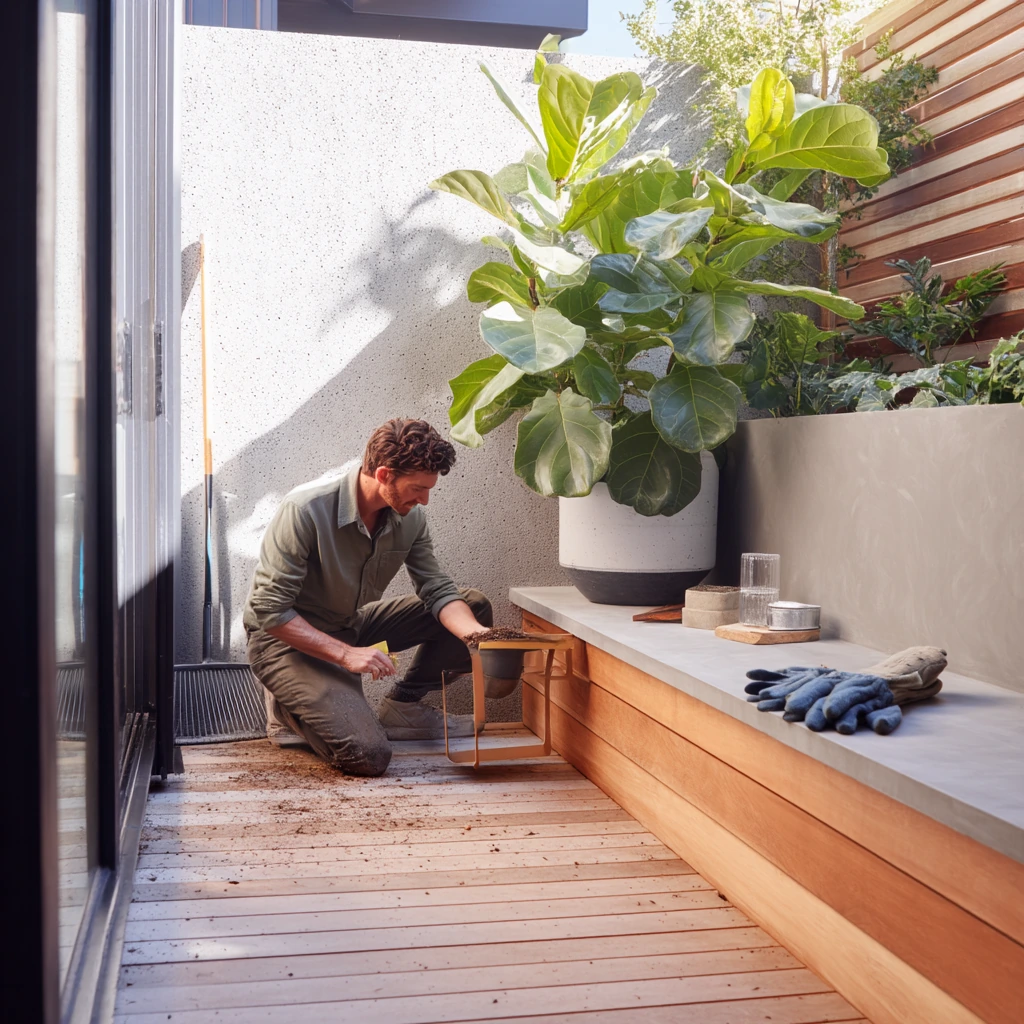
Make the deck work for plant care, not just sitting. A homeowner pruning a fiddle leaf fig shows how this space can be part garden, part lounge. Add a compact storage stool that holds small tools, plus gardening gloves and seed packets so you can do quick tasks without hunting for supplies. Keep a water glass nearby so you stay out longer.
Style it with calm, simple items. Let subtle leaf litter stay visible so it feels like a real courtyard, not a showroom. Add one rake resting casually in a corner, but keep larger tools out of sight. If the space has soft north light through tall windows, choose plants that tolerate lower light, and use a light cushion color to brighten the bench.
- Use a built-in bench to maximize usable floor space.
- Choose planters in one color for a clean look.
- Add a storage stool to hide tools and seed packets.
- Keep one working corner for pruning and potting.
- Use lighter cushions to brighten shaded courtyards.
Pro Design Tip: Align deck boards with the longest wall to make a narrow courtyard feel wider and more balanced.
Budget Considerations: Steel edging adds cost; you can mimic the look with painted pressure-treated trim boards and careful corner cuts.
8 Boho Evening Deck for a Young Renters’ Home
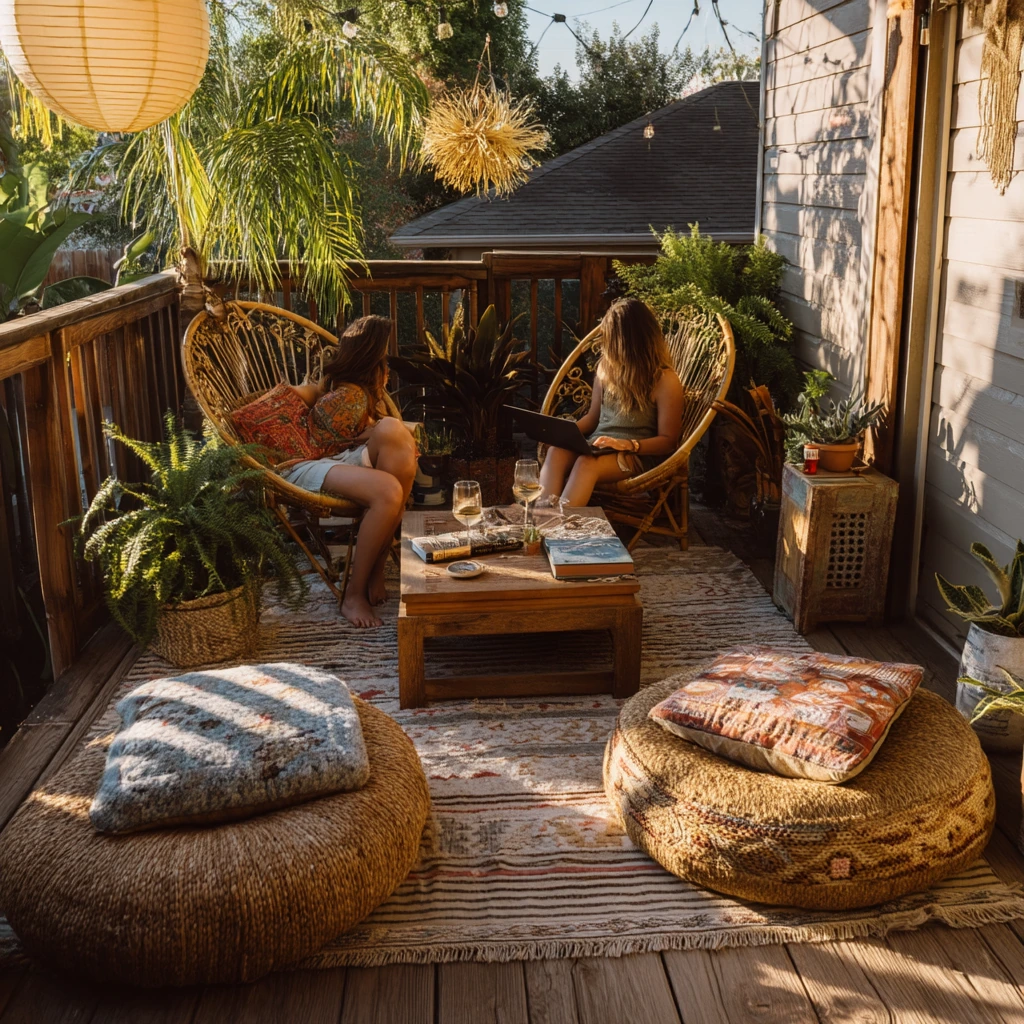
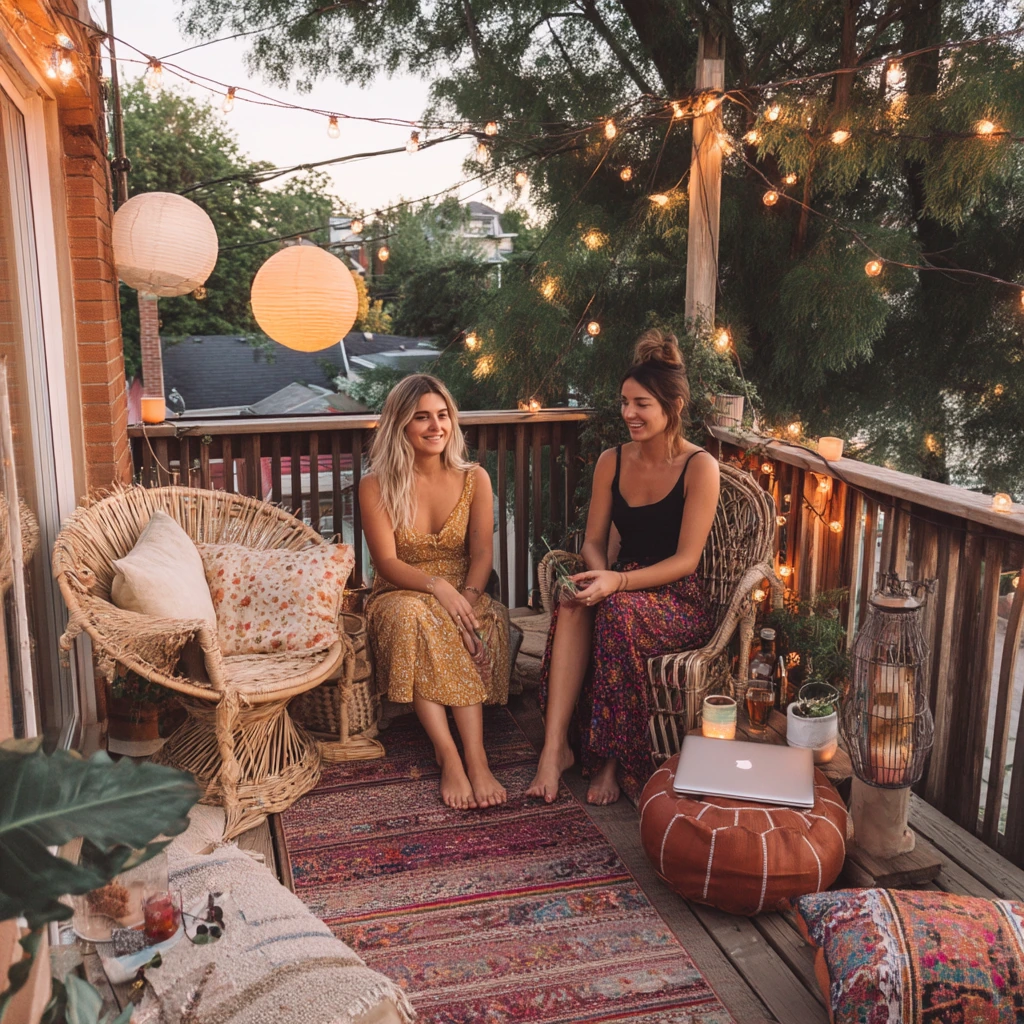
Boho floating deck ideas work well on a small rental balcony-style backyard platform because the look is built with layers, not permanent changes. Start with layered outdoor rugs to soften the deck and add color. Low rattan chairs keep sightlines open, which makes a small space feel less boxed in.
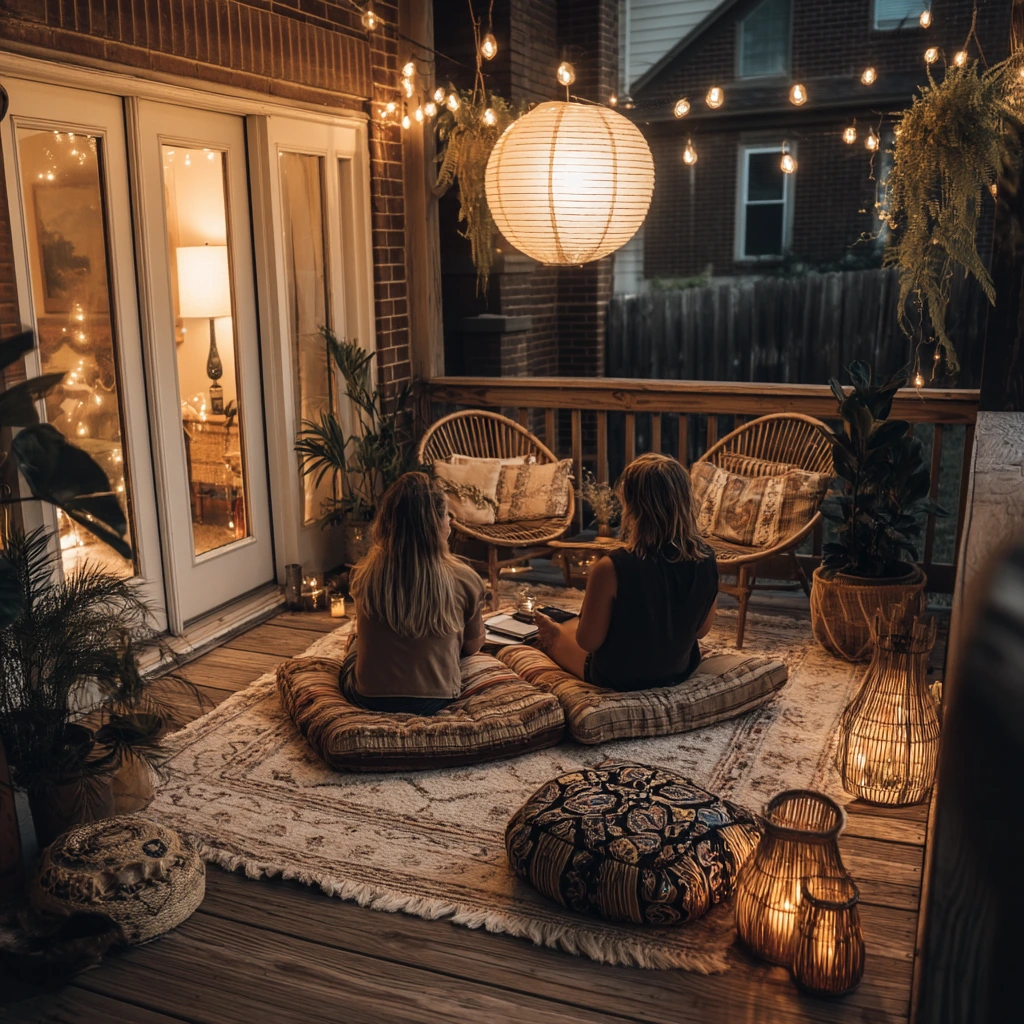
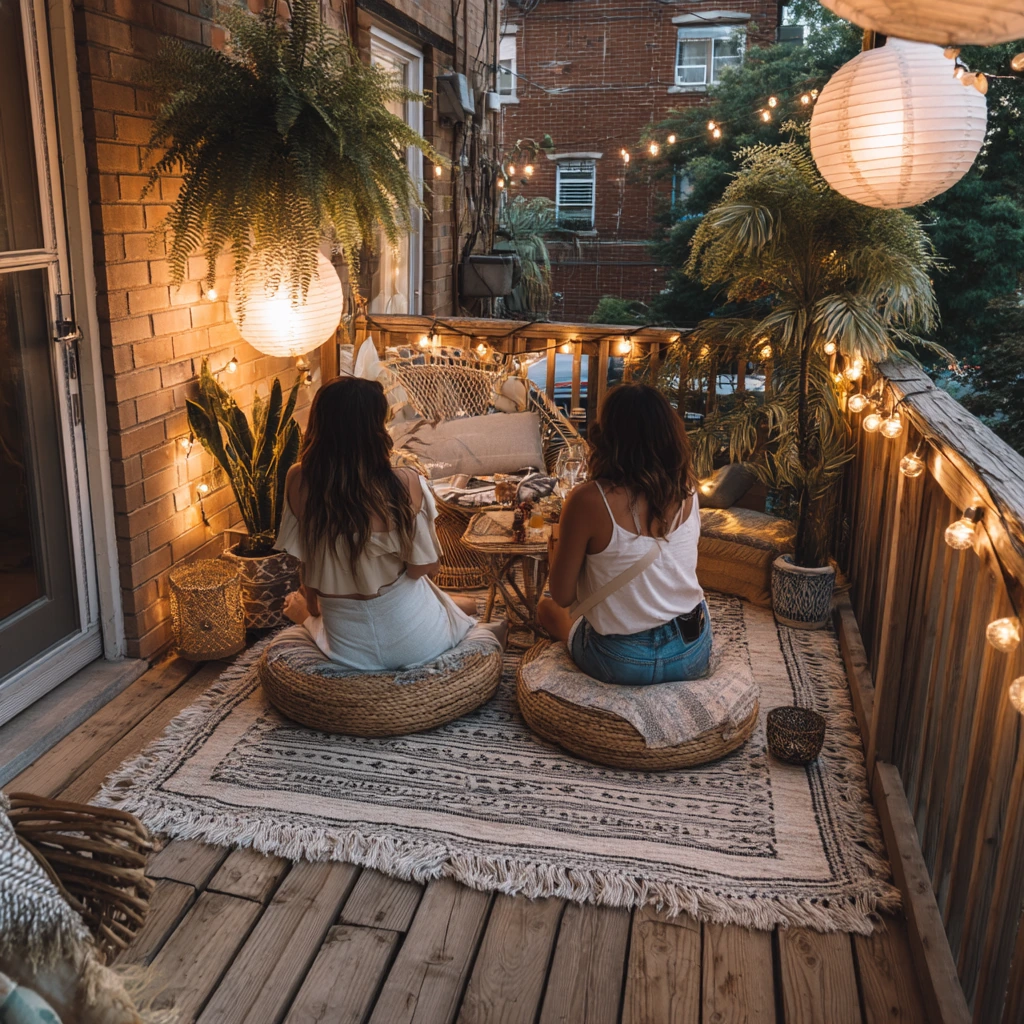
Lighting is the mood setter here. Market string lights and one paper lantern create a warm glow, even when the rest of the yard is plain. Mix in mismatched cushions for comfort, and use a thrifted side table for character. Keep it honest and usable: a record sleeve on the table, a wine glass, and a laptop closed nearby so the deck feels like a real hangout spot.
To style it without clutter, pick one main color group, then let patterns do the rest. A slightly tousled throw makes the seating feel relaxed. Add a potted fern near the fence so its shadows add texture at night. If you want more privacy, use tall planters and a simple outdoor curtain on a freestanding frame, not attached to the building.
- Layer two rugs to make a small deck feel larger.
- Use low chairs so the space feels open.
- Add warm lighting with string lights and a lantern.
- Limit decor to one tray, one throw, and a few cushions.
- Use tall plants to create a soft privacy screen.
Pro Design Tip: Repeat one texture (like rattan) in two places, such as chairs and a side table, to make mismatched pieces feel cohesive.
Budget Considerations: Rugs and cushions add up; buy one good outdoor rug first, then add cheap pillow covers as you find sales.
9 Compact Deck With Outdoor Dining for Two
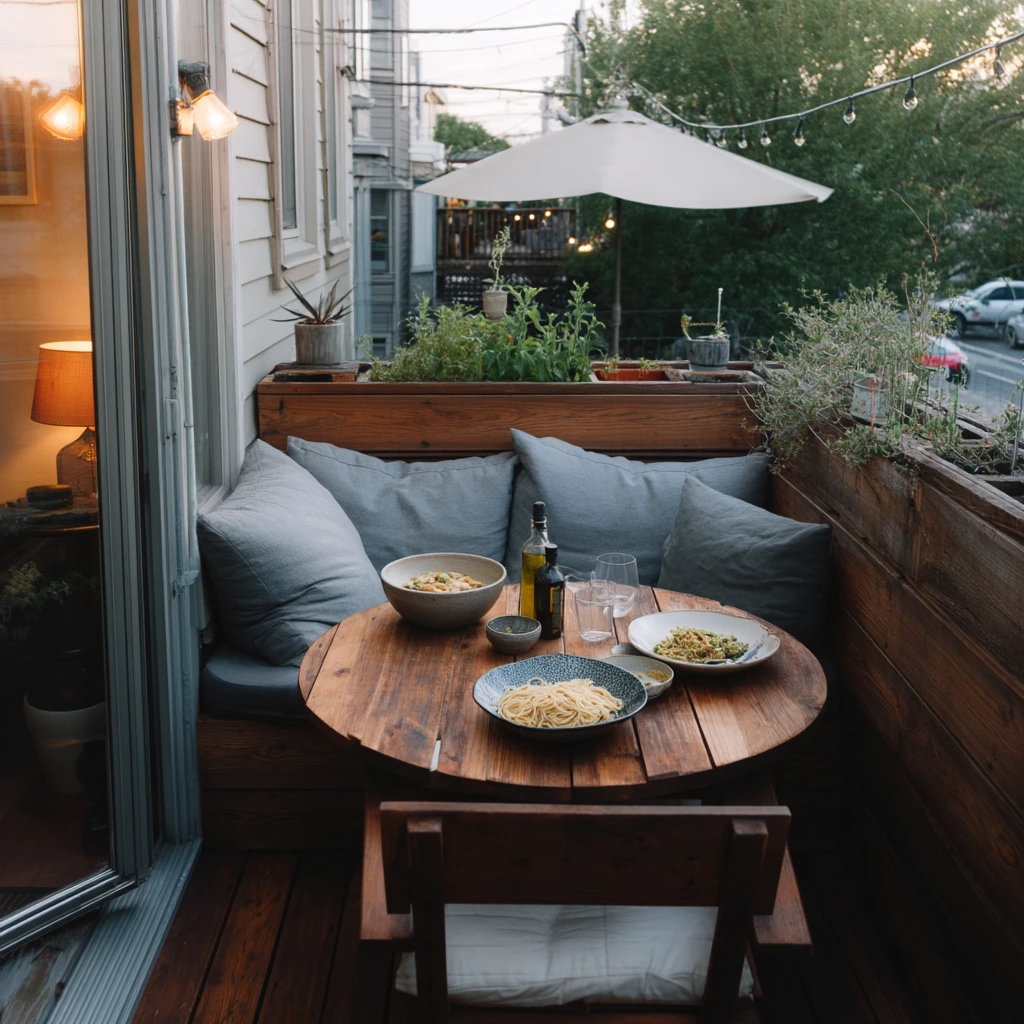
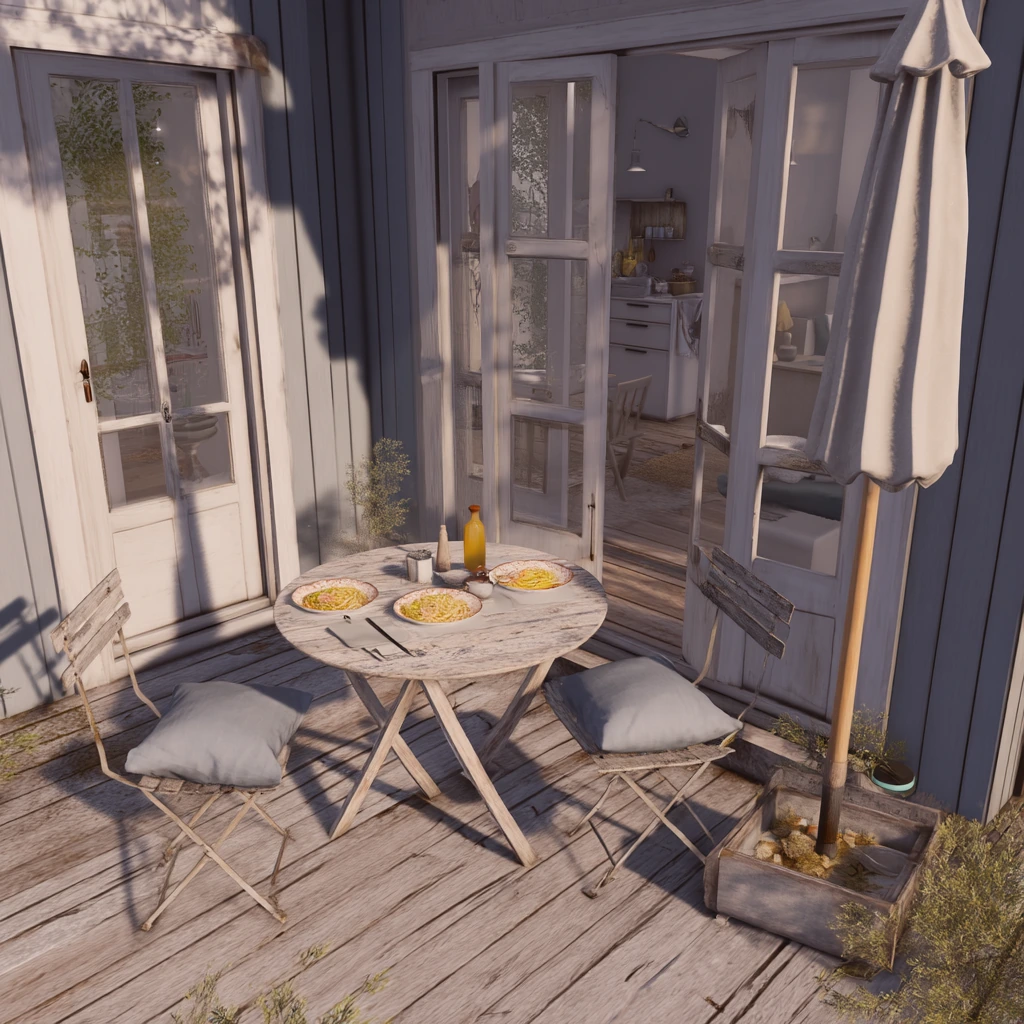
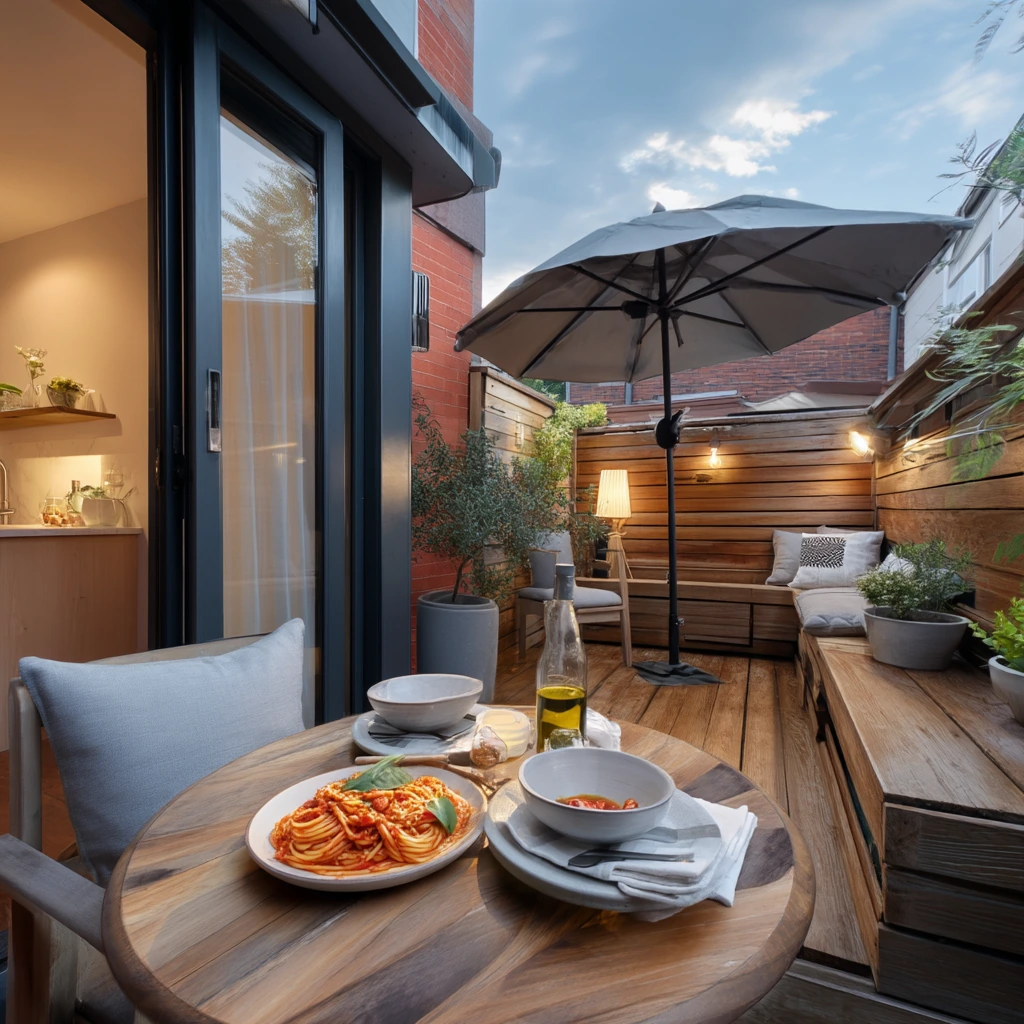
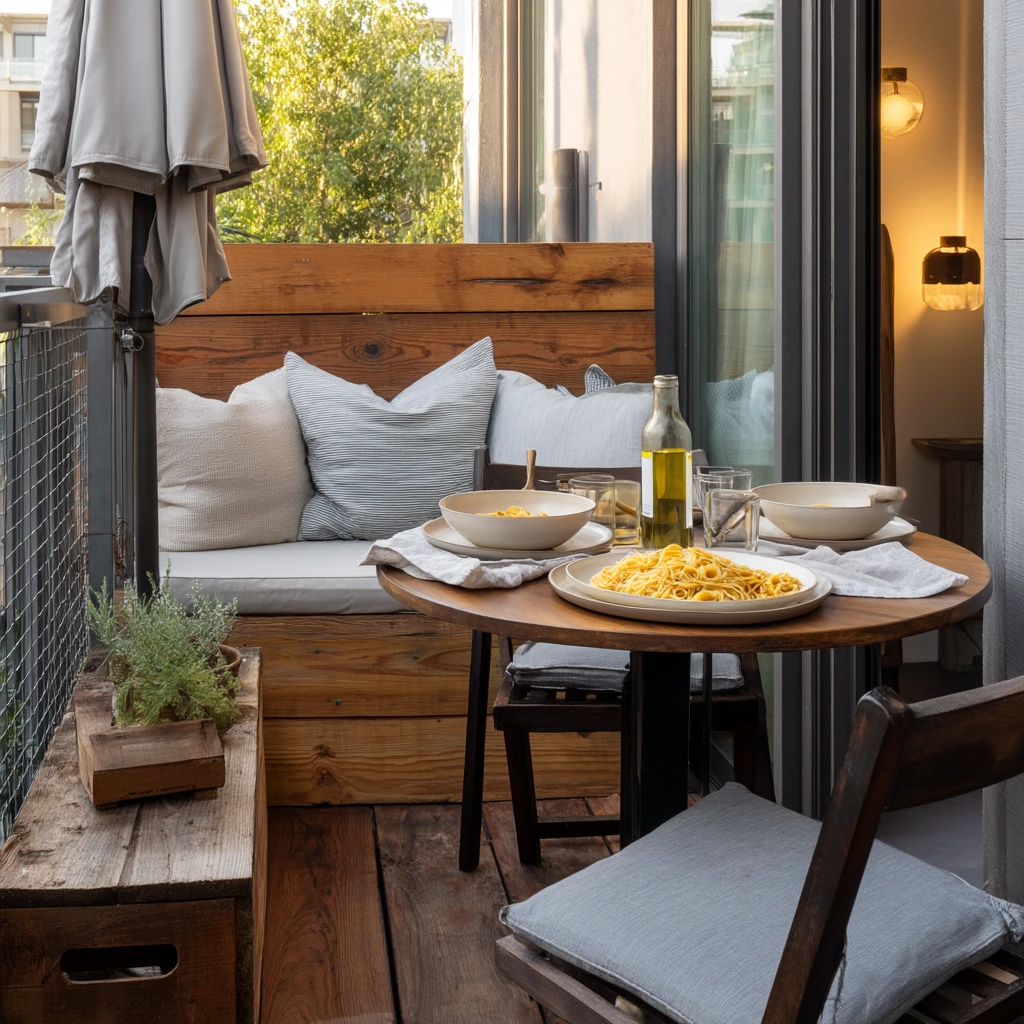
A floating deck beside a compact dining nook is perfect for weeknight dinners when you want fresh air without a big setup. Use a small round table so two people can sit close, and keep the door propped open to the kitchen for easy back-and-forth. Soft gray cushions add comfort, and one chair pulled back makes the scene feel natural, like you just sat down.
Keep the table setting simple and real: ceramic plates, napkins, and an olive oil bottle for pasta night. A few faint crumbs are normal, so choose a tabletop that wipes clean. Add simple timber planters around the edge to frame the dining zone and soften the transition from indoor to outdoor.
Plan for small-space problems like shade and surprise drizzle. A compact umbrella stand gives you the option to add shade without a bulky base. If your evenings have warm lamp spill from inside, match it with one outdoor lantern so the lighting feels even. For scent and function, add one herb pot or a small citrus plant near the door.
- Choose a round table to save space and improve flow.
- Keep a small tray for oil, salt, and napkins.
- Add planters at the corners to define the dining area.
- Use an umbrella stand that fits tight spaces.
- Place a lantern near the doorway for balanced light.
Pro Design Tip: Hang a simple outdoor curtain or shade panel at the door side to reduce glare and create a “room” feel during dinner.
Budget Considerations: A quality outdoor table can be expensive; use an indoor bistro table with a protective cover and bring it in during storms.
10 Suburban Split-Level Deck on a Slope
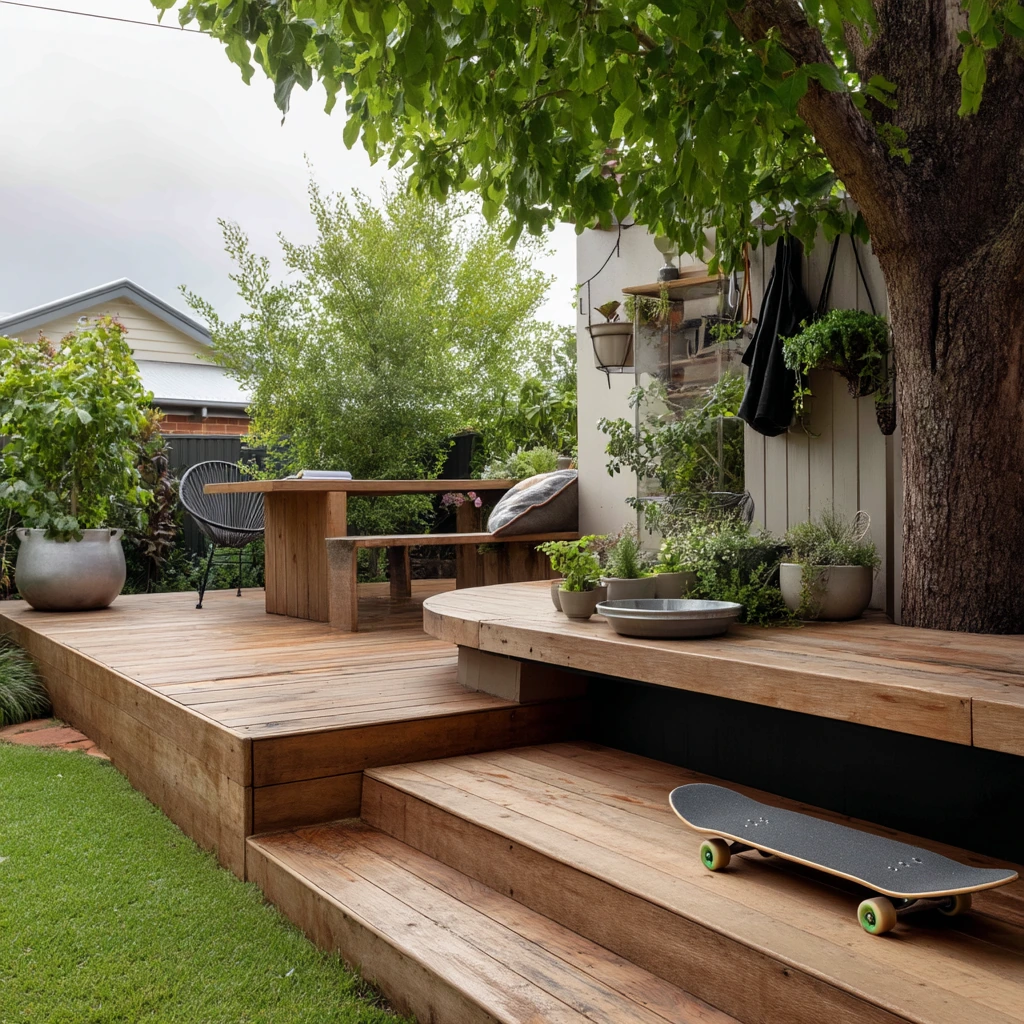
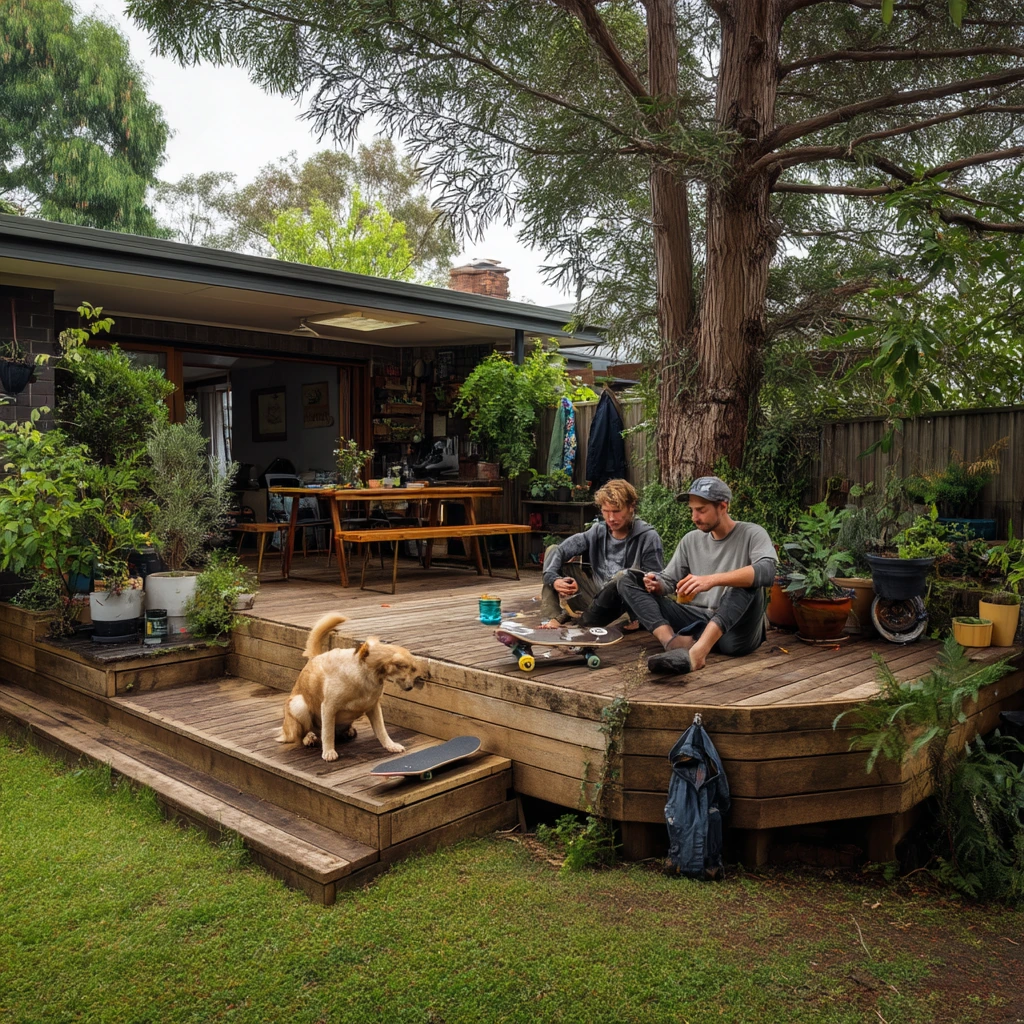
Floating deck ideas for a sloped suburban yard often work best as a split-level platform. By stepping the deck down with the grade, you avoid tall, wobbly supports and create useful zones. Wrapping the deck around a tree adds shade and makes the space feel established, even if the yard is new.
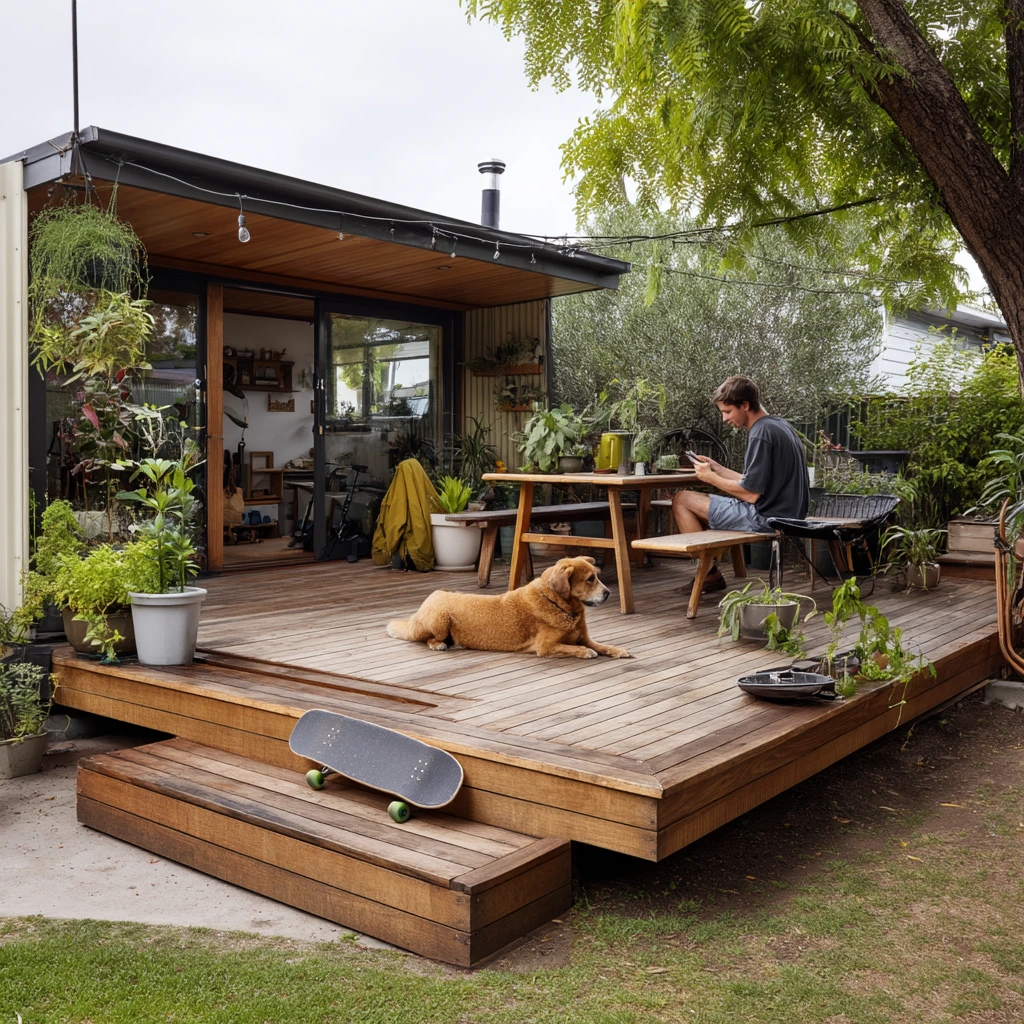
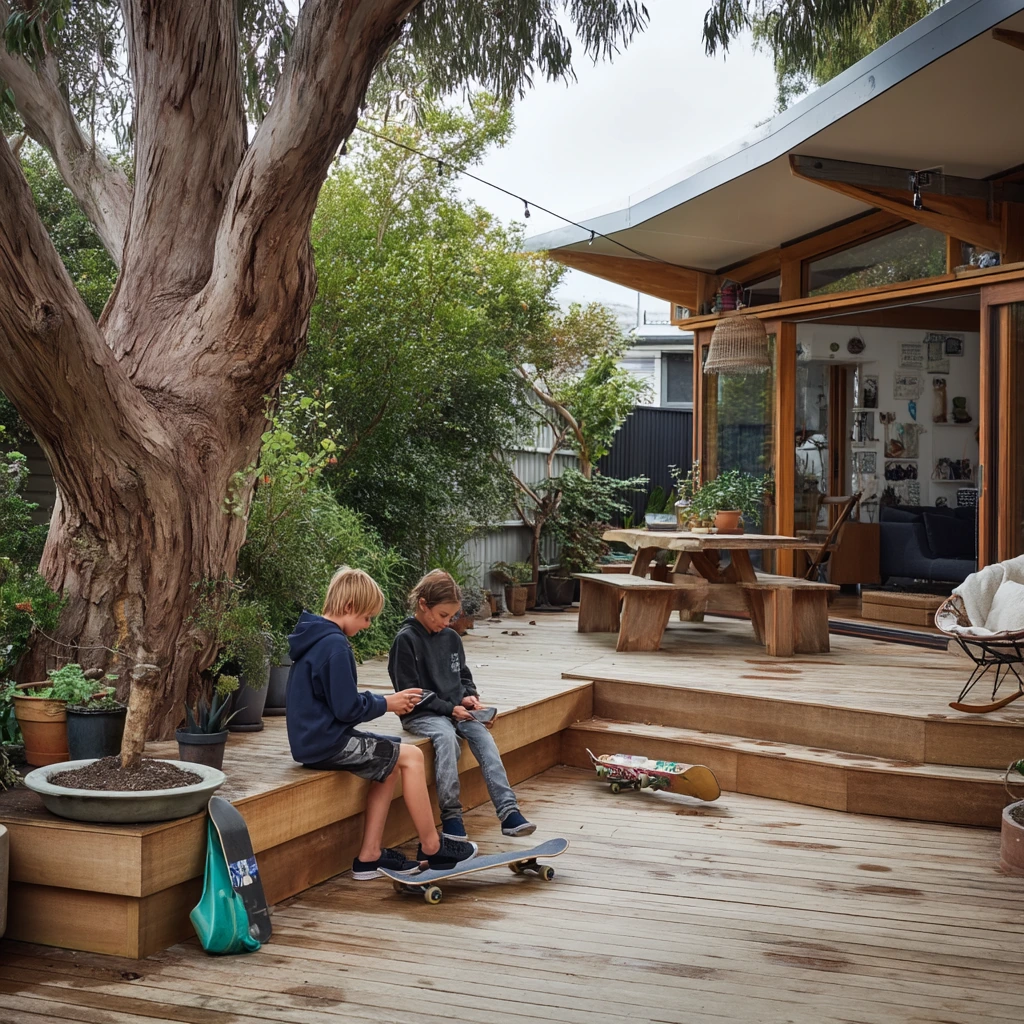
Design for real family life. An outdoor table where a teenager can charge a phone is more useful than a fancy bar cart. Add a weatherproof lounge chair for reading, herb pots for cooking, and a hook for a rain jacket. Keep a dog bowl near the edge, and leave space for a skateboard leaned against the step. A few muddy marks will happen, so use a finish that is easy to rinse.
Make the levels feel connected. Use the same board direction on both sections and add wide steps with safe lighting. If the deck is near lawn, add a gravel strip or edging to reduce grass clippings on the boards. Keep tools like a garden trowel in a small bin so the deck stays tidy and you can still garden nearby.
- Use split levels to follow the slope instead of fighting it.
- Wrap around a tree for shade and a natural focal point.
- Add wide steps for safety and easy sitting.
- Include practical hooks for jackets and bags.
- Use edging or gravel to reduce mud and clippings.
Pro Design Tip: Build one level as the “table zone” and the other as the “lounge zone” so the deck stays organized even when everyone is outside.
Budget Considerations: Split-level framing takes more lumber and hardware; keep railing minimal where code allows, and invest in proper footings for long-term stability.
Floating decks can be small, simple, and still feel like an extra room. The best layouts focus on how you really live, like morning coffee, kids and grilling, quiet reading, or easy hosting.
Start with a clear plan for door clearance, seating, and storage. Then add a few strong styling choices, like one rug, a lantern, and planters that fit your space.
FAQ
What is a floating deck? A floating deck is a low platform that sits above the ground on blocks, gravel, or short footings, and it is not attached to the house.
Do floating decks need footings? Many do, depending on size, height, soil, and local rules. Check your local building code and consider a pro if the deck is tall or on a slope.
Can I build a floating deck in a rental yard? Yes, if you keep it portable. Modular deck tiles on gravel and freestanding furniture are the easiest renter-friendly option.
How do I level the ground for a floating deck? For small builds, a compacted gravel base works well. Use landscape fabric, add gravel in thin layers, and check level often.
What is the best wood for a floating deck? Pressure-treated lumber is common for framing. Cedar is popular for decking because it resists rot and looks good as it weathers. Composite is low-maintenance but costs more.
How do I make a small floating deck feel bigger? Use a round table or a bench, keep walkways clear, limit decor, and add vertical planters or rail-mounted planters to free up floor space.
How do I style a floating deck on a budget?Start with seating, one light source, and one plant. Add textiles like cushion covers and an outdoor rug when you find sales, and use secondhand tables or chairs.