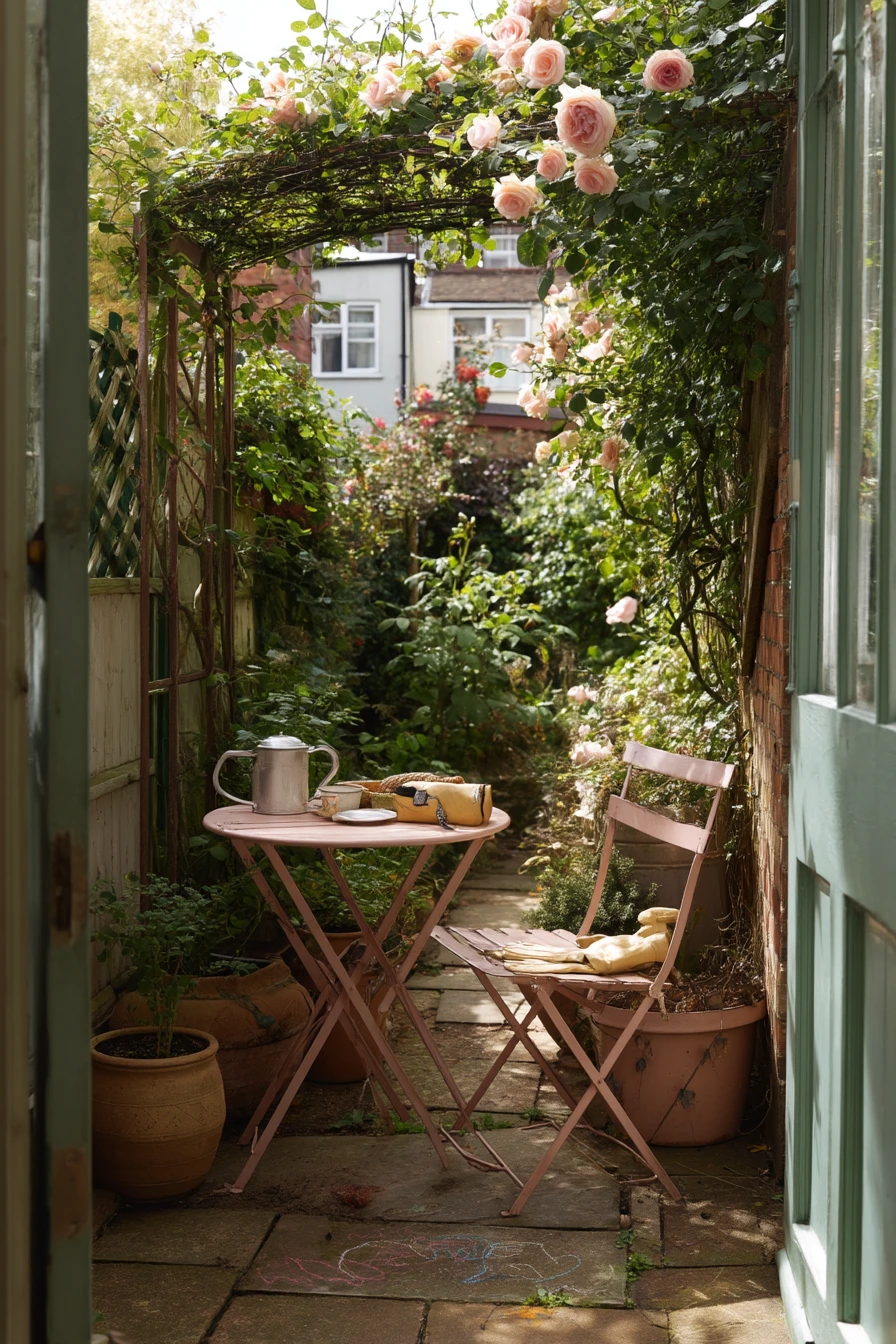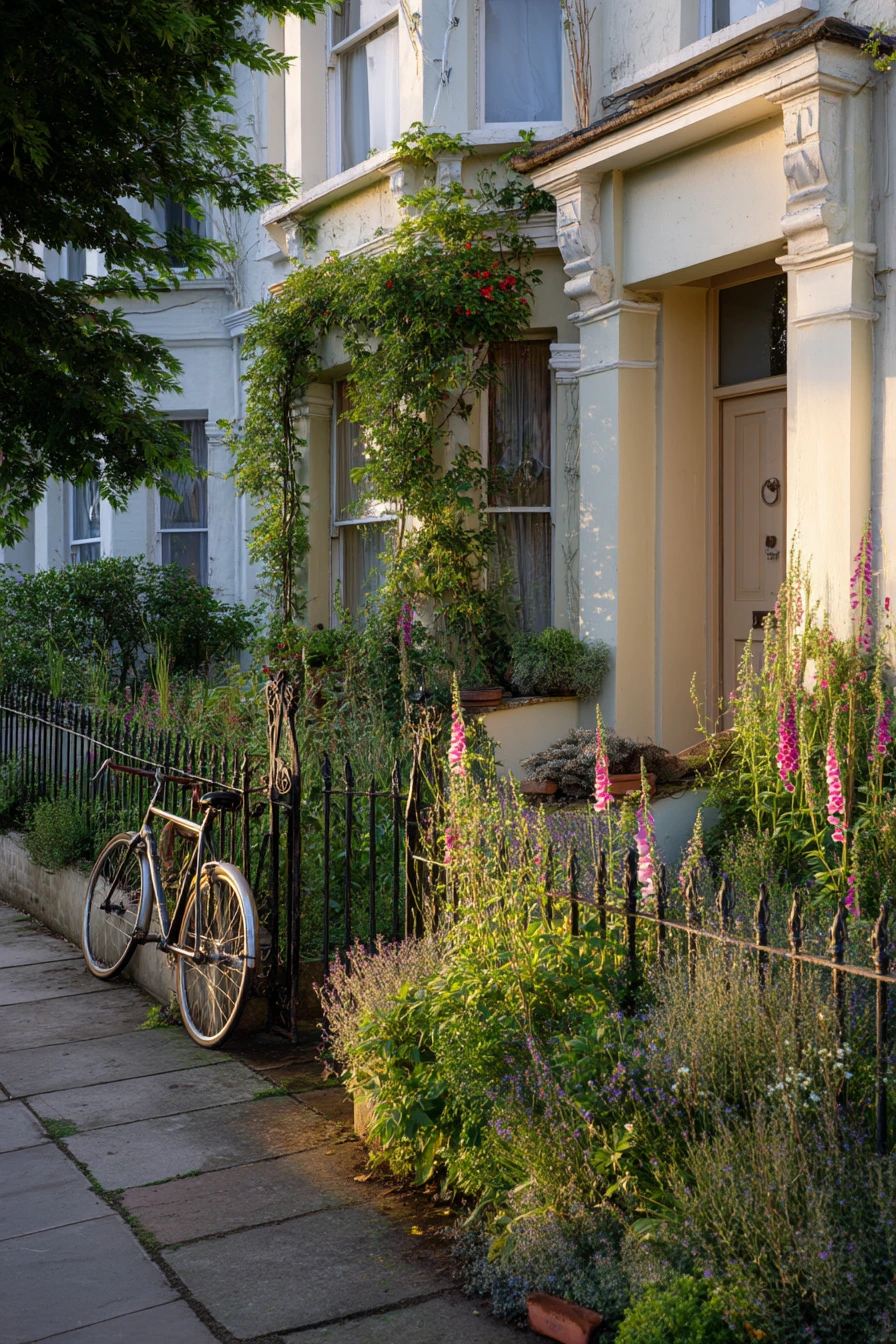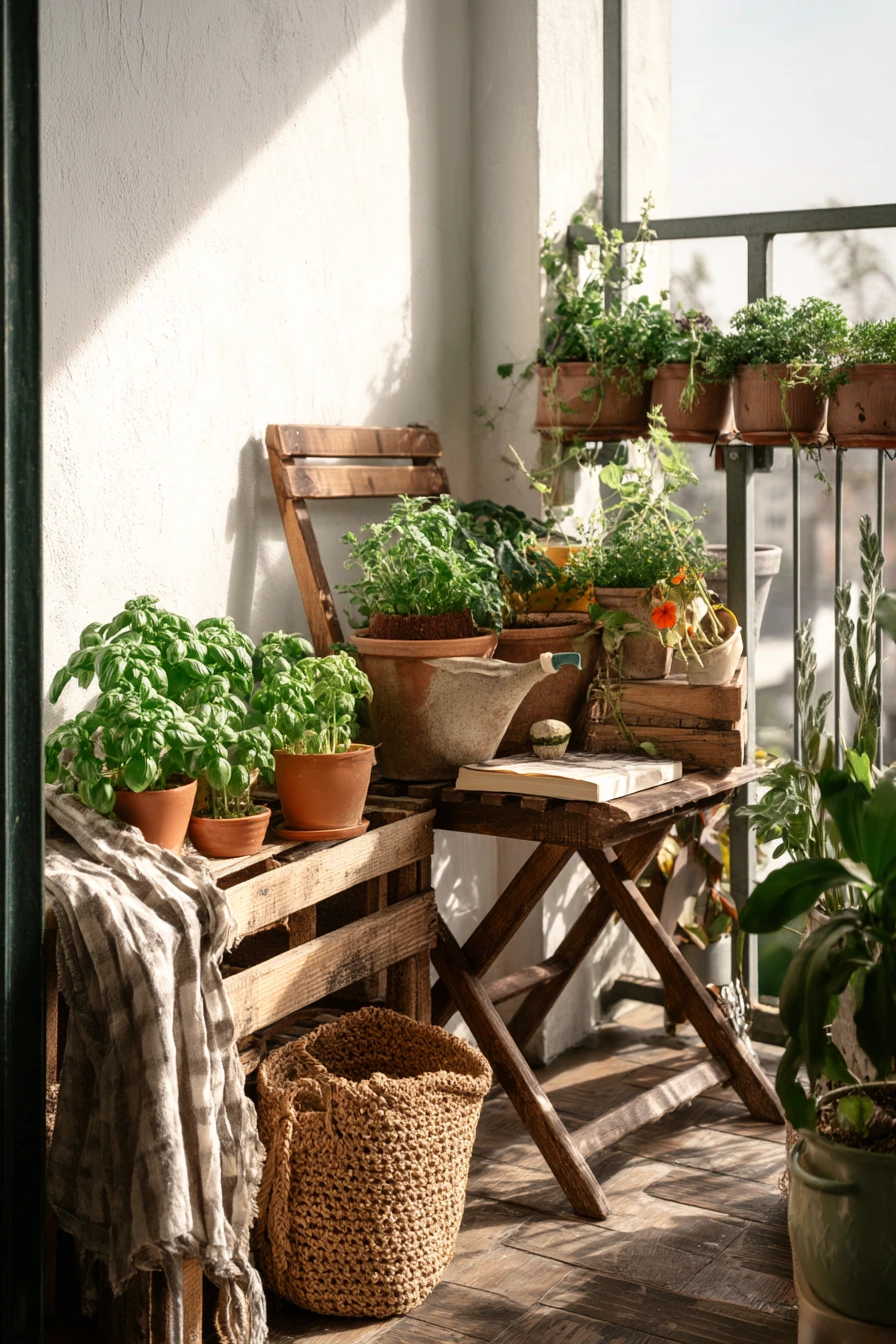

Corner garden ideas help you use the space you normally ignore, like a balcony edge, a kitchen window nook, or a patio corner. With the right planters and a simple layout, a small corner can hold herbs, flowers, and even a tiny tree.
This post shares 10 real-life corner garden setups based on common homes and apartments. You will see renter-friendly options, family-friendly ideas, and a few upgrades for homeowners who want more harvest and less mess.
Each section includes easy styling steps, plant picks that match the light, and small details that make the space feel lived-in, like a slim watering can, labeled seed jars, or a folded throw by the chair.
Use these ideas to plan one corner at a time. Start small, keep care simple, and you can build a corner garden that looks good in photos and works in daily life.
1 Tiny Balcony Corner Garden
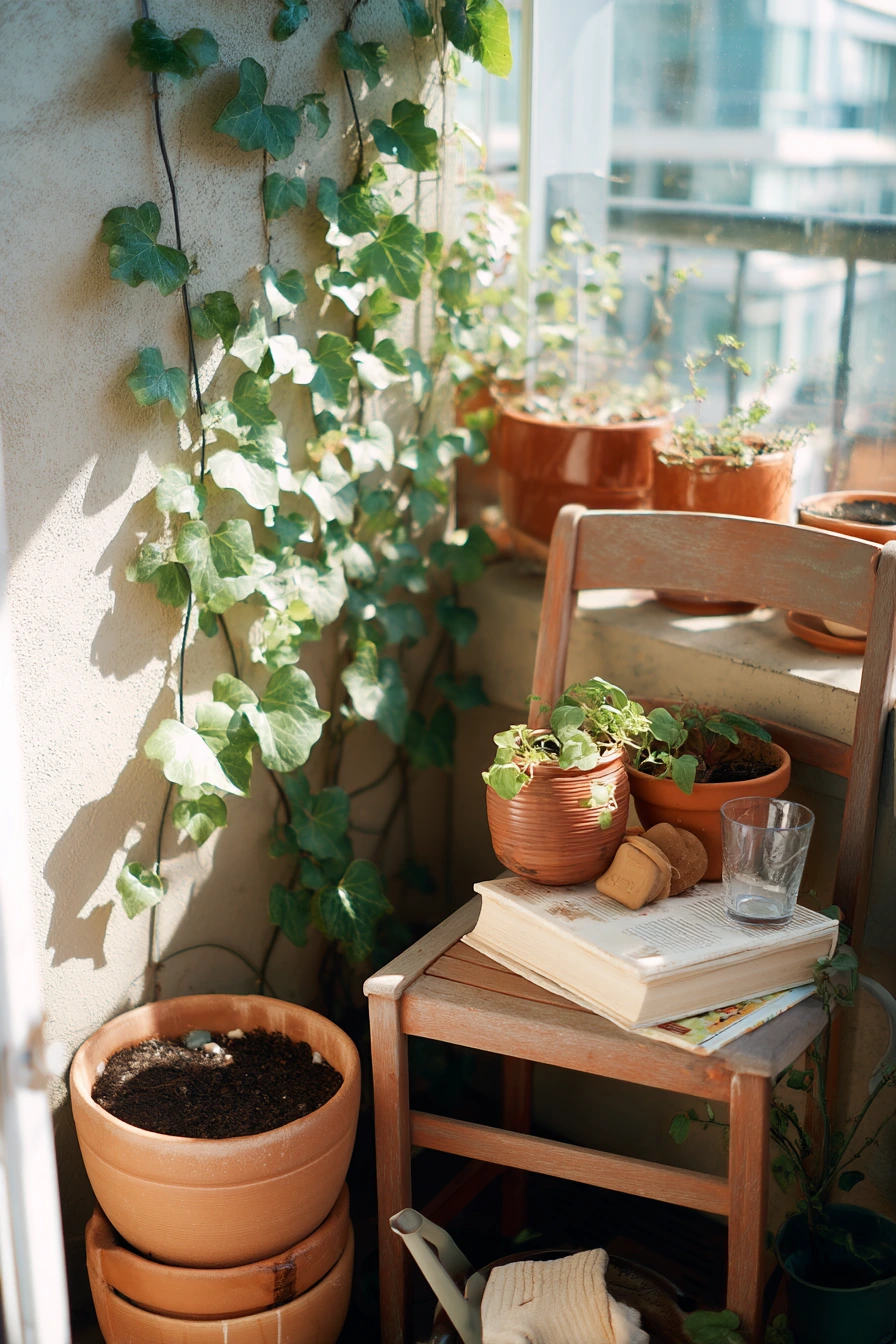
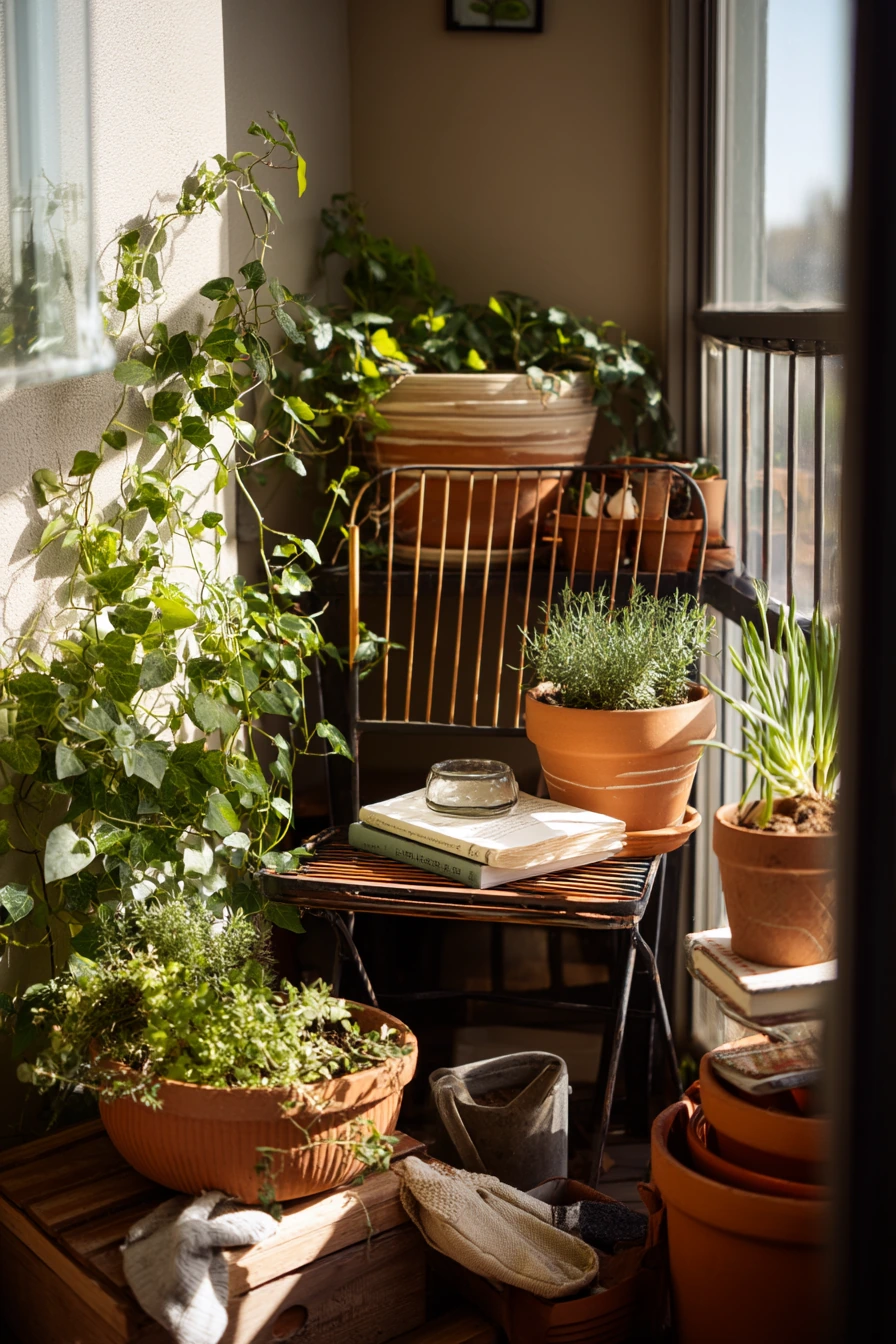
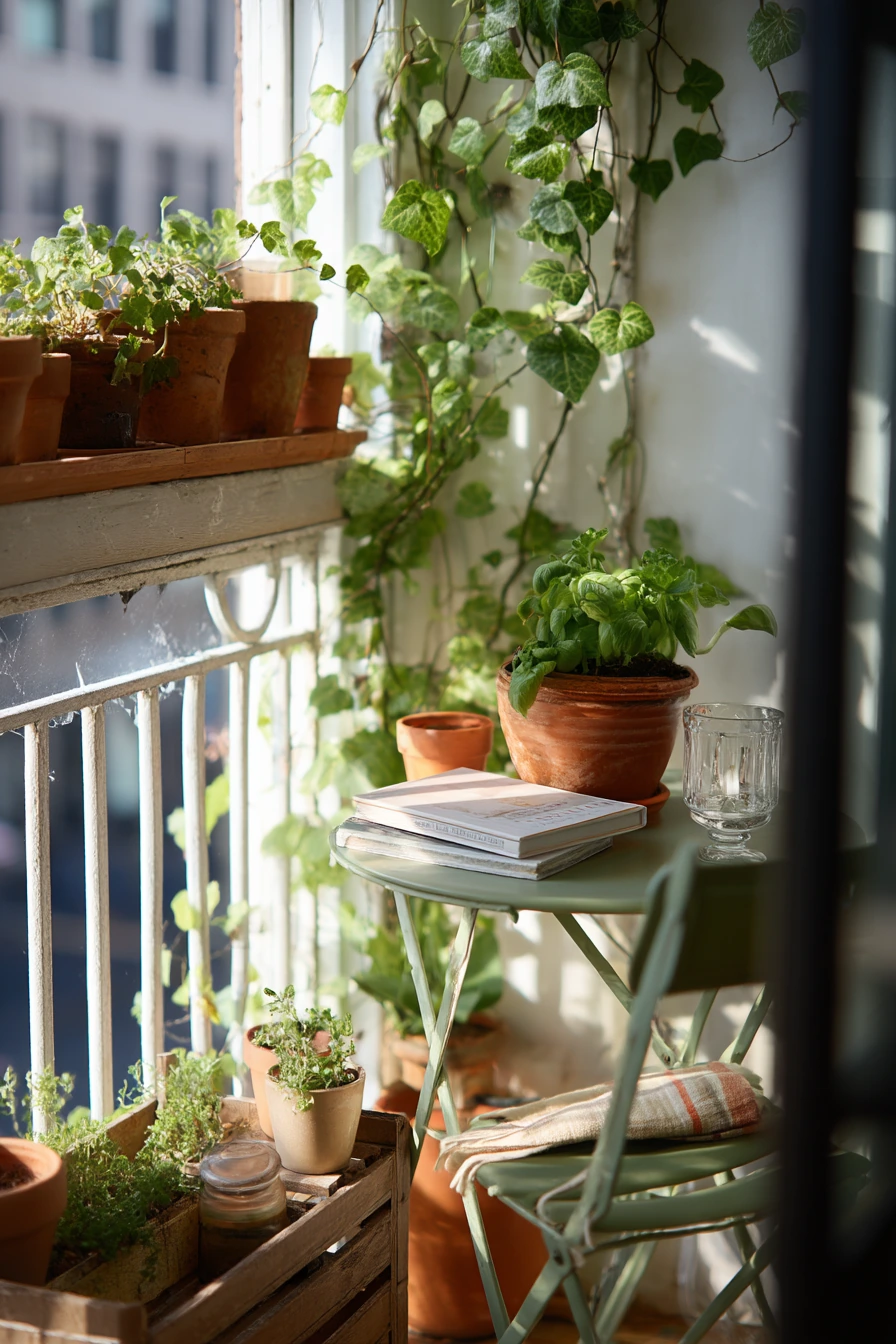
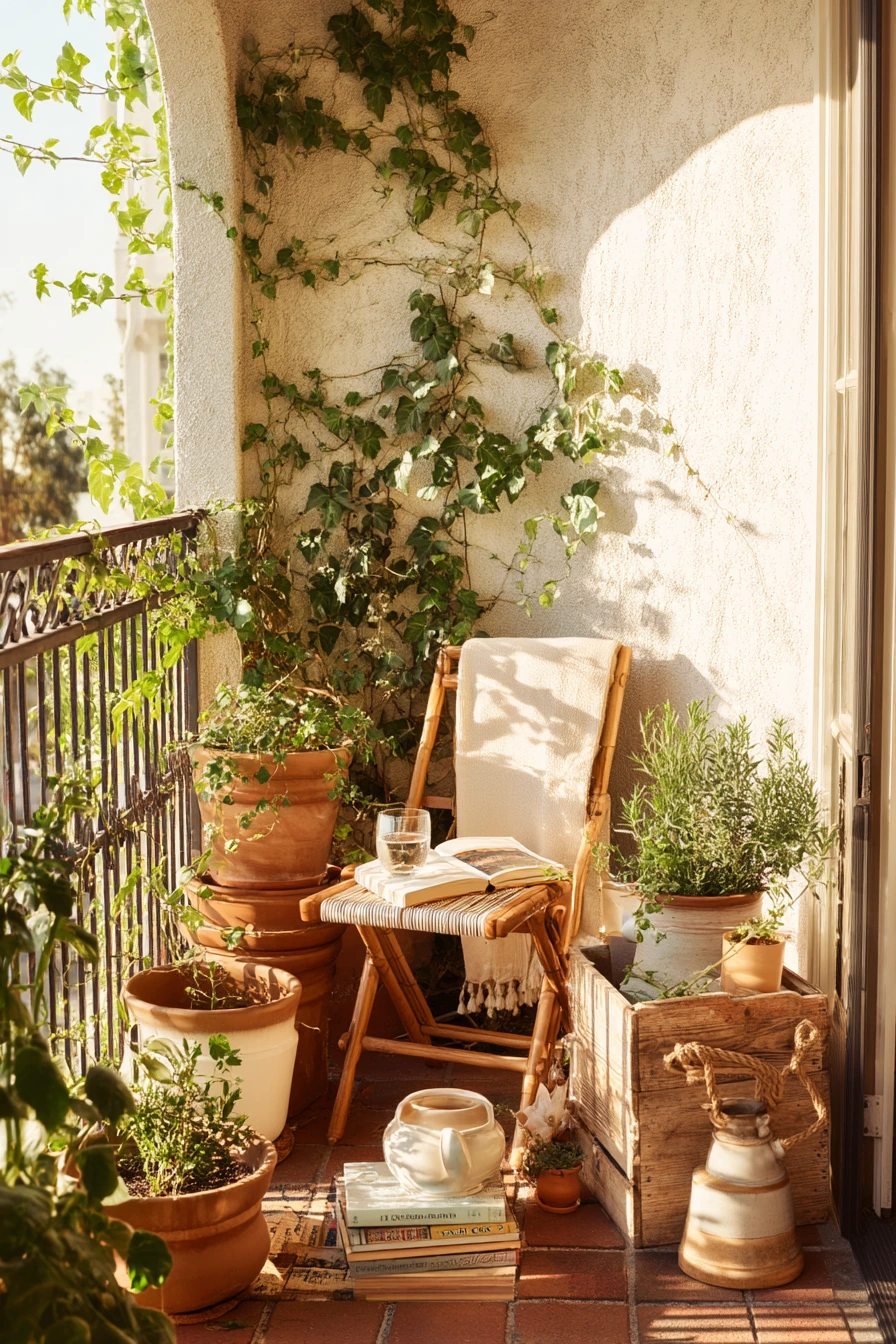
A tiny apartment balcony can still become a corner garden if you keep the footprint tight and go vertical. Start with a compact bistro chair in the open spot so you have a reason to sit there. Then stack terracotta pots in the corner, with the tallest pot at the back and smaller ones stepping forward.
For plants, use trailing ivy to soften rails and edges, plus herbs in mismatched planters for a relaxed look. Pick herbs you will use often, like basil, parsley, and chives. Keep a slim watering can tucked beside a crate of potting soil so watering stays easy and you do not track dirt through the apartment.
To style it like a real lived-in space, leave a paperback on the chair, set a half-full water glass on a small side tray, and drape one garden glove over the railing. Morning light makes leaves look fresh, so place the sun lovers on the outer edge and shade-tolerant herbs closer to the wall.
- Use a 3-tier stand or stacked pots to save floor space
- Group herbs by water needs so you do not overwater one planter
- Add a saucer under each pot to protect the balcony surface
- Train ivy along the railing with soft ties instead of clips
- Store soil in a lidded bin inside the crate to cut mess
Pro Design Tip: Repeat one material, like terracotta, in at least half your pots so mismatched planters still look planned.
Budget Considerations: Terracotta is affordable, but you can save more by mixing in thrifted pots and using cuttings (like pothos or ivy) from friends.
2 Kitchen Window Herb Nook
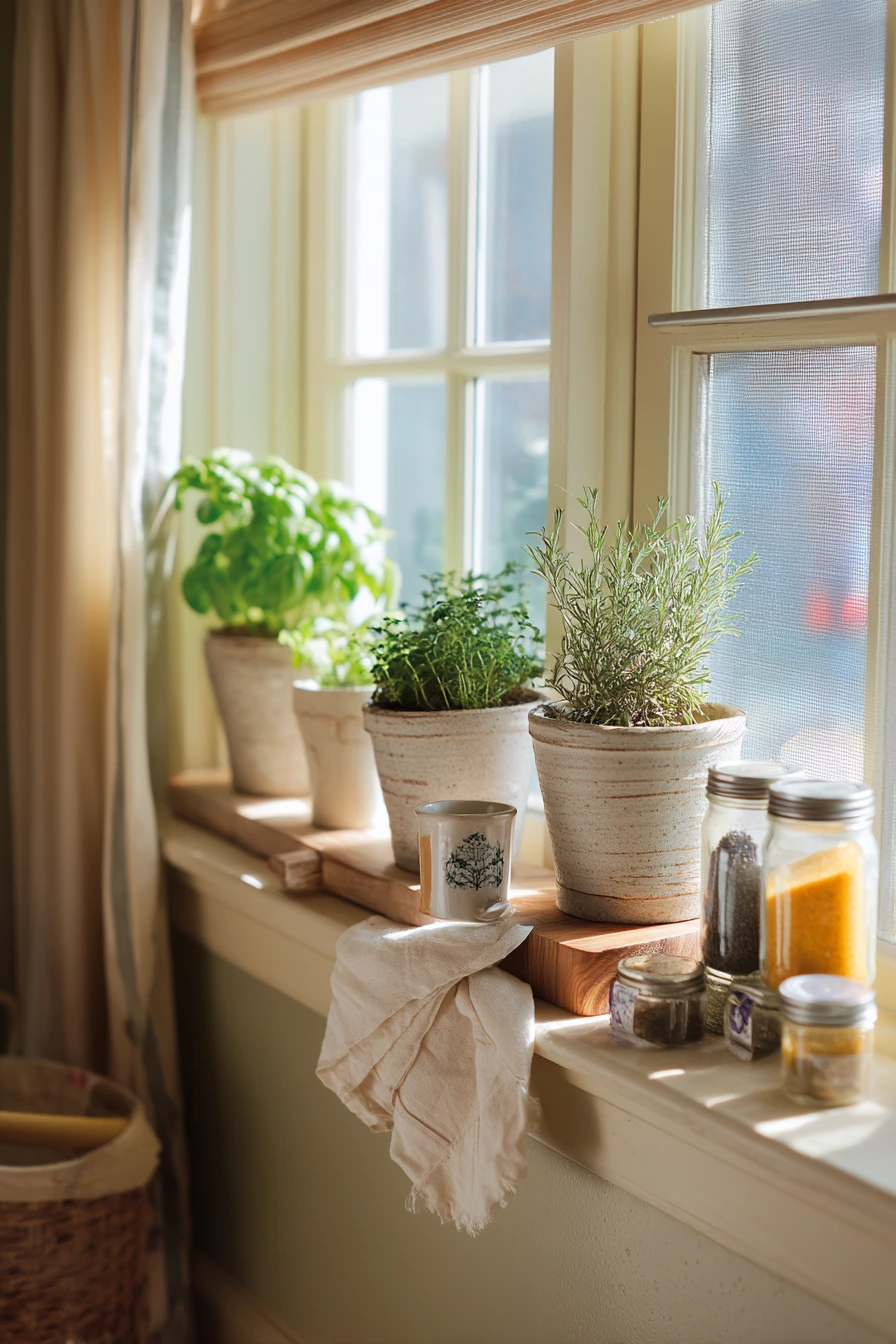
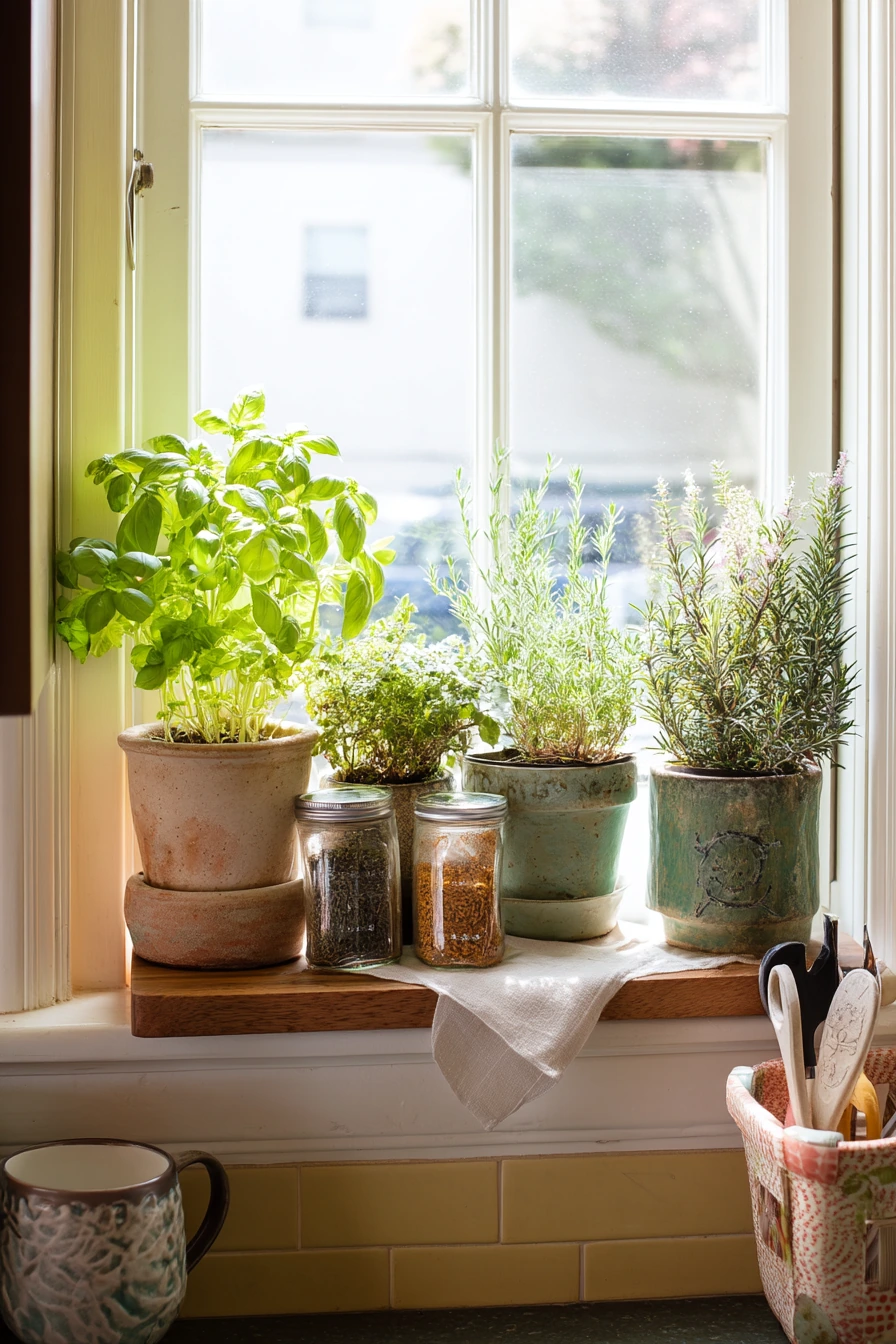
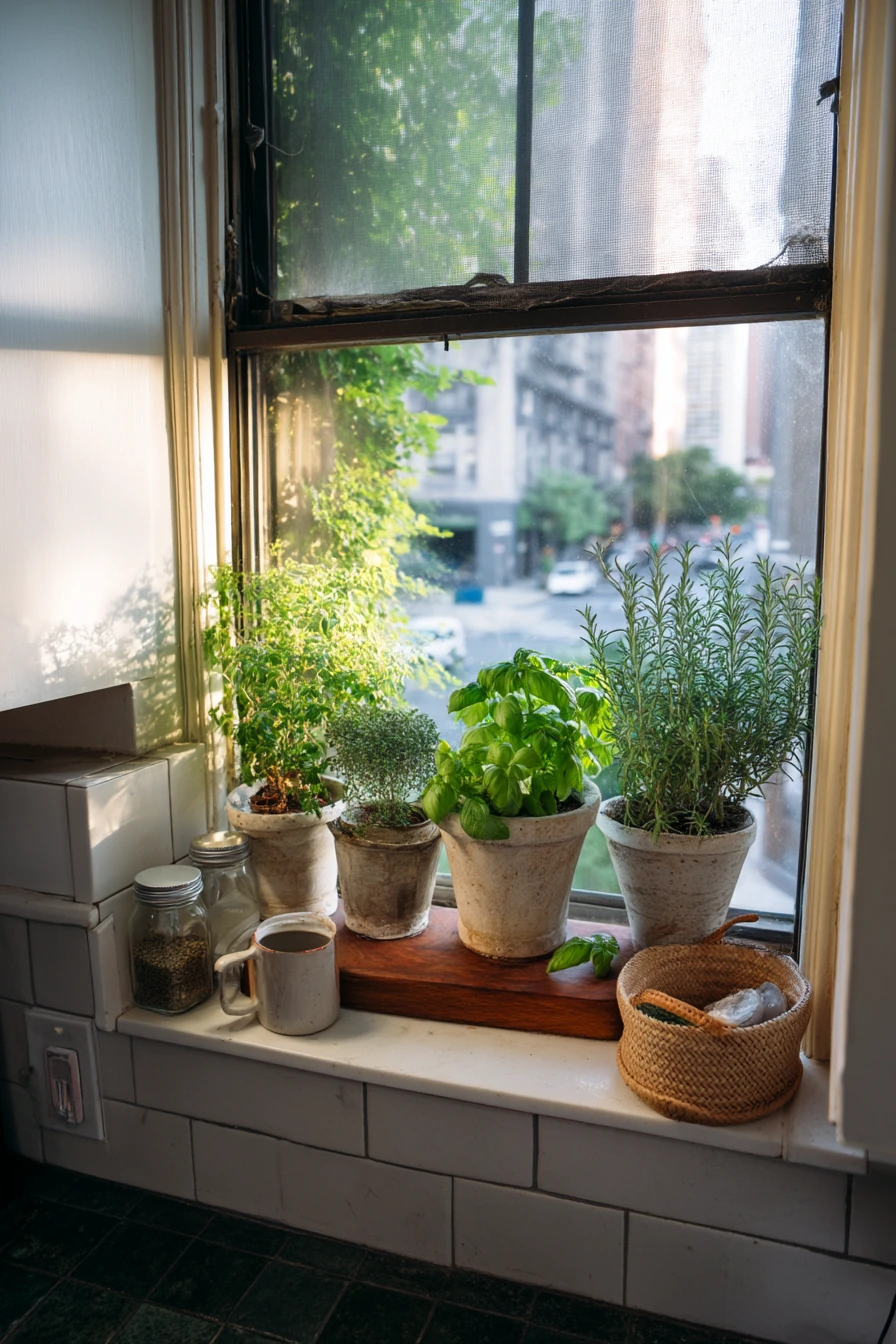
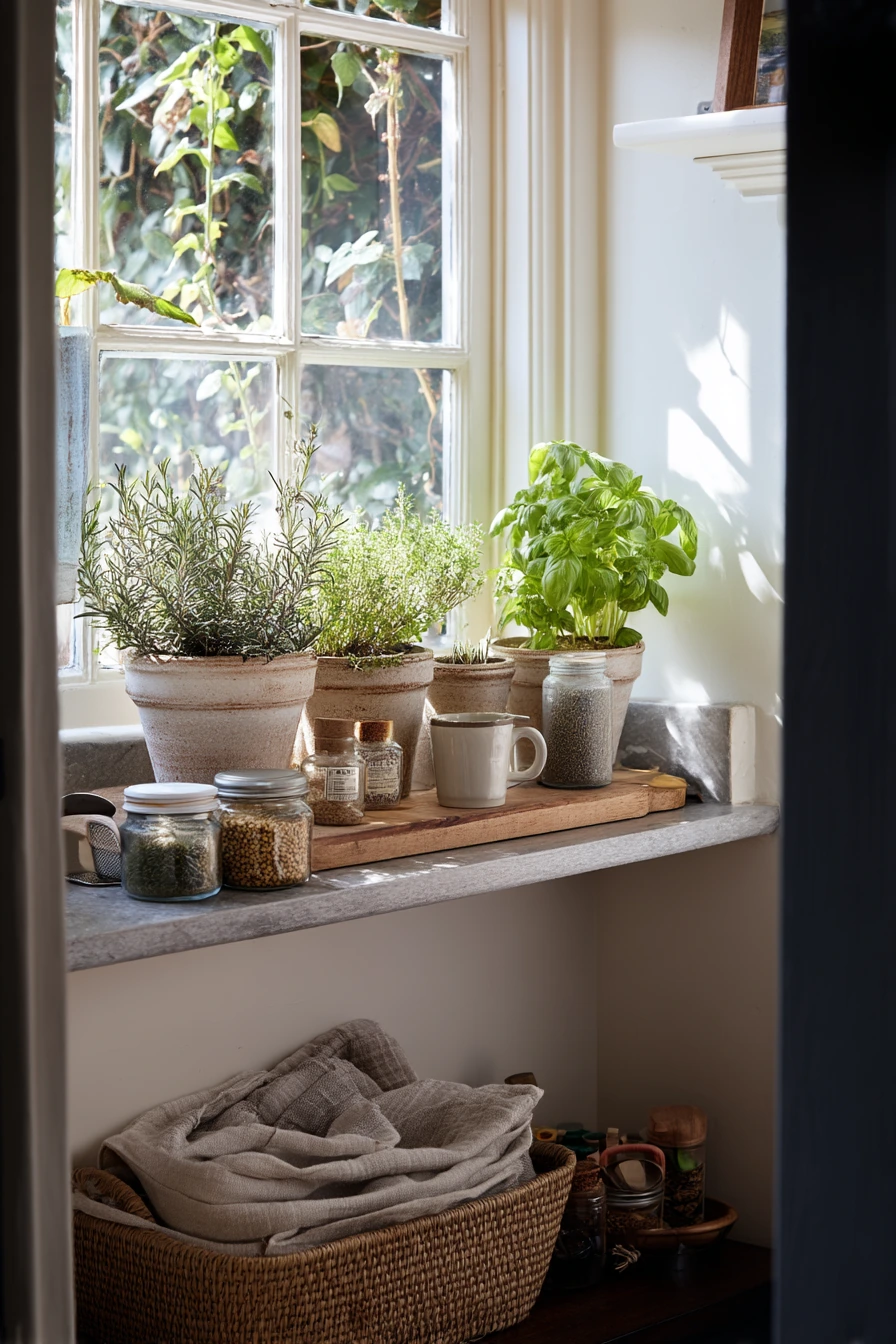
A kitchen corner garden by the window is one of the most useful setups because you can snip herbs while cooking. Use a narrow ledge or slim shelf near the window, and line up basil, mint, thyme, and rosemary in weathered ceramic pots. Keep the pots close but not touching so air can move and leaves dry faster.
Make this corner work with daily life. Add a small cutting board and a linen towel right there so you can rinse and chop quickly. Labeled jars of seeds can sit in the back row, where they look tidy but stay within reach. If there is an outlet nearby, plan around it so cords do not drape across the plants.
For lived-in cues that still look neat, a mug with a tea stain can sit on a coaster, and a charging cable can run behind the pots. If a child’s toy basket peeks from below, keep the herb area higher so little hands do not pull on stems. Warm morning light is great for herbs, but rotate pots every week so plants grow evenly.
- Put mint in its own pot so it does not take over other planters
- Use drip trays to protect the ledge from water rings
- Keep a small pair of herb scissors in a drawer nearby
- Pin a watering schedule on the inside of a cabinet door
- Harvest often to keep herbs bushy and not leggy
Pro Design Tip: Use the same pot height across the row so the corner looks calm, then add one taller rosemary pot at the back as a focal point.
Budget Considerations: Grow herbs from grocery store starter plants or seed packets in simple pots, then upgrade to ceramic planters over time.
3 Shady Side-Yard Shade Garden
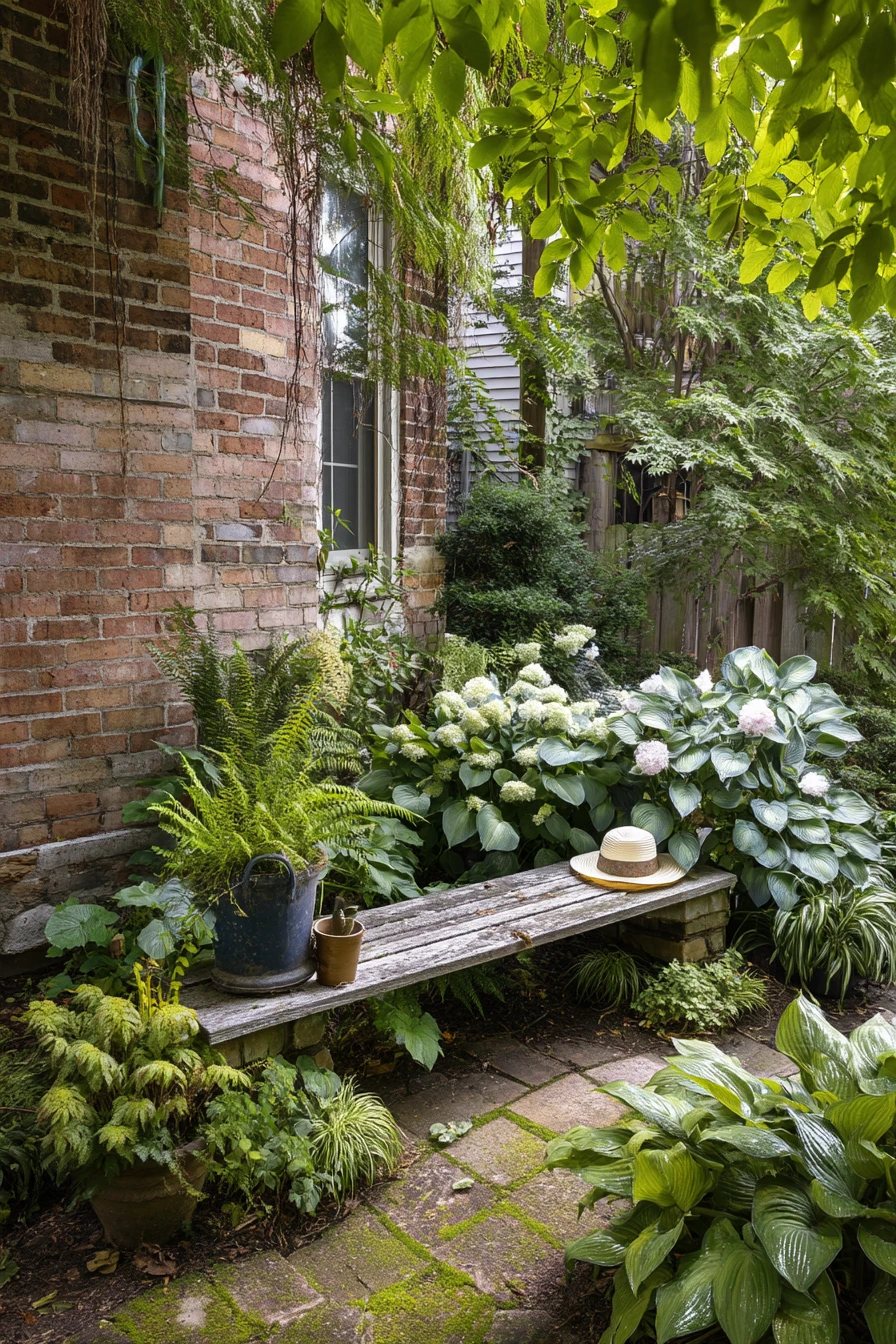
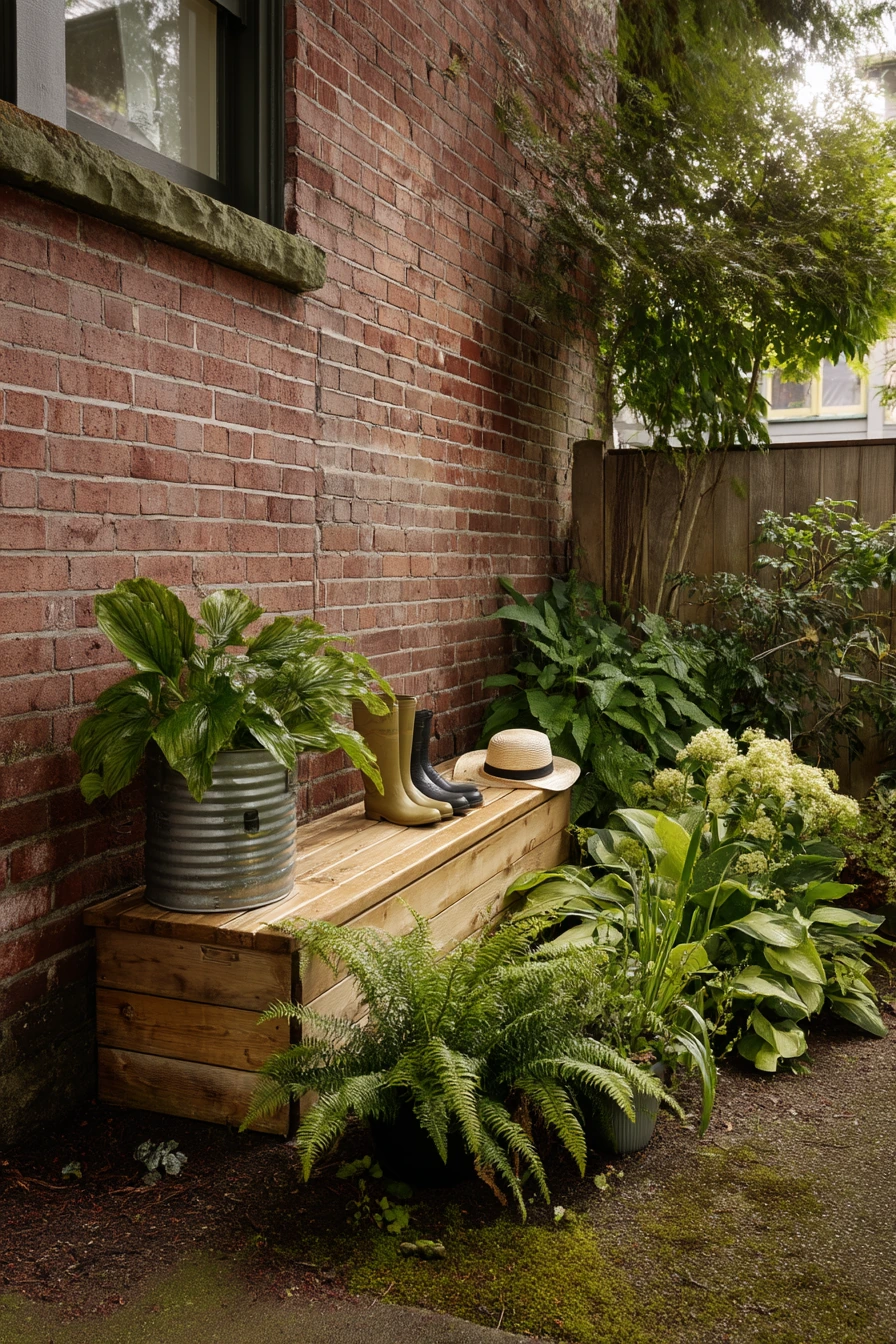
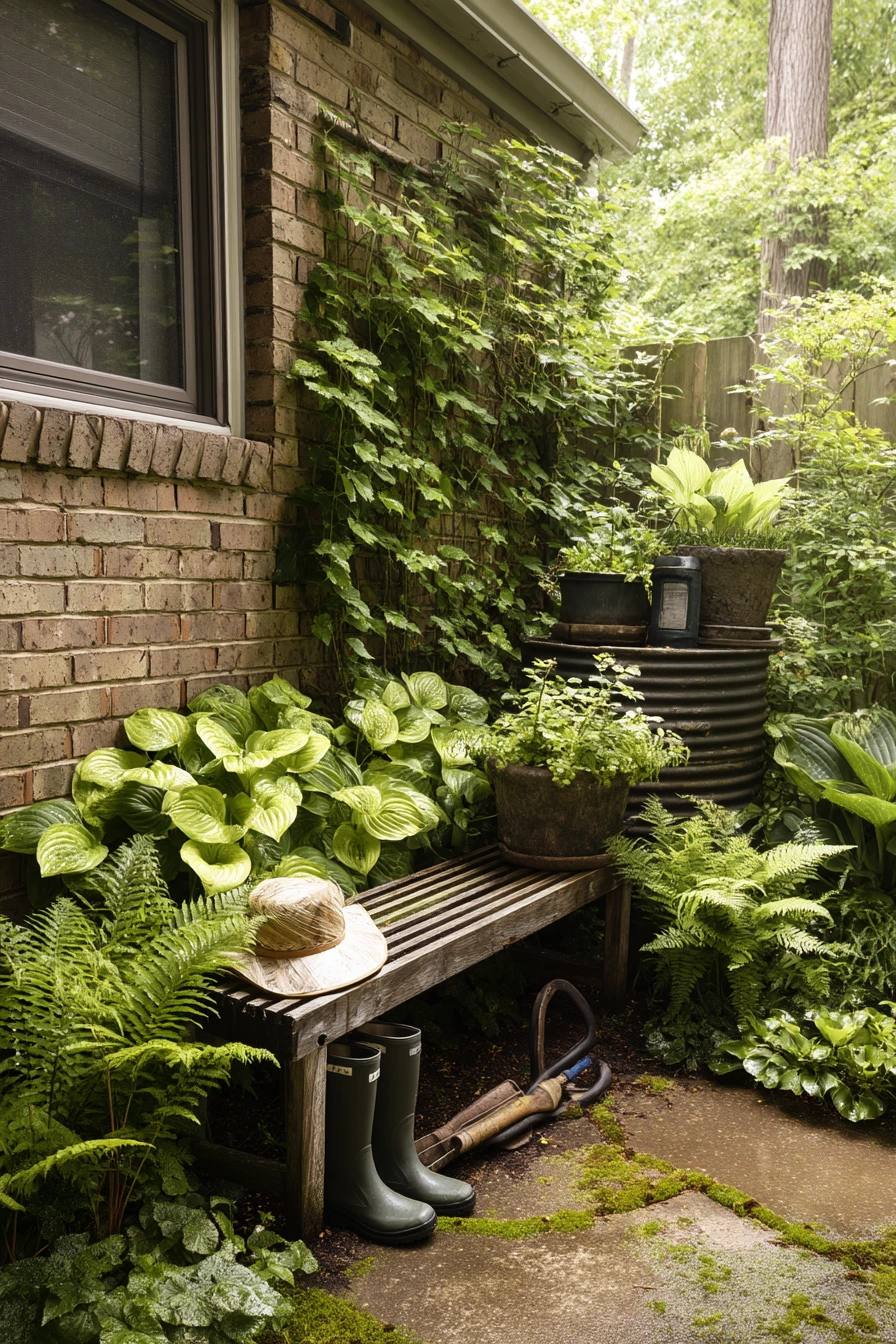
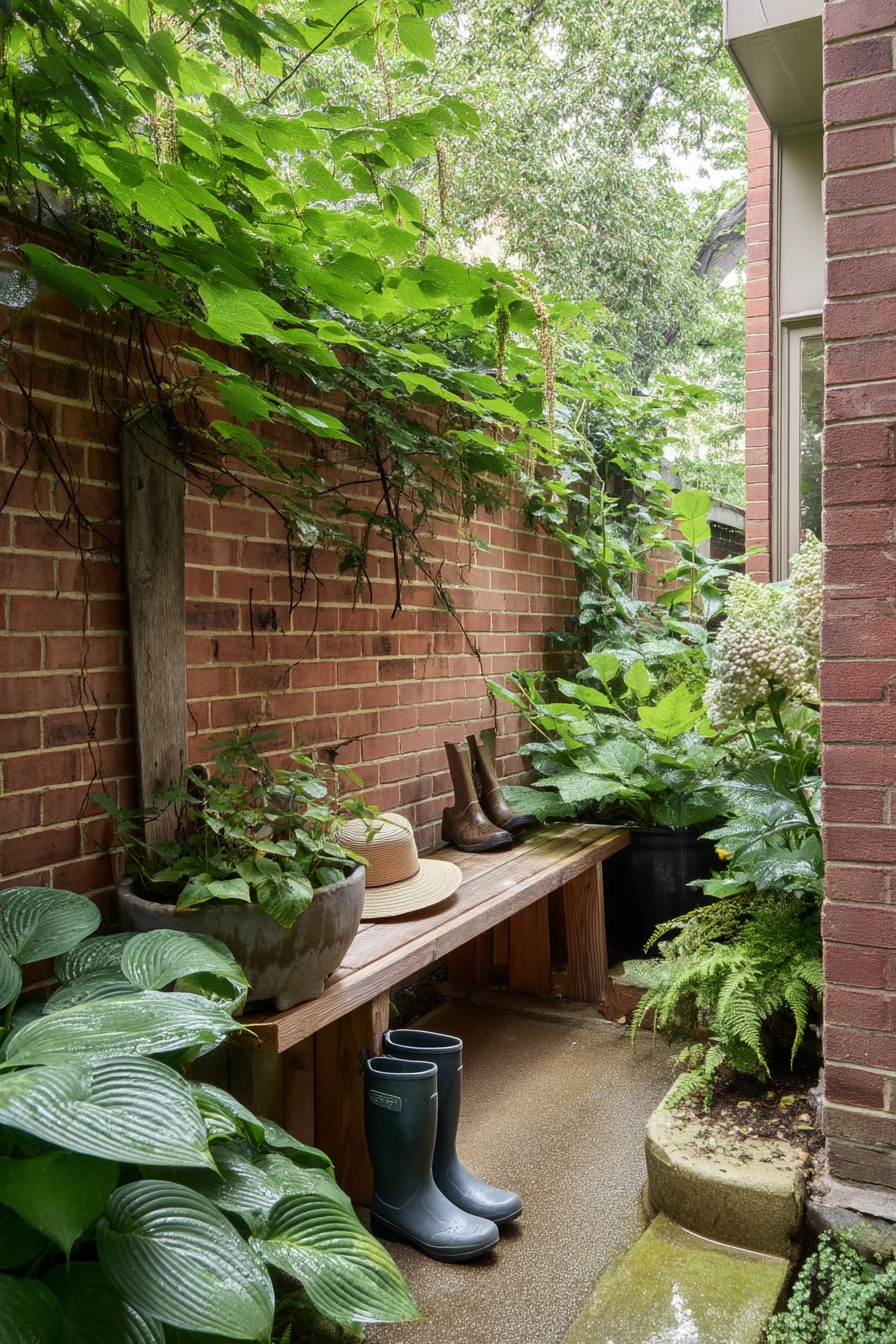
A shaded side-yard corner garden can feel cool and inviting when you lean into texture and deep greens. Brick walls hold moisture and shade, so choose plants that like lower light and steady water. Ferns and hostas fill space fast and look full even without sun.
Add one flowering plant for interest, like hydrangeas, then place a slim bench in the corner so it feels like a small retreat. A rain barrel can be both useful and good-looking if you soften it with climbing jasmine. Train the vine up a trellis so the wall looks taller and the corner feels finished.
Keep tools close, but not messy. Pruning shears can rest on the bench in a small tray, muddy boots can sit on a paver, and a folded sunhat can sit on a planter. Overcast light makes this corner look calm, so focus on leaf shapes and layers. Mulch with bark or leaf mold to keep roots cool and cut down on weeds.
- Plant hostas in groups of three for a fuller look
- Add compost each spring to help shade plants thrive
- Use a trellis to keep jasmine off the brick and easier to prune
- Place the bench on gravel or pavers to avoid muddy legs
- Hide the rain barrel hose behind plants for a cleaner view
Pro Design Tip: Mix leaf sizes, like fine fern fronds beside broad hosta leaves, to make shade areas feel rich instead of flat.
Budget Considerations: Ferns and hostas divide well; ask neighbors for splits, then spend your money on one strong hydrangea and a simple bench.
4 Renter-Friendly Indoor Plant Corner
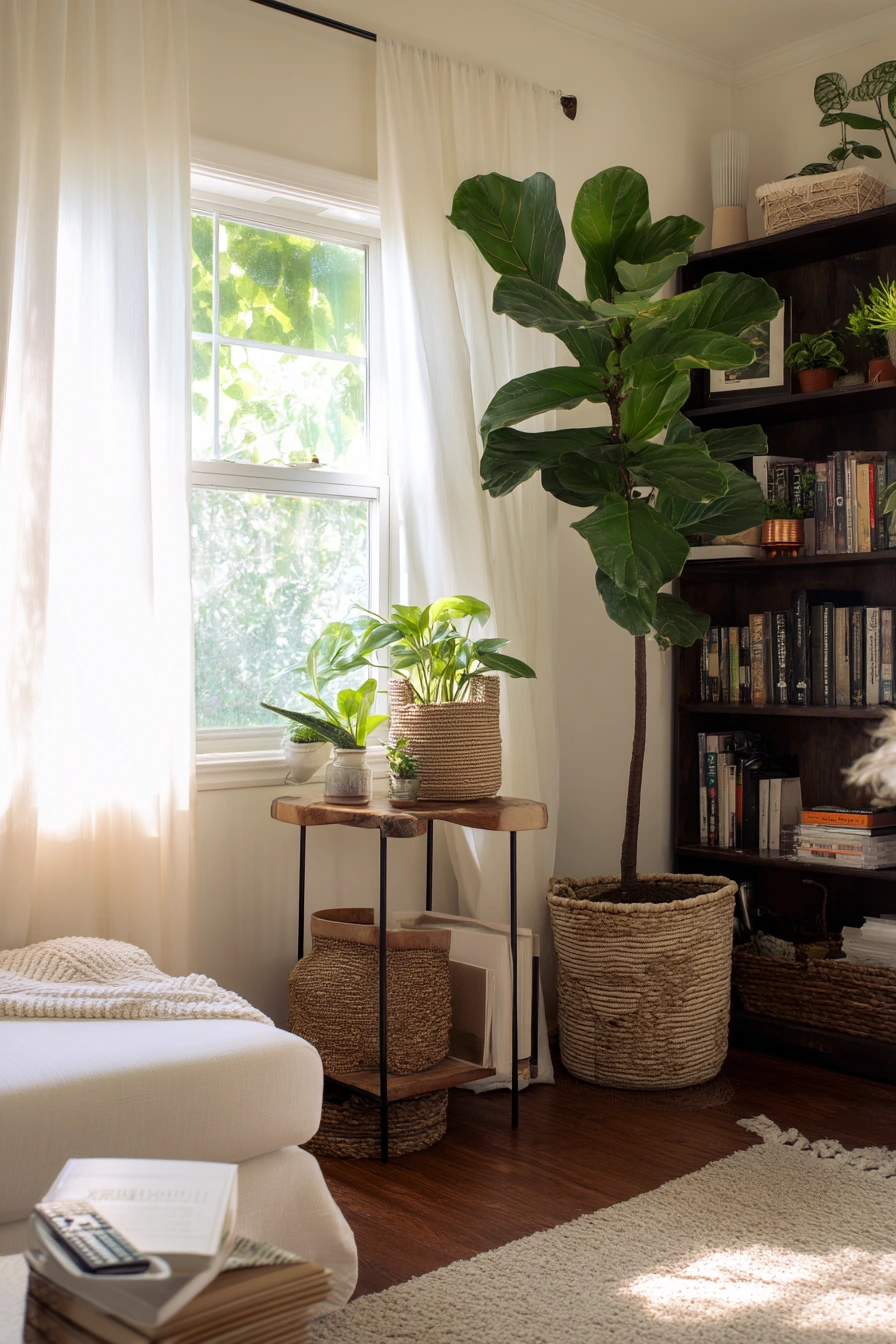
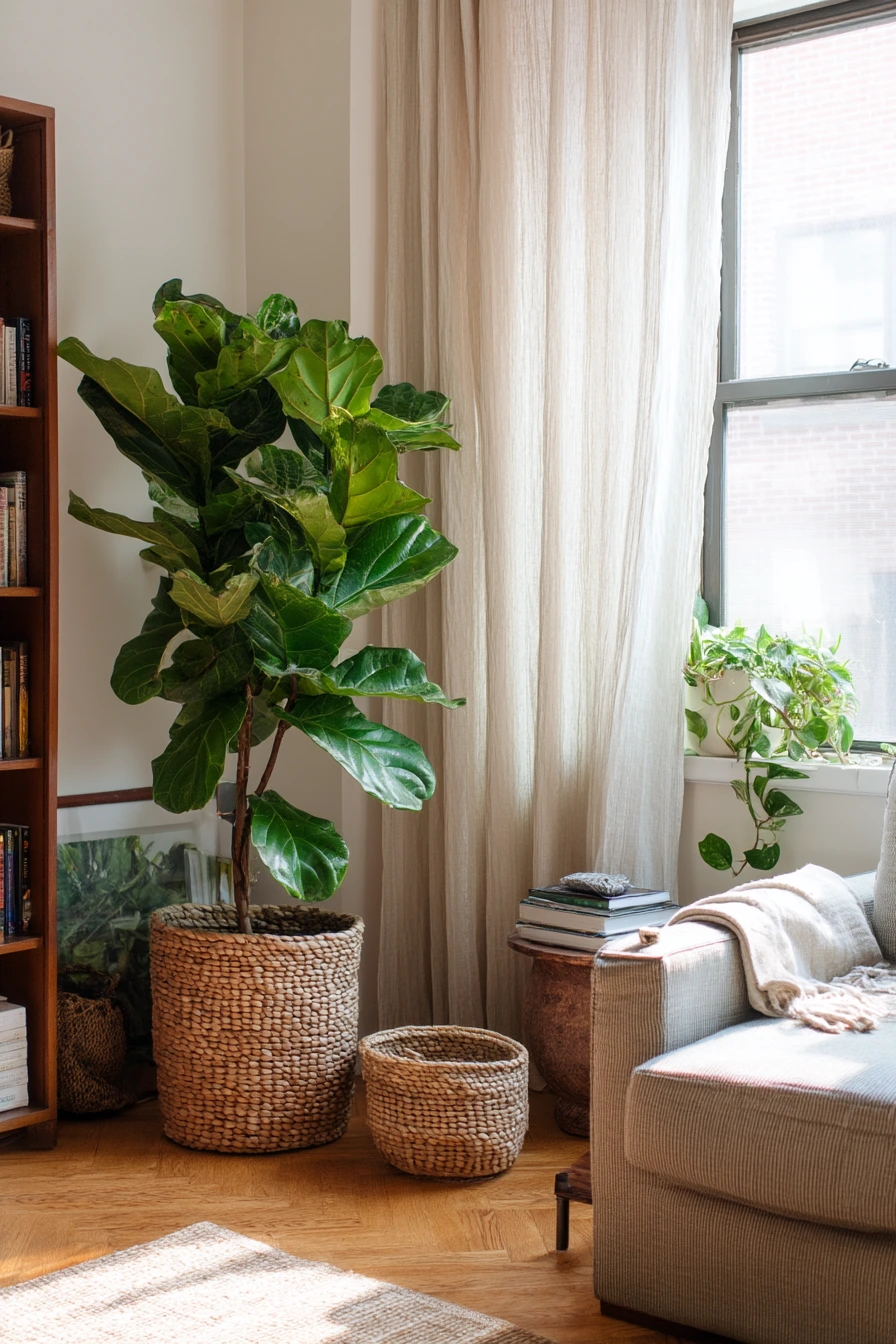
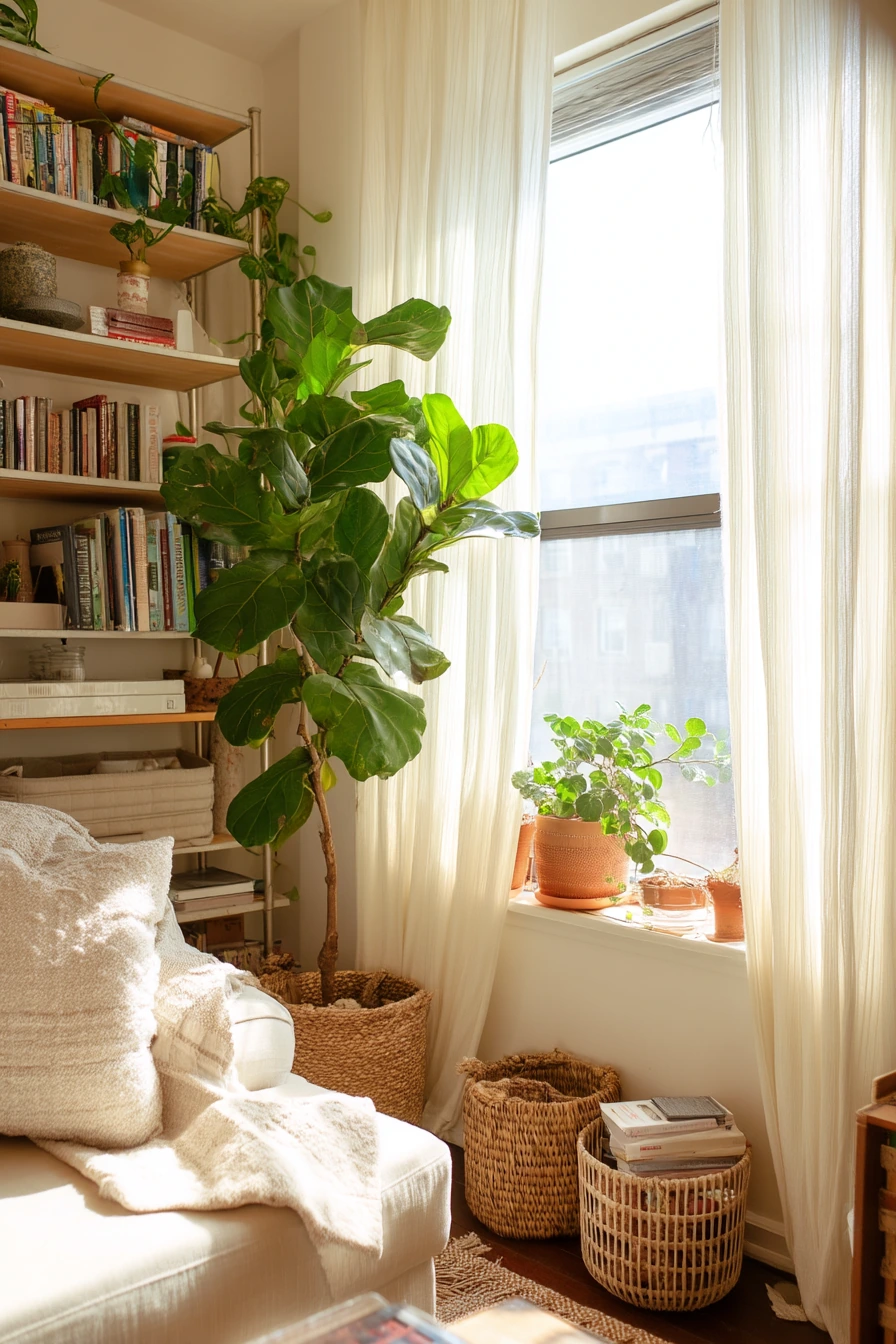
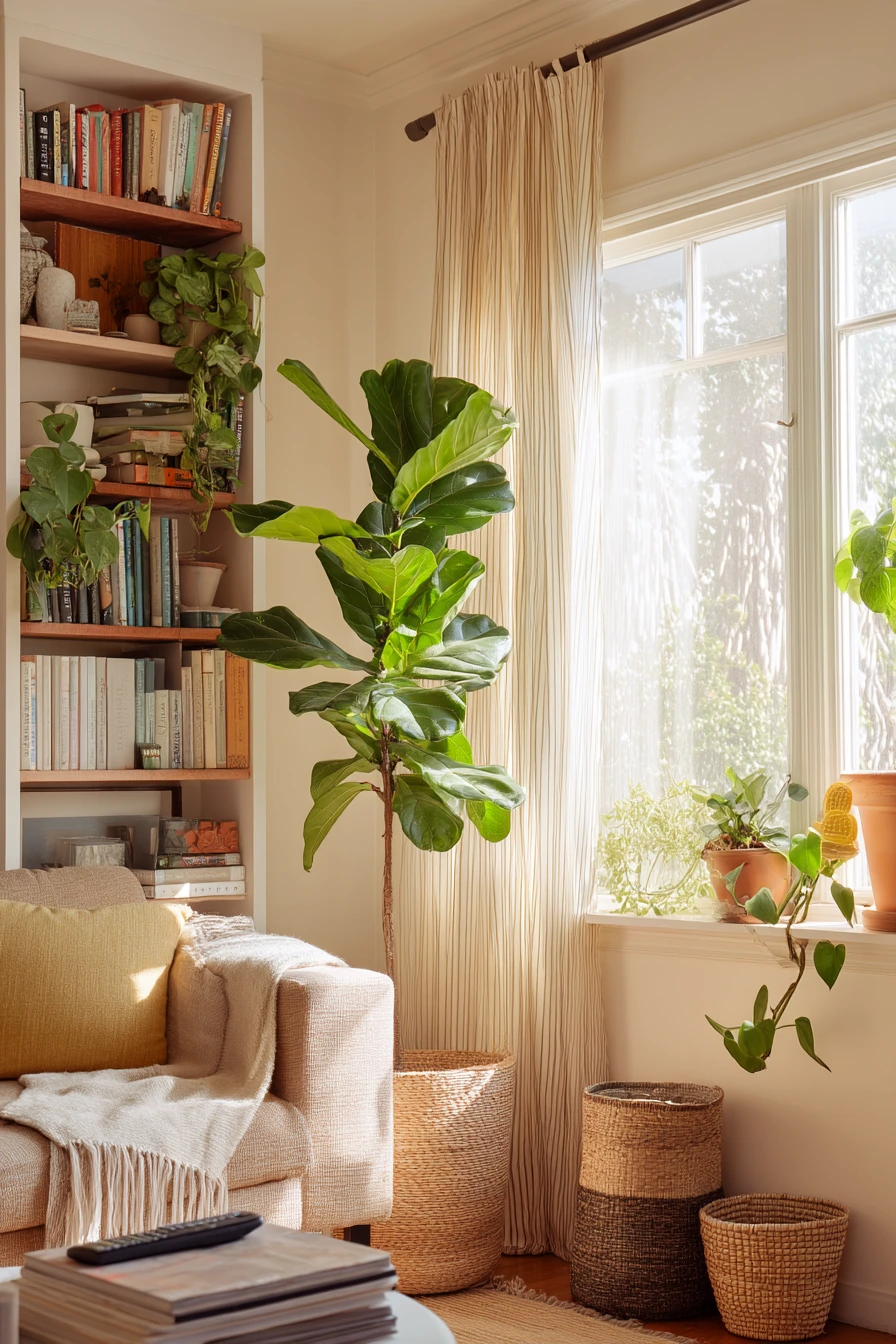
A living room corner garden can look lush without drilling holes or changing the space. Use freestanding plant stands to build height, then anchor the corner with one taller plant, like a fiddle leaf fig. Place it slightly behind the stand so it frames the corner and does not block the walkway.
For trailing greenery, let pothos spill from a bookshelf or the top tier of a stand. Add a narrow grow light, but hide it behind a curtain edge or in the top corner so it does not feel harsh. Woven baskets can hold soil and tools, and they also hide bags and labels that usually look cluttered.
To keep the corner feeling lived-in, a slightly wrinkled throw on the sofa and stacked novels nearby make the plants feel like part of the room. Keep a remote control on the windowsill, but use a small tray so it looks neat. Water plants in a sink or tub, then return them once they stop dripping to protect floors.
- Use a saucer or waterproof mat under each stand
- Choose one pot color family to tie different plants together
- Place low-light plants on lower shelves and bright-light plants up high
- Keep a small spray bottle in a basket for leaf dusting
- Rotate plants monthly so they grow straight toward the window
Pro Design Tip: Use three heights in the corner (floor, mid-stand, and top shelf) so the display looks balanced from the sofa.
Budget Considerations: Start with one statement plant and one pothos cutting; add more stands and baskets later as you find secondhand pieces.
5 Modern Patio Firelight Planters
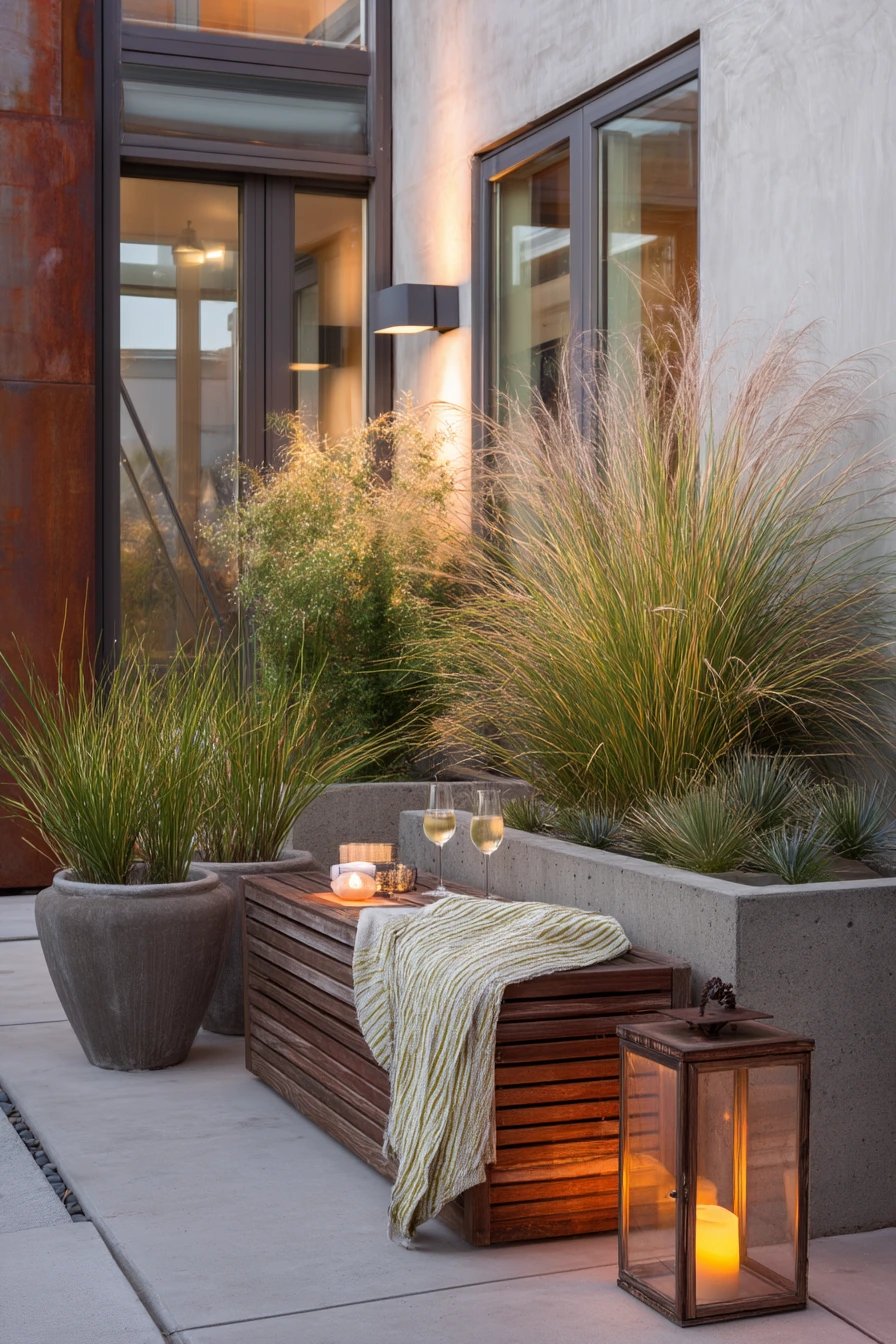
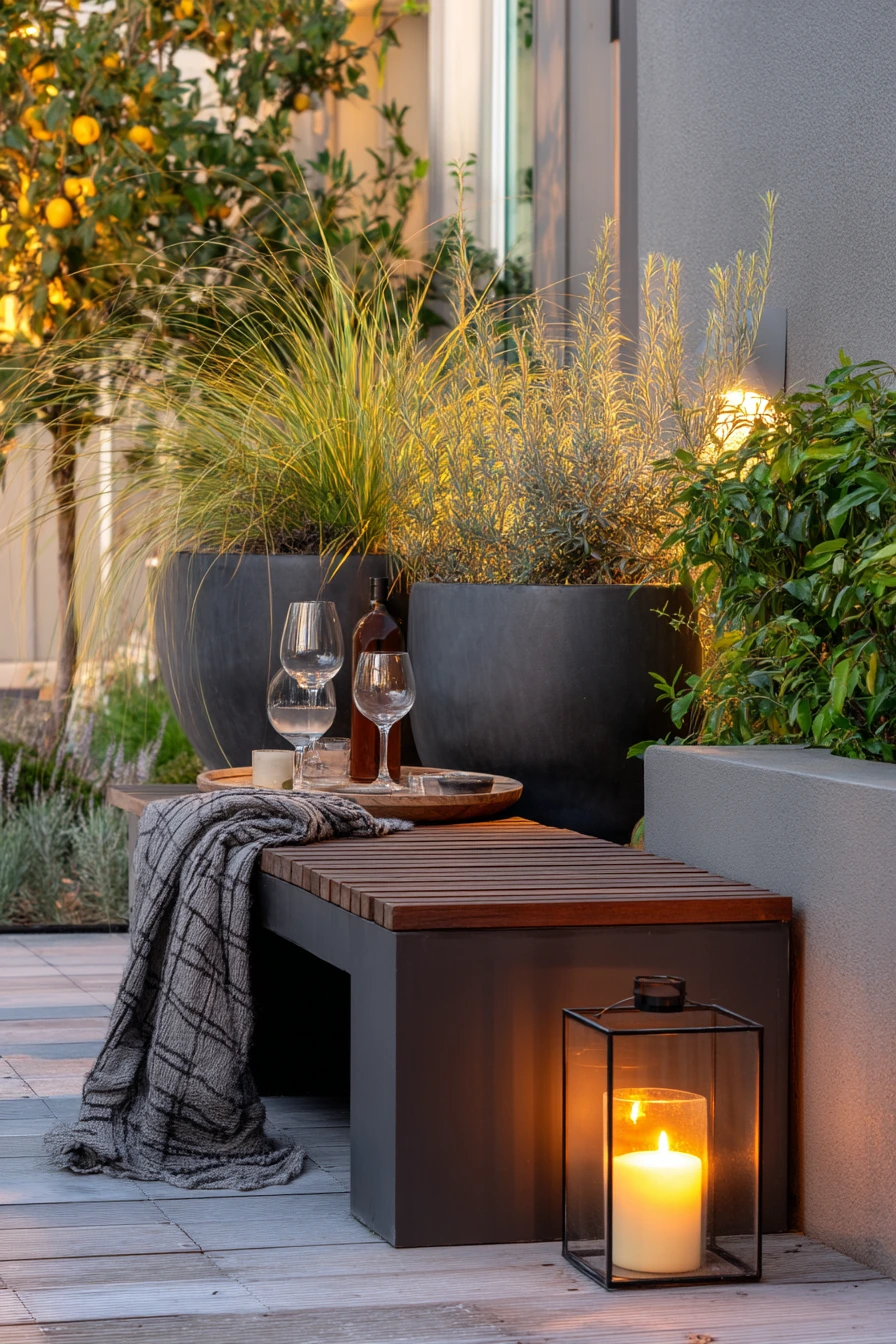
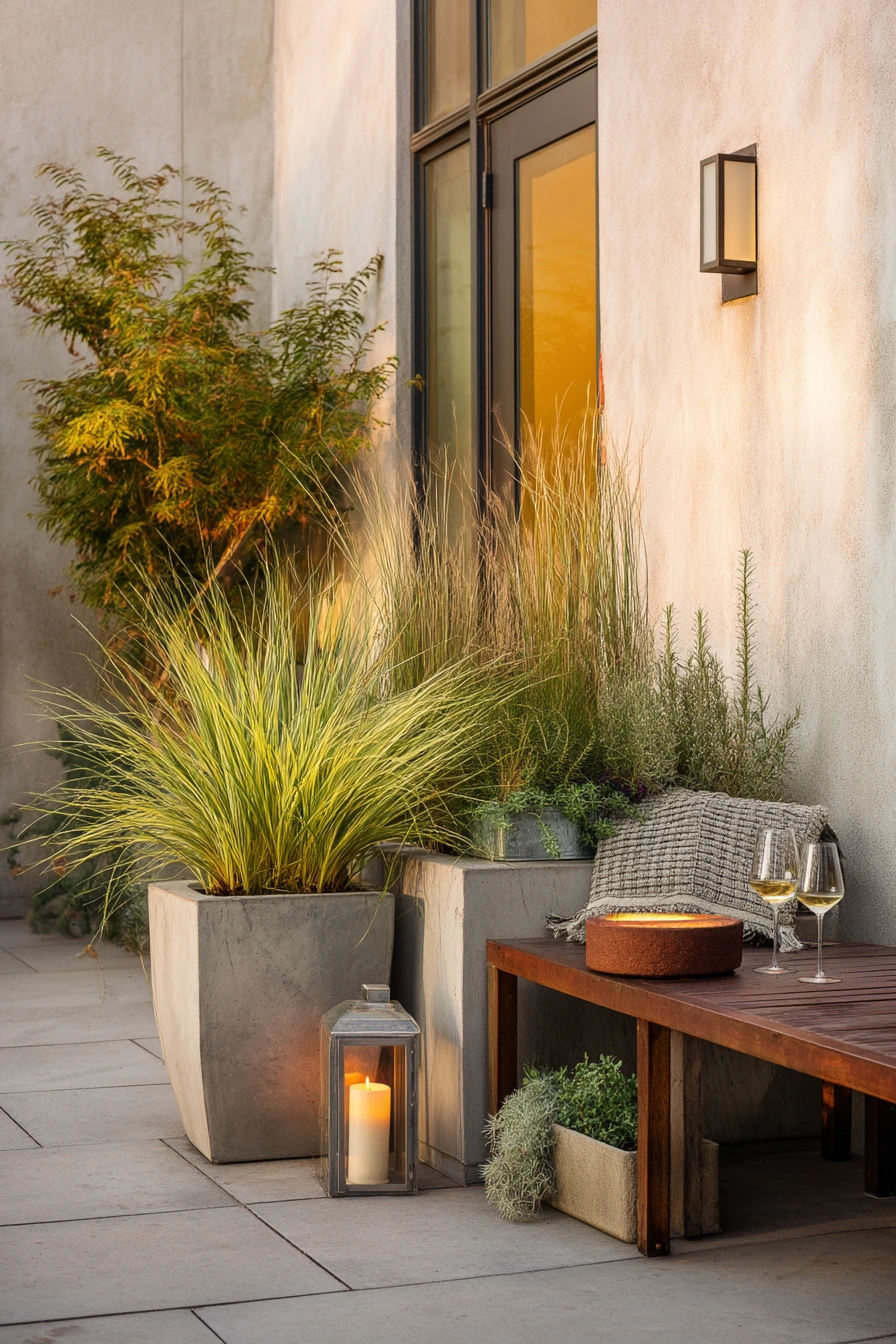
A modern patio corner garden should feel tidy in daylight and cozy at night. Oversized planters help because they read as furniture, not clutter. Use ornamental grasses for movement and a soft screen, then add a dwarf citrus for scent and a touch of color.
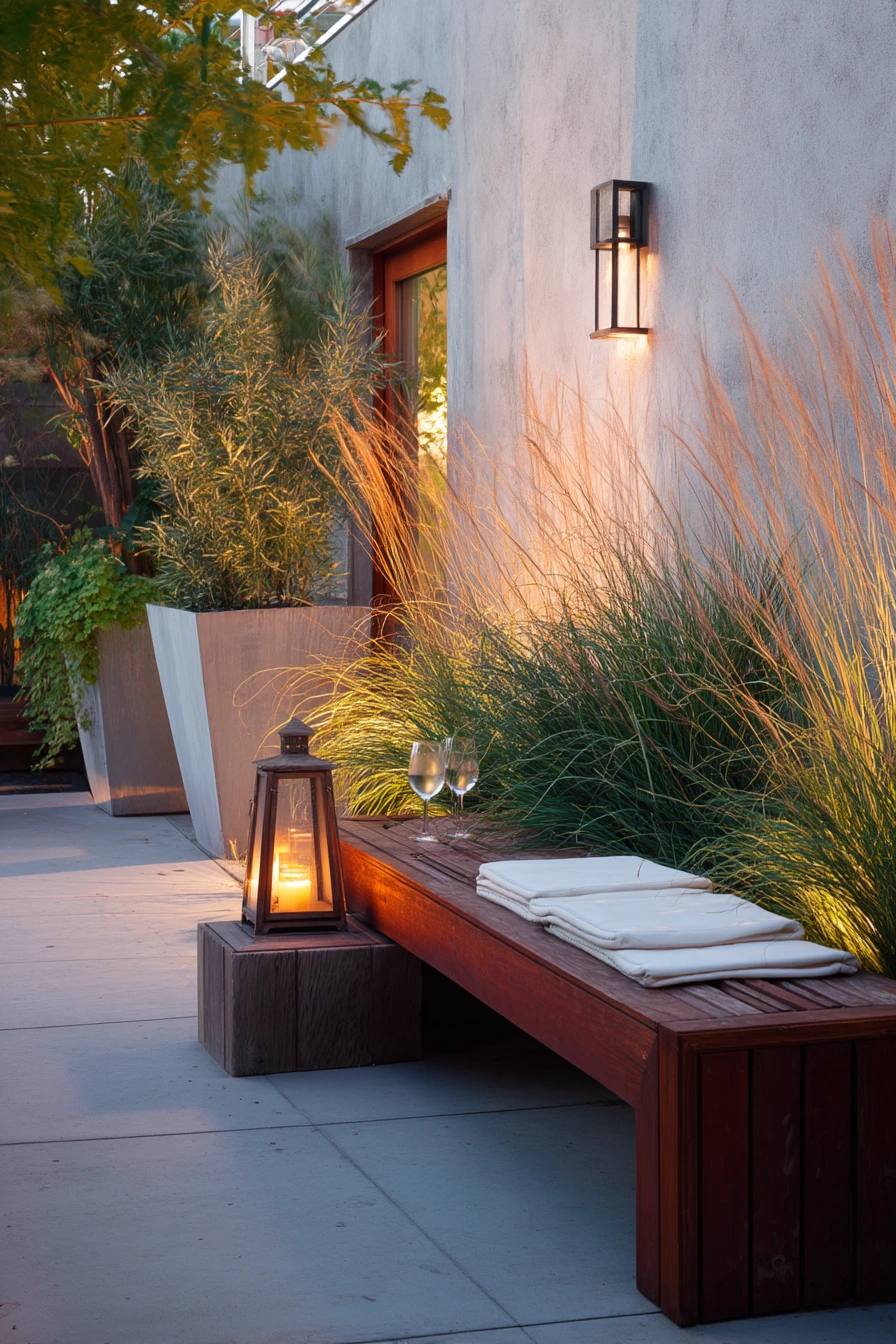
Place a low slatted bench along the corner line so guests have a place to sit without moving chairs around. A small fire bowl can sit slightly forward, ready for evening use, with a lantern glow nearby. Keep the planting simple so the corner stays calm and does not fight with the rest of the patio design.
Style the corner with real-life details that still look clean, like two wine glasses on a side table, a folded knit throw, and a partly burned citronella candle for bugs. At dusk, the warm light makes foliage look richer, so pick planters with matte finishes and avoid shiny plastic. Add a small tray for matches and a lighter so the table stays organized.
- Use two large planters and one medium to avoid a crowded look
- Choose grasses that stay upright and do not shed too much
- Keep citrus in a wheeled pot so you can move it for frost
- Add pebbles or top dressing to reduce splash and keep it neat
- Place a small outdoor rug to define the corner seating area
Pro Design Tip: Repeat the same planter shape in different sizes to make the corner look high-end with minimal effort.
Budget Considerations: Large planters can cost more; save by using lightweight resin with a stone look and spending on one real citrus tree.
6 Apartment Reading Nook Garden
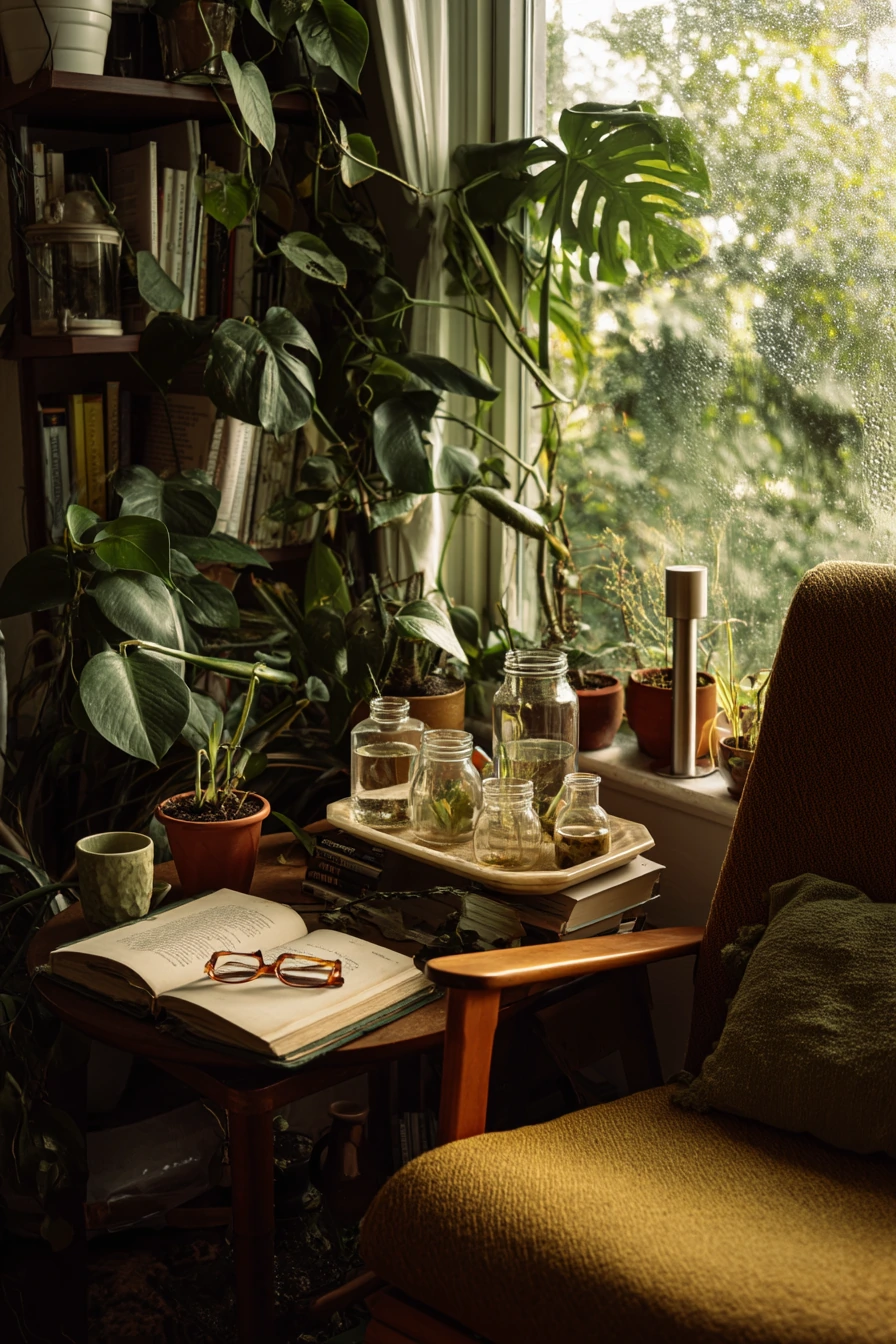
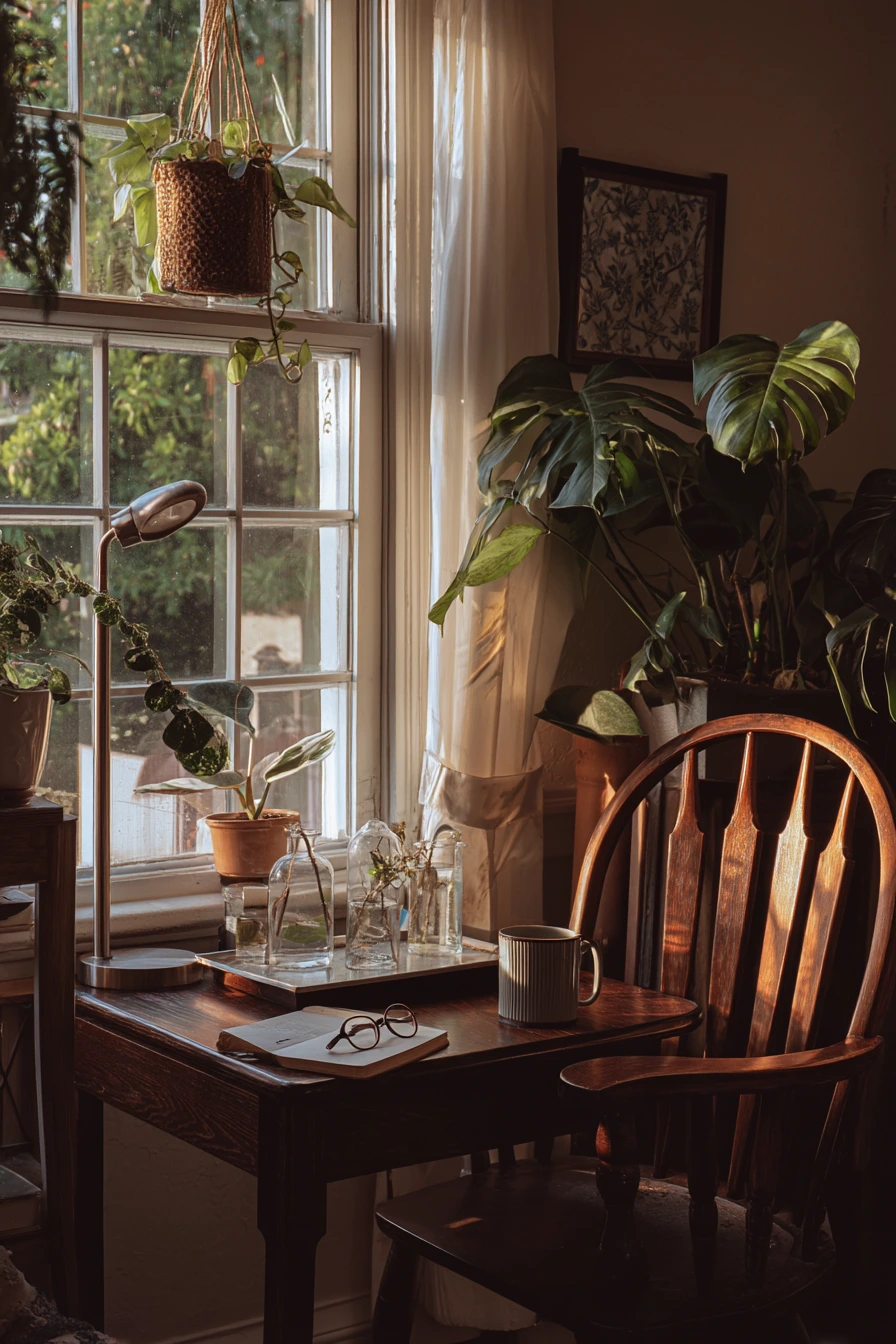
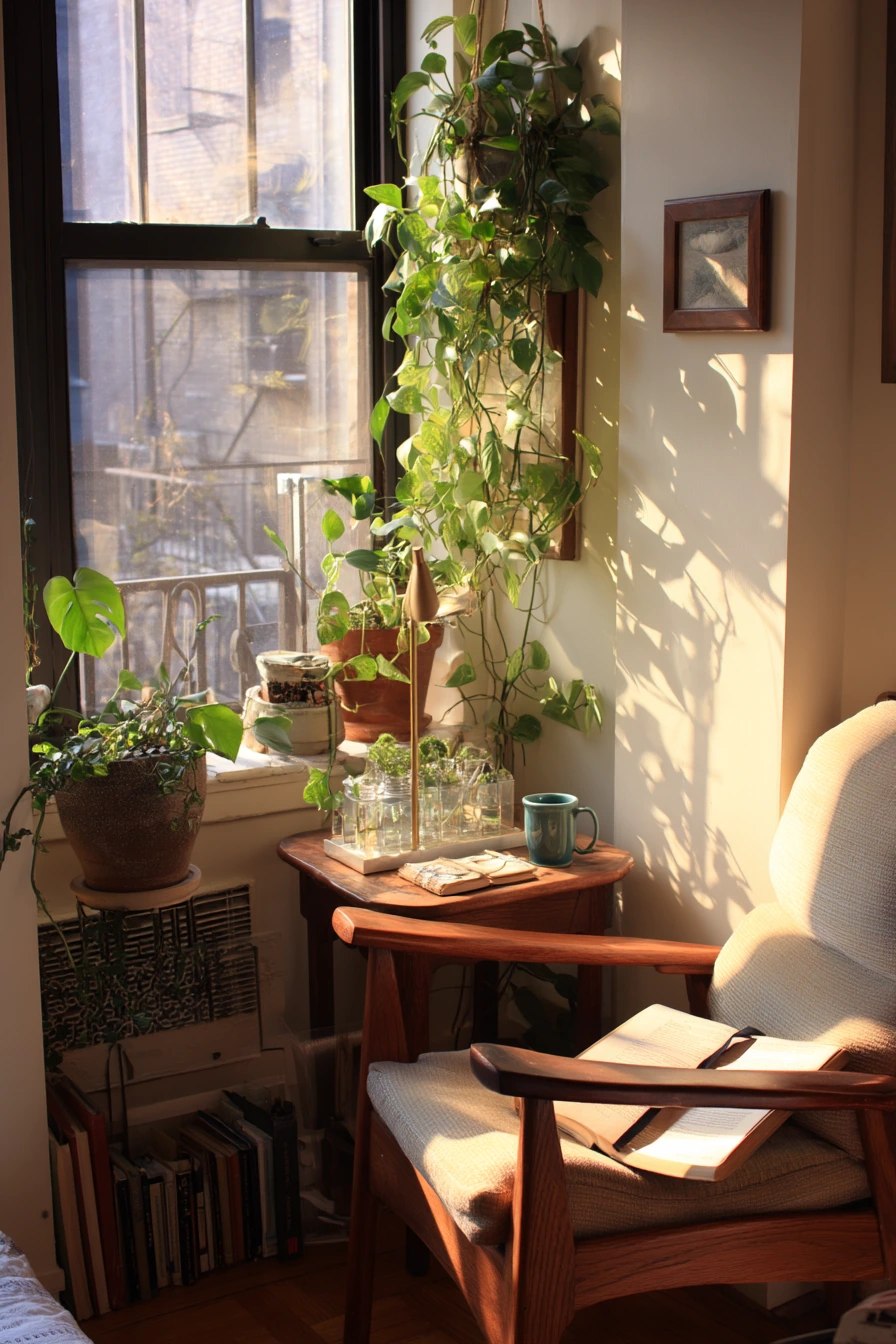
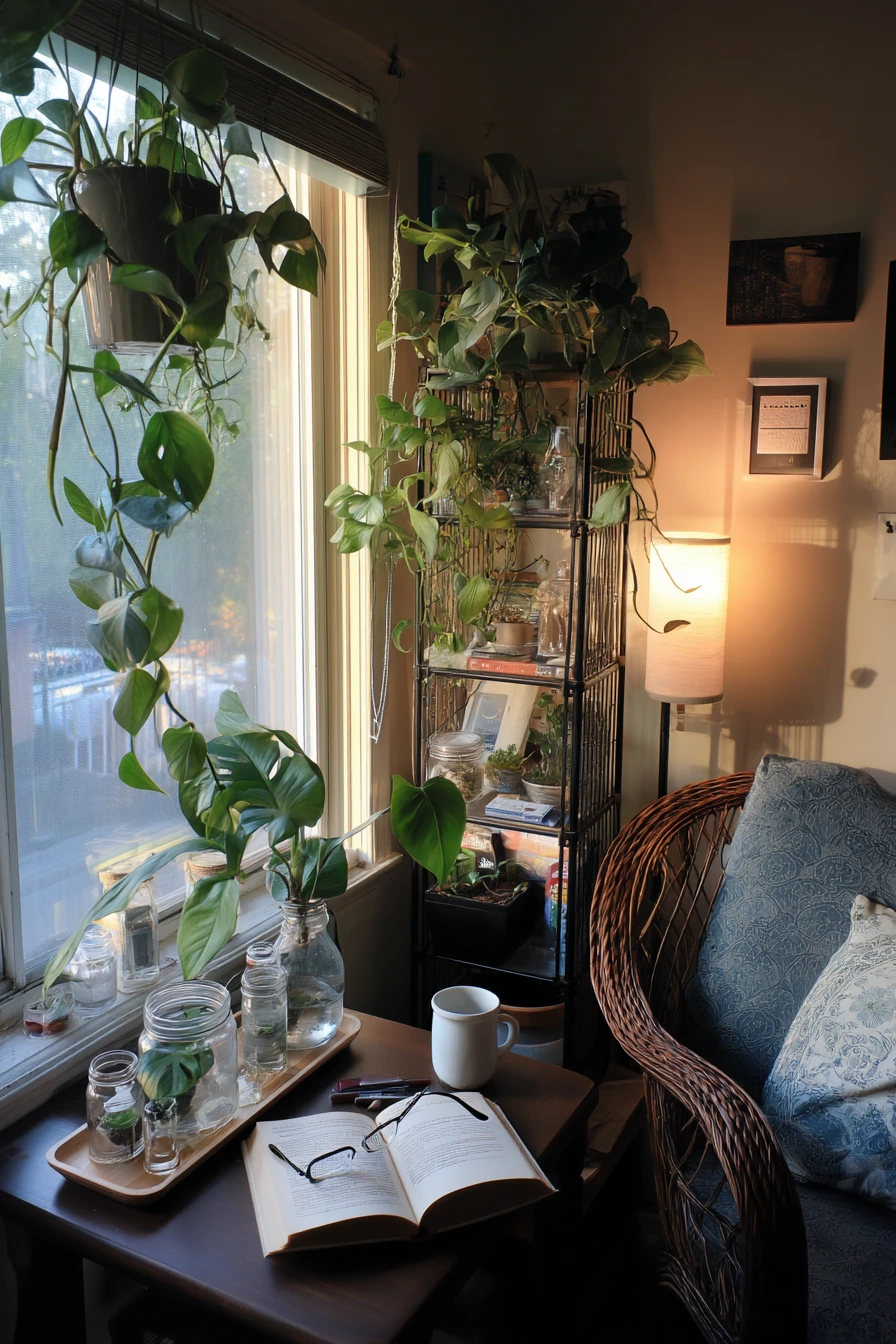
A reading chair corner garden works best when plants feel close but not in the way. Start with a comfortable chair, then place a tall plant shelf behind or beside it to frame the space. Add hanging pothos to soften the shelf edges and make the corner feel calm.
Keep plant choices simple. A small monstera adds a bold leaf shape, and a slim lamp gives you light for reading without relying on overhead fixtures. A tray of propagated cuttings in glass jars is a nice touch because it looks like decor, but it is also a practical way to grow new plants.
For a lived-in look, leave an open book with a folded page on the side table, set reading glasses nearby, and let a mug ring show on a coaster. Late-day window light is gentle, so avoid plants that need strong sun. Water lightly and wipe leaves often, since dust shows more in a reading nook. If the shelf feels busy, limit it to one plant per level and leave some empty space.
- Keep the tallest shelf plant at least 6 inches from the ceiling for airflow
- Use clear jars for cuttings so you can see water level fast
- Add one small scent plant, like a mini lavender, if light allows
- Use a narrow side table to avoid crowding the chair
- Choose a lamp with warm bulbs so green leaves look natural
Pro Design Tip: Place the chair at a slight angle to the corner so you can see plants in your side view without feeling boxed in.
Budget Considerations: Propagations are almost free; spend your budget on a sturdy shelf and a lamp you already like using every day.
7 Entryway Corner Green Welcome
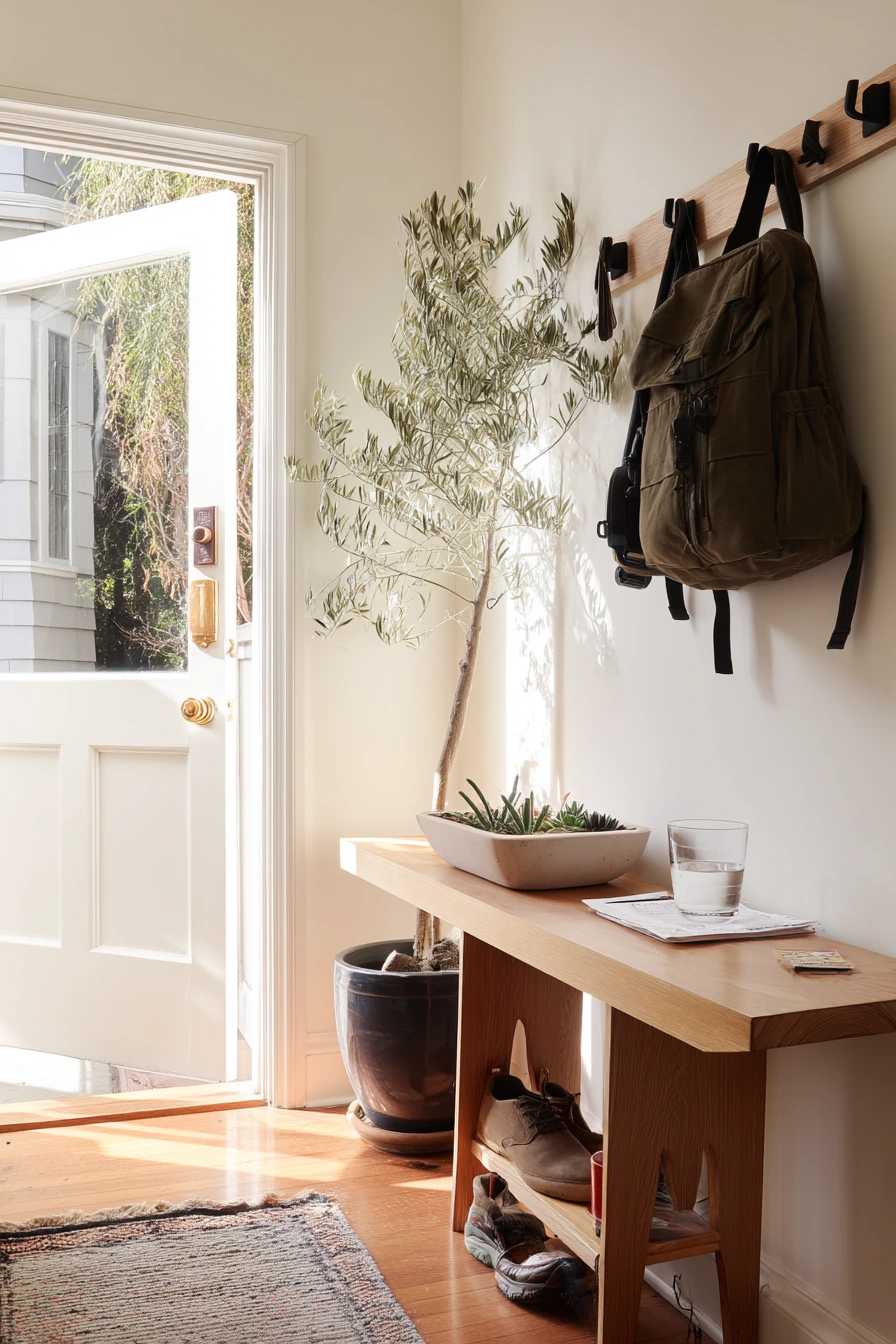
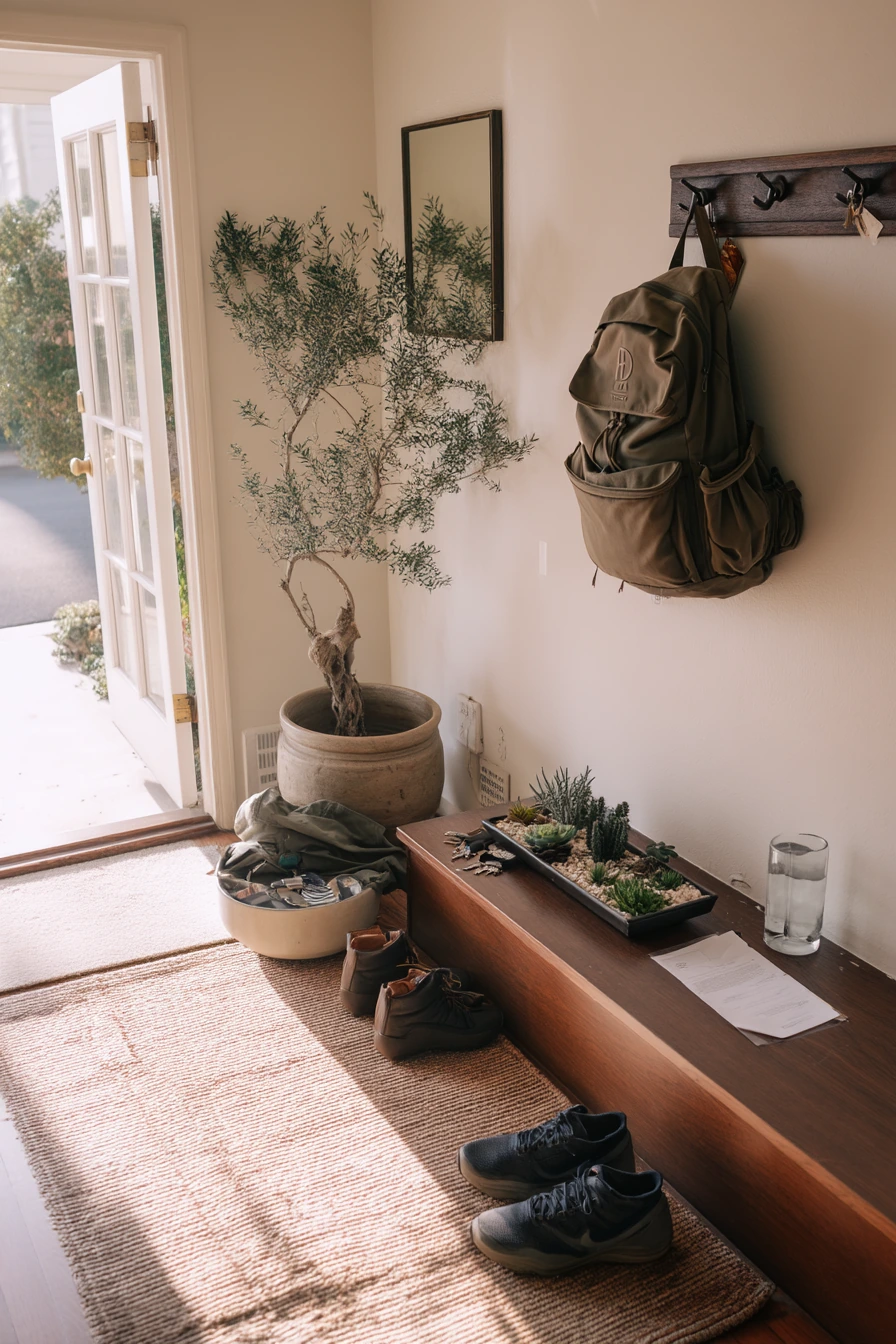
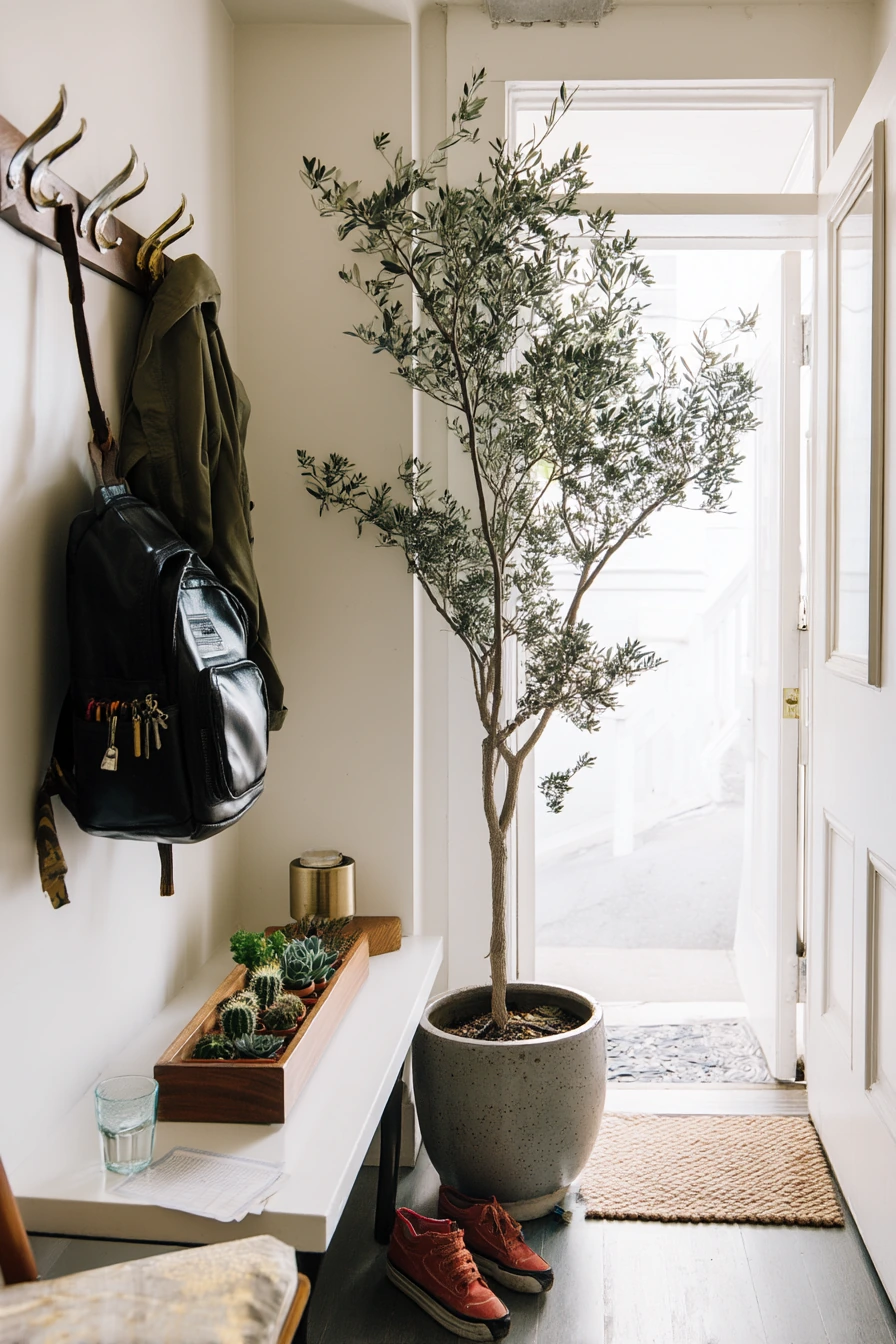
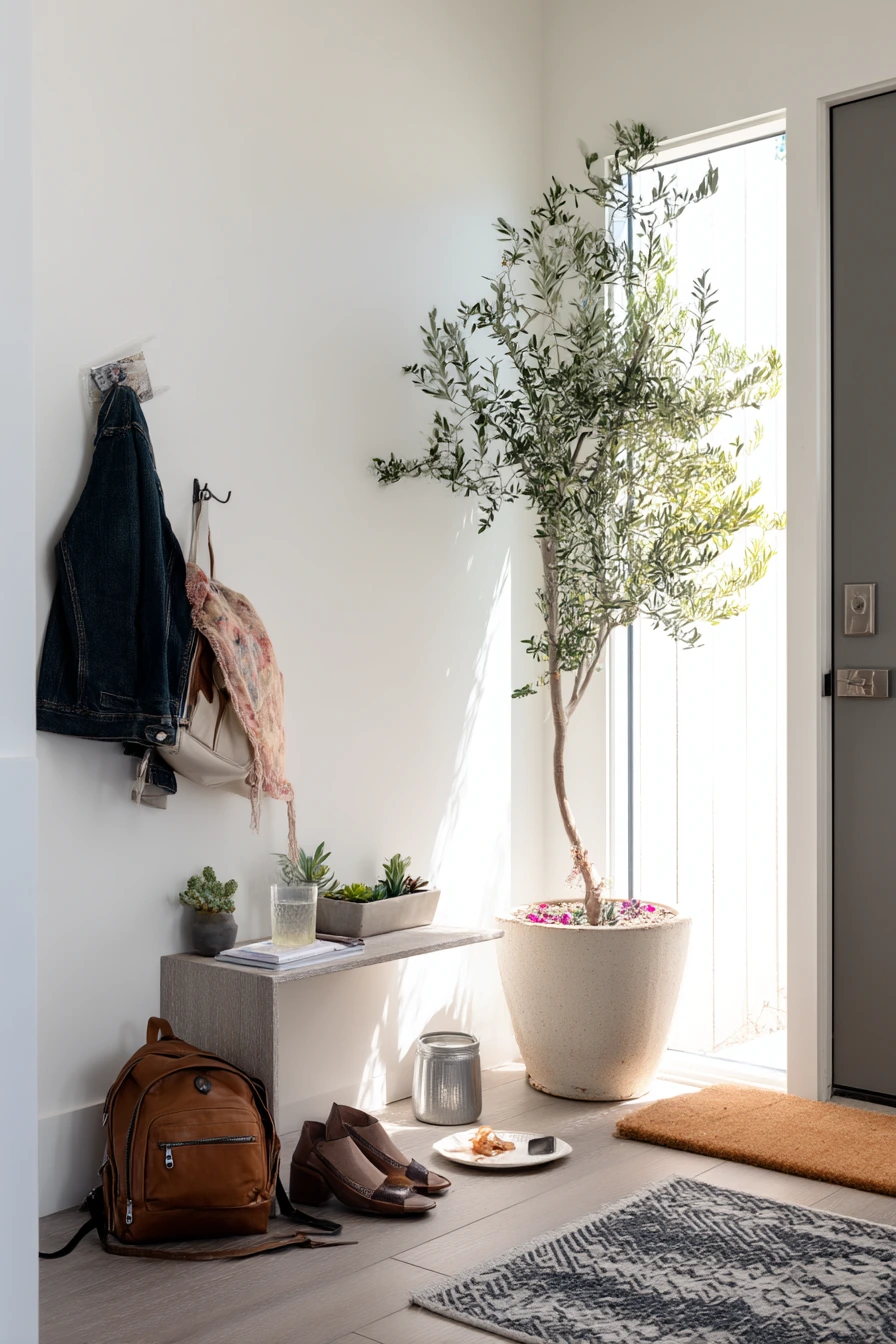
An entryway corner garden sets the tone the moment you walk in. A tall olive tree in a pot is a strong choice because it is slim, airy, and does not feel messy. Place it in the corner near natural light from the front door or a nearby window.
Add a narrow console to make the corner useful, not just pretty. A shallow tray can hold keys and mail, and a row of small succulents can sit along the back edge. Succulents handle dry indoor air better than many plants, and they stay small so the console does not feel crowded.
Keep it real for a family home. Backpacks can hang on hooks nearby, one shoe can sit near the mat, and a folded grocery list can sit beside a water glass. To style it well, use one simple basket under the console for small clutter, and wipe the console surface weekly so dust does not build up around pots. Choose pots with drainage, then add a liner or saucer so water does not ruin wood.
- Pick an olive tree pot that is heavy enough to not tip
- Use a cactus and succulent soil mix for the small plants
- Keep a small hand brush in the tray to sweep fallen grit
- Add a mirror above the console to bounce light to the plants
- Group succulents in odd numbers for a natural look
Pro Design Tip: Use one tall plant plus a clean row of small pots to create a clear top-to-bottom line that makes the entry feel larger.
Budget Considerations: Olive trees can be pricey; a smaller starter tree grows over time, and succulents are easy to multiply from cuttings.
8 Small Backyard Raised Bed Corner
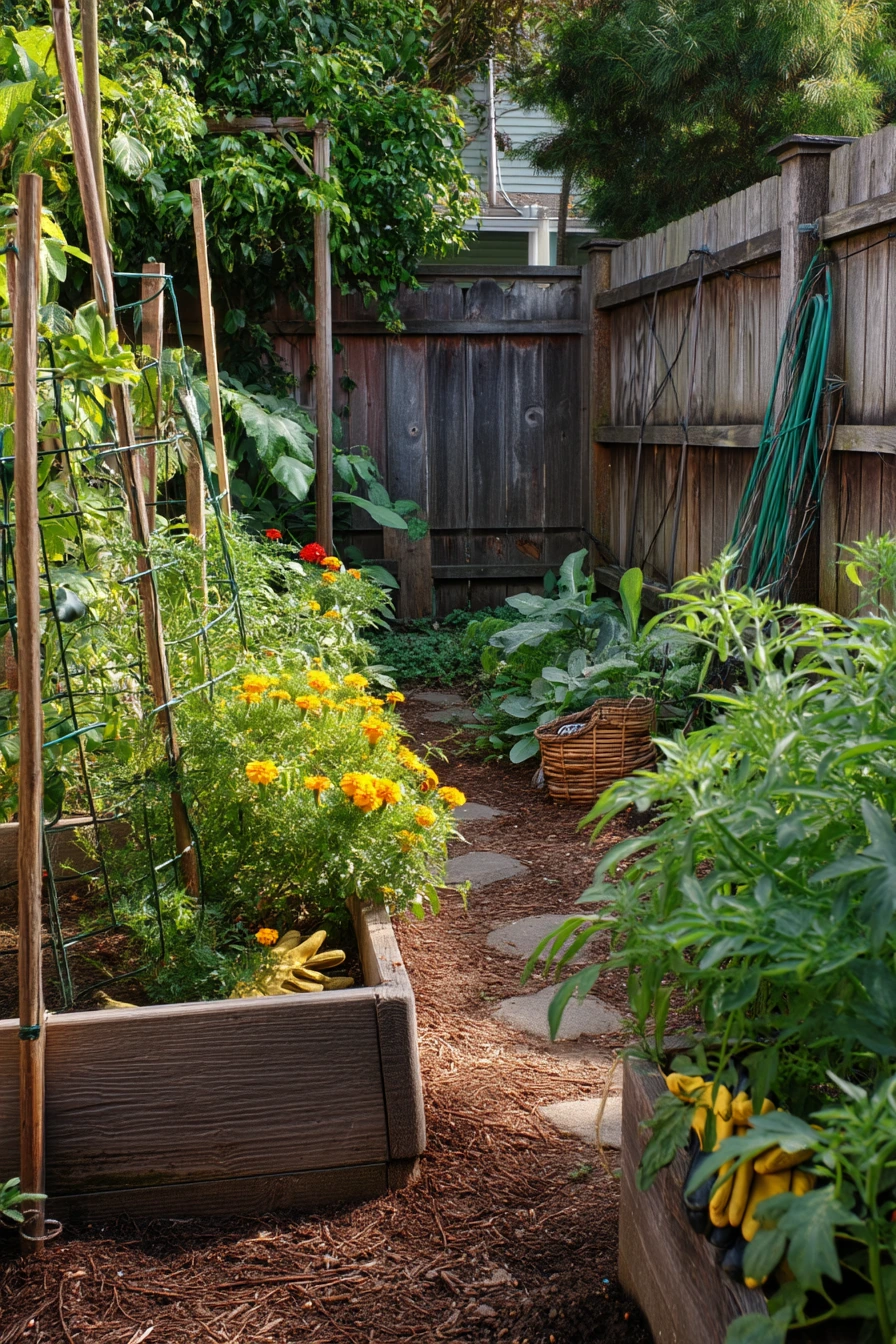
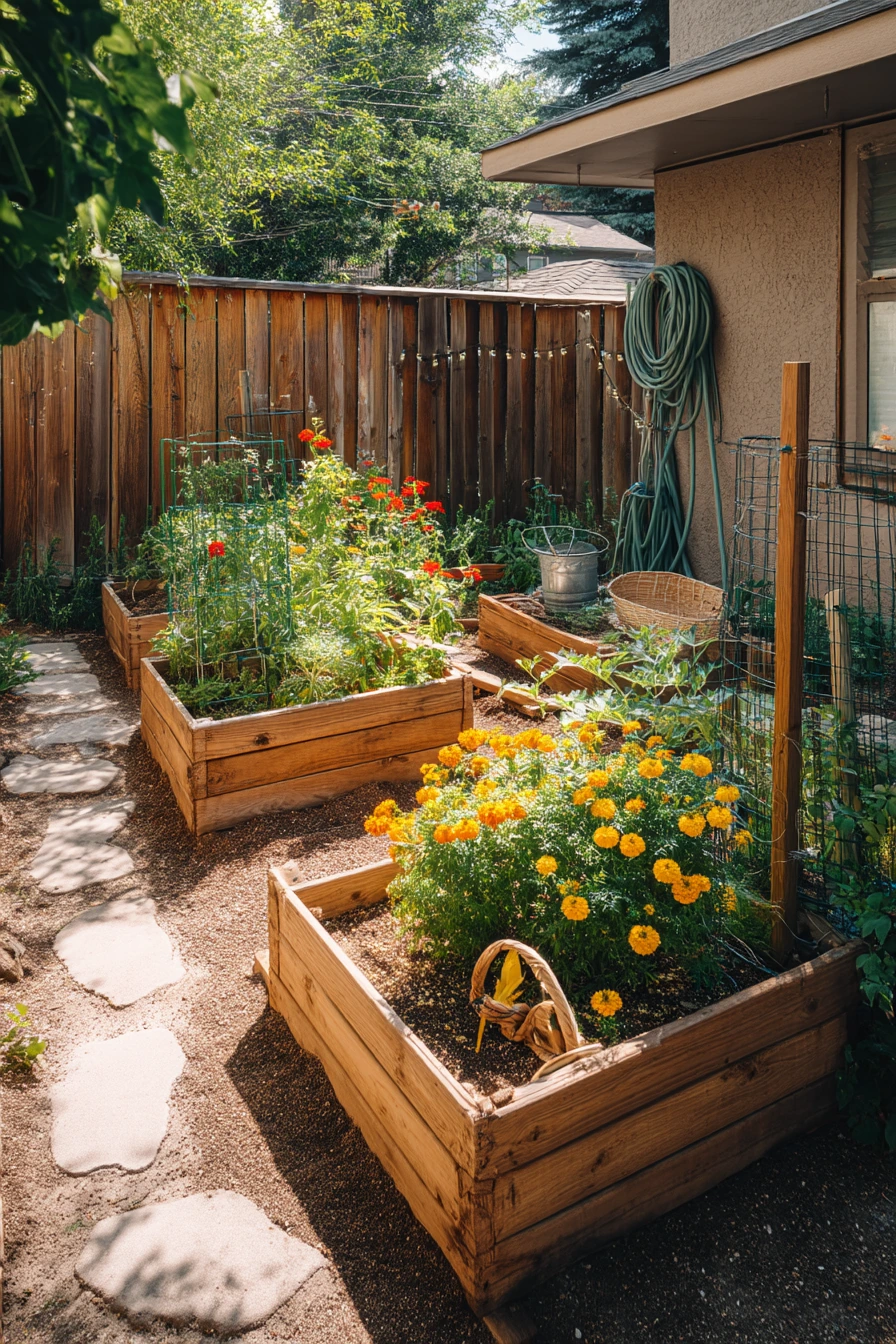
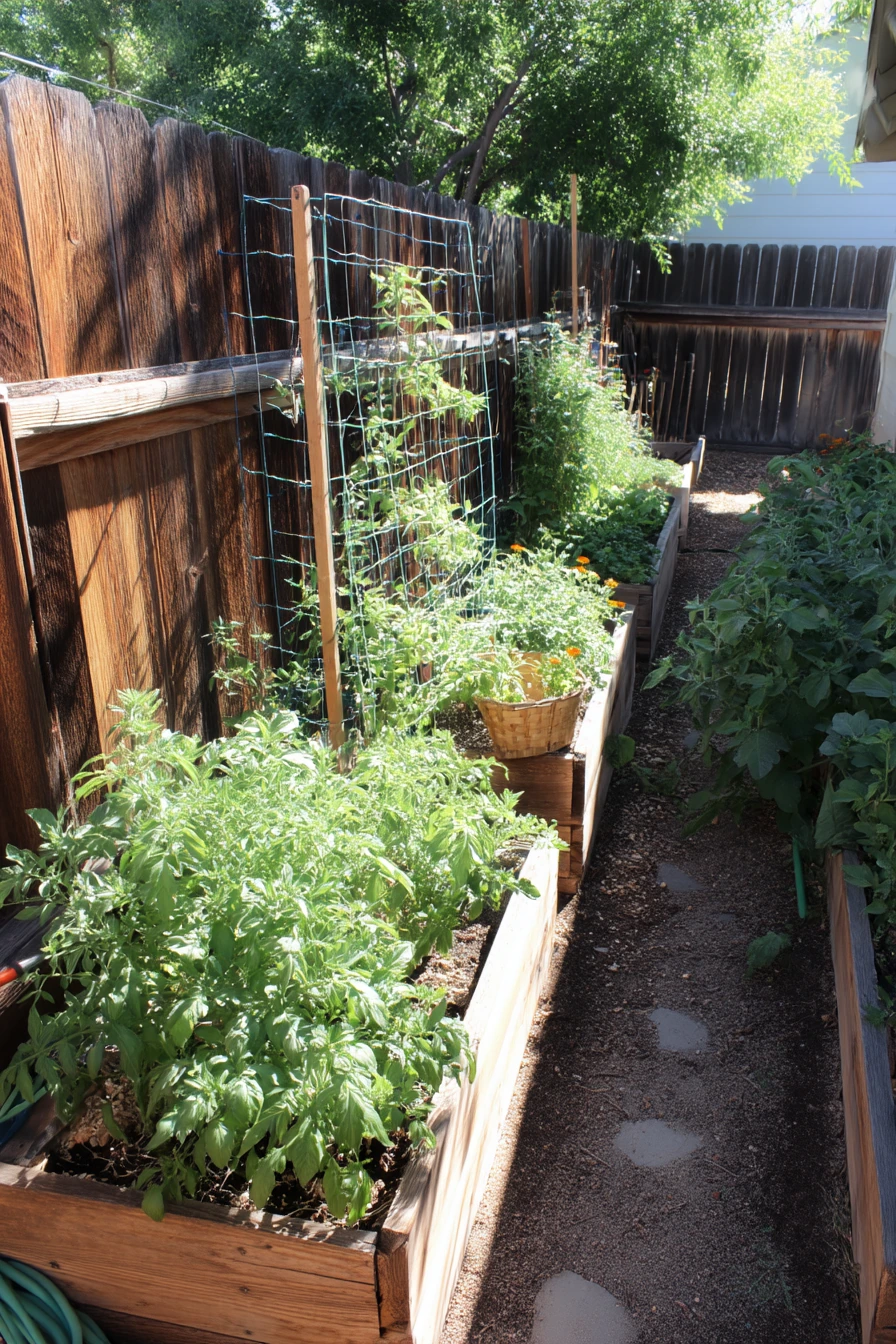
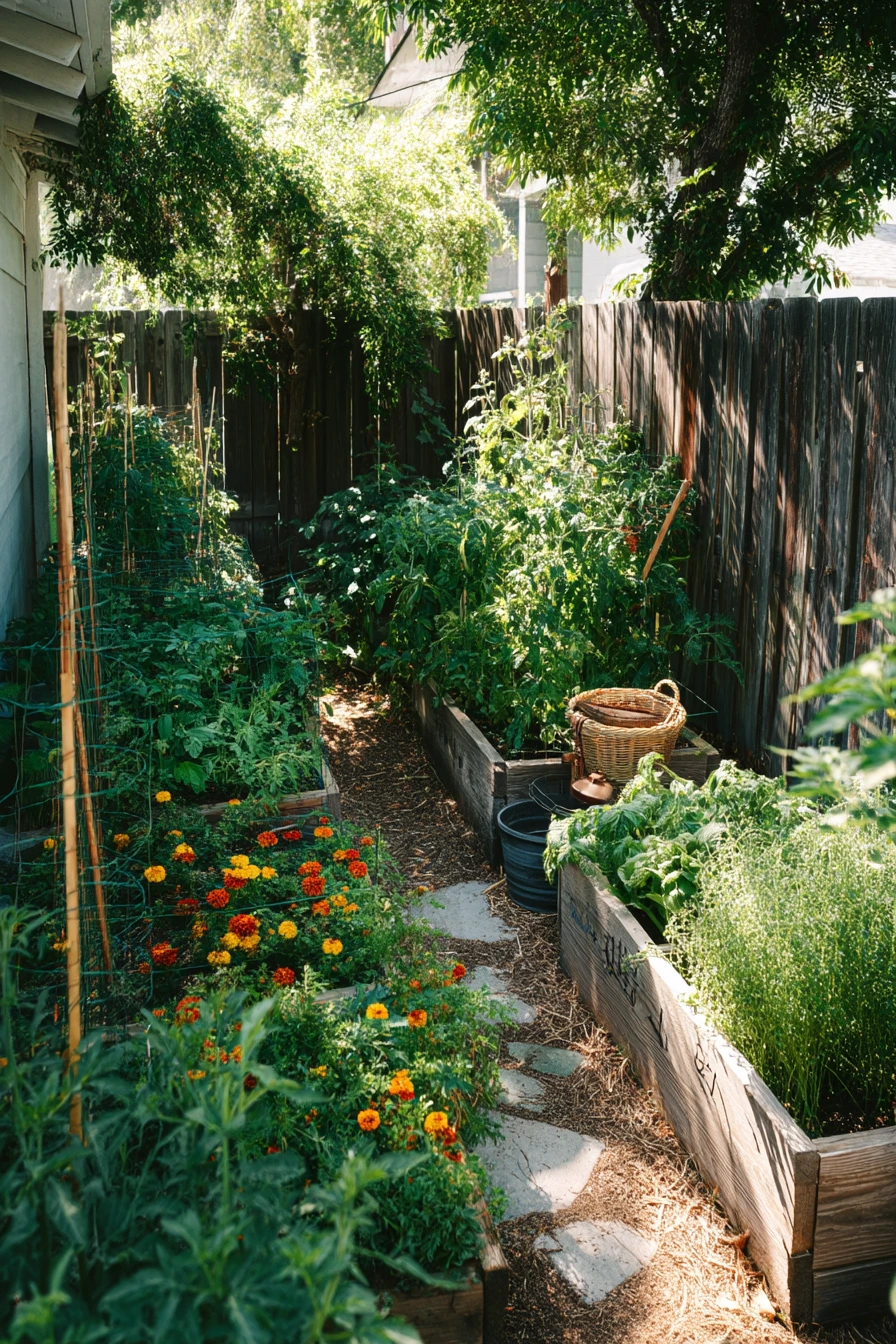
A compact backyard corner garden can produce a lot of food when it is organized. Raised cedar beds in a corner help define the space and keep soil better than in-ground spots near fences. Use a narrow path of stepping stones so you can reach every plant without compacting soil.
Build your planting around what you cook. Put tomato cages at the back, then plant basil and marigolds near the front. Marigolds add color and can help reduce pests, while basil pairs well with tomatoes and is easy to harvest. Keep greens like lettuce or spinach in the cooler part of the bed, where fence shadows soften the sun.
Make it feel like a hands-on home garden. A hose can stay coiled near the fence, gardening gloves can rest on the bed edge, and a straw basket can hold clippers and twine. The key is to keep tools contained so the corner looks tidy from the patio or kitchen window. Add mulch or straw around plants to cut weeds and hold moisture, especially in bright morning sun.
- Keep beds under 4 feet wide so you can reach the center
- Use drip irrigation or a soaker hose to save time
- Plant marigolds on bed corners as a simple border
- Label herbs with weatherproof tags so you do not guess later
- Pick greens that match your season to avoid bolting
Pro Design Tip: Set the tallest plants against the fence line and step down in height toward the path so the corner looks full but not crowded.
Budget Considerations: Cedar beds cost more upfront; a cheaper option is pine with a safe liner, or start with one bed and expand each season.
9 Seasonal Fall Corner Garden
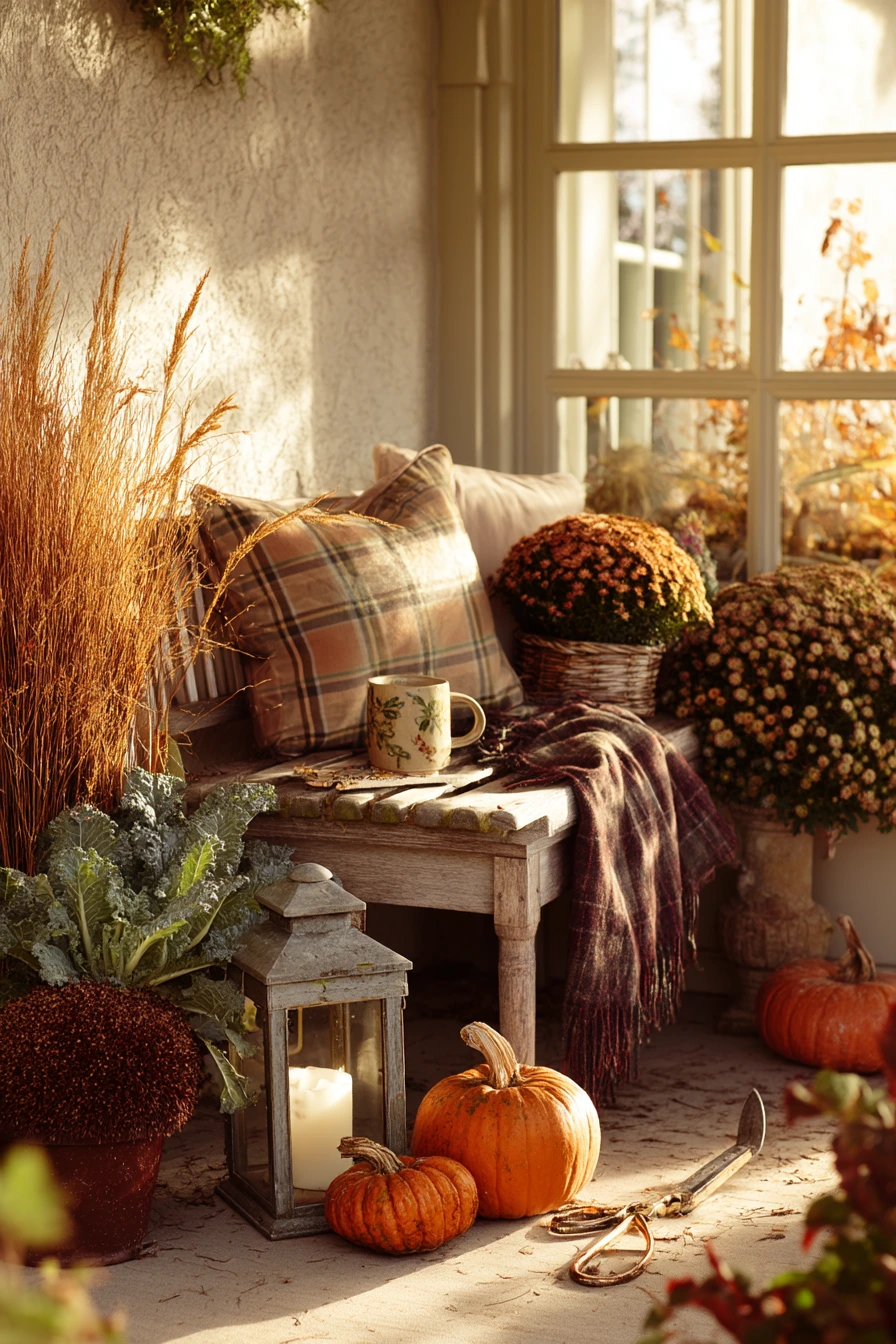
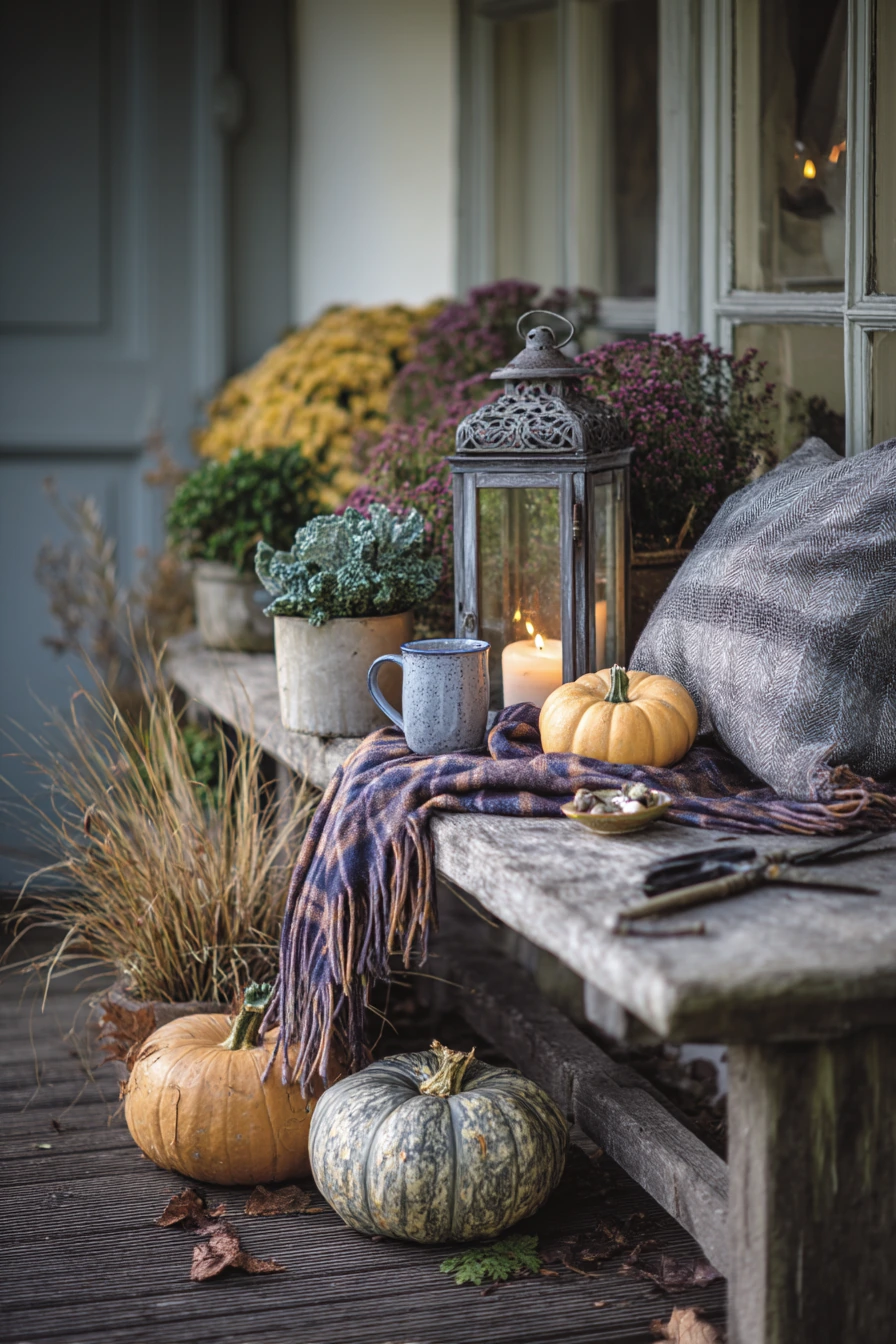
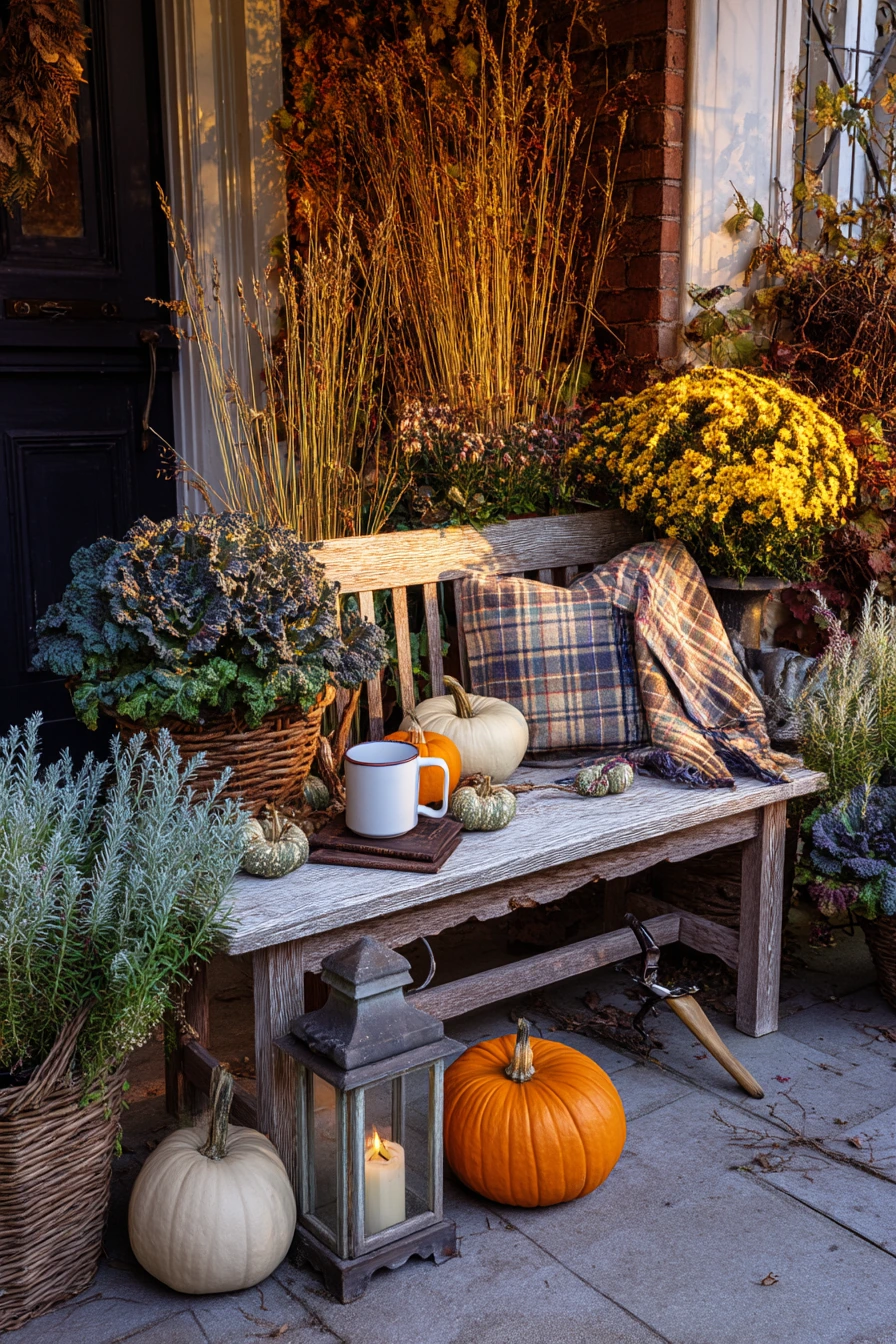
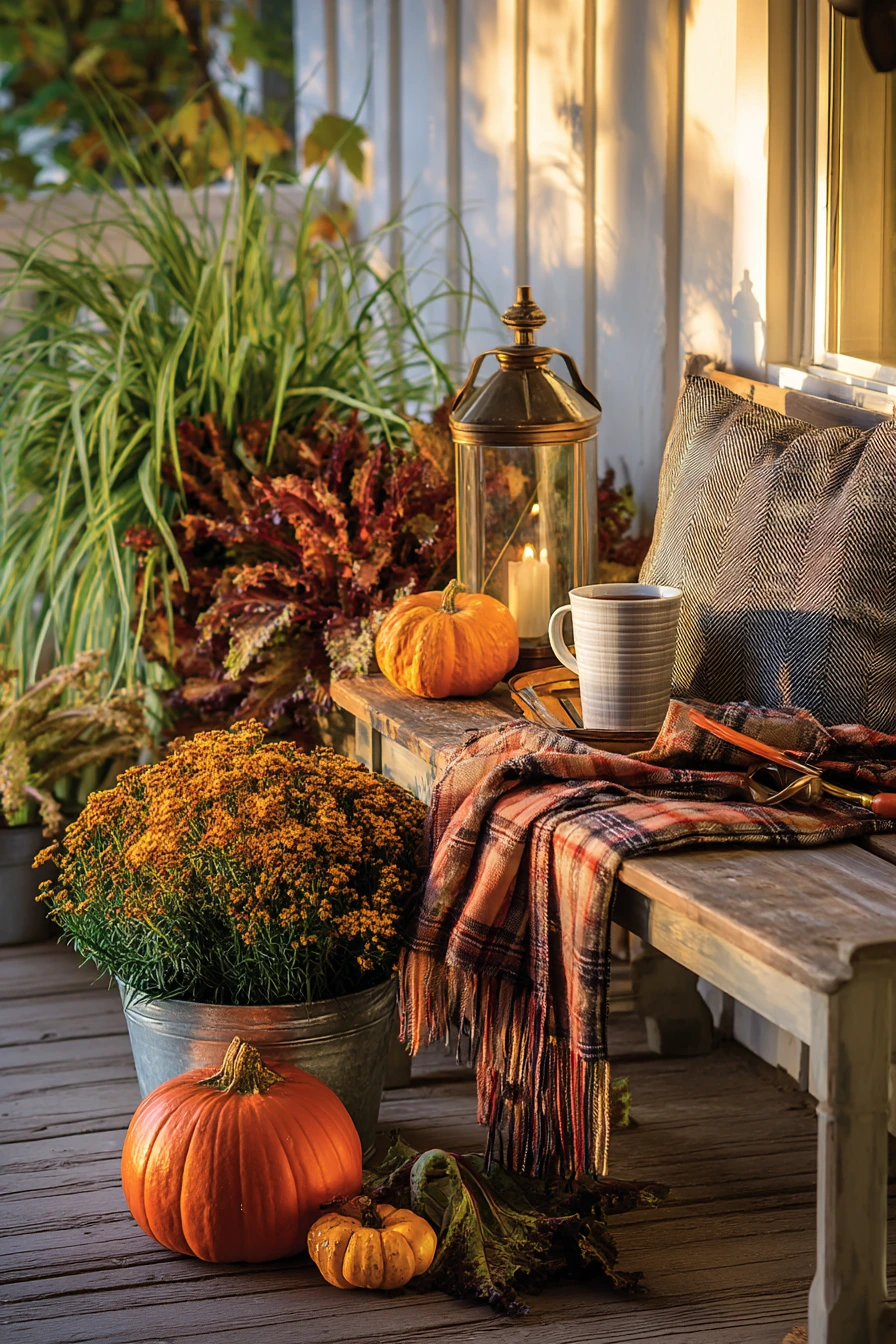
A seasonal corner garden on a townhouse porch is a quick way to refresh your entry for fall. Start with a weathered bench in the corner as your base. Then layer in mums for color, ornamental kale for texture, and dried grasses for height.
Pumpkins in varied sizes make the corner feel grounded. Place the largest ones on the floor near the bench leg, then medium ones on a crate or step, and small ones on the bench. Add a lantern beside the bench so the corner still looks good after sunset. Golden-hour light makes warm colors pop, so choose mums in rust, deep yellow, or soft white.
For lived-in styling, toss a plaid scarf on the bench, set a ceramic mug on a coaster, and leave garden snips near the pumpkins in a small dish. Keep the porch safe by leaving a clear walking path. Water mums from the side so you do not splash the porch, and remove dead blooms so they stay full longer. When frost hits, swap mums for hardy evergreens to keep the corner going.
- Use odd numbers of pumpkins for a natural grouping
- Mix one tall grass bundle with lower plants to build layers
- Keep mums in their pots for easy moving during cold snaps
- Add a doormat in a warm tone to tie the corner together
- Use a small riser or crate to add height without more plants
Pro Design Tip: Repeat one accent color, like deep orange, in both pumpkins and a scarf so the corner looks styled, not random.
Budget Considerations: Buy smaller mums and group more of them, or use grocery store pumpkins and reuse the lantern and bench each year.
10 DIY Pallet Corner Garden
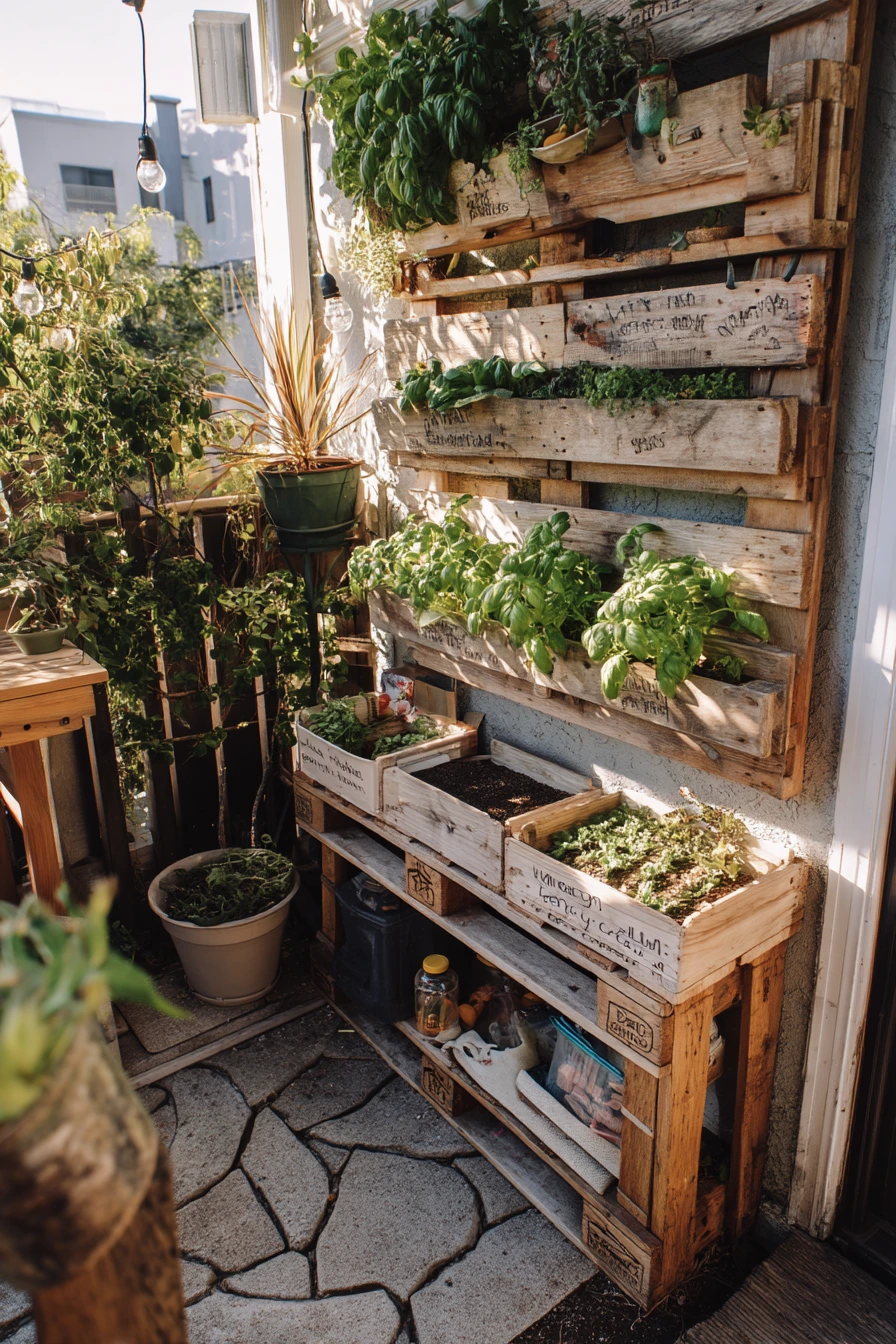
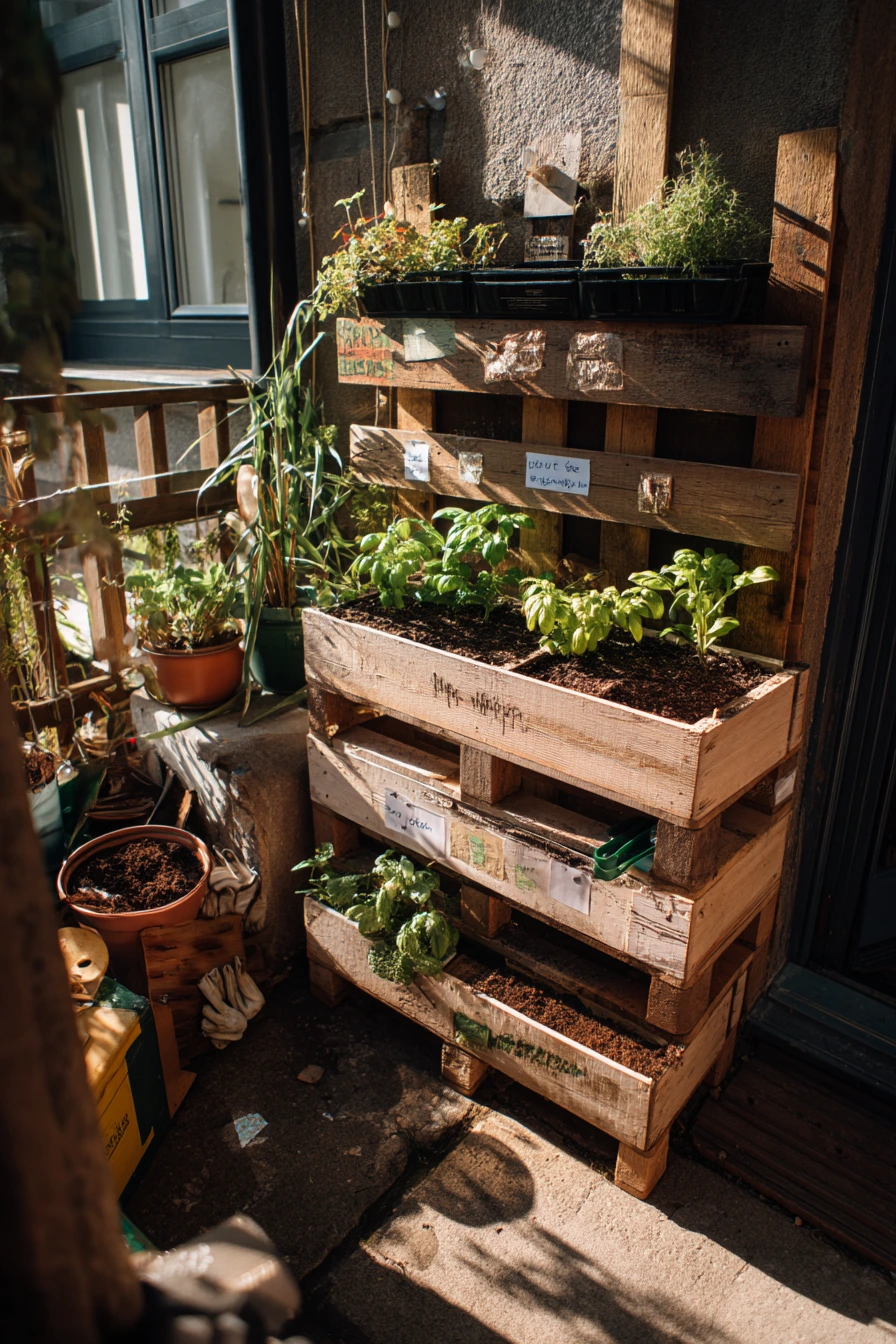
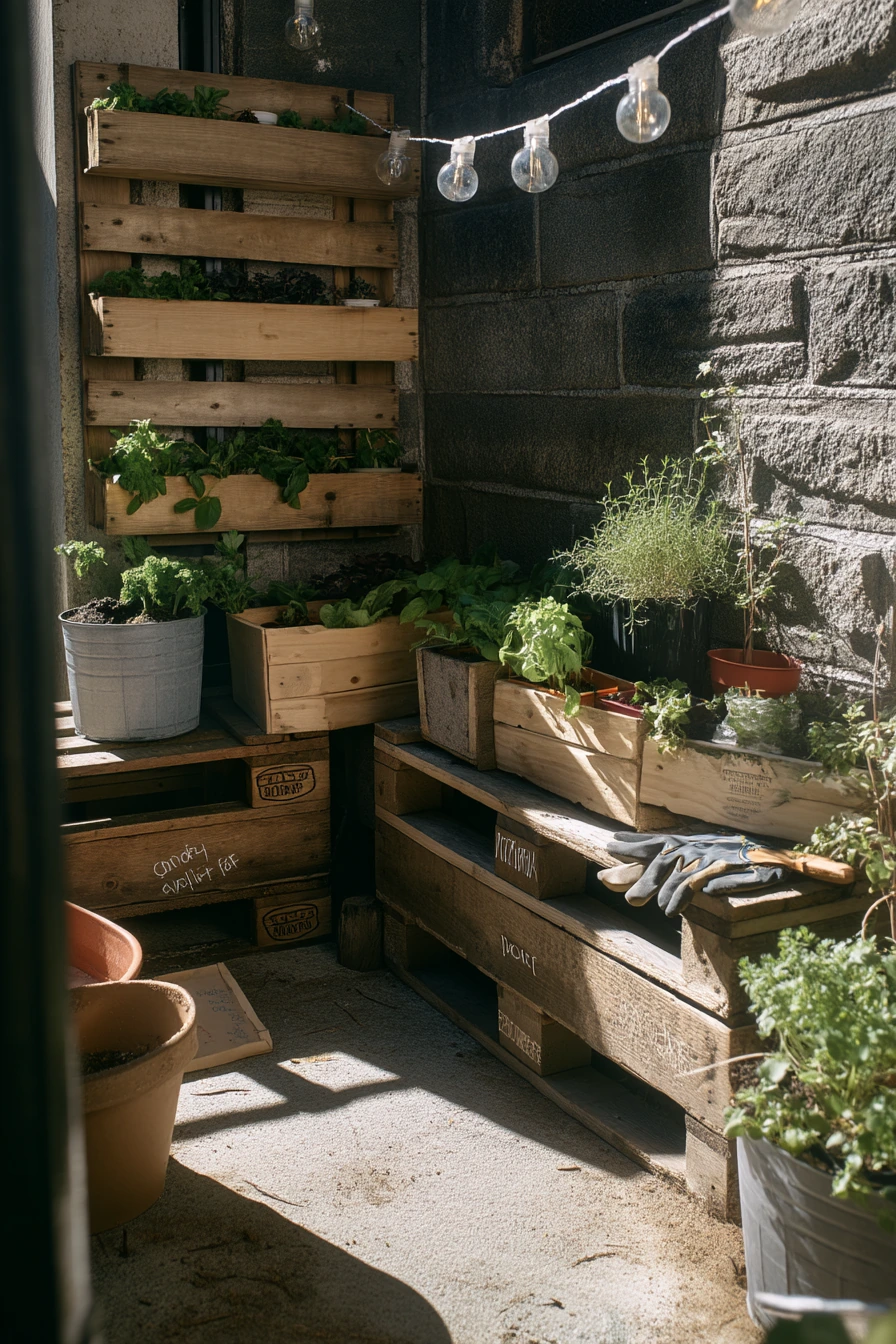
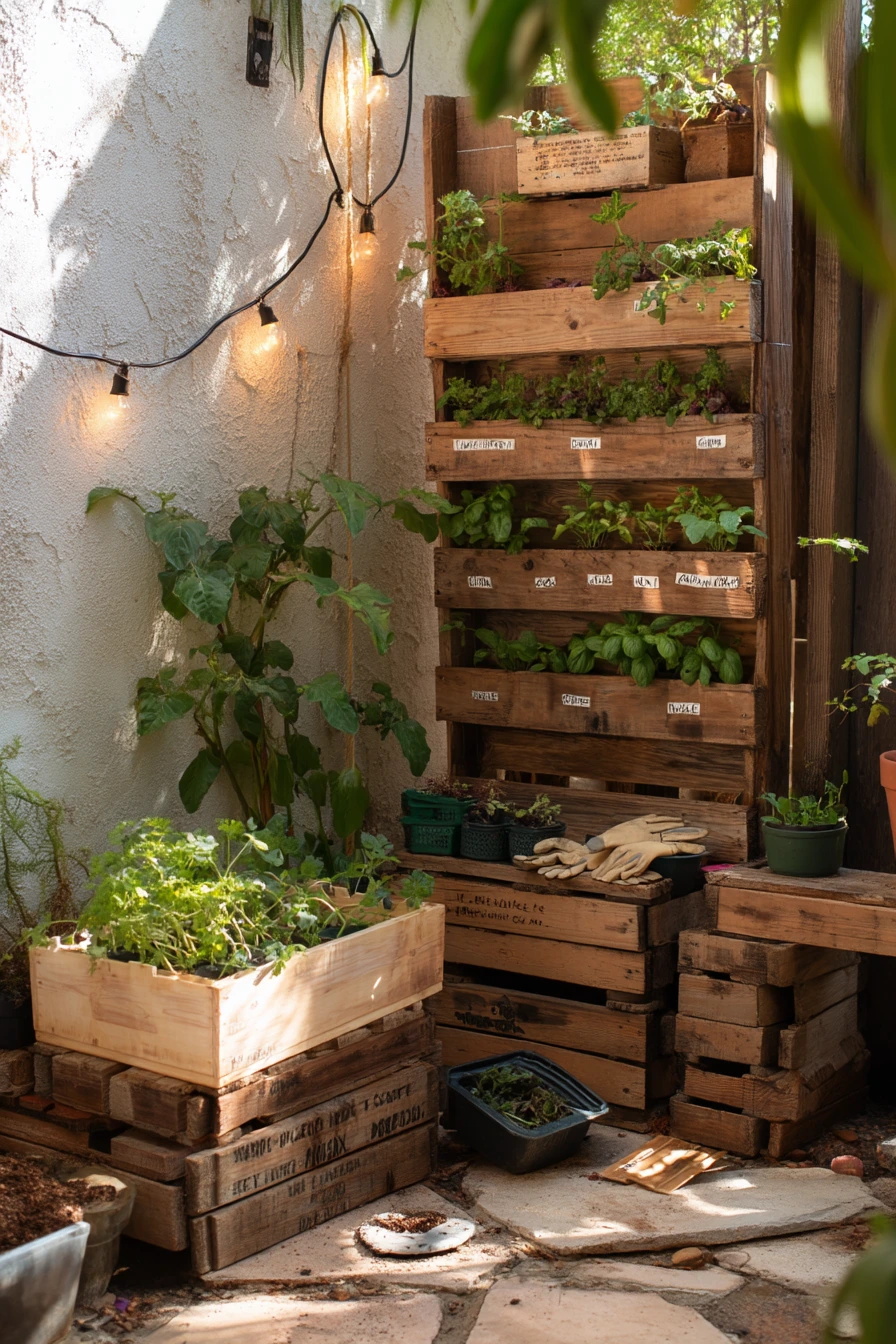
A DIY corner garden in a small urban courtyard works best when you use the walls. Repurposed pallets can become a simple vertical herb wall, and stackable planters help you grow more in a tight footprint. This setup also looks great in photos because it has clear lines and labels.
Start by choosing one corner that gets steady light. Secure a pallet upright, then add pockets or small pots for herbs, with labels clipped on so harvesting is quick. String lights can run above the corner to make it usable at night without adding harsh glare. Keep a small work zone nearby, like a half-open toolbox and a notebook with sketched plant notes.
Let the corner show real use, but keep it contained. Paint-specked gloves can hang on a hook, and spilled potting mix can stay on the stone if you sweep the edges so it looks intentional, not dirty. Use a tray or bin to corral small items like clips, twine, and plant tags. If the courtyard is windy, choose heavier pots at the bottom and smaller ones higher up so the display stays stable.
- Use a moisture barrier behind the pallet to protect walls
- Plant hardy herbs like thyme and rosemary in the top rows
- Put thirsty herbs like basil lower where water drips down
- Add casters to a planter base so you can move it for cleaning
- Test string lights with a timer for easy nightly glow
Pro Design Tip: Keep labels uniform in one color and font style so the vertical wall looks clean even when plants grow unevenly.
Budget Considerations: Free pallets and basic planters can keep costs low; spend a little on outdoor-safe screws, a wall barrier, and a quality potting mix.
Corner garden ideas are about making one small space feel useful and calm. Pick the corner you see the most, match plants to the light, and keep tools close but tidy.
Start with a simple base like a chair, a bench, a console, or a raised bed. Then add layers with one tall plant, a few medium pots, and one trailing plant for softness.
FAQ
What plants are best for a shaded corner garden? Ferns, hostas, and hydrangeas do well in shade, plus climbing jasmine for a soft wall.
How do I start a corner garden in a rental? Use freestanding stands, pots with saucers, and avoid drilling by choosing tension rods or leaning trellises.
How often should I water balcony herbs? Check daily in warm weather; water when the top inch of soil feels dry, and empty saucers after.
What is the easiest way to make a corner garden look styled? Repeat one material or color in pots, and group items in threes with clear height steps.
How do I hide grow lights so the room still looks nice? Place a slim light behind a curtain edge or on the top shelf pointing down, and use warm bulbs if possible.
What should I put under indoor pots to protect floors? Use saucers, waterproof mats, or a tray, and water plants in a sink when you can.
How can I keep a family corner garden from getting messy? Add one basket for tools, use liners in pots, and set a quick weekly reset time for wiping and sweeping.
Choose one idea from this list and build it this week. A finished corner, even a small one, can change how your whole home feels.