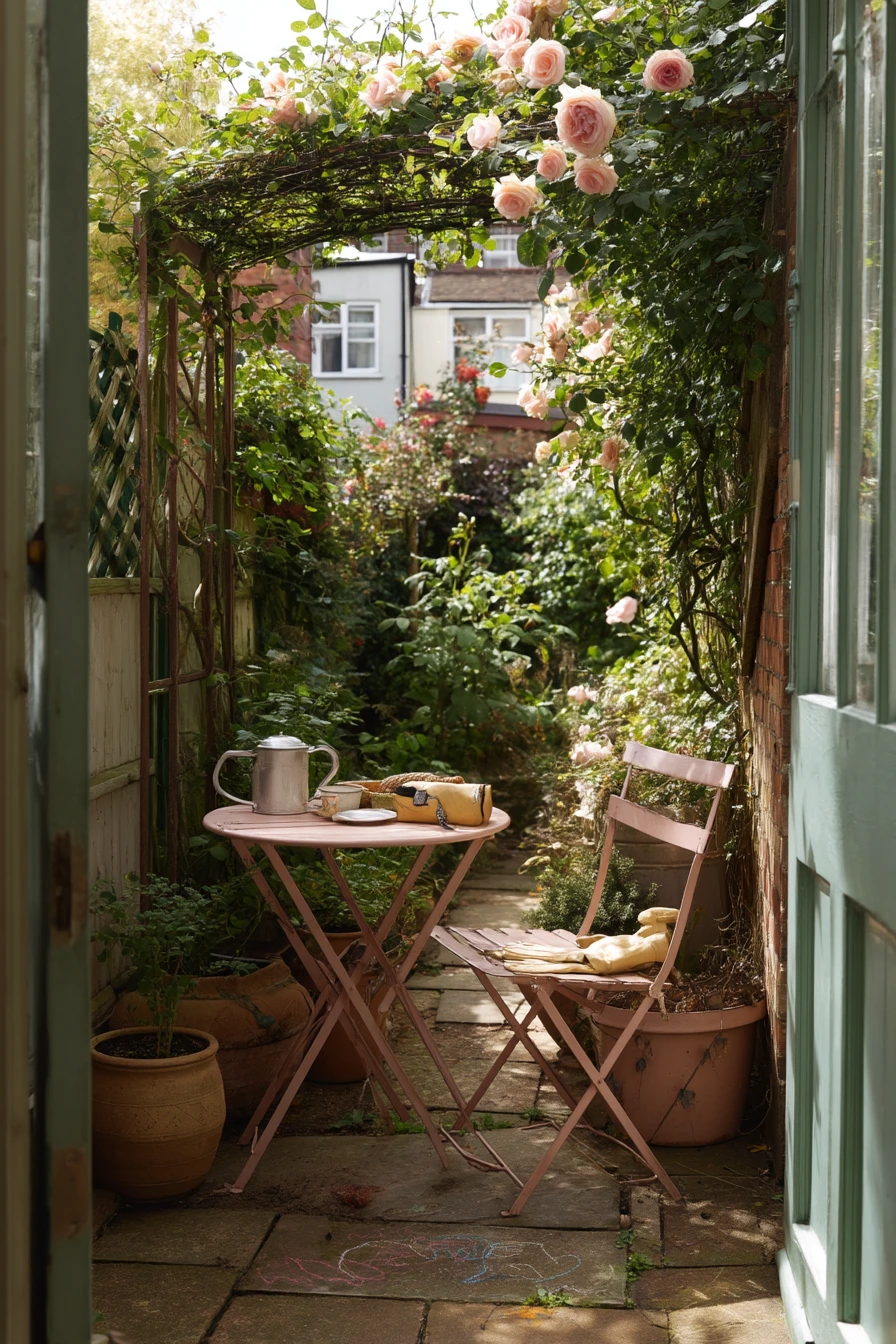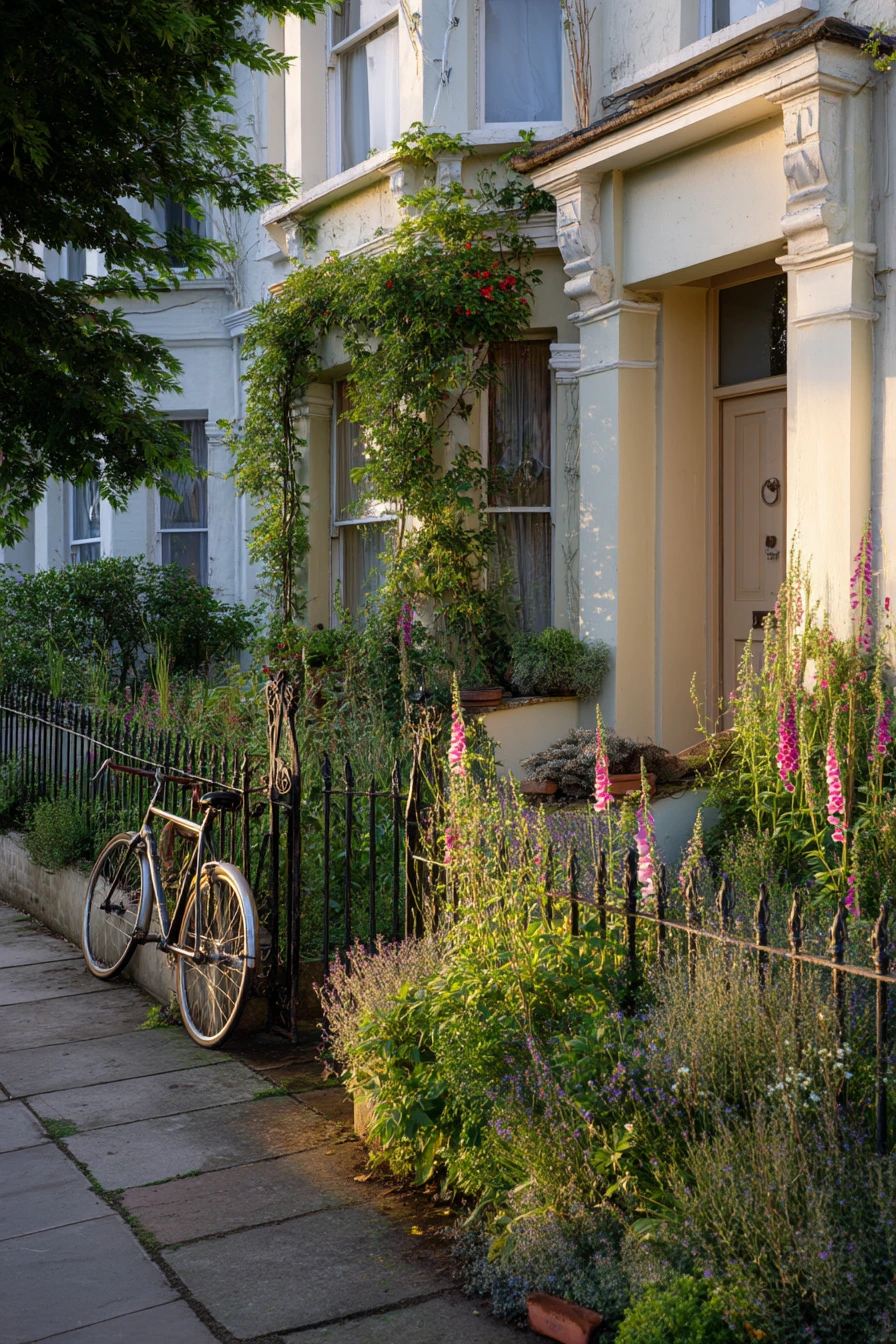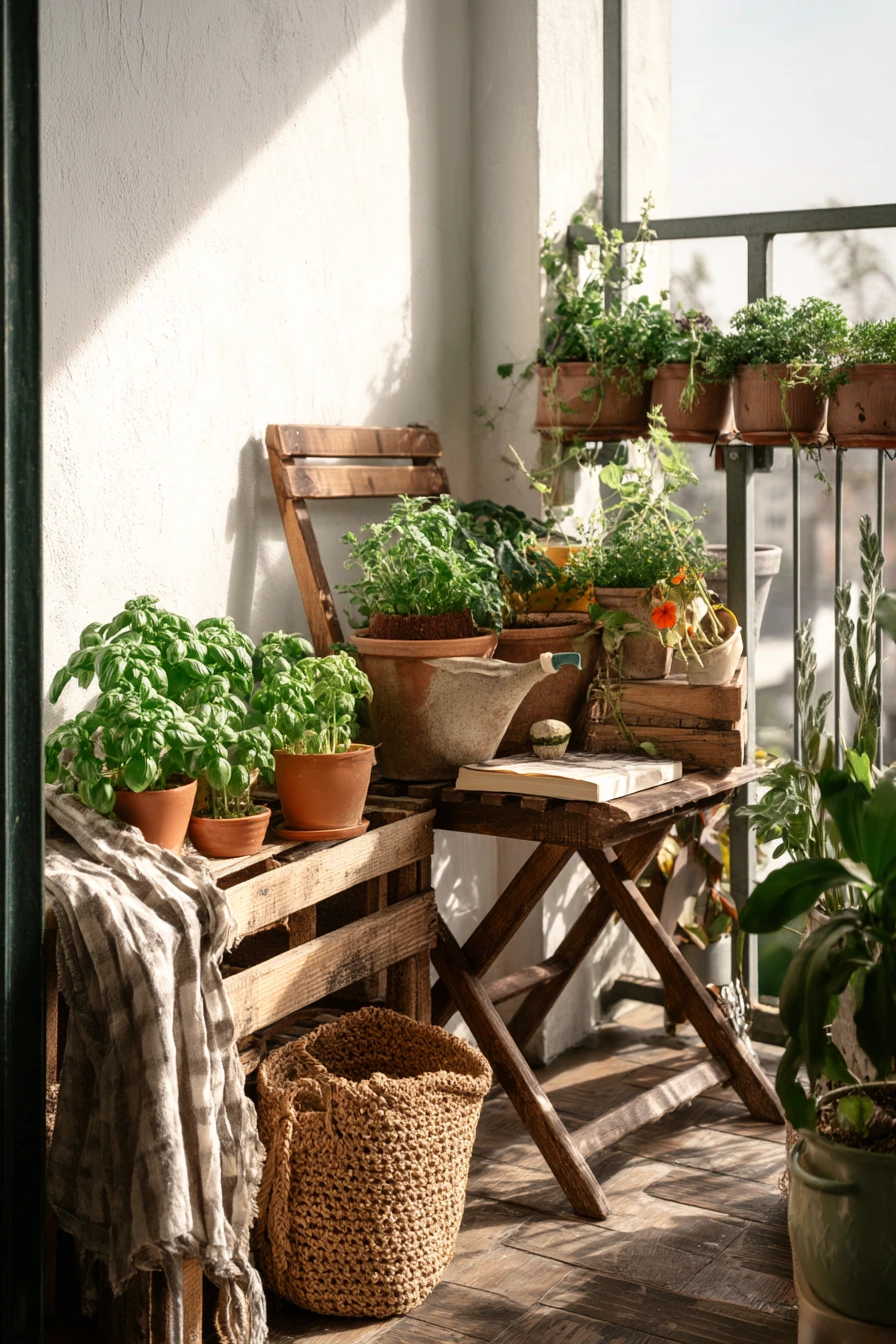

Cucumber trellis ideas help you grow more cucumbers in less space. When vines climb up, fruit stays cleaner, air moves better, and picking is easier.
This guide shows 10 real-life trellis setups, from galvanized raised beds and cattle panels to bamboo poles and twine on a city balcony. Each one includes simple build notes and small styling ideas so your garden looks tidy and lived-in.
You will also learn where to place a trellis for morning light, how wide to make paths, and what to keep nearby like pruning snips, gloves, and a watering can. These details make daily care faster.
Use the ideas as a plan for your own yard, patio, greenhouse, or rental. Pick one design, adjust it to your space, and start training vines this week.
1 Raised Bed Arches Over a Backyard Path
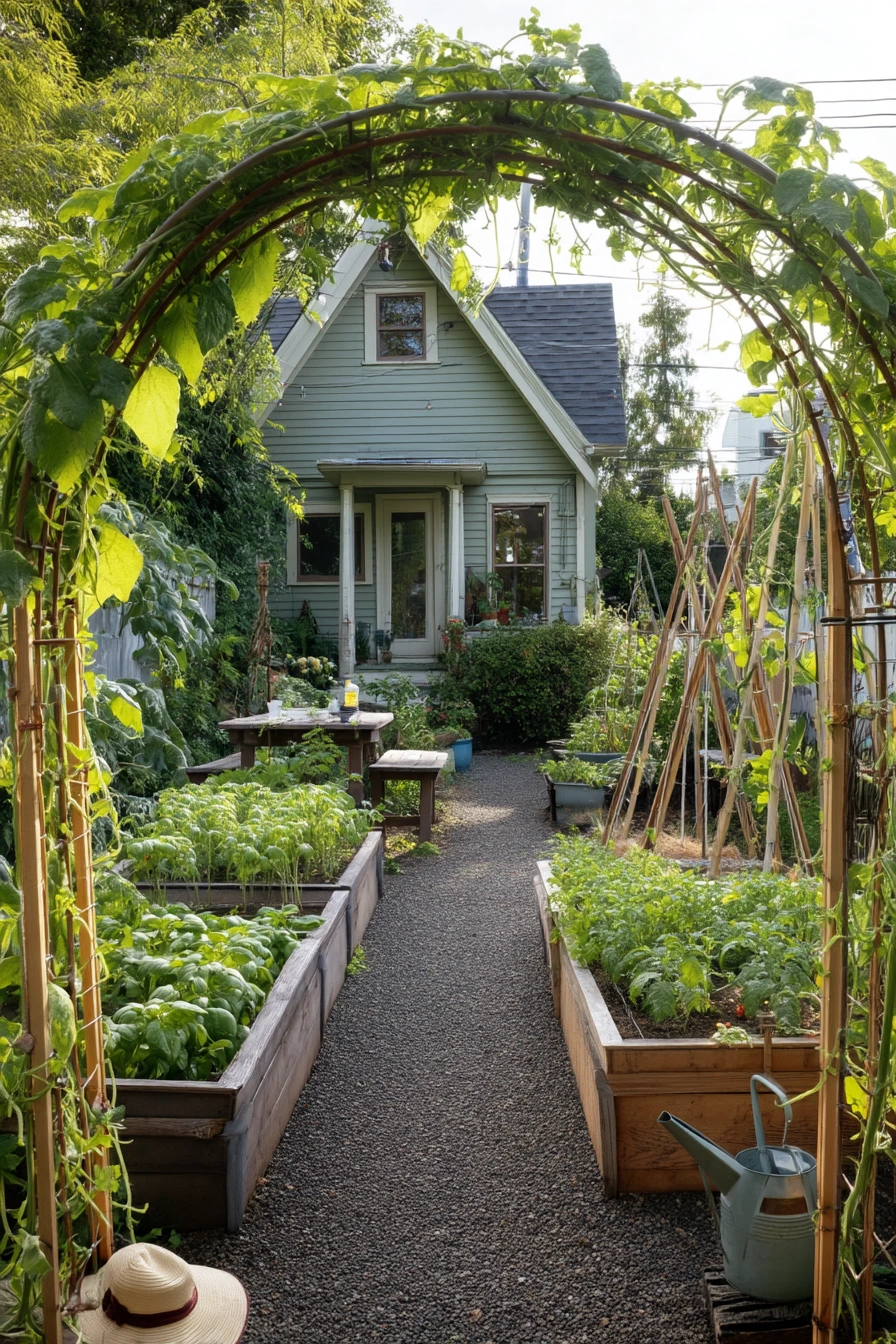
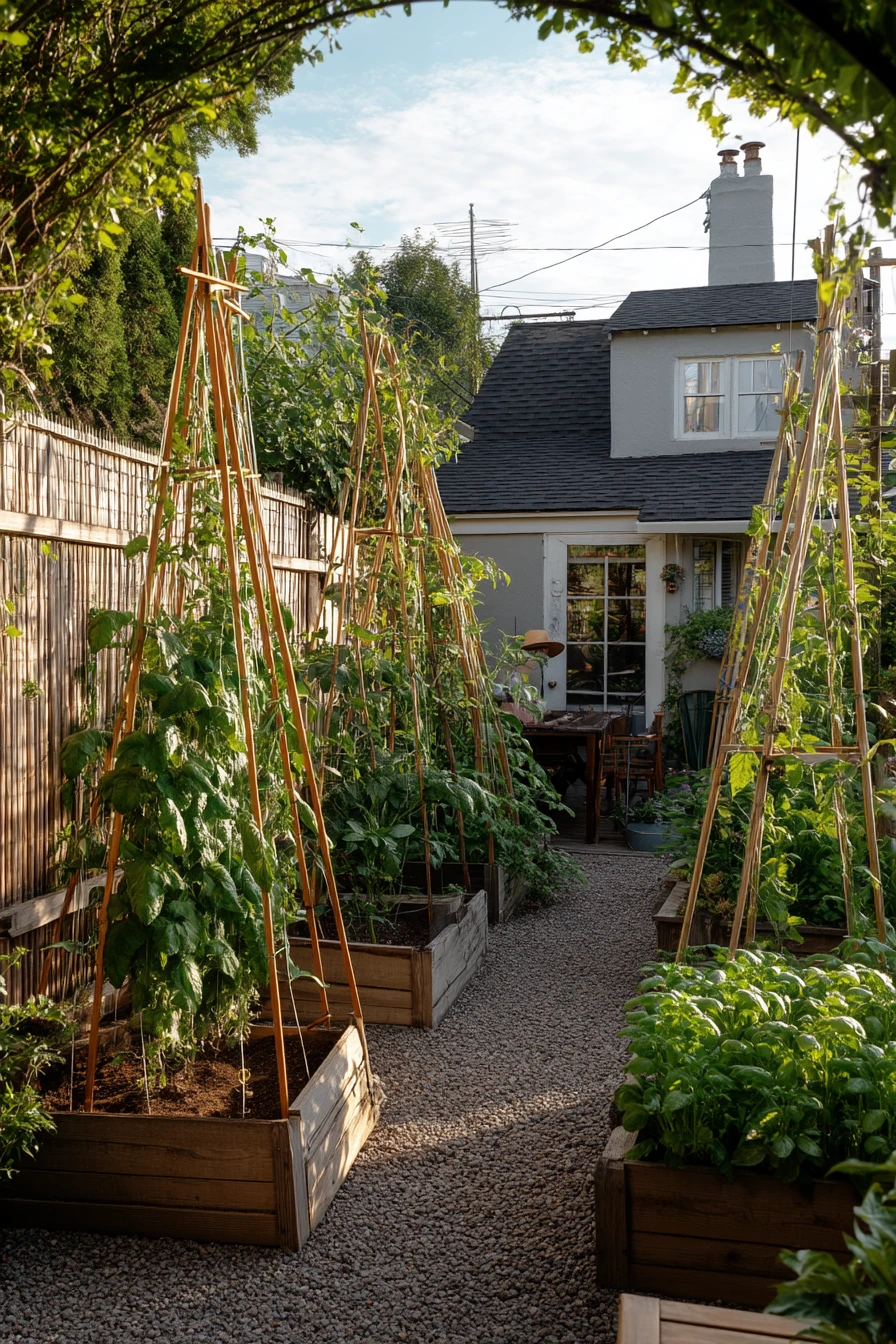
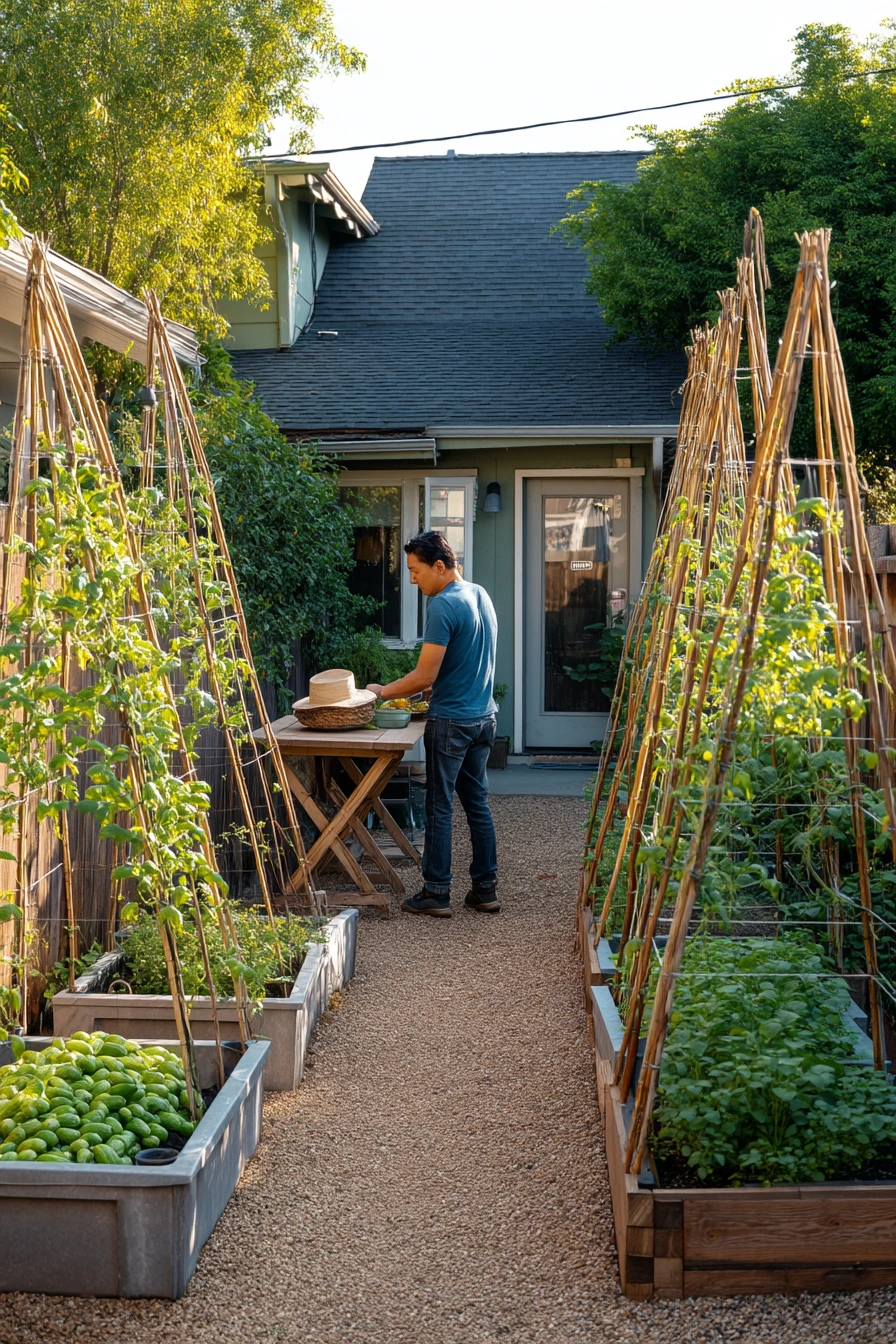
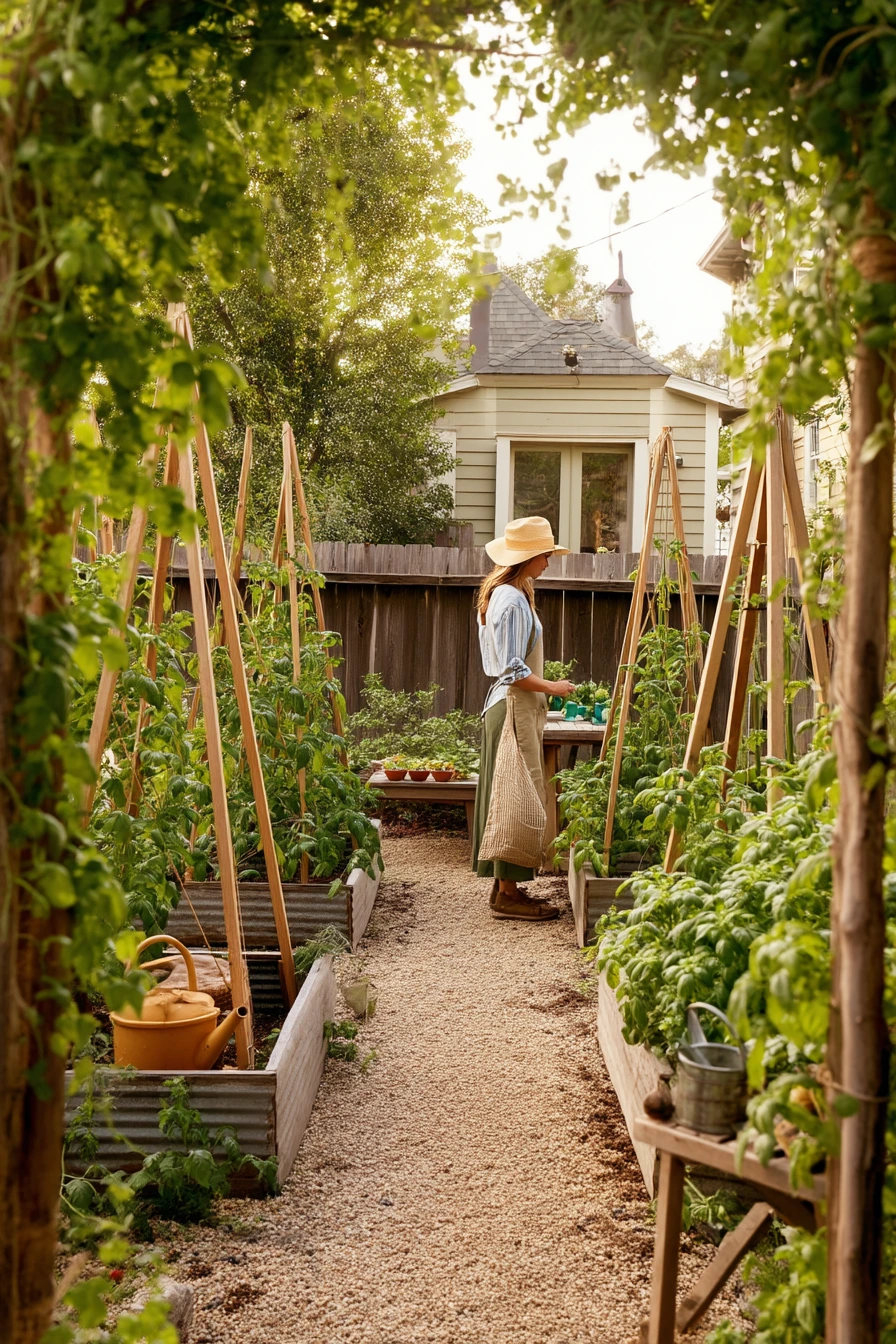
A cucumber trellis arch is a smart way to use a narrow gravel path between galvanized raised beds. The vines climb up and over, so you get shade, a clear walkway, and cucumbers hanging where you can see them. In a kitchen garden, this also keeps the planting area calm and organized, especially when you are out there every morning.
Build the arch with two sturdy side frames and a curved top. Cattle panel, a metal conduit hoop, or thick wood slats can work. Tie cucumber vines as they grow, and pinch side shoots if they block the path. Keep clipped basil and other low herbs at the base so the arch stays the main feature and airflow stays open.
Style matters too. A watering can on the soil edge, a tote bag on a fence hook, and a sunhat on a bench make the space feel used, not staged. Add a small patio table nearby with a half-full water glass so you remember to water and harvest while you are already outside.
- Leave at least 30 inches of path width so two people can pass.
- Anchor posts deep so summer wind cannot twist the arch.
- Start training vines early with soft ties every 8 to 12 inches.
- Mulch the bed edges so gravel does not spill into soil.
- Pick daily once fruit starts, so plants keep producing.
Pro Design Tip: Match the arch material to nearby structures, like using galvanized metal near galvanized raised beds for a clean, unified look.
Budget Considerations: A cattle panel arch is often cheaper than a pre-made garden arch; check farm stores or local listings and use T-posts to keep the cost down.
2 Balcony Trellis for a Small Apartment
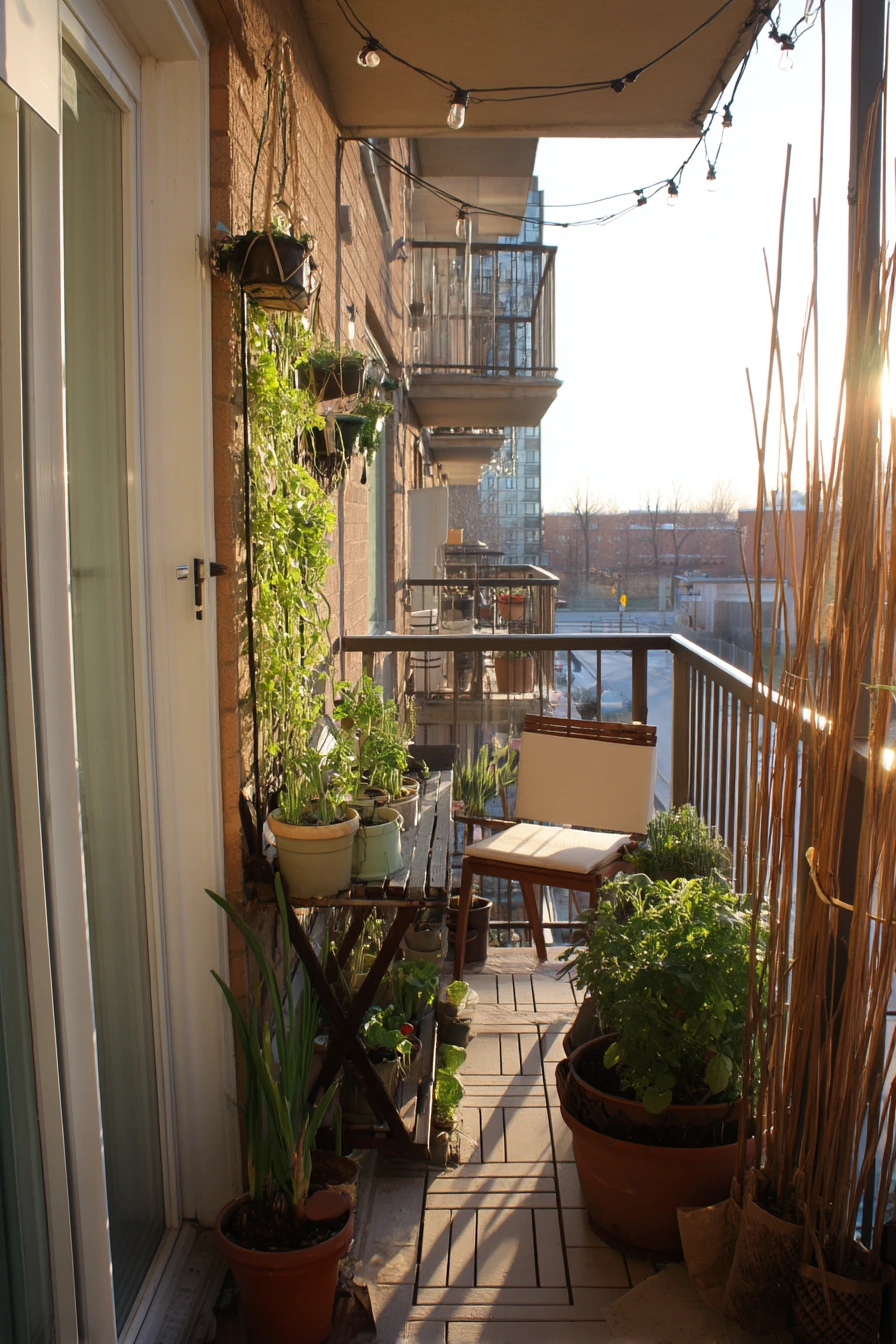
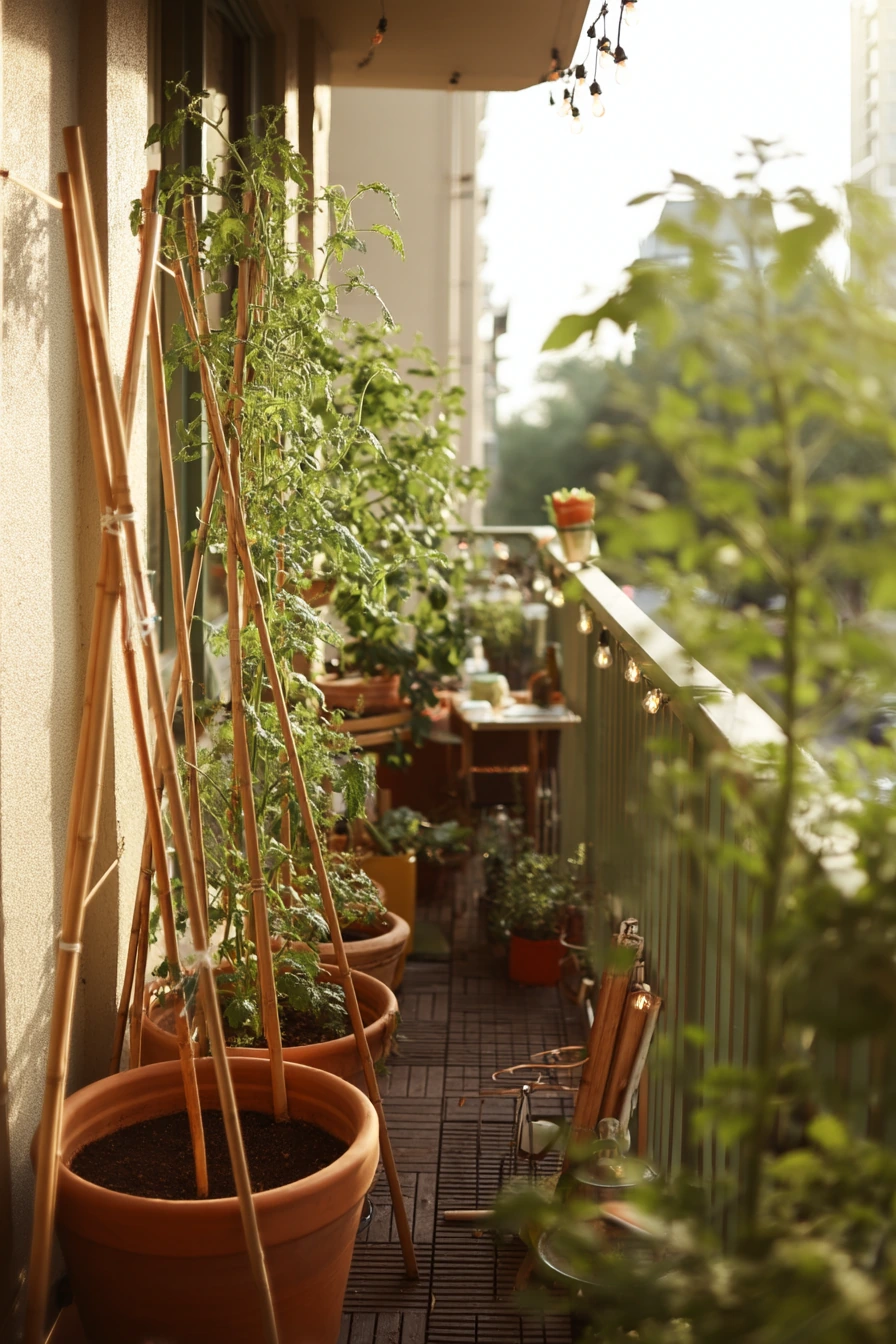
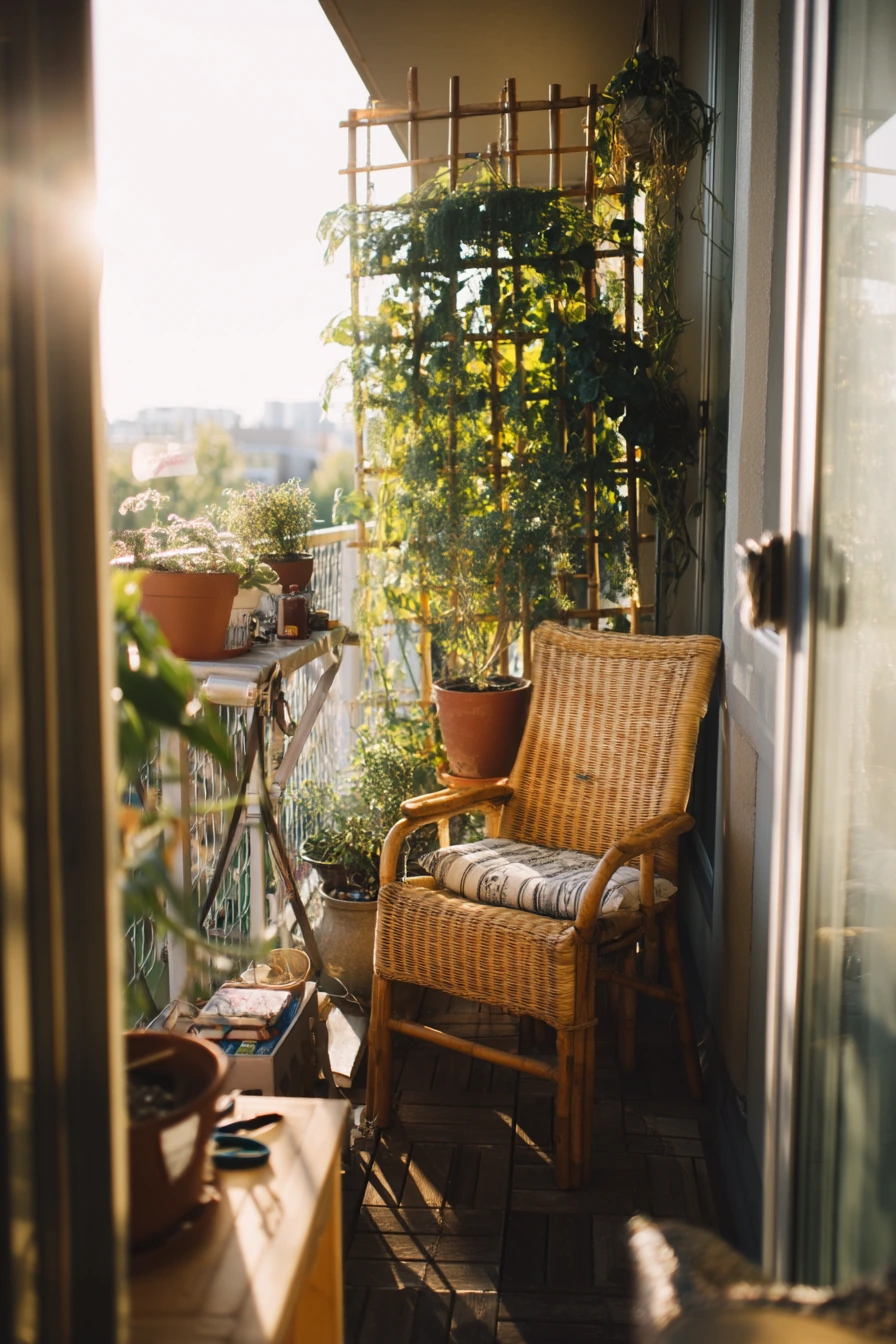
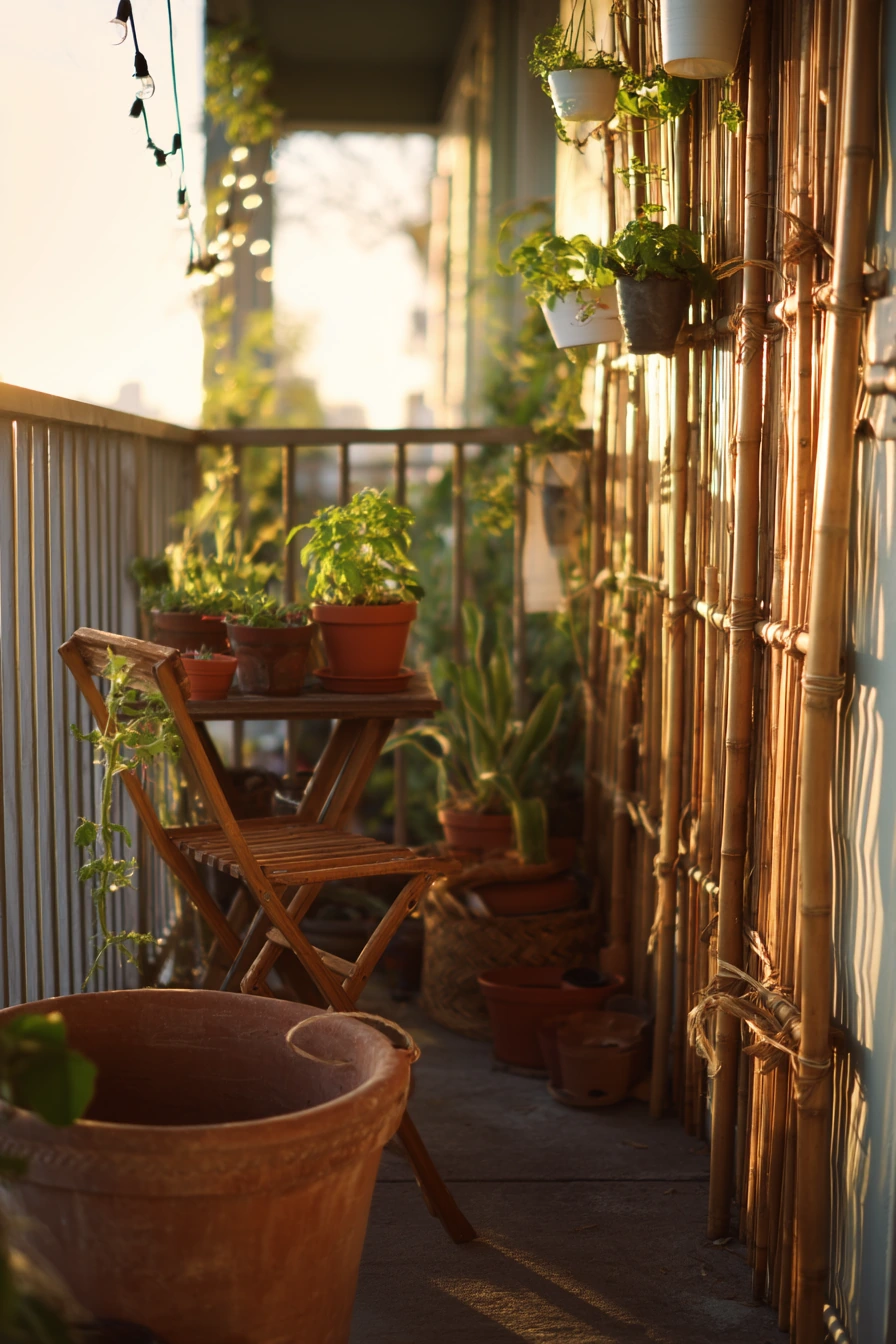
A small city balcony can still grow cucumbers if you go vertical. A renter-friendly trellis made from bamboo poles and twine fits well in large terracotta planters. It is lightweight, easy to move, and it does not require drilling into walls or railings.
Make a simple teepee or flat ladder shape. Push bamboo deep into the pot, then tie crosspieces with twine. Place the planter where warm late-afternoon light comes through the railing. Keep herb pots close by, since basil and dill do well in the same sunny spot and make harvesting feel like one quick stop.
Keep the balcony functional. A compact bistro chair gives you a place to prune and check leaves. Store seed packets and pruning snips in a small box on a side table. If string lights are present but unplugged, wrap the cord neatly so the space feels calm. Even a folded laundry basket by the door can work if you keep the path clear.
- Choose a compact cucumber variety for containers.
- Use a heavy pot so the trellis will not tip.
- Water slowly until you see drainage, then empty the saucer.
- Guide vines toward twine, then clip with soft plant ties.
- Check for pests on the undersides of leaves twice a week.
Pro Design Tip: Use matching terracotta planters and natural twine so the trellis blends in and the greenery becomes the main color.
Budget Considerations: Bamboo and twine are low-cost; if terracotta is pricey, use food-safe buckets inside simple basket covers for the same look.
3 Kids Help in the Garden
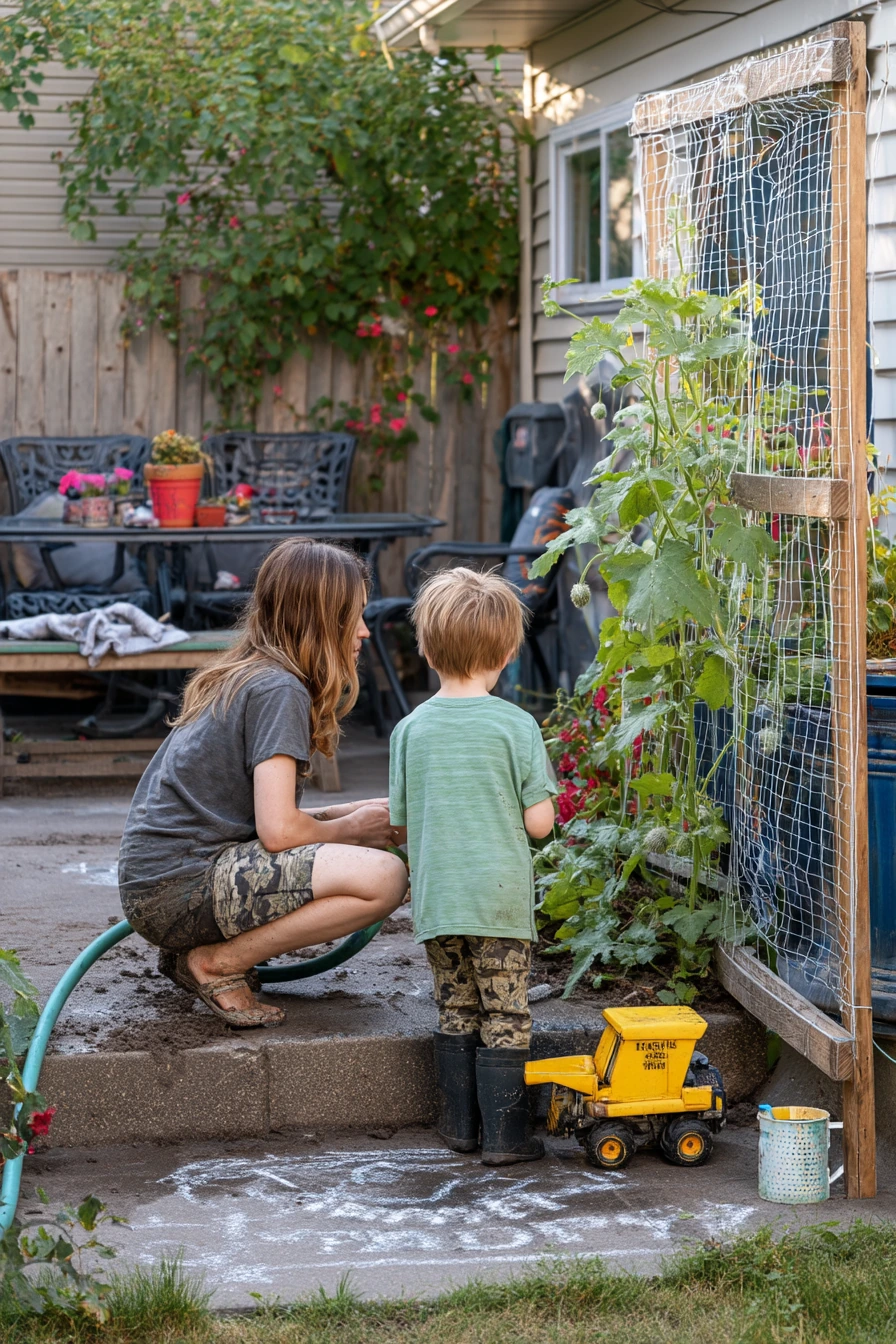
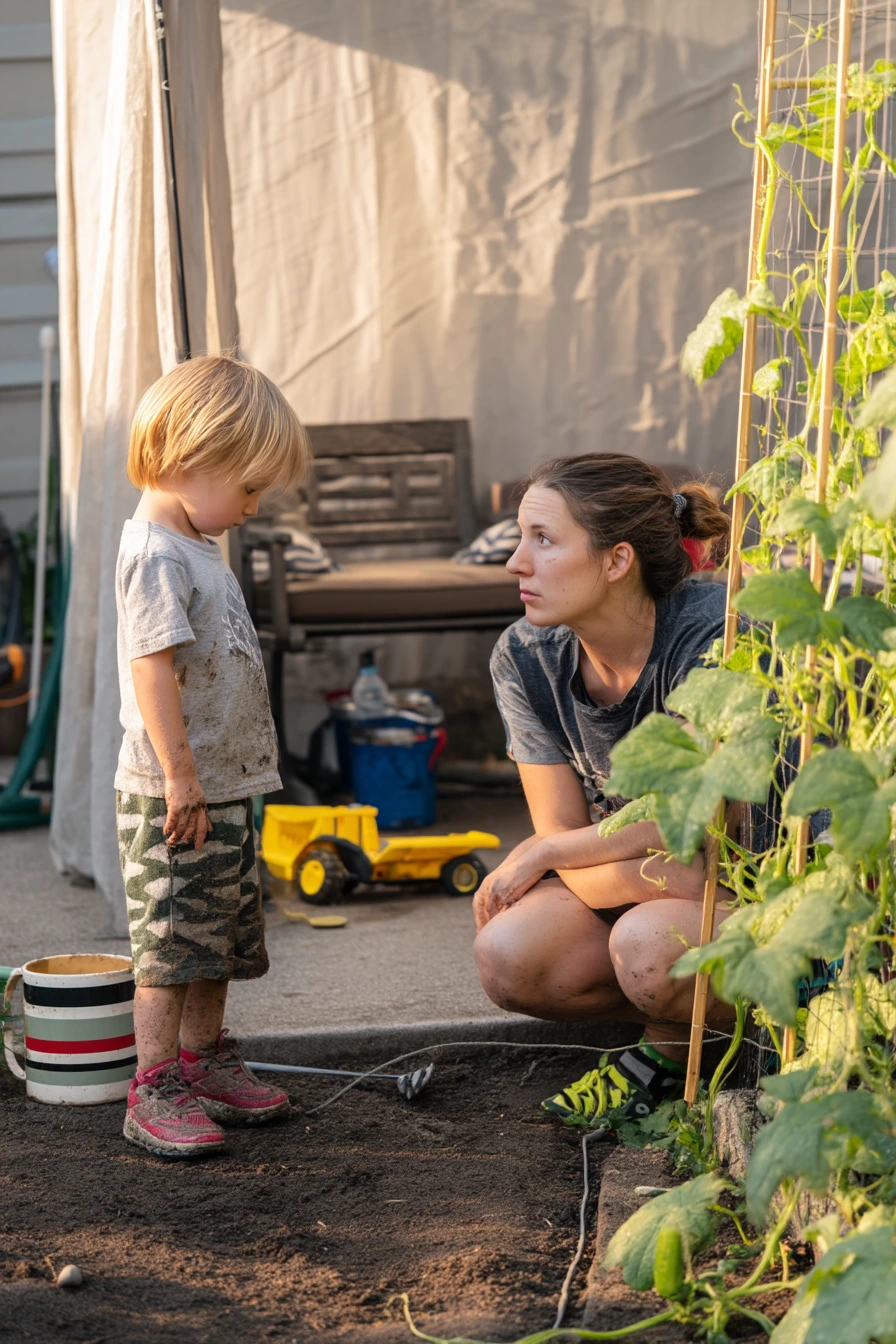
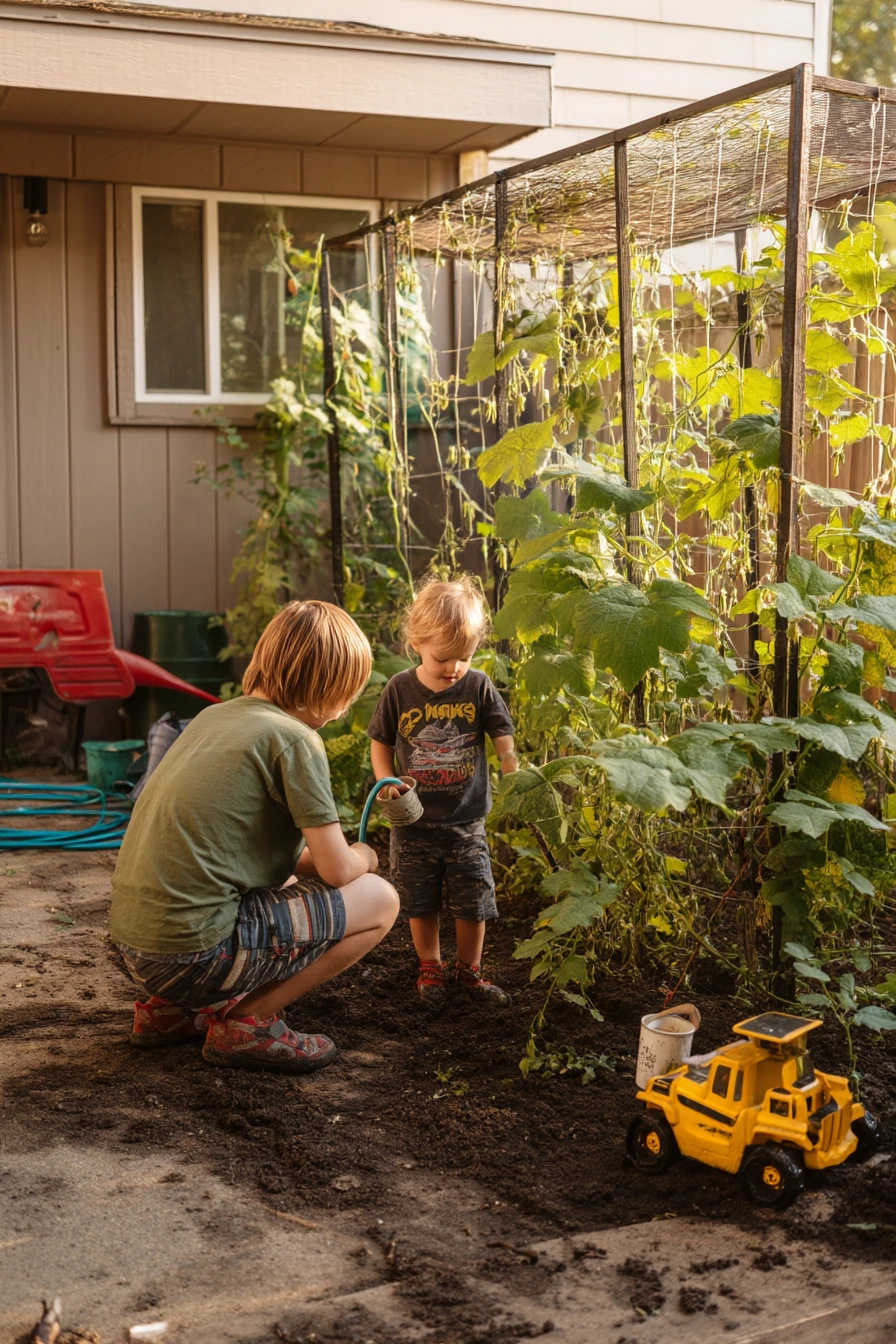
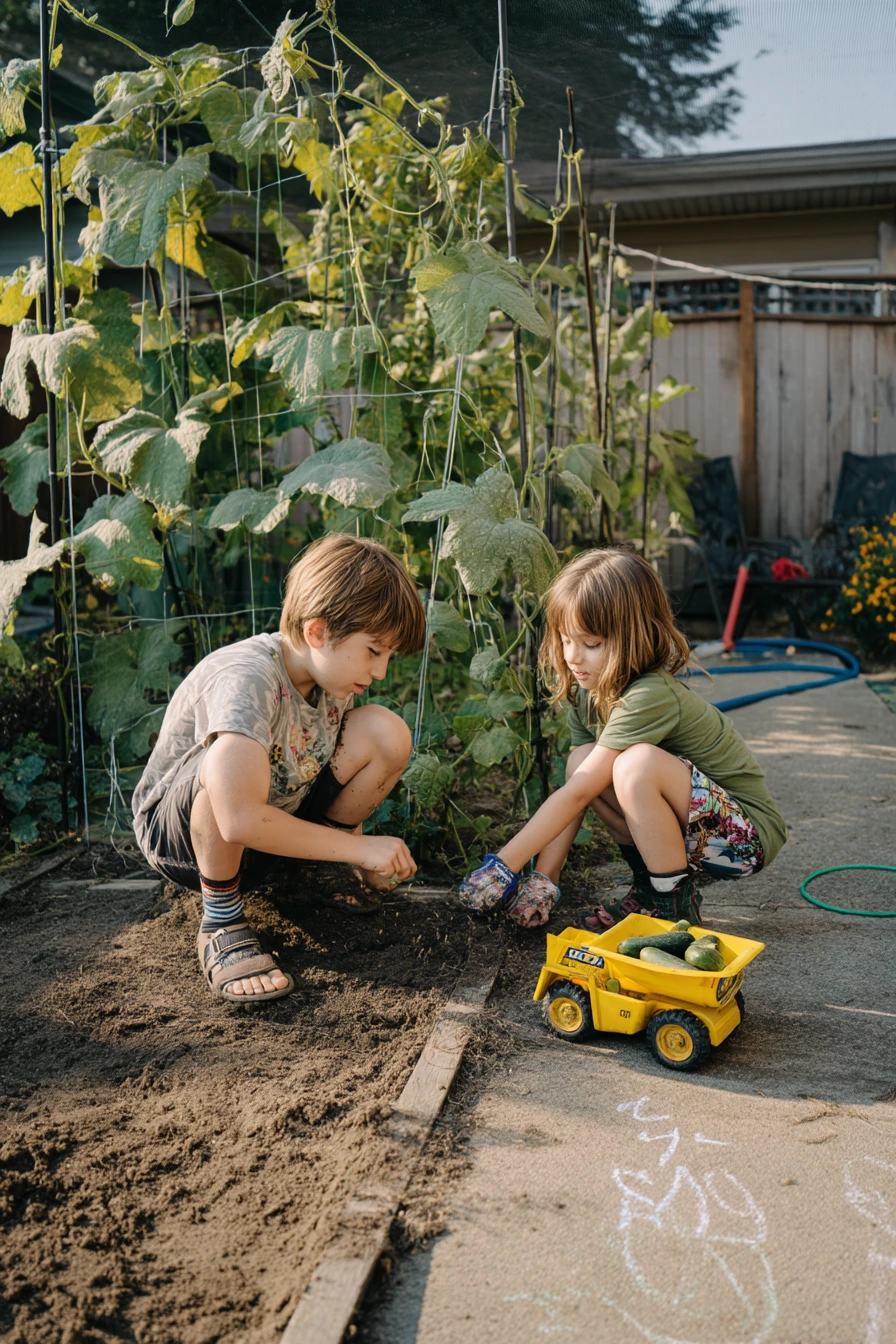
A cattle-panel trellis is one of the easiest, strongest cucumber trellis ideas for a busy family yard. It can stand up to heavy vines and makes a great “tunnel” or flat wall for training plants. Kids can help check cucumbers because the fruit hangs at eye level instead of hiding on the ground.
Set the panel so it is easy to walk around. If you have a hose area, keep the trellis close, but leave room so muddy sneakers do not crush seedlings. A mom kneeling with garden gloves can reach through the grid to tie vines. The panel also helps with airflow, which lowers mildew problems later in the season.
Keep the space real and usable. A toy dump truck by the hose, chalk marks on the patio, and a slightly wrinkled throw on the bench show the garden fits into daily life. A striped mug on the step is a good reminder to take water breaks while you prune and pick.
- Attach the panel to T-posts or thick wood stakes for stability.
- Plant cucumbers 12 inches apart along the base.
- Train one main vine per plant for easier care.
- Use drip irrigation or a soaker hose to reduce splashing on leaves.
- Add a harvesting basket nearby so kids can help collect.
Pro Design Tip: Position the trellis so morning sun dries the leaves fast, then add a small seating spot for quick vine checks.
Budget Considerations: Used cattle panels can be a good deal; if you cannot transport one, use a smaller remesh sheet and cut it to fit.
4 Budget Trellis DIY Against the Fence
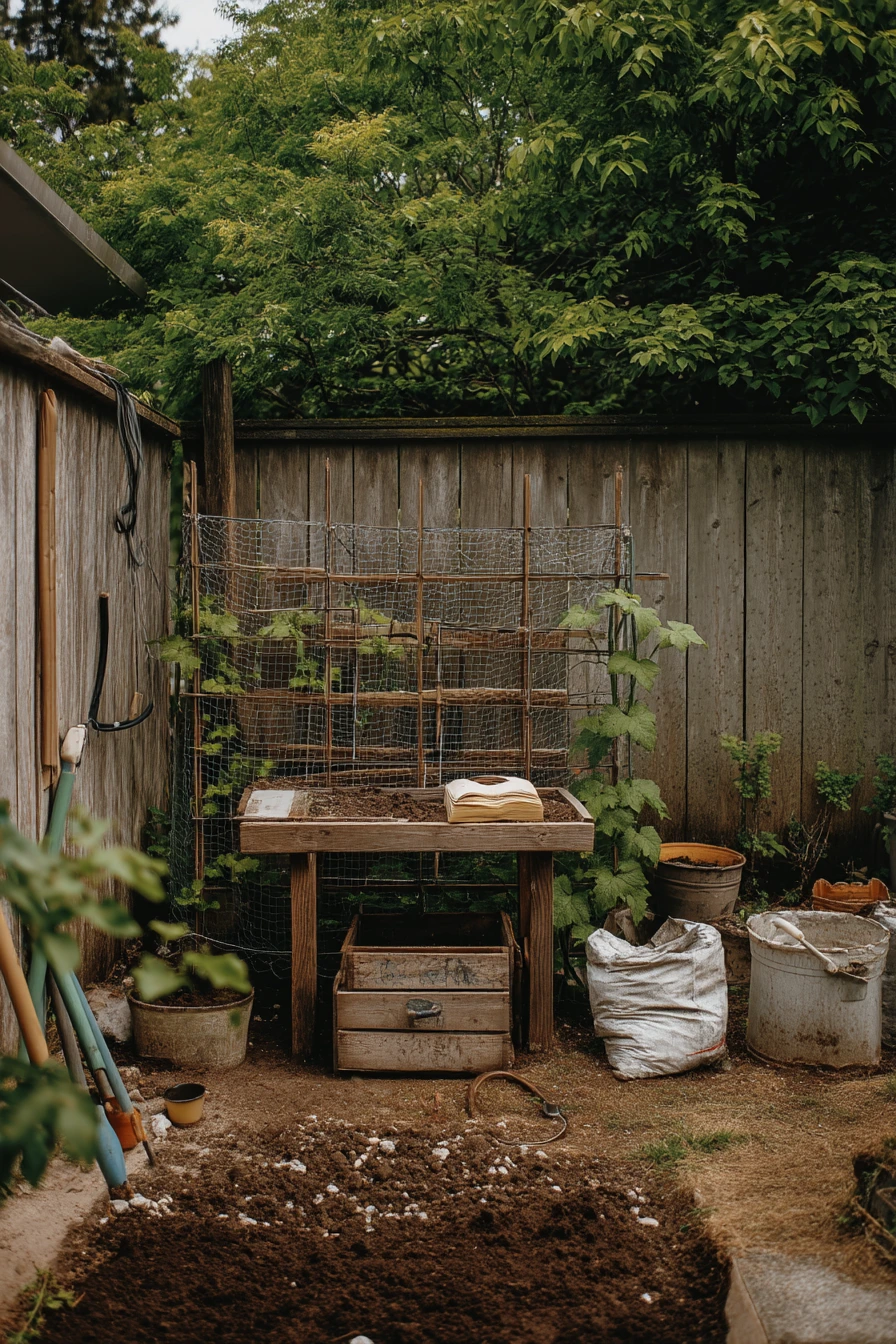
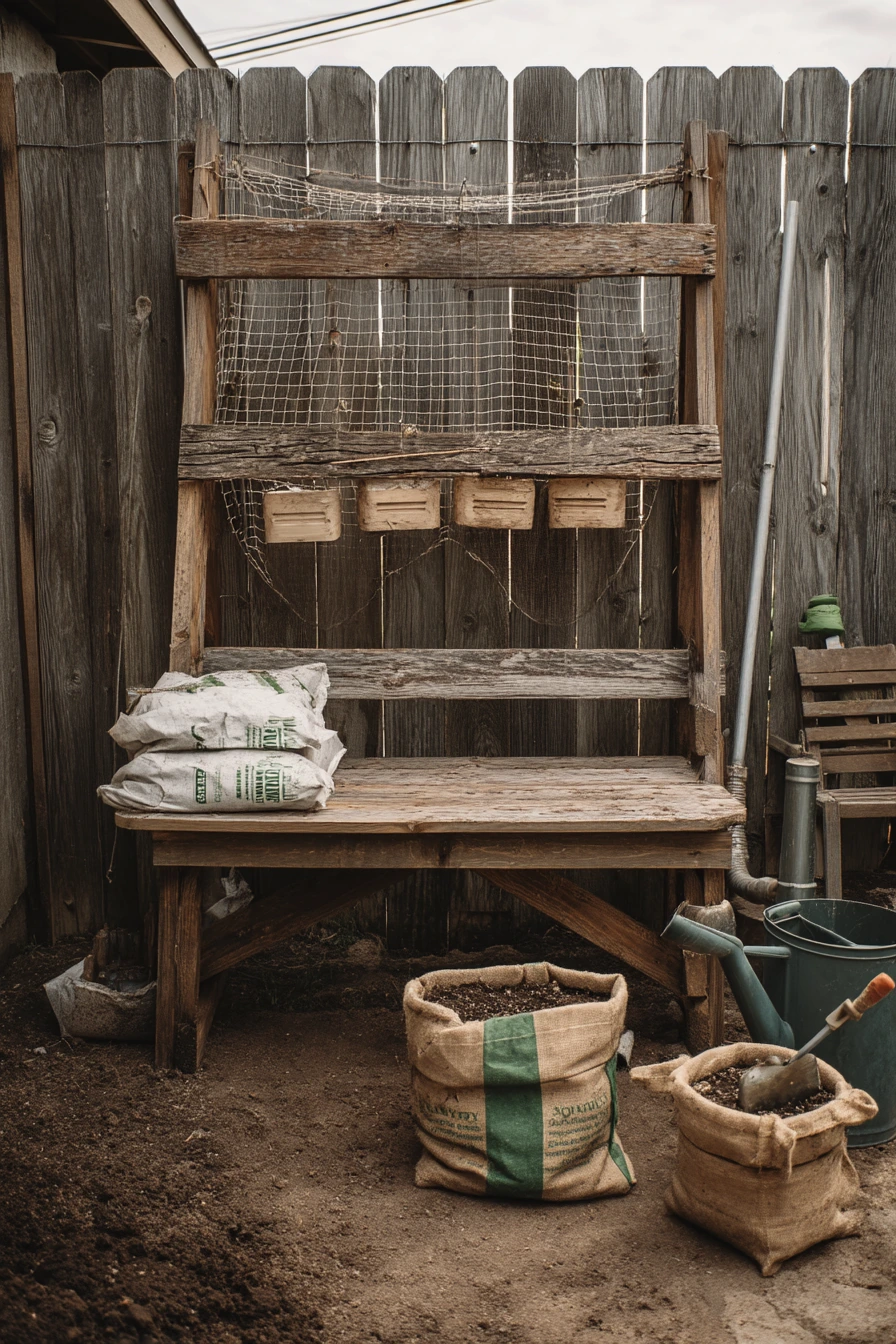
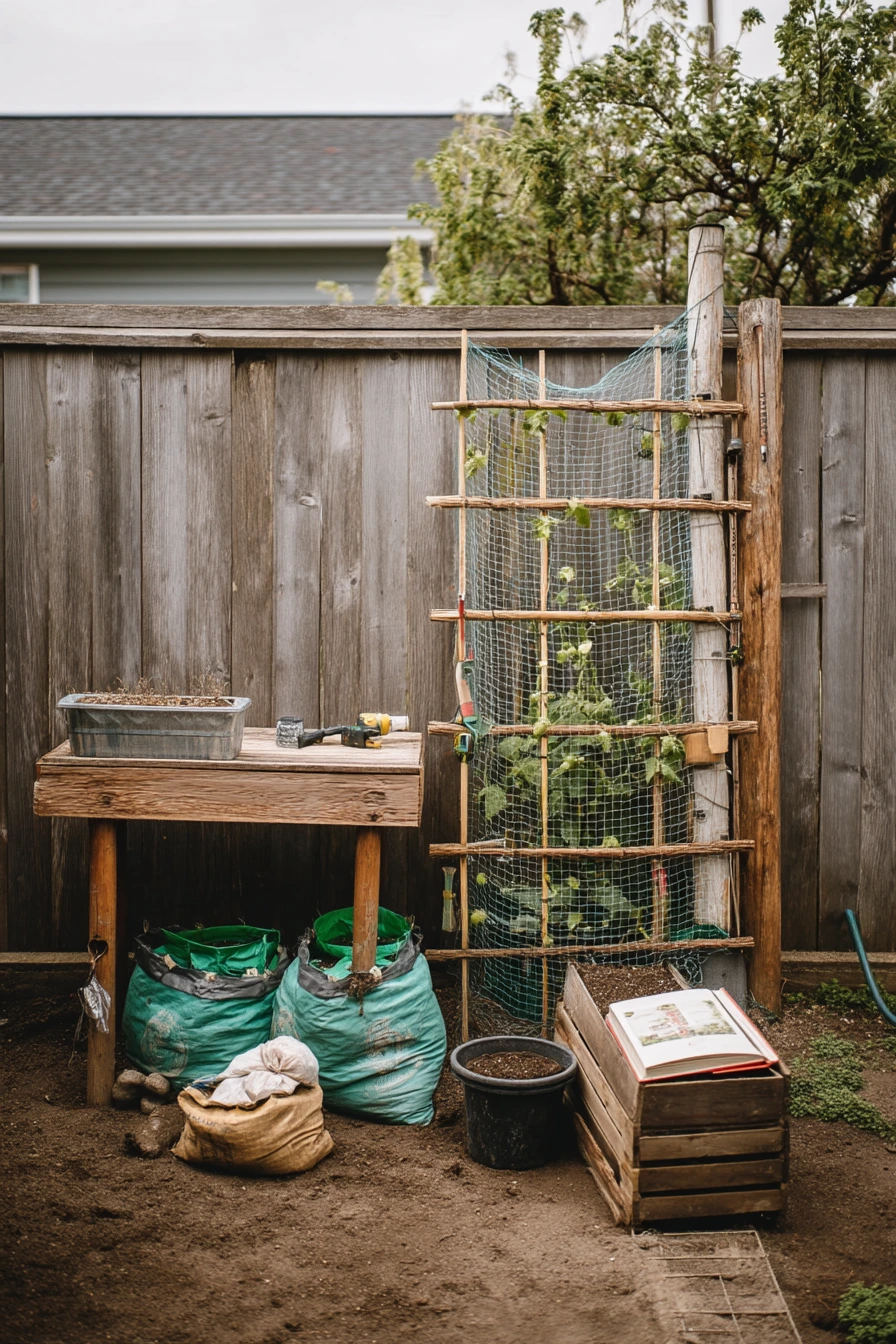
A modest side yard is perfect for a fence-mounted cucumber trellis. Using reclaimed wood and garden netting keeps the project grounded and economical. The fence gives instant support, and netting gives vines many places to grab without heavy hardware.
Start by checking the fence for weak spots. Attach a simple wood frame with screws, then staple or tie netting tight so it does not sag. Keep a potting bench nearby with soil bags, a hand drill, and a twine spool, so you can fix ties as the plants grow. Boot prints in the dirt are normal, but try to keep one clear walking strip so watering is easy.
Add small touches that make the space pleasant. An open recipe book on an upside-down crate is a fun reminder that the goal is food. Coil the watering hose neatly so it does not snag on netting. In soft overcast daylight, this kind of setup looks honest and calm, and it works well for a long season.
- Use rot-resistant wood or seal reclaimed boards.
- Keep the bottom of netting 6 inches above soil to reduce rot.
- Check staples and knots after storms.
- Prune crowded leaves so air can move along the fence line.
- Harvest small and often for better flavor.
Pro Design Tip: Paint the wood frame the same color as the fence so the green vines stand out and the area looks less cluttered.
Budget Considerations: Reclaimed wood can be free, but fasteners add up; buy a bulk box of exterior screws and use jute twine instead of specialty clips.
5 Greenhouse Cucumber Training Moment

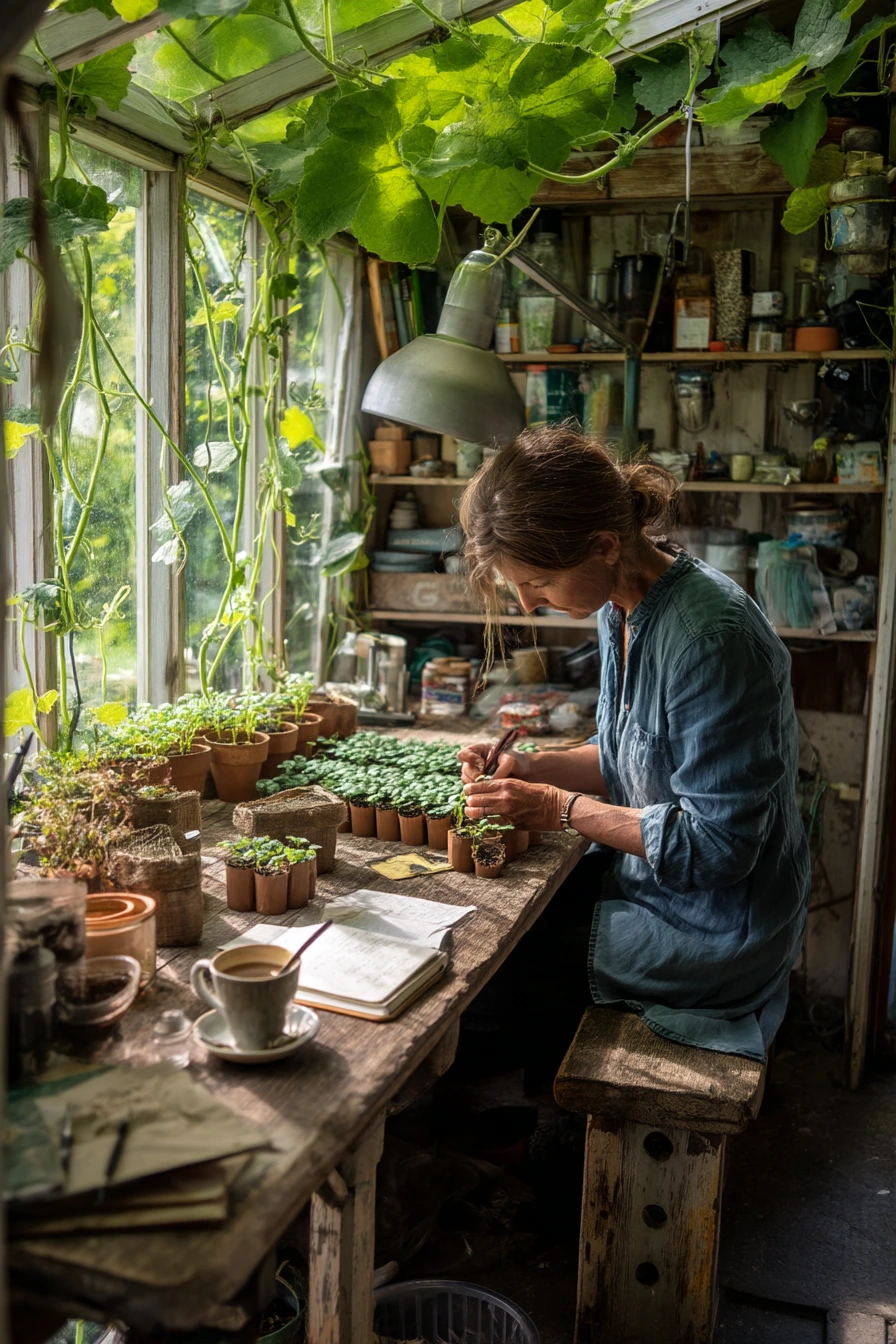
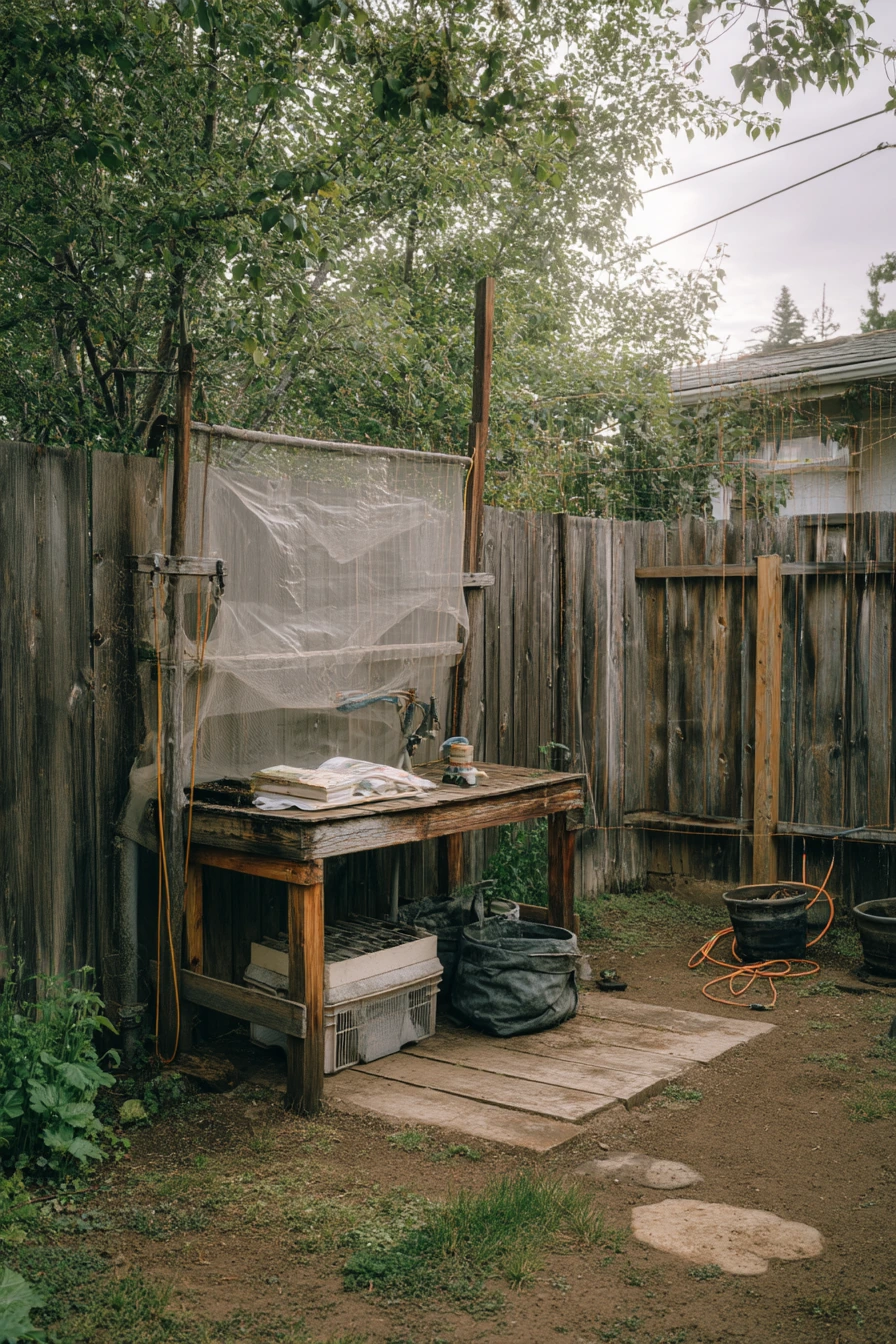
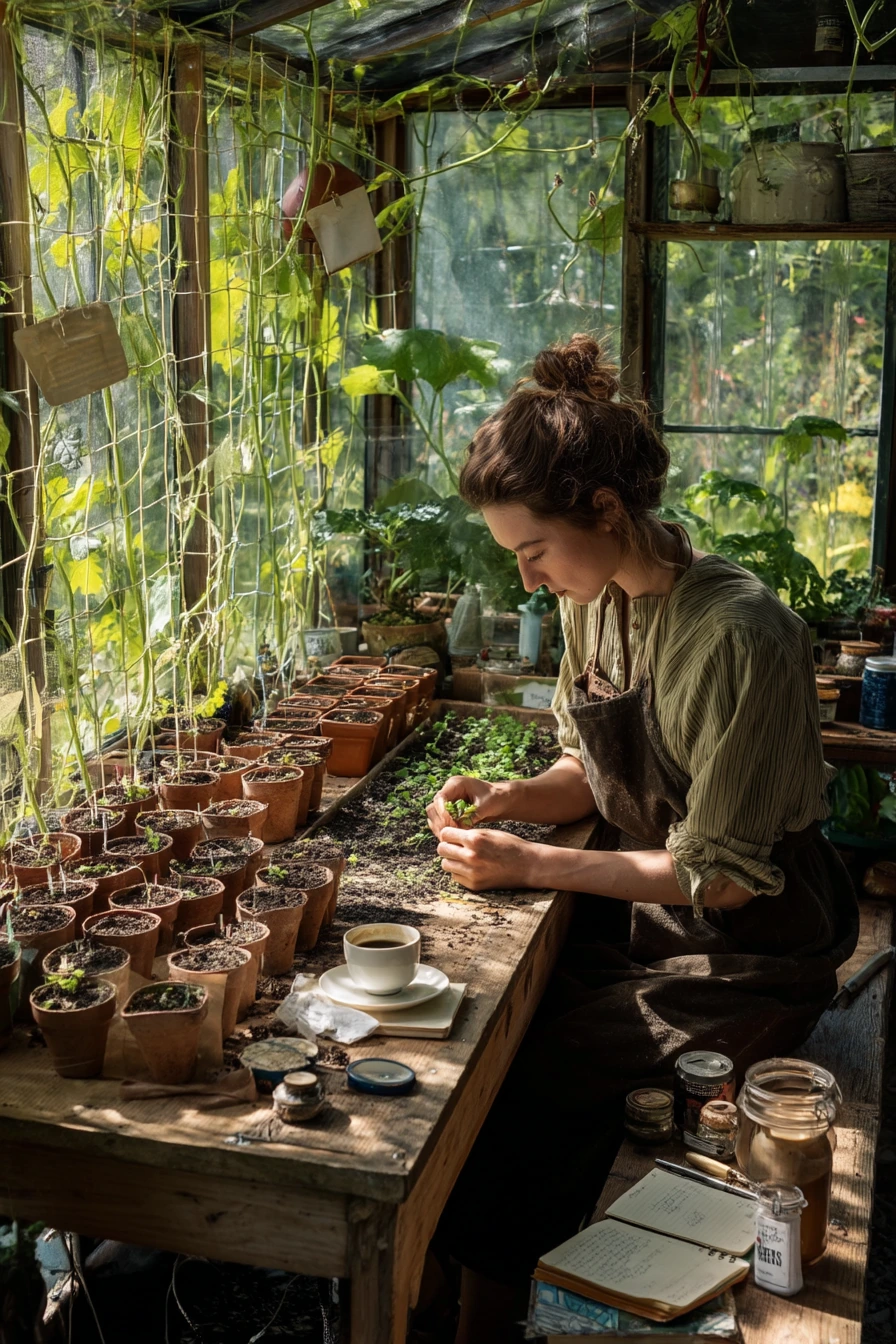
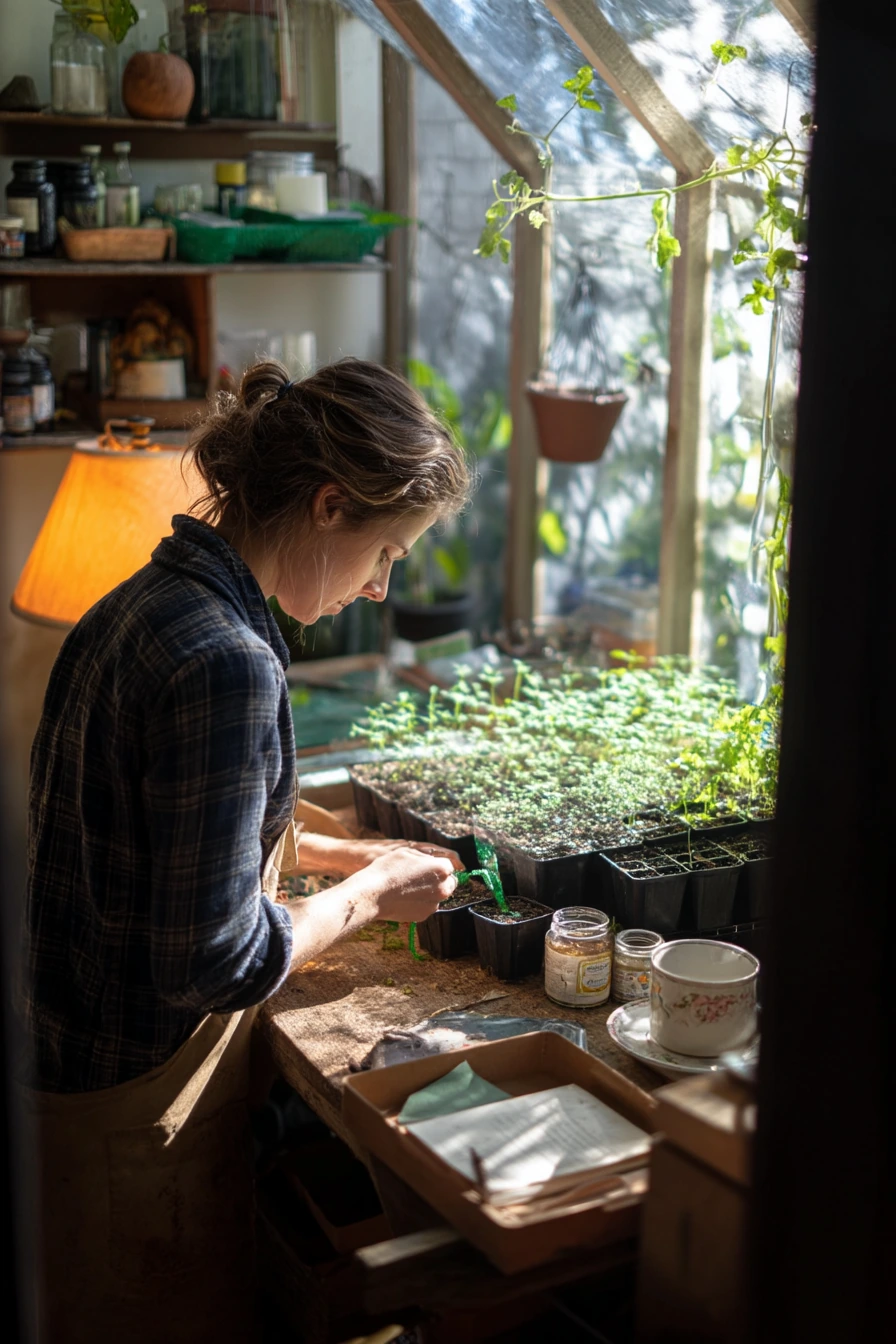
In a small backyard greenhouse, a vertical string trellis is a clean, high-yield way to grow cucumbers. Strings drop from overhead supports, and each plant climbs straight up. This keeps the floor open for seed trays, clay pots, and a bench of seedlings.
Use strong garden twine and tie it to a top bar, then secure the bottom near each plant. As the vine grows, wrap it gently around the string every few days. Keep labels clear and update a sun-faded notebook with watering notes and pollination dates. With humid glass and warm mixed light, disease can spread fast, so spacing and pruning matter.
Make it cozy but functional. A teacup with a spoon on the bench and rolled sleeves show this is a working space. Sweep fallen leaves often, because leaf shadows on the floor can hide pests. If you add a practical lamp, aim it toward the vines, not your eyes, so evening checks are easy.
- Install a strong top rail before plants get heavy.
- Use one string per plant to avoid tangles.
- Remove the lowest leaves once vines start climbing.
- Vent the greenhouse daily to lower humidity spikes.
- Hand-pollinate if you are growing indoors without insects.
Pro Design Tip: Keep a small hook strip on the bench for ties and snips so your hands stay clean and you do not lose tools in trays.
Budget Considerations: String trellising is low-cost; if you need an overhead bar, repurpose a closet rod or conduit instead of buying greenhouse kits.
6 Patio Trellis Beside an Outdoor Dining Nook
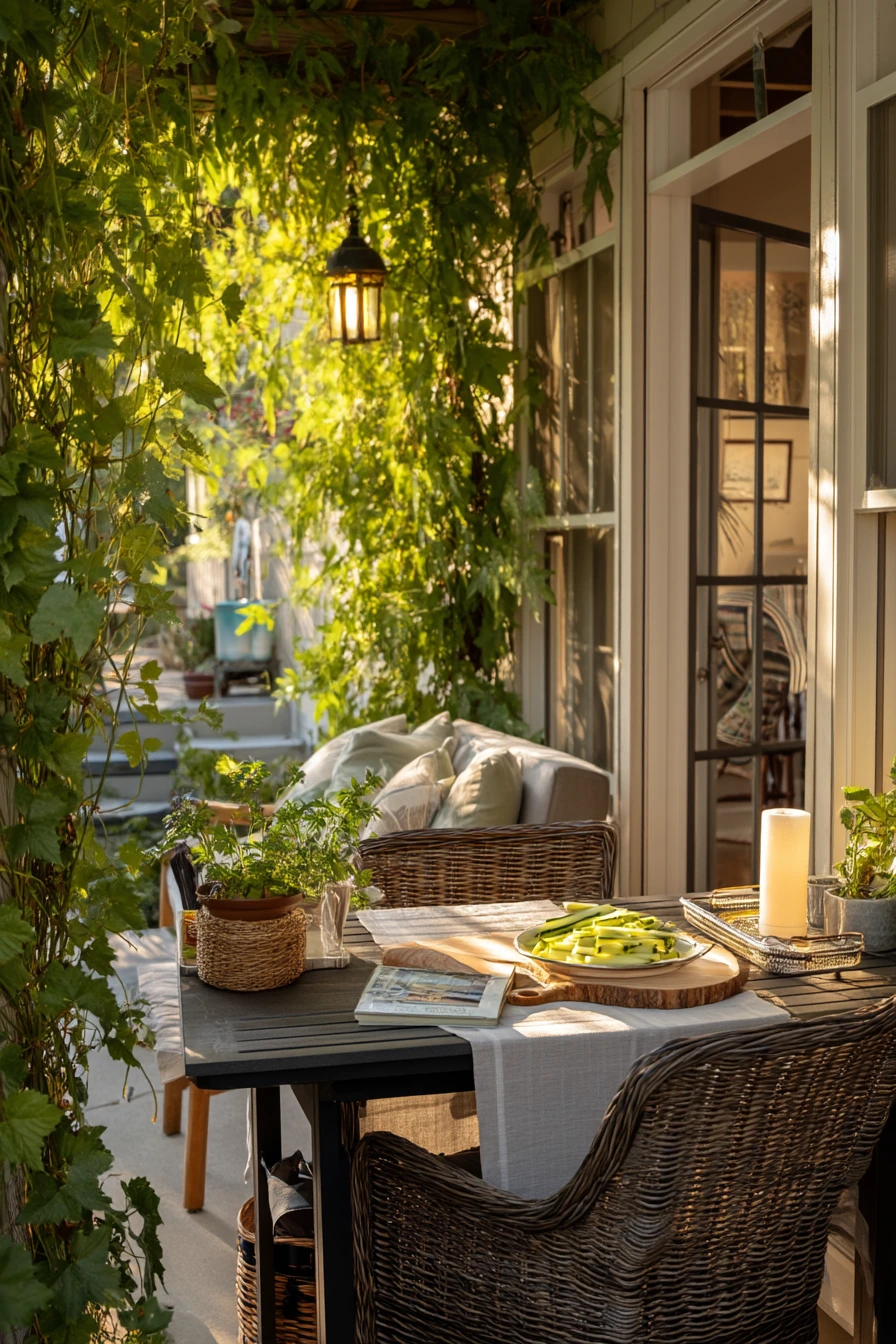
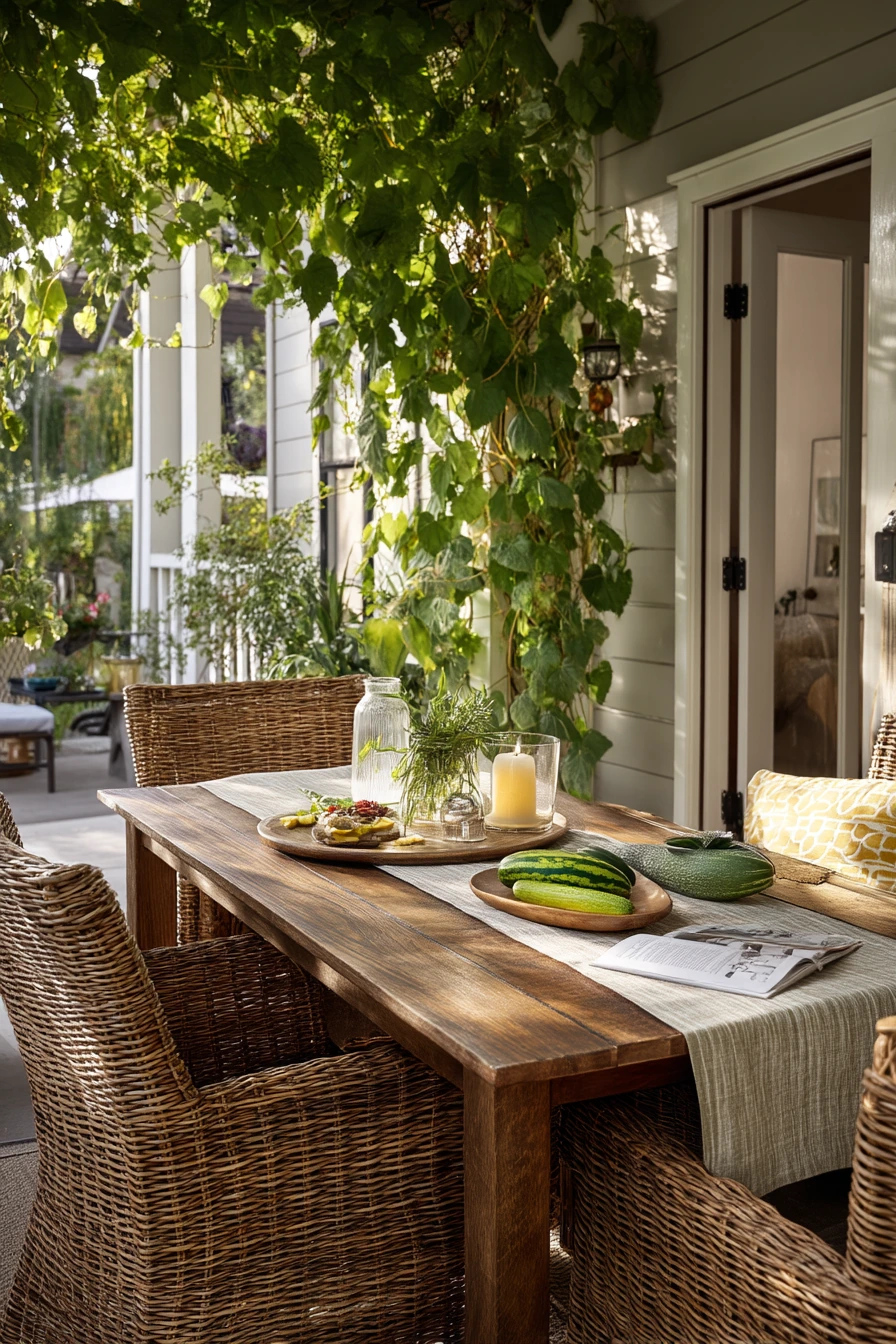
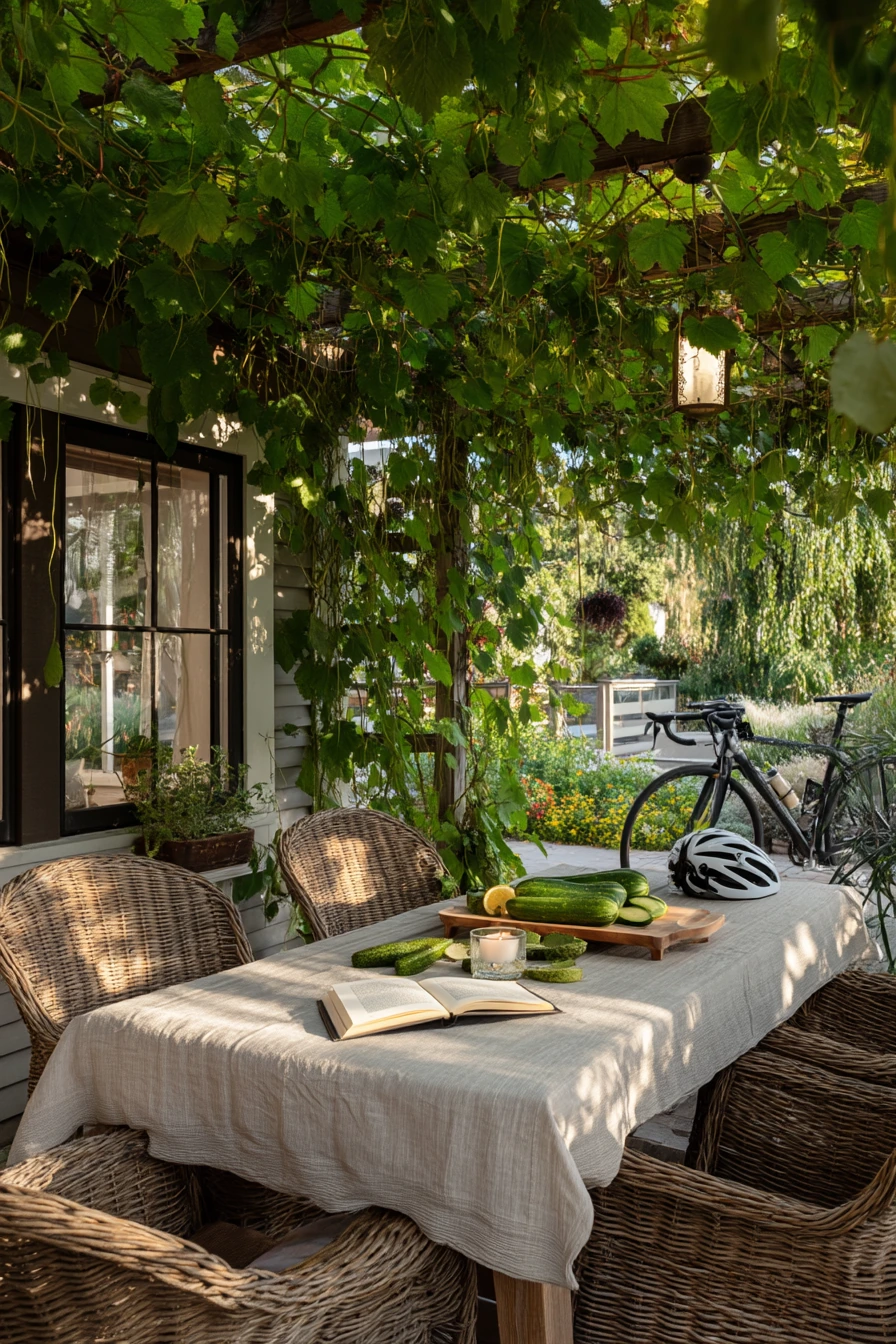
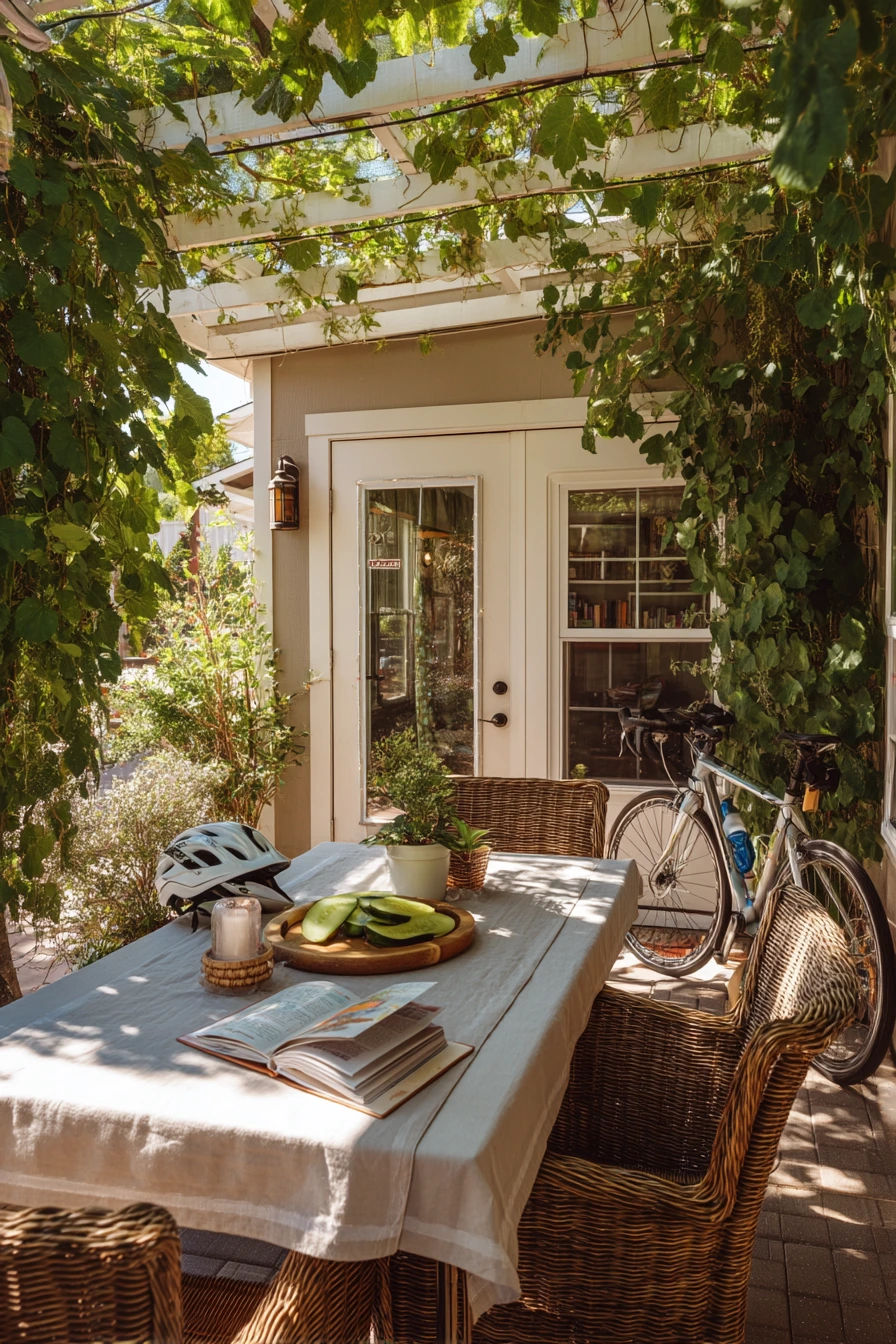
A covered patio garden can hold a cucumber trellis without feeling crowded. Place the trellis beside an outdoor dining nook, so you can pick a few cucumbers while setting the table. With soft evening light from nearby windows, the leaves add texture and privacy without blocking the whole space.
Choose a trellis that stays tidy, like a narrow ladder trellis or a tall obelisk in a large container. Train vines to one side so they do not brush the linen table runner or the woven chairs. Keep citronella candles and a serving platter with sliced cucumbers nearby for a simple snack setup that matches the garden.
Style it like real life. A bicycle helmet on a chair and a paperback with reading glasses on the table make the patio feel lived-in. If there is a slight breeze, check ties often so vines do not rub and break. Water in the morning so leaves are dry by dinner time.
- Pick a container at least 10 to 15 gallons for one plant.
- Use a drip line or watering wand to avoid splashing the table area.
- Guide vines upward to keep walking space clear.
- Add a shallow tray under pots to protect the patio surface.
- Trim long tendrils that reach toward seating.
Pro Design Tip: Repeat one natural texture, like woven chairs plus jute ties on the trellis, to make the garden corner feel intentional.
Budget Considerations: If a large pot is expensive, use a sturdy storage tote with drainage holes and hide it inside a simple outdoor planter cover.
7 Rental-Friendly Obelisk in a Courtyard Planter
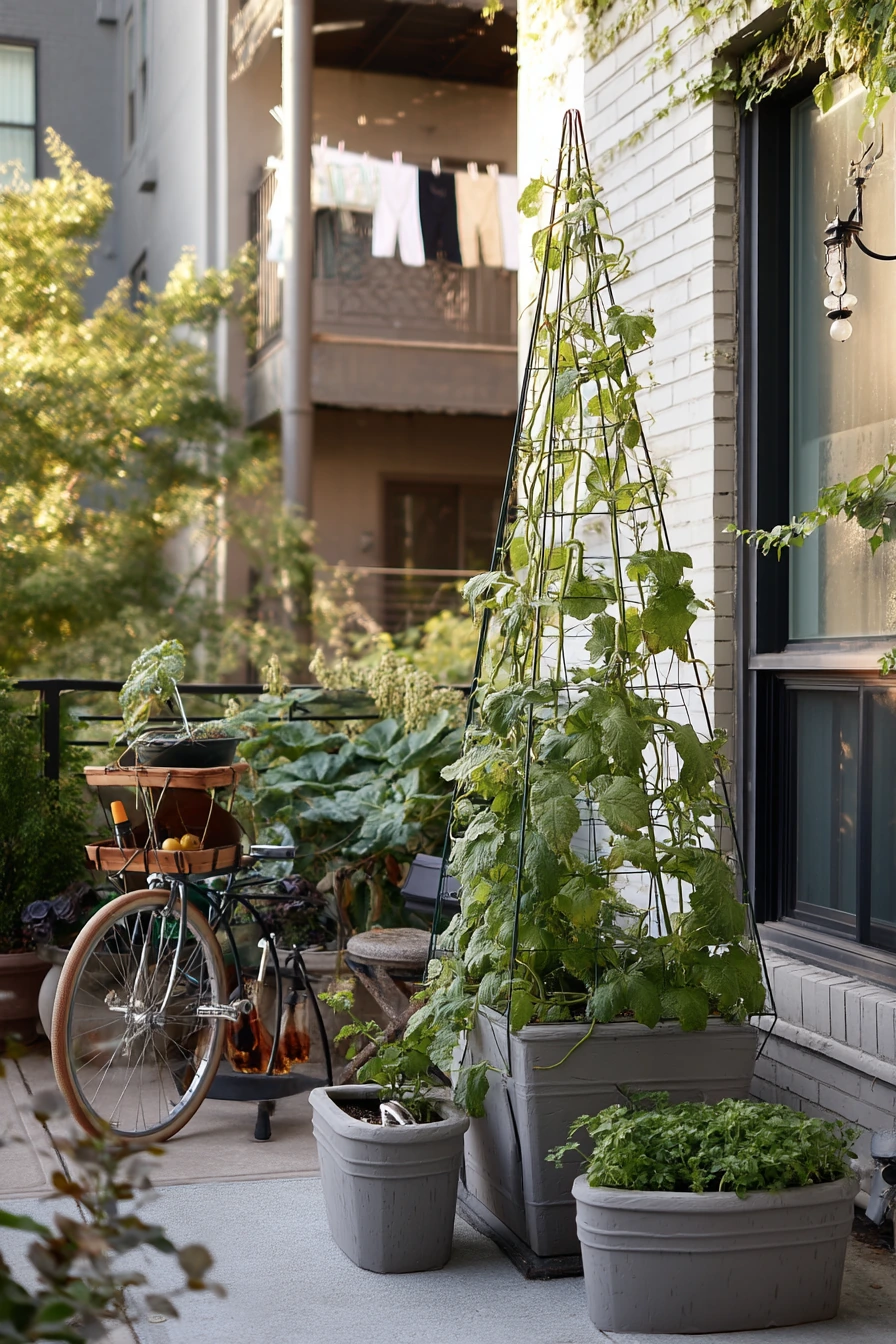
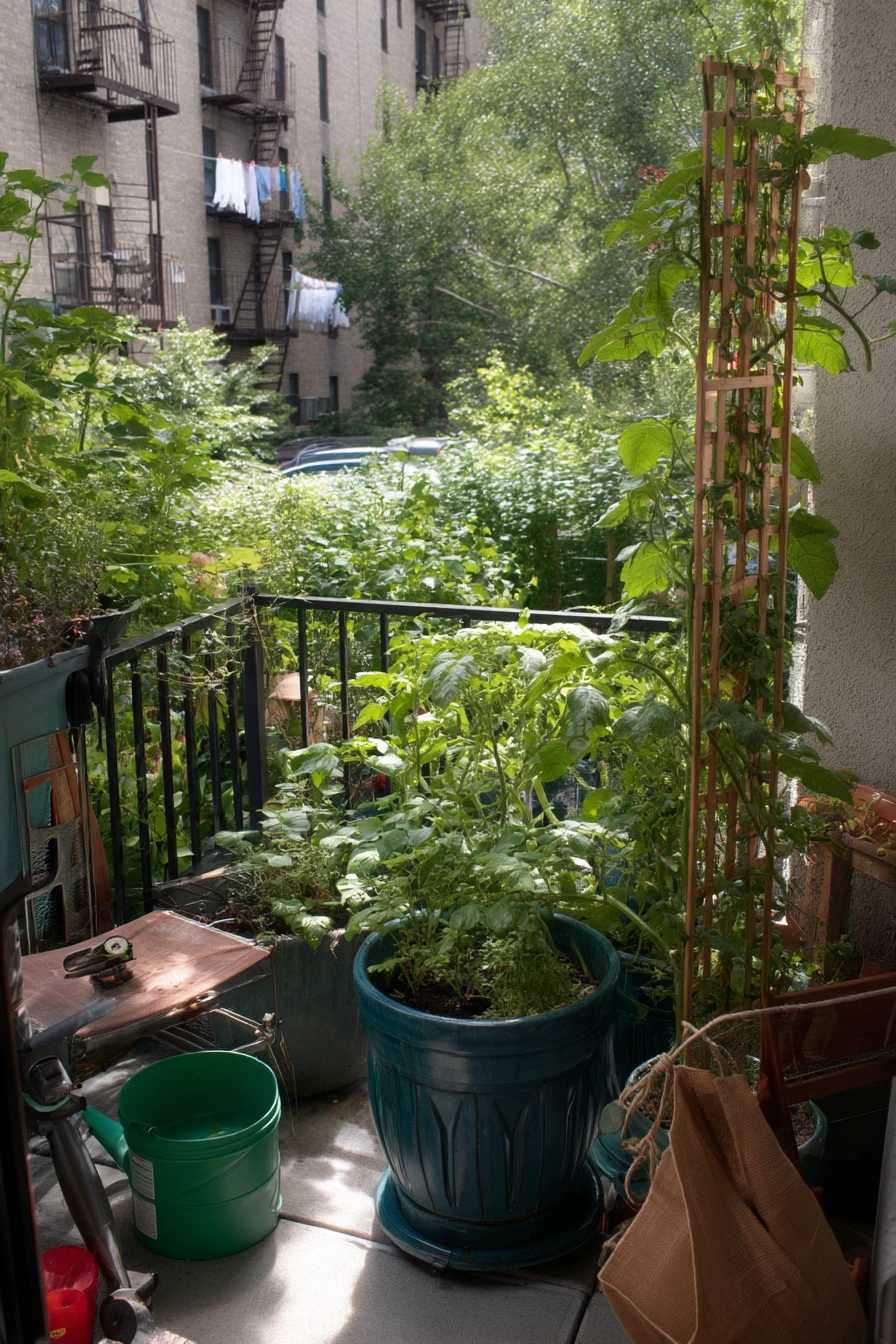
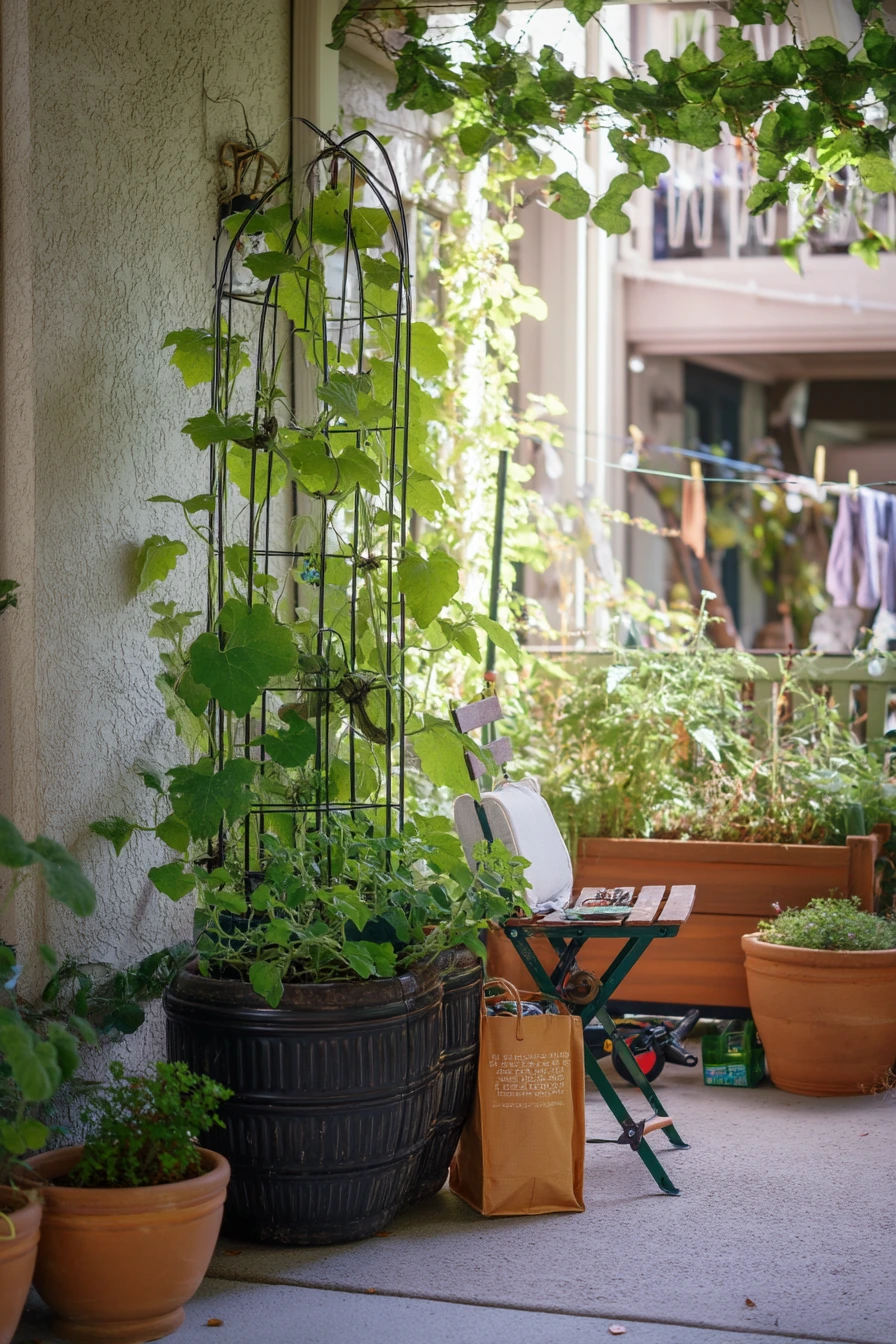
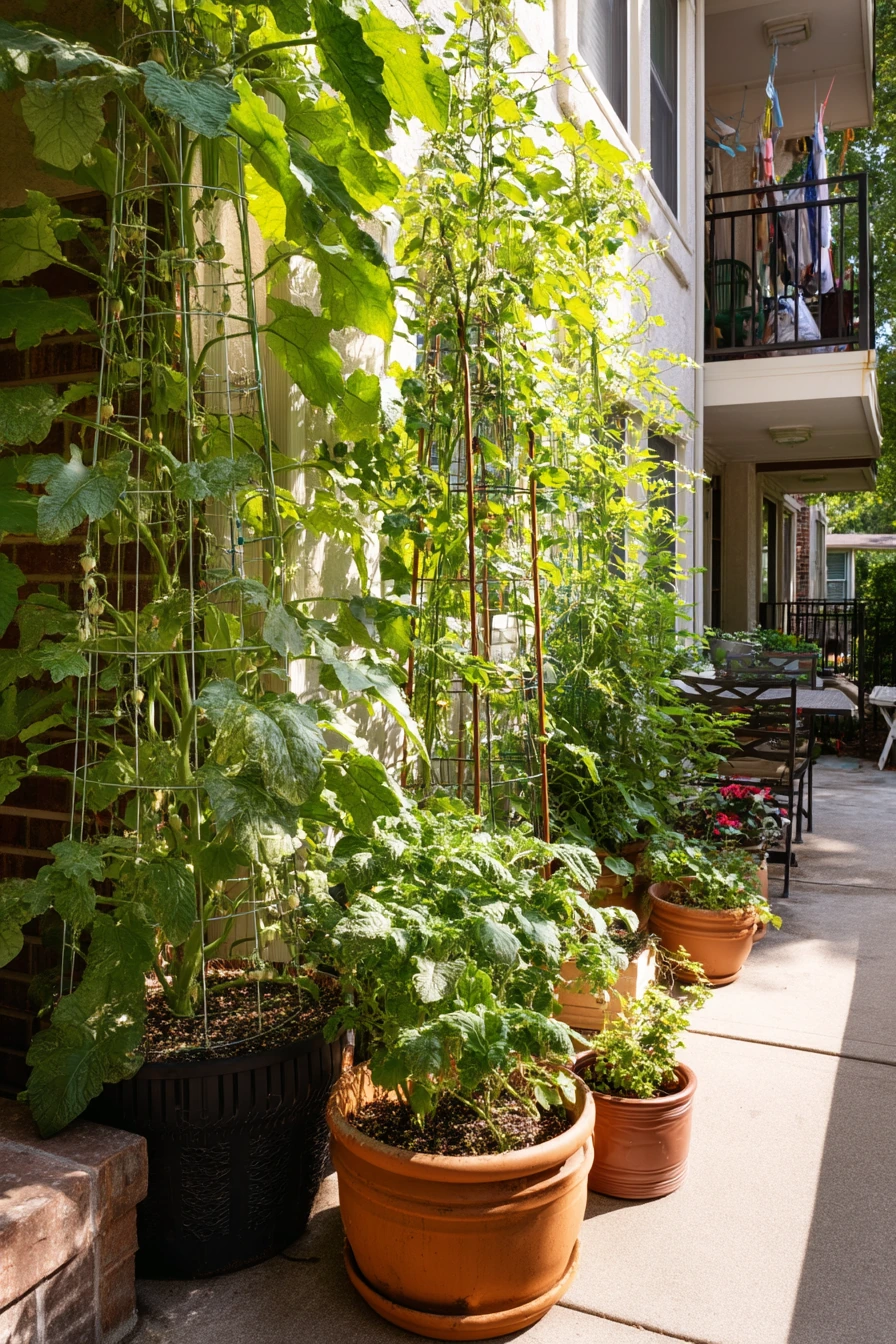
A courtyard apartment garden often needs a movable setup. A portable cucumber trellis obelisk in oversized planters is a renter-safe solution that can shift with the seasons. You can pull it into morning shade, rotate it for even growth, or move it aside when guests come.
Pick an obelisk with a wide base and strong legs. Place it with other productive pots, like potted tomatoes, so watering and feeding happen in one spot. A compact hose reel keeps things neat, and it is easier than dragging a long hose through a shared space. Keep keys and mail on a stone ledge so you can step outside and do a quick plant check without turning it into a big task.
To keep the courtyard from feeling staged, allow normal life to show. A shopping tote on a chair and a neighbor’s laundry line in the background still look tidy if you manage cords and tools. Add a small saucer for pruners, and wipe down the planter rims so the area looks cared for.
- Use wheeled plant caddies for heavy planters.
- Place the trellis where it gets at least 6 hours of light.
- Use soft ties to keep vines centered on the obelisk.
- Feed weekly with a diluted fertilizer for container plants.
- Watch for drying wind in courtyards and water as needed.
Pro Design Tip: Group planters by height, with the obelisk as the tallest point, so the courtyard looks balanced and not crowded.
Budget Considerations: Metal obelisks can cost more; a DIY version using 4 wood stakes and twine can work well for one season.
8 Late-Season Garden Overflow
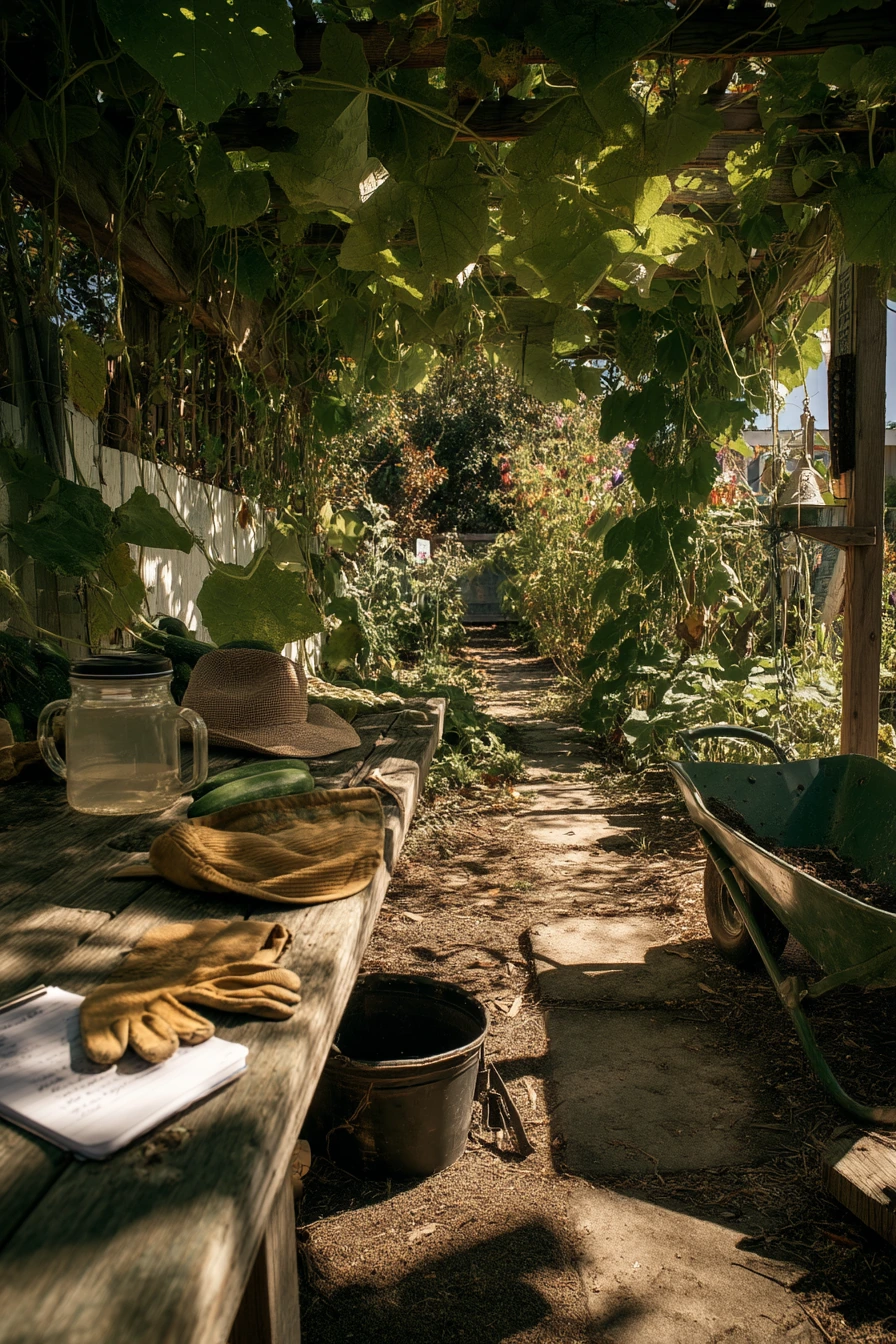
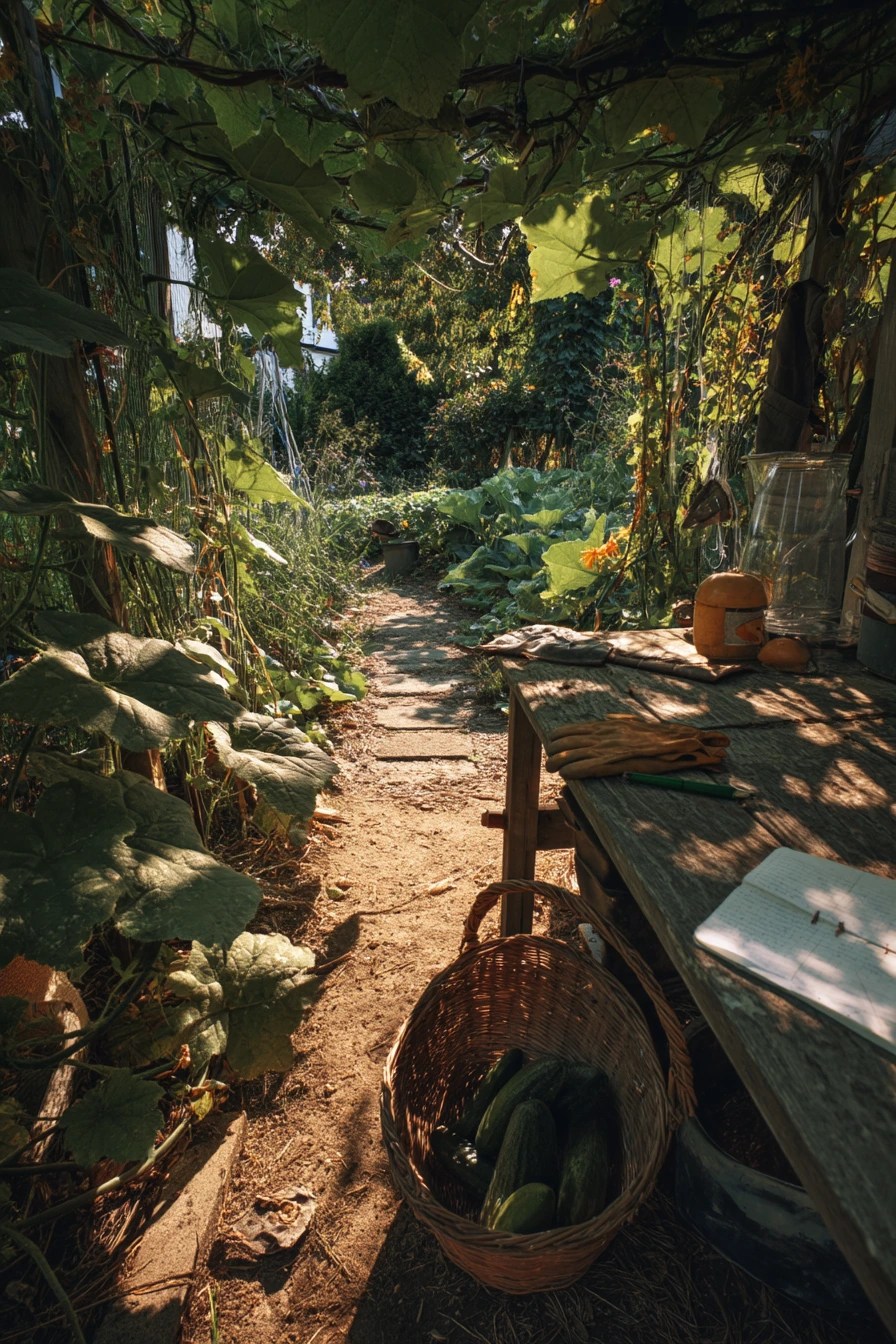
By late summer, cucumber vines can get thick and spill into the vegetable patch. An overgrown trellis is common, and it does not mean you failed. It means the plant is vigorous. The key is to tame it enough that you can harvest and keep airflow moving.
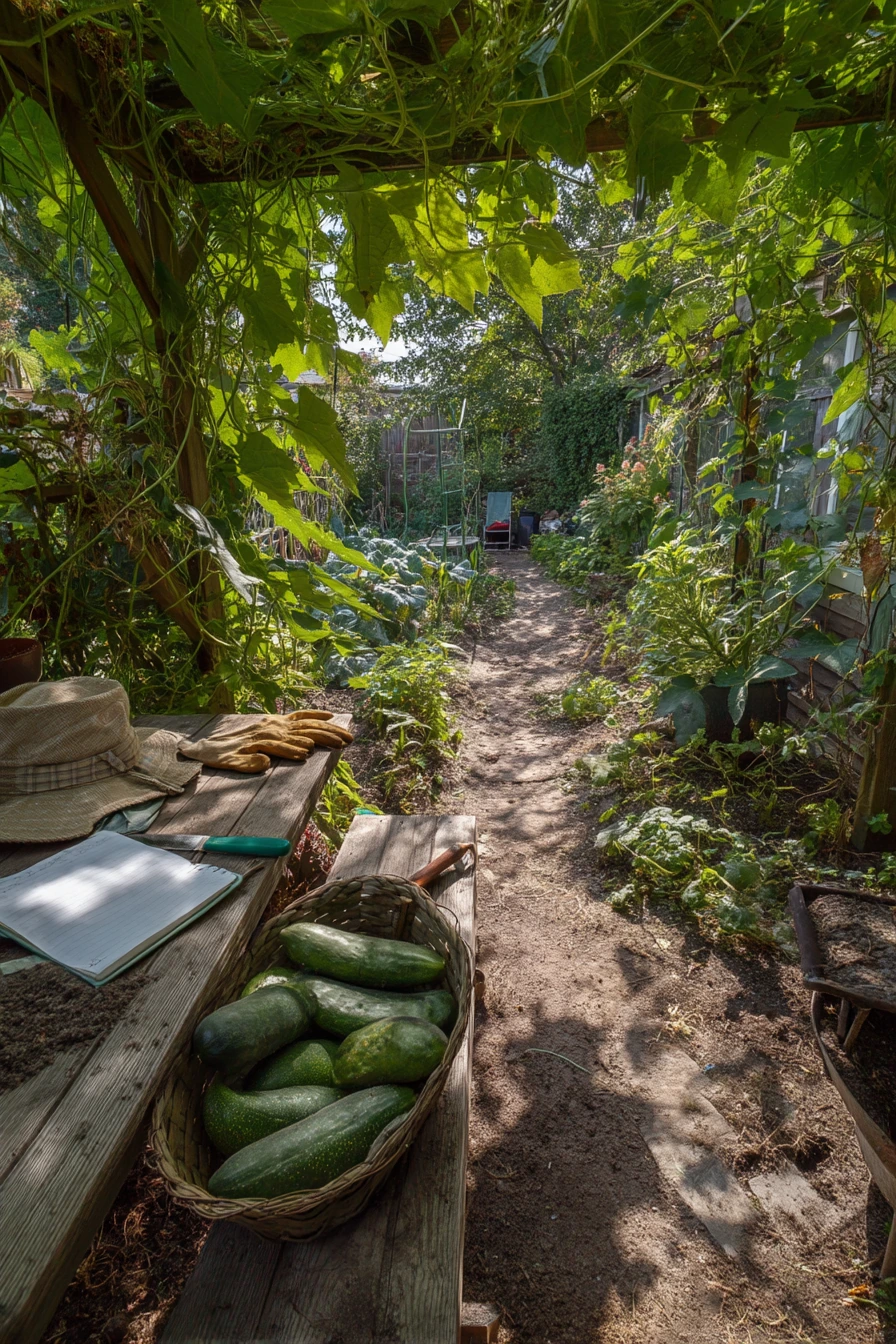
Start with a quick reset. Put on gloves, bring a wheelbarrow, and carry a harvesting basket with you. Remove yellow leaves and broken stems first. Then lift and tuck vines back onto the trellis, tying them loosely. If you see fruit hiding under leaves, pick it now. Leaving big cucumbers on the vine can slow down new production.
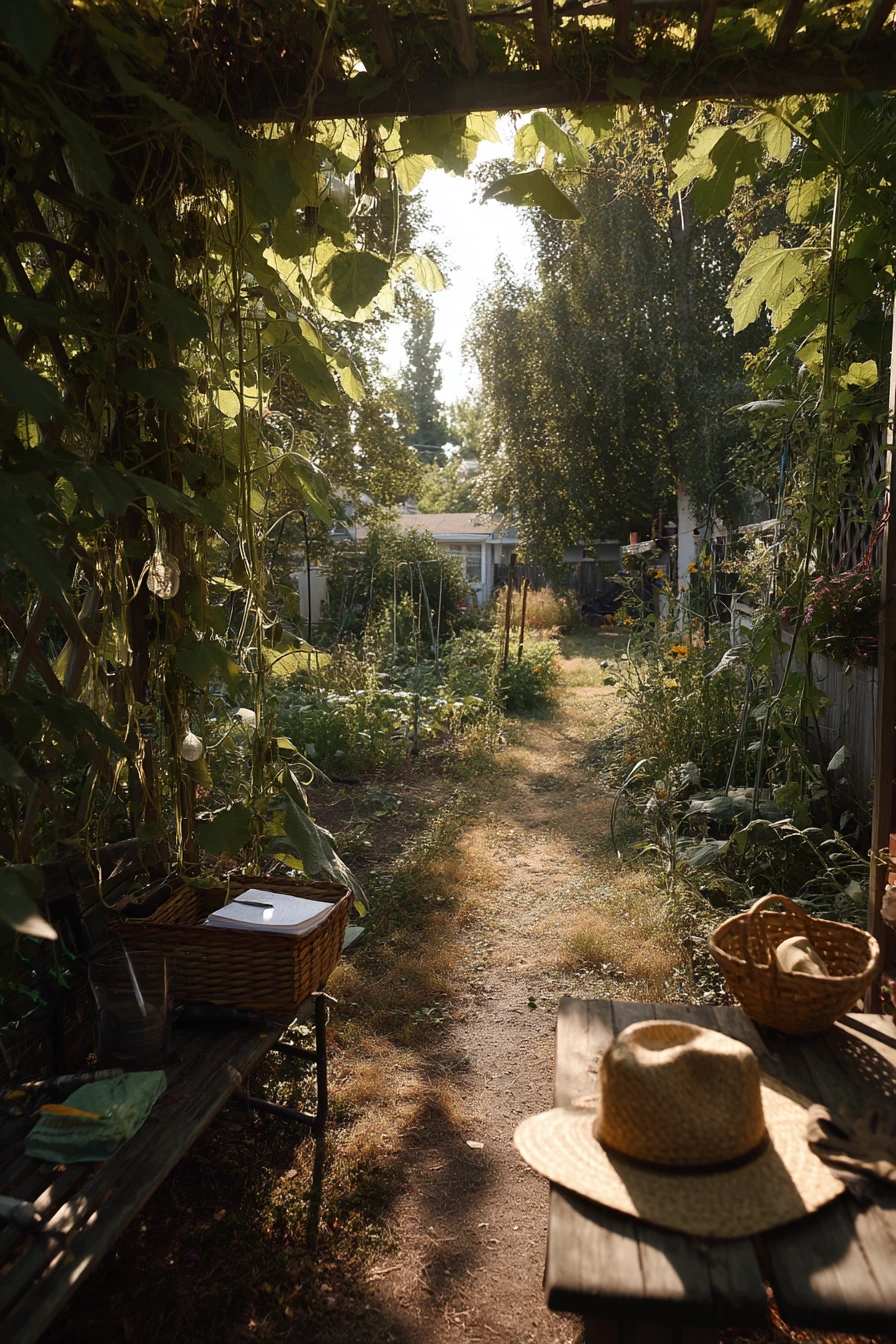
Keep a simple system nearby, like a notebook with planting notes on the picnic table and a glass pitcher for water. If a hat gets dropped in the dirt, shake it off and keep going. Long plant shadows across the path remind you to do this work in cooler, fading daylight when the garden is easier to manage.
- Prune no more than one third of the leaves at a time.
- Cut, do not tear, to avoid damaging vines.
- Use a wide trellis so vines can spread without collapsing.
- Harvest every 1 to 2 days during peak season.
- Compost healthy leaves and trash any diseased ones.
Pro Design Tip: Create a “harvest station” with a basket, snips, and a small bin so you can work fast before the light fades.
Budget Considerations: To strengthen a sagging trellis, add a few T-posts or extra stakes instead of rebuilding the whole structure.
9 Modern Fence Trellis in a Minimal Yard
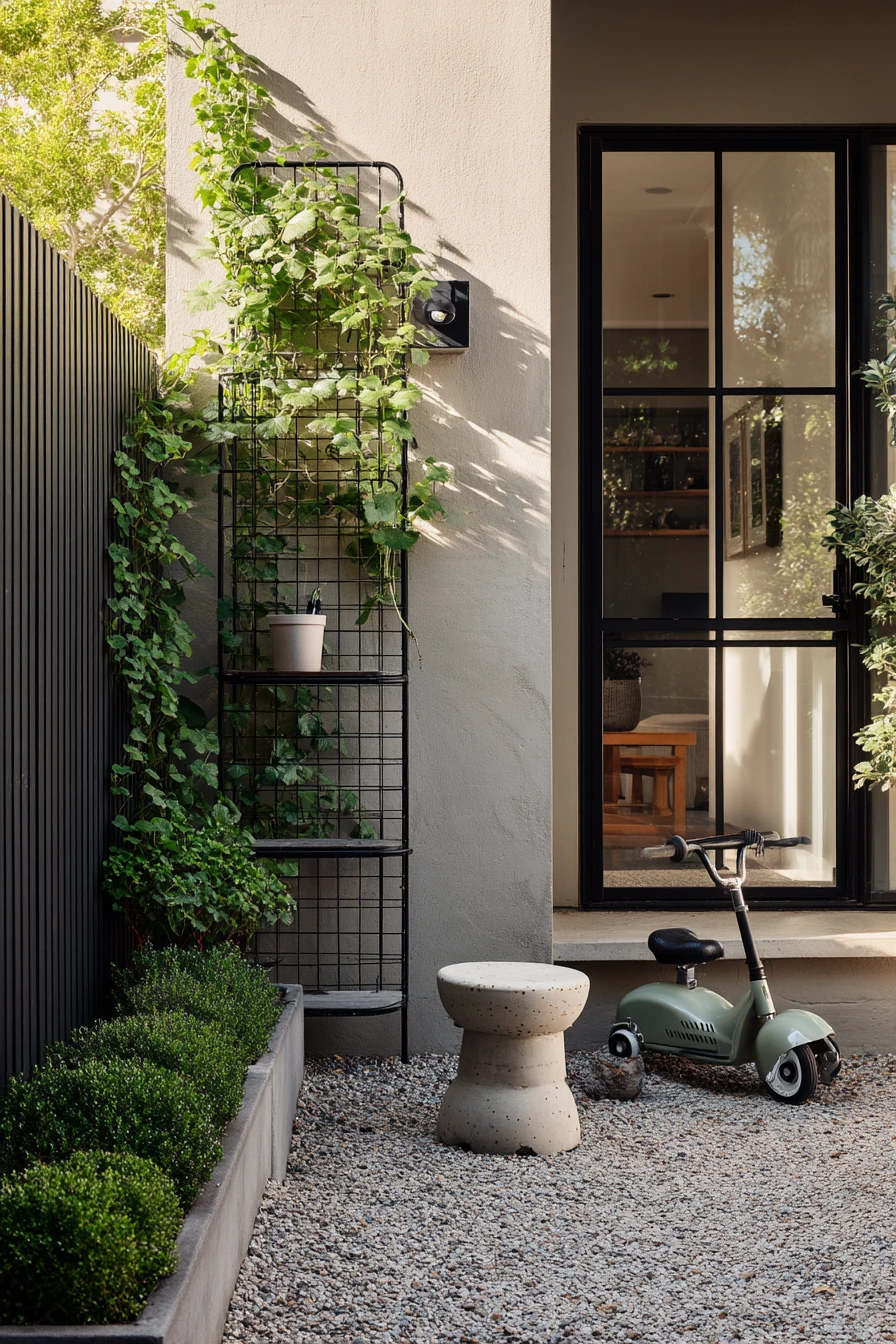
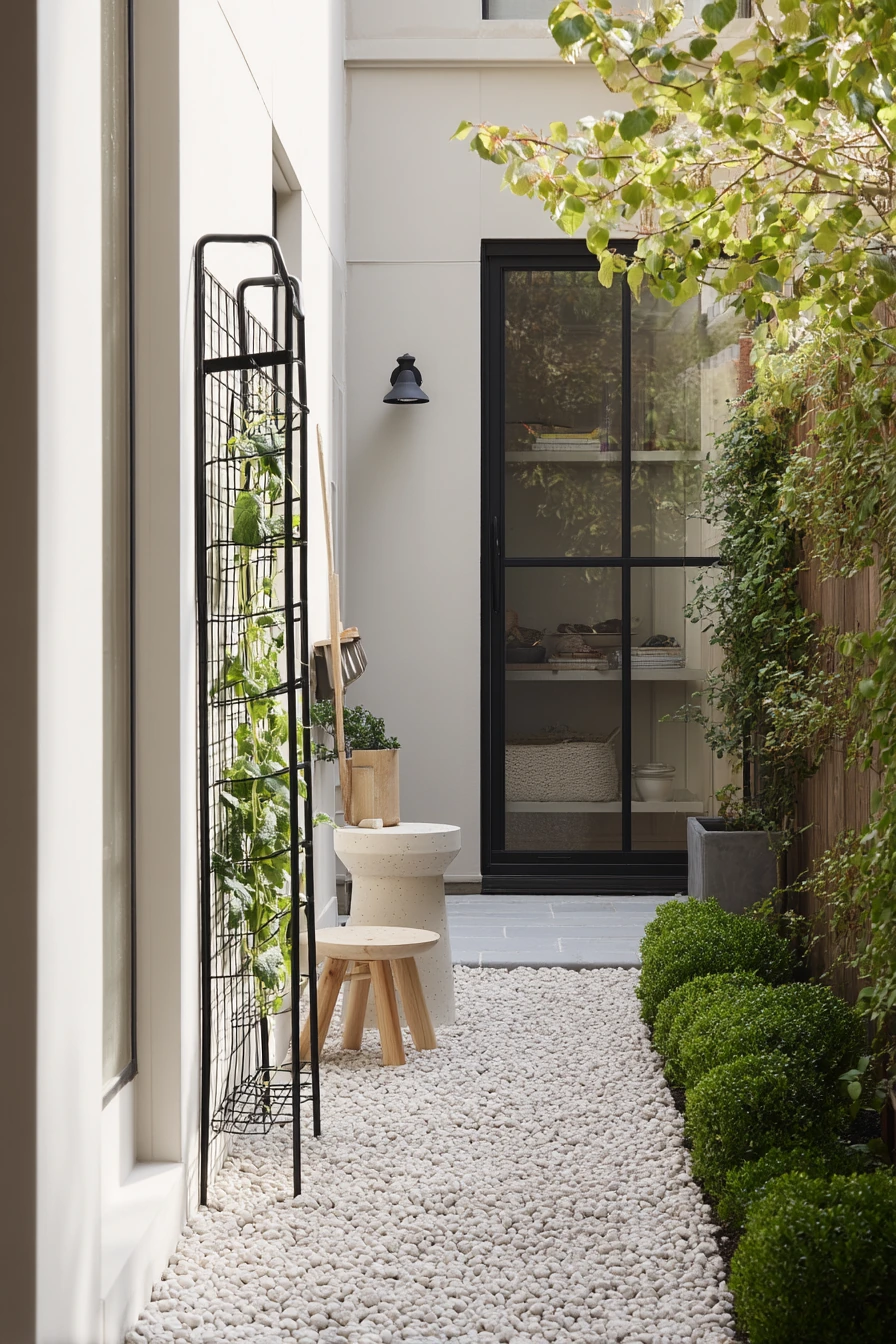
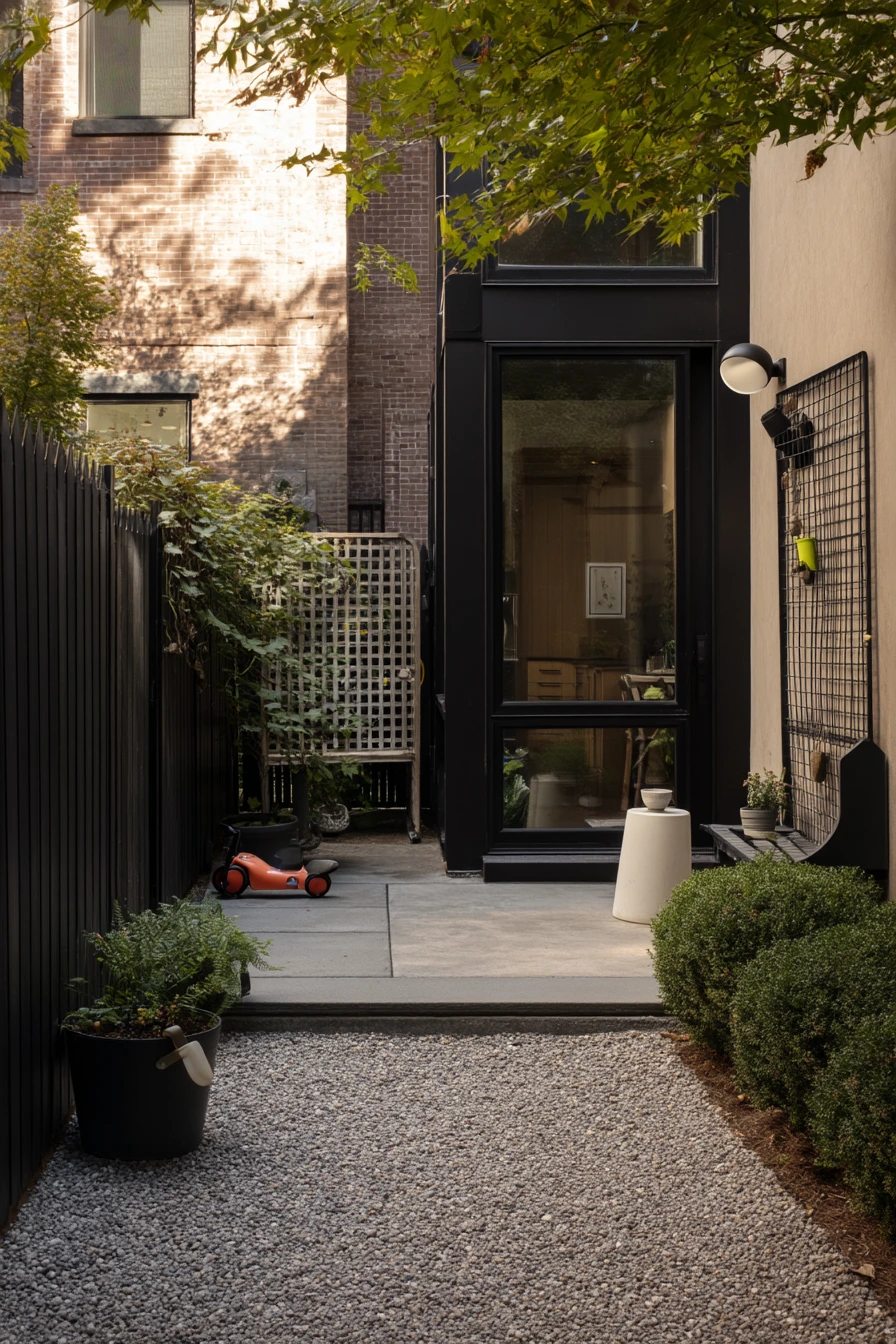
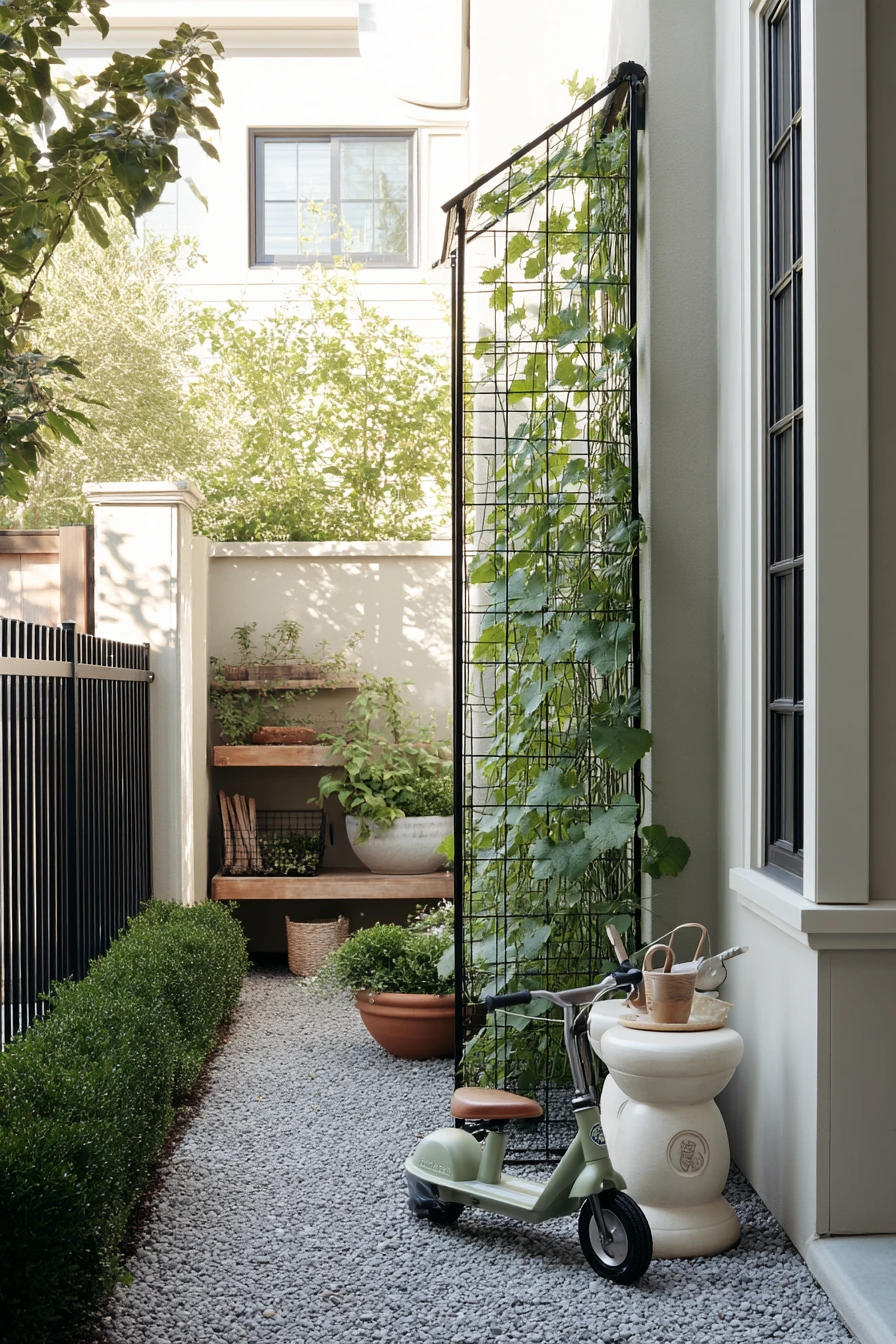
A clean-lined townhouse yard often has limited planting space and a modern style. A slim black metal cucumber trellis fixed to a fence keeps the look restrained and functional. The dark frame fades back, making the green leaves and pale cucumbers stand out.
Place the trellis in a minimalist gravel bed with boxwood edging, so it looks neat even when vines are growing fast. Add a small potting shelf for garden shears and ties. A ceramic stool can hold a watering can or serve as a quick seat for pruning. If you use an outdoor speaker and a reusable coffee cup, keep them on a dedicated surface so the garden area stays uncluttered.
Plan for real movement through the yard. A child’s scooter parked near the gate is normal, so avoid sharp hooks and keep the trellis edges smooth. Soft afternoon light from the kitchen makes this kind of setup feel connected to the home, which helps you notice problems early because you see the plants often.
- Choose powder-coated metal to resist rust.
- Use masonry anchors if attaching to brick or concrete.
- Train vines to a single plane for a tidy wall of green.
- Keep gravel raked so fallen leaves are easy to spot and remove.
- Water at the base to keep the fence cleaner.
Pro Design Tip: Repeat black accents, like a black trellis plus a black hose reel, to make the yard look calm and coordinated.
Budget Considerations: If a custom metal trellis is expensive, use a standard metal panel and spray paint it with outdoor rust-resistant paint.
10 Weekend Harvest by the Kitchen Door
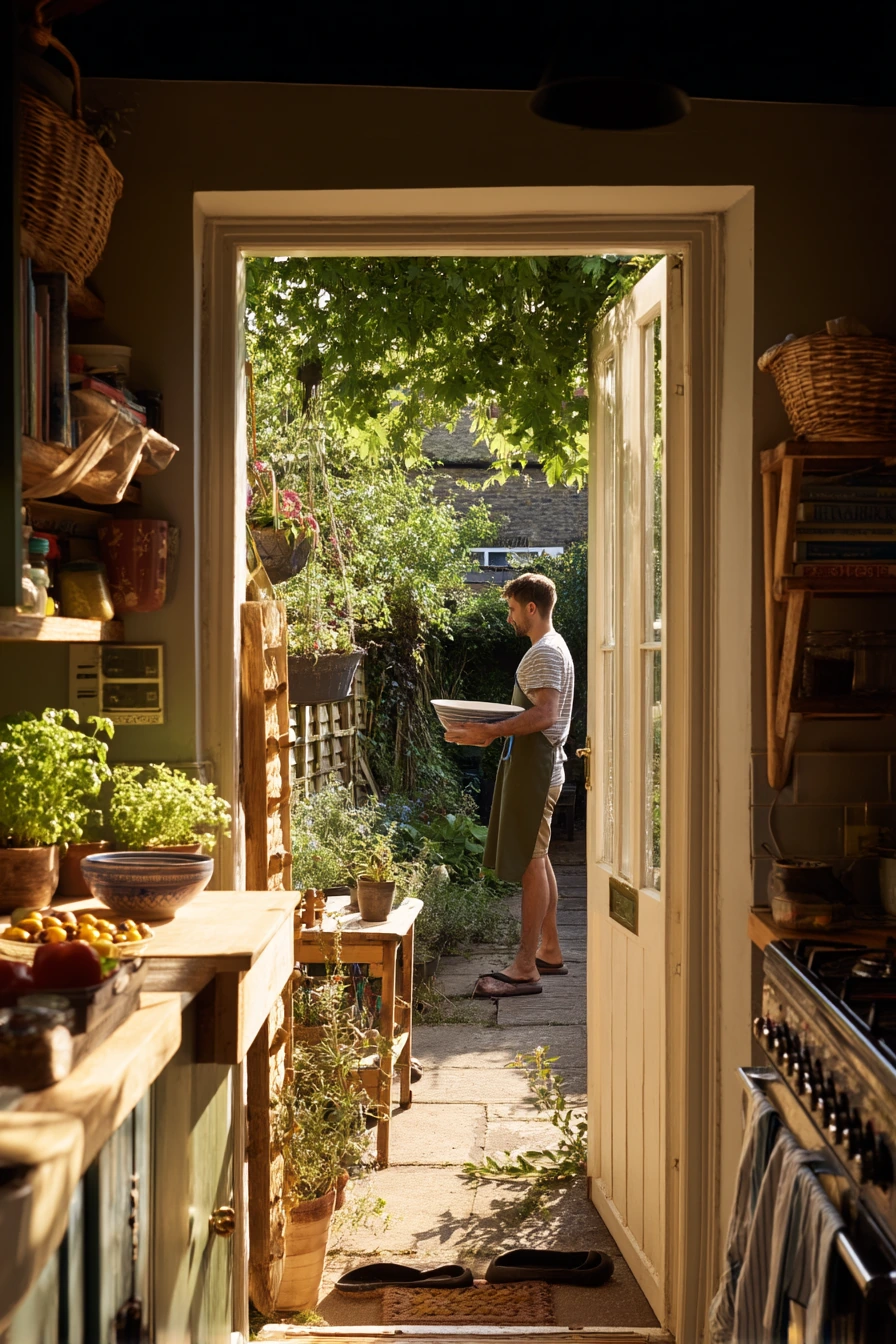
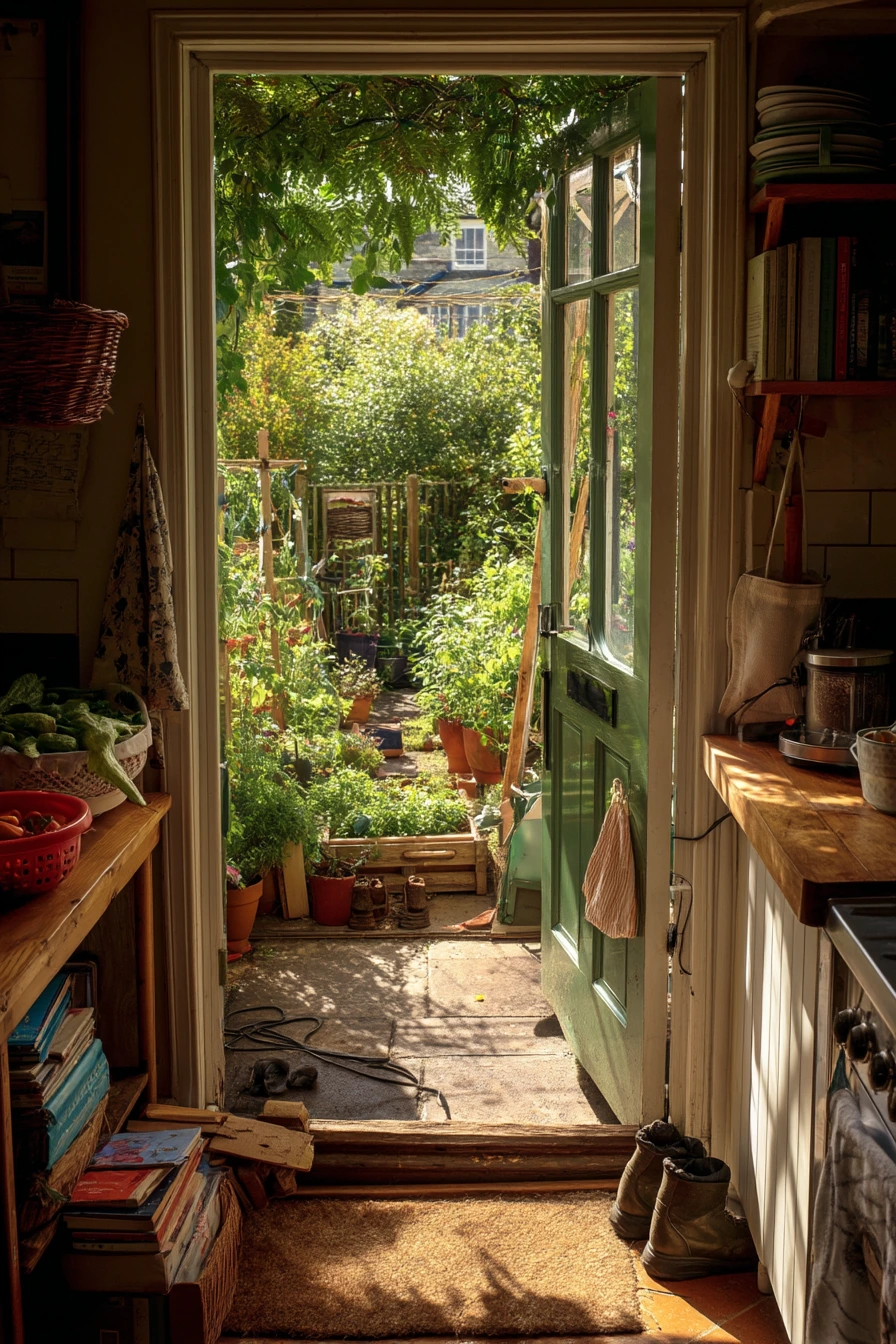
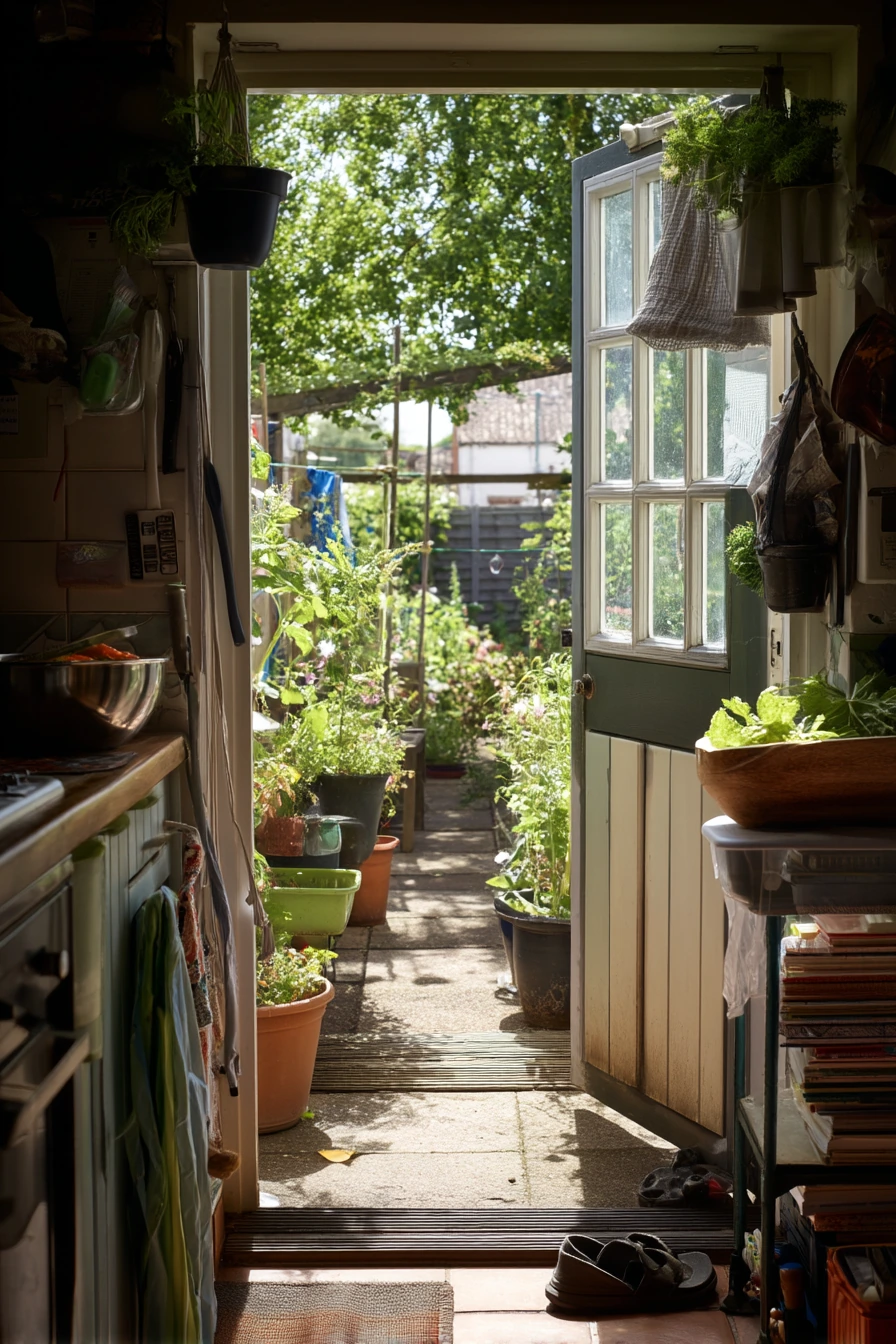
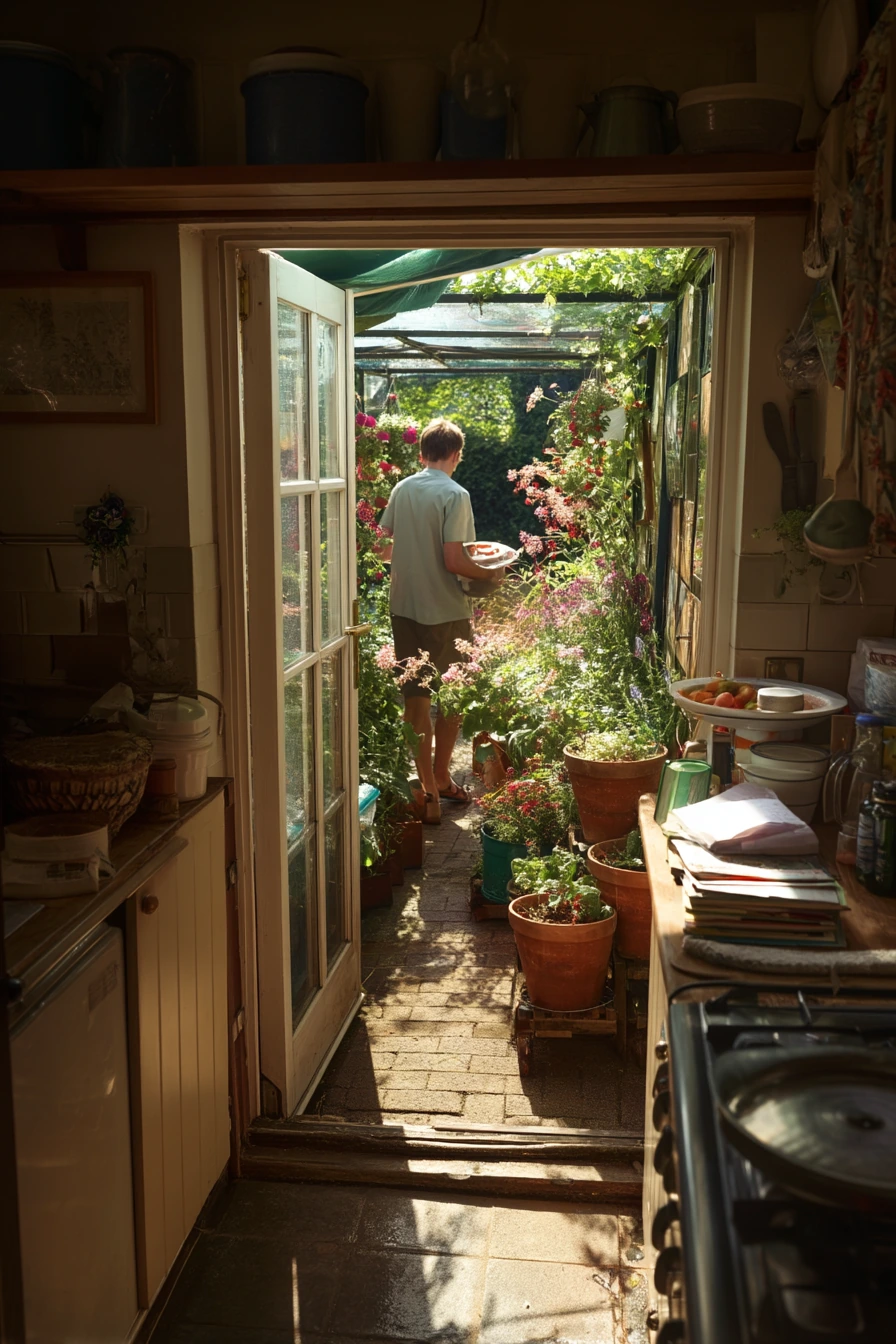
Placing a cucumber trellis near the kitchen door is one of the best ways to use your garden every day. When the door opens onto a small rear garden, you can step out, pick a few cucumbers, and bring them inside in a colander. This setup turns harvesting into a quick habit instead of a big chore.
Use a trellis beside herb planters and hanging baskets so the whole area feels like a food zone. Keep a dish towel over the handle of the colander for dirt and water drips. If cookbooks are stacked by the threshold, you can grab one and plan dinner using what you picked. Morning light from inside plus soft outdoor shade can be perfect for cucumbers, especially if the spot avoids harsh midday heat.
Keep it practical and clean. Muddy sandals near the door are fine, but add a small mat so soil stays outside. If a charging cable is visible on the counter through the glass, route it away from water sources and keep cords tidy. This small detail makes the whole doorway feel safer and more organized.
- Pick a trellis height that you can reach without a ladder.
- Leave enough space to open the door fully and carry baskets.
- Grow herbs at the base to shade soil and reduce weeds.
- Check vines when you take out kitchen scraps to compost.
- Wash cucumbers right away to reduce mess inside.
Pro Design Tip: Add a small hook by the door for the colander and pruners so harvesting tools always stay in one spot.
Budget Considerations: A simple wood frame with netting is often the cheapest option here; you can also reuse a strong wire shelf panel as a trellis.
Cucumber trellises work in many spaces, from a balcony with bamboo and twine to a backyard arch over a gravel path. The best design is the one that fits your daily routine and makes watering and harvesting easy.
Start with one trellis style, place it where you will see it often, and train vines early. Add small practical touches like a tool spot, a basket, and clear walking space.
FAQ: How tall should a cucumber trellis be? 5 to 6 feet works for most types. Can cucumbers grow in pots? Yes, with a large container and regular feeding. What is the easiest trellis for beginners? A cattle panel or netting on a frame. How do you attach vines? Use soft ties and guide gently every few days. Do cucumbers need full sun? Aim for 6 to 8 hours. How often should you harvest? Every 1 to 2 days in peak season.
Pick the idea that matches your home and budget, then build it this week so your plants can climb as soon as they start running.