
Front yard flower bed ideas can make a home look cared for, even on a busy week. The best beds are simple to water, easy to weed, and clear from the sidewalk.
In this guide you will see 10 realistic layouts, from a compact porch with coneflowers to a modern linear bed with agave and dark mulch. Each one uses plants and details that fit real life, like a hose by the spigot, a trowel in the soil, or mail on the bench.
You will get plant pairings, spacing tips, and small ways to style each bed so it looks finished without extra work. Each section also includes a pro design tip and a budget note so you can plan before you shop.
Use these ideas as a menu. Copy one full look, or mix pieces to match your sun, shade, and the size of your walkway.
1 Curb-Appeal Flower Bed Around a Small Porch
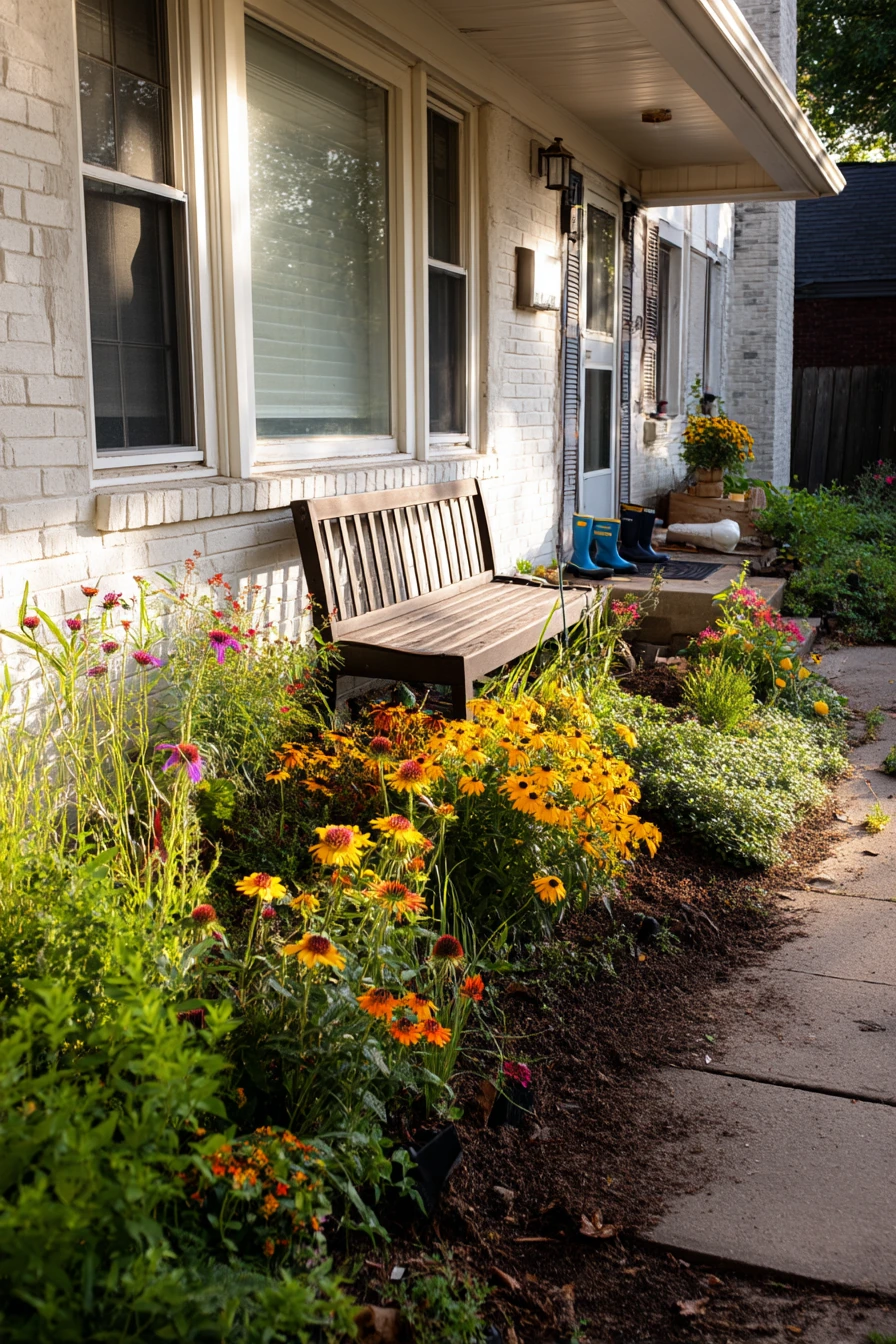
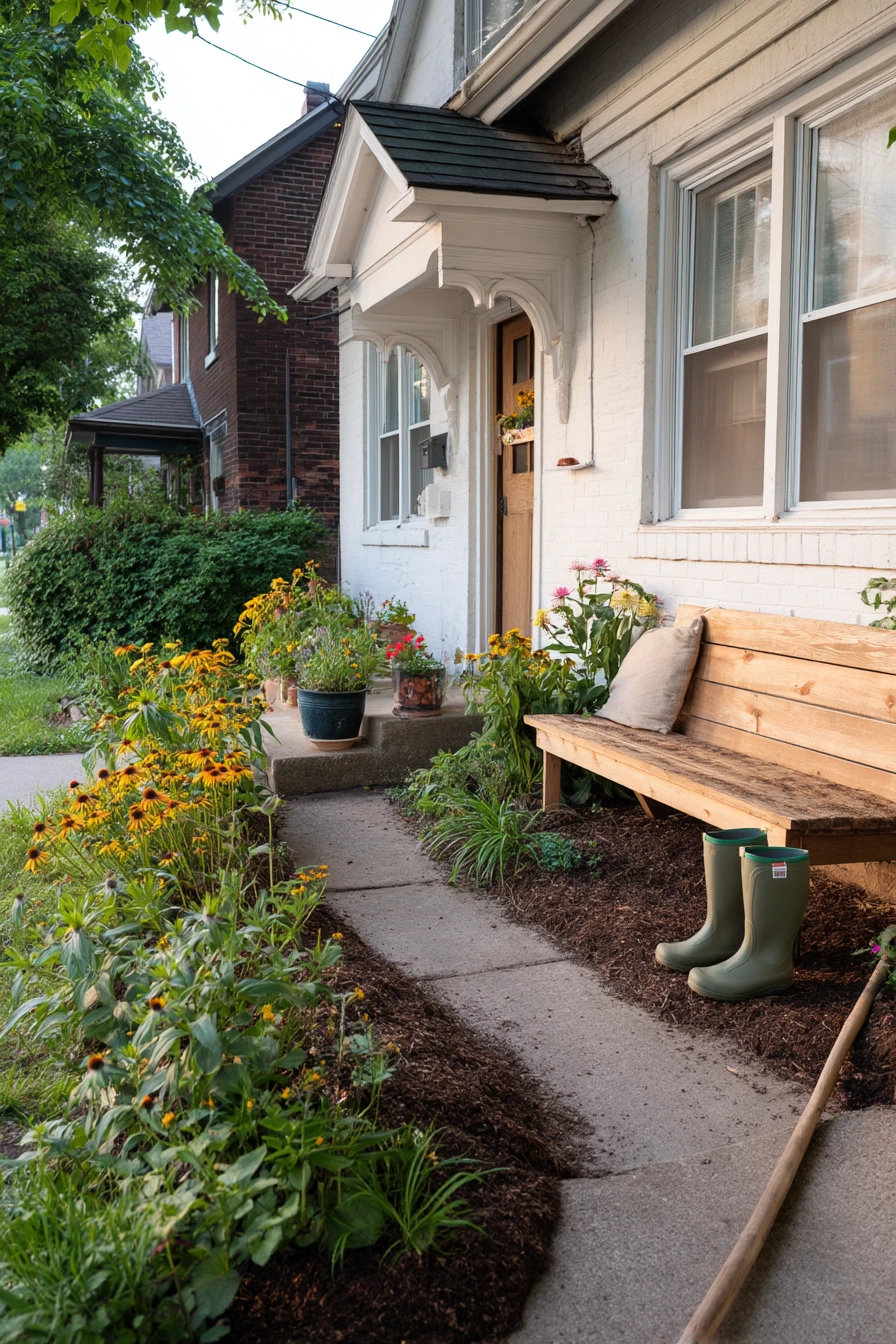
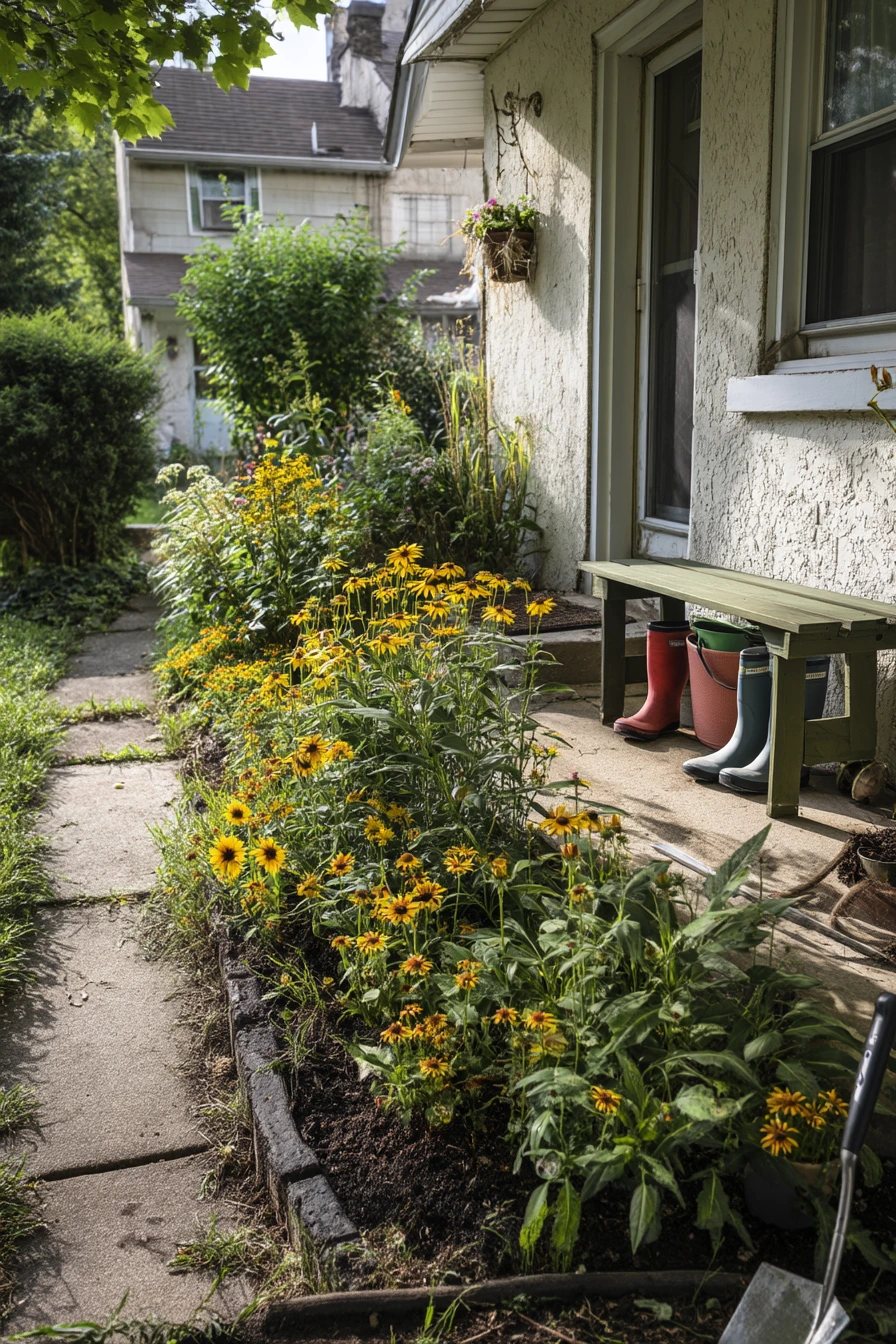
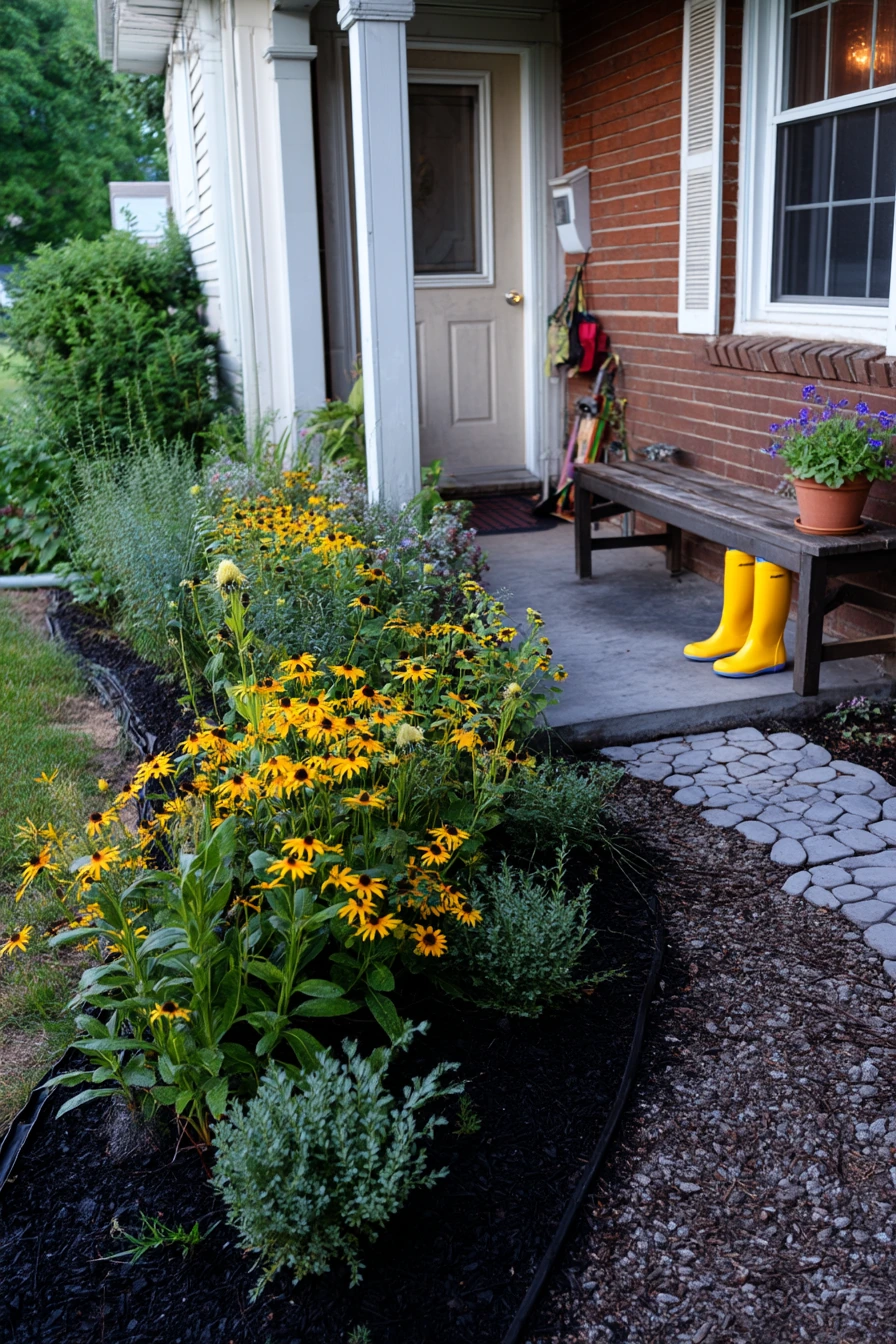
A compact porch looks best with a curved flower bed that softens the straight lines of the steps and walkway. Start with a simple arc that follows the edge of the modest path, then fill it with hardy perennials like coneflowers and black-eyed Susans for long summer color. Add low boxwood as a neat green frame, then finish with mulch edging to keep soil off the sidewalk.
This style fits a real family home because it still looks good when life is happening. A kid’s rain boot by the step, mail on the bench, and a garden trowel left in the soil all feel normal, not messy, if the bed has a clear border. Morning light from the window also makes warm colors pop, so place yellow and purple blooms where they catch that glow.
To keep the bed easy, plant in simple blocks instead of a mix of single plants. Repeat the same two flowers in groups of three to five, then tuck boxwood at the front edge. Leave a small mulch strip by the walkway so you can trim and sweep without stepping into plants.
- Mark the curve with a garden hose first, then adjust until it looks smooth from the street.
- Plant coneflowers in the back half of the bed and black-eyed Susans toward the front for layered height.
- Use low boxwood as a repeating edge, spaced evenly for a tidy look.
- Choose dark mulch to make bright blooms stand out and reduce weeds.
- Add one small solar path light near the step for a finished feel at night.
Pro Design Tip: Keep the curve wider than you think you need; a gentle arc reads cleaner from the curb than a tight wavy line.
Budget Considerations: Start with smaller boxwood and let it grow; use bulk mulch from a local yard to cut costs.
2 Low-Maintenance Bed for a Busy Corner Lot
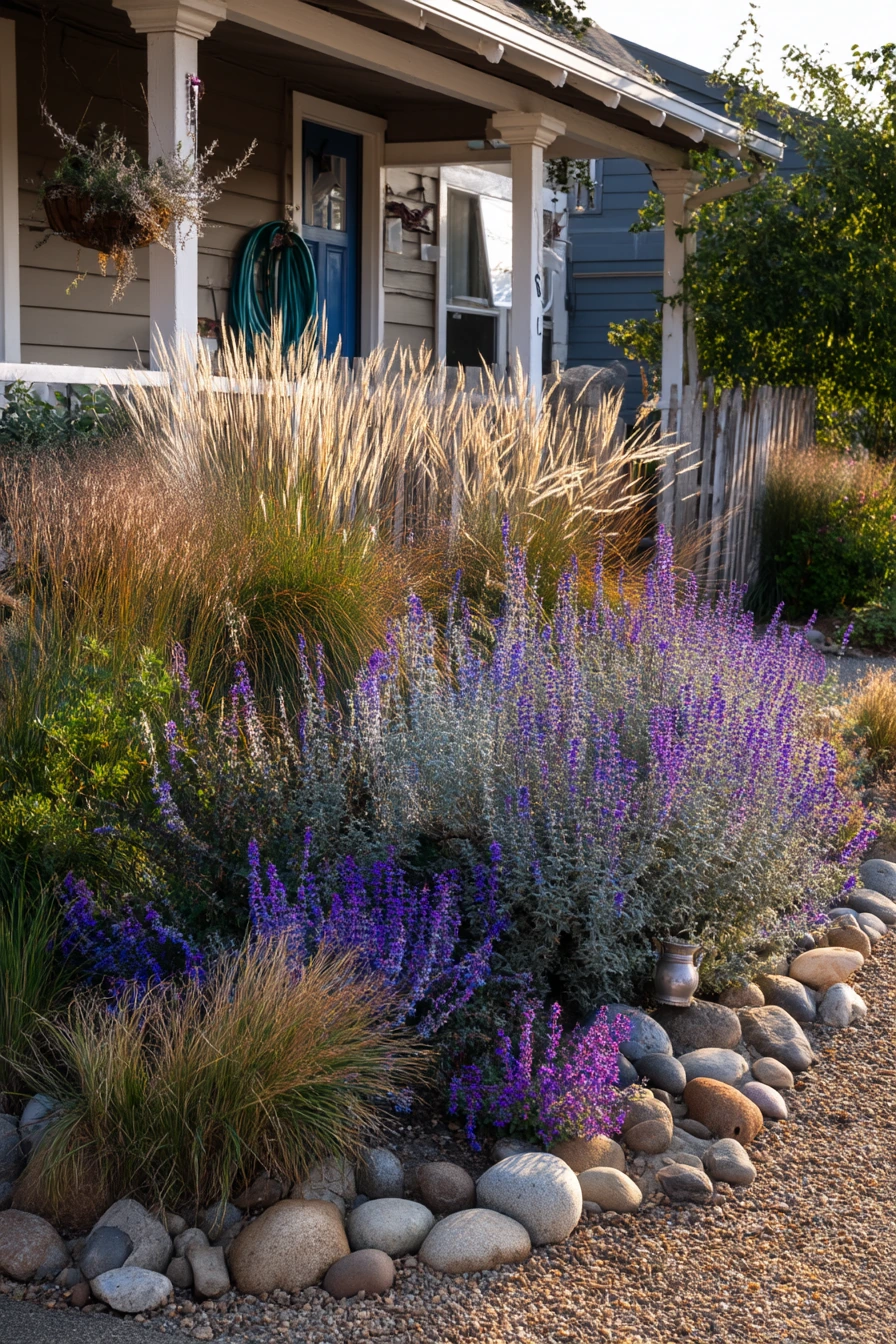
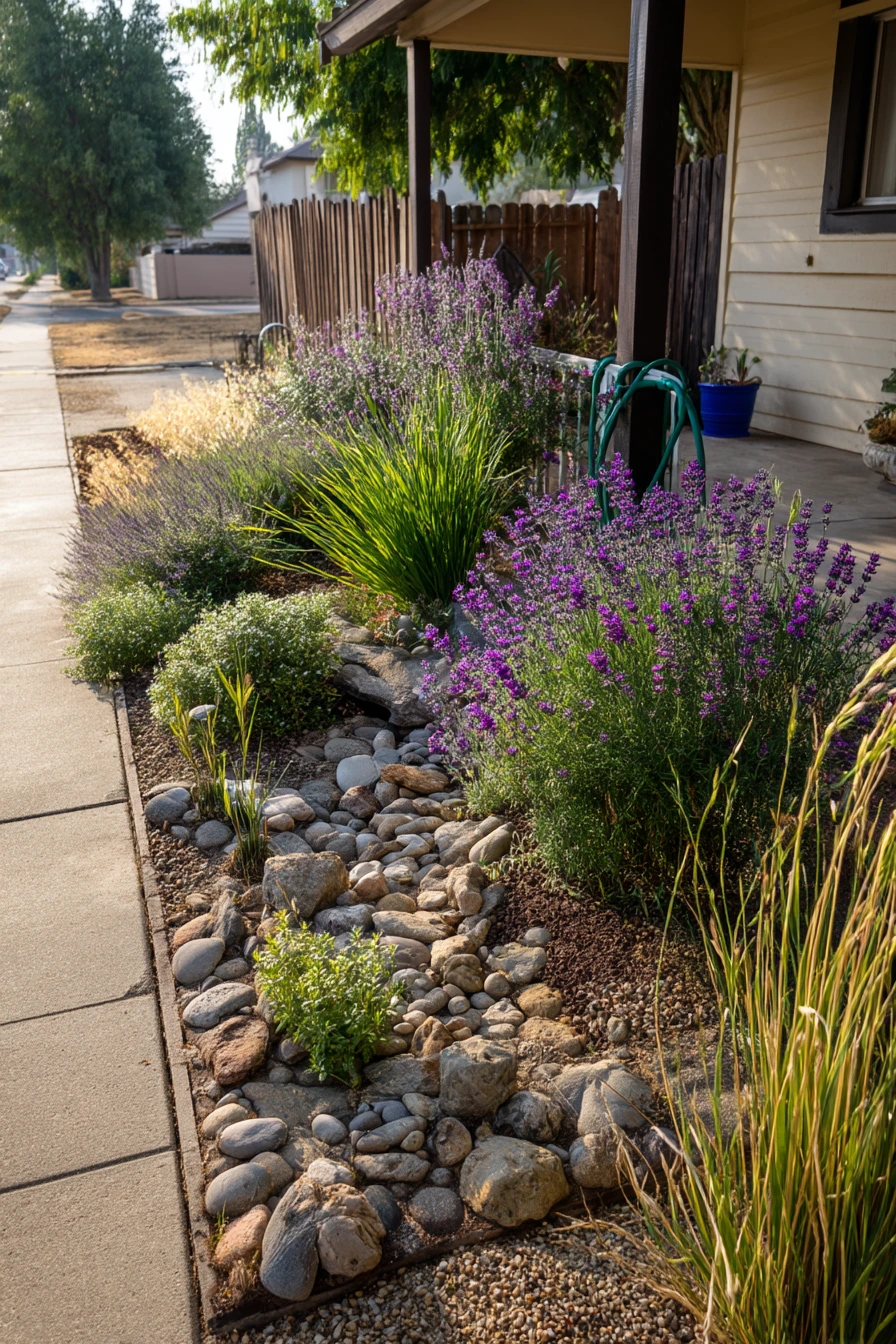
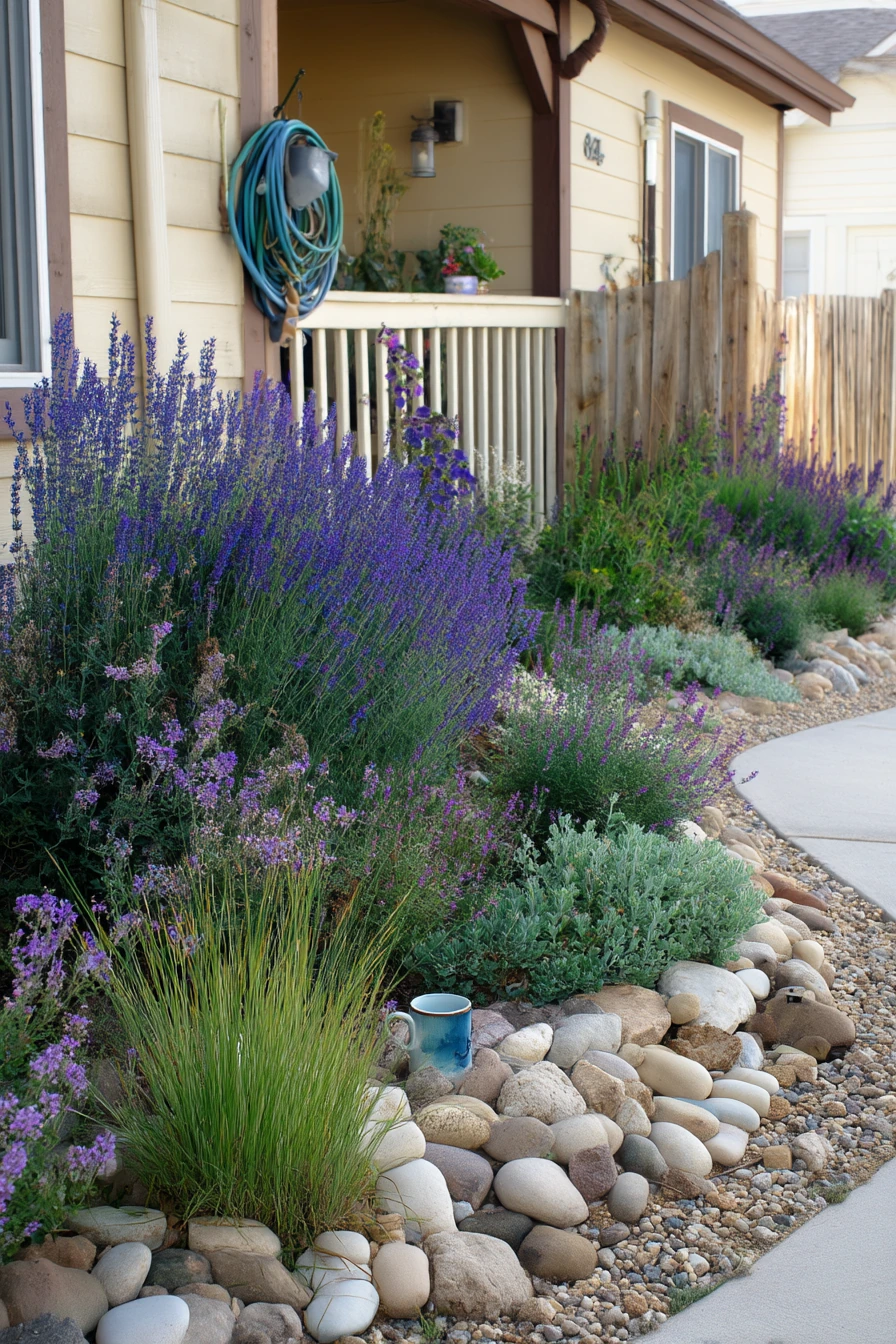
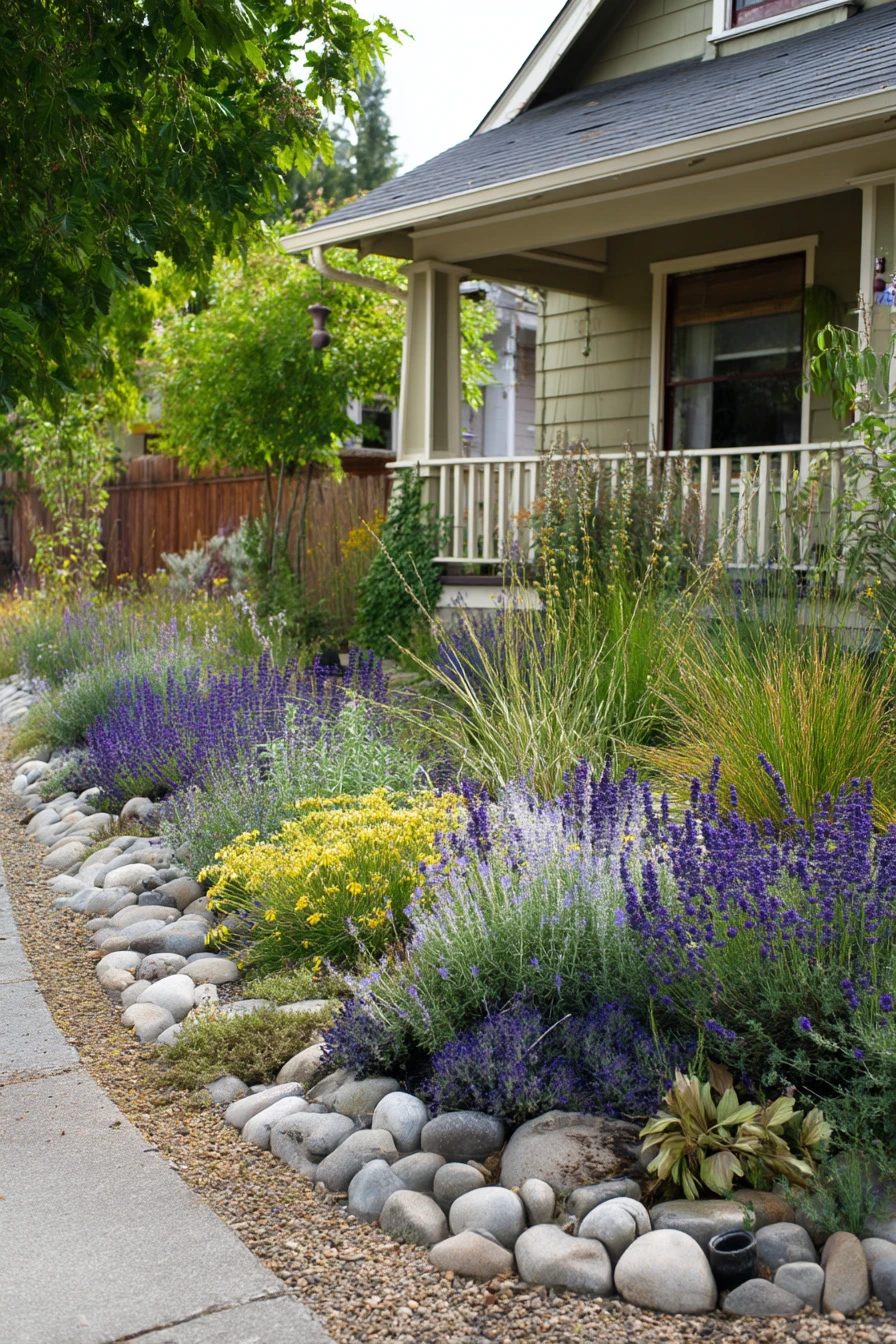
On a corner-lot home, the flower bed often wraps a fence line and gets extra sun and wind. A drought-tolerant plan with salvia, lavender, ornamental grasses, and river stones holds up well when you travel or forget to water. The look is calm and structured, with plants that stay neat and do not flop onto the sidewalk.
Make the bed feel real and lived-in by planning for everyday tools. If the hose is coiled near the spigot and gloves sit on the porch, you want the path to the water source clear. Keep the tallest grasses away from the spigot area so you can reach it without bending stems. Late-afternoon light also makes silvery lavender and tan grasses glow, so place these where they will be seen from the street.
Use river stones as a mulch layer in the hottest spots, like along the fence or by the driveway edge. In cooler parts of the bed, a thin layer of dark mulch can help hold moisture for young plants. Repeat salvia and lavender in simple rows so the bed reads as one design, not a patchwork.
- Set a clean bed edge along the fence line so stones do not spill onto grass or sidewalk.
- Plant lavender in a band for a strong scent and a clear shape.
- Use salvia near the front for long bloom time and easy color.
- Add one or two clumps of ornamental grasses to show movement in the wind.
- Place a small stepping stone near the spigot for stable footing when watering.
Pro Design Tip: Limit your plant list to three main types plus one grass; fewer choices look more modern and are easier to maintain.
Budget Considerations: River stones can be pricey; use them only in the hottest strip and mulch the rest.
3 Cottage-Style Bed by a White Picket Fence
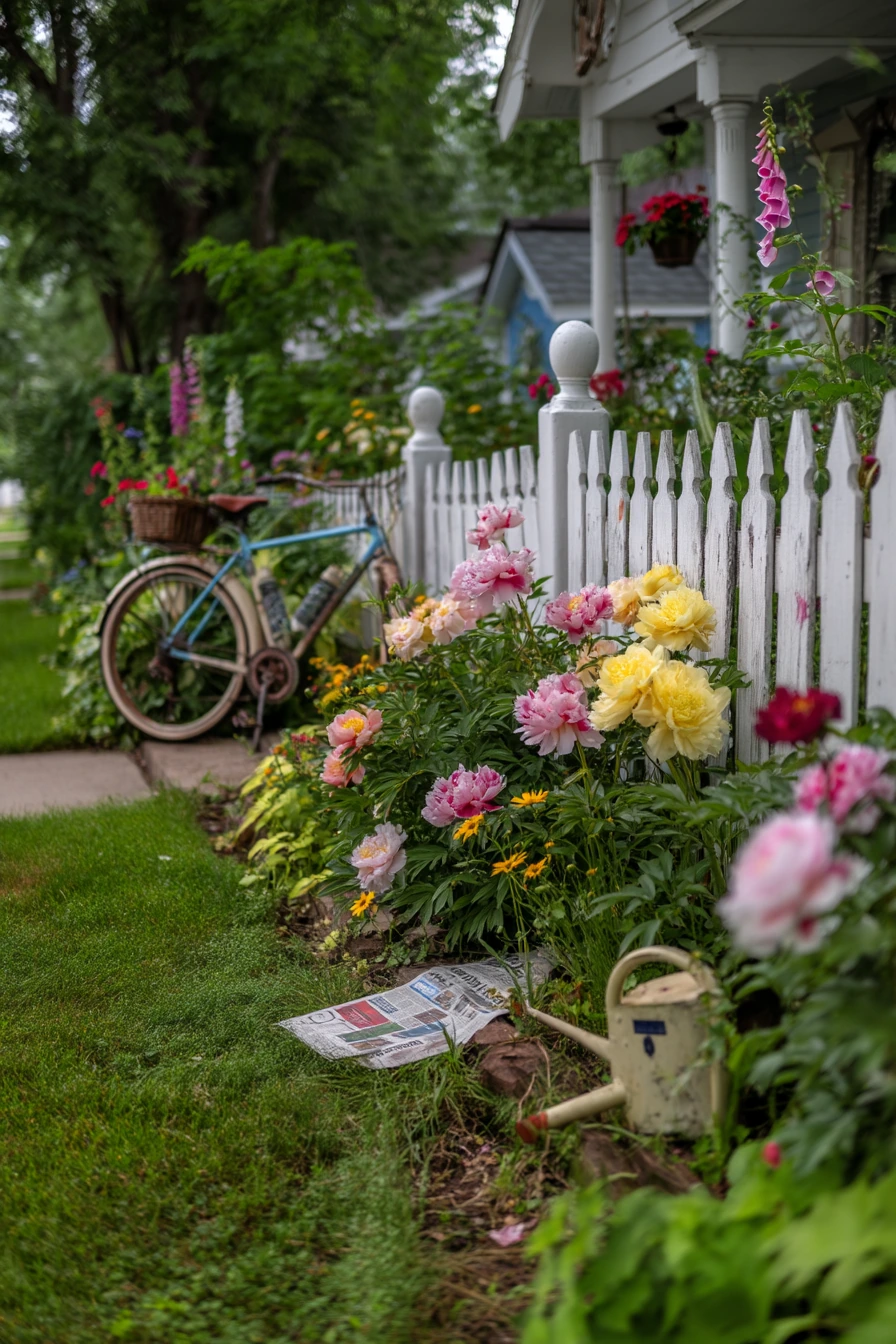
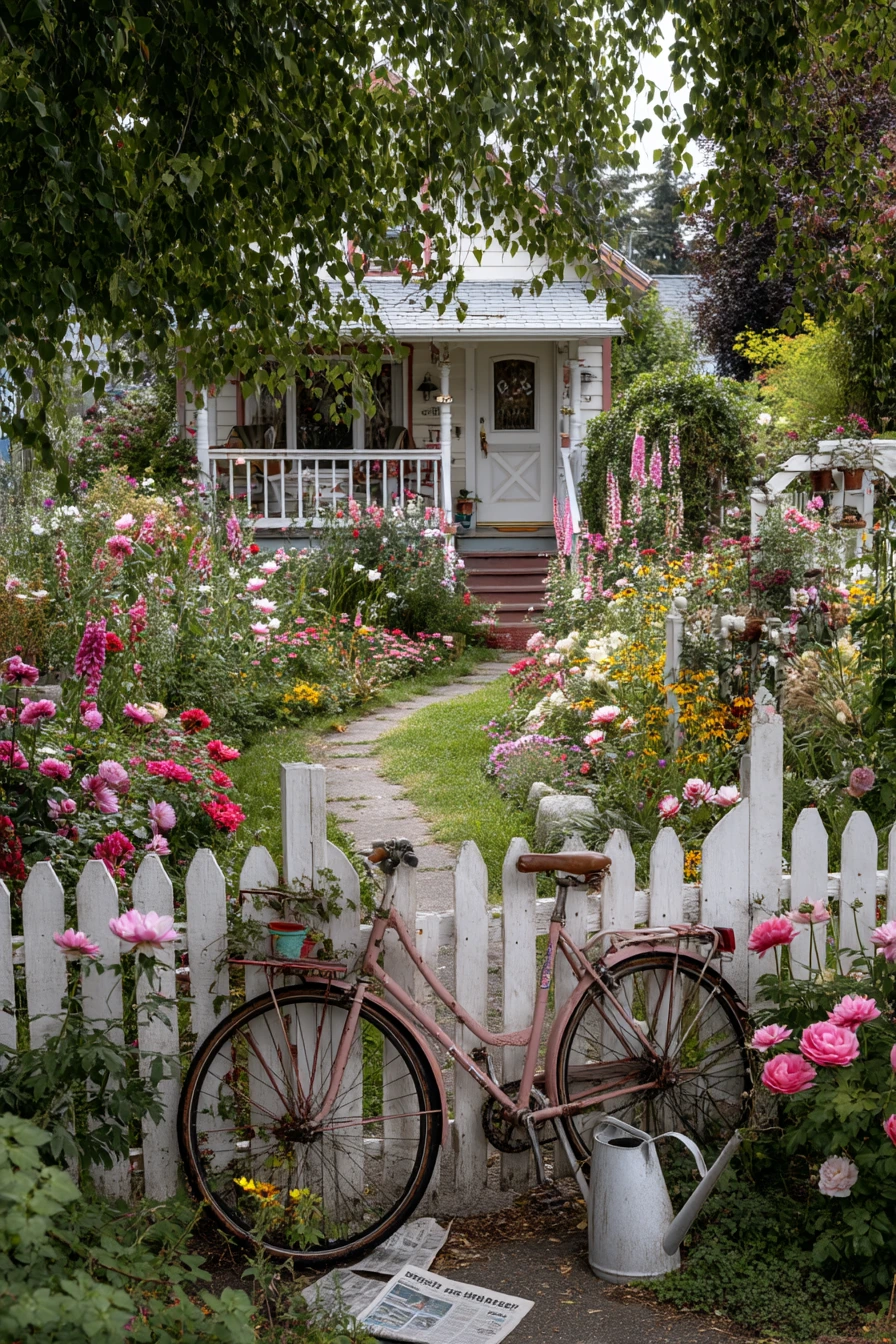
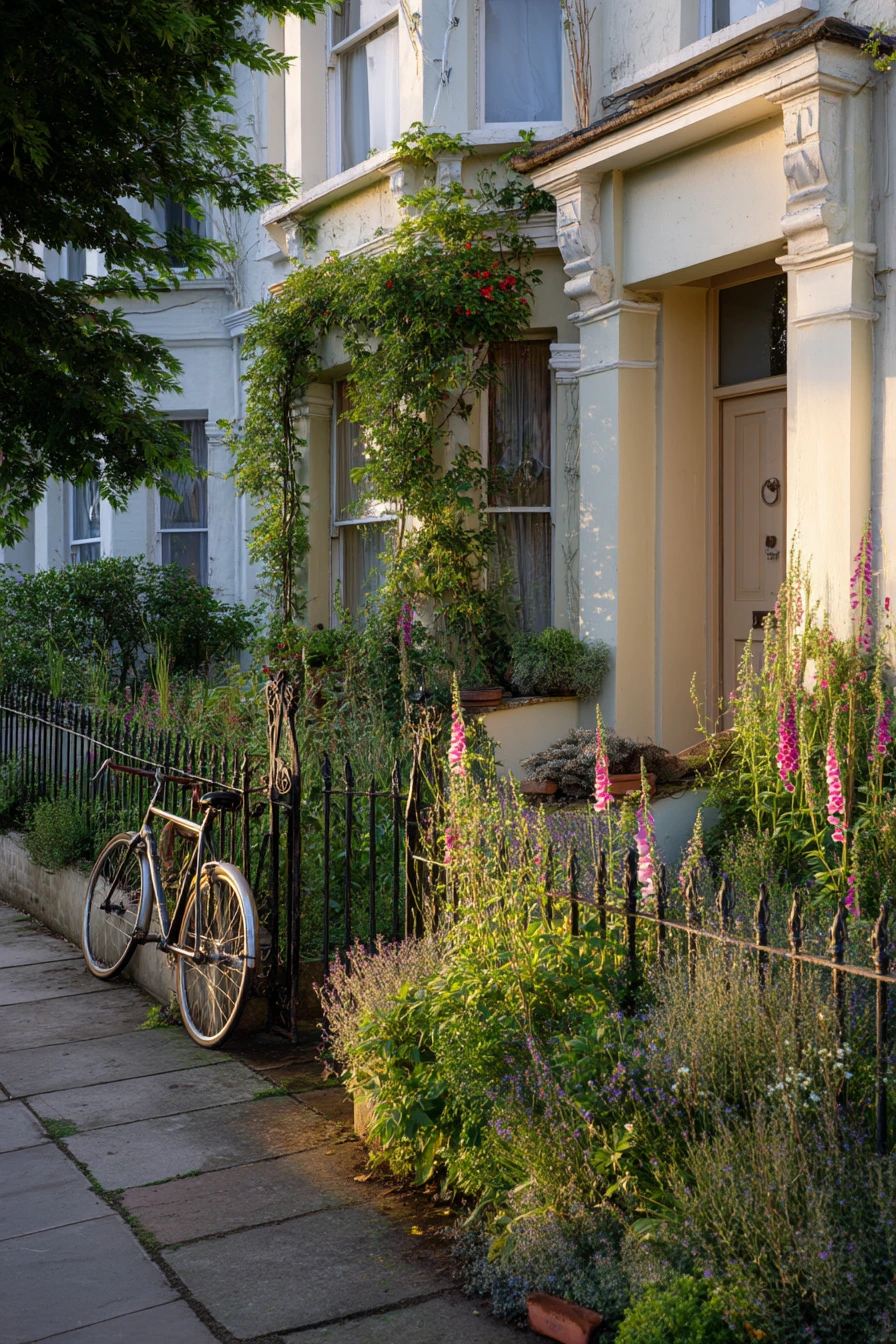
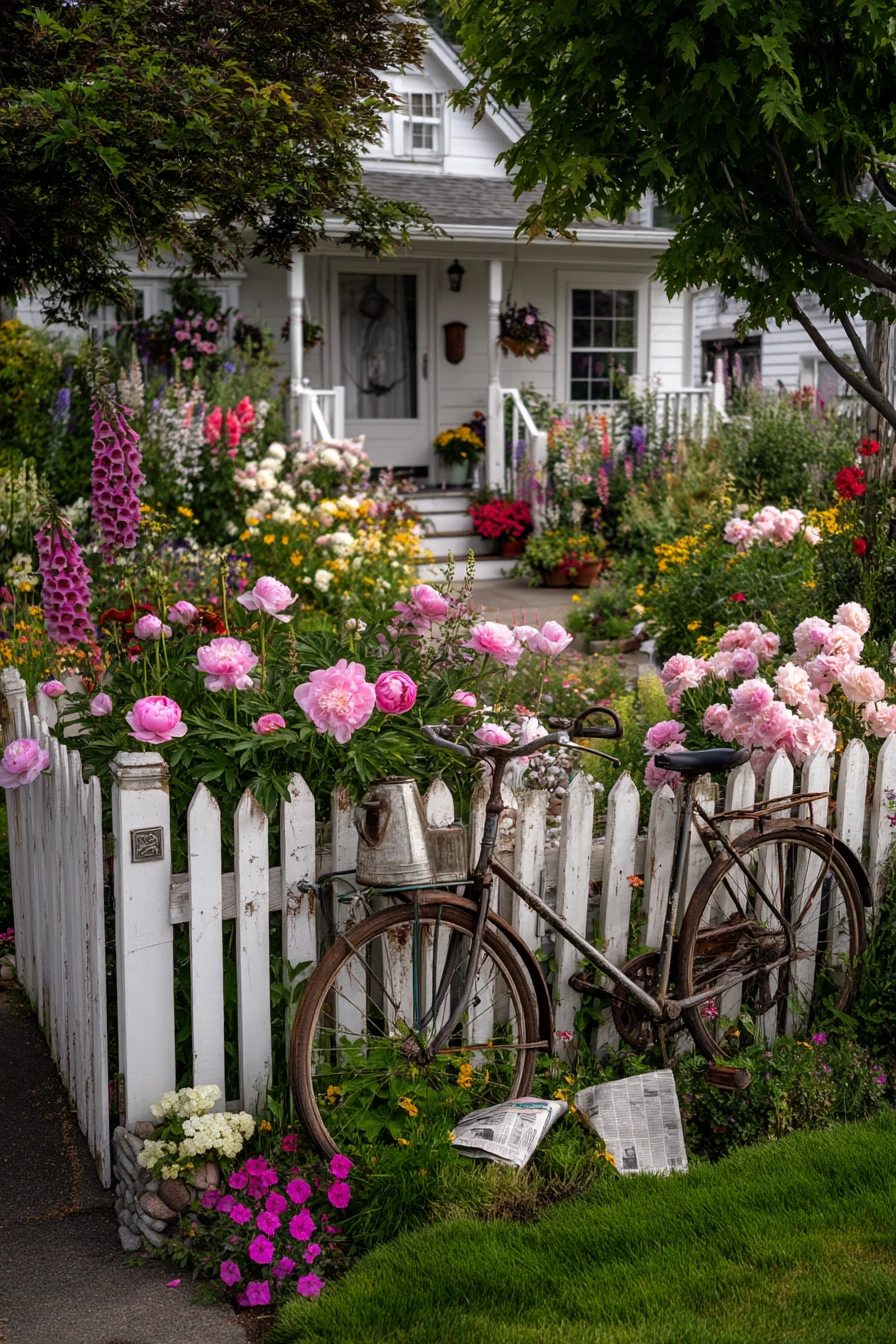
A storybook cottage look comes from layered blooms and a soft border by a white picket fence. Peonies give big spring flowers, daisies add summer cheer, and foxglove brings tall spikes for height. Climbing roses on the fence or an arch near the gate add a romantic feel without needing a huge yard.
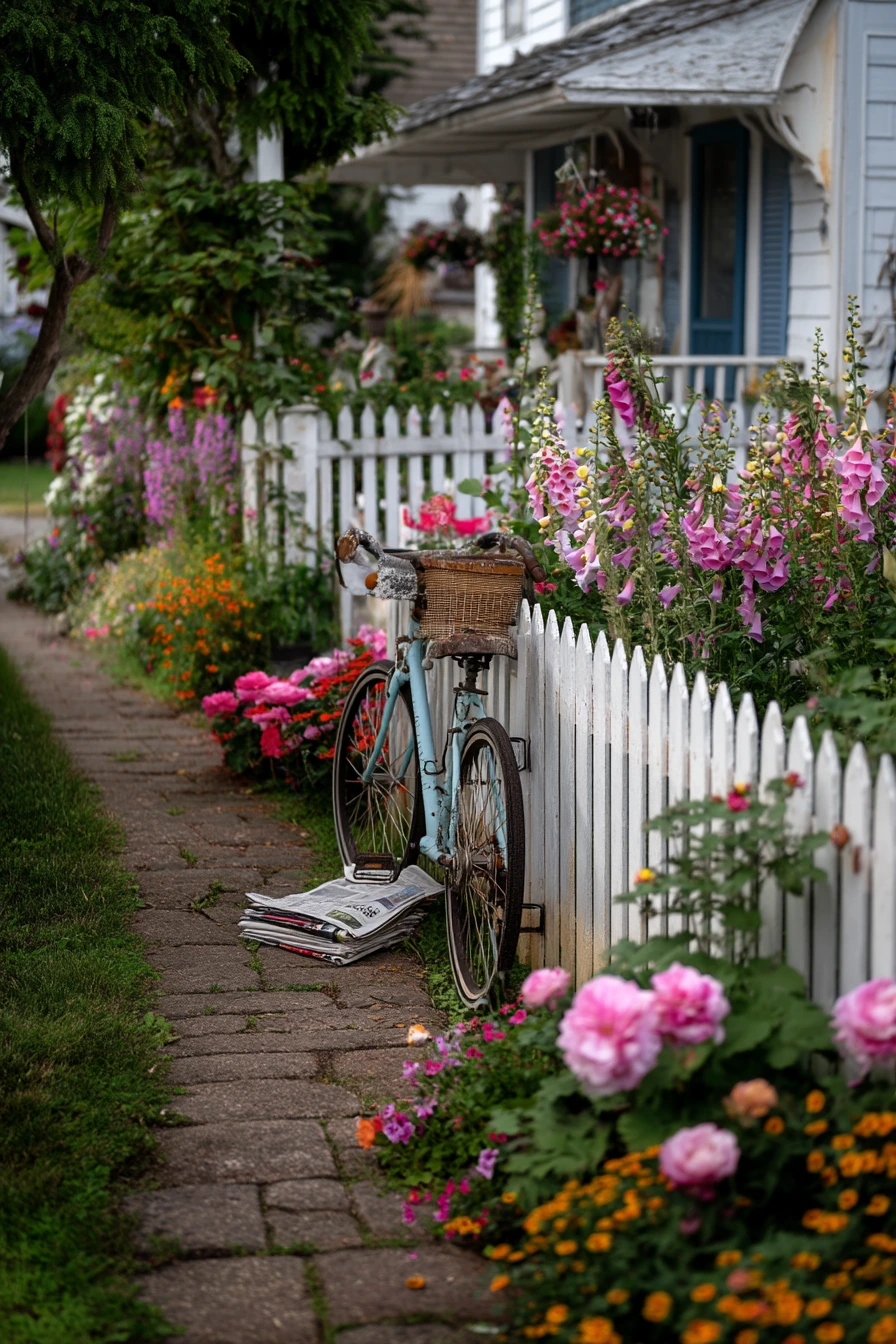
This bed works best when it feels lived-in but tidy, like a bicycle tipped near the gate or a watering can half full. Keep a clear line at the fence so you can open the gate and pull a bike through. If the porch step gets a newspaper, leave a short path of mulch or pavers so you do not trample plants when you walk out to grab it.
For a clean cottage layout, build from back to front. Put climbing roses at the fence, then foxglove behind peonies, then daisies at the front edge. Mix in a few evergreen mounds or small shrubs if you want the bed to look good in winter, but keep them minimal so the flowers stay the focus.
- Train climbing roses with soft ties so stems spread across the fence.
- Plant peonies where they get morning sun and room to grow wide.
- Use foxglove as a tall back layer, spaced so air can move through.
- Edge the bed with a simple scallop or straight line for easy mowing.
- Add one small bench or bistro chair near the gate for a cozy styling touch.
Pro Design Tip: Repeat one flower color, like soft pink or white, in three spots so the bed looks planned from the sidewalk.
Budget Considerations: Roses and peonies cost more; buy bare-root plants in early spring to save money.
4 Small-Space Entry Bed for a Narrow Urban Yard
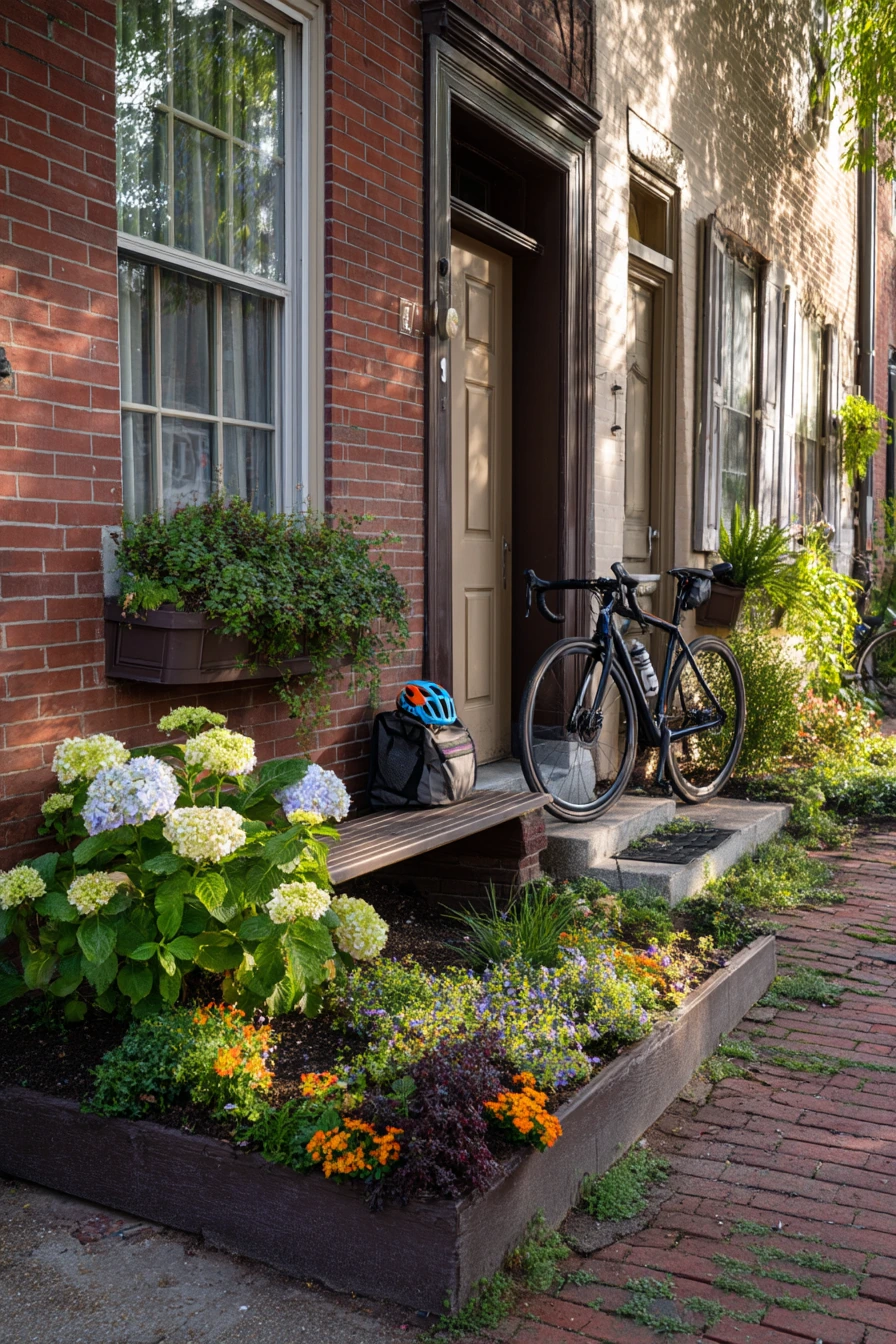
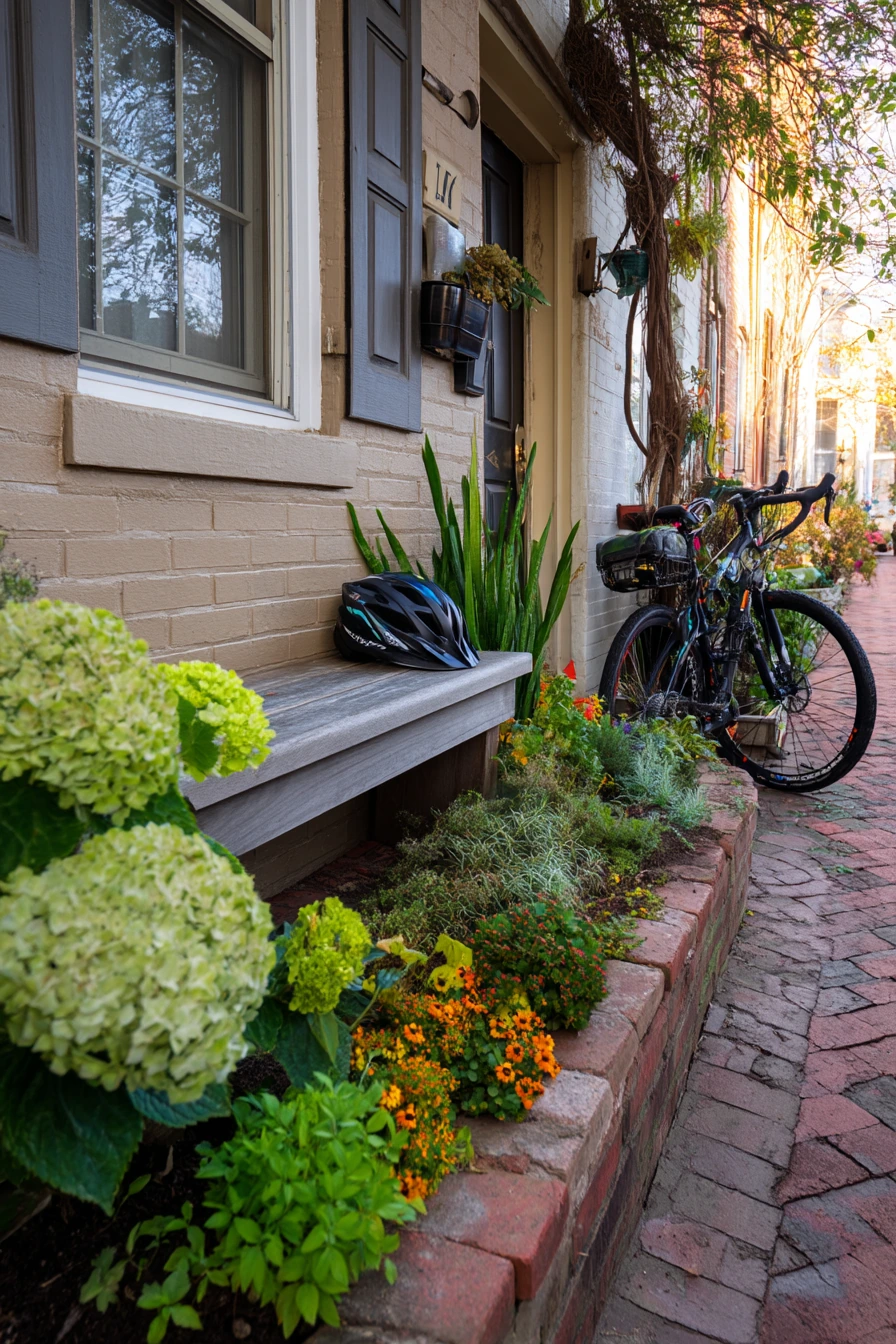
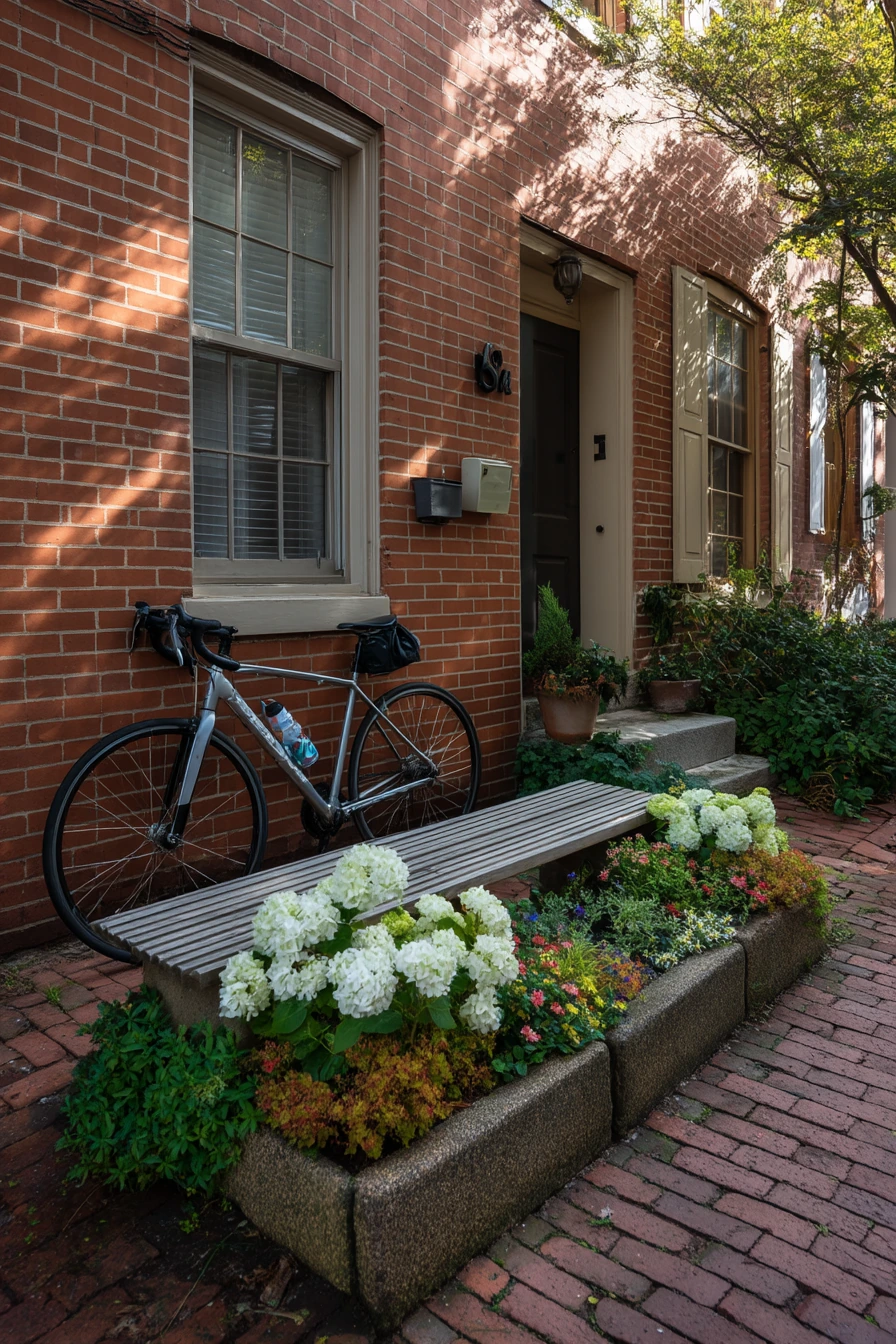
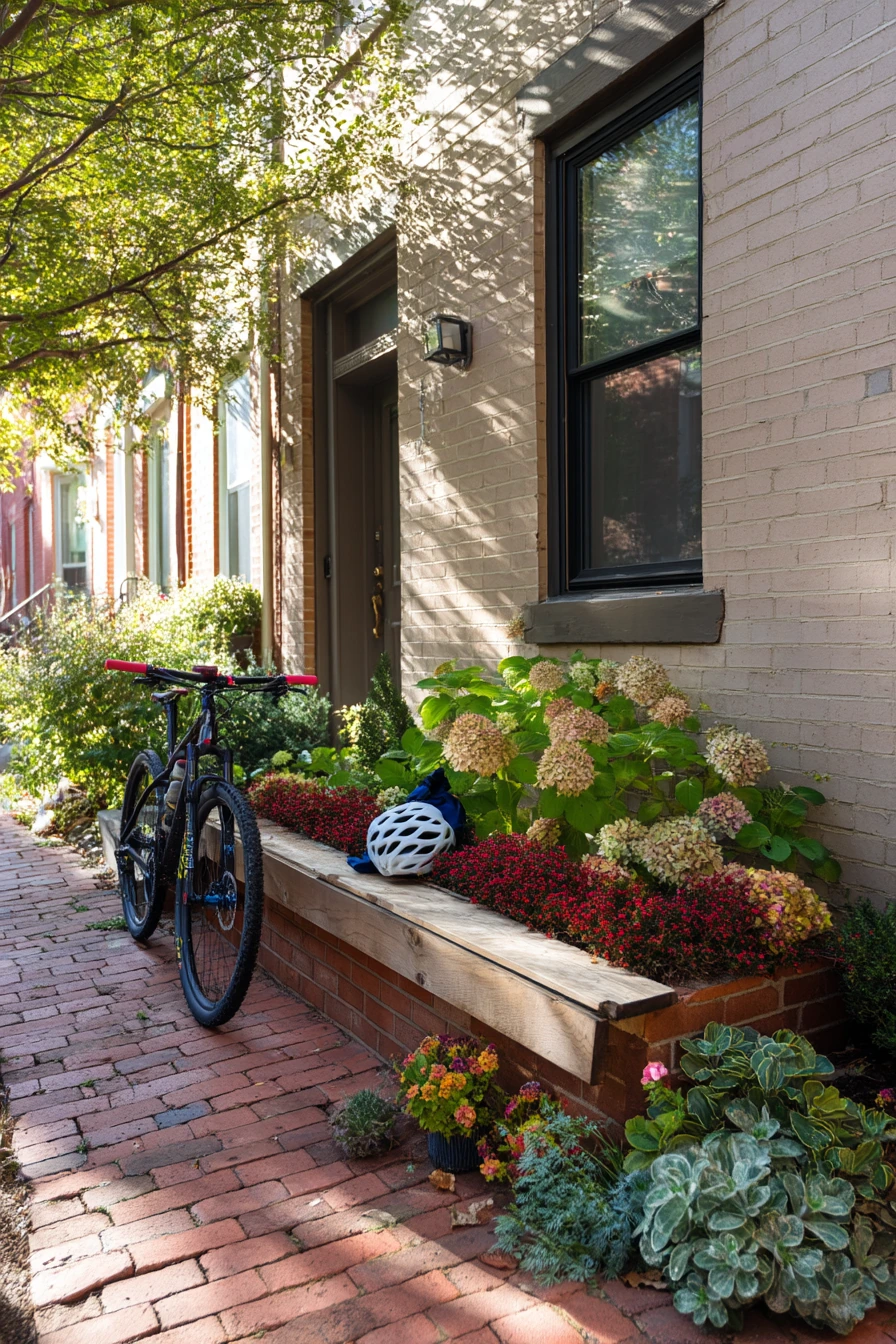
A narrow city row house needs a slim raised bed that stays tidy and does not block the stoop. Hydrangeas give big color in a small footprint, dwarf evergreens add year-round shape, and heuchera fills gaps with leaves that look good even when flowers slow down. Compact marigolds add warm color and help the edge feel cheerful.
Keep the look practical for city life. If a bicycle helmet hangs on a hook and a reusable tote sits on the bench, you need clear space to move in and out fast. Build the raised bed tight to the wall or railing line, and keep the front edge straight so the sidewalk feels wider. Warm morning light with soft shadows also flatters brick and makes leaf color stand out.
Choose a raised bed height that is easy to water and weed without kneeling on the stoop. Use quality soil and add drip irrigation or a simple soaker hose hidden under mulch. If a charging cable is visible through the window, you can still keep the outdoor scene clean by matching planters, using one mulch color, and trimming plants so they do not cover steps.
- Pick compact hydrangea types so blooms do not lean into the walkway.
- Place dwarf evergreens at the ends to frame the bed like bookends.
- Use heuchera in the middle layer for steady color and texture.
- Plant marigolds along the edge for a low, bright border.
- Add a narrow strip of gravel between bed and sidewalk to catch soil and reduce splash.
Pro Design Tip: In a tight space, focus on leaf shapes and repeat them; it looks full without needing many plants.
Budget Considerations: Raised beds can be costly; use simple untreated cedar boards or recycled composite planks in standard sizes.
5 Budget Flower Bed Made from Repurposed Edging
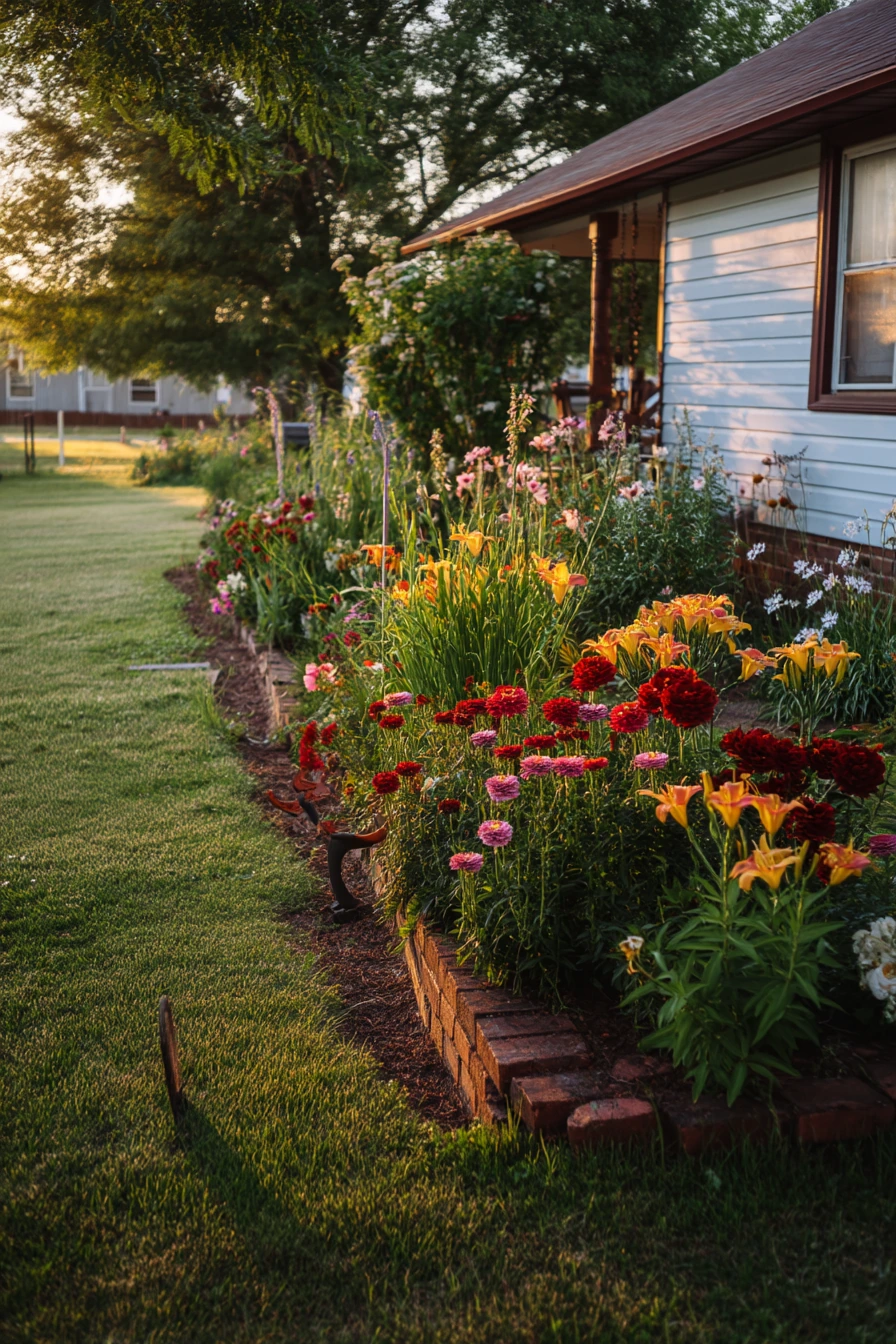
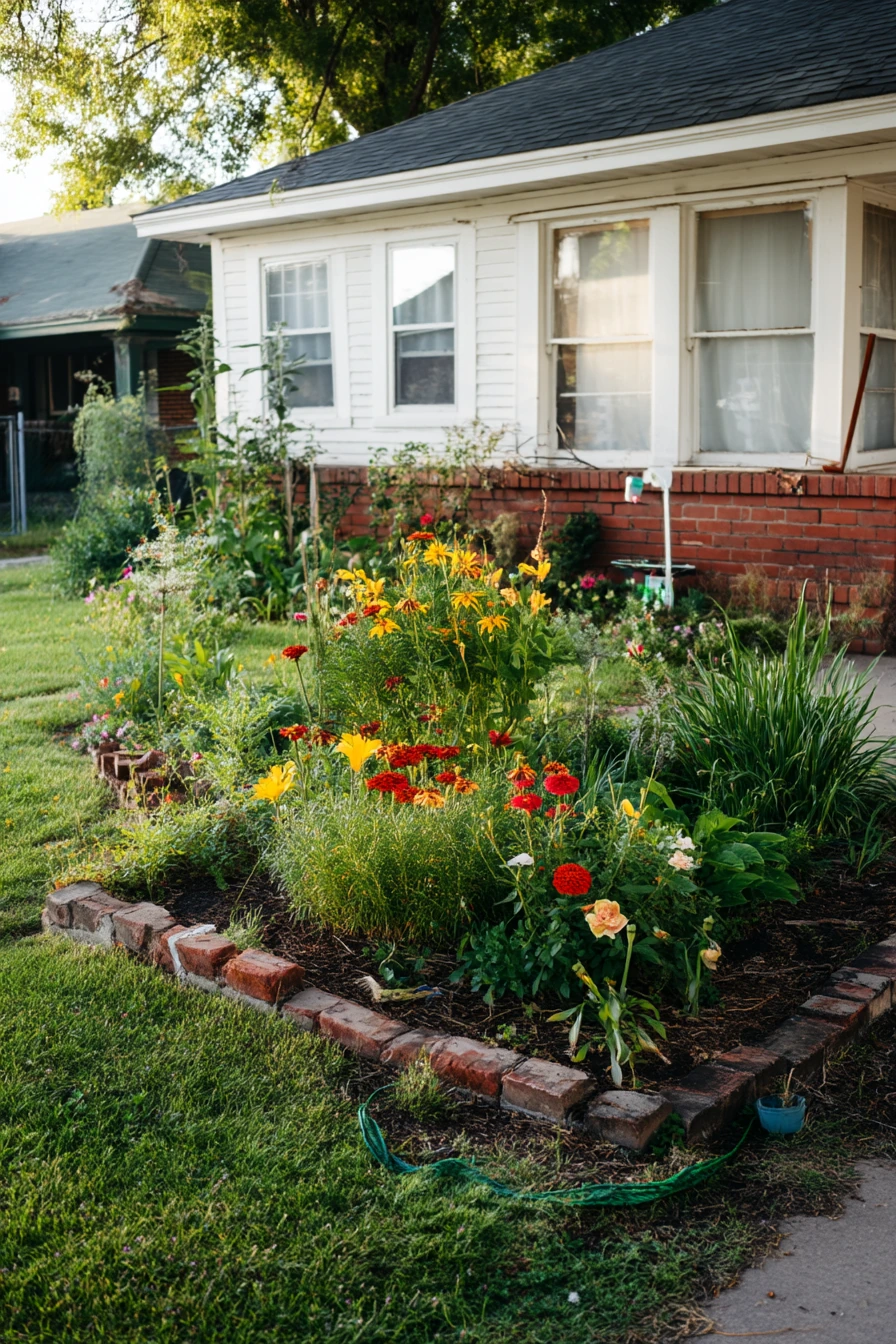
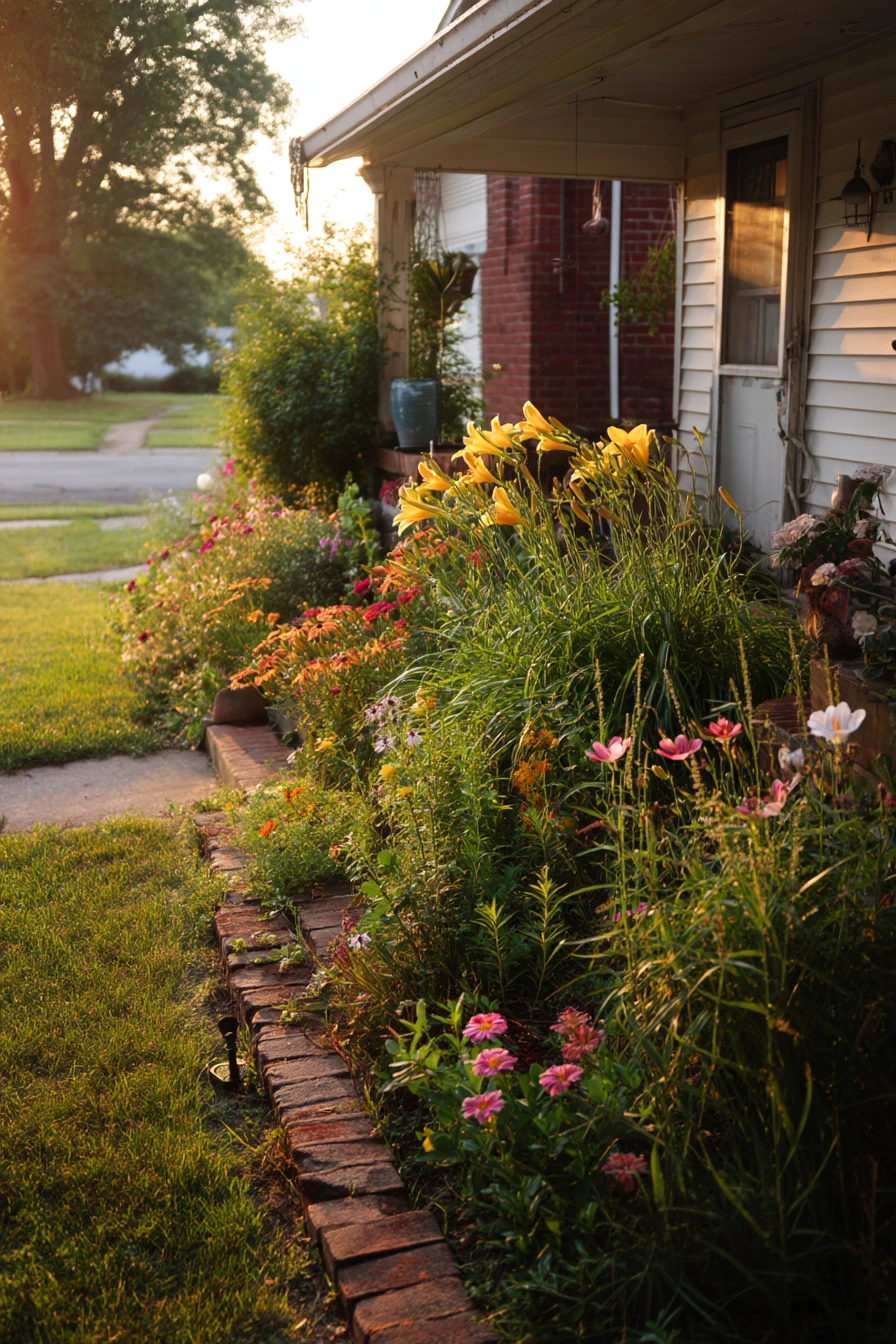
A budget-friendly front yard bed can still look finished with a clear border and bold flowers. Salvaged bricks make a strong edge that keeps mulch in place and gives a neat line around a modest lawn. Fill the bed with zinnias and cosmos for fast color, then add daylilies for reliable blooms that come back each year.
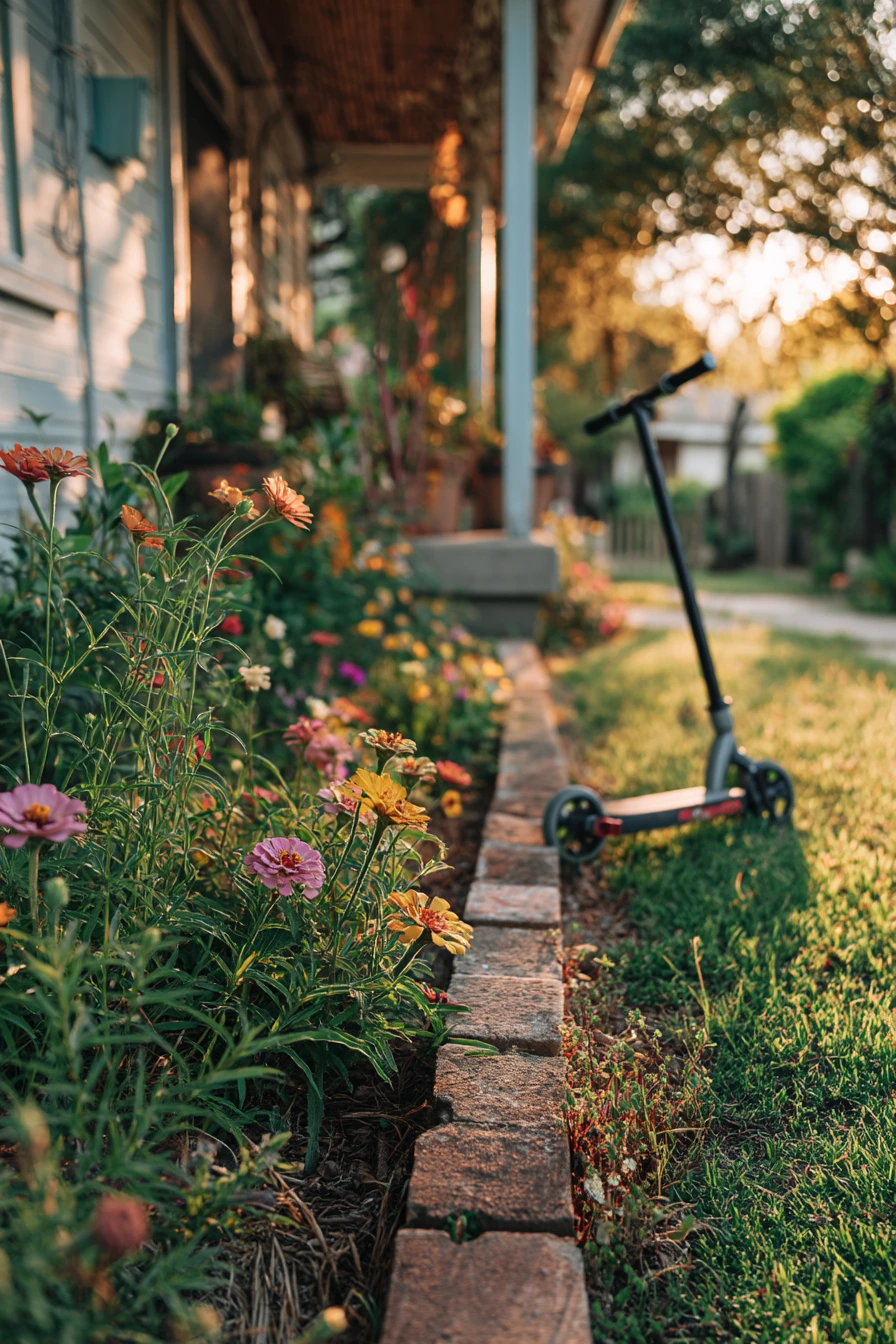
This idea fits real home landscaping with a DIY feel. A garden center receipt on the porch table and a kid’s scooter parked sideways are normal, so the bed should be simple to maintain. Keep the shape easy, like a rectangle or gentle curve, so you can mow quickly. Golden-hour light makes bright zinnias and cosmos look rich, so use these in the most visible spot by the walkway.
To style it, keep the brick border level and consistent. If the bricks are mixed colors, that is fine, but line them up the same way for a clean look. Use mulch to cover bare soil and hold moisture, then plant flowers in wide drifts so the bed looks full even if a few seedlings fail.
- Dig a shallow trench so bricks sit halfway in the ground and do not shift.
- Plant daylilies in clumps as the backbone, then fill around them with annuals.
- Use cosmos toward the back since it can grow taller and airy.
- Choose zinnias for the front edge for strong color and easy cutting.
- Leave one small open spot near the hose nozzle area for watering access.
Pro Design Tip: Use one repeating spacing rule, like a hand-width between plants, so the bed fills in evenly.
Budget Considerations: Ask neighbors for leftover bricks and buy zinnia and cosmos seeds instead of larger starts.
6 Seasonal Spring Bed with Fresh Color
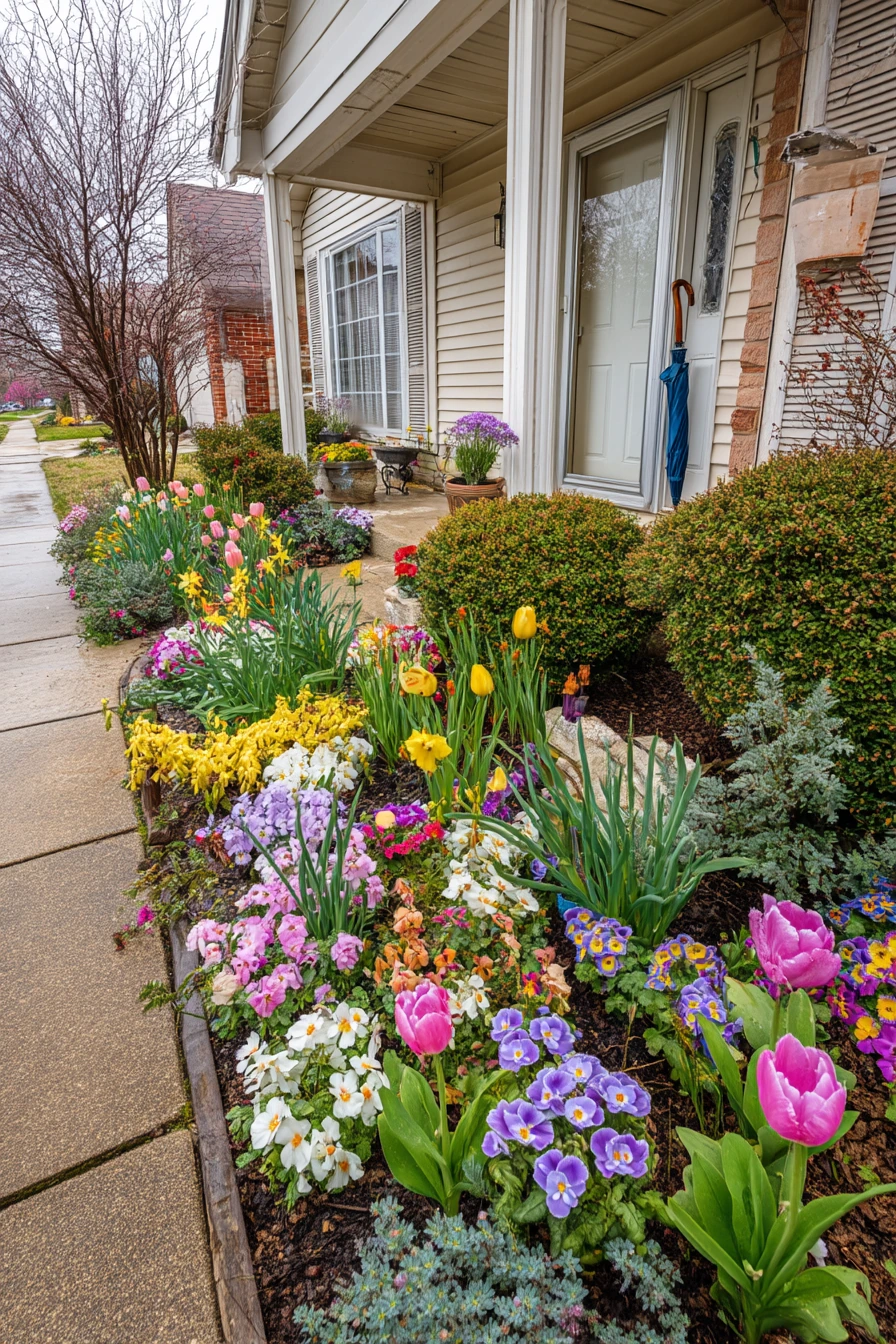
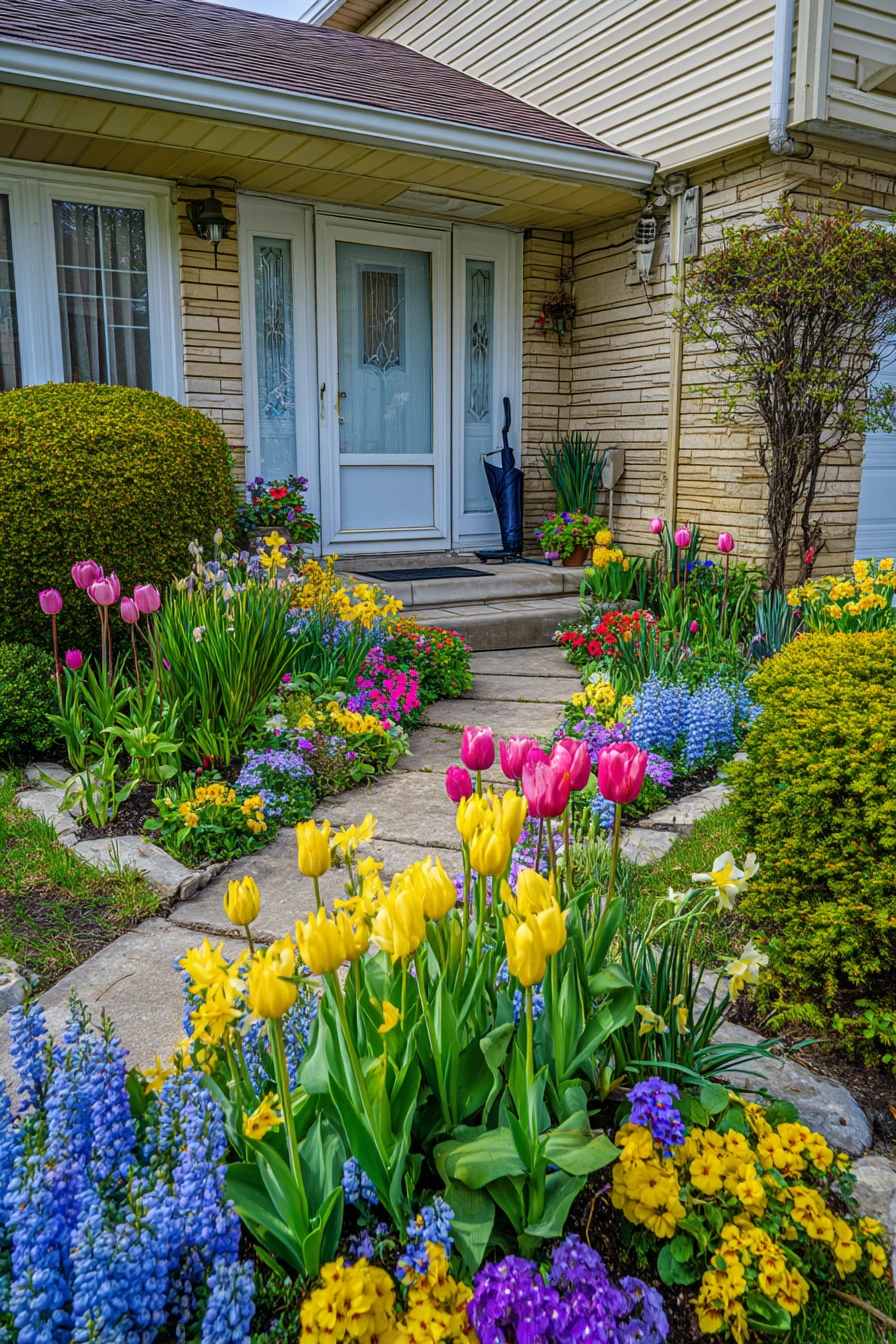
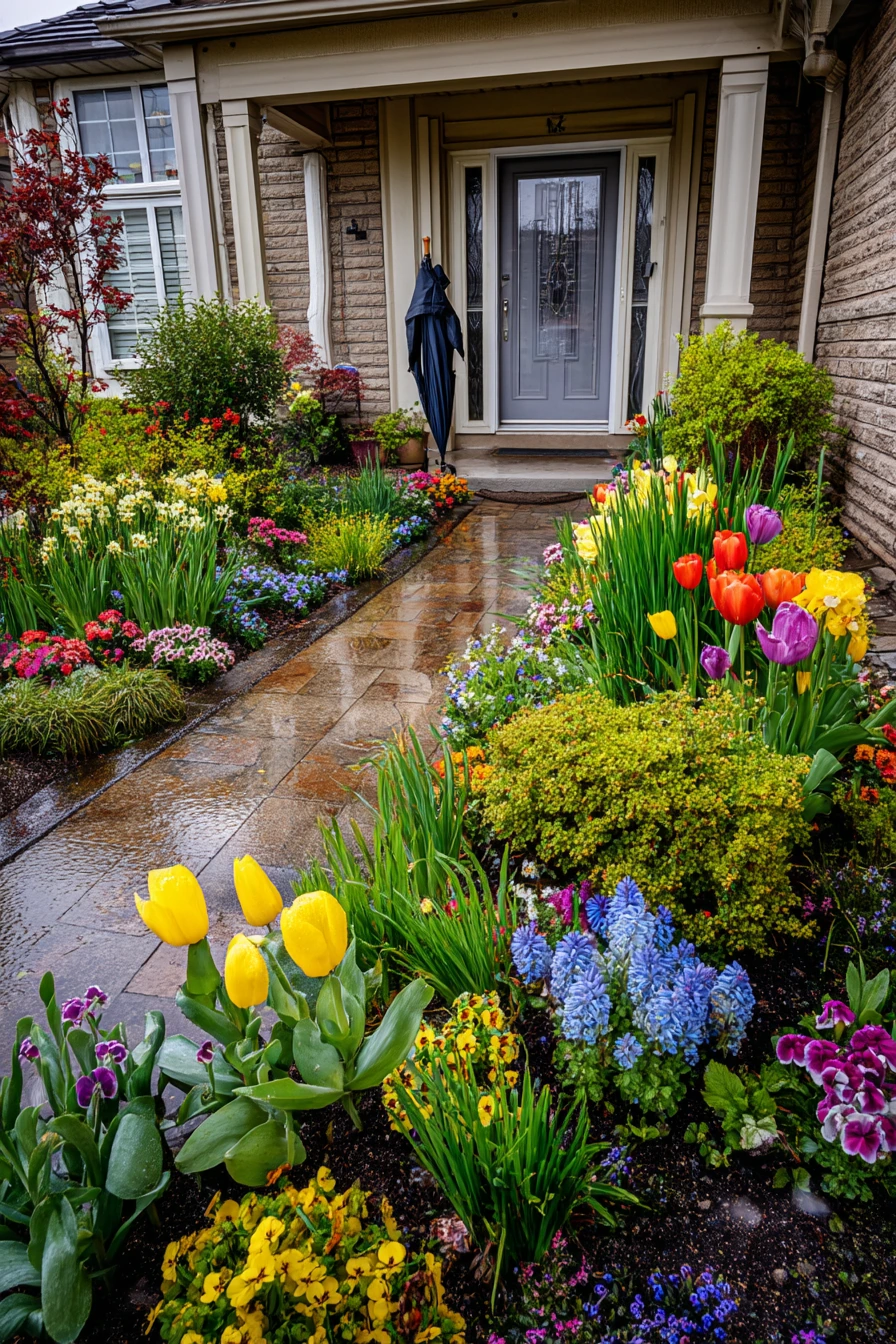
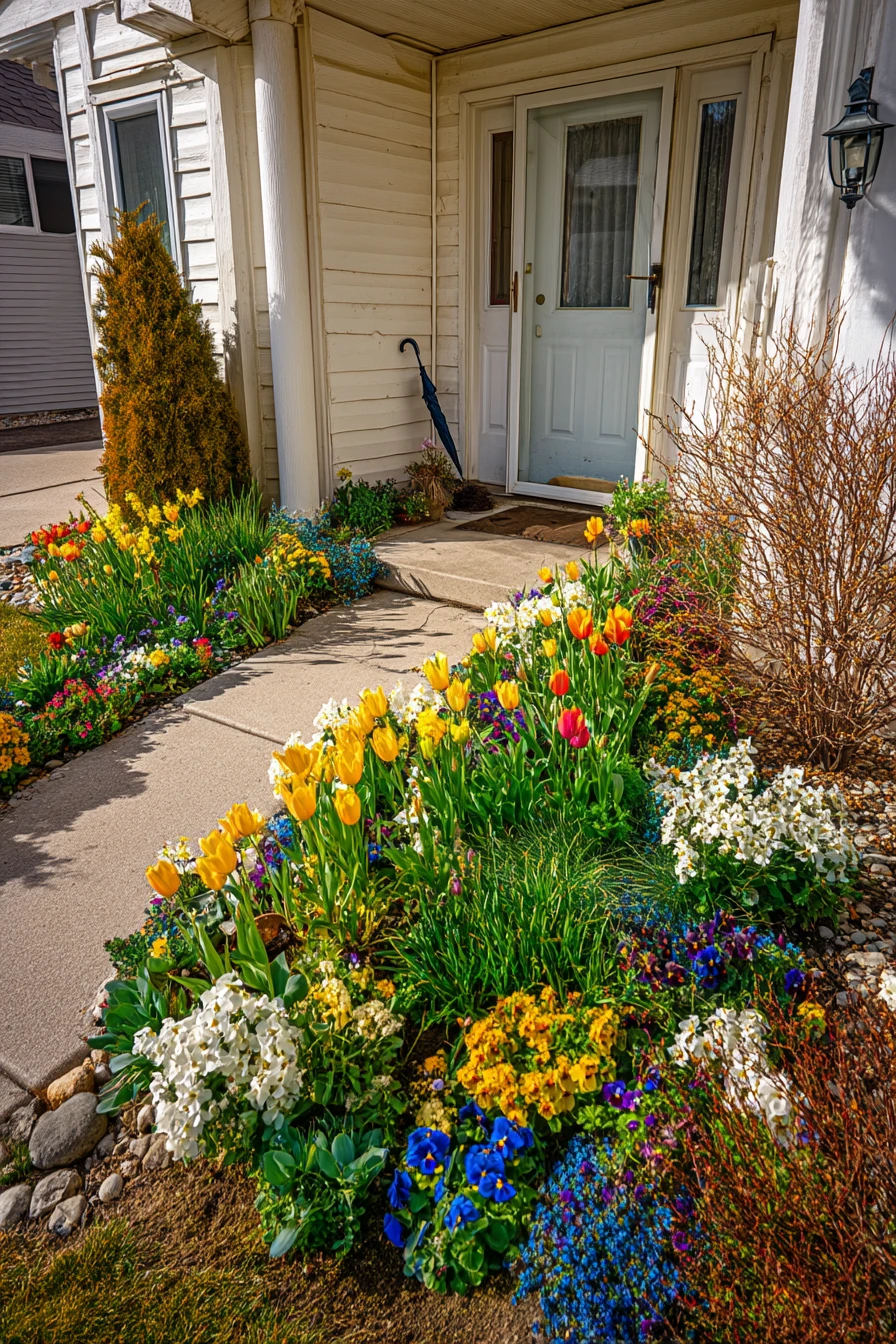
A spring front yard bed feels fresh when you mix bulbs, cool-season flowers, and clipped shrubs. Tulips and hyacinths bring height and scent, while pansies fill the front with steady color. Add small shrubs along the walkway to keep the bed looking neat after the spring blooms fade.
This layout fits a family home in spring, when umbrellas drip by the door and a gardening notebook sits open on a side table. Plan for wet shoes and quick trips in and out by keeping the bed edge clean and the walkway wide. Fingerprints on a glass storm door make the scene feel lived-in, and bright morning light makes pastel flowers look clear instead of dull.
For lasting impact, plant bulbs in groups, not singles. Tuck tulips and hyacinths behind pansies so the bed stays full at ground level. Keep shrubs clipped into simple shapes so they frame the walkway without blocking it. After bulbs finish, you can swap pansies for warm-season flowers and leave the shrubs in place.
- Plant bulbs in clusters of 7 to 15 for a strong color block.
- Use pansies at the front edge to hide fading bulb leaves later.
- Place clipped shrubs along the walkway to guide the eye to the door.
- Mulch lightly so bulbs can push through and weeds stay down.
- Add a small boot tray by the step to keep mud off the porch and bed edge.
Pro Design Tip: Pick one main tulip color and one accent color; too many colors can look scattered in a small bed.
Budget Considerations: Bulbs are cheaper in fall packs; plant then and enjoy spring color without buying many nursery pots.
7 Pollinator Bed for a Nature-Loving Home
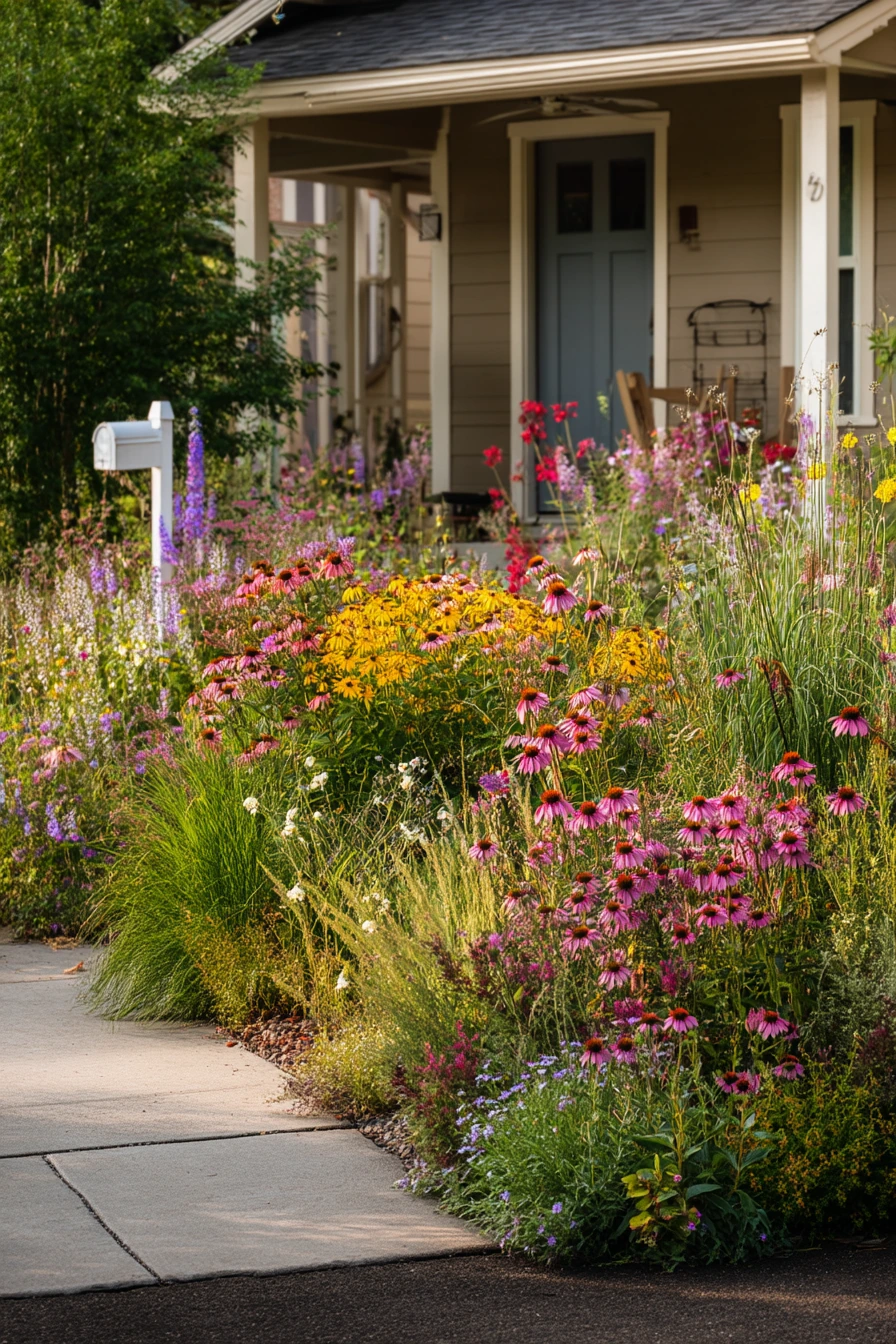
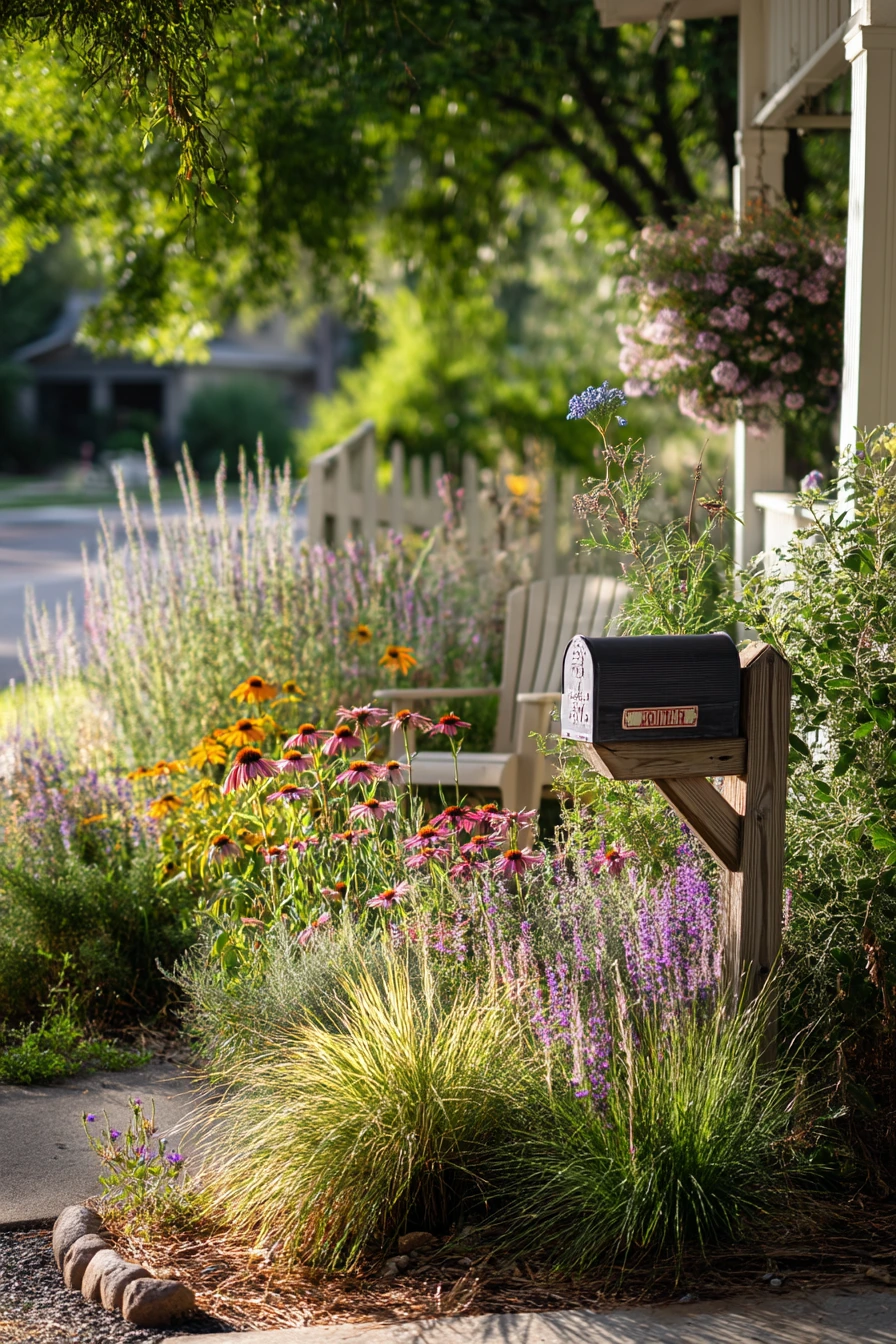
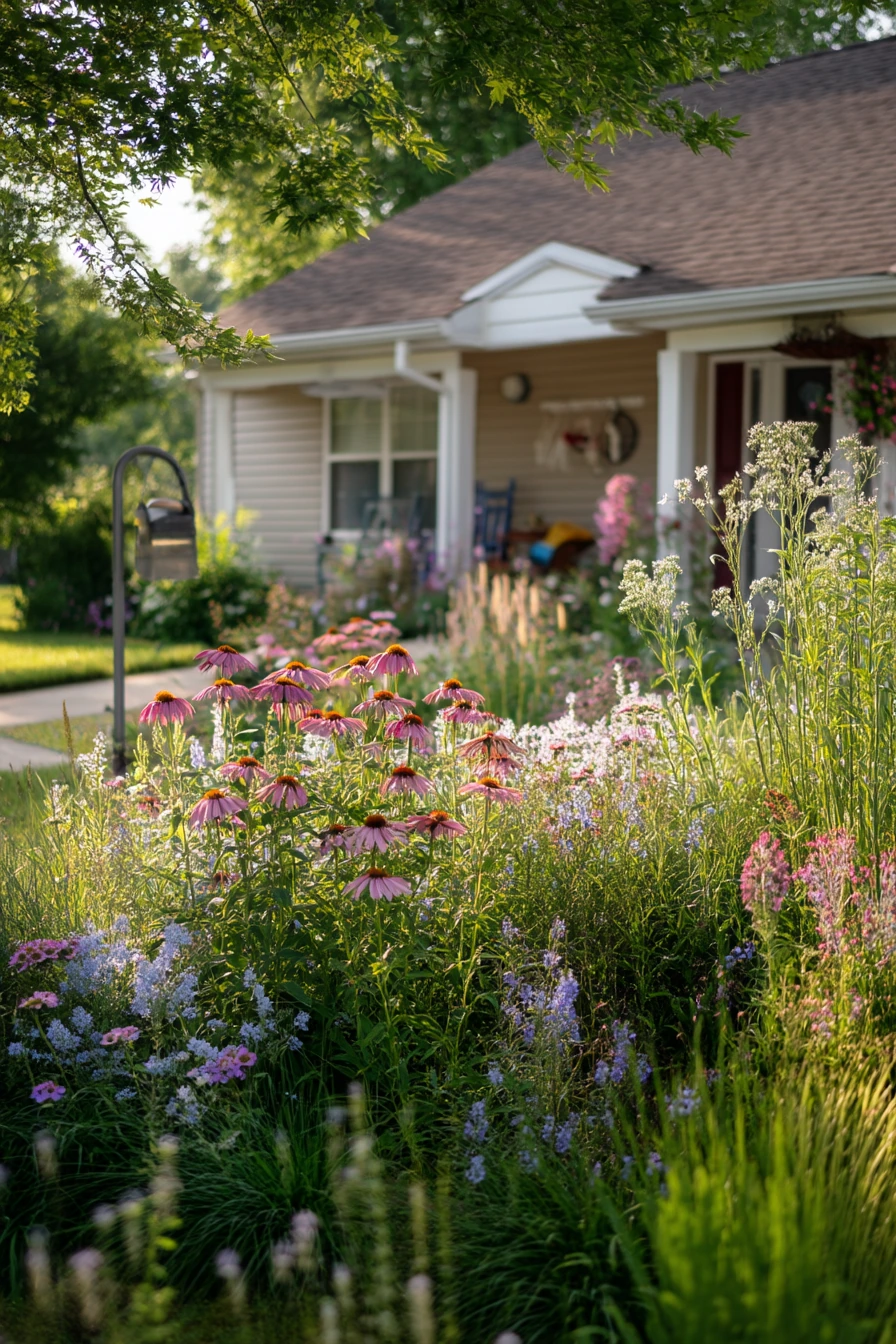
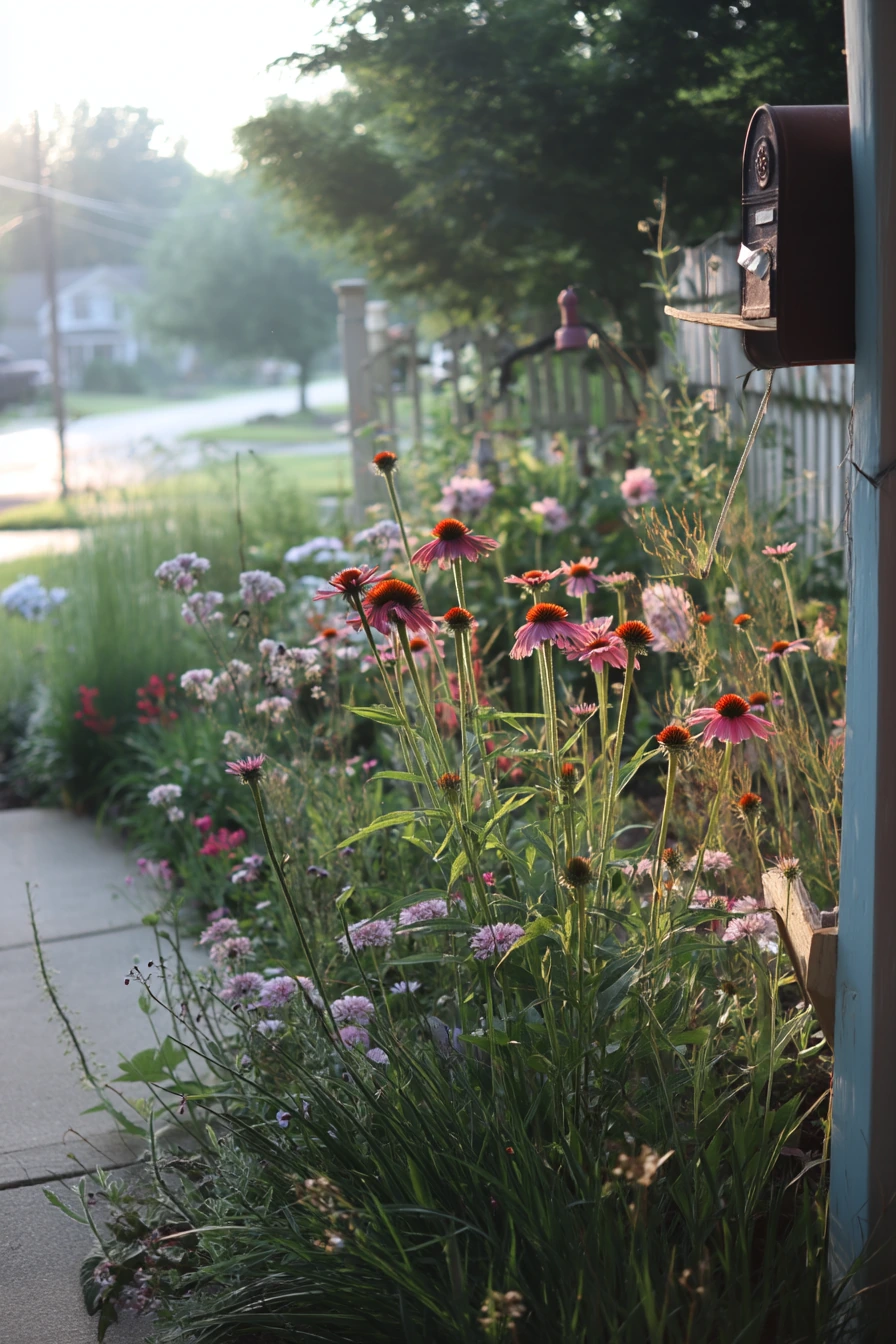
A nature-loving front yard can start with a pollinator-rich bed around the mailbox. Milkweed supports monarchs, bee balm brings summer color, echinacea adds strong blooms, and rosemary gives scent and evergreen texture. Native grasses fill space, move in the breeze, and help the planting look natural but still intentional.
Because this bed sits near the street, keep it airy and not too tall where drivers need to see. A mason jar of cut stems on the porch ledge and gloves tossed over a chair feel right with this style, but the bed should still have a clear outline. Soft afternoon light makes purple and pink flowers glow, and it highlights the mix of leaves and seed heads.
To style it well, add one simple border, like a steel edge or a clean mulch line. Plant in drifts so pollinators can find the flowers easily and the bed looks calm from far away. Leave a small open spot near the mailbox post so you can trim, check mail, and avoid bending flowers. If you have a bird feeder near the fence, keep it a few feet away from the tallest plants so it stays easy to refill.
- Keep the tallest plants toward the back so the mailbox stays visible.
- Plant milkweed in a set area so it does not spread where you do not want it.
- Add bee balm and echinacea in repeating clumps for long bloom time.
- Use native grasses as a soft background and winter interest.
- Place a flat stepping stone near the curb for safe access when watering.
Pro Design Tip: Mix bloom times so something is flowering from spring to fall, then let a few seed heads stay for winter texture.
Budget Considerations: Native plants can be bought as small plugs; they cost less and grow quickly in the right spot.
8 Modern Front Bed with Clean Lines
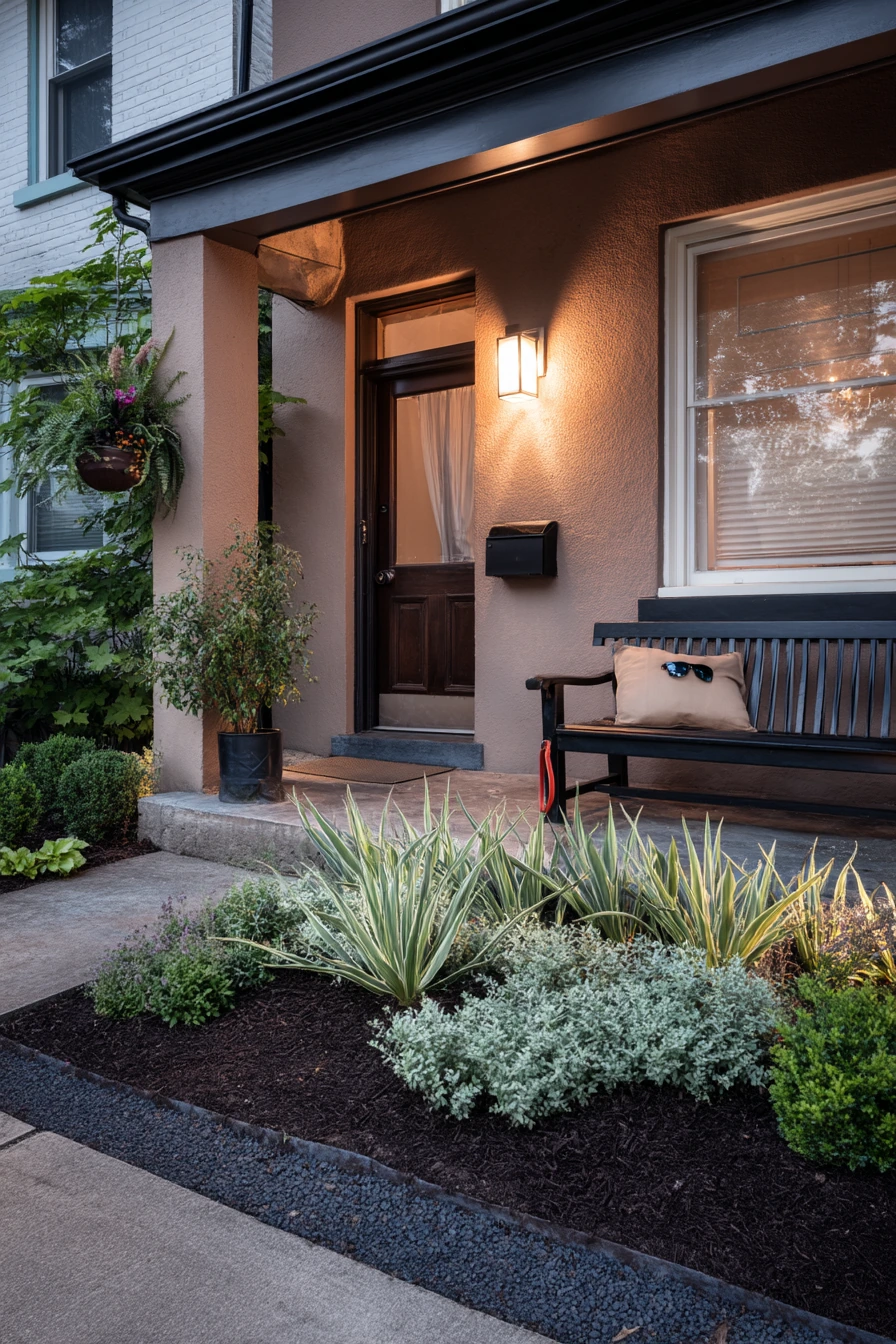
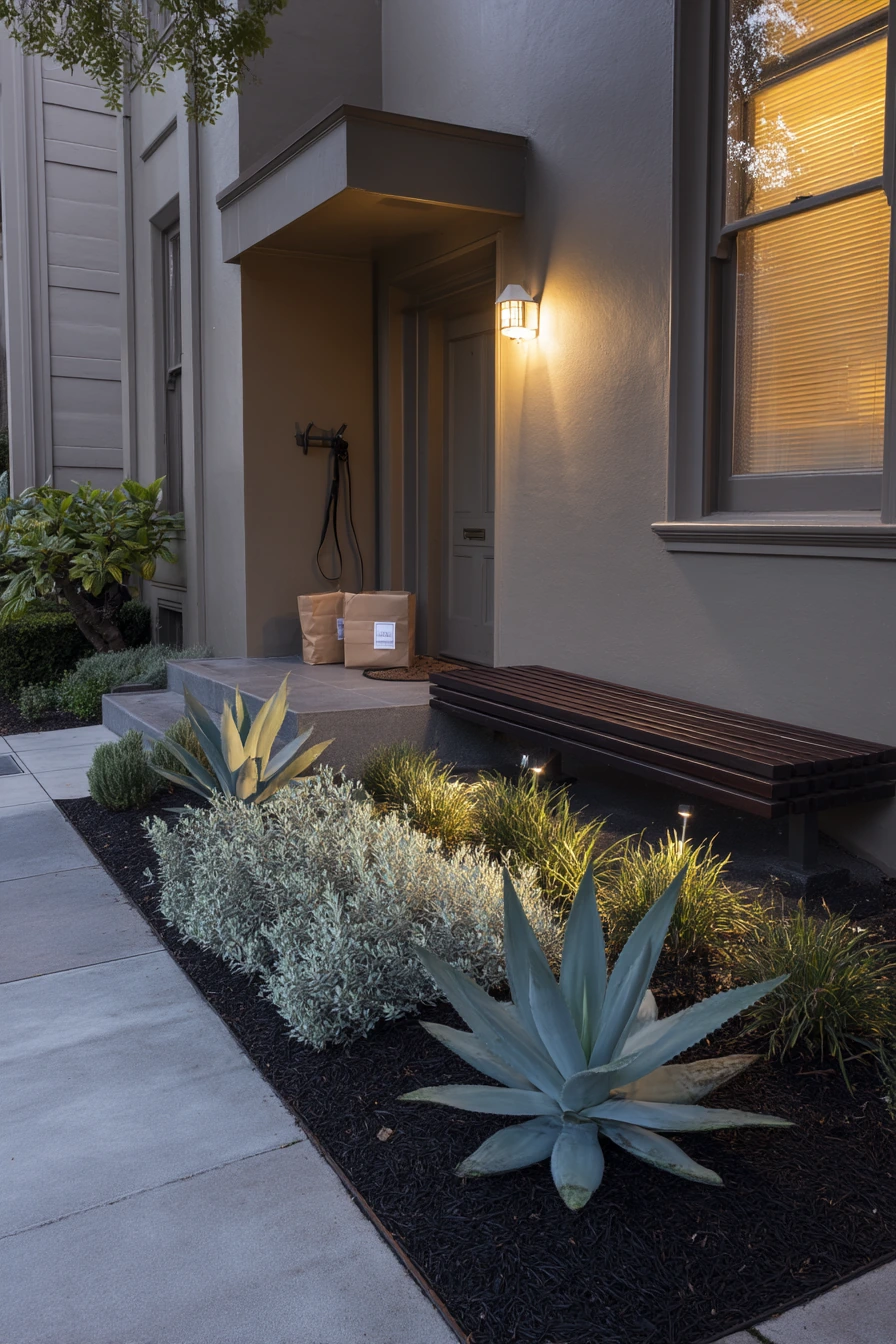
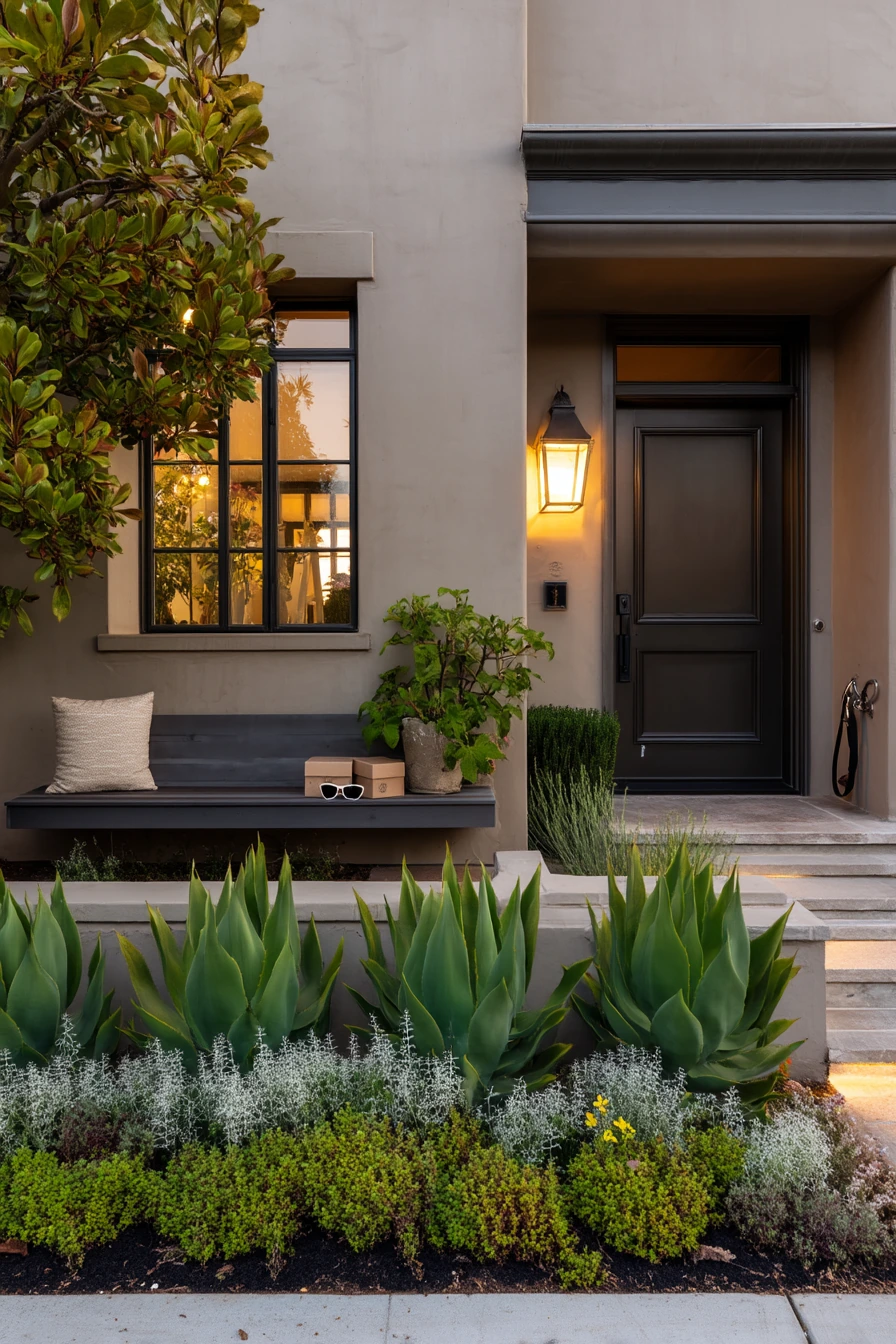
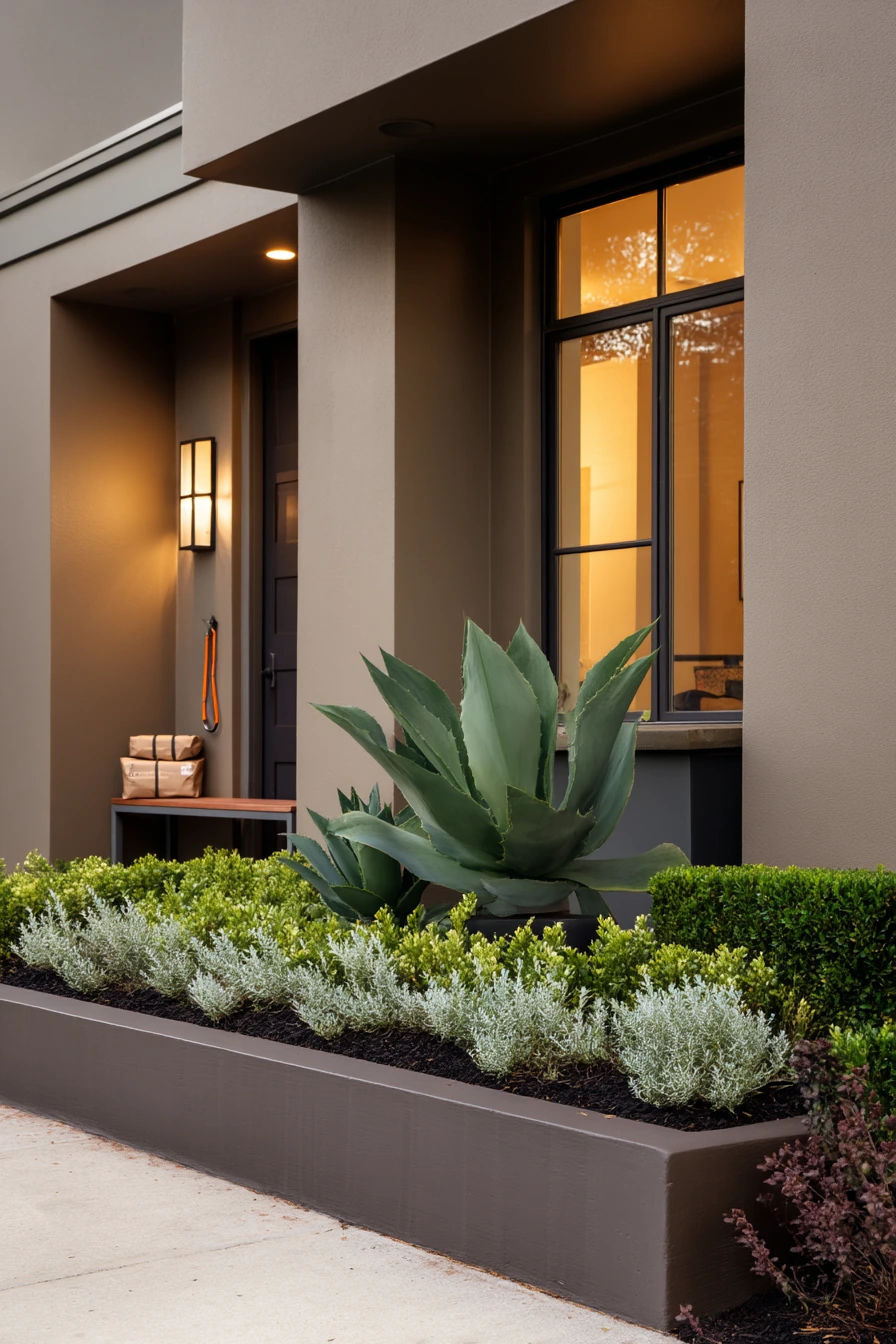
A modern home looks best with a linear front yard bed that matches the clean lines of the facade. Use agave for bold shape, white salvia for soft blooms, and compact boxwood for steady green structure. Dark mulch ties it all together and looks sharp against a taupe exterior.
This design works for real life, too. If a dog leash hangs by the door and two packages sit on the stoop, you want planting that stays out of the way and still looks polished at dusk. Keep the bed narrow, with a straight edge, and leave open space near the entry so you can step around boxes. A warm interior lamp glow in the window makes the dark mulch and pale flowers feel calm in the evening.
For a tidy look, repeat shapes: round boxwood mounds, spiky agave, and upright salvia. Do not add too many extras. A simple stone or metal edge keeps mulch from washing onto the walkway. If you want more color, use one accent plant, like a deep purple heuchera, but only in a few spots so the bed stays restrained.
- Lay out the bed as a rectangle or long strip to match the architecture.
- Place agave with enough space so leaves do not poke the path.
- Plant white salvia in a single band for a clean, modern bloom line.
- Use compact boxwood at even spacing to create rhythm.
- Add one simple bench or matte black house numbers nearby for styling.
Pro Design Tip: Use repetition and negative space; open mulch areas are part of the design in modern landscaping.
Budget Considerations: Agave can be expensive in large sizes; buy smaller plants and use fewer, placed as focal points.
9 Front Bed That Works Around an Old Tree
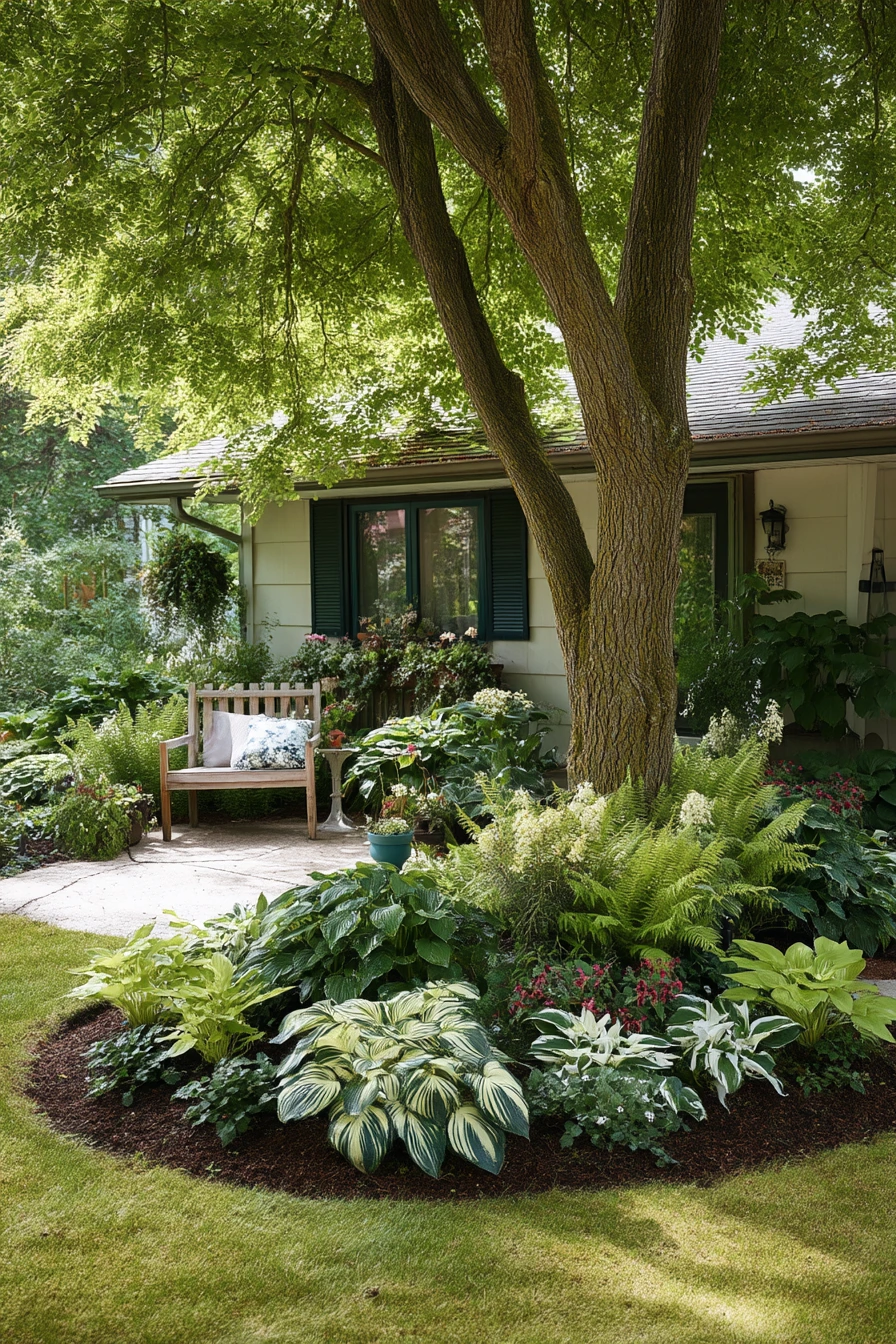
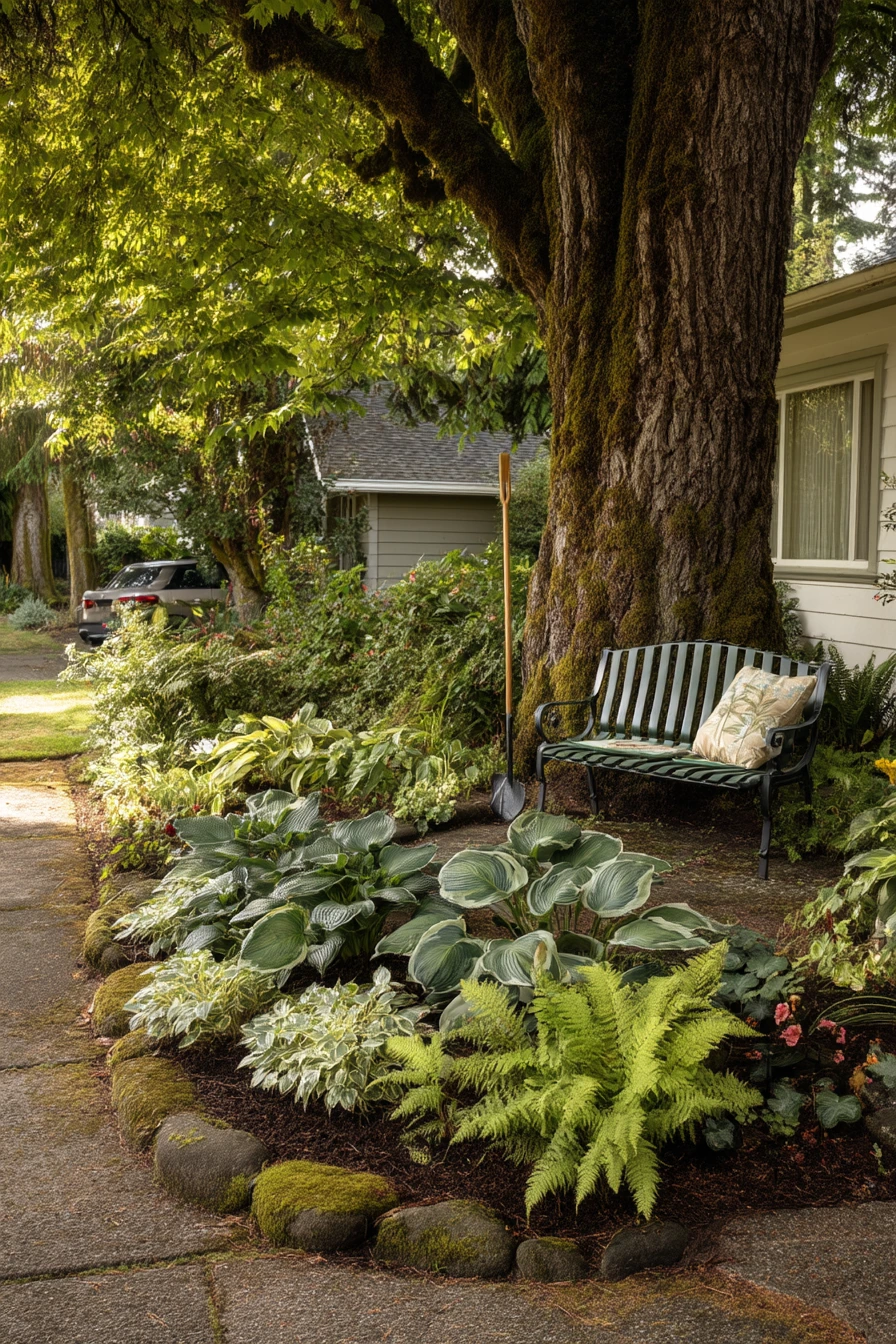
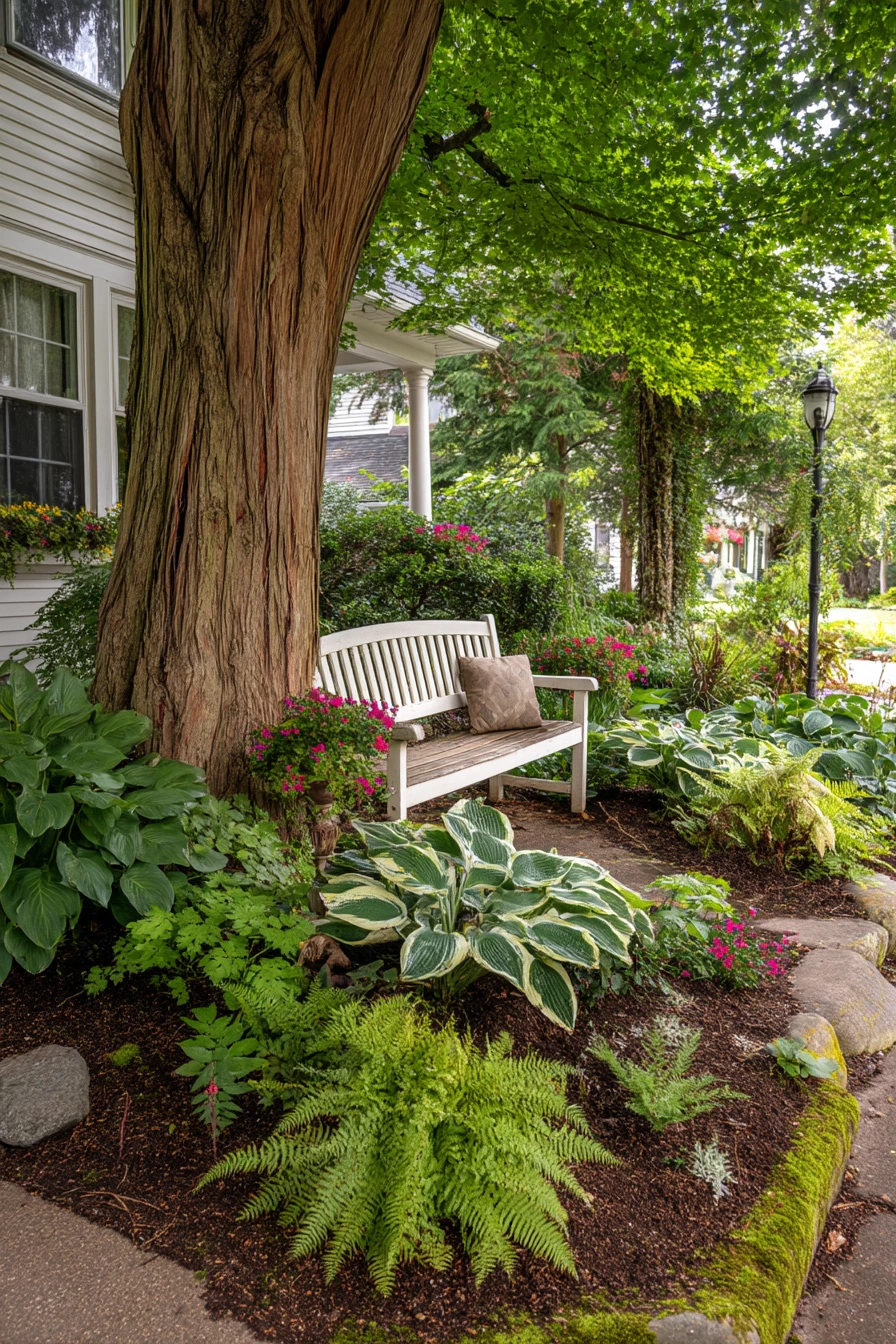
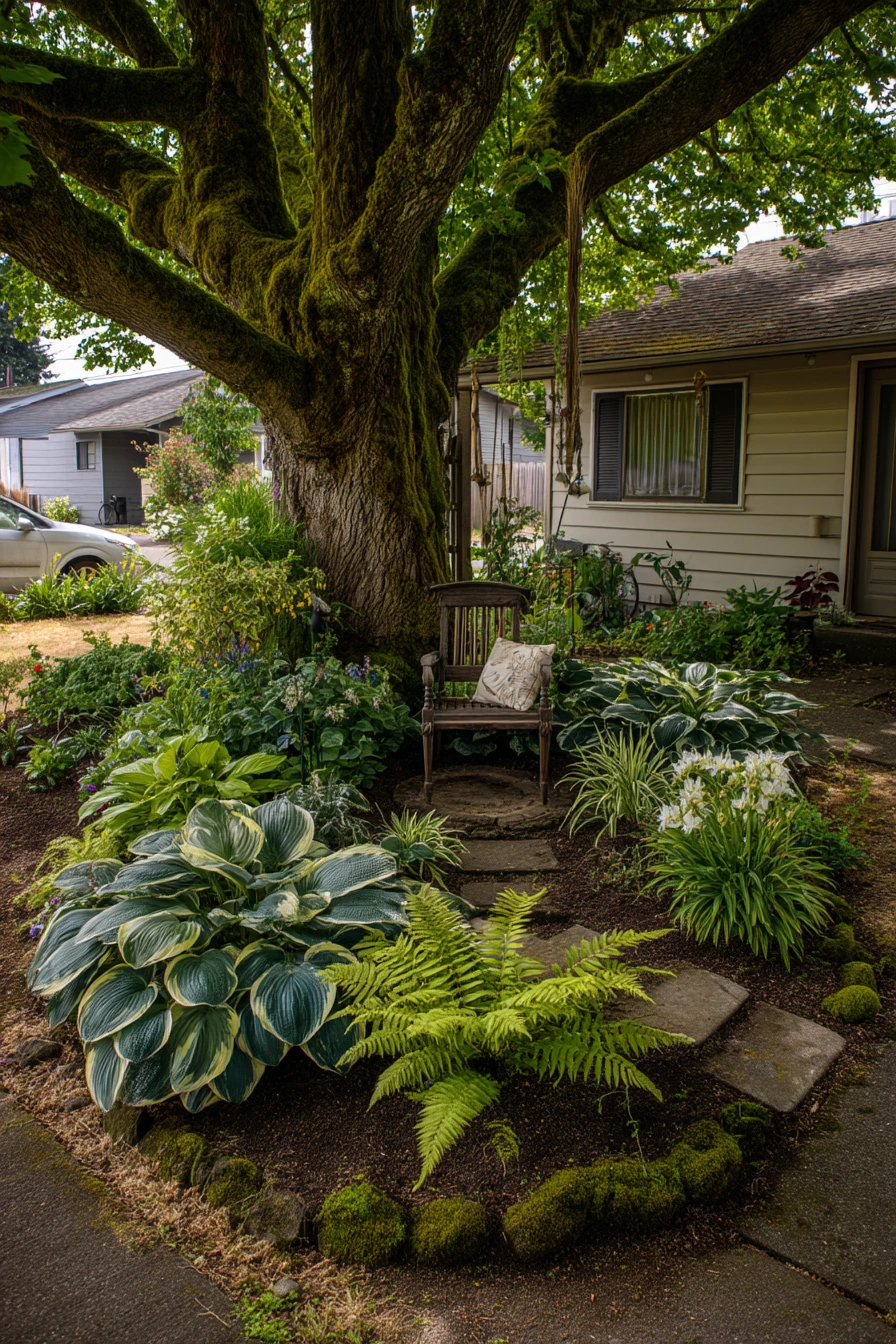
A mature front yard with an old shade tree needs a bed that works with roots and filtered light. Hostas bring bold leaves, astilbe adds feathery flowers, ferns fill in with soft texture, and begonias give steady color in shade. A circling bed under the canopy can look serene and layered when plants are grouped by height.
Keep the space usable, since this area often becomes a family zone. A rake leaned against the trunk, a patio chair cushion slightly rumpled, and a child’s chalk drawing on the sidewalk all fit a quiet neighborhood feel. Make sure the bed edge is clear so kids can draw and people can sit without stepping into plants. Soft daylight under a tree can make dark areas feel flat, so use lighter leaf colors and pale blooms to brighten the scene.
When planting near roots, avoid deep digging. Add a thin layer of compost and plant smaller starts in pockets where soil is open. Use mulch to hold moisture, but keep it a few inches away from the tree trunk. For style, use one or two larger hostas as anchors, then repeat ferns and begonias around them for a calm pattern.
- Create a wide ring bed so mower wheels do not bump tree roots.
- Use hostas as the main plant and repeat the same variety for unity.
- Add astilbe in groups for summer flowers and soft movement.
- Fill gaps with ferns for texture that lasts into fall.
- Use begonias near the edge for low color where you see it up close.
Pro Design Tip: Choose one leaf color theme, like blue-green or chartreuse, so the shade bed looks bright and organized.
Budget Considerations: Hostas and ferns divide well; ask neighbors for splits or trade plants to fill a larger ring bed.
10 Renter-Friendly Flower Bed Along a Front Walk
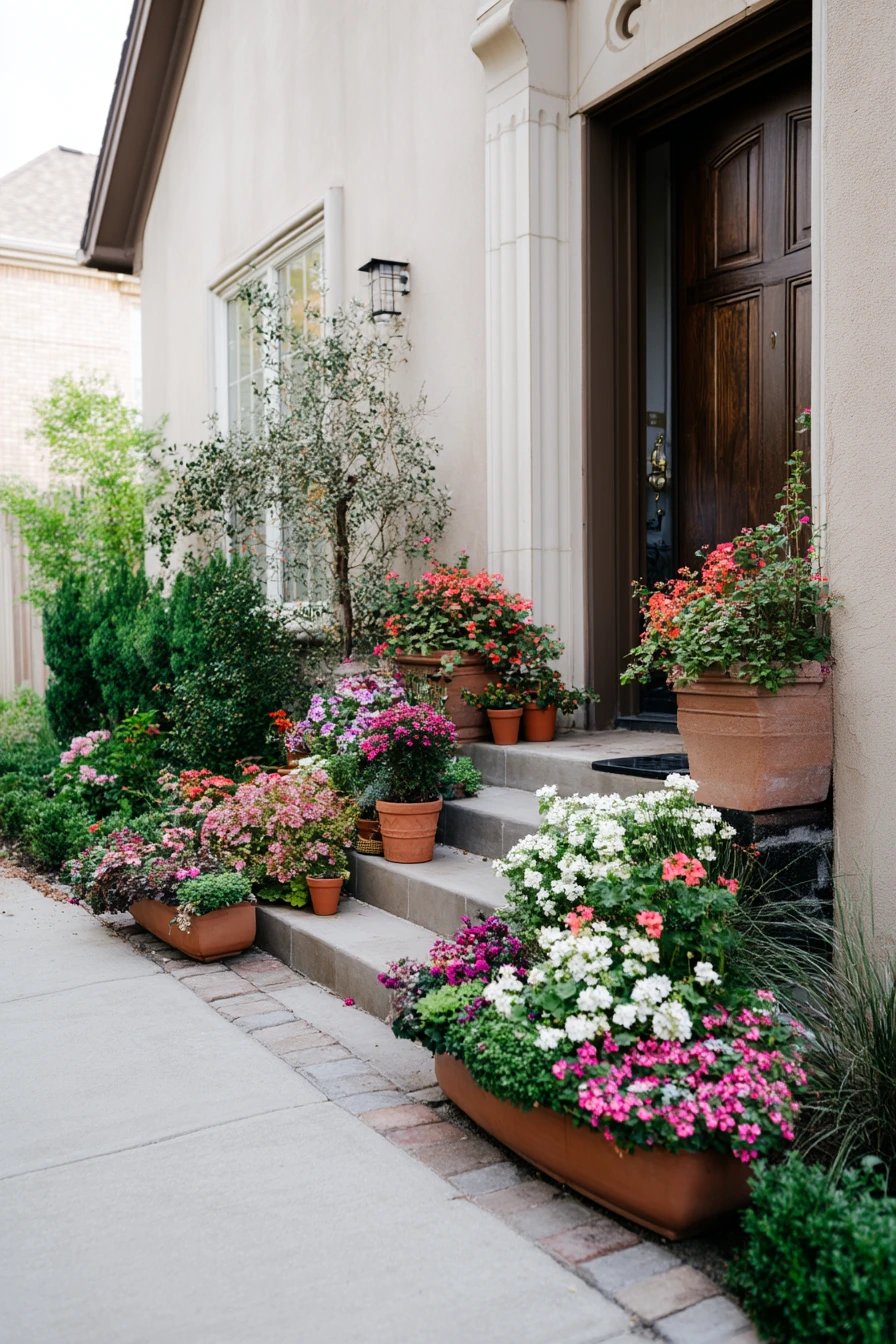
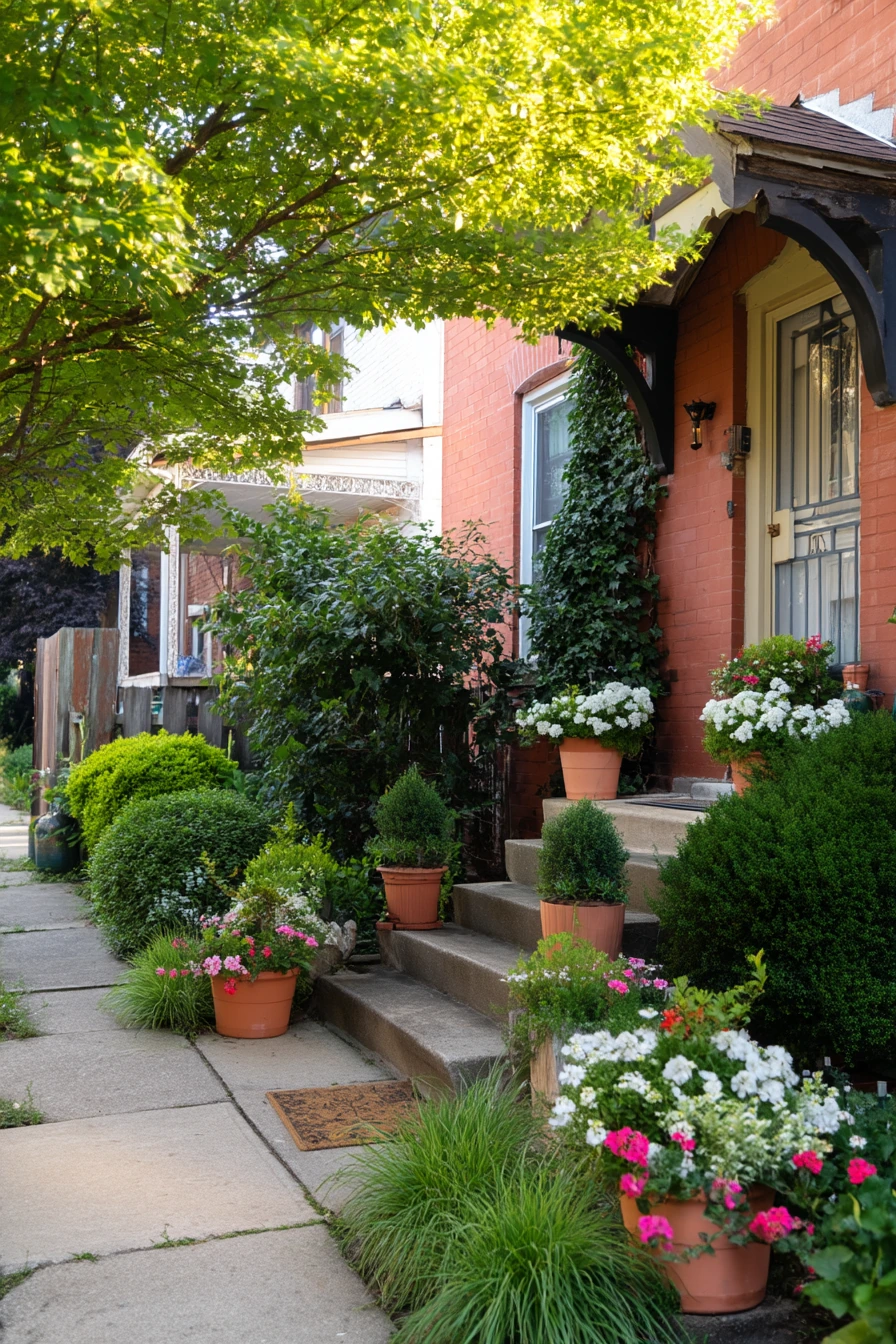
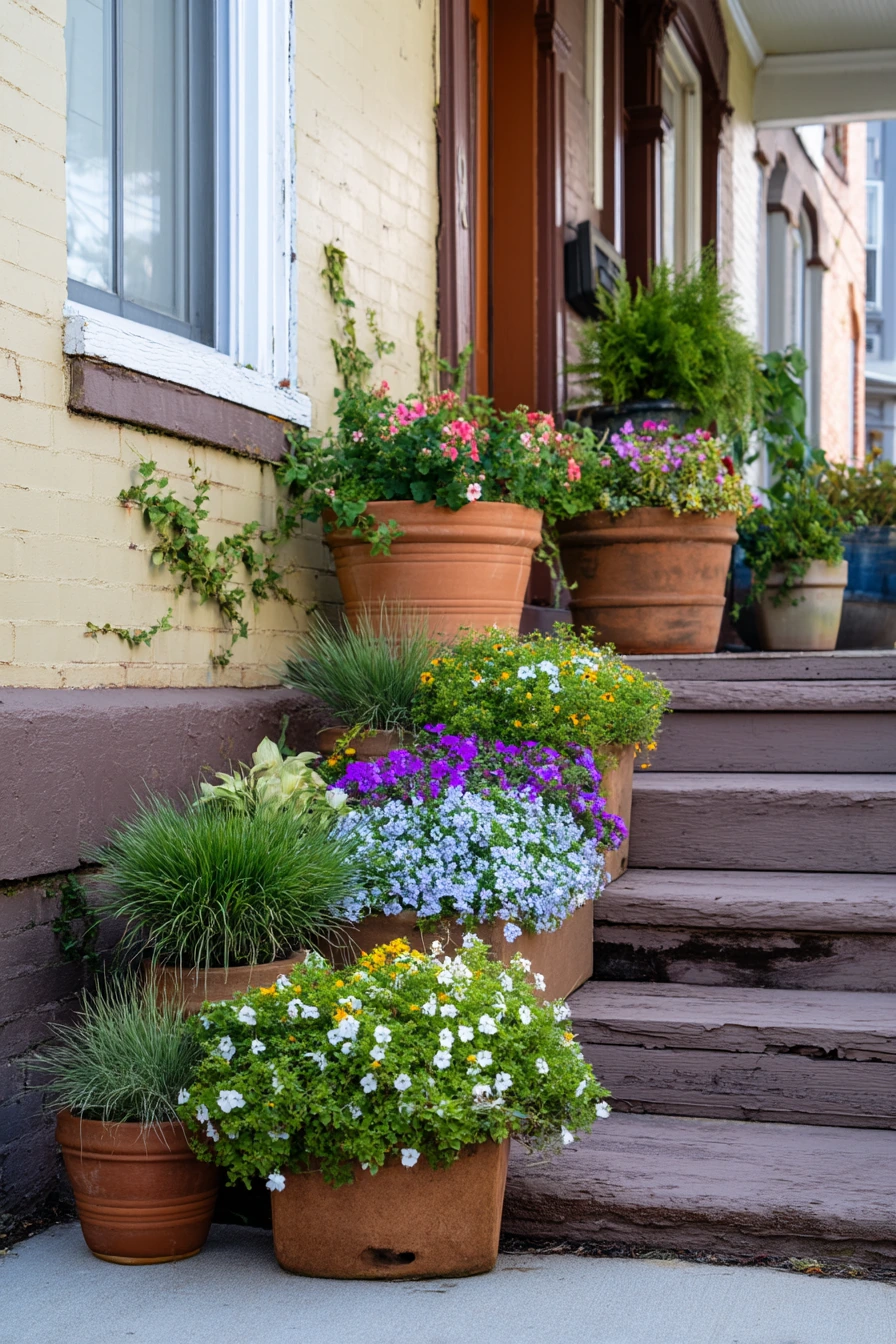
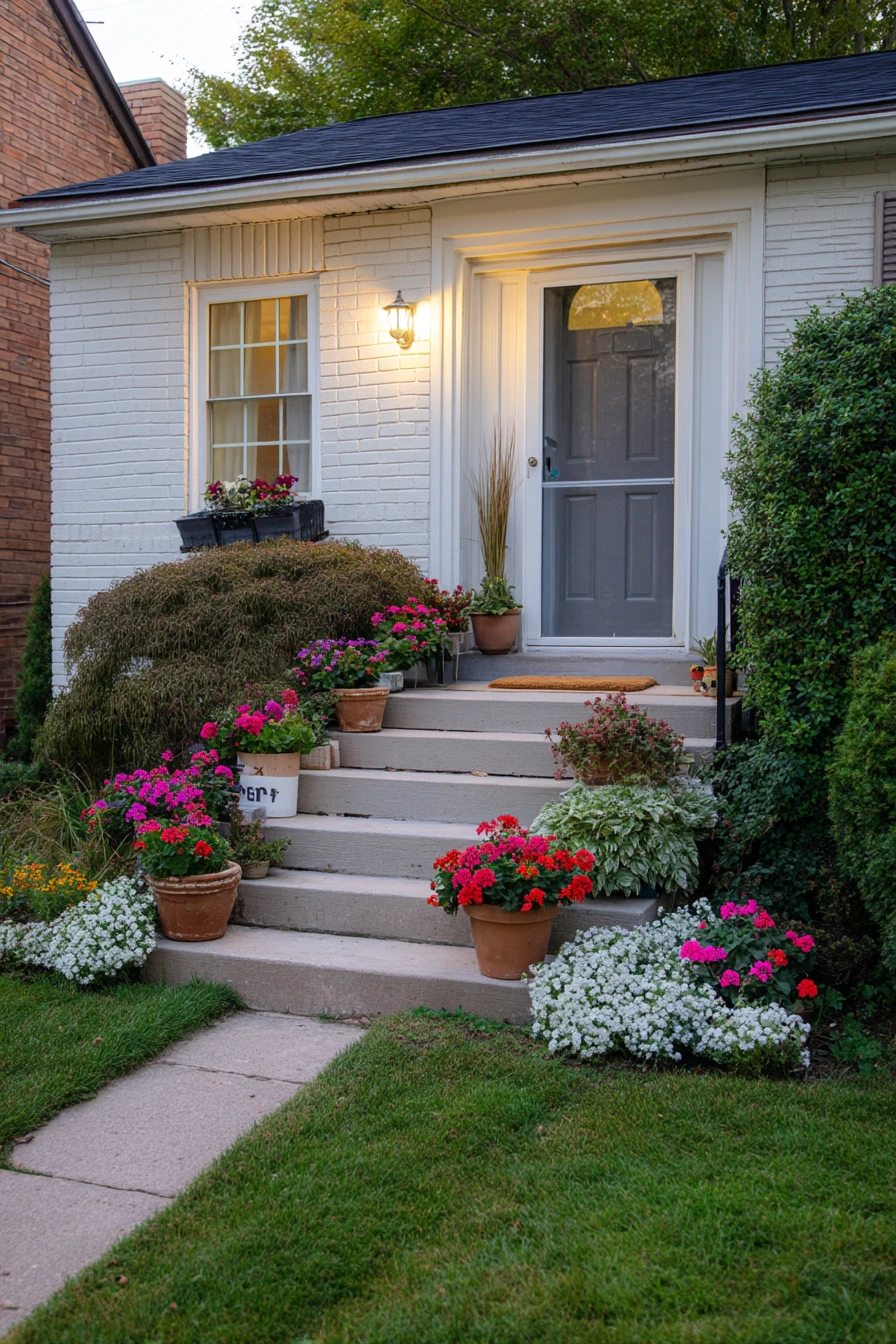
If you rent or may move soon, a container-style flower bed along the front walk is a smart way to add curb appeal without digging. Line the path with movable planters of geraniums, petunias, dwarf grasses, and small boxwoods. Terracotta pots grouped on the steps add warmth and make the entry feel cared for.
This setup fits everyday life. Keys and a grocery list near the door, plus a doormat slightly askew, can still look pulled together when the plants are arranged with intention. Soft evening window light makes glossy leaves and bright blooms stand out, so place the best-looking pots closest to the door. Keep the middle of the path clear so you can carry bags in without bumping planters.
For a balanced look, use planters in two or three sizes and repeat them down the walk. Put boxwoods in the largest pots for structure, then add flowers around them. Dwarf grasses add height without taking much space. Use saucers or pot feet to protect steps and avoid water stains. When seasons change, swap the flowers and keep the boxwoods and grasses in place.
- Choose heavy pots near the curb so wind does not tip them over.
- Use boxwoods as anchors at the start and end of the walkway line.
- Fill in with geraniums and petunias for easy color all season.
- Add dwarf grasses for height and movement without crowding.
- Group terracotta pots in threes on steps for a simple styling rule.
Pro Design Tip: Keep planter colors consistent so the display reads as one design, even if the flowers change.
Budget Considerations: Buy basic plastic pots and slip them into thrifted terracotta or baskets for a nicer look at a lower cost.
These front yard flower bed ideas are built around real homes, real schedules, and simple plant choices. Pick the layout that fits your sun and space, then repeat a few plants for a clean look.
If you want the quickest win, start with a clear bed edge and fresh mulch. Then add one strong plant group, like coneflowers, lavender, or hostas, and build from there.
FAQ
1) What are the easiest flowers for a front yard bed?
Coneflowers, black-eyed Susans, daylilies, zinnias, and marigolds are easy and forgiving in many areas.
2) How wide should a front yard flower bed be?
A common width is 3 to 6 feet. Narrow beds look best when plants are layered by height and repeated for a tidy shape.
3) What is the best edging for a clean look?
Steel edging, bricks, and a crisp shovel-cut edge are all good. Pick one style and keep it consistent.
4) How do I make a small front bed look bigger?
Use fewer plant types, repeat them in groups, and keep the edge smooth. Add one taller plant in the back for depth.
5) What plants work best under a shade tree?
Hostas, ferns, astilbe, and begonias do well in filtered light. Keep mulch off the trunk and avoid deep digging near roots.
6) How can renters improve curb appeal without digging?
Use movable planters along the walk, group pots on steps, and add one or two evergreen boxwoods for structure.
7) How do I keep front yard beds low maintenance?
Mulch well, group plants in blocks, water deeply once or twice a week, and choose a simple plant list that matches your sun.
With one clear plan and a few repeats, your front yard can look welcoming from the sidewalk and easy to care for all season.