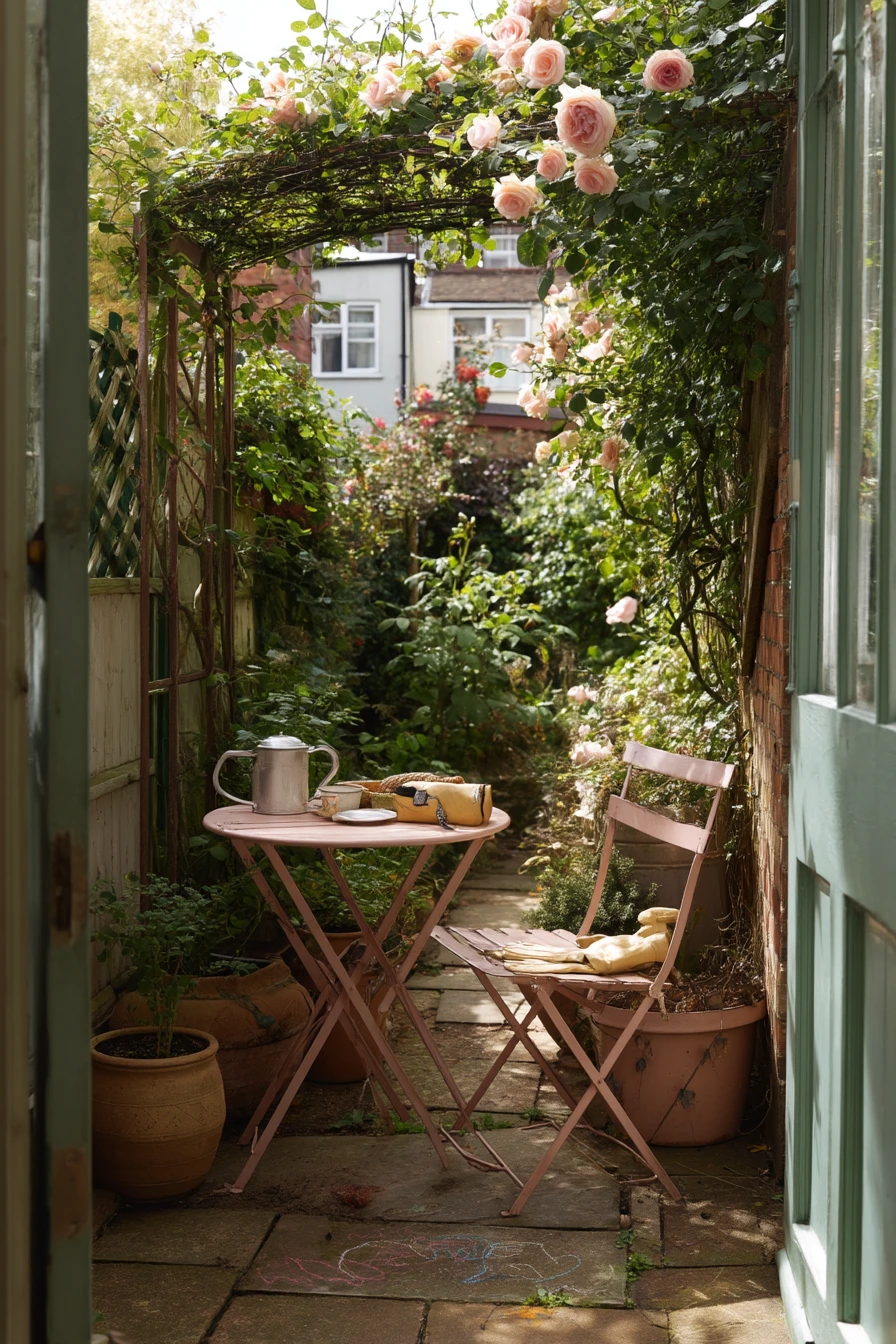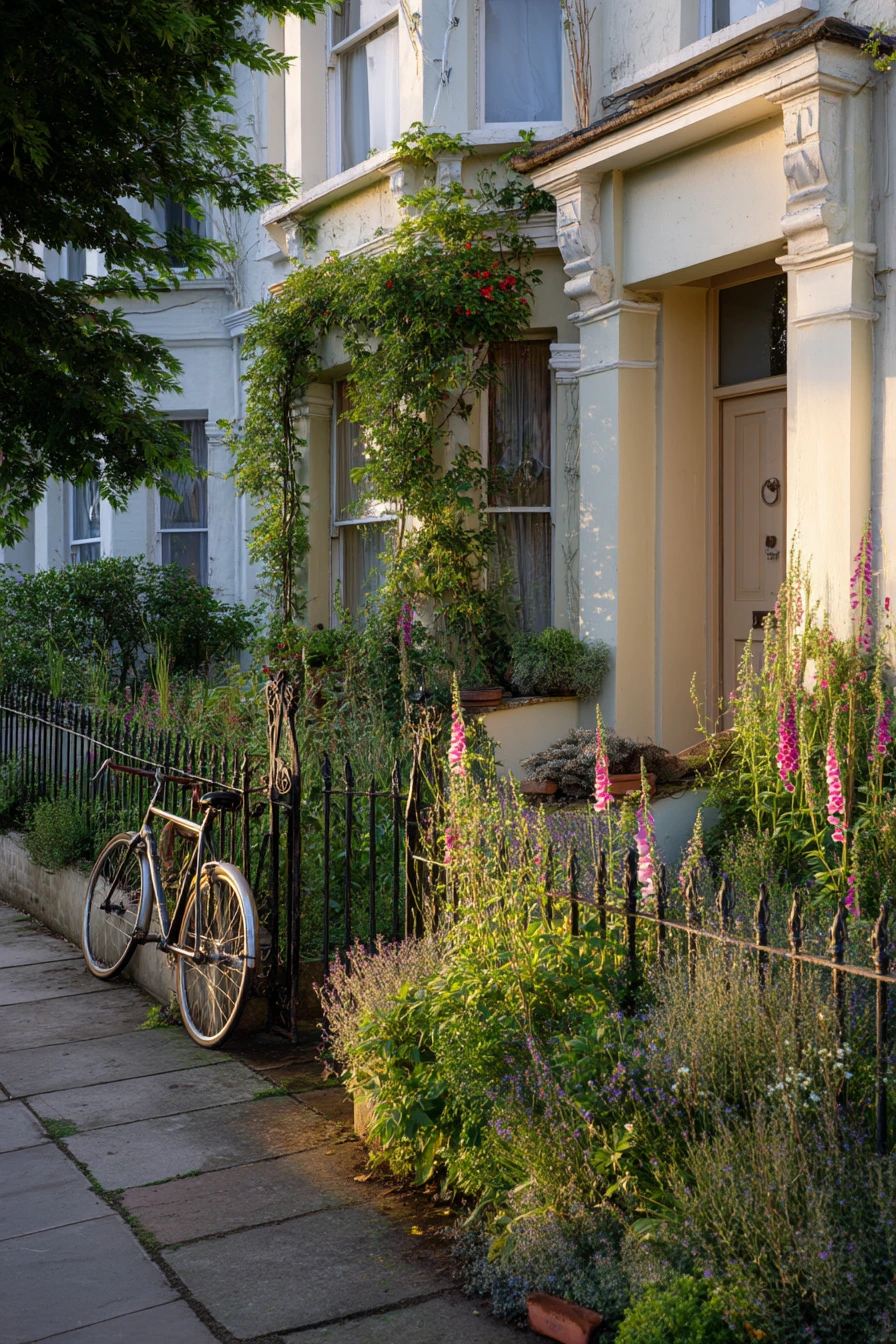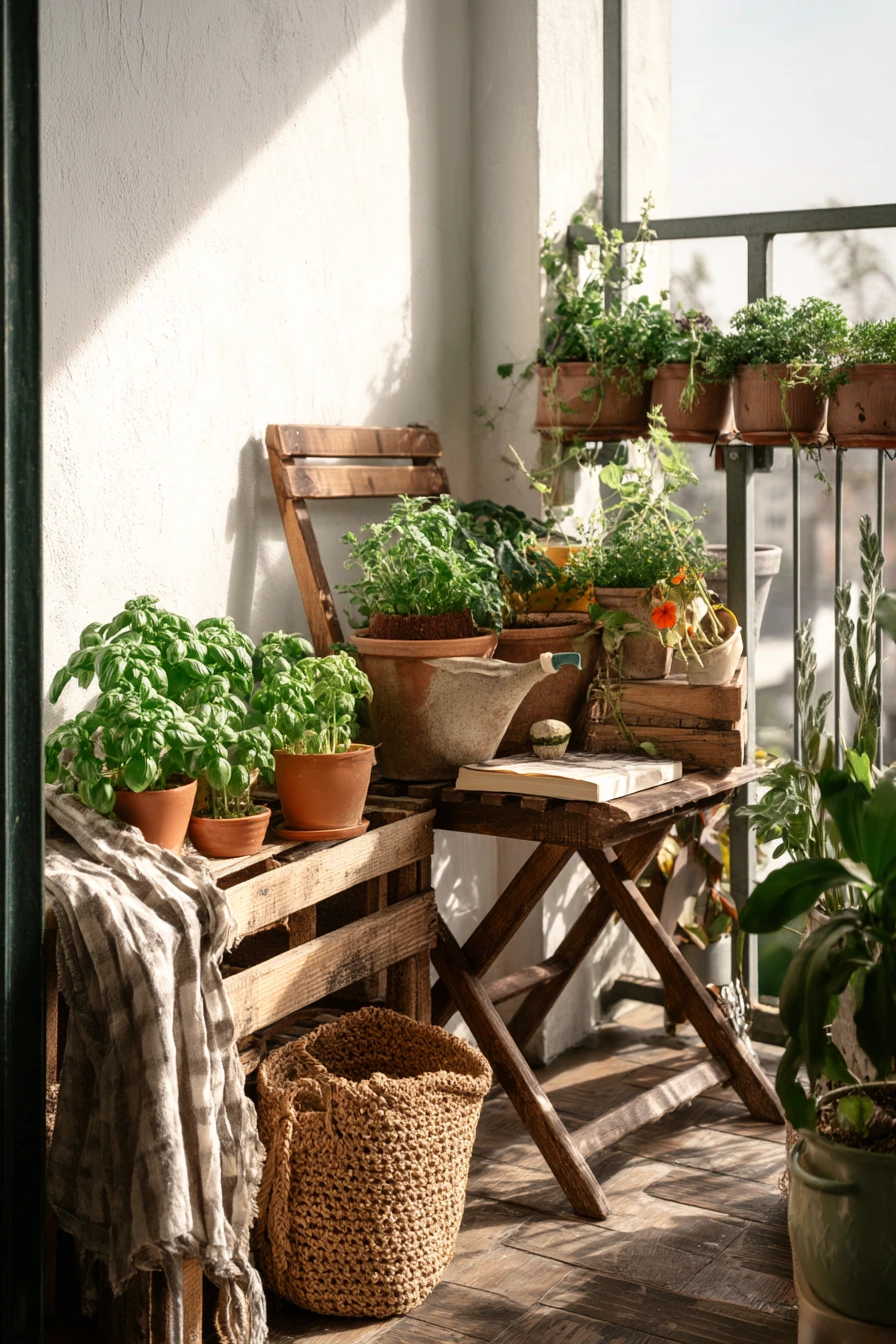

Garden scarecrow ideas are a simple way to protect veggies and add seasonal style at the same time. A good scarecrow does not need to be perfect. It just needs to look like someone is in the garden.
In this post you will see 10 real-life setups, from a suburban backyard vegetable patch to a small townhouse patio and a rainy front porch. Each one uses common items like old shirts, twine, straw, buckets, and denim.
You will also get easy styling notes, where to place the scarecrow, and small details that make the scene feel lived-in, like a watering can, garden gloves, clay pots, or a mug on the rail. These ideas work for harvest season, early autumn, or any time birds and rabbits show up.
Use the sections like a checklist. Pick the look that fits your space, then follow the tips to build it fast, keep it steady in wind, and make it look friendly instead of spooky.
1 1. Family-Friendly Backyard Scarecrow Corner
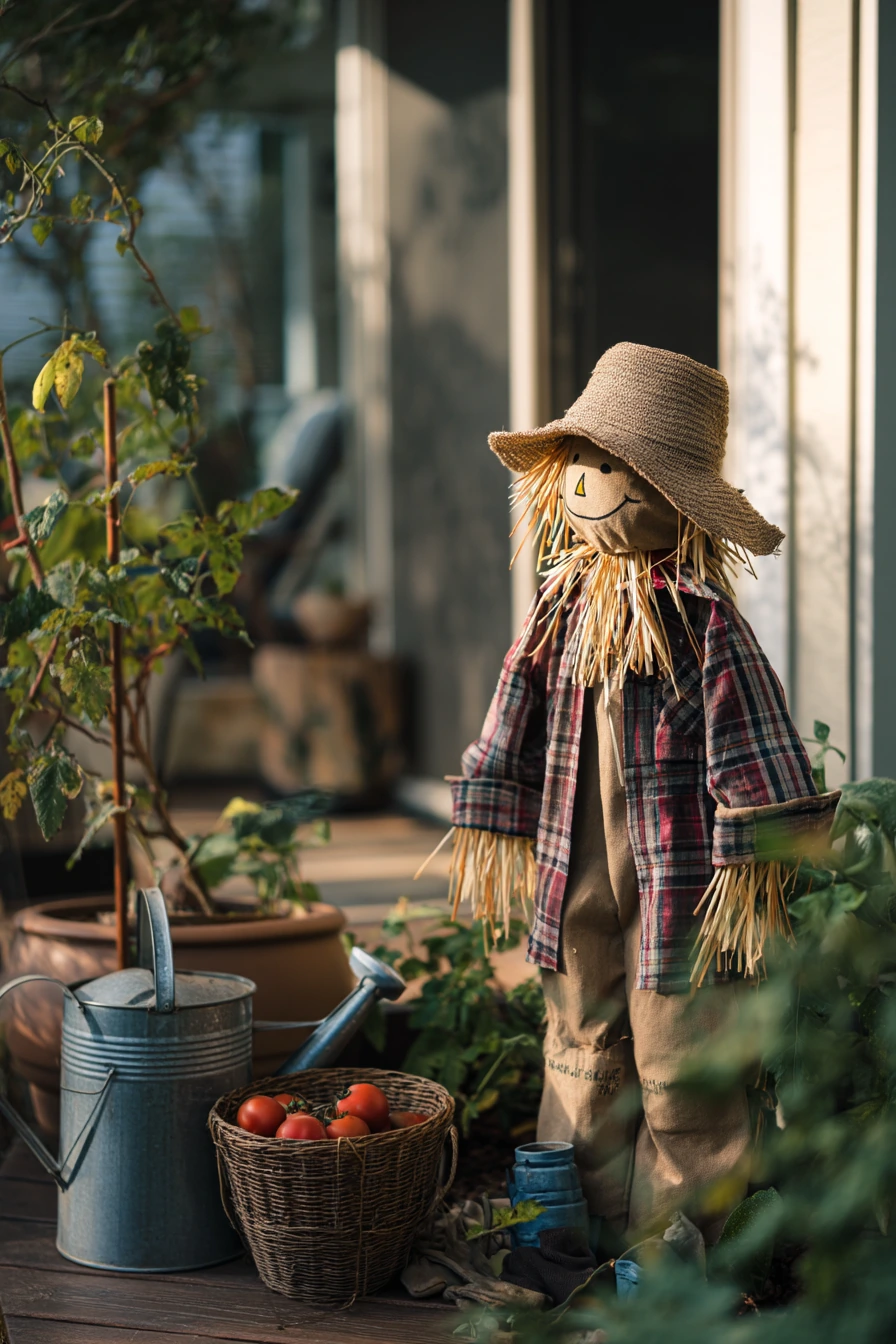
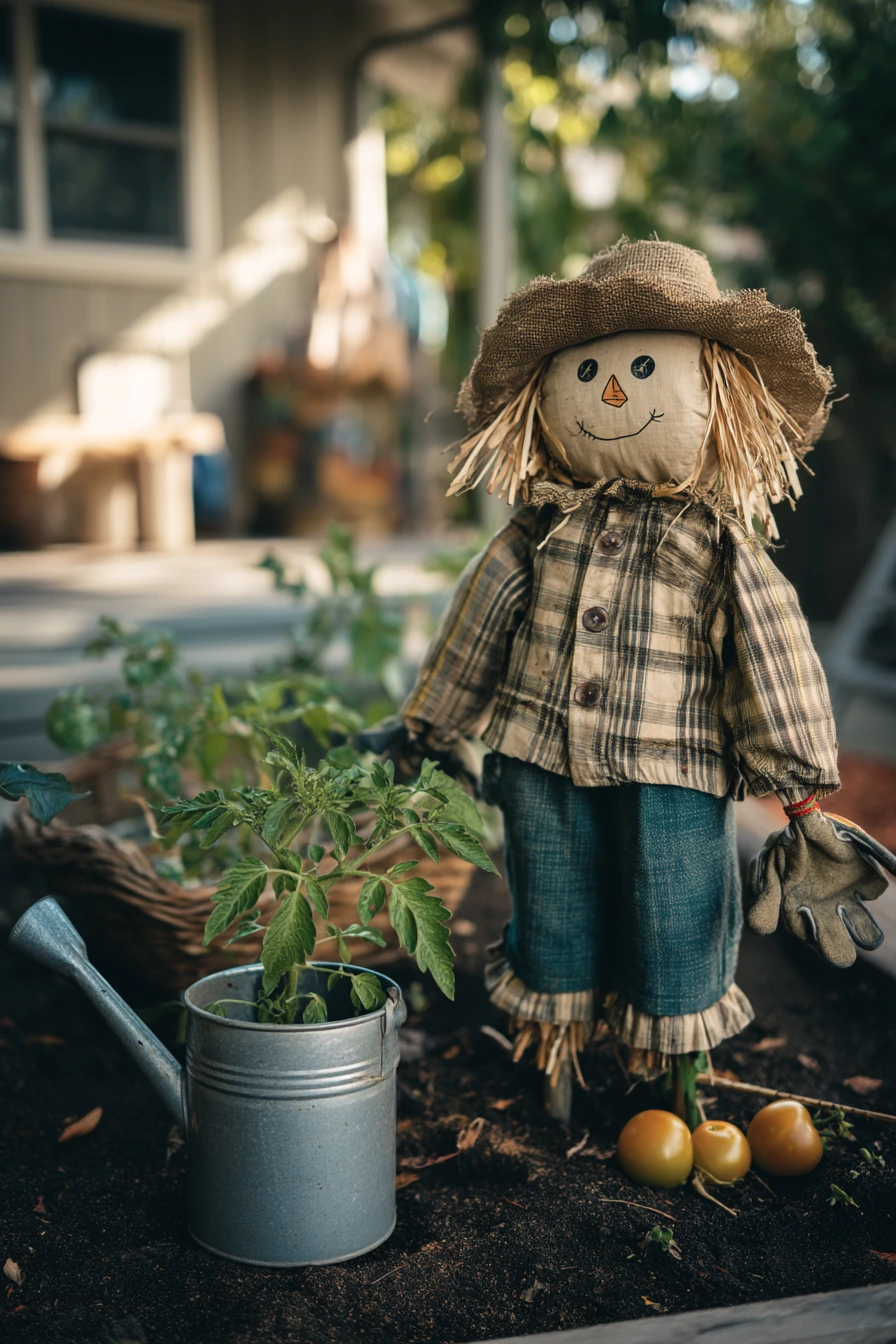
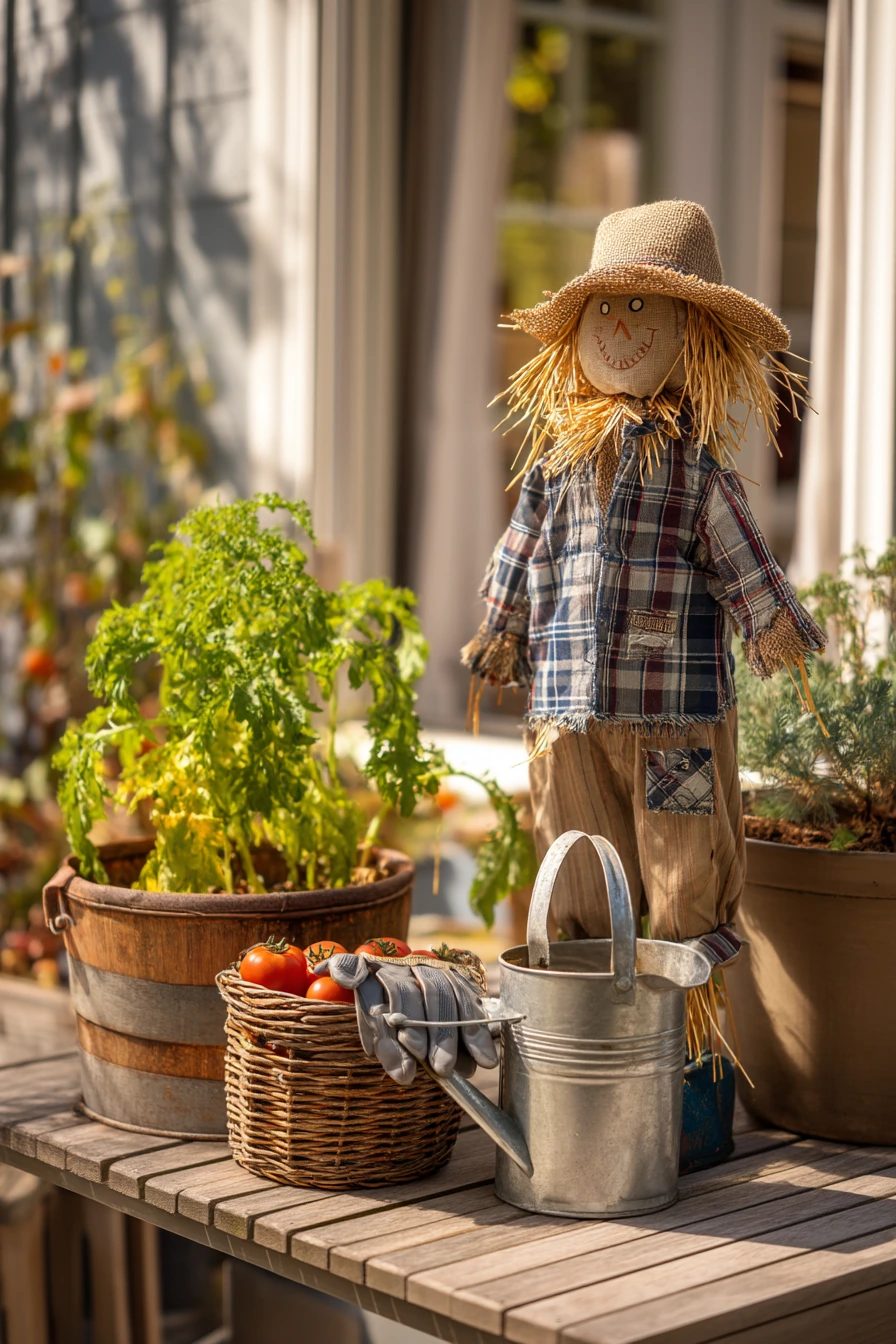
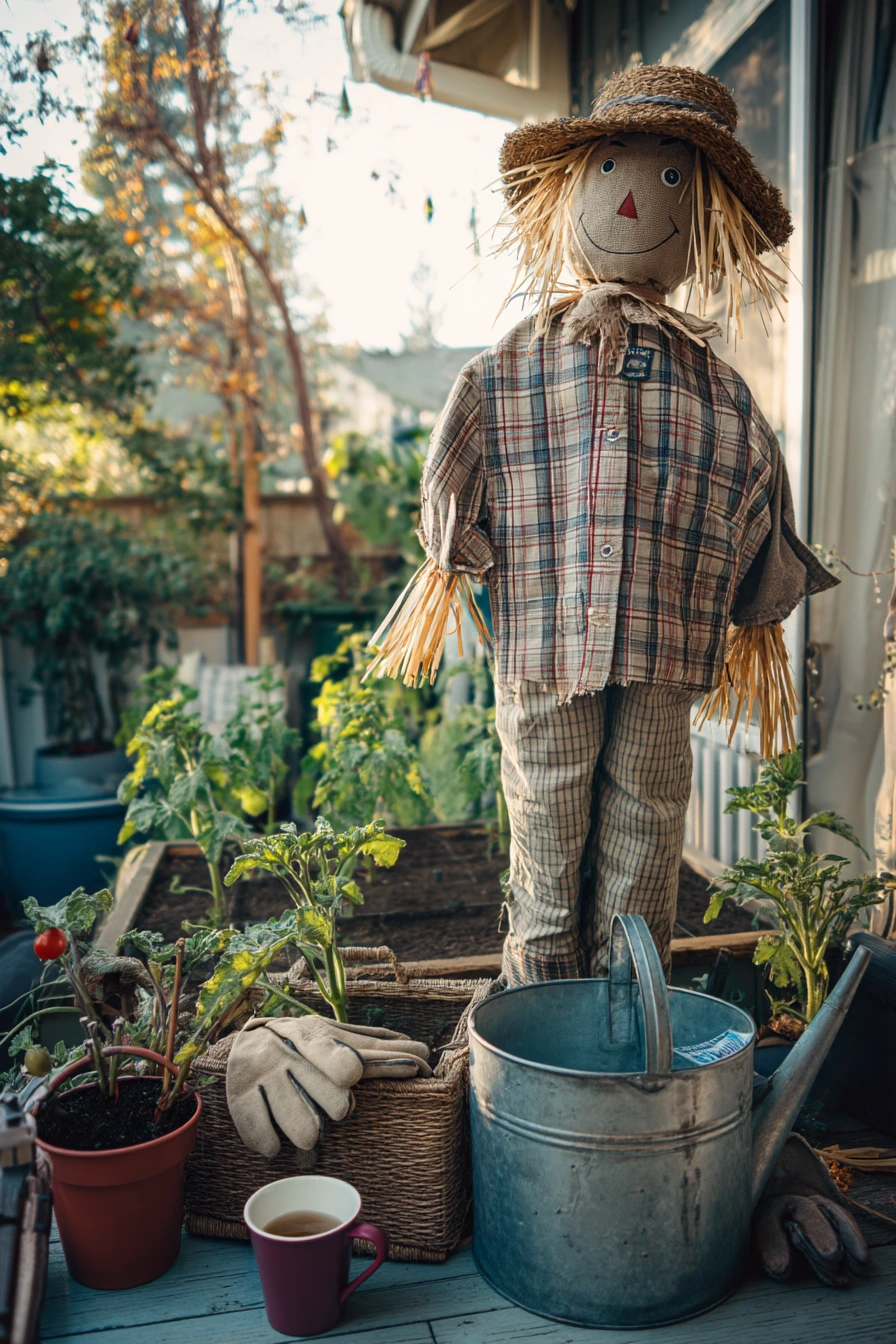
This suburban backyard scarecrow idea fits right beside a vegetable patch where kids are picking tomatoes. The best part is the friendly, slightly lopsided look. A patched fabric body, burlap face, plaid shirt, and straw hat reads as “someone is here” without being scary. Add real backyard details nearby, like a galvanized watering can, a tipped basket of garden gloves, and a few windfallen leaves, so the setup feels natural.
To build it, start with a simple wooden cross (one stake plus one arm piece). Stuff the shirt sleeves with straw, dry grass, or grocery bags. For the head, use a small pillowcase or burlap sack, then draw a basic face with a marker. Keep the expression soft. Place it at the edge of the bed so it is visible from more than one angle, especially where birds land before hopping into the plants.
For styling, treat it like part of the afternoon routine. A mug on the patio table and warm light from the kitchen slider makes the scene feel occupied. If you want more movement, tie short strips of fabric to the wrists so they flutter. Reposition the scarecrow every few days, since pests get used to it.
- Use a sturdy stake and push it at least 10 to 12 inches into the soil.
- Dress it in a plaid shirt and add patches for a homemade look.
- Put it near tomatoes or greens, not hidden behind tall plants.
- Add a watering can or garden gloves nearby for “human presence.”
- Move it a few feet each week to keep birds guessing.
Pro Design Tip: Keep the colors close to what you already have in the yard, like plaid, tan burlap, and straw, so it looks like part of the garden and not a random decoration.
Budget Considerations: Use an old shirt and scrap fabric for patches, and fill the body with crumpled paper bags instead of buying straw.
2 2. Budget DIY Front-Yard Scarecrow
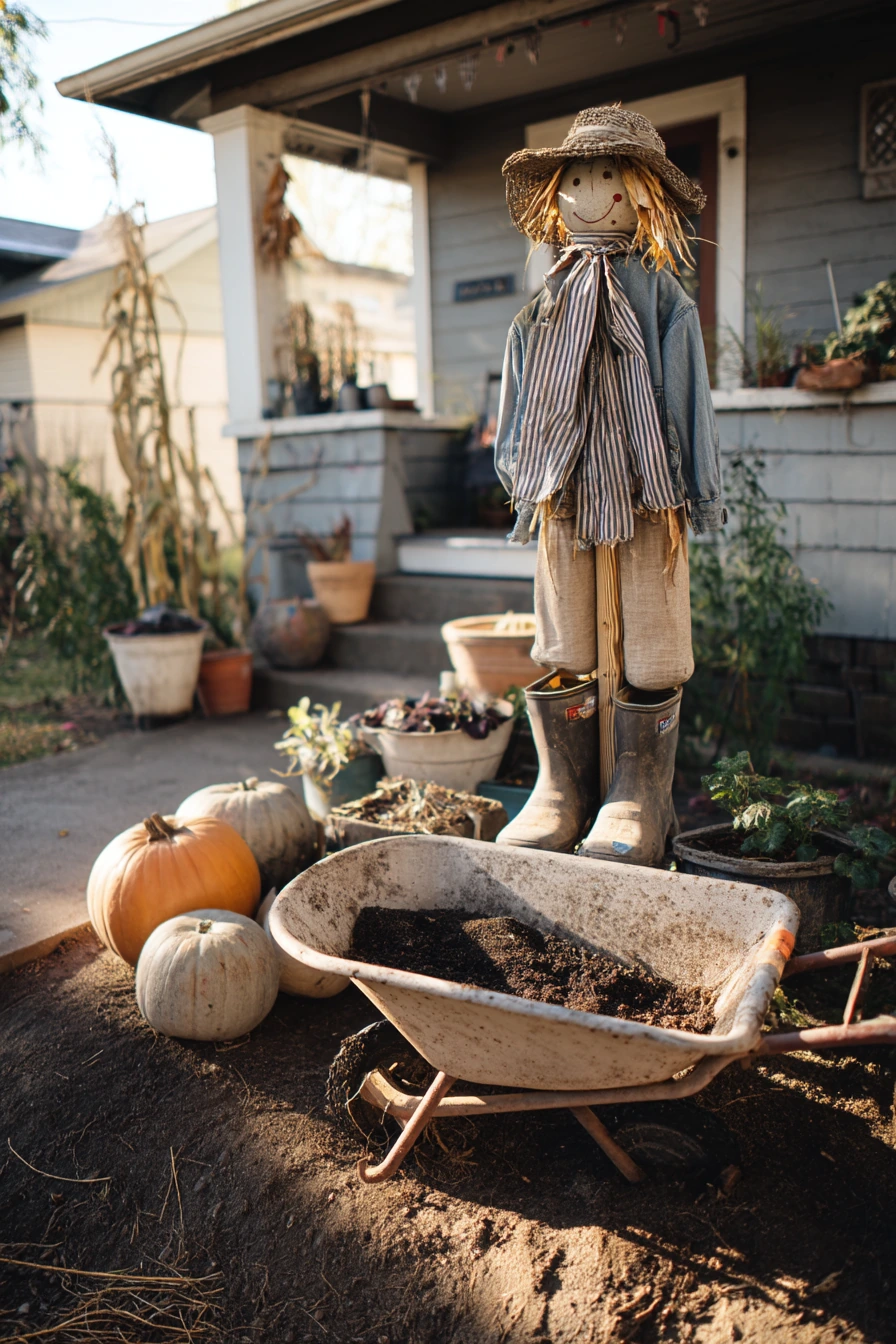
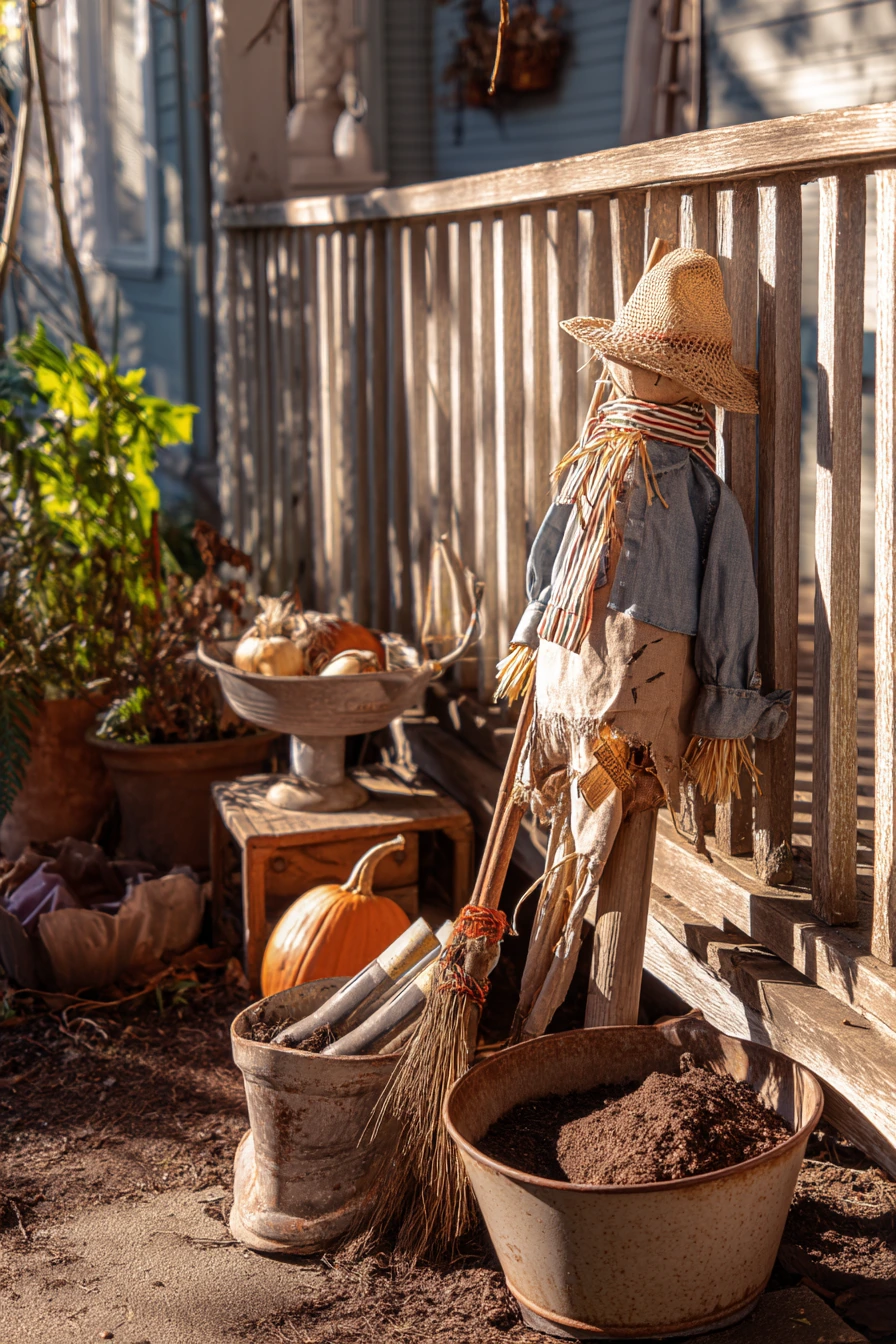
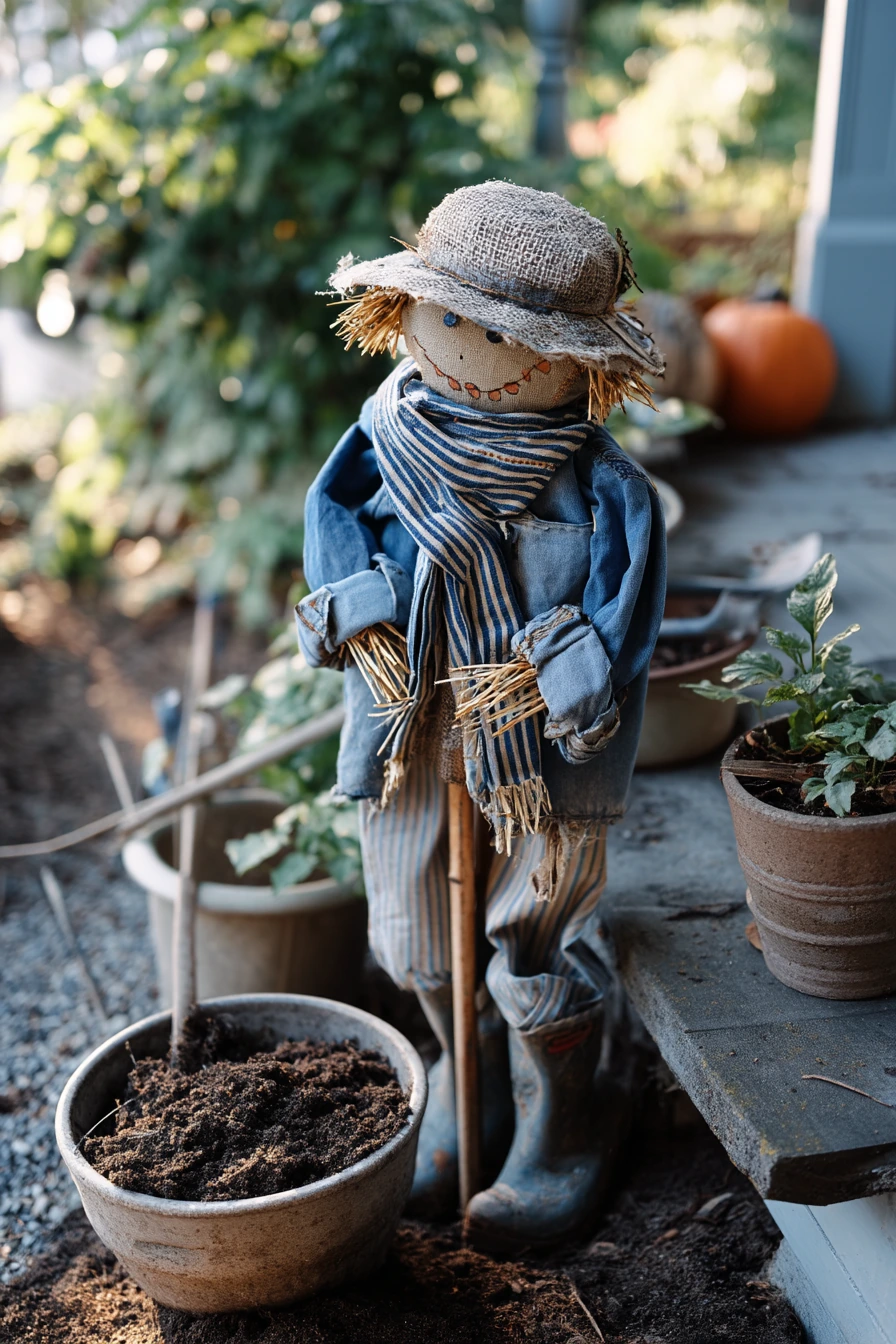
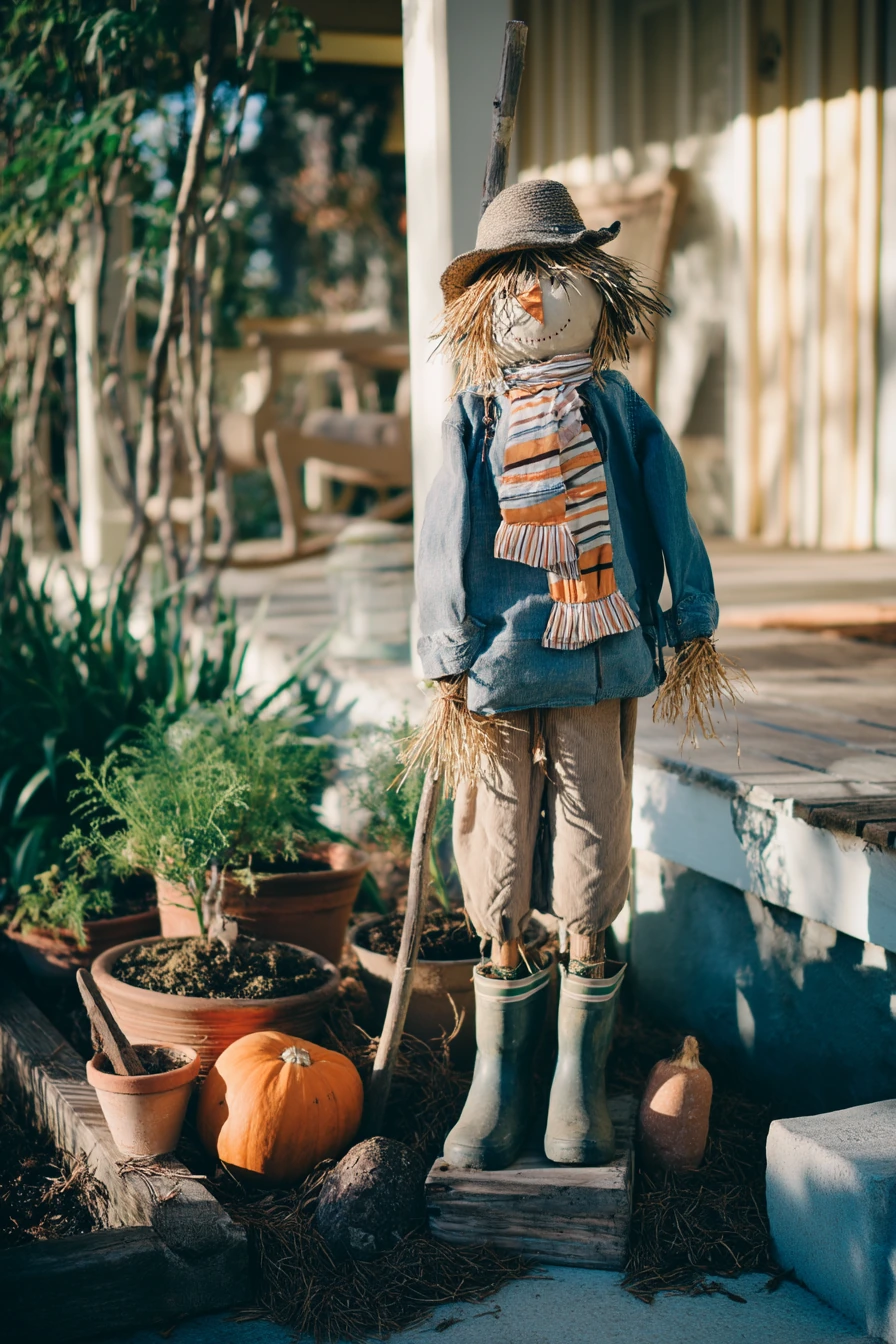
This front yard scarecrow idea is practical and thrifty, perfect near pumpkins, clay pots, and a chipped birdbath. Use an old denim shirt for structure, then add a striped scarf for contrast. A grain sack hat or feed bag top makes a great head covering and holds up well outdoors. The goal is a handmade look that matches a modest yard, not a store display.
Build it on a wooden stake so it stays upright in wind. Tie the denim shirt tightly to the crossbar so it does not slide down. For the head, stuff a cloth bag with rags, then wrap it with twine at the “neck.” Add simple button eyes or painted dots. Set it close to the pumpkin cluster so it works as decor and deterrent. Low morning light and porch railing shadows look best when the scarecrow is angled slightly toward the walkway.
Style it with working-yard items. A wheelbarrow with potting soil, garden twine, and muddy boots makes the scene feel lived-in. If you want more function, hang shiny ribbon or old CDs under the scarf so it catches light and moves. Keep the base clean so it does not look like yard clutter. A quick sweep around the stake helps the display look intentional.
- Use denim because it holds shape and dries fast after dew.
- Place the stake near pumpkins to anchor the fall look.
- Add a scarf that can flutter to create motion.
- Group clay pots in odd numbers for a simple layout.
- Keep one “work zone” detail nearby, like twine or a wheelbarrow.
Pro Design Tip: Repeat one stripe or color from the scarf in a small item nearby, like a pot or a bow, so the display feels pulled together.
Budget Considerations: Use thrifted denim and a worn scarf; a feed sack or old pillowcase can replace a specialty hat.
3 3. Small-Space Patio Scarecrow Idea
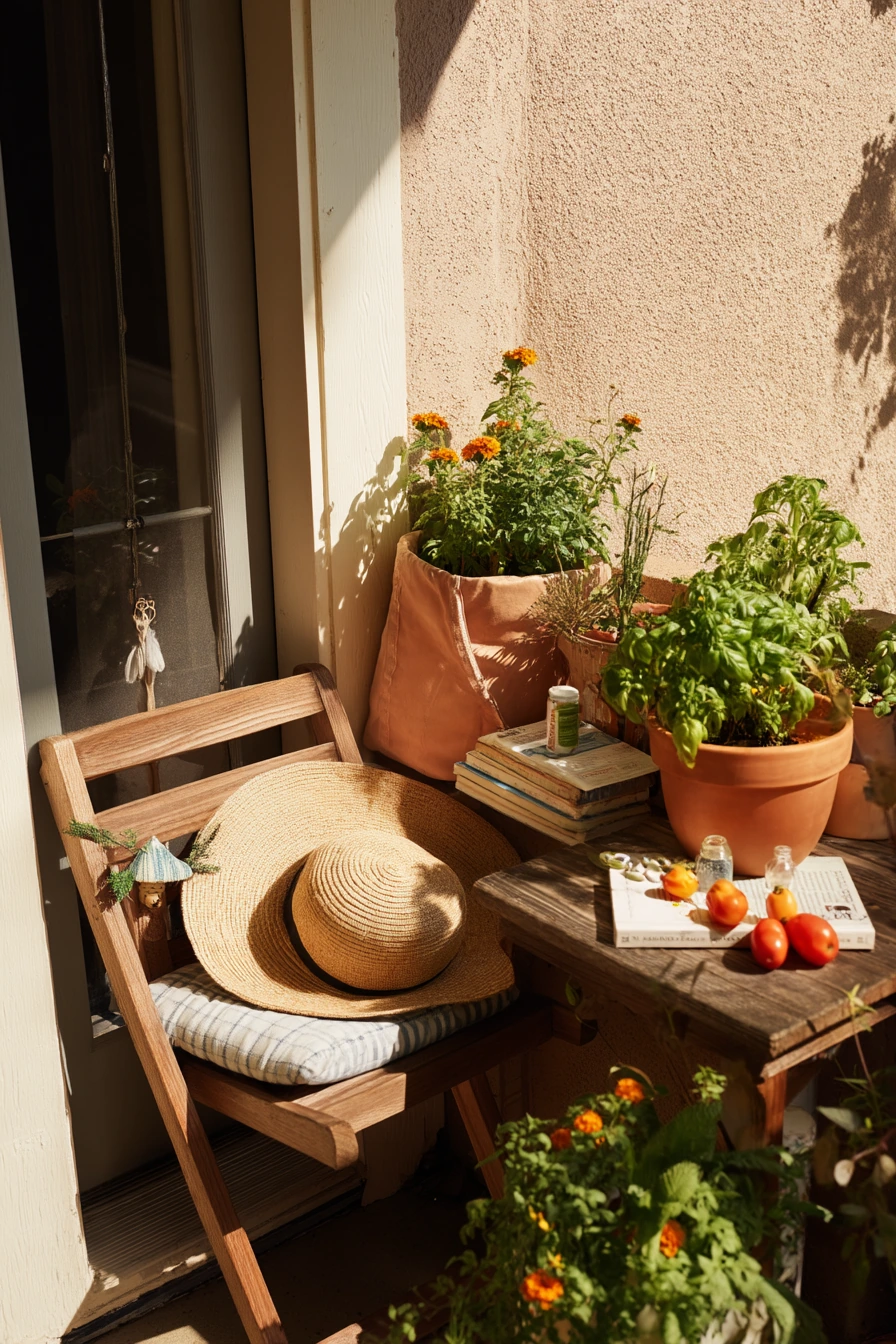
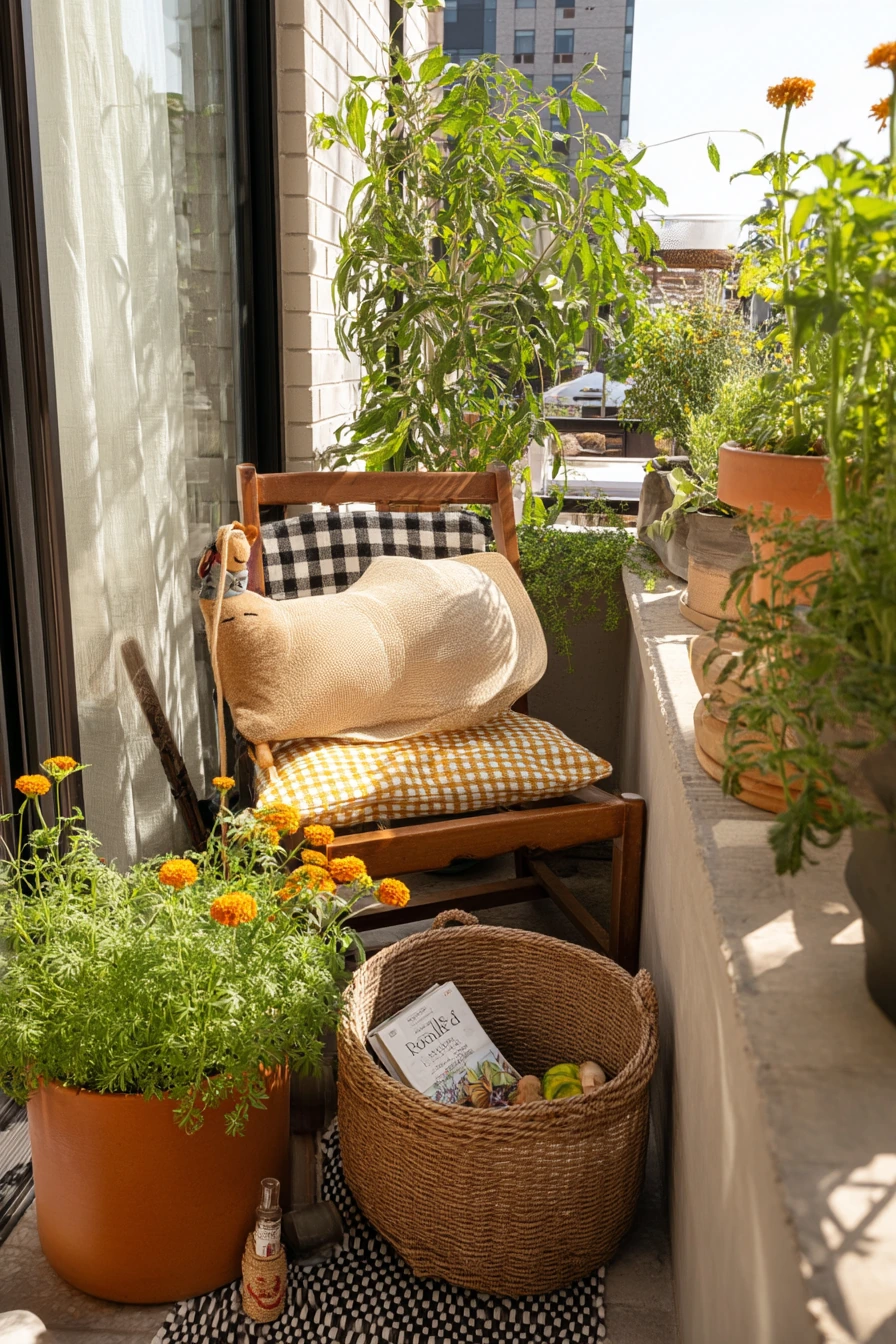
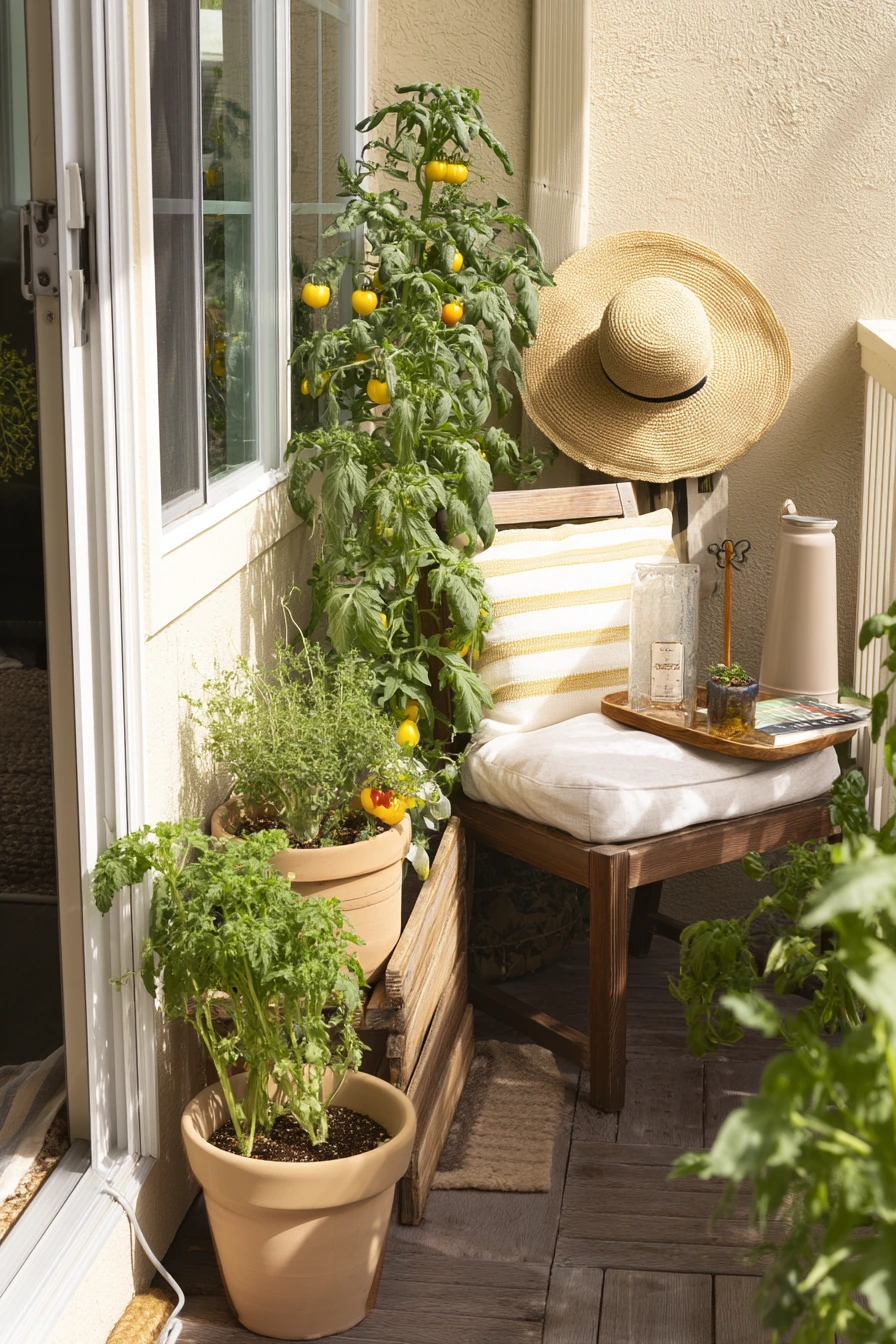
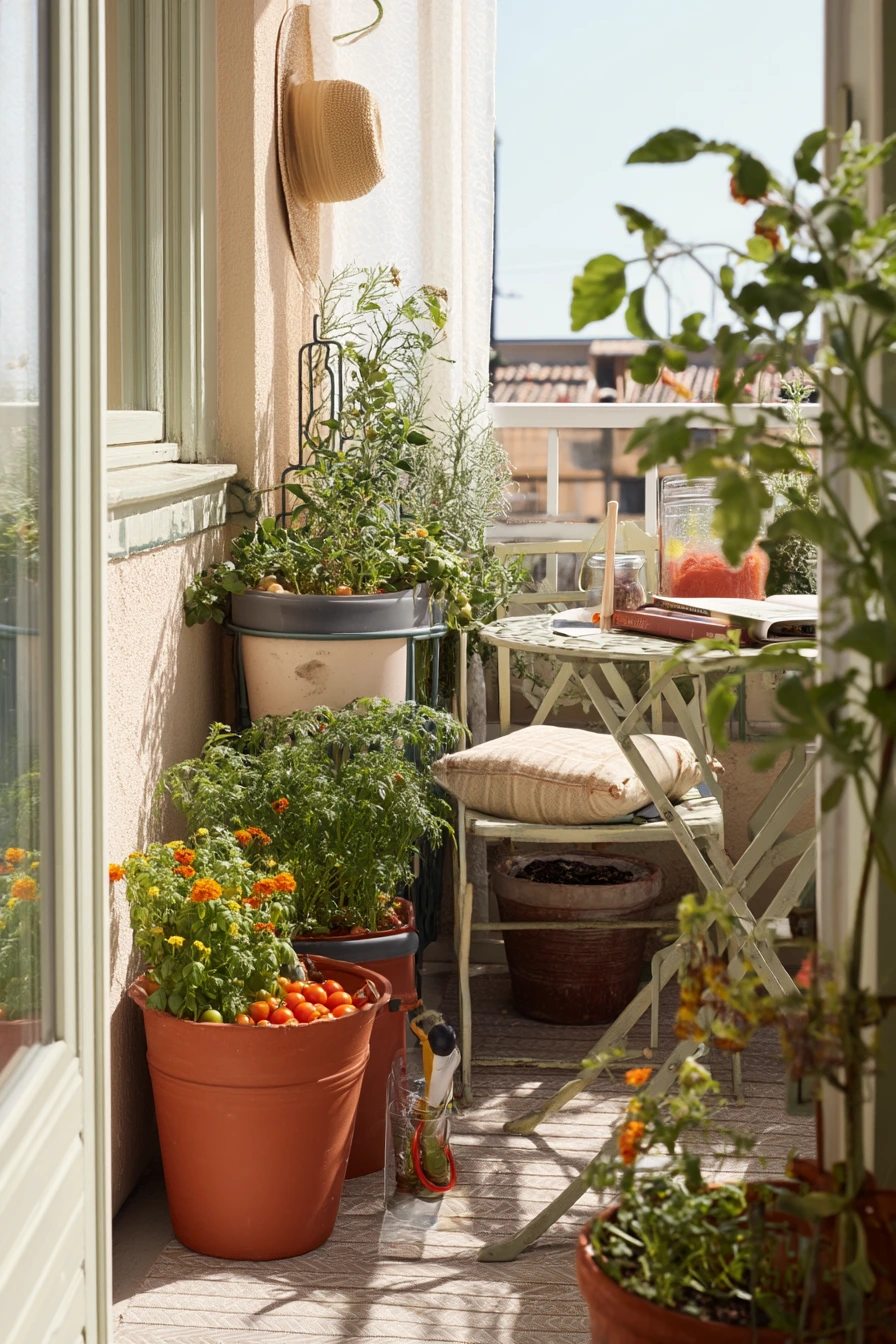
A compact patio can still use a scarecrow, especially when you grow herbs, marigolds, or cherry tomatoes in terracotta pots. Choose a petite scarecrow so it does not overwhelm the space. Linen scraps and a floppy sun hat keep it tidy and simple. This setup also looks good in a townhouse patio where every item needs to earn its spot.
Instead of a tall stake in the ground, mount your scarecrow to a short dowel set inside a heavy pot. Fill the pot with stones at the bottom for weight, then add soil. Dress the figure in a small shirt shape made from fabric scraps. For the head, use a small ball of stuffing inside cloth, then tie it off. Place it in the center of the container grouping so it reads as a focal point, and rotate it to face the direction birds approach.
Style it like a real morning on the patio. A folded seat cushion, watering spray bottle, a paperback on the bistro chair, and a charging cable by the sliding door add “real home” detail without looking messy. Keep the pots in a tight cluster and leave a clear walkway. If pests are a problem, clip a small pinwheel or reflective tag to the hat brim so it moves with light air.
- Use a weighted pot base so the figure does not tip over.
- Stick with neutral linen for a calm, clean look.
- Group terracotta pots for a warm, classic feel.
- Keep one casual item visible, like a book or cushion, to make it relatable.
- Add gentle motion with a pinwheel or ribbon on the hat.
Pro Design Tip: Match the scarecrow hat to your patio style, like straw for warm tones or canvas for a modern look, so it blends with furniture.
Budget Considerations: Make a mini scarecrow from leftover fabric and a spare dowel, and use rocks from the yard to weight the base.
4 4. Rustic Farmhouse Garden Protector
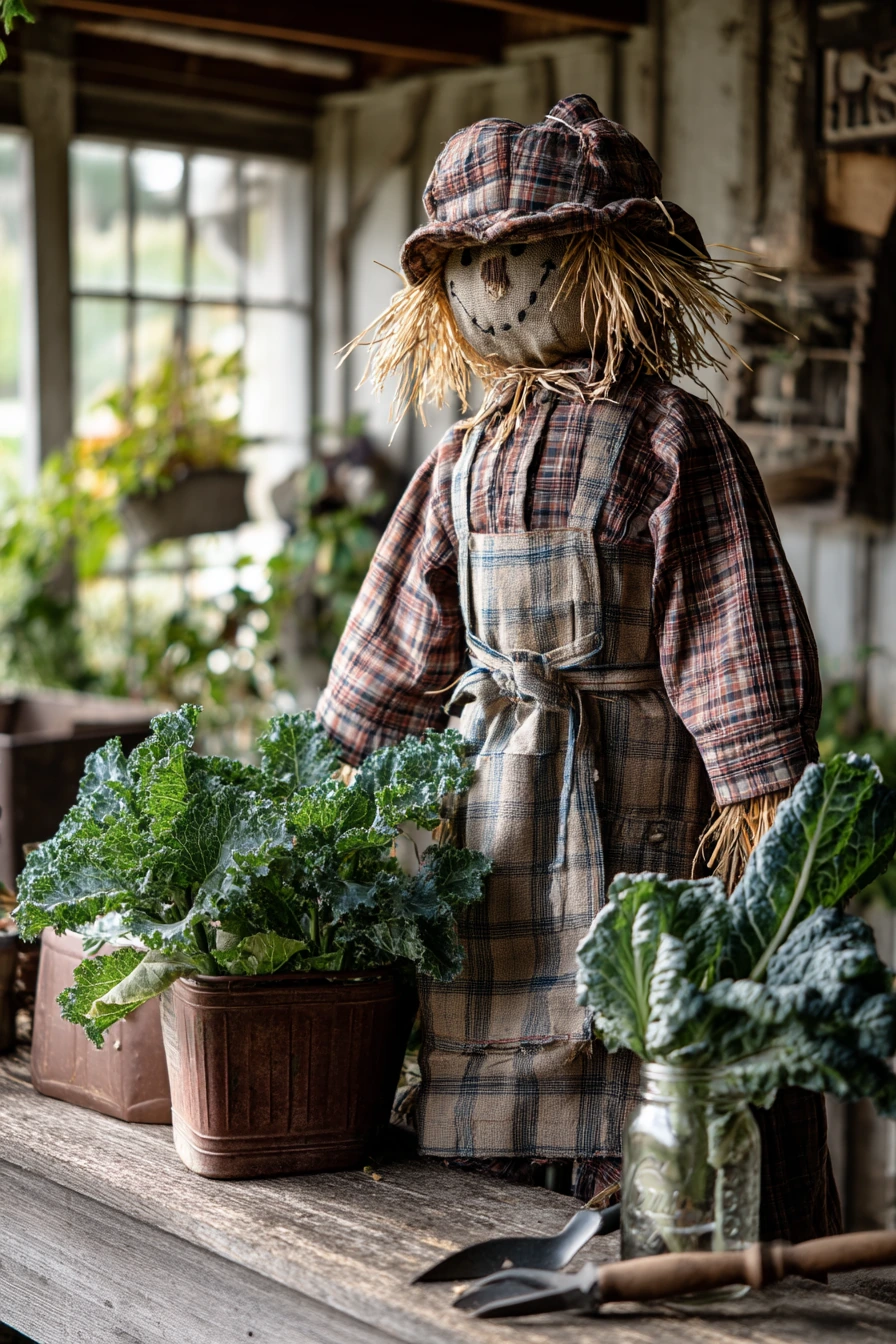
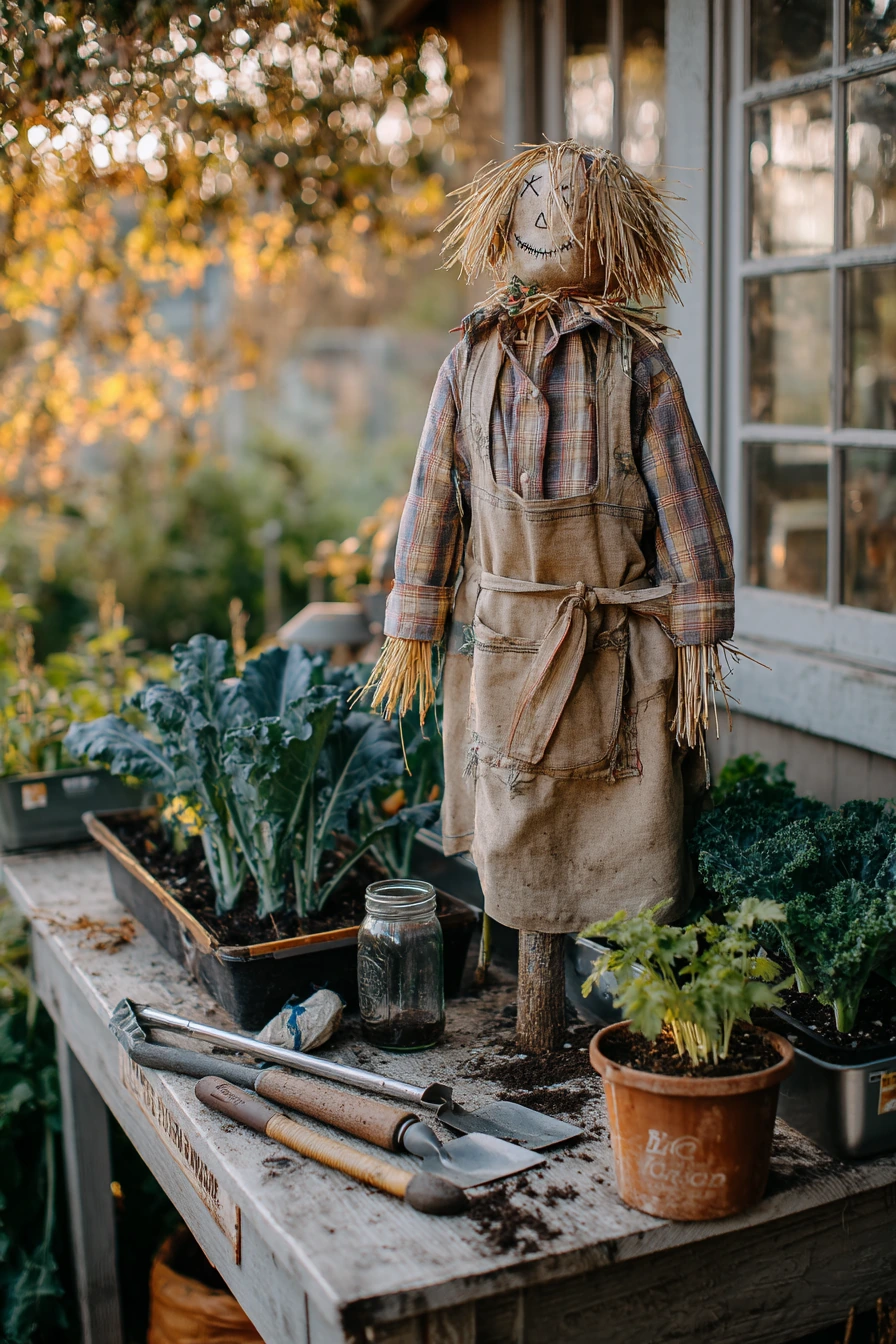
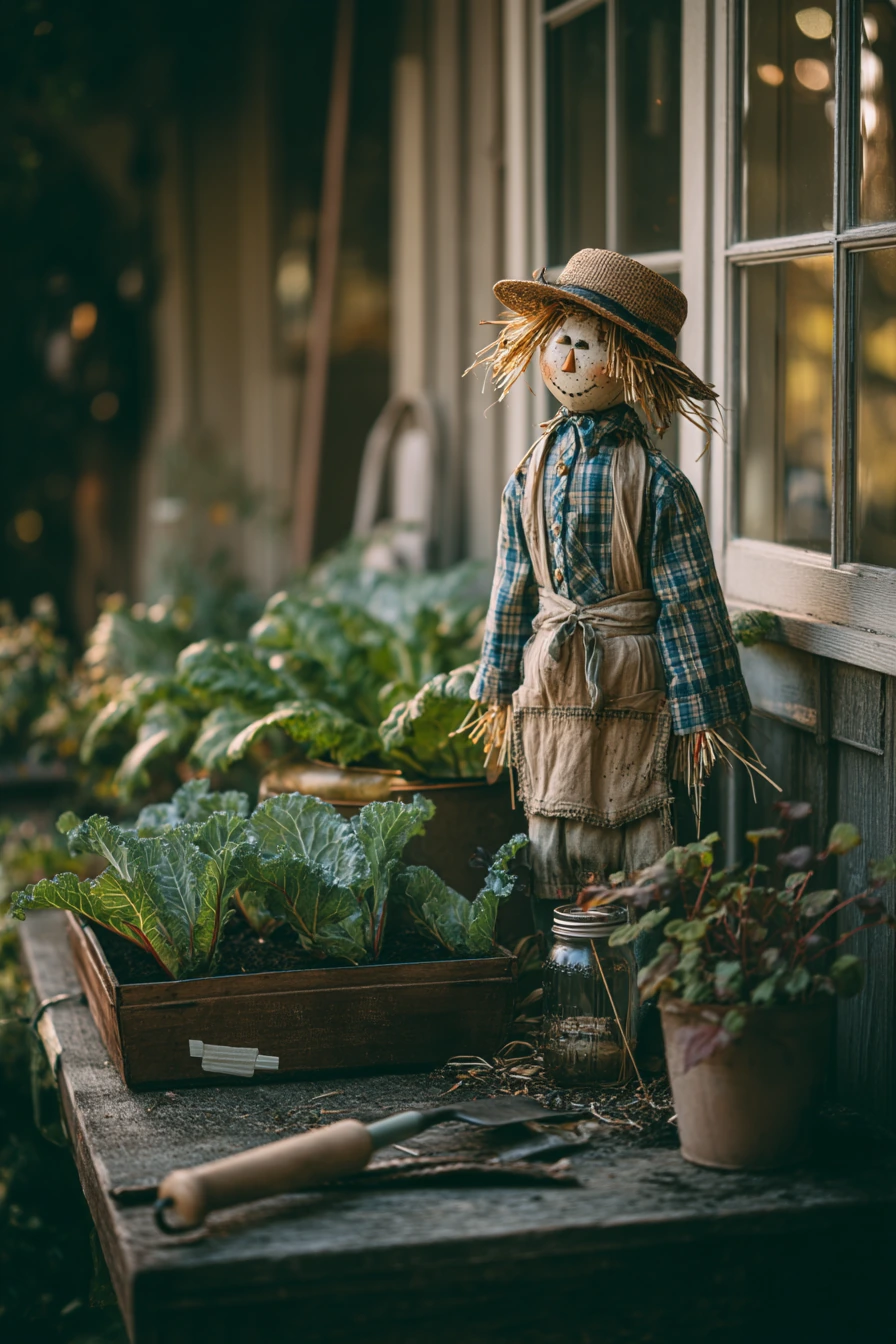
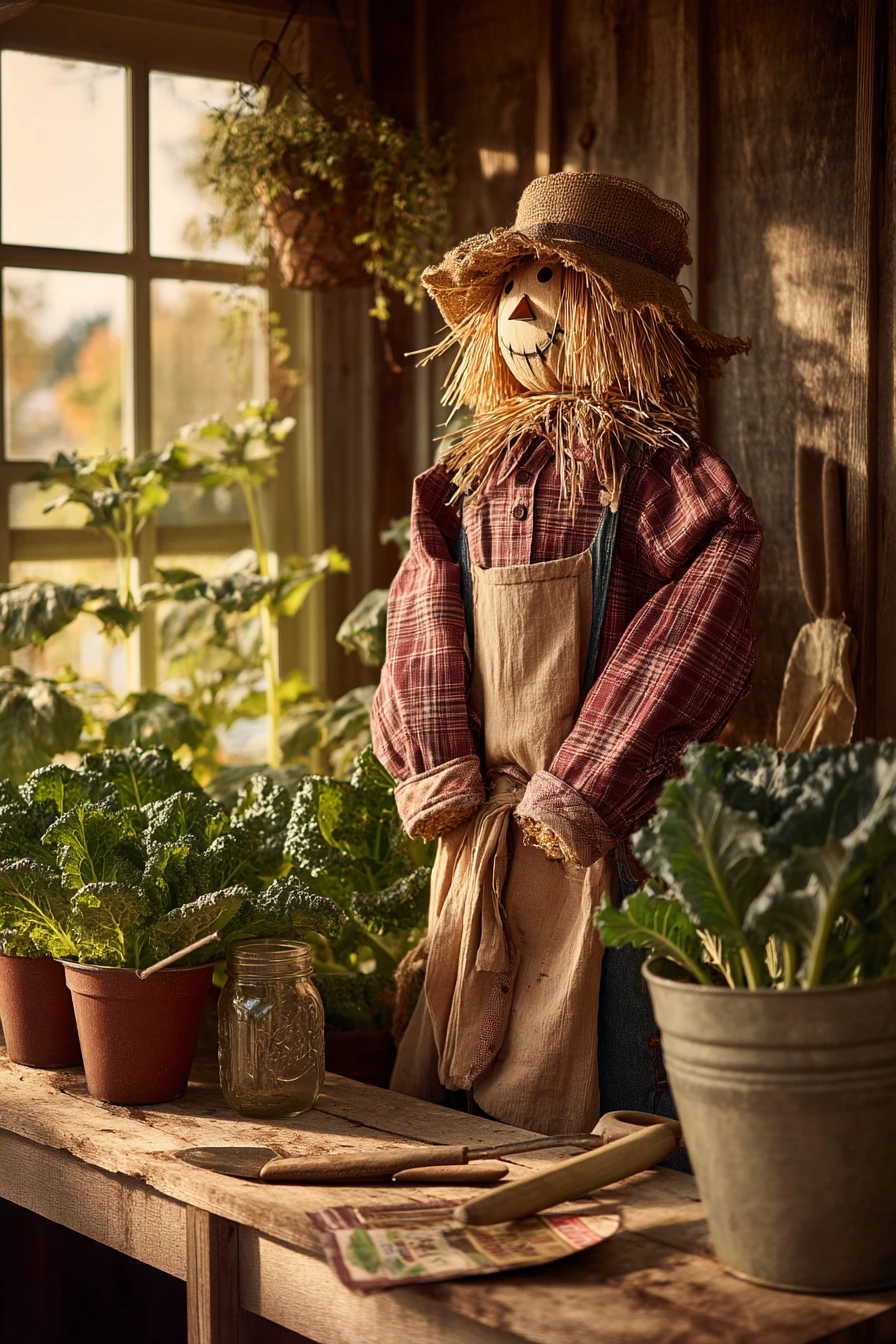
This cottage garden scarecrow idea feels hardworking and warm, especially near kale, squash vines, and a row of herbs. A tall figure in a plaid flannel shirt with straw sleeves looks like a gardener on duty. The repurposed apron tied at the waist is the key detail. It adds story and makes the scarecrow look like it belongs near the potting bench.
Build the frame with a strong stake and a wider crossbar so the flannel hangs well. Stuff the sleeves with straw or dried stems so they keep their shape. Add twine ties at the wrists and waist to stop fabric from flapping too much. Place it near the edge of the vegetable rows, not deep in the plants, so it is easy to move and does not shade crops. If you have a weathered cottage or older fence, let the materials look a bit worn for a natural match.
Style the nearby bench like a real work station. A mason jar with cut stems, a garden trowel, and a half-open seed packet creates a “mid-task” look. Keep the seed packets dry in a jar if rain is common. Warm window light from the kitchen adds a nostalgic mood, so position the scarecrow where it catches that glow in late afternoon. If birds are persistent, change the apron color or add a new bandana every week to refresh the visual.
- Use a flannel shirt for a classic cottage feel.
- Add an apron to make it look like a real gardener.
- Place it near kale or squash where pests often browse.
- Style a potting bench with a jar, trowel, and seed packet.
- Swap one accessory often to keep it effective.
Pro Design Tip: Choose one main pattern, like plaid, then keep the rest of the items solid so the scene feels calm and not busy.
Budget Considerations: Use a stained apron or an old kitchen apron, and fill sleeves with dried garden trimmings instead of buying straw bundles.
5 5. Autumn Harvest Decor Scarecrow
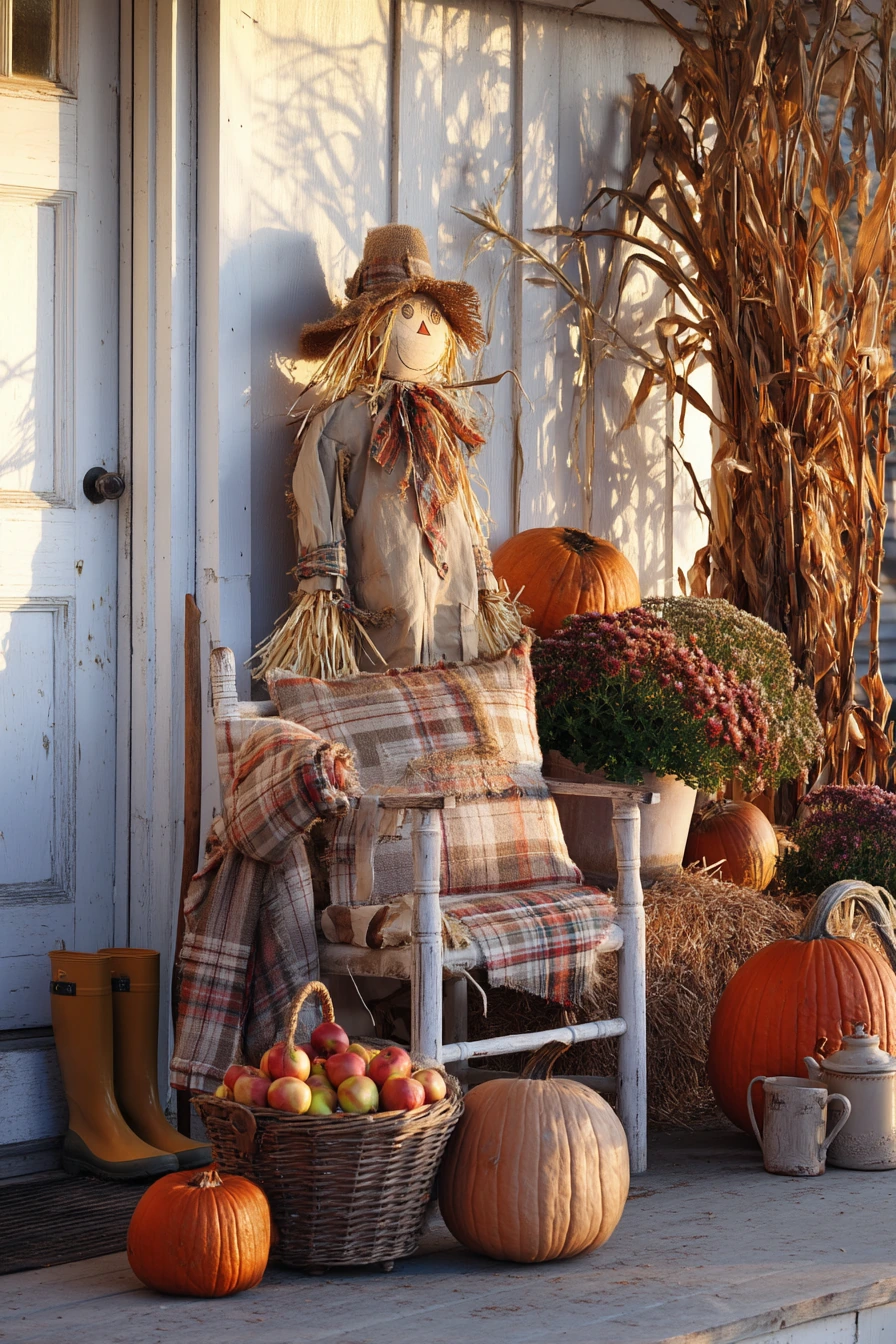
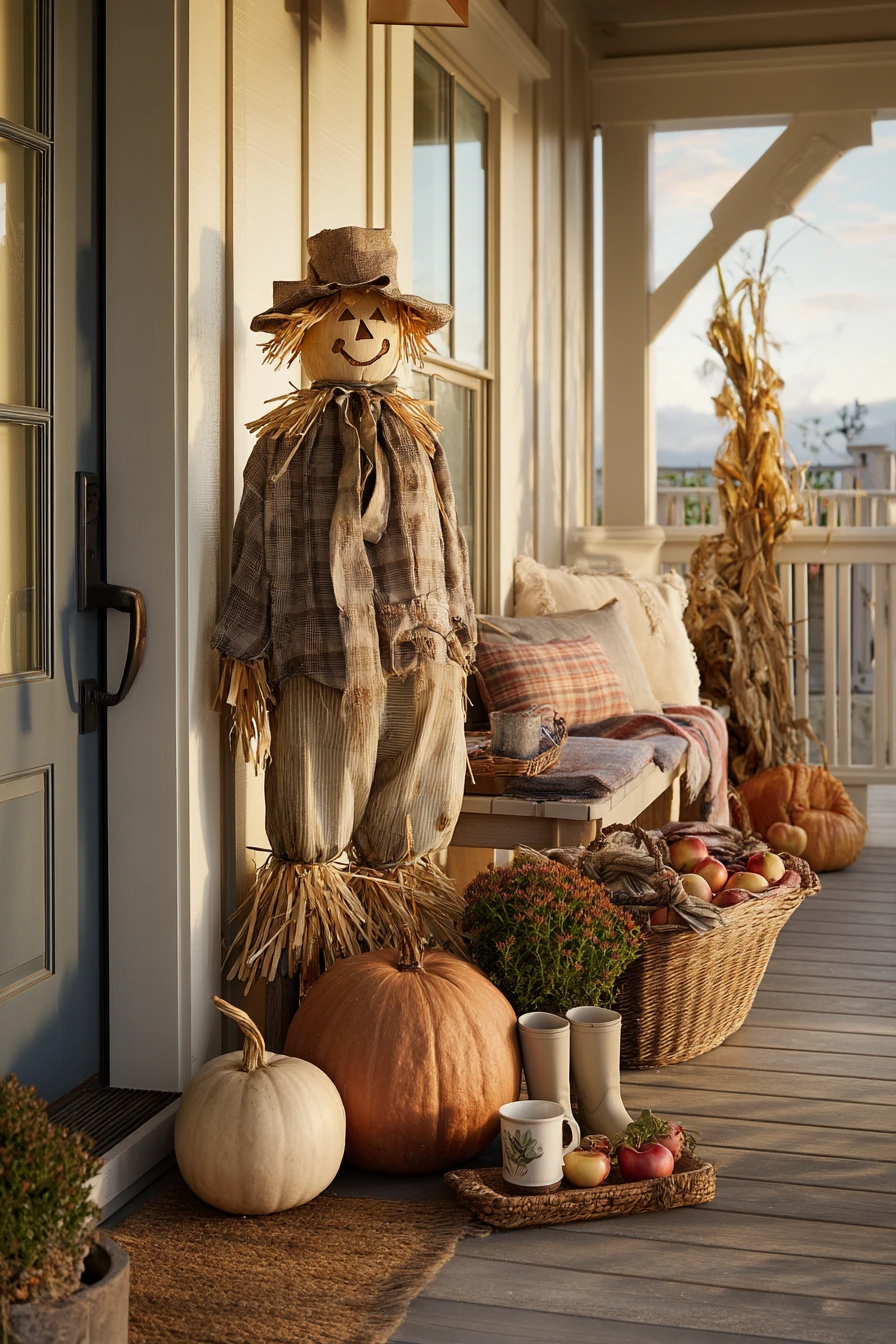
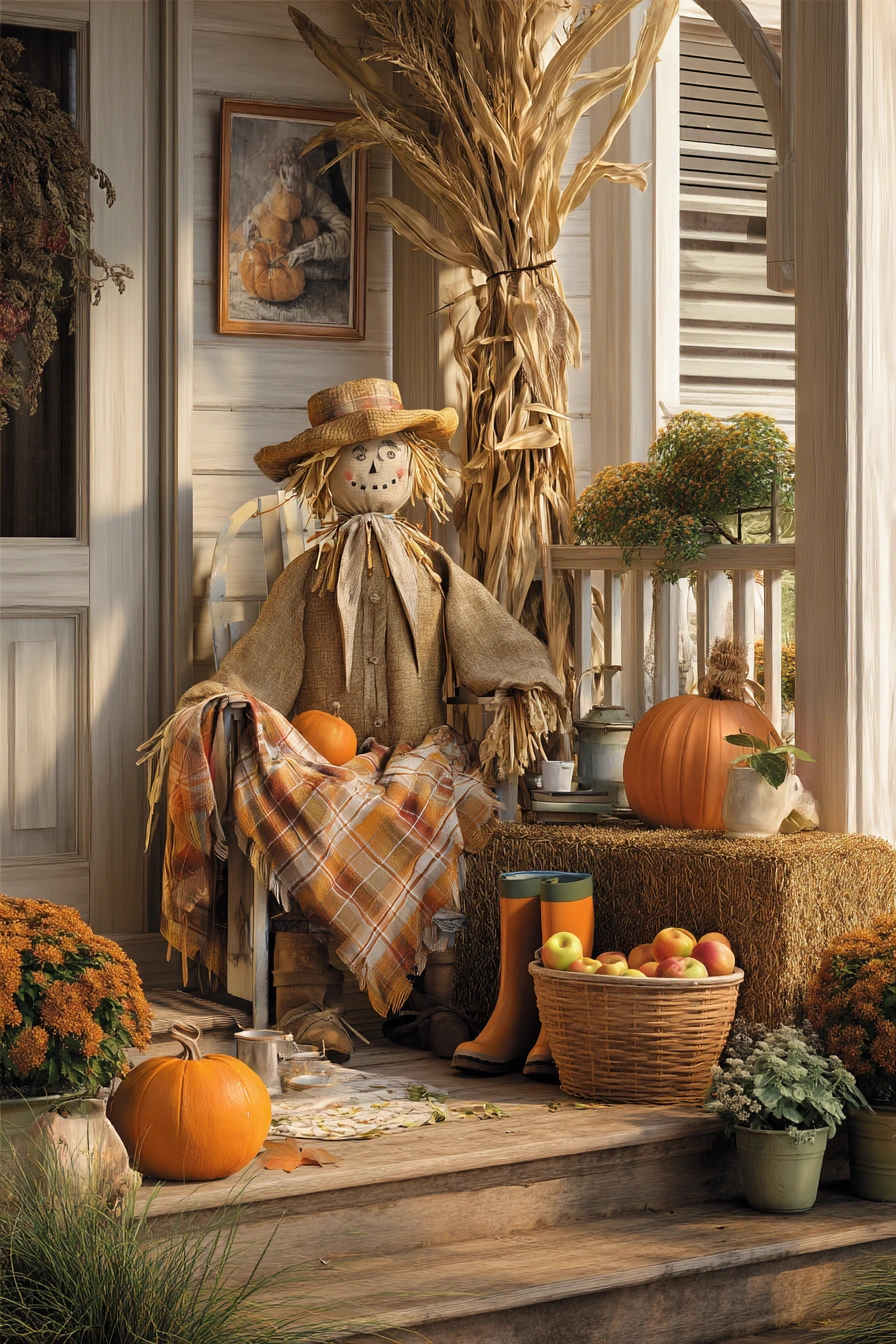
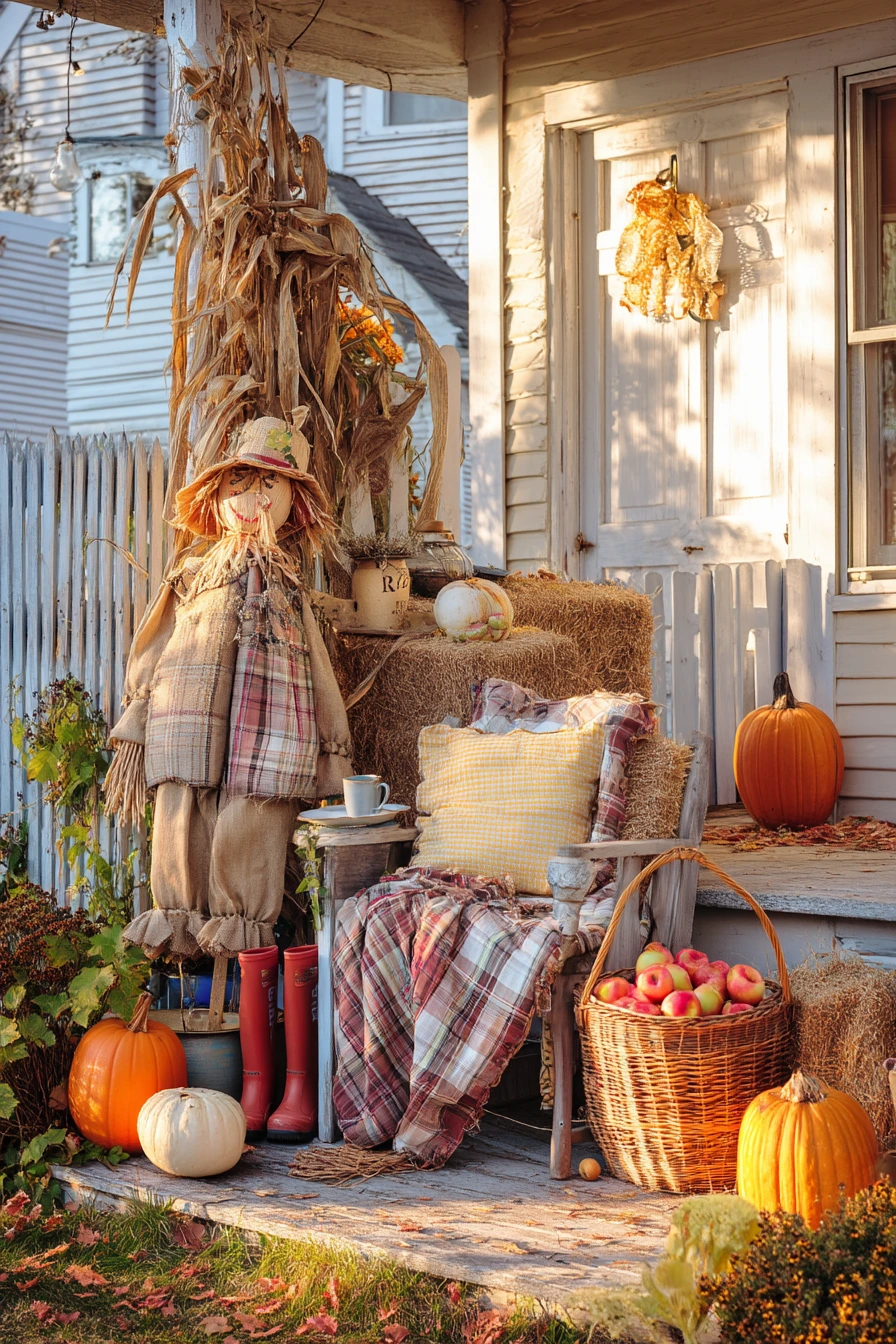
This harvest-season scarecrow idea works well by a back fence with stacked pumpkins, cornstalk bundles, and a woven basket of apples. The scarecrow should look festive but slightly shabby-chic, with burlap, ribbon, and straw peeking through. This style is more decorative, yet it still helps deter birds when placed close to fruiting plants or near a compost area that attracts critters.
Start with a simple post frame and dress it in layers. Burlap works as a base because it looks rustic and handles outdoor use. Add ribbon for color, but keep it to two or three shades so it does not feel loud. A soft straw hat or a brim made from dried grass gives the head shape. Place the scarecrow slightly off-center from the pumpkin stack so the display looks natural, like it grew over time.
To make the scene feel lived-in, add a plaid blanket on a chair, rain boots by the door, and a tea mug on the porch rail. Those small items signal “people are here,” which supports the scarecrow’s job. For “how to style it,” keep the apples in a basket low to the ground and tuck cornstalks behind for height. If wind is strong, wire the cornstalk bundle to a fence post and secure ribbons with tight knots so they do not fly away.
- Use burlap and straw for a classic fall texture mix.
- Keep ribbons in a limited color palette for a neat look.
- Stack pumpkins in a stable pyramid shape near the fence.
- Add one cozy detail, like a blanket or mug, but keep it simple.
- Anchor cornstalk bundles with wire so they stay upright.
Pro Design Tip: Place the tallest items in the back (cornstalks, fence line) and the smallest in front (apples, mini pumpkins) to create an easy layered display.
Budget Considerations: Use yard-grown cornstalks and grocery-store pumpkins, and swap ribbon for fabric strips cut from old pillowcases.
6 6. Kids’ Craft Scarecrow Moment
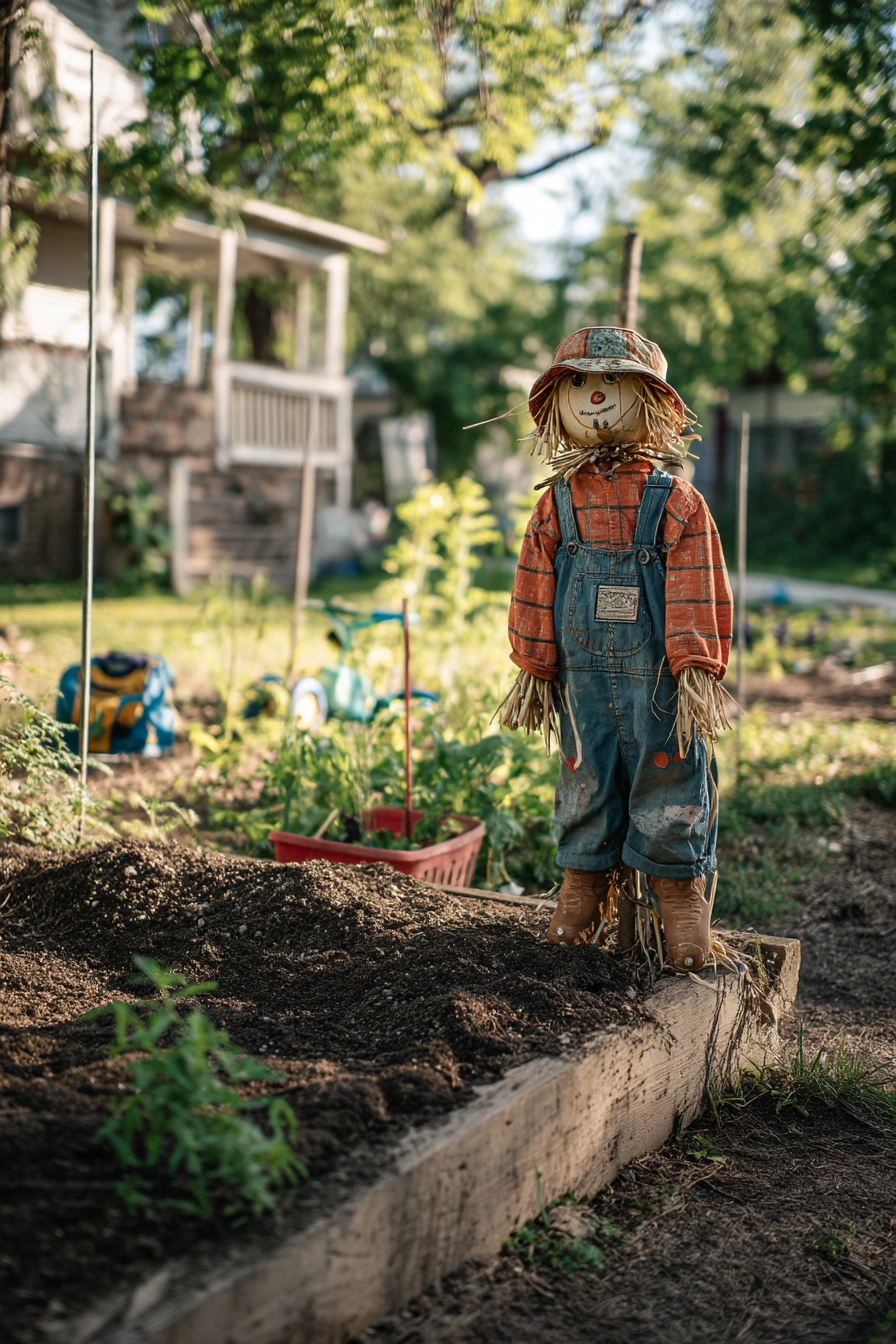
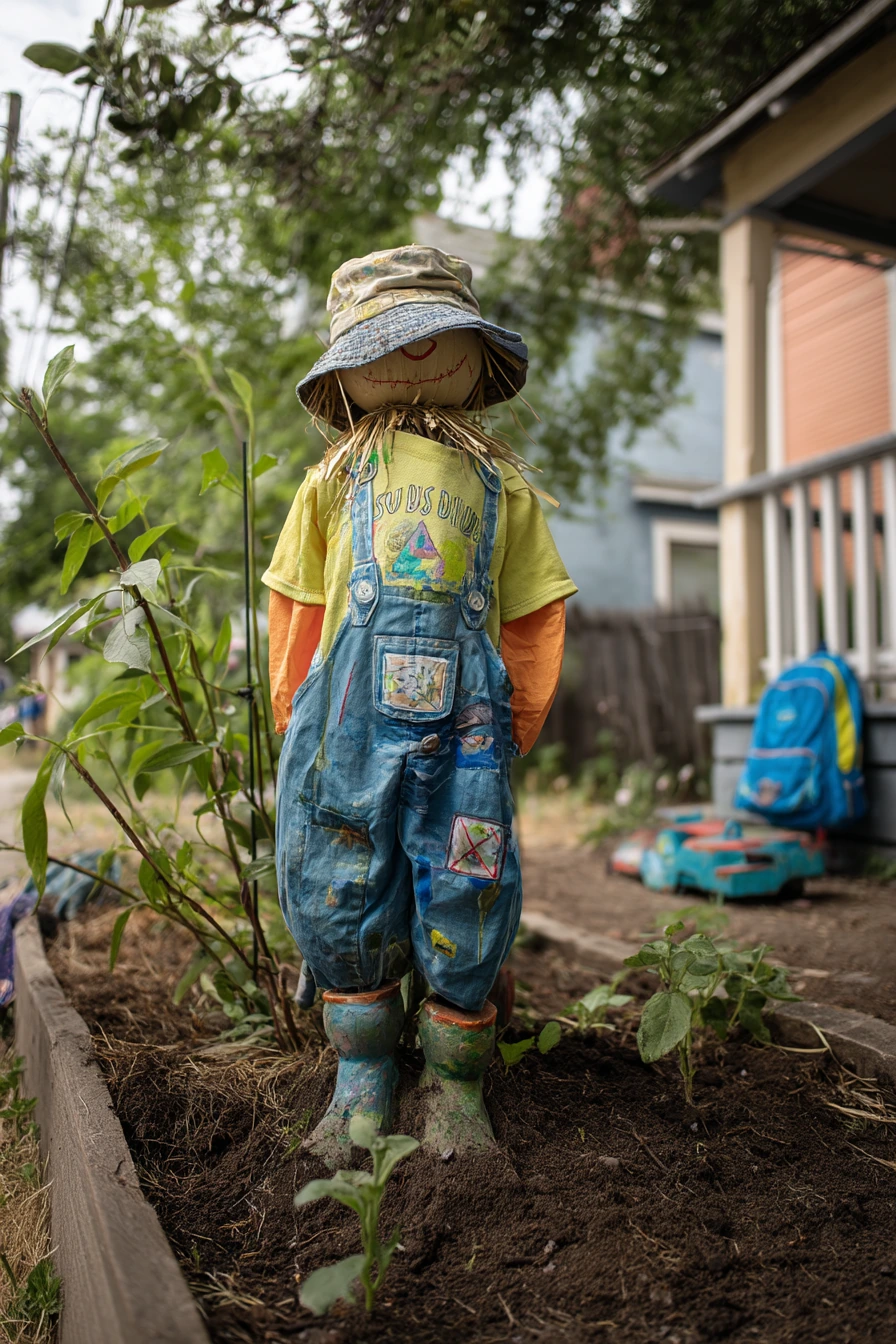
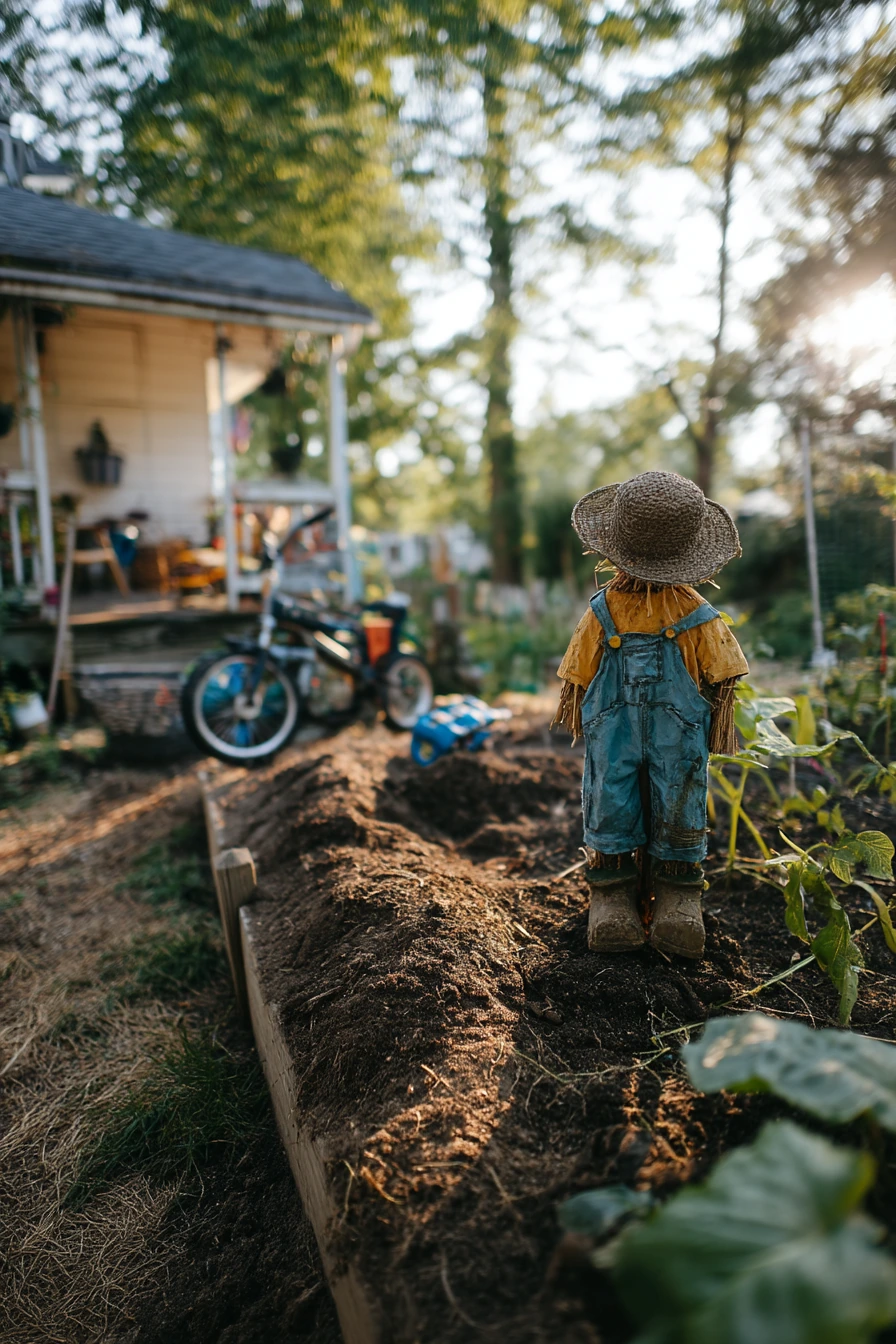
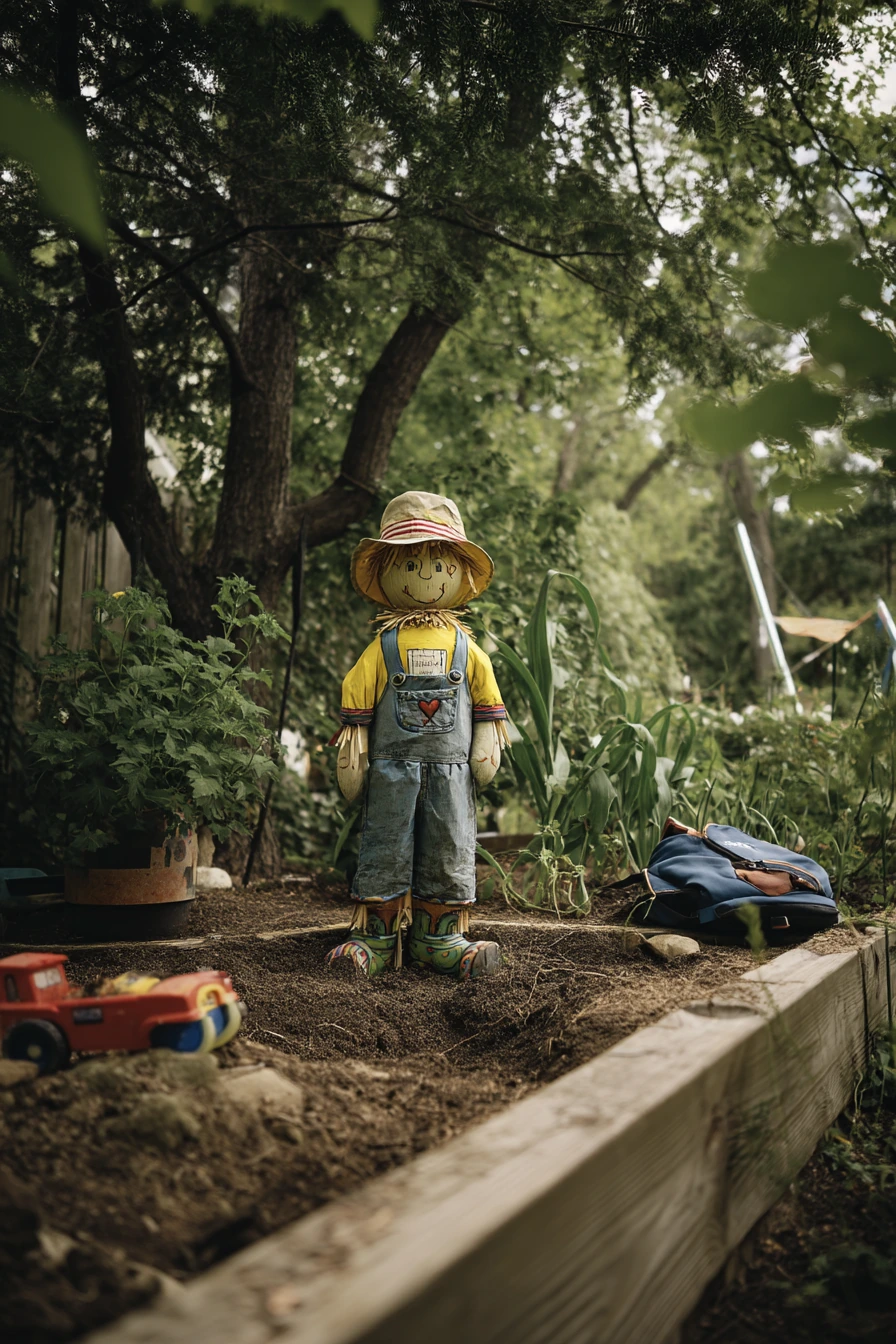
A child’s hand-painted scarecrow is one of the easiest garden scarecrow ideas for a family yard. Bright colors, patched overalls, and a floppy cap made from an old bucket hat make it playful and welcoming. It fits well in a raised bed where kids help grow simple crops. The imperfect paint and mixed materials are the charm, and they make the scarecrow look like it has a story.
Use a short frame so it does not tower over the bed. A broom handle or sturdy stake works, with a small crossbar for arms. Let your child paint the face on fabric or a small sack head. A bright T-shirt and patched overalls help it stand out among green leaves. Place it toward the back of the raised bed so it can be seen from the yard, but do not block sunlight on the plants.
Style it with real family-life details. A crayon box, muddy scooter, toy truck half-buried in soil, and a school backpack on the porch step make the space feel active. Keep these items outside only when in use, and store them after play so the area stays safe and tidy. If you want the scarecrow to work better, add sound and motion. Tie a few small bells to the arms or hang a strip of reflective tape from the cap brim. Move it a bit every week, and let kids “redesign” it as the season changes.
- Let kids paint the face for a personal touch.
- Use overalls because they are easy to stuff and tie.
- Keep it short so it fits raised beds and small spaces.
- Add motion with ribbons, bells, or reflective tape.
- Refresh the look weekly so pests do not get used to it.
Pro Design Tip: Pick one bright color (like red or yellow) and repeat it on the hat, shirt, and one nearby item so the garden looks coordinated.
Budget Considerations: Use outgrown kids’ clothes and an old bucket hat, and stuff the body with newspaper or scrap fabric.
7 7. Minimal Modern Garden Accent
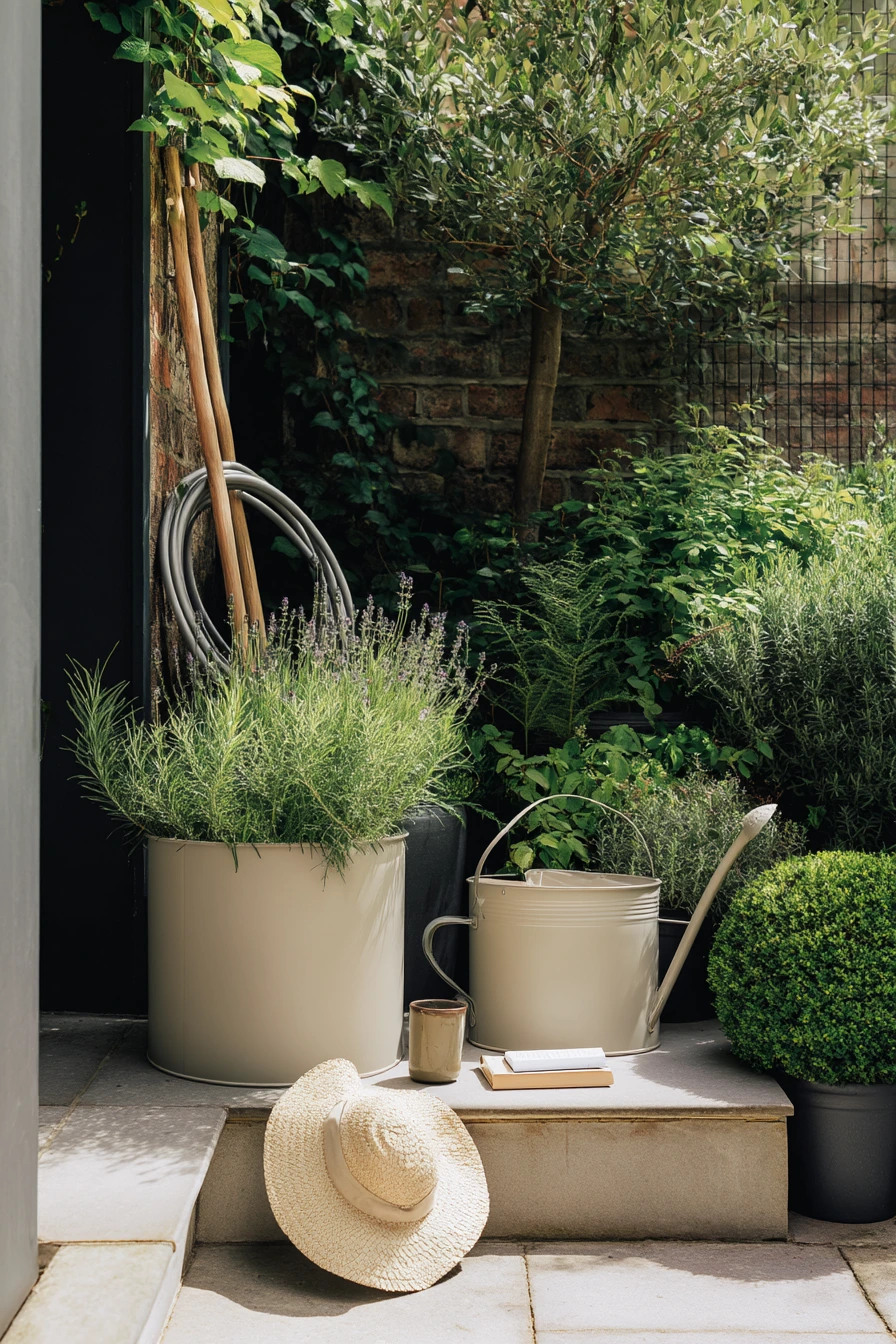
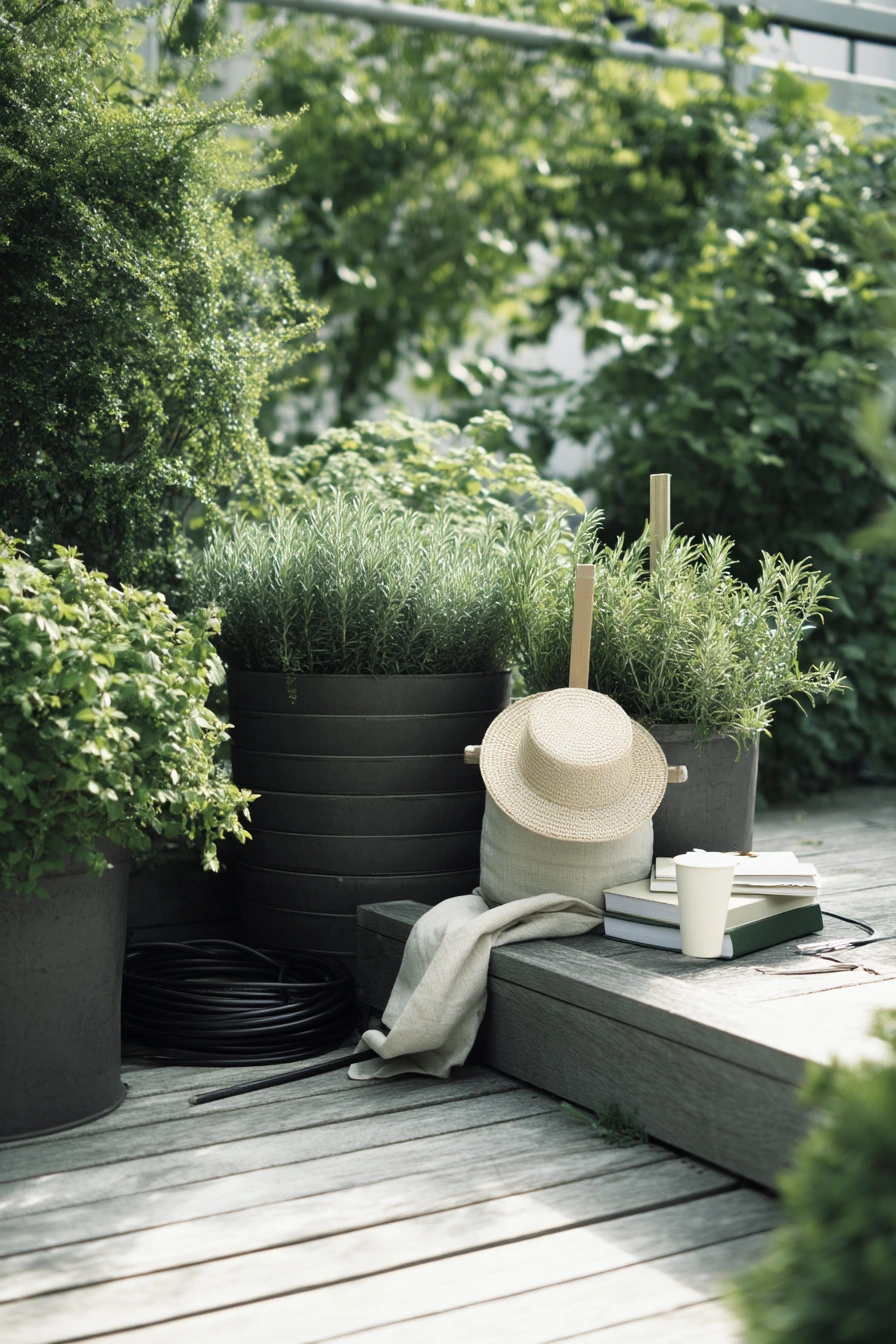
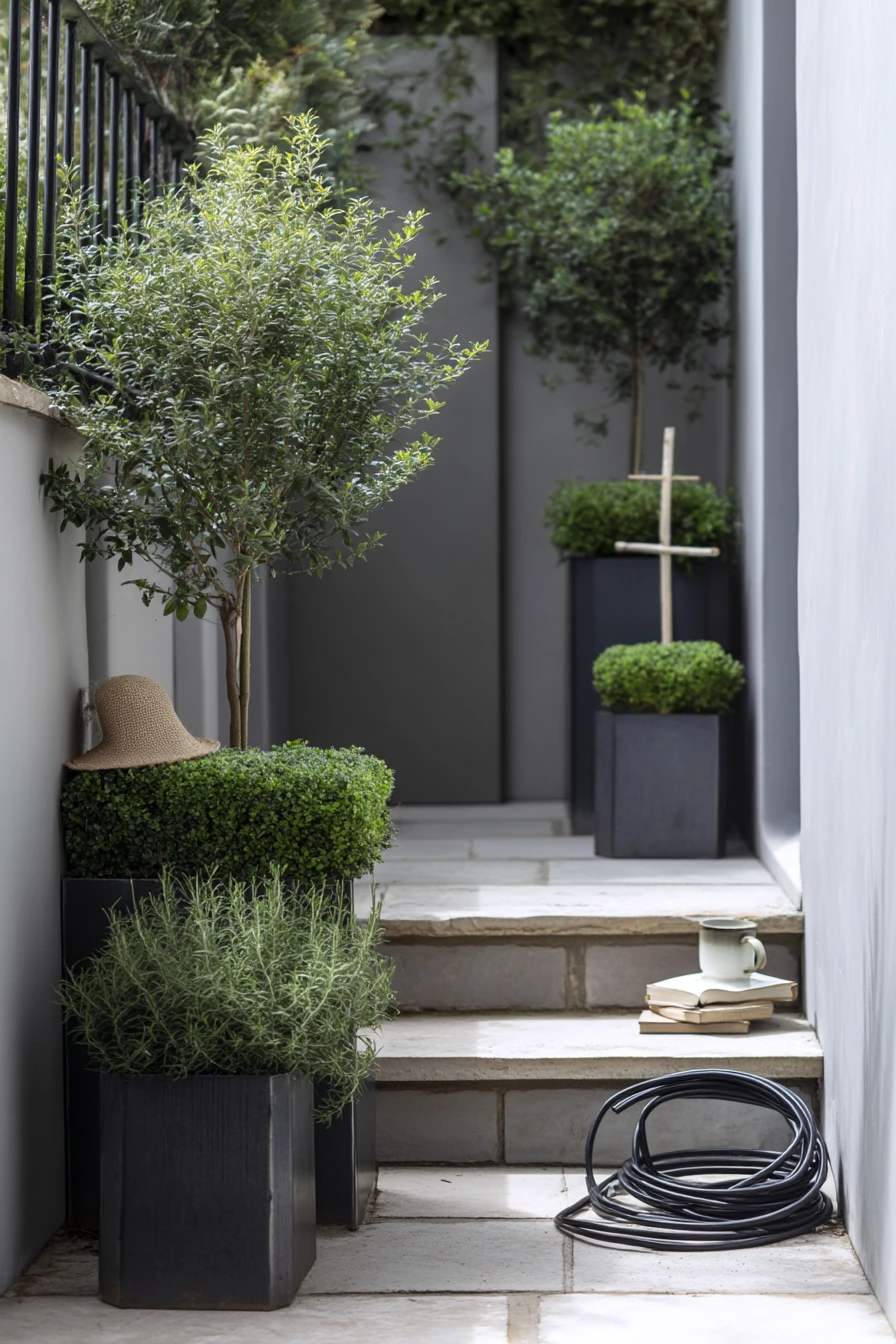
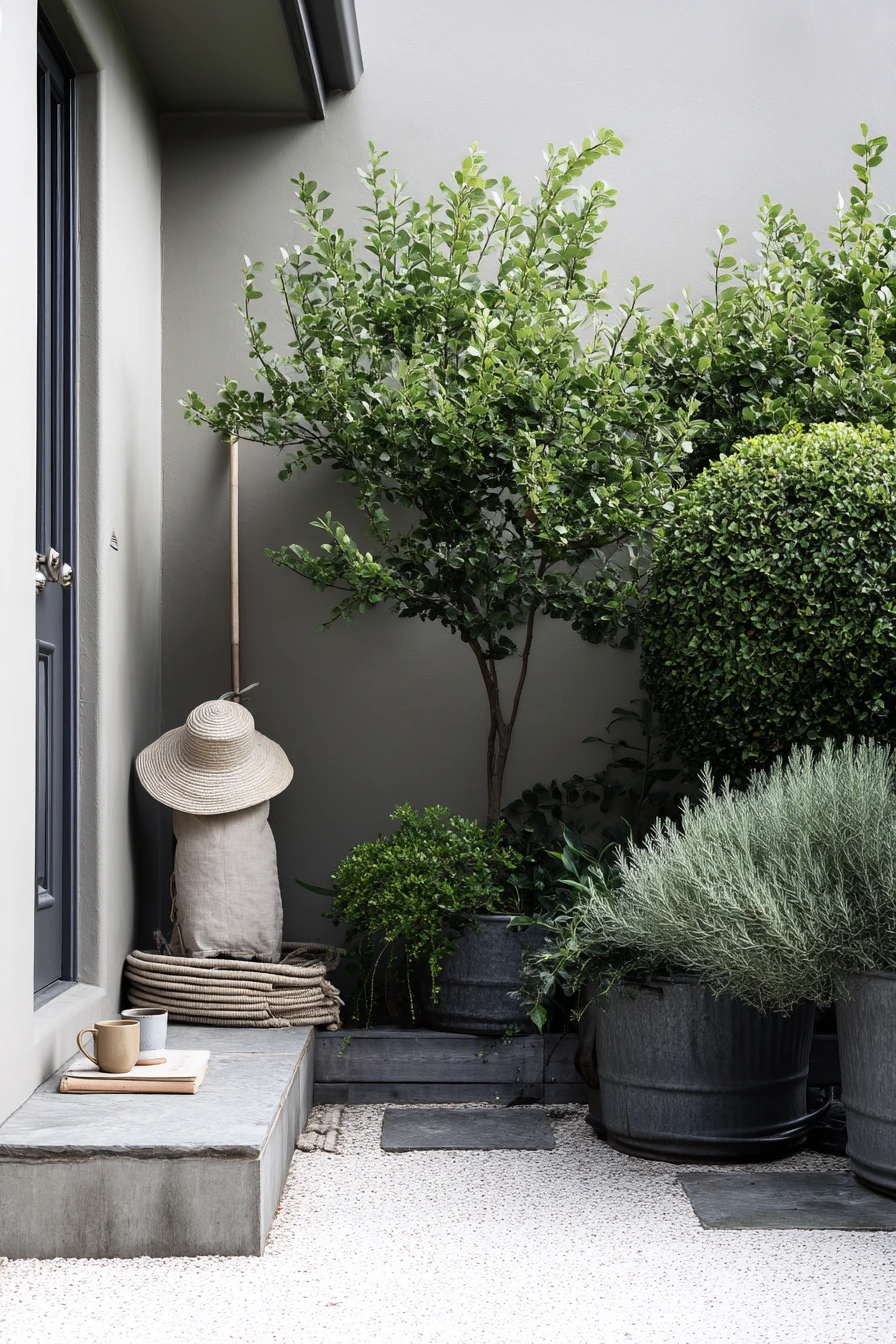
A clean courtyard garden can still use a scarecrow, but the look should be pared-back. Neutral linen, a slim wooden cross, and a simple canvas hat match boxwood, rosemary, and black metal planters. This approach is calm and textural rather than decorative. It helps if you want something functional that does not clash with modern landscaping.
Keep the shape simple. Use a straight stake and a narrow crossbar, then wrap the “body” in linen like a loose shirt. Skip bright patterns and use twine ties that look intentional. A small head in linen or canvas is enough, with minimal face details or none at all. Place it where it is visible from the main path, like near the planters or along the courtyard edge, so it reads as a quiet “human” form.
For styling, focus on neatness with one casual touch. A watering hose coiled neatly sets the tone, while a coffee cup and gardening notebook on the step keeps it real. If you want more effectiveness without extra clutter, add one subtle moving element, like a thin strip of neutral fabric hanging from the wrist. In a modern space, less is more. Clean the surrounding area and keep plant containers aligned so the scarecrow becomes a soft vertical accent instead of a busy centerpiece.
- Use neutral linen to match a modern palette.
- Choose a slim frame so it feels light and simple.
- Set it near rosemary or planters where birds perch.
- Keep the area tidy with aligned pots and a neat hose.
- Add one small moving strip for motion without clutter.
Pro Design Tip: Use the same neutral tone in three places, like linen, canvas hat, and twine, to make the scarecrow look designed for the courtyard.
Budget Considerations: Linen can cost more; use a neutral bedsheet or drop cloth for the same clean look at a lower price.
8 8. Cottage Garden Bird-Deterrent Idea
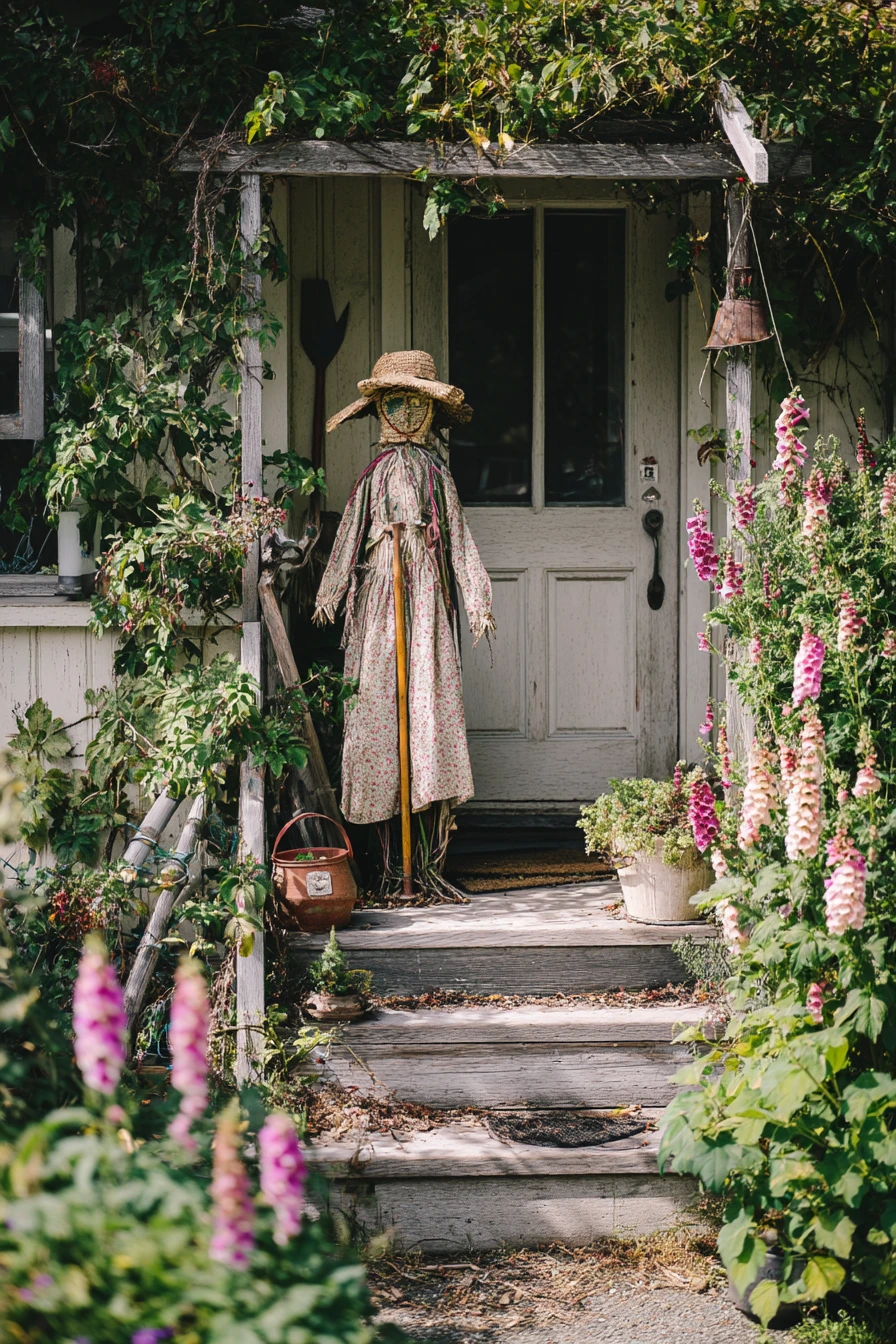
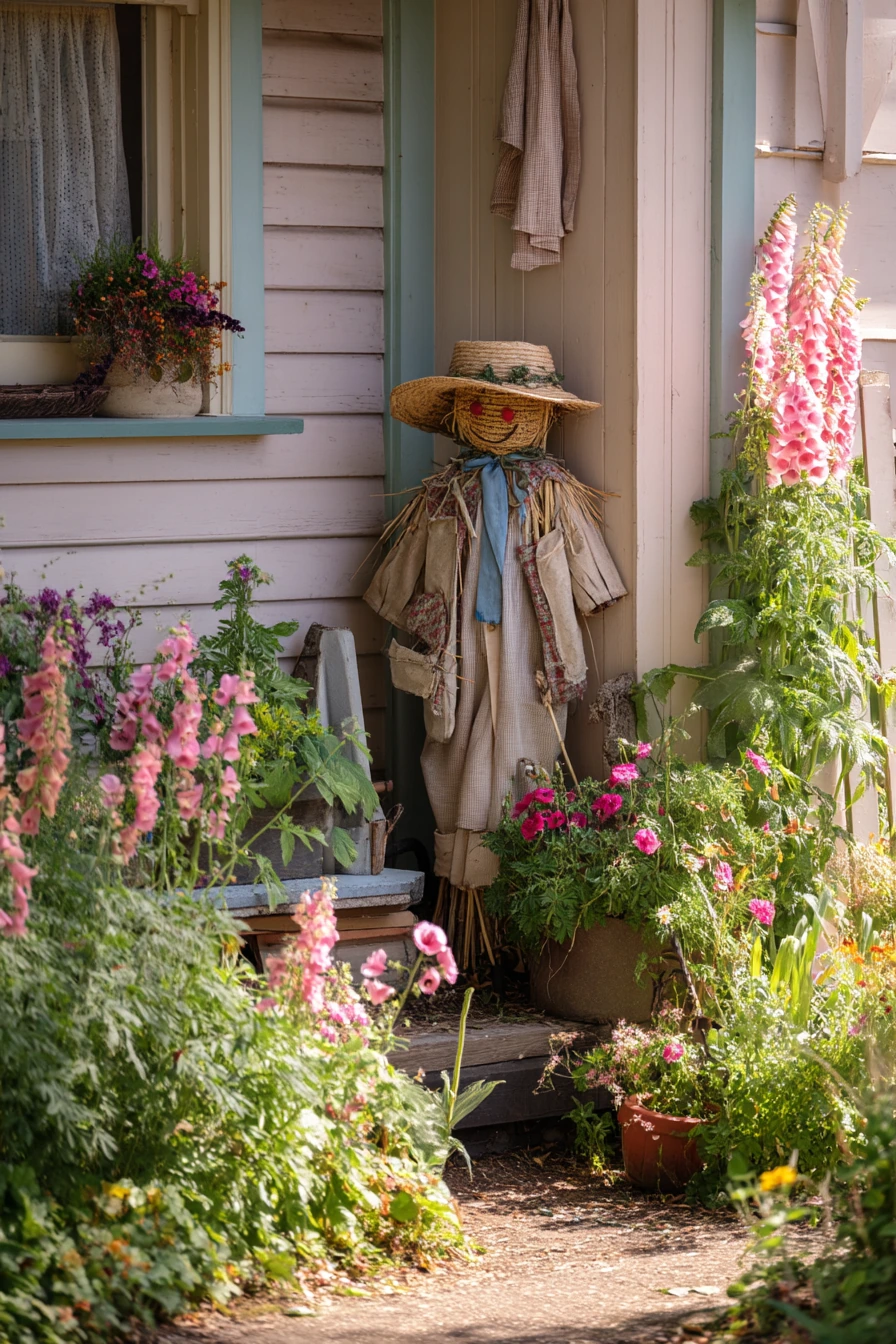
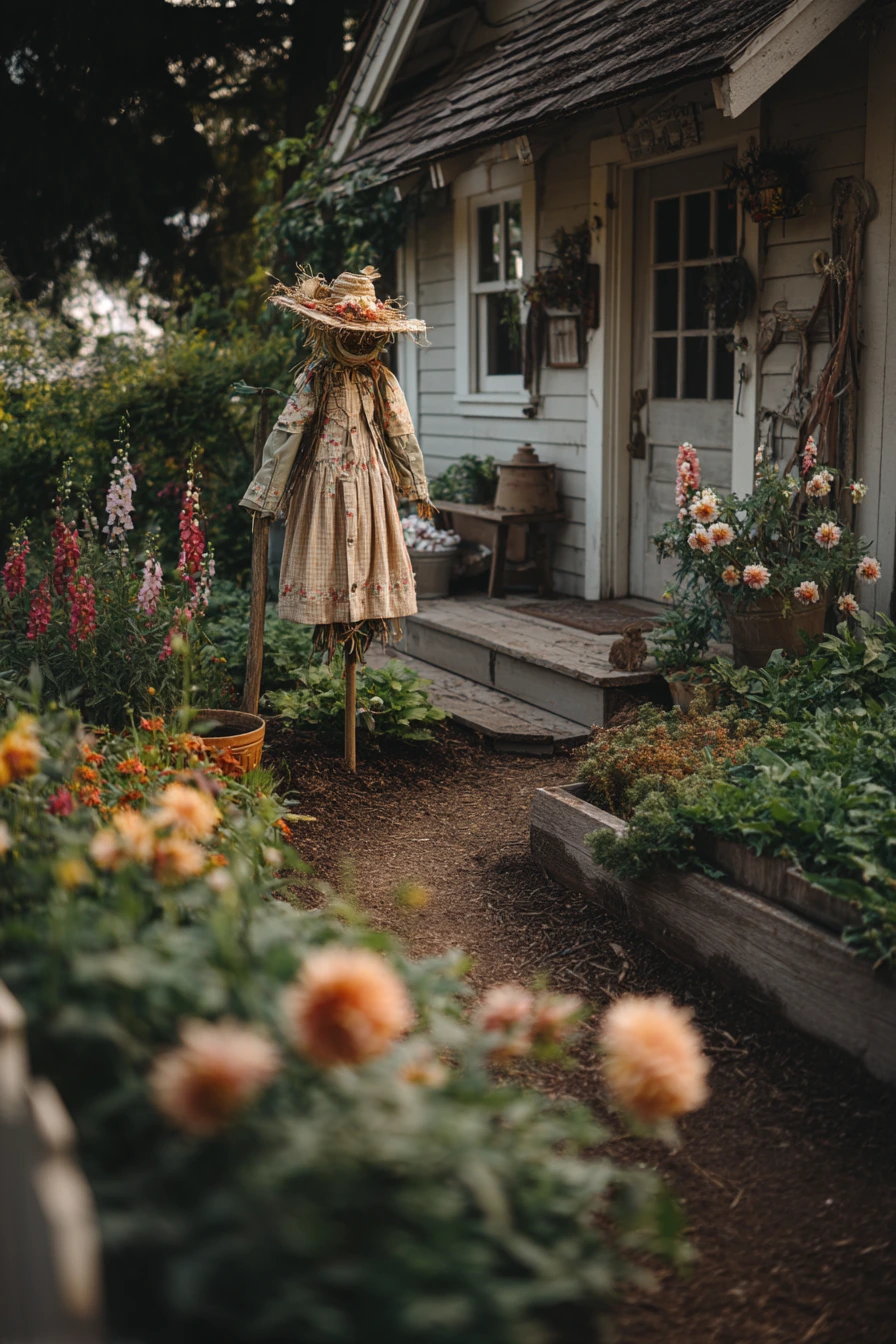
In a blooming cottage garden, a scarecrow can be both bird deterrent and seasonal decor. Place it near snapdragons, dahlias, and climbing peas on a trellis so it guards flowers and edible vines. The best style here is whimsical and layered, using floral scraps, a straw brim, and soft textures that fit the garden’s relaxed look.
Build a sturdy frame first, since flowers and vines can hide the base. Dress it in mixed fabrics, but keep a main color family, like soft reds and greens, so it does not look random. A straw hat brim gives instant garden character. For the face, burlap or a simple cloth head works, with stitched or painted features that stay friendly. Place it a step in front of the trellis so it stands out, and keep it close enough to the peas that birds notice it when they land.
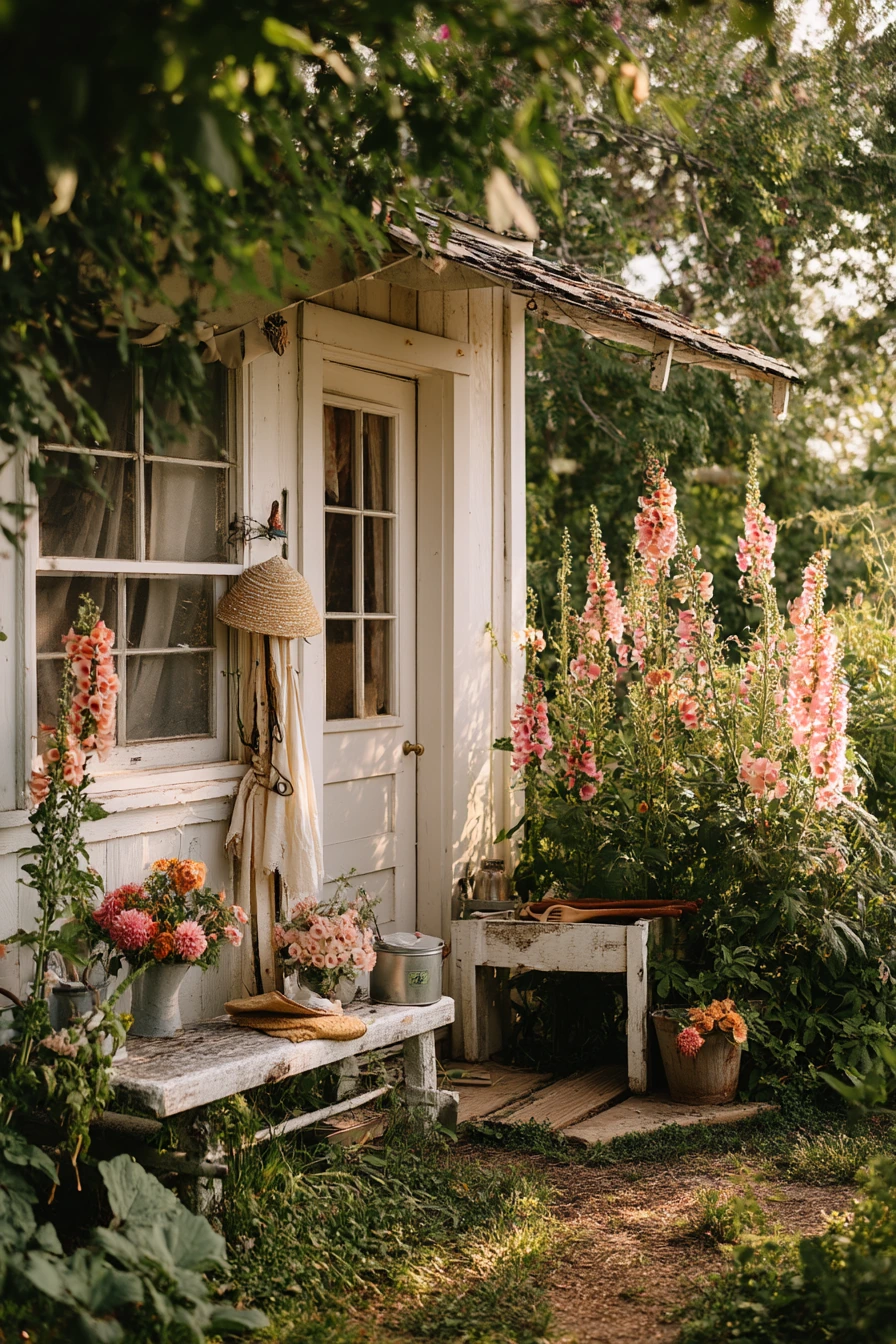
Style the background with real tools. A pair of secateurs on the bench, a tea towel over the back door handle, and a watering can with dirt streaks feel authentic. For “how to style it,” add height behind the scarecrow with the trellis, then fill the base with lower blooms like marigolds. If you want better results, swap fabric layers during the season. Even small changes, like a new scarf or different hat band, can keep birds from getting comfortable.
- Place the scarecrow near a trellis where birds land and look around.
- Use floral scraps, but keep colors in the same family.
- Add a straw brim for a classic cottage garden touch.
- Include one real tool detail, like secateurs, for lived-in style.
- Change one accessory often to keep it effective.
Pro Design Tip: Layer textures the way you layer plants, with a rough burlap face, soft fabric clothing, and straw accents, so it fits the cottage garden mood.
Budget Considerations: Save fabric from old dresses or sheets, and use pruned dried stems for stuffing instead of buying craft materials.
9 9. Rainy-Weather Porch Scarecrow Setup
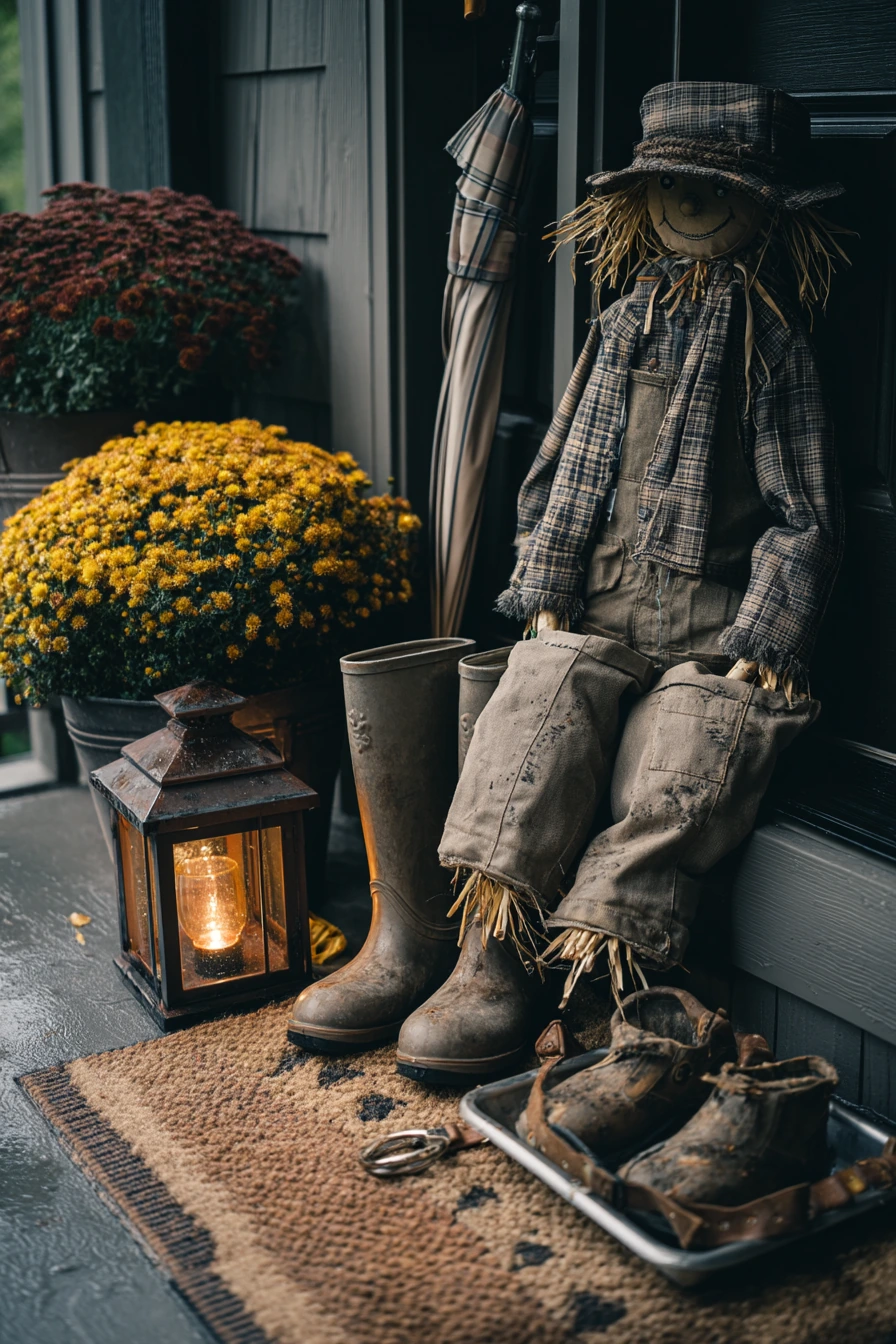
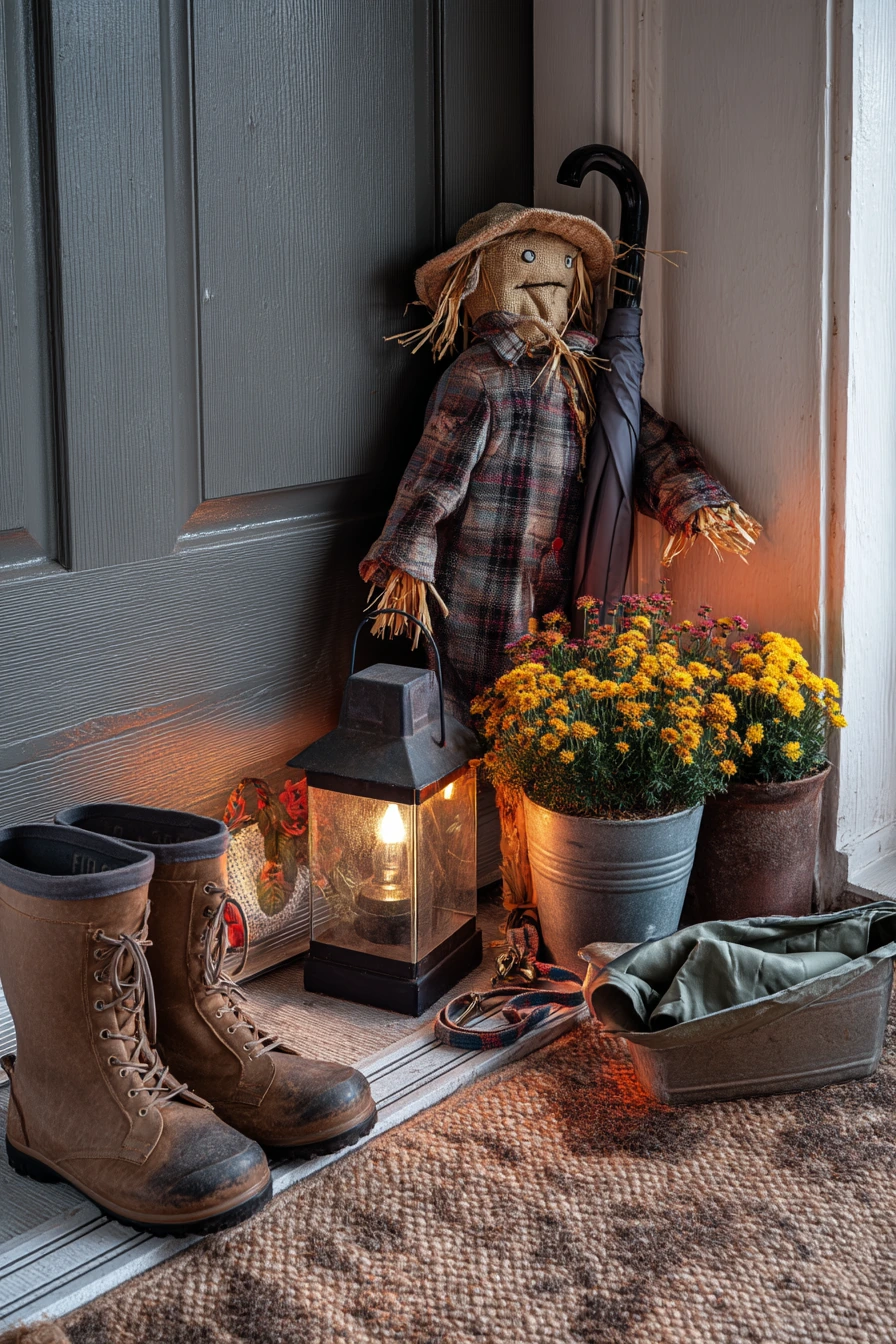
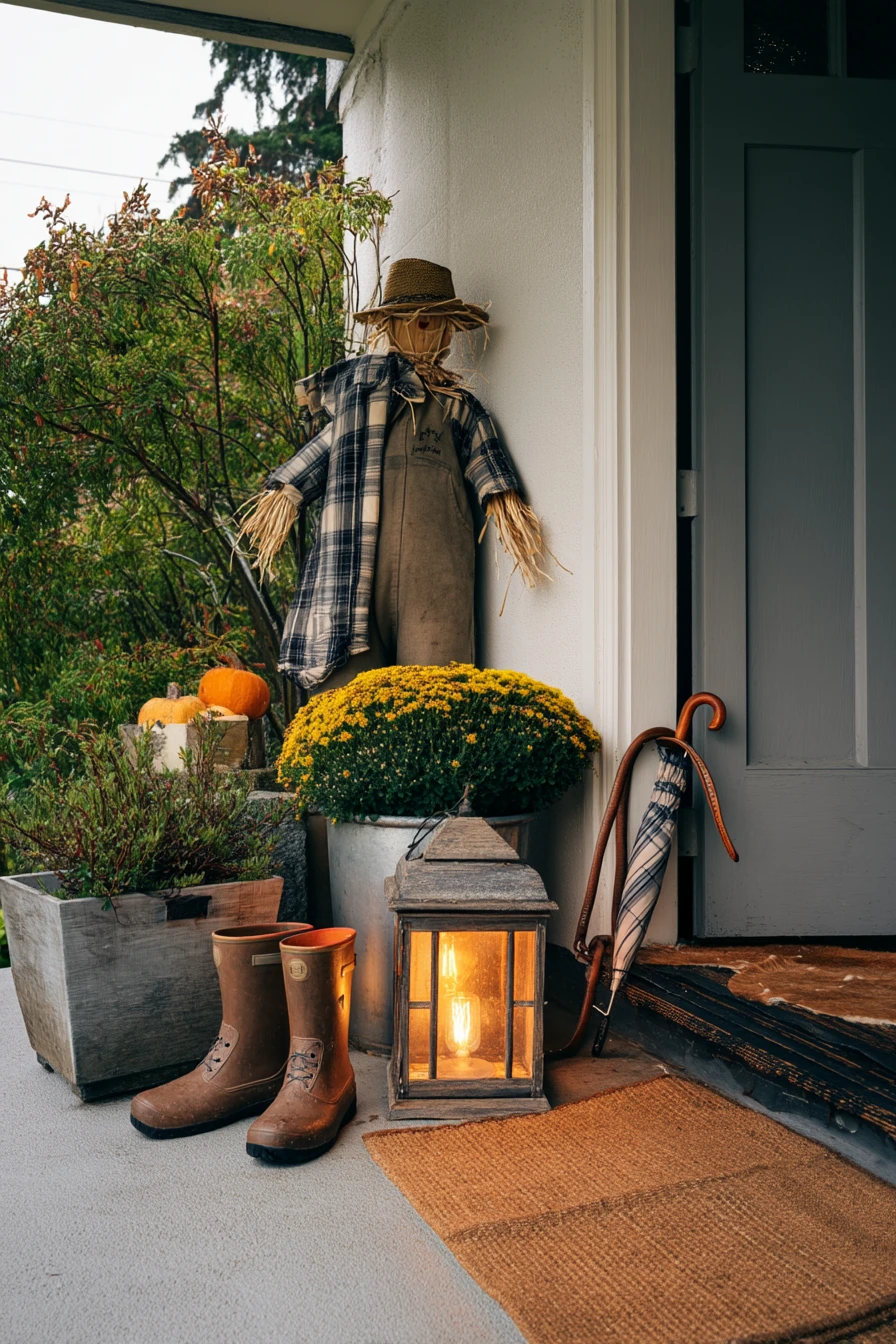
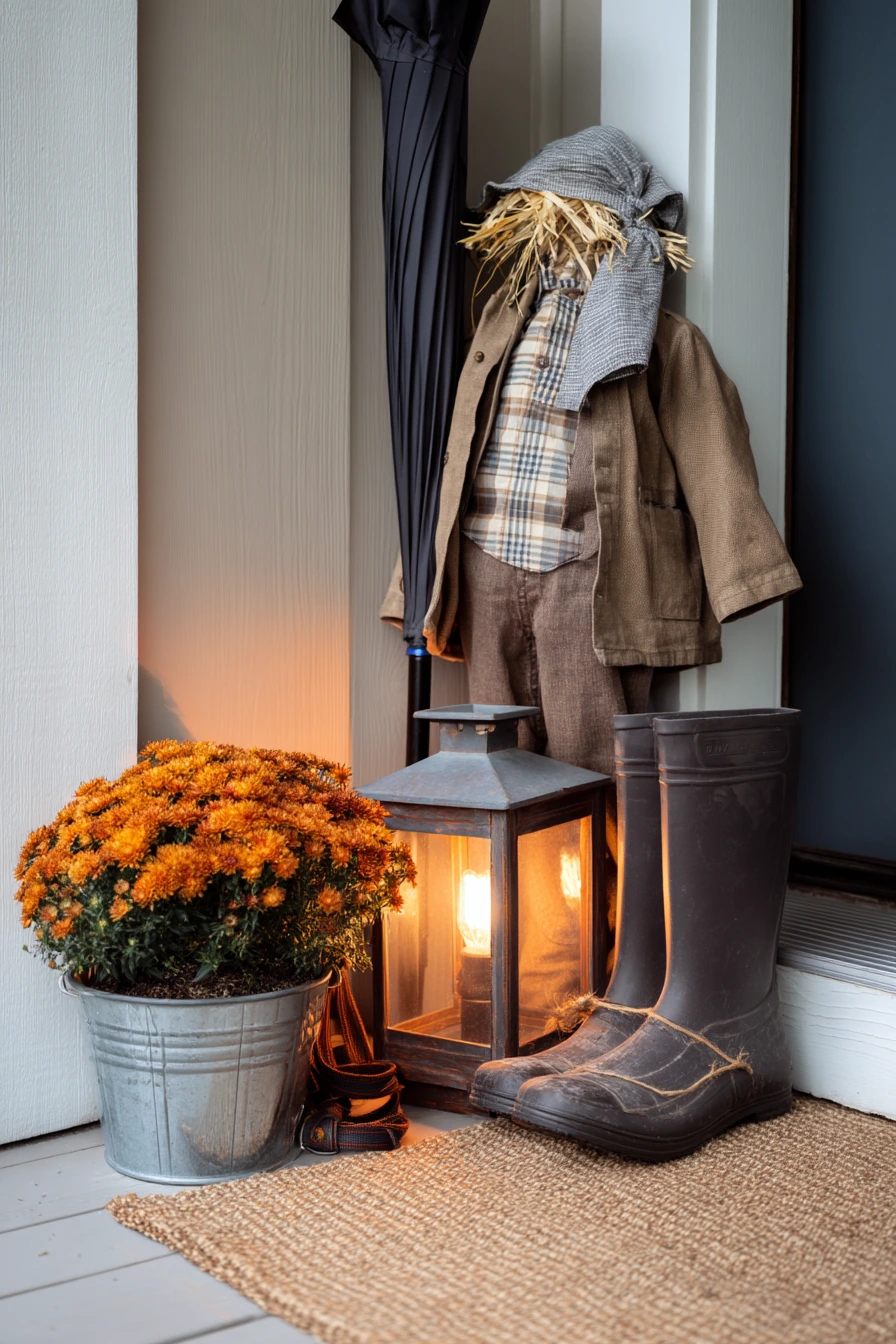
A drizzly-day porch setup is a smart place for a scarecrow, especially if you keep potted mums or small containers near the door. A scarecrow that leans beside a boot tray and lantern looks cozy and practical. Waxed canvas, faded plaid, and straw peeking from cuff seams fit wet weather better than delicate fabric, and the rugged look still feels homespun.
Since this is a porch, you do not need a tall stake in soil. Build the scarecrow around a simple pole and let it rest in a heavy planter or lean it against the wall. Use twine or zip ties to keep clothing tight so it does not flap in wind. Keep the head covered with a hat or hood so it sheds rain. Place it where it can be seen from the steps and walkway. The goal is to make the porch feel occupied, which helps deter curious animals.
Style it with true wet-day details: a folded umbrella, wet doormat fibers, and a dog leash by the door. Add a lantern with a warm bulb for a soft glow in gray daylight. For “how to style it,” cluster mums in two or three pots, then tuck the scarecrow just to the side so it frames the display instead of blocking the entry. If you use straw, keep it inside sleeves and cuffs so it does not get soaked. Check it after storms and dry the fabric when needed.
- Use waxed canvas or a water-resistant jacket for rainy weather.
- Lean the scarecrow in a heavy pot or against a wall for stability.
- Cluster mums near the door for color that holds up in fall.
- Add a lantern for warm light on gray days.
- Keep straw tucked inside cuffs so it stays neat and dry.
Pro Design Tip: Use warm light near the base, like a lantern, so the porch feels welcoming and the scarecrow reads as part of the entry styling.
Budget Considerations: Repurpose an old rain jacket and use a thrifted lantern; battery candles can replace wired lighting.
10 10. Upcycled Backyard Scarecrow Project
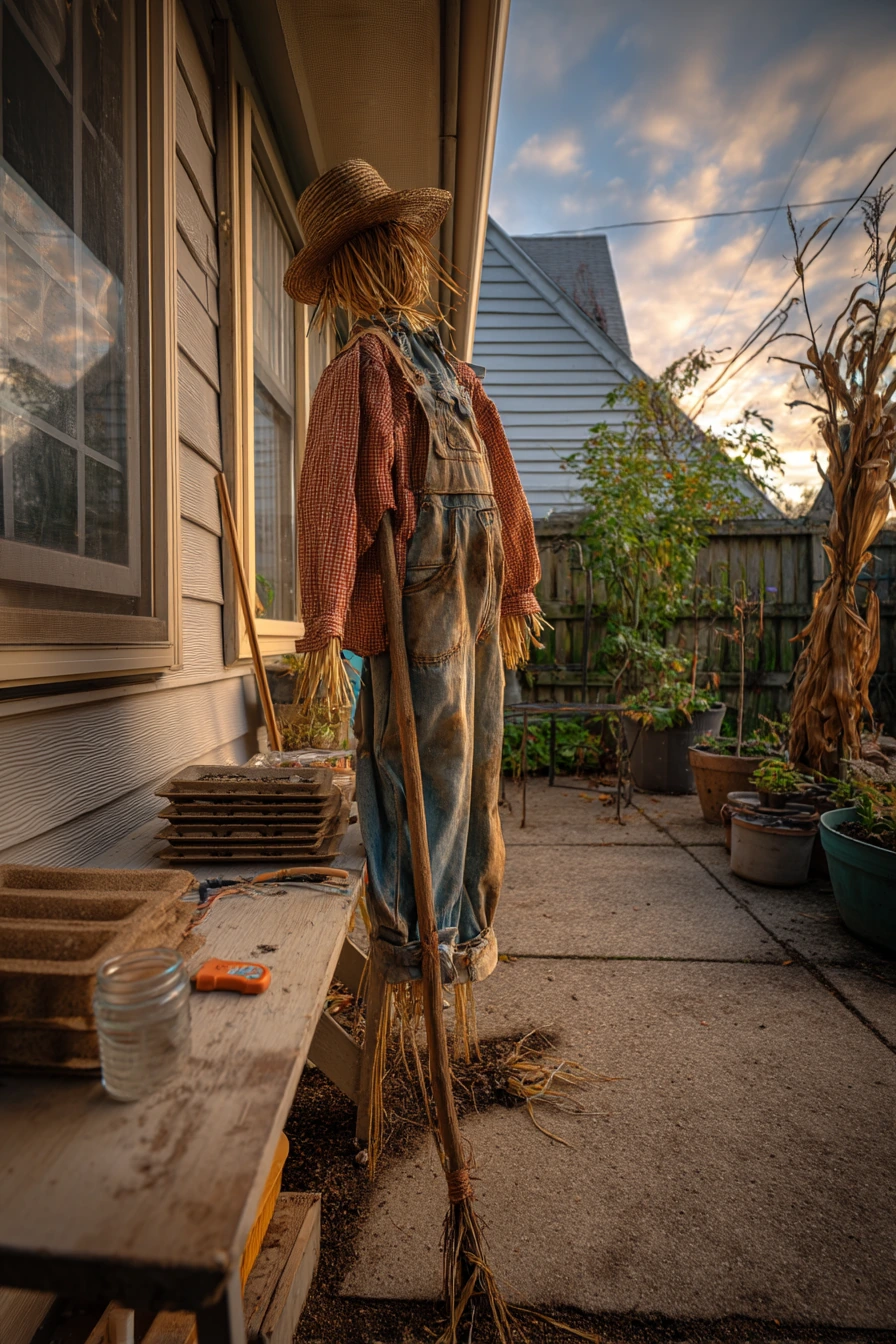
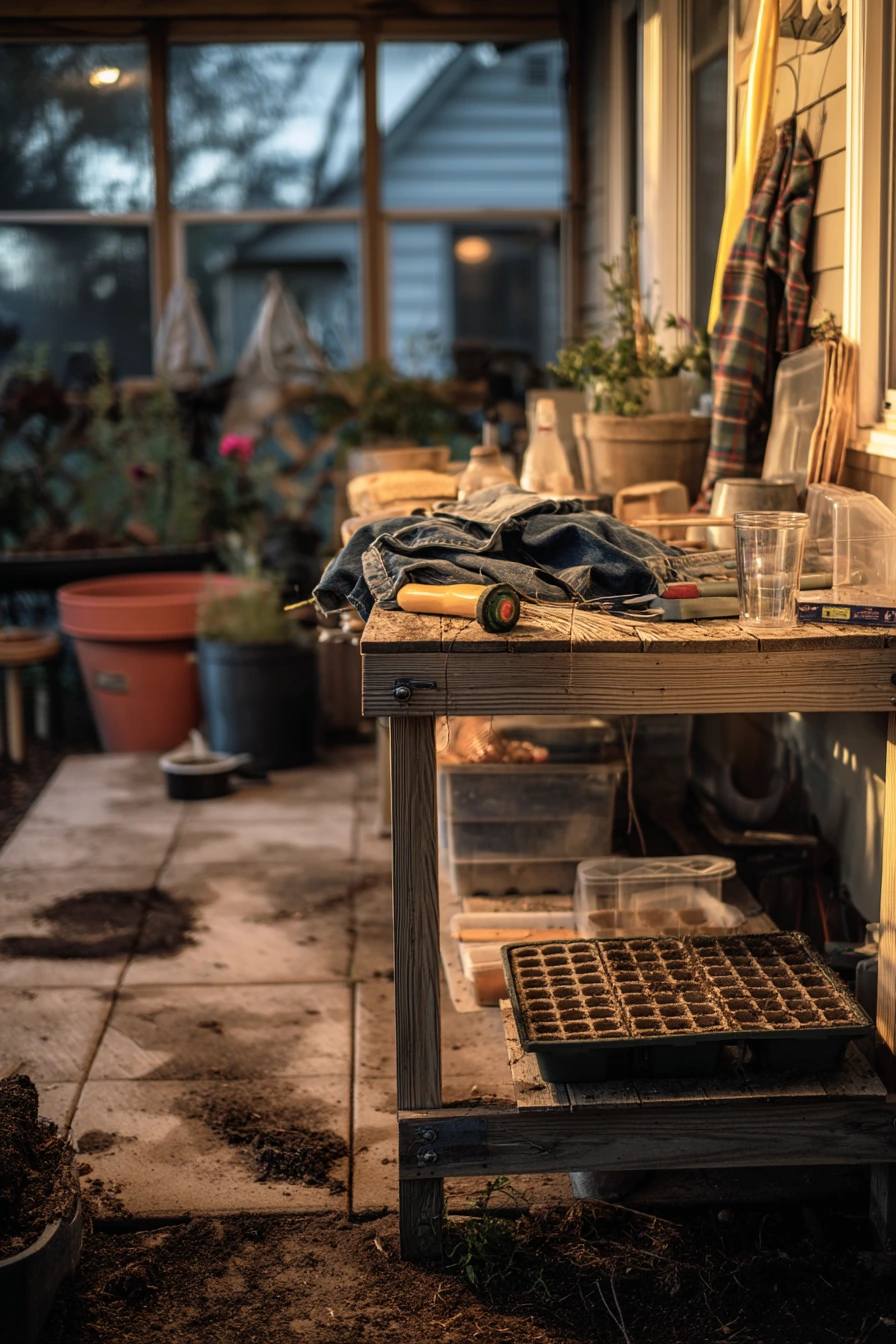
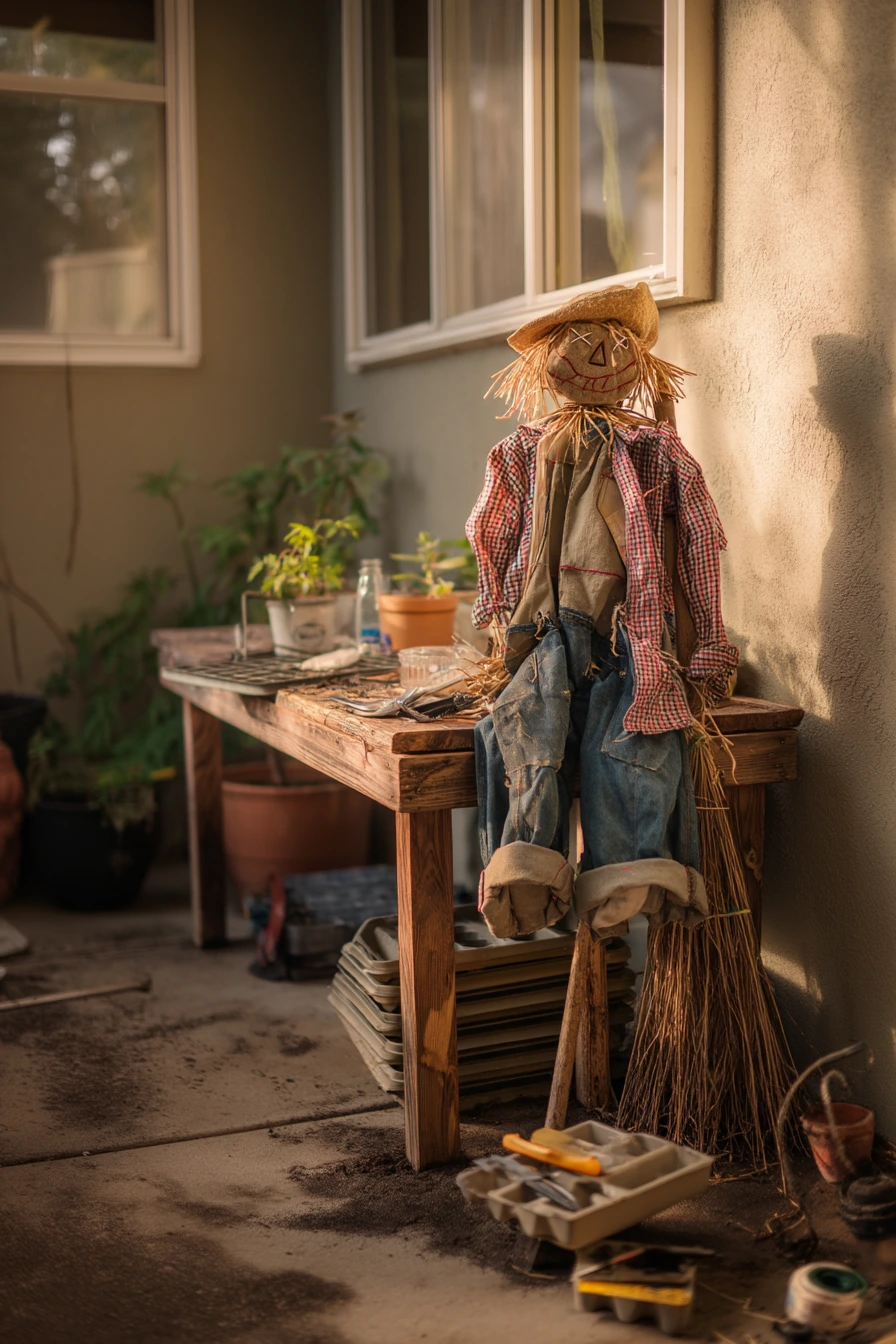
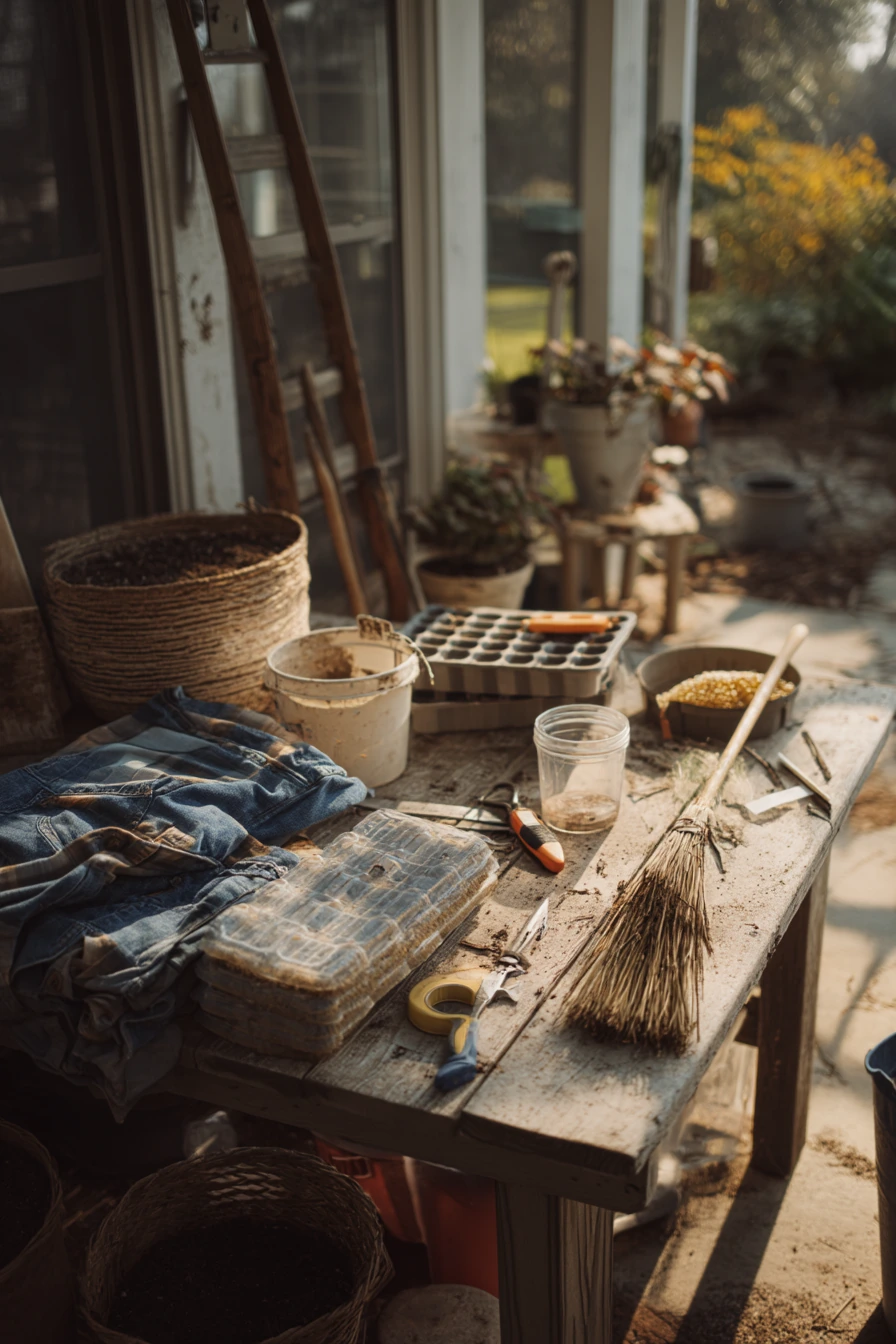
This is the most realistic of all garden scarecrow ideas: an upcycled scarecrow being assembled beside a potting table. Old jeans, a flannel shirt, twine, and a corn broom handle are enough to build a sturdy figure. The beauty here is the “in progress” look, with seed trays stacked nearby, a tape measure on the table, and muddy footprints across the patio.
Start with structure. Use the broom handle as the main post, then screw or tie on a crossbar. Slide on the jeans first and cinch them at the waist with twine so they do not sag. Add the flannel shirt and stuff the legs and sleeves with straw, leaves, or crumpled kraft paper. Make a head from burlap or an old pillowcase, and tie it tight at the neck. If you want it to last longer outdoors, wrap joints with extra twine and add a dab of outdoor glue on knots.
For styling and function, let the workspace look lived-in but not chaotic. A half-full water glass, twine, and a few tools can stay on the table, but group them in one corner. Keep seed trays stacked and off wet ground. Once the scarecrow is finished, place it near the area you are actively planting, then move it as you rotate crops. It helps to add movement, like a loose strip of fabric on one arm, and to adjust the pose now and then. A scarecrow that changes is more convincing.
- Use a corn broom handle or strong pole for the main post.
- Tie jeans tightly at the waist and ankles to hold stuffing.
- Wrap joints with twine so the frame stays firm.
- Keep the potting table items grouped so the scene looks tidy.
- Move the finished scarecrow often to keep it useful.
Pro Design Tip: Before you set it in the garden, take one minute to step back and check the silhouette, since a clear human shape works better than lots of small details.
Budget Considerations: This build is almost free if you use worn jeans and shirts; ask neighbors for spare twine, stakes, or old hats if you do not have them.
Garden scarecrow ideas work best when they match your space and look like real life. A simple frame, believable clothes, and a few lived-in details can do more than fancy decorations.
Pick one style from this list, build it with what you have, and add small changes over time. Moving the scarecrow and swapping one accessory often helps keep birds and pests from getting used to it.
FAQ
Do scarecrows really keep birds away? They can help for short periods, especially when you move them and add motion like ribbons or reflective tape.
Where should I place a scarecrow in the garden? Put it near the crops getting hit, at the edge of the bed where it is easy to see and easy to move.
How do I keep a scarecrow from falling over? Use a strong stake, push it deep into soil, and add rocks or a heavy pot base for weight in windy spots.
What can I use instead of straw for stuffing? Use crumpled paper bags, old rags, plastic grocery bags inside a liner, or dried garden trimmings.
How often should I move my scarecrow? Every few days to once a week is a good rhythm, especially during peak tomato and seed season.
How do I make a scarecrow look cute, not scary? Use a soft face, simple eyes, and warm fabrics like plaid, denim, and burlap, and avoid sharp teeth or dark paint.
Can I use a scarecrow on a porch or patio? Yes, lean it in a heavy planter or mount it in a pot, and keep fabrics tidy so it fits the smaller space.