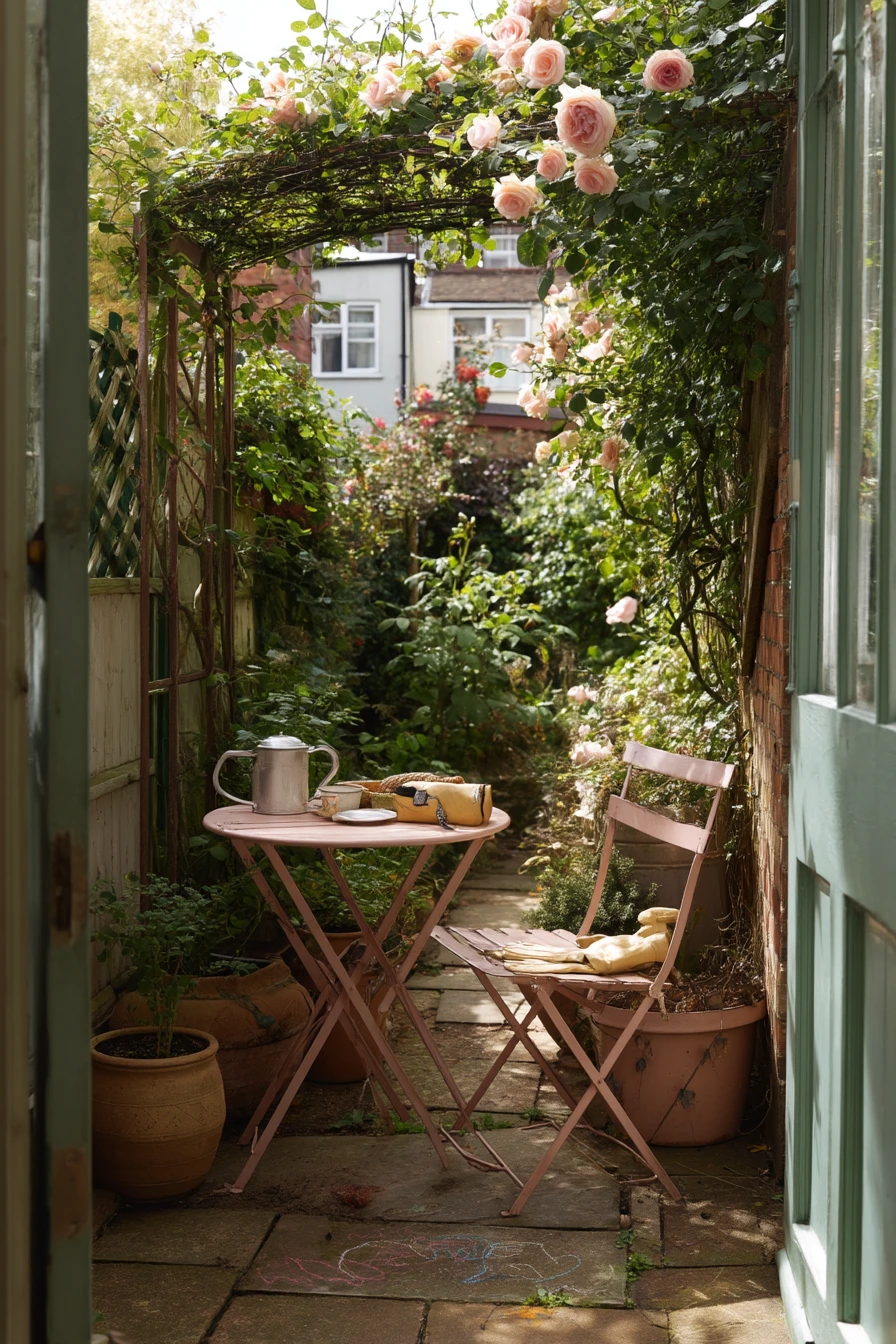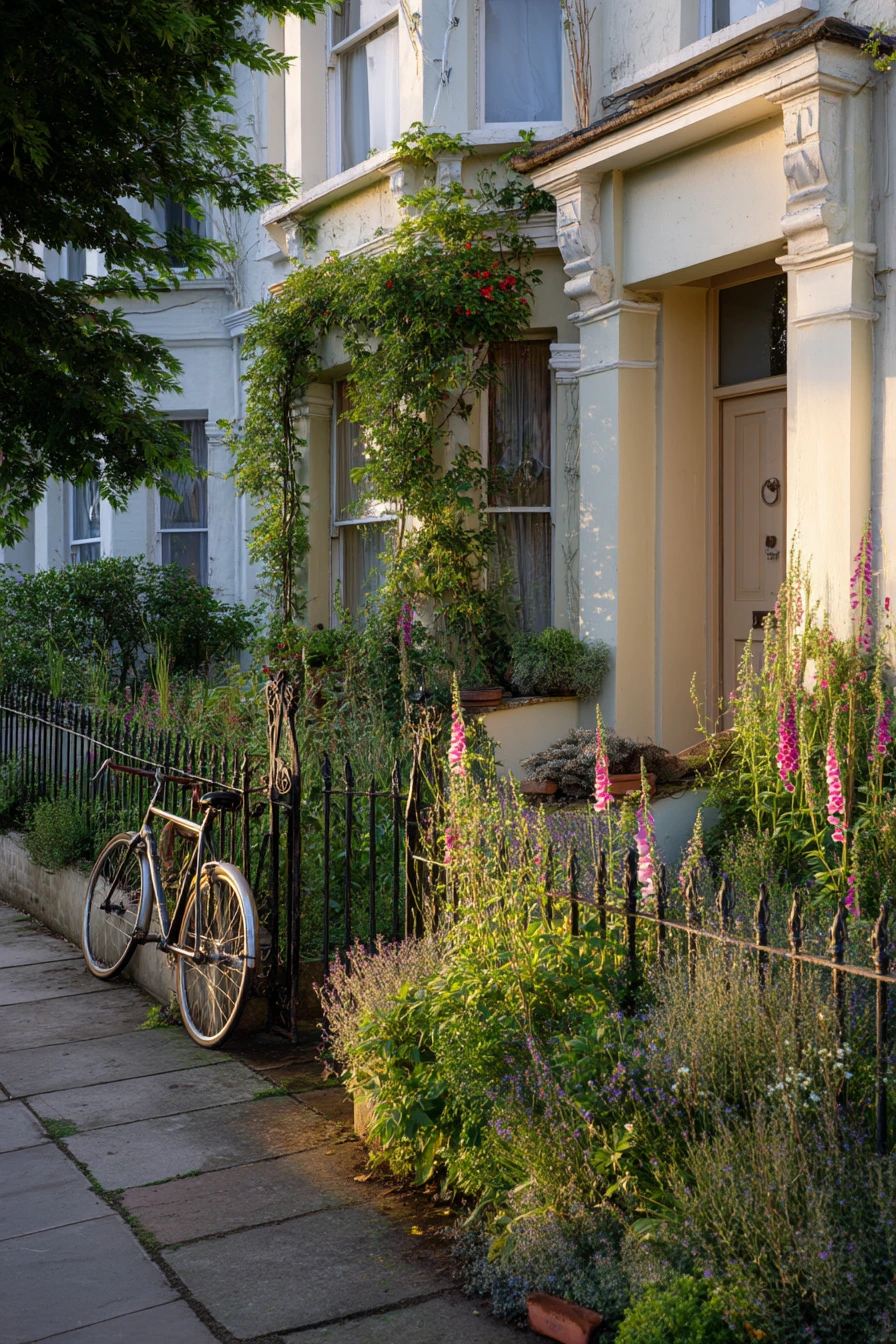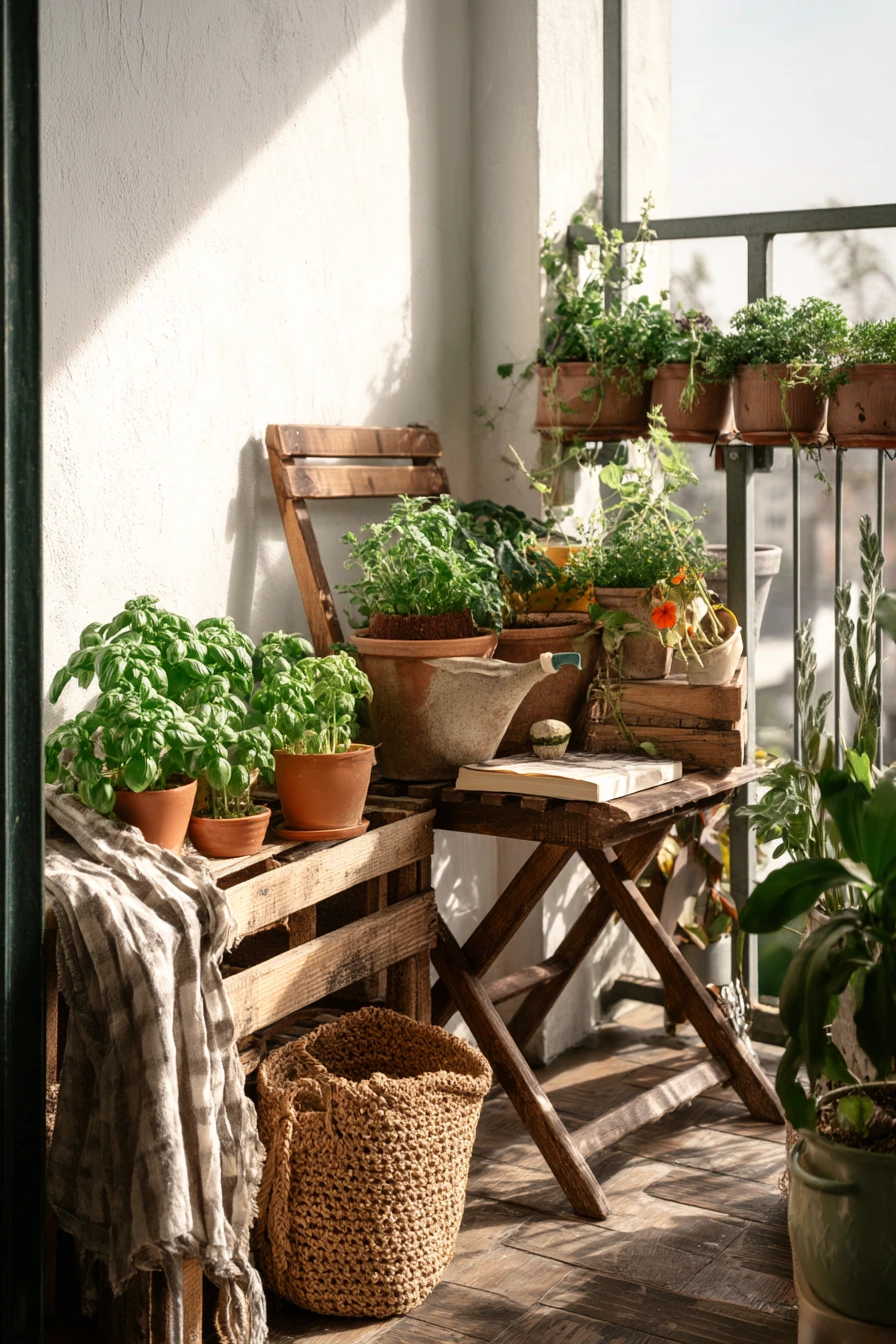

Good garden shade ideas help you use your outdoor space longer, even when the sun is strong. Shade also keeps kids safer, cools seating areas, and protects plants like lettuce and seedlings.
This post shares real-life ways to add shade in a backyard, city balcony, courtyard, deck, patio, pool area, play zone, and front porch. You will see options like a timber pergola, striped shade sail, sheer outdoor curtains, market umbrella, retractable awning, and DIY shade cloth frames.
Each section includes simple styling ideas, set-up tips, a pro design tip, and a budget note. Use these to plan a setup that fits your home, whether you own or rent.
Save the ideas you like, then pick one small change to start with, such as adding an umbrella, hanging curtains, or placing tall potted plants for extra cover.
1 Pergola Shade for a Busy Family Patio
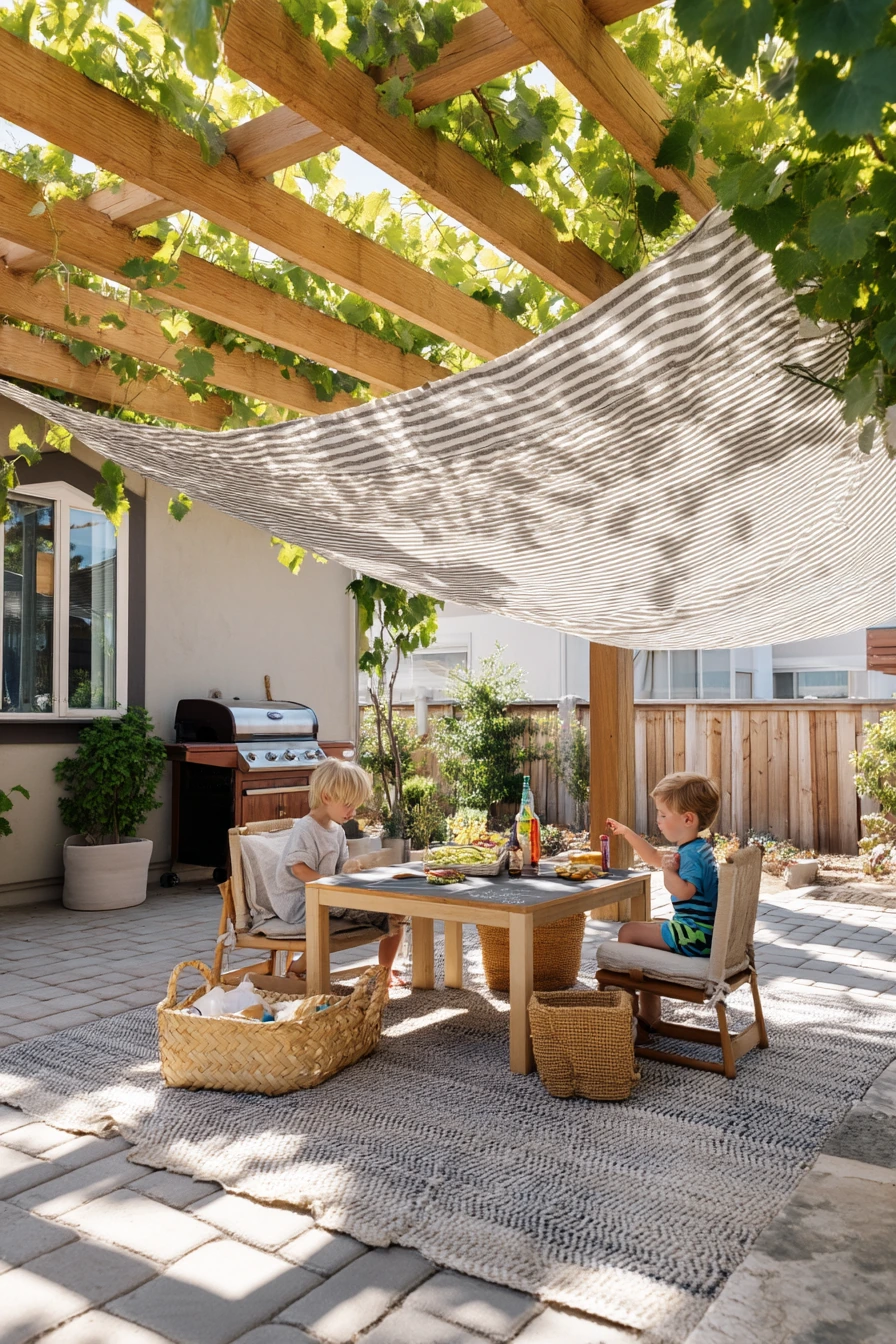
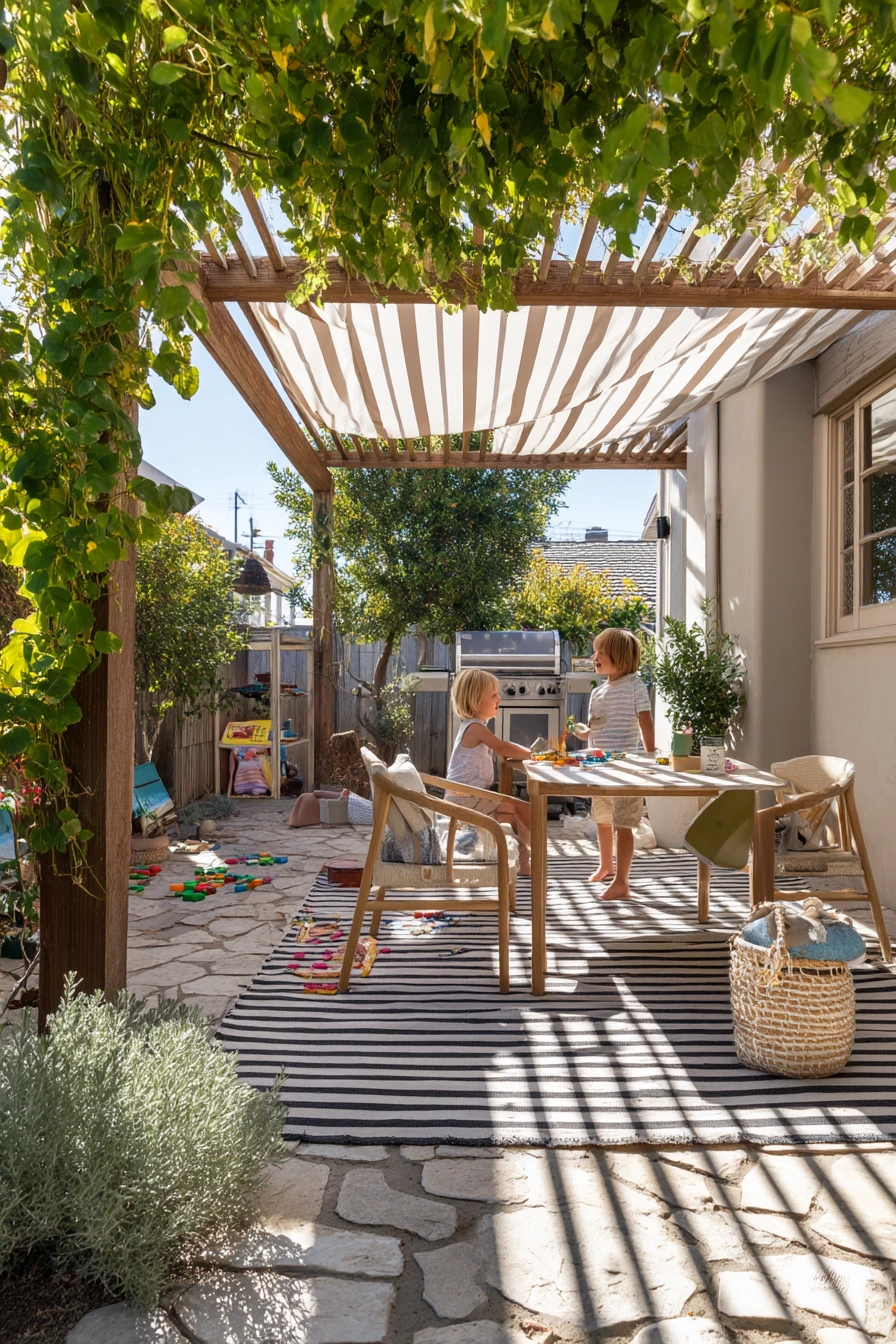
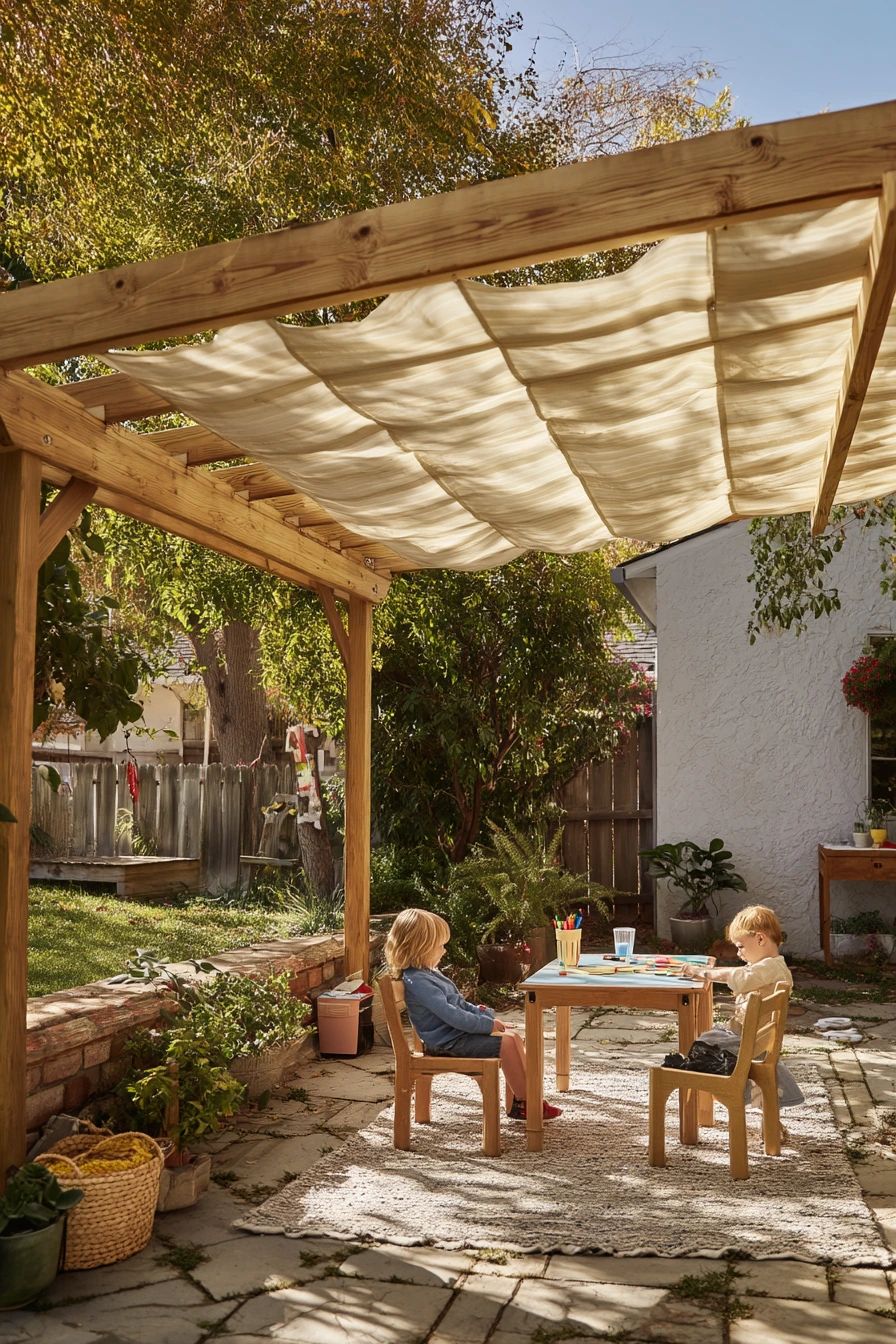
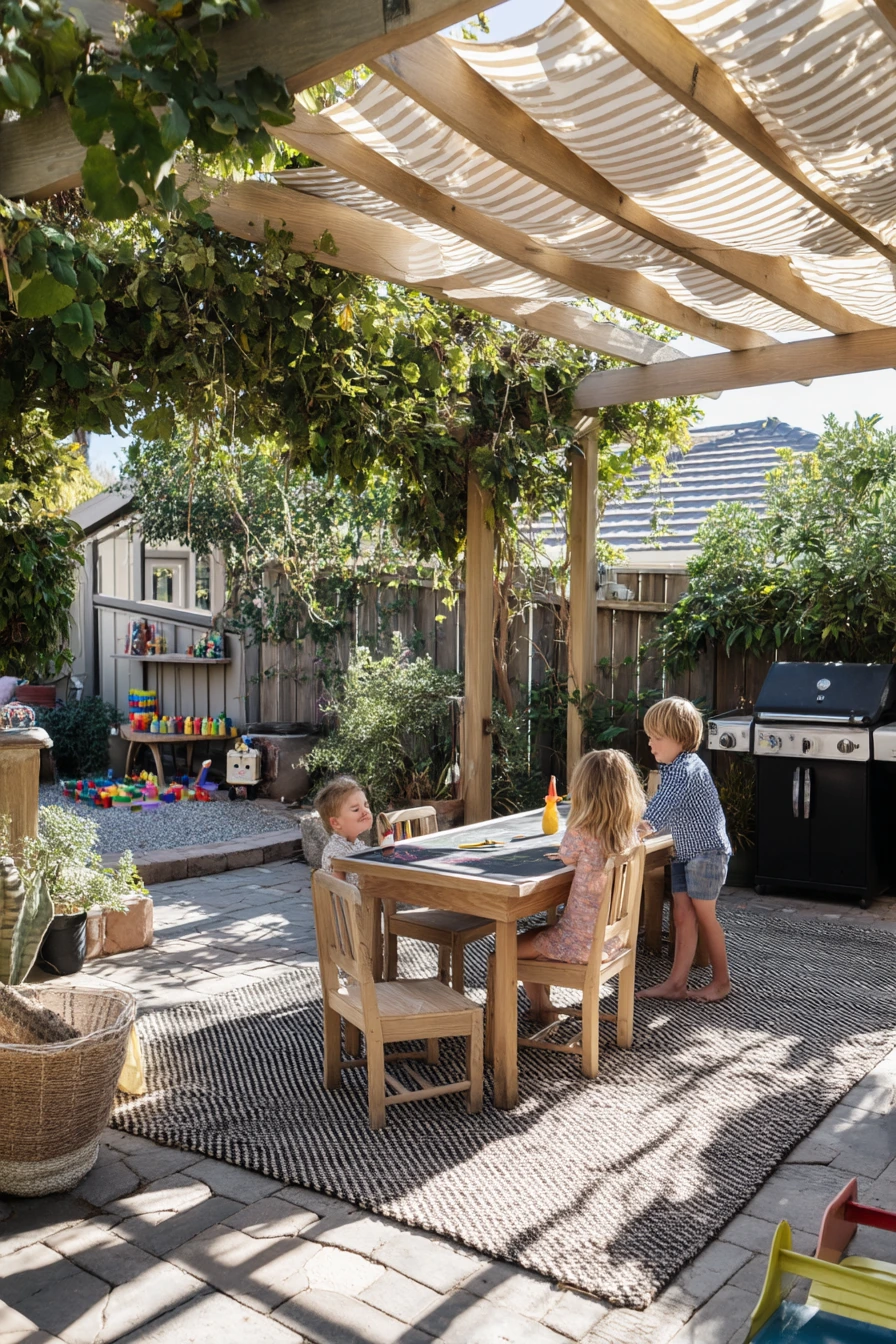
A timber pergola is one of the most reliable garden shade ideas because it creates a solid frame you can use in many ways. Add a striped outdoor shade sail under the beams for extra coverage and a softer light. In a real family backyard, this setup works well over a chalk-marked patio table where kids can draw, snack, and play without baking in full sun.
Keep the space comfortable, not perfect. Tactile woven cushions and a sun-faded rug make it feel lived-in, and a toy basket near the seating keeps clutter under control. If you grill nearby, set the shade so smoke can move away from the seating zone. Potted herbs close to the table also give the area a fresh smell and make it easy to grab basil or mint for lemonade.
To style it, repeat the sail stripe colors in small pieces, like a matching outdoor pillow or a simple table runner. Angle one chair slightly so the seating feels natural and easy to join. If your pavers get hot, add an outdoor mat where bare feet land most, like next to the table and by the back door.
- Mount the sail with a slight slope so rain can run off.
- Use stainless hardware and check tension twice a season.
- Place the dining table so shade covers the seats at peak sun.
- Add a lidded bin for chalk, bubbles, and small toys.
- Use planter pots to mark edges and guide foot traffic.
Pro Design Tip: Layer shade by combining the pergola frame with a sail, then add one light-filtering element like climbing vines on one side for cooler, leafy shadows.
Budget Considerations: A pergola is a bigger cost; if you need a lower-cost start, install the shade sail first on posts or the house, then add the pergola later.
2 Small Balcony Curtain Shade for Apartment Living
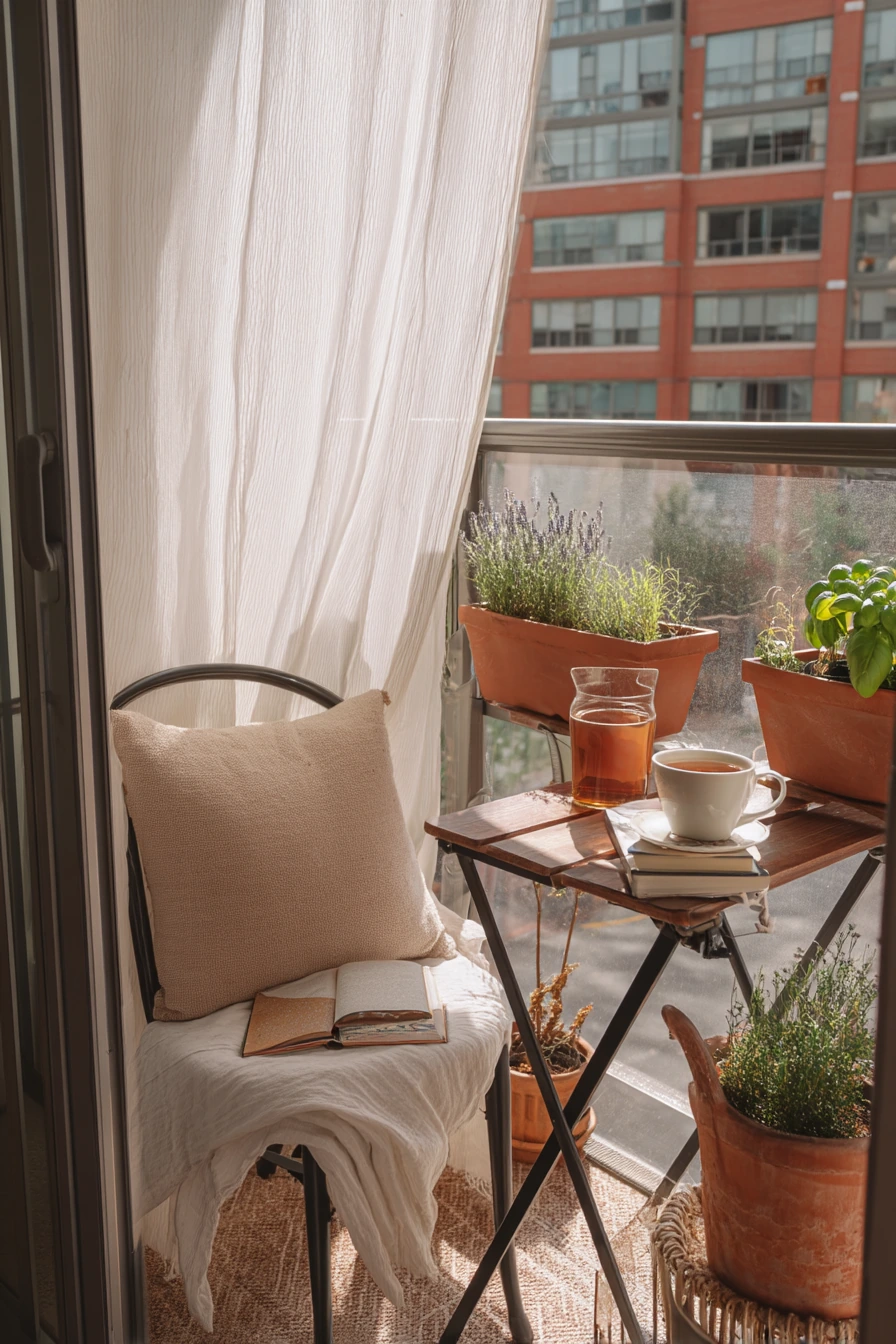
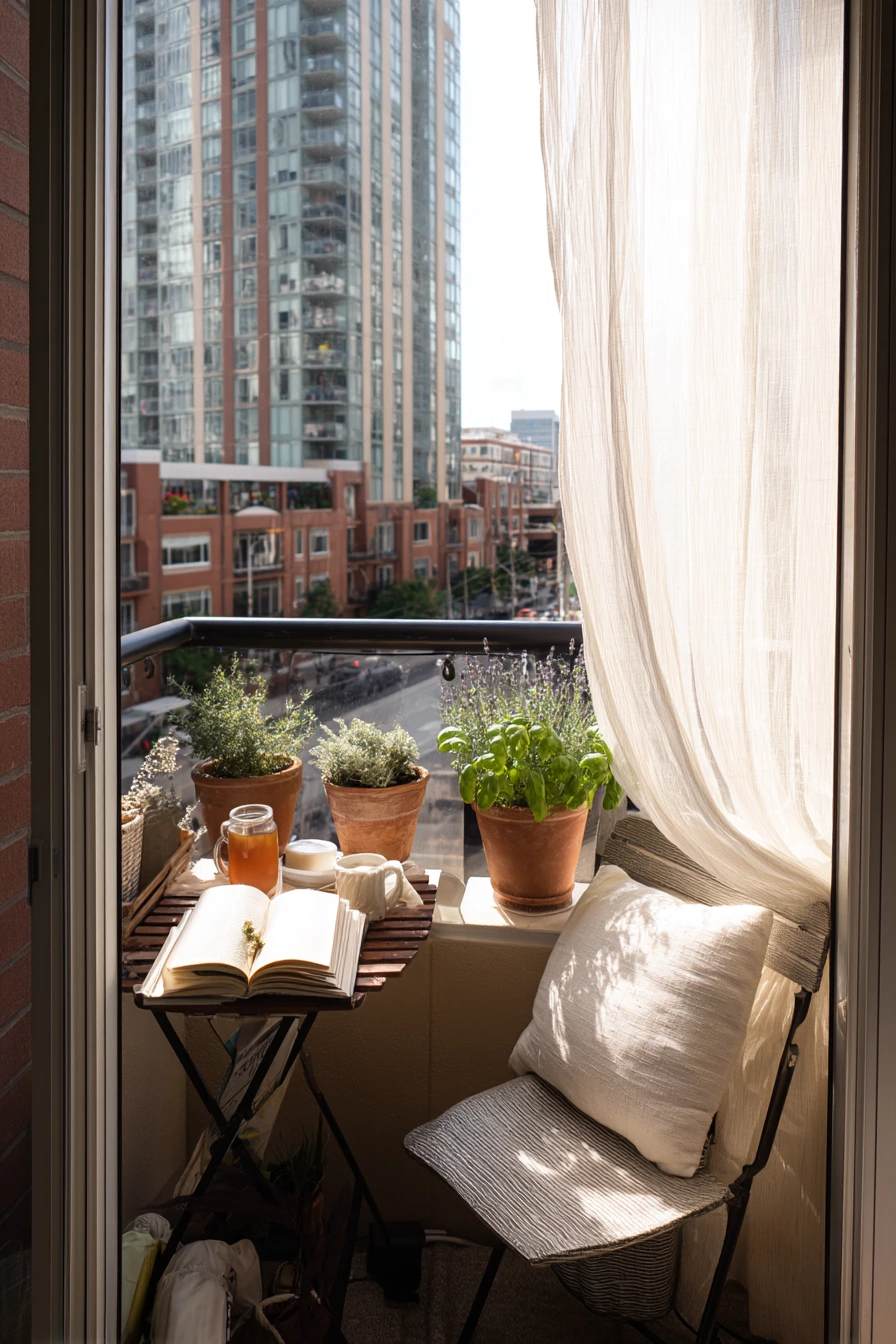
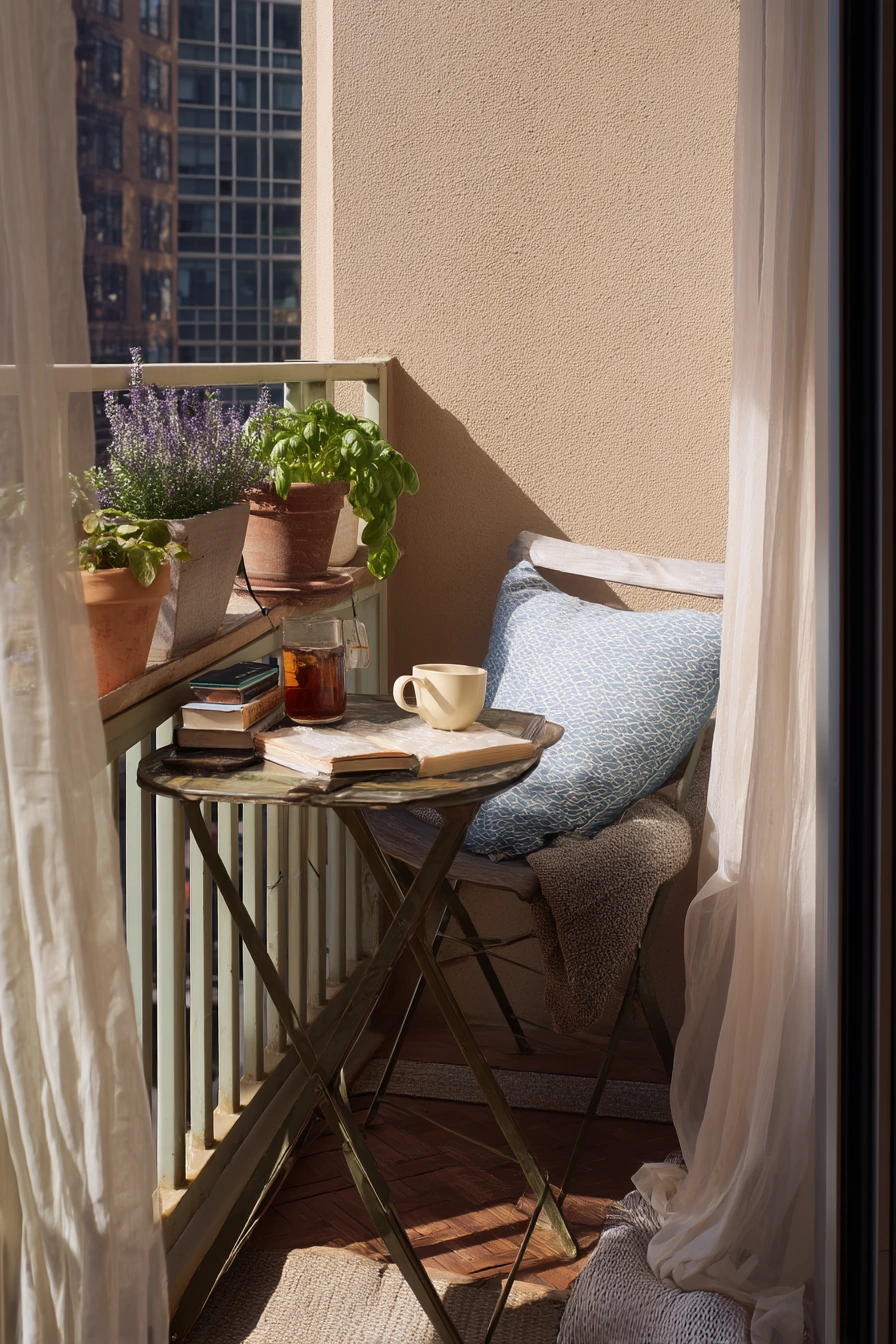
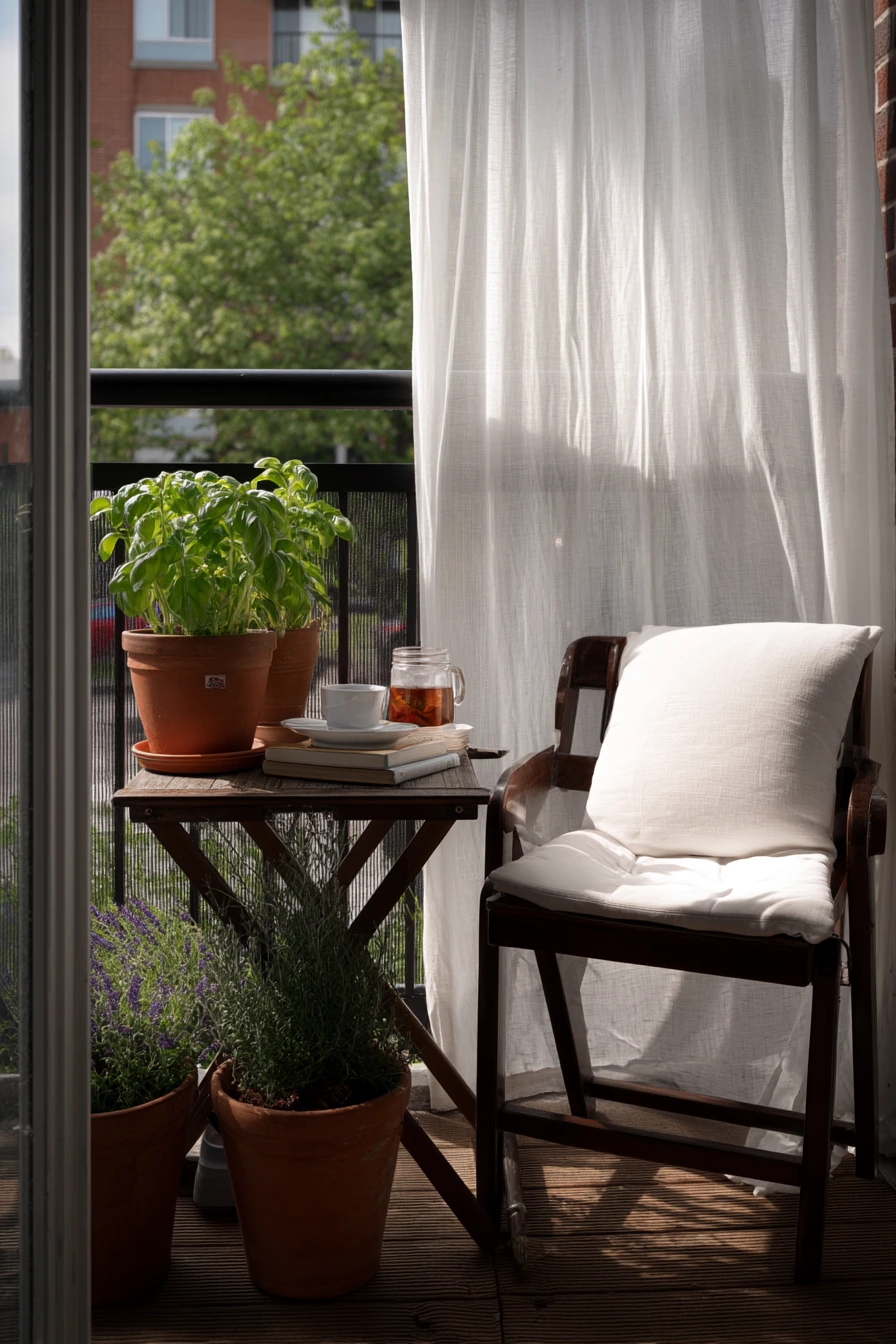
For small spaces, simple garden shade ideas need to be flexible and rental-friendly. Sheer outdoor curtains can filter harsh light without making a balcony feel dark. Hung on a tension rod, wire, or a ceiling track (if allowed), they move in a gentle wind and give privacy at the same time.
Keep the setup practical. A bistro chair, a folding side table, and narrow planter boxes use very little floor space. Add terracotta pots with basil and lavender for scent and easy cooking herbs. A paperback book, iced tea, and a charging cable on the table makes it feel like a real daily spot, not a staged corner.
How to style it: choose curtains in a warm white or light sand so morning light still feels soft and bright. Add one throw pillow, even if it is slightly wrinkled, for comfort. If your balcony faces hot afternoon sun, layer curtains with a roll-up bamboo blind on the railing side to cut glare while still letting air flow.
- Use outdoor-rated curtain fabric that dries fast.
- Hang panels so they clear the floor by 1 to 2 inches.
- Clip the curtains back when you want more breeze.
- Add a slim planter ledge to keep herbs off the floor.
- Run a weather-safe extension cord for tidy charging.
Pro Design Tip: Mount curtain hardware as close to the ceiling as possible to make a small balcony feel taller and to widen the shaded zone.
Budget Considerations: Outdoor curtains and clip rings are often affordable; if you want to spend less, use indoor sheers and take them down before storms.
3 Budget Umbrella Shade Over a Courtyard Lunch
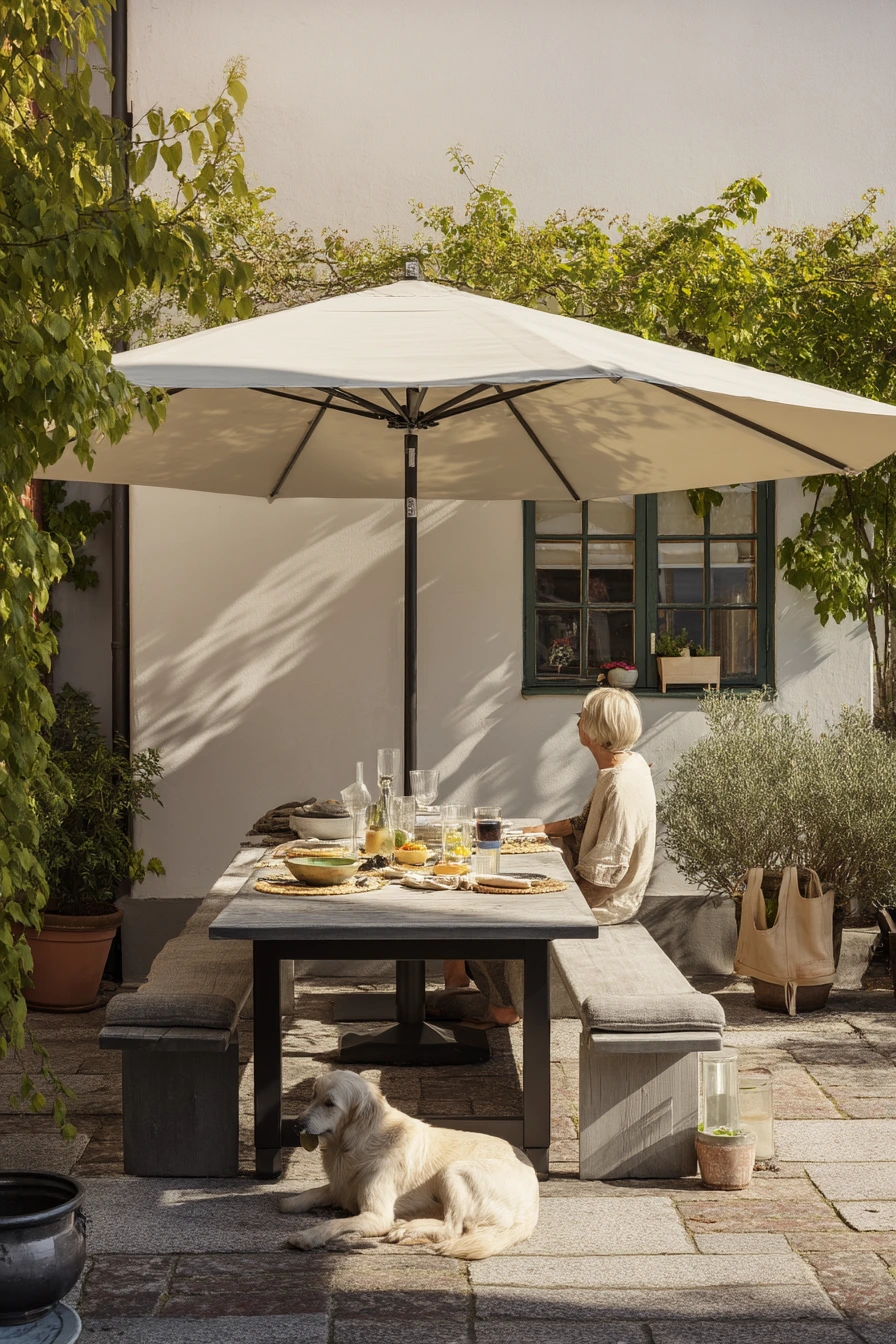
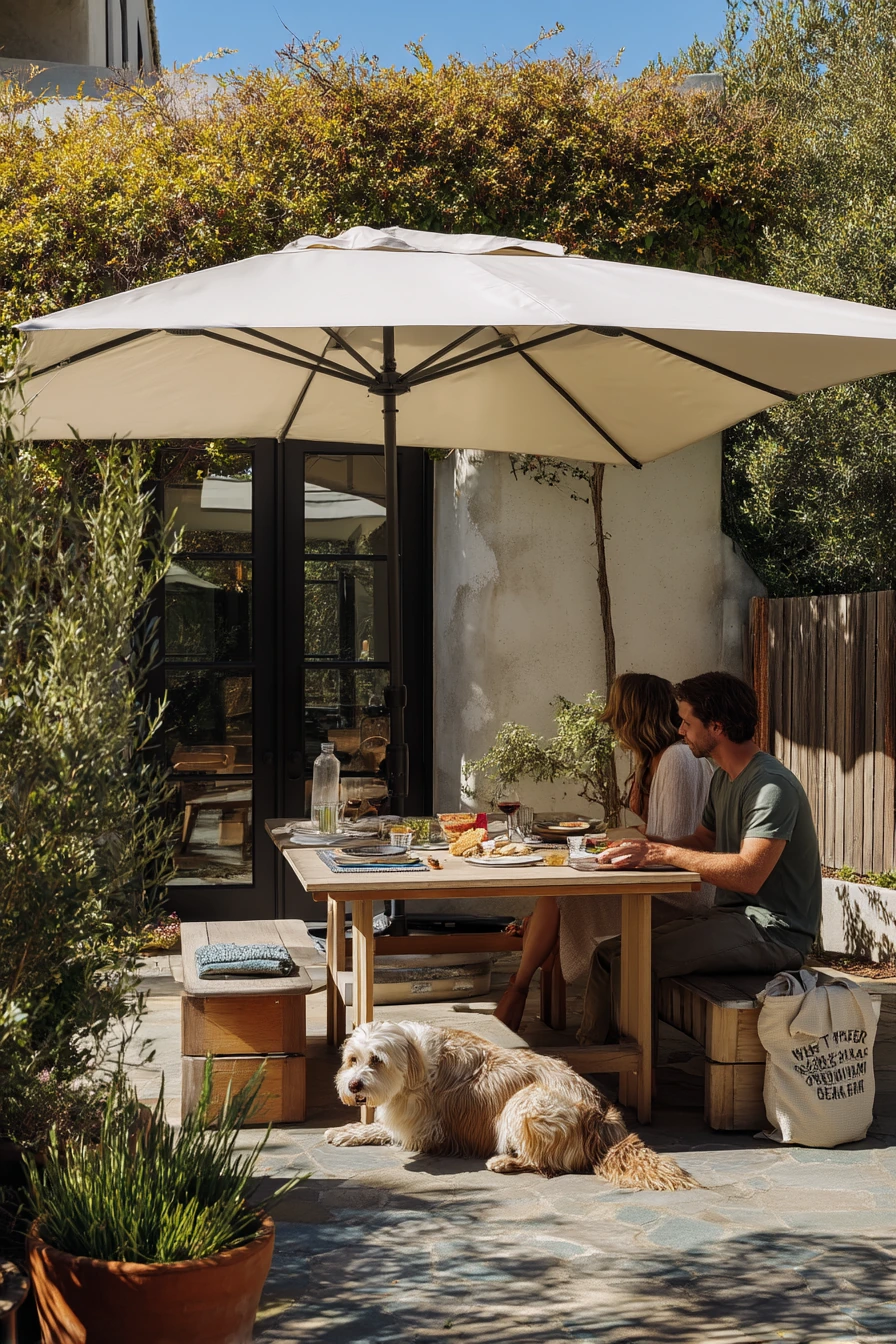
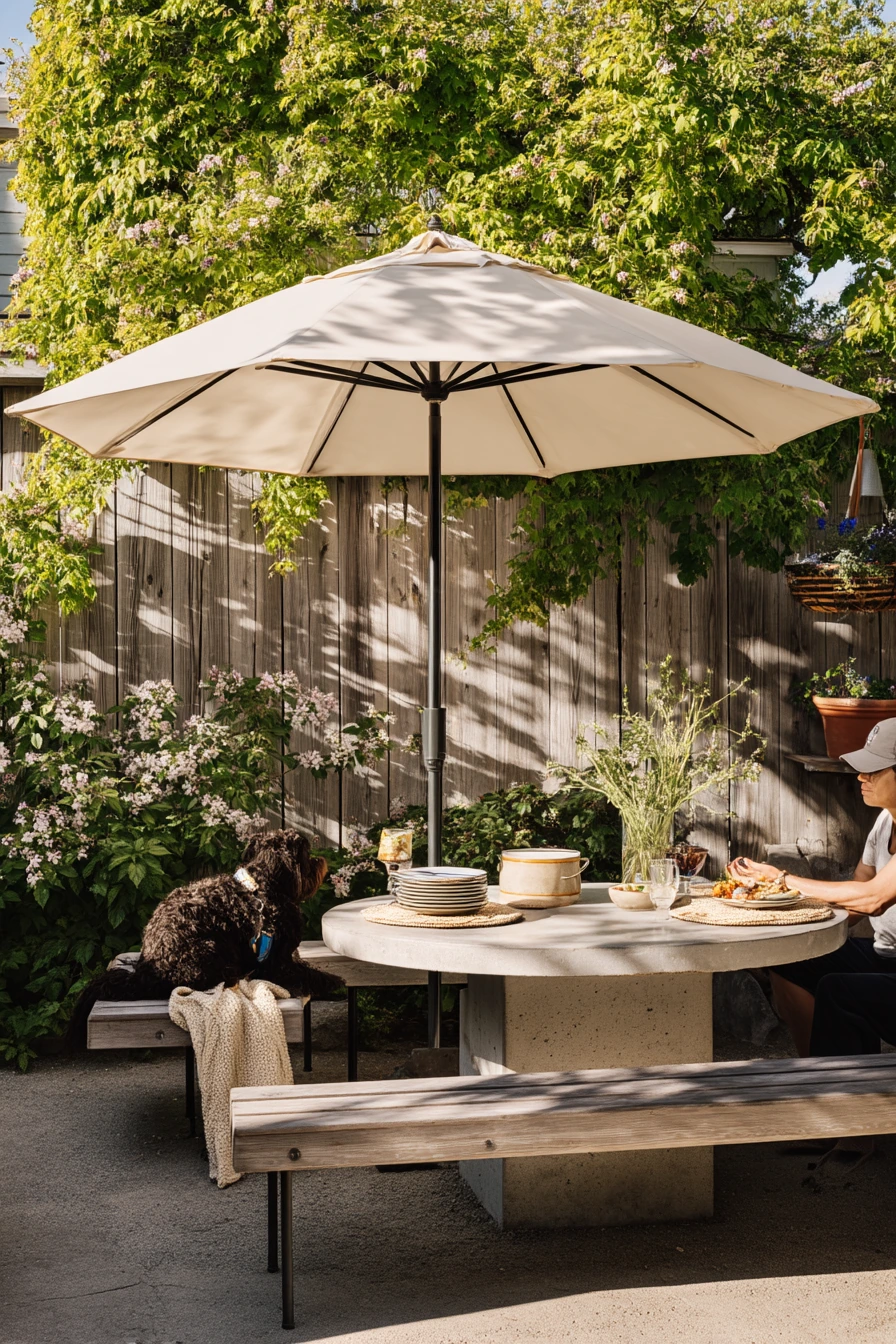
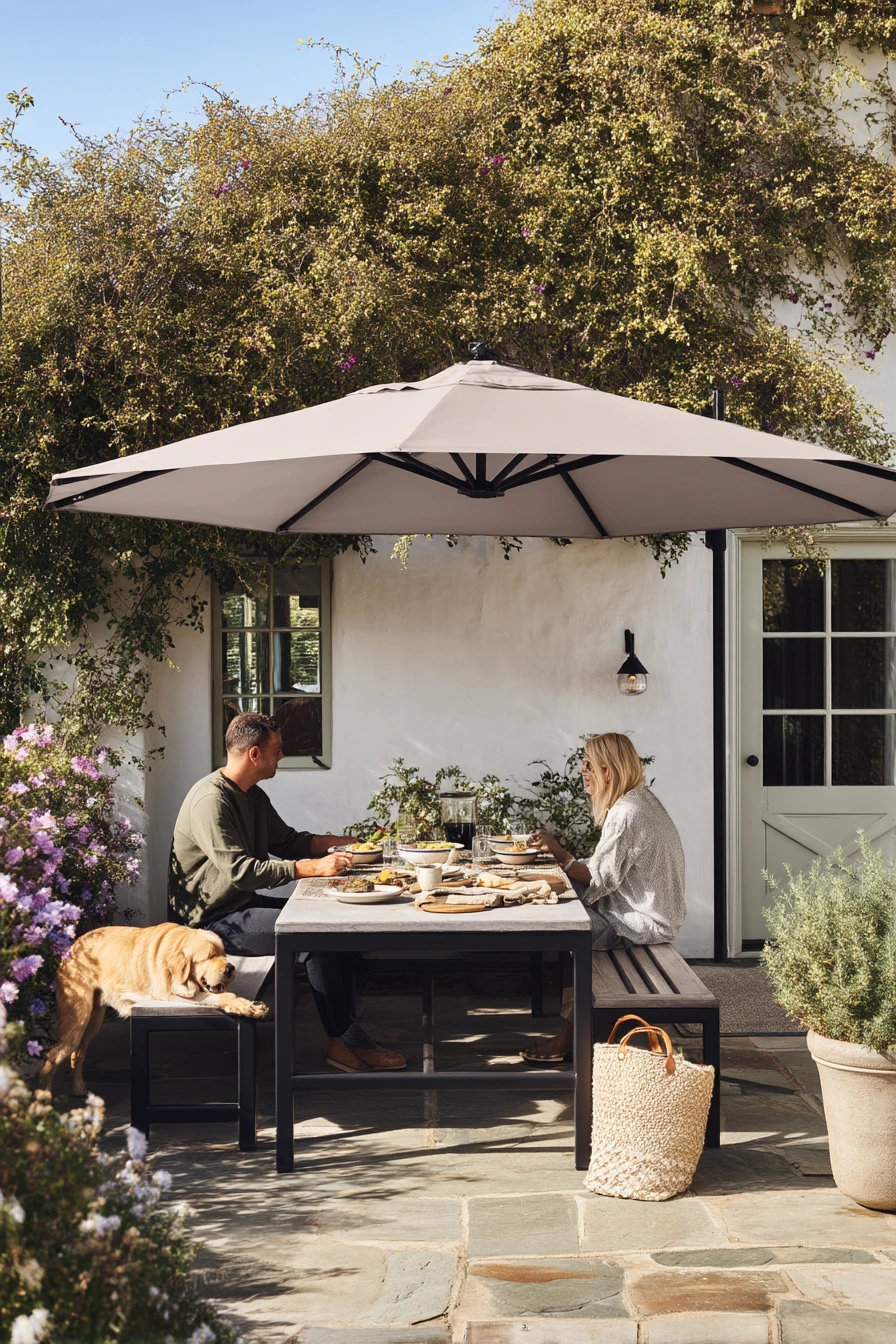
A large market umbrella is a classic garden shade idea that works in a modest stone courtyard. It gives instant cover for a simple dining table, and it is easy to adjust as the sun shifts. In everyday use, it keeps lunch comfortable and also creates a cooler place where a dog can rest under the bench.
To keep the space functional, start with a stable umbrella base that matches your ground. On stone, choose a heavy base and add a non-slip pad so it does not twist. If you have climbing jasmine on a fence, position the table so the scent drifts through the seating area, and let the umbrella provide the main shade while plants add a softer edge.
How to style it: keep the table setting simple with woven placemats and ceramic serving plates that can handle outdoor use. A folded grocery tote near the door makes it easier to bring food out and carry dishes back in one trip. If glare is a problem, pick an umbrella canopy in a medium tone like sand, sage, or soft stripe, since bright white can bounce light back into your eyes.
- Choose a vented canopy to reduce wind lift.
- Use a tilt feature for late-day sun angles.
- Place the umbrella pole slightly off-center to free leg room.
- Add felt pads under chair feet to protect stone.
- Store the canopy cover when not in use to extend life.
Pro Design Tip: Match the umbrella shape to the table shape, then size up so the canopy edge extends past chair backs for real shade while people sit.
Budget Considerations: A quality base can cost as much as the umbrella; if you are saving, buy a strong used base and replace only the canopy if needed.
4 Retractable Awning for a Sun-Baked Deck
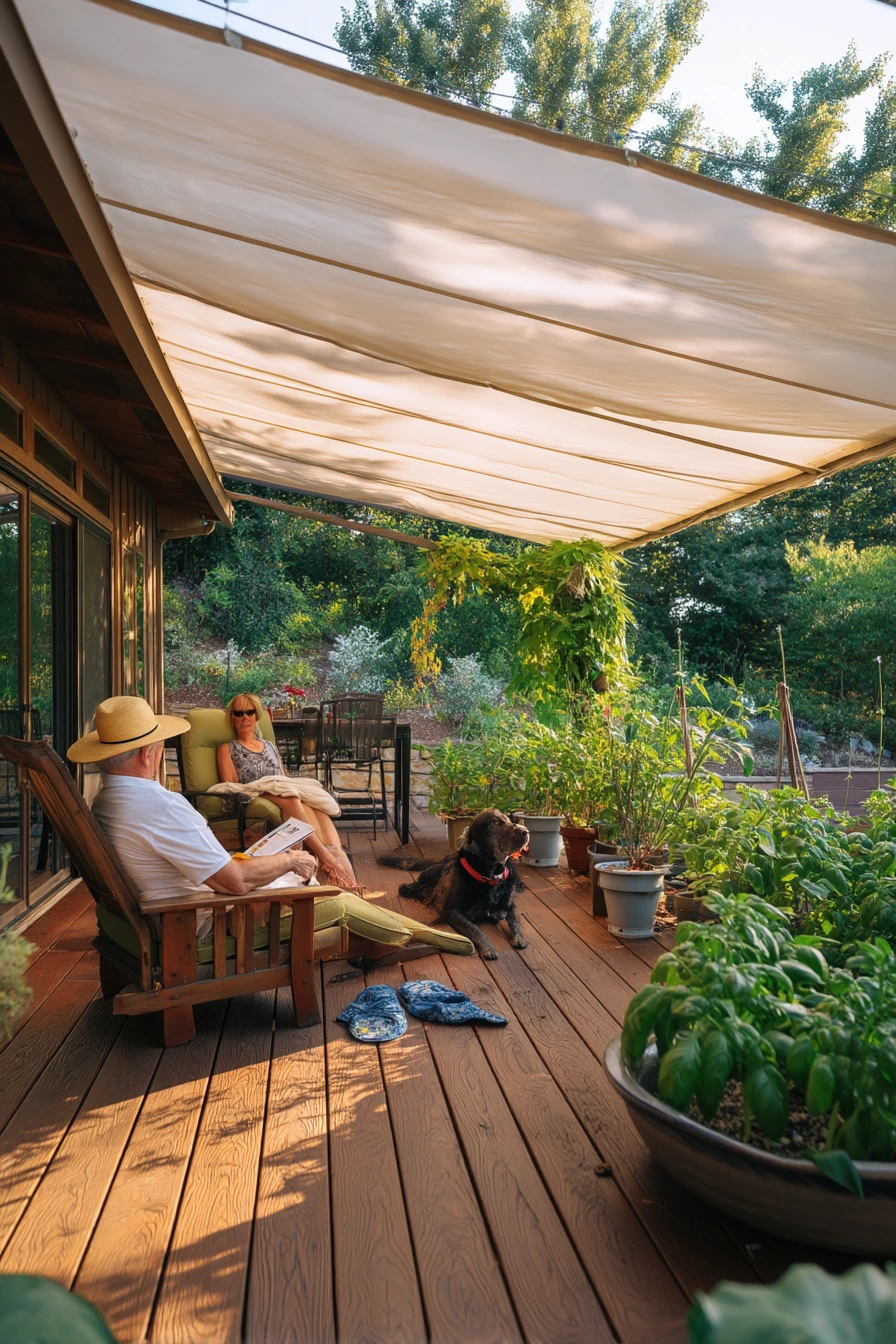
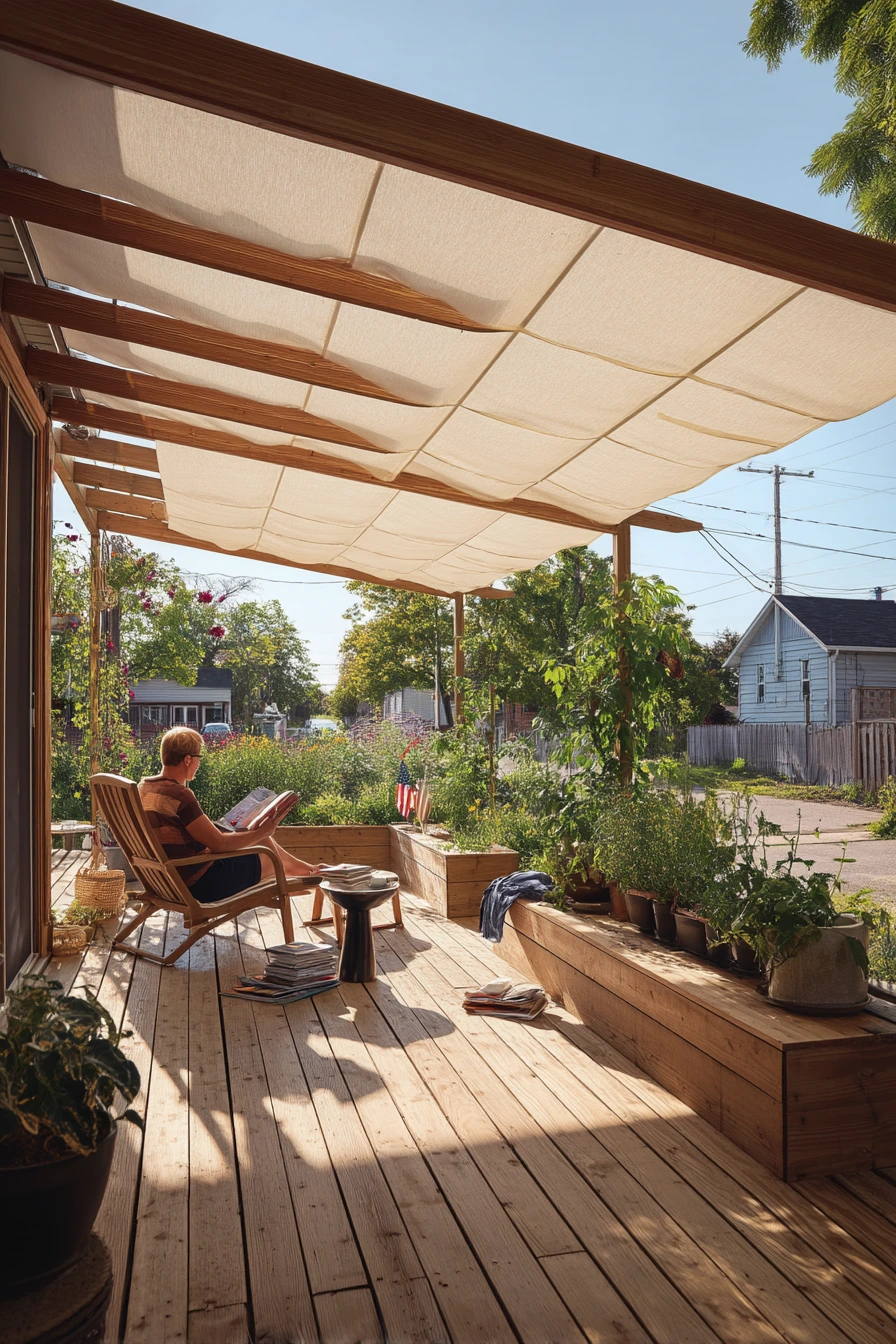
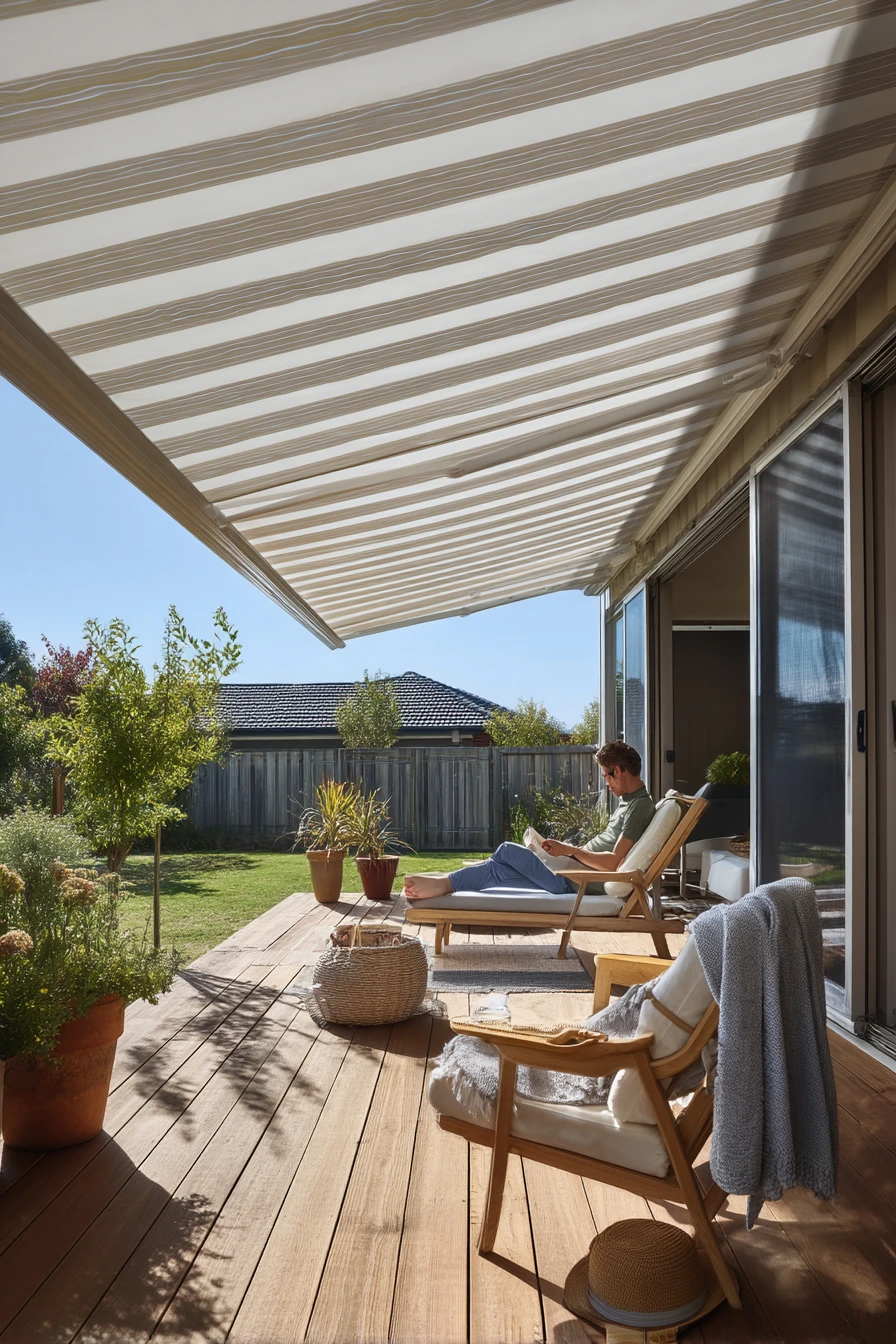
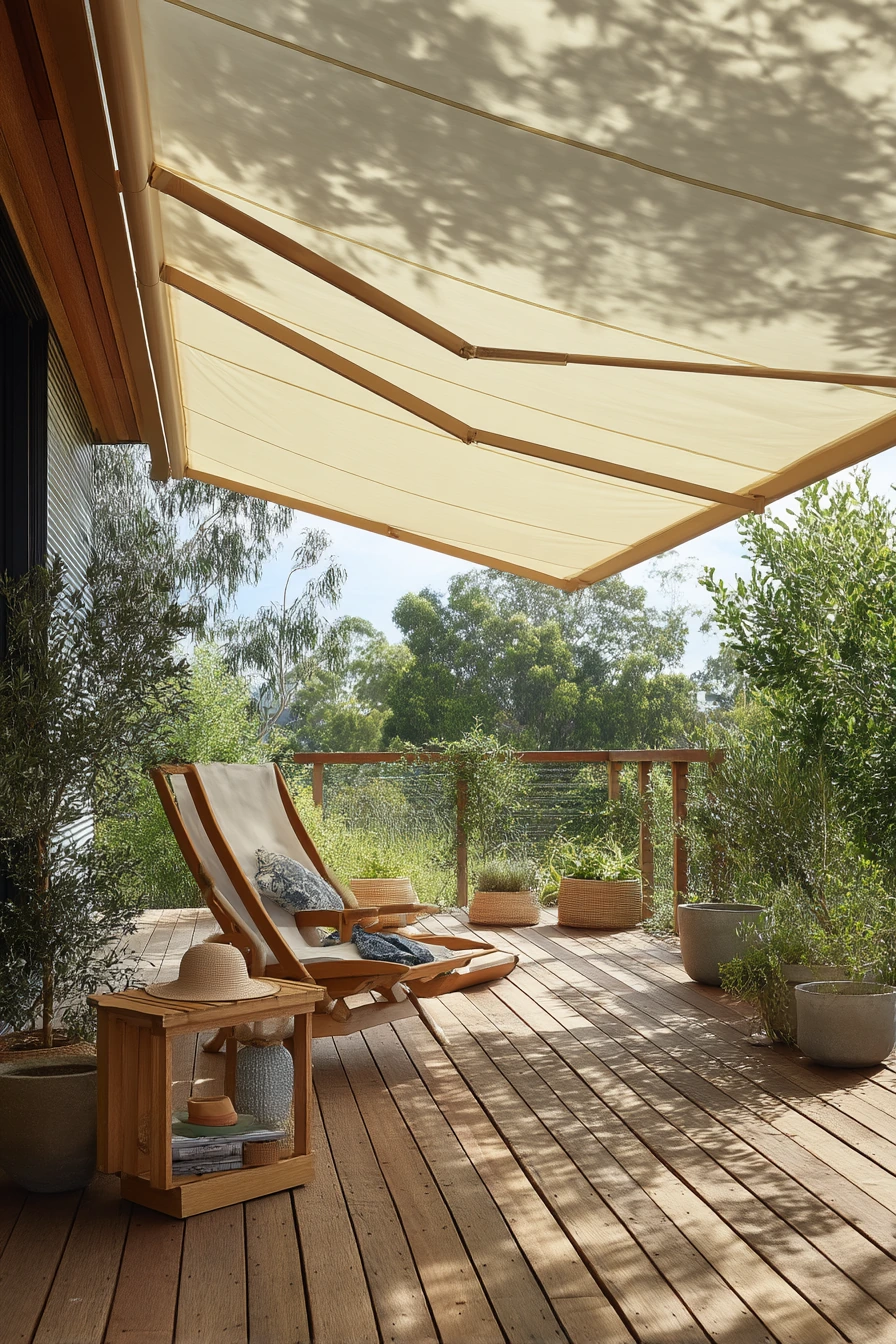
A retractable awning is one of the most useful garden shade ideas for a deck because you can extend it when you need shade and pull it back when you want sun. Over a teak lounge zone, it makes the space feel like an outdoor room. It also helps protect wood furniture and outdoor throws from fading.
Plan the layout around real life. If one person is reading in a sling chair while another waters tomato pots, you need clear pathways and a dry spot to set down items. A small side table for magazines, a sunhat, and a drink keeps the seating area tidy. Keep stray garden gloves in a basket so the deck does not look messy, even when you are using it.
How to style it: choose an awning fabric color that fits your house and hides everyday marks, like taupe, muted green, or a soft stripe. Add texture with a slightly rumpled outdoor throw and a couple of mixed cushions. If dappled shade falls across wood boards, lean into it by adding simple planters that cast interesting shadows, like tall grasses or a small tree in a pot.
- Pick an awning with a wind sensor if your area is breezy.
- Measure the sun angle before choosing the projection length.
- Leave space for air flow so heat does not get trapped.
- Add low lighting under the awning for evening use.
- Clean the fabric with mild soap to prevent mildew.
Pro Design Tip: Align the awning edge with the front legs of your seating group so the main sitting zone stays shaded without blocking the whole deck.
Budget Considerations: Motorized models cost more; for a smaller budget, a manual crank awning still gives strong shade and is easier to maintain.
5 DIY Shade Cloth for a Vegetable Garden
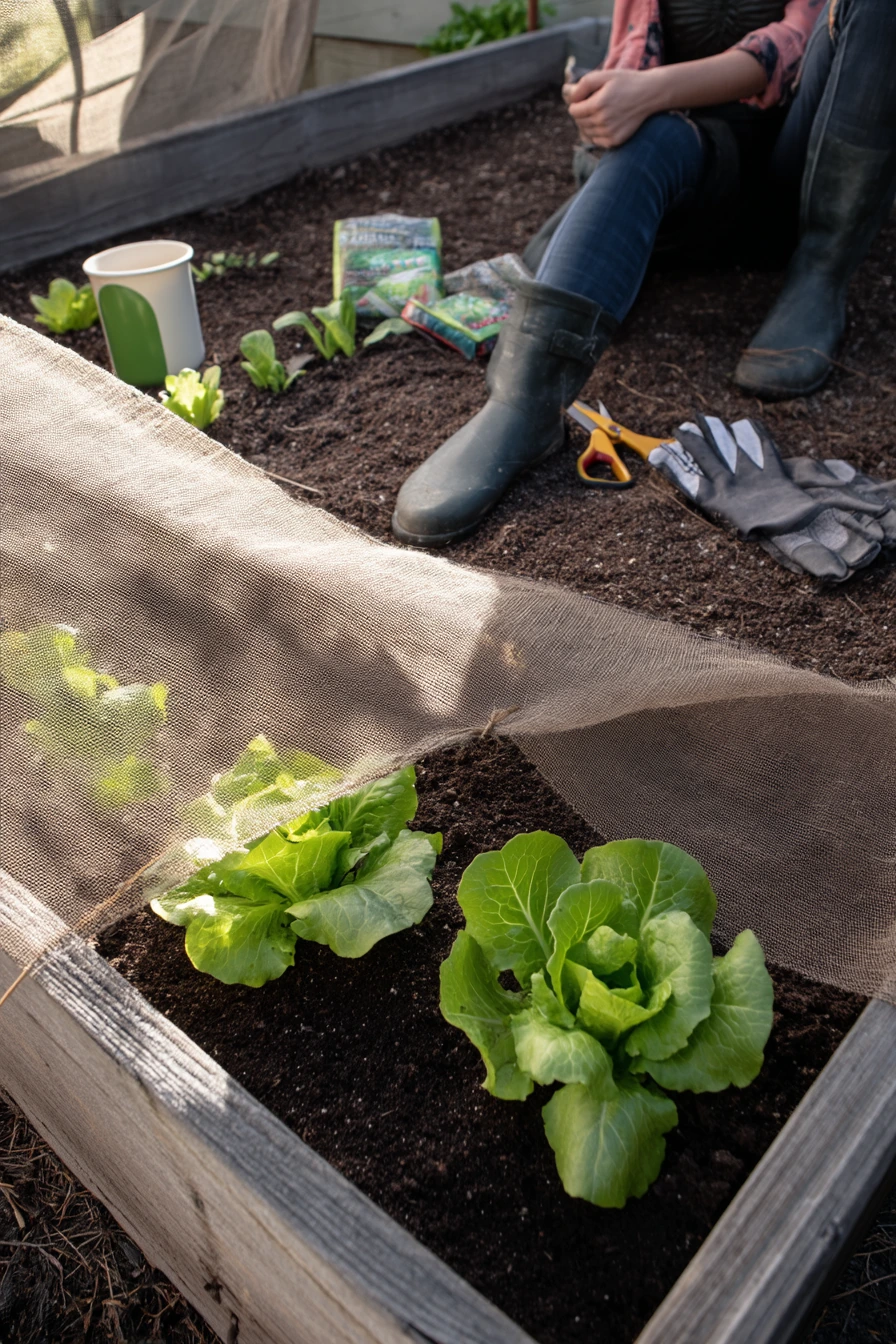
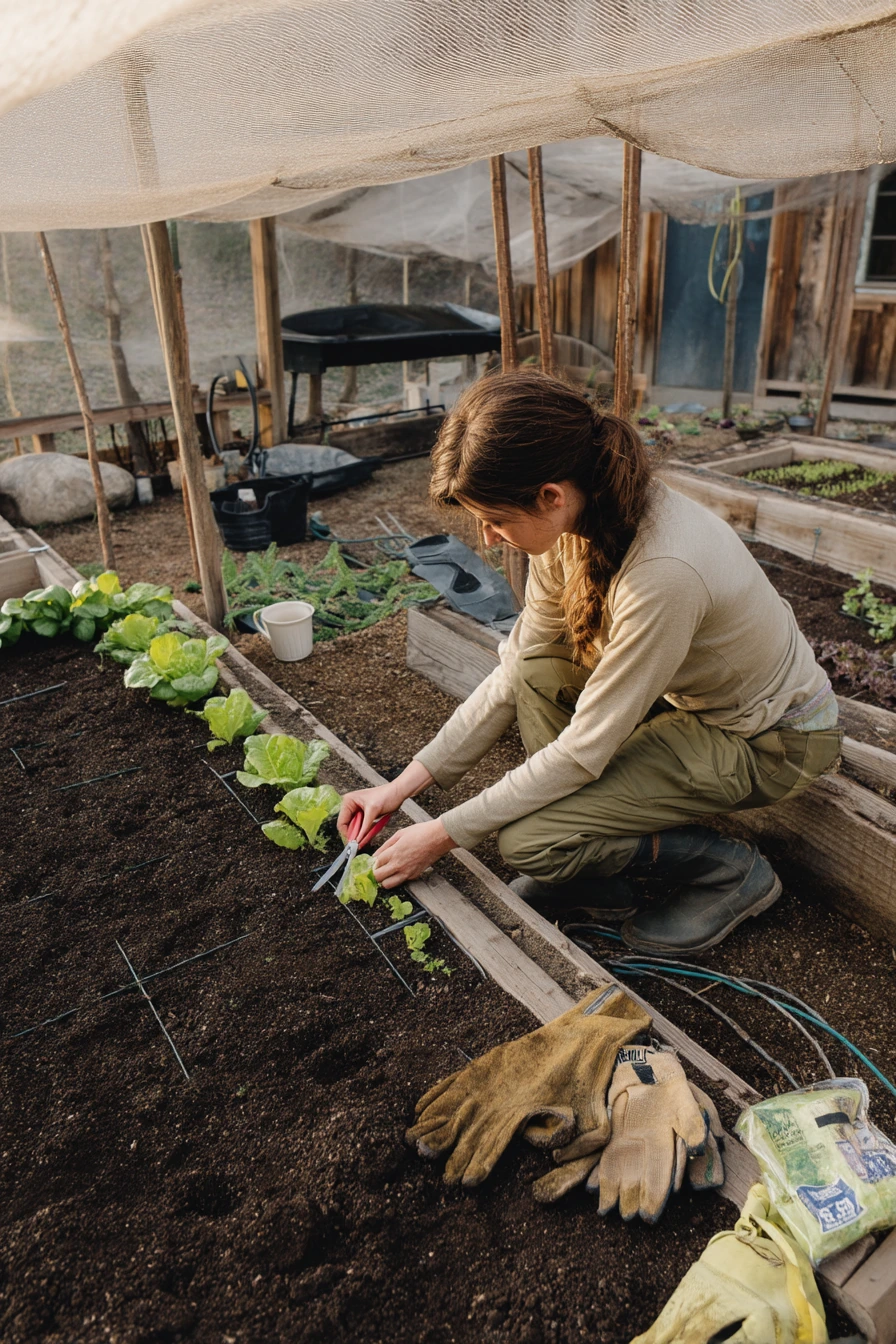
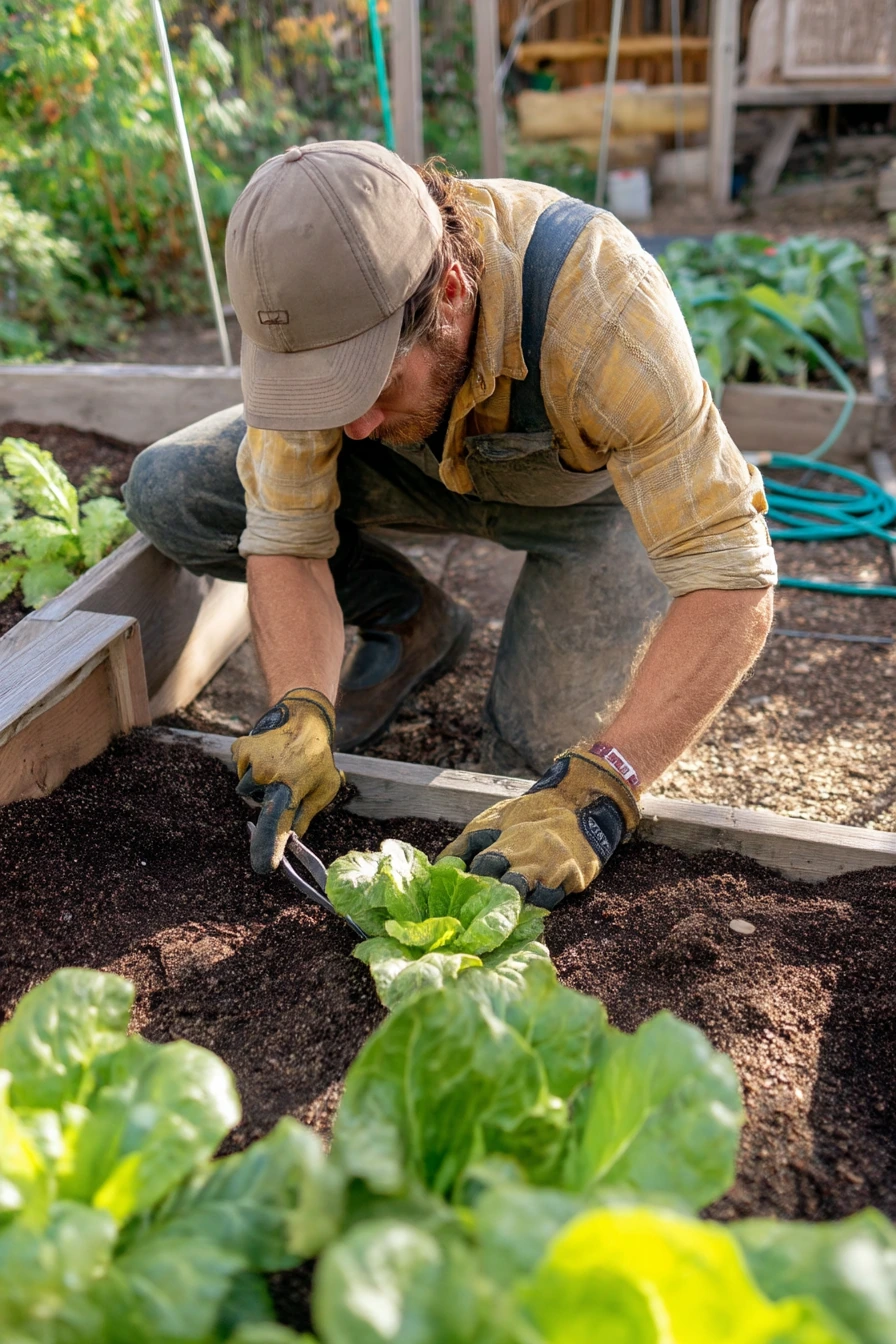
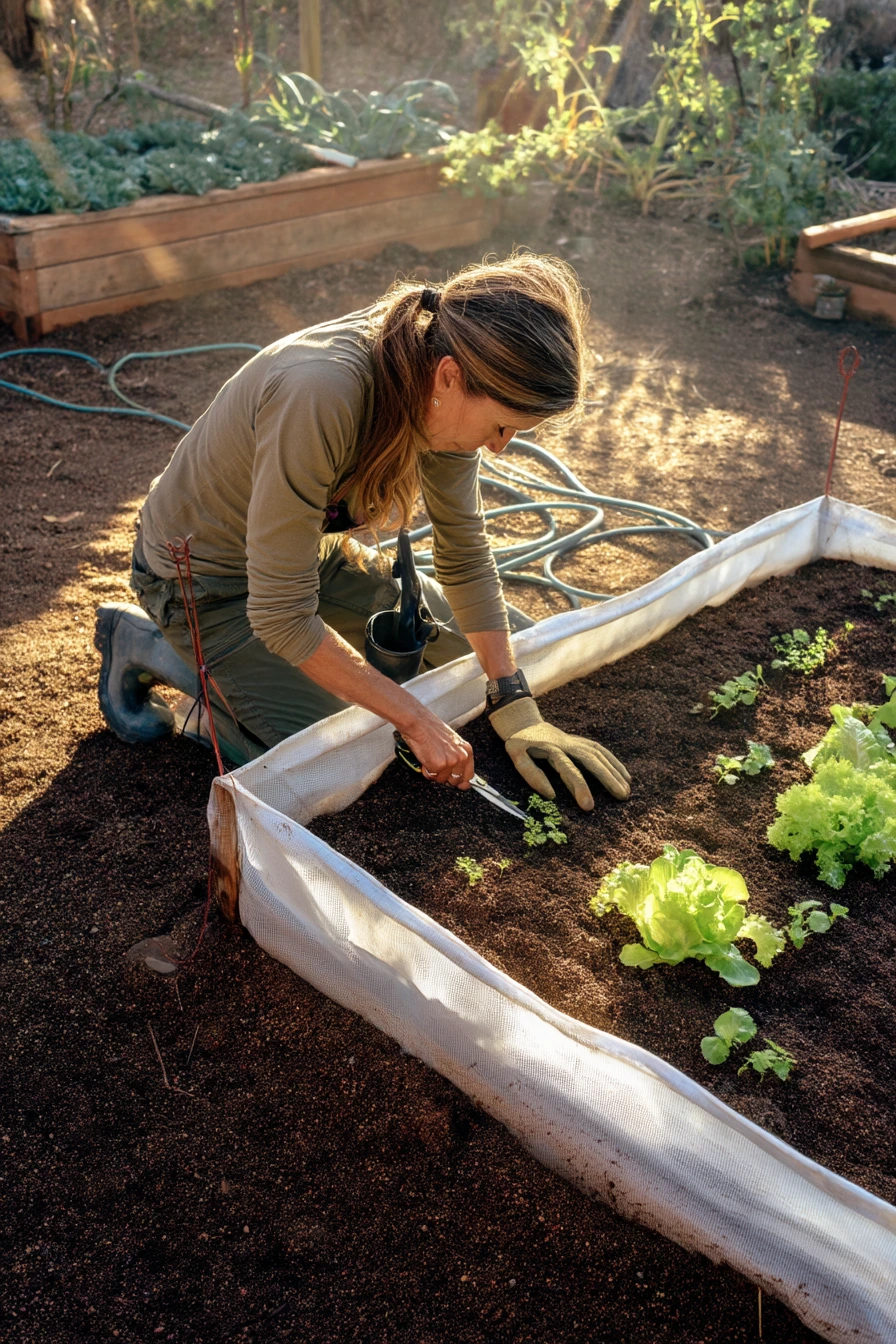
Some of the best garden shade ideas are for plants, not people. A simple DIY shade cloth frame over vegetable beds can protect lettuce, seedlings, and other cool-season crops from heat stress. It also reduces water loss, so you may water less often in summer.
Build a frame that is easy to access. You should be able to kneel at the bed edge with pruning shears and still reach the center without fighting the cloth. Keep a spot for the hose loop nearby and a small tray for seed packets, a trowel, and muddy gloves. This kind of setup is meant to look practical, not perfect, and it will still look good because it shows real gardening in progress.
How to style it: choose a neutral shade cloth and use simple wood or conduit so it blends into the garden. If you want it to look more finished, paint wood stakes the same color as your raised beds. Add a small hook on the frame for a mug or hand tool so items do not end up on the soil. Watch plant shadows on the bed to confirm the cloth is giving even coverage during peak sun.
- Use 30 to 50 percent shade cloth for most veggies.
- Secure edges with clips so wind does not flap the fabric.
- Make the top easy to lift for harvesting and weeding.
- Keep cloth off leaves to reduce moisture problems.
- Label the frame so you remember cloth type each season.
Pro Design Tip: Build the frame in sections so you can move shade to different beds as crops change, instead of making one large fixed structure.
Budget Considerations: PVC or EMT conduit frames are low-cost; if you already have stakes and scrap wood, you can spend mostly on the shade cloth itself.
6 Mediterranean Courtyard with Linen Shade Sails
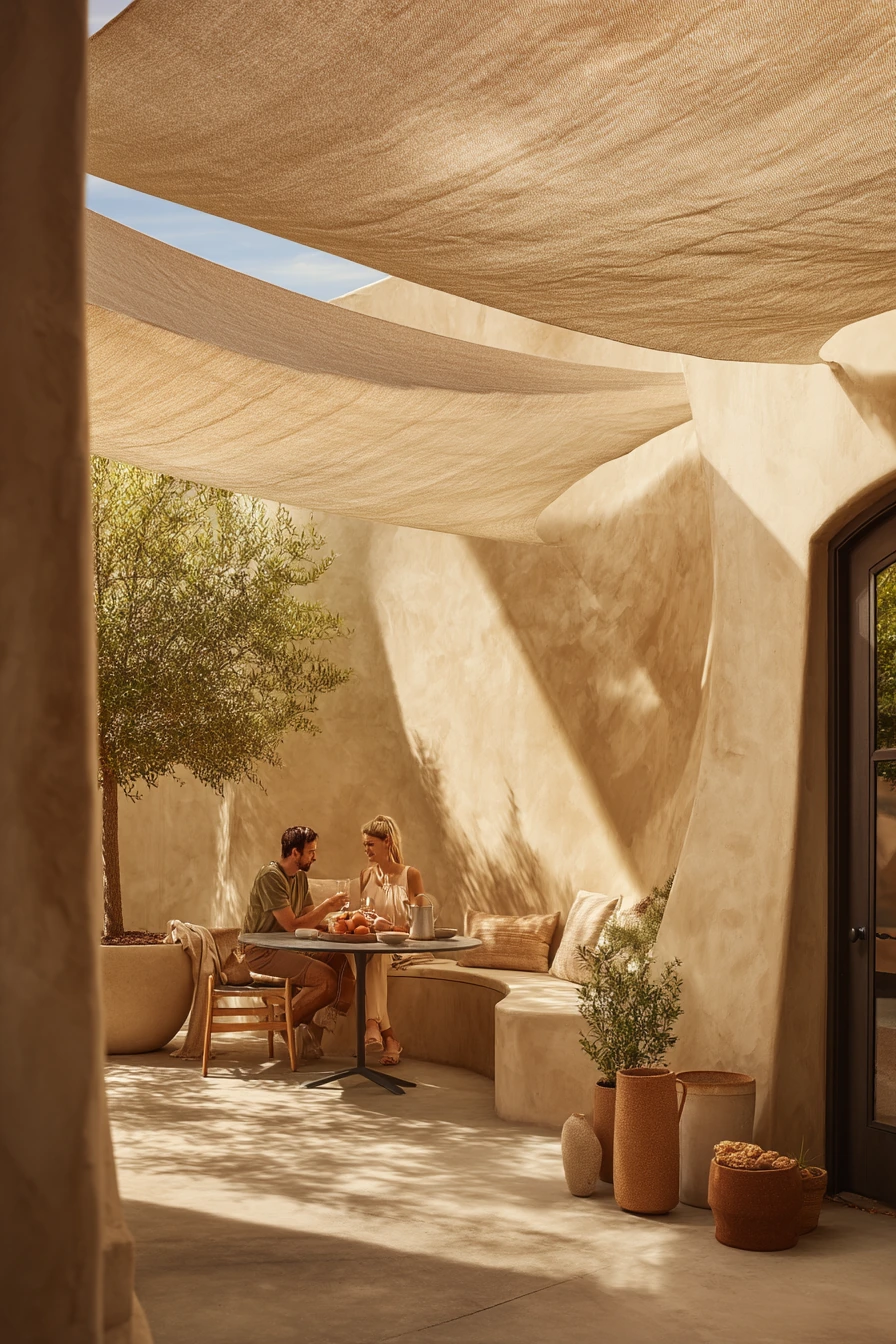
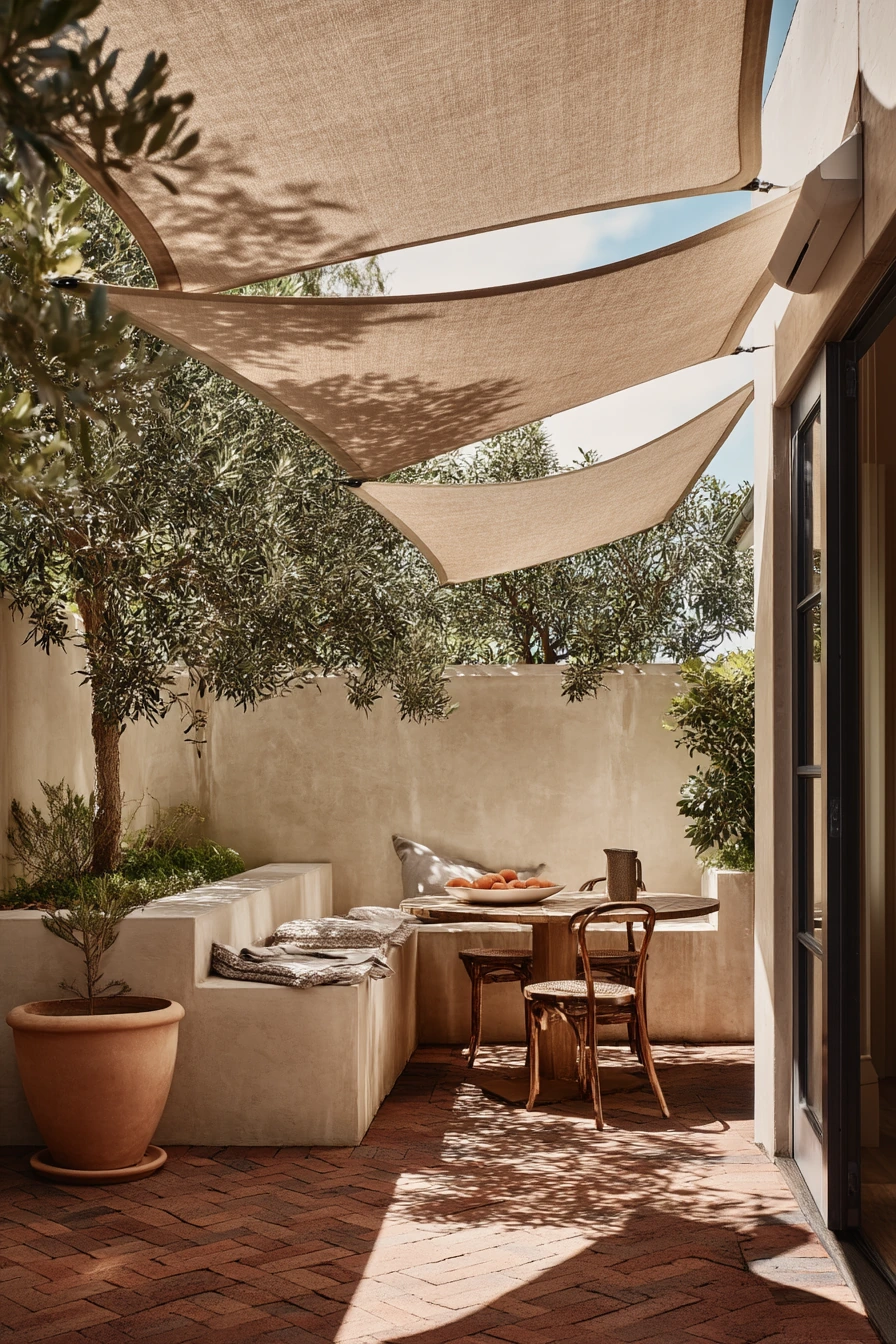
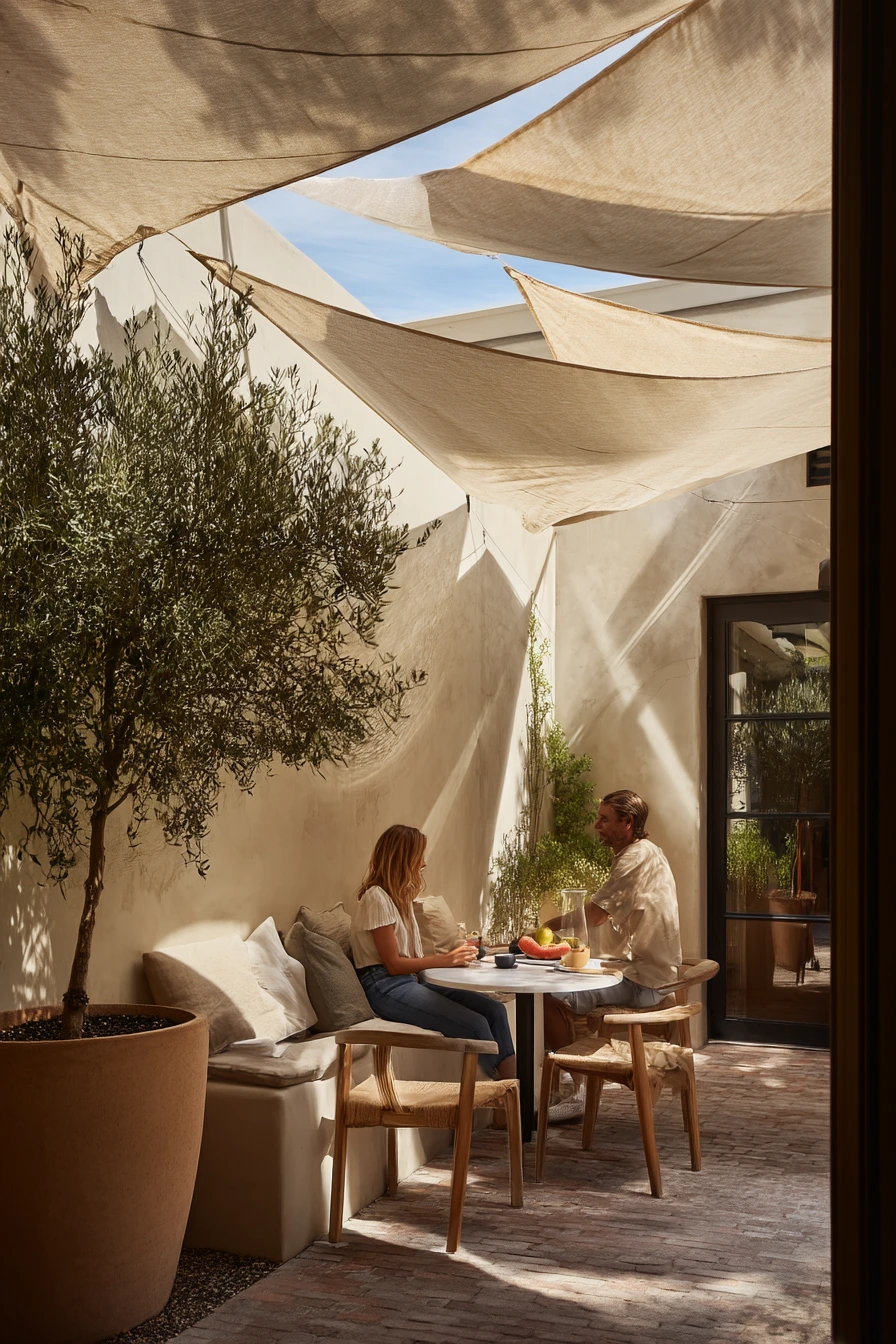
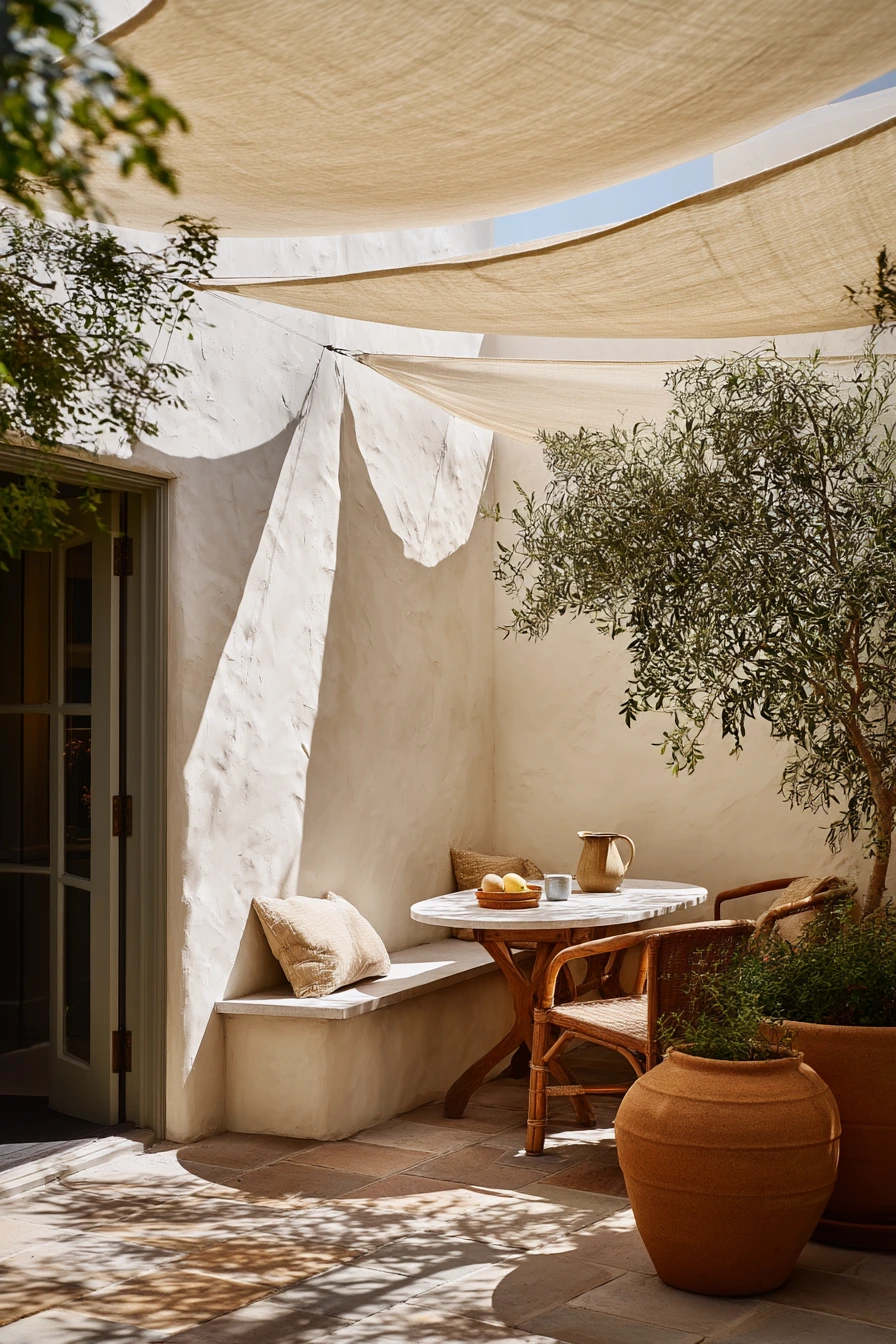
Overlapping shade sails are smart garden shade ideas for a courtyard terrace because they create more than one cool zone. Linen-look sails soften the light, which makes a plaster bench and round café table feel comfortable even in bright weather. The layered look also adds texture without adding bulky structures.
Start by mapping where you sit most. If you tend to eat peaches and drink espresso at the café table, make that spot the darkest. Keep a second, lighter zone over a bench for reading or scrolling. Terracotta pots, an olive tree, and a ceramic pitcher add warmth, and a folded newspaper or linen napkin makes it feel like a calm daily habit.
How to style it: use sails in similar tones, like sand and oatmeal, so the overlap looks intentional. Add one accent color through small items, like a blue striped cushion or a green planter. If you can see the sails from an open door, treat them like part of the interior view. Keep the lines neat, and hide hardware where you can. Leafy shadow play from nearby plants will make the space feel cooler and more relaxed.
- Use strong anchor points, not just thin trim boards.
- Angle each sail for water runoff and cleaner lines.
- Leave small gaps between sails for air movement.
- Choose hardware that will not rust in sun and rain.
- Check tension monthly during windy seasons.
Pro Design Tip: Overlap sails by 6 to 12 inches and stagger heights so the layers look designed and also block sun from more angles.
Budget Considerations: Linen-style outdoor sails can cost more than basic poly; if you need to save, use standard HDPE sails and add linen texture with cushions and table linens.
7 Poolside Cabana Shade for Weekend Hosting
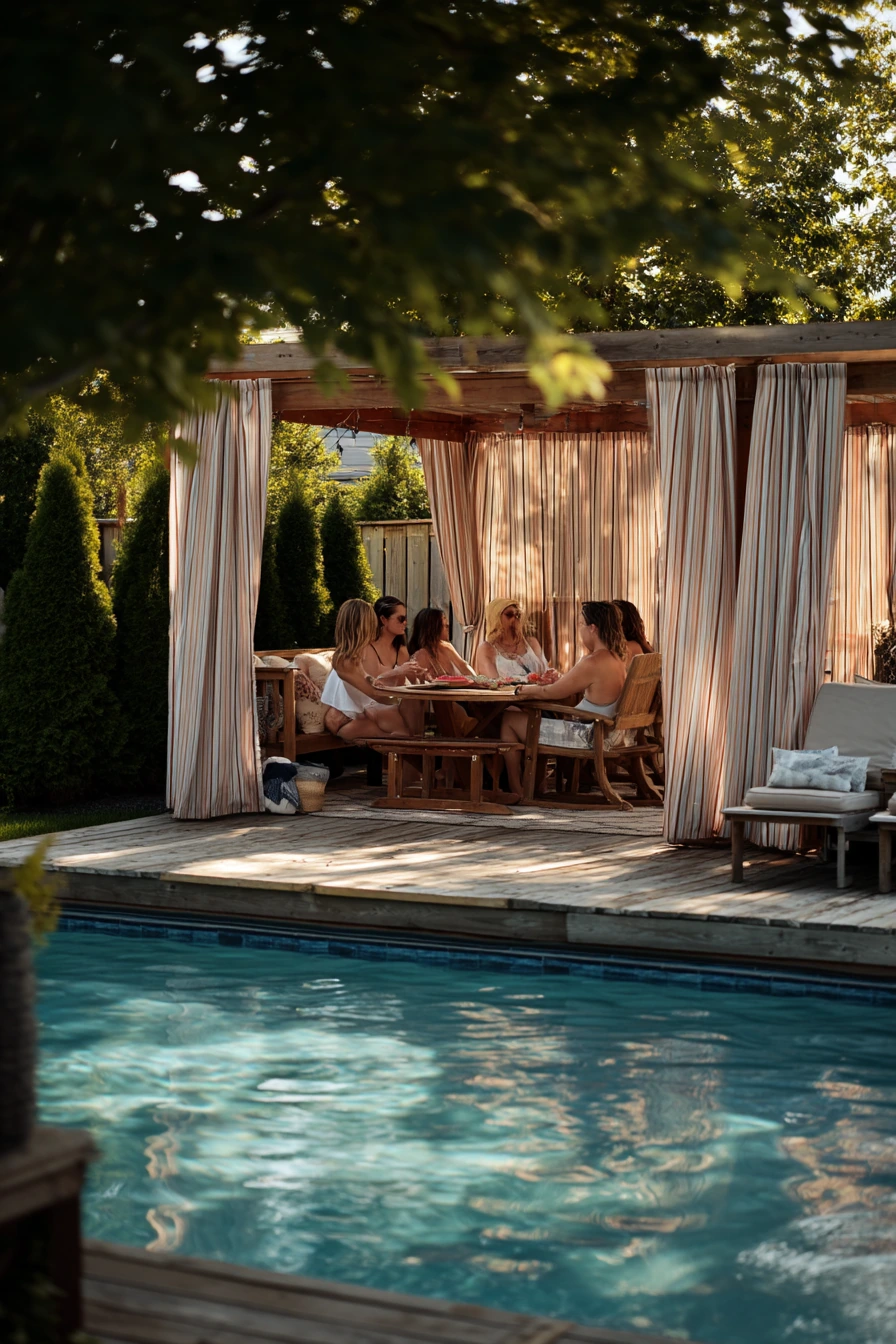
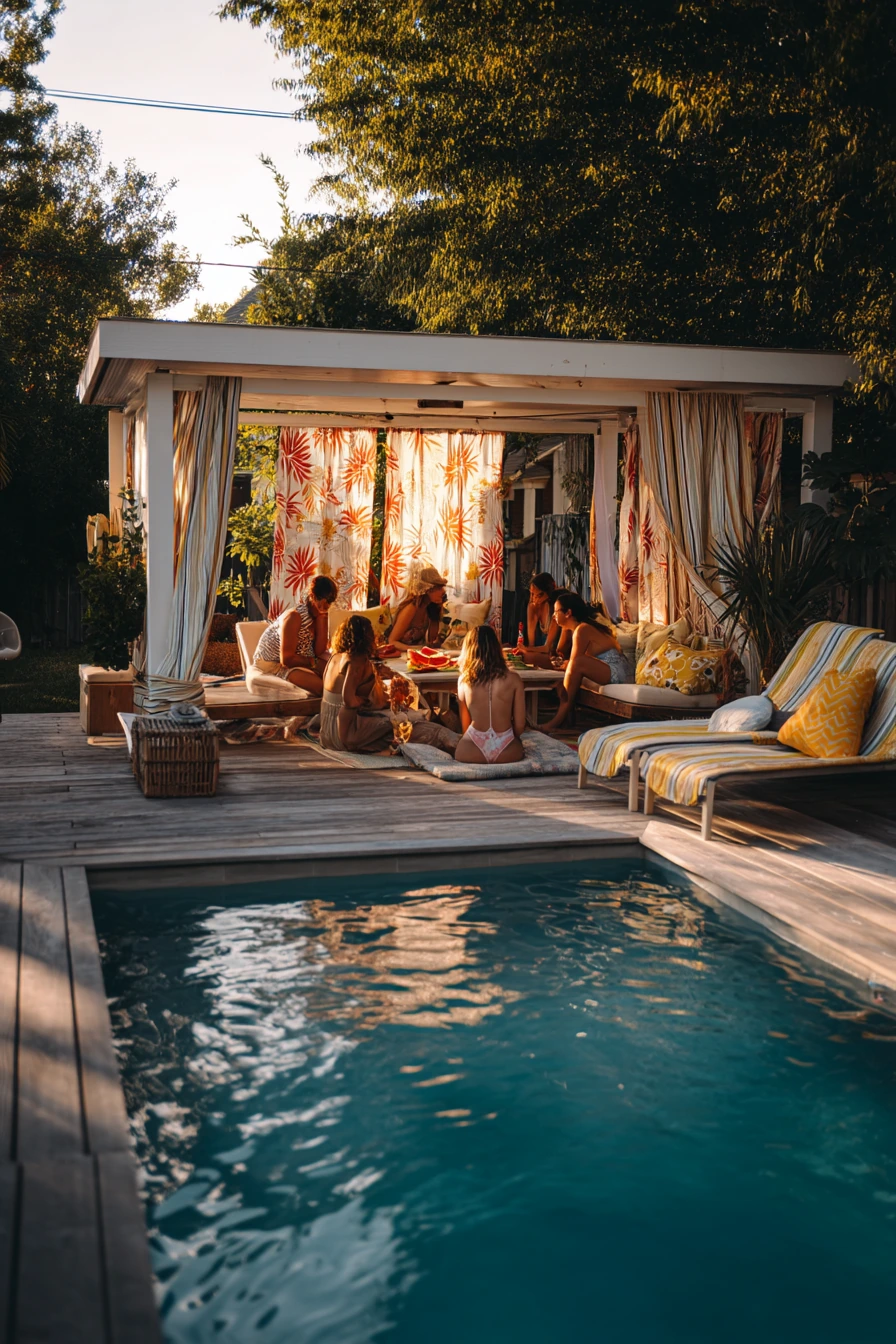
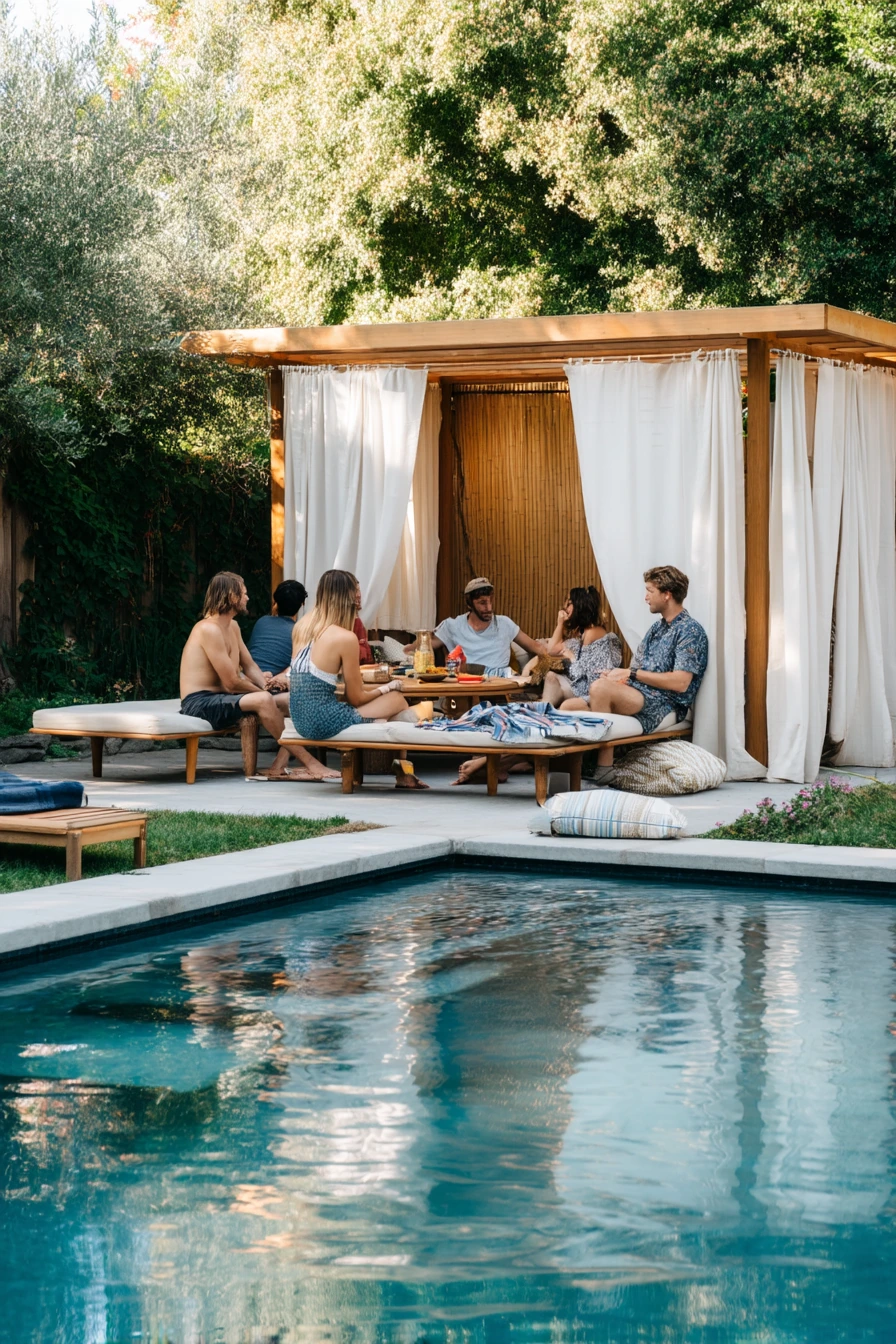
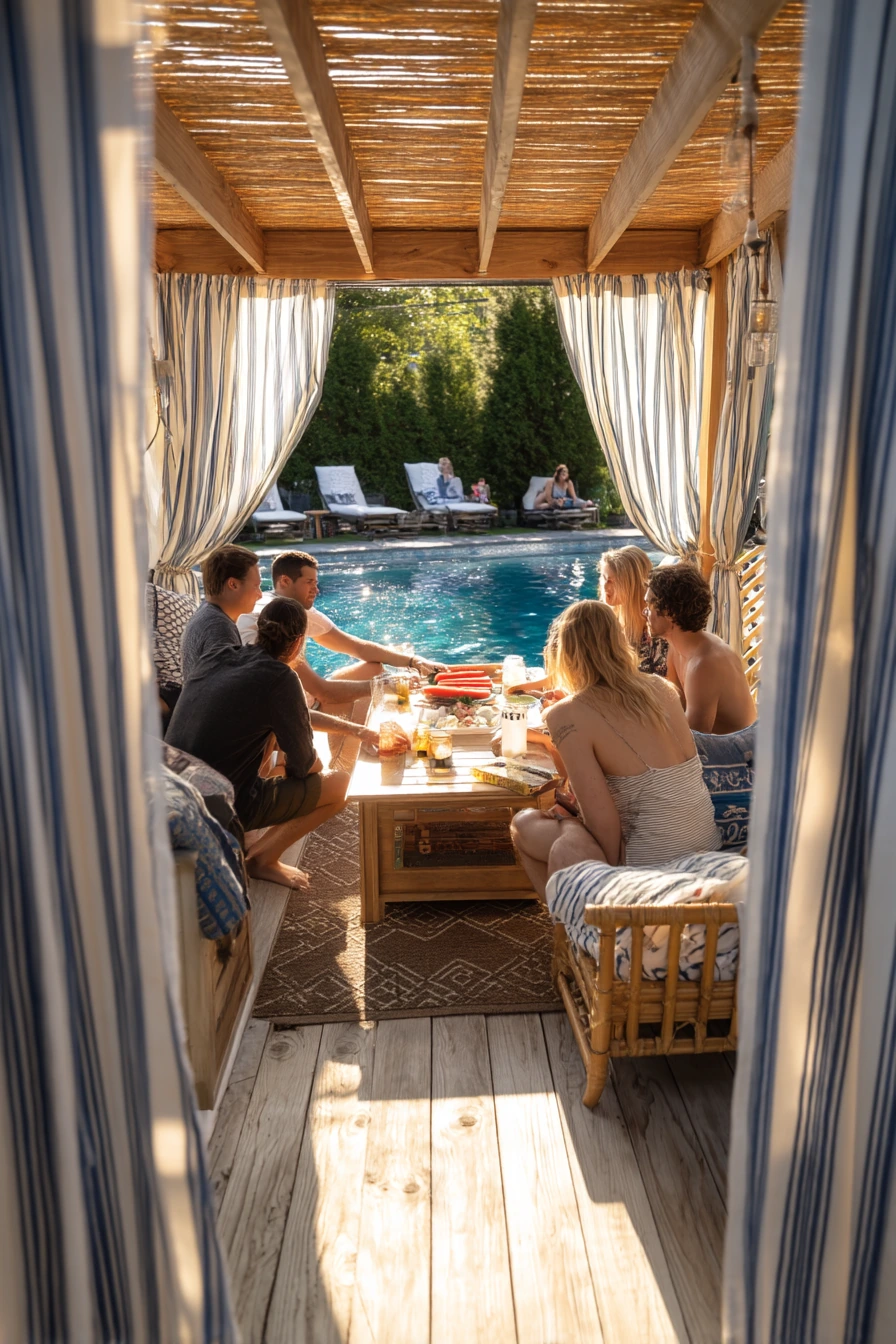
A small cabana can be one of the most social garden shade ideas, especially near a pool. Canvas curtains create instant relief from sun, and a bamboo shade screen blocks side glare while keeping airflow. This combo also gives a bit of privacy when friends are gathered around a low table.
Think about what people actually need poolside. You want a shaded spot for sliced watermelon, sunscreen, wet towels, and a paperback novel. Add a ledge or small shelf for a phone charging safely away from splashes. Lounge chair cushions will get compressed and damp, so choose quick-dry covers and keep a hook nearby for towels to drip dry.
How to style it: keep colors calm so the water reflections stand out, like white canvas with natural bamboo. Add one deeper color in small items, like a navy tray or striped towel. Tie curtains back with simple rope when you want more breeze. If the deck gets slippery, add an outdoor runner with grip backing in the walking path from pool steps to the shaded seating.
- Place the bamboo screen on the west side for late sun.
- Use outdoor curtain grommets for smoother sliding.
- Add a small fan rated for outdoor covered use.
- Store sunscreen and books in a lidded basket.
- Include a side table for drinks to prevent spills.
Pro Design Tip: Use a two-layer setup: bamboo screen for side sun plus curtains for front sun, so you can adjust shade without closing the cabana in.
Budget Considerations: Prefab cabana frames vary a lot in price; to lower cost, build a simple frame and add budget canvas panels and a roll-up bamboo fence.
8 Renter-Friendly Tree Canopy Lounge
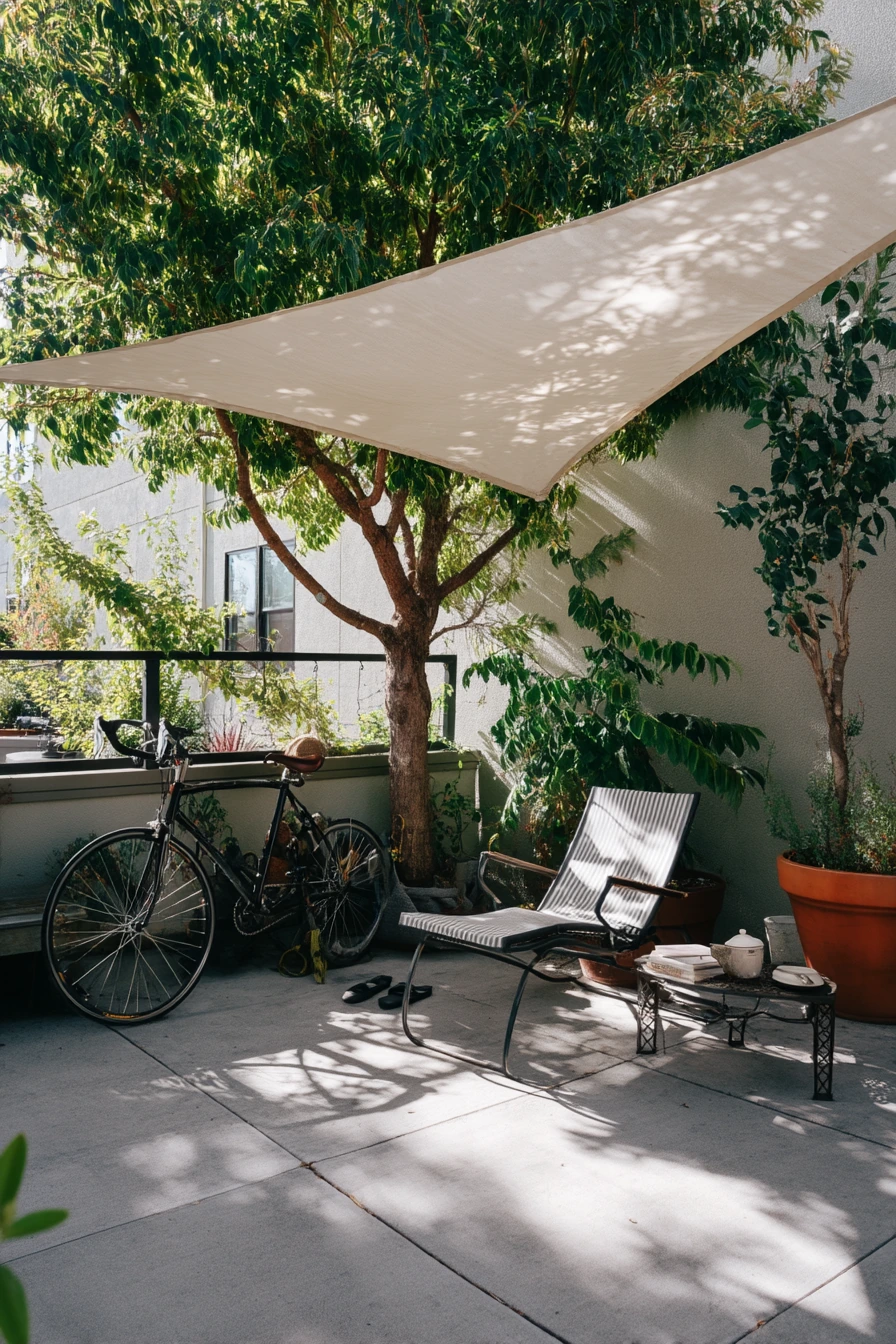
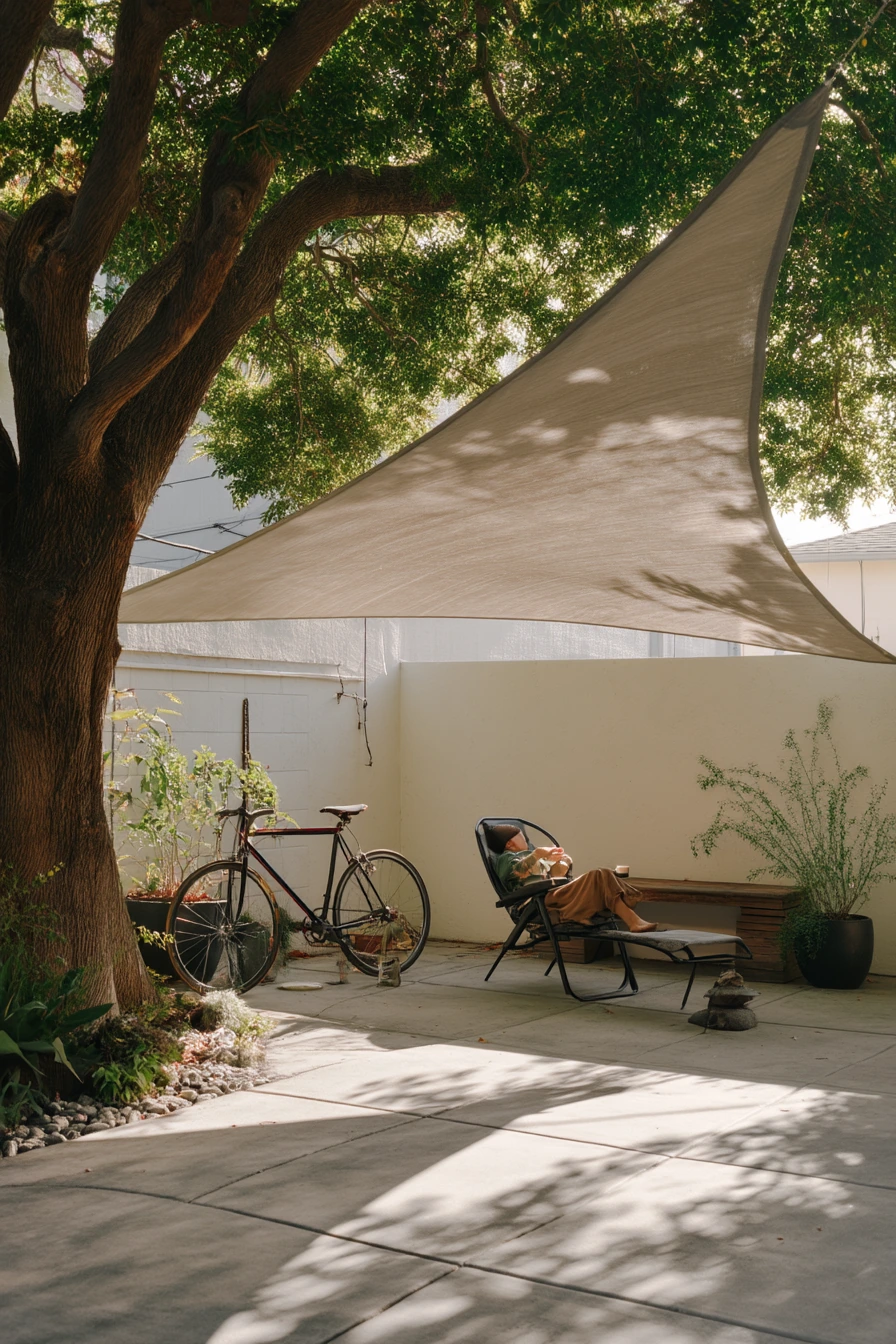
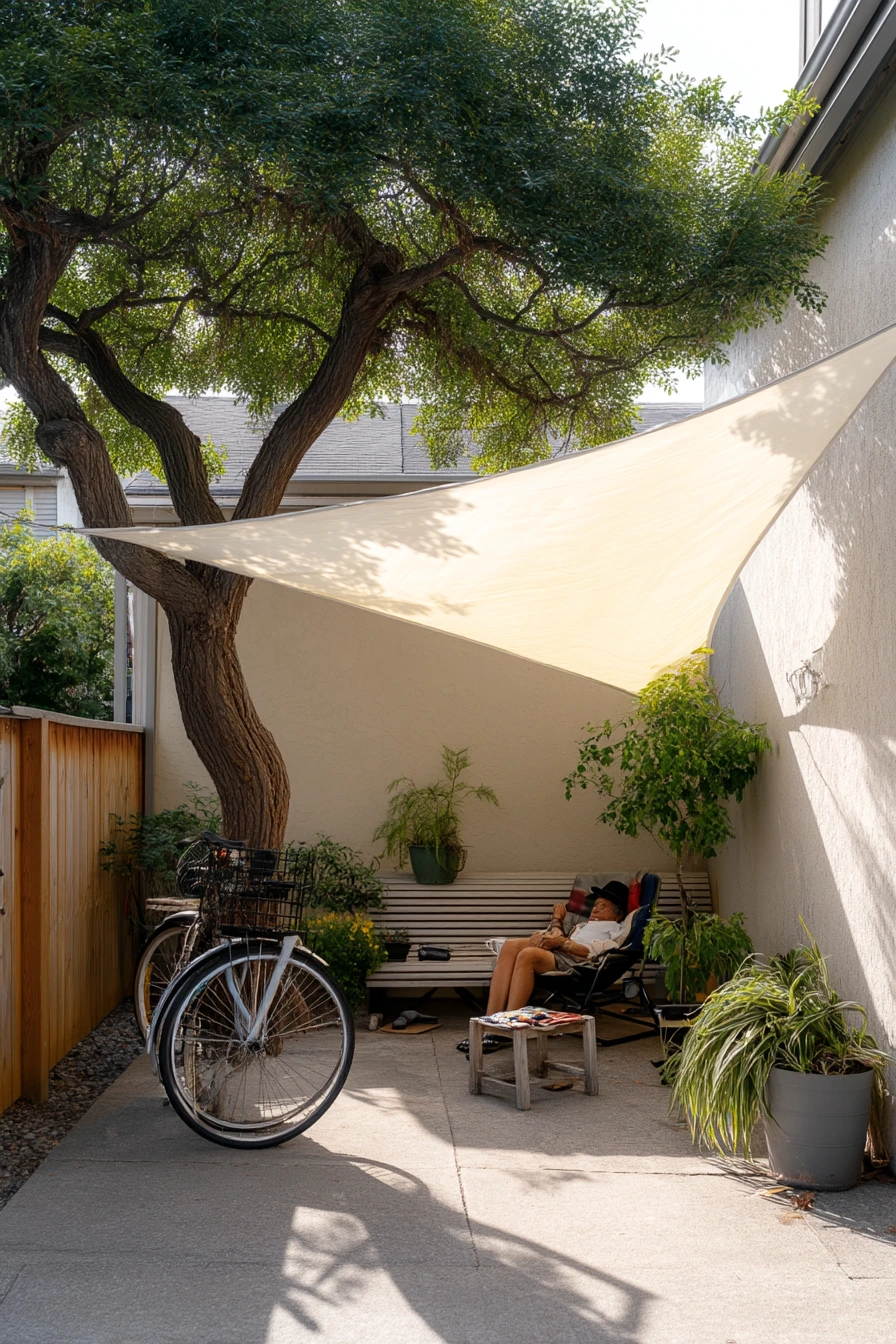
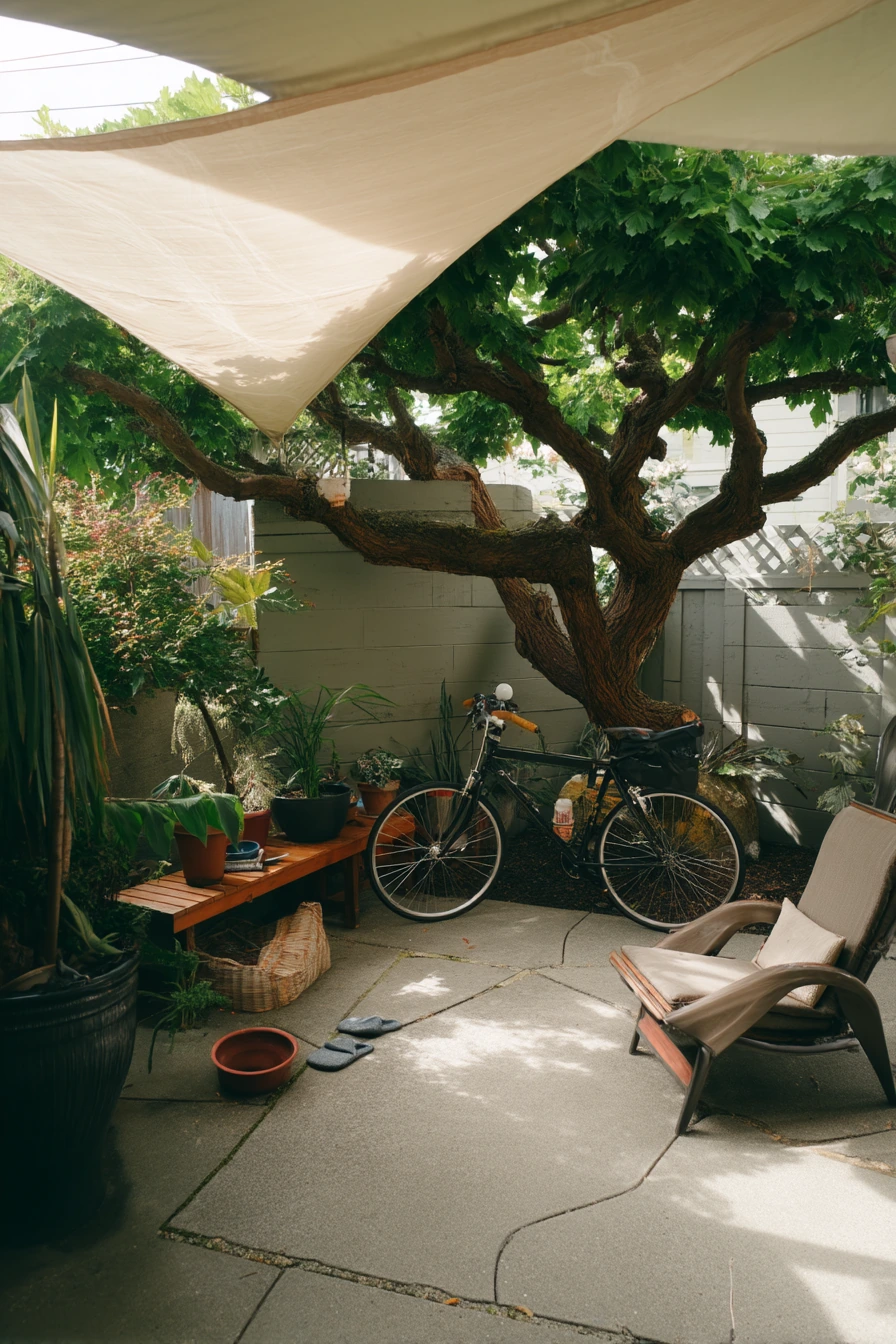
Renter-friendly garden shade ideas should avoid permanent changes while still giving real comfort. A freestanding sail shade is a strong option because it can be installed with posts in heavy planters or on a stand, not attached to the home. Pair it with tall potted ficus or similar plants to create cool cover and a sense of privacy.
Set the scene like a normal day. A lounge chair with tea, outdoor slippers, and a bike leaning nearby makes the patio feel used and welcoming. Add a bench for mail and small items so they do not end up on the floor. On overcast days, you still get glare, so shade helps with screen time and makes the space feel calmer.
How to style it: keep the sail shade a solid neutral color so it looks clean against many rental exteriors. Use planters in two sizes, one tall and one low, to create depth. If you want a softer look, add a light outdoor blanket and one textured pillow. Let plant shadows stretch across concrete and use that natural pattern as your decor, instead of buying lots of extras.
- Use weighted planters or sandbags to stabilize posts.
- Check your lease rules for drilling and attachments.
- Pick plants that handle sun and wind on patios.
- Add felt pads under planters to protect surfaces.
- Choose a sail shape that fits without blocking walkways.
Pro Design Tip: Create a shaded corner by combining one sail with tall plants, then angle seating toward the plants for a cozier, more private feel.
Budget Considerations: Large planters can add up fast; if you are on a budget, use lightweight pots and place them inside larger thrifted containers for the same look.
9 Kids’ Play Zone with Woven Shade Canopy
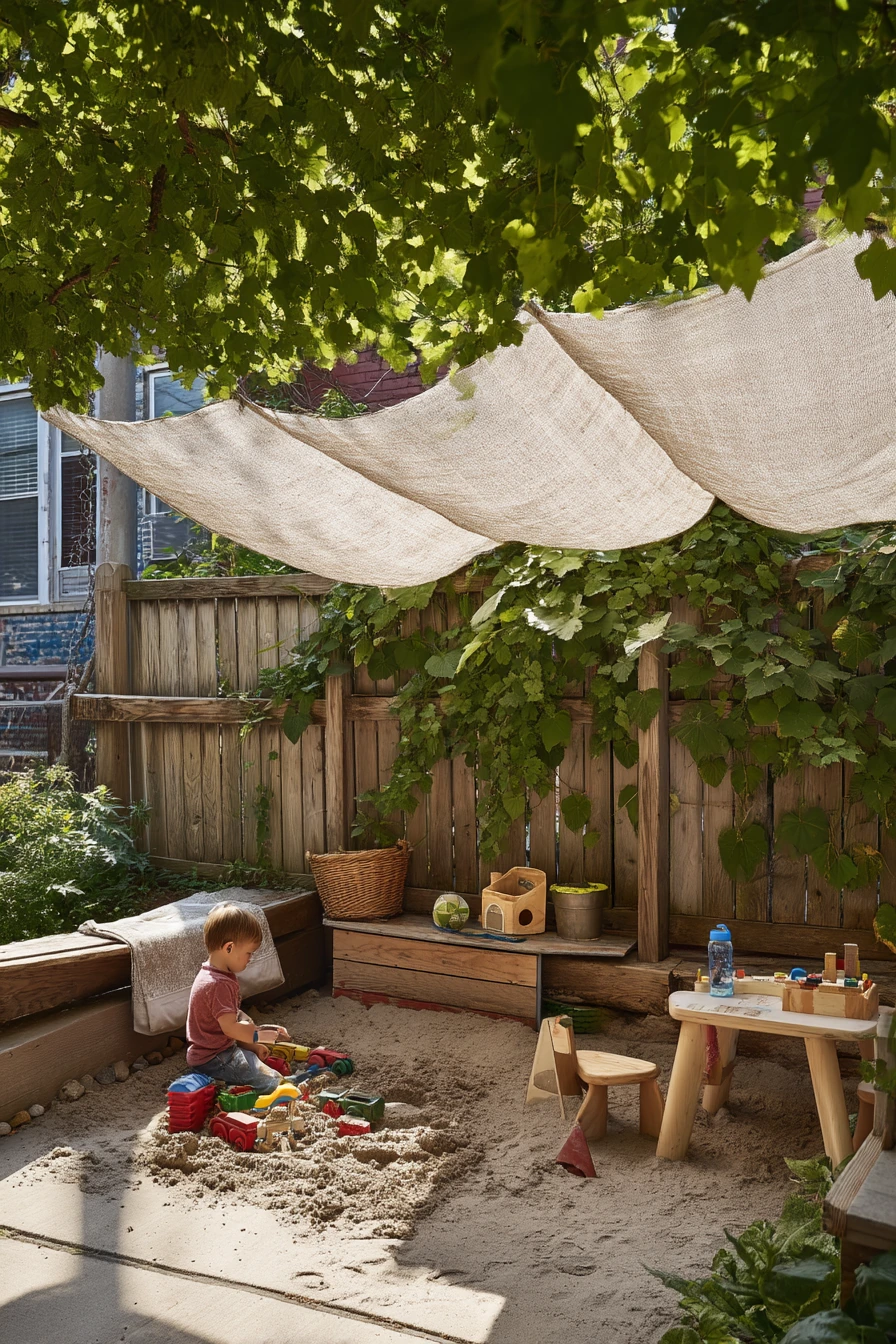
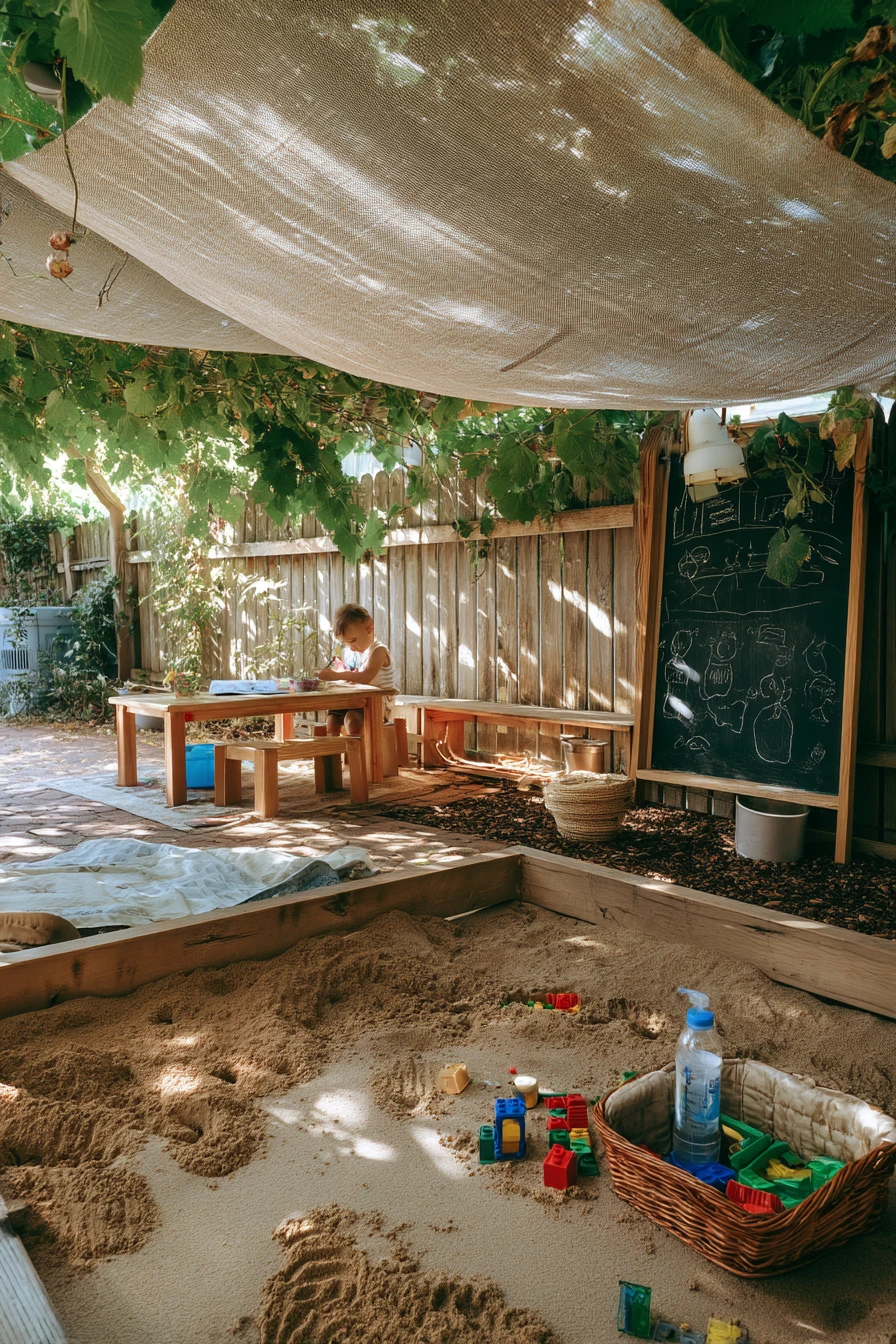
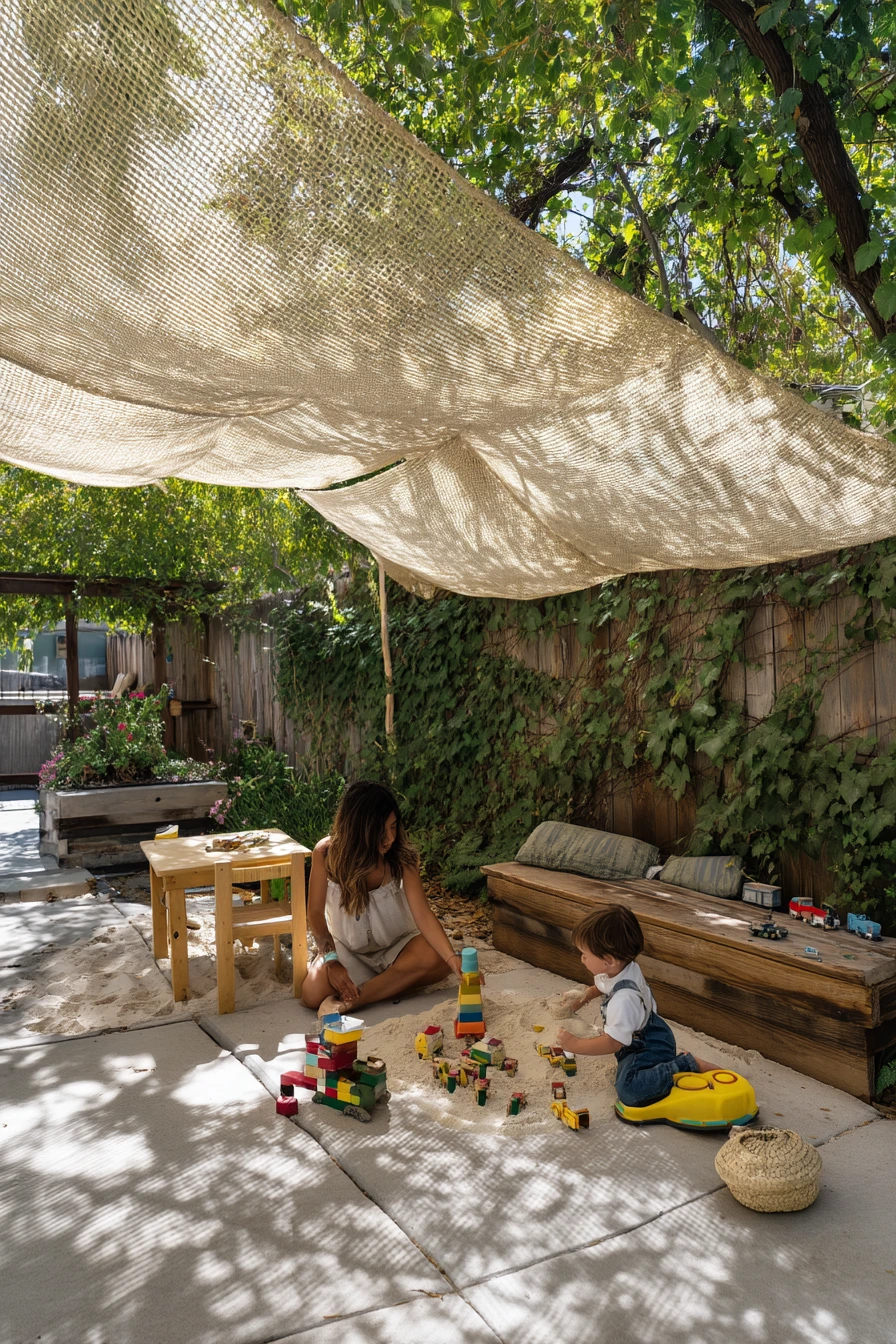
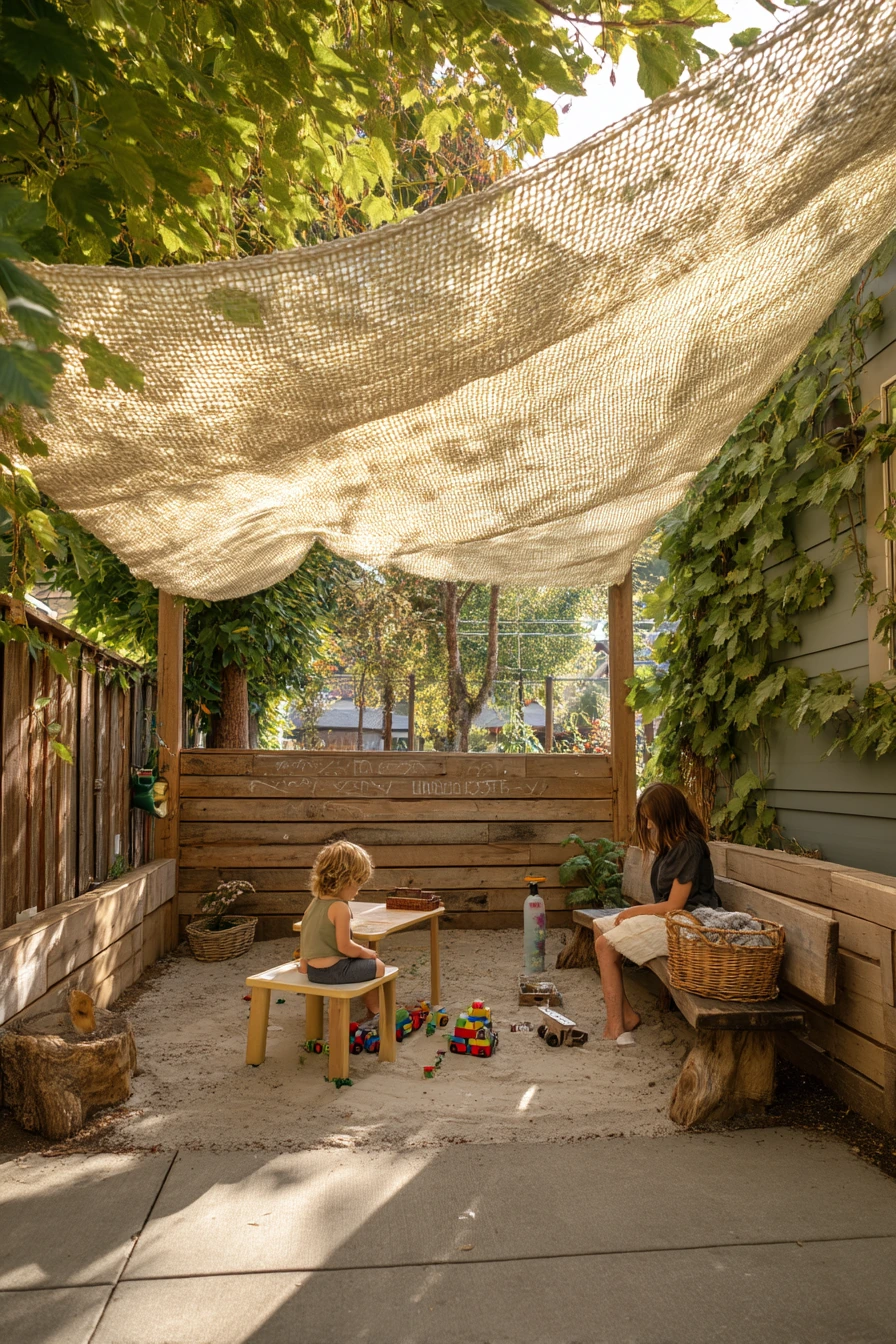
For families, the best garden shade ideas often start with the kids zone. A woven canopy over a sandbox and tiny table cuts direct sun and makes playtime safer and more comfortable. It also helps keep sand from drying out too fast, which can reduce dust and mess.
Design the area for daily use. Place a bench in the shade where a parent can read while watching a child stack blocks. Keep a water bottle nearby and store toy trucks in a basket so clean-up is fast. Chalk drawings on paving make the space fun, and climbing vines along the fence soften the edges and add extra dappled shade as they grow.
How to style it: use a canopy in a warm natural tone that fits most backyards. Add one washable outdoor blanket that can get messy and still look fine. If you want the space to feel organized, use two baskets, one for sand toys and one for chalk and blocks. Add a small mat at the sandbox edge so little feet can wipe off before running inside.
- Choose a canopy fabric rated for UV exposure.
- Anchor the canopy posts deep and check them often.
- Keep the sandbox cover nearby to block animals at night.
- Use rounded furniture edges for safer play.
- Trim vines so they do not block sight lines for safety.
Pro Design Tip: Place the canopy so shade falls on both the sandbox and the nearby seating, so you do not have one hot spot where adults avoid sitting.
Budget Considerations: A simple shade canopy kit is often cheaper than a full playhouse; if you need to save more, use a sturdy outdoor tarp with proper UV rating and strong anchors.
10 Front Porch Shade for Slow Summer Mornings
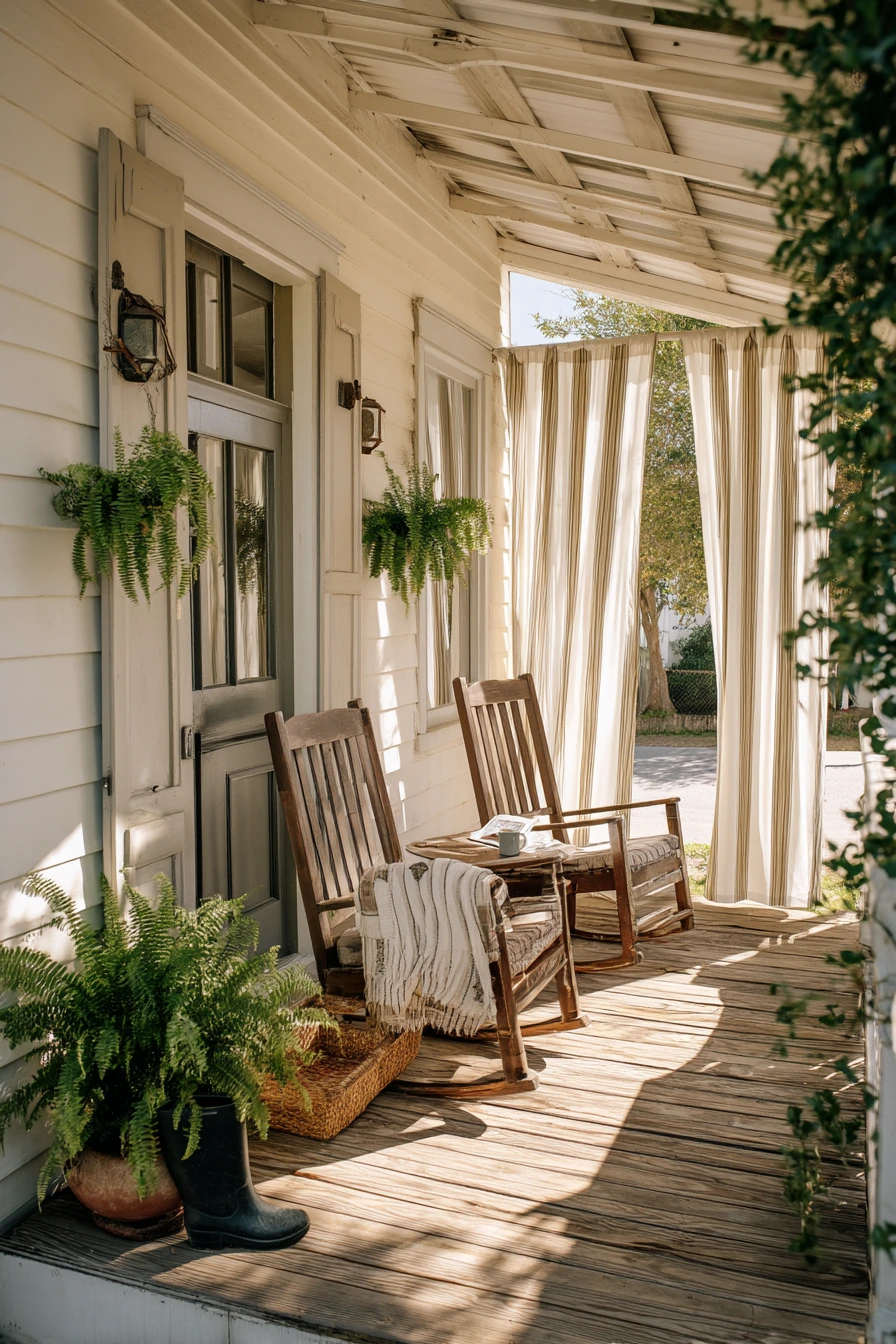
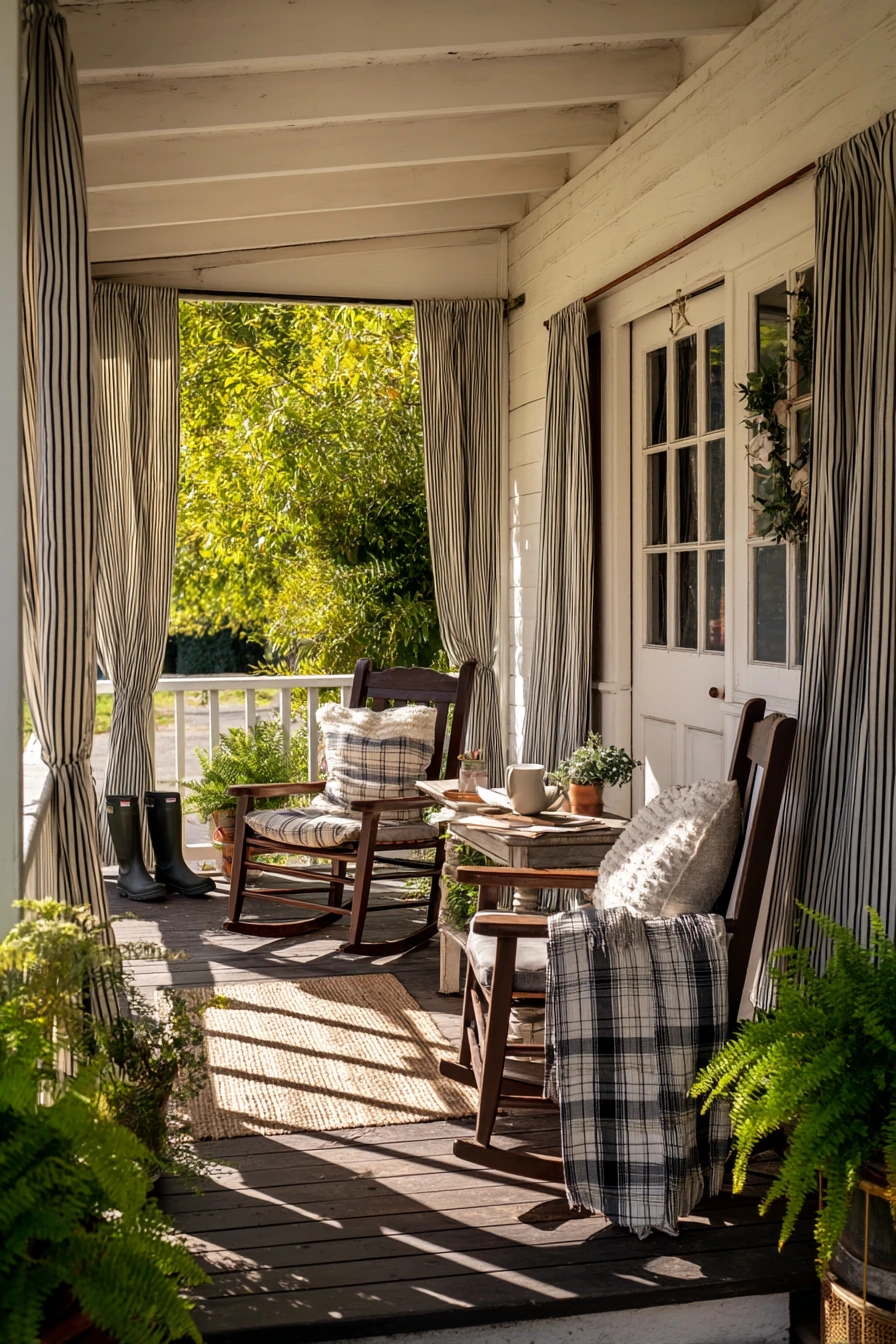
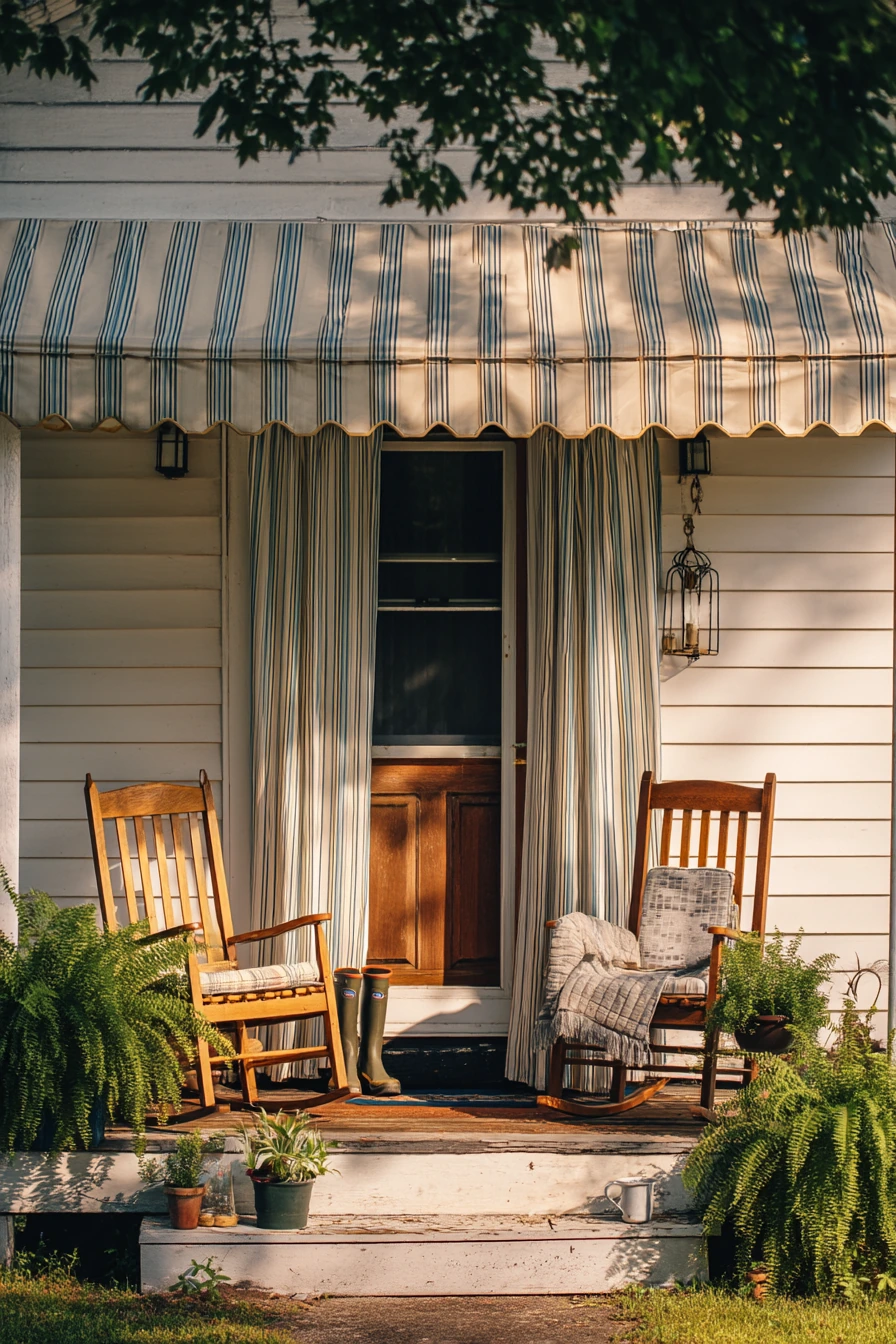
A front porch can be one of the easiest places to add garden shade ideas that also boost curb appeal. A slim awning gives steady cover, and striped café curtains soften early sunlight without blocking the view. This kind of shade makes morning coffee in two rockers more comfortable and helps protect the door area from rain and sun wear.
Keep it lived-in and useful. A side table with coffee cup rings, a folded throw blanket, and gardening boots by the door look normal and make the porch feel like part of the home. Add potted ferns for a lush look that fits shade, and let a faint breeze move the curtains for a relaxed feel.
How to style it: pick curtain stripes that match your home colors, like black and cream, navy and white, or green and tan. Keep the awning fabric simple so the curtains are the pattern. If your porch gets hot from reflected light, add an outdoor rug in a medium tone to reduce glare. Use hooks near the door for a hat and small tools, so the porch stays tidy without trying too hard.
- Hang café curtains to cover the lower half for privacy.
- Use outdoor rods and rust-resistant screws.
- Add tie-backs so you can open curtains quickly.
- Choose rockers with a small side table between them.
- Water ferns early so the porch dries by evening.
Pro Design Tip: Combine a plain awning with patterned café curtains, then repeat the stripe color in one small item like a planter or doormat for a pulled-together look.
Budget Considerations: If an awning is not in the budget, start with café curtains and a large outdoor umbrella near the steps for similar shade at a lower cost.
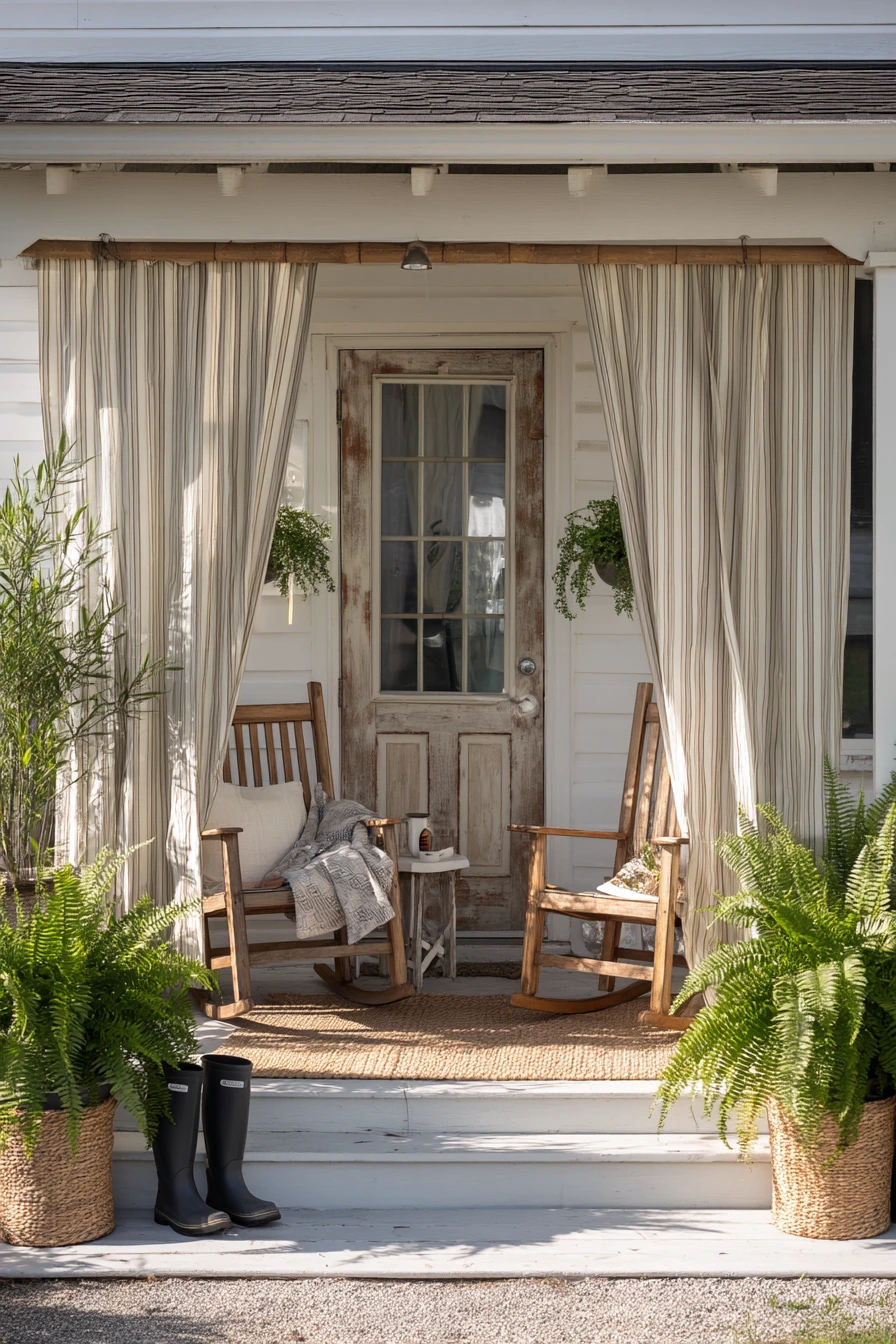
These garden shade ideas show how to make outdoor spaces more usable, from a pergola over a family patio to curtains on a compact balcony and shade cloth over vegetable beds.
Pick the area you use most, then choose one shade option that matches your space and rules, like an umbrella, sail shade, awning, or canopy. Add a few practical details like baskets, hooks, and durable textiles to keep it easy to maintain.
FAQ
What is the cheapest way to add garden shade? A market umbrella, a basic shade sail, or outdoor curtains on a tension rod are usually the lowest-cost options.
Do shade sails block UV rays? Many do, but the level varies. Look for UV-rated fabric and install it with enough tension so it stays flat.
How do I add shade in a rental? Use freestanding sails, weighted bases, outdoor curtains with removable hardware, and tall potted plants for coverage and privacy.
What shade cloth percent is best for vegetables? For many leafy greens, 30 to 50 percent shade cloth works well. In very hot climates, some gardeners use 50 percent or higher.
How can I shade a small balcony without making it dark? Use light-colored sheer curtains or a thin bamboo blind. They filter glare but still let in daylight.
How do I keep a shaded area from feeling closed in? Leave gaps for airflow, use light fabrics, and layer shade so you can open or retract parts when you want more light.