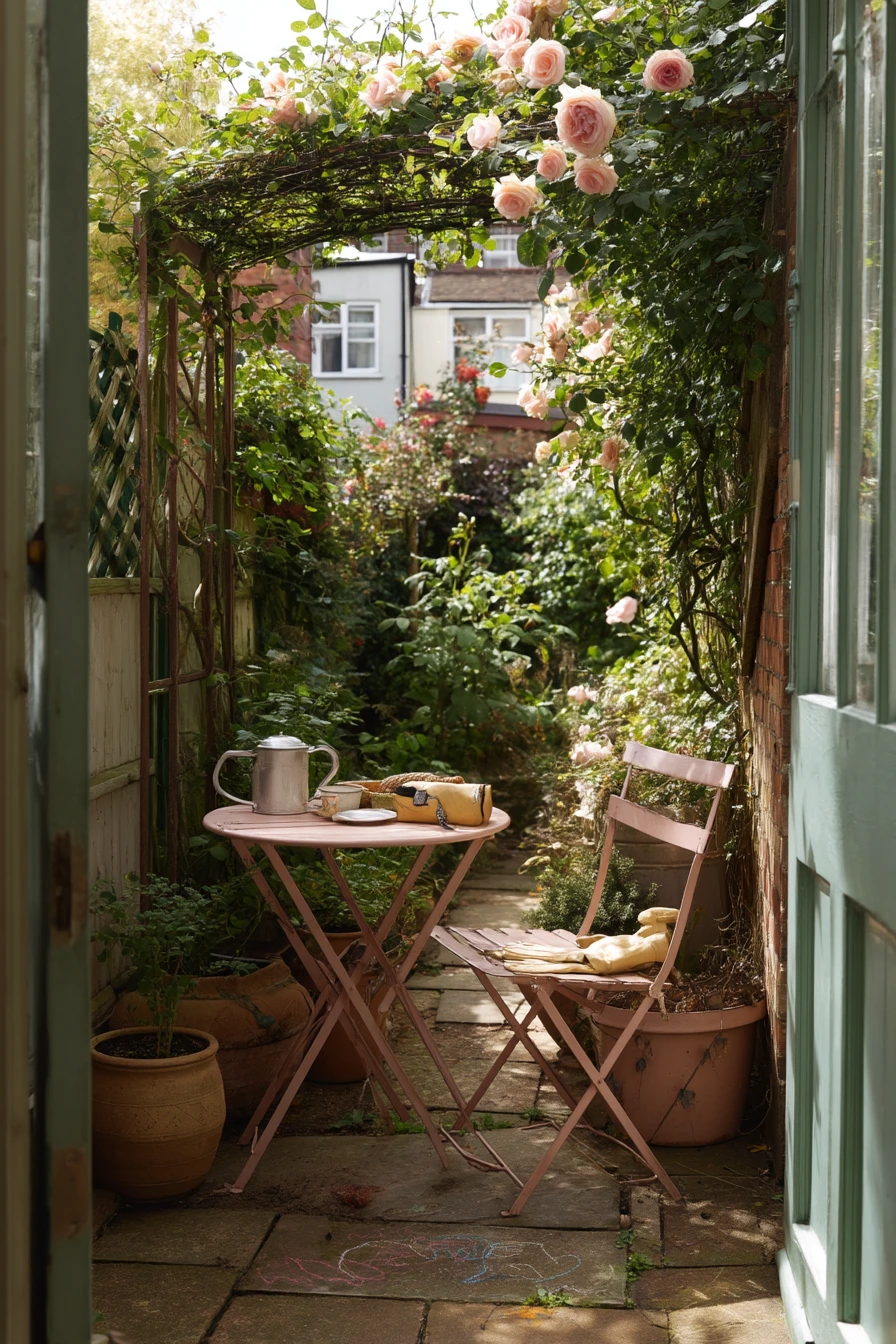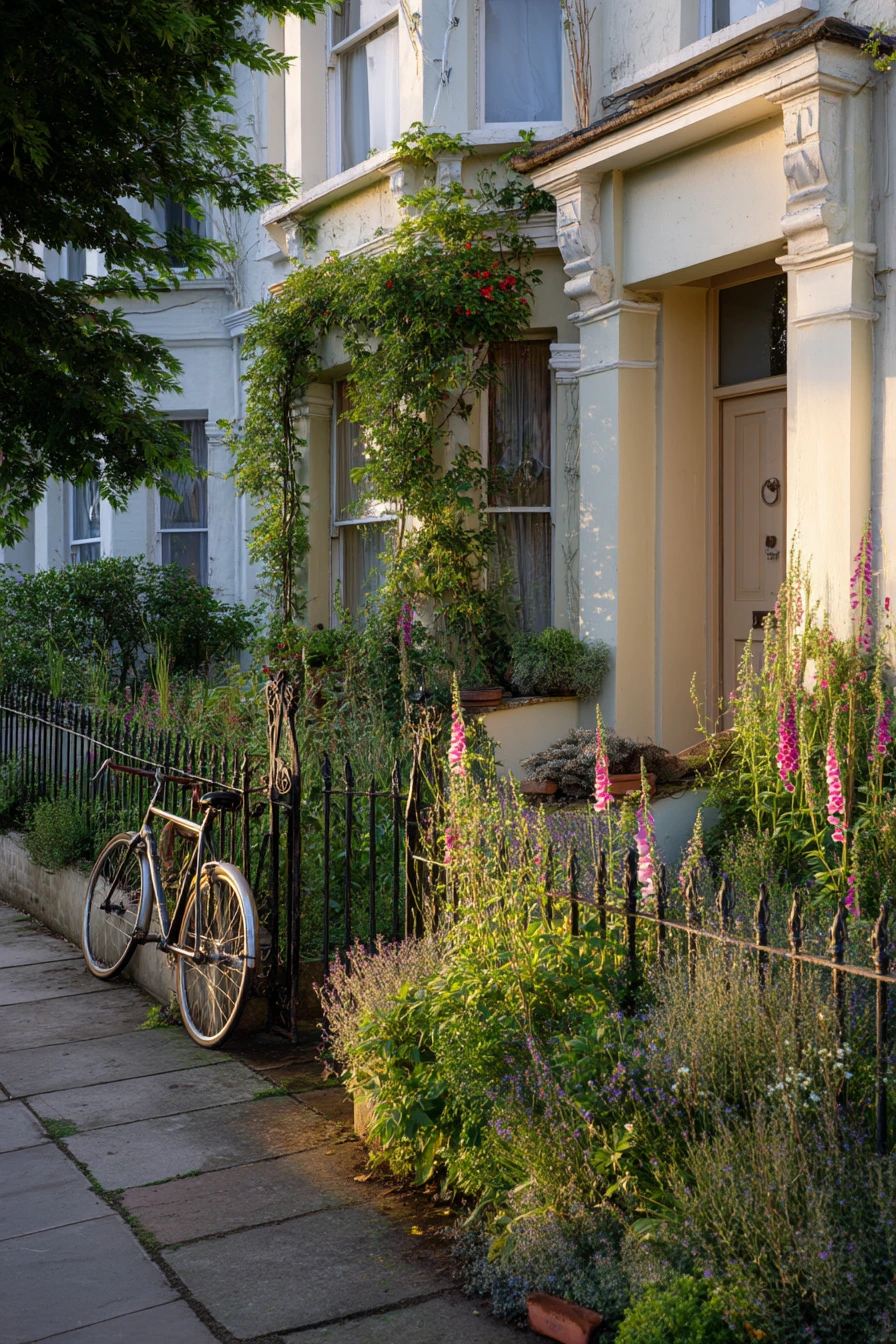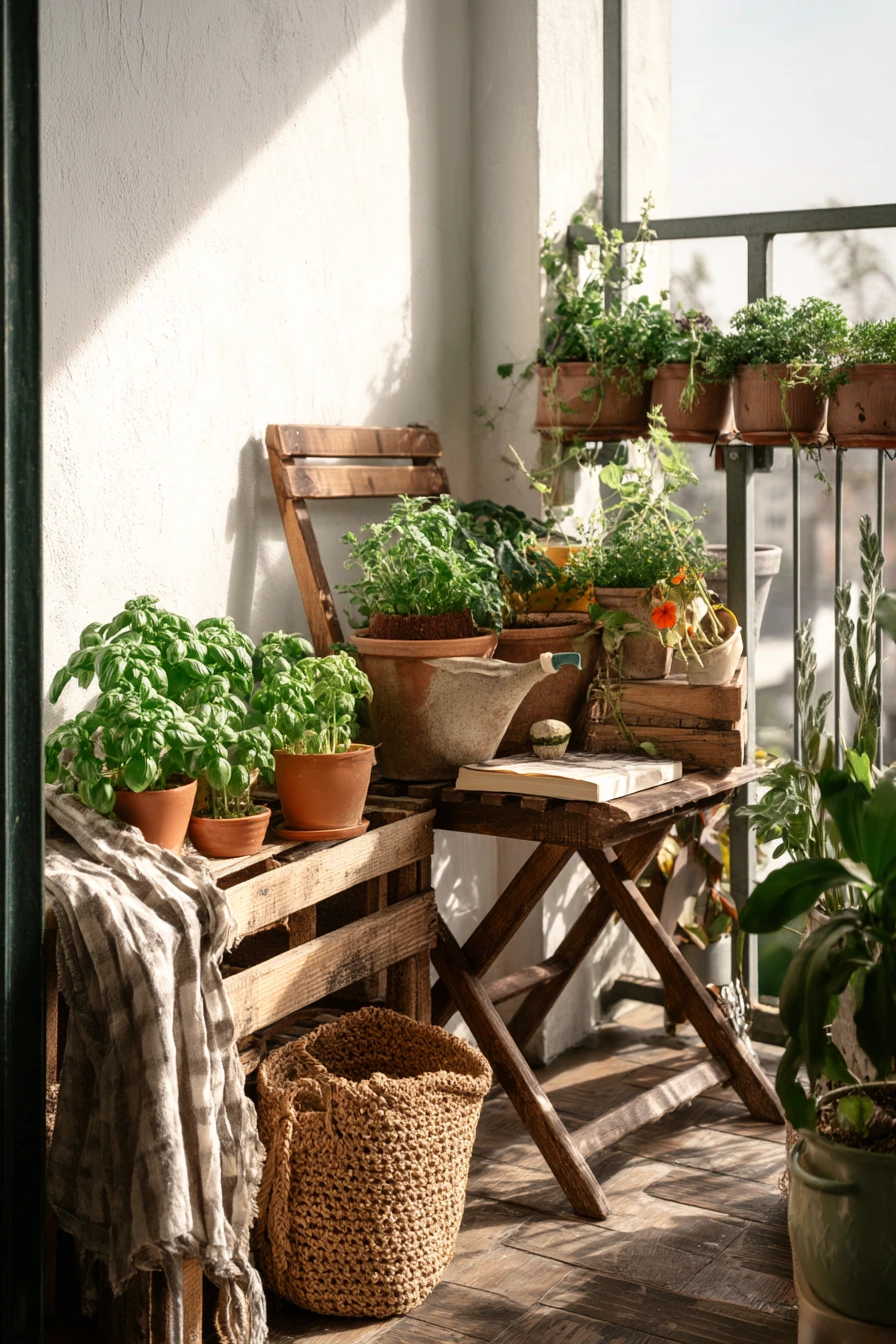

Low maintenance garden border ideas help you keep a neat yard without spending every weekend weeding and watering. The right plants, edging, and mulch can make a border look good in every season with less work.
This post shows simple border layouts that fit real homes, from a townhouse front path to a narrow side return and a shaded fence line. Each idea uses tough plants like lavender, sedum, ornamental grasses, and hellebores, plus practical finishes like gravel, slate chips, bark mulch, and stone edging.
You will also get quick styling tips, small layout rules, and budget notes so you can copy the look from the photos and make it fit your space. Use the headings to jump to the border style that matches your garden.
If you are coming from Pinterest, save the ideas you like, then use the plant lists and tips here to build a border that stays tidy and calm all year.
1 Gravel and Lavender Border by the Front Door
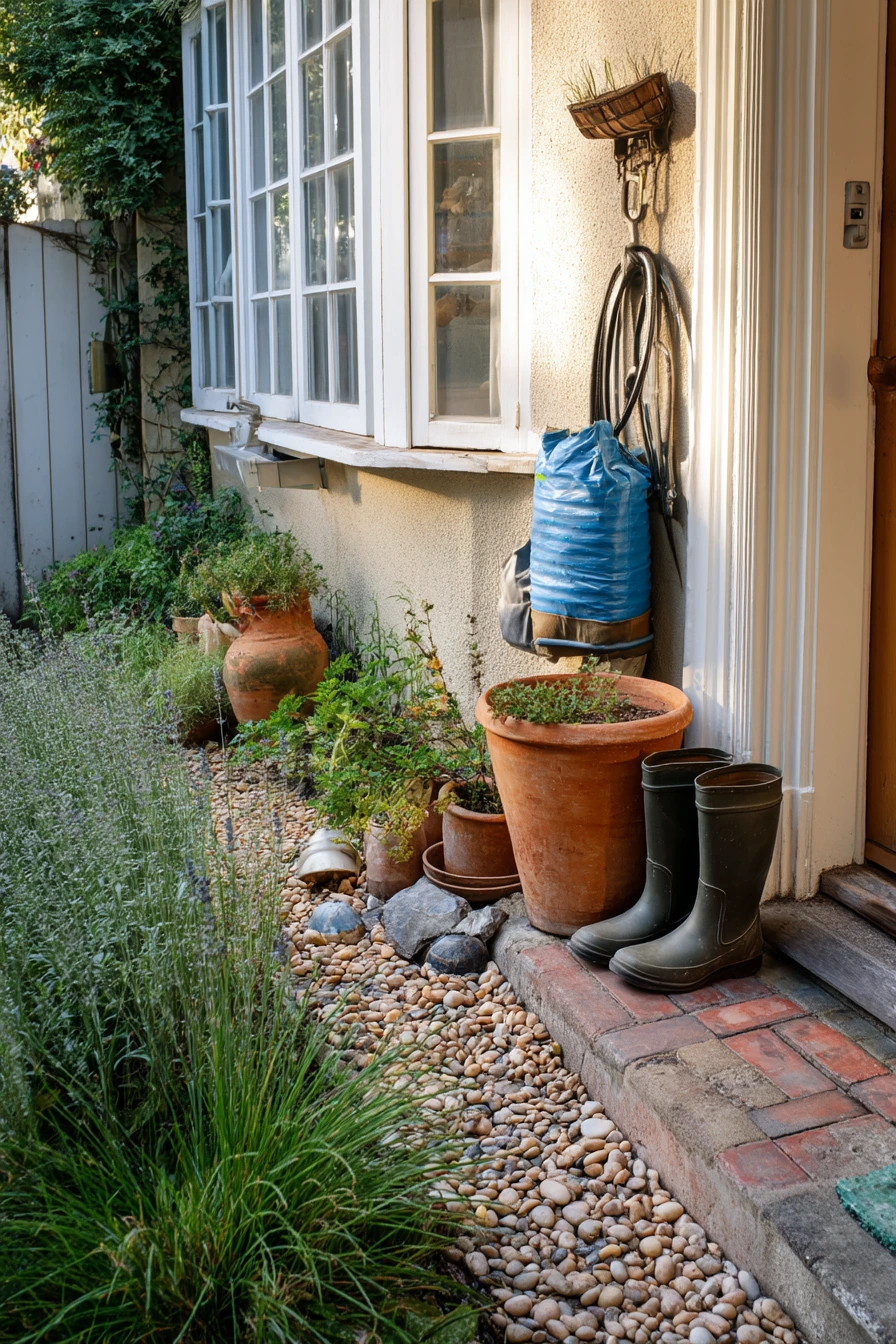
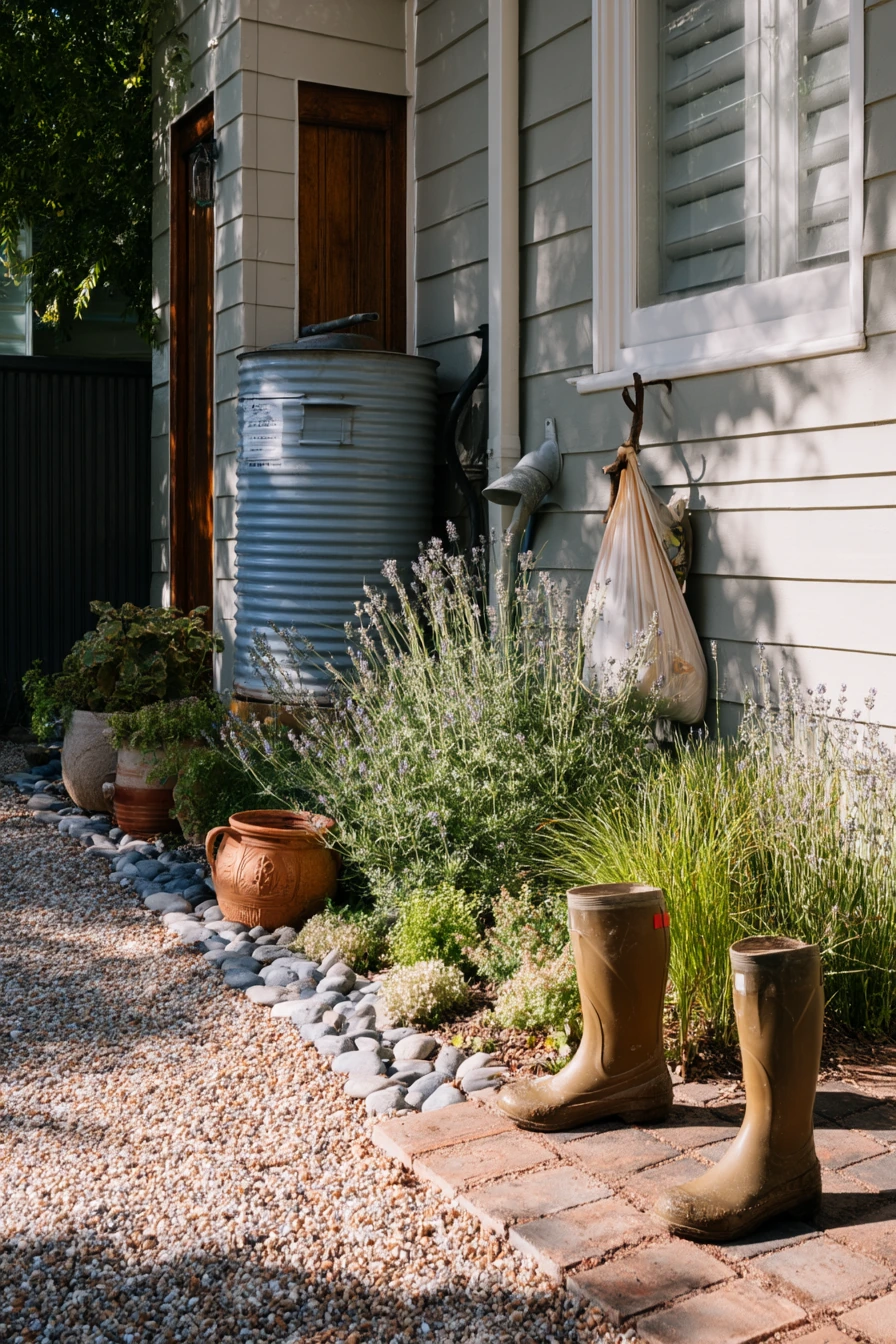
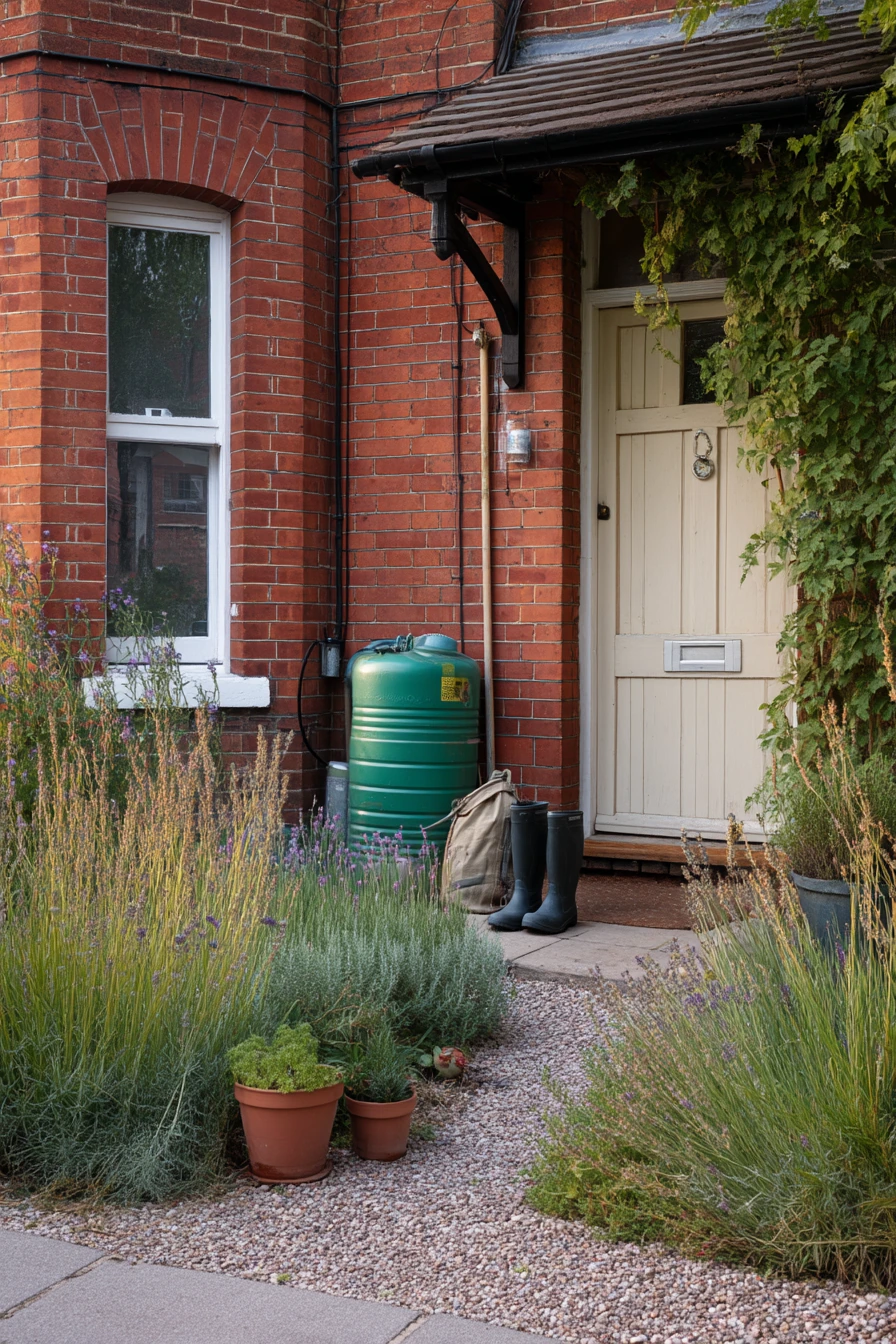
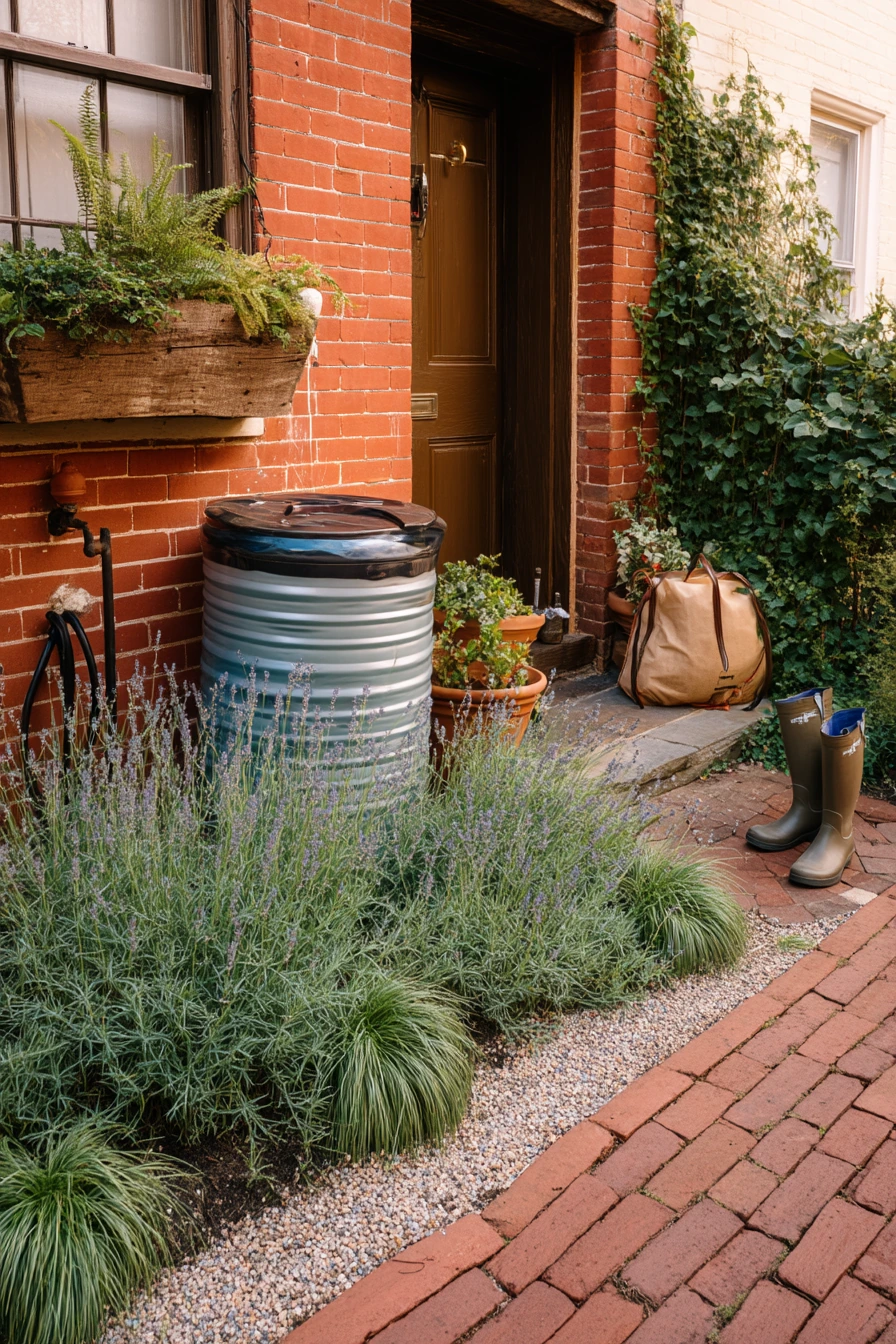
A townhouse front garden needs a border that looks tidy from the street but does not need daily care. A mix of lavender, dwarf rosemary, and ornamental grasses works well because the plants stay compact, handle dry spells, and look good even when you are busy. Pale gravel edging beside a brick path keeps the line sharp and helps stop grass from creeping in.
To set this up, keep the border narrow and repeat the same plants in small groups. Plant lavender in a simple row, then tuck dwarf rosemary between for evergreen structure. Add one or two clumps of grasses for movement. A trellis can hide a rain barrel behind it, so the area stays practical but still looks planned. Terracotta pots by the door add warmth and give you a spot for seasonal color without changing the main border.
For low effort care, water deeply the first season, then let the roots settle in. Use gravel as a top layer near the path to reduce mud splashes and keep the brick cleaner. Keep a hose coiled near the tap so quick watering feels easy. This kind of border suits real life, even with muddy boots, a reusable grocery bag, and mail by the door.
- Choose 2 to 4 main plants and repeat them for a calm look.
- Keep lavender and rosemary in full sun for best shape and scent.
- Use a gravel strip as edging to cut down weeding along the path.
- Trim lavender after flowering to stop it getting woody.
- Add one pot near the entry for quick seasonal updates.
Pro Design Tip: Match the gravel tone to your brick path, then echo that color in terracotta pots or a simple doormat so the entry feels pulled together.
Budget Considerations: Gravel edging is usually cheaper than stone. If you need to save money, edge with a narrow trench and recycled bricks, then top with a thin layer of gravel.
2 Drought-Tough Side Return Border
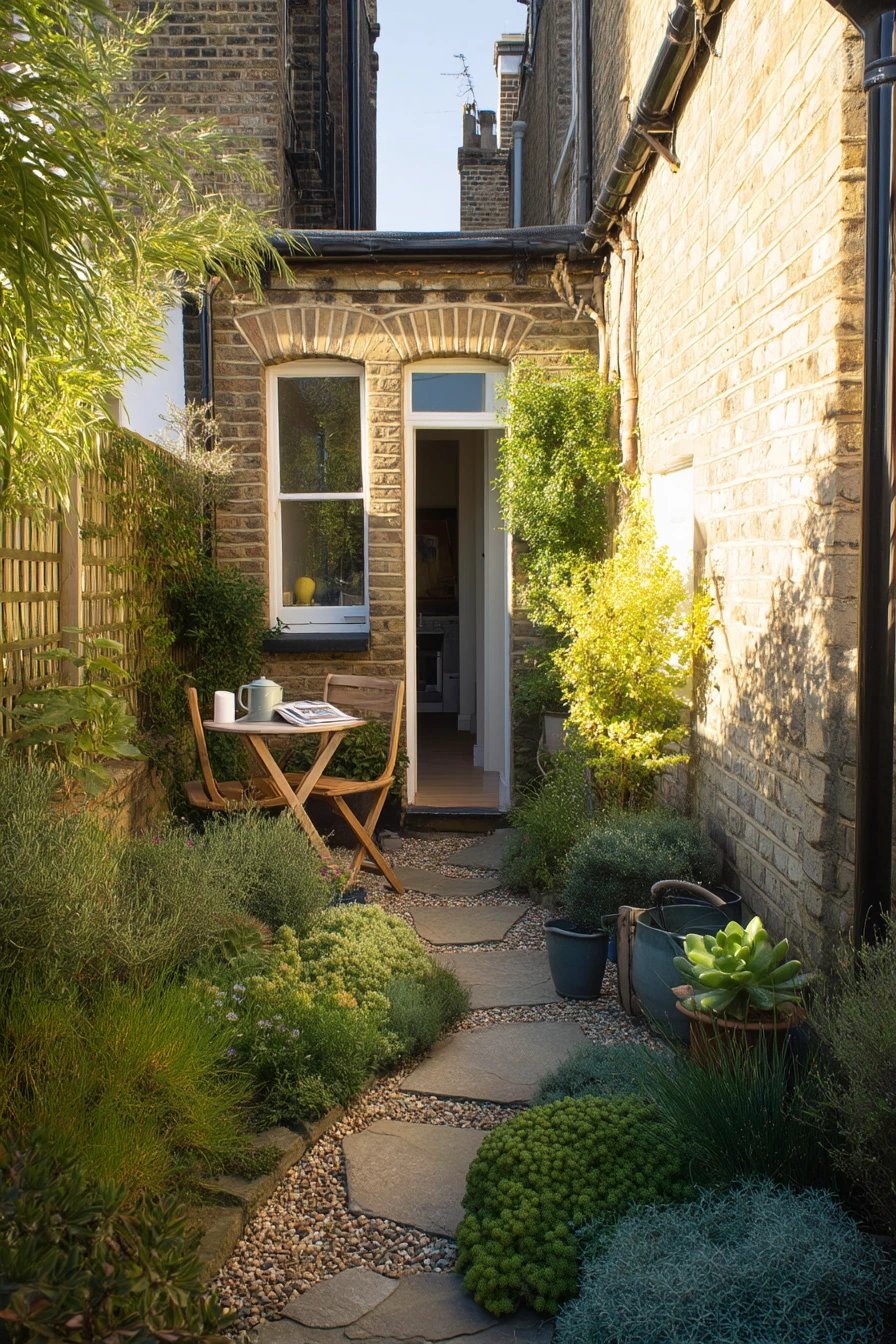
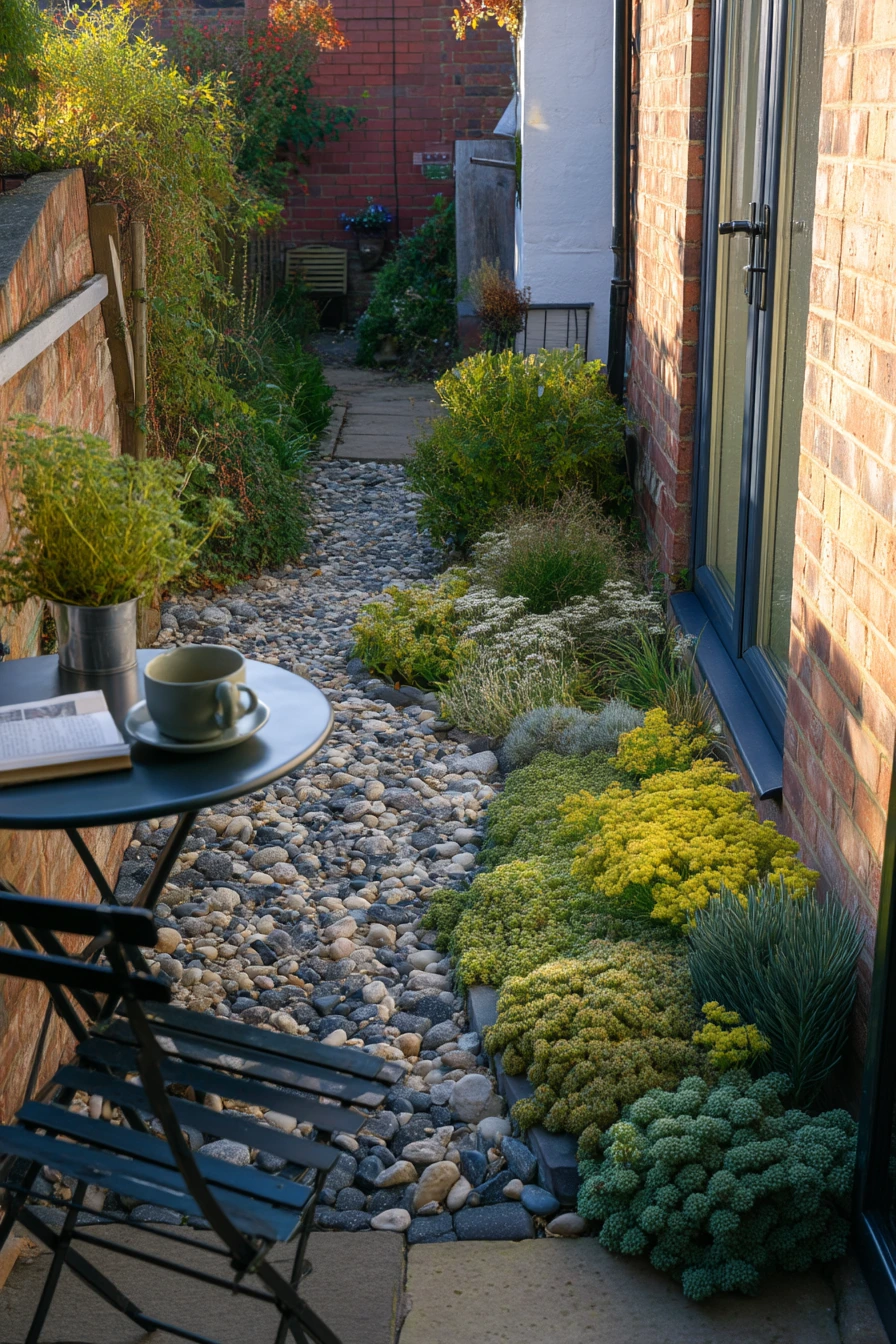
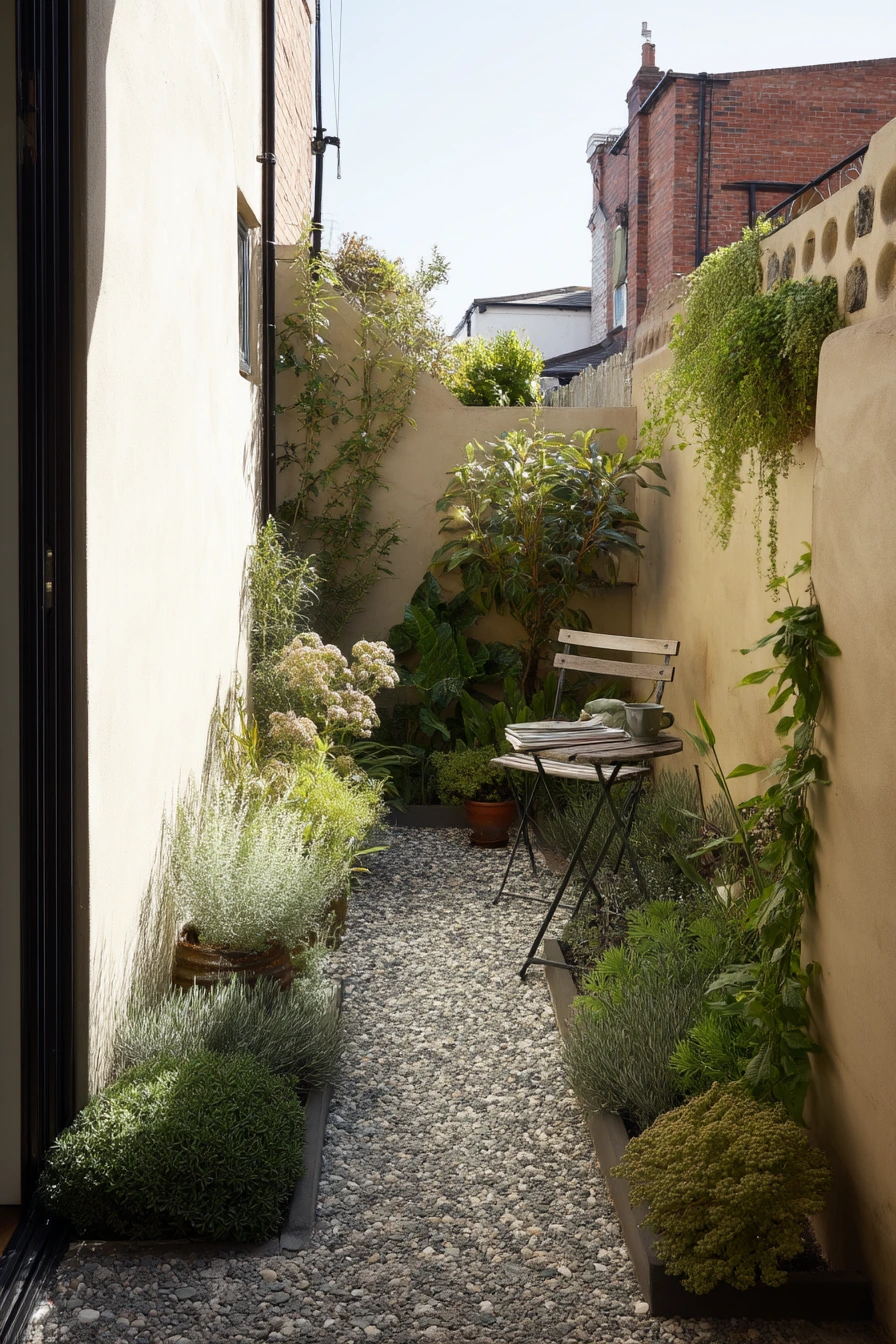
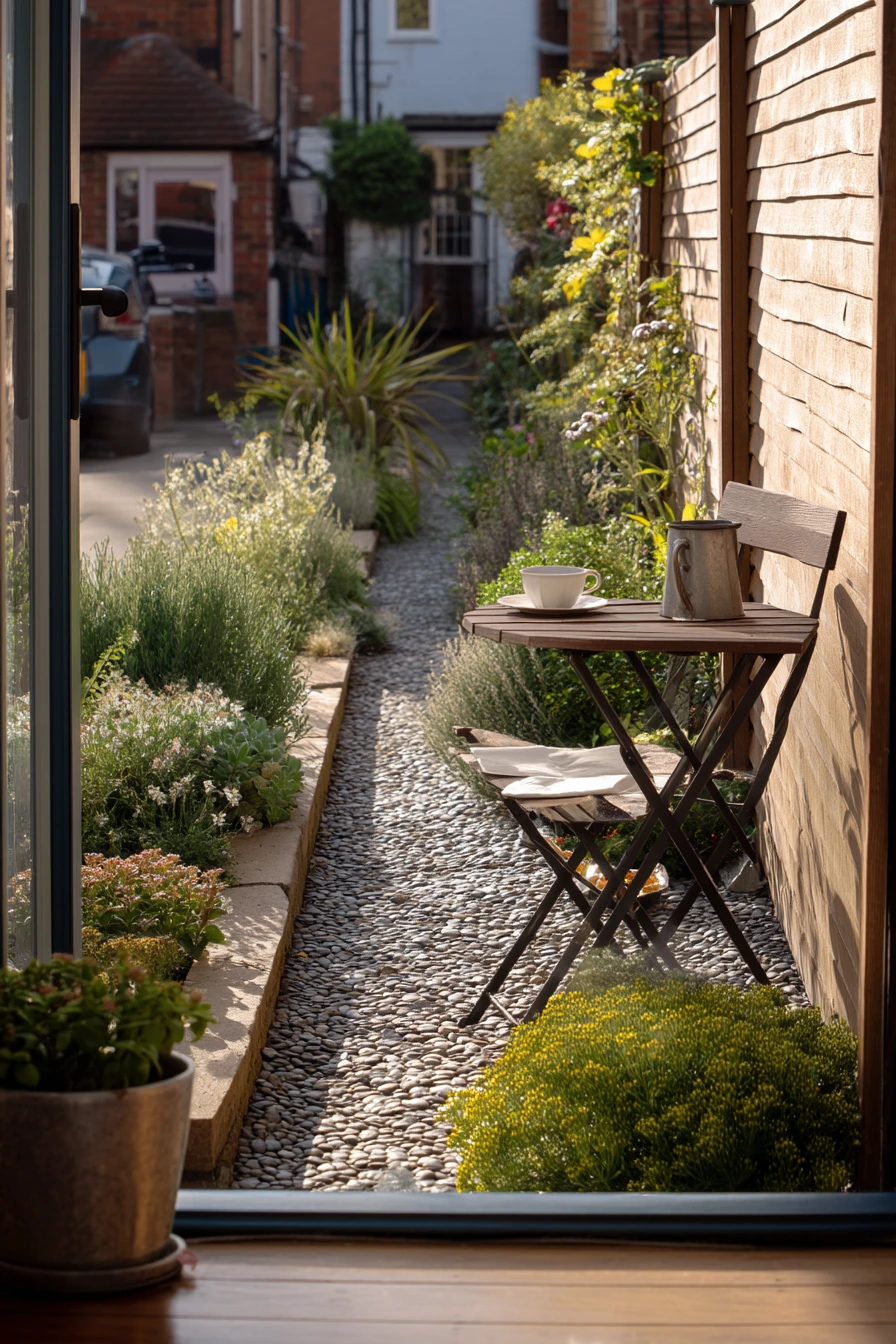
A narrow side-return garden can look messy fast, so the best low maintenance border ideas focus on clean ground cover and strong shapes. Sedum, euphorbia, and thyme handle heat and light shade, and they do not need rich soil. Compact box balls add year round structure, and slate chips give a neat finish that suits a tight space.
Start by keeping the planting bed slim along the wall or fence. Plant box balls at even spacing to create rhythm, then fill between them with sedum and thyme. Euphorbia adds height and a fresh green tone that stands out in late afternoon light. Slate chips help keep weeds down and make the path feel wider because the surface is uniform and dark.
Style matters in a side return because it is often a storage zone. Use one wall hook for a watering can so it looks intentional, not cluttered. A folding chair at the far end makes it feel like a small sitting spot. If a kid’s scooter lives there, park it in the same place near the back gate so the walkway stays clear. Small details like a mug on the sill, a paperback, and a dog leash can still feel calm when the border is simple and repeat planted.
- Use slate chips to reduce splash and keep shoes cleaner.
- Pick drought tolerant plants so watering is quick.
- Repeat box balls to add order in a long narrow run.
- Leave a slim access strip for bins or a scooter.
- Cut thyme lightly after flowering to keep it low and dense.
Pro Design Tip: In narrow spaces, keep plant heights in three steps only, low thyme, medium sedum, and taller euphorbia, so the border reads clean instead of crowded.
Budget Considerations: Box balls can be pricey. Swap some for cheaper alternatives like dwarf ilex or use fewer balls and fill the gaps with sedum plugs.
3 Pollinator Border Beside a Kitchen Window
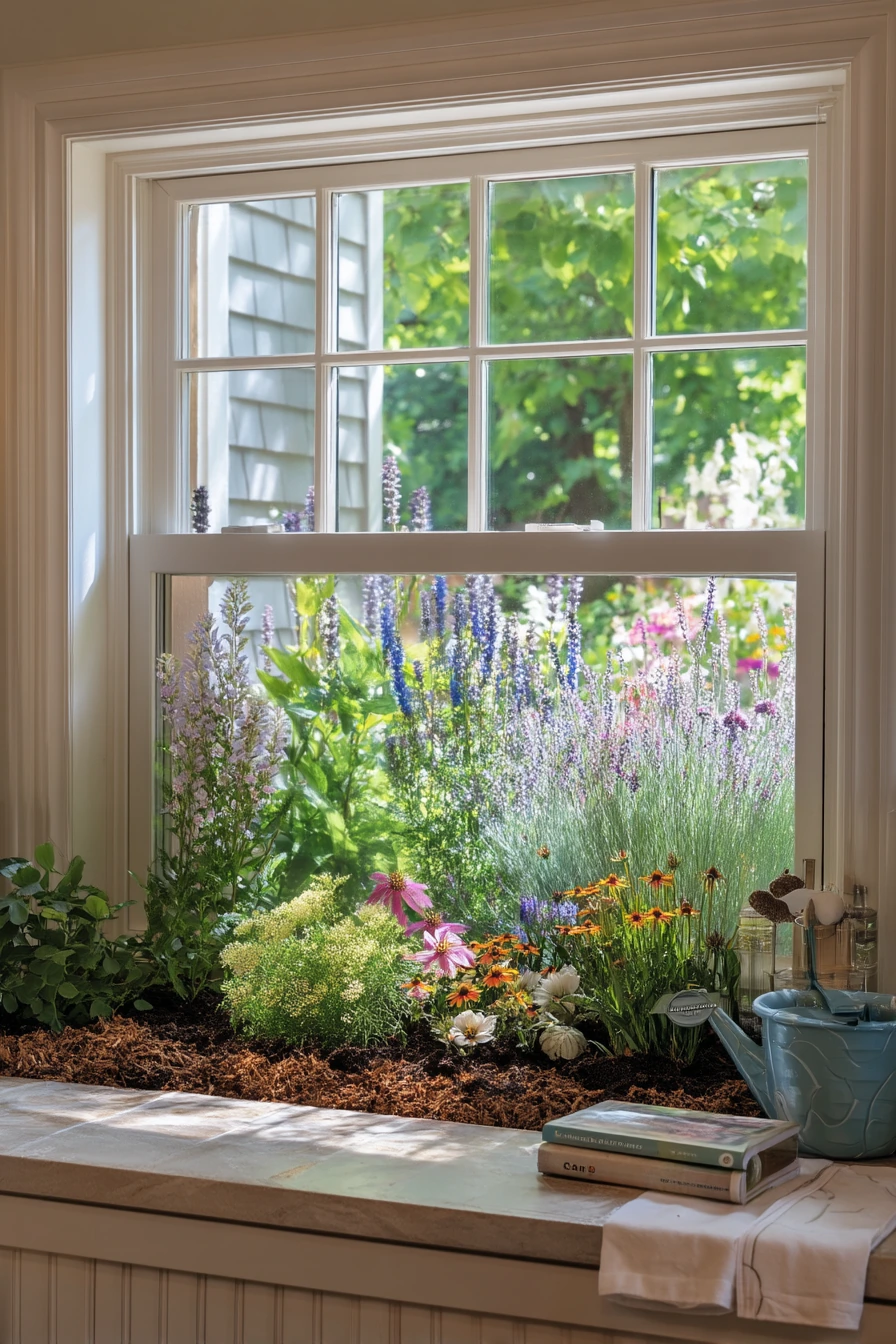
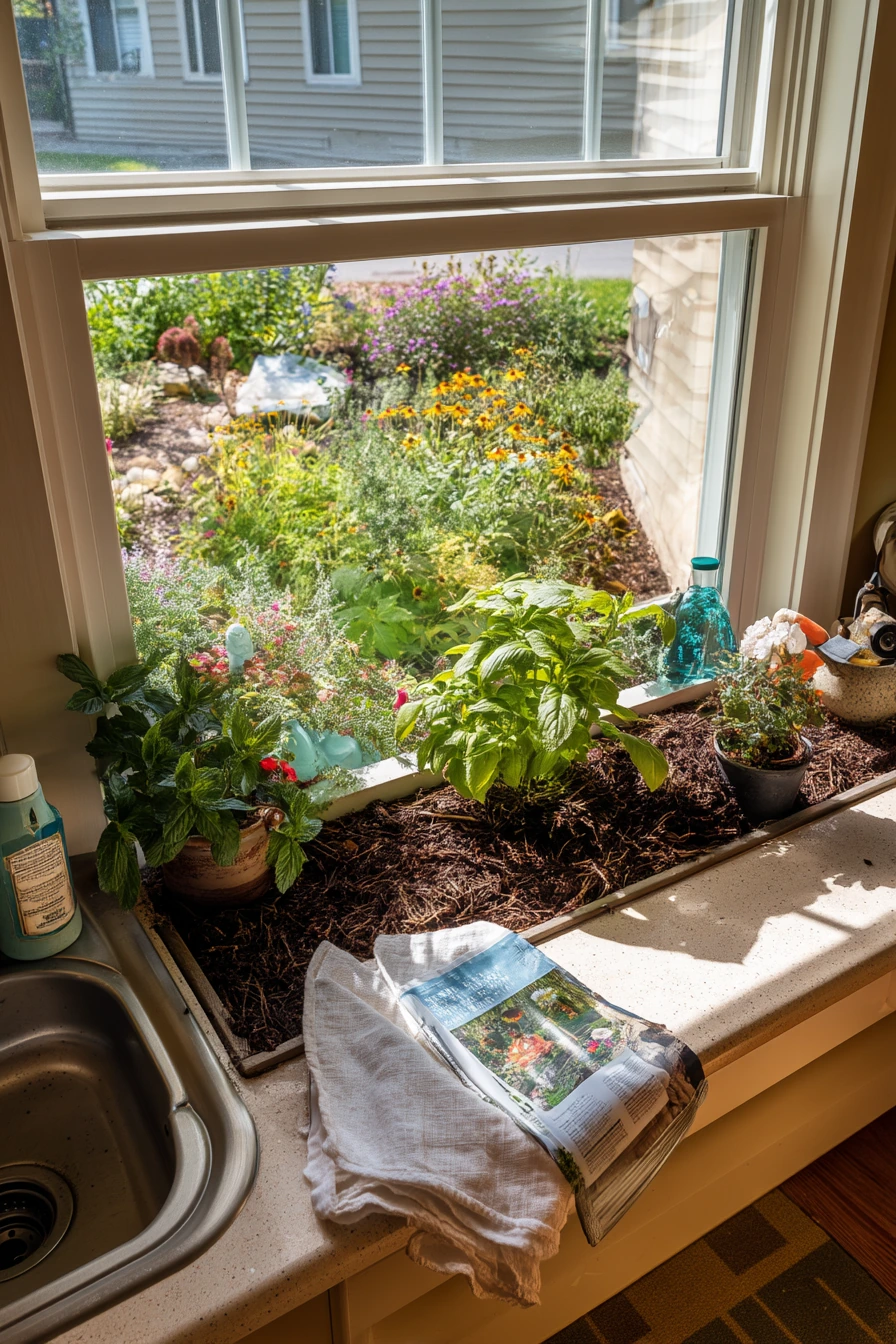
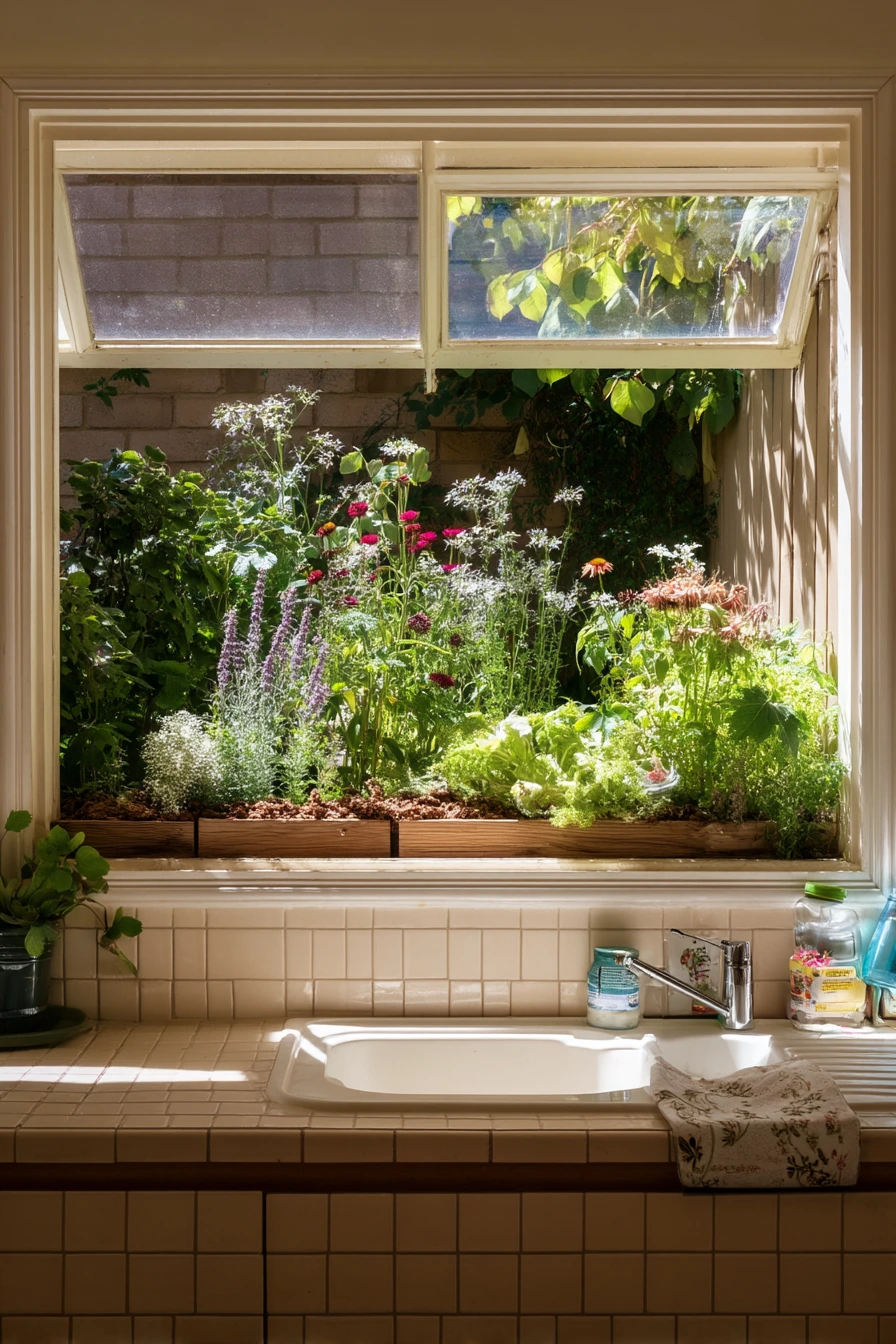
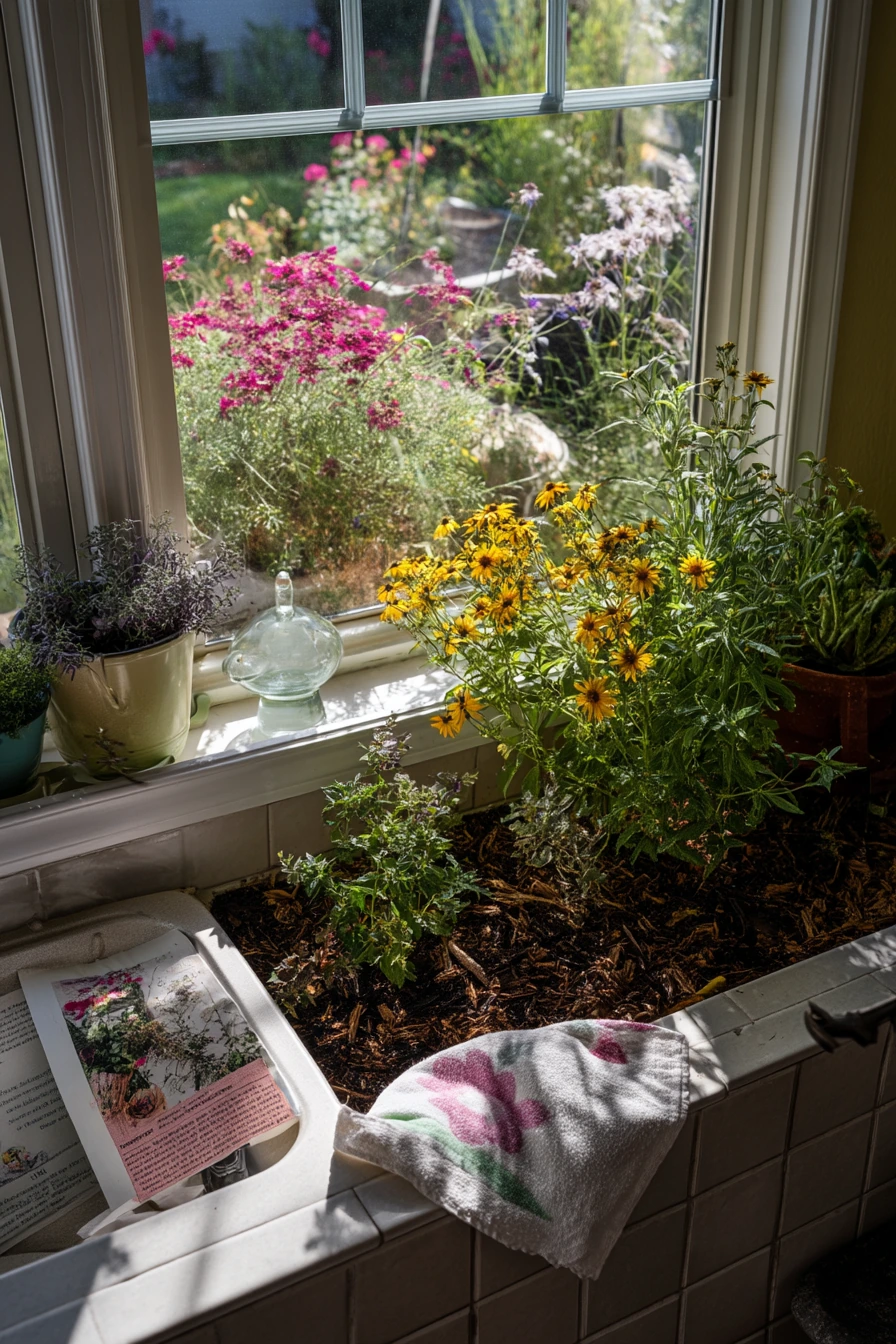
A suburban back garden border under a kitchen window is a great place for pollinator plants that do not need fussy care. Salvia, catmint, coreopsis, and compact echinacea all flower for a long time, come back each year, and cope with average soil. Planting them in generous drifts looks full but is easier to manage than lots of single plants.
Lay out the border in blocks. Put the tallest plants toward the back near the wall, then step down toward the lawn. Catmint can spill over the edge and soften the line. Coreopsis and echinacea add bright color, while salvia gives upright spikes that bees love. Finish with bark mulch across the whole bed to keep weeds down and hold moisture, so you are not out there every day with a hand fork.
Because this border sits near the kitchen, it should fit real routines. A child’s plastic watering can can live nearby for quick top ups in the first year. When you wash dishes, you can look out and see the border fill in, which helps you spot dry patches early. Keep the planting simple so even if there is a dish towel on the sink handle and a half read cookbook on the sill, the garden still feels fresh and lived in. Deadhead lightly if you want more blooms, but these plants will still perform even with minimal effort.
- Plant in groups of 3 to 7 for a fuller look and less decision making.
- Mulch 2 to 3 inches deep to block light from weed seeds.
- Water deeply once a week in the first season, then reduce.
- Leave some seed heads in fall for birds and winter texture.
- Edge the lawn line once a month to keep it crisp.
Pro Design Tip: Repeat the same plant mix in two or three drifts across the border so it looks designed from the kitchen window, even when only part is in bloom.
Budget Considerations: Buying full size perennials adds up. Start with smaller pots or plug plants and mulch well so they establish without constant watering.
4 Renter-Friendly Raised Border in Pots
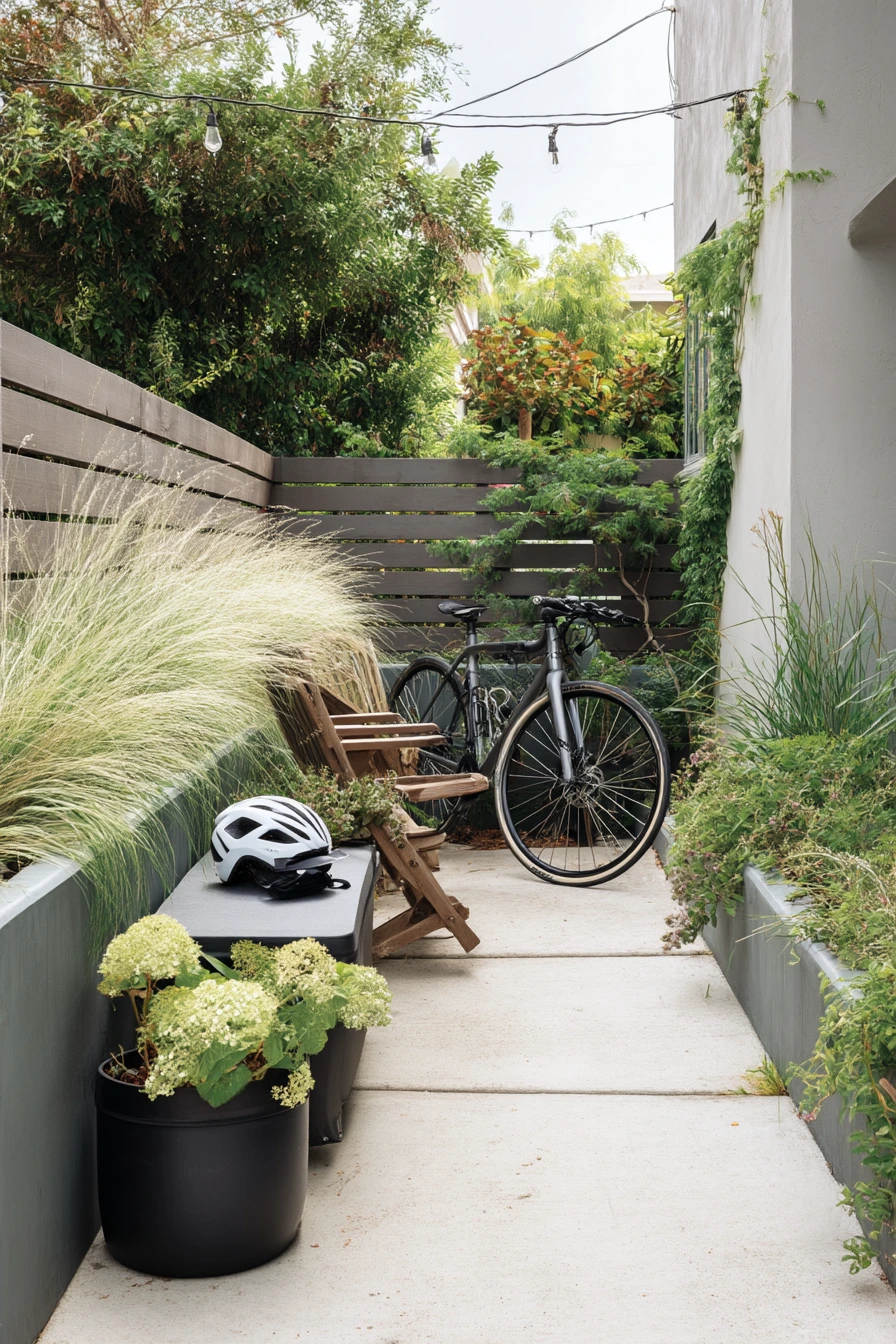
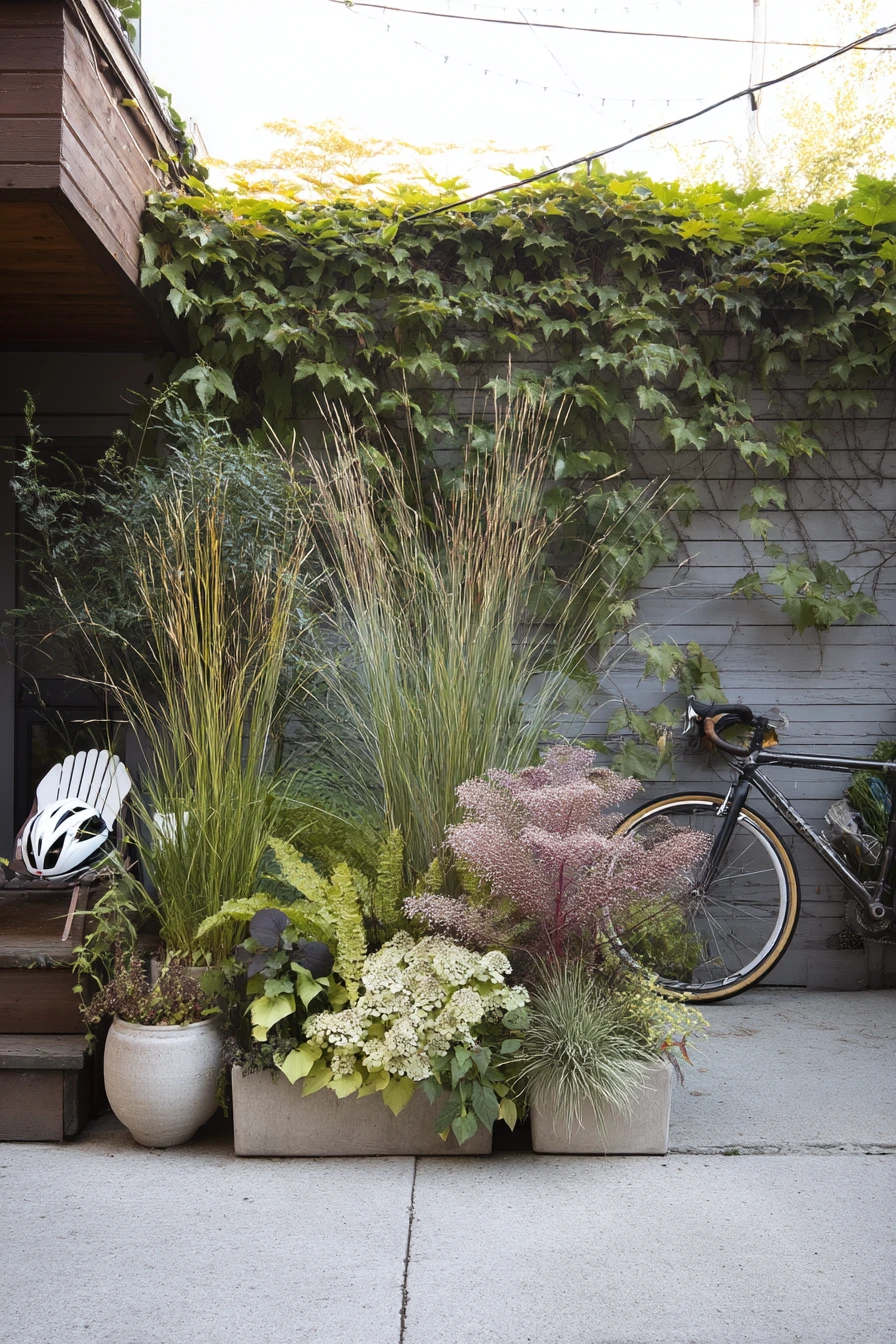
In a rental courtyard, low maintenance garden border ideas need to be flexible and easy to move. Large planters and reusable edging let you build a border without digging up the ground. Evergreen grasses, heuchera, dwarf hydrangea, and trailing ivy give a mix of year round shape, color, and soft edges.
Place the biggest planters along the plain fence to hide it and make the patio feel more private. Put evergreen grasses in the back for height and movement. Use heuchera in front for leaf color that lasts through many months. Add a dwarf hydrangea as a focal point that flowers without a lot of care. Let ivy trail from one or two pots to soften hard corners, but keep it contained to pots so it does not take over.
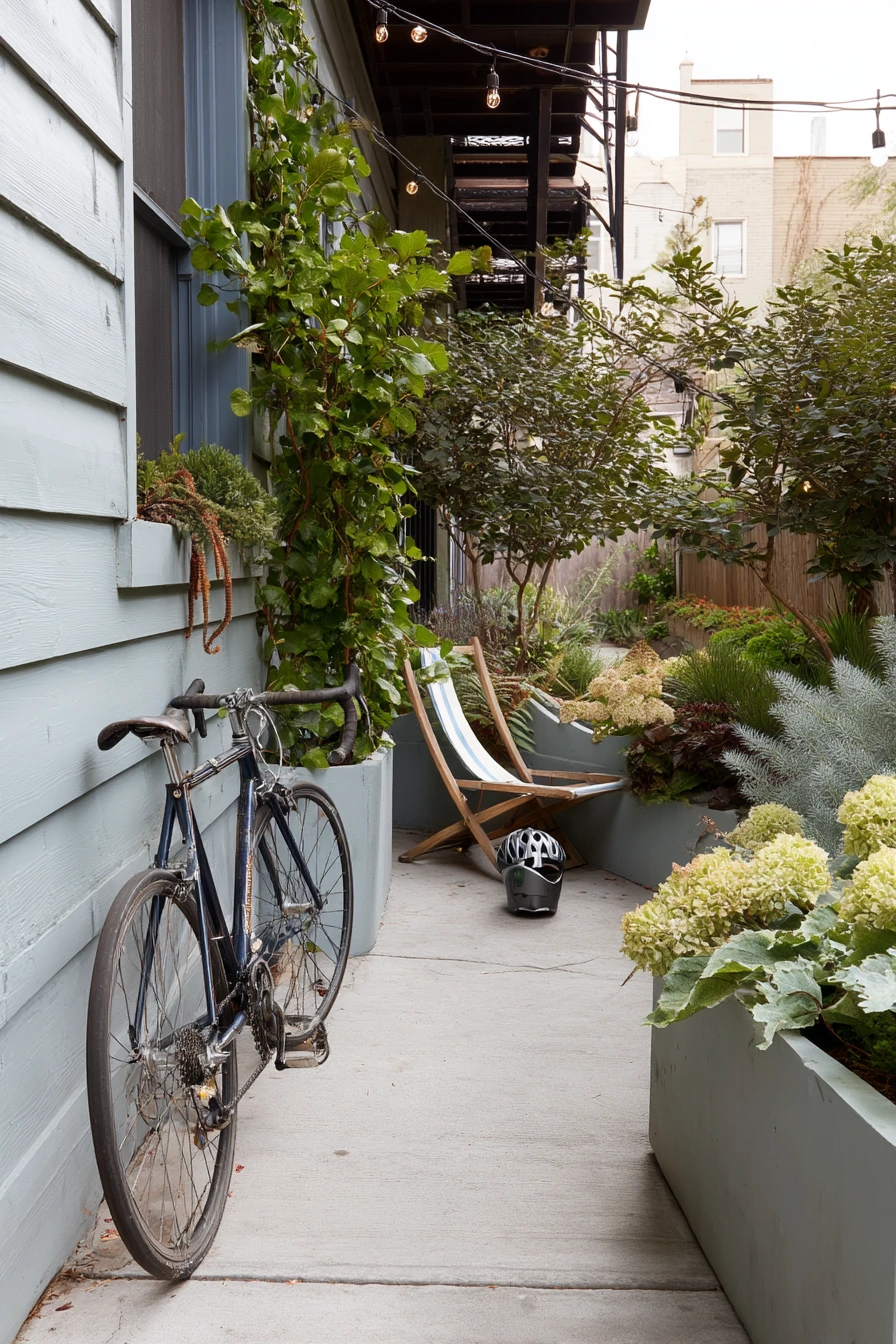
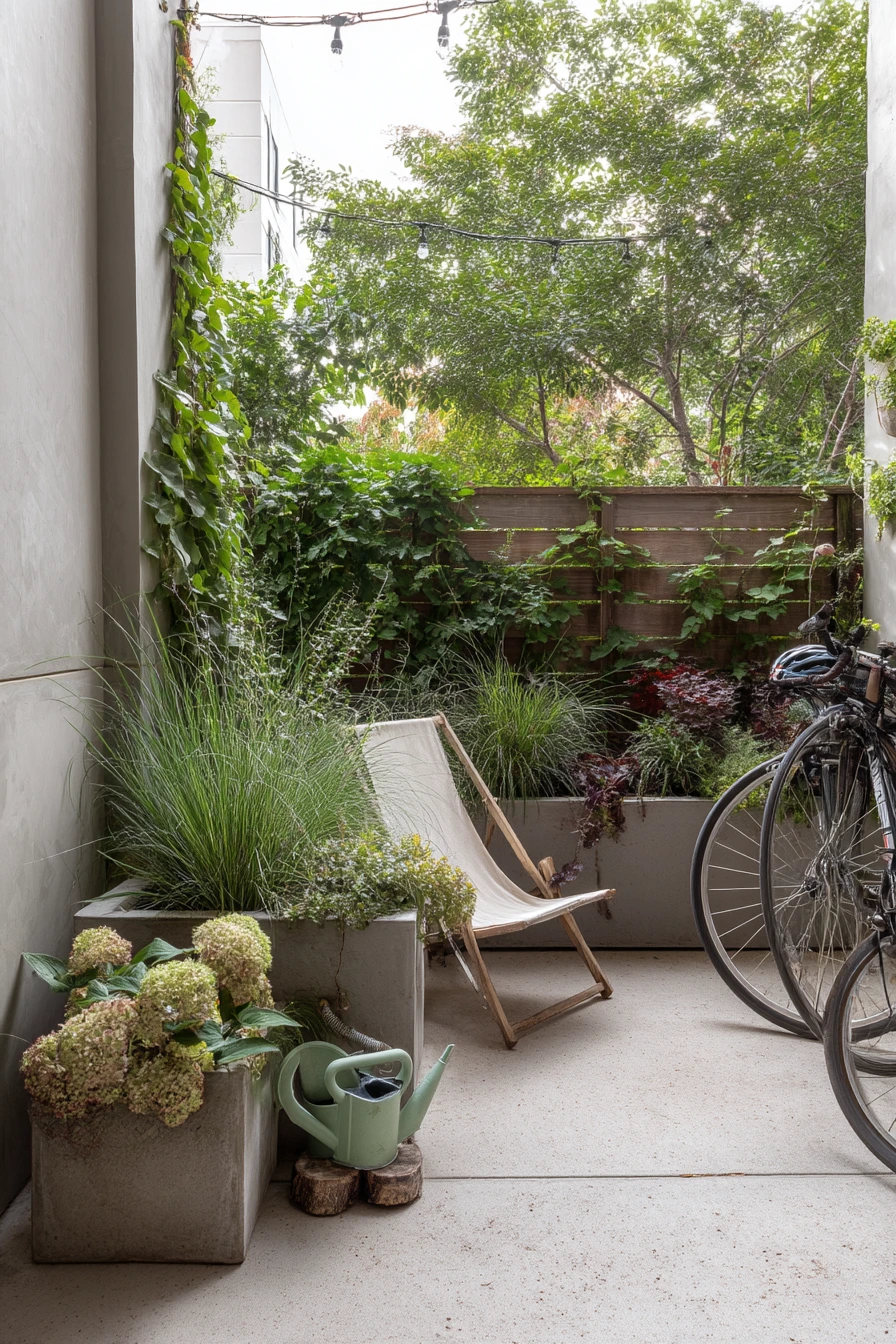
To style the space, keep furniture simple and foldable so you can change the layout. A folded deck chair and a bench with unplugged string lights still feel cozy, even on overcast days. Store a watering can in one spot so the courtyard stays tidy, and use a small tray or hook by the back step for items like a bike helmet. For maintenance, use a slow release fertilizer in spring and refresh the top layer of compost in pots once a year. Group pots by water needs so you can water fast, not one by one.
- Choose planters with drainage holes to prevent root rot.
- Use reusable edging to create a clean line without permanent changes.
- Group pots to make watering quicker and reduce clutter.
- Pick evergreen plants so the border looks good in winter.
- Hide the fence by layering tall, medium, and trailing plants.
Pro Design Tip: Use three planter sizes only, large, medium, and small, and repeat them to make the border feel planned, not random.
Budget Considerations: Large planters cost more than small ones. Look for secondhand pots, or use simple black nursery pots inside cheap outer baskets for the same look.
5 Small Front Patch with Evergreen Structure
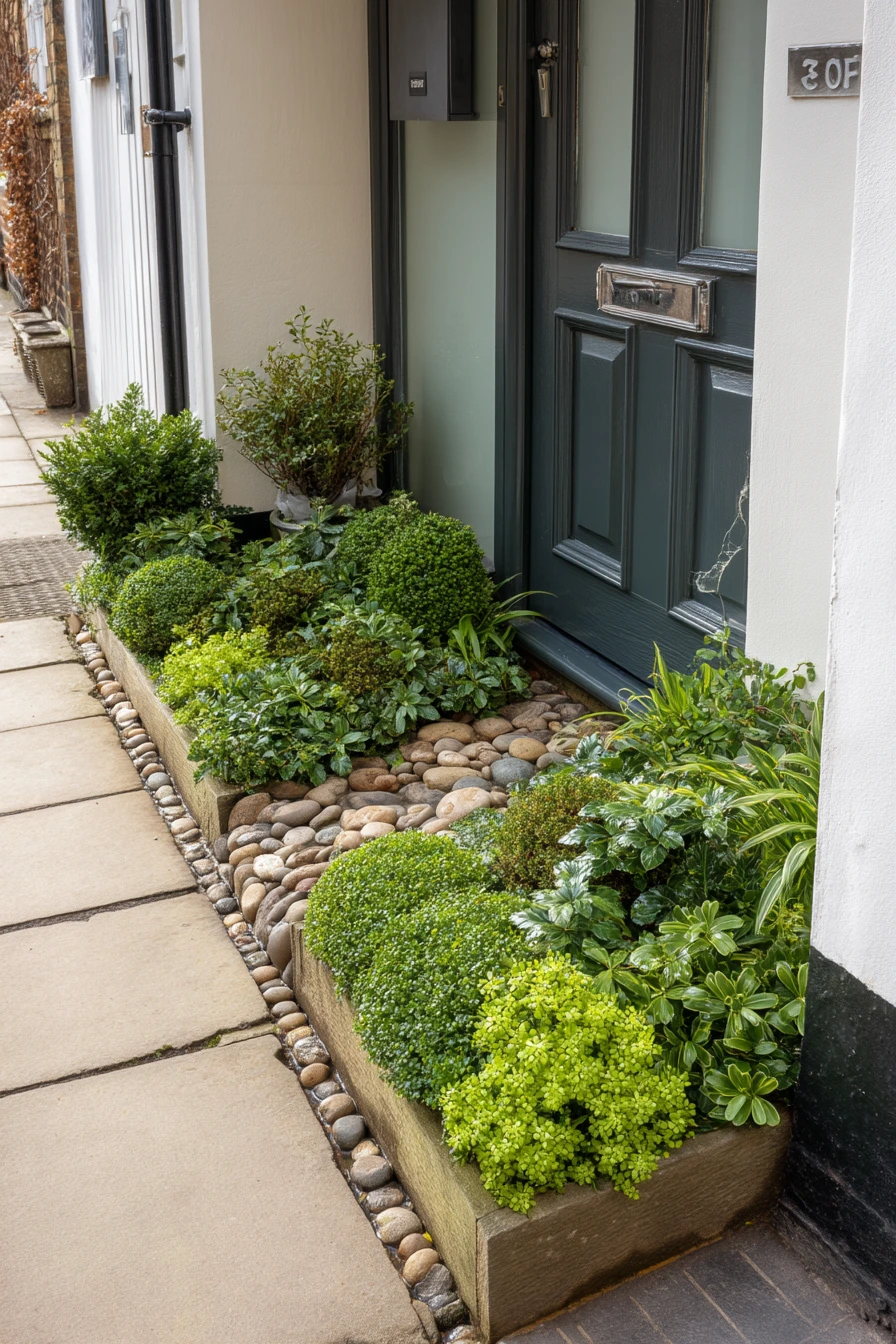
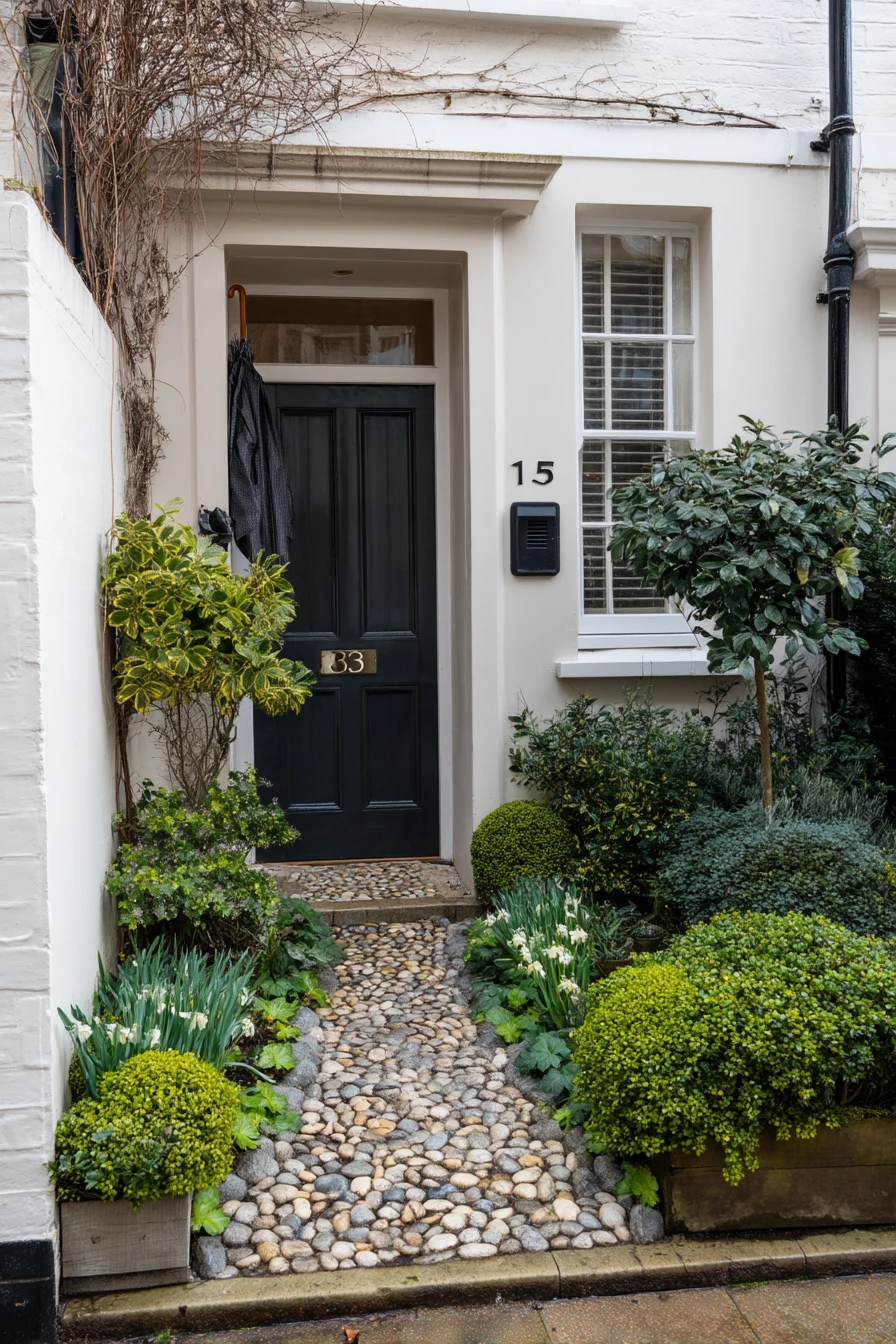
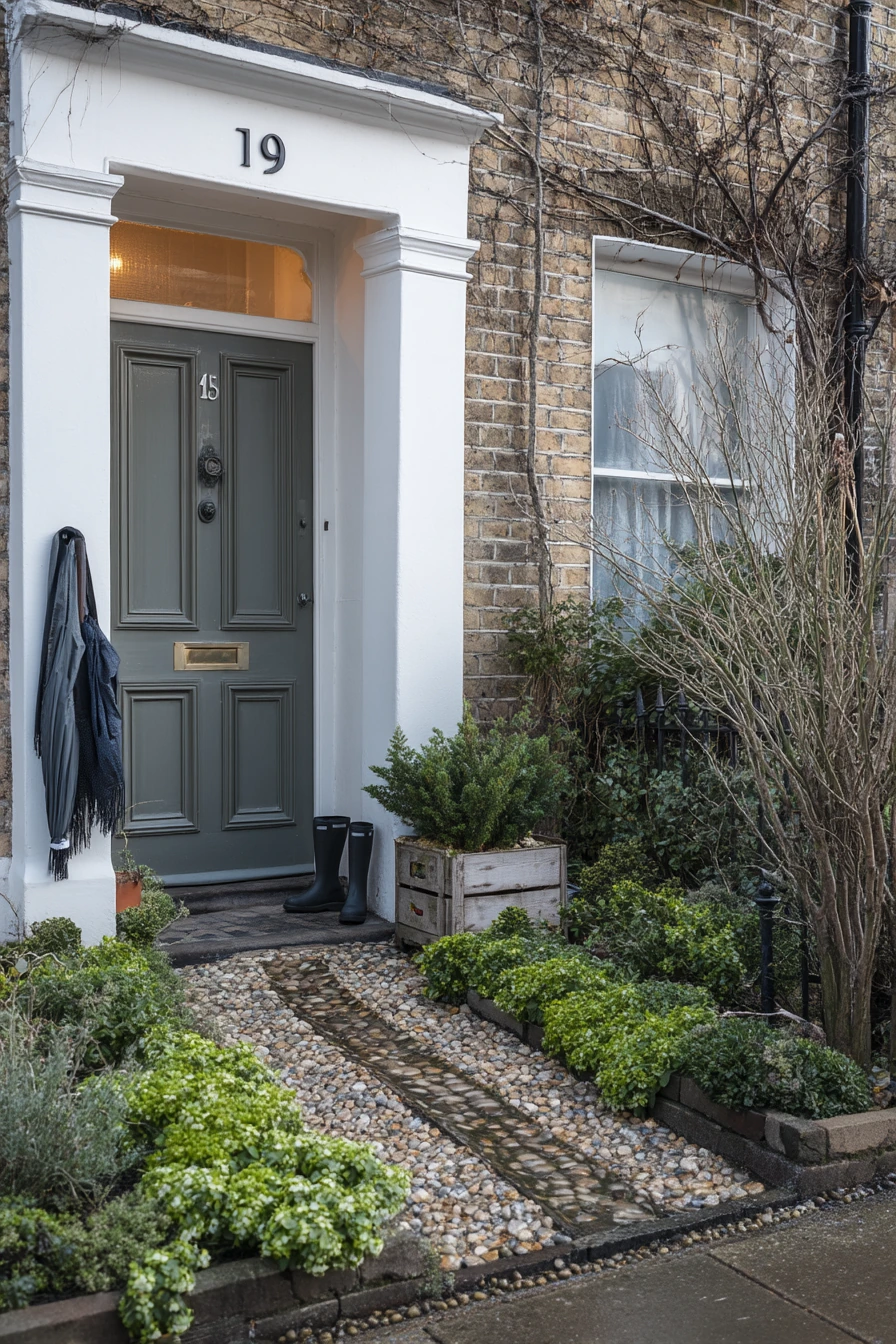
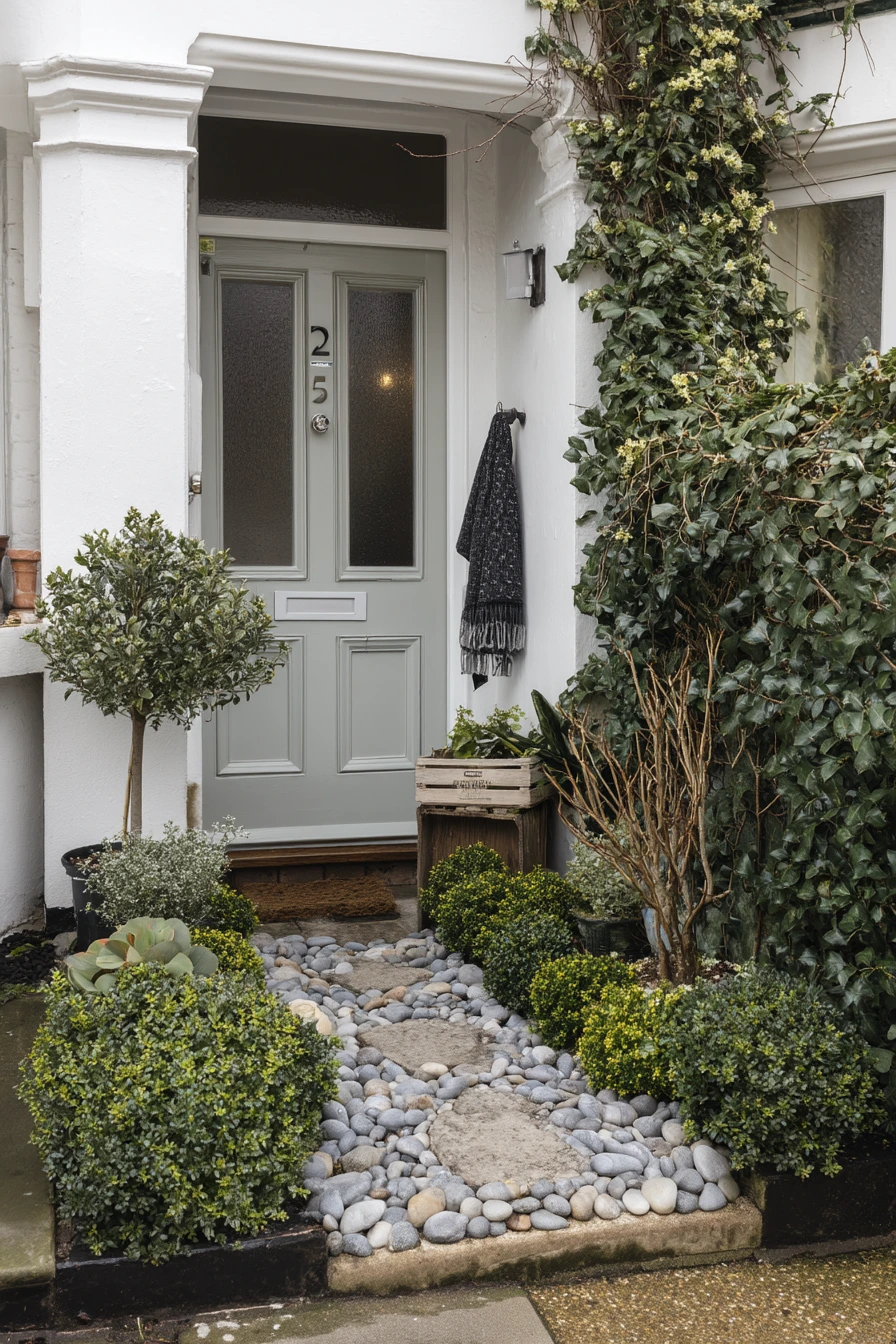
A compact front garden on a narrow city house looks best with a tidy, structured border that still feels human. Clipped ilex and dwarf pittosporum create a clean evergreen backbone, while hellebores add winter and early spring flowers with little care. River stones around a short path give a simple finish that drains well and reduces mud near the threshold.
Keep the layout tight. Use clipped ilex as small mounds spaced evenly along the border, then place dwarf pittosporum to add a second layer of green. Plant hellebores in groups near the front where you can see the blooms from the door. River stones can be used as a mulch layer, but place landscape fabric only if you can still water well. Many gardeners prefer a thick organic mulch under stones so soil stays healthier, but in small front beds, stone can be a practical choice if you do not want mulch blowing onto the path.
Styling comes from simple everyday cues. House numbers, a milk crate, and a newspaper can sit near the entry and still look calm when the border is clipped and the stones are level. A watering wand leaned against the wall makes quick watering easier, and a half open umbrella by the door fits the season without making the space feel messy. For maintenance, clip evergreens once or twice a year, remove old hellebore leaves before buds open, and rake stones back into place after heavy rain.
- Use evergreen shrubs for year round shape and fewer bare months.
- Plant hellebores for winter interest with minimal watering once established.
- Level river stones so the path edge looks clean.
- Keep shrubs off the path to avoid constant trimming.
- Refresh the top layer of stones when they sink over time.
Pro Design Tip: Keep the shrub shapes simple and consistent, like low domes, so the small space feels larger and more ordered.
Budget Considerations: River stones can be expensive by the bag. If you are on a budget, use stones only as a narrow border strip and mulch the rest with bark.
6 Family-Friendly Border Behind the Patio
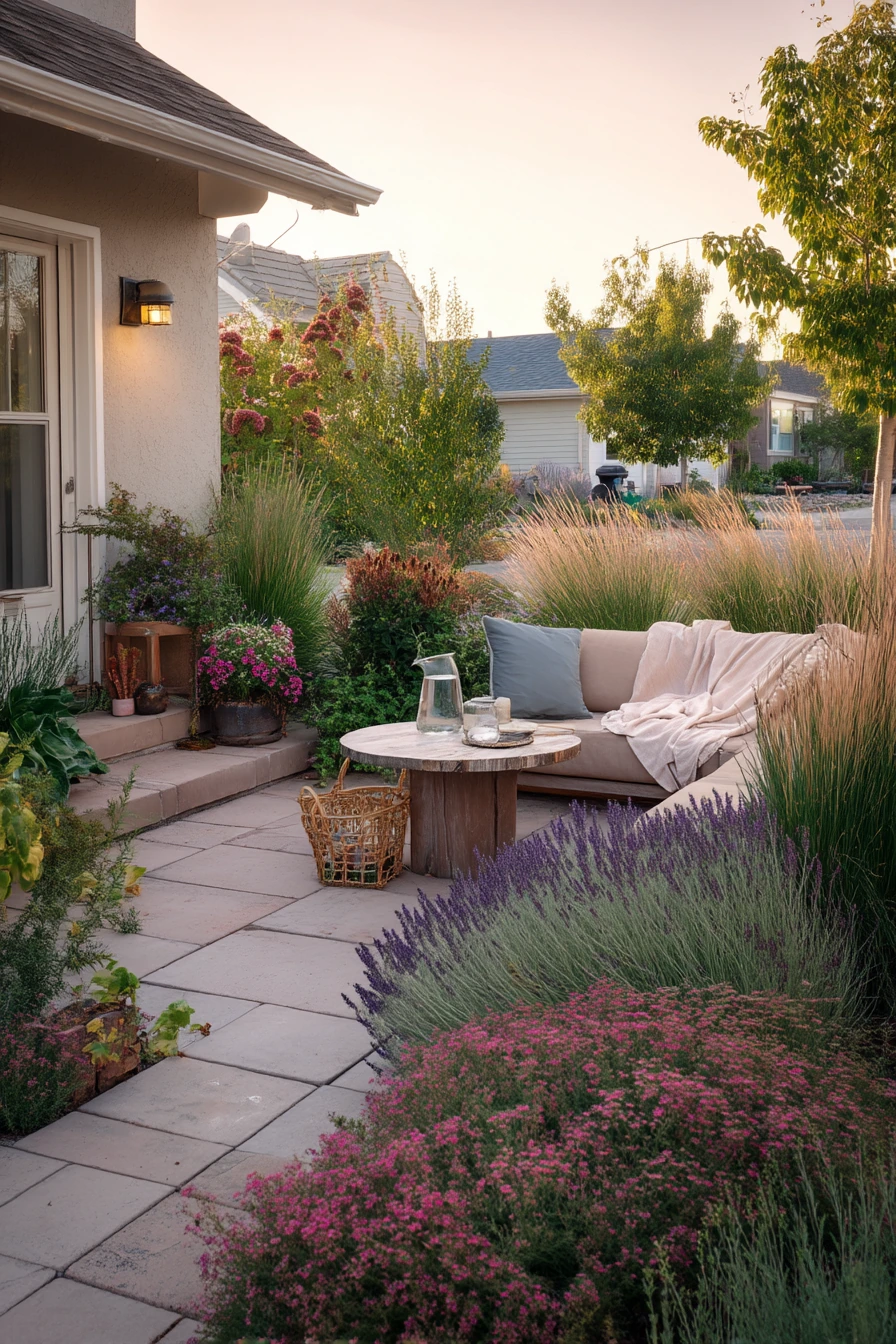
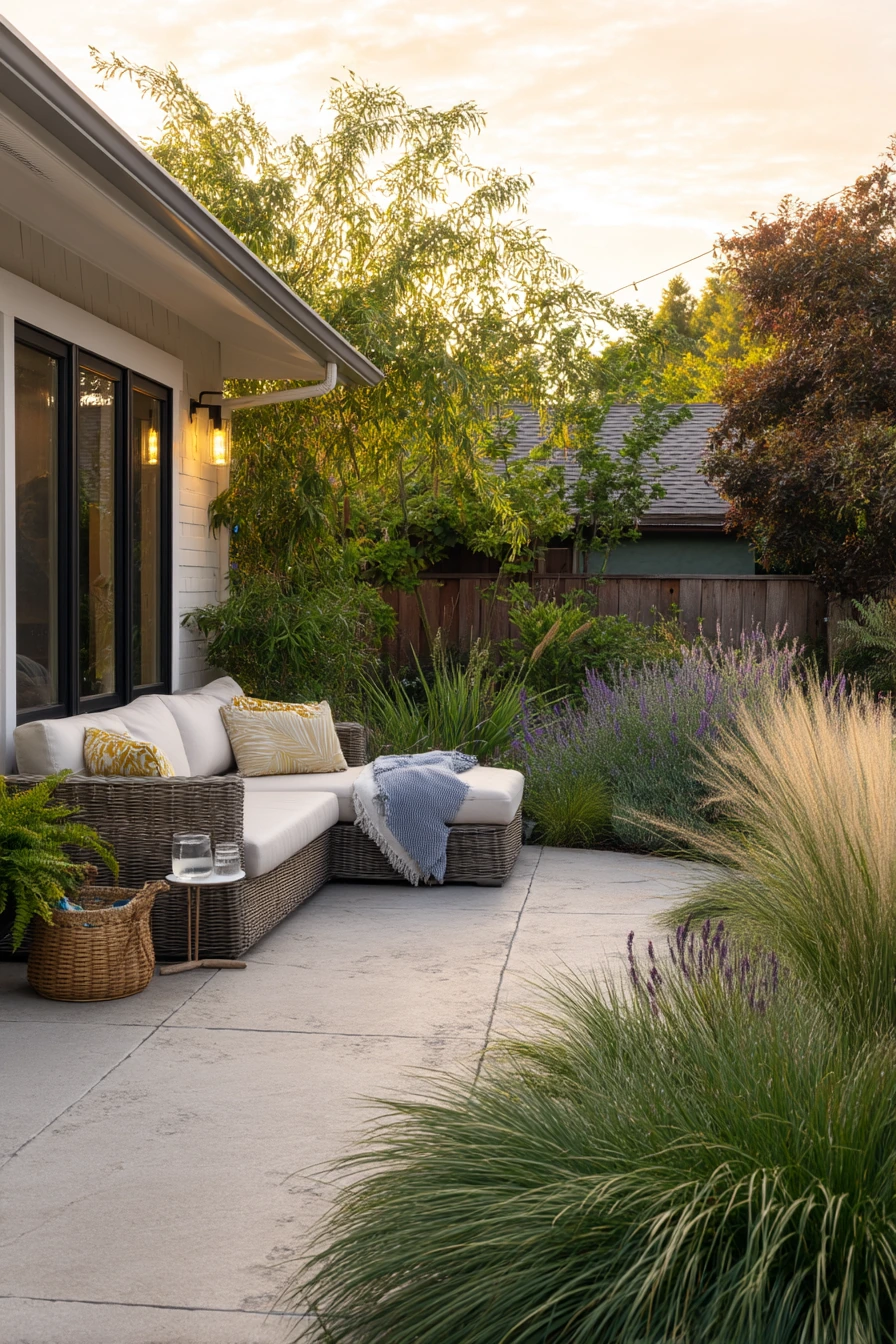
A busy family patio needs a border that can handle foot traffic, missed watering, and fast clean up. Hardy ornamental grasses, hardy geraniums, lavender, and evergreen sarcococca are strong choices because they cover ground, smell good, and keep shape through the seasons. Thick mulch cuts weeding time, and hidden drip irrigation keeps the border going even when schedules are full.
Build the border in layers. Put sarcococca near the house or along the back of the bed for evergreen structure and winter scent. Add grasses in clumps for movement and to hide the irrigation lines. Plant hardy geraniums as a living mulch that fills gaps and reduces bare soil. Use lavender where it gets sun and good drainage. Then spread mulch thickly across everything, leaving a small gap around stems. Drip lines under the mulch deliver water to roots without soaking the patio.
For styling, keep the patio look relaxed and repeat a few materials. A toy basket can sit near the door, and chalk marks on paving are fine when the planting looks neat. Use one simple tray on the table for a glass of water and small items, and keep a throw on the outdoor sofa in a color that matches your pots or cushions. Maintenance stays low if you cut grasses back once a year, shear geraniums after the first flush, and check drip emitters each spring.
- Install drip irrigation under mulch to save time and water.
- Choose plants that bounce back after light damage from play.
- Mulch deeply to reduce weeds and protect soil in summer.
- Keep one clear edge line so the border does not creep onto paving.
- Plant repeats so the border looks calm from the seating area.
Pro Design Tip: Run the same grass clump every few feet along the border so the view from the sofa feels steady, even when other plants are between bloom cycles.
Budget Considerations: Drip kits can add cost. If you need to save money, start with a simple soaker hose under mulch and upgrade to a full drip system later.
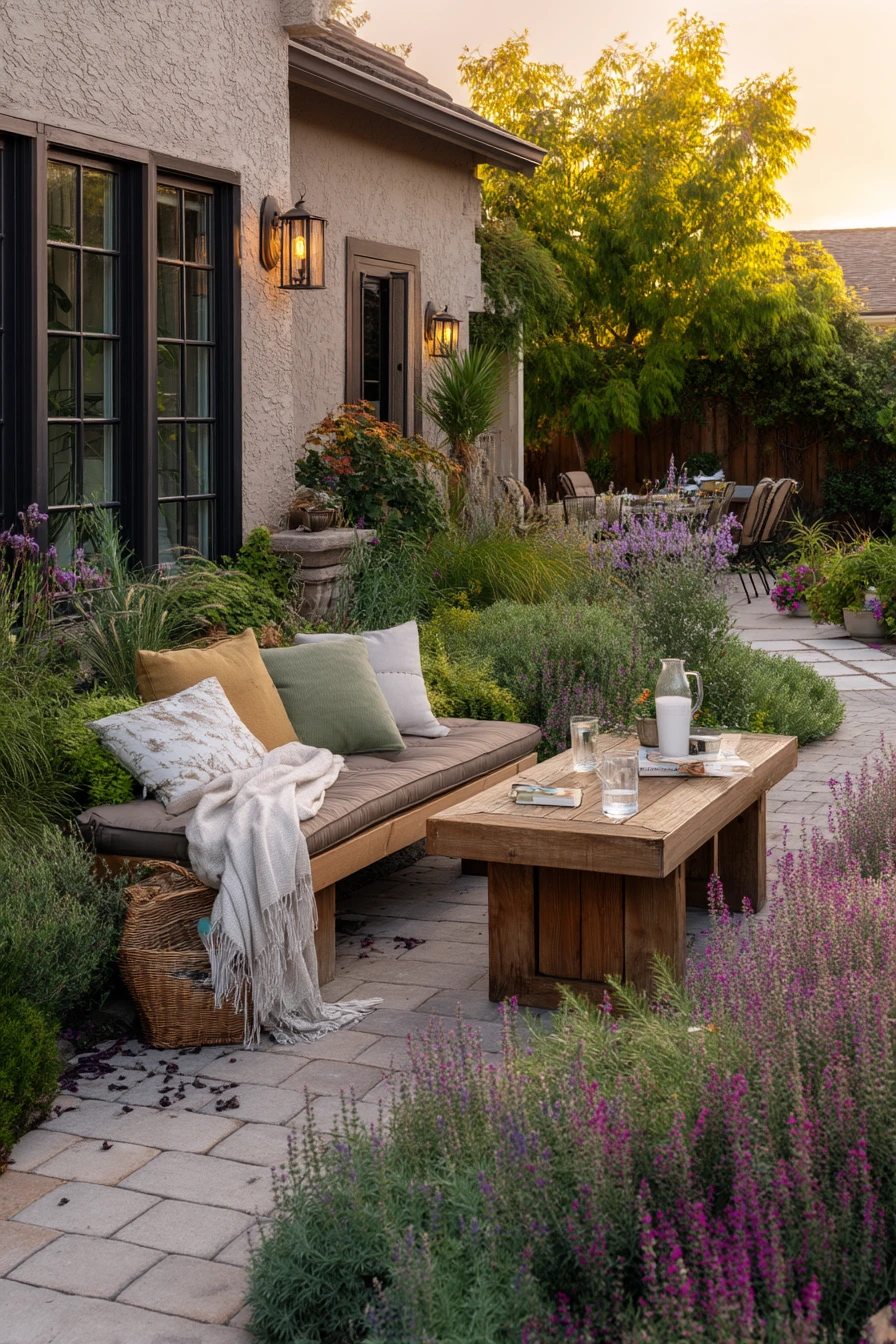
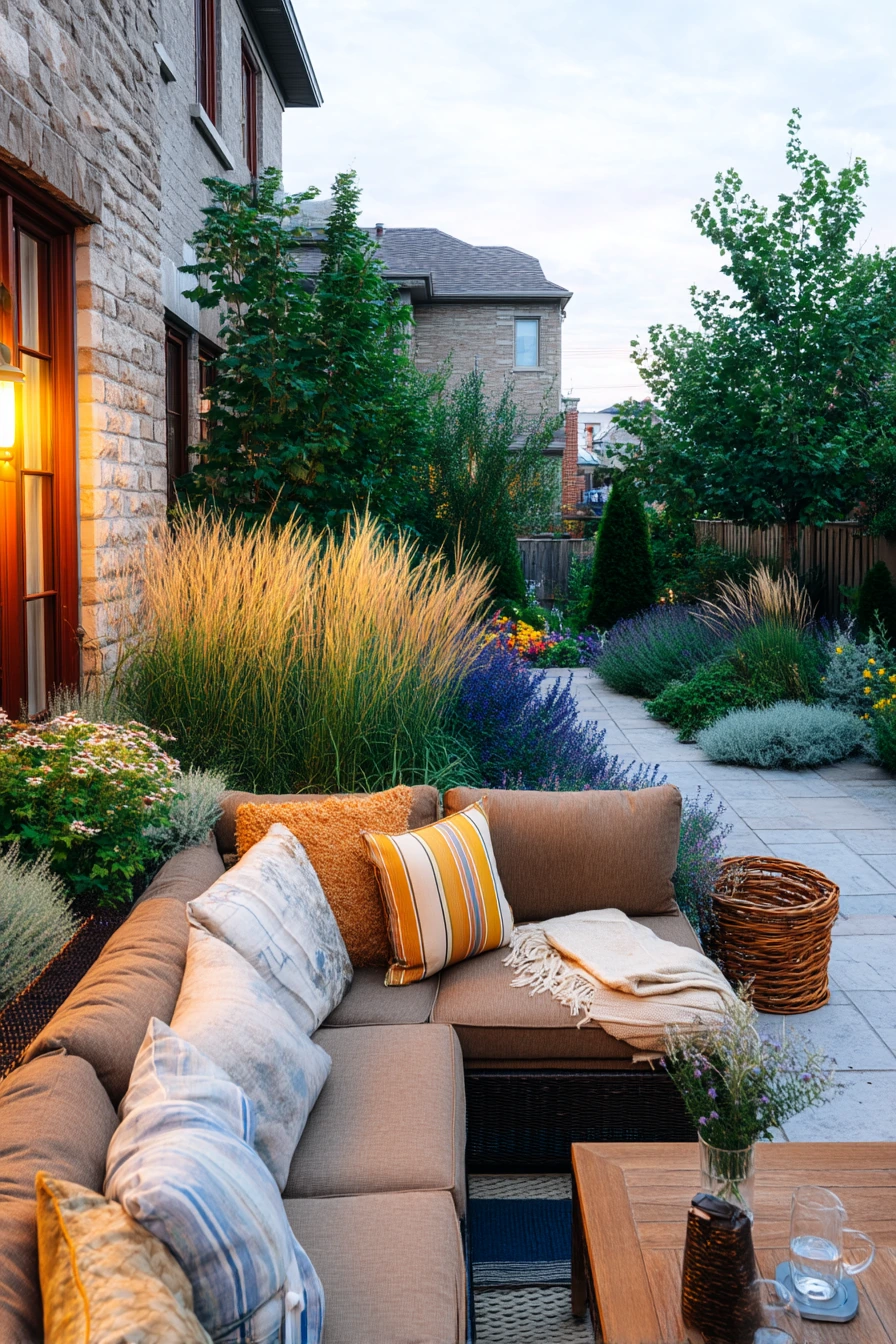
7 Courtyard Border with Pots and Herbs
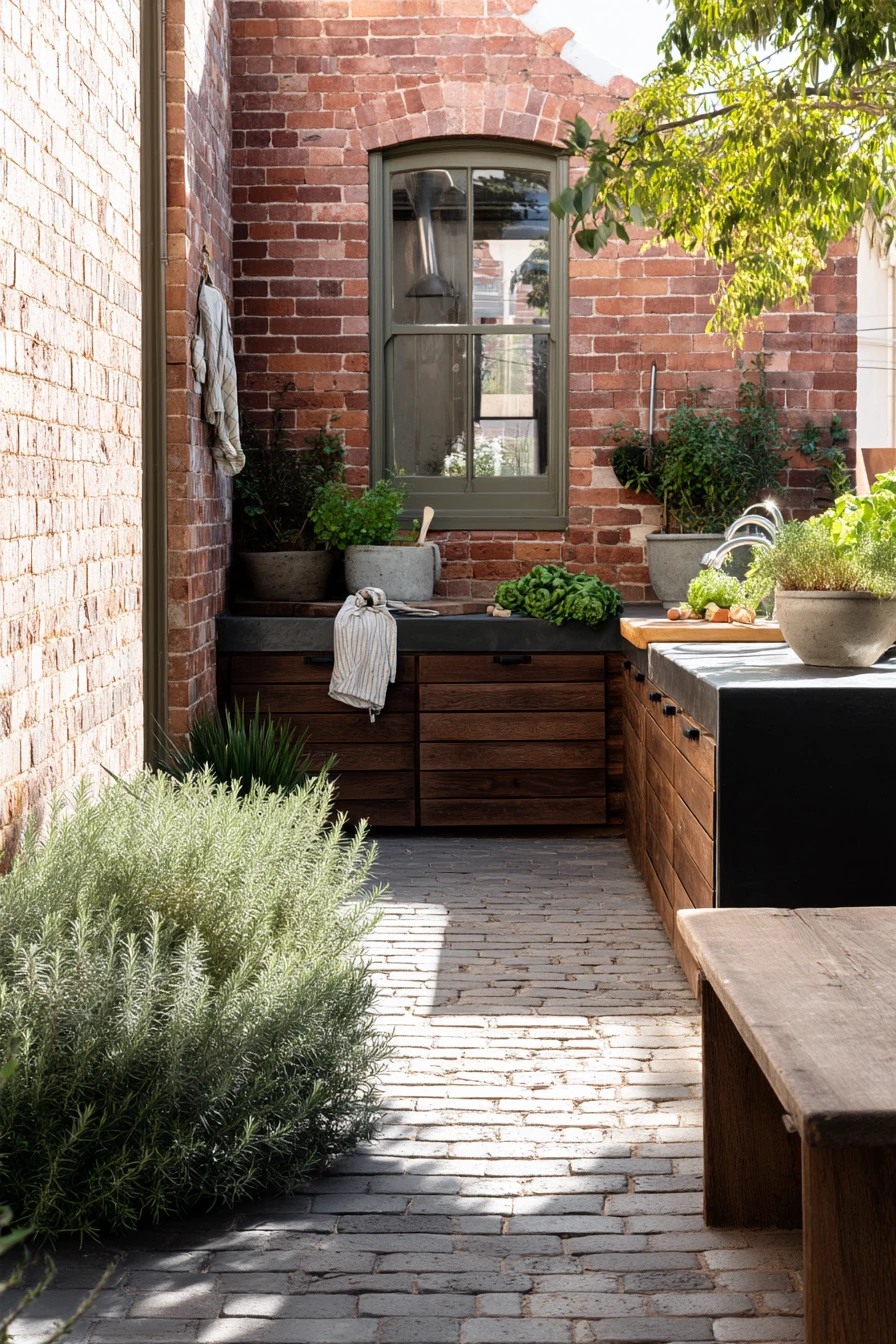
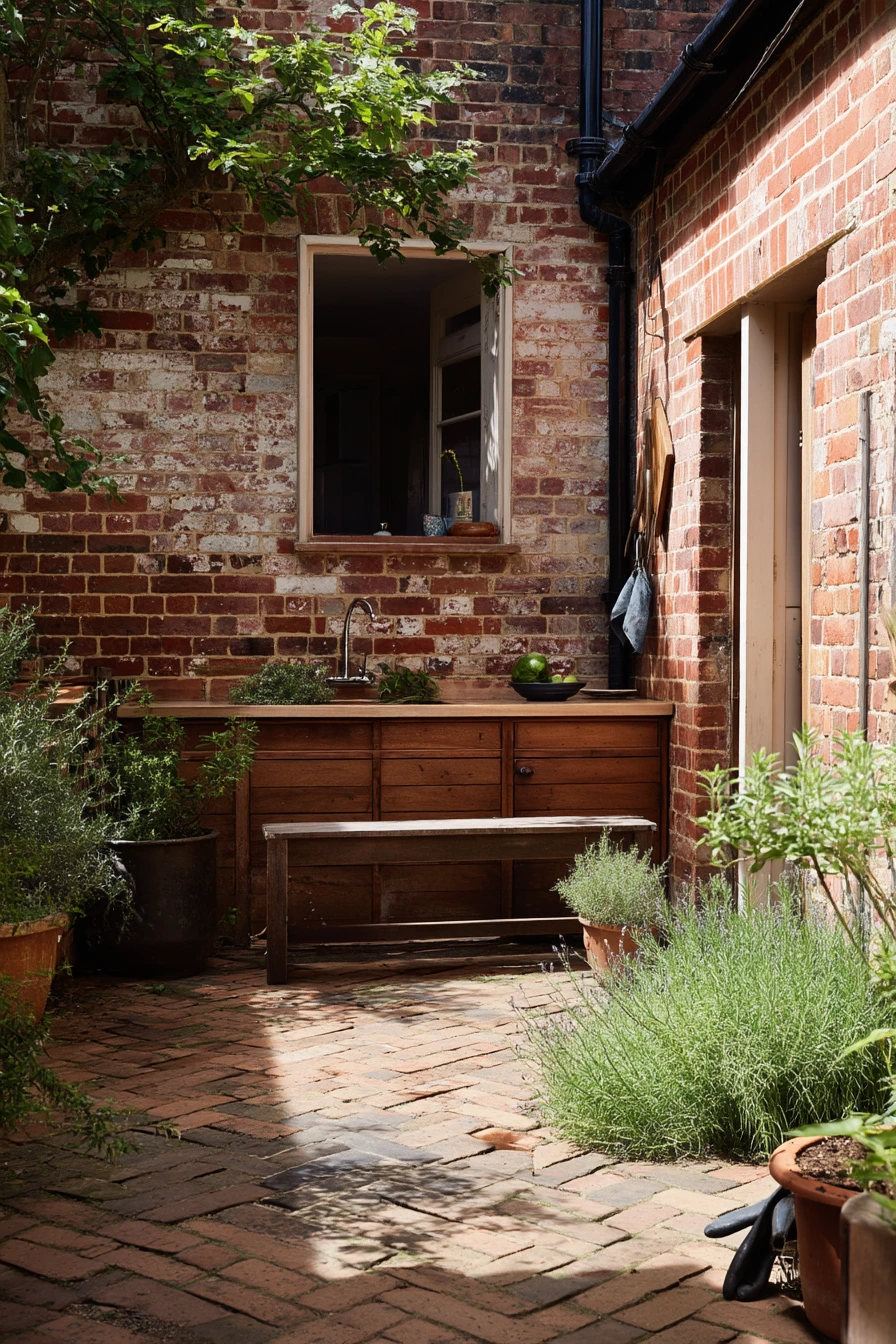
A brick courtyard outside a kitchen is perfect for a low maintenance border made from herbs and compact evergreens in deep planters. Rosemary, bay, sage, dwarf grasses, and mint give scent and useful leaves, and they look good even when you only have a few minutes. Slate mulch on top of the compost keeps weeds down and makes watering more efficient.
Use deep planters so roots stay cooler and you water less often. Place rosemary and bay toward the back for height and structure. Put sage and dwarf grasses in the middle for a soft, tidy fill. Keep mint in its own pot, even inside a larger planter, so it does not spread and take over. A simple timber bench creates a small resting spot and makes the courtyard feel like part of the house, not just an outdoor corridor.
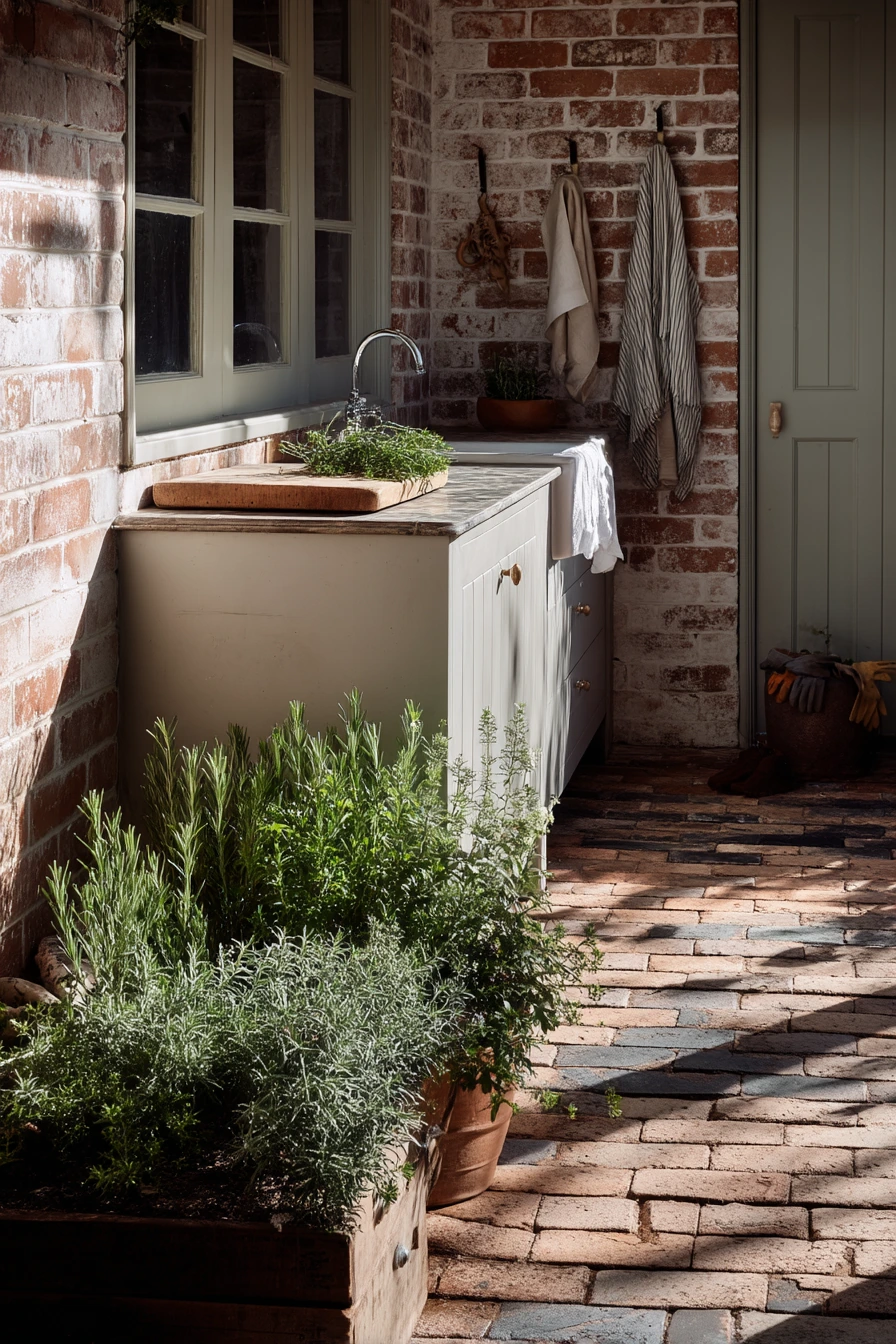
To style this space, keep tools and kitchen items in a few set places. A pair of garden gloves can hang on a hook, and an open seed packet can be stored in a small tray near the sink. Even a crooked tea towel and chopping board on the counter can look fine when the planters are lined up and the mulch surface is neat. For easy care, clip rosemary and sage after flowering, pinch mint often, and feed pots lightly in spring. Check drainage after heavy rain so the roots do not sit in water.
- Grow herbs in pots to control size and reduce garden mess.
- Use slate mulch to keep compost from splashing onto brick.
- Keep mint contained in a separate pot to stop spreading.
- Place planters where they get enough sun for strong flavor.
- Trim little and often to keep plants dense and usable.
Pro Design Tip: Line up planters with the brick joints so the border feels built in and the courtyard looks wider and more organized.
Budget Considerations: Bay trees and large planters can be costly. Start with small herb plants and use sturdy buckets or recycled tubs with drainage holes as temporary planters.
8 Modern Cottage Border with Easy Care Color
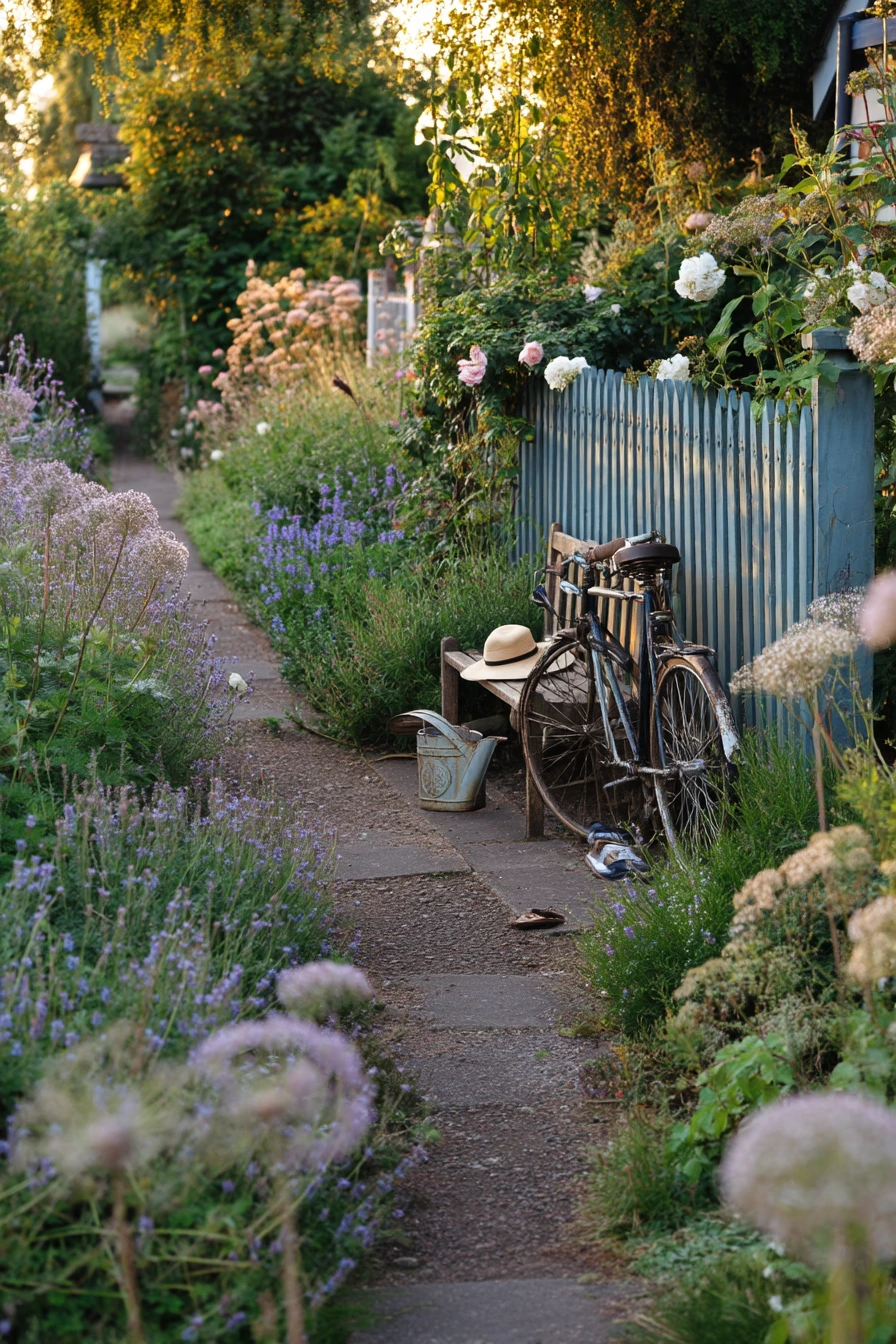
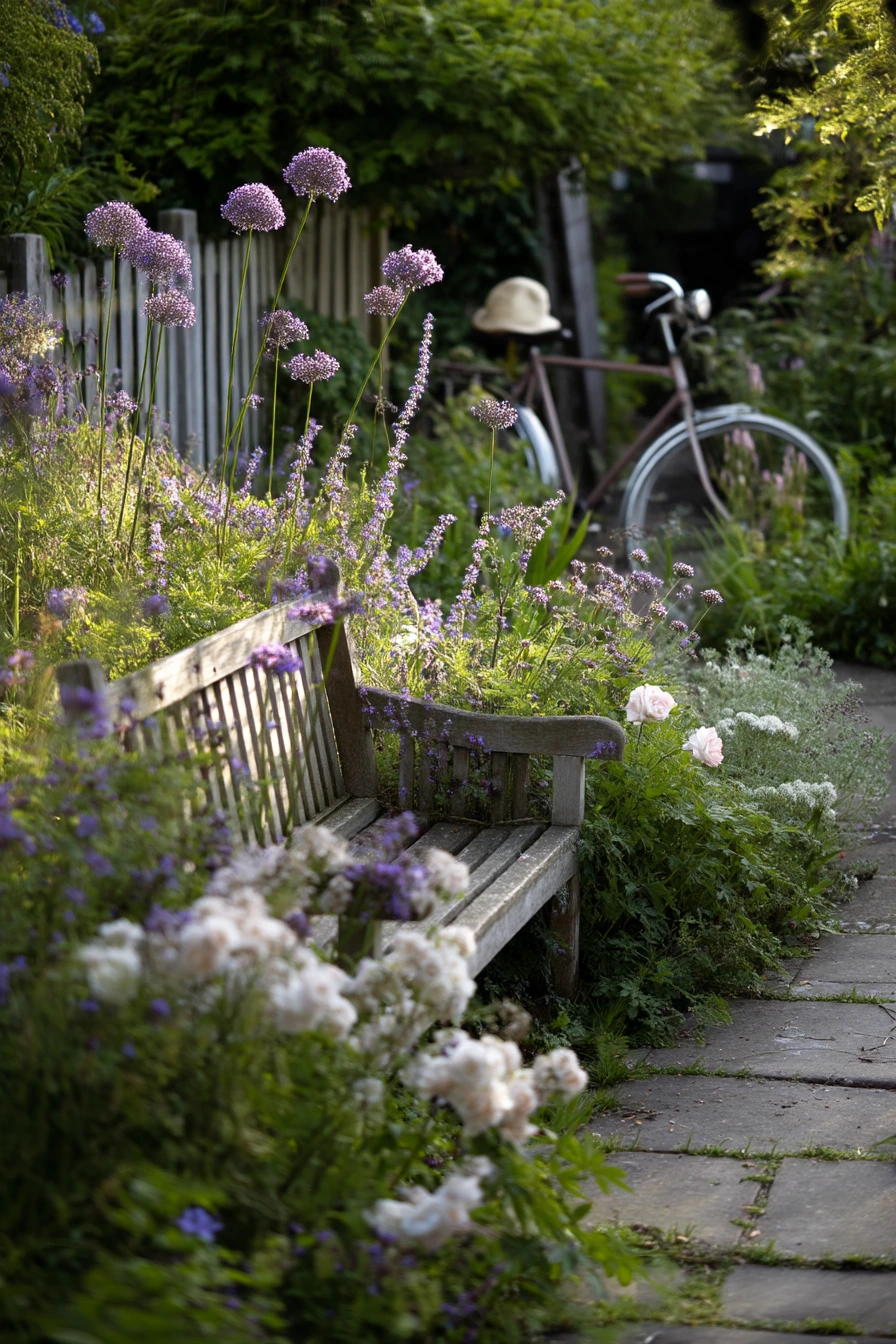
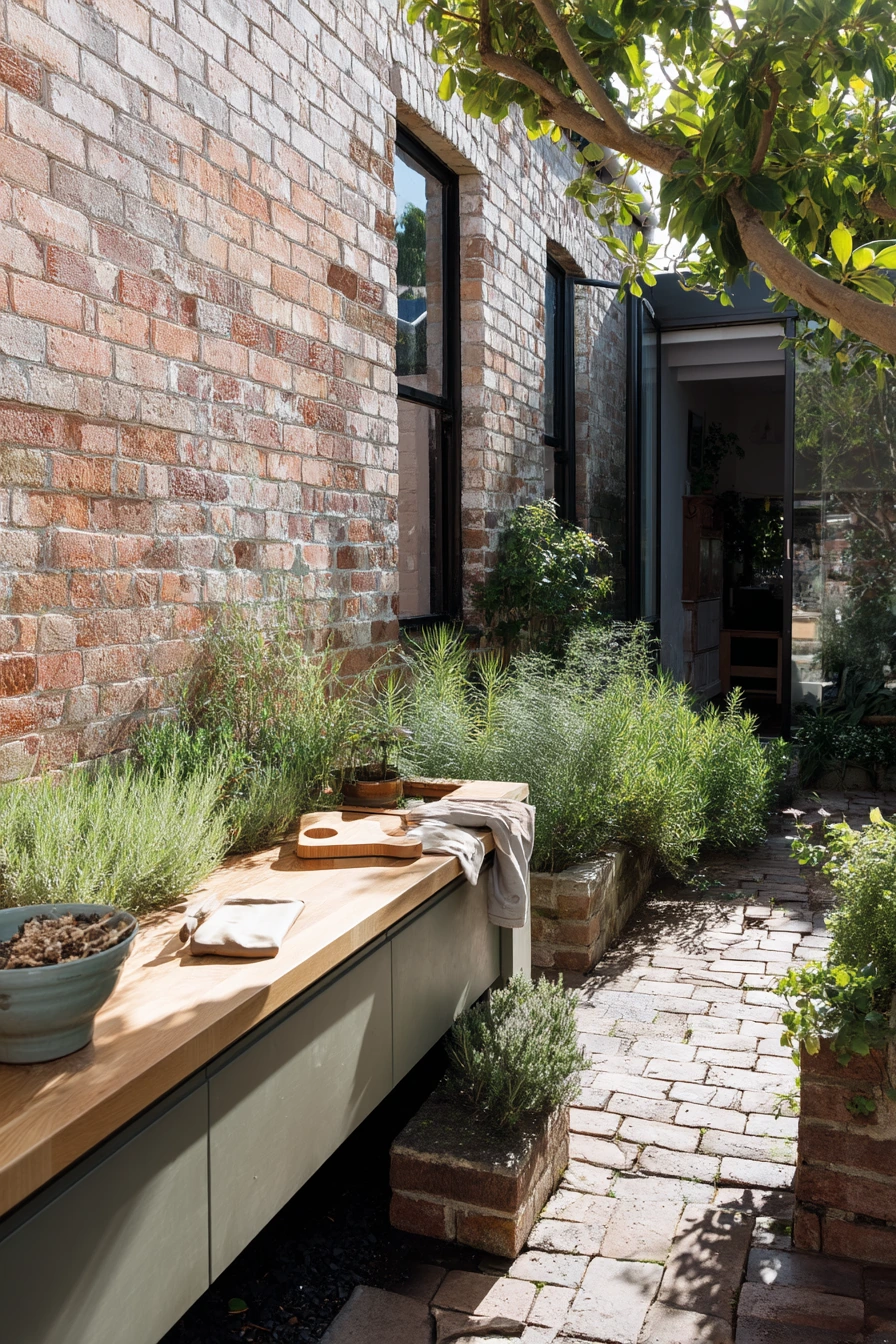
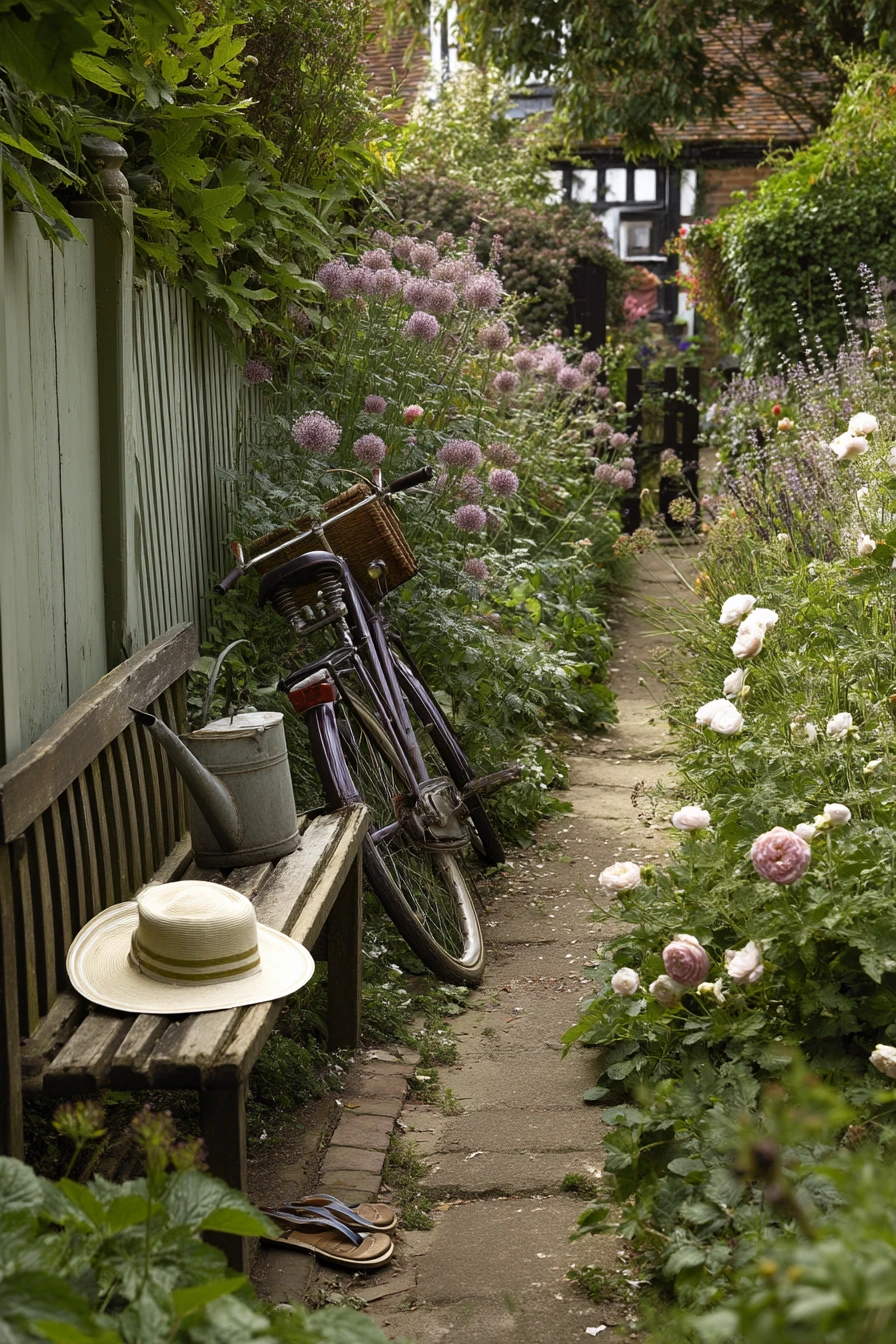
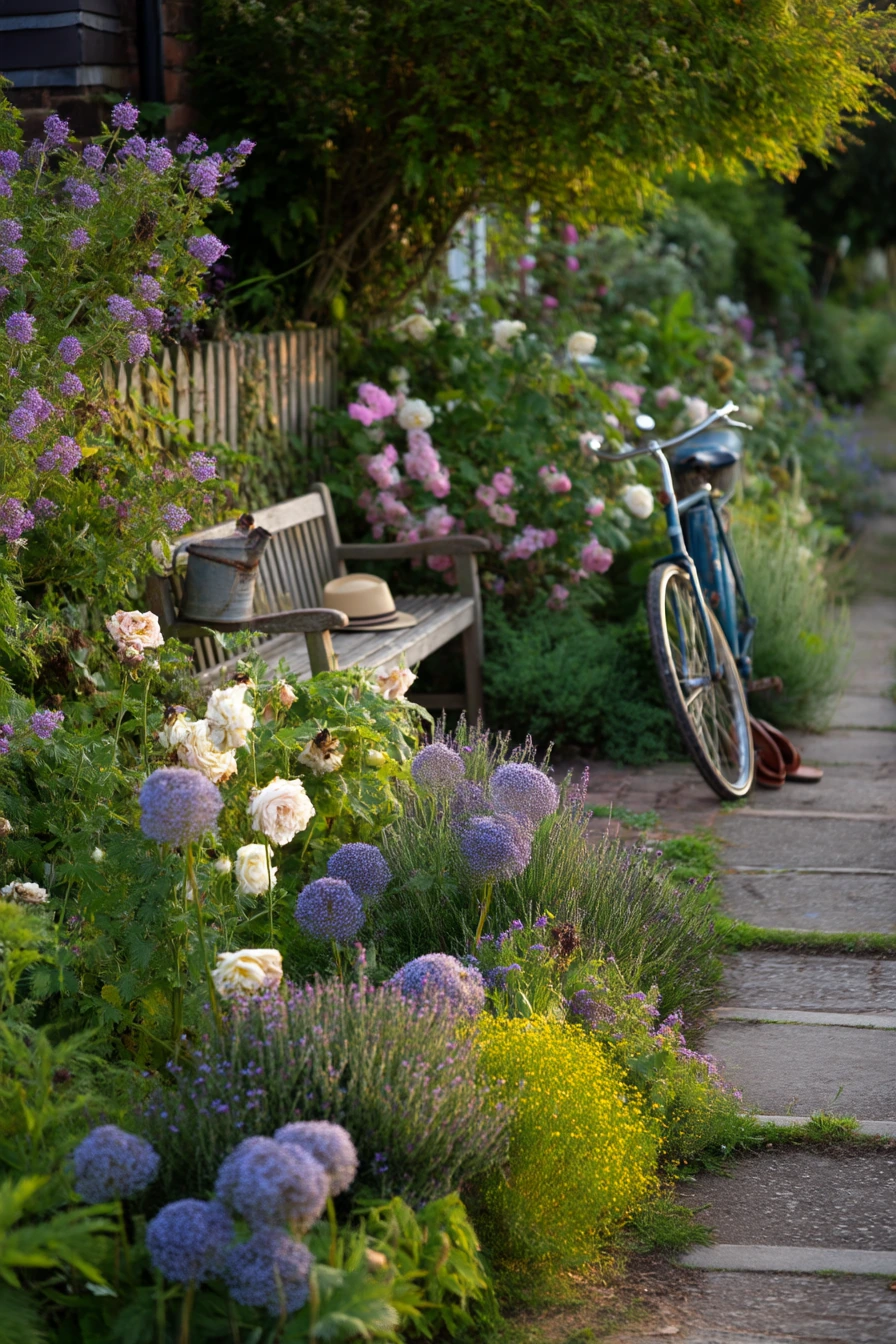
A cottage garden can still be low maintenance when it uses structure and repetition. Nepeta, allium seed heads, alchemilla, compact roses, and clipped edging create a soft look that stays under control. The key is to repeat the same plants along a weathered path so it looks full, not chaotic.
Plant nepeta in a steady line for a long season of color and easy care. Add alchemilla in small clumps for fresh green leaves and frothy flowers that hide bare soil. Use compact roses as spaced focal points, choosing disease resistant varieties so you do less spraying. Alliums can be planted in groups, and their seed heads look good even after bloom, which reduces the need for constant deadheading. A clipped edge, whether it is a low hedge or a clean spade cut, keeps the border line crisp.
Style the border with a few lived in touches that fit the cottage feel. A bicycle against the fence and a sun hat on the bench look natural when the planting repeats and the path edge is clean. Keep a watering can nearby, even if it has rust spots, and leave sandals on the step without the whole scene feeling messy. For maintenance, shear nepeta after the first bloom, prune roses once a year, and cut back alchemilla if it flops. Add compost or mulch in spring to keep weeds down and soil healthy.
- Repeat the same plant mix to make the border feel calm.
- Choose compact roses with strong disease resistance.
- Keep allium seed heads for texture and less work.
- Clip edging or recut the edge line to stop grass creep.
- Mulch in spring to reduce watering and weeding.
Pro Design Tip: Use one simple edge detail, like a clipped line or a narrow strip of gravel, and keep it consistent along the whole path for a tidy cottage look.
Budget Considerations: Roses can raise the total cost. If you are on a budget, use fewer roses and fill more space with nepeta and alchemilla, which spread and bulk out quickly.
9 Shade-Tolerant Border Along the Fence
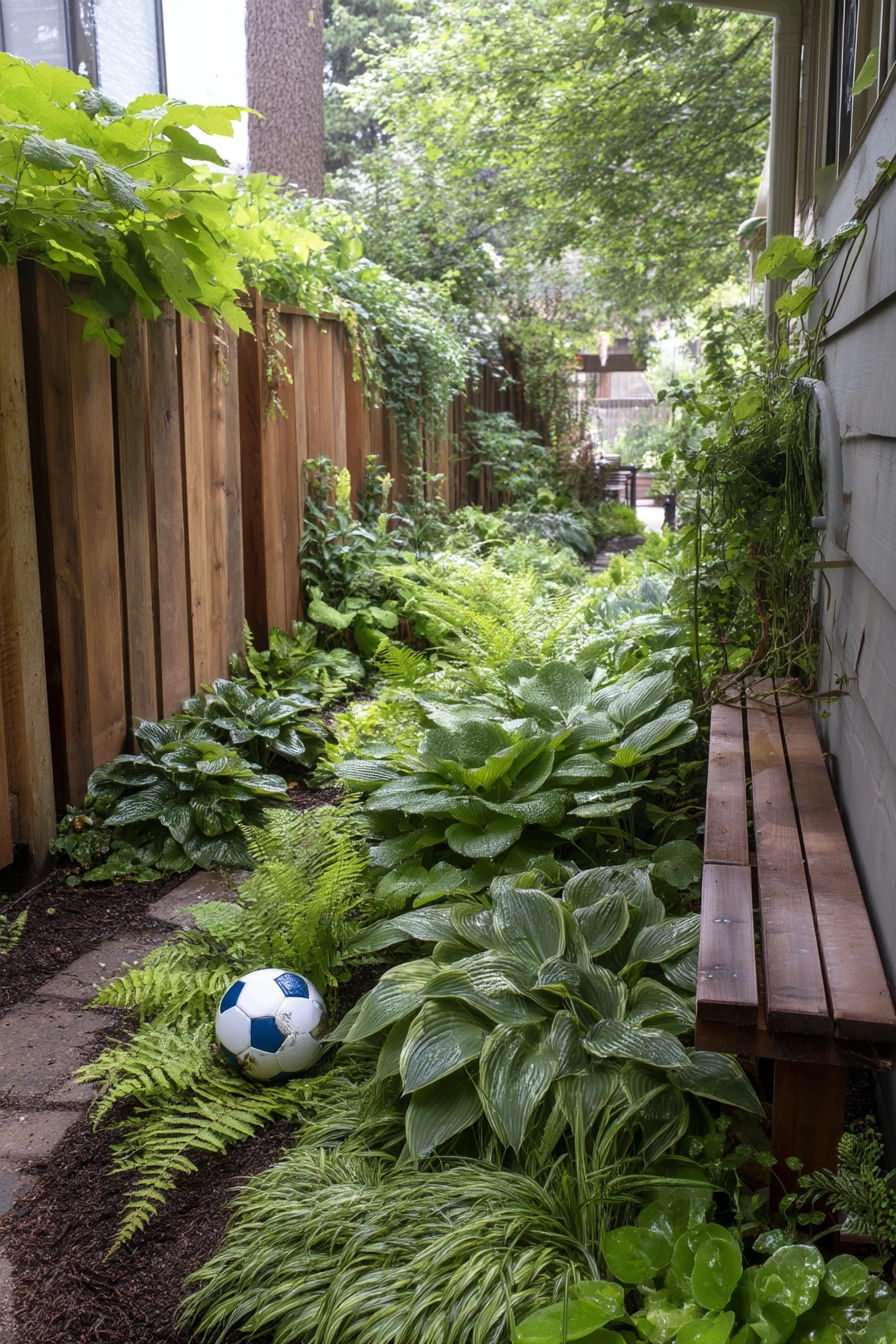
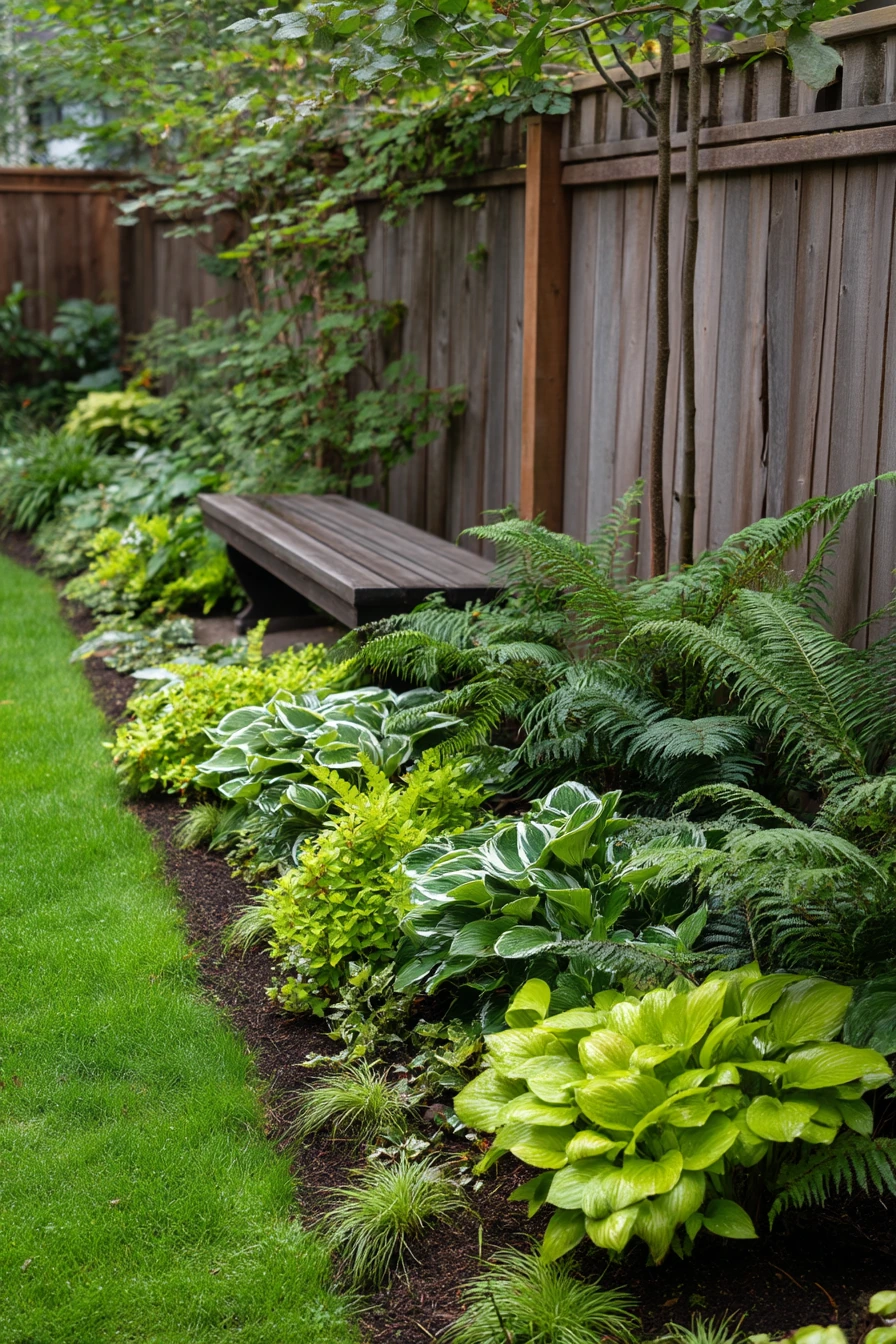
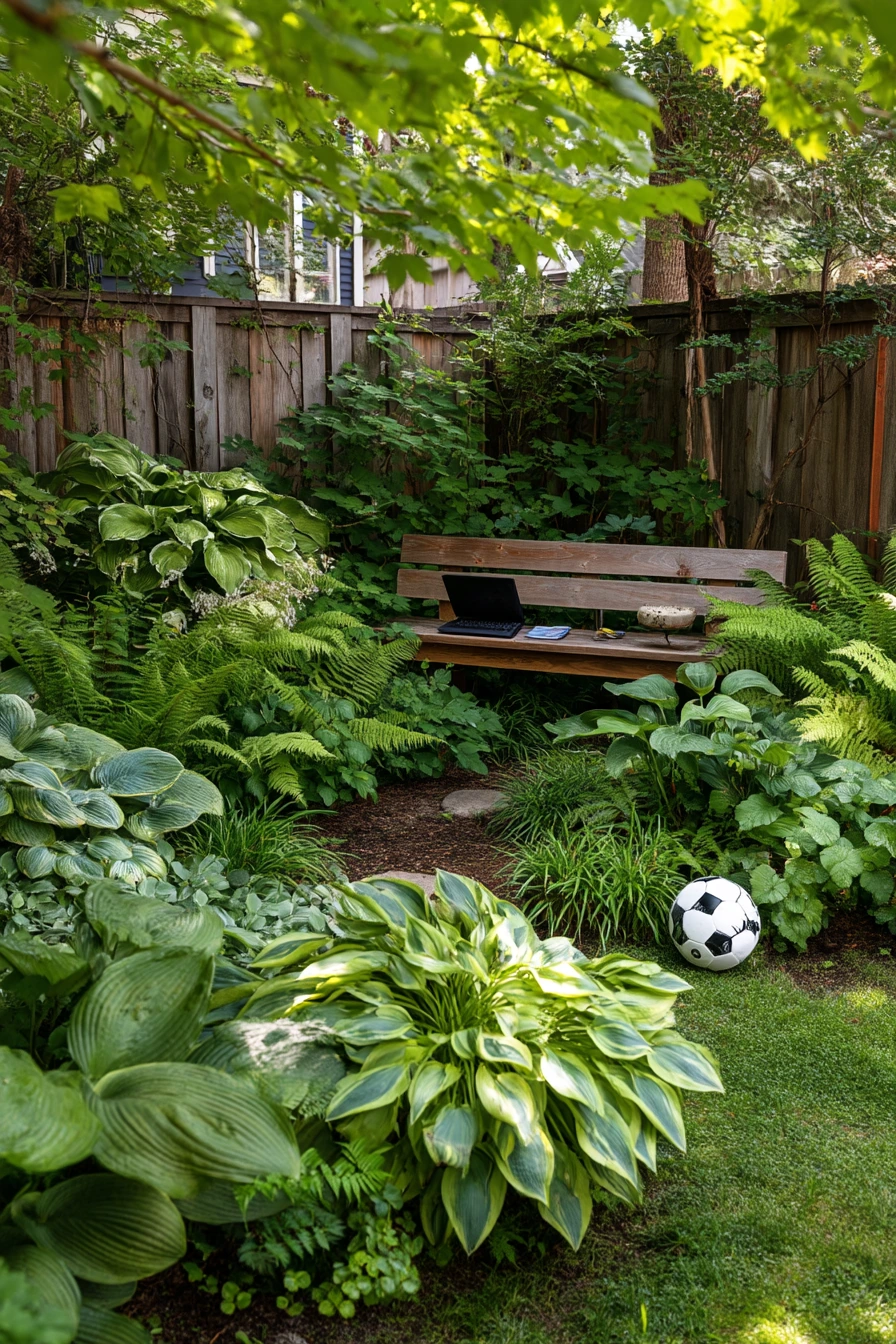
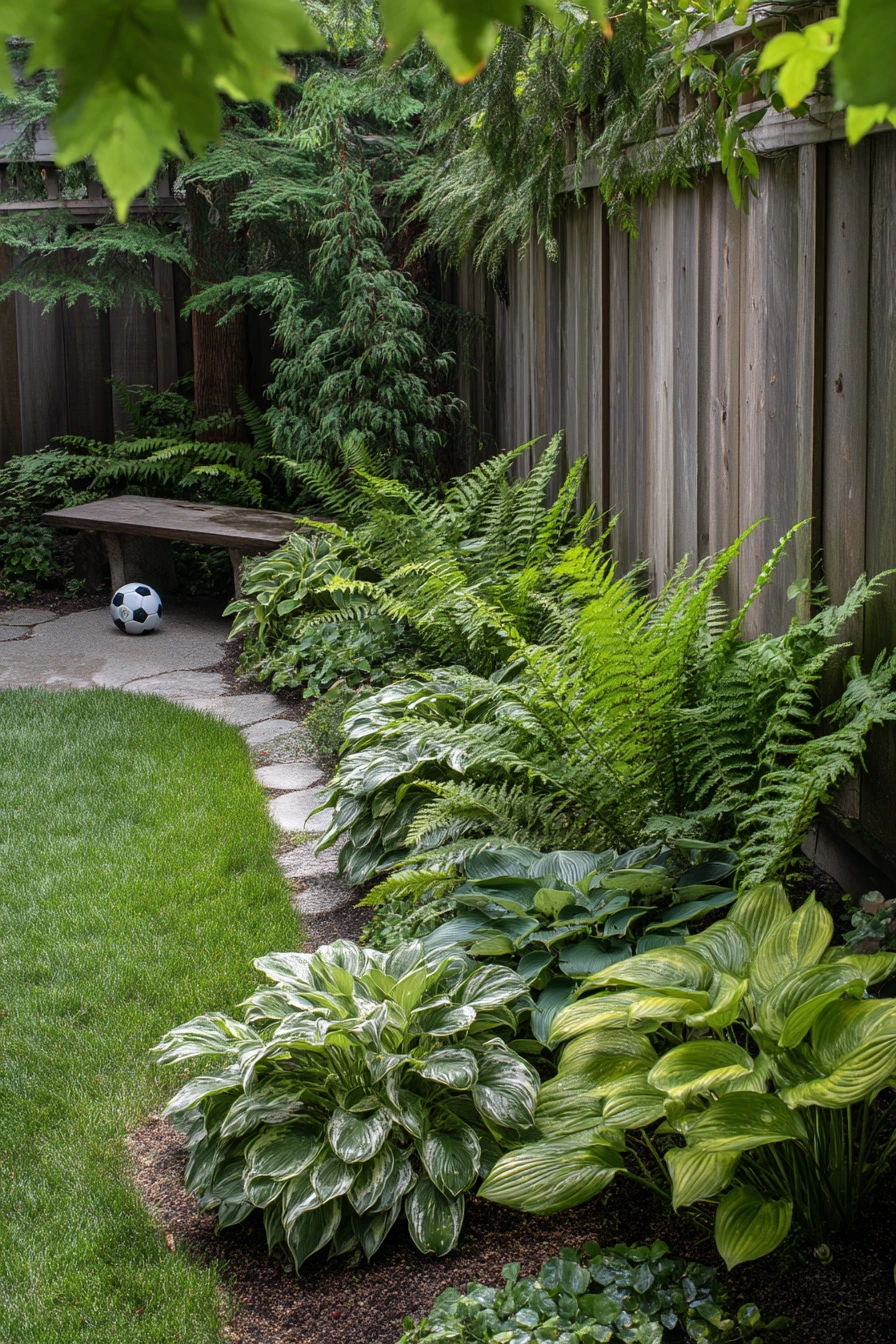
A shaded backyard border along a timber fence can be one of the easiest areas to keep neat if you choose the right plants. Ferns, hostas, hellebores, heuchera, and evergreen grasses thrive in shade and offer strong leaf texture. A thick layer of leaf mulch keeps moisture in the soil and cuts down weeds, which is perfect for low effort care.
Design this border in layers for a full look. Place evergreen grasses and taller ferns at the back to soften the fence. Use hostas as big leaf anchors through the middle, and add heuchera for color shifts like green, bronze, or purple. Hellebores fill gaps and give winter flowers when the rest is quiet. Leaf mulch is a great finish here because it looks natural, breaks down slowly, and improves the soil each year. Top up in fall when leaves are easy to collect.
To style the space, keep it simple and family friendly. A garden trowel can sit on a bench and still look fine if the border is layered and mulched. A kid’s soccer ball on the grass and a damp towel over a chair will not ruin the mood when the planting is calm and cool toned. If you work from home, even a laptop charger by the back door can blend in when you have one clear storage spot. For maintenance, cut back old hellebore leaves in late winter, divide hostas if they get too large, and remove fern fronds in early spring as new growth starts.
- Use leaf mulch to hold moisture and improve soil over time.
- Pick mostly foliage plants so the border looks good without blooms.
- Layer heights to hide the fence and add depth.
- Group hostas together for a bold, easy statement.
- Keep one small bench area clear for tools and quick breaks.
Pro Design Tip: Mix leaf sizes on purpose, like fine fern fronds next to broad hosta leaves, so the shaded border feels rich even with a limited color palette.
Budget Considerations: Shade plants can be divided and shared. Ask neighbors for hosta or fern divisions, then use free fallen leaves as mulch to keep costs low.
10 Neat Evergreen Border for a Busy Couple
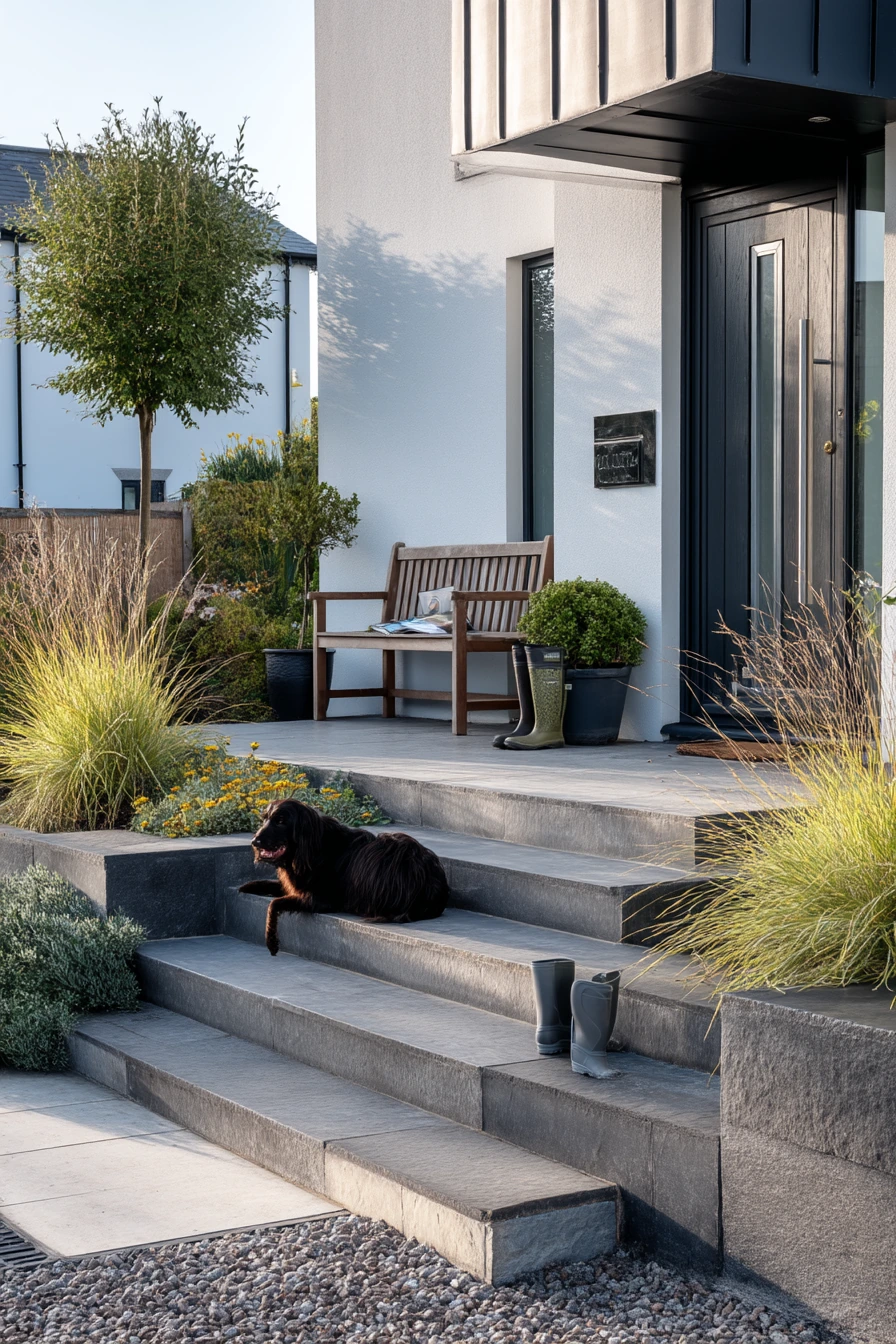
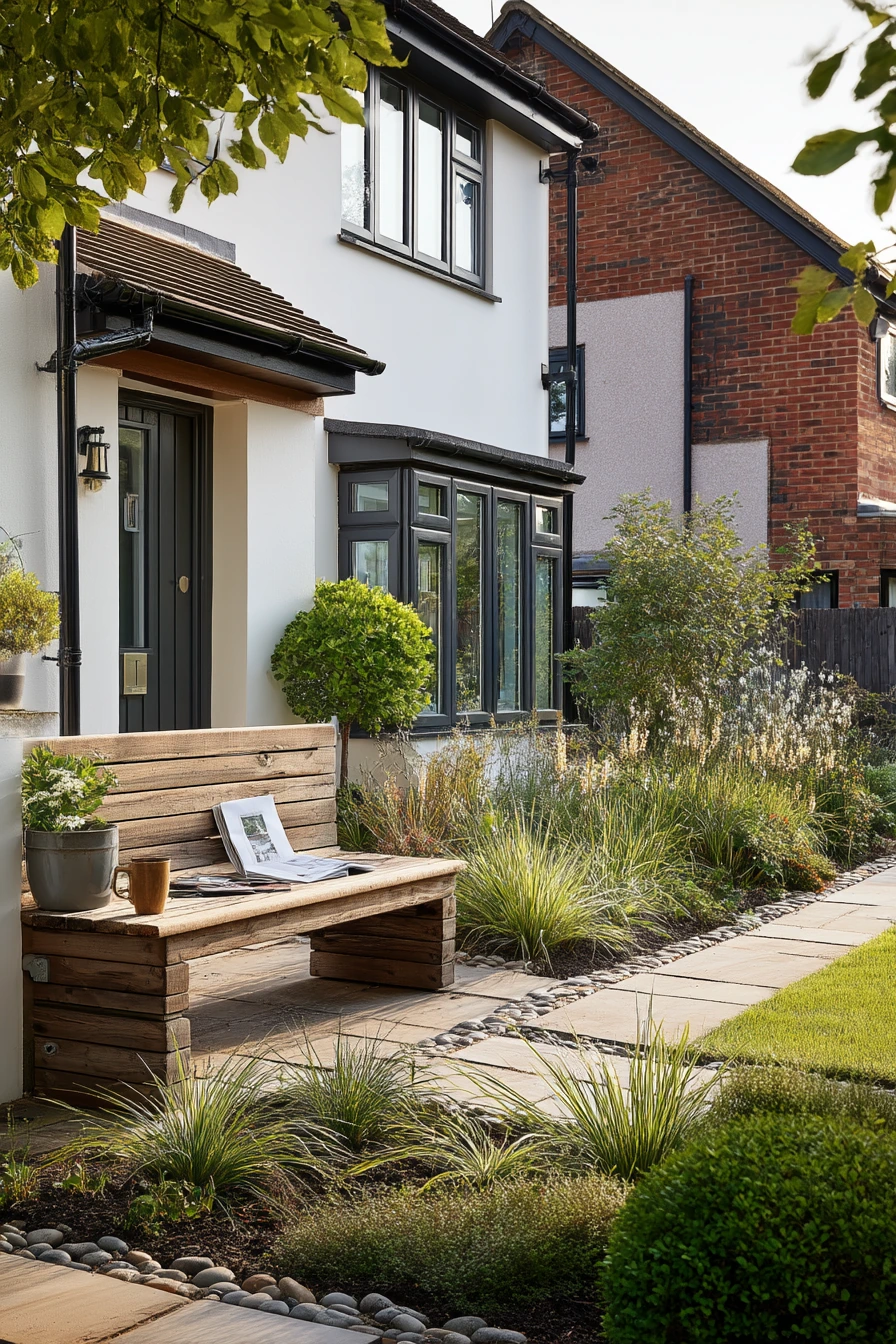
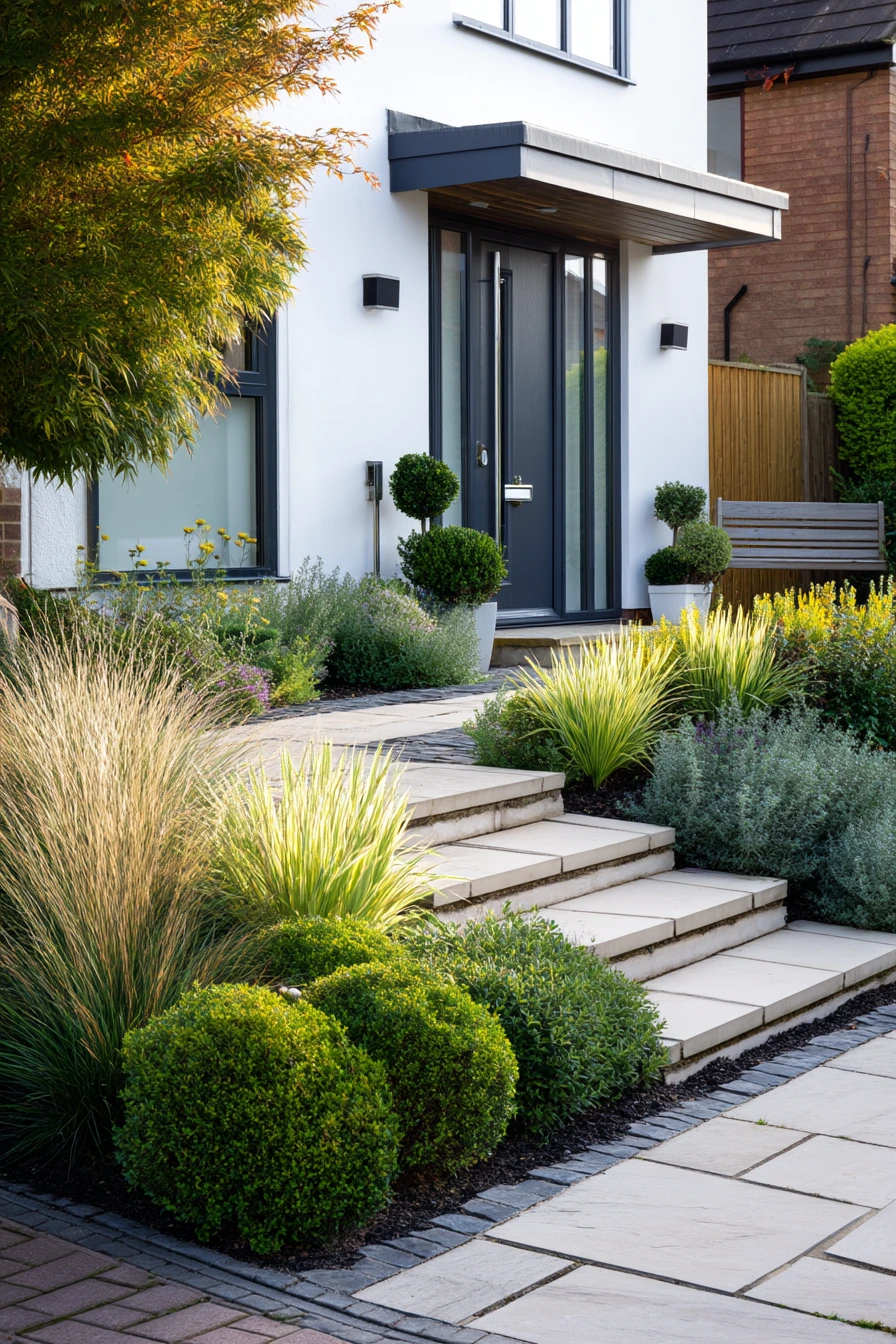
A tidy low maintenance border beside a contemporary detached home looks best with clear lines and a small plant list. Box, choisya, ornamental grasses, and seasonal bulbs give structure, scent, and movement without needing constant attention. Clean stone edging and dark mulch create an easy care frame that looks sharp in soft afternoon light.
Start with the hard outline. Install stone edging to mark the border and stop mulch from washing onto paths. Plant box as low shapes to define the front of the bed, then add choisya behind for evergreen bulk and spring flowers. Place ornamental grasses in repeating clumps to soften the shrubs and add motion. Tuck bulbs like alliums, tulips, or narcissus between shrubs so you get seasonal color without changing the layout. Dark mulch hides soil and makes green leaves look richer, while also reducing weeds.
Styling should stay simple so the planting is the focus. A coffee cup on the steps and an open magazine on the bench can fit the relaxed feel when the border line is crisp. Keep wellies and a folded dog lead near the door in one spot so the entry stays neat. For maintenance, clip box once or twice a year, lightly shape choisya after flowering, and cut grasses back in late winter. Check stone edging every spring and top up mulch to keep that clean, modern contrast.
- Use stone edging to keep the border line sharp with less work.
- Limit the plant palette for a modern, calm look.
- Add bulbs for color that returns each year without extra planting.
- Mulch dark for contrast and fewer visible weeds.
- Repeat grasses to soften shrubs and fill gaps over time.
Pro Design Tip: Keep shrub spacing generous so each plant can form a clear shape; crowded shrubs need more pruning and look messy faster.
Budget Considerations: Stone edging and box can be a bigger spend. If you are on a budget, use metal edging and swap some box for cheaper evergreen alternatives like ilex crenata.
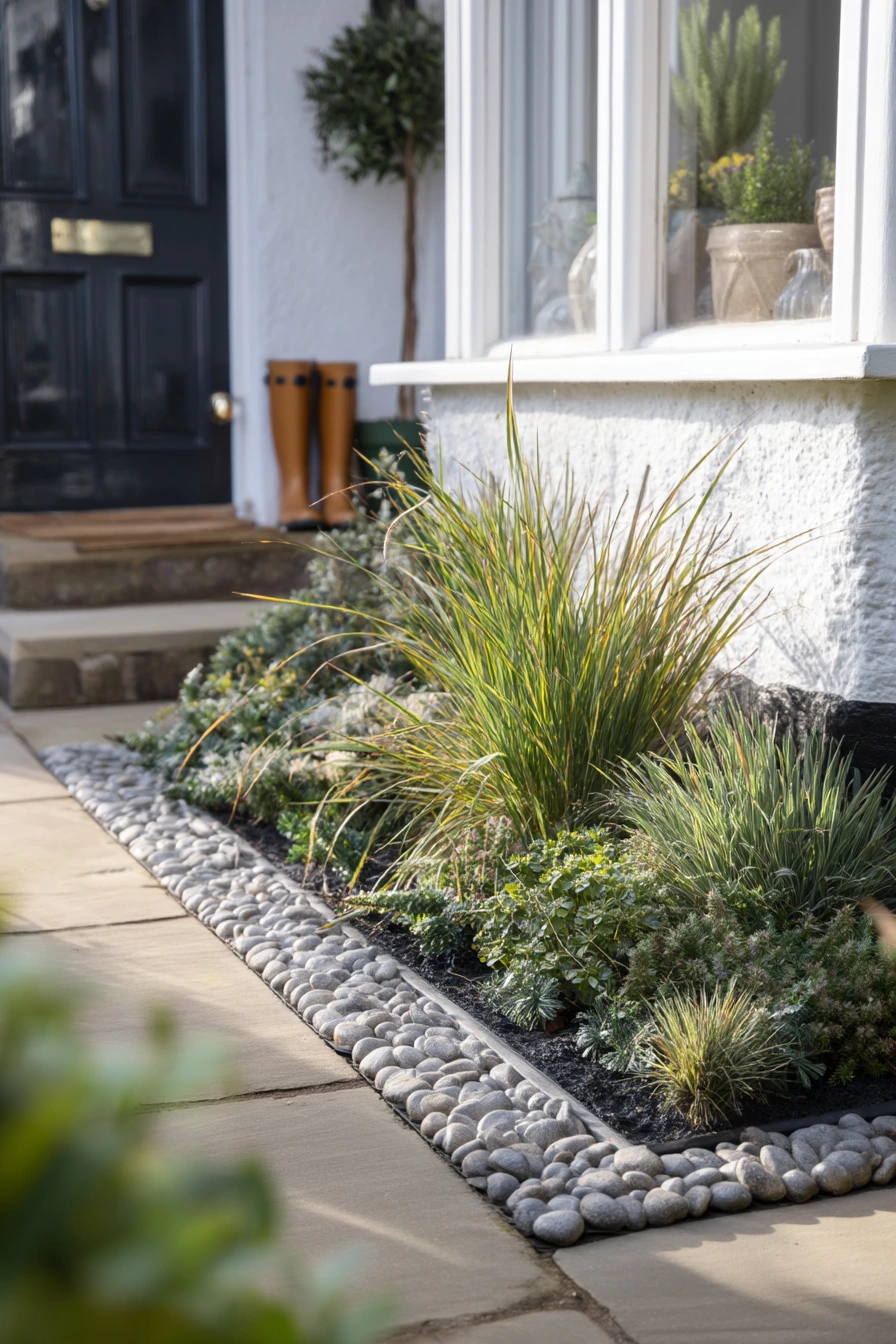
Low maintenance garden border ideas work best when you keep the plant list short, repeat shapes, and finish with a weed blocking surface like mulch, gravel, slate chips, or stones.
Pick a border style that matches your space, such as a townhouse front path, a narrow side return, a family patio, or a shaded fence line, then copy the same simple layout rules.
If you want the biggest time savings, focus on clean edging, deep mulch, and tough perennials, then add one small styling touch like pots, a bench, or a hook for tools to keep the space feeling lived in and tidy.
FAQ
What is the easiest low maintenance border to start with? A sunny border with lavender, grasses, and a gravel edge is simple because it needs little watering once established and is easy to trim.
Is gravel or mulch better for low maintenance borders? Mulch improves soil and is great for most beds. Gravel and slate chips stay neat near paths but work best with plants that like sharp drainage.
How do I stop weeds in a garden border? Remove existing weeds, add a thick layer of mulch, and keep edging crisp. Fill gaps with spreading plants like hardy geraniums or thyme.
What are the best low care plants for shade borders? Ferns, hostas, hellebores, heuchera, and evergreen grasses handle shade well and look good mainly for their leaves.
How often should I water a new border? Water deeply one or two times a week in the first season, depending on heat and soil. After plants establish, water less often but more deeply.
Can I make a low maintenance border in a rental? Yes. Use large planters, reusable edging, and hardy plants, then group pots by water needs for quick care.
What edging looks neat with the least upkeep? Stone or metal edging stays sharp for years. Gravel strips also help near paths, but they may need raking back into place after heavy rain.