
Parterre garden ideas are a smart way to make a yard feel neat, calm, and planned. A parterre is a garden with low hedges and clear shapes, often filled with flowers, herbs, or gravel paths.
This post shares real-life layouts you can copy, from a small breakfast terrace with clipped boxwood knots to a compact city courtyard with mirrored gravel squares and espaliered fruit trees. Each idea is built for daily use, not just looks.
You will learn how to pick an easy pattern, choose plants like lavender, rosemary, and boxwood substitutes, and add details that make the space feel lived-in. Each section also includes a pro design tip and a budget note to help you plan.
If you came from Pinterest, use this guide to decide on one layout, then build it step by step. Even a tiny patio can hold a simple parterre grid with pots, gravel, and tidy edging.
1 Cottage Parterre Border with Everyday Life
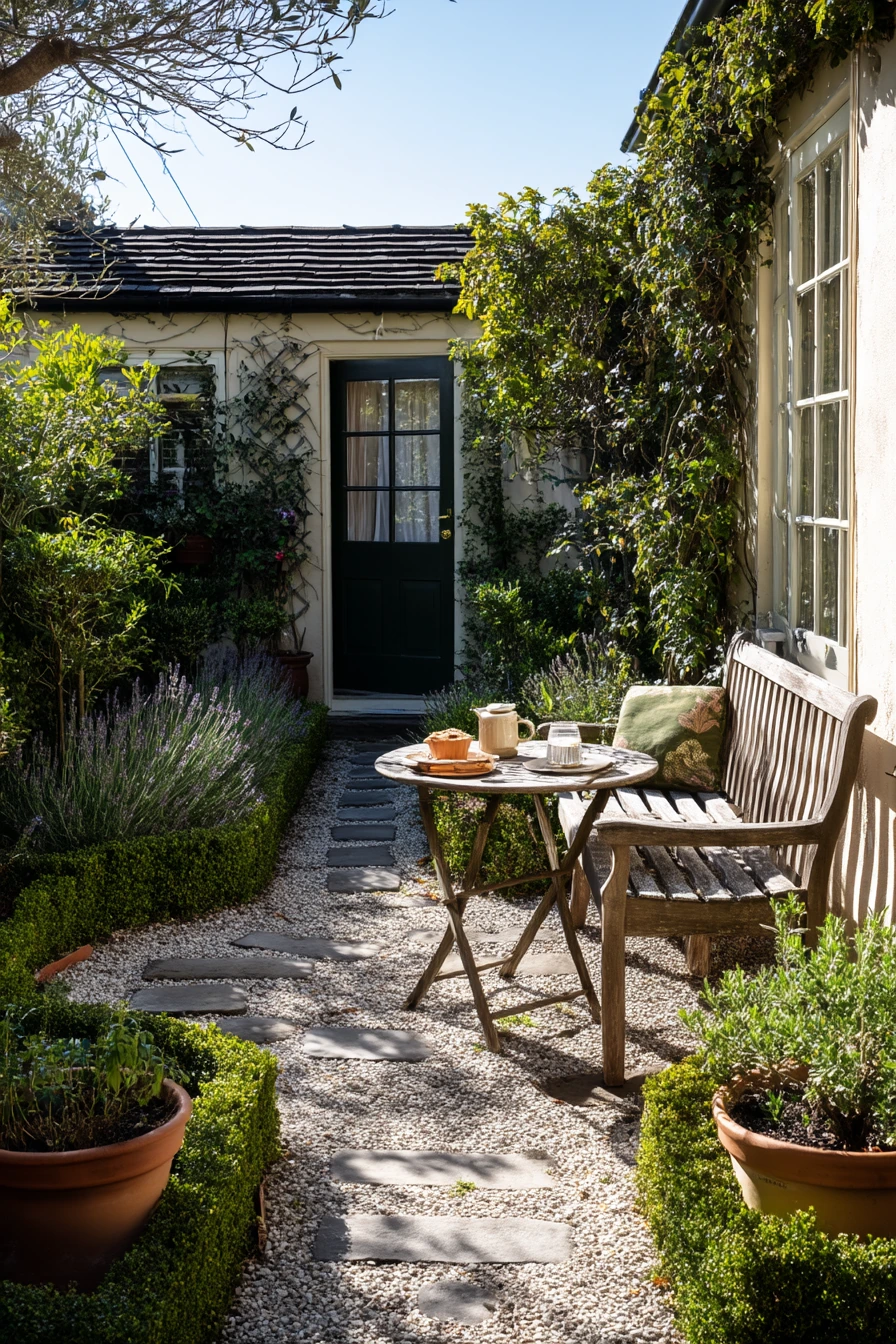
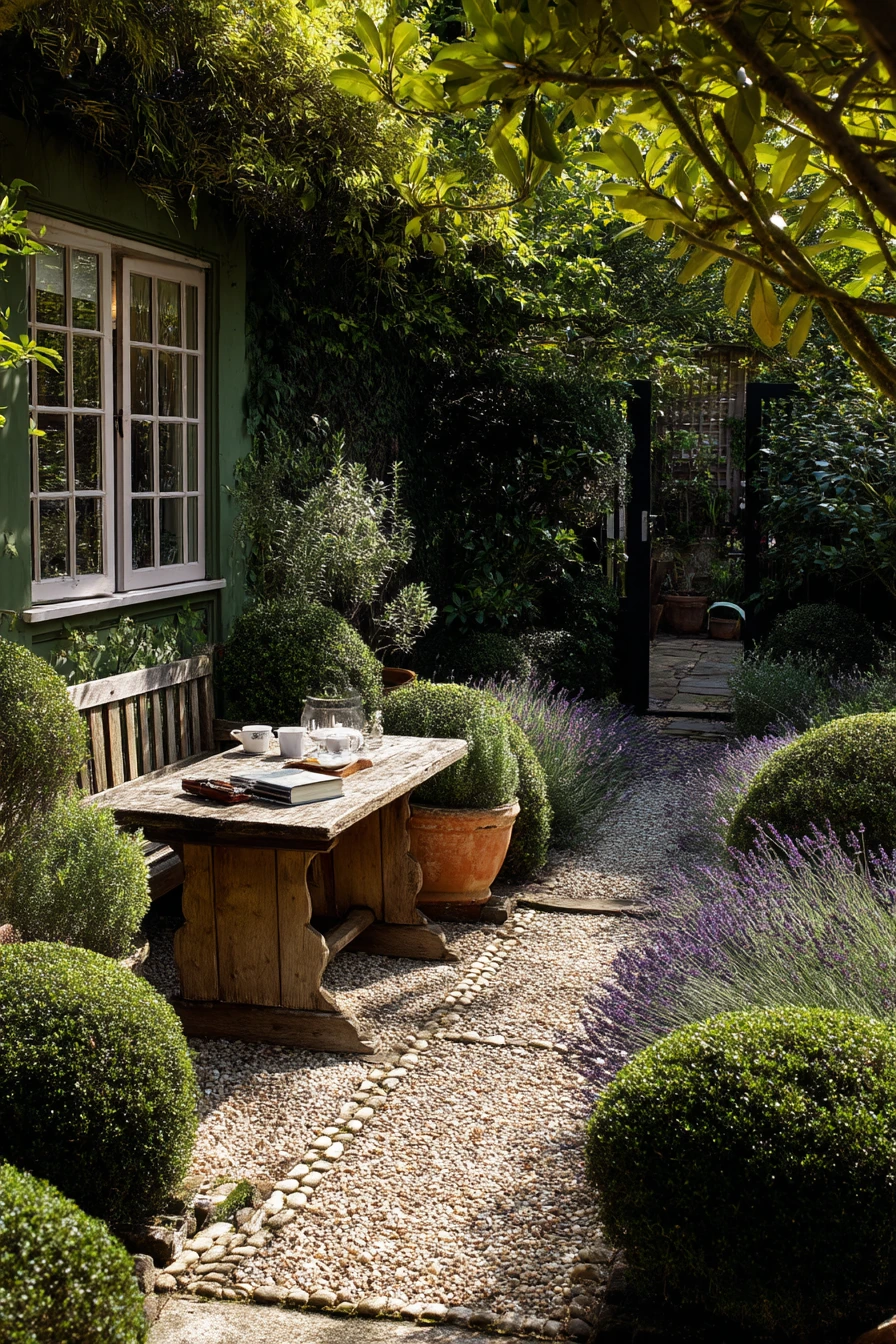
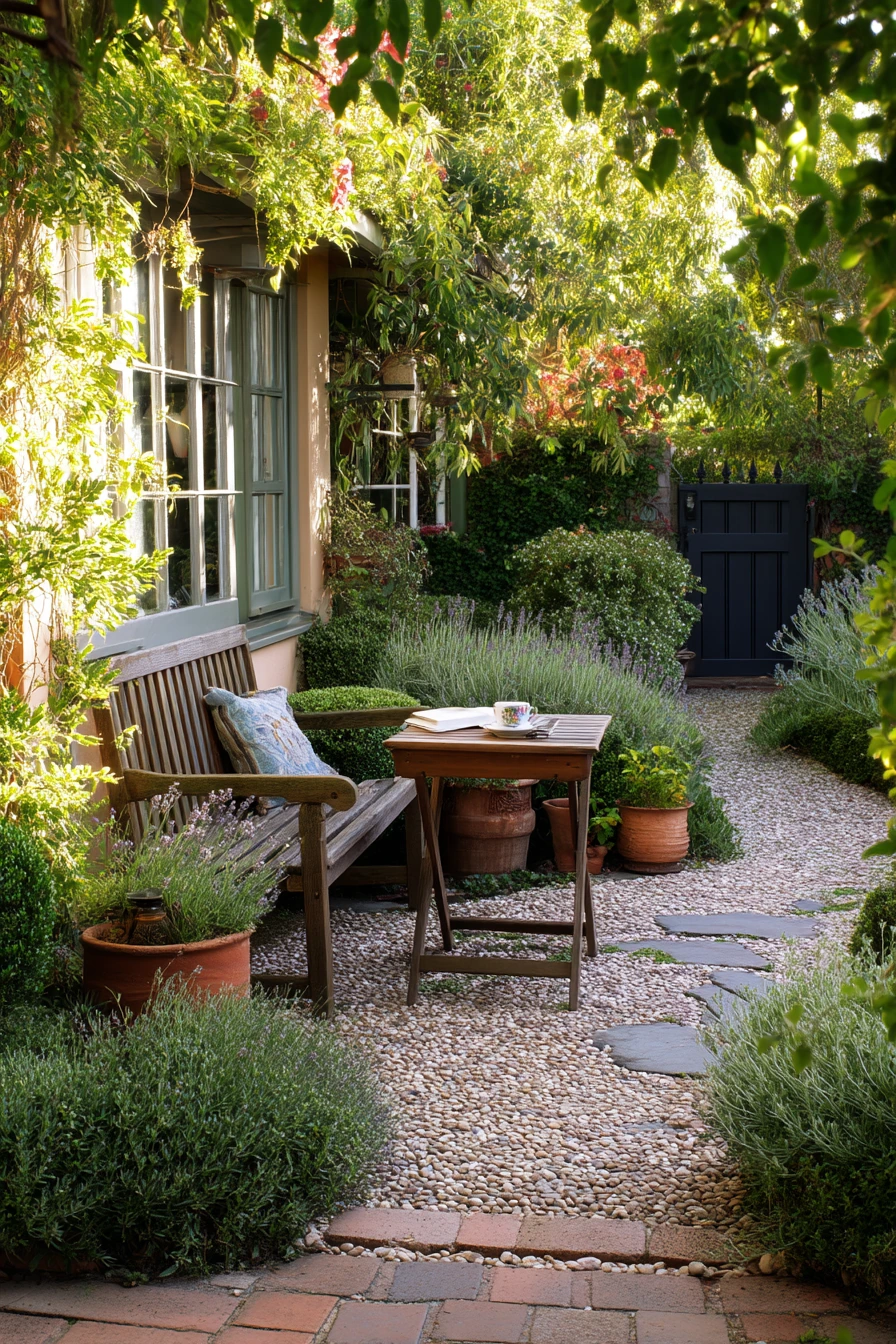
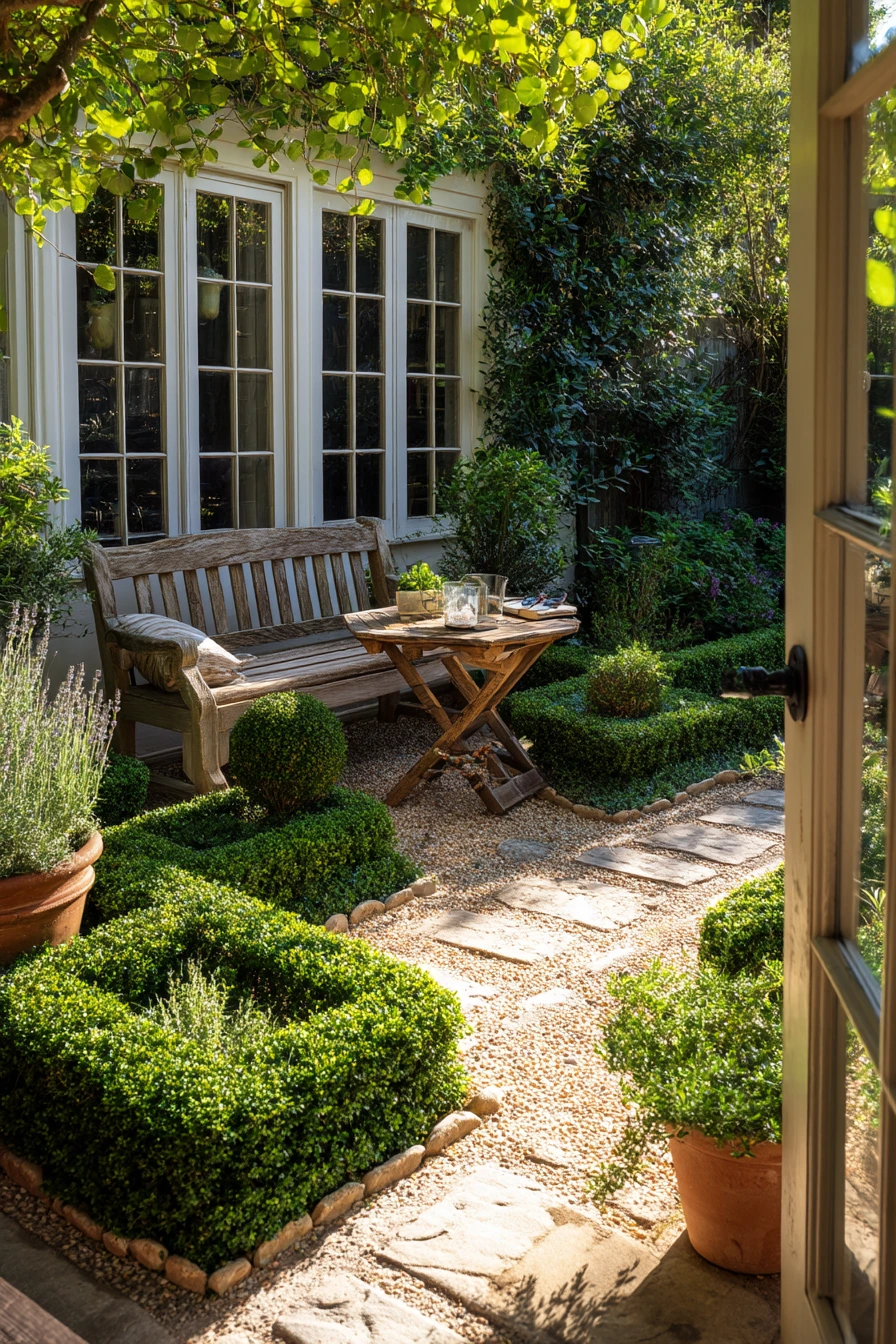
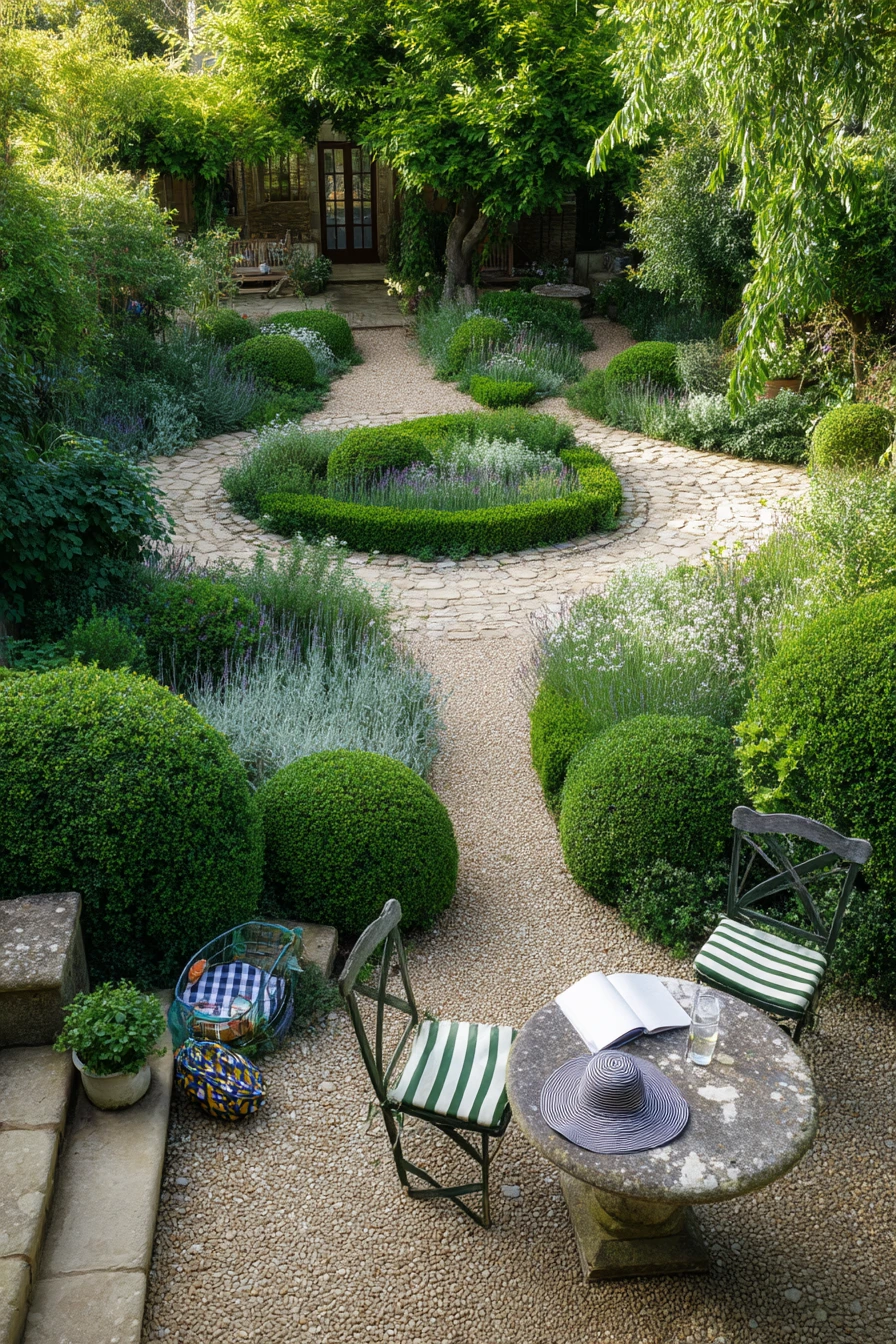
A parterre near a breakfast terrace works best when the lines are clear and the plants stay low. Start with clipped boxwood knots or a simple loop pattern that wraps the sitting area. Keep the shapes close to the terrace so you can enjoy the structure with your morning coffee.
Use lavender edging to soften the geometry and add scent as you walk. Gravel paths keep shoes clean, drain well after rain, and make the design look sharp. Terracotta pots add height without blocking views, and a weathered teak bench gives you a quiet spot for a book.
Style it so it feels real and easy to use. Set one watering can near rosemary, keep a small tray for mugs, and leave room at the gate for kids to come and go. This kind of parterre looks best when it is tidy but not perfect, with plant shadows across the pavers and a few everyday items on the table.
- Pick one knot pattern and mark it with a garden hose before planting.
- Choose gravel that matches your house trim for a pulled-together look.
- Edge paths with slim metal or brick so gravel stays in place.
- Plant lavender where it gets sun and airflow to prevent mildew.
- Add two terracotta pots at the terrace corners to frame the view.
Pro Design Tip: Keep boxwood knots at a consistent height (about ankle to mid-calf) so the pattern reads clearly from the kitchen doors and from the bench.
Budget Considerations: Boxwood can be pricey; use smaller starter plants and be patient, or swap in dwarf holly or lavender for a similar low, clipped look.
2 Small Urban Parterre Courtyard for Apartment Living
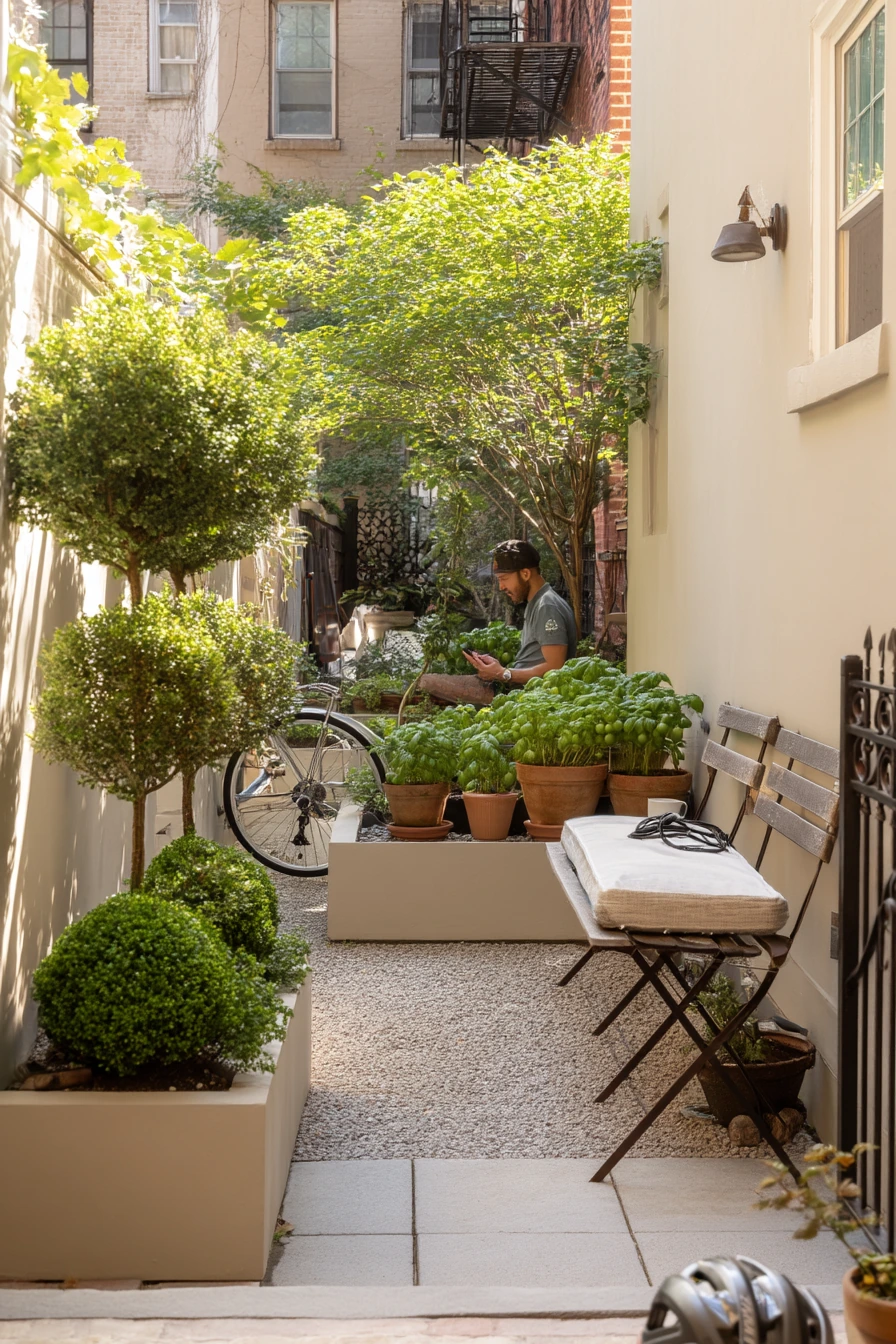
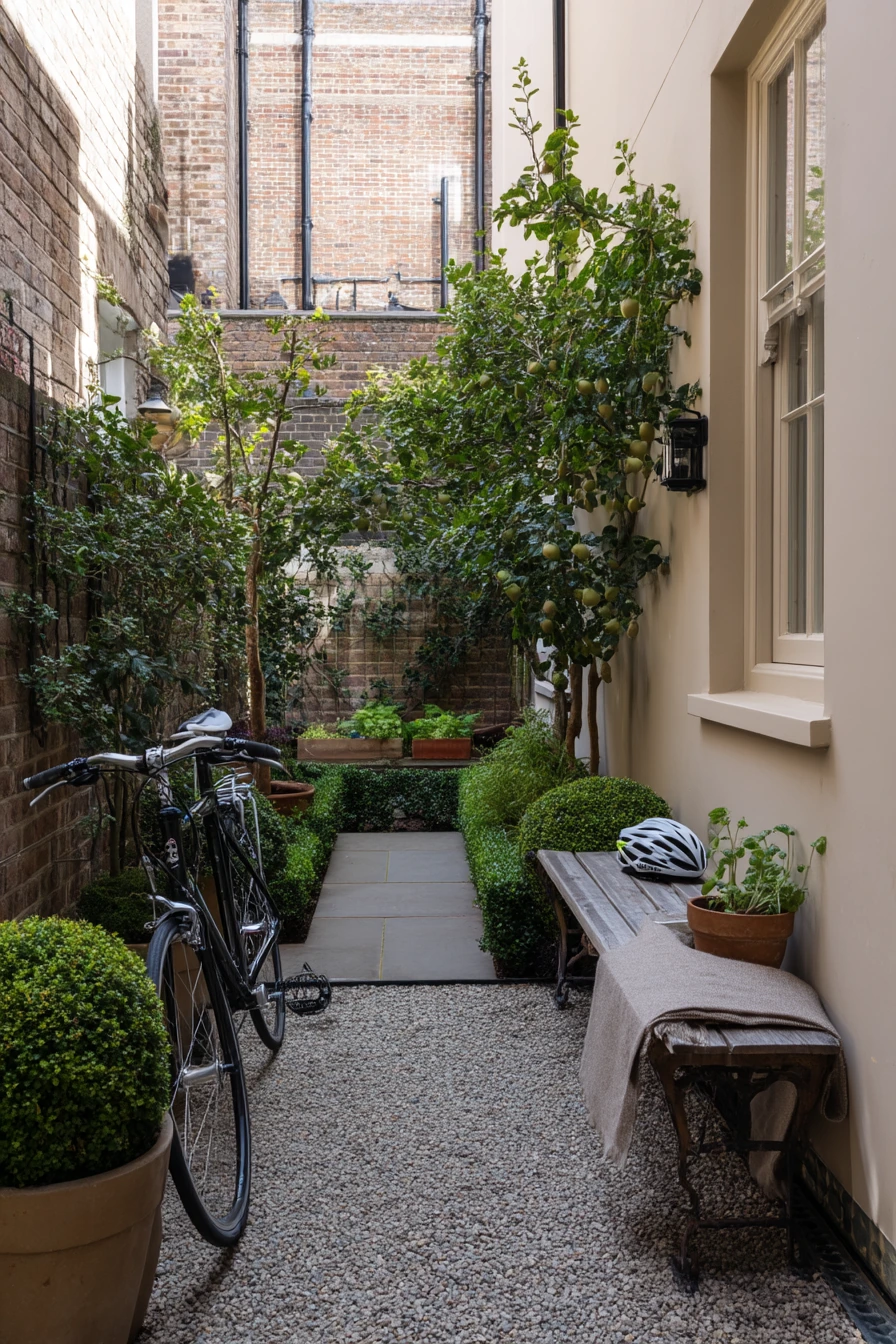
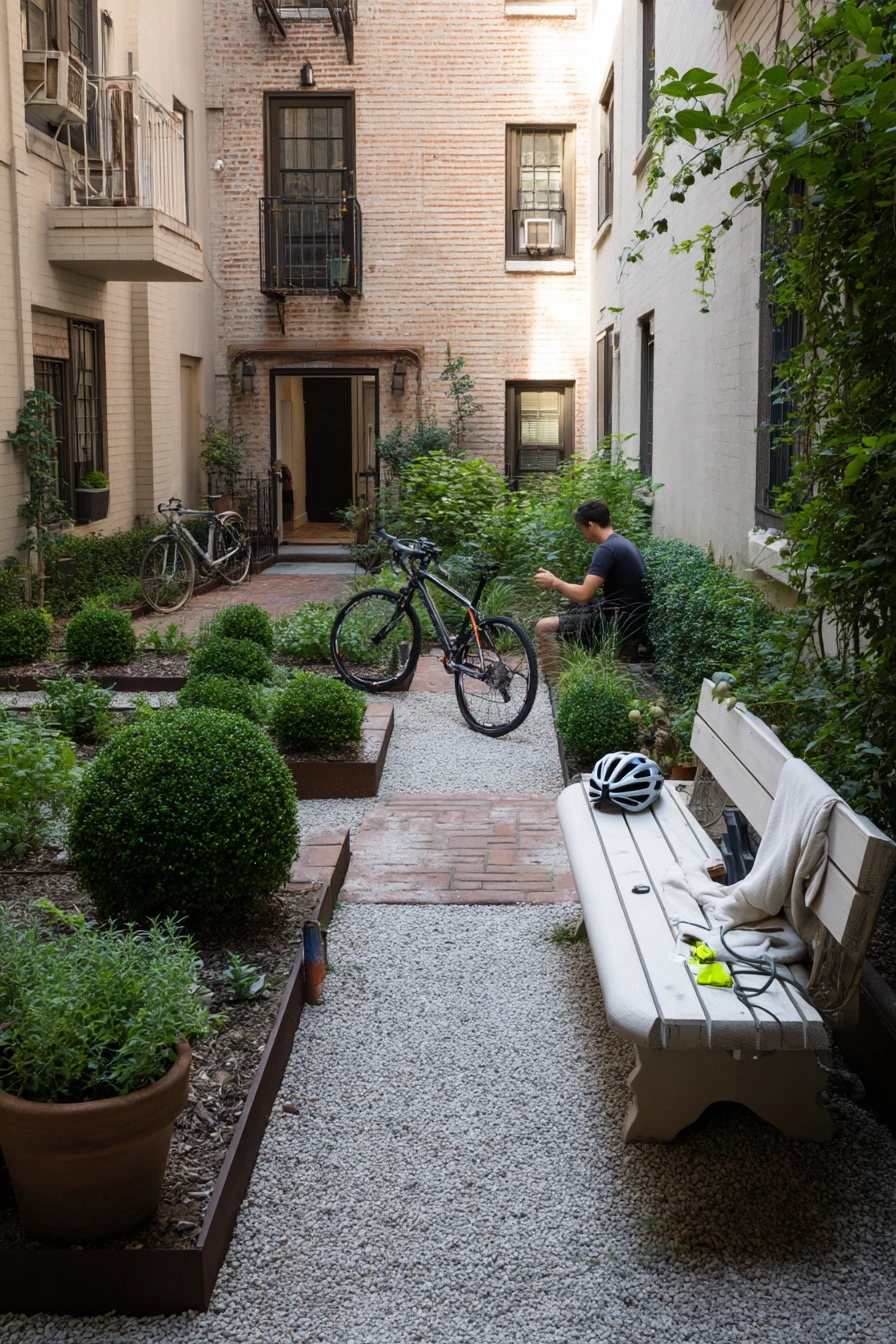
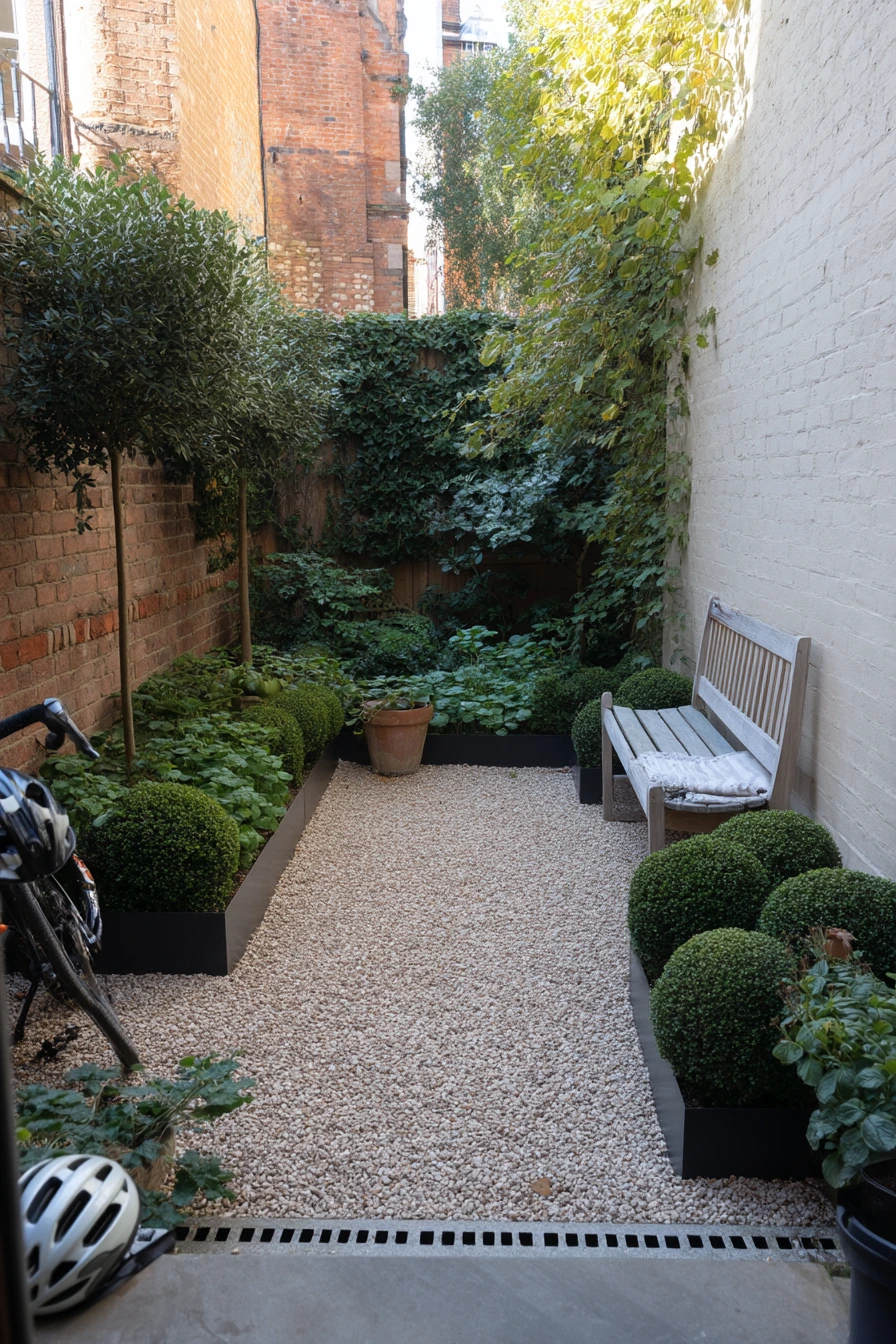
A compact courtyard can still have a strong parterre layout if you keep the shapes simple. Try mirrored gravel squares with clipped yew domes at the corners. The repeated pattern makes a small space feel larger, and it looks crisp against pale walls and brick.
Use slim steel edging to keep lines straight and easy to maintain. Add espaliered pears against the brick to bring height without taking floor space. A narrow bench with a folded throw turns the courtyard into a place you will actually sit, not just look at.
Make it practical for apartment living. Keep herbs like basil in easy-reach spots for quick snips while you cook. Leave a small work zone for potting soil and a hand pruner, and plan a spot for everyday items like a bike helmet or a mug. This kind of parterre is about order, storage, and calm.
- Use a square grid so measurements stay simple in tight spaces.
- Choose pale gravel to bounce light into the courtyard.
- Train pears on wires fixed to the wall for clean lines.
- Place yew domes in large planters if you cannot dig.
- Keep one corner as a mini tool station with a lidded bin.
Pro Design Tip: Repeat the same shape three times (square, dome, square) to create rhythm; it makes the courtyard feel designed even with few plants.
Budget Considerations: Steel edging and espalier systems add cost; save money with pressure-treated timber edging and simple eye hooks with garden wire.
3 Family-Friendly Parterre with Playful Edges
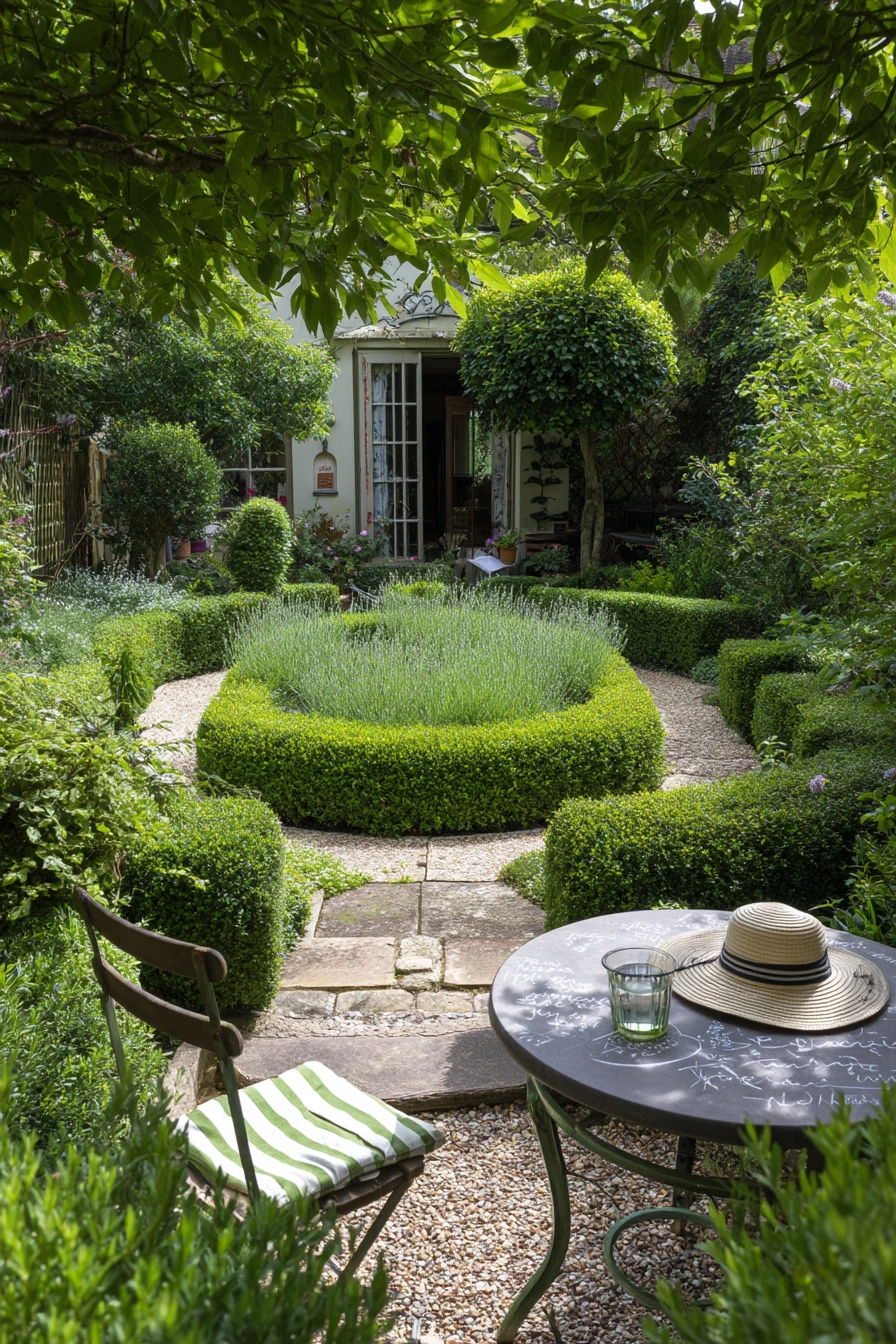
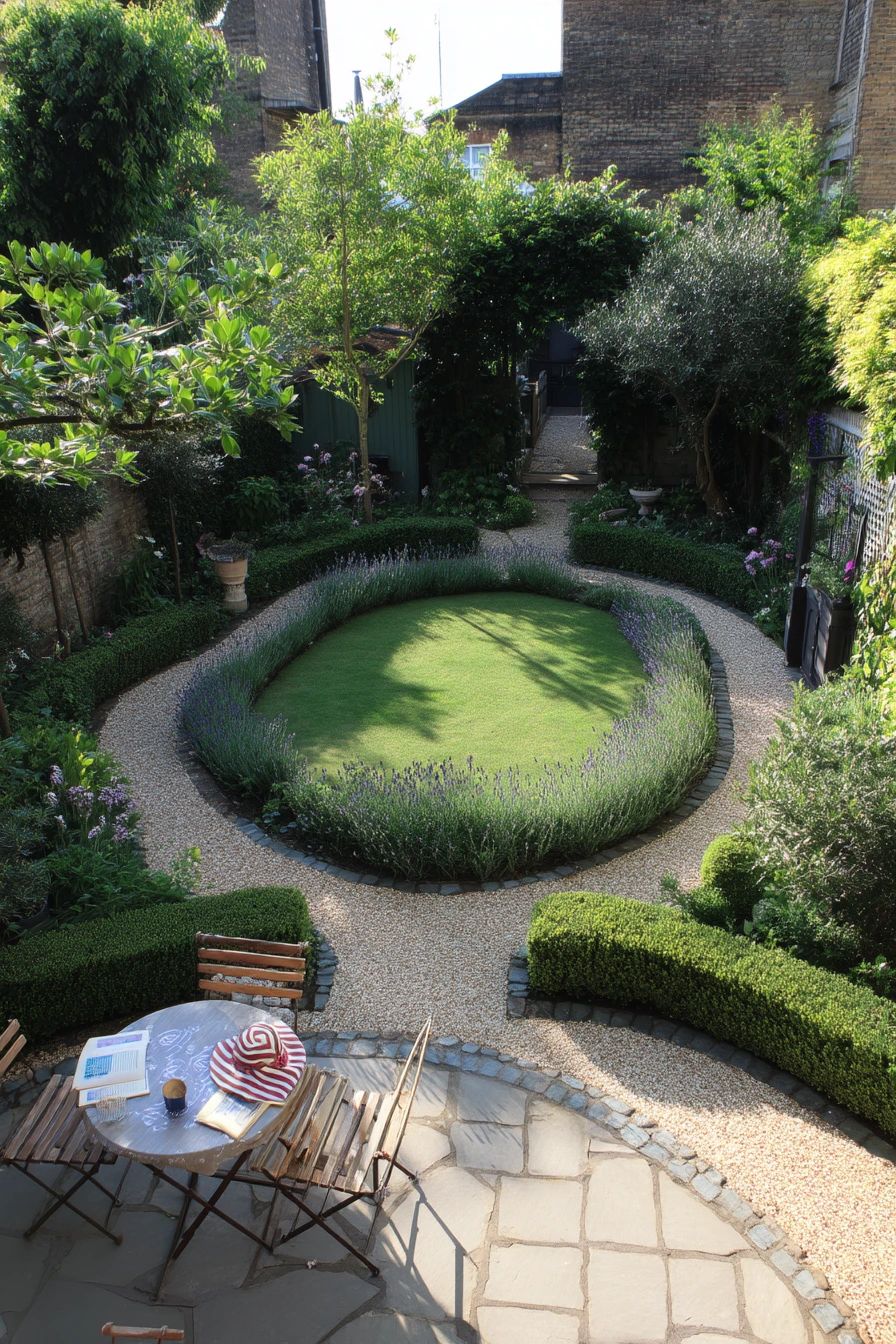
A kid-friendly parterre should feel open and safe, with rounded shapes instead of sharp corners. Build low dwarf box hedges in a simple loop or oval pattern, then fill the beds with rounded lavender plantings. Pea gravel and stepping stones help kids move through the space without crushing plants.
Add a small circular lawn in the center to make the layout usable for play. This lawn becomes a landing spot for games, picnics, and quick runs, while the parterre gives the garden a calm frame. The mix of structure and softness keeps it breathable and not too formal.
Style the patio edge with real family life in mind. A toy basket can live near the patio, and a striped sunhat on a chair makes the space feel welcoming. If you like the look of a garden book and a water glass on the table, keep them on a tray so you can move them fast when you need to.
- Keep hedge height low so kids can see across the garden.
- Use stepping stones wide enough for small feet and scooters.
- Choose lavender types that stay compact and handle trimming.
- Set gravel borders under swings or high-traffic spots to reduce mud.
- Place a small chalkboard or stone area for drawing near the patio.
Pro Design Tip: Round each bed edge slightly, even in a geometric plan, so the garden feels softer and more forgiving when kids cut corners.
Budget Considerations: Dwarf box hedges can take many plants; reduce cost by planting farther apart at first and filling gaps with annuals until the hedge grows in.
4 Front Garden Parterre for Curb Appeal
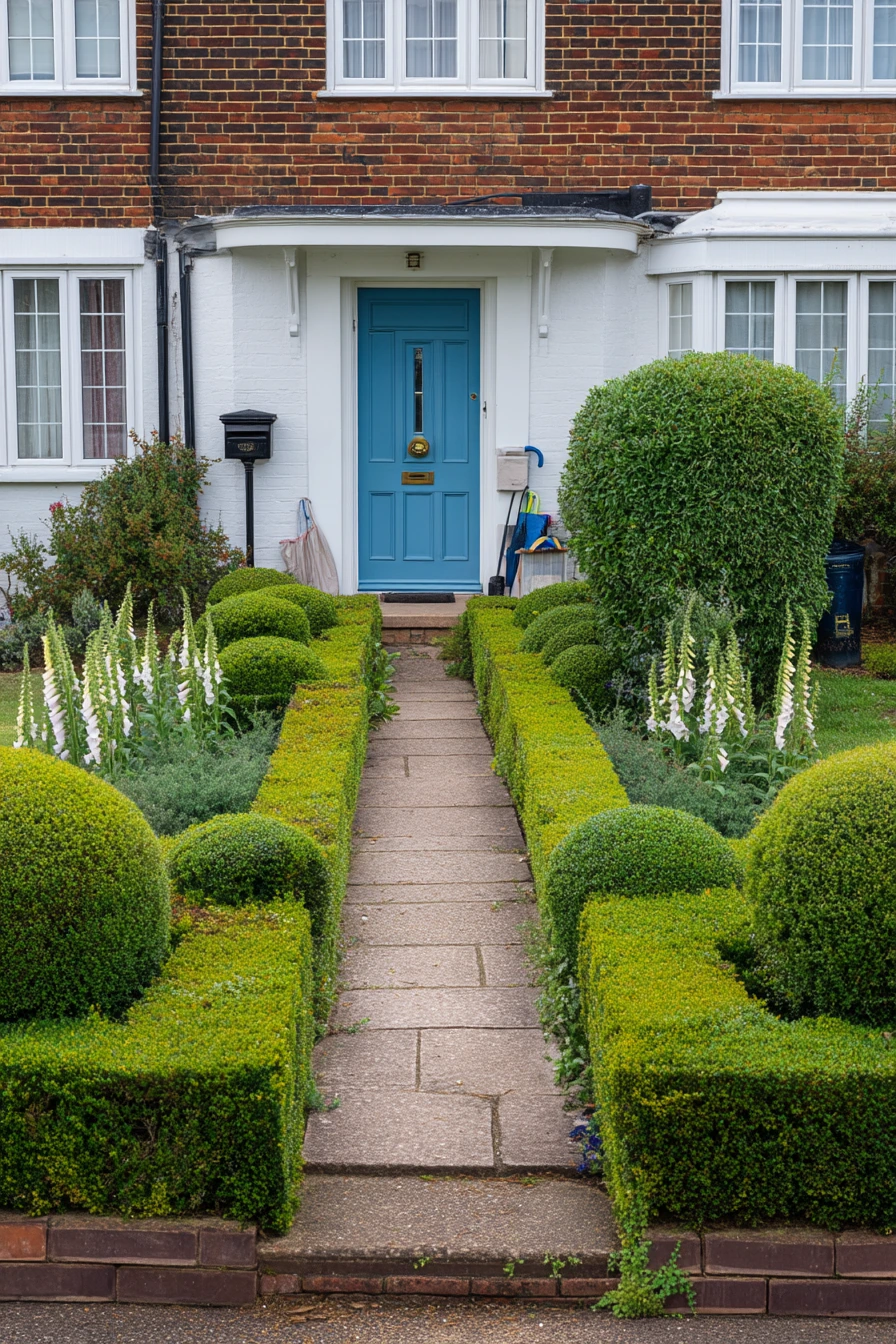
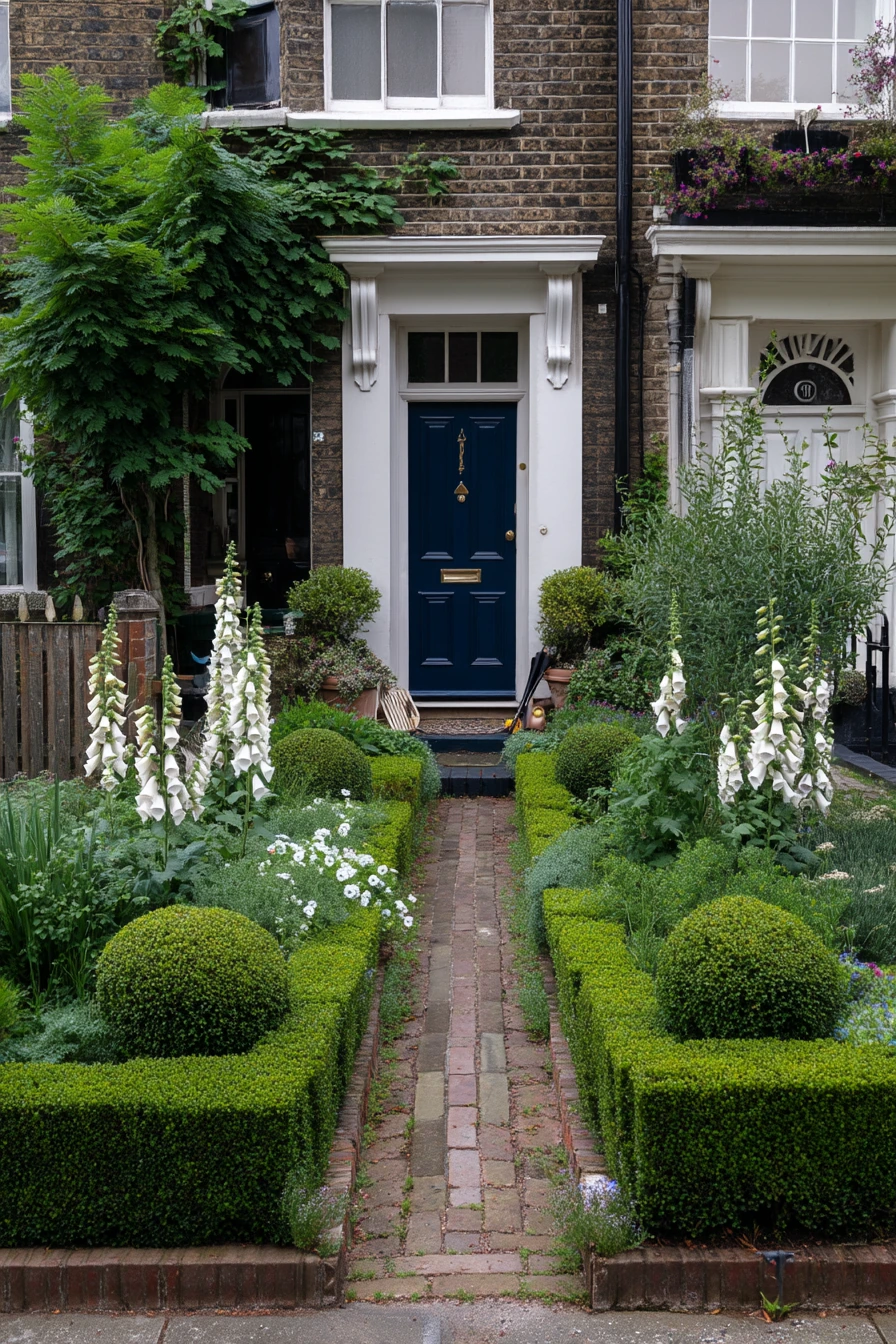
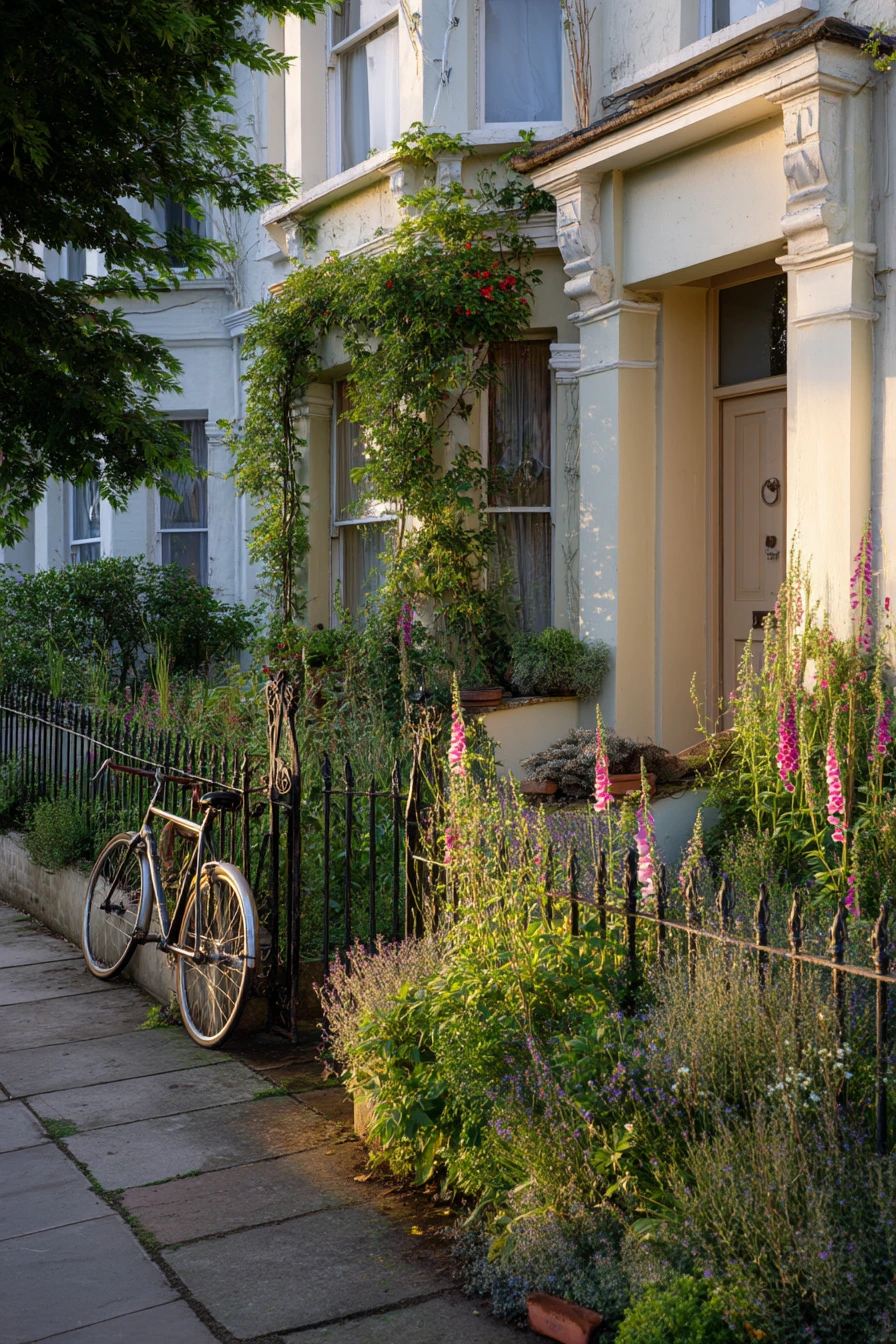
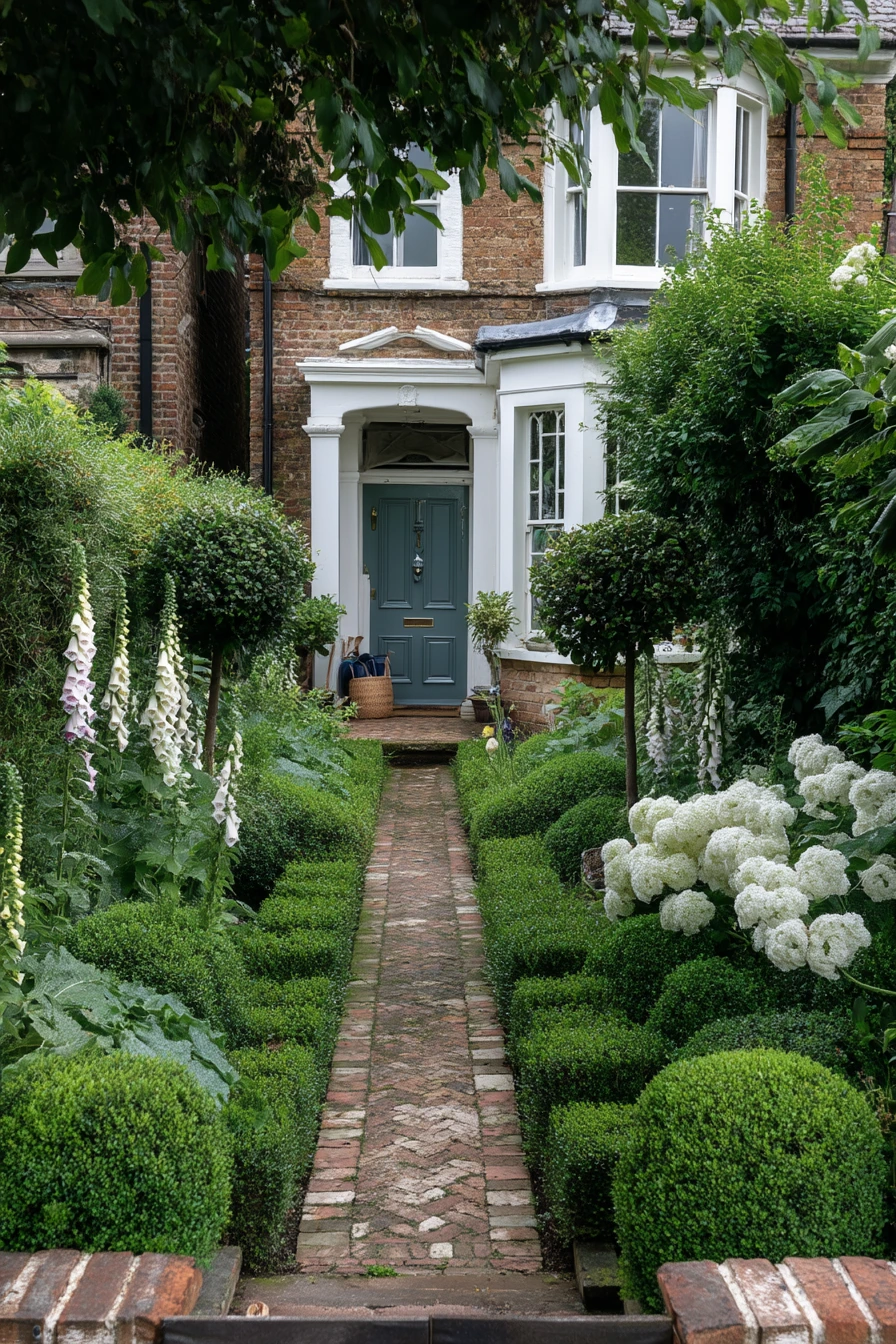
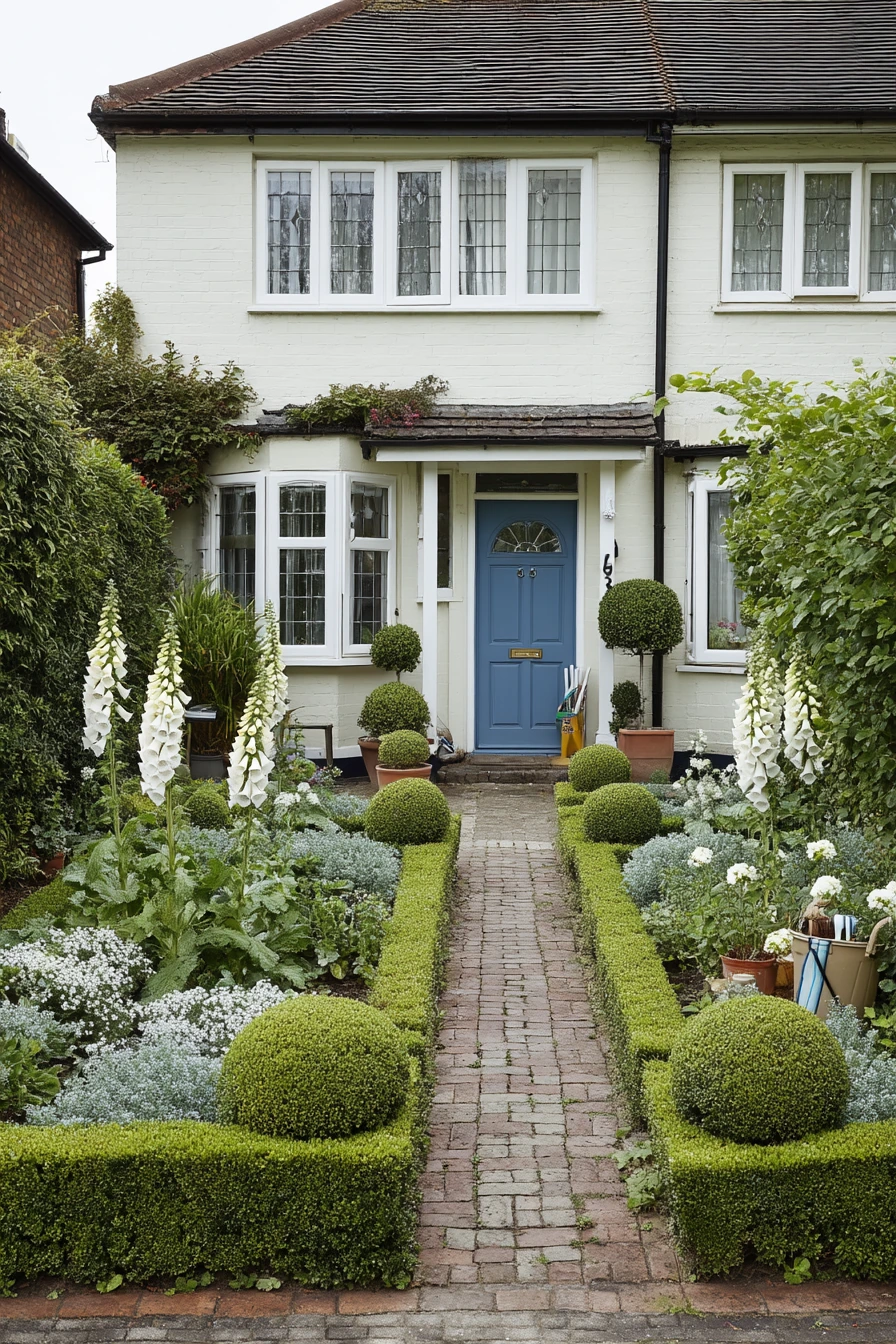
A front-yard parterre is a clean way to boost curb appeal while keeping a warm, lived-in feel. Use low box hedging to outline a symmetrical plan on both sides of a narrow central path. Brick edging adds a classic border and helps the shapes stay crisp.
For planting, add seasonal white foxgloves for height and a light, airy look. Clipped spheres or small topiary balls bring structure near the walkway and help the garden look good even between bloom times. A simple path leading to a blue door gives the whole scene a clear focal point.
To keep it welcoming, plan for real entry needs. Leave space for a mailbox, a boot tray, and an umbrella by the entrance. If you use a hose often, tuck it behind a hedge section so it is close but not messy. A parterre can be formal in layout but still feel like a real home.
- Center the design on the path so both sides stay balanced.
- Mix evergreen structure with one or two tall seasonal flowers.
- Use brick or stone that matches your steps for a tied-in look.
- Place topiary spheres near the door to frame the entry.
- Keep plants low near the path for safe sight lines.
Pro Design Tip: Choose one strong color for the front door and repeat it in small details, like a glazed pot or a simple bench cushion, to make the symmetry feel intentional.
Budget Considerations: Brick edging can be costly if bought new; look for reclaimed bricks or use concrete pavers with a similar size and tone.
5 Renter-Friendly Parterre on a Patio
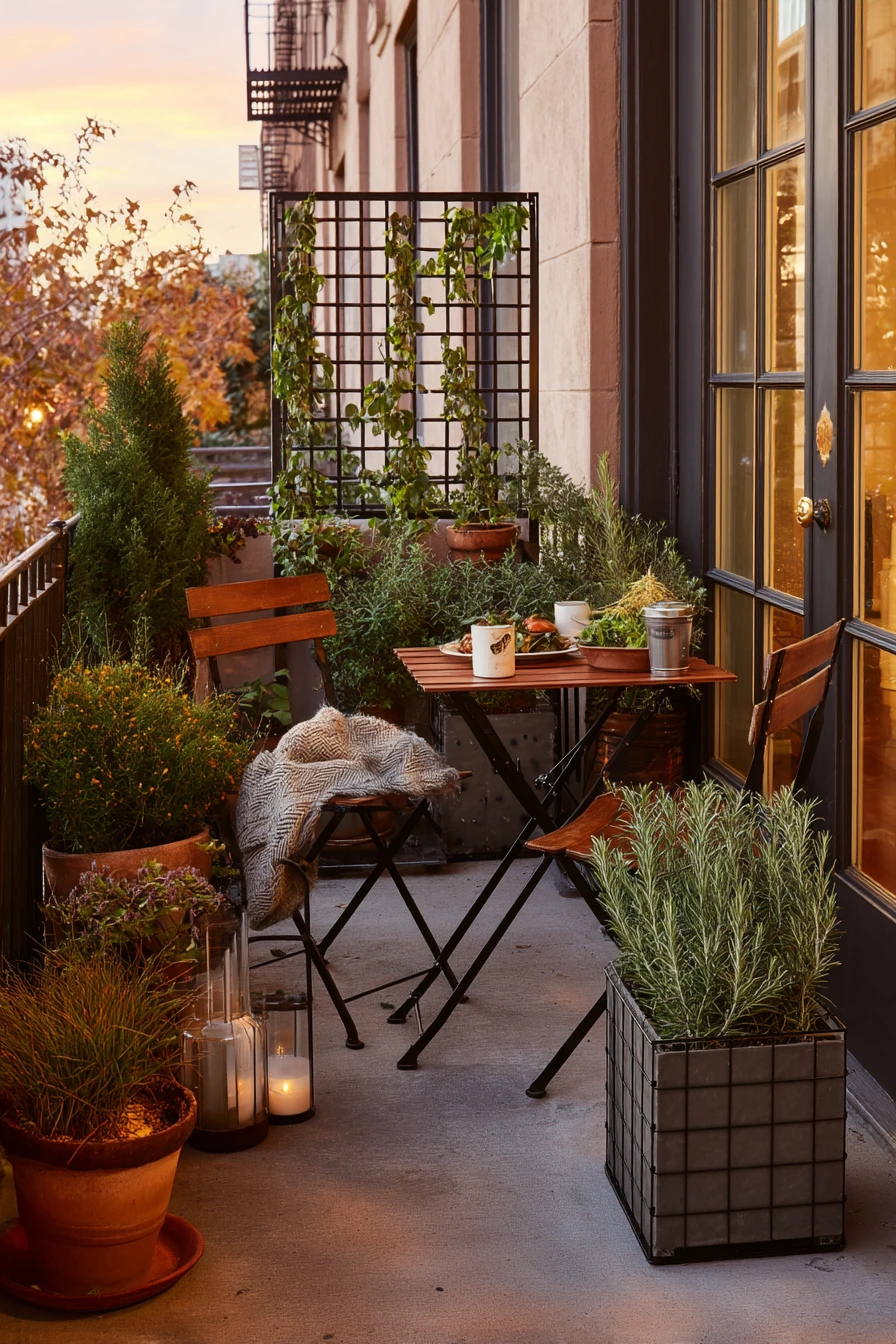
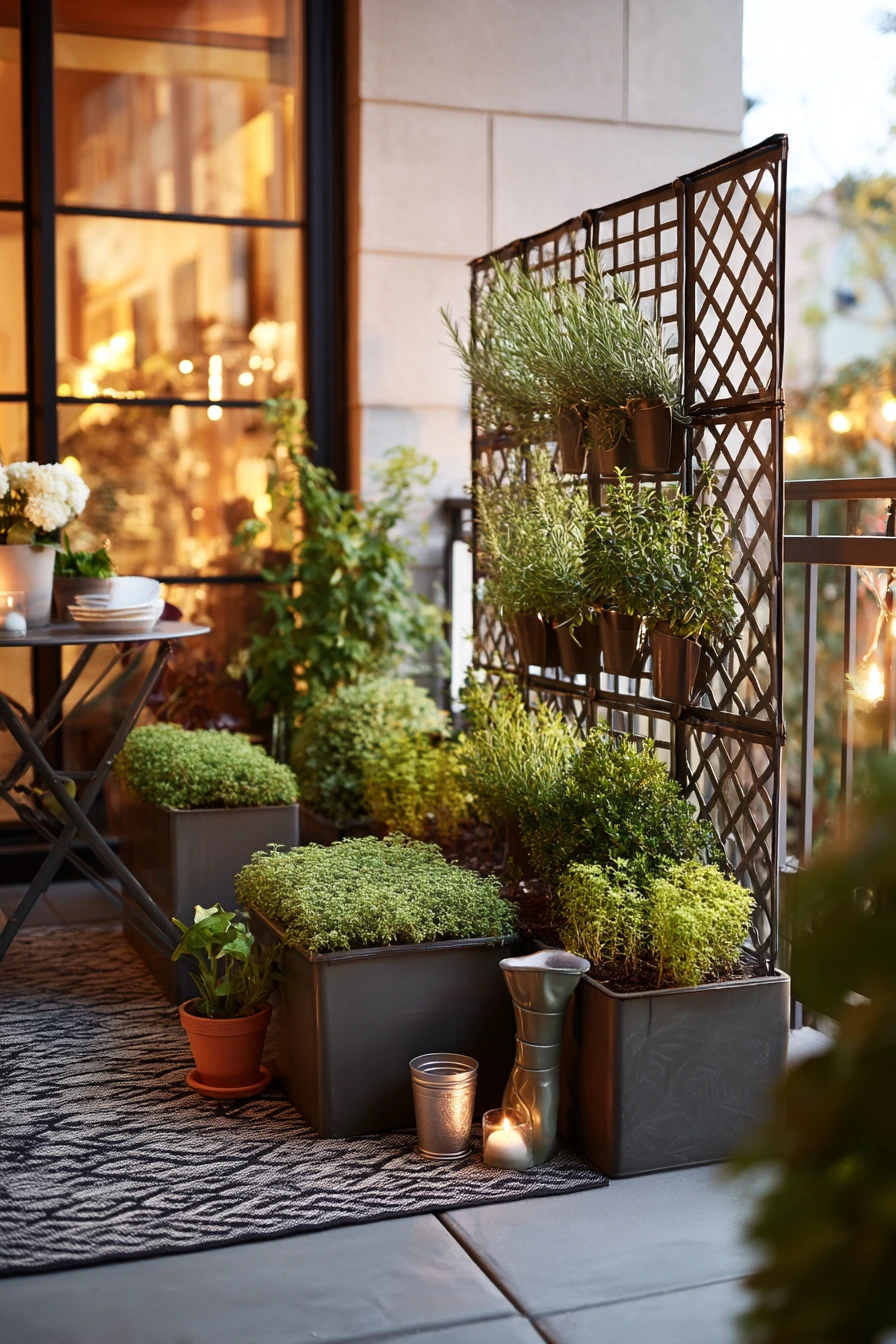
If you rent or cannot dig, build a parterre in containers. Use modular square planters to create a simple grid on a concrete patio. The grid gives you that parterre look without changing the ground, and it is easy to move if you relocate.
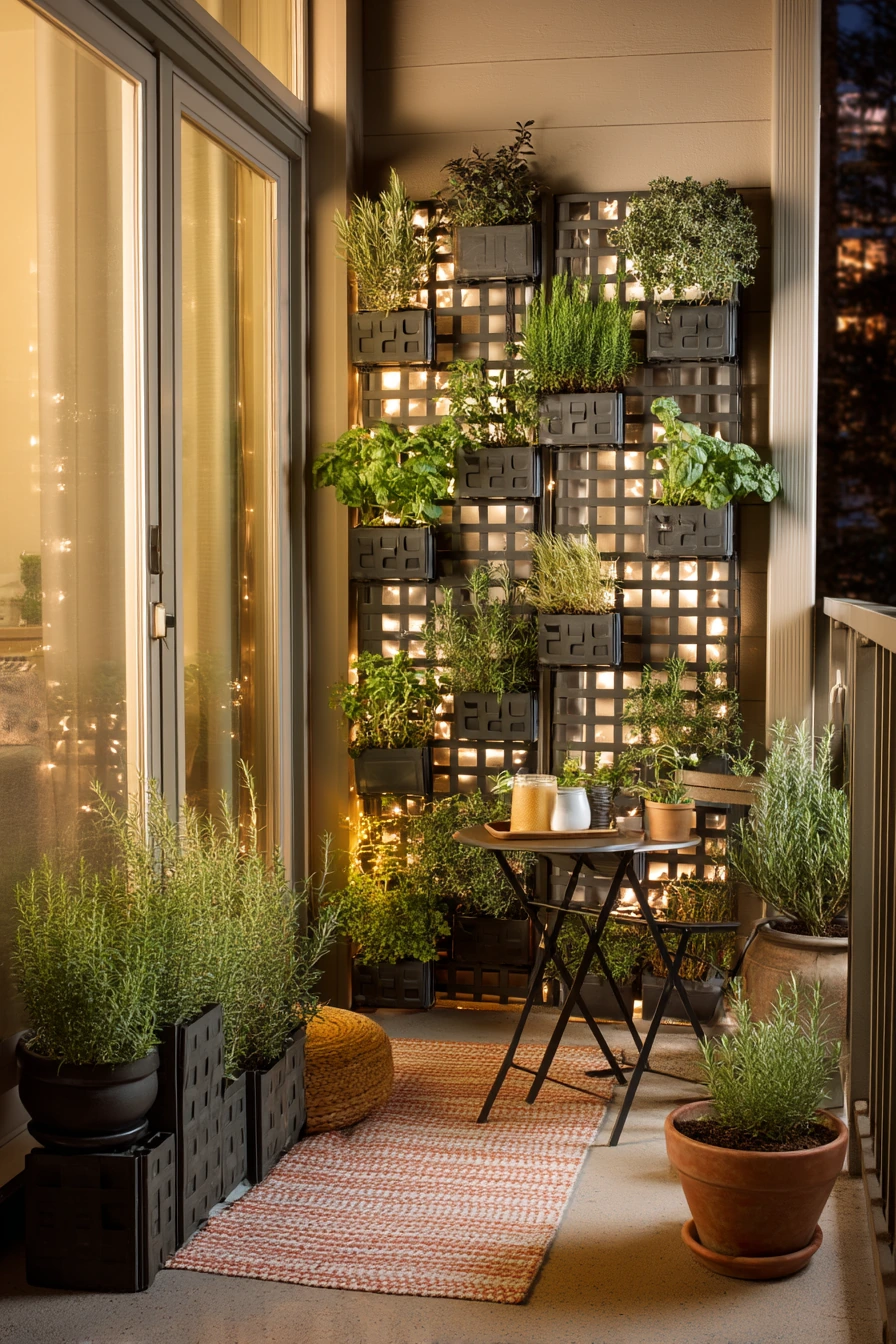
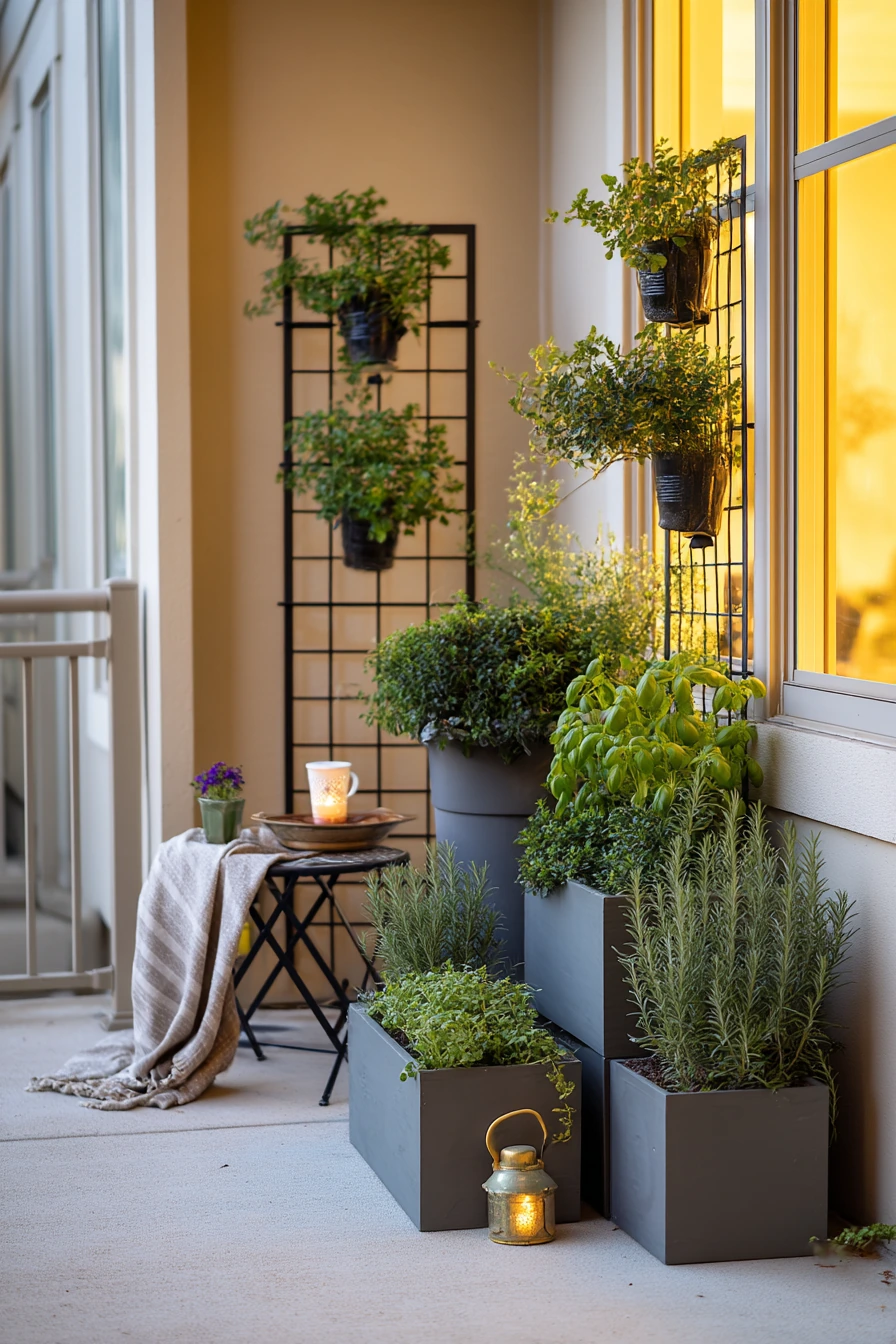
Instead of boxwood, use dwarf box substitutes that do well in pots, like small-leafed holly, compact myrtle, or rosemary trained into low mounds. Fill the squares with thyme, seasonal annuals, or lettuce for a kitchen-friendly twist. Peel-and-stick trellis screens can add privacy and make the patio feel like an outdoor room.
Style it like a small living space. A foldable bistro set fits the scale, and a knotted throw keeps it cozy on cool evenings. Keep keys and a takeout cup on a tray so the patio feels used, not staged. The goal is a tidy pattern, good scent, and easy care.
- Measure your patio first and choose planters that fit with walking space.
- Use matching planters to keep the grid clean and calm.
- Add drip saucers to protect concrete from stains.
- Plant rosemary and thyme on the sunniest side.
- Rotate seasonal annuals to keep color without redoing the layout.
Pro Design Tip: Keep the grid spacing consistent, then add one standout piece, like a taller pot or a small obelisk, so the patio has a clear focal point.
Budget Considerations: Modular planters add up; start with 6 to 8 containers in a tight grid, then expand over time as you find deals or end-of-season sales.
6 Mediterranean Parterre by the Kitchen Door
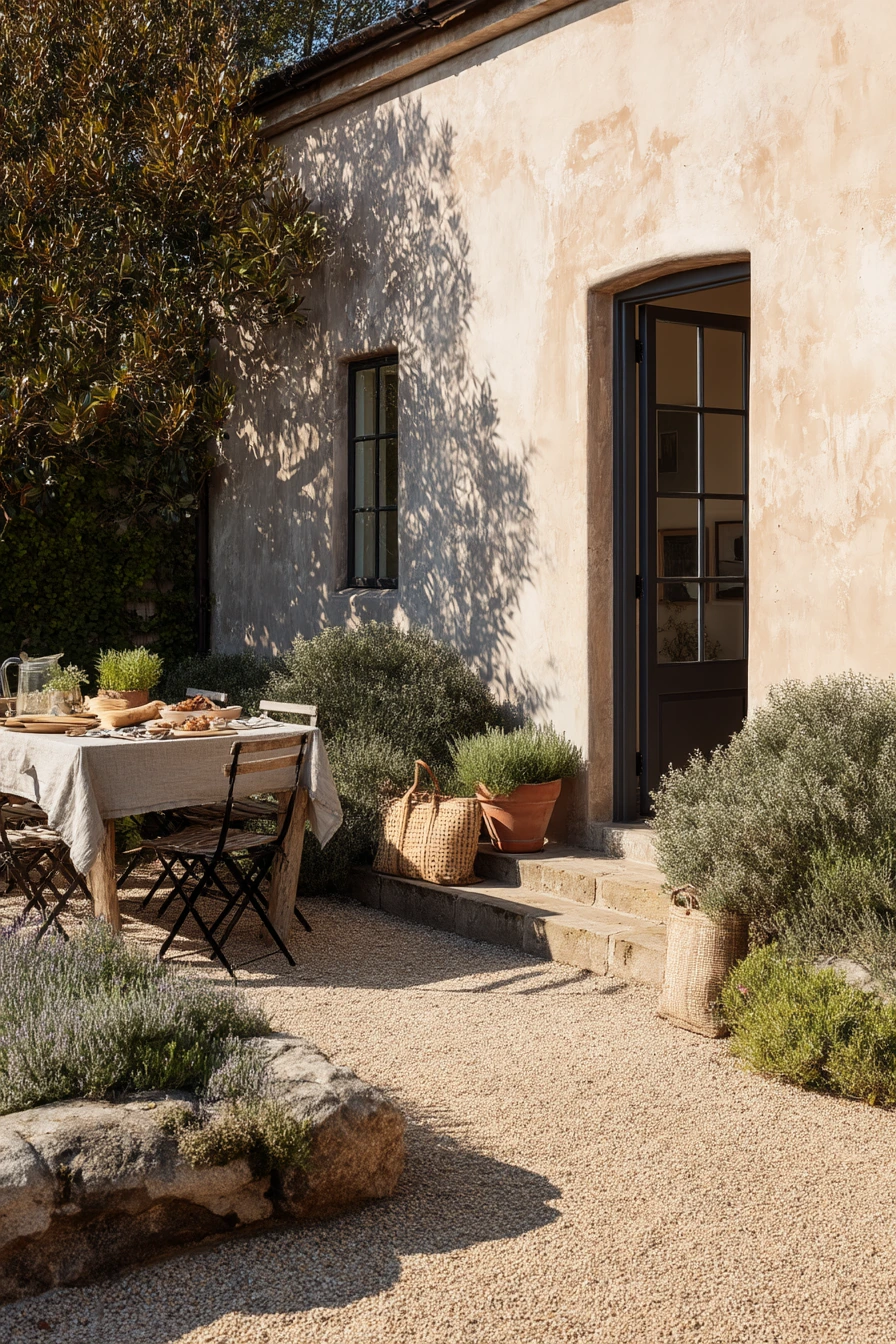
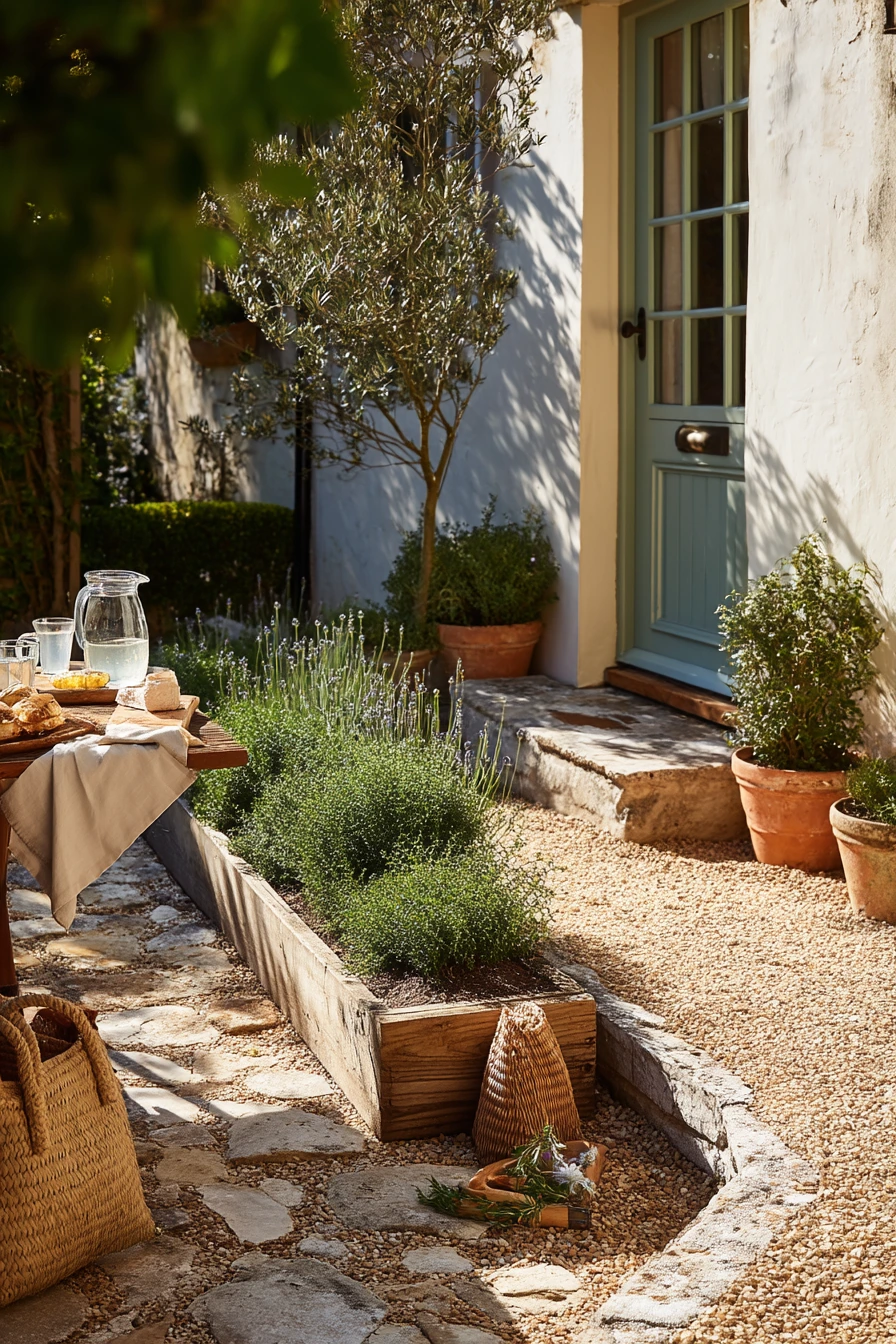
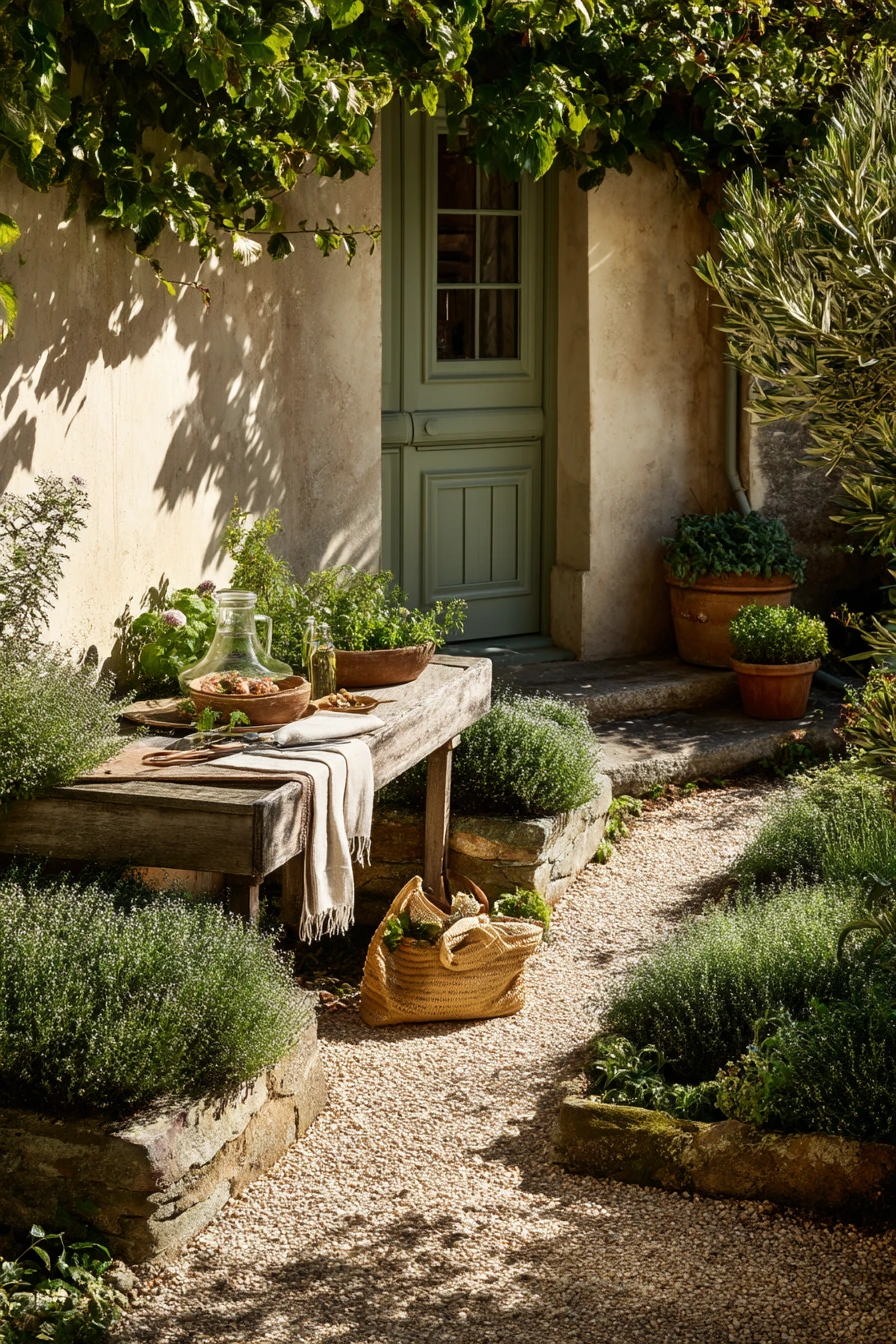
A parterre beside the kitchen door is perfect for herbs you use every day. Build a tidy geometric plan with low stone borders and pale gravel so it feels bright and clean in strong sun. Use clipped herbs, rosemary mounds, and small shapes that you can trim fast.
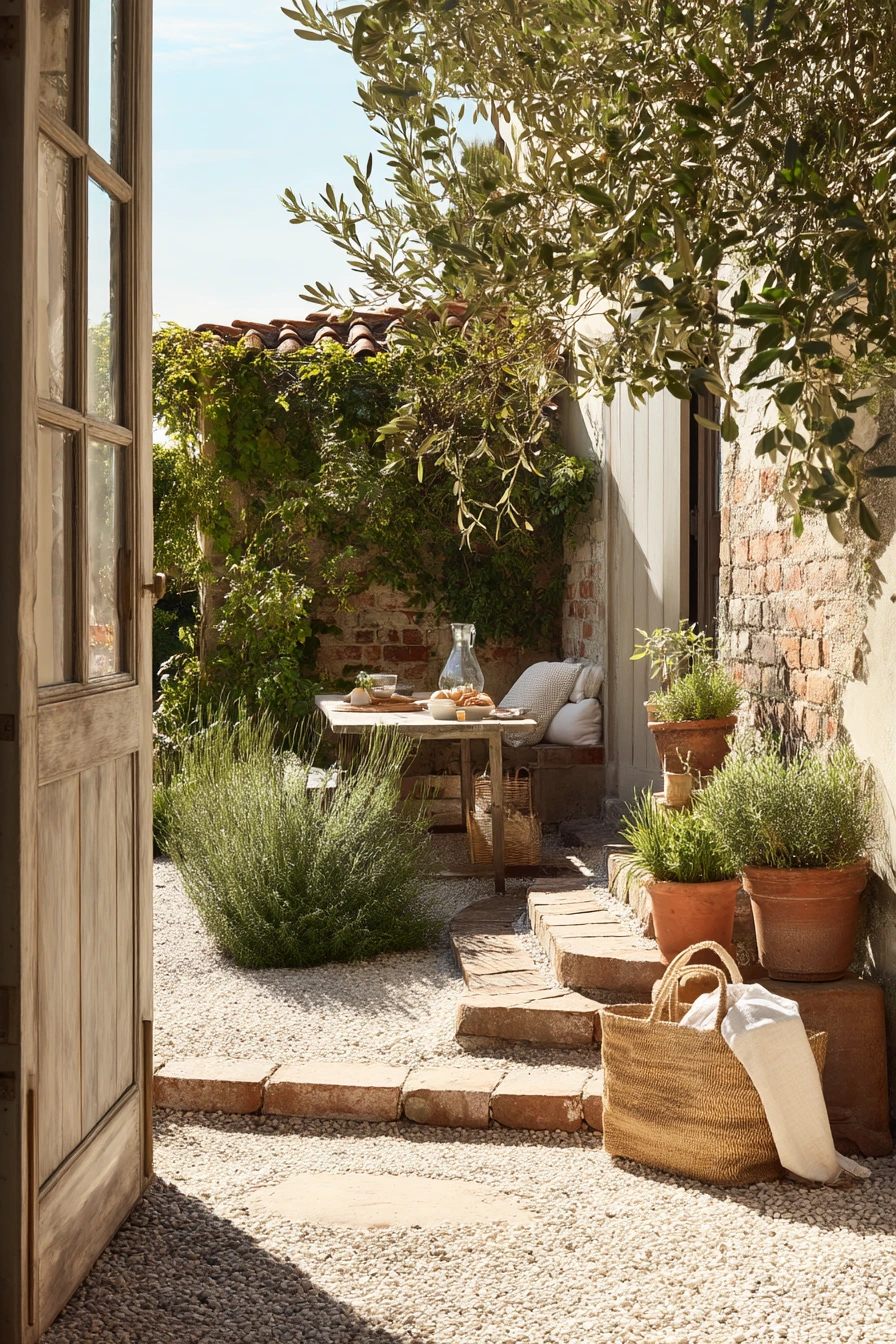
Olive trees in terracotta bring height and a Mediterranean feel without taking up much bed space. Gravel keeps the area dry and reduces weeds, which matters near a busy doorway. Keep paths wide enough for carrying a tray or grocery bags, and place the herbs where you can reach them with one step outside.
Style it with simple outdoor items that match the mood. A half-full carafe, a linen napkin, and gardening shears on a small table make the space feel ready for both cooking and garden work. A straw bag by the step adds texture and gives you a spot to toss gloves and twine.
- Choose heat-tolerant herbs like rosemary, thyme, sage, and oregano.
- Use pale gravel to reflect light and reduce heat stress on plants.
- Place a small table or shelf near the door for tools and harvest bowls.
- Keep stone borders low so the layout stays open and airy.
- Water deeply in the morning to help herbs handle hot afternoons.
Pro Design Tip: Limit the plant palette to 3 to 5 herb types and repeat them; repetition makes the geometry read clearly and keeps the space from looking busy.
Budget Considerations: Olive trees and terracotta can be expensive; use smaller pots, or swap in bay laurel or dwarf citrus depending on your climate and local pricing.
7 Evening Parterre for Entertaining
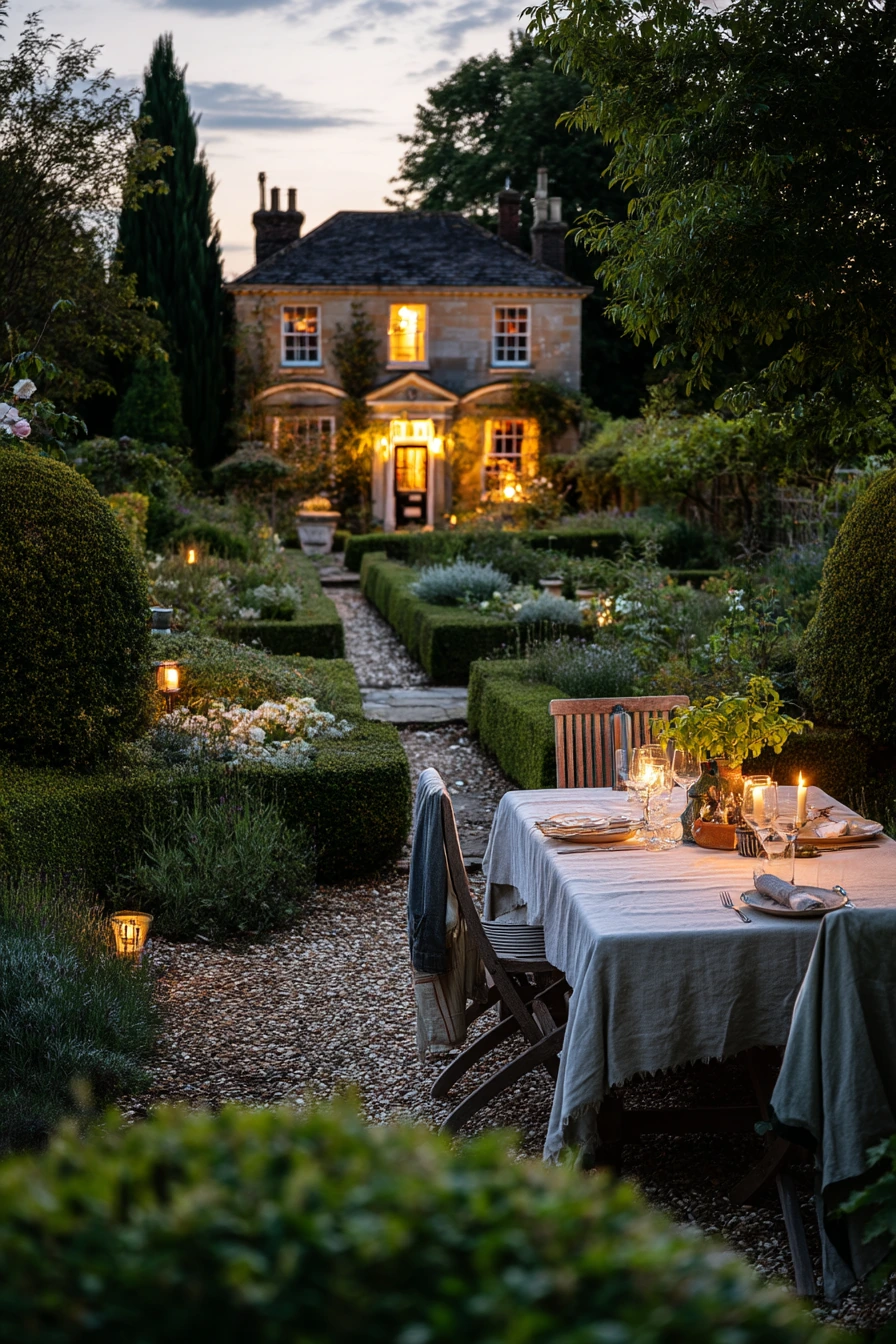
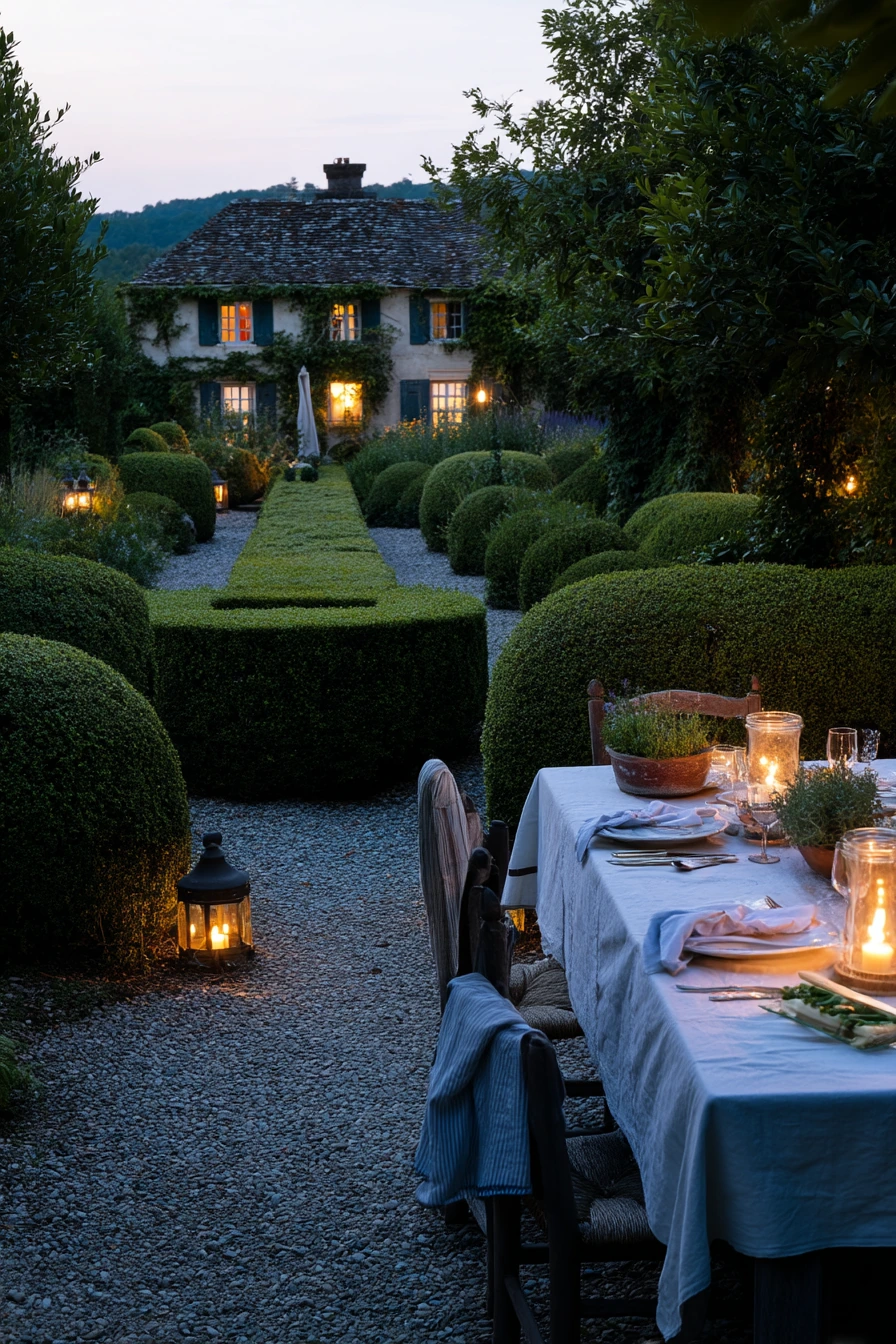
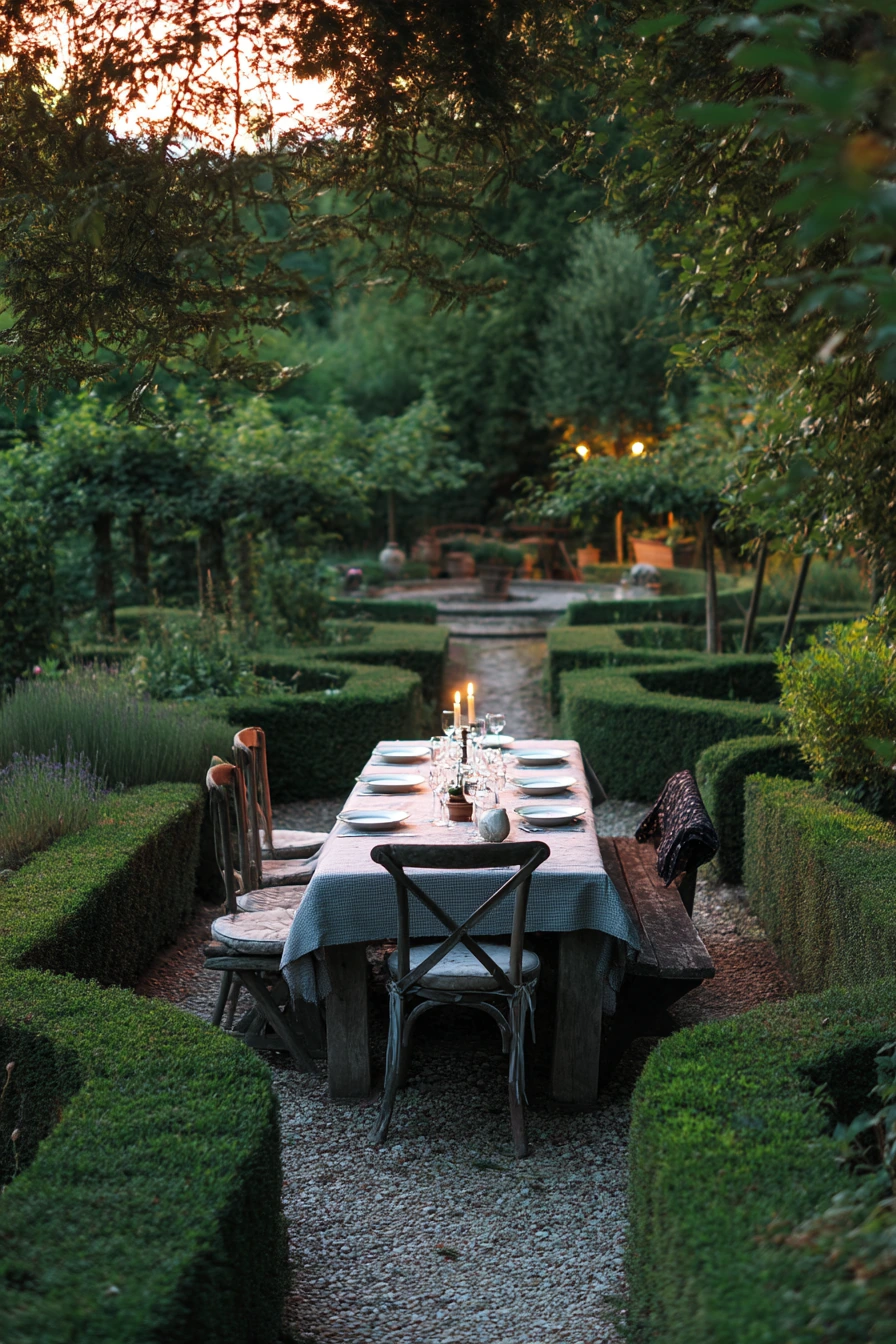
A parterre designed for hosting needs a clear center and easy circulation. Create symmetrical rose beds on both sides of a central gravel court. Clip low hedges to frame the beds, and keep the middle open for a long farmhouse table set for four or more.
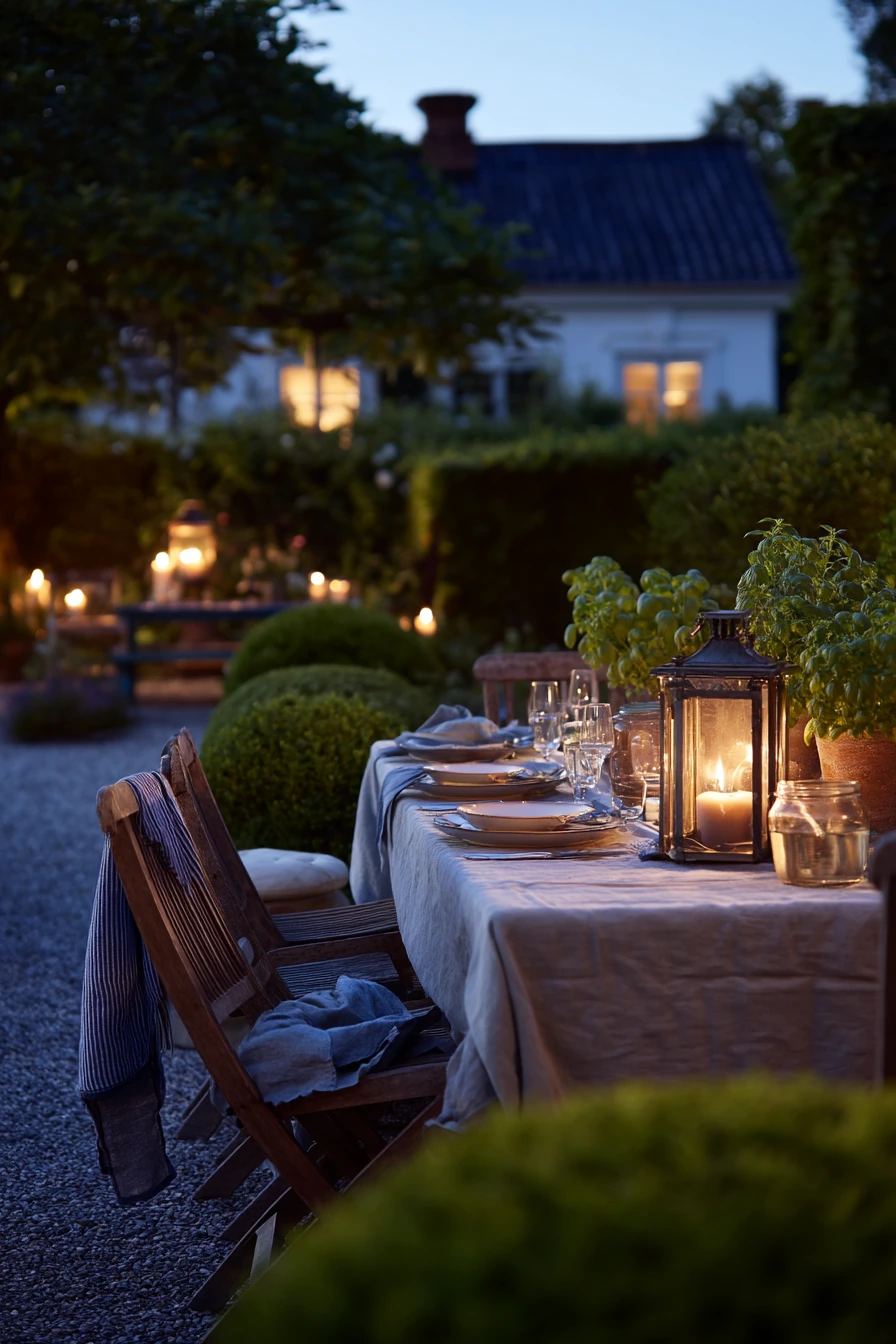
Lighting matters for evening meals. Candle lanterns along the hedges or at the corners of the gravel court add warmth without harsh glare. Choose roses with a good scent, and place a pot of basil near the table so you can clip a few stems during dinner.
For styling, aim for relaxed and tidy. A slightly wrinkled tablecloth, a jacket tossed over a chair, and wine glasses that are already set make it feel natural. Keep the paths wide enough to carry plates and move chairs, and avoid thorny varieties right at the edges of seating areas.
- Pick repeat-blooming roses for a longer season of color.
- Use gravel under the table to reduce mud and keep chairs stable.
- Plant low herbs at bed edges to soften the hedge line.
- Add lantern hooks or low posts so lighting stays in the same place.
- Keep a small jar for clippings on the table for quick, fresh stems.
Pro Design Tip: Keep the central court perfectly rectangular and align it with your back door; that straight sight line makes the whole garden feel more polished.
Budget Considerations: Roses and lanterns can raise costs; start with fewer rose bushes and add solar lanterns, then upgrade later as plants fill in.
8 Late-Winter Parterre with Structure
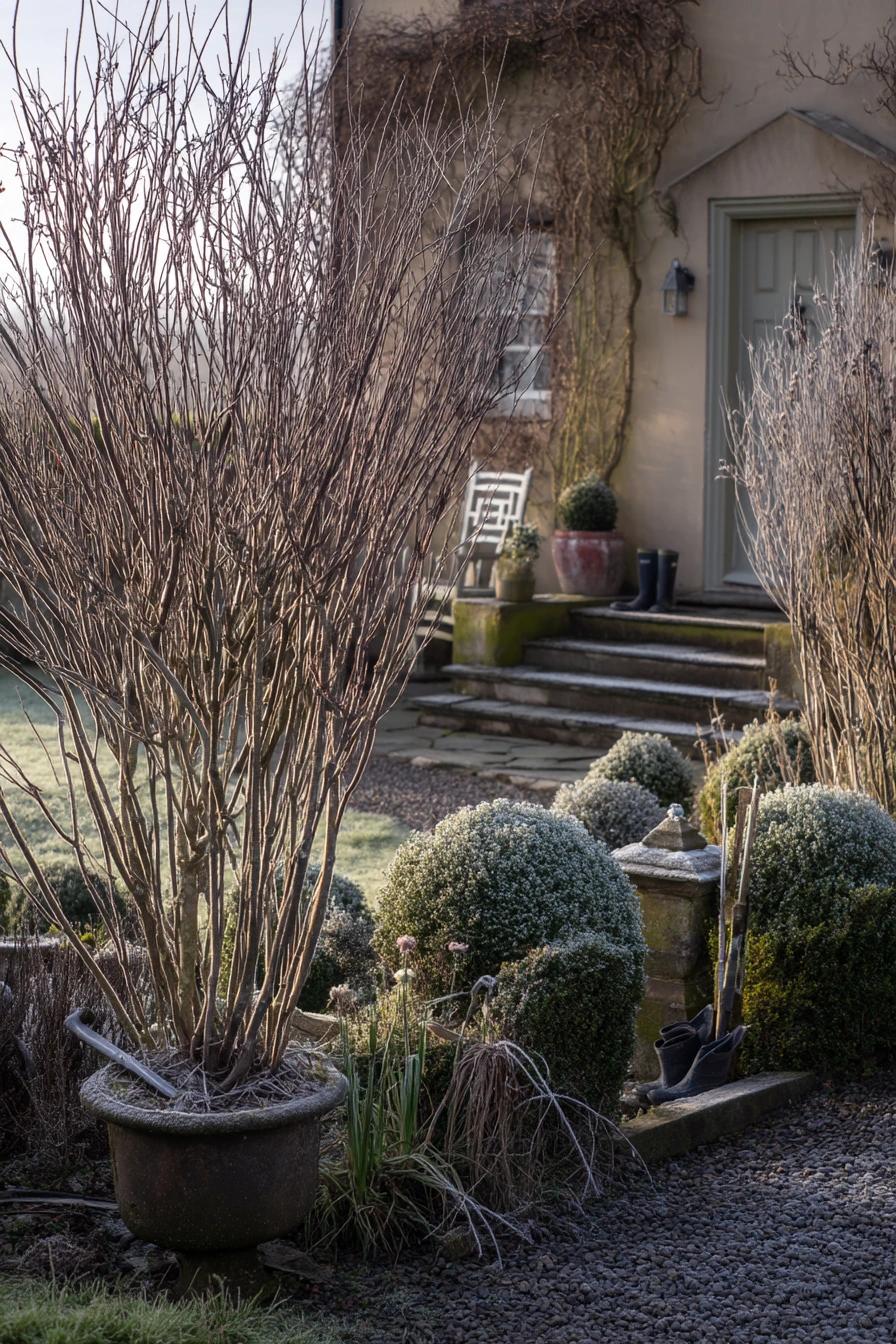
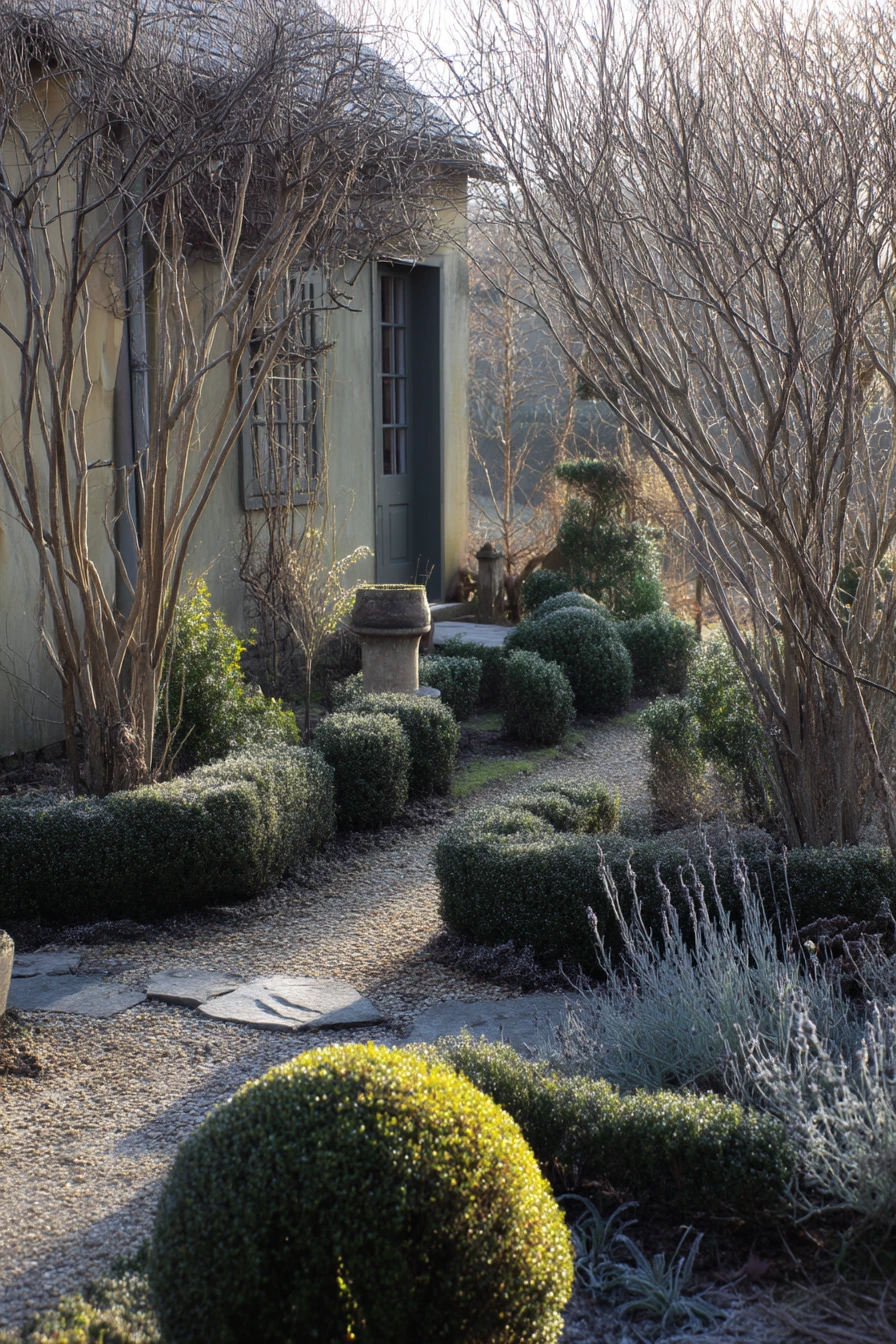
In late winter, a parterre shines because it is built on structure. Evergreen box geometry, clipped topiary balls, and the clean lines of gravel can still look strong when flowers are not in bloom. Bare rose canes and dormant lavender add texture without needing color.
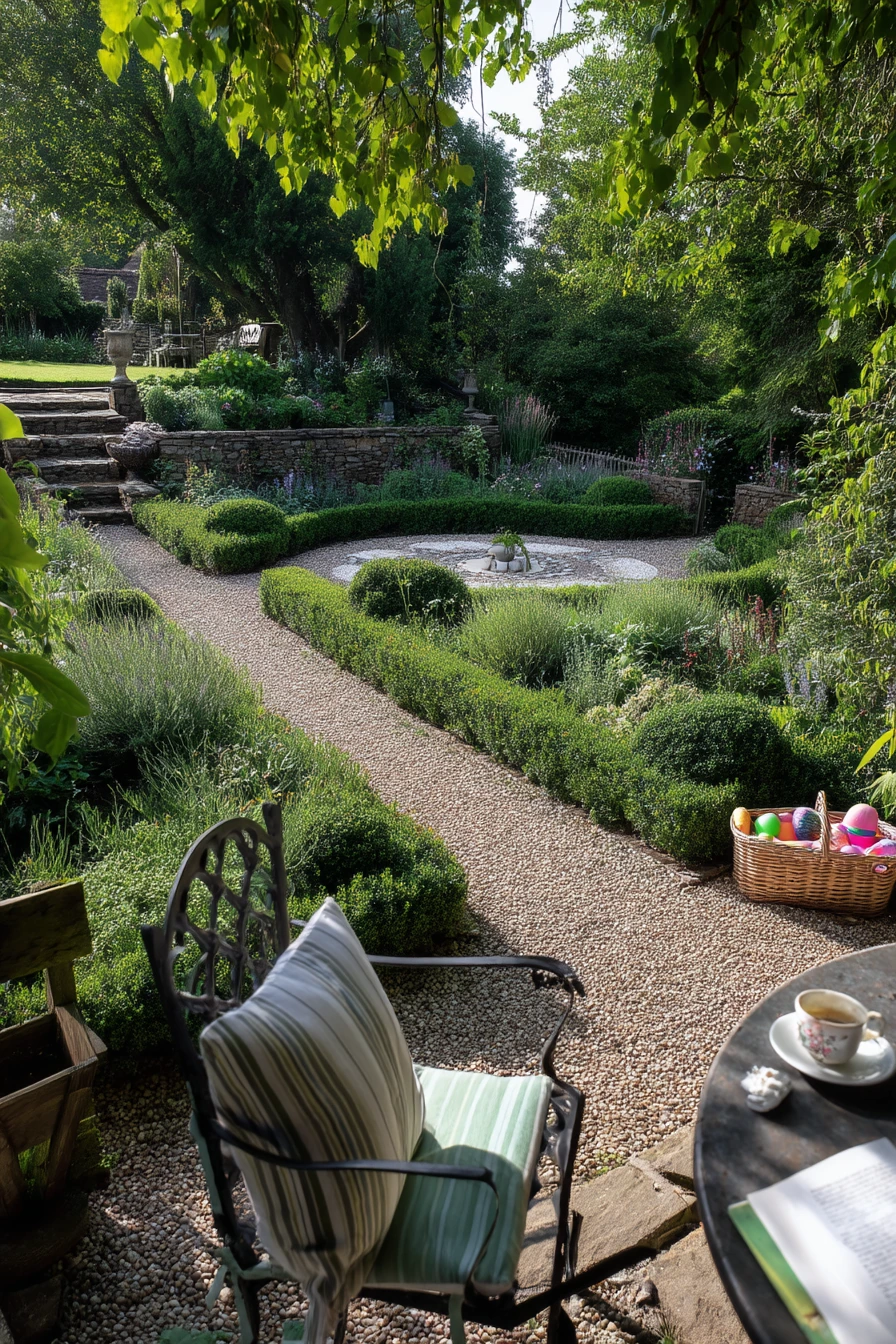
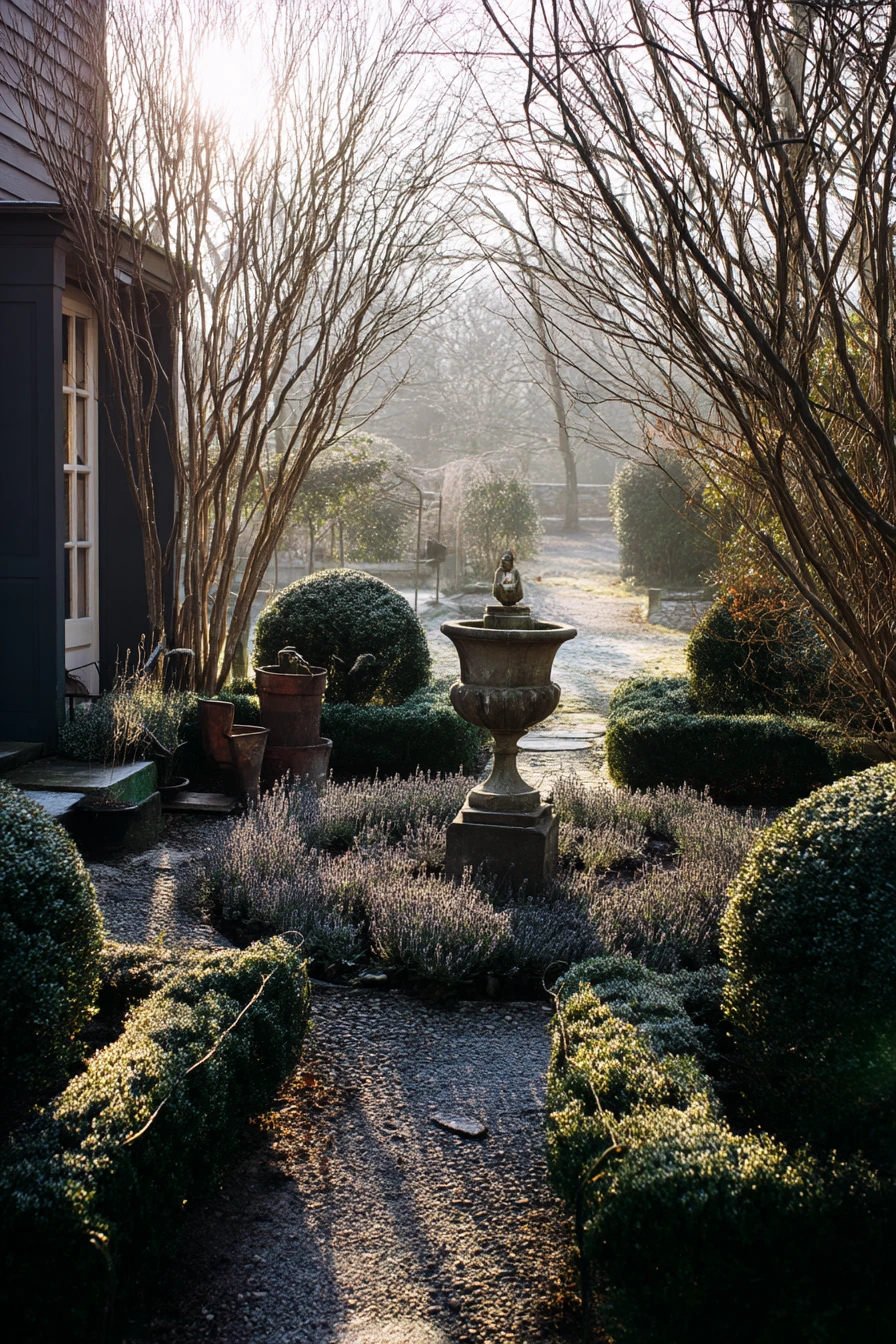
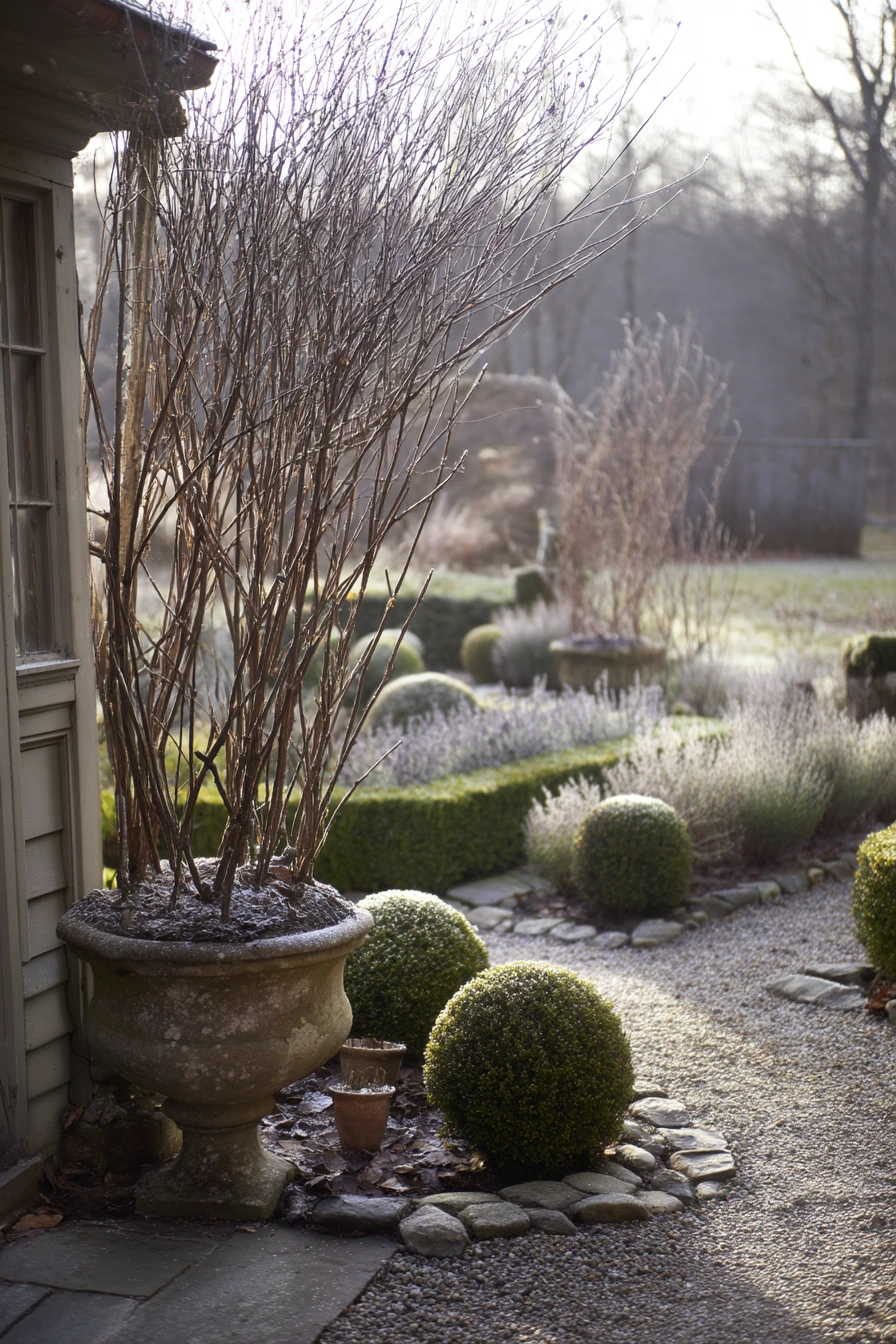
Use a small stone urn as a focal point in the center of the design. Frost-dusted gravel and simple edging make the shapes easy to see in pale morning light. This is also the season when you can assess spacing and fix lines before spring growth starts.
Style the back door area for real work. Keep muddy clogs on a tray, store garden twine nearby, and leave a well-used pruning book on a bench or hook. Winter is a good time for pruning plans and tool care, and a structured parterre makes those tasks feel simple and ordered.
- Clip evergreen shapes lightly on mild days to keep form.
- Leave lavender until spring if your winters are harsh.
- Top up gravel where soil shows to keep lines sharp.
- Clean and sharpen pruners now to save time later.
- Add a winter container near the urn with pine or dried stems.
Pro Design Tip: Photograph the garden in winter from the same spot each year; it helps you see where structure is missing and where the pattern needs adjusting.
Budget Considerations: Topiary and box can be slow to build; buy small plants and shape them over time, or use hardy substitutes like inkberry holly where boxwood struggles.
9 Pet-Friendly Parterre for Daily Use
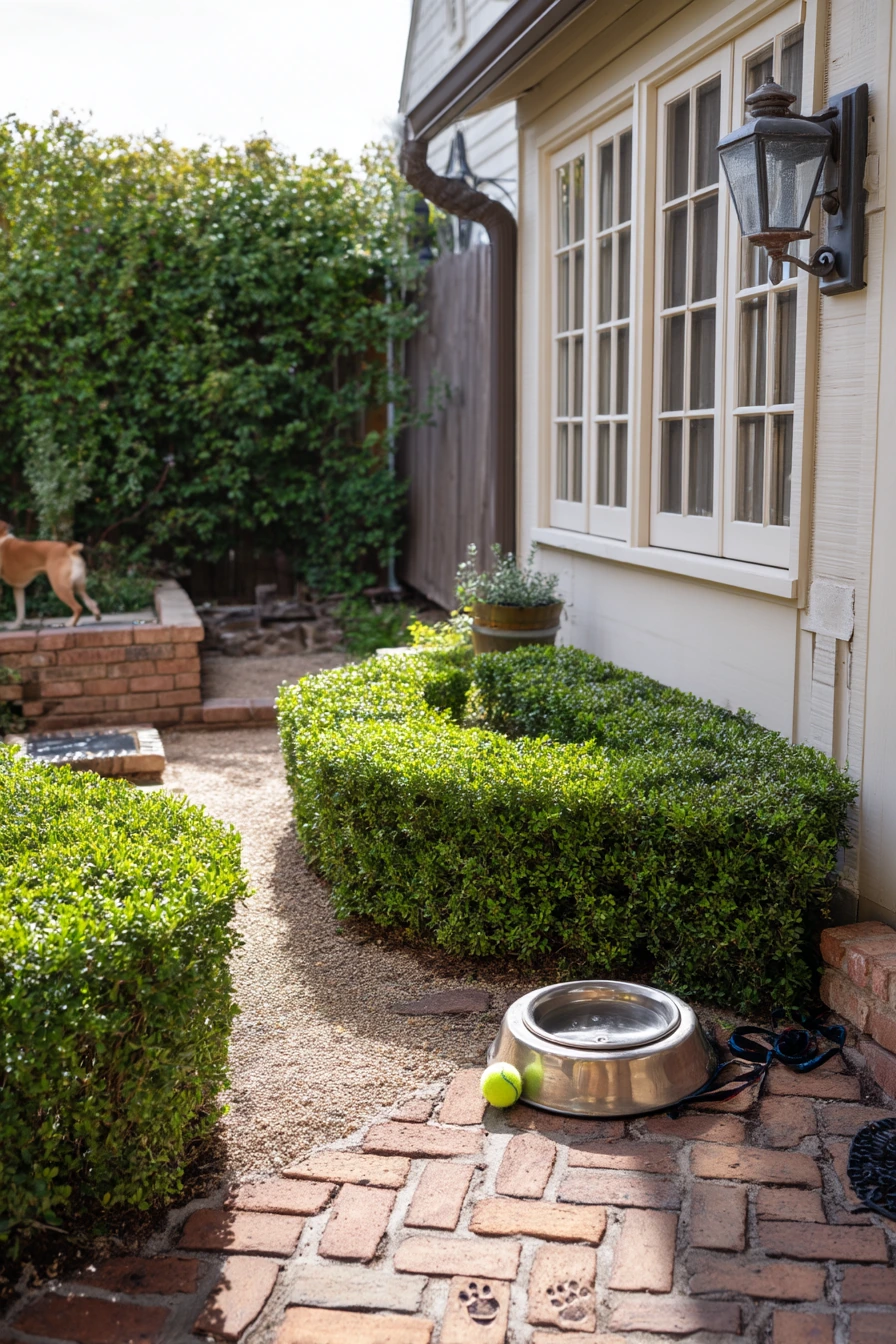
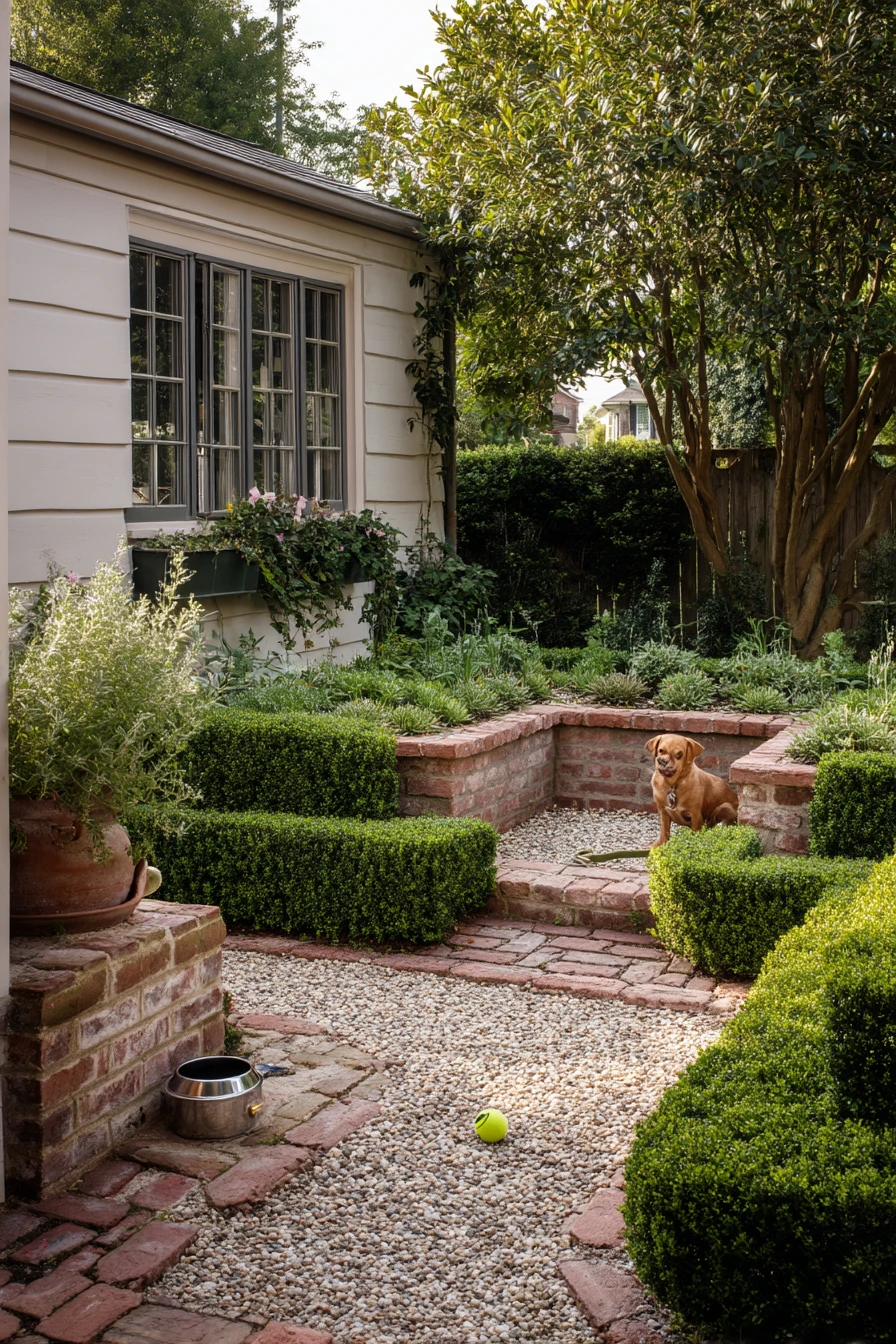
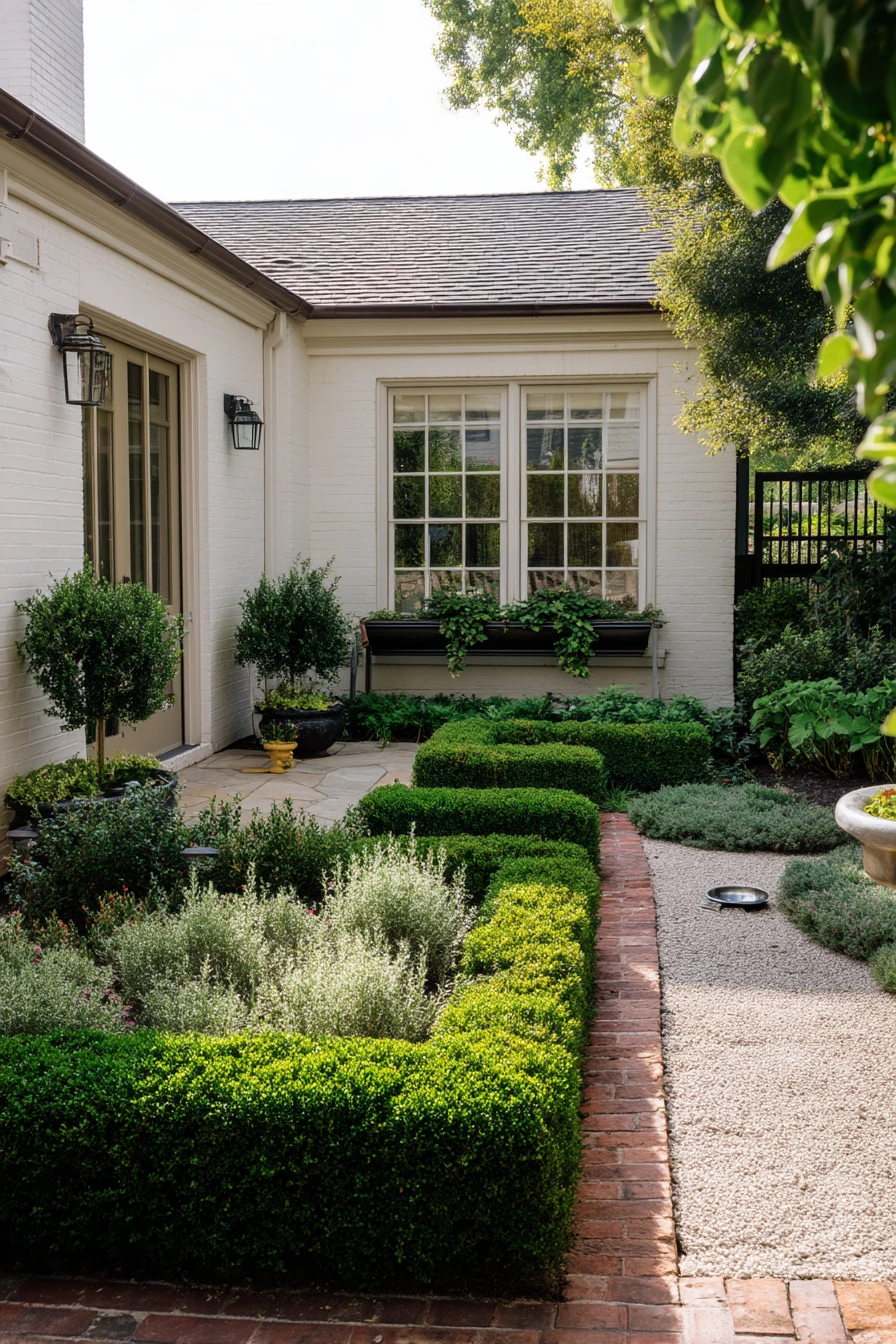
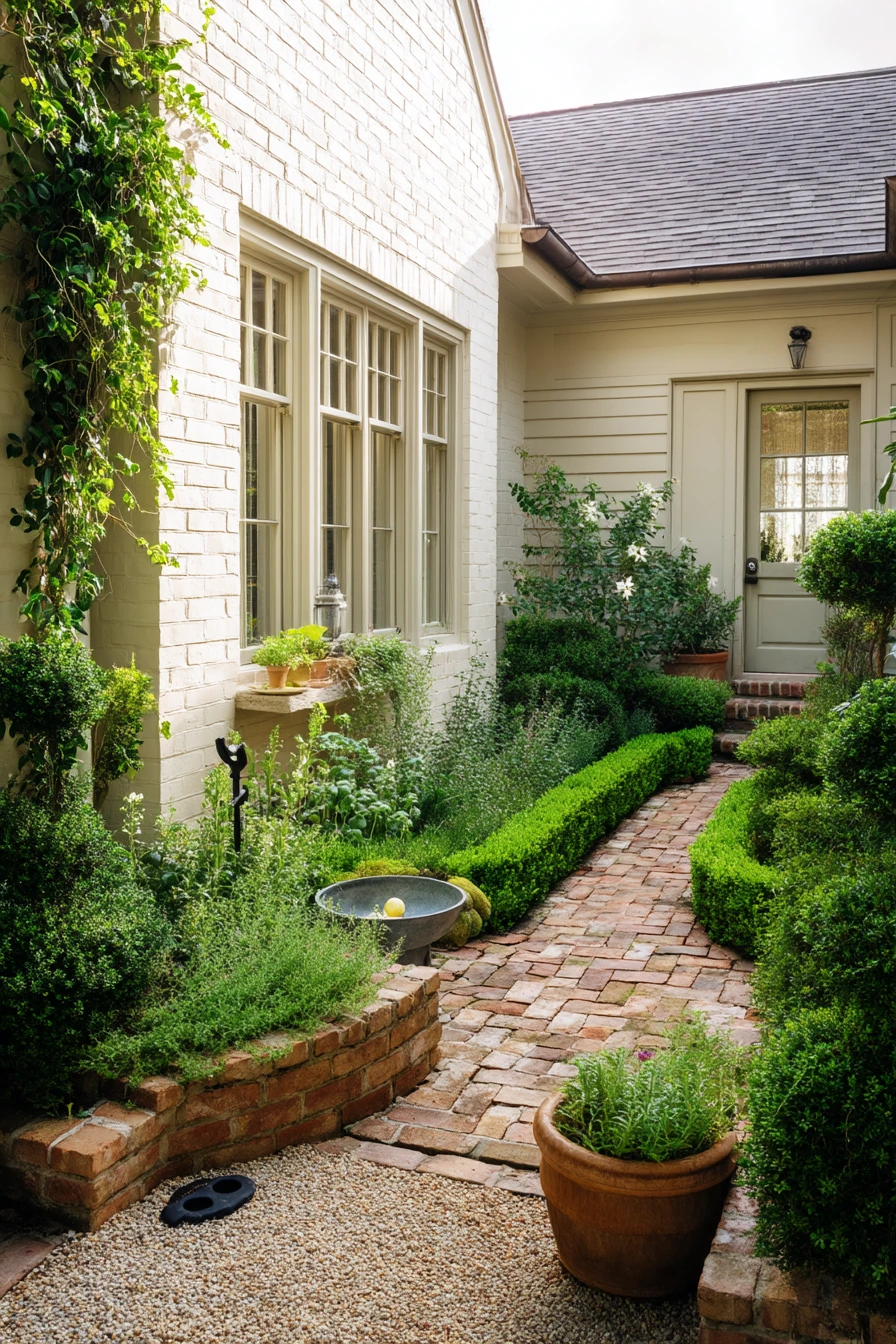
A pet-friendly parterre needs durability first. In a side yard, create rounded hedge compartments and set brick pavers for stable walking lanes. Use raised beds to protect delicate blooms while keeping the parterre look of repeated shapes and clear borders.
Choose tough herbs that can handle a little brushing past, like rosemary, thyme, and sage. Keep gravel areas in spots where paws often land, and plan a clear route from gate to door so your dog does not cut through planted sections. A dog water bowl can sit on pavers so it does not sink into gravel.
Style it so pet items feel part of the design. Add a simple hook for a leash, and keep a tennis ball basket tucked under a bench. If muddy paw prints are common, place an outdoor mat by the step and use easy-clean brick and gravel instead of soft mulch.
- Use rounded bed corners to reduce sharp plant damage from running.
- Pick non-toxic plants and avoid thorny shrubs near paths.
- Set raised beds at least knee-high to protect flowers.
- Choose brick pavers with a texture that is not slippery when wet.
- Rinse gravel lanes with a hose to keep odors down.
Pro Design Tip: Design a clear “pet path” with pavers first, then fit the parterre shapes around it so the layout stays intact long term.
Budget Considerations: Raised beds and pavers cost more than mulch; build beds from simple timber and add pavers only in the highest-traffic areas.
10 DIY Weekend Parterre Makeover
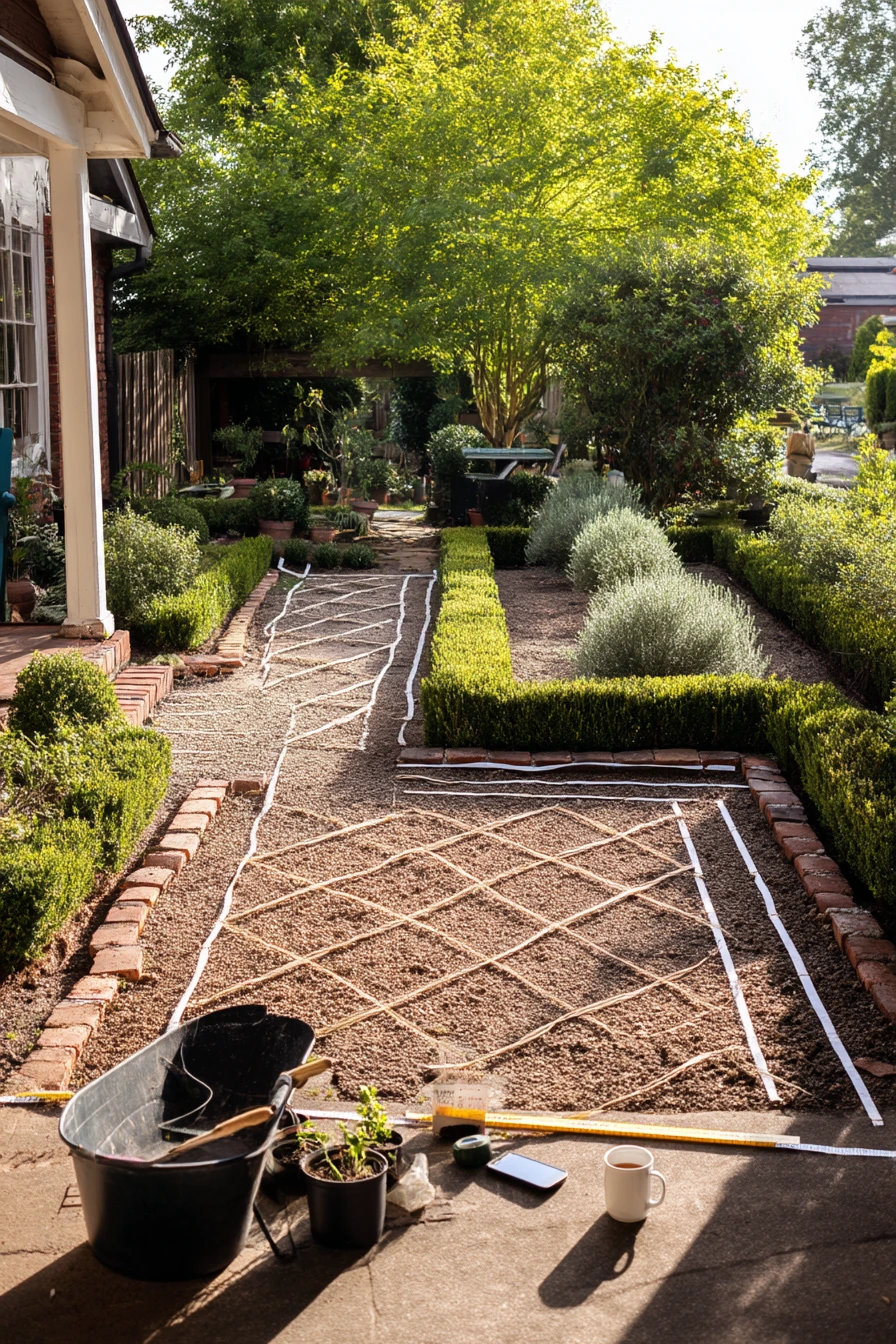
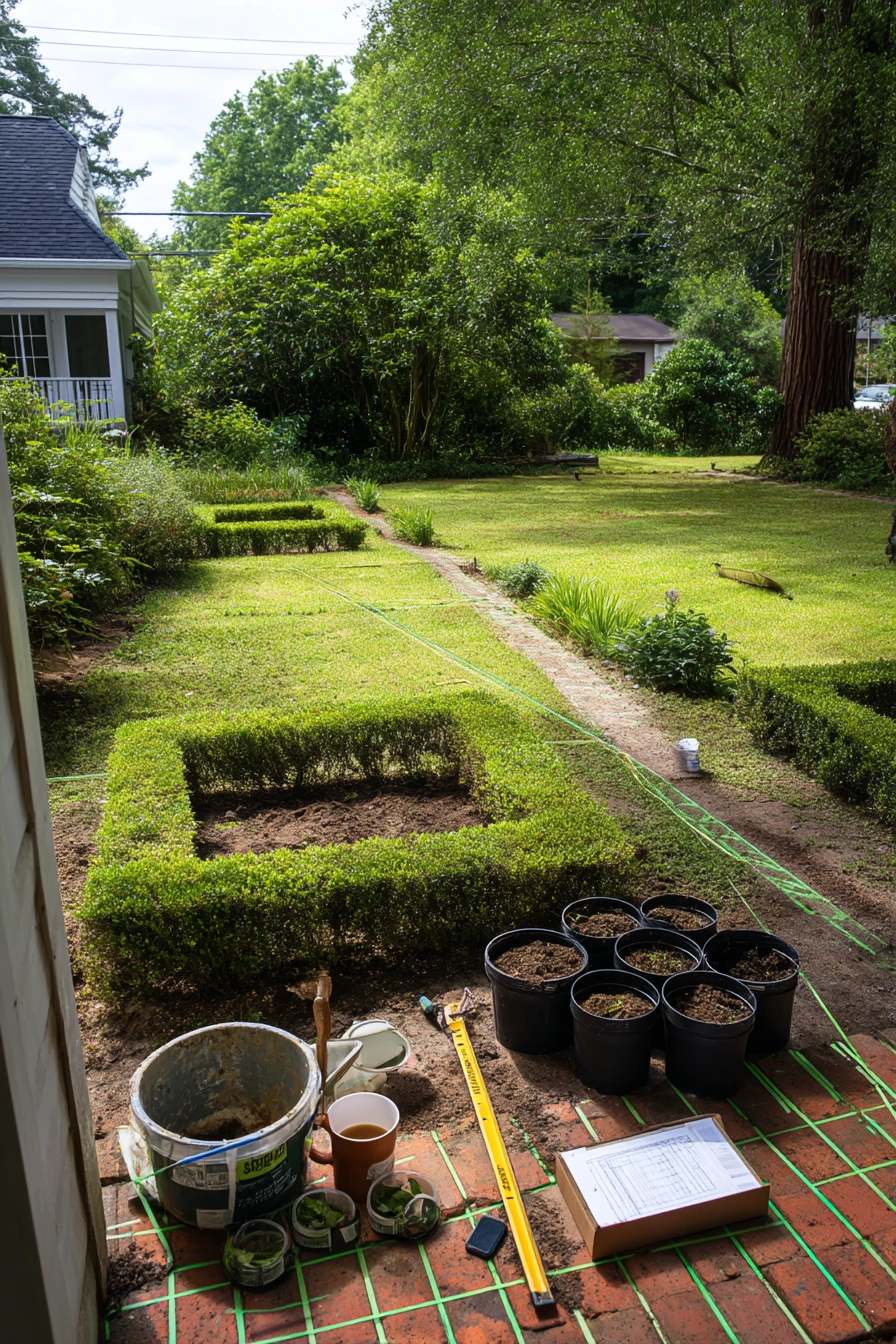
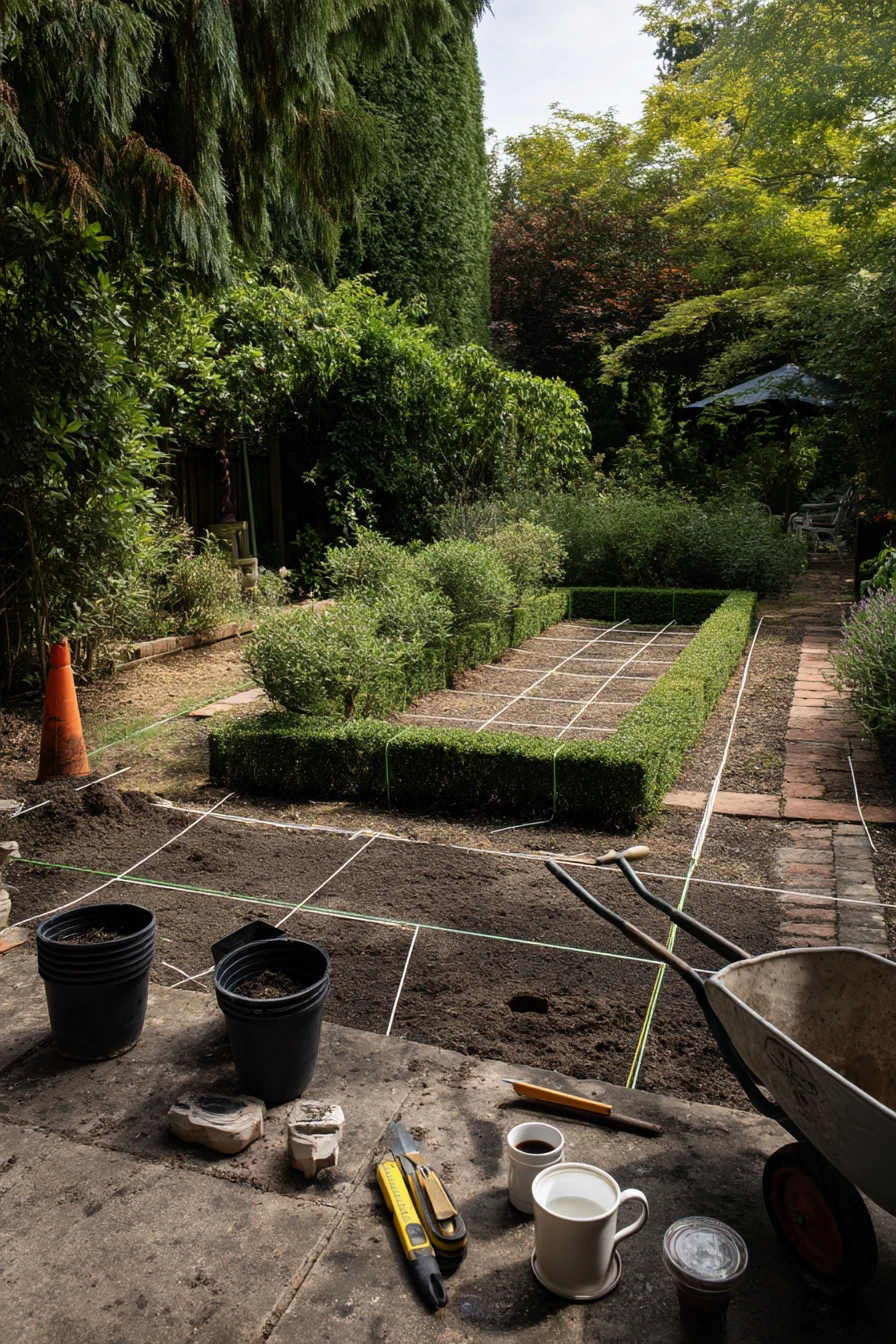
A weekend DIY parterre makeover starts with layout, not plants. Use string lines on the lawn to mark a classic grid and check that it looks straight from the back door. This step prevents wasted gravel and crooked beds later.
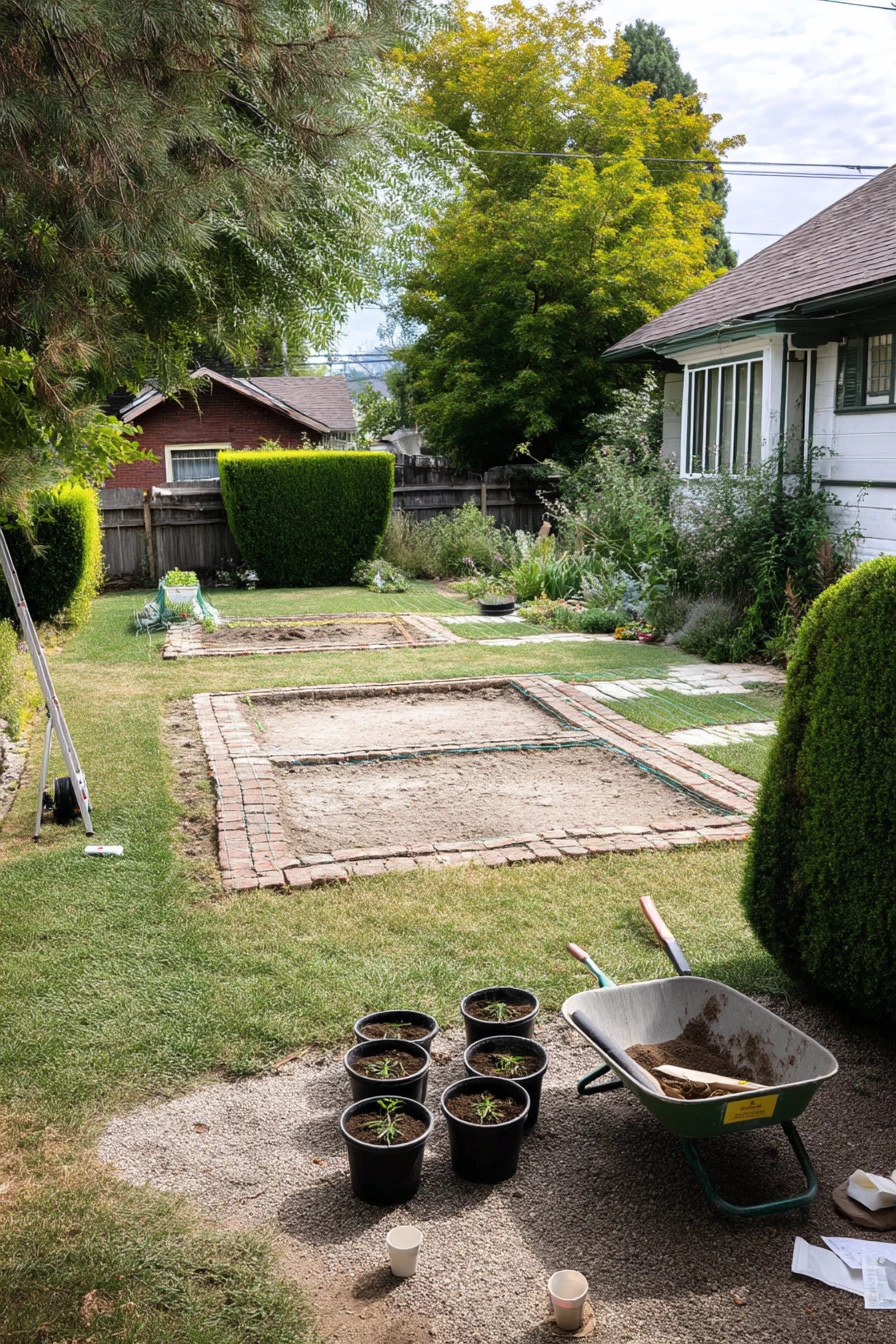
Once the grid feels right, begin the paths. Lay gravel in stages, starting with the main route, then the smaller cross paths. Stack brick edging nearby so you can set it as you go. Keep nursery plants in black pots close by, and water them while you work so they do not dry out.
Style and plan like a real project zone. Keep a tape measure, coffee cup, and your garden plan on a small table or the patio step. Clip hedges lightly after planting, not before, so you can adjust spacing. The goal is a clean, simple parterre you can keep up with, even if the first weekend is only phase one.
- Mark right angles using the 3-4-5 triangle method with string.
- Dig path bases and add landscape fabric to reduce weeds.
- Choose one hedge plant and repeat it for a unified look.
- Set bricks on compacted base so edging does not shift.
- Finish with a quick sweep of gravel for a neat first reveal.
Pro Design Tip: Stand in your main viewing spot (often the doorway) and adjust the grid until the center lines feel balanced; the view matters more than perfect measurements.
Budget Considerations: Gravel and edging are often the biggest costs; phase the project by building the main axis first, then add side paths and extra plants later.
11 FAQ: Parterre Garden Ideas for Small Spaces and Real Life
Many parterre garden ideas look formal, but they can work in normal yards, courtyards, and patios. The key is choosing a simple pattern, keeping plants low, and making room for daily routines like kids, pets, and outdoor meals.
These quick answers cover layout, plant choices, and upkeep. Use them to plan your first parterre bed, whether you want clipped boxwood knots, lavender edging, or a container grid.
If you are unsure, start small. A single square with gravel and herbs can teach you what you like before you commit to a full garden redesign.
- What is a parterre garden? A parterre is a garden with low hedges or borders forming clear patterns, often filled with flowers, herbs, or gravel.
- What plants work best for parterre borders? Boxwood is common, but you can also use dwarf holly, yew, myrtle, lavender, or rosemary depending on climate.
- Can I make a parterre garden in a small yard? Yes, use a simple grid or mirrored squares, keep paths narrow but walkable, and avoid tall plants that block views.
- How do I keep the shapes looking sharp? Trim borders a few times a year, edge gravel paths, and re-check straight lines each season from your main viewing spot.
- Is gravel required for a parterre? No, but gravel paths are low-mess and help the pattern stand out; you can also use brick, stepping stones, or mown grass paths.
Pro Design Tip: Draw your plan on paper and label path widths, then test it with string in the yard before you buy plants or gravel.
Budget Considerations: The cheapest start is a small test bed with one edging material and a few repeat plants; expand only after you like the scale and upkeep.
Parterre garden ideas work because they mix simple shapes with everyday living. You can build the look with clipped hedges and lavender, or with planters on a patio if you rent.
Pick one layout that fits your space, then focus on clear lines, repeat plants, and practical paths. Small details like a bench, terracotta pots, or a lantern can make the garden feel finished.
Start with one section this season and expand later. A tidy parterre grows better over time when the plan is simple and easy to maintain.