
Urban garden ideas can turn a small balcony, a window ledge, or a rooftop into a spot that feels calm and useful. You do not need a yard to grow herbs, greens, or flowers in the city.
This guide walks through real, rental-friendly setups like terracotta pots on a balcony, galvanized planters on a fire escape, and raised beds in a small courtyard. Each section includes simple styling ideas, plant picks, and steps that work in tight spaces.
You will also learn how to keep things safe and tidy, how to water without a mess, and how to add cozy touches like a bistro chair, lantern light, and a small rug. These details help Pinterest visitors copy the look at home.
Use the tips below to build a garden that fits your light, your budget, and your lease. Start small, then add one container at a time.
1 Small Balcony Herb Garden for Morning Coffee
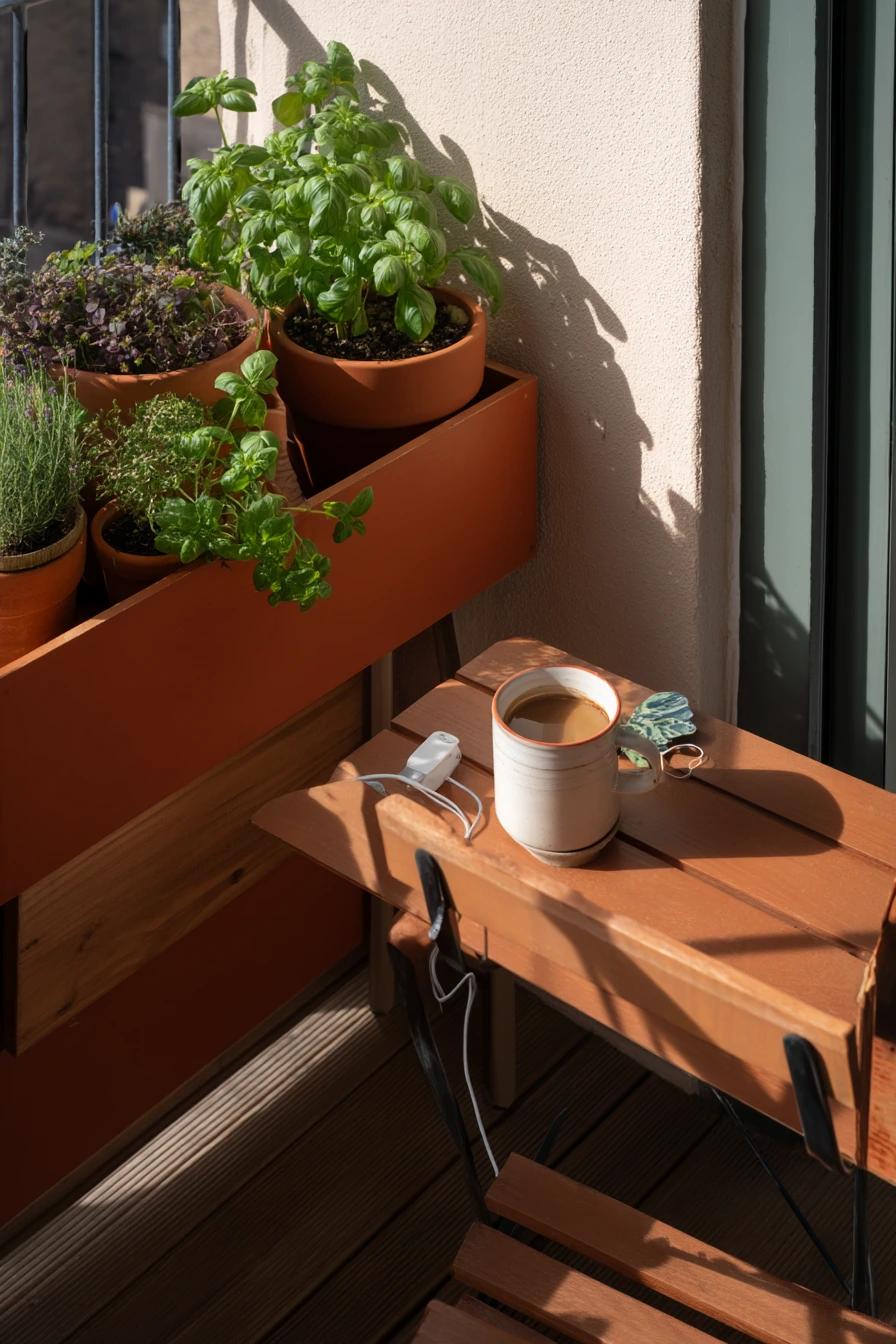
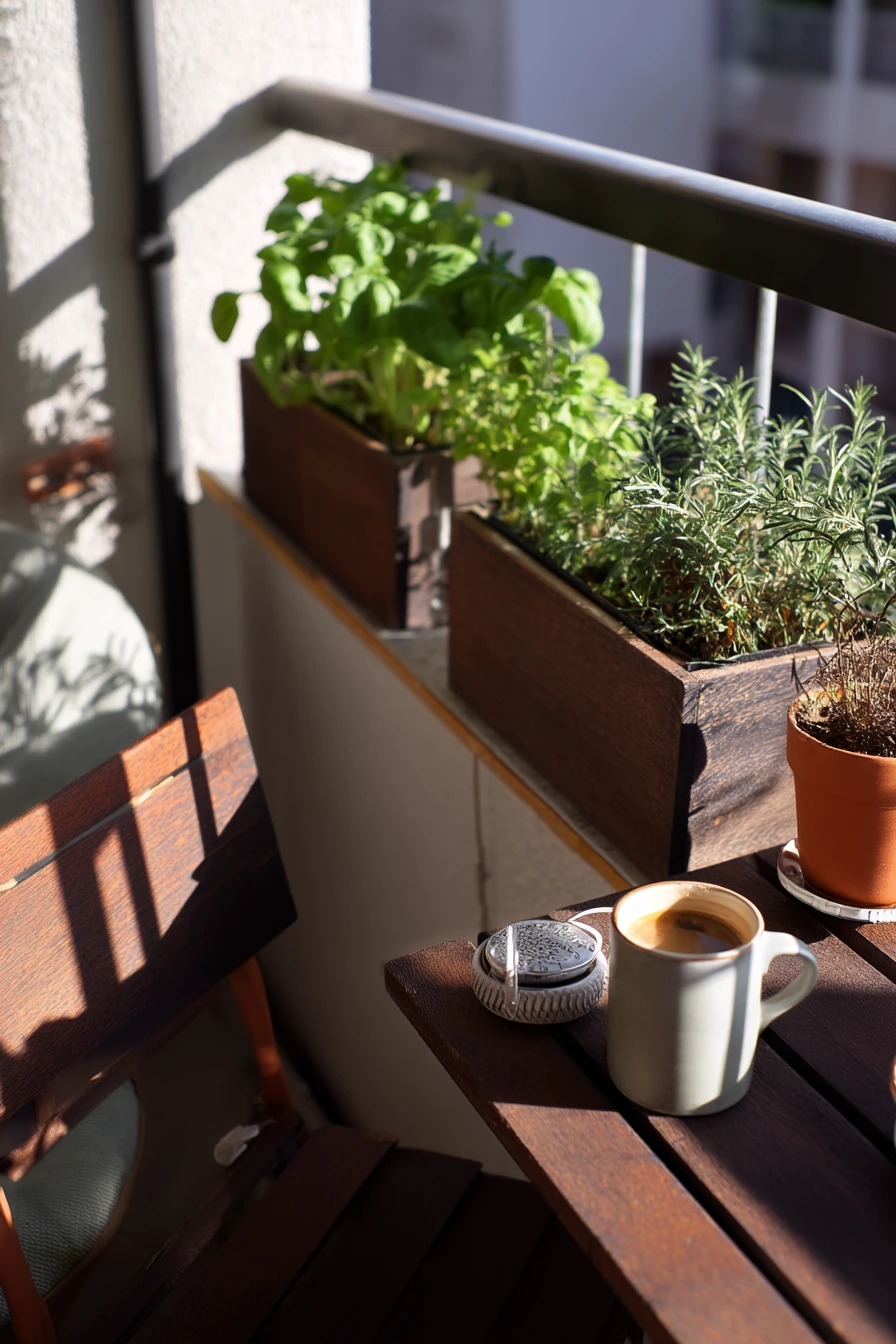
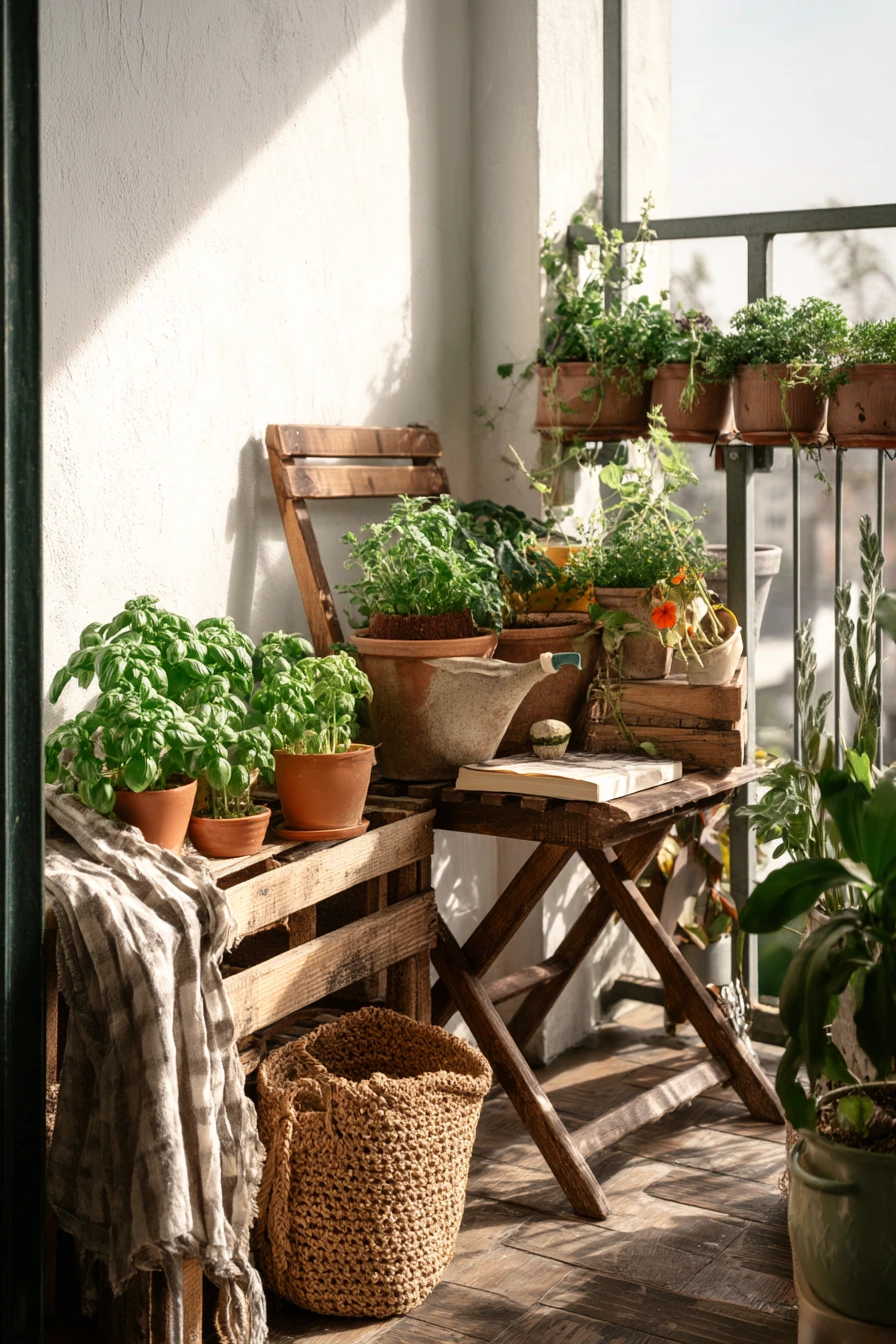
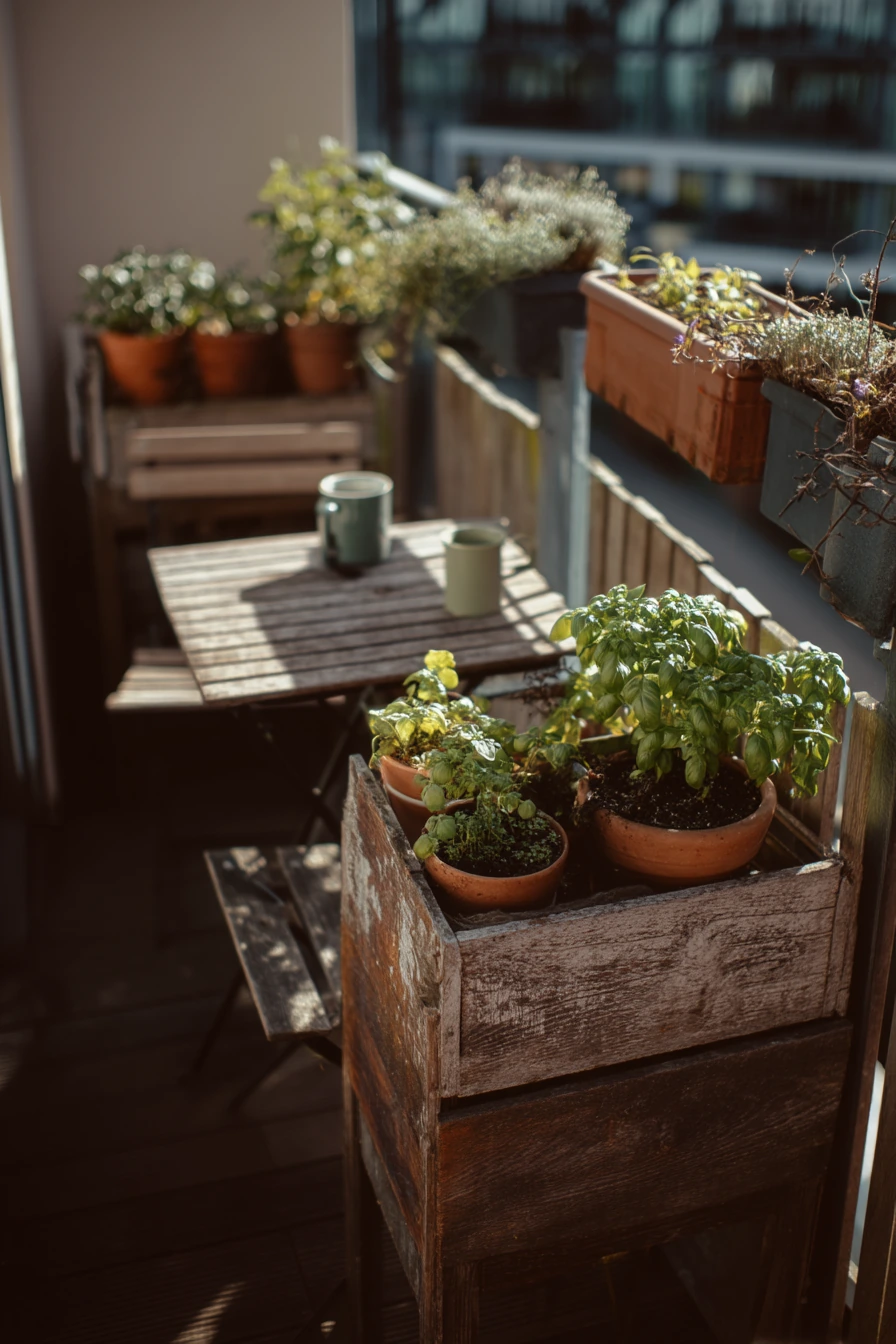
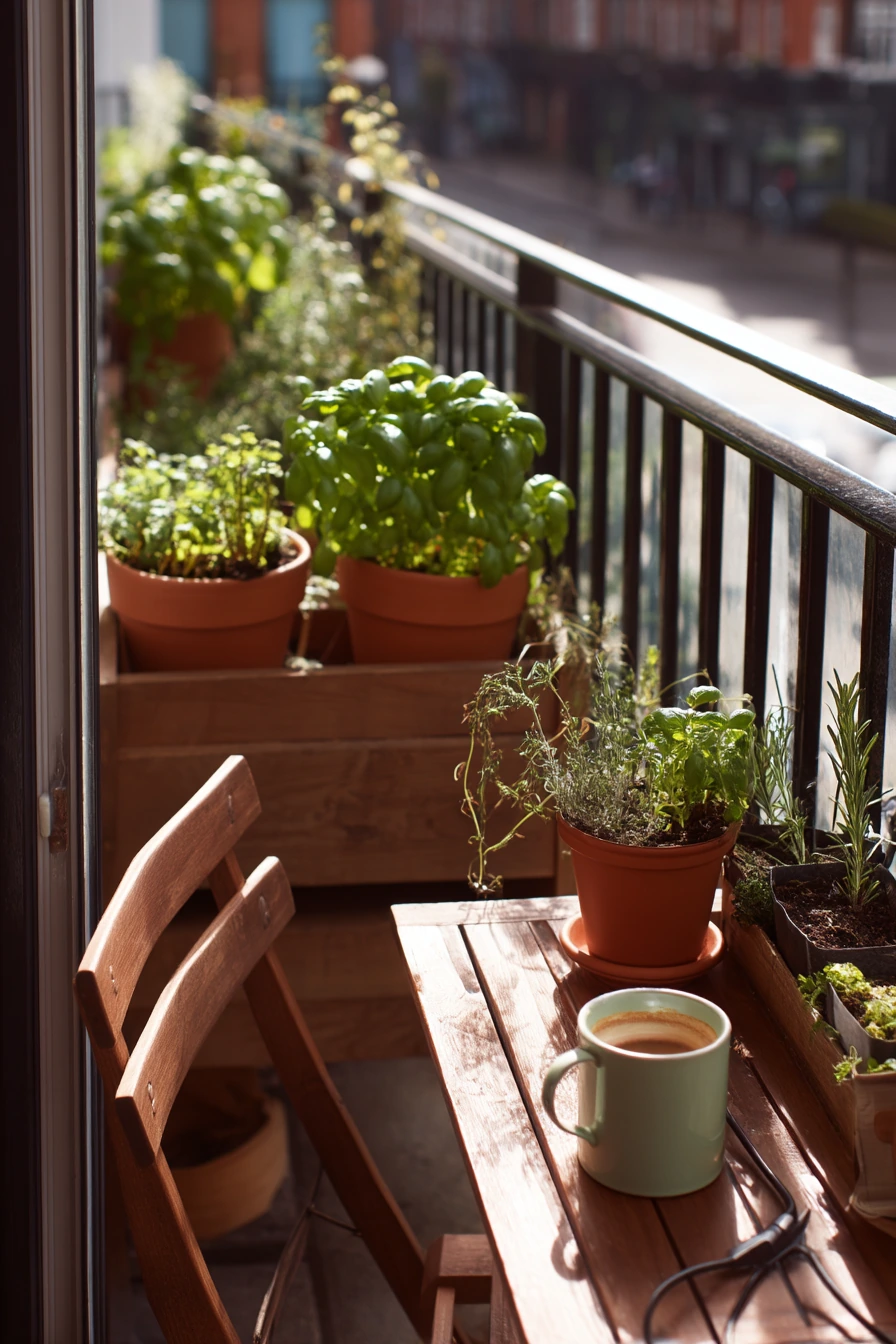
A real balcony garden can be simple and still feel full. Start with terracotta pots of basil, mint, and thyme, then group them near the open balcony door where you already step out in the morning. A narrow bistro chair and a small table make the space feel like a daily routine, not a project.
Use weathered cedar planter boxes along the railing or wall to save floor space. Keep a folded watering can close by so you water often, even on busy days. If you work outside, hide a charging cable behind the table leg and keep your phone off damp surfaces.
For styling, lean into the lived-in look. A mug with coffee rings, soft rail-shadow patterns, and a few herbs at different heights feel natural. Keep mint in its own pot since it spreads fast. If your balcony gets hot, place herbs where they get morning sun and afternoon shade.
- Pick 3 herbs you cook with each week, then add one “try it” herb later.
- Use saucers under terracotta to protect the floor from stains and drips.
- Group pots by water needs, so you do not overwater thyme.
- Add one tall planter box to create privacy without blocking light.
- Trim basil often so it stays bushy and does not get leggy.
Pro Design Tip: Use odd-number groupings (3 or 5 pots) and vary heights with one cedar planter box to make the balcony look styled, not cluttered.
Budget Considerations: Terracotta is low cost, but it dries fast; if you want fewer waterings, mix in a couple of glazed pots or self-watering inserts.
2 Fire Escape Planter Corner with Climbing Greens
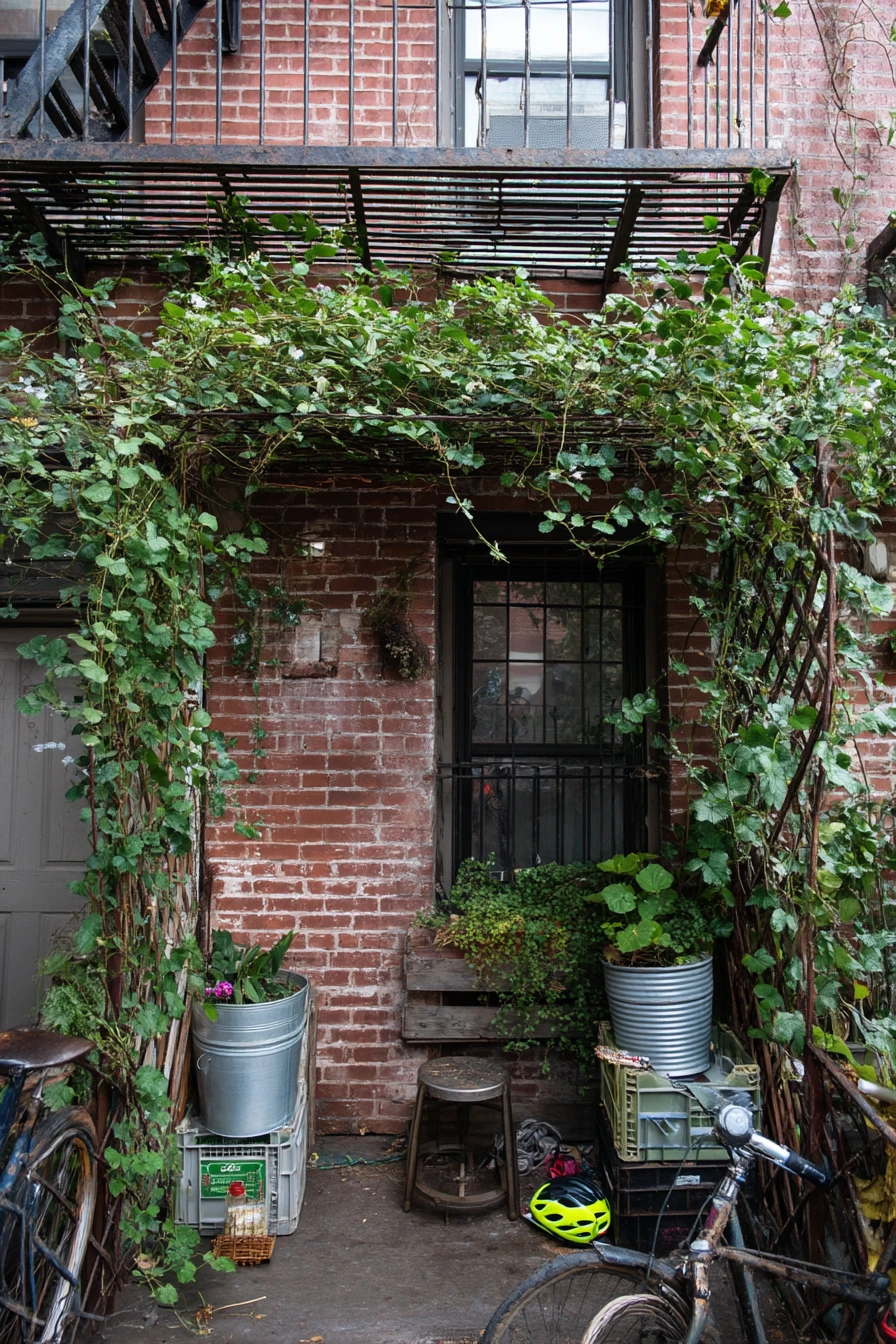
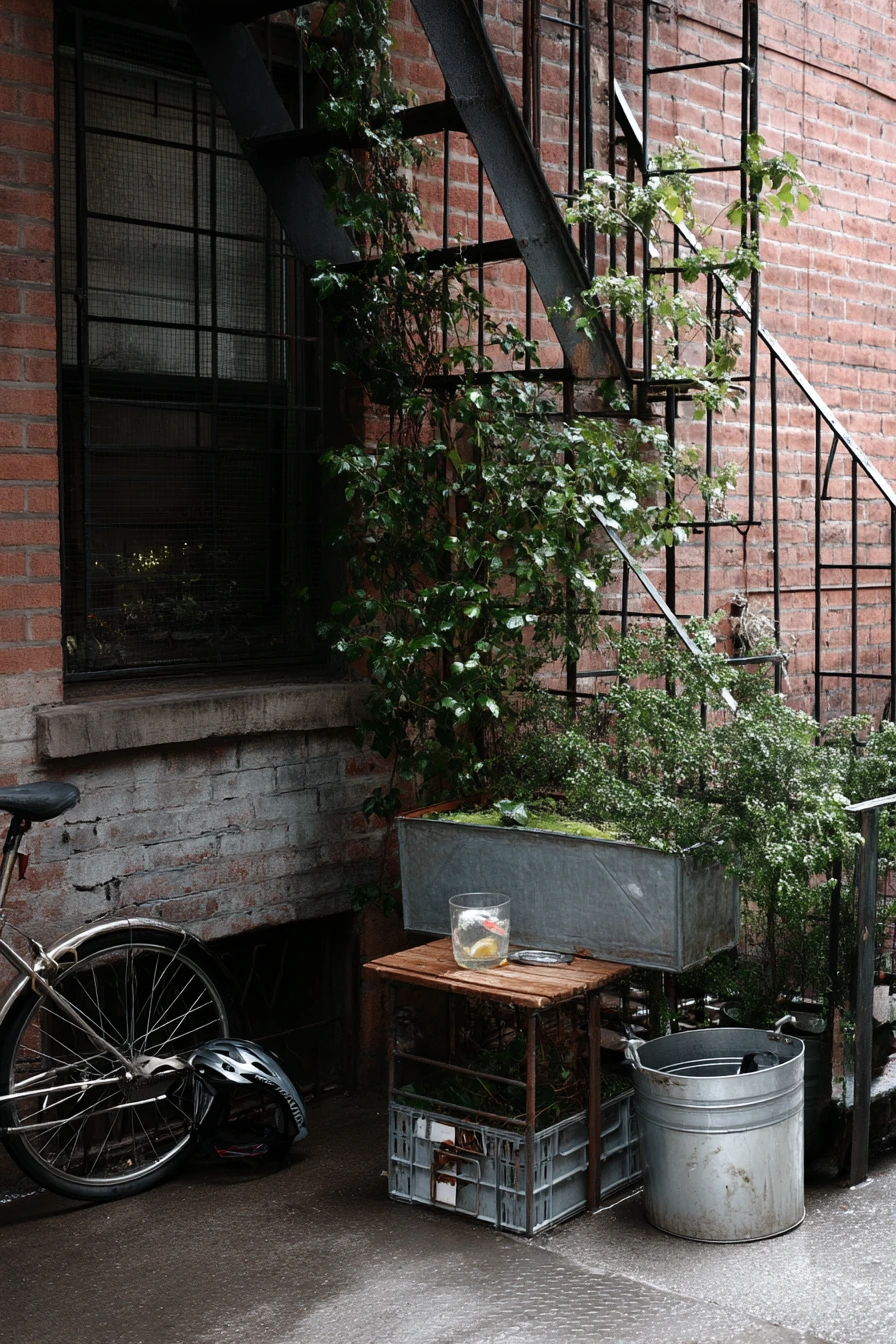
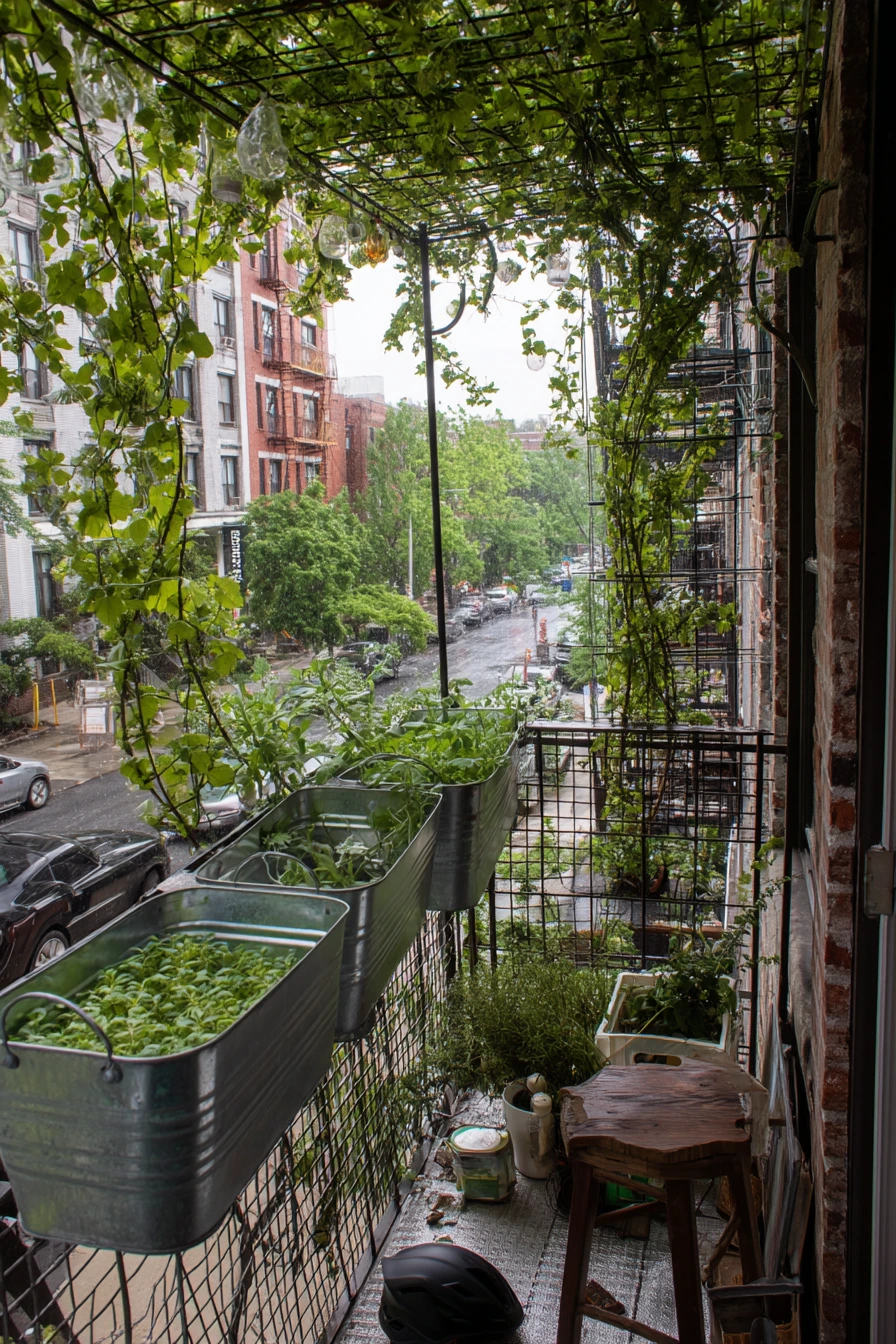
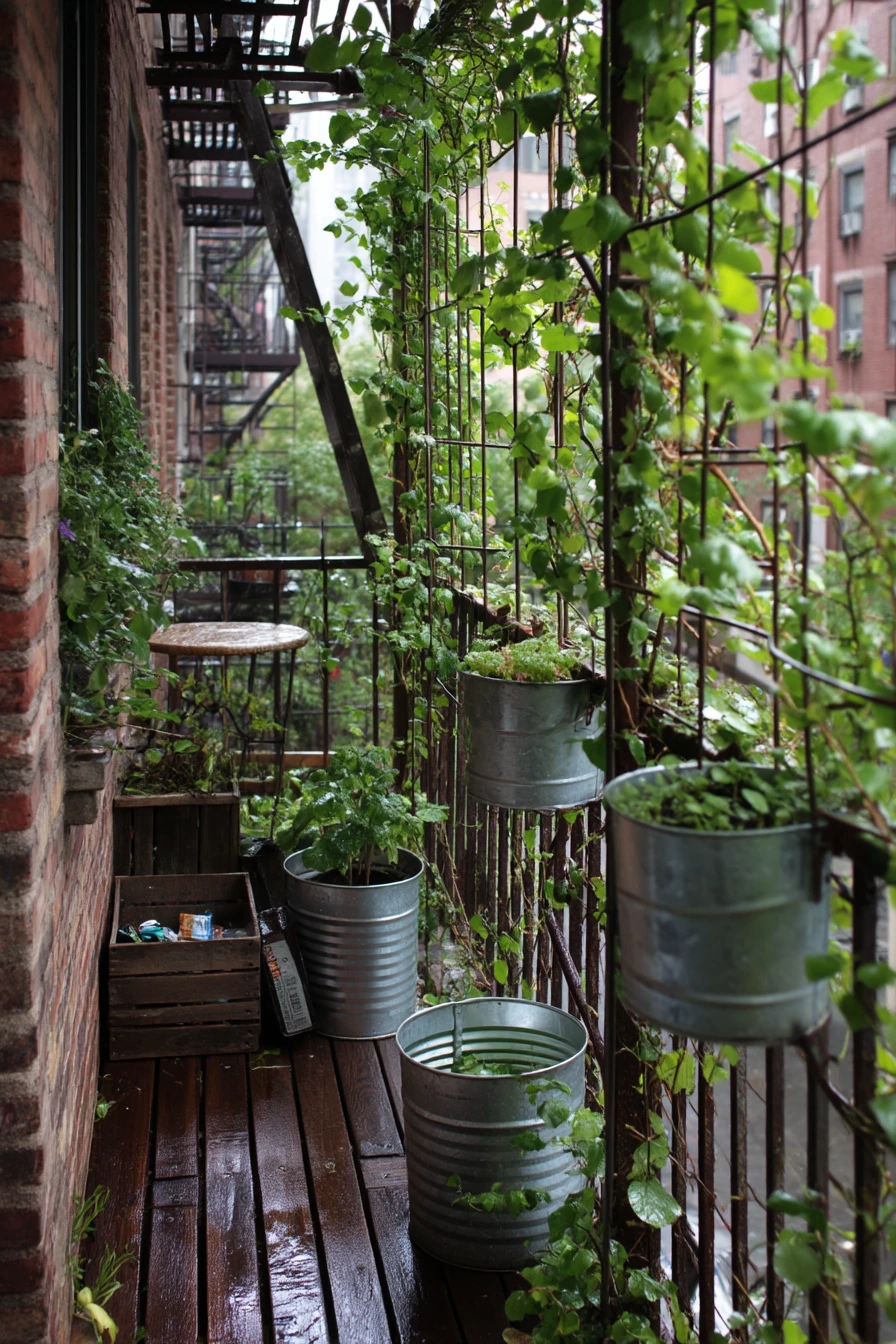
A fire escape garden can feel tough and green at the same time. Use galvanized planters because they handle weather and look right against brick. Add climbing jasmine on a simple trellis, but keep it controlled so it does not block any path or door.
Think vertical and stackable. Stackable crates can hold extra pots, seed packets, and gloves without taking more floor room. A rain-darkened stool gives you a place to sit for five minutes and check leaves for pests. A half-full water glass on the sill reminds you to hydrate while you work.
For a calm, real-home look, let a few everyday items show, like a bicycle helmet on the floor or a small tray for tools. Keep planters away from edges and use heavier containers on the outside corners. Water over a saucer or tray so you do not drip on neighbors below.
- Choose compact plants: jasmine, trailing ivy, and dwarf peppers work well.
- Use a narrow trellis that sits inside the planter, not attached to the wall.
- Put the heaviest planters closest to the building for safety.
- Label seed packets and store them in a tin so they stay dry.
- Check leaves weekly for aphids, especially on jasmine tips.
Pro Design Tip: Repeat one metal finish (galvanized or black) across planters and crates to make the gritty city setting look intentional.
Budget Considerations: Galvanized tubs can cost more new; look for used ones, or use food-safe buckets wrapped in metal-look contact paper.
3 Renter-Friendly Patio Oasis with No-Damage Solutions
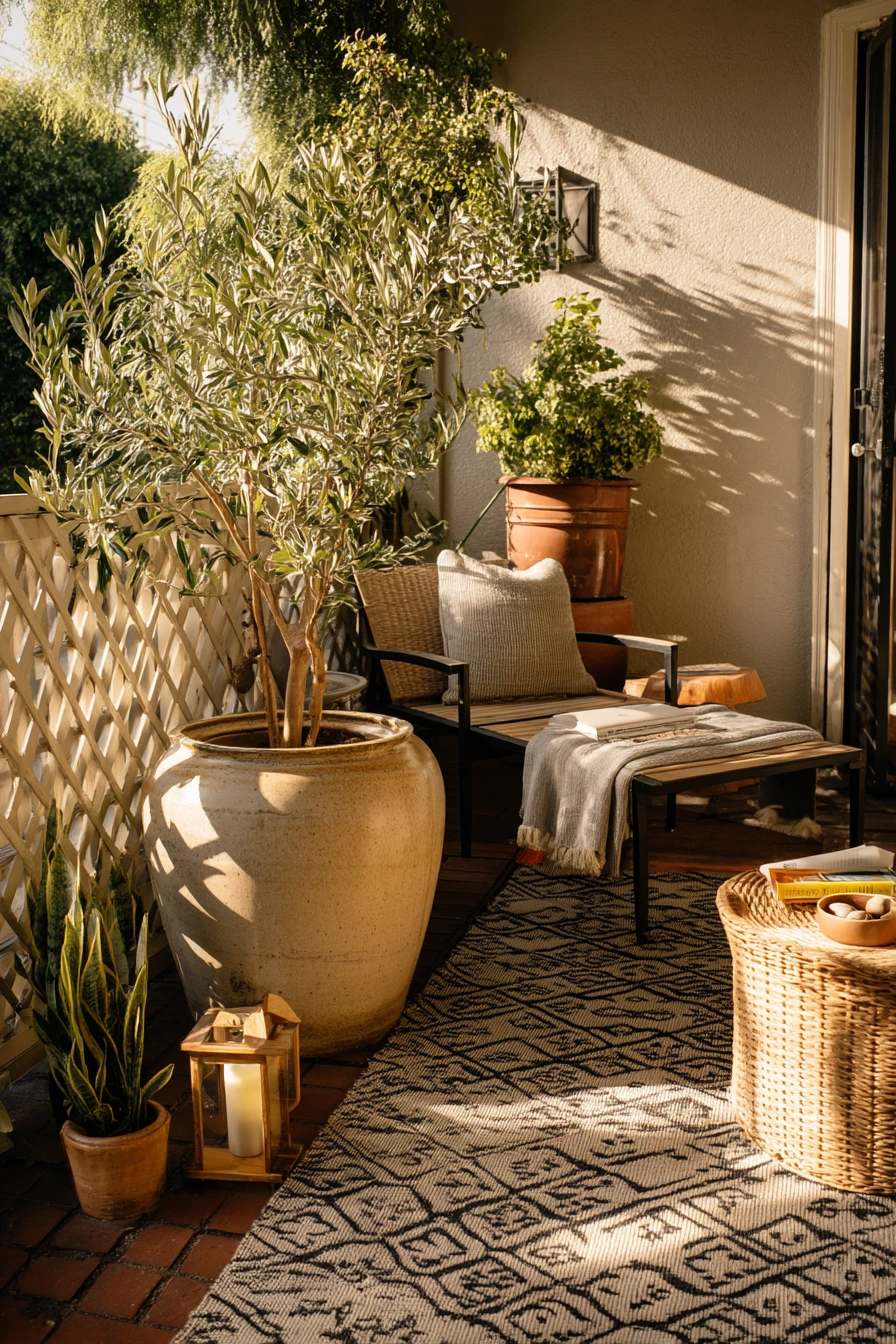
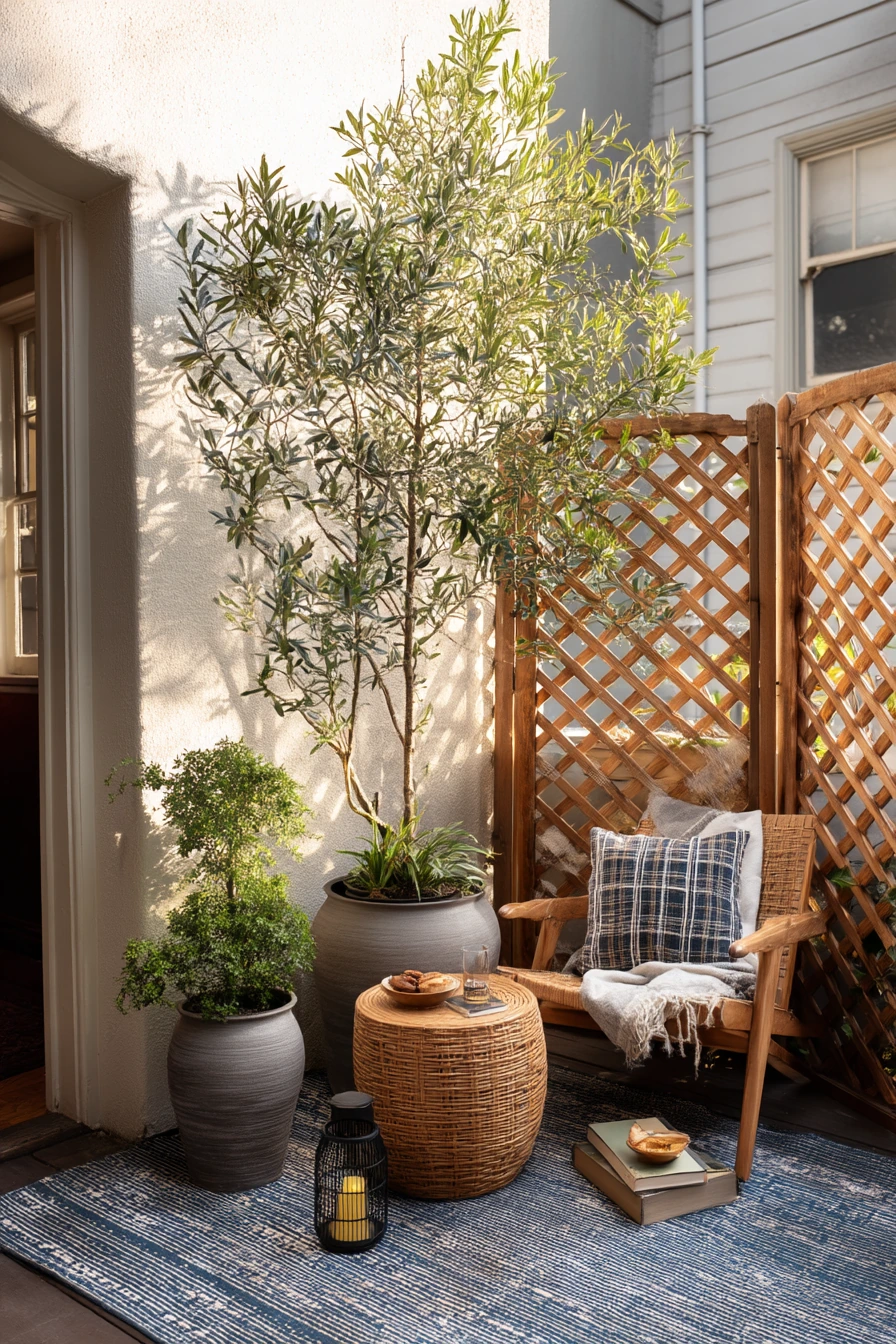
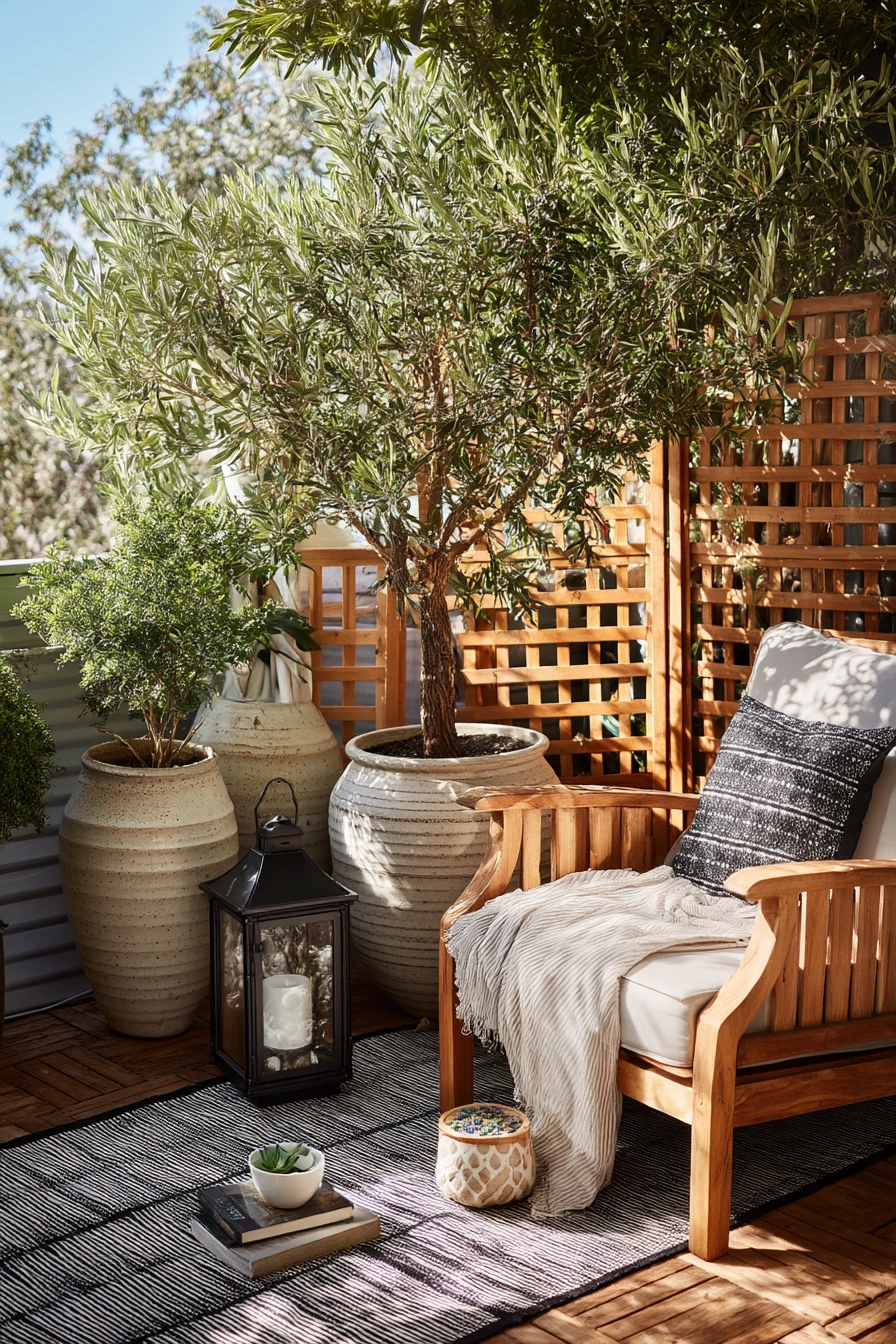
A rental-friendly urban patio can look finished without drilling a single hole. Start with freestanding lattice screens to add privacy and a green backdrop. Then place oversized ceramic pots in front to anchor the setup and hide the screen feet.
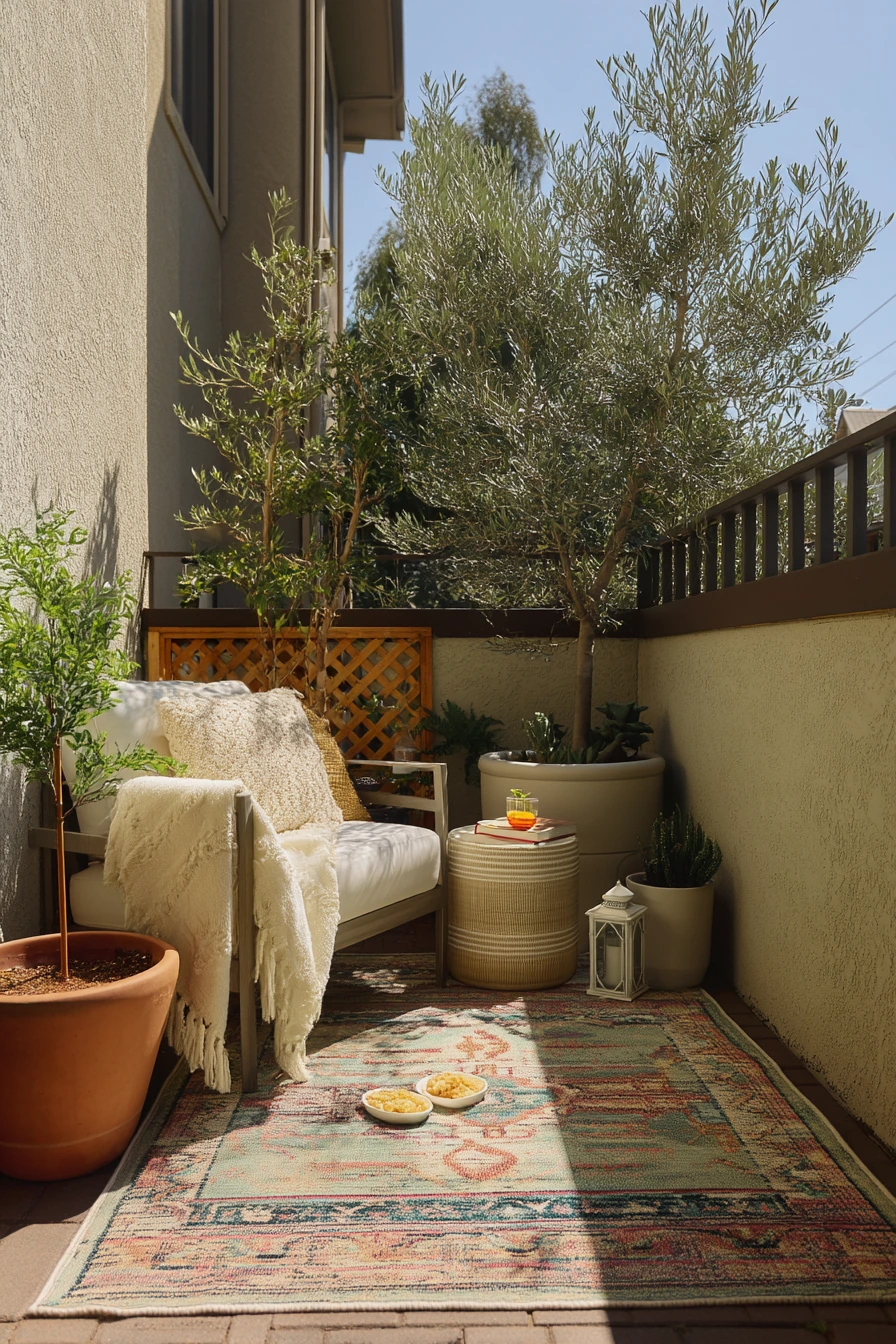
An olive tree in a nursery container gives height and a soft, Mediterranean feel, even in a small space. Add a battery lantern for warm light, and roll out an outdoor rug to make the patio feel like another room. A slightly wrinkled throw over a lounge chair looks relaxed and real.
Keep the scene practical. Leave two books and a snack bowl on the table so you actually use the space. For plant care, use a lightweight potting mix and check drainage, since large pots can stay wet too long. If you have wind, place the biggest pot in the windiest corner as a “weight” to steady the area.
- Pick one screen wall, not three, so the patio does not feel boxed in.
- Use pot feet or a plant caddy so containers can drain and still move.
- Mix one tree, two medium shrubs, and a few low fillers for balance.
- Add a small tray for snacks so crumbs do not attract pests.
- Choose battery lanterns with a timer for easy evening light.
Pro Design Tip: Place the lattice screen behind the lounge chair and aim for a “layered” look: screen, tall plant, then smaller pots in front.
Budget Considerations: Large ceramic pots add up; buy one statement pot, then use simple nursery pots inside a basket or planter sleeve.
4 Tiny Courtyard Garden with a Kid’s Play Basket
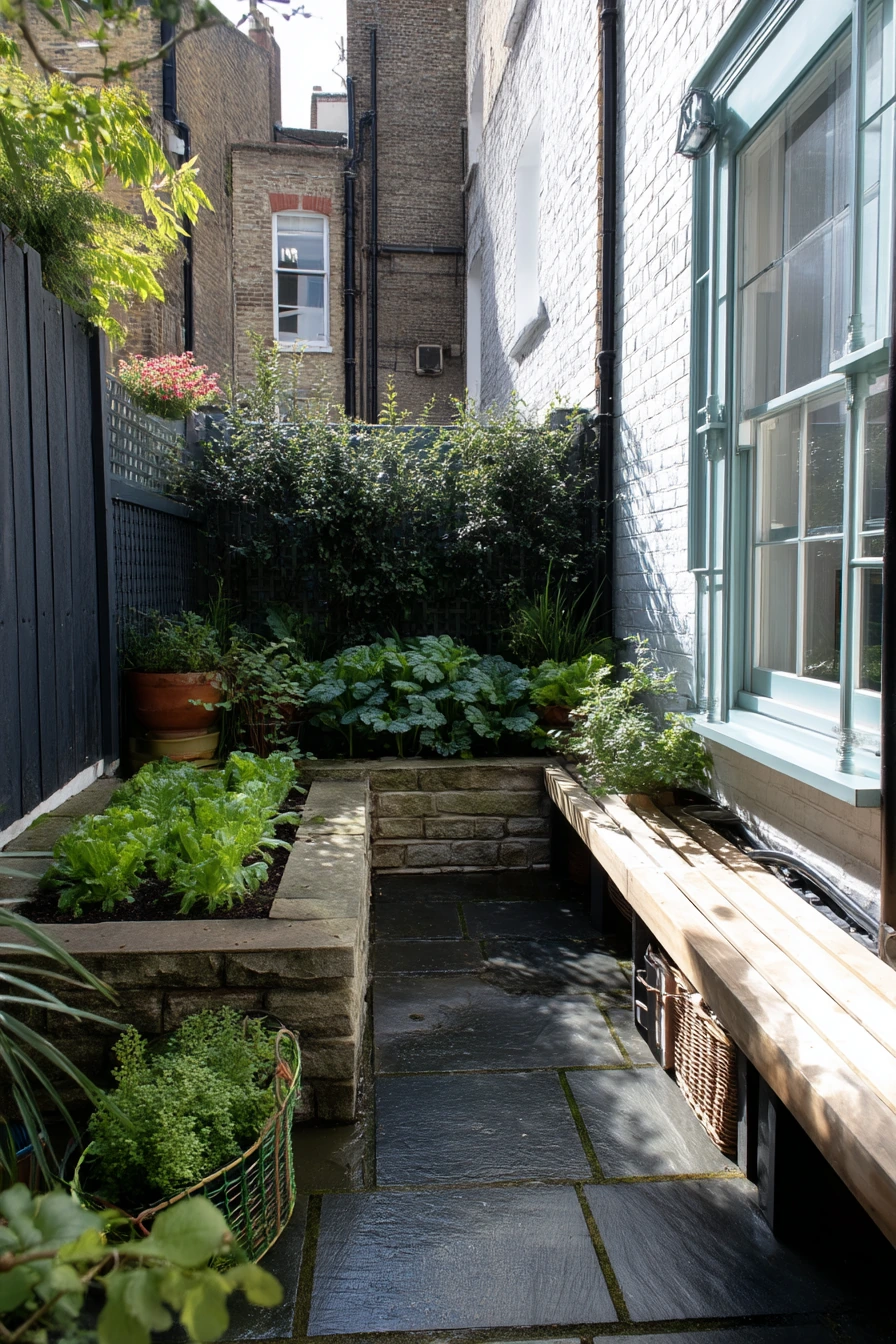
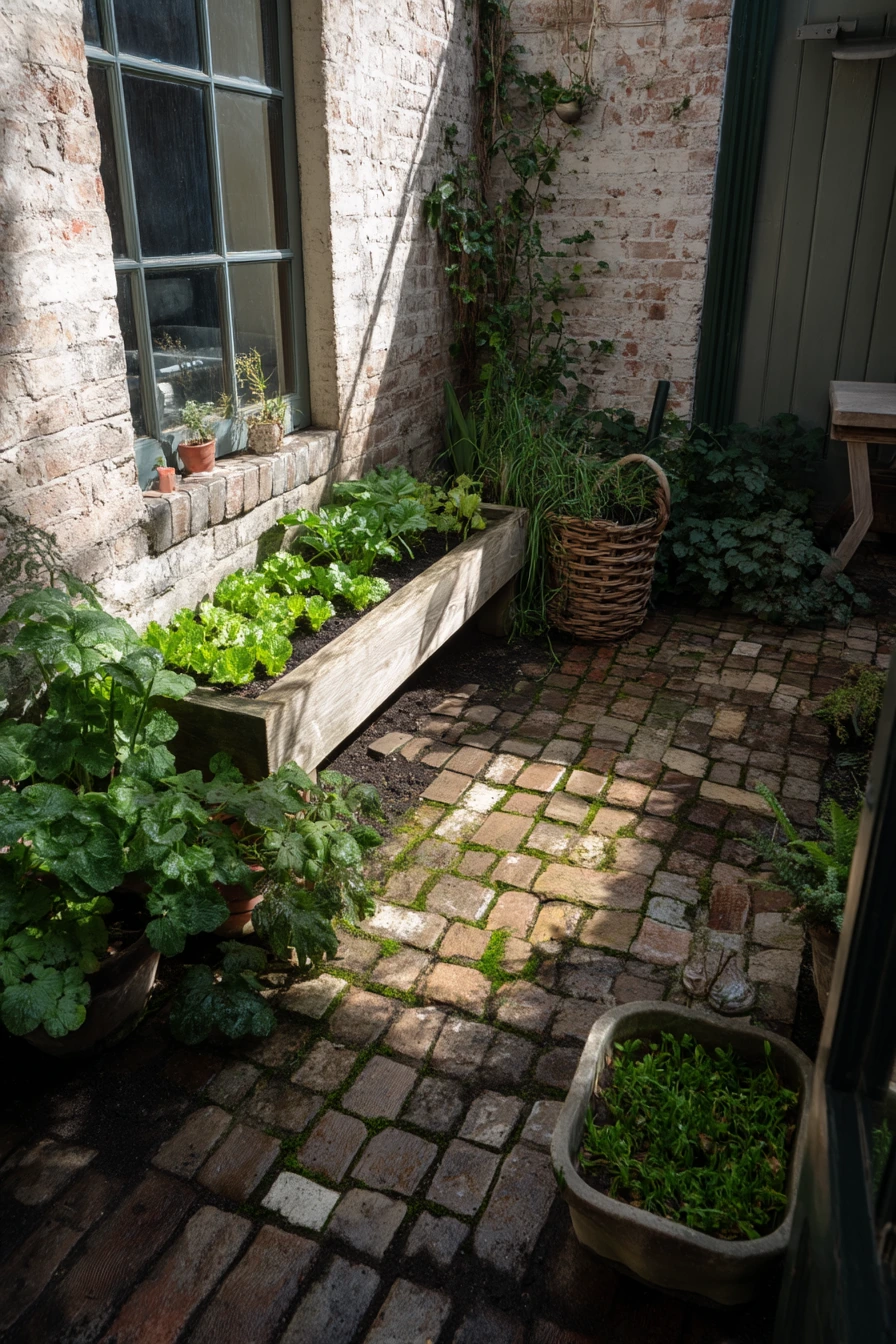
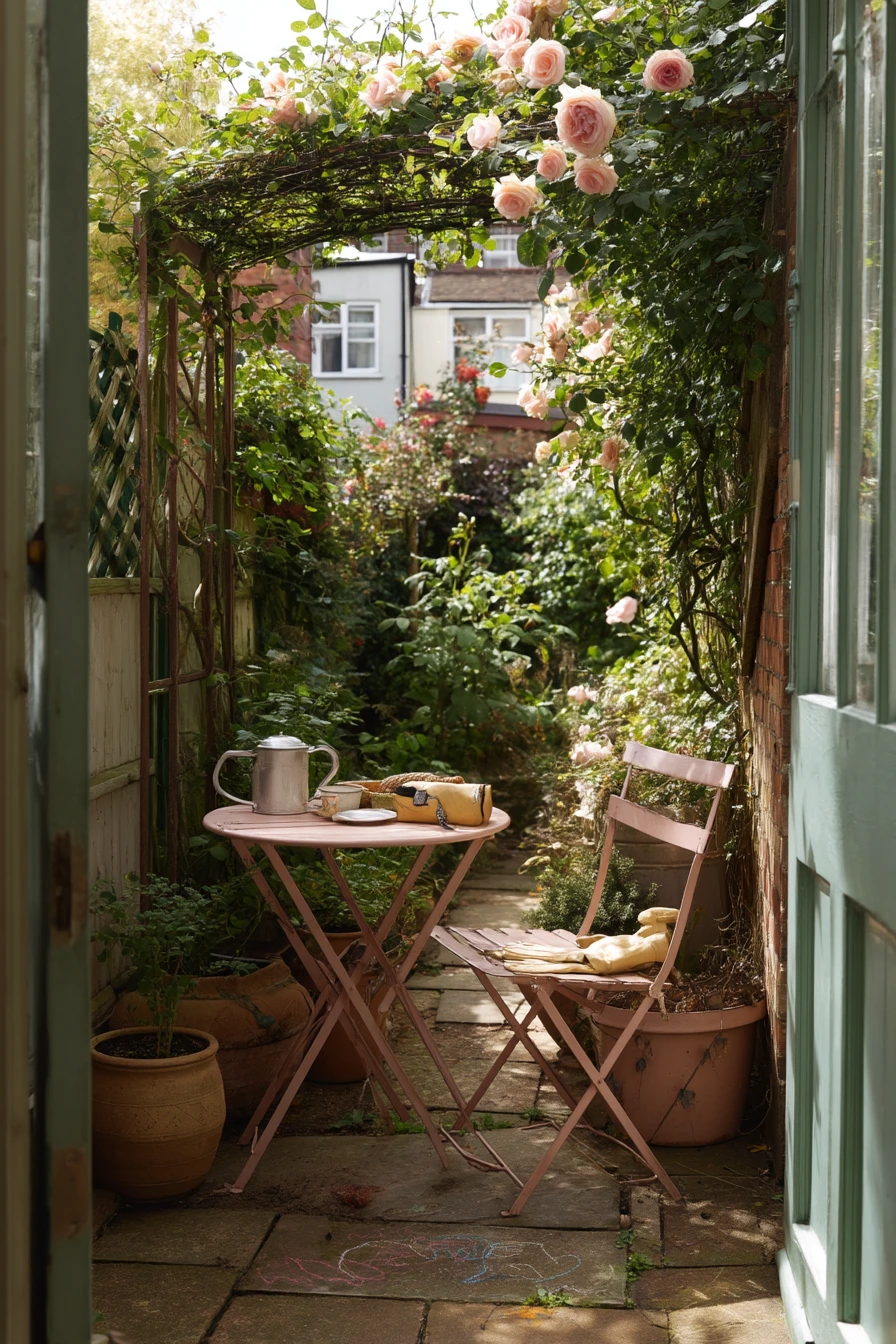
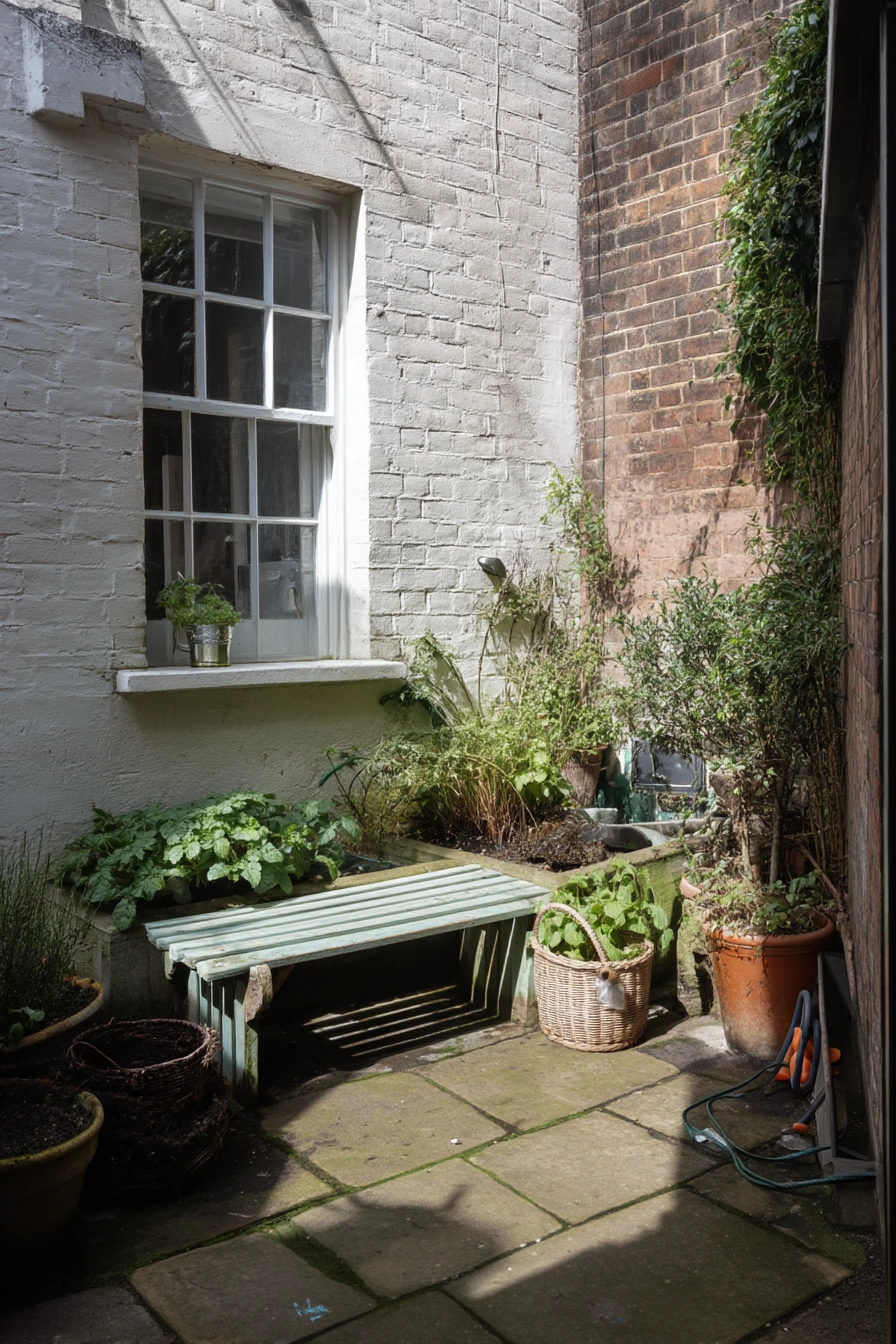
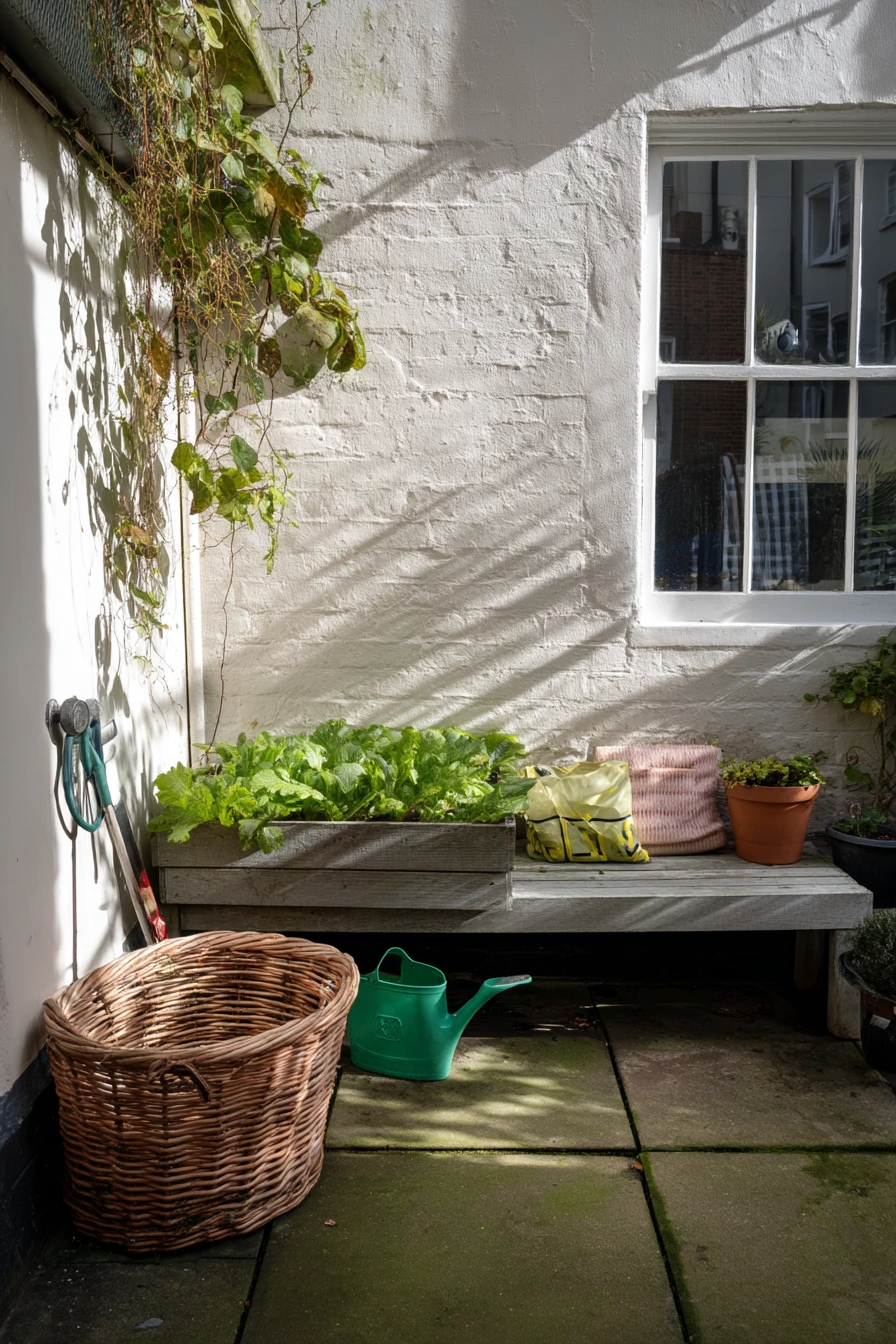
A small courtyard garden behind a townhouse can be both pretty and hardworking. Raised beds make it easier to grow strawberries and lettuce in a tight space, and they keep soil off the pavers. Moss in the joints of pavers adds a soft, lived-in look without extra décor.
Make it family-ready. Add a slim bench for shoes and quick breaks, and keep a kid toy basket close so toys do not spread across the whole courtyard. Chalk marks on the ground can stay, since they add real life and do not hurt the garden.
Plan for water and mess. A damp gardening glove and a watering hose coiled loosely are normal, but you can still keep the area neat with a hook-free storage bin near the door. For plant success, keep strawberries in the sunniest bed and lettuce where it gets a bit more shade, so it stays tender longer.
- Use raised beds at least 10 to 12 inches deep for greens and herbs.
- Mulch with straw around strawberries to keep fruit clean.
- Rotate lettuce plantings every 2 weeks for steady harvests.
- Set a “toy zone” corner so walkways stay clear.
- Add a small mat at the door to catch soil and grass clippings.
Pro Design Tip: Match the raised bed wood tone to the bench, then repeat that color in one small accessory so the courtyard feels pulled together.
Budget Considerations: Pre-made raised beds can be pricey; build simple boxes from untreated cedar fence boards, or use fabric grow bags as a starter option.
5 Rooftop Garden Dinner Setup for Friends
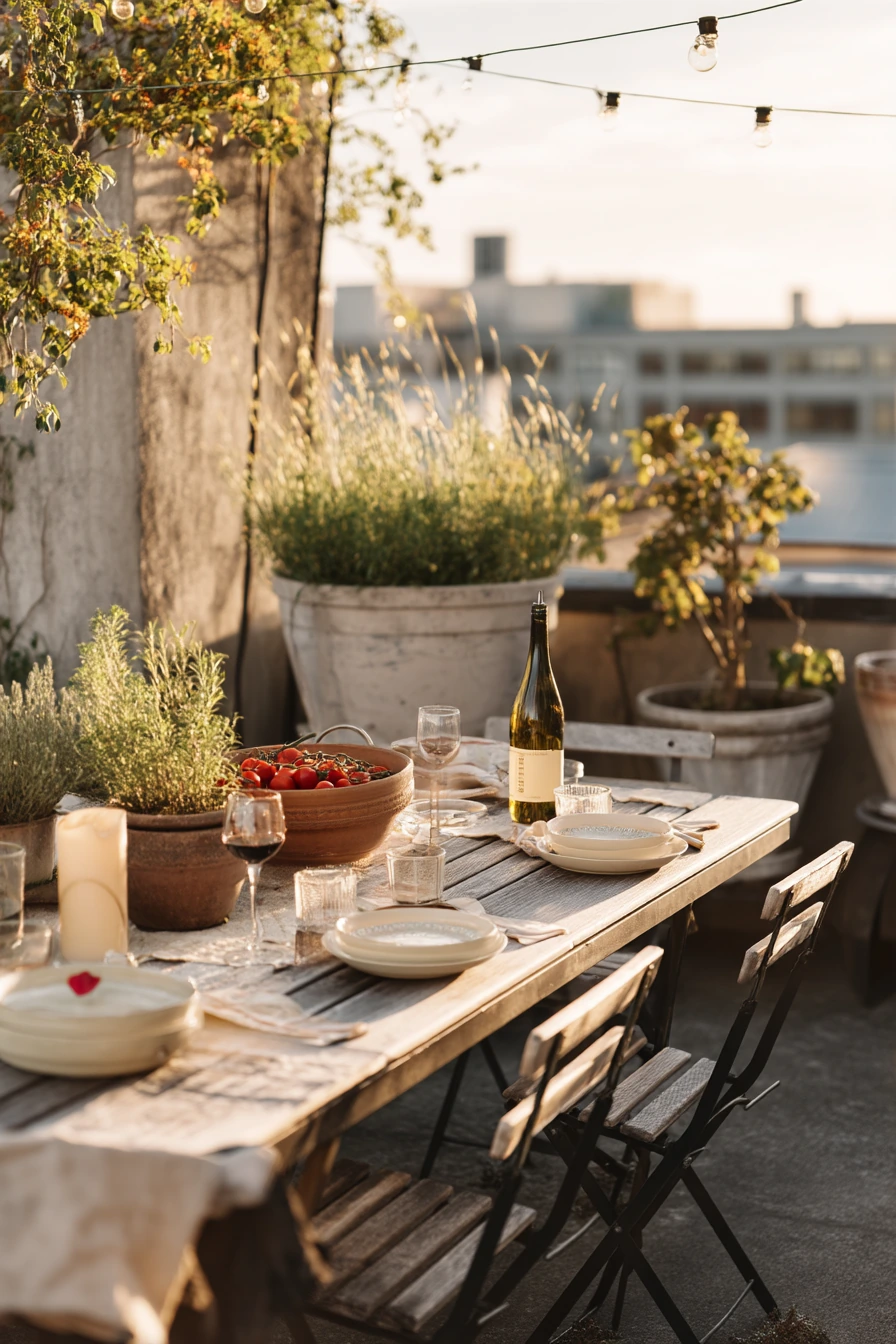
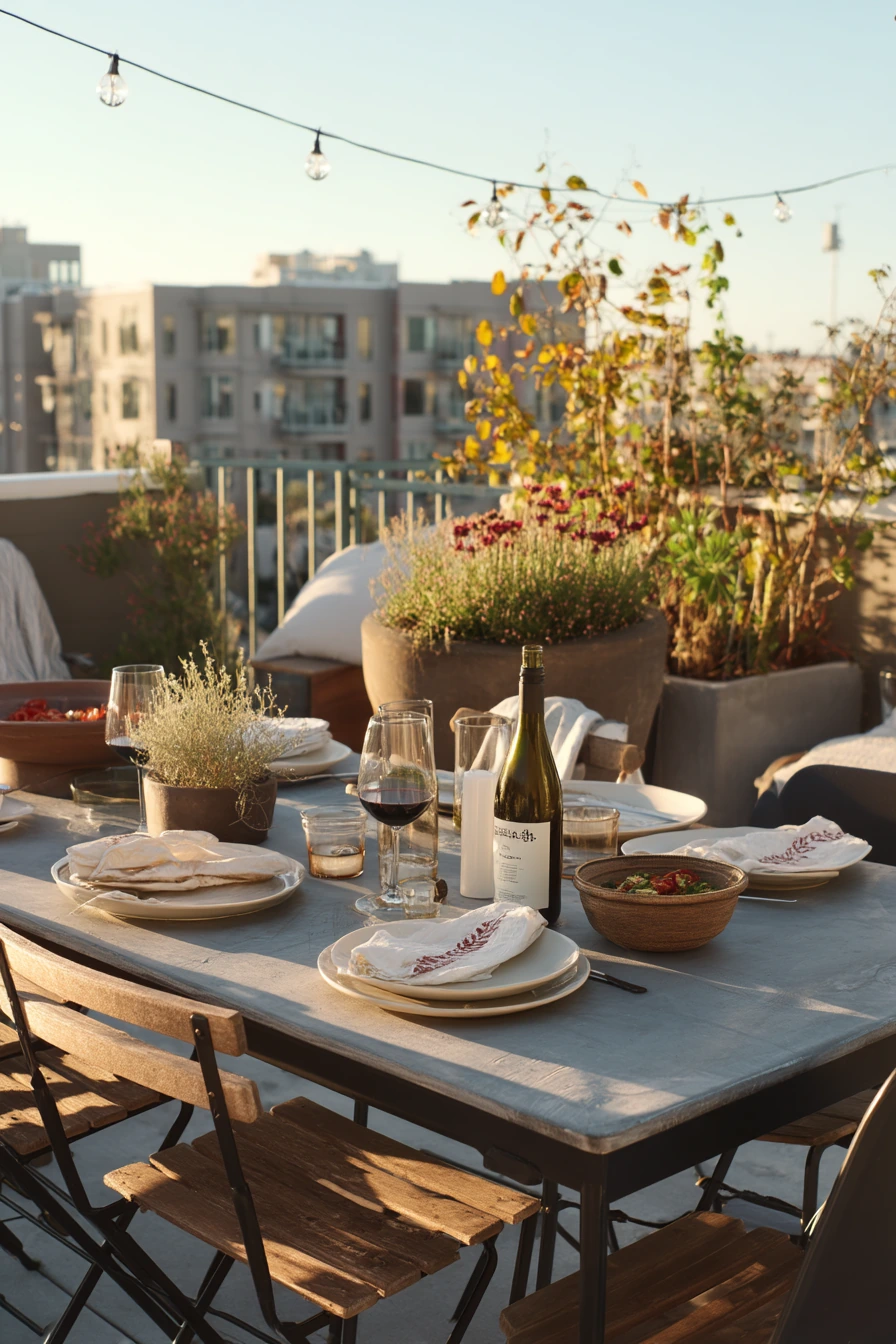
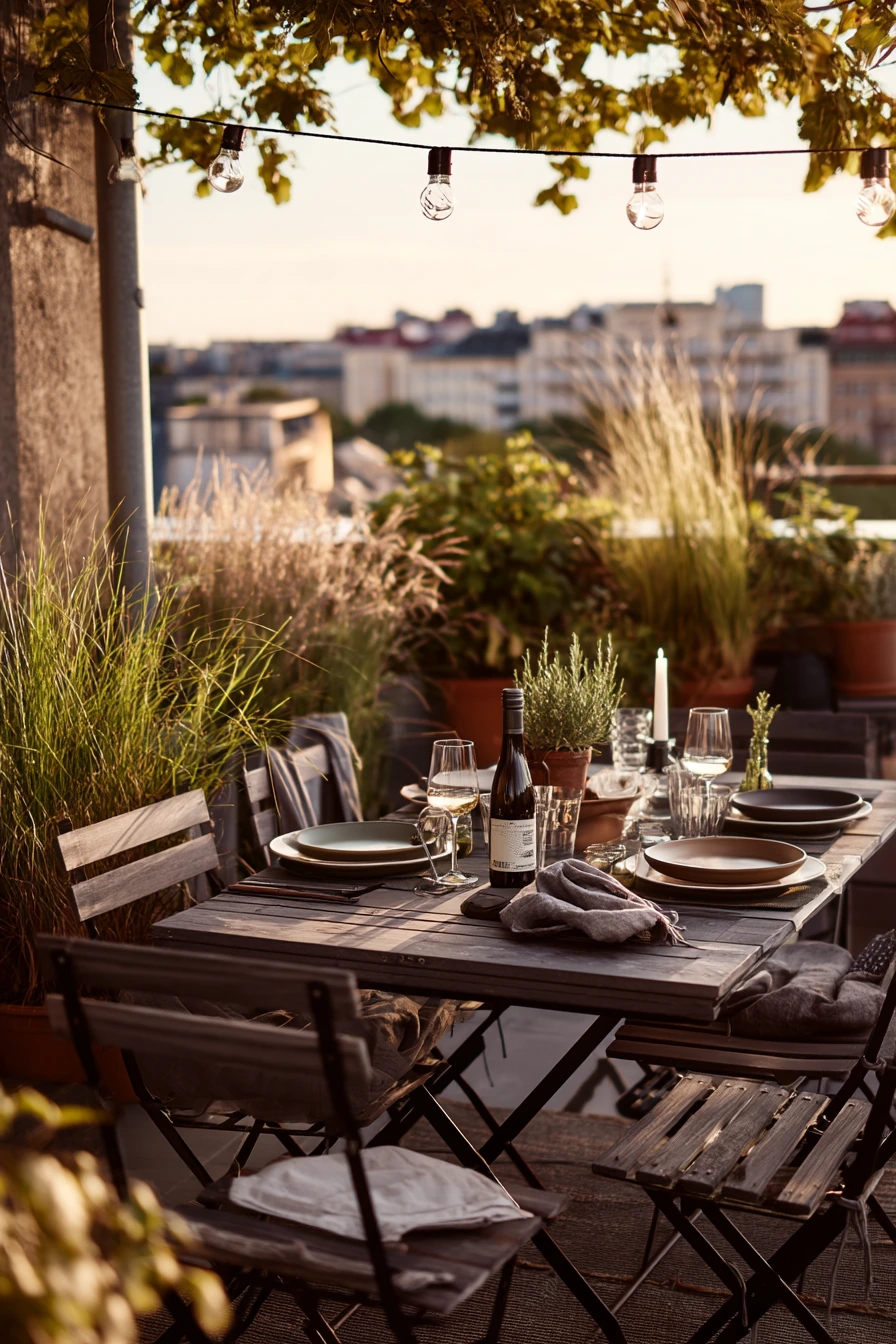
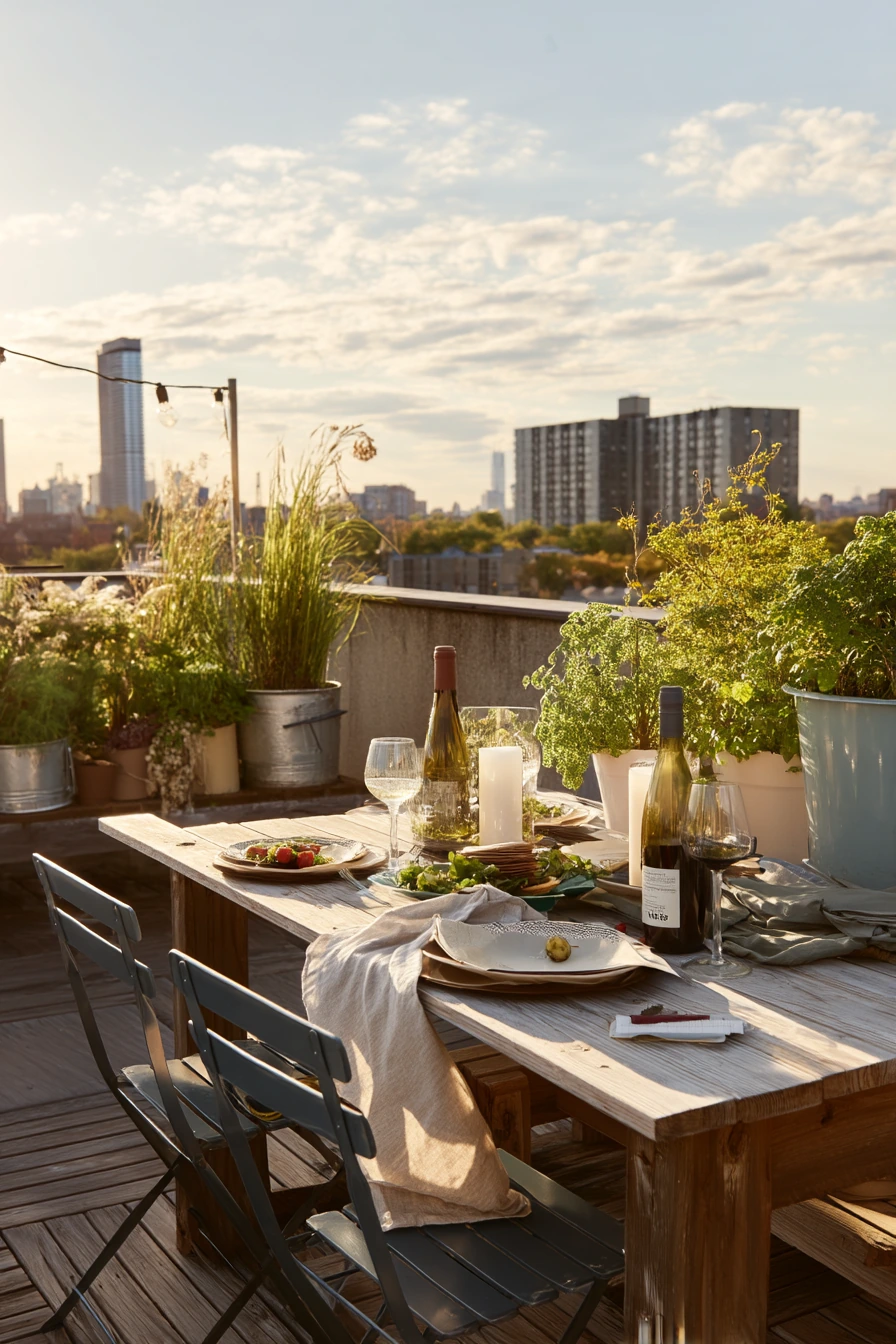
An urban rooftop garden can double as a dinner spot with very little space. Cluster planters with grasses and tomatoes to create a soft “green wall” around a folding table. Mismatched chairs are fine, and they often look better than a matching set.
Keep the setup breezy and social. A citronella candle helps with bugs, and string lights can stay unlit in daylight and still add texture overhead. A wine bottle, two used plates, and a napkin with a lipstick mark tell a real story and make the space feel welcoming, not staged.
Rooftops need extra care with wind and sun. Use heavier containers, and avoid tall, top-heavy pots that can tip. Choose drought-tolerant grasses and use a mulch layer in tomato pots to slow drying. Water early or late to reduce stress on plants and to avoid hot concrete splashback.
- Use 10 to 15 gallon containers for tomatoes for stronger roots.
- Place planters in groups to block wind and create mini zones.
- Add a small serving tray so dinner items stay stable on a folding table.
- Choose stackable chairs if you need to clear space fast.
- Keep a small broom nearby for soil, leaves, and spilled potting mix.
Pro Design Tip: Hang string lights in one simple line, then echo the warm tone with one lantern or candle so the rooftop feels cohesive at night.
Budget Considerations: Rooftop planters can get expensive; use sturdy plastic pots inside woven sleeves, and spend more only on tomato containers that need size.
6 Window Ledge Garden for a Studio Apartment
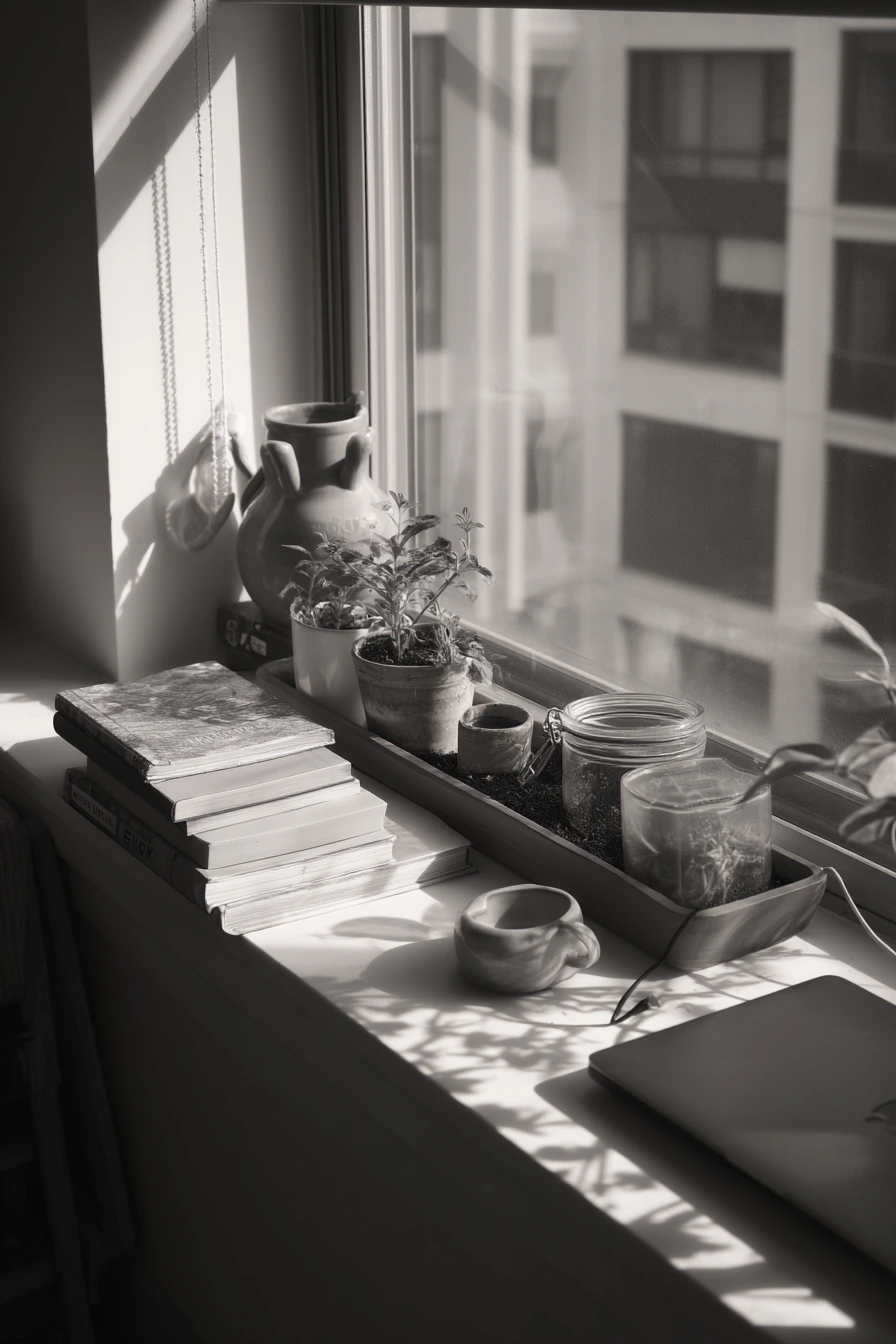
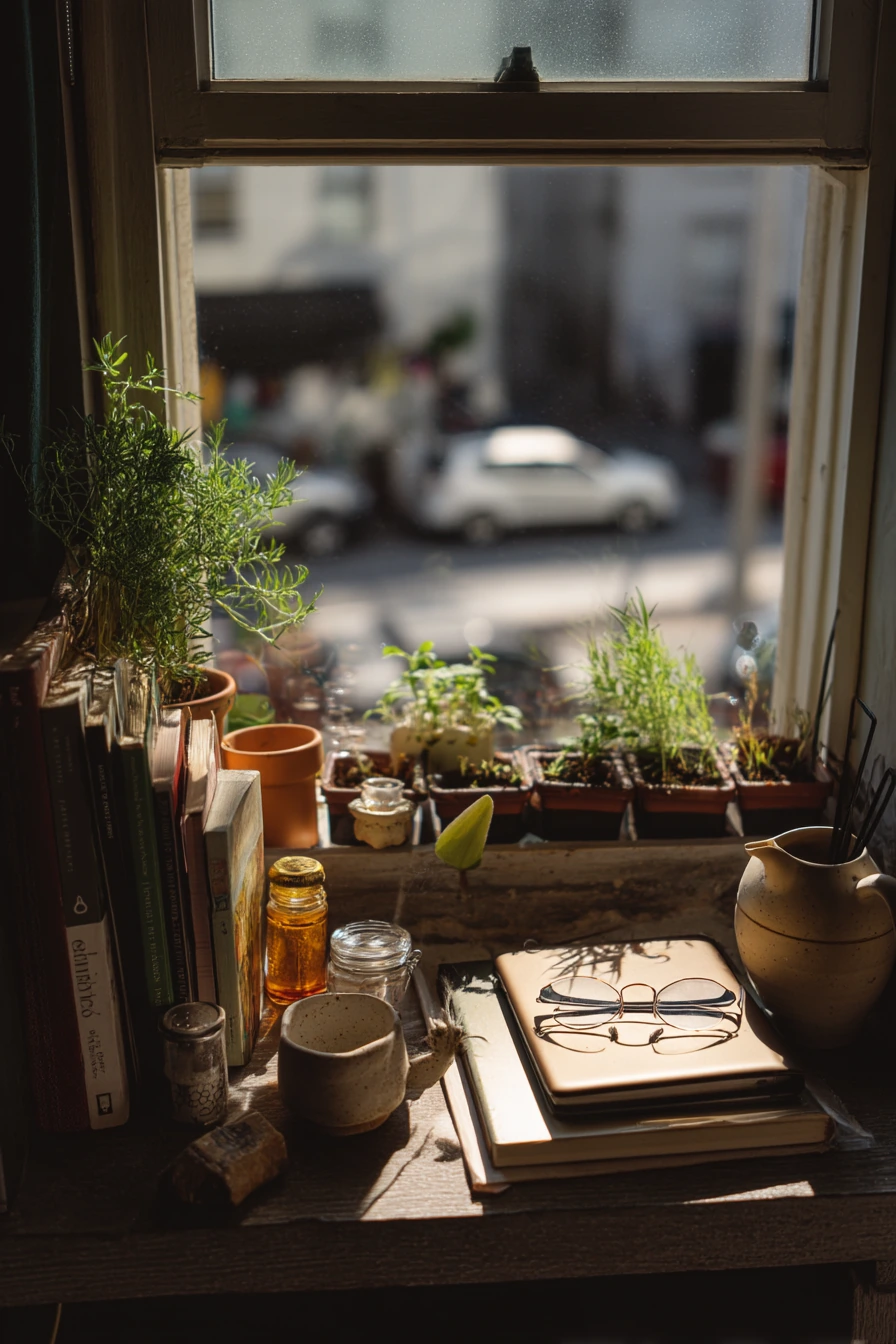
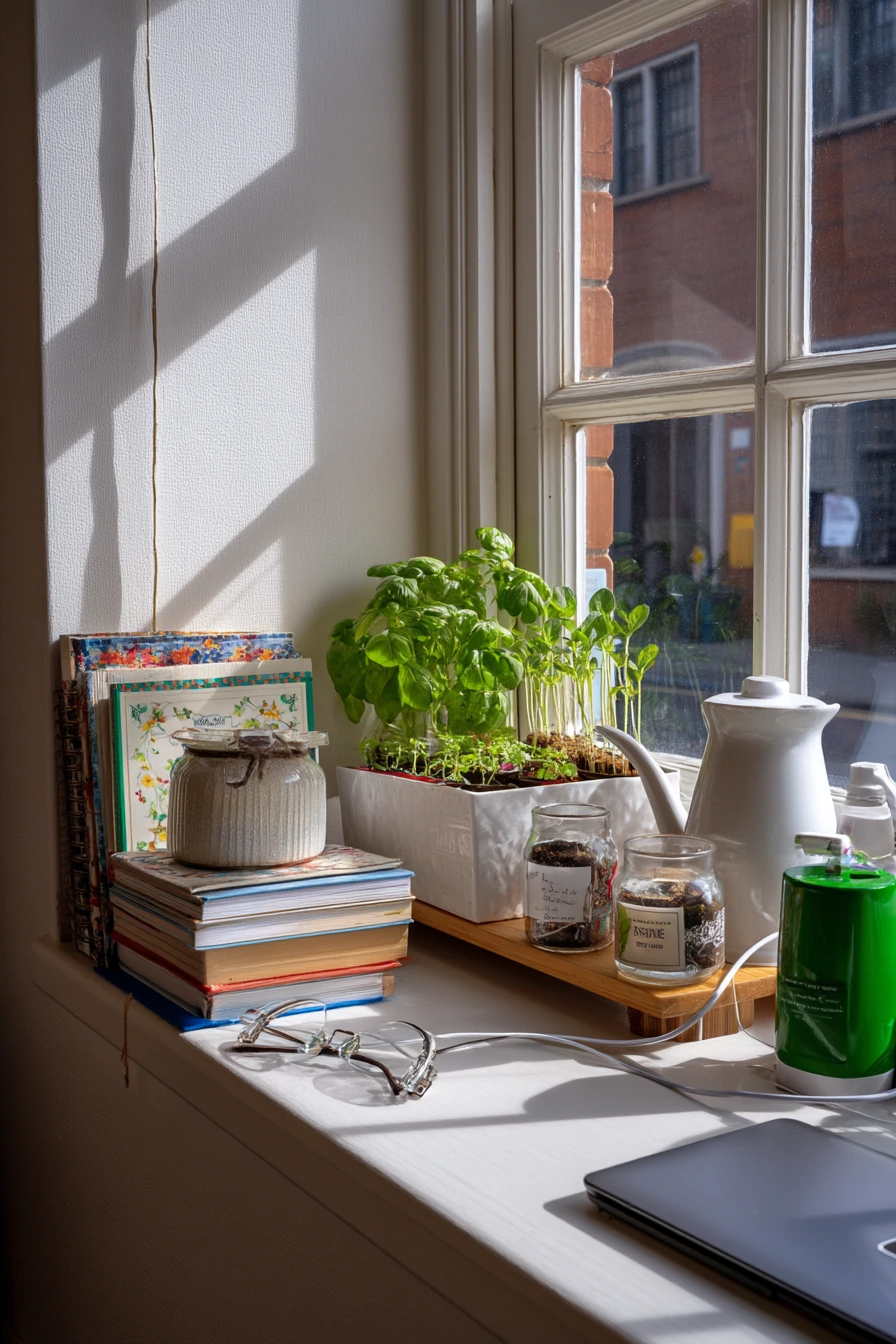
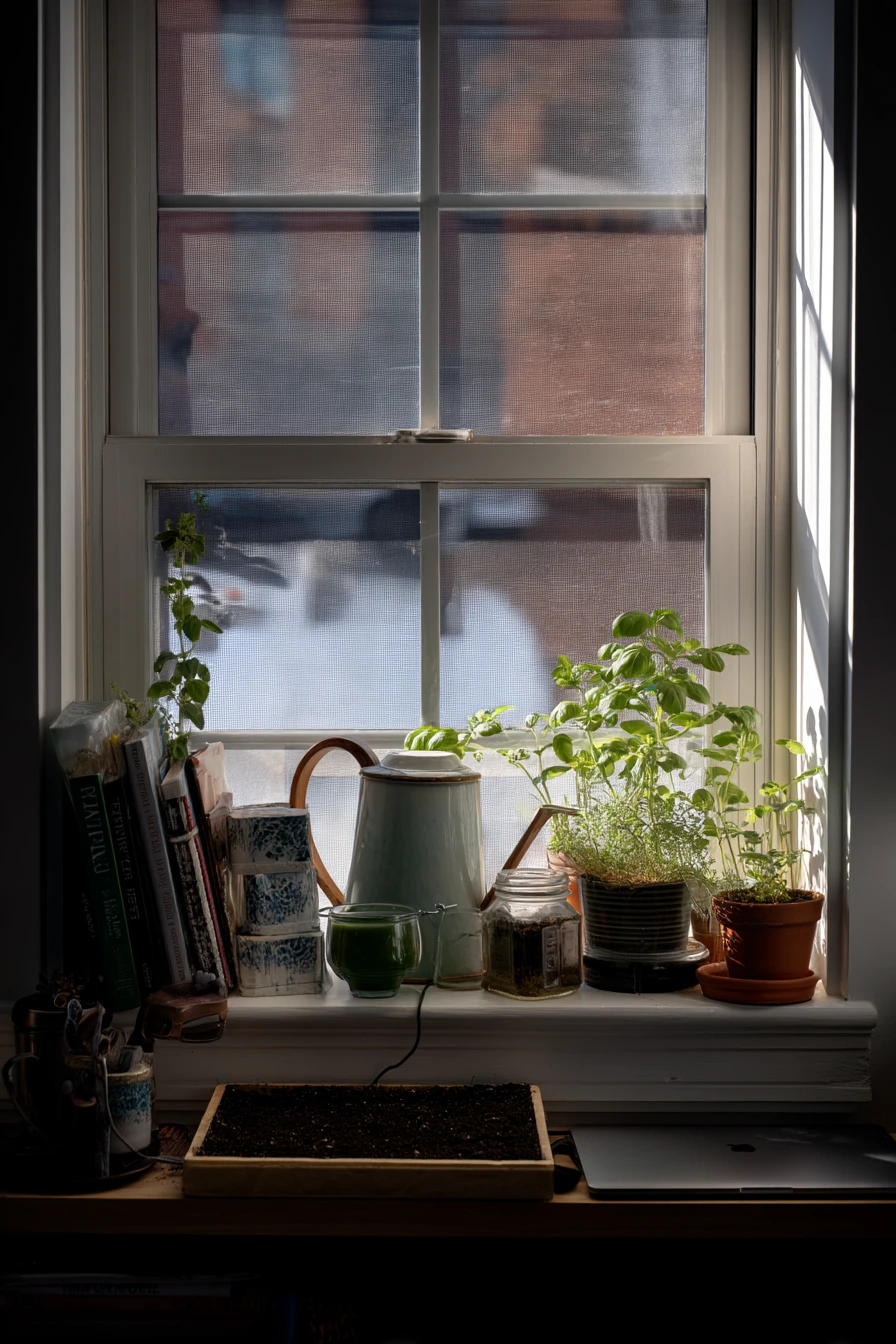
A sunlit window ledge can become a mini garden that fits a studio apartment. Use narrow herb trays for basil, chives, or parsley, and keep a ceramic watering can close so you do not forget small waterings. Propagation jars add greenery fast, even before you buy more plants.
This setup works best when it is also functional. A stack of paperback books, a pair of glasses, and a laptop resting nearby can share the space if you keep soil and water contained. Use a tray under pots to catch drips, and keep a charging cable off the wet zone.
Style it with simple repeats. Choose jars in the same clear glass, and use one pot color for a calm look. Rotate herbs weekly so they grow evenly toward the light. If the sill gets cold in winter, move herbs a few inches back from the glass at night to prevent leaf damage.
- Start with 2 herb trays and 2 propagation jars to avoid crowding.
- Propagate pothos, mint cuttings, or coleus for quick success.
- Use a narrow LED grow light if your window is shaded by buildings.
- Pinch herb tips often to keep plants compact on the sill.
- Wipe the sill weekly to prevent water rings and soil grit.
Pro Design Tip: Keep the “work” items on one side (laptop, books) and the “water” items on the other side (watering can, trays) so the ledge looks tidy.
Budget Considerations: Propagation jars can be any clean glass; reuse pasta sauce jars and remove labels with warm water and soap.
7 Back Alley Courtyard with Vertical Green Wall
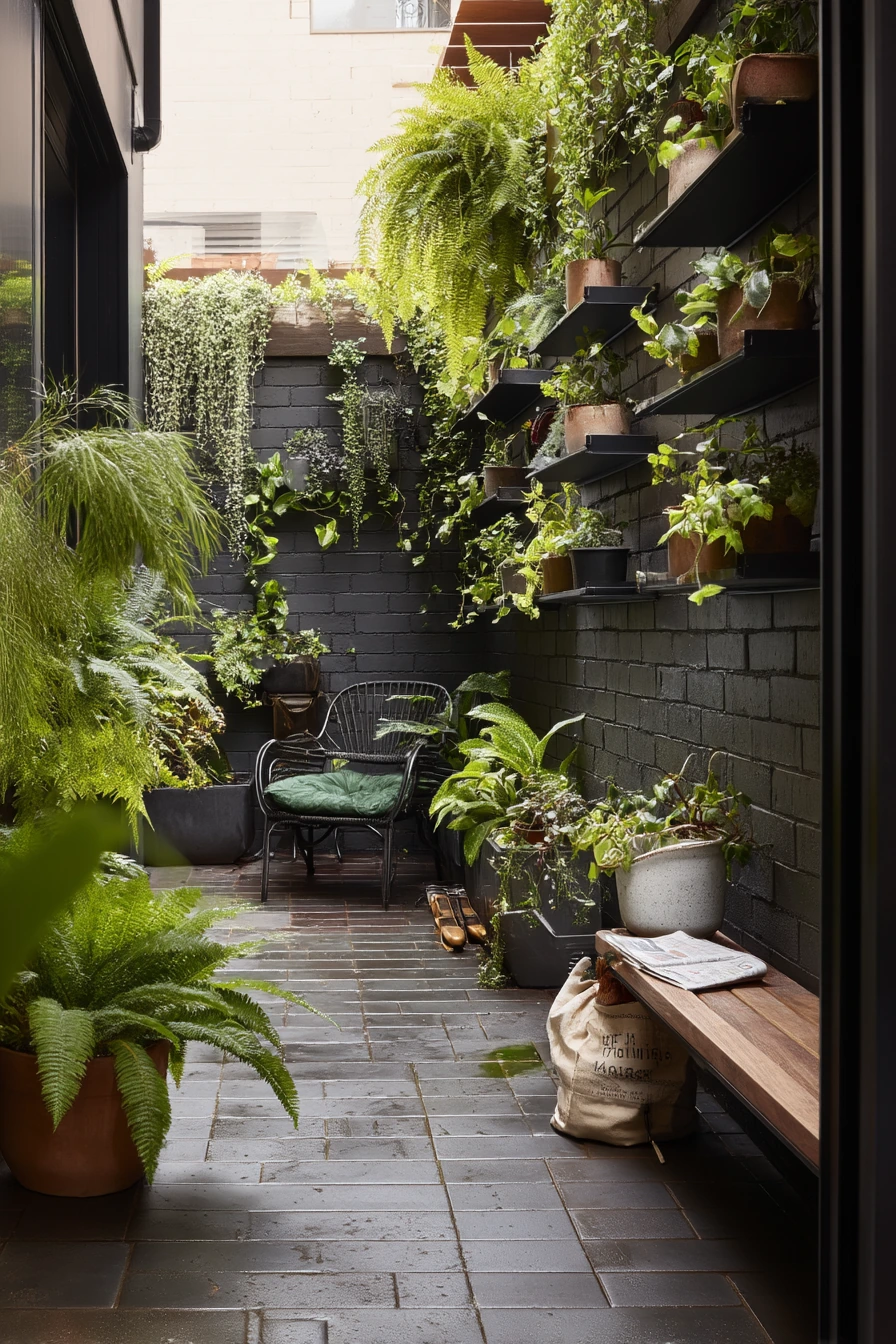
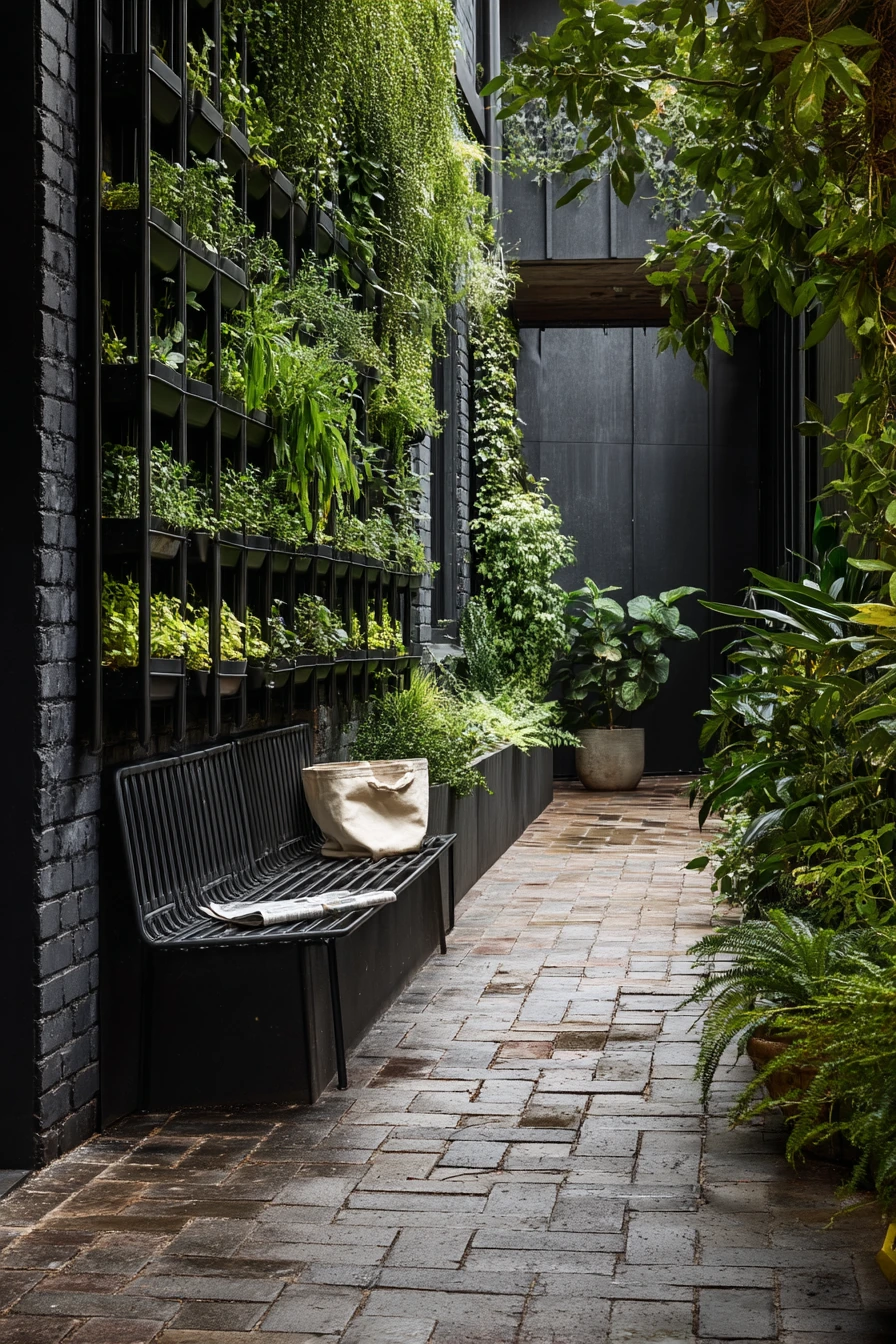
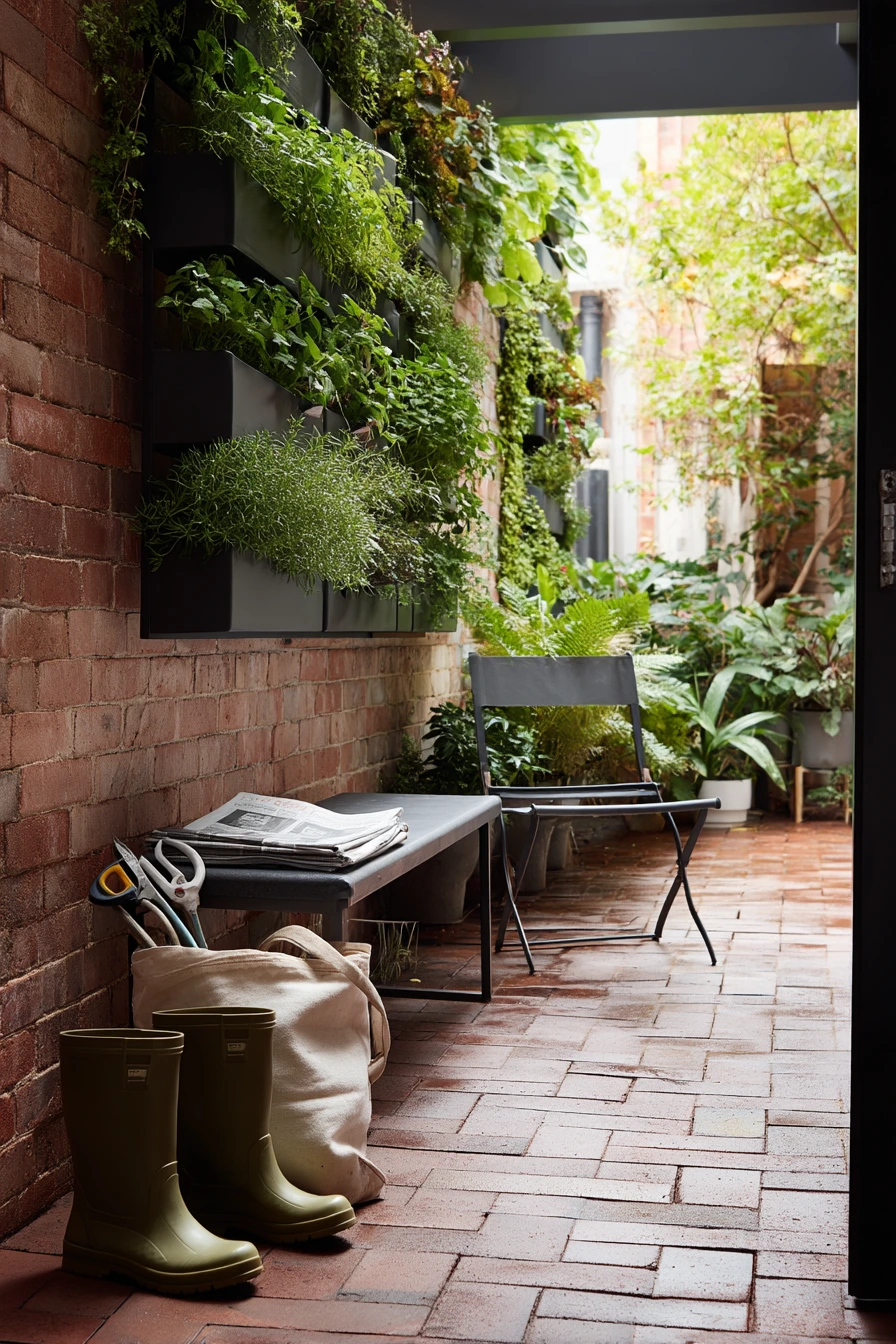
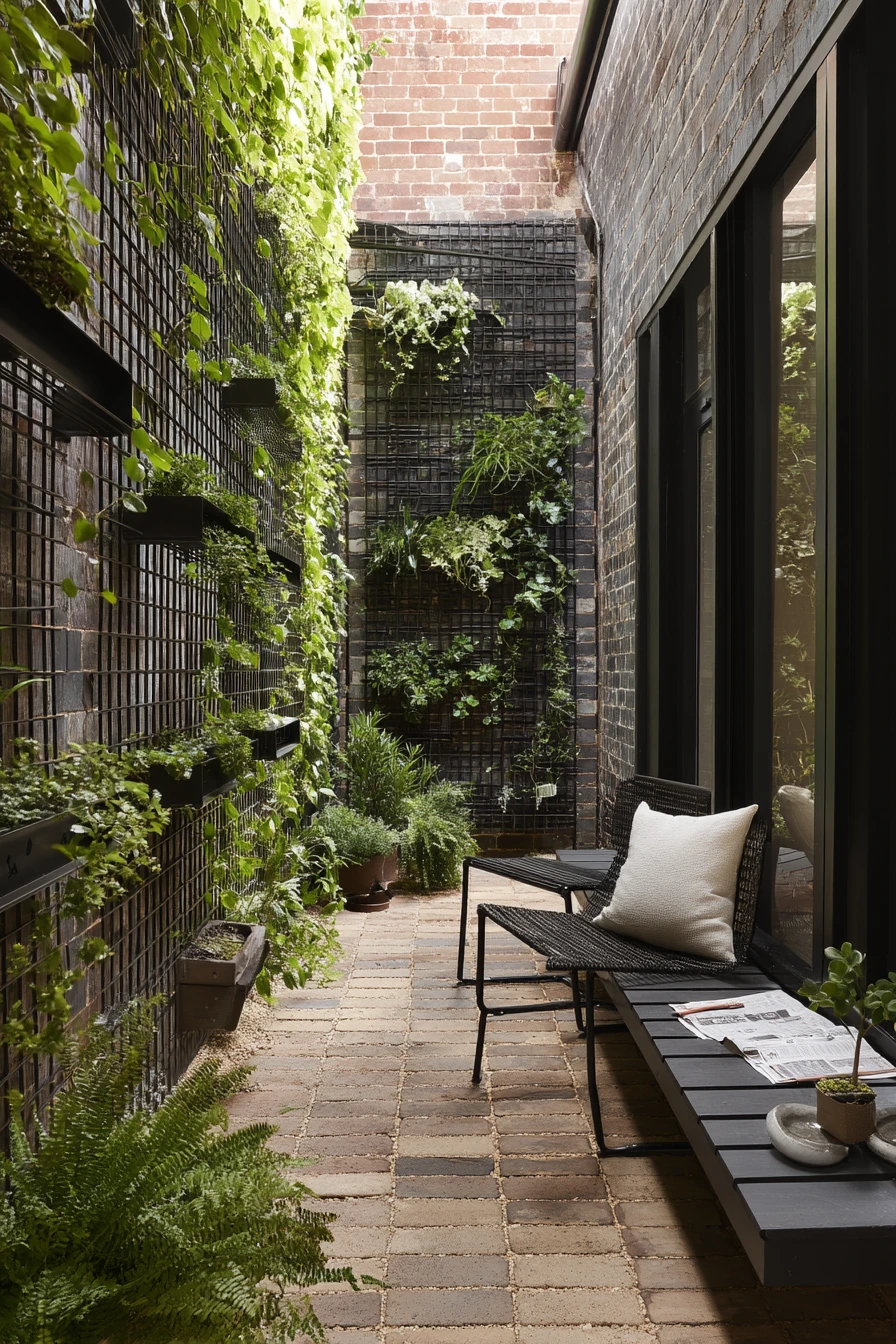
A narrow back courtyard can hold a lot of plants if you build upward. A vertical green wall with slim climbing planters gives you leafy coverage without taking floor space. Black metal shelving adds storage for pots, tools, and soil, and it looks clean against brick.
Keep the seating simple. A rescue-chair and a small bench are enough for a quiet break. A canvas tote with potting soil, pruning shears, and even a muddy boot print can live here, but give each item a “home” so the courtyard does not feel cramped.
After rain, check drainage. Vertical planters can drip, so place a narrow drip tray or gravel strip below to protect the floor. Choose plants that handle the shade and damp, like ferns, ivy, and some herbs if you get a few hours of sun. A folded newspaper on the bench is a nice touch, but store paper inside when weather turns.
- Use wall-leaning frames or freestanding racks if you cannot drill.
- Place the thirstiest plants at the bottom where extra water collects.
- Train climbers with soft ties so stems do not snap.
- Keep pruning shears in a pouch so they do not rust on wet shelves.
- Add one small outdoor mat to reduce mud tracked back indoors.
Pro Design Tip: Limit your plant palette to 2 to 3 leaf shapes, then repeat them across the wall so the vertical garden looks calm, not busy.
Budget Considerations: Vertical systems can be costly; start with a basic metal shelf and clip-on pots, then add matching planters over time.
8 Budget Garden Nook with Repurposed Containers
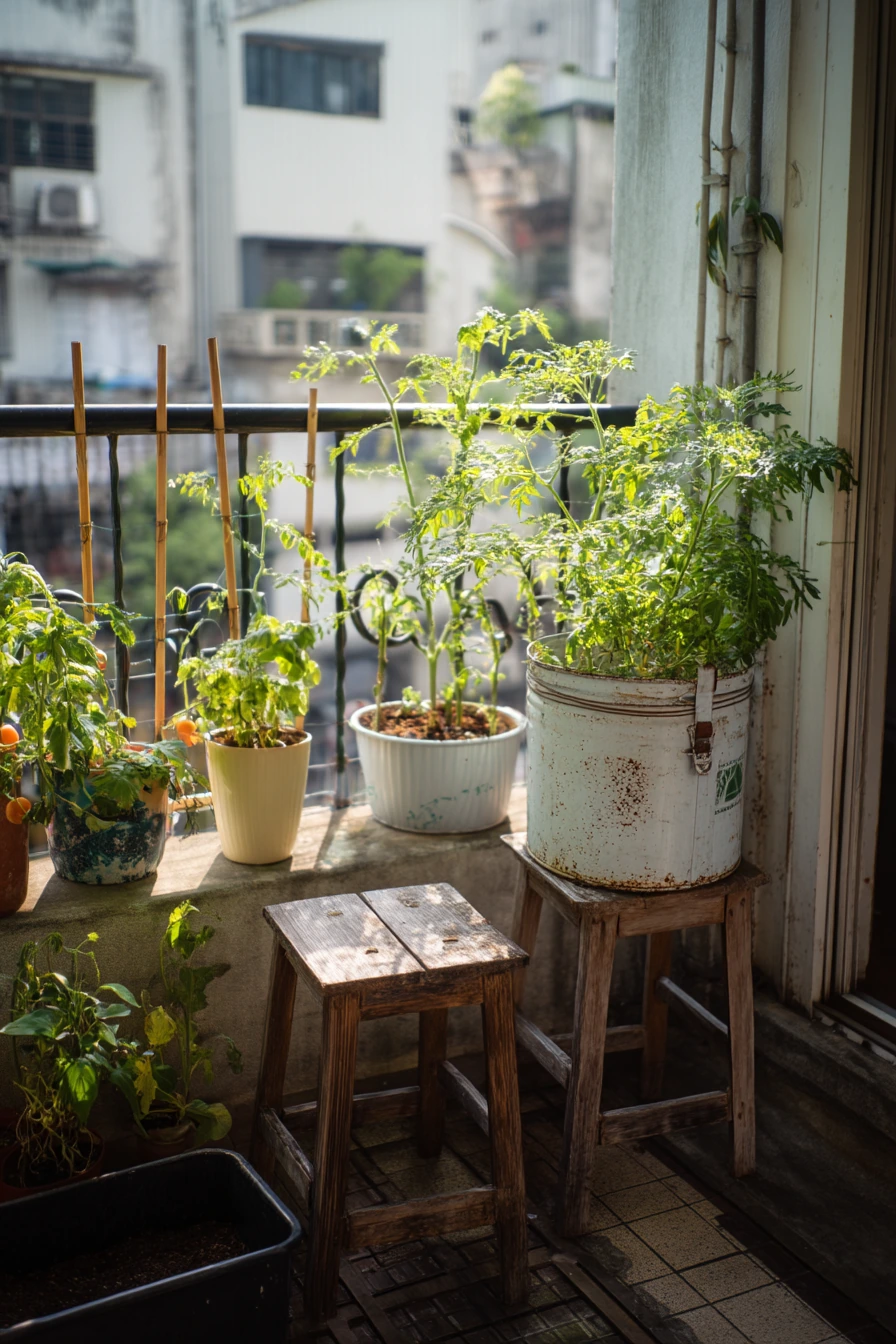
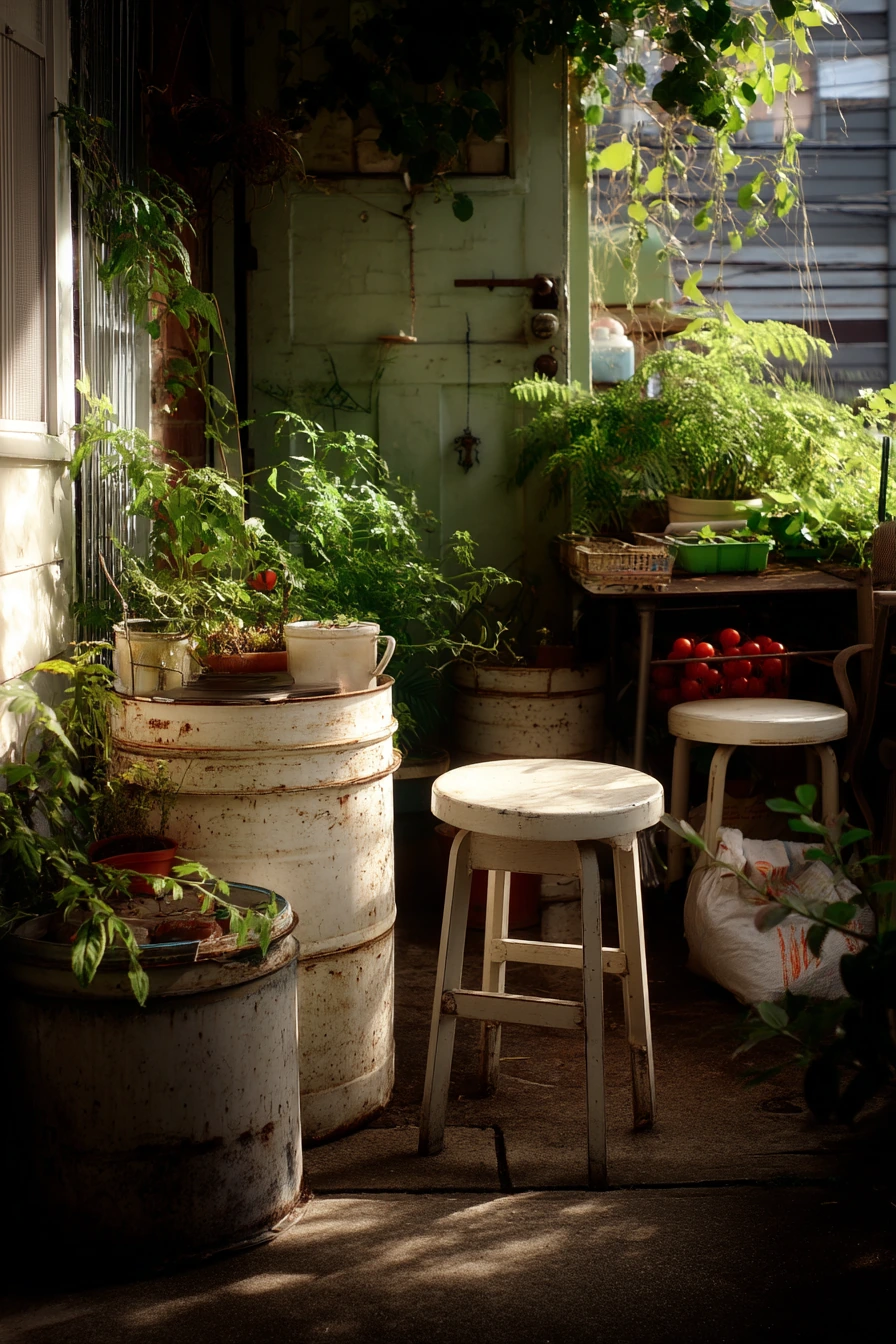
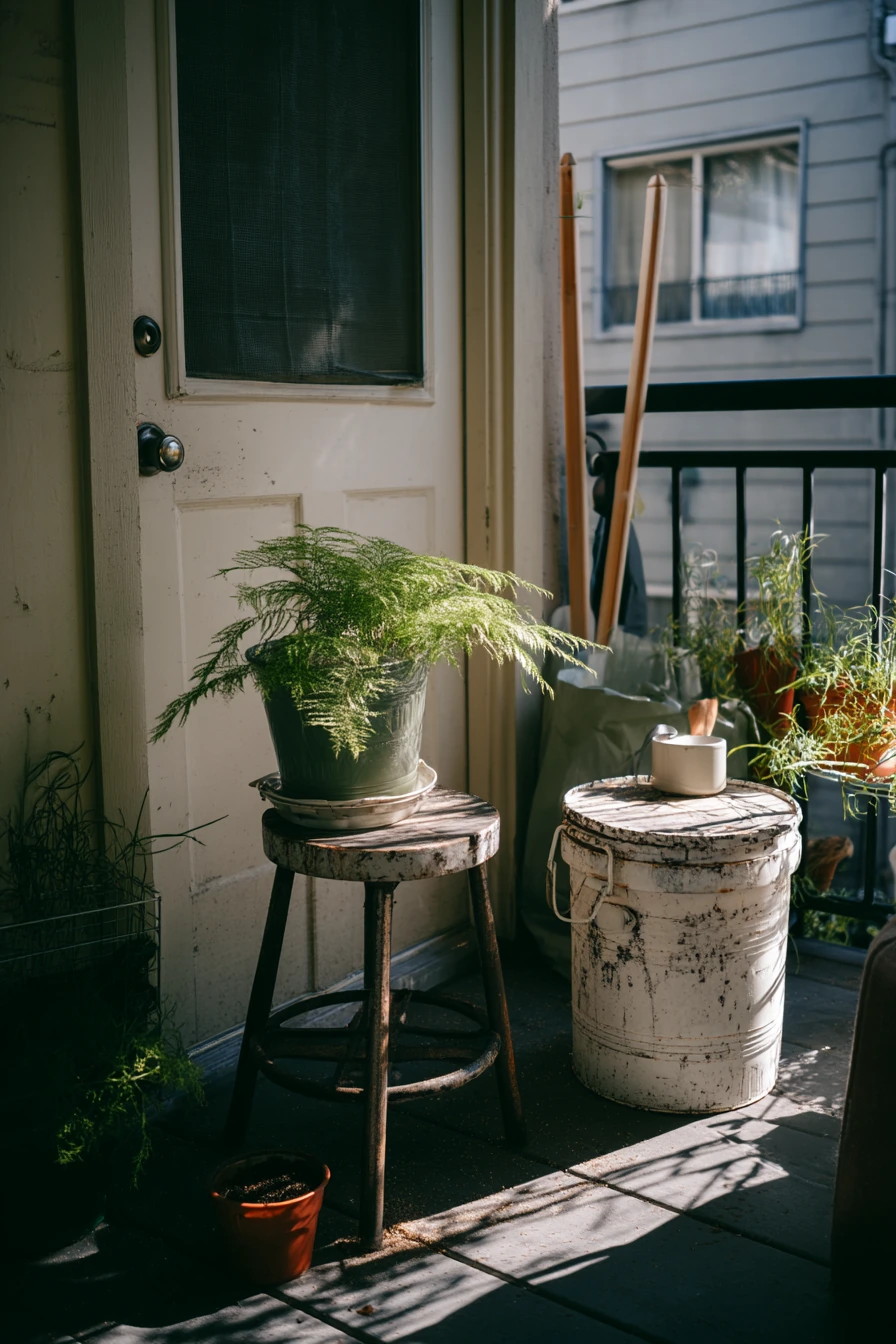
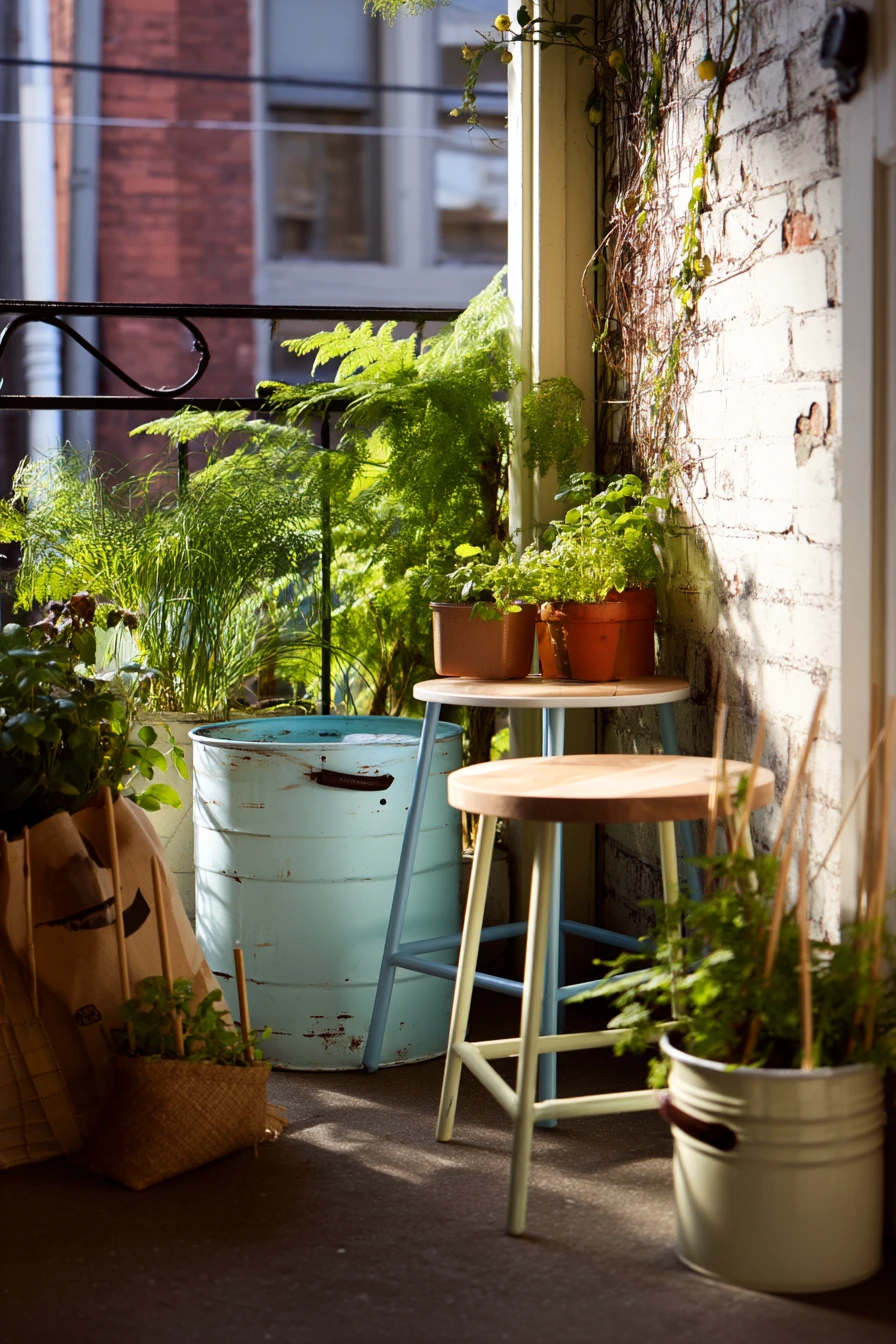
A budget-conscious urban garden nook can look charming with reused items. Repurposed paint buckets turned planters are sturdy and easy to move. Add thrifted stools as plant stands to lift seedlings closer to the light and to create levels in a small terrace.
Keep the setup practical for growing food. Use tomato stakes tied with twine, and place a chipped saucer under a fern to catch drips. Seedling trays help you start plants early, even if you only have a few hours of sun. A forgotten tea cup on the table makes the space feel lived-in and real.
Make it safe and clean. Drill drainage holes in buckets and line the bottom with a bit of mesh to keep soil in place. Tuck a grocery bag beside the door for quick cleanup of dead leaves and empty soil bags. If you want a more styled look, paint the buckets in one soft color and add simple labels for each plant.
- Use food-safe buckets when growing herbs or veggies.
- Place buckets on saucers or trays to protect the terrace floor.
- Start with easy plants: cherry tomatoes, basil, and lettuce.
- Use twine and soft ties to avoid cutting into tomato stems.
- Group seedlings together so watering and light are easier to manage.
Pro Design Tip: Pick one accent color for buckets and repeat it in two small items, like a saucer and a stool, for a pulled-together terrace.
Budget Considerations: Repurposed containers are cheap, but soil is not; buy potting mix in bulk and refresh it each season with compost instead of replacing it all.
9 Seasonal Fall Urban Garden with Lantern Glow
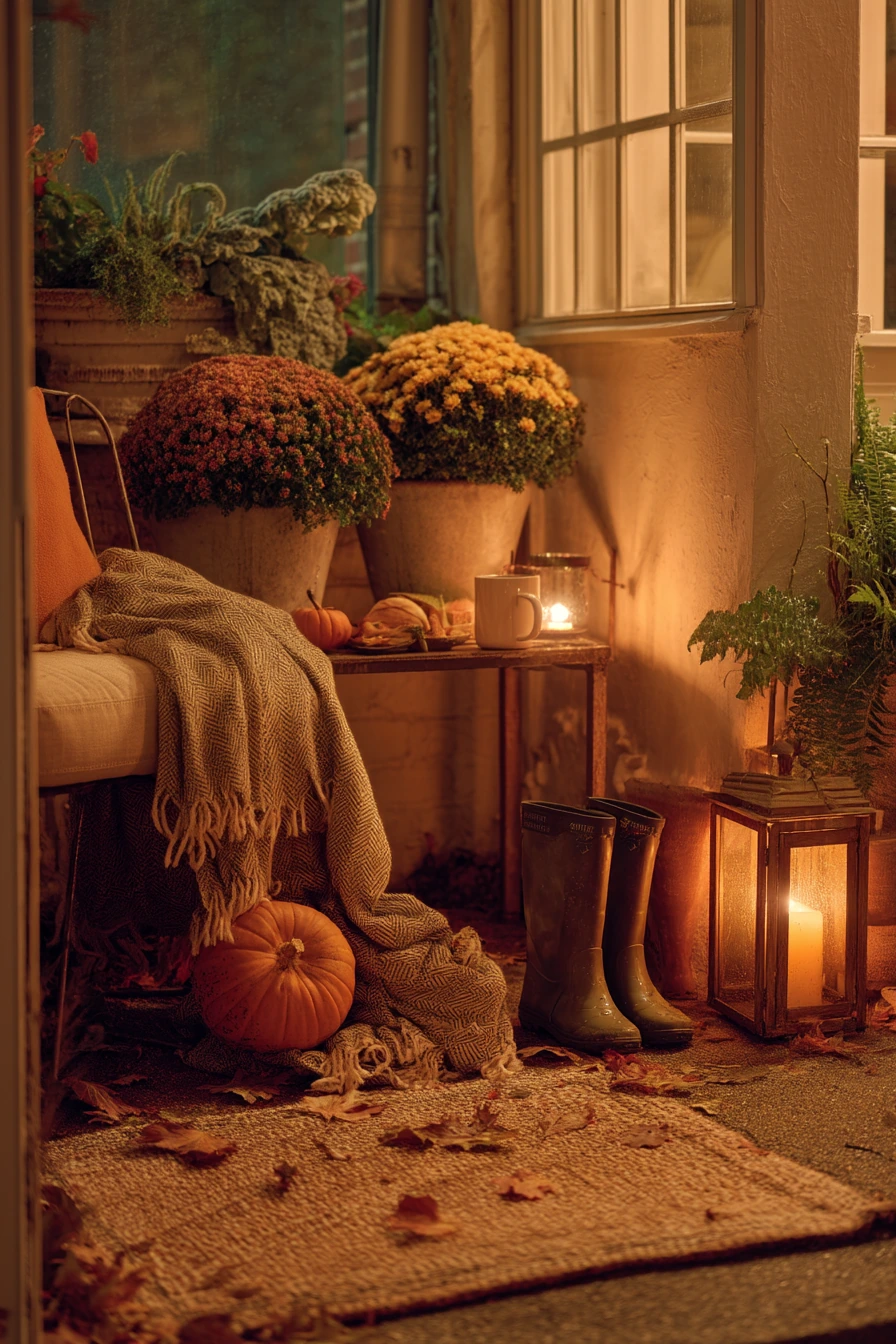
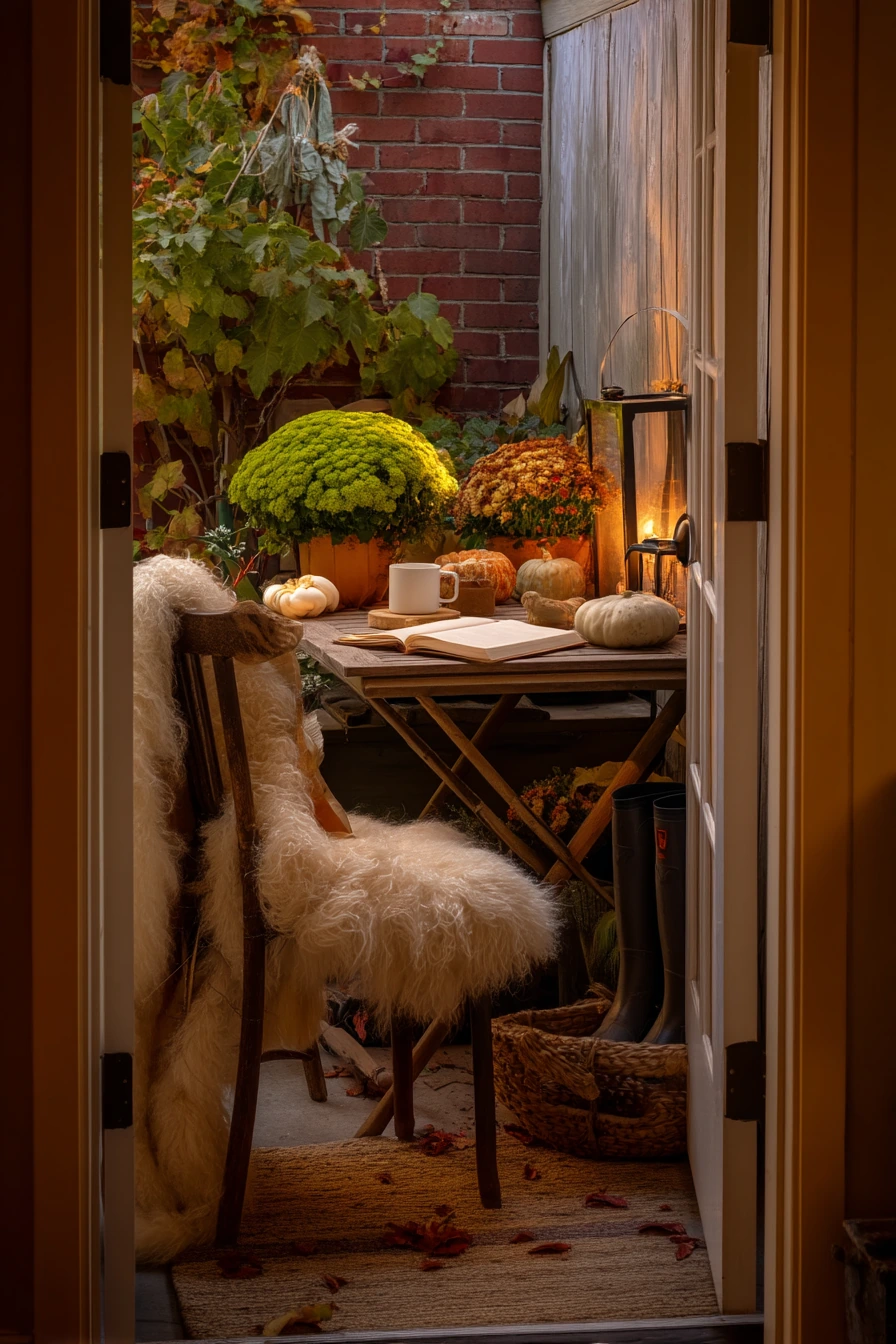
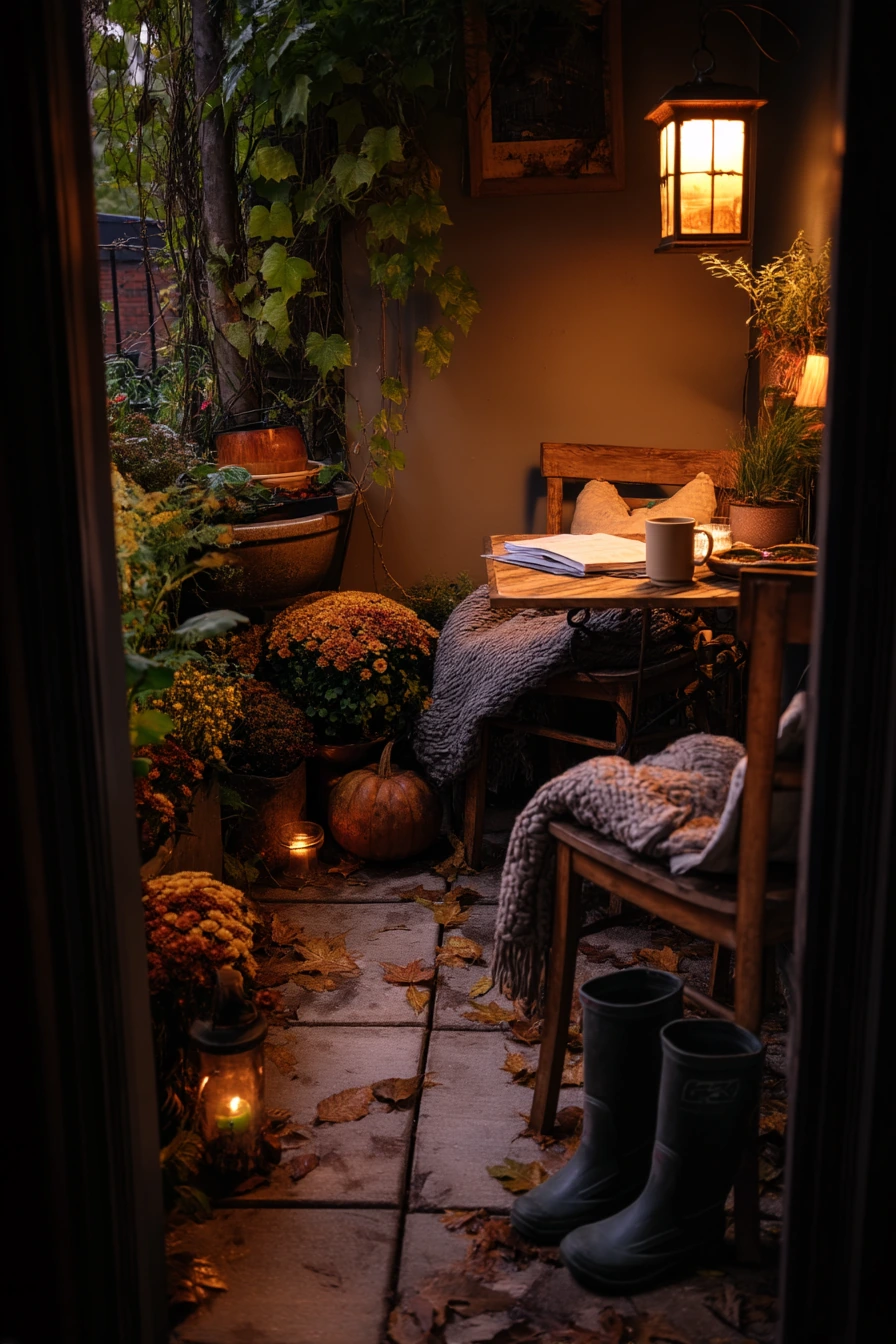
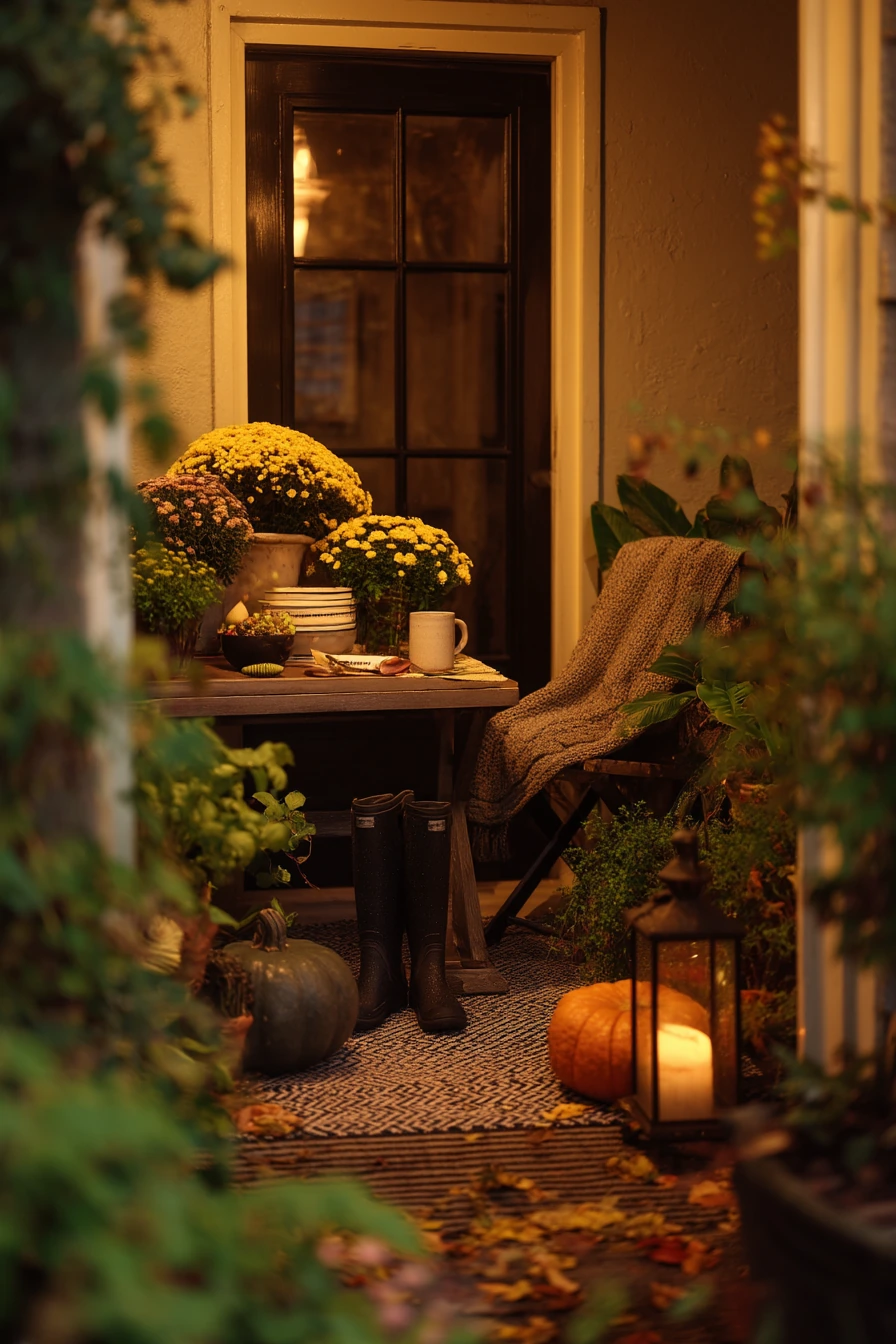
A fall urban garden on a city terrace can feel warm even when nights get cool. Use compact mums and ornamental kale for strong color in small pots. Add pumpkin accents in a size that fits your table or corner, not the whole terrace.
Style for comfort. A wool throw draped over a chair makes the space usable in the evening. Muddy boots by the door are part of the season, so add a boot tray to keep the mess contained. A steaming mug on the table and scattered leaves make the terrace look natural, not perfect.
As light fades earlier, bring in practical glow. Lantern light that begins to shine at dusk helps you stay outside longer. Choose battery lanterns or solar options, and place them low for a cozy feel. For plant care, water earlier in the day so pots do not stay cold and wet overnight, which can stress roots.
- Use one large mum and two small ones instead of many tiny pots.
- Pair ornamental kale with trailing ivy for a fuller look.
- Place pumpkins on a tray so they do not stain the table.
- Add a door mat and boot tray to protect floors inside.
- Swap summer herbs for cool-season greens like arugula in a small box.
Pro Design Tip: Use a simple fall color plan (cream, deep purple, and green) across plants and textiles so the terrace feels calm.
Budget Considerations: Seasonal decor can add up; buy fewer pumpkins and focus spending on mums and kale you can compost later.
10 Pollinator-Friendly Side Yard for Quiet Evenings
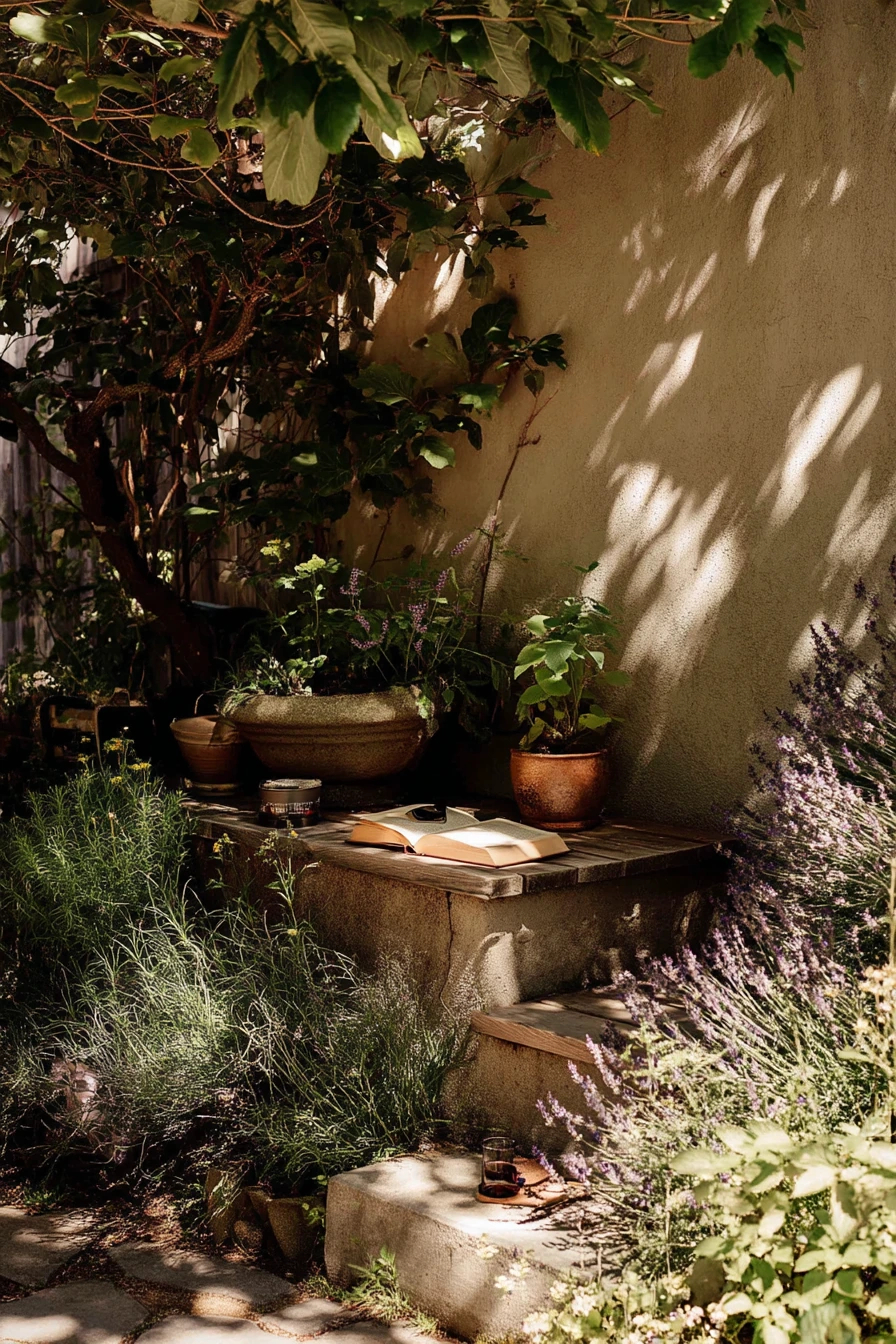
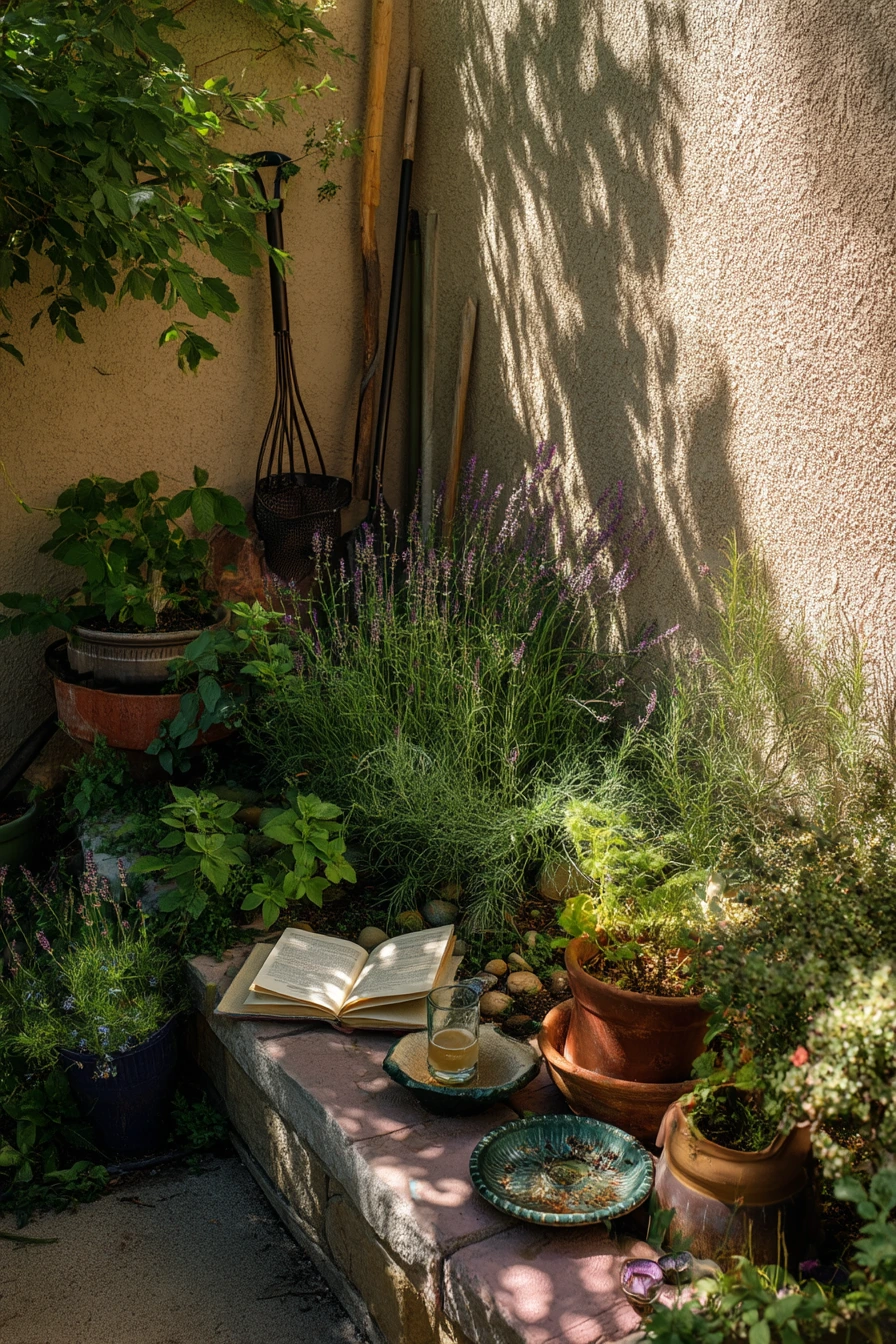
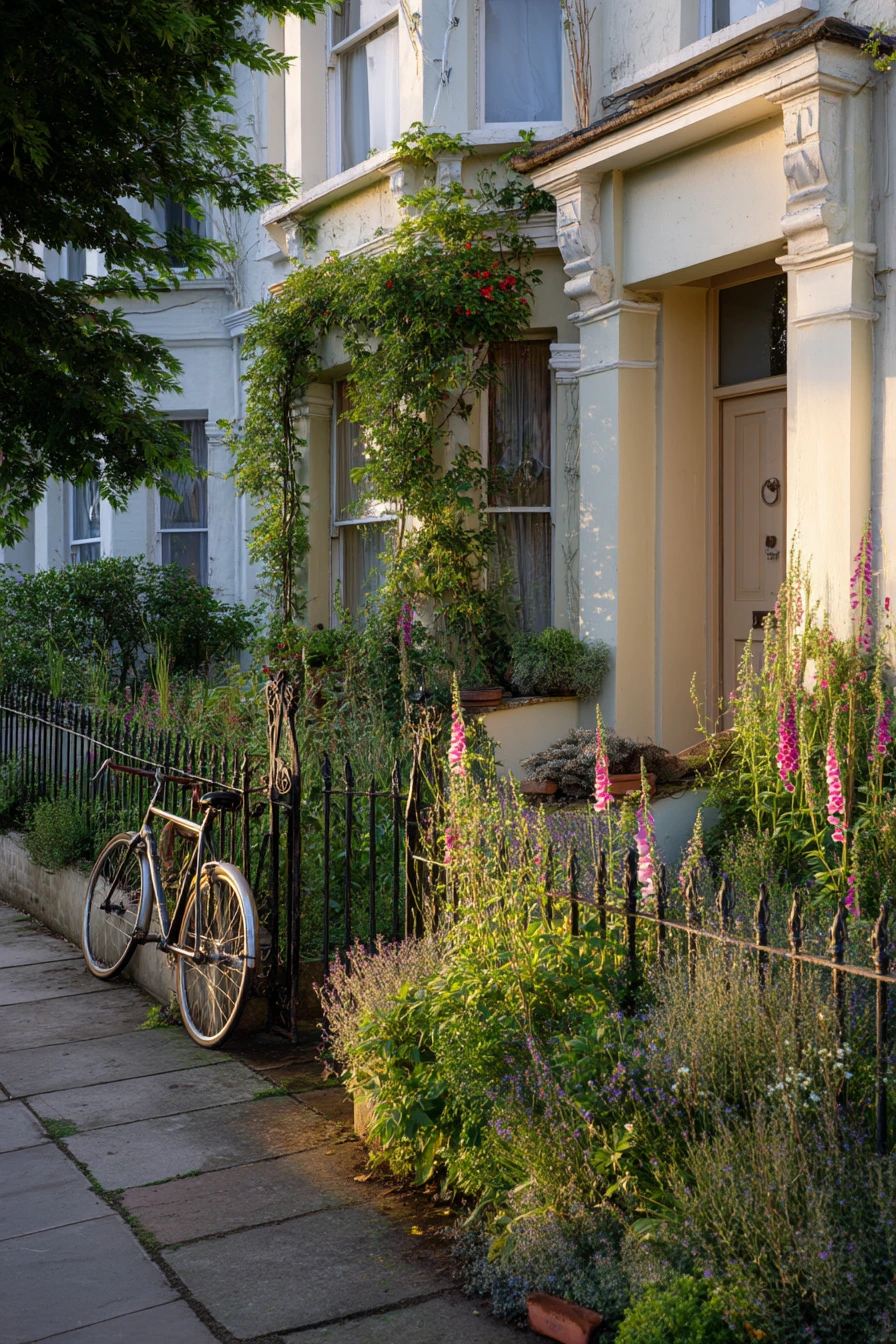
A narrow side yard in a dense neighborhood can become a pollinator garden that helps bees and butterflies. Plant lavender, salvia, and echinacea for long bloom time and strong scent. Use simple clay pots and in-ground pockets if you have them, so the space feels airy.
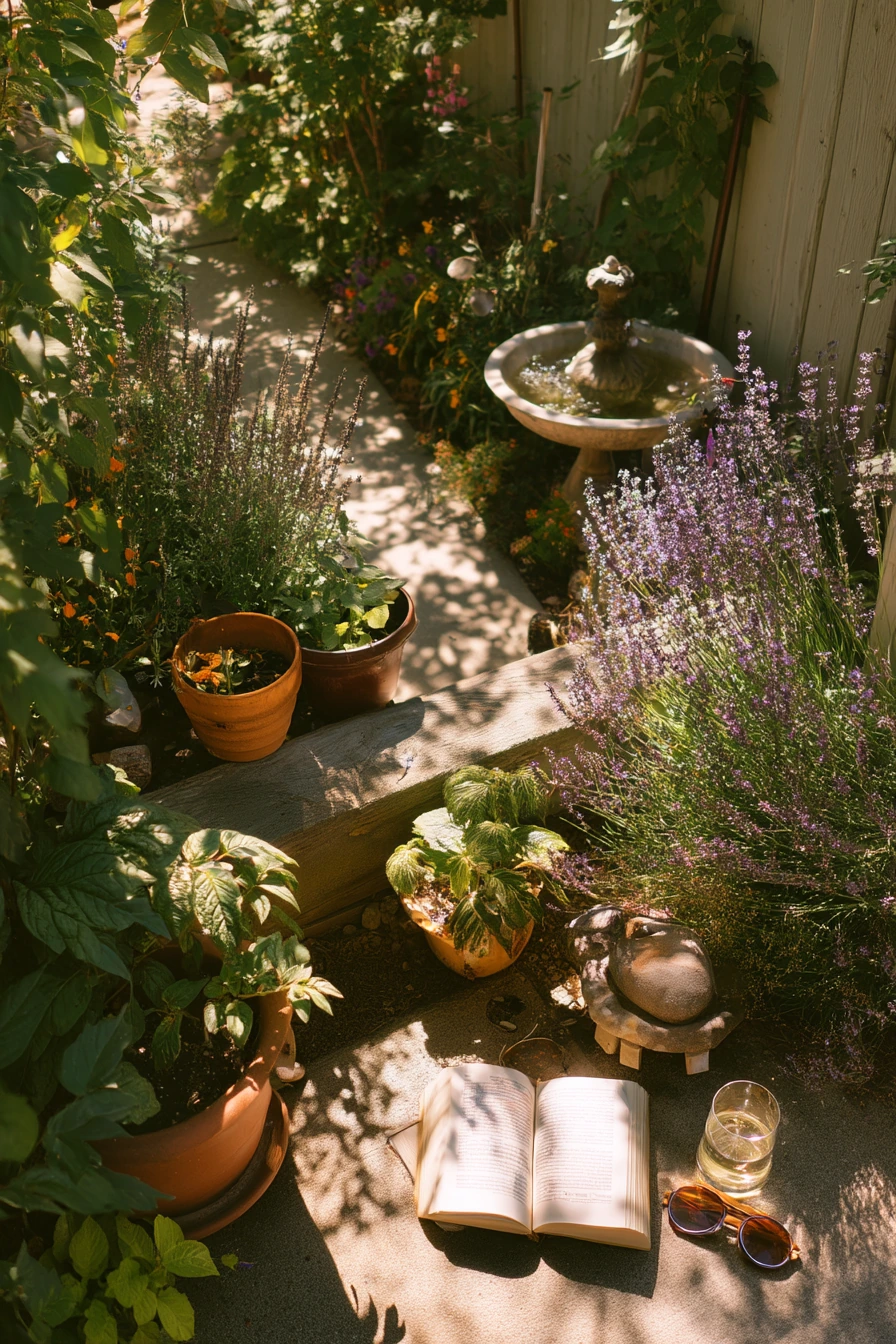
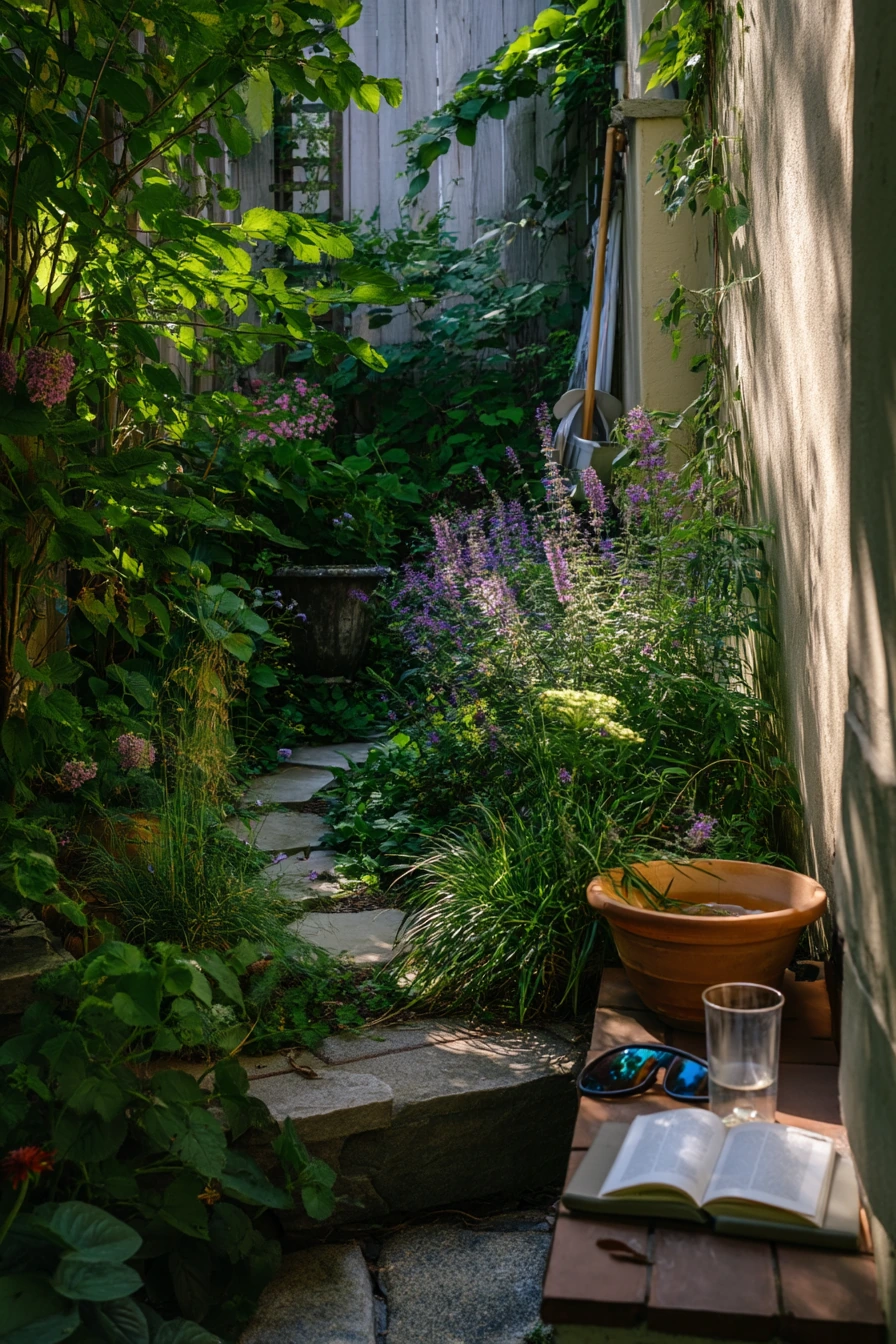
Add small, useful features. A small birdbath gives wildlife water, and it also becomes a focal point. Keep a rake leaning on the wall and an open gardening book nearby so the space looks like a working garden, not a show yard. Sunglasses and a water glass on a step fit the relaxed, late-day feel.
For success in a tight strip, plan your layers. Put taller plants like echinacea toward the back wall, mid-height salvia in front, and lavender along the edge where you can brush past it. Use mulch to reduce weeds and to hold moisture. If the yard is shaded, pick shade-tolerant pollinator plants like heuchera and some types of mint, and place sun lovers where you get the brightest patch.
- Choose at least 3 pollinator plants with different bloom times.
- Use a shallow birdbath and change water every few days.
- Leave a small bare-soil spot for ground-nesting bees if possible.
- Plant in clumps of the same flower for easier pollinator visits.
- Avoid pesticides, even “natural” sprays, during bloom periods.
Pro Design Tip: Repeat one pot style, like clay, down the side yard to make the narrow space look longer and more organized.
Budget Considerations: Perennials cost more upfront but return each year; start with small plants and let them fill in over two seasons.
Urban garden ideas work best when they match your space, light, and daily habits. A balcony herb set, a fire escape planter row, or a rooftop dinner corner can all feel cozy and practical.
Start with one small zone, keep watering simple, and choose plants you will use. As your garden grows, add comfort items like a chair, a lantern, or a small rug to make it part of your routine.
Save the sections that fit your home, then build your setup one container at a time.
FAQ
How do I start an urban garden with almost no space? Start with a window ledge or one balcony corner. Use narrow herb trays or one medium pot, then add more once you learn your light and watering rhythm.
What are the easiest plants for city balconies? Basil, mint, thyme, parsley, and chives are reliable. For flowers, marigolds and nasturtiums are easy and also help with pests.
How do I garden in a rental without drilling holes? Use freestanding lattice screens, leaning trellises, and shelving units. Pick containers with built-in support, like trellises that sit inside the pot.
How can I stop water from making a mess on my balcony or window sill? Use saucers, drip trays, and a watering can with a narrow spout. Water slowly, and empty extra water after 15 minutes so roots do not sit in it.
What containers are best for rooftops and windy spaces? Choose heavier, wider pots that will not tip. Group containers together to block wind and avoid tall, top-heavy planters near edges.
How do I attract pollinators in a small side yard? Plant lavender, salvia, and echinacea in clumps, add a small birdbath, and skip pesticides. Aim for blooms from spring through fall with a few different plant types.